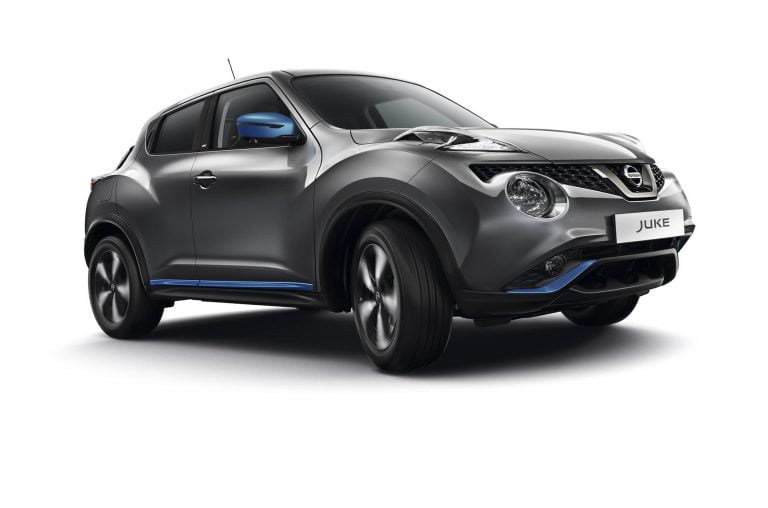
Changes to Nissan’s big-selling compact crossover focus on styling updates and extra equipment.
Most significant exterior work is to the front end which now includes darker styling elements to the grille, headlamps and door mirrors. All versions from the second of the four trim levels, Acenta, now include LED fog lamps as standard.
There are also two new 16-inch alloy wheel design options on Acenta and Bose Personal Edition level models while those choosing the range-topping Tekna grade can specify optional 18-inch alloy wheels with a range of coloured inserts.
Coloured body parts available include front and rear bumper finishers, doors side sills and wing mirror caps – they are standard on Bose models and an option on Tekna versions. There also two new exterior body colours.
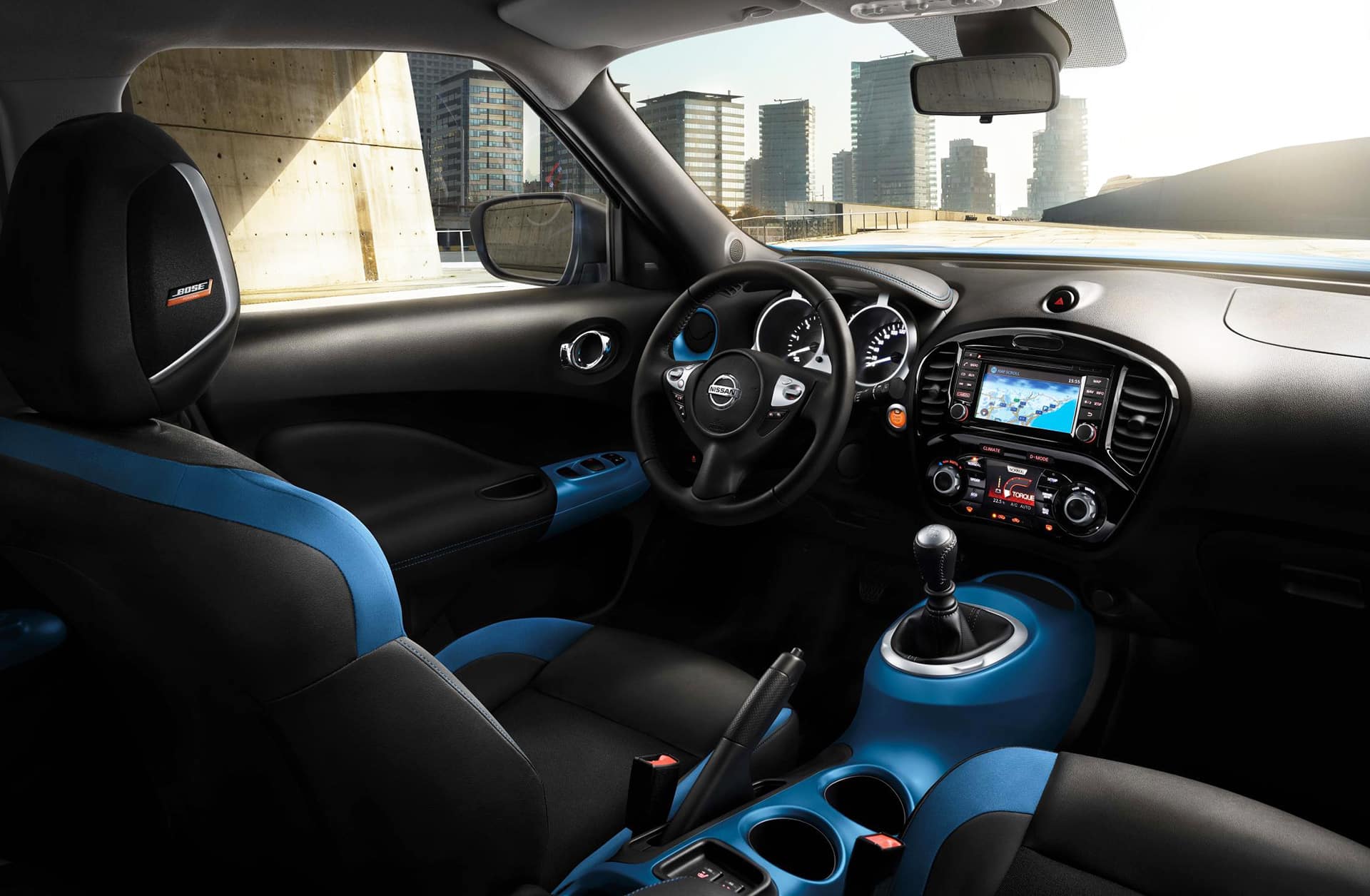
Inside the Bose Personal Edition model includes a bespoke to Nissan BOSE personal audio system with six speakers, two built into the driver’s headrest.
Two new interior personalisation options are offered on Bose Personal Edition and Tekna models, Energy Orange and Power Blue. The colour is applied to the central console, air vents, door inserts and seat upholstery while gloss black interior personalisation remains available.
Other changes include higher-quality leather on the steering wheel and easier-to-read dash information thanks to a new white-on-black information display.
According to Nissan’s European marketing head, Ken Ramirez, the changes will extend customer choice on the Juke. “The Nissan Juke is the pioneer of the B-segment crossover and is today one of our most established and much-loved models,” he says.
Last month’s new car registration numbers were the best ever recorded for the month of August since the current registration system was introduced in 2001. Whilst this is obviously good news, it’s probably not time to break out the bunting and cake just yet.
August and February are the two slowest months of the year for new car sales, but this year there has been added incentive for manufacturers and dealers to clear out their stock due to new fuel economy rules that made a lot of cars unable to be sold after 31 August. Like any supermarket faced with stock approaching its use-by date, that has meant heavy discounting by dealers to get cars out the door at all costs.
More than 90,000 new cars were registered in August 2018 compared to about 76,000 in the same month last year, which is an enormous 23% increase. That sounds great, and it’s definitely welcome news, but bear in mind that September’s numbers should be around 200,000 cars, so it’s not massively important in the overall scheme of things. Some manufacturers have been warning of stock shortages as they scramble to build enough cars that comply with the new WLTP economy and emissions rules, which means September is not likely to see another month of records being broken.
Within the sales numbers, it looks like a good month for AFVs (basically electric and hybrid cars), whose market share hit an all-time high of 8% in August – an 89% increase on the same month last year. Hopefully this rate of improvement will continue, but it’s more likely to settle back towards the year-long 27% rate of improvement in coming months.
Diesel sales were down again, although an 8% fall on last year is actually the best result in a long time, compared to falls of 20-30% that we have become accustomed to seeing on a monthly basis. However, diesel’s overall market share still fell to a new low of less than 30%.
Interest rate rise appears to have had no effect
Just like last November, the strong results for August show that the Bank of England’s minor increase in official interest rates has had no visible effect on new car sales.
It will take a few more months to see if the latest rate rise will impact the rest of this year, but it certainly didn’t appear to hurt sales in the immediate aftermath and media coverage of the rise. The Bank of England will presumably be watching closely.
Topsy-turvy top ten
The level of market chaos in August is represented quite clearly in the top ten best-seller list. While all carried on as normal for the Ford Fiesta and Volkswagens Golf and Polo in the top three, there was considerable movement below. The Ford Kuga jumped from eighth to fourth, while the BMW 3 Series, SEAT Leon, Honda Jazz and Suzuki Swift all jumped into the top ten to fill positions five to eight.
The Nissan Qashqai dropped from fifth place in July to ninth and the Kia Sportage held onto tenth place. The Vauxhall Corsa, Audi A3, Mercedes-Benz A-Class and Volkswagen Tiguan all dropped out of the top ten altogether.
Looking beyond the top ten models, it was a strong month for MG, Jaguar, Suzuki, Subaru and Bentley, who all recorded registration numbers vastly greater than last year. On the other side of the ledger, things were not so sunny for Infiniti, DS Automobiles, Nissan, Fiat or Citroën, who all saw significant falls in a growing market.
However, as mentioned, different manufacturers have had varying requirements to clear out old stock, so this may swing significantly again in the coming months.
What to expect in September
September is usually the second-biggest month of year for new car sales, following the slowest month of the year in August. However, it’s highly likely that the extra 14,000+ new car registrations for August will almost entirely come out of September’s figures as dealers encouraged buyers to take an 18-plate car with a sweet deal in August instead of holding out for a 68-plate car in September.
Coupled with this, we may see that stock shortages reduce the ability of dealers to get new cars on the road, with customers having to wait longer for their new cars to arrive. This could mean that September fails to hit the 200,000 new car registration mark for the first time since 2012 – although that, in turn, could provide a bit of a boost for numbers in October and November.
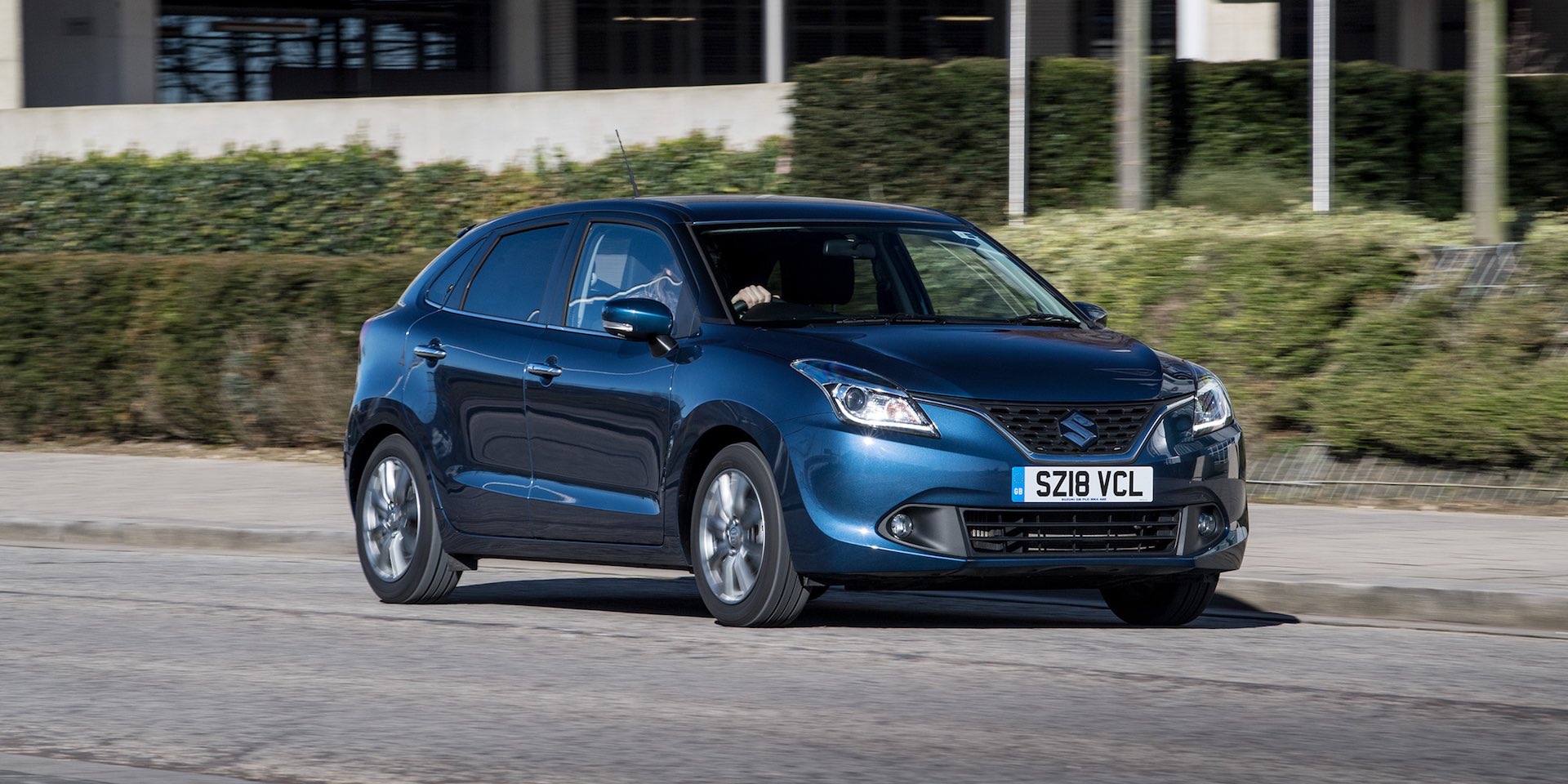
What is it? The Suzuki Baleno is the larger of two superminis available from the Japanese brand, sitting alongside the much better-known Swift.
Key features Lots of interior space, light weight, strong general equipment levels
Our view The Suzuki Baleno is designed to appeal to a different market to its sister the Swift. This is a car for those who value practicality and space over personality. The car has very little of the latter, and while its on-the-road performance is adequate and general equipment levels good, it is let down by cheap interior quality, bland styling and an unimpressive safety package.
The Suzuki Swift is a popular and charismatic supermini and the brand’s best seller. But did you know that Suzuki also makes another supermini?
Possibly not – the Suzuki Baleno is not a car that particularly hogs the limelight. So is it forgotten, or forgettable?
The Baleno launched in 2016, and Suzuki admitted straight away that it was designed to be a ‘more rational choice’ for those who wanted more space than offered by the Swift, but not to the extent of moving up a class to a full-blown family hatch.
Made in India (where it is very popular), the Baleno measures almost exactly four metres in length – almost 16cm longer than the Swift, and a lot longer too than most supermini rivals. In fact, this model won’t be dwarfed by some cars in the next sector up.
Despite this, the Baleno is no heavyweight – it was the first to use a new Suzuki platform that employs lots of modern high-strength steels. As a result, the car’s shell is the first in its sector to dip under 200kg – once thought impossible – and that means good things for both handling and economy.
So, much effort was expended in the structure – and apparently that money was claimed back from the styling department. This is one of the most conservative-looking small (ish) cars you will set eyes on.
Suzuki tells us all about its ‘Liquid Flow’ design language, which results in the most aerodynamic car the brand has yet built, but visually the Baleno is dull, a step back to the bland appearances we used to expect from the budget badges.
Buying and owning a Suzuki Baleno
Those attracted to the Baleno are offered a reasonably simple line-up – two engine options and three trim levels.
The powerplants are a four-cylinder 1.2-litre of 90hp, or the 1.0-litre three-cylinder unit offering 111hp – this uses Suzuki’s latest Boosterjet technology, promising the power and torque of a much larger engine but with better efficiency.
Best efficiency of all, however, comes from the 1.2-litre when specified with Suzuki’s SHVS mild hybrid system. This acts as both a generator and starter motor, its assistance producing class-beating figures – emissions of 93g/km and combined cycle fuel consumption of 70.6mpg.
The three trim levels are dubbed SZ3, SZ-T and SZ5, but if one goes for the base SZ3 level, starting from £12,999, the only propulsion option is the 1.2. Still, the standard equipment level is good, with six airbags, front electric windows, air conditioning, and a DAB Radio/CD player (remember them?) with USB and Bluetooth connectivity.
Our test car is to mid-level SZ-T specification, starting at £14,999 and adding high-intensity headlamps, rear privacy glass, satellite navigation, a reversing camera, front fog lamps and leather steering wheel. It also comes with the seven-inch touchscreen centre console infotainment system – a very efficient and quality unit that includes Apple CarPlay and Android Auto smartphone compatibility.
Top-level SZ5 versions start from £15,999. Notable on this level is a significant safety upgrade, encompassing Radar Brake Support (autonomous emergency braking) and adaptive cruise control. You also get automatic climate control, rear electric windows, a four-inch central colour trip display between the dials and LED rear lights.
Buyers will not choose the Baleno for its plush interior. The dash layout is conventional but well laid out, with the controls sensibly placed and easy to use.
In appearance, however, it is a generation behind – dominated by cheap-looking grey plastic with particularly nasty (and over-used) silver detailing. At a time when supermini rivals are adopting interiors from their larger sisters, and even Suzuki doing interiors much better in the likes of the more recent Ignis small SUV, the Baleno lets the brand down.
Where it does recover its poise is in space – this is one very roomy supermini. There is plenty of room to get comfortable whether in front or back, and the boot offers 320 litres of space, which is big for the class – 28 litres more than the best-selling Ford Fiesta and practically-shaped.
Driving the Suzuki Baleno
Yes, the 1.2 engine in hybrid form offers the best economy and emissions, but we would recommend going for the rather newer technology of the 1.0-litre Boosterjet unit – after all, every supermini is going the three-cylinder route these days.
The official figures of 62.8mpg and 105g/km are still reasonably impressive for a petrol engine, and Boosterjet-fitted cars when accelerating feel a lot more enthusiastic than the quoted 11.4-second 0-62mph time would suggest.
Sitting at the lights this engine will remind you of its three pots courtesy of a slightly chuggy note, but once underway it soon evens out to reasonably, if not totally, refined progress.
That word reasonable comes to mind again when discussing ride comfort. The car is quite softly suspended, and does its best to smother lumps and bumps in the road surface, but only partially succeeds.
In the corners reasonable becomes merely adequate. The Baleno won’t write any headlines for its handling, with little directness when changing direction.
Summary
The Baleno is a competent supermini, but a thoroughly forgettable one. It scores on its space and generally its equipment, but is marked down on its interior quality and safety score.
Bland styling and a soggy chassis is a disappointment when compared to the Baleno’s sister, the Swift, which is such a good-looking and fine-handling little car. But then again, those who want a fine-handling car will buy a Swift. Those for whom a car only needs to be reliable and easy to live without making any statements could well be swayed by a Baleno.
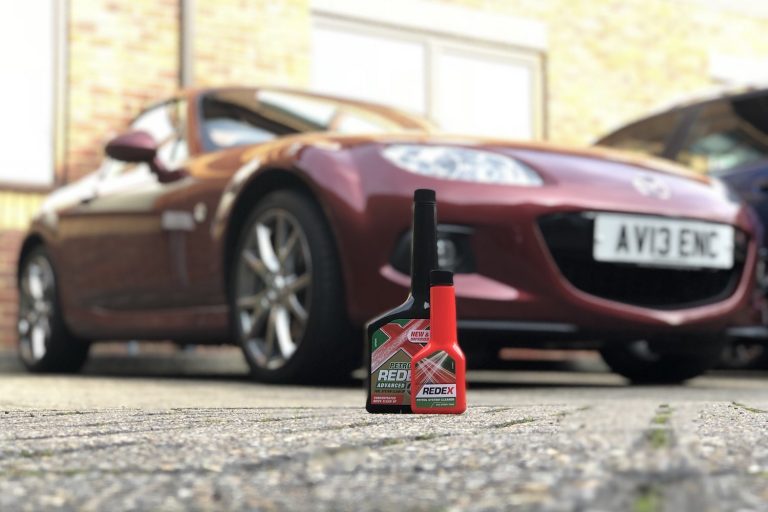
I’ve just finished a three-month trial of Redex fuel system additives in my Mazda MX-5 to see if I could feel any increase in my car’s performance or measure any significant difference in its fuel economy.
Since May, I’ve been recording my fuel economy every time I fill up the tank – manually noting down the litres added and mileage covered, rather than relying on the car’s trip computer – and adding a dose of Redex to the tank.
As I outlined in previous reports, the type of fuel additive that I’ve been using is a fuel system cleaner rather than an octane booster. The goal isn’t to turn regular unleaded into premium unleaded by increasing the car’s octane number, but simply to give all the tiny pipes and injectors a thorough clean so they can do their thing without being clogged up.
Given that your engine creates dozens of explosions every single second, there’s a lot of combustion going on under your bonnet. With any burning of fuel, there will be deposits and debris that forms. Sometimes it’s obvious, like the ash that forms when you burn a log in a fireplace. Other times, like in your car’s engine, these deposits are microscopic, but the principle is the same. Over time, these deposits build up and affect your ability to keep burning the fuel properly.
The purpose of the Redex fuel system cleaners is to remove this build-up of deposits and keep the fuel injection system clean. By doing so, the fuel will burn more cleanly and therefore give you better performance and fuel economy as the engine is working more efficiently.
As I’ve made clear previously, this isn’t a laboratory test in controlled conditions but rather a real-world trial that gives a decent indication of what any driver can expect in everyday life.
My car is a 2013 Mazda MX-5 2.0-litre manual. Unless it’s raining, the roof is always down (and thankfully, we’ve enjoyed a cracking summer) and the vast majority of my driving is a 25-mile round trip to and from the office each day. My car only has about 30,000 miles on the clock with a full Mazda service history, so it’s in pretty good nick.
Below is a table of my last recording before starting with the Redex products, followed by one tank of the heavy-duty Redex Advanced 5-in-1 system cleaner and then six tanks using the regular Redex petrol system cleaner.
MPG reading
Fuelling notes
Driving
Traffic
1
30.2
Initial baseline – no Redex products
Commuting
Moderate
2
33.9
Advanced 5-in-1 system cleaner
Mixed motorway and commuting
Varied
3
29.6
90ml petrol system cleaner
Commuting
Moderate
4
27.4
90ml petrol system cleaner
Commuting
Heavy
5
29.9
90ml petrol system cleaner
Commuting
Heavy
6
31.5
90ml petrol system cleaner
Commuting
Varied
7
33.2
90ml petrol system cleaner
Mixed motorway and commuting
Light
8
32.7
90ml petrol system cleaner
Commuting
Light
The initial baseline figure of 30mpg is pretty indicative of my usual fuel economy result, although usually that’s relying on the car’s trip computer reading rather than direct measurement.
Over about 2,000 miles of mainly commuting in three months, my average fuel consumption using the Redex fuel system cleaners was 31.1mpg. My driving circumstances in that time have been a pretty representative example of my usual activities, so superficially it looks like a 1mpg improvement since using Redex.
In reality, the most obvious conclusion from the fuel economy results is that they largely followed the driving conditions more than anything else. With lighter traffic conditions during August, my fuel economy improved by more than 10% compared to the same journeys in heavier traffic. The best results were, unsurprisingly, achieved at times when my regular commute was combined with longer A-road and motorway driving.
Driving observations
Given that the additives I’ve been using are not performance boosters as such, I wasn’t expecting to feel any noticeable differences to my car’s accelerative qualities. If that was the point, Redex has products like its Petrol Power Booster. Alternatively, I could just fill my tank with premium unleaded fuel, which has a higher octane level than regular unleaded and provides extra power.
The principle with the fuel system cleaner additives is that a clean fuel system will perform more efficiently than a clogged fuel system, much like your heart being able to pump blood more freely through clear arteries than clogged ones. Clogged arteries also mean your heart has to work harder and is at greater risk of heart damage, and your engine is no different. Over time, clogged fuel injectors can potentially lead to expensive engine damage.
There has been no noticeable difference in performance, and I suspect you’d need a laboratory to really show any improvement. In the variable nature of the real world, and in a well-maintained modern car, I couldn’t detect any difference.
I mentioned in my last report that I’d previously noticed a slight cough or misfire from the Mazda on a couple of occasions prior to using the Redex products, but hadn’t noticed anything since using the fuel system cleaners. I can report that the engine has still been running cleanly over the last six weeks, so the stuff appears to be doing its job in that respect.
Summary
My fuel economy figures haven’t shown any changes that could really be attributed to the Redex products. The variation of 3-4mpg above or below the average based on driving conditions and traffic outweighs any potential gain from the products. Again, if you were running a laboratory experiment that directly measured fuel consumption and removed all other variables then you may be able to show an improvement, but it’s nothing really noticeable.
So why would you consider using fuel additive products like these ones I’ve been testing?
Firstly, if you have an older or higher-mileage car, you are far more likely to see noticeable improvements in performance and fuel economy compared to a newer, lower-mileage vehicle. Given that fuel deposits and debris build up in your engine over time, it makes sense that you’ll notice a greater improvement in an older engine that has seen a few million more fuel explosions than a newer engine. If I’d been running the same test on an older car I am sure I would have seen some more noticeable results, but unfortunately I don’t have an older car to call upon for such a purpose (and buying an old banger to drive for three months didn’t really appeal!)
Secondly, I felt a definite sense of confidence that I was taking positive steps to keep my engine clean and operating at peak efficiency. Every litre of petrol has to make a long and tortuous journey to get from a fuel refinery into a tanker truck, then out of the truck and into a giant storage tank under a service station, then into a fuel bowser and finally into your car’s petrol tank. There are plenty of opportunities for the fuel to collect debris and impurities anywhere along that journey that can clog up your fuel system, so adding a system cleaner every now and again seems like a worthwhile investment in preventative maintenance to protect my engine against future damage.
After the initial 500mL dose of Redex Advanced 5-in-1 system cleaner, I have been adding a small 90mL bottle of Redex petrol system cleaner every time I have filled up my fuel tank for three months. In my situation, I don’t think I really need to keep using the additives at that rate in my car. I am likely to add a 90mL bottle every month or so and probably use the concentrated cleaner every six months to keep the Mazda’s fuel system sparkling clean. If I had an older car (or when this one starts getting older and higher-mileage), I’d keep using it every tank or at least every other tank.
Everyone’s circumstances are different, so your mileage may vary (both literally and figuratively!). The single-shot 90mL bottles are about £3 each, or you can buy a larger reusable bottle that will save a bit of money and reduce plastic waste, so it’s certainly worth giving it a go to see for yourself. The big bottle of concentrated cleaner is about £17, but if you use that every six months then it’s still less than £3 per month, which seems like a sensible measure to keep your engine operating at its best.
If you have any questions or comments about this trial, fire away in the comments section below and I’ll answer them as quickly as I can.
The Skoda Vision RS concept will be unveiled at the Paris motor show in October, strongly hinting at the replacement for the current Rapid hatchback.
Skoda describes design sketches released of the Vision RS as ‘a first glimpse of a future compact car while ringing in the next design phase for its sporting RS model range.’ The brand is more heavily pushing its competition history, which stretches back 117 years, and promoting the RS range of sporting models.
However, industry sources believe the concept also points towards a mainstream model line. The production car evolved from it, predicted to launch in 2019, is expected to replace the current Rapid, but not directly, and to not continue the Rapid name. It would compete squarely against big-selling rivals such as the Ford Focus, Vauxhall Astra and Volkswagen Golf.
The Vision RS measures up at a bit over 4.3m long, but with a low height of only 1.4m. This makes it longer and lower than the current Rapid, and the use of the RS description on the concept also suggests a more performance-pitched production model is planned – possibly a Skoda rival to the Golf GTI. Skoda says that the concept incorporates ‘clear motor racing references.’
The replacement for the Rapid is expected to use the Volkswagen Group’s platform for smaller cars already employed on the Volkswagen Polo and SEAT Arona and Ibiza models.
Skoda is yet to release any mechanical details of the Vision RS concept ahead of the Paris show.
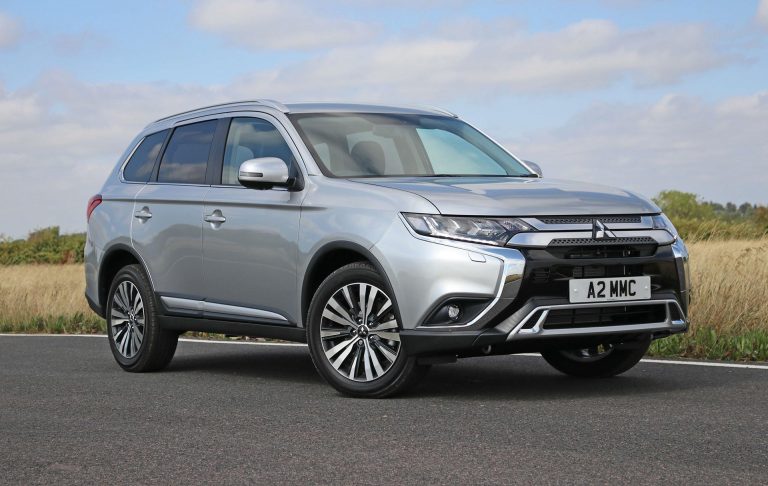
A petrol-engined model has joined the powertrain options for the Mitsubishi Outlander SUV range.
Priced from £27,680, the new seven-seat Outlander option becomes the first purely petrol version in the range as the brand reacts to a growing customer shift from diesel. The diesel version remains in the range, alongside the highly popular plug-in hybrid models.
The 2.0-litre petrol engine produces 150hp and 195Nm of torque, and is matched to a CVT automatic transmission. Steering wheel paddles are included for manual shifts.
All Mitsubishi Outlander variants are supplied with electronically-controlled four-wheel drive as standard. A cockpit-selected Drive Mode Selector offers three settings – 4WD Eco mode for maximum economy, 4WD Auto for normal driving conditions or 4WD Lock for rough terrain or low-grip conditions.
The standard-fit seven seats on petrol models include a ‘fold & stow’ operation allowing the rearmost two seats to be independently folded into the boot floor. The second-row seats are fitted with a tilting backrest and offer a sliding function to adjust rear passenger leg room as required.
With all five rear seats folded, up to 1,608 litres of boot space is available.
Mitsubishi has also updated its ‘Dynamic Shield’ design language on all 2019 versions of the Outlander. Changes include a new honeycomb mesh front grille, front lower extension and new headlamp design, revised rear bumper and new two-tone 18-inch alloy wheels.
Interior updates range across reduced engine noise, more supportive front seats, one-touch electric operation on all four windows, a heated windscreen and Mitsubishi’s new SDA (Smartphone Link Display Audio) system. This includes Apple CarPlay and Android Auto compatibility with DAB and Bluetooth connectivity.
Mitsubishi also claims improved driving dynamics on the Outlander, accomplished by increased structural rigidity with additional structural adhesive welding applied between the body panels. The front strut and rear dampers have also been modified to increase the damping force at low speed to provide a smoother low-speed ride.
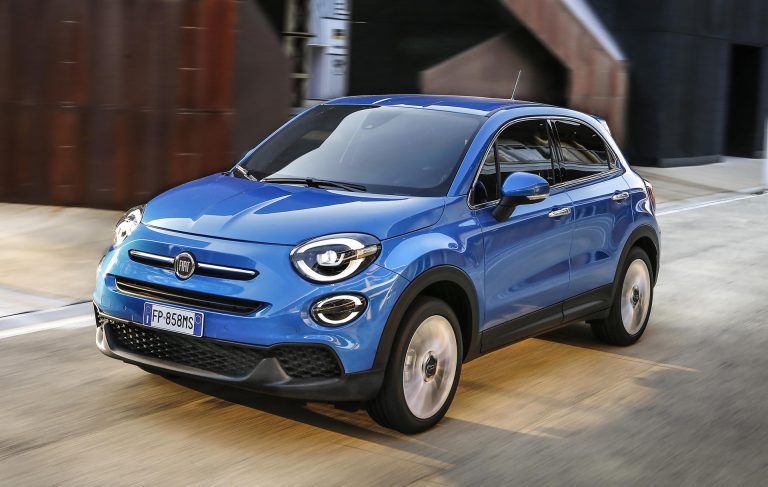
Two new petrol engines and additional safety systems lead a package of updates to the Fiat 500X crossover.
The 500X becomes the first Fiat to employ turbo petrol unit that are all compliant with the latest Euro 6D emissions regulations and fitted with Gasoline Particle Filters. The engines comprise a three-cylinder 1.0-litre unit with 120hp and 190Nm of torque, paired with a six-speed manual gearbox, and a four-cylinder 1.3-litre of 150hp and 270Nm, combined with a six-speed dual-clutch automatic transmission.
The new engines are made entirely from aluminium alloy, the three-cylinder version weighing just 93kg. They also include several technical advances, such as continual control of intake valve opening and timing, to improve both performance fuel efficiency.
Also available is an entry-level 1.6-litre unit with 110hp and a manual transmission. This has been updated to meet the Euro 6D emissions regulations, and now comes with stop-and-start technology.
New driving assistance technology now available for the 500X includes Traffic Sign Recognition, Speed Advisor (which matches the speed of the car to the speed limit identified by the Traffic Sign Recognition) and Lane Assist, all now included as standard on all versions of the car.
Blind Spot Alert, Adaptive Cruise Control and City Brake Control (autonomous emergency braking) are on the options list.
All versions of the 500X are now supplied with Fiat’s Uconnect infotainment system, accessed through a seven-inch touchscreen and including Apple CarPlay and Android Auto compatibility.
Revisions to the exterior include new LED daytime running lights, LED headlights and rear lights. The three trim levels – Urban, City Cross and Cross – are given bespoke treatments. Urban gains a new front and rear bumper design, while the new Cross look adds protective skid plates.
Fiat dealers are taking orders for the new 500X now, at prices starting from £16,995.
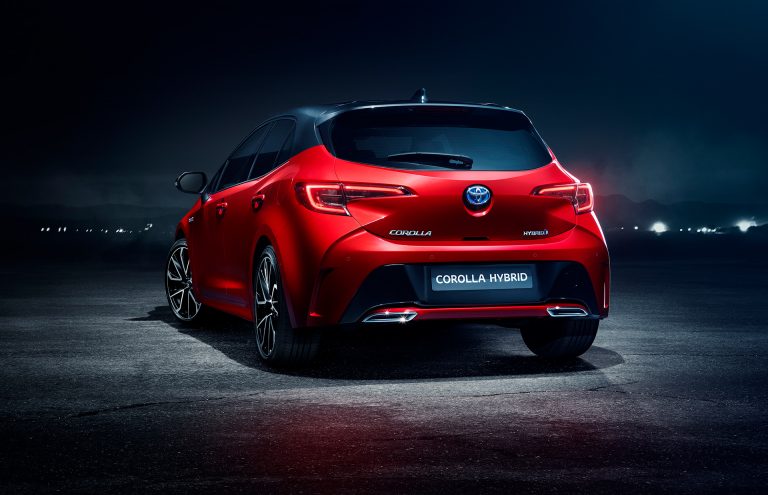
The Toyota Corolla badge is to make a comeback, 13 years after being killed off in the UK in favour of the Auris.
The next generation of Toyota’s family hatchbacks, saloons and estates, rivalling the likes of the Ford Focus and Vauxhall Astra and set to launch in early 2019, will be called the Corolla.
The change will take place across all of Toyota’s global markets, the Auris nameplate being completely killed off.
Common underpinnings
Toyota will also follow the lead of other manufacturers in adopting a common platform for all versions of the new Corolla. The Toyota New Global Architecture (TNGA) platform will replace the three different platforms currently used in the range.
According to Dr Johan van Zyl, President and CEO of Toyota Motor Europe, using the TNGA engineering and design philosophy will bring a whole new dimension to the brand’s next-generation Corolla models. “Adding to Corolla’s renowned quality, desirability and reliability, it delivers the more emotional values that our customers aspire to, such as a distinctive design, interior refinement, rewarding driving dynamics and powerful yet efficient hybrid electric powertrains,” he says.
“There is no better moment than the launch of the upcoming new generation model to reintroduce the Corolla name to our C-segment hatchback and wagon,” van Zyl adds.
The estate version of the new Corolla will be unveiled at the Paris motor show on 2nd October. Also on the stand will be the hatch version which was revealed at the Geneva show in March, at that time still wearing an Auris badge. Both will be built at Toyota’s UK factory in Burnaston, Derbyshire – the plant currently produces the slow-selling Auris.
Both show cars will be hybrid electric versions. The new Corolla range will also be offered with petrol engines but will follow the current trend of dropping diesel options from its line-up.
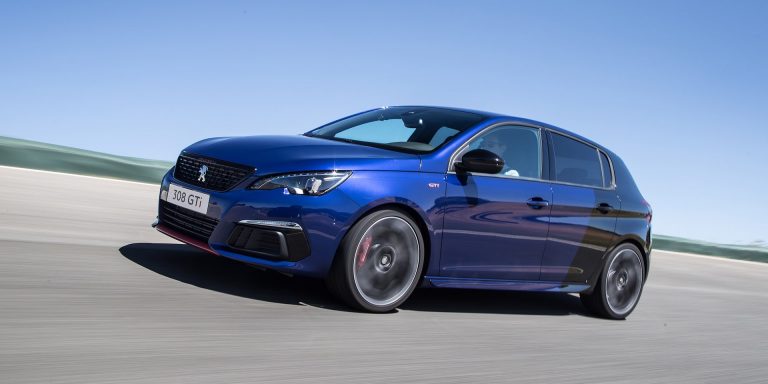
What is it? The Peugeot 308 GTi is the performance version of the brand’s family hatchback.
Key features Potent small-capacity engine, limited-slip differential, quality interior
Our view The Peugeot 308 GTi may be overlooked for a visual appearance rather too close to the standard 308 that it is based on. But this conceals a strong mechanical specification that combines a powerful if more economical smaller-capacity engine with a significantly uprated chassis.
The 308 GTi is as potent as better-known rivals while not so extreme as to be an uncomfortable everyday car. It is also great fun to drive, and any hot hatch enthusiast should try it out.
All very subtle unless you opt for the ‘distinctive’ two-tone paintwork
Full review
Introduction
UK motorists may be having the green message forced on them ever more heavily these days, but plenty still desire a proper hot hatch – a car with performance and handling to excite when one takes the wheel.
As a result, Volkswagen still sells plenty of the Golf GTI that created the hot hatch market, Ford finds a market for equally potent versions of its Focus under the RS badge, and both now face competition from impressive newcomers such as the Hyundai i30 N.
Also very much fighting for a slice of this market is a car easily overlooked but perhaps unworthy of being ignored – the Peugeot 308 GTi. Or to give this car its full and tortuous moniker, the 308 GTi by Peugeot Sport.
One possible reason the Peugeot doesn’t excite that much is its visual appearance – basically, it doesn’t look all that special. Yes, it is dropped lower to the ground by a single centimetre compared to a typical 308, furnished with bolder alloy wheels of 19 inches in diameter, and given ‘more aggressive design elements’ front and rear. But it still appears too close to a stock 308.
That visual appearance, by the way, is aided by six exterior paint options, but the two-tone ‘Coupe Franche’ variant is a mis-step in our opinion. Emphasising the sportiness by painting the rear in a contrasting black to the main colour (either blue or red), with a sharp separation line down the rear doors that ignores the car’s natural contours, is a bit odd…
Buying and owning a Peugeot 308 GTi
So as that incredibly long official name suggests, the 308 GTi has been ‘breathed upon’ by the French brand’s motorsport department.
In fact, it’s the fourth Peugeot model to receive such treatment, its most recent predecessor being the 208 GTi by Peugeot Sport. That car had the task of maintaining a famous line – the Peugeot 205 GTi was as much responsible for creating the hot hatch market as its Volkswagen rival. With no such heritage to worry about, the Peugeot Sport treatment to the 308 is less radical.
Initially offered in two formats, the 308 GTi is now only available with a 270hp engine, the 250hp version having been dropped. As such, it lines up alongside the most powerful variants of the Golf GTI and Hyundai i30 N.
With an on-road price of £29,050, the Peugeot also sits where one would expect it to in the hot hatch market. One can buy a Golf GTI for less than £28,000 but that is with only 220hp, whereas the Clubsport variant with 265hp, much closer to the Peugeot, pushes the price over £31K.
The Hyundai i30 N is a more serious contender, however. Much praised by road testers, us included, it costs only £28K in its most potent (though not quite as fast as the Peugeot) 275hp version.
Even hot hatches usually also have to serve as everyday cars, especially those based on family hatches rather than superminis. And the 308 GTi is only available as a five-door hatch variant, not in the extended SW format nor as a three-door model.
The GTi is regarded as a range-topper in the Peugeot line-up and so comes with a hefty garnish of equipment. However, while the 308 scored a five-star safety rating from Euro NCAP when tested back in 2013, driver aids such lane-keeping assistance require spending on the options list.
Surprisingly autonomous emergency braking, an option on other 308s, is not offered on the GTi. One does get Peugeot’s Connect system, however, which automatically alerts emergency services to the car’s position if the airbags are activated, and can be operated manually too.
Inside the Peugeot 308 GTi
Looks and feels good, but lack of buttons and unusual instrument layout can be offputting
The 308 GTi scores with the general quality of its interior, which feels more upmarket than rivals. The standard-fit sports seats are comfortable while the leather and Alcantara, contrasting stitching and aluminium detailing all add to the effect.
The dash layout will divide drivers. The speed and rev counter dials, vital to performance motorists, are placed high in a pod atop the dashboard, so in theory much closer to the driver’s eye line. However, they are combined with a small-diameter, sporty steering wheel, which creates an issue in that to see the dials adequately, one has to set the wheel lower than usual, which some owners may find very odd and slightly uncomfortable.
Neat detail touches include the chequered background on the pod display, and the red centring mark at the top of the leather steering wheel – all reminders that this is a hot hatch.
The centre console is dominated by the ten-inch touchscreen. This controls just about everything, from navigation to smartphone compatibility (Apple CarPlay and Android Auto) and, crucially, the climate control. While this makes for a smooth, buttonless centre console design, navigating screens can be a bit of a pain, especially on the move.
At just over 4.2 metres long, this is one of the smallest cars in its market. But despite this, it’s generally roomy inside for front-seat occupants – those in the back may find space a little tight, however.
In terms of boot space the, Peugeot wins hands down – 470 litres is around 90 more than both the Golf and Hyundai. It’s not a totally user-friendly space, however, with a high loading lip and odd-shaped sides.
Driving the Peugeot 308 GTi
Traction out of corners is impressive, but you need to keep the revs up for best performance
The meat of any performance hatch is its powertrain. Initially, the 308 GTi may not excite with its turbo 1.6-litre petrol engine compared to the 2.0-litre versions of its rivals. But this unit, first seen in the 208 GTi, is impressive.
Peugeot Sport has worked on the internals to make this engine just as powerful as those rivals. This and the car’s compact dimensions will see the 308 GTi hit 62mph from a standing start ahead – achieving it in six seconds, which is plenty fast enough for most.
The engine is combined with a six-speed manual gearbox (there is no auto option), while other upgrades over the standard 308 models include a limited-slip differential, larger vented brakes, and a ‘Driver Sport’ pack. Operated from the cockpit, this pack sharpens the response of the engine and gearbox, while also changing the dash graphics from white to a more potent red and ensuring more of the engine note from the twin exhaust reaches the cabin.
It is on the road where the 308 GTi comes into its own. While ticking the boxes for performance, it also scores in terms of its fun factor too.
In everyday use the powertrain is well behaved, the ride firm but not overly so. Tackle a challenging route of bends and the car comes alive, though one needs to keep the revs high to get the best out of it. Traction out of corners is particularly impressive, the limited slip differential playing its part here.
Despite the fun factor, the 308 GTi is quoted with both fuel economy and emissions levels significantly better than its rivals – an advantage of that smaller capacity engine.
Summary
Back when this reporter started out on a modified car magazine many years ago, we would have referred to the 308 GTi as a ‘street sleeper’. From the outside it doesn’t look that impressive, but it makes up for this where it really matters – on the road.
The 308 GTi is a very good hot hatch – one that is not so outlandish as to be unsuitable as an everyday car, but also with enough performance, handling and grin factor to please the most enthusiastic of drivers.
The AA says on its website: “In the heat of the moment, even when you think you had a full view of the road, there are still times when we miss what really happened in an accident. A dashcam could be the answer in settling insurance disputes and claims, and may help you to improve the way you drive.”
There is little doubt that dashcams are an increasingly popular automotive gadget and we thought we would have a look at two recently-launched models, the Mio MiVue 766 WiFi and the Garmin Dash Cam 55 Plus, along with a number of others we’ve tried over the course of this year.
Before we look at individual models, let’s deal with the negatives and get them out of the way.
The instructions/user manuals for both, and their associated websites, are not helpful or particularly clear. If you are an electrical engineer with a side-line in coding or similar you will find them a breeze. Most people are not, and won’t.
Second, to supply the devices with power you need to plug them into the car wherever it has a power outlet. This leaves loose wires on which handbags, briefcases and similar will snag, as will feet and hands. And if you want to charge your phone… in other words, they are not the most convenient in use.
Which leads to the third issue: with more and more cars coming with surround cameras as standard, it is only a matter of time before manufacturers add a recording function and these will start down the slow road to obsolescence.
If you believe the AA and want a dashcam, any of these will certainly do the job. The real question, though, is do you need one?
Mio MiVue 766 WiFi
Mio MiVue 766 WiFi
This is, excuse the pun, a middle-of-the-road model that includes the functions most users will want and leaves out the unnecessary. One very useful addition is that it includes WiFi, so you can connect to your phone and download pictures of your most recent RTA (Road Transport Accident) either as evidence to your insurer or a police person.
Social etiquette point here: other than those folk, people who were there saw it; people who weren’t don’t care. Just like other peoples’ golf stories.
The Mio has a 1080p Full HD sensor which is all that is required, so long as the lens is clean.
Mio’s 2.7-inch screen is also a touchscreen, which is better for initial setup.
It also has GPS, so your location data is saved with your footage and you can prove where you were, or at least where your car was, at a particular time.
It’s a caring device and alerts you when senses that you are drifting out of your lane or anticipates a forward collision.
It’s a good, solid and dependable piece of kit.
Garmin Dash Cam 55 Plus
Garmin Dash Cam 55 Plus
This is a well-designed and attractive unit, with endless functions including speed camera warnings (illegal in some countries), GPS and Wi-Fi. There is voice control, which is handy if you have no-one to talk to, though you can also command it to save and ensure what’s just happened isn’t recorded over when the memory card is full.
This version is an update on an earlier model, now with polariser and lifetime safety camera updates (seriously; be careful, especially in France where your whole car can be confiscated if you use a camera detector).
The Garmin is one of the smallest dash cams around and has a two-inch screen plus a small magnetic mount, which stops it annoying an easily annoyed passenger who insists on an unobstructed view of the road ahead.
It’s really simple to remove when you park because all that’s left on the screen is a stuck- on magnet.
It uses buttons which are placed for left-hand drive cars. New muscle memory needs to be formed if you lob it behind your rear-view mirror.
The menu system follows the theme of the manual though, to be fair, if you think like a primary school child, and at the same speed, you’ll be fine.
The supplied memory card is 8GB which is sufficient for around one hour of footage. It supports cards of up to 64GB.
The power cable is very long so that you can tuck it behind trim panels where it will probably rattle. You can buy a hard-wiring kit which is better on many counts, though clocks in at just under £30.
It has a lane-departure and forward collision warning and a useful ‘Go’ alert which tells you that traffic has moved away in front you and you haven’t noticed. Why haven’t you noticed? Are you on your phone?
There is a safety camera database you can access for free via the Garmin Express app.
Voice recognition is also included, which will save video and even take pictures.
It’s only available from Halfords
The Car Expert has tested a number of other dashboard cameras over the course of this year. Here’s our take on them, from Cat Dow:
Ring RBGDC15 Onboard cam
Ring RBGDC15
This Ring camera is incredibly small. If you’re looking for something that will sit neatly behind the rear-view mirror, this is the one. At around £30, Ring RBGDC15 is the cheapest dashcam we’ve tested. It comes with a suction mount and, surprisingly, a rear screen. Some users might struggle with this 1.5-inch display, which hasn’t the greatest playback—and perhaps the menu buttons.
Yet, for the price point, the footage, obtained by connecting the camera directly to your computer, is pretty impressive. You’ll need to buy a micro SD card, however, since one isn’t supplied.
Transcend DrivePro 230
Transcend DrivePro 230
Transcend’s 230 dashcam is great value at around £100. Not only does it come with a 16GB memory card, but it records in full high definition (HD), has enhanced night view—great for dusk and after-dark recording—and additional features include traffic sign recognition, lane keep assist and speed camera assist.
The size of the device itself is modest, but it’s big enough to have a well-sized rear display. If you’re looking to view and share footage more easily, the companion app is available to download on iOS and Android handsets.
Nextbase 312GW
Nextbase 312GW
Nextbase’s plug-and-play approach, using top-of-the-range polarised lenses—to mitigate against glare—has made it one of the most popular manufacturers for good quality, reliable dashcams in the UK. Its partnership with Halfords means its good value if you’re looking to hard wire a dashcam in.
Pitched under £100, the 312G has a wide 140-degree angle of vision, easy-to-use companion app and large rear display. Disappointingly, it doesn’t come with a memory card and the recording quality isn’t as good as others we’ve tested.
Silent Witness SW224
Silent Witness SW224
The SW224 is THE luxury dashcam. Pricey at almost £200, this unusually-shaped device has the benefit of looking nothing like a dashcam (if you wanted something a little more subtle). There’s no rear display, but image capture is excellent, with great definition and good recording in low light conditions.
The SW224 also features GPS tracking, driver behaviour monitoring and a companion app, which is the only way to view footage. Thoughtfully, the practical 12-volt plug has a dual-USB adaptor, so the camera isn’t hogging the power supply. The magnetic mount is fitted with a sticker and a memory card is included.
Ring RBGDC200
Ring RBGDC200
Ring’s RBGDC200 is a slightly larger dashcam, with buttons that would suit drivers with less dexterity. The rear screen is adequate and there’s a certain familiarity with the RBGDC200. Buttons are located in a similar place to a personal camera and menus are very easy to navigate.
What the RBGDC200 lacks in style, it makes up for in functionality. It has a start/stop feature, which means as soon as the ignition is turned over, it starts recording. For under £100, the integrated GPS and 1080p resolution make this dash cam a great choice for those looking for a simple vehicle incident recorder.
Thinkware F770
Thinkware F770
Thinkware’s F770 is a bit of a fiddle to attach to the windscreen, since it uses 3M stickers. The plastic backing was troublesome and once it’s on, it’s there forever (unless you have a pickaxe to get it back off again).
Once attached, this sleek dashcam sports a low, less conspicuous profile and a lens that can swivel to suit your windshield angle. There’s no rear display, so playback is only available via the companion app.
The 1080p high-definition resolution was top performing and the super night vision feature made easy work of footage captured at night. Packed with expensive components, the £200+ price tag is sort of understandable, but really only justified if aesthetics are really important to you.
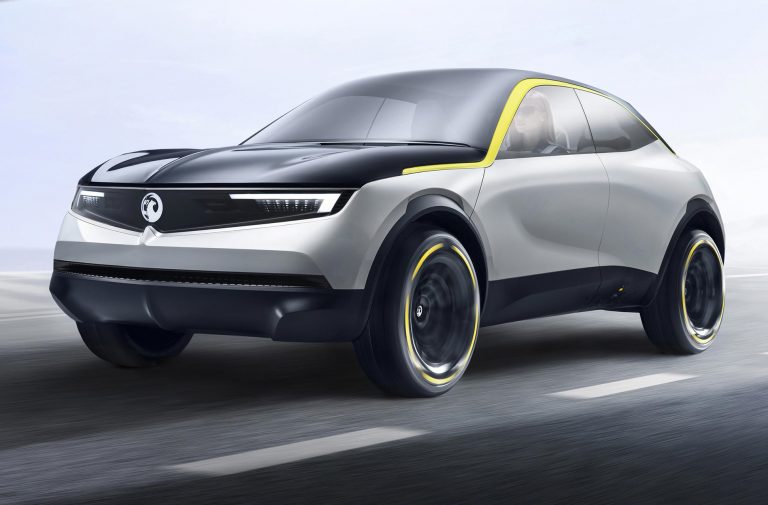
The Vauxhall GT X Experimental concept has been unveiled and described as ‘a vision of the future’ for the brand.
According to its creators, the sporty-pitched concept shows off design cues that will feature across future Vauxhall (and Opel) models, suggesting the brand will follow a much bolder design path following its recent acquisition by PSA Group.
These include the ‘Vauxhall Compass’ and ‘Vauxhall Visor’ – front and rear-end treatments that will become the signature of cars wearing Vauxhall’s Griffin badge.
The GT X Experimental is a five-door electric SUV – the SUV sector is now by far the biggest growth area in the car industry with Vauxhall and sister brand Opel expecting such vehicles to account for 40% of all their sales within the next three years.
As a result, the GT X Experimental represents efforts to make Vauxhall/Opel SUVs more efficient – it is very compact, built on a new, lightweight architecture and measuring only four metres in length and 1.8 metres wide.
The car’s electric motor is powered by a 50kWh, compact next generation lithium-ion battery with inductive charging. Vauxhall adds that the GT-X Experimental does not offer fully autonomous driving, because the brand’s efforts are focused on innovation that will be accessible in the near future. However, it does have Level 3 autonomous driving functions – this means it can handle all aspects of driving, but the driver must be able to respond to a request to intervene.
The design team, lead by design had Mark Adams, are also promising a spacious and bright interior. The front doors open to 90 degrees while those in the back are rear-hinged, and a combined panoramic windscreen and roof stretches right back to the rear seats.
Clever styling touches include smoothing out the exterior by hiding many of the panel lines of a traditional car, such as for the bonnet and door openings, and removing exterior furniture such as the door handles and mirrors. A yellow graphic along each side of the car both houses small camera for rear vision and conceals the top lines of the doors, while the vertical line of the rear doors is combined with that of the boot.
According to Mark Adams, the concept signals a very exciting future for Vauxhall. “The Vauxhall GT X Experimental embodies the spirit of our core brand values,” he says. “It’s an approachable concept that people can identify with – it confidently combines a pure and bold design execution with progressive technology that makes life easier.”
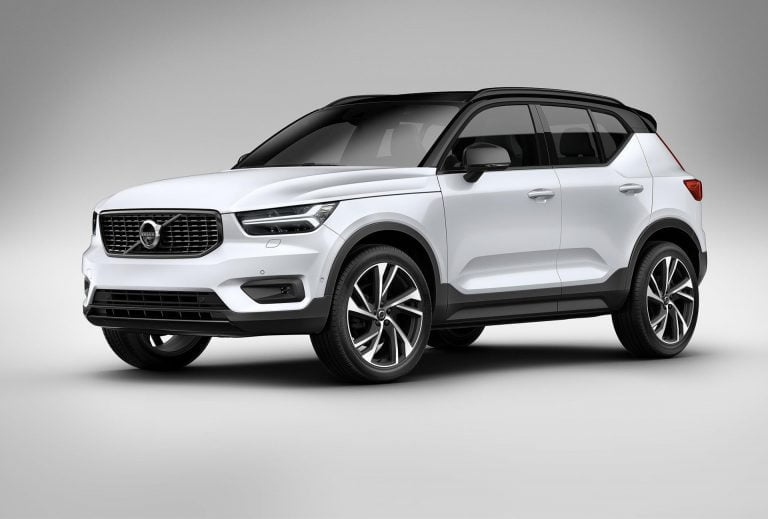
The three new units are led by the T3 petrol, Volvo’s first three-cylinder engine and expected to prove a big seller in the XC40 range. The 1.5-litre unit produces 156hp and 265Nm of torque, put through a six-speed manual transmission – Volvo intends to add an eight-speed auto option later.
T3 models go from 0 to 62mph in 9.4 seconds while returning combined cycle fuel economy of up to 45.6mpg and CO2 emissions from 144g/km.
Further powertrain additions to the XC40 range comprise the 2.0-litre four-cylinder T4 petrol and D3 diesel engines, both proven in other Volvo models. The T4 is supplied as standard with an automatic transmission and all-wheel-drive, while the D3 can be specified in front or all-wheel-drive forms.
XC40 models can now be purchased in three equipment levels, Momentum, R-Design or Inscription. All three are also offered in ‘Pro’ versions that add extra equipment such as heated front seats, bending headlights, LED front fog lights with a cornering function and a heated windscreen.
With the latest additions, the XC40 line-up now comprises 38 different models, starting with the T3 Momentum with manual gearbox at £27,610 and ranging up to the T5 Inscription Pro automatic at £37,620.
Audi is launching a short-term rental service, making selected cars available for hire periods between one hour and 28 days.
Dubbed Audi On Demand, the service already operates successfully in the United States, China, Hong Kong, Singapore, Japan and Germany.
Eligible drivers can register online for the service, and select from a menu of Audi cars. These include Sportbacks, saloons, SUVs and coupes from the A1, A3, A4, A5, Q3 and Q5 ranges. Some centres will also offer A5 Cabriolet, S3 or S5 models.
Collect or have it delivered
The chosen car can then be collected directly from the centre, the driver presenting a QR code generated at the time of booking, along with photo ID and a valid driving licence. Alternatively, cars can be delivered to and collected from the customer, within a 30-minute driving radius of the Audi Centre.
Current prices for the service range from £70 to £190 per day, with a maximum loan period of 28 days. The cost includes a full service package with unlimited mileage, fully comprehensive insurance, concierge delivery and Audi Roadside Assistance.
The initial UK version of On Demand is based at Oldham Audi, near Manchester. By the end of August sites in Edinburgh and Glasgow will open, followed by Newcastle and Birmingham in September and further sites, including London, before the end of the year.
Eventually, Audi intends to offer On Demand nationwide.
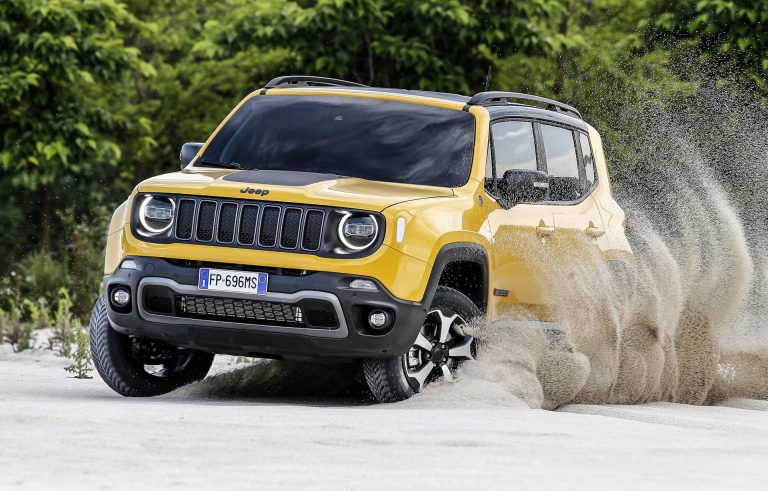
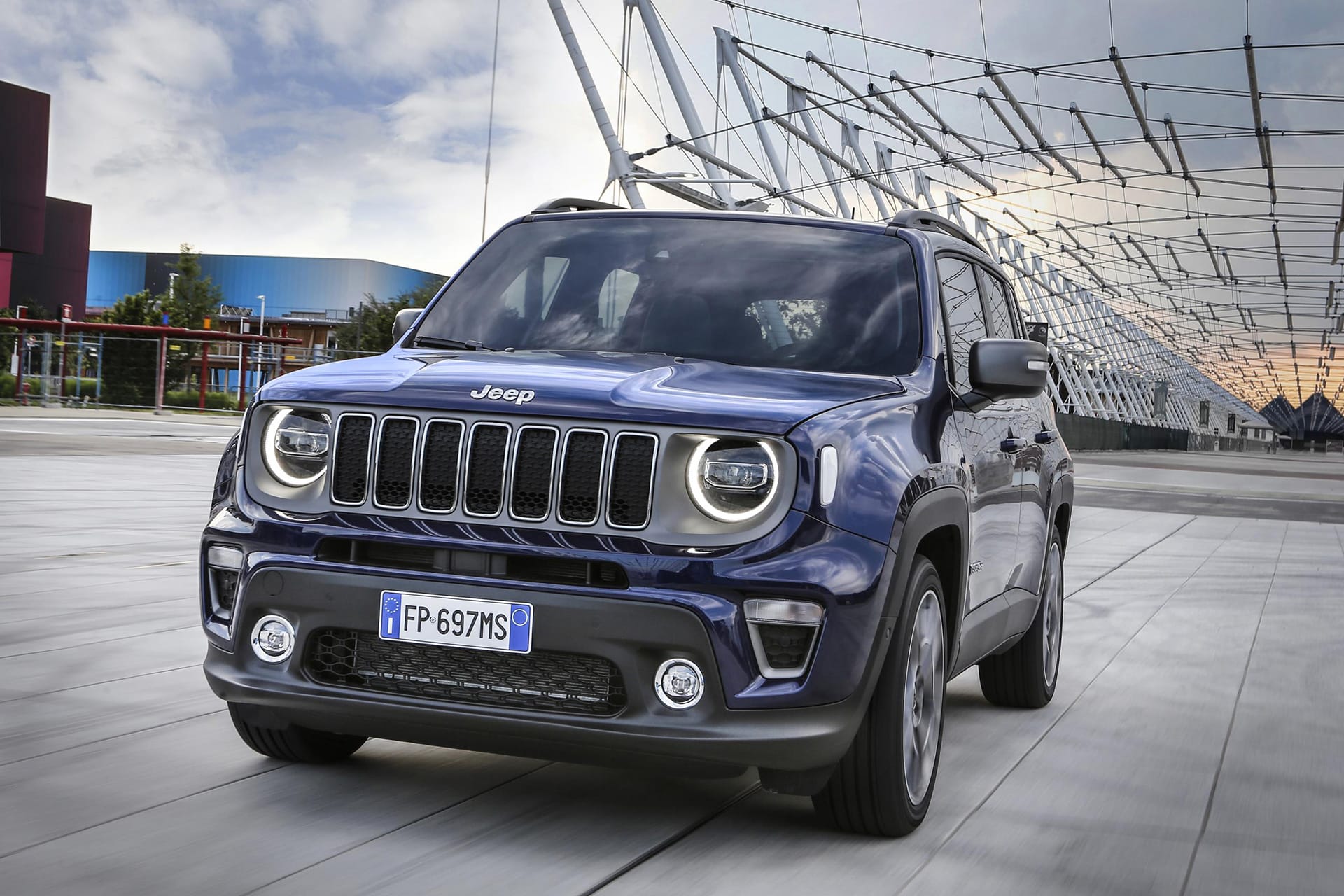
A mildly facelifted version of the Jeep Renegade small SUV will go on sale in September, priced from £19,200.
The model launched originally in 2015 and immediately became the most popular model in the Jeep range, at one point accounting for three quarters of the brand’s UK sales.
Major changes to the new line-up are the addition of new petrol engines – a three-cylinder of 1.0-litre and 120hp, and a four-cylinder 1.3-litre with 150hp. They sit alongside updated versions of the 1.6 and 2.0-litre diesel units, modifications made to ensure they meet the latest Euro 6d-TEMP/D emissions regulations.
Reports have previously suggested that Jeep plans to add both a 2.0-litre mild hybrid and a plug-in hybrid model to the Renegade range by 2020.
All of the current Renegade engine line-up can now be combined either with a six-speed manual gearbox, dual-clutch unit or a nine-speed auto transmission.
Styling changes include revisions to the signature seven-slot grille, with new head and fog lights. The alloy wheel design has been changed and several customisation options added, seven different versions available in 16, 17, 18 and for the first time 19-inch sizings. The biggest diameter can only be specified with the range-topping Limited trim.
The interior has been updated and its storage capacity increased. Fiat Chrysler Auto’s Uconnect touchscreen infotainment system is included, either in five-inch or eight-inch sizes and with a more powerful processor. It controls the climate and sound systems, while the larger version includes navigation.
Safety specification improvements include the addition of lane departure and speed assistance aids, the latter with traffic sign recognition.
As previously the Renegade will be offered in both 2WD and 4WD versions. The £19,200 entry price, up by more than £900 on the previous model, buys the Sport model with the 1.0-litre gearbox, manual transmission and front-wheel-drive.
The cheapest all-wheel-drive Renegade comes in at £28,200, in Limited spec with the 2.0-litre diesel engine, while there is also a Trailhawk model that includes a low-range gearbox.
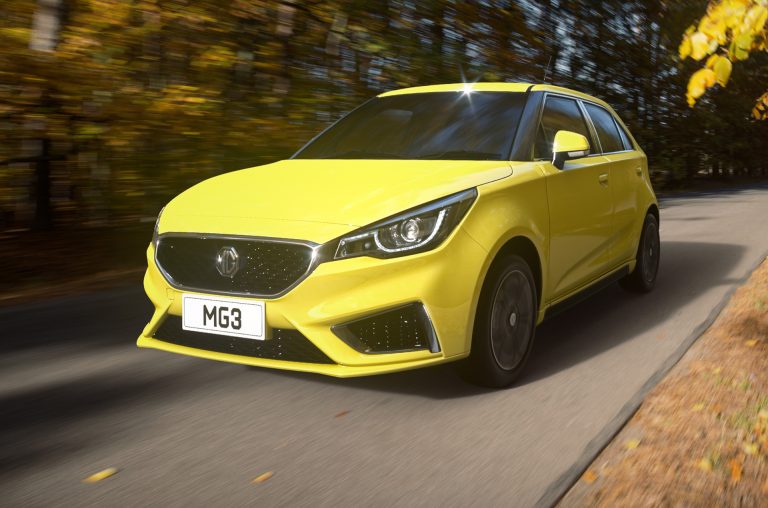
The latest version of the MG 3 has been unveiled, with the brand extending its seven-year warranty to the supermini.
Updating the first model that has been on sale for four years, the new MG 3 will go on sale at prices from £9,495.
MG describes the new car as ‘a natural evolution’ of the first model. Major changes to the exterior centre on the adoption of the brand’s current family face, with the ‘star-rider’ grille seen on recent models such as the ZS SUV.
The interior is also said to have undergone a major revamp while retaining plenty of space, including a 285-litre boot.
Mechanically the specification remains basically unchanged, though the 1.5-litre petrol engine, the only option, now offers 116hp, put through a five-speed manual transmission.
Three versions
The MG3 will be offered in three trim levels, dubbed Explore’, ‘Excite’ and ‘Exclusive’. All versions include Bluetooth phone connectivity, while ‘Excite’ and ‘Exclusive’ versions offer Apple CarPlay smartphone compatibility and DAB radio accessed through an eight-inch colour touchscreen, as well as steering wheel audio controls. Exclusive’ versions also include a reversing camera.
The £9,495 buys the entry-level Explore model, with Excite versions starting at £11,395 and Exclusives £12,795. A five-year, no deposit 0% APR finance package is also available.
Firs offered on the ZS SUV launched last year, the warranty is available over seven years or 80,000 miles. It is also fully transferrable to future owners.
MG currently enjoys the highest sales growth rate in the UK market, in percentage terms – up 115% year to date. However that represents 4,286 registrations – Ford, in the same period, has shifted more than 145,000…
MG’s sales and marketing head, Daniel Gregorious, is optimistic about the brand’s prospects. “New MG3 is another example of how we’re creating fantastic value-for-money packages across the range,” he says.
“Our seven-year warranty, high specification, competitive pricing, strong finance offers and fantastic design really set New MG3 apart in the supermini segment,” he adds.
It’s easy for the stresses of work or home life to carry over behind the wheel, and stressed drivers are never good drivers. Stress can affect how we feel physically and emotionally as well as impair our judgement and our reactions, which is not what you need when you are behind the wheel of a motor car.
To be a better driver, it’s important to make sure you are in the right frame of mind before you even buckle up. So if you’re feeling stressed before driving, road safety charity IAM RoadSmart and automotive industry charity BEN have come up with some tips to help you stay calm behind the wheel.
Firstly, it is important to recognise when you’re feeling stressed. BEN lists the following symptoms as potential warning signs of stress:
Becoming easily irritated with colleagues, friends or family
Feeling distracted, forgetful or moody
Having racing thoughts
Not being able to ‘switch off’
Becoming quiet and withdrawn
Under or overeating
Smoking more, drinking more alcohol or taking drugs
Tense muscles
Headaches
Feeling sick
Not sleeping well
Getting ill more often
Here are BEN’s tips for what to do you if you feel stressed before driving:
Go for a short walk to get some fresh air and unwind.
Wait until you feel calm and collected before heading out on your journey.
Try mindfulness and deep breathing exercises. Meditation has been shown to reduce stress and anxiety.
If you’re feeling ill from stress with headaches or sickness, make sure you feel well enough to drive.
Write down a list of the causes of your stress, this can help you clear your mind.
If you’re struggling with substance misuse then seek professional help. Be aware that alcohol and other substances can stay in your system for many hours, and still be present the following day.
If you’re having trouble sleeping due to stress then make sure you’re not too tired to drive. IAM RoadSmart suggests that if you feel sleepy behind the wheel to find a safe place to pull over and stop. Almost 20% of accidents on major roads are sleep-related.
Tell someone how you feel. Talking about your problems with loved ones can make a big difference.
Tests by consumer organisation Which? have found that a large number of new diesel cars still exceed the new, tougher emissions limits in “real-world” testing.
Much fanfare has been made about the new WLTP and RDE fuel economy and emissions tests that were introduced by the EU last year, and which will apply to all new cars from this September. But based on the Which? research, a number of car manufacturers are still exploiting weaknesses in the testing procedures to build cars that pump far more toxins into the air than they should.
The tests have found that although some petrol cars produce excessive emissions when put through more rigorous testing than the EU requires, it is new diesel cars that are still spewing the highest levels of pollution from their exhausts.
Based on the outgoing NEDC emissions limits, Which? found that a whopping 77% of new diesel cars tested in the last 18 months exceeded the legal emissions limits when put through more rigorous testing. In reality, this is hardly news anymore – we’ve known since before the Volkswagen Dieselgate scandal broke that manufacturers had been gaming the emissions regulations for years.
The official government fuel economy numbers were a joke, and therefore emissions were as well, because the official NEDC tests simply weren’t tough enough (and yet Volkswagen still couldn’t build engines that could pass these basic tests without cheating…).
But all this was supposed to come to an end with the new, tougher WLTP laws. It was claimed that manufacturers wouldn’t be able to outwit the new tests, so the results would be truly representative of what buyers could expect when they bought a new car. Every new model released since September 2017 has had to comply with the new rules, and by September 2018 (just two weeks away as this is written) all new cars on sale must comply. So, good news all round, right?
Diesel cars still poisoning our air
Sadly, no. Which? claims that more than half of the new diesel cars they have tested in recent months still pump out far more pollution than the new rules allow, because those new rules still don’t properly represent real-world driving in sensible real-world conditions.
The test protocols used by Which? are stricter than the EU’s new scheme, yet they are hardly unrealistic. For example:
Cars are tested in the default setting they start up in, rather than switching them to an ‘eco mode’ as the EU allows manufacturers to do for official tests.
All test cycles are conducted with the air conditioning, headlights and radio switched on.
In addition to running the EU’s new WLTP test, Which? also conducts a proper motorway cycle, which official tests do not have.
Cars are tested with a 200kg payload, which is roughly equivalent to two adults, a bit of luggage and a tank of fuel.
The tests are lab-based, but if the results seem suspicious, the car is driven on real roads and emissions are measured using a PEMS (portable emission measuring system).
Which? has tested 61 new diesel models using these protocols since the start of 2017. 47 of those 61 cars (77%) failed to meet the outgoing NEDC emissions requirements. 33 out of the 61 cars (54%) failed to meet the new WLTP emissions standards.
So how can these offending cars be allowed on sale?
The government tests are softer than the Which? tests, so manufacturers still have wiggle room to ‘optimise’ their vehicles for best possible results. And, obviously, they do everything they can to get the best results – even though they know the results will not be realistic.
They can switch the car into an eco mode (that most drivers never use because it makes the car sluggish and unresponsive to drive). They are allowed to turn off air-conditioners, radios, headlights and anything else that may use fuel. They don’t have to account for passengers, luggage or any fuel in the tank beyond what’s needed to complete the test. They can pump up the tyres way past a comfortable or safe level to reduce rolling resistance. Plus various other tricks and ploys.
All of these little loopholes add up to big differences in the final results, but the level of variation reported by Which? is astonishing. We’ve republished their full table below. The worst offender – the Subaru Forester – was found to be producing 25 times the legal emissions levels, yet still passed the old NEDC tests.
The Subaru Forester diesel was the worst-polluting car tested by Which?
How does your car rate?
Here is the list of cars tested by Which? and their results. We’ve added columns to show how they rate against the old (NEDC) and new (WLTP) tests.
The new legal emissions limit from now until 2020 is actually double the current standard, as a sop to manufacturers from the EU for making the tests tougher. From 2020, the levels will decrease by 40%, although that still makes them 50% higher than the old NEDC levels.
Cars that fail both the old and new emissions standards under Which? testing
Fuel type
Car name and generation
Engine/trim
NOx (g/km)
NEDC (0.08g/km)
WLTP (0.168g/km)
Diesel
Subaru Forester (2013 to present)
2.0D Sport Lineartronic
2.022
2428%
1104%
Diesel
Renault Grand Scenic (2016 to present)
Energy dCi 160 Bose Edition EDC
0.896
1020%
433%
Diesel
Renault Captur (2013 to present)
dCi 90 Intens
0.725
806%
332%
Diesel
Peugeot 5008 (2017 to present)
BlueHDi 150 Allure
0.700
775%
317%
Diesel
Ford Kuga (2012 to present)
2.0 TDCI S/S Vignale 4×4
0.655
719%
290%
Diesel
Renault Megane (2016 to present)
dCi 130 GT Line
0.504
530%
200%
Diesel
Kia Sorento (2015 to present)
2.2 CRDi GT Line AWD automatic
0.480
500%
186%
Diesel mild hybrid
Renault Scenic (2016 to present)
Energy dCi 110 Hybrid Assist Intens
0.478
498%
185%
Diesel
Renault Scenic (2016 to present)
Energy dCi 130 Bose edition
0.472
490%
181%
Diesel
SsangYong Korando (2011 to present)
2.2 e-Xdi 220 Sapphire 4WD automatic
0.468
485%
179%
Diesel
Citroën SpaceTourer (2016 to present)
M BlueHDi 150 s/s Shine
0.436
445%
160%
Diesel
Kia Sportage (2016 to present)
2.0 CRDi 136 Spirit AWD
0.427
434%
154%
Diesel
Kia Optima Sportwagon (2016 to present)
1.7 CRDi GT-Line DCT
0.400
400%
138%
Diesel
Fiat Tipo (2016 to present)
1.6 Multijet s/s Lounge
0.383
379%
128%
Diesel
Ford Edge (2015 to present)
2.0 TDCi BiTurbo S/s Titanium 4×4 Powershift
0.380
375%
126%
Diesel
Alfa Romeo Giulia (2017 to present)
2.2 Diesel Super AT8
0.376
370%
124%
Diesel
Mercedes-Benz CLA Shooting Brake (2015 to present)
Diesel 2.1 (136bhp) 2WD
0.357
346%
113%
Diesel
Mazda CX-5 (2017 to present)
Skyactiv D 150 Exclusive line
0.342
328%
104%
Diesel
Mazda 3 (2013 to present)
Skyactiv D 105 Sports line
0.329
311%
96%
Diesel
Hyundai i40 Tourer (2011 to present)
1.7 CRDi blue Premium DCT (2016)
0.313
291%
86%
Diesel
Vauxhall Insignia Sports Tourer (2017 to present)
1.6 Ecotec Diesel s/s Business Innovation
0.302
278%
80%
Diesel
Land Rover Discovery Sport (2015 to present)
TD4 E-Capability HSE
0.300
275%
79%
Diesel
Volkswagen Golf SV (2014 to present)
1.6 TDI BMT Comfortline
0.299
274%
78%
Diesel
Volvo V90 (2016 to present)
D5 Inscription AWD automatic
0.267
234%
59%
Diesel
Peugeot 3008 (2016 to present)
BlueHDi 120 Allure
0.266
233%
58%
Diesel
Nissan Qashqai (2014 to present)
1.6 dCi Tekna
0.240
200%
43%
Diesel
Alfa Romeo Stelvio (2017 to present)
2.2 diesel Super Q4 AT8
0.228
185%
36%
Diesel
Audi A5 Cabriolet (2017 to present)
2.0 TDI design quattro S tronic
0.220
175%
31%
Diesel
Skoda Octavia vRS estate (2013 to present)
RS TDI DSG
0.219
174%
30%
Diesel
Jaguar F-Pace (2016 to present)
20d Prestige AWD automatic
0.215
169%
28%
Diesel
Volvo S90 (2016 to present)
D4 Inscription automatic
0.191
139%
14%
Diesel plug-in hybrid
Audi Q7 e-tron (2016 to present)
e-tron quattro tiptronic
0.177
121%
5%
Diesel
Skoda Kodiaq (2017 to present)
2.0 TDI SCR Style 4×4 DSG
0.172
115%
2%
Cars that pass the new WLTP emissions standards but fail the old NEDC standards
Diesel
BMW 3 Series GT (2013 to present)
320d Gran Turismo Luxury line steptronic
0.166
108%
-1%
Diesel
Audi Q5 (2017 to present)
2.0 TDI design quattro S-tronic
0.131
64%
-22%
Diesel
Audi SQ7 (2016 to present)
SQ7 TDI quattro tiptronic
0.123
54%
-27%
Diesel
BMW 5 Series Touring (2017 to present)
530d Touring Sport Line steptronic
0.122
53%
-27%
Diesel
Ford Fiesta (2017 to present)
1.5 TDCi s/s Titanium
0.116
45%
-31%
Diesel
BMW 3 Series Touring (2012 to present)
318d Touring steptronic
0.114
43%
-32%
Diesel
Mercedes-Benz GLC (2015 to present)
220d 4Matic 9G-tronic
0.112
40%
-33%
Diesel
Mini Countryman (2017 to present)
Cooper D Countryman
0.107
34%
-36%
Diesel
Mercedes-Benz GLC Coupe (2016 to present)
250d 4matic 9G-tronic
0.099
24%
-41%
Diesel
DS 7 Crossback (2017 to present)
BlueHDi 180 automatic
0.098
23%
-42%
Diesel
Volvo XC60 (2017 to present)
D5 R Design AWD Geartronic
0.093
16%
-45%
Diesel
Vauxhall Insignia Grand Sport (2017 to Present)
2.0 Diesel s/s Business Innovation
0.087
9%
-48%
Diesel
Volkswagen Arteon (2017 to present)
2.0 TDI SCR Elegance 4Motion DSG
0.087
9%
-48%
Diesel
Volkswagen Passat estate (2015 to present)
2.0 TDI SCR BMT Highline
0.084
5%
-50%
Cars that pass both the old and new emissions standards
Diesel
BMW 7 Series (2015 to present)
730d Steptronic
0.080
0%
-52%
Diesel
Vauxhall Zafira Tourer (2012 to present)
2.0 CDTI ecoflex s/s innovation
0.076
-5%
-55%
Diesel
SEAT Ateca (2016 to present)
2.0 TDI Xcellence 4Drive DSG
0.076
-5%
-55%
Diesel
Land Rover Discovery (2017 to present)
TD6 SE automatic
0.061
-24%
-64%
Diesel
BMW 5 Series (2017 to present)
520d Luxury Line Steptronic
0.053
-34%
-68%
Diesel
BMW X3 (2017 to present)
xDrive20d xLine Steptronic
0.043
-46%
-74%
Diesel
Mercedes-Benz CLS (2018 to present)
CLS400d Coupe AMG Line 4Matic 9G-tronic
0.042
-48%
-75%
Diesel
Peugeot 308 SW (2014 to present)
2.0 BlueHDi 180 GT EAT8
0.041
-49%
-76%
Diesel
Mercedes-Benz S-Class (2013 to present)
S400d 9G-tronic
0.035
-56%
-79%
Diesel
Vauxhall Grandland X (2017 to present)
2.0 Diesel s/s Innovation automatic
0.034
-58%
-80%
Diesel
BMW X2 (2018 to present)
xDrive20d M Sport X Steptronic
0.031
-61%
-82%
Diesel
Mercedes-Benz E-Class estate (2016 to present)
E220d 9G-tronic
0.028
-65%
-83%
Diesel
Mercedes-Benz E-Class saloon (2016 to present)
E220d 9G-tronic
0.024
-70%
-86%
Diesel
BMW 2 Series Active Tourer (2014 to present)
218d Active Tourer Steptronic
0.014
-83%
-92%
As you can see, the Subaru Forester is the worst of all, exceeding the current limits by more than 2400% (in other words, it produces about 25 times the legal limit) and exceeds the new limits by 1100% (about 12 times the new limit). It also produced more than double the emissions of the second-worst car, the Renault Grand Scenic. Renault also has five cars in the ten worst offenders.
At the other end of the scale, the BMW 2 Series Active Tourer and Mercedes-Benz E Class are model citizens. Which? was so surprised by the big Mercedes’ outstanding score that it put the E-Class through the RDE road test protocol to check it against the lab figures, but the results were very similar so it is definitely a genuine score.
What does this all prove?
Well, firstly it’s important to state that all of the cars above passed their official government lab tests – even the Subaru and all those Renaults – so there is no question that they are legal. What is shows is how inadequate the regulations are at properly cracking down on emissions levels from diesel cars.
Industry bodies like the SMMT can bleat on about how efficient and environmentally-friendly modern diesel engines are, but the above tests show that it’s largely a charade. So don’t be surprised when governments and councils continue to levy additional taxes on diesel cars, and don’t believe industry representatives who complain that it’s not fair.
Car finance debt from dealerships for 2018 to date has smashed previous records, as new and used car buyers continue to borrow more and more money on their cars.
Point of sale (POS) consumer car finance lending for new cars topped £10 billion for the first six months of 2018, according to data released today by the Finance and Leasing Association (FLA), while lending for used cars was more than £9 billion. This is an increase of 8% and 17% respectively over last year’s record numbers, despite fewer cars being sold.
The average borrowing for both new and used cars hit record levels in the last quarter, with average new car borrowing at about £20,000 (up 7% over last year) and used car borrowing at about £12,000 (up 5% over last year). Over the same period, average weekly earnings across the UK have only increased by 2%, suggesting that buyers are spending more of their income on car finance payments than ever before.
For new car buyers, average car finance debt now represents more than 39 weeks of average earnings, up from 29 weeks at the start of the decade. Much of this growth has been fuelled by the popularity of personal contract purchase (PCP) finance, meaning greater debt but lower monthly payments thanks to the enormous balloon payment that hangs over the length of the agreement. The problem is that if a customer needs to settle the finance agreement early, they have an enormous debt that they generally can’t afford to clear.
Used car finance growth is also being driven by the increasing popularity of PCP agreements, although the interest rates are not usually as favourable on used cars as they are for new cars.
About 90% of all privately-purchased new cars are financed at point of sale, with car dealerships acting as brokers for the finance companies. For used cars, the figure is harder to judge but probably less than 20% as many used cars are sold privately or financed by other means (such as a personal loan from a bank).
Cars bought on finance by consumers through dealerships – June 2018
New business
Jun 2018
% change on prev. year
3 months to Jun 2018
% change on prev. year
12 months to Jun 2018
% change on prev. year
New cars
Value of advances (£m)
1,717
+9%
4,962
+18%
19,479
+4%
Number of cars
83,470
+1%
243,495
+12%
978,713
-6%
Used cars
Value of advances (£m)
1,460
+11%
4,562
+16%
16,528
+13%
Number of cars
119,903
+4%
383,302
+10%
1,412,991
+7%
Total cars
Value of advances (£m)
3,176
+10%
9,524
+17%
36,007
+8%
Number of cars
203,373
+3%
626,797
+11%
2,391,704
+2%
Source: Finance and Leasing Association
Increased interest rates have had no impact on car finance debt
Based on this record car finance lending for the first half of 2018, it appears that the Bank of England’s move to increase interest rates last November has done absolutely nothing to slow borrowing on new and used cars. Another increase has been announced this month, so it remains to be seen whether or not this will make any difference to car finance borrowing over the rest of this year.
There are still plenty of low-rate or even 0% APR new car deals around in the marketplace, and the ongoing desperation of car manufacturers and dealers to sell every car they can means that we are unlikely to see any substantial hikes in the rates offered to customers.
If rates do start creeping up, we can expect to see dealers steering customers towards ever-longer terms to keep their monthly payments down. Whilst that may help them get a sale today, it’s just postponing an inevitable problem of declining sales further down the line.
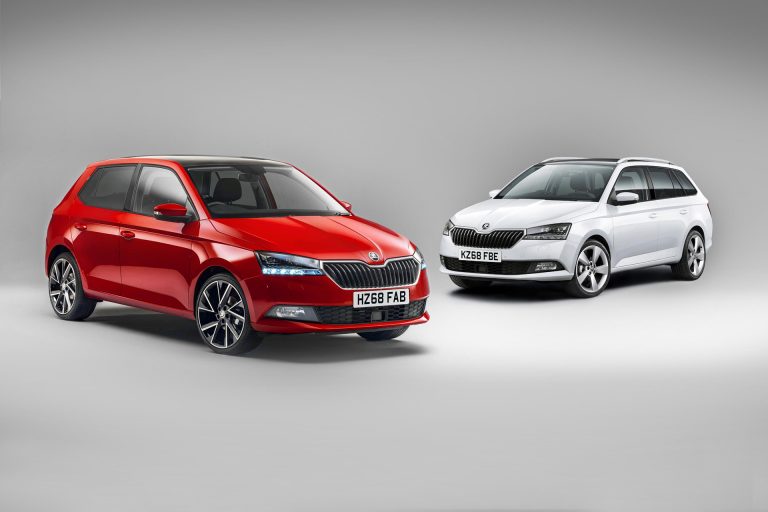
Significant power increases for entry-level models lead a package of updates to the Skoda Fabia supermini.
However buyers of the new car, on sale in September, will no longer be able to choose a diesel engine, reflecting the shift away from diesel in the UK market.
The entry-level Fabia S now employs a 1.0-litre engine producing 75hp – a 15hp increase over its predecessor model. However the power hike comes at a cost – Fabia prices now start from £12,840, which is £2,340 more expensive than the outgoing 60hp variant.
The car does gain more than the extra horses. LED daytime running lights are now standard on all versions of the Fabia, as is the Front Assist safety feature and a multi-function trip computer.
Five trims, three engines
The new Fabia will be available in five trim levels, and across its familiar hatch and estate body styles. Further engine options range across 95hp and 110hp units, like the 75hp version all of 1.0-litre capacity. The highest-power version can be specified with the manual or an optional seven-speed automatic transmission.
New alloy wheel options feature across the range along with other extra equipment, while the most significant equipment upgrades are to the mid-range SE-L model, priced from £15,205. This now comes with satellite navigation, a one-year subscription to Skoda’s Infotainment Online service, lighting in the front centre console and 16-inch alloy wheels.
Top-level Monte Carlo variants, costing from £16,985 with the 95hp engine, gain climate control air conditioning, LED rear lights, rear electric windows and new seat upholstery. The car’s styling package includes a black front spoiler, black roof, black floor mats and carbon-effect dashboard trim.
Several safety aids feature on the options list including adaptive cruise control, a rear-view camera, driver fatigue warning. Full LED headlamps are now available for the first time on the model, as is Blind Spot Detection and Rear Traffic Alert, costing £390.
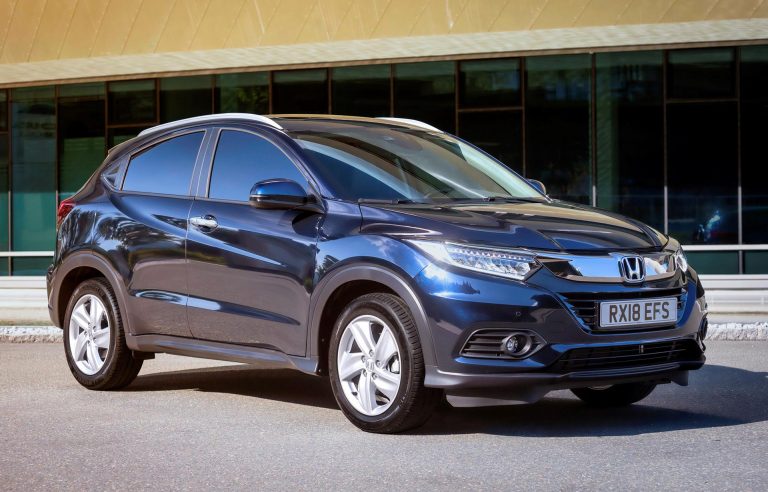
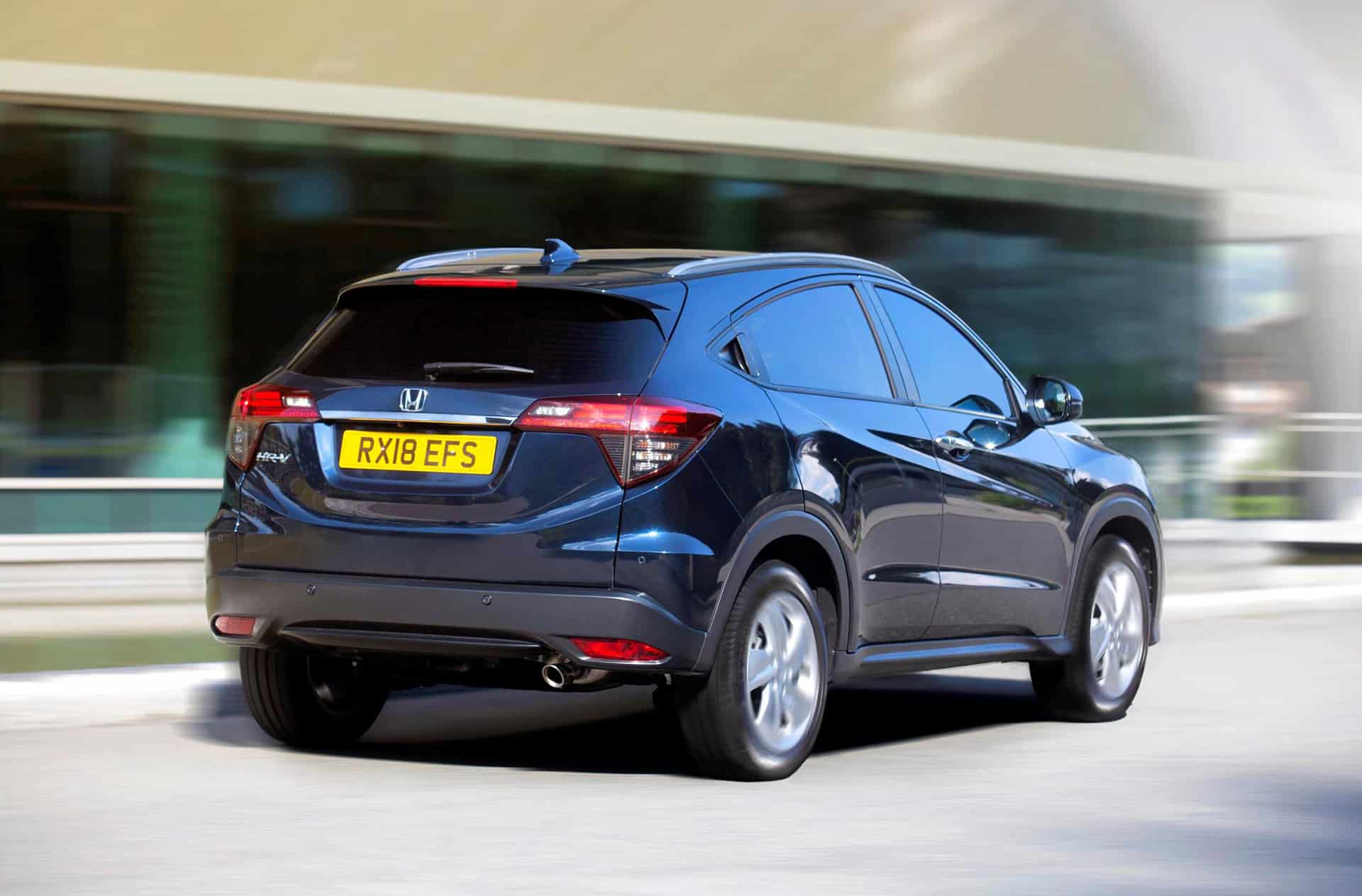
The Honda HR-V compact SUV has undergone a mid-life revamp, with the emphasis on more technology and quality upgrades.
On the roads from October, the car will go on sale with a 1.5-litre petrol engine producing 130hp and 155Nm of torque. This has been improved thanks to measures to lower friction between the pistons and cylinder bores, and a friction-reducing coating on the timing chain to cut long-term wear and improve the efficiency of the engine.
Honda quotes a 10.2-second 0-62mph for the 1.5 HR-V with a six-speed manual gearbox, 10.9 seconds with the optional CVT automatic. Best combined cycle fuel economy (under the new WLTP measuring system) is 53.2mpg with CO2 emissions from 121g/km.
A more potent turbo version of the 1.5-litre engine and a 1.6-litre diesel will be added to the HR-V range in 2019.
Quieter interior
Inside, the Honda HR-V has gained more sound insulation, while some versions will be supplied with active noise cancellation (ANC). This reduces low-frequency noise in the interior by monitoring for such noises through two microphones, and then cancelling them out with ‘reverse phase’ audio signals through the speakers.
The front seats have been redesigned to provide more support, especially to the back, and covered in higher quality fabric. Top-line versions include a full-leather interior.
Exterior styling changes include a more substantial version of the Honda ‘Solid Wing Face’ graphic above the grille, deeper air intakes with built-in circular fog lights, and redesigned projector lens headlamps with LED daytime running lights.
There are also minor changes at the rear, while higher-specification models gain a different finish to the exhaust tailpipe and a new 17-inch alloy wheel design.
Honda has yet to reveal any price changes to the HR-V – prices and more detailed specifications will be revealed closer to the car’s launch.
The Audi e-tron electric SUV will produce more than 408hp and be capable of asub six-second 0-62mph time when it is officially unveiled before the end of 2018.
Audi has released more technical information on the fully-electric car, stating that it will combine enormous power and high efficiency. A key figure is a potential range of 248 miles before recharging, measured on the new ‘real-world’ WLTP cycle, and aided by new energy recuperation technology.
The e-tron will be powered by two electric motors which in normal conditions will have a peak output of 265kW, equivalent to 360hp, alongside 561Nm of torque. However a boost mode, activated by shifting a drive mode selector in the cockpit and fully depressing the accelerator pedal, will allow the car to produce 300kW (408hp) and 600Nm for eight seconds.
Innovative energy recovery
The recuperation system contributes up to 30% of the e-tron’s range, making use of both electric motors and an electrohydraulically integrated brake control system. An innovation in the car is to combine three different recuperation modes: manually while coasting through shift paddles on the steering wheel, automatic coasting and through energy produced by braking.
Around 90% of all deceleration – up to 0.3 – will be carried out only using the electric motors, with the driver able to choose three levels of recuperation, from no drag when releasing the accelerator pedal to a noticeable reduction in speed. The driver will be able to accelerate and slow down using only the accelerator pedal, effectively a single-pedal car.
The braking system will only contribute to the recuperation when the driver uses the brake pedal to decelerate by more than 0.3g. A new electrohydraulic actuation concept used for the first time employs a hydraulic piston in the compact brake module to generate additional pressure, making the brakes very rapid in action.
The whole system will be integrated with the car’s systems deciding whether to use the electric motor, the wheel brake or a combination of both for deceleration, with the driver not noticing the switch from one to the other.
Audi recently ran the prototype e-tron at the Pike’s Peak hillclimb in Colorado, USA – an event that also saw the Volkswagen I. D. Pike’s Peak electric race car set a record time on the 20km course up the 4,302 metre mountain.
Running on a 31km course descending 1900 metres down the mountain, the e-tron recovered enough energy back to the battery to cover the same distance again.
If you’re thinking of buying a new car and venture into a dealer showroom over the course of September, you’ll be forgiven for thinking the world’s gone a little crazy.
There will be more balloons on display than usual, windows will be festooned with new banners, salespeople will have wider smiles on their faces and a more pronounced spring in their step. There will be more customers milling around, sitting in cars, kicking tyres, thumbing through brochures, agonising over paint charts and discussing the best possible monthly finance deals.
Welcome to the arrival of the 68-plate change.
September is a monster month for the car retailing sector. It’s the last big push of the year from dealers and car manufacturers as they move to ensure as many new cars are driven off forecourts before the autumnal slowdown as budgets turn to Christmas.
Traditionally, September is a good time to buy a car. It’s when car manufacturers push the boat out in terms of low-rate personal contract purchase (PCP) schemes and bundling deals to include service plans, extended warranties, GAP insurance and even free fuel!
There will certainly be no escaping the marketing messages as multi-million pound budgets will be invested in advertising campaigns across every conceivable platform.
To celebrate the plate change, The Car Expert offers this round-up of what makes September so special.
How the plate change started
The first number plate to be issued was DY1 in Hastings in 1903, just ahead of it becoming mandatory for all new car purchases. The most famous plate from that year though is A1, the first plate to be issued by London County Council. The plate was acquired by Earl Russell who apparently queued overnight (or got his butler to queue, depending on which version you believe) to secure it.
The plate is still in use today (apparently on a Mini Cooper S) having changed hands for significant sums over the decades with one valuation placing it at £10 million!
Various numbering systems ran between then and 1963 when the annual year identifier was introduced, a move which resonated with British car buyers as the newness of their car was for all to see on driveways across the country.
Annual plate-changes through this period ran from January to December until 1967 when it moved to August.
The numbering system placed the year identifier at the end of the registration plate, starting with the letter A and working through to Y in 1982. From 1983 to 1998 the identifier moved to the start of the number.
The current biannual system
As car sales grew, the annual plate-change in August caused an administrative and logistical nightmare for dealers and manufacturers, as it created an enormous peak of sales in August and September, declining to a dearth of sales from May to July as no-one wanted to buy a new car that would almost immediately have an ‘old’ number plate. This prompted the introduction of the twice-yearly system (March and September) in 1999 with the T-plate.
The first of the new-style plates debuted in September 2001 with 51, surely a bitter disappointment for anyone buying a car back then as it wasn’t obvious the age identifier was the number 1. This was not helped by the run out of the old system which meant the March change in 2001 was Y, the last of the letters, rather than 01.
It began to make more sense from March 2002 with the 02-plate, with buyers quickly realising that if they purchased cars from March then everyone, especially the neighbours, would know they had a new car; a consideration as important as make, model and colour for many British buyers! No wonder March became the most popular of the two months.
The system took a little while to bed in and the removal of the annual peak saw the creation of two sizeable peaks instead, which when combined now account for over a third of all annual new car sales!
Whether moving from annual to twice-yearly was a success is a moot point. While dealers and car makers like the heightened activity six months apart, they would probably benefit from a system which more evenly distributed sales to avoid the inevitable quieter months of February and August where buyers tend to stay out of the market.
Yet the current system benefits from built-in longevity which will see it run until the 00-plate in September 2050.
What do the number plate combinations mean?
Some of those apparently random letters that make up registration numbers are precisely that, although some have a clearly defined purpose. We have covered it previously in our detailed explanation of how the British number plate system works, but here’s a quick summary.
The first two letters are an area code. The first letter is the most important with A standing for Anglia, B for Birmingham, C for Cymru through to Y for Yorkshire. Unusual ones along the way include F for Forest and Fens (Nottingham and Lincoln) and G for Garden of England (Maidstone and Brighton).
The second letter previously referred to the local Driver and Vehicle Licencing Agency (DVLA) registration office, although these all closed in 2013 as the process moved online. However, the convention continues with the dealers issued letters according to their traditional area code.
The two numbers are the age identifier, with 68 representing registrations during the six month period from September 2018 to February 2019.
The last three are random but are issued in batches to dealers, which is why you’ll probably see similar letter sequences on new vehicles awaiting collection. Incidentally, the DVLA has measures in place to stop any potentially offensive combinations being generated.
How big will September 2018 be?
It will be sizeable, but not as massive as it has been in recent years.
As the new car market got back on track after the recession, the plate-change months grew dramatically. According to the Society of Motor Manufacturers and Traders (SMMT), the month of September peaked in 2016 with 469,696 registrations.
The first of the two plate-change months remains the biggest with March 2017 holding the all-time record when 562,337 cars were registered. That total is unlikely to be beaten, as buyers in 2017 were encouraged to purchase ahead of new Vehicle Excise Duty (road tax) rates applied to cars registered from April.
New car registration numbers for every March from 2007 to 2018
New car registration numbers for every September from 2007 to 2017
With the current slow-down in new car sales, March 2018 dropped to 474,069 and September is widely expected to be down year-on-year, a factor exacerbated by a shortage of some engine derivatives as a result of all new cars having to comply with WLTP (Worldwide Harmonised Light Vehicle Test Procedure) type approval from 1 September. This could see September drop below 400,000 for the first time since 2013.
However, don’t let that spoil your buying pleasure and proudly displaying your 68-plate car for all to see!
What is it? The DS 7 Crossback is a compact SUV and the first bespoke model from Citroën’s upmarket sub-brand.
Key features Bold interior styling, spacious, upmarket technology.
Our view The DS 7 Crossback is presented as a much more fashionable alternative to the mainstream upmarket compact SUV market but it only partly meets the brief. The interior styling is very bold but contained within a too conventional exterior.
However, the car does earn praise for its ride comfort and the innovation in some of its technology, while it also includes a strong safety package as standard.
The DS 7 Crossback is the first car from DS that’s not a chromed-up old Citroën model
Full review
Introduction
It’s around four years now since DS, previously an upmarket trim level on Citroën cars, was launched to the world as a proper brand. Now DS Automobiles is to Citroën a bit like Lexus is to Toyota, and the DS 7 Crossback, which went on sale early in 2018, is a very important car for the new start-up.
Why? Because until this car, DS Automobiles products have consisted of Citroën models with their styling heavily worked over and any vestige of a Citroën badge consigned to the parts bin.
The DS 7, however, is different – the first standalone model from DS, and we are told the pioneer for a “new generation” of bespoke DS vehicles that will come to market in the next few years – we expect a smaller DS 3 Crossback and a saloon to target the monolith that is the BMW 5 Series, while an electric concept is due at the Paris show in October.
We are told that the DS 7 is a completely new model, developed from the ground up by DS. That’s partly true but the car is built on the same production line as the Peugeot 3008 and on the same platform – any Peugeot technician delving into the DS will not find anything mechanically unfamiliar.
No, where DS is building its exclusivity is in styling, particularly inside, trying to cement its self-titled image as the ‘avant-garde’ brand in the PSA line-up. The designers have certainly gone to town on the interior styling, as we will describe shortly, and that might be a surprise to anyone stepping into the car.
You see, for an ‘avant-garde’ brand, the exterior does look boringly conventional – rather like any other compact SUV. The DS 7 appears huge and it does give off an upmarket, premium impression, but avant-garde? If you were looking for a radical departure from the norm, as was the original Citroën DS of 1955, you won’t find it here.
Buying and owning a DS 7 Crossback
Checking out a DS 7 Crossback involves heading to a network of DS Stores and Salons that the brand has been opening across the UK. And that’s not as easy as it was. Initially, these were mostly connected to Citroën outlets but the brand has slashed their numbers in favour of opening exclusive sites. Currently there’s only around 30, though they are expected to rise to around 70.
Once you’ve found a dealer (except that we are told they are not dealers but “luxury stores”), you’ll be offered the DS 7 in one of four trim levels dubbed Elegance, Performance Line, Prestige and Ultra Prestige – you get the idea that this brand is emphasising luxury?
Highlights of the entry-level specification include 18-inch alloy wheels, leather on the steering wheel and gear lever, auto air conditioning and wipers, an eight-inch touchscreen with Apple CarPlay and Android Auto compatibility, rear parking sensors and keyless entry and start.
Our test car is furnished in the second-level and sporty pitched ‘Performance Line’. This adds almost £3,400 to the bill but does gain quite a lot of extra equipment. The alloys grow by an inch, there are electric folding mirrors that also shine a spotlight on the ground complete with DS logo, while inside boasts lots of aluminium detailing and rear tinted windows.
Perhaps, more importantly, this level also includes clever adaptive headlamps, extra rear airbags, a much larger 12-inch touchscreen with connected navigation, another 12-inch digital instrument cluster ahead of the driver, and voice recognition controls.
Continuing the fashion magazine theme, each of the four trim levels also gets its own bespoke ‘Inspiration’ styling package which involves a lot more than the amount of leather added.
The Elegance version is called ‘Inspiration Bastille’, Performance Line models go with ‘Inspiration Performance Line’ (took a lot of thought, that one), Prestige models are furnished with ‘Inspiration Rivoli’ and the range-topping Ultra Prestige ‘Inspiration Opera.’
The DS 7 scored a five-star safety rating when tested by Euro NCAP in 2017. Autonomous emergency braking comes as standard, while an Advanced Safety Pack – optional on the lower two grades but standard on the rest – adds blind spot and lane-keeping assistance, traffic sign recognition and a driver attention alert.
Top spec Ultra Prestige models are also supplied with DS Connected Pilot, a semi-autonomous adaptive cruise control with steering assistance and stop-and-go. This can be specified as an option on all but entry-level models.
Inside the DS 7 Crossback
If the DS 7 looks conventional on the outside, it’s anything but within, and the whole effect is achieved by styling.
To start with, the car does the basics very well. For a car promoted as a compact SUV it feels huge within. Occupants front or rear will have to be of pretty large dimensions to complain about head, shoulder or legroom, and the boot space is pretty big at 618 litres. Note by the way that this is very much a five-seater – luxury SUVs apparently don’t do tiny rear seats…
However, it’s the design of the interior that will have one at last thinking that yes, this may be avant-garde. The overriding theme appears to be diamonds – they are everywhere…
The air vents in the corners of the dash are diamond-shaped. The graphics on both the driver’s instrument display and the touchscreen are also diamond-shaped. And as one presses a button to change them the graphic does a little roll-over dance before revealing the next screen. It’s novel at first, but before long becomes mildly irritating.
The overall design of the driver’s controls is clearly an evolution of the digital cockpit we first saw on Peugeot cars – it works just as well as the much-praised original, but this evolution appears to have consisted of styling it to the nth degree.
In some areas form clearly exceeds function – for example, the big touchscreen on our car has a line of chrome-finished but tiny buttons along its base and the furthest, a good stretch for the driver’s arm, controls that seldom-used function rear screen demisting…
We mentioned the bespoke styling treatment of each trim level. On the Performance Line, sporty clearly means Alcantara, because the material is everywhere – all over the seats, but all over the dash fascia as well. You will struggle to find any scratchy plastic because it’s all been covered in Alcantara.
In fairness, the quality of fit and finish is very good and the interior does feel upmarket – it’s just one gets the impression that the fashionistas were let loose in the interior only once the more sensible designers had been locked away in another room…
Driving the DS 7 Crossback
The DS 7 launched with a three-way engine line-up – a 180hp petrol unit and diesels in 130 and 180hp versions. The range has since grown to include a 225hp petrol engine and it’s this unit powering the car we are testing. All are PSA Group units familiar from Peugeot and Citroën models.
The small diesel is paired with a six-speed manual gearbox, all the others get an eight-speed automatic transmission. And you can only buy this SUV in front-wheel-drive form – those wanting all-wheel traction will need to wait for a planned plug-in hybrid variant.
Luxury SUVs should provide exemplary ride comfort – circumstances involved us clocking up a lot of miles over the week with our test car and generally it proved an adequately comfortable way to travel.
Adequately? Other luxury models we have driven have suited the description better, but we should add that our car was not fitted with the clever Active Scan Suspension. A £1,000 option on Performance Line, standard on the top two trims, it uses a camera to spot imperfections and electronically adjust the suspension before it hits the obstacle.
The 225hp petrol engine does impress, both for its smoothness and its enthusiasm. It accelerates briskly – 8.3 seconds to 62mph is plenty swift enough for most – but never feels like it is doing so, the audio note never intruding into the cabin ambience.
Our DS 7 may be styled in a sporty way, but it is a ‘luxury’ vehicle and not a performance one, and this shows in the corners. At normal speeds it will traverse them as it needs to, but push on and it fails to connect very well, with little feedback from the steering wheel and a little too much body roll.
One final bit of praise should be reserved for the headlamps. Only entry-level models don’t get the Active LED Vision systems. Each unit has three modules which can rotate through 180 degrees. They can automatically vary in width and intensity to light up the roadside as needed, and change their shape whether you are on urban or rural roads or at speed on a motorway. The system even includes a parking mode that can very distinctively alert you to the position of your car – very impressive.
Summary
It’s not easy to sum up the DS 7 Crossback. Overall it is a well-built, very spacious SUV that is knocking on the door of premium. But while it replicates much of what an Audi or BMW can do, it doesn’t do it to the degree that will likely sway those who normally buy Audis or BMWs.
Of course, the other brand knocking on the door of premium recently has been Volvo and the DS 7 must count the new XC40 amongst its rivals – this reviewer would definitely choose the Volvo.
The brand, meanwhile, sees the Lexus NX as a prime rival for the DS 7, and yes it does offer an alternative to the mildly quirky Japanese contender.
Generally, however, we see the DS 7 being bought by those who want something that is different. And they’ll be offering lots of lifts home to work colleagues, because while the DS 7 Crossback won’t turn many heads in the company car park, once one steps inside it…
Volvo is launching its most powerful non-hybrid petrol engine, the T5, across the brand’s range-topping 90 series of models.
The 2.0-litre unit is available to order now for the S90 saloon, V90 estate and Cross Country, and the XC90 SUV. It slots into the range alongside the existing T4 petrol, D4 and D5 diesels, and the T8 Twin Engine petrol-electric plug-in hybrid.
Like all the engines now fitted to new Volvos, the T5 is built to Volvo’s Drive-e efficiency technology, which uses aluminium and aluminium alloys to keep each unit compact and light in weight.
Technology employed includes a variable valve system to enhance driveability as well as overall efficiency, advanced combustion control and measures to reduce power losses through internal friction. The single-scroll turbocharger uses exhaust gases to force more air through the induction system, increasing the engine’s responsiveness to commands through the accelerator pedal.
The 2.0-litre four-cylinder unit offers 250hp and 350Nm of torque, while returning combined cycle fuel economy from 42.8mpg and CO2 emissions from 154g/km in the S90 saloon. In the standard V90 estate, the figures are 41.5mpg and 157g/km, from 38.2mpg and 172g/km with all-wheel drive in the Cross Country, and 35.8mpg and 184g/km in the XC90.
S90 and V90 customers can specify the T5 engine in all versions except the entry-level Momentum and Momentum Pro trims, T5 prices starting from £41,120 in the saloon, £43,120 in the estate and £44,685 in the Cross Country.
XC90 buyers can choose the T5 with any version, the cheapest in Momentum trim costing from £50,435.
Volvo Car UK managing director Jon Wakefield expect the T5 to appeal equally to retail and business buyers. “(It is) a superb addition to the S90, V90 and XC90 ranges – this cutting-edge engine brings increased choice for our customers, and offers strong performance with excellent efficiency and refinement,” he says.
Engine options for the Volkswagen T-Roc compact SUV now number five following the addition of a new 1.6-litre diesel unit.
The turbocharged engine offers 115hp alongside 250Nm of torque and will be available with a six-speed manual transmission, exclusively in front-wheel-drive versions of the T-Roc. All-wheel-drive variants will be supplied with the 2.0 unit of 150hp and 340Nm.
Volkswagen adds that the new engine returns CO2 emissions of 115g/km, under the new WLTP testing regime.
T-Rocs with the new unit start from £21,290, which buys the car in S trim. Standard equipment includes an eight-inch colour touchscreen and Volkswagen’s Composition Media infotainment system. This includes DAB radio and unusually in today’s market a CD player, while two mobile devices can be simultaneously paired with the system.
All T-Rocs also include the Front Assist safety aid, which encompasses autonomous emergency braking – the car gained a five-star maximum Euro NCAP safety rating. Halogen clear headlights with separate LED daytime running lights, dual-zone electronic climate control and electrically heated and adjustable door mirrors are also standard.
T-Roc prices start from £18,995, which buys a car in S trim with the 1.0-litre 115hp petrol engine.