Find an Expert Rating: 
Home Blog Page 130

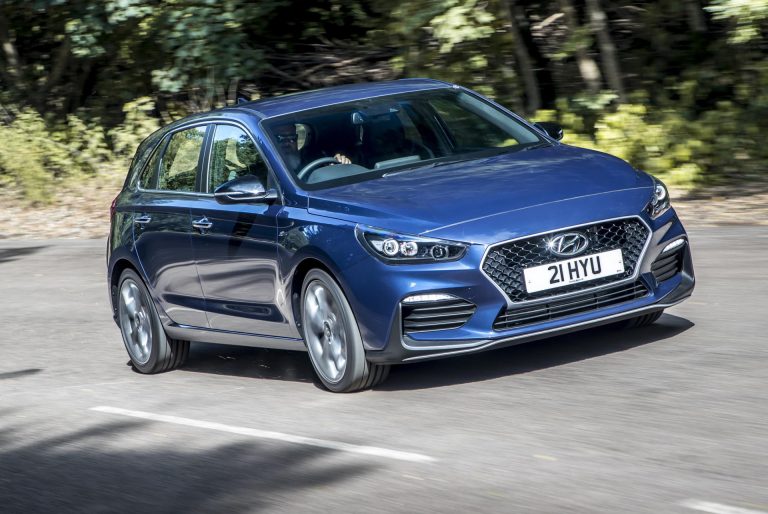
Hyundai i30 N Line adds show but not go

Prices have been released for the Hyundai i30 N Line – a car with the sporty styling of the i30 N hot hatch but not its potency.

N Line variants of the i30 will go on sale on 1st September, at prices starting from £21,255.

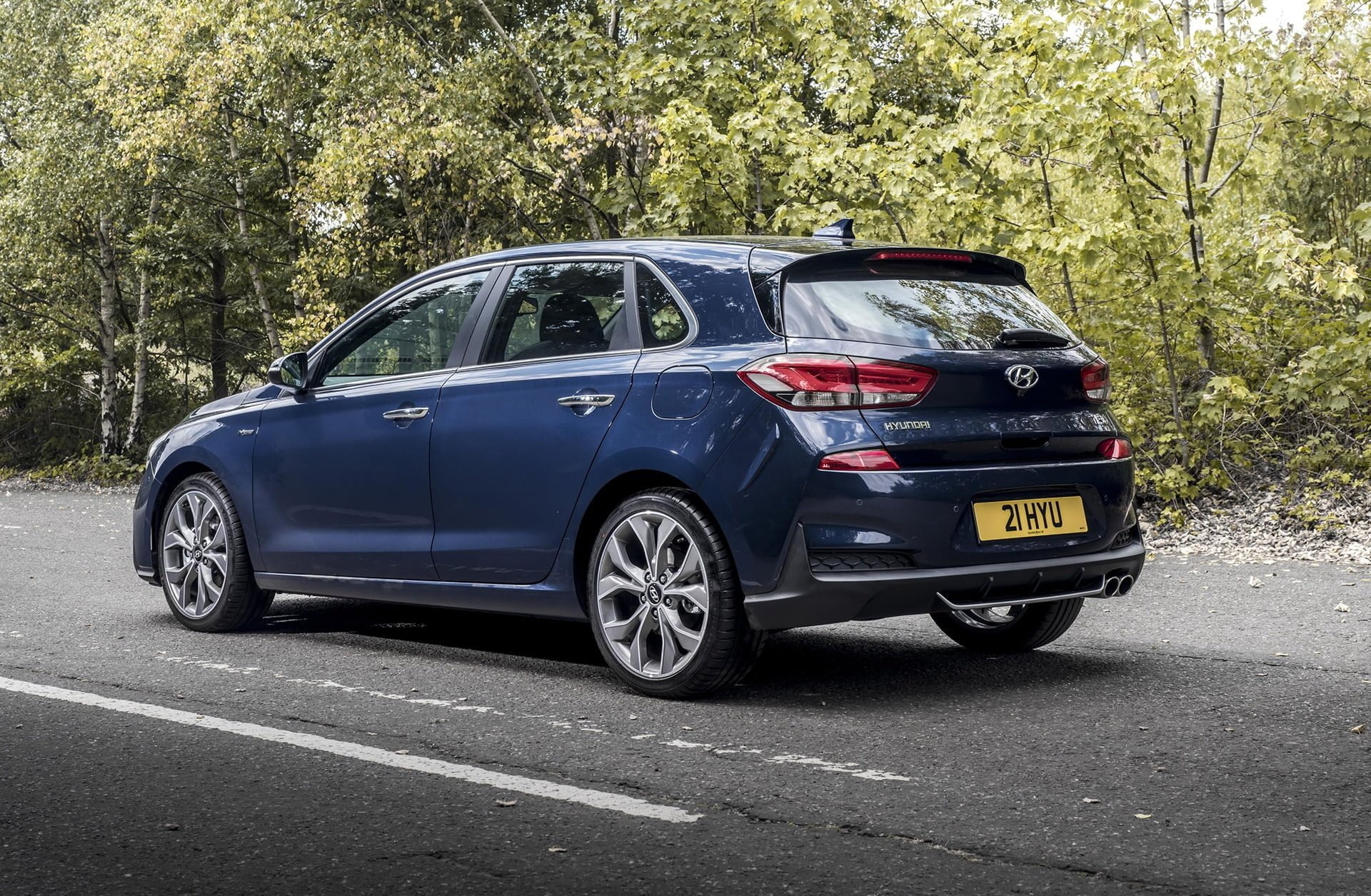
Styling enhancements applied directly from the i30 N include the front and rear bumpers. Bespoke silver detailing features, as do a twin exhaust, LED rear lamps and 18-inch alloy wheels with Michelin Pilot PS4 tyres.

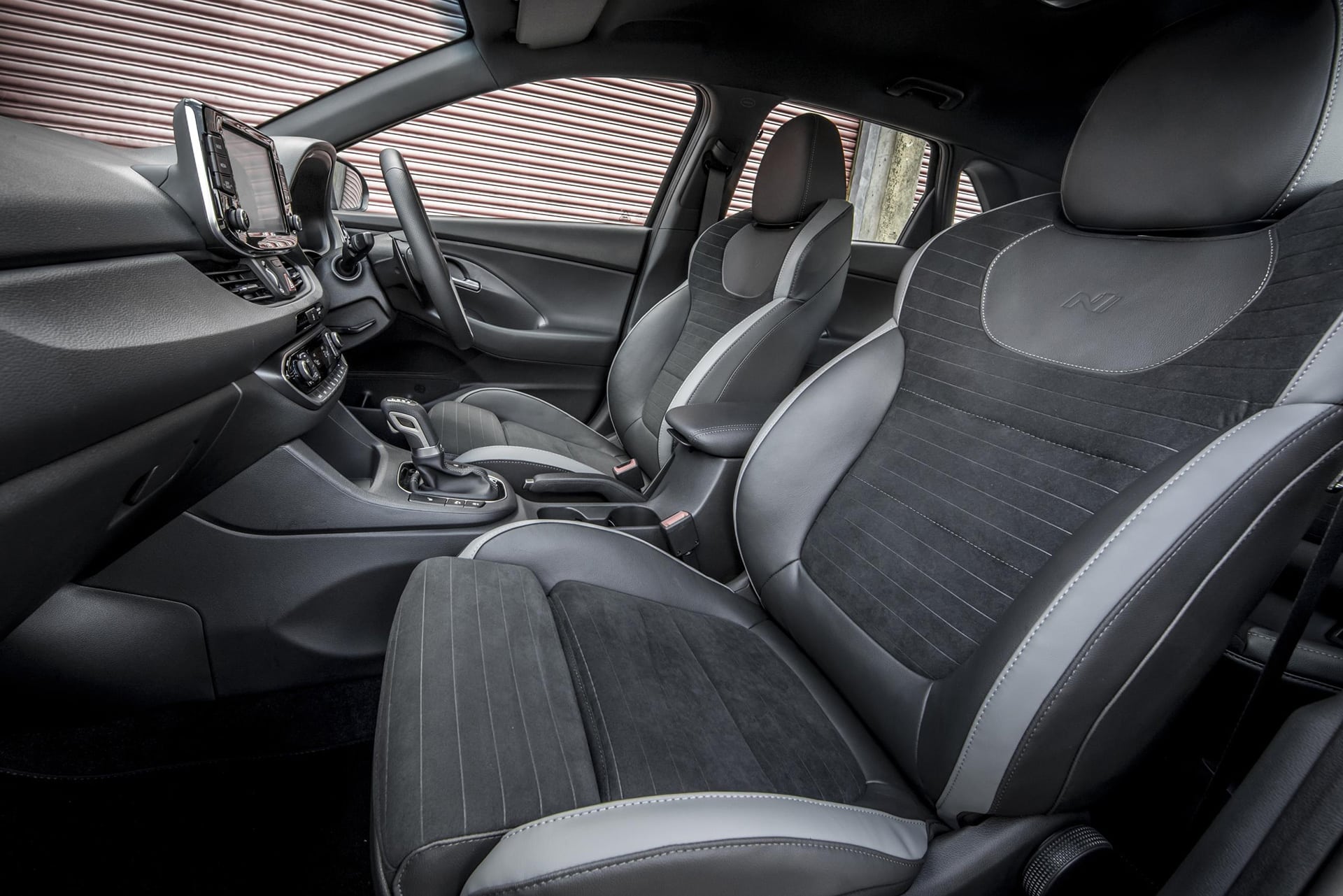
Inside there are sports seats and a leather-faced steering wheel, again lifted from the i30 N, while the styling of the gear lever is bespoke to the N Line.


You may also like:

Hyundai adds that the chassis of the N-Line has been enhanced over standard i30 models. Suspension, brakes and throttle response have all been retuned to offer a more sporty performance.

However while the i30 N uses a 2.0-litre petrol engine with up to 275hp available, the N Line trim is combined with the 1.4-litre T-GDi petrol engine of 140hp, matched to either a six-speed manual or seven-speed dual-clutch auto transmission.

Hyundai i30 N Line The Car Expert

According to Hyundai Motor UK CEO Tony Whitehorn, the i30N has had a tremendous reception but many customers ‘want the show but don’t need the go.’

“N Line will give customers that balance of looks and performance,” Whitehorn says.

The i30 N Line models include an extensive safety package, autonomous emergency braking, hill start assist, lane departure warning and lane keeping standard on all models.

All versions also get an eight-inch centre console touchscreen display which includes DAB and smartphone compatibility for Apple CarPlay and Android Auto.

N Line models will be offered in both standard and ‘+’ versions, with £2,000 between them. The standard cars include cloth sports seats with the driver’s side electrically adjustable,, and black headlining and chrome effect exterior door handles to help distinguish the car from other i30 models. Air conditioning, an automatically dimming rear-view mirror and privacy glass are also standard.

The + models add heated leather and suede front seats, both with electrical adjustment and the driver’s side having a memory function. The steering wheel is heated and dual-zone climate control included as are LED headlamps and automatic rain-sensing wipers.

Hyundai i30 N Line The Car Expert

New car market stable in July

New car registrations were stable in July, with private sales almost exactly the same as 12 months ago and fleet registrations showing a small increase in the latest numbers published today by the Society of Motor Manufacturers and Traders (SMMT).

The overall market was up just over 1% on the same month last year, with just under 164,000 new cars registered. Of those, private buyers accounted for 41% of the total, with almost exactly the same number of private new car sales as July 2017. Fleet sales were up by 2.6%, a small but welcome increase for manufacturers.

There was continued stability in the different fuel types of all those new cars. Diesel sales made up 32% of the total, which is still a 24% drop on last year but pretty consistent over the last five months or so. We’ve continually predicted that diesel’s market share should settle at around the 30% mark, and this is currently proving to be the case.

Alternatively-fuelled vehicles (basically hybrids and fully-electric vehicles) continue to grow, with a second consecutive month above 6%. Plug-in hybrid models saw particular growth of more than 33%, ahead of ‘regular’ hybrids at 17% growth and full-electric models up 2%. It’s still small beer in overall terms, but progress nevertheless. As more and more electrified models continue to become available, this will inevitably keep growing.

July 2018 new car registrations
Swings still look dramatic compared to last year, but pretty stable over the last few months

The next few months will hopefully see continued stability, despite the Bank of England announcing an increase in official interest rates last week. A similar increase last November made absolutely no difference to the levels of borrowing on car finance, and we see no reason why this latest increase will make a significant difference either. Some finance companies may have to trim their profit margins slightly to close a few borderline deals, but there’s no need to feel too sorry for them.

There may some supply issues for some brands as WLTP fuel economy standards come into effect from September, which may lead to a bit of volatility within the marketplace over the next couple of months. This may affect relative sales among manufacturers but shouldn’t significantly affect overall registration numbers.

August will, as usual, be very quiet in terms of new car sales thanks to the UK’s ridiculous registration system, but manufacturers will be hoping for a decent September this year after a disappointing time last year.

Top ten shuffling

The top ten best-seller list saw a bit of a shake-up in July, with smaller cars enjoying another good month. As usual, the Ford Fiesta reigned supreme at the top ahead of the Volkswagen Golf. After that, the Volkswagen Polo and Vauxhall Corsa enjoyed strong sales to occupy the third and fourth places. The Audi A3 and Mercedes-Benz A-Class both bounced back into the top ten in July to sit sixth and seventh, while the Ford Kuga reappeared in eighth place and the Kia Sportage popped up in tenth.

These came at the expense of the Ford Focus, Mini hatch and BMW 1 Series and 3 Series models, which all fell out of the top ten. The Focus is very much in run-out mode ahead of the all-new model arriving in showrooms, which has allowed the Nissan Qashqai to overtake it for third place in total year-to-date sales.

Notably, there were no dedicated saloon or estate models in the top ten (apart from the small number of Audi A3 saloons that are sold relative to the hatchback versions), with six hatchback models and four SUV/crossovers instead.

July 2018 new car top ten
Good month for Volkswagen, not so much for BMW who had two models in the top ten last month


V6 added to Mercedes-Benz X-Class pick-up

Patience has paid off for buyers who have been awaiting more power since the Mercedes-Benz X-Class pick-up launched at the end of 2017.

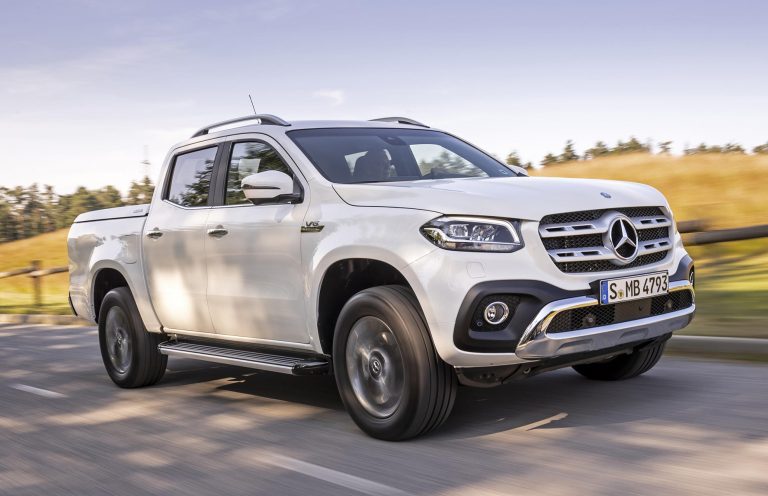
The X 350d version of the X-Class is now available to order, employing a V6 3.0-litre diesel engine with 258hp and 550Nm of torque. It joins the two existing 2.3-litre engines, the 220d with 163hp and 403Nm, and the twin-turbo 250d which offers 190hp and 450Nm.

Like all other X-Class models the 350d is supplied as a double-cab model only, the engine matched to the brand’s 4Matic permanent all-wheel-drive (offering three 4WD modes including a low-range setting for difficult terrain) and a 7G-Tronic Plus automatic transmission.


You may also like:

Top trim only

X-Class variants in 350d form will only be sold in the top Power trim level, and this trim will no longer be available with the other engines. Power trim includes a number of styling upgrades – painted bumpers with a simulated underguard in chrome; a rear bumper in chrome with integrated step; fog lights with a chrome surround and shoulder line trim strips in chrome.

The model also includes as standard LED head and tail lights (the headlights including a cleaning system with heated washer fluid jets); electrically folding exterior mirrors; and keyless entry and starting. Six-twin-spoke light-alloy wheels of 18-inch diameter are fitted, finished in himalaya grey.

Inside, there are eight-way electrically adjustable driver and front passenger seats, heated, as standard. A leather steering wheel is specified with gearshift paddles and cruise control, Artico leather and microfibre upholstery and Artico leather on the dashboard with topstitching, complimented by an aluminium interior trim.

X-Class 350d prices start at £38,350 plus VAT, the model exclusively available from Mercedes-Benz van centres, and the brand expects to deliver the first examples to customers in November.

1808 Mercedes-Benz X-Class The Car Expert

Vauxhall Insignia gains 200hp engine

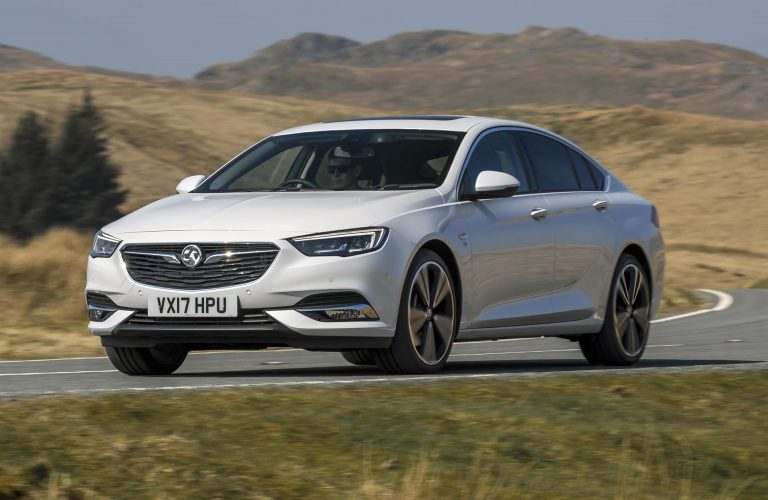
The Vauxhall Insignia is now on sale with a 200hp engine, becoming the top power option for those who do not want the car with all-wheel-drive.

Available in both Grand Sport hatch and Sports Tourer estate versions, the new 1.6-litre sits just below the 2.0-litre 210hp engine – which is only offered with all-wheel drive and is the most potent Insignia option.

The new four-cylinder direct injection turbo unit produces its peak power at 5,500rpm and also offers a 280Nm torque figure, on tap from 1650 to 4500rpm.


You may also like:

In Grand Sport form, the new 1.6-litre Insignia will complete a 0-62mph sprint in 7.2 seconds and go on to 146mph. Provisional efficiency figures are quoted at combined cycle fuel economy of 44.8mpg and CO2 emissions of 146g/km – these to the new Euro 6d-Temp ‘real world’ emissions standards.

Vauxhall supplies the 1.6-litre model with a close-coupled Gasoline Particulate Filter, which more effectively oxidises particles and helps to improve its emissions standards.

Dealers are taking orders for the new Insignia model now, prices starting from £25,610 for the Insignia Grand Sport version in SRi VX-Line Nav trim.

The latest Insignia went on sale in early 2017 in its hatch and estate variants, joined later by a ‘Country Tourer’ version with a extended ride height. Currently, alongside the new 200hp unit, there are six engine choices: a 1.5-litre turbo petrol unit with either 140 or 165hp, the range-topping 2.0-litre with 210hp, and diesels with 110, 136 or 170hp.

Vauxhall Insignia The Car Expert

More power for Mitsubishi Outlander plug-in hybrid

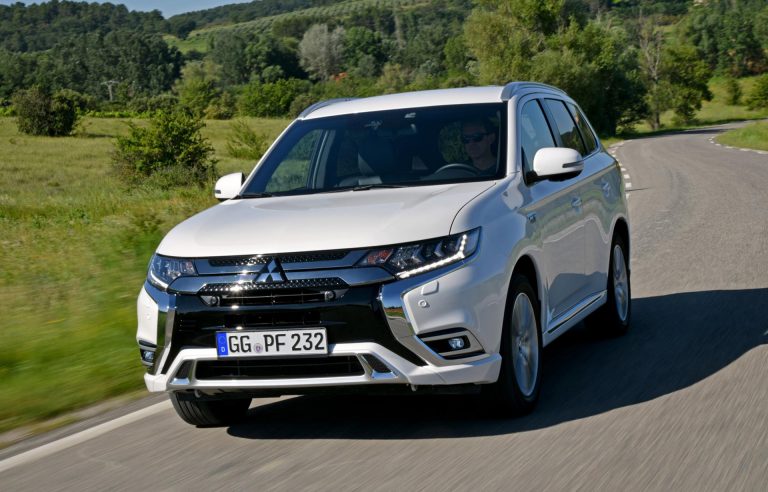
A more powerful petrol engine headlines updates to the 2019 version of the Mitsubishi Outlander PHEV, which is now on sale.

The plug-in hybrid SUV, which has proved a best-seller for Mitsubishi since its launch in 2014, gains a new 2.4-litre petrol engine with power increased from 121 to 135hp and torque raised from 190 to 211Nm.

The rear electric motor is also more potent, now offering 95hp and with a 10% improvement in output from the battery. Overall battery capacity increases to 13.9kWh, allowing Mitsubishi to claim a combined cycle fuel economy figure for the Outlander PHEV of 139mpg – this under the new WLTP testing regime.

CO2 emissions under WLTP measurement remain at 46g/km, and the Outlander also offers an electric-power only range of 28 miles. Once the Government’s £2,500 plug-in car grant is taken into account, prices for the SUV start at £34,255, and for company car buyers it also attracts the lowest-possible benefit-in-kind tax rating of 13%.


You may also like:

1808 Mitsubishi Outlander PHEV The Car Expert

Further changes on the 2019 Outlander include revisions to the dampers to improve the slow-speed ride, plus a driver-selected ‘Sport Mode’ which sharpens throttle response and grip through the car’s all-wheel-drive system. There is also now a ‘Snow’ mode to improve getaway and cornering on low-grip slippery surfaces.

The steering rack has been modified to be more responsive, and the front brake discs enlarged to improve stopping power.

Inside sees a raft of changes including more supportive front seats, improved soundproofing, a redesigned instrument cluster and changes to the switchgear. Apple CarPlay and Android Auto smartphone compatibility is included.

Subtle exterior updates encompass a new front end with a honeycomb mesh grille, bumper extensions and revised headlamps designs, and a larger rear spoiler. Two-tone finished 18-inch alloy wheels are also specified.

1808 Mitsubishi Outlander PHEV The Car Expert

Kia Ceed review

60-second summary

What is it?
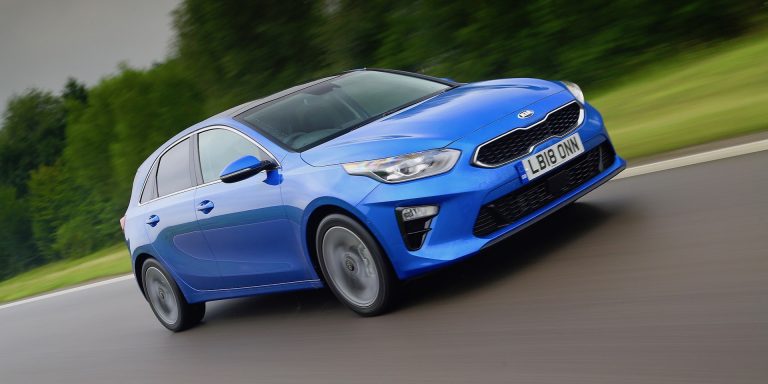
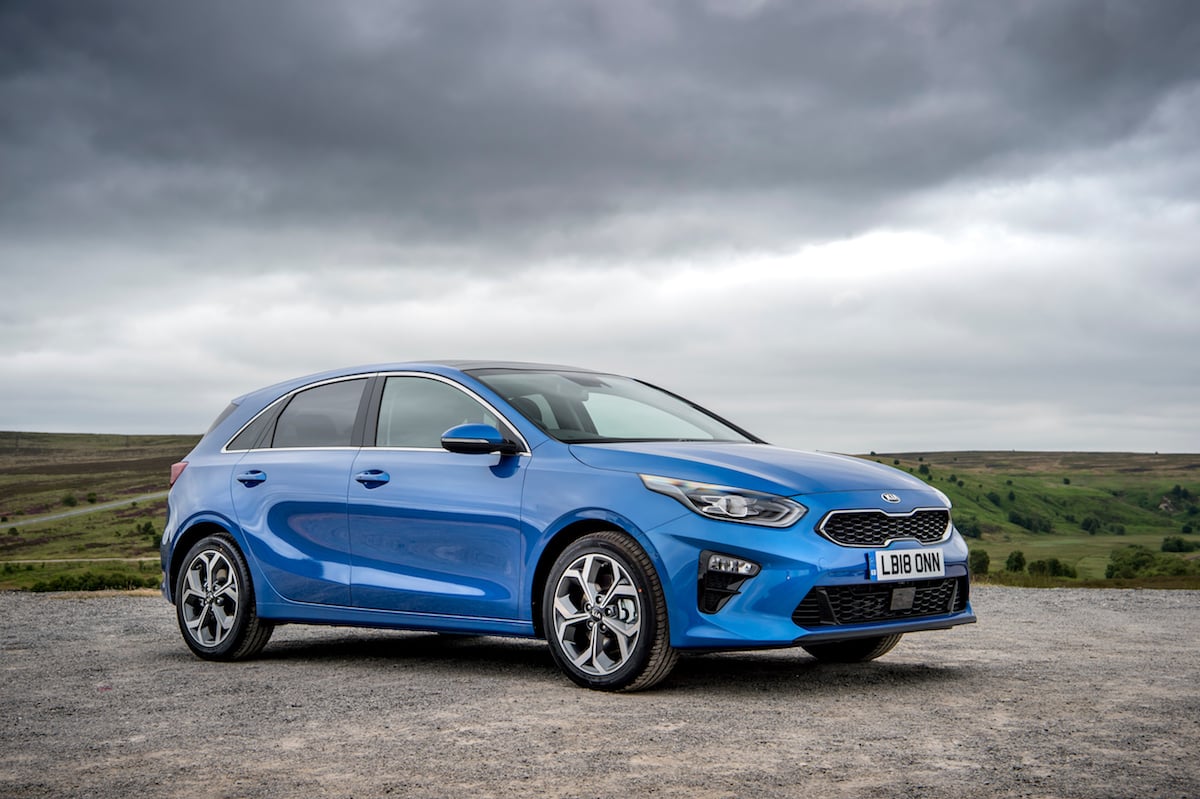
The latest Kia Ceed is the third generation of the brand’s Euro-built family hatch.

Key features
Quality build, plenty of space, seven-year warranty

Our view
The third-generation Kia Ceed moves from being the family hatch for owners who want something different to a car on a par with the UK’s biggest sellers.

The Ceed offers everything the family motorist needs – quality in its build, plenty of space, a well-behaved driving experience and the peace of mind of a seven-year warranty. As such it is now a firm rival to the Ford Focus, Vauxhall Astra, even the Volkswagen Golf.

Similar cars
Ford
Focus, Vauxhall Astra, Hyundai i30
Kia Ceed road test 2018 | The Car Expert

Full review

Introduction

The new Kia Ceed launched into showrooms on 1st August and fans will notice one major change even before viewing the car.

No longer is this the subject of one of the best-known catchphrases from Jeremy Clarkson & co – ‘C apostrophe D’ is in the past as Kia drops the frankly irritating piece of punctuation that has led to so many motoring journalists mis-spelling the car’s name.

There is a very good reason. When the cee’d launched in 2006, it was Kia’s first solely European-produced model, charged with moving the brand firmly into the mainstream. Now, it’s firmly there, a viable rival to the biggest names such as Focus and Astra. So with the third generation, Kia is trying to present a more grown-up, mature image for a car that vies with the Sportage SUV as the brand’s European best seller.

This is an all-new Ceed, designed and developed in Frankfurt, and built at Kia’s European plant at Zilina in Slovakia. It is a standard five-door hatch but we can expect more models to follow – the first will be the estate version. There won’t, however, be another three-door pro_cee’d – we won’t miss that even more ridiculously punctuated name…

Built on a new platform, the Ceed is 2cm wider and lower than its predecessor. The wheelbase remains at 2.65m, but the front overhang is cut by 2cm, and that space added to the rear overhang.

This means more interior space and a bigger boot. It’s now 395 litres with the seats up, which is 25 more than the Vauxhall Astra, more than 50 over the Ford Focus.

The Ceed also gains a new, more mainstream styling treatment, clearly influenced by the brand’s recently-launched flagship Stinger model. Where the previous car boasted neatly rounded off edges, now they are much more distinct and crisp. Running from the signature ‘Tiger Nose’ grille, the profile is of solid straight lines, and the bonnet looks longer.

Okay, the Ceed does not present a radically distinctive visual appearance, but it is easy on the eye and not overshadowed by its mainstream European rivals.

Buying and owning a Kia Ceed

The new Ceed offers 11 different models over four trim levels. Costing from £18,295 they run through the brand-familiar ‘2’ and ‘3’ trims, a ‘Blue Edition’ limited edition between them with extra equipment and a bespoke ‘Blue Flame’ paint job, and the temporarily range-topping ‘First Edition’. As the name suggests this will be on sale only for around a year, and will then probably be replaced by a new range-topping trim.

Kia claims that many of the standard features on 2 models are cost options on rivals, such as the cruise control, air conditioning, de-icing front wipers, electric windows all round and automatic headlamps.

Cornering headlamps are standard, as are 16-inch alloy wheels, electric heated mirrors, leather trim detailing and a seven-inch touchscreen infotainment system with DAB and smartphone compatibility through Apple and Android. And the screen also shows images from the standard-fit reversing camera.

Upgrading to 3 costs £2,410 and adds 17-inch alloys, rain-sensing wipers, faux leather on the front seats with some power adjustment, rear parking sensors, dual-zone climate control and electrically folding mirrors.

The infotainment screen grows by an inch and includes navigation and Kia’s connected services. And there’s an extra digital display between the dash dials with more information.

The First Edition is only available with the 1.4-litre petrol engine and from £25,750 – more than £4,000 more than the equivalent 3 grade. For this, you get proper black leather on the seats, which are heated and vented up front and even the rears heated.

The driver’s seat is also ten-way power adjustable, while there’s a sunroof, keyless entry and start, an electronic handbrake, clever LED headlamps, auto parking and a much better JBL sound system. And it gets a host of extra safety features.

Kia is, of course, targeting a five-star Euro NCAP safety rating for the Ceed and standard active safety technologies include lane-keep assist, forward collision warning with collision avoidance (though only 3 models and above get pedestrian detection), a driver attention warning and auto high-beam headlamps.

Autonomous emergency braking, however, only comes as standard on the First Edition model. It is part of a package called Lane Following Assist (LFA) and offered for the first time on any European Kia.

LFA maintains the car’s distance behind traffic in front at speeds from 0 to 81mph, and also keeps the car in its lane. A feature that may alarm some is its ability to ‘identify appropriate spaces in other lanes to move into safely to gain more ground in heavy congestion.’ It doesn’t apparently deflect the inevitable insults that follow from other drivers…

Also standard on the First Edition is blind-spot and speed limit detection.

One Kia plus point the Ceed does maintain – it comes with a seven-year 100,000-mile warranty, transferable if you sell the car.

Inside the Kia Ceed

Inside the Ceed has undergone a major upgrade, again inspired by the Stinger saloon. Most noticeable is the quality – fit and finish is now on a par with the big-name competitors. It’s even comparable to the Volkswagen Golf, the standard bearer in this class.

Surfaces are soft touch with a pleasing lack of scratchy plastic. And the design boasts a more sculpted appearance, with a strong horizontal line that gives the appearance of a wider, more spacious environment.

The instrument layout is actually very traditional – there are proper, physical dial pods for the speedometer and rev counter, while the centre console switchgear is based around proper switches.

Unlike many rivals, Kia chooses not to integrate its touchscreen into the centre console and then control just about everything from it. The screen sits atop, dubbed ‘floating’ but appearing slightly like an afterthought add-on. But it works very well, especially when navigation is included as the software comes from the highly-regarded TomTom stable.

Kia claims increased front headroom and more rear shoulder room for the new Ceed, as well as the larger boot which also offers a lower loading lip than its predecessor. Certainly it feels spacious and comfortable to travel in, meeting the family car requirements in all respects.

Driving the Kia Ceed

UK Ceed buyers have a choice of three power plants. The 1.0-litre 120hp T-GDi (turbocharged gasoline direct injection) petrol unit, popular throughout Kia’s model line-up, remains but in updated form, while the previous 1.6-litre version has been replaced by a new 1.4-litre unit.

This engine offers 140hp, 4% more than its bigger predecessor, and thanks to its turbocharger is more responsive over a wider rev range while also cleaner.

Like other manufacturers, Kia is now being obliged to quote the stricter efficiency levels of the latest Euro 6D-Temp regulations, but still the 1.5-litre 115hp diesel engine (again, a new unit) is capable of CO2 emissions of 99g/km. Best petrol result is 122g/km.

These figures are achieved by cars fitted with the brand’s Eco pack, a suite of measures that includes extra underbody aerodynamics, lower suspension, lower rolling resistance tyres and a flap that closes over the grille when the intake is not needed for cooling, so improving the car’s aerodynamics.

Six-speed manual transmissions are standard across the range, with a seven-speed dual clutch auto also on offer.

At the launch event, close to the Ceed’s birthplace in Zilina, Slovakia, we were able to drive with the 1.4-litre petrol and 1.5-litre diesel units. In the current environment, Kia expects the majority of sales to be with the petrol engines, especially the 1.4.

This is no surprise as the 1.4 is a very well-behaved engine. The many upgrades to the Ceed have included improving sound insulation, and on exercising the throttle pedal, the only way you notice the engine’s efforts is by the increasing speed. It is refined, smooth and oh-so quiet.

The diesel is no less impressive, though if you really accelerate hard in it does manage to remind you it’s an oil burner. And while we haven’t tried the three-cylinder 1.0-litre in a Ceed, it’s fulfilled the brief in other Kia models and we’ve no doubt it will be fine here. But for the best all-round qualities, the 1.4 ticks all the boxes.

Previous Kia Ceed models have attracted criticism in the past for their handling, and the latest version boasts a new fully-independent suspension system that we are told has been “engineered for UK roads.”

Well, it works fine – mostly. Soaking up the bumps on less than perfect surfaces, cruising along mile after mile of motorway, it’s all very well behaved as one would expect in a family car.

Tackle a series of challenging bends, however, and the Ceed doesn’t quite match up to its rivals – especially the Ford Focus, which admittedly is renowned for its handling. There’s not enough feedback through the wheel, which feels slightly divorced from the chassis under it. The car remains well behaved, just not very involving.

Not that many owners will worry about such things. Overall the Ceed ticks all the boxes one expects in this sector – vitally the peace-of-mind factor.

Summary

Kia has done a very good job of updating its big-selling family car to ensure it meets new requirements. Where once the Ceed’s aim was to merely get on the same page as its more familiar European opposition, now it has to compete square-on with Focus, Astra and Golf, and strive to exceed them.

The third-generation Kia Ceed does this very well. It matches its rivals in quality, and in places it beats them for practicality, with the only minor minus point a slightly dull driving experience in comparison.

In its latest form, the Kia Ceed is a mainstream family car and an equal to the biggest-selling cars on the market. And it no longer has a silly name…

Key specifications

Make & model Kia Ceed Ford Focus* Hyundai i30
Specification 3 ST-Line Premium
Price (on-road) £21,505 (range starts £18,295) £22,050 (range starts £17,930) £22,360 (range starts £17,000)
Engine 1.4-litre petrol 1.5-litre petrol 1.4-litre petrol
Power 140 hp 150 hp 140 hp
Torque 242 Nm 240 Nm 242 Nm
0-60mph 8.6 sec 8.8 sec 8.9 sec
Top speed 130 mph 130 mph 130 mph
Fuel economy (combined) 48.7 mpg 52.3 mpg 52.3 mpg
CO2 emissions 132 g/km 123 g/km 124 g/km
Insurance group TBA 19E 15E
Euro NCAP rating Not yet tested 5 stars (2012) 5 stars (2017)

* outgoing model; new model arrives in UK late 2018

Higher-power Mazda MX-5 on sale in September

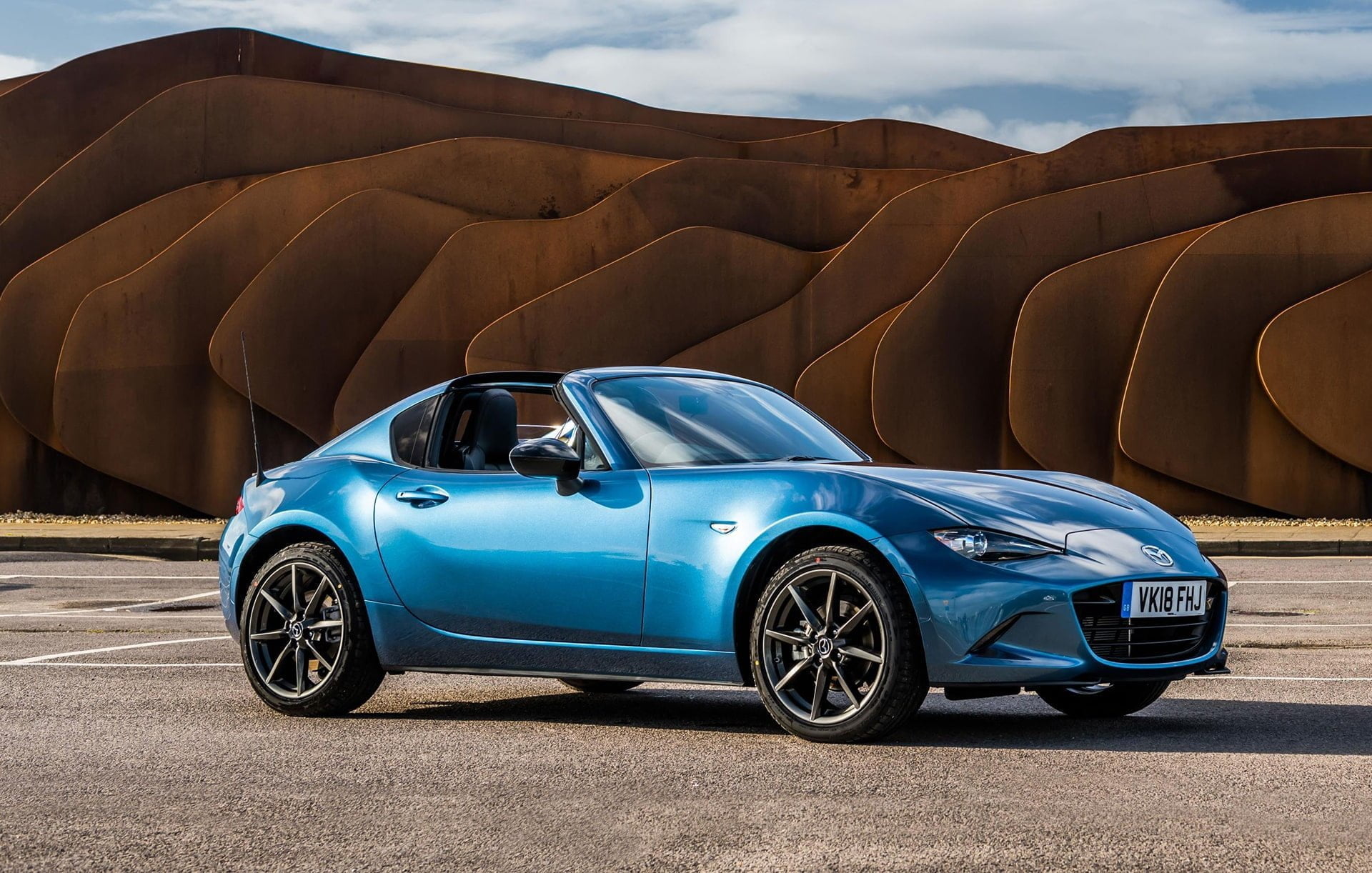
A package of updates to the Mazda MX-5 is to include an increase in maximum engine power.

On sale in September and applied across both the roadster and RF hard-top versions of the car, the refresh will see a revised version of the 2.0-litre SkyActiv petrol engine fitted to the car, its maximum power raised from 160 to 184hp.

This has been achieved by the use of lighter pistons and con-rods, revisions to the camshafts and exhaust valves, the fuel injectors, throttle valve and air intake.

Faster to 62mph

The redline on the engine now increases from 6,800 to 7,500rpm, while peak torque raises by 5Nm. This cuts eight tenths from the 0-62mph time of the 2-litre MX-5 in roadster form,  now hitting the mark in 6.5 seconds. RF manual models improve by six tenths and the auto version by half a second.

Mazda adds that the new potency does not come at the expense of efficiency. Both the 2019 MX-5s engines achieve Euro 6d Temp emission regulation compliance under the new WLTP emissions rules, while the introduction of Mazda’s i-Eloop and i-stop kinetic recovery and stop-start technology on the 2.0-litre models results in the new engine returning lower CO2 emissions than the outgoing 160hp car.

The upgraded engine will be available in a range-topping GT Sport Nav+ model from 1st September, with versions in SE-L Nav+ and Sport Nav+ models going on sale later in the autumn.

Mazda has also improved the 1.5-litre MX-5 engine, which sees a sight power and torque increase to 132hp and 152Nm, with no penalty in economy or emissions. These go on sale across the rang eon 1st September.

Other 2019 updates include telescopic steering adjustment, improved seat sliding, while the only changes to the styling are to add new 16 and 17-inch wheel designs.

Prices for the MX-5 start from £18,995, ranging up to £29,195.

Mazda MX-5 RF The Car Expert

SEAT adds digital cockpit to Arona and Ibiza

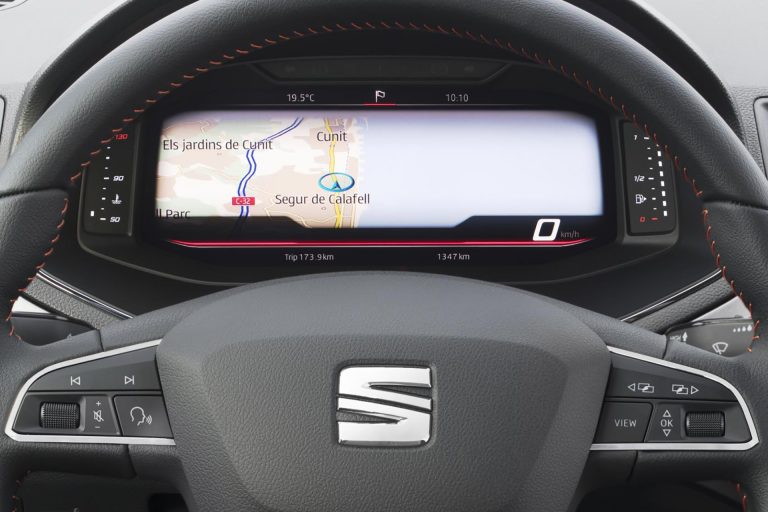
SEAT is to make its Digital Cockpit available to buyers of the Arona small SUV and Ibiza supermini.

The technology, first seen on cars from SEAT’s sister brand Audi, consists of a ten-inch digital display ahead of the driver where the speed and rev counter dials are traditionally located.

It allows the driver to scroll through various views using a button mounted on the steering wheels, focusing on three main displays which can also be individually customised.

Classic mode retains the speedometer and tachometer dials in digital form but an analogue layout. Between them extra data can be displayed, including navigation, music, phone, driving data and assistance information (lane assist, blind spot detection and front assist, ACC) and the vehicle’s status.


You may also like:

Display-wide mapping

Digital mode stretches the central display across the full ten inches, showing the complete navigation map. This can be zoomed in and out while essential information such as phone, driving data, assistance information and vehicle’s status are still accessible.

The Dynamic display highlights important information such as turn-by-turn directions, advanced driver assistance system information from lane assist, blind spot detection and front assist, and the vehicle’s status.

The display also aims to avoid driver distractions. Music can be scrolled through using the steering wheel control with each track appearing on the display while the driver continues to look ahead, and if a phone call is received then caller ID appears on the display.

SEAT already offers the Digital Cockpit as standard on Xcellence Lux and FR Sport versions of its Ateca and Leon models. Now it will be included in the equivalent trims on the Arona and Ibiza. SEAT states that the Arona is the first crossover in its segment to be offered with such a display.

SEAT digital cockpit The Car Expert

BMW i8 Roadster goes on sale

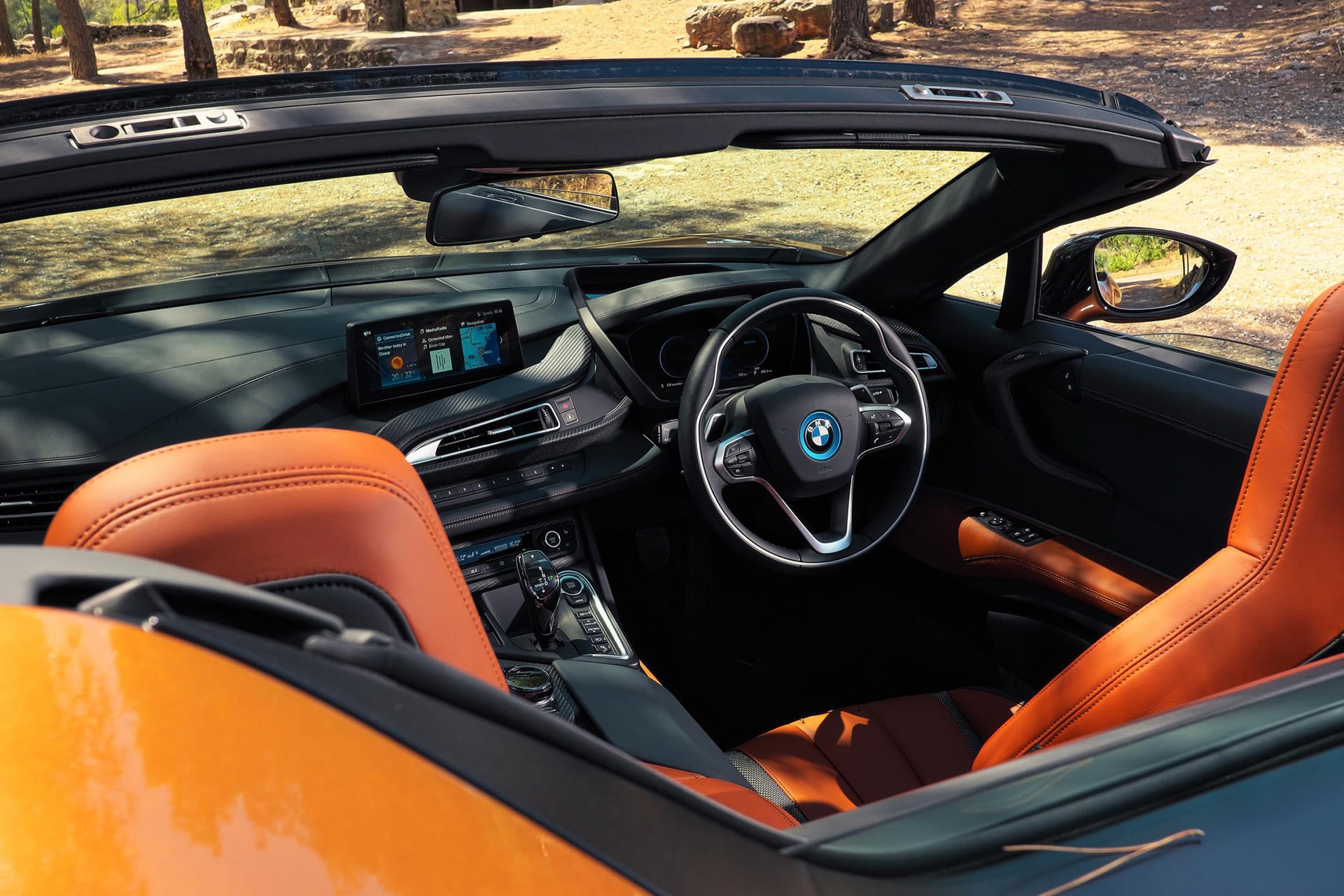
The long-awaited BMW i8 Roadster has gone on sale, the first open-topper from the German manufacturer’s hybrid electric sub-brand.

First shown as a concept at the Beijing Auto Show back in 2012, the two-seater will sit in showrooms alongside the existing i8 2+2 coupe.

Like the coupe model, the new i8 Roadster is powered by a combination of a British-built petrol engine powering the rear wheels and an electric motor driving the front wheels.

According to BMW, much of the concept has been retained in the production version, particularly the signature dihedral doors and clever packaging of the roof. This opens or closes electrically in 15 seconds, at speeds of up to 31mph – the fastest operating roof in the BMW range.


You may also like:


Folding roof

When opened, the three segments of the roof fold back vertically in a Z shape, which frees up 100 litres of storage capacity between the roof box and the seats. The rear compartment of the car accommodates another 68 litres. When the roof opens the rear screen raises 3cm to cut turbulence, and its height can be adjusted by the driver.

The i8 Roadster’s structure combines aluminium with CFRP (carbon-fibre reinforced polymer) and includes 3D printed parts connecting the roof to the body. This process allowed the components to be produced in a geometric form not possible with traditional casting techniques.

BMW i8 Roadster The Car Expert

A combination of a three-cylinder turbo petrol engine and an electric motor provides the hybrid powertrain, the engine driving the rear wheels through a six-speed automatic transmission, and the electrics driving the fronts using a two-speed auto gearbox. Since its launch in the original i8 coupe the hybrid technology has been developed, and the electric side now solely provides the propulsion much more frequently, the engine only used for hard acceleration.

The capacity of the lithium-ion battery has been increased from 20 to 34Ah, allowing an increase in electric power by 12hp to 143hp and the ability to travel 33 miles in electric-only mode. The car can reach 65mph from rest on electric power alone, or 75mph if an ‘eDrive’ boost button is pressed.

The 1.5-litre petrol engine now puts out 231hp and 320Nm of torque. combined system power is now 374hp, which means the i8 Roadster will reach 62mph from rest in 4.6 seconds and go on to an electronically limited 155mph. And it will do this while returning combed cycle fuel economy 141.2mpg and CO2 emissions of 46g/km.

However, such technology comes at a cost. Prices for the i8 Roadster start from £124,735.

BMW i8 Roadster The Car Expert

Mazda 6 review

60-second summary

What is it?
The new Mazda 6 is the latest and significant update to the brand’s fleet favourite family car.

Key features
Major interior redesign, strong safety and equipment package, diesel engine options

Our view
The Mazda 6 is a bit of a hidden gem, whether in saloon or estate form. Those who ignore it in favour of heavyweight rivals from the likes of Ford, Vauxhall or Volkswagen are missing out as the latest swathe of updates have made a good car even better.

The car scores on its equipment, its well-behaved yet enjoyable drive and its looks, particularly the interior which n the latest model has been raised several levels. For the private or fleet buyer, looking for diesel or petrol, the Mazda 6 is a contender.

Similar cars
Ford
Mondeo, Vauxhall Insignia, Volkswagen Passat.

Mazda 6 saloon and estate review 2018 | The Car Expert
Exterior changes to the latest Mazda 6 saloon and estate are subtle

Full review

Introduction

The Mazda 6 family car, the latest facelift of which arrived in showrooms at the end of July in both saloon and Tourer (estate) formats, is the Japanese brand’s most fleet-friendly model – but in fact, it sells rather well to general consumers as well.

Those spending their own money buy more examples of the Mazda 6 than they do the Ford Mondeo – while Mazda has 2% of the overall UK car market, 15% of all large volume family cars sold are 6s. Not surprisingly it was for many years the brand’s best-seller, a title only recently taken by the CX-5 and CX-3 SUVs.

So if this is such an important car to Mazda, the latest, third facelift to a model originally launched in 2013 appears at first glance to be subtle in the extreme. Even the brand’s UK head Jeremy Thompson admits that the exterior changes are not significant, though pointing to a deeper, more aggressive front grille, new front and rear bumpers and a changed lighting signature.

No, the real changes are within. The interior has been completely redesigned. Equipment levels have been upgraded, and there is a new engine. This 2.5-litre petrol unit with 194hp has previously seen service on the gargantuan Mazda CX-9 SUV sold only in the US, and its addition to the Mazda 6 range is a direct result of the shift in petrol/diesel popularity.

There is an enhanced safety package too, in a programme of updates that Mazda expects will keep its flagship model still popular for some time to come. While in the past 60% of 6 sales were company cars, with this one the brand expects an equal split, confident of attracting even more private buyers out of Mondeos, Insignias and Passats, and perhaps away from SUVs…

Buying and owning the Mazda 6

Despite the decimation of the oil-burner market over the last two years, Mazda is confident that some 55% of 6 sales will continue to be with diesel engines. Historically, the 150hp diesel SE-L Nav has been the most popular variant, chosen by those company car buyers who are permitted to choose their wheels.

So this 2.0-litre engine remains in a now five-strong engine line-up, all naturally-aspirated units constructed as part of the brand’s SkyActiv programme which relies on efficiency rather than downsizing to achieve modern economy and emissions standards.

Such matters are also the reason why every Mazda 6 now carries a ‘+’ in its model title. This signifies that all have been tested under the new and stricter WLTP economy and emissions programme. Being a more ‘real world’ test this produces higher figures than the previous laboratory-based NEDC test – under the new regime the lowest CO2 figures available on both the petrol and diesel Mazda 6 is 117g/km.

The more powerful diesel unit is also carried over from the previous range, though its power has been increased from 175 to 184hp. Similarly, the 145 and 165hp 2.0-litre petrol engines were available in the outgoing model, though have been updated with several new components. They are joined by the new 194hp unit, which is of 2.5 litres and includes cylinder deactivation technology to aid efficiency when not under load.

There are changes to trim levels too. One now has five to choose from, and adding the + to them all does create some clunky names – SE-L LUX Nav+ anyone? The major addition is the new range-topper, GT Sport Nav, effectively the Sport Nav with more equipment.

Importantly, Mazda has also seen fit to upgrade the safety package of the 6, Thompson admitting that this is to ensure another top five-star Euro NCAP safety rating to go with the one earned on its last test in 2013.

Under the  ‘Safety as Standard’ banner, Thompson says that the brand wants to make safety as important a perception as driving pleasure. So every car includes adaptive cruise control with autonomous braking, lane-keep assist, high-beam assist, blind spot and rear cross-traffic alerts. And every vehicle also gets a head-up display projected onto the windscreen, replacing the previous version that required a clear plastic plate above the dash.

All bar entry-level versions also include a reversing camera, and an £800 option on the Sport Nav+ and standard on the range-topping GT Sport Nav+ is a Safety Pack. This comprises a 360-degree parking camera (the first offered on a Mazda), adaptive LED headlamps, rear smart city braking and a driver attention alert.

Inside the Mazda 6

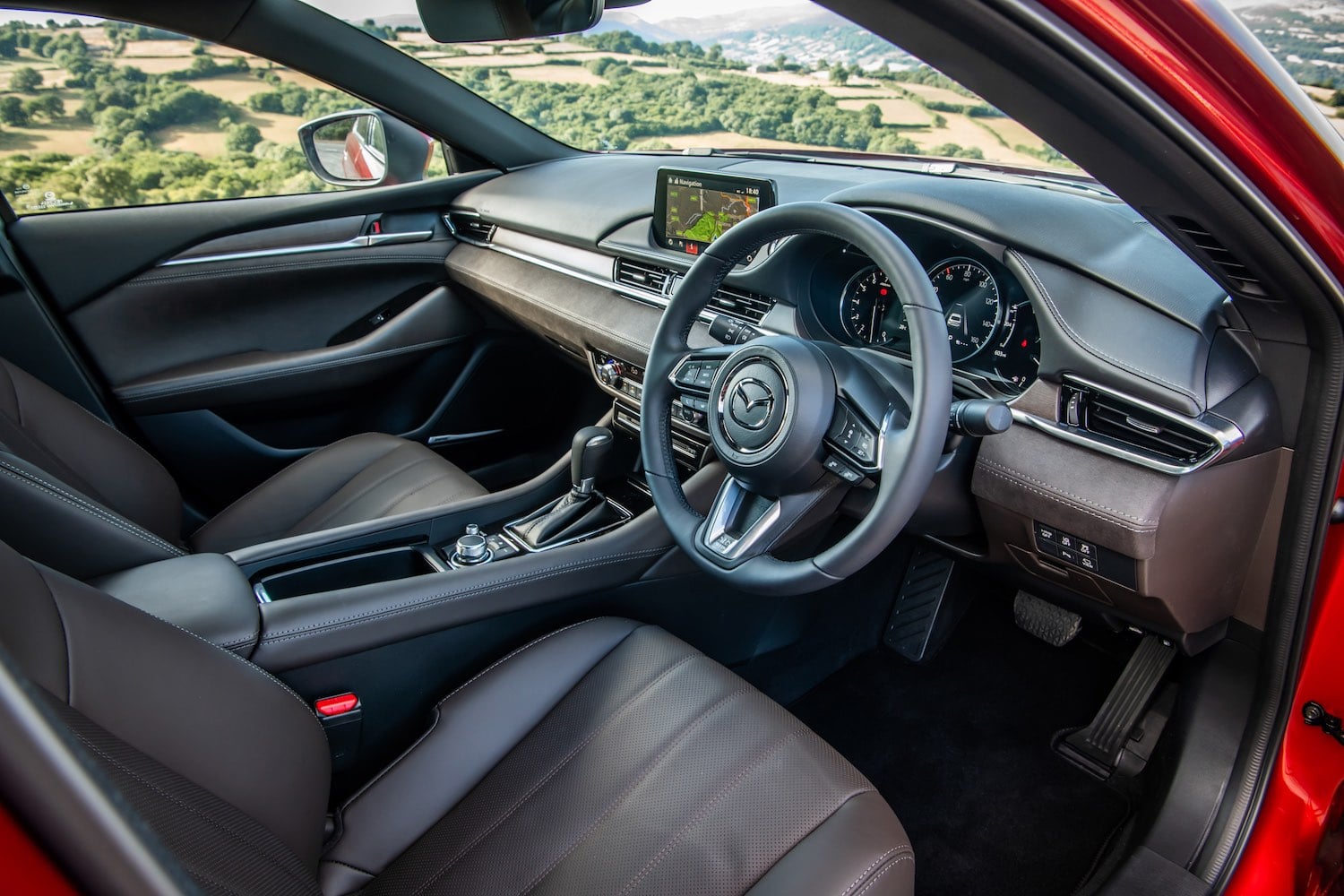
This is where much of the important upgrades have been carried out. The basic principles are the same as the previous car, and in Mazdas generally, but it’s all been refined into a smarter, more upmarket looking design. Notably, subtle repositioning of such dash staples as the air vents gives the impression of a wider interior.

Crucially, design is not allowed to rule over function and all the controls are very easy to operate, making this car easy to get used to.

The basic needs are attended to as well. The 6 is a comfortable car to travel in, with plenty of head, shoulder and leg room front and rear. The 480-litre boot of the saloon and 522 in the estate are competitive with rivals and the latter extends to 1,664 litres with the seats lowered.

Equipment levels are good across the range. but it’s worth passing over the entry-level SE-L Nav+, costing from £23,195 in saloon form and £24,095 as an estate. Spending an extra £1,400 for the Lux variant brings a host of extras including such niceties as heated leather seats, heated steering wheel, powered adjustment of the driver’s seat with a memory function.

By the time you get to Sport Nav+ the spec increases to keyless entry and an impressive-sounding Bose sound system. Meanwhile, as the model names suggest, every car gets navigation, even the entry-level variants, and it’s accessed through a good-sized eight-inch screen atop the centre console.

On the top GT Sport Nav models driven on the launch, the interior upgrade goes a stage further. Nappa leather is employed extensively, as are upgraded seats with more support but a deeper sense of comfort. As well as being heated they are ventilated too, another first for Mazda, as is the rear-seat heating.

Driving the Mazda 6

The Car Expert tried out both saloon and estate variants of the car on the launch event, and while only petrol engines were available to test, they did include the new 194hp 2.5-litre unit.

The 2.5 is the most powerful engine yet offered in a 6, and its 8.1-second 0-62mph time is respectable. Efficiency figures of 42mpg and 153g/km are to be expected in a more potent petrol unit, especially as these are measurements to the new WLTP standards.

Both the 194 and its less powerful, but not that much more efficient 165hp sibling (44.1mpg and 146g/km) have to be given plenty of revs to produce their performance – those coming out of diesels with their low-down torque might find this off-putting. However, they keep accelerating strongly, while remaining smooth and refined, particularly in the case of the 194.

It’s perhaps indicative of the market that the 194 can only be specified with a six-speed auto transmission. It would be interesting to pair it with a manual transmission and make the most of what is a very good chassis.

Mazda has updated the underpinnings of the 6, a host of small but significant technical changes from revising bushings to using new materials in the rear suspension. The details don’t matter – what is important is that they add up to a dynamically very impressive road performance.

After driving so many SUVs in recent times, this reviewer gained real pleasure from setting into a car that felt so well sorted. In a straight line it is comfortable, smoothly absorbing bumps and indentations while keeping occupants cossetted in the cabin thanks to improved sound absorption measures.

In the corners, the 6 turns in with precision and maintains its poise throughout. There is a little body roll but not to alarming proportions, even if one pushes it far beyond what such a large car of this nature should expect – particularly the estate. And feedback through the wheels is excellent, weighted to just the right level of providing assistance without feeling devoid of the driver’s control.

Overall this is an excellently sorted package. It will provide all the easy-to-live qualities that those who need to rack up motorway miles will need, but will also be enjoyable to drive. It’s as complete as any of its perhaps more familiar rivals.

Summary

One of the long-held fallacies applied to the Mazda 6 is that it is a cheaper option to the Ford Mondeo. It’s not, prices are similar to those of its Ford and Vauxhall opposition, not helped by the fact that as every Mazda is built in either Japan or Thailand it costs the brand 10% extra in tariffs to bring them into the UK.

The Mazda 6 is, however, a viable option to the Mondeo, Insignia, perhaps even the Volkswagen Passat that is often considered a bit more upmarket. Following this latest facelift the Japanese contender now more than ever matches its rivals in terms of quality, equipment and driving experience. In some areas it exceeds those rivals – its safety package is particularly impressive for example.

Not everyone wants an SUV, and if you are one of those for whom a family car is still the preferred choice, the Mazda 6 should be on your test-drive list. You may be surprised.

Key specifications

Make & model Mazda6 Ford Mondeo Vauxhall Insignia
Specification Sport Nav+ saloon ST-Line Edition  saloon Grand Sport Elite Nav
Price (on-road) £25,995 £24,195 £25,315
Engine 2.0-litre petrol 1.5-litre petrol 1.5-litre petrol
Power 165 hp 165 hp 165 hp
Torque 213 Nm 240 Nm 250 Nm
0-62 mph 9.4 sec 9.2 sec 8.4 sec
Top speed 134 mph 138 mph 138 mph
Fuel economy (combined) 44.1 mpg 42.8 mpg 47.1 mpg
CO2 emissions 146 g/km 150 g/km 146 g/km
Insurance group 24E 22E 17E
Euro NCAP rating 5 stars (2013) 5 stars (2014) 5 stars (2017)


Not everyone wants an SUV, and if you are one of those for whom a family car is still the preferred choice, the Mazda should be on your test-drive list.

McLaren Speedtail to be new £1.6m hypercar

An exclusive group of 106 people have been told that they are to become owners of a McLaren Speedtail.

The Speedtail name is to be applied to the sports car manufacturer’s new Ultimate Series model, announced in November 2016 and until now only known as the BP23.

Dubbed the successor to the original and iconic McLaren F1 of 1993, each Speedtail will cost £1.6 million plus taxes. Only 106 will be made, and all have already been reserved.

Details of the Speedtail are currently scarce before its reveal, set to happen before the end of 2018 following a private preview for the 106 future owners.

McLaren Speedtail The Car Expert

The car has been hinted at in a series of official teaser sketches, while McLaren says that the name signifies the fact that it will have a ‘flowing, highly streamlined design’ and will be capable of a peak speed faster than any previous McLaren road car.

This will require the car to exceed the 243mph set by the McLaren F1 – the Speedtail will do this by means of a petrol-electric powertrain mating a hybrid system to a twin-turbo V8 engine..

In another nod to the F1, the Speedtail will be a three-seater – the driver sitting in the centre with their passengers either side and slightly further back.

Every example will also be bespoke, McLaren’s Special Operations Department tailoring each car to its owner’s requirements.

Development of the Speedtail is underway – industry sources suggest a full prototype does not yet exist. It is expected to begin production in late 2019, becoming McLaren’s third Ultimate Series model after the P1 and recently launched Senna.

McLaren BP23 The Car Expert

Audi Q3 gets new look for new role

The second generation Audi Q3 will arrive on UK roads in November, targeting the success of the rival Volvo XC40.

The Volvo, which launched in March, has effectively invaded the premium compact SUV battleground, winning the European Car of the Year title and proving so popular Volvo has had to increase production to try and reduce a long waiting list.

Audi says that the new Q3, which has traditionally battled the likes of the BMW X1, has been ‘brought right up to speed.’ Its market pitch will also be different, as will no longer be the entry level to Audi SUV ownership as was the first Q3 when it launched seven years ago. Since then, Audi has added the smaller Q2, which went on sale in 2016.

On the exterior, the new Q3 boasts a sharper profile intended to give it more presence, and directly evolved from Audi’s new premium model the Q8. The grille is larger, the side profile includes obvious creases and the LED headlamps are slimmer. And in a new move, owners will be able to order their cars with lower body panels in a contrasting colour to the upper section.

Audi Q3 The Car Expert

Moving the car further apart from the Q2 includes a significant growth in size – it is 10cm longer and 2cm wider than its predecessor, though slightly lower. The wheelbase grows by 8cm, which frees up significantly more interior space – Audi claims increased knee, head and elbow room.

The interior also benefits from Audi’s major advances in technology since the first Q3 appeared. The digital cockpit and MMI touch display cockpit systems will be offered as standard, and the latest smart infotainment and assistance technology now familiar of larger Audis will be available in the Q3.

Initial versions of the new Q3 will be offered with a choice of four engines, and reflecting changes in the market three of them will be petrol units.

Entry-level will be the Q3 35 TFSI with a 1.5-litre petrol unit of 150hp – this including cylinder on demand technology to improve efficiency when not under load. The 40 TFSI will use a 2.0-litre engine of 190hp, uprated to 230hp in the 45 TFSI.

The diesel version, the 35 TDI will be a 2.0-litre unit with 150hp, and it will be followed soon after launch by a 190hp version.

All Q3s will include Audi’s quattro all-wheel-drive system, apart from the 35 TFSI which will be front-wheel drive.

Prices of the Q3 will be revealed closer to its launch.

New Kia Sportage adds mild hybrid power

A facelifted version of the Kia Sportage SUV has gone on UK sale with for the first time a mild hybrid powertrain option.

The 48-volt unit, Kia’s first application of hybrid technology to its diesel engines, tops a range of updates to the fourth-generation Sportage which is the Korean brand’s best-selling model in the UK.

Dubbed EcoDynamics+, the new drivetrain is applied to the 2.0-litre CRDi diesel engine. It uses a 0.44kWh lithium-ion battery and a mild-hybrid starter-generator unit, connected by belt to the engine crankshaft to add power under acceleration.

Generating energy

When not under load, such as when coasting or braking, the system generates electricity for the battery. When suitably charged it can also turn the engine off under in-gear deceleration and braking, saving fuel and emissions. Kia quotes a four per cent CO2 improvement under the new WLTP measuring procedure, seven per cent on the existing NEDC method.

The hybrid system makes little difference to the Sportage’s practicality, the battery accommodated under the boot floor. It is also paired with a new eight-speed auto transmission and all-wheel-drive.

1807 Kia Sportage The Car Expert

The Car Expert carried out a brief drive of the hybrid Sportage during the launch of the all-new Ceed in Slovakia, and can confirm that in operation it feels no different to the traditional powertrains. These are also being updated in the new model – the 1.7 diesel makes way for a new and more efficient 1.6 unit and the petrol engines now include particulate filters.

Other changes to the Sportage include an upgraded infotainment system and new active driver aids. Adaptive cruise control, an around-view monitor and a driver attention warning system are all now available for the car. These add to the suite of assistance systems that already include autonomous emergency braking and which have already earned the Sportage a five-star Euro NCAP safety rating.

Wide range of trims

Some 21 versions of the new Sportage will be available, prices starting from £20,305 and the mild hybrid variants costing from £34,545. There is also an ‘Edition 25’ model on offer, celebrating the silver anniversary of the first Sportage going on sale.

The mild-hybrid powertrain is the first to be launched as part of Kia’s global powertrain electrification strategy, the brand stating that it is the first manufacturer to offer hybrid, plug-in hybrid, battery-electric and 48-volt mild-hybrid technology across its model line-up.

Kia plans to launch 16 ‘advanced powertrain’ vehicles by 2025, including five new hybrids, five plug-in hybrids, five battery-electric vehicles and, in 2020, a fuel-cell electric vehicle.

1807 Kia Sportage The Car Expert

Volvo V60 review

60-second summary

What is it?
The new Volvo V60 is an all-new second-generation version of the Swedish brand’s core mid-sized estate car.

Key features
Largest boot, premium build quality and performance, well-equipped, very safe.

Our view
Volvo has not released a bad new car in the last three years and the Volvo V60 maintains the trend. It looks as good as its premium rivals, comes with a lot of equipment, a quality build and an impressive standard safety package. Fleet motorway trawlers and family motorists alike will find much of appeal in this car.

Similar cars
Audi A4 Avant
, BMW 3 Series Touring, Mercedes-Benz C-Class Estate

Volvo V60 review 2018 | The Car Expert
The Volvo V60 is full of lovely design details in an appealing overall package

Full review

Introduction

Ask someone to describe Volvo in one word and they will likely reply “Estates” – the Swedish brand is renowned for its load carriers, which for years were boxy, angular machines, built like tanks.

Not any more, of course. Volvo’s biggest gain was when, eight years ago, owners Ford sold the brand to the Chinese.

Under the stewardship of the giant Geely corporation, Volvo cars are now safer than ever (recently Thatcham dubbed the XC90 the safest car on the market, with no-one killed in a car-to-car accident in one since 2002). But they are also much more stylish and tech-heavy,  now seriously challenging the premium market’s German big three.

And that one-word reply is now actually a misnomer. The top three cars Volvo sells today are its XC60 (World Car of the Year), XC40 (European Car of the Year) and XC90 SUVs. Only in fourth spot comes the first ‘normal’ car, the V60 – and now an all-new second-generation version is hitting showrooms.

The V60 estate is to the XC60 what the V90 is to the XC90. It’s the second of Volvo’s new ‘mid-sized’ cars, built on the same SPA platform as all its sisters launched over the past three years. There will be a raised ride-height Cross Country variant soon, and next year the saloon S60, built in a new factory in South Carolina, USA.

The relationship to the V90 is apposite as in many ways the V60 looks just like a V90 that has been shrunk a bit, and some have criticised it for that reason. Not this reviewer. The V90 is an excellent car in very many respects but it is also a very big car – and all its qualities wrapped up in a more compact package is very appealing.

And the V60 is stylish – Volvos of today boast lots of lovely details, from the concave grilles, the clever headlamp signature design – known as a ‘Thor’s Hammer’ and fulfilling both Daytime Running Light and indicator functions, and the sculpted rear lights.

Yes, it has a solid element of V90 little brother about it – but it also has more sculpted panels, emphasising that this is a more compact, lithe package.

Volvo has been saying for years that it wants to target the true upmarket brands, the German giants of Audi, BMW and Mercedes-Benz, and now it really is. The V60 boasts all the quality build, fine fit and finish that one expects in a premium car. And all of that is every bit as well done as on the German big three – in some areas, better.


You may also like:

Buying and owning the Volvo V60

One of Volvo’s biggest announcements of recent times was the brand’s intention that every new model launched from 2019 will be electrified in some form. So the new V60 gets in just before that technology direction.

There will be not one but two plug-in hybrid models, sometime next year, but for now the choice is petrol or diesel power, all 2.0-litre four-cylinder units under the brand’s now-familiar ‘Drive-E’ programme.

Volvo is convinced that diesel still has an important role to play for a load-lugging estate, and expects the D3 diesel – one of two diesel engines available from launch – to be the best seller. In contrast, the saloon S60 version will not be offered with a diesel at all.

With 150hp on tap, the D3 diesel promises CO2 emissions from 117g/km and combined mpg up to 64.2mpg (under the new and stricter WLTP/NEDC driving cycle). More power is on offer with the D4, but its extra 40hp does not mean a big compromise on efficiency at all – it returns 117g/km and 64mpg. And the most powerful version is the petrol model, the T5 with 250hp, (CO2 and mpg yet to be revealed).

Volvo appears to be pitching the petrol engines at those wanting performance as there will be an additional one, the T6 with 310hp, and an all-wheel-drive powertrain. No suggestion of an entry-level petrol motor just yet…

Trim choices number four currently, and will extend to six with the arrival of the R-Design grade early in 2019. Currently, the choice is between Momentum and Inscription, both also offered in Pro variants with extra equipment.

Remember the days when buying a premium car meant everything was on the options list? Not any more. Even the entry-level Momentum includes such niceties as the Sensus touchscreen infotainment system (more on this shortly) with voice control and satellite navigation, dual zone climate control, a 10-speaker sound system, LED headlamps and the drive mode that allows the driver to choose between chassis and powertrain settings from eco through comfort up to something more sporty. Every V60 also gets a powered tailgate.

Volvo proudly wears the title of safety standard-bearer these days and the V60 includes a suite of equipment as standard. Crucially these include the City Safety package that encompasses autonomous emergency braking, which can spot pedestrians, cyclists and animals as well as vehicles.

Also standard is a lane-keeping aid and a system to stop the car running off the road, or to protect the occupants if such an incident is inevitable. But you don’t get a rear cross-traffic alert – this is part of the Intellisafe pro pack on the options list which also includes the Pilot Assist semi-autonomous speed and steering aid and blind spot indication, and costs £1,725.

All the trim levels also offer Pro variants, which add a head-up display, active bending headlamps, keyless drive, hands-free operating of the electric tailgate, a heated steering wheel and LED foglamps.

Inside the Volvo V60

Volvo V60 interior | The Car Expert review 2018
Interior looks and feels smart, and Sensus infotainment system is first-rate

It’s an argument as to whether the most visible evidence of Volvo’s transformation is with the exterior styling or the interior. Certainly step inside the car and it immediately feels like a premium machine, with high-quality surfaces expertly fitted – it’s tough to find scratchy plastic here.

Let’s deal with the basics first, however, because they also put the opposition in a solid second place. The V60 is comfortable and spacious to sit in whether in front or back, but really scores on its boot space – 529 litres is more than any rival, almost 90 more than the Mercedes C-Class, and extends to 1,441 litres with the seats down. And it’s a flat space with minimal intrusions and useful items such as bag hooks on its sides.

We’ve spoken about Sensus before – the masterpiece of design that is a portrait-format touchscreen infotainment screen, and that replaced the veritable forest of buttons that used to sit on old Volvo centre consoles.

When you first use Sensus it can be confusing, with its tablet-style swipe operation. But it’s been a part of Volvos for three years now and once you do get used to it – as any driver buying a V60 will do in minutes – it’s second nature to use. Though perhaps just one or two basic functions not controlled by it would be welcome.

Driving the Volvo V60

Volvo V60 D4 Momentum road test 2018 | The Car Expert
Performance in the D4 diesel version is effortless

Volvo expects the D3 diesel to take the most V60 sales, and expects 65% of these to be to fleet drivers. Though the brand is also keen to emphasise the car’s potential appeal to retail customers, tagging it with the line ‘the new family car’.

At the launch The Car Expert drove the more powerful D4 variant – the extra potency, two seconds quicker to 62mpg, comes with no emissions penalty and a fuel economy sacrifice of just a fifth of a mile…

Point one – premium cars, particularly those with such a big fleet market, are expected to chew up motorway miles with barely a murmur. Tick one to the V60 – the car is supremely comfortable, quiet and smooth. And it certainly smothers poor surfaces effectively, passing very little in the way of jolts as far as the cabin.

The D4 diesel is a little clattery on start-up, though this irons out quickly as it settles into its rhythm. Similarly if one chooses the auto version, as many will, this takes a just a minute to wake up into choosing the best ratio for the speed.

The V60 is a very grown-up car, so even if one chooses the Dynamic setting on the drive modes it won’t quite tackle a succession of bends with as much performance satisfaction as will the admittedly rear-wheel drive BMW. But that also translates to effortless cornering.

Summary

Is the Volvo V60 a worthy opponent to those premium German heavyweights? It very much is, because it does everything so well. No it won’t quite corner on rails like a BMW, but you will always feel as relaxed through the twisty bits as you will after mile upon mile of motorway driving.

Add into that the quality and practicality of today’s Volvo interiors, the equipment that is supplied even on entry-level models, and of course a standard-fit safety package that rivals cannot match, and for anyone contemplating a premium estate, the Volvo V60 has to be on their test-drive list.

Key specifications

Make & model Volvo V60 Audi A4 Avant BMW 3 Series Touring
Specification D4 Momentum Sport 2.0 TDI ultra 320d SE Touring
Price (on-road) From £32,810 From £35,115 From £34,180
Engine 2.0-litre diesel 2.0-litre diesel 2.0-litre diesel
Power 190 hp 190 hp 190 hp
Torque 400 Nm 400 Nm 400 Nm
0-62mph 7.9 sec 7.9 sec 8.2 sec
Top speed 137 mph 130 mph 143 mph
Fuel economy (combined) 64.2 mpg (manual) 68.9 mpg 56.5 mpg
CO2 emissions 117 g/km (manual) 106 g/km 131 g/km
Insurance group TBA 24E 28E
Euro NCAP rating TBA 5 stars (2015) 5 stars (2012)


Volvo V60 estate review 2018 (The Car Expert)
High quality, good practicality and a safety package that rivals cannot match. The V60 is a compelling offer.

Maserati updates Levante with new models and engines

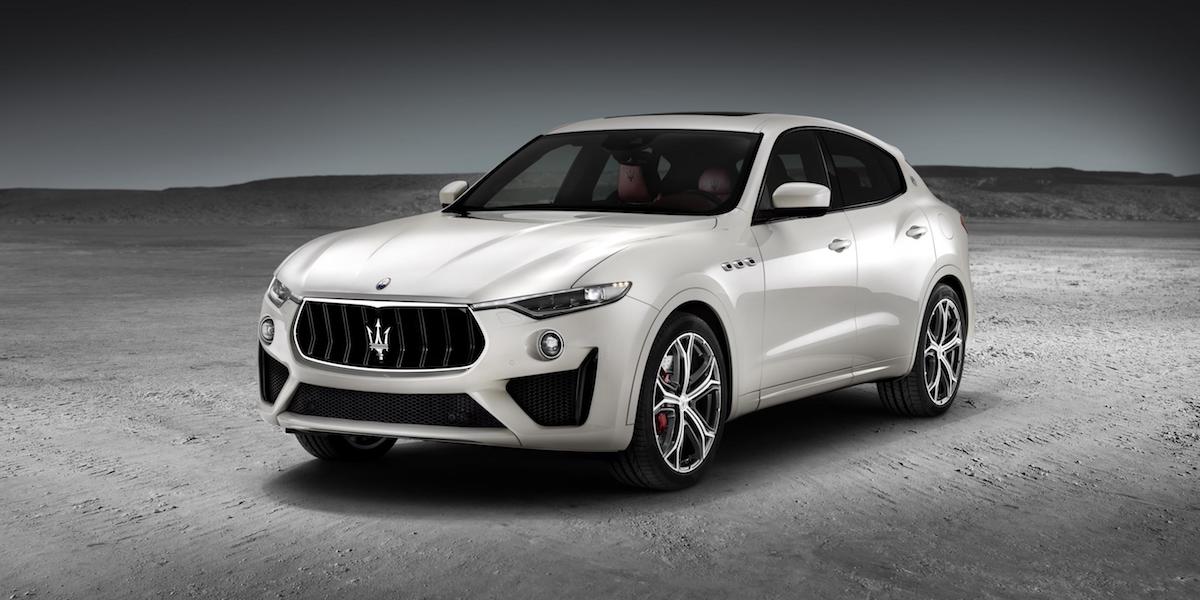
Maserati has been tweaking its Levante SUV range, with new top-of-the-line Levante Trofeo and Levante GTS models powered by a 5.0-litre petrol V8 engine, and an entry-level V6 petrol engine all joining the UK line-up. The range made its debut at last week’s Goodwood Festival of Speed.

The new 3.0-litre petrol V6 model produces 350hp, compared to the existing twin-turbo 430hp version found in the Levante S, and has been added to the range in response to ongoing consumer shifts away from diesel power. This engine will also be available on Maserati’s flagship Quattroporte saloon and is already available on the Ghibli saloon. Maserati claims that the 350hp engine will provide a 0-62mph time of 6.0 seconds for the Levante and 5.5 seconds for the Quattroporte. Don’t expect average fuel consumption mpg figures above the mid-20s.

The new V8 models will provide more interest for Maserati enthusiasts. The 3.8-litre, twin-turbo V8 engine is the same unit found in the Quattroporte GTS saloon. It puts out 590hp in the Trofeo and 550hp in the GTS model, and has been revised to work with the Levante’s all-wheel drive system (the Quattroporte is rear-wheel drive only). All of Maserati’s V6 and V8 petrol engines are designed by Ferrari and built in Maranello, alongside the engines that go into Ferrari’s own supercars.

Visually, there are minor changes to the front bumper panel and optional adaptive full-LED headlights, while the advanced electronic stability programme that helps to prevent vehicle instability rather than just correcting it – known as Integrated Vehicle Control – is now standard on all Levante models.

Model year updates across the range

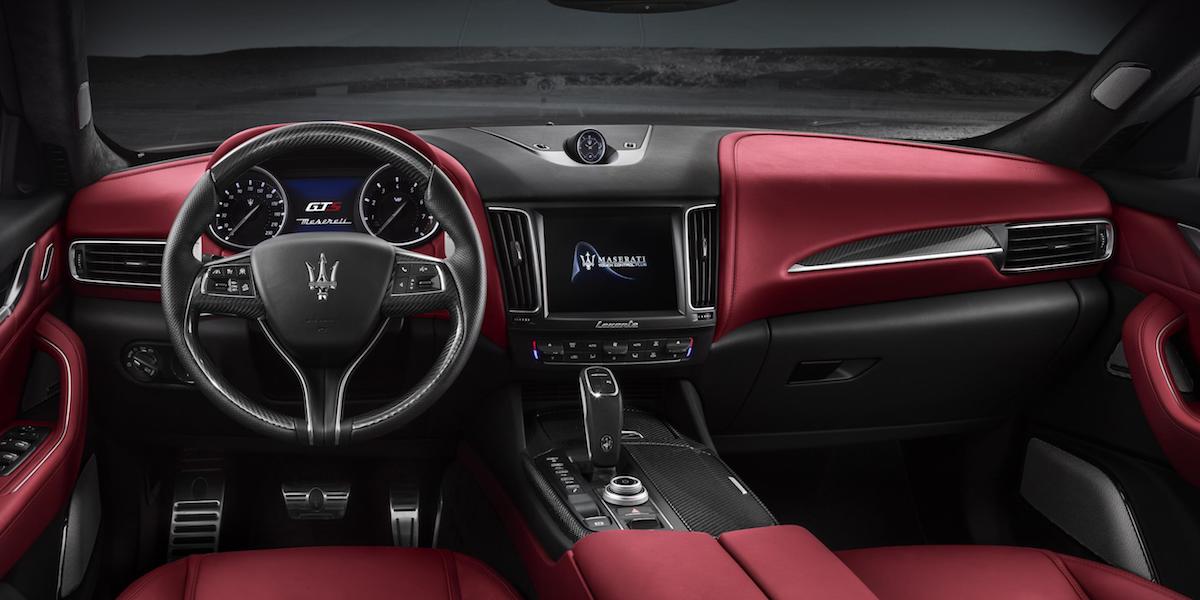
The entire Maserati range has also been given a light refresh, with some new wheel designs and colours on the outside and upgraded systems and leathers on the inside. The eight-speed automatic gearbox on all models carries over, but Maserati has paid attention to the shift lever movement. It now has a shorter travel and easier switching between manual and automatic modes. The infotainment system has also been updated with improved graphics and climate control ergonomics.

The GranTurismo and GranCabrio models have finally been retired from production, leaving the 2019 Maserati range comprising of the Levante SUV and the Ghibli and Quattroporte saloons.

The entry-level Levante 350hp will start at £61,425 and the Quattroporte 350hp will start from £78,120. They are both available to order now with deliveries expected from September. Pricing for the Levante GTS and Levante Trofeo models has yet to be announced.

Maserati Levante at the 2018 Goodwood Festival of Speed

Maserati Levante GranSport test drive

What is it?

In essence, the Levante is Maserati’s rival to the Porsche Cayenne. Like the Porsche, it’s enough to make purists cry – and also like the Porsche, the volume sales Maserati plans to achieve from the Levante will help fund the further development of its sports car lineup.

Quite important, then – when you consider what a massive success the Cayenne and other premium SUVs have been. We’re testing the Levante in dynamic GranSport trim, fitted with a petrol engine.

What’s new?

The updated Levante comes as Maserati officially launches new GTS and Trofeo versions – both powered by a 3.8-litre, twin-turbo Ferrari V8. Both have been confirmed for the UK, but no prices or timings have yet been announced, so for now we have to stick to the standard V6 petrol and diesel variants.

Tweaks for 2019 for the Levante range are largely cosmetic. First, and perhaps not particularly noticeable unless you view the two variants side-by-side is greater differentiation between racy GranSport and cushy GranLusso trim.

There are full LED matrix headlights on the outside and new graphics for the infotainment inside, plus a redesigned gear shifter. Maserati’s also incorporated its Integrated Vehicle Control, which aims to prevent spirited drivers from killing themselves – but in a gentler, more progressive way than the hammer-down approach of most ESC and traction control systems.

How does it look?

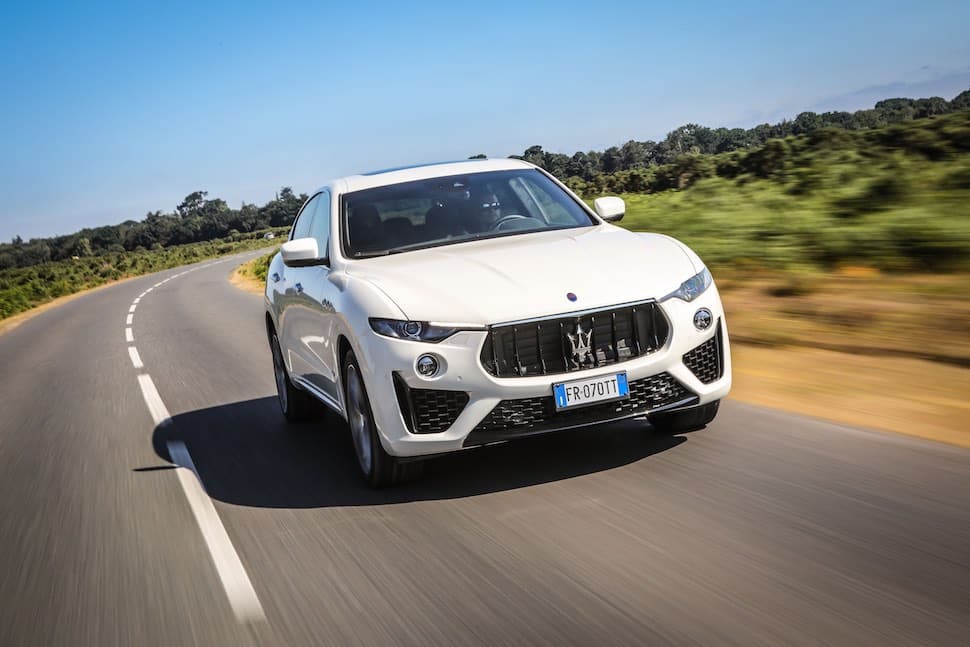
It’s a stretch to call the Levante pretty – very few SUVs are – but it’s certainly imposing, and that’s what will matter to more drivers. For 2019 Maserati has further differentiated the two main trim levels – GranSport and GranLusso – giving each a different front bumper treatment and opting for different trims – piano black for the GranSport, chrome for the GranLusso.

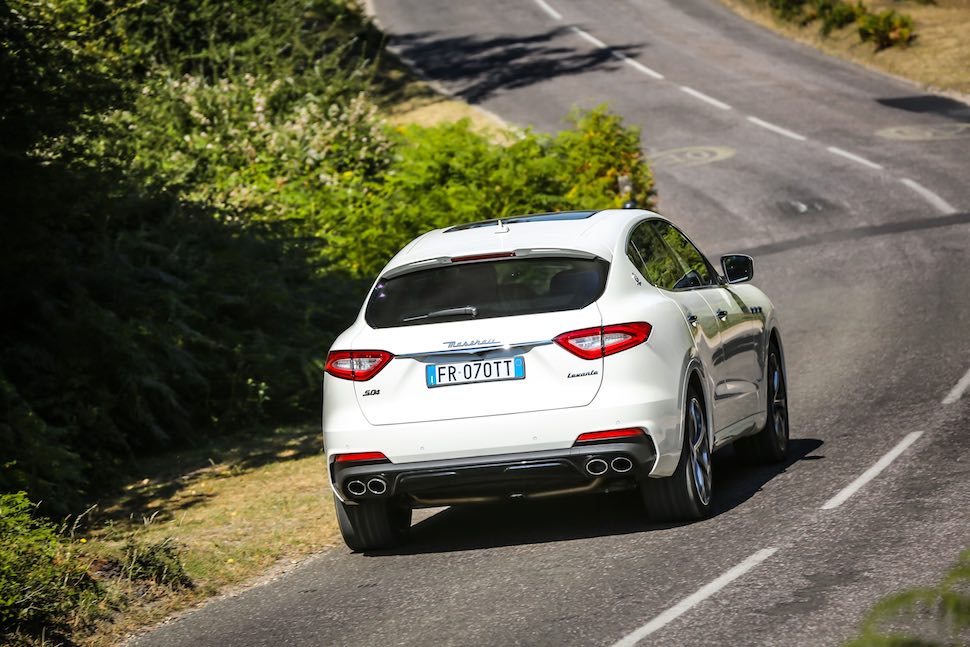
Despite the LED daytime running lights’ tendency to make the car look somewhat cross-eyed, the Levante is a handsome beast, with a bold, upright front grille and a curvaceous rear. Smaller details – such as the trident badges on the C-pillars – just add to the overall effect.

What’s the spec like?

As you might expect, the pricey Levante comes with just about everything you could want in terms of equipment. The options list does include the Driver Assistance Package Plus, which contains kit we reckon should be standard on such an expensive car – such as adaptive cruise control, blind-spot alert and a surround-view camera system to aid parking.

In true Italian style, the most difficult decision you’ll have to make when speccing a Levante is the trim. With several leather, wood, carbon fibre and other materials on offer, you’ll have to choose carefully – making sure nothing clashes with the gloriously sparkly exterior paint finishes. You can even opt for the seats to be trimmed in silk.

What’s it like inside?

2019 Maserati Levante interior | The Car Expert
(PA)

The Maserati’s interior can’t quite compete with truly premium rivals in terms of quality and ergonomics. The latter is more idiosyncratic than irritating – once you’ve learned the odd positioning of some switches, such as the panel in the roof containing the boot release and parking sensor switch, you won’t be caught out too much.

Maserati’s infotainment display has received an upgrade, but it’s not up there with the best. The touchscreen-oriented interface means that navigating it with a scroll wheel while on the move is a difficult task, while the graphics look a little amateurish next to those of the likes of BMW.

Space is decent for the class, but it’s far from palatial – three adults will struggle to sit side-by-side on the rear bench and the boot is a lot shallower than it first appears. However, the Levante is the only car in its class with adjustable pedals – a small but welcome touch that aids comfort for the driver.

What’s under the bonnet?

There’s a lower-powered V6 petrol on the way later in the year but for now the UK makes do with two engines carried over – a 275hp V6 diesel and a 430hp V6 petrol.

We spent the majority of our time in the petrol, which true to the Maserati name is sharp, responsive, and very, very Italian. Put your foot down and the noise is simply gorgeous. It’s also amply suited to pushing the heavy Levante along at a high rate of knots – the car never felt like it was straining.

The petrol’s sub-25mpg fuel consumption might lead you to consider the diesel, but we were surprised to see a figure of just 26mpg registering on the oil-burner’s trip computer. Considering Levante owners are unlikely to be short of a penny, we’d opt for the petrol. The diesel feels clattery and unrefined for such a premium car.

What’s it like to drive?

Maserati prefers to think of its cars as Grand Tourers rather than sports cars, but in the SUV sphere the Levante is definitely one of the more agile.

The steering is smooth, accurate and well-judged, despite a move to an electric power-assisted setup. Combined with the power from that V6 petrol engine, the Levante can really hustle down a back road.

Standard air suspension also keeps things pretty comfortable, especially at a cruise, but you can tighten things up with liberal application of the ‘sport’ suspension setting, which lowers the Levante by 2cm for flatter cornering.

Alternatively, you can raise the air suspension and head off-road. Maserati promises the Levante will actually do some serious mud-plugging if pushed, but we sincerely doubt most will make it any further off the beaten track than a crunchy gravel driveway.

Summary

Is the Levante an objectively better car than the Porsche Cayenne? No.

Will that matter to a lot of buyers? Of course not – the Maserati badge is a byword for exclusivity and taste. Specced in the correct way, the Levante will look equally at home outside an exclusive member’s club or at a grouse shoot.

Opt for the petrol model and it goes almost as well as it looks, too. We’re still waiting for the insane V8-powered GTS and Trofeo models to arrive in the UK, though.

Similar cars

BMW X5, Porsche Cayenne, Land Rover Range Rover Sport

Key specifications

Model as tested: Maserati Levante S GranSport
Price (on-road): £79,125
Engine: 3.0-litre V6 petrol
Gearbox: Eight-speed automatic
Power: 430 hp
Torque: 580 Nm
Top speed: 164 mph
0-60mph: 5.0 seconds
Fuel economy (combined): 23.9 mpg
CO2 emissions: 273 g/km

Redex trial progress report

I’m running a three-month trial of Redex fuel system additives to see if I can feel any increase in my car’s performance or any measurable difference in its fuel economy.

I’m now at the halfway point of my three-month Redex trial, and I’ve been fielding a few questions from people along the way whenever I’ve mentioned it. Mostly, “What is it?” and “What does it do?”

Different kinds of fuel additives

The particular type of fuel additives that I am trialling are cleaning agents that claim to reduce build-up on your engine’s fuel injection system., meaning that the correct amount of fuel is being injected into the important bits of the engine and not being wasted. By de-clogging the fuel system, fuel flows more freely and should improve both performance and economy.

It’s probably easiest to think of these system cleaners as a bit like drain de-clogging liquids, or de-scaling agents for your coffee machine or kettle or iron or washing machine, etc. The end result should be a sparkling clean system of tiny pipes that allow the fuel to flow more freely into the important bits of the engine, and should improve both performance and economy.

Of course, to notice any improvement, the system needs to have been clogged up to start with. A brand new engine is already clean and shiny, so a cleaning agent won’t really give you any benefit. You’re far more likely to see noticeable benefits from older, higher-mileage cars.

There are other kinds of additives that are specifically designed to improve your car’s performance by adding a bit of extra kick to the fuel. These are usually called “octane boosters”, but they’re a different thing from what we’re reviewing on this trial. They are more like vitamins or other dietary supplements. Everybody’s different in terms of their diet, their lifestyle and their own genetic makeup, so taking a daily multi-vitamin tablet may benefit one person yet have no noticeable impact on another person.

The trial process

The trial commenced by adding a 500mL bottle of Redex “5-in-1 Advanced Fuel System Cleaner”. This is a concentrated cleaning product, and is recommended as a first step and then again every few months. You simply add it to your tank before putting in your petrol.

For each subsequent fill-up, I have been adding a 90mL bottle of regular Redex “Petrol System Cleaner”. The company produces specific products for both petrol and diesel engines, so make sure you’re using the right one for your vehicle.

At every fill-up, I’ve also been recording my mileage and the amount of fuel added so I can work out the fuel consumption. This has also allowed me to compare my actual results with the number suggested by my car’s trip computer.

Obviously, this is not a laboratory trial conducted in perfect conditions using perfect scientific methods. That means there will inevitably be variations due to traffic conditions, weather, different journey types and speeds, and so on. However, I’m doing what I can to keep things consistent. My car is a 2013 Mazda MX-5, and it only ever carries me (and sometimes by toddler son if I’m doing the nursery run). Plus the boot’s tiny. That means that there’s minimal variation in weight across the course of a tank.

Unless it’s raining, the top on my car is always down when I’m driving – and we really haven’t had much rain in the last six weeks. Having the top down all the time is not great for fuel economy because it messes up the car’s aerodynamics, but at least it’s consistently down every day.

I fill up every time at the same petrol station, using regular 95-octane unleaded petrol.

My driving journeys have basically been the same for the last six weeks, which is my usually 25-mile round trip to work every day. The only variation in that has really been traffic along the way, and over the last month there has been a lot of congestion due to an HGV diversion in the next town. That’s meant a lot more big trucks and coaches on my commute, and traffic has been frankly awful for about a month. The good news is that’s finally coming to an end shortly.

Fuel economy results so far

Prior to starting my Redex trial, my fuel economy tended to hover around the 30mpg mark depending on circumstances. My car was serviced a couple of months before the trial started and only has 30,000 miles on the clock, so I haven’t had any great expectations of seeing substantial movement on my fuel consumption figures.

My first fill-up with the 5-in-1 advanced system cleaner was then followed by a 150-mile motorway trip, although a fair bit of that was crawling around the M25. Anyhow, the first tankful saw an overall result of 34mpg; a good start, but probably affected by the motorway run.

Since then, I have filled up another three times using the small 90mL bottle of regular petrol system cleaner. My driving has purely been the daily commute, but as mentioned the traffic has been rubbish. The numbers show fuel consumption of 30, 28 and 30mpg for each tankful, so it’s much the same as I’d normally expect. Again, traffic conditions will have played a part, this time negatively influencing the result.

I filled up the car again a couple of days ago, and have also noticed that traffic is much better this week. Hopefully, that means the next tank’s results will be a bit more indicative of my usual driving circumstances.

Performance observations

We’re not doing any performance testing on this trial, so it’s simply been a case of me trying to detect any noticeable improvements in performance.

I think that the car has probably been running a bit smoother after using the 5-in-1 cleaner. Once or twice in recent months, I had noticed a very slight cough when accelerating hard. It was nothing really significant, only happened very occasionally and I had just put it down to a bit of gunk in the fuel. I haven’t noticed anything similar since I’ve started using Redex, so I’d say that the cleaning agents have been doing their job and keeping the fuel system running properly.

At this stage, I’d have to say I really haven’t felt that the car is performing any better. Obviously, I’m not doing any timed acceleration runs on a drag strip, but the car doesn’t feel to be performing any differently than before I started using Redex.

To be fair, this isn’t really the main point of these particular products; if I wanted to try and increase the car’s performance, I’d try the Redex Petrol Power Booster or just use premium unleaded fuel, both of which increase the octane level of the fuel for a bigger bang in the cylinders.

Other observations

Incidentally, taking proper fuel consumption measurements has allowed me to compare the actual results with the on-screen information in the car’s trip computer. It seems that my Mazda is about 0.5 mpg optimistic in its read-out as every time I’ve filled up, the results have been about that much worse than the average fuel consumption readout in my dashboard. This is pretty normal for most cars, and the fuel economy numbers on the screen should only be considered a guide anyway.

The only other point of note is that the Redex bottles have a really annoying inner seal, like most bottles these days. It’s particularly difficult to remove, and usually I just end up stabbing it with my car key to puncture  the seal and tear most of it off. That’s fine for my Mazda, as it still has a proper key that goes in a proper ignition barrel. Most newer cars no longer have that, however, so you’d need to have your house key or some other sharp implement handy to get the stuff out of the bottle.

I’ll be continuing to run my Redex trial for another six weeks, so I should have a final report for you by the end of August.

The review is sponsored by Redex.

Volvo and Ford earn five-star safety praise

The Volvo XC40 and Ford Focus have both earned five-star crash-test ratings from safety body Euro NCAP.

And the 97% adult occupant protection score achieved by the Volvo puts it among the top five cars tested by Euro NCAP in the last three years.

The crash testers were most impressed by the active safety systems which come as standard on both cars. Both the XC40 and Focus are fitted with autonomous emergency braking (AEB), and both systems detect pedestrians and cyclists.

The Volvo also offers emergency lane-keeping (ELK) technology, keeping the car on its side of the road and hoping to prevent head-on collisions.


You may also like:

Such figures have seen Volvo maintain an enviable safety record – all of its current model range have earned five-star safety ratings. The XC60 was named the overall best-performing large off-roader and the best overall performer in Euro NCAP’s 2017 Best in Class safety awards, and its larger sister the XC90 received the same accolade in 2015.

Welcoming the results, Ford’s Focus vehicle line director Helmut Reder argues that driving hasn’t become any less demanding since drivers first took their test and they have become more accustomed to pressure.

“Technologies such as Pre-Collision Assist with Pedestrian and Cyclist Detection will reduce the demand on drivers, helping them focus their attention and be more confident at the wheel,” he says.

Euro NCAP secretary general Michiel van Ratingen is delighted that manufacturers, both mainstream and premium, appear to be responding to the stricter safety requirements introduced for this year by fitting the latest active safety technologies.

“Technologies like AEB and ELK deliver immediate safety benefits but they are also enabling technologies for the autonomous vehicles of the future,” van Ratingen says.

“Euro NCAP’s roadmap sets a series of demanding tests for each of these ‘milestone’ technologies seeking to ensure that their performance saves lives today as well as tomorrow.”

Ford Focus crash test The Car Expert

Ford Ka+ Active review

60-second summary

What is it?
The Ford Ka+ Active is an SUV-styled version of the brand’s smallest car.

Key features
SUV styling, five-door only, revised chassis

Our view
The Ford Ka+ Active adds a dose of SUV-style to the small car without going the full SUV route, and in the process becomes the most satisfying version of the Ka+ range. Against other muscled-up city car rivals the Active holds its own, but it becomes more difficult to justify against similarly-priced proper small SUVs such as the Suzuki Ignis.

Similar cars
Suzuki Ignis
, Vauxhall Viva Rocks, Kia Picanto X-Line

Ford Ka+ road test 2018 | The Car Expert
The Ford Ka+ Active adds a dose of SUV style to the regular Ka+

Full review

Introduction

Ford launched the Ka+ in 2016 as a more focused version of the previous Ka. The new model responded to increased competition in the city car sector and in the process dropped the three-door variant.

Now as part of a programme of updates for the Ka+ range, we get the Active model. Put simply, this is part of a new bid by Ford to cash in on the still-mushrooming popularity of SUVs.

The Blue Oval is doing this by offering versions of its mainstream range with the SUV elements buyers like – basically bolder styling and elevated driving positions. The brand doesn’t worry about such traditional SUV features as all-wheel-drive powertrains, because the buyers don’t want the complications – or the costs – that come with such things. Very, very few SUV buyers will ever intend to take their car even slightly off the blacktop…

So the Ka+ Active lines up alongside the recently announced Fiesta Active in showrooms and before long they will joined by an Active version of the next Focus, coming later in 2018.

Buying and owning a Ford Ka+ Active

When Ford launched the Ka+ it effectively tried to make the car more mainstream and therefore more effective, killing off the somewhat cheeky styling of the previous Ka and replacing it with a five-door model that could be marketed purely on its value for money.

Part of the specification of the new Active mirrors the updates being applied to the rest of the Ka+ range to maintain that place in the market. The interior gets an upgrade, and the technology a major update as part of the current frantic march of such systems into even the smallest cars.

Active becomes a trim level in the Ka+ line-up, sitting at the top of the range but according to Ford’s suits, set to attract a different kind of customer. We are told that Active is for those energetic types who like to be outside rather than sitting at home watching TV, walking the dog on the beach and such like.

Ford Ka+ Active front 3/4 view 2018 | The Car Expert
The Active model sits at the top of the Ka+ range

Said suits are equally keen to point out that the Active is not for proper off-roading – they see these models as a bridge to the brand’s proper SUVs such as the Ecosport and Kuga. And it will be an important bridge, possibly accounting for 30% of all Ka+ models sold.

So the emphasis is on looks. New front and rear bumper designs, body side mouldings and silver roof rails help to get across that SUV message, as does a raised ride height, the car sitting 2cm higher up. The 15-inch alloy wheels are bespoke to the model, as is the availability of a bronze metallic paint dubbed Canyon Ridge.

In terms of powertrains, Active buyers have a choice of two. A recently-launched 1.2-litre three-cylinder petrol engine replaces the previous four-cylinder unit and has 85hp on tap.  Or, and unusually compared to rivals, buyers can go for a 1.5-litre diesel with 95hp.

Ford expects the oil burner to take just 4% of sales, but insists that diesel is still the right choice for some buyers, especially those doing high mileages or who want the wider torque spread.

Where the Ka+ has fallen down compared to rivals is in its safety package – a Euro NCAP crash test in 2017 awarded it a mere three stars. You won’t find such tech as autonomous emergency braking, or even ISOFIX child seat belts, on even the options list for this car.

Inside the Ford Ka+ Active

Inside sees a quite extensive makeover as part of the Ka+ update, with the Active version adding ‘more durable’ finishes in a dark charcoal colour to reflect its lifestyle. There remains a fair amount of scratchy plastic compared to some rivals, though the chrome scuff plates are a nice touch, as is the bespoke leather steering wheel. This includes switches for the cruise control.

The major technology upgrade is the addition of Ford’s Sync3 infotainment system, supplied as standard. Based around a six-inch tablet-style touchscreen atop the centre console, it includes Apple CarPlay and Android Auto smartphone compatibility, and voice commands.

The Active may be a range-topper, but much of the car’s significant tech requires delving into the options list. For the first time, a heated windscreen is available on the Ka+ as part of a £300 ‘Winter Pack’ that also includes heated seats. Auto headlamps and wipers and keyless entry and start form a Technology Pack for £350, and if you want rear parking sensors, then that’s £350 for the City Pack that also includes heated electrically folding door mirrors and electric rear windows.

The Ka+ continues to do the basics rather well – the rear offers plenty of room for two, especially above the head, though like any city car it’s a bit tight for three. And the boot space of 270 litres is almost to supermini standards.

Driving the Ford Ka+ Active

Ford Ka+ on the road
Generally the Ka+ Active rides well and is easy to manoeuvre

The major chassis difference between the Active and its fellow Ka+ models is that 2cm hike upwards, and to cope with this Ford has added what it describes as ‘rough road suspension’.

This basically means retuning the dampers with a ‘hydraulic rebound stopper’ to help smooth out the jolts of rough surfaces before they reach the cabin, and thickening up the anti-roll bar to reduce any tendency for the jacked-up body to lean over in corners. The ESC also boasts ‘Active Rollover Prevention’ to help in this area, particularly if the roof rails are loaded with bikes or such like.

The Ka+ Active does lean a bit in corners, but not in any way to cause alarm, and generally it rides very well – we’d go so far as to say better than any other Ka+ variant. In tight urban streets it is really easy to manoeuvre, while on a twisty B road it turns into corners in a precise manner that makes it quite fun to drive.

The slightly higher viewing position of the road ahead is comfortable without harming the on-road dynamics to any significant degree.

The engine is surprisingly quiet for a three-cylinder, quite enthusiastic but not as eager as some turbocharged rivals. Generally, however, it suits the package, combining enough potency with agreeable economy and emissions returns.

Summary

If you like the Ford Ka+, you will very likely find the Ka+ Active even more appealing. The model adds some useful extras, without compromising the good points of the mainstream small Ford.

In terms of price it competes fairly squarely on with rival small cars to which have been added ‘SUVness’ (Ford’s phrase, not ours…) and offers a little more character than most of them.

However if looking for a small car with SUV pretensions then for the same money one can have a Suzuki Ignis. Designed as a proper SUV from the start, the Suzuki offers just about all that the Ka+ Active does, plus a little more provenance – it feels a more complete package.

Key specifications

Make & model Ford Ka+ Vauxhall Viva Suzuki Ignis
Specification Active Rocks 1.2 SZ3 Dualjet MT
Price (on-road) £12,950 £11,940 £11,499
Engine 1.2-litre petrol 1.0-litre petrol 1.2-litre petrol
Power 85 hp 73 hp 90 hp
Torque 115 Nm 95 Nm 120 Nm
0-62mph 13.6 sec 13.1 sec 12.2 sec
Top speed 104 mph 106 mph 106 mph
Fuel economy (combined) 56.5 mpg 54.3 mpg 61.4 mpg
CO2 emissions 114 g/km 118 g/km 104 g/km
Insurance group TBA 4E 9E
Euro NCAP rating 3 stars (2017) 3 stars (2017) 3 stars (2016)*
TCE score 6.6 / 10 5.6 / 10 8.2 / 10

* 5 stars if fitted with the optional safety pack

The five safest used cars for new parents

Nothing focuses your mind on car safety more than the thought of having to take your newborn child home from the hospital, so it’s not surprising that 60% of parents-to-be change their car ahead of their new arrival.

That surprisingly large percentage comes from research conducted by Co-op Insurance. What’s less surprising is that almost half of those buyers cited better safety as the main reason for changing cars. More than 40% of parents surveyed classed driving their baby home from hospital as the most stressful driving experience of their lives, ahead of their driving test and the journey to their wedding.

In conjunction with Thatcham Research, the Co-op has been running the Safest Used Car Awards since 2016. In addition to the overall results released today, the duo has also put together a list of the five safest used cars for new parents, using a formula specifically devised to highlight child protection in crash tests and the ease of fitting child seats into the back row.

This is over and above their usual Safest Used Car Award criteria of having a five-star Euro NCAP score and autonomous emergency braking available as either standard or optional equipment, plus be available to buy on the used car market for no more than £15,000.


You may also like:

So without further ado, here are the five safest used cars for new parents, which should all be at the top of your pre-baby car buying shortlist.

1. Mazda CX-5

Mazda CX-5 safest used car for new parents 2018
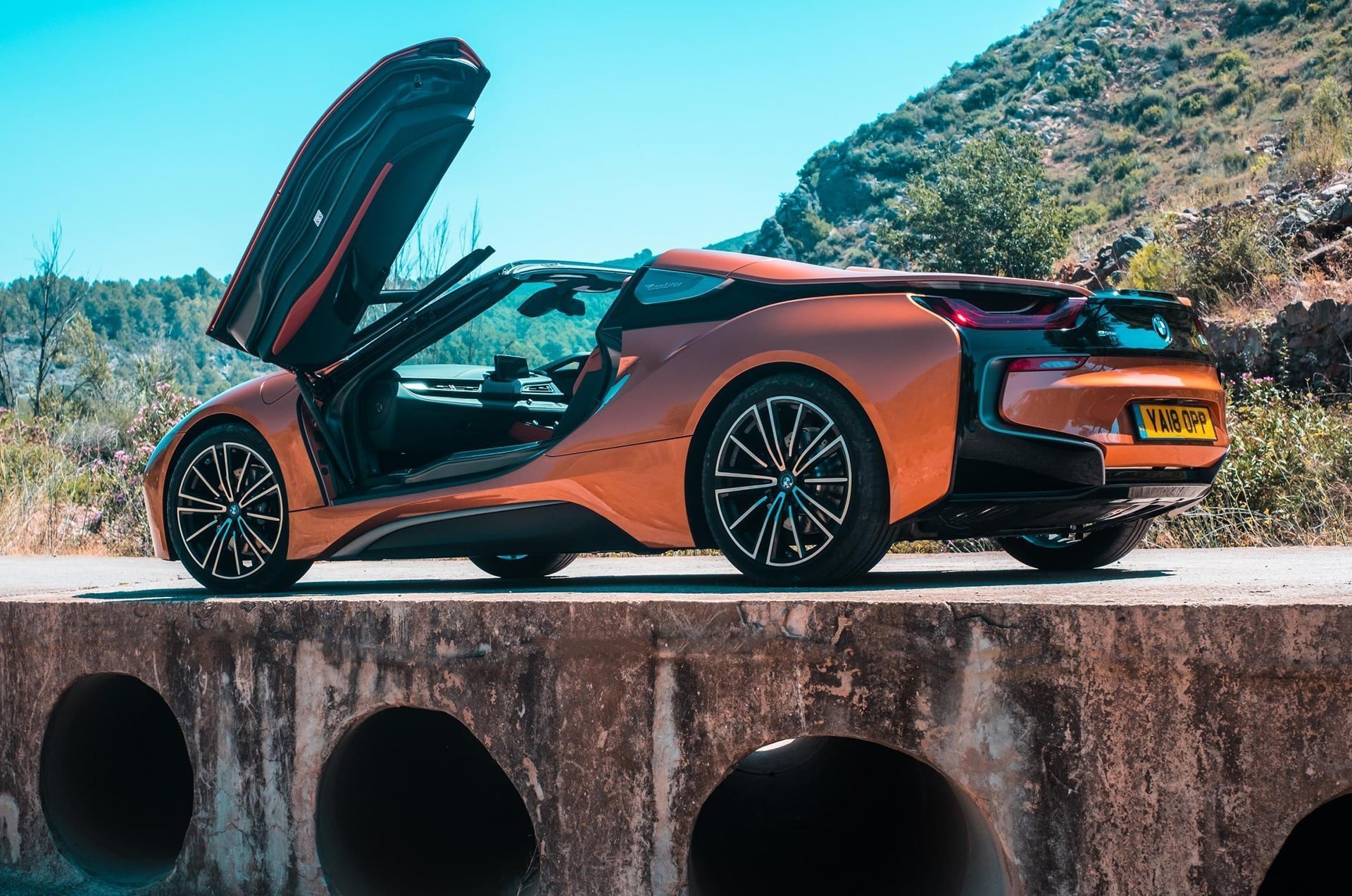
The Mazda CX-5 was highly rated by the motoring media when it was launched back in 2012, and it continues to be a good choice as a used car in 2018, being ranked as the safest used car for new parents. Mazda doesn’t sell as well as most of the European brands, but it’s well worth taking a look at a CX-5.

2. Volkswagen Touran

Volkswagen Touran (top ten safest used cars 2017)

It might possibly be the most boring car in the world, and it is made by a lying and corrupt organisation. But when it comes to child safety, the 2015 Volkswagen Touran is a solid choice. Just remember that the company tried to hide the level of toxins it has been pumping into your new child’s planet when you’re driving it.

3. BMW 2 Series Active Tourer

BMW 2 Series Active Tourer (top ten safest used cars 2017)

Traditionalists may still not like the idea of a front-wheel drive BMW people carrier that shares a lot of its underpinnings with a MINI, and it’s certainly not the prettiest car that BMW has ever built. However, the 2 Series Active Tourer has certainly brought new customers to the brand and those customers’ children are riding in a very safe car.

4. Nissan Qashqai

2017 Nissan Qashqai - front

The Qashqai has been the success story of the British car industry for the last decade, and it’s not just the Sunderland economy that’s being saved. The current-shape Qashqai launched in 2014 and has featured in all three of the annual Safest Used Car lists in overall terms since 2016. It’s now also considered one of the safest used cars for new parents as well.

5. Toyota RAV4

Toyota RAV4 2015 | Safest used cars for new parents

The Nissan Qashqai may be considered the pioneer of the family crossover here in the UK, but the real inventor of the category was Toyota. First launched in 1994, the RAV4 has become smoother and more sophisticated with each new model. The current model arrived in 2013, although it’s been facelifted and tweaked a couple of times since then.

Summary

You’ll probably have noticed that three of the five cars above (Mazda, Nissan, Toyota) are mid-sized SUVs, although they’re actually all based on conventional hatchback underpinnings. Parents do tend to love the idea that rugged-looking SUVs are safer than regular cars, but that’s simply not true. If you prefer a normal five-door hatchback to a faux-by-four, then this year’s Safest Used Car Awards includes seven choices within the top ten.

But regardless of what sort of car you’re looking for, the best advice you’ll find comes from Thatcham’s director of research, Matthew Avery: “Our advice to potential car buyers is to do your research, identify what is important to you and what safety features you want. And what is non-negotiable is whether your child car seats fit and can be safely secured.  If not, walk away.  Child safety is too important to compromise.”

Volvo V40 wins safest used car award (again)

The Volvo V40 has been awarded the title of Safest Used Car by Co-op Insurance and Thatcham Research for the third year in a row.

The Safest Used Car Awards were launched by Co-op Insurance in 2016 and are based on a ranking formula devised by the Co-op and Thatcham Research, the UK’s independent car safety authority. Last year, there was a specific list for the safest first used cars, and this year Co-op and Thatcham have come up with a list of the safest five used cars for new parents.

The minimum criteria for consideration in the Safest Used Car Awards are: a five-star Euro NCAP safety rating; CO2 emissions of no more than 120 g/km; and the car must be available to purchase on the second-hand market for no more than £15,000.

The long list of cars is then whittled down to a Top Ten by evaluating specific ratings for adult, child and pedestrian protection, as well the availability of autonomous emergency braking as either standard or optional equipment.

The final ten cars to make the list are as follows:

1. Volvo V40 (with safety pack)

Volvo V40 wins safest used car award 2018

The Volvo V40 remains undefeated in the Safest Used Car Awards, with its third victory in three years. However, it is important to note that the ranking is based on the car being fitted with the optional Driver Assist Pack, which adds extras like blind spot assist and adaptive cruise control. This was a £2,000 option on a new V40, so only a minority of used cars on the market will be fitted with this comprehensive safety-enhancing package.

2. Honda Civic

Honda Civic 2015 | The Car Expert

After dropping out of the top ten last year, the Swindon-built Honda Civic has certainly bounced back. Jumping back up into second place partly reflects pricing. The previous-generation Civic was replaced last year by an all-new model, which means that used car prices for high-spec versions of the older model have now fallen under the £15,000 threshold to be eligible.

3. Hyundai i30

Hyundai i30 hatch 2014 | The Car Expert

The Hyundai i30 is another new entry in this year’s list. This model ran from 2012 to 2017, with a facelift appearing in 2015. This era of i30 was a key model in Hyundai stepping up from being a budget brand to a serious mainstream player in the UK market.

4. BMW 2 Series Active Tourer

BMW 2 Series Active Tourer review (The Car Expert)

The 2 Series moves up a spot in this year’s Safest Used Car Awards. Traditionalists may still not like the idea of a front-wheel drive BMW people carrier that shares a lot of its underpinnings with a MINI, and it’s certainly not the prettiest car that BMW has ever built. However, it has certainly brought new customers to the brand and those customers are driving a very safe car.

5. Mazda3

Mazda3 on road

The Mazda3 still tends to fly under the radar here in the UK, which is a shame as it’s a very good car and better than many better-selling vehicles. It’s dropped back three spots from last year’s runner-up result, but it’s still worth a look. Skip the entry-level models that don’t get autonomous emergency braking, and look to the higher-spec models that also offer extras like lane departure and blind spot warnings.

6. Volkswagen Golf

Volkswagen Golf, Co-Op Safest Used Car Awards 2018

Volkswagen may have been exposed as a company with zero moral values in recent years, but it still knows how to build a good car – and it can’t cheat the Euro NCAP crash tests, so customers can at least be sure that its five-star safety rating is valid. The Golf moves up one place over last year’s rankings.

7. Kia Rio

Kia Rio 2014 | The Car Expert

The fourth new entry on this year’s list is the Kia Rio. Launched in 2011 and replaced last year, the third-generation Rio hatchback represents excellent value for money as a safe used car and is the top-ranked supermini on this list. So if you were thinking about a used Ford Fiesta (the most popular used car in the country), you should give the little Kia a look.

8. Nissan Qashqai

Nissan Qashqai (top ten safest used cars 2017)

The Qashqai has been the success story of the British car industry for the last decade, and it’s not just the Sunderland economy that’s being saved. The Qashqai has featured in all three of the annual Safest Used Car lists, hanging onto its eighth position from last year’s Safest Used Car Awards.

9. Nissan Pulsar

Nissan Pulsar 2015 | The Car Expert

Conversely, the Nissan Pulsar hasn’t had anything like the success that the Qashqai has seen. It’s worth tracking one down, however, as it’s another new entry in this year’s list.

10. Vauxhall Astra

Vauxhall Astra, top ten 2017

The latest-generation Vauxhall Astra rounds out the top ten list of safest used cars. Launched in 2015, the current Astra is dramatically better than the previous model, with safety one of the big improvements.

Summary

So there you have it. If you’re looking for a used five-door family hatchback then you’ve come to the right place, as seven out of the top ten fill that very category. If you’d prefer a car that looks a bit more rough and tough (even if it isn’t really), then today’s list of the five safest used cars for new parents includes three mid-size SUVs.

But regardless of what sort of car you’re looking for, the best advice you’ll find comes from Thatcham’s director of research, Matthew Avery: “Our advice to potential car buyers is to do your research, identify what is important to you and what safety features you want. ”

McLaren to go all-hybrid by 2025

The Car Expert Best of British horizontal banner

McLaren Automotive intends to launch 18 new models between now and 2025 – and every one will be powered by a hybrid engine.

Unveiling the new McLaren 600LT at the Goodwood Festival of Speed, chief executive Mike Flewitt also announced the ‘Track 25’ business plan – a £1.2 billion update of the Track 22 plan revealed at the Geneva motor show in March 2016.

Taking McLaren to its 15th anniversary, the plan will see hybrid power plants employed across the entire range of both sports and supercars, while the brand will also develop a lighter, ‘super fast’ charging, high-power battery system for use in performance applications. This pack will be able to offer 30 minutes of full electric power on a race track.


You may also like:

McLaren is soon to open a £50m Composites Technology Centre as part of its drive to keep its cars lighter than all rivals. Once the centre opens Flewitt says that 57% of each McLaren will be sourced from the UK.

McLaren Mike Flewitt The Car Expert
CEO Mike Flewitt will oversee major growth for McLaren Automotive.

Included in the 18 new cars or derivatives of existing models to be launched between now and 2025 is a successor to the McLaren P1 – this was unveiled five years ago and at the time was the first petrol-electric hybrid hypercar.

As a result of the new models, production at McLaren’s factory in Woking, UK, will increase by almost 75 per cent. The brand intends to produce 6,000 cars a year by 2025 and will also increase its current 86 dealer outlets globally to 100, targeting major new markets in Russia, India and central and eastern Europe.

McLaren also released further technical details of the 600LT at Goodwood, describing the car as the ‘lightest, most powerful and quickest road-legal Sports Series McLaren’.

Its mid-mounted engine producing 600hp and 600Nm, the car also makes use of a new design of carbon-fibre bodywork. The combination of front splitter, side sills, extended diffuser and fixed rear wing helps the car achieve 100kg of downforce at 155mph, while also contributing to a 100kg weight saving over the 570S coupe that it is evolved from.

As a result, the 600LT will match the Super Series McLaren 675LT to 62mph, crossing the mark in 2.9 seconds, and passing 124mph in 8.2 seconds.

All McLaren road cars are built in Britain.

McLaren The Car Expert
Already dubbed the fastest-growing UK car brand, McLaren intends to add to its dealerships in several new markets.

‘Most capable’ Jeep Wrangler on sale in September

The new Jeep Wrangler will go on sale in September, pitched as the most capable version of the traditional 4×4 yet.

Jeep says that the latest generation of its signature model has been completely renewed, while still directly evolved from the wartime vehicle that began the Jeep story. The brand claims that its Wrangler, a direct rival to Britain’s Land Rover, is ‘the undisputed off-road champion.’

The new model maintains the go-anywhere ability with the availability of two 4×4 systems depending on how extreme the terrain it will be used in. Sport and Sahara models use the Command-Track version while the Rubicon model, the most off-road variant, is fitted with a more robust system dubbed Rock-Trac.

Command-Trac units include a two-speed transfer case and four driving modes, from two-wheel-drive through auto and part-time 4WD to a low range 4WD. The Rock-Trac version has a more off-road pitched low range, as well as heavy-duty front and rear axles and locking differentials. The suspension offers longer travel and the front anti-roll bar can be electronically disconnected to allow the wheels to move further on the most challenging surfaces.

Jeep Wrangler The Car Expert

Further off-road credentials of the Wrangler include the ability to traverse water up to 76cm deep, an approach angle of 36.4 degrees, breakover angle of 25.8 degrees, departure angle of 30.8 degrees and ground clearance of more than 25cm (on Rubicon models).

Engine choices will range across a 2.0-litre turbo petrol and 2.2-litre turbo diesel unit, both with start-stop technology and with an eight-speed automatic transmission. Outside Europe a 3.6-litre V6 petrol engine will also be offered in the Wrangler.

Both two and four-door body styles will be available. Two-door Wranglers can tow up to 1,500kg, four-door variants 2,500kg.

Jeep is emphasising the technology upgrades on the new Wrangler, particularly in terms of safety. Blind-spot monitoring with rear cross-path detection and a reversing camera will be available, while the electronic stability control will include a roll mitigation program.

Depending on the model, owners will also be able to choose one of three pinch-and-zoom touchscreen infotainment systems, of either five-, seven- or eight-inch size and all including Apple CarPlay and Android Auto compatibility.

Jeep also expects owners to want to personalise their Wrangler. More accessories will be available under the Mopar brand.

Jeep Wrangler The Car Expert

New car sales: 2018 half-year report

It’s half-time in the 2018 new car sales race, and a chance to look back at the first six months of the year to see which brands are flying and which are floundering.

Private new car sales are down about 5% on the first half of last year, although a lot of that was during the first three months when compared to a record first quarter in 2017.  The last three months have seen more stability, and are likely to more realistically predict what’s in store for the rest of the year.

The main news topic continues to be the collapse of diesel in the new car market. Despite the ongoing howls from industry lobbyists, it looks like the diesel ship has sailed, and an ever-increasing number of car manufacturers have announced that they will be discontinuing diesel models in coming years. Interestingly, diesel’s market share has stabilised in the last couple of months after about two years of steady falls. From a high point of as much as 55% of total market share, diesel sales have fallen down to a low of 30.6% in April and recovered to about 32% in the last two months. It seems likely to stay at this sort of level for the time being, but is unlikely to return to anywhere like its previous level.

Within the industry, there are brands enjoying a successful start to the year and others who are suffering. Let’s have a look at the ten biggest winners and losers from the first half of 2018. It’s important to note that the official numbers always refer to registrations rather than sales, because many manufacturers will play various self-registration games to boost numbers when it suits them (eg – dealer demonstrators, loan cars, “management cars” and pre-registered vehicles)

The ten biggest winners of 2018 so far:

1. MG (up 115%)

MG ZS SUV, June 2018
MG ZS. Another sports car brand joins the SUV set.

MG is enjoying the sales benefits that have come from finally joining the SUV sector, with the ZS model joining the GS model in the brand’s line-up. Registrations to date are more than double those from last year.

2. McLaren (up 48%)

McLaren 570S and 720S June 2018
McLaren 720S (left) and 570S (right). Either will be fine, thanks.

Small-volume brands like McLaren see a lot of fluctuation because they don’t have many models, so when they launch a new one their sales will skyrocket for a while. McLaren’s latest 720S supercar is helping the company achieve some great numbers at the moment, which will naturally slow down over time, while the entry-level Sports Series models like the 570S (pictured) are helping build volume.

3. Abarth (up 33%)

A cluster of Abarth 124 Spiders
A cluster of spiders… Abarth 124 Spiders, that is.

Good news for Abarth, Fiat’s performance sub-brand, with a 33% increase on last year’s numbers and a steadily-growing community of Abarth enthusiasts. As we’ll see later, Fiat’s own models would love that sort of success.

4. SEAT (up 22%)

SEAT SUV sales June 2018
I don’t know what the collective noun for a number of SEAT vehicles is.

Volkswagen’s Spanish brand is going from strength to strength, and a 22% increase on last year’s result is more good news for SEAT. Once again, it’s SUVs leading the way, although the all-new Ibiza supermini is doing it’s bit for the cause as well.

5. Porsche (up 17%)

Porsche pop-up at Harrods
Nothing says ‘sports car company’ like flogging SUVs from Harrods.

German SUV manufacturer Porsche has registered 17% more new cars in 2018 than at the same point last year. Some of those registrations may be sports cars like the 911 or Cayman, but the majority are 4x4s to ferry the kids to expensive schools in Surrey.

6. Subaru (up 15%)

Subaru XV
Subaru XV sales are finally giving the company some traction in the UK.

Subaru continues to fly under the radar in the UK, but its numbers are 15% better than this time a year ago. The new XV crossover has been a big help, so we’ll see whether Subaru can sustain this growth for the rest of the year. It’s a good recovery, as this time last year Subaru was on the other side of this list as one of the worst performers in the industry.

7. Mitsubishi (up 14%)

Mitsubishi Outlander PHEV, June 2018
Just the thing if you need to go off-road electrically (for a fairly short distance).

Another brand that has turned its performance around from where it was 12 months ago, Mitsubishi has enjoyed a 14% improvement over last year in the year-to-date sales figures, after a 15% fall in the previous year. The Outlander is still the country’s favourite plug-in hybrid SUV, but as more rivals start to offer plug-in alternatives, will Mitsubishi be able to maintain this performance?

8. Lexus (up 7%)

Lexus RX L, June 2018
How to play the long game: 1) Shun diesel, commit to hybrids. 2) Wait a decade for the market to come to you.

Having stuck to its hybrid strategy for a long time now, Lexus is well placed to benefit from the shift away from diesel cars. Plus it’s growing range of SUVs will be helping, and should be boosted further by the arrival of the small UX model later this year.

9. Volkswagen (up 5%)

Greenpeace Volkswagen demonstration, V&A Museum, London
Greenpeace subtly conveying its disapproval of Volkswagen’s behaviour. Image (c) Greenpeace.

Any publicity’s good publicity, eh? Given that the global anti-diesel mood has largely been created by Volkswagen’s Dieselgate scandal, it’s ironic that the monkey-gassers from Wolfsburg are selling more cars than ever. Volkswagen registrations are up 5% on this time last year, and the company is by far the biggest brand to see growing sales figures in 2018. Proof, if it was needed, that the public really is gullible.

=10. Hyundai and Kia (up 2%)

Hyundai i30 N - June 2018
Hyundai i30 N – taking on the GTI/Type R/ST hot hatches

Hyundai just pipped sister brand Kia into tenth place on this list, but the results are so similar that we’ve grouped them together. Both brands recorded almost identical registration numbers both this year (51,000 and change) and last year (50,000 and a bit), and almost identical growth of just under 2%. The Korean collective continues to solidify its place at the top table of global car manufacturers.

Next page: The ten biggest losers of 2018 to date

Government reveals ‘Road to Zero’ strategy

Half of all new cars sold in the UK by 2030 will be ultra-low emission models, if the Government has its way.

The ‘Road to Zero’ strategy has been unveiled, with the Government pledging to take steps to enable a massive roll-out of infrastructure to encourage motorists into electric vehicles.

Currently, there are around 150,000 ultra-low emission vehicles (ULEVs) on UK roads. New car sales are running at around 2.7 million a year, with ULEVs claiming just over 2% of the market. The Government wants to see such vehicles claim at least half of the market by 2030, and preferably 70%, along with 40% of new vans.

The strategy also confirms that hybrid vehicles will be exempt from an already-announced ban on the sale of new petrol and diesel cars planned for 2040.

Announcing the Road to Zero strategy, Transport Secretary Chris Grayling confirmed a Government ambition to “make the UK the best place in the world to build and own an electric vehicle”.

“The Road to Zero Strategy sets out a clear path for Britain to be a world leader in the zero-emission revolution – ensuring that the UK has cleaner air, a better environment and a stronger economy,” he said.

Electric car charging point.
The strategy calls for a vast increase in the number and variety of electric charging points.

New measures revealed as part of the programme include a push for charging points to be installed in newly built homes, and in lampposts, which will greatly increase the charging network available to plug-in car owners and help to kill off the range anxiety that currently holds back sales growth in electric cars.

Owners of electric vehicles who install a charge point in their home will be able to claim grants of up to £500 towards the cost, and grant aid to companies who install charge points for their employees will be increased.

A £400 million Charging Infrastructure Investment Fund will be launched, backing companies that make and install charge points, while a £40 million programme will pay for the development and trials of low-cost wireless and on-street charging technology.

The Government’s Plug-in Car and Van grants, which effectively reduce the price to the buyer of new plug-in vehicles by between £2,500 and £4,500, will continue at their present rates until at least October of this year, and in some form until at least 2020.

Millions of charging points will be needed to make all of the UK car's electric
Owners who install charge points at home will be able to claim grants against the cost.

Industry body the Society of Motor Manufacturers and Traders (SMMT) backed the ambitions of the Strategy, but added that huge challenges around consumer demand as well as refuelling and charging infrastructure need to be addressed for the transition to zero-emission vehicles to be a success.

The SMMT also cast doubt on whether the figures for ultra-low emissions are ownership are achievable in the timescale. “We are concerned about targets for ULEV penetration that go far beyond the high levels of expectation proposed by the European Commission,” said SMMT chief executive Mike Hawes.

“Achieving 50% market share would require a nearly 23-fold increase in uptake from the current position of just 2.2%… We need realistic ambition levels and measures that support industry’s efforts, allow manufacturers time to invest, innovate and sell competitively, and provide the right incentives and infrastructure to take the consumer with us,” Hawes added.

Hawes also welcomed the Strategy’s recognition of the progress in making conventional engines, including diesels, cleaner, saying they will continue to play a vital role in the transition to 2040 and beyond – a message constantly related by the SMMT in recent months in the face of slumping sales of cars with diesel engines.

“The latest advanced diesels meet the world’s toughest emissions standards, helping to reduce climate change and improve air quality – while also providing affordable mobility to millions of motorists, particularly those that travel longer distances and deliver our essential goods and services,” Hawes said.

“Consumers should now have the confidence to purchase the car that best meets their driving needs – whatever the technology – secure in the knowledge there are no bans.”

The choice of electric and plug-in hybrid cars is growing – but sales will need to rocket to meet Government ambitions.