Find an Expert Rating: 
Home Blog Page 133

Tougher electric car standards should be applauded

Reports that the government is planning to toughen up its 2040 electrified vehicle goals have been met with predictable howls of opposition from car industry spokespeople.

The Financial Times reported last week that the government is preparing to announce that, from 2040, new cars will have to be able to travel a minimum of 50 miles on electric power alone. This is a step up from previously-announced plans that simply said that all new cars would have to be “electrified” (ie – either a hybrid of some sort, or a fully-electric car).

To absolutely no-one’s surprise, car industry representatives immediately denounced the as-yet-unannounced plan. The Society of Motor Manufacturers and Traders (SMMT) doubled down on a few of its favourite phrases – “confusing consumers”, “consumers need certainty” and so on – and various industry-friendly media outlets were sycophantically supportive in their coverage of the pro-industry, anti-government agenda. Situation normal, then…
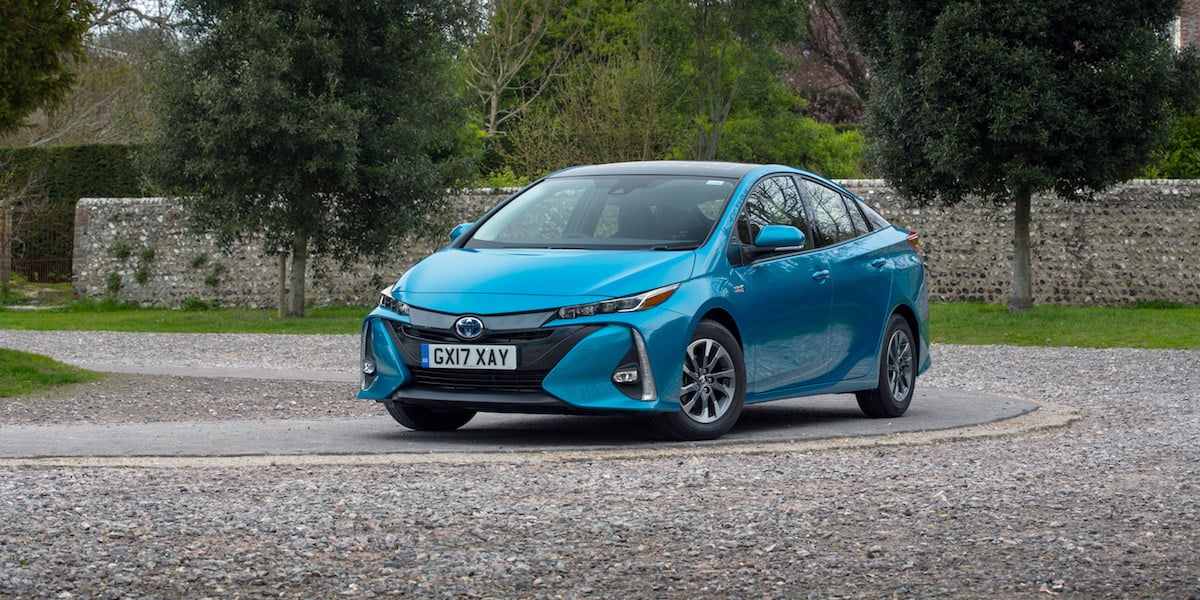
Toyota Prius Plug-In hybrid electric vehicle
Behold, the future! Oh no, wait. That’s the present. The Toyota Prius Plug-In can already do 30+ miles on its electric motor

The technology already exists; it just needs to improve

The media outlets have been sure to name-check the Toyota Prius as often as possible, pointing out that the poster child for hybrid vehicles will be “banned” by the government in 2040 since it can only manage a couple of miles on electric power. But so what? The petrol-electric hybrid system was debuted by the Prius more than 20 years ago. By the time 2040 arrives, that technology will be more than 40 years old, and why should we be basing legislation on 40-year-old technology?

Toyota already builds a plug-in hybrid version of the Prius that can do 39 miles from its electric batteries alone. It’s available right now, in 2018 (and other manufacturers have similar products). Surely it’s not too much to expect that another 20 years of development will find the remaining 11 miles of electric power? If the technology is already on sale now, it can’t be that difficult to hit those targets across the board in 22 years’ time. Indeed, consumers will probably be demanding it far before then anyway.

Consider that 22 years ago, people basically drove hatchbacks, saloons and states – SUVs were for farmers. Today, every major manufacturer has a fleet of different SUV models in its range while traditional saloon and estate cars have virtually died.  And look what’s happened outside the car industry. Ten years ago, Apple had only just launched the iPhone and people thought that it was little more than a novelty. A decade on, our lives have changed enormously as a result of the revolution that Apple started. Entire industries have grown out of nowhere, others have collapsed and the world looks quite different now thanks to smartphone development. 20+ years to get every car doing 50 miles on electric power should be easily achievable if car companies put their brightest minds to it.
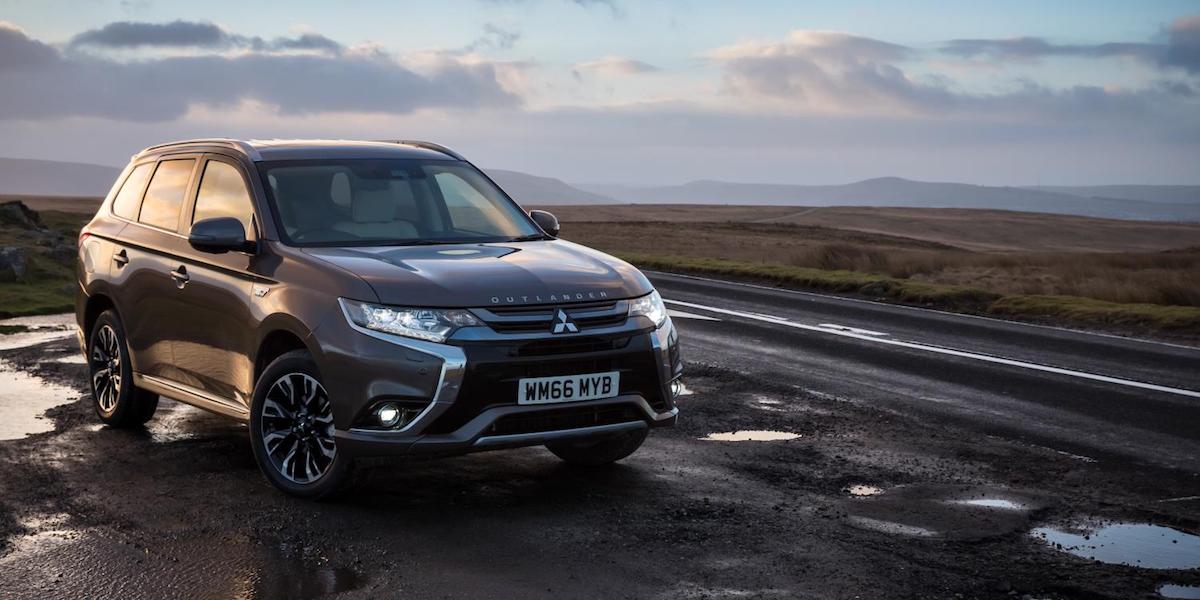
Mitsubishi Outlander PHEV hybrid electric
Oh look, here’s another car that can already do 25 miles on its battery alone – been on sale for years…

What does this mean for consumers?

As usual, we have heard loud cries about why it’s so unfair for the poor multi-billion pound car manufacturers. But what would such a move mean for consumers? You know, the supposedly confused people for whom the industry is desperately trying to provide “certainty”?

The idea that the government wouldn’t actually quantify its electrification legislation was always unrealistic. If that did happen, you can guarantee that a number of car-makers would simply build hybrid vehicles that couldn’t even make it out of your driveway on electric power – absolutely useless but in compliance with the letter of the law. Let’s face it, we’ve seen the level of contempt that Volkswagen has shown for its customers and the law over the last few years. Why would it suddenly become all virtuous on a different law?

So the idea of a minimum level of electric-only mileage certainly seems a reasonable way to ensure that car manufacturers are genuinely building cars that are capable of driving through cities without using a petrol or diesel engine. And that’s important for anyone who lives in an urban area, which is the majority of people in the UK (and the rest of the world). The only real point of contention should be where to set that minimum level.

If the rumours are correct, the government wants to set that minimum level at 50 miles of pure electric power. The same sources that leaked the plan also insist that this is not yet finalised, so maybe it will be 40 miles, or 60 miles or 20 miles or 100 miles. But let’s assume that 50 miles is the magic number. That means that nearly every car-driving consumer will spend every day using only electric power to get from A to B, with (probably) a petrol engine to provide back-up power for longer trips between charges.

The word “consumer” is important here. Consumers are the supposedly confused private car buyers, who are currently refusing to buy diesel cars because of their “confusion”. The simple reality is that, for most consumers, an electric vehicle is a far better solution to their needs than a petrol car, and certainly better than a diesel car.

Most consumers drive less than 25 miles in a day. Business-use drivers do a lot more, but no-one is talking about business users being confused so presumably they’re smart enough to understand their needs without the car industry patronising them constantly. If your car can do 50 miles on electric power, that means you can go for two days without charging your vehicle. Plus, if you have a plug-in hybrid car, you’ll still have a petrol engine that can keep you going if you can’t get to a charging point. So the downside for consumers is low. The upside will be cleaner, quieter cars and fewer trips to the petrol station.

UK petrol retailers look to introduce Uber-style surge pricing
Will you really miss this?

What about charging your car?

The other issue raised constantly by the car industry is a lack of charging facilities. It’s obviously an issue, but the industry doesn’t seem to be interested in putting any numbers on the table to work out what will be needed. No-one seems to know how many charging points we’re going to need and how quickly. Instead of bleating about how unfair it is that everyone now hates diesels, maybe the industry lobbyists should be making some valid points about how many charging points are going to be needed, when they’re going to be needed, where they need to be placed and how much it’s all going to cost. If you want to get some government support, come up with a plan rather than just complaining all the time.

If you only need to charge your car every two days at most, it should be easy to do that by 2040. There will need to be millions of charging points installed, covering virtually every car park in the country. Private companies are already ramping up to deliver a massive increase in charging infrastructure, and tougher limits will only encourage this investment.

Yes, this is clearly going to take a lot of work and will require some solid planning across local, regional and national governments. But it will be up to the car manufacturers of Europe to decide whether they want to participate in this brave new world or be shoved aside. Unbeknownst to the vast majority of consumers, China is leading the world on electric vehicles and setting itself up for global dominance in this technology. If European car companies don’t get their heads out of the sand, we’ll all be driving Chinese cars by 2040.

Electric car charging point.
Like this, but multiplied by millions.

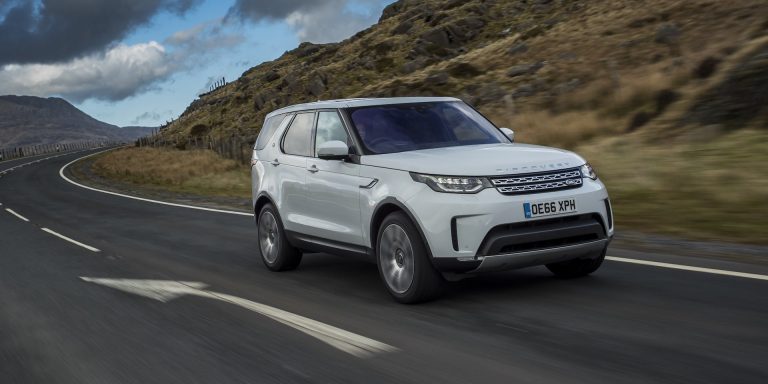
Land Rover Discovery 2.0-litre petrol test drive

What is it?

The new Land Rover Discovery has been around a little while now and, like or loathe the way it looks, it’s been immensely popular. It’s capable of seating seven in comfort yet able to conquer nearly any type of terrain, so there’s little wonder why it’s been snapped up by consumers.

Initially offered with a range of traditional diesel and petrol engines there’s now a new powertrain, and it uses Land Rover’s 2.0-litre petrol ‘Ingenium’ unit. It may appear, on paper at least, that this engine is too small to carry along the heavy Discovery, but is that the case?

What’s new?

The biggest change here is the engine. We’ve previously seen this small capacity petrol engine used in a variety of Jaguar and Land Rover vehicles, in an attempt to combat the growing distrust of diesel units.

Elsewhere, it’s business as usual. The Discovery still gets seven useable seats that can fold completely flat, as well as a full suite of driver aids to ensure that no weather or obstacle can stop you from getting where you need to go.

How does it look?

Make no mistake, the Discovery’s looks have caused debate since the moment it was first released. Some love its rounded, softer look – particularly compared to the model it replaces – while others downright loathe the car’s styling, and have thrown much criticism at the awkwardly offset placement of the rear number plate.

It’s impactful out on the road – although any car of this sheer size is going to be – and the large alloy wheels are just the right size so as to counteract the huge amount of metal that makes up the Discovery’s body.

What’s the spec like?

Our test car came in Luxury trim, which meant that it was adorned with plenty of equipment as standard. A full ten-inch colour touchscreen came fitted as it does on all Discos, and this houses functions such as satellite navigation and media. It’s not a bad system, with icons that are clear and easy to understand, but it lacks some of the crispness that you get in rival offerings. That said, simple operations such as pairing your phone or playing a song from a media device are easy enough to do.

Of course, the devil is in the details. Those details, in this case, are optional extras, and those fitted to our test car weigh heavy on the car’s overall price. That heated steering wheel? £200. Grey metallic paint? £850. The Discovery comes relatively well specified as standard, but start ticking too many boxes and you’ll quickly find the price creeping skywards.

What’s it like inside?

The interior of the Discovery is an impressive blend of form and function. There’s tech here – that’s for sure – with features such as heated and cooled seats, and a heated steering wheel all included on our test car. Up front, it’s a comfortable and spacious place to be, with the seats providing plenty of support, while those in the middle row are equally well-off for space.

Anyone in the rearmost seats should be happy, though taller passengers will likely be best sat there for shorter journeys. Children will be just fine here though, and – in truth – most average-height adults will be too – there’s a surprising amount of legroom.

If you’re needing as much luggage space as possible then both second and third rows fold completely flat, offering up a gargantuan 2,406 litres of luggage room.

What’s under the bonnet?

This new Ingenium engine is, at 2.0-litres, the smallest capacity drivetrain offering you can get on the Discovery. It’s paralleled by a diesel version – though it’s the petrol that we have with us here. It produces 300hp and an impressive 400Nm of torque, which means it’s able to get the two-tonne Disco up to 60mph in a reasonable 7.3 seconds and onwards to a top speed of 125mph.

Of course, a by-product of a smaller engine working hard to lug a big, heavy body around is that it hurts fuel economy. Land Rover claims that this version will return 29.4mpg on the combined cycle, though in daily driving we achieved closer to 22mpg. Emissions are, again, as you’d expect for a large SUV, sitting at 222g/km of CO2.

What’s it like to drive?

The Discovery doesn’t encourage spirited driving – it’s far too big and heavy for that. Rather, it’s at its best when you sit back and soak up the comfort rather than put your foot down.

Any attempt at pushing it down a tight back road is soon quashed by copious body roll, slow steering and of course, its sheer size. It’s not as ponderous as you might expect, though, and will certainly show a clean pair of heels to most similarly-sized SUVs.

The Discovery flattens out potholes and makes mincemeat of choppy road surfaces. The price to pay is some wallowing over larger bumps, though the air suspension takes off all the hard edges with ease.

Summary

The woeful fuel economy of this 2.0-litre petrol engine will be, for most, a serious sticking point and a barrier to ownership. The car still feels at its best with diesel power, and that’s where we’d recommend the majority of buyers stay.

Also bearing in mind is Land Rover’s rather lamentable reputation for reliability, with the company ranked at or near the bottom of independent surveys on a far-too regular basis.

The rest of the Discovery is still a hugely compelling package, though – it’s hugely comfortable, unbeatable off-road, spacious and premium. As big family SUVs go, they don’t get much better than this.

Similar cars

Audi Q7, Mercedes-Benz GLS, Volvo XC90

Key specifications

Model as tested: Land Rover Discovery Si4
Price: £66,095
Engine: 2.0-litre turbocharged petrol
Power: 300 hp
Torque: 400 Nm
Top speed: 125 mph
0-60mph: 7.3 seconds
Fuel consumption (combined): 29.4 mpg
CO2 emissions: 222 g/km

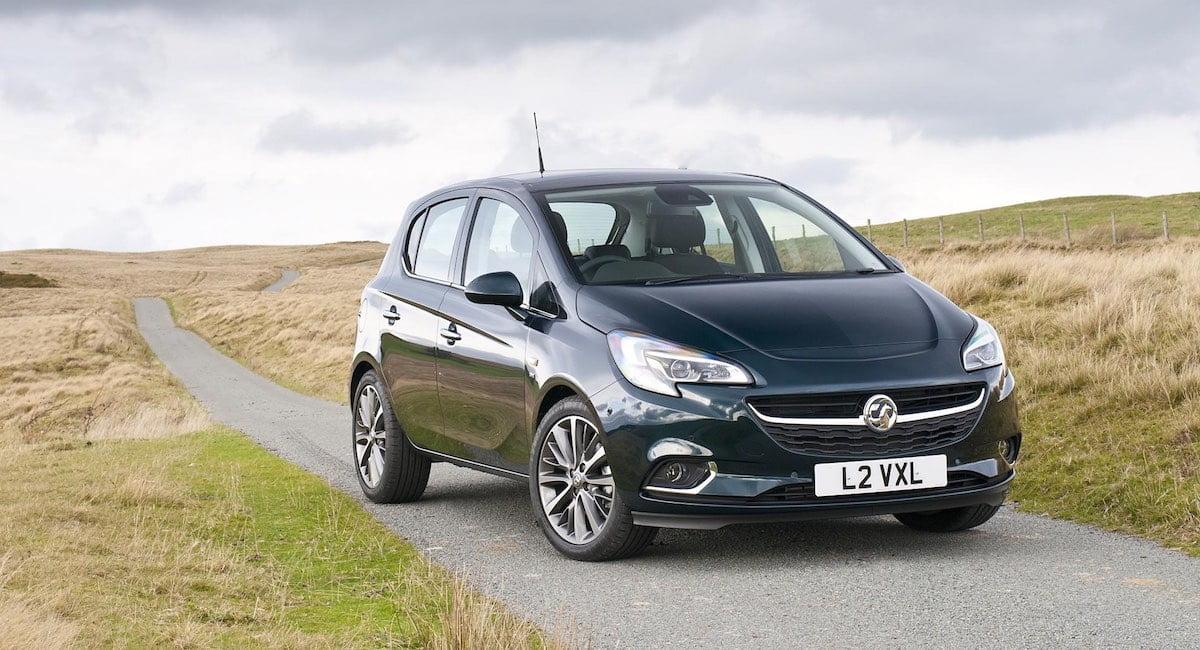
Vauxhall 0% PCP and free fuel offer

Vauxhall is offering interest-free PCP finance and a £500 fuel card next weekend as part of its Help to Buy new car incentive scheme.

The company has rolled out regular Help to Buy initiatives in recent months to try and help new car sales keep ticking over. The scheme applies to the Vauxhall Corsa, Astra, Crossland X, Mokka X and Grandland X models.

The latest offer applies to all qualifying vehicles sold between Friday 11 May and Monday 14 May. Cars must be delivered by 30 June, so you won’t necessarily be able to order your perfect specification from the factory – although there should still be plenty of choice available.

The 0% APR finance offer is only for two-year PCP finance on the above models, so if you want a longer term (most PCPs are three or four years) then it probably won’t be at 0%. There are no deposit contributions either, so the monthly payments might not be as cheap as you expect.

As always there are terms and conditions, so we have checked them over to point out all the important things you need to know before setting foot in a showroom:

What’s in the fine print?

  • These offers are for selected new Vauxhall models only.
  • The finance offers are only available on personal contract purchase (PCP) finance products. If you want any other type of finance, like a hire purchase, it won’t be at 0%.
  • The finance offers listed on the Vauxhall website are only examples, and you are entitled to adjust the deposit and specification to suit your own needs (within limits). The term is fixed at 25 months (two years of monthly payments plus the final balloon payment).
  • A 0% APR offer means that you should pay absolutely no interest or fees over the course of the agreement (although penalty fees may still apply).
  • Cars have to be ordered by 14 May 2018 and delivered by 30 June 2018.
  • The finance offer is provided through Vauxhall dealers by Vauxhall Finance. If a dealer offers you a finance deal that does not match these details or from another lender, it is not part of this offer.
  • The £500 free fuel is in the form of a fuel card and is not exchangeable for cash.
  • The free fuel offer is not linked to the finance offer, so you don’t have to take out finance to get the free fuel card.

As with any car purchase, work out your budget before you visit the showroom and don’t be persuaded to go beyond it – regardless of what the smiling sales executive suggests. They don’t have your best interests at heart, but The Car Expert does!

Suzuki Swift Sport review

60-second summary

What is it?
The third-generation Suzuki Swift Sport is the warm hatch version of the brand’s big-selling supermini.

Key features
Turbocharged engine, stronger visual presence, long standard equipment list.

Our view
The Suzuki Swift Sport is not as powerful as its perceived rivals but makes up for this with its fun-to-drive factor in a package that is not too extreme for everyday use.

The £18K price tag sounds a lot at first glance but becomes much more competitive when the extensive standard equipment list – including safety technology – is taken into account.

Similar cars
Peugeot 208 GTi, Renault Clio RS, Volkswagen up! GTI

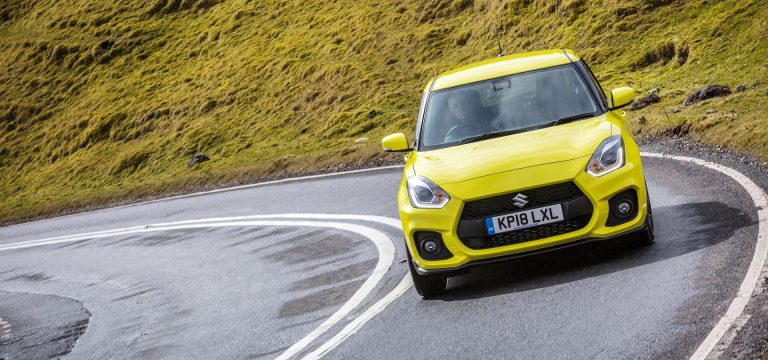
Suzuki Swift Sport parked in front of pub
The new Swift Sport gets a bespoke nose, with a set-back grille framed by standard-fit LED headlamps and a carbon-effect splitter.

Full review

The Suzuki Swift is an important car for the Japanese brand – one of the three major sellers (alongside the Ignis small SUV and the larger Vitara SUV) that contributed to Suzuki GB’s record 40,000 new car sales figure in 2017.

And the Swift Sport is an important member of the Swift line-up. This is the performance version of the supermini, and the nearest thing Suzuki has to a ‘halo car’ – creating an image for the brand. More Swift Sports are sold in the UK than anywhere else in Europe.

So with the third-generation Swift launching to pretty positive reviews in 2017, a Sport model was always going to happen, and now it has arrived.

In reality, this is a ‘warm’, rather than ‘hot’, hatch. The power has been upgraded but not by much, as we will see shortly, and while turbocharging of the unit makes it a lot more flexible, other GTI models offer more potent performance, though for rather more cash.

Suzuki, however, claims its Sport should be considered directly alongside rivals such as the Peugeot 208 GTi and even the Vauxhall Corsa VXR, because that’s exactly what buyers are comparing it to. According to its makers, the fun-to-drive factor of the Sport makes it as attractive as those more hardcore cars.

Visually, the Sport ticks the right boxes. One criticism that was laid at the previous model was that it looked too much like the stock Swift, and this has now been addressed.

The new Sport gets a bespoke nose, with a set-back grille framed by standard-fit LED headlamps and a carbon effect splitter beneath. The carbon is repeated on the side skirts and the rear diffuser, which boasts twin exhaust pipes. There’s a rear spoiler, and polished alloy rims that shout ‘sports car’.

As a finishing touch, the six exterior colour schemes available for the Sport include the bright yellow worn by Suzuki’s Junior rally cars. All the other five colours are metallic, which comes at no extra cost. A range of personalisation options, including racy stripes, is currently being finalised.

Buying and owning the Suuki Swift Sport

It is easy to choose a Suzuki Swift Sport, because there is only one model and not even a range of options to add to the £17,999 price – the Swift’s extensive equipment list all comes as standard.

The basis is the latest Swift five-door – unlike the previous Sport there is no three-door option. This latest architecture makes a big difference because the body shell is both significantly stiffer and extensively reduced in poundage. The Swift Sport tips the scales at a mere 975kg.

Propulsion comes courtesy of a 1.4-litre petrol engine, replacing the previous 1.6-litre unit. The 140hp it offers is an increase of just five horses, but… This is one of Suzuki’s latest Boosterjet units, it boasts a turbocharger, and the torque increase is some 70Nm.

All of this pulling power is on offer from a mere 2,500rpm – a couple of grand less than the outgoing car. Combined with a slick six-speed manual gearbox, and the weight saved, and the result is a very flexible, sporty little supermini.

The extra performance comes with improved economy and emissions – 50.4mpg and 125g/km on the traditional laboratory test. The Sport is also one of the first cars to offer figures under the new more ‘real-world’ testing procedure, in which it returns 47.1mpg and 135g/km.

The Swift attracted some less positive headlines in 2017 when the entry-level version scored a paltry three stars in crash tests by Euro NCAP. A safety pack with autonomous emergency braking was an option and so not included in the test – when Euro NCAP crashed the higher-spec SZ5 variant with the pack as standard equipment, it scored four stars.

The Sport comes with the latest iteration of the pack, known as Total Effective Control Technology, as standard. It includes a camera and laser-guided forwarded detection system with the Dual Sensor Brake Support autonomous emergency braking. Also included is adaptive cruise control, auto high beam headlamps, lane departure warning and even a lane keeper assist making corrections to the steering wheel.

Inside the Suzuki Swift Sport

Step inside the Swift Sport and again there is a degree of bespoke treatment. Detailing in red – the recognised ‘sporty’ colour – features prominently. There are embossed Sport logos on the seats, which are semi-bucket in design higher sides to offer more support when cornering at speed. And there is a bespoke leather-rimmed steering wheel.

Equally impressive, however, is the general quality of the surroundings. Fit and finish is very good indeed – the red-themed trim panels smoothly incorporated, the plastics of a soft-touch, high-rent feel.

The driver’s environment is sensibly laid out and continues the quality. A seven-inch infotainment screen is prominently visible and very easy to use. This reviewer came to the Sport from two weeks driving the latest family cars from big hitters Honda and Vauxhall, and both offered satnav graphics that felt five years behind the Suzuki’s.

The satnav appears to have been improved, with none of the lag we experienced when testing the first of this generation Swift in 2017, and in the Sport it also comes as standard. As does smartphone compatibility with Apple CarPlay, Android Auto or MirrorLink, rear electric windows, a parking camera, fog lamps…

Suzuki has faced criticism for the Swift’s £17,999 price tag, but argues that for the same money from rivals one can only buy a mainstream, less powerful supermini with a lot of the equipment not included.

Finally, adding Sport does not compromise the room on offer. The fractionally-longer wheelbase compared to the second-generation model means more interior space and a boot enlarged by 54 litres to 265 litres.

Driving the Suzuki Swift Sport

No matter how bold the visuals are, or how much equipment one gets, call a car a Sport and it needs to perform. After a launch test route that included a dash across an impressive southern Ireland mountain route and several laps of the Mondello Park race circuit, we can confirm it does indeed perform, but in a particular fashion.

It is not an out-and-out hardcore hot hatch as is a Renaultsport Clio or a Vauxhall Corsa VXR. But it doesn’t really need to be. Such cars come with compromises – the potency combined with rock-hard suspension and a struggle to justify everyday use.

The Swift Sport could easily be that everyday car. In fact it lives up to its name, because it feels swift, without being too extreme. The turbocharged engine picks up cleanly and smoothly, and slick shifts help to ensure the car is as at home cruising a motorway as tackling a challenging series of B-road bends.

In corners the Swift is particularly impressive, but then it should be. The car’s popularity amongst UK buyers saw two weeks of the three-year development cycle spent pounding British roads, the engineers whittling down more than 100 spring and damper combinations. The one they eventually chose works very well, offering precise turn-in and excellent control of body roll, without swerving to too hard a ride for everyday road conditions.

Overall this is a car that is easier to drive than its predecessor because the wide spread of plentiful torque means one doesn’t have to work hard to get the best out of it. As a result, it’s probably not quite as enthusiastically grin-inducing as the old car – it produces a more grown-up performance, but one that is still highly satisfying.

Summary

In terms of rivals, the Swift Sport is difficult to pigeonhole. It is pitched against hot hatches such as the Peugeot 208 GTi and Renault Clio RS that are faster but more hardcore and significantly more expensive. The Volkswagen up! GTI is cheaper, but also smaller.

So the Swift Sport’s direct rivals are not really that direct, but it doesn’t really matter. On offer here is a complete package that offers all the performance one needs, without the compromises, and comes with both a quality build and a long equipment list. Once one does the math, that initially eyebrow-raising price £18K tag is actually quite good value.

Value, and the fun factor, are what Suzuki believes will continue to drive buyers to its car, whether they are looking for a warm or a hot hatch, and the number crunchers could well be right. This is a car that looks enticing, but needs to be driven to be really appreciated.

Key specifications

Make & model Suzuki Swift Sport Peugeot 208 GTi Volkswagen up! GTI
Price (on-road) £17,999 £23,550 £14,150
Engine 1.4-litre petrol 1.6-litre petrol 1.0-litre petrol
Power 140 hp 208 hp 115 hp
Torque 230 Nm 300 Nm 200 Nm
0-62mph 8.1 sec 6.5 sec 8.8 sec
Top speed 130 mph 143 mph 122 mph
Fuel economy (combined) 50.4 mpg (NEDC)
47.1mg (WLTP)
52.3 mpg (NEDC) 58.9 mpg (NEDC)
COemissions (NEDC/WLTP) 125/135 g/km 125 g/km (NEDC) 110 g/km (NEDC)
Insurance group TBA 33E 17E
Euro NCAP rating 4 stars (2017) 5 stars (2012) 5 stars (2011)


Suzuki Swift Sport on the road (The Car Expert)
A car that needs to be driven to be appreciated…

Rise in car sales ‘may not be good news’

UK car sales staged a comeback in April after a full year of sliding figures – but the turnaround could be misleading.

Latest registration figures from the Society of Motor Manufacturers and Traders (SMMT) show that the UK new car market grew 10.4% in the month, with 167,911 new vehicles registered. This result reversed a fall of almost 16% in March – normally a prime month for sales due to the launch of new registration plates.

However, the April result was very likely affected by a number of factors, particularly a significant fall in the market a year earlier. 1st April 2017 saw the launch of new Vehicle Excise Duty rates, increasing tax bills for the vast majority of new car buyers. Many buyers rushed into showrooms in March to beat the deadline, causing a record March performance that year and resulting in the April 2017 market being significantly depressed.

Demand last month was also affected by the timing of Easter, which added two additional selling days to April, while the heavy snows of March also saw some new car deliveries delayed into April.

April 2018 sales The Car Expert

Leading the growth in the market were private buyers, registrations up 26.3%. Fleet demand was virtually level at 0.9% up, but business registrations slumped 12.9%.

Slow death of diesel continues

The most notable slide, however, continues to be for diesel-powered cars. Efforts to get out the message that the latest diesel engines are far cleaner than much anti-diesel rhetoric has been suggesting are clearly not working, with another slump of almost 25%.

Diesel now has around 30% of the market, whereas at the end of 2015 it was virtually 50:50 with petrol-powered cars. Demand for these went up 38.5%, which raises potential issues for meeting CO2 emissions targets. Registrations of plug-in and hybrid electric cars continued to rise, up 49.3%, but such vehicles still account for just 5.6% of the market.

Year to date, the market remains down 8.8%, year on year, at 886,400 vehicles, and several car dealers have told The Car Expert that they expect a particularly difficult second quarter.

April 2018 Years The Car Expert

SMMT Chief Executive Mike Hawes is cautioning against reading too much into the April figures. “It’s important not to look at one month in isolation and, given the major disruption to last April’s market caused by sweeping VED changes, this increase is not unexpected,” he says.

“While the continuing growth in demand for plug-in and hybrid cars is positive news, the market share of these vehicles remains low and will do little to offset damaging declines elsewhere – consumers need certainty about future policies towards different fuel types, including diesel, and a compelling package of incentives to deliver long-term confidence in the newest technologies.”

Plus for Ford, minus for Vauxhall

The Ford Fiesta continues to dominate the new car sales market – the 7,811 registered in April put the Fiesta’s 2018 sales some 14,000 sales ahead of its nearest rival. That rival is the Volkswagen Golf, with 5,482 registrations in April, the Nissan Qashqai completing the top three.

The Vauxhall Corsa, which formerly vied consistently with the Ford Focus for second place in the market, continues to slide down the table – now in fifth spot year-to-date and eighth in April.

April 2018 top ten The Car Expert

Comment: Let’s not get carried away

The Car Expert editor, Stuart Masson, is not getting too excited about the registration figures despite the positive headlines.

“We have been tracking private new car registrations back to 2009, and while today’s results might seem great at first glance, the reality is that private new car registrations were still not great last month.

“The SMMT data compares the April 2018 figures with April 2017, which was one of the poorest months in many years as a result of road tax changes that were being introduced. So while the April 2018 registration numbers were considerably better than that, they were still worse than the same month in 2016, 2015, 2014 and 2013.

“The overall market for both private and fleet registrations is still trending downwards. The next couple of months could throw up some more interesting results when compared with last year, as in addition to the road tax changes last April, there was also a general election and the ensuing vacuum until that was all sorted out in June. So even if we have a positive couple of months in May and June, it probably won’t be until the second half of the year that we will really see whether the market is levelling out or still falling.

“The new car registration figures also show that, as far as consumers are concerned, diesel is dead. Unless you do a lot of miles or tow heavy loads, diesel does not have a future for private new car buyers. The car industry needs to stop waiting for the government to hand out money to them and get on with putting ‘electrified’ (hybrid and full-electric) vehicles on sale. Other countries are a long way ahead of the UK, so it’s time to stop moaning about falling diesel sales and start giving consumers the cars they want to buy.”

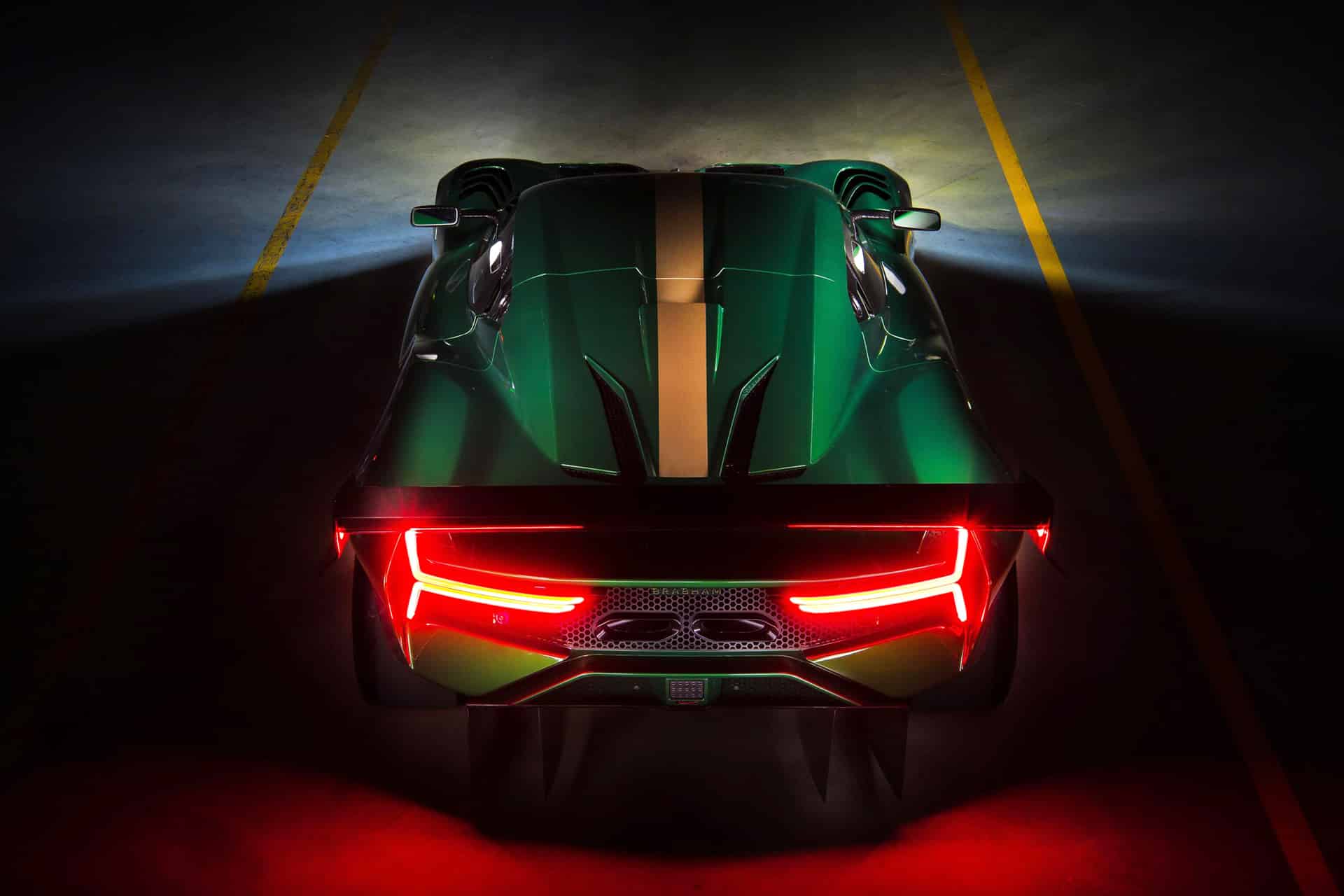
£1m track car revives Brabham GP name

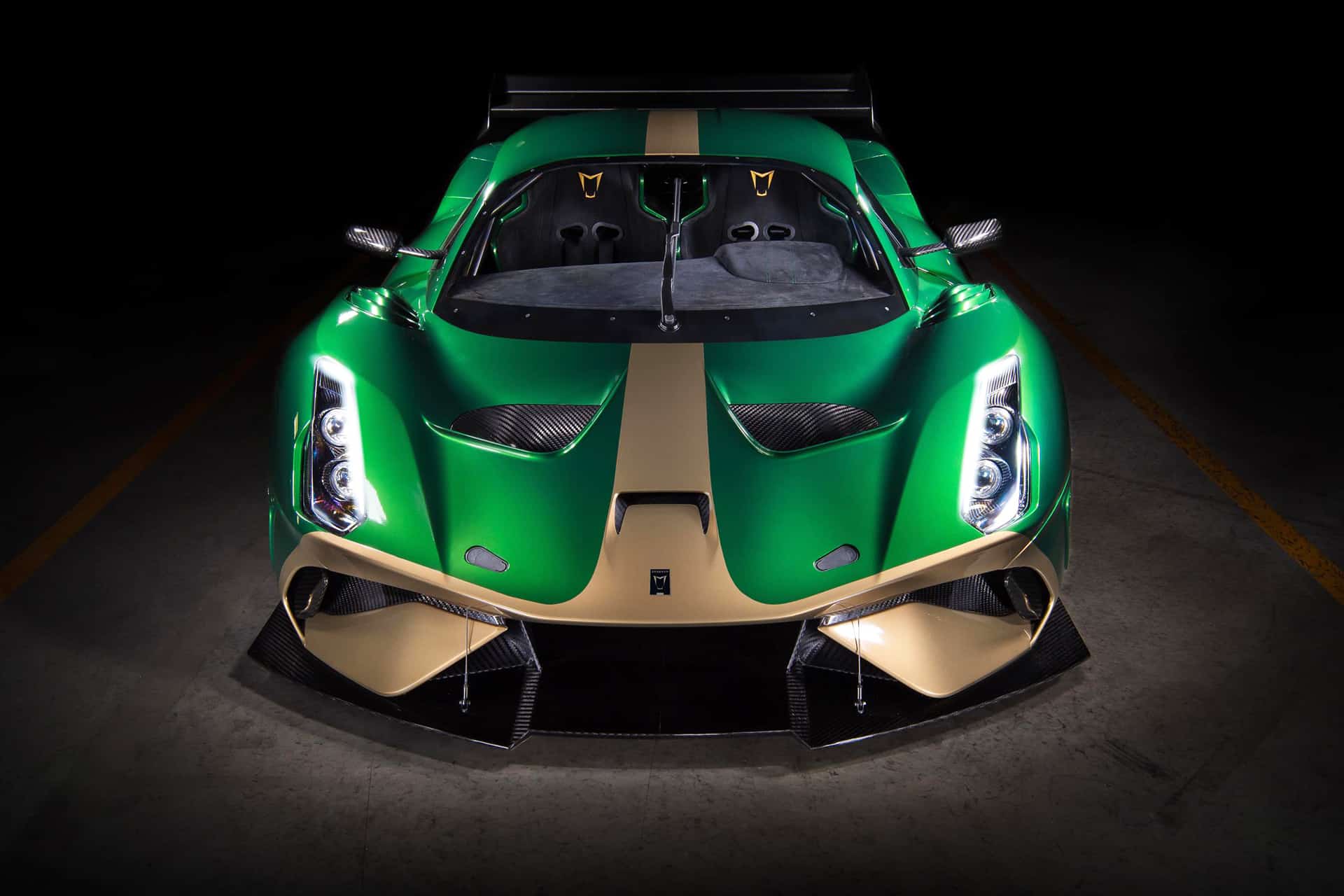
Brabham – one of the most famed names in Grand Prix racing – is being revived on a £1 million pound track car.

David Brabham, son of the late Sir Jack Brabham who founded the Australian racing team in 1961 and went on to win three Formula One World Championships, unveiled the Brabham BT62 during an event at Australia House in London.

The BT62 continues the numbering format that was applied to all of the Brabham racing cars. Only 70 will be built and the first 35 will celebrate the 35 Grand Prix race wins achieved by cars wearing the Brabham badge.

The new Brabham is a two-seat track-only car built primarily in carbon fibre. Weighing just 972kg, it is powered by an in-house designed naturally-aspirated 5.4-litre V8 engine of 710hp, producing a power-to-weight ratio of 730hp per tonne. Torque is quoted at 667Nm, and while Brabham is not yet revealing performance figures for the car, they are expected to compare with rival hypercars from the likes of McLaren.

Brabham BT62 The Car Expert
Brabham BT62 has undergone many miles of behind-closed-doors track development.

The Brabham team say that a host of bespoke engineering details have been incorporated into the design and construction of the BT62, and its body generates downforce of more than 1200kg. The brakes are fully carbon, discs and pads in the composite material using six-piston calipers front and rear.

Brabham Automotive will be based in the UK but the cars will be built in a new 15,000 square metre facility in Adelaide, former home of the Australian Grand Prix (and the greatest city in the world – ed).

No competition programme has yet been announced for the BT62 but speaking at the launch former F1 driver David Brabham confirmed that the ultimate aim is to return the Brabham name to the track and in particular the Le Mans 24 Hours race, which he has won three times.

Brabham BT62 The Car Expert
David Brabham – ambitions of a return to Le Mans.

“I set out 12 years ago to re-establish the iconic Brabham name, determined to see it return to global competition,” Brabham said.

“My father had an incredible determination to succeed and, like him, I’ve worked tirelessly through this time, drawing on my experience as a racing driver, leader and mentor, never once losing sight of that goal.

“It’s been challenging at times, but what we have achieved is simply staggering. Today’s unveiling makes me feel incredibly proud as the Brabham legacy enters a new era.”


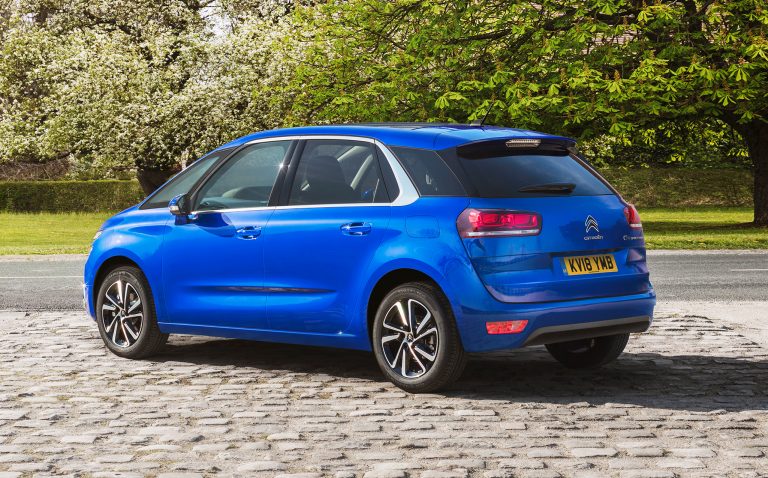
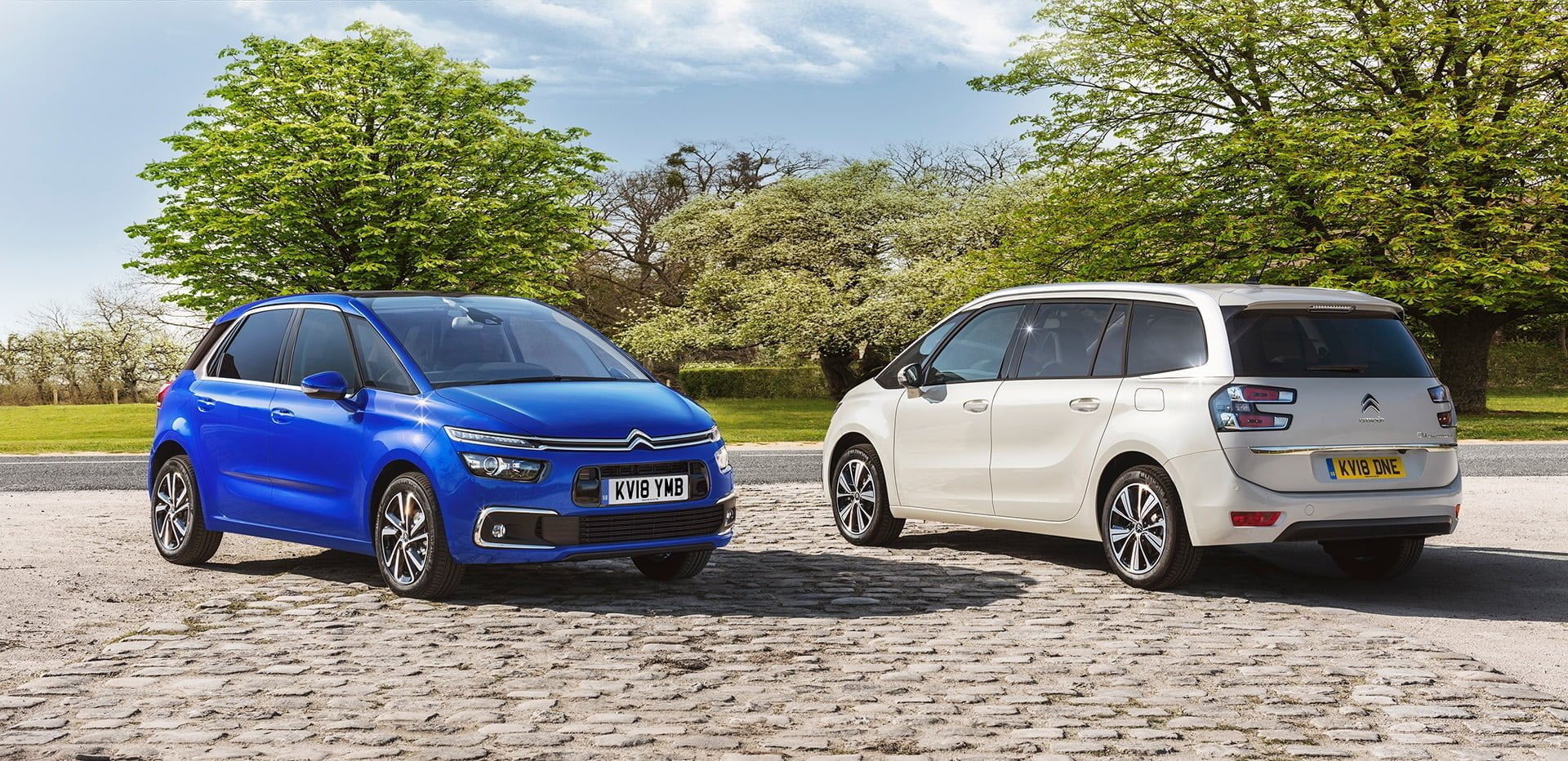
Citroën Picasso becomes SpaceTourer

For Picasso read SpaceTourer – as announced at the Geneva motor show in March, Citroën is renaming its people-carrier line-up, dropping the Picasso badge in favour of the SpaceTourer name.

The new name allows the C4 SpaceTourer, which offers five seats, and the Grand C4, which is a full seven-seat MPV,  to sit alongside the original SpaceTourer. Evolved from the commercial market, the SpaceTourer can be configured in versions offering from five to nine seats.

All three models are built on the PSA Group EMP2 platform which allows the use of a number of new technologies. They also include Citroën’s Advanced Comfort programme.

C4 SpaceTourer and Grand C4 SpaceTourer models are also gaining new safety equipment. A ‘Safety Pack’ becomes standard equipment on all Flair versions, and includes a Driver Attention Alert, Speed Sign Recognition and Recommendation, and Active Safety Brake – autonomous emergency braking.

Citroën C4 SpaceTourer The Car Expert
Citroën SpaceTourer available in five and seven-seat versions.

The C4 SpaceTourer and Grand C4 SpaceTourer are on sale from May 2018 and from 1st June will be available with a new engine – a 160hp diesel, paired with an equally new eight-speed automatic gearbox. Replacing the previous six-speed unit, it offers fuel economy improvements of up to 7% and includes manual paddles for manual changes. Citroën plans to pair the automatic transmission with other engines later in 2018.

Citroën C4 SpaceTourer prices start from £21,125 buying the 110hp petrol six-speed manual in Touch trim. An extra £2,300 buys the entry-level Grand version, the 130hp petrol six-speed manual.

C4 SpaceTourers with the 160hp diesel and eight-speed auto gearbox cost from £27,550, the Grand C4 from £29,250.

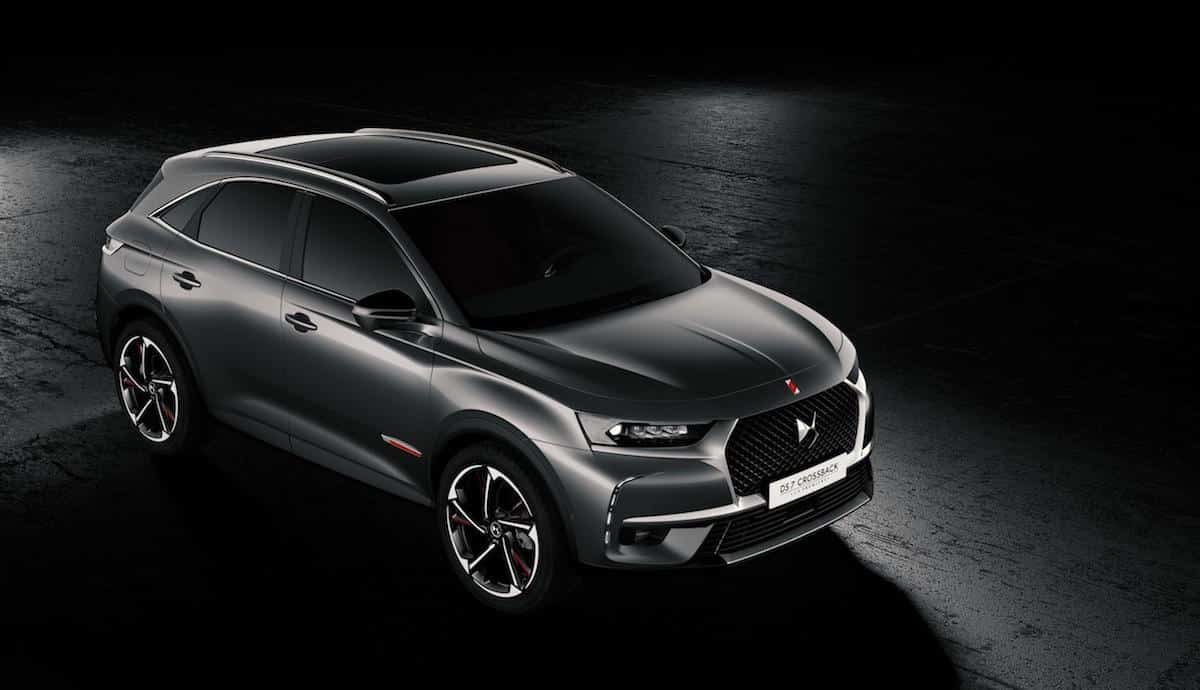
Meanwhile, Citroën sister brand DS Automobiles has confirmed that from 2020 all model lines will offer a version with electrification in its powertrain. These will be either hybrid or fully-electric – DS is about to launch the DS7 Crossback E-Tense 4×4 with 300hp and a 30-mile EV driving range, and will reveal its first 100% electric DS model at the next Paris motor show in October.

La Premiere special edition for DS 7 Crossback (The Car Expert)
DS7 Crossback will be first electrified car from DS Automobiles.


Porsche Cayenne plugs in to hybrid

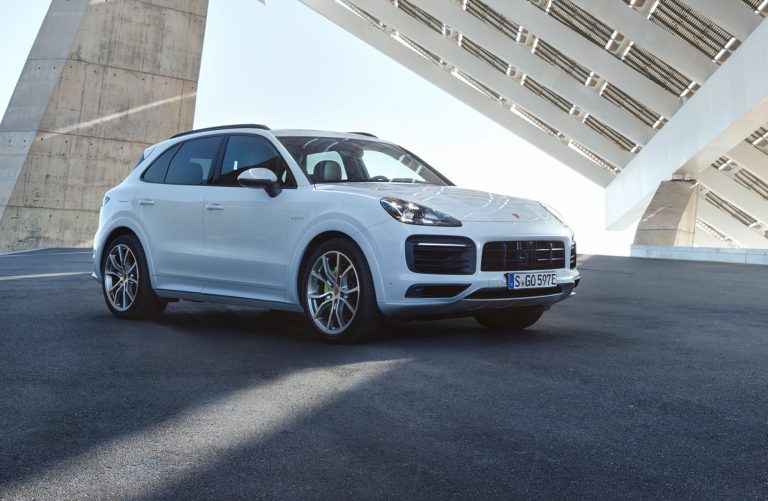
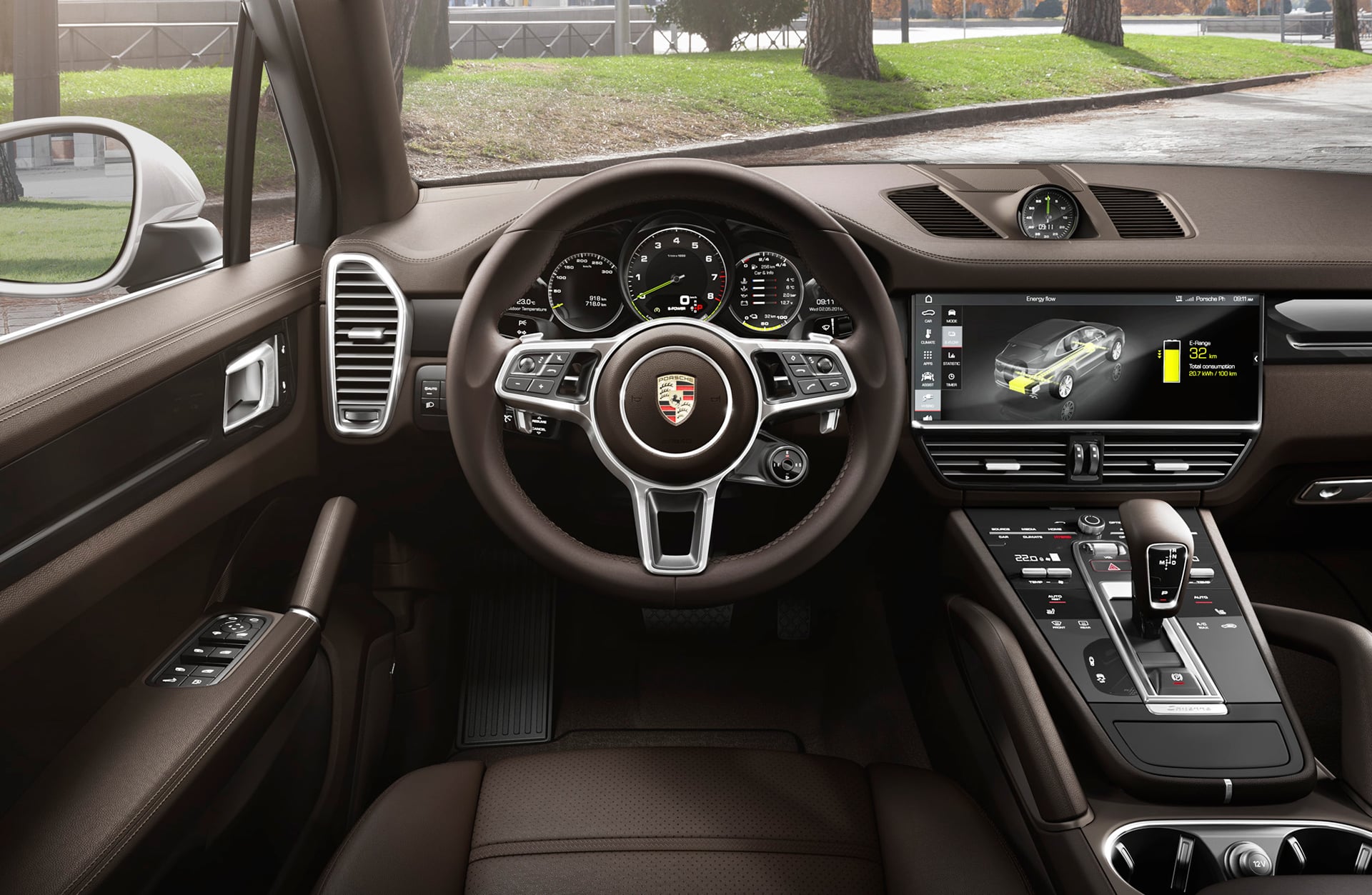
The Porsche Cayenne SUV is now available with a plug-in hybrid powertrain.

Porsche’s biggest-selling model makes use of the system developed for the brand’s Panamera sports saloon. A 3.0-litre V6 petrol engine of 340hp is combined with an electric motor of 100kW to generate a total system power figure of 462hp.

The system also offers 700Nm of torque, pushing the Cayenne E-Hybrid through 62mph in five seconds and onto a maximum speed of 157mph. A boost control developed for the 918 Spyder supercar is employed, which allows the electric motor to be employed in all modes of the Sport Chrono driver control, which is fitted as standard. The package ensures full torque is available virtually from pushing the accelerator.

Porsche quotes fuel economy figures of up to 88.3mpg, depending on the tyres specified, while the car can also cover up to 27 miles on electric-only power at speeds up to 83mph.

Porsche Cayenne E-Hybrid The Car Expert

The latest hybrid drivetrain is improved over its predecessor mainly in the electric engine which is 43% more powerful than its predecessor, The petrol engine gains 7hp over previous versions, while the latest automatic transmission is added, its eight speeds promising smoother but faster shifts.

Battery capacity has been improved too – the capacity of the unit, which sits under the boot floor, increases from 10.8 to 14.1kWh, a gain of 30%. Using a 10-amp 230-volt connection and the standard 3.6kW charger the battery is fully charged in just under eight hours. Employing the optional 7.2Kw onboard charger with a 32-amp connection cuts this time to just over two hours.

A phone app, Porsche Connect, allows charging to be remotely monitored using the car’s Porsche Communication Management (PCM) connectivity technology. This app also allows remote setting of the climate control, while Porsche intends to roll out a charging station access programme in the UK.

Porsche is pricing the Cayenne E-Hybrid from £67,128 and first deliveries are expected at the end of May.

Porsche Cayenne E-Hybrid The Car Expert


BMW 8 Series put to test on Welsh roads

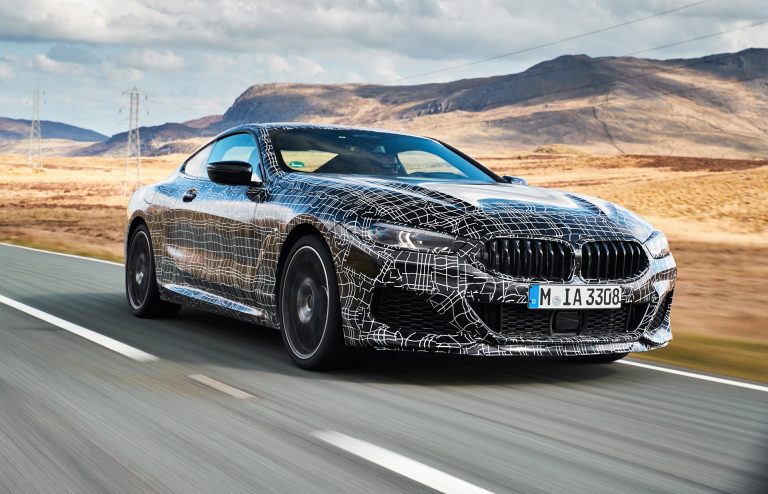
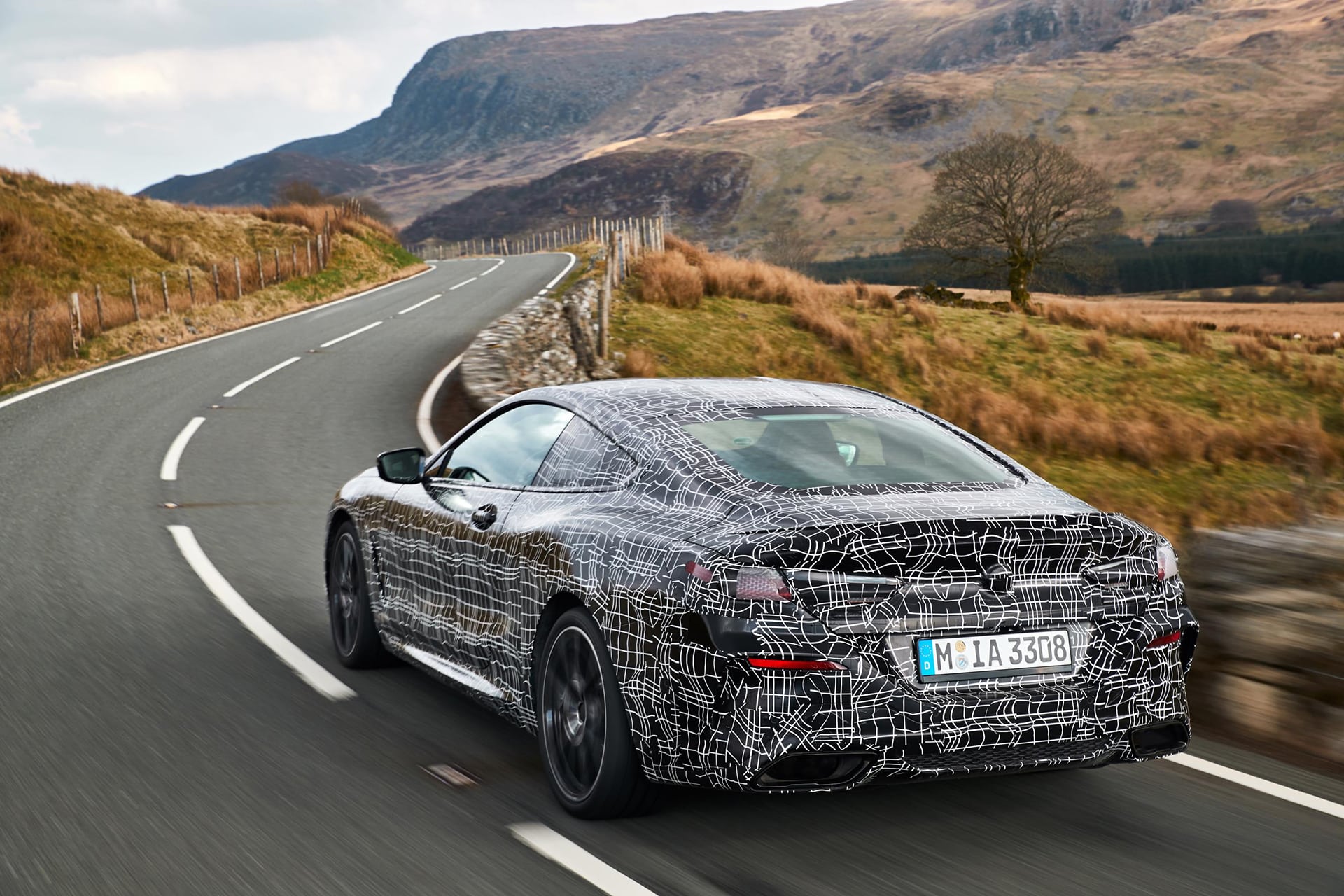
The BMW 8 Series has been testing on roads in Wales as the new luxury 2+2 coupé moves towards its launch.

BMW’s test programme for the car has seen camouflaged examples tackling the challenging routes on mountainous Welsh B-roads, which are a favourite for car magazine road testers.

Based on the 8 Series concept that debuted at the Concorso d’Eleganza Villa d’Este in Italy in May 2017, the new 8 Series is scheduled to be unveiled in production form at the Le Mans 24 Hours meeting on 15th June. It is then expected on sale in November, reviving a model line last sold 20 years ago.

BMW 8 Series The Car Expert

The Welsh test routes are focused on tuning the powertrain and suspension, with the key test model being the M850i xDrive Coupe. This combines a redeveloped V8 engine with all-wheel drive that is biased in normal running towards the rear.

The engine weighs the same as its predecessor but its output has been increased by 68hp to 530hp, and torque has gone up 100Nm to 750Nm, on tap from 1800rpm. The V8 is matched to an eight-speed Steptronic sports transmission which has also been redeveloped, its shift times shortened and the range between them further spread.

BMW is not yet quoting performance figures for the car but a states that the new powertrain will be as comfortable cruising in Grand Tourer style as it will be in offering “noticeably more dynamic” performance.

A cockpit-operated ‘driving experience’ control includes Sport and Sport+ modes which both increase power delivery and retune the sound of the engine. Other technology featuring on the car includes an active rear axle differential lock which provides maximum traction when accelerating out of corners, adaptive suspension with roll stabilisation and active steering.

BMW 8 Series project manager Markus Flasch describes the adaptability of the car as the aspect that most impresses him. “Whether a driver expresses his or her wishes with regard to comfort and sportiness using the accelerator pedal or by pressing a button, the vehicle immediately adapts perfectly to each setting,” he says.

The 8 Series range is expected to grow to include a V12-engined version and eventually an M8 high-performance model.

BMW 8 Series The Car Expert

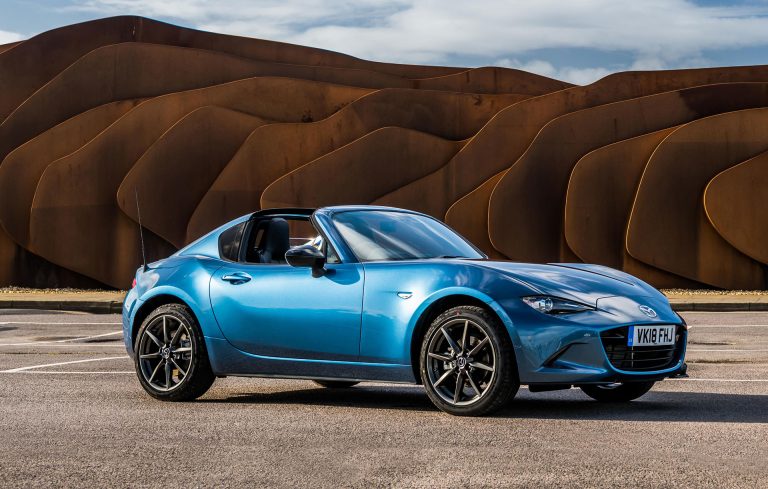
Mazda MX-5 RF in the Black

Latest of a long line of special editions in the Mazda MX-5 line is the RF Sport Black, on sale at the end of May.

Applied only to folding hard-top versions of the sports car and with the  2.0-litre 160hp engine, a total of 300 RF Sport Black models will be available to UK buyers.

It comes as standard in the Eternal Blue Mica exterior colour, with a black rear spoiler and door mirrors and gunmetal alloy wheels.

Inside the cabin, bespoke scuff plates, floor mats and badging are added.

Equipment on the RF Sport Black is based on the SE-L Nav grade, the special edition gaining standard leather seats, rain-sensing front wipers, rear parking sensors and automatic headlights. A limited-slip differential is also standard.

RF Sport Black variants of the MX-5 will be available from 28th May at prices starting from £25,695. In showrooms, they will sit alongside the Z-Sport version of the MX-5 roadster that was launched on 1st March. This features a deep cherry red fabric hood, 17-inch black BBS wheels, and Machine Grey Metallic paint supplied at no extra cost.

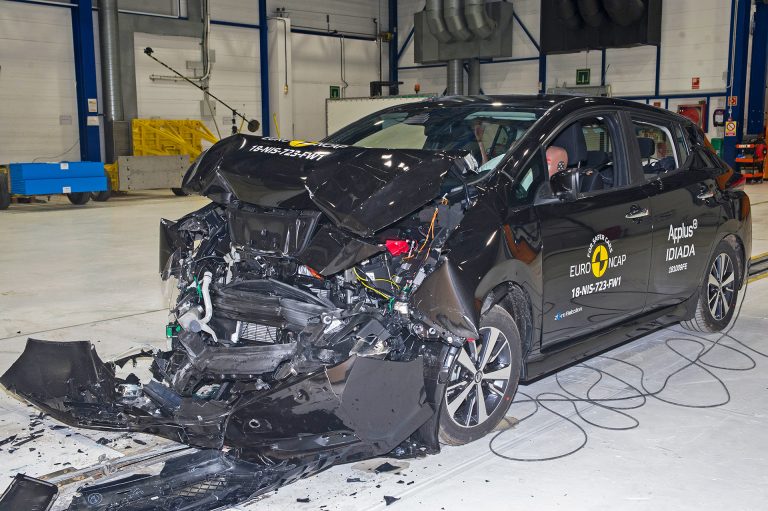
Nissan Leaf top scores in toughened-up crash test

The Nissan Leaf electric car has become the first vehicle to undergo new and tougher crash tests introduced for 2018 – and gained a top five-star rating.

The improved and extended protocols that safety body Euro NCAP has incorporated into its rating system for 2018 include new tests that analyse accident situations involving cars, pedestrians and increasingly cyclists. The latter is considered particularly important for electric vehicles due to cyclists not being able to hear their virtually silent motors.

The testers want to see that the autonomous braking technology being introduced on many cars can detect fast-moving cyclists and act accordingly, and that pedestrian recognition systems can still function effectively at night or in low light.

The ability of electronic lane-keeping technology to still work properly when the edge of the road surface is unmarked, and to react correctly to overtaking cars in an adjacent lane, is also incorporated into the new tests.

Pioneer crash subject

The first car to be put through the tests, the Leaf scored 93% for adult safety and 86% for child protection. Latest Leaf models include a suite of safety systems under the ProPilot banner, using cameras and radar.

The initial Nissan Leaf became the first electric vehicle to earn a five-star Euro NCAP rating in 2011 and now the latest model has repeated the feat. “It is crucial that advancements in safety are not compromised by new powertrain systems,” says a Euro NCAP spokesman.

“The Nissan Leaf comes with many new safety features and demonstrates that environmental friendliness need not come at the expense of improved safety – the safety of those inside the car and those who share road-space with it.”

Nissan Europe electric vehicle director, Gareth Dunsmore describes the Euro NCAP announcement as proving that the new Nissan Leaf has exceptional safety standards and is a true pioneer among electric vehicles. “This shows that our customers can fully trust our Nissan Intelligent Mobility vision, we are on a path to transform the way we drive and the way we live,” he says.

Nissan Leaf crash test The Car Expert

“Considerable concern” as car production slumps

Britain’s car factories built 22,585 fewer vehicles in March compared to the same month in 2017,  industry bosses dubbing the 13% slump as of “considerable concern.”

In total 147,471 cars were built in UK plants, almost 80% of which were for export. The export figure of 114,675 was down 12% while the home market slumped almost 18% with 32,796 vehicles made.

Over the first quarter of 2018 UK car production is down 6%, with export orders slipping 4% and those for the home market more than 14%.

As well as the slowing in the domestic market, blame for the decline is being put on fluctuations in global demand for new cars, and adverse weather in March that affected production at some factories.

According to data from the Society of Motor Manufacturers & Traders (SMMT), which compiles the production figures, Britain’s vehicle and component manufacturers are responsible for 13% of goods exports from the UK, and for every one pound generated by the industry, three pounds are delivered to the economy via adjacent sectors such as logistics, retail and finance. SMMT calculations put the total economic impact at £219 billion – 10% of UK GDP.

Industry chiefs are calling for more certainty on factors they see as hitting the market, including adverse publicity for diesel engines and Brexit fears, particularly the likelihood of leaving the European customs union and the extra costs such a move would put on exports.

“A double-digit decline in car manufacturing for both home and overseas markets is of considerable concern,” says SMMT chief executive Mike Hawes.

“Following recent announcements on jobs cutbacks in the sector, it’s vitally important that the industry and consumers receive greater certainty, both about future policies towards diesel and other low-emission technologies, and our post-Brexit trading relationships and customs arrangements.

“Maintaining free and frictionless trade is an absolute priority – it has been fundamental to our past success and is key to our future growth.”

car production rolling year 1803 The Car Expert

MG X-Motion – the brand’s next UK SUV?

The MG X-Motion has been unveiled at the Beijing motor show, previewing a new SUV set for the Chinese market. But it could also be heading for the UK.

The X-Motion combines many details evolved from the E-Motion electric sports car concept shown last year with the chassis of the Roewe RX8 – this is a large SUV sold only in China by MG’s sister brand, also created when SAIC bought the assets of MG Rover in 2005.

A production X-Motion could also use the petrol engine of the RX8, a 2.0-litre turbo petrol unit of 224hp. MG adds that an electric powertrain is also in plans for the model.

Major features of the X-Motion include a bold visual design intended to present a muscular appearance, new grille and LED headlamp designs and a host of technology including full connectivity.

MG X- Motion concept The Car Expert

The brand dubs the car as ‘the MG Range Captain’ but is not currently saying whether the production version of the X-Motion will go on sale in the UK as a larger sister to the GS SUV launched in 2016. However, the brand is known to have ambitious growth plans and the popularity of SUV models on the UK market could prove attractive.

MG Motor UK sales and marketing head Daniel Gregorious describes the unveiling of the X-Motion in Beijing as further evidence of the emergence of MG as a serious player in the global market. “We’re yet to decide whether X-motion will come to the UK, but we can already see that MG’s design language and value-for-money approach are finding favour with British buyers who are choosing MG in ever-growing numbers,”  he adds.

MG this week announced a £500,000 investment in its UK training and distribution facilities at Longbridge, Birmingham. The brand has seen its UK sales increase by 67% in the first quarter of 2018.

MG X- Motion concept The Car Expert

Mazda MX-5 vs Fiat 124 Spider

60-second summary

What do we have here?
The Mazda MX-5 and Fiat 124 Spider are different ways of offering a small convertible on the same underpinnings.

Key features
Small two-seat convertibles, rapid manual hoods, fun to drive.

Our view
The Mazda MX-5 and Fiat 124 Spider are very similar cars yet with their own personalities, one focused on performance and handling, the other a more relaxed, but no less enjoyable, cruiser. Which to buy becomes a very subjective choice.

Similar cars
Caterham Seven, MINI Convertible, each other…

Mazda MX-5 on the road front
It’s been largely unchallenged for nearly 30 years, but now the MX-5 has a rival from within the same factory.

Full review

Introduction

For years the Mazda MX-5 has been the renowned small convertible, a model that transcended its perceived lifestyle-orientated market to appeal as much to those who like to drive a quality car as to those who like to look good in one. Nowhere is this truer than in the UK – half of the MX-5s sold in Europe are to British buyers.

Enthusiastic drivers have been drawn to the MX-5 for its quality chassis and superb handling, particularly in the fourth-generation incarnation launched in 2015, which is generally regarded as better than the much-desired 1990s original.

So as hopes turn to summer and getting one’s top off, the MX-5 is surely the car to go for? Except that the car now has, for the first time in many years, a direct rival. And in that same rival, it also has a sister…

The Fiat 124 Spider – the Italian brand’s first proper two-seat drop-top since the previous model of the same name last made in 1980, is a sister to the Mazda because both are built on the same chassis. They also have basically the same interior. Fiat will insist, however, that the Spider is by no means a clone of the MX-5, but a different sort of car altogether, more grand tourer for cruising in the summer rather than sharp sportster for taking to a track.

So if one is in the market for a two-seat drop-top this summer, should the Mazda or the Fiat get the vote?

Buying and owning the two contenders

Visually, our two contenders don’t help the choosing process. Both are very appealing to look at, but in a different way. The sharp creases of the MX-5 evoke the quirky, fun machine that it is. The Fiat, on the other hand, offers a more mature look, but no less attractive for that. The Italian contender also appears a larger machine than its Japanese sibling, which it is, but only by a few mm. That’s down to reshaped front and rear ends, as between the axles their dimensions are identical.

As we’ve stated, the two cars share quite a lot – their platform, suspension, much of the cabin… They are even built on the same production line in the same Mazda factory in Japan.

Where they very much part company, however, is in the engines. Mazda employs its SkyActiv Technology, offering the MX-5 with a 1.5-litre petrol engine with 130hp, or a 2.0-litre with 160hp – both of course matched to a six-speed manual transmission.

In contrast, Fiat provides only a 1.4-litre Multiair petrol engine – but then straps a turbocharger to it. Power output is 140hp, which suggests the lower variant of the MX-5 as a rival. But the turbo serves up barrel loads of torque and from a lower base. Its 240Nm beats the 1.5 MX-5’s figure by 90Nm – and the 2.0-litre’s by 40. It also makes the car rather different to drive, as we’ll see shortly.

To add further confusion – Fiat also offers a more hardcore version of the 124 Spider. It’s called the Abarth, uses the same turbo engine setup, but puts out 170hp. Mazda hasn’t gone down that route, but has launched an MX-5 RF which turns the little open-top into a targa with a folding metal roof. Sadly this version apparently sells a lot more than the traditional model, which like the Fiat has a soft top that can be unclipped and flung back in far quicker time than any electric motor could manage.

Curiously, the Fiat does not appear as yet to have undergone the trauma of a Euro NCAP crash test. The MX-5 was tested on its launch in 2015 and came away with a four-star rating. The lack of an autonomous emergency braking system did not help its bid for a full five stars, and extras such as blind-spot monitoring and rear cross-traffic alert are options for upper models only. The Fiat is similarly specified.

Inside the cabins

Talking about the interiors of the two cars is much easier as they are effectively the same, originally created by Mazda’s designers. The exterior metal, and its colour, extends along the door tops of the Mazda while the Fiat goes for an interior panel.

On slipping into the driver’s seat of either one feels cosy, as if the car is fitted around you, while not actually feeling cramped. The instruments are neatly grouped around the driver and there is a circular theme throughout, especially the dials that suit the image of the cars.

All but entry-level models of both cars come with a seven-inch touchscreen accessing such aspects as navigation, infotainment and connected services, and mounted atop the centre console. It works well but its ‘stuck on’ positioning appears a bit of an afterthought compared to typically more integrated units.

The Fiat does offer 10 litres more boot space than the Mazda. While that does not sound a lot, when one considers its total is a mere 140 litres…

Driving the two roadsters

It is once one gets out onto the road that these two convertibles reveal their differing characters, firstly in the way their engines react.

The MX-5 appears to exist to provide an experience, to make progress fun for those who want to really drive their car. This is especially true of the 1.5, which to give all of its performance requires much use of revs and gears. Plentiful gear changes are a necessity, and with the precise, short-throw lever of the six-speed manual ‘box, it’s actually quite fun.

The turbocharged powerplant of the Fiat reacts in a very different way. The greater reserves of torque, over a wider rev range, means more flexibility and less reason to keep changing gear, and as such progress is more relaxed.

It is a similar story with the chassis. The Mazda has a lot to live up to – from the days of the Mk1 it has been renowned for its inch-perfect handling, the ability to point the car precisely at a corner and feel the impressive grip as it carves the bend. And the current model more than fulfils the brief, outdoing the Mk1 that until now has been considered the pick of the line.

The Fiat feels a little less connected, less involving – you don’t go searching for apexes in the way you do with the Mazda.

So in summary, the road performance of the two shows they are indeed different beasts. The Mazda will be a car that will reward more focused driving with a grin-inducing performance. The Fiat will cruise for many miles in a relaxing but no less enjoyable fashion.

Summary

The Fiat 124 Spider and Mazda MX-5 are closely related in many respects, but they are not clones. They will likely appeal to slightly different audiences, with sporty drivers favouring the Mazda and those looking for a more relaxed cruiser drawn to the Fiat.

It is, however, a close-run thing. This reviewer, an unashamed long-time fan of the MX-5, would choose the Mazda first. But I admit that I would not be in the slightest bit disappointed to find the Fiat outside my front door…

Key specifications

Make & model Mazda MX-5 Fiat 124 Spider
Specification SE-L Nav Lusso
Price (on-road) £21,595 £23,800
Engine 2.0-litre petrol 1.4-litre petrol
Power 160 hp @ 6,000rpm 140 hp @ 5,000rpm
Torque 200 Nm @ 4,600rpm 240 Nm @ 2,250rpm
0-62mph 7.3 sec 7.5 sec
Top speed 133 mph 134 mph
Fuel economy (combined) 40.9 mpg 44.1 mpg
CO2 emissions 161 g/km 148 g/km
Insurance group 29E 25E
Euro NCAP rating 4 stars – 2015 Not tested
Country of manufacture Japan Japan
The Car Expert rating 7.8 / 10 7.2 / 10


Mazda MX-5 on the road rear
Still the champ, but only by a whisker…

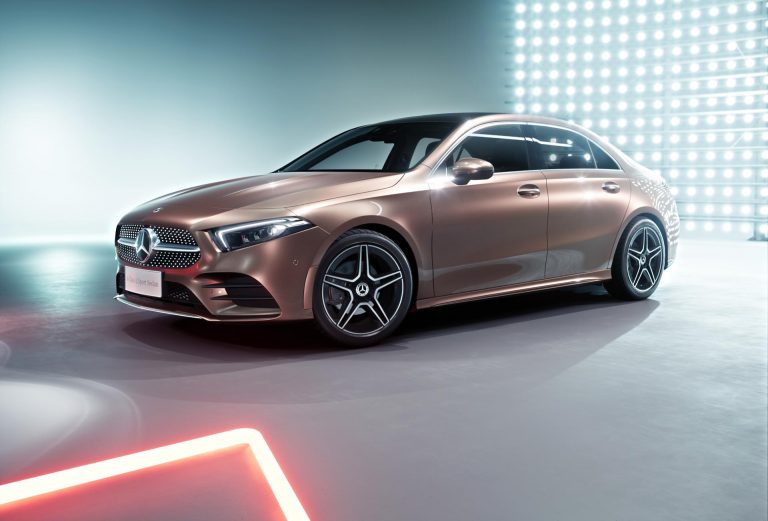
Chinese debut for Mercedes-Benz A-Class saloon

A Mercedes-Benz A-Class Saloon for the Chinese market has been unveiled at the Beijing motor show – but a shorter version will be heading for the UK.

Derived from the Concept A that was revealed at the Shanghai show in April 2017, the Chinese A-Class Saloon is built on a 6cm longer wheelbase than the planned European version, but boasts similar styling. The difference is built into the rear doors of the Chinese model.

Despite this, the European A-Class saloon’s likely 2.7m wheelbase will be nearly 10cm longer than its closest direct rival, the Audi A3 Saloon.

The styling replicates the newly-launched A-Class hatchback at the front, while the rear is styled in similar form to the new CLS model.

Interestingly, the new A-Class saloon is apparently not a replacement for the existing CLA model, which serves as the de facto A-Class saloon in the current model range. Reports from the Beijing show suggest that there will be a new CLA saloon and estate (or, as Mercedes insists on calling them, a four-door coupé and shooting brake) priced above the A-Class saloon.

Like the exterior design, the interior replicates the A-Class hatch, with its novel design dispensing with a traditional cowl and mounting the instruments on a horizontal section running across the cabin from one front door to the other, dubbed the ‘wing’.

Included is the company’s new MBUX (Mercedes-Benz User Experience) multimedia system. The touchscreen system includes voice control for two users at the same time, recognising conversational speech.

Chinese-market models will be offered with a 1.3-litre petrol engine of either 135 or 163hp, and a 2.0-litre petrol of 190hp. Engines or any further details for European models are yet to be revealed, but would likely replicate the range of the hatchback variant.

Mercedes A-Class Saloon The Car Expert


Hyundai i20 refresh adds dual-clutch gearbox

The Hyundai i20 has undergone a mid-life refresh that includes styling changes and more connectivity, and also a twin-clutch automatic transmission for the first time.

Expected in showrooms in June, the updates apply to both the three-door coupé and five-door hatchback versions of the i20 supermini.

Styling changes to the five-door are described as ‘more modern’, based on revisions to the front and rear bumpers, the addition of the brand’s signature cascading grille, new 15 and 16-inch wheel designs and two-tone paintwork.

Inside cars in S and SE specification gain a new seven-inch display audio system with Apple CarPlay and Android Auto smartphone compatibility. Premium Nav and Premium SE Nav models get an uprated infotainment system again based around a seven-inch screen and smartphone compatible.

Engine options remain the 1.0-litre petrol unit in 100 or 120hp outputs or the 1.2 in 75 or 84hp varieties. The 1.2-litre and 100hp 1.0-litre are supplied with a five-speed manual gearbox, the 120hp unit with a six-speed, but this can now also be matched to the seven-speed dual clutch auto transmission, never before offered in the i20 line-up.

Stop and start is now standard across all i20 models and contributes to all versions of the powertrain meeting the latest and strictest Euro-6d emissions regulations.

Stronger safety package

Hyundai is also significantly updating the i20’s safety specification, introducing its SmartSense package as standard on SE models and above.

Lane departure warning and its associated Lane Keeping Assist is in the SmartSense package, as is autonomous emergency braking and a driver attention alert that monitors driving patterns and activates sounds and instrument panel messages if it senses the driver is becoming fatigued. SmartSense is completed by an auto high-beam headlamp system.

Prices for the revised i20 will be revealed closer to its showroom launch.

Hyundai i20 The Car Expert

Mercedes offers Vision of Ultimate Luxury

Mercedes-Benz has unveiled an electric SUV concept at the Beijing Motor Show pointing directly to the future of the brand’s Maybach luxury division.

The Mercedes-Maybach Vision Ultimate Luxury is unlikely to ever reach a showroom in its present form, but does give strong clues as to the look of a forthcoming Mercedes-Maybach model designed to target the likes of the Bentley Bentayga. This is expected to be based on the next Mercedes-Benz GLS.

According to Mercedes chief design officer Gorden Wagener, the Ultimate Luxury is an entirely new kind of vehicle. “Our concept combines the DNA of an SUV with that of a saloon to produce an ultra-modern SUV of three-box design,” he says. “With sensuality and pure sophistication, we have created a timeless vehicle that underscores the position of Mercedes-Maybach as the ultimate luxury brand.”

The concept is larger than its perceived Bentayga rival in all respects, measuring nearly 5.3m long, more than 2.1m wide and just under 1.8m high, sitting on enormous 24-inch wheels. Its designers say that a priority was to transfer the design of a saloon into SUV architecture to provide the raised driving position that customers want for a feeling of greater security.

Four electric motors comprise the drivetrain, one to each wheel providing all-wheel-drive capability and a combined output of 750hp. The 80kWh battery is accommodated under the car’s flat floor, and is said to give a range of more than 200 miles with an electronically limited top speed of 155mph.

Charging capacity is quoted at 350kWh and Mercedes claims that the charger can add an extra 60 miles of range in just five minutes.

Inside the Ultimate Luxury is themed primarily as a chauffeur’s car with the focus on the rear-seat passengers, the high-quality trim featuring extensive leather, aluminium and even rose gold detailing, much of it hand finished.

The minimalist cockpit layout is centred on two 12-inch displays similar to those seen on other recent Mercedes-Benz models.

Should you buy an ex-rental car?

It’s a familiar experience known to millions of holidaying Brits. You arrive at your destination. From the airport, you transfer to a hot and sticky car rental office, queue for an eternity, because only one desk is open, even though several planes have just landed. You fill in a hefty document, sign away all your consumer rights in perpetuity and are handed a key.

The first warning sign is just how scuffed the fob is. Then you’re led out into the burning sun and pointed in the direction of your car. You pray the air conditioning is working, note the “wear and tear” of the bodywork, the tired and stained interior; tell-tale signs of being worked hard in unforgiving conditions over the course of a long summer season.

You could be forgiven for thinking all rental cars are the same, so why should you consider buying one when you’re in the market for a used car?

The simple answer is that a high percentage of new cars are bought by car rental companies, run for a short period and then disposed into the used car sector. They are then sold as nearly-new cars, one of the most sought-after parts of the used car market; current models, with recent registration plates and covered by a manufacturer’s warranty package.

So, it’s probably a good time to put aside any prejudices you might have about rental cars as these can be some of the best buys on the market.

The age advantage

Rental cars are typically run between eight and 12 months before their owners put them through auction where most are bought by dealers looking for desirable stock for their forecourts.

If you’re buying an ex-rental used car with cash then you won’t take the hit most new car buyers suffer as soon as they leave the showroom; that residual value drop has already happened!

If you’re taking out finance then you should benefit from competitive monthly rates, hopefully in line with your budget, whether you choose a Personal Contract Purchase (where you have the option of buying outright at the end of the contract) or Personal Contract Hire (where you don’t).

Do dealers have to reveal that cars are ex-rentals?

Yes. Under the 2008 Consumer Protection from Unfair Trading Regulations, dealers are obliged to tell you if a car they’re selling is an ex-rental. Failure to do so could result in them answering to Trading Standards and facing a hefty fine.

The days of saying an ex-rental car had one previous owner – which technically it has, albeit with multiple drivers – have passed, although cases are still reported.

If in doubt, ask the dealer who the previous owner was, rather than wait for the V5C registration document (generically referred to as the “log book”) to land on your doormat a couple of weeks after you’ve made your purchase. The dealer should have all the paperwork that goes with the car, so ask to see the V5C (and service books, while you’re at it).

Are ex-rentals a good buy?

That’s the million dollar question and there’s no definitive answer because there’s so many variables.

Rental cars can live short and hard lives. But if they’re in service with a reputable rental company, ideally a member of the British Vehicle and Rental Leasing Association (BVRLA), then processes would have been in place to ensure they were fit for purpose.

These vehicles will have been inspected, maintained, cleaned and serviced far more often than a privately-owned vehicle. Hertz for example, carries out oil, water and pressure level checks every six days.

The last thing a credible operator wants is the embarrassment of a car breaking down through their negligence. They also have a duty of care to inspect and rectify any reported faults from customers.

The rental company will probably have bought the vehicle direct from a car manufacturer and will aim to achieve as high a buy-back value as possible from the brand at the end of its tenure. After which it will be fed into the carmaker’s franchised dealer network.

Therefore, it’s up to the rental company to make sure the car is in the best possible condition to secure the highest possible return.

But haven’t ex-rental cars been thrashed?

That’s the common perception. Rental cars are certainly subjected to extremes in driving behaviour. A typical monthly rotation could see a good driver followed by a hard braker, followed by a clutch rider, followed by an out and out speed merchant. That’s a lot of potential wear and tear.

However, there are counter arguments. Rental cars come with hefty insurance excesses, which could be as much as the first £1,000 of any damage. For many renters, that’s sufficient to make sure it is driven sensibly and returned in the best possible condition.

To support this argument, Accident Exchange, the specialist car repair company, reported that 60% of its rental claims relate to general bodywork repairs such as scratches and scuffs, rather than anything major or mechanical.

So why the negativity around buying ex-rental?

The industry hasn’t helped itself. Ex-rentals are still a grey area for many dealers because of the negative connotations around buying a car where the assumption is that it has been mistreated.

You’ll find no reference to a car being ex-rental on websites run by car manufacturers, dealers, car supermarkets or the online classifieds; sellers know the term can cause an unwanted barrier to purchase. Yet many ex-rental cars are sold as part of a car manufacturer’s approved used car programme and will include attractive bundled extras such as extended warranty and breakdown and recovery; but there is no mention of where they were sourced.

The waters are further muddied by some rental companies not using their trading names on the original V5C, choosing instead to use abbreviations or names of companies they’ve registered but don’t trade as.

Greater transparency would certainly help build consumer confidence and it’s encouraging that one of the biggest renters, Hertz, operates a transparent ex-rental sales service direct to buyers.

It’s your call

Ignoring ex-rental cars could severely limit your choice, especially if you’re after a nearly-new car in tip-top condition, which has been well maintained, is in the right colour and has all the bells and whistles you’re after.

Ultimately, you must be comfortable with your choice and that final decision is down to you.

McLaren adds Design to 570S open-top

Buyers of the McLaren 570S Spider will have more models to choose from in future following the launch of new Design Editions.

Five Design Edition versions have been launched for the convertible model, each offering bespoke colour, trim and material specifications that McLaren says are different but entirely harmonious.

Creation of the new packages for the McLaren Sports Series convertible follows the success of a Design Edition range launched for the 570S Coupé in January. As with the Coupé, ordering Design Edition cars will be cheaper than specifying the options individually, and Design Edition customers will also be able to specify additional options such as carbon-fibre interior upgrades or exterior components.

MclAren 570S Designer Edition The Car Expert

Each of the five Editions is based around a specific exterior colour – Silica White, Storm Grey, Vermillion Red, Onyx Black or Vega Blue. Each of these is combined with an interior treatment from the McLaren Designer range, four offered as sport themes and one to a more luxury finish.

Further bespoke details include the wheel finish, brake caliper colour and branding and finish of the 570S Spider’s electrically retractable two-piece hard-top.

Illustrated in the pictures is the Design Edition 4, based on the Onyx Black paint finish with the retractable hard-top in body colour, 10-spoke forged alloy wheels in a ‘Stealth’ finish and brake calipers in McLaren’s signature orange with black printed logos.

Inside the car combines Carbon Black Alcantara, nappa leather again in McLaren Orange and including perforated nappa leather seats with contrasting stitching, a colour co-ordinated steering wheel and branding on the leather sill finishers.

Depending on which Design Edition package is chosen, they will add between £8,100 and £10,700 to the cost of the McLaren 570S Spider, which starts at £164,750.

According to McLaren Automotive Design Director, Rob Melville, it seemed obvious that those that designed the car should be the first to exploit what he describes as a “virtually limitless number” of different personalisation opportunities.

“We have selected key exterior and interior colours and finishes that we believe showcase the 570S Spider in the most desirable way and are offering them as Design Editions that we as designers would choose,” Melville says.
Coming soon on The Car Expert: Weekend with a McLaren – driving the 720S

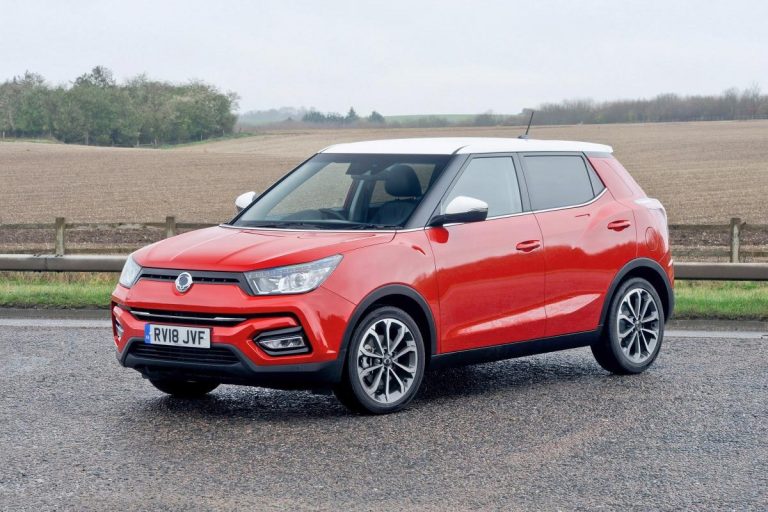
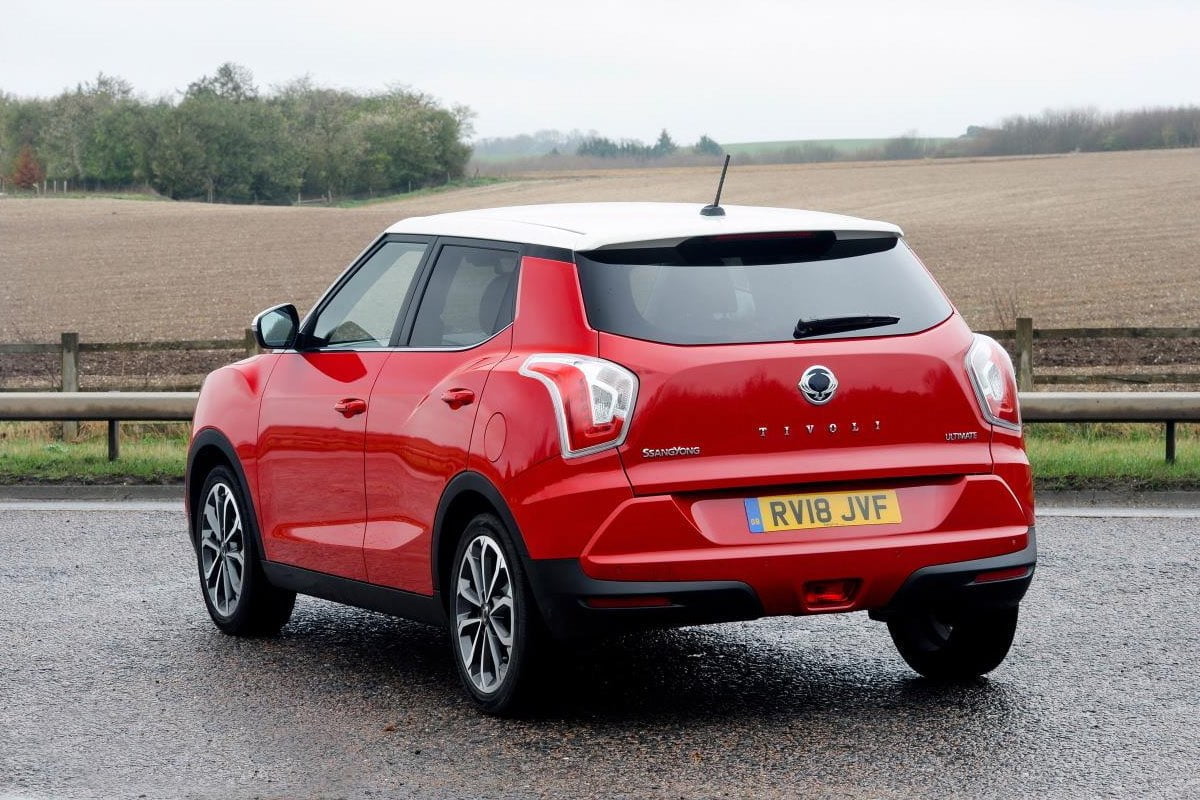
SsangYong Tivoli Ultimate is the ultimate Tivoli

SsangYong has launched a limited-edition model of its Tivoli small SUV, called the Tivoli Ultimate.

The only engine option is a 1.6-litre petrol engine, but you can choose between a six-speed manual or six-speed automatic transmission.

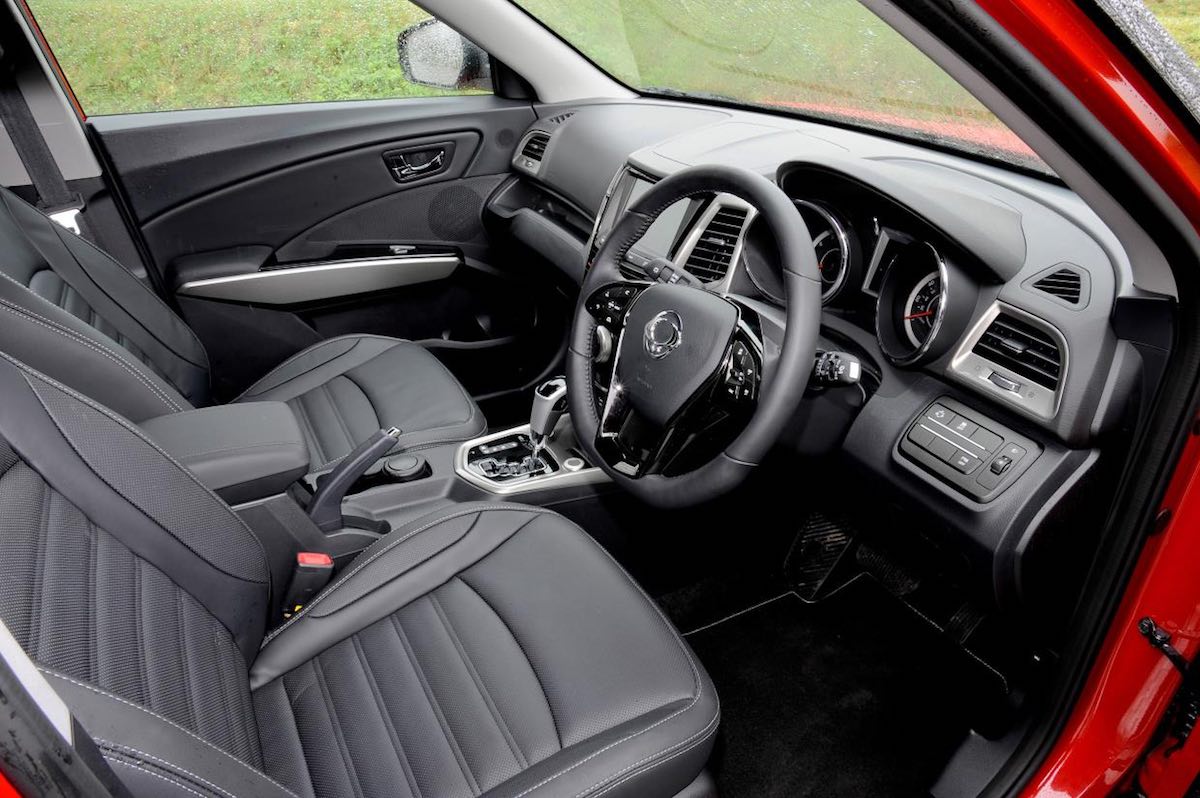
Based on the top-spec ELX model, the Ultimate gets leather-upholstered electric front seats that are also heated and ventilated (handy now that the weather has finally started to warm up). The steering wheel is also heated (also handy, since this mini-heatwave certainly won’t last more than a couple of days).

SsangYong Tivoli Ultimate interior
Leather seats are electrically adjustable, heated and ventilated

The ELX model is already comprehensively equipped for its price, and the Ultimate gets all the comfort, convenience and safety features that are standard on the ELX.

Visually, the Ultimate debuts a new design for the front bumper and LED foglights, that will make their way onto the rest of the range eventually. Similarly, a repositioned handbrake and minor switchgear changes on the inside will filter through to regular Tivoli models.

The manual-gearbox Ultimate is priced at £17,495 on-road, while the automatic version will set you back £18,745 on-road.

SsangYong Tivoli Ultimate rear

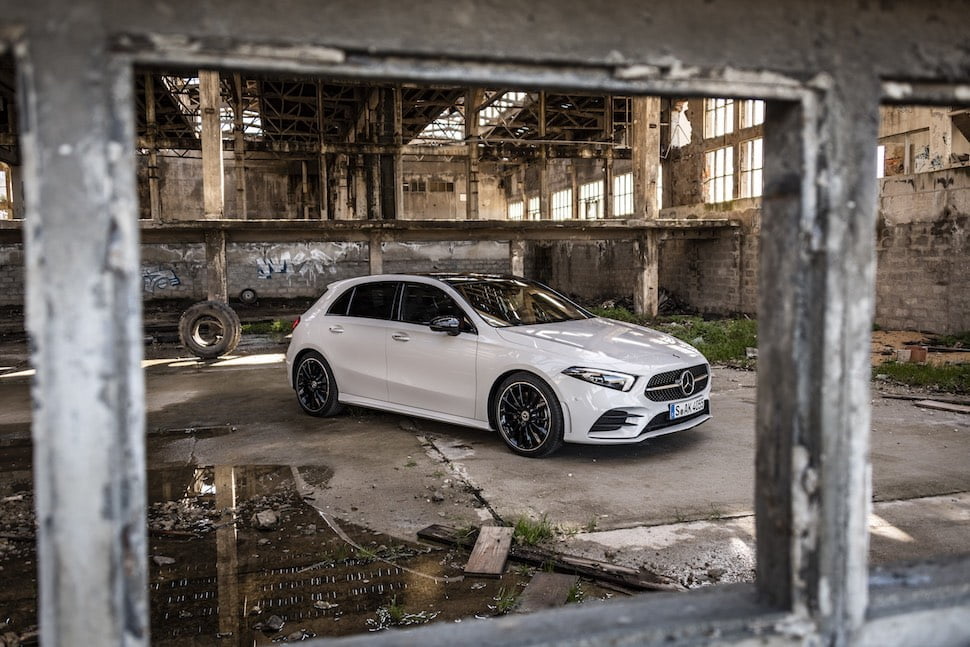
Mercedes-Benz A-Class test drive

What is it?

Premium hatchbacks have fast become one of the most popular segments on the market today, with three clear leaders – the Audi A3, BMW 1 Series and Mercedes-Benz A-Class.

Despite this, they’ve all remained relatively unchanged for quite a few years now, but Mercedes has been the first to pull the trigger on the new generation of luxury hatches.

Not only does the three-pointed star have its sights set on getting an early lead in its class – with a new 1 Series on the horizon and Audi likely to refresh its hatch in the next couple of years – but also setting a new tech benchmark.

What’s new about the new Mercedes-Benz A-Class?

Although this is still instantly recognizable as an A-Class – despite a new design to bring it in line with Mercedes’ latest offerings – there’s plenty of new tech and engineering behind the hatchback.

The biggest selling point is a new infotainment system, dubbed MBUX (Mercedes-Benz User Experience). It’s designed to offer a more immersive experience – bringing a new Mercedes Me voice assistant, tons of customisation and some augmented reality features for satellite navigation.

Elsewhere, there’s semi-autonomous technology and a range of new engines – two petrol and one diesel.

How does it look?

The A-Class is the latest Mercedes to take on the more angular design language as introduced on the CLS. It remains instantly recognisable as a member of the German firm’s model line, but the new look is effective in bringing it firmly up to date.

Buyers will want to know their car will still stand out on the road in the same way its predecessors did, and it does thanks to sharp lines and a subtly aggressive look. The A-Class brings a presence to the road that rivals fail to deliver on.

What’s the spec like?

Our test car came in AMG Line trim, meaning standard equipment includes 18-inch alloy wheels, AMG bodystyling, LED headlights, keyless start and the MBUX system displayed on a seven-inch touchscreen.

Highlights on the options list include heated and ventilated seats, active parking assist and two ten-inch displays – one for the instrument cluster, and another for the MBUX system.

The MBUX system is the real highlight of the car. Not only is it intuitive, but the range of customisation options really brings a real touch of personalisation to the car. A ‘Mercedes Me’ voice assistant has been added here too – similar to the likes of Google Assistant and Amazon Alexa – which allows some functions of the car to be controlled by voice, as well as providing deeper levels of information.

In theory, it’s a great idea but here it could do with some refinement in reality – often struggling to pick up basic phrases. As it’s cloud-based, it’s likely to be a fast-improving feature, though.

Continued on next page: Interior, drive and our verdict

Lexus CT 200h review

60-second summary

What is it?
The latest Lexus CT 200h is a significant refresh of the upmarket petrol-electric hatchback.

Key features
Bolder styling, more extensive safety package, interior upgrade.

Our view
The significant revamp to the Lexus CT 200h is a generally positive package that adds extra appeal to the car, particularly its visuals.

They can’t address some of the basic issues that hold the car back against its rivals, such as the cramped interior and over-firm ride. But in an increasingly diesel-hostile market, the car’s hybrid efficiency could sway sales its way.

Similar cars
BMW 1 Series, Audi A3 Sportback, Mercedes-Benz A-Class

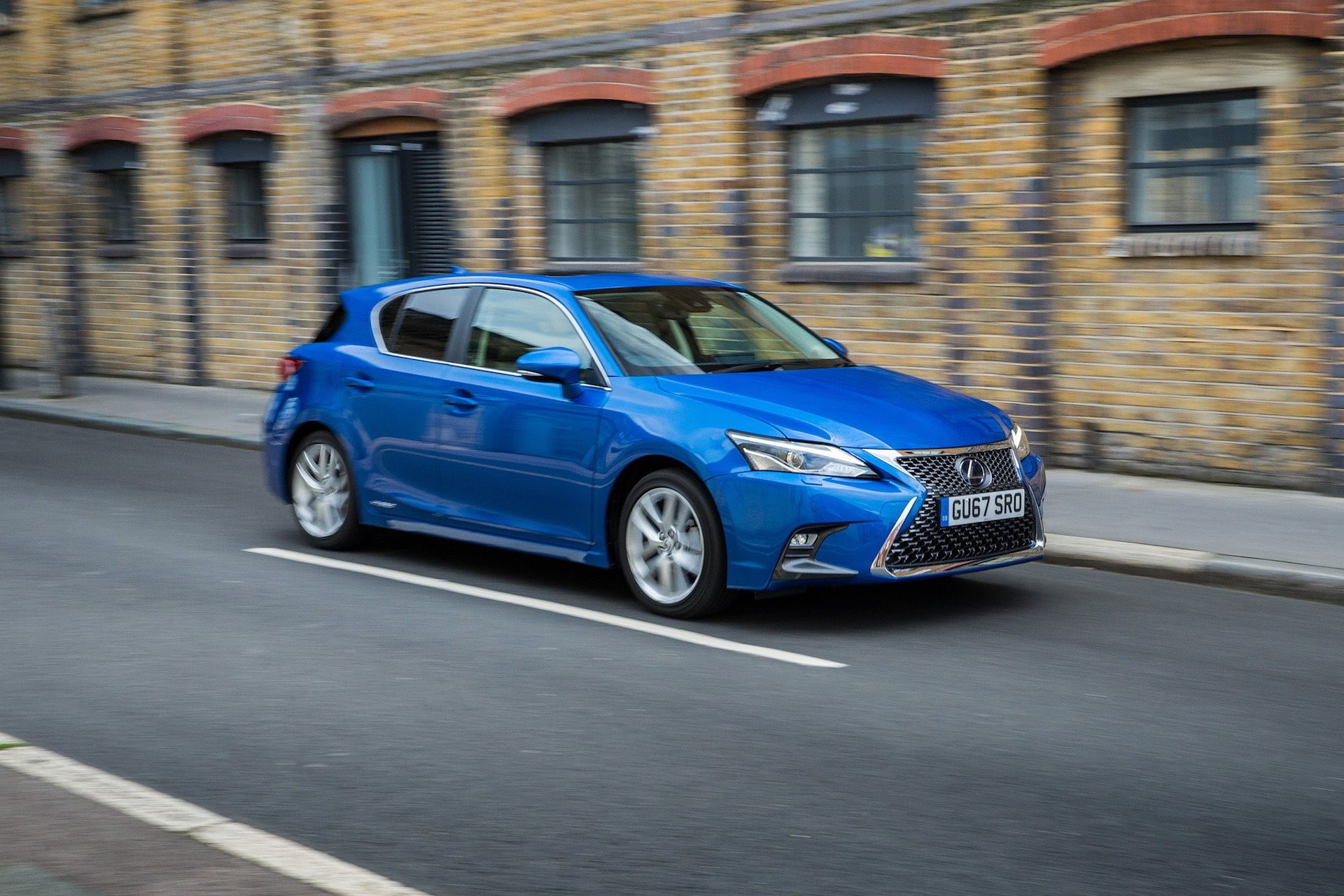
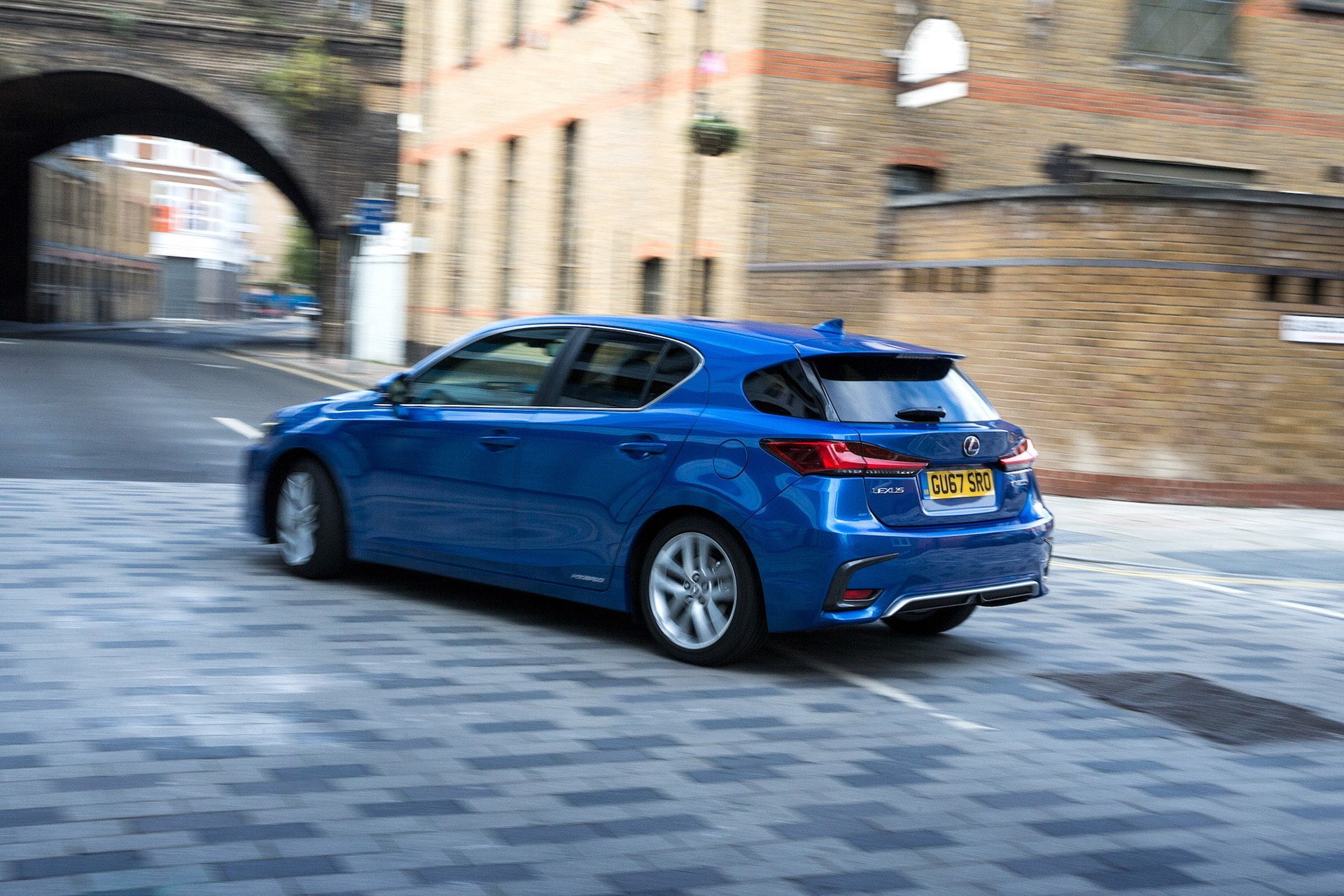
Lexus CT 200h on the road
The updated Lexus CT 200h brings bolder styling and an enhanced safety package

Full review

Introduction

The Lexus CT 200h is, in many ways, an exclusive choice for the upmarket hatch buyer.  Seven years on from first going on sale, the petrol-electric hybrid – effectively to Lexus what the standard-bearer Prius is to Toyota – still has no direct rivals.

The car’s primarily German competitors in the premium hatch sector have not been persuaded to go down the traditional hybrid route – only recently have we seen a significant degree of electrification, and one that requires a much bigger commitment from the buyer, in choosing the plug-in hybrid Audi A3 e-tron or the forthcoming fully-electric I-Pace from Jaguar.

Instead, the Lexus has to pitch its somewhat bespoke appeal against traditional cars that sell in big numbers – market heavyweights such as the Audi A3, BMW 1 Series and Mercedes-Benz A-Class. And while since the CT 200h launched 27,500 have been sold to UK buyers  – more than a third of its entire European volume – the car needs to up its game.

As a result, the 2018 CT 200h has undergone a refresh that involves significantly more than tinkering with the styling. There are styling changes, but there is also a significant boost in cabin quality, a better safety specification and a simplified trim structure.

The exterior changes are aimed at giving the traditionally innocuous Lexus a degree more visual presence, according to its chief designer to make it “more emotional and sporty”, and attract younger, planet-conscious drivers to its charms.

So the front bumper and the signature Lexus spindle grille are cleaner in design, there are single projector LED headlamps, bold ‘arrowhead’ daytime running lights now mounted above them, similar work on the rear end and new alloy wheel designs.

Our F Sport test car gains further changes – the mesh on the front grille is to a bespoke design in a black metallic finish, there are various black detailing elements, the Azure blue paint job is one of two colours reserved for F Sport, and can be combined with a contrasting black roof.

Buying and owning a Lexus CT 200h

The Lexus CT 200h is now available in four core grades, dubbed SE, Luxury, F Sport and Premier – there are also SE Plus Pack and F Sport Premier Pack variants which come with extra equipment.

The basis for them all is a five-door hatchback propelled by the latest version of the hybrid drivetrain that Toyota and Lexus have poured so much investment into. In the CT 200h, it combines a 1.8-litre four-cylinder petrol engine (considering its size the fact it produces just 100hp is a surprise) with a 650-volt electric motor providing another 82 horses and rather more torque – 207Nm compared to the 142 of the engine. And of course electric torque is all available straight away, you don’t need to spin up the revs…

As is typical with hybrid cars, the transmission is automatic, a CVT driving through the front wheels.  And this all adds up to a car that is not that fast – it takes 10-plus seconds to hit 62mph, some two seconds behind similarly priced rivals. But the Lexus does score on economy and emissions – it goes around 15 miles further on average per gallon, and its sub 100g/km CO2 levels are more than 20 grams better than the competition.

The new Lexus grade structure starts with the entry-level SE model, which costs from £23,495. It comes with a good selection of equipment, including dual-zone air conditioning, 16-inch alloy wheels, rain-sensing wipers, Drive Mode Select, a reversing camera, six-speaker audio and seven-inch media display screen operated by a rotary controller.

If one wants navigation then that is part of a ‘Plus Pack’ that also adds 17-inch wheels and rear parking sensors. More pertinently it includes the ‘Lexus Safety System+’, a suite of technologies encompassing the PreCollision System autonomous emergency braking, adaptive cruise control, lane keeping and road-sign assistance and automatic high beam headlamp controls.

Even at £2,000 more than the base model, the SE Plus Pack is a far more attractive option – the SE is the only CT 200h to not get the Safety System Plus as standard.

Our test car to F Sport specification would cost us another £2,500 on top of the SE Plus Pack. As well as the sporty elements inside and out, it gains a performance suspension upgrade.

Inside the Lexus CT 200h

Lexus interiors have always been of high quality and the latest upgrades merely improve what is already good. The fit and finish, which on our F Sport includes a lot of leather, is to standards to compare with those German rivals.

Specific details applied to our car encompass two-tone leather including a perforated covering around the steering wheel and on the gear shift, and aluminium pedals and scuff plates.

Upgrades can’t address one issue of the interior, which is not overly generous space. Despite the hybrid system’s battery pack being neatly slotted in between the rear wheels, room in the rear seats is on the tight side, while the 375-litre boot space is average.

Lexus tells us that the cockpit is focused around the driver, with a low-set seat and instruments arranged to offer the simplest possible use. This might be true in some respects – the sweeping console between the front seats is rather attractive. But the layout looks somewhat dated compared to rivals – the sat nav screen, for example, offered on all but entry-level models, might have mushroomed from seven to ten inches in size, but it still looks stuck onto the top of the console rather than an integrated part of the layout.

This screen is also responsible for the one major irritation with the CT 200h – the rotary dial that controls all infotainment functions. You are supposed to move it up, down, left or right and then press to select functions. But it is far too sensitive and, even at the end of a week in the little Lexus, we were still jumping past the button we wanted to select.

Driving the Lexus CT 200h

It’s easy to choose a CT 200h drivetrain as there is only one, and overall it is an efficient one. At low speeds, it runs on electric power only and is virtually silent in operation, to levels comparable to the best luxury cars. Glide through busy streets at speeds below 28mph with a fully-charged battery and you will need to watch for jaywalking pedestrians, because the petrol engine will remain redundant and they won’t hear you coming.

Out of town and at increased speed, the engine comes to life, but you scarcely notice it – the dash displays even include a graphic option to show you which bit of the drivetrain is functioning and when.

It does become louder, noticeably so, once you reach motorway speeds, and you have plenty of time to hear it because the car takes a while to get to the limit – the 10.3-second 0-62mph time is pedestrian when compared to conventional rivals.

There is a Drive Mode selector available on the dash, which offers full EV, Eco and Sport modes alongside Normal. Selecting Sport does make the car feel a little more potent, even if the watch does not really reflect it.

The instant torque of the hybrid assistance does make overtaking at speed reasonably efficient, though pick-up through the CVT transmission is not that rapid.

The CT 200h offers high levels of grip, but has always been known for an over-firm ride, and our F Sport version, with its ‘lateral performance damper system’, adjusted springs and thicker anti-roll bars, exacerbates this trait. It’s a bit too sports car for a car that is not fast enough to be a sports car.

Summary

The latest upgrade package to the Lexus CT 200h does add an extra element to the car and make it worthy of another look, but they fail to resolve some basic flaws that only an all-new model could address.

The CT200h has no real hybrid rivals in its class, competing instead with petrol-powered mainstays such as the BMW 1 Series, Audi A3 Sportback and Mercedes-Benz A-Class. Audi offers electric propulsion in the Sportback, but this is a plug-in model some £10,000 more expensive than our Lexus test car.

And there is one more factor that makes this package of upgrades all the more relevant, and timely. The new Lexus comes to market just as the tide is turning against diesel – for those buyers convinced they must now buy petrol, but still wanting diesel-like economy and emissions levels, the car may be the answer. The revamped Lexus CT 200h could well prove more attractive today than seven years ago when it was a brand new kid on the block.

Have you driven the Lexus CT 200h? Let us know your opinion in the comments below.

Key specifications

Make & model Lexus CT200h BMW 1 Series Audi A3 Sportback
Specification F-Sport 118i M Sport 1.5 TFSI S line
Price (on-road) £26,995 £25,070 £27,280
Engine 1.8-litre petrol plus 650V electric motor 1.5-litre petrol 1.5-litre petrol
Power 134hp 136hp 150hp
Torque 142Nm
207Nm (motor)
220Nm 250Nm
0-62mph 10.3 sec 8.5 sec 8.2 sec
Top speed 112mph 130mph 137mph
Fuel economy (combined) 68.9mpg 52.3mpg 54.3mpg
CO2 emissions 94g/km 126g/km 118g/km
Insurance group 21E 19E 21E
Euro NCAP rating 5 stars (2011)*
*expired 2018
5 stars (2012) 5 stars (2012)
Country of manufacture Japan Germany Germany
TCE rating 6.8/10 Not yet rated 8.0/10


Ford Focus brings advanced driver assist technologies to the masses (at a price)

The new Ford Focus unveiled this week in London (hatch and estate) and Beijing (saloon), promises to deliver the most sophisticated range of driver assistance technologies ever seen in the mainstream family hatch sector.

Inevitably, most of these advanced systems are not included as standard on the Focus. Most are only available as optional extras, and some can only be selected on higher-end models. As usual, the base models miss out on most of the good stuff, but hopefully the technology will filter down quickly over the life of the vehicle (which is likely to be at least seven years).

The systems are likely to also be rolled out fairly quickly across other new Ford models as they are launched in coming years. Most of them are enhancements to technologies already available either within Ford or at other brands, rather than all-new systems, but they do extend the level of safety provided beyond what has been possible previously.

New Ford Focus range, ST-Line, Vignale and Active

The suite of assistance systems, catchily titled “Ford Co-Pilot360 technologies”, will vary depending on specification, engine, gearbox and even the country you’re in, but will be made up from the following:

Autonomous Emergency Braking

(standard on all models)

Ford Focus pre-collision alert (autonomous emergency braking)

Called Pre-Collision Assist, the system in the Ford Focus doesn’t just scan for cars stopping in front of you. It can detect pedestrians and even cyclists in front of you or crossing your path.

The cyclist detection system is something the Ford engineers are particularly proud of, as it required developing new software algorithms to recognise the size and movement of a cyclist both in front of the car and moving across the car’s path.

Post-Collision Braking

(standard on all models)

If you are unfortunate to have a collision in a new Focus, the car will even remember to apply the brakes after impact, to help prevent you rolling into oncoming traffic or onto a footpath after you have bounced off whatever you hit (or whatever hit you).

Evasive Steering Assist

(standard on all models)

If you are trying to swerve around an obstacle ahead, the Focus can recognise your movements and assist with steering inputs while still maintaining full braking pressure.

The car will give you extra steering assistance as you swerve to avoid the obstacle, and then limit the counter-steering the other way to prevent you triggering a spin or rollover as you steer back onto your side of the road again.

Adaptive Cruise Control

(not available on Style, Zetec and ST-Line, optional on other models)

Ford Focus adaptive cruise control

No, Ford is not the first manufacturer to offer adaptive cruise control in this segment. However, Ford claims that its system is smarter than the opposition efforts, and can speed up or slow down according to speed limit changes en route. It will also keep the car centred in its lane rather than letting you drift over to the lane markings or road edge.

Ford claims to have developed a new system for the car to detect unpainted road edges, making the system far more useful on UK roads than most other similar systems.

If you have an automatic gearbox, which in the UK will initially only be available with the top-spec diesel engine, the system will also have full stop & go traffic functionality to make your morning commute that much easier.

Active Park Assist

(not available on Style and Zetec, standard on Vignale, optional on other models)

Ford Focus active park assist

This is another system that works better with an automatic transmission than a manual gearbox. With the auto ‘box, the new Ford Focus can park itself in a parallel or perpendicular parking spot with no input from the driver other than holding down the relevant button.

With a manual gearbox, you will have to engage first and reverse gears as required as well as operate the brake and throttle yourself, meaning the car will essentially only do the steering bit (although, to be fair, that’s the bit that most people want it to do).


Blind Spot Assist with Cross Traffic Alert

(not available on Focus Style, optional on other models)

Ford Focus cross traffic alert with active braking

The radar units that provide you with blind spot warnings are now also used to warn you of traffic crossing behind you as you reverse.

In addition to providing a beep warning, the system can apply the brakes to prevent you reversing into another car. This should be particularly helpful in busy car parks, particularly if you find yourself parked between a pair of SUVs or Transit vans and unable to see what’s coming as you back out.

Wide-angle reversing camera

(not available on Style and Zetec, standard on Vignale, optional on other models)

Ford Focus wide-angle reversing camera

As well as the beeping, a wider-angle reversing camera promises to give you a better view of what’s behind you as you reverse. Many reversing cameras have quite a limited field of view, making them less useful. Ford claims “a near-180 degree view”.

Adaptive front lighting

(optional on Focus ST-Line X and Vignale, not available on other models)

Ford Focus adaptive headlights

Again, Ford isn’t the first company to offer headlights that steer into corners. But the Ford system works predictively rather than reactively, meaning it swivels the headlights into a corner before you turn the wheel rather than afterwards.

The adaptive headlight system can monitor the road up to 65 metres ahead of the car, looking for road markings and signs to signal a bend, corner or junction is ahead. Most other systems wait until the driver steers into the corner and then move the headlights to follow where the steering wheel is pointed.

Like rival systems, the adaptive headlights can switch off part or all of the high beams to prevent blinding other drivers and even cyclists coming towards you.

Wrong Way Alert

(not available from launch in UK)

Ford Focus wrong way alert

Starting off in Germany, Austria and Switzerland, then eventually rolling out elsewhere, the Focus will be able to recognise if you’ve turned onto the wrong ramp to enter a motorway or headed the wrong way down a one-way road.

A large red warning message will flash on the driver’s information screen, accompanied by what Ford engineers describe as an “intense acoustic signal”. Presumably, this is technician-speak for a very loud and annoying buzzing noise.

Head-up display

(optional on ST-Line X and Titanium X, standard on Vignale, not available on other models)

New Ford Focus - head-up display

If The Car Expert ruled the automotive world, all cars would have a head-up display (HUD). Projecting important information directly into the driver’s line of vision is a major safety advantage, and Ford claims that its HUD system sets new standards.

The HUD in the new Focus is said to be the brightest in the business, making it easier to read in bright sunlight. It’s also apparently the most configurable, so you can decide exactly how much or how little information you want to be projected onto the display screen.

In another worthwhile first, the Focus HUD is said to be perfectly visible while wearing polarised sunglasses. Anyone who wears these will know that they usually turn digital displays to blank screens, which is incredibly annoying.

We look forward to testing these systems (under controlled circumstances, of course, not by actually trying to drive the wrong way along a motorway…) when the new Focus is available to drive later in the year.

Latest Audi A6 Avant unveiled

Audi has unveiled the A6 Avant estate version of the new A6 saloon that launched last month.

Like the saloon, the design objective has been to make the A6 Avant look lower and longer than the model it replaces. Featuring Audi’s latest XXL-sized trapezoidal grille and blistered wheel arches, there are hints of previous RS 6 models in the design.

In reality, the car is only 1cm longer and 2cm wider than before, and barely 6mm taller, but by increasing the wheelbase and reducing the overhangs at either end, Audi has been able to free up more interior space – especially for rear-seat passengers.

Audi A6 Avant profile, April 2018

Comforts galore, mainly at extra cost

An electric tailgate is standard, although being able to open it by waving your foot under the rear bumper will cost extra. A luggage compartment rail system allows owners to adjust four variable lashing points to secure objects. A tensioning strap, a net and two hooks are also included and an additional load-securing kit with telescopic bar and strap can also be added at extra cost to divide the luggage compartment into two sections.

The A6 Avant comes with the same package of safety systems announced for the new A6 saloon. Three headlight formats are available, the most sophisticated being matrix LED headlights, recognisable by five horizontal lines that form the daytime running light signature.

Upgraded tail lights with a special light signature made up of a single horizontal line and nine vertical segments for each unit are available. When unlocking and locking the doors, they initiate a pulsing light show sequence that will presumably impress your neighbours (or at least their kids).

Inside there is an ambient lighting package as standard, which can be upgraded at extra cost to offer adjustable shades of light to make you feel right at home.

There are various driver assist systems available at extra cost, divided into “City assist” and “Tour” packs. The City assist pack includes features such as the new crossing assist system, while the Tour pack offers adaptive cruise assist, which supplements the adaptive cruise control by means of gentle steering intervention to keep the vehicle in its lane.

Efficiency assist, also part of the Tour pack, promotes an economical driving style, predictively factoring in speed limits, bends, roundabouts and – if route guidance is active – turnings as part of the cruise control function and also providing haptic feedback via the active throttle pedal.

Power is provided by four and six-cylinder diesel and petrol engines, all featuring Audi’s latest mild hybrid technology (MHEV).  This enables engine-off coasting at speeds of between 34mph and 99mph to conserve fuel, and an enhanced start-stop system that is active from 13mph.

Automatic transmission only; two- or four-wheel drive

UK specifications are still to be announced, but all versions of the new A6 Avant will be equipped with one of two different automatic transmissions. All-wheel-drive will be a standard or optional feature depending on model. A sport differential that actively distributes power between the rear wheels when cornering at speed will also be available at additional cost.

Four suspension set-ups will be available. Standard will be conventional steel spring suspension, with optional sport suspension, suspension with damper control and adaptive air suspension available depending on your comfort/handling preferences and the depth of your pockets.

Unsurprisingly, the cabin is almost exactly the same as the A6 saloon for driver and passengers. The majority of operating functions are controlled by two large displays. Infotainment and navigation are managed from the top display, which measures nine or ten inches depending on specification.

The lower eight-inch display is used for climate control and convenience functions. The digital Audi Virtual Cockpit with its 12-inch high-resolution LCD screen is an extra-cost option, as is a full-colour heads-up display.

The optional ‘MMI navigation plus’ is the top-spec infotainment system for the new A6 Avant. Its data transfer module supports the LTE Advanced standard and incorporates a WiFi hotspot. The navigation system uses Personal route assist to recognise the driver’s preferences based on previous journeys and generates intelligent suggestions from this information.

The Audi connect portfolio offers numerous online services, including the optional Audi connect key, which allows the driver to lock and unlock the new A6 Avant via an Android smartphone app. Other options also include the Audi Phone Box supporting telephony with Voice-over-LTE protocol, and a 15-speaker Bang & Olufsen sound system.

Two specifications will be offered in the UK; Sport and S Line. Pricing and specification details will be announced closer to order books opening this summer.

Audi A6 Avant front, April 2018

All-new Ford Focus revealed

Ford has unveiled the all-new fourth-generation Focus hatchback, which it hopes will take the battle to the Volkswagen Golf for family car dominance.

Ford claims that the new Focus is a proper clean-sheet-of-paper design that will provide a more rewarding drive than any of its rivals. It has even gone so far as to describe the new Focus as the “most innovative, dynamic and exciting Ford ever”. Yet despite the technological leaps forward, the starting price for the new model will actually be more than £2,000 less than the outgoing model.

There is a host of new technology available, more efficient engines and better use of space. The new Focus is the first car to be built on Ford’s new C2 platform that aims to enhance crash protection and deliver more interior space. Ford has spent €600 million on its production facility in Germany to prepare it for the new model and deliver higher levels of build quality.

New Ford Focus 02

UK model range kicks off at £17,930

The new Focus is available to order immediately from Ford dealers, with prices starting at £17,930 on-road for the entry model Focus Style hatch – more than £2,000 less than the model it replaces.

The range will comprise seven variants from launch. Starting with Style, the specifications rise through Zetec, ST-Line, ST-Line X, Titanium, Titanium X and Vignale.

As with other models in the Ford family, the range splits between more comfort-oriented models (Titanium and Titanium X) and more sport-oriented models (ST-Line and ST-Line X). The Vignale sits at the top of the tree, with several visual tweaks and additional luxuries to differentiate it from the rest of the range.

UK customers will be able to choose between five-door hatch and estate body styles, with no plans at this stage for a three-door hatch version. Some other markets will get a saloon version, but this will not be offered here.

Three petrol, two diesel engine choices

There will be five engine options available: a 1.0-litre petrol unit in three power outputs of 85hp, 100hp and 125hp, all driven through a six-speed manual gearbox; and a new 1.5-litre diesel engine available in 95hp or 120hp versions. The 120hp unit is also available with an equally-new eight-speed automatic transmission.

Ford claims fuel efficiency and CO2 emissions improvements of 10% across the range, thanks to a combination of improvements from engines, gearboxes and aerodynamics.

Advanced technologies to enhance safety and entertainment

The new Focus offers a wider range of advanced features than any Ford before it, including semi-autonomous driving options. Of particular interest to company car drivers will be a sophisticated (optional) adaptive cruise control system that can stop and start in traffic, follow speed limit changes and keep the car in its lane.

A head-up display will be offered for the first time on a Ford in Europe, and claims to be one of the largest and brightest systems on the market. In a bonus for many drivers (well, for me, anyway), it claims to be the first of its type to be compatible with polarised sunglasses.

There are also new or improved systems for autonomous parking, autonomous emergency braking with cyclist detection, blind spot warnings and evasive emergency steering assistance. Parents can also code a key for young drivers that will prevent phone calls, limit top speed, prevent deactivation of safety features, set a maximum stereo volume and even disable the stereo altogether if occupants are not wearing seatbelts.

The new Ford Focus is being unveiled today at an event in London, and we will be there to bring you all the information you need. Follow our Instagram account to see plenty of photos of every aspect of the car over the next couple of days as we explore it in detail.

Ford Focus range 2018