Find an Expert Rating: 
Home Blog Page 14

DS Nº4

Summary

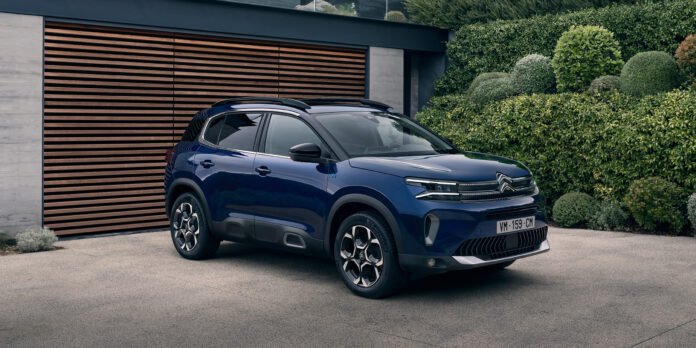
The DS Nº4 is a family-sized hatchback which is now available to order in the UK with hybrid and plug-in hybrid powertrain options. There is also an all-electric ‘E-Tense’ version, which we cover here.

While a new model, the Nº4 is essentially a comprehensive facelift of the DS 4 hatchback (which is still available new), now part of the brand’s latest ‘Nº’ range, which includes the larger electric DS Nº8 coupé-SUV. 

The British motoring media is yet to properly review the DS Nº4. These reviews are sure to follow in the coming weeks, alongside safety and running cost data, and we will update this page with the car’s Expert Rating score once we have them.

Key specifications

Body style: Medium hatchback
Engines:
petrol-electric hybrid, plug-in hybrid
Price:
From £32,200 on-road

Launched: Summer 2025
Last updated: N/A
Replacement due: TBA

Media reviews

Highlighted reviews and road tests from across the UK automotive media.

We don’t have any UK motoring outlet reviews of the DS Nº4 to display at the moment. While the hatchback has arrived on sale, it is brand-new and journalists are yet to get their hands on the model as of August 2025. The first media reviews of the are likely to appear in the coming weeks. Keep checking back for the latest updates.

Safety rating

Independent crash test and safety ratings from Euro NCAP

No safety rating

As of August 2025, the DS Nº4 has not been assessed by Euro NCAP.

Eco rating

Independent economy and emissions ratings from Green NCAP

No eco rating

As of August 2025, the DS Nº4 has not been assessed by Green NCAP.

Running cost rating

Clear Vehicle Data logo close crop

Monthly cost of ownership data provided exclusively for The Car Expert by Clear Vehicle Data

No data yet

As of August 2025, we don’t have independently verified data available for the DS Nº4. Check back again soon.

Reliability rating

MotorEasy logo 600x167

Reliability data provided exclusively for The Car Expert by MotorEasy

No reliability rating

As of August 2025, we don’t have enough reliability data on the DS Nº4 to generate a reliability rating.

The Car Expert’s reliability information is provided exclusively to us using workshop and extended warranty data from our partner, MotorEasy, sourced from both official dealerships and independent workshops. 

As soon as MotorEasy has sufficient data on the Nº4, we’ll publish the results here.

Warranty rating

New car warranty information for the DS Nº4

Overall ratingD31%
Petrol or diesel modelsE17%
Electric or hybrid modelsC56%
New car warranty duration3 years
New car warranty mileage60,000 miles
Battery warranty duration8 years
Battery warranty mileage100,000 miles

DS’s new car warranty is fairly basic, and worse than some rival brands in a similar price bracket as the Nº4.

The duration is three years, with a limit of 60,000 miles (unlimited mileage in the first two years and limited to 60K miles in the third year). In addition to the standard new car warranty, the Nº4 petrol-electric hybrid and plug-in hybrid versions come with an eight-year/100,000-mile warranty for the battery components.

Warranty on a used DS Nº4

  • If you are buying an ‘Approved Used’ DS Nº4 from an official DS dealership, you will get a minimum one-year warranty included.
  • If you are buying a used DS Nº4 from an independent dealership, any warranty offered will vary and will probably be managed by a third-party warranty company.
  • If you are buying a used DS Nº4 from a private seller, there are no warranty protections beyond any remaining portion of the original new car warranty.

If you’re looking to buy a used car that is approaching the end of its warranty period, a used car warranty is usually a worthwhile investment. Check out The Car Expert’s guide to the best used car warranty providers, which will probably be cheaper than a warranty sold by a dealer.

Recalls

Official DVSA safety recalls that have been issued for the DS Nº4

As of August 2025, we are not aware of any DVSA vehicle safety recalls affecting the DS Nº4. However, this information is updated very regularly so this may have changed.

You can check to see if your car has any outstanding recalls by visiting the DVLA website or contacting your local DS dealer.

Similar cars

If you’re looking at a new or used DS Nº4, you might also be interested in these alternatives.

Audi A3 | BMW 1 Series | Citroën C4 | Ford Focus | Honda Civic | Hyundai i30 | Kia Ceed | Mazda 3 | Mercedes-Benz A-Class | Mini Countryman | Peugeot 308SEAT Leon | Skoda Scala | Skoda Octavia | Vauxhall Astra | Volkswagen Golf

More news, reviews and information about the DS Nº4 range at The Car Expert
Electric car grant – all the EVs with discounts in 2026

Electric car grant – all the EVs with discounts in 2026

DS Nº4 E-Tense

DS Nº4 E-Tense

New DS Nº4 hatchback range now on sale

New DS Nº4 hatchback range now on sale

Buy a DS Nº4

If you’re looking to buy a new or used DS Nº4, The Car Expert’s partners can help you find the right car.

Motors 600x300

Find your next used car with Motors. Find out more

Auto Trader logo 600x300

Find your next new or used car with Auto Trader. Find out more

Carwow logo 600x300

Find your next new or used car with Carwow. Find out more

Lease a DS Nº4

If you’re looking to lease a new DS Nº4, The Car Expert’s partners can help you find a competitive deal.

Leasing-com logo

Personal contract hire deals from Leasing.com. Find out more

Carwow logo 600x300

Personal contract hire deals from Carwow. Find out more

Select Car Leasing logo

Personal contract hire deals from Select Car Leasing. Find out more

Subscribe to a DS Nº4

If you’re interested in a car subscription, The Car Expert’s partners can help. (PS: What’s a car subscription?)

SelfDrive UK logo

Car subscriptions from SelfDrive.
Find out more

Drive Fuze logo 600x300

Car subscriptions from DriveFuze.
Find out more

Cocoon Vehicles logo 600x300

Car subscriptions from Cocoon.
Find out more

What is a Head-Up Display?

Car manufacturers have been offering head-up display technology on top-spec models for a few years now. Almost every brand has their own version of the tech – including mainstream marques – and you might now find cars with this feature on the used market.

A head-up display projects driving information you will usually find on the digital instrument cluster or infotainment screen – like speed, speed limit, battery charge or fuel information and navigation – onto the windscreen or a small transparent screen just above the steering wheel, so that you don’t have to take your eyes off the road.

This tech can make your driving safer in theory by keeping vital information within the your line of sight when on the road. That said, a head-up display rarely comes as standard (if at all), meaning you will have to opt for a more expensive model to get one, and it displays information already available with a quick glance at the digital instrument cluster behind the steering wheel or the infotainment screen.

So, what is it exactly?

While this technology is only now becoming widespread across the new car market, head-up displays have been around for a pretty long time. First used in fighter planes, airliners and tanks, the first head-up display for a passenger car was developed back in 1999 by General Motors.

While that system was limited to a speedometer graphic, the head-up displays you can spec on a new car today show several different driving variables, and can be customised to show you the information that you want to see regularly, depending on the manufacturer.

A head-up display consists of three parts:

  • A projector that generates the display’s graphics
  • Mirrors or lenses that reflect those graphics onto the windscreen or a small transparent screen above the steering wheel
  • A control interface that communicates with the car’s computer to collect information

What is Augmented Reality (AR)?

Some upmarket brands, like Mercedes-Benz and Audi, have now introduced augmented reality-based head-up displays for select models. These AR head-up displays have the same functions as standard head-up displays – displaying crucial or customised driving information – but also project visualisations onto the windscreen using a camera that monitors the road ahead.

These visualisations can include route markers (usually in the form of an arrow or chevron) to show you where to turn and markers for detected vehicles.

Will it improve my driving experience?

This always comes down to a driver’s preferences, and while it’s a rather convenient piece of kit to have, a straight-forward head-up display isn’t likely to have a big impact on your driving experience. Unless you are someone that gets particularly distracted by the car’s screens, a head-up display shouldn’t justify opting for a more expensive trim level on its own.

Keep in mind that other car settings you might regularly glance at, like media playback and climate control, still need you to momentarily take your eyes off the road (though these settings can me changed using a car’s infotainment voice assistant, if included). Head-up displays often adjust their brightness and contrast automatically based on ambient light conditions to insure good visibility, but those drivers who wear sunglasses won’t be able to see the projected display in some cases.

Read more:

Dacia Bigster

Summary

The Dacia Bigster is a mid-sized SUV and the biggest model in Dacia’s UK range, which became available to order in Spring 2025.

Described by the Carbuyer team as a “bigger-booted Dacia Duster“, the Bigster has received a warm reception from the British motoring media to date, though various automotive outlets have taken issue with the SUV’s interior trim and driving refinement.

Parker’s Ted Welford says that the Dacia’s interior “feels quite low-rent for a car of this size – even with its lower price – and refinement lags behind most in this class.”

“What it lacks in sophistication”, adds the Motoring Research team, “it makes up for in rugged charm and unbeatable value for money.” Dacia has continued its trend of undercutting the price tag of key rivals for this flagship model, making alternatives like the Nissan Qashqai and Ford Kuga look rather expensive by comparison.

As of February 2026, the Dacia Bigster holds a New Car Expert Rating of B, with a score of 64%. Despite the SUV’s generally favourable UK review scores and low CO2 emissions, the overall rating is hindered by a lower-than-average three-star Euro NCAP safety rating, while running costs and Dacia’s new car warranty coverage are poor.

Bigster highlights

  • Excellent upfront pricing and cheap to run
  • Comfortable and good build quality
  • Well-equipped as standard considering price

Bigster lowlights

  • Some cheap interior trimmings
  • Rivals have sharper infotainment tech
  • Can get rather loud at motorway speeds

Key specifications

Body style: Medium SUV
Engines:
petrol mild-hybrid, petrol-electric hybrid
Price:
From £25,215 on-road

Launched: Spring 2025
Last updated: N/A
Replacement due: TBA

Media reviews

Highlighted reviews and road tests from across the UK automotive media. Click any of the boxes to view.

Featured reviews

More reviews

Auto Express

Auto Trader

Business Car

Car

Carbuyer

Heycar

Honest John

Motoring Research

Parkers

The Sun

The Sunday Times

The Telegraph

Top Gear

Safety rating

Independent crash test and safety ratings from Euro NCAP

Overall score: 3 stars
Date tested: May 2025
Read the full Euro NCAP review

Adult protection: 69%
Child protection: 85%
Vulnerable road users: 60%
Safety assist: 57%

Eco rating

Independent economy and emissions ratings from Green NCAP

No eco rating

As of February 2026, the Dacia Bigster has not been assessed by Green NCAP.

Running cost rating

Clear Vehicle Data logo close crop

Monthly cost of ownership data provided exclusively for The Car Expert by Clear Vehicle Data

Fuel consumptionAverageScore
Petrol models50 mpgC
Hybrid models61 mpgA
CO₂ outputAverageScoreVariationScore
Petrol models130 g/kmB
Hybrid models106 g/kmA
Insurance groupAverageScoreVariationScore
All models27C

The Dacia Bigster is a relatively affordable car to own and run, according to whole-life cost numbers provided exclusively to The Car Expert by our data partner, Clear Vehicle Data.

The Bigster’s estimated fuel economy averages of 50mpg for pure petrol models and 61mpg for hybrid versions is respectable for a car of this size. That said, the car’s predicted insurance premiums are a little higher than the average car, and key rivals like the Ford Kuga are slightly cheaper to insure on average.

We are yet to compile maintenance and servicing cost predictions for this model.

Reliability rating

MotorEasy logo 600x167

Reliability data provided exclusively for The Car Expert by MotorEasy

No reliability rating

As of February 2026, we don’t have enough reliability data on the Dacia Bigster to generate a reliability rating.

The Car Expert’s reliability information is provided exclusively to us using workshop and extended warranty data from our partner, MotorEasy, sourced from both official dealerships and independent workshops. 

As soon as MotorEasy has sufficient data on the Bigster, we’ll publish the results here.

Warranty rating

New car warranty information for the Dacia Bigster

Overall ratingD28%
Petrol or diesel modelsE15%
Electric or hybrid modelsC50%
New car warranty duration3 years
New car warranty mileage60,000 miles
Battery warranty duration8 years
Battery warranty mileage100,000 miles

Dacia’s new car warranty is pretty much the bare minimum offered in the UK, with a duration of three years and a limit of 60,000 miles. Other rivals in the price bracket do better (and in some cases, much better).

In addition to the standard new car warranty, the Bigster hybrid version has an eight-year/100,000-mile warranty for the battery components, which is why it gets a better score than the standard petrol models.

If you’re looking to buy a used car that is approaching the end of its warranty period, a used car warranty is usually a worthwhile investment. Check out The Car Expert’s guide to the best used car warranty providers, which will probably be cheaper than a warranty sold by a dealer.

Recalls

Official DVSA safety recalls that have been issued for the Dacia Bigster

As of February 2026, we are not aware of any DVSA vehicle safety recalls affecting the Dacia Bigster. However, this information is updated very regularly so this may have changed.

You can check to see if your car has any outstanding recalls by visiting the DVLA website or contacting your local Bigster dealer.

Awards

Significant UK trophies and awards that the Dacia Bigster has received.

2025

  • Carwow Awards – Most Anticipated New Car + Smart Spender Award
  • News UK Motor Awards – Best Family Car

Similar cars

If you’re looking at the Dacia Bigster, you might also be interested in these alternatives.

Chery Tiggo 7 | Citroën C5 Aircross | Ford Kuga | Honda CR-V | Hyundai Tucson | Jaecoo 7 | Jeep Compass | KGM Korando | Kia Sportage | Mazda CX-5 | MG HS | Mini CountrymanNissan Qashqai | Omoda 5 | Peugeot 3008Renault Austral | SEAT Ateca | Skoda Karoq | Suzuki S-Cross | Toyota C-HR | Vauxhall GrandlandVolkswagen Tiguan

More news, reviews and information about the Dacia Bigster at The Car Expert

Dacia Bigster review

Dacia Bigster review

Everything you need to know about Dacia

Everything you need to know about Dacia

Long-awaited Dacia Bigster SUV debuts

Long-awaited Dacia Bigster SUV debuts

Buy a Dacia Bigster

If you’re looking to buy a new or used Dacia Bigster, The Car Expert’s partners can help you find the right car.

Motors 600x300

Find your next used car with Motors. Find out more

Auto Trader logo 600x300

Find your next new or used car with Auto Trader. Find out more

Carwow logo 600x300

Find your next new or used car with Carwow. Find out more

Lease a Dacia Bigster

If you’re looking to lease a new Dacia Bigster, The Car Expert’s partners can help you find a competitive deal.

Leasing-com logo

Personal contract hire deals from Leasing.com. Find out more

Carwow logo 600x300

Personal contract hire deals from Carwow. Find out more

Select Car Leasing logo

Personal contract hire deals from Select Car Leasing. Find out more

Subscribe to a Dacia Bigster

If you’re interested in a car subscription, The Car Expert’s partners can help. (PS: What’s a car subscription?)

SelfDrive UK logo

Car subscriptions from SelfDrive.
Find out more

Cocoon Vehicles logo 600x300

Car subscriptions from Cocoon.
Find out more

Just Vehicle Solutions logo 600x300

Car subscriptions from Just Vehicle Solutions.
Find out more

New DS Nº4 hatchback range now on sale

0

DS Automobiles has unveiled its new DS Nº4 hatchback range, which is now available to order in the UK with hybrid, plug-in hybrid and all-electric ‘E-Tense’ models to choose from.

While a new model, the Nº4 is essentially a comprehensive facelift of the DS 4 hatchback (which is still available new), now part of the brand’s latest ‘Nº’ range, which includes the larger electric DS Nº8 coupé-SUV. The hatchback has been given a wider stance than the DS 4, with a new front grille and LED headlight design, and new rear lights connected with a dark chrome strip. The car sits on 19-inch alloy wheels as standard, with 20-inch alloys also available.

Set to challenge the sales of upmarket hatchbacks like the Mercedes-Benz A-Class, BMW 1 Series and Cupra Leon – the Nº4 is DS Automobiles version of the more mainstream Peugeot 308, with the electric DS Nº4 E-Tense powered by the same drivetrain as the Peugeot e-308.

This E-Tense model makes use of a 58kWh battery and 213hp electric motor pairing that can muster up to 279 miles on a single charge. This electric variant – which is the second battery-powered compact car after the DS 3 E-Tense – is compatible with DC charging speeds of up to 120kW, with a 20% to 80% battery top-up taking around 30 minutes.

The entry-level powertrain is a 145hp petrol-electric hybrid, with a 1.2-litre turbocharged petrol engine working in tandem with a small electric motor. DS claims that this version can drive on electric power alone 50% of the time in low speed urban areas.

The third choice is a 225hp plug-in hybrid model that runs using a 1.6-litre turbocharged petrol engine, a 15kWh battery and larger electric motor. By comparison, this motoring layout is an improvement over the DS 4 plug-in hybrid, offering up to 50 miles of electric-only driving range.

Once you’ve settled on the powertrain, there are three trims to choose from – the lead-in ‘Pallas’, mid-range ‘Pallas+’ and range-topping ‘Etoile’. As standard, the car comes with a ten-inch infotainment screen and 10-inch digital instrument cluster mounted on the dashboard, dual-zone climate control, LED lights in the front and rear, heated and folding door mirrors, adaptive cruise control and a rear view parking camera.

This entry-level trim, trimmed in ‘diamond tungsten fabric’ with black canvas seats and bronze accents inside, is only available with the electric E-Tense, however.

The ‘Pallas+’ is available with every powertrain, adding built-in DS sat-nav software, an AI-powered infotainment voice assistant, a wireless smartphone charging pad and keyless entry and start. A ‘comfort’ pack can be added for an additional fee, which includes tinted rear privacy glass and heated front seats.

This ‘comfort’ add-on comes included with the top-spec ‘Etoile’, which has seats trimmed in Alcantara leather and introduces a head-up display that projects driving information onto the windscreen and LED Matrix headlights. The optional ‘absolute comfort’ pack adds a massage function to the front seats and a heated steering wheel, while the ‘absolute tech’ pack a heated steering wheel, auto-dimming wing mirrors and a surround-view parking camera.

UK pricing for the range begins at around £32k for the Nº4 hybrid, rising to nearly £42k for the Nº4 E-Tense in ‘Etoile’ spec.

McLaren 750S

Summary

The McLaren 750S is a high-performance mid-engined supercar that combines serious engineering with outstanding driving appeal. It replaced the previous McLaren 720S model from 2023 onwards.

The 750S continues the ‘Super Series’ tradition at McLaren with a 4.0-litre twin-turbo V8 petrol engine and a focus on sharp handling and high power output. Review scores from UK media are overwhelmingly positive for performance and dynamic qualities.

However, real-world ownership factors are inevitably much less favourable. There is no independent safety assessment from Euro NCAP for this model, and we don’t yet have long-term reliability data. As a result, the ownership case relies heavily on short-term driving impressions rather than established long-term evidence.

Running costs for the 750S are among the highest we have measured across new cars in the Expert Rating Index. High fuel consumption, expensive insurance and significant maintenance costs all contribute. Emissions are also very high in the context of current UK vehicle taxation and environmental standards. These characteristics are typical for cars in this category, but they reduce the model’s overall ownership score within our index.

As of February 2026, the McLaren 750S holds a New Car Expert Rating of D, with a score of 59%. Beyond the car’s overwhelmingly positive review scores, the overall rating is dragged down by very high running costs, high emissions and a relatively basic new car warranty.

Stuart’s view:

“The McLaren 750S earns exceptionally strong UK media review scores, so its D rating may appear surprising. The difference reflects what the Expert Rating Index measures: overall UK ownership strength rather than driving enjoyment.
Very high running costs and emissions carry significant weight in that calculation, and long-term reliability data is limited compared with mainstream models. That does not question the engineering quality of the McLaren 750S, but it does reduce its ownership score.”

Stuart Masson

Editor, The Car Expert

750S highlights

  • Extremely fast acceleration and strong in-gear response
  • Precise steering and excellent body control
  • Noticeably sharper and lighter-feeling than the 720S
  • Improved ride comfort compared with earlier McLaren models
  • Clear focus on driver engagement

750S lowlights

  • Cabin quality does not feel as special as some rivals
  • Infotainment system still lags behind competitors
  • Limited everyday practicality
  • Very firm focus on performance over comfort
  • High levels of noise and road presence may not suit all drivers

Key specifications

Body style: Mid-engined coupé and convertible
Engines:
petrol
Price:
From £252,260 on-road

Launched: Summer 2023
Last updated: N/A
Replacement due: TBA

Media reviews

Highlighted reviews and road tests from across the UK automotive media. Click any of the boxes to view.

Featured reviews

More reviews

Auto Express

Car

Evo

Motoring Research

The Scotsman

The Sunday Times

Top Gear

Safety rating

Independent crash test and safety ratings from Euro NCAP

No safety rating

As of February 2026, the McLaren 750S has not been assessed by Euro NCAP.

Having to buy a few McLaren supercars for testing would probably blow Euro NCAP’s budget for the whole year, so it’s unlikely to ever happen.

Eco rating

Independent economy and emissions ratings from Green NCAP

No eco rating

As of February 2026, the McLaren 750S has not been assessed by Green NCAP. Again, we’re not expecting it to happen anytime soon – so you’ll have to use your imagination to work out how environmentally friendly a 4.0-litre twin-turbocharged V8 petrol engine from a supercar might be.

Running cost rating

Clear Vehicle Data logo close crop

Monthly cost of ownership data provided exclusively for The Car Expert by Clear Vehicle Data

Fuel consumptionAverageScore
Petrol models23 mpgE
CO₂ outputAverageScoreVariationScore
Petrol models276 g/kmE
Insurance groupAverageScoreVariationScore
All models50F

As you might imagine, The McLaren 750S is a very expensive car to own and run, according to whole-life cost numbers provided exclusively to The Car Expert by our data partner, Clear Vehicle Data.

The supercar’s V8 engine is rather thirsty when compared to the car market at large, returning an average of 23mpg. This is one of the poorest fuel consumption stats in our Expert Rating Index, but on par with other pure petrol supercars like the McLaren GTS, Maserati MC20 and Porsche 911 Turbo.

The car’s insurance premiums are also estimated to be in the highest bracket possible – this is without a doubt one of the most expensive cars to insure in the UK.

Reliability rating

MotorEasy logo 600x167

Reliability data provided exclusively for The Car Expert by MotorEasy

No reliability rating

As of February 2026, we don’t have enough reliability data on the McLaren 750S to generate a reliability rating.

The Car Expert’s reliability information is provided exclusively to us using workshop and extended warranty data from our partner, MotorEasy, sourced from both official dealerships and independent workshops. 

As soon as MotorEasy has sufficient data on the 750S, we’ll publish the results here.

Warranty rating

New car warranty information for the McLaren 750S

Overall ratingD37%
New car warranty duration3 years
New car warranty mileageUnlimited miles
Battery warranty duration0 years
Battery warranty mileage0 miles

McLaren’s new car warranty is fairly standard, and no different from rival brands in a similar price bracket as the 750S.

The duration is three years, with no limit on mileage.

Warranty on a used McLaren 750S

  • If you are buying an ‘Approved Used’ McLaren 750S from an official McLaren dealership, you will get a minimum one-year warranty included, with the option to extend the warranty by a further twelve months.
  • If you are buying a used McLaren 750S from an independent dealership, any warranty offered will vary and will probably be managed by a third-party warranty company.
  • If you are buying a used McLaren 750S from a private seller, there are no warranty protections beyond any remaining portion of the original new car warranty.

If you’re looking to buy a used car that is approaching the end of its warranty period, a used car warranty is usually a worthwhile investment. Check out The Car Expert’s guide to the best used car warranty providers, which will probably be cheaper than a warranty sold by a dealer.

Recalls

Official DVSA safety recalls that have been issued for the McLaren 750S

As of February 2026, we are not aware of any DVSA vehicle safety recalls affecting the McLaren 750S. However, this information is updated very regularly so this may have changed.

You can check to see if your car has any outstanding recalls by visiting the DVLA website or contacting your local McLaren dealer.

Awards

Significant UK trophies and awards that the McLaren 750S has received.

2025

  • Top Gear AwardsPerformance Car of the Year

Similar cars

If you’re looking at a new or used McLaren 750S, you might also be interested in these alternatives.

Aston Martin Vantage | Audi R8 | BMW 8 Series | Ferrari 296 | Ferrari Portofino | Ferrari Roma | Jaguar F-Type | Lexus LC | Lotus Emira | McLaren Artura | McLaren GT | Mercedes-AMG GT | Porsche 911 Turbo | Nissan GT-R

More news, reviews and information about the McLaren range at The Car Expert

McLaren 720S (2017 to 2022)

McLaren 720S (2017 to 2022)

McLaren 600LT (2018 to 2020)

McLaren 600LT (2018 to 2020)

Building the Best of British

Building the Best of British

Everything you need to know about McLaren

Everything you need to know about McLaren

McLaren GTS

McLaren GTS

McLaren 765LT (2020 to 2022)

McLaren 765LT (2020 to 2022)

McLaren Artura

McLaren Artura

All the new cars launched at Goodwood 2025

All the new cars launched at Goodwood 2025

Plug-in hybrid cars – what’s on sale and what’s coming in 2025?

Plug-in hybrid cars – what’s on sale and what’s coming in 2025?

Plug-in hybrid cars – what’s on sale and what’s coming in 2024?

Plug-in hybrid cars – what’s on sale and what’s coming in 2024?

Drop-top McLaren Artura Spider now available to order

Drop-top McLaren Artura Spider now available to order

Plug-in hybrids – what’s on sale and what’s coming in 2023?

Plug-in hybrids – what’s on sale and what’s coming in 2023?

Buy a McLaren 750S

If you’re looking to buy a new or used McLaren 750S, The Car Expert’s partners can help you find the right car.

Motors 600x300

Find your next used car with Motors. Find out more

Auto Trader logo 600x300

Find your next new or used car with Auto Trader. Find out more

Carwow logo 600x300

Find your next new or used car with Carwow. Find out more

Everything you need to know about Suzuki

Among the several more niche manufacturers in the UK car market is Suzuki – the smallest of the major Japanese brands, it sold just over 23,000 cars to UK buyers in 2024. That’s 7,000 fewer than Honda and less than a quarter of the likes of Toyota and Nissan.

Suzuki, however, seems quite happy with its bit part, especially as the car division forms part of a corporation with interests in many sectors – probably best known for its motorcycles but also, for example enjoying a big slice of the marine engine market.

This is also a car maker that makes the most of its particular strengths, not least all-wheel-drive – Suzuki has been making 4x4s since 1970 and while models such as the Vitara have proved perennially popular, even the quirky Ignis small SUV and the Swift supermini have been offered in AWD form and found plenty of fans.

The all-wheel-drive obsession shows no sign of abating into the electric era –  Suzuki’s first EV will be the e-Vitara and is being promoted on having all the all-wheel-drive off-road ability of its petrol-engined namesake.

So who or what is Suzuki?

Suzuki was founded not as a motor manufacturer, but a weaving company. It was founded in 1909 in a small Japanese coastal village called Hamamatsu, when Michio Suzuki started making looms for the silk industry, at that time booming in Japan.

After three decades of making looms, Suzuki looked to diversify his company, which would lead to cars and then motorcycles. From 1937, several prototype small cars were built, but the second world war put any production plans on hold as the government considered cars not essential to the war effort.

Suzuki returned to loom making, but a collapse in the cotton market after the war revived the motor vehicle plan – but now addressing demands in Japan for cheap and reliable personal transport.

Suzuki’s first automotive product to go into production was a motorcycle launched in 1952, which was nothing more than a bicycle fitted with a clip-on two-stroke engine that produced only one horsepower. However, a suitably impressed Japanese government subsidised further development and, by 1954, 6,000 motorcycles were emerging every month from the works of what was now Suzuki Motor Co.

The first car followed in 1955, called the Suzulight. It was a compact front-wheel-drive saloon which had independent suspension and rack-and-pinion steering, three decades before the system became a norm on cars. It proved a big hit, helping to start the Japanese craze for small vehicles and spawning various versions, including trucks.

In 1965, Suzuki expanded into the marine market with outboard motors, where the company has remained highly successful ever since. Further diversification included medical equipment and even pre-fabricated houses.

For car enthusiasts, 1970 marked a pivotal year with the introduction of the LJ10, a mini 4×4 with a 360cc engine – it was soon developed with the more marketable name of Jimny, becoming one of the earliest SUVs and beginning a model history that would attract a cult following.    

Suzuki began making cars in Pakistan from 1975, but what would become the most significant move for the company occurred seven years later with a joint venture in India – today, Maruti Suzuki dominates the Indian market.

By this time, US giant General Motors had taken a 5% stake in Suzuki, which also signed an alliance with fellow Japanese maker Isuzu. In 1988, the Vitara SUV made its debut, a model designed for both on and off-road prowess that has since done much to cement Suzuki’s credentials as a manufacturer of all-wheel-drive vehicles.

By the end of the 1980s, Suzuki was making ten million vehicles a year and in 1992 began European production, in Hungary. Early in the new millennium General Motors increased its stake to 20% and, while the ensuing years saw the company producing several new car lines, its success was underpinned by its core SUV, the Vitara, and its perennially popular small car, the Swift.       

The following decade saw Suzuki continuing to consolidate its worldwide sales, including in the UK. The GM involvement eventually ended so Suzuki signed an alliance with Toyota in 2019, which would lead to the launch of two hybrid models – the Swace and Across, effectively Suzuki-badged versions of the Toyota Corolla and Toyota RAV4.  

The company was slow to embrace the move to electric power, however, and in the UK the model range was severely hit by the government’s ZEV mandate, which insists that a certain percentage of a manufacturer’s sales are zero-emission, with fines for each percentage missed.

As a result, several Suzuki models had to be axed in 2024 as the company was not able to sell enough low-emission vehicles to justify their continued existence. These included the Ignis small SUV, the Swift Sport and the Jimny LCV, (the commercial vehicle of the passenger Jimny, which had already been dropped in 2020 due to emissions rules ).

Suzuki’s first all-electric car is called the e Vitara (another joint effort with Toyota and unrelated to the ageing petrol Vitara) which is expected on sale towards the end of 2025.     

What models does Suzuki have and what else is coming?

The Suzuki model range has undergone severe pruning in recent times, and currently comprises just four models – the Swift hatchback, Vitara and S-Cross SUVs and the rebadged Toyota RAV4, the Across.

The Swift is Suzuki’s supermini and a nameplate with a long history – the first Swifts were sold in the 1980s – it’s now in its fourth generation and a popular alternative to more mainstream small cars.

Being a Suzuki, an all-wheel-drive Swift remains in the mix, while a Sport variant of the previous model had quite a few fans until tough emissions regulations forced Suzuki to drop it. Ironically, low emissions help the new Swift achieve a New Car Expert Rating of B in The Car Expert’s Expert Rating index, along with its frugal running costs.   

The Vitara remains Suzuki’s best-selling model, the small SUV now in its fourth generation, dating way back to 2015 with a major facelift in 2018. Available with petrol or hybrid engines, and with all-wheel-drive an option, it scores on its versatility, practicality and value for money. However, it does not have the quality of fit and finish of rivals, resulting in a New Car Expert Rating of D.

The S-Cross was first launched in 2013 as a larger sister to the Vitara and an all-new version arrived in 2022 with a choice of petrol or hybrid engines – again both are available with all-wheel drive. Opinions of the S-Cross replicate those of the Vitara, earning it a New Car Expert Rating of D – it’s dependable and good value for money with plenty of tech, but its build quality doesn’t come up to rivals.

Finally we have the Across, Suzuki’s only plug-in hybrid and not really a Suzuki at all, as underneath the badge it is simply a Toyota RAV4. As such the mid-sized SUV it offers all the qualities Toyota is known for, helping it to a New Car Expert Rating of B – it’s only available in a range-topping and therefore pricey trim level, though it is slightly cheaper than its Toyota equivalent.

Current Suzuki range on our Expert Rating Index

Suzuki Across

Suzuki Across

Suzuki S-Cross

Suzuki S-Cross

Suzuki Swift

Suzuki Swift

Suzuki Vitara

Suzuki Vitara

The next big move for Suzuki will be the arrival before the end of 2025 of the company’s first all-electric model, the e Vitara. This is not a version of the current Vitara but an all-new vehicle and a further result of the tie-up with Toyota, which is launching its own version called the Urban Cruiser.

With a sub £30,000 starting price and a range up to 264 miles, plus being just one of three vehicles in its class offering all-wheel-drive, the e Vitara shoulders much of Suzuki’s hopes for future growth.

What will follow the e Vitara remains to be seen. Suzuki had planned to have four EVs on sale by 2030, including electric versions of core models such as the S-Cross and Swift, but has slowed its plans in the face of uncertainty in the electric market and the arrival of a host of cheap EVs from China.    

Where can I try a Suzuki car?

Suzuki may be one of the smaller UK brands in terms of market share, but it has plenty of dealers. Currently, there are 125 outlets spread across the UK, and while they include the major outlets one might find on automotive retail parks, among the network, there are still plenty of smaller, often family-owned groups operating out of town-centre locations – Suzuki’s website includes a dealer finder function.

A Suzuki fact to impress your friends

Suzuki might be considered a somewhat niche manufacturer in the UK, but in India the company is huge. Maruti Suzuki, a direct subsidiary of the Japanese parent company, has more than 40% of the Indian passenger car market – as a comparison, Volkswagen has the UK’s biggest market share at just 8.5%, while even in its home country of Japan Suzuki can only claim around 13% market share.

In a world where car manufacturers have become massive multi-national organisations, Suzuki remains a family firm. Current CEO Toshiro, appointed in 2015, is the sixth Suzuki family member to lead the company.

Summary

Suzuki seldom makes very big headlines, but that seems to be just how the company likes it. Finally catching up with rivals with the launch of its first electric model this year, this brand seems to be quite happy charting its own course, underpinned by vehicles that are competent on the road while retaining the capability to go a long way off it.

Buy a Suzuki

If you’re looking to buy a new or used Suzuki, The Car Expert’s partners can help you find the right car.

Motors 600x300

Find a used Suzuki with Motors. Find out more

Auto Trader logo 600x300

Find a new or used Suzuki with Auto Trader. Find out more

Carwow logo 600x300

Find a new or used Suzuki with Carwow. Find out more

Lease a Suzuki

If you’re looking to lease a new Suzuki, The Car Expert’s partners can help you find a competitive deal.

Leasing-com logo

Personal contract hire deals from Leasing.com. Find out more

Carwow logo 600x300

Personal contract hire deals from Carwow. Find out more

Select Car Leasing logo

Personal contract hire deals from Select Car Leasing. Find out more

What to consider when switching from petrol to an EV

Now accounting for 22% of the new car market, electric car demand is on the rise. This is only going to increase, as the government’s new electric car grant makes electric cars (EVs) a more attractive financial proposition and car manufacturers introduce even more battery-powered models to the UK market as they aim to meet government-mandated EV sales targets.

As of right now, car buyers have a vast range of electric car options to choose from. If you want to stick with a petrol car, there are still plenty of great choices available – although this won’t last forever. If you want a hybrid as a halfway house between petrol and electric power, there are plenty of those as well.

At some point, however, we’re all going to have to make the switch from fossil fuels to electricity. The good news is that most of the new-generation electric cars are fantastic.

The highest-scoring electric cars in our Expert Rating index

Audi A6 e-tron

Audi A6 e-tron

BMW iX1

BMW iX1

Hyundai Ioniq 5

Hyundai Ioniq 5

Kia EV3

Kia EV3

Kia EV6

Kia EV6

MG 4

MG 4

Mini Cooper Electric

Mini Cooper Electric

Nissan Ariya

Nissan Ariya

Renault 5 E-Tech

Renault 5 E-Tech

Renault Scenic E-Tech

Renault Scenic E-Tech

Tesla Model 3

Tesla Model 3

Volkswagen ID.7

Volkswagen ID.7

For new cars, the choice of fossil fuel cars is already starting to decrease as car companies discontinue these models in favour of EVs. There are very few new diesel cars sold anymore, with most of the remaining models being large SUVs. Some petrol models are being phased out ahead of EV replacements as well, and this will accelerate in the next few years. In five years’ time, there will be far fewer new fossil fuel cars to choose from.

For used cars, the changeover will take much longer, but there are now plenty of great used EVs to choose from in the 1-3 year-old bracket, and prices are coming down. However, there are not that many older models available yet and this will take time. There are well over a million EVs now on UK roads, but half of these are less than two years old and three-quarters are less than three years old. It will take time for greater numbers of EVs to fall into lower price brackets, but it will get there in the next few years.

So, are you ready to take the leap into your first electric vehicle? Well, whether you are looking for a new or used car, there are a few important things you should think about first before making the switch.

This handy checklist runs you through what you should consider before signing on the dotted line, as an electric car won’t suit everyone’s lifestyle, and can cause a bit of a headache if you are not familiar with EVs and their limitations.

1. Is a hybrid a better fit than an EV?

If you are still quite attached to petrol-powered driving, hybrid and plug-in hybrid models can serve as a useful half-way house.

Regular hybrid models (non-plug-in models) use the petrol engine and regeneration to charge the battery, so they don’t need charging, but they can only drive on electric power for short distances.

A plug-in hybrid has a larger battery so provides a longer electric range (usually 20 to 50 miles), and you can charge it up using a cable, which is more cost-effective than using petrol to charge the battery. Many households find that they can comfortably cover most of their weekly deriving needs in electric mode provided they are consistently charged.

Both rely on visits to the petrol pump, but they offer better fuel efficiency than traditional combustion engine cars.

If a hybrid is a better fit for you, read more here:

Not quite decided yet? Find out which all-electric and plug-in hybrid cars are currently on sale below:

2. How much battery range do you really need?

One of buyers’ biggest concerns about electric cars is the battery range – how far you can go on a full battery before you need to stop and charge. But these concerns tend to be perceived problems rather than real ones for most households.

According to government data, the average individual journey for vehicles in the UK is about 6.2 miles, the average weekly mileage for most vehicles is about 120 miles, and 99% of all journeys in England are less than 100 miles (the rest of the UK is broadly similar).

The average battery range of new cars on sale in the UK is about 250 miles, with some vehicles available that can go a lot further. That means if you are only able to charge the car once a week (for example, you’re not able to charge at home), you should still have comfortably enough electricity available whenever you need it.

So while an EV can’t travel as far on a full ‘tank’ as a petrol or diesel car, it’s not really an issue for most people’s needs. Obviously, if your driving needs regularly involve long journeys with short turnaround times, the current generation of EVs is probably not suitable for you – but there will be cars coming in the next few years that certainly will be.

Battery range differs greatly across the electric car category, and is usually limited by the car’s size and model spec. Small cars will tend to offer the least range, while large electric executive saloons and SUVs will offer the most range.

Choosing an EV that can comfortably handle your regular driving needs is crucial.

Also note that the ‘official range’ figures quoted for all cars are based on the best possible driving conditions, and cold weather or heavy loading (full boot and full quota of passengers) will lower the range noticeably. This is also true for fossil-fuel cars, but they can refuel in only a few minutes so it’s less of an issue.

Read more: How much battery range do you really need?

3. Can you install a wallbox charger at home?

While not absolutely essential, opting to install an EV charger at home makes electric driving much more convenient. In fact, we’d suggest that if you can’t install a wallbox at home, the economics and practicalities of an EV may not stack up at all.

A wallbox is much safer than a regular three-pin plug for charging an EV, as well as much faster. Most wallboxes are also ‘smart’, meaning they’re internet-connected and you can manage charging from your phone or tablet. That allows you to choose when to start and stop charging based on your home electricity tariff, to make sure you’re charging when electricity is cheapest.

If you can charge at home, your need to use public charging will be much less, which will save you both time and money. You simply plug your car in when you get home, and unplug it before you leave again. That means no waiting at a public charging point while your car charges at a much higher price.

Read more: The best sites for buying a home EV charger

4. Understanding public charging

With fuel price increases in recent years, you might think that opting for an electric car will save you a great deal of money that would usually be spent at the pumps. In truth, that depends on where you charge, and the charging station speeds that you can tolerate.

Unlike a petrol pump, there are several different types of EV chargers that charge at different speeds. As a rule, the fastest chargers are also the most expensive to use while the slowest are much cheaper (and sometimes even free to use).

Even then, plugging into the fastest of fast chargers (currently 350kW) won’t guarantee that your car will charge any faster. The car’s battery and electrical systems may only be capable of accepting a lower rate of charge (say, 150kW), so plugging into a higher-powered charger will cost you more money but won’t save you any time.

The fastest chargers should all have contactless payment facilities, but slower chargers will often require you to sign up to the provider’s app to pay from a registered bank account. EV owners will often have half a zone charging provider apps (or even more) on their phones so they can plug into any given charger. It’s annoying, but we’re stuck with that until we get a universal charging payment app. The government has promised this, but it could be a few years away yet.

For longer journeys, there are several mapping services that can guide you to changing points along your route. Most in-built satnav systems on EVs can do this, giving you recommendations on where to stop based on how much charge you have and how much you’ll need to complete your journey.

The rate of range you add from a charging point from various charging speeds can be found here. These figures are provided by EV specialists GridServe, and will vary depending on the car.

  • 3.7kW – up to 15 miles of range added per hour
  • 7kW – up to 30 miles/hour
  • 22kW – up to 90 miles/hour
  • 50kW – up to 180 miles/hour
  • 150kW– up to 400 miles/hour

5. What’s the local charging network like?

If you don’t have the ability to charge your car at home, you’ll be relying on the public charging network to recharge your car. While the national network is improving every month, there are still parts of the country where public charging is woefully inadequate. This will certainly improve over time, but is not much help if you’re looking to buy an electric car now.

As mentioned above, most households will probably only need to charge their car once a week in normal circumstances, but you still want to be confident that you can do that when it suits you, rather than going out of your way to charge the car.

As well as public chargers, it’s worth checking whether any of your neighbours have their own charging points. There are now apps that allow you to pay to use other people’s private chargers, which is probably cheaper for you than using a public charger. It also provides your neighbour with a bit of extra income from their charger whenever they’re not using it.

6. Are you OK giving up a manual gearbox?

This probably not too much of a problem for most car buyers, since manual gearboxes are fairly unpopular these days anyway, but it’s worth pointing out. The rise of electric cars doesn’t only mean the decline of the combustion engine, but also the end of the manual gearbox. Hybrids, incidentally, are usually auto-only as well.

Most electric cars don’t have a conventional ‘gearbox’ at all, as the motor simply spins faster when you put your foot down harder and slows down when you lift off a bit.

So if you’ve always chosen a stick shift over an automatic, you’re going to have to change your ways or stick to used petrol or diesel cars for the foreseeable future.

Read more: Is it still worth learning to drive with a manual gearbox?

7. Is the electric car you are looking at eligible for a discount?

As a general rule, an electric car will have a higher upfront price tag than its electric counterpart, as the car’s battery – built using rare materials like lithium, cobalt, and nickel – is more expensive to manufacture than a traditional petrol engine. That said, there are some exceptions.

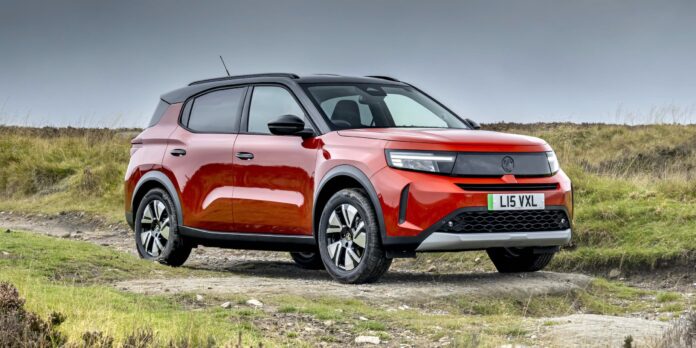
Vauxhall, in an attempt to boost its electric car sales, launched its new Frontera SUV range with no price tag disparity between petrol-electric hybrid and all-electric powertrains. For the same price as the Frontera, you can opt for the Frontera Electric instead.

Thanks to the rollout of the government’s electric car grant, select new electric cars are eligible for a sizeable discount off the showroom floor. Most of these models qualify for a £1,500 price cut, though some have qualified for a larger £3,750 saving.

Cars eligible for the electric car grant in our Expert Rating index

Citroën ë-Berlingo

Citroën ë-Berlingo

Citroën ë-C3

Citroën ë-C3

Nissan Ariya

Nissan Ariya

Renault 5 E-Tech

Renault 5 E-Tech

Renault Mégane E-Tech

Renault Mégane E-Tech

Vauxhall Corsa Electric

Vauxhall Corsa Electric

Vauxhall Frontera Electric

Vauxhall Frontera Electric

To check out if your electric car of choice qualifies for this grant, read our full list in the article below.

Read more: Electric car grant – all the EVs with discounts

8. Electric cars are generally cheaper to service

Thanks to servicing cost data exclusively supplied to The Car Expert by our technical partner Clear Vehicle Data, based on official manufacturer servicing charges, we pulled together the most comprehensive analysis of scheduled servicing costs you’ll find anywhere.

Our report finds that electric cars are significantly cheaper on average to service than traditional fossil fuel cars. EVs have fewer moving parts that are likely to need repairs or wear out over time, which reduces their maintenance costs compared to a fossil-fuelled car.

After analysing the manufacturer servicing costs for the entire new and nearly-new car market in the UK –totalling more than 600 different cars – we found that electric cars are around 29% cheaper to service over the first five years of ownership. To find out more, including direct petrol vs. electric model servicing cost comparisons, read our article below.

Read more: Petrol vs. electric: which is cheaper to service?

9. Switching to electric could raise your car insurance costs

Car insurance premiums have been on the rise generally in the last few years, as we reported here, and if you opt for an electric car it is likely to cost more to insure than an equivalent petrol car.

For example, using insurance comparison site Compare the Market we compared the average annual comprehensive car insurance premium paid for the petrol-powered Vauxhall Corsa and battery-powered Corsa Electric in October 2023. On average, the EV was £387 more expensive to insure per annum – a 43% cost increase.

While the insurance cost difference between petrol and electric cars usually isn’t this stark, it is wise to research the insurance costs of your chosen electric car before visiting the showroom.

This insurance cost increase is generally because of the electric car’s more expensive price tag, but is also due to other factors. A 2022 Thatcham Research report found that electric car incident claims were 25% more expensive than their ICE-powered equivalents and could take 14% longer to repair, which means higher courtesy car costs.

Read more: Insurance and EVs: what you need to know

More EV buying advice:

*Originally published in March 2024, this article was updated in August 2025 to include information on the UK electric car grant introduced in Summer 2025.

Pricing announced for electric Jaecoo E5

0

Jaecoo has announced the pricing and trim specifications of its new compact E5 SUV, which is the Chinese brand’s first electric model to reach the UK.

Sharing the same nameplate as its Omoda E5 counterpart (another Chery-owned brand), the Jaecoo E5 is a leftfield rival to the likes of the Kia EV3, Hyundai Kona Electric and Skoda Elroq in the small electric SUV category, powered by a 61kWh battery pack and 207hp electric motoring pairing that reportedly returns 248 miles on a single charge.

By comparison, that is 16 miles more than the entry-level 52kWh Elroq can muster without recharging, and for several thousand pounds cheaper upfront. That said, the Omoda E5 which is powered by the same battery can reportedly handle up to 257 miles of travel on a single charge, but for a higher on-the-road price tag.

The E5 can charge at DC speeds of up to 80kW – a 30% to 80% battery top-up taking 27 minutes – and can complete a 0-62mph sprint in 7.7 seconds. The car also has a vehicle-to-load (V2L) port, allowing for external electric devices to be powered using the car’s battery.

Compared to the petrol-powered Jaecoo 5 which is due to arrive imminently, the E5 has a flat panel in place of the petrol’s front grille. Excluding the front fascia, the electric SUV’s exterior looks are essentially identical to the 5, and has a similar silhouette to the larger petrol or plug-in hybrid Jaecoo 7 SUV that has been on sale in the UK since the start of this year.

Inside, the five-seat E5 comes with a 13-inch portrait-oriented infotainment touchscreen compatible with Apple CarPlay and Android Auto and a six-speaker Sony sound system as part of the standard ‘Pure’ trim.

A top-spec ‘Luxury’ equipment grade will also be offered, which comes with an eight-speaker Sony sound system, heated and ventilated front seats, a panoramic sunroof, ambient interior lighting and a wireless smartphone charging pad. Regardless of trim, the E5 is covered by a seven-year/100,000 mile warranty. 

UK pricing will start at over £27k, rising to over £30k for the ‘Luxury’. The first customer deliveries are expected to arrive on UK roads in October.

Trim changes for Kia Picanto and XCeed

0

Kia has given its pint-sized Picanto and small XCeed crossover a simpler three-tier trim range as part of an update that also changes the engine options available.

Both models ranges now consist of an entry-level ‘Pure’, mid-range ‘GT-Line’ and top-spec ‘GT Line S’ grade, instead of the ‘2’, ‘3’, ‘GT-Line’ and ‘GT-line S’ line-up formerly available. The ‘Pure’ is simply the re-named ‘2’ trim, while the ‘3’ equipment level has been removed from sale entirely.

The Picanto city car, which Kia says is its second best-selling model so far this year, is now only available with a 67hp 1.0-litre petrol engine. The more powerful 1.2-litre petrol formerly offered with the ‘GT-Line S’ trim has been removed.

The XCeed, which sits a little higher than the standard Ceed hatchback with thicker bumpers, roof rails and more prominent wheel arches, is now offered with a new 113hp 1.0-litre petrol mid-hybrid engine, which replaces the 1.5-litre petrol formerly available. The XCeed ‘GT-Line S’ is also available with a 177hp petrol engine. Both cars are still available with either a manual and automatic gearbox.

Pricing for the Picanto now starts at just under £17k, while the XCeed currently costs around £25k as standard. The Picanto has a New Car Expert Rating of C, with a score of 61%, while the XCeed currently holds a New Car Expert Rating of B, with a score of 66%.

Omoda 5 and E5 get updates

0

Less than a year after launching the Omoda 5 and Omoda E5 compact SUVs in the UK, Omoda is updating both models in response to market and media feedback.

The two models from Omoda have been popular, with more than 11,000 vehicles already on UK roads. In particular, the Omoda E5 has sold very well in the London area, thanks to the strict ultra-low emission zone pretty much everywhere inside the M25.

The updates announced this week apply mostly to the petrol-powered Omoda 5, with the electric E5 getting some minor tweaks at the same time. They come in response to feedback from customers as well as from media reviews when the cars were launched last October. Such a rapid response is almost unheard of in the automotive industry, with most brands preferring to wait until scheduled facelifts in a few years’ time rather than issuing specific updates a few months after a new car is launched.

The Omoda 5 will now get the same interior as the electric E5, after previously deciding that the two models should have almost completely different cabins. That means that the petrol Omoda 5 will now get the dashboard, door trims and centre console from the E5. This also includes larger (12-inch) twin infotainment screens, the gear selector repositioned to a column stalk, revised steering wheel and a cleaner centre console layout.

On both petrol and electric models, the entry-level spec has been renamed from ‘Comfort’ to ‘Knight’, while the higher-spec model remains ‘Noble’. All models now get increased front seat adjustment, while Noble models also get electric seats, 19-inch alloy wheels and roof rails.

There are a couple of downsides, however. Firstly, the standard-fit full-size spare wheel has been deleted. Although very few cars still offer this, it’s nonetheless disappointing to lose one of the few remaining cars that had it. As a consolation, boot space increases by 15% to 430 litres.

Secondly, the power output from the 1.6-litre petrol engine has been reduced from 186hp to 147hp. We don’t have revised performance or fuel economy figures yet, but CO2 emissions appear to be unchanged at 170g/km.

The battery on the Omoda E5 has been improved, so you get an extra ten miles of range from the same 61kWh capacity. The E5 now achieves a claimed 267 miles on the EU/UK government lab tests. It can also charge more quickly at a public charger, capable of accepting charge at up to 130kW – up from 80kW on the original version. The E5 Noble also gets a heat pump as standard, which should help driving range in cold conditions.

Both petrol and diesel models will benefit from revised front suspension, in response to criticism of how the cars drove at the media launches last year. This consists of new components, adjusted suspension geometry, a new electric power steering system and a change to the brake materials. We’ll let you know if they feel any different to drive once we get behind the wheel.

Finally, the starting price for the petrol car has been sharpened. The Omoda 5 Knight now starts at £23,990 – down from the entry-level’s original starting price of £25,235 when it was launched last year. Going the other way, the Noble-spec has crept up a few hundred quid to £27,490. The Omoda E5 models have increased by a whole £10 since last year’s launch, with the E5 Knight starting at £33,065 and the Noble priced at £34,565.

Volkswagen Tayron test drive

Make and model: Volkswagen Tayron
Description: Large SUV – petrol, diesel or hybrid
Price range: £40,130 to £47,490

Volkswagen says: “Fine design, with carefully judged detailing inside and out, is matched by superb practicality and a wide variety of drivetrain options.” 

We say: The Volkswagen Tayron is pricey, but with plenty of choice and VW quality in both build and performance, it’s an investment worth making.


Introduction

Volkswagen is clearly a big fan of SUVs. The arrival of the Tayron (pronounced ‘Ty-ron’) takes the line-up to six fossil fuel-powered models – most of them with hybrid options – plus a pair of electric vehicles in the ID.4 and ID.5.

The new Tayron will sit almost at the top of the Volkswagen range, just below the Touareg, and is pitched as a versatile SUV designed for and built in Europe. With the Touareg set to be retired next year, the Tayron will become Volkswagen’s flagship SUV.

Depending on which of the six engine options (three of them with hybrid) and five trim levels you select you can have front or all-wheel drive, five or seven seats in a vehicle which offers almost as much space and no major lack of versatility when compared to the larger Touareg, but in a rather more visually appealing package.

What is the Volkswagen Tayron?

The Tayron is a big SUV, currently the second biggest in the Volkswagen line-up. It fills the gap between the Tiguan (which is the company’s global best-seller) and Touareg models, and replaces the extended version of the previous Tiguan, which was sold with seven seats and known as the Tiguan Allspace.

Tayron buyers get a choice of five or seven seats (except for the plug-in hybrid models, which only come in five-seat form) in a car that in size alone leans closer to its larger sister than its smaller one – at 4.8 metres in length it is some 25cm longer than the Tiguan and just 10cm shorter than the Touareg.

The Tayron is built on the same flexible platform that underpins the Golf and Passat cars and Tiguan SUV, the newcomer being the largest model to use this particular platform. 

Volkswagen also believes that this will be a car popular with caravanners and the like as it has a towing capacity of between 1.8 and 2.5 tonnes, depending on the model chosen. That’s more than enough for most of those who need to hang something on the back on a regular basis.    

First impressions

Initial viewing of a Tayron is rather positive, as while this is a big beast, it doesn’t necessarily look it – the styling tilts more towards large estate car rather than boxy SUV. 

As well as the slightly more aerodynamic profile than is typical in this market the designers have worked hard to give the car some visual presence – there are illuminated logos front and rear (the first time these have been seen on a non-electric Volkswagen), a bold horizontal lighting bar front and rear and a choice of six alloy wheel designs ranging from 18 to 20 inches. 

Other personal touches include the option of advanced LED headlamps, each containing more than 19,000 LEDs, and even the ability to choose which of six different ways the car will come to life and welcome you as you approach it.

We like: Visual profile slightly softer than other box-on-wheels SUVs.
We don’t like: Do we really need six ways to approach a car?

What do you get for your money?

There is no shortage of Tayron choices, ranging across six engines (detailed below) and five trim levels, but you do need to study carefully what’s on offer. 

If you are keen on the plug-in hybrid, for tax-saving or other reasons, then you won’t be able to have the car with seven seats, and if you really need all-wheel drive then you will be restricted to one of the pair of non-hybrid petrol engines.

Cheapest in the range is the Tayron Life with the 1.5-litre petrol engine, and even this comes with a long list of standard equipment. This includes features that would formerly be confined to top specification models such as wireless smartphone charging, voice activation, a rear-view camera, adaptive cruise control and an extensive safety specification. 

On the subject of safety, the Tayron gets a five-star rating from safety body Euro NCAP. Unsurprisingly, you get a full selection of electronics offered as standard equipment – these include all of the usual driver assistance systems plus more unusual ones, such as a system that brakes the vehicle when turning across traffic it if senses there could be a collision with an oncoming vehicle. 

Go up the grades and in terms of equipment various desirables but non-essentials are added, examples including electric seat adjustment, a panoramic sunroof and electric tailgate plus even more safety aids such as an around-view camera and park assistance. 

Standard features on the top-spec models are also in many cases available as options on the lower-down trims, from an upmarket Harman Kardon ten-speaker sound system to ‘ergoActive Plus’ perforated leather seats that offer electronic adjustment in 14 directions and provide a mobile back massage – with the form and intensity set from the central touchscreen. Note though that the Tayron is not by any means one of the less-expensive models in its market and too much delving into the options list can soon balloon the price. 

We like: Good basic specification, especially in safety.
We don’t like: Lack of powertrain flexibility – plug-in hybrid is only five-seat, petrol engines only available with 4WD

What’s the Volkswagen Tayron like inside?

That extended length over its forebear ensures that this is generally a spacious SUV, whether in five or seven-seat form. Choose the latter and you won’t be surprised that the rear two seats are not really adult-sized, especially above the head, but the ability to slide the middle row back and forth adds to the flexibility.

With all seven seats in use, there’s still a reasonable 350 litres of luggage space available. With the rear seats folded, this goes up to 850 litres – oddly, the five-seat version gets significantly less, at 705 litres. Fold both rear rows flat and there’s 1,905 litres of cargo area, or 1,915 in the five-seater.

As one expects from a Volkswagen, it’s all very well put together – the trim detailing complements the general cabin layout and the surfaces are of a quality finish, soft to the touch. 

Volkswagen tells us that much has been done to make the Tayron a comfortable vehicle to travel in – the seats have plenty of adjustability, while the second row can be specified with a reclining function and heating. 

There are two wireless charging pads up front plus USB-C sockets in the second row. Also fitted in this row is a useful centre armrest that folds down with a couple of built-in cupholders and a stand for a tablet. And just to ensure the screen viewing is not ruined by extraneous noise, on most trim levels the windows have a sound-deadening film fitted between the layers of glass. 

The driver’s surroundings, effectively the same as on the Tiguan, are dominated by a central touchscreen of 13 inches – we would suggest this is a better option over the optional 15-inch version, which can start to become obscured by the steering wheel.

Meanwhile essential information such as speed and such are shown on a separate ten-inch digital display ahead of the driver (this able to include such extra information as the sat nav map) and repeated in a head-up display on the lower windscreen.

Volkswagen tells us that customer feedback has resulted in the return of some physical buttons to the cabin, which is welcome, but you still have to change such settings as the climate temperature via the touchscreen – it’s pretty quick and easy to do but a dial would be easier and quicker.

There do seem to be a great many buttons clustered on the steering wheel – they include the audio volume control, which can also be adjusted on the touchscreen, via the voice assistant or using a large rotary button at the base of the centre console and called the ‘Driving Experience Control’.   

This button can also be used to adjust such things as the drive mode and even a series of ‘atmospheres’ which change the background lighting. It occupies the space where a gear selector would traditionally be – in the Tayron, gear selection is on a stalk at the right of the steering wheel, moving the wiper controls to a switch on the left-hand indicator stalk. 

We like: General fit and finish, big boot space even in seven-seater.
We don’t like: Too many buttons on the steering wheel.

What’s under the bonnet?

The Volkswagen Tayron comes with six engine options, and while two are plug-in hybrids and one a mild hybrid, there are also two plain petrol units and a diesel.

All the hybrids use a 1.5-litre petrol engine as their basis – the mild hybrid version having 150hp on tap while the electric motors in the two plug-in hybrid models take the combined power up to either 204hp or 272hp, with a 0-62mph time of either 8.6 or 7.3 seconds. Both plug-ins also offer an all-electric range of more than 70 miles, which makes them more attractive to company car drivers paying benefit-in-kind tax.   

The petrol engines are both 2.0-litre units with either 204hp or 265hp allied to the all-wheel drive system, while the diesel is also a 2.0-litre unit with 150hp and significant pulling power of 360Nm, plus an official fuel economy figure of 51mpg.  

What’s the Volkswagen Tayron like to drive?

On the launch event in Worcestershire, The Car Expert was able to test both mild and plug-in hybrid variants of the Tayron, and we came down firmly in favour of the latter. There is nothing particularly wrong with the mild hybrid model but it does give an impression its drivetrain is being worked quite hard, the engine note noticeably coarse despite that acoustic dampening in the glass. As with most mild hybrid units, it’s really just a petrol engine with a glorified stop-start system that adds little to the driving experience.

The 200-plus kilograms of extra weight that the plug-in drivetrain adds makes the car feel more planted on the road, while it also produces a more refined performance especially at lower speeds when the electric part of the drivetrain does most of the work.

Generally the Tayron is an easy vehicle to drive and from behind the wheel it does not feel as big as it is. The steering is light but not over so, the adaptive chassis control fitted as standard on the R-Line trim test cars doing its job well through corners. Ride comfort is generally good – a couple of significant potholes on the test route were well smothered by the chassis.

Thin pillars all round make for an excellent view, with the only minus point a rather over-enthusiastic driver attention alert. Our reviewer did not expect to be told to pay attention to the road when looking to turn out of a junction minutes after getting into the car – it’s expected in some of the new brands from Asia, not in a Volkswagen…    

We like: Refinement of plug-in hybrids
We don’t like: Irritating driver alert

Verdict

Volkswagen models already enjoy a large slice of the burgeoning SUV market and the manufacturer clearly knows how to make them – the new Tayron follows the trend of being both of generally high quality in its build and performance and practical, particularly in the internal cabin layout and space. 

It’s by no means the cheapest model out there – every version sits above the £40,000 marker putting them in Expensive Car Supplement territory and adding to the annual VED costs, but buyers can be assured that their money will be well spent. We can foresee buyers who previously would have gone for the far more dominating Touareg instead choosing the Tayron for its more aerodynamic, less in-your-face style, achieved without any significant compromises over its larger sister.

Similar cars

Hyundai Santa Fe | Kia Sorento | Nissan X-Trail | Skoda Kodiaq

Key specifications

Model tested: Volkswagen Tayron R-Line 1.5 eTSI/1.5 TSi eHybrid
Price: £47,755/£53,955
Engine: 1.5-litre mild-hybrid/1.5-litre plug-in hybrid
Gearbox: 
Seven-speed auto/six-speed auto

Power: 150hp/204hp
Torque: 250Nm/350Nm
Top speed: 127mph/130mph
0-60 mph: 9.4 seconds / 8.6 seconds

CO2 emissions: 146/10g/km
Euro NCAP safety rating: Five stars (May 2025)
TCE Expert Rating: Not rated yet (June 2025)

Buy a Volkswagen Tayron

If you’re looking to buy a new or used Volkswagen Tayron, The Car Expert’s partners can help you find the right car.

Motors 600x300

Find your next used car with Motors. Find out more

Auto Trader logo 600x300

Find your next new or used car with Auto Trader. Find out more

Carwow logo 600x300

Find your next new or used car with Carwow. Find out more

Lease a Volkswagen Tayron

If you’re looking to lease a new Volkswagen Tayron, The Car Expert’s partners can help you find a competitive deal.

Leasing-com logo

Personal contract hire deals from Leasing.com. Find out more

Carwow logo 600x300

Personal contract hire deals from Carwow. Find out more

Select Car Leasing logo

Personal contract hire deals from Select Car Leasing. Find out more

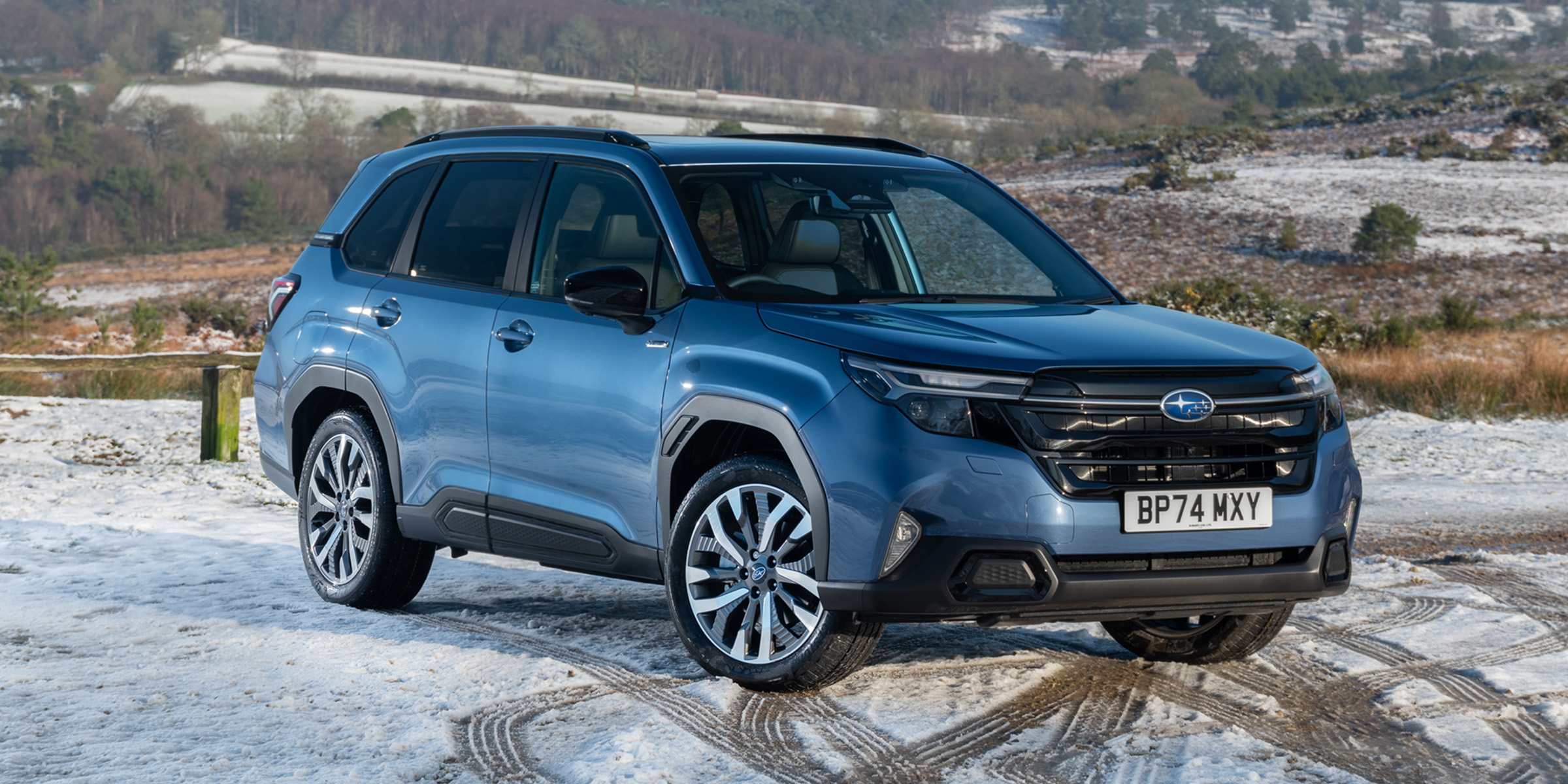
Everything you need to know about Subaru

Subaru is very much a niche brand in the UK, unlike some other countries, with a core base in the countryside community. But what’s the history of this offbeat Japanese car company?

During the 1990s and 2000s, Subaru grabbed the attention of motorsport enthusiasts through its successful world rallying programme, which inspired a series of high-performance Impreza WRX models. But that’s rather an aberration in the Subaru story.

In fact, Subaru’s core customer base was always, and still is, farmers and other rural car buyers, attracted to the fact that Subarus are almost always all-wheel-drive and can drive properly off-road.

While Subaru has never made that much of a dent in the UK market, selling less than 2,500 cars in 2024, the brand has always maintained its reputation amongst those rural customers. Now it’s firmly allied with its much larger fellow Japanese manufacturer, Toyota, Subaru is moving into the electric age while ensuring it continues to offer the rugged off-road capable products that its core market expects.  

So who or what is Subaru?

While many automotive companies started out making cars and diversified into aircraft manufacture, Subaru did it the other way around. The Aircraft Research Laboratory was formed in Japan in 1915, and grew into a major manufacturer by the mid-1930s under the name of Nakajima Aircraft Compan, producing many of Japan’s planes for the second world war.

The first motor vehicle appeared after the war in 1946, called the Fuji Rabbit, which was a scooter made using redundant aircraft parts. Nakajima Aircraft was now known as Fuji Sangyo and had been divided into 12 different corporations. 

By 1953, four of these had merged with another company to form Fuji Heavy Industries, with all the elements needed to produce automobiles. The scooter manufacturer was joined with a body builder, a chassis producer, an engine manufacturer, and a trading company to sell the finished products.

The initial car was known as the P1 during its development, but Fuji Heavy Industries CEO Kenji Kita settled on a name he was particularly fond of – Subaru. The word is Japanese for the six stars that form the Pleiades cluster in astronomy, and Subaru’s badges still bear the six stars today.

Just 20 examples of that initial model, the Subaru 1500, were made but the company soon ramped up production, and an important launch was the 1000 of 1965. This was Subaru’s first car to use the ‘boxer’ engine format, in which two banks of cylinders lie flat facing each other (also famously used by the Porsche 911 for the last 70 years), rather than upright as in a typical engine. The boxer engine soon became a Subaru signature feature that remains today.

Japanese government efforts to make the country’s car industry more efficient saw Nissan acquire a 21% stake in Subaru in 1968, and in 1974 Subaru officially arrived in the UK. 

The ‘Nissan period’ also saw the launch of three core Subaru models, the Legacy and Forester SUVs, and the Impreza saloon, which with its blue livery and gold wheels would become famous in world rallying and effectively became the worldwide image of Subaru. But Nissan joined a new alliance with Renault in 1999 and its Subaru stake was sold to General Motors, which kept it for six years. 

Some of that investment was then snapped up by Toyota – by 2008, Japan’s biggest manufacturer owned 16% of its tiny rival. To date, the best-known joint project between the two has been the small sports car launched in 2012, known as both the Subaru BRZ and Toyota GT86, with only a few minor cosmetic differences separating the two. It broke the Subaru mould in being rear-wheel drive instead of all-wheel drive. A second-generation model is sold here as the Toyota GR86, but the Subaru version is not available in the UK.

The two brands have continued their alliance ever since and it is demonstrated by Subaru’s most recent model, the company’s first foray into the electric age – the Subaru Solterra, which is little more than a Toyota bZ4X with some minor visual tweaks and Subaru badges.

What models does Subaru have and what else is coming?

Subaru’s current UK model range is sparse, comprising just four models. The Toyota-based Solterra electric SUV earns the best Expert Rating from The Car Expert, clocking up a New Car Expert Rating of A. It’s offered in a more limited, all-wheel-drive-only format (as are all Subaru models), without the 2WD versions offered by Toyota. But while it’s not considered the best mid-sized vehicle in its market, the Solterra scores on its space and its reliability.

The Crosstrek is a replacement for the previous Subaru XV. It’s effectively an off-road hatchback with mild hybrid assistance to its 2.0-litre petrol engine and, like most Subaru models, is aimed firmly at more rural buyers. An impressive safety package is offset by high running costs and average CO2 emissions to give the Crosstrek a New Car Expert Rating of C.

The Forester is a larger crossover model, with more rugged-looking SUV styling than the other models in the range. It’s the newest model in the current line-up, but still only rates a C in our New Expert Ratings.

Current Subaru range on our Expert Rating Index

Subaru Crosstrek

Subaru Crosstrek

Subaru Outback

Subaru Outback

Subaru Solterra

Subaru Solterra

Finally we have the Outback, on sale since 2021 and described by Subaru as an SUV, whereas it’s really more of a jacked-up estate car. Again this is one for those who live well out of town, with proper off-road ability. It has a New Car Expert Rating of C and for the same reasons – good safety but high running costs.

The current Outback’s days are numbered – in 2026 it is set to be replaced by a second EV, the E-Outback. Displayed in concept form and sold outside the UK as the Trailseeker, the new model uses the same platform as both the Solterra and a third new EV, the Uncharted, which is a crossover based on Toyota’s C-HR+ but with a greater ride height and styling to suit Subaru’s core rural customer base. The E-Outback, however, will only be sold as a Subaru. 

Where can I try a Subaru car?

Subaru is not exactly one of the largest car manufacturers in the UK market and so its dealer network is rather smaller than some rivals – potential buyers may have to travel a little further to try out a car.

However, there are 65 outlets well spread across the country, and the network is still changing – the latest outlet, Startin Subaru in Twycross, Warwickshire, was appointed in July 2025.

What makes Subaru different to the rest?

Subaru has always been presented as a brand favoured by the more rural customer, such as the farming community, who like quality vehicles but need them to be robust, The company has sold itself on its combination of go-anywhere all-wheel-drive chassis and its flat ‘boxer’ engines – the former can definitely progress into the electric era, the latter not so much.

A Subaru fact to impress your friends

Flying on a modern Boeing 777 or 787 airliner? You are actually sitting in something partly made by Subaru.

The company’s aerospace division has three plants and, amongst its many aircraft products, it makes the centre wing section for both airliners. 

Summary 

To many in the UK, Subaru has long appeared to be one of those tiny manufacturers that often goes unnoticed. But the brand has a core following and is sensible enough not to try anything that might alienate those customers. Expect to see tough, all-wheel-drive Subarus doing their job well into the era of electric vehicles.

Buy a Subaru

If you’re looking to buy a new or used Subaru, The Car Expert’s partners can help you find the right car.

Motors 600x300

Find a used Subaru with Motors. Find out more

Auto Trader logo 600x300

Find a new or used Subaru with Auto Trader. Find out more

Carwow logo 600x300

Find a new or used Subaru with Carwow. Find out more

Lease a Subaru

If you’re looking to lease a new Subaru, The Car Expert’s partners can help you find a competitive deal.

Leasing-com logo

Personal contract hire deals from Leasing.com. Find out more

Carwow logo 600x300

Personal contract hire deals from Carwow. Find out more

Select Car Leasing logo

Personal contract hire deals from Select Car Leasing. Find out more

Skoda Elroq

Summary

The Skoda Elroq is The Car Expert’s Car of the Year 2026!

The Skoda Elroq is a small all-electric SUV/crossover that arrived on UK roads in 2025 as the smaller sibling to Skoda’s highly-regarded Enyaq SUV.

Described as “one of the best electric cars on sale right now” by Heycar’s Phil Hall, the Carbuyer team concludes that the Elroq is “an impressive small electric SUV which takes the best bits of the Enyaq” but instead caters to those who don’t necessarily need all the space the larger all-electric SUV offers.

Parker’s Ted Welford adds that the car has a “smart, well-built interior” and has “an excellent ride and handling balance.” That said, he also says that the Skoda is “let down” by its “slightly confusing” trim structure and also its excessive options list. Other outlets have also criticised the car’s lack of physical dials or buttons for the climate control – those settings are accessed through the infotainment screen.

As of January 2026, the Skoda Elroq holds a New Car Expert Rating of A, with a score of 81%. It scores top marks for its media review scores, five-star Euro NCAP safety rating, low running costs and zero tailpipe emissions. However, Skoda’s new EV warranty is only average, with many rivals offering better.

Elroq highlights

  • Comfortable driving experience
  • Spacious high-quality cabin
  • Top-spec ’85’ model has long battery range…

Elroq lowlights

  • No physical buttons for climate control
  • Not all that exciting to drive
  • …the ’85’ is comparatively expensive

Key specifications

Body style: Small SUV
Engines:
electric, battery-powered
Price:
From £31,710 on-road (£1,500 grant available)

Launched: Winter 2024/25
Last updated: N/A
Replacement due: TBA

Media reviews

Highlighted reviews and road tests from across the UK automotive media. Click any of the boxes to view.

Featured reviews

More reviews

Auto Trader

Business Car

Car

Carbuyer

Driving Electric

Electrifying.com

Green Car Guide

Heycar

Honest John

Parkers

The Independent

The Scotsman

The Telegraph

Top Gear

Safety rating

Independent crash test and safety ratings from Euro NCAP

Overall score: 5 stars
Date tested: November 2025
Read the full Euro NCAP review

Adult protection: 90%
Child protection: 87%
Vulnerable road users: 77%
Safety assist: 78%

Eco rating

Independent economy and emissions ratings from Green NCAP

No eco rating

As of January 2026, the Skoda Elroq has not been assessed by Green NCAP.

The Green NCAP programme measures exhaust pollution (which is zero for an electric car) and energy efficiency. Electric cars are much more energy-efficient than combustion cars, so the Elroq is likely to score very highly in Green NCAP testing if and when it takes place. Check back again soon.

Running cost rating

Clear Vehicle Data logo close crop

Monthly cost of ownership data provided exclusively for The Car Expert by Clear Vehicle Data

Battery rangeAverageScoreVariationScore
EV models298 milesB
Electrical efficiencyAverageScoreVariationScore
EV models3.9 m/KWhC
Insurance groupAverageScoreVariationScore
All models29C

We only have limited running costs data for the Skoda Elroq, as of October 2025, but it should be a reasonably cheap car to run if you are able to charge it at home. If you are using public charging, it will be a lot more expensive as the Elroq is only average for electrical efficiency (the EV equivalent of fuel economy).

Reliability rating

MotorEasy logo 600x167

Reliability data provided exclusively for The Car Expert by MotorEasy

No reliability rating

As of January 2026, we don’t have enough reliability data on the Skoda Elroq to generate a reliability rating.

The Car Expert’s reliability information is provided exclusively to us using workshop and extended warranty data from our partner, MotorEasy, sourced from both official dealerships and independent workshops. 

As soon as MotorEasy has sufficient data on the Elroq, we’ll publish the results here.

Warranty rating

New car warranty information for the Skoda Elroq

Overall ratingC50%
New car warranty duration3 years
New car warranty mileage60,000 miles
Battery warranty duration8 years
Battery warranty mileage100,000 miles

Skoda’s new car warranty is pretty much the bare minimum offered in the UK, with a duration of three years and a limit of 60,000 miles. Other rivals in the price bracket do better (and in some cases, much better).

In addition to the standard new car warranty, the Elroq has an eight-year/100,000-mile warranty for the battery components.

If you’re looking to buy a used car that is approaching the end of its warranty period, a used car warranty is usually a worthwhile investment. Check out The Car Expert’s guide to the best used car warranty providers, which will probably be cheaper than a warranty sold by a dealer.

Recalls

Official DVSA safety recalls that have been issued for the Skoda Elroq

As of January 2026, we are not aware of any DVSA vehicle safety recalls affecting the Skoda Elroq. However, this information is updated very regularly so this may have changed.

You can check to see if your car has any outstanding recalls by visiting the DVLA website or contacting your local Skoda dealer.

Awards

Significant UK trophies and awards that the Skoda Elroq has received

2026

  • UK Car of the Year Awards – Best Medium Crossover

2025

  • The Car Expert Awards – Car of the Year + Best Small Crossover
  • Auto Express Awards – Car of the Year + Best Mid-Size SUV
  • Business Car Awards – Best Medium SUV
  • News UK Motoring Awards – Best Mid-Size SUV
  • Red Dot Design Award

Similar cars

If you’re looking at the Skoda Elroq, you might also be interested in these alternatives.

Audi Q4 e-tron | Citroën ë-C4 | DS 3 E-Tense | Honda e:Ny1 | Hyundai Ioniq 5 | Hyundai Kona Electric | Jeep Avenger | Kia Niro EV Kia EV6 | Mazda MX-30 | MG ZS EV | Nissan Leaf | Peugeot e-2008 | Renault Mégane E-Tech | Vauxhall Mokka Electric | Volkswagen ID.4 | Volvo EX30

More news, reviews and information about the Skoda Elroq at The Car Expert

Electric car grant – all the EVs with discounts in 2026

Electric car grant – all the EVs with discounts in 2026

Five of the safest small cars on sale in 2026

Five of the safest small cars on sale in 2026

Car of the Year 2026

Car of the Year 2026

Best Small Crossover 2026

Best Small Crossover 2026

Skoda Elroq vRS

Skoda Elroq vRS

New Skoda Elroq vRS revealed

New Skoda Elroq vRS revealed

New electric Škoda Elroq now on sale

New electric Škoda Elroq now on sale

Buy a Skoda Elroq

If you’re looking to buy a new or used Skoda Elroq, The Car Expert’s partners can help you find the right car.

Motors 600x300

Find your next used car with Motors. Find out more

Auto Trader logo 600x300

Find your next new or used car with Auto Trader. Find out more

Carwow logo 600x300

Find your next new or used car with Carwow. Find out more

Lease a Skoda Elroq

If you’re looking to lease a new Skoda Elroq, The Car Expert’s partners can help you find a competitive deal.

Leasing-com logo

Personal contract hire deals from Leasing.com. Find out more

Carwow logo 600x300

Personal contract hire deals from Carwow. Find out more

Select Car Leasing logo

Personal contract hire deals from Select Car Leasing. Find out more

Subscribe to a Skoda Elroq

Subscriptions are becoming a very popular way for consumers to try an electric car for a few weeks or months to help decide whether it’s a suitable alternative to a petrol car. If you’re interested in a car subscription, The Car Expert’s partners can help. (PS: What’s a car subscription?)

SelfDrive UK logo

Car subscriptions from SelfDrive.
Find out more

Cocoon Vehicles logo 600x300

Car subscriptions from Cocoon.
Find out more

Just Vehicle Solutions logo 600x300

Car subscriptions from Just Vehicle Solutions.
Find out more

Cupra Leon Shadow Edition now on sale

0

Cupra has bolstered its Leon hatchback and estate range with the addition of a top-spec ‘Shadow Edition’ trim that introduces darker exterior styling elements.

Based on the ‘V3’ equipment grade – which already includes heated leather seats, a leather steering wheel, three-zone climate control, a rearview parking camera and dynamic chassis control tech that allows drivers to adjust their vehicle’s suspension settings – the ‘Shadow Edition’ also comes with Matrix LED headlights.

Besides that, this special edition model is essentially a styling pack that comes with a unique matte black 19-inch alloy wheel design (same size alloys as the ‘V3’), black side skirts and a black roof spoiler.

For an additional fee, customers can spec the ‘Shadow Edition’ with a premium ten-speaker Sennheiser sound system, a tow bar or a panoramic sunroof.

The trim is now available to order, with pricing starting at around £37k – £600 more than the ‘V3’ package.

The Cpura Leon currently holds a New Car Expert Rating of A, with a score of 72% in our Expert Rating index. It scores top marks for its low CO2 emissions and also gets good grades for its low running costs and Euro NCAP safety rating. However, its media review scores to date have been average.

Pricing announced for new Chery Tiggo 8 SUV

0

Chinese brand Chery has revealed the UK pricing and specifications for its upcoming Tiggo 8 SUV, which is arriving at the start of September.

The launch of the Tiggo 8 will mark the official UK arrival of motoring giant Chery – which also owns both Omoda and Jaecoo, brands that have landed in the UK with considerable sales success to date.

This large seven-seat family car will be available with either a 147hp 1.6-litre pure petrol engine, or a ‘Super Hybrid’ plug-in hybrid setup that delivers up to 56 miles of electric-only range.

The model can be ordered with a choice of ‘Aspire’ and ‘Summit’ trim grades. The entry-level ‘Aspire’ package includes a 15-inch central infotainment screen on the dashboard compatible with Apple Carplay and Android Auto, dual-zone air conditioning, heated front seats, parking sensors, adaptive cruise control and a surround-view parking camera.

Opting for the ‘Summit’ adds a heated steering wheel, heated rear seats, a hands-free motorised boot lid, a head-up display that projects driving information onto the windscreen, a panoramic sunroof, ambient interior lighting and illuminated door sills.

With the first customer orders to arrive in early September, the Tiggo 8’s pricing will start at over £28k for the pure petrol variant, while the ‘Super Hybrid’ will be priced north of £33k. Both variants have a seven-year/100,000-mile warranty (whichever comes first), with unlimited mileage in the first three years.

Omoda 5 update brings trim and tech improvements

0

Omoda has revised its petrol 5 and electric E5 line-up, introducing a range of interior quality, tech and mechanical improvements to boost the SUV’s appeal.

These changes comes less than a full year after the luanch of this SUV range, which marked the Chery-owned manufacturer’s UK arrival. Starting with the mechanical alterations, Omoda has upgraded the front suspension and revised the steering geometry of both the 5 and E5 to “provide a more dynamic” driving experience.

New front wheel hubs and bearings have also been installed, and brake linings have also been tweaked to “improve overall safety levels.”

This update also includes powertrain changes. The 5’s 1.6-litre petrol engine has been given a power reduction of around 30hp, down to 147hp, in an effort to improve fuel economy. Meanwhile, the E5’s 61kWh battery and electric motor pairing has been tuned to boost its chnage range by 12 miles, now up to a reported 267-mile single charge travel distance.

Inside, the 5 is now trimmed in higher-quality materials to match the E5’s cabin. Both versions have also been given a larger 12-inch central infotainment screen and 12-inch digital instrument cluster mounted on the dashboard, which are curved towards the driver.

The gear selector has also been moved to the steering wheel column immediately below the steering wheel, and six-way seat adjustment now comes as standard across all models. Omoda has also removed the full-size spare tyre in the rear, increasing the SUV’s boot space from 372 litres to 430 litres.

Omoda has also decided to rename the two trim levels available. The entry-level model is now called ‘Knight’, while the top-spec package is called ‘Noble’. This range-topper has has also gained 19-inch alloy wheels and roof rails on its spec sheet.

UK pricing for the Omoda 5 now starts at just south of £24k, while the entry-level E5 is priced at just over £33k.

The Omoda 5 currently holds a New Car Expert Rating of D, with a score of 56%, while the electric Omoda E5 holds a New Car Expert Rating of B, with a score of 68%. These ratings are bolstered by excellent Euro NCAP safety credentials, but hindered by rather poor UK review scoring.

Range Rover Velar review

Make and model: Range Rover Velar Dynamic SE D300 diesel
Description: Mid-sized SUV, diesel engine with automatic transmission
Price: £66,905 (plus options)

Land Rover says: “An air of sophistication. A flawless example of our modernist design philosophy.”

We say: Nice-looking with punchy diesel engines, but it’s let down by a sub-par interior.


Introduction

The Range Rover Velar sits between the smaller Range Rover Evoque and the larger Range Rover Sport. Like its siblings, it’s attractive, is capable off-road, and offers as much comfort and refinement as you would expect from such a luxury brand.

The Velar’s shape remains largely unchanged since its 2017 release, but a 2023 update introduced some fresh exterior bits alongside a new infotainment system.

We spent a week with a Range Rover Velar to find out just how good it is.

What is it?

The Range Rover Velar is a premium mid-sized SUV that competes with cars like the Audi Q5, BMW X3, Mercedes-Benz GLC, and Porsche Macan. It shares its underpinnings with the discontinued Jaguar F-Pace and can be purchased with either a diesel or petrol engine (with mild hybrid assistance), or a petrol/electric plug-in hybrid powertrain.

£55k gets you the entry-level D200 ‘S’ model with a 2.0-litre, 204hp diesel engine, but to get the more powerful D300 3.0-litre, 300 hp engine, you’ll need to spend an extra £11k. This is because it’s only available in ‘Dynamic SE’ and ‘Autobiography’ trims.

Opting for the P400 3.0-litre, 400hp petrol engine might mean more power, but you’ll pay for it in fuel consumption. If you go for the P400e plug-in hybrid – which pairs the same petrol engine with an electric motor and battery – you’ll get significantly better economy, but boot space drops by 50 litres to accommodate the battery.

Who is this car aimed at?

Like most Land Rover and Range Rover luxury SUVs, the Velar is aimed at style-conscious individuals, tech-savvy drivers, and those seeking a balance between sportiness and practicality. Meanwhile, the smaller Evoque suits couples with small children, while the larger Sport and full-fat Range Rover suit larger families best.

The Velar isn’t a dominant force within the caravan towing community, but both the D200 and D300 will cover most needs, with the former capable of towing up to 2.4 tonnes and the latter 2.5 tonnes.

Who won’t like it?

The Velar is a luxury car made by a premium brand, meaning the entry-level car is already expensive. Go wild with the optional extras tick boxes, and the price will climb alarmingly. Therefore, if bang for buck is important, you should be looking at the Skoda Kodiaq.

Likewise, if you enjoy rotary dials and clicky switches, you’re in for disappointment. As part of the refresh, Land Rover removed the dials and switches in favour of the touchscreen. We know that everyone’s doing it, but it’s still a backwards step for usability on the move.

First impressions

Despite its design being almost seven years old, the Velar still looks fresh and modern. Land Rover has done a great job of future-proofing its design.

There’s also plenty of room inside for six-foot-tall adults, and the boot is large enough for two dogs. If you own dogs, it’s worth noting that the boot floor sits quite high, and even with the air suspension dropped, our two medium-sized dogs struggled to climb in.

Inside is where things roll downhill. The seats are incredibly comfortable, and the dashboard feels very Range Rover-y, but the centre console contains cheap-feeling plastic and awkward cupholders, which look like an afterthought. And although this all sounds picky, it’s enough to lower the grandeur that you’d expect from such an expensive product.

What do you get for your money?

The range kicks off with the ‘S’, giving you 19-inch alloy wheels, LED headlights, leather seats, a fancy sound system, a 3D surround camera, and adaptive cruise control — a decent standard equipment list.

Velar ‘S’ buyers can only choose from two engines: the D200 and P400e plug-in hybrid, while ‘Dynamic SE’ and ‘Autobiography’ come with either the D300 or P400 mild hybrid engines.

Upgrading to ‘Dynamic SE’ costs an additional £5k and adds extra exterior trim, 20-inch alloys, an even fancier Meridian sound system, blind spot assist, a rear traffic monitor and metal pedals.

And finally, there’s the ‘Autobiography’ for an extra £7k over the ‘Dynamic SE’. This adds 21-inch alloys, a panoramic roof, more leather, a 3D surround sound system, and adaptive cruise control with steering assist.

If you can live without a panoramic roof, larger alloys and an over-the-top sound system, the ‘Dynamic SE’ trim is what we would choose. Sadly, Land Rover only offers a three-year warranty with the Velar, while BMW offers a slightly better four-year warranty with its X5.

We like: Decent equipment levels on all models.
We don’t like: Sub-par warranty

What’s the Range Rover Velar like inside?

It’s comfortable and airy; if you’re trying a Velar for the first time and are coming from something like an older BMW, you’ll likely be impressed. However, if you’re upgrading your pre-2023 Velar to a new one, you’ll probably miss your old interior. 

The main areas you interact with are all well and good, but start feeling around — more so below the dashboard and above the steering wheel — and you’ll find scratchy plastics alongside various panel gaps.

The seats are comfortable and supportive, making long journeys a breeze. Our car had heated rear seats, although there are an £800 option, and there were additional USB-C ports up front, alongside wireless charging.

The large bugbear, however, is that almost everything is controlled via the central touchscreen. Controlling in-car technology from an 11-inch touchscreen is a bit like removing your home’s light switches and linking every room to a separate smartphone app. A daft decision that’s all a bit much; I don’t want to faff around with my phone to turn on the kitchen light. The same applies here.

Fortunately, the voice assistant does well at changing climate settings, the radio channel and various other features — it even understood my Scottish accent when at its worst.

We like: Comfortable seats and a great driving position
We don’t like: Lack of physical control and questionable material quality

What’s the Range Rover Velar like to drive?

We’ve only driven the 300hp diesel with all-wheel drive, although the 200hp model will be fine in most everyday situations. If I were ready to buy a Range Rover Velar, it would be the D300 unless I really needed a plug-in hybrid. But then, I’m unsure if a Range Rover would be at the top of my list if that were the case.

Despite being a diesel, the D300 engine is quiet at speed; I measured just under 65dB at 70 mph, putting it less than 3dB behind a Rolls-Royce Cullinan.

Land Rover has included a mountain of drive modes including Eco, Dynamic, Snow, Gravel, Grass, Sand, and Mud Ruts, and although I never destroyed any fields with it, I’m told it’s just as capable as its bigger Sport sibling.

While in Eco mode, the Velar’s suspension hardened, and I found it to have very little impact on those all-important mpg figures. I kept it in Standard for most of the week, and it returned 35 mpg. At the end of the week, the readout showed an average of just under 38mpg.

Dynamic mode releases all 300hp, and 0-62 mph arrived in 6.2 seconds under my testing, while 30-70 mph took 6.5 seconds. However, this mode is best reserved for overtaking or pulling out of busy junctions; otherwise, the car crashes over drain covers and road ruts.

Through town, the Velar feels civilised thanks to plenty of cameras and safety tech. Similarly, it glides over bumps, is easy to park, and its turning circle is quite good for such a long car.

We like: Punchy yet efficient 300 bhp diesel engine. It’s comfortable on the open road.
We don’t like: Eco mode is too firm and doesn’t really benefit economy.

How safe is the Range Rover Velar?

Although the refresh hasn’t been tested, EuroNCAP awarded the 2017 Range Rover Velar five stars, and it scored well in every category (adult protection, child protection, pedestrian/cyclist protection and accident avoidance).

While this is good news, it’s worth noting that only the Dynamic SE and Autobiography models have the full safety suite, including blind spot assist and rear traffic monitoring.  

Still, all versions have automatic emergency braking, a driver condition monitor, six airbags and lane-keep assist as standard.

Expert tips

  • The Velar was awarded a full five-star safety rating from Euro NCAP when tested in 2027, but this rating has now since expired.

Verdict

There’s a lot to like about the Range Rover Velar. It’s easy on the eye, roomy, efficient and comfortable, and is a large step up from an Evoque.

Standard equipment is decent across all trim levels, but luxuries, like cooled and heated seats, come at an additional cost. The Velar also excels as a family hauler. The boot’s big enough for two dogs or a pram, and backseat passengers can charge their phones via two USB-C ports.

As good as the D300 engine is, the diesel car market has collapsed in the UK and throughout most of the world, so unless you don’t like plug-in hybrids or find yourself towing a caravan, there’s no good reason to buy the diesel. However, Land Rover also doesn’t provide much choice otherwise.

Similar cars

Alfa Romeo Stelvio | Audi Q5 BMW X3 | BMW X4 | DS 7 Crossback | Genesis GV70 | Jaguar F-Pace | Lexus NX | Mercedes-Benz GLC Porsche Macan | Volkswagen Tiguan | Volvo XC60

Key specifications

Model tested: Range Rover Velar Dynamic SE D300 diesel
Price: £66,905 (plus options)
Engine: 3.0-litre six-cylinder diesel engine
Gearbox: 
Eight-speed automatic

Power: 300 hp
Torque: 650 Nm
Top speed: 130 mph
0-60 mph: 6.1 seconds

Fuel economy : 38.4 mpg CO2 emissions: 193 g/km
Euro NCAP safety rating: Five stars (Oct 2017 – now expired)
TCE Expert Rating: D (57%)

Buy a Range Rover Velar

If you’re looking to buy a new or used Range Rover Velar, The Car Expert’s partners can help you find the right car

Motors 600x300

Find your next used car with Motors. Find out more

Auto Trader logo 600x300

Find your next new or used car with Auto Trader. Find out more

Carwow logo 600x300

Find your next new or used car with Carwow. Find out more

Lease a Range Rover Velar

If you’re looking to lease a new Range Rover Velar, The Car Expert’s partners can help you find a competitive deal

Leasing-com logo

Personal contract hire deals from Leasing.com. Find out more

Carwow logo 600x300

Personal contract hire deals from Carwow. Find out more

Select Car Leasing logo

Personal contract hire deals from Select Car Leasing. Find out more

Subscribe to a Range Rover Velar

If you’re interested in a car subscription, The Car Expert’s partners can help (PS: What’s a car subscription?)

SelfDrive UK logo

Car subscriptions from SelfDrive.
Find out more

Drive Fuze logo 600x300

Car subscriptions from DriveFuze.
Find out more

Cocoon Vehicles logo 600x300

Car subscriptions from Cocoon.
Find out more

Pricing announced for new Nissan Micra EV

0

Nissan has announced the UK pricing for its new all-electric Micra range that arrives in September, with two powertrains and three trim levels on offer.

First announced back in April, the new battery-powered Micra will be an important model for Nissan in the coming years – alongside the new Leaf family car – and replaces the petrol-powered fifth-generation Micra supermini that was retired last year.

Based on the same foundations as the Renault 5 E-Tech (and manufactured alongside its Renault counterpart) the range will include two different powertrain options – 40kWh and 52kWh.

Now in production, Nissan says that its earlier battery range estimates were too conservative, now revising the 122hp 40kWh unit up to a maximum battery range of 198 miles (an extra six miles), while more powerful 150hp 52kWh can muster around 260 miles on a single charge (up from 253 miles).

That slightly bests the closely-related 5 E-tech range, which includes powertrains that can handle up to 190 miles and 250 miles respectively. Nissan adds that the 52kWh model is compatible with DC charging speeds of up to 100kW, with a 15% to 80% battery top up taking 30 minutes.

Three trims will be available at launch – the entry-level ‘Engage’, mid-range ‘Advanced’ and top-spec ‘Evolve’. The smaller 40kWh powertrain is not available in the top-spec ‘Evolve’ trim grade, and the 52kWh battery unit cannot be chosen with the lead-in ‘Engage’ trim.

The hatchback sits on 18-inch alloy wheels as standard, and the entry-level equipment list also includes a ten-inch infotainment screen and seven-inch TFT cluster pairing on the dashboard inside. The ‘Advanced’ trim swaps out the seven-inch combimeter for a larger ten-inch TFT screen behind the steering wheel, as well as adding adaptive cruise control, front parking sensors and a rear-view parking camera.

Finally, the ‘Evolve’ package comes with a premium Harman Kardon sound system, a two-tone exterior paint job, heated front seats and a heated steering wheel.

UK pricing will begin at just under £23k for the 40kWh Micra ‘Engage’, rising to almost £30k for the 52kWh Micra ‘Evolve’. This lead-in price tag is identical to the starting price of the Renault 5 E-Tech. Orders open on September 1st.

New car sales take a dive in July

New car registrations slowed by 5% in July compared to the same month last year, with petrol and hybrid cars taking the brunt of the fall.

According to data published this morning by the Society of Motor Manufacturers and Traders (SMMT), overall new car registrations declined by 5% compared to last July, with private sales down 3% and fleet registrations down 6%. Looking at regional numbers, we also see a two-speed economy with England down 3% while Scotland, Wales and Northern Ireland were all down by 14%-16%.

Source: SMMT

Year-to-date after seven months, the market is still running slightly ahead of last year, up 2%. Again, Private sales are contributing more to that growth, up 4%, compared to fleet registrations which are up by less than 2%.

Basic hybrids slump as plug-ins surge

The renaissance of plug-in hybrids continues, with registrations up 33% on the same month last year. EVs were also up 9%, so it was another good month for both categories in a market that was down 5% overall.

Plug-in hybrid registrations were not far off the numbers for basic (no-plug) hybrids in July, suggesting that more buyers are looking at plug-in hybrids as a suitable halfway house between pure petrol cars and pure electric cars. This may also be hurting EV sales, but it still helps car manufacturers to hit their net ZEV mandate (the mandated government EV registration targets) numbers.

Source: SMMT

EV sales were still strong despite a slow month for Tesla. As we regularly advise, Tesla’s results fluctuate massively on a month-by-month basis, so there’s nothing unusual here. We tend to look at Tesla results on a quarterly basis, and we assume that Tesla sales will be back to usual strength in September.

What also made the EV registration data more impressive was that it was despite the government’s botched launch of its new electric car grant, which caused EV sales to stop dead for several days while car companies scrambled to launch their own discounts after it emerged that the government scheme was weeks from being ready to roll out. This will hopefully have only resulted in customers delaying their purchases by a month rather than choosing not to buy an EV at all.

Good month, bad month

Although the overall new car market was down 5% in July, there was considerable variation in performance among the various car manufacturers.

It was a good month for Alfa Romeo, Alpine, Bentley, BYD, Cupra, Ford, Genesis, Ineos, Jeep, KGM, Lexus, Mazda, Mini, Peugeot, Porsche and Skoda. All of these brands outperformed the overall market by at least 10%, meaning that their sales were up by at least 5% over last July.

Meanwhile, things were not so cheerful for Abarth, BMW, Citroën, DS Automobiles, Fiat, GWM, Honda, Mercedes-Benz, Nissan, SEAT, Subaru, Suzuki, Tesla, Toyota and Volvo. All of these brands underachieved against the market, meaning their sales were down at least 15% on the same month last year.

That means that the following brands were about where we’d expect to see them: Audi, Dacia, Hyundai, Kia, Land Rover, Maserati, MG, Polestar, Renault, Smart, Vauxhall and Volkswagen. All of these had registrations that were within 10% (plus or minus) of the overall market.

BYD recorded the largest absolute increase of any car manufacturer, registering about 2,400 more cars than last July. Going the other way, Volvo dropped about 2,200 units on last July. As usual, Volkswagen was the largest brand, comfortably ahead of a resurgent Ford in second place, followed by Kia, Audi and BMW.

Sportage pips Puma to top spot

The Kia Sportage and Ford Puma continued their year-long sales battle in July, with the Kia edging the Ford on this occasion. However, the Puma is still about 3,000 units ahead in year-to-date registrations.

Siource: SMMT

It was a better month for British-built cars, with the Nissan Juke in third place ahead of the Mini Cooper in fourth, with the Nissan Qashqai a little further back in sixth place.

We’ll have our usual look at the top ten in more detail in coming days.

Car finance compensation – what’s the latest?

The never-ending saga of car finance commission payments continues to rumble along, with national news media hype generating plenty of headlines and a lot of misinformation. So what’s really going on?

What’s this all about?

If you’ve not been following this drama over the last 18 months, here’s a quick catch-up:

In January 2024, the Financial Conduct Authority (FCA) – which is the government’s financial industry regulator – opened an investigation into a particular type of car finance contract called a Discretionary Commission Agreement (DCA). These agreements allowed car dealers to jack up the interest rates on loans that had already been approved at a lower interest rate by the car finance companies. The car dealers earned extra commission for increasing the interest rates, sometimes on top of the commission they already earned from selling the finance in the first place.

In mid-2024, a few cases in the UK courts regarding a separate matter of disclosure of car finance commissions were grouped together and sent to the Court of Appeal. In October, this court ruled that any finance agreement that did not have clear, up-front disclosure of all commissions paid to the dealer was unlawful – which basically applied to most car finance agreements ever written. This ruling shook the finance sector to its core, as it opened up the very real possibility of tens of billions of pounds of compensation for tens of millions of customers.

The matter was pushed up to the Supreme Court, which overturned that particular ruling last Friday. It ruled that while the commissions may not have been properly disclosed, that didn’t mean that customers suffered any harm. Most car finance contracts have competitive rates of interest, and it’s perfectly reasonable for dealers to earn commission for selling a product or service.

The Supreme Court did rule that ‘unfair’ finance agreements can still be pursued by consumers, and upheld one case where a customer had been ripped off in his finance contract. The Court also said that it did not expect customers to be able to comprehend complex finance contracts, and that the burden of responsibility to make sure that contracts were fair lay with the lenders.

The FCA then issued a statement over the weekend to say that it was moving forward on a consultation with lenders for compensation to customers who have been treated unfairly, whether through DCAs or simply through unfair contracts. This will launch in October and run for six weeks, and it’s hoped that any compensation payments arising will start to be paid in early 2026.

There is still likely to be a big, newsworthy number attached to any compensation scheme. The FCA is talking about an overall payout in the range of £9-18 billion, which is enormous but substantially less than was feared this time a week ago, which was in the region of £44 billion.

So, who may still be eligible for compensation?

If you had a perfectly ordinary car finance contract, especially one with a low interest rate (or even a 0% rate), you’re probably not going to be eligible for any kind of compensation, even if your contract does not indicate that the lender was paying the dealer commission for arranging the finance. That’s going to be most customers.

If you had a contract with a discretionary arrangement, there’s a good chance you will be due some compensation. The catch is that there’s no way of knowing if you had a DCA as the contract won’t mention it. You need to contact your lender (not the dealer, and not the car manufacturer) to ask them whether your contract included a DCA.

Likewise, if you genuinely believe that your car finance agreement was unfair (eg – the amount of interest you paid on the loan seems like a lot, or you feel you were misled in any way), you may be eligible for compensation. However, the bar for a contract to be considered ‘unfair’ is likely to be reasonably high – just because you felt you didn’t get a good deal doesn’t mean there was anything untoward happening.

How do I make a claim for compensation?

Many people have already made a complaint to their finance lenders already. If you have done this, then there’s nothing further you need to do at this time. The finance company should have your details and will get back to you once we know what will be happening.

If you believe that your car finance agreement may qualify for this proposed compensation scheme but you haven’t made any complaint, the FCA advises that now is the time to get in touch with your lender and get your enquiry on record.

You’ll need to know who the lender was for your loan, which will be clearly listed in your finance contract. If you don’t have this, you can try going back to the dealer where you bought the car, but don’t expect them to be falling over to help you out.

Most lenders now have forms on their websites that you can complete to question whether your car finance agreement contained any discretionary commission provision, as well as asking for any information about the interest rate, overall interest and commission payments if you don’t have that information.

Bear in mind that there will probably be thousands of other people trying to do exactly the same thing, so there may be some delay in the finance company acknowledging your complaint and confirming the relevant information. This is not really a problem at the moment, as consultation on the proposed compensation scheme is not going to be finalised for several weeks anyway.

Should I register with a claims management company?

No. You don’t need to, and if the FCA’s process works properly then it won’t improve the chances of you getting compensation or how much you may get. On top of that, you’ll lose a chunk (potentially up to 30%) of any compensation payment to the legal firm.

The FCA is adamant that its process will be easy for customers to use, it will be free to use, and it will result in a fair payment. If that turns out not to be the case, you can be sure that we’ll be shouting about it from the rooftops.

What are my chances of getting compensation?

If you had a discretionary commission agreement in your car finance contract (which you won’t know by reading the contract, you’ll need the lender to advise you), then you probably have a good chance of getting some sort of compensation. The lenders have pretty much put their hand up on this to admit wrongdoing, so this looks like going ahead in one form or another.

If your agreement is a fixed-rate contract (so the dealer did not have the ability to manipulate the interest rate), it will depend on whether the contract is deemed to be unfair. This will almost certainly have a higher threshold for proving any loss than with a discretionary agreement. The FCA will be consulting with the lenders on this, to work out where the line needs to be drawn to ensure that it’s fair.

The FCA has said that it’s looking at car finance agreements dating as far back as 2007. This could be quite problematic, as the finance companies are not required to keep old contract data back that far so proving that contracts even existed, let alone were unfair, could be difficult. The industry representatives, the Finance & Leasing Association (FLA) has expressed doubt that older claims can be sufficiently investigated to satifsy any requirements that the FCA may have.

How much compensation will I get?

If you are considered eligible for a compensation payment, you should be thinking in terms of hundreds of pounds, not thousands. So ignore all those annoying ads all over social media and commercial radio telling you that you could be owed thousands of pounds just for having a car finance agreement.

The FCA has indicated that payments are likely to be less than £950, although the final amount due to you will depend on how much you borrowed, how long ago it was (there will be an interest calculation) and what sort of agreement you had. So it could be significantly less, or maybe more.

When will I see my compensation payment?

The FCA has indicated that this is likely to be early next year. The consultation process should be wrapped up by October/November, so hopefully the final plan will be in place and ready to roll out in early 2026.

So what happens next?

The FCA is going to launch a formal consultation process with the lenders, in which it will put forward its plans for a compensation scheme. This is likely to start in October and should take about six weeks.

The consultation will try to establish who is eligible for any compensation, what factors should be considered to determine whether a contract was ‘fair’ or ‘unfair’, how interest should be calculated, and how much a customer has actually lost as a result of their unfair contract.

Once the process is signed off, the lenders should be getting in touch with you if you’ve made a complaint via their website. But we’ll have more information on exactly how it will all work once the FCA finalises the details. Stay tuned!

Special edition Volkswagen ID.3 GTX soon on sale

0

Volkswagen has announced that it is launching a limited-run ‘Fire & Ice’ version of its electric ID.3 GTX hot hatch, which will become available to order on August 7th.

The special edition model – which has been designed in collaboration with German ski wear outfitters Bogner – pays tribute to the ‘Fire & Ice’ Golf hatchback from the 1990s, and is limited to only 1,990 examples that will go on sale worldwide.

The car’s exterior looks are largely unchanged when compared to the GTX, apart from various bits of red bodywork flair, unique blue and silver 20-inch alloys, the original ‘Fire & Ice’ logo from the 1990s on the roof spoiler and the car’s violet metallic paint job. The car’s LED headlights are also tinted – a first for the ID.3 GTX.

Inside, the car’s sport seats are outlined in blue or ‘flame red’ orange and embossed with the ‘Fire & Ice’ logo. The steering wheel, instrument panel, door trims and floor mats are also customised with coloured stitching and logos.

On the performance front, this limited-run model has the same powertrain as the standard ID.3 GTX ‘Performance’ – a 326hp 79kWh battery and electric motor pairing that can reportedly complete a 0-62mph sprint in 5.7 seconds, with top speed electronically capped at 124mph. On a single charge, the GTX returns up to 367 miles of travel.

That sums up what you need to know about the ID.3 GTX ‘Fire & Ice’. Orders open on 7th August, with the model priced at just over £48k. This is £2k more than the GTX ‘Performance’.

While Volkswagen has recently announced ‘grant guarantee’ discounts for the ID.3 range in August while the brand waits for the UK government’s electric car grant programme to start, the GTX – and this special edition by extension – are not included in this scheme.

Subaru Forester

Summary

The Subaru Forester is a medium-sized SUV/crossover that sits above the smaller Crosstrek in the Subaru family. This model is the latest sixth-generation, which went on sale in the UK in early 2025 and is only available with a 2.0-litre petrol-electric hybrid ‘e-Boxer’ engine.

The Forester has received UK review scores ranging from average to excellent, as British motoring outlets are in agreement that this iteration of the Forester is a marked improvement over the last.

“It might not look like much has changed on the surface”, says Car’s Jake Groves, “but this is a quieter and more comfortable family car to drive than before – and one that’s seen some tech improvements, too.”

The Carbuyer team concludes that the Subaru is likely to be “forgotten” by many buyers – struggling to stand out in a very competitive medium SUV category – but that it is a “dependable choice for countryside-dwellers”, pointing to the car’s off-road ability.

Highlighting the key criticisms of the Forester, Carwow’s Tom Wiltshire explains that the SUV “can handle some serious rough stuff – but it’s not very powerful or efficient.” Despite being a hybrid as standard, the Forester has one of the thirstiest engines in the medium SUV class.

As of August 2025, the Subaru Forester holds a New Car Expert Rating of C, with a score of 63%. Beyond review scores, this overall rating is aided by a full five-star Euro NCAP safety rating and hindered by high running cost estimations.

Forester highlights

  • Durable and dependable build quality
  • Four-wheel drive as standard
  • Comfortable and spacious
  • Entry-level trim is well-equipped

Forester lowlights

  • Sluggish acceleration
  • Thirsty hybrid engine
  • Outdated infotainment design
  • Noticeable wind noise at higher speeds

Key specifications

Body style: Medium SUV/crossover
Engines:
petrol-electric hybrid
Price:
From £39,995 on-road

Launched: Spring 2025
Last updated: N/A
Replacement due: TBA

Media reviews

Highlighted reviews and road tests from across the UK automotive media. Click any of the boxes to view.

Featured reviews

More reviews

Auto Express

Business Car

Car

Carbuyer

Heycar

Parkers

The Sunday Times

The Telegraph

Top Gear

Safety rating

Independent crash test and safety ratings from Euro NCAP

Overall score: 5 stars
Date tested: December 2024
Read the full Euro NCAP review

Adult protection: 83%
Child protection: 89%
Vulnerable road users: 86%
Safety assist: 72%

Eco rating

Independent economy and emissions ratings from Green NCAP

No eco rating

As of July 2025, the Subaru Forester has not been assessed by Green NCAP.

Running cost rating

Clear Vehicle Data logo close crop

Monthly cost of ownership data provided exclusively for The Car Expert by Clear Vehicle Data

Fuel consumptionAverageScore
Petrol models35 mpgD
CO₂ outputAverageScoreVariationScore
Petrol models183 g/kmD

The Subaru Forester is a relatively expensive car to own and run, according to whole-life cost numbers provided exclusively to The Car Expert by our data partner, Clear Vehicle Data.

We currently have a limited picture of the Forester’s running costs, with no servicing and insurance cost data as of yet. That said, the model’s average fuel economy of 35mpg makes it one of the thirstiest options in the medium SUV class, and is particularly poor when compared to other hybrid models of this size.

Reliability rating

MotorEasy logo 600x167

Reliability data provided exclusively for The Car Expert by MotorEasy

No reliability rating

As of July 2025, we don’t have enough reliability data on the Subaru Forester to generate a reliability rating.

The Car Expert’s reliability information is provided exclusively to us using workshop and extended warranty data from our partner, MotorEasy, sourced from both official dealerships and independent workshops. 

As soon as MotorEasy has sufficient data on the Forester, we’ll publish the results here.

Warranty rating

New car warranty information for the Subaru Forester

Overall ratingD31%
Petrol or diesel modelsE17%
Electric or hybrid modelsC56%
New car warranty duration3 years
New car warranty mileage60,000 miles
Battery warranty duration8 years
Battery warranty mileage100,000 miles

Subaru’s new car warranty is fairly basic, and worse than rival brands in a similar price bracket as the Forester.

The duration is three years, with a limit of 60,000 miles. In addition to the standard new car warranty, the hybrid version has an eight-year/100,000-mile warranty for the battery components.

If you are purchasing an ‘Approved Used’ Subaru Forester from an official Subaru dealership, you should get a minimum one-year/unlimited mileage warranty included. If you are buying a used Forester from an independent dealership, any warranty offered will probably be managed by a third-party warranty company and the terms may vary. If you are buying a used Forester from a private seller, there are no warranty protections beyond anything that may be left on the original new car warranty.

If you’re looking to buy a used car that is approaching the end of its warranty period, a used car warranty is usually a worthwhile investment. Check out The Car Expert’s guide to the best used car warranty providers, which will probably be cheaper than a warranty sold by a dealer.

Recalls

Official DVSA safety recalls that have been issued for the Subaru Forester

As of July 2025, we are not aware of any DVSA vehicle safety recalls affecting the Subaru Forester. However, this information is updated very regularly so this may have changed.

You can check to see if your car has any outstanding recalls by visiting the DVLA website or contacting your local Subaru dealer.

Similar cars

If you’re looking at the Subaru Forester, you might also be interested in these alternatives.

Citroën C5 Aircross | Ford Kuga | Honda CR-V | Hyundai Tucson | Jeep Compass | Kia Sportage | Mazda CX-5 | Mercedes-Benz GLA | MG HS | Nissan Qashqai | Nissan X-Trail | Peugeot 3008 | Renault Austral | SEAT Ateca | Skoda Karoq | Subaru Forester | Suzuki S-Cross | Toyota C-HR | Vauxhall Grandland | Volkswagen Tiguan

More news, reviews and information about the Subaru Forester at The Car Expert

Subaru Forester (2019 to 2024)

Subaru Forester (2019 to 2024)

The 10 worst new cars on sale in 2024

The 10 worst new cars on sale in 2024

Everything you need to know about Subaru

Everything you need to know about Subaru

New Subaru Forester now on sale

New Subaru Forester now on sale

New Subaru Forester SUV to arrive early next year

New Subaru Forester SUV to arrive early next year

Subaru launches Forester Special Edition

Subaru launches Forester Special Edition

Subaru Forester refreshed for 2022

Subaru Forester refreshed for 2022

Subaru updates best-selling Forester

Subaru updates best-selling Forester

Subaru Forester e-Boxer test drive

Subaru Forester e-Boxer test drive

Most new diesel cars still pollute beyond legal limits

Buy a Subaru Forester

If you’re looking to buy a new or used Subaru Forester, The Car Expert’s partners can help you find the right car.

Motors 600x300

Find your next used car with Motors. Find out more

Auto Trader logo 600x300

Find your next new or used car with Auto Trader. Find out more

Carwow logo 600x300

Find your next new or used car with Carwow. Find out more

Lease a Subaru Forester

If you’re looking to lease a new Subaru Forester, The Car Expert’s partners can help you find a competitive deal.

Leasing-com logo

Personal contract hire deals from Leasing.com. Find out more

Carwow logo 600x300

Personal contract hire deals from Carwow. Find out more

Select Car Leasing logo

Personal contract hire deals from Select Car Leasing. Find out more

Subscribe to a Subaru Forester

If you’re interested in a car subscription, The Car Expert’s partners can help. (PS: What’s a car subscription?)

SelfDrive UK logo

Car subscriptions from SelfDrive.
Find out more

Drive Fuze logo 600x300

Car subscriptions from DriveFuze.
Find out more

Cocoon Vehicles logo 600x300

Car subscriptions from Cocoon.
Find out more

Mini goes monochrome on two EV models

Mini has announced two new specifications for new Cooper Electric Monochrome and Aceman Monochrome models.

Offered in a fixed specification, they two cars are offered in either Midnight Black or Nanuq White paintwork, alongside an extra equipment including navigation, head-up display, wireless charging and LED headlights.

Both models come with larger wheels as standard; 17-inch alloys on the Cooper and 18-inch alloys on the Aceman. Both models also feature a body-coloured roof.

Inside, you’ll find a new interior trim pattern for the seats, which also feature white and yellow stitching. The dashboard is covered in a black cloth textile, with the dashboard strap fabric matching the seats.

The navigation system runs through Mini’s unique the 24cm circular screen, as well as repeating in the head-up display. Wireless charging is also offered, as well as heated front seats.

The Mini Cooper Electric Monochrome features a 41kWh battery, while the Mini Aceman Monochrome has a larger 43kWh battery. Both end up with a range of about 190 miles, however. Charging speeds are rated up to 75 kW, which is nothing special compared to many similar EVs.

The Mini Cooper Electric Monochrome and Mini Aceman Monochrome are available to order now from £26,905 and £28,905 respectively.

Citroën C5 Aircross

Summary

The Citroën C5 Aircross is a mid-sized family car and the largest SUV offering in Citroën’s UK range. This is the second-generation range, which replaced the original C5 Aircross range in Summer 2025. There is also an all-electric version – the ë-C5 Aircross – which we cover separately.

Now challenging the sales of hybrid SUVs like the Nissan Qashqai, Citroën says that this new C5 Aircross line-up marks a “bold new chapter in Citroën design”, as the round clamshell design of the former model has been replaced by a sharper, “more upright” exterior look – similar to the smaller Citroën C3 city car.

“The second-generation C5 Aircross might look quite different from the original model”, explains Heycar’s Matt Robinson, “but it still has a heavy focus on comfort, making it utterly relaxing to drive in a way rivals simply aren’t.”

While picking up plenty of plaudits for its comfortable driving experience, reviewers generally conclude that its all-electric ë-C5 Aircross twin is comfier and more refined on the road. “While not quite as comfortable”, says Parker’s Alan Taylor-Jones, “it still offers lots of space for the money, an appealing interior and plenty of equipment.”

As of December 2025, the Citroën C5 Aircross holds a New Car Expert Rating of A, with a score of 70%. Beyond the SUV’s largely positive set of review scores, the Citroën has been awarded a four-star Euro NCAP safety rating. The only poor score is for Citroën’s underwhelming new car warranty offering.

C5 Aircross highlights

  • Comfortable driving experience
  • Attractively priced and well-equipped
  • Spacious with big boot

C5 Aircross lowlights

  • Some cheap interior plastics
  • Rather lethargic acceleration
  • Light steering

Key specifications

Body style: Medium SUV
Engines:
petrol mild-hybrid, plug-in hybrid
Price:
From £30,495 on-road

Launched: Summer 2025
Last updated: N/A
Replacement due: TBA

Media reviews

Featured reviews

More reviews

Auto Trader

Business Car

Car

Heycar

Honest John

Parkers

Top Gear

Safety rating

Independent crash test and safety ratings from Euro NCAP

Overall score: 4 stars
Date tested: September 2025
Read the full Euro NCAP review

Adult protection: 80%
Child protection: 85%
Vulnerable road users: 79%
Safety assist: 62%

Eco rating

Independent economy and emissions ratings from Green NCAP

No eco rating

As of December 2025, the Citroën C5 Aircross has not been assessed by Green NCAP.

Running cost rating

Clear Vehicle Data logo close crop

Monthly cost of ownership data provided exclusively for The Car Expert by Clear Vehicle Data

Fuel consumptionAverageScore
Petrol models52 mpgB
Plug-in hybrid models105 mpgA
CO₂ outputAverageScoreVariationScore
Petrol models122 g/kmB
Plug-in hybrid models62 g/kmA
Battery rangeAverageScoreVariationScore
Plug-in hybrid models53 milesD
Insurance groupAverageScoreVariationScore
All models21B

The Citroën C5 Aircross is a relatively affordable car to own and run, according to whole-life cost numbers provided exclusively to The Car Expert by our data partner, Clear Vehicle Data.

The petrol mild-hybrid’s average fuel consumption of 52mpg is competitive in the medium EV category, while official tests put the plug-in hybrid’s average fuel economy at 105mpg. It’s insurance premiums are predicted to be cheaper than the average car, and slightly cheaper than rivals like the Nissan Qashqai and Kia Sportage.

As the C5 Aircross is brand new at the time of writing, we don’t have the full running costs picture for the model just yet, including maintenance and servicing costs.

Reliability rating

MotorEasy logo 600x167

Reliability data provided exclusively for The Car Expert by MotorEasy

No reliability rating

As of December 2025, we don’t have enough reliability data on the Citroën C5 Aircross to generate a reliability rating.

The Car Expert’s reliability information is provided exclusively to us using workshop and extended warranty data from our partner, MotorEasy, sourced from both official dealerships and independent workshops. 

As soon as MotorEasy has sufficient data on the C5 Aircross, we’ll publish the results here.

Warranty rating

New car warranty information for the Citroën C5 Aircross

Overall ratingD28%
Petrol or diesel modelsE15%
Electric or hybrid modelsC50%
New car warranty duration3 years
New car warranty mileage60,000 miles
Battery warranty duration8 years
Battery warranty mileage100,000 miles

Citroën’s new car warranty is fairly basic, and worse than rival brands in a similar price bracket as the C5 Aircross.

The duration is thee years, with a limit of 60,000 miles. In addition to the standard new car warranty, the hybrid versions have an eight-year/100,000-mile warranty for the battery components.

If you are purchasing an ‘Approved Used’ Citroën C5 Aircross from an official Citroën dealership, you should get a minimum one-year warranty included. If you are buying a used C5 Aircross from an independent dealership, any warranty offered will probably be managed by a third-party warranty company and the terms may vary. If you are buying a used C5 Aircross from a private seller, there are no warranty protections beyond anything that may be left on the original new car warranty.

If you’re looking to buy a used car that is approaching the end of its warranty period, a used car warranty is usually a worthwhile investment. Check out The Car Expert’s guide to the best used car warranty providers, which will probably be cheaper than a warranty sold by a dealer.

Recalls

Official DVSA safety recalls that have been issued for the Citroën C5 Aircross

As of December 2025, we are not aware of any DVSA vehicle safety recalls affecting the Citroën C5 Aircross. However, this information is updated very regularly so this may have changed.

You can check to see if your car has any outstanding recalls by visiting the DVLA website or contacting your local Citroën dealer.

Awards

Significant UK trophies and awards that the Citroën C5 Aircross has received

Awards 2026 Family Petrol Car feature Citroen C5 Aircross

2025

Similar cars

If you’re looking at the Citroën C5 Aircross, you might also be interested in these alternatives.

Chery Tiggo 7 | Ford Kuga | Honda CR-V | Hyundai Tucson | Jeep Compass | KGM Korando | Kia Sportage | Mazda CX-5 | MG HS | Nissan Qashqai | Nissan X-Trail | Omoda 7Peugeot 3008 | Renault Austral | SEAT Ateca | Skoda Karoq | Subaru Crosstrek | Suzuki S-Cross | Toyota C-HR | Vauxhall Grandland | Volkswagen Tiguan

More information

More news, reviews and information about the Citroën C5 Aircross at The Car Expert

Electric car grant – all the EVs with discounts in 2026

Electric car grant – all the EVs with discounts in 2026

Citroën C5 Aircross (2018 to 2025)

Citroën C5 Aircross (2018 to 2025)

Best Family Petrol Car 2026

Best Family Petrol Car 2026

Citroën ë-C5 Aircross

Citroën ë-C5 Aircross

Pricing announced for new Citroën C5 Aircross range

Pricing announced for new Citroën C5 Aircross range

Citroën C5 Aircross test drive

Citroën C5 Aircross test drive

Citroën ups electric range of C5 X and C5 Aircross

Citroën ups electric range of C5 X and C5 Aircross

Geneva: Citroën plots crossover future

Geneva: Citroën plots crossover future

Citroën opens orders for facelifted C5 Aircross

Citroën opens orders for facelifted C5 Aircross

Citroën C5 Aircross set for a 2022 facelift

Citroën C5 Aircross set for a 2022 facelift

Range Rover Evoque takes five-star safety honours

Range Rover Evoque takes five-star safety honours

Citroën C5 Aircross review

Citroën C5 Aircross review

Buy a Citroën C5 Aircross

If you’re looking to buy a new or used Citroën C5 Aircross, The Car Expert’s partners can help you find the right car.

Motors 600x300

Find your next used car with Motors. Find out more

Auto Trader logo 600x300

Find your next new or used car with Auto Trader. Find out more

Carwow logo 600x300

Find your next new or used car with Carwow. Find out more

Lease a Citroën C5 Aircross

If you’re looking to lease a new Citroën C5 Aircross, The Car Expert’s partners can help you find a competitive deal.

Leasing-com logo

Personal contract hire deals from Leasing.com. Find out more

Carwow logo 600x300

Personal contract hire deals from Carwow. Find out more

Select Car Leasing logo

Personal contract hire deals from Select Car Leasing. Find out more

Subscribe to a Citroën C5 Aircross

If you’re interested in a car subscription, The Car Expert’s partners can help. (PS: What’s a car subscription?)

SelfDrive UK logo

Car subscriptions from SelfDrive.
Find out more

Cocoon Vehicles logo 600x300

Car subscriptions from Cocoon.
Find out more

Just Vehicle Solutions logo 600x300

Car subscriptions from Just Vehicle Solutions.
Find out more

Pricing announced for new Citroën C5 Aircross range

0

Citroën has announced the UK pricing and specifications for its new C5 Aircross and ë-C5 Aircross SUV range, which is now available to order.

Replacing the current C5 Aircross that has been on sale since 2018, this new line-up consists of petrol-electric hybrid and all-electric model options, instead of the pure petrol, diesel and plug-in hybrid range that has been retired. The SUV will now challenge the sales of hybrid SUVs like the Nissan Qashqai, as well as battery-powered family cars like the Skoda Enyaq and Nissan Ariya.

The French manufacturer says that this new C5 Aircross line-up marks a “bold new chapter in Citroën design”, as the round clamshell design of the former model has been replaced by a sharper, “more upright” exterior look – similar to the smaller Citroën C3 city car.

The model line-up consists of two drivetrain choices in the UK – a 145hp petrol-electric hybrid that has an electric-only travel distance of 62 miles and the 210hp 73kWh all-electric ‘Comfort Range’ that can reportedly muster up to 322 miles on a single charge. Manufactured in France, Citroën also offers a 97kWh ‘Extended Range’ variant in Europe, but this hasn’t arrived in the UK.

Three trim grades are available regardless of drivetrain – the entry-level ‘You!’, mid-range ‘Plus’ and top-spec ‘Max’. As standard the new C5 Aircross comes with LED headlights, a 13-inch infotainment touchscreen with 3D navigation, a wireless smartphone charger and adaptive cruise control.

The ‘Plus’ adds interior ambient lighting, rear privacy glass, keyless entry, front parking sensors and 180-degree reversing camera, while the ‘Max’ introduces a head-up display that projects driving information onto the windscreen, heated front seats and steering wheel, and a hands-free motorised tailgate.

UK pricing now begins at over £30k for the C5 Aircross hybrid, rising to £34k for the electric ‘Comfort Range’. The first customer orders are scheduled to arrive on UK roads in October.