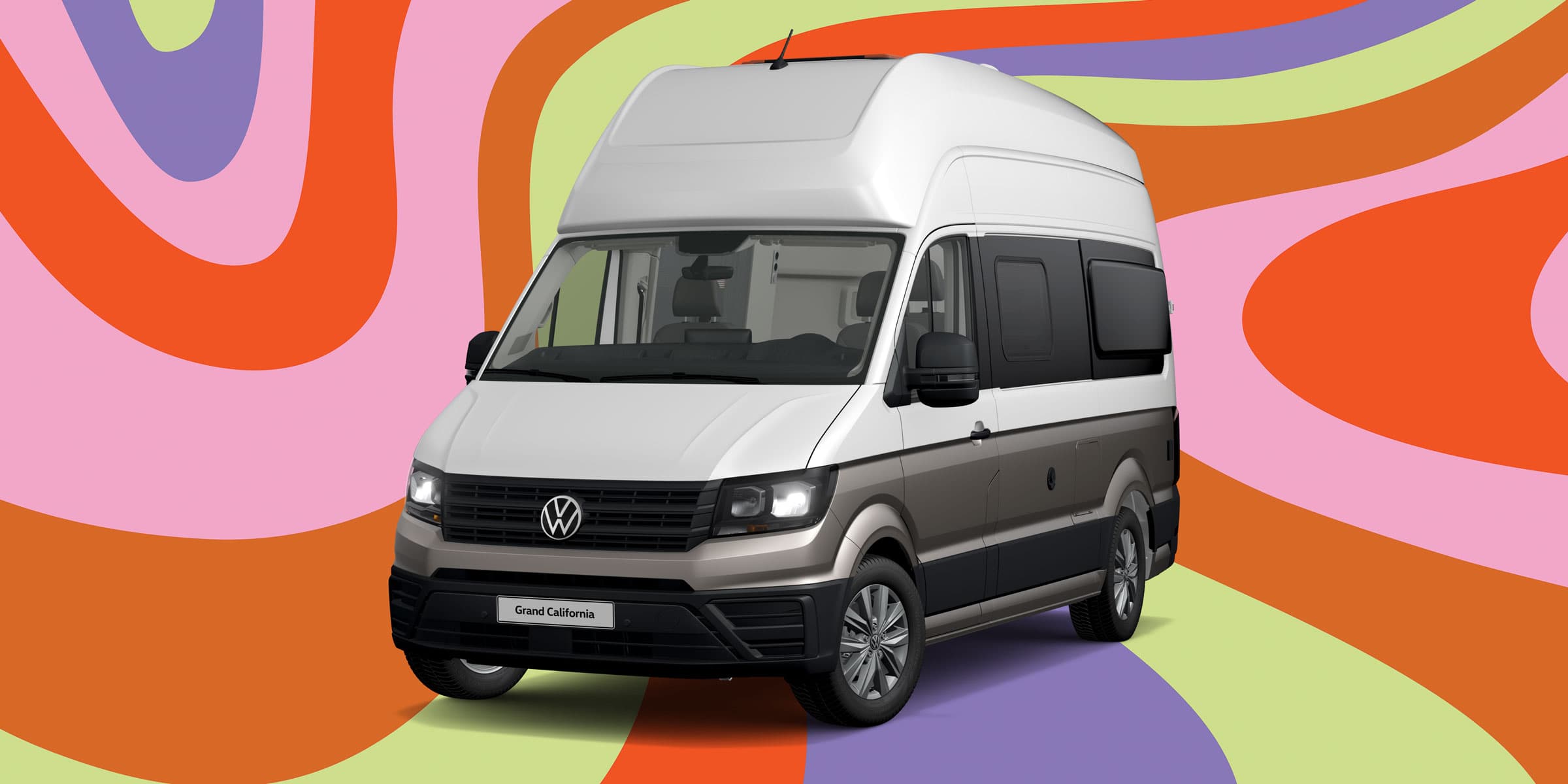
Volkswagen is rolling out an upgraded version of its Grand California camper, which is based on the large Crafter van model.
Volkswagen Commercial Vehicles will present the latest stage of the camper at the Caravan Salon in Dusseldorf at the end of next month – seven years after the model first premiered at the same show in 2018 before going on sale in the UK in 2020.
This latest round of updates makes up a facelifted version of the Grand California, rather than being an all-new model like its smaller sibling, the regular California.
The interior of the Grand California is now dominated by a new “Atami Bamboo” decor, which covers the tabletop and the work surface of the kitchenette are covered. The PVC flooring in the kitchen, dinette and cargo area has the same pattern to provide a uniform appearance. With the rest of the interior being largely white or light in colour, it should provide plenty of light and a sunny ambience inside the cabin.
Volkswagen has made a number of other minor improvements to the Grand California, such as including nets in the upper cabinets to help secure clothes or utensils and prevent them from flying around the cabin on bumpy roads. The dining table can also be removed and locked outside the cabin for outdoor dining. A thermal mat and blackout window blinds will be available as extra-cost options.
The revised Grand California will continue to be available in two different lengths – the 600 (6.0 metres long with a transverse main bed) and 680 (6.8 metres long with a longitudinal main bed). Both versions will incorporate model-year improvements already previously added to the range last year, such as digital instruments and improved safety systems. An electronic park brake has replaced the traditional handbrake lever in the middle of the front footwell area, making it easier to swivel the driver’s seat when the camper is parked.
No changes are expected to the powertrain, so the current 163hp 2.0-litre diesel engine should continue, driving through an eight-speed automatic transmission. The 600 version is only available with front-wheel drive, while the 680 offers a choice of front-wheel drive or all-wheel drive.
UK pricing and specifications are still to be announced, but the current Grand California 600 starts at just over £84K, while the longer 680 version starts at just under £87K.
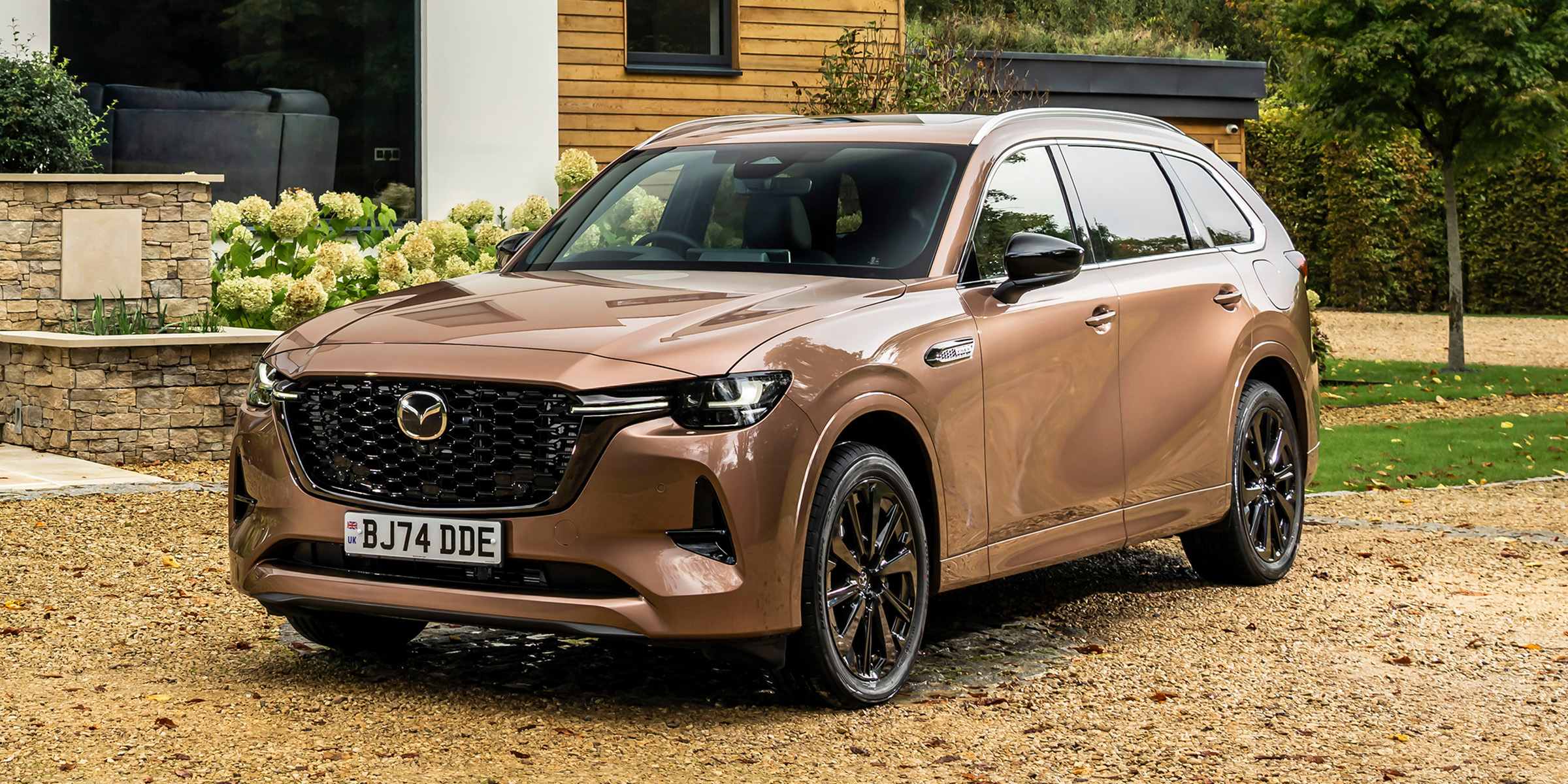
The Mazda CX-80 is a large SUV and the flagship seven-seat model in Mazda’s UK range. Available with either a diesel or petrol plug-in hybrid, the large family car first arrived on UK roads towards the end of 2024.
The British motoring media generally agree that the CX-80 is a good choice for families larger than five, but that the Mazda isn’t a stand-out choice in the large seven-seat SUV class, which also includes the Hyundai Santa Fe, Skoda Kodiaq and Volkswagen Tayron.
“There’s nothing revolutionary or bar-raising about the CX-80”, says The Car Expert’s Trinity Francis, “but it provides comfortable and competent service as a family SUV.” This range-topping SUV has picked up consistent praise for its spacious and practical cabin, as well as its upmarket interior fit and finish.
“The CX-80’s weak link is its hybrid powertrain”, concludes Parker’s Keith Adams. “It’s not very refined and not particularly efficient and lets down this SUV.”
As of July 2025, the Mazda CX-80 holds a New Car Expert Rating of A, with a score of 75%. Beyond the car’s fairly average set of review scores, this rating is bolstered by a five-star Euro NCAP safety rating.
Body style: Large SUV Engines:diesel, plug-in hybrid Price:From £50,080 on-road
Launched: Winter 2024/25 Last updated: N/A Replacement due: TBA
Image gallery
Media reviews
Highlighted reviews and road tests from across the UK automotive media. Click any of the boxes to view.
Featured reviews
“There’s nothing revolutionary or bar-raising about the Mazda CX-80, but it provides comfortable and competent service as a family SUV. If the styling of the Hyundai Santa Fe is a bit too much for your taste or the Skoda Kodiaq is just a bit too boring, the CX-80 might just be a happy medium.”
Model reviewed: 2.5-litre petrol/electric plug-in hybrid Takumi Plus
Model reviewed: Range overview Score: 8 / 10 “Mazda’s seven-seat SUV makes for an appealing and practical family car, with efficient powertrains and excellent build quality.” Author: Jordan Katsianis Read review
Auto Trader
Model reviewed: Range overview Score: 6 / 10 “Large families rejoice: Mazda has finally brought a seven-seater SUV to the party. The CX-80 is in many ways a stretched CX-60, and comes with either a petrol plug-in hybrid system or a pure diesel engine. This is a competitor to the Kia Sorento/Hyundai Santa Fe, both in pricing and space, which may prove problematic for Mazda as both are excellent cars.” Author: Erin Baker Read review
Business Car
Model reviewed: 2.5-litre petrol/electric plug-in hybrid Homura Plus Score: 8 / 10 “Overall, like the CX-60 before it, the Mazda CX-80 is a welcome addition to the SUV sector, with its quality, equipment and practicality. However, we’re keen to try this car on UK roads, as on current evidence, the Skoda remains our favourite.” Author: Martyn Collins Read review
Car
Model reviewed: Range overview Score: 8 / 10 “Mazda’s wide-ranging SUV line-up often brings overlap, and that was always the case for the CX-60. It offered little over a CX-5 yet cost considerably more money. But the new Mazda CX-80 is a welcome addition to its line-up, and its impressive interior flexibility makes it an excellent large family SUV. The third row of seats are slightly more usable than in core rivals, too.” Read review
Carbuyer
Score: 8.6 / 10 “The Mazda CX-80 is a surprising new entry into the seven-seat SUV arena, with a spacious interior and either a plug-in hybrid or a six-cylinder diesel engine” Author: Jordan Katsianis, Andy Goodwin Read review
Heycar
Model reviewed: Range overview Score: 7 / 10 “Mazda is moving up a class with its CX-80, which takes on the likes of the Hyundai Santa Fe, Kia Sorento and the Land Rover Discovery Sport. Classy looks and build are present and correct, as is a plug-in hybrid powertrain, but the big diesel engine feels like a throwback nowadays.” Read review
Honest John
Model reviewed: Range overview Score: 8 / 10 “With its large six- to seven-seater SUV flagship, the Mazda CX-80, all the right boxes are ticked when it comes to on-board practicality and versatility. Both plug-in hybrid petrol and mild hybrid six-cylinder diesel engines offer efficiency and respectable economy. And pricing is reasonable for a car with premium turf ambitions. The firm ride will not, however, be to everyone’s taste.” Read review
Parkers
Model reviewed: Range overview Score: 8.2 / 10 “Though the Mazda CX-80 might be a large car, it puts its dimensions to good use and is one of the roomiest seven-seat SUVs in its class. We like its user-friendly interior and upmarket feel, and it feels a step forward compared to the smaller CX-60, not least because of the improved ride quality.” Author: Keith Adams Read review
The Telegraph
Model reviewed: 3.3-litre diesel automatic Homura Score: 8 / 10 “A lusty six-cylinder diesel engine gives the Mazda CX-80 large family hauler a charm and responsiveness that match its practicality.” Author: Alex Robbins Read review
Top Gear
Model reviewed: Range overview Score: 7 / 10 “If you’re looking for a Mazda with seven seats then… now there is one” Author: Sam Burnett Read review
Safety rating
Independent crash test and safety ratings from Euro NCAP
The Mazda CX-80 was awarded a full five-star safety rating from crash testers Euro NCAP towards the end of 2024, and was also awarded ‘Best in Class Large SUV’ by the safety organisation, when compared to 43 other SUVs of a similar size.
Eco rating
Independent economy and emissions ratings from Green NCAP
No eco rating
As of July 2025, the Mazda CX-80 has not been assessed by Green NCAP.
Running cost rating
Monthly cost of ownership data provided exclusively for The Car Expert by Clear Vehicle Data
Fuel consumption
Average
Score
Plug-in hybrid models
177 mpg
A
CO₂ output
Average
Score
Variation
Score
Diesel models
149 g/km
C
Plug-in hybrid models
35 g/km
A
Battery range
Average
Score
Variation
Score
Plug-in hybrid models
38 miles
E
Insurance group
Average
Score
Variation
Score
All models
16
A
Service and maintenance
Cost
Score
Year 1
£350
D
Year 2
£837
D
Year 3
£1,312
D
Year 4
£1,554
D
Year 5
£2,061
D
Overall
£6,114
D
The Mazda CX-80 is a relatively expensive car to own and run, according to whole-life cost numbers provided exclusively to The Car Expert by our data partner, Clear Vehicle Data.
The fuel economy of plug-in hybrid models look good on paper, but this is largely thanks to ridiculous EU/UK government lab tests that are completely inadequate for plug-in hybrids. It is unlikely that you will be able to travel 177 miles on a single gallon (4.5 litres) of fuel and some electricity…
Similarly-sized plug-in hybrid rivals like the Peugeot 5008 also offer a longer electric-only travel range, and the car’s estimated servicing and maintenance costs over the course of the first five years of ownership are more costly than the average family car (though that is to be expected of a car this size).
That said, the Mazda’s insurance premiums are excellent. CX-80 insurance costs are predicted to be much cheaper than the insurance premiums of other large SUVs.
Reliability rating
Reliability data provided exclusively for The Car Expert by MotorEasy
No reliability rating
As of July 2025, we don’t have enough reliability data on the Mazda CX-80 to generate a reliability rating.
The Car Expert’s reliability information is provided exclusively to us using workshop and extended warranty data from our partner, MotorEasy, sourced from both official dealerships and independent workshops.
As soon as MotorEasy has sufficient data on the CX-80, we’ll publish the results here.
Warranty rating
New car warranty information for the Mazda CX-80
Overall rating
D
31%
Petrol or diesel models
E
17%
Electric or hybrid models
C
56%
New car warranty duration
3 years
New car warranty mileage
60,000 miles
Battery warranty duration
8 years
Battery warranty mileage
100,000 miles
Mazda’s new car warranty is worse than average, and worse than rival brands in a similar price bracket as the CX-80.
The duration is three years, with a limit of 60,000 miles. In addition to the standard new car warranty, the plug-in hybrid version has an eight-year/100,000-mile warranty for the battery components.
If you’re looking to buy a used car that is approaching the end of its warranty period, a used car warranty is usually a worthwhile investment. Check out The Car Expert’s guide to the best used car warranty providers, which will probably be cheaper than a warranty sold by a dealer.
As of July 2028, we are not aware of any DVSA vehicle safety recalls affecting the Mazda CX-80. However, this information is updated very regularly so this may have changed.
You can check to see if your car has any outstanding recalls by visiting the DVLA website or contacting your local Mazda dealer.
Make and model: Kia Sportage – 2025 facelift Description: Mid-sized SUV, petrol/hybrid/plug-in hybrid Price range: from £30,885
Kia says: “The new Sportage – one of the UK’s favourite new cars in recent years – has undergone a significant mid-life refresh, with a new exterior designed and interior capabilities.”
We say: The driving might feel the same, but there are plenty of useful updates in the new Kia Sportage that should help it maintain its enormous popularity in the UK.
This is the updated Kia Sportage, a substantial mid-life facelift to one of the UK’s best-selling new cars. Kia might have a dozen different models in its range (with a few more on the way), but the Sportage makes up more than a third of all Kia’s UK sales, so it’s that the updated model helps to keep those sales ticking along.
The current, fifth-generation Sportage went on sale in the UK in early 2022, and this is an update of that car. Based on usual car manufacturer timelines, we can expect this version to be on sale until 2028/29 before being further updated or replaced.
The new bits mostly consist of revised styling, upgraded interior and a simplified range line-up. You have a choice of petrol, standard hybrid or plug-in hybrid (which will arrive a little after the other two) powertrains, any of which can be had in either front-wheel drive or all-wheel drive. As part of this update, and in line with almost every car manufacturer these days, the previously offered diesel engine has been binned off.
Even after more than three years on sale, the Sportage still holds an Expert Rating of A in The Car Expert’s industry-leading Expert Rating Index. So how effective and meaningful are these 2025 changes? We attended an exclusive preview in Germany to drive a pre-production version of the latest Kia Sportage.
The Kia Sportage is a mid-sized SUV, which is basically the default family car segment in the UK new car market. For the last couple of years, it’s been the best-selling car in its class and one of the best-selling cars of any kind in the UK, usually just ahead of the (UK-built) Nissan Qashqai.
The 2025 update provides some revised exterior styling, with a new front end and slight alterations at the rear, plus the usual new wheels and revisions to the paint choices. The nose looks more squared-off than before, with a large rectangular grille flanked by Kia’s stylised ‘Star Map’ LED running lights that are more elaborately shaped than the previous boomerang-shaped lights. It’s still recognisable as a Sportage, but looks fresher and cleaner.
The rear styling changes are more subtle, although the rear bumper is new, with the most visible difference being changes to the LEDs within the rear lighting pods.
Inside, there’s been a similar tidying up of the vents and materials, with a new steering wheel nicked from the EV6 being the most obvious change. There’s good news if you don’t like fingerprint marks everywhere, as the glossy black plastic from the previous model has been replaced by a textured matte grey plastic.
At launch, there will be a choice of two power units, both carried over from the previous model. These are a 1.6-litre petrol unit and the same engine as a hybrid, with an electric motor and small battery pack for a bit of electric-only running. Both can be had in two-wheel drive (driving the front wheels) or all-wheel drive forms. If you like changing your own gears, you can get a six-speed manual gearbox on the base model (called ‘Pure’) or mid-spec model (called ‘GT-Line’). All other versions are only available with an automatic transmission.
A plug-in hybrid model will follow before the end of the year, but Kia is keeping specifications under wraps for now. Don’t expect anything radically new, as it will presumably be the same powertrain as available previously.
What do you get for your money?
Kia has streamlined the Sportage line-up, which is always good news for consumers. There are now three trim levels, starting with the entry-level ‘Pure’, which kicks off at just under £31K for the petrol engine with a manual gearbox. Mid-level spec is called ‘GT-Line’, which starts at just over £33K, while top-spec ‘GT-Line S’ is a steeper jump with a starting price of £40K – however, that model is only available as an automatic, which accounts for £1,700 of the £6,900 difference. All of the pure petrol models are two-wheel drive only.
If you want the hybrid version, it’s about a £3,600 jump (although, again, that includes about £1,700 for the automatic gearbox). So the Pure starts at just over £34K, the GT-Line at £37K and the GT-Line S at £42K. The top-spec model is also available in all-wheel drive, which adds £1,600 to the GT-Line S price to hit the road at £43.7K.
GT-Line and GT-Line S models get slightly different styling to the base-spec Pure models, with chunkier bumpers, bigger wheels, more black trim and chrome skid plates.
The only factory option is paint colour, with white being standard and four or five (depending on specification) other extra-cost choices. Your Kia dealer can load you up with various other accessories, like towbars and floor mats, but the range is now very simple.
The interior tech gets an upgrade in line with Kia’s latest EV models, so the updated screens respond faster and offer a few extra features like Netflix and Disney+ apps (only when stationary, and you need a subscription. In fact, you’re better off just buying an iPad…). There’s also now a head-up display on the top-spec GT-Line S models, and some reorganisation of various controls.
Overall, each trim level is pretty competitive for the money. We won’t regurgitate the full list of standard features here, since you can find all that information on the Kia website, but the Sportage seems to stack up well against similar cars in this segment.
Finally, it’s worth pointing out that the Kia Sportage has a class-leading seven-year/100,000-mile new car warranty, which is good for both new and used car buyers. Some of its rivals are still rocking a bare minimum three-year warranty, so this is a big plus.
Expert tips
Three trims, no optional extras except paint
Competitive levels of equipment
Seven-year/100,000-mile new car warranty is excellent
What’s the Kia Sportage like inside?
As with the exterior, it’s a case of evolution rather than revolution inside the new Sportage. Kia has smoothed out the dashboard, hiding the big angular air vents and squaring off the touchscreen surround for a simpler and cleaner look. The glossy black plastic previously used in the centre console and elsewhere has been replaced by a brushed silver plastic, which is much better at hiding fingerprints.
If you’re comparing it with the now-replaced version from the last three years, you’ll find that the dimensions in every direction are exactly the same. The Pure models get black cloth upholstery with no heating and manual adjustment, while the sportier models get two-tone black and white artificial leather/artificial suede. They’re still manually operated on the GT-Line, but you do get heating for the front seats and steering wheel, while the GT-Line S offers electric adjustment with memory for the driver’s seat, plus ventilation for the front seats and heating for the outer rear seats. The GT-Line S also gets a big panoramic sunroof, which certainly brightens up the cabin.
Cabin space is good up front and reasonable in the back. Like many cars, longer-legged drivers will wish for a bit more fore-and-aft adjustment of the steering wheel, but finding a comfortable driving position should be easy enough for most people. Boot space is also good, not the best in its class but plenty for most household needs.
The overall layout is functional, with dedicated buttons and dials for features such as air conditioning, seat heating, and mirror adjustment. It doesn’t look as minimalist cool as many almost-buttonless interiors that are becoming prevalent these days, but it is much easier to adjust things on the move, which is far preferable.
We drove pre-production cars during our time with the new Sportage, so some of the plastics were not final specification (very shiny and hard, whereas production versions will be softer and textured). This made the interior feel cheap in places, especially with the top-spec model’s head-up display, which looked tacked onto the top of the dashboard. We’ll need to see the final production versions when they reach the UK to properly assess but Kia is pretty good in this area compared to most brands, so we expect the interior quality to be on the money.
Expert tips
Interior has a good blend of touchscreen and physical controls
Base-spec Pure upholstery is a bit plain, other models have much nicer artificial leather/suede combo
Only top-spec GT Line S gets a panoramic sunroof, which brightens things up considerably
What’s the Kia Sportage like to drive?
If you’ve driven the soon-to-be-replaced version of the Kia Sportage, this one is going to feel exactly the same. There have been no significant upgrades to the Sportage’s mechanical package so there’s nothing new to report here.
If you’re not familiar with how the Sportage drives, then you can sum it up by saying that it drives like pretty much any family SUV – comfortable and perfectly predictable, but not very exciting. For most customers, that’s exactly what they’re looking for.
Most of our driving took place on well-maintained German roads, rather than potholed British ones, so we’ll reserve final judgment until we have a local drive in a UK-spec car. But we don’t expect any surprises, as the Sportage behaved exactly as you’d expect across a range of driving speeds and situations, from stop-start driving in Frankfurt traffic to winding country roads and a brief Autobahn blast at speeds well beyond the UK motorway limit.
As with most family SUVs, there’s not a lot of feeling and the overall experience is pretty numb. Motoring journalists tend to bemoan this, but actual paying customers generally don’t want their family wagon to feel like a racing car so it’s not normally a problem.
The hybrid version can cover a relatively small distance of urban driving on electric power alone. This is serene and quiet, as it would be in a fully electric car, but it doesn’t last long. Any substantial prod on the accelerator will wake up the petrol engine, and once the small hybrid battery is empty you’ll be relying on petrol power alone. There’s more electric power available than previously, but the battery isn’t any bigger so it’s still limited to short spells.
The petrol engine is fairly noisy, and not as refined as you’ll find in some rival SUVs. It’s not terrible, but it has a gruff note and you’ll find yourself turning up the stereo more often than you might expect. Performance is reasonable enough for most household needs – the standard petrol model is adequate, while the hybrid version can use the electric motor together with the petrol engine to provide more power, as long as there is enough electricity in the battery.
We only drove front-wheel drive models, but for most customers the extra grip of all-wheel drive isn’t really going to be necessary. If you live in country areas where your regular driving may involve mud or snow for several months a year, it would be worth considering.
Expert tips
Petrol motor is rough but performance is decent
Electric motor in hybrid version has been upgraded to provide more power than previous model
How safe is the Kia Sportage?
The updated Sportage doesn’t add anything over and above the previous model when it comes to safety, but that’s not really a problem as the car already has a five-star Euro NCAP safety rating.
All the crucial safety kit you’d expect to see is included as standard, which is good news. There are airbags aplenty, as well as the latest-generation accident avoidance technology.
As with pretty much all new cars, the Kia Sportage has the latest EU-mandated warning systems that will beep and bong at you constantly unless you disable them. This means you’ll get bonged at whenever the speed limit changes, or whenever you happen to drift one single mile per hour over that limit, or whenever it thinks you may possibly be distracted, or whenever it thinks you may possibly be tired, and so on.
You can disable some of the most annoying systems fairly easily but the EU mandates that they must be reactivated every time you start the car, so it becomes part of your pre-drive checklist to switch the bongs off before each trip. Yes, this seems ridiculous for what are ostensibly safety systems, but that’s where we’re at.
Expert tips
Five-star safety rating from Euro NCAP when tested in July 2022
Verdict
In every way, the updated Kia Sportage is a case of evolution not revolution. The improvements are all worthwhile, particularly if you’re buying the hybrid model which can now rely a bit more on the electric motor and less on the petrol engine around town.
If it sounds like we’re struggling to get too excited about the Sportage, you’re probably right but that’s certainly not a criticism. If you have the current model and are looking at upgrading to the new one when your lease or PCP runs out, you’ll find some worthwhile improvements in how the infotainment system works and the cabin looks a bit neater – bit we’d understand if you decided that it’s too much of the same thing and you’d like to try something different next time around.
If you drive something else and are looking at switching to a Sportage, you’ll find it ticks most of the boxes that families will want, and will do so easily. There’s plenty of space, fit and finish are good, pricing and equipment levels are competitive, the safety rating is on the money and the seven-year warranty is a big plus.
The Kia Sportage is a proper head-over-heart kind of car, which is exactly what plenty of customers are looking for. There’s a reason it’s so popular with UK households, and the updated model should help to keep it that way.
Expert recommendations
Hybrid model is a nicer drive, offers more performance and gets better economy, but it’s a £3,600 jump over an equivalent petrol version
Mid-spec GT-Line looks to be the sweet spot of the range for value, and monthly payments shouldn’t be too much more than a Pure model with the same engine and gearbox
Plug-in hybrid version should land before Christmas 2025
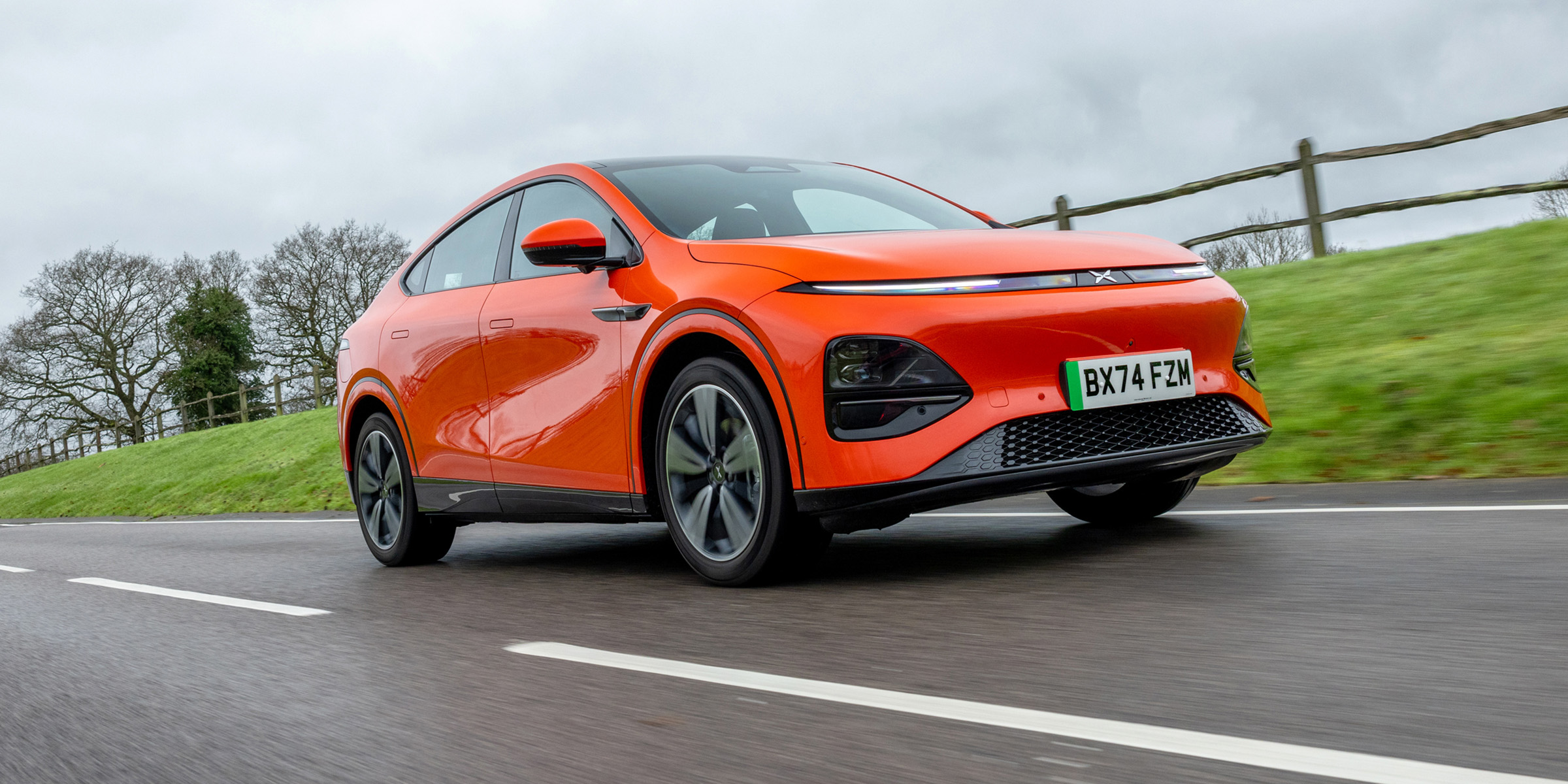
Xpeng will be a name certainly unfamiliar to UK buyers as the brand, the latest in the flood of Chinese manufacturers heading into the UK, is as of July 2025 only just launching onto the market and the G6 is its debut model.
Established in China in 2014 by two executives from the giant SAIC automotive group, Xpeng launched into Europe last year and has a $700m deal with Volkswagen to jointly develop electric vehicles. While X is now a favourite moniker for modern technology, the firm is named after founder He Xiaopeng though it does sell itself on the same description used by smartphone makers, emphasising the artificial intelligence (AI) used in its product by describing them as “Smart EVs”.
The brand’s UK expansion is in the hands of the long-established IM Group, custodians of Subaru and Isuzu, and so far there are five Xpeng outlets in Britain – there should be 20 by the end of the year with many more added in 2026.
Reports suggest that within four years Xpeng will be offering five models to UK buyers, including the rapid P7+ liftback that made its debut at the 2025 Goodwood Festival of Speed (a year after the G6 did the same), a larger sister to the G6 dubbed the G9, and an angular seven-seat MPV dubbed the X9.
What is the Xpeng G6?
Xpeng arrives in the UK with a coupé-SUV that clearly marks itself out as a direct rival to the big-selling Tesla Model Y – even in its shape it is reminiscent of the American rival’s SUV but it also faces a growing number of electric contenders including recent launches such as the latest Renault Scenic E-Tech and the upcoming MG IM6.
Currently there are two versions of the G6, both with a single motor powering the rear wheels and dubbed Standard and Long Range – the former is priced from £40K and quotes an official range between charges of up to 270 miles, the latter, costing from £45K claims up to 354 miles.
A third model is on the way – also making its UK bow at the 2025 Goodwood Festival of Speed, the G6 Performance uses an all-wheel-drive two-motor chassis.
First impressions
As mentioned on first viewing the swooping, curvy proportions of the Xpeng G6 mark it out as an obvious Tesla Model Y rival. The design, penned by Juanma López whose CV includes previous work for Audi, Lamborghini and Ferrari, is fairly easy on the eye, if a little soulless.
This is officially a mid-sized SUV but it certainly feels like a big car – close to 4.8 metres long and a shade under two metres wide, a trait that becomes obvious when squeezing into supermarket parking spaces.
However both from the exterior perspective and particularly when one slips into the minimalist interior the impression is also of high quality finishing and an abundance of tech – you cannot miss the enormous 15-inch, again Tesla-rivalling central touchscreen, with the double wireless smartphone chargers just below it.
We like: Immediate impression of quality modern tech We don’t like: Little distinction in the visual appearance
What do you get for your money?
Xpeng follows the convention of the new Chinese brands by offering long lists of standard equipment with its cars. All versions of the G6 sit on 20-inch alloy wheels, they all have front seats clothed in a leatherette material and both heated and ventilated, the steering wheel also heated, and they include two wireless smartphone charging points and a panoramic sunroof.
The audio system boasts some 18 speakers and 960 watts of power, and through that huge touchscreen one can work through a multitude of apps across music, video (not when driving of course) and social media.
Also part of the standard kit is a virtual assistant – a little droid graphic sits in the top corner of the screen and can be activated from any part of the car. It’s reasonably effective though did stumble over a couple of actions we asked it to carry out.
The safety specification is impressive too, that high-tech image Xpeng promotes extending to an extensive set of driver-assistance technology, dubbed XPilot 2.5 and combining 12 ultrasonic sensors with a dozen cameras. These look after 12 safety functions, five active driving functions and six parking functions.
Xpeng launched in Europe over a year ago and the G6 was tested by Euro NCAP in 2024. It earned a top-level five-star rating, with particular praise for the way its autonomous emergency systems reacted to vulnerable road users such as cyclists.
As well as all the major aids one expects, there are little touches that emphasise the tech involved. The driver’s digital display shows individual vehicles moving ahead of one’s car and when they stop lit brake lights can be seen on the display, and it even spots traffic cones at the side of the road.
Another excellent safety feature is the camera view that appears on one side of the infotainment screen as soon as one operates the indicators – unlike the likes of Kia and Hyundai which show the side of the road ahead in the direction one intends to turn, the Xpeng system looks behind into the blind spot, a major safety aid.
The final touch is a good warranty, extending to five years or 75,000 miles and with the battery covered for eight years.
We like: Plenty of standard kit We don’t like: Not convinced by the voice assistant
What’s the Xpeng G6 like inside?
The G6 feels like a quality car the moment one gets into it, and a roomy one – there is plenty of space for five in front and back, especially above the head, along with a boot of 571 litres, extending to 1374 litres with the rear seats folded. Even the front seats will fold flat if wanted so one could use them as a bed.
General fit and finish is good too, with a host of soft-touch surfaces and that leatherette padding used to upholster the seats repeated in such areas as the doors. It’s easy to get comfortable, with loads of electrically-powered adjustment in both front seats.
The controls take the recent rush to putting everything on a screen almost to extremes. The 10-inch digital display directly ahead of the driver shows such essentials as speed along with those oddly addictive traffic graphics, then there is the huge 15-inch touchscreen atop the centre console, with a double wireless smartphone charging pad directly below the screen.
The only physical controls are eight buttons and two dials on the steering wheel that allow changes to the audio and the climate control temperature and fan speed. Everything else, from changing the direction of the air vents to brake regeneration, is controlled on the touchscreen, which can be irritating – and something Xpeng will need to change if it is to meet forthcoming Euro NCAP regulations on physical controls.
Admittedly while looking initially intimidatingly complex, use of the touchscreen does quickly become second nature – though being so big means that in some cases one is stretching a long way to press a button, which again is rather too distracting from the road ahead.
We like: General quality well up to sector standards We don’t like: Everything is controlled by the touchscreen
What’s under the bonnet?
Our test car is the long-range version, making use of a single motor driving the rear wheels and with an 87.5 kWh battery, compared to the 66 kWh unit of the standard range model. It also has a bit more power, rated at 285hp instead of just under 260, and enough to send this quite big vehicle through 62mph from rest in 6.7 seconds – not as swift as some of its rivals, but more than fast enough for most owners.
In terms of range our car is rated at up to 354 miles, compared to the 270 of its standard sister. In a week running the car on a range of roads, and making proper use of the brake regeneration (more of which shortly) the real-world achieved range proved surprisingly close to the WLTP figures.
The 800-volt technology employed means a claim of a mere 20 minutes to recharge the battery from 10 to 80% – but you will only achieve that on a 280kW DC charger, the locations of which are not yet exactly prolific. At home on a wallbox a full charge takes around 9.5 hours.
Another plus is the fact that every version of the car includes a heat pump as standard, helping to make the most of range and charging when temperatures drop.
If we had to be picky, the door of the charging port, on the rear offside quarter, feels a little flimsy compared to the rest of the car. However you don’t ever need to touch it, opening and closing achieved electrically either by a button on the keyfob or the touchscreen.
What’s the Xpeng G6 like to drive?
The G6 is typically EV-easy to drive. Unlocking the car brings everything to life, requiring merely the selection of drive on the right-hand steering wheel stalk – because of this the wipers are housed on the indicator stalk which can be initially confusing.
On the road the ride is, adequate. So long as the surface is in reasonable condition the car will cruise along happily, but it becomes a bit bouncy when imperfections are encountered. Its steering is not that involving either, encouraging one to stick to measured progress rather than more enthusiastic driving.
The combination of large glassware and thin pillars means a good view out of the front and sides – the bonnet is low which does not aid viewing it but at slow speeds the car does offer electronic guides to the distance to obstructions in front – parking sensors and a 360-degree camera are all standard.
The view out back is also somewhat restricted through a fairly tiny screen, but the indicator-activated blind-spot camera neatly fulfils a lot of the rear view requirement one needs.
There are four levels of brake regeneration available, including an ‘X-pedal’ setting which allows the EV trait of virtual one-pedal driving slowing the car almost, if not quite, to a stop. During our week with the G6, making intelligent use of the regeneration proved a plus to maintaining battery range. The minus is a lack of physical means of varying the regen settings, something else that has to be done through the touchscreen.
The car is comfortable to travel in, with hushed progress, the only sound from the motor artificially induced at slower speeds – with a choice of sounds to boot.
Another major plus – intrusive driver alerts for such things as speed limits and lane centring have quickly become a necessary bane of today’s driving but the first time one of these is activated, a button comes up on the driver’s side of the infotainment screen and a simple press will cancel that alert for the remainder of the journey.
We like: Easy cancelling of intrusive alerts We don’t like: Vague steering
Verdict
Overall the Xpeng G6 is a commendable first effort for a new to the UK brand. It offers a lot of space, is easy to drive and comes with plenty of standard equipment while the level of technology in the car will impress many.
Those who rate on-the-road dynamics will likely be disappointed by the G6’s somewhat ordinary road manners, but for those who want an upmarket-looking electric SUV – and particularly those who don’t want to go the Tesla route – the G6 will certainly be worth checking out.
Find your next new or used car with Carwow. Find out more
Find your next new or used car with Auto Trader. Find out more
Lease a Xpeng G6
If you’re looking to lease a new Xpeng G6, The Car Expert’s partners can help you find a competitive deal.
Personal contract hire deals from Leasing.com. Find out more
Personal contract hire deals from Carwow. Find out more
Personal contract hire deals from Select Car Leasing. Find out more
Subscribe to a Xpeng G6
Subscriptions are becoming a very popular way for consumers to try an electric car for a few weeks or months to help decide whether it’s a suitable alternative to a petrol car. If you’re interested in a car subscription, The Car Expert’s partners can help. (PS: What’s a car subscription?)
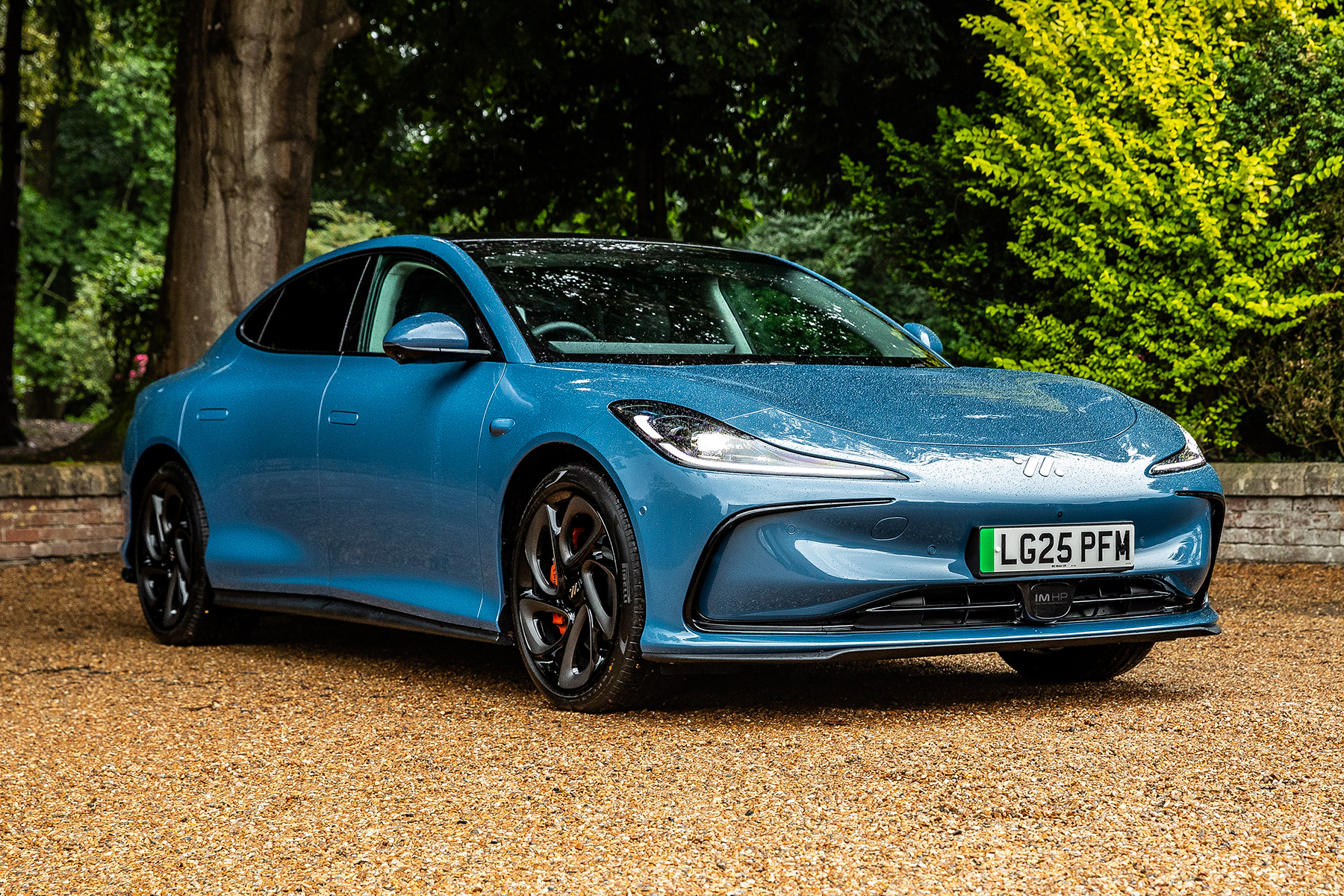
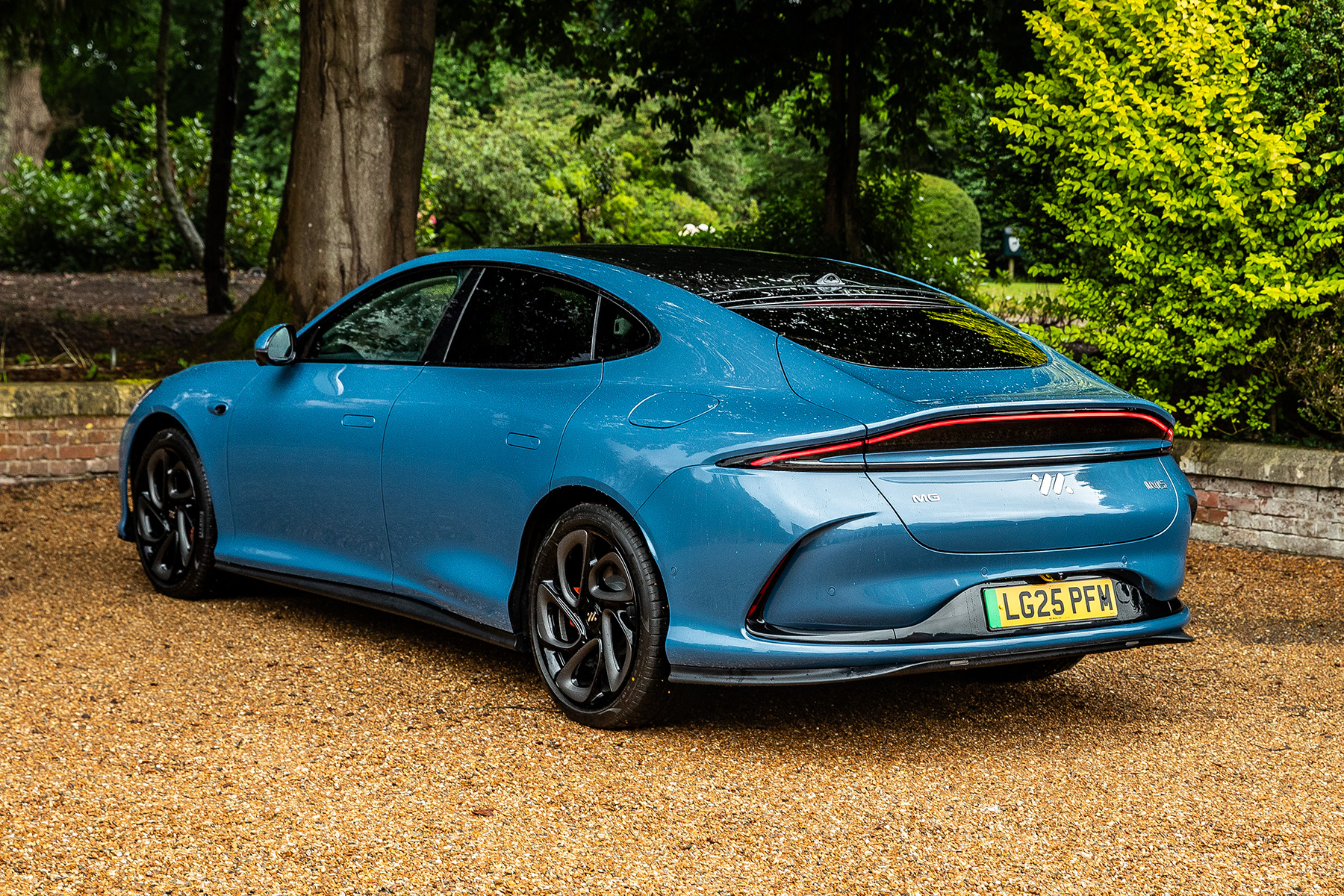
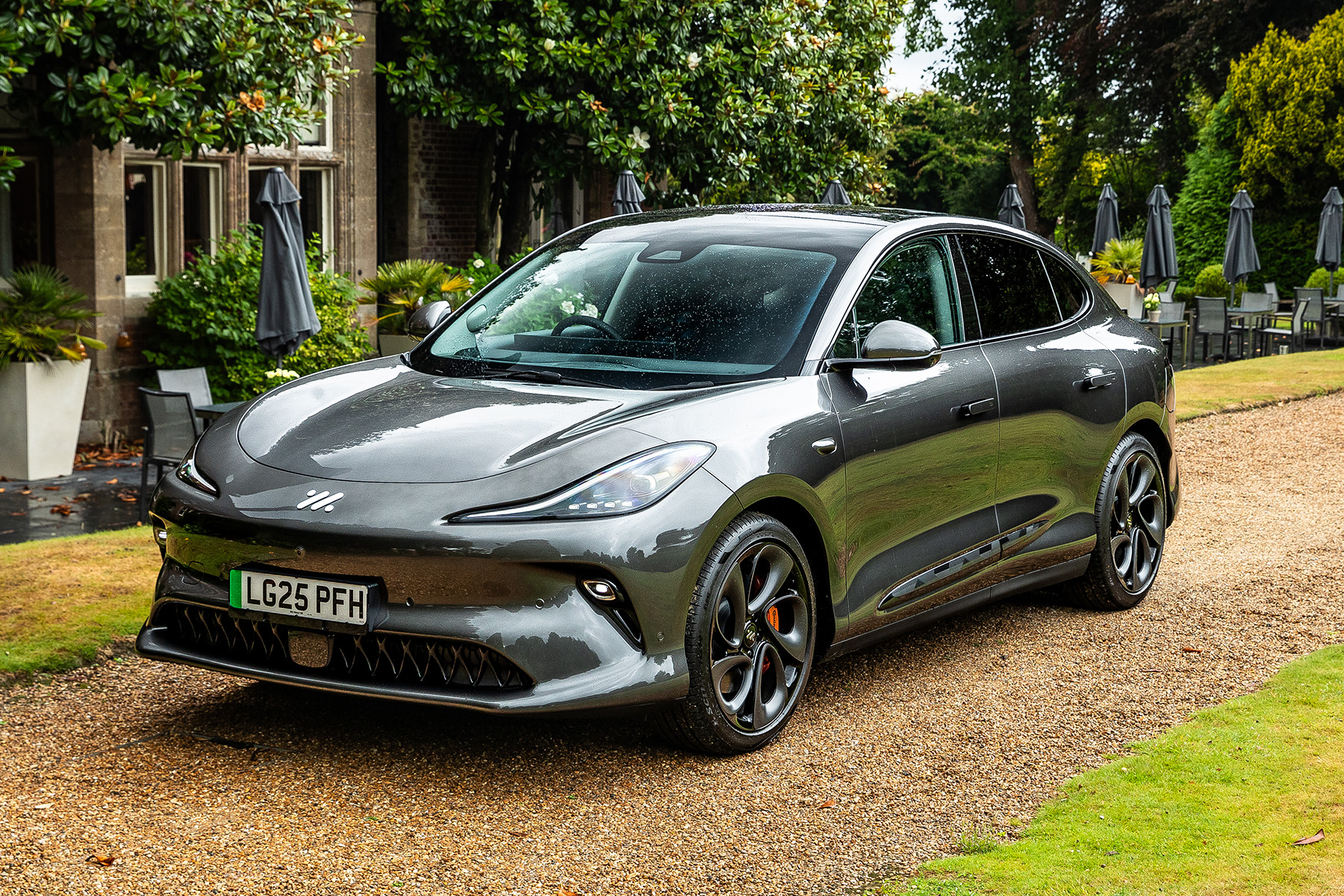
After debuting its two new upmarket electric cars at the Goodwood Festival of Speed last week, MG has announced UK pricing and specifications for the IM5 saloon and IM6 coupé-SUV.
More recently known for its sales success towards the budget-end of the UK market, offering a more affordable pathway into electric family car ownership with the arrival of the MG 4, MG is now targeting the likes of Tesla and Polestar with this new upmarket model range.
‘IM’, which stands for ‘Intelligence in Motion’, is a brand positioned as a more premium alternative to MG cars in Asia and Australia. Now, SAIC Motors – which owns both MG and IM – plans to sell these IM models with the MG nameplate in the UK.
For now at least, both the IM5 and IM6 are branded with the IM logo instead of the MG logo we are used to in the UK.
MG IM5 saloon
The IM5 will be MG’s first entrant in the electric executive saloon class, challenging the sales of the BMW i4, Polestar 2, Hyundai Ioniq 6 and Tesla Model 3. It’s slightly larger than those models, being almost 5m long, but aims to offer a long list of standard equipment at a very competitive price.
Three different powertrain options will be available at launch, starting with the entry-level Standard Range model. This rear-wheel drive 295hp variant has a 75kWh battery that offers a driving range of up to 304 miles on the government lab test cycle, and can complete a 0-62mph sprint in just under seven seconds.
The saloon range will also include a larger 100kW battery option, which will be offered in both rear-wheel drive and all-wheel drive configurations. The 407hp Long Range model claims up to 441 miles of travel without recharging and complete the same sprint in 4.9 seconds. (For comparison, a top-spec Tesla Model 3 ‘Long Range’ has an official battery range of 421 miles).
The sportiest of the lot is the 751hp all-wheel drive Performance model, which can accelerate to 62mph from stationary in a hypercar-rivalling 3.2 seconds, for a reduced maximum battery range of 357 miles.
All models come with a 11kW AC on-board charger, and the 100kWh version are compatible with DC charging speeds of up to 396kW, which replenishes 70% of battery charge in an estimated 17 minutes. The Standard Range model with the smaller battery can only charge at up to 150kW, so your charging times will not be any quicker.
Inside, a 26-inch screen (actually two 13-inch screens blended almost seamlessly together to create a single screen) sits across the top of the dashboard, merging the infotainment touchscreen and digital instrument cluster into one display. An 11-inch touchscreen is also mounted to the angled centre console, which is used for adjusting air-conditioning and other car functions.
UK pricing will begin at £39.5K for the Standard Range model, sliding just under the £40K threshold the government’s Expensive Car Supplement, saving you about £600/year in road tax for your first five years.
The mid-spec Long Range models is expected to be the best-seller of the range, priced at £45K but getting the bigger battery with fast charging, more than 100hp of additional power and an extra 140 miles of driving range.
The top-spec Performance model is priced at £48.5K, with that fairly ridiculous 750hp power output, all-wheel drive, and larger 20-inch wheels riding on premium Pirelli tyres.
MG IM6 coupé-SUV
While the IM5 poses a fresh challenge to Tesla Model 3 sales, the high-riding IM6 is instead a direct competitor to the popular Tesla Model Y SUV.
As with its saloon sibling, three different versions will be available at launch, but there are some differences. All IM6 models are powered by the same 100kWh battery pack, as the larger body and additional weight would have brought the rage down to much on the 75kWh battery and it still probably wouldn’t have come in under the £40K government tax threshold.
The entry-level Long Range model, therefore, is broadly aligned with the mid-spec IM5 model. It gets the same rear-wheel drive 407hp motor set-up, which in this case provides up to 338 miles on the official government test cycle, and can complete a 0-62mph sprint in 5.4 seconds.
The mid-range 751hp Performance model parallels the same spec on the IM5, and will be one of the most powerful SUVs on the market. An all-wheel drive model with electric motors on both axles, it can reportedly complete the same sprint in 3.5 seconds, which is just two tenths short of the V8-powered Aston Martin DBX S. This performance boost comes with a reduced single-charge travel distance of 313 miles.
A range-topping Launch Edition will also be available with identical technical specs to the Performance model, but adding adaptive air suspension that claims to improve ride.
Inside, the IM6 comes with the same on-board tech package as the IM5, featuring the 26-inch display across the dashboard and a separate 11-inch screen on the infotainment console. Rear cabin space is better and the boot notably larger, which also includes a deep underfloor storage section as well.
Reflecting the speed at which Chinese brands move, both cars were shown off last week, had their first media drives this week, and the first customer cars are already on a boat and heading this way. Customers will be able to place orders from any MG showroom very soon, taking delivery of their cars from September.
That sums up what we know about the new IM5 and IM6 so far. Have these new electric cars piqued your interest? Keep an eye out for The Car Expert’s test drives and Expert Ratings on these new models in the coming months.
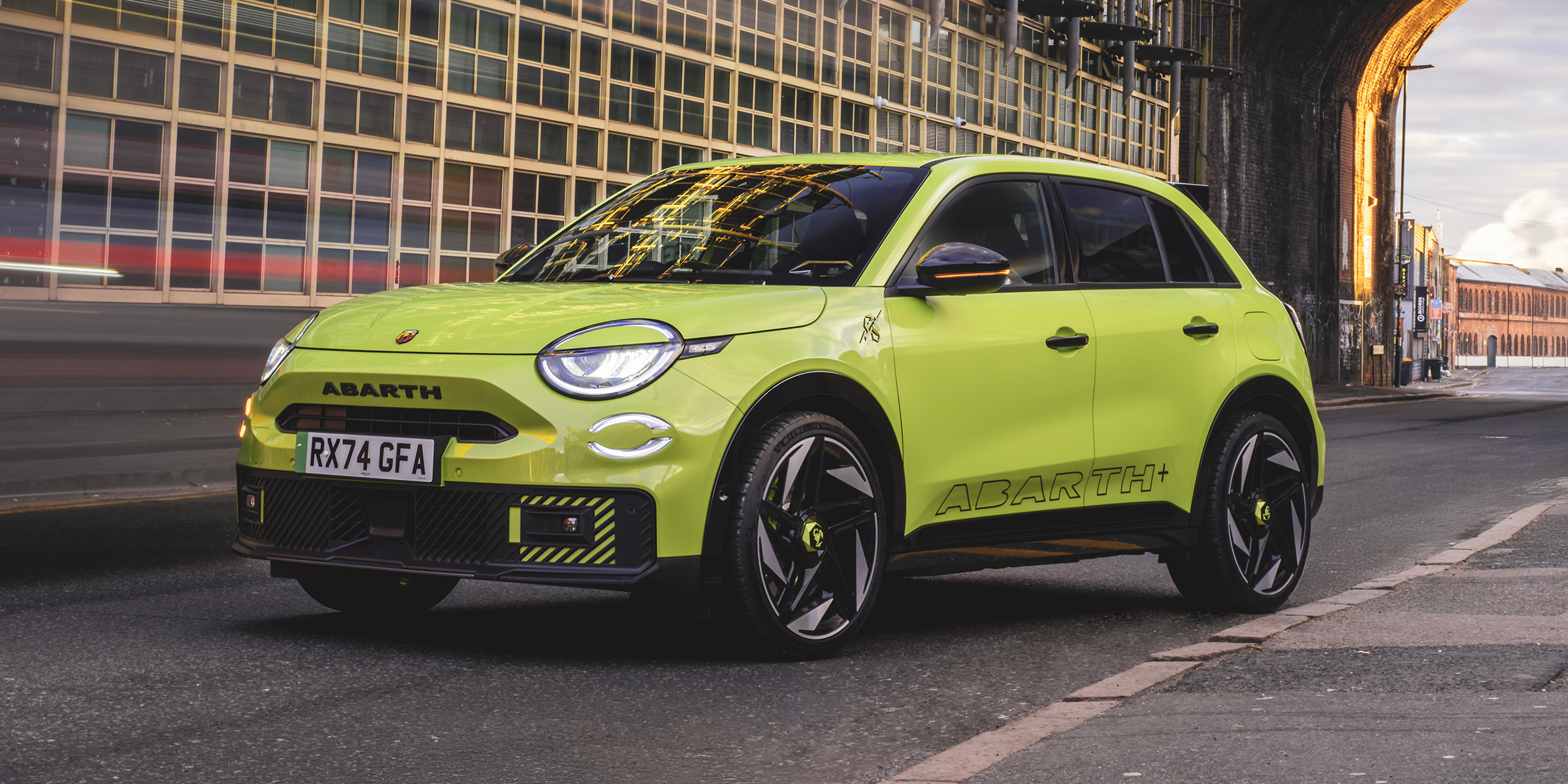
The Abarth 600e is an electric compact SUV based on the Fiat 600e, developed as a more powerful and visually aggressive alternative. It shares its platform and electric drivetrain with several Stellantis models, including the Alfa Romeo Junior, Jeep Avenger, Peugeot e-2008 and Vauxhall Mokka Electric.
Available in the UK from early 2025, the Abarth 600e is offered with outputs of up to 280hp in limited-edition form. It delivers noticeably stronger performance than its Fiat counterpart and adopts firmer suspension and more assertive styling to match its sporting intent.
UK media reviews have been mixed. While testers welcome the sharp steering and strong acceleration, concerns have been raised about battery range and tight rear passenger space. Real-world usability is more constrained than the exterior styling suggests.
The Abarth 600e scores very highly for zero tailpipe emissions in the Expert Rating Index, supporting its overall result. However, media review scores have been weaker than expected for a performance-branded model, and warranty cover remains average for the wider market.
As of February 2026, the Abarth 600e holds a New Car Expert Rating of B, with a score of 65%. It scores top marks for its zero tailpipe emissions, while its running cost scores are expected to be competitive. However, Abarth’s warranty rating is only average and media review scores have been relatively poor.
Body style: Small SUV/crossover Engines:electric, battery-powered Price:From £36,975 on-road
Launched: Autumn 2024 Last updated: N/A Replacement due: TBA
Image gallery
Media reviews
Highlighted reviews and road tests from across the UK automotive media. Click any of the boxes to view.
Featured reviews
“The Abarth 600e packs 276bhp and a fiery character, making it both the marque’s most powerful road-legal model and a genuinely entertaining driver’s car.”
Model reviewed: Range overview Score: 7 / 10 “There’s a lot to like about the all-electric Abarth 600e. A rather brash, somewhat juvenile character is the brand’s modern-day calling card, and the 600e has this in spades, plus there’s just enough performance on offer to warrant its wild and wacky styling cues.” Author: Dean Gibson, Alastair Crooks Read review
Auto Trader
Model reviewed: Range overview Score: 7 / 10 “Abarth gives the Fiat 600e a LOUD makeover and makes it one of the most fun electric cars this side of a Porsche… but with compromises.” Author: Mark Nichol Read review
Business Car
Model reviewed: Range overview Score: 8 / 10 “The Abarth 600e is one of the most capable and fun-to-drive EVs on-sale, as long its shortcomings can be lived with.” Author: Martyn Collins Read review
Car
Model reviewed: Range overview Score: 8 / 10 “If you don’t mind plenty of charging, which one should you get? The standard Abarth 600e offers enough straight-line punch and the same capable chassis for a good amount less money, but its interior has been stripped back to make that happen. We’d spend the extra on Scorpionissma for the extra niceties and a purple that pops in the sun, and consider the extra power a bonus.” Author: Curtis Moldrich, Alan Taylor-Jones Read review
Carbuyer
Model reviewed: Range overview Score: 6.8 / 10 “Its chassis upgrades also make a meaningful difference to how the 600e feels and handles, with some of the traits of old hot hatches thrown in. However, these changes have also made its driving range worse, and the 600e doesn’t offer the best practicality.” Author: Alastair Crooks Read review
Driving Electric
Model reviewed: Range overview Score: 7 / 10 “The hottest Abarth yet brings some attitude to an uninspiring segment, but it’s short on range and space.” Author: Antony Ingram Read review
Electrifying.com
Model reviewed: Range overview Score: 8 / 10 “The Abarth 600e isn’t perfect by any means, but it does feel as though it has been developed by a team of enthusiasts.” Read review
Green Car Guide
Model reviewed: Scorpionissima Score: 8 / 10 “The Abarth 600e is visually striking and the driving experience reflects its looks: fun and slightly unhinged. So if you want something that’s more exciting than a regular EV then the Abarth 600e ticks this box.” Author: Paul Clarke Read review
Heycar
Model reviewed: Range overview Score: 7 / 10 “The Abarth 600e defied our expectations, carving out its own, riotous identity, which isn’t easy to do when performance EVs struggle to stand out from the herd. It’s flawed in a few ways, but get it on a twisty road, and you’ll forgive all these.” Author: Phill Tromans Read review
Honest John
Model reviewed: Range overview Score: 8 / 10 “By configuring it as a powerful front-wheel drive car with a limited-slip differential, it feels reminiscent of our favourite hot hatches, despite being electric and more of a compact SUV. It’s sportier than the related Alfa Romeo Junior Veloce, but just as practical, if a little firm.” Read review
Parkers
Model reviewed: Range overview Score: 8.8 / 10 “Abarth has transformed the squishy 600e into a fast and fun little firecracker that works brilliantly on UK roads. If you can live with the range and tight rear legroom, it’s unlikely to disappoint those looking for an electric alternative to a traditional hot hatchback.” Author: Alan Taylor Jones, Curtis Moldrich Read review
The Independent
Model reviewed: Range overview Score: 7 / 10 “There’s no doubting the amount of fun you can have behind the wheel of an Abarth 600e. It’s fast, it handles superbly, looks as outrageous as you’d expect and even sounds interesting. But that’s not without compromise when it comes to range, ride and price.” Author: Steve Fowler Read review
The Telegraph
Model reviewed: Range overview Score: 8 / 10 “The Abarth 600e EV has pace and handling virtuosity aplenty, just be prepared to spend a lot of time recharging if you use its performance to the full.” Author: Andrew English Read review
Top Gear
Model reviewed: Range overview Score: 7 / 10 “It looks the part and it’s fun to drive, but the Abarth 600e can’t escape its roots” Read review
Which EV?
Score: 8.3 / 10 “The Abarth 600e blends the practicality of the Fiat version with greater power and a much enhanced chassis. The result is family hot hatchback that packs plenty of driving pleasure and isn’t ridiculously expensive either.” Author: Tim Barnes-CLay Read review
Safety rating
Independent crash test and safety ratings from Euro NCAP
No safety rating
As of February 2026, the Abarth 600e has not been tested by Euro NCAP.
Eco rating
Independent economy and emissions ratings from Green NCAP
No eco rating
As of February 2026, the Abarth 600e has not been tested by Green NCAP.
The Green NCAP programme measures exhaust pollution (which is zero for an electric car) and energy efficiency. Electric cars are much more energy-efficient than combustion cars, so the 600e is likely to score very highly in Green NCAP testing if and when it takes place. Check back again soon.
Reliability rating
Reliability data provided exclusively for The Car Expert by MotorEasy
No reliability rating
As of February 2026, we don’t have enough reliability data on the Abarth 600e to generate a reliability rating.
The Car Expert’s reliability information is provided exclusively to us using extended warranty data from our partner, MotorEasy. As soon as MotorEasy has sufficient data on the 600e, we’ll publish the score here.
Running cost rating
Monthly cost of ownership data provided exclusively for The Car Expert by Clear Vehicle Data
Battery range
Average
Score
Variation
Score
EV models
200 miles
C
Electrical efficiency
Average
Score
Variation
Score
EV models
3.3 m/KWh
E
Insurance group
Average
Score
Variation
Score
All models
35
D
The Abarth 600e is a relatively expensive car to own and run, according to whole-life cost numbers provided exclusively to The Car Expert by our data partner, Clear Vehicle Data.
The car’s average battery range of 200 miles and electrical efficiency is well below what is now expected of an electric car of this size. That said, this is a performance SUV, and increased performance comes with reduced single-charge travel range as a trade-off.
The car’s insurance premiums are estimated to sit at around the overall market average. We are yet to collect servicing and maintenance cost data for this model.
Warranty rating
New car warranty information for the Abarth 600e
Overall rating
C
50%
New car warranty duration
3 years
New car warranty mileage
60,000 miles
Battery warranty duration
8 years
Battery warranty mileage
100,000 miles
Abarth’s new car warranty is pretty basic, and worse than rival brands in a similar price bracket as the 600e.
The duration is three years, with a limit of 60,000 miles. In addition to the standard new car warranty, the 600e has an eight-year/100,000-mile warranty for the battery components.
If you’re looking to buy a used car that is approaching the end of its warranty period, a used car warranty is usually a worthwhile investment. Check out The Car Expert’s guide to the best used car warranty providers, which will probably be cheaper than a warranty sold by a dealer.
As of February 2026, we are not aware of any DVSA vehicle safety recalls affecting the Abarth 600e. However, this information is updated very regularly so this may have changed.
You can check to see if your car has any outstanding recalls by visiting the DVLA website or contacting your local Abarth dealer.
Find your next new or used car with Auto Trader. Find out more
Find your next new or used car with Carwow. Find out more
Lease an Abarth 600e
If you’re looking to lease a new Abarth 600e, The Car Expert’s partners can help you find a competitive deal.
Personal contract hire deals from Leasing.com. Find out more
Personal contract hire deals from Carwow. Find out more
Personal contract hire deals from Select Car Leasing. Find out more
Subscribe to an Abarth 600e
Subscriptions are becoming a very popular way for consumers to try an electric car for a few weeks or months to help decide whether it’s a suitable alternative to a petrol car. If you’re interested in a car subscription, The Car Expert’s partners can help. (PS: What’s a car subscription?)
Subaru has unveiled its first compact electric SUV – the Unchartered – which will be offered with three different drivetrain options when it arrives early next year.
Built on the same foundations as the electric Toyota C-HR+, which is set to arrive in the UK a little earlier, the Uncharted will be the second battery-powered Subaru to arrive on UK roads, after the larger Solterra which first went on sale in 2023.
Like the C-HR+, the Uncharted has a coupé-SUV silhouette with a sloping rear roofline and 21 centimetres of ground clearance. The compact car has a tight turning circle of five-and-a-half metres.
Inside, the model will come with a squared steering wheel, dual wireless smartphone chargers, paddle shifters and a 14-inch infotainment display in the centre of the dashboard.
The three powertrain options consist of the entry-level front-wheel drive 58kWh, mid-range front-wheel drive 77kWh, and top-spec all-wheel drive 77kWh. While the 58kWh option offers up to 276 miles on a single charge, Subaru says that the range-topping 344hp model has a maximum battery range of 292 miles, and a 0-62mph sprint time of five seconds flat. The car can also tow up to 1500kg of weight.
The longest battery range in the line-up is offered by the mid-range front-wheel drive 77kWh, which can reportedly muster up to 363 miles without recharging. Every model comes with a 22kW charger, which can top the battery up from 10% to 80% in around 30 minutes.
That sums up what we know about the Subaru Unchartered so far. More details, including UK pricing, will be announced closer to the car’s official arrival early next year.
The small Jaecoo 5 SUV is set to arrive in the UK later this Summer, which will eventually be offered with both petrol and electric powertrain options.
Essentially a more compact and cheaper alternative to the Jaecoo 7 that arrived in the UK this year, Jaecoo has high aspirations for this smaller SUV, as the brand says its targeting a big market share.
The 5 is set to challenge the sales of established best-sellers like the Ford Puma and Nissan Juke, as well as more upmarket choices like the Range Rover Evoque. The fledgling brand is no doubt emboldened by the over 8,000 sales the 7 has racked up so far this year.
Built on the same foundations as the Omoda 5 – a Chinese compact crossover for another Chery-owned marque – the five-seat Jaceoo 5 takes visual cues from the larger 7 and is aimed at “style-conscious” drivers looking for “versatility, capability, and everyday comfort.”
From launch, the SUV will be offered with one powertrain choice – a 147hp 1.6-litre turbocharged petrol engine. The all-electric version will follow sometime later, with details on that variant following in the coming weeks.
The trim line-up will consist of two different grades – ‘Pure’ and ‘Luxury’. Included as standard with the ‘Pure’ package is a 13-inch portrait-oriented central infotainment touchscreen compatible with Apple CarPlay and Android Auto, a surround-view parking camera. Some signs of cost-cutting are present. Notably the SUV doesn’t have LED headlights as standard, the brand opting for automatic halogen lights instead.
Upgrading to the top-spec ‘Luxury’ adds a panoramic roof, wireless phone charging, and heated and ventilated front seats, as well as a premium eight-speaker Sony sound system and interior ambient lighting.
Jaecoo plans to deliver the first customer orders in October, with pricing for this petrol crossover starting at under £25k. Pricing rises to £28k for the ‘Luxury’ model. More details, including the official launch and EV specs, will be announced in the coming weeks. Check back soon!
Chery will introduce the Tiggo 7 as its second SUV for the UK market, priced at £25K for the 1.6-litre petrol model and £30K for the plug-in hybrid version.
Following the successful formula being applied with its Omoda and Jaecoo brands, Chery will offer a high level of specification and a choice of pure petrol power or its efficient plug-in hybrid system (called Super Hybrid System), a high level of standard specification and a seven-year new car warranty.
The 1.6-litre petrol engine produces 147hp and 275 Nm of torque, enabling the Tiggo 7 to accelerate from 0-62 mph in 9.4 seconds with a top speed of 112 mph. That puts it right alongside similar petrol-engined models from other brands in the compact SUV market.
The Tiggo 7 plug-in hybrid model offers something that is much less common in the small SUV market, and for many potential customers will be a valid alternative to a fully electric car. The plug-in hybrid system has an electric-only range of 56 miles according to official government lab tests, which means that most day-to-day driving can be handled on purely electric power if you have access to regular charging.
Unlike many plug-in hybrids, the Chery system (also seen on the Omoda 9 and Jaecoo 7) can charge at up to 40kW, meaning that a quick bathroom and lunch stop on a motorway will provide a lot more charge than in most plug-in hybrids that often top out at 11kW.
The plug-in hybrid model also offers better performance, with a 0-62 mph time of 8.5 seconds.
All Tiggo 7 models follow the current industry fashion for dashboard layout, with a dual-screen setup consisting of two 12-inch displays mounted side-by-side. There are also three driving modes (Eco, Normal and Sport).
The Chery Tiggo 7 will be offered in two trim levels, both with five seats. The base ‘Aspire’ grade includes a dual-zone air-conditioning, adaptive cruise control, six-speaker Sony stereo, wireless smartphone charging with a cooling fan, and both front and rear parking sensors.
Stepping up to ‘Summit’ grade includes an extra couple of speakers for the stereo, ventilated front seats, heated steering wheel and hands-free tailgate opening.
We’ll have more information as it becomes available, including full UK specifications. We’re expecting first cars to hit local showrooms in September.
As well as being an enormous garden party and motorsport festival, the Goodwood Festival of Speed has become the unofficial British motor show. Every year, dozens of the latest new cars are revealed and demonstrated at Goodwood, and this year was no different.
Although there is another event called the British Motor Show, it pales in comparison to the Goodwood extravaganza. The Festival of Speed manages to bring car manufacturers from all around the world each year, showcasing their latest and greatest cars before they’re seen anywhere else. Although the emphasis is on high-performance models, there’s usually plenty of mainstream stuff on show as well.
Here’s our rundown of all the new cars we saw at the 2025 Goodwood Festival of Speed.
Alpine
Alpine A390Alpine A290
As well as yet another, probably the last, limited-edition version of the Alpine A110 sports car, Alpine had its A290 electric hot hatch (basically a faster Renault 5) and new A390 electric coupé-SUV on display at Goodwood. There was also the Alpine Alpenglow hydrogen-powered supercar concept in action on the hill. Apparently it previews an upcoming Alpine production supercar, but that’s unlikely to be powered by hydrogen.
Aston Martin had a number of models at Goodwood this year, including the first hill run for the long-awaited, mid-engined Valhalla supercar. But two cars making their first public appearances anywhere were two upgraded versions of existing models – the Vantage S sports car and the DBX S SUV. Also on display were the new Vanquish Volante (convertible) and DB12 Volante.
Bentley had a very large stand this year, with a lot of it being devoted to the latest specification of the Bentayga SUV, called the Bentayga Speed, among a complete range of its current line-up. These included the usual Continentals and Flying Spurs, as well as the rarer Batur and Bacalar models.
BMW usually has some M performance models making their debut at Goodwood, and this year was no exception with the M2 CS and M3 Touring CS. Also seen on the hill track was a high-performance electric concept car called the BMW Vision Driving Experience, which previews a forthcoming electric BMW M3, while the BMW stand also showcased a concept for the upcoming BMW iX3.
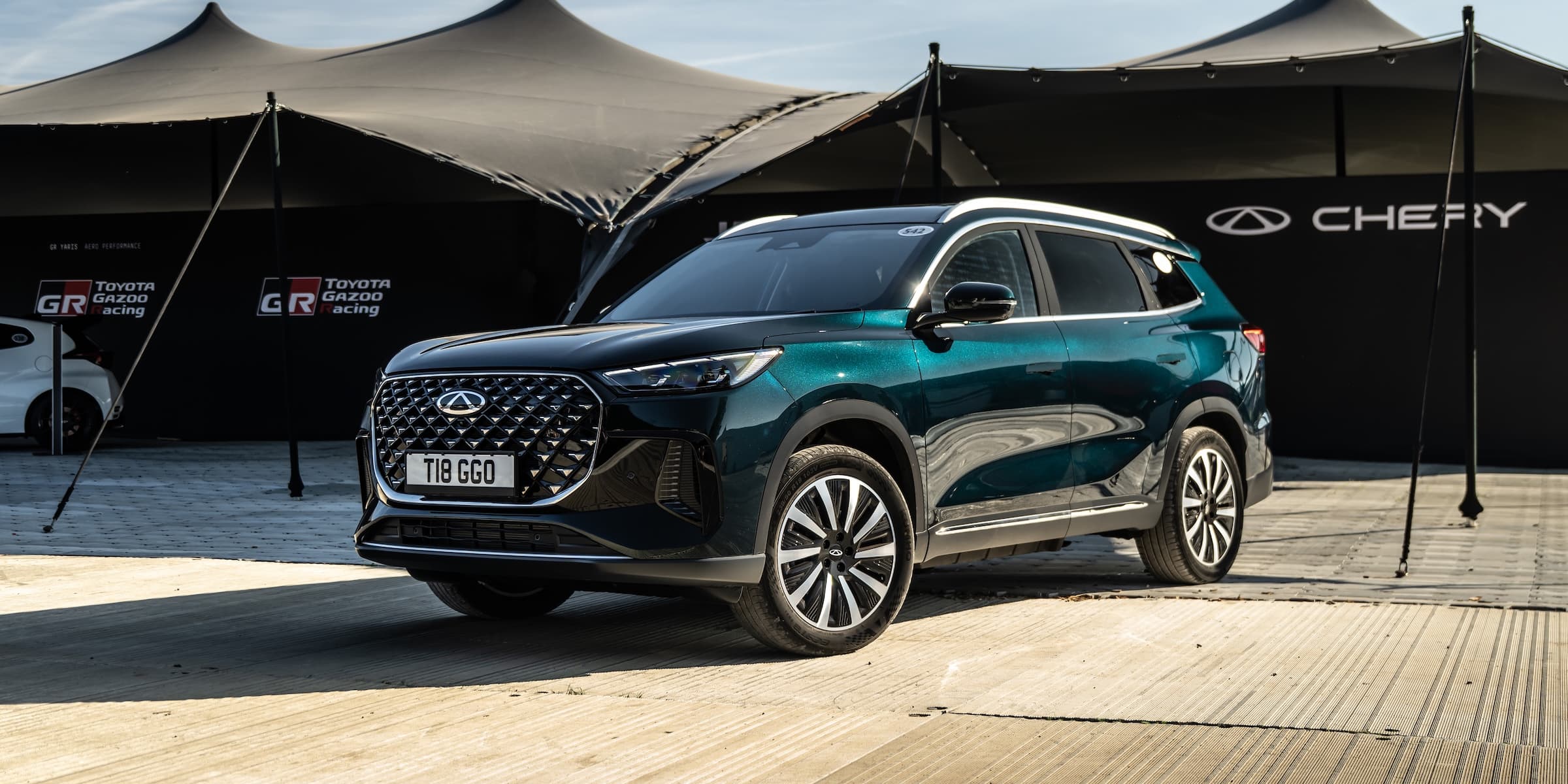
Probably the biggest announcement in terms of its likely impact on the UK automotive market is that Chinese giant Chery will be launching here in September. It will join its two subsidiary brands, Omoda and Jaecoo, which both launched here in the last 12 months. Chery had its first UK-based model on display, the Tiggo 8 large SUV, but it will be joined at launch by the smaller Tiggo 7 SUV.
Chevrolet
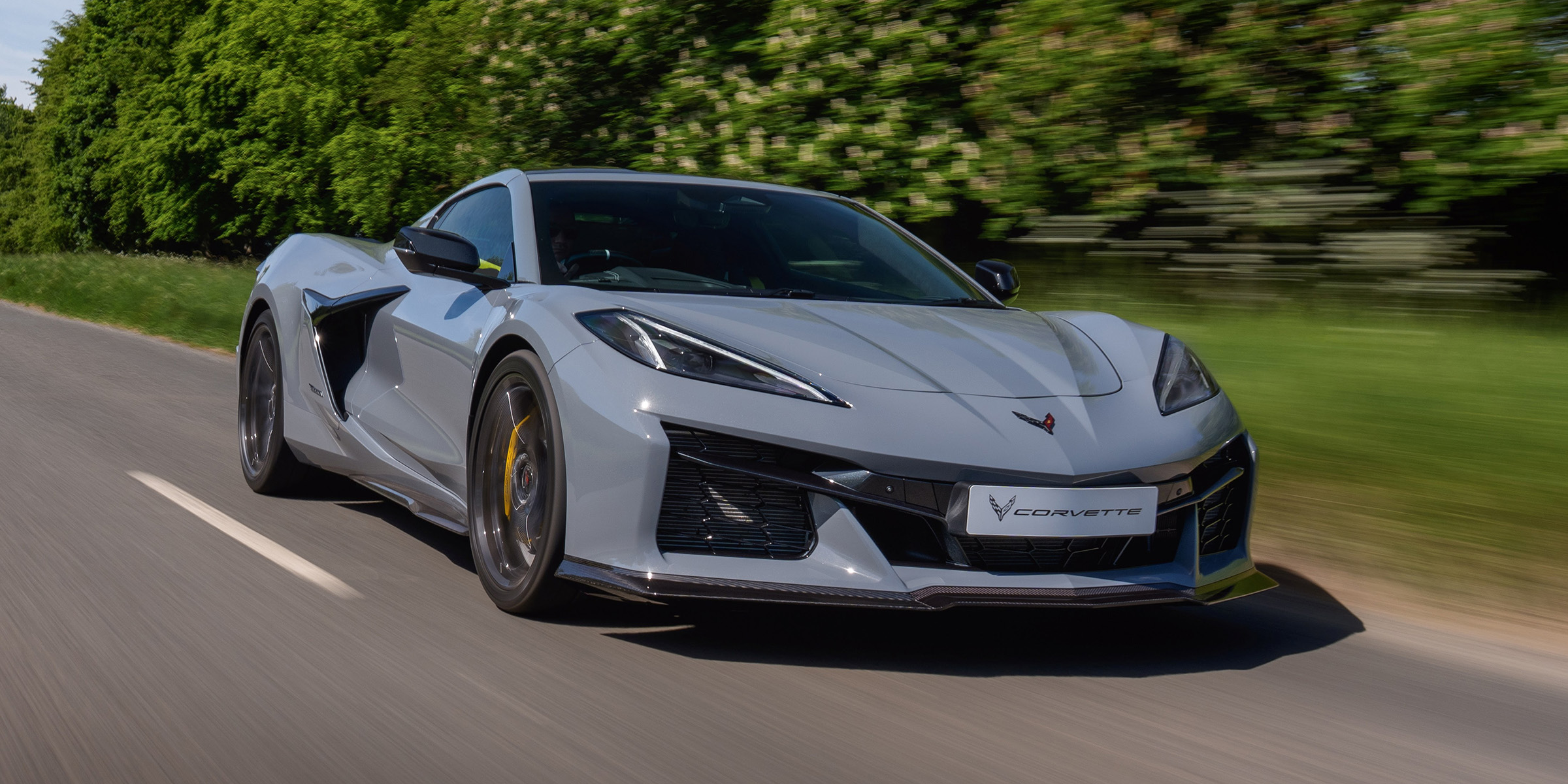
Chevrolet (generally going by the sub-brand Corvette in Europe) launched a hybrid model of the latest-generation Corvette sports car, called the Corvette E-Ray.
With a 650hp V8 and hybrid motor combination driving power through all four wheels – a first for a Corvette – the E-Ray is even quicker than the regular Corvette Stingray and delivers enough performance to put the wind up any European supercar manufacturer.
Another all-new brand name launching at Goodwood was Denza, which is a premium offshoot of Chinese giant BYD (much as Lexus is to Toyota). In typical BYD style, Denza was launched with a large stand and three new models on display – the B5 SUV, the D9 people carrier, and a low-slung estate model called the Z9GT.
Full details on all three models should be coming soon, so stay tuned.
Ferrari
Ferrari AmalfiFerrari F80
Ferrari had a busy show at Goodwood, with several new models shown for the first time in the UK. The newest was the Amalfi, which replaces the Roma as Ferrari’s entry-level 2+2 GT model. On display next to the Amalfi was the 296 Speciale, a lighter and faster version of the acclaimed 296 range. Out on track, visitors saw the new F80 hypercar and 12Cilindri GT tearing up the hill.
One of the world’s most innovative automotive and motorsport designers, Gordon Murray, was celebrated at Goodwood this year. His company, Gordon Murray Automotive, had its range of supercars on display, including the first view of the T.33 S, a faster version of the T33 GT model.
Honda
Honda PreludeHonda Urban EV concept
Honda brought what looked to be a production-ready version of its new Prelude coupé to Goodwood, having shown a concept last year. It was joined by a run-out version of the final Civic Type R hot hatch, and a couple of concept cars – a new electric city car and an odd-looking SUV.
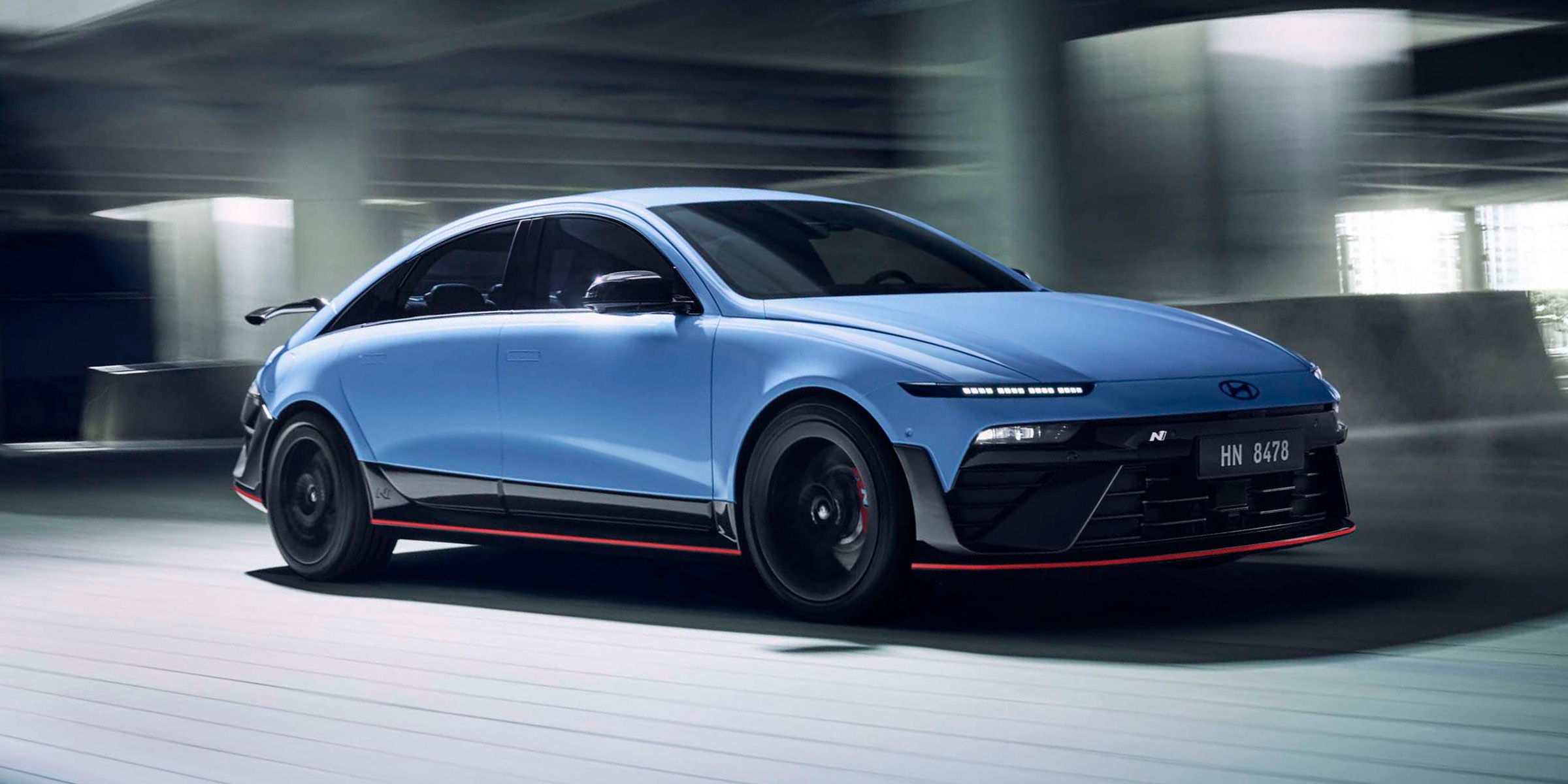
Hyundai had a large stand at Goodwood this year, mostly dedicated to the world premiere of its new performance model, the Ioniq 6 N – a much faster version of the just-facelifted regular Ioniq 6 electric saloon. Also being shown for the first time was the Ioniq 9, the company’s new large electric SUV.
Chinese brand Jaecoo had a low-key presence, with its new Jaecoo 5 compact SUV on display in the Goodwood paddock and running up the hill each day, but no stand. There were plenty of Jaecoo and Omoda cars running around Goodwood all weekend, however, as the company supplied a fleet of Jaecoo 7 and Omoda 9 SUVs for use as the event’s VIP shuttles.
The Jaecoo 5 will be powered by a 1.6-litre petrol engine, but there’ll also be an E5 electric model. More information about both should arrive in coming weeks, with the cars reaching UK shores later this year.
We don’t cover Koenigsegg much here at The Car Expert, but the Swedish supercar company brought some of its latest models to Goodwood in 2025.
The line-up included the new Sadair’s Spear, a one-off upgraded version of the already-bonkers Koenigsegg Jesko. It’s named after the company founder’s dad’s horse, apparently.
Koenigsegg Sadir’s Spear
Lanzante
You may not have heard of British firm Lanzante, but it has a star-studded history that includes winning Le Mans in 1995 with a McLaren F1 GT, and converting various track-only supercars to make them street-legal.
At Goodwood this year, Lanzante showed off the first car branded under its own name, called the Lanzante 95-59. It’s a highly modified McLaren 750S, now with three seats including a central driving position, which celebrates that McLaren Le Mans win from 30 years ago (the name represents car 59 winning the race in 1995). The company plans to build 59 vehicles, so get in quick.
Lanzante 95-59
Lotus
The Lotus stand featured its full model range, including the newly updated Emira. There was also a lovely-looking Evija electric hypercar in black with retro gold JPS pinstriping, as well as the recent Theory 1 concept car.
Making its world premiere at Goodwood was the Maserati MCPura. The name was described in a social media post by one UK car magazine as “sounding like something from the McDonald’s menu”, although this was later deleted – presumably after annoying Maserati’s PR people. Anyway, it’s basically a mildly updated version of the superb MC20 mid-engined sports car, available in both coupé and open-top (called Cielo) versions.
Also charging up the Goodwood hill were the GT2 Stradale, a road-going version of its GT2 racing car, and the MCXtrema, a track-only toy.
McLaren had its usual large stand just behind Goodwood House and plenty of cars on track. Pride of place went to its new W1 hypercar, which was displayed alongside its McLaren hypercar predecessors, the 2013 P1 and the 1993 F1.
Also on display was a limited-edition version of the 750S supercar, celebrating the 30th anniversary of the brand’s win at the Le Mans 24-hour race in 1995.
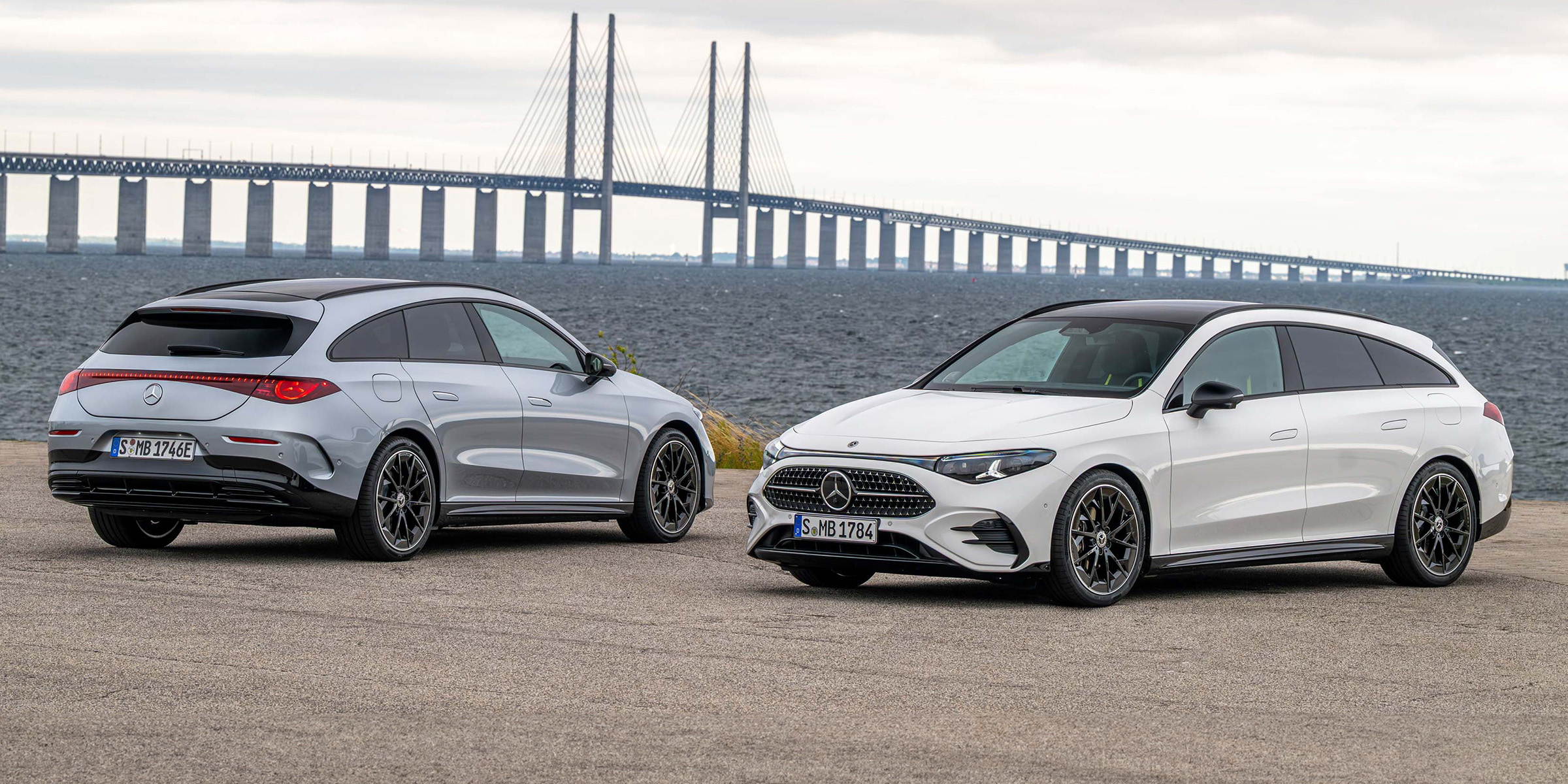
Mercedes didn’t have its usual enormous presence at Goodwood this year, but among its historic racing cars was the first look at its all-new CLA saloon, which will be available in both fully electric and petrol/electric hybrid versions.
The last 12 months have been busy for MG (new Cyberster, HS, ZS and S5 EV models) and the next 12 months are likely to be even busier. At Goodwood, the company showed off its new IM5 electric saloon and IM6 electric crossover models – think MG’s answer to the Tesla Model 3 and Tesla Model Y and you’re in the right ballpark. We’ll be driving both cars shortly so stay tuned for our reviews. Also on display was the Cyberster Black, a new specification of the Cyberster GT electric roadster.
For many visitors, Goodwood was the first chance to see the new Renault 4 EV, along with the recently launched Renault 5. Also on display at the Renault stand was a full-scale design model of the new Renault 5 Turbo 3E. It’s not really related to the new Renault 5 production car, but more of a limited-production, ultra-hot hatch powered by two electric motors – one in each rear wheel. These motors are currently top secret, but the UK motoring media will probably making a big fuss of them once the beans are officially allowed to be spilled.
If you like your Porsches to be retro-tastic and über-expensive, the good people at Singer showed off their newest reworking of a late-1980s Porsche 911, called the – wait for it – “Porsche 911 Carrera Coupe Reimagined by Singer”.
You’d better hand over your near-£1million pretty quickly, though, as all Singer’s ‘reimaginings’ tend to sell out.
Porsche 911 Carrera Coupe Reimagined by Singer
Xpeng
Chinese car brand Xpeng showcased its new P7+ electric liftback, as well as an all-wheel drive version of its G6 electric coupe-SUV.
The P7+ is not really a looker, but it should be plenty quick. Xpeng claims that it’s “the world’s first AI-defined vehicle”, which will apparently “revolutionise the driving experience”. Somehow.
Xpeng P7+
Zenvo
Zenvo Aurora Tur
Another name that will be unfamiliar to most readers, Zenvo is a Danish supercar manufacturer. The company had its latest model on show, the Aurora Tur. Powered by a V12 engine with no less than four turbochargers, the Aurora is scheduled to go on sale next year.
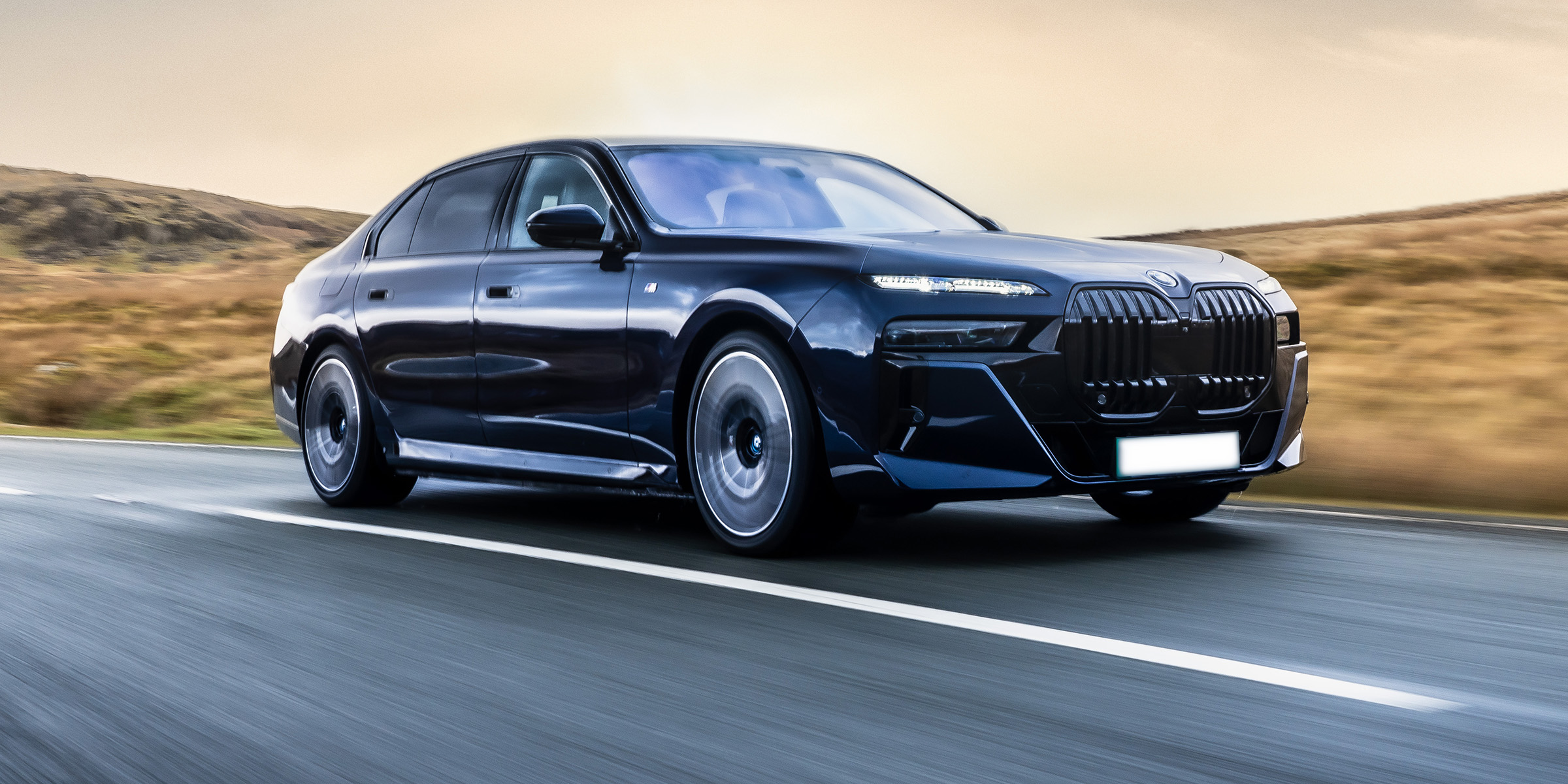
When BMW came to apply its latest update to the 7 Series, the design team must have had clearly in mind that they were dealing with a car long regarded as the epitome of luxury transport, renowned for its space and comfort, impressive road performance and the technology it boasted.
The result, unveiled in 2022, was a bold reimagining of the BMW 7 Series as an electrified model only – no more conventional petrol or diesel engines. Instead the choice was between a plug-in hybrid, a more sporty plug-in hybrid under the German brand’s M designation, and tow versions of the full-electric i7.
What also debuted with the new model was possibly the most controversial example yet of BMW’s anything but subtle styling, the car’s grille in particular dividing opinions. And all this was contained within a package that even in the ‘entry-level’ version of the car being tested here, came with a six-figure price tag.
The BMW 750e is a large four-door saloon – in fact a very large four-door saloon because in its latest incarnation it is only available in long-wheelbase form, taking up 3.2 metres of a car that in total measures close to 5.4 metres long and just under two metres wide.
With its six cylinder petrol engine and its single electric motor, is the base model of the four BMW 7 Series models, all of them all-wheel drive only. There is also a more potent plug-in hybrid, the M760, and two electric i7 versions.
First impressions
Few cars appear so dominant on first viewing as does the BMW 7 Series, and not just because it will take up every inch of the average car park space. From the side, those gargantuan proportions conversely do not appear too bulbous, with some nice swooping surfaces running along the car – it’s just when you get to the front.
Many have made fun of BMW’s recent penchant for large grilles and in the 7 Series the style is taken to the limit. The famed kidney shape starts well onto the bonnet which means that the grille has to have an awkward crease in it, and it ends just above the registration plate – it is a totally marmite design and interestingly replicated on the fully-electric i7, a model that does not need a grille at all.
BMW has also managed to install some of the slimmest headlights yet on the front of the 7 Series but while impressive, they also make the grille appear even bigger.
We like: General proportions make a good impression. We don’t like: The grille – it’s simply too big and in one’s face.
What do you get for your money?
The days of everything on a BMW being an option are long gone and a sizable amount of standard equipment comes with our 7 Series, including plenty of technology. Admittedly, we have the M Sport, the upper of the two trim levels, but it does not actually add a great deal of significance over the £5,000 cheaper Excellence entry trim – alloy wheels that are 20 rather than 19 inches, leather on the steering wheel and various options regarding the rear spoiler and paint finish. The Excellence would appear worthy of just as much consideration.
Highlights of the standard equipment list include a wireless charging tray for one’s smartphone, a top-quality Bowers & Wilkins sound system, a driver’s head-up display and a great deal of electrically powered adjustment in the front seats.
There is an options list, of course, some of it reflecting the likely use of the car as transport for very important people. Topping it all is the Executive Pack, which costs a whopping £11,000 and transforms the rear into what is dubbed by BMW as an ‘executive lounge’. Occupants get their own console, massaging seats, roller blinds on the windows and even a 30-inch screen that folds down from the ceiling to host visual entertainment.
Other notables on the options list include the sky lounge, which adds a panoramic sunroof and the opportunity to fit an even better sound system. One can even choose to have the doors fully open automatically at the touch of an interior button or the flush exterior handles.
In terms of safety, the 7 Series has not been subjected to a Euro NCAP crash test programme, probably because the nature of the car means it does not sell in large numbers. But it does come with a complete safety package, including a long list of ADAS electronic driver aids – these even extend to a warning if you open the door when someone or something is passing. A reversing and parking assistant with rear-view camera is also standard.
Editor’s note: I spent a few hours this week being chauffeured around Munich in the lounge-like comfort of an electric i7 version of the BMW 7 Series with the £11K Executive Pack option. It’s fair to say that it’s like no other luxury saloon on the market – even a Rolls-Royce or Bentley – with its 30-inch television screen that folds down from the ceiling, automatically popping up the roller blinds in the side and rear windows at the same time.
Stretched out with the seat fully extended (which folds the empty front passenger seat forward and moves it as far forward as it can slide), with the seat blowing cool air through its ventilation system and gently massaging my back as we wafted along a German autobahn, it was entirely delightful…
Personally, I found having the enormous screen so close to my face was not particularly pleasant while we were moving, so I preferred to have it folded away while I snoozed and generally luxuriated in comfort. These sort of glamorous opportunities don’t come up too often, so you need to take them when you can! (Stuart Masson, editor)
We like: Extensive specification including strong safety suite. We don’t like: The desirable Executive Pack option is a pricey addition.
What’s the BMW 750e like inside?
One cannot fail to be impressed by the interior of the 750e, as one should be with this car’s intended market. The space is immediately noticeable, particularly for rear-seat passengers, while compared to its predecessor there is also now a little extra headroom, even with the optional sunroof fitted. The boot is huge too, at 525 litres.
BMW knows how to do interior finishes and the 750e fulfils the brief, with lots of soft-touch surfaces in quality materials. Having said that, some of the styling choices are a little odd, with the somewhat random slots and holes of the ‘crystal detailing’ appearing slightly coarse as they run into adjacent finishes of wood and cut glass.
The driver lacks for little in terms of information. The twin screens of the digital driving information display and the central infotainment touchscreen are contained in one long panel that runs across the fascia in a gentle curve.
There are very few buttons – the large rotary control at the base of the centre console remains, and this takes care of a whole range of functions in partnership with the touchscreen. Yes, BMW is another to have gone this route and it would be better to have just a couple of extra physical controls to adjust such basics as the cabin temperature.
Both rear-seat passengers get their own additional touchscreens mounted on the inside door panel, allowing them to make their own choices with seat adjustment, temperature and entertainment – very business class…
We like: General space and luxury We don’t like: Strange trim combinations
What’s under the bonnet?
The 750e makes use of a six-cylinder 3.0-litre petrol engine, with the electric motor contained within the automatic transmission and powered by its own 19 kWh battery. The car is officially rated at just under 50 miles on electric-only power, so not the best for benefit-in-kind tax savings but when spending this much on a car that likely won’t be the major concern.
This is the slowest of the BMW 7 Series line-up, but with more than 480hp on tap and a sizable 700Nm of torque it’s certainly not slow, with an official 0-62mph time of 4.8 seconds.
In terms of fuel economy, no plug-in hybrid owner takes much notice of official figures and we found during our week with the car we averaged mpg figures in the high 30s, getting closer to 40mpg on a constant-speed long motorway run. For a big car that weighs close to 2.5 tonnes, these are reasonable results. A full recharge of the hybrid battery, by the way, will take three hours using a 7kW home charger.
What’s the BMW 750e like to drive?
It feels like a big car when you look at it, and when you sit in it – but not when you drive it. The 750e is a joy to drive – for a start it’s so refined that you do feel that you are in a full EV, the petrol powertrain doing very little to advertise itself. Equally the auto gear changes are very smooth indeed, virtually unnoticeable.
The range of settings includes a standard hybrid mode with the electric motor doing all the work at slower speeds around town. The general drive modes include expected settings such as Sport but also boast the likes of ‘Expressive’ and ‘Relax’, something that seems more the preserve of sister brand Mini than this executive luxury heavyweight.
Ride comfort is exemplary, as one would expect, but this is a fairly potent beast too – overtaking manoeuvres are swiftly dispatched, and the standard-fit air suspension and the all-wheel-drive chassis work very well together to keep the car upright in bends, never descending into the barge-like characteristics one would be forgiven for expecting from something so big. In these surroundings, even very long journeys are a pleasurable experience.
We like: Combination of performance and refinement. We don’t like: Electric-only range is not that long.
Verdict
There is a lot to like about the BMW 750e – from its top-notch luxury travel credentials and latest tech to the fact it can perform when needed. As such, it should appeal to those who want to travel in comfort and make an impression upon arrival.
Having said that, it is a very expensive car, and with an equivalent version of the fully electric i7 costing only around £10,000 more, it’s easy to make a case for going the full EV route unless your schedule constantly demands long journeys and instant availability with no downtime recharging. The 750e made a big impression in its week with us but pushed to choose, we’d probably opt for its electric sister.
Find your next new or used car with Auto Trader. Find out more
Find your next new or used car with Carwow. Find out more
Lease a BMW 7 Series
If you’re looking to lease a new BMW 7 Series, The Car Expert’s partners can help you find a competitive deal.
Personal contract hire deals from Leasing.com. Find out more
Personal contract hire deals from Carparison Leasing. Find out more
Personal contract hire deals from Select Car Leasing. Find out more
Subscribe to a BMW 7 Series
Subscriptions are becoming a very popular way for consumers to try an electric car for a few weeks or months to help decide whether it’s a suitable alternative to a petrol car. If you’re interested in a car subscription, The Car Expert’s partners can help. (PS: What’s a car subscription?)
The BYD Atto 2 is a small five-door electric SUV that hit UK roads in the autumn of 2025. It will be joined by a plug-in hybrid version in early 2026.
Known as the ‘BYD Yuan Up’ in China and built on the same foundations as the BYD Dolphin hatchback and larger BYD Atto 3 SUV, the electric version of the Atto 2 is available with two different trim levels called ‘Boost’ and ‘Comfort’. Comfort gets slightly more power (150kW or 204hp) than Comfort (130kW or 177hp) , as well as a larger battery (65kWh vs 51kWh), which gives it a longer driving range (261 miles vs 214 miles).
The Atto 2 enters a highly competitive small electric SUV market, with plenty of rivals from almost every other major car brand in the UK. As with most BYD models, its biggest selling points are an extensive level of kit for the money and a long warranty period.
Media reviews have been generally average to poor, with scores that are well down on th ebest cars in this segment. Ellis Hyde of Auto Express concludes that the BYD “doesn’t lead the pack” but is nevertheless a “fine, if somewhat uninspiring contender” in a crowded electric crossover market.
Parker’s Curtis Moldrich praises the Atto 2 for its straight-line performance and “predictable steering”, while Steve Fowler of The Independent commends the SUV for its spacious and “high-tech” interior.
That said, Electrifying.com’s Nicola Hume takes issue with the Atto 2’s charging speeds, as well as its battery range, which “is a bit middling next to alternatives like the MG 4 and Kia EV3“. She also notes that “it’s disappointing that it’s so underwhelming to drive.”
Top Gear’s Peter Rawlins was quite scathing, suggesting that “if this is the future for our automotive world we don’t want it”.
As of January 2026, the BYD Atto 2 Electric has a New Car Expert Rating of B, with a score of 66%. It achieves top marks for its low running costs, zero tailpipe emissions and long new car warranty, but the initial media review scores have been very poor. It’s also worth noting that we don’t have any Euro NCAP safety rating data yet, so this may shift the overall score up or down once this information is published. Keep checking back for the lastest results.
Score: 5 / 10 “The BYD Atto 2 might play to the brand’s cheap and cheerful reputation, but seemingly falls short on both counts.” Author: Erin Baker Read review
Business Car
Model reviewed: Boost 51kWh Score: 8 / 10 “Rivals are more fun to drive, but there’s no doubting the BYD Atto 2’s efficiency and practicality, plus the fact it is affordable and well-equipped, with the Boost priced at £30,850.” Author: Martyn Collins Read review
Car
Model reviewed: Range overview Score: 6 / 10 “The BYD Atto 2 is not big on character and, perhaps unsurprisingly, it follows that it’s only a middling performer. The spec list does most of the car’s talking, with a strong infotainment and ADAS offering putting it in the mix ahead of cheaper competitors but nothing with enough punch to put it towards the top of the class.” Author: Curtis Moldrich Read review
Model reviewed: Range overview Score: 6 / 10 “The BYD Atto 2 is not big on character and, perhaps unsurprisingly, it follows that it’s only a middling performer. The spec list does most of the car’s talking, with a strong infotainment and ADAS offering putting it in the mix ahead of cheaper competitors but nothing with enough punch to put it towards the top of the class. It’s an extremely capable car with no hidden depths, a car that will perform exactly as customers want but with zero character.” Author: Curtis Moldrich Read review
Carbuyer
Model reviewed: Range overview Score: 8 / 10 “The BYD Atto 2 is great to drive and comes well equipped for the price. It will be surprisingly practical if you’re coming from a hatchback model into this small SUV, though it’s not quite as big as some other rivals are if you shop around.” Author: Charlie Harvey Read review
Electrifying.com
Model reviewed: Range overview Score: 6 / 10 “It’s disappointing that it’s so underwhelming to drive, and the boot may be too small for some family motorists, but it’ll do the job that most buyers expect of it. That range is a bit middling next to alternatives like the MG4 and Kia EV3, too.” Author: Nicola Hume Read review
Green Car Guide
Model reviewed: Boost Score: 8 / 10 “The BYD Atto 2 is a B-segment compact SUV that offers a driving experience that’s both comfortable and agile, with two models delivering driving ranges of 214 miles or 267 miles.” Author: Paul Clarke Read review
Parkers
Model reviewed: Range overview Score: 7.6 / 10 “It’s quick and genuinely innovative, which is all you could want. It’s surprisingly good to drive too, with predictable steering, good power and brakes that put significantly more expensive more EVs to shame.” Author: Piers Ward, Curtis Moldrich Read review
The Independent
Model reviewed: Range overview Score: 8 / 10 “The sixth new car to arrive from BYD in just two years, the Atto 2 is a high-tech, posh small SUV that drives well and has lots of space for the family.” Author: Steve Fowler Read review
The Telegraph
Model reviewed: Range overview Score: 6 / 10 “This Chinese-built urban crossover faces a wealth of classy and established rivals, but it’s not the bargain it might at first appear.” Author: Andrew English Read review
Top Gear
Model reviewed: Range overview Score: 4 / 10 “Completely forgettable to look at, lacking in dynamic talent and thoroughly uninspiring to anyone who has even the slightest interest in cars, if this is the future for our automotive world we don’t want it. Even if we will begrudgingly admit it does at least have a spacious cabin and generous kit levels.” Author: Peter Rawlins Read review
Safety rating
Independent crash test and safety ratings from Euro NCAP
No safety rating
As of November 2025, the BYD Atto 2 has not been assessed by Euro NCAP.
Eco rating
Independent economy and emissions ratings from Green NCAP
Clean Air Index: 10 / 10 Energy Efficiency Index: 9.3 / 10 Greenhouse Gas Index: 9.6 / 10
The Green NCAP programme measures exhaust pollution (which is zero for an electric car) and energy efficiency. Electric cars are much more energy-efficient than combustion cars, so the BYD Atto 2 has scored very highly in Green NCAP. This emissions assessment was conducted in late 2024, and stands for the 130kW powertrain option.
Running cost rating
Monthly cost of ownership data provided exclusively for The Car Expert by Clear Vehicle Data
Battery range
Average
Score
Variation
Score
EV models
242 miles
B
Electrical efficiency
Average
Score
Variation
Score
EV models
3.6 m/KWh
D
Insurance group
Average
Score
Variation
Score
All models
31
C
Based on the initial running cost information we have, the BYD Atto 2 should be an affordable car to own. As with any EV, however, there is a massive difference between the cost of charging your car from a home charger and charging it at a public fast charger, so your costs will largely depend on having a wallbox at home or work.
We don’t yet have five-year servicing and maintenance costs for the Atto 2, so check back again soon.
Reliability rating
Reliability data provided exclusively for The Car Expert by MotorEasy
No reliability rating
As of November 2025, we don’t have enough reliability data on the BYD Atto 2 to generate a reliability rating.
The Car Expert’s reliability information is provided exclusively to us using workshop and extended warranty data from our partner, MotorEasy, sourced from both official dealerships and independent workshops.
As soon as MotorEasy has sufficient data on the Atto 2, we’ll publish the results here.
Warranty rating
New car warranty information for the BYD Atto 2
BYD’s new car warranty is better than most brands operating in the UK, and better than rival brands in a similar price bracket as the Atto 2.
The duration is six years, with a limit of 93,750 miles. In addition, there’s an eight-year/125,000-mile warranty for the battery components.
Warranty on a used BYD Atto 2
As of November 2025, all BYD Atto 2s for sale should be covered by their new car warranty. The first cars only went on sale in September 2025, so they will be under warranty until at least September 2031 unless they reach their 93,750-mile limit before then.
If you’re looking to buy any used car that is approaching the end of its warranty period, a used car warranty is usually a worthwhile investment. Check out The Car Expert’s guide to the best used car warranty providers, which will probably be cheaper than a warranty sold by a dealer.
As of November 2025, we are not aware of any DVSA vehicle safety recalls affecting the BYD Atto 2. However, this information is updated very regularly so this may have changed.
You can check to see if your car has any outstanding recalls by visiting the DVLA website or contacting your local BYD dealer.
Find your next new or used car with Auto Trader. Find out more
Find your next new or used car with Carwow. Find out more
Lease a BYD Atto 2
If you’re looking to lease a new BYD Atto 2, The Car Expert’s partners can help you find a competitive deal.
Personal contract hire deals from Leasing.com. Find out more
Personal contract hire deals from Carwow. Find out more
Personal contract hire deals from Select Car Leasing. Find out more
Subscribe to a BYD Atto 2
Subscriptions are becoming a very popular way for consumers to try an electric car for a few weeks or months to help decide whether it’s a suitable alternative to a petrol car. If you’re interested in a car subscription, The Car Expert’s partners can help. (PS: What’s a car subscription?)
Mercedes-Benz has unveiled its new third-generation CLA Shooting Brake estate line-up, which will include all-electric models for the first time.
This news follows the UK launch of the new CLA saloon range back in May, which is now on sale in all-electric form with petrol-electric hybrid versions to follow later. The same can be said for the new Shooting Brake, with electric versions arriving sometime this year and hybrid powertrain options early next year.
These electric versions – officially named ‘CLA Shooting Brake with EQ Technology’ – are the first battery-powered Mercedes-Benz estate cars ever, and are powered by an 85kW battery pack.
The line-up begins with the 260hp CLA ‘250+’ which can reportedly muster up to 473 miles on a single charge – 11 miles less than the ‘250+’ saloon. A more powerful 349hp ‘CLA 350 4MATIC’ all-wheel drive model will also be offered, with a battery range of 454 miles.
Mercedes-Benz claims that the electric estate can complete a 0-62mph sprint in five seconds flat in its top-spec ‘350’ guise, with top speed capped at 130mph. Built on the brand’s 800V architecture, the car can charge at speeds up to 320kW, and at that rapid charging speed the manufacturer claims that around 200 miles of range can be added in ten minutes.
Compared with the previous CLA Shooting Brake – which was available as a petrol, diesel, plug-in hybrid car – the third-generation range is slightly larger by every metric which slightly increases cabin headspace and legroom. The boot has enough space for 455 litres of luggage room, rising to 1,290 litres with the rear seats folded. Electric versions also come with an additional 101 litres of ‘frunk’ space under the bonnet.
Inside, the car comes with a ten-inch digital instrument cluster and a 14-inch infotainment touchscreen as standard. The brand’s ‘Superscreen’ which adds an optional 14-inch passenger media display will be added to the options list after launch.
The electric Kia EV4 is now available to order in a ‘Fastback’ saloon body style, with two trim levels to choose from.
Now joining the EV4 hatchback range that launched in the UK at the start of July, the EV4 ‘Fastback’ is Kia’s first ever battery-powered saloon car, the brand boasting that this latest edition to its UK line-up is the most aerodynamic car the marque has produced to date.
While the Fastback is identical to the five-door EV4 hatchback from the front, the saloon comes with a larger rear overhang and a sloping rear roofline – the 1.2-metre wide boot opening revealing 490 litres of boot space. That is 55 litres more than the hatchback variants can handle. It’s also the same boot capacity as the Kia EV6, which is actually slightly shorter than the EV4 Fastback thanks to the saloon’s extended rear end.
Kia says that the hatchback comes with the brand’s latest suite of on-board tech, pointing to the 12-inch digital instrument cluster and 12-inch infotainment screen pairing on the dashboard that the brand calls the ‘connected car Navigation Cockpit’. This comes as standard, with these two displays connected together by a smaller five-inch touchscreen dedicated to the car’s climate control settings.
While the EV4 hatchback has an entry-level price of under £35k, pricing for this Fastback range instead starts at just under £41k. This price hike isn’t solely due to the longer rear end, however.
The Fastback range isn’t available with the hatchback’s lead-in ‘Standard Range’ 58kWh powertrain, and is only currently available to order with the ‘Long Range’ 81kWh battery pack. The front-mounted 201hp electric motor applies 283Nm of torque through the front wheels, allowing the car to complete a 0-62mph sprint in a reported 7.9 seconds.
The EV4 hatchback’s cheapest ‘Air’ trim also isn’t offered in this saloon variety, with customers able to choose between ‘GT Line’ and top-spec ‘GT Line S’ models. Both models can reportedly muster up to 380 miles on a single charge. The first customer orders are scheduled to arrive on UK roads this Autumn.
The word Honda means different things to different people. For motorcycle enthusiasts, the Japanese brand is the biggest name around; Honda robot lawnmowers can be seen keeping the grass short on golf courses and upmarket hotels around the world, while plenty of farmers rely daily on their Honda quad bikes to get around their land.
As a car manufacturer, Honda is well known for equally wide-ranging reasons. The Honda CR-V was one of the first compact family SUVs (although it has grown considerably over the years). For performance enthusiasts, there are few hot hatches to match the renowned Civic Type-R. Even those who have no interest in cars can quote Honda’s remarkably clever television adverts.
Yet, while Honda built cars in Britain for almost 30 years from 1992 until 2021, it’s actually quite a small brand here. Honda sold only around 30,000 cars to UK buyers in 2024, compared to the 100,000-plus each recorded by Japanese rivals Toyota and Nissan.
For many, Honda is a bit of a conundrum. Its products offer consistently high quality alongside levels of reliability rivals cannot match, but they don’t seem to resonate with the wider market. People who buy Hondas tend to love them – just not that many people do…
Honda is quite a young car manufacturer. Founder Soichiro Honda was into automobiles from an early age and in 1937 founded a company called Tokai Seiki that won a contract to make piston rings for Toyota – quickly losing it again due to his rings not coming up to the standard Toyota expected.
So Soichiro took himself around Japan to gain a better understanding of what was needed and regained the contract in 1941 – only to have one of his factories destroyed by US bombing and another collapse in an earthquake.
What was left was sold to Toyota in 1946, and Soichiro used the funds to found the ‘Honda Technical Research Institute’, initially making powered bicycles. It soon expanded to making engines to power the bicycles, and the Honda Motor Co was formed in 1948, producing motorcycles.
These soon grew in popularity around the world, and Honda has been the world’s largest motorcycle manufacturer since the 1960s. Not until 1963 were four-wheeled vehicles contemplated, the first a pick-up truck called the T360. It was quickly followed by the S500, a small chain-driven sports car.
Despite having barely begun as a car manufacturer, within a year Honda had entered its own team in Formula One grand prix racing, winning its first race just a year after that in 1965.
Honda’s passenger car ambitions grew in 1969 with a model called the 1300, but it was the Civic, first launched in 1972, that propelled the company to international recognition as a car manufacturer. It was followed in 1976 by the larger Accord, which became one of the best-selling cars in America, while the CR-V, launched in 1995, became the best-selling SUV globally.
1972 Honda Civic2022 Honda Civic e:HEV
In that year, Honda also launched its first hybrid, the Insight, just beating rival Japanese manufacturer Toyota’s Prius, and both manufacturers have shown much dedication to hybrids since, expanding the petrol-electric drivetrains throughout their ranges.
Honda was also the first of the Japanese brands to launch a premium division, Acura, in 1985, ahead of Toyota with Lexus and Nissan with Infiniti. Unlike its rival, however, Honda has never tried to sell Acura in Europe – in America it is established as a popular maker of upmarket cars.
The Honda of today builds a vast range of vehicles and machines, from cars and motorcycles to robotic lawnmowers and even executive jet aircraft. Deep investment in technology has even seen the creation and development since 2000 of a humanoid robot called Asimo.
Honda has, however, been much slower to move to electric vehicles. The Honda e went on UK sale in 2020 as the company’s first EV and earned some praise – but its limited range and high price tag resulted in very slow sales and it was dropped in 2023. Its replacement, and so far Honda’s only EV, is an SUV clumsily named the e:Ny1.
The most recent twist in Honda’s history came in early 2025 when the company started merger talks with rival Nissan, reportedly to create a larger, stronger group to fight the challenges from particularly the new Chinese brands. The merger proposal, regarded by most observers as needed more by Nissan than Honda, collapsed just a few weeks later.
What models does Honda have and what else is coming?
The current Honda model range numbers seven vehicles and it is a demonstration of the brand’s reputation that four of them earn New Car Expert Ratings of A – the highest tier in The Car Expert’s Expert Rating programme. Two core nameplates lead the list, the Civic and the Jazz.
The Civic mid-sized family car has a history going back more than half a century. Now in its 11th generation, it can only be bought with a hybrid powertrain, but remains highly popular. It ticks the boxes in all areas, performance, quality and particularly reliability, its Expert Rating score of 78% being one of the highest in the medium car class.
Honda has also long produced a performance version of the Civic, the Type R, which has become highly desirable among enthusiasts. The most recent two versions have both been described as the best hot hatch on the market, but due to tightening European Union regulations the current Type R will be the last of the line.
On sale since 2001 and now in its fourth generation, the Honda Jazz is often derided as a car for older drivers, but in fact is regarded as one of the best cars in the highly competitive supermini sector. Now only offered with a hybrid engine it scores on its practicality, with lots of interior space, and again its quality and reliability, general Honda hallmarks.
Honda’s long-lived SUV continues the trend, the CR-V now in its sixth generation which went on UK sale in late 2023 in hybrid and plug-in hybrid form. While still earning a New Car Expert Rating of A, the car has attracted some minor criticism – it’s no longer available as a seven-seater, its styling is a little bland and it is expensive compared to rivals. But on reliability and quality it remains up with the best.
Smaller than the CR-V and somewhat in its shadow, the Honda HR-V is a compact SUV on sale in its latest version since 2021. It comes with a hybrid engine which is praised for its smoothness but not the loudness of the engine under acceleration. It lets the Honda side down to a degree with a New Car Expert Rating of C, considered inferior to several rivals in this overcrowded sector.
The most recent model with an engine to come from Honda is the ZR-V, launched in Autumn 2023 as effectively an SUV version of the Civic, smaller than the HR-V. Its hybrid drivetrain has again been praised but many reviewers struggle to see why anyone would want this heavier model over the regular Civic, contributing to its New Car Expert Rating of B.
Currently Honda’s only electric vehicle on sale is the e:Ny1. Once one gets past the name, which is apparently supposed to be pronounced by its individual digits and not as ‘Anyone’, the compact SUV earns praise for its comfort and quality, but is outdone by rivals in performance and range. Its New Car Expert Rating of C reflects a model that does everything okay without excelling in any area.
Honda’s reticence in launching pure EVs has long been questioned, as it has concentrated on hybrid models. Latest reports suggest that Honda plans to launch about 13 new models between 2027 and 2030, likely all featuring hybrid powertrains that combine electric motors with petrol engines, marking a transition period for the manufacturer before the inevitable shift to full electric vehicles.
EVs are also finally in the company’s plans, with £51bn pledged to their development. A new range of EVs with what is described as a radical design and called the 0 Series is set to launch first in the USA, starting in 2026.
Where can I try a Honda car?
Honda is by no means the largest manufacturer on the UK market, today selling fewer cars than even Chinese entrant BYD, which has been on the UK market for only two years.
In total in the UK there are just over 100 Honda full car dealerships (as opposed to those selling motorcycles and garden equipment) and they are well spread around the country – to test drive a Honda you will only have to travel far if you live in the more rural areas of Wales or northwest Scotland.
What makes Honda different to the rest?
Honda has long been seen as an ambitious and innovative manufacturer, capable of taking bold decisions such as going F1 racing just a year after launching its first car and producing in the NSX a supercar to take on Ferrari. Even Honda’s TV advertisements have inspired, productions such as ‘Cog’ and ‘Impossible Dream’ remembered long after they appeared on screen by even those viewers who had no interest in cars.
Strip all this away, however, and Honda’s reputation has been built on bedrocks of the quality of its products and levels of reliability rival manufacturers look at enviously. Even flawed models, such as the electric Honda e, have attracted praise for their looks, fit and finish and performance.
A Honda fact to impress your friends
Honda’s many technical innovations extend to the first in-car navigation, invented more than a decade before GPS satellite navigation appeared on the market.
Honda Accord models built for the Japanese market in 1981 were fitted with a paper-based system called the Honda Electro Gyrocator.
Summary
Most car manufacturers are going through an electric transition, but Honda is taking the journey more slowly than most. While electric cars are coming in greater numbers, for now the company seems content to keep on making its very good hybrid vehicles for a knowing audience which is sizable, but not that sizable.
While its two major Japanese rivals remain some of the major mainstream brands around, Honda seems content to carry on doing things just a little differently.
Hyundai debuted a high-performance ‘N’ variant of its all-electric Ioniq 6 saloon at the Goodwood Festival of Speed, which is slightly quicker off the line than the Ioniq 5 N hatchback.
Designed to “deliver an exhilarating and engaging driving experience”, Hyundai says that this sporty saloon is its most advanced ‘N’ model to date, featuring a redesigned suspension system, improvements to the ‘N e-Shift’ steering wheel paddles that simulate gear shifting, ‘better’ sound quality in the cabin and more horsepower than any of its ‘N’-badged siblings.
Power comes from the same 84kWh battery that powers the Ioniq 5 N, but with a small 9hp boost, delivering 650hp in total. With top speed electronically capped at 160mph, the Ioniq N can reportedly complete a 0-62mph sprint in 3.2 seconds – two tenths quicker than the Ioniq 5 N in the same race.
Hyundai is yet to confirm the single-charge travel distance of this dual-motor high-performance electric car, with that rather important detail “to be announced at market launch” in a few months time. For reference, the dual-motor 77kWh Ioniq 6 that has been on sale since 2022 can muster up to 332 miles without recharging.
Like all of Hyundai’s ‘N’-plated range, the saloon will be offered in the brand’s ‘performance blue pearl’ exterior colour scheme, and ‘N’-branded alloys wrapped in Pirelli tyres that Hyundai says have been exclusively developed for this model.
The car comes with several track-focused tech features, including launch control, a drift optimiser, a ‘Boost’ setting that maximises acceleration for ten seconds and ‘Active Sound +’ which increases the engine soundtrack played in the cabin to provide “greater driver feedback.”
That sums up what we know so far about the Hyundai Ioniq 6 N. The car’s UK pricing and official launch date details are sure to follow in the coming months. Check back soon!
The Renault Symbioz is a mid-sized SUV positioned between the smaller Captur and slightly larger Austral in Renault’s line-up.
First arriving in UK showrooms in Summer 2024, the SUV range consists of a mild-hybrid and ‘E-Tech’ petrol-electric hybrid model.
The Symbioz has received generally average scores from the UK motoring media, Ellis Hyde of Auto Express concluding that the Renault is “everything you need a family car to be: comfortable, practical, efficient and well-equipped.”
That said, many reviewers assert that the Symbioz struggles to stand out in a very competitive medium SUV class, as well as Renault’s own crowded SUV model range.
“There are more stylish options on the market”, says Car’s Seth Walton. “Why go for the Symbioz when the bigger and more luxurious Austral exists just up ahead?”
As of July 2025, the Renault Symbioz holds a New Car Expert Rating of B, with a score of 68%. Beyond the car’s average to very good review scores, this score is bolstered by the car’s four-star Euro NCAP safety credentials and better-than-average running cost estimations. However, its new car warranty and media review scores are only middling.
Body style: Medium SUV Engines:petrol mild-hybrid, petrol-electric hybrid Price:From £27,395 on-road
Launched: Summer 2024 Last updated: N/A Replacement due: TBA
Image gallery
Media reviews
Highlighted reviews and road tests from across the UK automotive media. Click any of the boxes to view.
Featured reviews
“The Symbioz is a solid addition to Renault’s lineup with seamless technology integration, a smooth drive and functional passenger and boot configurations.”
Model reviewed: 1.6-litre petrol/electric hybrid Iconic Esprit Alpine
Model reviewed: Range overview Score: 8 / 10 “The Renault Symbioz is everything you need a family car to be: comfortable, practical, efficient and well-equipped.” Author: Ellis Hyde Read review
Auto Trader
Score: 8 / 10 “The Renault Symbioz is a compact SUV focused on lots of interior and boot space.” Read review
Business Car
Model reviewed: Range overview Score: 8 / 10 “Given Renault’s ‘entry point’ claims for the Symbioz, you’d expect it to offer good value for money – and it doesn’t disappoint.” Author: Sean Keywood Read review
Car
Model reviewed: Range overview Score: 8 / 10 “The Renault Symbioz is a decent car. It’s comfortable, efficient and incredibly easy to drive, while well-enough equipped so as not to feel cut-rate, despite the low price tag. There are more stylish options on the market, but for the purposes of hauling families around, I reckon the Symbioz is up there with the best. Only trouble is the rest of the Renault line-up… Why go for the Symbioz when the bigger and more luxurious Austral exists just up ahead?” Author: Seth Walton Read review
Carbuyer
Model reviewed: Range overview Score: 8.2 / 10 “The Renault Symbioz is a welcome addition to the brand’s range as a family SUV offering great value for money.” Author: Charlie Harvey, Ellis Hyde Read review
Heycar
Model reviewed: Range overview Score: 7 / 10 “The Symbioz justifies its existence with competitive pricing and excellent fuel economy from its hybrid powertrain, plus a smart cabin with up-to-date in-car tech.” Author: Antony Ingram Read review
Honest John
Model reviewed: Range overview Score: 8 / 10 “Strong value, excellent economy, a smart cabin and perfectly acceptable ride and handling make for a capable all-rounder, with just a hint of style.” Read review
Parkers
Model reviewed: Range overview Score: 8 / 10 “As far as family SUVs go, the Symbioz is a cracking effort. A car like this was never going to blow our socks off with nerve-tingling performance, nor knead our senses in decadent luxury. It’s a family car, built for family life – strong, sturdy, comfortable and efficient.” Author: Seth Walton Read review
The Sunday Times
Model reviewed: Range overview Score: 7 / 10 “Frankly, unless you’re a dedicated diehard of the French brand, or you’ve got a Renault dealership right at the bottom of your street for maximal convenience, we can’t think of a shiningly obvious reason to recommend the Symbioz, even though it’s patently a good little car.” Author: Matt Robinson Read review
The Telegraph
Model reviewed: Range overview Score: 6 / 10 “A reasonable price, good equipment and a lovely interior may not be quite enough to secure sales in this ultra-competitive market.” Author: Alex Robbins Read review
Top Gear
Model reviewed: Range overview Score: 6 / 10 “The Symbioz is a perfectly fine family runabout, but lacks a little sparkle in an ever-crowded sector.”
Author: Peter Rawlins Read review
Safety rating
Independent crash test and safety ratings from Euro NCAP
The Renault Symbioz was awarded a four-star safety rating by Euro NCAP in 2024, falling short of a full five-star assessment. While the SUV’s safety was commended in many areas, Euro NCAP testers note that driver chest protection was weak in the event of a collision.
While the Symbioz is available as a petrol mild-hybrid as standard, this rating only stands for models powered by the ‘E-Tech’ hybrid powertrain.
Eco rating
Independent economy and emissions ratings from Green NCAP
No eco rating
As of July 2025, the Renault Symbioz has not been assessed by Green NCAP.
Running cost rating
Monthly cost of ownership data provided exclusively for The Car Expert by Clear Vehicle Data
Fuel consumption
Average
Score
Hybrid models
60 mpg
A
CO₂ output
Average
Score
Variation
Score
Hybrid models
106 g/km
A
Insurance group
Average
Score
Variation
Score
All models
22
A
Service and maintenance
Cost
Score
Year 1
£231
B
Year 2
£682
C
Year 3
£1,075
C
Year 4
£1,254
B
Year 5
£1,633
B
Overall
£4,875
B
The Renault Symbioz is a relatively affordable car to own and run, according to whole-life cost numbers provided exclusively to The Car Expert by our data partner, Clear Vehicle Data.
The hybrid model is fuel efficient, returning 60mpg on average, and the car’s insurance premiums are in a lower bracket.
The car’s estimated servicing and maintenance costs might be more expensive than you would expect – predicted to total nearly £4,900 over the course of the first five years of ownership.
Our data suggests that the Nissan Qashqai would be a few hundred pounds cheaper to maintain over the same period.
Reliability rating
Reliability data provided exclusively for The Car Expert by MotorEasy
No reliability rating
As of July 2025, we don’t have enough reliability data on the Renault Symbioz to generate a reliability rating.
The Car Expert’s reliability information is provided exclusively to us using workshop and extended warranty data from our partner, MotorEasy, sourced from both official dealerships and independent workshops.
As soon as MotorEasy has sufficient data on the Symbioz, we’ll publish the results here.
Warranty rating
New car warranty information for the Renault Symbioz
Overall rating
C
56%
New car warranty duration
3 years
New car warranty mileage
60,000 miles
Battery warranty duration
8 years
Battery warranty mileage
100,000 miles
Renault’s new car warranty is pretty much the bare minimum offered in the UK, with a duration of three years and a limit of 60,000 miles. Other rivals in the price bracket do better (and in some cases, much better).
In addition to the standard new car warranty, the Symbioz ‘E-Tech’ hybrid has an eight-year/100,000-mile warranty for the battery components, which is why it gets a better score than the standard petrol and diesel models.
If you’re looking to buy a used car that is approaching the end of its warranty period, a used car warranty is usually a worthwhile investment. Check out The Car Expert’s guide to the best used car warranty providers, which will probably be cheaper than a warranty sold by a dealer.
As of July 2025, we are not aware of any DVSA vehicle safety recalls affecting the Renault Symbioz. However, this information is updated very regularly so this may have changed.
You can check to see if your car has any outstanding recalls by visiting the DVLA website or contacting your local Renault dealer.
Chinese car giant Chery will be entering the UK market under its own name this summer, joining its subsidiary brands, Omoda and Jaecoo.
Marking a significant step in the Chinese manufacturer’s ambitious expansion into the United Kingdom, Chery UK will initially launch with two SUVs. They will be sold through a UK-wide dealer network, expected to be the same 70+ dealers already offering Omoda and Jaecoo.
This announcement follows the successful UK brand launches of Omoda in the autumn of 2024 and Jaecoo in early 2025. Both brands have made significant inroads into the UK market, with a combined market share of about 2%. That puts them ahead of well-known brands like Honda or SEAT, and that’s based on only a couple of models on sale so far.
Chery has been the largest exporter of vehicles from China for more than 20 years, although it has mostly focused on Asian markets rather than Europe. This approach has clearly now changed as it continues the momentum it has built with the successful launches of both Omoda and Jaecoo in the last 12 months.
So far, Chery has announced that the first vehicle it will launch in the UK is a large SUV called the Tiggo 8. However, we expect further news very soon about a second SUV, and there will likely be more to come in short order. In China, Chery owns another half-dozen brands so it has plenty of vehicles available that it can bring to the UK (assuming compliance with EU/UK safety and emissions regulations).
Pricing and specifications for the Chery Tiggo 8 will be announced shortly, and we expect the first cars to arrive in the UK by about September. We’ll bring you more details as soon as we have them.
The all-wheel drive Chevrolet Corvette E-Ray hybrid sports car has made its UK debut at the Goodwood Festival of Speed today, and the coupé and convertible range is now available to order.
The E-Ray is part of the eighth-generation Corvette line-up that has been on sale in the UK in its ICE-powered V8 ‘Z06’ variety since February. Chevrolet decided to pull the plug on its UK operations over a decade ago, but the American marque is now allowing third party dealerships Lumen Automotive and Arnold Clark to sell right-hand drive Corvette models in limited numbers.
Like the Z06, the Corvette E-Ray is powered by a 482hp V8 petrol engine mounted to the rear axle, but is also powered by a 161hp electric motor mounted in the front. With a combined output of 643hp, the hybrid can reportedly complete a 0-62mph sprint in 2.9 seconds, making it the quickest production Corvette ever to arrive on UK roads.
The E-Ray isn’t a plug-in hybrid – the car’s small 2kW battery recharges automatically through regenerative braking, coasting and everyday driving. It can also travel on electric power alone up to speeds of up to 44mph – a setting Chevrolet calls ‘Stealth mode’.
The manufacturer adds that this coupé and convertible hybrid line-up is nine centimetres wider than the Corvette Stingray and sits on staggered 20- and 21-inch alloy wheels wrapped in Michelin Pilot Sport tyres. Brembo carbon ceramic brakes also come as standard.
Now available to order in the UK, Pricing for the Corvette E-Ray begins at £153k for the coupé and £159k for the convertible. The first customer orders are scheduled to arrive in September.
The Omoda 9 is a large plug-in hybrid SUV, and the third Omoda model to arrive in UK showrooms.
The Omoda 9 arrived in the UK in the summer of 2025. It has been on sale in China for a couple of years already, where it is known as the Exeed Yaoguang, and in some other Asian markets where it is called the Exeed RX. Here in Europe, it is offered under the Omoda brand (both brands are part of the giant Chery Automobile company).
Omoda calls its advanced plug-in hybrid drivetrain SHS (super hybrid system), and it provides very good battery range compared to most conventional plug-in hybrid systems from other manufacturers.
The powertrain consists of a 1.5-litre turbocharged petrol engine paired with a 34kWh battery and two electric motors. This gives a power output of about 450hp and an official (UK/EU lab test) battery range of better than 90 miles.
Initial reviews of the Omoda 9 have been mixed. Media titles have praised the car’s sharp pricing and generous equipment levels, while also noting that the Omoda offers a seven-year new car warranty. However, its driving dynamics have not received the same compliments, with journalists criticising its ride and handling balance – Top Gear’s Joe Holding described the driving experience as “forgettable”. The interior also looks sumptuous but some material qualities don’t match the best in the market.
Our own editor at The Car Expert, Stuart Masson, summarised the Omoda 9 as “… a spacious and well-equipped plug-in hybrid SUV, with excellent electric range and plenty of performance, although it lacks the last degree of refinement that premium rivals offer.”
As of December 2025, the Omoda 9 holds a New Car Expert Rating of A, with a score of 71%. It scores top marks for a top five-star Euro NCAP safety rating, low CO2 emissions, and Omoda’s excellent new car warranty offering. However, its running costs are poor (hampered by a high insurance group rating) and its early media review scores have also been sub-par.
Body style: Large SUV Engines:plug-in hybrid Price:From £44,990 on-road
Launched: Spring 2025 Last updated: N/A Replacement due: TBA
Image gallery
Media reviews
Highlighted reviews and road tests from across the UK automotive media. Click any of the boxes to view.
Featured reviews
“The Omoda 9 is a spacious and well-equipped plug-in hybrid SUV, with excellent electric range and plenty of performance, although it lacks the last degree of refinement that premium rivals offer.”
Score: 8 / 10 “The Omoda 9 is a good-value family car that takes aim at models costing quite a bit more. Its badge may prove one challenge too far for those used to shopping for Volvos or Range Rovers, but mainstream buyers who want extra kit or more space could do a lot worse than giving the Chinese newcomer their attention. It’s no sports car, but the clever powertrain and comfortable ride make it a solid cruiser, plus its long EV range has the potential to cut costs for private buyers and company-car drivers alike.” Author: Richard Ingram Read review
Auto Trader
Score: 6 / 10 “The budget Chinese SUV that thinks it’s a Range Rover, the Omoda 9 packs tech galore and a clever hybrid system into a punchy price.” Author: Dan Trent Read review
Business Car
Model reviewed: Noble Score: 7 / 10 “The Omoda 9 appeals again because of its affordability, long warranty, and high equipment levels. However, although a much better car than the Omoda 5, it’s still hard to recommend compared to established rivals available at a similar price.” Author: Martyn Collins Read review
Car
Model reviewed: Range overview Score: 6 / 10 “This is easily Omoda’s best effort yet, proving better to drive and plusher than either the 5 or E5 SUV. Chery’s Super Hybrid System really is the star of the show, combining strong performance with an exceedingly useful electric only range, good efficiency without plugging in and smooth operation almost all of the time. Usefully big and keenly priced it may be, but its clumsiness over surface imperfections and lumbering handling make it feel less well sorted than key rivals.” Author: Curtis Moldrich, ALan Taylor-Jones Read review
Electrifying.com
Score: 7 / 10 “The Omoda 9 plug-in hybrid showcases some seriously impressive tech that should have established European brands worried. That huge electric range is a compelling reason to opt for it over other alternatives, and it’s also a rather lavish-feeling car for the money. Alternatives like the Kia Sportage and Skoda Kodiaq PHEVs will still make more sense for most retail buyers. but the Omoda 9 is a good car with some class-leading powertrain tech.” Author: Vicky Parrott Read review
Heycar
Score: 7 / 10 “Luxury SUV on a budget.” Read review
Honest John
Model reviewed: Range overview “As there’s just a single Omonda 9 SHS derivative, it’s brimming with equipment and technology designed to impress and cosset in equal measure.” Read review
Parkers
Model reviewed: Range overview Score: 6.6 / 10 “While not the most polished plug-in hybrid SUV, the Omoda 9 offers an awful lot more for the money than the equivalent Volkswagen Tayron or Skoda Kodiaq.” Author: Alan Taylor-Jones Read review
The Independent
Model reviewed: Range overview Score: 6 / 10 “It impresses for its quality, space, kit count and the efficiency from the plug-in hybrid powertrain. But I found the driving position a bit odd, the ride comfort was poor, some of the tech not especially intuitive and the brakes annoyingly difficult to get used to.” Author: Steve Fowler Read review
Top Gear
Score: 6 / 10 “The Omoda 9 is a steady effort with headline-grabbing e-range. But is all that tech enough to make you put up with the forgettable drive?” Author: Joe Holding Read review
Safety rating
Independent crash test and safety ratings from Euro NCAP
The Omoda 9 scores very highly in Euro NCAP testing, with impressive scores across the board. However, many reviewers have criticised the overly intrusive driver assistance warnings during the UK media launch. Hopefully, Omoda can rectify this via an over-the-air update soon.
Eco rating
Independent economy and emissions ratings from Green NCAP
No eco rating
As of December 2025, the Omoda 9 has not been assessed by Green NCAP.
Running cost rating
Monthly cost of ownership data provided exclusively for The Car Expert by Clear Vehicle Data
Fuel consumption
Average
Score
Plug-in hybrid models
202 mpg
A
CO₂ output
Average
Score
Variation
Score
Plug-in hybrid models
38 g/km
A
Battery range
Average
Score
Variation
Score
Plug-in hybrid models
93 miles
C
Insurance group
Average
Score
Variation
Score
All models
47
E
The Omoda 9 has a mixed bag of running costs, based on initial data available at the car’s UK launch.
Fuel consumption and CO2 emissions inevitably look good, as the official EU/UK government lab tests are woefully inadequate for assessing plug-in hybrids. However, the battery range on the Omoda 9 is excellent, which means that many owners will be able to spend most of their driving using purely electric power. If you have the ability to charge at home, this will mean your fuel costs could be negligible.
The insurance group rating is very high, which is likely to mean fairly hefty insurance premiums for many drivers, and we don’t yet have servicing costs available. As soon as we have them, they’ll be published here.
Reliability rating
Reliability data provided exclusively for The Car Expert by MotorEasy
No reliability rating
As of December 2025, we don’t have enough reliability data on the Omoda 9 to generate a reliability rating.
The Car Expert’s reliability information is provided exclusively to us using workshop and extended warranty data from our partner, MotorEasy, sourced from both official dealerships and independent workshops.
As soon as MotorEasy has sufficient data on the Omoda 9, we’ll publish the results here.
Warranty rating
New car warranty information for the Omoda 9
Overall rating
A
98%
New car warranty duration
7 years
New car warranty mileage
100,000 miles
Battery warranty duration
8 years
Battery warranty mileage
100,000 miles
Omoda’s new car warranty is one of the best in the business, and better than almost all rival brands in a similar price bracket as the Omoda 9.
The duration is seven years, with a limit of 100,000 miles. In addition to the standard new car warranty, there is an eight-year/100,000-mile warranty for the battery components.
Warranty on a used Omoda 9
As of November 2025, any used Omoda 9 should still be covered by its new car warranty. The first models only arrived in the UK in the summer of 2025, meaning those cars will still be under warranty until 2032 or until they reach their 100,000-mile limit, whichever comes first.
If you’re looking to buy any used car that is approaching the end of its warranty period, a used car warranty is usually a worthwhile investment. Check out The Car Expert’s guide to the best used car warranty providers, which will probably be cheaper than a warranty sold by a dealer.
As of December 2025, we are not aware of any DVSA vehicle safety recalls affecting the Omoda 9. However, this information is updated very regularly so this may have changed.
You can check to see if your car has any outstanding recalls by visiting the DVLA website or contacting your local Omoda dealer.
In recent years it has been easy to forget that Fiat is one of the very biggest names in motoring – the Italian automotive brand was once the biggest in Europe and part of a massive conglomerate that even extended to owning an airline.
While widely regarded as the Italian state manufacturer, in true Italian style for much of its life Fiat was headed by one family. When the company was founded in 1899, Giovanelli Agnelli took the lead role, and – apart from a 20-year hiatus directly after the second world war – the Agnellis controlled Fiat until 1996, when Giovanelli’s grandson Gianni retired. Evn today, a scion of the Agnelli family is still the chairman of the parent company that owns Fiat.
For much of this period, Fiat was renowned for its product – the company has won the coveted European Car of the Year Trophy more times than any other manufacturer, with nine awards. However, the most recent was back in 2008 with the Fiat 500, with nothing since.
More recent times have been tougher for Fiat, with an enforced reliance on the sales of its small cars. Today, the brand is at a crossroads, but with hopes of a brighter future as part of the automotive giant that is Stellantis.
Fiat’s story began in the final months of the 19th century, founded by four entrepreneurs in July 1899 as ‘Fabbrica Italiana di Automobili Torino’ (Italian car manufacturing company of Turin). Its first production plant opened a year later with 24 examples made of the first model, the 4 HP.
One of those four entrepreneurs was Giovanelli Agnelli, who would lead the company until he died in 1945. He started in style – by 1903, Fiat was making a profit and, just three years later, it became a public company.
By now, trucks were also being produced and, in 1908, the first Fiats were exported to America, with a factory opened in New York two years later. Americans regarded Fiats as very upmarket cars – in 1908, you could buy a Ford Model T for $825, whereas a Fiat would cost you $4,000.
Fiat quickly expanded its activities and in the first world war made military equipment for the Allied forces before resuming car production. The Lingotto factory, opened in 1923, was the largest in Europe and benefited from Fiat’s experience in the US, being the first of the company’s plants to use assembly lines.
In the second world war, Fiat found itself on the Axis side, building military equipment for Italian and German forces, including aircraft. When Italian leader Benito Mussolini was overthrown in 1943, the new Italian leadership removed the Agnelli family from their roles at Fiat, arguing that the company had been too closely associated with the Mussolini regime. Not until 1963 did the Agnellis return, and Gianni Agnelli, grandson of the company founder, led the company until 1996.
Agnelli reorganised Fiat, separating the car and commercial vehicle production. By 1968, the brand was widely regarded as the most successful car manufacturer in Europe, outshining even Volkswagen.
1960 Fiat 500 D2020 Fiat 500
In 1969, Fiat took controlling stakes in Ferrari and Lancia and by 1970 was building more than 1.4 million cars in six Italian plants, as well as operating factories throughout the world. The company had interests in a range of industries, even owning the Italian national airline Alitalia.
The 1970s and ’80s brought more challenges, including two oil crises and the growing challenge from Japanese manufacturers, while Fiat also suffered from a reputation for corrosion issues. The various divisions were all spun off into separate companies in 1979, the car manufacturer becoming Fiat Auto. In 1986, it took over Alfa Romeo, which had previously been owned by the Italian government, and Maserati was acquired in 1992.
Fiat was by now suffering from a sliding market share, particularly in Italy, until Sergio Marchionne, appointed CEO in 2004, reversed the decline. A new Grande Punto model proved highly popular and in 2005 Fiat made its first profit in five years.
The losses soon returned, however, and in 2014 Marchionne dropped the Grand Punto to focus on what he described as ‘cool’ vehicles like the Fiat 500 and the Panda. By now, the company was Fiat Chrysler Automobiles (FCA), the Italian company’s 20% stake in US giant Chrysler rescuing it from bankruptcy in 2009, and Fiat took full control in 2014. Two years later, Ferrari was spun off from the new group.
In more recent times, Fiat’s biggest issue became a struggle to keep up with ever-increasing safety legislation, forcing the brand down the road of marketing small cars that lacked the latest driver aids offered in some rival cars. The key to breaking out of this cycle came in 2019, when FCA merged with the French PSA Group, owner of Peugeot and Citroën, to become part of what we now know today as the multi-brand conglomerate Stellantis.
What models does Fiat have and what else is coming?
Fiat’s journey to electrification has seen a savage cutting of its model range. The 500X, Panda and Tipo were all pensioned off in 2024 and, as of July 2025, there are just three models currently available, of which only one has an engine, the perennially popular Fiat 500. This is now positively geriatric in automotive terms, and will be replaced by an all-new model later this year.
The 500 was launched in 2007, Fiat referencing the route taken by BMW with the Mini by directly evoking the classic Fiat Cinquenceto of the 1950s. And unlike many of the Mini challengers, the strategy worked – the 500 has to a great extent sold on its lifestyle image, which has been boosted by countless limited edition models.
The car underwent a major update in 2015 and is today only available with a mild hybrid engine as a cheaper alternative to the electric 500. There is also a more potent 500 sold by Fiat spin-off Abarth.
Unfortunately, the 500 only merits a New Car Expert Rating of E in The Car Expert’s Expert Rating index, due mainly to a lack of comfort and an outdated safety specification. In contrast its much newer electric sister the 500 Electric – or ‘500e’ – earns a New Car Expert Rating of A, despite still offering only an average level of advanced safety aids.
On sale since 2021, the 500e is not simply a 500 with a motor instead of an engine, being slightly larger and available in both hard top and cabriolet form. Reviews have praised the 500e’s on-the-road performance and much-improved interior quality. This model will form the basis for the new petrol-powered 500 due later this year.
The 600e arrived in 2023 as effectively a larger compact SUV sister to the 500e and styled in similar fashion. Underneath that styling the car shares its hardware with the Jeep Avenger from within the Stellantis family.
The 600e has received mixed reviews, marked up for its style but down for its cramped interior and driving experience outshone by many rivals. As of July 2025, it holds a New Car Expert Rating of B.
The Fiat Panda was dropped in 2024 as on its way to showrooms is a new Grande Panda, in both electric and hybrid variants. This car is causing quite a lot of excitement, especially as its price of around £21,000 makes it a very competitive electric vehicle. Some observers believe it will render the 600e redundant.
Reports suggest Fiat will dramatically expand its model line-up in the next few years, making the most of the hardware-sharing now available to it as part of Stellantis. By 2030 the range will include all-new versions of the 500 and the Panda, along with two new mid-sized models, details of which are yet to be revealed.
Where can I try a Fiat car?
Fiat has around 80 dealerships across the UK, which is significantly less than before the brand became part of Stellantis, when it had around 125 outlets.
The dealer network is well spread across the UK, even those based in the north of Scotland not having too far to travel to try out a Fiat.
What makes Fiat different to the rest?
Fiat has always traded on that image of style that attaches itself to anything Italian. While the brand has had issues with its average safety features and at times reliability, its cars generally look good, especially inside.
Applied in more recent times to small cars, the image has survived into the electric age with some of the 500e’s best scores being for its style.
A Fiat fact to impress your friends
Fiat once had one of the world’s most famous factories, because it had a test track on its roof. When opened in 1923 after seven years of construction, Lingotto in Turin was one of the largest car plants in the world, but was most renowned for its production line that started on the ground and wound its way up five floors.
Finished cars emerged onto the mile-long rooftop test track, with banked corners on either end, before descending a spiral to ground level to go on sale. Immortalised in the movie The Italian Job, Lingotto built its last car in 1982, and now houses Fiat offices and a posh hotel.
Summary
Fiat has had it tough in recent times, relying on small car sales and becoming a less significant manufacturer as a result. Now under the wing of Stellantis, the brand has a chance to reset itself for a new electric age and to perhaps regain some of its past glories.
Aston Martin has revealed its new Vantage S – the most performance-focused in the Aston Martin Vantage sports car range.
With the hugely upgraded Vantage already representing a giant leap forward over the previous (2018 to 2024) version, the new Vantage S builds on that upgrade with increased power and even greater dynamic prowess.
Following the recently announced DBX S, the Vantage S is the latest model in Aston Martin’s two-decade tradition of applying the ‘S’ suffix to higher-performance versions of its models.
This began with the Vanquish S, which made its public debut at the Paris motor show in 2004, followed by the smaller V8 and V12 Vantage S models launched in 2011 and 2013, respectively.
Central to the Vantage S is an upgraded version of Aston Martin’s 4.0-litre V8 twin-turbo engine, which is supplied to the British sports car company by Mercedes-AMG. This now boasts 680hp at 6,000rpm, with its peak torque of 800Nm delivered between 3,000 and 6,000rpm to provide immediate in-gear response.
Further enhancing driver engagement and performance feel, Aston Martin claims its engineers have improved the throttle pedal weight and response to align with what it considers to be ‘S’ characteristics.
Calibration changes have also been made to the powertrain, with optimisation of the launch control system resulting in a fractional improvement in 0-60mph time, which is now just 3.3 seconds. The 0-124mph mark is reached in just over ten seconds. Top speed remains unchanged at 202mph, although few owners are likely to see that.
Compared to the previous generation, the latest Vantage S also benefits from a number of detail changes made to the suspension hardware, powertrain mounts and control software across the Vantage range. These are claimed to bring greater agility along with improvements in feel, driver engagement and composure.
At the front, the new Vantage S is identified by two new ‘blades’ in the bonnet’s hot air vents. These are finished in gloss black, although you can option them to be made from carbon fibre instead. At the rear, a small decklid spoiler is another subtle indicator of the marques sharpened performance focus.
There are discreet ‘S’ signature badges on the lower front wings. These hand-made, brass-forged badges are infilled in red glass enamel, with the surround plated in either bright or dark chrome to match the colour of the Aston Martin wings specified by the customer.
Inside, customers can choose either a red or silver anodised finish to the knurled metal drive mode rotary control. This is colour-matched to the seatbelt, contrast welt, contrast stitch and headrest embroidery.
For customers wishing more luxury, the interior is available with either full semi-aniline leather or a combination of leather and Alcantara, with a range of monotone and duotone options. Diminishing chevron quilting, surrounded by perforations, are a further cabin highlight.
The Aston Martin Vantage S is available to order now, with first deliveries expected in the last few months of the year. Aston Martin has yet to announce pricing, but it should be a chunky increase over the standard Vantage that you no longer want…
Three more Chinese car brands have announced plans to start selling cars in the UK over the last week, joining a host of brands from China that have already arrived in the last 12-18 months.
Geely, Chery and Denza are the new names, and they all have connections to Chinese and/or European brands already selling cars in the UK. They are all expected to reveal more information about their plans at this weekend’s Goodwood Festival of Speed, with some of their new cars on display and in action.
Chery is the parent company of Omoda and Jaecoo, which have both arrived here in the last 12 months and are already making waves in the new car market. Now parent company Chery Automobile is planning a UK launch with a range of models under its own name. In China, Chery also owns a host of other brands, so it has a wide choice of potential models available to bring to the UK market.
Geely is the parent company of Volvo, Polestar, Lotus and LEVC (London Electric Vehicle Company, formerly the London Taxi Company), and a stakeholder in Mercedes-Benz, Aston Martin, Renault and others. It’s also launching here later this year under its own name, with its first model set to be (unsurprisingly) a mid-sized electric SUV.
Denza is the premium sister brand to BYD, the highest-profile of the Chinese car brands that have landed on these shores in the last couple of years. It is believed to be planning a range of electric and plug-in hybrid vehicles, including a Porsche Taycan-style estate, an SUV and a people carrier.
Denza B5
Geely EX5
Denza Z9 GT
Denza D9
More on the way
These three names are not going to be the last new Chinese arrivals in the UK, with more brands on the horizon and currently working out their plans.
Deepal, one of several brands owned by parent company Changan, has previously indicated that it is working on a September launch for its first UK-bound model (shockingly, another mid-sized electric SUV…), while brands like Zeekr and Lynk&Co (who both offer a range of small-to-medium electric SUVs) are currently operating in left-hand drive European markets and are expected to launch in the UK in the next year or two.
There are other brands whose plans have bounced around for a while but look likely to land at some point – Aiways, Firefly, Nio, and more.
A few Chinese brands have already arrived and are yet to make a significant impact, but have further models in the wings. These include GWM, Maxus (already established with its van range), Skywell and Xpeng.
Finally, there are even more brands that have yet to announce plans but are known to be working on UK expansions – Chery is believed to be evaluating at least one more brand from its Chinese family to add to its UK portfolio, while BYD has previously shown models from another of its luxury brands, Yangwang, at last year’s Goodwood Festial of Speed.
Most people buying a used car will be taking out finance of some kind to pay for it, but there are plenty of options available in used car finance that make it worth shopping around rather than taking whatever a car dealer offers you.
With interest rates soaring, it’s more important than ever to make sure that you’re getting the best deal available when you’re taking out car finance. If you’re buying a used car from a franchised main dealership, they will usually steer you towards the car manufacturer’s own finance company when offering you a finance quote. But that’s mainly because it’s better for them, rather than for you – always bear in mind that car dealers get sales commission for selling you car finance, as well as for selling you a car.
Very few people even question whether the dealer’s finance offer is competitive, and only start looking around for alternatives if they are turned down for finance at the dealership. But when it comes to used cars, the manufacturer finance companies don’t usually offer any significant advantage. So if you’re looking to buy a used car, it absolutely pays to shop around for the best finance offer you can find.
Many independent finance brokers also specialise in bad credit car finance, for customers who struggle to be accepted by the car manufacturers’ own finance companies.
When taking out finance on a used car, the interest rate you pay on the money you’re borrowing will depend on several factors, like how much you’re borrowing and over how long, but a key factor is your credit history. If you have an excellent credit history, you might only pay less than 10% APR. But if your credit history is poor, you could easily be paying more than 20%.
The sites below all list a ‘Representative APR’ number, which is what they expect at least 51% of customers to be offered. A higher Representative APR on a site usually means they help a larger number of sub-prime (bad credit) car finance applications, while a lower Representative APR often means they concentrate more on prime (good credit) customers.
So here’s our current list of some of the best sites for used car finance. These are mostly credit brokers, rather than lenders, which means they will find you the best deal available from the lenders who actually lend you the money.
The list of companies below isn’t ranked – they all provide a high level of service and are worthy of consideration. They’re simply sorted by those who are commercial partners of The Car Expert (the ones with an asterisk next to their name, which means that we may get a small commission if you click through to their website) and those who are not. This doesn’t affect the deals you are offered or the price you pay on any of the sites.
Creditplus is a Bournemouth-based car finance broker, offering both personal contract purchase (PCP) and hire purchase (HP) solutions for new and used cars, as well as leasing for both new and nearly-new vehicles.
The company claims to have more than 100 lenders in its network, which should mean you get a competitive offering on a used car. Creditplus can also hook you up directly with your chosen vehicle from a local dealer.
There’s a calculator to give you a quick idea of how your monthly payment changes depending on your credit rating, term or amount borrowed – although always remember that the terms you are ultimately offered will depend on your particular circumstances.
Essex-based We Finance Any Car is one of the best-known used car finance brokers around, catering for HP and PCP options. It offers a ‘Beat the Dealer’ feature, as well as a car finance calculator. The calculator should be taken as a guide rather than gospel, but it does give you an idea of how your monthly payment changes depending on your credit rating, term or amount borrowed.
With a Trustpilot score of 4.9 based on more than 200 reviews, We Finance Any Car is highly rated by its customers.
CarFinance 247 claims to be the UK’s leading online car finance platform, with more than 500 people operating from the company’s head office in Manchester. You can use their finance services to help pay for a car you’ve already found, or browse their site for a choice of thousands of used cars from partner dealerships.
There’s plenty of useful guides and other information to help you understand how finance works and the different types of finance products available, as well as a calculator to help you estimate what your monthly payments might be on any agreement.
Carmoola stands out from the other car finance sites with its bold pink colour theme and super-clean website design.
The site is simple and clear, with helpful guides, calculators and other information. Like most used car finance brokers, Carmoola specialises in hire purchase (HP) finance, although it is also launching personal contract purchase (PCP) finance – which is generally the type of finance product you’ll end up with if you’re financing through a car dealer.
The site also offers a ‘depreciation index’ that suggests which cars (and car types) are the best and worst at retaining their value over time, but we’d take that information with a large grain of salt as depreciation is a complex issue.
Quick Car Finance is another finance broker that offers hire purchase finance to all sorts of car buyers, with particular attention to sub-prime customers.
The site is boldly coloured but easy to navigate, including a car finance calculator that allows you to get an idea of either how much you can borrow or what your monthly payments are likely to be, depending on your financial situation.
The company also offers finance for motorbike or van buyers, so it’s not just limited to family vehicles.
All you need to do is complete the application form and you’ll see a list of offers, so you can choose whichever one suits you best.
With a cheery-sounding name, Happy Motor Finance has finance options for almost every type of customer on almost any type of vehicle.
The site is cleanly laid out and easy to understand, with a handy car finance calculator on the home page that gives you a quick idea of what your monthly payments would be on any borrowing, with comparative payments for different credit levels.
The process is clearly explained so you know how everything will work. You fill in the application form and you’ll get a list of offers from Happy’s panel of lenders. You then select the best deal for your needs.
You might have seen the familiar Zuto logo on Auto Trader, which is because it’s the site’s preferred finance partner. It also has a Trustpilot customer review score of 4.6 from more than 11,000 reviews, which suggests that the vast majority of customers are happy with the service they receive.
Zuto’s site has plenty of good explanatory content that explains the different requirements for differing circumstances. The site is quite clear that it only works with what it calls ‘verified dealers’ that meet its requirements. That may limit your choice of car somewhat, but it increases the chances of the whole experience running smoothly and without any dramas before, during or after your car purchase.
Founded in 2016, Oodle claims to have helped more than 150,000 customers buy a car. It works with more than 300 dealers across the UK, and has a digital wallet set-up called OodlePay. So once you’ve been approved for finance, you can visit one of those 300 dealers and buy a car on the spot.
If you want a particular car that’s from a dealer outside the company’s network, you can get in touch and they’ll give the dealer a once-over to make sure they’re legitimate. Assuming that’s all good, you can then proceed.
Unlike most other used car finance sites, Oodle doesn’t actively promote bad credit car finance all across their site. Their relatively low Representative APR of 14.7% also suggests that they don’t work with as many sub-prime customers as other sites on this list.
My Car Credit is part of Evolution Funding, which claims to be the UK’s largest motor finance credit broker. The Representative APR is the lowest on this list – that doesn’t mean you’re likely to be offered a lower interest rate on your loan, but it suggests that My Car Credit doesn’t do a lot of bad credit car finance.
The loan calculator on the site gives a clear indication of a typical interest rate for different credit ratings, from 9.9% APR for ‘excellent’ to 29.9% APR for ‘bad’. As always, this is just an indication and you may be offered a rate that is higher or lower depending on your specific circumstances.
Match Me Car Finance has a very clean and simple website with all the relevant information clearly visible on the front page. Like most sites here, there is a page of largely pointless blog articles that have nothing to do with car finance, but at least they’re hidden away out of sight…
The Representative APR information is clearly stated upfront, which is nice. There’s not a lot of explanation of different finance products or options, with only a minor mention of hire purchase.
Choose My Car shows you a range of cars from their affiliated dealerships that fit into your monthly budget. The site’s homepage is well laid out and has improved massively since the last time we checked – it was previously a word salad of car finance terms, but is now much better in explaining what the company offers and how it all works.
There’s also a good FAQ section with helpful information, which has thankfully been brought onto the homepage rather than hidden away in a sub-menu where it used to be. It’s almost like Choose My Car read our previous analysis and sharpened up their website accordingly…
Motorly has a clear and easy-to-read site that explains everything quite well. Our main criticism is that it has more than 60 unnecessary duplicate pages for “Car Finance in [your region here]” that are all identical apart from the name of the city (“Car Finance in Glasgow” is – unsurprisingly – exactly the same as “Car Finance in Birmingham” apart from the names of the cities). Similarly, there are 40 duplicate pages for “Used [car brand name] car finance”. This is 2025, guys, and Google doesn’t work like that anymore…
Like all the providers on this page, Motorly can find you a finance deal from its panel of lenders and offers a choice of HP, PCP and personal loans.
This article was originally published in March 2022. Last updated July 2025.
The Car Expert has commercial partnerships with Car Finance 247, Carmoola, Creditplus, Quick Car Finance and We Finance Any Car. If you click through to their websites, we may receive a small commission. This does not affect the price you pay.
The Kia EV5 is a mid-size electric SUV introduced to the UK market in late 2025. It sits between the smaller Kia EV3 and larger Kia EV9 in the brand’s electric range, offering a spacious interior with ample rear passenger and more cargo space than its smaller sibling.
Built on the same platform as the EV3, the EV5 delivers around 330 miles of official range from its 81 kWh battery and launches with front-wheel drive, with all-wheel-drive variants expected shortly. A higher-performance EV5 GT model is also likely to arrive before the end of 2026.
Safety performance is a highlight: the EV5 achieved a full five-star Euro NCAP rating, with strong scores for adult and child protection.
In the Eco category, its zero tailpipe emissions deliver an A-grade score, while warranty coverage also rates highly thanks to Kia’s standard multi-year protection.
Running costs score above average, although comprehensive long-term servicing and maintenance data is not yet available. Because the EV5 is brand new, reliability data from service networks is not yet sufficient to form a score.
Early media reviews describe the EV5 as a practical and comfortable family SUV with spacious accommodation and sensible packaging, though not class-leading in range or charging speed compared with some rivals.
As of February 2026, the EV5 holds a New Car Expert Rating A, with a score of 79%. The score reflects strong performance in safety, environmental credentials and warranty cover, alongside solid early media reviews. As long-term data becomes available, the reliability picture will become clearer.
Stuart’s view:
“The Kia EV5 makes a strong case. Kia’s recent electric models — including the EV3, EV6 and EV9 — are multiple award winners at The Car Expert, and have been widely praised for their practicality, usability and overall polish, which bodes well for this new addition to the family. However, this is a highly competitive market. Some rivals offer faster charging speeds or slightly longer range, so the EV5’s appeal is likely to lie in its balanced ownership proposition, including value, equipment levels and Kia’s strong warranty.”
Body style: Mid-sized SUV Engines:electric, front-wheel drive Price:From £39,345
UK launch: Winter 2025/26
Image gallery
Media reviews
Featured reviews
“In an increasingly competitive family electric SUV marketplace, the Kia EV5 is a very good choice. With the added reassurance of Kia’s seven-year warranty, it becomes quite compelling.”
Model reviewed: Range overview Score: 9 / 10 “Like the Sportage, the Kia EV5 is a thoroughly sensible family car that understandably prioritises comfort and stability over driving thrills. Well calibrated controls mean this is still a satisfying steer, and the range is certainly competitive based on our experiences.” Author: Alan Taylor-Jones Read review
Carwow
Model reviewed: Range overview Score: 8 / 10 “The Kia EV5 has a smart cabin with loads of storage inside, but it can’t charge as fast as some of the brand’s other electric cars.” Author: Darren Cassey Read review
Electrifying.com
Model reviewed: Range overview Score: 8 / 10 “The Kia EV5 is just a great all-round package. It doesn’t feel radical, and it’s very much an evolution of the tech and styling that we’re now really familiar. It is a bit of a shame that the EV5 doesn’t get the 800V ultra-rapid charging that the EV6 has. But the EV5 is still exactly what many buyers will be looking for in an electric family SUV; confident dynamics, spacious interior, kerbside appeal and plenty of tech and comfort. All at a really decent price.” Author: Ginny Buckley Read review
Honest John
Model reviewed: Range overview “The Kia EV5 has imposing EV9-inspired styling, shrunken to fit a more affordable package, along with decent driving range and performance balance. Inside, you’ll find a slick, well-equipped and spacious interior. But it needs to feel like substantially more car for the money than the excellent EV3.” Read review
Parkers
Model reviewed: Range overview Score: 8.4 / 10 “If you can stomach a starting price higher than many rival models, then there are plenty of very good reasons to buy the Kia EV5. Few other family SUVs in this class can beat it for comfort, and the driving experience has far more polish than most of the Chinese alternatives that have been flooding the market recently. Equipment levels are generous, and then there’s the space.” Author: Alan Taylor-Jones Read review
The Independent
Score: 9 / 10 “Think of the Kia EV5 as an all-electric Kia Sportage that sits in Kia’s ginormous EV line-up alongside the EV3, EV4, EV6 and EV9.” Author: Steve Fowler Read review
Top Gear
Model reviewed: Range overview Score: 7 / 10 “The Kia EV5 ticks all electric family SUV boxes. Just don’t expect any more than that.” Author: Peter Rawlins Read review
Safety rating
Independent crash test and safety ratings from Euro NCAP
As of February 2026, the Kia EV5 has not been assessed by Green NCAP.
The Green NCAP programme measures exhaust pollution (which is zero for an electric car) and energy efficiency. Electric cars are much more energy-efficient than combustion cars, so the EV5 is likely to score very highly in Green NCAP testing if and when it takes place. Check back again soon.
Running cost rating
Monthly cost of ownership data provided exclusively for The Car Expert by Clear Vehicle Data
Battery range
Average
Score
Variation
Score
EV models
318 miles
A
Electrical efficiency
Average
Score
Variation
Score
EV models
3.6 m/KWh
D
Insurance group
Average
Score
Variation
Score
All models
41
D
As of February 2026, we don’t have five-year servicing and maintenance costs for the Kia EV5.
Although it’s not the most efficient electric car, nor the cheapest to insure, it should still be cheaper to own and run than a similarly sized petrol or diesel car if you can do most of your charging at home or work. If you do most of your charging at public chargers, however, it won’t be as attractive.
Reliability rating
Reliability data provided exclusively for The Car Expert by MotorEasy
No reliability rating
The Kia EV5 is a brand-new model, so we won’t have any meaningful reliability data for years to come.
The Car Expert’s reliability information is provided exclusively to us using workshop and extended warranty data from our partner, MotorEasy, sourced from both official dealerships and independent workshops.
As soon as MotorEasy has sufficient data on the EV5, we’ll publish the results here.
The medium electric SUV segment is growing rapidly, with a host of new models recently launched or coming soon to the UK. Almost every major car brand either has a shiny new model available or has one on its way.
Find your next new or used car with Auto Trader. Find out more
Find your next new or used car with Carwow. Find out more
Lease a Kia EV5
If you’re looking to lease a new Kia EV5, The Car Expert’s partners can help you find a competitive deal.
Personal contract hire deals from Leasing.com. Find out more
Personal contract hire deals from Carwow. Find out more
Personal contract hire deals from Select Car Leasing. Find out more
Subscribe to a Kia EV5
Subscriptions are becoming a very popular way for consumers to try an electric car for a few weeks or months to help decide whether it’s a suitable alternative to a petrol car. If you’re interested in a car subscription, The Car Expert’s partners can help. (PS: What’s a car subscription?)