Find an Expert Rating: 
Home Blog Page 17

Audi A5

Summary

The third-generation Audi A5 is a mid-sized saloon and ‘Avant’ estate that arrived in UK showrooms in the second half of 2024. Instead of replacing the previous A5 range, which included coupé and cabriolet models, this latest iteration is the successor of the now-retired A4 range.

Beyond the A5 saloon and A5 Avant, the range also includes the sportier S5, which is also offered in saloon and estate body styles. The A5 is currently available with a choice of petrol and diesel engines, with two plug-in hybrid powertrains soon joining the line-up.

The line-up has received a warm welcome from the British motoring media, Carbuyer’s Charlie Harvey explaining that the “next-generation A5 has more style and an even nicer interior than before.”

The range has also been commended for its on-board tech and its quiet and refined engine options. That said, reviewers generally agree that the biggest issue with the A5 is the strength of its rivals. “It is spacious, refined, and well-made”, concludes Autotrader’s Catherine King, “yet it’s not quite as engaging to drive as a BMW 3 Series or as comfortable as the Mercedes-Benz C-Class.”

Carwow’s Darren Cassey adds that alternatives are more practical, while Paul Barker of Auto Express notes that the A5 is “much more expensive” than the A4 it replaces.

As of July 2025, the Audi A5 holds a New Car Expert Rating of A, with a score of 70%. It scores top marks for its five-star Euro NCAP safety rating, while it also gets good grades for its media review scores and its low CO2 emissions. However, its running costs are only average and its warranty score is poor.

A5 highlights

  • High-quality, tech-laden interior
  • More rear legroom than A4 predecessor
  • Intuitive infotainment
  • Refined engines

A5 lowlights

  • Marked price increase over Audi A4
  • Rivals are more comfortable and practical
  • Rear headroom might annoy taller passengers
  • Other options are more fuel efficient

Key specifications

Body style: Medium saloon and estate car
Engines:
petrol, diesel, plug-in hybrid
Price:
From £43,385 on-road

Launched: Summer 2024
Last updated: N/A
Replacement due: TBA

Media reviews

Highlighted reviews and road tests from across the UK automotive media. Click any of the boxes to view.

Featured reviews

More reviews

Auto Express

Auto Trader

Car

Carbuyer

Carwow

Evo

Heycar

Parkers

The Sunday Times

The Telegraph

Top Gear

Safety rating

Independent crash test and safety ratings from Euro NCAP

Overall score: 5 stars
Date tested: December 2024
Read the full Euro NCAP review

Adult protection: 87%
Child protection: 88%
Vulnerable road users: 78%
Safety assist: 77%

The Audi A5 has been awarded a full five-star safety rating by Euro NCAP. This rating stands for the entire range, including the A5 saloon and Avant estate, as well as the sportier S5 saloon and Avant estate models.

Eco rating

Independent economy and emissions ratings from Green NCAP

No eco rating

As of July 2025, the Audi A5 has not been assessed by Green NCAP.

Running cost rating

Clear Vehicle Data logo close crop

Monthly cost of ownership data provided exclusively for The Car Expert by Clear Vehicle Data

CO₂ outputAverageScoreVariationScore
Petrol models161 g/kmC
Diesel models133 g/kmA
Service and maintenanceCostScore
Year 1£292C
Year 2£751C
Year 3£1,278C
Year 4£1,447C
Year 5£1,856C
Overall£5,624C

The Audi A5 can be a relatively expensive car to own and run, according to whole-life cost numbers provided exclusively to The Car Expert by our data partner, Clear Vehicle Data.

Our current crop of data for the Audi A5 paints a rather limited picture of the A5’s running costs, with no data for the Audi’s fuel efficiency or insurance bracket. However, the car’s servicing and maintenance cost estimations over the course of the first five years of ownership are on the expensive side, totalling over £5,500 in fees over that period.

We are sure to receive more running cost data for the A5 in the coming months, so check back again soon.

Reliability rating

MotorEasy logo 600x167

Reliability data provided exclusively for The Car Expert by MotorEasy

No reliability rating

As of July 2025, we don’t have enough reliability data on the current Audi A5 range to generate a reliability rating.

The Car Expert’s reliability information is provided exclusively to us using workshop and extended warranty data from our partner, MotorEasy, sourced from both official dealerships and independent workshops. 

As soon as MotorEasy has sufficient data on the A5, we’ll publish the results here.

Warranty rating

New car warranty information for the Audi A5

Overall ratingD31%
Petrol or diesel modelsE17%
Hybrid or plug-in hybrid modelsC56%
New car warranty duration3 years
New car warranty mileage60,000 miles
Battery warranty duration8 years
Battery warranty mileage100,000 miles

Audi’s new car warranty is pretty much the bare minimum offered in the UK, with a duration of three years and a limit of 60,000 miles. Other rivals in the price bracket do better (and in some cases, much better).

In addition to the standard new car warranty, the A5 plug-in hybrid version has an eight-year/100,000-mile warranty for the battery components, which is why it gets a better score than the standard petrol and diesel models.

Recalls

Official DVSA safety recalls that have been issued for the Audi A5

As of July 2025, we are not aware of any DVSA vehicle safety recalls affecting the Audi A5. However, this information is updated very regularly so this may have changed.

You can check to see if your car has any outstanding recalls by visiting the DVLA website or contacting your local A5 dealer.

Similar cars

If you’re looking at the Audi A5, you might also be interested in these alternatives.

Alfa Romeo Giulia | BMW 3 Series | BMW 4 Series Gran Coupé | Mazda 6 | Mercedes-Benz C-Class Peugeot 508 | Polestar 2 | Skoda Superb | Tesla Model 3 | Volkswagen Arteon | Volkswagen Passat | Volvo S60 | Volvo V60

More news, reviews and information about the Audi A5 range at The Car Expert
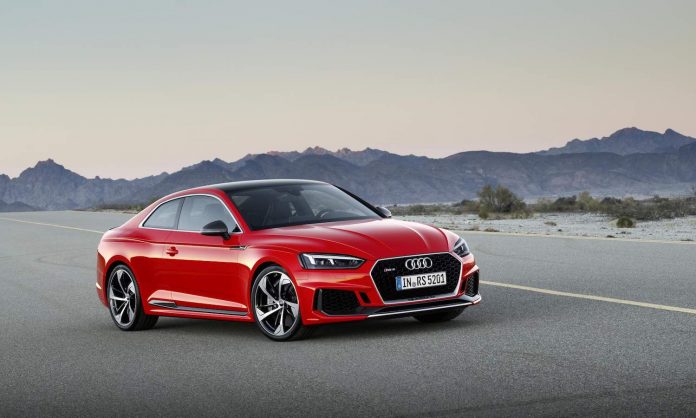
Audi RS 5 Coupe launched: V6 twin-turbo replaces V8

Audi RS 5 Coupe launched: V6 twin-turbo replaces V8

Everything you need to know about Audi

Everything you need to know about Audi

Audi RS 5 (2019 to 2025)

Audi RS 5 (2019 to 2025)

Audi A5 range expanded with new plug-in hybrid

Audi A5 range expanded with new plug-in hybrid

Audi A5 Sportback (2017 to 2024)

Audi A5 Sportback (2017 to 2024)

Audi A5 Coupé (2016 to 2024)

Audi A5 Coupé (2016 to 2024)

New Audi A5 pricing confirmed

New Audi A5 pricing confirmed

New Audi A5 to replace current A4 range

New Audi A5 to replace current A4 range

Audi revises trim line-up for many models in its range

Audi revises trim line-up for many models in its range

Audi A5 Cabriolet review

Audi A5 Cabriolet review

Audi A5 Sportback review

Audi A5 Sportback review

Audi A5 Coupe review

Audi A5 Coupe review

Buy an Audi A5

If you’re looking to buy a new or used Audi A5, The Car Expert’s partners can help you find the right car.

Motors 600x300

Find your next used car with Motors. Find out more

Auto Trader logo 600x300

Find your next new or used car with Auto Trader. Find out more

Carwow logo 600x300

Find your next new or used car with Carwow. Find out more

Lease an Audi A5

If you’re looking to lease a new Audi A5, The Car Expert’s partners can help you find a competitive deal.

Leasing-com logo

Personal contract hire deals from Leasing.com. Find out more

Carwow logo 600x300

Personal contract hire deals from Carwow. Find out more

Select Car Leasing logo

Personal contract hire deals from Select Car Leasing. Find out more

Subscribe to an Audi A5

If you’re interested in a car subscription, The Car Expert’s partners can help. (PS: What’s a car subscription?)

SelfDrive UK logo

Car subscriptions from SelfDrive.
Find out more

Drive Fuze logo 600x300

Car subscriptions from DriveFuze.
Find out more

Cocoon Vehicles logo 600x300

Car subscriptions from Cocoon.
Find out more

How to understand a PCP car finance quote

We get a lot of readers asking questions or looking for explanations about personal contract purchase (PCP) quotes they have received from a dealer or seen online. This is not surprising, as a PCP car finance quotation can look quite confusing.

In this comprehensive article, we are going to go through a PCP car finance quote line by line and explain what each item means. We will tell you what to look out for, and what you can do to adjust each number to suit your needs. If you can understand every aspect of the quote, you are much more likely to get yourself a deal that works for you rather than a deal that works for the car dealer.

When looking at a car finance quote, take your time and work through it line by line, as we will do below. Refer back to this document as you are reading your quote to help you understand it. Don’t just accept whatever the car dealer tells you; you need to take responsibility for making sure the finance offer meets your needs.

The most important thing to remember is that every part of a finance deal is connected to every other part. If you’re borrowing (for example) £30,000 for a car, then the finance deal can be arranged in various different ways to suit your needs. But if you want one part to go down (say, the monthly payment), then that inevitably means other parts will go up (say, the upfront payment or the duration) to make up for it.

Look beyond the monthly payment

Most buyers tend to focus on one line – the monthly payment figure. They will have a target of £X per month, and that’s all they are interested in. However, every aspect of a finance quotation is connected, so if you are trying to reduce a monthly payment quote to get it down to your target, that will inevitably mean you have to compromise somewhere else. Tweaking one line of the quote will always affect several other lines, and you may end up worse off as a result.

Customers looking at a new car in a showroom
Don’t be distracted by the shiny things; focus on your financial limits.

For this article, I have taken a genuine PCP car finance quotation from a large manufacturer finance company on one of the best-selling cars in the UK. However, everything you read below will apply to any PCP car finance quotation.

The reason we are using a PCP quotation is because it is by far the most popular type of car finance for retail car buyers in the UK. More than 80% of all private new car buyers will use a PCP to buy their vehicle, and a rapidly growing number of used car buyers as well.

If you want even more information about any of the technical jargon used in this article, check out our comprehensive car finance glossary that explains everything in plain English.

PCP car finance quote example*

Duration48 months
Monthly payment£311.08
Customer deposit£4,201.50
Deposit contribution£3,000.00
Retail cash price£28,010.00
Acceptance fee£0.00
Optional final payment£11,084.40
Option to purchase fee£10.00
Total amount payable£32,916.66
Total amount of credit£20,808.50
Representative APR %7.9% APR
Rate of interest7.85% fixed
Annual mileage allowance10,000
Excess mileage (per mile)7.2p

*example is an actual finance quotation taken for a popular new car in the UK, as advertised in June 2020

1. Duration

The duration is also called the term. In this case, the 48 months shown actually consists of 47 regular monthly payments plus one large final payment, also called the balloon or guaranteed (minimum) future value (GFV/GMFV).

A PCP car finance agreement can usually run for anywhere between 18 months and 48 months. A longer duration will usually mean lower monthly payments, but the overall amount you end up paying will be higher as you will pay more in interest since you are borrowing the money over a longer period.

Some brands have started offering 60-month (five-year) PCPs on electric cars to help bring monthly payments down. Be very cautious about taking a five-year PCP, as it’s committing you to that car for a long time.

If you want to make the duration shorter, you can:

  • increase your upfront deposit
  • increase your monthly payment
  • choose a cheaper car

2. Monthly payment

This is the number that most buyers are looking at – how much will this car cost per month? However, it’s only one part of the equation, and you have to make sure that every other aspect suits your needs.

The question of “How do I bring my monthly payments down?” is very common, but there’s no magic answer here. Reducing the monthly payment will require you to accept a less-desirable change somewhere else, and concentrating only on the monthly payment can lead you into trouble.

If you want to bring this payment down, you can:

  • choose a cheaper car
  • increase your upfront deposit
  • reduce your annual mileage
  • take a longer term (max. is usually 48 months; see above)
  • negotiate a discount on the price of the car
  • negotiate a discount on the interest rate on the finance

3. Customer deposit

This is the amount you are paying the dealership up front, which is taken into account as part of your overall PCP car finance agreement. We prefer to simply call it an upfront payment because the word deposit can be confusing; you won’t get this money back again at the end of the agreement.

The more money you put in at the start, the less you will have to pay per month. Conversely, the less you put in to start off, the more you will have to pay each month.

Car dealers will often encourage you to put in less deposit and increase your monthly payment, and a common phrase they will use is that a large deposit is “dead money”. Don’t be fooled; they’re saying this because it suits them. They get commission on every pound that you borrow, so if you reduce your deposit by £1,000 you will be increasing your debt by £1,000 and they will get more commission. Do what is right for you.

Part-exchange vehicle
If you have a part-exchange vehicle, that can be used as a form of deposit. If the dealer values your car at £2,000 then that’s the same as a £2,000 cash deposit. If you have outstanding finance on your vehicle, it’s value will be the net result of its value minus the finance. So if your car is valued at £8,000 but you still owe £7,000 to the finance company, it’s only a £1,000 deposit.

If your car is valued at £8,000 but you still owe £9,000, that’s called negative equity, and it means you have to pay £1,000 to get rid of your car before you can start thinking about an additional deposit towards your new car. If you’re trying to part-exchange your car and still have quite a long time left on your current finance agreement, you will almost certainly be in negative equity.

If you want to bring this payment down, you can:

  • choose a cheaper car
  • increase your monthly payment
  • reduce your annual mileage
  • take a longer term
  • negotiate a discount on the price of the car
  • negotiate a discount on the interest rate on the finance

4. Deposit contribution

A deposit contribution is basically a discount for taking the finance agreement; in the example above, it’s £3,000 (which is quite generous and higher than most cars will have). Instead of taking £3,000 off the price of the car, the dealer and/or car company is giving you £3,000 towards the price of the car. It’s kind of the same thing, but it can have advantages if you need to voluntarily terminate the agreement later on.

This amount is typically offered as part of a national campaign for a specific model and is available from any dealership for that manufacturer. It’s a discount/offer, so it won’t be available on any model. It’s also much less common to see a deposit contribution offered on a used car.

Dealers will often offer to use this deposit contribution to cover any negative equity you have in your current car (see above), so you don’t have to find the cash to settle the outstanding finance. This means that there will be little or no contribution left towards the new car, so you are making your new car more expensive by doing this.

5. Retail cash price

This may be listed as total on-road price or something similar. It’s basically the overall price of the car you’re buying (including any extras you have added), and other costs like road tax.

If you want to bring this payment down, you can:

  • choose a cheaper car
  • remove unnecessary extras like GAP insurance or paint protection (the dealer will hate that, but that’s because they make a lot of commission on those extras)
  • negotiate a discount on the price of the car

6. Acceptance fee

This will vary between different finance providers, and may or may not be relevant. Almost all PCP car finance contracts will have fees of some sort (unless they specifically say 0% APR). In this particular case, there is no fee here – however some finance companies may try to charge you as much as £100.

A 0% APR offer means no interest and no fees (other than penalty charges). If a dealer claims an offer is “interest-free” but there are still fees involved, it’s not 0% APR.

An acceptance fee is usually built into the agreement and isn’t generally negotiable. If you really want to haggle over it, all the dealer is likely to do is deduct the equivalent amount off the price of the car.

7. Optional final payment

This is the amount you will still owe at the end of the duration, also known as the balloon. In a PCP agreement, this amount is the same as the guaranteed future value (which is technically a different thing, but for a finance quote it doesn’t matter). If you want to pay off the finance and keep the car, this is how much you will have to pay.

Describing this final payment as ‘optional’ is misleading, as it implies that the default situation is not to pay anything. This is the exact opposite of what your contract says – you owe this money to the finance company, but there are options to avoid paying it. That may sound petty, but it’s important to remember that you have borrowed this money from the finance company and it needs to be repaid, one way or another.

The final payment is what the finance company expects the car to be worth at the end of the agreement. So in this case, the car starts out at £28,010.00 new, and after four years and 40,000 miles it should be worth £11,084.40. That’s 39% of the starting price, which is about average for a four-year-old car.

The finance company will try to take this payment on direct debit unless you hand the car back or part-exchange it before the due date. For more information, have a read of our article about your options at the end of a PCP.

The higher the final payment is, the lower your monthly payments will be. If you want to keep this payment as high as possible to reduce your monthly payments (which is likely if you’re not planning to make the final payment and keep the car), you can take the following actions.

If you want to keep this payment high (to keep your monthly payments down), you can:

  • reduce your annual mileage allowance
  • remove any unnecessary options (like a sunroof or upgraded stereo) and dealer extras (like GAP insurance or paint protection) that increase your starting price but don’t increase the final value
  • stick with the most popular colour and trim combinations (unpopular colours and personalisations can devalue your car)

8. Option to purchase fee

Again, every finance company will charge fees here or there. In this example, if you choose to pay the £11,084.40 to keep the car at the end of the agreement, you will also have to pay an extra £10 admin fee. Yes, you’re right – it does seem petty.

As with the acceptance fee above, this fee is usually built into the agreement and is non-negotiable. Again, if you want to make a fuss about it, the dealer will simply deduct £10 (using the example above) off the price of the car.

9. Total Amount Payable

This is one of the most important numbers in any finance agreement, as it reflects the cost of the car plus the interest and fees you pay as part of the finance. Based on the example above, this amount equals your deposit (£4,201.50), the seller’s deposit contribution (£3,000), 47 monthly payments of £311.08 each, the final payment of £11,084.40 and the final £10 fee.

Even if you don’t plan to keep the car, this is still an important number as it shows you how much you are really paying to finance the car. In this case, the Total Amount Payable of £32,916.66 minus the cash price of the car (£28,010.00) means you are paying £4,906.66 in interest and fees to finance the car over four years.

Total debt

What the quote is not required to show is your total debt, which is the amount you ultimately owe the finance company. It is the total amount payable minus your deposit and any deposit contribution. In this example, the debt would be £25,715.16.

A significant amount of debt may affect your ability to borrow money for a house or get credit for other purposes (credit card, phone, personal loan, etc.). Obviously, you will make inroads to this debt each month with your repayments, so your debt will slowly reduce each month.

If you settle the finance early, you’re effectively borrowing the money over a shorter term. This reduces the overall interest you pay, which reduces the overall debt and means your total amount payable is reduced.

Voluntary termination
Another reason that the total amount payable is important is because it is used to calculate your voluntary termination point, which is 50% of the total amount payable – in this case, £16,458.33. This amount does not need to be shown on a finance quote, but it will be shown in your contract.

Based on the upfront payment (£4,201.50) plus deposit contribution (£3,000) and monthly payments of £311.08, you would reach this 50% mark after 30 months in this example contract. This is earlier than you’d normally expect on a four-year agreement, and is largely because the upfront payment and deposit contributions are high. In most four-year PCP agreements, you won’t reach the 50% mark until sometime in your fourth and final year.

For more information, check out our guide to voluntary termination of a PCP or HP.

Repossession
Your repossession rights are also determined by the total amount payable. If you have repaid less than a third of the total (in this case, £10,972.22, which you would reach in about 13 months) and you default on your payments, the finance company has the right to repossess the vehicle.

Once you have repaid more than a third of the total amount payable, they would have to get a court order to repossess the vehicle. In practice, that means they may be a little more patient with you before going to the effort of trying to repossess your car, as going to court costs money with no guarantee that they would win.

If you want to bring this payment down, you can:

  • choose a cheaper car
  • take a shorter term (thereby paying less interest)
  • remove unnecessary extras like GAP insurance or paint protection
  • negotiate a discount on the price of the car
  • negotiate a discount on the interest rate on the finance
  • find a finance agreement with a lower APR (interest rate)

10. Total amount of credit

This is the amount of money you are borrowing, and is equal to the price of the car (£28,010 in this example) minus your deposit (£4,201.50) and the deposit contribution (£3,000), which works out to £20,808.50. That’s not the same as your total debt, because you pay interest on the amount borrowed.

It’s a common misconception that you’re not borrowing the balloon amount – not true at all. You are borrowing that £11,084.40 and paying interest on it, but you are not repaying it unless you decide to make the final payment at the end of the agreement.

If you want to bring this payment down, you can:

  • choose a cheaper car
  • increase your up-front deposit
  • negotiate a discount on the price of the car
  • negotiate a discount on the interest rate on the finance
  • find a finance agreement with a lower APR

11. Representative APR

APR stands for Annual Percentage Rate, and includes all the interest and fees you have to pay on the finance agreement. It is essentially the cost of taking out finance, and obviously a lower number is better than a higher number.

If you are looking at a finance quote that has been prepared specifically for you rather than an advertised example, it may simply say “APR” rather than “Representative APR”.

A Representative APR is the rate that at least 51% of applicants must be offered, but you may not be offered this rate. The Representative APR in this example is 7.9%, but you may be offered a higher rate (say, 9.5%) if the finance company considers you a higher-risk customer.

If you want to bring this payment down, you can:

12. Rate of interest

APR includes both interest AND fees; this bit is the interest component. In this example, the interest rate is 7.85% but the APR is only 7.9%, which means that there are very few fees that only make up 0.05% of your cost of borrowing.

This can be important because interest and fees are different. Interest is spread across your monthly payments, whereas a fee is charged in one hit. For any given APR, it’s usually better to be paying more in interest and less in fees.

Negotiate a better rate
If you are buying a car as part of an advertised campaign offer, there may not be any additional room for negotiation on the interest rate. However, in any other case (and especially on a used car), there is normally an opportunity to negotiate a percentage point or two off the interest rate.

If you can save 1% on your interest rate, that might be a much better result than haggling over a few hundred pounds off the price of the car.

13. Annual mileage allowance

For too long, this number has been buried in the fine print. It should be up there with all the other information, like it is in our example above – especially if you are looking at a specific finance quote prepared for you rather than an advertised example.

This number should reflect the number of miles you expect to do each year – the national average is about 10,000, which is what the example above shows. However, many dealers and finance companies are now quoting customers on much lower mileage figures (often 6,000 per year) unless you specifically nominate a higher mileage.

Why do they do this? Well, a lower annual mileage will make your final payment higher, which will reduce your monthly payments and/or your up-front deposit. The problem is that if you go over your mileage allowance, the finance company will charge you an excess mileage penalty (see below).

Make sure your mileage allowance reflects your driving requirements, and be realistic about it rather than optimistic.

14. Excess mileage

This is what the finance company will charge you for every mile you go over your allowance for the term of the agreement. It only applies if you are giving the car back to the finance company at the end of the agreement and claiming the guaranteed future value. For more information, have a read of our article about your options at the end of your PCP agreement.

This example is a 48-month (four-year) PCP with an annual mileage allowance of 10,000 miles, which means the total mileage allowance over the entire agreement would be 40,000 miles.

The excess mileage penalty fee in this example is 7.2p per mile, which works out to £72 for every 1,000 miles that you exceed your allowance. That’s relatively low, but will still be more than you’d pay if you set the mileage correctly in the first place.

Summary

Ultimately, there’s no such thing as a perfect finance quote. As you can see above, a number of the variables above can be adjusted to suit your particular needs.

For example, if you increase your deposit then you pay less per month. That might suit you but may not suit another buyer, who may not have the cash available and would therefore prefer to pay a bit more per month in order to pay less up front.

Likewise, one buyer may prefer to wear a higher monthly payment in order to have a three-year PCP, while another buyer may prefer a lower payment over four years.

You need to work out what suits your financial circumstances, and don’t be charmed or bullied by a dealer who wants you to borrow more money or put in less deposit – they are doing this because it suits them, not because they’re trying to help you.

Customers signing PCP car finance agreement
Have you followed The Car Expert’s advice? Good, you can sign that contract now.

This post was originally published in June 2018. Last updated June 2025.

Disclaimer
PCP car finance agreements in the UK are regulated by the Financial Conduct Authority, and anyone involved in the selling of car finance must be accredited by the FCA. You should always consider the terms and conditions of any agreement carefully before taking out any form of car finance, as you are making a substantial ongoing commitment and there may be significant costs if you change your mind or are unable to meet your commitments at a later date.

Honda Civic Type R to be removed from sale in the UK

0

The Honda Civic Type R will be pulled from sale in UK and Europe next year, its final farewell marked by a limited-run ‘Ultimate Edition’ model.

The current eleventh-generation Civic Type R is regarded as one of the best hot hatch options on the UK market – with a New Car Expert Rating of A in our Expert Rating index – but will be removed from the UK market in the middle of next year due to changing automotive regulations in the EU.

Honda has not named the exact piece of legislation that has caused the Type R’s retirement, but the EU’s tightening safety tech and emissions standards are the likely culprit – the same new regulations that will retire rivals like the Alpine A110 and Toyota GR86. These US regulations stipulate that cars that don’t meet the current standards and are under 1,500 annual sales can remain on sale until July 2026 – the same month that the Type R is set to be removed from sale.

To mark the end of the Civic Type R in the UK and Europe, Honda has announced that it will produce 40 ‘Ultimate Edition’ versions, with ten of these allocated for sale in the UK on a first come, first serve basis.

The ‘Ultimate Edition’ only comes in white with a unique red racing stripe decal, a black roof, carbon detailing on the large wing spoiler and the centre console inside, and more ambient interior lighting for the door lining, cup holder, centre console, and footwells.

The limited-run model also comes with a ‘celebratory gift box’, which includes the car’s carbon-detailed key ring, an emblem with a number between one and 40 to denote the car’s position on the production line, unique ‘Ultimate Edition’ floor mats, and a car cover.

Honda is yet to announce the pricing of the ‘Ultimate Edition’, or exactly when this special Type R model will become available to order in the UK.

The Honda Civic Type R holds a New Car Expert Rating of A with a score of 75% – three points off the standard Civic range.

Everything you need to know about Jeep

It’s remarkable that a vehicle designed as a military staff car still today makes much of a reputation gained by its very first versions used in the second world war – a vehicle that could go anywhere, no matter how far off the beaten track.

In truth, Jeep’s insistence on ensuring its vehicles really could go anywhere proved a drawback in more recent times. The brand claims to have launched the first-ever SUV in the 1960s but as the modern incarnations of such vehicles have developed, Jeep has failed to keep up with rivals that were so much better on the road – where even Jeeps spend most of their time.

Now, as part of the giant that is Stellantis, Jeep is transforming into a brand that can compete in a market where on-road performance and quality take precedence over all-terrain ability. While Jeeps are still regarded as all-wheel-drive vehicles, today few of them are.

Jeep has also maintained its status as a US icon during a chequered history – most people still see the brand as American, despite the fact that it has been controlled by the French (Renault), Germans (DaimlerChrysler) and Italians (Fiat Chrysler), before being absorbed by the European giant that is Stellantis, headquartered in the Netherlands.

So who or what is Jeep?

What became Jeep had its beginnings in 1941, when the US military needed a light four-wheel-drive scout car for the war they were inevitably going to enter. They pitched the idea to 135 companies but just two responded, probably because of the 49-day deadline to produce a working prototype.

The American Bantam Car Company met the deadline but the Army thought it would never be able to make the number required, so the Bantam design was shared with Ford and Willys-Overland, and quickly evolved into the specification for the vehicle that has forever been a staple of war movies. Every US regiment received, on average, some 145 Jeeps and they were used for all sorts of purposes.

As for the name, Jeep was already US military slang for new and untested recruits or vehicles. When a prototype of the scout car was demonstrated by driving up the steps of the US Capitol building, a newspaper reporter asked what the vehicle was and was told a Jeep – the resultant news piece used the term and the rest, as they say…

After the war, Willys-Overland marketed passenger versions of the Jeep, including a station wagon and a ‘Jeepster’ model directly aimed at civilian buyers. Willys was then acquired, first in 1953 by Kaiser Motors and then in 1970 by the American Motors Corporation (AMC), which separated Jeep’s military and civilian businesses into separate companies. The military division would later create another iconic US military vehicle – the Humvee, which in civilian models became the Hummer.

In 1962, Jeep launched the Wagoneer, a vehicle that claims to be the first-ever SUV. It remained in production for almost 30 years before finally being retired, and the name was reborn a few years ago as Jeep’s flagship SUV model.

More than eighty years after the first Jeep was created, its spiritual descendant lives on in the form of the Jeep Wrangler – although it’s a conceptual connection that unsurprisingly shares no common parts with the original 1940s model.

Thousands of Jeeps were left behind in Europe after the war and, in Britain, directly inspired the creation of the first Land Rover in 1947. But it wasn’t until the late 1970s that Jeep officially went on sale in Europe, through Renault dealerships following the French giant’s investment in AMC. But financial issues and unrest in the late 1980s encouraged Renault to sell off its interest in AMC and the company was snapped up by US giant Chrysler.

In 1987 the ownership switched back to Europe when Chrysler merged with Mercedes-Benz owner Daimler to create DaimlerChrysler. That merger went disastrously, with Daimler unloading Chrysler again after just ten years. Another merger with Fiat followed in 2014 to form Fiat Chrysler Automobiles, which was subsequently absorbed into Stellantis when FCA merged with PSA Groupe (including Peugeot, Citroën, Vauxhall, and others) in 2020. Today, Jeep is one of more than a dozen brands within the sprawling Stellantis family, which has influenced its current lineup, especially in Europe.

What models does Jeep have and what else is coming?

As of June 2025, Jeep has a five-strong UK model line-up, albeit one that is in the process of undergoing major changes.

The Jeep Wrangler can trace its lineage directly back to the 1980s, and conceptually back to the earliest military Jeeps. Now available with just a petrol engine, it’s renowned for its off-road ability but not for its on-road dynamics or safety. Euro NCAP gave the Wrangler a paltry one star when testing the latest generation in 2018, a major factor in the New Car Expert Rating of E earned by the car in The Car Expert’s Expert Rating programme.

In contrast, the Jeep Grand Cherokee earned an excellent five-star Euro NCAP score for its latest generation launched in 2023. The large SUV, the flagship of the range, is now sold as a plug-in hybrid and earns a New Car Expert Rating of C – mediocre UK reviews are compensated for by that excellent safety performance.

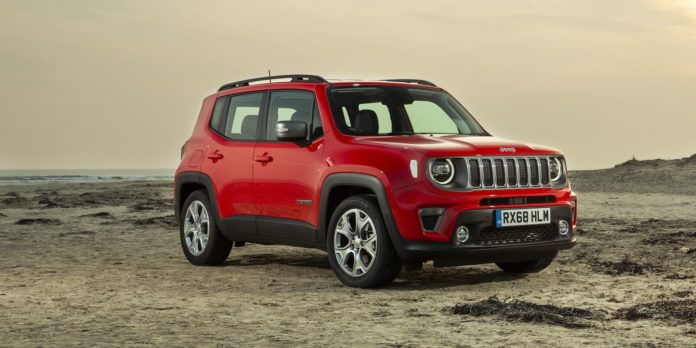
Sadly, it’s back to E-grade territory for more recent Jeep fare. The Jeep Renegade launched in 2015 as a small SUV and as a result of Jeep’s merger with Fiat. Underneath the familiar Jeep styling themes is basically a Fiat 500X, and it’s built in Italy. It follows the US brand’s typical style – no rivals can touch it off-road but they leave it behind once on the tarmac.

The Jeep Compass went on UK sale in 2018, effectively filling the gap between the Renegade and the larger Cherokee models. This was a Jeep supposedly more focused on improved on-the-road performance, while losing none of its off-road credentials. It achieved the latter but not the former, still lagging behind its many rivals in this crowded market.

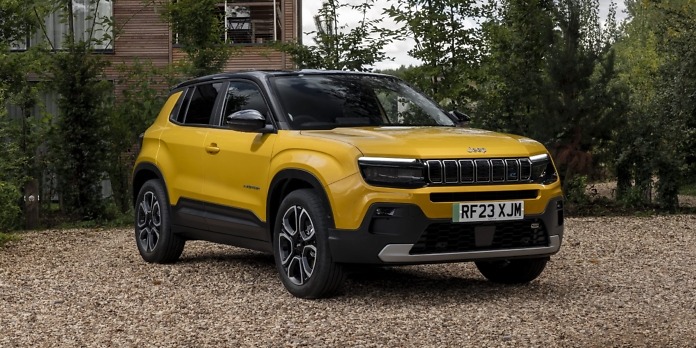
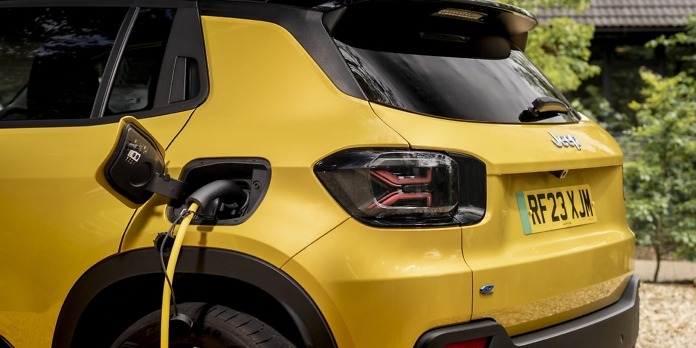
The most recent Jeep launch, however, has bucked the trend and perhaps marked a turning point for the brand. The Jeep Avenger is a compact SUV and the first all-electric model in Jeep’s line-up. It also shares its makeup with the Peugeot e-2008 and Vauxhall Mokka Electric, following Jeep’s absorption into the Stellantis Group. This has resulted in rather better scores in all areas and a New Car Expert Rating of A from The Car Expert.

Current Jeep range on our Expert Rating Index

Jeep Avenger Electric

Jeep Avenger Electric

Jeep Compass

Jeep Compass

Jeep Grand Cherokee

Jeep Grand Cherokee

Jeep Renegade

Jeep Renegade

Jeep Wrangler

Jeep Wrangler

The initial electric Avenger has since been joined by mild-hybrid and petrol variants and while in standard form it is two-wheel-drive, an off-road focused 4WD version is now offered too. 

The third of Jeep’s traditional model names should make its return in 2026, the Cherokee. First sold in 1974 and last in showrooms in 2023, the new Cherokee will be totally unrelated to its predecessor, offered in hybrid and electric propulsion and pitched as a rival to the Land Rover Discovery.

The new Cherokee’s styling will match that of the all-new Compass, the third-generation model going for a complete reinvention with bold styling, better quality but still more off-road ability than its Stellantis sisters the Peugeot 3008 and Citroën C5 Aircross. On the road before the end of 2025, it will be offered with petrol, plug-in hybrid and electric versions, including a range-topping all-wheel-drive model. 

Reports also suggest that both the Grand Cherokee and Wrangler could be dropped from Jeep’s model range this year as the brand continues its push towards a mainly electric future. The Grand Cherokee will be replaced by the electric Wagoneer S, on sale before the end of 2025, while the Wrangler could be killed off by the arrival of Jeep’s new small EV, the Recon.      

Where can I try a Jeep car?

Jeeps remain fairly specialised vehicles, with a narrower range of models compared to some brands, and this is reflected in the number of dealerships. Like many brands, there has been some consolidation, and today there are around 50 outlets, although they are well-spaced throughout the UK.

Many Jeep dealerships can be found alongside those of other Stellantis brands, particularly those of Fiat, a result of the merger with the Italian brand in 2014.

What makes Jeep different to the rest?

It’s probably fairer to say ‘what made Jeep different to the rest’ because for much of its life, Jeep traded on a reputation of all its models being all-wheel-drive and able to traverse the toughest of off-road terrains – a similar image adopted by its younger British rival, Land Rover.

In fact, even some of the earliest Jeeps were two-wheel-drive machines and today market forces demand that most of the brand’s model range are. You can still get all-wheel-drive Jeeps and they will still go just about anywhere – but this ability has made it harder for them to keep up with the refinement of rivals where they spend most of their time, on the road. On-road quality is likely to be a bigger factor than off-road ability in Jeep’s future.

A Jeep fact to impress your friends

Following the second world war, enterprising locals in the Philippines took the many surplus Jeeps left behind by US forces and welded on longer, wider rear ends, effectively turning them into mini buses.

Elaborately decorated by their owners, the ‘Jeepneys’ have become as much a symbol of the Philippines as the black cab is of the UK.   

Summary

The Jeep of today is at a crossroads – but appears to be heading in the right direction. As a central part of the Stellantis empire and benefiting from the economies of scale that come with developing new models for three or four brands at a time, Jeep is in the process of renewing its range.

These new models both embrace the switch to electric and eliminate the on-road deficiencies that were a byproduct of maintaining traditional off-road ability. For Jeep, the future holds great potential.

Buy a Jeep

If you’re looking to buy a new or used Jeep, The Car Expert’s partners can help you find the right car.

Motors 600x300

Find a used Jeep with Motors. Find out more

Auto Trader logo 600x300

Find a new or used Jeep with Auto Trader. Find out more

Carwow logo 600x300

Find a new or used Jeep with Carwow. Find out more

Lease a Jeep

If you’re looking to lease a new Jeep, The Car Expert’s partners can help you find a competitive deal.

Leasing-com logo

Personal contract hire deals from Leasing.com. Find out more

Carparison 600x300

Personal contract hire deals from Carparison Leasing. Find out more

Select Car Leasing logo

Personal contract hire deals from Select Car Leasing. Find out more

New car sales still fairly flat in May

New car registrations improved by less than 2% in May 2025, although it was a mix of growing fleet business and falling consumer sales, with the overall market still struggling along well below pre-pandemic levels.

According to results published this morning by the Society of Motor Manufacturers and Traders (SMMT), the overall new car market improved by just under 2% compared to the same month last year, thanks to a 4% improvement in fleet registrations. Private new car sales, however, fell by 2%.

This means that for the first five months of this year, the overall market is up by about 3% on last year – with private sales up 5% and fleet sales up 2%.

As has been the case all year, electric and plug-in hybrid cars saw the strongest growth in May 2025, while sales of traditional petrol and diesel cars continued to decline.

Source: SMMT

EVs and plug-in hybrids still driving growth

EV registrations were up by 26% compared to the same month last year, which resulted in a 22% of the overall market share. Plug-in hybrid sales increased by 51%, resulting in a 12% market share and narrowing the gap with basic (non-plugged) hybrids, which saw 7% growth for a market share of 14%.

The data appears to show that the Expensive Car Supplement (an additional £410/year of road tax on new cars over £40K) being added to EVs from April has not really slowed demand, but we’re only two months into this new tax so we’ll have to keep monitoring this.

The resurgence of plug-in hybrids this year has multiple potential drivers: the government’s ZEV (zero emissions vehicle) mandate allows partial credits for plug-in hybrids, which is helpful for car manufacturers who don’t have many EVs to sell; some market sectors (like large SUVs) still don’t have many EV options, so previous diesel customers are turning to plug-in hybrids instead; and plenty of customers are still reluctant to jump straight from a petrol car into an EV, so a plug-in hybrid is a good halfway house that offers local electric driving with the reassurance of a petrol engine for longer journeys.

Petrol’s market share was again below 50%, as it has been each month since February, as customers progressively move away from purely fossil fuel power to various levels of electrification. However, it must also be noted that some brands are limiting the sales of certain petrol and diesel models to avoid fines from the government’s ZEV mandate.

The ZEV mandate continues to stir debate within the industry. Nominally, EVs have to make up 28% of all new car registrations this year, but after May 2025 we’re currently sitting at 21%. In reality, however, there are various loopholes built into the system, which have been increased recently as the government allows the car industry some more flexibility to shift from fossil fuels to electricity. It’s estimated that the actual target is likely to be about 23%, so we’re not far off. That won’t stop the shouting from both sides of the debate, however.

Source: SMMT

The Tesla conundrum

One of the question marks about EV registrations every month is always about Tesla’s performance. There has been a lot of noise in recent months about customers being put off Tesla because of their dislike of the company’s CEO, Elon Musk.

In both April and May, Tesla’s registrations in the UK were significantly down, but then Tesla’s registrations tend to fluctuate wildly at the best of times as the company doesn’t operate a traditional dealer network. What we don’t know is whether the April and May results are just part of Tesla’s normal variation that could turn around completely in June, or if this is a genuine indication of a decline in the company’s fortunes as customers turn elsewhere.

If it’s part of the normal variation, and Tesla still has a normal order bank of customers awaiting delivery, we could see a jump in both Tesla and overall EV sales whenever the next boatloads of Tesla Model 3 and Model Y cars arrive from China and Germany. This would give the overall EV market a boost and make the numbers look more positive.

If, however, Tesla is seeing a genuine fall in customer demand, with those consumers and businesses choosing from the many excellent alternatives to the Model 3 and Model Y now available, then it’s bad news for both Tesla and the overall EV market.

We typically review Tesla data quarterly, rather than monthly. At the end of Q1 in March, Tesla registrations were up 6%, just behind the overall market. April and May have been poor, but we’ll have more confidence in the company’s overall direction of travel at the end of June.

Good month, bad month – May 2025

Although the market was up by just under 2%, there were still plenty of ups and downs from the 52 car brands that report their registrations to the SMMT.

It was a good month for Alpine, Bentley, BYD, Cupra, DS Automobiles, Fiat, Ford, Genesis, Ineos, Jeep, Lexus, Maxus, Mazda, Peugeot, Polestar, Renault and Vauxhall. All of these brands outperformed the overall market by at least 10%, which means they saw growth of at least 12% on the same month last year.

Meanwhile, the news wasn’t so good for Abarth, Alfa Romeo, Audi, BMW, Citroën, Dacia, GWM, Honda, KGM, Maserati, Mercedes-Benz, SEAT, Smart, Subaru, Suzuki, Tesla and Volvo. These brands underperformed against the overall market by at least 10%, meaning they experienced declines of at least 8% compared to last May’s data.

That means that the following brands were about where you’d expect them to be: Hyundai, Kia, Land Rover, MG, Mini, Nissan, Porsche, Skoda, Toyota and Volkswagen. This means they were within 10% (plus or minus) of the overall market.

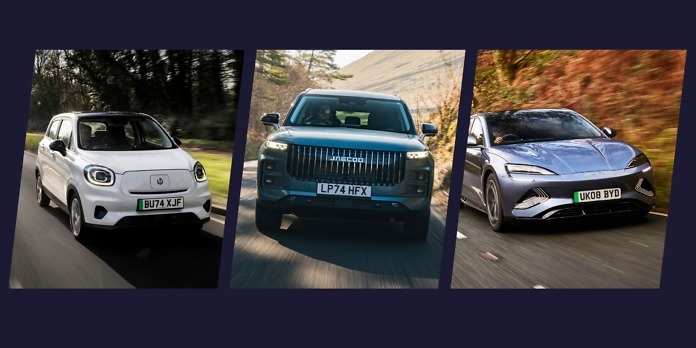
The biggest improver in overall numbers was BYD, which jumped from about 600 cars last May to 3,000 cars this year. It’s still a new brand that has added several models to its range, so that’s not quite as significant as it might seem on the surface. But it certainly shows that BYD is making strides. Omoda and Jaecoo, two new brands that essentially operate as one company, also registered about 3,000 cars in May and didn’t even exist in the UK 12 months ago, which shows the inroads that new Chinese brands are making into the UK market.

Going in the other direction, Audi registrations dropped by about 2,600 units compared to the same month last year, which was a 24% fall. Year-to-date, Audi is down about 18% as some of its best-selling models are replaced. It will be interesting to see if sales recover in the second half of the year.

Volkswagen remains the UK’s best-selling brand, comfortably ahead of BMW in second place, followed by Kia, Ford and Audi.

Ford Puma back on top in battle with Kia Sportage

The Ford Puma edged further ahead in the 2025 sales race, topping the sales charts in May ahead of its main rival, the Kia Sportage. Puma sales will no doubt be helped by the arrival of the new Gen-E electric model and, as we approach the halfway point of the year, the Puma has a lead of exactly 2,300 cars.

It was a good month for Nissan’s UK production in Sunderland, with the Qashqai and Juke models placing third and fourth in May’s results. The Qashqai is about 500 units ahead of the Vauxhall Corsa, which finished fifth in May.

It was another good month for MG, with the ZS small SUV popping up in sixth place in May and moving up to seventh in year-to-date sales. With the larger HS SUV in tenth, MG now has two models in the top ten after five months of the year.

It was the first appearance in the top ten for a long time (possibly ever?) for the Hyundai Kona, with its larger sibling, the Tucson, disappearing from both the monthly and year-to-date best-seller list. And the new Mini Cooper is slowly making inroads, with a second month in tenth place. It’s been a slow burn for the new Mini, after the previous model was one of the UK’s best-selling cars for almost its whole production life.

Several of the top ten models have electric versions (Ford Puma Gen-E, Vauxhall Corsa Electric, Hyundai Kona Electric, Peugeot e-2008, Mini Cooper Electric), but with another slow month from Tesla, there are no dedicated EV models in the top ten.

We’ll have our usual in-depth look at the top ten in the next few days.

Source: SMMT

New Toyota Aygo X Hybrid announced

Toyota is adding a hybrid system to its smallest model with the new Toyota Aygo X Hybrid, which will go on sale later this year.

Based on projected official testing figures, Toyota claims that the new Aygo X Hybrid will boast the lowest CO2 emissions of any regular hybrid (non-plug-in) in the UK with a predicted figure of 86g/km. That means it will comply with current low-emission zone requirements.

The hybrid powertrain, which replaces the current 1.0-litre petrol unit, also brings a performance boost. Overall power output increases by 43hp compared to the previous non-hybrid version, reaching a maximum of 115hp and enabling 0-62mph acceleration in less than ten seconds.

The transition has been no easy task, and adapting the Aygo X to accommodate the hybrid components within the tight confines of a city car has required some innovative packaging from Toyota’s engineers and designers. The hybrid batteries are arranged differently to the company’s larger models, while the auxiliary battery has also been moved to preserve storage capacity.

The larger hybrid powertrain needs more space under the bonnet, so a restyled front end sticks forward about 8cm more than the previous petrol model.

To help emphasise the smooth, electric-capable drive of the Aygo X Hybrid, Toyota has fitted new noise insulation components in the dashboard, under the bonnet lid and underneath the engine, combined with an updated exhaust system. Further noise reduction measures are featured on higher grade models, including thicker window glass and additional soundproofing.

The required reworking of the front end coincides with a mid-life restyle for the Aygo X, with a new bonnet, headlights and grille. There are also new designs for the alloy wheels in either 17- or 18-inch sizings

Interior design has also been refreshed, with a larger central display and revised plastic surround, as well as a digital display in front of the driver to replace analogue instruments. Final UK specifications are yet to be confirmed.

Toyota says that the new Aygo X Hybrid will come with its latest safety and driver assistance package, including an enhanced pre-collision system, lane trace and road sign assist features, as well as a new emergency driving stop system and proactive driving assist. Over-the-air software updates will be available for the first time on an Aygo X, keeping the safety systems updated.

Full pricing details of UK-spec models will be revealed in coming months ahead of the revised model going on sale later in the year. We do know that a GR Sport version is on the cards, in line with most of Toyota’s larger models. As well as sportier interior and exterior trim highlights, this model is expected to get retuned suspension and steering for a sharper driving experience.

New V8-powered Bentley Bentayga Speed revealed

0

Bentley has added a new high-performance ‘Speed’ variant to its Bentayga range, which is the fastest SUV the British brand has produced to date.

Unlike the previous iteration of the Bentayga Speed, which was powered by a 6.0-litre W12 petrol engine, this new model makes use of a smaller twin-turbocharged 4.0-litre V8 unit which adds an extra 15hp – 650hp in total. The new engine also drops the Bentayga Speed’s weight by 42kg, which contributes to the SUV’s reported 0-62mph sprint time of 3.4 seconds.

That means that this two-and-a-half tonne flagship SUV is half a second faster to 62mph than its predecessor, and that it can accelerate faster than the lighter V8-powered Aston Martin DB12 Grand Tourer. Top speed is capped at 193mph and the Bentley comes with a new launch control function and stiffer suspension shock absorbers.

When compared with the standard Bentayga model, the Bentayga Speed has a few subtle cosmetic tweaks. ‘Speed’ badges feature on the front doors, treadplates, passenger-side dashboard and the embroidered seats.

The options list includes an Akrapovic-supplied titanium exhaust system with four tailpipes, and customers can choose between 22- and 23-inch alloy wheels with unique design patterns, the latter also coming with carbon-ceramic brake discs. Now on sale in the UK, the new Bentley Bentayga Speed is on sale for £219k.

The Bentley Bentayga currently holds a New Car Expert Rating of D, with a score of 57%. This lags well behind the latest Range Rover. The SUV’s media review scores have only been average and running costs are unsurprisingly enormous.

New high-performance BMW M2 CS revealed

0

BMW has announced that a new limited-edition ‘CS’ version of its compact M2 coupé is now available to order, featuring a power boost and plenty of carbon fibre elements inside and out.

Offering the “ultimate driving pleasure”, the rear-wheel drive coupé is powered by the same turbocharged 3.0-litre straight-six petrol engine as the standard M2, but with a 50hp power boost. Total output stands at 530hp – making the M2 CS just as powerful as BMW’s larger M4 Competition coupé.

This CS variant, which is only available with an eight-speed automatic gearbox with paddle shifters, can reportedly complete a 0-62mph sprint in 3.8 seconds – two tenths of a second faster than the standard M2 – and top speed is capped at 188mph.

BMW has also lowered the car’s suspension by close to a centimetre for this top-spec version, and the car’s bronze-coloured 19- and 20-inch alloy wheels come with red brake callipers.

BMW has also cut the coupé’s weight by 30kg, by using carbon fibre across the car’s exterior build. The roof and more prominent ducktail spoiler are made of the lighter material, as are the wing mirrors and the rear diffuser, which houses a quad tailpipe exhaust system.

The options list includes a lighter titanium ‘M Performance’ exhaust system, carbon ceramic brake discs, ‘ultra-track’ tyres and the car is available in four different metallic exterior colours – black, grey, ‘portimao blue’ and ‘velvet blue’.

More carbon fibre features inside, notably on the centre console and dashboard trim. The carbon fibre sports seats are electrically adjustable and come with an illuminated ‘CS’ logo below the headrest. The steering wheel is trimmed in Alcantara leather and has a red centre marker.

Built at BMW’s factory in Mexico and now available to order, UK pricing for the limited edition M2 CS now begins at over £92k. By comparison, the entry-level M2 model is currently priced at under £69k.

The BMW M2 holds a New Car Expert Rating of C, with a score of 62%. Although it receives high praise from motoring journalists, its overall score is weighed down by inevitably high running costs, while its safety rating and CO2 emissions levels are only average.

Alpine A390 crossover makes its debut

Alpine has expanded its range to three models with the arrival of the A390, an electric coupé SUV that will pitch into the growing EV market against cars like the Cupra Tavascan, Ford Capri – and maybe even the new electric Porsche Macan.

Don’t get too excited just yet, though. Although the A390 was unveiled at Alpine’s 70th birthday bash last week, the A390 won’t reach the UK until sometime in the second half of next year.

Described as a ‘sports fastback’, the Alpine A390 packs three electric motors under its sleek bodywork (one at the front, two at the rear) to form an all-wheel drive system that allows torque vectoring for cornering – where the outside rear wheel can push out more power while the inside rear wheel backs off, helping to make the car more agile.

The new A390 takes Alpine’s model range to three, alongside the Renault 5-based A290 small hatch and the ageing A110 sports car, which will be replaced by an all-new, all-electric A110 at the end of next year.

Under the skin, the Alpine A390 shares its platform with the more mundane Renault Scenic and Nissan Ariya SUVs, which is no bad thing as they’re both fine family EVs. But Alpine has turned the performance up to 11 to take the A390 into new territory.

Two versions will be available – the A390 GT and A390 GTS. The GT offers 400hp, which will produce a 0-62mph time of just under five seconds and a top speed of 125mph. The GTS builds this up 470hp, taking the 0-62mph time down to four seconds and a top speed of 138mph.

Both versions will be supplied by a 89kWh battery, which should yield a driving range of up to 350 miles in the base-spec GT – although official figures will be confirmed once UK specifications are confirmed. Fast charging should yield a 15%-80% charge time of about 25 minutes if you have access to a 190kW charger or better.

The A390 measures about 4.6 metres long, which is a bit shorter than the new Porsche Macan, but a low height of 1.5 metres gives it a slippery aerodynamic profile to maximise driving range and minimise wind noise. There’s room for five adults and a decent boot size of 532 litres.

There’s also a full suite of driver assistance systems, with driver attention monitoring with progressive emergency braking, automatic emergency braking in both forward and reverse, lane departure warning and, when parking, safe exit warnings.

A ‘My Safety’ button beside the steering wheel allows the driver to select their preferred assistance settings with a single touch, choosing whether to activate or deactivate them, their level of intervention and the presence of audible alerts. This is to help drivers get around the latest EU nanny regulations, which insist on reactivating systems that you have previously deactivated every time you start the car.

The A390 also features adaptive cruise control with stop-and-go as standard, and, depending on specification, a function that allows the car to move out of the way to let two-wheeled vehicles pass.

Alpine has yet to confirm UK pricing, but the GT is expected to start at around £60K, with the GTS about £10K more than that.

A special Alpine A390 Premiere Edition will be available when order books open in November, and deliveries are expected to commence in the second half of 2026.

Electric Renault 4 E-Tech pricing announced

Renault has announced the UK price and trim specifications list of its new Renault 4 E-Tech crossover, which will become available to order in the UK from the start of July.

It’s the second EV from Renault to take inspiration from the company’s back catalogue, in this case the original Renault 4 from the 1960s. While it echoes the original’s boxy looks, practicality and versatility, this new interpretation gets its power from electricity.

Prices will start from about £27K and three trim levels  – Evolution, Techno, and Iconic – will be available.

Retro-inspired touches include the bonnet lines that continue to the bottom of the grille, the rear quarter windows and sculpted lines along the doors that echo the plastic protectors of the original. Later, there’ll be the option of an electric canvas roof, mimicking the original sixties model, on all but the entry-level version.

The new Renault 4 is larger than the Renault 5, offering more interior space. Rear seat occupants benefit from more knee room, while headroom is particularly generous for this class of vehicle. Boot space is generous as well, at 420 litres with the rear seats up and 1,405 litres with them down – plus a 55-litre underfloor area. The top-spec Iconic model comes with a powered tailgate.

Standard equipment levels are competitive across the board,with the entry-level evolution model boasting 18-inch diamond-cut alloy wheels, automatic high-beam headlights, keyless entry and dual-zone climate control. There’s also a ten-inch central touchscreen with wireless Android Auto and Apple CarPlay, cruise control, rear parking sensors, a rear view camera and the usual array of accident-avoidance safety systems.

Prices start from £27K for the Evolution model, £29K for the mid-spec Techno and £31K for the top-spec Iconic version. All models will come with a 150hp electric motor powered by a 52kWh battery, which should yield a driving range of up to 247 miles. A 15%-80% public rapid charge should take about half an hour, while a full 0-100% charge at home should take less than eight hours.

Everything you need to know about Bentley

In the UK, the two signature symbols of opulent motoring are without doubt Bentley and Rolls-Royce, a pair of brands renowned across the world for their luxury and very British heritage – despite, ironically, both being under German ownership.

The two brands have spent most of their histories closely intertwined. After a glorious beginning based on its 1920s racing exploits, Bentley was bought by Rolls-Royce and, for many years, lived in the shadow of its parent brand.

The saviour of Bentley proved to be a complicated acquisition deal and a bidding war over Rolls-Royce Motors (which included Bentley) between Volkswagen and BMW. This ultimately resulted in BMW taking Rolls-Royce and Volkswagen owning Bentley, and for the first time in decades, the two sibling British brands became rivals. Volkswagen rejuvenated Bentley by reaffirming its luxury credentials while also highlighting one of its oldest traits: high performance.

Today, Bentley again has a top-notch worldwide reputation for cars that are beautifully constructed to the exact requirements of their owners, and which can perform with the very best – it may be German-owned, but Bentley today is considered as a very special British brand.    

So who or what is Bentley?

Wilfred Owen Bentley, known as W.O., began his automotive career before the first world war, selling French cars in north London with his brother. 

After developing lightweight aluminium parts for aeroplane engines during the war, Bentley launched his own car company, Bentley Motors, with the first cars going on sale in 1921. The new Bentleys immediately found favour with racing drivers who appreciated their durability, winning many races in England and competing at the Indianapolis 500 in America. Bentley also won the famous Le Mans 24 Hours race five times in seven years between 1924 and 1930.

Despite building up an enviable reputation for its racing cars and upmarket road machines, Bentley hit financial trouble in the 1920s. W.O. Bentley sold the business to one of his racing driver customers, Woolf Barnato, but respite was only temporary as the Great Depression at the end of the 1920s nearly destroyed the expensive car market. On the brink of closure, Bentley was acquired by rival premium manufacturer Rolls-Royce.

Rolls-Royce moved Bentley’s operations from north London to its premises in Derby, and all Bentley cars for the next 70 years were basically reworked Rolls-Royce models. After the second world war, production moved to a new factory in Crewe that had been built to manufacture Rolls-Royce Merlin aero engines for the Spitfire fighter and Lancaster bomber planes.

After the war, most Rolls-Royce and Bentley models moved to standard steel bodies, produced by Pressed Steel in Oxford, although customers could still specify custom coachbuilt bodies for more exclusive models. This practice survived until the mid-1960s, with many custom Bentley and Rolls-Royce designs built by a company called Mulliner & Co. This company ended up being bought by Rolls-Royce, and the Mulliner name is still used by Bentley today for its bespoke services that allows customers to tailor their cars individually.

By the arrival of the 1970s, Rolls-Royce was in major financial trouble and the car company was split from the aerospace business. The Bentley brand became very much neglected, at one point accounting for just 5% of Rolls-Royce’s total sales. Rolls-Royce Motors was sold to manufacturing conglomerate Vickers in 1980, with the new owners putting more investment into Bentley with more differentiation from Rolls-Royce models and higher-performance cars like the Mulsanne. By the early 1990s, Bentley production equalled those of Rolls-Royce – although that was also partly due to a steady decline in Rolls-Royce sales over the 1980s.

By 1997, Vickers put Rolls-Royce Motors up for sale, initially negotiating with BMW before Volkswagen swept in with a bid that was 25% more than BMW was offering. Except it wasn’t that simple.

As a result of the complicated breaking up of Rolls-Royce into an aerospace company and an automotive company in the 1970s, Volkswagen did end up buying Rolls-Royce Motors (which included Bentley), but the rights to use the name “Rolls-Royce” were still held by the aerospace company – a fact that still causes public confusion to this day.

BMW promptly did a deal to license the Rolls-Royce name, leaving Volkswagen with all the physical company assets, trademarks and the Bentley name, but not the name of the company it had just bought. Oh, and all of Bentley’s engines were supplied by BMW…

Intense negotiations between Volkswagen and BMW followed, as both parties had spent a lot of money but neither was able to build any cars. Eventually, they agreed that Volkswagen would get Bentley and BMW would get Rolls-Royce, and temporary arrangements were put in place to keep the current models in production until both sides were ready to finalise the split.

Volkswagen immediately poured £500 million of investment into modernising the ageing Crewe factory to be ready for the launch of its first model under new ownership, the 2003 Continental GT coupé. Today, Crewe is basically a posh assembly plant with most crucial components shipped in from other parts of the vast Volkswagen empire. 

The new Continental GT and subsequent models proved to be hugely successful, with annual production growing from around 400 cars in 1998 to around 10,000 cars in 2007. Despite a slump following the financial crash of the late 2000s, Bentley recovered in the 2010s as the range expanded to include the Bentayga, a luxury SUV that is now the brand’s best-selling model.

Bentley now faces its next challenge as it adapts to the electric age. The company has introduced plug-in hybrid power across all its models, and its first electric model is set to appear in 2027. From there, a new hybrid or fully electric car will be launched each year under plans to be an electric-only brand by 2035.             

What models does Bentley have and what else is coming?

Bentley currently has a four-strong model range, comprising a saloon, a coupé, a convertible and an SUV.

The core of the Bentley range since 2003 has been the Continental GT, a large 2+2 coupe. The current third-generation model was launched in 2017 and underwent a significant update in 2023. Once boasting a potent 12-cylinder petrol engine, it is now powered by a V8 plug-in hybrid unit instead.

If you prefer your large two-door model with a folding soft-top roof, the Continental GTC is your car. The electrically folding roof is impressively quiet, but it cuts the already limited boot space by half.

The Flying Spur is Bentley’s flagship saloon, evolving into that role since the demise of the Mulsanne saloon in 2020. Originally seen as little more than a stretched GT, the latest third-generation model has a more individual identity. Although praised for its sheer opulence, the current Flying Spur received criticism for its poor standard safety equipment. This was addressed in a major update carried out in 2024.      

Finally, the Bentayga SUV first appeared in 2015, initially to some scepticism at the time as to whether Bentley customers would want to drive an SUV – especially as its styling was most politely described as “challenging”. However, most luxury brands have since entered the SUV market, and a 2023 update has softened the Bentayga’s appearance to some degree. Inside, it certainly matches the Flying Spur saloon for comfort and luxury.

Current Bentley range on our Expert Rating Index

Bentley Bentayga

Bentley Bentayga

Bentley Continental GT

Bentley Continental GT

Bentley Continental GT Convertible

Bentley Continental GT Convertible

Bentley Flying Spur

Bentley Flying Spur

The next new Bentley is expected to be an all-electric ‘urban SUV’ launching in 2026 or 2027. It will be one of ten new or updated EV and plug-in hybrid models being launched up until 2035 as part of the company’s ‘Beyond 100+’ programme – though this was actually a scaling back of the original announcement in 2020 that aimed to make Bentley EV-only by 2030.  

Where can I try a Bentley car?

You will not find a Bentley showroom on typical motor alleys. This is a very high-end manufacturer that sells only around 1,000 cars a year in the UK from a network of just 16 dealerships.

Some are standalone, while others are part of upmarket multi-franchise sites alongside brands like Lamborghini, Maserati and Lotus. Each showroom is very plush, as you’d expect. Specifying an individual Bentley is an extended process of finishes, colours and equipment – customers are made very comfortable as they spend at least £200,000… 

What makes Bentley different to the rest?

A Bentley is something more than a very upmarket performance car – it’s not too strong a statement to describe the cars as crafted rather than built, a view proven by taking one of the popular tours of the Crewe works run particularly for intending customers. 

These tours always include the wood shop, where the door is thrown open to the storage area and participants immediately hit by the aroma of the various veneers. Also popular is the leather shop, where teams of staff sit patiently hand-stitching steering wheels, dash panels and such like. 

With customers choosing every aspect of their car, and intricate attention to detail going into creating it, it’s fair to say that no two Bentleys are the same.  

A Bentley fact to impress your friends

Bentley’s Mulliner division creates bespoke interior finishes for customers and claims to be able to incorporate virtually any image or design idea into the finished trim – right up to an individual family crest with perhaps 20,000 stitches.

This attention to detail even extends to such extras as child seats – Bentley makes its own and they are trimmed in exactly the same finish as the car they are being fitted to. 

Summary 

Bentley has emerged from a sometimes troubled history to become one of the most highly regarded brands of today. Its cars are considered special, both for the attention to detail that goes into building them and the potency they display. While remaining old-school and traditional in a rapidly changing automotive world, a Bentley is still a car that many dream of driving one day.  

Buy a Bentley

If you’re looking to buy a new or used Bentley, The Car Expert’s partners can help you find the right car.

Motors 600x300

Find a used Abarth with Motors. Find out more

Auto Trader logo 600x300

Find a new or used Abarth with Auto Trader. Find out more

Carwow logo 600x300

Find a new or used Abarth with Carwow. Find out more

Skoda Enyaq range bolstered by ‘Sportline 85’ trim

0

Skoda will soon introduce a new single-motor model option to its range-topping Enyaq ‘Sportline’ SUV line-up that is cheaper and has a longer battery range than its dual-motor counterpart.

Now available to buy in both SUV and coupé-SUV bodystyles, the ‘Sportline 85’ is powered by the same 77kWh battery as the dual-motor ‘Sportline 85x’ which was updated recently alongside the rest of the Enyaq range, but all of the model’s power comes from one rear-mounted 286hp electric motor.

Without an additional electric motor mounted in the front, the Enyaq’s efficiency increases, allowing the ‘Sportline 85’ to reportedly muster up to 354 miles on a single charge (356 miles for the sleeker coupé-SUV) – 22 miles more than the ‘Sportline 85x’.

Top speed is electronically capped at 111mph and the car can charge at speeds of up to 135kW, with a 10% to 80% battery top-up taking around 28 minutes. 

Opting for a single-motor model over a dual-motor version usually translates to more battery range at the expense of power and performance, but for the ‘Sportline 85’ this isn’t the case. This new single-motor model can match the 6.7-second 0-62mph sprint time of its dual-motor counterpart, and comes with the same equipment list for a slightly cheaper price.

Sitting above the ‘Edition 85’ model in the Enyaq range, pricing for the ‘Sportline 85’ will begin at just over £47k when it becomes available to order on 12th June – this being £1,500 cheaper than the ‘Sportline 85x’ lead-in price.

One of the most highly-regarded mid-sized SUVs in our Expert Rating index, the Skoda Enyaq currently holds a New Car Expert Rating of A, with a score of 80%.

Skywell BE11

Summary

The Skywell BE11 is a mid-size electric SUV and the first model launched by the Chinese brand in the UK. While early reviews note generous equipment and interior space, overall assessments place it well behind established rivals in a highly competitive market.

Among the wave of new Chinese brands entering the UK in 2025, the BE11 has struggled to match the standard expected in this segment. Our reviewer, Andrew Charman, drove the BE11 here in the UK and described it as “a car that underestimates the UK market”, noting that while it offers plenty of equipment, it is hampered by frustrating infotainment, unconvincing driving dynamics and an out-of-date safety specification.

Other motoring publications have reached similarly critical conclusions, resulting in the lowest Media Rating score in our Expert Rating Index. In areas such as refinement, ride quality, technology integration and overall polish, the BE11 consistently falls short of direct competitors – many of which offer a more complete package at a similar price.

The BE11 has not yet been assessed by Euro NCAP, so we can’t rate its safety credentials – including occupant protection and driver assistance systems – in an emergency situation.

As of February 2026, the BE11 holds a New Car Expert Rating of D, with a score of 56%, reflecting the weakest media review scores in our database. Strong eco credentials and a seven-year warranty package provide some reassurance, but they do not fully compensate for the model’s broader shortcomings.

Skywell has announced a substantially updated version for early 2026 in response to these initial criticisms. We will continue to update this page as reviews of the revised model are published.

Stuart’s view:

“The Skywell BE11 enters a fiercely competitive electric SUV market but, in its current form, simply isn’t competitive enough. Generous equipment and a long warranty are positives, but they do not compensate for shortcomings in refinement, driving dynamics and technology compared with established rivals. For most buyers, there are stronger and more polished alternatives at a similar price.”

Stuart Masson

Editor, The Car Expert

BE11 highlights

  • Well-equipped as standard
  • Spacious family-friendly interior
  • One of the best new car warranties available

BE11 lowlights

  • Frustrating infotainment
  • Lacking the safety kit offered by rivals
  • Spongy throttle response and numb steering
  • Can only charge at speeds up to 80kW

Key specifications

Body style: medium SUV
Engines:
electric
Price:
From £36,995 on-road

Launched: Winter 2024/25
Last updated: N/A
Replacement due: TBA

Media reviews

Highlighted reviews and road tests from across the UK automotive media. Click any of the boxes to view.

Featured reviews

More reviews

Auto Trader

Business Car

Car

Carbuyer

Parkers

The Sunday Times

The Telegraph

Top Gear

Safety rating

Independent crash test and safety ratings from Euro NCAP

No safety rating

As of February 2026, the Skywell BE11 has not been assessed by Euro NCAP.

Eco rating

Independent economy and emissions ratings from Green NCAP

No eco rating

As of February 2026, the Skywell BE11 has not been assessed by Green NCAP.

The Green NCAP programme measures exhaust pollution (which is zero for an electric car) and energy efficiency. Electric cars are much more energy-efficient than combustion cars, so the BE11 is likely to score very highly in Green NCAP testing if and when it takes place. Check back again soon.

Running cost rating

Clear Vehicle Data logo close crop

Monthly cost of ownership data provided exclusively for The Car Expert by Clear Vehicle Data

Battery rangeAverageScoreVariationScore
EV models276 milesB
Electrical efficiencyAverageScoreVariationScore
EV models3.5 m/KWhD
Insurance groupAverageScoreVariationScore
All models43D

The Skywell BE11 is a relatively affordable car to own and run, according to whole-life cost numbers provided exclusively to The Car Expert by our data partner, Clear Vehicle Data.

The electric SUV’s average battery range of 276 miles (between 248 miles and 304 miles) is competitive for its size and price. That said, it isn’t the most efficient electric car in its class and our data suggests that it has a surprisingly high insurance bracket.

Reliability rating

MotorEasy logo 600x167

Reliability data provided exclusively for The Car Expert by MotorEasy

No reliability rating

As of February 2026, we don’t have enough reliability data on the Skywell BE11 to generate a reliability rating.

The Car Expert’s reliability information is provided exclusively to us using workshop and extended warranty data from our partner, MotorEasy, sourced from both official dealerships and independent workshops. 

As soon as MotorEasy has sufficient data on the BE11, we’ll publish the results here.

Recalls

Official DVSA safety recalls that have been issued for the Skywell BE11

As of July 2025, we are not aware of any DVSA vehicle safety recalls affecting the Skywell BE11. However, this information is updated very regularly so this may have changed.

You can check to see if your car has any outstanding recalls by visiting the DVLA website or contacting your local BE11 dealer.

Similar cars

If you’re looking at the Skywell BE11, you might also be interested in these alternatives

BYD Atto 3 | Ford Explorer | Geely EX5 | KGM Torres EVXKia EV5 | Leapmotor C10Nissan AriyaSkoda Enyaq | Subaru Solterra | Tesla Model Y | Toyota bZ4X | Volkswagen ID.4

More news, reviews and information about the Skywell range at The Car Expert

The UK is becoming a battleground for Chinese car brands

The UK is becoming a battleground for Chinese car brands

Electric car grant – all the EVs with discounts in 2026

Electric car grant – all the EVs with discounts in 2026

Skywell BE11 – first UK test drive

Skywell BE11 – first UK test drive

New cars – what’s coming in 2026

New cars – what’s coming in 2026

It’s time to reveal the best cars of the year…

It’s time to reveal the best cars of the year…

The ten worst new cars on sale in 2025

The ten worst new cars on sale in 2025

China – the world’s new automotive superpower

China – the world’s new automotive superpower

Which new cars are built in China?

Which new cars are built in China?

Who or what is Skywell?

Who or what is Skywell?

Buy a Skywell BE11

If you’re looking to buy a new or used Skywell BE11, The Car Expert’s partners can help you find the right car.

Motors 600x300

Find your next used car with Motors. Find out more

Auto Trader logo 600x300

Find your next new or used car with Auto Trader. Find out more

Carwow logo 600x300

Find your next new or used car with Carwow. Find out more

Subscribe to a Skywell BE11

Subscriptions are becoming a very popular way for consumers to try an electric car for a few weeks or months to help decide whether it’s a suitable alternative to a petrol car. If you’re interested in a car subscription, The Car Expert’s partners can help. (PS: What’s a car subscription?)

SelfDrive UK logo

Car subscriptions from SelfDrive.
Find out more

Drive Fuze logo 600x300

Car subscriptions from DriveFuze.
Find out more

Cocoon Vehicles logo 600x300

Car subscriptions from Cocoon.
Find out more

Kia Picanto test drive

Make and model: Kia Picanto 1.0-litre petrol manual ‘2’
Description: Small hatchback
Price range: from £16,065

Kia says: “Kia’s smallest model, the Picanto, has been enhanced with an impressive new design and advanced technologies. The Picanto offers customers a modern, stylish and advanced A-segment model at an affordable price point.”

We say: Facelifted with bold styling and more tech, the Kia Picanto city car is practical, reliable and cheap to run. It’s still a top contender in this ever-declining segment of the new car market.


Introduction

The Kia Picanto is a leading contender in the city car segment, which comprises the smallest hatchbacks currently on sale. The current model has been around since 2017, but received a major update in early 2024. This facelift introduced dramatic new styling, inspired by larger models in the family like the Kia EV3 and Kia EV9.

The city car segment has been in decline for a number of years, as car manufacturers have struggled to make new models that meet ever-more stringent safety and emissions laws, while still turning a profit. Companies like Peugeot and Vauxhall have abandoned this segment, while Kia and sister brand Hyundai soldier on.

Perhaps unsurprisingly, the newest challengers are now small electric cars coming from China – like the Leapmotor T03 and the Dacia Spring. So how does an ageing petrol car from Kia stack up to the latest EVs in this space? Quite well, actually.

What is it?

The Kia Picanto is a five-door hatchback, and the smallest model in the Kia range. It shares most of its mechanical components with the Hyundai i10 (Kia is owned by Hyundai), and the current model dates back to 2017. It received a new lease of life in 2024, with a major update that should see the current model through to somewhere near the end of this decade.

Reflecting both its age and the city car market segment, the Picanto is only available with petrol power – there are no diesel, hybrid or EV models here – and a choice of manual or automatic gearboxes.

The major 2024 update touched most aspects of the car, with dramatically updated styling, revised engines and more standard equipment.

First impressions

The inevitable first reactions relate to the styling, which is surprisingly individual and distinctive for this segment. It’s quite aggressive compared to the original version before the facelift, with T-shaped headlights and a completely revised grille/front bumper section. It’s a world away from budget Kias of old, although it’s fair to say that reactions have been mixed.

The rear end has also had significant changes compared to the earlier model, continuing a more dramatic theme. The rear diffuser is a bit naff, though.

We like: Dramatoc restyling creates a clear difference to previous model
We don’t like: Not everyone will like it

What do you get for your money?

City cars sit at the lowest price point in the new car market, so you’d expect the Kia Picanto to be lacking in any kind of creature comforts. But you’d be wrong.

There are five trim levels to choose from, each with a choice of manual or automatic transmission. The lower three levels are ‘2’, ‘GT-Line’ and ‘3’, all of which are powered by a 1.0-litre engine pushing out 62hp. The upper two trim levels are ‘Shadow’ and ‘GT-Line S’, which get a 1.2-litre that raises power to 77hp.

Pricing runs from just over £16K for the entry-level 2 manual, up to just over £19.5K for the GT-Line S automatic. At each level, the only extra-cost option is premium paint.

We’re not going to regurgitate the Picanto brochure here, so if you want detailed equipment information then head to Kia’s website or your local dealership. All models get alloy wheels, automatic headlights, electric windows all round, rear parking sensors and reversing camera, 60:40 split-folding rear seat, and an eight-inch central touchscreen with Apple CarPlay and Android Auto. Top-spec models get niceties like a sunroof, wireless phone charging, and heated seats and steering wheel.

Another important point is that the Picanto’s age means its Euro NCAP safety rating has now expired. When it was tested back in 2017, the entry-level Picanto models achieved a three-star rating while the higher-spec models scored four stars. While these scores were not outstanding, they were competitive for budget-price city cars eight years ago. However, safety standards get tougher every year, and the newer Toyota Aygo X is a better choice for safety today.

As with every Kia, you get a seven-year/100,000-mile new car warranty, which is one of the best in the business.

We like: Plenty of standard kit, even on base model.
We don’t like: Safety rating now expired due to age

What’s the Kia Picanto like inside?

As with the spec sheet, the cabin of the Kia Picanto really does belie its price tag. It feels functional and solid, with mostly hard plastics, but it doesn’t feel cheap and certainly not nasty.

You settle into a good driving position with excellent visibility. The steering wheel is not adjustable for reach but it still felt ok rather than like you’re stretching. The seats are comfy, with a greyish-black fabric pattern that’s bland but fine. Our launch drive wasn’t particularly long, but the seats didn’t start to feel achey at all.

Inevitably, things are much tighter in the rear seats on such a small car. Legroom is very restricted for adults, as with any other city car, but headroom is good. The window sills are also relatively low, so visibility is good for kids in the back seats as well. The boot space is modest, but with quite a deep floor and a 60:40 split rear seat, which some city cars don’t get.

Stereo-wise, the Picanto is perfectly acceptable. The four-inch digital display in front of the driver, between the speedo and rev counter, is clear and not too crowded with information. The larger eight-inch central screen is easy enough to operate, even though the buttons are set up for left-hand drive, meaning you have to stretch for the volume knob more than you’d like.

We like: Functional and solid, but certainly doesn’t feel cheap 
We don’t like: Inevitably tight for adults in the rear seats

What’s under the bonnet?

In the updated Kia Picanto, you have a choice of two petrol engines:  

  • a 1.0-litre unit producing 62hp and 93Nm, which is offered in the 2, GT-Line and 3 trim levels
  • a 1.2-litre unit producing 77hp and 112Nm, which is offered in the Shadow and GT-Line S trim levels

Both are available with a choice of five-speed manual or five-speed automatic gearboxes.

If you look at the performance on paper, it sounds disappointing – anywhere between 13 seconds and 18 seconds to get from 0-62mph. But that’s rather missing the point of a car like this, which is very much designed to excel in urban and local driving, and we’ll explore that further in the next section.

Official fuel economy is 50-51mpg on the 1.2-litre engine, and 52-54mpg on the 1.0-litre version, based on EU/UK lab tests. In the real world, gentle driving will get you reasonably close to these figures, but if you’re trying to keep up with bigger, more powerful cars when accelerating on A-roads and motorways then you’re going to use a lot more fuel.

What’s the Kia Picanto like to drive?

We drove the entry-level Kia Picanto 2 with the 1.0-litre engine and manual gearbox, and it was a lot of fun. Compared to an electric or hybrid car, it’s a far more analogue experience – so if you’re over the age of about 30 then it’s going to feel completely natural.

Being a small car with a small engine and a manual gearbox, you’re doing a lot of work to keep moving. But this isn’t a chore, as the gear change is easy and the steering is light but responsive. It feels quite nippy, as a city car should, despite its paltry power numbers. Compared to the electric Leapmotor T03 we reviewed recently, it feels more old-fashioned but a lot more enjoyable.

Once you get beyond the suburbs and hit open roads, the performance drops off a lot – as you’d expect with only 62hp available. You can also expect it to struggle more if you’re loaded up with a full complement of passengers, or pushing up a hill. This also dials up the noise levels in the cabin as the little engine works hard to meet your demands.

The Picanto generally rides comfortably. It’s a bit bouncy at times, particularly at higher speeds, but it is a very short car so this is to be expected and you’ll find the same in any other car of a similar size.

Being an older model, the Picanto doesn’t have as many over-intrusive accident-avoidance warnings beeping and bonging all the time. However, this may change as part of minor updates, so make sure you take a test drive before buying.

We like: Enjoyable driving experience
We don’t like: Engine struggles on open roads or under heavier loads

Verdict

As a dedicated city car, the Kia Picanto is a brilliant little machine. It’s great to drive, has plenty of standard kit and is well built. Plus, you get the reassurance of a long seven-year new car warranty, making it a good bet as a used car as well.

If you regularly take passengers, or your driving involves open roads and motorways, or you tend to have a heavy right foot, you’ll find that the Picanto may struggle to keep up with your demands. But around town, it’s perfectly up to the job.

The biggest criticism of the Kia Picanto is that its safety credentials are lacking compared to the best-ranked cars in this class, like the Toyota Aygo X. In our Expert Rating Index, this drags the Picanto’s score down significantly as safety scores are a major factor in the overall ratings.

Compared to electric offerings from the likes of Leapmotor and Dacia, the Picanto does feel like a throwback. You have to work the manual gearbox to get decent performance, while the auto is sluggish. If you drive an electric city car, you’ll be shocked at how quickly they respond in urban driving compared to a small petrol engine like the one in the Kia. And, obviously, a petrol car will consume more fossil fuels and produce more CO2 than an electric car (even if the electricity is coming from a coal-fired power station).

But if you’re not ready to make the jump to an electric car just yet, the Kia Picanto is one of the better old-school petrol choices on the market.

This review was originally published in October 2024. Last updated May 2025.

Similar cars

If you’re looking at the Kia Picanto, you might also be interested in these alternatives.

Current models: Dacia Sandero | Dacia Spring (EV) | Fiat 500 | Hyundai i10 | Leapmotor T03 (EV) | Suzuki IgnisToyota Aygo X

Discontinued models: Citroën C1 | Fiat Panda | Peugeot 108 | MG 3 | Renault Twingo | SEAT Mii | Skoda Citigo | Smart Forfour | Toyota Aygo | Vauxhall Adam | Volkswagen Up!

Key specifications

Model tested: Kia Picanto ‘2’
Price as tested: £16,065
Engine: 1.0-litre petrol
Gearbox: Five-speed manual

Power: 63 hp
Torque: 93 Nm
Top speed: 90 mph
0-62 mph: 15.4 seconds

CO2 emissions: 116 g/km
Euro NCAP safety rating: N/A (expired)
TCE Expert Rating: D (58%) as of May 2025

Buy a Kia Picanto

If you’re looking to buy a new or used Kia Picanto, The Car Expert’s partners can help you find the right car.

Motors 600x300

Find your next used car with Motors. Find out more

Auto Trader logo 600x300

Find your next new or used car with Auto Trader. Find out more

Carwow logo 600x300

Find your next new or used car with Carwow. Find out more

Lease a Kia Picanto

If you’re looking to lease a new Kia Picanto, The Car Expert’s partners can help you find a competitive deal.

Carparison 600x300

Personal contract hire deals from Carparison Leasing. Find out more

Leasing-com logo

Personal contract hire deals from Leasing.com. Find out more

Rivervale Leasing logo 2022

Personal contract hire deals from Rivervale Leasing. Find out more

Subscribe to a Kia Picanto

If you’re interested in a car subscription, The Car Expert’s partners can help. (PS: What’s a car subscription?)

SelfDrive UK logo

Car subscriptions from SelfDrive.
Find out more

Drive Fuze logo 600x300

Car subscriptions from DriveFuze.
Find out more

Cocoon Vehicles logo 600x300

Car subscriptions from Cocoon.
Find out more

Everything you need to know about Jaecoo

Chinese brand Jaecoo has arrived in the UK and has set ambitious sales targets for its range of petrol, hybrid and electric models. It’s a name you may not have heard about just yet, but that’s set to change.

Jaecoo is the second car brand from Chinese giant Chery to launch here in the UK over the last 12 months, following the launch of Omoda last summer. The two brands are working in tandem, targeting different customers but building a joint dealer network across the country.

While the company describes Omoda as being a ‘fashion forward’ brand that competes with other mainstream names, Jaecoo is positioned as a more premium offering, with brands like Land Rover firmly in its sights and off-roading prowess considered to be a higher priority. As of right now (May 2025), each brand only has one SUV-style model available, so this strategy may not yet be evident. It should become more clearly defined, however, as more models join the two line-ups later this year.

So who or what is Jaecoo?

If you follow the car industry, you may have heard of Jaecoo’s parent company, Chery, which is a state-owned car manufacturer that has been around for about 30 years and has been China’s largest car exporter for most of that time. As with China’s other big car companies, it operates a number of subsidiary brands in different markets around the world – as well as Omoda and Jaecoo, it has Aiqar, Exeed, Exlantix, iCar, Jetour, Lepas, Luxeed and Rely, as well as Chery itself.

Jaecoo and Omoda don’t exist in China itself, being purely export brands. The same cars offered here are sold under different brand names in their home market. It’s not the first time a major car company has done this – Japanese giant Toyota launched its Lexus luxury brand in the late 1980s, but didn’t start selling Lexus-branded cars in Japan until the mid-2000s. Honda launched its American-focused premium brand, Acura, at about the same time but still doesn’t sell Acura in Japan today.

Jaecoo has only existed for about two years, but is being steadily introduced to a number of markets in Europe, Asia and the Middle East. The brand is also sold in Russia, which is obviously controversial as most Western car brands have withdrawn from the country since Russia’s invasion of Ukraine.

Like most of the Chinese car industry, Jaecoo is heavily invested in electric vehicle technology. But unlike most of the other Chinese brands arriving on these shores, Jaecoo’s first UK model, the Jaecoo 7, is only available in petrol and plug-in hybrid forms. This will change quickly, however, with more models on the way that will include EVs.

Although it only has one model from each of its two new brands on sale to start with, Chery still expects to sell 35,000 Jaecoo and Omoda cars in 2025. Sales of the Jaecoo 7 have started strongly, prompting local execs to call up Chery HQ in China and ask for more cars. By 2027, Omoda & Jaecoo UK wants to build up to 50,000 sales a year, which would put the combined company above many famous-name European car brands

When did Jaecoo launch in the UK?

Jaecoo arrived very recently in the UK – January 2025. Following Omoda’s launch last year, it already has a network of dealers in place and a pipeline of new models on their way over the first 12 months.

Because the brand is paired with Omoda (the company is referred to as “O&J” within the industry), which arrived about six months ahead of Jaecoo, there was plenty of preparatory work already in place before the first cars arrived.

What models does Jaecoo have and what else is coming?

Jaecoo launched with one model in the UK – its mid-sized Jaecoo 7 SUV, which is available in petrol and plug-in hybrid forms. The plug-in hybrid is a particularly advanced system, with more emphasis on the electric motor than in many rivals. The petrol engine has specifically been developed to work in conjunction with the electric motor, rather than the company just hooking up an existing engine. This means that the electric motor does more of the work, with the petrol engine playing more of a supporting role, which gives better efficiency and fuel economy.

Jaecoo’s ambitious plans for UK sales success aren’t just based on one model, however. Two more SUV models are known to be on the way this year, with further new models coming next year but with further details under wraps for now.

The first new model to arrive will be the smaller Jaecoo 5 – a range that will include both petrol and electric powertrain options. This range serves as a more premium alternative to the Omoda 5 and E5 range. While UK pricing and specifications are yet to be announced, the 5 is expected to arrive in UK showrooms by the end of 2025.

We had the chance to drive this car at an exclusive preview in China last month, and initial impressions were favourable. But this new model will be entering the UK’s most hotly contested market sector, so we’ll see how it stacks up once it gets here.

The second is the Jaecoo 8, which is a large seven-seat SUV and will become Jaecoo’s flagship model. It’s currently expected to also make it here before the end of this year, but we’re not sure exactly when just yet.

Jaecoo has said that off-roading capability is a key part of its brand, even if most of its customers don’t need it, so any future models are also likely to be SUVs.

Where can I try or buy a Jaecoo car?

Since setting up shop in the UK in early 2024, Omoda and Jaecoo have established 72 dealerships across the UK, thanks to agreements with large motoring groups like Arnold Clark, Listers and Endeavour. Chery has further expansion plans, and intends to expand its Omoda-Jaecoo dealership network to 130 different outlets by the end of this year. That will make it one of the larger dealer networks in the UK.

The company has key finance partnerships in place with established lenders, with BNP Paribas providing consumer finance and Arval UK providing leasing solutions.

The brand has no plans to offer direct online sales at this time, with the company aiming to grow its two brands through its dealer network and fleet programmes.

What’s particularly significant about Jaecoo?

Unlike the rest of the new wave of Chinese car manufacturers heading to Europe, Jaecoo plans to offer petrol and plug-in hybrid models alongside the inevitable electric vehicles.

As with Omoda, Jaecoo has a wide range of potential vehicles it can pull from the wider Chery family, so it can react quickly to UK demand for models of any size, shape or fuel type. Initially, the line-up will all be SUVs, but that could change over time.

Jaecoo models come with a seven-year/100,000-mile new car warranty, which is one of the best in the industry.

What’s in a name?

The name Jaecoo doesn’t come from the company’s founder, or some piece of ancient Chinese wisdom, or anything remotely meaningful. The reality is a bit more formulaic.

It’s a portmanteau of the German word Jaeger, meaning ‘hunter’, and the English word cool. So “Jaecoo” is supposed to mean “a cool hunter”. This appears to be a common practice for Chinese car brands attempting to Anglicise their names. For example, sister brand Omoda gets its name from O – the chemical symbol for oxygen – and the Italian word moda, meaning ‘fashion’.

It’s another lesson the Chinese car manufacturers seem to have learned from the Japanese – Lexus, Acura, Infiniti and Eunos were all made-up names for fledgling premium car brands that were supposed to sound important and meaningful in English…

Jaecoo doesn’t have a logo as such, simply a wordmark with the brand name proudly set in capital letters inside the grille and across the tailgate of each car.

Summary

It’s quite easy to get lost in the flood of new Chinese brands looking to carve out a piece of the UK market – Aiways, BYD, GWM, Leapmotor, Nio and Skywell are some of the other new names from China. Jaecoo, however, is a name that is likely to stick.

Chery is one of China’s largest car companies, building more than 2.6 million cars last year. By comparison, the entire UK car industry built less than a third of that number…

The company has already made a significant investment to build its two brands across Europe, with at least one more brand likely to be joining Omoda and Jaecoo next year. It has a choice of cars from the wider Chery family that it can choose to bring to the UK with either of its brands to react to market trends, and has built a network of more than 70 dealers already.

So you may not have heard much about Jaecoo before now, but you’re likely to see plenty more of its cars on your local streets before long.

Additional reporting by Sean Rees

More in our series ‘Spotlight on China’:

Mini Cooper Convertible

Summary

Part of the latest compact Mini Cooper range, the Cooper Convertible is a petrol-powered soft-top that arrived in UK showrooms in 2024.

Taking the place of the now-retired Mini Convertible of the previous generation, the three-door Cooper Convertible isn’t an entirely new design, sharing some components with the outgoing drop-top. That said, the British motoring media generally agree that this latest soft-top Mini is a marked improvement over its predecessor.

“This is effectively a heavy refresh of the model that had been on sale since 2017”, says Business Car’s Martyn Collins, with Parker’s Ted Welford describing this model as a “gentle evolution on the previous car, its tech-filled interior represents a significant step forward.”

“It’s just as much fun to drive as before”, says Heycar’s Antony Ingram, who concludes that the convertible’s “peppy powertrains make it one of the most amusing small cars to drive.” That said, the car’s price list has received some criticism, particularly the price tag of top-spec trim levels.

As Top Gear’s Jason Barlow points out, “there’s not much else out there” when it comes to compact convertibles. The Mazda MX-5 is a price range competitor, but is only available with two seats. Car’s James Dennison praises the Mini for its enjoyable handling and interior flair, but advises buyers to “pick your version carefully as the standard automatic gearbox really is not the best.”

As of March 2026, the Mini Cooper Convertible holds a New Car Expert Rating of C, with a score of 63%. This score is likely to change in the near future as we receive further Euro NCAP safety scoring and more running cost data.

Cooper Convertible highlights

  • Stylish, tech-laden interior
  • Exciting driving experience
  • Attractive exterior looks

Cooper Convertible lowlights

  • Firm ride quality
  • Not a practical choice for daily commuting
  • No manual gearbox options

Key specifications

Body style: Small convertible
Engines:
petrol
Price:
From £28,715 on-road

Launched: Summer 2024
Last updated: N/A
Replacement due: TBA

Media reviews

Highlighted reviews and road tests from across the UK automotive media. Click any of the boxes to view.

Featured reviews

More reviews

Auto Trader

Business Car

Car

Carbuyer

Heycar

Honest John

Parkers

The Sun

Top Gear

Safety rating

Independent crash test and safety ratings from Euro NCAP

No safety rating

As of March 2026, the Mini Cooper Convertible has not been assessed by Euro NCAP.

While Euro NCAP has put the hard-top Cooper Electric through its paces at the time of writing, this five-star safety rating does not stand for the Cooper Convertible, which is structurally different due to its fabric roof.

Eco rating

Independent economy and emissions ratings from Green NCAP

No eco rating

As of March 2026, the Mini Cooper Convertible has not been assessed by Green NCAP.

Running cost rating

Clear Vehicle Data logo close crop

Monthly cost of ownership data provided exclusively for The Car Expert by Clear Vehicle Data

Fuel consumptionAverageScore
Petrol models43 mpgC
CO₂ outputAverageScoreVariationScore
Petrol models147 g/kmC
Insurance groupAverageScoreVariationScore
All models23B

Reliability rating

MotorEasy logo 600x167

Reliability data provided exclusively for The Car Expert by MotorEasy

No reliability rating

As of March 2026, we don’t have enough reliability data on the Mini Cooper Convertible to generate a reliability rating.

The Car Expert’s reliability information is provided exclusively to us using workshop and extended warranty data from our partner, MotorEasy, sourced from both official dealerships and independent workshops. 

As soon as MotorEasy has sufficient data on the Cooper Convertible, we’ll publish the results here.

Recalls

Official DVSA safety recalls that have been issued for the Mini Cooper Convertible

As of March 2026, we are not aware of any DVSA vehicle safety recalls affecting the Mini Cooper Convertible. However, this information is updated very regularly so this may have changed.

You can check to see if your car has any outstanding recalls by visiting the DVLA website or contacting your local Mini dealer.

Similar cars

If you’re looking at the Mini Cooper Convertible, you might also be interested in these alternatives.

Abarth 124 Spider | Audi A3 Cabriolet | Fiat 124 Spider | Fiat 500C | Mazda MX-5

More news, reviews and information about the Mini Cooper range at The Car Expert

Five of the safest small cars on sale in 2026

Five of the safest small cars on sale in 2026

Five of the safest new small cars on sale in 2025

Five of the safest new small cars on sale in 2025

Mini John Cooper Works Electric

Mini John Cooper Works Electric

Mini Cooper Electric

Mini Cooper Electric

Mini Cooper

Mini Cooper

Electric cars – what’s on sale and what’s coming in 2024?

Electric cars – what’s on sale and what’s coming in 2024?

Mini goes monochrome on two EV models

Mini goes monochrome on two EV models

Everything you need to know about Mini

Everything you need to know about Mini

New Mini Cooper Convertible revealed

New Mini Cooper Convertible revealed

Mini Cooper Electric test drive

Mini Cooper Electric test drive

Five-door versions of Mini Cooper now on sale

Five-door versions of Mini Cooper now on sale

All-new Mini Cooper now on sale

All-new Mini Cooper now on sale

Buy a Mini Cooper Convertible

If you’re looking to buy a new or used Mini Cooper Convertible, The Car Expert’s partners can help you find the right car.

Motors 600x300

Find your next used car with Motors. Find out more

Auto Trader logo 600x300

Find your next new or used car with Auto Trader. Find out more

Carwow logo 600x300

Find your next new or used car with Carwow. Find out more

Lease a Mini Cooper Convertible

If you’re looking to lease a new Mini Cooper Convertible, The Car Expert’s partners can help you find a competitive deal.

Leasing-com logo

Personal contract hire deals from Leasing.com. Find out more

Carwow logo 600x300

Personal contract hire deals from Carwow. Find out more

Select Car Leasing logo

Personal contract hire deals from Select Car Leasing. Find out more

Subscribe to a Mini Cooper Convertible

If you’re interested in a car subscription, The Car Expert’s partners can help. (PS: What’s a car subscription?)

Cocoon Vehicles logo 600x300

Car subscriptions from Cocoon.
Find out more

Just Vehicle Solutions logo 600x300

Car subscriptions from Just Vehicle Solutions.
Find out more

Flexible Vehicle Contracts logo 600x300px

Car subscriptions from Flexible Vehicle Contracts.
Find out more

Tesla Model Y

Summary

The Tesla Model Y is a mid-sized electric crossover, and for the last couple of years has been the world’s best-selling car – that’s car of any kind, not just the best-selling EV.

Launched in 2022, the Model Y is essentially a raised crossover version of the Model 3 saloon. Like other Tesla models, it has received regular updates each year, and a substantially updated version was launched in early 2025.

The all-electric Model Y range is available in the UK in three versions: short- and long-range versions of the entry-level model, which has a single electric motor driving the rear wheels; and a long-range all-wheel drive model.

Like the other vehicles in the Tesla line-up, the Model Y has been praised by British reviewers for its on-board tech features, impressive performance and battery range – all of which were improved with the mid-life update in 2025. The Model Y also offers worldwide access to Tesla’s acclaimed Supercharger charging network.

Although it’s ultimately a similar overall size to the Tesla Model 3 saloon, the Model Y adds extra practicality to the equation. “It’s more family friendly with a practical hatchback and SUV-shaped body”, Electrifying.com concludes, adding that “it’s sure to be Tesla’s most desired car.”

At same time, the Model Y inherits many of the same drawbacks as other Tesla models. Carbuyer comments that the SUV has “patchy” build quality, while almost every review has criticised the ride quality compared to other family cars.

For The Sun, this is “further proof that Tesla is excellent when it comes to new tech but is still catching up on the basics of making cars.” That said, The Sun still concludes that the Model Y is one of the leaders in its class, and poses a simple question to UK buyers who are considering the pros and cons of booking a test drive: “Y-not?”

As of March 2026, the Tesla Model Y holds a New Car Expert Rating of A, with a score of 77%. This includes data from both the original and facelifted versions. It has excellent scores for safety and media reviews, and has zero tailpipe emissions. Running costs are not cheap, however, largely thanks to high insurance premiums, and we don’t yet have reliability data.

Model Y highlights

  • Innovative on-board tech
  • Impressive performance and battery range
  • Tesla’s excellent Supercharger infrastructure
  • Family-friendly and spacious cabin
  • Zero tailpipe emissions

Model Y lowlights

  • Inconsistent build quality
  • Limited range of models
  • Model 3 is cheaper and better to drive
  • Poor ride quality
  • Insurance premiums are high

Key specifications

Body style: Medium SUV/crossover
Engines: electric motor, battery-powered
Price: From £44,990 on-road

Launched: Spring 2022
Last updated: Spring 2025
Next update due: TBA

Media reviews

Highlighted reviews and road tests from across the UK automotive media. Click any of the boxes to view.

Featured reviews

More reviews

Auto Express

Auto Trader

Business Car

Car

Carbuyer

Company Car Today

Daily Mirror

Driving Electric

Electrifying.com

Green Car Guide

Honest John

Parkers

The Independent

The Sun

The Sunday Times

The Telegraph

Top Gear

Which EV?

Safety rating

Independent crash test and safety ratings from Euro NCAP

Overall score: 5 stars
Date tested: September 2022
Read the full Euro NCAP review

Adult protection: 97%
Child protection: 87%
Vulnerable road users: 82%
Safety assist: 98%

Notes on safety rating

The Tesla Model Y has one of the best safety ratings of any new car on the market, with the highest overall Euro NCAP score in recent years.

The only thing to remember is that Tesla’s AutoPilot and ‘self-driving’ functions are not properly autonomous driving functions, and still require human control at all times. However, they do provide very good assistance to the driver in many circumstances to help prevent an accident.

Eco rating

Independent economy and emissions ratings from Green NCAP

No eco rating

As of March 2026, the Tesla Model Y has not been lab tested by Green NCAP.

The Green NCAP programme measures exhaust pollution (which is zero for an electric car) and energy efficiency. Electric cars are much more energy-efficient than combustion cars, so the Model Y is likely to score very highly in Green NCAP testing whenever it ever takes place. Check back again soon.

Reliability rating

MotorEasy logo 600x167

Reliability data provided exclusively for The Car Expert by MotorEasy

No reliability rating

As of March 2026, we don’t have enough reliability data on the Tesla Model Y to generate a reliability rating.

The Car Expert’s reliability information is provided exclusively to us using workshop and extended warranty data from our partner, MotorEasy, sourced from both official dealerships and independent workshops. 

As soon as MotorEasy has sufficient data on the Model Y, we’ll publish the score here.

Running cost rating

Clear Vehicle Data logo close crop

Monthly cost of ownership data provided exclusively for The Car Expert by Clear Vehicle Data

Battery rangeAverageScoreVariationScore
EV models311 milesA
Electrical efficiencyAverageScoreVariationScore
EV models4.5 m/KWhB
Insurance groupAverageScoreVariationScore
All models50F
Service and maintenanceCostScore
Year 1£353D
Year 2£610C
Year 3£984C
Year 4£1,310C
Year 5£1,675C
Overall£4,932C

We don’t have complete running cost data on the Tesla Model Y, but the good news is that it’s quite efficient in its use of electricity (the EV equivalent of miles per gallon on a petrol or diesel car), which will help keep costs down and also helps the Model Y to average more than 300 miles of driving range on a single charge.

Insurance might be quite hefty, however, as the Model Y is in the top-ranked Group 50. Servicing costs are average to good over the first five years, which is better than many premium-brand rivals.

Recalls

Official DVSA safety recalls that have been issued for the Tesla Model Y

Date: April 2022
Recall number: R/2022/131
Model types: All
Build dates: 06/2021 to 11/2021
Number of vehicles affected: 9,471
Defect: On certain vehicles that are running firmware release 2022.8 and that experience a loss of low voltage system support the audio subsystem may become unavailable including the use of eCall functionality.
Remedy: Firmware release 2022.12.3 or later reverses the power management process introduced in firmware release 2022.8 and maintains eCall audio functionality.

Date: December 2021
Recall number: R/2022/006
Model types: All
Build dates: 03/2020 to 06/2021
Number of vehicles affected: 127
Defect: The front suspension lateral link may be insufficiently torqued.
Remedy: Inspect the connection of both front suspension lateral links to the sub-frame. Replace any related damaged components and ensure correct torque of fastening bolts.

As of September 2024 (our latest data point), there have been two DVSA vehicle safety recalls on the Tesla Model Y. These cover suspension and software issues.

Not all vehicles are affected by recalls. You can check to see if your car is included in any of the above recalls by visiting the DVLA website or contacting your local Tesla service centre.

If your car is affected by a recall, the vehicle must be repaired and you should not be charged for any work required. If you are buying a used Model Y, you should insist that any outstanding recall work is completed before you take delivery of the vehicle.

Awards

Trophies, prizes and awards that the Tesla Model Y has received

2024

  • Carbuyer Awards – Best Large Company Car

2023

  • Auto Express Awards – Best Mid-Size Company Car
  • Auto Trader Awards – Best Car for Families
  • Carbuyer Awards – Best Company Car

2022

  • GQ eCar Awards – Best SUV

Similar cars

If you’re looking at the Tesla Model Y, you might also be interested in these alternatives

Audi Q8 e-tron | Audi Q4 e-tron | BMW iX3 | Ford Mustang Mach-EHyundai Ioniq 5 | Jaguar I-Pace | Kia EV6 | Mercedes-Benz EQC | Polestar 2 | Skoda Enyaq | Tesla Model 3Volkswagen ID.4

More information

More news, reviews and information about the Tesla Model Y at The Car Expert

Tesla Model Y test drive

Tesla Model Y test drive

Should you refuse to drive a Tesla because of Elon Musk?

Should you refuse to drive a Tesla because of Elon Musk?

The best used EV bargains in 2024

The best used EV bargains in 2024

Five-star crash test results for Tesla and Genesis

Five-star crash test results for Tesla and Genesis

The safest new cars on sale in the UK

The safest new cars on sale in the UK

Everything you need to know about Tesla

Everything you need to know about Tesla

Britain’s best-selling cars of 2023

Britain’s best-selling cars of 2023

The UK’s best-selling electric cars of 2022

The UK’s best-selling electric cars of 2022

Britain’s best-selling cars of 2022

Britain’s best-selling cars of 2022

Tesla Model Y crossover goes on sale in UK

Tesla Model Y crossover goes on sale in UK

New Tesla Model Y electric crossover unveiled

New Tesla Model Y electric crossover unveiled

Buy a Tesla Model Y

If you’re looking to buy a new or used Tesla Model Y, The Car Expert’s partners can help you find the right car

Motors 600x300

Search less, live more. We make finding the right car simple. Find out more

Auto Trader logo 600x300

Search for your next new or used car with Auto Trader. Find out more

Carwow logo 600x300

Discover great deals available on both new and used cars. Find out more

Lease a Tesla Model Y

If you’re looking to lease a new Tesla Model Y, The Car Expert’s partners can help you find a competitive deal

Carparison 600x300

Personal contract hire deals from Carparison Leasing. Find out more

Leasing-com logo

Personal contract hire deals from Leasing.com. Find out more

Carwow logo 600x300

Personal contract hire deals from Carwow. Find out more

Subscribe to a Tesla Model Y

Subscriptions are becoming a very popular way for consumers to try an electric car for a few weeks or months to help decide whether it’s a suitable alternative to a petrol car. If you’re interested in a car subscription, The Car Expert’s partners can help. (PS: What’s a car subscription?)

Cocoon Vehicles logo 600x300

Car subscriptions from Cocoon.
Find out more

Just Vehicle Solutions logo 600x300

Car subscriptions from Just Vehicle Solutions.
Find out more

Flexible Vehicle Contracts logo 600x300px

Car subscriptions from Flexible Vehicle Contracts.
Find out more

Everything you need to know about BYD

BYD is a name that’s been all over automotive industry media for the last couple of years, but it’s still relatively unknown to consumers. If you’ve never heard of BYD, that’s perfectly normal. It’s one of several new car brands that have arrived in the UK over the last few years.

BYD stands for Build Your Dreams, which is a rather cringey name for a car company but presumably sounded good at a marketing meeting in China when the company was being founded. Its cars originally had ‘BUILD YOUR DREAMS’ emblazoned across their bootlids, but thankfully this has now been swapped for a far more discreet BYD badging on all export models.

Regardless of what you think of the name, you can’t really deny the company’s success. BYD is one of the largest and most successful new automotive brands from China, and is now one of the largest EV producers in the world. It’s privately owned and is now China’s largest private-sector employer, although it is believed to receive substantial financial support from the Chinese government to help it achieve its expansion goals.

BYD Auto launched in the UK in 2023, and already has five models to choose from – four electric cars and a plug-in hybrid.

BYD – Build Your Dreams – rear badge Atto 3

So who or what is BYD Auto?

Relatively few UK consumers will have heard of BYD, but it’s a very different story in its home nation of China. The car company is merely one division of this corporate behemoth.

BYD Company is a conglomerate founded in 1995 to make batteries for various applications. It has since started building its own electric cars through its subsidiary BYD Auto, and is also growing into the van, truck, bus and even rail sectors.

BYD Auto has been China’s biggest-selling EV manufacturer for a decade, and is now rapidly expanding throughout Europe. It has recently announced plans to build a new European headquarters in Hungary, including a major research and development centre.

The company has an ambitious target of 5.5 million global sales in 2025. That’s more than most brands you’ve definitely heard of, and not far off some of the biggest names in the world (for comparison, Volkswagen sold 4.8 million cars around the world last year).

The big difference with BYD (and also applies to other Chinese car companies) is that the majority of its sales are still within China, whereas other major global brands have their sales more evenly distributed around the world. BYD expects to export around 15% of its total production this year – about 800,000 cars – but plans to increase this to 50% by 2030. That’s a huge uplift of millions of cars around the world, which will have significant impacts on other car manufacturers if it succeeds.

When did BYD launch in the UK?

BYD Auto launched in the UK in early 2023 with its first car, the BYD Atto 3, although that was not BYD’s first presence in the UK. London commuters have ridden on BYD buses for several years, with 500 buses operating in the nation’s capital. The company even has its own assembly plant in Scotland where it installs electric batteries in buses made by UK manufacturer ADL (Alexander Dennis Ltd).

The Atto 3 was not the first BYD car on our shores either – a decade ago, the company dipped its toe in UK waters with a few examples of an early electric vehicle called the e6, which was placed with private-hire fleets. This time, the manufacturer is rather more serious about cracking Europe and the UK with far grander plans.

What models does BYD have and what else is coming?

BYD Atto 3

BYD Atto 3

BYD Dolphin

BYD Dolphin

BYD Seal

BYD Seal

BYD Seal U

BYD Seal U

BYD Sealion 7

BYD Sealion 7

As of May 2025, UK customers have five BYD models to choose from – four all-electric models and a plug-in hybrid – mostly with marine animal-themed names.

The range starts with the BYD Dolphin, a small electric hatchback similar in size to a Vauxhall Corsa. When it launched, the Dolphin was the UK’s cheapest EV, but a few smaller and cheaper models have since arrived from China (the Dacia Spring and Leapmotor T03).

The BYD Atto 3 is a small electric SUV/crossover that competes in one of the most heavily fought sectors of the new car market. It lines up against rivals like the MG S5 EV, Kia EV3, Smart #1, Hyundai Kona Electric, Omoda E5, Skoda Elroq, Vauxhall Mokka Electric and plenty of others.

The BYD Seal is a larger electric saloon that is very much a competitor to the Tesla Model 3, BMW i4, Hyundai Ioniq 6 and others. There’s also the BYD Seal U, which (rather confusingly) is a mid-sized SUV that’s a plug-in hybrid model rather than being fully electric. This is in the same market territory as cars like the Volkswagen Tiguan, Vauxhall Grandland, Peugeot 5008, Jaecoo 7 and so on.

Finally, the BYD Sealion is another mid-sized SUV. It’s slightly larger than the Seal U, but is fully electric, so it competes against the likes of the Tesla Model Y, Skoda Enyaq, Volkswagen ID.4, Vauxhall Grandland Electric, Peugeot e-5008 and others.

On the way is the Atto 2, which is unsurprisingly a smaller SUV in the same mould as the Atto 3. It’s due to reach the UK in the second half of 2025. It will go up against cars like the Skoda Epiq, Renault 4, Vauxhall Frontera and so on.

In its home market, the BYD model range numbers almost 20 vehicles from small cars to trucks, and any of them could conceivably be sold in the UK if the company feels that there’s enough of a market opportunity.

Where can I try a BYD car?

By the end of last year, BYD had more than 60 dealers in the UK, and the plan is for this to expand to baby 120 by the end of 2025. Many of these are located within multi-franchise dealerships like Arnold Clark, Lookers, LSH and Pendragon, who are all major dealer groups and regarded as top names in the automotive retail industry.

Many of these groups have seen European brands closing showrooms in recent years, so they have been quite enthusiastic about welcoming BYD to fill empty sites around the country.

What’s particularly significant about this company?

As well as now being the world’s largest producer of electric vehicles, BYD is also a completely self-contained manufacturer. It makes almost every component of its vehicles in-house, reducing reliance on external suppliers. The level of investment required to do this is enormous, and is something that the Western car industry hasn’t seen for many decades.

This includes its own chips and semiconductors, global shortages of which caused massive problems for the car industry a couple of years ago.

What makes BYD different to the rest?

Its batteries – BYD cars use a battery pack called a Blade which employs lithium-iron phosphate rather than lithium-ion and a different kind of construction that doesn’t require the battery cells to be placed into modules, saving weight.

In the BYD Seal, the battery is built into the shell of the car rather than being a separate pack, allowing much more freedom in designing the car’s interior. The downside to this, however, is that it makes battery repairs or replacement very difficult.

Battery safety attracts far more attention in China than elsewhere around the globe, thanks to some incidents where faulty batteries have set cars alight while being charged. BYD promotes its battery as much safer than a typical pack, claiming that a pack can have nails fired into it or be heated to 300 degrees C without catching fire.

The Blade also makes no use of cobalt – of all the rare-earth minerals used in EV batteries, cobalt is the least environmentally-friendly, as the mining of it is highly polluting.

Summary

If you haven’t already heard of BYD or seen its cars in your local streets, you’ll certainly start to see them soon. The company sold more cars in the first three months of 2025 than it sold in all of 2024, so its growth curve is almost vertical.

Reviews of BYD’s cars have been fairly mixed, but there’s no doubt that the company has the resources to continue its growth and overall development for years to come.

More in our series ‘Spotlight on China’:

Originally published in March 2023. Last updated in May 2025 to reflect BYD’s rapid growth.

Polestar 4

Summary

The Polestar 4 is a large electric coupé SUV that arrived in the UK in 2024. It is built on the same platform as the larger Polestar 3.

The Polestar 4’s chief claim to fame when it was launched was that it was the first passenger car to be designed without a rear window – you get a reversing camera instead. The idea is that this frees up more headroom for the rear passengers. It certainly caused a lot of publicity, but most reviewers felt that it wasn’t actually that important within a few minutes of driving the car.

As with other Polestar models, there are four options packs – Plus, Pilot, Pro and Performance – to add extra equipment. The cabin, described as “gorgeous” by Darren Cassey at Carwow, is an exercise in modern Scandinavian minimalism. It features sustainable materials, woven fabrics rather than traditional leather, and metals rather than woodgrain. As with every other new car, most of the controls are activated via a giant touchscreen.

The driving experience is comfortable rather than sporty. Alan Taylor-Jones at Parkers describes it as “good, if not thrilling to drive”, while Ethan Jupp at Evo mourns that while the car greatly appeals, “it lacks the absolute dynamic polish of some rivals.”

As of July 2025, the Polestar 4 holds a New Car Expert Rating of A with a score of 75%. It scores top marks for its zero tailpipe emissions and excellent safety rating, while its media review scores are also good. However, its running costs are only average.

Polestar 4 highlights

  • Attractive exterior and interior design
  • Extensive list of standard equipment
  • Comfortable driving dynamics
  • Plenty of battery range

Polestar 4 lowlights

  • Lack of rear window is concerning for some people
  • Over-reliance on touchscreen for car settings
  • Performance Pack models have a firm ride quality

Key specifications

Body style: Large coupé SUV
Engines:
electric, battery-powered
Price:
From £60,000 on-road

Launched: Summer 2024
Last updated: N/A
Replacement due: TBA

Media reviews

Highlighted reviews and road tests from across the UK automotive media. Click any of the boxes to view.

Featured reviews

More reviews

Auto Express

Auto Trader

Business Car

Car

Carbuyer

Driving Electric

Electrifying.com

Evo

Green Car Guide

Heycar

Parkers

Regit

The Sun

The Sunday Times

Top Gear

Safety rating

Independent crash test and safety ratings from Euro NCAP

Overall score: 5 stars
Date tested: July 2025
Read the full Euro NCAP review

Adult protection: 92%
Child protection: 85%
Vulnerable road users: 81%
Safety assist: 79%

Eco rating

Independent economy and emissions ratings from Green NCAP

No eco rating

As of July 2025, the Polestar 4 has not been assessed by Green NCAP.

The Green NCAP programme measures exhaust pollution (which is zero for an electric car) and energy efficiency. Electric cars are much more energy-efficient than combustion cars, so the Polestar 4 is likely to score very highly in Green NCAP testing whenever it ever takes place. Check back again soon.

Reliability rating

MotorEasy logo 600x167

Reliability data provided exclusively for The Car Expert by MotorEasy

No reliability rating

As of July 2025, the Polestar 4 is still a new model, so we don’t have enough reliability data on the SUV to generate a reliability rating.

The Car Expert’s reliability information is provided exclusively to us using workshop and extended warranty data from our partner, MotorEasy, sourced from both official dealerships and independent workshops. 

As soon as MotorEasy has sufficient data on the Polestar 4, we’ll publish the results here.

Running cost rating

Clear Vehicle Data logo close crop

Monthly cost of ownership data provided exclusively for The Car Expert by Clear Vehicle Data

Battery rangeAverageScoreVariationScore
EV models368 milesA360 – 379 milesA – A
Electrical efficiencyAverageScoreVariationScore
EV models3.7 m/KWhD3.6 – 3.8 m/KWhC – D
Insurance groupAverageScoreVariationScore
All models43D41 – 44D – D
Service and maintenanceCostScore
Year 1£423D
Year 2£799C
Year 3£1,201C
Year 4£1,412C
Year 5£1,887C
Overall£5,722C

The Polestar 4 can be a rather expensive car to own and run, according to whole-life cost numbers provided exclusively to The Car Expert by our data partner, Clear Vehicle Data.

The car’s average battery range of 3681 miles (ranging from 360 to 379 miles depending on the model you choose) is excellent when compared to the rest of the EV market. That said, it’s not very efficient. Its electrical efficiency (the EV equivalent of miles per gallon for a petrol or diesel car) of 3.7 m/kWh is only average.

The car’s insurance premiums are high, and its predicted five-year servicing and maintenance cost total of almost £6k can also be considered fairly expensive.

Recalls

Official DVSA safety recalls that have been issued for the Polestar 4

As of July 2025, we are not aware of any DVSA vehicle safety recalls affecting the Polestar 4. However, this information is updated very regularly so this may have changed.

You can check to see if your car has any outstanding recalls by visiting the DVLA website or contacting your local Polestar dealer.

Similar cars

If you’re looking at the Polestar 4, you might also be interested in these alternatives.

Audi Q6 e-tron | BMW i4 | BYD Sealion | Cupra Tavascan | Ford Capri | Genesis GV60 | Hyundai Ioniq 5 | Kia EV6 | Peugeot e-408 | Skoda Enyaq Coupe | Tesla Model Y | Volkswagen ID.5 | Volvo ES90

Polestar’s naming convention is determined by the order in which cars were developed, rather than in any kind of size arrangement, so the Polestar 4 is smaller than the Polestar 3 SUV but a bit bigger than the Polestar 2 liftback. That also means that there are plenty of different cars that you may be looking at against the Polestar 4.

More news, reviews and information about the Polestar 4 at The Car Expert

Everything you need to know about Polestar

Everything you need to know about Polestar

Electric cars – what’s on sale and what’s coming in 2024?

Electric cars – what’s on sale and what’s coming in 2024?

Polestar 4 test drive

Polestar 4 test drive

New Polestar 4 coupé-SUV now on sale

New Polestar 4 coupé-SUV now on sale

Polestar 4 coupé-SUV revealed

Polestar 4 coupé-SUV revealed

Buy a Polestar 4

If you’re looking to buy a new or used Polestar 4, The Car Expert’s partners can help you find the right car.

Motors 600x300

Find your next used car with Motors. Find out more

Auto Trader logo 600x300

Find your next new or used car with Auto Trader. Find out more

Carwow logo 600x300

Find your next new or used car with Carwow. Find out more

Lease a Polestar 4

If you’re looking to lease a new Polestar 4, The Car Expert’s partners can help you find a competitive deal.

Leasing-com logo

Personal contract hire deals from Leasing.com. Find out more

Carwow logo 600x300

Personal contract hire deals from Carwow. Find out more

Select Car Leasing logo

Personal contract hire deals from Select Car Leasing. Find out more

Subscribe to a Polestar 4

Subscriptions are becoming a very popular way for consumers to try an electric car for a few weeks or months to help decide whether it’s a suitable alternative to a petrol car. If you’re interested in a car subscription, The Car Expert’s partners can help. (PS: What’s a car subscription?)

SelfDrive UK logo

Car subscriptions from SelfDrive.
Find out more

Drive Fuze logo 600x300

Car subscriptions from DriveFuze.
Find out more

Cocoon Vehicles logo 600x300

Car subscriptions from Cocoon.
Find out more

Leapmotor C10

Summary

The Leapmotor C10 is a new mid-large electric SUV that was launched in the UK in early 2025. The C10 and the small T03 city car are the first models to be sold by new Chinese car brand, Leapmotor.

Leapmotor is part of the huge Stellantis network of brands, so its dealerships are popping up alongside various Vauxhall, Fiat, Peugeot and Citroën dealers around the UK. It’s early days but there will be up to 80 dealers by the end of 2025.

The C10 plays heavily on being a value proposition, meaning you’re getting a lot more car for your money than with many similar vehicles from other brands. It’s much more spacious than pretty much anything else at a similar price point, or if you prefer, it’s a lot cheaper than cars with a similar amount of space and standard equipment.

The biggest criticisms of the C10 so far have been the way that it drives. Although it’s mostly comfortable in how it rides and copes with bumps, the steering and handling have been judged harshly by the automotive media. Car, for example, was less than glowing about the “decidedly average driving experience”. But the biggest complaints have been reserved for the car’s accident-avoidance systems, which Auto Express described as “infuriating” and Electrifying said are “horribly intrusive”. Our own editor at The Car Expert, Stuart Masson, has said that “the constant beeping and bonging is so bad that it would be a deal-breaker” for many customers.

As of July 2025, the Leapmotor C10 holds a New Car Expert Rating of B, with a score of 69%. It scores top marks for its five-star Euro NCAP safety rating and its zero tailpipe emissions, while its running costs and new car warranty scores are also good. But it’s let down by very poor media reviews from the UK launch. This may improve over time as more journalists spend more time with the car, and if Leapmotor can address some of the key problems with the C10’s accident-avoidance technology.

C10 highlights

  • Much more spacious than similarly priced EVs
  • Plenty of standard kit for your money
  • Build quality seems competitive
  • Ride is generally comfortable
  • Excellent Euro NCAP safety rating

C10 lowlights

  • Unknown brand
  • Accident-avoidance warnings are unbearable
  • Noisy for an EV
  • Handling is very disappointing
  • No Apple CarPlay or Android Auto

Key specifications

Body style: Medium-sized SUV
Engines:
Single electric motor
Price:
From £36,490 on-road

Launched: Spring 2025
Last updated: N/A
Next update due: TBA

Media reviews

Highlighted reviews and road tests from across the UK automotive media. Click any of the boxes to view.

Featured reviews

More reviews

Auto Trader

Business Car

Car

Carwow

Electrifying.com

Green Car Guide

Parkers

The Independent

The Sunday Times

Top Gear

Safety rating

Independent crash test and safety ratings from Euro NCAP

Overall score: 5 stars
Date tested: December 2024
Read the full Euro NCAP review

Adult protection: 89%
Child protection: 85%
Vulnerable road users: 77%
Safety assist: 76%

Although the Leapmotor gets an excellent safety rating for including all of the systems designed to help protect you in an accident, the high score for helping you avoid an accident (the ‘safety assist’ score above) is not backed up by the actual driving experience. Pretty much every single review of the C10 has singled out the car’s accident avoidance warning systems as being terrible.

Our own editor at The Car Expert, Stuart Masson, has said that “the constant beeping and bonging is so bad that it would be a deal-breaker” for many customers, and that the C10 is “a prime example of badly executed safety systems that actually make driving less safe”. We strongly suggest you test drive a C10 before buying one…

Eco rating

Independent economy and emissions ratings from Green NCAP

No eco rating

As of July 2025, the Leapmotor C10 has not been assessed by Green NCAP.

The Green NCAP programme measures exhaust pollution (which is zero for an electric car) and energy efficiency. Electric cars are much more energy-efficient than combustion cars, so the C10 is likely to score very highly in Green NCAP testing if and when it takes place. Check back again soon.

Running cost rating

Clear Vehicle Data logo close crop

Monthly cost of ownership data provided exclusively for The Car Expert by Clear Vehicle Data

Battery rangeAverageScoreVariationScore
EV models263 milesB
Electrical efficiencyAverageScoreVariationScore
EV models3.8 m/KWhD
Insurance groupAverageScoreVariationScore
All models41D

The Leapmotor C10 is only average when it comes to running costs, according to numbers provided exclusively to The Car Expert by our data partner, Clear Vehicle Data. However, if you can charge the car at home or work, rather than relying on public charging, it should still be much cheaper to run than a petrol or diesel car.

We don’t yet have service and maintenance costs, so we will update this table when we have more information. However, the insurance group is high for a relatively budget car, and the electrical efficiency (the EV equivalent of miles per gallon in a petrol or diesel car) is only average.

Reliability rating

MotorEasy logo 600x167

Reliability data provided exclusively for The Car Expert by MotorEasy

No reliability rating

As of July 2025, we don’t have enough reliability data on the Leapmotor C10 to generate a reliability rating.

The Car Expert’s reliability information is provided exclusively to us using workshop and extended warranty data from our partner, MotorEasy, sourced from both official dealerships and independent workshops. 

As soon as MotorEasy has sufficient data on the C10, we’ll publish the results here.

Warranty rating

New car warranty information for the Leapmotor C10

Overall ratingB68%
New car warranty duration4 years
New car warranty mileage60,000 miles
Battery warranty duration8 years
Battery warranty mileage100,000 miles

Leapmotor’s new car warranty is better than the industry average, although there are other brands in this price bracket that do better, offering up to seven years of warranty cover.

The duration for Leapmotor is four years, with a limit of 60,000 miles. Additionally, there is a separate eight-year/100,000-mile warranty for the battery components.

If you’re looking to buy a used car that is approaching the end of its warranty period, a used car warranty is usually a worthwhile investment. Check out The Car Expert’s guide to the best used car warranty providers, which will probably be cheaper than a warranty sold by a dealer.

Recalls

Official DVSA safety recalls that have been issued for the Leapmotor C10

As of July 2025, we are not aware of any DVSA vehicle safety recalls affecting the Leapmotor C10, which is not surprising, since it’s a brand-new car. However, this information is updated very regularly, so it may have changed.

You can check to see if your car has any outstanding recalls by visiting the DVLA website or contacting your local Leapmotor dealer.

Similar cars

If you’re looking at the Leapmotor C10, you might also be interested in these alternatives.

Audi Q4 e-tron | BMW iX3 | Ford ExplorerHyundai Ioniq 5 | Kia e-Niro | Kia EV5 | MG S5 EV | Mini Couintryman ElectricPeugeot e-3008 | Subaru SolterraTesla Model Y | Toyota bZ4X | Vauxhall Grandland ElectricVolkswagen ID.4

The Leapmotor C10 is very aggressively priced, meaning that it competes on price against smaller electric SUVs, or against similarly sized electric SUVs that are more expensive.

More news, reviews and information about Leapmotor at The Car Expert

The UK is becoming a battleground for Chinese car brands

The UK is becoming a battleground for Chinese car brands

Why UK buyers need to start taking Chinese cars seriously

Why UK buyers need to start taking Chinese cars seriously

Electric car grant – all the EVs with discounts in 2026

Electric car grant – all the EVs with discounts in 2026

Everything you need to know about Leapmotor

Everything you need to know about Leapmotor

Leapmotor B10

Leapmotor B10

Leapmotor B10 review – first UK drive

Leapmotor B10 review – first UK drive

New cars – what’s coming in 2026

New cars – what’s coming in 2026

It’s time to reveal the best cars of the year…

It’s time to reveal the best cars of the year…

Leapmotor T03

Leapmotor T03

Leapmotor T03 test drive

Leapmotor T03 test drive

The new car brands set to appear on UK roads in 2025

The new car brands set to appear on UK roads in 2025

Leapmotor to arrive in UK with two electric models

Leapmotor to arrive in UK with two electric models

Buy a Leapmotor C10

If you’re looking to buy a new or used Leapmotor C10, The Car Expert’s partners can help you find the right car.

Motors 600x300

Find your next used car with Motors. Find out more

Auto Trader logo 600x300

Find your next new or used car with Auto Trader. Find out more

Carwow logo 600x300

Find your next new or used car with Carwow. Find out more

Lease a Leapmotor C10

If you’re looking to lease a new Leapmotor C10, The Car Expert’s partners can help you find a competitive deal.

Leasing-com logo

Personal contract hire deals from Leasing.com. Find out more

Carwow logo 600x300

Personal contract hire deals from Carwow. Find out more

Select Car Leasing logo

Personal contract hire deals from Select Car Leasing. Find out more

Subscribe to a Leapmotor C10

Subscriptions are becoming a very popular way for consumers to try an electric car for a few weeks or months to help decide whether it’s a suitable alternative to a petrol car. If you’re interested in a car subscription, The Car Expert’s partners can help. (PS: What’s a car subscription?)

SelfDrive UK logo

Car subscriptions from SelfDrive.
Find out more

Drive Fuze logo 600x300

Car subscriptions from DriveFuze.
Find out more

Cocoon Vehicles logo 600x300

Car subscriptions from Cocoon.
Find out more

New electric Nissan Micra to arrive this year

0

Nissan has announced more details regarding its upcoming Micra EV range, which will become available to order in the UK later this year and will include two different all-electric powertrain options.

First announced back in April, the new battery-powered Micra will be an important model for Nissan in the coming years – alongside the new Leaf family car – and replaces the petrol-powered fifth-generation Micra supermini that was retired last year.

Based on the same foundations as the Renault 5 E-Tech (and manufactured alongside its Renault counterpart) the range will include two different powertrain options – 40kWh and 52kWh – with the former providing 122hp and a maximum battery range of over 192 miles, while the latter reportedly able to muster 150hp and 253 miles on a single charge.

Charging at speeds of up to 100kW, the hatchback can reportedly be topped up from 15% to 80% in 30 minutes. Both versions also come with a Vehicle-to-Load (V2L) port, giving owners the option to use the battery to power external devices like laptops, air pumps, and vacuum cleaners.

The car has four different driving modes – ‘Comfort’ as standard, ‘Sport’ for more responsive performance and stiffer handling, ‘Eco’ to boost efficiency and ‘Perso’ which allows you to manually change settings to your preference – and the regenerative braking can be adjusted using paddles on the steering wheel column.

The compact five-door electric car sits on 18-inch alloy wheels as standard, with three different alloy designs depending on the trim chosen. Unique circular daytime running lights surround LED headlights that have a pulsing ‘wink’ animation when the car is unlocked. 14 different exterior colour options will be offered.

Inside, the car comes with a ten-inch digital instrument cluster and a ten-inch infotainment touchscreen housed in a display that juts out of the dashboard. Three different interior upholstery packages will be available – ‘Modern’, ‘Audacious’, and ‘Chill’ – which will be backlit by an ambient lighting system with 48 different colour options.

That sums up what we know about the new Nissan Micra EV so far. More details, including the UK price list, are sure to follow as we get closer to the car’s official showroom arrival towards the end of this year.

New Fiat Grande Panda Hybrid launched

Fiat has launched the Grande Panda Hybrid in the UK, which will join the electric version of the company’s new compact SUV in showrooms this summer.

Like its electric sibling, the Fiat Grande Panda Hybrid shares its underpinnings with a raft of Stellantis models like the Citroën C3 and Vauxhall Frontera.

At the heart of the hybrid model is a 1.2-litre engine delivering 110hp, combined with a 48-volt battery and six-speed automatic transmission. The system integrates a 21kW (28hp) electric motor and a small battery, so its electric propulsion is inevitably limited.

The hybrid system provides electric power to launch, creep in stop-start traffic, and park, and the Grande Panda can operate in full-electric mode during gentle low-speed driving, but only for just over half a mile at speeds under 18mph.

The main purpose of the electric motor is to support the petrol engine to provide smoother acceleration, silent city driving, and lower fuel consumption and CO2 emissions.

The exterior design follows its electric sibling with what Fiat calls “a contemporary reinterpretation of the 1980s Panda”, with its distinctive pixelated LED headlights that are designed to “evoke retro video games”. Other distinctive features include cube-like taillights, blacked-out pillars, 3D, ‘Panda’ lettering on the doors and similar Fiat branding at the back.

Inside, the cabin is spacious and there’s a generous 412-litre boot capacity, plus numerous storage solutions throughout the cabin – such as in the cleverly designed 13-litre dashboard, three litres of which are housed in a single compartment.

The Hybrid models add a new entry-level trim, called Pop, to the Icon and La Prima trims already available on the electric version. It starts at just over £18K.

Grande Panda 4×4 concept

Hard on the heels of the launch of the new Fiat Grande Panda Hybrid, Fiat has revealed a concept for a new Grande Panda 4×4, following on from previous generations of Fiat’s hugely popular Panda 4×4 model.

It’s a concept model at the moment but will almost certainly end up in production, although Fiat is cagey about saying exactly when.

The new Grande Panda is available as an EV or the new hybrid version discussed above. While details of what’s going to be under the Grande Panda 4×4’s bonnet haven’t been released, Fiat has revealed that the all-wheel-drive Grande Panda is planned with an electrified rear axle, meaning that it will be either a full EV or a far more electrically biased hybrid than the Grande Panda Hybrid outlined above.

Electric Lexus ES debuts

The eighth-generation Lexus ES luxury saloon has made its first public appearance in Europe ahead of its official arrival in 2026.

The latest version of the Lexus luxury saloon, which competes in the executive transport market dominated by the big three German brands, is for the first time being offered in two full-electric versions alongside the existing hybrid models.

Long a favourite in the US, the ES only launched in the UK in 2019. The replacement for that model was unveiled at the Shanghai motor show in April and has now been revealed in European specification.    

The new ES is the second of a trio of new EVs from Lexus – the updated RZ SUV was unveiled in March and another model will follow in early 2026, the company still to give any more clues as to the format of this car.

Underpinning the new ES is a brand-new platform designed to take both electric and hybrid powertrains under the Lexus ‘multi-path’ build strategy. Features of this platform include housing the battery pack entirely under the floor and combining the motor, inverter and power control unit in one more compact component. This both saves weight and allows more versatile use of the cabin layout. 

There will be two full-electric versions of the car – the front-wheel-drive ES ‘350e’ uses a 77kWh battery and a motor with 224hp, returning an 8.2-second 0-62mph time, while the dual-motor ‘500e’ offers all-wheel drive and a 543hp output via its 75kWh battery.

While WLTP range figures are still to be determined the car’s designers are targeting 300 miles for both variants. Both are also compatible with 150kW DC charging points, enabling a 10 to 80% recharge in 30 minutes.  

Lexus is yet to confirm which of the hybrid versions of the ES, dubbed ‘300h’, will be sold in the UK. Based on a 2.5-litre engine the powertrain will offer 201hp with either front or all-wheel drive. A third ‘350h’ hybrid model with 247hp will only be sold in Eastern Europe.

The designers of the ES believe those familiar with the outgoing model will particularly notice the smooth and uncluttered interior, dominated by a 14-inch touchscreen, the largest yet in a Lexus and said to offer improved functions with faster response times.

Below this, the model debuts the ‘hidden switches’ feature – while separate physical buttons are fitted they are concealed by the dash upholstery, only becoming apparent when the car is turned on.

The Lexus ES is expected in showrooms in the Spring of 2026 with UK specification and pricing set to be announced closer to its on-sale date.

The UK’s best used car warranty providers

Many used cars will come with some sort of warranty to cover parts for a short period of time, but anyone who has spent good, hard-saved cash on a decent car should be thinking about buying a used car warranty of their own.

A used car warranty covers you for parts and labour repair costs if your car fails dramatically. They vary greatly and each will have its own cap on age, mileage and the total amount of payout, so it’s worth looking carefully at what’s on offer before signing up to anything.

Deciding whether to buy a warranty is a valid consideration for a used car buyer and it’s important to weigh up the pros and cons of having the cover in the first place.

For every owner, the situation will be different. Some might have easy access to parts for their car. Others might be a dab hand at repairs or know someone who can help. A few will have bought a cheaper car that doesn’t even warrant an expensive repair if something goes seriously wrong with it.

But for most people, the consideration is this: do I want the peace of mind of having some financial support behind me if my car suddenly needs an expensive fix? Or do I think that the monthly premiums I pay for the warranty cover would work out more than the cost of any repair bill I encounter?

Different types of used car warranty

The cost of a warranty will vary according to the age and value of your car plus the mileage it has already done. The level of cover will also have an impact – cover that goes over and above the engine and main mechanicals will raise the premium, but there are lots of extras you can add in.

Anything that can naturally wear out – tyres, battery, exhaust, clutch – will not normally be covered.

So if you’ve bought yourself a used car, or your car has reached the end of its new car warranty, where should you go to find some cover? All the leading used car warranty providers have good websites to guide you through their offerings. All you have to decide is which one is right for you.

The benefit of all these websites is that they are not aimed at serious car lovers, but people who just want to choose the right policy for their needs. Each company has its own strengths and USPs, but all of them offer the time-saving option of being a one-stop shop for your next used car warranty.

ALA Insurance*

They say: We deliver superb value and peace of mind in equal measure

ALA Insurance is well known across the UK for its two flagship products – warranty and GAP insurance – as well as other specialist automotive insurance policies.

ALA offers three levels of cover; silver, gold and platinum. The top level covers most mechanical and electrical components although there are some listed exclusions such as non-mechanical and electrical parts, consumables or complex elements like wiring harnesses. It includes wear-and-tear cover for named components, and diagnostics up to £50.

Silver level is the cheapest and covers less than the other two levels, but it is available for much longer – cars can be up to 16 years old, which is well worth keeping in mind if you’re looking at buying an older car.

MotorEasy*

They say: Everything done for you

The website promises to do everything for you and that’s the selling point. Motoreasy provides same-day authorisation for warranty work, handles discussions about any work directly with the repairer in one of its 10,000 garage partners nationwide and can even collect and return your car. It also pays the repair garage direct so you don’t have to get involved.

Unlike some warranties, the Motoreasy ones cover wear and tear, along with overheating faults, air conditioning, emissions failures, in-car entertainment and even satnav faults. Their policies don’t cover accident damage or consumable parts such as brakes pads, wiper blades and clutch plates – unless they were faulty from new.

There are three types of policy to choose from – A, B or C – with A being the most comprehensive, and they offer a lower cost version called Lite which covers repairs following a roadside breakdown. Policies are tailored to suit you so each is differently priced, and you can choose how long you want the cover for: one, two or three years. And you can keep costs further down by agreeing to pay some of the repair costs yourself.

Alternatively, you can add some features in when customising your policy. The additions available include air conditioning, air bag system, electric vehicle parts, multimedia such as CD player or satnav, and MOT failure.

To qualify, your car must not have a pre-existing problem and must have been regularly serviced.

The AA*

They say: The right warranty for you

The AA is best known as a roadside assistance company so it’s no surprise that 12 months basic breakdown cover is one of the standard features of its used car warranty. With cover provided by Warranty Management Service Ltd, the AA has ten years of experience in this particular field of vehicle insurance.

Almost all mechanical and electrical faults are covered by an AA warranty as is in-car entertainment and remote key fobs, diagnostics, oils, fluids, and parts replaced in pairs such as shock absorbers and springs.

There’s no limit to the number of repairs you can have and the AA has access to a nationwide network of repair shops. If a repair looks like taking a long time, car hire or even overnight accommodation is included in all policies.

Standard cover is called Protect Essential and is available for cars up to ten years old with less than 100,000 miles. An enhanced package, called Protect Plus adds extra features but is only available for cars up to eight years old and 80,000 miles.

Warrantywise

They say: Car warranty provider of the year

Warrantywise has five levels of cover to cater for different ages and mileages of vehicle – 04/40 cover, for example, is for cars that are less than four years old and have done less than 40,000 miles while 12/120 cover is for older cars up to 12 years on the road and with 120,000 miles on the clock. Each has a basic level of cover that includes unlimited repairs, car hire, parts and labour costs and roadside assistance. Costs vary for each customer because you have the option of customising your policy to suit your own needs.

Your warranty won’t replace worn parts or any non-mechanical or non-electrical parts. Warrantywise promises to check the market to make sure it covers more parts than its rivals – but choosing to remove some of those parts for your particular cover will lower your premium.

Warrantywise asks for cars to be fully serviced and with no known faults when the policy is taken out.

Warranty Direct

They say: Peace of mind motoring

Warranty Direct is owned by by Firstbase, a leading car warranty company, and its warranties are underwritten by the insurer QBE.

It offers a single, comprehensive warranty cover as it believes that it’s more transparent and less confusing, and it also means customers don’t have to check the fine print to establish what is included within the price bracket they opted for. Different levels of excess payments are provided, giving customers a more flexible way to finance their deal.

The cost of cover varies significantly depending on car make, model and mileage, but the company does offer cover starting at £10 per month. Vehicles must be under 12 years old and have covered less than 120,000 miles and cover is quite comprehensive: it includes mechanical and electrical items such as air conditioning, brakes, heating system, oil seals, safety features and four wheel drive.

Warranty Direct doesn’t have special offers or incentives, claiming instead that its quotes are as low as possible from the start.

Dynamo Cover

They say: Flexible cover solutions

Like many policies of this kind, Dynamo Cover’s warranty will cover the cost to repair or replace manufacturer fitted components and parts that have failed. You can usually boost your cover by adding in ‘Wear and Tear’ cover, which deals with parts that have failed because they’ve worn out due to over-use.

There is no average cost of cover because the company’s charges are dependent on the car’s age, make and model.  There is no easy guide, says the company, adding that it’s important to buy more expensive products that will cover your vehicle, rather than ‘buy cheaper products and find they don’t include cover’.

Dynamo’s warranty products do not cover the costs to repair or replace consumables, or damage caused by lack of maintenance. They offer a large variety of policies as standard, and most will cover engine and drivetrain problems, but you can also include cover on air conditioning units, in car entertainment and other features.

Most of its policies will only cover vehicles that are under ten years old with less than 100,000 miles on the clock.

More car warranty information

Is a used car warranty required by law?

Is a used car warranty required by law?

How to handle a dispute with a car dealer

How to handle a dispute with a car dealer

Used car warranty – the law and your rights

Used car warranty – the law and your rights

Spares or repairs – and other dodgy trader tricks

Spares or repairs – and other dodgy trader tricks

Independent vs. franchise dealerships – the pros and cons

*The Car Expert has commercial partnerships with ALA Insurance, the AA, MotorEasy and Warrantywise. If you click through to their websites and proceed to purchase a used car warranty, we may receive a small commission. This does not affect the price you pay.

This article is continually updated to ensure the information is accurate. Last update: May 2025.

Nissan Micra EV

Summary

The Nissan Micra is an upcoming small electric five-door hatchback. It was previewed in early 2025 before being officially revealed in full in May 2025. It’s expected to go on sale in the UK by the end of this year.

For the first time, the Nissan Micra will be an electric model and there will be no petrol version. Based on the new Renault 5 E-Tech, the Micra will be built in the same factory in France. It has been designed at Nissan’s design studio in London.

There will be a choice of two motors and battery combinations:

  • 90kW (122hp) motor, powered by a 40kWh battery. This should yield a driving range of about 190 miles.
  • 110kW (150hp) motor, powered by a 52kWh battery. This should offer a driving range of about 250 miles.

We’ll get exact numbers once final UK-spec models are put through the official lab tests.

Size-wise, the new Micra will inevitably be similar to the Renault 5. That means an overall length of less than four metres, but with a long wheelbase (the length between the front and rear wheels) and short overhangs (the length in front of the front wheels and behind the rear wheels). That will mean much better cabin and boot space than you might expect on a small car, and significantly better than the previous Micra.

As with most new EVs, there will be an emphasis on connected car services, so you will be able to use a dedicated app to check on your car’s battery status, plan charging stops on long journeys and pre-condition the battery for optimal charging speeds. Nissan uses Google’s built-in services to provide most of this functionality, as well as voice control and other Google Play apps.

Pricing will, unsurprisingly, follow that of the closely related Renault 5. The range will start at £23K and run up to £30K for the top-spec model with the larger battery. You can start ordering in September, with first customer cars expected right at the end of this year or very early next year.

We’ll update this page as more information about the new Nissan Micra becomes available. First media reviews from the European launch are likely to be published in September, with UK reviews in early 2026.

Key specifications

Body style: Small five-door hatch
Engines: single electric motor, front-wheel drive
Price: From £22,995

Launch date: Late 2025
UK arrival date: Early 2026

Media reviews

The first media reviews of the Nissan Micra are likely to appear in autumn 2025. Keep checking back for the latest updates.

Safety rating

Independent crash test and safety ratings from Euro NCAP

No safety rating

We don’t expect the Nissan Micra to undergo Euro NCAP safety testing until late 2025 or early 2026. Keep checking back for the latest information as soon as it becomes available.

Being based on the new Renault 5, it’s likely that the Micra will be structurally very similar to the Renault. However, we don’t yet know which accident-avoidance systems will be fitted as standard. Check back for all the latest information once we have final UK specifications.

Eco rating

Independent economy and emissions ratings from Green NCAP

No eco rating

We don’t expect the Nissan Micra to undergo Green NCAP emissions testing until 2026 at the earliest.

The Green NCAP programme measures exhaust pollution (which is zero for an electric car) and energy efficiency. Electric cars are much more energy-efficient than combustion cars, so the Micra is likely to score very highly in Green NCAP testing if and when it takes place. Check back again soon.

Reliability rating

MotorEasy logo 600x167

Reliability data provided exclusively for The Car Expert by MotorEasy

No reliability rating

The Nissan Micra is an upcoming model, so we won’t have any meaningful reliability data for years to come.

The Car Expert’s reliability information is provided exclusively to us using workshop and extended warranty data from our partner, MotorEasy, sourced from both official dealerships and independent workshops. 

As soon as MotorEasy has sufficient data on the Micra, we’ll publish the results here.

Running cost rating

Clear Vehicle Data logo close crop

Monthly cost of ownership data provided exclusively for The Car Expert by Clear Vehicle Data

No data yet

As soon as we have verified running cost information for the Nissan Micra from our technical partner, Clear Vehicle Data, we’ll publish the information here.

Recalls

Official DVSA safety recalls that have been issued for the Kia EV2

The Nissan Micra has not yet been launched in the UK, so no recalls have yet been issued for this model.

You can check to see if your car has any outstanding recalls by visiting the DVLA website or contacting your local Nissan dealer.

Similar cars

If you’re looking at the Nissan Micra, you might also be interested in these alternatives

BYD Dolphin | Citroën ë-C3 | Dacia SpringFiat 500e | GWM Ora 03 | Leapmotor T03Mini Cooper Electric | Peugeot e-208 | Renault 5 E-TechVauxhall Corsa Electric | Volkswagen ID.2

The small electric car market is growing rapidly after a slow start. By the time the Nissan Micra EV arrives, there could be even more new models available. Keep checking back for the latest information.

More news, reviews and information about the Nissan Micra at The Car Expert

Electric car grant – all the EVs with discounts in 2026

Electric car grant – all the EVs with discounts in 2026

Pricing announced for new Nissan Micra EV

Pricing announced for new Nissan Micra EV

New electric Nissan Micra to arrive this year

New electric Nissan Micra to arrive this year

New Nissan Leaf and Micra unveiled

New Nissan Leaf and Micra unveiled

Nissan Micra to be replaced by EV

Nissan Micra to be replaced by EV

Nissan Micra (2017 to 2024)

Nissan Micra (2017 to 2024)

Nissan Micra test drive

Nissan Micra test drive

Nissan Micra gets new engines and sportier trim

Nissan Micra gets new engines and sportier trim

Nissan ramps up its part-exchange offer

Nissan ramps up its part-exchange offer

Nissan ups the part-exchange ante

Nissan ups the part-exchange ante

Skoda, MINI and Nissan receive five-star Euro NCAP ratings

Skoda, MINI and Nissan receive five-star Euro NCAP ratings

Nissan Micra review (2017-2018)

Nissan Micra review (2017-2018)

Buy a Nissan Micra

If you’re looking to buy a new or used Nissan Micra, The Car Expert’s partners can help you find the right car.

Motors 600x300

Find your next used car with Motors. Find out more

Auto Trader logo 600x300

Find your next new or used car with Auto Trader. Find out more

Carwow logo 600x300

Find your next new or used car with Carwow. Find out more

Subscribe to a Nissan Micra

If you’re interested in a car subscription, The Car Expert’s partners can help. (PS: What’s a car subscription?)

SelfDrive UK logo

Car subscriptions from SelfDrive.
Find out more

Drive Fuze logo 600x300

Car subscriptions from DriveFuze.
Find out more

Cocoon Vehicles logo 600x300

Car subscriptions from Cocoon.
Find out more