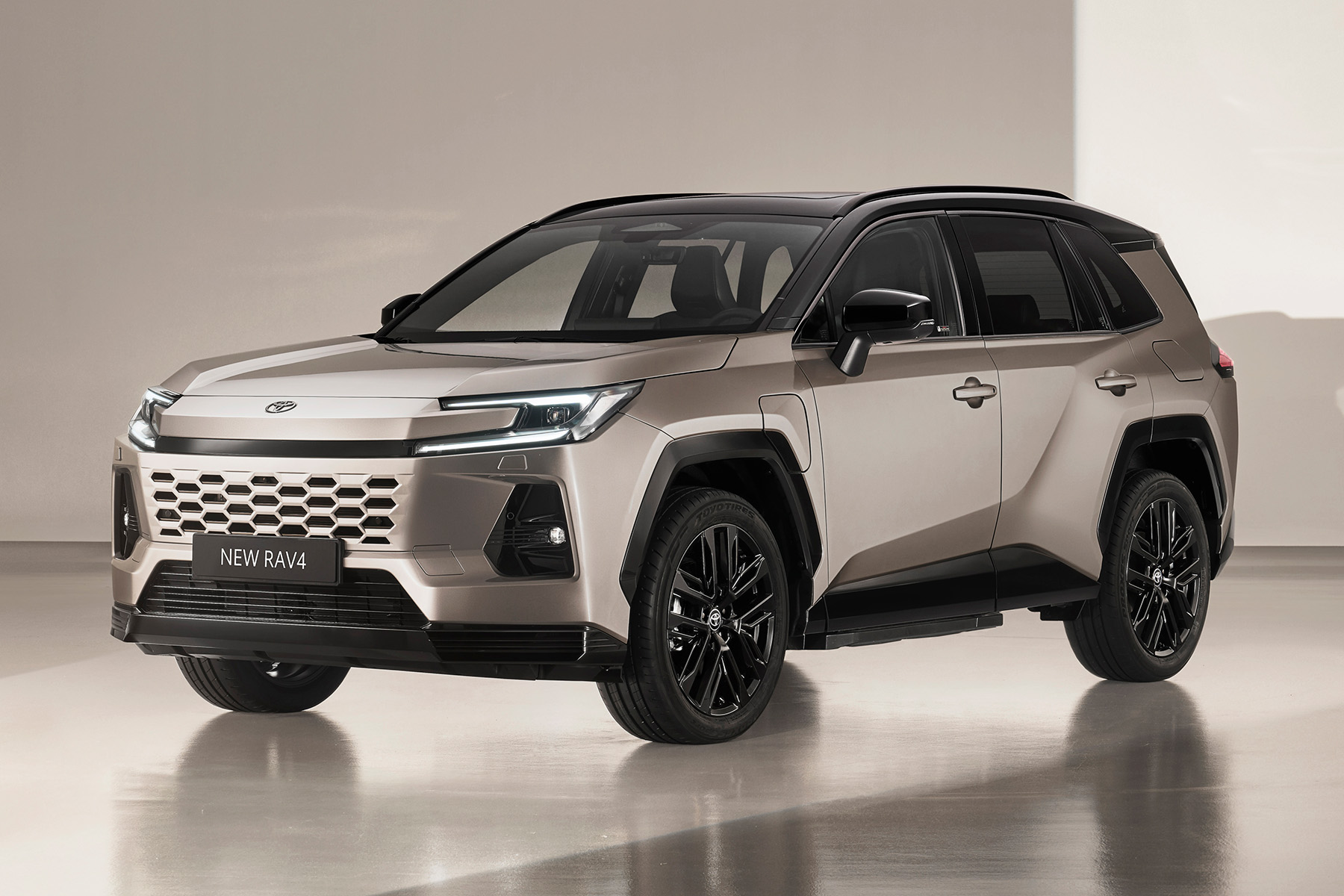
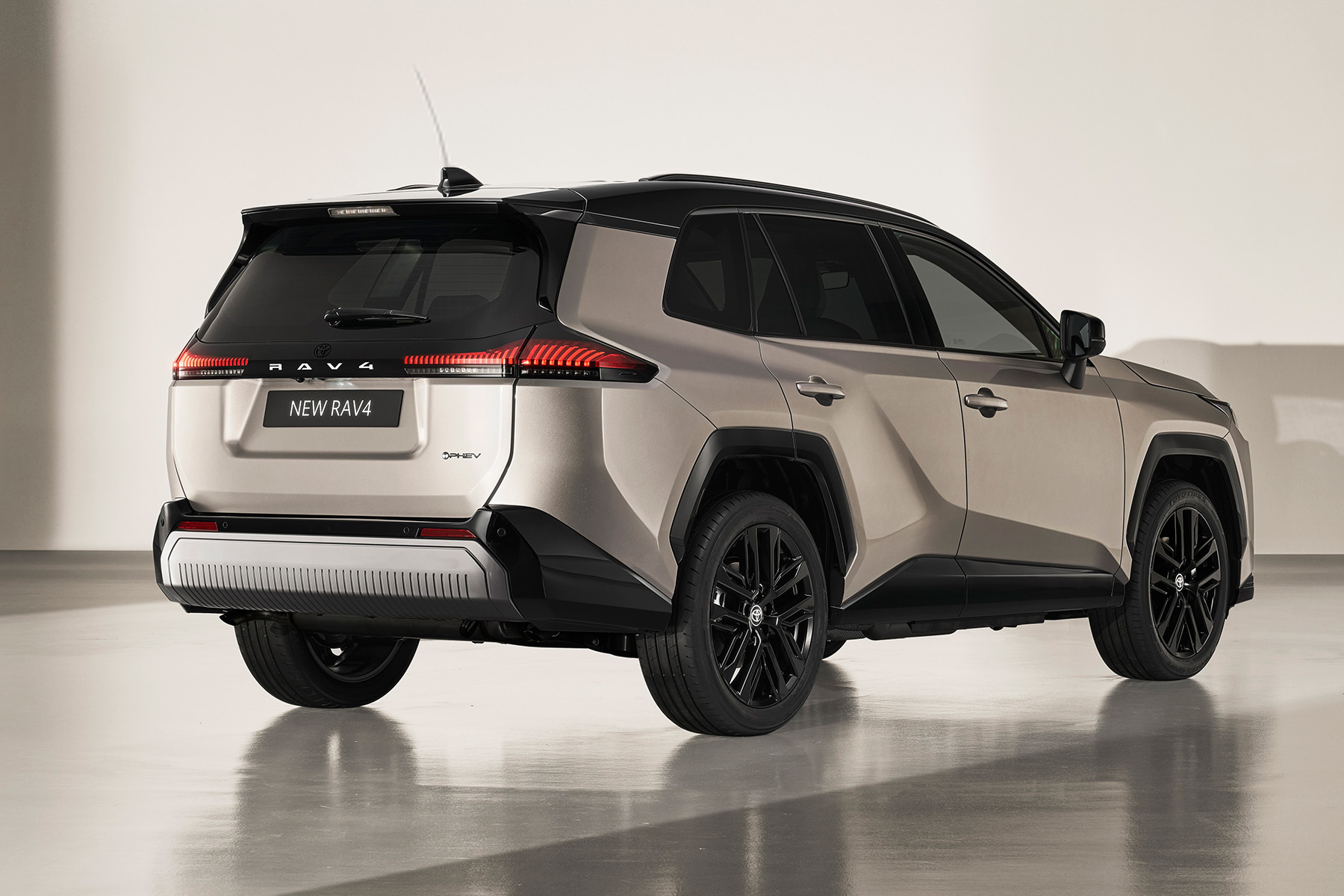
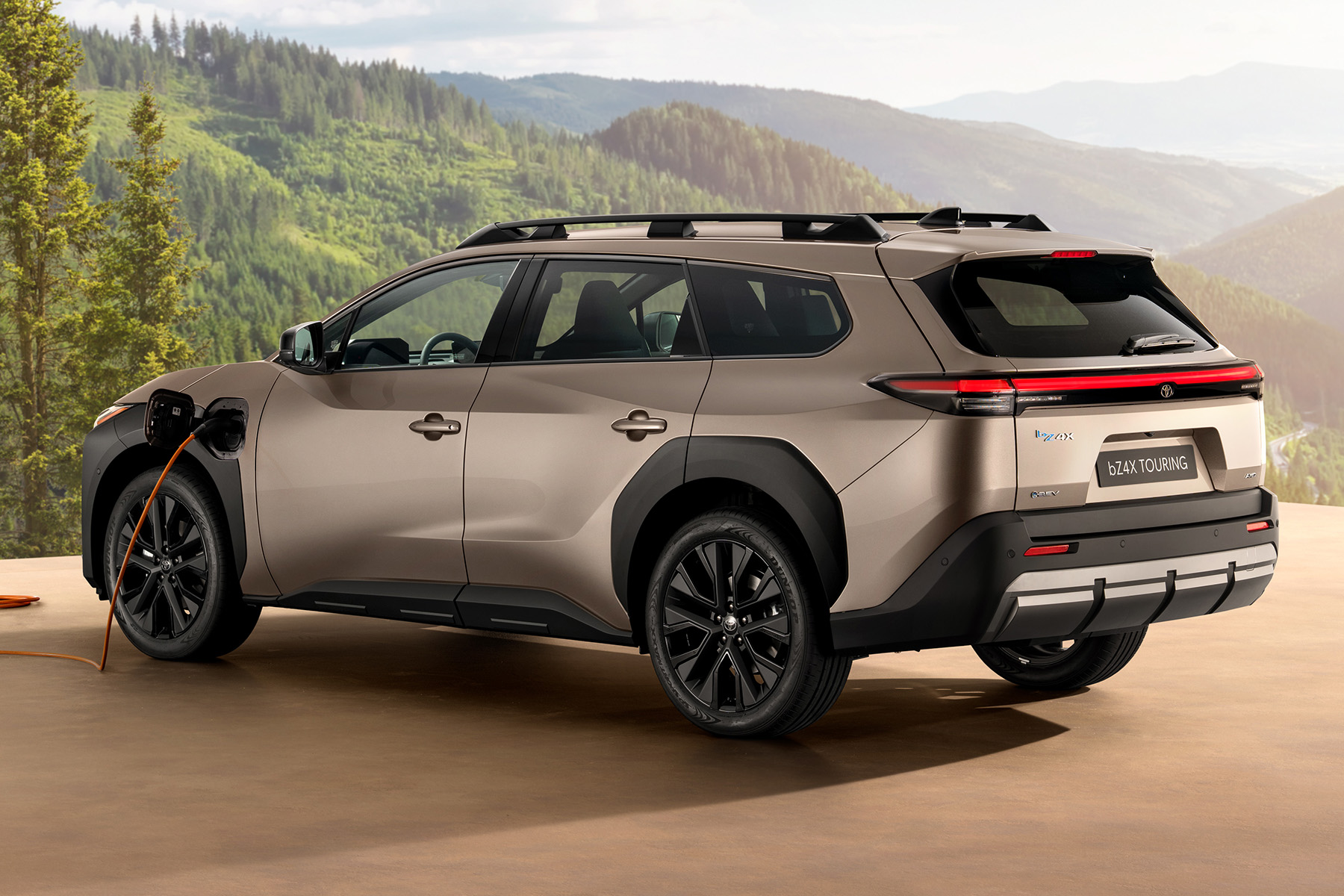
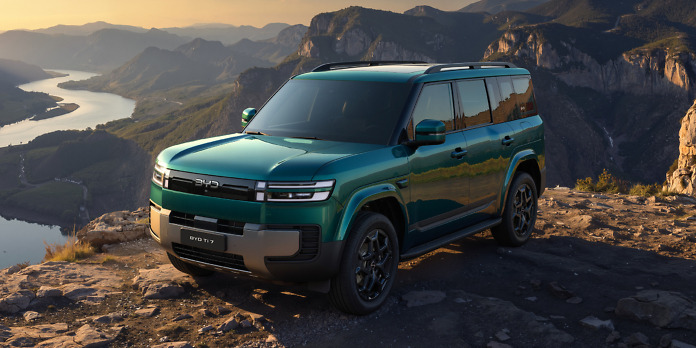
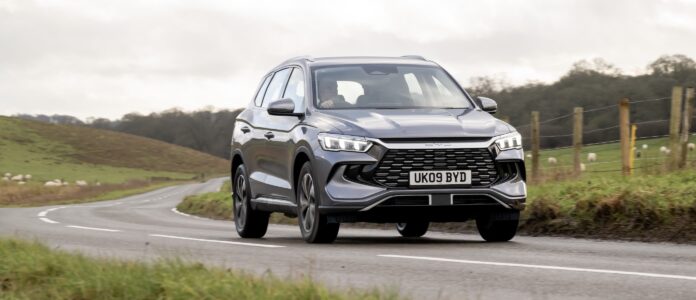
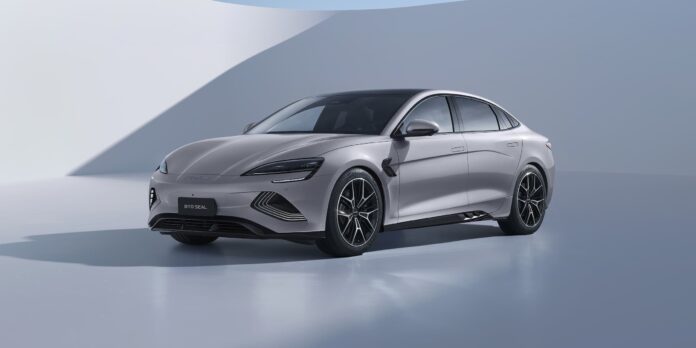
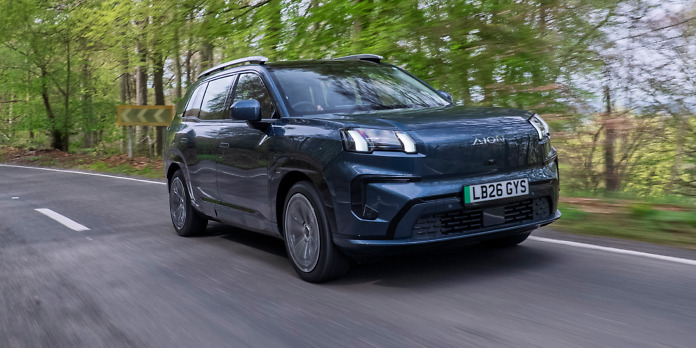
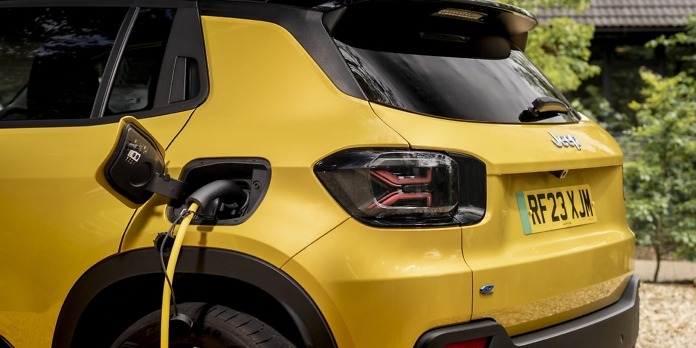
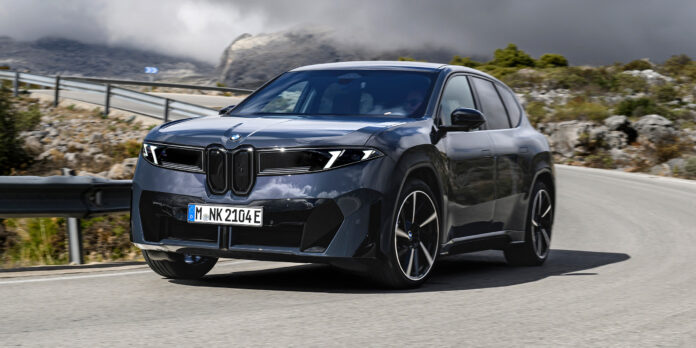
Toyota has revealed two new models overnight – the all-new version of the long-running Toyota RAV4 family SUV, plus the Toyota bZ4X Touring EV, which is a more rugged version of the company’s existing bZ4X electric crossover.
Both new models were publicly displayed at a launch event in Brussels overnight, although we won’t see either of them in the UK until early 2026.
All-new Toyota RAV4
2026 Toyota RAV4
The new Toyota RAV4 is the sixth generation of a model that dates all the way back to the 1990s, and was one of the global pioneers of the modern road-going SUV style of family car. Like the outgoing model, the new version will be available with both regular hybrid and plug-in hybrid power, with both front- and all-wheel drive on offer.
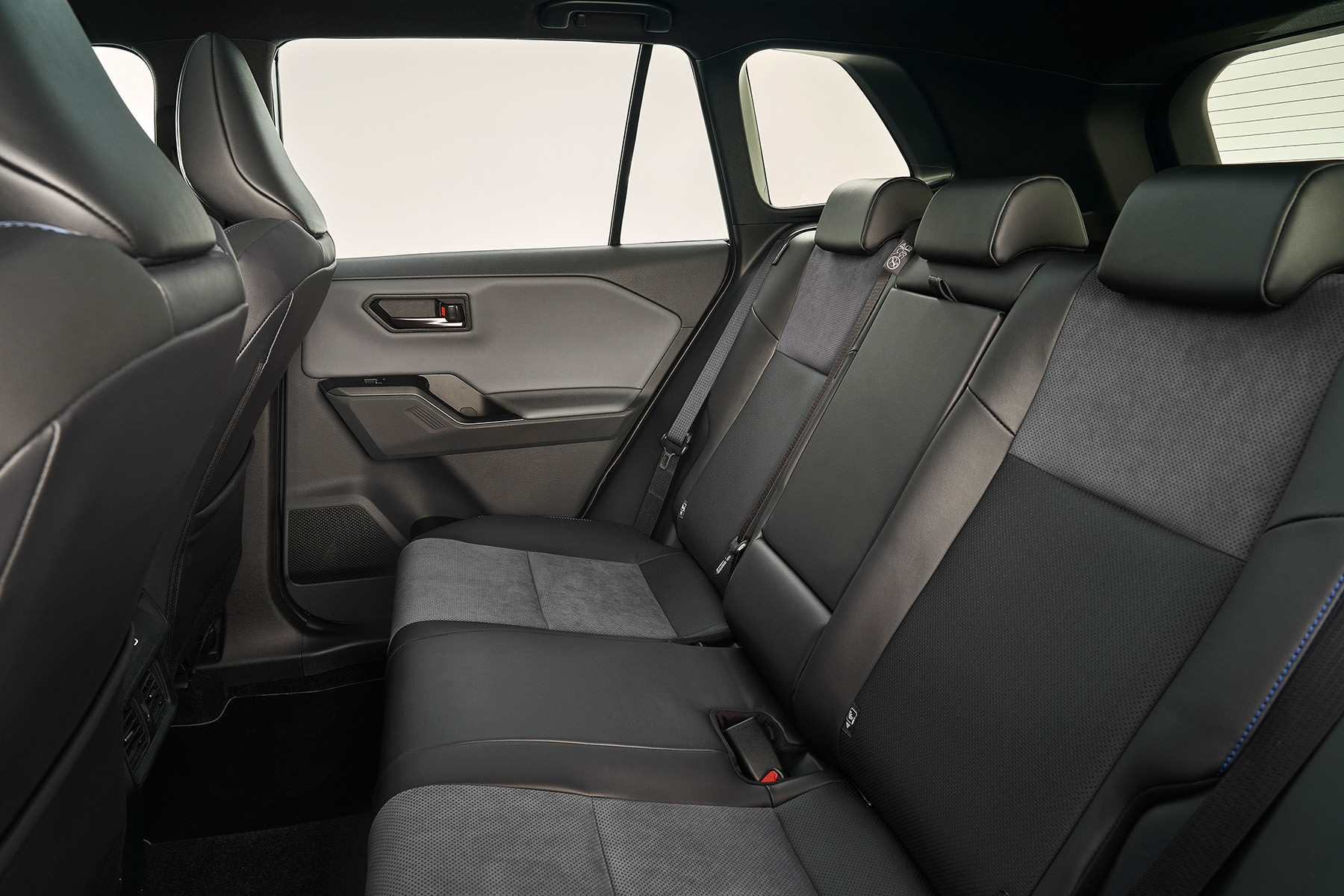
The plug-in hybrid’s battery is now larger at 23kWh, extending the all-electric driving range 40 to 62 miles, while both models get a more compact hybrid motor unit to free up more interior space.
2026 Toyota RAV4
Power outputs range from 135kW (183hp) for the entry-level front-wheel drive version up to a maximum of 224kW (304hp) in the top-spec all-wheel drive plug-in hybrid model.
Charging options for the RAV4 plug-in hybrid have also been improved – the latest onboard 11kW AC charger allows a full recharge using a home wallbox in three hours, while the vehicle is also able to take advantage of rapid charging at public chargers with a speed of up to 50kW, producing a 10%-80% charge in half an hour.
New Toyota bZ4X Touring
Toyota bZ4X Touring
The bZ4X Touring is being pitched as a larger and more rugged version of the standard bZ4X, which has been on sale for more than two years now. It very much taps into the style of the Subaru Outback, a rugged estate that can comfortably handle both on-road and off-road duties without the bulk of a normal SUV.
It’s some 14cm longer than the standard model to increase boot space by a third, up to 600 litres, over the regular model. It also gains a couple of centimetres in height thanks to the roof rails.
As with the regular bZ4X, buyers will be able to choose between front-wheel drive and all-wheel drive, but the bZ4X Touring gets a larger and more efficient battery pack. Now 75kWh, up from 71kWh, this should bring the official driving range up to almost 350 miles. Exact numbers will depend on final UK specifications, to be announced later this year.
The front-wheel drive model’s motor produces 165 kW (224hp) while the all-wheel drive version offers dual motors – one at the front and one at the back – and a total output of 280 kW (380hp), making it the most powerful Toyota electric vehicle yet. Toyota is also emphasising the AWD model’s towing capacity of 1,500kg.
The bZ4X Touring will come fitted with either an 11kW or 22kW onboard charger, depending on which trim the buyer chooses. All models will also offer fast-charging capability of up to 150kW at compatible public charging points, allowing a 10% to 80% recharge of 30 minutes.
UK specification and pricing for the bZ4X Touring and RAV4 are still to be announced. We expect this information to arrive later this year before both cars go on sale early in 2026.
Mercedes-Benz has announced the UK price list and specifications for its third-generation CLA saloon range which is now available to order in the UK.
While the new CLA line-up is set to include both petrol-electric hybrid and electric powertrain options – a first for the CLA range – Mercedes-Benz has decided to launch the electric version first, with the hybrid following later this year.
This 272hp battery-powered CLA – technically called the ‘CLA 250+ with EQ Technology’ – is powered by an 85kWh battery, which is smaller than the 118kWh unit in the EQS 450+, but can reportedly travel three miles more on a single charge than the larger luxury saloon, mustering up to 484 miles on a single charge.
Mercedes-Benz adds that the electric saloon can complete a 0-62mph sprint in 6.7 seconds, with top speed capped at 130mph. Built on the brand’s 800V architecture, the car can charge at speeds up to 320kW, and at that rapid charging speed the manufacturer claims that 200 miles of range can be added in ten minutes.
A hybrid version which pairs a 1.5-litre four-cylinder petrol engine with a 27hp electric motor is also on the way, scheduled to arrive later this year. More details are sure to follow in the coming months.
Compared with the previous CLA range – which was available as a petrol, diesel, plug-in hybrid car – the third-generation range is slightly larger by every metric which should increase cabin space. The boot has enough space for 455 litres of luggage room – 55 litres less than its predecessor – but electric versions also come with an additional 101 litres of ‘frunk’ space under the bonnet.
The electric range distinguishes itself from hybrid models at first glance thanks to its unique grille design with 142 backlit star shapes. The new CLA also has an LED daytime running list strip that connects the LED headlights below the bonnet – a feature now synonymous with the brand’s battery-powered EQ models.
Inside, the car comes with a ten-inch digital instrument cluster and a 14-inch infotainment touchscreen as standard. The brand’s ‘Superscreen’ which adds an optional 14-inch passenger media display will be added to the options list after launch. The CLA sits on 18-inch alloy wheels as standard, with the entry-level ‘Sport’ equipment list also including heated front seats, adaptive LED headlights and automatic climate control.
The more expensive ‘AMG Line Edition’ comes with sportier exterior styling, keyless start and entry, Nappa leather upholstery, ambient interior lighting, a wireless smartphone charging pad and the model sits on larger 19-inch alloy wheels.
Now on sale, the electric CLA ‘250+’ is priced at under £46k for the ‘Sport’ trim, with prices rising to around £52k for the AMG Line Edition’.
Audi has brought back an entry-level version to its e-tron GT saloon line-up, after it was removed from the range as part of last year’s facelift.
The base-spec e-tron GT quattro can call on up to 584hp, compared to 680hp for the next model up in the range, the S, and 856hp in the RS model. It will also cover up to 384 miles in official lab tests.
The new entry-level Audi e-tron GT starts at £88.5K and will be available to order in the UK from late June. First customer deliveries are due to begin arriving in the UK in August.
The returning entry-level Audi e-tron GT model rounds off the family after last year’s mid-life update, which now also comprises the S, RS and RS performance models.
By default, the Audi e-tron GT has a power output of 503hp, although this increases to 584hp when activating launch control mode. With a battery capacity of 105kW and a range of up to 384 miles, long-distance touring is a genuine possibility. This is helped by a charging capacity of up to 320kW if you can find a sufficiently powerful charger, which means you can charge from 10% to 80% in just 18 minutes. To put it another way, you can potentially add 177 miles of range in a quick ten-minute stop, which is more than enough for almost all needs.
The Audi e-tron GT is closely related to the Porsche Taycan saloon, although Audi doesn’t offer an estate version like Porsche does. The e-tron GT range currently holds an overall B grade on The Car Expert’s award-winning Expert Rating Index. It gets excellent reviews from the UK motoring media (although not as good as the Porsche), but is an unsurprisingly expensive car to live with.
Two new versions of the Volkswagen T-Roc are being launched this week with a raft of additional features, including new 19-inch alloys and upgraded headlights.
The new trim levels are the Style Design and Black Edition Plus, which replace the previous Style and Black Edition trims in the T-Roc line-up. As the names suggest, these are evolutions of the previous models with a bit more standard kit.
The Volkswagen T-Roc has been around for more than seven years, so it’s well into the time where a car manufacturer will start throwing in extra kit to keep sales ticking along against newer rivals, and this is no different. The Black Edition Plus adds a claimed £3K worth of additional kit for the same price as the previous Black Edition, while the Style Design costs £1K more than the outgoing Style version but with more than £5K worth of additional spec.
Both versions gain improved standard specifications over their outgoing counterparts, including 19-inch alloy wheels, an electric tailgate, rear-view camera, keyless access, a panoramic sunroof and metallic paint with a black roof.
The Style Design also comes with black door mirrors to match the roof, as well as matrix LED headlights. These have a high-beam setting that react automatically to oncoming traffic and road conditions, dimming specific areas of road to prevent blinding oncoming drivers while keeping other areas fully lit to maximise night-time visibility.
If you added all of the Style Design’s additional features to the previous Style, it would cost an extra £5.5K according to Volkswagen. But the upgraded model is priced just £1,000 more at just over £33K.
Likewise, the additional features on the Black Edition Plus are theoretically worth an extra £3,225 over the previous Black Edition, but come at no extra cost to keep the price at £36.5K.
The Volkswagen T-Roc has been on sale in the UK since late 2017, although it has had various updates throughout its life. It’s still a well-regarded model, scoring an overall B grade in The Car Expert’s unique Expert Rating Index.
Both special edition models can both be ordered from Volkswagen dealers from this week.
Make and model: Alfa Romeo Junior Elettrica Speciale Description: Small-medium electric SUV Price range: from £35,705
Summary: The Alfa Romeo Junior Elettrica is a stylish small electric SUV that’s easy to drive and well equipped, but it doesn’t feel as distinctive as you might expect from the badge.
Alfa Romeo Junior Elettrica Speciale – extended UK review
The Alfa Romeo Junior Elettrica is the Italian brand’s first fully electric SUV, aimed at the increasingly crowded small-SUV market. We tested the Junior Elettrica Speciale for a week on UK roads to see whether it delivers genuine Alfa character or simply wears Alfa styling over familiar Stellantis underpinnings.
The Junior shares its platform with related models from the wider Stellantis family, like the Jeep Avenger, Peugeot E-2008 and Vauxhall Mokka Electric. Alfa has given it distinctive styling and sharper steering, but this is not a clean-sheet Alfa project.
If you don’t want an electric model, there’s also a Junior Ibrida (hybrid), which is powered by a petrol engine with mild hybrid assistance.
For a broader ownership picture, see our Alfa Romeo Junior Elettrica Expert Rating, which combines media reviews, safety data, reliability, running costs and warranty cover.
The Junior Elettrica starts at around £34K, placing it in line with most small electric SUVs. Equipment levels are strong, but pricing also reflects Alfa Romeo’s attempt to position it as something slightly more premium.
There are currently four models in the Alfa Romeo Junior Elettrica line-up – three with a lower power output and a range-topping version with significantly more performance.
The range kicks off at £34K with the entry-level Elettrica, followed by the Elettrica Speciale at just under £36K and a special-edition model called the Intensa at £39K. All of these models have the same electric motor, producing 115kw (156hp) of power through the front wheels. The top-spec Veloce model starts at just over £42K and bumps the power up to 207kW (280hp), still going through the front wheels.
All versions are supplied by a 54kWh battery that gives an official range of 255-ish miles for the lower-power versions, dropping to 200 miles for the Veloce. Real-world range will depend on temperature, driving style and speed.
Like most new cars, you get a large (ten-inch) central touchscreen for controlling most of the car’s functions, paired with another ten-inch screen in front of the driver for speed and driving information. The base and Intensa models don’t offer integrated satnav, but most people are likely to use Apple CarPlay or Android Auto anyway, so it’s not a big deal.
All the key safety kit is standard on all models, although Speciale and Veloce models get a few upgraded extras like traffic jam assist and lane guidance for the adaptive cruise control. Speciale gets part faux leather upholstery, while the driver’s seat is electrically adjustable and even includes a massage function.
As well as significantly more power, the Veloce model gets additional kit over the lower-spec models, as well as bigger alloy wheels and several minor cosmetic changes. It also gets mechanical upgrades to brakes, suspension and steering for better handling and an improved driving experience.
Inside the car
The cabin looks tidy and well assembled, but it doesn’t feel meaningfully different from other Stellantis models that use the same platform. It’s fair to say that Alfa Romeo customers are likely to expect a sense of distinction, rather than switchgear that’s shared with a multitude of Stellantis products.
The Alfa Romeo Junior mixes traditional Alfa styling cues with a modern – if conventional – layout. The driver’s instrument cluster has a shade that resembles Alfa’s traditional twin-dial layout but, in reality, it simply covers a letterbox-shaped digital screen for speed, range and other readouts. The central touchscreen is slightly angled towards the driver, but the rest of the dashboard around it isn’t, so it sort of sticks out in a way that looks odd. Some of the plastics feel harder than you might expect at this price.
The good news is that, unlike plenty of Alfas of old, the Junior’s cabin feels solid and very well screwed together. It’s also welcome to have a proper row of real buttons for the climate control, and there’s a nice touch in having little illuminated serpents (the legendary Biscione of Milano) in the centre of the air vents.
Rear seat space is tight for adults, and the raised central tunnel – a reminder that this platform was originally designed for petrol models – limits comfort for a middle passenger. Dedicated EV rivals make better use of space.
Boot space is on par with most rivals in this class, with a claimed 400 litres. It’s a fairly regular shape, so generally quite useful although the loading lip is quite high for loading heavy cases. There’s a small frunk under the bonnet, which is likely to be where you keep your charging cables when not in use.
Driving range and charging
Official driving range is competitive on paper, but real-world results are less impressive.
There’s only one battery available to cover the entire Alfa Romeo Junior Elettrica line-up at this time, which is a 54kWh unit that gives an official government lab-tested driving range of about 250 miles with the 115kW motor (a few more miles in the base model, a few less in the Intensa and Speciale), and a range of about 200 miles in the more powerful Veloce.
Knock 20% off both numbers (so about 200 miles and 160 miles, respectively) for cold conditions or harder driving, but if you’re happy to be gentle with your right foot and spend most of your time in urban areas, you should get close to these numbers.
The Junior Elettrica scores highly for efficiency in our Expert Rating Index, and a heat pump is standard on all models, which helps preserve range in cold weather.
At public chargers, the Junior Elettrica can accept a maximum charging speed of 100kW, which is about average for the sector. Assuming you are plugged into a 100kW charger, that means that you can get a charge from 10% to 80% in a bit over half an hour. If you’re charging at home with a 7kW wallbox, a full charge from 0-100% will take a bit over eight hours.
The charging port is in the left-rear corner of the car, so you’ll want to reverse into charging bays rather than driving in forwards. At home, the car is short enough that cable length is unlikely to be an issue.
On the road
On UK roads, the Junior Elettrica feels competent and easy to live with, but it doesn’t quite deliver the distinctive driving character traditionally associated with Alfa Romeo.
Alfa Romeo has long been associated with engaging petrol models. The Junior Elettrica doesn’t quite deliver that same sense of character. After all, it’s an electric SUV that shares its basic architecture with assorted Peugeots, Citroëns and Vauxhalls.
The standard 115kW (156hp) motor in the Junior Elettrica Speciale provides plenty of performance for most of your day-to-day driving needs. Acceleration from rest, and in the cut-and-thrust of urban driving, is good even with passenger and luggage on board. As with most EVs, you notice a drop-off in acceleration at motorway speeds as the car reaches the top of its operating window (EVs generally have a lower top speed than petrol cars, although still comfortably beyond the 70mph national speed limit).
Alfa Romeo has tweaked the steering and handling of the Junior compared to the other Stellantis models, which does help it to feel more agile and nimble to drive. It also feels quite stable, with less roll than other SUVs. Pleasingly, the engineers have managed to maintain a decent ride comfort, which isn’t always the case when you try to sharpen the handling.
As with most EVs, the electric motor is quiet and smooth, with instant response to your right foot on the throttle, so it provides an urban driving experience that is both refined and responsive. We will provide a separate review of the petrol-powered Junior, but the electric version is much better to drive.
Verdict
After a week with the Alfa Romeo Junior Elettrica, it feels like a competent but slightly unremarkable small electric SUV. The styling is distinctive and the overall execution is competent, but it never quite feels special enough to justify the Alfa Romeo badge. It’s a car we respected more than we grew attached to.
For buyers who value design flair and slightly sharper road manners, it’s a credible option. However, those seeking maximum cabin space, cutting-edge range or a strong sense of brand character may find stronger alternatives in a purpose-built EV like the Kia EV3.
We like:
Distinctive exterior styling
Competent and composed to drive
Strong standard equipment
We don’t like:
Rear space trails some EV rivals
Interior doesn’t feel particularly premium
Lacks the emotional character expected of an Alfa
You can also see how the Alfa Romeo Junior performs across safety, reliability, running costs and warranty cover in our full Alfa Romeo Junior Elettrica Expert Rating.
Abarth is a name that will be unfamiliar to many a motorist, being one of the smallest brands on today’s market – only just over 1,000 Abarth-badged cars hit UK roads in 2024.
In fact, the Italian brand has never produced its own cars – it has a history based mainly on competition success, concentrating on both extracting more performance from cars of other brands – predominantly Fiat, occasionally Lancia – and manufacturing aftermarket tune-up parts, such as exhausts.
After many years of making Fiats go faster, Abarth was eventually taken over by Fiat and recast as a performance sub-brand, much the relationship between AMG and Mercedes-Benz.
Abarth cars today are little more than muscled-up Fiats, but they tend to be more highly regarded, and this reputation has survived the removal of the usual major element of a performance brand – the engine – as Abarth joins the rest of the car industry in moving into the electric car.
So who or what is Abarth?
Abarth is named after its founder, Carlo Abarth, who established his company in 1949 using the assets of a failed and short-lived Italian car brand called Cisitalia. Abarth adopted a scorpion for the company logo because his star sign was Scorpio.
Abarth’s first cars were based on a Cistalia model and were raced by various top Italian drivers. From the beginning, however, the company also produced performance accessories for cars from other brands, especially Fiats. These tuning kits and performance exhausts proved to be a lucrative business for Abarth.
The effectiveness of Abarth’s upgrades led to a direct relationship with Fiat, with Abarth earning money every time an Abarth-modified Fiat found racing success. By 1971, Carlo Abarth sold the business to Fiat altogether, which sold off the racing business and directed Abarth to running rally cars for Fiat.
Within a decade, Fiat had reorganised its motorsport activities and, for the next 25 years, the Abarth name existed only as a badge on the most powerful Fiat cars.
Fiat 500Abarth 595
The story came full circle in 2007 when Fiat relaunched Abarth as a separate company, effectively reviving part of its predecessor’s DNA by producing bespoke performance versions of existing Fiat models.
These included Abarth performance versions of cars like the Grande Punto small hatch and 124 Spider (Fiat’s short-lived version of the current Mazda MX-5). But Abarth is today best-known for its hot hatch variants of the Fiat 500 city car, which have continued into the electric era with the 500e.
What models does Abarth have today and what else is coming?
The current Abarth range focuses on just two models, the 500e and 600e, both based on Fiat models of the same name.
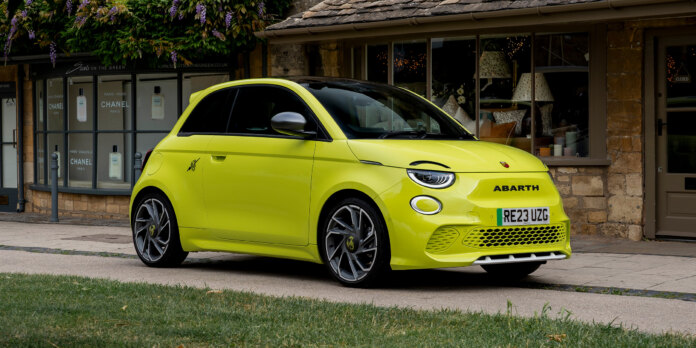
The Abarth 500e is derived directly from the Fiat 500e and when it went on sale in summer 2023 was the first performance-pitched city car powered by an electric motor. Significantly quicker than the Fiat 500e models, it also gains the typical hot hatch upgrades of larger wheels, performance-tuned suspension and a more sporty look.
The range and ability of the Abarth 500e helps secure it an A mark in the Expert Rating index compiled by The Car Expert – despite the car also gaining a more controversial addition, a sound generator to make it sound like a performance car with a petrol engine. This has been criticised by some as being too loud and intrusive.
The 500e can also be had as a cabriolet, which is simply a 500e hatchback with a roll-back canvas roof rather than a properly folding soft top.
The newly launched Abarth 600e is a crossover based on, you guessed it the Fiat 600e. But it also shares much of its hardware with several other Stellantis models like the Jeep Avenger, Vauxhall Mokka Electric and Alfa Romeo Junior. Again, the recipe is a combination of more aggressive visuals and more power – 240hp in the standard 600e Turismo and 280hp in the 600e Scorpionissima, a limited-edition launch model.
The Abarth 595 and Abarth 695 versions of the long-lived Fiat 500 hatchback have now finally bitten the dust, with the last models removed from sale in 2024.
What’s coming next from Abarth is yet to be confirmed. What we do know is that future models will be electric, the brand’s European boss quoted as saying Abarth will not launch any further petrol or even hybrid cars. Forthcoming models will also continue to be based on Fiat product – Abarth has never made its own road cars and apparently has no plans to follow the lead of Renault’s Alpine brand with bespoke models.
Where can I try an Abarth car?
With Abarth so closely related to Fiat, it’s pretty likely that where you find a Fiat dealer, you will also find the cars of its performance-focused stablemate. In total there are 78 Abarth outlets in the UK network and they are well spread across the country – the website includes a locator to find your nearest.
What makes Abarth different to the rest?
The scorpion in the Abarth logo may have been chosen for astrological reasons but came to represent Carlo Abarth’s view of what cars should be. Abarths are typically powerful but equally renowned for being small and agile cars.
An Abarth fact to impress your friends
Carlo Abarth was always out to prove just how competitive his modified Fiat vehicles could be. As a young motorcyclist, he raced and beat the famed Orient Express train from Vienna to Ostend, a distance of more than 850 miles.
In the 1950s, Carlo set numerous acceleration records – including in an Abarth racing car that had a cockpit so small that he had to shed 30kg from his weight to get in it. He did this by eating nothing but apples for several days.
Summary
Abarth is very much a niche name, but one which parent company Fiat appears very protective of – those that like Fiat’s most popular car, but want a much more exclusive version, along with one with rather more potency, buy an Abarth.
You may not have heard of Omoda, which is not surprising. It’s a new car company from China that arrived here in the UK in 2024.
Omoda is the first car brand from Chinese giant Chery to launch here in the UK, arriving last summer and followed earlier this year by sister brand Jaecoo. The two brands are working in tandem, targeting different customers but building a joint dealer network across the country.
The company describes Omoda as being a ‘fashion forward’ brand that competes with other mainstream names, while Jaecoo is positioned as a more premium offering. As of right now (May 2025), each brand only has one SUV-style model available, so this strategy may not yet be evident. It should become more clearly defined, however, as more models join the two line-ups later this year.
So who or what is Omoda?
If you follow the car industry, you may have heard of Omoda’s parent company, Chery, which is a state-owned car manufacturer that has been around for about 30 years and has been China’s largest car exporter for most of that time. As with China’s other big car companies, it operates a number of subsidiary brands in different markets around the world – as well as Omoda and Jaecoo, it has Aiqar, Exeed, Exlantix, iCar, Jetour, Lepas, Luxeed and Rely, as well as Chery itself.
Omoda doesn’t exist in China itself, being purely an export brand. The same cars offered here are sold under different brand names in their home market. It’s not the first time a major car company has done this – Japanese giant Toyota launched its Lexus luxury brand in the late 1980s, but didn’t start selling Lexus-branded cars in Japan until the mid-2000s. Honda launched its American-focused premium brand, Acura, at about the same time but still doesn’t sell Acura in Japan today.
Omoda has only existed for about two years, but is being steadily introduced to a number of markets across Europe and Africa, and in Mexico. The brand is also sold in Russia, which is obviously controversial as most Western car brands have withdrawn from the country since Russia’s invasion of Ukraine.
Like most emerging names in the Chinese car industry, Omoda is heavily invested in electric vehicle technology. But unlike many of the other Chinese brands arriving in the UK, Omoda will continue to launch petrol and hybrid models over the coming years.
When did Omoda launch in the UK?
Omoda & Jaecoo UK set up shop in early 2024, building up its dealer and aftersales network before launching the Omoda brand with its first cars in the autumn of 2024. There’s already a pipeline of new models lined up for the next 12 months.
Sister brand Jaecoo followed at the start of 2025, and the company is rapidly expanding its sales network across the UK, targeting more than 120 dealerships by the end of this year.
What models does Omoda have and what else is coming?
Omoda launched in the UK with a pair of mid-size SUV models called the Omoda 5 (petrol) and Omoda E5 (electric). The Omoda 5 is called the Omoda C5 in some markets, but we assume that Citroën had something to say about that for Europe since it uses the C5 name already.
The Omoda 5 is powered by a 1.6-litre petrol engine, and there’s apparently a hybrid model set to join the range by the end of 2025.
The Omoda 5 EV is (as you can probably guess) an electric version of the same vehicle. It has a different front-end design since it doesn’t need a grille to suck cool air into a petrol engine, but from the front wheels back it looks the same. Inside, the E5 gets a sleeker cabin than the petrol version, with a larger central touchscreen and other improvements.
Over the second half of 2025, things will get busy for Omoda with two new models joining the line-up. The first model, launching in summer, will be the Omoda 9, a large plug-in hybrid SUV that will compete with cars like the Volkswagen Tayron, Vauxhall Grandland, Peugeot 5008 and so on.
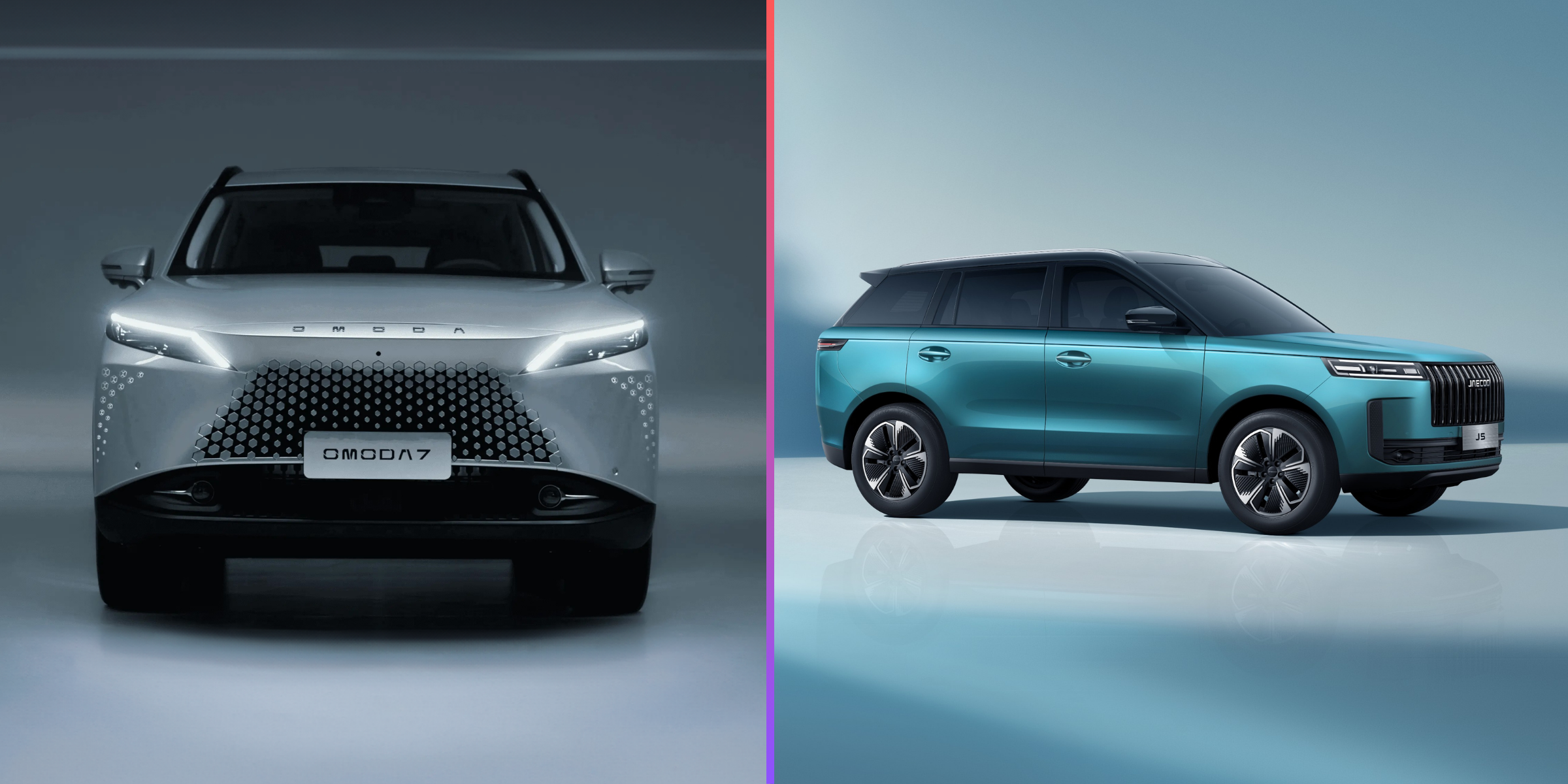
Later in the year, we’ll see the Omoda 7. As you can probably guess, this will sit between the Omoda 5 and Omoda 9 on size and price, and will also be available as a plug-in hybrid. It will go into a very competitive market against cars like the Volkswagen Tiguan, Peugeot 3008, Nissan Qashqai, Kia Sportage and many, many more. We have had an exclusive drive of this vehicle in a two-day trek across China last month, and if Omoda can get the pricing right then it should be very successful here in the UK.
By next year, we should also see the smaller Omoda 3, yet another SUV, and there’s also an update for the Omoda 5 pencilled in as well, which will bring it more closely into line with its E5 electric sibling. At this stage, we don’t have any indication of any models coming to the UK that are not SUVs, but that could change depending on demand.
Omoda 9Omoda 7
Where can I try an Omoda car?
Since setting up shop in the UK in early 2024, Omoda and Jaecoo have established 72 dealerships across the UK, thanks to agreements with large motoring groups like Arnold Clark, Listers and Endeavour. Chery has further expansion plans, and intends to expand its Omoda-Jaecoo dealership network to 130 different outlets by the end of this year. That will make it one of the larger dealer networks in the UK.
The company has key finance partnerships in place with established lenders, with BNP Paribas providing consumer finance and Arval UK providing leasing solutions.
The brand has no plans to offer direct online sales at this time, with the company aiming to grow its two brands through its dealer network and fleet programmes.
What’s particularly significant about Omoda?
Unlike the rest of the new wave of Chinese car manufacturers heading to Europe, Omoda plans to offer petrol and plug-in hybrid models alongside the inevitable electric vehicles.
As with Jaecoo, Omoda has a wide range of potential vehicles it can pull from the wider Chery family, so it can react quickly to UK demand for models of any size, shape or fuel type. Initially, the line-up will all be SUVs, but that could change over time.
Jaecoo models come with a seven-year/100,000-mile new car warranty, which is one of the best in the industry.
What’s in a name?
The name Omoda doesn’t come from the company’s founder, or some piece of ancient Chinese wisdom, or anything remotely meaningful. The reality is a bit more formulaic.
It’s a portmanteau of O – the chemical symbol for oxygen – and the Italian word moda, meaning ‘fashion’. The company has adopted a similar process for Jaecoo, whose name comes from a combination of the German word Jaeger, meaning ‘hunter’, and the English word cool. So “Jaecoo” is supposed to mean “a cool hunter”.
It’s another lesson the Chinese car manufacturers seem to have learned from the Japanese – Lexus, Acura, Infiniti and Eunos were all made-up names for fledgling export-oriented car brands that were supposed to sound important and meaningful in English…
Omoda doesn’t have a logo as such, simply a wordmark with the brand name proudly set in capital letters across the bonnet and tailgate of each car.
Summary
It’s easy to dismiss Omoda as yet another Chinese car company with big plans for the UK, and there have been quite a few in recent years. But there’s good reason to think that Omoda and Jaecoo are two brands that will last.
Chery is one of China’s largest car companies, building more than 2.6 million cars last year. By comparison, the entire UK car industry built less than a third of that number…
The company has already made a significant investment to build its two brands across Europe, with at least one more brand likely to be joining Omoda and Jaecoo next year. It has a choice of cars from the wider Chery family that it can choose to bring to the UK with either of its brands to react to market trends, and has built a network of more than 70 dealers already.
The company has big plans for growth in the UK, so as the Omoda model range fills out over the next year, you’re likely to see a lot more of them around.
This article was originally published in late 2023, and was updated in May 2025 to reflect Omoda’s rapid growth.
The BYD Sealion is a mid-large electric SUV that sits at the top of the ever-expanding BYD family. It was unveiled in 2024 before arriving in the UK in early 2025.
The Sealion 7 is related to the BYD Seal saloon, although it uses a more advanced version of the Seal’s platform, including more advanced electric motor and drive technologies for better performance and efficiency.
Initial media reviews for the BYD Sealion 7 have been disappointing. Despite praise for its spacious cabin and decent levels of kit for the money, several reviewers have pointed out that the Sealion 7 is more expensive and not as good to drive as a Tesla Model Y.
The ride and handling of the Sealion 7 have also been questioned by several reviewers, with Darren Cassey from Carwow describing it as “not very comfortable” and Dean Gibson from Auto Express pointing out that it “doesn’t drive as sweetly” as some alternatives.
On the positive side, it has an excellent safety rating according to testing by Euro NCAP, scoring a full five stars when tested in April 2025.
As of January 2026, the BYD Sealion 7 holds a New Car Expert Rating of A, with a score of 72%. It scores top marks for its excellent safety rating, zero tailpipe emissions and long new car warranty, but its running costs are only average and its media review scores have been poor.
“The BYD Sealion 7 is a Chinese, electric family SUV that’s strong on space and kit, but doesn’t drive as sweetly as some in this competitive segment.”
Model reviewed: Range overview Score: 6 / 10 “BYD’s large electric SUV promises advanced technology, sporty performance and premium comfort, but doesn’t quite deliver in all areas.” Author: Catherine King Read review
Business Car
Model reviewed: Range overview Score: 8 / 10 “The BYD Sealion 7 goes big on interior space and kit – although it’s not such a polished package as the Seal.” Author: Martyn Collins Read review
Car
Model reviewed: Range overview Score: 6 / 10 “The Sealion 7, slightly odd name aside, is well equipped, has decent range and performance, and is comfortable and quiet. A bit more polish in some areas would elevate it even higher, but as it stands the BYD Sealion 7 is well worth consideration.” Author: Kyle Fortune, Seth Walton Read review
Carbuyer
Model reviewed: Range overview Score: 7.4 / 10 “The BYD Sealion 7 is a fairly upmarket electric SUV with a spacious interior and lots of tech, but it needs some fine polishing.” Author: Andy Goodwin, Jordan Katsianis Read review
Driving Electric
Model reviewed: Range overview Score: 6 / 10 “Electric coupe-SUV has some likeable aspects, but not enough to impress in a talented class.” Author: Antony Ingram Read review
Electrifying.com
Model reviewed: Range overview Score: 7 / 10 “BYD’s large family SUV is a rival to the Tesla Model Y, and with value, comfort and interior quality on its side, it could steal sales from its American nemesis.” Author: Ginny Buckley Read review
Green Car Guide
Model reviewed: Range overview Score: 9 / 10 “Anyone who has concerns over the quality of the driving experience of Chinese EVs needs to try the BYD Sealion 7. It offers a driving experience that’s extremely comfortable as well as powerful, along with the security of its all-wheel drive system. The cabin also looks good and feels high quality, with lots of rear legroom and a large boot.” Author: Paul Clarke Read review
Heycar
Model reviewed: Range overview Score: 7 / 10 “The Sealion 7 is the latest car to emerge in BYD’s assault on the European establishment. It’s impressive in many ways, but there are a fair few kinks that need to be ironed out before it can truly be taken seriously against similarly priced, better-known rivals.” Author: Matt Robinson Read review
Honest John
Model reviewed: Range overview Score: 6 / 10 “While the BYD Sealion 7 is able to compete with similarly priced but more established rivals, its sub-par ride and handling, plus some tech-related annoyances, mean it can’t be heartily recommended over better-known alternatives. And don’t get us started on the name…” Read review
Parkers
Model reviewed: Range overview Score: 7 / 10 “Solid electric SUV will have a hard job toppling the class leaders.” Author: Piers Ward, Seth Walton Read review
The Independent
Model reviewed: Range overview Score: 6 / 10 “So much for these Chinese brands undercutting rivals – the new BYD Sealion 7 is more expensive than its big rival, the new Tesla Model Y. It also doesn’t go as far on a single charge. So being more expensive and with a smaller range immediately count against the BYD, and then you drive it, which might put you off even more.” Author: Steve Fowler Read review
The Sunday Times
Model reviewed: Range overview Score: 7 / 10 “Functional, fast, but somewhat forgettable.” Author: Dave Humphreys Read review
The Telegraph
Model reviewed: Range overview Score: 4 / 10 “Despite significant improvements on earlier Chinese BYD models, the BYD Sealion 7 is in danger of becoming just another battery-powered family SUV.” Author: Andrew English Read review
Top Gear
Model reviewed: Range overview Score: 6 / 10 “The BYD Sealion 7 is big, roomy and well-equipped for the price. But even though it’s quick, it’s not as much fun as some rivals.” Read review
Which EV?
Model reviewed: Range overview Score: 8 / 10 “The BYD Sealion 7 is a strong contender as an alternative to the Tesla Model Y, with a premium feel, powerful performance in dual motor form, plenty of interior space, and strong technology. The handling is light but overall, well worth considering if you’re after a midsize electric SUV.” Author: Tim Barnes-Clay Read review
Safety rating
Independent crash test and safety ratings from Euro NCAP
Clean Air Index: 8.4 / 10 Energy Efficiency Index: 6.5 / 10 Greenhouse Gas Index: 7.2 / 10
Running cost rating
Monthly cost of ownership data provided exclusively for The Car Expert by Clear Vehicle Data
Battery range
Average
Score
Variation
Score
EV models
299 miles
B
Electrical efficiency
Average
Score
Variation
Score
EV models
3.5 m/KWh
D
Insurance group
Average
Score
Variation
Score
All models
47
E
The BYD Sealion 7 isn’t the cheapest EV to run, but if you can charge from home then it should still be considerably cheaper than a similarly sized petrol or diesel SUV.
The insurance group rating is quite high, so make sure you shop around for car insurance quotes as it could make quite a difference.
Reliability rating
Reliability data provided exclusively for The Car Expert by MotorEasy
No reliability rating
The BYD Sealion 7 is still a very new car, we don’t have enough data to generate a reliability rating.
The Car Expert’s reliability information is provided exclusively to us using workshop and extended warranty data from our partner, MotorEasy, sourced from both official dealerships and independent workshops.
As soon as MotorEasy has sufficient data on the Sealion 7, we’ll publish the results here.
Warranty rating
New car warranty information for the BYD Sealion 7
BYD’s new car warranty is better than average, and better than rival brands in a similar price bracket as the Sealion 7. The duration is six years, with a limit of 93,750 miles (150,000km)
In addition to the standard new car warranty, the Sealion 7 has an eight-year/125,000-mile warranty for the battery components.
If you’re looking to buy any used car that is approaching the end of its warranty period, a used car warranty is usually a worthwhile investment. Check out The Car Expert’s guide to the best used car warranty providers, which will probably be cheaper than a warranty sold by a dealer.
As of January 2026, we are not aware of any DVSA vehicle safety recalls affecting the BYD Sealion 7. However, this information is updated very regularly so this may have changed.
You can check to see if your car has any outstanding recalls by visiting the DVLA website or contacting your local BYD dealer.
The ranks of mid-to-large electric SUVs are swelling by the week, with almost every major brand offering at least one vehicle that could rival the BYD Sealion 7 on price and/or specification. It’s a hugely competitive market out there, so keep an eye on our Expert Rating scores and new car offers from the leading brands to make the best decision for your needs.
Find your next new or used car with Auto Trader. Find out more
Find your next new or used car with Carwow. Find out more
Lease a BYD Sealion 7
If you’re looking to lease a new BYD Sealion 7, The Car Expert’s partners can help you find a competitive deal.
Personal contract hire deals from Leasing.com. Find out more
Personal contract hire deals from Carwow. Find out more
Personal contract hire deals from Select Car Leasing. Find out more
Subscribe to a BYD Sealion 7
Subscriptions are becoming a very popular way for consumers to try an electric car for a few weeks or months to help decide whether it’s a suitable alternative to a petrol car. If you’re interested in a car subscription, The Car Expert’s partners can help. (PS: What’s a car subscription?)
In the 5th century BC, the famous Chinese general Sun Tzu wrote in his famous book The Art of War: “Every battle is won before it is ever fought.” In the 21st century AD, the Chinese car industry is proving him correct all over again.
In America, Donald Trump is throwing his toys out of the pram with massive tariffs against China in an attempt to turn the clock back 40 years to when America ruled the roost. In Europe, the EU has also been adding tariffs onto Chinese EVs in an attempt to protect its local car manufacturers. But it’s all a bit late; the war is already over.
Western car manufacturers have spent the last couple of decades trying to exploit China for their own financial gains, but what they were actually doing was helping China develop its car industry to become the world’s largest. And now it’s threatening to squeeze them out of existence.
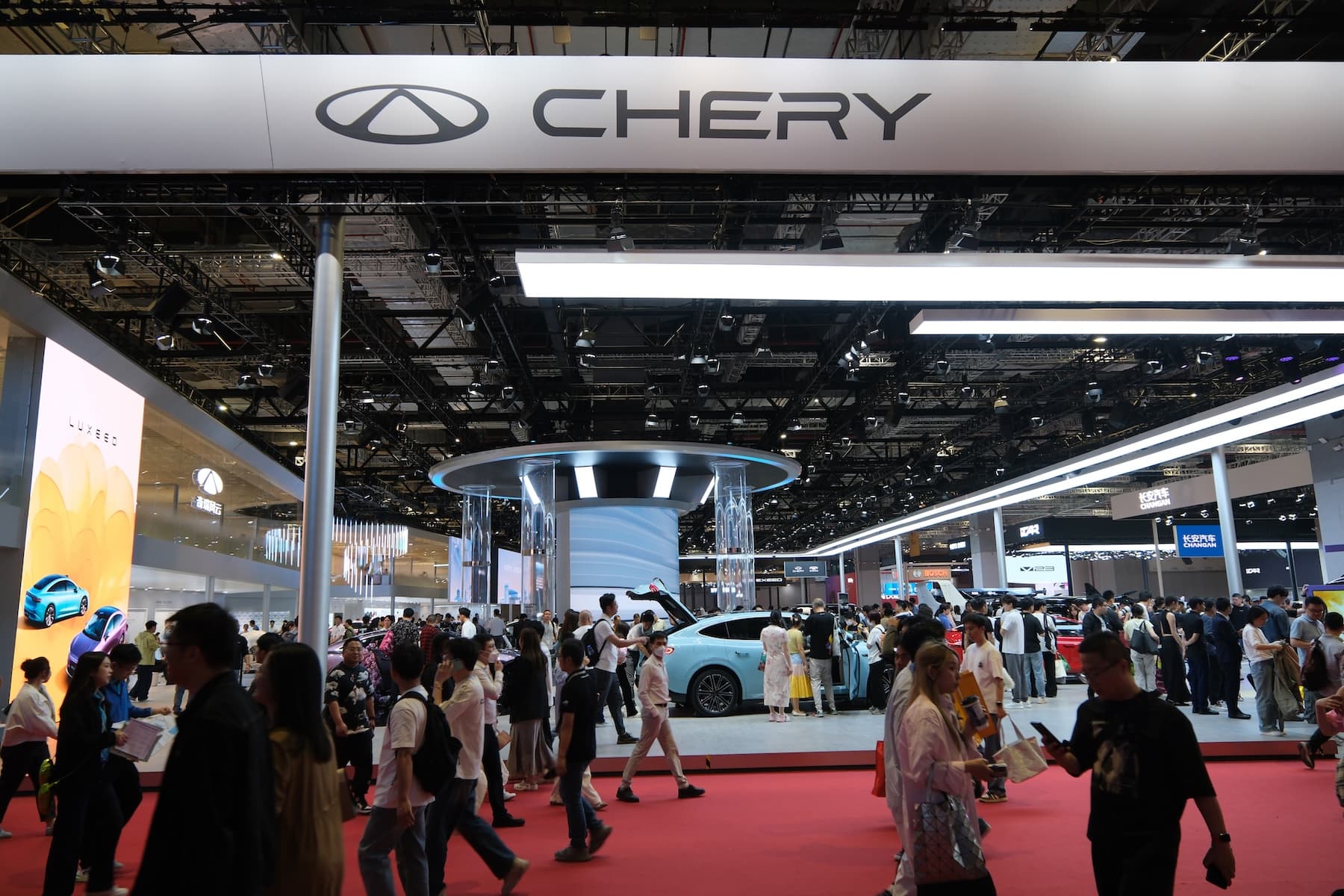
Having spent a week in China last month – visiting the enormous Shanghai motor show, covering 500 miles in a plug-in hybrid fuel economy marathon on Chinese roads and visiting a state-of-the-art factory that builds cars for Omoda and Jaecoo (and various other brands that are not sold in the UK) – it was enlightening to see, in person, how advanced the Chinese automotive industry has become.
Auto Shanghai 2025Omoda 7 fuel economy marathon 2025
We’re living in the past
Many people still see China as a looming threat to the future of the Western car industry, which was certainly true – about 25 years ago.
Back in 2000, the USA was the world’s largest automotive manufacturer, building about 12 million motor vehicles (cars, vans, buses, trucks, etc.). Europe produced a similar number, although that was a combined figure from a couple of dozen countries. Japan was also similar, with about 10 million vehicles. China built about 2 million vehicles, having recently overtaken the UK, and was about the ninth-biggest country by volume.
By about 2008/09, China had overtaken the USA and Japan to become the world’s largest vehicle-producing country, and has accelerated away every year since.
Last year, China built 31 million vehicles. America and Japan both built fewer cars than they did 25 years ago, while Europe was about the same. Global production was about 93 million vehicles, so China built one in every three vehicles worldwide.
China’s automotive industry now dwarfs the rest of the world’s. In addition to building a third of the world’s vehicles, it provides countless key components for the other two-thirds built elsewhere. Its growth over the last two decades has been astonishing and far beyond anything that the automotive industry has ever seen.
Even if Donald Trump’s tariff tantrum succeeds in returning automotive production to America’s highest-ever levels, that’s about 13 million vehicles a year (which it achieved in 1999). That would be 30% better than it was last year, but it would barely dent China, which exports very few cars to the USA anyway. The real victims of any resurgence in American car manufacturing would be Canada and Mexico.
The EV revolution is strengthening China’s position
The shift from traditional, fossil-fuel-powered cars to electric cars is so enormous that it’s more accurate to think of the EV industry as ‘Car Industry 2.0’. It involves rethinking almost every aspect of how cars are designed and built by manufacturers, how they are bought and used by customers, and how they are managed and taxed by governments.
There’s a narrative in certain circles that China’s strength is all about EVs, and that if we wind back EV targets and Net Zero ambitions, it will destroy that advantage. China was a long way ahead of the West in recognising that the era of petrol and diesel was coming to an end, with EVs the only viable replacement.
It’s true that China has carefully prepared its industry for the transition to EV power and has worked assiduously to gain dominance over the entire supply chain, from raw minerals to finished product, in a way that no-one has ever done in the fossil-fuel sector. Chinese car companies are also investing in EV development at a level that far outstrips similar investments from anyone else, and have been doing so for several years now.
But the idea that pushing back against EVs will stop China’s automotive influence in its tracks is no more than wishful thinking.
Of the 30-ish million vehicles China builds each year, about 10 million are EVs. While that’s far more than any other country in the world, it still means that China builds about 20 million fossil-fuel cars each year – which is more than double the next-best country in the world (America). And it has already demonstrated its incredible ability to scale up at speed. So if the world banned EVs tomorrow, China would almost certainly be able to grow its petrol car production faster than anyone else to replace those EVs.
In any case, most Western car companies have now moved past the point of no return in their shift to EVs. They have invested billions of dollars in development and manufacturing, made tens of thousands of people redundant, completely redeveloped their factories to build EVs and wound down most of their development in new petrol models. They urgently need these massive investments to start being repaid through sales of electric models.
It’s no longer all about cheap labour
Much of China’s industrial growth over the last few decades was built on cheaper labour than Western countries, and the car industry was no different. But, as with a lot of the tech sector development, this has evolved significantly and labour is no longer as big a differentiator as it once was.
On our recent trip to China, we visited a Chery Automobile factory to see cars from several different brands (including Omoda and Jaecoo cars bound for the UK) coming together. Strikingly, the first plant involved bare metal sheets being built up into complete body shells for a range of different cars of all shapes and sizes, but there were almost no humans involved in the process.
The entire assembly, from stamping and cutting panels, to glueing and welding the panels together, to the completion of an entire car body, was conducted by machines. The only humans involved were those maintaining the machines and quality inspectors to check over the completed bodies.
Once the cars progressed to final assembly, the process involved a lot more people, with skilled workers installing all the various car components using specially designed tools. But even here, several steps were fully automated and carried out robotically, such as selection and mounting of the wheels and tyres for each car as it passed along the production lines.
Final quality control was done using AI-powered automated cameras on robotic arms, allowing precise analysis of every component in far more detail than possible with a human eye. It’s all incredibly impressive stuff, and far from the continued outside perception of unskilled workers in low-tech factories producing sub-par products.
Dozens of Chinese car brands you’ve never heard of
We can divide Chinese car brands into three groups – the Western car brands that are now Chinese-owned, Chinese brands that export cars to the rest of the world, and Chinese brands that sell exclusively or mostly within China.
Well-known British brands like Lotus and MG are both Chinese-owned, along with LEVC (the former London Taxi Company) and Maxus (formerly LDV). Aston Martin is also partly Chinese-owned. Other European brands like Volvo and Polestar are wholly Chinese-owned, while others like Mercedes-Benz and Smart are partly owned by Chinese companies.
Then we have Chinese brands that now sell cars and vans in markets around the world. Here in the UK, we have BYD, Farizon, GWM (Ora and Haval), Jaecoo, Leapmotor, Omoda, Skywell and Xpeng, while other countries get additional brands that don’t build right-hand drive cars.
And then there’s a whole A-Z of car brands you’ve probably never heard of, like: Aion, Aiqar, Aito, Aiways, Arcfox, AUDI (not Audi, but bizarrely owned by the same company), Avatr, Baojun, Beijing, Bestune, Changan, Chery, Deepal, Denza, DFSK, Doda, Dongfeng, Enranger, Exeed, Fengon, Firefly, Forthing, Foton, GAC, Geely, Hongqi, Hyptec, iCar, IM, JAC, Jetour, Kaicene, Karry, Lepas, Li Auto, Livan, Luxeed, Lynk & Co, Maextro, M-Hero, Nio, Onvo, Qingyuan, Rely, Rising Auto, Roewe, Rox, Sehol, Seres, Stelato, Tank, Trumpchi, VGV, Voyah, Wey, Wuling, Xiaomi, Yangwang, Yiwei and Zeekr. Some of these are planning to come to the UK in the next few years, so you may see them soon.
With Chinese manufacturers on a roll and eyeing up big expansion plans around the world, several Western manufacturers are under enormous pressure. We face the very real possibility of well-known brands either scaling back their line-ups, merging with rivals or even folding altogether in coming years.
Global motor vehicle production may be approaching 100 million vehicles, but many factories at Western car companies are running well under capacity. As the enormous overhead costs of running a factory are spread across fewer vehicles, those vehicles become more expensive to build, which pushes prices up, which hurts sales and reduces factory output further. As car companies in Europe and America try to reduce costs by shedding staff or closing unprofitable plants, unions have been fighting back to protect jobs, leading to strikes and other actions that further harm output and profitability.
Attempts to rein in China’s expanding car industry through tariffs seem unlikely to achieve their goal. At best, they may lead to a modicum of production reverting from China to the West, including some Chinese companies setting up factories in Europe. Superficially, that would seem to help Western companies.
But there’s more to it than just tariffs – European and American car companies have factories all over the world, so it’s not surprising that Chinese companies would want to establish factories close to major international markets. BYD opening factories in Hungary and Turkey, for example, is only going to mean even greater competition for Western car companies.
With dominance in global automotive production, investment levels that dwarf the rest of the world, and a government that co-ordinates every move to eliminate obstacles and ensure successful outcomes, China has become the automotive world’s only real superpower. A dysfunctional America and an increasingly disjointed Europe have been relegated to regional powers.
Western governments are belatedly gearing up for a trade battle with China without realising (or maybe preferring not to acknowledge) that the war is already over. Sun Tzu’s words of wisdom continue to prevail, 2,500 years after they were written.
After a stronger performance in March, the UK new car market fell back into a slump in April. Registrations were down across both private and fleet sectors, with the only bright spot being continued growth for both EVs and plug-in hybrids.
Overall new car registrations fell by 10% compared to last April, according to numbers published this morning by the Society of Motor Manufacturers and Traders (SMMT). Private sales were down by 8%, while fleet numbers fell by 12%. This was the biggest fall in monthly sales numbers for the year to date – January and February were down slightly, while March was up by 12%. In total year-to-date registrations, the market is still up by 3% on the first four months of last year.
Source: SMMT
EVs and plug-in hybrids lead the way
Despite the usual claims from the SMMT and other lobbyists that the sky would fall once EVs had to start paying more road tax, the data should this not to be the case at all – albeit, we’re only one month into the new road tax rules where EVs have to pay both road tax (£10 in the first year, £175 in subsequent years) plus the Expensive Car Supplement of (£410/year for the first five years) if their list price is more than £40K.
While registrations of petrol and diesel cars fell by 22% and 26%, respectively, the numbers for EVs grew by 18% and plug-in hybrids by 34%. Regular hybrids without the benefit of a plug fell by 3%.
The continued growth in plug-in hybrid numbers is interesting, as it appears to be coming at the expense of basic hybrids and petrol/diesel cars, rather than from potential EV sales. Car companies can use plug-in hybrid registrations as partial credits towards their mandated EV sales targets, so it’s inevitable that those brands that don’t have any (or many) EVs to offer will be pushing plug-in hybrids instead.
What’s also interesting is that there are very few plug-in hybrids that fall below the £40K ‘expensive car’ threshold, which tends to show that the additional road tax burden isn’t all that burdensome, so there’s no great reason to fear it for EVs either.
There is change in the wind for plug-in hybrids, however, with new EU standards coming into effect this year to reassess their overall CO2 emissions. This is likely to see many, if not most, plug-in hybrids reclassified with higher emissions levels that more accurately reflect their real-world fuel usage. That, in turn, will see both road tax and benefit-in-kind tax increasing for many plug-in hybrid vehicles here in the UK, which will presumably blunt sales to a degree.
Source: SMMT
Good month, bad month
Despite an overall market fall of 10%, not every brand saw a sales slide. As always, there was considerable variation in the market.
Star brand of the month was BYD, which grew its registrations by almost 2,200 units over last year – an increase of 654%. Obviously, BYD is a new brand that’s very much on the up and expanding its product range, but it was still an impressive increase given the overall market fell by 10%.
Going in the other direction, the biggest loser for April was Volkswagen, whose registrations fell by almost 2,800 units or 21% on last April’s numbers. However, Volkswagen remained the UK’s best-selling brand for the month, ahead of Kia, BMW, Audi and Ford.
Sportage and Puma continue their sales battle
The Kia Sportage was back on top as the UK’s best-selling new car in April, edging out the Ford Puma and continuing the battle between the two cars that ran all through last year. In year-to-date sales, the Puma retains a lead of nearly 2,000 units after four months thanks to its stellar performance in March.
The Vauxhall Corsa had another strong month to finish in third place, ahead of the British-built Nissan Qashqai. There were three UK-built cars in the top ten this month, with the Nissan Juke placing seventh and the Mini Cooper in tenth. We’ll have our usual breakdown of the top ten in a separate article shortly.
The Lotus Emeya is a large, high-performance electric saloon that launched in 2024. Along with the related Lotus Eletre electric SUV, the Emeya is built in China rather than the traditional Lotus home of Norfolk in the UK.
Together with the Eletre, the Emeya is a bold step into a new world for Lotus, with a large, heavy, electric grand touring saloon being a far cry from its traditional featherweight sports cars. That has been a stumbling block for some of its media reviews to date, but it’s certainly not the first car manufacturer to try to broaden its appeal beyond traditional sports cars – even Ferrari is launching an EV in late 2025.
The Lotus Emeya is available with two levels of performance and a selection of trim levels, topping out at more than 900hp for acceleration that will take you from a standing start to a jail cell in no time at all.
Media reviews of the Lotus have been positive, although acknowledging that the electric supersaloon bar has been set very high by the Porsche Taycan. Nevertheless, reviewers have admired the Emeya’s style and comfort, with plenty of praise for the cabin’s luxury and technology levels. The driving experience has been praised, albeit with concern that the Emeya’s high weight numbs the overall feeling for the driver.
As of March 2026, the Lotus Emeya holds a New Car Rating of B, with a score of 68%. It scores top marks for its zero tailpipe emissions, while its media review scores are also good (although not on a par with the Porsche Taycan or Audi e-tron GT). However, very high running costs drag down its overall score, and we don’t yet have any Euro NCAP data to provide a safety rating.
Body style: Large saloon Engines:electric, all-wheel drive Price:From £84,990 on-road
Launched: Spring 2024 Last updated: Spring 2025 Next update due: TBA
Image gallery
Media reviews
Highlighted reviews and road tests from across the UK automotive media. Click any of the boxes to view.
Featured reviews
“If ever a car needed clear badges to tell other motorists what it is, it’s a 2.5-ton Lotus saloon car. Although if you saw it alongside Audi’s e‑tron GT and Porsche’s Taycan, chances are you’d be drawn to the Brit’s more distinctive style.”
Model reviewed: Range overview Score: 9 / 10 “Huge, heavy electric GT cars might not be what most of us expect from Lotus, but with the new Emeya R, it has really delivered. It’s a car that’s as quick as a similarly priced Porsche Taycan Turbo in a straight line, yet more refined and no less sharp – more predictable, in fact – to drive. Add in a similarly sumptuous but more spacious cabin and incredible charging speeds, and it’s only efficiency where the Porsche has an edge.” Author: Alex Ingram Read review
Car
Model reviewed: Range overview Score: 8 / 10 “Let’s for a moment pretend the Emeya doesn’t have a Lotus badge. Looking at it from a cold, rational perspective, the Emeya is reasonably priced compared to rivals, has a comfortable ride, and a luxuriously spacious interior.” Author: Alan Taylor-Jones Read review
Discover EV
Model reviewed: Range overview Score: 10 / 10 “I actually think it’s a lot better than the Mercedes-Benz EQE, and Tesla can keep its Model S. It is by Lotus’ own words softer than the Porsche Taycan, but people might like that!” Read review
Driving Electric
Model reviewed: Range overview Score: 9 / 10 “It’s still much bigger and heavier than the famed Lotus sports cars of the past, but the Emeya is a solid electric grand tourer. The build-quality, technology and driving experience are all highly impressive, making this a genuine competitor to the fearsome Porsche Taycan.” Author: Shane Wilkinson Read review
Motoring Research
Model reviewed: Emeya S Score: 8 / 10 “We’re still getting our heads around the idea of a Lotus with up to 905hp that weighs 2.6 tonnes. Look past the brand baggage, though, and the Lotus Emeya is an impressive performance EV – particularly in less expensive ‘S’ guise.” Author: Tim Pitt Read review
Parkers
Model reviewed: Range overview Score: 8.2 / 10 “No, the Emeya isn’t as sharp as a Taycan, but it’s far more spacious inside, has a bigger boot and feels more luxurious without having to plunder the options list. In fact, the Lotus badge is arguably its biggest hurdle. After all, you expect a certain degree of lightness and playfulness from a Lotus, it never engages or entertains like the best performance cars out there.” Author: Alan Taylor-Jones Read review
The Telegraph
Model reviewed: Emeya R Score: 6 / 10 “Certainly exhilarating but never relaxing, a bit like owning a menacing pet.” Author: Andrew English Read review
Top Gear
Model reviewed: Range overview Score: 7 / 10 “Lotus’ take on a four-door electric express wows more with its interior and comfort than how it handles.” Read review
Which EV?
Model reviewed: Range overview Score: 8 / 10 “The Lotus Emeya is a phenomenal car. Its looks, performance, and driving experience are incredible. A Tesla Model S Plaid might be able to beat it in a straight line, but the Emeya would challenge it round bendier roads. And it would beat it hands down on interior luxury. The Lotus Emeya is very expensive, but if you want supercar driving with true four- or five-seat comfort, it’s extraordinary.” Author: James Morris Read review
Safety rating
Independent crash test and safety ratings from Euro NCAP
No safety rating
As of March 2026, the Lotus Emeya has not been assessed by Euro NCAP.
Eco rating
Independent economy and emissions ratings from Green NCAP
No eco rating
As of March 2026, the Lotus Emeya has not been assessed by Green NCAP.
The Green NCAP programme measures exhaust pollution (which is zero for an electric car) and energy efficiency. Electric cars are much more energy-efficient than combustion cars, so the Emeya is likely to score very highly in Green NCAP testing if and when it takes place. Check back again soon.
Running cost rating
Monthly cost of ownership data provided exclusively for The Car Expert by Clear Vehicle Data
Battery range
Average
Score
Variation
Score
EV models
348 miles
A
Electrical efficiency
Average
Score
Variation
Score
EV models
3.4 m/KWh
E
Insurance group
Average
Score
Variation
Score
All models
50
F
The Lotus Emeya is an unsurprisingly expensive car to own and run, according to whole-life cost numbers provided exclusively to The Car Expert by our data partner, Clear Vehicle Data.
Electrical efficiency (the EV equivalent of fuel consumption in a petrol or diesel car) is poor, although a large battery means you can still expect more than 300 miles of driving range. Insurance is also inevitably in the very top group, so your annual premium will be pricey.
As of May 2025, we don’t have verified service and maintenance costs for the Emeya. Check back again soon for the latest information.
Reliability rating
Reliability data provided exclusively for The Car Expert by MotorEasy
No reliability rating
As of March 2026, we don’t have enough data to produce a reliability score for the Lotus Emeya.
The Car Expert’s reliability information is provided exclusively to us using workshop and extended warranty data from our partner, MotorEasy, sourced from both official dealerships and independent workshops.
As soon as MotorEasy has sufficient data on the Emeya, we’ll publish the results here.
As of March 2026, we are not aware of any DVSA vehicle safety recalls affecting the Lotus Emeya. However, this information is updated very regularly so this may have changed.
You can check to see if your car has any outstanding recalls by visiting the DVLA website or contacting your local Lotus dealer.
The electric supersaloon market is inevitably small, so potential rivals for the Lotus Emeya include petrol or hybrid models from other brands, as well as EVs like the Audi e-tron GT and Porsche Taycan.
Find your next new or used car with Auto Trader. Find out more
Find your next new or used car with Carwow. Find out more
Subscribe to a Lotus Emeya
Subscriptions are becoming a very popular way for consumers to try an electric car for a few weeks or months to help decide whether it’s a suitable alternative to a petrol car. If you’re interested in a car subscription, The Car Expert’s partners can help. (PS: What’s a car subscription?)
The Leapmotor T03 is a small electric five-door hatchback, classed as a city car. It’s similar in size to the Dacia Spring or Fiat 500e. It was launched in the UK in early 2025.
Leapmotor is a new Chinese brand that is part of the vast Stellantis network, making it a sister brand to the likes of Vauxhall, Peugeot and Citroën. The T03 is one of the company’s first models to be launched in the UK. As of May 2025, there are about 40 dealers already in place across the UK, located alongside existing dealers from the Stellantis network.
The Leapmotor T03 is one of the cheapest new cars on the UK market, as well as being an electric car. Its major rival is the Dacia Spring – in terms of pricing, the Spring is a little cheaper but the T03 is better equipped.
Interior space is very good for a city car, helped by the fact that its an EV so the room required for a motor and battery is much less than needed for a petrol engine, gearbox, exhaust system, fuel tank and so on. This is particularly noticeable in the rear seats, although the boot is nothing to celebrate.
At its UK launch in early 2025, the T03 was highly praised for its keen pricing, high levels of standard equipment and spacious interior. However, the driving experience leaves much to be desired, especially from its electronic nanny systems. These drew many complaints from reviewers, with our own editor, Stuart Masson, describing them as “probably the most annoying and distracting anti-distraction systems of any new car” and “patently not fit for purpose”.
As of July 2025, the Leapmotor T03 holds a New Car Expert Rating of B ,with a score of 65%. It scores top marks for its low running costs (although we only have limited information at present) and zero tailpipe emissions, while its new car warranty coverage is also better than average. However, its media review scores have been very poor and we don’t yet have a safety rating as Euro NCAP has not assessed the T03. Check back again soon for the latest information.
Body style: Small five-door hatchback Engines:single electric motor Price:From £15,995 on-road
Launched: Spring 2025 Last updated: N/A Next update: TBA
Image gallery
Media reviews
Highlighted reviews and road tests from across the UK automotive media. Click any of the boxes to view.
Featured reviews
“In most ways, the new Leapmotor T03 impresses. It’s very well priced, you get a lot of kit for your money and it’s electric rather than petrol. But the electronic nanny systems are simply terrible.”
“The Leapmotor T03 trades on maximum value for money. With its sights set firmly on Dacia, the T03 is a credible alternative to the Spring EV, and should win fans on kit count alone. There are a few quirks to the driving experience and it does look a little ungainly, but as a first step into EV ownership (or second car in the household) there’s little not to like.”
Model reviewed: Range overview Score: 6 / 10 “Small and unashamedly basic, the Leapmotor T03 offers an affordable way to go electric … and little more than that.” Author: Dan Trent Read review
Business Car
Model reviewed: Range overview Score: 8 / 10 “Like the Dacia Spring, the Leapmotor T03 has its limitations, as many will want bigger EVs with longer ranges, although the T03 seems the more polished option compared to the Spring. With its simple pricing and specification strategy, the Leapmotor could be the perfect, affordable way to turn a fleet electric.” Author: Martyn Collins Read review
Car
Model reviewed: Range overview Score: 6 / 10 “I was pleasantly surprised by the Leapmotor T03. I was expecting it to be like its Chinese rivals – good for a first attempt but lacking the polish of a European car. But if you overlook the wind noise and irritating safety bongs, it’s almost indiscernible. It slots right into the A-segment as a genuinely attractive offering.” Author: Luke Wilkinson, Seth Walton Read review
Carbuyer
Model reviewed: Range overview Score: 7.6 / 10 “The Leapmotor T03 is a very affordable EV, yet it’s well equipped, good to drive and has a usable range.” Author: Charlie Harvey, Alastair Crooks, Tom Gumbrell Read review
Carwow
Model reviewed: Range overview “The Leapmotor T03 is the latest affordable electric car to hit the market and promises more range than the Dacia Spring – but it’s a totally unknown name and brand.” Read review
Electrifying.com
Model reviewed: Range overview Score: 8 / 10 “Here’s an all-electric city car which costs the same as petrol-powered rivals, yet is packed full of equipment and has a decent range too. It’s also the most efficient car we’ve ever tested.” Author: Tom Barnard Read review
Green Car Guide
Model reviewed: Range overview Score: 7 / 10 “The Leapmotor T03 is one of the UK’s most affordable electric cars. It’s well equipped, it’s light and therefore agile to drive, performance from standstill is perfectly adequate for urban driving, and the range of 165 miles is practical for a city car. The main issue is whether people like its visual appearance – time will tell.” Author: Paul Clarke Read review
Honest John
Model reviewed: Range overview “New name it might be, but Leapmotor could be really onto something with the T03 until its rivals properly get their acts together.” Read review
Parkers
Model reviewed: Range overview Score: 7 / 10 “Unparalleled value for an EV.” Author: Luke Wilkinson, Seth Walton Read review
The Independent
Model reviewed: Range overview Score: 8 / 10 “The Leapmotor T03 comes loaded with kit and is a decent town runaround for just £15,995.” Author: Steve Fowler Read review
The Sun
Model reviewed: Range overview “The Leapmotor T03 is a no-frills, budget EV that’s cheaper than a Fiat 500 – just not as cute.” Author: Rob Gill Read review
The Sunday Times
Model reviewed: Range overview Score: 5 / 10 “Cheap and cheerful-ish.” Author: James Fossdyke Read review
The Telegraph
Model reviewed: Range overview Score: 6 / 10 “It’s hard to argue with the Leapmotor T03’s combination of very cheap and moderately cheerful, allied to its small size. It’s not great to drive, but if the UK government is going to get anywhere near its low CO2 targets as well as allowing the less well-off to maintain individual transportation, we’re going to need more cars like this in future.” Author: Andrew English Read review
Top Gear
Model reviewed: Range overview Score: 6 / 10 “The Leapmotor T03 is no trolley with a roof: it comes across as well built, the interior is roomy, the drive’s more than adequate for pootling to the shops and it’s fairly comfy too. There’s bags of room for improvement though. Cheap cars like this can have character, something the T03 severely lacks. Plus the way the tech has been integrated will put a lot of people off. Please, please stop beeping at us.” Read review
Which EV?
Model reviewed: Range overview Score: 8.2 / 10 “Electric vehicles have a new value champion. The Leapmotor T03 is similarly priced to the Dacia Spring but with better quality, range and specification. Still primarily a city car, but lots of EV for the money.” Author: Tim Barnes-Clay Read review
Safety rating
Independent crash test and safety ratings from Euro NCAP
No safety rating
As of July 2025, the Leapmotor T03 has not been assessed by Euro NCAP.
Eco rating
Independent economy and emissions ratings from Green NCAP
No eco rating
As of July 2025, the Leapmotor T03 has not been assessed by Green NCAP.
The Green NCAP programme measures exhaust pollution (which is zero for an electric car) and energy efficiency. Electric cars are much more energy-efficient than combustion cars, so the T03 is likely to score very highly in Green NCAP testing if and when it takes place. Check back again soon.
Running cost rating
Monthly cost of ownership data provided exclusively for The Car Expert by Clear Vehicle Data
Battery range
Average
Score
Variation
Score
EV models
165 miles
C
Electrical efficiency
Average
Score
Variation
Score
EV models
4.5 m/KWh
B
We only have limited running cost data on the Leapmotor T03 at the moment, as it’s still a very new model. We do know that the electrical efficiency (the EV equivalent of fuel economy on a petrol or diesel car) is very good, according to whole-life cost numbers provided exclusively to The Car Expert by our data partner, Clear Vehicle Data.
As soon as we have verified data on insurance group ratings and servicing costs, we’ll update this information accordingly.
Reliability rating
Reliability data provided exclusively for The Car Expert by MotorEasy
No reliability rating
The Leapmotor T03 is a brand-new model, so we don’t have enough reliability data to generate a reliability rating.
The Car Expert’s reliability information is provided exclusively to us using workshop and extended warranty data from our partner, MotorEasy, sourced from both official dealerships and independent workshops.
As soon as MotorEasy has sufficient data on the T03, we’ll publish the results here.
Warranty rating
New car warranty information for the Leapmotor T03
Overall rating
B
68%
New car warranty duration
4 years
New car warranty mileage
60,000 miles
Battery warranty duration
8 years
Battery warranty mileage
100,000 miles
Leapmotor’s new car warranty is better than the industry average, although there are other brands in this price bracket (like BYD) that do better, offering up to seven years of warranty cover.
The duration for Leapmotor is four years, with a limit of 60,000 miles. Additionally, there is a separate eight-year/100,000-mile warranty for the battery components.
If you’re looking to buy a used car that is approaching the end of its warranty period, a used car warranty is usually a worthwhile investment. Check out The Car Expert’s guide to the best used car warranty providers, which will probably be cheaper than a warranty sold by a dealer.
As of July 2025, we are not aware of any DVSA vehicle safety recalls affecting the Leapmotor T03. However, this information is updated very regularly so this may have changed.
You can check to see if your car has any outstanding recalls by visiting the DVLA website or contacting your local Leapmotor dealer.
The city car market has been declining for several years as car manufacturers have struggled to design and manufacture small cars down to the price point required to be profitable. However, we are seeing a few electric city cars entering the market, like the Leapmotor T03 shown here and the Dacia Spring. Other small EVs are larger and/or more expensive.
Find your next new or used car with Auto Trader. Find out more
Find your next new or used car with Carwow. Find out more
Lease a Leapmotor T03
If you’re looking to lease a new Leapmotor T03, The Car Expert’s partners can help you find a competitive deal.
Personal contract hire deals from Leasing.com. Find out more
Personal contract hire deals from Carwow. Find out more
Personal contract hire deals from Select Car Leasing. Find out more
Subscribe to a Leapmotor T03
If you’re interested in a car subscription, The Car Expert’s partners can help. (PS: What’s a car subscription?)
Subscriptions are becoming a very popular way for consumers to try an electric car for a few weeks or months to help decide whether it’s a suitable alternative to a petrol car. If you’re interested in a car subscription, The Car Expert’s partners can help. (PS: What’s a car subscription?)
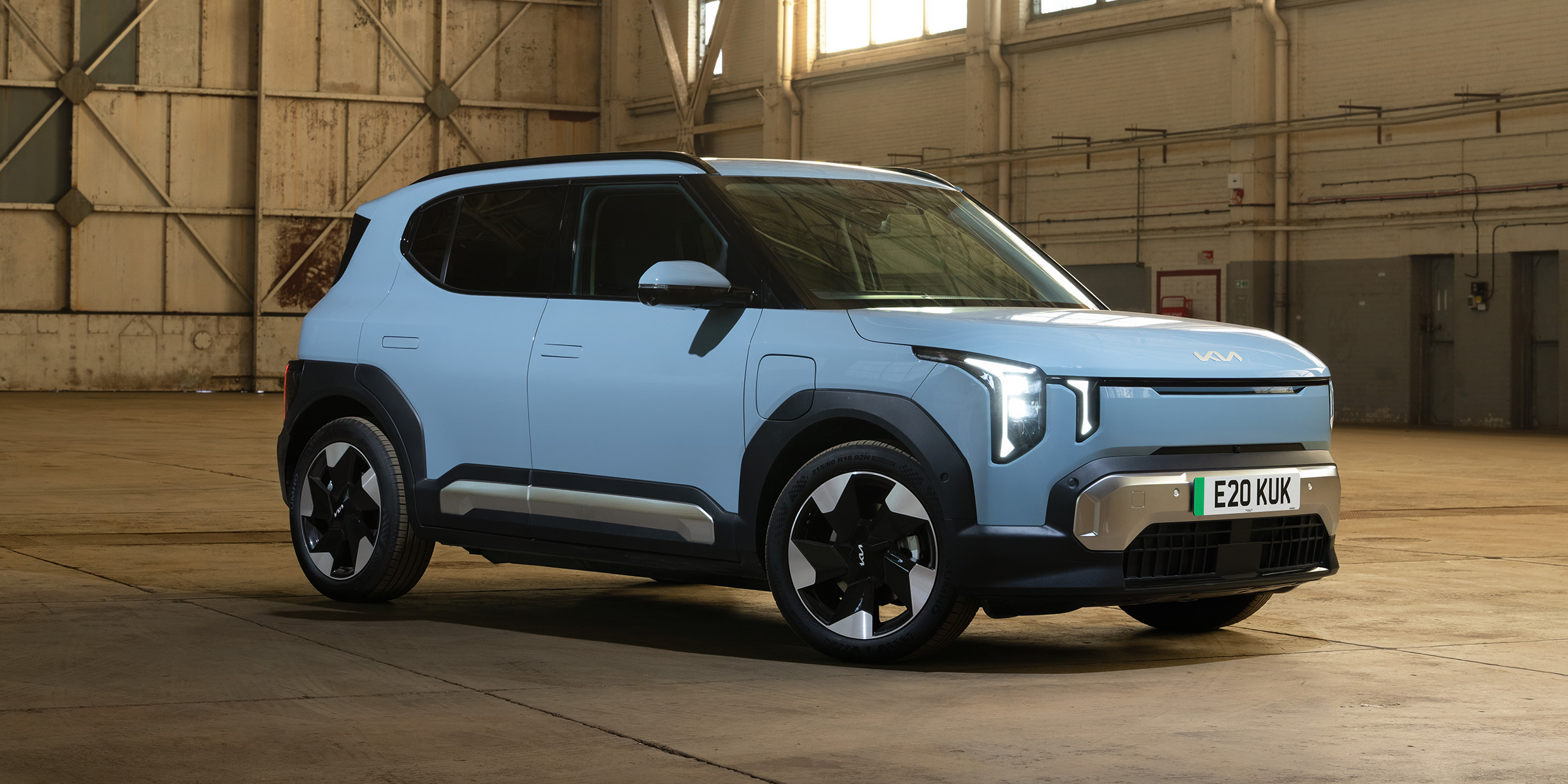
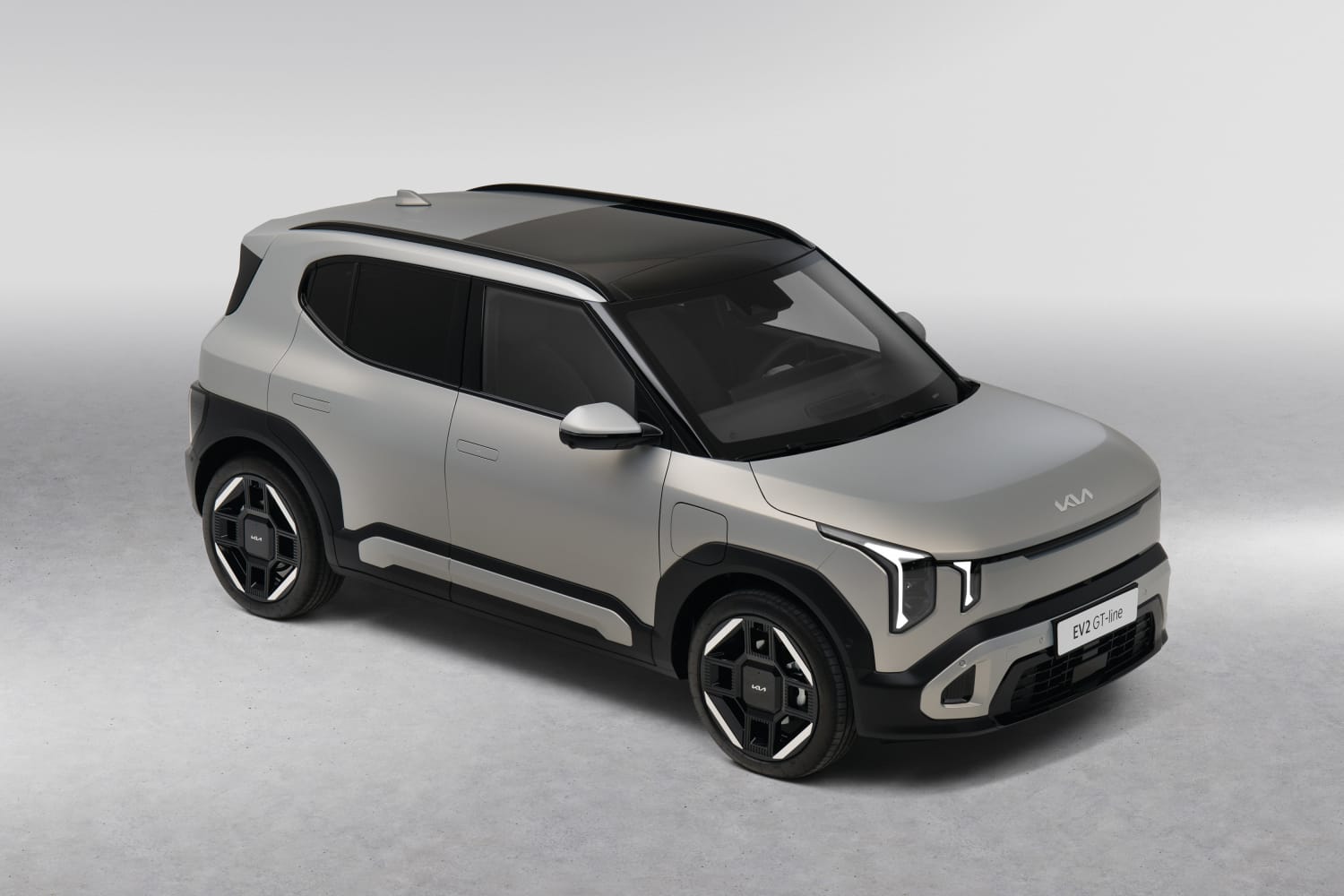
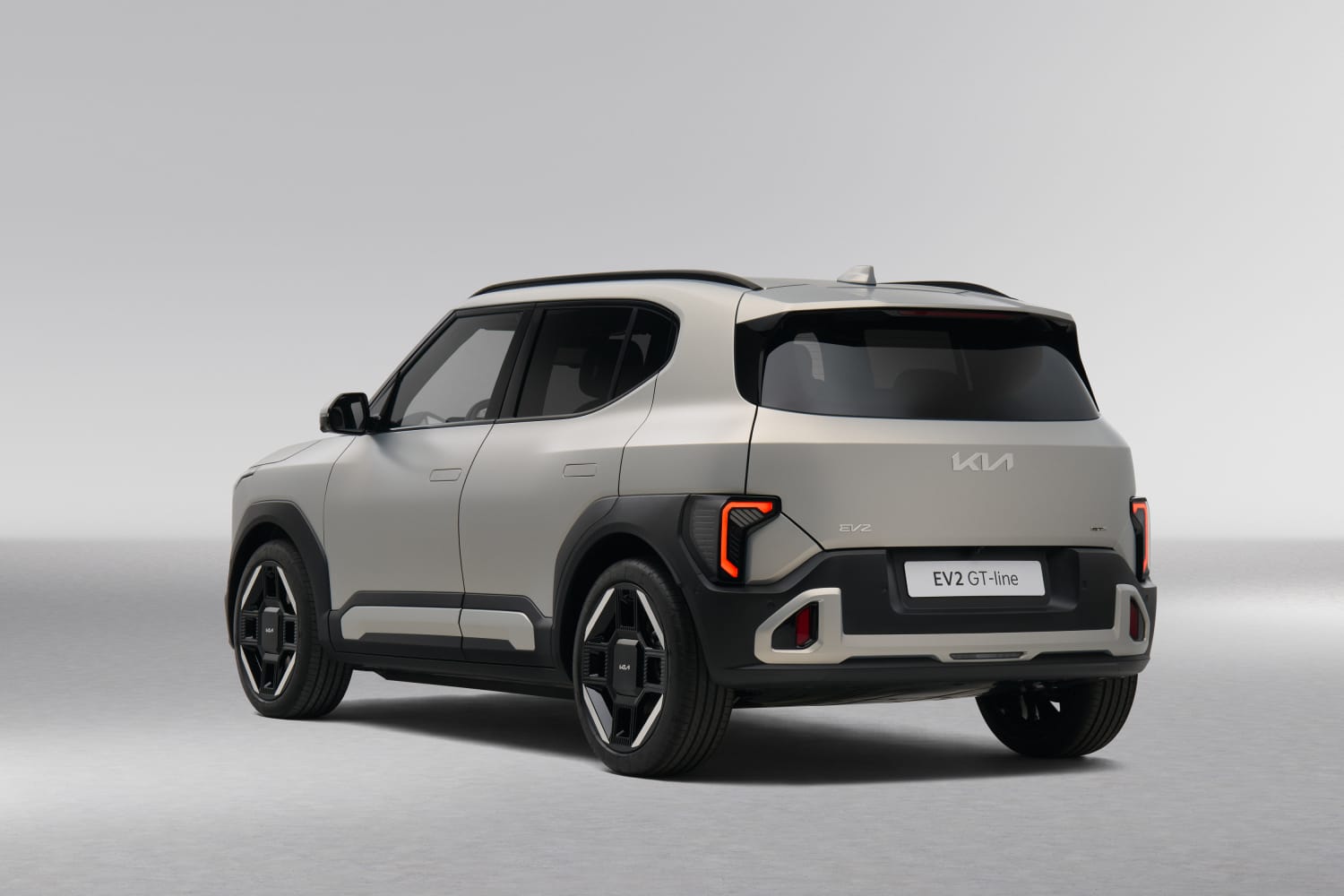
The Kia EV2 is a small electric SUV, which made its debut at the 2026 Brussels motor show and is now available to order in the UK.
The EV2 is a close cousin of the Hyundai Inster, which launched in the UK in late 2024. Despite its rugged SUV-style styling, the EV2 is essentially a small hatchback with no significant off-roading capability.
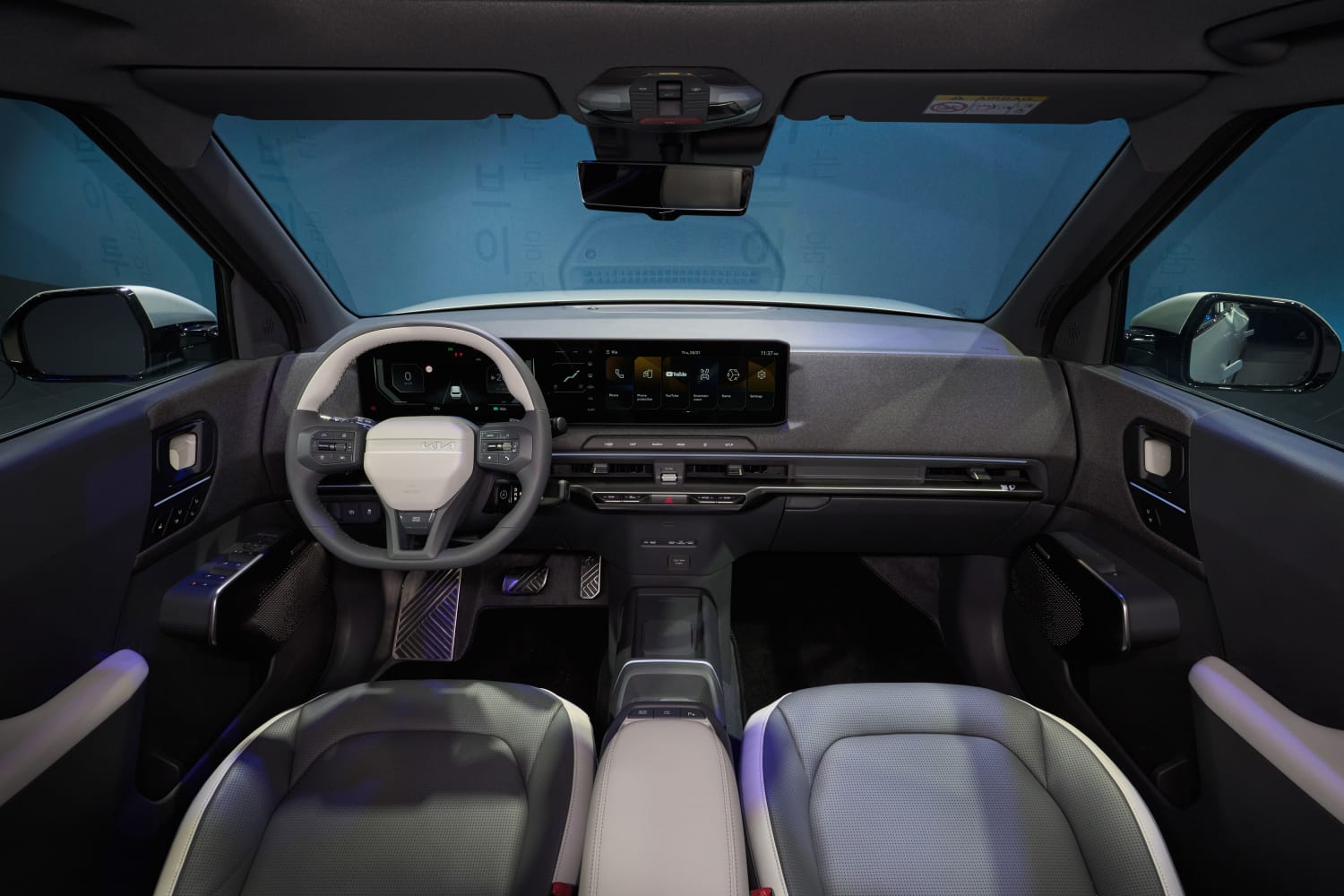
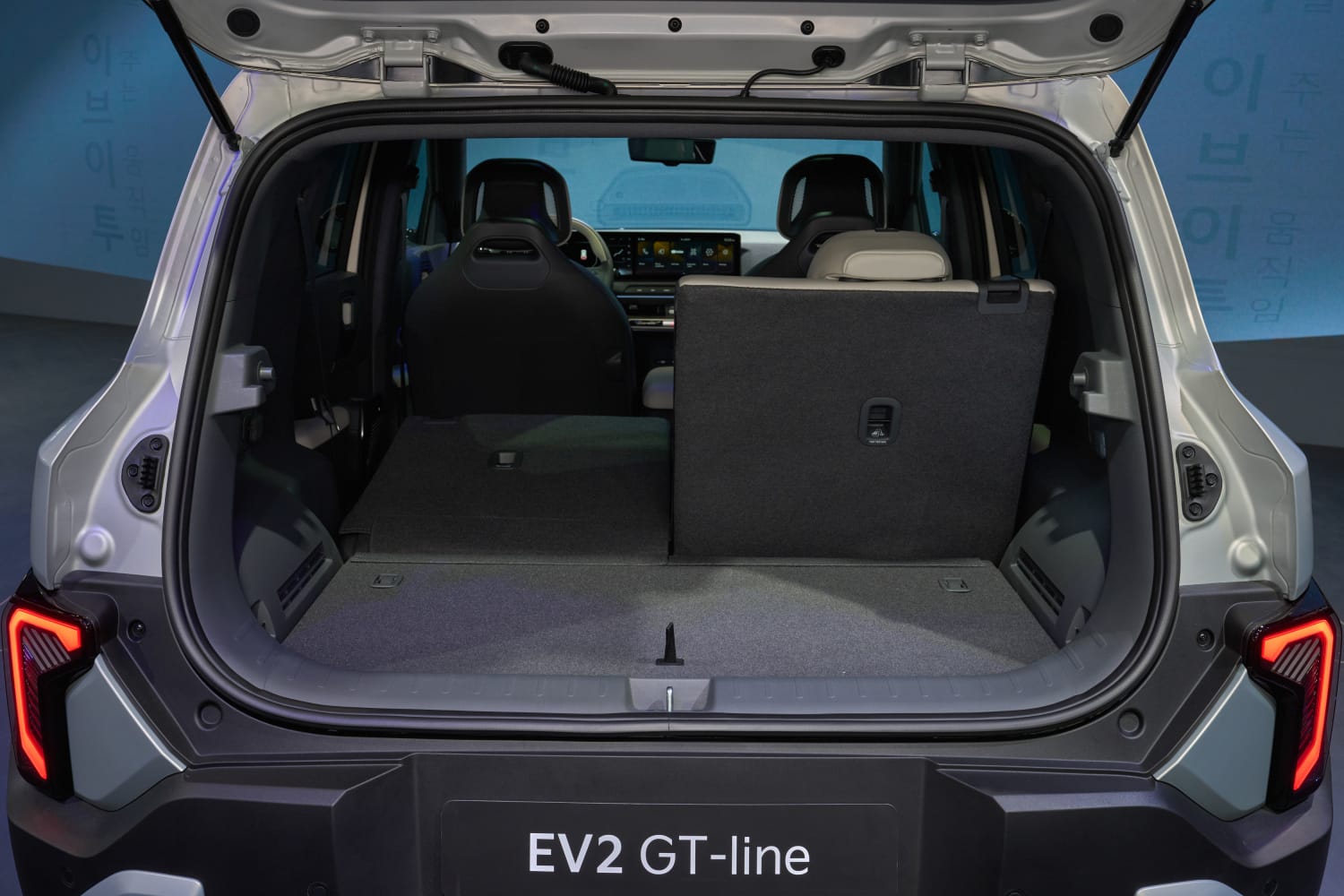
Inside and out, the Kia EV2 draws inspiration from its large SUV siblings, the EV3, EV5 and EV9. The company has highlighted its versatility in the cabin for such a small car, allowing users to maximise the space available to suit their needs.
As of April 2026, we are yet to collect enough review or running cost data to give the EV2 an Expert Rating score. Check back soon!
Body style: Small SUV-style hatchback Engines:single electric motor, front-wheel drive Price:TBA
Launch date: Winter 2025/26 UK arrival date: Spring 2026
Image gallery
Media reviews
The first media reviews of the Kia EV2 are likely to appear in early 2026. Keep checking back for the latest updates.
Safety rating
Independent crash test and safety ratings from Euro NCAP
No safety rating
We don’t expect the Kia EV2 to undergo Euro NCAP safety testing until early 2026. Keep checking back for the latest information as soon as it becomes available.
Eco rating
Independent economy and emissions ratings from Green NCAP
No eco rating
We don’t expect the Kia EV2 to undergo Green NCAP emissions testing until 2026 at the earliest.
The Green NCAP programme measures exhaust pollution (which is zero for an electric car) and energy efficiency. Electric cars are much more energy-efficient than combustion cars, so the EV2 is likely to score very highly in Green NCAP testing if and when it takes place. Check back again soon.
Running cost rating
Monthly cost of ownership data provided exclusively for The Car Expert by Clear Vehicle Data
No data yet
As soon as we have verified running cost information for the Kia EV2 from our technical partner, Clear Vehicle Data, we’ll publish the information here.
Reliability rating
Reliability data provided exclusively for The Car Expert by MotorEasy
No reliability rating
The Kia EV2 is an upcoming model, so we won’t have any meaningful reliability data for years to come.
The Car Expert’s reliability information is provided exclusively to us using workshop and extended warranty data from our partner, MotorEasy, sourced from both official dealerships and independent workshops.
As soon as MotorEasy has sufficient data on the EV2, we’ll publish the results here.
The baby electric SUV market is growing rapidly, and there will be plenty of rivals for the Kia EV2 by the time it launches in the UK. Until we have official pricing and specification, we can only speculate as to which rival models will be most closely aligned with the EV2.
The Polestar 3 is a large electric crossover/SUV that has been on sale in the UK in 2024. The company claims it offers family-friendly SUV space and drives like a sports car.
Based on the same foundations as the new battery-powered Volvo EX90, UK reviewers have widely praised the Polestar 3 for its minimalist interior design and comfortable ride, but many outlets conclude that comparing the SUV to a sports car is not very accurate.
“Sure, it’s powerful”, says Carbuyer’s Charlie Harvey, “but there’s not much feel in the driving experience.” Alastair Crooks of Auto Express agrees, arguing that the EV “falls short of Polestar’s sporty claims, as you might expect of a two-and-a-half-tonne family car.”
As a family car, though, the UK motoring media largely agrees that the Polestar 3 stacks up well against its large electric rivals. That said, Parker’s CJ Hubbard explains that, while the Polestar 3 has a longer battery range, “the BMW iX is a better blend of luxury and utility.”
As of July 2025, the Polestar 3 holds a New Car Expert Rating of A with a score of 74%. It scores top marks for its excellent safety rating and zero tailpipe emissions, while its media review scores are also good. However, its running costs are high, largely because it’s not the most efficient user of electricity.
Model reviewed: Range overview Score: 8 / 10 “When it comes to space, range, charging speed and performance, everything looks great on paper. But in the real world, the Polestar 3 doesn’t quite deliver on all of those fronts. However, the well honed chassis means it’s better to drive than its substantial size would lead you to believe.” Author: Alex Ingram Read review
Auto Trader
Model reviewed: Range overview Score: 9 / 10 “Polestar brings us its first SUV with sleek space-age looks, the latest tech and a promise of sports car performance.” Author: Catherine King, Dan Trent Read review
Car
Model reviewed: Range overview Score: 8 / 10 “This is Polestar’s most convincing effort yet, sticking a Swedish cat amongst the Bavarian pigeons. The spacious and well-appointed interior impresses, as does the handling and promised range.” Author: Alan Taylor-Jones Read review
Carbuyer
Model reviewed: Range overview Score: 8 / 10 “The Polestar 3 SUV is a welcome addition to the electric brand’s lineup with a premium, well-built feel.” Author: Charlie Harvey, Andy Goodwin Read review
Driving Electric
Model reviewed: Range overview Score: 8 / 10 “Good-looking, spacious, and plush, the Polestar 3 is an impressive big SUV. But it’s an expensive choice and the tech grates.” Author: James Batchelor Read review
Electrifying.com
Model reviewed: Range overview Score: 8 / 10 “This crossover of estate and SUV means it’s more aerodynamic and brings efficiency improvements, but it also makes the 3 more engaging to drive as it has a lower centre of gravity. It’s really spacious too, especially in the back, and the quality is great.” Author: Tom Barnard Read review
Evo
Model reviewed: Range overview Score: 7 / 10 “A luxurious, composed, sharp-looking and competitively priced electric SUV it may be, with good power and solid dynamics. But the quirks and glitches aren’t gone…” Author: Sam Jenkins, Ethan Jupp Read review
Fleetworld
Model reviewed: Long Range Dual Motor “With my fleet hat pulled firmly on, the Polestar 3 is a very tempting large EV if you want to pamper yourself. I wouldn’t bother with the Performance Pack or dual-motor versions unless you really need four-wheel drive or crave the added pace. Better to save a substantial amount of money and simply revel in a sleek Swede that runs its key rivals very hard.” Author: Alisdair Suttie Read review
Heycar
Model reviewed: Range overview Score: 7 / 10 “Overall, the Polestar 3 is a pretty convincing and compelling package, as it should be when prices start at around £70,000, and rise steeply as you progress through the various versions.” Author: Ivan Aistrop Read review
Parkers
Model reviewed: Range overview Score: 7.6 / 10 “It’s a better driving and more special feeling thing than the Mercedes EQE SUV, although the BMW iX is a better blend of luxury and utility.” Author: Keith Adams Read review
Regit
Model reviewed: Dual motor long range Score: 8 / 10 “The Polestar 3 is a beautifully designed and very practical five-seat SUV that’s big on style, space and performance.” Author: Maxine Ashford Read review
The Sunday Times
Model reviewed: Range overview Score: 8 / 10 “It’s a full £15,000 cheaper than the cheapest Volvo EX90, which uses all of the same basic mechanical bits. So, you’re getting a sportier, better-looking, reasonably engaging-to-drive electric SUV for less, and all you’ve had to sacrifice are some extra seats and a more voluminous boot.” Author: Neil Briscoe Read review
The Telegraph
Model reviewed: Range overview Score: 8 / 10 “The Polestar 3 seems well engineered and good-looking, it rides and drives well and is as efficient as any of these giant battery SUVs can be.” Author: Andrew English Read review
Top Gear
Model reviewed: Range overview Score: 7 / 10 “The Polestar 3 is very much a feelgood, mildly leftfield choice for a lux family crossover. Provided you can get on with its screen system.” Read review
Safety rating
Independent crash test and safety ratings from Euro NCAP
Independent economy and emissions ratings from Green NCAP
No eco rating
As of July 2025, the Polestar 3 has not been lab tested by Green NCAP.
The Green NCAP programme measures exhaust pollution (which is zero for an electric car) and energy efficiency. Electric cars are much more energy-efficient than combustion cars, so the Polestar 3 is likely to score very highly in Green NCAP testing whenever it ever takes place. Check back again soon.
Reliability rating
Reliability data provided exclusively for The Car Expert by MotorEasy
No reliability rating
As of July 2025, the Polestar 3 has only just started arriving on UK roads, so we don’t have enough reliability data on the SUV to generate a reliability rating.
The Car Expert’s reliability information is provided exclusively to us using workshop and extended warranty data from our partner, MotorEasy, sourced from both official dealerships and independent workshops.
As soon as MotorEasy has sufficient data on the Polestar 3, we’ll publish the results here.
Running cost rating
Monthly cost of ownership data provided exclusively for The Car Expert by Clear Vehicle Data
Battery range
Average
Score
Variation
Score
EV models
381 miles
A
348 – 403 miles
A – A
Electrical efficiency
Average
Score
Variation
Score
EV models
3.4 m/KWh
E
3.1 – 3.6 m/KWh
D – E
Insurance group
Average
Score
Variation
Score
All models
50
F
50 – 50
F – F
Service and maintenance
Cost
Score
Year 1
£505
D
Year 2
£917
C
Year 3
£1,341
C
Year 4
£1,535
C
Year 5
£2,078
C
Overall
£6,376
C
The Polestar 3 can be a rather expensive car to own and run, according to whole-life cost numbers provided exclusively to The Car Expert by our data partner, Clear Vehicle Data.
The car’s average battery range of 381 miles (ranging from 348 to 403 miles depending on the model you choose) is excellent when compared to the rest of the EV market. That said, it’s not very efficient. It’s electrical efficiency (the EV equivalent of miles per gallon for a petrol or diesel car) of 3.4 m/KWh is lower than average, but large rivals like the BMW iX and Kia EV9 are just as inefficient.
The car’s insurance premiums are also in the most expensive bracket, and its predicted five-year servicing and maintenance cost total of over £6k can also be considered expensive, especially as the servicing total for the Kia EV9 is estimated to be over £1k cheaper.
As of July 2025, we are not aware of any DVSA vehicle safety recalls affecting the Polestar 3. However, this information is updated very regularly so this may have changed.
You can check to see if your car has any outstanding recalls by visiting the DVLA website or contacting your local Polestar dealer.
Similar cars
If you’re looking at the Polestar 3, you might also be interested in these alternatives.
Find your next new or used car with Auto Trader. Find out more
Find your next new or used car with Carwow. Find out more
Lease a Polestar 3
If you’re looking to lease a new Polestar 3, The Car Expert’s partners can help you find a competitive deal.
Personal contract hire deals from Leasing.com. Find out more
Personal contract hire deals from Carwow. Find out more
Personal contract hire deals from Rivervale Leasing. Find out more
Subscribe to a Polestar 3
Subscriptions are becoming a very popular way for consumers to try an electric car for a few weeks or months to help decide whether it’s a suitable alternative to a petrol car. If you’re interested in a car subscription, The Car Expert’s partners can help. (PS: What’s a car subscription?)
The MG 3 (styled as MG3) is a small, supermini-class, five-door hatchback. This is the latest third-generation model, which launched in 2024. MG calls it the ‘MG3 Hybrid+’ due to its petrol-electric hybrid powertrain.
This model is light years better than the ancient model it replaced, which dated back to 2014 when MG was a very different car company. That car was one of the worst-rated cars in our Expert Rating Index, whereas this one sits firmly in the middle of the pack for small cars.
The MG 3 has received an encouraging set of good review scores from the British motoring media so far, as Alex Ingram of Auto Express argues the MG “among the most fun to drive, comfortable and best-equipped cars in its class”, while the Carbuyer team praises the hatchback for its “punchy hybrid system” and its “very competitive price”.
Our own editor, Stuart Masson, praises the MG 3 for offering “fantastic fuel economy and plenty of equipment for less money than you’d pay almost anywhere else”, although the refinement and driving experience are “lacking compared to a Volkswagen Polo or SEAT Ibiza.”
As of January 2026, the MG 3 holds a New Car Expert Rating of A with a score of 73%. It scores top marks for its low CO2 emissions and MG’s seven-year new car warranty, while its running costs and safety rating are also good. However, its media review scores are only average.
Body style: Small five-door hatchback Engines:petrol-electric hybrid Price:From £18,995 on-road
Launched: Summer 2024 Last updated: N/A Replacement due: TBA
Image gallery
Media reviews
Highlighted reviews and road tests from across the UK automotive media. Click any of the boxes to view.
Featured reviews
“The new MG 3 is light years ahead of the old model, and shows just how rapidly the company is advancing. The driving experience is nothing special, and it’s not very comfortable, but you’re getting a full hybrid drivetrain and plenty of standard kit at a very reasonable price.”
Model reviewed: Range overview Score: 9 / 10 “The wide range of talents revealed in our road tests and the competitive pricing of the MG3 make it more than a match for its rivals.” Author: Alex Ingram Read review
Auto Trader
Model reviewed: Range overview Score: 5 / 10 “True to its value brand credentials, the MG3 Hybrid undercuts similar hybrid superminis like the Renault Clio, Toyota Yaris and Mazda 2 Hybrid, but you can feel where that money has been saved. Low cost of entry and a seven-year warranty count in its favour but you get what you pay for and we’d be happy spending a little more for the extra quality of the Renault, Toyota or Mazda.” Author: Dan Trent Read review
Business Car
Model reviewed: 1.5-litre petrol/electric hybrid Trophy Score: 8 / 10 “The new MG3 Hybrid+ will make much more of a mark than its predecessor, thanks to its efficiency and practicality, but rivals are more fun to drive and better made.” Author: Martyn Collins Read review
Car
Model reviewed: Range overview Score: 8 / 10 “The new MG3 is an exceptional step forward compared to its predecessor. A hybrid supermini available for less than the price of a basic petrol version of most rivals is a real selling point. It’s not the most resolved hybrid powertrain, nor does it offer the exceptional fuel economy you get from a Toyota Yaris. But it is a good supermini available for a great price, and that should always be applauded.” Author: Ted Welford Read review
Carbuyer
Model reviewed: Range overview Score: 8.6 / 10 “The MG 3 is something of a bargain, boasts an efficient hybrid powertrain and it’s good fun to boot.” Author: Charlie Harvey, Alex Ingram Read review
Fleetworld
Model reviewed: 1.5-litre petrol/electric hybrid Trophy “The MG’s low cost, more-than-decent fuel economy and generous kit in Trophy spec, and it’s a serious contender for any fleet driver looking at a supermini.” Author: Alisdair Suttie Read review
Parkers
Model reviewed: Range overview Score: 8.2 / 10 “The MG 3 has achieved a repeat of the MG 4 EV’s knock-out value for money. It’s a hugely competent supermini, packing a full hybrid drivetrain and almost 200hp, for similar sums of money for cars with little more than half the power. Comparable hybrids, such as the Renault Clio and Toyota Yaris are significantly more expensive – food for thought for all of the opposition.” Author: Keith Adams Read review
The Sun
Model reviewed: 1.5-litre petrol/electric hybrid Trophy “The MG 3 Hybrid is a fun, comfy car that’s perfect for short journeys and city driving – but the best bit is the price.” Author: Rob Gill Read review
The Telegraph
Model reviewed: 1.5-litre petrol/electric hybrid Trophy Score: 8 / 10 “While the headline here is the cheapest full hybrid model in the UK, the MG 3 isn’t that much cheaper than its rivals unless you take the level of equipment into account. Although the MG is perfectly adequate as a hybrid model, I’d wager there are those who’d prefer a decent used Toyota Yaris, Honda Jazz or even a Renault Clio.” Author: Andrew English Read review
Top Gear
Model reviewed: Range overview Score: 7 / 10 “The new MG 3 deserves its place at the supermini table. Good to drive, frugal to run, and cheap as they come.” Author: Peter Rawlins Read review
Safety rating
Independent crash test and safety ratings from Euro NCAP
Independent economy and emissions ratings from Green NCAP
No eco rating
As of January 2026, the MG 3 Hybrid+ has not been lab tested by Green NCAP.
The Green NCAP programme measures exhaust pollution (which is lower for an hybrid car) and energy efficiency. Hybrid cars are more energy-efficient than combustion cars, so the MG 3 Hybrid+ is likely to score highly in Green NCAP testing whenever it ever takes place. Check back again soon.
Running cost rating
Monthly cost of ownership data provided exclusively for The Car Expert by Clear Vehicle Data
Fuel consumption
Average
Score
Hybrid models
64 mpg
A
CO₂ output
Average
Score
Variation
Score
Hybrid models
100 g/km
A
Insurance group
Average
Score
Variation
Score
All models
21
B
Service and maintenance
Cost
Score
Year 1
£157
A
Year 2
£442
A
Year 3
£713
A
Year 4
£877
A
Year 5
£1,173
A
Overall
£3,362
A
The MG 3 Hybrid+ is a very affordable car to own and run, according to whole-life cost numbers provided exclusively to The Car Expert by our data partner, Clear Vehicle Data.
Only available as a petrol/electric hybrid, the MG 3’s average fuel consumption of 64mpg is excellent when compared to the rest of the market at large, and it’s insurance bracket is on the cheap side too.
The car’s predicted servicing and maintenance costs for the first five years of ownership are also excellent, though not as cheap as the larger all-electric MG 4.
Reliability rating
Reliability data provided exclusively for The Car Expert by MotorEasy
No reliability rating
As of January 2026, we don’t have enough reliability data on the MG 3 Hybrid+ to generate a reliability rating.
The Car Expert’s reliability information is provided exclusively to us using workshop and extended warranty data from our partner, MotorEasy, sourced from both official dealerships and independent workshops.
As soon as MotorEasy has sufficient data on the new MG 3 we’ll publish the results here.
Awards
Trophies, prizes and awards that the MG 3 Hybrid+ has received.
2024
Auto Express Awards – Best Affordable Hybrid
Similar cars
If you’re looking at the MG 3 Hybrid+, you might also be interested in these alternatives.
In a market where just about every car manufacturer seems to be promoting ‘electrified’ models, it can be hard to decipher just exactly what technology they’re referring to. In this article, we’ll be taking a look at hybrid cars and running through some of the benefits and drawbacks of this technology.
The word ‘hybrid’ can mean various different things in the car industry, which can be very unhelpful to customers. The general idea is that it refers to a vehicle that has both an internal combustion (petrol or diesel) engine and an electric motor, rather than just one or the other. But that’s just a starting point.
Broadly speaking, there are three recognised categories of hybrid vehicles: regular hybrid, mild hybrid and plug-in hybrid. This article will concentrate on the regular hybrid, which is the original hybrid vehicle and has been around for almost 30 years now.
Thanks to car company marketing jargon, regular hybrid cars may be known as full hybrids or (falsely) ‘self-charging’ hybrids. You may also see the abbreviation HEV, which stands for hybrid electric vehicle and is also misleading (it’s still predominantly a petrol vehicle, not an electric vehicle).
[Here at The Car Expert, the only descriptions we accept are regular hybrid or basic hybrid. All the rest is misleading marketing crap – ed]
A regular hybrid pairs a petrol (or, rarely, a diesel) engine and an electric motor, which gets its energy from a small battery. The car can drive on either petrol or electric power, or a mix of both at the same time.
The battery cannot be plugged into an external source, so all of its electricity comes either directly or indirectly from the petrol engine. We’ll come back to that shortly. A hybrid can run on its electric motor for a few miles without using the petrol engine, but only if you’re being gentle with the accelerator.
Other types of hybrid
There are two other types of hybrid that you may encounter: the mild hybrid and the plug-in hybrid.
A mild hybrid uses a small electric motor to assist a petrol or diesel engine, taking on some of the load to reduce the work that the engine has to do. This improves a car’s performance and/or fuel economy, but usually not by much. A mild hybrid can’t run on electric power alone as the electric motor is not connected to the wheels – it simply acts to support the engine. There’s also usually no battery, so the electric motor relies on the petrol/diesel engine to generate its electricity.
Here at The Car Expert, we generally don’t bother mentioning mild hybrids as they tend to provide very little practical benefit, and you drive the car like a conventional petrol or diesel vehicle anyway. We will usually describe a mild hybrid car as “a petrol (or diesel) car with mild hybrid assistance” as it’s more accurate.
A plug-in hybrid works similarly to a regular hybrid but is more developed in every way. The battery is bigger and, as the name suggests, can be plugged into an external charging point. That means you can charge the car at home or at a public charging point to fill up the battery, which you’ll need to do if you want to maximise the benefit of having a larger battery.
The electric motor is also usually bigger and more powerful, so can take more of the driving load on its own. Most plug-in hybrids can do at least 20 miles just on the electric motor and battery without calling on the petrol engine, and some of the latest models can do more than 50 miles.
How does a hybrid system work?
A regular or plug-in hybrid has two power sources to drive the car: a petrol engine and an electric motor. There have been some diesel hybrids and plug-in hybrids over the years, but very few (Mercedes still perseveres with them today, but most other manufacturers have given up on diesel altogether).
Depending on your driving circumstances and how much electricity is in the battery, the car can drive as a regular petrol car, a fully electric car, or use both sources at the same time for maximum performance. By using whichever power source gives the best result for your current driving need, a hybrid can maximise efficiency to reduce CO2 emissions and fuel bills. However, its effectiveness will depend on the sophistication of the car and how well it integrates petrol and electric motors. Newer hybrids do this much better than older models, giving a much better driving experience and better fuel economy.
The battery supplies electricity to the electric motor. While a plug-in hybrid allows you to connect the car to an external charger, a regular hybrid doesn’t have a plug so you can’t do that. Car companies also use misleading phrases like “no need to plug in!” when talking about a regular hybrid, as if that’s some kind of advantage. It’s not. It just means that the electricity has to come from the car itself, which it achieves in two ways.
Firstly, whenever you coast or brake in a hybrid vehicle, the car is able to generate a small amount of electricity that is sent to the battery. This is called regeneration, and what car company marketing people describe as “self-charging” and act like it’s magic. In reality, all you’re doing is recouping a small percentage of the energy you’ve already spent accelerating the car in the first place. So you might spend ten units of fuel energy to accelerate your car from rest to 30mph, and then get one unit of electrical energy back again as you slow back down to a stop. The electricity you’ve gained has been provided indirectly from the petrol engine.
Secondly, the car can use the petrol engine as a generator, burning petrol to create electricity. This is often described as forced regeneration. Some hybrid cars will have a button in the cabin somewhere that the driver can use to activate this function, while other cars handle it automatically.
How does a regular hybrid compare to a plug-in hybrid?
A regular hybrid system features a battery large enough to drive the vehicle using electric power only for short periods of time. That means a few miles, at most, before you run out of electricity in the battery and the petrol engine needs to take over.
Unlike plug-in hybrids, which have a quoted electric-only driving range, regular hybrids don’t tend to have a specified electric-only range. They excel on urban routes, managing the use of electric power and petrol power as necessary. Because you’re stopping and starting regularly, it maximises the regeneration of electricity to the battery, helping to improve your overall fuel economy. And when the car is running on purely electric power, it is usually much quieter and smoother than running as a petrol car.
When a hybrid is travelling at motorway speeds, it generally relies on the petrol engine alone while the electric motor is not used – so you’re effectively carrying a couple of hundred kilograms of ballast from a motor and battery that are not being used. That means your motorway fuel economy may not be as good as a pure petrol car.
A plug-in hybrid usually has a more powerful electric motor, so it can handle more of the driving duties – even at motorway speeds, if there’s juice in the battery. It still probably won’t be as economical for long-distance motorway cruising, however.
Regular hybrids are likely to be a better option for drivers who don’t have easy access to charging, since you’re not going to get the benefit of a plug-in hybrid if you can’t plug it in. If you do have access to home or work charging, a plug-in hybrid will give you more electricity more cheaply, which will significantly reduce your running costs.
Do hybrid cars use petrol?
Most hybrid cars have a petrol engine as their primary source of power to turn the wheels. There have only been a small number of diesel hybrids over the years (a few more diesel plug-in hybrids) as diesel engines are not as well suited to regular start-stop behaviour, so they don’t deliver the same level of economy and emissions benefits in a hybrid format.
As well as using the petrol engine to drive the car, hybrids can also use it to charge the battery, which then provides electricity to power the electric motor.
The amount of petrol you use, relative to the amount of electricity, will depend on a few factors such as your driving style, the driving environment and the car itself. If you’re driving gently in an urban setting and your car has an efficient electric motor, you will spend more of your journey using electrical power instead of petrol power. But when you put your foot down hard on the accelerator, or head out onto a motorway, you’ll be driving a petrol car.
What are the pros and cons of a hybrid car?
Having both a petrol engine and an electric motor can offer either the best of both worlds, or the worst of both worlds. For a regular hybrid, here’s an idea of some of the the pros and cons compared to a regular petrol car.
Pros
Better economy than a petrol car in urban driving
Smooth, quiet EV driving at low speeds
Lower emissions rating than an equivalent petrol car, which usually means lower road tax bills
Some benefits of a full EV without needing access to a charging point or changing your driving habits
Combined petrol and electric power provides additional performance
Relatively simple to provide part-time four-wheel drive, using petrol motor to drive front wheels and electric motor for the rear wheels (or the other way round)
Cons
Motorway fuel economy no better than a petrol car, and often worse
Transition between electric and petrol power under acceleration can often be clunky
No manual gearbox option
Very limited electric driving range thanks to small battery and electric motor
Boot space and/or rear cabin space often compromised to fit battery and associated components
Higher maintenance costs than equivalent petrol car, which can offset fuel savings
Are hybrid cars becoming more popular?
As part of the global transition from fossil fuels to electric vehicles, governments around the world are encouraging people to buy electric vehicles. But while EV sales are steadily growing, there’s no doubt that a percentage of the car buying public is still not ready to make the leap from pure petrol or diesel power to pure electric power. If that sounds like you, a hybrid may be a good compromise.
Here in the UK, sales of new hybrid and plug-in hybrid cars are growing, pretty much directly at the expensive of petrol and diesel cars.
As of mid-2025, petrol cars now make up about half of all new car sales, a market share that is steadily declining. Diesel cars are almost extinct in new car terms, making up less than 5% of the market. Electric cars make up nearly 25%, regular hybrids about 15% and plug-in hybrids 10%.
By contrast, if you look back to 2017, diesel sales made up more than half of all new car sales, with petrol taking another 40%. EV, hybrid and plug-in hybrid made up less than 10% of all sales.
We’re probably at the period of peak hybrid in terms of new car sales. According to the government’s roadmap, EVs are targeted to make up 80% of all new car sales by 2030, with the remaining 20% split between regular and plug-in hybrids. They will then be phased out from new car sales by 2035.
When will new hybrid cars be banned in the UK?
The UK government is banning the sale of new petrol and diesel cars from 2030. Regular hybrids and plug-in hybrids can still be offered until 2035. There is no plan to remove used cars from UK roads, so these dates only apply to the sale of new cars.
Under the previous Conservative government, the rules around which hybrid cars would be permitted to be sold after 2030 were unclear. The Labour government has confirmed both plug-in hybrid and regular hybrid cars can be sold until 2035, after which time only electric cars will be allowed.
Aston Martin has announced that its new ‘special’ DBX S performance SUV is now available to order in the UK, which is the most powerful SUV the brand has ever produced.
Powered by a 727hp 4.0-Litre V8 petrol engine with powertrain technology transferred from the forthcoming Valhalla supercar, the introduction of the DBX S means that Aston Martin now once again offers the most powerful ICE-powered SUV on the market – this high-riding Aston having 12hp more than the V12-powered Ferrari Purosangue.
This isn’t the first time that the British manufacturer has used the ‘S’ moniker for a new high-performance version of an existing model – Aston has been using the suffix since the launch of the Vanquish S sports car in the noughties.
The DBX S makes use of the same twin-turbocharged engine as the DBX 707 – the previous high-performance range-topper – but with several improvements that boost the power output by 20hp. Aston has also made the DBX S up to 47kg lighter than the DBX 707 thanks to a new optional carbon fibre roof and optional 23-inch magnesium alloy wheels.
Despite these changes, the manufacturer says that the new ‘S’ can complete a 0-62mph sprint in 3.3 seconds, which is the same sprint time as the DBX 707 and a tenth of a second off the Ferrari Purosangue’s 0-62mph sprint time. That said, Aston claims that the DBS S is 0-3 seconds faster in a 0-124mph sprint than its ‘707’ sibling.
This all-wheel drive SUV makes use of a nine-speed automatic gearbox. Aston adds that steering tweaks have made the car’s handling more responsive, and that the car’s turning circle has been decreased by around half a metre down to 12 metres.
On the exterior styling front, this ‘S’ version has a revised jet black front grille design, a splitter, diffuser and side skirts finished in black and red, and a revised rear bumper that sits above vertically-stacked quad mount exhausts that reportedly make the V8 engine louder.
Inside, the seats are trimmed in Alcantara leather (semi-aniline leather upholstery and red seatbelts are optional) and an ‘entirely bespoke’ infotainment touchscreen is mounted on the centre of the dashboard that Aston says it has designed in-house. A 14-speaker sound system comes as standard, but the car can otherwise be specced with a 23-speaker Bowers & Wilkins system for an extra fee.
That sums up what we know about the new DBX S. The SUV is now available to order in the UK, though Aston Martin is yet to confirm the model’s pricing. The DBX 707 currently costs £205k, and the price tag of the new ‘S’ is likely to exceed that number.
Although many people don’t realise it, China has been the world’s largest producer of motor vehicles since 2008. Today, its automotive industry dwarfs every other country in the world, with an annual production in excess of 30 million vehicles. Next best is the USA, on about 10 million.
A few more numbers illustrate the scale of the Chinese car industry. One in three motor vehicles worldwide (31+ million out of 95 million) is built in China, and the other two-thirds are loaded with Chinese components. China built more motor vehicles last year than the UK has built over the last 25 years combined.
As well as a rapidly growing number of Chinese car brands, many European and American car companies also build cars in China for export around the world. You could be buying a new BMW, Mini or Tesla and not know that it’s assembled in China.
The shift to electric vehicles is only accelerating China’s dominance in the global car industry. The EV sector in China is far more developed than here in Europe, with about half of all new cars being electric. The country has also developed a stranglehold on many of the crucial raw materials required for producing EV batteries, which is likely to cement its position in coming years.
Chinese brands selling in the UK
Chinese car brands are establishing a presence in the UK at a rapid pace, with six different Chinese manufacturers already selling new models in the UK and several more on the way. This also includes MG, a well-known British car brand that has been fully owned by the Chinese company SAIC Motor since 2007.
BYD
Entire range built in Asia
BYD seal
With its factories located in China, Thailand and India, you can be confident that any of the growing number of BYD cars on British roads started their life on an Asian production line.
The range now includes the Dolphin hatchback, Seal saloon, Atto 3 SUV and Seal U SUV, with the larger Sealion 7 SUV also on the way. BYD surpassed Tesla as the world’s fastest-growing car brand last year, recording over 8,700 new car sales in the UK in 2024.
BYD wasn’t the first Chinese brand to arrive in the UK – that was Great Wall Motors’ sub-brand Ora. The cute Ora 03 electric hatchback launched in 2022 (originally called the Funky Cat) and is still the brand’s only offering to British buyers three years later. It is assembled in both China and Thailand.
Another Chinese GWM brand, Haval, is launching its new Jolion Pro SUV in the UK in the coming months.
You may not yet have heard of Jaecoo, as the Chery-owned brand has just arrived, but it’s quickly building up its UK presence.
Jaecoo launched its first car in the UK, the petrol and plug-in hybrid Jaecoo 7 SUV, in February this year. It’s been a successful launch, with more than 2,000 cars sold in the first couple of months on sale.
Next up is the Jaecoo 5 range – available with either petrol or electric power – which is set to arrive over summer. Also rumoured to be on the way are the seven-seat Jaecoo 8 SUV and at least one other model.
Leapmotor arrived in the UK last year with two new electric models – the pint-sized T03 city car and C10 mid-sized SUV. It will also soon bolster its fledgling UK range with q compact B10 electric crossover.
The brand is the only Chinese manufacturer to assemble some of its cars in Europe. Due to its partnership with Stellantis – which owns 20% of Leapmotor – the T03 is manufactured in Poland for the European market, while the B10 and C10 are both built in China.
Althogh it was founded in Oxford in 1924, MG has been owned by Chinese giant SAIC Motor for 18 years. Most of its cars are assembled in China, although SAIC also has plants in Thailand, Indonesia and Taiwan, and the company retains a design centre in London.
Under its Chinese ownership, MG’s range has blossomed to encompass petrol, hybrid and electric models. Although it no longer builds affordable sports roadsters, the company is probably more profitable and stable than it has ever been.
Another brand owned by Chinese giant Chery, Omoda arrived in the UK last year and is a sister brand to Jaecoo.
The marque’s range currently includes the petrol-powered 5 and electric E5 SUVs. Arriving shortly is the larger Omoda 9, to be followed later in the year by the Omoda 7 and probably next year by the smaller Omoda 3 – all of which are built in China.
A fledgling Chinese brand that has just arrived on British roads, Skywell has one offering so far in the electric BE11 SUV. The car is built in Nanjing, China.
Compared to other Chinese rivals that are pushing hard to corner the market with keen pricing and aggressive dealership expansion, Skywell has had a more cautious UK launch with a smaller dealer network.
XPeng (pronounced ‘Xiao Peng’) landed in the UK back in March with the launch of its mid-sized electric G6 SUV. The marque also plans to bring its P7+ saloon, seven-seater X9 people carrier and flagship G9 SUV to the UK market in the near future.
The brand’s entire range is built at the company’s factory in Guangzhou, China.
Several big European names have strong and long-established connections to Chinese manufacturing. Volkswagen Group, for example, has been making some of its cars in China since 1978. In 2025, the vast majority of Chinese-built cars from European and US brands are all-electric models, and are built in China as part of a partnership with a Chinese automotive company, or because electric car battery production is cheaper there, or because a Chinese brand partly owns the European marque.
There are several models not mentioned below, like the Audi Q4 e-tron, Volkswagen ID.3, and Mercedes-Benz E-Class and many more, that are manufactured in both Europe and China, with Chinese manufacturing generally reserved for the Chinese domestic market and other Asian countries.
The BMW iX3 was the brand’s first electric SUV, which arrived in the UK in 2021. It was also BMW’s first model built for export to the UK and Europe from the brand’s factory in Shenyang, China.
Now approaching the end of its model life, the iX3 is set to be replaced by the new iX3 Neue Klasse SUV which is entering production in both China and South Africa. The majority of BMW electric models, including the i4, i5, i7 and flagship iX, are assembled in Germany.
While the majority of models in Citroën’s current range is built in Europe, the French brand has been building cars in the Chinese city of Wuhan for decades, though not necessarily for the European market.
That changed in 2022 with the introduction of the brand’s upmarket C5 X liftback, which is exclusively built in Chengdu, China as part of a partnership between parent company Stellantis and Chinese company Dongfeng.
Sporty SEAT sub-brand Cupra has recently launched its new Tavascan SUV in the UK – an electric car that is only built at Volkswagen’s Hefei factory in China.
Known for its unparalleled value-for-money pricing, Dacia builds most of its model range in its home nation of Romania. However, to keep pricing for its all-electric Spring hatchback as low as possible, Dacia decided to move the car’s manufacturing abroad.
The Spring is assembled in Shiyan, China as part of a joint venture with parent company Renault, Chinese automaker Dongfeng, and Nissan.
Another renowned British automotive name that is not exactly British anymore, Lotus is backed by Chinese brand Geely, which owns a controlling 51% of the luxury marque.
While the petrol-powered Lotus Emira sports car is assembled in Norfolk, the brand’s all-electric Emeya grand tourer and Eletre SUV are built in Wuhan, China.
Back in 2020, BMW began a joint venture with Great Wall Motor to produce all-electric Mini models in China. This partnership continues today, with Mini’s Aceman crossover and new Cooper Electric hatchback assembled in the city of Zhangjiagang.
BMW did have plans to start manufacturing these electric models at Mini’s Oxford plant in the UK where the ICE-powered Mini Cooper is built, but has delayed the investment needed for this project due to “market uncertainty” – and presumably the fact that it already builds the car in China for less than it can do in the UK.
Since its establishmentd in 2017, Volvo spin-off Polestar has always built its models in China.
The Polestar 2 saloon is currently built in Zhejiang, the Polestar 3 SUV is built in Chengdu, and the Polestar 4 is built in the city of Ningbo. Like parent company Volvo, Chinese giant Geely owns a large stake in Polestar, recently increasing its share to become the largest stakeholder in the upmarket all-electric brand.
Originally under the Mercedes-Benz umbrella, Chinese automaker Geely bought a 50% stake in Smart in 2019.
This joint Mercedes-Geely partnership has rejuvenated the Smart brand, and sees the marque’s #1, #3 and upcoming #5 SUVs assembled in Xi’an, China. Mercedes-Benz provides the exterior and interior design, while Geely handles the engineering and manufacturing of the models.
Despite the ongoing US-China tariff war, American all-electric marque Tesla has recently opened its second large factory in Shanghai, where it builds the Model 3 saloon.
Tesla also builds its popular Model Y SUV in China, but UK and European vehicles are supplied from the company’s German factory in Berlin.
Swedish brand Volvo has been building cars in China many years, with full ownership of three different Chinese factories. Geely owns a large stake in the company.
The brand’s compact EX30 crossover is built exclusively in Chengdu, China – though production is planned to be moved to Belgium in 2026 – and the brand’s large EX90 SUV, EM90 people carrier and S90 saloon are assembled in China.
Volvo also builds its XC40 and EX40 SUV in China, but also builds them in Belgium for sale in Europe and the UK.
The Hyundai Inster is a small budget-end battery-powered hatchback and the entry-level all-electric model in Hyundai’s UK range.The range also includes a beefier Inster Cross variant that is more suited to off-road ‘adventures’.
Described as an “impressive package” by the Daily Mail’s Rob Hull, Auto Trader’s Dan Trent argues that the Inster is a great addition to the sub-£25k budget EV market that is “generously equipped and proves affordable doesn’t have to look cheap.”
Also praised for its stylish exterior looks by several reviewers, the car is also praised by many for its competitive battery range. “It’s not as cheap as we had hoped”, says Steve Fowler of The Independent, pointing to the fact that rivals like the Renault 5, Citroën ë-C3 and Dacia Spring are cheaper as standard.
As of February 2026, the Hyundai Inster holds a New Car Expert Rating of A, with a score of 79%. It scores top marks for its media review scores, low running costs, zero tailpipe emissions and warranty coverage, while its Euro NCAP safety rating is also good.
Model reviewed: Range overview Score: 8 / 10 “The quirky, half-pint Hyundai Inster is a remarkably versatile, efficient and very lovable EV.” Author: Alex Ingram, Ellis Hyde Read review
Model reviewed: Inster Cross Score: 7 / 10 “The Hyundai Inster Cross has even more appeal than the standard car, but it’s difficult the justify the higher price.” Author: Ellis Hyde Read review
Auto Trader
Model reviewed: Range overview Score: 10 / 10 “The new wave of affordable, attractive and relevant electric cars like the Hyundai Inster is a breath of fresh air. Comfortably hitting the sub-£25,000 entry price point also targeted by the likes of the Renault 5 and Citroën ë-C3, the Inster is more expensive than a Dacia Spring or Leapmotor T03 but is more generously equipped and proves affordable doesn’t have to look cheap.” Author: Dan Trent Read review
Business Car
Model reviewed: 02 Score: 8 / 10 “The Hyundai Inster 02’s pricing would have been competitive as little as one year ago, but now seems a bit expensive when compared with (slightly larger) EV alternatives such as the Citroen e-C3 and Fiat Grande Panda. However, the Inster does have a longer EV range, and we’d expect that, combined with the model’s charm, to give it some persistent buyer appeal.” Author: Sean Keywood Read review
Model reviewed: Range overview Score: 9 / 10 “The Hyundai is sure to attract attention from fleets looking to electrify due to its affordable pricing, quirky look, class-leading range, and its easy going, comfortable drive.” Author: Martyn Collins Read review
Car
Model reviewed: Range overview Score: 10 / 10 “For a compact urban runabout, the Hyundai Inster is big where it counts – big on character and charm, big on clever and flexible packaging, and big on range and performance. If you’re looking for an affordable and stylish runabout that doesn’t feel compromised in every area, then the Inster should be at the top of your must-drive list.” Author: Curtis Moldrich, Ben Whitworth Read review
Carbuyer
Model reviewed: Range overview Score: 8.6 / 10 “The Hyundai Inster looks pricey on the face of it, but it’s well built and upmarket inside.” Author: Charlie Harvey, Richard Ingram Read review
Daily Mail
Model reviewed: Range overview “The Hyundai Inster is an impressive package. For such a small car, it’s hugely roomy and loaded with quality materials and kit you usually expect to find in bigger cars. But this latter point might also be its downfall. Had Hyundai done away with some features that aren’t necessary for such a compact car, it could have created an EV that’s truly affordable.” Author: Rob Hull Read review
Driving Electric
Model reviewed: Range overview Score: 8 / 10 “It punches above its size for driver appeal, refinement and quality and the stylish exterior and funky cabin detailing give it some personality too. The pricing starts to look a little steep towards the upper end of the line-up but the basic range and performance stats, and reasonable equipment levels, justify its positioning.” Author: Antony Ingram Read review
Electrifying.com
Model reviewed: Range overview Score: 9 / 10 “Such a welcome addition to the electric car classes, the Hyundai Inster is versatile, stylish, affordable and has loads of ‘big car’ kit. We absolutely love it.” Author: Ginny Buckley Read review
Green Car Guide
Model reviewed: Range overview Score: 9 / 10 “The Hyundai INSTER is a rare beast: an electric city car. It’s even more unique by having a characterful SUV design style.” Author: Paul Clarke Read review
Heycar
Model reviewed: Range overview Score: 8 / 10 “The Hyundai Inster is a charming electric car with a surprisingly spacious and high-quality interior. Despite its diminutive size, it has the sort of onboard tech more commonly seen on premium cars, although prices do reflect this.” Author: Richard Aucock Read review
Honest John
Model reviewed: Range overview “The Hyundai Inster has eye-catching, SUV-aping styling. Its roomy, practical interior is packed with standard equipment. But it’s still pricey for such a small car, and the base model misses out on rear seat flexibility.” Read review
Parkers
Model reviewed: Range overview Score: 8.8 / 10 “There’s a lot to admire about the Hyundai Inster. It makes incredibly clever use of its compact dimensions, offering more space inside than you’d ever expect from something with such a small footprint. The value proposition is strong too – particularly when you factor in the generous equipment levels.” Read review
The Independent
Model reviewed: Range overview Score: 7 / 10 “Hyundai’s entry-level model is a cute all-electric mini-SUV to compete against the likes of the Renault 5. It boasts an impressive array of tech, but it’s not as cheap as we had hoped.” Author: Steve Fowler Read review
The Sunday Times
Model reviewed: Range overview Score: 6 / 10 “Good but doesn’t Inster the soul.” Author: Will Dron Read review
The Telegraph
Model reviewed: 02 Long Range Score: 8 / 10 “This is a car in which it’s difficult to be glum. True, it isn’t as complete a package as its rivals, many of which do better on value for money, comfort, space, or all three. It’s pricey, too, although that’s more forgivable when you consider there’s a lot of equipment for your cash. But for all its flaws, there’s an irrepressible cheeriness about the Inster’s combination of quirkiness and charm. If you’re after an EV that brings sunshine on a rainy day, the Hyundai Inster is it.” Author: Alex Robbins Read review
Top Gear
Model reviewed: Range overview Score: 7 / 10 “The Hyundai Inster is a refined and good looking little car, at home in the city and suburbs. Price a little stiff though.” Read review
Which EV?
Score: 8.4 / 10 “Hyundai has joined the affordable EV party, but it has done so in its own inimitable style. Although the Inster doesn’t have a rock-bottom price, the range of features are far from bargain basement either, and some are unique, like the flexible seating and cargo space options. This is a well thought-out small electric car from Hyundai with plenty of character.” Author: James Morris Read review
Safety rating
Independent crash test and safety ratings from Euro NCAP
Independent economy and emissions ratings from Green NCAP
No eco rating
As of February 2026, the Hyundai Inster has not been assessed by Green NCAP.
The Green NCAP programme measures exhaust pollution (which is zero for an electric car) and energy efficiency. Electric cars are much more energy-efficient than combustion cars, so the Inster is likely to score very highly in Green NCAP testing if and when it takes place. Check back again soon.
Running cost rating
Monthly cost of ownership data provided exclusively for The Car Expert by Clear Vehicle Data
Battery range
Average
Score
Variation
Score
EV models
218 miles
C
Electrical efficiency
Average
Score
Variation
Score
EV models
4.2 m/KWh
C
Insurance group
Average
Score
Variation
Score
All models
22
B
As of February 2026, we only have limited information about the Hyundai Inster’s running costs. Its electrical efficiency (the EV equivalent of fuel economy for a petrol or diesel car) is good, which helps to deliver a decent battery range for this class of car.
We should be getting servicing and insurance cost data shortly, so check back again soon.
Reliability rating
Reliability data provided exclusively for The Car Expert by MotorEasy
No reliability rating
As of February 2026, we don’t have enough reliability data on the Hyundai Inster to generate a reliability rating.
The Car Expert’s reliability information is provided exclusively to us using workshop and extended warranty data from our partner, MotorEasy, sourced from both official dealerships and independent workshops.
As soon as MotorEasy has sufficient data on the Inster, we’ll publish the results here.
Warranty rating
New car warranty information for the Hyundai Inster
Overall rating
A
95%
New car warranty duration
5 years
New car warranty mileage
Unlimited miles
Battery warranty duration
8 years
Battery warranty mileage
100,000 miles
Hyundai’s new car warranty is better than average, and better than rival brands in a similar price bracket as the Inster.
The duration is five years, with no limit on mileage. In addition to the standard new car warranty, there is a separate eight-year/100,000-mile warranty for the battery components.
If you’re looking to buy a used car that is approaching the end of its warranty period, a used car warranty is usually a worthwhile investment. Check out The Car Expert’s guide to the best used car warranty providers, which will probably be cheaper than a warranty sold by a dealer.
As of February 2026, we are not aware of any DVSA vehicle safety recalls affecting the Hyundai Inster. However, this information is updated very regularly so this may have changed.
You can check to see if your car has any outstanding recalls by visiting the DVLA website or contacting your local Hyundai dealer.
Find your next new or used car with Auto Trader. Find out more
Find your next new or used car with Carwow. Find out more
Lease a Hyundai Inster
If you’re looking to lease a new Hyundai Inster, The Car Expert’s partners can help you find a competitive deal.
Personal contract hire deals from Leasing.com. Find out more
Personal contract hire deals from Carwow. Find out more
Personal contract hire deals from Select Car Leasing. Find out more
Subscribe to a Hyundai Inster
Subscriptions are becoming a very popular way for consumers to try an electric car for a few weeks or months to help decide whether it’s a suitable alternative to a petrol car. If you’re interested in a car subscription, The Car Expert’s partners can help. (PS: What’s a car subscription?)
The new Lexus ES saloon range is set to go on sale in the UK early next year with both hybrid and all-electric models to choose from.
Replacing the current petrol-electric hybrid ES saloon range which has been on sale since 2019, this new eighth-generation line-up sports the brand’s latest exterior design language. Somewhat resembling the RX SUV, the saloon has a long bonnet with deep contours, flanked by slim LED headlights and large air intakes on the front bumper.
Sharp protruding lines above the side skirts and on the rear bumper, as well as the near LED tail light bar that stretches across the car’s rear, highlight what Lexus calls a “bold” but “minimalist” approach to design.
Broadly built on the same foundations as the current ES, this new saloon range will include two 2.5-litre petrol-electric hybrid models – the 201hp ‘300h’ and 247hp ‘350h’, both of which will be available with either front-wheel drive or all-wheel drive. Lexus adds that it only plans to offer the ‘300h’ in Western Europe at launch, with the ‘350h’ reserved for eastern markets.
Compared to the previous range, Lexus says that it has improved the output of the car’s hybrid battery. Keep in mind that this isn’t a plug-in hybrid model – the petrol engine is aided by a small battery and electric motor which boosts fuel efficiency.
Should you prefer a fully-electric model, the range will also include the battery-powered front-wheel drive ‘350e’ and all-wheel drive ‘500e’. While Lexus is yet to announce the size of the battery, the 224hp ‘350e’ can reportedly muster up to 426 miles on a single charge, while the faster 343hp ‘500e’ can handle a reduced maximum range of 379 miles.
Both electric models are compatible with 150kW DC rapid charging stations, with a 10% to 80% battery top-up taking around 30 minutes.
Inside, the saloon has a 14-inch central infotainment touchscreen that juts out of the dashboard, above ‘hidden tech’ switches that control various functions and only light up when the car is turned on. A 12-inch digital instrument cluster features behind the steering wheel.
Lexus says its goal was to “design a cabin that is exceptionally comfortable and relaxing”, and to that end the rear cabin can be fitted with reclining seats and the front passenger seat can fold forward to increase rear leg room and improve the view.
That sums up what we know about the new Lexus ES so far. More details are to follow closer to the car’s official arrival in Spring next year, including UK pricing and trim specifications. Check back soon!
Bentley has put its new fourth-generation Continental GT, Continental GT Convertible and Flying Spur models on display at the Shanghai motor show, which are all powered by a new ‘high performance’ hybrid powertrain.
This new ‘high performance’ engine – which features in both the Continental GT and Flying Spur range – is a detuned version of the ‘Ultra High Performance’ set-up that replaced the long-standing W12 engine last year. These plug-in hybrids pair a twin-turbocharged 4.0-litre V8 engine with an electric motor and a 26kWh battery, producing 680hp and an electric-only driving range of around 50 miles.
With this new engine setup, the Continental GT can reportedly complete a 0 to 60mph sprint in 3.5 seconds (3.8 seconds for the convertible), while the Flying Spur can complete the same run in a reported 3.8 seconds.
The trim choices for both model ranges have also been revised, with a standard ‘core’ trim sitting below a range-topping ‘Azure’ trim grade. The Azure version adds a few exterior tweaks like a gloss black grille, chrome exterior accents and a unique 22-inch alloy wheel design, as well as diamond-shaped upholstery quilting and embroidered ‘Azure’ logos inside.
The new Omoda 7 and Jaecoo 5 SUVs have debuted at this week’s Shanghai motor show, both of which are scheduled to arrive in the UK this summer.
Omoda and Jaecoo are new export-oriented brands from China’s Chery Automobile, one of the the country’s largest car manufacturers. Omoda launched in the UK last year with the Omoda 5 and Omoda E5 models, while Jaecoo launched at the start of this year with the Jaecoo 7 SUV.
Chery has big expansion plans for both brands, with several new models set to arrive in the UK later this year and into next year. We’ll have a more detailed breakdown coming separately very soon, as our editor Stuart Masson is currently in China with Omoda and Jaecoo to drive some of the new models and find out more about what’s on the way.
Omoda 7
Sitting between the Omoda 5 and upcoming Omoda 9 SUV, the new Omoda 7 SHS (Super Hybrid System) is powered by an advanced plug-in hybrid powertrain, consisting of a 1.5-litre turbocharged petrol engine and electric motor that combine to produce 340hp, and can muster up to 745 miles of driving on a full tank and a charged battery. That’s 45 miles more than Omoda claims the larger 9 SHS can provide.
Omoda 7
Omoda is yet to confirm the size of the hybrid’s battery, but we do know that the car can handle up to 56 miles of electric-only driving, can charge from 30% to 80% battery in around 20 minutes, and can complete a 0-62mph sprint in a reported 8.5 seconds. Full UK pricing and specification are expected in coming weeks.
Jaecoo 5
The new Jaecoo 5 SUV will be available in either petrol or electric versions, and is also set to reach the UK later this year. Externally, it looks very much like a smaller version of the Jaecoo 7, which only launched in February and has already racked up about 2,000 registrations here in the UK.
The Jaecoo 5 will offer a choice of a 1.5-litre petrol engine or a fully electric model. Once again, full UK pricing and specification will be available in coming weeks.
Jaecoo is a more premium offering than Omoda, so pricing is set to be a few thousand pounds more than equivalent petrol Omoda 5 (£26-£28K) or Omoda E5 (£33-£35K) models. Like the larger Jaecoo 7, we expect a very high level of specification at very competitive prices.
Jaceoo 5
All Omoda and Jaecoo models come with a seven-year/100,000-mile new car warranty, and the company has alreayd built a network of around 70 dealerships around the UK.
Subaru has unveiled a design refresh for its flagship electric Solterra SUV – including battery technology improvements and exterior cosmetic tweaks – as well as a new Trailseeker SUV.
On display at the New York motor show, the refreshed Solterra – which is still only available with a single all-wheel drive 71kWh battery configuration – will reportedly be able to travel more than 25% further on a single charge than the pre-facelift version. This should boost the SUV’s electric range from 289 miles to over 360 miles between charges.
Charging at up to 150kW with a DC charger, Subaru says that it takes around 35 minutes to top up the battery from 10% to 80%.
2026 Subaru Solterra
The most notable change is the refreshed exterior, which features narrower LED headlights and the new front bumper design. The fog lights have been moved further up the front fascia, the air intake on the lower front bumper is smaller, and Subaru has decided to remove much of the chunky black bumper cladding.
The refreshed Solterra is set to go on sale in the UK in early 2026, with a new electric Trailseeker SUV scheduled to arrive a few months later. While the ‘Trailseeker’ moniker is yet to be confirmed for the UK (it could be called something else when it arrives here), we do know that it will be larger than the Solterra with more ground clearance and interior room.
Both the Solterra and Trailseeker will come with 14-inch central infotainment touchscreens on the dashboard inside, as well as a wireless smartphone charging pad that comes as standard. The entry-level equipment list will also include blind spot monitoring and lane keeping assistance tech, as well as the brand’s ‘X-mode’ driving modes for off-road terrain.
2026 Subaru Trailseeker
The Subaru Solterra holds a New CarExpert Rating of A, with a score of 75%. This is the same rating, but four points short of the 79% held by its sister model, the Toyota bZ4X.
Make and model: MG S5 EV Description: Small-medium electric SUV Price range: from £28,495
MG says: “The MGS5 EV is a new generation of versatile SUV, combining rapid charging, generous cabin space, intelligent driver controls, exciting driving dynamics, and abundant safety features all as standard.”
We say: The MG S5 EV is a practical and well-equipped electric family car that offers excellent value for money, although it’s not the most exciting to drive.
MG has been on a roll for the last couple of years, renewing pretty every car in its range as well as adding new models like the Cyberster electric sports car and a high-performance hot hatch version of its family-friendly MG 4. This is the latest model to join the family, the S5 (styled by the company as the MGS5 EV).
The pace of MG’s development has been frenetic – the new S5 EV replaces the MG ZS EV, which was on sale for less than six years. That’s about two years quicker than the average industry lifespan for a vehicle. It also sort-of replaces the MG 5 electric estate, which was only launched in 2020 and then massively updated in 2022.
This rapid development has only been possible thanks to massive investment from MG’s Chinese owners, SAIC. Some people insist that MG today is nothing like the old MG of the past, and they’re absolutely right – just not for the reasons that they think. Today’s MG is far more profitable, far more financially secure and selling more cars than ever before. Once you take off the rose-tinted glasses, there’s no comparison.
What is it?
The MG S5 EV is a new small electric SUV from MG, replacing the previous MG ZS EV that has been on sale for the last six years. It shares a lot of its underpinnings with the MG 4 electric family hatchback, but moves development on another step or two.
The small electric SUV market is growing steadily, and the S5 is facing an ever-increasing number of competitors. These include the Kia EV3, Hyundai Kona Electric, Skoda Elroq, Ford Puma Gen-E, Peugeot e-2008, Vauxhall Mokka and more. As is typical for MG, the S5’s pricing undercuts its rivals by a few thousand pounds while also beating them on standard equipment.
The S5 is a dedicated electric car, so there is no petrol or hybrid alternative. That job falls to the new MG ZS, which is a similar size but based around a traditional petrol engine, with or without hybrid assistance. That means the company has been able to make the most of the packaging advantages of an EV, resulting in more cabin and boot space than in the ZS. This is a different approach to the likes of Stellantis (Vauxhall, Peugeot, Citroën, Fiat, etc.), which tends to offer the same model in either fossil-fuel or electric versions.
Funnily enough, from certain angles, the nose of the MG S5 looks a lot like the previous-generation Hyundai Kona Electric. However, we suspect that you’re going to see a lot more S5s than old Konas on the road before long…
What do you get for your money?
As is usual for MG, there are two trim levels available on the S5 called SE and Trophy. Both trims have the same electric motor, but the SE is available with a choice of two battery sizes – a 49kWh Standard Range version with 211 miles of battery range, and a 64kWh Long Range that extends this to 298 miles and also bumps up the power from the electric motor. The Trophy is only available in Long Range, higher-output form.
The entry-level MG S5 EV SE Standard Range is priced at £28.5K, which steps up by an extra £2,500 to £31K if you want the Long Range battery and a bit more power. However, the company expects 60%-65% of sales to be the higher-spec MG S5 EV Trophy model, which is priced at £33.5K. In any of the three models, the only extra-cost option is premium paint.
The SE spec gets things off to a good start, with a full suite of safety systems (although we don’t have a Euro NCAP safety score at time of writing) and connectivity features. The upholstery is cloth throughout, without electric adjustment or heating for either the seats or steering wheel. In the centre of the dashboard is a 13-inch touchscreen for controlling infotainment systems, with a ten-inch screen in front of the driver for speed and other information.
Trophy spec means getting 18-inch alloy wheels instead of 17-inch versions, plus faux-leather seats with heating and electric adjustment for the driver, wireless phone charging, a couple more speakers for the stereo, privacy glass, 360-degree cameras and a few more bits. Have a read through the brochure before making a decision, but the higher-spec Trophy certainly seems to be worth the extra £2.5K over the SE Long Range.
In terms of warranty, MG has one of the best offerings in the market. You get a standard seven-year/100,000-mile new car warranty, which is equal to Kia and Omoda, and comfortably better than every other brand.
As with most electric cars, the battery is additionally covered by an eight-year/100,000-mile warranty from new.
Expert tips
All safety kit is standard on all models, so you don’t have to pay more to get the best tech
Top-spec Trophy and bottom-spec SE Standard Range look better value than mid-spec SE Long Range.
Long seven-year warranty is valuable for used car buyers
What’s the MG S5 like inside?
Compared to the old ZS EV, the new S5 is a huge leap forward. The interior design, the quality of the materials, and the fit and finish are all significantly better than the old car. Even compared to the closely related MG 4, the S5 is a step up. Whereas the ZS felt good “for a budget car”, the S5 simply looks perfectly competitive with competitors from other brands.
The cabin is a sea of drab grey plastic, which is a bit bland and a shame as the layout and design are quite good. There’s a splashing of fake suede and fake carbon fibre, but they look like afterthoughts and don’t enhance the overall ambience. There’s no sunroof option on the S5, so it can feel a bit dark on a glum British day.
The infotainment system and central touchscreen are a big improvement over previous MG models, which is welcome as it was very much needed. Most functions are controlled through the touchscreen, although heating and cooling functions have real buttons located in a strip underneath the screen. Wireless connection for Apple CarPlay and Android Auto are standard on all models, but only the Trophy gets wireless phone charging as well.
A ten-inch digital screen replaces traditional analogue gauges in front of the driver. As with most brands, many of the fonts are too small and manufacturers would do better to display less information more clearly, rather than trying to cram too much onto the screen.
Helpfully, there’s a new function called MG Pilot Custom that allows you to pre-set which EU nannies you’d like to disable on each journey. You still need to swipe and press every single time you start the car, but you can disable multiple functions in one go rather than having to switch them off individually. In other good news, the speed limit detection cameras seem to be improved over other MGs and many rival cars. We only had a short drive, but the system managed to avoid reading the wrong signs or ignoring valid signs. Small mercies, but we’re stuck with this half-baked tech legislation now thanks to incompetent bureaucrats, so manufacturers need to make it work as well as possible.
The cabin is spacious in both the front and rear, with more room than you’ll find in many larger fossil-fuel SUVs. Being a dedicated EV, there’s no hump running down the middle of the floor, which means more room for storage in the front and a flat floor for the middle passengers in the back. The boot is also a decent size, with a claimed volume of about 450 litres.
Expert tips
Being a dedicated EV, the cabin is more spacious than some electric rivals that are based on petrol-powered models
Well-designed cabin, but all-grey layout is a bit dull
If you’re coming from an older MG model, you’ll notice an enormous improvement
What’s the MG S5 like to drive?
We drove the Trophy model, which has a higher output (170kW, which is 231hp) than the entry-level SE Standard Range (125kW/170hp). That makes it substantially quicker in acceleration, able to hit 60mph from rest in just over six seconds, which is about two seconds quicker than the base model. It also gets a chunk more torque, which means that it will maintain its performance better when fully loaded with passengers and/or luggage.
As with any EV, the MG S5 is smooth and quiet as an electric motor is inherently better in these areas than any petrol or diesel engine on the planet. But the S5 has really upped the level of refinement compared to the old ZS EV, and is better than MG’s other models in this area as well. Wind and road noise are well damped, even at motorway speeds. It’s not as hushed as a luxury EV like a BMW iX or Mercedes-Benz EQE, but it’s certainly competitive with anything its price bracket.
The steering is light and feels numb, but then you can say that about almost any family SUV on the market today, regardless of whether it’s an EV or a petrol car. It’s a car for cruising along comfortably rather than hustling, but that will be absolutely fine for its intended audience.
The ride is mostly good, although it can get a bit bouncy when the road surface is uneven. At urban speeds, it’s generally very well composed. When speed picks up to motorway pace, it feels stable and unflustered by crosswinds, so longer trips should be fairly relaxing.
Expert tips
230hp motor in Trophy and SE Long Range models is easily punchy enough for most households
Refinement is easily on a par with other small SUVs in a similar price bracket
Not worth trying to hustle along, as there’s no fun to be had. So settle down and waft along comfortably…
How safe is the MG S5?
As of April 2025, the MG S5 EV has not been assessed by Euro NCAP so we can’t give you a definitive answer of how safe it is (Euro NCAP testing assesses new cars over and above minimum legal safety requirements). If and when this testing takes place, we’ll update the information and safety score here.
The S5 is kitted out with plenty of latest-generation ADAS (advanced driver assistance systems) kit, and they all work well enough – although we thankfully didn’t need to test them in genuine emergency conditions. This is certainly not the case in all small cars, so MG deserves praise for making the systems as unobtrusive as possible.
As with all new cars, you still need to deactivate certain systems – speed limit warnings and so on – every time you start the car if you don’t want to be beeped and bonged at for your entire journey, but MG has at least made it simple to deactivate multiple systems in one go, rather than having to do them individually.
Expert tips
The MG S5 has not yet been rated by Euro NCAP (as of April 2025)
Driver assistance systems are less annoying than in many other new models
Speed limit sign detection seems to work better than in many cars. but we’d need a longer review to be sure
MG S5 economy, battery range and charging
The MG S5 EV comes with a choice of two batteries. The smaller one is a 49kWh unit in the SE Standard Range, which is good for about 211 miles of driving in the official EU/UK lab tests. Step up to the SE Long Range or Trophy models, however, and you get a 62kWh battery that provides for 298 miles (SE Long Range) or 288 miles (Trophy) of driving on the official test programme. Knock 20% off both numbers (so about 170 miles and 240 miles, respectively) for cold conditions or harder driving, but if you’re happy to be gentle with your right foot and spend most of your time in urban areas, you should get close to these numbers.
Electrical efficiency (the EV equivalent of fuel economy in a petrol or diesel car) is only average, rating a C-grade according to our unique Expert Rating Index, although not that many other small electric SUVs are much better. There’s no heat pump included or available, which means range may suffer in very cold conditions. While we wouldn’t expect a heat pump to be included as standard, it’s a shame that you can’t pay extra for one.
At public chargers, the S5 can accept a maximum charging speed of 150kW, which is better than many other small SUVs. Assuming you are plugged into a 150kW charger, that means that you can get a charge from 10% to 80% in less than half an hour. If you’re charging at home with a 7kW wallbox, a full charge from 0-100% will take about 8.5 hours for the 49kWh battery and 11.5 hours for the 62kWh battery.
The charging port is in the left-rear corner of the car, so you’ll want to reverse into charging bays rather than driving in forwards. If you’re charging at home, the S5 is short enough that your cable will probably reach the charging plug regardless of which way round you park.
Expert tips
Official battery range of 211-298 miles, depending on specification. Around town, this is probably achievable but motorway driving will reduce this significantly.
Driving range should be plenty for its intended customer base (average household mileage in the UK is about 120 miles/week).
The charging port is in the left-rear of the car, which means reverse parking in most charging bays will be better.
Comes standard with the usual Type-2-to-Type-2 charging cable for plugging into a dedicated charging unit, but not a Type-2-to-Type-3 cable for plugging into a standard three-point electricity plug.
Verdict
The MG S5 EV is a sensible choice for your next family EV. It’s spacious, generously kitted out and well priced. If you’re coming out of an existing MG model, like the MG ZS EV or MG 5, you’ll find it a massive step forward in terms of quality and technology. It’s far and away the best car that MG currently makes.
It’s not the most exciting car to look at or drive, but it is practical and affordable compared to other SUVs – as well as plenty of small petrol or hybrid SUVs. Perfomance from the bigger-battery versions is good, although the smaller-battery version is somewhat more sedate.
The top-spec Trophy model is expected to take more than half of all sales, although its price tag of £33.5K does stray close to cars from bigger-name brands. However, once you price up a rival of comparable specification, you’ll likely find that the MG is still £3K-£5K cheaper.
We haven’t yet got safety data, but most other MG models in recent years have tended to score five-star ratings from Euro NCAP. We hope that the S5 will repeat this level of performance, but we’ll have to wait and see.
Overall, the MG S5 EV is a practical and well-equipped electric family car that – assuming it performs well in Euro NCAP safety testing, whenever that happens – we can highly recommend.
Expert recommendations
Battery range is more than suitable for intended market
Can’t confirm safety performance until Euro NCAP conducts its tests
Find your next new or used car with Auto Trader. Find out more
Find your next new or used car with Carwow. Find out more
Lease an MG S5
If you’re looking to lease a new MG S5, The Car Expert’s partners can help you find a competitive deal.
Personal contract hire deals from Carparison Leasing. Find out more
Personal contract hire deals from Leasing.com. Find out more
Personal contract hire deals from Select Car Leasing. Find out more
Subscribe to an MG S5
Subscriptions are becoming a very popular way for consumers to try an electric car for a few weeks or months to help decide whether it’s a suitable alternative to a petrol car. If you’re interested in a car subscription, The Car Expert’s partners can help. (PS: What’s a car subscription?)
The Jaecoo 7 is a mid-sized SUV/crossover, with the aim of competing with cars like the Range Rover Evoque and Audi Q3, but for the price of something more like a Nissan Qashqai or Kia Sportage.
It’s the first model for new Chinese car brand Jaecoo, which launched in the UK in early 2025 and is the sister brand to Omoda, which itself only launched in 2024. Both are owned by Chinese giant Chery, and have plans for rapid growth in the UK in coming years.
The Jaecoo 7 was launched with a choice of a petrol engine or petrol/electric plug-in hybrid powertrain, and two trim levels. The company says that it remains flexible with regard to future powertrain options, so if there is demand for a basic (no plug) hybrid, for example, it can react quickly to customer demand.
Initial reviews at the car’s UK launch were broadly positive, with scores that are average to good. Mark Nichol at Auto Trader points out that the Jaecoo 7 “feels a lot of car for the money, and – vitally – a lot of pretty good car at that”.
Our own editor at The Car Expert, Stuart Masson, described the 7 as “an impressive new entrant into the compact SUV segment” and “well-placed to succeed”.
As of April 2025, the Jaecoo 7 holds a New Car Expert Rating of B, with a score of 68%. It scores top marks for its excellent safety rating and low CO2 emissions, although its media review scores are currently poor based on the launch event in February 2025. This may improve over time once longer reviews are published, so keep checking back for the latest information.
We also don’t yet have complete running cost data, while we won’t get valid reliability information for a couple of years as it’s a brand-new car.
“The Jaecoo 7 is a funky-looking SUV with a great interior and clever hybrid system, but it’s a bit firm over bumps and there are more practical options out there.”
Model reviewed: Range overview Score: 7 / 10 “We expect more than a few potential buyers will be attracted to the Jaecoo 7 for its looks, and the amount of standard equipment could seal the deal for some. However, the driving experience isn’t as polished as the established rivals that are available for similar money and more practical.” Author: Ellis Hyde Read review
Auto Trader
Model reviewed: Range overview Score: 8 / 10 “The Jaecoo 7 feels like a lot of car for the money, and – vitally – a lot of pretty good car, at that.” Author: Mark Nichol Read review
Business Car
Model reviewed: 1.5-litre petrol/electric plug-in hybrid Luxury Score: 7 / 10 “An appealing package, but the Jaecoo 7 falls behind in terms of refinement and running costs when compared to established rivals.” Author: Martyn Collins Read review
Car
Model reviewed: Range overview Score: 6 / 10 “First impressions are the Jaecoo are positive, though it’s by no means perfect. The driving controls and assistance systems can be a little jarring at times. Factor in the price, though, and the Jaecoo becomes more compelling – or at least as compelling as something with looks this inoffensive can be. It’s certainly worth considering if you’re also looking a Skoda Kodiaq, and Citroen C5 Aircross, for example.” Author: Curtis Moldrich Read review
Carbuyer
Model reviewed: Range overview Score: 7.8 / 10 “The Jaecoo 7 has presence, lots of kit and is frugal in hybrid form, but the driving experience isn’t the best on offer.” Author: Charlie Harvey, Ellis Hyde Read review
Electrifying.com
Model reviewed: 1.5-litre petrol/electric plug-in hybrid Score: 6 / 10 “The Jaecoo 7 looks like a lot of car for the money on paper, but it’s not great to drive and is a bit disappointing in reality.” Author: Vicky Parrott Read review
Heycar
Model reviewed: Range overview Score: 6 / 10 “The Jaecoo 7 is a high-value SUV with a few flaws from China.” Author: Ivan Aistrop Read review
Honest John
Model reviewed: Range overview Score: 8 / 10 “It’s a family SUV you’ve probably never heard of, but chances are you’ll soon know the name. Jaecoo is a Chinese brand that has big plans in the UK and the Jaecoo 7 has what it takes to make an impact. Not only is it great value for money but crucially, it feels like a quality vehicle. Prepare to change your perceptions because the Jaecoo 7 is an impressive overall package.” Read review
Parkers
Model reviewed: Range overview Score: 6 / 10 “Interesting newcomer with eye-catching plug-in hybrid price.” Author: Keith Adams Read review
The Independent
Model reviewed: 1.5-litre petrol/electric plug-in hybrid Score: 7 / 10 “Handsome plug-in hybrid SUV offers impressive value and quality, and a decent electric range, but poor ride quality and infuriating beeps and bongs.” Author: Steve Fowler Read review
Top Gear
Model reviewed: Range overview Score: 6 / 10 “A worthy effort and far from terrible, but the, um, err… Jaecoo isn’t memorable enough to offset its invisible badge kudos.” Author: Ollie Kew Read review
Safety rating
Independent crash test and safety ratings from Euro NCAP
Independent crash test and safety ratings from Euro NCAP
Eco rating
Independent economy and emissions ratings from Green NCAP
No eco rating
As of April 2025, the Jaecoo 7 has not been assessed by Green NCAP.
Running cost rating
Monthly cost of ownership data provided exclusively for The Car Expert by Clear Vehicle Data
Fuel consumption
Average
Score
Variation
Score
Petrol models
37 mpg
D
35 – 38 mpg
D – D
Plug-in hybrid models
403 mpg
A
403 – 403 mpg
A – A
CO₂ output
Average
Score
Variation
Score
Petrol models
176 g/km
C
169 – 182 g/km
C – C
Plug-in hybrid models
23 g/km
A
23 – 23 g/km
A – A
Battery range
Average
Score
Variation
Score
Plug-in hybrid models
56 miles
C
56 – 56 miles
C – C
Insurance group
Average
Score
Variation
Score
All models
25
B
21 – 31
A – C
The Jaecoo 7 has a mixed bag of running costs, according to whole-life cost numbers provided exclusively to The Car Expert by our data partner, Clear Vehicle Data.
Fuel consumption and CO2 emissions for the petrol-engined models are sub-par for this category, while the plug-in hybrid looks fantastic on paper but will very much depend on how much driving you can do on EV power rather than petrol power.
Insurance, on the other hand, looks pretty good. However, we don’t yet have servicing and maintenance data so check back again soon.
Reliability rating
No reliability rating
As of April 2025, we don’t have enough reliability data on the Jaecoo 7 to generate a reliability rating. Being a brand-new model, we won’t have any meaningful data for some time yet.
The Car Expert’s reliability information is provided exclusively to us using workshop and extended warranty data from our partner, MotorEasy, sourced from both official dealerships and independent workshops.
As soon as MotorEasy has sufficient data on the Jaecoo 7, we’ll publish the results here.
As of April 2025, we are not aware of any DVSA vehicle safety recalls affecting the Jaecoo 7. However, this information is updated very regularly so this may have changed.
You can check to see if your car has any outstanding recalls by visiting the DVLA website or contacting your local Jaecoo dealer.