Find an Expert Rating: 
Home Blog Page 20

Renault Rafale

Summary

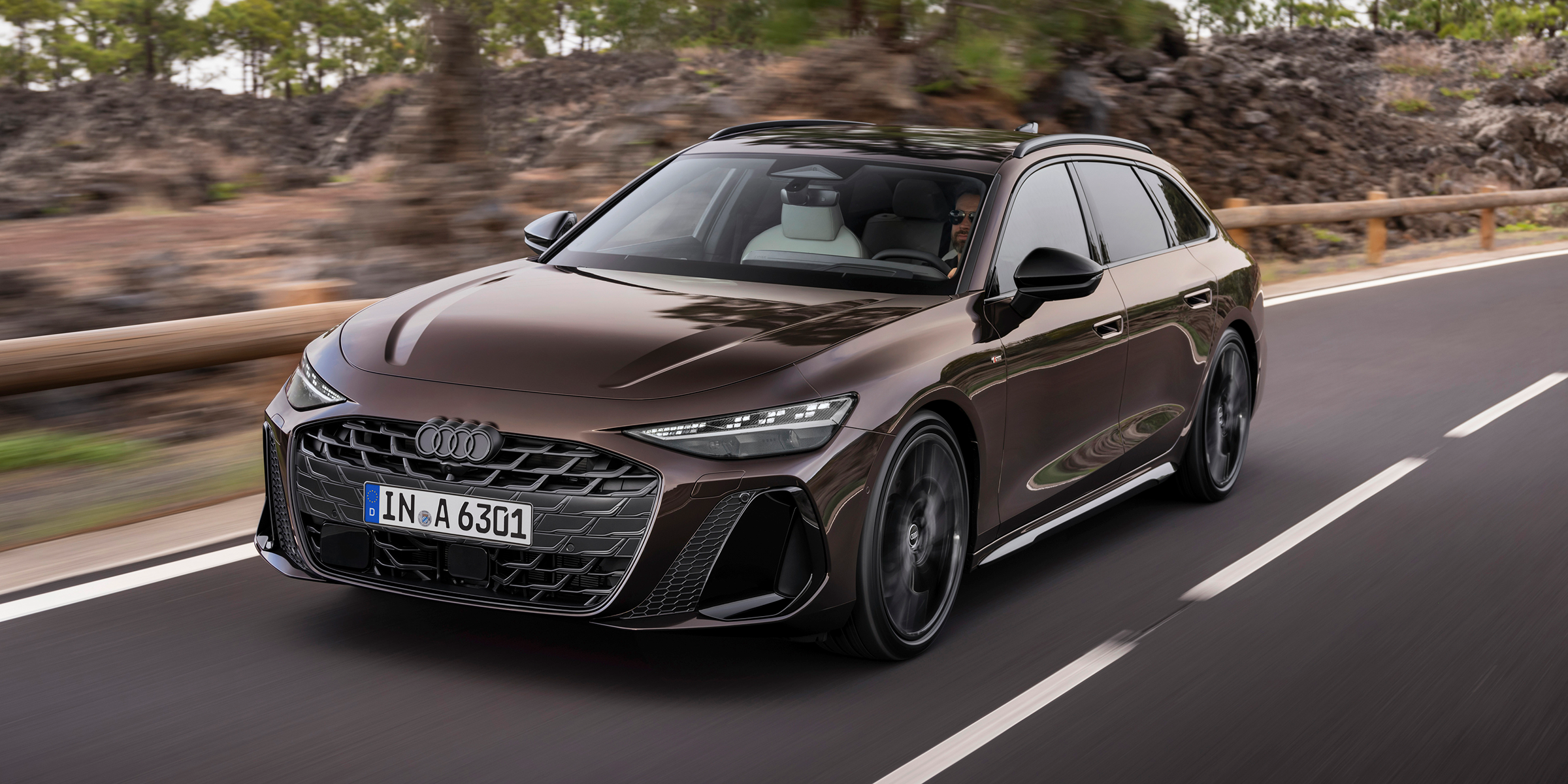
The Renault Rafale is a family-sized coupé-SUV that arrived in the UK towards the end of 2024. The range includes both petrol-electric hybrid and plug-in hybrid models.

Based on the same foundations and sharing most of its build components with the Renault Austral SUV, the Rafale has a sloping rear roofline like the brand’s smaller Arkana family car and is named after a 1930s racing aircraft of the same name.

The Rafale marks another attempt by Renault to challenge the sales of established upmarket rivals like Audi and BMW, and Carbuyer’s Charlie Harvey argues that there is a lot to like: “It’s stylish inside and out, includes some quirky, futuristic features and is very spacious despite its rakish appearance.”

The Top Gear team agrees that Renault have got a lot right, including the coupé-SUV’s competitive UK pricing, but nevertheless concludes that the Rafale “arguably misses the point of what a family SUV should really do”, explaining that the model “doesn’t drive as keenly as Renault would like us to believe” and doesn’t have the interior quality of some upmarket alternatives.

“In a way, the Rafale is the automotive equivalent of the Maginot Line”, says James Fossdyke of The Sunday Times. “It’s strong in quite a few places but easily outflanked.”

As of December 2025, the Renault Rafale holds a New Car Expert Rating of B with a score of 68%. It scores highly for its excellent Euro NCAP safety rating and low CO2 emissions, but its running costs and Renault’s new car warranty coverage are only average, while its media review scores are poor.

Rafale highlights

  • Smart exterior looks
  • Well-equipped as standard with good pricing
  • Intuitive infotainment
  • Spacious rear seating

Rafale lowlights

  • Rather stiff ride quality
  • Inconsistent engine performance
  • Rivals offer sharper driving dynamics
  • Alternatives are more luxurious inside

Key specifications

Body style: Medium SUV/crossover
Engines:
petrol-electric hybrid, plug-in hybrid
Price:
From £38,195 on-road

Launched: Autumn 2024
Last updated: N/A
Replacement due: TBA

Media reviews

Highlighted reviews and road tests from across the UK automotive media. Click any of the boxes to view.

Featured reviews

More reviews

Auto Trader

Car

Carbuyer

Carwow

Parkers

The Sunday Times

The Telegraph

Top Gear

Safety rating

Independent crash test and safety ratings from Euro NCAP

Overall score: 5 stars
Date tested: November 2024
Read the full Euro NCAP review

Adult protection: 87%
Child protection: 83%
Vulnerable road users: 69%
Safety assist: 87%

Euro NCAP awarded the Rafale a full five-star safety rating towards the end of 2024, based on safety testing conducted earlier on the structurally similar Renault Austral SUV.

Eco rating

Independent economy and emissions ratings from Green NCAP

No eco rating

As of December 2025, the Renault Rafale has not been assessed by Green NCAP.

Running cost rating

Clear Vehicle Data logo close crop

Monthly cost of ownership data provided exclusively for The Car Expert by Clear Vehicle Data

Fuel consumptionAverageScore
Hybrid models60 mpgB
Plug-in hybrid models484 mpgA
CO₂ outputAverageScoreVariationScore
Hybrid models106 g/kmA
Plug-in hybrid models14 g/kmA
Battery rangeAverageScoreVariationScore
Plug-in hybrid models62 milesD
Insurance groupAverageScoreVariationScore
All models30C
Service and maintenanceCostScore
Year 1£272C
Year 2£688D
Year 3£1,091D
Year 4£1,276C
Year 5£1,719C
Overall£5,046C

The Renault Rafale can be a rather expensive car to own and run, according to whole-life cost numbers provided exclusively to The Car Expert by our data partner, Clear Vehicle Data.

The coupé-SUV is fuel efficient however, which should save you money at the pumps. The petrol-electric hybrid version has an average fuel efficiency of 60mpg which is above the market average, and plug-in hybrid models look amazing on paper, but keep in mind that this is largely thanks to ridiculous EU/UK government lab tests that are completely inadequate for plug-in hybrids. There is no way you will ever travel for 484 miles on a single gallon (4.5 litres) of fuel and some electricity…

The plug-in hybrid’s battery range is fairly average when compared to other plug-in hybrid rivals and the car’s insurance bracket is pretty average too – not expensive but not exactly cheaper either.

Finally, the car’s servicing and maintenance costs aren’t on the cheap side. The estimated cost over the course of the first five years of ownership is over £5k – £500 more than the estimated costs for the Austral SUV and smaller Arkana coupé-SUV.

Reliability rating

MotorEasy logo 600x167

Reliability data provided exclusively for The Car Expert by MotorEasy

No reliability rating

As of December 2025, we don’t have enough reliability data on the Renault Rafale to generate a reliability rating.

The Car Expert’s reliability information is provided exclusively to us using workshop and extended warranty data from our partner, MotorEasy, sourced from both official dealerships and independent workshops. 

As soon as MotorEasy has sufficient data on the Rafale, we’ll publish the results here.

Recalls

Official DVSA safety recalls that have been issued for the Renault Rafale

As of December 2025, we are not aware of any DVSA vehicle safety recalls affecting the Renault Rafale. However, this information is updated very regularly so this may have changed.

You can check to see if your car has any outstanding recalls by visiting the DVLA website or contacting your local Renault dealer.

Similar cars

If you’re looking at the Renault Rafale, you might also be interested in these alternatives.

Audi Q3 | BMW X2 | Citroën C5 Aircross | Cupra Formentor | Ford Kuga | Honda ZR-V | Hyundai Tucson | Kia Sportage | Lexus NX | Mercedes-Benz GLE | MG HS | Mini Countryman | Nissan Qashqai | Porsche Cayenne | Renault Austral | Toyota C-HR | Toyota RAV4 | Volkswagen Taigo | Volkswagen Tiguan | Volvo XC60

More news, reviews and information about the Renault Rafale at The Car Expert

Everything you need to know about Renault

Everything you need to know about Renault

Renault Rafale test drive

Renault Rafale test drive

Renault Rafale SUV now available with all-wheel drive

Renault Rafale SUV now available with all-wheel drive

All-new Renault Rafale coupé-SUV now on sale

All-new Renault Rafale coupé-SUV now on sale

Buy a Renault Rafale

If you’re looking to buy a new or used Renault Rafale, The Car Expert’s partners can help you find the right car.

Motors 600x300

Find your next used car with Motors. Find out more

Auto Trader logo 600x300

Find your next new or used car with Auto Trader. Find out more

Carwow logo 600x300

Find your next new or used car with Carwow. Find out more

Lease a Renault Rafale

If you’re looking to lease a new Renault Rafale, The Car Expert’s partners can help you find a competitive deal.

Leasing-com logo

Personal contract hire deals from Leasing.com. Find out more

Carwow logo 600x300

Personal contract hire deals from Carwow. Find out more

Select Car Leasing logo

Personal contract hire deals from Select Car Leasing. Find out more

Subscribe to a Renault Rafale

If you’re interested in a car subscription, The Car Expert’s partners can help. (PS: What’s a car subscription?)

SelfDrive UK logo

Car subscriptions from SelfDrive.
Find out more

Cocoon Vehicles logo 600x300

Car subscriptions from Cocoon.
Find out more

Just Vehicle Solutions logo 600x300

Car subscriptions from Just Vehicle Solutions.
Find out more
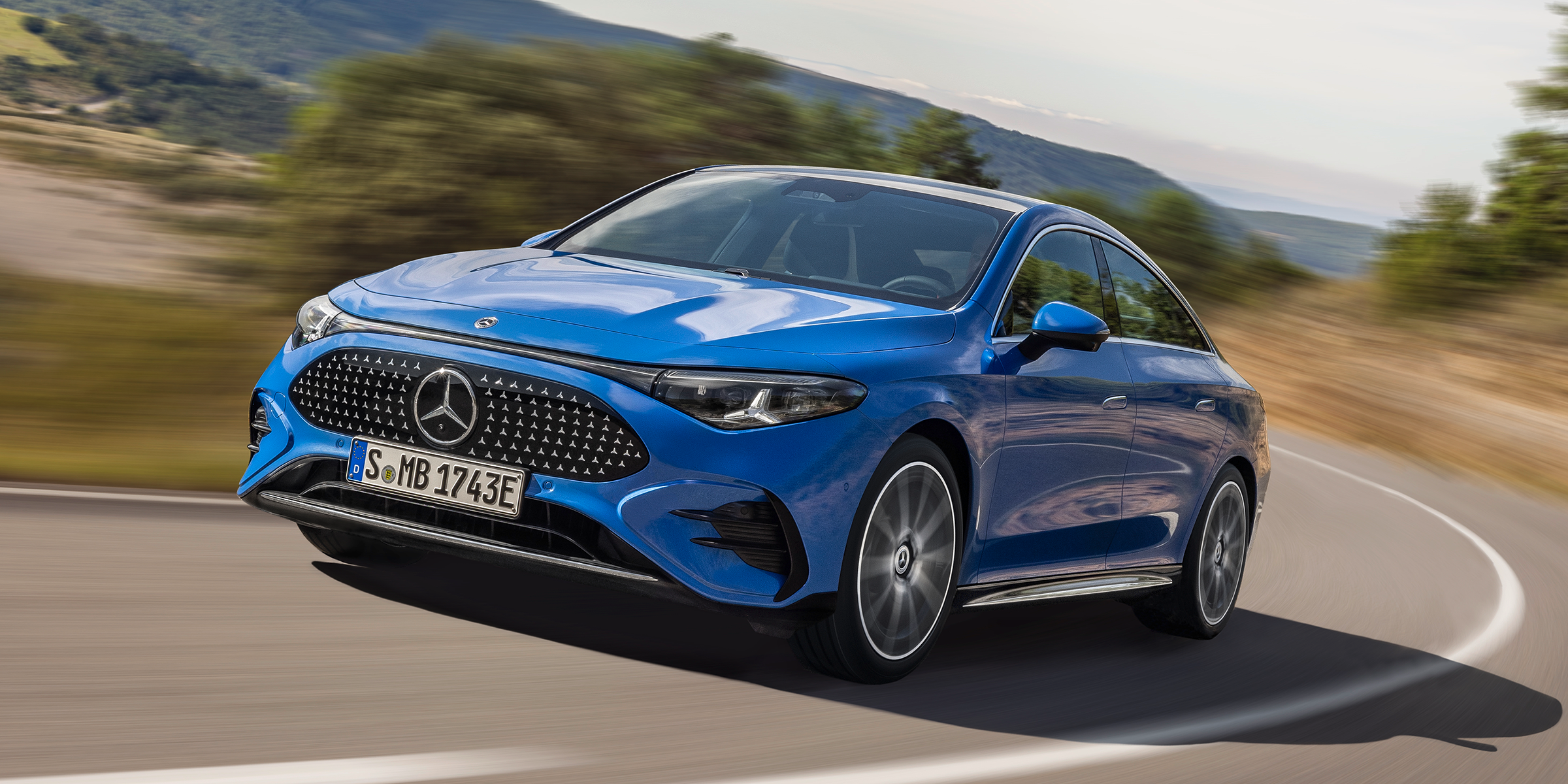
New Mercedes-Benz CLA debuts with electric power

0

Mercedes-Benz has unveiled its new third-generation CLA saloon range which will launch with both petrol-electric hybrid and all-electric drivetrain options.

The German brand comments that this latest iteration of the CLA is the “cleverest car” it has ever made, as it offers “more space”, “more comfort” and “more efficiency” than the previous model. The latter claim is backed up by the electric version’s reported battery range – 492 miles on a single charge – which makes it the most power efficient model in Mercedes’ range with a longer travel distance than the flagship EQS saloon.

The electric CLA – technically called the ‘CLA 250+ with EQ Technology’ – is powered by an 85kWh battery, which is smaller than the 118kWh unit in the EQS 450+, but can reportedly travel 11 miles more on a single charge than the larger luxury saloon.

Mercedes says it has achieved this by making the car’s exterior aerodynamic and with advances in battery efficiency and powertrain weight reduction, as the car has a market-leading electrical efficiency of five miles per kWh. Compatible with rapid charging stations, the car can charge at speeds of up to 320kW, and it takes ten minutes to add 186 miles of battery charge.

The lead-in 265hp CLA ‘250+’ is joined by a 345hp four-wheel drive ‘350 4Matic’ version which is powered by the same battery and can complete a 0-62mph sprint in 4.9 seconds. While the car’s battery range is reduced by adding an additional motor to the rear axle, this four-wheel drive version can still muster up to 478 miles between charges.

Besides the all-electric models, customers will also be able to opt for petrol-electric hybrid variants (both front-wheel drive and all-wheel drive models available) that are powered by a 1.5-litre petrol engine with a 1kWh battery and a 27hp electric motor that can drive on electric power alone at low speeds. All models make use of an automatic gearbox.

Compared with the previous CLA range – which was available as a petrol, diesel, plug-in hybrid car – the third-generation range is slightly larger by every metric which should increase cabin space. The boot has enough space for 455 litres of luggage – 55 litres less than its predecessor – but electric versions also come with an additional 101 litres of ‘frunk’ space under the bonnet.

The electric range distinguishes itself from hybrid models at first glance thanks to its unique grille design with 142 backlit star shapes. The new CLA also has an LED daytime running list strip that connects the LED headlights below the bonnet – a feature now synonymous with the brand’s battery-powered EQ models.

Inside, almost all of the dashboard space is taken up by the brand’s ‘Superscreen’ in the display model, which combines a ten-inch digital instrument cluster, a 14-inch infotainment touchscreen and an optional 14-inch passenger media display in one panel. The various UK trim specifications are yet to be confirmed, but we do know that this ‘Superscreen’ won’t be included with the standard trim package.

The display model also has seats trimmed in Alcantara and faux leather, and a high centre console splits the front of the cabin in two. The interior options list will also include open-pore wood, brushed aluminium and new ‘decorative paper surface’ fittings to suit customer preference.

That sums up what we know about the new Mercedes-Benz CLA range so far. The car’s UK pricing, release date and trim list are yet to be announced, but these details are sure to be announced in the following months.

Car finance on trial in the Supreme Court

The Supreme Court’s forthcoming hearing on car finance mis-selling is set to produce one of the most significant legal decisions in recent financial history. With the hearing scheduled for early April, attention is now escalating rapidly as parties with vested interests lobby their cases.

The car finance sector is critical to the functioning of the broader car industry. Simply put, without car finance there is no car industry. So this case, and the ongoing investigation into the car finance sector, are hugely important in balancing fairness for consumers who may have been mis-sold in the past with ensuring competitive and affordable finance for consumers in the future.

For consumers, it’s not the most exciting topic to read about, but the decision of the Supreme Court is likely to reshape the future of car finance – and potentially other sectors of the finance industry as well. And whoever wins, it’s likely that we will all lose anyway. So let’s back up a little bit and explain how we got here.

This whole saga began in January 2024 when the Financial Conduct Authority (FCA) announced it was starting an investigation into Discretionary Commission Arrangements (DCAs), a practice that allowed car dealers to manipulate interest rates on loans to increase their commission. While that investigation has been underway, a court decision ruled in favour of consumer complainants and against their lenders, which was then escalated to the Court of Appeal.

The Court of Appeal, however, issued a judgment that went beyond DCAs and ruled that any broker-arranged finance must be completely disclosed up front and gain the customer’s approval (which essentially means that it has to be clearly disclosed in the contract that the customer signs so there can be no confusion). That broadened the scope of the case enormously; not only does it potentially bring in millions of car finance contracts that do not have a DCA, but also extends to other finance sectors.

If the Supreme Court upholds this interpretation, the impact could extend far beyond car finance, potentially affecting millions of other point-of-sale financing purchases every year – everything from mobile phones to furniture to fashion.

The Supreme Court has approved applications from the FCA and the National Franchised Dealers Association (NFDA) to join the case, which makes sense. The FCA, as the financial regulator, has a central role in this matter, while the NFDA represents the dealerships that sold these finance products. Both have key questions to answer.

Other applications to join the case were rejected. The most notable of these was from the chancellor, Rachel Reeves, who wanted to put the government’s case across that penalising the banks could hurt the UK economy. Other applicants who were rejected included the Finance and Leasing Association (FLA), which represents the lenders, and a consumer group.

Interestingly, the lenders seem to have shifted their position in recent months. For most of last year, the FLA defended the use of DCAs, claiming that they were often used to help customers by allowing dealers to lower interest rates rather than raise them. It now concedes that DCAs did cause consumer harm, a notable reversal from its earlier stance.

If the Supreme Court rules in favour of consumers

Given that the lower courts and the Court of Appeal have ruled quite unambiguously in favour of consumers and against the lenders, it would be a surprise if the Supreme Court deviates from those previous decisions. However, this story has taken several twists and turns over the last year so no-one’s quite sure how everything is going to pan out.

Even if we just focus on the DCA question, the implications will be enormous. If the Supreme Court upholds the Court of Appeal’s ruling that millions of car finance contracts over a 14-year period were illegal and unfair to consumers, it will open the floodgates for compensation claims – unless the court imposes an alternative penalty on the lenders.

If the Supreme Court does rule that the consumers in this case are eligible for compensation, the FCA will almost certainly create an industry-wide redress scheme. The FCA has said for some time that it is leaning towards a mass redress scheme anyway, and this week issued an update on its progress. It says that it will issue its proposals within six weeks of the Supreme Court’s ruling. There may be separate proposals and consultations for DCA redress and non-DCA (all other broker-arranged) cases.

Lenders could face compensation costs reaching tens of billions of pounds based on millions of car loans over 14 years. This would inevitably be clawed back by increasing interest rates and fees on new loans, meaning consumers might win compensation for their last car loan now but end up paying significantly more for their next car loan.

If the Supreme Court ruling follows the Court of Appeal in ruling that all broker-arranged finance must have clearly disclosed commission payments, then we’re potentially far beyond car finance. That means not just opening the floodgates, but creating an earthquake that would trigger a tsunami of compensation claims in multiple lending sectors.

It’s also likely that the FCA itself will face considerable scrutiny for issuing guidance that failed to comply with the law: it would be a major regulatory embarrassment for the courts to rule that the government regulator doesn’t understand finance laws. Regardless of which way the court rules, it’s fair to say that the FCA has failed the UK in this matter and needs to be reformed.

It’s possible that the government might attempt to retroactively alter disclosure laws to limit compensation – although this would be highly controversial, especially since the Supreme Court has already blocked the chancellor from intervening in the case.

For car dealers, who play the role of brokers in finance law, the way they handle car finance could change entirely. We may see a shift away from dealership-arranged finance toward direct lender-consumer arrangements, with lenders cutting dealers out of the loop to ensure they are fully compliant with relevant laws – and to potentially try to keep more of the profits for themselves. This would be a seismic shift in how cars are sold, but online lending dominates other sectors of banking and finance, so there’s no reason it can’t work for car finance as well. However, the net effect of such a move would be that cars would inevitably get more expensive if dealers lose a key source of their income.

It’s also worth noting that if the court sides with consumers, some lenders may attempt to sue the FCA or the government for providing flawed guidance, potentially transferring costs to taxpayers. It would certainly be an unpopular move but, given the amounts of money at stake, banks are unlikely to take such penalties without examining every option.

If the Supreme Court rules in favour of the lenders

If the Supreme Court overturns part or all of the Court of Appeal’s ruling, it makes an industry-wide mass redress event less likely. That sounds good in theory, but it certainly wouldn’t be the end of the story.

Without a centralised mass redress action, individual lawsuits and class actions would certainly explode, much like the PPI and Dieselgate scandals in recent years. Like those infamous class actions, these large-scale legal battles take a long time, and prolonged litigation would create uncertainty for both lenders and consumers for years to come. With multiple cases and class actions, and no clearly defined resolution process, that could potentially drive up costs even further in the long run.

There would inevitably be a loss of consumer trust, which is a big word and sentiment around car finance. Questions would remain about lender and dealer conduct, potentially damaging consumer behaviour and sentiment. If customers are reluctant to take car finance and look for alternative finance options to pay for their cars, it will have a major impact on the industry.

It’s also highly likely that some law firms may look for alternative legal angles to pursue, possibly targeting large dealership groups for mis-selling finance, rather than the finance providers.

How would car finance compensation work?

If compensation becomes the chosen path, the FCA would likely build a simple online claims portal (with alternative phone or written channels for customers who don’t like to manage their finances online). Consumers wouldn’t need their contract paperwork, just basic personal details and the car’s registration number. Compensation would be calculated automatically, with payments transferred directly into consumers’ bank accounts.

The service would be free for all users, regardless of whether you are awarded compensation. This would mean that the FCA will basically block out the aggressive claims firms from having an avenue to launch enormous and expensive class actions.

The financial burden on lenders would be immense – likely in the tens of billions of pounds. However, a defined claims period, perhaps 18 months, would provide some certainty for lenders, allowing them to manage those costs within a fixed timeframe. Without a centralised mass redress process, we would see endless individual cases and class actions being launched against every single car finance lender. That could end up being even more expensive in the long term, which means even more costs being transferred onto future customers.

This Supreme Court ruling is poised to reshape the car finance landscape, with repercussions that will extend far beyond the car industry. Whichever side wins, the likely outcome is that we’ll all lose.

Are you eligible for a Motability car?

As we explain in our brief guide to Motability, it’s a long-established car and scooter scheme which allows people with disabilities to lease and run a new car adapted to their needs in return for their mobility allowance payments from the government.

Here we take a more in-depth look at how Motability works.

There are two key parts to Motability. The Motability Foundation is a registered charity which is responsible for the direction and oversight of the Motability Scheme. In turn, Motability Operations Ltd. is an independent company responsible for the finance, administration and maintenance of the Scheme. Motability Operations is owned by four banks: Barclays Bank, HSBC, Lloyds Bank and NatWest. They have waived the right to shareholder dividends and any profits made are reinvested for the benefit of disabled people.

All scheme vehicles are leased by Motability Operations Ltd, and it’s authorised and regulated by the Financial Conduct Authority. It publishes an annual report with financial statements.

Motability is a huge player in UK new car sales. With over 800,000 customers, it operates the UK’s biggest fleet of cars and is the biggest single-source supplier of used cars. In 2024, the Motability Scheme saw an increase of 15% in new car leases.

Because of its buying power, Motability Operations says that the cars it offers are at least 45% cheaper than alternative options, especially when you consider that insurance and servicing are included.

Who is eligible for Motability? Exploring the different mobility categories

People who receive a benefit because they have a disability or illness that makes it hard for them to get around are likely to be able to lease a vehicle on the Motability Scheme.

Parents and carers in receipt of a mobility allowance can also lease a vehicle for a child, subject to the degree that the child’s mobility is limited.

In order to be eligible, you must get one of the qualifying mobility allowances, with at least 12 months left. You sign up to the Motability Scheme website and its advisors can answer any questions about your eligibility and particular needs. The allowance will cover the monthly hire of the car, insurance, road tax, servicing and any adaptations such as controls and wheelchair access.

The government mobility (and daily living) allowances have two rates, a higher and a lower which for mobility depends on the degree the disability makes getting around difficult. The Motability website advises that you cannot apply to join the Scheme if you receive a lower rate or component of the mobility allowance or if you receive Attendance Allowance, Carer’s Allowance or Employment and Support Allowance (ESA).

Department for Work and Pensions (DWP) allowances:

PIP: Higher rate mobility part of Personal Independence Payment

This is also sometimes called the ‘enhanced’ rate mobility part. PIP helps with the extra costs of living with a long-term health condition or disability. It’s not means-tested or affected by earnings or savings. For example, the higher rate mobility part of PIP is £75.75 a week (as of March 2025).

DLA: Higher rate mobility part of Disability Living Allowance

The DLA is for disabled people aged between 16 and State Pension age. It helps with the extra costs which you might have because of a disability and is not means tested or affected by earnings, other incomes or savings. A child can claim DLA if they are under 16, disabled and need extra help to look after themselves or have difficulty walking or getting around.

Note: Social Security Scotland is taking over disability assistance payments from the DWP for people living in Scotland, and the allowances have different names. The DLA equivalent is the Adult Disability Payment (ADP). The Child Disability Payment (CDP) has replaced DLA for children living in Scotland aged three months to 18 years old. More details on the Scottish government website

Veterans UK allowances:

AFIP: Armed Forces Independence Payment

This is for service personnel and veterans who have been seriously injured in service on or after 6 April 2005. The higher rate mobility part of AFIP is currently £75.75 per week. You cannot get AFIP if you already receive Disability Living Allowance, Personal Independence Payment, or War Pensioners’ Mobility Supplement (WPMS) below.

WPMS: War Pensioners’ Mobility Supplement

The WPMS helps you with any extra mobility costs you might have because of a disability caused by military service. As of March 2025, the flat weekly rate was £84.55.

The Motability leasing process – how it works and what’s different to regular contract hire

Every three months, the Motability Scheme renegotiates prices and updates the Motability Scheme Price List. There is a huge choice available – 892 specific cars as of March 2025, although some will be different versions of the same model. Users set up an account on the website.

You choose the type of vehicle and who drives it

Aside from phone or web chat advice, there’s a tool on the Motability website which helps users choose what transport best suits their needs, whether cars, Wheelchair Accessible Vehicles (WAVs), scooters or powered wheelchairs. For a car, you start by specifying whether you want to drive yourself, be a passenger or have the choice of both. There are specific guides to help work out if any adaptations are needed, such as a hand-controlled brake or left-foot accelerator.

Test drives and Motability dealers

The cars are provided through over 4,600 dealerships which are Motability-accredited. To apply to join the Motability Dealer Partnership (MDP) and supply vehicles under the Motability Scheme, dealerships must hold an approved manufacturer franchise. They must also be FCA accredited and be able to provide their FCA number. To meet minimum training standards, dealers must have two trained Sales Specialists and two trained Aftersales Specialists.

For trying out adaptations and general mobility advice/assessment, Driving Mobility is a government-supported charity with 20 main disabled driving centres throughout the UK.

The lease agreement and how it differs from non-Motability leases

Much like other leasing sites, you can click on ‘search cars’ and see what the options are. There’s a separate search for WAVs. You can filter through things like fuel and transmission types in the usual way, and the results are listed in ascending order of monthly cost. The length of the lease is either three or five years.

Like any other lease, it’s a long-term rental. You don’t own the car or have the option to when the lease finishes.

Advance Payments

With a conventional personal contract hire (PCH), you have to put down an initial rental as the first month’s payment, and you can choose terms between one and 12 months upfront. A large initial payment lowers the subsequent monthly cost. It can also lower the overall cost of the lease.

With Motability cars, you either choose no Advance Payment (for the lower value smaller cars) or contribute from £379 upwards. As with PCH, it’s not a deposit and is non-refundable.

Advance Payments are in addition to contributing the weekly mobility allowance.  Apart from four small cars which start the current list (Dacia Spring, Kia Picanto, Hyundai i10 and Toyota Aygo X), the entire weekly allowance is required for the rest of the choices.

If you want a very high value or prestige car, you need to put down a hefty Advance Payment. For example, an electric BMW i4 (retails from £62,950) requires an Advance Payment from £7,999 and the very big Hyundai Santa Fe hybrid (retails from £51,885) needs £6,999 upfront.  A Mercedes-Benz CLA is also on the list for £7,799 upfront. Given that disability allowances are a flat rate for everyone, it covers the gulf in leasing costs compared to the starter small cars worth maybe two-thirds less.

All the Motability Scheme’s WAVs require a large Advance Payment. For example, a Vauxhall Combo Life’s Advance Payment starts at £6,895. Motability says that this is because of the specialist conversion costs of these vehicles and because they are not mass-produced. If somebody needs a WAV but cannot afford the Advance Payment, the Motability Foundation offers grants, depending on their circumstances.

Advance payments are set on a quarterly basis, so every dealership of the same brand offers the same products at the same price. That said, an individual dealer can give additional offers,

Unlike a standard PCH (where it’s optional), every Motability lease includes insurance for two drivers, servicing, maintaining and repairs carried out by specialists, specialist RAC breakdown cover and tyre and windscreen replacement. The insurance includes features such as foreign use cover. If needed, business use cover can be added on.

Are there the same penalties if I end the agreement early?

Unlike regular PCH customers, you won’t be hit with a major bill for leaving a lease early, maybe if your needs have changed. There’s an administration fee of up to £250.

Or, if you want to extend your lease, perhaps if the car has low mileage or lots of adaptations which suit you, you might be able to extend your lease for up to two more years. This option becomes available during the last three months of the lease.

What about mileage limits and damage?

At the end of every PCH, there’s an inspection and extra cost to be paid for damage beyond fair wear and tear and mileage beyond the limit agreed at the start of the lease.

Motability users can drive up to 60,000 miles over a three-year lease and 100,000 miles over a five-year lease, which is extremely generous compared to a regular lease, but reflects that for some people with a disability their Motability car will be their sole means of transport.

At the end of a Motability agreement, the car is inspected for damage. Motability expects vehicles at the end of their lease to have fair wear and tear based on the age of the vehicle. Minor scrapes or tyre damage are considered fair wear and tear.

Damage to the inside, including rips, stains and burns to the trim may not be covered under the insurance policy but damage from mobility aids such as wheelchairs or crutches is considered fair wear and tear.

There’s an incentive to return the vehicle in good condition, called the Good Condition Payment. This is money returned to you if the car is handed back with a new MOT, both sets of keys, the parcel shelf, the charging cable for an EV and that any uncleared debts have been settled.

Motability and electric cars

There are currently over 70,000 Motability Scheme EVs on the road. The charity says the reduction in the availability of new petrol and diesel cars means its customers are experiencing the EV transition ahead of many others. It is encouraging further growth by increasing the number of EV models and variants on its scheme. (It currently has around 200 options.)

For now, there are still plenty of petrol-powered cars on the Motability list, but the choice will decrease over the next few years. The prices of electric cars are starting approach those of petrol cars, but many are more expensive, which means that Advance Payments have increased on some of these cars. Motability says that it’s doing everything it can to make sure it offers great value and is still cheaper on average than leasing elsewhere.

Like many manufacturers and some leasing companies, if you’re leasing your first fully electric car on the Motability Scheme, it will arrange and cover the cost of a home charge point and a standard installation and space to move around the car and plug it in, but you may need to pay if it’s a non-standard installation, for example if the cable route is very long or the electricity supply needs to be upgraded.  

Of course, like a large chunk of the population, many disabled people live in flats or houses without access to their own driveway and have to reply on public chargers. Longer journeys also require public charging for all EV users. Motability says that it has have committed £300m to support the affordability of EVs and is working with local authorities to help plan for accessible public charging infrastructure.

To make paying for public charging simpler, all Motability EV drivers get the Go Charge card and app which allows them to use over 58,000 public chargepoints from over 40 different chargepoint operators. Public charging costs are paid by the user and not currently discounted, but Motability says Go Charge users will never pay more than the operator’s ‘pay as you go’ tariff.

Read more:

Renault 5 E-Tech ‘Roland-Garros’ edition now on sale

0

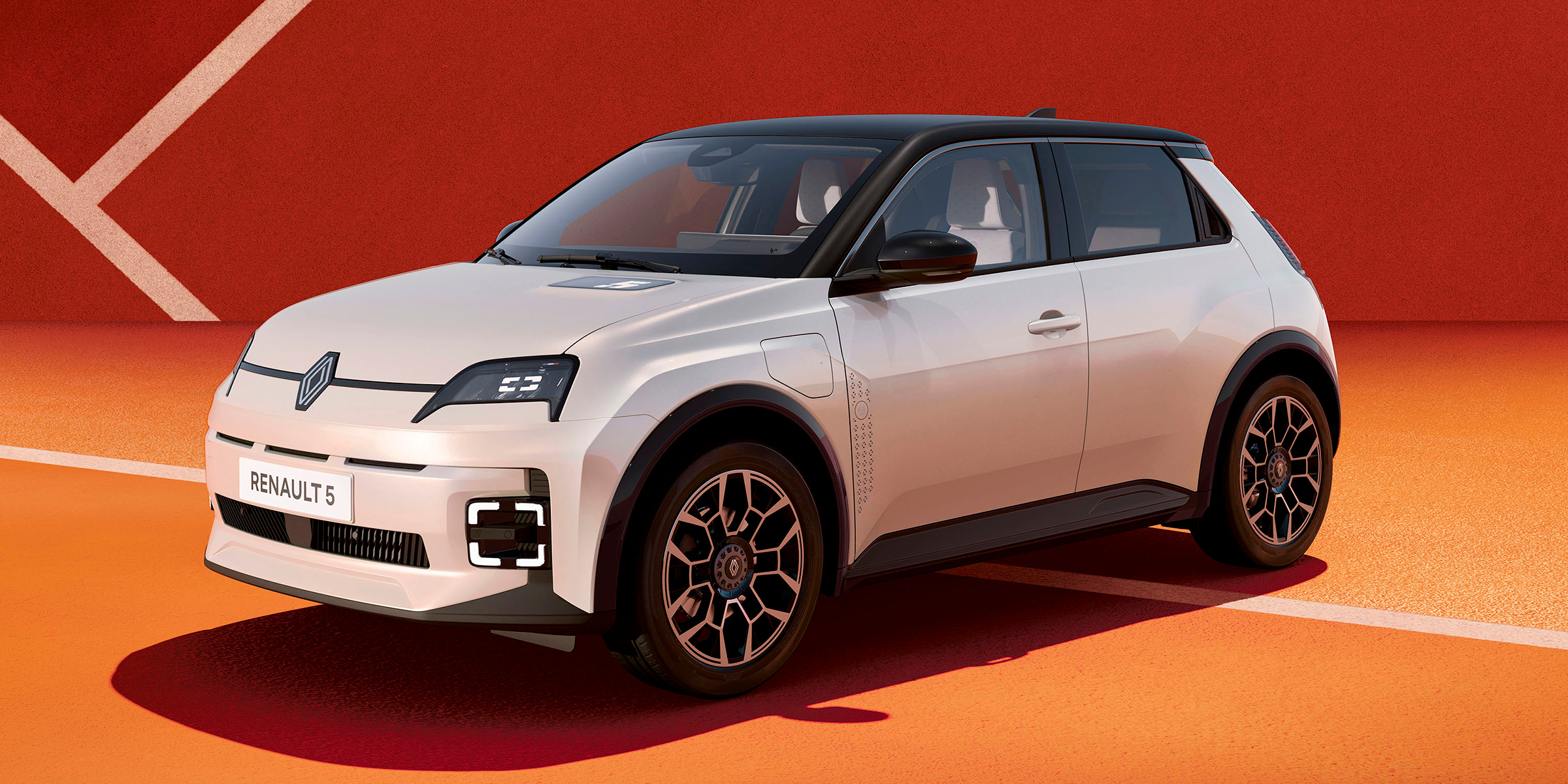
Renault has announced that a special ‘Roland-Garros’ edition of its battery-powered 5 E-Tech hatchback is now available to order in the UK, which comes with a few cosmetic changes over the standard car.

Only available with the larger 52kWh battery and 150hp electric motor configuration that already features in the 5 E-tech range, the ‘Roland-Garros’ now sits at the top of the trim range – above the ‘Evolution’, ‘Techno’ and ‘Iconic Five’ – and pays tribute to the world of tennis and the Roland-Garros tournament.

The trim comes with the equipment list of the ‘Iconic Five’ – including front, side and rear parking sensors, heated front seats and a heated steering wheel – but with a few extra interior and exterior design changes. The car comes with a unique 18-inch alloy wheel design and the Roland Garros logo features next to the car’s front wheelarches.

There are four exterior colour options to choose from – white, black, dark blue and grey – and the roof is always finished in black.

Inside, the seats are trimmed in a recycled grey fabric that Renault says “is a cross between sports clothing and upholstery fabric”, and a Roland-Garros logo is embossed onto the seat backrests.

Roland-Garros lettering can also be found on the dashboard, next to the car’s 10-inch infotainment touchscreen, and the tip of the car’s drive selector was inspired by the grip of a tennis racket. Below the infotainment screen is a clay-coloured smartphone charging pad.

This special edition model is now on sale for £30k – a thousand pounds more than the ‘Iconic Five’ with the same 52kWh powertrain.

Winner of The Car Expert’s ‘Best Small Car’ award for 2025, the Renault 5 E-tech currently holds an Expert Rating of A with a score of 81%. It gets top marks for its impressive media reviews and zero tailpipe emissions.

Electric Abarth 600e now on sale

0

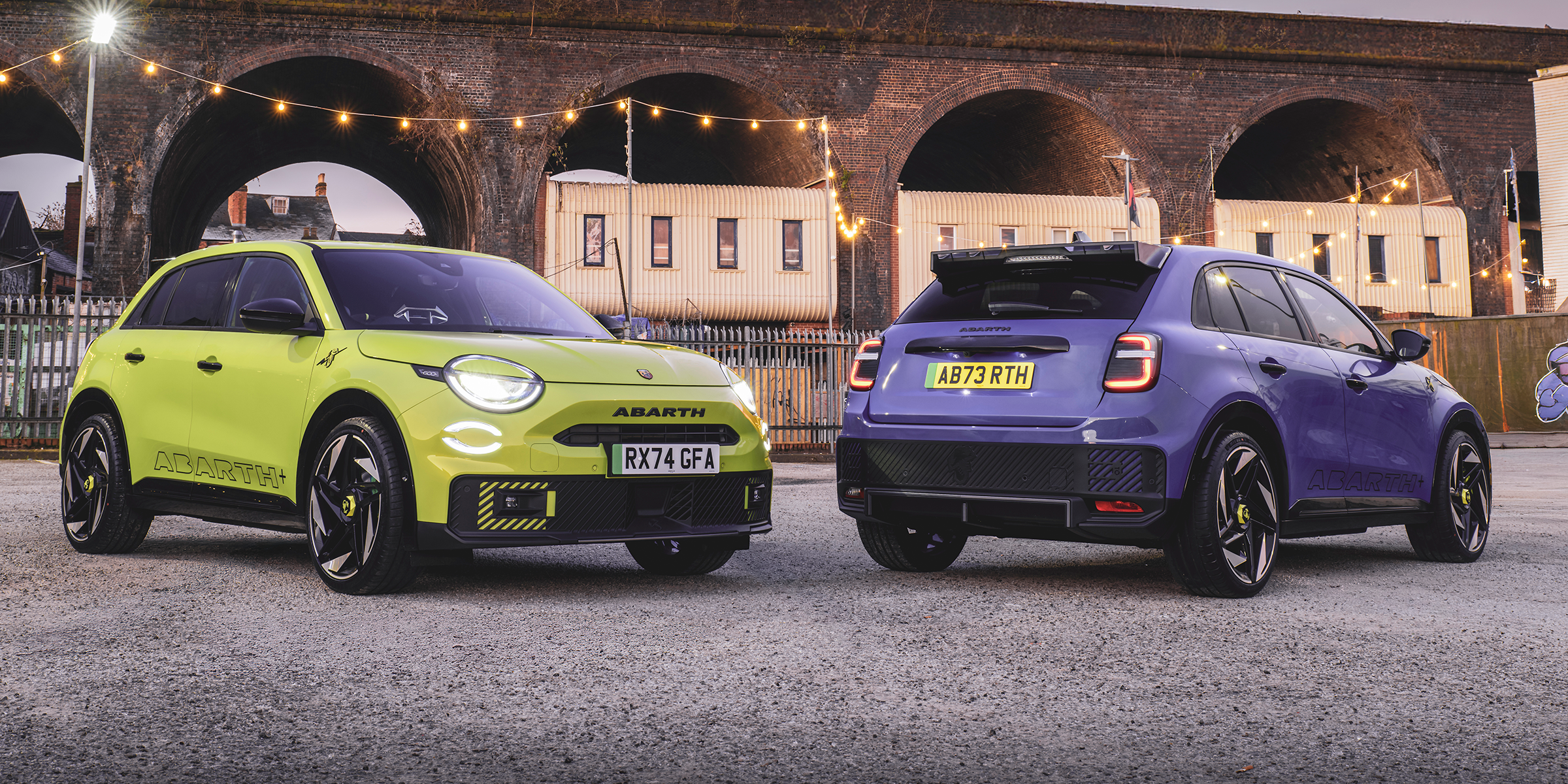
Abarth has announced that its performance-enhanced version of the Fiat 600e crossover is now on sale in the UK, which the manufacturer says is the most powerful Abarth road car ever made.

Based on the standard Fiat 600e but with a more powerful electric powertrain and more sporty exterior styling, the Abarth 600e range consists of two different trims from launch – the entry-level 240hp ‘600e’ and the top-spec 280hp ‘600e Scorpionissima’.

Abarth says that the latter is the most powerful road-legal model it has ever produced, which can complete a 0-62mph sprint in 5.9 seconds. While the 600e ‘Scorpionissima’ is more powerful, the now-retired Abarth 695 hot hatch in its limited-edition ‘Biposto’ guise could also complete the same sprint in 5.9 seconds. The standard ‘600e’ is a bit slower off the line, reaching 62mph in a reported 6.2 seconds.

Making its first public appearance in Milan, Italy more than a year ago, the Abarth 600e’s exterior alterations include muscular bumper cladding in the front and rear with a large front splitter, larger 20-inch alloy wheels and a spoiler above the rear window.

The wheels also house high-performance brakes and are wrapped in Hankook performance tyres. The suspension has been lowered and the car has a mechanical limited-slip differential, which Abarth claims to guarantee “excellent driving stability, improved handling, and traction.”

Now on sale in the UK, pricing for Abarth’s biggest model starts at £37k, rising to just under £40k for the ‘Scorpionissima’. Abarth says it had originally priced the top-spec model at £42k, but lowered UK pricing before launch so that buyers are not impacted by the expensive car supplement tax that comes into effect in April on new cars worth over £40k.

Everything you need to know about Porsche

Porsche is one of those manufacturers that everyone knows, even if they know little about cars. The 911, with its very distinctive shape and often with a huge wing sprouting from the back, has become as much a symbol of wealth as a sports car.

Once the nascent Porsche emerged from an early history tied up with the darkest days of Nazi Germany, the 911 became a symbol of the company for many decades, until it led the premium markets’ dive into SUVs and then electric cars.

Much of the history and make-up of Porsche may surprise many a reader, especially its relationship to German giant Volkswagen – so just who owns who?

So who or what is Porsche?

Dr Ferdinand Porsche founded his business in Stuttgart, Germany in 1931 – although the first cars carrying the Porsche name didn’t arrive until 1948. A Czech-German automotive engineer, Porsche joined forces with his son-in-law Anton Piëch and Adolf Rosenberger, who soon after would found Auto Union, the company that was reborn decades later as Audi.

Porsche’s early work was in development and consulting for other manufacturers, and one of his first customers was Adolf Hitler. Hitler wanted a people’s car, a ‘Volks wagen’ and Porsche led the creation of what eventually became the massively successful Volkswagen Beetle, while also running the factory that was due to build it.

In 1939, Porsche used several Beetle components to produce its own car, which was called the 64, before the outbreak of war saw the company turn to military design and production. These included tanks and, to build them, Porsche employed forced labour mainly from Poland. Ferdinand Porsche was a member of both the Nazi party and the notorious SS, and after the war he was arrested, serving 20 months in prison. Released in 1947, he later suffered a stroke and died in January 1951. 

With the Volkswagen factory now run by British major Ivan Hirst, Porsche’s son Ferry tried developing his own car. This entered production in 1948 as the 356 and is regarded by the company itself as the first Porsche, with its trademark rear engine and two-door body shape that is still recognisable in Porsche’s sports car models today.

With parts in short supply in post-war Germany, the 356 initially used several VW components, which were gradually replaced as it was developed. It also established a reputation for Porsche in motor racing, which was to become a company hallmark.

The phrase iconic is overused when describing cars, but the Porsche 911 deserves such a title. Launched in 1963, it is still in production seven decades later. While today’s 911s are thoroughly modern sports cars that share not a single component with the original version, they still share that rear-engine layout and ‘duck’s-back’ body shape.

Porsche did plan to drop the 911 in the 1970s, replacing it with the front-engined 928, but neither the latter car, nor its cheaper sister the 924, lasted long. While there were other models, Porsche remained known effectively for one car. Then in 2002, the company shocked the market by becoming one of the first ‘premium’ manufacturers to launch an SUV, the Cayenne – soon it became Porsche’s best-selling model.

Equally significant was the launch in 2009 of the Panamera, which in its original tried – unsuccessfully, to most eyes – to apply 911 styling cues to a much larger saloon vehicle. The current model has managed to improve the styling considerably.

Porsche has always maintained a close relationship with Volkswagen – Ferdinand Porsche’s nephew, Ferdinand Piëch, served as chairman and CEO of VW between 1993 and 2002 and then took the helm of the VW supervisory board.  A ‘merging of manufacturing operations’ from 2009 saw the Porsche SE holding company, created in 2007, effectively taking control of VW by 2015.

The Porsche of today makes electric vehicles and a choice of SUVs – but most observers still see it as the maker behind the 911.      

What models does Porsche have and what else is coming?

Core of the Porsche model range remains, as it always has, the 911 sports car, though in its current incarnation, launched in 2019, it’s known as the 992. It comes in a host of varieties that comprise coupé, convertible and targa body styles, rear-wheel drive or all-wheel drive, a flagship Turbo model (although all 911s are now turbocharged) and very- high-performance models called the GT3 and GT2.

While consistently given top ratings by the media, the 911 does not fare so well in ownership and reliability surveys, and The Car Expert only gives it a D score in its Expert Rating system.

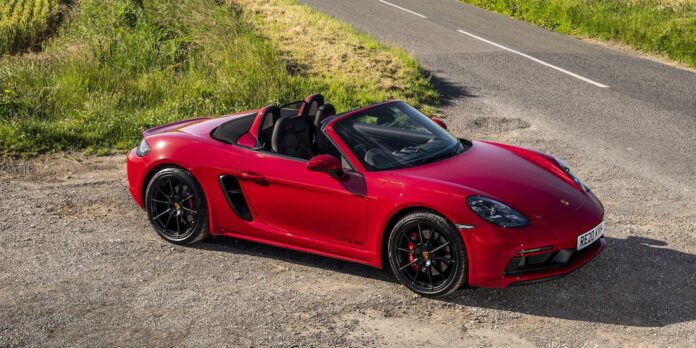
The other two out-and-out sports cars in the Porsche line-up are the mid-engined pairing of the soft-top Boxster and its hard-roofed sister the Cayman. The current versions, launched in 2016 and dubbed ‘718’ to recall a 1950s Porsche model, are good to drive but still derided by some as “poor man’s 911s” and their ratings also suffer from reliability, running costs and emissions issues. 

Porsche made many rival brands sit up and take notice with the launch of the Cayenne SUV in 2002. It was an inspired move, however – the Cayenne has routinely outsold all other Porsche models ever since.

The current version is the third generation that first went on UK sale in early 2018 – this was also the first Cayenne to gain a more coupe-like but far less practical sister model. Today you can buy Cayennes with a choice of three petrol engines and hybrid and turbo options, and like the 911s they score for their driving experience, less so for costs and ownership.

In 2009 came another major diversification with the Panamera, a huge four-door saloon designed to look as much like a 911 as possible. It’s never been regarded as the prettiest car on the market, but it has proven very popular. A second-generation version launched in 2017 and was substantially updated in 2020 – today, you can buy it with petrol or plug-in hybrid drivetrains and also as an estate, though Porsche prefers that you call it a ‘Sport Turismo’. 

Current Porsche range on our Expert Rating Index

Porsche 718 Boxster

Porsche 718 Boxster

Porsche 718 Cayman

Porsche 718 Cayman

Porsche 911

Porsche 911

Porsche 911 GT3

Porsche 911 GT3

Porsche 911 Turbo

Porsche 911 Turbo

Porsche Cayenne

Porsche Cayenne

Porsche Macan

Porsche Macan

Porsche Macan Electric

Porsche Macan Electric

Porsche Panamera

Porsche Panamera

Porsche Taycan

Porsche Taycan

Porsche Taycan Cross Turismo

Porsche Taycan Cross Turismo

Porsche also offers a mid-sized SUV sister model to the Cayenne, launched in 2014, called the Macan and effectively a much more upmarket version of sister brand Audi’s Q5. Most recently facelifted in 2021, it follows the trend of wowing those who drive it but being less impressive as an ownership proposition. However, a new Euro NCAP five-star rating after crash tests conducted in 2024 has enhanced its safety reputation.

Much more recent is a battery-electric version of the Macan, which finally started finding its way to customers in 2024. An eventual replacement for the petrol version, it also removes many of the factors dragging down the ratings of its sister models, such as emissions.

Finally for now there is the Porsche Taycan, the first full-electric vehicle from Porsche launched in 2019. It’s on sale as a four-door saloon and two estates, with rear-wheel or all-wheel drive and a choice of battery sizes. It’s gained many highly positive reviews, some saying it is the closest challenger to the cars of EV standard bearer Tesla.

The next new model from Porsche is likely to be an all-electric version of the Cayenne – prototypes have been spotted on test and it could well launch in 2025, selling alongside the petrol-engined version. Electric variants of the Cayman and Boxter are also on the cards.     

Where can I try a Porsche car?

Porsche is an upmarket manufacturer and therefore potential owners are expected to travel a bit to secure their purchase – you won’t find a dealer, or Centre as Porsche calls them, in the motor alley of every town.

There are a total of 46 Porsche Centres spread across the UK, including Ireland, and the flagship outlet is based at the Silverstone Grand Prix circuit, with its own private test track that enables owners to be taught some performance motoring techniques before taking their powerful machines out on the public road.

What makes Porsche different to the rest?

Very few car manufacturers can claim to make what are considered highly desirable lifestyle items – Porsche is one.

While the company today produces many an SUV and electric crossover, saying the word Porsche still immediately conjours a picture of the 911 – in movies the 911 is used as an immediate visual indicator of someone doing well, and while the car is often criticised today, many still regard driving one as a sign that they have really made it.  

A Porsche fact to impress your friends

Porsche has won the Le Mans 24 Hours, regarded by many as the world’s toughest motor race, more times than any other manufacturer with (as of March 2025) 19 victories.

The first came in 1970 with the 917, a car as iconic in race circles as the 911 is on the roads. Porsche clocked up seven wins in a row between 1981 and 1987, and last won in 2017. Nearest rival is sister brand Audi, with 13 wins.

The Le Mans-winning Porsche 917 from 1970

Summary

Porsche remains regarded as one of the upmarket car manufacturers, still trading heavily on a reputation established by one model close to 70 years after that car first appeared. The company makes much more these days of course, and is embracing the switch to electric, if a little slowly – the actual arrival of the Macan Electric in showrooms, for example, has been a somewhat tortuous process.

Overall, however, Porsche remains one of the true destination brands and for this manufacturer the future looks bright.

Buy a Porsche

If you’re looking to buy a new or used Porsche, The Car Expert’s partners can help you find the right car.

Motors 600x300

Find a used Porsche with Motors. Find out more

Auto Trader logo 600x300

Find a new or used Porsche with Auto Trader. Find out more

Carwow logo 600x300

Find a new or used Porsche with Carwow. Find out more

Lease a Porsche

If you’re looking to lease a new Porsche, The Car Expert’s partners can help you find a competitive deal.

Leasing-com logo

Personal contract hire deals from Leasing.com. Find out more

Carparison 600x300

Personal contract hire deals from Carparison Leasing. Find out more

Select Car Leasing logo

Personal contract hire deals from Select Car Leasing. Find out more

Citroën C4 X

Summary

The Citroën C4 X is an electric four-door saloon that sits somewhere between a conventional car and a crossover/SUV vehicle. This is the petrol-electric hybrid version, and there is an all-electric version called the ë-C4 X that we cover here.

Based on the Citroën C4 family hatchback, Parker’s Seth Walton describes the saloon as a “C4 with a bigger boot.” The C4 X has the same praised characteristics as the C4 hatchback, including good driving comfort, a long equipment list, decent cabin space, and reasonable pricing, but with a longer sloping roofline that gives the car more boot space.

The Car team adds that there is “little to the cabin that evokes decadence”, but driving comfort makes up for the car’s interior which has been described as rather “cheap” and “bland” in places.

As of February 2026, the Citroën C4 currently holds an Expert Rating of D with a score of 58%. It scores top marks for its low running costs, but its safety rating is only average.

C4 X highlights

  • Comfortable driving experience
  • Roomy interior with large boot
  • Good value-for-money

C4 X lowlights

  • Some cheap interior quality when compared to rivals
  • Not very exciting to drive
  • Smaller boot opening the C4 hatchback

Key specifications

Body style: Five-door liftback
Engines:
petrol-electric hybrid
Price:
From £24,735 on-road

Launched: Winter 2022/23
Last updated: Spring 2025
Replacement due: TBA

Media reviews

Highlighted reviews and road tests from across the UK automotive media. Click any of the boxes to view.

Featured reviews

More reviews

Auto Trader

Business Car

Car

Heycar

Parkers

Safety rating

Independent crash test and safety ratings from Euro NCAP

Overall score: 4 stars
Date tested: May 2021
Read the full Euro NCAP review

Adult protection: 80%
Child protection: 83%
Vulnerable road users: 57%
Safety assist: 63%

Eco rating

Independent economy and emissions ratings from Green NCAP

No eco rating

As of February 2026, the Citroën C4 X has not been assessed by Green NCAP.

Running cost rating

Clear Vehicle Data logo close crop

Monthly cost of ownership data provided exclusively for The Car Expert by Clear Vehicle Data

CO₂ outputAverageScoreVariationScore
Petrol models120 g/kmB
Diesel models127 g/kmB
Insurance groupAverageScoreVariationScore
All models30C
Service and maintenanceCostScore
Year 1£174B
Year 2£486B
Year 3£774B
Year 4£1,021B
Year 5£1,404B
Overall£3,859B

The Citroën C4 X is a relatively affordable car to own and run, according to whole-life cost numbers provided exclusively to The Car Expert by our data partner, Clear Vehicle Data.

While we don’t currently have data to present regarding the car’s fuel consumption, the liftback’s servicing and maintenance costs over the course of the first five years of ownership are very good. The car’s insurance premiums sit in a middling bracket when compared to the market at large.

Reliability rating

MotorEasy logo 600x167

Reliability data provided exclusively for The Car Expert by MotorEasy

No reliability rating

As of February 2026, we don’t have enough reliability data on the Citroën C4 X to generate a reliability rating.

The Car Expert’s reliability information is provided exclusively to us using workshop and extended warranty data from our partner, MotorEasy, sourced from both official dealerships and independent workshops. 

As soon as MotorEasy has sufficient data on the C4 X, we’ll publish the results here.

Recalls

Official DVSA safety recalls that have been issued for the Citroën C4 X

Date: May 2023
Recall number: R/2023/141
Model types: All
Build dates: 07/2022 to 11/2022
Number of vehicles affected: 6,867
Defect: On affected vehicles the AC compressor stator wiring could develop a fault leading to current loss inside the AC compressor that could result in a vehicle powertrain shutdown when driving.
Remedy: Reprogram the Powertrain Diagnosis ECU with updated software.

As of September 2024 (our most recent data point), there has been one DVSA vehicle safety recall on the Citroën C4 X to address a potential wiring fault that could shut down the engine.

Not all vehicles are affected by recalls. You can check to see if your car is included in any of the above recalls by visiting the DVLA website or contacting your local Citroën dealer.

If your car is affected by a recall, the vehicle must be repaired and you should not be charged for any work required. If you are buying a used Citroën, you should insist that any outstanding recall work is completed before you take delivery of the vehicle.

Similar cars

If you’re looking at the Citroën C4 X, you might also be interested in these alternatives.

Alfa Romeo Giulietta | Citroën C4 | Audi A3 | BMW 1 SeriesCitroën C4 Cactus | Fiat Tipo | Ford Focus | Honda Civic | Hyundai i30 | Kia Ceed | Mazda 3 | Mercedes-Benz A-Class | Mini Countryman | Peugeot 308 | Renault MeganeSEAT Leon | Skoda Scala | Skoda Octavia | Suzuki SwaceToyota Corolla | Vauxhall Astra

Buy a Citroën C4 X

If you’re looking to buy a new or used Citroën C4 X, The Car Expert’s partners can help you find the right car.

Motors 600x300

Find your next used car with Motors. Find out more

Auto Trader logo 600x300

Find your next new or used car with Auto Trader. Find out more

Carwow logo 600x300

Find your next new or used car with Carwow. Find out more

Lease a Citroën C4 X

If you’re looking to lease a new Citroën C4 X, The Car Expert’s partners can help you find a competitive deal.

Leasing-com logo

Personal contract hire deals from Leasing.com. Find out more

Carwow logo 600x300

Personal contract hire deals from Carwow. Find out more

Select Car Leasing logo

Personal contract hire deals from Select Car Leasing. Find out more

Subscribe to a Citroën C4 X

If you’re interested in a car subscription, The Car Expert’s partners can help. (PS: What’s a car subscription?)

Cocoon Vehicles logo 600x300

Car subscriptions from Cocoon.
Find out more

Just Vehicle Solutions logo 600x300

Car subscriptions from Just Vehicle Solutions.
Find out more

Flexible Vehicle Contracts logo 600x300px

Car subscriptions from Flexible Vehicle Contracts.
Find out more

Lexus NX test drive

Make and model: Lexus NX
Description: Medium SUV/crossover
Price range: From £44,445

Lexus says: “The all-new Lexus NX is much more than a second generation of Lexus’s mid-size luxury SUV, it opens the next chapter for the Lexus brand.”

We say: The Lexus NX would make a great daily driver, offering good practicality and passenger space. But the driving experience is pretty bland.


Introduction

The original Lexus NX was launched in 2014, replaced by this second-generation model in 2022. At the time, it was the company’s first plug-in hybrid model, although the larger Lexus RX SUV now offers this as well. 

As of March 2025, the Lexus NX holds an Expert Rating of A with a score of 74% in our award-winning Expert Rating Index. As a used car, it slips slightly to an Expert Rating of B, with a score of 70% thanks to its relatively high insurance and running costs.

What is the Lexus NX?

Positioned between the smaller UX and larger RX models, NX is a mid-sized SUV. Available with hybrid and plug-in hybrid options, it’s slightly smaller than the all-electric Lexus RZ SUV model. Given its price point and the positioning of the Lexus brand, NX competes against premium SUV rivals like the Audi Q5 and BMW X3. 

There’s quite a wide range of manufacturers offering well-equipped luxury SUVs in this segment. The NX could also be pitted against the Genesis GV70, Mercedes-Benz GLC, Porsche Macan and Volvo XC60. Many of these competitors also offer hybrid and plug-in hybrid options as well. 

First impressions

At first glance, the NX’s exterior styling hasn’t changed a lot from the previous generation. However, the new version has grown in all directions and gained a sharper new grille pattern. Under the bonnet, the biggest change for this generation is the addition of the plug-in hybrid powertrain in a model called the NX 450h+. 

You’ll certainly notice a bigger difference inside the cabin. The new interior has a greater focus on the central touchscreen, with fewer buttons on the dashboard for a more minimalist look. Combined with soft-touch fabrics and high-quality materials throughout, the NX’s interior space has been pushed into a higher level of luxury. 

We like: Appealing interior design and feel
We don’t like: Push release door handles

What do you get for your money?

There’s plenty of choice across the NX range. The standard hybrid 350h model can be had with six trim levels: Urban, Premium, Premium Plus, F Sport, F Sport Takumi and Takumi. The plug-in hybrid 450h+ can be specified with the top five trim levels, excluding Urban from its possible configurations. 

Entry-level Urban comes well equipped with Apple CarPlay and Android Auto, heated front seats, powered tailgate and safety features such as lane keep assist, lane trace assist, road sign assist and automatic high beam headlights. This trim is priced from £44.5K. 

Stepping up to £46K for the 350h and £50K for the 450h+, Premium comes with a wireless phone charger, blind spot monitoring and rear cross traffic alert, which warns you if a car, cyclist or pedestrian is approaching while you are reversing. 

With Premium Plus the screen grows from 10 inches to 14 inches, and the 18-inch alloys are replaced with 20-inch wheels. From this trim upwards, a head-up display is included along with leather upholstery, heated and ventilated front seats and LED cornering lights. Prices start from £52.5K for the standard hybrid and £56K for the plug-in. 

The majority of the upgrades from Premium Plus to F Sport focus on additional styling details. This level gets black exterior trim and sports seats inside. Underneath, adaptive variable suspension is added to improve handling characteristics. An F Sport plug-in hybrid will set you back £58K or the standard hybrid commands a £55K price tag. 

F Sport Takumi adds a 17-speaker Mark Levinson sound system, more safety kit and a digital rearview mirror. The 350h is the more expensive version at £62K and the 450h+ comes in at £60K. 

The range is rounded out with the Takumi trim from £60K for the 450h+ or £59.5K for the 350h. A panoramic roof comes standard along with more safety technology like front cross-traffic alert and lane change assistance. 

The NX has a three-year warranty as standard, which can be extended up to 10 years / 100,000 miles with eligible services at an authorised Lexus workshop. 

We like: Entry-level trim comes well equipped
We don’t like: Some safety technology added with higher trim levels

What’s the Lexus NX like inside?

In the front, the NX has a modern dashboard and steering wheel design with useful shortcut buttons that show up on the head-up display. While the climate controls are partially integrated into the screen, there are physical dials to control the temperature and the climate settings are always present on screen so you never have to go searching for them. Every surface you come into contact with feels smooth and high quality. 

The rear passenger compartment gives slightly less legroom than the RZ and RX models, given the NX is a smaller SUV, but even so, the vast majority of people will have plenty of room. Headroom is good, too, but if the sunroof or panoramic sunroof options are specified, the interior roof height drops a little.

For extra comfort, the rear seat backs recline so passengers can find the optimal seating position. All seat controls, including to fold the seats down flat, are accessed through the rear doors. Other rivals add a handy seat release lever or button in the boot that means you don’t have to walk around. The rear seats can be specified with an electric folding function. 

The boot is a good size with decent depth and a square shape. Under the floor, there’s space to store charging cables, so the boot can be used for anything you like without having to shift cables out of the way. There’s a good amount of storage space throughout to deliver on the practicality front for family use. 

We like: Practical layout and good infotainment screen
We don’t like: No rear seat release from boot

What’s under the bonnet?

Both versions of the NX are equipped with 2.5-litre petrol engines. The 350h comes in either front-wheel drive or all-wheel drive configurations and has a small battery for the hybrid system. The 450h+ is only available with all-wheel drive and comes with an 18kWh battery to deliver up to 46 miles of EV-only range. The standard hybrid has 240hp while the plug-in gets 305hp. 

Maximum speed for all versions is limited to 124mph, but the plug-in is the quicker off the mark. Its 0 to 62mph time is 6.3 seconds, while the all-wheel drive 350h reaches 62mph from a standstill in 7.7 seconds and the front-wheel drive 350h is another second slower. 

Fuel economy for the 350h is officially calculated between 45 to 50mpg. Thanks to the electric-only range available in the 450h+ efficiency rises significantly to between 250 to 300mpg, provided the vehicle is regularly charged. The 450h+ can accept charging at up to 7kW and takes around 2.5 hours to fully charge. 

Towing capacity is fairly limited for this category of SUV, with both variants only able to tow an unbraked trailer up to 750kg and a braked trailer of up to 1,500kg. 

What’s the Lexus NX like to drive?

It’s easy to get comfortable in the driving seat and, with the high ride height, visibility out the front is good. The 450h+ offers up to around 45 miles of electric-only driving which should be plenty for short trips to town. It can even drive up to 70mph using the battery alone so it could make the daily commute almost like an electric car. 

While the plug-in hybrid version is quicker than the self-charging hybrid, it doesn’t have the same sporty feeling as a BMW X3 or Porsche Macan. That’s not to say it feels underpowered, but if you’re looking for fun driving as well as a practical family car, then competitors can deliver a better balance. 

As with most Toyota and Lexus hybrids, the NX can get noisy when you try to accelerate firmly, thanks to the particular type of automatic transmission used (called a continuously variable transmission). However, in most local driving, you won’t notice. 

Like the rest of the Lexus range, the NX’s safety features make themselves known with the requisite bings and bongs when the speed limit changes or if you’re driving too fast. Thankfully, these alerts can be turned off but they reset every time the car restarts. 

We like: Comfortable driving experience
We don’t like: Safety systems can be annoying

Verdict

Coming from the engineers who pioneered some of the first and most successful hybrid engines from Toyota and Lexus, it’s no surprise this is one of the NX’s strong points.

Inside, the latest generation also focuses on technology with an improved infotainment system and a step up in the premium look and feel. In this segment, some premium SUVs also deliver on the sporty driving experience which the NX just misses out on. Nonetheless, the Lexus NX would make a great daily driver that offers good practicality and rear passenger space. 

Similar cars

If you’re looking at the Lexus NX, you might also be interested in these alternatives

Alfa Romeo Stelvio | Audi Q5 | BMW X3 | DS 7 Crossback | Genesis GV70 | Jaguar F-Pace | Land Rover Discovery Sport | Mercedes-Benz GLC | Porsche Macan | Range Rover Velar | Volkswagen Tiguan | Volvo XC60

Key specifications

Model tested: Lexus NX450h+ Premium Plus
Price as tested: £57,415
Engine: 2.5-litre petrol plug-in hybrid
Gearbox: e-CVT

Power: 305 bhp
Torque: 227 Nm
Top speed: 124 mph
0-62 mph: 6.3 seconds

CO2 emissions: 25 g/km
Euro NCAP safety rating: 5 stars
TCE Expert Rating: A, 73% (as of December 2024)

Buy a Lexus NX

If you’re looking to buy a new or used Lexus NX, The Car Expert’s partners can help you find the right car.

Motors 600x300

Find your next used car with Motors. Find out more

Auto Trader logo 600x300

Find your next new or used car with Auto Trader. Find out more

Carwow logo 600x300

Find your next new or used car with Carwow. Find out more

Lease a Lexus NX

If you’re looking to lease a new Lexus NX, The Car Expert’s partners can help you find a competitive deal.

Leasing-com logo

Personal contract hire deals from Leasing.com. Find out more

Carparison 600x300

Personal contract hire deals from Carparison Leasing. Find out more

Rivervale Leasing logo 2022

Personal contract hire deals from Rivervale Leasing. Find out more

Subscribe to a Lexus NX

If you’re interested in a car subscription, The Car Expert’s partners can help. (PS: What’s a car subscription?)

SelfDrive UK logo

Car subscriptions from SelfDrive.
Find out more

Drive Fuze logo 600x300

Car subscriptions from DriveFuze.
Find out more

Cocoon Vehicles logo 600x300

Car subscriptions from Cocoon.
Find out more

Omoda 5 test drive

Make and model: Omoda 5
Description: Medium-sized SUV, petrol engine with automatic transmission
Price range: £25,235 (plus options)

Omoda says: “Omoda 5 brings UK motorists a stylish fastback design, intuitive technology and exceptional agility, together with a powerful petrol powertrain.”

We say: The Omoda 5 gives you a mid-sized car for the price of a small car, but it lacks the polish of more expensive rivals.


Introduction

You’ve probably never heard of Omoda, but that’s not surprising. It’s a new car brand from China that has only launched in the UK in Autumn 2024. Omoda is a division of the enormous car company Chery, which has been building cars in China for almost 30 years. This same car is sold in some countries as the Chery Omoda 5, so if you have travelled to Asia or Australia over the last couple of years you may have already seen it there.

The first two models that Omoda is launching in Europe are the Omoda 5 – the mid-sized petrol SUV you see here – and its electric twin, the Omoda E5.

What is it?

The Omoda 5 is a mid-sized petrol SUV/crossover, similar in size to a Nissan Qashqai. But it’s priced at the level of a smaller SUV, like a Nissan Juke. Like fellow Chinese manufacturer MG, Omoda is pushing hard on the value-for-money angle.

Unlike other new automotive brands currently flooding into the UK car market, Omoda isn’t going all-in on EVs. Chery believes that there’s still plenty of business to be had in selling petrol and hybrid models, although we’re unlikely to see any diesels. The Omoda 5 has a 1.6-litre petrol engine, and there’ll be a hybrid model joining the range at some point in 2025.

Who is this car aimed at?

The petrol-powered Omoda 5 will be targeting families, using a well-worn path trodden by many new or revived car manufacturers over the years (MG, Dacia, Kia, Hyundai and others) in offering a new car with plenty of standard equipment for thousands of pounds less than you’d pay for a similarly equipped car from a ‘legacy’ brand.

And being a petrol car, the Omoda 5 will be targeting families who are not yet comfortable with the idea of switching to an electric car. Although the petrol-powered new car market is declining, it’s still comfortably the largest sector of the new car market.

Who won’t like it?

There’s a large element of anti-Chinese sentiment in certain quarters of the media at the moment, so there will be plenty of people who simply won’t consider an Omoda at any price. Beyond that, many car buyers won’t consider a brand they’ve never heard of.

Interestingly, MG has managed to swerve much (but not all) of such criticism thanks to its British name and heritage, while BYD is making headway through a massive marketing blitz and targeting fleet buyers to get lots of cars on the road.

Also, anyone who’s looking for a hybrid model to provide an element of electrification will be disappointed. It’s said to be coming, but not until sometime later in 2025.

First impressions

The first thing that grabs your attention on the Omoda 5 is its enormous cross-hatch grille, which appears to fill the entire front end of the car. It’s actually a quite complex design, filled with different shapes and dozens of silver diamond-shaped highlights, but it still looks about two sizes too big for the rest of the vehicle. The electric car, in contrast, has no grille at all.

Omoda’s brochure describes the 5’s styling as “futuristic”, which it may have been 20 years ago. Today, however, it could easily be mistaken for about a dozen other mid-sized crossovers on the market apart from the oversized nose.

Inside is better. The Omoda 5 cabin looks thoroughly modern in design, albeit still somewhat derivative. It has twin high-mounted screens (like every other new car being launched this year), haptic heating controls (which look like they’ve been nicked from a Nissan Ariya) and a prominent wireless mounting point for your phone (just like current Tesla models). But look a bit closer and quite a few of the materials don’t have the same level of quality as you’d find in other household-name cars.

What do you get for your money?

Once we’ve got the first impressions out of the way, it’s time to look a bit harder at exactly what you’re getting for your money with the Omoda 5.

There are two trim levels available; Comfort, which starts at just over £25K, and Noble, which starts at £27K. Rather than regurgitating the entire brochure, it’s enough to say that both models are very well equipped for the money. Wireless charging (including a cooling fan for your phone) with Apple CarPlay and Android Auto are standard, as are auto lights and wipers, adaptive cruise control, front and rear parking sensors, an eight-speaker Sony sound system and a full suite of accident avoidance safety systems.

The extra £1,800 for the Noble grade gets you a sunroof, power tailgate, dual-zone climate control with better particle filtering, and a 360-degree parking camera system. You can also choose bigger wheels and some two-tone colours from the options list, which are not available on the basic version.

Warranty is excellent, covering you for seven years or 100,000 miles (whichever comes first). Servicing is annually or every 10,000 miles, and you get a year’s RAC breakdown cover as standard. If you keep having the car serviced at an official Omoda garage, the breakdown cover is extended by another year up to a maximum of seven years.

We like: Very good standard equipment levels, including safety kit
We don’t like: There’s not much not to like in terms of value

What’s the Omoda 5 like inside?

Your view on the cabin will largely depend on your starting point. If you’re comparing the Omoda 5 to other mid-size SUVs that tend to be a few thousand pounds dearer, it’s easy to see shortcomings. It looks good on a superficial level, but inspect each element a little more closely and it all starts to look a bit more budget.

On the other hand, if you’re comparing the Omoda 5 to small SUVs that cost about the same sort of money, it starts to look far more appealing. Many of those also tend to look like they’ve been lumped with plastics and controls from the bargain basement, so the Omoda 5’s additional size and standard equipment list look far more appealing. The electric E5 is better, which is surprising and makes you wonder why the petrol version gets a lower-rent interior.

There are twin ten-inch screens for driver display and central infotainment controls, plus LED mood lighting, wireless phone charging and a steering wheel copiously loaded up with buttons. The touchscreen menus are not as logically arranged as they should be, and are not the easiest to use on the move. The digital screen in front of the driver is similarly fussy and clumsy in layout, rather than being clear to read on the move, while too much information – like your speed – is easily blocked by the steering wheel and your hands.

The driver’s seat and steering column both feel like they need more adjustment range. Despite being just under six feet tall, I couldn’t pull the steering wheel out far enough to be comfortable. Initially, I pushed the seat back and had my arms outstretched so that my legs were comfortable. But then I couldn’t comfortably reach the central touchscreen so I pulled the seat forward so that my arm position felt more natural, but then my legs felt uncomfortably cramped up.

(Incidentally, this is why you should always test drive a new car before buying, as you could end up with a car that’s incredibly uncomfortable for your particular size and shape.)

The cabin and boot are also not as spacious as you might expect based on the exterior dimensions. Overall, it does feel bigger than a small SUV like a Juke, but it doesn’t have as much room as the Qashqai. Boot space is less than what you get from similarly sized cars, which is not a price issue but more of a design issue.

We like: Plenty of standard kit
We don’t like: Seats and steering column need more adjustment range

What’s the Omoda 5 like to drive?

So, on the surface, the Omoda 5 seems a reasonable bit of kit. But once we get behind the wheel, the story takes a turn for the worse.

The engine and automatic gearbox are not just unpleasant but awful. The gearbox, in particular, seemed to jump around a lot and kicked down far more often than necessary, resulting in a pause followed by a lurch of acceleration. That, in turn, sent the engine revs skyrocketing and made even moderate acceleration a noisy and unruly experience. You need to drive very gently to convince the car to stay in its current gear, which is far more gently than you want to keep up with the ebb and flow of normal traffic.

As well as engine noise, there’s quite a lot of road noise coming from the tyres at all speeds, while wind noise is also higher than similar cars at higher speeds. All in all, the cabin is not a peaceful place to be on a long trip.

The suspension also has a feeling of not-quite-right in terms of how the Omoda 5 rides and handles. In some ways, the ride is quite soft and comfortable. Small bumps are dealt with quite easily, rather than feeling like you’re bouncing around on a car with no suspension. But big shocks, like potholes or speed humps, tend to set off a wallowing wave motion that’s unpleasant. Side-to-side movement when changing direction also triggers a similar movement, with the car feeling like it’s rolling around rather than being firmly tied down.

None of this inspires any real confidence when you’re driving. Even at normal day-to-day driving speeds when you’re not in a hurry, the Omoda 5 is not a relaxing or comfortable car to drive.

On top of being a chore to drive, it’s also not a particularly cheap car to run. Average fuel economy is about 34mpg, which is off the pace for other small-to-medium SUVs.

We like: Ride is smooth on smaller bumps
We don’t like: Larger bumps or movements are unpleasant; gearbox is awful

How safe is the Omoda 5?

The Omoda 5 was tested by Euro NCAP in December 2022 and scored a top five-star grade. It scores well in all four categories (adult protection, child protection, vulnerable road user protection and accident avoidance technology).

Systems like adaptive cruise control, blind spot detection, lane-keeping assist and rear cross-traffic alert are all standard, and all seemed to work perfectly well during our media drive around Surrey and Hampshire.

The only negative here isn’t of Omoda’s making, and that’s the new EU-mandated functions that cause the car to beep and bong at you pretty much non-stop for a variety of reasons: the speed limit has decreased, the speed limit has increased, there’s a school zone, you’re 1mph over the speed limit, you’re not looking at the road (because you’re looking at the screen to work out why it’s beeping at you this time) and so on. It’s awful, but most cars now suffer the same problem.

This is an excellent result overall. What’s even better, from our point of view, is that all of the safety technology is standard on both models, rather than the best stuff costing extra. That earns it 10/10 in this category from us.

Verdict

The Omoda 5 is competent enough, but its major selling point is the fact that the starting price undercuts established names by thousands of pounds. You’re getting a mid-sized car for the price of a small car, but it lacks the polish of more expensive rivals. In many ways, it feels like one of those no-name products you see on Amazon, that undercut the name-brand products on price but don’t have the same material quality once you unpack them.

The cabin is lacking in quality and the driving experience is poor – interestingly, both points are notably better on the E5 electric version, which feels like a newer, improved model compared to the petrol version.

You get plenty of standard equipment for the price. You should feel safe, with a top-notch safety rating from Euro NCAP. But it’s not an enjoyable car to drive or be driven in. And given that cars are meant to be driven, that’s a major problem.

If you’re looking at a brand-new Omoda 5, it would be worth comparing it to a near-new (one-year-old or so) Kia Niro. You won’t get that new car experience, and you’ll lose a year of warranty (although you’d still have six years), but you’ll be getting a better car that will also be cheaper to run.

Similar cars

If you’re looking at the Omoda 5, you might also be interested in these alternatives.

Citroën C3 Aircross | Dacia Duster | Ford Puma | Honda HR-V | Hyundai Bayon | Jeep Renegade | Hyundai Kona | KGM (SsangYong) Tivoli | Kia Niro | MG ZS | Nissan Juke | Peugeot 2008 | Renault Captur | SEAT Arona | Skoda Kamiq | Suzuki Vitara | Toyota Yaris Cross | Vauxhall Crossland | Volkswagen T-Cross

Key specifications

Model tested: Omoda 5 Comfort
Price (as tested): £25,735 (including £500 for premium paint)
Engine: 1.6-litre petrol
Gearbox: 
Seven-speed automatic

Power: 186 hp
Torque: 275 Nm
Top speed: 121 mph
0-60 mph: 7.9 seconds

Fuel economy: 31 mpg (combined)
CO2 emissions: 170 g/km
Euro NCAP safety rating: Five stars (December 2022)
TCE Expert Rating: N/A (coming soon)

Buy an Omoda 5

If you’re looking to buy a new or used Omoda 5, The Car Expert’s partners can help you find the right car

Motors 600x300

Find your next used car with Motors. Find out more

Auto Trader logo 600x300

Find your next new or used car with Auto Trader. Find out more

Carwow logo 600x300

Find your next new or used car with Carwow. Find out more

Lease an Omoda 5

If you’re looking to lease a new Omoda 5, The Car Expert’s partners can help you find a competitive deal

Leasing-com logo

Personal contract hire deals from Leasing.com. Find out more

Carparison 600x300

Personal contract hire deals from Carparison Leasing. Find out more

Rivervale Leasing logo 2022

Personal contract hire deals from Rivervale Leasing. Find out more

Subscribe to an Omoda 5

If you’re interested in a car subscription, The Car Expert’s partners can help (PS: What’s a car subscription?)

SelfDrive UK logo

Car subscriptions from SelfDrive.
Find out more

Drive Fuze logo 600x300

Car subscriptions from DriveFuze.
Find out more

Cocoon Vehicles logo 600x300

Car subscriptions from Cocoon.
Find out more

MG HS test drive

Make and model: MG HS
Description: Medium-sized SUV
Price range: from £24,995

MG says: “The HS petrol and plug-in hybrid models underline MG’s commitment to exceptional value whilst delivering an extensive array of features.”

We say: The new MG HS is a huge step forward from the previous model. As a plug-in hybrid, it combines zero-emission electric city driving with plenty of long-distance range from the petrol engine.


Introduction

As you may already know, the British company that was MG was rescued from imminent collapse by a Chinese company in the mid-2000s. It is now one of a portfolio of car brands belonging to Chinese giant SAIC. While some here in the UK are still determined to view the previous incarnation of MG sports cars through rose-coloured glasses, the reality is that the company is now more financially secure than ever before and selling more cars than ever before.

We’re now entering the second generation of cars developed by SAIC for MG, with brand-new versions of the MG 3 small hatchback, ZS small SUV and this HS mid-sized SUV all launched in 2024. All are massive improvements over the original versions, putting them firmly in the mix alongside big-name European brands, rather than being sold on price alone.

The MG HS is the company’s best-selling car in the UK, especially to fleet and Motability customers. The UK is also MG’s largest market for this model, taking more than a quarter of global HS sales. So it’s an important car for the company to get right.

What is it?

The MG HS is a medium-sized SUV-styled vehicle that is aimed at the heart of the modern family car segment. Size-wise, it compares to models like the Nissan Qashqai, Kia Sportage, Hyundai Tucson, Ford Kuga and so on. But price-wise, MG still holds a sizeable advantage, with pricing that tends to be anywhere from £5-£10K less than most of those rivals.

As of right now, you have a choice of petrol or plug-in hybrid power, with a basic (no plug) hybrid arriving in the next couple of months. If you’re interested in a plug-in hybrid model, the mid-sized SUV segment is the biggest sector of the market so there’s plenty of choice to be had.

In terms of styling, the new HS follows MG’s latest styling direction, which means sharp triangular headlights (either sleek or squinty, depending on your point of view) and a wide gaping maw of a grille. At the back, there’s a full-width light bar as is becoming popular with many brands, and lots of lower cladding all around the car to emphasise the rugged, pointlessly off-roady look that buyers love.

What do you get for your money?

As with most MG models, there are two trim levels to choose from – in this case, SE and Trophy. Both trim levels are available with a choice of a petrol engine (with either manual or automatic gearbox) or a petrol/electric plug-in hybrid powertrain (automatic only).

Pricing starts at £25K for the petrol manual in SE trim, while choosing the automatic gearbox adds an extra £1,500 to bring the total to £26.5K. Trophy models start at £27.5K for the manual and £29K for the auto. The plug-in hybrid models are priced at £31.5K for SE and £34K for Trophy.

The £2.5K premium for the Trophy-spec cars seems pretty good value, and MG expects that up to 90% of customers will go for the higher trim level. For the extra cash, you get ‘leather-style’ upholstery instead of cloth, electric adjustment (with memory for the driver) and heating for both front seats, dual-zone climate control, power tailgate, a couple more speakers for the stereo, 360-degree parking cameras, wireless charging and a few other minor bits.

All of the safety kit is included as standard on both trim levels, so you get blind-spot detection, lane-keeping assist, rear cross-traffic alert and so on. However, if you choose the petrol engine with a manual gearbox, you don’t get adaptive cruise control or traffic jam assist (which is fairly normal, since the cruise control can’t shift gears or prevent the car from stalling when you come to a stop).

Expert tips

  • Seven-year/80,000-mile new car warranty
  • All-new engines and gearboxes with the new model, rather than carrying over old units from the old model
  • 85-90% of sales are expected to be top-spec Trophy models
  • Plug-in model has low 5% benefit-in-kind tax rating, which is lowest available for a plug-in model

What’s the MG HS like inside?

When you compare the interior of the new HS with the old model (which MG conveniently had on hand at the launch for just such a purpose), you realise how much of an improvement the new model is. As well as being bigger in pretty much every direction, the fit and finish of the cabin are significantly better.

As with most new cars, the dashboard is dominated by screens. In this case, we have a pair of screen mounted side-by-side, which is becoming the default layout for many car manufacturers. In front of the driver is a 12-inch screen with speed, revs, fuel and all the usual information. Next to that is the central 12-inch touchscreen for controlling the car’s infotainment system. This has Apple CarPlay and Android Auto as standard, as well as MG’s own apps and system settings so you can disable all the annoying EU beeps and bongs (of which there are many, see further down).

MG has worked to improve the operating system for its screens, which work much more responsively than we found on the MG 4 several months ago. It’s still not the best in the business, but is definitely much easier to live with than before.

The seats are comfortable enough, although our drive time at the launch wasn’t really long enough to give all our lower backs and joints a proper workout. Rear seat space is good, and much better than the previous model. The boot is also a decent size and shape, offering plenty of room for your family’s inevitable accumulation of junk for a weekend away.

Expert tips

  • Boot is a good size – 507 litres – and is the same size for petrol and plug-in hybrid models, which is unusual
  • New HS is about 5cm longer than the old model, all of which is aimed at the cabin and boot space
  • Optional tan ‘leather’ (an extra £500) is very nice, much better than the usual black
  • Ergonomics not quite right, my right ankle got sore after half an hour or so
  • Steering wheel not the most comfortable, with buttons that are not logical or clearly labelled

What’s the MG HS like to drive?

The improvement in quality from sitting in the driver’s seat translates into a similar step forward in how the new MG HS drives. Overall, it’s smooth, comfortable, quiet and refined – and as good as most rivals in its class, if not better. Like most family SUVs, there’s no excitement to be had, but most customers are not motoring journalists and are not too bothered about that…

Performance in the standard petrol version, however, was pretty sluggish. We were driving the cars alone with no passengers and no luggage and it still felt slow. With your whole family on board, it would be notably worse. If you’re going to be spending much time on A-roads and motorways, you’ll really want the plug-in hybrid model.

The plug-in hybrid model has a commendable official electric range of 75 miles. We didn’t drive it in EV mode anywhere near long enough to see how close we could get to that figure, but it’s significantly better than most plug-in hybrids get using the same government tests. If you have the ability to regularly charge your HS at home, you could potentially end up doing the vast majority of your driving on electric power only for very little money, only needing the petrol engine for long trips or when you need some extra oomph that the electric motor can’t provide on its own.

Expert tips

  • Generally quiet and smooth
  • Petrol model felt underpowered
  • Excellent EV range in plug-in hybrid

How safe is the MG HS?

It’s all good news on the safety front with the new MG HS. Euro NCAP tested the car at the end of 2024 and gave it a five-star safety rating, with excellent scores in all categories. The HS does well at both avoiding an accident and protecting you if a crash is unavoidable, for both adult and child occupants (assuming the kids are in age-appropriate car seats).

What’s also impressive is that every model in the HS range gets all the available safety equipment as standard, rather than having to pay extra for the latest tech. The only point to note is that manual gearbox models (with the plain petrol engine, as the plug-in hybrids are all autos) don’t get adaptive cruise control or traffic jam assist as the car can’t shift gears to maintain speed or prevent stalling in traffic. But that’s the same for any car, not an MG issue.

The only real annoyance is not MG’s fault but the EU’s. Every new car comes with a hideous cacophony of warning beeps and bongs to alert you to any speed limit changes, or if you’re exceeding the limit by 1mph, or if you look away from the windscreen (sometimes even to check a mirror or look over your shoulder). You can switch these off, but some of them will always reactivate every time you start the car because the EU says they have to. It’s annoying and it doesn’t make anything safer, but we’re stuck with it because no car manufacturers will produce UK-specific settings that are not EU-compatible. Sorry.

Expert tips

  • All models have high level of safety kit as standard
  • EU-mandated warning beeps and bongs are horrendously annoying

MG HS economy, battery range and charging

Fuel economy on the petrol models is not amazing, with official averages of 37mpg for the auto and 38mpg for the manual. There are plenty of rivals that can do much better than this. As for the plug-in hybrid, you can safely ignore the official government fuel economy figure of 565mpg(!) because it’s nonsense. Don’t blame MG, the tests were concocted by the EU (which we were a part of at the time and still use today). New plug-in hybrid tests are coming later this year, which will apparently result in more accurate real-world figures – although we’ve heard that from officials before.

The official electric range of the plug-in hybrid is an impressive 75 miles, which is significantly better than most rivals. The plug point is above the left-rear wheel, so you may find reversing into charging bays is better than driving in forwards to make sure the cable reaches your car.

Expert tips

  • 27kWh battery, which equates to an official 75-mile range
  • Claimed 30+ more miles on battery than a Ford Kuga, Hyundai Tucson or Kia Sportage

Verdict

The second-generation MG HS family SUV is impressive. You get plenty of standard kit at a price that’s better than most rivals, and its safety scores are excellent. The driving experience is dull but comfortable, which is more than enough for most buyers. If you want an exciting drive, a £30K family SUV is the wrong place to look anyway.

The plug-in hybrid model is definitely easier to recommend unless you do all your driving around town. Performance when accelerating up to motorway speeds is much stronger, and you may well find that you can do most of your local commuting on electric power only.

The icing on the cake is MG’s seven-year new car warranty, which is equal to the best in the industry. Kia also offers seven years, along with new Chinese rivals Omoda and Jaecoo, but most other brands still only give you the bare-bones three-year warranty.

All in all, the new MG HS is a very good family car that’s well worth considering if you’re in the market. It’s night-and-day better than the previous model, and is as good as most rivals for less money than most of them.

Expert recommendations

  • Plug-in hybrid model has much better performance for a family SUV
  • Trophy spec is £2.5K dearer than SE but offers decent extra kit for the money

Similar cars

Citroën C5 Aircross | Ford Kuga | Honda ZR-V | Hyundai Tucson | Jaecoo 7 | Kia SportageMazda CX-5 | Nissan Qashqai | Peugeot 3008 | Renault Austral | SEAT Ateca | Skoda Karoq | Suzuki S-Cross | Toyota C-HR | Vauxhall Grandland | Volkswagen Tiguan

Key specifications

Model tested: MG HS Trophy
Price: £28,995
Engine: 1.5-litre petrol
Gearbox: 
Seven-speed automatic

Power: 169 hp
Torque: 275 Nm
Top speed: 121 mph
0-60 mph: 9.6 seconds

Fuel consumption: 37.2 mpg (combined)
CO2 emissions: 173 g/km
Euro NCAP safety rating: 5 stars
TCE Expert Rating: A (75%)

Buy an MG HS

If you’re looking to buy a new or used MG HS, The Car Expert’s partners can help you find the right car.

Motors 600x300

Find your next used car with Motors. Find out more

Auto Trader logo 600x300

Find your next new or used car with Auto Trader. Find out more

Carwow logo 600x300

Find your next new or used car with Carwow. Find out more

Lease an MG HS

If you’re looking to lease a new MG HS, The Car Expert’s partners can help you find a competitive deal.

Leasing-com logo

Personal contract hire deals from Leasing.com. Find out more

Carparison 600x300

Personal contract hire deals from Carparison Leasing. Find out more

Select Car Leasing logo

Personal contract hire deals from Select Car Leasing. Find out more

Subscribe to an MG HS

If you’re interested in a car subscription, The Car Expert’s partners can help. (PS: What’s a car subscription?)

Wagonex logo 2023 600x300

Car subscriptions from Wagonex.
Find out more

Drive Fuze logo 600x300

Car subscriptions from DriveFuze.
Find out more

Cocoon Vehicles logo 600x300

Car subscriptions from Cocoon.
Find out more

All-electric Volvo ES90 debuts

0

Volvo has unveiled its new ES90 family car – set to rival the battery-powered BMW i5 and Mercedes-Benz EQE – which is now available to order in the UK.

The new model bolsters Volvo’s UK range of electric car choices, which already includes the EX30, EC40, EX40 and EX90 – all of which are SUVs. So, what exactly is the ES90? “Some might say it is a saloon”, Volvo says. “Others will see a fastback, or even hints of an SUV.”

Similar to goals Citroën set when designing its C5 X model, Volvo says that its ES90 takes the best from all three categories to appeal to a wide array of buyers – the “elegance” of a saloon, the “adaptability” of a fastback, and the “spacious interior and higher ground clearance” of an SUV. Nevertheless, several motoring journalists are marking the ES90’s debut as Volvo’s return to the saloon market, following the retirement of the S90 in 2023.

The car’s exterior looks display the manufacturer’s latest design language, with the brand’s ‘Thor’s hammer’ headlight shape and C-shape tail lights on either side of the boot lid. LED lights also frame the rear window and Volvo says that the car’s wide boot lid – which opens to reveal 424 litres of boot space – makes it “easy” to load and unload heavy luggage.

The car sits on 20-inch alloy wheels as standard – though 22-inch alloys are also available – and the car comes with 22 litres of ‘frunk’ storage under the bonnet, which is ideal for storing the car’s charging cable. The car is just over three metres long from front to rear wheel, which is slightly longer than the EX90 SUV, and Volvo says this is to provide “extremely generous” legroom for rear passengers.

Speaking of charging cables, the car’s large 106kWh battery can gain 186 miles of range in a reported ten minutes using a 350kW rapid charging station. This battery comes with the all-wheel drive ‘Twin Motor’ and ‘Twin Motor Performance’ models, and is paired with two electric motors – one on the front axle and one on the rear – and can muster up to 435 miles of travel on a single charge.

The 449hp ‘Twin Motor’ can complete a 0-62mph sprint in 5.5 seconds, while the more powerful 680hp ‘Twin Motor Performance’ can complete the same sprint in four seconds flat.

The entry-level powertrain is the rear-wheel drive 333hp ‘Single Motor Extended Range’, which is powered by a smaller 92kWh battery and has a reported range of 404 miles from full charge. This is the slowest model to 62mph, taking 6.9 seconds from stationary. Regardless of the model you choose, top speed is electronically capped at 112mph.

Highlighting Volvo’s focus on safety, the ES90 is fitted with an “advanced array” of sensors, including one lidar, five radars, seven cameras and 12 ultrasonic sensors in order to help avoid collisions and road hazards. The car also comes with the brand’s driver alert system, which senses when the driver is not paying attention to the road and “steps in to support.”

Inside, the car comes with a panoramic sunroof with UV protection, interior ambient lighting, four-zone climate control, and a large portrait-oriented infotainment touchscreen with built-in google apps. Volvo adds that a premium Bowers & Wilkins sound system with Dolby Atmos tech is also available for an extra fee, and if you prefer driving silence, the brand says the ES90 has one of the quietest cabins it has ever made.

While the first customer deliveries are expected to arrive in the UK early next year, the ES90 is available to order now, with pricing starting at £70k for the ‘Single Motor Extended Range’ model. If you would prefer the top-spec ‘Twin Motor Performance’, that currently costs just under £88k.

New Audi A6 Avant arriving in April

0

Audi has unveiled its new A6 Avant estate, which will be available with both petrol and diesel power and three different trim choices to choose from.

Following on from the launch of the electric A6 e-tron range towards the end of last year, the launch of this new ICE-powered estate seems to confirm that Audi has scrapped its planned strategy of using odd numbers for its petrol and diesel models and even numbers for its battery-powered models.

Nevertheless, Audi says that this new A6 Avant is more aerodynamic and has better sound insulation for cutting out road noise than the previous model, and while the engine options aren’t exactly new, Audi says that it has made a few tweaks to make the estate’s powertrain choices more efficient than before.

There are two powertrain options available at launch – the petrol ‘TSFI’ and diesel ‘TDI’ – and both have an output of 204hp while the latter is assisted by 48V of mild-hybrid technology. This extra mild-hybrid battery doesn’t make the A6 Avant ‘TDI’ a proper hybrid – instead this 2kWh ‘MHEV plus’ tech assists the diesel engine by providing a small 24hp boost when overtaking, slightly improving fuel economy, and can handle slow-moving traffic and parking without burning fuel.

While the petrol version can complete a 0-62mph run in 8.3 seconds, the diesel version is the fastest of the two, completing the same sprint in seven seconds flat.

In the exterior looks department, Audi has given the estate sharper LED headlights with a new checkered light signature, bigger air intakes on the front bumper with honeycomb-shape detailing and a wider grille finished in black. The car sits on 18-inch alloy wheels as standard – though 19-, 20- and 21-inch alloys are also available – and the car comes with a light strip that runs across the boot lid and a thick diffuser in the rear.

The A6 Avant is now slightly longer too, which Audi says increases interior space and improves long-distance comfort. The brand also says that the car’s steering has been tweaked to be more direct and responsive and comes with ‘brake torque vectoring’, which constantly monitors the current driving situation and counteracts any understeer.

There are three suspensions setups to choose from – the ‘Standard’, the ‘Sports’ which lowers the ground clearance by two centimetres (higher trim levels only), and ‘Adaptive’ air suspension as an optional extra, which “gives the vehicle a wide range of options between a very smooth, comfortable ride and sporty handling.”

This optional package also includes a ‘Dynamic’ suspension mode, which can lower the car’s ground clearance at higher speeds to provide a sportier driving experience.

Stepping inside, Audi has installed a larger 15-inch infotainment screen that juts out of the centre of the dashboard, which is paired with a 12-inch digital instrument cluster behind the steering wheel.

The display model above also shows off a 12-inch media screen for the front passenger, which can stream video content and browse the internet, but this is reserved for the top-spec ‘Edition 1’ trim. A head-up display that projects driving information onto the windscreen is also available for an additional fee.

The interior is trimmed in what Audi calls ‘Softwrap’ – from the seats to the dashboard – and the brand adds that recycled sustainable material options are also available.

Now in production in Germany, UK pricing for the new Audi A6 Avant will begin at around £53k when the model becomes available to order at the start of April. The ‘TDI’ diesel is £4k more expensive than the petrol ‘TSFI’ regardless of the model you choose, and pricing rises to £65k for the ‘TDI’ in its top-spec ‘Edition 1’ guise.

Private new car sales improve in February

It was a rare month of growth for private new car sales in February, although a drop in fleet registrations meant that the overall new car market was down slightly.

According to registration data published this morning by the Society of Motor Manufacturers and Traders (SMMT), private new car sales were up by 5% compared to the same month last year. It was the best February result since the Covid pandemic, although numbers are still well down on pre-pandemic sales levels.

It’s also worth bearing in mind that February is one of the two slowest months of the year (along with August) for new car sales, as it comes directly before the new number plate month of March, which is generally the biggest month of the year. As a result, small variations have a bigger relative impact in percentage terms and we often see unusual results.

(Also, apologies for the awful new fonts on the tables that are difficult to read on mobile devices and small screens – that’s not our fault, they’re provided by the SMMT.)

Source: SMMT

EV sales continue to boom

Following on from a strong start to the year in January (up 42%), EV sales were up by 42% again in February. A quarter of all new car registrations were electric, which sets the UK car industry on track for hitting its 2025 zero emission vehicle (ZEV) mandate.

Registrations for plug-in hybrids and basic hybrids also increased by 19% and 8%, respectively, while petrol sales fell by 47% and diesel was down by 15%. Combined, petrol and diesel cars held about 52% of the total market, while ‘electrified’ cars (EVs, plug-in hybrids and basic hybrids) took 48%. This suggests that we’re not far from the next big milestone in the transition from fossil fuels to electricity, when combined electrified car sales outperform combined non-electrified car sales.

Source: SMMT

Good month, bad month

While the overall market was pretty flat (down 1% on last February), there was plenty of movement within that big picture. February often throws up unusual data because numbers are low, but some brands held up better than others.

It was a good month for Bentley, BYD, Cupra, Genesis, Hyundai, Jeep, Land Rover, Lexus, Mazda, Mini, Peugeot, Polestar, Porsche, Renault, Subaru, Tesla and Volvo. All of these brands outperformed the overall market by at least 10% (so sales grew by at least 9% compared to last February)

Meanwhile, things were not so good for Abarth, Alpine, Audi, BMW, Citroën, Dacia, DS Automobiles, Fiat, Ford, GWM, Honda, Ineos, Jaguar, KGM, Maserati, SEAT, Smart, Suzuki and Vauxhall. All of these brands underachieved against the overall market by at least 10%.

That means that the following brands were about where we’d expect them to be: Alfa Romeo, Kia, Mercedes-Benz, MG, Nissan, Skoda, Toyota and Volkswagen. All of these brands had sales within 10% (plus or minus) of the overall market result.

In actual sales numbers, Mini had the largest growth – up more than 1,600 on the same month last year. Ford, once again, was the biggest loser, with registrations down more than 1,400 units on the same month last year.

Volkswagen was the best-selling brand in February, ahead of BMW, Ford, Peugeot and Kia.

However, all of the above should be taken with a grain of salt as March’s sales numbers will dwarf those of February.

Mini Cooper tops the charts

The new Mini Cooper hatchback was the UK’s best-selling new car in February, ahead of Tesla’s Model 3 saloon and Model Y crossover.

Again, sales numbers in February are tiny compared to March so don’t read too much into the best-sellers’ list. Year-to-date, the Kia Sportage holds a narrow lead over the Nissan Qashqai, but the top ten could all turn around in March. Come back in early April to see how things are really unfolding in 2025 new car sales…

Source: SMMT

Lotus Emira line-up refreshed with improved performance

0

Lotus has updated its Emira coupé range with a new ‘SE’ trim that replaces ‘First Edition’ models, which comes with a performance upgrade.

Now on sale for nearly three years, the Emira is Emira is a two-seater, rear-engined sports car and the final petrol-powered model in the Lotus model line-up. Now, the British brand has revised the coupé’s trim line-up with the introduction of the flagship ‘SE’, which replaces the ‘First Edition’ model that launched the range in 2022.

The top-spec ‘V6’ is still available, which is powered by a supercharged 3.5-litre V6 engine and paired to either a standard six-speed manual or optional six-speed automatic transmission.

The ‘SE’ however – which refers to an earlier era in the brand’s history when models could be specced with a ‘Special Equipment’ package – is powered by a different 2.0-litre turbocharged four-cylinder engine sourced from Mercedes-AMG. Mated to an eight-speed automatic gearbox, this engine has an output of 395hp and can complete a 0-62mph sprint in a reported four seconds flat, making it the fastest Emira to date.

Now available to order, the ‘SE’ trim also comes with the brand’s ‘driver’s pack’ which includes a launch control feature, ventilated two-piece brake discs and adjustable suspension settings. Beyond the ‘SE’ badging, the car also differentiates itself by sitting on unique 20-inch alloy wheels with red brake callipers, and has Alcantara leather headlining (ceiling trim) inside.

The ‘SE’ is now priced at nearly £90k. As the new lead-in model of the Emira range after the retirement of the ‘First Edition’ trim, this means that the entry-level price of the coupé has increased by almost £13k since its launch in 2022. By comparison, the ‘V6’ currently costs around £93k.

The Lotus Emira currently holds a New Car Expert Rating of D and score of 56% in our Expert Rating index – a rating hindered by high running costs.

Citroën C3

Summary

The Citroën C3 is a budget-end petrol-powered hatchback and the cheapest car in the Citroën range, excluding the pint-sized Ami quadricycle. There is also an all-electric version – the ë-C3 – which we cover here.

Now on sale in the UK, British reviewers agree that the C3 is a promising new entrant in the small car class that is an improvement over its predecessor – the C3 Origin. Parker’s Ted Welford says the C3 has made “big strides when it comes to spaciousness, interior look and feel.”

Described as a “great-value small car” by Carwow’s Tom Wiltshire, the Carbuyer team says the C3 is “an unassuming small car that doesn’t do anything particularly groundbreaking” with interior that is “lacking” when it comes to quality.

John McIlroy of Auto Express adds that the car is “more comfortable, admittedly, than most of its peers” but that the car isn’t exactly exciting to drive, as it is “not blessed with any dynamic sparkle.”

As of February 2026, the Citroën C3 holds an Expert Rating of C, with a score of 64%. While this score is bolstered by low running costs, the car is yet to have its safety tested by Euro NCAP, which could impact this score.

C3 highlights

  • Great value-for-money
  • Comfortable driving experience
  • Rather roomy rear seating considering its size

C3 lowlights

  • Awkward boot space
  • Rivals offer more interior quality
  • Not that exciting to drive

Key specifications

Body style: Small hatchback
Engines:
petrol
Price:
From £17,990 on-road

Launched: Winter 2024/25
Last updated: N/A
Replacement due: TBA

Media reviews

Highlighted reviews and road tests from across the UK automotive media. Click any of the boxes to view.

Featured reviews

More reviews

Auto Trader

Business Car

Car

Carbuyer

Heycar

Honest John

Parkers

The Sunday Times

The Telegraph

Top Gear

Safety rating

Independent crash test and safety ratings from Euro NCAP

No safety rating

As of February 2026, the Citroën C3 has not been assessed by Euro NCAP.

Eco rating

Independent economy and emissions ratings from Green NCAP

No eco rating

As of Februsry 2026, the Citroën C3 has not been assessed by Green NCAP.

Running cost rating

Clear Vehicle Data logo close crop

Monthly cost of ownership data provided exclusively for The Car Expert by Clear Vehicle Data

Fuel consumptionAverageScore
Petrol models52 mpgB
CO₂ outputAverageScoreVariationScore
Petrol models128 g/kmB
Insurance groupAverageScoreVariationScore
All models17A
Service and maintenanceCostScore
Year 1£159A
Year 2£477B
Year 3£723B
Year 4£973B
Year 5£1,379B
Overall£3,711B

The Citroën C3 is a relatively affordable car to own and run, according to whole-life cost numbers provided exclusively to The Car Expert by our data partner, Clear Vehicle Data.

The petrol hatchback’s average fuel consumption of 52 mpg is very good by market averages, and about what you would expect for a model of this size. Estimated servicing and maintenance costs on the other hand are excellent, and the car sits in a low insurance bracket too.

Reliability rating

MotorEasy logo 600x167

Reliability data provided exclusively for The Car Expert by MotorEasy

No reliability rating

As of February 2026, we don’t have enough reliability data on the Citroën C3 to generate a reliability rating.

The Car Expert’s reliability information is provided exclusively to us using workshop and extended warranty data from our partner, MotorEasy, sourced from both official dealerships and independent workshops. 

As soon as MotorEasy has sufficient data on the C3, we’ll publish the results here.

Recalls

Official DVSA safety recalls that have been issued for the Citroën C3

As of February 2026, we are not aware of any DVSA vehicle safety recalls affecting the Citroën C3. However, this information is updated very regularly so this may have changed.

You can check to see if your car has any outstanding recalls by visiting the DVLA website or contacting your local Citroën dealer.

Awards

Significant UK trophies and awards that the Citroën C3 has received.

2025

  • Auto Express AwardsCar of the Year

Similar cars

If you’re looking at the Citroën C3, you might also be interested in these alternatives.

Dacia Sandero | Ford Fiesta | Honda Jazz | Hyundai i20 | Kia Rio | Mazda 2 | Mazda 2 Hybrid | MG 3 | Mini CooperNissan Micra | Peugeot 208 | Renault Clio | SEAT Ibiza | Skoda Fabia | Suzuki Swift | Vauxhall Corsa | Volkswagen Polo

More news, reviews and information about the Citroën C3 at The Car Expert

Electric car grant – all the EVs with discounts in 2026

Electric car grant – all the EVs with discounts in 2026

Citroën C3 Origin

Citroën C3 Origin

Electric cars – what’s on sale and what’s coming in 2024?

Electric cars – what’s on sale and what’s coming in 2024?

Citroën ë-C3

Citroën ë-C3

Citroën ë-C3 test drive

Citroën ë-C3 test drive

The cheapest new cars on sale in 2022

The cheapest new cars on sale in 2022

Citroën reintroduces ELLE trim to C3 range

Citroën reintroduces ELLE trim to C3 range

Citroën adds new entry-level trim to C3 range

Citroën adds new entry-level trim to C3 range

Citroën C3 range loses its Shine

Citroën C3 range loses its Shine

Citroën C3 review

Citroën C3 review

Cactus inspires bold new Citroen C3

Cactus inspires bold new Citroen C3

Citroën releases UK pricing for updated C3

Citroën releases UK pricing for updated C3

Buy a Citroën C3

If you’re looking to buy a new or used Citroën C3, The Car Expert’s partners can help you find the right car.

Motors 600x300

Find your next used car with Motors. Find out more

Auto Trader logo 600x300

Find your next new or used car with Auto Trader. Find out more

Carwow logo 600x300

Find your next new or used car with Carwow. Find out more

Lease a Citroën C3

If you’re looking to lease a new Citroën C3, The Car Expert’s partners can help you find a competitive deal.

Leasing-com logo

Personal contract hire deals from Leasing.com. Find out more

Carwow logo 600x300

Personal contract hire deals from Carwow. Find out more

Select Car Leasing logo

Personal contract hire deals from Select Car Leasing. Find out more

Subscribe to a Citroën C3

If you’re interested in a car subscription, The Car Expert’s partners can help. (PS: What’s a car subscription?)

Cocoon Vehicles logo 600x300

Car subscriptions from Cocoon.
Find out more

Just Vehicle Solutions logo 600x300

Car subscriptions from Just Vehicle Solutions.
Find out more

Flexible Vehicle Contracts logo 600x300px

Car subscriptions from Flexible Vehicle Contracts.
Find out more

Motability: What is it and how does it work?

Established in 1978 and helping millions of Brits since, the Motability Car and Scooter Scheme offers an affordable, easy way for people with disabilities or illness to lease a car, powered wheelchair or scooter in exchange for their Motability allowance.

Using the catch phrase “you choose who drives, and we take care of the rest”, the charity covers the applicant’s insurance, servicing, road tax and potential breakdown costs. There is also a wide array of adaptations you can request to suit your needs, and the scheme also includes hybrid and all-electric models.

So, who is eligible for the scheme, and how do you join? Does the charity offer the right leasing terms and disability adaptions to suit your needs? Find out below.

Who can join Motability?

To be eligible to join the Motability Scheme, you must receive one of the following Motability allowances:

  • Higher Rate Motability Component of Disability Living Allowance (HRMC DLA)
  • Enhanced Rate Mobility Component of Personal Independence Payment (ERMC PIP)
  • Armed Forces Independence Payment (AFIP)
  • War Pensioners Mobility Payment (WPMS)
  • Higher Rate Mobility Component of the Child Disability Payment (CDP)  
  • Enhanced Rate Mobility Component of the Adult Disability Payment (ADP)

To qualify, you must have at least 12 months remaining on one of the allowances at the time of application.

If you are a parent or carer, you can apply on behalf of a child who is receiving one of the above awards. You can also apply for a car as a passenger if you are eligible but do not drive. To find out if you are eligible, fill out this Motability questionnaire.

How to join Motability and browse offers

Nearly 5,000 dealerships across the UK have Motability Scheme specialists on hand to offer expert help and advice. You can search online for dealers and cars using the ‘Find a Vehicle’ search tool on the Motability website. Once you have found a dealership that is convenient, you can chat through your options and arrange a test drive.

The tool allows you to specify makes, models, fuel types and budgets. If you are not too sure about what would best suit your needs, the questionnaire below the search tool will help you make the correct choice.

If you find transferring from your wheelchair into a car difficult, a wheelchair-accessible vehicle (WAV) could be the best option for you. WAVs are vehicles that allow wheelchair users to travel in them whilst remaining in their wheelchair, either as a passenger or driver. They come in all different shapes and sizes, and have a variety of different features.

If your lifestyle is better suited to shorter journeys, a scooter or powered wheelchair could help with your mobility. From small boot scooters to large road-ready scooters, there are over 300 products to choose from.

What cars are on offer from Motability?

The charity, as of late 2025, has a wide stock of 30 different car brands to choose from, with pricing being updated every three months.

The list of choices includes budget-end brands like Dacia and MG, as well as established mainstream brands like Kia, Nissan, Skoda, BYD and Mazda. The list includes some of the newest cars that have recently arrived in the UK, and a whole host of all electric models.

As of November 2025, Motability has made the decision to remove upmarket brands like Mercedes-Benz, BMW, Audi, Alfa Romeo and Lexus from its list of choices.

A selection of cars available through Motability

Citroën ë-Berlingo

Citroën ë-Berlingo

Dacia Spring

Dacia Spring

Ford Mustang Mach-E

Ford Mustang Mach-E

Hyundai Santa Fe

Hyundai Santa Fe

Kia Picanto

Kia Picanto

Nissan Juke

Nissan Juke

Peugeot 2008

Peugeot 2008

Peugeot E-Rifter

Peugeot E-Rifter

SEAT Ibiza

SEAT Ibiza

Vauxhall Corsa

Vauxhall Corsa

Volkswagen Golf

Volkswagen Golf

The term length of the various lease deals available can differ. Motability offer:

  • A new car on a three-year lease
  • A wheelchair accessible vehicle on a five-year lease
  • A less than two and a half year old wheelchair accessible vehicle on a three-year lease
  • A new powered wheelchair or scooter on a three-year lease
  • A custom-built powered wheelchair on a five-year lease

Motability payments

Once you have chosen which scheme you wish to join, you must then agree to pay over all, or part of your allowance to it. In some instances, cars will be less than your weekly allowance, meaning you will still receive the remainder of your allowance. Many cars available through the scheme will not require additional cash, however, if you wish to upgrade you will have to pay an additional upfront payment.

So what are the benefits of this scheme?

A lease with Motability includes:

  • Insurance of two drivers
  • Servicing, maintaining and repairs carried out by experienced specialists
  • Specialist RAC breakdown cover
  • Tyre and windscreen replacement
  • Wide range of adaptations to make driving easier
  • A new vehicle of your choice every three years
  • Annual car tax

How can Motability vehicles be adapted?

The Motability scheme offers more than 400 potential adaptations to vehicles to make driving or travelling as comfortable as possible. These adaptations are a central part of the scheme, as they enable a person to drive who may not have been previously able. A few of the key adaptions include:

Driving

  • Hand controls: to allow you to control the speed of the car with your hands
  • Electronic accelerators: for people with limited mobility in their legs
  • Left-foot accelerators: to allow you to control speed with your left foot
  • Pedal modifications: to raise the height of the pedals, bringing them closer to the driving seat
  • Steering aids: for people who have difficulty holding or turning a steering wheel

Stowage

  • Car boot hoist: a hoist that stores your wheelchair or scooter in your car boot
  • Rooftop stowage: to allow the storage of a folding wheelchair in a box on the roof of your car

Access

  • Transfer plates: fitted to the side of the car seat to provide an easy transfer from wheelchair to car seat
  • Electronic person hoist: lifts you from wheelchair to car
  • Swivel seat: a seat that moves in and out of the car for easy access

The Motability Car Scheme is a fantastic way for people with an illness or disability to gain independence through an easy, hassle-free organisation. You can choose a brand-new car, wheelchair-accessible vehicle or powered scooter from a range of all the latest makes and models. Your payments include insurance, breakdown assistance, servicing and maintenance. And you can experience all the freedom that comes with a hassle-free lease.

Read more:

BMW 1 Series test drive

Make and model: BMW 1 Series
Description: Five-door hatchback
Price range: from £31,645

BMW says: “With a new and dynamic design presence, a completely revised drive portfolio and extensively improved chassis technology, the new BMW 1 Series has sharpened its profile as the sportiest vehicle in the competitive environment.”

We say: As a mainstay of the BMW lineup, the 1 Series is a great example of a fun-to-drive hatchback that offers plenty of practicality to be used as an everyday car.


Introduction

This is the latest version of the BMW 1 Series, a facelift introduced in 2024 as an update to the third-generation model introduced back in 2019.

Since the first generation of the BMW 1 Series originally appeared in 2004, more than 560,000 examples have hit the road in the UK. The model features in our best medium cars list according to our Expert Rating Index.

Media reviews of the third generation, along with reviews of the newest update, have earned the 1 Series a New Car Expert Rating of B, with a score of 69%. As a used car, it also gets a rating of B with a slightly lower score of 68%.

What is the BMW 1 Series?

The 1 Series remains the entry point to BMW’s vast range of different vehicles. While many of the manufacturer’s models are turning electric, the 1 Series doesn’t yet come with an all-electric powertrain. Instead, this generation gets mild hybrid technology on the entry-level engine option. 

Other similar cars in this category include the Audi A3, Volkswagen Golf and Mercedes-Benz A-Class. Alongside German competitors, the BMW 1 Series could be pitted against the Ford Focus, SEAT Leon or the Hyundai i30

First impressions

The facelifted model introduced in 2024 has a redesigned grille and more angular headlights. You can specify a number of different paint options, including matte finishes, and is also available with a contrasting black roof. 

Inside, the separate driver’s display and infotainment screen from the previous generation have been combined together into a sweeping display that’s angled towards the driver. This screen-focused cabin helps the 1 Series more like its larger, more expensive siblings. BMW also does away with the gearstick in favour of a flush gear selector, while most buttons on the dashboard have also disappeared in favour of functions integrated into the screen, which loses BMW’s traditional Drive rotary dial control.  

We like: Sporty styling and modern headlight designs
We don’t like: No buttons or rotary dial to control the screen

What do you get for your money?

BMW has pared back the 1 Series range with two engine options, the 170hp 120 in front-wheel drive and the 300hp M135 in all-wheel drive. The M135 version comes with its own trim level while the 120i can be had in Sport or M Sport trims. The range kicks off at £31K for the Sport version with heated front seats, a reversing camera and 17-inch alloy wheels. 

Opt for M Sport and as well as sporty styling and sports seats in Alcantara and vegan leather, 18-inch alloy wheels are added. The M135 turns up the sporty look, adds quad exhausts and an all-important extra dose of power. The M Sport comes in at £33K while the M135 starts from £43K. 

If there’s something missing from the standard equipment, the Technology pack can be specified for £1.5K to add features like adaptive LED headlights, high beam assist and a rear-view mirror with auto dimming. For £3K the Technology Plus pack includes a head-up display and parking assistance with a 360 degree view. 

As standard, the 1 Series range comes with a three-year unlimited mileage warranty. 

We like: Simplified range
We don’t like: Head-up display only available as part of pack

What’s the BMW 1 Series like inside?

In the front, there’s plenty of storage space and room to get comfy. It feels like space in the front has been prioritised since this is the area that’s going to get the most use. As standard there’s two USB-C ports in the front or wireless charging is an optional extra. The 11-inch screen in the centre is crisp and simple to use or it can be hooked up to Apple CarPlay and Android Auto. Unfortunately, the 1 Series loses BMW’s useful rotary dial control for the infotainment screen making it a touchscreen-only unit.

BMW has done away with physical climate control buttons and integrated the controls into the touchscreen. This means adjusting temperature and fan speed require glancing back at the screen to check it has interpreted your prods correctly.

In the back, there’s a good amount of legroom for outer passengers. Those taller than six feet are likely to find headroom a little restrictive, especially as a middle passenger as the seat base is slightly raised. Usefully though, the seats all fold down individually which makes it easy to balance rear passenger space with loading long items. Since the 120 is a mild hybrid, the battery steals some boot space, so the M135 is able to offer the biggest boot of the range.

We like: Flexible loading options with individual folding seats
We don’t like: No physical climate buttons

What’s under the bonnet?

The 120 has a 1.5-litre petrol engine with mild hybrid technology, which basically means a small electric motor to assist the petrol engine but that can’t drive the car on its own. Competitors like the Volkswagen Golf and Mercedes-Benz A-Class come with plug-in powertrains to offer an electric-only range. The 120 has an output of 170hp, which can propel the car from 0 to 62 in just under eight seconds. 

The M135 moves into the hot hatch category with a more powerful 2.0-litre engine. Power is nearly doubled to 300hp, and the 0 to 62mph sprint can be achieved in about five seconds. Fuel economy suffers slightly with the more powerful engine, dropping from around 50mpg to the low 40s, depending on how it’s driven. 

What’s the BMW 1 Series like to drive?

BMW has done away with a manual gearbox option, so all versions come with a seven-speed automatic transmission. It handles the correct gear for the situation with ease and only leaves purists missing a manual gearbox. The 120 feels reasonably sporty and provides a smooth ride on country roads and at motorway speeds.

Those looking for a more engaging driving experience will prefer the M135. Its firm suspension does a great job of helping the car grip to the road and minimises lean around tight corners. On straight stretches of flat road, it settles down, but the 120 provides the most comfortable ride for longer distances. The M135 delivers on the hot hatch promise with a fun experience that’s noticeably more powerful than the 120.

We like: Fun driving experience in the M135
We don’t like: M135 is a little firm over long distances

Verdict

The BMW 1 Series has stayed true to its strengths and come back as a sportier looking version of the brand’s much loved hatchback. For most drivers, the 120 M Sport will be the best pick, matching a sporty aesthetic with an economical engine and comfortable ride. Keener drivers will be eyeing the M135. While hot hatches are rarely a practical choice, the M135’s larger boot is a good bargaining chip.

The 1 Series range is closely matched in price to the Audi A3 and Mercedes-Benz A-Class. A strength of the BMW range is its vast customisation options so you can find the exact specification to suit your needs. This also means the price can jump up with a few add-ons so make sure to prioritise the equipment you’re likely to use frequently.

Similar cars

If you’re looking at the BMW 1 Series, you might also be interested in these alternatives

Audi A3 | Citroën C4 | Cupra Leon | DS 4 | Ford Focus | Honda Civic | Hyundai i30 | Kia Ceed | Mazda 3 | Mercedes-Benz A-Class | Peugeot 308 | SEAT Leon | Skoda Scala | Skoda Octavia | Toyota Corolla | Vauxhall Astra | Volkswagen Golf

Key specifications

Model tested: BMW 1 Series 120 M Sport
Price as tested: £42,335
Engine: 1.5-litre petrol mild hybrid
Gearbox: Seven-speed automatic

Power: 170 hp
Torque: 280 Nm
Top speed: 140 mph
0-62 mph: 7.8 seconds

CO2 emissions: 126 g/km
Euro NCAP safety rating: Five stars
TCE Expert Rating: B (69%)

Buy a BMW 1 Series

If you’re looking to buy a new or used BMW 1 Series, The Car Expert’s partners can help you find the right car.

Motors 600x300

Find your next used car with Motors. Find out more

Auto Trader logo 600x300

Find your next new or used car with Auto Trader. Find out more
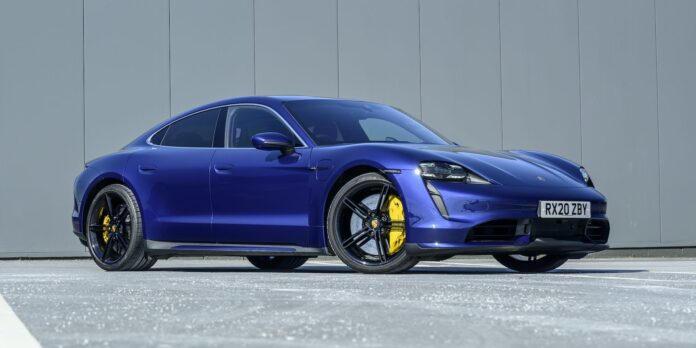
Carwow logo 600x300

Find your next new or used car with Carwow. Find out more

Lease a BMW 1 Series

If you’re looking to lease a new BMW 1 Series, The Car Expert’s partners can help you find a competitive deal.

Leasing-com logo

Personal contract hire deals from Leasing.com. Find out more

Carparison 600x300

Personal contract hire deals from Carparison Leasing. Find out more

Select Car Leasing logo

Personal contract hire deals from Select Car Leasing. Find out more

Subscribe to a BMW 1 Series

If you’re interested in a car subscription, The Car Expert’s partners can help. (PS: What’s a car subscription?)

Wagonex logo 2023 600x300

Car subscriptions from Wagonex.
Find out more

Drive Fuze logo 600x300

Car subscriptions from DriveFuze.
Find out more

Cocoon Vehicles logo 600x300

Car subscriptions from Cocoon.
Find out more

Sporty Alpine A110 range gains limited edition ‘R 70’ trim

0

Alpine has added two trim guises to its A110 sports car range – the ‘GTS’ and limited-edition ‘R 70’ – these new additions marking the final 12 months that the car will be sold in the UK.

This model launch is timed to mark the 70th birthday of Renault’s performance-focused Alpine marque. Both variants are powered by a four-cylinder 1.8-litre 300hp petrol engine – like the standard model. The flagship choice is the ‘R 70’, with only 770 models going into production. Carbon fibre used “from the front bonnet to the rear window, including the roof and rear spoiler.”

The car sits on 18-inch alloy wheels – also made of carbon fibre – with Michelin tyres and white accents. Like the former A110 ‘R Ultime’, the ‘R 70’ sports bonnet vents, but with an additional black strip that runs across the bonnet and roof. The car also comes with a unique exhaust made by Slovenian company Akrapovic.

There are seven different colours for the Brembo brake calipers, four different interior colour schemes, and ten different exterior colour options to choose from, including a tri-colour range of blue, white and red that Alpine says pays homage to the A106 coupé range from the 1950s.

The ‘GTS’ – which the brand will sell in higher quantities – replaces the former ‘GT’ and ‘S’ trim options and, according to the manufacturer, offers “an exhilarating driving experience based on the ‘S’ chassis without compromising the everyday comfort of the ‘GT’.”

Also sitting on 18-inch alloys with Brembo brakes wrapped in Michelin tyres for an additional fee, the ‘GTS’ can be specced with a new ‘GTS’ aero kit which includes a front splitter, side skirts, rear spoiler and rear wing with carbon fibre gooseneck mounts, providing “better downforce for even greater agility.”

Though Alpine haven’t exactly specified how much the ‘GTS’ will cost in the UK, the model will go on sale in France from March with a lead-in price tag of €80k (£66k). The limited-run ‘R 70’ is much more expensive, costing €123k (£102k). Alpine has confirmed that these will be the last editions to the A110 range as we know it, as the all-electric version of the A110 is expected to arrive next year.

The Alpine A110 currently holds a New Car Expert Rating score of C, with a score of 64%. It scores top marks from motoring journalists, while its CO2 emissions are also low. However, running costs are high, while the Alpine’s score also suffers from a lack of independent safety testing by Euro NCAP.

Chevrolet Corvette Z06 now available in UK

0

The stylish 5.5-litre V8 Chevrolet Corvette supercar is now available for British buyers to order from select third party dealerships.

It was now over a decade ago that Chevrolet decided to pull the plug on its UK operations, removing budget and mainstream market models like the Spark, Cruze and Trax from the market. Now the brand has returned to UK roads, offering the V8-powered ‘Z06’ variant of its eighth-generation high-performance Corvette to British supercar enthusiasts.

This isn’t the return of Chevrolet proper though. Instead, the American brand has allowed third party dealerships Lumen Automotive and Arnold Clark to sell the sports car in limited numbers. The ‘Z06’ is not the only variant available – there are listings for the ‘Stingray’ version too.

The supercar is powered by Chevrolet’s ‘LT6’ engine – a naturally-aspirated 5.5-litre V8 unit with a power output of 670hp. Mated to an eighth-speed dual-clutch automatic gearbox, the coupé can reportedly muster a 0-62mph sprint time of 3.1 seconds.

Both the ‘Stingray’ and more expensive ‘Z06’ are listed with six-figure price tags on Arnold Clark, stretching to nearly £200k for the ‘Z06’ in its top-spec ‘3LZ’ trim guise.

The best websites for short-term car leasing

Not everyone wants the responsibility of owning and running a car. Some people only need a vehicle for a few months of the year. Others might have a job looming that requires a car for a while. Perhaps someone can’t or doesn’t want to sign up for a finance agreement.

There are now a growing number of businesses that can provide you with a vehicle for a shorter period than a normal lease, but for longer than your normal car rental service. So if you need a car for a few weeks or a few months, there are now plenty of options.

In this guide, we’re specifically looking at companies that handle short-term leasing, often also known as long-term rental. This usually covers periods of more than a month but less than a year. These are usually fixed-term rentals, unlike car subscriptions, which are another form of short-term leasing that works on a rolling monthly contract. Sometimes the terms ‘subscription’ and ‘short-term leasing’ are used interchangeably, but we’re concentrating on fix-term leasing below. We have a separate guide for the UK’s best car subscription providers, which we regularly update.

Having a short-term lease is like renting a car for an extended period, and works in pretty much the same way. A lease is simply a rental anyway, and a short-term one is just how it’s described – it’s for a short time. So where many people might hire a car for a week’s holiday or a few days away on business, it’s perfectly possible to have that rental for a longer period of time.

Several of the companies below offer a mix of day rental, short-term leasing, subscriptions and long-term leasing, so can assist with whatever your needs might be and however they may change over time.

How does short-term leasing work?

Your lease will consist of a monthly rental, and may also include an up-front instalment depending on the leasing company and the length of the term. When the term is up, you hand the car back. So it operates just like a long-term lease, but for a much shorter period of time. Your rental covers road tax and breakdown cover, as well as any maintenance that falls due while you have the vehicle.

This short-term convenience does inevitably come at a price: your monthly payments will be higher than on a traditional four-year lease – and the shorter the term, the higher that payment is likely to be. But t’s a lot cheaper than trying to lease a car for three or four years, then cancelling it because you no longer need it.

If you’re looking for zero long-term commitment, good flexibility, and agreed monthly payments, the short-term option really could tick all the boxes for you. Some also have the flexibility to allow you to extend your lease if circumstances change and you need the car for longer.

The list of companies below isn’t ranked – they all provide a high level of service and are worthy of consideration. Several are marked with an asterisk, which means they are commercial partners of The Car Expert and we may earn a commission if you click through to their site. This does not affect the price you pay for any lease or service.

Select Car Leasing*

URL: selectcarleasing.co.uk/short-term-leasing

Select Car Leasing offers both short-term and long-term leasing for a huge range of cars. It can also assist with a range of financial services to car users, including GAP insurance, maintenance packages, business credit and even car accessories.

A wide range of vehicles is included, separated into ‘3-month’, ‘6-month’ and ’12-month’ short-term lease deals. Each choice offers a picture of the car with its full model name, a box highlighting three key features, and a section stating if the car is in stock now or when delivery can be expected.

The total monthly payment is shown clearly next to a brief breakdown of the initial down payment, length of contract and maximum mileage. Clicking on a car opens up a page with more detailed information, including colour choices, features, fuel and performance specifications and a full description of the car.

There’s a selection of more detailed pictures to view too. The site is easy to use and understand in an attractive and useful design.

Minimum term: 3 months
Upfront fee: Varies
Delivery: Free

Electric cars: Yes
Petrol/diesel/hybrid cars: Yes
Included mileage: Varies

Cocoon*

URL: cocoonvehicles.co.uk

Formed in 2007 by a group of motor trade managers and executives, Cocoon set about creating an internet-based ‘dealership’ service. Today the now family-run business specialises in car rentals and short-term leases.

Finding the short-term packages is easy enough from the landing page, and from there, you can sort by price, make of car, contract length or availability. You get a smart initial picture with details of contract length, full name of model and the all-important monthly payment.

Click on a car and you’re taken to a more detailed page containing specific contract details (with the option to pay less money upfront; a ‘quote’ button), the car’s key features and technical details, and a summary of how the deal works.

It’s an easy to use site with lots to read and some useful tips and advice sections. Cocoon also plants trees to offset emissions from its car leases.

Minimum term: 5 months
Upfront fee: Varies
Delivery: Free

Electric cars: Yes
Petrol/diesel/hybrid cars: Yes
Included mileage: Varies

Just Vehicles Solutions*

URL: justvehicle.solutions/short-term-car-leasing

Click on ‘Subscription’ from the site’s landing page and you are taken straight to a page proudly displaying the words ‘3-12 month car lease deals’, so you know you’re in the right place.

‘Applications take just two minutes’ says the page – there are a good number of vehicles to view along with drop-down options on manufacturer, fuel type, vehicles in stock, price and other choices to find you a suitable selection.

From the vehicles already displayed there’s a picture and a brief summary including model name, initial payment, monthly payment and mileage allowance (per year). Go to ‘View this deal’ and you get a lot more information. An example monthly cost is displayed, but a simple drop-down allows you to change the up-front payment, which then alters the monthly payment.

There are also simple but useful details about the car, its main features, and a summary of the chosen lease deal.

Minimum term: 3 months
Upfront fee: Varies
Delivery: Available

Electric cars: Yes
Petrol/diesel/hybrid cars: Yes
Included mileage: Varies

VIP Gateway*

URL: vipgateway.co.uk/short-term-car-leasing

With a goal of retaining customers again and again, VIP Gateway says some of its clients are on their ninth or tenth cars with them. And ‘goal’ is the key word here: the site’s landing page shows accolades from an array of well-known footballers and other sportspeople.

The site is attractive and simple to use. From the home page, click on ‘Short Term Lease’ from the bar across the top. From there, you are taken to a second page offering you 3-, 6- or 12-month deals. Choose one of those and you’re invited to select from a further list, including make, model, transmission and fuel type, before hitting ‘Search deals’.

An initial selection is shown. Click on any car and you’re shown further details, including a clear outline of the initial outlay and all-important monthly cost. There are special offers plus some interesting reading to be had in the form of tips and advice.

Minimum term: 3 months
Upfront fee: Varies
Delivery: Free

Electric cars: Yes
Petrol/diesel/hybrid cars: Yes
Included mileage: Varies

LeaseLoco*

URL: leaseloco.com/car-leasing/short-term-car-lease-deals

LeaseLoco says the average person leases a car for two to three years, but asks the question: ‘what if you’re not average?’ The short-term lease page is certainly anything but average and features a Bentley Continental GT (£8,100 a month) and a Lamborghini Temerario (£8,700 a month) among the choices instantly shown.

But select ’12 months’ and type in some search parameters such as maximum monthly cost and initial down payment, mileage and how soon you need the car (stock only) and you are given a choice suiting your requirements.

You get an overview, a photo gallery, detailed specification of all the car’s features, a ‘ten second’ review and lots more to help you decide. You can even compare deals. It’s a smart website with lots to look at and read, including advice, guides and a news blog.

Minimum term: 12 months
Upfront fee: Varies
Delivery: Free

Electric cars: Yes
Petrol/diesel/hybrid cars: Yes
Included mileage: Varies

Flexxilease

URL: flexxilease.co.uk

Click on the Flexxilease home page and straight away the ‘short term car leasing specialists’ show that they can help you find a car for as little as one month. They do 1- to 24-month flexible contracts, although, in the panel across the top of the landing page, the choices start at ‘3 months’.

Not every car is available for that short a time period, and if you use the drop-down menus to select a car of your choice, you won’t be shown a time period that’s not on offer.

But insert the make and model of the car you would like, along with other details such as transmission and body style, and hit ‘Search’. A selection of offers will appear – the wider your search parameters, the broader the choice of vehicles available.

There’s also a handy ‘latest deals’ section if you’re not especially fussy about the model of car you want, plus a ‘Car type’ section which allows you to select the style of vehicle you need, such as electric, 4×4, luxury or estate, from which you can then make a further choice.

Minimum term: 1 month
Upfront fee: Varies
Delivery: Free

Electric cars: Yes
Petrol/diesel/hybrid cars: Yes
Included mileage: Varies

Intelligent Car Leasing

URL: intelligentcarleasing.com/short-term-car-hire

It says Intelligent Car Leasing on the URL, but click on the link, and you’re taken to a page run by Fleet Alliance, the group with whom they are partnered. They have access to thousands of cars and many hundreds of deals and are keen to get you to take one.

The landing page explains the benefits of short-term leasing and also outlines the ‘Things to be aware of’ such as mileage limits and termination fees, so it’s very transparent. There’s lots of information, explanations and advice, and the site is an excellent and worthwhile read.

There are some instant deals to investigate (‘Top car lease deal’), showing the make, model details, and a minimum monthly payment. For more specific enquiries, you can request a callback.

Other resources include useful information about EVs, the motor industry, a tax calculator and fleet management.

Minimum term: 3 months (private users)
Upfront fee: Varies
Delivery: Free

Electric cars: Yes
Petrol/diesel/hybrid cars: Yes
Included mileage: Varies

SelfDrive

SelfDrive home page 1200x675

URL: selfdrive.uk

SelfDrive is a new player in the UK leasing scene but is well-established in the Middle East and parts of Europe. It can arrange a car for a day, a week, a month, a year – or anywhere in between. It also offers subscriptions for rolling monthly leasing.

The company’s offering is driven by a mobile app that lets you manage your booking from start to finish, as well as the ability to switch cars or extend your rental term if your plans change.

Enter a pick-up city or location, a time and date and the driver’s age and click ‘Search car’ to be taken to a choice of vehicles meeting your criteria and listed ‘low to high’ in price. Details for all the available cars are provided, along with mileage limits for each. You can easily see how the pricing changes as you alter the number of months you’re booking.

Minimum term: 1 month
Upfront fee: Varies
Delivery: Available

Electric cars: Yes
Petrol/diesel/hybrid cars: Yes
Included mileage: Varies

Sixt

URL: sixt.co.uk/rental-services/three-month-car-hire

Sixt is well known for car hire, such as that from airports, and its website advertises long-term hire of up to 28 days. But it also does short-term rental, describing it as ‘the flexible alternative to a lease car’, as well as car subscriptions through its Sixt+ programme.

The simple website is easy to navigate and scrolling down takes through all sorts of advice and explanations about renting a vehicle for just a few months, giving some examples of the types of cars Sixt has available, along with descriptions of the types of cars on offer, from compacts to saloons and sports models.

The bottom of the landing page splits out the various rental periods for an even easier experience. Choose from ‘weekly, ‘two-month’, ‘three-month, and ‘short-term’ hire, and you’re taken to an enquiry form asking for pick-up address and date, with return date, before clicking on ‘Show cars’ for the full available selection.

There’s plenty of advice and explanation throughout from this experienced, worldwide organisation.

Minimum term: 2 months
Upfront fee: No
Delivery: No

Electric cars: Yes
Petrol/diesel/hybrid cars: Yes
Included mileage: Varies

Flexed

URL: flexed.co.uk

Flexed says it’s different because you can make changes to your agreements easily. They are flexible once the minimum contact – 28 days – is up. You can cancel or change your vehicle after that first month with no extra charges.

Finding a car is easy and there are several ways to do it. Select ‘Browse all vehicles’ if you don’t know what you want, look at the ‘Latest offers’, check out some of the suggested ‘Popular cars’, or browse by car type, such as small, medium, crossover, premium or performance.

If that’s not enough, there’s the option to ‘Find your perfect car’ by typing in the manufacturer and model or a car type. Clicking on a choice will bring up a picture, description, technical details, features and specifics of the monthly fee. There’s the option to request a quote too.

An interesting insights and news section with tips, advice and features about the car industry and driving, is included.

Minimum term: 1 month
Upfront fee: No
Delivery: Available

Electric cars: Yes
Petrol/diesel/hybrid cars: Yes
Included mileage: Varies

*The Car Expert has commercial partnerships with Cocoon, LeaseLoco, VIP Gateway, Select Car Leasing and Just Vehicle Solutions. If you click through to their websites and view any of their vehicles, or proceed to lease a vehicle, we may receive a commission.

Leapmotor T03 test drive

0

Make and model: Leapmotor T03
Description: Small electric hatchback
Price range: from £15,995

Leapmotor says: “The UK’s best value electric car.”

We say: In most ways, the new Leapmotor T03 impresses. It’s very well priced, you get a lot of kit for your money and it’s electric rather than petrol. But the electronic nanny systems are simply terrible.


Introduction

Leapmotor is this week’s newest Chinese car company launching in the UK, following the likes of Omoda, Skywell, Jaecoo and others in recent months. But the thing that sets Leapmotor apart from the others is that it will be part of the global Stellantis family, standing alongside more familiar names like Vauxhall, Peugeot, Citroën and Fiat.

Even in China, Leapmotor is a very new car company. It was founded only about a decade ago, and is now starting to spread its wings into Europe through a partnership with Stellantis. The T03 is one of two models available as the brand launches in the UK, with the other one being a large SUV model called the C10. A mid-sized SUV called the B10 will join the line-up later this year.

Leapmotor will sell cars through dealers within the existing Stellantis network, so you are likely to see Leapmotor badges popping up alongside Vauxhall or Peugeot showrooms around the country. The company claims to have more than 40 dealers already on board, with about 80 expected by the end of the year.

What is it?

The Leapmotor T03 is a small four-door hatchback, classed as a ‘city car’. In other words, it’s grouped in the smallest category of cars alongside the likes of the Fiat 500 or Hyundai i10.

It’s also a major rival to the new Dacia Spring, which is the other budget brand offering a new electric city car for the price of a petrol model. This was raised multiple times during the launch event, by Leapmotor executives as well as by journalists.

Apparently, the design brief was for the T03 to look friendly, which it sort of achieves. The front end is supposed to look like the car is smiling, but from some angles it looks a bit awkward. The proportions are a bit odd, making the car look quite narrow and tall. It also makes the wheels look very small, although they’re a perfectly normal size of 15 inches.

What do you get for your money?

With many new cars, you end up with a spreadsheet of powertrains, body styles, battery sizes (for EVs) and trim levels, and a range of prices that sees the top-spec cars running to almost double the price of the entry-level models. Leapmotor has made things very simple by offering one model. There’s only one motor, one battery, one trim level and one body style. The T03 costs £15,995 and the only extra-cost option is metallic paint, in either silver or blue, for an extra £650.

Leapmotor is pushing hard for the T03 to be recognised as a ‘value’ offering rather than a ‘budget’ one, but then so do Aldi and Lidl. It’s unavoidable that price is the headline here, and £16K is very cheap for any kind of new car, let alone an electric car. And it’s true that there’s plenty of value on offer.

For your £16K, you’re getting a small car that’s better equipped than pretty much anything else at a similar price point, plus it has an electric motor rather than a petrol engine. You get a panoramic sunroof, rear parking sensors plus a reversing camera, 15-inch alloy wheels, adaptive cruise control, electric windows and mirrors, blind-spot detection and more.

What’s possibly more interesting is what you don’t get. Although there’s a ten-inch central display screen with built-in satnav, you don’t get DAB digital radio – it’s FM only, as far as we could find – or Apple CarPlay/Android Auto. You can connect your phone via Bluetooth like it’s 2005 all over again, but that’s not really a viable option if you have to handle your phone to answer calls or play your music, which you can’t do on the move.

If you really want to hand over more money, I’m sure your local dealer will be happy to fleece you for car mats, various kinds of insurance and service plans, overpriced car cleaning products and so on. But don’t.

Expert tips

  • Only one trim and specification, which makes choosing a model pretty simple
  • Four-year warranty competitive for this segment, but other Chinese brands do better

What’s the Leapmotor T03 like inside?

The cabin is certainly spacious, given the overall dimensions of the car. Two adults fit in the back seats without too much complaining and without the front passengers having to push their seats all the way forward. Headroom in the back is decent as well, so it’s a much better prospect than most city cars if you need to carry people in the back seats.

In front of the driver is an eight-inch digital screen instead of analogue gauges, with a larger ten-inch touchscreen in the centre of the dashboard. As with many screen-laden new cars, some of the fonts are too small to read easily on the move, and the manufacturer would do well to make the screen layouts simpler rather than jazzier. There are almost no physical buttons, so everything has to be done via the touchscreen. That includes adjusting the heating or air-conditioning, which is annoying.

The seats are comfy enough, at least on our fairly short drive at the UK launch event last week. The steering wheel adjusts for rake (up and down) but not reach (in and out), but most drivers are likely to find a comfortable position. Even on many cars with reach adjustment, you feel like the steering wheel can’t be pulled out far enough, but this one was fine without needing it.

Boot space, however, is smaller than we’d like. Even allowing for the fact that the T03 is a small car, the space available lags behind rivals like the Dacia Spring. You can fold the rear seat down in one piece (rather than a 60/40 split like you see in larger cars), which helps for carrying larger loads if you’re not using the back seats.

The fit and finish are better than what you’d probably expect from one of the cheapest new cars on sale. Some of the materials may not be quite as luxurious as you’d find on a BMW or Audi, but the car generally feels very well screwed together. During our – admittedly brief – drive at the launch, there were no rattles or loose bits of trim anywhere and everything felt as tight as a drum.

Expert tips

  • Very spacious inside cabin for such a compact car
  • Boot space not so generous
  • Build quality seems very competitive for the money

What’s the Leapmotor T03 like to drive?

The first point to note is that, based on the early launch vehicles we drove last week, the driver fatigue warning system on the T03 is the most annoying and distracting system I’ve ever experienced on a new car, and patently not fit for purpose. The only car that comes close to being this bad is the Leapmotor C10 I drove immediately beforehand. More details in the Safety section below.

Thankfully, the other car systems seem to be better tuned. Despite being a short car, the T03 feels stable and well-balanced in urban driving where it’s really designed to be. Throttle response is pretty good and the car will easily keep up with the cut-and-thrust of day-to-day traffic. The steering is light and the turning circle is suitably tight, so weaving through narrow city streets should be a breeze.

We only spent a short time at higher speeds, and the T03 behaved like most small, budget cars. It’s a bit bouncy and there’s a bit of wind noise, but certainly no more of either than anything else in this class of car. The electric motor is less responsive at accelerating from 50-70mph, but then you could say the same about a small petrol engine in a Kia Picanto or Hyundai i10.

Expert tips

  • Probably the most annoying and distracting anti-distraction systems of any new car, which very much detract from the driving experience
  • Noise levels higher than other EVs
  • Agile enough for city driving, less happy at higher speeds

How safe is the Leapmotor T03?

As of February 2025, the Leapmotor T03 has not been assessed by Euro NCAP so we can’t give you a definitive answer of how safe it is (Euro NCAP testing assesses new cars over and above minimum legal safety requirements). If and when this testing takes place, we’ll update the information and safety score here.

The T03 is kitted out with plenty of latest-generation ADAS (advanced driver assistance systems) kit, but that doesn’t mean they work as well as they should. The accident prevention systems need some serious recalibration, an issue which affected both the T03 and the larger C10 SUV we drove at the launch event.

In the case of the T03, the driver fatigue warning would beep loudly on a regular basis, requiring you to deactivate it by pushing a button on the central touchscreen. This warning would go off any time you looked down, or yawned, or coughed, or sang along to a song on the radio, or talked to your passenger. Until Leapmotor fixes the system, you’d literally have to tape over the driver-facing camera to stop it from working (and put up with a permanent warning light) so you could live with the car – which obviously defeats the purpose of having the system at all.

We also found that the adaptive cruise control tended to disengage going around bends, which is another annoyance that doesn’t tend to crop up in other cars. Again, this happened on both Leapmotor models we drove, which suggests that the engineers still have work to do in getting these safety systems working properly.

Expert tips

  • The Leapmotor T03 has not yet been rated by Euro NCAP (as of February 2025)
  • Anti-distraction systems are actually hugely distracting, which does not make the car safer
  • Having adaptive cruise control as standard, but it disengages around minor bends where no braking is required

Leapmotor T03 economy, battery range and charging

The Leapmotor T03 has a 37kWh battery, which works out to a battery range of 165 miles, according to the official UK/EU lab test programme. That’s better than the Dacia Spring’s 140-mile range on the same test cycle.

In the real world, your results will vary. Most T03 drivers are going to be using their cars in urban environments, which is good for EVs as you push a little bit of charge back into the battery every time you lift off the accelerator or hit the brakes. So in urban driving, you may be able to exceed the 165-mile figure. In open road driving with less braking, especially on motorways at higher speeds, your mileage will reduce significantly. Our launch drive was quite short, so we didn’t get anywhere near testing the range of a full battery.

Electrical efficiency (the EV equivalent of fuel economy in a petrol or diesel car) is reasonable rather than amazing, which is disappointing for such a small car. The Dacia Spring is better here, so it will cost less to run – noticeably so if you’re charging at public chargers, less noticeable if you’re able to charge at home where the electricity is cheaper.

At public chargers, the T03 can accept a maximum charging speed of 45kW, which is better than the Dacia but not particularly quick compared to larger and more expensive EVs. We don’t have an industry-standard 10%-80% charging time available, but it should be about 40 minutes or so.

The charging port is in the nose of the car, so you’ll want to park head-first in charging bays rather than reversing in. If you’re charging at home, the T03 is short enough that your cable will probably reach the charging plug regardless of which way round you park.

Expert tips

  • Official battery range of 165 miles. Around town, this is probably achievable but motorway driving will reduce this significantly.
  • Battery is unsurprisingly small since this is a small car, but driving range should be plenty for its intended customer base.
  • The charging port is in the nose of the car, which means parking head-first in charging bays.
  • Comes standard with the usual Type-2-to-Type-2 charging cable for plugging into a dedicated charging unit, but not a Type-2-to-Type-3 cable for plugging into a standard three-point electricity plug.

Verdict

In most ways, the new Leapmotor T03 impresses. It’s very well priced, you get a lot of kit for your money and it’s electric rather than petrol, so it should cost you peanuts to run if you can charge it from home or work. There’s plenty of room in the cabin for such a small car, and the build quality appears to be perfectly decent for the money.

As of right now (February 2025), there are question marks on safety as the T03 hasn’t been tested by Euro NCAP. Ticking all the equipment boxes is no guarantee of a good score – the Dacia Spring has a terrible Euro NCAP rating so hopefully the T03 will be much better. There are other relatively minor foibles, like a boot that’s smaller than you’d hope, electrical efficiency that’s not great for such a small car, and a lack of Apple CarPlay or Android Auto to run through the central touchscreen.

But the biggest problem we have with the Leapmotor T03 right now is its terrible electronic nanny systems. Until Stellantis can get these properly sorted, you would tear your hair out living with one of these cars. Hopefully, it can be sorted via a remote update over the air very soon, or else Leapmotor dealers are going to be fending off some very angry customers.

Expert recommendations

  • An electric city car that’s cheaper than most petrol city cars
  • Can’t confirm safety performance until Euro NCAP conducts its tests
  • Physical driving characteristics are fine, but electronic systems are terrible and need to be fixed urgently

Similar cars

Citroën ë-C3 | Dacia Spring | Fiat 500e | Renault 5 | Vauxhall Corsa Electric

Key specifications

Model tested: Leapmotor T03
Price: £15,995
Engine: Single electric motor
Gearbox: 
Single-speed automatic

Power: 95 hp
Torque: 158 Nm
Top speed: 81 mph
0-60 mph: 12.7 seconds

Battery range: 165 miles
CO2 emissions: 0 g/km
Euro NCAP safety rating: Not yet tested
TCE Expert Rating: Not yet rated

Audi Q4 e-tron range bolstered by new entry-level model

0

Audi has introduced a cheaper lead-in version of its all-electric Q4 e-tron SUV – the ’40 e-tron – that is powered by a smaller battery.

One of Audi’s best-selling battery-powered models, the Q4 e-tron is a popular option in the UK’s mid-sized electric SUV class and a smaller alternative to the brand’s Q6 e-tron.

The Q4 ’40 e-tron’ uses a 63kWh battery – instead of the 77kWh unit that powers the ’45 e-tron’ which is the current entry-level model – which can reportedly muster up to 250 miles (258 miles for the Sportback coupé-SUV bodystyle) on a single charge. By comparison, the ’45 e-tron’ has an official range of 332 miles.

Using a 165kW DC rapid charging station, Audi adds that the ’40 e-tron’ can be topped up from 10% to 80% battery charge in 24 minutes, with a ten-minute charge adding up to 96 miles. The rear-mounted electric motor has an output of 204hp, and the SUV can complete a 0-62mph sprint in 8.1 seconds, which is slower than the rest of the Q4 e-tron range.

While it’s slower and offers a shorter range, the ’40 e-tron is also markedly cheaper, cutting around £5k from the Q4 e-tron’s entry-level price tag.

Despite the price drop, Audi says that the variant still “offers extensive standard equipment” which includes the brand’s navigation software, a ten-inch digital instrument cluster behind the steering wheel, LED headlights, dual-climate control and a faux-leather upholstery trim.

The ’40 e-tron’ will become available to order in the UK from March 13th, with pricing starting at under £47k and the first customer orders expected to arrive on UK roads this summer. The Audi Q4 e-tron currently holds an Expert Rating score of A in our Expert Rating index, with a score of 76%.

Volvo XC60 SUV receives infotainment refresh

0

Volvo says it has given its mid-sized XC60 SUV a larger and more responsive infotainment system, as well as several minor cosmetic changes.

On sale since 2017, this small update comes as Volvo aims to keep its model range up to date with the brand’s latest model releases.

Starting with the exterior looks, the XC60 has been given a new front grille design that mirrors the larger XC90’s latest range of changes, and the SUV now comes with new alloy wheel design options and darker rear lights. Two new colours – ‘Forest Lake’ and ‘Aurora Silver’ – are also included in this mild refresh.

Inside, the car can also be specced with a premium Bowers & Wilkins sound system, and Volvo has also introduced new cupholders and an improved wireless phone charger.

The key interior highlight is the new portrait-oriented infotainment system, however. Compatible with Android Auto and Apple CarPlay, as well as future over-the-air software updates, this larger 11-inch “floating” touchscreen is reportedly crisper and twice as fast as the former infotainment tech, which Volvo says reduces driver distraction and thus enhances safety.

Volvo says that the refreshed XC60 is available to order in several countries, but the updated model is yet to arrive in the UK just yet. The Swedish brand is yet to announce the car’s UK pricing. The XC60 currently holds a New Car Expert Rating of A, with a score of 71%.

Polestar 3 gains software update

0

The electric Polestar 3 SUV has received a minor software update that makes the car compatible with the brand’s smartphone digital key app.

Tech that essentially allows the driver to unlock and start the car using their smartphone or other compatible device, this digital key app also comes with a walk-away locking feature. The app is compatible with both Android and Apple devices.

This small tech update – one of over 30 different free over-the-air updates that the brand has introduced for its models since 2020 – is joined by news about the next update in 2026. This will introduce a more powerful processor for the car’s computer, which Polestar says is complementary for its customers. When notified, Polestar owners can opt to get this update by taking their car to a “Polestar authorised service point”.

Besides increasing the speed that the car’s computer can complete tasks – like responding to infotainment screen input and monitoring the car’s various sensors – it’s unclear what benefits this computing power upgrade will bring in the short term, but is likely to lay the groundwork for further over-the-air updates in the future.

The Polestar 3 currently holds a New Car Expert Rating of B with a score of 66%. Beyond the car’s average to very good review scores, this overall score is impeded by high average running costs.