Škoda’s small electric Elroq SUV is now on sale in the UK, with three powertrains and four trim levels to choose from.
The Elroq is Škoda’s first foray into the compact electric car market, and is essentially a smaller and cheaper alternative to the brand’s highly-regarded Enyaq SUV which has been on sale in the UK since 2021.
Four different trims are now available, with the powertrains restricted to these trim choices. The entry-level ‘SE’ is only available with the least powerful 55kWh battery, which has a single-charge range of 230 miles. This trim sits on 19-inch silver alloy wheels, and comes with LED headlights, LED tail lights, fabric and artificial leather upholstery and a leather-wrapped steering wheel.
The standard spec also includes a 13-inch infotainment touchscreen display, a rear-view camera with rear parking sensors, traffic sign recognition and blind spot detection.
The mid-range ‘SE L’ is instead only offered with a 63kWh battery that has a maximum battery range of 250 miles. This trim adds a heated steering wheel with paddles for energy recuperation settings, heated front seats and Skoda’s navigation system accessed through the infotainment screen.
The ‘SE L’ also comes with dual-zone climate control, front parking sensors and has a faster DC rapid charging speed of up to 145kW.
The next step up – the ‘Elroq Edition’ – introduces the final powertrain option. Alongside the 63kWh battery, this trim is also available with the range-topping 82kWh battery that can travel up to 360 miles on a single charge and can charge at speeds of up to 175kW.
The ‘Elroq Edition’ also adds chrome roof rails and window surrounds to the car’s exterior as well as rear privacy glass, keyless entry and adaptive cruise control.
The final trim choice – the ‘Elroq Sportline’ – has the same powertrain options, but comes with larger 20-inch alloy wheels, matrix LED headlights, a ‘SportLine’ exterior styling pack with sportier bumpers and black roof rails, a microsuede and artificial leather upholstery trimming inside and a motorised tailgate with with kick activation.
The boot can hold up to 470 litres of luggage and the model comes with many of Skoda’s ‘simply clever’ features, including a parcel shelf that can be placed halfway up the boot, an umbrella in the door lining and an ice scraper with tyre tread depth gauge mounted in the boot lid. Storage cubbies in the cabin have a further 48 litres of storage space, including two levels of mini shelves on either side of the boot.
Pricing for the Elroq now begins at £31.5k, which makes the crossover a direct competitor of the new Ford Puma Gen-E and the Kia EV3, which has just been crowned The Car Expert’sCar of the Year 2025. Opting for the top-spec 82kW ‘Sportline’ adds another £10k to the price tag, the trim range price list topping out at over £41k. The similarly-sized but petrol-powered Škoda Karoq range has a slightly cheaper entry-level price of £30k.
Without a doubt, the dominant theme in the UK car retail market over the last couple of years has been the arrival of the Chinese.
Brands such as BYD, GWM Ora, Omoda and Jaecoo have all targeted a slice of the UK market, promising almost entirely electric cars of good quality at keen prices and aggressively signing up extensive dealer networks to sell them out of.
But while the likes of BYD are rapidly becoming names recognised by UK buyers, very few have likely heard of Skywell – a name that sounds like it belongs in a science-fiction movie.
Skywell is, however, a Chinese car brand like many of its potential rivals, with a great deal of commercial clout behind it and a desire to earn its share of the UK appetite for new cars. But compared to some of the other brands, Skywell is starting in a more modest manner, coming to the market with just one model already on sale for four years in Japan and, for now, a small UK dealer network.
So who or what is Skywell?
Skywell’s origins lie in a manufacturer formed in 2000 with the delightful name of the Nanjing Golden Dragon Bus Company. NGDB grew quickly to become one of China’s leading electric bus manufacturers until 2011, when it became part of the Skyworth Group – one of the world’s largest consumer electronics companies, boasting an annual turnover of more than £21 billion.
In its new form and under the name Skywell, the company diversified into trucks, vans and eventually cars, with the Skywell BE11 electric SUV launching in China in 2020. Now, the company is expanding into the UK as part of its overall ambitions in Europe, with the seeming lack of enthusiasm for applying tariffs on Chinese products arriving on our shores no doubt making selling in Britain an attractive prospect.
When did Skywell launch in the UK?
Skywell is a brand-new name only just establishing itself in the UK market in late 2024. The cars are being imported by Cirencester-based Innovation Automotive, which specialises in bringing electric vehicles into the country and already sells a small electric van for Chinese brand Dongfeng Motor (DFSK).
The first Skywell BE11s are likely to be on UK roads at the start of 2025.
What models does Skywell have, and what else is coming?
The launch model is the BE11, officially a mid-sized electric SUV but, in truth, a pretty big machine. It’s available with two battery sizes, claiming a maximum range between charges of just over 300 miles, and one trim level.
Skywell heavily promotes the fact that it does not have options, just extensive standard equipment lists that run to opening panoramic sunroofs, wireless phone chargers and smart electric tailgates – and all this at prices under £40,000.
Skywell’s first ‘proper’ model designed specifically for Europe is the Q, an electric hatchback. Unveiled at the Paris motor show in September 2024, it’s expected in UK showrooms late in 2025.
At the same time, Skywell will broaden its reach by launching a large electric van. Currently without a model name, it was shown alongside the Q in Paris. A fourth exhibit at the show was the Skyhome, a large electric saloon with ‘all the bells and whistles’, but Skywell is yet to confirm whether this will be sold in the UK.
Skywell BE11
Where can I try a Skywell car?
Currently, in not very many places. Skywell admits that it’s been beaten to potential UK dealers by the likes of Omoda Jaecoo with their aggressive network growth ambitions and immediate product to sell.
The company has so far only signed up around ten dealers, curiously mostly on the western side of the UK, though it hopes to expand this to 25 by Spring 2025 and around 50 by the end of the year.
It has made a deal with Halfords to establish 300 servicing venues and opened a large parts hub in Doncaster to ensure dealer technicians won’t have to wait around for components. Doing this will aid residual values and, as a result, insurance costs.
The company is not targeting the big dealer names either – Skywell’s ambitions, or more pertinently those of Innovation Automotive, lie with smaller, local groups and family-run independents that have previously sold the likes of Suzuki or KGM (nee SsangYong).
What’s particularly significant about this company?
Skywell doesn’t lack know-how in electrics and electronics. Its founder, NGDB, has long enjoyed a huge slice of the market in China with larger electric vehicles, initially buses and then commercial vehicles.
Meanwhile, becoming part of the Skyworth Group made available to this start-up the electronic know-how of one of the world’s largest producers of consumer electronics, producing thousands of televisions, audio-visual systems and the like. In theory, all of that expertise should stand the car manufacturer in good stead when competing against the technology and innovation of rivals.
What makes Skywell different to the rest?
Skywell is taking a very different route to the UK market, almost a toe-in-the-water exercise instead of the high-profile big-budget launches we have seen from other Chinese manufacturers. Whether this will change when the brand launches its first ‘proper’ European car towards the end of 2025 remains to be seen.
Summary
So many Chinese brands have launched in the UK in recent times that buyers may wonder if they can all be successful. Will they take over from the established car makers, or will one or two fall by the wayside?
The new car market has never been more cut-throat, and any new entrant is going to have to work very hard not to be left behind. Whether Skywell’s low-key approach will bring it the level of success it needs is a big question. Watch this space…
New car registrations had another slow month in November, with both private sales and fleet registrations down on the same month last year.
According to data published this week by the Society of Motor Manufacturers and Traders (SMMT), total registrations were down 2% compared to last November, with private sales down 3% and fleets down 1%. That was actually a better result for private sales, which are averaging a 9% decline year-to-date, while fleets are still 13% up on 2023 in year-to-date numbers.
As usual, several factors were at play in the overall results, but at least part of the slowdown is due to some car manufacturers limiting sales of their petrol/diesel/hybrid cars to help hit their mandated EV sales targets. With EVs having to make up a net 22% of overall sales, some brands have found it easier to stop supplies of petrol cars rather than sell more EVs.
Private new car sales still declining, but at a slower rate
Source: SMMT
It’s likely that 2024 will end up being the worst year for private new car sales in a quarter of a century. That’s due to a combination of factors, including more people being eligible for company cars or Motability vehicles, or taking leases rather than personal car finance. But it’s also a sign of higher new car prices and interest rates, which is pushing more people out of new cars and into used cars.
After 11 months of the year, private new car sales are down 9% on last year. That’s an improvement in recent months, as it was a 12% decline at the half-year point. But there appears to be no sign of improvement as we look towards 2025.
Great month for EVs, with caveats
While the overall market was down 2%, electric car sales were up 58% on last November’s numbers. On the surface, that’s great news for car makers who need to hit their targets. In reality, it was still good but a bit more complex than it seems.
Firstly, last November was a very poor month for EV sales (down 17% on the year before), with both Tesla and Polestar (both 100% EV brands) recording poor results. So part of this November’s growth was simply catching up what was lost last year.
Secondly, several manufacturers were holding back deliveries of EVs late last year to give them a head start on 2024, so their results were down as well. That’s what we’re also seeing now for petrol cars, which were down 18% on the same month last year. Diesel sales were also down 10%, but that’s pretty normal these days.
Thirdly, there has certainly been a significant amount of self-registration activity going on for particular brands. That means car manufacturers and dealers register cars to themselves as company vehicles, dealer demonstrators, service loan vehicles and so on, rather than as legitimate sales to real customers.
The net result of all of this, however, is that most car brands are believed to have hit their net 22% sales targets with one month still to go. Some will still need another big push in December, but the pressure is off others. Although the overall market share only shows about 18%, car brands get credit for other low CO2 cars like plug-in hybrids and regular hybrids, which comes off their 22% overall target.
Good month, bad month
Although the overall market was down slightly, there was considerable variation in the results for different car brands.
Overall, Volkswagen was once again the UK’s best-selling brand, ahead of BMW, Mercedes-Benz, Audi and Ford. Tesla was the biggest winner, with about 2,900 more cars registered in November 2024 than the same month in 2023. The biggest loser in absolute terms was Vauxhall, with sales down nearly 4,400 on the same month last year.
With just one month to go, Volkswagen is a clear leader at the top of the table, with BMW edging Audi for second place. Kia is fourth, with Ford fifth.
Mini Cooper jumps to the top spot in November
The Mini Cooper topped the sales charts in November, which is a first for the all-new model launched earlier this year. For whatever reason, the Mini hatch (now officially called the Cooper) always seems to perform well in November, generally outperforming its year-to-date results. There’s probably a reason, but we haven’t asked…
In second place was the Nissan Qashqai, making it a British top two for the first time in a long time. The Tesla Model Y had a strong month to place third, while the Kia Sportage ate further into the Ford Puma’s year-long lead in fourth.
With just one month to run, it’s a very tight battle between the Puma and Sportage for the overall sales crown. Since June, Kia has closed the gap down from more than 2,200 cars to little over 100 cars with only December left to go, and Kia certainly has more wiggle room to register extra vehicles if necessary. Ford is hamstrung by its poor EV sales this year, and is one of the brands struggling to get close to the 22% minimum EV sales target. That will limit the number of Pumas it can sell in December, unless it decides to stop selling other models like the Kuga so it can register more Pumas.
We’ll have to see how it plays out, but our bet is on the Kia Sportage taking the title. Come back in early January to find out!
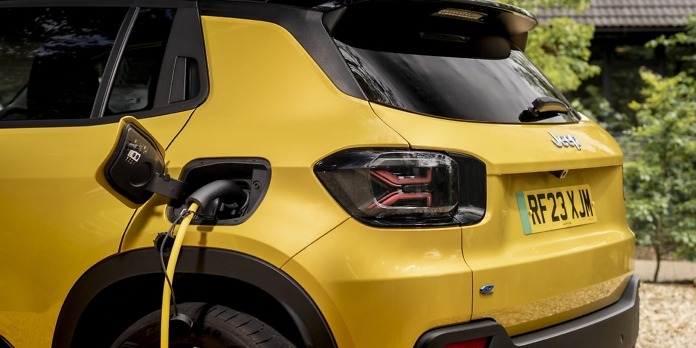
Jeep has decided to reduce the pricing of its electric Jeep Avenger range, making the compact EV’s entry-level price more competitive with the pricing of new rivals like the Mini Aceman.
Bringing the all-electric range closer to the petrol Avenger’s £25k price tag, the entry-level ‘Longitude’ version of the Avenger Electric is now priced at £30k – a £5k price reduction. This means that the electric Avenger is over £1k cheaper than the new Mini Aceman and has the same upfront price tag as the recently unveiled Ford Puma Gen-E.
This rather substantial price cut has possibly been made to counter the array of cheaper electric crossovers that have arrived in the UK since the Avenger’s 2023 debut, which also includes the Kia EV3 and Volvo EX30.
It could also be a response to the government-mandated EV sales targets, as greater demand for the electric Avenger – Jeep’s only battery-powered model on sale at the moment – will help the American Stellantis-owned brand meet these targets, which will be getting tougher in the new year.
Like Vauxhall, which has recently reduced the pricing of its Grandland Electric SUV, Jeep simply explains that this pricing adjustment makes the transition to an electric car “more accessible for its customers.”
The mid-range ‘Altitude’ Avenger trim has also been given a £5k price drop – now priced at £32k – while the top-spec ‘Summit’ model is now priced at £34k, another £5k price cut.
The Jeep Avenger currently holds a New Car Expert Rating of A with a score of 71% in our Expert Rating index, picking up praise from UK reviewers for its attractive styling and competitive battery range. This range-wide price reduction could improve the crossover’s review scores in the near future, as a key criticism the British motoring media levelled against the Jeep was its high pricing when compared to other more affordable rivals.
The compact Ford Puma, Britain’s best-selling new car in 2023, now has an all-electric counterpart that will sit below the brand’s battery-powered Mustang Mach-E, Explorer and Capri.
Ford will be hoping that the sales success of the recently-facelifted ICE-powered Puma – which currently sits at over 42,000 sales in the UK this year – will provide a sales springboard for the Puma Gen-E which, while being slightly taller and longer, has a similar exterior design to that of the popular petrol version.
Built on the same foundations as the Ford E-Transit Courier, the Puma Gen-E is powered by 43kWh battery unit which provides a power output of 164hp and an estimated maximum battery range of 234 miles on a single charge (226 miles instead for the more expensive in ‘Premium’ trim). Charging at speeds of up to 100kW, the electric crossover can charge from 10% to 80% battery in a reported 23 minutes.
Ford says that the car can complete a 0-62mph sprint in eight seconds flat, and top speed is electronically limited at 99mph.
The Puma Gen-E has the same size boot as the standard Puma, with 456 litres of storage space, but has also introduced its new ‘Gigabox’ underfloor storage which is included as standard which boosts rear luggage space up to 523 litres – 48 litres more than the similarly-sized Kia Niro EV.
Stepping inside, the electric crossover is near-identical to the petrol-powered Puma with a 12-inch infotainment touchscreen with wireless Apple CarPlay and Android Auto paired a with 13-inch digital instrument display behind the dashboard.
Heated seats and a phone storage cubby with a wireless charging pad also come as standard. Beyond the entry-level ‘Select’, the top-spec ‘Premium’ trim adds a more advanced Bang & Olufsen speaker system, keyless entry and a motorised boot lid. The optional extra list includes matrix LED headlights and larger 19-inch alloy wheels.
Ford has announced that UK pricing for the Puma Gen-E will begin at £30k, rising to £32k for the ‘Premium’. The electric crossover is now available to order, with the first customer deliveries scheduled to arrive in early 2025.
For the 2025 Awards, we’ve had a bit of a reorganisation. In the mid-sized family vehicle segment, the line between ‘car’ and ‘SUV’ has become so blurred that it’s effectively pointless. So we’ve grouped them together.
Instead, we’ve separated medium cars into mainstream and premium as that tends to better reflect how real-world car buyers look for their next vehicle. The badge and feature list tend to be more important than the body style, although customers are overwhelmingly choosing SUV-style cars instead of conventional hatchback/saloon/estate models – even if they’re no more practical and no more spacious (and have zero off-roading capabilities).
This category is comfortably the largest in our awards this year, with 18 new models. The eligible cars this year were:
Our awards recognise both the best new models launched over the last 12 months and the best overall cars in each category – because newest doesn’t always mean best, as you can see below.
A stylish reinvention of a much-loved name, the new Renault Scenic E-Tech brings style and practicality to the family EV sector in a way that no other new car in its class can match.
The new Scenic is smooth, comfortable and refined to drive, with loads of battery range to cover every household need. If you’re considering the switch from fossil fuels to electricity for your next family car, this would be a great place to start.
Hot on the Scenic’s heels this year was the new Toyota Prius, which shows that you don’t need to choose a high-riding crossover-style vehicle to make a good choice. Whether or not the Prius will appeal to anyone other than its traditional minicab driver market remains to be seen, however.
The new Renault Scenic might be a great car, but it’s not the outright best electric car in this category. Instead, it’s the retro-futuristic Hyundai Ioniq 5 that reviewers rate higher than any other medium-sized vehicle – just edging its Kia EV6 twin in a reversal of last year’s results.
The Hyundai/Kia twins are only slightly more expensive than the Renault, but that extra money gets you two of the finest medium-sized EVs on the new car market. So if your budget stretches to £40K or more, the Hyundai Ioniq 5 remains the best car in this segment.
Class champion, petrol/diesel/hybrid: Hyundai Tucson (75%)
It’s another Hyundai that is reviewers’ pick for the best fossil-fuel-powered medium car, with the Hyundai Tucson edging out the Honda Civic. It’s available with a choice of petrol, basic hybrid and plug-in hybrid powertrains.
It’s been on sale for about four years now (with a facelift earlier this year), but the Tucson continues to deliver quality and practicality in a family-friendly budget. The styling may not to be everyone’s taste, but it’s certainly more distinctive than the average family SUV.
As another year draws to a close, it’s time to round up the very best new cars launched in the last 12 months for our annual Car of the Year awards. But in a sea of different new car awards, what makes The Car Expert Awards 2025 different?
Rather than just give you our opinion, we manually curate reviews and scores from 35 of the UK’s leading motoring websites (including our own), with more than 16,700 car reviews from all of these titles. In the past 12 months, we’ve added more than 1,000 new car reviews to our database – an average of 20 new reviews every week.
Every score from every review is fed into our sophisticated algorithm, which adjusts them for date and normalises them to account for all the different scoring systems used. That gives us a definitive score for every new car on sale in the UK. So our awards don’t just give you the opinion of one source, but a consensus of all the top motoring titles in the UK.
Unlike the latest version of our Expert Rating Index, which now includes Euro NCAP safety ratings, Green NCAP environmental ratings, running cost data and reliability data, our Awards continue to be based purely on media review scores. This is because these are all brand-new cars to the UK market and we simply don’t have all of that additional data for most of the contenders.
It’s been a bumper year for new car launches, with about 30% more models eligible for our Awards this year than we had last year. Our cut-off date is 31 October, so some of the cars eligible this year actually went on sale at the end of last year.
And the winner is…
Our Expert Rating Index, based on reviews from 35 of the UK’s best motoring websites, shows that electric vehicles are continuing to achieve better review scores than their petrol and diesel equivalents. This has been evident for the last few years, and has continued to be the case this year. And for the fourth year in a row, our overall winner is an electric car.
Based on all of the car reviews published by the UK motoring media over the last year, The Car Expert’s Car of the Year 2025 is the Kia EV3.
The Car Expert Car of the Year 2025: Kia EV3
The Kia EV3 isn’t just another bar-raising new car from Kia. It really shows how electric cars can be objectively superior to fossil-fuel cars in most of the ways that really count. It’s a compact SUV with more cabin and boot space than many larger vehicles. It’s smooth, quiet, comfortable and refined to drive. It has more than enough battery range for the vast majority of UK driving habits. It throws in plenty of standard kit at a very competitive price. And it’s intelligently designed for family car needs.
The Kia EV3 is a fabulous car and a worthy winner of The Car Expert’s Car of the Year 2025 award. It also picks up out Best Small Crossover 2025 award as well.
Kia is really knocking it out of the park these days. The EV3 is the second Kia in four years to win our coveted Car of the Year title, after the EV6 won two years ago. Meanwhile, the EV9 picks up our Best Large Car 2025 award, while the Niro EV won Best Small SUV two years ago. And in addition to our trophies, Kia’s current and former electric models have won a hatful of awards from other motoring titles, both here in the UK and around the world.
For most car brands, that would be enough, but Kia also has two more EVs – plus a major move into the light commercial vehicle market – on the way. The company certainly seems unstoppable at the moment, and is making a lot of European car companies look completely inadequate.
The Car Expert Awards 2025 – all the category winners
We’ve tweaked the award categories for this year to reflect the changing new car market. The old industry definitions of ‘car’ and ‘SUV’ are no longer really relevant, so we’ve had a rethink.
We still differentiate between ‘best small car’ and ‘best small crossover’, as there is a clear distinction between small hatchbacks and taller SUV-style vehicles. But for medium and large vehicles, the lines have become so blurred that it is better to group all different car types together. Instead, we’ve added ‘premium’ categories for medium and large cars, which better reflects how buyers look for cars.
Unlike medium and large cars, we still distinguish between ‘regular’ cars (hatchbacks, basically) and SUVs or crossovers in the small segment.
Our awards recognise both the best new models launched over the last 12 months and the best overall cars in each category – because newest doesn’t always mean best, as you can see below.
Best new small car and class champion: Renault 5 E-Tech (84%)
After such an enormous amount of hype for the Renault 5’s return, it seemed impossible that the car would actually live up to expectations. Yet reviewers have been bowled over by the 5’s driving dynamics and sheer charm. To top it off, Renault announced UK prices that were about £5K less than many pundits were expecting. At a starting price of £23K, it makes rivals like the Vauxhall Corsa Electric look boring and overpriced.
The car industry needs EV heroes like the Renault 5 and it doesn’t disappoint. It’s on sale now, although the first cars won’t reach UK streets until early 2025.
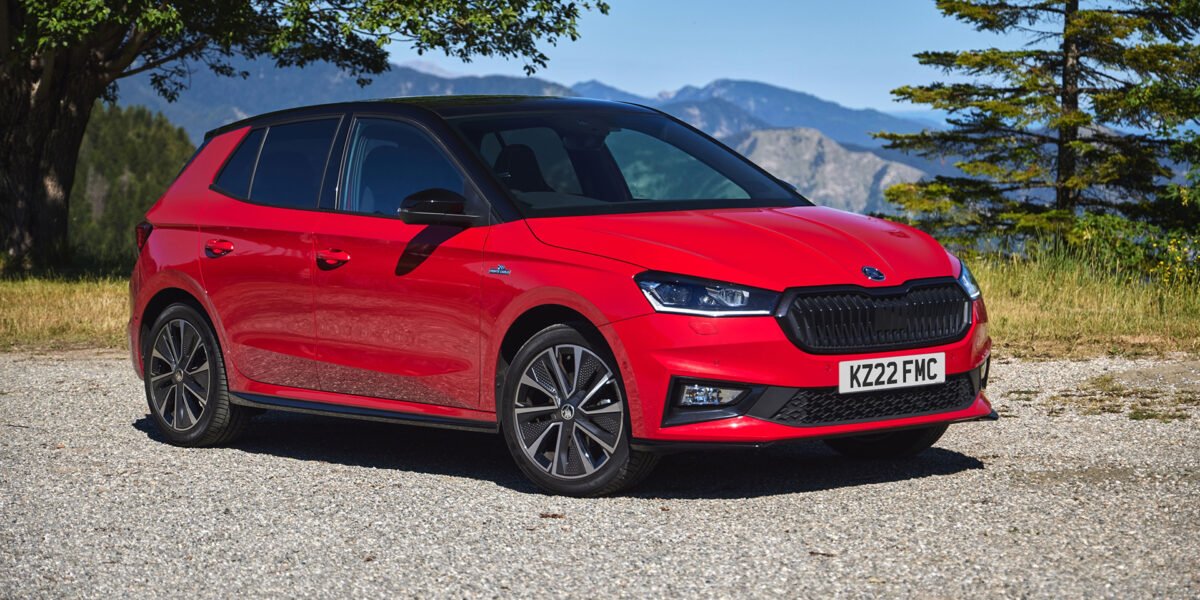
Class champion, petrol/diesel/hybrid: Skoda Fabia (77%)
Maintaining its class champion title for another year, the Skoda Fabia does exactly what you’d expect a Skoda to do – deliver great value for money in a largely unassuming package.
Unlike the Renault, no-one’s likely to be captivated by the Fabia’s fairly anonymous styling. But you can’t go past the Fabia if you’re looking for a petrol-powered car that gives you maximum bang for your buck.
Even at the smallest end of the market, conventional hatchbacks are making way for SUV-styled vehicles – although most of them will never see a road surface more challenging than a gravel driveway, and probably couldn’t cope if they did.
Unlike medium and large cars, we still distinguish between ‘regular’ cars (hatchbacks, basically) and SUVs or crossovers in the small segment. As with larger vehicles, buyers of smaller cars are frequently choosing models that sit higher off the road and have bulkier styling – even if they’re no more practical and no more spacious than an equivalent hatchback.
Although we didn’t see as many new entrants as in the medium sector, there have still been plenty of new models arriving in the small crossover segment. The eligible cars this year were:
Our awards recognise both the best new models launched over the last 12 months and the best overall cars in each category – because newest doesn’t always mean best, as you can see below.
Best new small car and class champion: Kia EV3 (84%)
The Kia EV3 was the stand-out choice in this category, based on media reviews for all the contenders this year. As with all of Kia’s latest electric models, the styling is unconventional and futuristic-ish, but it doesn’t detract from the functionality.
More than just being another bar-raising new car from Kia, the EV3 shows how electric cars can be objectively superior to fossil-fuel cars in most of the ways that really count. It’s a compact SUV with more cabin and boot space than many larger vehicles. It’s smooth, quiet, comfortable and refined to drive. It has more than enough battery range for the vast majority of UK driving habits. It throws in plenty of standard kit at a very competitive price. And it’s intelligently designed for family car needs.
The Kia EV3 is the latest success in a long line of electric small crossovers from the Hyundai/Kia empire – the Hyundai Kona Electric won this award last year, while the Kia Niro EV won it the year before and the previous-generation Kia e-Niro is still one of the best used small EVs you can buy.
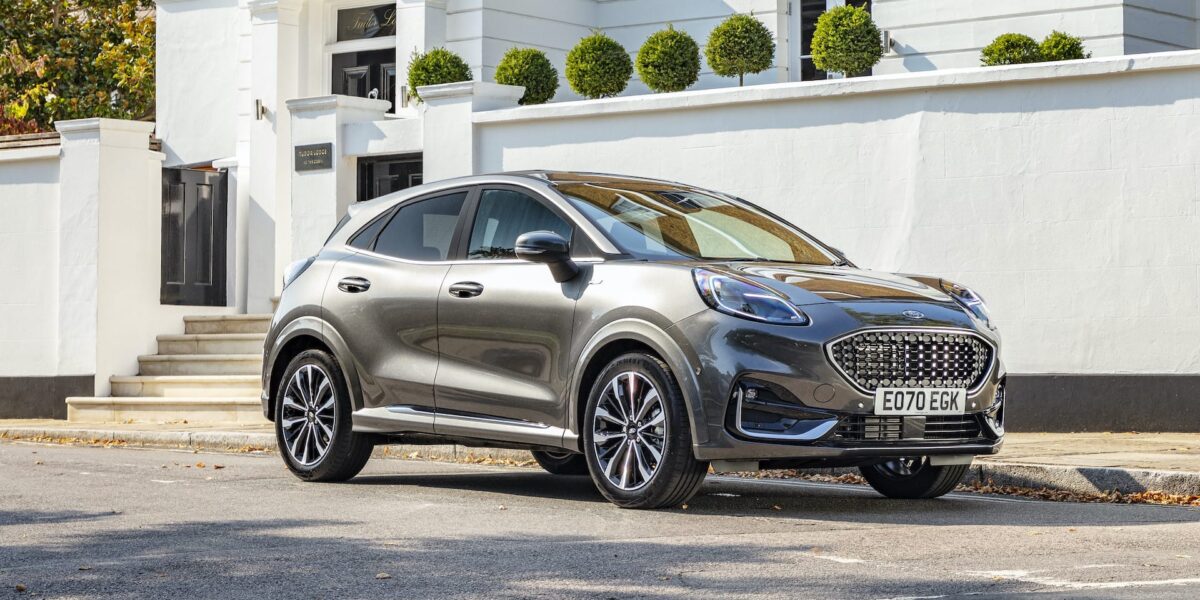
Class champion, petrol/diesel/hybrid: Ford Puma (76%)
The Ford Puma is currently the UK’s best-selling car of 2024 (although it’s a very close race), and also retains its class champion position in this segment for another year. This petrol mild-hybrid SUV has been commended for its outstanding driving experience and surprising practicality, especially in its boot capacity and layout. While its looks won’t appeal to everyone, it is a fuel-efficient choice for the daily commute too.
The Puma has also played a part in killing off the smaller Ford Fiesta hatchback, with Ford, like many other manufacturers, very much prioritising small SUV models over superminis.
As yet, there’s no electric version of the Puma. But by the time you read these words, that may have changed…
For the 2025 Awards, we’ve had a bit of a reorganisation. In the mid-sized family vehicle segment, the line between ‘car’ and ‘SUV’ has become so blurred that it’s effectively pointless. So we’ve grouped them together.
Instead, we’ve separated medium cars into mainstream and premium as that tends to better reflect how real-world car buyers look for their next vehicle. The badge and feature list tend to be more important than the body style, although customers are overwhelmingly choosing SUV-style cars instead of conventional hatchback/saloon/estate models – even if they’re no more practical and no more spacious (and have zero off-roading capabilities).
The premium category is inevitably smaller than the mainstream category, and there was inevitably debate about where to draw the line between mainstream and premium. In the end, the eligible cars this year were:
Our awards recognise both the best new models launched over the last 12 months and the best overall cars in each category – because newest doesn’t always mean best.
Best new premium medium car and class champion: Porsche Macan Electric (79%)
It’s been more than 20 years since Porsche first pushed beyond its sports car boundaries with the Cayenne, and over the last two decades it has steadily broadened its model range to cover more and more premium car buyers who don’t need or want a two-seat (or two-and-a-bit seats) sports car. The new Macan Electric is the company’s second electric offering after the highly-rated Taycan.
Reviewers have raved about the Porsche Macan Electric’s driving dynamics, with every model receiving fulsome praise. As it did with the Taycan, Porsche has used the fundamental differences of an EV to build a better car, rather than simply a different one.
The Macan Electric is a new premium benchmark for the rest of the industry to chase.
It might be approaching retirement age, but the current BMW 3 Series is the mid-size car reviewers rate highest for anyone who wants to stick with an internal combustion engine. The 3 Series has long been the dynamic benchmark for small-to-medium saloons, and the current model has the refinement to match all but the best EVs.
The BMW 3 Series has been the petrol/diesel class champion for the last three years and comfortably retains that title this year.
For the 2025 Awards, we’ve had a bit of a reorganisation. When it comes to large family vehicles, the line between ‘car’ and ‘SUV’ has become so blurred that it’s effectively pointless. So we’ve grouped them together.
Instead, we’ve separated large cars into mainstream and premium as that tends to better reflect how real-world car buyers look for their next vehicle. The badge, price tag (or monthly payments) and feature list tend to be more important than the body style, although customers are overwhelmingly choosing SUV-style cars instead of conventional hatchback/saloon/estate models – even if they’re no more practical and no more spacious (and have limited off-roading capabilities).
Our awards recognise both the best new models launched over the last 12 months and the best overall cars in each category – because newest doesn’t always mean best.
Best new large car + class champion: Hyundai Santa Fe (84%)
Over the last few years, Hyundai has launched car after car that all do the boring family stuff brilliantly without having to look like boring family cars. The new Santa Fe is no exception.
Inside and out, the Santa Fe’s styling makes a bold statement without compromising practicality. It makes other seven-seat SUVs look underdone, overpriced, or both.
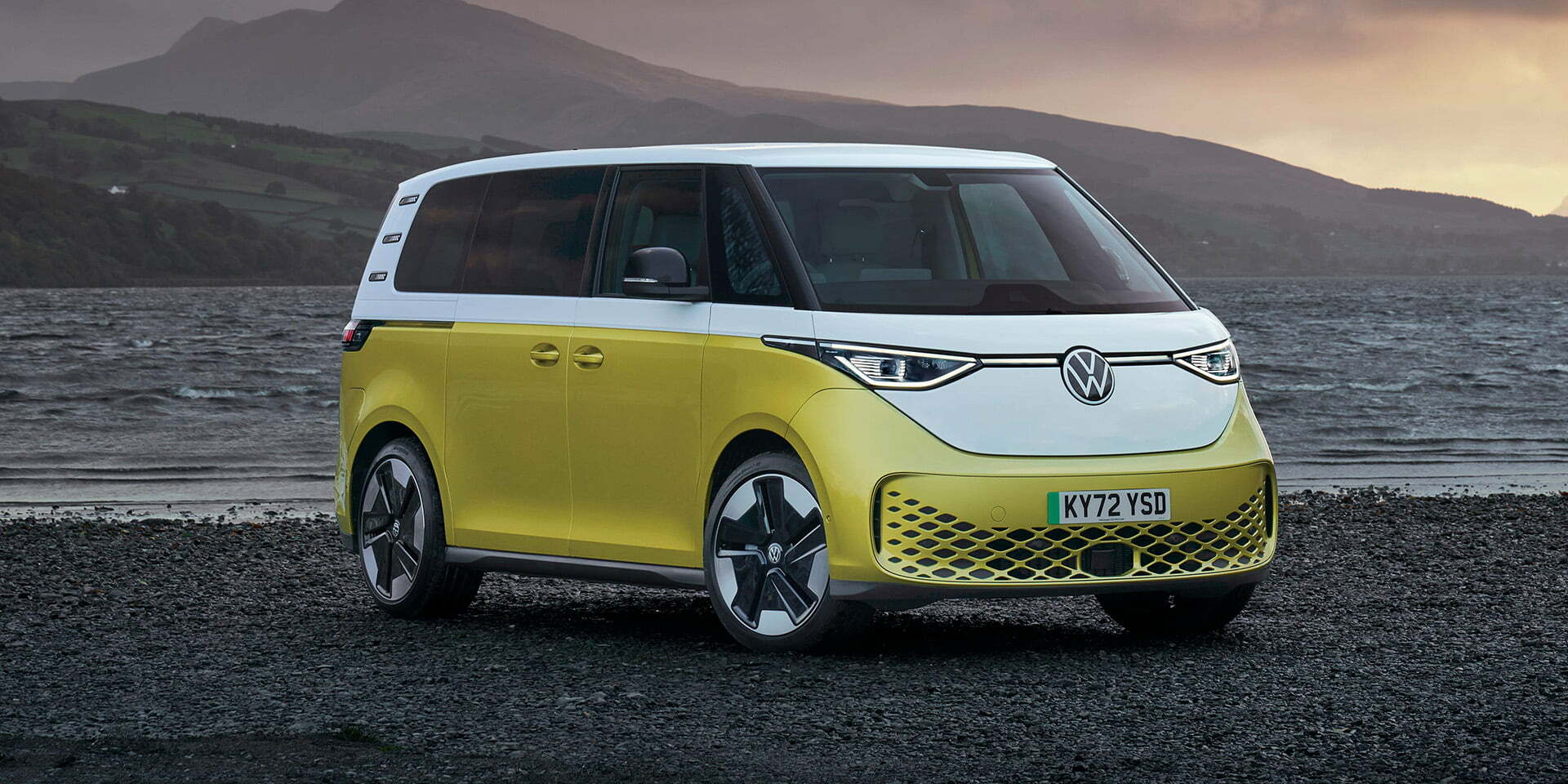
Class champion, electric: Volkswagen ID. Buzz (77%)
Large cars come in all shapes and sizes, as Volkswagen is here to remind us. The ID. Buzz proves that SUVs don’t have to be the default choice for families and that MPVs can be cool.
Now available in a longer seven-seat version, which joined the five-seat models earlier this year, the ID. Buzz has impressed reviewers with its style and practicality. The only thing really working against it is a high price tag, which limits the number that you see on UK roads.
For the 2025 Awards, we’ve had a bit of a reorganisation. When it comes to large family vehicles, the line between ‘car’ and ‘SUV’ has become so blurred that it’s effectively pointless. So we’ve grouped them together.
Instead, we’ve separated large cars into mainstream and premium as that tends to better reflect how real-world car buyers look for their next vehicle. The badge, price tag (or monthly payments) and feature list tend to be more important than the body style, although customers are overwhelmingly choosing SUV-style cars instead of conventional hatchback/saloon/estate models – even if they’re no more practical and no more spacious (and have limited off-roading capabilities).
This was one of the more controversial categories, as the winning car comes from a brand that wouldn’t normally be considered ‘premium’. But looking at price, quality and features, it was a better fit here than in the mainstream large car category.
Our awards recognise both the best new models launched over the last 12 months and the best overall cars in each category – because newest doesn’t always mean best.
It’s telling that the best premium large car winner doesn’t carry an old-school European badge. The EV9 puts Kia firmly into luxury SUV territory, and it’s a revelation. Not only does the Kia EV9 sit shoulder-to-shoulder with some of the biggest names in the business very comfortably indeed, it puts them in the shade in many ways.
Clever design, strong build quality, loads of standard kit, acres of cabin and boot space, and a warranty that makes so-called ‘premium’ brands look stingy. Plus, it’s fully electric at a price that matches diesel and petrol models from other brands. Kia could charge another £10,000 for the EV9 and it would still be good value.
Class champion, electric: Porsche Taycan Cross Turismo (91%)
The Porsche Taycan continues to be the benchmark for new electric vehicles according to motoring journalists all over the UK, and the Cross Turismo version is the pick of the range.
With stunning performance, impeccable build quality and all the creature comforts you’d expect from a £100K+ luxury car, the Taycan Cross Turismo is one of the best EVs (a lot of) money can buy.
Class champion, petrol/diesel/hybrid: Rolls-Royce Phantom (92%)
Calling a Rolls-Royce ‘premium’ is a bit like calling Buckingham Palace a ‘mansion’ – it just doesn’t quite convey the appropriate level of grandeur. Still, here we are.
The Phantom is, quite simply, the peak of almost every quality that one could want in a luxury car. Well, apart from running costs, but that’s unlikely to put off too many prospective customers. It even drives nicely, although that’s not likely to be of much interest to buyers, either, as they’re far more likely to be luxuriating in the rear seats while the chauffeur drives.
Sleekly styled coupés have been in decline for several years now, as car manufacturers prioritise switching their models ranges from fossil-fuel power to electricity. But, thankfully, some car companies are keeping the faith.
Although luxury sports cars and supercars remain popular, the choices available at real-world prices are slimming all the time. This year again saw more models disappearing than new models arriving, with just three new models eligible – two of which are different versions of the same car:
Our awards recognise both the best new models launched over the last 12 months and the best overall cars in each category – because newest doesn’t always mean best. And in this category, there’s no electric class champion as there are no eligible models yet available.
Just when you thought it was all over for pony cars, Ford has unleashed its best Mustang ever, led by the inspired Dark Horse model. With muscular styling and a growling V8 soundtrack, the new Mustang is the perfect antidote to modern econoboxes’ tedium.
This may be the last Mustang as we know it, so we recommend you take whatever opportunity you can to get behind the wheel.
Whisper it quietly, but the best coupé in the Porsche range isn’t the famous 911. Instead, it’s the smaller 718 Cayman that gets reviewers more enthused when there’s a windy piece of road up ahead.
It may be approaching retirement age, and it may be the last petrol-engined Cayman, but the current model is a lovely thing to drive. Forget practicality, touchscreens and even rear seats – the Cayman is all about the driving experience. That makes it difficult to live with on a day-to-day basis for most people, but as a second car for weekends and road trips, it’s brilliant.
Sleek convertibles have been in decline for several years now – in parallel with the shrinking number of coupé – as car manufacturers prioritise new electric vehicles. But, thankfully, some car companies are keeping the faith.
Although open-top cars remain popular at the über-luxury level, the choices available from volume manufacturers are declining all the time. This year saw just four new models eligible:
Our awards recognise both the best new models launched over the last 12 months and the best overall cars in each category – because newest doesn’t always mean best. As with coupés, there’s no electric class champion here as the MG Cyberster is pretty much on its own there at present.
The new Mercedes-Benz CLE Cabriolet is the latest in a long line of glorious drop-top Mercedes models. Elegant and supremely comfortable, it’s won over media reviewers in recent months and looks set to do the same for UK car buyers.
With a host of advanced technology to keep you cooler in summer and warmer in winter, the CLE Cabriolet is a perfect road trip companion all year round. It’s also generally regarded to be a better vehicle than its coupé sibling, with the comfort-oriented suspension more suited to the drop-top version.
The Mazda MX-5 is now reaching the end of its fourth generation and every model ever built for the last 35 years has been a cracker. On a sunny day with the roof down, it’s almost impossible to have more fun within legal speed limits than behind the wheel of an MX-5.
The current MX-5 has received widespread praise for its driving dynamics, light weight and uncompromised sports car experience. The only real criticisms relate to its lack of space and inevitably poor practicality.
When it comes to the Best Performance Car award, we’re looking at high-performance versions of ordinary cars, rather than dedicated exotic luxury coupés and supercars.
This year, we’ve really started to see electric and hybrid models make inroads into the performance car market. Of the seven contenders, only one (the Ford Mustang) is a purely petrol model as car makers have started to turn their attentions to tuning their EV and plug-in hybrid models. This year, the eligible cars are:
Our awards recognise both the best new models launched over the last 12 months and the best overall cars in each category – because newest doesn’t always mean best.
Best new performance car and class champion: Hyundai Ioniq 5 N (89%)
The Hyundai Ioniq 5 N sets a new benchmark for performance EVs. Staggering performance and superb handling, all while retaining the same practicality as a regular Ioniq 5.
Anyone who still says that EVs can’t be fun to drive needs to get behind the wheel of the Ioniq 5 N. Despite the large hatchback bodystyle, it’s not a hot hatch – it’s far too big and brutal for that. But it is good fun.
Class champion, petrol/electric/hybrid: Honda Civic Type R (88%)
If this is going to be the last petrol-powered Honda Civic Type R, then it’s a pretty impressive a send-off. Many people didn’t think it was possible for Honda to improve on the previous model, but the latest Type R has raised the bar even higher.
The new Honda Civic Type R maintains the superlative driving characteristics we’ve come to know and love from anything wearing the famous red Type R badge, but adds a new level of maturity and sophistication shared with the entire Civic range.
The Best Luxury Sports Car award represents the hero cars of the marketplace: exotic brand names associated with extravagant lifestyles, hefty price tags and outrageous performance.
You’ll find coupés and convertibles here, with engines either out front or behind the driver. Petrol power is a given, with as many as 12 cylinders, although some models are now available as plug-in hybrids. Full electric power will be arriving soon, but isn’t here yet.
Our awards recognise both the best new models launched over the last 12 months and the best overall cars in each category – because newest doesn’t always mean best.
Best new luxury sports car: Ferrari 12Cilindri (89%)
Every time you think Ferrari has reached the pinnacle of sports car engineering, it unveils a new model that raises the bar even higher. And its latest GT masterpiece is the 12Cilindri, a superb tribute to the engine that provides its name.
The 12Cilindri combines Daytona-inspired styling, which blends retro with state-of-the-art aerodynamics, and impeccable driving dynamics, which we’ve come to expect from Ferrari. Plus, you can take your pick of Berlinetta (coupé) or Spider (convertible) versions.
If this really is the end of the internal combustion era, it’s hard to imagine it ending on a higher note.
So, what car can be so good that it’s more highly rated than Ferrari’s latest V12 GT flagship? Obviously, another Ferrari.
Since its launch two years ago, the Ferrari 296, available in GTB (coupé) and GTS (targa) versions, has received an overwhelmingly positive reception from British reviewers. In fact, it has the highest media rating in our 600-model-strong Expert Rating Index. Plus, it’s a plug-in hybrid so you can tell everyone it’s an environmentally sound choice…
For the 2025 Awards, we’ve had a bit of a reorganisation. Although we’ve combined ‘car’ and ‘SUV’ categories in medium and large sizes, we still felt that there was an opportunity to recognise one of the most versatile body styles on the market – the humble estate.
While saloon cars have struggled for popularity, there’s an enthusiastic number of buyers who would much rather an estate than an SUV for load-lugging. Most estates are nicer to drive than an equivalent SUV, and they’re generally just as practical in terms of load space (if not more). Plus they’re usually a bit cheaper.
Although the number of estate models launched this year wasn’t large, the quality was very high. The eligible cars this year were:
Our awards recognise both the best new models launched over the last 12 months and the best overall cars in each category – because newest doesn’t always mean best, as you can see below.
Best new estate and class champion: Skoda Superb (83%)
The new Skoda Superb Estate carries on the tradition of living up to its name – it really is superb. Nothing else in the market can match the big Skoda’s blend of practicality, comfort and value, plus a five-star safety rating as well.
With a choice of petrol, diesel and plug-in hybrid powertrain options, there’s a model in the range for every need.
The BMW i5 is the electric version of the latest 5 Series, and the Touring (estate) model joined the saloon – our Best Large Car 2024 award winner – earlier this year. The good news is that the estate is every bit as good as the saloon. The bad news is that it’s even more expensive.
Reviewers agree that the talented BMW i5 is one of the most well-rounded electric cars on the market, although it’s fair to say that there aren’t too many estate rivals out there just yet.
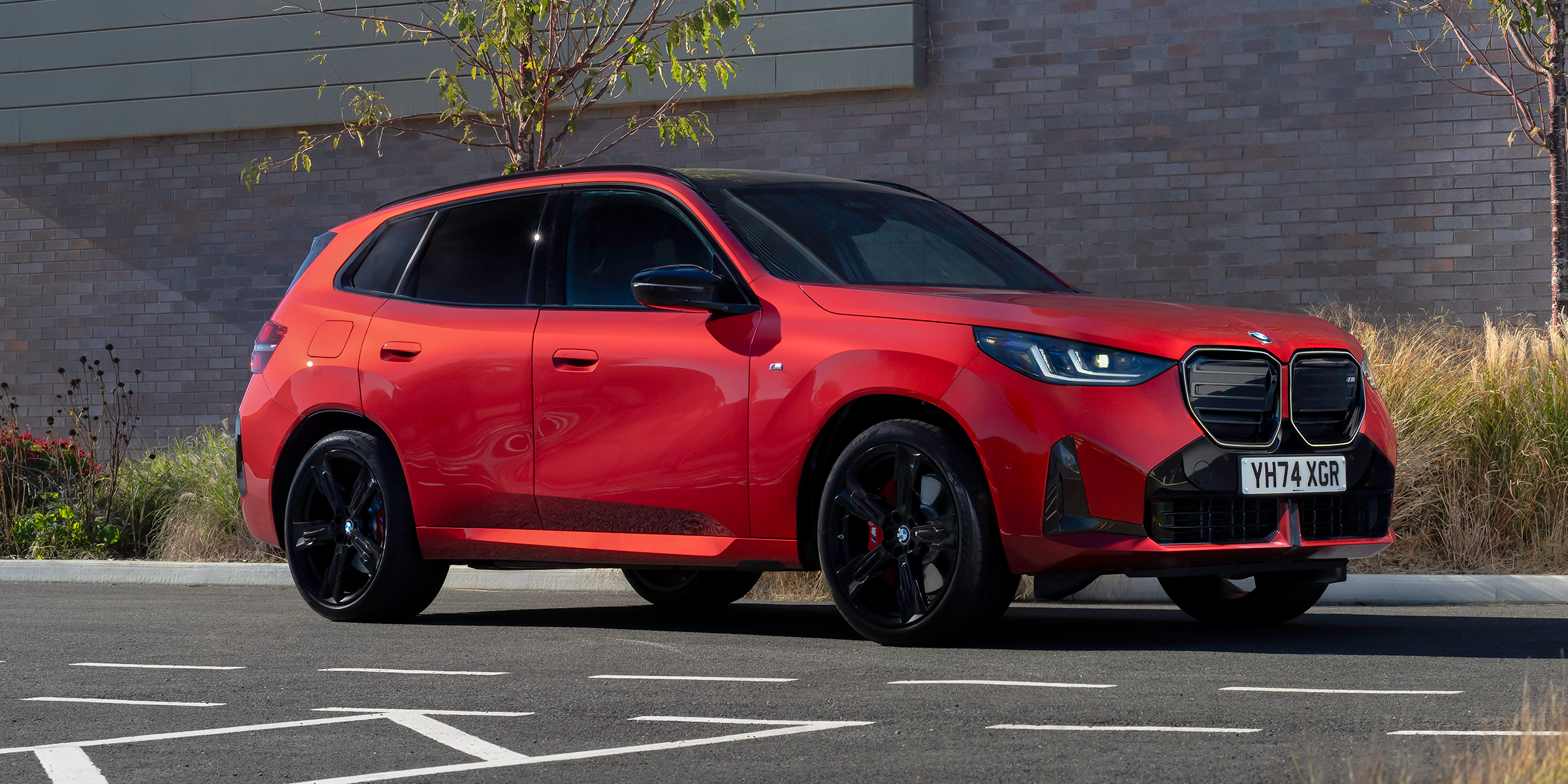
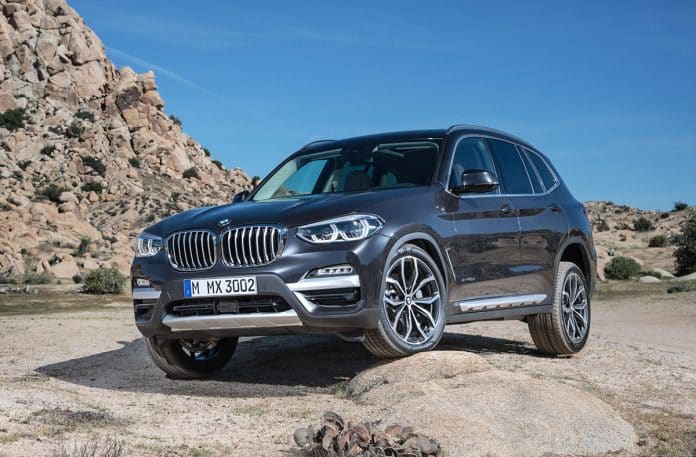
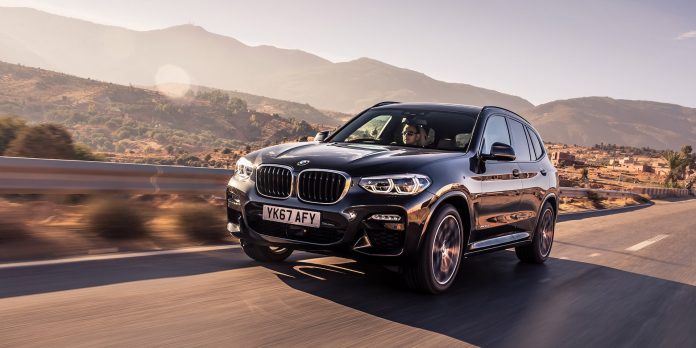
The BMW X3 is a mid-size SUV/crossover, and this is the current fourth-generation model, which launched in late 2024.The range includes petrol, diesel and petrol plug-in hybrid model options.
Based on initial reviews at the X3’s launch, the British motoring media generally agree that the latest iteration of BMW’s mid-sized SUV still leads its class for driving experience.
“It offers a handling and ride balance that really impresses”, says Parker’s Ted Welford, “with comfort a noticeable improvement compared to the old car.”
James Fossdyke of The Sunday Times also praises the SUV for its “roomy” cabin and “brilliant” range of engines, but adds that it is a “shame” that “the X3’s interior is such a disappointment”, concluding that “the materials used in the interior are below par.”
As of September 2025, the fourth-generation BMW X3 holds a New Car Expert Rating of C with a score of 63%. It gets good grades for its media review scores, low CO2 emissions and new car warranty rating, but the overall result is dragged down by high running costs.
It’s worth noting that the X3 has yet to undergo Euro NCAP safety testing, so its Expert Rating could improve in coming months if the test results go well.
“This high-spec BMW X3 finally feels like a well executed, cleverly designed and premium product in the way former generations just haven’t. Yes, the M50 variant is expensive, but it’s backed up by an impressive powertrain and a sophisticated driving experience that lifts it above its competitors.”
Model reviewed: Range overview Score: 8 / 10 “While not a driver’s car like other BMWs, the X3 is one of the better mid-size SUVs from behind the wheel.” Author: Alex Ingram, Alastair Crooks Read review
Auto Trader
Model reviewed: Range overview Score: 9 / 10 “New generation of BMW’s mid-size favourite sticks to the winning formula with a new look inside and out.” Author: Dan Trent Read review
Car
Model reviewed: Range overview Score: 8 / 10 “The BMW X3 remains a spacious and practical choice, while we’re happy BMW has resisted and kept it available with such a broad range of engine options – with the new M50 being a real highlight. It’s only the slightly cheap-feeling interior that detracts from what is otherwise an SUV that’s hard to fault. Other than the way it looks, perhaps…” Author: Ted Welford Read review
Carbuyer
Model reviewed: Range overview Score: 8.4 / 10 “The fourth-generation X3 still leads the upmarket mid-size SUV class when it comes to driver feel. It’s pretty good in most other respects too, with first-rate interior quality and infotainment software that works well.” Author: Alastair Crooks Read review
Heycar
Model reviewed: Range overview Score: 8 / 10 “The latest BMW X3 is an expertly-judged step on from its predecessor. The new styling won’t please everyone but the cabin is much easier to appreciate for its look and feel, it drives well, and BMW has kept pace on both infotainment and safety tech too.” Author: Antony Ingram Read review
Honest John
Model reviewed: Range overview Score: 8 / 10 “The BMW X3 has more space in its smart interior and equipment than ever. With an engine range that covers most bases, it should have broad appeal even if you’re not that fussed by the sporty handling and aggressive new styling.” Read review
Parkers
Model reviewed: Range overview Score: 8.2 / 10 “It successfully builds on two areas the previous X3 excelled, with a brilliant driving experience that no longer sacrifices comfort, and a spacious layout that’s ideal for families. The only area where we think BMW can improve is the interior, which though packed with technology, feels quite cheap in some areas.” Author: Alan Taylor-Jones, Ted Welford Read review
The Sunday Times
Model reviewed: Range overview Score: 7 / 10 “It’s a shame, really, that the X3’s interior is such a disappointment, because the rest of the car is incredibly well sorted. It drives nicely, it’s roomy enough and the engines are brilliant.” Author: James Fossdyke Read review
The Telegraph
Score: 8 / 10 “The fourth-generation BMW X3 delivers the driving pleasure and practicality you’d expect, although it’s no longer the default choice.” Author: Andrew English Read review
Top Gear
Model reviewed: Range overview Score: 7 / 10 “It’s as solid as ever, but some cheap plastics and a ponderous petrol engine have let the side down a bit.”
Author: Paul Horrell Read review
Safety rating
Independent crash test and safety ratings from Euro NCAP
No safety rating
As of September 2025, the fourth-generation BMW X3 has not been tested by Euro NCAP.
Eco rating
Independent economy and emissions ratings from Green NCAP
No eco rating
As of September 2025, the BMW X3 has not been tested by Green NCAP.
Running cost rating
Monthly cost of ownership data provided exclusively for The Car Expert by Clear Vehicle Data
Fuel consumption
Average
Score
Petrol models
40 mpg
D
Diesel models
48 mpg
C
Plug-in hybrid models
283 mpg
A
CO₂ output
Average
Score
Variation
Score
Petrol models
161 g/km
C
Diesel models
155 g/km
C
Plug-in hybrid models
22 g/km
A
Battery range
Average
Score
Variation
Score
Plug-in hybrid models
55 miles
D
Insurance group
Average
Score
Variation
Score
All models
36
D
Service and maintenance
Cost
Score
Year 1
£283
C
Year 2
£644
C
Year 3
£1,033
C
Year 4
£1,393
D
Year 5
£1,814
D
Overall
£5,167
D
The BMW X3 is a rather expensive car to own and run, according to whole-life cost numbers provided exclusively to The Car Expert by our data partner, Clear Vehicle Data.
Fuel economy is disappointing for petrol models but decent for diesel-engined versions. The plug-in hybrid models look amazing on paper, but this is largely thanks to ridiculous EU/UK government lab tests that are completely inadequate for plug-in hybrids. There is no way you will ever travel for 283 miles on a single gallon (4.5 litres) of fuel and some electricity…
The battery range of the plug-in hybrid model is fairly average compared to most rivals, and compared to the rest of the mid-sized SUV sector, the car’s service and maintenance costs are pretty average.
Reliability rating
Reliability data provided exclusively for The Car Expert by MotorEasy
No reliability rating
As of September 2025, we don’t have enough reliability data on the BMW X3 to generate a reliability rating.
The Car Expert’s reliability information is provided exclusively to us using workshop and extended warranty data from our partner, MotorEasy, sourced from both official dealerships and independent workshops.
As soon as MotorEasy has sufficient data on the X3, we’ll publish the results here.
Warranty rating
New car warranty information for the BMW X3
Overall rating
B
68%
Petrol or diesel models
C
41%
Electric or hybrid models
A
82%
New car warranty duration
3 years
New car warranty mileage
Unlimited miles
Battery warranty duration
8 years
Battery warranty mileage
100,000 miles
BMW’s new car warranty is only average, and not as attractive as some other cars in a similar price bracket as the X3.
The duration is three years, with no limit on mileage – although, in reality, the mileage numbers are likely to be fairly irrelevant as most cars only cover about 10,000 miles each year.
In addition to the standard new car warranty, the X3 plug-in hybrid models have an eight-year/100,000-mile warranty for the battery components. The overall rating above is a mix of the different models.
As of September 2025, we are not aware of any DVSA vehicle safety recalls affecting the latest-generation BMW X3. However, this information is updated very regularly so this may have changed.
You can check to see if your car has any outstanding recalls by visiting the DVLA website or contacting your local BMW dealer.
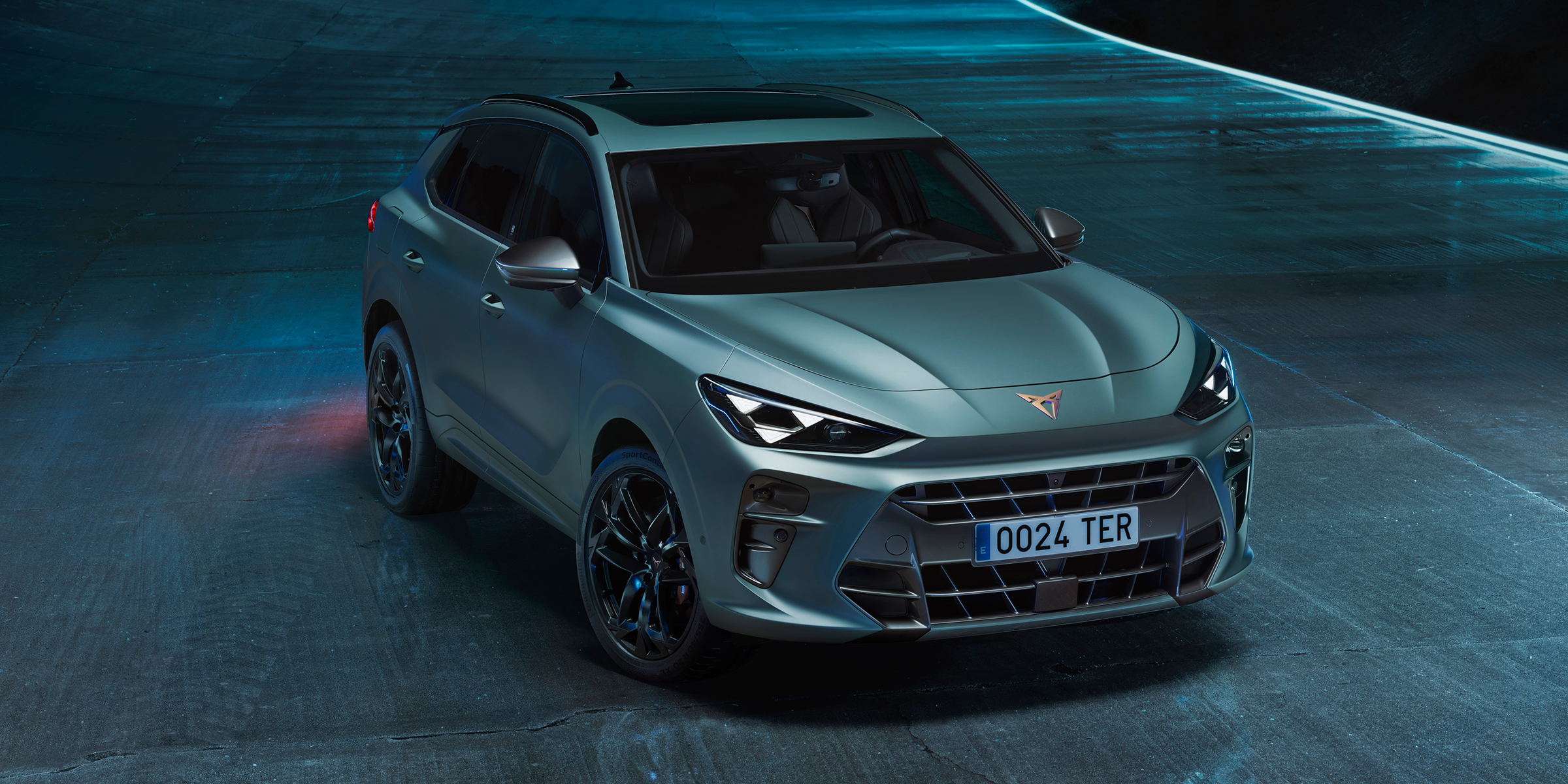
The mid-sized Cupra Terramar SUV is now available to order in the UK, with petrol, petrol mild-hybrid and plug-in hybrid models to choose from.
Named after an old racing circuit in Spain that had close ties to the Cupra brand, the Terramar sits above the high-riding Ateca and Formentor in the Cupra range, and is the Spanish brand’s answer to the popular Kia Sportage and Hyundai Tucson.
Based on the same foundations as the new Skoda Kodiaq, Cupra says that it has further tuned the Terramar to provide greater driver engagement than the other cars based on the same architecture, modifying the adaptive damper suspension setup to improve cornering and braking, and slightly lowering the ride height.
Four different powertrain options are now available to order, with another on the way early next year. The range starts with a 150hp front-wheel drive 1.5-litre petrol mild-hybrid, and is followed by a 265hp all-wheel drive 2.0-litre straight-petrol option only available with the more expensive high-performance ‘VZ1’ and ‘VZ2’ trim levels.
The range-toppers are 1.5-litre plug-in hybrids that are mated to a 20kW battery. The first has an output of 200hp, and the second ‘VZ’ 272hp, and Cupra adds that the latter provides an electric-only driving range of over 70 miles. The VZ models can also be specced with optional ‘performance’ brakes.
Another all-wheel drive 2.0-litre straight-petrol engine choice will join the range in January. It’s less powerful than the 265hp ‘VZ’ version – output being 204hp – and will be available with the lead-in ‘V1’ and ‘V2’ trims. Regardless of the model you choose, all are paired with a seven-speed automatic gearbox.
Inside, a ten-inch digital instrument cluster behind the steering wheel is paired with a 13-inch central infotainment screen that houses most of the car’s function controls. The car also comes with a premium Sennheiser stereo system and wireless smartphone charging.
The entry-level ‘V1’ model comes with LED lights, adaptive cruise control, front and rear parking sensors, reversing camera, keyless entry and a heated steering wheel. The ‘V2’ adds heated and electrically adjustable front seats, a surround-view parking camera, a head-up display that projects driving information onto the windscreen, and blind spot monitoring.
Beyond the more powerful petrol engine option, the sportier ‘VZ1’ has larger 19-inch alloy wheels, more advanced matrix LED lights, ambient interior lighting, heated and electrically adjustable seats and adaptive dampers. The ‘VZ2’ has even bigger 20-inch alloy wheels and leather upholstery.
UK pricing for the new Terramar now begins at under £38k, rising to around £52k for the range-topping 272hp 1.5-litre plug-in hybrid in limited-edition ‘VZ First Edition’ guise.
The new second-generation Audi Q5 Sportback coupé-SUV will become available to order in the UK in January, with three trim levels to choose from.
Audi says that the coupé-SUV combines the characteristics of its recently-unveiled third-generation Q5 SUV – such as “versatility and a spacious interior” – with “an even more dynamic” rear sloping roof line silhouette.
Beyond the alternate rear end that also moderately reduces boot space (515 litres instead of 550 litres), the Q5 Sportback is essentially identical to the standard Q5 SUV underneath, with the same interior, engine options and trim choices.
The lead-in model is the 204hp petrol mild-hybrid, which pairs a 2.0-litre engine with a small 2kW battery that can boost power by 24hp for a short period when called upon and aids the car’s regenerative braking. This is followed by the 204hp diesel mild-hybrid with the same battery.
Also available in January is the new all-wheel drive SQ5 Sportback, which is powered by a 367hp 3.0-litre V6 petrol engine. Only all-wheel drive ‘quattro’ configurations are offered and all three options are paired with a seven-speed automatic gearbox.
Like the Q5, the Q5 Sportback has had a notable styling update. The coupé-SUV has a wide grille like its predecessor, but it doesn’t stretch as far down the car’s front fascia, freeing up room for larger air intakes on the lower front bumper. The grille is flanked by narrower LED headlights too.
In the rear, the Q5 Sportback has been given narrower LED tail lights that are connected together by a new full-width light bar that stretches across the boot lid.
Stepping inside, the car has been given a number of changes including a new 15-inch infotainment display angled towards the driver. Screens stretch across the entire soft-touch dashboard too, as this central touchscreen is joined by a 12-inch digital instrument cluster behind the steering wheel.
Mid-range ‘S line’ and top-spec ‘Edition 1’ models will come with sportier front and rear bumper inserts, and larger 20- or 21-inch wheels. The ‘Edition 1’ package also includes an OLED rear light bar, matrix LED headlights, Dinamica soft-touch fabric upholstery, an 11-inch passenger media display and a top-down surround-view parking camera.
A head-up display that projects driving information onto the windscreen will also be offered for an extra fee. Beyond Android Auto and Apple CarPlay connectivity, Audi adds that the infotainment system can run apps like Spotify and YouTube without a smartphone, and that the system will be remotely updated with over-the-air updates.
Pricing for the new Q5 Sportback range will begin at over £52k – £2k more than the lead-in Q5 SUV – with pricing rising to £77k for the range-topping SQ5 Sportback which will only available with the highest ‘Edition 1’ trim at launch.
On sale for only a couple of months, Vauxhall has decided to slash the pricing of its new Grandland Electric SUV, which the brand says is part of its mission to help make “Britain’s switch to electric simple and attainable.”
This news follows price reductions for the brand’s Corsa Electric and Astra Electric earlier this year, and the recent Stellantis decision to close its Vauxhall van-making Luton factory which put around 1,100 jobs at risk.
The UK government’s EV mandate policy stipulates electric cars have to make up 22% of new car sales for each manufacturer this year, with £15k fines applied for every sale that pushes it outside the mandate.
This Grandland Electric price reduction – which includes savings of up to nearly £5k – narrows the price gap between this battery-powered SUV and its cheaper Grandland petrol mild-hybrid and plug-in hybrid range, making the electric version a more attractive proposition.
The entry-level Grandland Electric ‘Design’ now costs a few hundred over £37k – this representing a saving of over £3k when compared to the initial launch price – while pricing for the mid-range ‘GS’ model has been cut by over £4k to £38.5k.
Vauxhall highlights that these price reductions mean that the ‘Design’ and ‘GS’ will now not be subject to the upcoming ‘expensive car supplement’ rate of VED that is coming into force next year for electric cars priced over £40k.
The range-topping ‘Ultimate’ will qualify for this additional road tax if registered from April onwards – an extra £410 annual charge from the second year of ownership – as it is now priced at £40.5k, down from £45k. By comparison, pricing for the Grandland petrol mild-hybrid starts at under £35k.
The Vauxhall Grandland Electric holds a New Car Expert Rating of C with a score of 65%. Beyond the car’s lower-than-average review scores, this overall rating is aided by the SUV’s low running costs.
The Mercedes-AMG GT is an upmarket high-performance coupé. This is the second-generation version, which arrived in the UK in 2024.
Whereas the former model was a two-seater V8, this latest iteration is a four-seater, available as either a four-cylinder petrol mild-hybrid or a V8 twin-turbocharged plug-in hybrid.
A key rival of the Porsche 911, the AMG GT is largely regarded as an improvement on its predecessor by the British motoring media, with Alex Ingram from Auto Express praising its “more refined, grown-up attitude”.
Carwow’s Darren Cassey also highlights the car’s unexpected practicality, but caveats that with the conclusion that the “the rear seats are pretty much pointless.”
As of March 2026, the Mercedes-AMG GT holds a New Car Expert Rating of E, with a score of 51%. In addition to its media review scores only being average, the overall rating is inevitably hindered by high running costs and poor CO2 emissions.
Body style: Coupé Engines:petrol Price:From £101,685 on-road
Launched: Spring 2024 Last updated: N/A Replacement due: TBA
Image gallery
Media reviews
Reviews, road tests and comparisons from across the UK automotive media. Click any of the boxes to view.
Featured reviews
“The new AMG GT accomplishes the majority of its goals with a high degree of success. It’s a better grand tourer than its predecessor and a more engaging, characterful and precise sports car too. A rival for Porsche’s 911? For some quite possibly.”
Model reviewed: GT55 Score: 7 / 10 “In the wider Mercedes-AMG GT range, we think this is the model that makes the most sense. It’s got more than enough performance, benefits from the fantastic soundtrack of that V8 engine, yet doesn’t have the complexity or weight of the hybrid set-ups in the more expensive models above. Despite this, we think this new, more rounded Mercedes-AMG GT has lost the character of its predecessor, and still can’t match the driver appeal of the Porsche 911.” Author: Alex Ingram Read review
Model reviewed: GT 63 S E Performance Score: 7 / 10 “Mercedes-AMG has rarely held back in the pursuit of power, and in its hybrid age none are more potent than the AMG GT 63 S E Performance. This is a wickedly fast car, and knocks on the door of hypercar-levels of straight-line speed. But the means by which the flagship GT’s performance has been achieved results in a finished product that’s hard to engage with, even if it is still mightily impressive.” Author: Jordan Katsianis Read review
Model reviewed: GT 63 coupé Score: 8 / 10 “It carries the same name as its predecessor, but you have to judge the new Mercedes-AMG GT 63 on very different criteria. Its move towards a more refined, grown-up attitude has plenty of practical benefits, yet its tech-laden chassis still offers stunning performance and grip while adding continent-crossing comfort.” Author: Alex Ingram Read review
Car
Model reviewed: GT 63 S E Performance Score: 6 / 10 “While the GT63 S E Performance four-door is undoubtedly a 21st century performance car, it feels very much an old-school AMG in many respects. In other words, it’s like holding onto an exceptionally large engine that just so happens to have a car attached. Unfortunately, its unpleasant brakes probably generate even higher heartrates, and quite simply the regular GT63 handles with more aplomb for far less cash.” Author: Alan Taylor-Jones, CJ Hubbard Read review
Model reviewed: Range overview Score: 10 / 10 “Mercedes-AMG has put our worries to rest: its latest AMG GT is a good car and thus a big relief. The new AMG GT oozes confidence from every aluminium and carbon fibre pore because its reassuringly wide comfort zone is not tailored for Russell and Antonelli but rather the every day driver, like us, instead.” Author: Georg Kacher, Seth Walton Read review
Model reviewed: 4.0-litre petrol/electric plug-in hybrid GT 63 SE Performance Score: 6 / 10 “The SE Performance certainly has some very big numbers going for it, but it’s a bit of a one trick pony. It’s certainly effective on the autobahn, both at generating very big numbers very quickly, and at persuading slower traffic out of the overtaking lane, but there’s little joy to be had at slower speeds. If you must have an AMG GT, get the regular 63.” Author: Alan Taylor-Jones Read review
Evo
Model reviewed: GT 63 Pro Score: 9 / 10 “Mercedes-AMG has toughened up the GT63 coupe for track work. It’s expensive but crushingly effective.” Author: Yousuf Ashraf Read review
Model reviewed: 4.0-litre petrol/electric plug-in hybrid GT 63 SE Performance Score: 8 / 10 “At monster speeds it feels rock solid, relaxed almost, and the sight of its aggressive front end in the mirror clears the outside lane effectively too. This feels very much like the natural habitat of the AMG’s hybrid GT.” Author: John Barker Read review
Motoring Research
Model reviewed: GT 63 Score: 7 / 10 “The new Mercedes-AMG GT is a slightly softer, more practical proposition – one with the Porsche 911 Turbo squarely in its sights. While not as instantly exciting as the outgoing GT, it is a better car overall. The 911 still wins our vote, but the V8-engined AMG is arguably more characterful.” Author: Tim Pitt Read review
Parkers
Model reviewed: Range overview Score: 8 / 10 “The standard GT 63 apes the Porsche 911’s practicality and refinement, but the GT 63 Pro brings back a dose of aggression. It’s sharper and more precise than the standard V8 – never mind the power bump – and certainly fun when pushed on track.” Author: Curtis Moldrich Read review
The Telegraph
Model reviewed: GT63 4Matic+ Premium Plus Score: 8 / 10 “A whopping V8 petrol engine delivering 577bhp and a svelte coupé body provide all the drama you need.” Author: Andrew English Read review
Top Gear
Model reviewed: Range overview Score: 8 / 10 “AMG reinvents the GT as more of a… GT. Quick, composed, versatile and keeps the thunderous V8 alive a little longer.”
Read review
Safety rating
Independent crash test and safety ratings from Euro NCAP
No safety rating
As of March 2026, the Mercedes-AMG GT has not been assessed by Euro NCAP. Due to its pricing and exclusivity, the sports car is unlikely to undergo these crash tests in the future.
Eco rating
Independent economy and emissions ratings from Green NCAP
No eco rating
As of March 2026, the Mercedes-AMG GT has not been assessed by Green NCAP.
Running cost rating
Monthly cost of ownership data provided exclusively for The Car Expert by Clear Vehicle Data
Fuel consumption
Average
Score
Petrol models
20 mpg
E
Plug-in hybrid models
35 mpg
D
CO₂ output
Average
Score
Variation
Score
Petrol models
319 g/km
E
Plug-in hybrid models
188 g/km
D
Insurance group
Average
Score
Variation
Score
All models
50
F
Service and maintenance
Cost
Score
Year 1
£687
E
Year 2
£1,685
E
Year 3
£2,798
E
Year 4
£3,077
E
Year 5
£4,165
E
Overall
£12,412
E
The Mercedes-AMG GT is a very expensive car to own and run, according to whole-life cost numbers provided exclusively to The Car Expert by our data partner, Clear Vehicle Data.
As you might expect from a top-of-the-line sports car, the AMG GT’s fuel efficiency is poor – particularly for petrol mild-hybrid models which on average offer a fuel consumption of 20mpg. Plug-in hybrid variants aren’t as thirsty – with an average fuel consumption of 35mpg – but this is still much less fuel efficient than the average hybrid.
The car’s insurance premiums are in the highest bracket and its servicing and maintenance costs during the course of the first five years of ownership are expensive. The estimated five-year maintenance total of over £12k is over £2k more costly than the equivalent expected costs for rivals like the Porsche 911 and Maserati MC20.
Reliability rating
Reliability data provided exclusively for The Car Expert by MotorEasy
No reliability rating
As of March 2026, we don’t have enough reliability data on the Mercedes-AMG GT to generate a reliability rating.
The Car Expert’s reliability information is provided exclusively to us using workshop and extended warranty data from our partner, MotorEasy, sourced from both official dealerships and independent workshops.
As soon as MotorEasy has sufficient data on the AMG GT, we’ll publish the results here.
As of March 2026, we are not aware of any DVSA vehicle safety recalls affecting the second-generation Mercedes-AMG GT. However, this information is updated very regularly so this may have changed.
You can check to see if your car has any outstanding recalls by visiting the DVLA website or contacting your local Mercedes-Benz dealer.
Volkswagen has revised the trim line-ups of its all-electric ID.3, ID.4 and ID.5 model ranges, adding new lead-in trims that “offer eye-catching value for money” and a new entry-level battery option.
The ID.3 range has gained two new trims – the ‘Pure Essential’ and ‘Pure Match’, which sit below the ‘Pro’ and ‘GTX’ trims in the model line-up. Now available to order in the UK, both new lead-in versions of the hatchback make use of a smaller 170hp 52kWh battery which lowers the electric car’s entry-level price to just under £31k – a £4k price reduction.
Both models have an estimated battery range of 240 miles on a single charge, and can be charged from 10% to 80% battery in 25 minutes using a 145kW DC charger.
The ‘Pure Essential’ offering includes a 13-inch infotainment screen, a leather-wrapped steering wheel, LED headlights, folding door mirrors and ambient interior lighting, while the ‘Pure Match adds the brand’s ‘Comfort’ package (heated front seats and two-zone climate control), as well as a rear-view camera and rear tinted windows.
The ‘Pure Match’ has also been added to the ID.4 range, which lowers the SUV’s lead-in price tag by £3k to just under £40k, and also now appears in the ID.5 trim list. Unlike the ID.4 ‘Pure Match’ model, the ID.5 version is powered by the smaller 52kWh battery, with a range of 222 miles and a price tag of just over £41k. This is a rather dramatic price decrease for the ID.5, which has been criticised by reviewers for its rather expensive pricing since its launch in 2022.
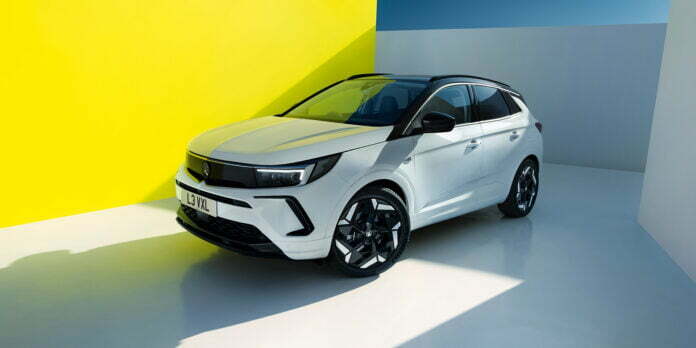
The Vauxhall Grandland is a medium-sized SUV/crossover that is based on the foundations as the similar Peugeot 3008. This is the second-generation version, which arrived in the UK in late 2024. There is also an all-electric version, which we cover here.
British reviewers agree that this new iteration of the Grandland is an improvement over the original SUV, Parker’s Keith Adams explaining that the second-generation “looks better, drives more sweetly and is more accommodating”, but when compared to the SUV market at large, the Vauxhall struggles to stand out. “It’s hard to think of a single area where the Grandland excels or makes a lasting impression.”
Currently only available as a petrol mild-hybrid with a plug-in hybrid model on the way, The Sun’s Rob Gill argues that the Grandland’s “1.2-litre petrol engine is too weedy for a big car, especially if you come into contact with a hill”.
Summing up the general consensus, Carwow’s Darren Cassey concludes that the new Grandland is “spacious”, “smart” and “comfortable”, but also “really, really boring”.
As of May 2025, the Vauxhall Grandland holds a New Car Expert Rating of C with a score of 64%. It scores top marks for its low CO2 emissions, while its safety rating is also good. However, its running costs are high and its media review scores are very poor.
Body style: Medium SUV/crossover Engines:petrol mild-hybrid, plug-in hybrid Price:From £34,700 on-road
Launched: Autumn 2024 Last updated: N/A Replacement due: TBA
Image gallery
Media reviews
Highlighted reviews and road tests from across the UK automotive media. Click any of the boxes to view.
Featured reviews
“The Vauxhall Grandland is a genuine contender in the family SUV class thanks to its practicality and attractive pricing. But it’s a shame it’s not particularly interesting to drive.”
Model reviewed: Range overview (petrol, plug-in hybrid and EV)
Model reviewed: 1.2-litre petrol/electric hybrid GS Score: 7 / 10 “The Vauxhall Grandland is a big step forward from the previous-generation car, and there are obvious strengths in size, front and rear space, specification, efficiency and value in particular, while the styling is also a step up. But the hybrid powertrain isn’t refined, responsive or powerful enough to compete with some high-quality competition.” Author: Paul Barker Read review
Business Car
Model reviewed: Range overview (including Grandland Electric) Score: 6 / 10 “The Grandland’s steering feels much like the 3008’s. Overly light with excessive play around the straight-ahead, so it is all too easy to dial in an excessive input when coming into a corner and find yourself clumsily shuffling back and forth at the wheel.” Author: Pete Tullin Read review
Carbuyer
Model reviewed: Range overview (including Grandland Electric) Score: 8.2 / 10 “It’s much more competitive than the old car, and worth considering if you’re in the market for a stylish and practical mid-size SUV. Author: Charlie Harvey Read review
Heycar
Model reviewed: Range overview Score: 6 / 10 “As family SUVs go, the Vauxhall Grandland is a convincing effort that does a decent job in most (but not all) areas, but looks aside, we can’t see much that really marks it out compared with the competition.” Author: Ivan Aistrop Read review
Parkers
Model reviewed: Range overview Score: 7.2 / 10 “If Vauxhall’s goal was to better the old Grandland, they’ve pulled that off with ease. This one looks better, drives more sweetly and is more accommodating than its predecessor. Job done.” Author: Keith Adams Read review
The Sun
Model reviewed: Range overview (including Grandland Electric) “The 1.2-litre petrol engine is too weedy for a big car. Especially if you come into contact with a hill. And we weren’t loaded up with kids and all the usual family debris. Or trying to tow something with it. The old Grandland had a 1.6 turbo.” Author: Rob Gill Read review
The Sunday Times
Model reviewed: Range overview (including Grandland Electric) Score: 7 / 10 “We can’t help but feel that the Vauxhall Grandland needed something beyond a flashy light show when you unlock the car to help make it stand out more.” Author: Matt Robinson Read review
The Telegraph
Model reviewed: Range overview Score: 6 / 10 “This large family SUV is steadfast rather than sparkling.” Author: Andrew English Read review
Top Gear
Model reviewed: Range overview Score: 7 / 10 “The new Vauxhall Grandland is an improvement on old both inside and out, but it isn’t anything groundbreaking.”
Author: Peter Rawlins Read review
Safety rating
Independent crash test and safety ratings from Euro NCAP
The Vauxhall Grandland takes its safety rating from the Peugeot 3008 as the two cars are structurally similar and built on the same Stellantis platform. Euro NCAP conducted specific additional testing to ensure that the Grandland performed adequately in the areas where it differed from the 3008.
Eco rating
Independent economy and emissions ratings from Green NCAP
No eco rating
As of May 2025, the Vauxhall Grandland has not been tested by Green NCAP.
Running cost rating
Monthly cost of ownership data provided exclusively for The Car Expert by Clear Vehicle Data
Fuel consumption
Average
Score
Variation
Score
Petrol models
51 mpg
B
51 – 51 mpg
B – B
CO₂ output
Average
Score
Variation
Score
Petrol models
125 g/km
A
125 – 125 g/km
A – A
Service and maintenance
Cost
Score
Year 1
£177
A
Year 2
£519
B
Year 3
£810
A
Year 4
£1,104
B
Year 5
£1,532
B
Overall
£4,142
B
The Vauxhall Grandland is a relatively affordable car to own and run, according to whole-life cost numbers provided exclusively to The Car Expert by our data partner, Clear Vehicle Data.
As a petrol mild-hybrid (plug-in hybrid versions are on the way), the SUV’s average fuel consumption of 51mpg is lower than the average car, but many smaller pure-petrol hatchbacks are more fuel efficient.
The Grandland’s predicted servicing and maintenance costs over the first five years of ownership are on the cheaper side too, but the Nissan Qashqai – a key rival – is has a slightly cheaper estimated servicing total.
Reliability rating
Reliability data provided exclusively for The Car Expert by MotorEasy
No reliability rating
As of May 2025, we don’t have enough reliability data on the Vauxhall Grandland to generate a reliability rating.
The Car Expert’s reliability information is provided exclusively to us using workshop and extended warranty data from our partner, MotorEasy, sourced from both official dealerships and independent workshops.
As soon as MotorEasy has sufficient data on the Grandland, we’ll publish the results here.
Recalls
Official DVSA safety recalls that have been issued for the Vauxhall Grandland
As of May 2025, we are not aware of any DVSA vehicle safety recalls affecting the Vauxhall Grandland. However, this information is updated very regularly so this may have changed.
You can check to see if your car has any outstanding recalls by visiting the DVLA website or contacting your local Vauxhall dealer.
The Vauxhall Grandland Electric is a mid-sized battery-powered SUV/crossover that became available to order in the UK in Autumn 2024. It’s part of the second-generation Grandland range, which also includes a petrol mild-hybrid version that we cover here.
Built on the same foundations as the mechanically similar Peugeot e-3008, the Grandland Electric is described by British reviewers as a sensible family SUV choice, which is perfectly capable of performing the usual around-town duties, but doesn’t stand out well in an increasingly crowded field of highly-regarded electric SUVs.
“The Grandland Electric does exactly what it says on the tin as a compact crossover”, concludes Top Gear’s Peter Rawlins, who praises the car’s smart exterior looks and upmarket interior fit and finish, “but it’s not going to knock your socks off.”
As of August 2025, the Vauxhall Grandland Electric holds a New Car Expert Rating of A with a score of 69%. It scores top marks for its low running costs, zero tailpipe emissions and five-star Euro NCAP safety rating. However, Vauxhall’s new car warranty offering is only average, and the Grandland’s media review scores to date have been very poor.
Body style: Medium SUV/crossover Engines:electric, battery-powered Price:From £36,995 on-road
Launched: Autumn 2024 Last updated: N/A Replacement due: TBA
Image gallery
Media reviews
Highlighted reviews and road tests from across the UK automotive media. Click any of the boxes to view.
Featured reviews
“The Vauxhall Grandland is a genuine contender in the family SUV class thanks to its practicality and attractive pricing. But it’s a shame it’s not particularly interesting to drive.”
Model reviewed: Range overview (petrol, plug-in hybrid and EV)
Score: 8 / 10 “Decent to drive, practical and competitively priced, if there’s no single stand-out reason to pick the Vauxhall Grandland out over its many rivals it does at least have the reassurance of buying from a recognised brand with a long history of no-nonsense dependability.” Author: Dan Trent Read review
Business Car
Model reviewed: Range overview (including ICE-powered Grandland) Score: 6 / 10 “it offers a decent compromise between giddy-up and efficiency, so apart from more audible electric motor whine than you might expect, it goes about hauling the Grandland in a seamless manner.” Author: Pete Tullin Read review
Car
Score: 6 / 10 “The Vauxhall Grandland Electric is a perfectly acceptable family SUV that doesn’t put in a bad performance on the road, should offer competitive driving range, and has good seats. It’s not bad, but neither does it stand out. I wouldn’t be too upset if this ended up being my next company car, but I rather suspect retail buyers will find the Ford Explorer and Renault Scenic far more appealing.” Author: Keith Adams Read review
Carbuyer
Model reviewed: Range overview (including ICE-powered Grandland) Score: 8.2 / 10 “The Grandland is well insulated from road and wind noise which makes it a good car for peaceful cruising, especially the EV.” Author: Charlie Harvey Read review
Electrifying.com
Model reviewed: Range overview Score: 6 / 10 “The Grandland is not a bad car, but it is a rather middling one that may struggle to really justify itself in the very busy family SUV class.” Author: Vicky Parrott Read review
Green Car Guide
Model reviewed: Grandland Electric GS Score: 8 / 10 “The Vauxhall Grandland Electric is another Stellantis EV that offers an excellent all-round package for a competitive price – under £40,000 for the Design and GS trim levels. You get a comfortable and easy driving experience, stylish looks, lots of space, a practical range and ultra-rapid 160 kW charging.” Author: Paul Clarke Read review
Heycar
Model reviewed: Range overview Score: 6 / 10 “Your visibility towards the front of the Grandland is fine, but your rear view is hampered by a rear window that’s slightly smaller than those of many rivals, and when it rains, the rear wiper only clears a small section of the pane.” Author: Ivan Aistrop Read review
Parkers
Model reviewed: Range overview Score: 7 / 10 “Despite being stylish and refined at speed, judging it against the best electric SUVs, such as the Renault Scenic E-Tech, Skoda Enyaq and Kia EV6, there isn’t much that makes the Vauxhall Grandland Electric stand out.” Author: Keith Adams Read review
The Sun
Model reviewed: Range overview (including ICE-powered Grandland) “It starts at £41k. That’s a lot of cash for a Vauxhall, right? Longer-range versions with the option of 4WD will be even chunkier.” Author: Rob Gill Read review
The Sunday Times
Model reviewed: Range overview (including ICE-powered Grandland) Score: 7 / 10 “There’s nothing particularly new that the Vauxhall does which challenges the best in the sector, and if it were the only model of car in this class with a purported 400-mile-plus range then it would at least have that on its side.” Author: Matt Robinson Read review
Top Gear
Model reviewed: Range overview Score: 7 / 10 “The Vauxhall Grandland Electric does exactly what it says on the tin as a compact crossover, but it’s not going to knock your socks off.” Author: Peter Rawlins Read review
Which EV?
Model reviewed: Range overview Score: 7.2 / 10 “A solid family EV choice, although while two trims dip below the £40,000 Expensive Car tax bracket, it’s not exactly cheap, nor is the Vauxhall Grandland Electric fast or class-leading in other respects.” Author: Tim Barnes-Clay Read review
Safety rating
Independent crash test and safety ratings from Euro NCAP
The Vauxhall Grandland Electric takes its safety rating from the Peugeot e-3008 as the two cars are structurally similar and built on the same Stellantis platform. Euro NCAP conducted specific additional testing to ensure that the Grandland Electric performed adequately in the areas where it differed from the e-3008.
Eco rating
Independent economy and emissions ratings from Green NCAP
No eco rating
As of August 2025, the Vauxhall Grandland Electric has not been tested by Green NCAP.
The Green NCAP programme measures exhaust pollution (which is zero for an electric car) and energy efficiency. Electric cars are much more energy-efficient than combustion cars, so the Grandland Electric is likely to score very highly in Green NCAP testing whenever it ever takes place. Check back again soon.
Running cost rating
Monthly cost of ownership data provided exclusively for The Car Expert by Clear Vehicle Data
Battery range
Average
Score
Variation
Score
EV models
323 miles
A
Electrical efficiency
Average
Score
Variation
Score
EV models
4.4 m/KWh
B
Service and maintenance
Cost
Score
Year 1
£168
B
Year 2
£447
A
Year 3
£692
A
Year 4
£914
A
Year 5
£1,248
A
Overall
£3,469
A
The Vauxhall Grandland Electric is a relatively affordable car to own and run, according to whole-life cost numbers provided exclusively to The Car Expert by our data partner, Clear Vehicle Data.
Electrical efficiency (the EV equivalent of miles per gallon for a petrol or diesel car) is good, which helps to give the Grandland Electric a strong battery range. Servicing costs should also be very competitive, and are predicted to be a few hundred pounds cheaper than the Peugeot e-3008 over the course of the first five years of ownership.
Reliability rating
Reliability data provided exclusively for The Car Expert by MotorEasy
No reliability rating
As of August 2025, we don’t have enough reliability data on the Vauxhall Grandland Electric to generate a reliability rating.
The Car Expert’s reliability information is provided exclusively to us using workshop and extended warranty data from our partner, MotorEasy, sourced from both official dealerships and independent workshops.
As soon as MotorEasy has sufficient data on the Grandland Electric, we’ll publish the results here.
Warranty rating
New car warranty information for the Vauxhall Grandland Electric
Overall rating
C
56%
New car warranty duration
3 years
New car warranty mileage
60,000 miles
Battery warranty duration
8 years
Battery warranty mileage
100,000 miles
Vauxhall’s new car warranty is pretty much the bare minimum offered in the UK, with a duration of three years and a limit of 60,000 miles. Other rivals in the price bracket do better (and in some cases, much better).
In addition to the standard new car warranty, the Grandland Electric has an eight-year/100,000-mile warranty for the battery components.
Warranty on a used Vauxhall Grandland Electric
Any used Vauxhall Grandland Electric should still be covered by its new car warranty until at least 2027
If you’re looking to buy a used car that is approaching the end of its warranty period, a used car warranty is usually a worthwhile investment. Check out The Car Expert’s guide to the best used car warranty providers, which will probably be cheaper than a warranty sold by a dealer.
Recalls
Official DVSA safety recalls that have been issued for the Vauxhall Grandland Electric
As of August 2025, we are not aware of any DVSA vehicle safety recalls affecting the Vauxhall Grandland Electric. However, this information is updated very regularly so this may have changed.
You can check to see if your car has any outstanding recalls by visiting the DVLA website or contacting your local Vauxhall dealer.
Find your next new or used car with Auto Trader. Find out more
Find your next new or used car with Carwow. Find out more
Lease a Vauxhall Grandland Electric
If you’re looking to lease a new Vauxhall Grandland Electric, The Car Expert’s partners can help you find a competitive deal.
Personal contract hire deals from Leasing.com. Find out more
Personal contract hire deals from Carwow. Find out more
Personal contract hire deals from Select Car Leasing. Find out more
Subscribe to a Vauxhall Grandland Electric
Subscriptions are becoming a very popular way for consumers to try an electric car for a few weeks or months to help decide whether it’s a suitable alternative to a petrol car. If you’re interested in a car subscription, The Car Expert’s partners can help. (PS: What’s a car subscription?)