






It was a familiar story for new car sales today, with June’s results showing that supply chain shortages are continuing to restrict the supply of new vehicles.
According to number published this morning by the Society of Motor Manufacturers and Traders (SMMT), consumer new car sales were down by a substantial 22% compared to the same month last year, while fleet registrations were down 28%, meaning the overall market was down about 24% on last June. It’s the first such fall for consumer new car sales for a few months, which have been propping up the new car market this year.
Of course, the last two years have been anything but normal so it’s probably more relevant to note that the overall market was down about 40% on pre-pandemic levels. It’s also important to note that some of this is decline is due to an ongoing market contraction that has been evident since 2015/16 when the car finance bubble burst, so it’s not all just about a lack of supply right now.

EV sales keep on growing despite industry negativity
Electric car registrations increased again in June, despite the government ending the plug-in car grant subsidy in the middle of the month. And – despite all the negative commentary from the car industry about that – EV sales would be even higher if manufacturers could just supply more of them.
Elon Musk recently described his Tesla factories as “gigantic money furnaces” because they can’t build anywhere near enough cars to be profitable. Meanwhile, waiting lists on most EVs are stretching into next year. Uner those circumstances, it’s not surprising that the government doesn’t feel the need to throw millions of pounds subsidising EV uptake.

Good month, bad month
Despite an overall market fall of nearly a quarter, some car companies are managing better than others – often depending on how well they can manage their supply chains.
Volkswagen was comfortably the best-selling brand overall, although ironically it was also one of the worst performers compared to the same month last year, being down 40% compared to a market fall of 24%. In fact, all of the Volkswagen Group volume brands (VW, Audi, SEAT and Skoda) underachieved against the market.
Some of the biggest winners continue to be the budget brands, with Dacia and MG reporting massive increases in registrations for both June and for the first six months of the year. As cost-of-living increases continue to hit households hard, this trend is only going to grow.
Overall, it was a good month for Alfa Romeo, Alpine, Bentley, Cupra, Dacia, DS Automobiles, Genesis, Hyundai, Kia, Land Rover, Maserati, MG, Nissan, Peugeot, Polestar, Porsche, Smart and Vauxhall, who all recorded results that were at least 10% better than the overall new car market.
Things weren’t so rosy for Audi, BMW, Honda, Jaguar, Lexus, Mazda, SEAT, Suzuki, Volkswagen and Volvo, who all reported registrations that were more than 10% behind the overall market.
Corsa stretches its lead at the top
As we reach the halfway point of the year, the Vauxhall Corsa is steadily strengthening its chances of retaining the trophy for the UK’s best-seling car. The Corsa topped the charts again in June, while its nearest challenger – the Ford Puma – fell to sixth.
Another boatload from Tesla disrupted the top ten list, although this time it was only the new Model Y crossover and not the Model 3 saloon. It was enough to push the Model Y back into the top ten for year-to-date sales, and we eagerly await the next boatload from the gigantic money furnaces.
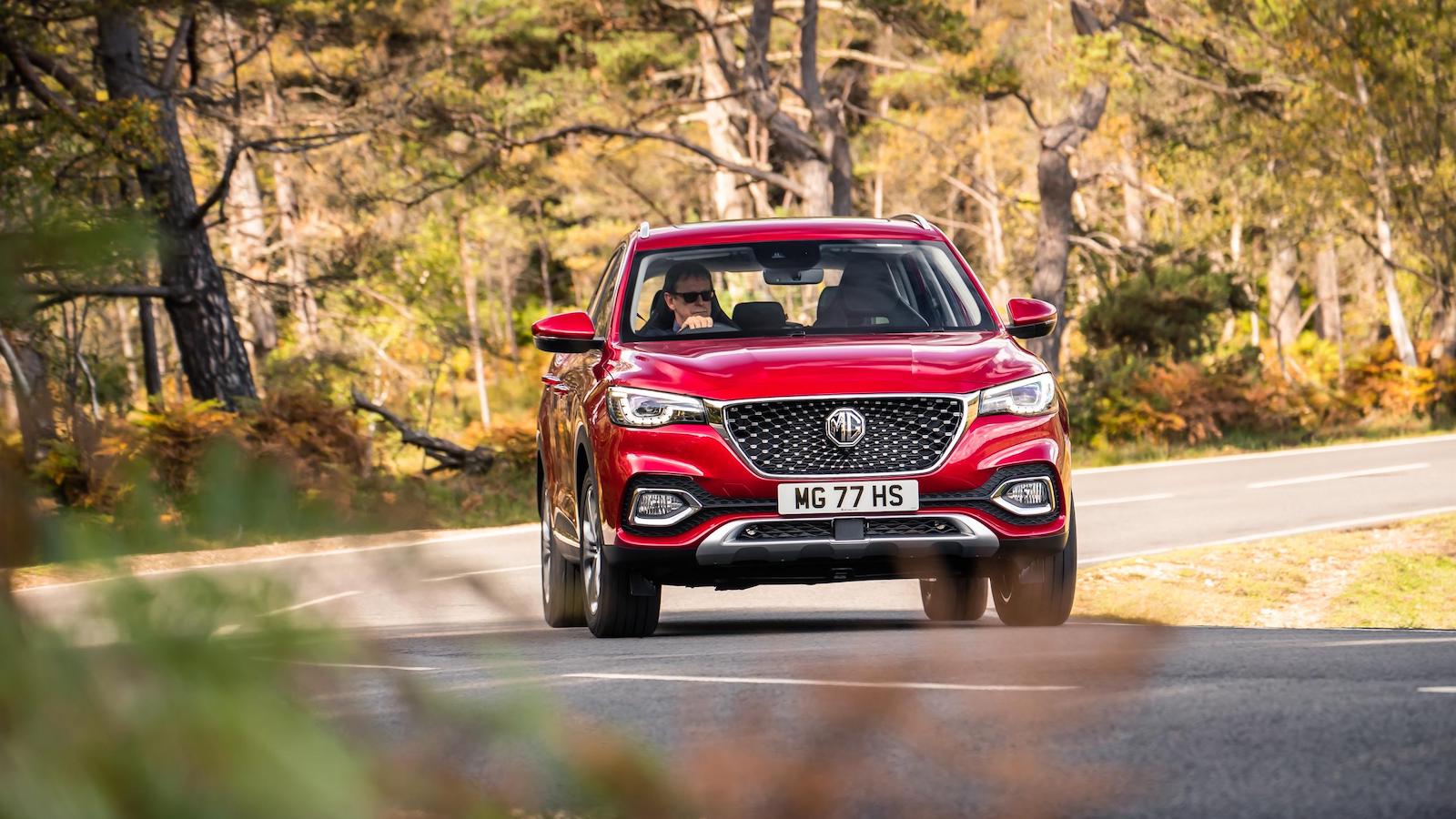
Lastly, there was one new face in the top ten as the MG HS made its chart debut, further highlighting the growing popularity of the British(ish) budget brand as living costs skyrocket.
We’ll have our usual comprehensive update of the top ten, as well as an overall half-year analysis of the new car market, in coming days.