What’s the BMW 3 Series like inside?
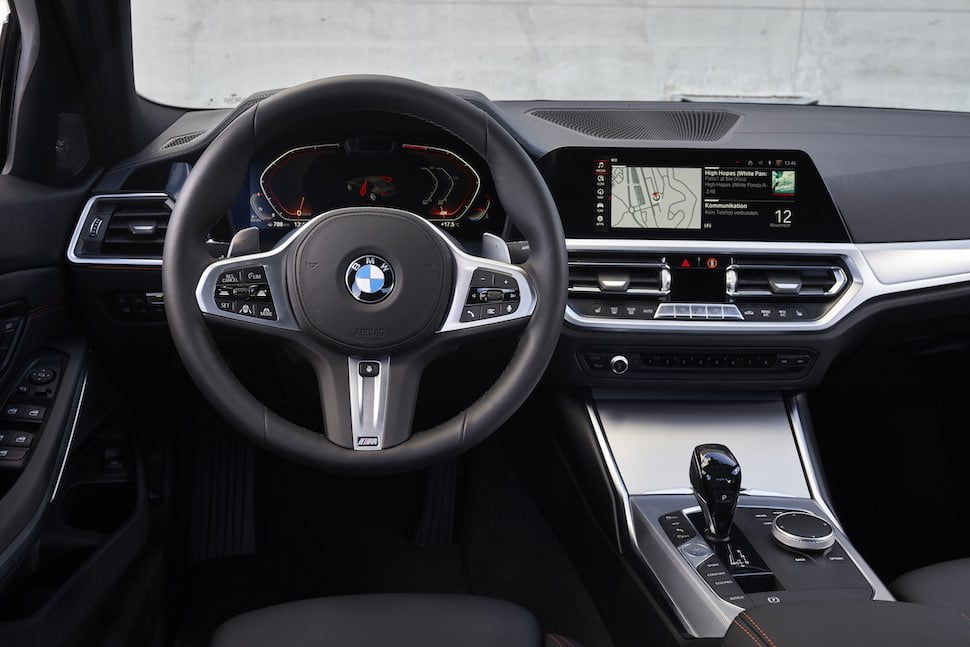
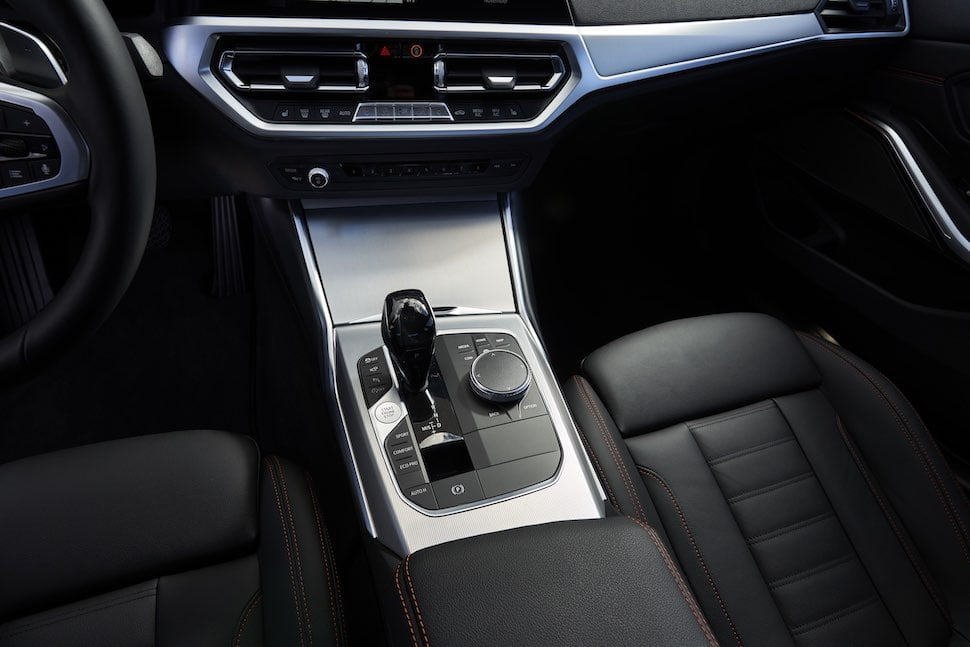
BMW has evidently worked hard to make the interior of the 3 Series as high-quality as possible. There are premium materials to be found throughout the cabin, and though some of the switches around the gearstick feel a touch low-rent, it’s a very pleasant place to be.
The seating position remains spot-on, just as it always has in the 3 – something we’re very pleased about.
A change we’re not so pleased about, however, comes in the form of the dials. Traditionally an area in which BMW has been king, the complex new digital display replaces the older 3’s beautifully clear readouts. It’s nowhere near as easy to read, and makes even checking your speed or fuel levels a lot trickier than it needs to be.
What’s under the bonnet?
We got behind the wheel of the 320d – arguably one of BMW’s most popular powertrains available with the 3 Series. It sees a 2.0-litre four-cylinder diesel put under the bonnet, sending 190hp and 400Nm of torque to the rear wheels via an eight-speed automatic gearbox.
BMW claims that it’ll return 67.3mpg on the combined cycle, while emitting an impressively low 110g/km of CO2.
Performance will be brisk enough for most, with a claimed 0-60mph time of 6.9 seconds and a 149mph top speed both on par for the segment. Those after a little more performance will likely opt for the punchier 330i petrol, which complements the diesel when the car goes on sale next March.
What’s the BMW 3 Series like to drive?
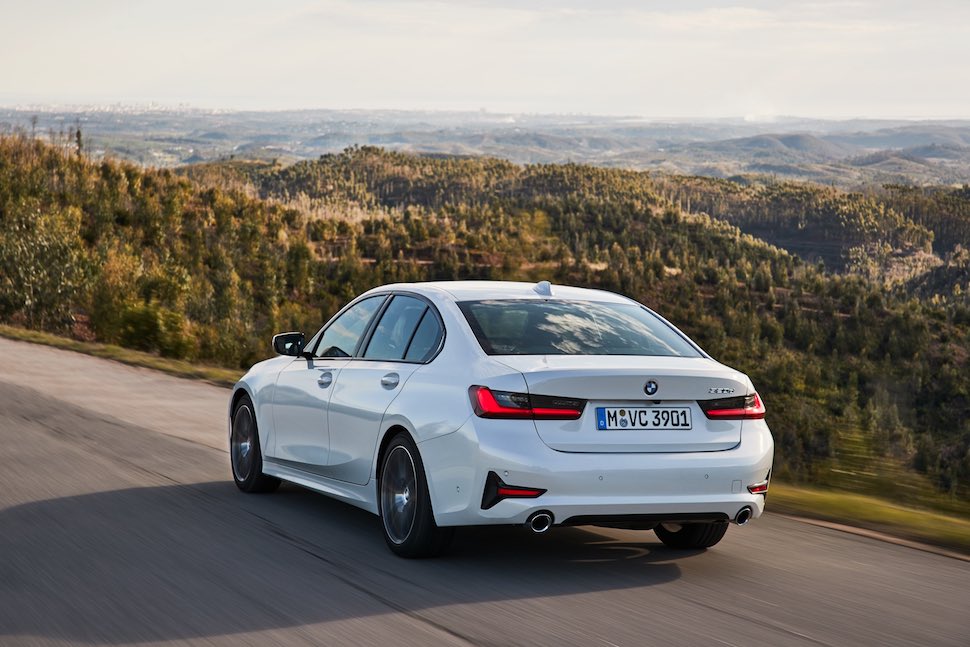
The 3 Series, throughout its various incarnations, has always been able to offer whoever was behind the wheel an involving and dynamic drive – even relatively subdued versions such as this humble 320d. Does this latest car do the same? In conclusion, yes – however, it does so in quite a different way to 3 Series of old.
The steering feels reasonably quick compared with the outgoing car, and although there’s the familiar lack of feel that we’ve come to expect from modern cars, it’s still a wonderfully easy car to pilot through the bends. It’s backed up by a surprising lack of body roll, and despite the ride being relatively firm at low speeds, it settles down at higher ones.
Our test car was also fitted with M-Sport suspension, which offers a drop in ride height for a sharper cornering experience. An adaptive suspension setup will also be available at launch.
The one thing that stood out was the overall sense of refinement. The cabin is kept hushed at almost all speeds, thanks to the increase in soundproofing throughout the car, as well as the acoustic windscreen – although our car was fitted with optional acoustic side windows too.
Summary
The BMW 3 Series needed to be good. Competitors such as the Audi A4 and Mercedes-Benz C-Class both offer the premium driving experience that drivers are after in this segment, and the BMW had to deliver that along with the all-important dynamic driving style that its name has been built on.
Fortunately, it has delivered, both in terms of the way it drives and the way it’s been put together.
Both inside and out, the 3 Series feels like the rounded and accomplished product that it’s always been, and there’s little doubt this latest model will be just as successful as the one it replaces.
Similar cars
Alfa Romeo Giulia, Audi A4, Jaguar XE, Mercedes-Benz C-Class
Key specifications
Model as tested: BMW 320d Sport
Price: £33,610
Engine: 2.0-litre turbocharged diesel
Power: 190 hp
Torque: 400 Nm
Top speed: 149 mph
0-60mph: 6.9 seconds
Fuel economy (combined): 67.3 mpg
CO2 emissions: 110 g/km