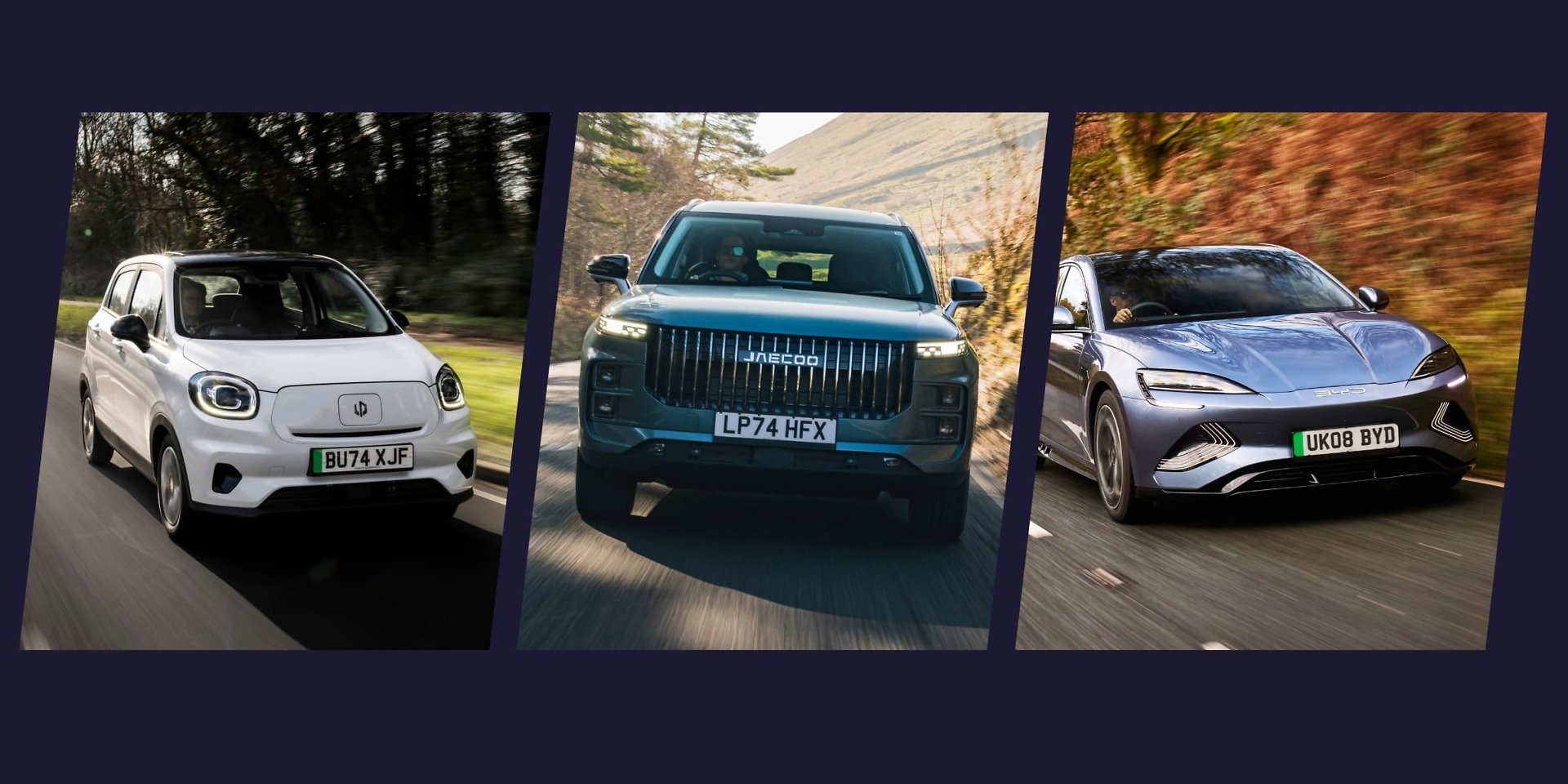







Chinese car brands are no longer treating the UK as a distant export opportunity or a small experiment on the edge of Europe. The UK is quickly becoming one of the most important proving grounds for China’s global automotive ambitions.
That shift has been building for a while, but it has accelerated over the last few months as some Chinese brands have shown that the UK market can be cracked much faster than many people expected. BYD is growing quickly, while Chery Group has become a major player almost overnight through Omoda, Jaecoo and Chery. Other Chinese companies are now looking at those results and working out how aggressively they want to move in response.
I spent a week in China at the Beijing motor show and visiting Chery Automobile, where the subject of the UK car market came up repeatedly. Jaecoo’s current success is a source of pride inside Chery, but what was more interesting was the reaction outside the company. At the Beijing show, it was clear that Jaecoo’s sales results had caught the attention of senior executives at rival Chinese manufacturers, who have started asking their own people: if they can do it, why aren’t we doing it?
The next phase of Chinese growth in the UK is now kicking off, and it’s unlikely to be straightforward. This is not one single Chinese push into Britain. It’s multiple large, ambitious and very different companies trying to work out how best to expand their presence, and they’re pursuing quite different strategies to get there.
Different brands, different routes

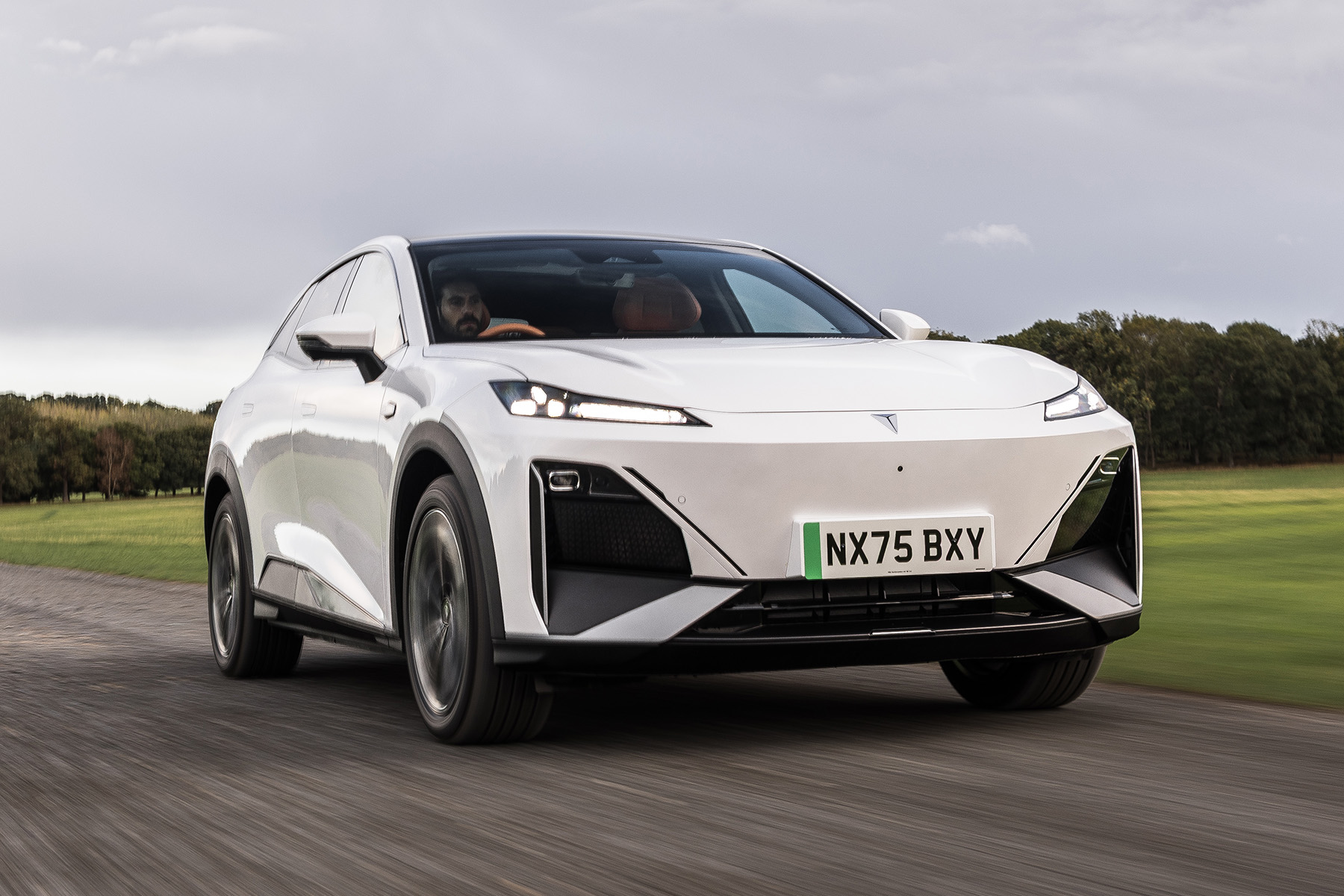
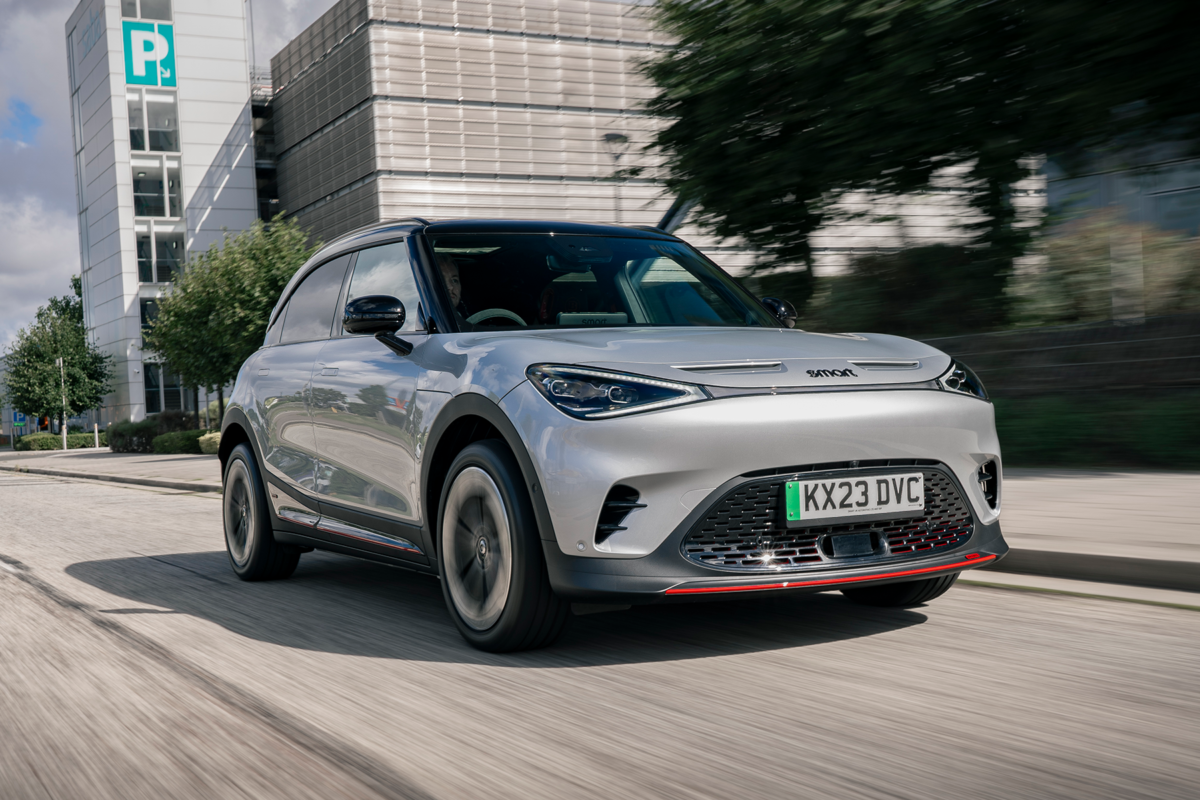
It’s easy to talk about “Chinese brands” as one giant collective, but that’s quite obviously not the case. The companies arriving from China have different strengths, different levels of patience, different relationships with dealers and fleets, and very different ideas about how quickly they want to grow.
MG is solidly established and has enjoyed a decade of strong growth following its reinvention under Chinese ownership, although its British heritage means many buyers still don’t really think of it as a Chinese brand. That probably helped in the earlier stages, but it also makes MG a slightly different case from companies like BYD and Chery Group, which have had to build familiarity from scratch.
BYD is probably the best-known new Chinese brand in the UK, helped by its global scale, strong EV reputation and growing dealer network. It has also built significant volume through larger fleet channels and rental companies, which helps explain how it has become visible on UK roads so quickly. Its next step is to introduce its new premium brand, Denza, which arrives in the next few months.
Chery’s approach has been different. Omoda, Jaecoo and Chery are separate brands that currently operate as part of one wider group – although they plan to separate more clearly over the next 12 months as the business continues to expand and more brand names join the line-up. The early growth has had a stronger retail element with large numbers of private sales, helped by eye-catching products, long warranties, strong equipment levels and a dealer network that has grown very quickly.
Jaecoo, in particular, has shown how quickly a new name can break through if it captures public attention and then follows up on that demand with a compelling product offer. The Jaecoo 7 has become widely known as the “Temu Range Rover” on social media, a description that would probably have most marketing executives cringing. Instead, Jaecoo has run with it to great success as the car has consistently become one of the UK’s best-selling models over the last six months.
Leapmotor has just celebrated its first birthday in the UK and is planning to grow significantly after a steady start, supported by its relationship with Stellantis. By positioning Leapmotor as part of a wider family that includes Vauxhall, Peugeot, Citroën, Fiat and other household names, the company hopes to leverage the customer familiarity and logistical support of the wider Stellantis network.
Changan is stepping up with more Deepal models and eventually Avatr, while also leaning on a long-standing UK engineering base as Chinese brands start to understand the development work required to improve the way their cars feel on European roads, compared to what Chinese customers want and expect.
Geely has had a low-key start selling cars under its own name, but that’s quite deceptive. This company has enormous resources behind it and has already been present in the UK market for many years through European brand names that are far more familiar to most people – Volvo, Lotus, Polestar, Smart and LEVC (the company that makes London taxis) – and many of those brands now offer cars here that are made in China. As well as expanding its own model range, Geely is also bringing another new brand called Zeekr to the UK market later this year.
GWM (Great Wall Motors) has been here for a while with Ora and Haval models, but you still don’t see many on UK roads. That’s quite different to markets like Australia, where GWM has built a much stronger presence.
Then there are brands that have only been niche players to date. Xpeng is building from a smaller base and had something of a false start due to launching its first UK model just before a major update to the vehicle, but is now regrouping. Skywell has sold only a handful of cars here so far and has already had to upgrade and relaunch its only UK model after significant media criticism.
There are others either already here or likely to follow. Some will succeed, some will struggle and some may not survive for long. For buyers, the main thing to understand is that Chinese car brands are not arriving with one shared playbook. They are experimenting with different ways into the market, and the results of those experiments are now being watched very closely.
The UK is no longer a side project
Several Chinese companies have been operating in Europe for quite a few years without expanding into the UK (like Zeekr, Nio, and Lynk & Co), which made sense for them at the time. Europe is mostly left-hand drive, like China, reducing development costs, and the EU is a much larger market than the UK. But that’s now changing, and changing quickly.
The UK is one of the most open car markets in the world. For decades, our buyers have been far less loyal to domestic British car makers than buyers in countries like Germany or France, which has contributed to the loss of several local car factories over the years. Also, our car industry is entirely foreign-owned, so decisions affecting UK factories are often made in boardrooms in France, Germany, the USA, Japan, China, or elsewhere, and not usually based on what’s best for the UK car manufacturing sector.
That makes the UK a valuable opportunity for new brands hoping to challenge the status quo. If the product, price and dealer network are right, UK buyers have shown they’re willing to give new brands a chance. Asian brands like Hyundai, Kia, Toyota, Nissan and Honda all found more success in the UK than other export markets over previous decades, mostly starting out as budget alternatives before becoming mainstream choices.
The UK is also useful because it remains an important and demanding market. Buyers are familiar with a wide range of brands. The media landscape is active, very much helped by the English language being spoken worldwide. Fleet and company car channels are well developed. The ZEV mandate is pushing manufacturers towards electrified cars, and Chinese brands are usually strongest in exactly those areas: EVs, plug-in hybrids, batteries, software and value-led technology.
If a Chinese car brand can succeed here, it sends a useful signal to other right-hand-drive markets and to Europe more broadly. It also gives the brand a demanding test environment, because UK buyers are open-minded but not necessarily forgiving.
“China speed” is not just a phrase
Chinese brands are trying to capitalise on the UK opportunity, but to achieve in a few years what took Korean and Japanese brands a few decades. They’re helped by a much larger domestic market, faster development cycles and the fact that UK buyers are already used to choosing between brands from all over the world.
The phrase “China speed” gets thrown around a lot in the automotive world. It sounds like a slogan, but it’s an accurate description of how these companies move at a pace that is unlike anything we’ve ever seen. It’s difficult to get your head around from a European perspective, where product development cycles are longer, brand decisions move more slowly and corporate structures are often more complicated.
This does not mean everything China produces is brilliant. Some cars still feel rushed, some interiors are too screen-heavy, and many models still lack the driving polish of the best European rivals. One criticism of early Chinese cars in Europe has been that they were not always properly tuned for local roads or customer expectations. But the important bit is how quickly the weaker areas are being addressed.
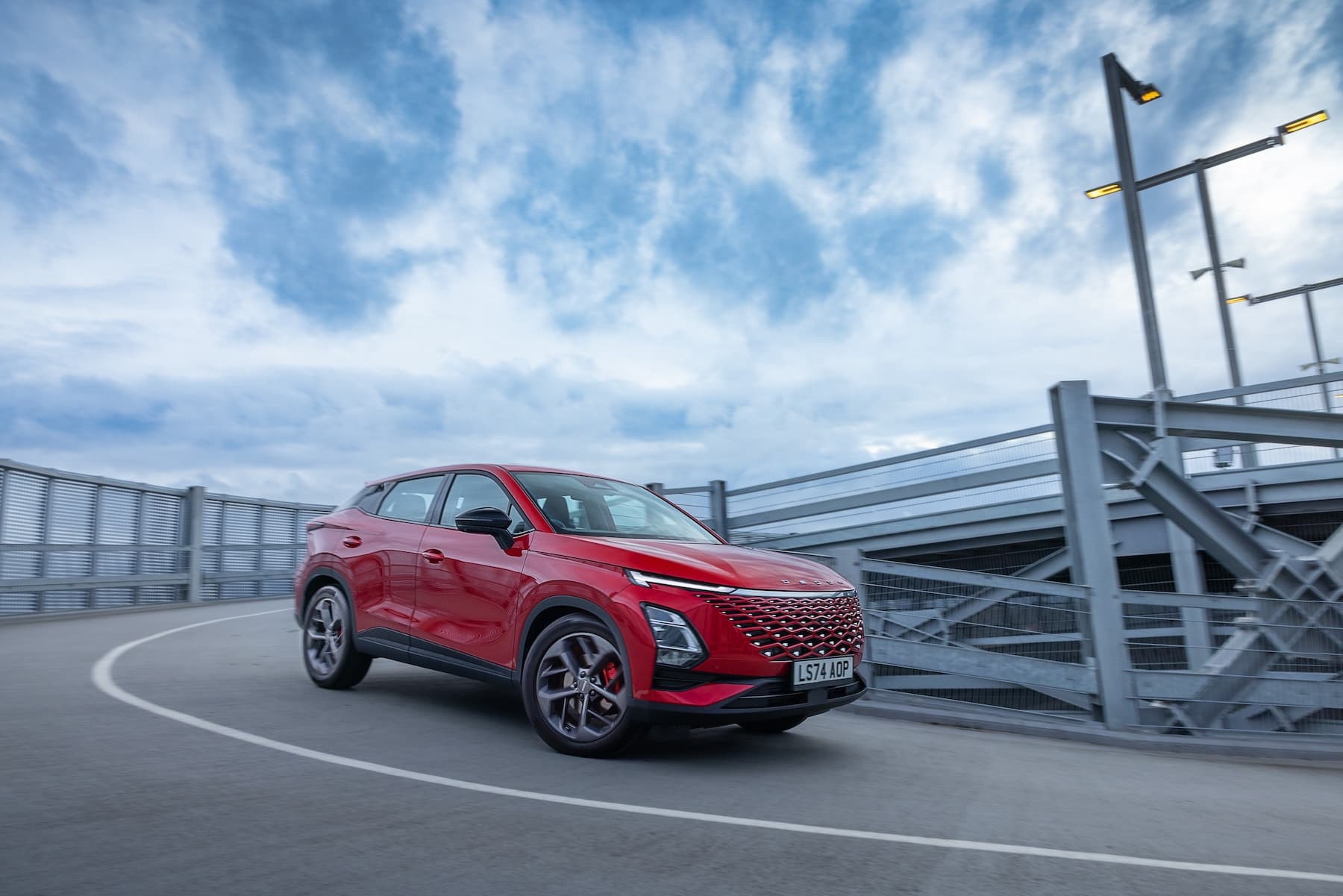


Omoda overhauled its Omoda 5 small SUV within a year of launch following media criticism, while Skywell similarly reworked the Skywell BE11. Most European brands, by comparison, would have waited for the usual mid-life update after four years to implement such significant improvements.
Changan is working its UK engineering operation hard to ensure that its Deepal models are up to the task, while Chery is also investing in UK engineering and other brands are doing the same across Europe.
That’s probably the thing that established brands should worry about. The first wave doesn’t have to be perfect if the second and third waves improve quickly.
Why so many brands?
One of the more confusing things for UK buyers is the number of new Chinese brands and sub-brands appearing almost at once. Even within one company, the brand structure can be difficult to follow.
Chery is a good example. In the UK, we now have Omoda, Jaecoo and Chery – with Lepas and Freelander and possibly more on the way. For a customer used to traditional European brands, this can look unnecessarily complicated.
Chery’s view is different. In a roundtable session with senior company leadership, including chairman Yin Tongyue, the explanation was that the car market is no longer built around a small number of mega-brands (like Toyota or Volkswagen) selling a few high-volume models (like Corolla or Golf) to everyone. The company believes that the industry today is far more fragmented, with different customers wanting different things from their cars and their brands.
That helps explain why Omoda, Jaecoo, Lepas and Freelander are being developed as separate ideas rather than different model lines under one Chery badge. Whether UK buyers find that clear or confusing remains to be seen, but it’s not random. It reflects a view that the old idea of one brand trying to be everything to everyone may no longer be enough.
There’s some logic to that, and many other consumer industries work in the same way – food and drink brands in particular, where similar products are sold under a multitude of brand names alongside one another but are all owned by the same conglomerate.
Whether all of these brands can build enough identity in the UK car market is another matter. Chery may be right that modern buyers are more fragmented, but there’s still a risk that too many unfamiliar names arrive too quickly and simply create confusion.
Simple specs, strong value
European brands have spent years training buyers to accept long options lists and expensive upgrades. Chinese brands are coming at it from the other direction, usually offering a simple specification for each car, rather than a matrix of different trim levels, engines, gearboxes, option packages and so on.
At last week’s Financial Times Future of the Car Summit in London, Omoda-Jaecoo’s UK product manager described their two-tier trim structure in refreshingly simple terms. The lower trim level has ‘everything you need’, while the higher level trim has ‘everything you want’.
It’s a simple line, but it explains a lot about how these brands are approaching the market. The aim is not to offer endless variety or flexibility. It’s to make the buying decision as simple as possible, while loading the cars with enough equipment to make established rivals look expensive.
That approach works particularly well in a market where more buyers are focused on monthly payments rather than list prices. If the finance cost is competitive and the car comes with heated and ventilated seats, a panoramic roof, a large screen, driver assistance systems and a long warranty, many buyers will not spend too long worrying about whether the badge has been around for 80 years.
No great appetite for vanity projects
Another striking point from the Chery discussions was the lack of interest in traditional halo models. Many European brands have used sports cars, luxury flagships or limited-run performance models to build image, even when those cars don’t make much money. They create excitement, pull people into showrooms and help define what the brand stands for.
Chery’s approach appears more commercially focused. The message was that every model needs to work and every model needs to make a profit. There doesn’t seem to be much appetite for loss-making vanity projects designed mainly to lift the image of the wider brand.
For enthusiasts, that may sound disappointing. It probably means fewer oddball cars and fewer emotional flagships. But it also fits with the way Chinese brands are attacking export markets: practical models, broad appeal, strong value and rapid launches.
Again, it comes back to the same point. Chinese brands are not trying to win the same argument as European brands. They’re playing a different game.
The UK still has something China wants
This is not simply a story of Chinese companies building cars at scale and sending them to Britain. The UK still has things that Chinese manufacturers value. Chery’s leadership spoke positively about British automotive history, engineering, suppliers, R&D, finance and manufacturing expertise. There was a clear sense that the UK is not just seen as a sales market, but as a source of knowledge and capability.
That was particularly interesting in the context of Freelander, an entirely new brand inspired by one of Land Rover’s less convincing old models. The original Freelander sold well in Europe, but it was never a shining example of British engineering excellence. In export markets like the US and Australia, it was considered poor even against Land Rover’s already sub-par reputation for quality and reliability.
Mr Yin talked about the idea of “revitalising” defunct British brands, pointing to Mini and MG as examples of what can be done when British automotive heritage is combined with foreign investment and industrial scale. The ambition makes sense, even if the choice of Freelander as inspiration still feels odd.
There was also a suggestion that Chery would like to see more cars going from Britain back into China over time. There was nothing concrete behind that, but it fits with recent speculation that Chinese companies may be interested in using spare capacity at UK factories, something several are already doing in mainland Europe.
Whether anything comes of that is another question. There are plenty of hurdles to overcome and numbers to make work. What feels increasingly likely is that the relationship between Britain and Chinese car companies may become more complex than a simple one-way flow of imports.
What this means for UK buyers
For UK car buyers, more Chinese competition should bring some obvious benefits. More brands mean more choice. More competition should mean sharper pricing, better equipment levels and stronger finance offers. It should also accelerate the arrival of more EVs and plug-in hybrids, especially in segments where established manufacturers have been slow or expensive.
It should also force existing brands to respond. If Chinese companies keep offering long warranties, high equipment levels and competitive monthly payments, then European, Japanese and Korean manufacturers will not be able to rely on badge familiarity alone.
But there are downsides as well. More brands also mean more confusion. Some of these names are still unfamiliar, and it’s unlikely that every new entrant will succeed. Buyers will need to pay attention to dealer coverage, insurance costs, parts supply, servicing arrangements and resale values, especially with brands that are still building their UK operations.
There’s also the risk that rapid expansion creates uneven support. Selling cars quickly is one thing, but looking after customers properly over several years is another.
Pressure is building
The first phase of Chinese growth in the UK has already changed the market. The next phase is likely to be broader, messier and even more competitive. BYD and Chery Group have shown that Chinese brands can build momentum very quickly, and that a new name can break through faster than most people expected.
Other Chinese manufacturers are not going to ignore that. Some will push hard for private buyers, while others will chase fleet volume or lean on partnerships with established dealer groups and manufacturers. This growth will come directly at the expense of existing European, Japanese and Korean brands.
For buyers, that should mean more choice and sharper deals, although it will also mean more unfamiliar badges, more confusion and maybe a few brands that disappear as quickly as they arrived.
For established manufacturers, this is no longer theoretical. The competition is already here, and it’s learning quickly. The UK is now a serious battleground for Chinese car brands and the pressure is only going to increase.