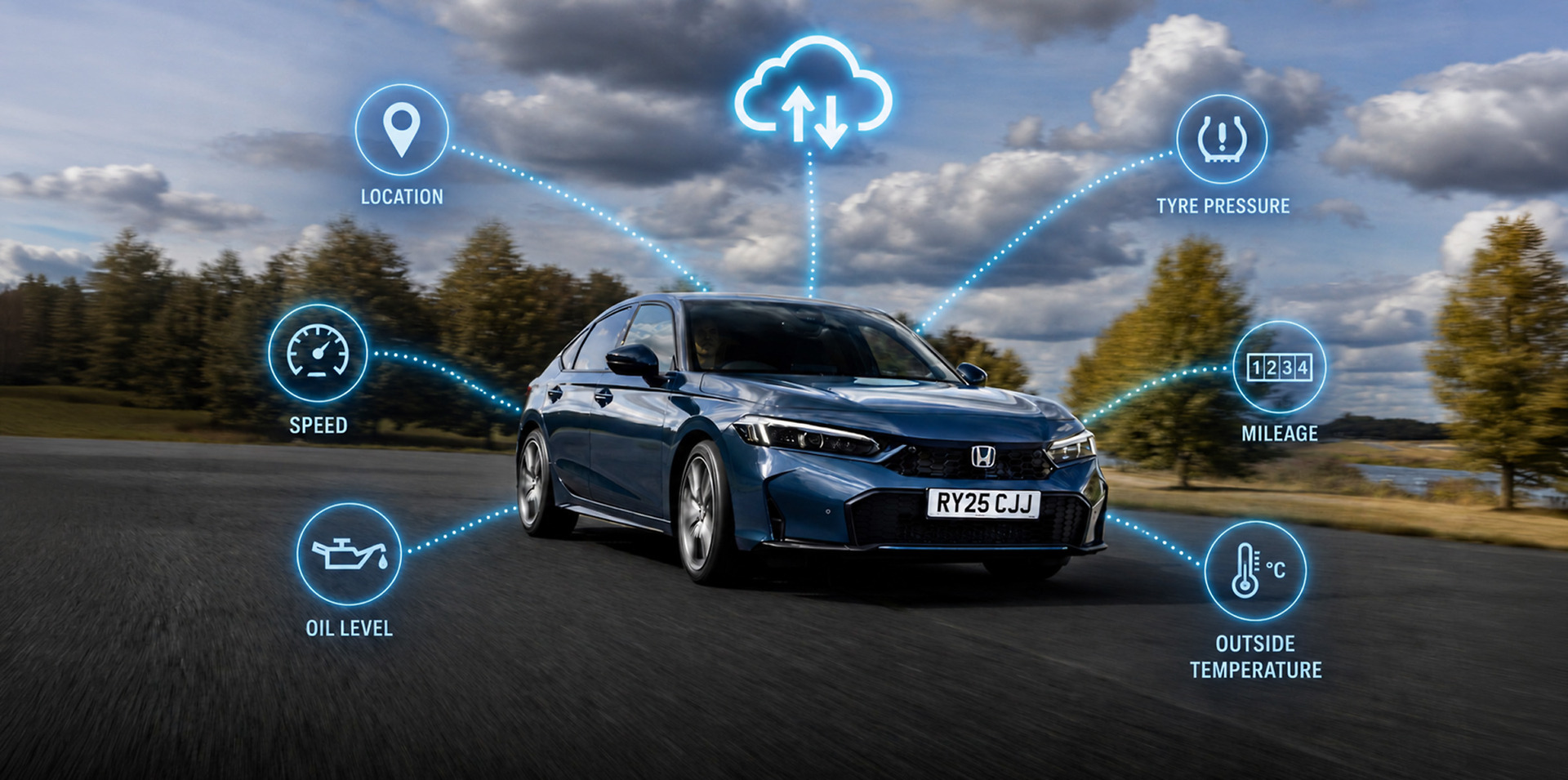







Modern cars collect a lot of information as part of their normal operation. Most of it is used for maintenance, diagnostics and connected services, but some systems can also monitor driving behaviour and vehicle location.
Understanding what your car records helps you make informed decisions about how that data is used and who can access it.
Some of the information is collected automatically by the vehicle itself. Other data comes from information you provide through the infotainment system or smartphone apps connected to the car.
So what exactly is being collected, and what happens to it?
What your car collects automatically
Even if you never connect your phone or create an online account, modern cars generate a significant amount of data simply by being driven. Manufacturers use this information to help with servicing, warranty claims, fault diagnosis, breakdown support and safety systems.
Honda UK’s website provides a useful example of the type of information manufacturers may collect from connected vehicles. According to the company’s own documentation, connected vehicles can record data including:
- Vehicle speed
- Mileage
- Fuel or energy consumption
- Tyre pressure
- Oil level
- Engine status
- Battery charge status
- Steering angle
- Braking information
- Driving characteristics
- Vehicle occupancy
- Diagnostic fault codes
- Vehicle location
Much of this information is generated automatically as part of the vehicle’s normal operation.
What you provide through the infotainment system
Modern infotainment systems can collect additional information based on how you use them. This may include destinations entered into the navigation system, account information used for connected services and other settings stored within the vehicle.
The more connected your car becomes, the more information it may store about your preferences and how you use it.
In many cases, this information helps provide useful features and services, but it also means there is more personal data associated with the vehicle.
What Apple CarPlay and Android Auto collect
Many drivers now connect their smartphones to their cars using Apple CarPlay or Android Auto.
Once connected, information from your phone can be displayed through the vehicle’s infotainment system, allowing access to navigation, messaging, music and other apps.
This creates another layer of data sharing alongside the information already being collected by the vehicle itself. Apple and Google both allow users to manage some privacy and sharing settings, although many drivers may not realise how much information their phones and apps generate in everyday use.
Exactly what information is stored and how it is used will depend on the systems and services involved.
What happens to all this data?
Most vehicle manufacturers collect data for practical reasons.
The information can help identify faults, support warranty claims, assist with servicing and provide connected features through smartphone apps and online services.
In Honda’s case, the company says data transmitted from connected vehicles is stored on its remote servers for up to six months. Owners can download the information through the Honda app and delete it if they wish.
Manufacturers generally explain what information they collect and how it is used within their privacy policies and connected services documentation.
How employers and fleet operators use vehicle data
Vehicle data is not only useful to manufacturers. Many businesses that operate company vehicles use telematics systems to monitor how those vehicles are being used. This can include information such as routes taken, braking behaviour, journey times and periods when a vehicle is stationary.
The aim is usually to improve efficiency, reduce wear and tear and help promote safer driving. Professional drivers are generally familiar with these systems and they are often linked to schemes that reward safer driving behaviour.
Telematics are becoming increasingly common on company vehicles, and are also often required by insurance companies for high-risk drivers (like young people).
Fleet managers will use telematics services to monitor things like seatbelt usage, airbag deployment, forward vehicle distance systems, bonnet status, door locks and tyre pressures. Newer Hyundai vehicles, for example, can also transmit a GPS location signal to a fleet manager via in-built software every ten seconds.
On electric vehicles, the system can also track battery charge levels, charging status and battery temperatures.
Why vehicle data collection can be controversial
While many drivers are comfortable with their vehicles collecting data for maintenance and safety purposes, concerns can arise when that information is used to assess driving behaviour or access personal footage.
Earlier in 2026, the BBC reported concerns from some Motability customers about the scheme’s requirement for drivers under the age of 30 to have telematics devices fitted to their vehicles. Some users argued that aspects of their disability could affect how smoothly they drive.
Motability responded that the scheme was designed to help improve safety and keep costs down, and that it had removed 300 drivers since the pilot programme began. However, after the BBC’s article was published, Motability withdrew its compulsory black box requirement.
Separately, Tesla found itself in a major controversy a few years ago after reports that company employees had accessed and shared footage from customers’ cars. This reportedly included crash footage and sensitive images captured by the cameras fitted to Tesla models.
The bottom line
Modern cars collect far more information than older vehicles ever did. Much of that data is used to support servicing, diagnostics, safety systems and connected features that many drivers use every day.
However, vehicle manufacturers, employers and fleet operators can all make use of different types of vehicle data, depending on how the vehicle is owned and operated.
If you’re concerned about privacy, it’s worth checking what information your manufacturer collects and how long it is stored for. Most car companies explain this in their connected services and privacy documentation, and some allow owners to download or delete their data through an app.
Read more: