Find an Expert Rating: 
Home Blog Page 157

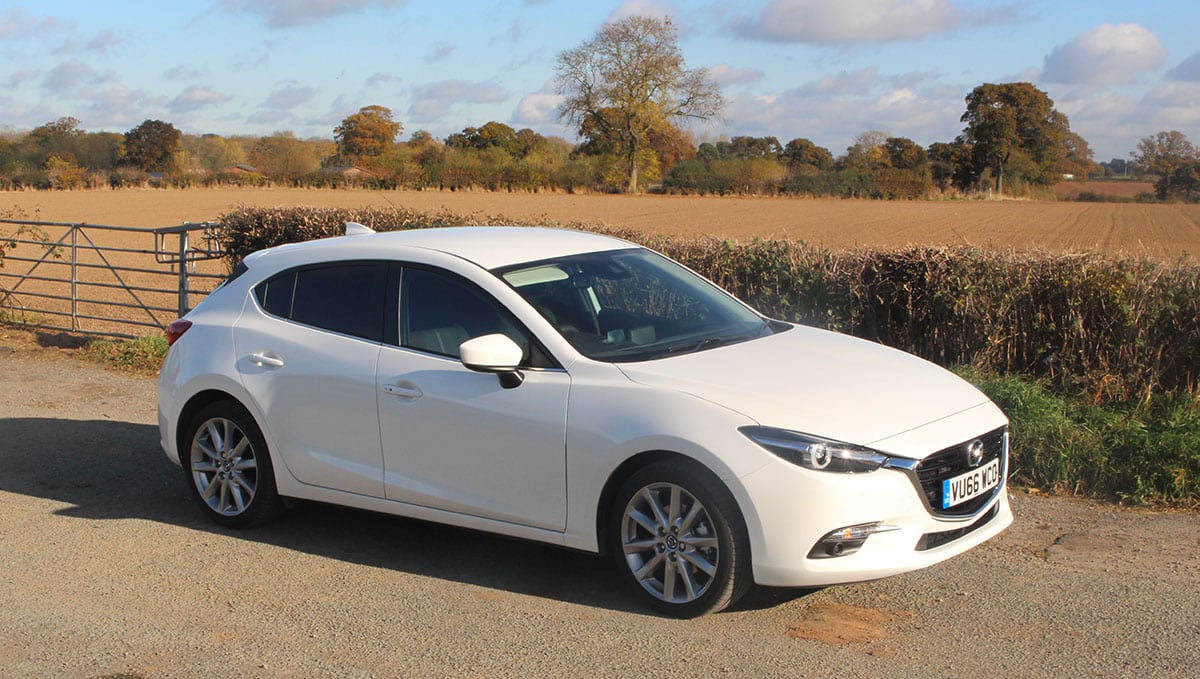
Mazda 3 review

What is it:
The 2017 Mazda 3 is a mid-life update of the brand’s core family car.

Key features:
Styling tweaks, revamped cabin, updated technology.

Our view:
The refresh of the Mazda 3 adds even more appeal to an underrated car.


Crossovers may be all the rage these days but plenty of buyers still choose the traditional family hatch – the Ford Focus and Vauxhall Astra permanently occupy places in the UK’s top four best-selling. For those looking for a family hatch, however, a much-underrated rival is the Mazda 3.

We saw a new Focus not that long ago, a new Astra far more recently, while further pressure on Mazda 3 sales has come from all-new versions of other leading contenders such as the Renault Megane. So for 2017, Mazda has given the latest, third-generation Mazda 3 a significant update.

Mazda3 03

The current Mazda3 launched in 2014, and was one of the earliest cars to gain Mazda’s latest ‘Kodo – soul of motion’ design language and notably the SkyActiv efficiency technologies ranging across powertrains and chassis. The looks are evolved from the larger Mazda6 and give the 3 a strong presence. This is especially true of the fastback version, effectively a four-door saloon with a boot of 55 litres greater capacity than in the hatch.

SkyActiv is still considered up-to-date enough to be retained with little change in the new model, though the new car does debut a new area of the technology, dubbed ‘Vehicle Dynamics’. Like so many updates these days the Mazda3 refresh focuses chiefly on minor styling enhancements, revisions to the cabin and the addition of more technology – advances in such tech certainly not slowing down…

Styling/Interior

The Mazda3 has always been one of the more distinctive family cars around – it boasts, bold, swooping lines running right along the car from grille to tailgate. Subtle updates to the 2017 model further enhance what is already pleasing to the eye.

A slightly differently shaped grille now has the Mazda badge in its centre, and the headlamps are modified. The rear bumper is reshaped with greater areas of body colour, there are revised turn indicators on the mirrors and such like. Two new options take the choice of exterior colours to eight.

Inside the refresh is more noticeable. The most obvious change sits between the seats, where the handbrake lever has been replaced by an electronic parking brake, freeing up space. The cup holders are bigger, but just as importantly everything looks and feels a little more upmarket. Mazda has upgraded the materials – there are more soft-touch items and delicate detailing that adds a lot to the impression of quality.

The tablet-style touchscreen persists atop the centre console, and while it still appears a little ‘stuck-on’ it remains very easy to use. This reviewer also considers Mazda’s Tom Tom-based navigation system one of the most user-friendly on the market.

So the cabin feels a nice place to be and it’s very practical too, at least in the front, The driving position matches the low exterior stance, being almost sporty, but the visibility is generally good – though the view directly out the rear window is not over generous.

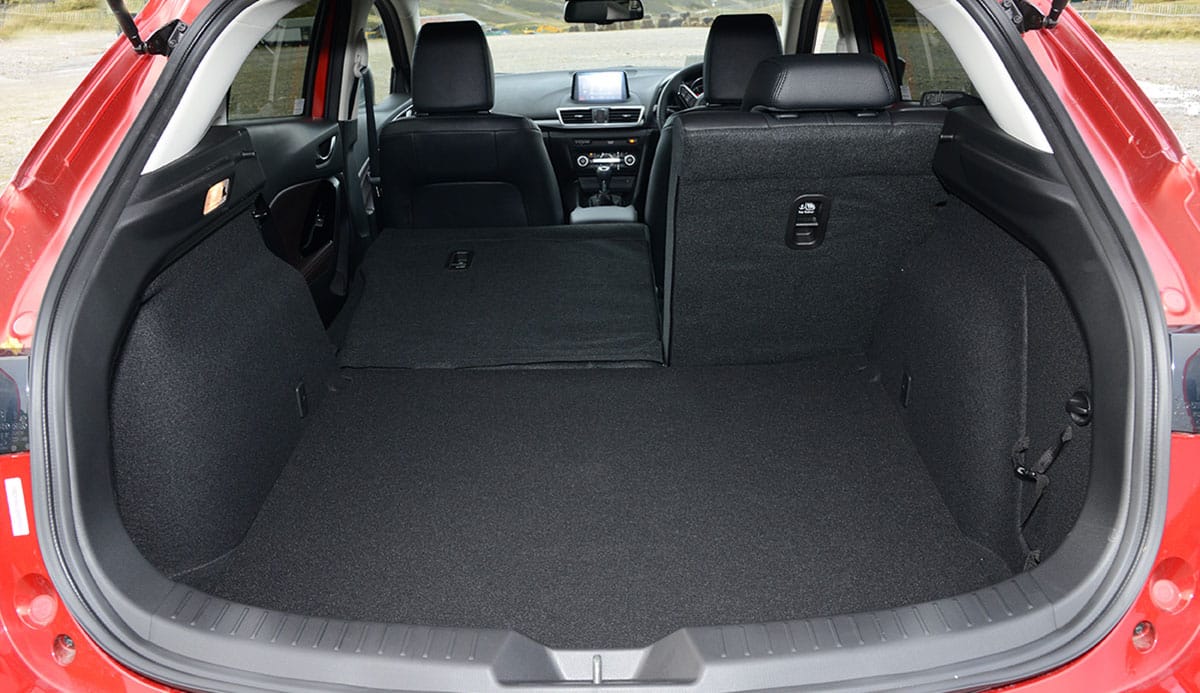
Despite the door storage boxes having been extended in width, space remains good in the front. Matters are a little more cosy in the rear, but perfectly adequate even with the rearwards sloping roofline. Several rival cars offer more space, and larger boots, but the 364 litres of the Mazda3 is still close to 50 litres more than the family hatch best-seller, the Ford Focus.

Engine/transmission

Mazda3 buyers have a four-way engine choice, all SkyActiv Technology units and all with start-stop functions to aid efficiency. The SkyActiv concept eschews the industry trend to downsized, turbo engines in favour of more efficient packaging and particularly weight savings.

The petrol unit is of 2.0-litre capacity and offered in either 120 or 165hp power outputs. Our test car is fitted with the smaller of the two diesel units, of 1.5 litres and 105hp. Its larger sister is of 2.2 litres with 150hp.

Transmissions are six-speed manual as standard, though the 120 petrol and 150 diesel can be purchased with a six-speed auto ‘box instead.

Most Mazda3 sales are with the 120 unit but there is a lot to be said for our little diesel. Admittedly it is not as fleet of foot as its sister engines, which are all quite fast for the segment. However 11 seconds is still reasonable and in return for such patience one enjoys good efficiency. Combined cycle fuel economy of close to 75mpg and CO2 emissions of 99g/km, qualifying for zero road tax (so long as one buys before the bands change in April 2017) make these versions of the Mazda3 very fleet friendly.

On the road

Traditionally, every maker of a family hatch aspires to beat the on-the-road qualities of the Ford Focus. The Mazda3 does not match the Focus for its dynamics, but it comes a lot closer than do most rivals.

The Mazda3 is of course closely related to one of the most fun-to-drive cars around, the Mazda MX-5, and it shows. The car rides well, smoothing out road bumps, while enthusiastic cornering is rewarded with precise placing, superb balance and a pleasing upright stance – this is a very enjoyable car to drive.

Along with tweaks to anti-roll bar bushes and other subtle modifications, the latest cars add the first technology to be launched under the SkyActiv Vehicle Dynamics programme. G-Vectoring Control varies the torque delivery from the engine to each wheel, slightly cutting power to the front wheels under cornering and resulting in more effective turn-in and balance. You can’t tell the system is working but the car does produce an expertly-balanced cornering performance.

Other changes to the new Mazda include adding to the noise insulation – all of which makes for very refined progress.

Mazda3 on roadSpecification/equipment

The Mazda3 boasts a strong specification list when compared to rivals. All cars are supplied with alloy wheels, air conditioning, seat height adjustment for both driver and passenger, and electric windows all round.

Every car includes the seven-inch colour touchscreen, while DAB radio is standard, as is Bluetooth and a cloud-based connectivity system giving access to a range of internet-based infotainment services.

Our top-specification Sport Nav model boasts some attractive extras, such as a head-up display that now displays its information in colour. The touchscreen displays the images from a reversing camera, Smart keyless entry is included while the audio system is a quality Bose unit.

Summary

We have always liked the Mazda3 – it looks good, is well built and returns a quality on-the-road performance at a competitive price. Now with a well thought-out package of improvements added to the specification, there should be every reason for anyone considering a family hatch to take a serious look at this car.

Mazda 3 – key specifications

Test date: November 2016
Model Tested: Mazda 3 1.5 105ps Sport-Nav hatchback
Price: £22,145 (range starts
Insurance Group: 17E
Engine: 1498cc diesel
Power (hp): 105.
Torque (Nm): 270
0-62mph (sec): 11.0.
Max speed (mph): 113
Fuel economy (combined, mpg): 74.3 CO2 emissions (g/km): 99
Key rivals: Ford Focus, Vauxhall Astra, Renault Megane

1701-Mazda3-02

Why are most street lights orange and not white?

Here’s a question you may have asked yourself many times but possibly not enough to go and find the answer. Why are most street lights orange rather than white?

Well, I thought I had the answer when I noticed that cars tend to have a yellow tint to their headlights. Halogen lights, as used in most cars for the last 40 years, burn with a slight yellow colour, which removes the blue-violet wavelengths from the projected light. Blue and violet light causes dazzle and glare.

You might recognise this when cars with xenon headlights are first switched on – the lights have a blueish tint until they warm up when they become much whiter. By removing blue-violet wavelengths, the quality of our vision is actually improved even though the overall brightness is somewhat reduced.

So if that’s true for cars, then surely that explain why street lights are orange? No – silly me. It turns out there’s a big difference between orange light and yellow light.

But let’s go back to the beginning.

The first electric street lights appear

Electric street lights have a long history dating back to the 1800s. The first electric street lights were developed by Russian-born Pavel Yablochkov in 1875, replacing existing gas- or oil-lit lighting. These were known as ‘Electric Candles’, or ‘Yablochkov Candles’ and were, in fact, carbon arc lamps that used an alternating current to ensure that both electrodes were used in equal parts. Before long, these inefficient types of light bulb were replaced with incandescent lights, much like the ones we still use today.

Electric street lights first came to the UK in 1878, when electrical arc lamps were installed along the Holborn Viaduct and Thames Embankment in London. The first street to be lit with modern electricity as we know it was the appropriately-named Electric Avenue in Brixton in 1880.

Initially called lightpoles, then lamp posts and then street lamps, these raised lights used on the edge of roads or pedestrian footpaths have now become an everyday part of modern day living. Many of today’s street lamps have light-sensitive photocells that automatically operate as and when light is needed. As the sky darkens, the lights come on and as dawn approaches and the sky brightens, the lights go off.

Orange light is actually not that helpful for our eyes

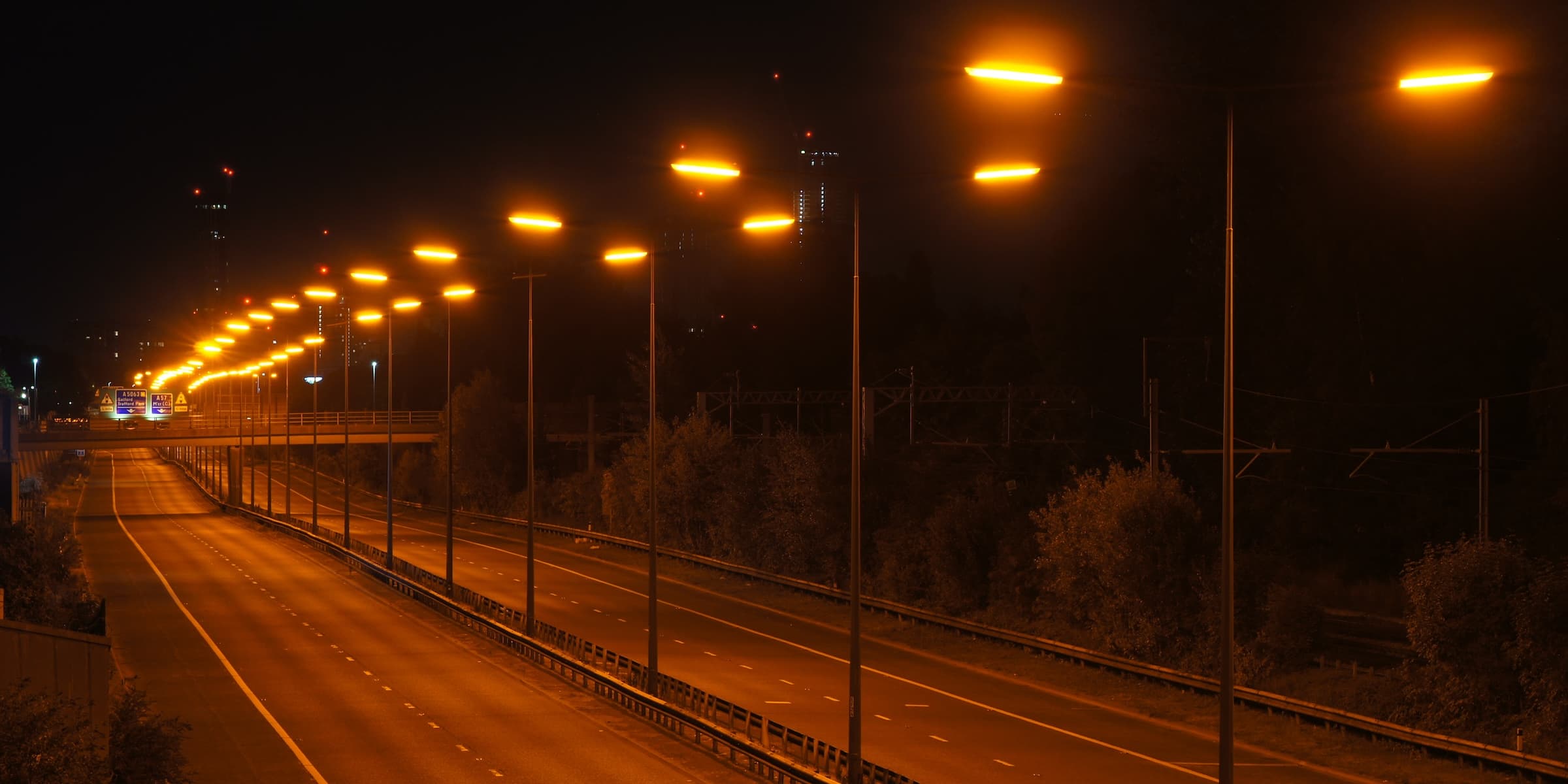
Municipal authorities worldwide eventually began to adopt sodium lamps, and these burn with that familiar orange glow when electricity is passed through them. High-pressure sodium lamps are still used around the world for street lights because they produce the greatest amount of light for the least amount of electricity required to power them. They’re not the best lights and don’t light up a street as well as other lights. They’re just cheap to run because they use less electricity.

Research has revealed that our eyes perceive an orange-lit street as darker than a white-lit street even when the same levels of light are provided. In fact, white light actually increases our peripheral vision by 100% and reduces our braking times by 25%, when compared to orange sodium lights. That’s a very big difference. So, forget what’s best for drivers, street lamps are orange not because they help us see better but because they’re cheaper to run.

New technology can make street lights whiter, brighter and cheaper

Having said that, many towns and cities around the world have started moving towards LED street lighting and high-intensity discharge lighting, which provides a cleaner white light which helps us to see better. And, thankfully, these types of light don’t cost a lot to power.

A comparison between metal halide and high-pressure sodium lamps has shown that at equal light levels, a street that’s been lit at night by metal halide lights is brighter and safer than the same street lit by high-pressure sodium lamps. The new LED, or induction lights, emit a white light that provides high light levels and lower wattages, so they provide a brighter light at a lower cost.

East Sussex County Council became the first local authority to roll out a major LED street light conversion project, converting more than 11,000 sodium street lights in Eastbourne and Hastings to LED lights. The Council expects to save nearly £300,000 per year from reduced electricity and maintenance costs. Several other councils have followed suit, such as Gloucestershire, which is in the middle of a project to replace 55,000 street lights for an anticipated saving of £17 million over 12 years.

Over in Italy, Milan has become the first major city to have switched completely to LED lighting.

An American organisation called the Civil Twilight Collective – dedicated to reducing energy emissions – has developed a lunar-resonant street light, which is a variation on a conventional LED street light. These street lights increase or decrease their intensity depending on the light of the moon. So instead of wasting energy, it uses light in a very smart way by tapping into the moon’s cycle.

This street light design reduces energy consumption and cuts down on light pollution. Maybe it’s the way we should be going here in the UK.

New Mercedes-Benz GLA starts at £25.9K

0

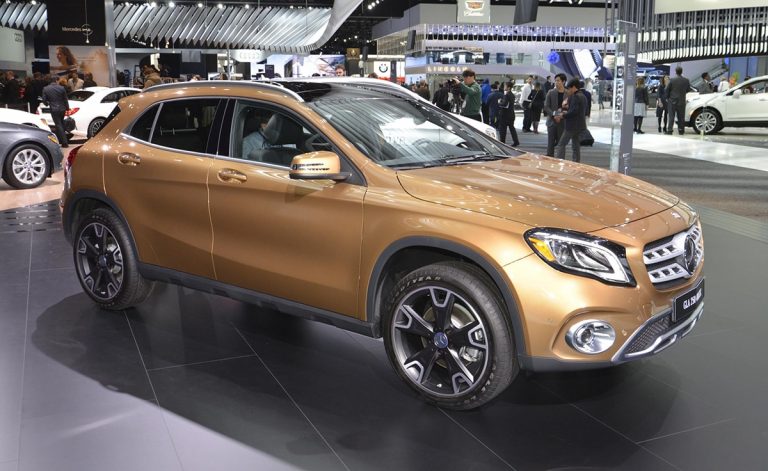
Prices for the latest Mercedes-Benz GLA have been announced, just as the facelifted crossover makes its debut at the Detroit motor show.

Order books are now open for the updated car, which challenges the likes of the BMW X1. It will arrive on UK roads in April at a starting price of £25,880.

The changes centre on minor revisions to the styling and interior and more equipment. The car is also made to look more like an SUV by specifying off-road suspension as standard, raising the ride height by 30mm. Lowered suspension is on the options list

Five-strong engine range

Three petrol engines will be available, the entry-level GLA 200 producing 156hp and combined cycle fuel economy of 50.4mpg, with CO2 emissions of 131g/km. The GLA 250 and Mercedes-AMG GLA 45 both come with 4Matic all-wheel-drive, with the range-topping 45 boasting 381hp.

Two diesel variants are also on offer, both with 4Matic. The 200 d offers 136hp with 67.3mpg and 108g/km, while the 220 d has 177hp on tap.

Mercedes-Benz GLA 02

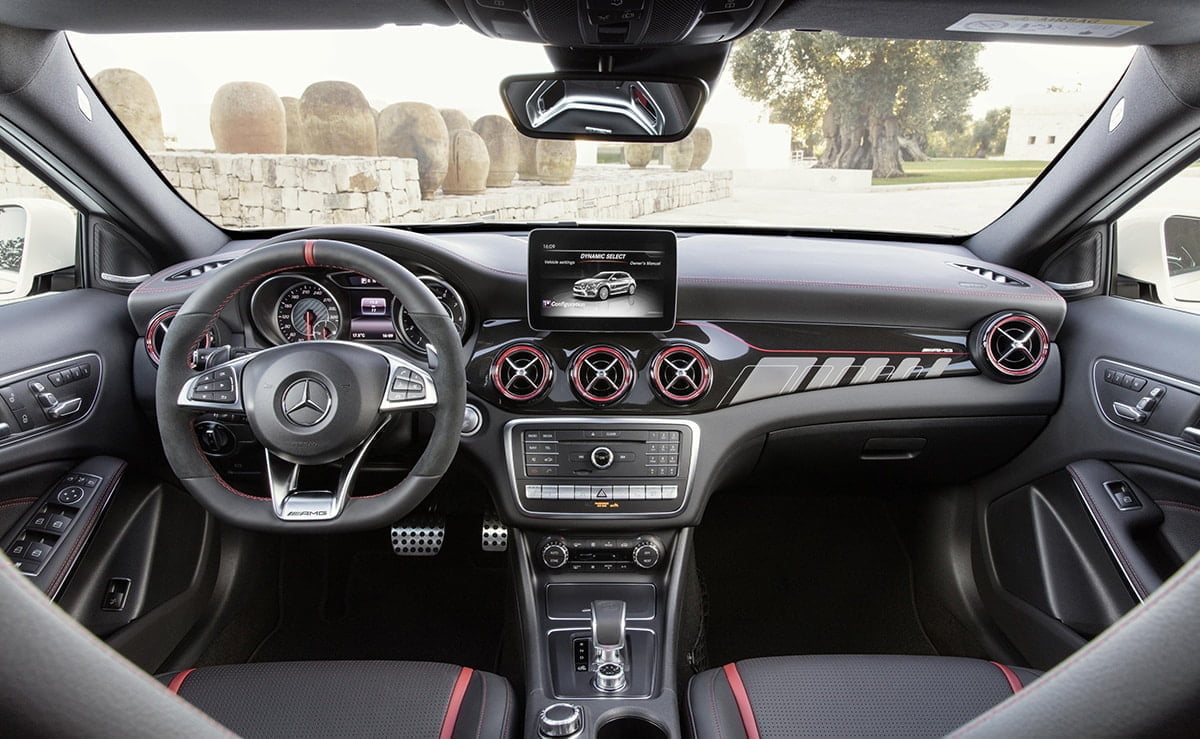
Like the previous SE, Sport or AMG Line trim levels are on offer for the Mercedes-Benz GLA. SE models now include Keyless-Go starting function as standard, Apple CarPlay compatability, a reversing camera and off-road comfort suspension.

Option packs on all cars include Premium at £1,695 and comprising Garmin satellite navigation, parking pilot and LED high performance headlights with Adaptive Highbeam Assist functions.

The Premium Plus package, at £2,995, also adds a Keyless-Go Comfort package and a panoramic sunroof.

Special editions add variety

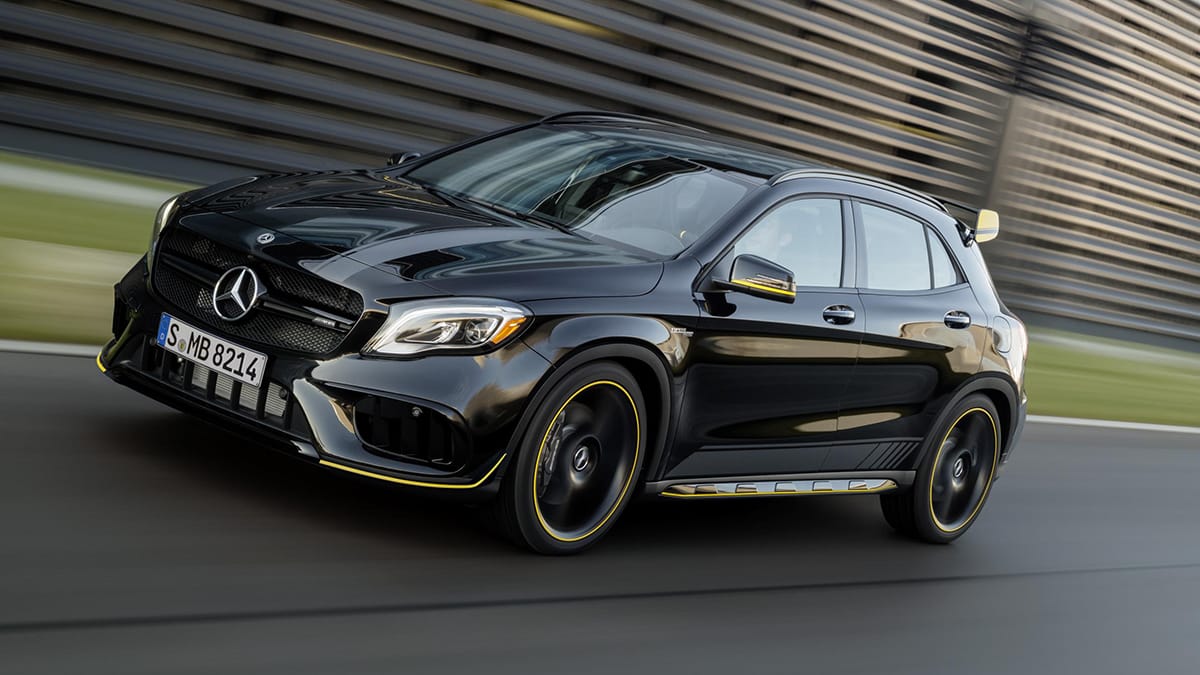
Two special editions are also on offer. Prices for the WhiteArt Edition start from £31,260 on the GLA 200 – based on AMG Line trim, it adds the Premium Package, 19-inch multi-spoke alloy wheels with a high-sheen finish, black leather upholstery with white and crystal grey stripes and black floor mats.

GLA 45 models can be specified with the Yellow Night Edition, priced from £53,135. It adds an AMG aerodynamics package and Night package, 20-inch AMG 10-spoke alloy wheels with yellow-painted rims; body styling with painted yellow details, cosmos black metallic paint, the Keyless-Go Comfort package; an AMG performance steering wheel in Nappa leather and Dinamica microfibre and upholstery in Artico leather and Dinamica with yellow highlight stripes.

Mercedes-Benz GLA 03
The Yellow Night Edition pack is available for the range-topping GLA 45.

Skoda Octavia given new look, more tech

0

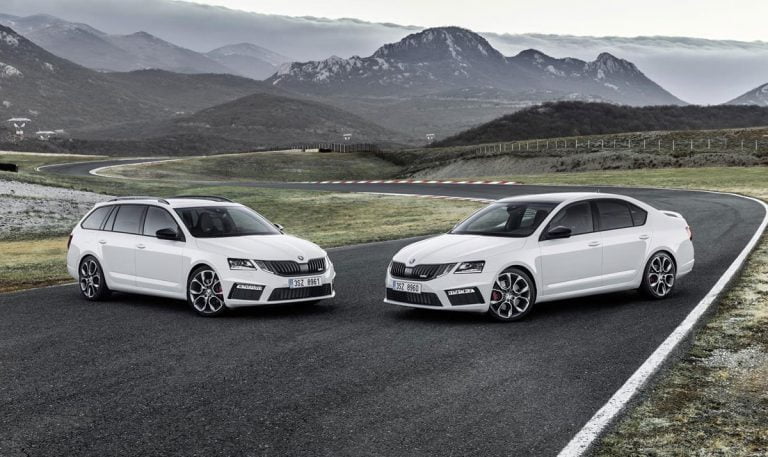
The facelifted version of the Skoda Octavia has been unveiled, with changes to the exterior look and more technology.

Engine changes also feature in the line-up, with the top performance models gaining power.

The facelift, that runs across both the hatch and estate versions of Skoda’s global best-seller, includes a revised front end adopting the wider and more angular grille most recently seen on the new Kodiaq SUV.

New headlamps with a crystal-like finish are included, as are wider air inlets with honeycomb grilles and a more muscular bumper. LED lamps with adaptive lighting are available as options.

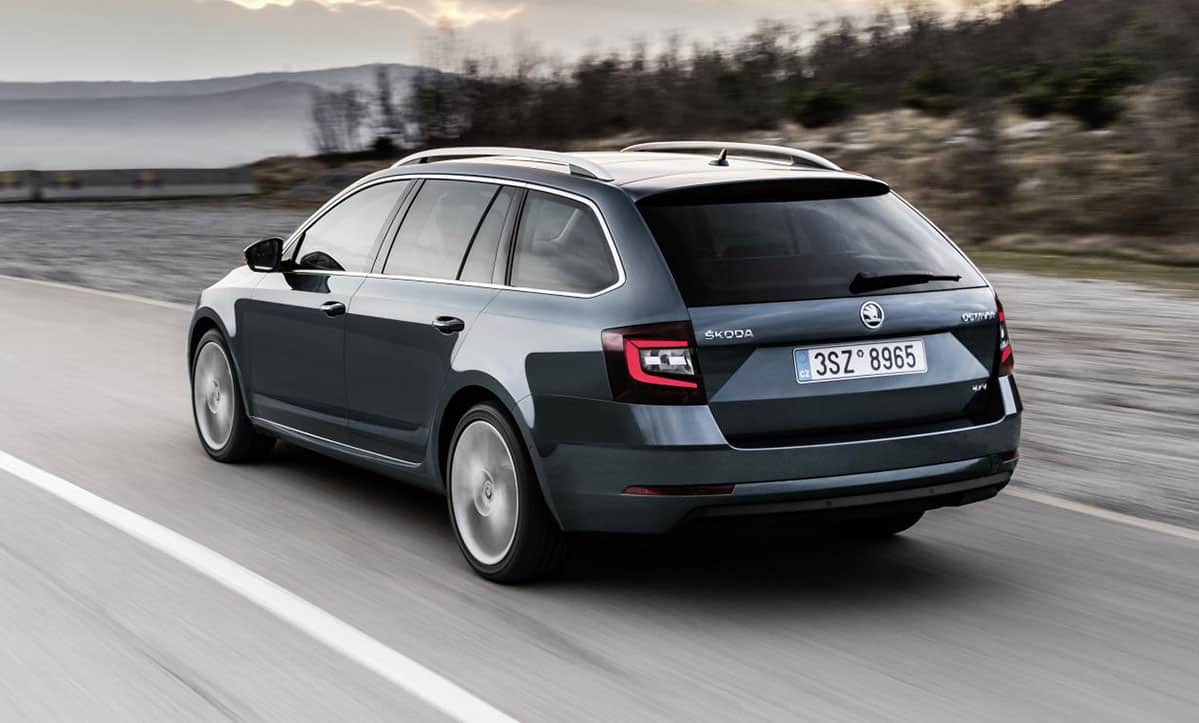
The rear also gains bumper modifications while the LED tail lamps offer two variants including C-shaped light signatures.

Skoda Octavia 02

While the basic shell remains the same, the changes add 11mm to the length of the hatch, and 8mm to the estate. The rear track also expands, by 20 or 30mm depending on engine choice.

Across the mainstream Skoda Octavia range there are two TSI petrol engines and three TDI diesels, with power outputs ranging from 115 to 184hp. An 86hp petrol unit is joining the line-up but won’t apparently be offered to UK buyers.

Most major engine changes are to the most powerful units fitted to the vRS models. The 2-litre TSI petrol now produces 230hp, up by 10hp on the current model, while the TDI diesel puts out 184hp. It combines this with combined cycle fuel economy of 62.8mpg and 115g/km of CO2 emissions.

Most of the range gets a choice of manual or DSG transmissions while buyers of the cars with the 2-litre TDI can also specify all-wheel-drive.

Infotainment upgrades

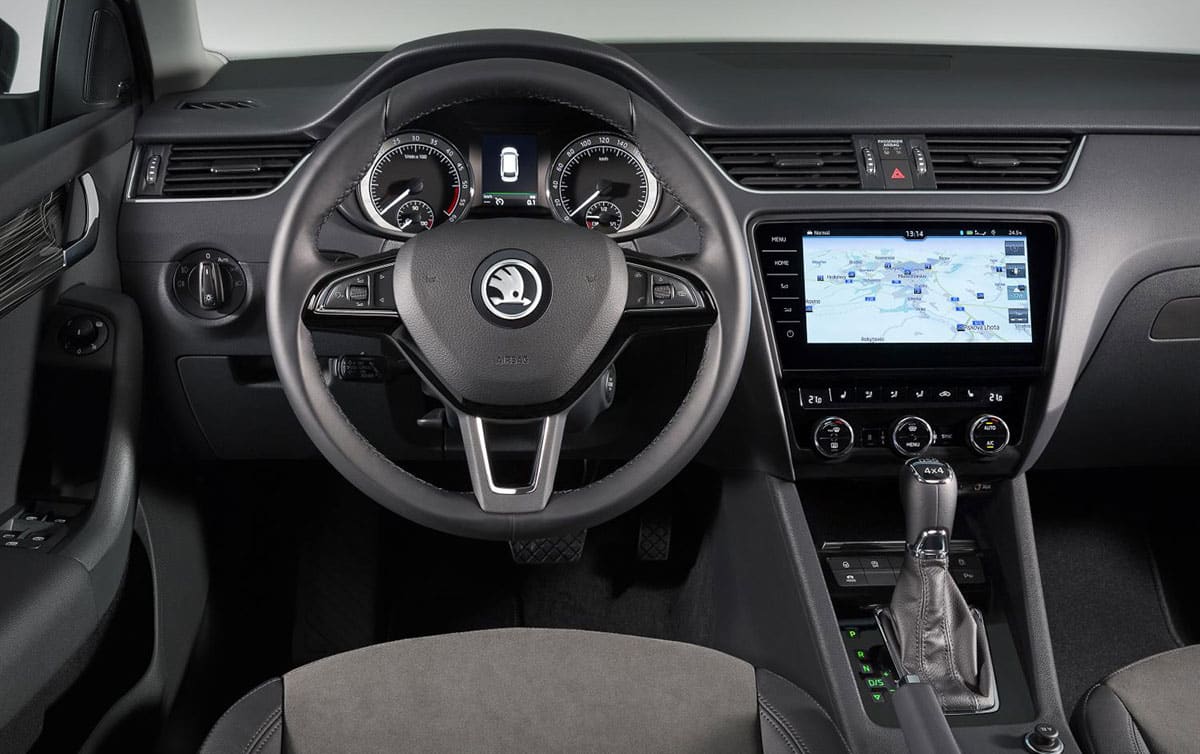
Changes to the interior styling are subtle, to the equipment significant. New-generation infotainment systems start with an eight-inch touchscreen and range up to the Columbus navigation system with a 9.2-inch display, Wi-Fi hotspot and Phonebox smartphone charging.

Connectivity now includes a range of streamed services, among them Infotainment Online, the Care Connect assistance feature and remote services using the Skoda Connect smartphone app. Apple CarPlay, Android Auto and MirrorLink smartphone integration are all supported.

Drive assistance systems available for the Octavia have mushroomed in choice, new systems including Trailer Assist, the Predictive Pedestrian Protection function, Blind Spot Detect and Rear Traffic Alert.

And the signature Skoda ‘Simply Clever’ features have also been expanded. Two USB ports in the rear, folding tray tables on the back of the front seats, bottle holders that make the opening of bottles easier and a removable LED torch in the Estate’s boot are all available.

Facelifted Octavia models are expected on UK roads from March – prices are still to be announced but are expected to be slightly higher than the current car that starts at £16,660.

Detroit show: Volkswagen Tiguan stretches out

0

Debuting at the North American International Auto Show is an extended version of the big-selling Volkswagen Tiguan SUV.

Presented at Detroit as the LWB (long wheelbase) the car will go on sale first in the USA and then China, before arriving in the UK late in 2017 as the Volkswagen Tiguan Allspace.

It will be offered in both five-seat or optional seven-seat versions, though reports suggest that the rear two seats will not be very suitable for adults.

The standard Tiguan wheelbase is extended by 110mm, and the overall length by 215mm, creating a potential extra 115 litres of bootspace.

Other expected changes include minor exterior styling tweaks, chiefly to the bonnet and grille. The engine line-up is yet to be confirmed but will likely range across 1.4-litre TSI petrol and 2-litre TDI diesel units, with all-wheel-drive also available.

Volkswagen’s typical Trendline, Comfortline and Highline trim levels are expected on UK models, with prices starting around £3,000 more than the standard Tiguan.

Volkswagen Tiguan Allspace

Detroit show: Audi Q8 targets Range Rover

When the Audi Q8 launches in 2018, it will become the German brand’s flagship SUV model. And the looks of the newcomer have been revealed at Detroit on a ‘near-production’ concept.

The Audi Q8 is expected to propel the brand into a new luxury market taking on the likes of the Range Rover. It is a large machine with striking exterior lines in a coupé style.

The car will certainly make its presence felt – it sits on an enormous 23-inch wheels, with ceramic brake discs of 20-inch diameter behind them. A notable design element is the wide, flat rear screen pillar, continuing the style seen recently on the new Q2 mini SUV.

Four-seat interior

Inside four seats are fitted, the intention being to offer what Audi describes as an ‘extremely comfortable’ experience. A wheelbase of some three metres frees up interior space while rear-seat passengers are promised ample head and shoulder room despite the coupé looks.

The driver’s surroundings are distinguished by large touchscreens, expanding the current Audi virtual cockpit, plus an analogue head-up display. All are incorporated into a gloss black wraparound cockpit design.

The Audi Q8 will make use of a plug-in hybrid powertrain combining a 333hp 3-litre TFSI petrol engine and a 100kW electric motor. Total power is 450hp with 700Nm of torque., which produces a 0-62mph time of 5.4 seconds.Audi Q8 02

Total potential range is quoted at 621 miles, with 37 miles possible on purely electric power. The Q8 will also return combined cycle fuel economy of 122mpg and CO2 emissions of 53g/km.

The production Audi Q8 is due to go on sale in 2018 with a likely starting cost of at least £60,000.

Audi Q8 03

Detroit show: Coupé takes Mercedes-AMG to six

Mercedes-Benz celebrates the 50th anniversary of its Mercedes-AMG performance division at the Detroit show with the unveiling of a new coupé model.

The Mercedes-AMG GT C Coupé is effectively a hard-top version of the already launched AMG GTC Roadster. It will join the range between the GT S and GT R models, extending the Mercedes-AMG line-up to six models.

Initial examples will be sold as special ‘Edition 50’ models to celebrate the golden jubilee of Mercedes-AMG.

The Mercedes-AMG GT C Coupé borrows several elements from its more expensive GT R sister, including the wider and more muscular rear end, extended by 57mm over the GT and GT S versions. The GT R’s rear axle steering is also fitted – aiding handling, it turns in the opposite direction as the front axle at speeds under 62mph, and in the same direction at higher speeds.

Power for the Coupé comes from the same 4-litre V8 petrol engine as in other GT variants, in the GT C roadster specification with 557hp and 680Nm of torque. Despite weighing 35kg more than the roadster the Coupé returns the same 0-62mph time of 3.7 seconds and will go on to 196mph.

Two colours for special edition

Edition 50 will be offered in two bespoke paint finishes: designo graphite grey magno and designo cashmere white magno. Both versions include black chrome highlights on the side skirt trim, the front splitter, the air inlet trim strips in the grille, the side air outlet fins in the front wings, the rear diffuser moulding and the exhaust tailpipe trims. The surfaces of the cross-spoke AMG forged wheels gain a similar treatment.

Inside there is silver pearl/black nappa leather with grey diamond-patterned contrasting top stitching, and a black steering wheel with grey contrasting top stitching. The AMG Interior Night package is fitted as standard – steering wheel spokes, shift paddles and door sill panels are finished in black, along with silver seat belts and black chrome trim.

Power gains across range

Meanwhile other GT models are gaining upgrades. The entry-level GT’s power goes up from 462 to 476hp and it also gets an extra 30Nm of torque. The GT S gains 12hp (522hp) and 20Nm.

Further changes see the Airpanel active air management system, standard on the range-topping 585hp GT R, being extended to all GT variants. An electric motor opens and closes vertical shutters in the grille, at one-second intervals, to constantly prove the exact amount of cooling needed.

UK prices of the Mercedes-AMG GT C Coupé are due to be announced shortly – first deliveries are set for summer 2017.

Mercedes-AMG GT C 03

Detroit show: Lexus LS range-topper debuts

The new Lexus LS range-topping saloon unveiled at the Detroit show, has been dubbed “the definitive new generation luxury car” by its designers.

Destined to be sold in 90 countries across the glove, the new Lexus LS will target very strong rivals including the mass-selling Mercedes-Benz S-Class.

Lexus claims to have imagined it was launching the brand all over again before creating the fifth generation of the model that launched the upmarket arm of Toyota in 1990.

The resultant Lexus LS is certainly distinctive. At 5.2m in length, it measures up 15cm longer than the car it replaces, on a wheelbase of 3.1m. This is 4cm longer than the long-wheelbase version of the current LS, and Lexus says the new car will only be offered in this form.

Coupe silhouette

It sits lower too – the ride height shrinks by around 2cm, the bonnet 3cm and the roof by some 4cm. Despite this and the coupe-like silhouette, Lexus promises both plenty of space and top quality inside the LS.

Lexus LS 03

The new Lexus design language is applied to the brand’s latest GA-L platform. Also used for the new LC coupe and extended for the LS, it is described as the stiffest architecture in Lexus history. Rear-wheel drive is standard, while all-wheel-drive will be an option.

Lightweight materials are used throughout, including ultra-high-tensile steel and aluminium, helping to cut 90kg from the shell weight. Together with the extra rigidity and a lower centre of gravity significant handling improvements are promised.

These will be further aided by the Vehicle Dynamics Integrated Management (VDIM). This oversees all of the car’s sub-systems including braking, steering, powertrain and suspension. Further input comes courtesy of active anti-roll bars the Lexus Dynamic Handling (LDH) system, which uses independent front and rear steering.

New 3.5-litre engine

The Lexus LS debuts a new powertrain, a 3.5-litre V6 petrol engine matched to the first ten-speed automatic transmission in a luxury saloon.

With 421hp on tap and 600Nm of torque, the new twin-turbo V6 is significantly more potent than the V8 in the current LS – all-wheel-drive versions will boast a 4.5-second 0-62mph time. The unit is also said to offer significantly improved efficiency, though Lexus is yet to release figures.

The 10-speed auto debuted in the LC coupe. While a torque convertor unit, Lexus claims auto shift times to rival dual-clutch designs. Paddle controls allow the driver to shift manually if desired.

Industry observers also expect Lexus to produce a petrol-electric version of the LS drawing upon Toyota’s extensive hybrid technology. Its effective sister car the LC Coupe is offered in hybrid form.

Lexus LS 04

Lexus chief designer Koichi Suga claims that interior of the LS is like no luxury car ever previously seen. The front seats include 28-way power, heating, cooling and massage functions, also featuring on the rear seats to which particular attention has been paid.

Rear-seat passengers can specify an ottoman leg rest, and the seat behind the front passenger can be reclined by up to 48 degrees and raised up to 24 degrees to ease exit from the car.

Further interior highlights include new wood slicing and laser-cutting techniques for the trim and the latest generation of the signature Mark Levinson in-car entertainment system.

The Lexus LS is expected on sale towards the end of 2017, and Suga is in no doubts to its importance to Lexus, saying; “More than any other model, it embodies the history and image of Lexus and serves as a symbol for everything the brand stands for.”

Lexus LS 02

Detroit show: Volkswagen Camper goes electric

0

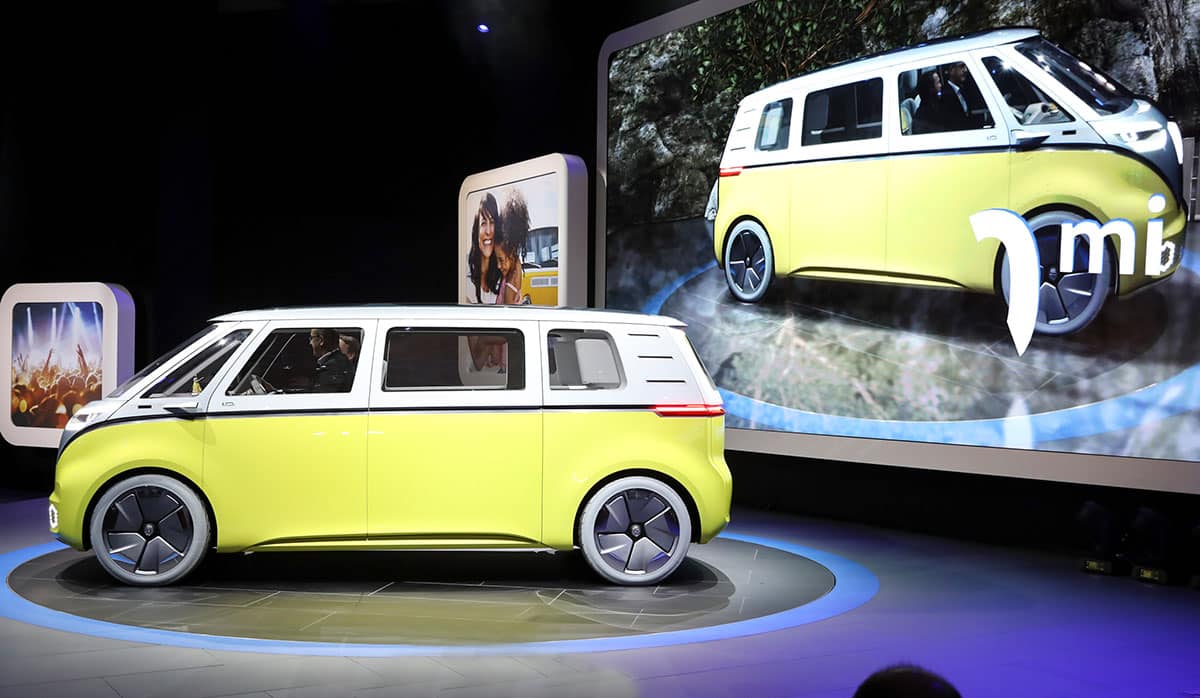
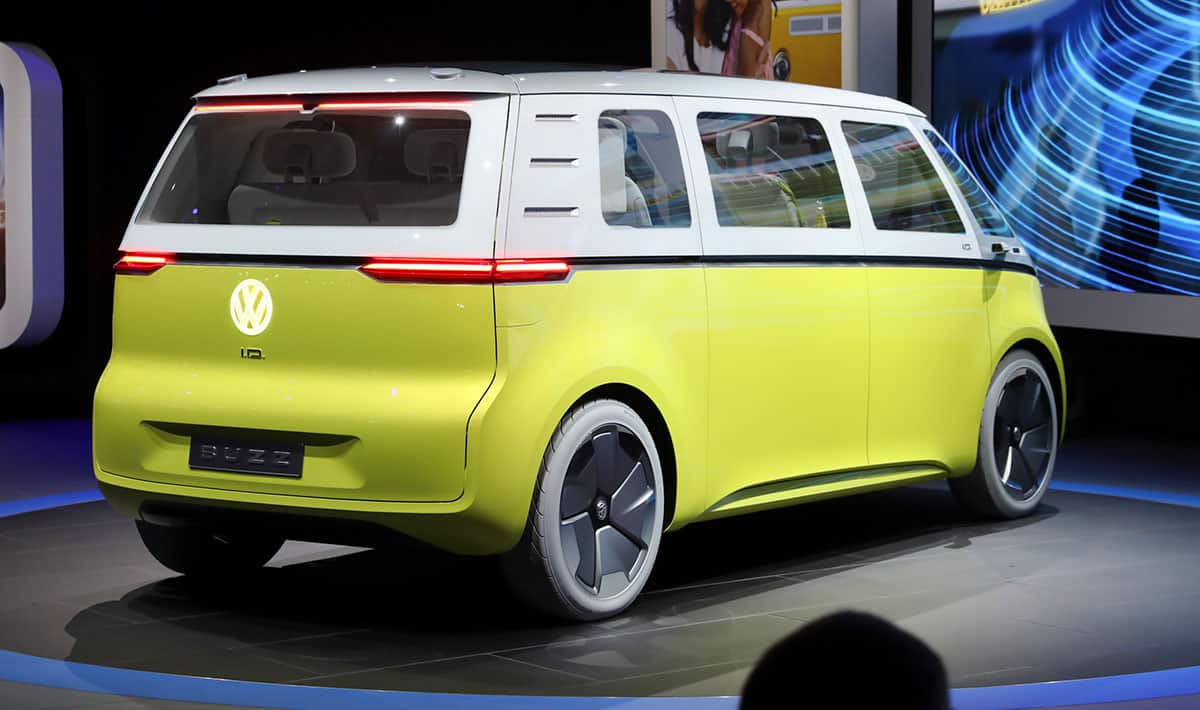
Image revival is a factor in the Volkswagen I.D. BUZZ concept, unveiled at the North American International Auto Show in Detroit.

The German brand’s reputation has been most heavily damaged in the USA, where the ‘Dieselgate’ scandal started in September 2015. And the crisis continues – a VW executive was arrested in Florida this week on his return from holiday.

The Volkswagen I.D. Buzz is the third of the brand’s MEB electric concepts, following the Budd-E and I.D. hatch both revealed in 2016. All are elements in Volkswagen’s bold plan to produce one million electric vehicles by 2025.

Volkswagen I.D. BUZZ 01

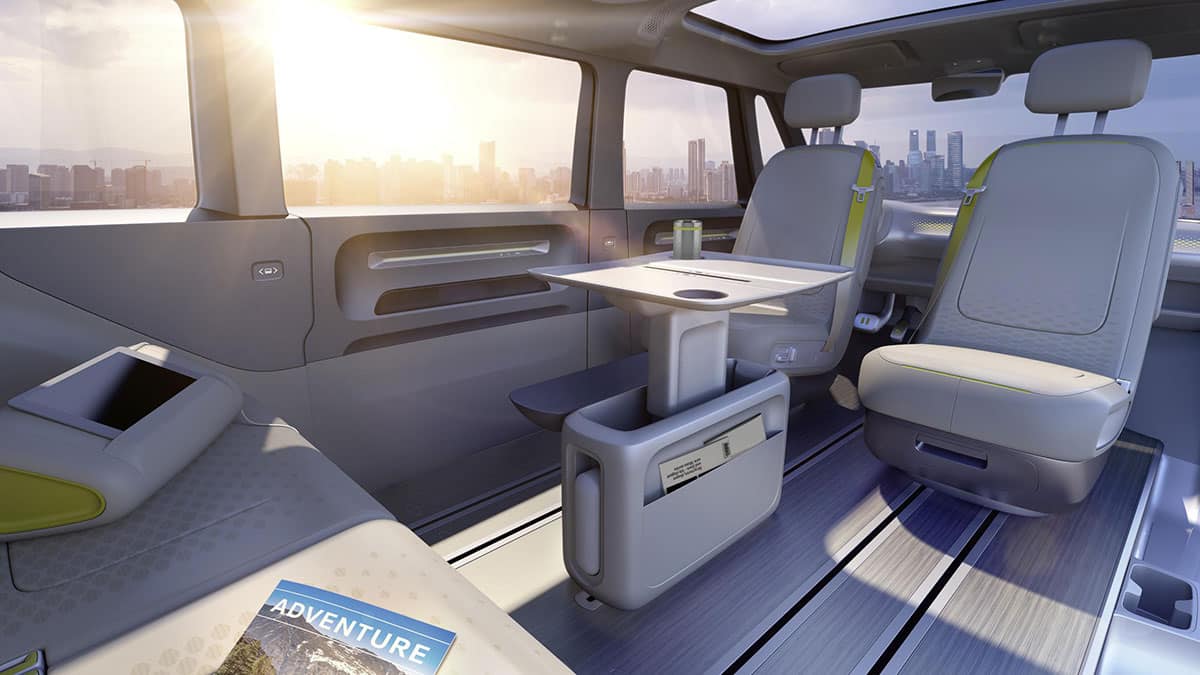
The latest concept reinvents the brand’s iconic Camper van that rose to fame in the ‘hippy era’ of the 1960s. However alongside its retro styling the car is a people carrier with seating for up to eight – Volkswagen believes it could appeal to ride-sharing companies such as Uber.

Range of the I.D. Buzz is up to 373 miles on one charge under EU testing standards. More strict US standards quote a range of 270 miles. The energy comes from a 111kW battery pack that can be charged to 80% in under 30 minutes.

First self-driving Volkswagen

Volkswagen I.D. BUZZ 02

Volkswagen describes the I.D. Buzz as the brand’s first concept that can be driven fully automatically and the world’s first fully-autonomous MPV. The concept includes the fully automated ‘I.D. Pilot’ mode, expected to go into production in 2025.

Under I.D. Pilot, a gentle push on the steering wheel moves it back into the cockpit panel, switching the car into the fully automated mode. The driver can then turn their seat to face the passengers in the back and enjoy a conversation or hold a meeting.

Meanwhile the car continues its journey using laser scanners, ultrasound sensors, radar sensors, area-view cameras and a front cameras to scan the surrounding area, with other traffic data being received via the Cloud.

Reaction of Detroit showgoers to the Volkswagen I.D. Buzz could decide its future – if the signs are positive, a self-driving production MPV could launch within five years.

Volkswagen I.D. BUZZ 03

Detroit show: Petrol future for Infiniti QX50

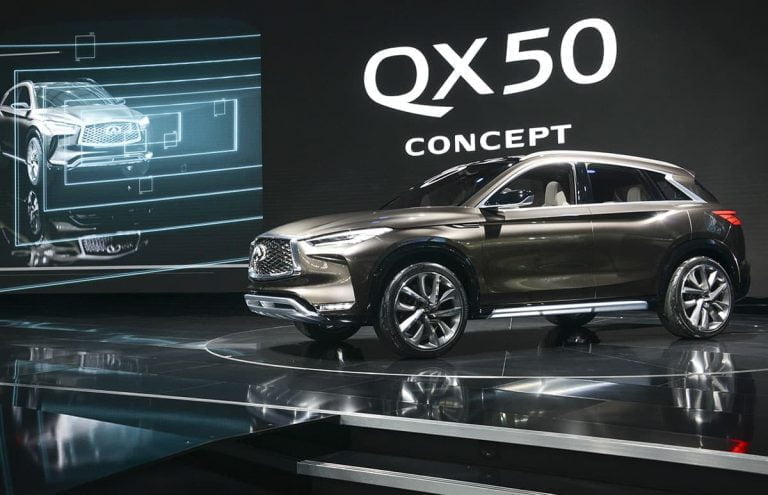
The Infiniti QX50 has debuted at the North American International Auto Show in Detroit in concept form.

The production version of the new SUV is expected to launch in the USA in 2018, and then go on sale in Europe at a date to be determined.

Biggest headline of the new Infiniti QX50 is likely to be its engine – the brand is targeting a launch for its VC-Turbo 2.0-litre petrol engine with the car.

This compact unit is the first production petrol engine with a variable compression ratio. Infiniti says it offers the power of a typical V6 petrol engine but with fuel economy some 27 per cent better and closer to diesel units. Nissan’s luxury brand has previously suffered in SUV sales by only being able to offer petrol engines.

The styling of the QX50 is evolved from the QX Sport Inspiration concept that Infiniti showed in 2016. The brand’s ‘Powerful Elegance’ design language combines with an interior design that is described as ‘driver-centric, passenger-minded’ .

‘Co-pilot’ driver aids

Infiniti Q50 02

Infiniti has also used the concept to preview autonomous driving technologies set to be rolled out by the brand on future models. Infiniti says that its technologies will act as ‘a co-pilot’ rather than taking full charge of the car, allowing drivers to retain control over their vehicle. More boring tasks, such as navigating stop-start traffic, will be carried out autonomously, leaving the more enjoyable aspects of driving to the driver.

Unveiling the QX50 Concept, Infiniti president Roland Krueger is not yet stating specifically that the production version is on the way. “With the unveiling of the QX Sport Inspiration at the 2016 Beijing Auto Show, we showed the future of Infiniti QX models,” he says.

“The new QX50 Concept evolves this concept further and shows how Infiniti could develop its future presence in what is the fastest-growing vehicle segment globally.”

Infiniti Q50 03

Detroit show: potent Audi SQ5 debuts

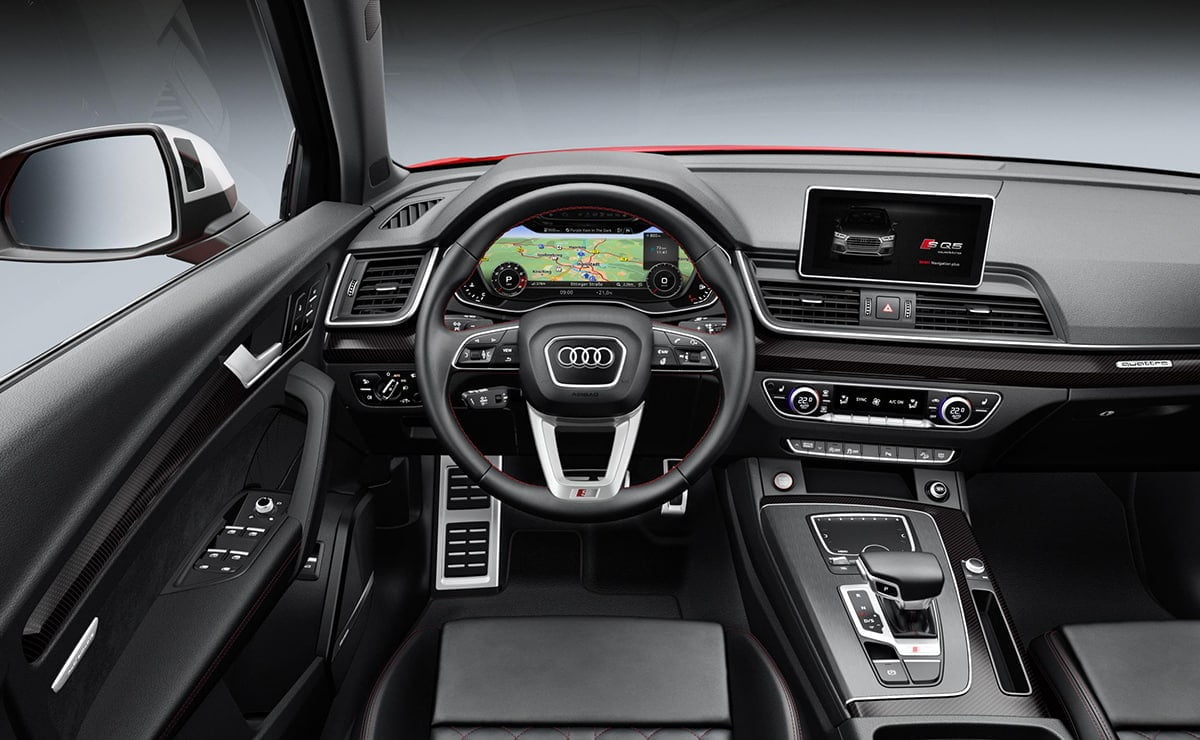
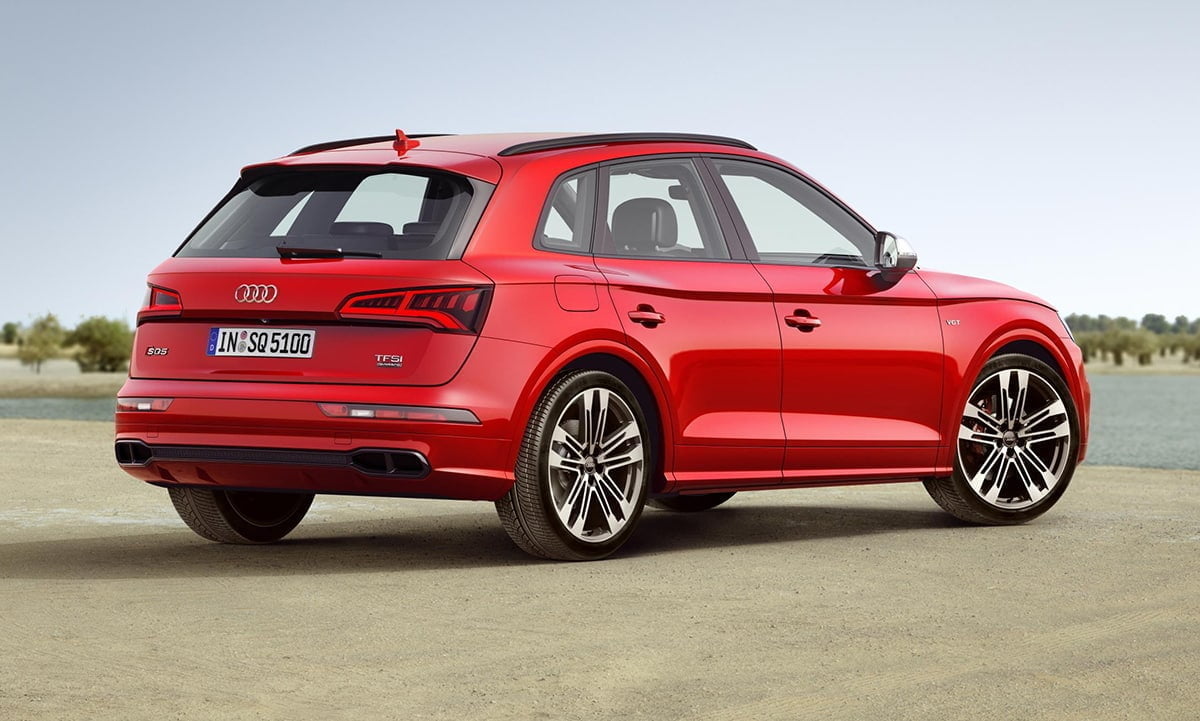
A 354hp engine powers the new Audi SQ5, unveiled at the North American International Auto Show in Detroit.

Like its predecessor, the first Audi Q model to gain a sporty S variant, the new SQ5 will again become the flagship version of the latest Audi Q5 range, which is set to arrive in showrooms in April.

The new Audi SQ5 uses the brand’s V6 TFSI petrol engine, which also puts out 500Nm of torque and propels the car through 62mph from rest in 5.4 seconds.

Efficiency improvements, mainly through a new combustion process that changes the amount of valve lift depending on the load, sees the car returning combined cycle fuel economy of 34mpg and CO2 emissions of 189g/km.

Turbocharging replaces the supercharged unit fitted to the previous SQ5 – a twin-scroll turbocharger is mounted in the Vee between the two cylinder banks. This allows short flow lengths for the intake and exhaust and more efficient gas flow.

The unit is also 14kg lighter than the unit it replaces and matched to an eight-speed tiptronic transmission and quattro permanent all-wheel-drive. Power biases slightly to the rear under normal driving but can be transferred to any axle that most needs it, with torque control that works on all types of surface.

Slight braking of the inside wheels under cornering improves turn in, and this can be further enhanced with an optional sport differential. Mounted between the rear wheels it can increase torque to the outside axle when accelerating out of a tight corner. It can also cut understeer on turn-in.
Five-link suspension is fitted at front and rear along with active dampers, their settings determined along with engine, steering and transmission by the cockpit-controlled Audi Drive Select system. Cast aluminium 20-inch wheels are fitted as standard, with 21-inch versions on the options list.

Driver aids feature

Equipment already offered on the new Audi Q5 range is extended to the SQ5, including an expanding selection of driver-assistance systems such as the pre-sense city aid that warns the driver of encroaching pedestrians and vehicles and can brake the car automatically if needed. Audi’s range-topping MMI navigation and infotainment system is also fitted as standard.

Audi SQ5 orders open at the end of January with the first versions arriving in showrooms in the summer of 2017. Prices are to be announced but expected to be slightly more than the £52,300 of the previous version.

Audi SQ5 03

Detroit show: Kia Stinger targets the Germans

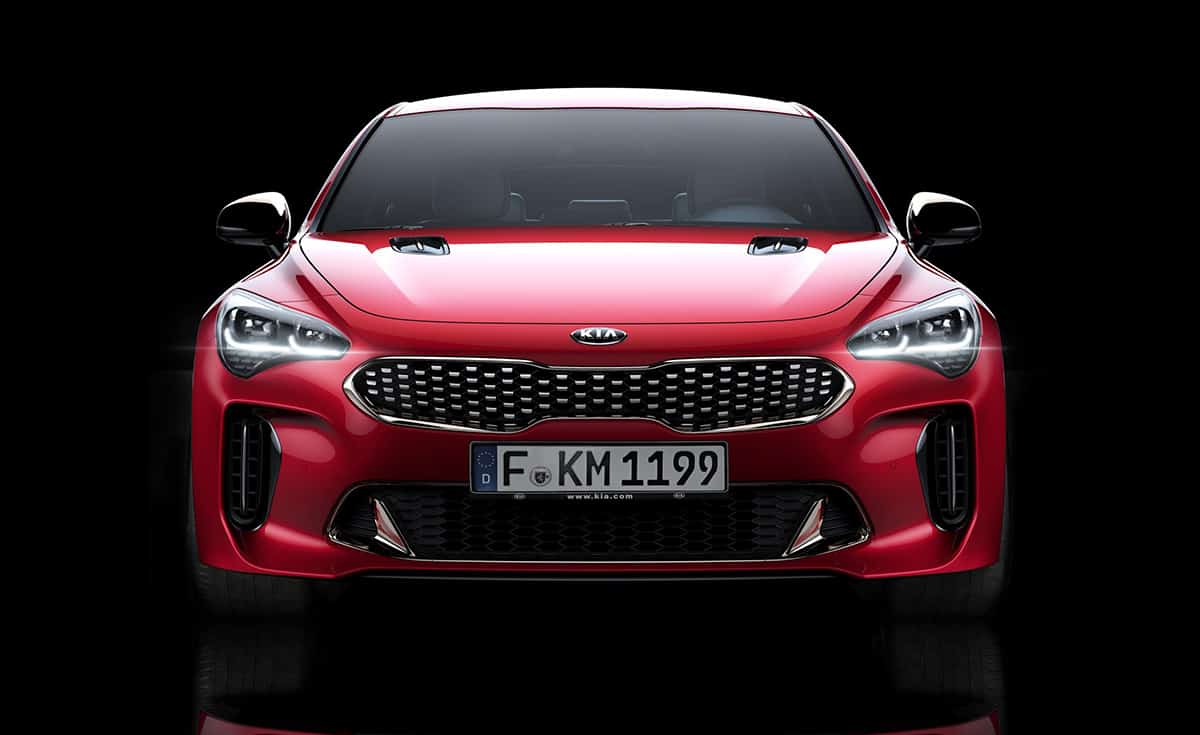
The Kia Stinger, unveiled at the North American International Auto Show in Detroit, is a car charged with redefining the Korean brand’s image.

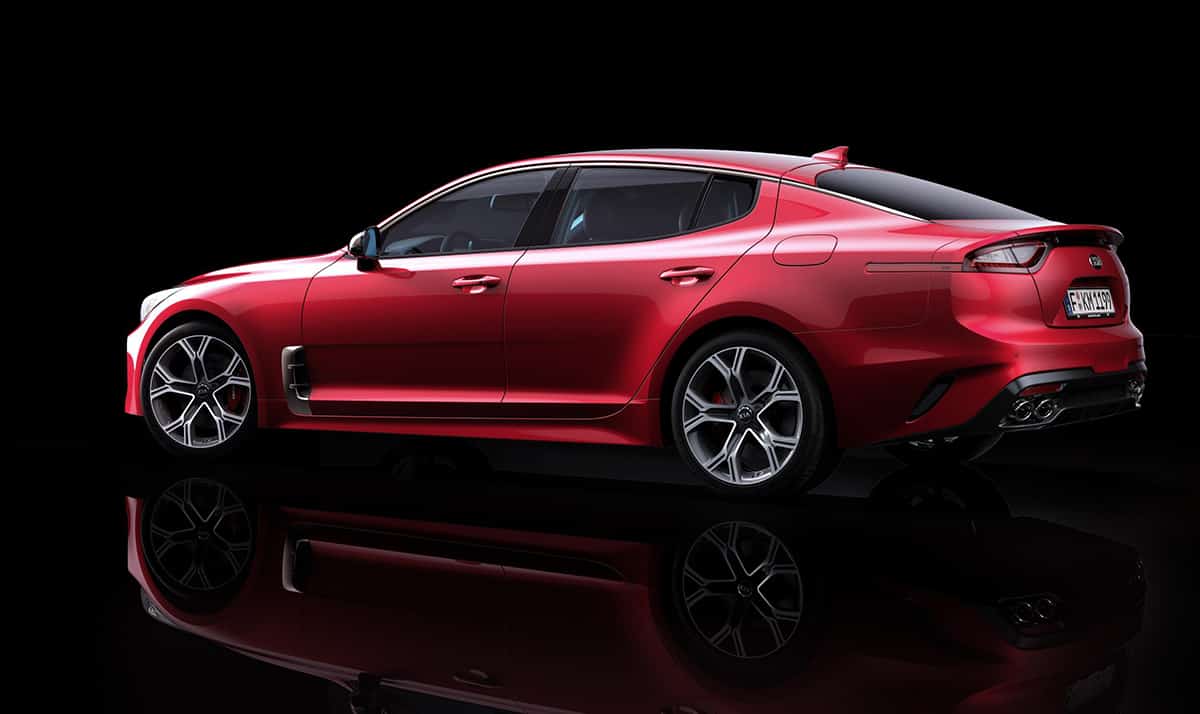
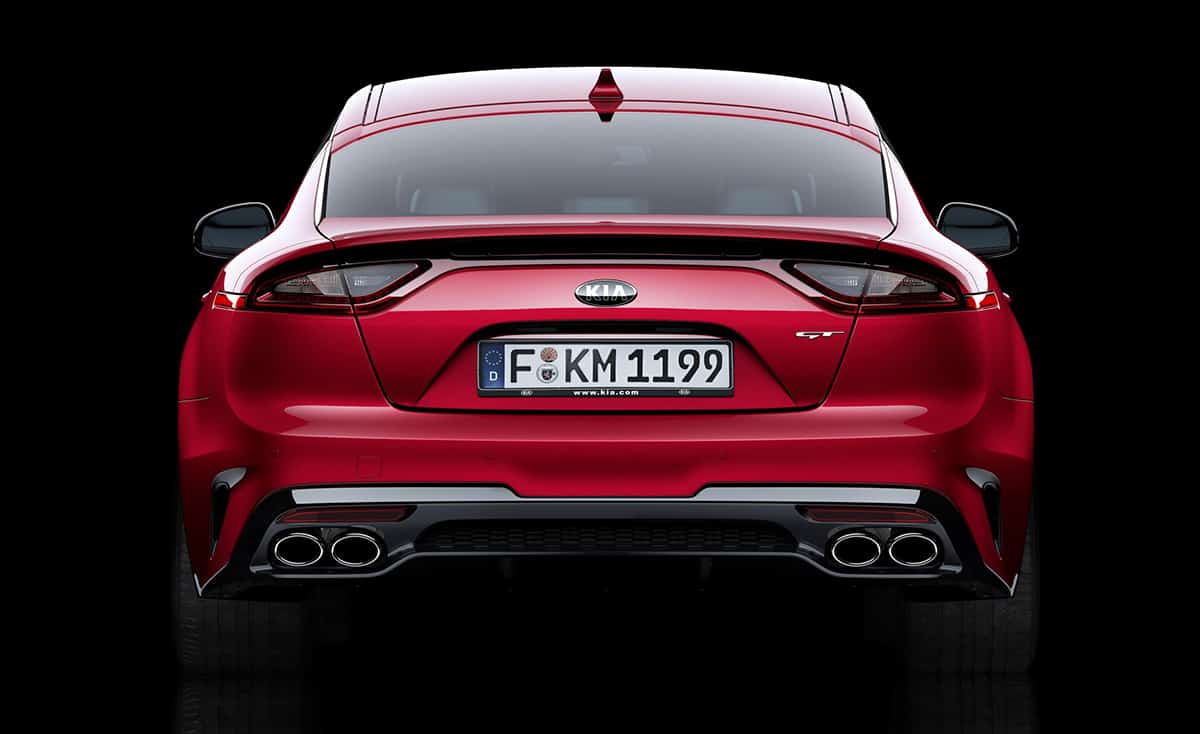
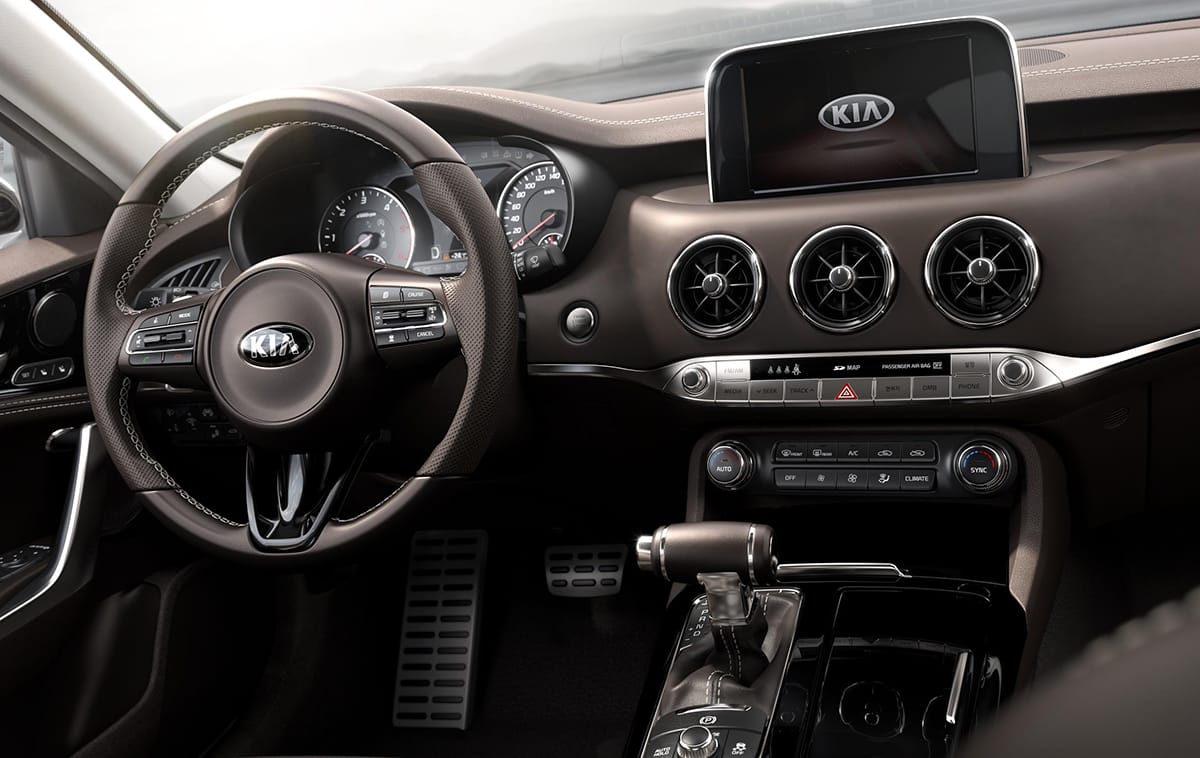
The Stinger is a fastback sports saloon, the highest-performance production vehicle in the history of Kia, and set to pitch the brand into battle against the performance versions of the premium German manufacturers’ biggest sellers, the BMW 3 Series, Audi A4 and Mercedes-Benz C-Class. The car’s creators are promising that the car will shake up a segment dominated by European products.

Design of the four-door, five-seater has been overseen by Peter Schreyer, Kia Motors’ Chief Design Officer, and the brand’s Frankfurt design team. It was evolved from the GT concept first shown as long ago as 2011, and includes themes from the Stinger GT4 concept car from the Detroit show in 2014.

Potent GT version

Kia says that eventually the Stinger will be offered with ‘multiple engine and drivetrain configurations’, but currently two powertrains have been announced. Standard fit will be a 2.0-litre turbocharged four-cylinder unit with around 255hp and 346Nm of torque, but most interest surrounds the 3.3-litre twin-turbo V6 unit which is targeting 365hp, 510Nm and a 5.1-second 0-62mph time. This will make the Stinger more potent than an Audi S4 and is expected to be offered in a range-topping GT model.

Both engines will be matched to a new eight-speed auto transmission with steering wheel paddle shifts, first released in Kia’s K900 luxury saloon, and a rear-wheel-drive transmission. Rear drive is considered essential for true performance cars while all-wheel drive will be available in some markets.

1701 Kia Stinger 03

The Stinger’s throttle mapping, transmission, suspension and steering will boast several driving modes selectable through an electronic system.

The car’s chassis has been developed by a team led by Albert Biermann, formerly at the M performance division of BMW. He describes the Stinger as “a special event,” for the Kia brand. “Because nobody expects such a car, not just the way it looks but also the way it drives – it’s a wholly different animal,” he says.

A large car

At 2.9m, the wheelbase of the Kia Stinger is longer than many mid-sized saloons such as the Audi A4, Infiniti Q50 and Mercedes CLS. The car also boasts greater length (4.8m) and width (1.9m) than much of the segment, and Kia promises spacious interior and boot space.

The chassis is 55% high-strength steel with a MacPherson Strut front suspension and a multi-link rear from which are hung 19-inch wheels. A first for Kia is Dynamic Stability Damping Control, adjustable electronically by the driver.

The production Kia Stinger will arrive in showrooms late in 2017. Prices are yet to be announced, but industry sources predict the GT version could cost around £43,000.

Vauxhall Mokka X review

0

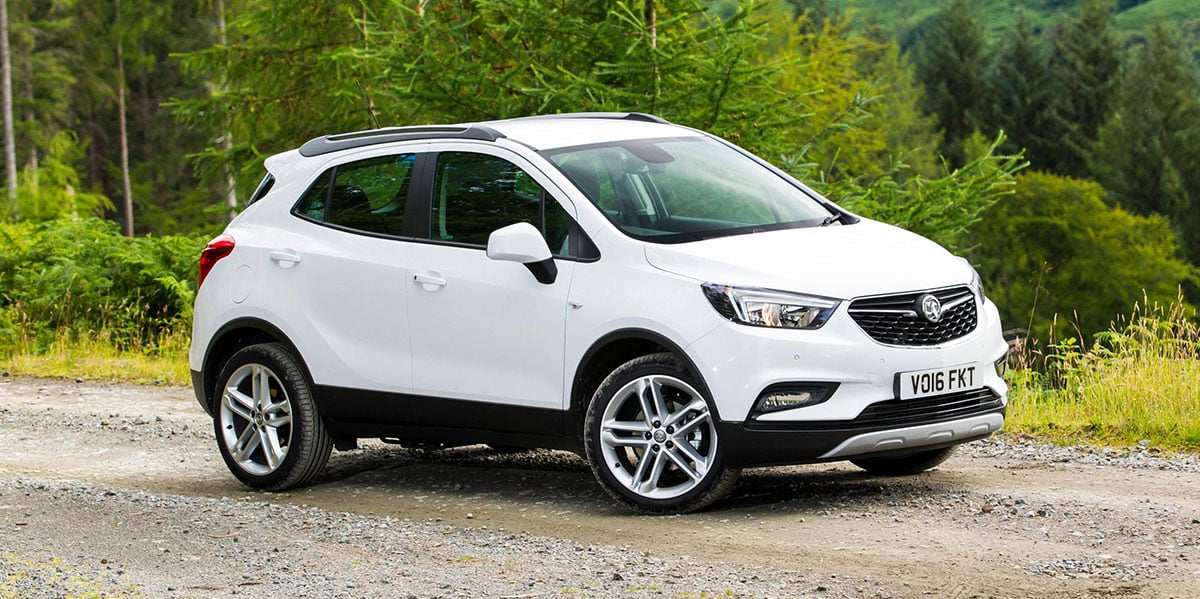
What is it? The Vauxhall Mokka X is a major update to the four-year-old Mokka crossover
Key features: Revised styling, improved interior, new name
Our view: The updates add appeal to the model but the Vauxhall Mokka X is still overshadowed by rivals
Type of review: Taster test


1701-Vauxhall-Mokka-X-review-03
The Vauxhall Mokka first appeared in late 2012 and while it has not exactly written many headlines, it has proved a major sales success for the Griffin brand. And while every manufacturer needs to be in the crossover market right now those already in it cannot sit back – new models and new rivals are appearing all the time.

So rather than simply produce a typical mid-life refresh, Vauxhall has chosen to present the car as a new model. The extra ‘X’ sees the Mokka head up a new crossover line from Vauxhall and before the end of 2017 it will be joined by sister models the Crossland X and Grandland X.

What’s new – engines

Mechanically, the car gains an extended engine line-up, adding a more powerful 1.4-litre turbo petrol unit of 152hp and the 1.6-litre ‘whisper-jet’ diesel with 110hp.

You can only buy the new range-topping petrol engine with all-wheel-drive and an auto gearbox. Current evidence shows, however, that the vast majority of buyers will be happy with front-wheel-drive – wanting the looks not the ability. And with more drivers turning back to petrol we opted instead to try a Mokka (sorry, Mokka X) fitted with the less powerful 1.4 unit of 140hp.

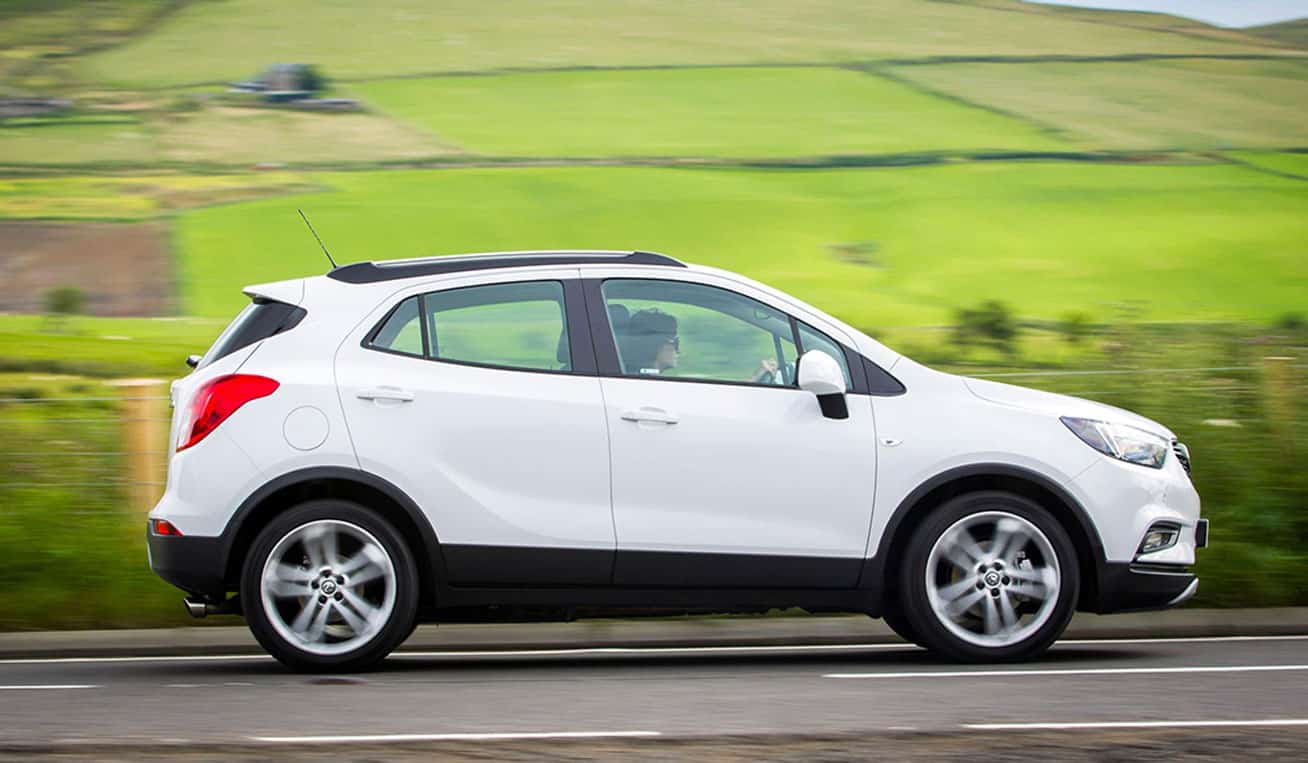
This really is all one needs – it offers reasonable pace, hitting 62mph from rest in 9.9 seconds and returning combined-cycle fuel economy of 47mpg, though with the trade-off of 140g/km CO2 emissions. On the road it is reasonably refined, feeling pacey but not coarse, the six-speed manual gearbox more satisfying than the auto and the car riding well.

Of course the diesels will provide greater fuel economy – the new unit returns combined cycle figures of up to 72mpg, its more powerful 136hp sister 69mpg, with COemissions down to 103 and 106g/km respectively. But you will need to consider carefully whether your running cost savings will justify the price jump of close to £2,000.

What’s new – looks and equipment

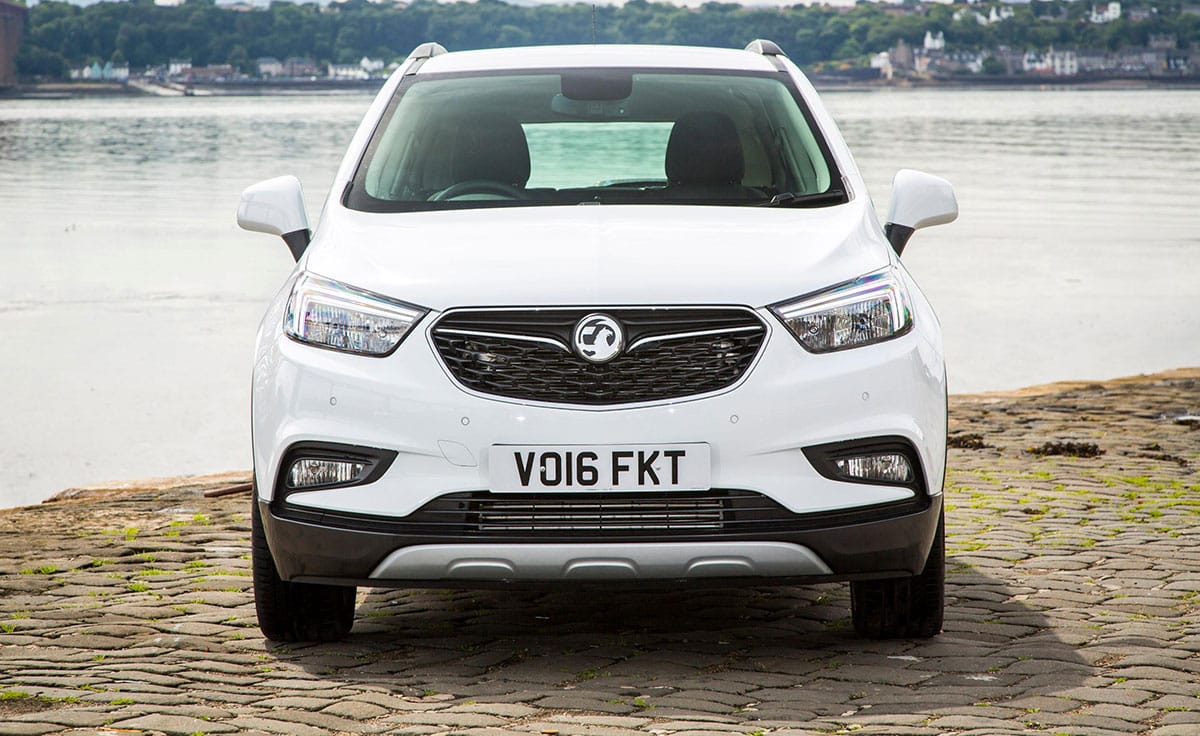
The major changes to the Mokka X are to the exterior styling, and the quality of the interior. From the front you will easily tell an X from a Mokka – the new design is a definite improvement, the elements appear much more integrated.

The creases are softer, the grille wider, the chrome add-ons are gone, and the headlamps are less dominating and with daytime running lights built in. The Mokka X also follows other Vauxhall models in being able to be specified with the optional AFL LED lights that adapt to driving conditions over nine different settings.

At the rear you will need more assistance from the registration plate to identify a new Mokka X. The main differences are in the lower bumper area, notably much less obvious reflectors.

Inside the Mokka X adopts the latest Vauxhall thinking on dash layouts as seen on the recent Astra. Now dominated by the seven-inch touchscreen of the IntelliLink system, the result is a decluttered, more user-friendly layout.

The car also gains quite a lot of technology. The IntelliLink offers smartphone app integration through Android Auto and Apple CarPlay, as well as more typical features such as Bluetooth and audio streaming.

The upper two of the four Mokka X trim levels see the IntelliLink screen grow by an extra inch and add extra features, including an integrated navigation system and the ability to watch videos when the car is at rest.

OnStar, the Vauxhall personal assistant service, is also standard across the Mokka range. While headlined by its automatic reaction function in an emergency, for example alerting emergency services if the car crashes, OnStar also offers a wide range of additional features. These can range from navigation advice through one of the advisors contacted through a button in the cabin, to controlling functions such as door locking through a smartphone app. Vauxhall claims with some justification that OnStar is the industry leader in such connected services.

Verdict

The Vauxhall Mokka was due for an update and the Mokka X is a lot more than window dressing. The changes do not turn the car into a class leader – compare prices particularly in the higher trim levels and several perhaps more appealing rivals will compete for attention. But the entry-level models, in particular, are certainly worthy of consideration and the Mokka X should continue the line’s strong sales performance.

Vauxhall Mokka X – key specifications

Model tested: Vauxhall Mokka X 1.4T 140PS
Price: From £18,310 (Range starts £17,590)
On sale: October 2016
Engine: 1.4-litre petrol, 140hp, 200Nm
0-62mph and max speed*: 9.9sec, 120mph
Economy and emissions*: 47.1mpg ,140g/km
Key rivals: Nissan Juke, Honda HR-V, Renault Captur
Test date: December 2016
* = front-wheel-drive version

1701-Vauxhall-Mokka-X-review-06

Next Nissan Leaf confirmed at electronics show

The next Nissan Leaf electric car will be built with the brand’s newly-developed ProPilot technology, enabling autonomous driving on single-lane roads.

Plans for the car have been revealed as part of a keynote speech by Nissan CEO Carlos Ghosn at the Consumer Electronics Show in Las Vegas.

The new Nissan Leaf is expected to replace the current car (above) at a date that the brand will not currently reveal – industry sources suggest that 2018 is likely.

A next-generation Leaf will certainly offer a much greater range than the current car – based on the example of the IDS concept shown at the Tokyo Motor Show in 2015, a 340-mile capability is predicted.

The Leaf is the world’s best-selling EV with more than 250,000 sold. In the process its makers claim to have saved more than 497,000 tons of CO2 emissions – equivalent to those of 52,000 US homes.

Electric infrastructure

Nissan adds that it focusing on vehicle electrification and diversifying its powertrains and fuel systems to suit markets around the world. As well as the core electric vehicle (EV) technology it is developing e-Power hybrids and e-bio fuel-cell vehicles.

Nissan-SAM
SAM technology will help autonomous cars deal with situations such as this.

Other technology being explored includes using the batteries of EVs not just for driving but to store energy for a number of home and society uses.

Ghosn’s speech to the CES show, an event gaining increasing importance in the motor industry, focused mainly on autonomous technology and connected driving.

During the show Nissan demonstrated artificial intelligence in vehicles, by a link-up to a NASA research centre. Dubbed Seamless Autonomous Mobility (SAM) the technology is designed to allow millions of autonomous cars to operate safely and smoothly alongside each other.

SAM will ensure that autonomous vehicles do not make decisions on actions when they should not, for example if coming across an accident. Instead they will communicate with a human ‘Mobility Manager’ for advice, and in turn learn from the experience, while communicating with other SAM-equipped vehicles.

According to former NASA scientist Maarten Sierhuis, who is now director of the Nissan Research Center in Silicon Valley, the goal is to change the transportation infrastructure.

“We want to reduce fatalities and ease congestion – we need a huge number of vehicles out there,” says Sierhuis. “What we are doing at Nissan is finding a way so that we can have this future transportation system not in 20 years or more, but now.”

Advancing connectivity

Ghosn also announced that the Renault-Nissan Alliance is continuing its partnership on the development and deployment of advanced connected technologies.

These include Microsoft Cortana, an in-vehicle virtual personal assistant that will allow the vehicle to adapt to personalised driver settings. The system will even understand different driver preferences in a shared vehicle, making each driver feel like they are in their own car.

Nissan LEAF CES
The CES Show is becoming more important for car manufacturers to attend.

Winners and losers in 2016 new car showrooms

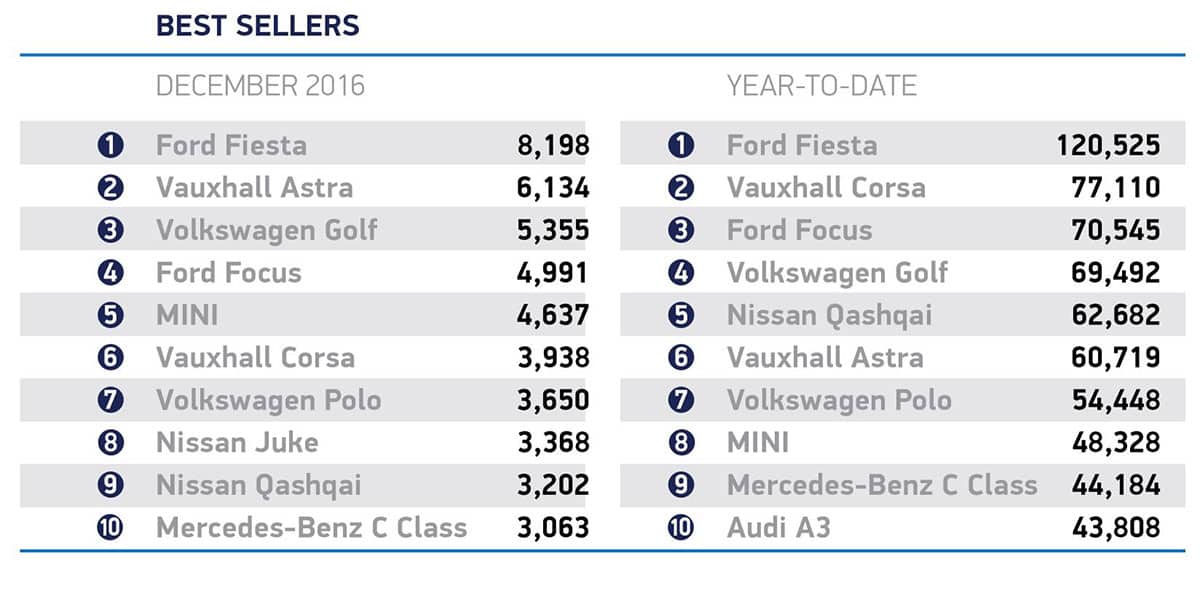
The Ford Fiesta was the most popular new car in the UK in 2016 – as it has been for many years.

According to new figures released by the Society of Motor Manufacturers & Traders (SMMT), a total of 120,525 Ford Fiesta models were registered in the UK over the year. This was more than 43,000 ahead of the runner-up in the new car top ten, the Vauxhall Corsa.

However the 77,110 registrations of the Corsa remain a strong performance in a year that saw Vauxhall fighting negative publicity resulting from at times misguided fire reports in older models.

The Ford Focus claims third place on 70,545 registrations, nosing ahead of its family hatch rival the Volkswagen Golf (69,492). And the Nissan Qashqai retains top spot in the booming crossover market, fifth overall on 62,682.

Meanwhile the SMMT figures highlight which manufacturers had a strong 2016 and which suffered. The highest growth in percentage terms came from Infiniti, the Nissan luxury brand up almost 142%. However its 2,891 cars registered represents a market share of only 0.1%.

Similarly registrations for Abarth, the Fiat performance brand, are up 45% but represent only 3,966 cars, 0.15% market share, while the 41% growth from Bentley sees the number of cars registered up by just 569 cars, to 1,948.

New-car-best-sellers
The 2016 New Car Top Ten table has a familiar look about it.

Much more impressive is the 45% rise recorded by Jaguar, which registered almost 11,000 more cars in 2016 taking the British manufacturer’s total to 34,822. Sister brand Land Rover was up 20% at 79,534.

Premium makes target volume

The figures tell a less rosy tale for the volume manufacturers. Ford registered more UK cars than any other manufacturer in 2016, at 318,316. This represents almost 12% of the entire market but is 5% down on 2015.

Second biggest maker remains Vauxhall with 250,955 registrations, down almost 7%. The 207,028 recorded by Volkswagen is a slide of 8%. And the clue could be in the next largest figures – the 182,593 registrations of BMW are up 9%, the 177,304 of Audi up 6%, and Mercedes-Benz with 169,828 up a very strong 17%. It seems more buyers than ever are realising they can own premium models previously thought of as unobtainable.

And the largest slide on the UK market? If one ignores Chevrolet, still recorded despite no longer being officially sold in the UK, the wooden spoon goes to Mitsubishi. The Japanese brand registered 18,237 cars in 2016, almost 20% fewer than in 2017.

Infiniti-sales
Infiniti is the brand seeing the greatest percentage growth in 2016.

UK new car market enjoys a record 2016

More cars were registered in the UK than ever before in 2016, the market reaching almost 2.7 million.

Despite sales slipping in December, only the second month of the year to record a negative result, the market saw its fifth consecutive year of growth.

According to new figures released by the Society of Motor Manufacturers & Traders (SMMT), 178,022 new cars were registered in December, 1.1% down on the same month in 2015.

However they contributed to a year-long total of 2,692,786 – 2.3% up on 2015 and a new record for the UK market.

The SMMT, which at the start of 2015 predicted that the market would “hold steady” in 2016 after soaring 6.3% in 2015, put the current strength in car sales down to fleet demand.

Fleet registrations grew to a record 1.38 million units, and while the private market remains high , with more than 1.2 million private buyers registering a new car in 2016, demand did fall after the first quarter of 2016.

December-car-sales
Sales slipped in December but did not prevent a record year.

Meanwhile the popularity of diesel cars is continuing to slip. They were down 6.8% in December, claiming 47% of the market compared to 49.8% a year before, and have slid back slightly over the year, holding 47.7% (2015 – 48.5%).

More buyers going electric

The appeal of alternatively fuelled vehicles (AFVs) is still climbing strongly, up 22.2% across the year. Plug-in hybrids and petrol electric hybrids, in particular, experienced significant growth, with demand up 41.9% and 25.1% respectively, while more than 10,000 motorists chose to go fully electric in 2016 – up 3.3% on 2015.

According to SMMT chief executive Mike Hawes, the market grew despite 2016’s political and economic uncertainties, and he puts this down to car makers offering “an incredible range” of innovative and high tech models.

“2017 may well be more challenging as sterling depreciation raises the price of imported goods but, with interest rates still at historic lows and a range of new models arriving in 2017, there are still many reasons for consumers to consider a new car in 2017,” Hawes says.

And continuing to focus on the Brexit process, Hawes adds; “Looking longer term, the strength of this market will rest on our ability to maintain our current trading relations and, in particular, avoid tariff barriers which could add significantly to the cost of a new car.”

New-car-sales-decade
After its post-recession lows the UK car industry is now soaring.

McLaren to replace its core Super Series line

0

McLaren is to unveil the second generation Super Series at the Geneva motor show in March.

Forming the brand’s first-ever replacement of one of its product families, the new model to be unveiled at Geneva is also the first of 15 new cars scheduled under McLaren Automotive’s bold ‘Track 22’ business plan revealed at the 2016 Geneva show.

The current Super Series is typified by the McLaren 650S, launched in both Coupe and Spider form in 2014. It followed on from the first of the McLaren Automotive line and effectively the initial Super Series model, the 12C of 2011, which itself gained a Spider sister in 2012. The current Super Series family of supercars was completed by the 675LT Coupe and Spider of 2015.

For the second-generation line McLaren has created a new monocoque central structure, dubbed Monocage II and formed completely of carbon fibre.

While offering increased rigidity it also saves 18kg in weight over the carbon fibre/metal structure used in the initial Super Series models. McLaren states that the first new Super Series model will weigh in at just 1,283kg.

Other advantages offered by Monocage II include a wider entrance for occupants and lower sills. Inside the car the driver’s view will be improved, while the centre of gravity will be lowered for improved handling.

Super Series
The McLaren 650S is the brand’s core model and a member of the first Super Series line.

McLaren is so proud of its new monocoque that it will even offer owners the opportunity of specifying a ‘Visible Monocage’ option that will feature exposed carbon fibre material on the inside of the windscreen pillars.

According to McLaren Automotive CEO, Mike Flewitt, the Super Series is the core of the brand’s business and the epitome of what McLaren is all about.

“(It) personifies the blend of extreme performance, crafted luxury and unparalleled driver involvement that is the McLaren heartland,” Flewitt says.

“This is the first time we have replaced a product family and the new Super Series will be absolutely true to McLaren’s pioneering spirit in being a revolutionary leap forwards, both for our brand and the supercar segment,” he adds.

McLaren-Track-22-Super Series
Virtually every motor show has seen something new from McLaren, most recently the bold Track 22 business plan.

New Kia Picanto set for Geneva debut

0

Sketches released before Christmas of the new Kia Picanto have now been followed by photos of the car itself.

The third-generation version of the city car will make its public debut at the Geneva motor show in March and then go on sale during the Spring of 2017.

According to its creators the new Kia Picanto is designed to present a more assertive, distinctive look in its sector, with bolder body lines and sculpting to its surfaces.

The car measures up at exactly the same overall length as its predecessor, 3595mm, but has a 15mm longer wheelbase at 2400mm. This has the effect of pushing the wheels further into the corners of the car. Combined with a shorter front but longer rear overhang it both frees up greater interior space and emphasizes the Picanto’s looks.

Kia is also highlighting the new interior design which is said to be more efficiently packaged with a dash boasting a ‘floating’ touchscreen entertainment system.

Powertrain details are still to be revealed, and the new Picanto will be sold as a five-door model only, reflecting the decline in popularity of three-door versions among buyers. The car is shown in Kia’s sporty-look GT Line trim level and new, bold paint options will also be available.

First images of new Kia Picanto revealed

0

Kia has released the first sketches of the new Kia Picanto city car, which is expected to make its public debut at the Geneva motor show in March.

While revealing little in detail about the car at this point, the brand says that it will retain its compact size but be better packaged and with a bolder look – the sketches show a strong family resemblance to the new Rio supermini that launches early in 2017.

According to its creators the new Picanto will also offer a ‘youthful and energetic exterior and interior design’, with more options to personalise the car as is currently the market trend. The latest technology is also promised as part of the cars specification.

Kia Picanto-2017-interior

Having been one of the first A-segment cars to offer a five-door variant alongside the traditional three-door, in its third-generation version the Picanto will follow the industry trend, being sold in five-door form only and reflecting a general dropping off in popularity for small three-door models.

No details regarding powertrains have yet been released – these will be revealed closer to the car’s launch. The new Picanto is expected on sale in the second half of 2017.

Kia Picanto-2017-rear

Audi Q8 concept heading for Detroit

0

The Audi Q8 concept will debut at the North American International Auto Show next month, previewing a future range-topping model for the German brand’s SUV line-up.

The concept is described by Audi as a ‘near-production study’ that ‘represents a synthesis of the emotional styling of a coupé and the spaciousness that typifies an SUV.’

The Audi Q8 is also stated to be ‘unlocking a new segment’ though it will clearly be targeting full-size coupe SUVs such as the BMW X6.

Details of the concept are currently scarce though it is said to have a four-seater layout, despite the large exterior dimensions, so suggesting a luxury model.

In concept form the Audi Q8 certainly has an imposing front end – its brand signature octagonal single frame grille is considerably wider than in current production cars from Audi, while the car is also said to have many design elements harking back to the original Audi quattro of the 1980s, notably the very wide rear screen pillars.

Audi-Q8-Concept-Front

According to the brand’s Head of Design Marc Lichte the Audi Q8 concept is “a new spearhead within our Q model line” with a design that strongly evokes sportiness and prestige.

“What’s more, we believe an important aspect of this showcar is that it offers a spacious interior with four equally comfortable seats, even with the flat roof line,” Lichte says.

The production Q8 is expected on sale in 2018 and its powertrain options are likely to include a hybrid – the sketches of the concept released ahead of the car’s debut in Detroit on 9th January show it wearing e-tron badges.

Updated Skoda Octavia Scout is revealed

0

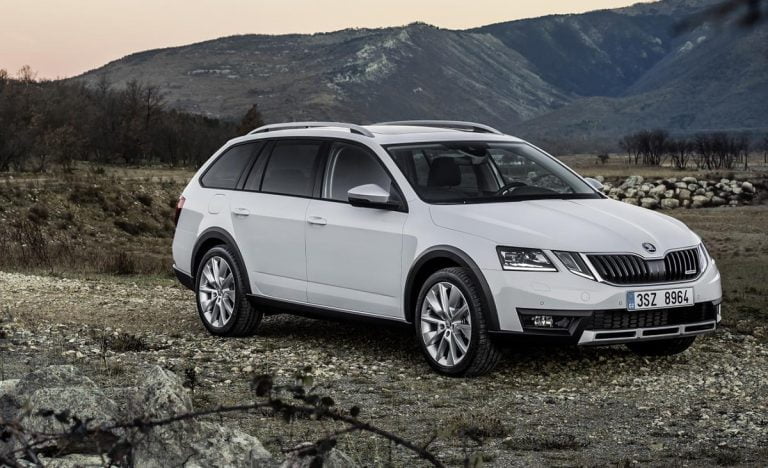
The Skoda Octavia Scout soft-roader has been updated to match the rest of the recently facelifted Octavia line-up.

Retaining its all-wheel-drive and ground clearance increased by 30mm over the estate, the new Skoda Octavia Scout gains a revised front-end styling treatment and equipment upgrades.

Visually the most obvious difference is to the headlamps, which are now dual, full-LED units with adaptive technology. LED technology also features in the fog and tail lights.

The approach and departure angles have been increased, to 16.6 and 14.5 degrees respectively, to further aid the car’s off-road abilities. The Octavia Scout also boasts an electronic differential lock on both axles.

Buyers can also specify an off-road function, which maintains a constant speed without needing the driver’s input, particularly downhill.

Skoda Octavia Scout 02

New versions of the Skoda Octavia Scout also now feature several of the brand’s ‘Simply Clever’ items, including a heated steering wheel and seats with a ‘Thermo-Flux’ function which, from time to time, increases the air and moisture permeability to make the seats more comfortable in varying climate conditions.

The Skoda Octavia Scout is available with two versions of a 2.0 TDI diesel engine with either 150 or 184hp.

Infotainment systems now replicate those in other Octavias, with central touchscreens and the range-topping versions including a Columbus navigation system with a 9.2-inch monitor and a wi-fi hotspot.

Driver assistance systems are also upgraded, Trailer Assist, Blind Spot Detect and Rear Traffic Alert all included. Also available is the Crew Protect Assist function, which closes windows and the sunroof in the event of an impending accident and tensions the seat belts on the front seats, and an improved Front Assist function, which includes City Emergency Brake and predictive Pedestrian Protection.

BMW 530e plug-in promises 400-mile range

0

The BMW 5 Series will gain a plug-in hybrid model in March with the launch of the £43,985 530e.

Described by its makers as completing the 5 Series range, the newcomer has also been dubbed the most efficient version of the car yet – official CO2 emissions figures will be just 46g/km alongside combined cycle fuel economy of more than 141mpg.

The BMW 530e combines the typical 2-litre petrol engine of 184hp with a 95hp electric motor for a combined output of 252hp alongside 420Nm of torque. It produces a 0-62mph time of 6.2 seconds and can go on to 146mph.

BMW claims that the car can clock up almost 400 miles on one tank of fuel, and can also cover up to 29 miles on electric power alone at speeds of up to 87mph.

The powertrain remains rear-wheel-drive, the electric motor placed between the engine and the eight-speed Steptronic auto transmission, making use of the gearboxes ratios and negating the need for a weight-adding torque converter.

BMW-530e-plug-in

The lithium-ion battery pack is mounted under the rear seat, ensuring that the car can still offer a 410-litre boot volume with a flat floor. Charging of the battery takes five hours from a domestic socket or under three hours using the 3.7kW BMW I wallbox.

Added to the cockpit controls is eDrive, a button alongside the Driving Experience Control switch, with its Sport, Comfort and Eco Pro settings. The eDrive adds three more driving modes: Auto eDrive, Max eDrive and Battery Control.

In the Auto mode, which is the default setting, the
engine and electric motor work together for the best efficiency in all driving situations – the all-electric top speed in this mode is 56mph.

The Max Mode allows the BMW 530e to drive on electric power alone, and makes available the 87mph maximum speed. However, kicking down on the accelerator pedal will cause the engine to cut in, such as when needing extra pace for overtaking.

Battery Control mode lets the driver set the charge level for the high-voltage battery manually, between 30 and 100 per cent of maximum charge, allowing that proportion of the battery’s capacity to be reserved for all-electric driving at a later point in the journey.

The battery management system either keeps the battery’s charge constant at the selected level or increases it to the pre-set value, with the electric motor acting as a generator. As a result it is it possible to conserve or even increase the electric power available, for example while travelling on the motorway, to ensure that later on the car can be driven on zero emissions through for example an urban area.

Visually the BMW 530e can be distinguished from its sister models by blue slates on the kidney grille, blue wheel hub covers, the charging socket located between the front wheel arch and the A-pillar on the driver’s side and ‘eDrive’ emblems on the rear screen.On the inside the illuminated sill panels bear eDrive lettering.

Mercedes-Benz E-Class Coupe to cost from £40.1K

0

Order books have been opened and prices revealed for the forthcoming Mercedes-Benz E-Class Coupe.

As The Car Expert reported when the new E-Class Coupé was unveiled last week, it will arrive on UK roads in April 2017 following its public debut at the North American Auto Show in Detroit in January.

The range will comprise three models – prices start from £40,135 for the E 220 d, the E 300 costs from £41,025, while the E 400 4Matic starts from £50,775.

The 2.0-litre diesel of the Mercedes-Benz E-Class Coupé E 220 d produces 194hp and 400Nm of torque, and will likely appeal to fleet buyers with CO2 emissions of 119g/km and combined cycle fuel economy of 61.4mpg, along with a 0-62mph time of 7.4 seconds.

The E 300 relies on 2.0-litre turbo petrol power, putting out 245hp and torque of 370Nm while the current range-topping E 400 4Matic has a biturbo 3.0-litre V6 petrol engine of 333hp and 480Nm.

Mercedes-Benz-E-Class-Coupe-front34

Only one trim level, AMG Line, will be available for the car. Highlights of the AMG Line include 19-inch alloy wheels each with five twin spokes, LED headlights and tail lights, parking sensors and a reversing camera.

Owners will also find amongst the equipment a seat belt feeder, Magic Vision Control, touch pads on the steering wheel, Artico and Dinamica upholstery, heated seats, ambient lighting with a choice of 64 colours and an 8.4-inch infotainment screen with a Garmin navigation system.

The E 400 upgrades the navigation to the Mercedes Comand Online system with a 12.3-inch screen, while E 300 models also gain a sports exhaust system.

Options include the £2,795 Premium Equipment Line that adds a memory package, panoramic sunroof, and Keyless Go entry and starting. At £3,895, a Plus version also includes a Multibeam LED intelligent light system and a Burmester surround sound system.

For £595 owners can add some extra safety in the form of the Lane Tracking Package that includes Blind Spot Assist and Active Lane Keeping Assist. Or for £1,695 the Driving Assistance package adds Drive Pilot (including steering, lane change, emergency stop distance and speed limit aids); Active Brake Assist with a cross-traffic function, Evasive Steering Assist and Pre-Safe Plus.

The Comand Online infotainment with its 12.3in screen is available on E 200 and 300 cars for £1,495 and can be combined with the £495 12.3-inch cockpit display to create a widescreen cabin effect.

Other options include Air Body Control air suspension (£1,495 but standard on the E 400) and alongside the Premium or Premium Plus packages and the 360-degree camera, a Remote Parking Pilot which allows the vehicle to be parked using a smart phone. This costs £89 for a three-year subscription.

Volkswagen Tiguan Allspace to launch in Detroit

0

A longer sister to the Volkswagen Tiguan will be revealed at the North American International Motor Show in January, known as the Tiguan Allspace.

Due to be launched from next summer, the Volkswagen Tiguan Allspace will be a version of the Tiguan extended by 220mm in length, with 110mm added to the wheelbase and an interior layout that will be able to seat up to seven.

Few details have yet been released about the car, but it is widely expected to be sold with the same engine line-up as the big-selling current model, stretching across petrol units of 1.4 and 2.0 litres and 2.0-litre diesels.

Following its unveiling at Detroit on 9th January, initially the new model will be launched in the USA and then China before coming to the UK.

The Tiguan Allspace name will only be used for European markets. In all other parts of the world, the car will be known simply as the Tiguan.

Volkswagen-Tiguan-Allspace-01

Citroën C3 review

What is it? The new Citroën C3 is the third generation of the French supermini.
Key features: Distinctive looks, lots of space, much personalisation.
Our view: The new C3 adds a distinctive option to the supermini market, but not at the expense of practicality with many plusses and few minuses.
Type of review: First UK drive


Citroen C3 review

Citroën has been on a mission for a while now – a bold campaign to redefine itself as a mainstream brand with cars that stand out from the rest, but not for the wrong reasons. Once known for its style the brand is seeking to establish that image once more – “Our ambition is to make Citroën an aspirational brand for customers and a truly iconic brand once again,” says spokesman John Handcock, introducing the new Citroën C3.

With such goals, it is no surprise that in producing the third-generation of the brand’s best-seller, Citroën has not stuck with the practical and reasonably safe formula that has produced 3.6 million sales globally, 200,000 in the UK, since the original C3 went on sale in 2002.

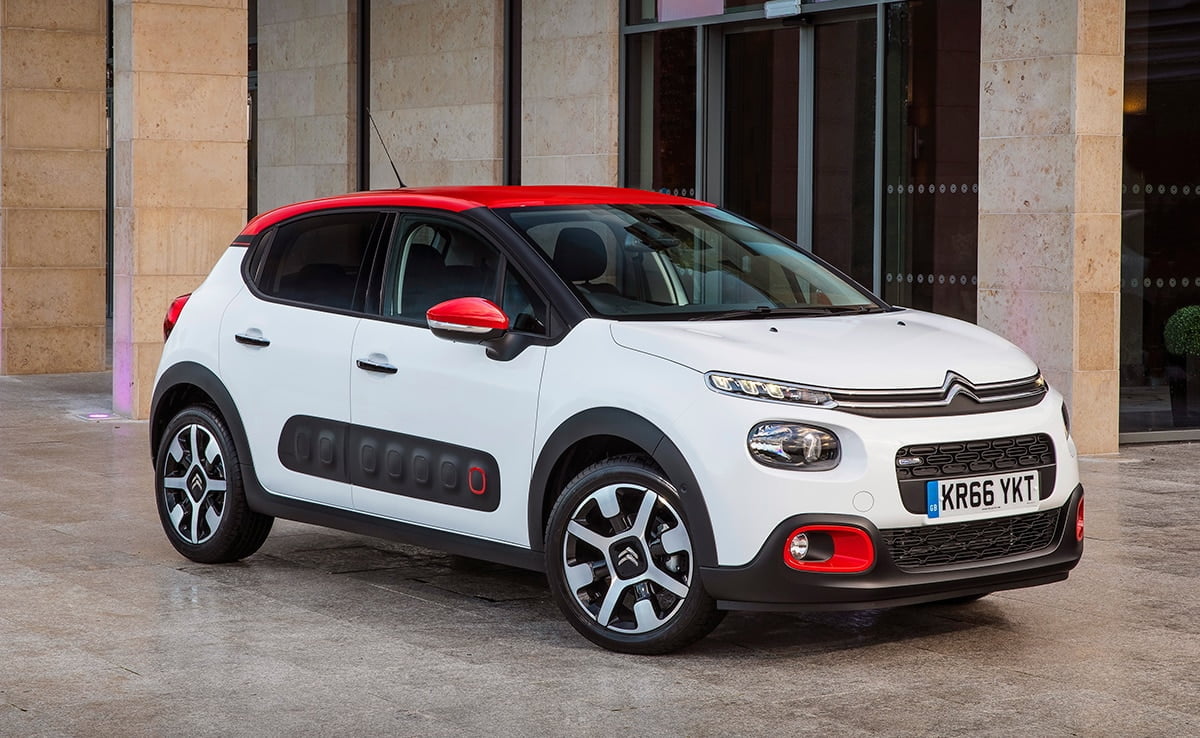
No, the new Citroën C3 showcases the brand’s latest design language and on first viewing is instantly recognisable as a smaller sister to the mould-breaking C4 Cactus introduced in 2014.

Style inside and out

Obvious styling pointers are the two-tier headlamp layout, the double chrome strips running from the grille to the pencil-thin daytime running lamps, and most obviously the ‘airbump’ moulded panels on the doors. Added for both style and we are told protection, these were derided by some when the Cactus launched with them, but you do see quite a few C4s on the roads these days… However in the case of the C3 a customer can buy an entry-level version without airbumps should they prefer.

The new C3 has a high stance, which together with the muscular wheelarch extensions gives it the look of a crossover. Yet it also has a roofline 40mm lower than its admittedly somewhat bulbous predecessor.

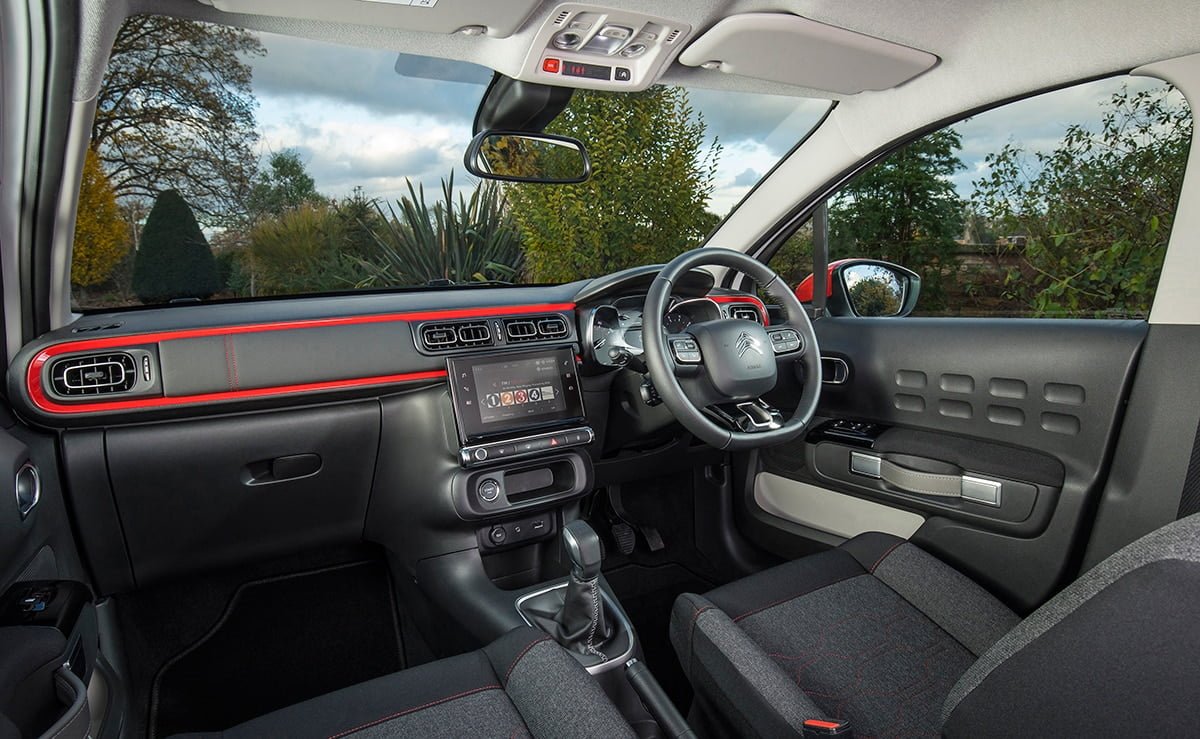
Despite its reduced height, the C3 immediately feels spacious when one gets inside. Some of this is due to practical measures, such as the more comfortable seats, with 2cm more shoulder width, installed under the ‘Advanced Comfort’ programme that Citroën is presenting as a priority. But much is also due to perception – the full-width dashboard, for example, another feature evolved from the C4, immediately gives an impression of a very wide car, while the interior also feels light and airy, the result of carefully selected materials and particularly emphasised if one chooses the optional panoramic sunroof.

It is practical – the rear seats have plenty of room for young travellers and enough to transport adults, and are easy to access thanks to the five-door layout. And at 300 litres, the boot space is larger than either the C3’s best-selling competitor, the Ford Fiesta, or its in-house rival the Peugeot 208.

Fit and finish, meanwhile is excellent, definitely at the top of the mainstream market, while there are some delightful details – this reviewer’s favourite being the interior door pulls that are apparently ‘inspired by travel’ and look just like suitcase straps.

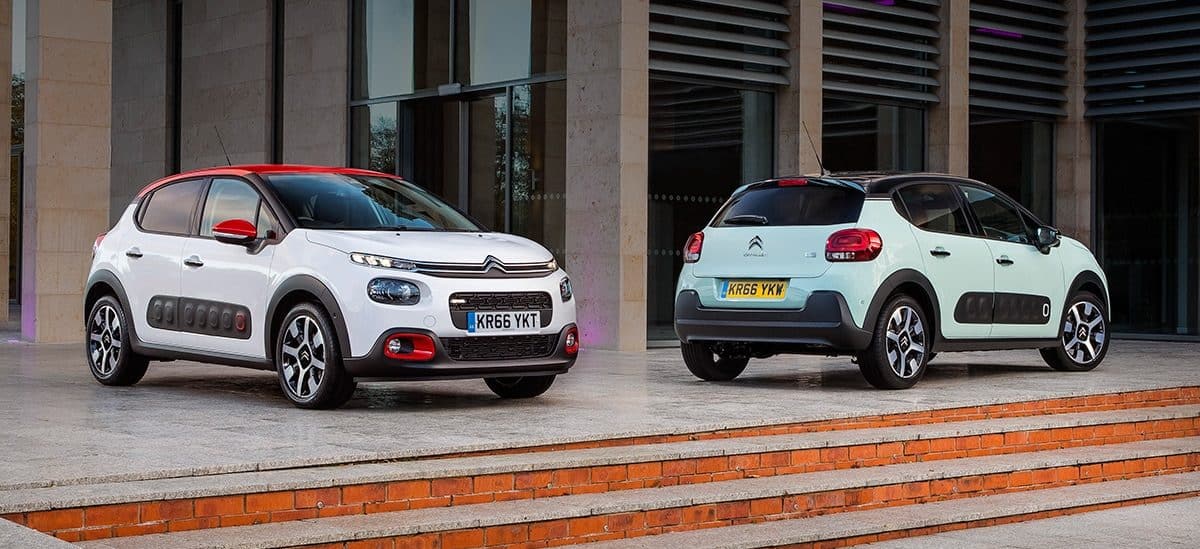
Personalisation is also a major feature of the C3 – nine exterior colours are combined with three roof options, and the interior can be specified too, with the dash edges in particular picked out in one of three colours.

Citroën C3 powertrains

The C3 launches with engines already familiar in the PSA range. The three petrol options are all versions of the 1.2-litre three-cylinder PureTech petrol unit, with either 68, 82 or 110hp and all evolved from the winner of the ‘Engine of the Year’ title two years running. A pair of diesels are both four-cylinder 1.6-litre BlueHDi units with either 75 or 100 horses.

Currently all are matched to a five-speed manual gearbox, which is unusual in a market increasingly settling on six speeds. The EAT6 auto unit will be available in the range, but not until February 2017. And the largest petrol and both diesels also feature start-stop technology, which has the odd effect of allowing the 110hp petrol engine to outdo both its smaller siblings in economy and emissions, shaving the latter to a very creditable 103g/km.

On the launch event The Car Expert tried this petrol engine, and the 100hp diesel. We know the engines from previous Citroën, Peugeot and DS models and they did not surprise with their refinement or enthusiasm. In this environment the 110 feels quite sporty in fact.

Citroën is not currently saying whether there will be more engine options – though we would expect some. With the C3 the focus of the brand’s return to the World Rally Championship, a hot hatch version would seem to be a given.

Citroën-C3-onroad
Citroën C3 suspension tuned to comfort and provides quality ride.

That Advanced Comfort programme has been employed in redesigning the suspension and the result is a pretty comfortable ride in most situations. However it is naturally tuned to the soft side and at higher speeds hitting potholes or the like will transmit the resultant crash and bump through to the cabin.

In corners the C3 remains poised and upright, and goes where it is pointed. There are cars in the segment with better handling dynamics, but far more that can’t match the C3 for its prowess in the bendy bits.

Niggles? Just a couple. The clutch pedal seems to be placed quite close to the centre console tunnel and we found ourselves regularly catching our feet on it, while the gear shift on our models felt a touch notchy rather than slick.

Citroën-C3-colour
The nine exterior colour options include this shade, described as Almond Green.

Specifications and options

The Citroën C3 launches with a choice of three trim levels, Touch, Feel and the Flair which formed the specification of all the launch event models. Lots of technology has been added to the model, apparently as demanded by customers, and it is good to see that much of the safety tech is standard equipment, such as hill-start assist, lane departure warning and traffic sign alerts.

To get much of the ‘nice to have’ tech, you will have to spend more than the £10,995 that buys the entry-level Touch model. Rear parking sensors and a camera only come with Flair trim, and while on the entry versions you do get a DAB radio with Bluetooth, to include hands-free operation, the seven-inch touchscreen, Mirror Link and Apple CarPlay phone compatibility will require buying from Feel upwards. And while Citroën offers its impressive Connect navigation system, with live traffic alert and features such as accident blackspot highlighting, it’s a £500 option, even on Flair versions.

Summing up the new Citroën C3 is an impressive launch – possibly the most effective supermini that the brand has offered for some time, and certainly a car that will turn the heads of those who traditionally buy its rivals.

Citroën C3 – key specifications

Models Tested: Citroën C3 Puretech 110 Flair, BlueHDi 100 Flair
On Sale: January 2017
Range price:
£10,995-£17,095
Insurance groups:
8E-20A
Engines: Petrol 1.2 x 3, Diesel 1.6 x 2.
Power (hp):
68/82/110. 75/100.
Torque (Nm):
106/118/205. 233/254.
0-62mph (sec):
14.0/12.8/9.3. 13.7/10.6.
Top speed (mph): 107/107/117. 106/115.
Fuel economy (combined, mpg): 60.1/60.1/61.4. 80.7/76.3.
CO2 emissions (g/km): 108/108/103. 92/95.
Key rivals: Ford Fiesta, Volkswagen Polo, Peugeot 208
Test Date: December 2016

Citroen C3 review 99