The look of the much-trailed new Vauxhall Insignia has been unveiled, with the model taking the new name of Insignia Grand Sport.
The Vauxhall Insignia Grand Sport will make its public debut at the Geneva motor show in March and go on UK sale in the summer of 2017.
It faces a major task – the current Insignia, on sale since 2008, has consistently led its segment in sales, selling 46,324 examples in its best year of 2011. Last year the car sold 33,717, despite manufacturers from the premium sector now targeting mainstream large car sales – effectively the two segments have merged and the Insignia now holds third in class behind the Mercedes C-Class and BMW 3 Series.
The new car boasts a more aerodynamic shape than its predecessor – its visuals are evolved from the Monza concept car of 2013 and with a 0.26 drag factor that is claimed to be class leading.
Vauxhall Insignia brand manager Douglas McColm told The Car Expert that while the current Insignia in size and space sits between rivals the Volkswagen Passat and Skoda Superb, the new car will be larger than the Superb and only just smaller than the BMW 5 Series.
It sits on a new vehicle architecture which cuts the car’s weight by up to 175kg. The wheelbase is extended by 92mm but with shorter overhangs, while the car’s track is extended by 11mm. The roof, however, is 29mm lower and the height of the driving position drops by a similar amount.
Vauxhall is not yet revealing the Insignia’s engine line-up, stating only that they will all be latest-generation units. However we do know that an all-wheel-drive transmission with torque vectoring will be available, as will a new eight-speed auto gearbox.
Technology will feature heavily on the car, including LED matrix lighting, Lane Keep Assist, Head-up Display, front and rear-seat heating and a heated windshield. Infotainment and connectivity will be provided by the IntelliLink system and Vauxhall’s extensive OnStar personal assistant service.
And while the car now takes the name Vauxhall Insignia Grand Sport, the Grand Sport will not feature on the badging. An estate version will follow, the Sports Tourer.
Vauxhall expects to sell around 30,000 of the new Insignia Grand Sport in 2017. More than nine in every ten will be to fleet buyers, and diesel sales will dominate petrol by a similar percentage. McColm admits, however, that he expects some change in engine preferences in the future, with more buyers switching back to petrol.
The most potent SEAT Leon Cupra yet will launch in 2017 with 300hp on offer.
In showrooms in March, the new Cupra takes the title of the most powerful road car in SEAT’s history, thanks to its uprated version of the familiar 2-litre TSI petrol engine also in the Volkswagen Golf R. While its power hike over its predecessor is only 10hp, torque jumps from 350 to 380Nm, over a wide usable range from just 1800 to 5500rpm.
No performance details have yet been released – the current Cupra has a quoted 0-62mph time of 5.8 seconds.
The new Cupra will be available in three-door SC, five-door hatch and for the first time an estate ST variant. This model will be supplied with the 4Drive all-wheel-drive system and a DSG auto transmission.
All Leon Cupra models will also include dynamic chassis control (DCC), a progressive steering system and an electronic self-locking differential as standard. The Cupra Drive Profile will feature four modes – Comfort, Sport, Individual and a performance focused Cupra mode.
Full specifications of the car, and pricing, will be revealed closer to order books opening.
The Subaru BRZ sports coupe has been updated, with major changes across all areas of the car.
The upgrades come in the wake of an update to the Toyota GT86, the two effectively the same car.
Visually the BRZ now has a wider, lower front-end, designed Subaru says to limit the airflow into the front intake and improve ride and handling. LED headlamps are fitted for the first time, the rear lamps are redesigned as is the rear spoiler, and new 10-spoke alloy wheels fitted.
Various internal measures to the engine include a lower-friction camshaft and lighter rocker arms, plus polishing measures to the valve. The results are said to be more responsiveness and improved efficiency, though official figures have not yet been quoted.
Redesigned dampers improve cornering precision and reduce body roll, while cutting vibration for greater ride comfort.
A new track mode on the drive mode selector is specifically designed for driving on race circuits, while Hill Start Assist is also fitted. Also track focussed is a four-inch LCD information display on the instrument panel, showing a G force meter, steering angle gauge, brake force gauge, lap timer and torque/power curves.
A smaller steering wheel is fitted with audio controls now included on it, while the fit and finish of the cabin has been changed to give an impression of higher quality.
Prices for the 2017 model Subaru BRZ are yet to be announced.
Britain’s new car market topped 2.5 million vehicles last month – the first time the figure has been reached in November.
The 184,101 vehicles registered in the month was 2.9% higher than in November 2015, according to the Society of Motor Manufacturers & Traders (SMMT), that compiles the figures.
So far in 2016 a total of 2,514,764 cars have been registered, putting the market on course to beat the 2015 full-year total of 2633,503.
Fleet sales are still driving the market, the sector up 5.1%t in November as the private market slipped by 1.2%. Petrol-powered cars also appear to be making a comeback, up by 7.9% as diesels slid 2.9%.
The biggest growth in percentage terms, however, is coming from alternatively-fuelled vehicles, which includes electric and hybrid cars. Demand for these surged 25% in November with 6,663 vehicles registered. While such vehicles still form a very small part of the overall market at 3.6%, they are showing great momentum with 82,650 buyers having so-far chosen the alternative-fuelled route in 2016.
SMMT Chief Executive Mike Hawes believes the latest advanced technology and cutting-edge designs are continuing to attract buyers into showrooms.
“It’s encouraging to see that alternatively fuelled vehicles, although still a small proportion of the market, have seen strong growth this month achieving a record market share,” he says.
“Long-term government support and incentives are essential if these vehicles are to command a larger market share in the future,” Hawes adds.
Earlier this month the SMMT predicted this year’s market would finish 1.7% up on 2015 with 2.678 million units registered, but in 2017 and 2018 will dip by 5% and 1.3%.
In the month its replacement was revealed, the Ford Fiesta continues to dominate the new-car top ten, with 8,382 registrations in November, more than 3,500 ahead of nearest rival the Vauxhall Astra.
Year-to-date 112,327 new Fiestas have been registered, ahead of the Vauxhall Corsa (73,112), the Ford Focus (65,554), Volkswagen Golf (64,137), Nissan Qashqai (59,480) and the Astra 54,585).
If you’ve ever walked into a new car showroom, you will know that buying a car is quite different from shopping in a normal retail store.
In pretty much any other retail environment – even those selling very expensive wares – you can wander around the showroom in peace, look at different items and casually browse their offerings. You can check price tags, ask straight questions and (usually) get straight answers in return. You can explore at your own pace and you don’t always feel like you have to justify your presence to the sales staff.
In a car showroom, however, that doesn’t normally happen.
The usual practice when you set foot in a car showroom is that you are immediately accosted by a sales executive or even a ‘professional greeter’. They want to know why you’re there, what you’re looking for, how much you have to spend, and they always want to obtain as many of your personal and contact details as they can get. Even if all you want is a brochure (mind you, not many car companies still offer printed brochures, instead helpfully offering to email you a digital one as soon as you hand over your email address).
The new car dealership has one of the most aggressive sales environments of any retail venue. Wave off that first sales consultant and another one will appear. Keep rebuffing them and sometimes a manager will even march up to you, effectively demanding to know why you’re wasting everyone’s time and not buying a car already.
Qualification – it’s dealer-speak for interrogation
If you do actually want to speak to a sales consultant, or finally yield to their persistent questioning, then a very structured interrogation swings into place. It’s called ‘qualification’, and it is designed to get as much information out of you as possible, covering every aspect of your personal information and circumstances, all to be used to try to sell you the car they want you to buy, which is not necessarily the car you actually want.
The information you provide is logged in detail, and is accessible by not only the sales consultant, but also the business manager (to sell you finance and insurance products) and the sales manager. Even the manufacturers will access your information, so they can analyse your responses and blitz you with marketing paraphernalia until the end of time. Your data is compared with other customers and scrutinised long after you have left the showroom.
Most car buyers find the relentless pestering and questioning to be invasive and annoying, and feel it makes the whole experience of buying a car to be extremely unfriendly and uncomfortable. Some manufacturers are particularly insistent on this very harsh interrogation process, and one gets the feeling that those manufacturers think the customers should feel privileged to be able to buy their cars. The salesman may appear all friendly and understanding, but be under no illusions that he is ever on your side.
Believe it or not, this guy does not really have your best interests at heart…
Commissions and targets – it’s all they care about
There are two words you need to understand which drive everything which happens in a car dealership, and why the dealership personnel behave the way they do – commissions and targets.
Nearly everyone you talk to at the dealership is paid largely on commission. The sales executive, business manager, sales manager and so on – all of them receive a relatively small base salary, with the majority of their earnings coming from commissions on selling you their products. So everything they all say or do is geared around you buying their car (and associated extras), because they all get paid a percentage of the money you spend at their dealership.
The other driver for everything that happens at a dealership relates to sales targets. The manufacturer sets monthly, quarterly and annual sales targets for the dealer, and the dealership management then does the same for each of its sales staff. There is then a complicated combination of penalties for failing to meet targets and rewards for exceeding them.
For the dealership, failing to hit quarterly sales targets can mean many thousands of pounds of lost funds from the manufacturer, and for sales executives, failing to hit sales targets can mean losing their jobs. At the end of every month, numbers are tallied, commissions are calculated, the scores are reset to zero and it all starts again.
The other thing about commissions and targets is that they are only counted after the customer has paid for their car and driven off into the sunset, not when they actually sign their contract. So if you order a new car this December but don’t actually take delivery until next April, the dealership can’t count the sale towards its target until April and the sales team won’t get their commission payment until the end of May – some six months after they actually “did their job” and sold you the car, and over a month after you took delivery.
This is very frustrating for the dealership, and also increases the risk of the sale being cancelled at some point during the waiting period. As a result, they are always far more interested in selling you a car they have in stock right now, so they can get their hands on your money as soon as possible.
“I know you said you hate this car. No-one likes this car, but we’re still going to talk about it for the next 15 minutes because I’ll get a big bonus if I can sell it”
So how does this affect me when I’m buying a car?
The end result of this obsession with commissions and targets is that the dealership staff are all desperate to sell you a car from their current stock, with finance, plus insurance, plus any number of other extras, because their salaries and their jobs depend on it. There is constant pressure on sales staff to deliver results, regardless of how many customers actually visit the showroom.
Dealers know that customers get frustrated by the car buying experience. They also know that this frustration will often lead to the customer running out of patience and agreeing to buy a car just to make the whole painful experience stop. So rather than try and make the customer feel more at ease, they effectively engage in a war of attrition and will do whatever they can to keep you in that showroom for as long as possible, knowing that the longer they have you there, the better their chance of wearing you down and getting your signature on a contract.
Trying to leave a car showroom without buying a car is a bit like trying to escape from prison – there’s a whole lot of people who are desperate to keep you from getting out until they’re ready to release you, which is right after they get your signature and deposit.
“OK, you can go home now”
Buying a car – how to make the most of it
So how do you, as a customer, make the most of your car buying experience in such a hostile sales environment? Well, understanding the process gives you a much better basis to conduct your purchase. Every ‘recommendation’ a sales executive gives you has to be taken in the context that it is leading you towards the conclusion that they want, not necessarily the one you want.
Before you walk into a showroom, do your homework thoroughly. Know how much you want to spend, and stick to it. The dealer wants to sell you a car, so make them work for your money. Make them meet your requirements, not the other way around. For some great tips, check out The Car Expert’s Ten Golden Rules for buying a car.
If you are not happy with the way you are being treated, walk away. Simply leave and don’t get sucked into any further discussions. Remember, it’s your money, so you should be the one who decides how to spend it. There are plenty of car dealers in the UK, so don’t waste your time dealing with poor levels of service.
Last updated December 2016. Originally published November 2012 – not that much has changed, and the traditional car sales model is still an awful experience for many people.
It is not often that one drives a new car and then struggles to pigeonhole it against direct rivals. The new Suzuki Ignis is just such a car, however.
While reviving a name last used by Suzuki a decade or so ago, the new Ignis is a world away from the odd, jacked-up supermini that was its predecessor. This is a small crossover, with lots of style and surprising interior space.
Suzuki’s reputation for effective small cars is well established and the Ignis looks to take this on a step. It is the second car, after the Baleno hatch, to use the new platform unveiled under the brand’s ‘Suzuki Next 100’ strategy in 2015. The architecture achieves the twin goals of increased rigidity, up by 10% on previous Suzuki models, and reduced weight, the lightest Ignis weighing in at a mere 810kg.
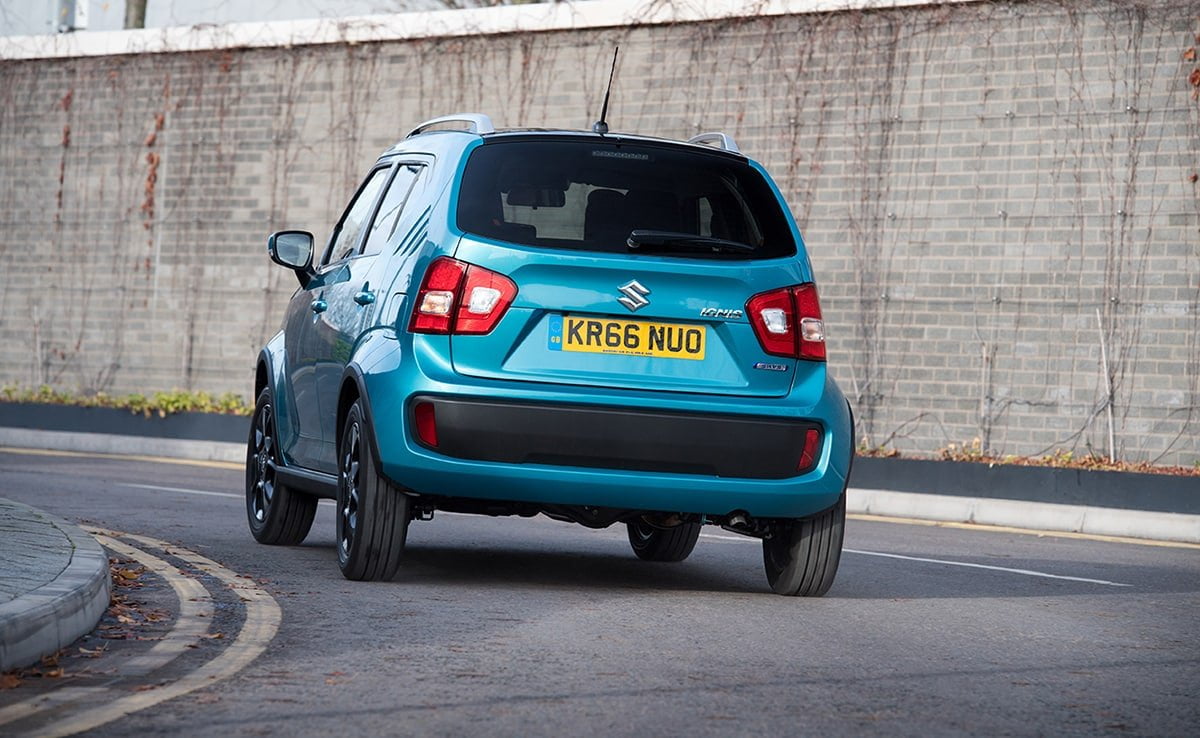
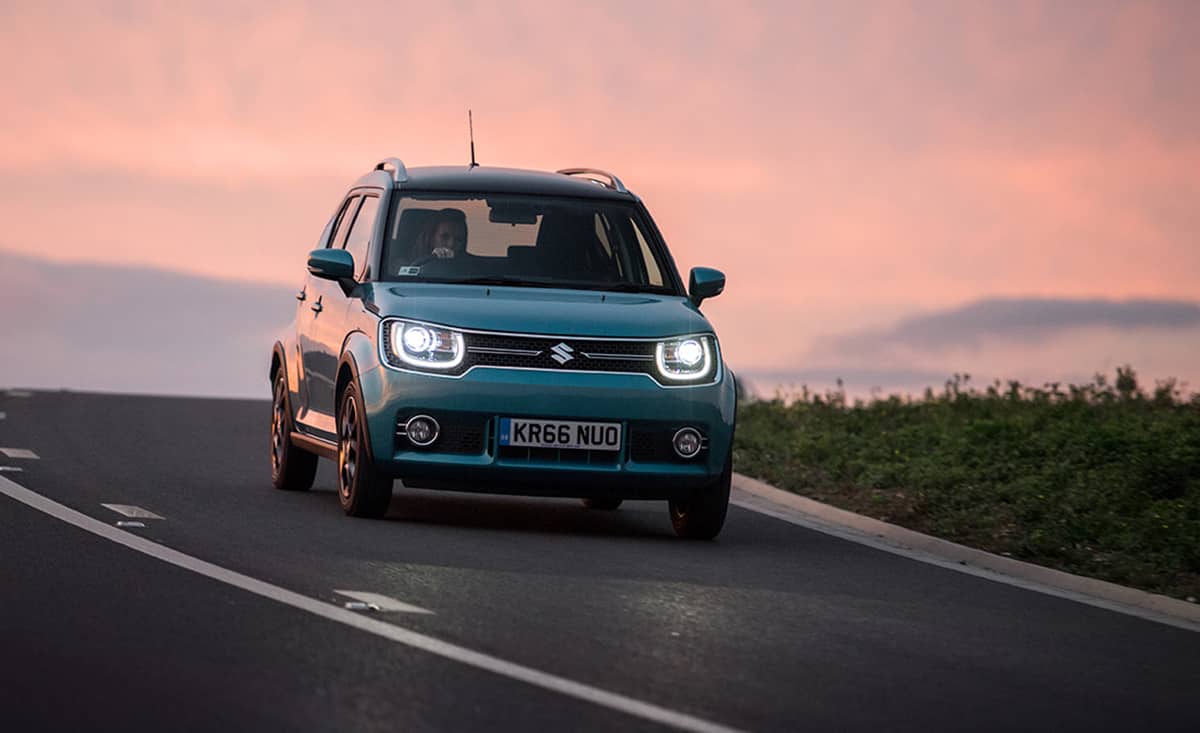
The exterior styling is funky, looking purposeful and muscular as crossovers are expected to.
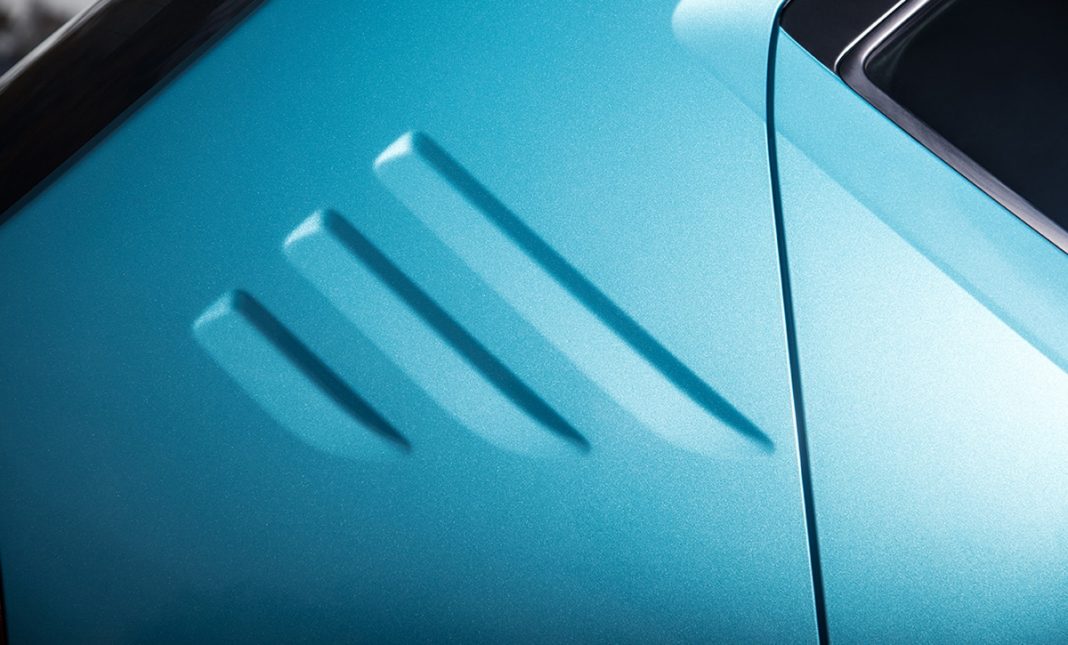
The car has a very strong face, with sharp lines in the grille providing a frame for the LED headlamps, while retaining Suzuki signature elements, such as the blacked-out windscreen and door pillars and the clamshell bonnet. And several previous Suzuki models are referenced in the detailing, such as the vents in the rear screen pillars, taken straight from a long-forgotten car called the SC100.
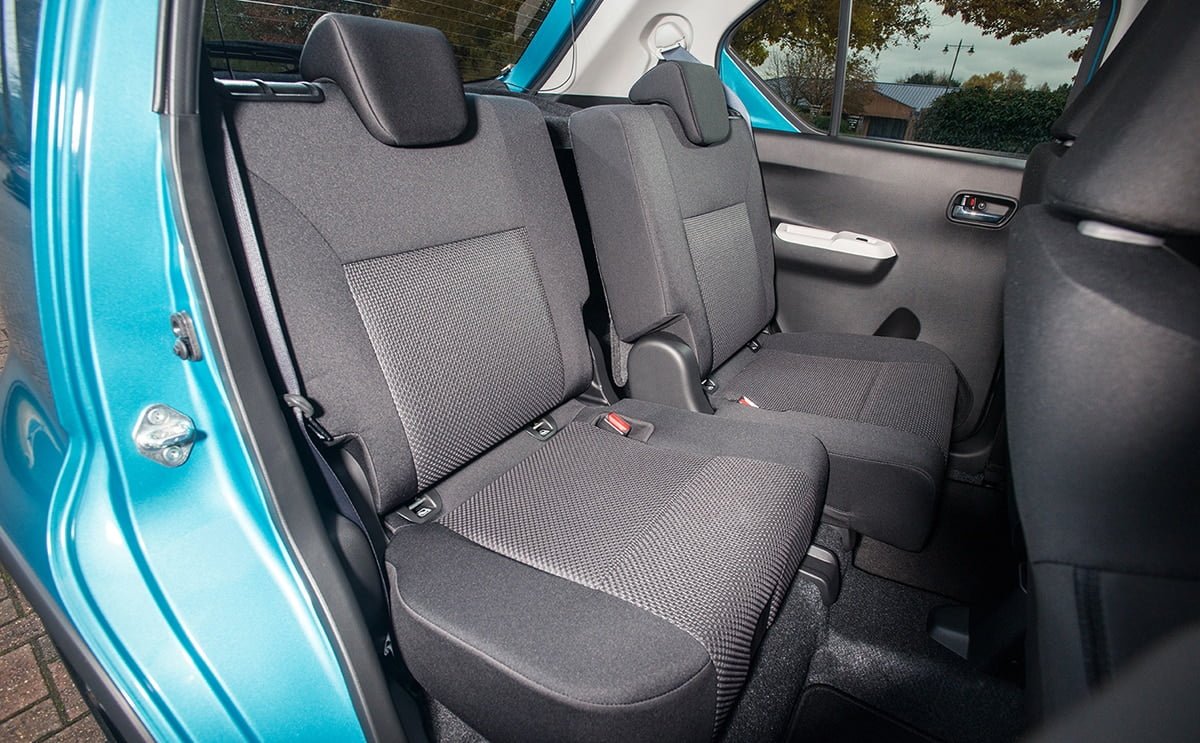
That bonnet is short on length, the Suzuki platform strategy aiming to minimise the size of the engine bay to create more interior space. And boy does it do so. Front seat room is generous, but it is equally so in the rear – there really is room to carry four full-size adults in comfort in this car, which cannot be said of so many rivals of similar size.
A big help to this is offered in second-tier SZ-T models and above, which replace the rear bench seat with two individual ones that can slide back and forth by a total of 165mm. Even with these slid right back a usable boot remains – quoted capacity of the boot is a competitive 267 litres, though this drops to 204 litres if one chooses the all-wheel-drive version with its rear differential. Fold the seats down and that capacity climbs to 514 litres, or 1,100 litres loaded to the roof.
Interior finish is to familiar Suzuki standards – while not exactly plush, it’s practical, though the bright colour detailing that is applied to the base of the centre console with certain exterior finishes will not be to everyone’s taste. The infotainment touchscreen looks a bit of an afterthought, stuck atop the centre console, but it works effectively enough.
Ignis engine and drivetrain choices
Currently there is only one engine option, Suzuki’s 1.2-litre Dualjet petrol unit of 90hp, but this is offered in two distinct forms. The standard variant promises a 0-62mph time of 13.5 seconds, 61.4mpg combined cycle fuel economy and emissions of 104g/km, whether one chooses it with a five-speed manual or the five-speed Auto Gear Shift (AGS) transmission.
The unit can also be had, however, with Suzuki’s SHVS mild hybrid system, effectively a starter motor generator that provides some extra potency under acceleration and generates electricity under braking. It makes a big difference to the 0-62mph sprint time, cutting it by 2.1 seconds, while adding more than four miles to the mpg, and dropping CO2 emissions under the magic 100g/km marker.
Choose your Ignis with Suzuki’s All-Grip all-wheel-drive system, that is only available combined with SHVS, and the car goes four-tenths quicker still! Fuel economy of 60.1mpg and emissions of 106g/km are still impressive considering the extra capability of traction through every wheel.
On the road
Times have long gone when 90hp meant sluggish performance, and the Ignis bowls along the road quite happily, especially with the hybrid assistance fitted on our test car. Like most petrol engines it’s at its best further up the rev range, and stiff gradients do need swift work down the gears. But the powertrain is responsive and refined, even at the Autostrada limits of the Rome launch event route.
The Ignis rides well on good road surfaces, and copes manfully on less than perfect tarmac. A series of bumps and dips will unsettle the chassis, but not alarmingly so, while the steering feels a little divorced from the wheels when cornering enthusiastically, but generally it’s an comfortable car to travel in.
Price and specification
Ignis buyers will have a choice of Suzuki’s usual three grades, with entry-level SZ3 versions boasting a strong standard equipment list stretching to air conditioning, DAB radio with Bluetooth and electric front windows.
SZ-T versions add satellite navigation, a parking camera, larger 16-inch alloy wheels, extended roof rails and those rear sliding seats.
Cars with SHVS and if required the All-Grip are only available in top SZ5 specification, which gains auto air conditioning, keyless entry and start, rear electric windows, LED headlamps with daytime running lights and front foglamps.
Suzuki has an extra weapon in its Ignis armoury – highly competitive prices. The Ignis will start from £9,999 for SZ3 models, £11,499 for SZ-T and £12,999 for the range-topping SZ5 in 2WD form – 4WD adds and extra £1,000.
Ignis safety rating(s)
Just in time for the launch, the Ignis has earned a five-star safety rating from Euro NCAP, but only if fitted with the Dual Camera Brake support system, which is standard on SZ5 versions and optional on the rest of the range.
This system warns the driver of a likely collision and applies the brakes if needed, while it also includes lane departure warning and sounds an alert if the car begins to weave, such as if the driver suffers from drowsiness.
In terms of target market, the Ignis is probably closest to the Fiat Panda 4×4 or Panda Cross– but it ticks so many boxes that it is worthy of consideration by people buying across the small car line-up. Its looks may well appeal for those wanting something different to the pack, while its rear seat space will even bring it onto the radar of those buying in the next segment up.
The Ignis has already proven itself in Suzuki’s home market on Japan – available there since February 2016, it had clocked up almost 18,000 sales by November. European audiences first saw it at the Paris motor show in September and it will be in UK showrooms in January 2017.
Suzuki UK management says it hopes to sell 6,000 examples of the Ignis a year, mostly to people who have not bought from the brand before. On the strength of our first drive, those figures look easily achievable.
Goodwood Motorsport has announced updated dates for its flagship Festival of Speed for 2017, after a change to next year’s Formula 1 calendar was made this week.
Goodwood’s dates are always subject to change, depending on movements in Formula One and other calendars which are yet to be finalised. However, the current plan is below. The dates for the 75th Members’ Meeting have been confirmed and are not subject to change.
75th Members’ Meeting: 18-19 March 2017 (confirmed)Goodwood Festival of Speed & Moving Motor Show: 29 June – 2 July 2017Goodwood Revival: 8-10 September 2017
Tickets for all three events always sell out well in advance, so keep your eyes on their website for information. The Members’ Meeting is currently only open to GRRC members, with a limited number of tickets being made available to the general public from 2 January 2017.
Hopefully there will be no further changes to the F1 calendar and these will be the definite, final, confirmed dates. Most of the F1 teams have a strong presence at the Festival of Speed every year, and 2017 should be no different. At the 2016 event, Nico Rosberg was hugely popular with the fans and spent additional time at the event after Lewis Hamilton cancelled his scheduled appearance at the last minute.
Of course, if you can’t get tickets then you could always apply to be a volunteer…
Rolls-Royce has offered the first glimpses of its forthcoming SUV.
Two officially-released images show the camouflaged car ‘Project Cullinan’, which Rolls-Royce states will begin testing in public in December. The Cullinan title will not necessarily be adopted as the name for the production version, expected to launch in 2018.
After Christmas the car will be taken to the Arctic Circle for cold-weather durability and traction testing, and this will be followed in 2017 by a hot-weather programme in the Middle East.
All of this is to ensure the car meets the ‘Effortless, everywhere’ phrase that Rolls-Royce has applied to it. Absent from the release, however, is any mention of the phrase SUV, the Cullinan described instead as a ‘all-terrain, high-sided vehicle.’
Major customers have also seen the engineering mule created to develop the new all-wheel-drive suspension system, and testbeds for the aluminium architecture that will become the basis of all new Rolls-Royce models released after 2018.
Rolls-Royce Motor Cars CEO Torsten Müller-Ötvös describes the emergence of the test car as “an incredibly exciting moment in the development of Project Cullinan both for Rolls-Royce and for the patrons of luxury that follow us around the world.
“Bringing together the new four-wheel drive system and the new ‘architecture of luxury’ for the first time sets us on the road to creating a truly authentic Rolls-Royce which, like its forebears, will reset the standard by which all other luxury goods are judged,” Müller-Ötvös adds.
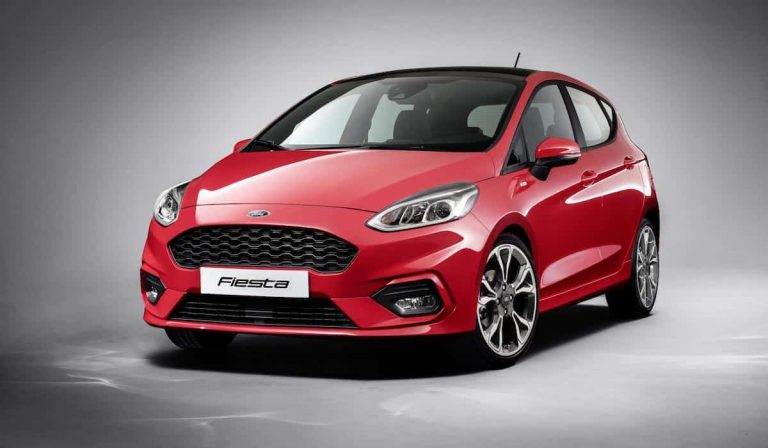
Ford has unveiled the new Fiesta amongst a host of headlines at a ‘Go Further’ event in Cologne.
The new Fiesta range will launch in 2017 in four distinct versions, while Ford is also announcing its intention to start testing autonomous cars on European roads, and revealing a version of its three-cylinder EcoBoost petrol engine with cylinder deactivation technology.
The Fiesta, which celebrated its 40th anniversary in 2016, will be offered in the familiar Titanium, a performance-pitched ST-Line version that likely previews the next Fiesta ST, a model in Ford’s upmarket Vignale sub-brand, and a new crossover-styled Active model.
Adding the Vignale and Active versions to the range of Britain’s best-selling car is seen by many as Ford’s answer to the growing threat from premium brands expanding into small cars, such as Audi with its Q2. Industry sources suggest that the upmarket-pitched Vignale and Active could be expanded further across the Ford range.
The exterior design of the latest Fiesta is evolved from the current model, with no radical styling departures. Details of the new car are currently scarce, though Ford does say that it will have an “ergonomic interior that offers a floating high-definition touchscreen” along with the Sync 3 communications and entertainment system, and for the first time in a Ford a premium B&O Play sound system.
More personalisation options will also be available for the Fiesta, following the current industry trend.
Similarly, there are no details yet as to the powertrains for the new Fiesta range, but they will no doubt include a new version of the 1.0-litre EcoBoost unit, which Ford says will be the first three-cylinder engine in the world to feature cylinder deactivation.
The technology can disengage or re-engage the cylinder in 14 milliseconds, is promised to be imperceptible to drivers in terms of operation and engine performance, and will aid fuel economy and emissions improvements.
Ford also announced the results of a European survey it commissioned as part of its Smart Mobility programme, revealing that the main benefits of self-driving cars in the view of motorists would be the ability to enjoy passing scenery, catch up with family and friends, and read a book.
Under the programme, testing of Ford’s autonomous cars will expand onto European roads in 2017, adding to extensive testing already underway in the US.
According to Ford Europe Middle East and Africa president, Jim Farley, the brand has met aims made at the first ‘Go Further’ event four years ago. “Ford promised a leaner, smarter business in Europe with great products and new technologies – and we’ve over-delivered through the talent, ingenuity and passion of our people,” Farley says.
“We have delivered an all-new SUV line-up; set the performance car segment alight with our Focus RS and Ford Mustang; strengthened the backbone of our business with our award-winning commercial vehicle range; and re-written the rulebook on compact engines with our 1.0-litre EcoBoost – and that’s before we get to the next generation Fiesta,” he adds.
Four major car manufacturers have taken a big step towards creating a standardized method of charging electric vehicles.
BMW Group, Mercedes-Benz parent Daimler AG, Ford Motor Company and the Volkswagen Group with Audi and Porsche, are planning a network of high-powered DC charging outlets on major long-distance travel routes throughout Europe.
Eventually the network will number around 400 locations, offering power levels of up to 350kW, which will significantly reduce charging times compared to those offered by current charge outlets.
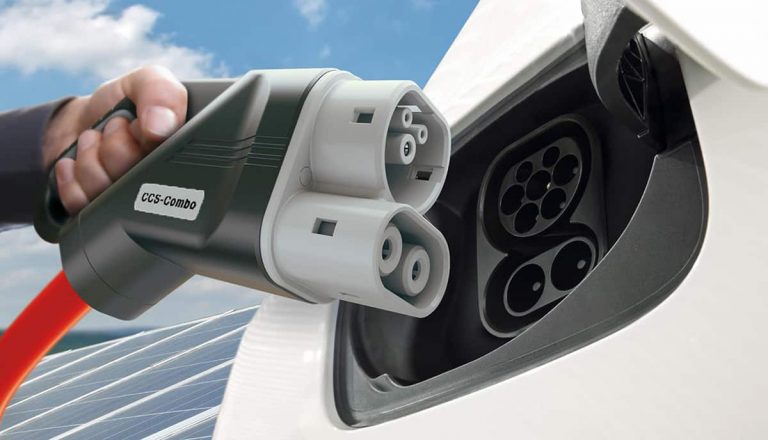
Only cars fitted with the Combined Charging Standard (CCS) connector will be able to use the stations. CCS is described as compatible with most current and next-generation EVs, and with such a large swathe of the automotive market backing it the system will present a strong case for being adopted as an EV standard.
BMW and Volkswagen EVs already use CCS for charging, but typical of rival systems is ChaMeDo, used by Nissan, Peugeot and others.
According to those behind the plan the goal is to enable long-distance travel through open-network charging stations along highways and major routes, which has not been feasible for most battery electric vehicle drivers to date.
The charging experience is expected to evolve to be “as convenient as refueling at conventional gas stations.”
Such a network is considered essential to encourage the wider take-up of EVs among consumers. “This high-power charging network provides motorists with another strong argument to move towards electric mobility,” says BMW chairman Harald Krüger, while his counterpart at Audi, Rupert Stadler, adds; “We intend to create a network that allows our customers on long-distance trips to use a coffee break for recharging.”
The joint programme comes as the manufacturers plan great expansion in the number of electric vehicles they offer – Daimler alone intends to have 10 fully electric cars in its range by 2025.
Volkswagen will unveil a new upmarket saloon, the Arteon, at the Geneva motor show in March.
The large four-door car will replace the CC, production of which has just ended.
So far Volkswagen has only issued a sketch of the new car, which is said to debut a new ‘progressive’ design language for the brand.
According to a release from Volkswagen the Arteon is a totally new model that will sit above the Passat and “emphasises emotion in the upper mid-class.”
The front end of the car is described as a ‘highly expressive, horizontally accentuated brand look,’ suggesting that it will appear on other future VW models. Notable details include the bars of the radiator grille – these extend into the three-dimensional headlights, which feature LED lighting elements.
The Arteon will also feature frameless windows on the doors and a top-hinged and wide-opening tailgate.
According to the car’s exterior designer, Tobias Sühlmann, the Arteon will offer a unique combination. “At first sight, the Arteon arouses enthusiasm through its expressive design – it then surprises through its practical virtues,” he says.
As for the name, this is also composed of two parts – according to Volkswagen the ‘Art’ describes the saloon’s harmonious lines and emotionality, and the ending ‘eon’ identifies it. Volkswagen’s premium model in the Chinese market is known as the Phideon.
Further details of the Arteon will no doubt emerge closer to its Geneva reveal. It is due on sale in European markets from the summer of 2017.
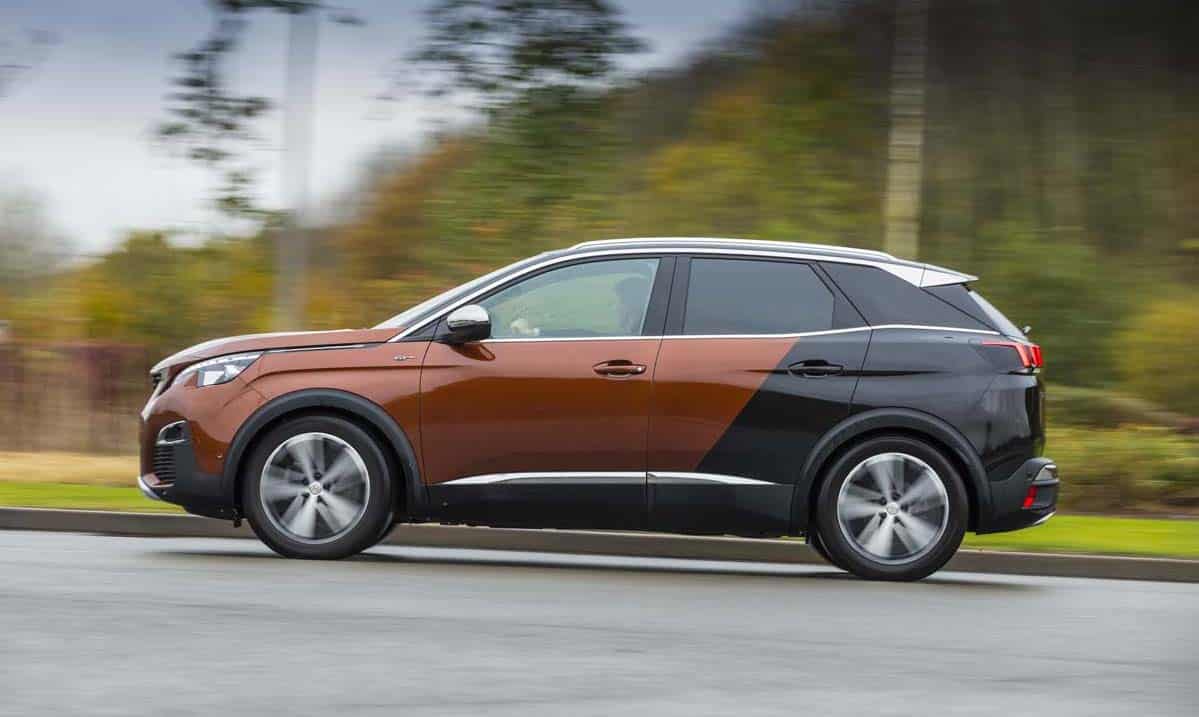
So a new 3008 arrives not before time, and Peugeot is very clear to differentiate it from its predecessor by calling the newcomer the ‘3008 SUV’. Whereas the first 3008 was more people-carrier than off-roader in its look, this new model boasts the more muscular styling and jacked-up driving position that are proving big successes for its wide variety of rivals.
The car certainly looks the part. It has a much bolder front end with strong vertical lines and most notably the almost vertical grille. There is a high waistline, prominent body mouldings and underside protection that gives the impression of a more off-road styled vehicle, and this is added to by the jacked-up ride height of 220mm and sharp approach and departure angles of 20 and 29 degrees respectively.
The new 3008 is another to use the modular EMP2 architecture developed by Peugeot’s parent company PSA Group. As a result the car is 80mm longer than its predecessor, with a wheelbase increased by 62mm to 2675mm. This of course frees up more interior space, such as 24mm in the rear legroom, and 36mm more headroom so long as one doesn’t go for a glass roof. Boot space jumps considerably too, by almost 90 litres to 520 litres, or 1,670 litres if one drops the rear seats.
The extra space is not, however, the major first impression gained when getting into the 3008. Peugeot has made it clear that one of the pillars of its growth strategy is to move the brand upmarket, achieving this through more exciting, technology packed cars but very importantly through greater quality – and it shows.
The cabin is a very agreeable place to be. The surfaces are to high standards and well fitted, while the dash area is superbly crafted. The driver grips a compact steering wheel with a squared-off top, operates a gear handle, rather than a lever that is as easy to use as it is futuristic-looking. And this lever sits ahead of one of the largest central glovebox units this reviewer has ever seen on a car.
A neat detail is the row of piano-key switches just above the gear shift. These replace the buttons that formerly festooned the touchscreen surroundings, and control most of the car’s major functions. Initially it can be awkward hitting the right key as the graphics are quite small, but it soon becomes second-nature.
Pride of place, however, goes to the latest version of Peugeot’s digital i-Cockpit – a revelation that makes even Audi’s much-praised virtual cockpit look so last-generation.
The system combines the eight-inch touchscreen atop the centre console with a 12.3-inch digital instrument panel in front of the driver. This can be configured in various ways and the graphics involved justify the use of that much–abused phrase state-of-the-art.
One can have traditional dials, in a range of finishes that appear as metallic as they are not, or clever scrolling displays that look as if they have come off the set of the latest Star Trek movie. And the system offers a host of clever touches, such as the rev counter graphic dissolving to show a turn instruction when the sat nav is in use. It is tempting to simply just sit and play with the system…
The interior and its i-Cockpit form a major plank of Peugeot’s marketing for the 3008 and that’s a good thing as powertrain-wise there are no big headlines. But this is not a bad thing as the line-up of two petrol engines and four diesels, all familiar units from the Peugeot range, seems well suited to the 3008.
One thing you will not be able to select, however, is all-wheel-drive. Peugeot believes that its customers want the off-road appearance but not the ability, the evidence being that AWD versions of the previous 3008 accounted for less than two per cent of sales.
One all versions of the new 3008 can be had with Grip Control, an electronic traction control system that offers various modes and effectively can provide much of the safety and ability – Peugeot has famously had journalists drive Grip-Control equipped cars up snow-covered indoor ski slopes – that all-wheel-drive offers, but without the complexity, or anything like the cost.
During the launch event, The Car Expert was able to drive cars with the 120hp diesel engine, which is expected to be the most popular among buyers, and the range-topping GT which uses a 180hp diesel and a six-speed auto transmission.
The engines are refined and freely giving of their pace, while the car as a whole is very accomplished. It corners well and stays pleasingly upright, commands issued through well-weighted steering. Only the manual gearbox is occasionally a little less than slick in operation.
The new 3008 range comprises four trim options. The two mainstream levels are dubbed Active and Allure – as part of the upmarket push Peugeot believes buyers will want plenty of equipment and so entry-level Access models are not in the UK range. This means, for example, that all versions include the i-Cockpit.
Also available are GT-Line, offering more sporty styling even with the lowest capacity engines, and the range-topping GT, which only comes with the 180hp diesel and an auto gearbox. This model can also be specified with a two-tone exterior finish dubbed ‘Coupe Franche’ – a look that will not appeal to all…
The new Peugeot 3008 instantly propels itself into contention for the most stylish member of the ever-widening compact SUV club, especially once one gets inside it. There is only one issue, the cost. Its starting price of £21,795 is almost £4,000 more than the equally new SEAT Ateca, which according to Peugeot staff on the launch event is considered the 3008’s direct rival.
So someone in the market for a compact SUV will save themselves a lot of money buying the SEAT – but they will get far more car with the Peugeot…
Mercedes-Benz has announced prices for its latest Mercedes-AMG GT models, the Roadster and R Coupe.
Orders are now being taken for the GT Roadster at prices starting from £110,145, and the range-topping GT R coupe at £143,245.
GT roadsters are all powered by a 4.0-litre biturbo V8 engine, producing 476hp in the stock model and 557hp in the GT C variant, sending it through 62mph from rest in 3.7 seconds compared to the 4.0 seconds of its sister.
Both roadsters include a three-layer fabric roof that opens or closes electrically in around 11 seconds at speeds of up to 31mph, and is available in black, beige or dark red colours.
Standard equipment on the GT Roadster includes 19-inch alloy wheels, the distinctive AMG ‘Panamericana’ grille, a wind deflector, performance exhaust system, heated AMG sports seats with the Airscarf neck heater and black Nappa leather upholstery.
£110,145 buys the Mercedes-AMG GT Roadster.
GT C Roadster variants grow their wheels to 19 and 20 inches (front and back), while among the other added extras are Burmester surround sound audio, the Parktronic parking aid with reversing camera, a Keyless-Go entry package and an Active Air Control system – this uses flaps in the lower front bumper that adjust according to the car’s speed, increasing high-speed stability and reducing drag.
The AMG GT R Coupé is being pitched as a potential rival to the McLaren 570S, and at an almost identical price. Its 4-litre twin-turbo V8 engine generates 585hp and 700Nm of torque, which gives the car a 0-62mph time of 3.6 seconds.
Its standard equipment package includes AMG sports bucket seats, a carbon fibre roof, the Panamericana grille, bespoke body styling and a rear aerofoil, yellow brake calipers, the performance exhaust system; 19/20-inch alloy wheels (front/back), sports tyres, Parktronic, a performance steering wheel and an AMG Interior Night package that comprises black door sills; steering wheel gear shift panels in black; black inserts below head restraints and a black strut in the luggage compartment.
Among the extensive options for the GT R is the ‘green hell’ paint finish worn by the launch car, for an extra £7,500.
More muscular visuals and a state-of-the-art cockpit are highlights of the new Peugeot3008 SUV, on UK sale in January.
The second-generation model has been completely redesigned as the brand looks to capture a bigger slice of the growing SUV market. The 3008 will join the 2008 launched earlier in the year, and the 5008 unveiled at the Paris motor show and on sale next May, in a market that is now 2.5 times bigger than when the first 3008 launched in 2009.
The new model is described by its makers as the ‘3008 SUV’ rather than the ‘3008 Crossover’ title attached to its predecessor, and as a result gains more muscular styling, with a more upright grille, distinctive creases in the panels and a high ground clearance with sharp approach and departure angles.
It is in the cabin, however, where the changes are most obvious – while boasting much higher perceived quality of fit and finish, the interior is dominated by the latest version of Peugeot’s i-Cockpit, which combines an eight-inch centre-console mounted touchscreen with a 12-inch digital instrument panel. The panel graphics are already being praised as more up to date than current premium market offerings.
The new 3008 will be built in Peugeot’s factories in France and China. It sits on the PSA EMP2 platform and at 4.4m in length is 8cm longer than its predecessor with a 6cm longer wheelbase and a bigger boot, up by 100 litres to 591 litres.
Peugeot claims class-leading economy and emissions across the 3008 powertrain range, all of which are already existing units. Petrol buyers can choose from a 135hp 1.2-litre engine with six-speed manual or six-speed auto gearboxes, and a 165hp 1.6-litre unit combined with the auto ‘box.
Diesel engines are all of 1.6 litres, on offer in 100, 120, 150 and 180hp power outputs. The 120 can be specified with the auto transmission as an option, while it is the only option on the range-topping 180.
There will be no all-wheel-drive versions of the 3008 – according to Peugeot product manager Simon Broome less than two per cent of buyers chose AWD in the Mk1 3008. However the Grip Control electronic aid for driving on difficult surfaces is available as an option across the range.
The first 3008 models will arrive in showrooms in January 2017 at prices starting from £21,795. Peugeot is also highlighting greatly reduced running costs, not least in terms of insurance. More safety features and significant cuts in repair costs – notably deleting the complex two-part tailgate of the previous version – have slashed insurance groups from 20A to 11E.
New automotive brand Nio has made its debut in London with the unveiling of what is claimed to be the world’s fastest electric car.
Nio is the road car division of Chinese-funded electric vehicle company NextEV – the company runs a team in the FIA Formula E electric single-seater championship.
According to its creators on 16th October the Nio EP9 lapped Germany’s 14-mile Nurburging circuit in 7m 05.12 sec, 17 seconds faster than the previous EV record set by a Toyota, and also set a 1m 52.78 sec lap at the French Paul Ricard track, lopping more than 47 seconds off the previous fastest electric time.
The EP9 uses four inboard motors and four individual gearboxes for a total power output of 1 Megawatt, said to be equivalent to 1,360hp. From rest it can reach 124mph (200km/h) in 7.1 seconds and go on to a top speed of 194.5mph.
An interchangeable battery system allows the car to be charged in 45 minutes and Nio claims a range of 265 miles between charges.
Nio is believed to be planning to build just six examples of the EP9 but also launching a mainstream electric vehicle, of which currently no details have been released. It will initially be aimed at the Chinese market but European sales are also thought to be likely.
According to NextEV Founder and Chairman, William Li, the NIO EP9 was born to push limits and is the first stage of automotive production for the company.
“It is a statement of our vision and technical and manufacturing capabilities… a best-in-class product that showcases what is possible with electric vehicles,” Li says, adding; “We believe that when the car ownership experience exceeds expectations, electric vehicles will become the natural choice for everyone, leading to a more sustainable tomorrow.”
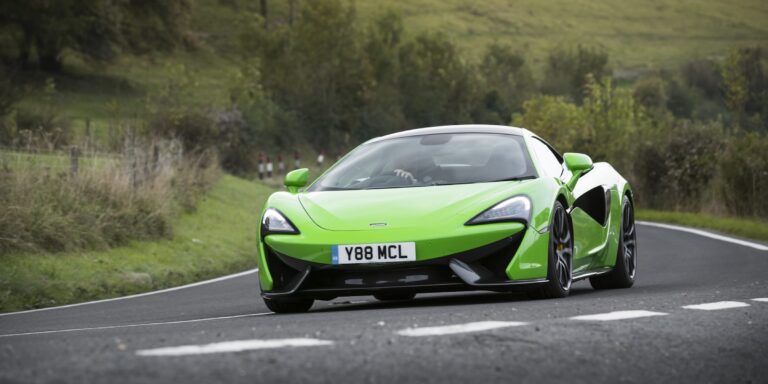
McLaren is one of the desirable automotive names that most drivers will only ever dream of getting anywhere near close to. But the £143,000 570S, launched as the first of the brand’s ‘Sports Series’ in 2015 along with its £127,000 sister the 540C, just about as affordable as a McLaren is ever going to get.
The two are the first McLaren sports cars, as opposed to supercars, and have taken the brand into new territory, opening up to a more mainstream audience that might otherwise consider buying a Porsche 911 Turbo or the glorious Audi R8.
Yet both are still very much proper McLarens. The powertrain is based around an evolution of McLaren’s core 3.8-litre twin-turbo V8 engine – we are told that 30 per cent of the components are new compared to the previous engine.
The power unit is bolted into the same carbon-fibre MonoCell II chassis that is another McLaren hallmark, and because of its light weight, when mounted in the 570S the 570hp output of the engine turns into an eye-watering 434hp power-to-weight figure. That’s good enough for 0-62mph times of under four seconds and yes, a top speed of more than 200mph.
Crucially, it looks every inch a McLaren – visually the styling is clearly closely related to the more expensive Super Series cars, and one still enters and exits through those signature lift-up dihedral doors.
There is nothing about this car that suggests it is any less of a McLaren than its more upmarket and significantly more expensive – knocking on £200,000 – 650S sister. And as such, it is the brand’s most important car yet, the one that will bring the most new owners into McLaren.
What do we think of it? Even day-to-day road testers such as your correspondent don’t get to try out the likes of this car very often, and so there is a sense of anticipation. Thankfully the rewards start coming the moment one sets eyes on the car and particularly raises those doors to slip inside.
Even this big fan of the Audi R8 can’t deny feeling that he has stepped up a class as the V8 comes to life and he eases out on to the road, briefly manually raising the ride height to ensure that carbon front splitter does not meet the speed humps at the venue entrance.
The first surprise is how well behaved the car is – in traffic, it will happily purr along with no hint of the potency it offers, the only outside evidence that one is in something special being the plentiful looks from those outside.
Gain some open road, however, free up the right-hand pedal, and the car comes instantly to life, the sheer pace of its acceleration electrifying. The only downside, perhaps is the noise – it doesn’t have the theatrical performance of an Audi R8, but then that sits well with the usable sports car image of the 570S.
Similarly impressive is the handling – a fast set of sweepers are dispatched with no problem at all, the 570S carving a path through them with all the delicate poise of a track-bred car.
Which of course it basically is – the 570S boasts a level of performance that similarly cannot be exploited properly on public roads – a track day subscription will be an essential for any owner, so they can really make the most of all the effort that has gone into creating this proper McLaren.
Verdict: Dubbed an ‘affordable everyday’ McLaren, the 570S just about fulfils the first qualification for a certain level of buyer, being only around £10,000 more to buy than a top-level Audi R8 or most expensive Porsche 911 – the latter especially considered somewhat more everyday than the McLaren. And in terms of usability the 570S also deserves the everyday tag – so long as one has deep pockets for fuel it really is behaved enough to commute to work in.
In summary, this car offers everything one expects from a McLaren, without any of the compromises, particularly in terms of comfort, of more outright performance focused sisters. As such, it could with very good reason be dubbed the most favourite McLaren.
Tested model:McLaren 570S Coupe Price: £143,250 On sale: May 2015 Engine: 3799cc V8 twin-turbo petrol, 570hp, 600Nm 0-62mph and max speed: 3.2 sec, 204mph Economy and CO2 emissions: 26.6mpg, 249g/km Key Rivals:Audi R8, Porsche 911 Test date: October 2016
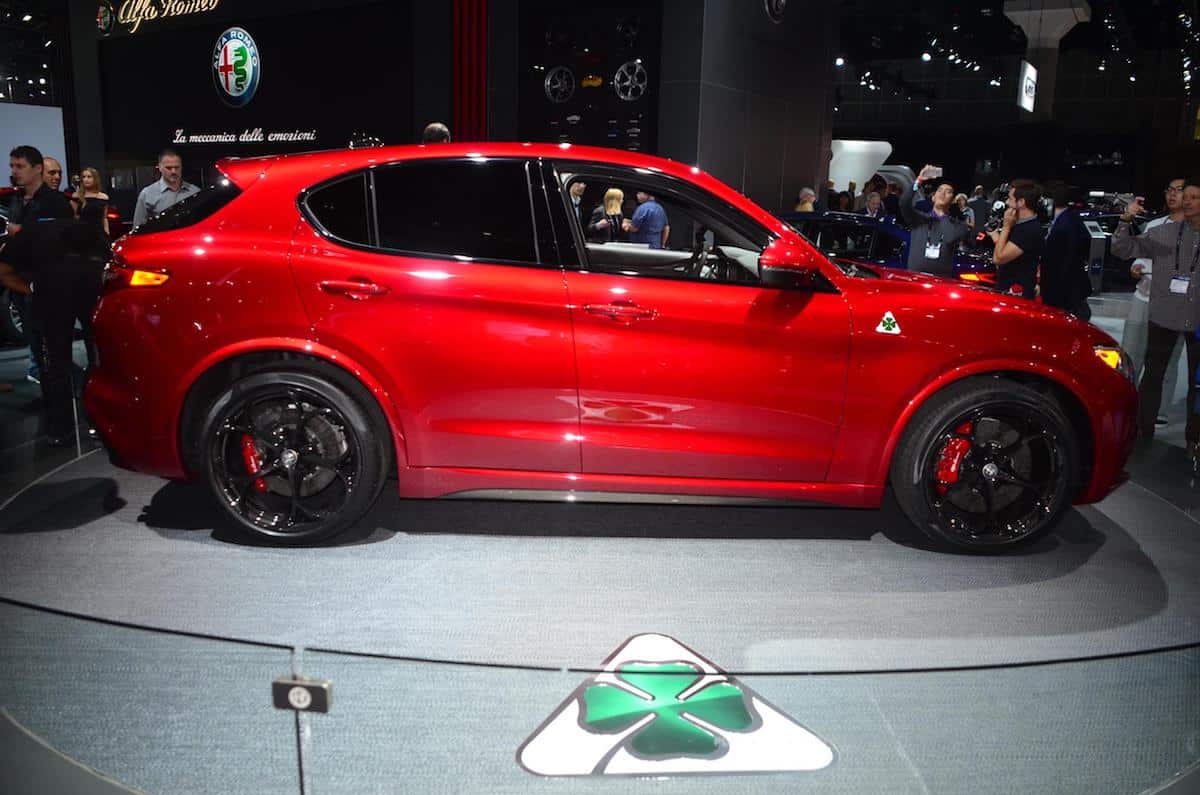
The long-awaited Alfa Romeo SUV has finally been revealed with the unveiling of the Stelvio at the Los Angeles motor show.
The car, the second of eight new Alfa Romeo models to be launched by 2020, is expected on UK sale in 2017, costing from around £35,000.
In terms of its design the Stelvio is clearly closely related to the recently launched Giulia saloon, and Alfa Romeo is clearly heavily promoting the car’s sporting credentials – to the extent of naming it after the renowned Italian mountain pass that with its 48 hairpin bends is considered by many as the ultimate driving road.
The range-topping Quadrifoglio version of the SUV on display in Los Angeles uses the same V6 twin-turbo petrol engine of the Giulia Quadrifoglio. With 510hp on tap, along with 600Nm of torque, the Stelvio boasts a sub four-second 0-62mph time and a 177mph top speed.
Quadrifoglio models will be supplied as standard with an eight-speed auto transmission and the Q4 all-wheel-drive system that in normal use is fully biased to the rear wheels but can spread torque equally between the front and rear.
More mainstream Stelvio models are expected to be rear-wheel drive – no details have been released of likely powertrains but industry sources suggest a new 210hp diesel could be among them.
The Stelvio sits on the same platform as the Giulia and boasts a similar chassis including the double-wishbone front suspension. The interior will also be familiar to drivers of the saloon.
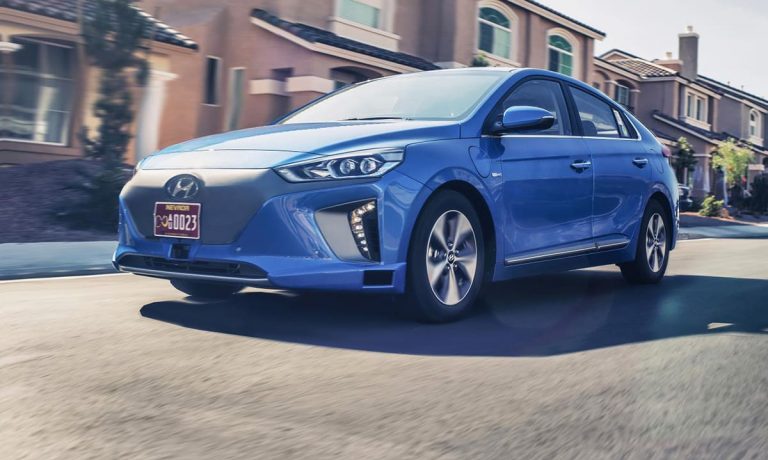
Hyundai has unveiled a self-driving autonomous version of its latest Ioniq model at the Los Angeles motor show.
The concept model uses a system mounted in its front bumper, rather than the roof-mounted technology so far typical on other autonomous models. According to Hyundai this makes the Autonomous Ioniq concept look like any other car on the road; “and not a high school science project.”
The brand adds that the aim was to keep the self-driving hardware as simple as possible, and the concept makes use of hardware already available in the production car, principally the forward-facing radar of the Smart Cruise Control and the cameras for the lane-keeping assist system.
These will be integrated into the self-driving system, dubbed LIDAR, and according to Hyundai the result will be a low-cost platform that can be installed in future models sold at a price affordable by the average buyer.
The LIDAR system allows the car to detect the exact position of surrounding objects and hardware. It also uses the Forward Facing Radar to detect the relative location and speed of objects ahead of the car to aid in route planning.
A three-camera array detects pedestrian proximity, lane markings and traffic signals, while a GPS antenna determines the precise location of each vehicle, high-definition mapping data provides the system with the road grade/curvature, lane width and indication data, and a Blind Spot Detection radar ensures lane changes are carried out safely.
Earlier in 2016 Hyundai was granted a licence to test its autonomous cars in urban environments in South Korea. The brand is planning to show two autonomous versions of the Ioniq at the Consumer Electronics Show (CES) at Las Vegas in January 2017, the cars driving up and down the streets of the city.
McLaren Automotive is to build a three-seat supercar, harking directly back to the iconic McLaren F1.
The company’s Special Operations unit is describing the car as the world’s first ‘Hyper GT’ and stating that it will be the ‘most exquisitely crafted and luxurious road-going McLaren to date.’
Development of the car, which has been codenamed BP23 (for Bespoke Project 2 three- seater), is underway and just 106 will be made – the same number as the F1 built between 1992 and 1999.
And despite the project only now being officially announced, the entire production run has already been reserved by buyers.
The BP23 is one of the 15 new models that the brand plans to launch over the next six years under the ambitious ‘Track 22’ business plan, announced by McLaren Automotive CEO Mike Flewitt at the Geneva Motor Show in March.
According to Flewitt the BP23’s McLaren F1-style three-seat layout with the central driving position will be housed in a streamlined, shrink-wrapped carbon fibre body of great elegance.
“We are calling BP23 a ‘Hyper-GT’ because it’s a car designed for longer journeys, but with the high levels of performance and driver engagement expected of any McLaren,” Flewitt says.
“A hybrid powertrain will make it one of the most powerful McLarens yet created but the car will also deliver the highest levels of refinement, enabling significant journeys to be undertaken with up to three people aboard,” he adds.
McLaren Special Operations is aiming at delivering the first examples of the car in early 2019 – future owners will work alongside MSO to create their own bespoke cars, being able to select the colour, trim and other personalisation options to make the car unique to them.
Very few details of the car, apart from the three-seat cabin and the hybrid powertrain, have been released but it will feature the brand’s signature dihedral doors – for the first time these will be powered, with apertures extending into the roof.
McLaren has also confirmed that the car will be so bespoke that all of the switchgear will be specifically designed and manufactured for it.
It will sit in the brand’s Ultimate Series, which is also expected to gain a fully electric car in the future – the brand having previously revealed it is working on such a car.
McLaren is promising more details of the BP23’s specification closer to the car’s launch date. No price has yet been indicated, industry sources suggesting it will be around £2 million.
A Short History of McLaren – not featuring F1 cars. Click here
Aston Martin has unveiled the latest version of its Vanquish S, adding more power and improved handling.
Described by its creators as the brand’s ‘ultimate Super GT’, the new Vanquish S gains a 26hp power boost to its 6-litre V12 engine, that now produces 600hp. Throttle response is improved by a revised intake system with larger intake manifolds. The eight-speed Touchtronic III auto-manual transmission is also revised to make the best of the extra potency, promising swifter shifts and more refinement at lower speeds.
Suspension revisions concentrate on the specifications of the damper internals, spring rates and anti-roll bar bushes, all of which have been revised, while the exterior gains a new aerodynamic package, the front splitter and rear diffuser finished in carbon fibre. Quad exhaust tailpipes add a more aggressive look to the car’s rear.
Additions to the options package include carbon fibre bonnet louvres, forged five-spoke diamond turned wheels and a choice of painted graphics packs. Inside owners can specify a quilted design dubbed ‘Filograph’ on the Bridge of Weir Caithness leather, as well as a fascia panel in carbon fibre.
According to Aston Martin CEO Andy Palmer, the second-generation Vanquish S takes the model line a step further from the Vanquish while distinguishing itself from the latest DB11. “A spectacular machine in every sense, the Vanquish S is a magnificent addition to our range,” Palmer says.
The Vanquish S will be available in both Coupe and Volante convertible versions at prices starting from £199,950 and the first cars are expected on UK roads in December.
Mercedes-Benz is debuting the exclusive range-topping version of the S-class Cabriolet at the Los Angeles Auto Show.
The Mercedes-Maybach S 650 Cabriolet will be offered as a limited run of only 300 cars with a cost in Germany of 300,000 Euros. This equates to around £258,000 without taking into account UK on-the-road costs, and the car will certainly cost a great deal more than the £193,900 of the current Mercedes-AMG S 65 Cabriolet range-topper.
Heralding a new range of luxury Maybach models using the 650 designation, the Cabriolet gains a number of bespoke exterior design touches. A new front bumper is added and includes a chrome lower section, the headlamps also gain chrome elements, and the 20-inch forged wheels are unique to the model.
The doors project a Maybach logo onto the ground when opened, while the interior trim includes full leather with the seats in a waterfall-look design, with diamond quilting and piping on the side bolsters.
Owners will be able to individually specify the colour and grain of their trim elements when ordering the car, this applied to the instrument panel, door panels and atop the soft-top compartment, with the Maybach logo inlaid.
Meanwhile the underside of the wood veneer is specially milled to create a 3D effect, according to Mercedes the intention being to create the feel of a luxury yacht.
Trim elements in nut brown magnolia will be exclusive to the car as well as a choice of nine colour finishes ranging from pastel yellow/black to porcelain/saddle brown. Deep-pile carpets are included, a chrome-plated ‘1 of 300’ logo is on the cup-holder, and Maybach logos included in various locations.
The entire options list of the S-Class Cabriolet will be part of the S 650’s standard specification, including Aircap wind reducing and Airscarf neck heating systems, and even Swarovski crystals encrusted into the headlamps.
The S 650 uses the same 6.0-litre V12 petrol powertrain of the Mercedes-AMG S 65, with 630hp on tap giving it a 0-62mph time of 4.1 seconds and a limited 155mph top speed. Combined cycle fuel consumption is 23.5mpg with CO2 emissions of 272g/km.
Each Mercedes-Maybach Cabriolet will be delivered with a welcome pack comprising a key ring in the same nappa leather used in the car and in the interior colour, with a Maybach emblem and ‘1 of 300’ lettering, and a certificate signed by Mercedes-Benz Cars head Dr Dieter Zetsche.
UK sales of the S 650 are expected to start in the second quarter of 2017.
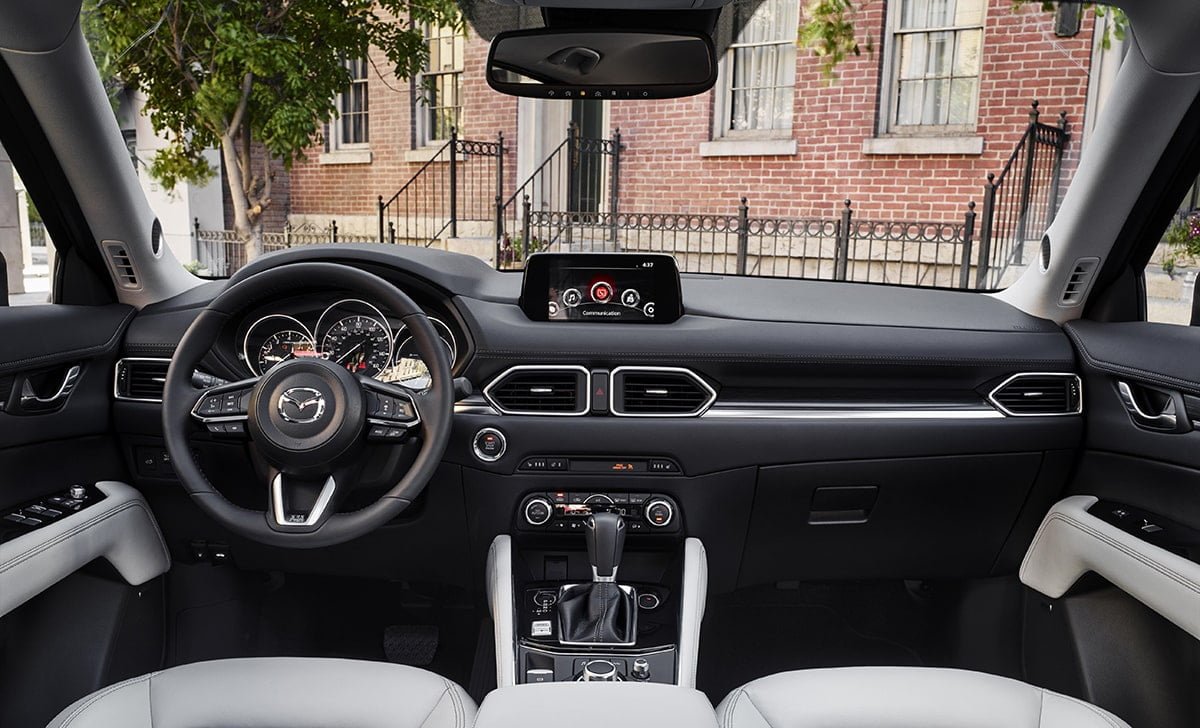
The Mk2 model follows on from the original that when launched in 2012 debuted both the SkyActiv powertrain and chassis technology and the ‘Kodo – Soul of Motion’ design language that have both since been adopted across the Mazda range.
The CX-5 has since become Mazda’s best-seller in Europe, and the new version is evolved from its predecessor with no radical departures. Mazda says that the aim behind the design of the new car is to ‘share the pleasure of driving with everyone on board,’ giving equal priority to passenger comfort as driving prowess.
According to its creators the CX-5 delivers responsive performance that a driver will expect but also for passengers ‘a pleasant ride in a remarkably quiet and finely crafted cabin.’
The most notable aspect of the new CX-5’s exterior is the dominant grille, both in width and depth. The car as a whole is very slightly shorter than its predecessor, though on the same wheelbase, and sits lower to the road.
The production CX-5 will go on sale with the same three-way engine choice as the previous model, all SkyActiv units. Petrol options will range across 2.0-litre and 2.5-litre engines (though the 2.5 is, like its predecessor, unlikely to be sold in the UK) and there will also be a 2.2-litre diesel – power, performance and efficiency figures are yet to be released.
G-Vectoring control, a new chassis technology, is featured on the CX-5 – it monitors the steering and adjusts the engine torque depending on the load on each wheel in order to keep the body upright when cornering.
New technology debuting in the car will include a head-up display in the redesigned cockpit, while a powered tailgate will also be available.
The new CX-5 will go on sale first in Japan from February 2017 – UK sales are not expected to begin until the middle of the year.
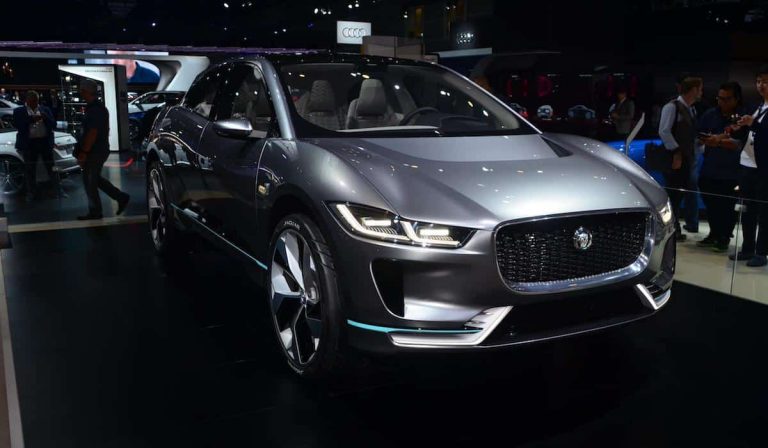
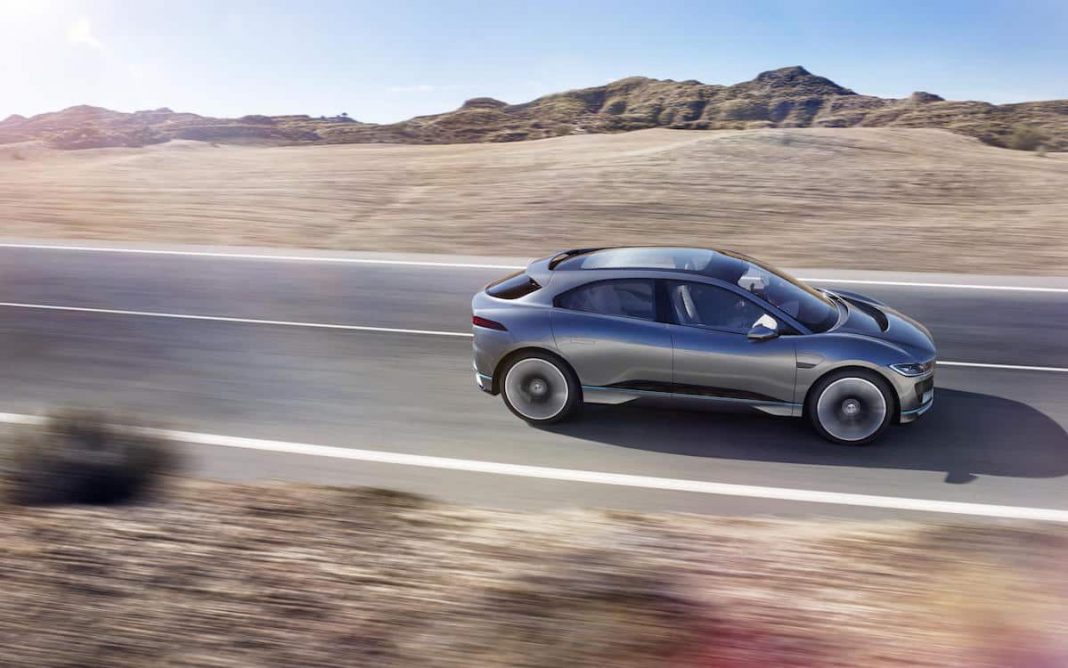
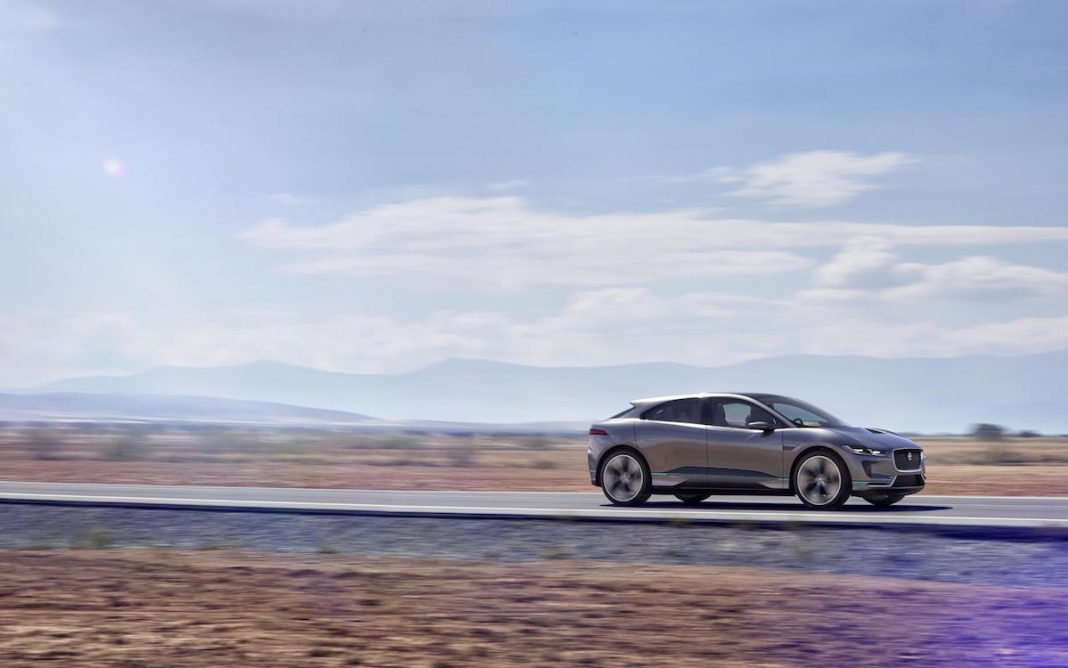
Jaguar has unveiled a concept that previews a full-electric version of the F-Pace SUV.
Debuting at the Los Angeles Auto Show, the I-Pace concept boasts a 0-60mph time of around four seconds, an official range between charges of more than 300 miles and fast charging of its 90kWh battery.
The car is much more than an F-Pace with an electric powertrain added, however. Its design has been bespoke, creating a new engineering package to make the most of Jaguar Land Rover’s development of electric propulsion.
Jaguar describes the unveiling of the I-Pace as the start of a new era for the brand. It has already demonstrated its commitment to electric propulsion by entering a team in the fully-electric FIA Formula E Championship.
A production version of the I-Pace will go on sale in 2018, and is claimed to offer ‘precise, agile driving dynamics as yet unseen on an electric vehicle,’ the car’s designers describing it as a ‘no-compromise smart, five seat sports car and a performance SUV in one.’
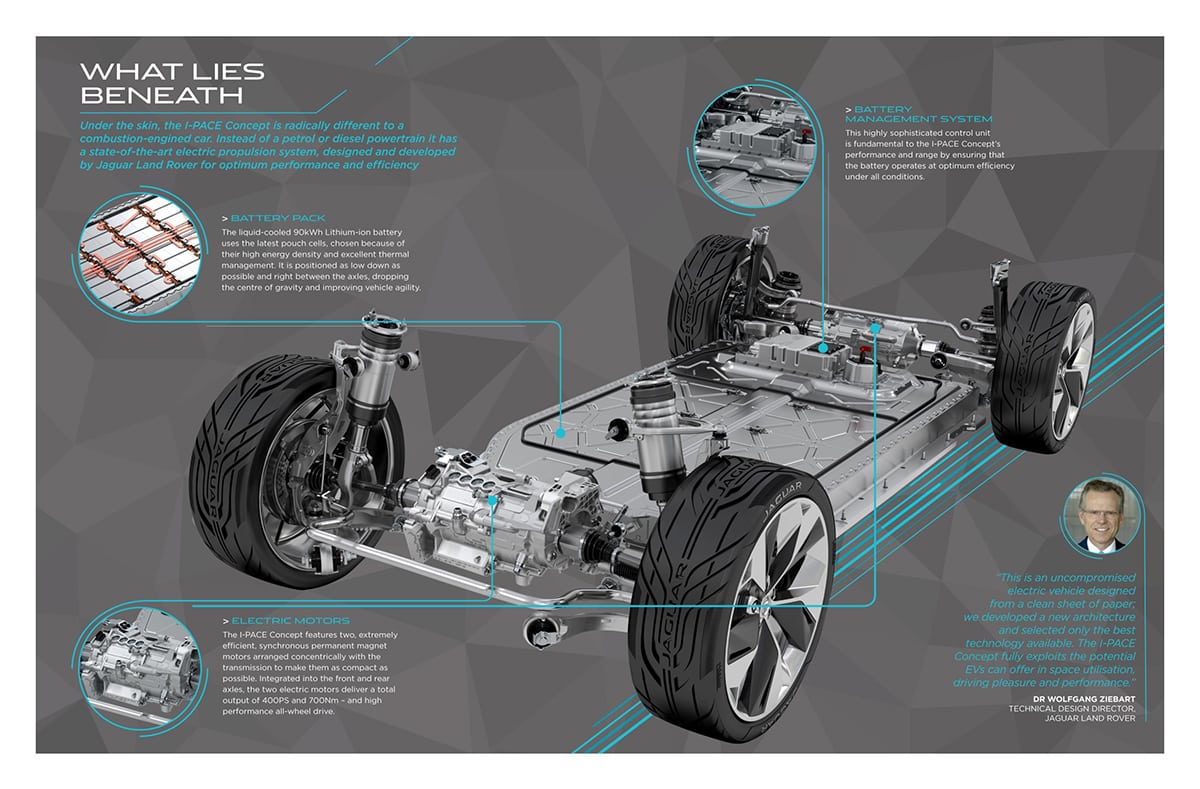
The car uses two electric motors, one mounted on each axle to retain the all-wheel-drive capability of the F-Pace and provide combined power and torque of 400hp and 700Nm – the latter figure matching that of the current range-topping F-Pace SVR.
Both the motors and the 90kWh lithium-ion battery pack have been designed in-house by Jaguar Land Rover. A full charge using a typical public 50 KW DC charging network will take around two hours, giving a range of more than 300 miles measured on Europe’s NEDC test cycle.
Jaguar Land Rover head Dr Wolfgang Ziebart describes the I-Pace as an uncompromised electric vehicle designed from a clean sheet of paper. “We’ve developed a new architecture and selected only the best technology available – the I-Pace Concept fully exploits the potential EVs can offer in space utilisation, driving pleasure and performance,” he says.
Bespoke architecture mounts an electric motor on each wheel.
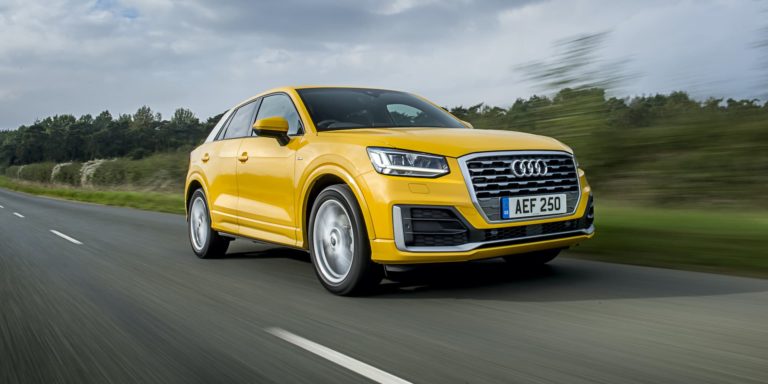
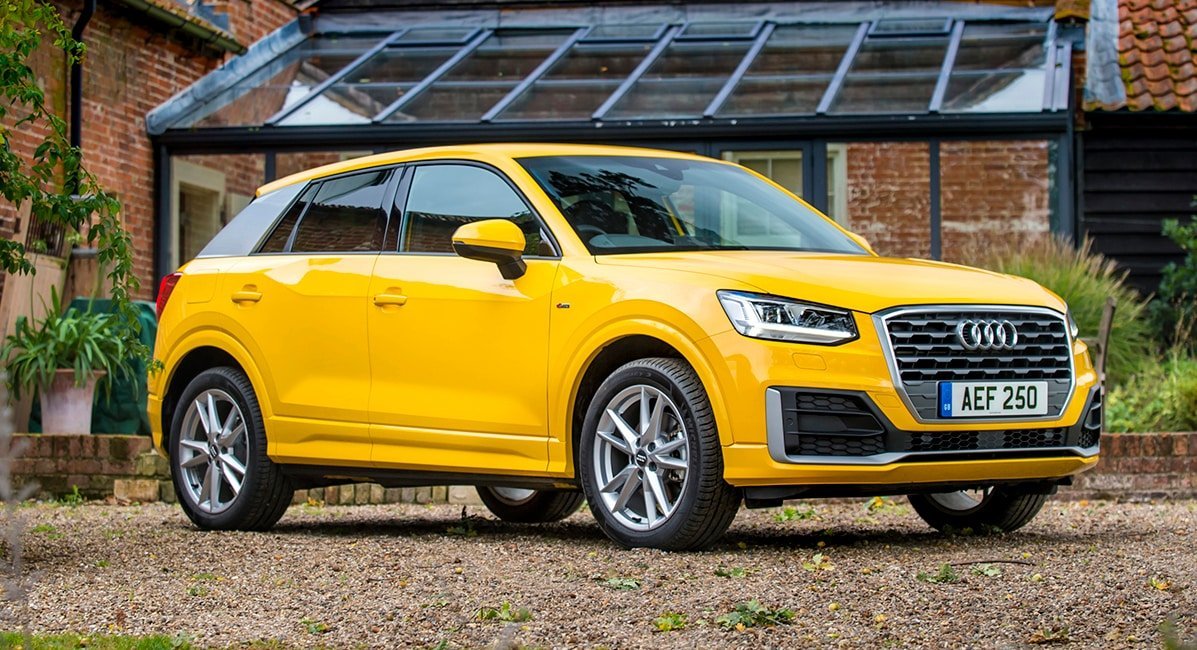
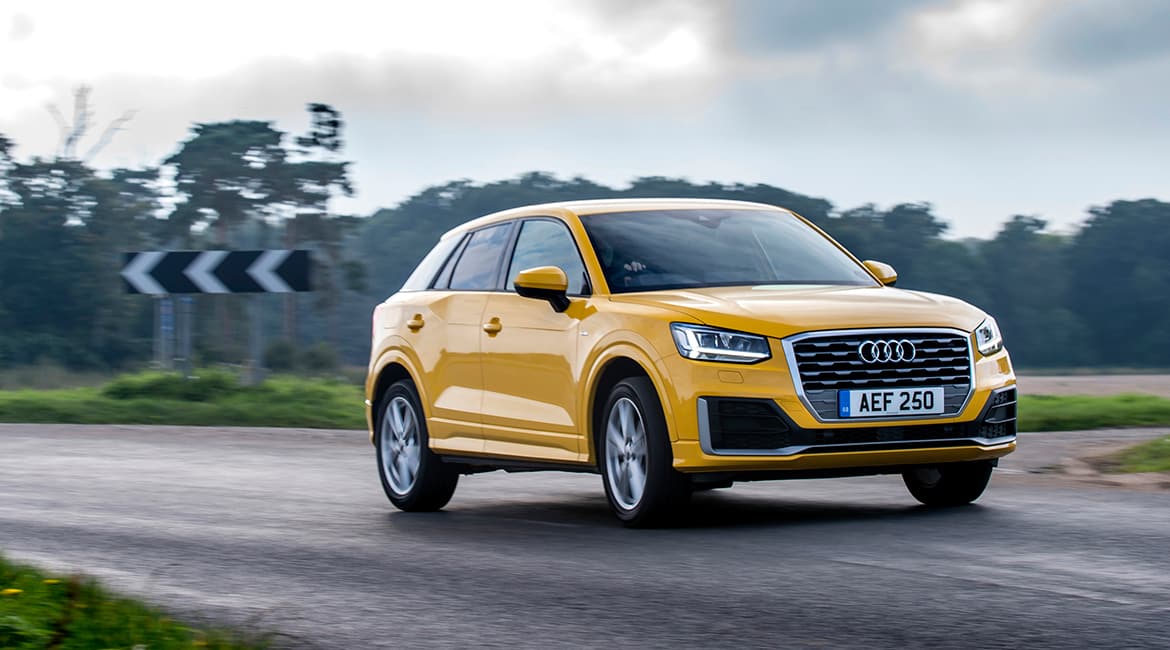
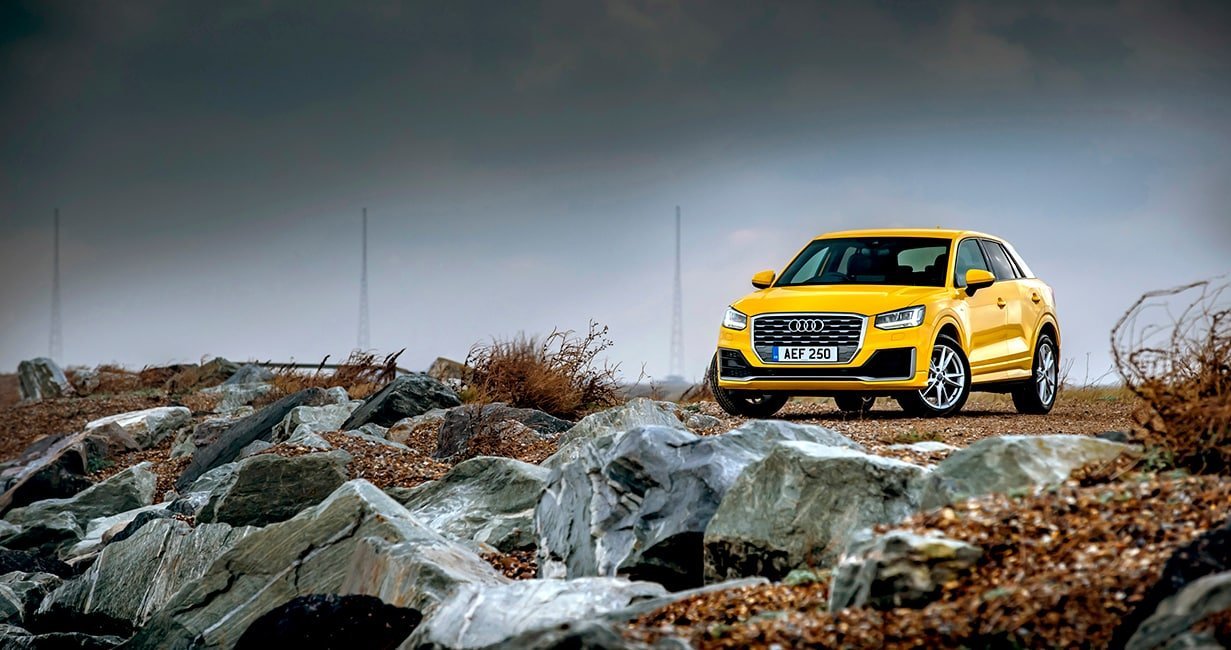
What is it? The Audi Q2 is a compact SUV, and the smallest Audi crossover yet. Key features: Large car tech, lifestyle personalisation options. Our view: Could prove to be Audi’s most important model for some time Review type: First UK drive
Audi launched its first SUV, the Q7, almost a decade ago and it and its Q5 and Q3 sisters now take half of the brand’s sales. Now there is a new, smaller member of the family, which could prove to be Audi’s most important model for some time.
The Q2 is not only the brand’s first compact SUV, but according to its creators the first-ever compact SUV from an acknowledged premium brand.
Audi personnel are convinced they are onto a winner by getting in first, because they believe that crossovers in the premium sector are going to become as popular as they have been in the mainstream market, and that before long most of the upmarket brands will be offering them. “Small and compact can also be premium, desirable and iconic,” says Audi PR head Jon Zammett.
They could have a point – some 18,000 potential Q2 buyers have already registered their interest with Audi, and more than half of them haven’t bought cars with four-ringed badges before…
The Q2 is also Audi’s most lifestyle-pitched car yet. According to Zammett, savvy buyers will be attracted to it in the same way they are the modern technology becoming available for their increasingly connected homes.
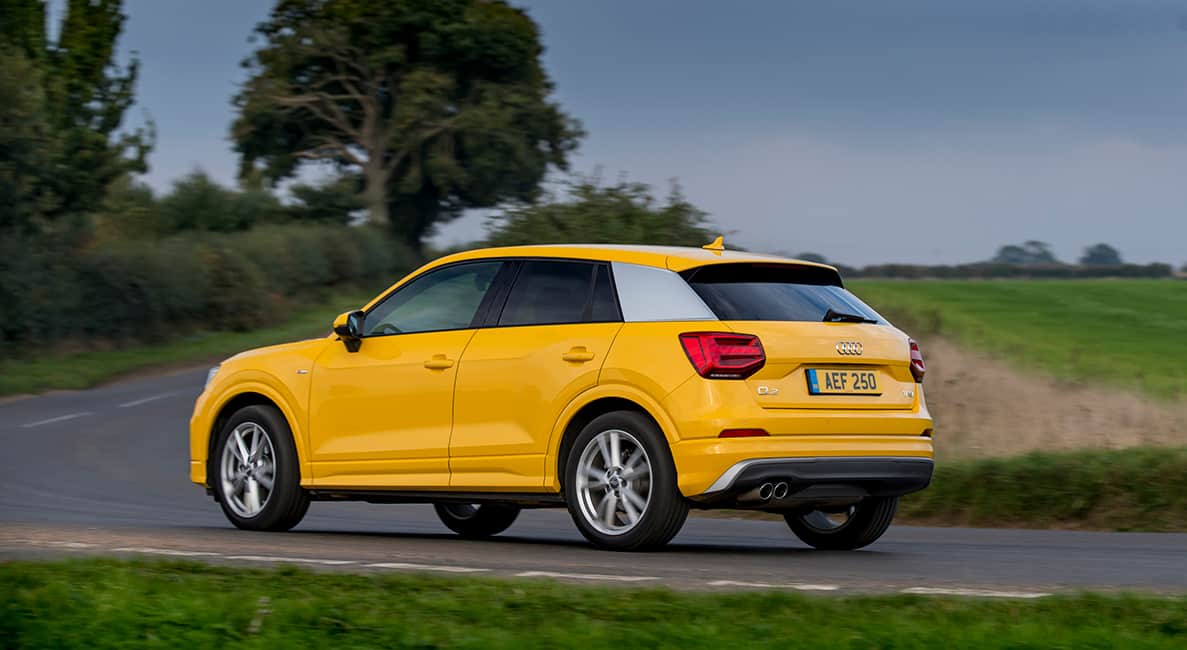
And like any ‘lifestyle’ car, the Q2 will satisfy the current trend to personalisation, offering a number of trim and colour options – notably two choices of wheel arch finish, and four on the rear screen pillar sides, which have been widened to form what Audi describes as ‘blades’.
To look at the Q2 is distinctive but not obviously an SUV. In lengths it sits between the A1 and A3 hatches, and while Audi claims it has no direct rivals, the car could likely be considered by buyers also shortlisting anything from a Nissan Juke to a Mini Countryman. It is slightly longer, at 4.2m, and wider (1.8m) than both, but notably it has a much lower roofline.
Yet when one gets inside the Q2, it is pretty spacious for a ‘small’ car, in both front and back, and particularly in terms of headroom. And the driver still enjoys that commanding view that is a major reason why people buy SUVs.
The secret is the MQB platform, which has underpinned virtually everything coming out of VW brands in the last couple of years. Its modular versatility allows for very effective packaging – the Q2’s wheelbase is longer than both those rivals, which in the process frees up interior space and maintains boot capacity that compares favourably with the opposition.
As well as that excellent view of what’s ahead and around (except perhaps in the rear three-quarter where the C-pillar blades restrict things a bit), the driver faces a dash that will be familiar to anyone owning a larger Audi. And this is another prime selling point of the Q2 – much of the tech created in bigger Audis is cascading down to the smaller newcomer.
So the cockpit gains, for example, the MMI infotainment system with its screen placed high on the centre of the dash, and which can be specified with a touchpad, voice control and access to Audi’s Connect services.
A smartphone interface supports Apple CarPlay and Android Auto services, while a definite highlight of the options list is the Virtual Cockpit, which includes the ability to display a sat nav map, or Google Images, right across the digital instrument panel.
At launch the engine choices centre on a 1.4 TFSI petrol unit of 150hp, or a pair of TDI diesels, the 1.6 producing 116hp and the 2-litre 150hp. The 1.4 petrol includes cylinder-on-demand technology, shutting down the central pair when not under heavy load, and all three engines can be matched to either a six-speed manual or seven-speed S-tronic transmission.
The choices will soon grow – before the end of 2016 a three-cylinder petrol of 116hp will join the range, and in late 2017 a 2-litre petrol with 190hp. And it is indicative of the car’s target market that only the 2-litre engines will be available with quattro all-wheel-drive. Only a quarter of sales are expected to be to fleet customers, and 60 per cent will likely choose petrol engines over the diesels.
At the launch event The Car Expert was able to try Q2s with the 1.4 petrol and 1.6 diesel. Little needs to be written about the engines – they are familiar units from other Audi models and in these latest surroundings they work well, with all the enthusiasm and refinement that is these days expected of the brand. We are not talking rocketship pace from these 1.4 and 1.6 units – the 1.4 needs to be revved to get the best out of it, and more potency will come with the larger engines. But these units should satisfy anyone moving up from the mainstream supermini or compact SUV market.
On the road the Q2 is accomplished. It rides well whether one goes for standard or sport suspension – in fact the choice of wheel size, from 16 to 18 inches, can make a more noticeable difference. Progressive steering is another standard fit on all models – weighting up as road speed increases, it helps produce competent progress through bends, the Q2 easily going where it is pointed with the body staying pleasingly upright.
Four trim levels are available – SE, Sport, S line and the new range-topping Edition 1. And despite standard equipment on all models that includes the progressive steering, the smartphone interface and a safety package featuring such innovations as Pre-sense Front crash-alert, a radar-based system that will if necessary brake the car to a halt, Audi expects only 10 per cent of buyers to choose the SE models. Most are expected to favour the higher-spec versions, particularly the Sport.
With the arrival of the Q2, buyers can now get into an Audi SUV for £22,380. When the 1.0 version goes on sale the minimum price will drop to £20,230. That, plus a solid specification, competent on-road performance and yes, the image the new car portrays, should ensure the Q2 proves a major success.
Volkswagen has used the unveiling of the revised Golf to update progress on its efforts to recover from the ‘Dieselgate’ emissions-cheating crisis.
Speaking during the reveal of the car at the brand’s Wolfsburg, Germany headquarters, Volkswagen CEO Herbert Diess said that the Golf always represents the brand as a whole and the latest car marks a new beginning, a new momentum.
“Obviously the Volkswagen brand is facing pretty big challenges – first and foremost we have to regain peoples’ trust,” Diess said, adding that good progress on working out of the crisis had seen technical measures for more than 8m of the 10m affected cars of the group approved by the relevant authorities. “We are strongly committed to gaining approval for all cars in Europe by the end of this year,” he added.
According to Diess, 1.3m cars have already been fixed and the number is rising significantly every week, to the almost universal satisfaction of customers.
Sales are also recovering – down 2% in July, European deliveries began growing again in August and in October were 4% up, with 512,000 vehicles delivered. “I am confident that we will see an overall increase in deliveries for 2016,” he said.
Diess also stated that the brand’s transformation is making progress – “we are becoming more competitive, more efficient and more innovative, we have established a product line organisation within just six months. For most of the worldwide regions we have set up tough turnaround programmes that will start to pay off next year.
“Zukunftspakt (the name given to the turnaround plan) could become the biggest reform programme in Volkswagen’s history making the brand more competitive and future proof,” Diess added.
However the brand’s problems have not all gone away – in America, where the dieselgate scandal began, a new lawsuit on behalf of 10,000 car owners has claimed that the emissions cheating software was not limited to diesel vehicles but also fitted to Audi petrol-engined cars.
And German prosecutors have drawn VW Group chairman Hans Dieter Poetsch into the crisis, claiming that they have enough evidence to name him in the investigation into VW’s response to the scandal, on the basis that the group was too slow to inform markets.
Meanwhile Automotive News Europe has reported that the election of Donald Trump as the next US President is raising fears that talks to agree a fix for affected American VWs could be affected.
Diess, however, believes Volkswagen is gaining momentum, with ten new models or major updates due next year alone, including a currently unnamed new Fastback and the next SUV, the Nissan Juke-rivalling T-Roc.
“By 2020 we will have renewed our entire product line-up, realising the greatest brand offensive ever,” Diess concluded. “The Golf marks the beginning – smarter, safer and more connected.”