Find an Expert Rating: 
Home Blog Page 172

Nissan Pulsar review

What is it?
The Nissan Pulsar is a C-segment family hatch, the first from Nissan in seven years

Key features:
Longest wheelbase in class, cabin space, frugal engines

Our view: A serious bid to restake a claim in a sector Nissan has been out of for some time.


The C segment, the family hatch market, is one of the most important in the UK’s automotive sector, accounting for a quarter of all cars sold, and including such household names as the Ford Focus and Vauxhall Astra. Yet it is a market that Nissan has not been a part of since dropping the Almera in 2006.

Since then the Japanese brand has, very successfully, persuaded many C-segment buyers to instead invest in one of the new breed of crossovers, and particularly its own Qashqai – a car that when launched in 2007 virtually created the crossover sector and has led it ever since against mushrooming numbers of rivals.

C-segment buyers are among some of the most loyal, however, and many do not want a large, high-slung car such as the Qashqai. So now Nissan is targeting them with the Pulsar.

According to its creators, the Pulsar is intended to be a smaller, cheaper sister to the Qashqai, replicating the successful elements of the crossover in a family hatch. The family resemblances are obvious on first viewing – in particular, the long bonnet with its distinct creases running forward to meet a strongly vee-shaped grille.

The major plus point of the car is revealed on slipping inside it. The Pulsar sits on a 2.7m wheelbase, which Nissan claims as the longest in the class. As a result interior space is extremely generous, particularly for rear-seat passengers who have more knee room than in many cars from the larger D segment. Boot space is also plentiful, at 385 litres, extendable to 1,395 litres with the rear seats folded down.

Fit and finish of the interior is generally of a higher quality than previously, though some of the surfaces are a little too obviously hard plastic. The instrumentation is traditional white-on-black and easy to read as a result.

The Nissan Pulsar launches with just two engine choices – a 1.2-litre petrol unit of 115hp and a 1.5-litre diesel with 110hp. This situation will not last – a significantly more powerful 1.6-litre petrol with 190hp will arrive in Spring 2015, while Nissan is also widely predicted to put the GTI-like NISMO concept, shown at the Paris Motor Show, into production before long.

Petrol and diesel sales are likely to be split almost equally, and in a fleet-dominated sector – 60% of Pulsars expected to be fleet cars – the diesel that The Car Expert tried is likely to be popular, with its sub-100g/km CO2 emissions and officially-quoted fuel economy of close to 80mpg.

The engine is quiet on start-up and refined in use, only really becoming noticeable when pushed hard. However, the gearing of the Pulsar – six-speed manual in this case, though petrol versions are also offered with a CVT auto – does mean that the unit does need to be worked, for effective overtaking or maintaining momentum up sharp gradients.

On the road the Pulsar is competent but un-involving – it transports in comfort, smothering bumps effectively, but feels divorced from the driver when cornering. This is a car for which practicality considerations clearly rated a lot higher than trying to come close to the admired chassis performance of the likes of Ford’s Focus.

Yet while Nissan hopes to gain some sales from Focus buyers, it sees as the main rivals to the Pulsar similar solid performers such as Toyota’s Auris, and “price-conscious” cars such as the Kia cee’d and Hyundai i30. And against such rivals it will be worthy of consideration.

Pulsar prices start from £15,995, £17,595 for the diesel, a price point deliberately pitched around 10% lower than its Qashqai sister.

Four trim levels are on offer, and Nissan expects the mid-range Acenta and n-tec trims to take almost three quarters of sales. However, even entry-level Visia versions are generously equipped, including air conditioning, a five-inch ‘Advanced Drive-Assist’ centre-console display, alloy wheels, electric windows, a tyre-pressure monitoring system, six airbags and a Stop & Start system.

Going up through the range the equipment and options lists are dominated by technology, highlights including the Safety Shield suite of driver aids such as lane departure warning and notably the Around View Monitor with its overhead camera effect, and the NissanConnect infotainment system, that offers full satellite navigation and smartphone integration.

Nissan Pulsar sales are predicted to be around 10,000 a year – the car is not expected to wrest the brand’s best-seller position from the Qashqai. This new hatch is certainly a serious bid by Nissan to restake a claim in a sector it has been out of for some time. But whether the Pulsar will hold its own in one of the most competitive arenas of the UK market remains to be seen.

Nissan Pulsar – key specifications

Model tested: Nissan Pulsar N-Tec 1.5 dCi
On sale: October 2014
Range price: £15,995-£21,945
Insurance group: TBC
Engines: 1.2 petrol, 1.5 diesel
Power (bhp): 115, 110
Torque (lb/ft): 140, 192
0-62mph (sec): 10.7, 11.5
Top speed (mph): 118, 118
Fuel economy (combined, mpg): 56.5, 78.5
CO2 emissions (g/km): 117, 94
Key rivals: Hyundai i30, Kia c’eed, Toyota Auris
Test Date: October 2014
* all performance figures with manual gearbox

BMW 2 Series Active Tourer review

What is it? The BMW 2 Series Active Tourer is the Bavarian company’s first MPV
Key features: Front-wheel-drive, large space for compact size
Our view: The Active Tourer marks a sea change in philosophy for BMW


In today’s competitive market many long-held definitions are being broken, and in no car is this more true than in the BMW 2 Series Active Tourer.

Traditionally, BMW has been regarded as a maker of premium cars, always of rear-wheel-drive and generally sporty. Even the X range of SUVs have been performance pitched.

The launch of the BMW 2 Series Active Tourer, however, not only marks the company’s first foray into the MPV market, but also a sea change in powertrains, being a front-wheel-drive car.

This third member of the 2 Series range owes its existence to sister brand MINI, which in its mass success has provided BMW with plenty of front-wheel-drive provenance. And the Active Tourer is built on the same platform as the latest MINI, but a longer version with the emphasis on passenger space.

And the space is certainly impressive. The Active Tourer measures up at 4,342mm in length, which is only 15mm longer than the 1 Series – the nearest thing the brand has to a supermini. Yet the rear legroom is close to that of the 7 Series, BMW’s largest saloon.

Practicality extends to the boot. At 468 litres it is large, but drop the back seats and it becomes 1,510 litres – matching the distinctly larger and estate-bodied 3 Series Touring.

The rear of the car is flexible too – the rear bench seat slides and reclines, and offers 40:20:40 split reclining for a combination of people and luggage, while there is more hidden storage under the boot floor. The tailgate opens and closes automatically or you can have it open by waving a foot under it.

The typical bulky visual profile of an MPV is not something that sits happily in the BMW line-up. And the stylists have tried hard to ensure the Active Tourer looks more BMW than people-carrier. A bonnet sloping sharply down to a narrow front, and distinctly creased side panels, give the car a purposeful look, more muscled-up coupe than slab-like MPV.

Inside the car the recipe is typical BMW fare – but very good BMW fare. Panel fit is tight, the switchgear and surfaces of very high quality. The driving position is high, some 110mm above that of a 1 Series, which gives one plenty of visibility – in short it’s an engaging environment.

Two engines are on offer from launch – both new and comprising a three-cylinder 1.5-litre petrol with 134bhp in the 218i and a four cylinder 2-litre diesel of 148bhp in the 218d. They won’t be the only ones for long – from November two more powerful petrol and smaller and larger diesels will join the range, the 220d and 225i also offering all-wheel-drive.

Of the current pairing BMW expects the diesel to attract most customers, mainly due to official fuel economy close to 70mpg and emissions of 109g/km putting it in band B road tax territory of a mere £20 per year.

The diesel is certainly tempting not just in terms of economy but also pace – it’s enthusiastic and hustles the car along in the efficient manner one expects of a BMW. But it is not as refined as its petrol sibling, which is a very smooth unit.

This is not that surprising, as while this may be BMW’s first three-cylinder, it is an engine familiar to many thousands of MINI Cooper owners. With its price more than £2,000 under the diesel for a loss of only 11mpg and £10 a year in road tax, it becomes the more attractive proposition of the two.

On the road the Active Tourer belies its accommodation capacity. It rides in great comfort, corners confidently with no excessive body roll and only at motorway limit speeds does the wind noise become noticeable.

The BMW 2 Series Active Tourer is certainly a major new contender in its market. Some rivals, such as Mercedes’ B-Class, might offer more space, but they also look much more like people carriers. This car rides like a BMW, performs like a BMW and can be specified with all the technology familiar to BMW owners, right up to such niceties as a head-up display. It is just a BMW with rather a lot of practicality.

BMW 2 Series Active Tourer – key specifications

Model Tested: BMW 2 Series Active Tourer
On Sale: September 2014
Range price (at launch): £22,125-,£27,205
Insurance group: TBC
Engines: 1.5 petrol, 2.0 diesel
Power (bhp): 134, 148
Torque (lb/ft): 162, 243
0-62mph (sec): 9.3, 8.9
Top speed (mph): 124, 127
Fuel economy (combined, mpg): 57.6, 68.9
CO2 emissions (g/km): 115, 109
Key rivals: Mercedes-Benz B-Class, Ford C-Max
Test Date: October 2014

Fiat Panda Cross review

What is it? The Fiat Panda Cross is a more extreme version of the familiar Panda 4×4 supermini
Key features: Higher ride height, terrain mode, hill descent control
Our view: Does a lot of what a Land Rover can do, but in a smaller, lighter and more economical package.


Superminis with off-road ability are rare, but now Fiat can offer three in its Panda range, dependent on how far away from the tarmac the driver wishes to travel.

The Fiat Panda Trekking remains front-wheel-drive but includes the clever push-button Traction+ system, that brakes the wheels when they lose grip, helping greatly when the going gets slippery.

The Fiat Panda 4×4, as its name suggests, boasts on-demand all-wheel drive. And now there is the Fiat Panda Cross – based on the 4×4, with the same two engines uprated by six horsepower each, and with significantly more ability.

This fact is surprising, because when The Car Expert tested the 4×4 in January 2013, we discovered it had a level of off-road prowess that put many more familiar SUVs to shame. Yet Fiat believes there are some who will want to push the car further into extreme territory, and it is them that the Cross is aimed at.

To create a Fiat Panda Cross, the Panda 4×4 undergoes significant visual and mechanical changes. There are wheel-arch extensions over 15-inch alloy wheels shod with all-year-round mud and snow tyres, thick protective side mouldings, a steel protective skid plate, and chunky new bumpers front and rear, the front one characterised by a number of air intakes in what Fiat dubs its bespoke ‘squircle’ design – this theme is repeated in the cabin.

The bumpers are not just for show, as they improve the car’s ‘attack angles’ – how steep a slope or sheer a drop it can tackle – close to those of pure off-roaders. It boasts an approach angle of 24 degrees, a departure angle of 34 degrees and a breakover angle (what it can negotiate without grounding) of 21 degrees. The Panda Cross will also happily tackle a maximum gradient of 70 per cent.

It has significant wading ability too. The engine’s air intake has been raised to 711mm high in the petrol version, 739mm in the diesel, to ensure that even a river is a viable route to travel – a flooded road dispatched without a second thought.

The extended ride height, up to 158mm on the diesel, 3mm more on the petrol, helps with this ability, matched to bespoke springs and dampers to suit the car’s intended environment.

Of course all this would be of no use without the propulsive ability to match and the Panda Cross has it. The two engines of the 4×4 are retained – the much-admired TwinAir petrol unit of just 900cc, and the 1.3 MultiJet diesel. Both have their power boosted, to 79bhp on the diesel, 89bhp on the petrol, but the critical factor is of course the torque.

The diesel has significantly more at 140lbft, (107 on the petrol) and it is also matched to a six-speed manual gearbox, unlike the petrol’s five-speed. However the little engine makes up for this with a shortened ‘crawler’ first gear that allows the car to move under idle – useful for negotiating tough off-road obstacles.

The Terrain Control driver aid is a big extra in this respect. It will mostly be used in Auto, on the road, the car bowling along in front-wheel-drive unless conditions demand that all four automatically kick in.

In Off-Road mode all four wheels are permanently powered up to speeds of 30mph, the locking differential and ESC are engaged and anti-slip disengaged – all elements designed to ensure progress when the tarmac runs out.

The third mode is Hill-Descent Control – a pure off-road feature that you do not expect to find on a supermini. With this engaged you can descend a very steep slope in neutral, merely steering, and remain in complete control. It’s unnerving but effective.

There is no low-range transfer ‘box such as on ‘proper’ off-roaders, but the Panda Cross doesn’t need one. The launch route included two very different but also very challenging off-road sections, visible on the video accompanying this report, and which by the time we tackled them had been turned into a quagmire by days of heavy rain. The cars negotiated them with ease, and it was telling that the off-road specialists running the courses admitted that they were using the Panda Cross cars to get around as their Land Rovers were bogging down…

The Fiat Panda Cross will mostly be used on the road, however, and it is surprisingly assured. It will lean significantly in corners, but only if you drive it like a lowdown performance car, which is most certainly not. The petrol engine is less flexible than the diesel, needing lots of fuel-sapping revs to give its best, but generally the car is easy to drive considering its abilities.

What might make some potential customers baulk is the price. £16,000 is a lot to pay for a supermini, but this is a supermini that can do so much more than any other. Fiat says it has no direct rivals and this is probably true, the nearest equivalent likely Nissan’s Juke – really a ‘proper’ crossover from the next class up.

So the Panda Cross will be a niche model – Fiat expects to only sell 400 a year in the UK – but it will find its supporters. Out on the Welsh hills around the writer’s home, for example, one could easily imagine it being used by farmers feeding their flocks of roaming sheep, vets on call, emergency services of all types. This is a car that does a whole lot of what a Land Rover can do, but in a smaller, lighter and therefore more economical package.

Fiat Panda Cross – key specifications

Model Tested: Fiat Panda Cross 0.9, 1.3
On Sale: October 2014
Price: £15,945, £16,945
Insurance group: 9U-10U
Engines: 0.9 petrol, 1.3 diesel,
Power (bhp): 89, 79
Torque (lb/ft): 107, 140
0-62mph (sec): 12.0, 14.3
Top speed (mph): 104, 99
Fuel economy (combined, mpg): 57.6, 60.1
CO2 emissions (g/km): 114, 125
Key rivals: Nissan Juke
Test Date: October 2014

Driving a tank – a crushing experience!

0

If you like cars, then chances are you probably like tanks.  And if you like tanks, chances are you’d probably like to spend a Saturday afternoon driving some tanks around a muddy field and then using a tank to drive over a car…

The good people at MoneySupermarket.com are running a campaign to “crush car insurance quotes”, and to celebrate they are wantonly crushing actual cars. Matt from Speedmonkey used a monster truck to flatten a pair of vehicles, Adam from Carwitter and Yours Truly from The Car Expert crushed some worn-out French hatchbacks with tanks, and – if you’re quick – you can get in on the action by crushing a car with a giant robot hand. More on that in a bit, but I’ve tried it and it’s hilarious.

And so it was that I journeyed up to Northamptonshire to charge around some muddy paddocks in a selection of incredible military material, culminating in the crushing a sad little Citroën with a mighty Chieftan battle tank.

FV432 armoured personnel carrier, being driven by The Car Expert
Woo hoo!
FV432 armoured personnel carrier
Charge!
The Car Expert, posing heroically in from of an FV432 armoured personnel carrier
The Car Expert crushes a car with a tank thanks to MoneySupermarket.com
The Car Expert crushes a car with a tank
Anyone seen a Citroen around here?
A Citroen ZX, under a Chieftan tank.
Uh-oh…
The Car Expert drove a Chieftan tank over an innocent Citroen
I did that!
What was left of the car after The Car Expert mowed it down with a Chieftain tank
Most of that will buff right out…

The beginner tank

To start things off, I am dropped into the cramped cockpit of a 432 armoured personnel carrier. The first and most obvious point is that there’s no steering wheel – you steer by pulling on two levers to control the speed of the tracks on either side of the tank. Pull back on the left lever and the left tracks slow down, pivoting the tank to the left. Pull back on the right lever, you get the idea. You don’t use the brake pedal unless it’s a proper emergency or you’d like a head injury (they’re not soft and squishy cabins).

Instructions over, we start bashing about the paddock. Naturally this was not a racing situation and in no way were there any lap time comparisons between myself and Adam from Carwitter. If there were, he would probably have been about 11 seconds slower than me over a 5-minute lap. Possibly. Who knows?

If you think that your Land Rover Defender or Toyota Land Cruiser is the epitome of off-road capability, you are sadly mistaken. A tank is about the most driving fun you can have in a muddy field. Although to be fair, it would not be that useful for dropping off Tarquin and Penelope at prep school, so Land Rover can breathe a sigh of relief.

But the 432 is simply the entry-level tank on this epic adventure. Adam gets to have a crack in a Russian TS2 Gvozdika tank, which can swim and launch itself up gradients that you couldn’t possibly walk up. Its huge gun can also hit a target the size of a tennis court from a range of 17 miles, but we weren’t allowed to test that capability for some reason.

Incidentally, these ex-Soviet tanks are the same as the ones currently being used by Islamic State forces in the Middle East, so British Army attack helicopters undertake regular target practice on this very farm against these very vehicles. Er, hopefully not today…

The fast tank

Meanwhile, my next weapon is the British CET (Combat Engineer Tractor). These were designed to take on the Russians if they invaded West Germany during that whole Cold War thing. The CET is formidable, even by tank standards. Capable of withstanding a nuclear attack, it can travel at up to 55mph in pretty much any terrain you like, and cost £30 million when new. The model I was driving had been purchased by the boys at Tanks-a-Lot with merely 20 (non-combat) hours on the clock, and they paid a grand total of £7,000. So in only 20 hours of peacetime driving, the tank had depreciated by £29,993,000. That’s your taxes at work, people of Britain!

The CET is a real monster, but is surprisingly easy to handle. It has a tiller to steer (because it’s amphibious as well), and you simply put your right foot to the floor and go.  Flat out, everywhere. Until it overheats and breaks down in the middle of a ditch, but I swear that wasn’t my fault. At least that’s one thing they have in common with a Land Rover.

The big tank

Finally, we come to the culmination of a hard day’s work – the car crushing. Adam goes first, launching his Russian Gvozdika over a puny Renault in an explosion of crunching and screeching metal. He looks very pleased with himself; the Renault looks less content with proceedings. And now I get to meet the monster that I will be driving over a hapless Citroën. It’s a 55-tonne Chieftain, the main battle tank of the British Army for over 30 years. It’s a behemoth, towering over all of the other 100+ military vehicles scattered around the premises. And I’m going to crush a car with it.

You would think that driving over the top of a car would be terrifying, but in a Chieftain tank it’s kind of like driving over a speed hump. Although speed humps don’t usually sound like a drawn-out car crash, and they’re not laugh-out-loud hilarious like driving a tank over a car is. You really should give it a go.

Stuart crushed a car with a tank courtesy of MoneySupermarket.com

Volkswagen Polo review

What is it?
The new Volkswagen Polo is the fifth generation of the solid-selling supermini

Key features
New engines, new tech, refreshed looks

Our view
Compares favourably with rivals and build quality adds to residual values. A strong contender in the supermini sector.


The Volkswagen Polo has always been one of the brand’s most reliable lines – the second-biggest seller in the VW line-up, it appeals to a significant number of buyers who want the build quality that Volkswagen is renowned for, but don’t need a car the size of the Golf.

Now the Polo has reached Mk5, though the fifth generation is not an all-new car, but a refresh – a significant one, to maintain the challenge to rival manufacturers introducing completely new versions of their cars, such as Vauxhall with the Corsa. And of course, the biggest rival is the Ford Fiesta, the UK’s best-selling car.

The latest Polo has been given new engines, new technology and some slight visual changes – the last making it appear ever more like a Golf, just smaller.

Available in three or five-door form, it looks practical and is – mostly. Boot capacity, in particular, falls shy of many rivals, the 280 litres of space five less than in a Corsa, 10 under the Fiesta. It’s also only 29 more than in the Up city car and with the rear seats folded, the Up actually offers more space at 959 litres compared to the Polo’s 952. The height-adjustable floor, standard on SE models and above, is a useful touch.

The driver’s surroundings are a plus point. The instruments and controls are large, easy to use and sparing in their number, a quality touchscreen assisting in removing several buttons. VW’s Modular Infotainment system is standard on all Polos and includes Bluetooth and USB connectivity, while with the optional MirrorLink system the screen can be used to access apps on a connected smartphone.

The driver is offered plenty of adjustability to the seat, and the view is good. Space for front seat occupants is plentiful though not so much for those in the rear. But the general build quality makes the Polo a pleasant environment in which to travel.

The seven-strong engine range is completely new, running across five petrol and two diesel units – all are Euro 6 emissions compliant and according to VW have seen efficiency improvements of up to 23 per cent.

Expected to be the biggest seller is the base 59bhp petrol unit, as fitted to the up!. It’s not at all swift, but does offer fuel economy stretching close to diesel territory.

The latest diesels, however, move the goalposts again – they are two new three-cylinder units, of 1.4 litres and with either 74 or 89bhp. Official fuel economy goes above 80mpg, emissions down to 88g/km, whichever power option you choose.

For The Car Expert, it was the lower-powered version and it proved smooth and refined in general use, though the characteristics of the three-cylinder unit take a little getting used to especially at low revs. Only at very high revs does the engine note become noticeable.

The Volkswagen Polo is an assured performer on the road, though not quite the best. It offers comfortable progress and only the harshest surfaces transmit their way into the cabin. Body lean is a little noticeable in corners, but for the urban environment in which most of these cars find themselves, it is more than capable.

There are four Polo trim levels and all cars include such niceties as Bluetooth, the five-inch colour touchscreen, DAB digital radio and a Hill Hold function.

Highlights of the extras on our SE model, second of the four trims, include alloy wheels, an upgraded media system with larger screen with smartphone connectors, remote locking, air conditioning and electric heated door mirrors.

Price-wise, the Volkswagen Polo compares favourably with rivals and its long-appreciated build quality adds to residual values. The changes made by VW do not make any radical difference to the Polo’s appeal, but they do enhance what is already a consistently strong contender in the supermini sector.

Volkswagen Polo – key specifications

Model Tested: VW Polo SE 1.4 TDI 75PS
On Sale: July 2014
Range price: £11,100-£19,715
Insurance group: 4E-13E
Engines: Petrol 1.0 x 2, 1.2 x 2, 1.4. Diesel 1.4 x 2
Power (bhp): 59/74, 89/109, 148. 74/89
Torque (lb/ft): 70/70, 118/129, 184. 155/169
0-62mph (sec): 15.5/14.3, 10.8/9.3, 7.8. 12.9/10.9
Top speed (mph): 100/108, 114/122, 137. 108/114
Fuel economy (combined, mpg)*: 60.1/58.9, 60.1/57.6, tbc. 83.1/83.1
CO2 emissions (g/km)*: 106/108, 107/110, 109. 88/88
Key rivals: Ford Fiesta, Renault Clio, Vauxhall Corsa
Test Date: August 2014
* All figures with manual gearbox

Jeep Cherokee review

What is it? All-new version of tough compact SUV.
Key features: New look and tech including nine-speed auto transmission.
Our view: The most impressive version of the Jeep Cherokee for several years.


The launch of the fifth-generation Jeep Cherokee marks the return of a model not seen in the UK for some years, a victim of parent company Chrysler’s fight to survive. Now that Chrysler is safe in the hands of Fiat, the Cherokee is back in an all-new form heavily influenced by Italian input.

There are nods to the Cherokee line, most notably the bold, seven slot grille and the signature trapezoidal shape of the wheel arches, but overall in looks this Cherokee is an antidote to somewhat bland predecessors.

The styling is pitched to place the Cherokee firmly in the modern crossover market – it’s certainly not as rugged as previous versions and the visual treatment divides opinions.

Perhaps more controversial is the mechanical package, which also appears to be less rugged. For many, the Jeep is the original off-roader with capabilities only matched by the Land Rover, but the new Cherokee is built on a platform also the basis of the Alfa Romeo Guilietta, and uses Fiat diesel engines.

Never before has a Cherokee engine been mounted transversely and serious off-roaders will also be put off by the front-wheel-drive version that indicates the brand’s targeting of the growing crossover market.

However – in all-wheel-drive form with the ‘Active Drive 1’ driver aid the Cherokee is pretty capable once the tarmac ends, certainly to a degree that will satisfy the vast majority of off-road enthusiasts. For the extreme minority there is a more sophisticated Active Ride 2, but at the time of our test this had not reached the UK.

Yet while Active Drive 1 lacks certain features, such as a low-ratio transfer mode, it copes with most challenges. This was demonstrated impressively on the launch event by placing each vehicle on a frame which simulated water or ice by putting rollers under three of the four wheels. As they spun madly, torque was immediately transferred to the one wheel with grip, that hauled the car off the frame…

Current engine choice stretches across two versions of the 2-litre Multijet diesel. In future months there will be a 3.2-litre V6 petrol engine option, but only on a Trailhawk version of the Jeep Cherokee available on special order – and the company does not expect many orders…

The 140hp diesel comes with a six-speed manual gearbox and front or four-wheel drive transmission – the former offering plus 50mpg fuel economy and emissions under 140g/km. The 170hp version is all-wheel-drive only and matched to either the manual or a nine-speed auto gearbox which Jeep says is the first in the mid-size SUV segment – though Land Rover might disagree and point in the direction of its Evoque.

This gearbox is highly refined and suits the generally more assured characteristics of the larger engine. And other features, such as the seamless disconnection of the rear axle when the 4×4 transmission is not required, help make the new Cherokee the best riding of the entire line, perfect for today’s crossover market in which it will mostly sell. It smothers bumps and changes direction easily while staying upright, though it is still closer to its old-style 4×4 roots than the road manners of certain rivals.

The complete redesign has extended to the interior – it is all new, with much higher quality of fit and finish, and with such technology as a driver information screen dubbed a Thin-Film Transistor. This shows such details as speed, fuel consumption or navigation instructions – in mono or colour depending on model.

Even the centre console touchscreens vary according to trim level – five inches on the entry-level Longitude models but on the Longitude+ and Limited extended to 8.4 inches, according to Jeep the largest in the mid-size SUV category.

All are part of a ‘Uconnect’ system that allows the driver to control the audio, climate controls, heated and ventilated seats and much more through large buttons. Bluetooth connectivity, navigation, music and audio streaming are all included.

Overall this is the most impressive version of the Jeep Cherokee for several years. While it has clearly tilted much more in the direction of road-only users, it retains enough capability for all but the most extreme off-roaders. In the road market, however, it is now up against some very serious competition…

Jeep Cherokee – key specifications

Model tested: Jeep Cherokee.
On sale: June 2014
Range price: £25,495 – £35,695
Insurance group: 26E-28E
Engines: 2.0 diesel x 2
Power (hp): 140, 170
Torque (lb/ft): 258, 258
0-62mph (sec): 10.9 (12.0), 10.3
Top speed (mph): 116 (117), 119
Fuel economy (combined, mpg): 53.3 (50.4), 48.7
CO2 emissions (g/km): 139 (147), 154
Key rivals: Ford Kuga, Hyundai Santa Fe, Honda CR-V
Test Date: June 2014
(Figures in brackets 140hp engine with 4WD Active Drive)

Why don’t I get a discount for cash?

In the good old days, your best way of negotiating a discount when buying a car was to roll up to the dealership with your cash in hand, ready to do a deal on the spot. These days, most dealers won’t even touch your money, let alone give you a better deal for paying cash rather than financing. What has changed?

Matthew from London asks: “Trying to buy a new VW Golf for the wife, and none of the dealers will give me a sensible discount for cash. They keep pushing me to take their finance instead. Don’t they want my money?”

Matthew’s question is one that many people ask about buying a car. The reality is that there are no special deals for cash at large dealerships, and even the smaller dealerships are becoming less interested in “doing a deal for cash”. So why is this the case?

Cash is no longer king in car sales, whether it’s the actual folding paper kind or the electronic equivalent. In the 21st century it’s all about finance, for a few reasons.

Cash is a security issue

Handling large quantities of cash is not considered safe by car dealers – or their insurers. Not only is there a risk of burglary and theft, but there is also the growing problem of money laundering and counterfeiting. As a result, very few dealers will accept more than about £1000 in cash these days and some won’t even let you pay anything for a car in actual paper money.

Cash is a no longer an easy tax dodge

Back in the day, it was easy to take a lot more cash than you ever declared to HMRC. In the 21st century this is much harder, plus HMRC tends to watch cash businesses like a hawk. If you are a small trader selling low-value cars, then you may be able to fudge a bit here and there, but if you are large franchised dealer then you have virtually no chance of getting away with tax evasion from undeclared cash payments.

What about electronic transfer?

Transferring your money via BACS or CHAPS (or any other method of sending it from your account to the dealer’s) is how you generally buy a car with cash these days. But it still doesn’t guarantee you a cracking deal to have your money ready to send at the click of a button. That’s because it’s much better for the dealer if you finance the car through their ‘preferred’ finance option.

Why is finance better for a car dealer?

1) First and foremost, car dealers sell finance because they make a profit on it. This is something that most customers tend to forget. Negotiating a deal on a car isn’t all about the sticker price – the dealer may well be making more from selling you finance than selling you the actual car. Everything you can buy in a dealership has a profit margin, whether it’s a car, a service, a baseball cap or a finance or insurance product. If it didn’t make them any money, they wouldn’t be selling it.

2) Car dealers are incentivised by the manufacturers and finance companies to sell a certain amount of finance, just as they are with selling cars. If the dealer sells a lot of finance, they get a kickback. If they don’t sell enough to meet their obligations to the manufacturer, there can be significant financial ramifications.

3) It allows people to buy more expensive cars. If you have £10,000 in cash to spend on a car, you can buy a reasonable second-hand car or a very basic new car. Or you could pay up to £10,000 up-front, and then £300 per month for the next three years. and have yourself a much more expensive car. This lures thousands of buyers into more expensive vehicles, which is good news for dealers as more of their customers can afford to buy more of their stock.

4) Most car finance offers are based on a PCP or PCH (lease) agreement, which encourage (PCP) or force (PCH) you to change your car in a few years, rather than keeping it indefinitely. This means that there is a good chance you will be back in the dealership in about 3 years’ time looking for another car. So the dealership is setting themselves up to sell you three or four cars over a period of time, not just the one you’re looking at now.

5) Most PCP or PCH finance agreements require you to service the car with an approved dealership as part of the car’s hand-back value. If you are buying the car with cash, they can’t force you to do that. Therefore, they are guaranteeing work for their own service network for finance customers.

6)  The manufacturer and/or finance company often kick in money to provide additional discount or “deposit contribution” on the vehicle. Not every dealer passes this money onto the customer, especially if the customer is not aware that it’s on offer…

So as you can see, there are some very significant reasons why a dealer would much rather sell you a car on finance than simply take your available cash. As such, they will almost certainly be more interested in negotiating a better deal if you are taking finance.

What does this mean for me?

As with any negotiation, knowledge is power. And as with any car purchase, it’s important that you recognise your own limits of affordability and don’t overspend. But there are opportunities to get a better deal by taking advantage of car finance offers, even if you don’t really want to finance the car.

Firstly, any finance agreement has a 14-day cooling-off period. So if there is an additional discount on the table for financing the car, you can take out the finance, pick up your car and then promptly cancel the finance. The finance company will immediately invoice you for the amount financed but there will be no fees or charges or interest. So you save on the purchase price and don’t pay any interest.

Secondly, there are plenty of low-rate finance offers around, even some that are 0% APR (which is genuinely free from both interest and fees). It may be that the total overall cost of purchasing the car on finance is not that much more than paying for it all upfront.

The point of this article is not to try and convince you to finance your next car, as The Car Expert is neither for nor against car finance – it all depends on your circumstances. However, you should always consider all of your options to ensure you are making the best decision. At the end of the day, you want to get the best possible car for the best possible price, so do your sums carefully before committing yourself to anything.

Toyota Yaris review (2014)

What is it?
Heavily revised version of Toyota’s best-selling supermini.

Key features:
Bolder exterior style, uprated interior, powertrain and ride improvements.

Our view:
A major improvement, with much more style than its predecessor.


An update for the Toyota Yaris is well overdue – the car is the biggest-selling model in the Toyota range and renowned for its combination of reliability and practicality, but in recent times increasing numbers of buyers have turned to newer, more visually appeaing versions of its major rivals such as the Ford Fiesta and Peugeot 208.

So Toyota has invested a great deal of resource, not in producing a new Yaris, but heavily revising the existing one. The changes retain its core qualities while addressing the criticisms, with the differences immediately noticeable in the exterior styling.

It’s a treatment already seen when the Yaris Hybrid was last revised – now that car falls into line with its siblings, all now sharing the same exterior with its more expressive grille and fog lights.

The look is much bolder than the previous car, with its signature the strong X motif on the front end that Toyota has already applied to other models such as the Aygo city car. And the brand hopes that this distinctive presence will widen the appeal of the Yaris, attracting a younger clientele.

Inside the car, which still comes in both three and five-door varieties, the revamp has been just as extensive, focusing on increaisng quality. The fussy dash layout has made way for a much cleaner design, dominated by the screen of Toyota’s Touch infotainment system. Materials have been upgraded, though some cheap-looking plastics remain. What hasn’t changed is the space – always a major Yaris plus point.

There are four engine options – a 1.0-litre petrol unit which is also employed in the Aygo, the exisiting 1.3-litre petrol which has been improved, a 1.4 diesel and the hybrid, of 1.5 litres.

The diesel will appeal to those looking for the efficiency combined with the most power, but it is not as refined as its petrol sisters or some rivals. Of the two petrol units the larger one is preferable for any mileage outside urban environments, as the smaller unit runs out of pace at higher speeds.

Toyota expects a major increase in sales for the hybrid– one of the few that under new London congestion charge rules is still exempt from payment. It is by far the most frugal and clean and can travel short distances on electric power alone, but at higher speeds its CVT transmission makes for noisy progress.

The Yaris has also previously attracted previous criticism for its ride and handling. Toyota’s answer is a rework to the suspension that sees a softer front end and a stiffer rear, and some improvements to body rigidity.

These measures improve matters, and the car is more assured in its ride quality, but particularly at speed it still cannot match rivals such as the Fiesta. However in its more natural urban environment of slow speed and tight manoeuvres it comes into its own.

The new Yaris is a major improvement on its predecessor and will continue to sell in large numbers for Toyota, particularly on its long-renowned reliability. It certainly offers more style, but whether this matches the appeal of its rivals and will attract the extra and younger buyers that Toyota desires remains open to question.

Toyota Yaris – key specifications

Model Tested: Toyota Yaris
On Sale: August 2014
Range price: £10,995-£17,695
Insurance group: 4E-11E
Engines: 1.0, 1.3 petrol. 1.4 diesel, 1.5 hybrid
Power (bhp): 69, 101, 90, 77
Torque (lb/ft): 69, 92, 149, 82
0-62mph (sec): 15.3, 11.7, 10.8, 11.8
Top speed (mph): 96, 109, 109, 103
Fuel economy (combined, mpg): 65.7, 57.6, 72.4, 85.6
CO2 emissions (g/km): 99, 114, 99, 75
Key rivals: Ford Fiesta, Vauxhall Corsa, Peugeot 208
Test Date: July 2014

Citroën C1 Airscape review

What is it? Mk2 version of French brand’s joint programme city car.
Key features: Bolder visuals, more efficient engines, open-top version.
Our view: The Citroën C1 is likely to appeal across a wide and particularly young audience.


This review of the new Citroën C1 could equally well be a review of Peugeot’s 108 or the Toyota Aygo – the three have always been built together in the Czech Republic, as part of a joint programme between the three brands that has proved successful enough to warrant continuing into all-new Mk2 variants.

Citroën has sold more than 780,000 C1s across the globe since launching the first version in 2005, establishing a firm place in the highly competitive city car sector, but the car has always been criticised for a degree of blandness that does not sit well in a sector turning increasingly towards lifestyle-generated personalisation.

Therefore the new C1 offers a much bolder body look, especially at the front that now boasts a two-part headlamp design and built-in daytime running lights to create a smiling effect.

The car retains its compact dimensions, being 3.46m long, 1.62m wide and 1.46m high, and can carry four adults with their luggage in a 196-litre boot.

Three and five-door variants are on offer, along with for the first time an ‘Airscape’ model. This features a full-length fabric sunroof, which electrically folds back to sit on the rear shelf and thus does not compromise boot space. It can be operated on the move at speeds up to the UK limit.

The fabric roof is offered in three finishes to create a strong two-tone look with the new palette of eight bold exterior colours available for the C1, including four metallic shades.

There are two petrol engine options, both of 1-litre capacity and with either 68 or 82bhp. Toyota’s Aygo offers only the lower-powered unit, which is a mistake as time in the Citroen soon shows that it needs the extra power of the larger engine to be truly flexible.

The smaller car slows notably at any significant gradient and needs to be worked right across its rev range, whereas the 82bhp unit tackles such challenges in a much more refined manner.

In terms of handling the C1 is very much at home in a traffic-heavy urban environment, changing direction easily, while parking even in tight spaces is easy and becomes effortless if one selects the optional rear-new camera.

Yet out on the motorway at higher speeds the C1 is not fazed – Citroën has worked on the ride and handling and the results are a distinct improvement over the earlier car. However on Airscape models folding back the roof sets up an uncomfortable buffeting unless the fold-up air deflector is employed.

1409_Citroen_C1_c

The C1 is available in three trim levels, named Touch, Feel and Flair, with the Airscape doing without the entry-level Touch trim. Notable with the launch of the model is the entry into the city car sector of options previously reserved for much larger cars such as keyless entry and start, and Hill Start Assist, the latter standard on all versions.

Topping the options is Mirror Screen, the C1 the first Citroën to be offered with this technology which permits the operation of smartphones using apps on the centre-console mounted seven-inch touchscreen.

Citroën has undertaken a general programme of improvements without going too radical, and the new C1 is likely to continue to appeal across a wide and particularly young audience.

Citroën C1 Airscape – key specifications

Model Tested: Citroën C1 Airscape
On Sale: July 2014
Range price: £8,245-£11,935
Insurance group: 6E-11E
Engines: 1.0-litre petrol x 2
Power (bhp): 68, 82
Torque (lb/ft): 70, 86
0-62mph (sec): 14.3, 11.0
Top speed (mph): 98, 106
Fuel economy (combined, mpg): 65.7-74.3
CO2 emissions (g/km): 88- 99
Key rivals: Peugeot 108, Toyota Aygo, Volkswagen up!
Test Date: July 2014

Land Rover Discovery Sport to succeed Freelander

0

Land Rover will launch its Discovery Sport early next year, replacing the current Freelander with the first of what will become a new Discovery family.

To be built like the existing Discovery at the Halewood pant in Merseyside, the new compact SUV is effectively the Range Rover Evoque in a different shell.

It will offer a 5+2 seating layout, despite being of similar overall dimensions to five-seat rivals, and achieved through a new multi-link rear axle which also improves the Sport’s road prowess.

Importantly it will also maintain Land Rover’s long-established off-road reputation, including the Terrain Response electronics familiar from other models from the brand, and a 600mm wading depth.

However the Sport will also follow the example of recent crossover rivals in offering a front-wheel-drive version. On sale some months after the 2.2-litre 187bhp 4WD model, it will be powered by one of the new diesels set to be produced by Jaguar Land Rover’s new engine plant in Wolverhampton.

The two-wheel-drive version will cost from ”under £30,000” while the 4WD model will start from £32,395.

Paying cash for a car – What are your options?

Here at The Car Expert, we spend a lot of time talking about car finance, which is how most people buy a car these days. But what if you actually have enough money to buy a car without financing it?

Paying cash for a car from a dealership is not necessarily as easy as it sounds.

Cash is king, right?

Back in the day, it was all quite simple. You went to the bank and either withdrew the required cash or got a bankers draft (known as a bank cheque in some countries), then went to the dealership and paid for your car. Drive off into the sunset, live happily ever after and so on. Nowadays, it doesn’t really work that way.

Firstly, pretty much every significant dealership in the country will try and convince you to take their car finance offer rather than paying cash. Why? Simple – they make a profit from the finance, and often more profit from selling finance than from selling the actual car.

Secondly, the world is full of schemers and crooks – and I’m not talking about the car dealers. Unfortunately, the car industry is a giant target for money laundering and other criminal behaviour. Cars are very expensive and highly mobile, so they are very attractive targets for criminal enterprise.

Laundered or counterfeit money is a real problem for the car industry, as are forged cheques and the like. Unfortunately, professional criminals are much better at making fake pound notes than you or I are at spotting them. Same goes for cheques – would you really be able to spot a fake bankers draft if you were presented with one?

Inevitably, cars were purchased using illegal or invalid funds and insurance claims started mounting up. Once that started happening, it was equally inevitable that dealers would stop taking payments by cash or cheque. Today, some dealers refuse to take any cash at all, while others have very strict limits on how much they will accept (usually less than £1,000) and very strict handling procedures for any cash they do take. HMRC also supervises dealers very closely for any money laundering activities.

So how do I pay a dealer for my new car?

Well, once you get past the pressure to take their finance, you generally have two payment options for paying cash at most dealerships:

Electronic transfer

This is usually the preferred option. The dealer provides you with their bank details and you transfer them them money. Once the funds are safely in their account, you can collect your car.

If you have a great big bag of cash that you keep under your bed, you take it to the bank where their properly-trained staff can check to make sure the money is legitimate and then electronically transfer the funds to the dealer.

Debit or credit card

Most dealers will take debit card payment on the day you collect your car, while others may insist that it’s done in advance (particularly if you are picking the car up on a weekend). Some will allow you to pay with a credit card, but they will almost certainly insist that you pay the merchant fees, which can be hundreds of pounds.

You will need to check with your bank that your account actually allows you to transfer the required amount, as most accounts will have a card limit.

Cheque payment

Some dealers will still take cheques, but regardless whether it’s a bankers draft or personal cheque, you will have to wait for the cheque to clear before taking your car. This can be up to ten business days, which is usually undesirable to both buyer and seller, so it’s generally better to use one of the other two payment methods.

A dealer will usually look at you with great suspicion if you insist on paying by cheque instead of getting the money transferred electronically.

What about paying cash for a car privately?

We have spoken previously about the dangers of taking cash when selling a car, but the same protective steps apply to you as a buyer. Are you really comfortable turning up to a complete stranger’s house with a bag of cash? If you’re buying a banger for a few hundred quid then maybe, but if you’re paying thousands then you should really have a rethink.

The best way for paying cash in a private sale is to go to the bank with the seller and withdraw the funds or draw a bankers draft. Or if you already have the cash, meet the seller at their bank so they can deposit your funds into their account. It’s public and there are loads of CCTV cameras everywhere, so you are both more secure than paying cash to a stranger at what may or may not be their house. Once the seller has your funds, they hand over the keys and papers (while you are still at the bank) and you each go your separate ways. If at all possible, take a friend with you so you are not on your own.

Summary

Very few legitimate businesses handle large amounts of cash anymore, and car dealers are no different. However, if your money is legal and legitimate, you should have no qualms about taking it to a bank and having it sent electronically to the dealership.  You are still paying cash, but in a more secure and 21st century way.

You should also read: The perils of cash and private car sales

Part exchange or sell, which should I choose?

Choosing how to sell your car is a decision we all face at some point in our lives.  But which road should you go down – do you part exchange or do you sell elsewhere? It’s important to weigh the pros and cons of both options and see which one best suits you, and to help you make that decision we’ve looked at the advantages and disadvantages of both.

Do you part-exchange?

Probably the simpler and less time-consuming option of the two, with part exchange the dealer you decide to buy your next car from will take your car off you for a set price, and that amount will be deducted from the value of the car you intend to purchase. All you need to do is bring your car to the dealership, sign a few pieces of paper, hand over the keys and drive away in your new car. It couldn’t be simpler.

With part exchange you remove the hassles associated with selling your car, however there are some downsides. The chances are you’re likely to receive less than you would from selling your car, you have to buy a car from that dealer and there’s usually not much movement in their part exchange offer.

The part exchange route is one to consider if you’re after a quick turn round time, minimal hassle, and have decided on a car with a particular dealership.

Should you sell?

If you decide to sell your car there are two options available. You can either sell your car privately or sell your car to trade.

If you choose to sell your car privately, do not expect an overnight sale. Selling privately can take time and effort, so you’ll need to put in the work to make your car sell. There’s quite a few ways to sell your car privately online that incur a minimal cost, so you have quite a few channels to choose from. Be mindful that when it comes to selling privately, you will come across a few window shoppers doing no more than enquiring. You’ll also need to be flexible with your car viewing times and expect a few price hagglers, especially at time of viewing.  Also, you’ll have to consider whether you’re comfortable taking large amounts of cash from a complete stranger.

However the benefit from all this could be that you receive more money for your car, especially if your car has clocked up quite a few miles.

The other option available for when it comes to selling your car is to sell it to trade. Over the years companies that offer this type of service have boomed, all offering to buy your car off you same day with cash paid. There has previously been a bit of bad press around the more mainstream avenues we see advertised regularly, but there are other options. You can look to sell your car to a franchised dealer group, who offer to buy your car from you and may offer a collection service. Plus you get the security of knowing you’re dealing with a reputable company and not just an online car buying service.

Each method comes with its pros and cons, and very much depends on your situation. If you want to sell your car quickly, then selling your car to trade or part exchange is your best option. If you want the maximum possible return then consider selling your car privately.

Caring for your alloy wheels

Alloy wheels are a significant investment for your vehicle, so it’s very important to take good care of them.  

First Aid Wheels has provided us with this handy infographic highlighting the benefits of alloy wheels to your car. It also describes the type of damage they can sustain in everyday driving, such as cracking and kerbing, and how alloy wheels are repaired.

An alloy wheel is generally much stronger and lighter than a steel one, but it is less malleable. This means that it won’t deform like a steel wheel, but it is more likely to crack or buckle completely in a significant impact (such as bouncing off a kerb or pothole).

This is a particular issue for large wheels and low-profile tyres, where the tyre is not able to absorb the impact. As automotive fashion dictates ever-larger rims and ever-lower tyre profiles, this is becoming a growing problem.

Brake dust is also extremely corrosive, and can eat away at the surface of your alloys. This can be difficult and expensive to fix properly, so it is important to keep your wheels clean.

Caring for your alloys wheels and why it's important (The Car Expert)

More about alloy wheels

SEAT Leon Cupra review

What is it?
The Leon Cupra is the performance version of SEAT’s latest family hatch

Key features
Three and five-door bodies, two outputs including SEAT’s most powerful yet.

Our view
Ticks all the boxes and can only enhance an already envied reputation


Performance car enthusiasts will immediately recognise the name Cupra, even if some do not realise it actually stands for ‘Cup Racer.’

And the name is appropriate, applied to the Spanish brand’s most powerful models for some years and these days regarded as an icon in itself.

SEAT stokes this status at every opportunity, and it was noticeable that the launch event for the Cupra version of the latest Leon family hatch included significant time pitching the car against a race circuit and boasted the presence of a real-life Cup Racer from SEAT’s European motorsport series.

The new Leon Cupra is likely to only boost that reputation. Starting point is the Leon itself, which has greatly impressed with its style and performance. And SEAT ensures that buyers do not have to sacrifice a passion for pace in favour of practicality concerns by offering the Cupra in both three-door SC and five-door variants – in fact the most powerful engine is only available with the five-door.

Visuals are particularly important in this market and the Cupra fills the brief with a bespoke front-end treatment including large air intakes with honeycomb-effect grilles, LED headlamps, a revised rear bumper with a diffuser effect, twin oval exhaust pipes and exclusive alloy wheels, behind which can be seen red-finished brake calipers.

Buyers of the range-topping Leon Cupra 280 gain some extras, including alloy wheels extended from 18 to 19 inches and finished in titanium paint, and a roof-mounted spoiler.

Inside the visual impression is continued, from the sports seats in dark grey Alcantara leather (or black if preferred) with white stitching, to a bespoke sports steering wheel, all incorporated into a dash layout that impressed us with its practicality when we tested the first of the new Leon line.

The two engines are variations on a 2-litre turbo petrol unit, offering either 261 or 281bhp, and incidentally the same 258lbft of torque. The larger engine is SEAT’s most powerful yet in a production car, and equipped with it a Leon Cupra became the first front-wheel-drive production car to lap the 14-mile Nurburgring circuit in Germany – regarded as the ultimate test of any performance car – in under eight minutes, setting a 7m 58.44sec time.

The engines are matched to either a six-speed manual or six-speed DSG auto gearbox, and the Cupra is a practical performance car. The sub six-second 0-62mph is rapid enough for most, but is combined with plus-42mpg official fuel economy and emissions that with the DSG gearbox can dip under 150g/km. Standard-fit start-stop and energy recovery systems aid these figures.

It is not just about pace of course, handling of equal importance to this line and experiencing the Leon Cupra at the limit, on the short, tight and tricky Mallory Park race circuit in Leicestershire, shows that this is one impressive package.

Achieving this are the basics of low weight (55 kilos less than its predecessor) and a stiff shell, added to which are a host of electronic aids. The Dynamic Chassis Control is modified over that fitted to the Leon SC, its sensitivity increased to constantly adapt the chassis settings to road conditions.

The front differential lock effectively ensures the drive is weighted to which of the front wheels most needs it, while the progressive steering allows tiny movements and the most effective control at speed, while also ensuring this car is so very easy to park.

Of course the Electronic Stability Control can be deactivated for the significant number of Cupra owners who will want to use their car on a track – in fact it has two modes, partial and full deactivation, depending on the driver’s confidence.

Finally the there is the Cupra version of SEAT’s Drive Profile, again standard and which sets up various parameters of the car in either Comfort, Sport or in this car, Cupra mode. Choose this setting and the throttle response is at its most rapid and sensitive, the DSG gearbox shifts more rapidly, the DCC, steering and diff lock adopt their sportiest settings and a sound actuator even makes the most of the engine note.

On the road the Cupra is extremely well behaved. It rides in comfort, smothers bumps, and could easily be an effective daily driver giving no hint of the searing pace or handling prowess within – until one finds the open road, or better still a track. Then the car shows its full abilities – plentiful instant power with no unnerving torque steer, and inch-perfect handling even at the limit of grip.

Cupra prices start at £25,695 for the three-door SC with the 265 engine and manual gearbox, and range up to the 280 DSG, in five-door form, at £28,530. Cupra 280 models include satellite navigation as standard and overall these prices are impressive, particularly when the equipment levels are compared to the Golf of sister company Volkswagen.

The new Leon Cupra ticks all the boxes and can only enhance what is already an envied reputation for the brand’s performance models.

SEAT Leon Cupra – key specifications

Model Tested: SEAT Leon Cupra 2.0 TSI 265 PS, 280 PS
On Sale: June 2014
Price: £25,695-£28,530
Engine: 2.0 TSI petrol
Power (bhp): 261, 281
Torque (lb/ft): 258, 258
0-62mph (sec): 5.9, 5.8 (5.7*)
Top speed (mph): 155, 155
Fuel economy (combined, mpg): 42.8, 42.8
CO2 emissions (g/km): 154, 154 (149*)
Key rivals: Ford Focus ST3, Renault Megane Renaultsport, Vauxhall Astra VXR
Test date: June 2014
* SC with DSG gearbox

Abarth launches new line-up with the supercars

Abarth has announced new versions of its range of performance Fiat 500s, following publicity generated by the brand taking part in the Gumball 3000 supercar event. The endurance event for some of the world’s most upmarket supercars included Edinburgh and London on its itinerary, with four Abarths among them.

They included the new-to-the-UK 190hp biposto which has a top speed of 143mph and accelerates a 5.9-second 0-62mph time. It is finished in a bespoke ‘Grey Performance’ paint colour, and fitted with front, rear and roof spoilers and a Brembo braking system. Options include a ‘Dog Ring’ gearbox, lightweight aluminium bonnet, carbon fibre detailing and four-point racing seatbelts.

The 595 Turismo and 595 Competitizione models both use the 160hp 1.4-litre turbocharged T-Jet engine. The Turismo spec includes leather sports seats, and 17-inch 10-spoke diamond cut alloy wheels while the 595 Competitizione gains a dual mode ‘Record Monza’ exhaust system, perforated front and rear disc brakes and aluminium pedal kit and footrest.

The limited edition Abarth 595 50th Anniversario (Anniversary Edition) will stretch to 299 examples. It uses a 180hp, 1.4-litre turbocharged T-Jet engine, with an Abarth Competizione gearbox, 305mm floating disc brakes from Brembo, the ‘Record Monza’ exhaust and 17-inch alloy wheels.

Abarth owners can now choose from 17 body colours are now available across the new range in solid, metallic, tri-coat and bi-colour finishes. New options include Cordolo Red tri-coat metallic, Circuit Grey/ Legends Blue bi-colour, Rally Beige, and Trofeo Grey.

Inside there is a new instrument panel with seven-inch digital display and TFT (Thin Film Transistor) technology. The backlit, multi-purpose display has two modes: ‘normal’ for information such as fuel consumption and headlight alignment, and ‘sport’ which shows performance data such as longitudinal/lateral acceleration.

Prices start from £14,560 for the 1.4 T-Jet 135hp (manual), rising to £32,990 for the 695 biposto 1.4 T-Jet 190hp.

Renault buys Caterham out of joint sports car project

Renault has ended its joint venture with Caterham and bought out the stake the UK maker held in the Alpine sports car project.

Both manufacturers say that they still intend to launch new sports cars, and Renault says its Alpine is 90% complete and will appear in 2016.

Renault and Caterham Group signed an agreement in November 2012, the plan being to develop and manufacture sports cars through a joint venture, Société des Automobiles Alpine Caterham, owned 50/50 by the two partners.

That firm is now changing its name to Société des Automobiles Alpine, but Renault says that it could still cooperate with Caterham Group on future projects.

The two had each intended to launch their own badged car on a shared platform, Renault’s version reviving the iconic Alpine brand. The cars were to be built in a factory in Dieppe, France, which Renault retains following the latest developments.

Industry rumours suggest that design changes following mixed reactions to a concept prototype contributed to the delays on the new cars and also resulted in tensions between the UK and French design teams.

Mitsubishi Outlander PHEV review

What is it?
The Outlander PHEV is a plug-in hybrid version of Mitsubishi’s SUV

Key features:
Strong eco credentials, no price premium over diesel, major tax savings for fleet users.


Having come through very challenging times, only just surviving the pressures exerted by speculation on the Japanese yen, Mitsubishi is looking to move on strongly – and the standard bearer for this programme is very much the Outlander PHEV; the plug-in hybrid version of the Outlander SUV.

PHEV stands for plug-in hybrid electric vehicle, a powertrain which matches in this case a 2.0-litre petrol engine with a pair of electric motors, one mounted on each axle. The Outlander is the first of a range of Mitsubishi vehicles to use the new powertrain, and a perfect vehicle in which to debut the technologThe potential eco advances, including a quoted combined cycle fuel economy figure of 148mpg, will be looked at shortly, but the major headline is the Outlander PHEV’s price. As an electric vehicle it qualifies for the Government’s £5,000 plug-in car grant, and Mitsubishi has made full use of this to bring the car to market at a price that in terms of the entry-level GX3h model is no different to the stock diesel version of the car.

The more upmarket GX4h and 4s versions carry a £1,000 premium over their diesel equivalents, but Mitsubishi puts this down to them boasting extra equipment over their diesel siblings. What the PHEV very much does not have is the substantial price disadvantage that up until now has dissuaded many from buying an electric vehicle.

The Outlander PHEV will run in full electric mode for up to 31 miles, at national speed limits. Beyond this it will switch to series hybrid mode – the engine running but merely to generate power for the electric motors. At higher speeds, such as on the motorway, it switches to parallel hybrid mode, with the engine providing the majority of the propulsion.

This clever combination of modes is how the Outlander has clocked up its seemingly remarkable official fuel economy figure of 148mpg, along with CO2 emissions of a mere 44g/km. In real life, the economy achieved will depend even more heavily than usual on the use the car is put to – those doing many miles a day will see no advantage as after 106 miles the economy drops off markedly, eventually setting at around 35mpg which is worse than the diesel Outlander.

However anyone who uses the car on the average daily commute of 25 miles or less, and then charges it overnight (the cost of which will vary according to local tariffs but in most cases could be less than £2), could vastly exceed the 148mpg – on the launch some journalists were seeing mpg figures into the thousands…

The presence of the petrol engine also removes the other major fear of buyers – range anxiety. This vehicle will travel as far as any other, in fact Mitsubishi claims a potential cruising range of up to 512 miles.

When Mitsubishi created the new Outlander range – traditional diesel versions of which were launched last year – the PHEV was part of the plans from the start. So the vehicle has been designed to accommodate the hybrid powertrain, with no compromises to incorporate it. As a result in virtually all respects the PHEV is the same as a ‘normal’ Outlander – the electric motor battery is mounted under the floor, instead of the traditional location of the boot, so luggage space is not affected. The car also has no less off-road ability than the diesel version.

There are some minus points – the PHEV does tip the scales some 200kg heavier than the diesel, while its towing ability is also slashed by 500kg to 1500kg.

Apart from that the only minuses are typical of the latest Outlander range as a whole – a dull interior that Mitsubishi will struggle to sell to the BMW and Audi buyers it says it is targeting, and a centre console display that takes some mastering.

The technology is impressive, however, particularly a clever app which can be used to control the car’s charging schedule from a smartphone. On mornings of extreme temperatures it can even turn on the heating or air-conditioning remotely, several minutes before getting into the car.

Mitsubishi management admits to not being able to accurately predict the level of interest in the car, but it’s clear that a large proportion of its buyers could be in the fleet market. The petrol-electric powertrain slashes Benefit-in-Kind tax rates to only five per cent – or £56 a month for a 40 per cent taxpayer. The car is exempt from the recently tightened-up London Congestion Charge, and exempt too from Vehicle Exise Duty. And for Fleet managers it offers a 100 per cent write-down allowance in the first year.

Mitsubishi describes the experience of a fleet buyer choosing an Outlander PHEV as like getting a major pay rise and a new car – and it’s hard to argue against that statement.

Mitsubishi Outlander PHEV – key specifications

Model Tested: Mitsubishi Outlander PHEV
On Sale: June 2014
Range price: From £28,249 (£5K government grant included)
Insurance group: 24E-27E
Engines: 2.0-litre 4-cylinder petrol plus twin electric motors. 4WD
Power (bhp): 200
Torque (lb/ft): 184
0-62mph (sec): 11.0
Top speed (mph): 106
Fuel economy (combined, mpg): 148
CO2 emissions (g/km): 44
Key rivals: Volvo V60 Plug-in Hybrid

Why a classic car can be a good investment

One of the most fascinating areas of luxury spending is on collectable items, such as classic cars. As well as providing considerable driving enjoyment, many buyers consider a classic car to have great investment potential.

While many car lovers may be put off investing in a classic car because of high upkeep and maintenance costs, sale records show that buying the right classic car can be a fantastic investment with the potential to make you a lot of money. At the very top end of the marketplace, a Ferrari 250 GTO originally built for British racing legend Sir Stirling Moss sold for a record $35m (£22.7m) in 2012, when a decade earlier it had been bought for just $8.5m. While this may be an extreme example, it’s a clear demonstration of how much value a classic car can gain over time.

Classic car values defy global downturn

Despite the devastating effects of the recent recession on the general new and used car markets, the classic car market remained stable. As global economies have recovered over the past year, there has been a noticeable rise in many classic car values as investors look for secure places to store their hard-earned wealth.  According to an index of classic cars compiled by Historic Automobile Group International (HAGI), valuations increased by a staggering 19% in the first nine months of 2012. In addition, since 1980, HAGI’s index of collectible Ferraris has grown on average more than 15% every year.

The outlook is positive for the wider classic car market too. Specialists have estimated that there are over 850,000 pre-1972 vehicles in the UK that have hit the bottom of their depreciation cycle, and it looks as though the classic car market is in the process of another boom – that doesn’t just benefit the super-wealthy.

While investing in a car at the top end of the market, such as a Ferrari, means that returns will likely come quicker, it will set you back at least £100,000. Investing in a worthwhile classic car doesn’t have to be so expensive, for example, according to investorschronicle.co.uk you can get an iconic Jaguar E-Type for about half the price (£50,000) which could make you thousands back in years to come when you sell it.

Alternatively, you can invest in cars that are even cheaper such as a Triumph TR4, which you can get for around £10,000- £12,000. While a Triumph TR4 isn’t likely to make you into a millionaire overnight, you won’t lose any money on it and it could double in value in the next 5 years, like the TR5 models already have. In addition, cars such as an 1966 Mini Cooper could gain over £18,000 in value.

So, before discarding the idea of investing in a classic car because of the maintenance costs that it may come with it, take into consideration the potential financial benefits. Investing in the right classic car is an important decision that requires a lot of research to ensure that it is a worthwhile investment.  If you’re feeling lost or confused with the best ways to manage your money and what areas to invest in, consider using an investment management firm that can offer you their professional advice and support.

Postcard from Monza

Sorry that there has been nothing new on the website for the last week or so, but I’ve been on holiday in Italy.  The highlight was visiting the Autodromo Nazionale Monza, home of the Italian Grand Prix.

Set in the middle of Monza’s Royal Park, the Grand Prix circuit is open to the public most days. Although you can’t wander out onto the GP track itself, you can explore most of the circuit environs to your heart’s delight. And when you do, you will find this:

Monza banking - Autodromo Nazionale Monza (The Car Expert)

This is the infamous surface of the old Monza banked circuit. Impossibly steep (pictures simply don’t do it justice; you have to scramble up on all fours to get to the top, and toppling back down would be very painful), ridiculously dangerous and only used on a few occasions, the banked circuit out in the middle of the woods is eerie, spooky and beautiful.  It was originally linked to the better-known GP circuit, so one lap involved both parts of the circuit for a total of 10km. F1 hasn’t used the banked section since 1961, and other races stopped using it later in the 1960s. Since then, it has simply been decaying, and was nearly demolished altogether in the 1990s before being saved.

To walk around the banked circuit gives you a glimpse into F1 legend. Juan Manuel Fangio won here in his Mercedes-Benz Silver Arrow in 1955, Stirling Moss in 1956 and Phil Hill in both 1960 and 1961 for Ferrari (pictured right).   There were also two “Race of Two Worlds” events between F1 cars and American Indycars.  No-one enjoyed racing on the banking, everyone feared the consequences of an accident, and all were glad to survive it. Now it stands as a tribute to F1 history.  It is spectacular, and a must-see for any F1 or motor racing fan.

The pros and cons of owning a classic car

With the introduction of a rolling 40-year Vehicle Excise Duty (otherwise known as road tax or car tax) exemption in this year’s budget, it seems there has never been a better time in the UK to own a classic car. And after the reveal in March, even classic car owners whose vehicles didn’t fit into last year’s 1974 tax exemption will now feel an added benefit of owning a classic vehicle.

But owning a classic car isn’t for everyone – so how do you know if it’s for you? We take a look below at a few of the pros and cons of owning such a vehicle, to help you decide if you are ready to take a step into the world of classic car ownership.

Firstly, the cons:

Financial outlay

Owning a classic car has always been a job for those who truly appreciate and understand the vehicle they own, and are willing to lavish it with the care and attention it needs, including purchasing steel garages for sale, keeping them safe and sound.  Many classic car owners are faced with a much larger initial costs than someone buying a non-classic second-hand car, and can then face more financial outlay to repair any problems.  Classic car parts can be harder to come by than modern car parts and you may find that, depending on what kind of classic car it is that you own, only certain garages will be able to do the repair work for you.

Reliability

Although all cars are prone to rust, older cars are far more likely to have serious rust problems.  Older cars tend to be made from more steel than modern cars, and it is this steel that can be prone to rust.  And along with the rust, classic cars are also less likely to be reliable – as is the case after years of wear and tear.  However, if you can find a car that someone has taken good care of, and you continue to follow suit, you should be able to avoid huge problems with reliability.

No mod-cons

Classic cars are not fitted with the mod-cons that we’ve come to expect as standard in our cars.  Clearly, a built-in satnav and smartphone syncing are out of the question!  But you also might be missing some things that you usually take for granted, such as electric windows and air conditioning. The first electric-powered windows were added to a car by Daimler in 1948, but they weren’t really commonplace until around ten years ago.

And now, the pros:

Style and character

Classic cars may not be fitted with the mod-cons that we now rely on for a comfortable journey, but they have something that many modern cars don’t – style and character!  Classic cars tend to stand out from the crowd of lookalike modern cars, and will guarantee you plenty of attention and conversation from bystanders.

Driving experience

Modern cars have been designed to be as insulated as possible from the outside world to create a more comfortable driving experience.  However this can often leave the driver feeling isolated from their car and the road.  A classic car will transmit far more of the noises, smells and vibrations of driving, which can give a motor enthusiast a richer driving experience and a chance to appreciate their car.

Financial bonuses

From April 2014 a 40-year rolling rule has been introduced to classic cars, which entitles any cars built before January 1974 to be eligible for a zero-rated tax disc.  This means that owners of newer classic cars will start to benefit – for example, the Ford Escort Mk2 will now be ‘tax-free’ from 2015.  When this new measure was announced this March, it was estimated that around 10,000 classic cars owners would be affected and not need to pay tax from 2015.  This was added into the budget to encourage more people to own classic cars, as the government feels they are an important part of our heritage.  The knock-on effect of this is that the Reliant Robin, Austin Allegro and MGB V are now classed as classic cars, which means their market value is expected to gradually rise as a result.

Another financial bonus is that classic cars don’t depreciate in value in the same way that new cars do.  Classic cars tend to hold their value, and if well looked after can even increase in value.

Conclusion

If you want a true driving experience and are prepared to dedicate time to looking after and maintaining a car, then a classic car could be right for you. With the cuts in tax and the possible increase in value, it certainly makes financial sense too.  Our advice would be to do your homework first to ensure that you are buying a model which still has parts available, is reliable and won’t lose its value.  This will help you to guard against running into trouble further down the road and minimise ongoing spending on your new purchase.

Vauxhall Meriva review

What is it? Mk 3 version of small MPV
Key features: Minor restyle, more equipment, 1.6 Whisper Diesel engine
Our View: These changes won’t put the Vauxhall Meriva in lights, but they won’t harm its showroom performance either


Vauxhall claims to have invented the small MPV sector just over a decade ago, when the brand launched the first Meriva. In 2010, with more than 115,000 Merivas sold, the longer second-generation version arrived, and immediately wrote headlines with its backwards-hinged ‘FlexDoors’.

The latest Vauxhall Meriva now arriving at showrooms is not an all-new model; no surprise with the Mk2 just four years old. Rather it is a subtle reworking, with the highlights in the engine department. All the petrol engines now meet Euro 6 regulations, and most notably there is a new 1.6 dubbed the ‘Whisper Diesel’, along with transmission improvements.

Read more Vauxhall news and reviews at The Car Expert

The restyling is really only noticeable if one places the old and new Meriva alongside each other. There is the brand’s latest-design grille, a reshaping of the headlamps, and for the first time on the Meriva the availability of LED-version daytime running and tail lamps. Apart from the ability to choose a new Emerald Green pearlescent paint colour, and extra chrome detailing on upper-spec cars, that’s about it.

The good news is that all of the practical aspects of the car remain. The rear-hinged FlexDoors are very conducive to easy entry and exit from the back seats, especially as they open to 84 degrees (a normal front-hinged door opens to around 68 degrees).

So life is made a lot less stressful when dealing with the extremes of small children or frail elderly. It’s perhaps slightly tongue-in-cheek, however, for Vauxhall to remind us that the only other production cars using this door format are made by Rolls-Royce…

The interior remains highly versatile, thanks to lots of flex acronyms – FlexSpace, FlexRail and Flex-Fix. The former allows lots of adjustment of the rear seats –the two outer ones moving backwards, forwards and inwards to turn the car into a four-seater with extra space.

Meanwhile the handles that allow one-movement dropping of the seat backs for cargo carrying are now better placed, and with all of this able to be done without removing anything, this is one of the Meriva’s best features. Boot space by the way is 397 litres, increasing to a maximum of 1,496 litres with the seats folded.

It is all change between the front seats, with the handbrake lever replaced by an electronic version and the gearshift moved forward, freeing up space for FlexRail. This is a storage system of up to three tiers which runs between aluminium rails. All cars get a floor storage tray with two cup holders and space big enough to store electronic tablets, and the Aux, USB and 12-volt sockets to connect them. Exclusive models add the FlexRail above, boasting a storage tray and cupholder which slides along the rails to a favourite position. Choose an SE variant and an extra, also slidable module is added on top, with a flip-top, armrest/storage module big enough to carry CDs.

This is all rather clever, and one of a raft of changes that increase the usefulness of the car. These include major items such as the availability of Flex-Fix, Vauxhall’s built-in pull-out bike carrier, but also such niceties as various extra storage cubbyholes, shopping bag hooks in the boot and such like. And it even extends to coating the surfaces in a treatment Vauxhall calls Top Tec and which makes mopping up of spillages, even from nasty materials such as melted chocolate and ketchup, a simple matter of dabbing said area with a damp cloth.

This is all good, but it is slightly tarnished by some of the finishes, very obvious plastics that look and feel a little downmarket compared to some of the Meriva’s rivals.

Read more Vauxhall news and reviews at The Car Expert

The dash is standard current Vauxhall fare, with good visibility easy to achieve. This is helped by the seats, which are lifted from the current Astra and have more adjustability built in, even if one doesn’t opt for the optional Ergonomic Front Sport Seats.

The launch test attended by The Car Expert was conducted with the major news in the engine range, the 1.6-litre Whisper Diesel first seen in the Zafira Tourer. It’s combined with a six-speed manual gearbox that itself has undergone major improvements for refinement and ease of use, while also available is a six-speed auto.

This 134bhp engine is a very impressive powerplant, not just for its bald figures – a sub-10 second 0-62mph time while returning combined cycle fuel economy of more than 64mpg and emissions of 116g/km – but for its sheer refinement.

The unit really lives up to its name – it smoothly yet enthusiastically accelerates from very low in the rev range, and it does it with no fuss whatsoever. It is smooth and silent to a degree that you’ll be checking the fuel filler cap to remind yourself whether you are driving a diesel or a petrol car. One can imagine clocking up many a motorway mile in comfort with this engine, and it is in a different league to the 1.7 unit that it replaces.

The Meriva is of course, no sports car and its on-the-road performance is competent if uninvolving. Some of the less than perfect road surfaces on the launch route transmitted themselves through the cabin, while on the motorway the quietness of the engine was set against notable wind noise.

Vauxhall Meriva prices start from £12,260 and run through six trim levels – it’s good to see that even entry-level Expression versions come with such niceties as the FlexSpace rear seats.

You’ll pay rather more to get the Whisper diesel, which starts at £19,340, supplied in ‘S’, the second of the trim levels and including a stop-start function on the engine.
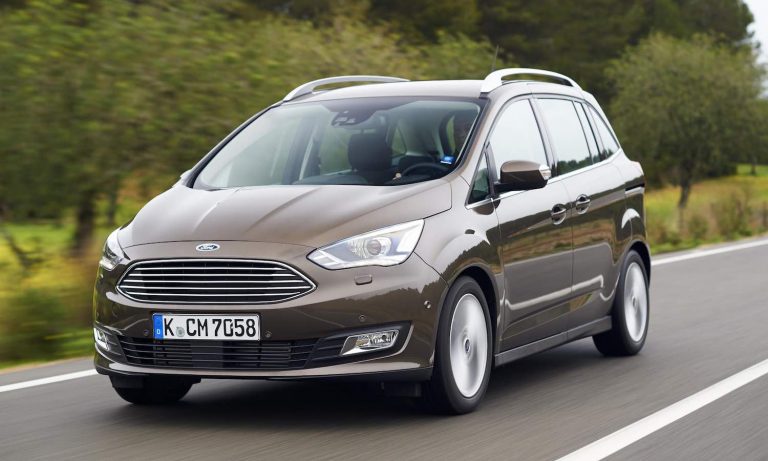
The Meriva is a core seller for Vauxhall and while these changes won’t put the car in lights, they should not harm its showroom performance either.
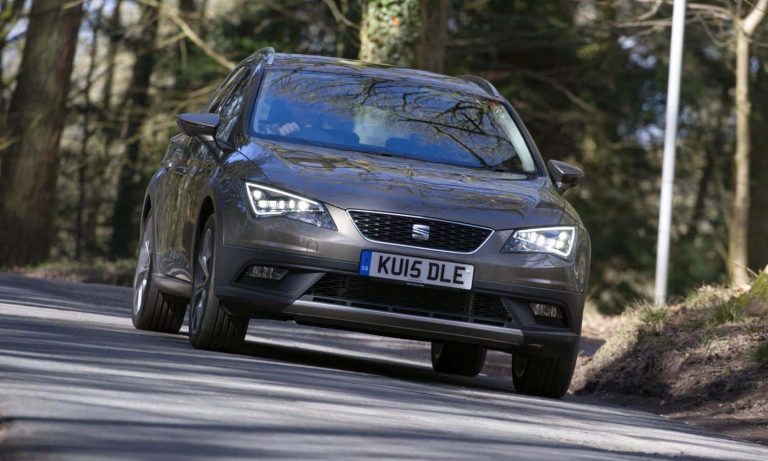
Vauxhall Meriva – key specifications

Model Tested: Vauxhall Meriva 1.6 CDTi Ecoflex
On Sale: Feb 2014
Range price: £12,620–£22,355
Engines: Petrol 1.4, 1.4 turbo x 2. Diesel 1.3 x2, 1.6, 1.7
Power (bhp): 99, 118/138. 74/94, 134,108.
Torque (lb/ft): 96,129/147. 133/133, 236, 206
0-62mph (sec): 14, 11.3/10.1. 16.9/13.8, 9.9, 12.9
Top speed (mph): 110, 117/122. 99/104, 122, 111
Fuel economy (combined, mpg): 47.1, 47.9/44.8. 60.1/68.9, 64.2, 46.3
CO2 emissions (g/km): 140, 139/149. 124/109, 116, 160
Key rivals: Ford B-Max, Nissan Note, Fiat 500:, Citroen C3 Picasso
Test Date: Feb/Mar 2014
All with manual gearbox except 1.7
* = 1.3 94bhp with Start/Stop

Read more Vauxhall news and reviews at The Car Expert

Audi A3 Cabriolet review

0

What is it: The new Audi A3 Cabriolet is the latest version of Audi’s compact soft-top
Key features: More luggage space, cylinder-on-demand engine option
Our view: Assured for a drop top, though it doesn’t feel quite as stiff as its saloon sister.


The latest new model line to join the ever-expanding Audi A3 range extends the line-up to four distinct body shapes, the new Cabriolet sitting alongside the three-door hatch, five-door Sportback and the saloon.

And it is America and China that UK buyers haveto thank for changes to the soft-top A3 – unlike its predecessor the new Cabriolet is based on the saloon, itself an all-new member of the third-generation A3 line-up and hugely popular with the Stateside and Chinese buyers at which it is basically aimed.

By adopting the saloon body with its longer length – the four-door outstretches even the five-door Sportback – Audi frees up some luggage space, which is always at a premium when one has a dropped hood to accommodate. In this case there are 275 litres available with hood down, 320 with it up, or 678 with the back seats dropped.

It is a measure of the sheer adaptability of the VW Group MQB platform – yes, this is yet another car to adopt it – that while using a saloon shell, the Cabriolet has the shortest wheelbase in the A3 range, its 2595mm some 6mm less than the A3 hatch. Mind you this figure is also 17mm longer than the old A3’s wheelbase, so while space in the Cabriolet’s rear seats is cosy, it’s a little less so than previously.

Despite the extra dimensions the new Cabriolet weighs 50 kilos less than its predecessor, which is good news for efficiency and handling. A raft of weight-saving measures are topped by a bonnet crafted from aluminium.

Audi has never followed rivals in adopting metal roofs, and the new Cabriolet is truly a soft top, with a fabric hood. This gives it a more delicate look compared to those challengers – top up or down it is pleasing visually, with a sleekness combined with understated elegance.

Said hood – which includes a heated rear screen – can be operated at speeds up to 31mph and electrically folds down in 18 seconds, to conceal itself under a panel across the top of the boot.

The stock hood satisfactorily keeps extraneous sound out when up, but for the most effective sound-deadening one can choose an uprated version, with a three-layer inner padding and an inner liner that can be specified in one of two colours, the outer layer in three. This hood comes as standard on Sport and S Line models, while buyers of entry-level SE cars can specify it as an option. Do this and you might also want to choose the optional hot air blowers mounted on the top of each seat back – great for cold days…

With both hood and side windows tucked away, there is a lot of buffeting around the head, unless you clip in the wind deflector that Audi supplies. This is very effective, but it does render the rear seats effectively redundant – an unfortunate general side effect of such cars.

Losing all but the windscreen surround from above does not compromise safety, by the way. Hidden from view and hopefully to stay that way, the Cabriolet includes an active rollover protection system. Two spring-loaded plates are recessed into the body and should the car flip over they will pop up and keep occupants from an unfortunate encounter with the road surface.

The A3 Cabriolet launches with a three-way engine choice, and they are familiar as they are exactly the same as in the existing hatch and saloon models.

Petrol choices comprise the 1.4 140hp and 1.8 180hp TFSI units, the former boasting Audi’s impressive cylinder-on-demand technology that shuts down two of the cylinders when they are not required – the driver won’t notice, but the mpg and emissions will benefit accordingly.

The diesel is the well-known and very effective 2-litre TDI unit of 150hp, combined as is the smaller petrol engine with a six-speed manual transmission – the 1.8 petrol gets the slick seven-speed S-tronic dual-clutch ‘box.

As in the saloon, more engines are planned, with fleet customers in particular likely to be attracted to a 1.6 TDI with combined cycle fuel economy figures of up to 74.3mpg and tax-busting emissions of 99g/km.

There will also be a more powerful 2.0 TDI of 185hp, with either front or quattro all-wheel-drive, while we know too that the Cabriolet is to get the potency of an S badge – it will be a sister to the S3 saloon that is launching alongside the A3 Cabriolet.

For now, however, whichever of the three existing engines you choose you are unlikely to be disappointed – they are very familiar powerplants and all work well in these latest surroundings.

On the road the A3 Cabriolet is assured for a drop top, though it doesn’t feel quite as stiff as its saloon sister. Uneven road surfaces do transmit themselves up through the wheel, while the steering is a little light. It’s a minor issue though and in daily use the car will generally be a satisfactory companion.

Audi dealers already have their order books open for the Cabriolet, and the first examples will hit UK roads in April, hopefully just as the weather starts to become drop-top friendly. Prices start from £25,790 for the SE with the 1.4-litre engine, and currently top out with the 1.8 TFSI in S line trim at £32,420.

Audi A3 Cabriolet – key specifications

Model tested: Audi A3 Cabriolet
On sale: March 2014
Price range: £25,790-£32,420
Engines: 1.4, 1.8 petrol. 2.0 diesel
Power (bhp): 138, 177, 148
Torque (lb/ft): 184, 184, 111
0-62mph (sec): 9.1, 7.8, 8.9
Top speed (mph):
135, 150, 139.
Fuel economy (combined, mpg): 56.5, 48.7, 67.3.
CO2 emissions (g/km): 114, 133, 110
Key rivals: BMW 1 Series Cabriolet, VW Golf Cabriolet
Test date: March 2014

Who makes the most reliable engines?

“If only everything in life was as reliable as Volkswagen” posited the famous 1987 advert for the Volkswagen Golf.

Similarly, Audi declares: “Vorsprung durch Technik.”  Loosely translated, this means “advancement through technology” and both of these slogans are designed to instil a feeling of confidence in each company’s engineering prowess.

Unfortunately, however, the truth can be very different. Figures recently released by consumer warranty company Warranty Direct, show that Volkswagen, Audi and BMW make some of the least reliable engines on the market.

Audi came second-from-bottom in the engine reliability charts with one failure in every 27, beaten only by the now-defunct MG Rover.

It’s a poor showing for BMW’s Mini brand, too, coming in at third-from-bottom with one failure in every 40, while BMW themselves take up the seventh slot in between Peugeot and Renault with one in 45.

Volkswagen makes its appearance in the ninth-from-bottom position, with one in every 52 owners suffering an engine fault of some kind.

So who makes the most reliable engines?

Perhaps not surprisingly, it’s the Japanese, with the top spot taken by Honda. Only one in every 344 Honda owners have had engine trouble, with second-placed rival Toyota notching up just one in 171.

It’s not all doom and gloom for the European marques, though, with Mercedes-Benz taking third, followed closely by Volvo.

The Brits have something to be cheerful about, with Jaguar placed fifth and Land Rover in tenth – although in the interests of yin and yang we should note that JLR’s repair costs were considered very high, with one Range Rover Sport owner quoted nearly £15,000 to repair an engine failure.

The biggest surprise, however, comes in the form of seventh-placed Fiat who recorded a creditable one failure in 85, beating both Ford and Nissan.

Remember that next time an Audi salesman tries to convince you to sign on the dotted line…

Top 10 manufacturers – most reliable engines

 ManufacturerFailure Rate
1Honda1 in 344
2Toyota1 in 171
3Mercedes-Benz1 in 119
4Volvo1 in 111
5Jaguar1 in 103
6Lexus1 in 101
7Fiat1 in 85
8Ford1 in 80
9Nissan1 in 76
10Land Rover1 in 72

Bottom 10 manufacturers – least reliable engines

 ManufacturerFailure Rate
1MG Rover1 in 13
2Audi1 in 27
3MINI1 in 40
4Saab1 in 40
5Vauxhall1 in 41
6Peugeot1 in 44
7BMW1 in 45
8Renault1 in 46
9Volkswagen1 in 52
10Mitsubishi1 in 59

You should also read:

More car warranty information

Is a used car warranty required by law?

Is a used car warranty required by law?

The UK’s best used car warranty providers

The UK’s best used car warranty providers

How to handle a dispute with a car dealer

How to handle a dispute with a car dealer

Used car warranty – the law and your rights

Used car warranty – the law and your rights

Spares or repairs – and other dodgy trader tricks

Spares or repairs – and other dodgy trader tricks

Honda Civic Tourer review (2014-2017)

What is it? The Civic Tourer is the load-lugger version of Honda’s UK-built hatch
Key features: Sleek profile, big loadspace, strong eco credentials
Our view: An assured performer, giving no hint of the extra metal behind the rear wheels


Downsizing has been a big deal in the motor industry for a while now. Drivers are abandoning big family cars for something more compact and perceived to be more efficient. It’s notable that the large car segment, populated by the likes of Ford’s Mondeo, the Vauxhall Insignia and the Honda Accord, provided the only negative score in the latest very upbeat set of UK sales figures.

Some owners of compact cars still need lots of carry space, however, so for manufacturers such as Honda, whereas previously making an estate version of the Accord was a given, there is now a business case for producing a load-lugging Civic.

And now we have it, the first estate – or wagon as it’s known in the industry – version of the Civic to go on sale since 2001. It’s a car designed in Europe and built at Swindon in the UK for primarily European audiences, and Honda believes the car’s flexibility, carry capacity and particularly impressive eco figures should make it a winner.

On hearing that the Civic Tourer – as the new model is called – has the same wheelbase as the hatch but a length extended by some 235mm, some might be concerned that this exercise has simply comprised hanging an extra lump of body shell out the back. Such concerns are dispelled the moment one first sees the Tourer.

As far as the front door pillars, it is exactly the same as the hatch. Then the extended shell flows backwards in a sweeping style, the shape of the glass giving the impression of a slight downwards tilt. Overall the car presents a pleasing wedge profile that to be honest is rather more attractive than the hatch.

Such visual satisfaction does not come at the expense of practicality. Honda claims to beat all rivals with the Tourer’s loadspace, measuring 624 litres with the rear seats up. Thanks to the fuel tank being under the seats rather than the boot, a useful 117 litres is freed up under the boot floor. Drop the highly-adjustable rear seats down and the result is a huge flat floor, that will take 1,668 litres. That’s a lot of suitcases…

The practicality continues at the very back. Open the tailgate and the loading space is wider, taller, and closer to the ground than either Focus, Astra, Golf or Auris can manage. And Honda claims to have thought of the little things too, right down to using a carpet with sheared-off-fibres that don’t catch dirt particles and are thus far easier to keep clean.

The interior will be familiar to anyone who has driven the Civic hatch, though there have been some detailing changes for the Tourer. It’s practical but stylish too, with its two-part arrangement mounting the vital dials ahead of the driver on a steering column pod, and the others beyond in a panel rising from the fascia. The seats are comfortable, and despite the Tourer’s sleek exterior there is plenty of room for occupants front and back.

Just two engine choices are on offer, the 1.8 petrol of 140bhp and a 1.6-litre diesel offering 119bhp. Both are highly efficient powerplants as we expect from today’s Honda units but in all honesty the only reason you would buy the petrol is for the extra pace – and even that only takes the car through 62mph in 9.2 seconds, just nine tenths faster than the diesel. Choose the latter, however, and you will go almost 30 miles further on a gallon of fuel – combined cycle economy is quoted at an impressive 74.3mpg. And you get CO2 emissions sliced by some 47g/km, just squeezing under the tax-removing 100g/km barrier.

The diesel also scores on general performance, feeling smoother and a little more refined than its petrol sibling when pushed on – the latter’s engine note can become the more noticeable at speed.

Tourer add ons to ensure handling prowess have included extra body stiffening just behind the rear doors and retuned dampers, with the option of Honda’s rear Adaptive Damper System (ADS). Claimed as a world first by its makers, it boasts three modes – Comfort, Normal and Dynamic – and automatically adjusts its response dependent on load and driving conditions.

Even without the ADS, the Tourer is an assured performer, giving no hint of the extra metal behind the rear wheels. Okay it’s no finely handling race car, the suspension instead concentrating on offering no surprises at any time, while smothering any road imperfections.

Prices for the Tourer start at £20,265 for the 1.8 i-VTEC in the lowest of the four trim levels, with an extra £1,110 buying the cheapest diesel variant, and Honda has bold ambitions for the car.

The brand is looking at taking 10 per cent of the market for compact wagons, aiming for 3,800 sales a year, of which 2,300 will be diesels. And despite the car’s eco credentials placing it squarely in the sights of fleet buyers, it’s expected that sales will be split 60-40 in favour of private motorists.

Helping that will one extra useful marketing element – we mentioned racing cars? Honda’s team in the UK’s biggest motor sport series, the British Touring Car Championship (BTCC), has chosen to dump its Civic hatches in favour of Tourers in 2014. The last time an estate raced in the series was two decades ago, but unlike the boxy Volvos of 1994, Honda expects with the Tourer to secure itself a fourth consecutive manufacturers and teams title in the BTCC.

The Civic Tourer has many plus credentials, and is also a superb-looking race car. For Honda it really could be a case of ‘win on Sunday, sell on Monday’…

Honda Civic Tourer – key specifications

Model Tested: Honda Civic Tourer 1.6i-DTEC
On the road: February 2014
Price: £21,375-£27,460
Engine: Petrol 1.8, Diesel 1.6
Power (bhp): 140, 119
Torque (lb/ft): 128, 221
0-62mph (sec): 9.2, 10.1
Top speed (mph): 130, 121
Fuel economy (combined, mpg): 45.6, 74.3
CO2 emissions (g/km): 149, 99
Key rivals: Ford Focus Estate, Vauxhall Astra Estate, VW Golf Estate
Test date: February 2014
* all figures with manual gearbox

Skoda Yeti review

What is it? Facelifted version of quirky small SUV
Key features: Two distinct models for different buyers
Our view: A number of improvements without compromising the qualities that have made the Skoda Yeti such a success


When the Skoda Yeti arrived in 2009, it certainly surprised a few buyers. This was an SUV, not previously a notable element of the Skoda DNA, and it was a rather different SUV, distinctly smaller than rivals but thanks to its quirky, boxy shape a roomy little car.

And buyers liked it – as the crossover segment has mushroomed, so have sales of the Yeti, with the model having its best year of all in 2013. So now Skoda feels it is right to apply the makeup brush.

The Yeti facelift, however, encompasses rather more than a makeover. For a start, Skoda is going further than many rivals in acknowledging the emerging two distinct types of crossover buyers, those who want off-road ability, and those who merely want off-road looks and the perceived safety that comes from driving such vehicles.

So the traditional off-road pitched Skoda Yeti, with its four-wheel-drive powertrain and aggressive styling, now becomes the Yeti Outdoor. The plain Yeti is now a softer, more road-focused model with two-wheel-drive. Mind you, just to thoroughly confuse matters, you can order a Yeti Outdoor, with all the bolder visuals, but without the all-wheel-drive.

Visually the new Yeti follows latest styling look seen on other recent Skoda releases, with such signatures as highly angular headlamps. As mentioned the two versions now boast bespoke touches, for both visual impression and ability. The front and rear bumpers are bespoke, with the Outdoor not surprisingly getting the bolder and more steeply-angled versions to help them traverse obstructions on an off-road course. Other Outdoor additions include black body side mouldings and chrome door mirrors.

Stepping inside, there is no great radical change, mainly more refinement, a bid to give the car a more upmarket feel to it, with the most obvious alteration the loss of a spoke on the steering wheel – it’s now a sporty three-spoke.

There are new fabrics too, but essentially all the good bits remain – it’s a practical driving environment, while most passengers will find adequate space. Skoda claims the best rear passenger headroom in class, despite the compact exterior dimensions compared to rivals that can result in some cosy arm-to-arm moments between passengers.

The flexibility of the movable Varioflex seating is retained, allowing the already large 416-litre boot to extend to 1,760 litres with all rear seats collapsed. Skoda’s various ‘Simply Clever’ features seen on recent models are extended to the Yeti too, such as the boot light that unclips to become a torch.

Choosing your powertrain depends on the kind of Yeti you want. The five-strong engine line-up is carried over from the previous model and for customers content with two-wheel-drive – in normal or Outdoor form – there is a 1.2-litre 105hp petrol and diesels of 1.6-litre 105hp – with a 119g/km CO2 figure marketed as the lowest-emitting Greenline version – and 2.0 110hp.

Go for four-wheel-drive, then the choice is between the 110hp diesel, 2.0-litre diesels with 140 or 170 horsepower, and a 1.8-litre petrol unit with 160hp on tap.

The best seller is expected to be the 140hp 2.0-litre TDI Outdoor 4WD, and this was among the versions tried out by The Car Expert on the launch. It’s an impressive combination, very assured on the road thanks to its all-wheel-drive and with a pleasing turn of speed.

The 4WD of course comes into its own off the road, and in the case of the launch a countryside course turned into a quagmire by heavy rain. The transmission is one of the major improvements of the new Yeti, its rear axle-mounted Haldex clutch a new fifth generation version that is much more compact and easier to maintain than its predecessor. It is also 1.2kg lighter, which of course helps with the economy and emissions, and it’s effective. The Yeti may not be a full-house black route off-roader, but it will handle any rough stuff the vast majority of owners will want to throw at it.

Back on the road the Yeti’s handling is as accomplished as it always has been. It rides well and corners with confidence, staying pleasingly upright despite its elevated stance.

Overall the facelifted Skoda Yeti boasts a number of improvements, without compromising the qualities that have made it a successful quirky alternative to the general SUV pack. How long what is basically a six-year old design can challenge the mushrooming numbers of new crossover-themed cars coming onto the market is open to question. But then we know Skoda is already working on an all-new Yeti…

Skoda Yeti – key specifications

Model Tested: Skoda Yeti 1.6 TDI 105hp 2WD,140hp 2.0 TDI Outdoor 4WD
On Sale: February 2014
Price: £16,600-£27,050
Engines: Petrol 1.2, 1.8. Diesel 1.6, 2.0 x3. FWD/AWD
Power (hp): 105, 160, 105, 110/140/170.
Torque (lb/ft): 129, 184. 184, 184/236/258
0-62mph (sec): 11.4, 8.4. 12.1, 11.6/9.9/8.4*
Top speed (mph): 110, 124. 109, 110/118/125
Fuel economy (combined, mpg): 46.3, 36.2. 61.4, 55.4/48.7/49.6
CO2 emissions (g/km): 142, 184. 119, 134/152/149*
Key rivals: Kia Sportage, Hyundai iX35, Nissan Qashqai
Test date: January 2014
* = where FWD/AWD versions available, FWD figure quoted