Find an Expert Rating: 
Home Blog Page 173

Dacia Sandero review

What is it: Budget supermini, backed by Renault
Key features: Spacious, quality far above basement price
Our view: The Dacia Sandero is a thoroughly competent supermini that performs way above its price.


Dacia is in many ways the brand of the moment – acquired by Renault in 1999, the Romanian budget marque is now being launched into the UK by its guardian – and in the process providing a bright spot in difficult times for the French state brand.

Dacia Sandero interior

The launch model, the Duster SUV, received positive reviews, especially considering it costs from a mere £8,995. And now Dacia has a real attention-grabbing headline in the Sandero – a brand new supermini for under £6,000?

Actually the starting price – £5,995 – is not quite all it might seem to be, as we’ll see shortly. But equally, it’s by no means the only reason buyers should be looking at this car – it’s a lot more than its price.

UK journalists had their first driving experience of the Dacia Sandero at the same event that they first sat in the new Renault Clio – which at first glance might seem like Renault scoring an own goal.

The marketing man justified this move with the suggestion that Renault is moving into more expressive, Latin territory, while Dacia is fulfilling the more Germanic, functional role – the name Volkswagen was mentioned more than once…

You know what? He wasn’t far wrong… From the outside the car looks, well like many other superminis on today’s market. It’s not head-turning, particularly memorable, but that’s also a positive – it says mainstream car, it doesn’t say budget car.
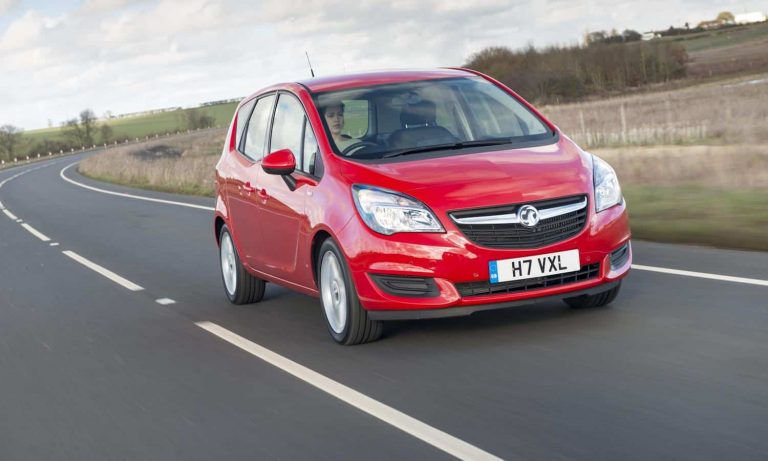
And when one slips behind the wheel of the Sandero, the immediate impression is of a well put-together, no frills supermini. The joins are good, the plastics not too hard to the touch – it really did remind me of some German-owned cars I’ve driven.

The other big plus on the inside is the space. It doesn’t look a massive car from the exterior, but it outstretches its rivals in several key areas – shoulder and elbow room for example, rear knee room, and particularly bootspace. It’s 320 litres (most rivals struggle to beat 300) and rises to 1,200 with the rear seats folded.

There are three engine options – a 1.2-litre four-cylinder petrol, the three-cylinder 900cc petrol familiar from recent Renault models, and a 1.5-litre diesel. The Car Expert drove the two petrol engines – diesels remain a niche buy in supermini land.

Dacia management believes that around half of the Sandero buyers will choose the 1.2 unit of 74bhp. We’re guessing that’s due to cost – there’s a trim level and £1,400 between separating the cheapest versions of the two units. Having driven both, a car fitted with the smaller but more powerful and thus quicker TCe 90 is by far a much more enjoyable experience.

The 1.2 is adequate – but only so. The 14.5 seconds it takes to get to 62mph feels laboured, whereas the 89 horses of the little TCe 90 propel it enthusiastically through the mark in a tad over 11 seconds.

Neither feels quite as refined as their perceived more upmarket rivals – something which does become obvious if immediately after driving the Dacia Sandero one jumps into one of those rivals, such as the Clio. Maybe it’s a case of extra soundproofing, more time, and money, spent on the motor industry nemesis Noise Vibration and Harshness. But, the Sandero is not bad in this area, and most owners will be quite happy with it.

On the road the car handles with competence and predictability. There’s nothing stand-out here, but there’s no reason for it to be – the Sandero is a very easy to live with car, which is all many (most?) supermini owners will want. And then we get to the price…

We mentioned that the £5,995 was not all it seemed. It gets you the entry-level Access with the 1.2 engine. It comes with the essentials, airbags, electronic Stability Control, but little else – you don’t even get a radio. And you can only have it in white with big black bumpers (see below) – even Dacia insiders dub it their ‘UN vehicle’…

dacia-sandero-02

Far better is to go for the Ambience, £6,595 with the 1.2, £7,395 with the TCe 90. Now the bumpers match the body, you can have it not in white, and you get more kit, topped by remote central locking, electric front winds and yes, a CD radio with MP3 capability, Bluetooth and and Aux socket.

So far, Dacia has seen most buyers choosing the top spec Laureate grade, which adds rather a lot to the list. Notable among them are lots of extra styling, leather on the steering wheel and gearknob, a trip computer, cruise control, heated electric mirrors, fog lights, and vitally, manual air conditioning.

To buy a Dacia Sandero Laureate with the 1.2 engine will cost you £7,995 – two grand more than that under 6K headline grabber. With the more desirable TCe 90, it’s £8,795.

But – and it’s a big but… The cheapest new Clio – with the same 1.2 engine and admittedly with much of the equipment you get on the top-spec Sandero (like a trip computer, and a sound system…) costs £10,595 – more than £2,500 more.

So what we have here is a thoroughly competent supermini, that in many ways performs way above its price. We think several previous used car buyers are going to become new car buyers, and that Dacia is going to sell a fair few Sanderos… 

Dacia Sandero – key specifications

Model Tested: Dacia Sandero TCe 90, 1.2 16v 75
On Sale: January 2013
Price: £5,995-£9,795
Engine: Petrol 1.2/898cc, Diesel 1.5
Power (bhp): 74/89, 89
Torque (lb/ft): 79/100, 162
0-62mph (sec): 14.5/11.1, 12.1
Top speed (mph): 97/109, 107
Fuel economy (combined, mpg): 47.9/54.3, 74.3
CO2 emissions (g/km): 137/120, 99
Key rivals: Ford Fiesta, Vauxhall Corsa, Volkswagen Polo
Test date: February 2013

Can you give a car dealer cash?

“Can you give a car dealer cash?”  Asked by an anonymous Google searcher, August 2012

Car dealers are almost always very reluctant to take more than about £500 in actual cash (the paper, folding kind), although the amount will vary from dealer to dealer.

Money laundering has ruined it for everyone

The motor industry has been targeted by money launderers in the last few years, and a few car dealers have been caught out badly when they found out that the thousand of pounds of cash they had been given was counterfeit.  If a car dealer suspects a buyer of possible money laundering or fraud activity, they are required to report it to the police immediately.

The car industry presents a relatively easy target for money laundering and fraud, as a car can be removed from the UK within hours of taking delivery, usually well before the car dealer can get the cash to the bank or before any fraud can be discovered.

Most car dealers no longer accept personal cheques or bank drafts either, as they take several days to clear (up to 10 working days for a personal cheque) and can easily be forged.

How to pay a car dealer by cash for your car

Usually, a car dealer will want you to either pay by debit card on the day, or transfer the amount electronically into their account before you collect your car.  If a car dealer allows you to use a credit card, they will usually require you to pay the credit card merchant fee as well (which can run to hundreds of pounds).

If you are reluctant to transfer your full payment via electronic transfer (BACS or CHAPS) in advance, the best bet is to pay by debit card when you pick up your car.  This will usually involve calling your bank in advance to advise that you intend to make a large transaction very soon, and they may well require you to call and confirm when the transaction is being processed, but it is a safe and secure way of paying for your car from a car dealer.

Do big alloy wheels crack more easily?

“Do big alloy wheels crack more easily?”  Asked by an anonymous Google searcher, August 2012.

For the purposes of this question, we need to assume we are talking about different size alloy wheels on the same car, as you can’t compare smaller wheels on one car with larger wheels on a completely different car.  If you choose larger alloy wheels for your car (for example, going from 16-inch wheels to 18-inch wheels), you need new tyres to fit them, and this can potentially cause cracking of your wheels.

The law says that, when changing the wheels on your car, the rolling height must stay basically the same (although there is a small tolerance allowed), so fitting larger-diameter wheels to your car require tyres with lower-profile sidewalls, as shown here, to maintain the same overall rolling height.

The tyre sidewall flexes to absorb bumps and impacts, so a tyre with less sidewall (a low profile tyre, like the one on the right) has less ability to flex than a tyre with more sidewall (a high profile tyre, like the one on the left).

The reduced flex on a lower profile tyre means it is less able to absorb shocks and impacts from potholes, kerbs and speed humps, which means that if you give a kerb a big whack, you are more likely to damage the tyres and/or the alloy wheels.  It would take a fair old hit, though, so it may not ever happen to you.

So yes, bigger alloy wheels will potentially crack more easily than a smaller one on the same car.  Or, of course, you could just avoid kerbing your wheels… ;)

Further reading on alloy wheels

The Wheel Deal: Why do some drivers spend thousands of pounds upgrading the wheels on their cars?

Car finance: What you should know

Car finance has become big business. A huge number of new and used car buyers in the UK are making their vehicle purchase on finance of some sort.

It might be in the form of a bank loan, finance from the dealership, leasing, credit card, the trusty ‘Bank of Mum & Dad’, or myriad other forms of finance, but relatively few people actually buy a car with their own cash anymore.

A generation ago, a private car buyer with, say, £8,000 cash to spend would usually have bought a car up to the value of £8,000. Today, that same £8,000 is more likely to be used as a deposit on a car which could be worth many tens of thousands, followed by up to five years of monthly payments.

With various manufacturers and dealers claiming that anywhere between 50% and 95% of car purchases are today being made on finance of some sort, it is not surprising that there are lots of people jumping on the car finance bandwagon to profit from buyers’ desires to have the newest, flashiest car available within their monthly cashflow limits.

The appeal of financing a car is very straightforward; you can buy a car which costs a lot more than you can afford up-front, but can (hopefully) manage in small monthly chunks of cash over a period of time. The problem with car finance is that many buyers don’t realise that they usually end up paying far more than the face value of the car, and they don’t read the fine print of car finance agreements to understand the implications of what they’re signing up for.

For clarification, The Car Expert is neither pro- or anti-finance when buying a car. What you must be wary of, however, are the full implications of financing a car – not just when you buy the car, but over the full term of the finance and even afterwards. The industry is heavily regulated by the FCA (Financial Conduct Authority, formerly the Financial Services Authority), but the FCA can’t make you read documents carefully or force you to make prudent car finance decisions.

You may also like: The Car Expert’s epic car finance glossary 

Car finance – financing through the dealership

For 90% of all new car buyers, and about half of used car buyers, financing the car through the dealership where you are buying the car now the preferred option. There are also often national offers and programs which can make financing the car through the dealer an attractive option.

This blog will focus on the two main types of car finance offered by car dealers for private car buyers: the Hire Purchase (HP) and the Personal Contract Purchase (PCP), with a brief mention of a third, the Lease Purchase (LP). Leasing contracts will be discussed in another blog coming soon.

Hire Purchase (HP)

A hire purchase (HP) is quite like a mortgage on your house; you pay a deposit up-front and then pay the rest off over an agreed period (usually 18-60 months). Once you have made your final payment, the car is officially yours. This is the way that car finance has operated for many years, but is now starting to lose favour against the PCP option below.

There are several benefits to a Hire Purchase. It is simple to understand (deposit plus a number of fixed monthly payments), and the buyer can choose the deposit and the term (number of payments) to suit their needs. You can choose a term of up to five years (60 months), which is longer than most other finance options.

You can usually cancel the agreement at any time if your circumstances change without massive penalties (although the amount owing may be more than your car is worth early on in the agreement term). Usually you will end up paying less in total with an HP than a PCP if you plan to keep the car after the finance is paid off.

The main disadvantage of an HP compared to a PCP is higher monthly payments, meaning the value of the car you can usually afford is less.

An HP is usually best for buyers who; plan to keep their cars for a long time (ie – longer than the finance term), have a large deposit, or want a simple car finance plan with no sting in the tail at the end of the agreement.

Now read this: Car finance – the hire purchase (HP) explained

Personal Contract Purchase (PCP)

A PCP is often given other names by manufacturer finance companies (eg – BMW Select, Volkswagen Solutions, Toyota Access, etc.), and is very popular but more complicated than an HP. Most new car finance offers advertised these days are PCPs, and usually a dealer will try and push you towards a PCP over an HP because it is more likely to be better for them.

Like the HP above, you pay a deposit and have monthly payments over a term.  However, the monthly payments are lower and/or the term is shorter (usually a maximum of 48 months) because you are not paying off the whole car.

At the end of the term, there is still a large chunk of the finance unpaid.  This is usually called a GMFV (guaranteed minimum future value). The car finance company guarantees that, within certain conditions, the car will be worth at least as much as the remaining finance owed. This gives you three options:
1)   Give the car back.
2)   Pay out the remaining amount owed (the GMFV) and keep the car.
3)   Part-exchange the car for a new (or newer) one.

The PCP is best suited for people who want a new or near-new car and fully intend to change it at the end of the agreement. For a private buyer, it usually works out cheaper than a lease or contract hire finance product.

You are not tied into going back to the same manufacturer or dealership for your next car, as any dealer can pay out the finance for your car and conclude the agreement on your behalf. It is also good for buyers who want a more expensive car with a lower cashflow than is usually possible with an HP.

The disadvantage of a PCP is that it tends to lock you into a cycle of changing your car every few years to avoid a large payout at the end of the agreement (the GMFV).

Borrowing money to pay out the GMFV and keep the car usually gives you a monthly payment that is very little cheaper than starting again on a new PCP with a new car, so it nearly always sways the owner into replacing it with another car. For this reason, manufacturers and dealers love PCPs because it keeps you coming back every three years, rather than keeping your car for five to ten years or longer.

Now read this: Car finance – the personal contract purchase (PCP) explained

Lease Purchase (LP)

An LP is a bit of a hybrid between an HP and a PCP. You have a deposit and low monthly payments like a PCP, with a large final payment at the end of the agreement. However, unlike a PCP, this final payment (often called a balloon) is not guaranteed.

This means that if your car is worth less than the amount owing and you want to sell/part-exchange it, you would have to pay out any difference (called negative equity) before even thinking about paying a deposit on your next car.

Read the fine print

What is absolutely essential for anyone buying a car on finance is to read the contract and consider it carefully before signing anything. Plenty of people make the mistake of buying a car on finance and then end up being unable to make their monthly payments.

Given that your finance period may last for the next five years, it is critical that you carefully consider what may happen in your life over those next five years. Many heavily-financed sports cars have had to be returned, often with serious financial consequences for the owners, because of unexpected pregnancies!

Always ensure you understand the various finance options being presented to you, and that you are aware of the pros and cons of different car finance products to ensure you are making informed decisions about your money.

Now read this: Before you apply for car finance

Disclaimer
Most car finance agreements in the UK are regulated by the Financial Conduct Authority, and anyone involved in the selling of car finance must be accredited by the FCA. You should always consider the terms and conditions of any agreement carefully before taking out any form of car finance, as you are making a substantial ongoing commitment and there may be significant costs if you change your mind or are unable to meet your commitments at a later date.

Are diesel cars suitable for city driving?

Following on from previous articles about the differences between petrol and diesel engines, and explaining why your fuel economy doesn’t usually match the official figures for your car, The Car Expert looks more closely at the suitability of diesel cars for use in city driving.

One of the most frequent questions submitted to The Car Expert is “Are diesel cars suitable for city driving?”  The answer is… maybe!

A diesel engine generates its power slightly differently from a petrol engine, and usually yields better economy and load-carrying ability, albeit with less power and a slower response time. This is why buses and trucks usually run on diesel – they are big, heavy vehicles carrying large loads over long distances.

But what about city driving? Does the extra cost of a diesel engine yield savings in running costs for urban drivers or those who only take short journeys?

Diesel in the city – fuel economy

Firstly, short journeys. Any engine is very inefficient when it is cold, so the first 15 minutes or so of any journey will not yield very good fuel consumption regardless of the advertised fuel economy of the vehicle. So if your journey involves a short commute to work or trip to the shops, you will get quite poor fuel economy in either a diesel or petrol car.

Secondly, stop-start driving. Even once your engine has warmed up thoroughly, it is still not operating efficiently if you are constantly accelerating, braking and sitting at traffic lights.

And because a diesel engine tends to lag and be a bit more sluggish off the mark than an equivalent petrol engine, but stronger once it gets up and running, there is a tendency to put your foot down harder to get it to respond and then have to lift off or even brake again to slow it back down as it starts to take off over about 20mph.

This sort of driving uses more fuel than smoothly applying accelerator and brake. It is certainly possible to drive a diesel smoothly, but it takes a bit of practice and constant anticipation. Meanwhile, sitting idling at traffic lights uses fuel regardless of whether its petrol or diesel, so you are simply wasting fuel with both.

Mechanical issues – the Diesel Particulate Filter (DPF)

Diesel cars built since about 2008 (sometimes earlier) come fitted with a diesel particulate filter (DPF). This device collects the black soot particles you see belching from older diesel engines, especially when the engine is cold. The DPF stores this soot until the filter unit reaches a certain temperature and then proceeds to burn off the soot. It still ends up in the atmosphere, but as much finer, invisible particles rather than ugly black smoke, and is less of a health hazard (allegedly, but this is disputed).

This is good, right? Well, yes, but…

To get the filter trap hot enough to burn off the soot, the engine needs to have been running for at least 15-20 minutes and it then takes another 10-15 minutes to burn the soot and clean the filter.

When DPFs were first launched into the car world, most people didn’t realise this – including the dealers who sold the cars – and so customers were unaware they even had such a device. If the driver does not regularly (ie – about once a week to once a fortnight) go for a drive of at least half an hour, the filter trap clogs up. In addition to not filtering the diesel soot properly, continued or repeated clogging will eventually destroy the filter, requiring a very expensive replacement.

So, if your regular use of your car does not involve a regular drive of 20-30 minutes, you need to make a special trip just to clear your DPF every week or two, which is hardly helping your fuel bills.

Cars built since about 2012-ish usually feature better-designed DPFs and improved engine computer controls which allow faster and more efficient burning off of the soot, so it is now less of a problem than before, but it is still a problematic issue for dealers who have to deal with irate customers objecting to paying hundreds of pounds to replace their DPF when they weren’t made aware of it.

This is even more of an issue for used car buyers who have almost certainly not been given a proper explanation by the dealer and consequently are more likely to run into trouble.

Misfuelling – filling up with the wrong fuel

One other hazard is misfuelling, and it happens a lot more often than you’d think – according to the AA, 150,000 people do it each year, or once every three-and-a-half minutes!

Putting diesel fuel in a petrol engine is very bad news, and putting petrol in a diesel engine is even worse. When switching from one sort of engine to another, such as when you buy a new car or in multi-car households, it is an easy mistake to fill up the tank with the wrong fuel.

Damage caused by mis-fuelling is not normally covered by warranty, so you could be up for thousands of pounds if the engine has been damaged. Even if you don’t destroy your engine, it is still an expensive and time-consuming exercise to have the car towed away, drained and cleaned out before you can drive it again.

This isn’t a problem of diesel engines per se, but if you are considering switching from a petrol car or already have another petrol car in the household, it’s worth keeping in mind.

Summary

All of the above suggests that buying a diesel car for mainly city driving is not a great idea. However, it also depends on your overall mileage and how much load (passengers, luggage, trailers, etc) you are putting on the car.

The very broad advice usually given around the industry is that an annual mileage of over 10,000 miles/year over three years is about the threshold for choosing a diesel car over a similar petrol one. However, it also depends on the type of car you are looking at, how long you’re planning to keep it, what sort of deals you can get on one or the other, and so on.

Volvo V40 review

What is it?
C-segment five-door hatch, Volvo’s first in 20 years

Key features
Lower price/higher spec than rivals, class-leading safety

Our view
This is one Volvo that the Germans should be concerned about.


When journalists arrived for the UK launch of the all-new Volvo V40, also in the car park awaiting evaluation were examples of the car’s direct rivals, the Audi A3 and BMW 1 Series.

Allowing such a direct comparison between the Volvo and its competition is a first as far as this reviewer can recall, and a brave move by the Swedish brand. Clearly, Volvo is confident in its new contender, which it describes as its most important car in 20 years.

The V40 has a lot riding on it. This car, a five-door hatch, will eventually replace both the existing S40 saloon and V50 estate, and is the brand’s first serious contender in the highly competitive C-segment since the 440, last built about 20 years ago…

Volvo’s own management admits that the brand sits in a slightly odd position in the UK market. While pitching itself as a premium brand, it’s not quite regarded on the same page as Audi, BMW or Mercedes-Benz, but it is definitely above the volume market. The V40 will aid that image – appealing mainly to mainstream drivers wanting to move up, but also very much targeting Audi/BMW drivers fancying a change.

The car is a prime weapon in Volvo’s bid to boost its volume beyond the 37,000 it currently sells a year in the UK, towards 50,000. To compare – in the days of the 440, Volvo was selling 80,000 cars a year.

The Volvo V40 is expected to clock up around 12,000 a year, compared to the 10,000 the S40/V50 earned between them. UK boss Nick Connor admits this is conservative, but adds that he isn’t chasing volume for volume’s sake. He is adamant this car must maintain a premium image.

So does it live up to the billing? Well, first impressions are good – in this case, first experiencing the car directly after half an hour in the Audi (admittedly the about-to-be-replaced version of the A3) and the BMW. It’s clear immediately that outside and in, the Volvo is a direct rival to them.

It’s a cliché to recall old boxy Volvos when talking about today’s, but it’s important to emphasise that the V40 is a very smart-looking car equal to if not ahead of its rivals.

The front-end is sharp, the notable styling cue the tapered headlamps clearly evolved from those on the larger S60 saloon. The rear, meanwhile, comes direct from that brand-redefining hatch the C30, with its signature glass tailgate.

Inside is well built and very well styled – something admittedly we’ve got used to in recent Volvos. Dominating the driver’s field of view is the new digital dash, with its speedo that illuminates only the part of the dial that the stalk is aiming at, and its three modes, activated by the interior stalk.

These modes are called ‘Elegant’, ‘Eco’ and ‘Sport’ and offer different parameters and information – the first is rather dull, Eco is cool and blue and we reckon most likely to be left permanently on, while Sport is bright red with your speed shown in large digital numbers in the centre of the dial. Rather neat…

Yet the style is equally signified by detail touches – some of the most frequent praise on the launch event was angled at the rear-view mirror, the simple act of removing the frame adding so much to its style.

One criticism is the handbrake lever that sits to the left of the centre console – clearly a left-hand drive feature that Volvo didn’t bother to change. A minor thing maybe, but if your front-seat passenger is anything more than petite you don’t really want to be touching their right thigh whilst trying to put the brake on…

We wouldn’t call the Volvo V40 over-generous on space. Rear-seat room is cosy, and the boot space not that convenient with a high loading sill, though the twin floor boot compartment is useful.

Volvo has long been known for its safety, with seemingly a new innovation with every launch. The V40 majors on new airbags – a knee one for the driver, and a pedestrian one. A what?

Volvo V40 pedestrian airbag

Yup, the Swedes have gone one step further than the impact absorbing pop-up bonnet. An unlucky soul hit by the car will be thrown onto said bonnet which will pop up – and then shoot an airbag out of its back, across both the gap and the lower part of the windscreen…

With this feature heading a long, long list of now-familiar features such as the auto brake-applying City Safety (which along with the pedestrian airbag is standard on all V40s), there’s no need to speculate on the likelihood of a top five-star Euro-NCAP rating for this car…

The current engine choice is two petrol and three diesel, with a third petrol unit on the way in a few months’ time. Trying out the lowest-powered variants of each, it’s easy to see why the 115hp diesel is expected to take almost two-thirds of V40 sales.

The 150hp entry-level petrol is confident, refined and a thoroughly satisfactory companion, and almost three seconds faster to 62mph than its oil-burning rival. Yet the diesel feels more eager, due no doubt to the impressive low-down torque, while remaining equally refined. And it offers a tax-busting 94g/km emissions figure.

Less impressive is the manual gearbox – a six-speed is standard across the range, but it could do with being more direct. Our test drive was accompanied with the odd woolly downshift, confidence slightly dented as we questioned whether it really had selected fourth instead of sixth.

On the road the Volvo V40 is very well behaved, soaking up the bumps and offering the ride comfort one expects of a fleet-angled motorway muncher. But presented with more challenging tarmac it delivers, with sharp, responsive handling that on our test was easily as good as the BMW and rather ahead of the Audi.

In summary, Volvo has a winner here. The V40 is a car that really should be considered by ‘premium’ buyers (a word that Connor admits he hates), and not just with prices that start with the smaller diesel in ES spec at £19,745. Yes, the potential money saved is a factor, but the specification and performance of this car also deliver.

On the evidence of our first drive, Volvo is right to consider its predicted sales figure as conservative – this is one Volvo that the Germans should be concerned about…

Volvo V40 – key specifications

Model Tested: Volvo V40
On Sale: July 2012
Price (range): £19,745-£26,795
Engines: Petrol 1.6 (2). Diesel 1.6, 2.0 (2)
Power (bhp): 148/177. 114, 148/174
Torque (lb/ft): 177/177. 199, 258/295
0-62mph (sec): 8.8/7.7. 12.3, 9.6/8.6 (auto 9.3/8.3)
Top speed (mph): 130/140. 118, 130/137 (auto 127/134)
Fuel economy (combined, mpg): 52.3/51/4. 78.5*, 65.7/65.7 (auto 54.3/54.3)
CO2 emissions (g/km): 125/129. 94*, 114/114 (auto 136/136)
Key rivals: BMW 1 Series, Audi A3, Mercedes-Benz A-Class
Test date: July 2012
*= with 205 series tyres. 250bhp T5 petrol engine available later

Volvo V40 on the road in the UK

Which optional extras are worth paying for?

Finding the right car at the right price is a complex issue, one dependent on personal tastes and the comfort, utility and economical requirements of every driver. Optional extras are one factor that experts and consumers alike have to weigh up when looking for that bargain. And whilst it’s tempting to chuck out everything you can possibly live without in pursuit of the most economical deal, optional extras aren’t actually that simple.  

We all want to have the best car we can reasonably afford, and some features enhance our ride to the point where they are more or less indispensible.  Furthermore, there are actually long-term benefits in paying for certain optional extras up front.

Optional extras – always worth a look

Metallic paint

What would you say your views are on metallic paint? Love it? Think it’s ok? Mostly indifferent? Whilst many of you will fall into the latter category, I reckon you’d be hard pressed to find anyone who actually dislikes the stuff. Does that alone make it a worthwhile optional extra? Oddly, yes.

The truth is that, since no one hates it and a few people like it, there are many who will pay extra for metallic paint at any stage of a vehicle’s life. Despite offering no practical benefit whatsoever, metallic paint can actually improve the resale value of your car. Along similar lines, leather seats and a popular, neutral colour (e.g. – silver) are other well-known depreciation busters.

Air conditioning

Increasingly only optional on barebones models, air conditioning is a feature that most cannot live without. The comfort benefit should not be underestimated and it has practical benefits in cold weather.

Parking sensors

Though you may want to skip the sensors if you’re in the market for a city car, parking sensors are an invaluable addition to larger cars and practically essential as you move further and further up the car size chart.

Sure, you should be a good enough driver to have a feel for exactly how much space your vehicle occupies. But even the best drivers have lapses in judgement: taking the sensor option may save you money in the long run, and it’ll make you more confident about finding a parking space

Optional extras – useful but overpriced

Built-in satnav

Dedicated sat nav units are going through a rough patch thanks to the navigation apps in everyone’s smartphones. Honestly, we’re not convinced that smartphones provide a better alternative: they’re far too small and can be unreliable in terms of data usage and battery life. But if you get a satnav for your car, you’re probably best off buying a stand-alone one rather than one actually built into your dashboard.

Whilst having an onboard computer is where manufacturers are naturally headed (fulfilling all of your Knight Rider fantasies) many car makers are charging too much for something with terrible software. Worse still, there are plenty of horror stories out there about extortionate maintenance charges when they go wrong. There are exceptions out there, but things need to change before the potential of sat nav as a built-in option is realised.

Bluetooth

Bluetooth is the standard for wireless communications and facilitates hand-free operation of just about every mobile phone on the market. The trouble is, manufacturers are still charging anywhere between £150 and £600 for a built-in system. Aftermarket kits cost a pitiful fraction of the cheapest extra and it’s not like they clutter up your dashboard like a satnav kit does.  If you can get a good deal on this option, consider it a modern essential. Otherwise, it’s probably best avoided.

Integrated televisions

Whether you’re looking at a central-dashboard entertainment system or screens for the back of your seats, you’re possibly saving yourself from the “Are we there yet?” headaches of bored children.  But you’ll pay through the nose for the feature, and there are alternatives.

Portable games consoles and music players will keep them entertained, and if you absolutely must have movies, you can probably invest in an iPad for your passengers for a similar price. An onboard system does have benefits – you’re not relying on battery power – so it’s still worth considering the option if you have the budget.

Sports suspension

Always an odd one – you’ll pay quite a bit extra for sports suspension but the benefit to handling is compromised by comfort. Definitely a ‘try before you buy’ proposition: some drivers love being able to tackle corners like a racing driver, but most will find themselves feeling like they’re driving a car which is a lot less refined and satisfying. Sometimes, spending less is more.

Cruise control

Purchasing cruise control should be approached with caution chiefly because operating it should be. Flipping to cruise control is good for taking the strain out of those longer motorway journeys.

However, you shouldn’t assume that cruise control is good for maintaining constant speed and cutting out all your other driving hassles. Cruise control is inconsistent when heading downhill and you override it when you’re pressing down on the accelerator – so don’t expect it to keep you safe from speed traps.

Optional extras – completely unnecessary

CD changers

Someone, somewhere, is probably still arguing that CDs sound discernibly better than digital audio (and that LPs sound ‘warmer’).  We argue that anyone who can tell the difference while driving a car is probably suffering from tinnitus and self-delusion.

The choice is simple: you could lug around a collection of CDs and switch between a handful of them, or carry your whole collection around in a device which sits in your palm (or would do, if you weren’t driving). Oh, and some manufacturers (e.g. Audi) consider the use of writeable CDs as a breach of warranty if they get stuck. Strange but true.

Night vision

Pursuing some kind of SAS automotive fantasy, night vision is the ultimate misguided gimmick, a more money than sense option for luxury vehicles. Headlights show you everything you need to see and they don’t require that you take your eyes off the road and look at a pokey little monitor either.

You should also read: The Car Expert’s Ten Golden Rules for buying a car

Downsizing your car – things to consider

“I’m downsizing my car” is a phrase that car dealers hear a lot from buyers.  People often get to a stage where they are considering a smaller car than they currently have, for a variety of reasons. 

Often it’s empty-nesters who no longer need to take the kids to school, footy practice, swimming lessons, camping holidays and so on. Other times it’s for reasons of economy – “My current car costs me too much to run” is a phrase commonly used in conjunction with downsizing.  But there are a few important things to consider when downsizing your car.

Now I’m a big fan of small cars. I like the way they are lighter, more agile and more nimble to drive than big cars. They are easier to park, usually cost less to run, tend to have less expensive tyres, brakes, and so on.

If I had a choice of two similar cars, I’d almost always take the smaller one – down to a point. There is always a point when a car is too small for your needs, and it’s important to know where that point is before you plunge into downsizing your current car for something smaller.

How small is too small?

If you are looking at downsizing your car, chances are it is because you have been upsizing your car in the past. And that makes sense – you needed a bigger car to fit little Jessica’s cello and little Johnny’s cricket bag, and now they’ve moved out of home.

But you probably also found that extra space handy when you needed to go to Ikea, or pick up supplies from the gardening centre, or travelled away with friends for the weekend. A smaller car won’t be as suitable for those sort of things, and some people find it much harder adjusting back down to a smaller car than they did getting used to a larger car.

My own parents went through this exact issue a few years ago in Australia, when they replaced their large V8 family car for a smaller, more economical four-cylinder hatch. Their regular interstate road trips with friends didn’t work very well, as it was a real squeeze fitting five adults and their luggage into their new car.

Sure, they could have hired a larger car for the weekend, but it was a hassle they hadn’t really thought about at the time of purchase. So consider carefully what you need to fit in your new car and how much you are prepared to compromise by downsizing to something smaller.

Is downsizing your car a false economy?

Smaller cars usually cost less to run than larger cars, in terms of fuel, registration and consumables. New cars are usually cheaper to service than older cars, both in terms of the cost of each service and the regularity with which servicing is required.

But that doesn’t necessarily mean it’s a guaranteed money saver to buy a smaller car, especially if the alternative is to keep your current car. People often change their cars because they get frustrated with a spate of large bills on their current car, and this often coincides with a desire to reduce their motoring costs by buying a small car.

However, what they tend to overlook in their frustration is that they are often paying thousands upfront to change their car, in order to save hundreds on annual running costs.  If you are considering downsizing your car for economic reasons, make sure you calculate your numbers carefully.

Of course, if you are replacing your car anyway, and choosing between a larger car and a smaller car, it is usually much more economical to go for the smaller car.

Are you sitting comfortably?

It seems that far more drivers find it difficult to adjust when going from a large car to a small car than vice versa, which is the opposite of what people tend to think.  Instinct suggests that if you can handle a big car around the shopping centre car park, then a small car will make your life much easier. But downsizing drivers often find smaller cars to be less comfortable to drive than their larger car.

In the same way that a large ship will cope with waves much better than a little dinghy, a larger car will generally absorb bumps and broken road surfaces better than a small car will. A smaller car will be more agile in handling and manoeuvrability, but that will also make it feel more nervous and less stable on a motorway, and more susceptible to crosswinds.

Smaller cars also tend to downsize other aspects of the car that you might not have considered, like the width of the seat or the range of adjustment of the steering wheel. It’s really important to have a decent test drive and take your time finding a comfortable seating position before you commit to buying a smaller car.

Are you downsizing performance as well as size?

When drivers are downsizing their car for economy reasons, it usually follows that they start looking closely at fuel economy figures, and choosing engines which give the best reported economy without considering any performance implications.

The most economical engines on official reports tend to be the lowest performance engines as well, and glossy car brochures tend not to mention that they often make for incredibly slow cars which struggle to keep up with the cut and thrust of normal traffic, let alone motorway driving with four people on board.

And if you are having to work your engine harder just to keep up with traffic, you will be using far more fuel than the official figures suggest.  In fact, you may be using more fuel than a larger car (or larger-engined car) which is coping with the same traffic much more easily.

Several years ago years ago, the Top Gear TV show highlighted an extreme example of this by putting a super-efficient Toyota Prius hybrid car up against a very powerful – and officially very uneconomical – BMW M3 V8 sports saloon. The hybrid was driven flat-out for a given distance, with the V8 sports car following along behind at the same speed.  Because the sports car was coping with the pace much more easily than the hybrid, it actually used less fuel.

It was a somewhat silly comparison, but did highlight the fact that hard driving kills fuel economy – so a ‘65mpg’ Prius hybrid actually recorded 17mpg when driven flat-out while the ‘23mpg’ BMW M3 sports car recorded 19mpg travelling at the same pace.

As with any car purchase, it is really important to carefully consider the implications of downsizing from a larger car to a smaller one.  Because you might be getting less than you bargained for.

Alloy wheels – the wheel deal

Why do some drivers spend thousands of pounds on alloy wheels for their cars?  Is it all about looks, or is there a technical reason behind it?  And how do different size wheels affect the way your car drives?

The wheels on your car have a tough job.  As well as transferring power from the engine to the road and steering you in the direction you’d like to go (in conjunction with the four tyres wrapped around them), the wheels have to maintain their perfectly round shape to deliver you a smooth ride, despite being bounced over speed humps, through potholes and crunched up against kerbs during poorly-judged parking manoeuvres.

On many cars, especially high-performance models, alloy wheels may also aid cooling to the brakes to make sure the car stops safely under hard driving.  So how do different wheels affect the way your car drives?

Alloy wheels are replacing steel wheels across the industry

Lower-priced new cars, and many older cars, will come standard with wheels made from steel.  Steel is the metal of choice for most parts of a car, as it is cheap and can be made into different shapes quite easily, so it has always been an obvious choice to use for wheels.  But more and more cars are now equipped with wheels made from aluminium alloys, which are stronger and lighter than steel.

An alloy wheel will be much lighter than a steel wheel of the same size, which improves the car’s ride and handling as there is less weight bouncing around for the suspension to cope with and less weight for you to steer when you turn the wheel.

An alloy wheel is also stronger than a steel wheel, which means it will flex less around corners, helping the car to handle better.  However, a very big shock (such as hitting a pothole) is more likely to crack or shatter an alloy wheel, whereas a steel wheel will flex and absorb some of the impact, making it less likely to break.

Alloy wheels also tend to be stylised and polished, whereas steel wheels would rust unless treated and painted, and are usually covered with a decorative plastic trim (you know, the kind you inevitably see lying by the side of the road after they get knocked off), so a set of alloy wheels usually enhances the look of a car.

You should also read: Caring for your alloy wheels

Alloy wheels – is bigger always better?

Most cars will give you the option of paying more money to have larger alloy wheels fitted.  On the car, however, the total rolling height of the wheel and tyre must remain the same, so a larger wheel means a lower profile (thinner) tyre.  In the photo to the left we have a 15-inch wheel (left), a 16-inch wheel (centre) and a 17-inch wheel (right), all mounted in tyres to fit the same car.  If you look at the three wheels, you will see that the overall height of each wheel/tyre unit is the same, but the 17-inch wheel has a much ‘thinner’ tyre than the 15-inch wheel.

Being constructed from rubber, the tyre flexes and absorbs a lot of the small impact of bumps in the road, effectively forming part of the car’s suspension. A lower profile tyre has less rubber in the sidewall to flex and soak up the bumps, so a larger wheel/thinner tyre combination will give you a firmer ride, making the car feel noticeably bumpier.  However, less flex and wobble will mean improved handling as the car changes direction through a corner or under braking.

But the real, and simple, reason that most people pay lots of money for bigger wheels is for the looks – although don’t expect expensive alloy wheels to add much to the car’s resale value down the track.  I used to have an Audi A5 with 20-inch alloy wheels (standard was 17-inch).  The large wheels meant the tyres were extremely low profile, so hitting a pothole or going over a speed hump was – literally – a painful experience, and sometimes it felt like the car had no suspension at all.  But it looked fantastic…

Recommended reading:

Do big alloy wheels crack more easily?  The Car Expert answers a reader’s question about the fragility of big alloys.
Which optional extras are worth paying for?  It’s easy to rack up thousands of pounds in options on a new car, but which are actually worth it?

Depreciation – Why do new cars lose so much money?

It’s an age-old complaint of car buyers around the world – as soon as you drive your shiny new car off the forecourt, it loses a quarter of its value.  Anyone who has tried to sell their new car back to the dealership can certainly vouch for this rather rapid depreciation in their car’s worth.  So why is this the case?

Let’s have a look at where all that money disappears to.  As an example, let’s look at a new car costing £20,000 on the road (including all taxes and charges) as its recommended retail price.

Road tax on your car for its first 12 months is probably going to be somewhere around £150 (it can be anywhere between £0 and £1,000, depending on the car’s CO2 emissions), and the DVLA will also slug you a further £55 administration fee for no good reason other than because they can.  So that’s about £200.

VAT – the government’s contribution towards depreciation

VAT is the big one – and on a £20,000 car (minus the registration charges) it’s going to come in at about £4,000. That goes straight to HM Revenue and Customs.  So a £20,000 new car is really just under £16,000 + tax.

The dealership has its costs of sales – what it costs them to run the business – which it has to factor into every car it sells.  That means paying staff (the sales executive, business manager and sales manager will all get a commission on each car, plus there are wages for admin staff, technicians, cleaners and valets), running a fleet of demonstrators, maintaining the showroom, advertising costs and so on.  It varies across different dealers, brand and locations, but you’d be looking at £1,000 to £2,000 per car.

In addition to covering its costs, the dealership will want to make a profit on every car it sells.  The exact amount will again vary, but it’s fair to guess it could be another £1,000 to £2,000 (although in today’s climate, it could well be a lot less).

So you as the customer might be paying £20,000 for the car, but the dealership may have bought that car for as little as £12,000.  And if that’s what they are paying for a brand new car, how much do you think they are going to pay for your used car (even if it is virtually new)?

Well, there’s no VAT to worry about on a used car (except in certain cases, such as dealer demonstrators), but on the other hand, the manufacturer would rather the dealers sell new cars rather than used cars, so there are sales targets and financial implications relating to how well they perform against those targets.  Plus a customer who can buy a brand new car for £20,000 is unlikely to pay a similar amount for a used car – regardless of why it’s used.

So what was a £20,000 brand new car would probably be offered for sale at £16-17,000 if it was used but ‘as new’.  Take out the dealer’s costs and profit, and you’re probably back to about £12,000 again in terms of what they would buy it from you for.

Depreciation averages out over time

While people bemoan the instant depreciation on their new car, is it really a great problem for car buyers?  If you are going to keep your car for the average 3+ years, then there’s really no need to get too concerned about it.

Over that sort of timeframe, the cost difference between buying new and used diminishes greatly.  Also keep in mind that when you buy a used car, you might not have to worry about VAT, but you will still have to factor in the dealership’s cost of sales and profits – and the costs to prepare a used car for sale may well be a lot higher than for a new car.

The best advice is to remember that cars always cost more than you think when you want to buy one, and are worth less than you think when you want to sell one!

How to sell your car for cash

Do you want to sell your car privately? Are you worried about accepting thousands of pounds in cash from a complete stranger? You should be. Here’s why, and how to get around it.

Money laundering and counterfeiting are real problems for the authorities, and efforts have been made over the last few years to crack down on these crimes. The car industry has been targeted for much of this illegal activity because cars are easily obtainable and highly mobile, meaning a criminal can pay for a car in dirty cash and literally have it out of the country before the cash is checked by a bank.

Car dealers often refuse to take cash at all

These days, most reputable car dealers will not accept more than a couple of thousand pounds in cash, and some won’t handle it at all on the sale of a car. Instead, they will insist on an electronic transaction via debit/credit card or bank transfer (well, after they have done their best to sell you their car finance offering). This protects their interests and makes the bank responsible for the legitimacy of the account in question.

As a result, counterfeiters and money launderers have been turning to private sellers to get rid of their ill-gotten or counterfeit cash. Once you sell your car, and have handed over the keys to somebody you can probably kiss goodbye to any chance of reclaiming your loss if the cash turns out to be fake.

So how do you deal with a buyer paying cash when you sell your car? You could ask them to transfer the funds into your account, but then you don’t really want to be giving strangers your bank details any more than you want to be taking their cash.

A bank cheque has traditionally been one option, but they can still be counterfeited (and would you actually be able to tell?), so that’s not much of an improvement.

The other nightmare scenario for sellers is that if you have taken a large amount of cash from a buyer, you then have at least one person who knows where you live/work and that you have a lot of cash on the premises right now.  This is especially difficult if the transaction has taken place out of banking hours, so you can’t get to the bank until the next working day.

The best precaution to take when you sell your car

The best way to sell your car for cash is to arrange for the buyer to meet you during normal business hours and go with you to your bank. The bank will check the cash and count it on the spot, and it is immediately deposited into your account. You can then happily hand over the keys and wave goodbye without any stress, or the potential horror of turning up to the bank afterwards to find the money is no good and your car is long gone.

If the buyer has come to view the car out of business hours, you can ask for a small deposit and then have the balance paid as described above the next day.

If a buyer is not prepared to go along with this simple process (often making excuses that it is not convenient to meet during business hours), it is a warning sign and you should simply walk away from the deal with your car. If a dealership won’t risk accepting large cash payments, why should you?

Can you give car dealers cash? Buying a car with cash is harder than you might think.