Find an Expert Rating: 
Home Blog Page 172

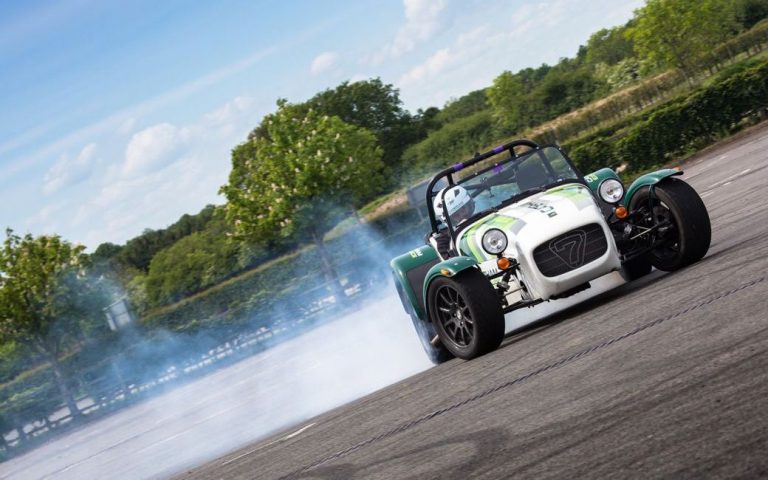
Renault buys Caterham out of joint sports car project

Renault has ended its joint venture with Caterham and bought out the stake the UK maker held in the Alpine sports car project.

Both manufacturers say that they still intend to launch new sports cars, and Renault says its Alpine is 90% complete and will appear in 2016.

Renault and Caterham Group signed an agreement in November 2012, the plan being to develop and manufacture sports cars through a joint venture, Société des Automobiles Alpine Caterham, owned 50/50 by the two partners.

That firm is now changing its name to Société des Automobiles Alpine, but Renault says that it could still cooperate with Caterham Group on future projects.

The two had each intended to launch their own badged car on a shared platform, Renault’s version reviving the iconic Alpine brand. The cars were to be built in a factory in Dieppe, France, which Renault retains following the latest developments.

Industry rumours suggest that design changes following mixed reactions to a concept prototype contributed to the delays on the new cars and also resulted in tensions between the UK and French design teams.

Mitsubishi Outlander PHEV review

What is it?
The Outlander PHEV is a plug-in hybrid version of Mitsubishi’s SUV

Key features:
Strong eco credentials, no price premium over diesel, major tax savings for fleet users.


Having come through very challenging times, only just surviving the pressures exerted by speculation on the Japanese yen, Mitsubishi is looking to move on strongly – and the standard bearer for this programme is very much the Outlander PHEV; the plug-in hybrid version of the Outlander SUV.

PHEV stands for plug-in hybrid electric vehicle, a powertrain which matches in this case a 2.0-litre petrol engine with a pair of electric motors, one mounted on each axle. The Outlander is the first of a range of Mitsubishi vehicles to use the new powertrain, and a perfect vehicle in which to debut the technologThe potential eco advances, including a quoted combined cycle fuel economy figure of 148mpg, will be looked at shortly, but the major headline is the Outlander PHEV’s price. As an electric vehicle it qualifies for the Government’s £5,000 plug-in car grant, and Mitsubishi has made full use of this to bring the car to market at a price that in terms of the entry-level GX3h model is no different to the stock diesel version of the car.

The more upmarket GX4h and 4s versions carry a £1,000 premium over their diesel equivalents, but Mitsubishi puts this down to them boasting extra equipment over their diesel siblings. What the PHEV very much does not have is the substantial price disadvantage that up until now has dissuaded many from buying an electric vehicle.

The Outlander PHEV will run in full electric mode for up to 31 miles, at national speed limits. Beyond this it will switch to series hybrid mode – the engine running but merely to generate power for the electric motors. At higher speeds, such as on the motorway, it switches to parallel hybrid mode, with the engine providing the majority of the propulsion.

This clever combination of modes is how the Outlander has clocked up its seemingly remarkable official fuel economy figure of 148mpg, along with CO2 emissions of a mere 44g/km. In real life, the economy achieved will depend even more heavily than usual on the use the car is put to – those doing many miles a day will see no advantage as after 106 miles the economy drops off markedly, eventually setting at around 35mpg which is worse than the diesel Outlander.

However anyone who uses the car on the average daily commute of 25 miles or less, and then charges it overnight (the cost of which will vary according to local tariffs but in most cases could be less than £2), could vastly exceed the 148mpg – on the launch some journalists were seeing mpg figures into the thousands…

The presence of the petrol engine also removes the other major fear of buyers – range anxiety. This vehicle will travel as far as any other, in fact Mitsubishi claims a potential cruising range of up to 512 miles.

When Mitsubishi created the new Outlander range – traditional diesel versions of which were launched last year – the PHEV was part of the plans from the start. So the vehicle has been designed to accommodate the hybrid powertrain, with no compromises to incorporate it. As a result in virtually all respects the PHEV is the same as a ‘normal’ Outlander – the electric motor battery is mounted under the floor, instead of the traditional location of the boot, so luggage space is not affected. The car also has no less off-road ability than the diesel version.

There are some minus points – the PHEV does tip the scales some 200kg heavier than the diesel, while its towing ability is also slashed by 500kg to 1500kg.

Apart from that the only minuses are typical of the latest Outlander range as a whole – a dull interior that Mitsubishi will struggle to sell to the BMW and Audi buyers it says it is targeting, and a centre console display that takes some mastering.

The technology is impressive, however, particularly a clever app which can be used to control the car’s charging schedule from a smartphone. On mornings of extreme temperatures it can even turn on the heating or air-conditioning remotely, several minutes before getting into the car.

Mitsubishi management admits to not being able to accurately predict the level of interest in the car, but it’s clear that a large proportion of its buyers could be in the fleet market. The petrol-electric powertrain slashes Benefit-in-Kind tax rates to only five per cent – or £56 a month for a 40 per cent taxpayer. The car is exempt from the recently tightened-up London Congestion Charge, and exempt too from Vehicle Exise Duty. And for Fleet managers it offers a 100 per cent write-down allowance in the first year.

Mitsubishi describes the experience of a fleet buyer choosing an Outlander PHEV as like getting a major pay rise and a new car – and it’s hard to argue against that statement.

Mitsubishi Outlander PHEV – key specifications

Model Tested: Mitsubishi Outlander PHEV
On Sale: June 2014
Range price: From £28,249 (£5K government grant included)
Insurance group: 24E-27E
Engines: 2.0-litre 4-cylinder petrol plus twin electric motors. 4WD
Power (bhp): 200
Torque (lb/ft): 184
0-62mph (sec): 11.0
Top speed (mph): 106
Fuel economy (combined, mpg): 148
CO2 emissions (g/km): 44
Key rivals: Volvo V60 Plug-in Hybrid

Why a classic car can be a good investment

One of the most fascinating areas of luxury spending is on collectable items, such as classic cars. As well as providing considerable driving enjoyment, many buyers consider a classic car to have great investment potential.

While many car lovers may be put off investing in a classic car because of high upkeep and maintenance costs, sale records show that buying the right classic car can be a fantastic investment with the potential to make you a lot of money. At the very top end of the marketplace, a Ferrari 250 GTO originally built for British racing legend Sir Stirling Moss sold for a record $35m (£22.7m) in 2012, when a decade earlier it had been bought for just $8.5m. While this may be an extreme example, it’s a clear demonstration of how much value a classic car can gain over time.

Classic car values defy global downturn

Despite the devastating effects of the recent recession on the general new and used car markets, the classic car market remained stable. As global economies have recovered over the past year, there has been a noticeable rise in many classic car values as investors look for secure places to store their hard-earned wealth.  According to an index of classic cars compiled by Historic Automobile Group International (HAGI), valuations increased by a staggering 19% in the first nine months of 2012. In addition, since 1980, HAGI’s index of collectible Ferraris has grown on average more than 15% every year.

The outlook is positive for the wider classic car market too. Specialists have estimated that there are over 850,000 pre-1972 vehicles in the UK that have hit the bottom of their depreciation cycle, and it looks as though the classic car market is in the process of another boom – that doesn’t just benefit the super-wealthy.

While investing in a car at the top end of the market, such as a Ferrari, means that returns will likely come quicker, it will set you back at least £100,000. Investing in a worthwhile classic car doesn’t have to be so expensive, for example, according to investorschronicle.co.uk you can get an iconic Jaguar E-Type for about half the price (£50,000) which could make you thousands back in years to come when you sell it.

Alternatively, you can invest in cars that are even cheaper such as a Triumph TR4, which you can get for around £10,000- £12,000. While a Triumph TR4 isn’t likely to make you into a millionaire overnight, you won’t lose any money on it and it could double in value in the next 5 years, like the TR5 models already have. In addition, cars such as an 1966 Mini Cooper could gain over £18,000 in value.

So, before discarding the idea of investing in a classic car because of the maintenance costs that it may come with it, take into consideration the potential financial benefits. Investing in the right classic car is an important decision that requires a lot of research to ensure that it is a worthwhile investment.  If you’re feeling lost or confused with the best ways to manage your money and what areas to invest in, consider using an investment management firm that can offer you their professional advice and support.

Postcard from Monza

Sorry that there has been nothing new on the website for the last week or so, but I’ve been on holiday in Italy.  The highlight was visiting the Autodromo Nazionale Monza, home of the Italian Grand Prix.

Set in the middle of Monza’s Royal Park, the Grand Prix circuit is open to the public most days. Although you can’t wander out onto the GP track itself, you can explore most of the circuit environs to your heart’s delight. And when you do, you will find this:

Monza banking - Autodromo Nazionale Monza (The Car Expert)

This is the infamous surface of the old Monza banked circuit. Impossibly steep (pictures simply don’t do it justice; you have to scramble up on all fours to get to the top, and toppling back down would be very painful), ridiculously dangerous and only used on a few occasions, the banked circuit out in the middle of the woods is eerie, spooky and beautiful.  It was originally linked to the better-known GP circuit, so one lap involved both parts of the circuit for a total of 10km. F1 hasn’t used the banked section since 1961, and other races stopped using it later in the 1960s. Since then, it has simply been decaying, and was nearly demolished altogether in the 1990s before being saved.

To walk around the banked circuit gives you a glimpse into F1 legend. Juan Manuel Fangio won here in his Mercedes-Benz Silver Arrow in 1955, Stirling Moss in 1956 and Phil Hill in both 1960 and 1961 for Ferrari (pictured right).   There were also two “Race of Two Worlds” events between F1 cars and American Indycars.  No-one enjoyed racing on the banking, everyone feared the consequences of an accident, and all were glad to survive it. Now it stands as a tribute to F1 history.  It is spectacular, and a must-see for any F1 or motor racing fan.

The pros and cons of owning a classic car

With the introduction of a rolling 40-year Vehicle Excise Duty (otherwise known as road tax or car tax) exemption in this year’s budget, it seems there has never been a better time in the UK to own a classic car. And after the reveal in March, even classic car owners whose vehicles didn’t fit into last year’s 1974 tax exemption will now feel an added benefit of owning a classic vehicle.

But owning a classic car isn’t for everyone – so how do you know if it’s for you? We take a look below at a few of the pros and cons of owning such a vehicle, to help you decide if you are ready to take a step into the world of classic car ownership.

Firstly, the cons:

Financial outlay

Owning a classic car has always been a job for those who truly appreciate and understand the vehicle they own, and are willing to lavish it with the care and attention it needs, including purchasing steel garages for sale, keeping them safe and sound.  Many classic car owners are faced with a much larger initial costs than someone buying a non-classic second-hand car, and can then face more financial outlay to repair any problems.  Classic car parts can be harder to come by than modern car parts and you may find that, depending on what kind of classic car it is that you own, only certain garages will be able to do the repair work for you.

Reliability

Although all cars are prone to rust, older cars are far more likely to have serious rust problems.  Older cars tend to be made from more steel than modern cars, and it is this steel that can be prone to rust.  And along with the rust, classic cars are also less likely to be reliable – as is the case after years of wear and tear.  However, if you can find a car that someone has taken good care of, and you continue to follow suit, you should be able to avoid huge problems with reliability.

No mod-cons

Classic cars are not fitted with the mod-cons that we’ve come to expect as standard in our cars.  Clearly, a built-in satnav and smartphone syncing are out of the question!  But you also might be missing some things that you usually take for granted, such as electric windows and air conditioning. The first electric-powered windows were added to a car by Daimler in 1948, but they weren’t really commonplace until around ten years ago.

And now, the pros:

Style and character

Classic cars may not be fitted with the mod-cons that we now rely on for a comfortable journey, but they have something that many modern cars don’t – style and character!  Classic cars tend to stand out from the crowd of lookalike modern cars, and will guarantee you plenty of attention and conversation from bystanders.

Driving experience

Modern cars have been designed to be as insulated as possible from the outside world to create a more comfortable driving experience.  However this can often leave the driver feeling isolated from their car and the road.  A classic car will transmit far more of the noises, smells and vibrations of driving, which can give a motor enthusiast a richer driving experience and a chance to appreciate their car.

Financial bonuses

From April 2014 a 40-year rolling rule has been introduced to classic cars, which entitles any cars built before January 1974 to be eligible for a zero-rated tax disc.  This means that owners of newer classic cars will start to benefit – for example, the Ford Escort Mk2 will now be ‘tax-free’ from 2015.  When this new measure was announced this March, it was estimated that around 10,000 classic cars owners would be affected and not need to pay tax from 2015.  This was added into the budget to encourage more people to own classic cars, as the government feels they are an important part of our heritage.  The knock-on effect of this is that the Reliant Robin, Austin Allegro and MGB V are now classed as classic cars, which means their market value is expected to gradually rise as a result.

Another financial bonus is that classic cars don’t depreciate in value in the same way that new cars do.  Classic cars tend to hold their value, and if well looked after can even increase in value.

Conclusion

If you want a true driving experience and are prepared to dedicate time to looking after and maintaining a car, then a classic car could be right for you. With the cuts in tax and the possible increase in value, it certainly makes financial sense too.  Our advice would be to do your homework first to ensure that you are buying a model which still has parts available, is reliable and won’t lose its value.  This will help you to guard against running into trouble further down the road and minimise ongoing spending on your new purchase.

Vauxhall Meriva review

What is it? Mk 3 version of small MPV
Key features: Minor restyle, more equipment, 1.6 Whisper Diesel engine
Our View: These changes won’t put the Vauxhall Meriva in lights, but they won’t harm its showroom performance either


Vauxhall claims to have invented the small MPV sector just over a decade ago, when the brand launched the first Meriva. In 2010, with more than 115,000 Merivas sold, the longer second-generation version arrived, and immediately wrote headlines with its backwards-hinged ‘FlexDoors’.

The latest Vauxhall Meriva now arriving at showrooms is not an all-new model; no surprise with the Mk2 just four years old. Rather it is a subtle reworking, with the highlights in the engine department. All the petrol engines now meet Euro 6 regulations, and most notably there is a new 1.6 dubbed the ‘Whisper Diesel’, along with transmission improvements.

Read more Vauxhall news and reviews at The Car Expert

The restyling is really only noticeable if one places the old and new Meriva alongside each other. There is the brand’s latest-design grille, a reshaping of the headlamps, and for the first time on the Meriva the availability of LED-version daytime running and tail lamps. Apart from the ability to choose a new Emerald Green pearlescent paint colour, and extra chrome detailing on upper-spec cars, that’s about it.

The good news is that all of the practical aspects of the car remain. The rear-hinged FlexDoors are very conducive to easy entry and exit from the back seats, especially as they open to 84 degrees (a normal front-hinged door opens to around 68 degrees).

So life is made a lot less stressful when dealing with the extremes of small children or frail elderly. It’s perhaps slightly tongue-in-cheek, however, for Vauxhall to remind us that the only other production cars using this door format are made by Rolls-Royce…

The interior remains highly versatile, thanks to lots of flex acronyms – FlexSpace, FlexRail and Flex-Fix. The former allows lots of adjustment of the rear seats –the two outer ones moving backwards, forwards and inwards to turn the car into a four-seater with extra space.

Meanwhile the handles that allow one-movement dropping of the seat backs for cargo carrying are now better placed, and with all of this able to be done without removing anything, this is one of the Meriva’s best features. Boot space by the way is 397 litres, increasing to a maximum of 1,496 litres with the seats folded.

It is all change between the front seats, with the handbrake lever replaced by an electronic version and the gearshift moved forward, freeing up space for FlexRail. This is a storage system of up to three tiers which runs between aluminium rails. All cars get a floor storage tray with two cup holders and space big enough to store electronic tablets, and the Aux, USB and 12-volt sockets to connect them. Exclusive models add the FlexRail above, boasting a storage tray and cupholder which slides along the rails to a favourite position. Choose an SE variant and an extra, also slidable module is added on top, with a flip-top, armrest/storage module big enough to carry CDs.

This is all rather clever, and one of a raft of changes that increase the usefulness of the car. These include major items such as the availability of Flex-Fix, Vauxhall’s built-in pull-out bike carrier, but also such niceties as various extra storage cubbyholes, shopping bag hooks in the boot and such like. And it even extends to coating the surfaces in a treatment Vauxhall calls Top Tec and which makes mopping up of spillages, even from nasty materials such as melted chocolate and ketchup, a simple matter of dabbing said area with a damp cloth.

This is all good, but it is slightly tarnished by some of the finishes, very obvious plastics that look and feel a little downmarket compared to some of the Meriva’s rivals.

Read more Vauxhall news and reviews at The Car Expert

The dash is standard current Vauxhall fare, with good visibility easy to achieve. This is helped by the seats, which are lifted from the current Astra and have more adjustability built in, even if one doesn’t opt for the optional Ergonomic Front Sport Seats.

The launch test attended by The Car Expert was conducted with the major news in the engine range, the 1.6-litre Whisper Diesel first seen in the Zafira Tourer. It’s combined with a six-speed manual gearbox that itself has undergone major improvements for refinement and ease of use, while also available is a six-speed auto.

This 134bhp engine is a very impressive powerplant, not just for its bald figures – a sub-10 second 0-62mph time while returning combined cycle fuel economy of more than 64mpg and emissions of 116g/km – but for its sheer refinement.

The unit really lives up to its name – it smoothly yet enthusiastically accelerates from very low in the rev range, and it does it with no fuss whatsoever. It is smooth and silent to a degree that you’ll be checking the fuel filler cap to remind yourself whether you are driving a diesel or a petrol car. One can imagine clocking up many a motorway mile in comfort with this engine, and it is in a different league to the 1.7 unit that it replaces.

The Meriva is of course, no sports car and its on-the-road performance is competent if uninvolving. Some of the less than perfect road surfaces on the launch route transmitted themselves through the cabin, while on the motorway the quietness of the engine was set against notable wind noise.

Vauxhall Meriva prices start from £12,260 and run through six trim levels – it’s good to see that even entry-level Expression versions come with such niceties as the FlexSpace rear seats.

You’ll pay rather more to get the Whisper diesel, which starts at £19,340, supplied in ‘S’, the second of the trim levels and including a stop-start function on the engine.

The Meriva is a core seller for Vauxhall and while these changes won’t put the car in lights, they should not harm its showroom performance either.

Vauxhall Meriva – key specifications

Model Tested: Vauxhall Meriva 1.6 CDTi Ecoflex
On Sale: Feb 2014
Range price: £12,620–£22,355
Engines: Petrol 1.4, 1.4 turbo x 2. Diesel 1.3 x2, 1.6, 1.7
Power (bhp): 99, 118/138. 74/94, 134,108.
Torque (lb/ft): 96,129/147. 133/133, 236, 206
0-62mph (sec): 14, 11.3/10.1. 16.9/13.8, 9.9, 12.9
Top speed (mph): 110, 117/122. 99/104, 122, 111
Fuel economy (combined, mpg): 47.1, 47.9/44.8. 60.1/68.9, 64.2, 46.3
CO2 emissions (g/km): 140, 139/149. 124/109, 116, 160
Key rivals: Ford B-Max, Nissan Note, Fiat 500:, Citroen C3 Picasso
Test Date: Feb/Mar 2014
All with manual gearbox except 1.7
* = 1.3 94bhp with Start/Stop

Read more Vauxhall news and reviews at The Car Expert

Audi A3 Cabriolet review

0

What is it: The new Audi A3 Cabriolet is the latest version of Audi’s compact soft-top
Key features: More luggage space, cylinder-on-demand engine option
Our view: Assured for a drop top, though it doesn’t feel quite as stiff as its saloon sister.


The latest new model line to join the ever-expanding Audi A3 range extends the line-up to four distinct body shapes, the new Cabriolet sitting alongside the three-door hatch, five-door Sportback and the saloon.

And it is America and China that UK buyers haveto thank for changes to the soft-top A3 – unlike its predecessor the new Cabriolet is based on the saloon, itself an all-new member of the third-generation A3 line-up and hugely popular with the Stateside and Chinese buyers at which it is basically aimed.

By adopting the saloon body with its longer length – the four-door outstretches even the five-door Sportback – Audi frees up some luggage space, which is always at a premium when one has a dropped hood to accommodate. In this case there are 275 litres available with hood down, 320 with it up, or 678 with the back seats dropped.

It is a measure of the sheer adaptability of the VW Group MQB platform – yes, this is yet another car to adopt it – that while using a saloon shell, the Cabriolet has the shortest wheelbase in the A3 range, its 2595mm some 6mm less than the A3 hatch. Mind you this figure is also 17mm longer than the old A3’s wheelbase, so while space in the Cabriolet’s rear seats is cosy, it’s a little less so than previously.

Despite the extra dimensions the new Cabriolet weighs 50 kilos less than its predecessor, which is good news for efficiency and handling. A raft of weight-saving measures are topped by a bonnet crafted from aluminium.

Audi has never followed rivals in adopting metal roofs, and the new Cabriolet is truly a soft top, with a fabric hood. This gives it a more delicate look compared to those challengers – top up or down it is pleasing visually, with a sleekness combined with understated elegance.

Said hood – which includes a heated rear screen – can be operated at speeds up to 31mph and electrically folds down in 18 seconds, to conceal itself under a panel across the top of the boot.

The stock hood satisfactorily keeps extraneous sound out when up, but for the most effective sound-deadening one can choose an uprated version, with a three-layer inner padding and an inner liner that can be specified in one of two colours, the outer layer in three. This hood comes as standard on Sport and S Line models, while buyers of entry-level SE cars can specify it as an option. Do this and you might also want to choose the optional hot air blowers mounted on the top of each seat back – great for cold days…

With both hood and side windows tucked away, there is a lot of buffeting around the head, unless you clip in the wind deflector that Audi supplies. This is very effective, but it does render the rear seats effectively redundant – an unfortunate general side effect of such cars.

Losing all but the windscreen surround from above does not compromise safety, by the way. Hidden from view and hopefully to stay that way, the Cabriolet includes an active rollover protection system. Two spring-loaded plates are recessed into the body and should the car flip over they will pop up and keep occupants from an unfortunate encounter with the road surface.

The A3 Cabriolet launches with a three-way engine choice, and they are familiar as they are exactly the same as in the existing hatch and saloon models.

Petrol choices comprise the 1.4 140hp and 1.8 180hp TFSI units, the former boasting Audi’s impressive cylinder-on-demand technology that shuts down two of the cylinders when they are not required – the driver won’t notice, but the mpg and emissions will benefit accordingly.

The diesel is the well-known and very effective 2-litre TDI unit of 150hp, combined as is the smaller petrol engine with a six-speed manual transmission – the 1.8 petrol gets the slick seven-speed S-tronic dual-clutch ‘box.

As in the saloon, more engines are planned, with fleet customers in particular likely to be attracted to a 1.6 TDI with combined cycle fuel economy figures of up to 74.3mpg and tax-busting emissions of 99g/km.

There will also be a more powerful 2.0 TDI of 185hp, with either front or quattro all-wheel-drive, while we know too that the Cabriolet is to get the potency of an S badge – it will be a sister to the S3 saloon that is launching alongside the A3 Cabriolet.

For now, however, whichever of the three existing engines you choose you are unlikely to be disappointed – they are very familiar powerplants and all work well in these latest surroundings.

On the road the A3 Cabriolet is assured for a drop top, though it doesn’t feel quite as stiff as its saloon sister. Uneven road surfaces do transmit themselves up through the wheel, while the steering is a little light. It’s a minor issue though and in daily use the car will generally be a satisfactory companion.

Audi dealers already have their order books open for the Cabriolet, and the first examples will hit UK roads in April, hopefully just as the weather starts to become drop-top friendly. Prices start from £25,790 for the SE with the 1.4-litre engine, and currently top out with the 1.8 TFSI in S line trim at £32,420.

Audi A3 Cabriolet – key specifications

Model tested: Audi A3 Cabriolet
On sale: March 2014
Price range: £25,790-£32,420
Engines: 1.4, 1.8 petrol. 2.0 diesel
Power (bhp): 138, 177, 148
Torque (lb/ft): 184, 184, 111
0-62mph (sec): 9.1, 7.8, 8.9
Top speed (mph):
135, 150, 139.
Fuel economy (combined, mpg): 56.5, 48.7, 67.3.
CO2 emissions (g/km): 114, 133, 110
Key rivals: BMW 1 Series Cabriolet, VW Golf Cabriolet
Test date: March 2014

Who makes the most reliable engines?

“If only everything in life was as reliable as Volkswagen” posited the famous 1987 advert for the Volkswagen Golf.

Similarly, Audi declares: “Vorsprung durch Technik.”  Loosely translated, this means “advancement through technology” and both of these slogans are designed to instil a feeling of confidence in each company’s engineering prowess.

Unfortunately, however, the truth can be very different. Figures recently released by consumer warranty company Warranty Direct, show that Volkswagen, Audi and BMW make some of the least reliable engines on the market.

Audi came second-from-bottom in the engine reliability charts with one failure in every 27, beaten only by the now-defunct MG Rover.

It’s a poor showing for BMW’s Mini brand, too, coming in at third-from-bottom with one failure in every 40, while BMW themselves take up the seventh slot in between Peugeot and Renault with one in 45.

Volkswagen makes its appearance in the ninth-from-bottom position, with one in every 52 owners suffering an engine fault of some kind.

So who makes the most reliable engines?

Perhaps not surprisingly, it’s the Japanese, with the top spot taken by Honda. Only one in every 344 Honda owners have had engine trouble, with second-placed rival Toyota notching up just one in 171.

It’s not all doom and gloom for the European marques, though, with Mercedes-Benz taking third, followed closely by Volvo.

The Brits have something to be cheerful about, with Jaguar placed fifth and Land Rover in tenth – although in the interests of yin and yang we should note that JLR’s repair costs were considered very high, with one Range Rover Sport owner quoted nearly £15,000 to repair an engine failure.

The biggest surprise, however, comes in the form of seventh-placed Fiat who recorded a creditable one failure in 85, beating both Ford and Nissan.

Remember that next time an Audi salesman tries to convince you to sign on the dotted line…

Top 10 manufacturers – most reliable engines

 ManufacturerFailure Rate
1Honda1 in 344
2Toyota1 in 171
3Mercedes-Benz1 in 119
4Volvo1 in 111
5Jaguar1 in 103
6Lexus1 in 101
7Fiat1 in 85
8Ford1 in 80
9Nissan1 in 76
10Land Rover1 in 72

Bottom 10 manufacturers – least reliable engines

 ManufacturerFailure Rate
1MG Rover1 in 13
2Audi1 in 27
3MINI1 in 40
4Saab1 in 40
5Vauxhall1 in 41
6Peugeot1 in 44
7BMW1 in 45
8Renault1 in 46
9Volkswagen1 in 52
10Mitsubishi1 in 59

You should also read:

More car warranty information

Is a used car warranty required by law?

Is a used car warranty required by law?

The UK’s best used car warranty providers

The UK’s best used car warranty providers

How to handle a dispute with a car dealer

How to handle a dispute with a car dealer

Used car warranty – the law and your rights

Used car warranty – the law and your rights

Spares or repairs – and other dodgy trader tricks

Spares or repairs – and other dodgy trader tricks

Honda Civic Tourer review (2014-2017)

What is it? The Civic Tourer is the load-lugger version of Honda’s UK-built hatch
Key features: Sleek profile, big loadspace, strong eco credentials
Our view: An assured performer, giving no hint of the extra metal behind the rear wheels


Downsizing has been a big deal in the motor industry for a while now. Drivers are abandoning big family cars for something more compact and perceived to be more efficient. It’s notable that the large car segment, populated by the likes of Ford’s Mondeo, the Vauxhall Insignia and the Honda Accord, provided the only negative score in the latest very upbeat set of UK sales figures.

Some owners of compact cars still need lots of carry space, however, so for manufacturers such as Honda, whereas previously making an estate version of the Accord was a given, there is now a business case for producing a load-lugging Civic.

And now we have it, the first estate – or wagon as it’s known in the industry – version of the Civic to go on sale since 2001. It’s a car designed in Europe and built at Swindon in the UK for primarily European audiences, and Honda believes the car’s flexibility, carry capacity and particularly impressive eco figures should make it a winner.

On hearing that the Civic Tourer – as the new model is called – has the same wheelbase as the hatch but a length extended by some 235mm, some might be concerned that this exercise has simply comprised hanging an extra lump of body shell out the back. Such concerns are dispelled the moment one first sees the Tourer.

As far as the front door pillars, it is exactly the same as the hatch. Then the extended shell flows backwards in a sweeping style, the shape of the glass giving the impression of a slight downwards tilt. Overall the car presents a pleasing wedge profile that to be honest is rather more attractive than the hatch.

Such visual satisfaction does not come at the expense of practicality. Honda claims to beat all rivals with the Tourer’s loadspace, measuring 624 litres with the rear seats up. Thanks to the fuel tank being under the seats rather than the boot, a useful 117 litres is freed up under the boot floor. Drop the highly-adjustable rear seats down and the result is a huge flat floor, that will take 1,668 litres. That’s a lot of suitcases…

The practicality continues at the very back. Open the tailgate and the loading space is wider, taller, and closer to the ground than either Focus, Astra, Golf or Auris can manage. And Honda claims to have thought of the little things too, right down to using a carpet with sheared-off-fibres that don’t catch dirt particles and are thus far easier to keep clean.

The interior will be familiar to anyone who has driven the Civic hatch, though there have been some detailing changes for the Tourer. It’s practical but stylish too, with its two-part arrangement mounting the vital dials ahead of the driver on a steering column pod, and the others beyond in a panel rising from the fascia. The seats are comfortable, and despite the Tourer’s sleek exterior there is plenty of room for occupants front and back.

Just two engine choices are on offer, the 1.8 petrol of 140bhp and a 1.6-litre diesel offering 119bhp. Both are highly efficient powerplants as we expect from today’s Honda units but in all honesty the only reason you would buy the petrol is for the extra pace – and even that only takes the car through 62mph in 9.2 seconds, just nine tenths faster than the diesel. Choose the latter, however, and you will go almost 30 miles further on a gallon of fuel – combined cycle economy is quoted at an impressive 74.3mpg. And you get CO2 emissions sliced by some 47g/km, just squeezing under the tax-removing 100g/km barrier.

The diesel also scores on general performance, feeling smoother and a little more refined than its petrol sibling when pushed on – the latter’s engine note can become the more noticeable at speed.

Tourer add ons to ensure handling prowess have included extra body stiffening just behind the rear doors and retuned dampers, with the option of Honda’s rear Adaptive Damper System (ADS). Claimed as a world first by its makers, it boasts three modes – Comfort, Normal and Dynamic – and automatically adjusts its response dependent on load and driving conditions.

Even without the ADS, the Tourer is an assured performer, giving no hint of the extra metal behind the rear wheels. Okay it’s no finely handling race car, the suspension instead concentrating on offering no surprises at any time, while smothering any road imperfections.

Prices for the Tourer start at £20,265 for the 1.8 i-VTEC in the lowest of the four trim levels, with an extra £1,110 buying the cheapest diesel variant, and Honda has bold ambitions for the car.

The brand is looking at taking 10 per cent of the market for compact wagons, aiming for 3,800 sales a year, of which 2,300 will be diesels. And despite the car’s eco credentials placing it squarely in the sights of fleet buyers, it’s expected that sales will be split 60-40 in favour of private motorists.

Helping that will one extra useful marketing element – we mentioned racing cars? Honda’s team in the UK’s biggest motor sport series, the British Touring Car Championship (BTCC), has chosen to dump its Civic hatches in favour of Tourers in 2014. The last time an estate raced in the series was two decades ago, but unlike the boxy Volvos of 1994, Honda expects with the Tourer to secure itself a fourth consecutive manufacturers and teams title in the BTCC.

The Civic Tourer has many plus credentials, and is also a superb-looking race car. For Honda it really could be a case of ‘win on Sunday, sell on Monday’…

Honda Civic Tourer – key specifications

Model Tested: Honda Civic Tourer 1.6i-DTEC
On the road: February 2014
Price: £21,375-£27,460
Engine: Petrol 1.8, Diesel 1.6
Power (bhp): 140, 119
Torque (lb/ft): 128, 221
0-62mph (sec): 9.2, 10.1
Top speed (mph): 130, 121
Fuel economy (combined, mpg): 45.6, 74.3
CO2 emissions (g/km): 149, 99
Key rivals: Ford Focus Estate, Vauxhall Astra Estate, VW Golf Estate
Test date: February 2014
* all figures with manual gearbox

Skoda Yeti review

What is it? Facelifted version of quirky small SUV
Key features: Two distinct models for different buyers
Our view: A number of improvements without compromising the qualities that have made the Skoda Yeti such a success


When the Skoda Yeti arrived in 2009, it certainly surprised a few buyers. This was an SUV, not previously a notable element of the Skoda DNA, and it was a rather different SUV, distinctly smaller than rivals but thanks to its quirky, boxy shape a roomy little car.

And buyers liked it – as the crossover segment has mushroomed, so have sales of the Yeti, with the model having its best year of all in 2013. So now Skoda feels it is right to apply the makeup brush.

The Yeti facelift, however, encompasses rather more than a makeover. For a start, Skoda is going further than many rivals in acknowledging the emerging two distinct types of crossover buyers, those who want off-road ability, and those who merely want off-road looks and the perceived safety that comes from driving such vehicles.

So the traditional off-road pitched Skoda Yeti, with its four-wheel-drive powertrain and aggressive styling, now becomes the Yeti Outdoor. The plain Yeti is now a softer, more road-focused model with two-wheel-drive. Mind you, just to thoroughly confuse matters, you can order a Yeti Outdoor, with all the bolder visuals, but without the all-wheel-drive.

Visually the new Yeti follows latest styling look seen on other recent Skoda releases, with such signatures as highly angular headlamps. As mentioned the two versions now boast bespoke touches, for both visual impression and ability. The front and rear bumpers are bespoke, with the Outdoor not surprisingly getting the bolder and more steeply-angled versions to help them traverse obstructions on an off-road course. Other Outdoor additions include black body side mouldings and chrome door mirrors.

Stepping inside, there is no great radical change, mainly more refinement, a bid to give the car a more upmarket feel to it, with the most obvious alteration the loss of a spoke on the steering wheel – it’s now a sporty three-spoke.

There are new fabrics too, but essentially all the good bits remain – it’s a practical driving environment, while most passengers will find adequate space. Skoda claims the best rear passenger headroom in class, despite the compact exterior dimensions compared to rivals that can result in some cosy arm-to-arm moments between passengers.

The flexibility of the movable Varioflex seating is retained, allowing the already large 416-litre boot to extend to 1,760 litres with all rear seats collapsed. Skoda’s various ‘Simply Clever’ features seen on recent models are extended to the Yeti too, such as the boot light that unclips to become a torch.

Choosing your powertrain depends on the kind of Yeti you want. The five-strong engine line-up is carried over from the previous model and for customers content with two-wheel-drive – in normal or Outdoor form – there is a 1.2-litre 105hp petrol and diesels of 1.6-litre 105hp – with a 119g/km CO2 figure marketed as the lowest-emitting Greenline version – and 2.0 110hp.

Go for four-wheel-drive, then the choice is between the 110hp diesel, 2.0-litre diesels with 140 or 170 horsepower, and a 1.8-litre petrol unit with 160hp on tap.

The best seller is expected to be the 140hp 2.0-litre TDI Outdoor 4WD, and this was among the versions tried out by The Car Expert on the launch. It’s an impressive combination, very assured on the road thanks to its all-wheel-drive and with a pleasing turn of speed.

The 4WD of course comes into its own off the road, and in the case of the launch a countryside course turned into a quagmire by heavy rain. The transmission is one of the major improvements of the new Yeti, its rear axle-mounted Haldex clutch a new fifth generation version that is much more compact and easier to maintain than its predecessor. It is also 1.2kg lighter, which of course helps with the economy and emissions, and it’s effective. The Yeti may not be a full-house black route off-roader, but it will handle any rough stuff the vast majority of owners will want to throw at it.

Back on the road the Yeti’s handling is as accomplished as it always has been. It rides well and corners with confidence, staying pleasingly upright despite its elevated stance.

Overall the facelifted Skoda Yeti boasts a number of improvements, without compromising the qualities that have made it a successful quirky alternative to the general SUV pack. How long what is basically a six-year old design can challenge the mushrooming numbers of new crossover-themed cars coming onto the market is open to question. But then we know Skoda is already working on an all-new Yeti…

Skoda Yeti – key specifications

Model Tested: Skoda Yeti 1.6 TDI 105hp 2WD,140hp 2.0 TDI Outdoor 4WD
On Sale: February 2014
Price: £16,600-£27,050
Engines: Petrol 1.2, 1.8. Diesel 1.6, 2.0 x3. FWD/AWD
Power (hp): 105, 160, 105, 110/140/170.
Torque (lb/ft): 129, 184. 184, 184/236/258
0-62mph (sec): 11.4, 8.4. 12.1, 11.6/9.9/8.4*
Top speed (mph): 110, 124. 109, 110/118/125
Fuel economy (combined, mpg): 46.3, 36.2. 61.4, 55.4/48.7/49.6
CO2 emissions (g/km): 142, 184. 119, 134/152/149*
Key rivals: Kia Sportage, Hyundai iX35, Nissan Qashqai
Test date: January 2014
* = where FWD/AWD versions available, FWD figure quoted

Independent vs. franchise dealerships – the pros and cons

Uh-oh, something’s gone wrong.  The car is making a strange sound or is showing a dreaded warning light, and it needs a quick fix before the situation worsens. Or perhaps your vehicle is embarrassingly overdue for a service. Or maybe you’re just looking to buy a new motor.

Naturally, you’ll be tempted to visit the garage or dealership closest to you, but will they offer you the best service, expertise and value for money?

Whether your local garage is a small independent, or a commercial franchise dealership, they both have their pros and cons. Let’s take an objective look at how you can choose the best dealership based on your needs.

Independent garage

One of the main elements that divide an independent garage from a franchise dealership is the scale of their operations. Independents can often be the cheaper option as they have fewer overheads than larger businesses.

A reputable independent garage tends to offer a more personalised service with a strong focus on customer satisfaction, as it usually relies on word of mouth to grow its customer base. You will often get to speak directly to the mechanic working on your car, who will be able to share their expertise and let you know exactly what’s going on under the bonnet. Many of these establishments are run by former technicians from a franchise dealership, so they will be highly trained.

Don’t be afraid to ask the important questions – does the garage possess the necessary certification to carry out servicing on your vehicle?  Do they only use genuine car parts? Although it’s rare, lower costs can sometimes result from using non-genuine parts and cheaper labour, which can end up causing more damage than it’s worth.

Most local garages that are not franchise dealerships cannot perform warranty work at all, because they are not authorised to provide repairs by the manufacturer. They also do not have the same access to service information and manufacturer-specific technical support as franchise dealerships do, and may not have access to the latest diagnostic equipment or to your vehicle history records. Don’t necessarily let this put you off – just be sure to do your research first.

If you’re in the market for a used car, your local independent dealership may have a greater catalogue of these at their disposal than a franchise, at better prices too. Remember when buying a used motor to insist on a paper trail of the vehicle’s history before making any purchase.

One of the disadvantages of servicing a car with an independent garage is that it will negatively affect your car’s resale value. So you might save money now, but potentially lose it later on. The extent of this impact will depend on how long you keep the car; if it is several years old, it’s much less relevant than on a new or near-new car.

Franchise dealership

There are many benefits to opting to have your car serviced or repaired by a franchised main dealership. First and foremost, you get greater security and reassurance that your warranty will be preserved. Whilst some independents will be warranty-approved, a franchise dealership can guarantee this, which goes a long way to protecting your car’s residual value.

Car manufacturers are unable to insist which dealer you should visit to service your car, but they can easily void a claim for poor work practices, such as using non-genuine replacement parts. Franchises will make certain their components are certified by the manufacturers themselves, not to mention the access they have to the most up-to-date diagnostic and monitoring equipment, which independents are less likely to have in their workshop.

A disadvantage for bigger businesses is that they generally have higher costs. This is due to the larger number of overheads they need to account for at their facilities, such as staff numbers, but depending on which garage you use there may also be potential hidden fees. Ask for a cost breakdown for any task carried out so that the figures are in black and white.

When buying a pre-owned car, a franchise dealership will provide a warranty certified through the manufacturer, and the dealer will be able to provide written evidence of this. If you are looking at financing options for the vehicle, main dealerships will usually offer a lower interest rate than the independents due to their closer relationship with the manufacturer. However, this will not always be the case, so if you are looking at doing this, make sure to do your research for the best finance option.

Servicing your car with a franchise dealership will usually have a positive benefit on your car’s resale value when you come to sell the car. Prospective buyers prefer to see an official dealer stamp in the book rather than a local garage. If you have bought a new or near-new car, this is definitely worth considering.

So who comes out on top?

We can see that independent garages have the upper hand on lower costs and customer service, whilst franchise dealerships can give you greater peace of mind overall.

Before you make up your mind about which garage to visit, be sure to check any reviews of their company online as this can make the decision process much easier.

You should also read:

Volvo Drive-E D4 diesel engine review

What is it?
First of new four-cylinder Drive-E eco engine range

Key features
Large engine power, small engine economy and emissions

Our view
In short, startlingly good


This is a bit of a road test with a difference, as the test subject is not a new car, but the first of a range of engines. And these are very significant engines, as despite being only of four cylinders they will replace all of Volvo’s current powertrains within the next two years.

Drive-E used to be the badge that Volvo hung on cars fitted with its most efficient, cleanest engine. Now, however, Drive-E becomes the designation of a complete new technology programme, development that began way back when Volvo was still owned by Ford and which Derek Crabb, in charge of the project, describes as revolutionary. With this technology, he adds, the V8 engine becomes a dinosaur.

The programme will see Volvo abandon its current eight engine architectures in favour of two four cylinder units – one petrol, one diesel. From these, all future engines will be derived, no matter how potent they are.

The measures Volvo has come up with result in the number of cylinders in an engine being no longer relevant to its power or drivability. “By making the engine smaller we make it more efficient,” says Crabb. “They will make more power than today’s six-cylinder units, but be more than 50 kilos lighter, and they will offer lower fuel consumption than today’s four-cylinder generation.”

1402Volvo_DriveE

The two new units are both turbocharged. In its most powerful form the petrol unit will also boast a supercharger. The diesels will span power outputs from 120 to 230hp, the petrols 140 to past 300hp.

To the basic architecture are added a number of innovations designed to improve the engine’s efficiency. In the petrols, for example, the measures include high-speed continuous valve timing, very finely tuned heat management, and low-friction measures such as adding ball bearings to the camshafts.

The diesels have seen major advances to the common rail system in what Crabb describes as “the second step of the diesel revolution,” after the invention of the lambda sensor for direct injection in the 1970s. Instead of there being one sensor on the common rail, there are now sensors in each injector, and each also boasts an intelligent chip to further refine the fuel control, along with similar low friction measures to the petrol engines.

Added to the engines are all-new gearboxes, in six-speed manual or eight-speed auto form and specifically developed to improve fuel economy.

The results are impressive, to say the least. So far only the D4 diesel has reached showrooms. It’s on offer in the S60 and V60, V70, S80 and XC60 and XC70 models – Volvo’s best-selling V40 will get the unit later in the year.

1402Volvo_DriveE2

Compared to the previous D4, it’s a completely different beast – significantly more powerful, with 181hp and 295lbft of torque. All of which means cars with this engine are faster – by two seconds to 62mph. Yet they are far more frugal, and cleaner. Volvo can now offer a D4-engined S60 with 99g/km emissions and thus zero Vehicle Excise Duty (VED). For business users, benefit-in-kind rates will be slashed.

It all sounds very impressive, but what are they actually like on the road? In short, startlingly good. On the launch event The Car Expert tried the new engine in the XC60, the S60 and the S80.

Roads varied from traffic-choked town centres to fast country routes with sweeping bends and long straights. And through all of them the D4 proved to be just about the smoothest diesel we’d ever driven with, certainly with such power.

The gearboxes were equally impressive – slick shifting manuals, silky and swift autos.

And finally, these engines are so compact, that they offer plenty of space to add such future tech, such as the plug-in hybrid drivetrains that are just a couple of years down the line, and will improve economy and emissions still further.

1402Volvo_S60

Volvo has made great strides in recent years in turning its cars into more attractive propositions, in terms of styling, technology and safety. An increasing number of drivers who have previously bought upmarket German rivals, and those buyers of more mainstream brands are now looking towards Volvo – Drive-E will see far more doing the same…

SEAT Leon ST review

What is it?
All-new estate version of family hatch

Key features
Load capacity and practiclity in stylish package

Our view
The SEAT Leon ST is not the largest estate in its class, but more than adequate for most families.


The new, third-generation of SEAT’s Leon family car was always conceived as a family. The five-door hatch and three-door Sports Coupé are already on sale, now comes the third and final member, the ST, Sports Tourer or estate in everyday parlance.

With its first Leon estate, the brand is launching into a growing sector of the market, as more buyers with a need for serious load capacity but a desire for better economy downsize from larger estates such as Ford’s Mondeo and the Vauxhall Insignia.

1402SEATLeonST02

The mid-sized estate market is equally dominated by Ford, with the Focus, and Vauxhall’s Astra Sports Tourer, but the Leon ST will also face other cars coming into the market for the first time such as Honda’s Civic Tourer, also launching this month.

First impressions are good – the Leon has always sold on style, and adding a large boot does not compromise the much-praised looks of the latest range. Forward of the windscreen pillars all three cars are the same, and the ST shares the wheelbase of the hatch. The larger car’s rear overhang, however, is extended by 272mm while maintaining a sleek, muscular look that certainly disguises its extra capability.

The load space is 587 litres – 207 more than the hatch, and extendable to 1,470 with the rear seats folded. While impressive, this is not as much as some rivals including the Civic.

The car does boast lots of practical touches, however, including a double boot floor, a through loading hatch for long thin cargo, roof rails and a retractable rear shelf, which sensibly is provided with storage when not in use. There are also 13 extra storage spaces too.

1402SEATLeonST04

The interior is of course shared with the ST’s sister models, with a combination of more upmarket soft-touch surfaces and detailing and increased technology including the five-inch colour touchscreen infotainment centre.

Some technology, however, debuts with the Leon ST. Progressive steering is more reactive at lower speeds to ease parking and aids high-speed stability, while radar-activated Adaptive Cruise Control and Dynamic Chassis Control, with its ability to electronically monitor damper settings, are also available on certain models, along with a panoramic sunroof.

1402SEATLeonST03

The engine line-up is familiar from early tests of the hatch and SC and includes two with emissions in tax-free sub-100g/km territory. The best Ecomotive variant offers a mere 87g/km, along with combined cycle fuel economy of plus 85mpg.

On the launch event The Car Expert was able to test the 1.4 TSI petrol of 138bhp, and the likely to be fleet-friendly 1.6TDI of 104bhp, the latter with the DSG auto gearbox.

Surprisingly it was the petrol unit that impressed more. While boasting the same torque figure as the diesel, it felt more sprightly and the manual gearbox more slick than the DSG. However it cannot compete with the almost 20 extra miles per gallon offered by the diesel.

As in all Leons suspension setup varies dependent on model – the lower spec S and SE versions have a rear torsion beam, while on range-topping FR models a multi-link setup is specified. This makes a difference on the road, especially on the pothole-damaged tarmac of winter England. Certainly there is no feeling of driving a load carrier.

The Leon ST won’t be the largest estate in its class, but it will be more than adequate for most families, with its practicality scoring highly. Where it will score most of all, however, is on style – few estates will match it for looks.

SEAT Leon ST – key specifications

Model Tested: SEAT Leon 1.4 TSI 140 PS, 1.6TDI 105 PS DSG-auto
On the road: January 2014
Price: £16,675-£24,630
Engines: Petrol 1.2, 1.4, 1.8. Diesel 1.6 x 2, 2.0 x 2.
Power (bhp): 104, 138, 177. 104/109, 148/181.
Torque (lb/ft): 129, 184, 184. 184/184, 236/280.
0-62mph (sec): 10.3, 8.4, 7.8. 11.1/10.4, 8.6/7.8
Top speed (mph): 119, 131, 140. 119/122, 134/142
Fuel economy (combined, mpg): 57.6, 53.3, 47.9. 74.3/85.6, 68.9/65.7.
CO2 emissions (g/km): 114, 122, 137. 99/87, 106/112.
Key rivals: Ford Focus Estate, Vauxhall Astra ST, Renault Megane ST
Test date: January 2014.
* all figures with manual gearbox models

Driving a Ferrari 458 and being chauffered by The Stig

This article is brought to you by KIK e-cigarettes.

This week, I had the opportunity to do something that many grown men would give an important part of their anatomy to do – be driven flat-out around a racetrack in a Lamborghini Aventador by the man who was, until recently, The Stig.

The venue was the Three Sisters Race track in Wigan, and the occasion was the launch of KIK e-cigarettes. As part of the day’s activities, the lucky invited guests were given the chance to drive a Ferrari 458 Spider around the race track under professional instruction. Then, after stepping out of the Ferrari’s driver’s seat, we stepped into the passenger seat of the Lamborghini for a few hot laps with Ben Collins, former Stig for BBC’s Top Gear TV programme.

Quite a number of the assembled guests had never experienced a car beyond a garden-variety hatchback, so the invitation to slide behind the wheel of one of the finest Ferrari models ever created was really the chance of a lifetime. Each driver got about five laps, and the pattern was usually one of gentle apprehension followed by gradually building confidence, followed by a bit of a scare (it was quite a cold and wet day) and backing off again to end. But the real highlight was still to come…

Once the driver had exited the Ferrari’s cockpit, and with barely enough time to finish grinning like a loon, they were ushered over to the menacing white Lamborghini and directed into the passenger seat alongside Ben Collins. Sadly, he wasn’t wearing a white suit, but you can’t have everything.

Ferrari 458 Spider at the KIK e-cigarette launch event

The passenger was then scared witless as Ben thrashed the big Lamborghini around the tight and twisty track for a few laps, and then emerged looking wide-eyed and a bit green, but laughing nervously and still trying to comprehend how fast they had been travelling.

Having previously driven some very high-tech machinery, I was very much looking forward to driving the Ferrari. And it certainly didn’t disappoint. The 458 is an amazing machine, and even though we were unable to have the roof down due to the inclement weather, the sound of the howling V8 engine behind my ears was ear-splitting. The steering felt almost telepathic, and the traction control system was working overtime as the rear tyres struggled to get 560hp to the ground.

The Ferrari was surprisingly easy to drive quickly, even on a damp circuit, although there was always the feeling that one slightly over-eager jab on the throttle would get you into a large degree of trouble. But having a Ferrari and a racetrack all to yourself is something to remember for a very long time, and it’s fair to say that I enjoyed myself a great deal!

Ben Collins and Helen Flanagan pose for the cameras on KIK e-cigarettes launch day

As we pulled back into the pits at the end of my run, I was feeling quite good about myself and my driving ability. Until I strapped into a Lamborghini alongside The (former) Stig. The instant that Ben slid the Aventador around the first corner at staggering speed, the gulf between a regular punter and a properly good racing driver was painfully obvious. At no point on the twisty little Three Sisters track was the Lamborghini travelling in a straight line, yet the speed that Ben carried was astonishing.  Motoring journalists have long used the cliché of a car “cornering like it’s on rails”, but they are obviously not going fast enough. If I was driving and the car was moving underneath me like a dodgy washing machine while I was trying to accelerate, brake and steer, I would instinctively slow down until the car started to behave properly. But The (former) Stig just seemed to go even faster, mastering the bucking bronco while making it charge around exactly where he wanted to.

That night, at the KIK cocktail party, the main topic of conversation was still the excitement of driving the Ferrari 458 and riding shotgun with The (former) Stig in the Lamborghini Aventador. And although quite a few people won’t remember the party, they are unlikely to forget the racetrack!

Citroën Grand C4 Picasso review

What is it? All-new variant of seven-seat MPV
Key features: Distinctive styling, practicality, frugal engines
Our view: A mix of practicality and style is likely to find it plenty of contented owners


Citroën’s Picasso range has always stood out in the mostly innocuous arena of the MPV, mainly because of its looks. When it first launched in 1999, the Xsara Picasso was a people carrier with distinctive style, which endeared it to many a buyer.

As a result the Xsara Picasso, and its successors the C4 and Grand C4 Picassos, have always accounted for a major slice of Citroën’s sales – some 3.2 million shifted in their almost 15-year life. Today they take 25 per cent of Citroën’s UK volume and are only exceeded by the even more stylish DS cars with their 35 per cent.

1401CitroenGrandC405

The new five-seat C4 Picasso arrived last year and has done well – 41,000 sold across Europe in 2013. Now it’s the turn of its seven-seat big sister, the Grand C4 Picasso.

It’s not usual for an MPV to offer strong first impressions but the moment one claps eyes on the Grand C4 Picasso its exterior of curves and creases certainly takes the eye. We are told the front end is bespoke to the model but it’s clearly related to the five door and forms part of one of the most successful exercises yet in getting away from the big square box looks of the average people carrier.

1401CitroenGrandC404

Like its sister this Picasso is built on PSA Group’s latest EMP2 platform – underpinning a whole host of cars including the new 308 from Peugeot. The versatile foundation allows a versatile layout – the wheelbase has been stretched by 110mm in a car that is no longer than its predecessor, and has less sticking out ahead of the front wheels, and wider tracks, which all adds up to rather more room inside.

Traditionally seven seaters mean five proper seats and two for the younger members of the family. The Grand C4 is no different but the rear pair offer rather more comfort than most, which can be extended by sliding the middle seat row forwards.

1401CitroenGrandC407

When one pulls the rear seats up from the floor – a really easy one-hand movement – there is still some luggage space behind. Not loads, but again more than most! Normal boot space, by the way is 632 litres, which is 56 more than the old Grand C4, and extendable to 793 with the middle row of seats slid forward, or 2,181 with both rows folded down.

One more big plus – with many MPVs using the rearmost seats means removing the parcel shelf and leaving it at home. Citroën provides a means to bolt it back into the car behind those seats – one of those “why doesn’t everyone do that” innovations…

1401CitroenGrandC406

Sitting up front everything feels rather big. The dash seems a long way away, thanks partly to the huge swept-back screen. Choose the panoramic sunroof option, and it feels like you are driving a goldfish bowl…

The controls are well placed in a style-conscious layout with a central-console touch screen dominating. We didn’t find this that user-friendly, lacking the smooth swipe-ability of the average tablet – perhaps take some tips from an iPad?

There’s a five-way engine choice, two of them 1.6 petrol units of 118 and 153bhp, and likely to be very much bit players – Citroën expects nine out of 10 buyers to go for one of the three diesels, these being 1.6-litre units of 89 or 114bhp, and 2.0-litre of 148bhp.

The smallest of these engines offers official fuel economy figures of more than 74mpg, and free road-tax territory emissions of 98g/km. In an MPV this size, that’s remarkable and as Citroën cheerfully points out, only currently available elsewhere in hybrid vehicles.

Sadly this engine also comes fitted as standard with an auto-manual gearbox that aids the economy but not the driving experience, feeling slow and laboured. As a result this buyer, and according to Citroën most buyers, would go for the 114bhp 1.6-litre e-HDi unit, with a six-speed manual shift – much more fun…

1401CitroenGrandC402

On the road – well you are never going to be looking for high performance from an MPV but the Grand C4 is better than rivals – and its predecessor, smothering the bumps and confidently attacking the twisty bits.

Grand C4 Picasso prices start at £19,200 – to pick the 1.6 diesel predicted best seller will cost from £21,995. Up to four trim levels are on offer, dependent on model.

One seldom buys a people carrier for anything other than its, well people-carrying ability – the Grand C4’s predicted 25/75 per cent retail/fleet sales split is evidence of that. But this MPV tries harder than most, and its mix of practicality and style is likely to find it plenty of contented owners.

Citroen Grand C4 Picasso – key specifications

Model Tested: Citroën C4 Grand Picasso 1.6-litre e-HDi 115
On Sale: January 2014
Price: £19,200-£27,855
Engines: Petrol 1.6×2. Diesel 1.6×2, 2.0
Power (bhp): 118/153. 89/114, 148
Torque (lb/ft): 118/177. 169/199, 273
0-62mph (sec): 12.6/9.2. 14.0/12.1, 9.8
Top speed (mph): 116/130. 109/117, 130
Fuel economy (combined, mpg): 44.8/46.3. 74.3/70.6, 65.7
CO2 emissions (g/km): 145/139. 98/105, 110
Key rivals: Ford S-Max, Peugeot 5008
Test date: January 2014

The rise of the premium SUV in the UK

Over the past few years, the major cities and towns of the UK have become inundated with premium SUVs (sports utility vehicles).  The number of SUV and crossover vehicles continues to grow, and this trend looks set to continue. They are often attractive and offer more versatility than your average road car, but this also usually comes at a higher price than your standard vehicle. The purpose of this post is to look at some of the different premium SUVs currently available on the market and what they offer to consumers.

The exact definition of an SUV is somewhat ambiguous, covering various types of vehicle depending on who you talk to. Some people would classify ‘crossover’ cars, which are beefed-up versions of regular models, as SUVs; whereas others are purists who equate an SUV with a traditional 4×4 vehicle. For the purpose of this article, the term SUV will cover all vehicles broadly falling into that area of the market.

The vehicles listed in this post are not ranked in any particular order, but are presented to give an overview of what is typical in today’s rapidly changing market.

Land Rover Range Rover Sport – the archetypal premium SUV

The Land Rover Range Rover Sport is a mid-sized yet powerful vehicle that sets out to make a statement. Favoured by executives and often found at the top end of corporate fleets, it is by no means cheap with prices starting around the £50k mark. The value from this vehicle comes from a high level of luxury and quality.

The latest Range Rover Sport has done well to achieve a sportier look and feel with kerb weight reduced by up to 420kg in some variations. The drive is pretty dynamic, as you would expect from a model that has ‘Sport’ in its name. The diesel V6 model can do 0-60 in 6.8 seconds, which is fast enough for most, and there is a supercharged petrol V8 model as well if you want to spend £90K.

Summary: The Range Rover Sport is very expensive to purchase and run, but it oozes quality and is a true premium car, let alone a premium SUV.

Audi Q3 – small premium crossover

This is a car that falls into the crossover category, with a construction built on the A3 hatchback model but with the design and feel of a larger SUV. As with most Audi vehicles, the focus is on quality and technology. You can definitely feel both, whether it’s under the bonnet or in front of you on the dash. It’s mid-range in terms of pricing for the premium SUV market, with prices generally floating around the £30k mark.

The Audi Q3 is a good all-round runner that gets its job done without complications. The entry cost and fuel consumption are good (54.3mpg on entry level models) and as with many Audi products you can feel it’s solid and reliable from the first drive. Despite its somewhat awkward styling from certain angles, it has certainly been popular with UK buyers since launch.

Summary: This is a car that’s built for practical users who want something of reasonable size that’s not going to cost them the world. Customer feedback shows that the maintenance is little and the Q3 gets on with driving in most real-world conditions without a struggle.

BMW X5 – large urban premium SUV

Now in its third generation, the BMW X5 is one of the larger models coming under the SUV bracket, with the ability to seat five comfortably or seven at a pinch. It’s a true urban SUV, built to look great and drive nicely around inner city routes and on motorways.  The result is that it gives a comfortable ride rather than focusing on purely off-road capability. Having said that, it offers good fuel economy with an average of 50.4mpg on entry level models.

The price may be a little high for what you’re getting, with entry-level models starting at around £42,000. There are other cars on the market that offer better value for the same amount of money. But what you’re paying for is a BMW badge, extra seating, good storage space and a surprising amount of agility for its big stature.

Summary: A big SUV that handles itself well, has plenty of storage/seating and is great for urban cruising. Not the most elegant or stylish but certainly has its value points and can’t be discounted.

Hyundai Santa Fe – aspiring premium SUV

Originally more of a budget SUV, the Hyundai Santa Fe has upped its efforts with the latest model and is pushing its way into the premium end of the SUV market. It is available in either five- or seven-seat models, and is a comfortable and practical car to drive. The Santa Fe could be described as more of a traditional 4×4 if you were to try and classify it.

It is still a relatively low cost vehicle, entering the market at around £25,000. So if you’re looking for a reliable car in this rising market without going overboard, the Santa Fe is a great choice. With consumer choice dominated by German manufacturers, Hyundai is rising up fast with this model. You get a good range of built-in electronics on the dash and the large panoramic front window gives a fuller driving experience.

Summary: Not at the top end of the SUV market in terms of performance, but comes close for a much reduced price.  The car handles well, has a lot of built-in technology and has plenty of space for busy families.

Kia Sportage – the next big thing in premium SUVs?

One of the most requested SUVs on the market right now is the Kia Sportage.  Kia has continued on an upward trend to become a great value brand in the middle sector of the family car market. The appeal largely comes from getting a vehicle that provides the same experience as the big brands, but you’re not paying the premium for an established name.

The Sportage is great looking, a manageable size and comes with a starting price point of around £17,500. Where it does fall short is the quality of the interior furnishings, this car is not as focused on luxury as some of the competing higher priced models. With up to 54.3mpg it offers great value fuel economy and is cheaper than many SUVs to run on a daily basis.

Summary: Pure value for money is how the Sportage can be summed up. It will give you a similar driving experience to the traditional brands in the market and save you money on a humble yet comfortable interior.

EVO magazine – digital vs print editions

Just like music and video, the world of publishing has been changing at a rapid rate since the growth of the internet.  More and more people now get their daily reading material from portable devices accessing websites and apps, and it seems likely that the newsagent may soon join the music store and bookshop on the high street’s endangered species list. By now we are all familiar with surfing websites to get the latest news on the car industry, whereas print magazines simply cannot match the pace at which news can be delivered. There are also plenty of sites (like The Car Expert!) which deliver blog and opinion content, with varying levels of quality and quantity.  As a result, traditional print magazines now tend to focus on feature articles and higher-quality journalism. But the writing does appear to be on the wall (or the web…). So how do the growing number of motoring magazine apps compare to the traditional paper versions which have provided us with news and opinion for decades?  Are we looking at real progress, or are publishers simply looking to save money on print and distribution costs by pushing us all towards a digital future?  Will the relentless drive to be first with news mean the end of considered, quality journalism if print magazines do not survive? The people at EVO magazine recently asked The Car Expert to review their new-and-improved app, so it seemed a good idea to compare the experience of reading the magazine on an iPad with the ‘real’ version from the newsagent. As EVO magazine is a title which concentrates on feature content aimed at car enthusiasts rather than aiming to be first with every scrap of ‘news’ across the industry, it seemed like an ideal opportunity to see whether a quality magazine can adapt to the digital era. Obviously, one of the big advantages of a digital product is the ability to have content which is simply not possible in a paper magazine, like videos or interactive pieces.  This is the most exciting frontier of digital publishing, where content goes beyond traditional word-and-pictures publishing to incorporate new ideas and new ways of engaging with readers. The other big advantage of digital content is the ability to access it from anywhere on the planet as soon as it is published, rather than relying on the postman or making a trip to the newsagent. For readers of overseas publications, this can not only mean accessing the content weeks earlier than a magazine will usually ship, but it is also much cheaper than paying for international postage. Some publishers allow you to buy individual issues in digital form. At this time, EVO only offers a digital subscription model, where new articles are available to read every few days. You can choose from one month, six months or 12 months, with the 12-month option offering the best value if you are a regular reader. EVO magazineIt’s not a straight digital version of the magazine, but rather a dedicated app which channels the core content of EVO magazine into a dedicated app format. You don’t get all of the articles from the magazine, but you do get the major stories.  The digital subscription is cheaper than the full magazine, so it becomes a question of whether you want just the main articles or absolutely every word that EVO writes each month. In terms of the freshness of the content, some of the articles (such as news and opinion columns) are often available on the app before they are published in the magazine, while other articles (feature stories) are only released on the app after the magazine is published.  The majority of the material is taken directly from the magazine, albeit re-formatted to suit a digital format, so the quality of the writing and photography remains superb. One significant drawback of the digital version is that the content only appears to be available while you maintain your subscription. Once it expires or you cancel it, you can no longer access most of the content – even though you have already downloaded it. This is likely to be a serious issue for many potential users, as it is a fundamentally different concept from buying and forever owning a magazine with all its content. Other industries have already faced this issue and dealt with it in different ways, so it may take some adjustment from both publishers and consumers to reach a happy balance. So after a month of using the new EVO magazine app, what are the pros and cons compared to reading EVO in paper form?

The pros:

  • You can read the latest articles anywhere in the world, without relying on the postman or having to visit the newsagent
  • A year’s worth of content fits right in the palm of your hand, rather than a boxful of paper magazines cluttering up every spare bit of space in your apartment or shed. Want to go back and read an article from six months ago? It’s much easier than searching through numerous magazines to find what you’re looking for
  • It’s better for the environment. Many millions of magazines around the world are pulped every year, either because they are unsold or are discarded once the reader has finished with them.
  • Although it’s still early days for digital magazines, there is already much more interactive and exclusive content that simply doesn’t work in a paper magazine, like video and audio content. This aspect of the business will grow exponentially in years to come.
  • No advertisements (at this stage; who knows what will come later.  Plenty of other apps include ads, so presumably EVO will start including them eventually)

The cons:

  • The subscription model used by EVO appears to only be valid while you are subscribing. If you fail to renew your subscription, the material is no longer available. This aspect of the digital model is likely to cause potential users the most grief, as you are not buying an article in the same way that you are when you buy a magazine.
  • You have to have a tablet or smartphone to access the service (and a tablet is much better, with the extra size making things much easier to read), rather than a desktop or laptop computer. Also, the device has to be operable (so you can’t use it on a plane when taking off and landing, etc.) and charged, as a flat battery means no more reading!
  • You can’t browse through a digital magazine to decide whether or not you want to buy it. Some magazines offer a free preview feature, but inevitably it is not that good, and certainly not the same as flicking through a magazine in a newsagent to see if it’s worth spending your money on.
  • Not every article in EVO magazine is available on the EVO app, so it can feel a bit like ‘EVO Lite’ at times.
So are magazine apps the future of monthly publishing? It appears so. Does the impending demise of print magazines mean the demise of quality automotive journalism? Definitely not.
EVO magazine logoThe EVO magazine app is available on iTunes, Google and Amazon stores.

GM to axe Chevrolet brand in Europe

Chevrolet’s days on the UK market appear numbered after parent GM announced it is to axe the brand in Europe.

The US giant intends instead to focus on its core European brands, Opel and Vauxhall.

In a statement, GM says that after 2015 the Chevrolet brand will no longer have a mainstream presence in Western and Eastern Europe.

GM blames “a challenging business model and the difficult economic situation in Europe,” for the dropping of Chevrolet. It has struggled to make significant progress with the brand since relaunching in Europe, initially with rebadged cars from the collapsed and taken over Korean brand of Daewoo.

According to GM, the move will benefit Opel and Vauxhall and “reduce the complexity” caused by offering Chevrolet cars alongside them.

“Europe is a key region for GM that will benefit from a stronger Opel and Vauxhall and further emphasis on Cadillac,” says GM Chairman and CEO Dan Akerson. “For Chevrolet, it will allow us to focus our investments where the opportunity for growth is greatest.”

“This is a win for all four brands. It’s especially positive for car buyers throughout Europe, who will be able to purchase vehicles from well-defined, vibrant GM brands.”

Chevrolet will continue in Russia and the Commonwealth of Independent States, and in Western Europe will still iconic models such as the Camaro and Corvette.

Ramifications for European Chevrolet dealers have not yet been detailed, though many are located in joint centres with Vauxhall or Opel brands.

“Our customers can rest assured that we will continue to provide warranty, parts and services for their Chevrolet vehicles, and for vehicles purchased between now and the end of 2015,” says, Thomas Sedran, president and managing director of Chevrolet Europe.

Put the wrong fuel in your car? Three things to do before you panic

Whether it’s because you’re driving a car that you’ve not used, the pumps weren’t clearly marked at the petrol station or you just had a momentary lapse in concentration, putting the wrong fuel in your car is easy to do.

Unfortunately, it always seems to happen at precisely the wrong time, leaving you late for work, or that first meeting with the new in-laws, or that plane that’s leaving in an hour.  And though you can’t magically undo what you’ve done, with a bit of common sense and calm, you can prevent the wrong fuel doing more unnecessary damage to your vehicle by following these easy steps.

1. Do not turn on your engine

Occasionally you won’t realise that you’ve put the wrong fuel in your car until you’re halfway down the motorway and your engine suddenly starts to lose power.  And if that’s the case, all you can do is call a breakdown assistance service and wait for them to come to the rescue.

However if you realise that you’ve used the wrong fuel before you’ve turned the engine on, then you’re in luck and could save yourself a lot of time and money.  This is because the moment you turn the engine on the fuel is drawn up into the system, further damaging your engine.

If your car normally runs on diesel, the fuel pump will ordinarily be lubricated by the diesel in order for it to run smoothly. However the petrol will act as a solvent, removing the lubrication and causing the metal parts to grate against each other.

If you put diesel into a petrol car, the potential damage isn’t as severe but it will still cause your engine to smoke a bit and run badly, so it’s best to get the diesel out as soon as possible.

By not turning your engine on you can save yourself a lot of hassle and make the repair man’s job a lot easier.

2. Calculate how much of the wrong fuel you have put in

Although it’s normally best to drain all of the fuel from your tank when you use the wrong fuel pump, if you realise your mistake while you’re still pumping, you may be able to get away with not calling out the repairman.

When you realise that you’ve used the wrong fuel, try to calculate how much you’ve pumped in. If it’s less than 10% of the tank capacity you should just be able to top up with the correct fuel and drive away.  However, if you’re unsure how much you’ve pumped in it’s always better to be safe than sorry and get the entire tank drained.

3. Call for assistance

Last but not least, you need to call your breakdown service to come and save the day.  Unless you’ve got some reliable mechanical skills, this job really needs a professional, so always call a reputable service to get you back on the road as fast as possible.

Although your breakdown service may be able to fix your car at the side of the road, if you’ve put a lot of the wrong fuel into your car, they may well have to transport your vehicle to a garage where they can carry out the necessary repairs more easily.

Putting the wrong fuel in your car is by no means unusual – in 2008 around 13 UK drivers an hour made the mistake – so if it happens to you, just remember to stay calm, keep your engine switched off and call the professionals.

You should also read: Premium petrol and diesel – are they worth the money?

Top seven DIY car detailing and cleaning tips

0

Taking your car to a professional detailer will certainly make it look beautifully shiny, but it will also certainly drain your bank account. However, it is possible for anyone to get a professional-looking result when cleaning your car yourself – with the right gear and some elbow grease.

Your car is a source of pride and you want it to look its best. As it is one of the most expensive purchases you’ll ever make, you want to ensure that you keep it in tip-top shape.

Many of the traditional methods of cleaning your car are dated, yet people still use them.  They’re proven to wear away the car’s paint and coating over time. Other methods have proven to damage other areas of the car. Let’s clear up some myths and get your car looking its best!

1. Make sure that your cleaning products are designed for cars

Often people look for the most cost-effective way of doing things, such as using household cleaners to wash the car. In the end, though, they end up spending more money to repair the damage they caused. Poor quality products result in a cheap finish. You can find great quality products within your price range that will enhance your car’s appearance.

If you insist on using household brands to clean your car, don’t be surprised when you find your tinted windows become damaged, especially if the product contains ammonia. Each automotive cleaning product contains ingredients that are specifically designed to tackle a specific problem, such as bugs on the bonnet or brake dust on your alloy wheels.

2. Don’t use ammonia to clean your car windows

Many glass cleaners contain ammonia, as it is powerful and can clean dirt and grime easily. Many cars, though, have tinted windows that use an adhesive film attached to the glass. Ammonia is so powerful that it can remove the tinting film on the windows, with horrible-looking results.

Since you’ve invested good money into having tinted windows, you’ll want to ensure that they last. Specially formulated automotive glass cleaners without ammonia have proven to be very effective in removing dirt, grease and other material residue on your tinted windows and mirrors without damaging it.

3. Before cleaning your car, test the product first

Different products can react differently with different cars and different materials. When trying out any new car cleaning product, test it out in an inconspicuous area first before going to town on the whole car. Then check for discolouration, damage, texture, and any other changes.

For example, a black leather cleaner may discolour your car’s beige leather seats. Be extra cautious when trying out a product for the first time.

4. Park your car in the shade while cleaning

If possible, it’s best to keep your car away from nature’s elements when cleaning it. The sun may dry out certain products too fast. As a result, the cleaning power can be reduced.

The products will be washed away too quickly. By keeping your car out of nature’s elements, your car will be cleaned more thoroughly.

5. Clean your car twice a month

Cleaning your car regularly will prevents dir from getting caked onto the bodywork, which makes it much more difficult to remove later on.

Rather than cleaning once every couple of months and doing an extremely aggressive clean, it’s advised that you clean more regularly to reduce exerting more energy in removing caked-on dirt. Cleaning your car’s interior also prevents deep stains and bad odours from building up as well.

6.  Use colour-coded microfibre cloths

Ideally, when washing your car you should have three microfibre cloths in different colours to distinguish their individual uses. The best detailers will tell you that you should use different microfibre cloths.

For example, you wouldn’t use the same cloth on your car’s body as you would on the tyres. There is far more dirt that gets caked onto tyres, requiring its own cloth. You also need a separate cloth for the interior of your car.

You also need to ensure that you don’t wash microfibre cloths with your regular cotton items as it can build up lint. Also make sure you avoid fabric softeners.

7. Be patient!

When detailing a vehicle, you need to be patient. Professional detailers don’t rush a job because if they did it wouldn’t look perfect. You need to work through each part of the car without taking any shortcuts.

The final result from a thorough cleaning always pays off. Start from the inside and work your way out.  The reason for this is that when you clean the outside first sometimes the dirt from inside the car gets onto the exterior afterwards requiring you to clean the outside again. When you do clean the outside, start from the top down to the bottom.

How to deal with a tyre blowout

Tyre blowouts are a much rarer occurrence than they ever used to be, thanks largely to the improved design and quality of modern tyres. When they do occur, however, they can be extremely dangerous and scary, especially when you are doing seventy miles per hour on a busy motorway.

How to prevent a tyre blowout

The most common reason for a tyre blowout is that the tyre is under-inflated. This is particularly true with van tyres when the vehicle is heavily loaded, but also applies to cars and other vehicles.

Under-inflated tyres bulge out under the vehicle’s weight which means that when the vehicle is driven at speed, the tyre bounces up and down. This movement of the tyre wall generates a high level of friction which means that heat is also produced. This heat can weaken the tyre and result in a burst or in some cases, a tyre fire.

So to avoid blowouts, check that all of your tyres are inflated to the correct pressure and check the tyres for any existing bulges which may indicate a fault in the tyre wall. A bulging tyre should be replaced immediately.

Be sure not to over-inflate tyres as this can also result in bursting. Consult your handbook for the correct pressures and check them regularly; it really could be a matter of life and death.

What to do during a tyre blowout

The most important thing to do is to stay calm and think straight. If the blowout occurs to a front tyre, be sure to hold your steering wheel very tightly and stabilise the car.

The car will try to go to the direction of the blown tyre, which will take you either into other traffic or into the central reservation (if you are on the motorway or dual-carriageway). So, you need to grip the wheel tightly and correct the car as best you can.

Try to avoid braking if you can, but if you do need to brake, do so very gently. Hard braking can exaggerate the pull on the car to the right or left and could cause an accident, so brake gradually and be prepared to correct the car.

If possible, let the car come to a natural stop and try to get over to the hard shoulder as fast as you can.

If it is the rear tyre that goes, again grip the wheel and correct any swerve. However, controlled braking is now a good idea. Braking shifts the weight of the vehicle to the front tyres, giving the driver control again. Braking should be gentle, as with front tyre blowouts, and some serious correction may well be needed.

If the car slides around too much whilst braking, come off the brake and change down a gear or two to slow the car. This can cause the car to lurch, so be prepared and make sure that there are no tailgaters behind you before using your gears to slow the car.

How does a diesel engine work?

We are often asked how a diesel engine works and what makes it different to a petrol engine. As a fuel substance, diesel is denser, slower to evaporate and easier to refine than petrol. These qualities make it cheaper, and more efficient in terms of mileage, than petrol. 

While petrol and diesel engines work in mostly the same way, the methods behind them differ.

Like a petrol engine, a diesel engine uses a four-stroke combustion cycle. Air is let into the cylinder as the piston moves down (first stroke), and is then compressed as the piston moves back up again (second stroke).

As the piston reaches the top of the cylinder, diesel fuel is injected and ignites, with the resulting explosion forcing the piston back down (third stroke). The final stroke is as the piston moves back up again, forcing the exhaust products out of the exhaust valve (fourth stroke).

The benefits of a diesel engine

Diesel is a less volatile fuel than petrol, so in order to ignite more easily, the combustion chamber needs to be preheated. This is done by injecting air into the cylinder. The air is drawn in and passed through a cleaner, which is about the same size as would be found on a petrol engine.

The air is then compressed by the piston, which heats the air to a very high degree so that when the diesel is injected, the fuel ignites instantaneously.

This is why a diesel engine is often described as a compression-ignition engine. In a petrol engine, fuel and air are mixed together first, and then ignited by a spark plug. A diesel engine does not require a spark plug.

Installing a turbocharger allows more air to be drawn into the engine, which can have the effect of increasing the power of diesel fuel by half again, whilst lowering fuel consumption by up to a quarter.

The difference with diesel engines

Many diesel engines still have glow plugs, which act to heat the cylinder, and are generally needed for starting in cold temperatures. Before the fuel can be injected into the cylinder, it has to be filtered and compressed. Filtering is important, as contaminants in the fuel can clog the holes in the injector nozzles.

Next the fuel passes through the fuel injection pump, which pressurises it to around 24,000 psi (pounds per square inch). By comparison, in a petrol engine the fuel is usually kept at a pressure of between just 10 to 50psi.

Diesel advances

Diesel engines were once considered to be dirty and primarily for agricultural purposes. However, engine manufacturers have made significant improvements in the way diesel engines work, making them much cleaner, quieter and more efficient. Diesel cars now account for over half of all new car sales in the UK. It is true, though, that diesel engines produce more local pollution than petrol engines.

While not necessarily ideal for regular low-mileage trips, a diesel engine’s superior fuel economy usually makes it a good choice for drivers who need to travel long distances.

Further reading:

What to do after a car accident

Unfortunately, almost every car owner has been involved in a car accident. Thankfully, modern cars provide a very high level of safety and most accidents are relatively minor. Car insurance also means that most accidents are easy to solve and recover from.

There are situations that are more difficult to handle, however. Let’s have a look at the things you need to do when you find yourself in a car accident.

Move away with your car

After an accident, you may feel the need to stop in the same position. This might seem beneficial, but if possible it is important to give other road users space to move on, to avoid further accidents or other dangerous situations.

Many a minor car accident has become much more serious when another car has subsequently become involved. Once you have moved your car to a safe position, it is important to turn the engine off so that leaking fluids cannot catch fire.

After this put on the hazard lights and, if you have them, place warning triangles to warn oncoming traffic.

Safety first!

When the car is in a safe position you should check if your fellow passengers are fine and whether those in the other car have sustained any injuries. When someone is injured severely, do not waste any time and call the emergency services.

Call the emergency services

Inspect the damage that has been done to your car. When you think the damage will cost you more than £1,000 you should call the police.

Also, call the cops when any traffic law has been broken. Laws that might have been broken can include switching lanes without indicating, overlapping, or when drugs or alcohol have possibly impaired the driver’s judgement.

Gather details

Make a note of the licence plate, model and make of the cars involved. Ask for the driver’s name, driving license number and phone number. Do not forget to write down the other driver’s insurance number and the company that provides his or her cover. This makes things easier for the police when they arrive at the scene.

Write down where the car accident took place

Jot down the name of the road or street where the accident has happened. You can also write down an address or intersections that are nearby. Also draw a sketch of the scene.

You can do this with a drawing but you can also use your smartphone to take pictures. Take a photo of the position of the cars and the damage that has been done.

Contact the insurance company

If the accident has just happened and you’re at the scene your memory of the accident is still fresh. This will give them the most accurate account of the situation. Your insurance company will help you construct a report of the accident and guide you through the claiming process. Your insurance company will now be able to start looking into the claim for you.

Talk with the police

Try to stay neutral when you are explaining the incident to the police. Do not make any assumptions about whose fault it is. Police agents are trained to assess what has happened and determine who is in the right.

Be honest and don’t make contact with the insurance company of the other party involved. Your insurance company will look into these matters for you.

Now you know what to do after a car accident you will be better able to keep your cool and take care of the situation correctly.

Let’s hope you’ll not find yourself in a situation like this any time soon, though!

Budget tyres vs premium tyres

If you have bought replacement tyres for your vehicle, you’ll know that there’s a huge range of tyres available for virtually any car. From world-renowned premium brands at premium prices, to a wide choice of mid-range tyres, to budget tyres from brands that you’ve probably never heard of, the choice can be mind-boggling.

Unsurprisingly, choosing the right tyre for your car and for the mileage and conditions in which you drive can be a confusing business. And with a huge differential in terms of the price of premium and budget tyres, often the temptation is to aim for value without giving consideration to whether premium tyres are worth their weight in… well, rubber.

Premium tyres

For premium tyres, think Bridgestone, Continental, Dunlop, Goodyear, Michelin, Pirelli and so on. These are the tyres that, although black and round like their cheaper counterparts, will deflate your bank account faster than your last blowout.

But by purchasing a premium tyre, you are also paying for the huge sums invested in tyre technology, engineering and safety testing that goes into making these tyres both hard-wearing and safe.

In product tests, premium brands consistently outperform their cheaper rivals, offering improved wear, grip and fuel efficiency. If you tend to cover many miles each year or engage in a lot of high speed driving such as on motorways, then these tyres could be well worth shelling out a little extra for.

Mid-range brands

Sandwiched between the upper and lower echelons of the tyre market are the mid-range brands, which tend to sport familiar premium brand names or are often manufactured by premium brands under a different name. As one example, Firestone tyres are made by Bridgestone.

These tyres are often a good compromise for general use, offering more in the way of wear and fuel efficiency than the cheapest alternatives and benefiting from the same technology invested in the premium brands, but at a more reasonable price.

Budget tyres

The key question concerning budget tyres is whether you get what you pay for and whether buying cheaper tyres is actually economical in the long run. The answer is a confusing “possibly”.

As with cars themselves, there are a growing number of tyre brands coming from China, with names you may not recognise. Their tyres are cheaper – often significantly – than equivalent size tyres from big-name Western brands.

Under gentle loads – slower speeds and short journeys on sunny days – such tyres may be perfectly capable. But when pushed harder, or in an emergency situation, they are unlikely to perform as well as more expensive tyres.

If cost is a serious consideration, a budget tyre is a preferable option to buying used tyres.

Improved labelling

With EU requirements now in force for tyre manufacturers to provide clear performance labelling on tyres, consumers are able to make a more reasoned judgement about the tyres that are most suited to their vehicle, their journeys and their style of driving.

Cruise control and how to use it to your advantage

Cruise control can be intimidating for drivers who have never used it, as they can feel like they are no longer in control of the car. Once you become familiar with how cruise control works and get used to it, however, you may find it a real benefit to your driving.

Your car’s cruise control function can make longer journeys more comfortable and can even help to save money on fuel. In addition, the cruise control feature will allow you to maintain your speed limit and avoid speeding fines.

Cruise control is primarily suited for those who are going to be driving at a steady speed without constant stopping. So a motorway is far more suitable than a street with frequent traffic lights.

Each car has a slightly different layout for the cruise control controls, but they are usually located on the steering wheel or a column stalk behind the steering wheel. The main controls are ‘Set’, ‘Cancel’, ‘Resume’ and ‘On/Off’.

You can usually adjust the programmed speed up or down using the same buttons – check your owner’s manual for specific instructions for your car. To initiate cruise control for your car, you must first accelerate to the desired speedand then press ‘set’. Your car will now maintain its current speed without the need to keep your foot on the accelerator.
Turning off cruise control is as simple as applying the brake, pressing the ‘cancel’ or ‘on/off’ buttons or pushing the clutch pedal in a manual car. The feature is set up so that even a gentle tap of the brake pedal will shut cruise control off, requiring you to control the speed using your accelerator again.
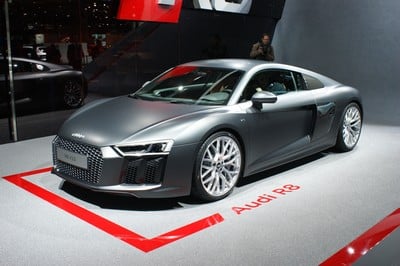
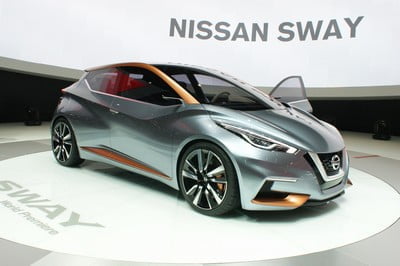
Most cruise control systems will allow you to return to your previously programmed speed by pressing ‘resume’.

Cruise control improves your comfort while driving

You can comfortably take long road trips without putting strain on your legs through having to hold your foot in a set position for extended periods to manually control the gas pedal and speed.

With cruise control activated, you can sit back, relax your right leg, and steer your vehicle. When you need to slow down or stop, simply tap the brakes to deactivate.

Cruise control gives you better control over your speed

If you tend to be a bit heavy on the accelerator or have a habit of speeding, the cruise control feature can be your best friend. Activate this feature to maintain the speed limit and avoid those expensive speeding tickets.

It also prevents you from creeping over the speed limit accidentally. When the speed limits change, you can easily adjust your cruise control settings to match.

Cruise control can improve your fuel consumption

Keeping your driving speeds steady can help you save money on fill-ups. Most drivers are fairly inconsistent at maintaining a given speed, instead of creeping up and drifting down as you drive along a road as you manually adjust relative to the speed limit and road conditions such as hills. Accelerating and braking continuously will use considerably more fuel than maintaining a set speed.

Faster drivers can save money on fuel by not speeding and then over-using the brakes to regularly come back down to the speed limit or slow down for other drivers. The faster you drive, the more fuel you will use.

Each 5 mph over 50 mph lowers the mileage that you can expect to get. Get into the habit of using cruise control to counter any aggressive driving tendencies.

Cruise control can work to your advantage in a variety of ways. Be sure to read your car’s user manual for specific details on how to operate your vehicle’s cruise control feature. Also remember that when using cruise control, you won’t have to control your accelerator – but you still must control the brake pedal at all times. In addition, the brake pedal will disable cruise control, so be aware if the brake pedal is accidentally hit or pressed while driving.