Find an Expert Rating: 
Home Blog Page 162

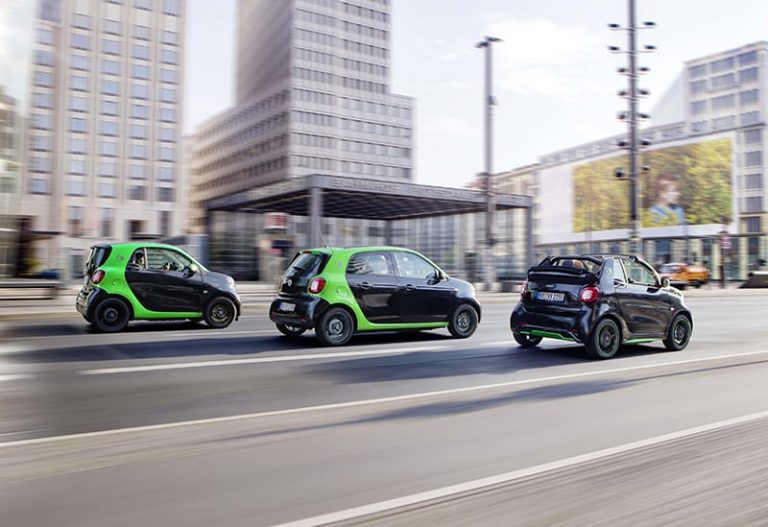
Smart debuts improved electric trio in Paris

0

Smart is unveiling significantly improved versions of its electric car line-up at the Paris motor show.

The Electric Drive range debuting on 29th September promises better performance and increased range over its predecessors, along with significantly improved recharging times.

The line-up will encompass all three Smart models including for the first time the ForFour. Smart claims to be the only manufacturer to offer its entire range with either internal combustion engines or electric motors, and the only manufacturer to offer a cabriolet electric vehicle.

The new powertrain is closely related to that in Renault’s Zoe, though employing a smaller battery, and made in Renault’s Clèon, Northern France.

The 60kW (81hp) electric motor sits in the rear of the car, powering the rear wheels and offering immediate torque of 160Nm, which is 5hp and 30Nm better than previous Smart Electric Drives.

Driving through a constant ratio with no gear changing, the 0-62mph time takes between 11.5 and 12.8 seconds depending on model, and all are limited to an 80mph top speed.

Smart claims a maximum range of 93 to 96 miles for the new models, while recharging of the 17.6kWh lithium-ion battery, which is encased into the car’s floor, has been halved from five to 2.5 hours for models in the UK and USA. German cars, which use a different charger, can be replenished 40 per cent faster than previously.

Smart also intends to make a new 22kW fast charger available in 2017, which will cut recharging time down to 45 minutes. A smartphone app is also available allowing owners to program and monitor various aspects of the car including battery charging.

The first of the new electric Smarts will go on sale early next year, initially in the US, with first UK examples expected on the roads in September 2017. UK prices are yet to be confirmed – in Germany prices will start from €27,839, which drops to €23,459 when the local environmental bonus is included. UK prices of the current line-up range from around £17,700.

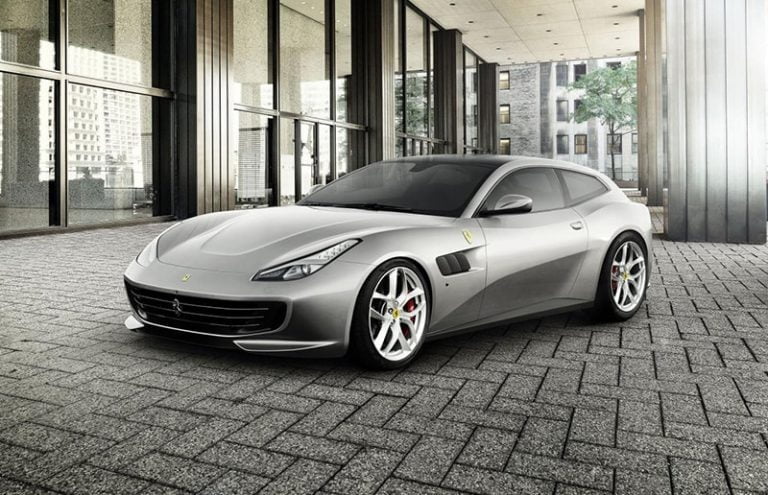
Ferrari to unveil ‘entry-level’ Lusso at Paris

Ferrari is launching what is effectively an entry-level version of its GTC4Lusso four-seater.

The GTC4Lusso T is the first four-seat car in Ferrari history to be supplied with a turbocharged V8 engine, and also the first time the Italian brand has offered a car with two engine choices.

Choosing the 3.9-litre V8 turbo of the T brings 610hp with 760Nm of torque – this compares to the 690hp and 697Nm of torque produced by the 6.3-litre V12 powerplant of the standard GTC4Lusso.

The T version also does without the all-wheel-drive system, and as a result its 1740kg kerb weight is 180kg lighter, with the bias increased to 46:54 to suit the rear-wheel-drive transmission.

It will accelerate through 62mph from rest in 3.5 seconds, just a tenth behind the stock Lusso, and go on to 199mph, which is 9mph slower than the standard Lusso. Combined cycle fuel economy is quoted at 24.3mpg with CO2 emissions of 265g/km.

Technology retained in the GTC4LussoT does include the four-wheel-steering and side-slip control, while a Variable Boost Management system in the engine eliminates turbo lag.

The shooting-brake style car will be officially unveiled at the Paris motor show on 29th September. No price has yet been revealed for it – the V12 Lusso costs from £230,430.

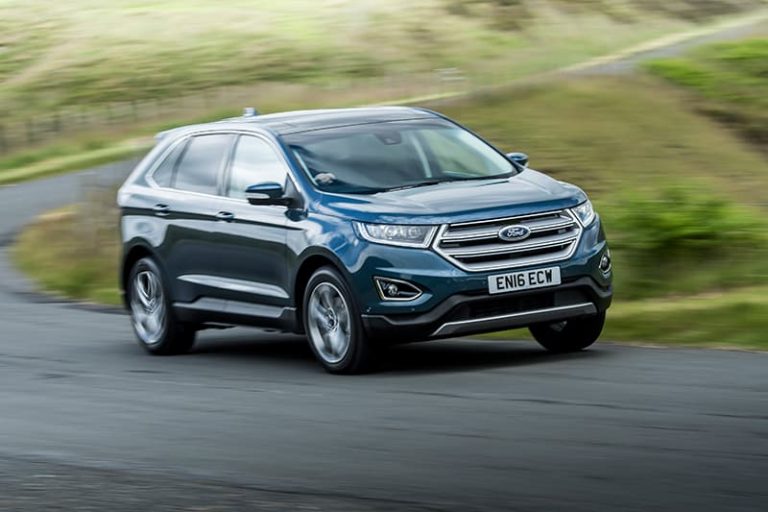
Ford Edge review

What is it? The Ford Edge is a large SUV aiming to target premium market rivals.
Our view: The Edge is a very good mainstream large SUV and provides great value for money.
Type of review: Taster test


The Ford Edge effectively completes the brand’s SUV line-up, being a large – in fact very large – vehicle to sit alongside the EcoSport compact SUV and its Kuga mid-sized sister.

However, the newest Ford SUV is much more than a finishing touch. It is targeted firmly at upmarket, rather than mainstream rivals, Ford arguing that the vehicle can take sales from the likes of the BMW X3 and the Audi Q5.

It will do this, we are told, on a combination of class-leading space, quality refinement (especially in the Vignale version) and technology every bit as up to date as premium alternatives. Take for example the microphone-based noise-cancelling software that adds that extra layer of silence to the cabin, even when moving along at speed.

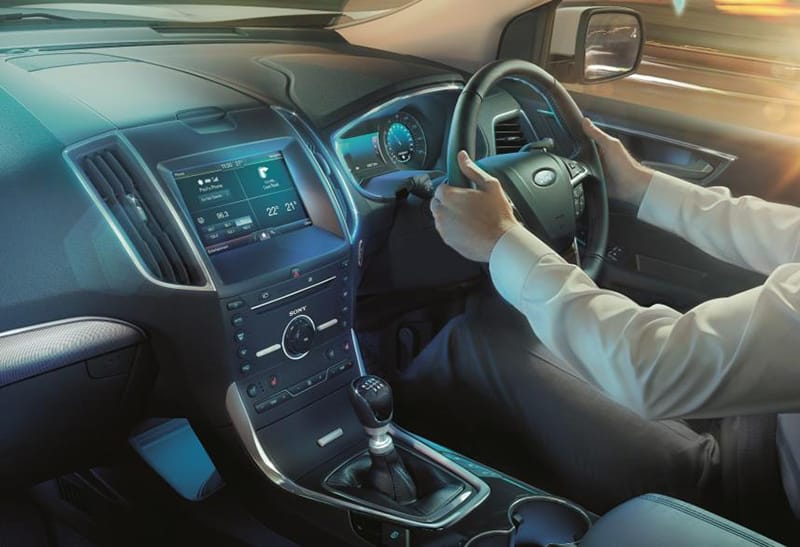
There are two engine options for the Ford Edge, both versions of the 2-litre Duratorq diesel with either 180 or 210hp, and both allied to all-wheel-drive as standard. Six-speed manual or Powershift auto transmissions are available, while there are three trim levels – Zetec, Titanium and Sport – with the latter expected to take the majority of sales.

Edge

What do we think of it? The first impression of the Edge is that it is big – very big. And once one gets inside, that is not a bad thing, the car offering impressive space whether one is seated up front or in the rear. Remarkably, considering its size, the Edge is only offered as a five-seater, but that does make it seriously spacious.

It’s also well put together. The surfaces are of good quality, though the dash layout is not as user-friendly as some rivals. And while it does feel like a very good mainstream car, it still doesn’t quite make the leap into premium contention.

Our test vehicle was fitted with the more powerful 210hp engine, though in truth it doesn’t feel that powerful, needing a lot of work to hustle along with any urgency.

The car is well planted on the road, the all-wheel-drive helping greatly in this respect, and in our short test did a good job of smothering all but the most severe bumps.

Verdict: The Ford Edge is a very good mainstream large SUV. Looked at objectively it could challenge premium rivals, because while the base price might not seem a great saving, once one factors in the standard equipment it becomes a very serious alternative. The problem is, many will be seduced by the Audi or BMW badge, be taken in by their clearly premium interiors and fail to rate the obvious advantages of the Edge, particularly its space.

Ford Edge – key specifications

Tested model: Ford Edge Titanium 2.0 TDCi 210PS
Price: £35,245 (Range starts £29,995)
On sale: Sept 2016
Engine: 2.0 diesel, 210hp, 450Nm
0-62mph and max speed: 9.4sec, 131mph
Economy and emissions: 48.7mpg, 149g/km
Key Rivals: BMW X3, Audi Q5
Test date: September 2016

SEAT’s ‘game-changer’ Ateca on sale

0

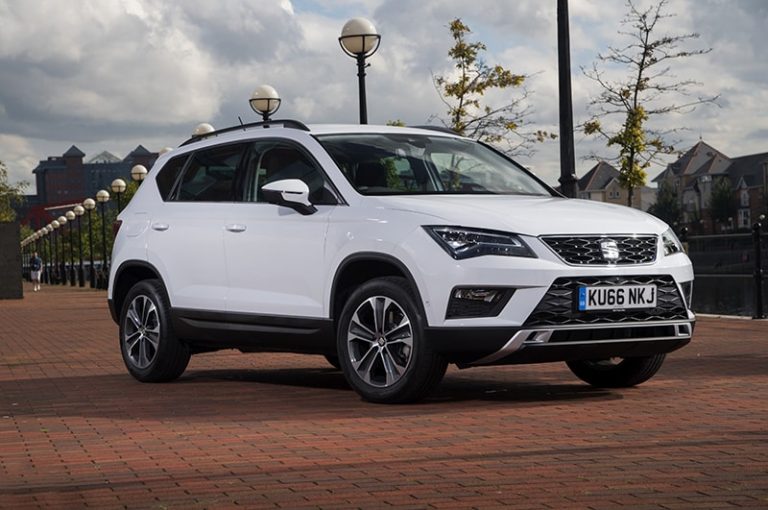
SEAT has finally put its Ateca SUV on UK sale after what has appeared to be one of the longest pre-launch build-ups in the market.

The launch of the car has been dubbed “the start of a new era for the brand” by company head Luca de Meo.

The Ateca is SEAT’s first full-blown SUV, at long last giving the Spanish brand a foothold in the most vibrant sector of the industry. From selling cars in 52 per cent of the market, The Ateca and cars to follow it will increase SEAT’s access to more than three quarters of potential UK car buyers.

Widening its influence is vital to the brand – after six years of consistent growth SEAT saw a dip in its UK registrations in 2015, down almost 11 per cent to 47,654 from 53,512 in 2014. According to SEAT personnel the slide was expected due to what was then a static product range.

Globally SEAT is progressing well – a third consecutive rise in sales in 2015 saw the brand break the 400,000 cars barrier, representing 25 per cent growth since 2012. It was also able to announce a profit of €6m, something that is not common in SEAT accounts.

The Ateca, however, is regarded as the momentum changer. While SEAT UK expects to sell “broadly the same amount” of cars this year, it is confidently predicting a move back to significant growth in 2017. The Ateca will turn the company from effectively a two to a three-car brand.

SEAT’s UK director Richard Harrison describes the car as the “biggest product firework” the brand has ever seen, and alongside it heavy investment is going into the brand’s image. Another change to SEAT’s marketing slogan sees the brand adopting “Created in Barcelona” described by Harrison as an indication that it makes “beautiful, cosmopolitan, design-led cars, a brand on the move.”

Ateca
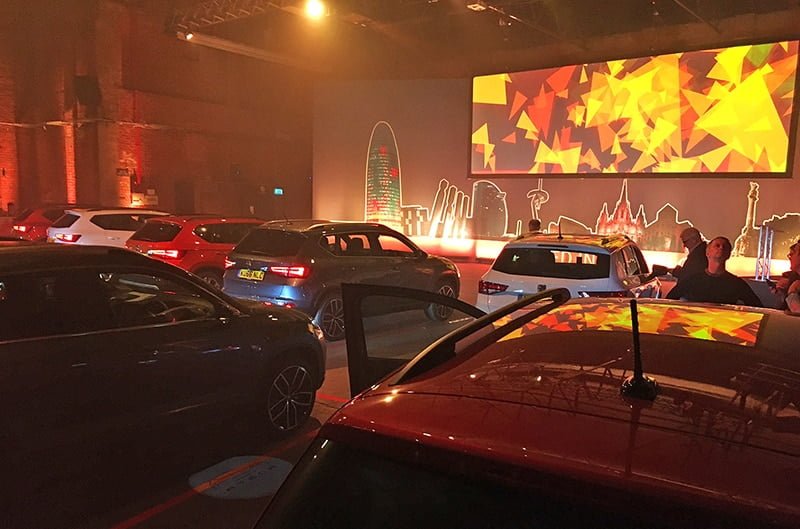
Heavy investment is going into SEAT’s UK presence – the Ateca media launch including a lavish ‘drive-in’ movie press conference.

Early evidence suggests that SEAT’s confidence is not misplaced. The pre-launch website for the Ateca has seen a great deal of activity before any of the cars arrived in the UK. “Interest in the car has been the highest we’ve ever seen,” says head of sales Steve Catlin. “We’ve been overwhelmed with the number of visitors to our website.”

SEAT never publicly predicts the amount of each individual model it will sell, but is confidently stating that in the case of the Ateca demand will exceed supply; “We have an order bank,” one company insider comments, with a strong hint that this too SEAT is not used to.

And the move of SEAT into the SUV sector will accelerate next year when the Ateca gains a sister, the brand having recently confirmed that a second SUV, currently named the A Zero Cross, will go into production. It will launch in 2017, a year that will also see SEAT refresh the Leon family hatch and launch an all-new generation of the Ibiza supermini.

Ateca prices start at £17,990 and SEAT sees the car’s key competitors as the Renault Kadjar, Ford Kuga and Kia Sportage.

SEAT Ateca First Drive – coming shortly on The Car Expert

Ateca
Lined up at the UK launch in Manchester – SEAT expects the Ateca to become a familiar sight on UK roads.

MINI Works Clubman powers into Paris

1

MINI will unveil the John Cooper Works version of its latest Clubman at the Paris Motor Show on 29th September.

Becoming the Clubman range-topper, the JCW version will offer 231hp and 350Nm of torque from the same four-cylinder turbo engine used in its hatch and convertible sisters – 39hp and 50Nm more than the Clubman Cooper S.

The engine is matched to either a six-speed manual gearbox or the eight-speed Sports Steptronic auto transmission, while the All4 all-wheel-drive system also comes as standard.

As a result the JCW model slices seven tenths of a second from the 0-62mph recorded by AWD versions of the Cooper S, the 6.3 second time combined with a 148mph top speed.

JCW versions return best combined cycle fuel economy figures of 41.5mpg and CO2 emissions of 154g/km.

As in other JCW models the Clubman gains more aggressive front and rear bumpers, the front ones including extra cooling ducts, and a rear wing. Bespoke alloy wheels and John Cooper Works badging are also specified, while the car can also be chosen in a bespoke colour to JCW models, ‘Rebel Green’.

Inside, the JCW upgrades extend to sports seats, an Alcantara headliner and a long standard equipment list including MINI Navigation, Bluetooth and USB connectivity, and cruise control with a brake function.

The novel projection of the MINI badge onto the floor alongside the doors is also included, while like other models there is a wide range of options to enable owners to personalize their car.

Dealers are already taking orders for the car, at prices starting from £29,345 with the manual gearbox or £30,945 in auto form. First cars are expected on UK roads before the end of 2016.Clubman JCW

Mercedes All-Terrain joins off-road party

0

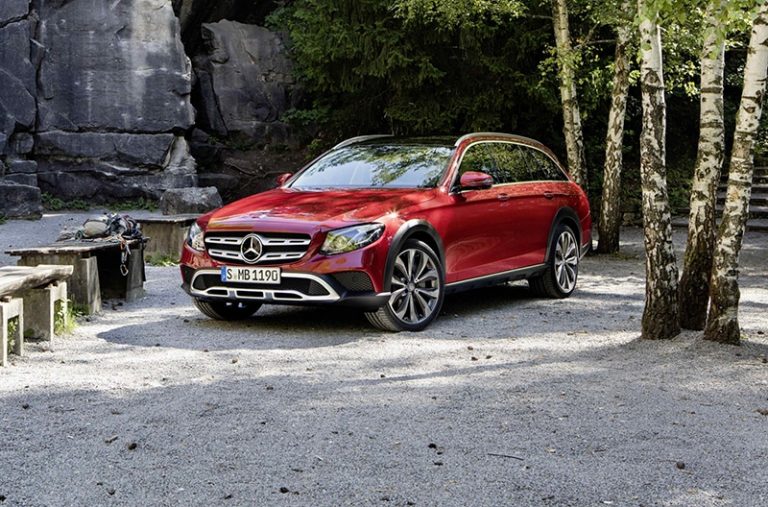
Mercedes-Benz is directly targeting the Audi A6 Allroad and newly-announced Volvo V90 Cross Country with its new E-Class All-Terrain.

The off-road version of the large estate will be unveiled at the Paris motor show on 29th September, and will arrive in UK showrooms in the Spring of 2017.

The car follows the now traditional formula for such vehicles of adding extra body panels to give it an SUV-style look, raising the ride height by 35mm and specifying the 4Matic all-wheel-drive transmission as standard.

“The All-Terrain-is a flexible all-rounder – for unpaved roads, family and leisure time,” says Mercedes-Benz Cars sales and marketing head Ola Källenius.

Most notable visual feature of the car is the two-fin grille, in the style of Mercedes SUVs, with the brand’s three-pointed star badge integrated into it. There is a three-part front bumper with the top section in body colour and the lower formed from grained black plastic, while the silver chrome colour also incorporated is repeated in extra lower panels. The body colour/black combination also features on the rear bumper.

Black wheel arches and side skirts are included, the former enclosing the wheels and higher-sidewall tyres, in either 18 or 19-inch sizing and with a choice of three alloy designs.

Inside the All-Terrain gets its own aluminium-carbon trim, with stainless steel pedals and bespoke floor mats. It is modeled on Avantgarde trim levels, though there are likely to be extra options available.

Initially the car will be available in E 220d form with the four-cylinder diesel engine of 194hp. Mercedes also intends to launch a six-cylinder version, both power plants paired with a 9G-Tronic nine-speed automatic transmission.

Standard on the All-Terrain is the Dynamic Select driving programme controlling engine, transmission, ESP and steering characteristics, and this includes a fifth All-Terrain mode developed from that fitted to the Mercedes GLE.

By selecting the mode the air suspension raises the car’s ride height by 20mm, a process that can be carried out on the move at speeds up to around 20mph. Three levels from 0 to 35mm higher can be selected manually using a button on the centre console.

The car’s electronic aids are adjusted to suit off-road driving, and an information panel on the dash shows steering angle, vehicle level, slope and incline angle, where the throttle and brake are positioned and a compass.

UK prices for the All-Terrain will be announced closer to the car’s on-sale date. Industry sources predict a starting price of around £45,000, £5,000 above a standard E-Class estate, which would put the car between its two rivals.

All-Terrain

£9K Ka+ is new Ford small car option

0

Ford will put its all-new Ka+ on sale in October, with prices starting from £8,995.

The five-door city car replaces then existing Ka and is an all-new design, targeting the likes of the Vauxhall Viva and Fiat 500 as more buyers turn to smaller models.

It is it built in India and sold there as the Figo, but has been heavily upgraded for European sale – Ford’s EcoSport crossover also comes from India.

Sitting on Ford’s global small-car platform, the Ka+ is much more comparable in size to the Fiesta supermini rather than the car it replaces. It is very slightly shorter than the Fiesta but 29mm taller, which with careful packaging of the interior allows Ford to claim best-in-class status for the 1002mm headroom, alongside rear legroom of 896mm and hip room of 1335mm.

The car will also accommodate two large suitcases in its 270-litre boot, while the rear seats also fold in 60:40 format. A total of 21 stowage areas are dotted throughout the car including the ‘My Ford Dock’ in the centre of the instrument panel that allows charging of phones and navigation systems.

Just two powertrain options will be available for the Ka+, both based around Ford’s 1.2-litre Duratec petrol unit, effectively a downsized version of the 1.25 unit in the Fiesta.

The unit is offered in 70 or 85hp power outputs and Ford claims combined cycle fuel economy of 56.5mpg and CO2 emissions of 114g/km for both options.

A notable change from versions of the car sold in Asia and South America is the chassis, which includes bespoke springs and dampers, a rear torsion beam axle, new brake pads and tyres, and a re-engineered front sub-frame.

The steering is faster, 2.6 turns lock to lock with speed-sensitive assistance and the front anti-roll bar is stiffened by 47 per cent.

Ford has also worked hard to improve the car’s refinement for European buyers, with improved door seals, Fiesta-specification hydraulic engine mounts tuned to absorb vibration and soak up road bumps, additional sound deadening material in the engine bay, windscreen pillars and doors, new rear suspension bushes and even aerodynamic fins on the door mirror mounts to prevent buffeting.

Ka+ models with the 70hp engine will be offered in entry-level Studio grade while the 85hp version will also be available in Zetec. Standard equipment on all includes a chrome front grille, front fog lamps with daytime running lights, electric front windows and door mirrors, a perimeter alarm with remote central locking Speed Limiter and Ford’s Easy Fuel system to prevent mis-fuelling.

Zetec versions add 15-inch alloy wheels, manual air-conditioning, Ford’s Sync voice-activated communications and entertainment system (including an AppLink that enables voice-activation of a range of smartphone apps and Emergency Assistance), a leather-trimmed steering wheel with remote audio controls and cruise control.

The MyKey system is also supplied with Zetec variants, – aimed at parents letting their children drive the car, this allows maximum speed and audio volume limits to be set, and prevents safety aids being disabled.

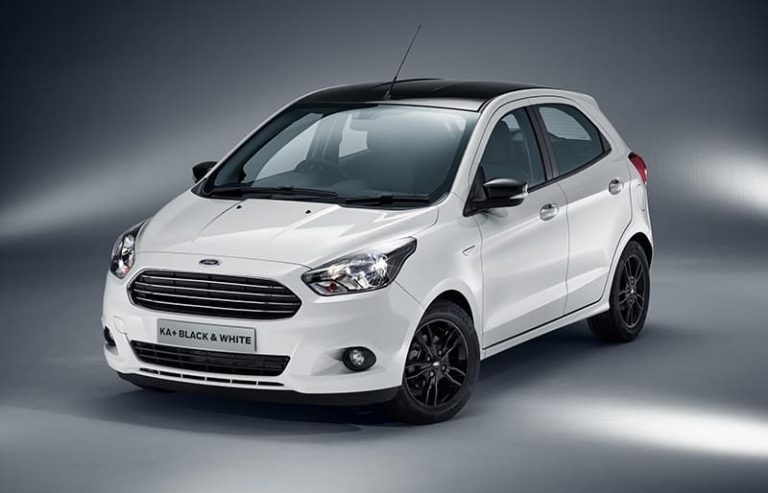
Ford will also be marketing Black and White versions of the Ka+ Zetec in 85hp form. These will come with either a black body colour with white roof and door-mirrors, or a white body with black roof and door-mirrors, and include black 15-inch alloy wheels.

1609-ford-ka-02

Is the clock ticking for motor shows?

On Thursday 29th September France will become the centre of the automotive world for two weeks, with the opening of the biennial Paris motor show. But when the international executives and the world’s motoring media wander the halls on the first day, they will notice some big names are absent.

Significant manufacturers, such as Rolls-Royce, Volvo, and perhaps most remarkably, Ford, are not at Paris, deciding that in an age of online marketing, social media and such like, there are better ways to spend the considerable amount of money – in many cases several millions – that it costs to exhibit at a show such as Paris.

On the surface it would seem a no-brainer to be at Paris. Said to have attracted a remarkable 1.2 million visitors when last held in 2014, the event is one of the three ‘premier league’ automotive shows in Europe, the others being Frankfurt – which alternates with Paris as Europe’s Autumn show – and the Geneva event, held every year in March.

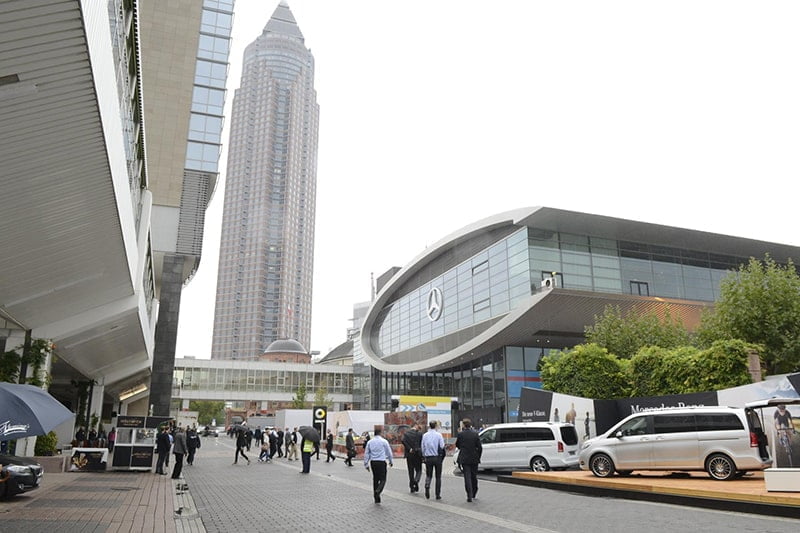
The sheer size of the Frankfurt show has to be seen to be believed.

The three are very different – Paris is big, Frankfurt is huge, an event so vast in its floorspace spread over so many halls that manufacturers run shuttles between them, and after the two press days journalists in particular can be seen physically wilting, no longer able to feel their legs.

Geneva, however, remains a very compact event, held in an exhibition pavilion next door to the city’s airport and easily ‘doable’ in a day, flying in on the first plane of the morning and flying out again in the early evening. And despite a footprint of much less than half of that of Frankfurt, Geneva is generally regarded as the premier European show.

The automotive market has changed, however, as consumers become ever more informed about the new metal beforehand. Where once on the first day everyone eagerly crowded onto each show stand to see the reveal of each new model, today virtually every one is announced on the Internet, across social media, sometimes weeks before the show – a truly newsworthy unveiling at a show is becoming a rare thing.

Where once a new model unveiling at a show was a newsworthy event, today it's all revealed online weeks before... Photo: Andrew Charman
Where once a new model unveiling at a show was a newsworthy event, today it’s all revealed online weeks before… Photo: Andrew Charman

And the manufacturers are beginning to see targeted marketing to those most likely to buy their product as much more effective than hoping to appeal to a portion of the 1.25 million that might pass through the Paris halls. The preferred venues today are the likes of cultural and lifestyle events, taking their new models to where their audience is, rather than the other way round, and in many cases spending rather less doing so.

“Volvo Cars sees the need to present our brand, products and innovations to customers and the media, but motor shows are not always the best way to do this,” says Nikki Rooke from Volvo Cars UK.

“Motor shows are a traditional way to launch new products but it’s a crowded environment. Over recent years, we’ve gradually reduced our motor show activities, remaining in one motor show per region per year: Geneva in Europe, Shanghai/Beijing in China and Detroit in the United States and instead embarking on our own series of new product launch initiatives that better reflect our individual approach to the market.

“Volvo is a unique brand so we feel can be better marketed in alternative ways that challenge the traditional cycle of other automotive brands.”

Other automotive brands are challenging this ‘traditional cycle’. Ford announced at the end of 2015 that it was planning a new marketing push in France, which rather than attendance at the Paris show would see a series of ‘experiential events and activations throughout France showcasing product and smart mobility solutions’, quoting as examples technology shows, design events and mobility forums.

And the brand is also looking to its own dedicated events, rather than competing with everyone else. “Paris is a great show but we are always looking for new ways to communicate with our customers, dealers, employees and other stakeholders,” says Tim Holmes of Ford UK.

“This year we have decided to share our important European news at a dedicated Ford event later in the autumn.  Watch this space!”

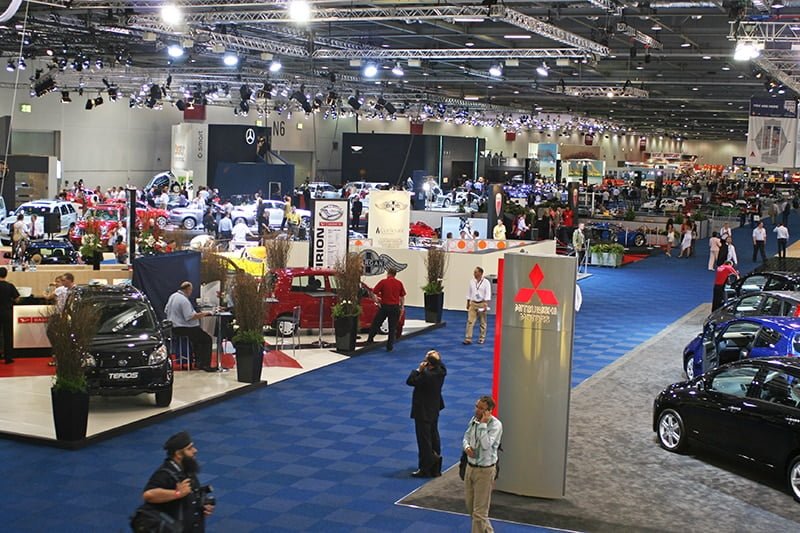
All of which is concerning for the future of the traditional motor show. Those outside the premier league are already falling by the wayside, notably Britain. The UK’s international motor show moved from Birmingham to a well-received new location at London’s Excel Centre in 2006, but the second show in 2008 was the last.

London's Excel Centre was a quality new home for the UK motor show - but a short-lived one...
London’s Excel Centre was a quality new home for the UK motor show – but a short-lived one… Photo: Andrew Charman

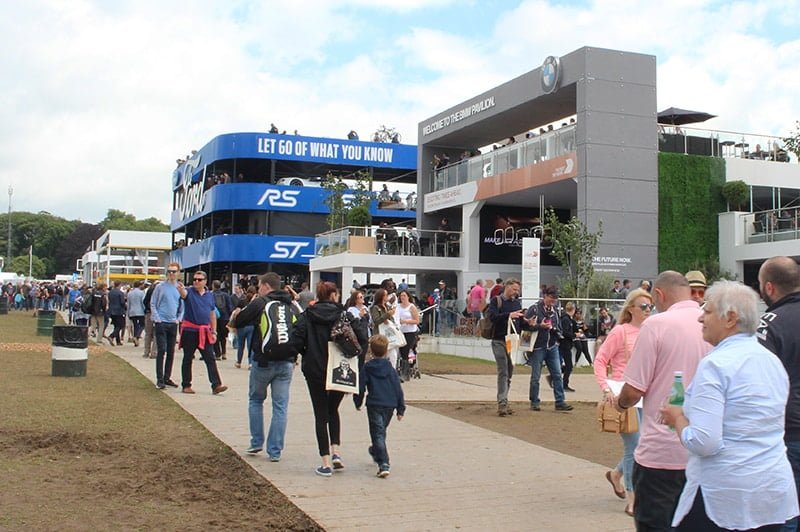
Interestingly, the manufacturers who no longer spend money on the British show can now be seen erecting ever more elaborate stands at the ‘Moving Motor Show’ which has become an extra day of the Goodwood Festival of Speed motorsport event – again, targeted marketing.

Goodwood
…but they are spending money at more targeted events, such as Goodwood. Photo: Andrew Charman

So, are the really big shows under threat? Not immediately perhaps, but as manufacturer marketing techniques continue to shrink towards more specific audiences, it might be time to make the most of our big auto shows, before their time is up…

Dacia presents model updates in Paris

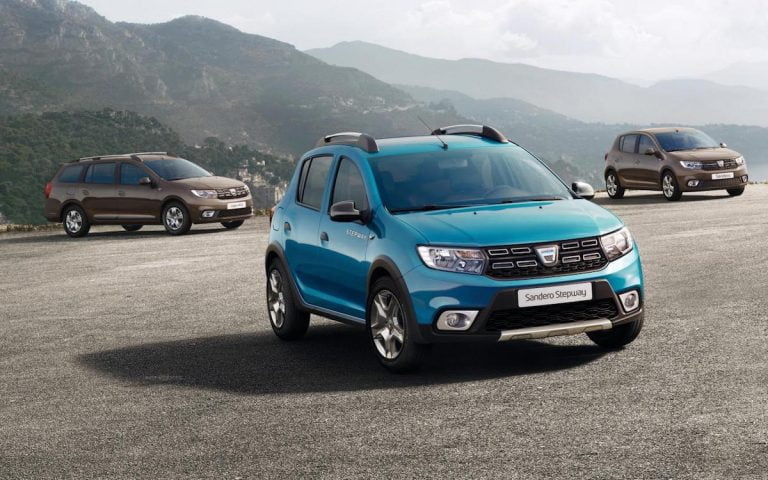
Dacia will show off updates to its Sandero and Logan model ranges at the upcoming Paris Motor Show at the end of this month.

The models which are sold in the UK are the Sandero hatchback, Sandero Stepway crossover and Logan MCV estate.

The most recognisable difference in each of the updated models is the adoption of a new headlight and grille design, which brings them in line with the Duster to present a unified Dacia family look.

New headlights, incorporating LED daytime running lights, form a pattern of four rectangles. Dacia intends for this to become its headlight signature across the range. Tail lights also have a similar rectangular theme. The bumpers have also been redesigned.

Although scant on details, Dacia promises that the interiors have also received updates to features, materials, ergonomics and storage areas.

It is not yet clear whether the updates will involve any new engine or gearbox choices, with the rest of the detail to be outlined when the new models are presented at the Paris motor show media day on 29 September.

New Honda Civic revealed in detail

0

Honda has revealed full details of its new Civic hatchback ahead of the car’s unveiling at the Paris motor show on 29th September.

As reported last week on The Car Expert, the 10th generation model will be built at Honda’s UK plant in Swindon, which becomes the global production hub for the model – first exports are destined for America.

According to the new Civic’s creators a design priority of the new model was to produce a more distinctive car, less conservative than its predecessors and an answer to the bold new versions of the car’s rivals that have appeared in recent times.

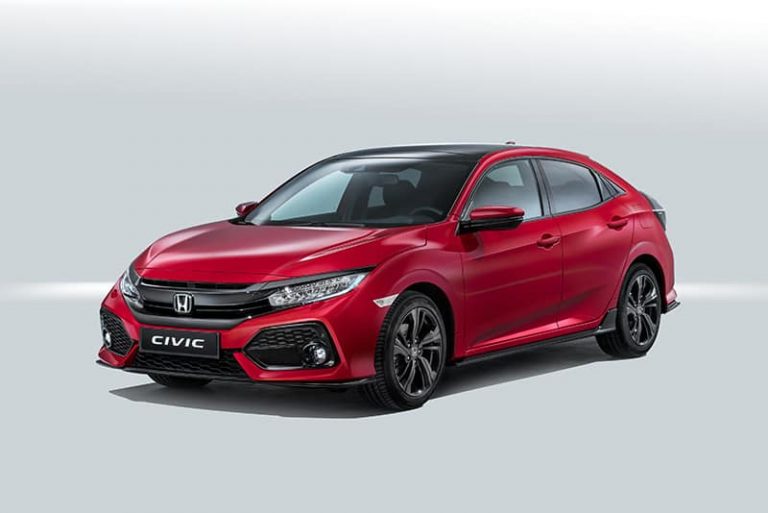
Therefore the body shell – the largest but lowest in the Civic’s history – includes short overhangs, prominent wheel arches and a bold frontal treatment. Notable styling details include larger and wider wheels and tyres, the Honda ‘family face’ with signature headlamp clusters with either LED or projector halogen bulbs depending on model, a ‘hockey-stick’ strip on the outside of the standard-fit daytime running lights, and C-shaped LED rear lights.

Initially available as a five-door hatch but expected to spawn a Tourer estate version in due course, the new Civic measures up at 130mm longer, 30mm wider and 20mm lower than the outgoing model. It sits on a new platform which thanks to new materials and manufacturing techniques – including cutting the space between spot welds from 40 to 20mm – is 16kg lighter than the previous model but 52 per cent more torsionally stiff.

Honda says the car will be the most agile and dynamically proficient Civic ever, with the increased body rigidity, a 10mm lower centre of gravity and a new suspension design combining a MacPherson strut front and multi-link rear all contributing.

A 30mm longer wheelbase and the longer body contributes to increased interior space, Honda claiming the room available, and the 478-litre bootspace, as class-leading. The driving position is 35mm lower than in the previous Civic while the driver gets a new seven-inch colour digital instrument panel along with a centre console design dubbed a ‘technology centre’, with the brand’s Connect 2 colour touchscreen display at its top.

This system will offer full connectivity with Apple CarPlay and Android Auto smartphone integration. Among options available are Garmin satellite navigation with free map updates for five years.

The Civic will be the first European model to make use of Honda’s new 1-litre three-cylinder 129hp and 1.5-litre four-cylinder 182hp turbo petrol engines, the latter producing more power and torque than the previous 1.8-litre unit. Both will be matched to a redesigned six-speed manual gearbox or a CVT automatic transmission, and while performance and efficiency figures are yet to be released, Honda is promising highly competitive fuel economy and emissions levels.

The safety package includes the Honda ‘Sensing’ suite of technologies. These range across Collision Mitigation Braking, Forward Collision Warning, Lane Departure Warning, Road Departure Mitigation, Lane Keeping Assist, Adaptive Cruise Control, Traffic Sign Recognition, Intelligent Speed Assistance and Intelligent Adaptive Cruise Control.

UK sales are expected to start in the Spring of 2017 and prices will be announced closer to the car’s launch.

Tesla Model S review-2016

What is it?
Upgraded version of Tesla’s mould-breaking electric luxury saloon

Key features
Fully electric drivetrain, controversial autopilot feature

Our view
The Tesla Model S, the car that has the automotive industry scared stiff, keeps getting better.


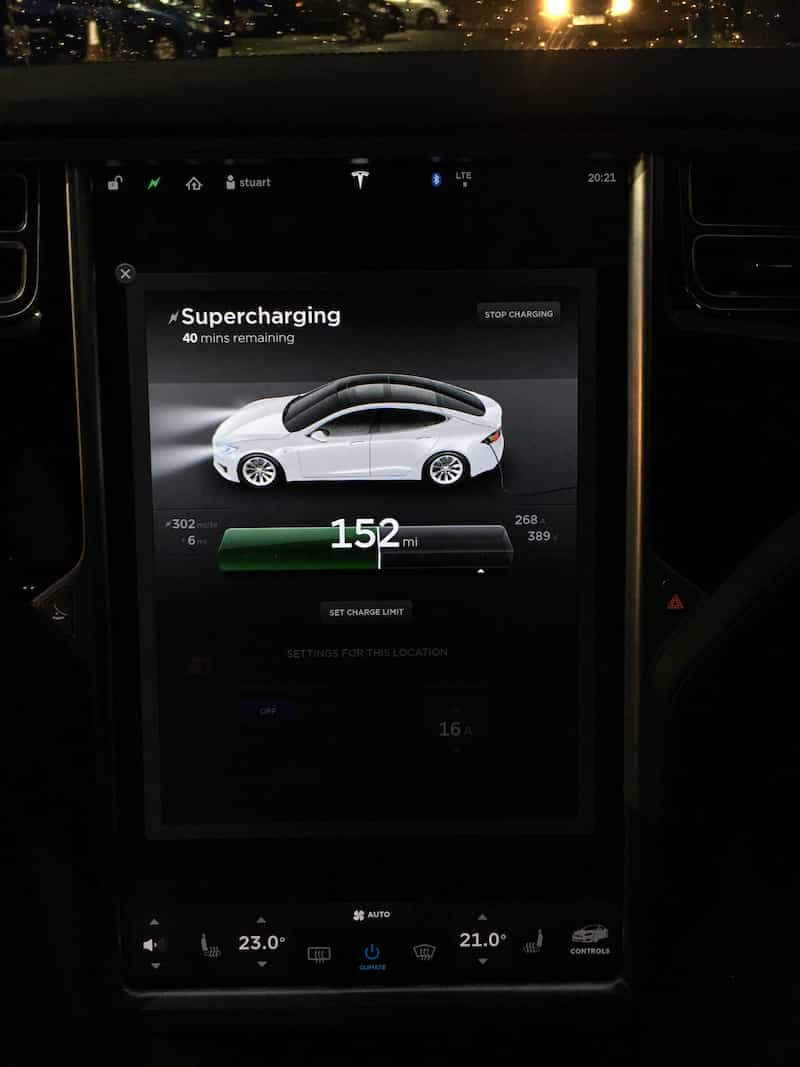
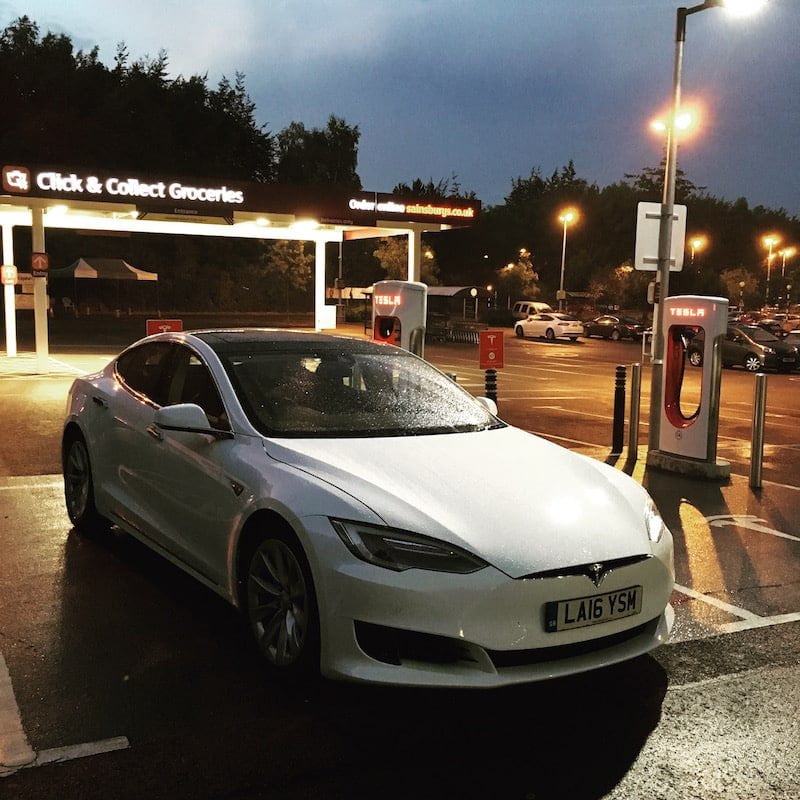
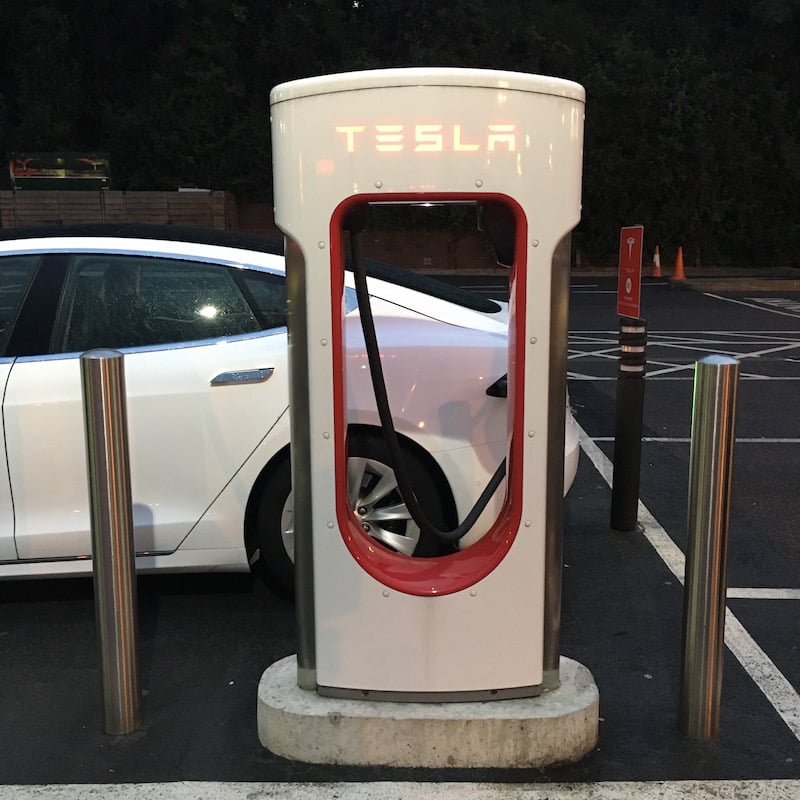
Before we even start, let’s make one thing quite clear. The merit of the Tesla Model S will be directly impacted by the availability of rapid charging points in your area. If you have convenient access to the Tesla Supercharger network or other EV charging points, you should be able to cope with owning one of these cars comfortably. If not, this car is never going to be a realistic option for you.

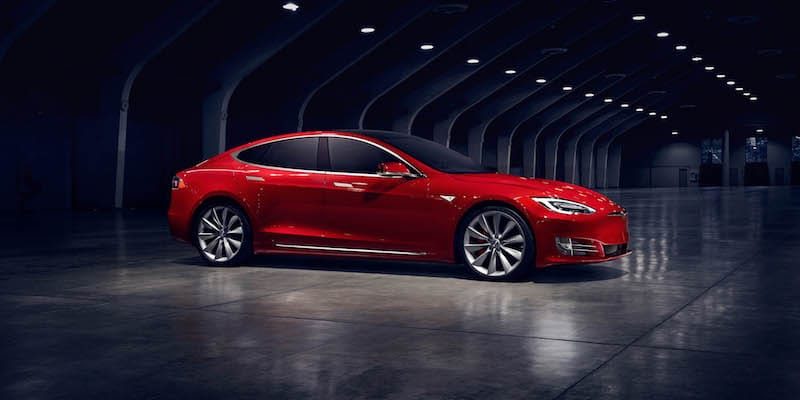
Tesla Model S - 2016 faceliftTesla is keen to shake up the established automotive industry, and it has been very good at getting enormous publicity for a start-up car company which still only produces a relatively small number of vehicles and still runs at an enormous loss.

Elon Musk, founder and CEO of Tesla amongst his various other interests, has certainly taken the industry by surprise. Conventional wisdom pre-Musk was that fully electric vehicles were not viable for volume sales and wouldn’t be for many years. There were a few production models like the Nissan Leaf, but nothing that the average car buyer would really ever want to own. Premium brands stuck to their beliefs that customers wouldn’t pay premium prices for an electric car.

The Tesla Model S has changed all that. Here is a car which looks good and promises an awful lot, particularly in two of the areas which continue to bother potential buyers – performance and range. It is also aimed squarely at executive car buyers rather than fleet buyers, governments and environmentalists.

Living with an electric vehicle requires a different mindset from living with a petrol or diesel car. Even with Tesla’s much-hyped Superchargers, a full charge takes over an hour. And if you are charging at home on a regular wall socket, it would take more than 24 hours to fully charge a Model S.

In reality, you will be looking for opportunities to plug the car in wherever possible to top up the battery, rather than run it down and then charge it back up to full. That means you need access to a network of commercial charging points, which is not too bad if you live in London or other major centres.

However, the story is not so good if you live in many other parts of the UK. From my home or office, both in Surrey, the nearest Superchargers were over 30 miles away and in generally the wrong direction from anywhere I ever go. There is still a long way to go before a Tesla (or any other electric vehicle) can match the sheer convenience of a fossil-fuel car.

But if the logistics of battery charging work out for you, the Tesla Model S is a fantastic car. Performance – we drove the 90D model – is superb. It is comfortable and luxurious, has a five-star safety rating from Euro NCAP (2014 test regime), and there are a lot of things it does very well indeed.

Interior – it’s all about that screen

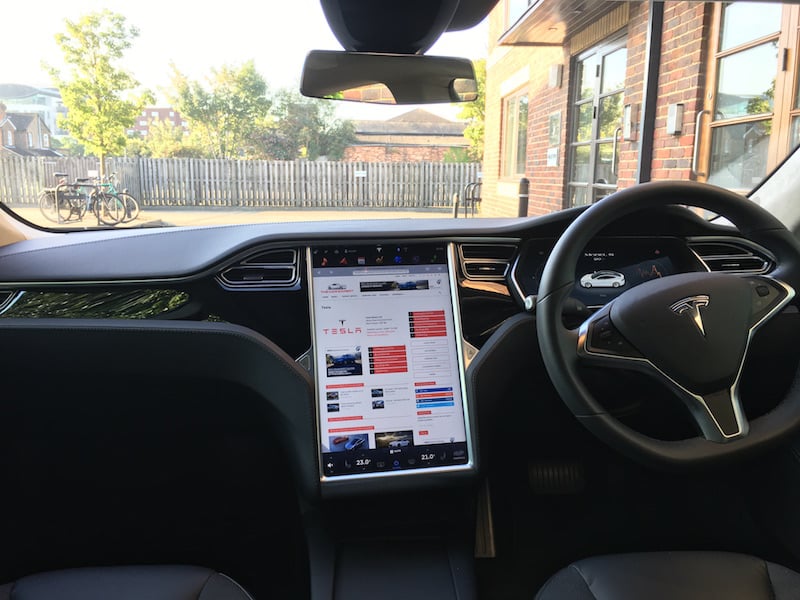
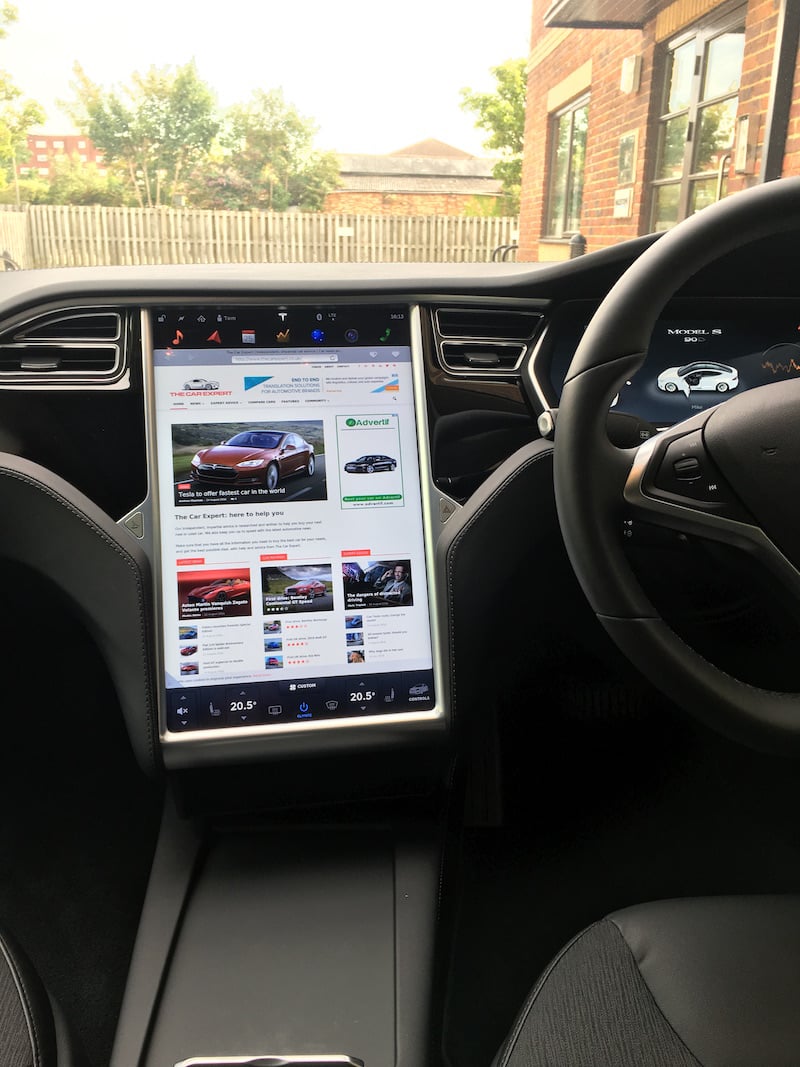
The interior party piece is the 17-inch touchscreen, which controls everything from stereo to satnav to (optional) sunroof. It certainly gives the dashboard a striking look, but like all touchscreens, it is much easier to use when stationary than on the move.

For example, trying to adjust the sunroof requires selecting a menu and then trying to hit the right spot on the screen for the amount of sun you would like, and it’s difficult to get it right no matter how much you practise.

Tesla Model S interior – The Car ExpertWith no physical buttons or switches to grab, making adjustments to anything on the move is at best a pain and at worst a dangerous distraction. The Tesla Model S does have steering wheel controls which you can use for many functions, but by loading a large number of options into the steering wheel controls, you still end up scrolling through menus to find what you’re looking for.

Tesla is certainly not alone in this, but by removing nearly all of the physical buttons and switches from the interior, it has made the controls very user-unfriendly.

Once you have everything set to your liking, the interior is a very comfortable place to be. Latest versions of the Tesla Model S have finally gained a sensible centre console for drinks and storage, addressing one of the main complaints about the original interior. The seats are broad and supportive, and the digital instrument display is excellent. Other than the fiddly touchscreen, the main quibble is that the fit and finish are not at the same level achieved by the likes of Audi and Mercedes-Benz.

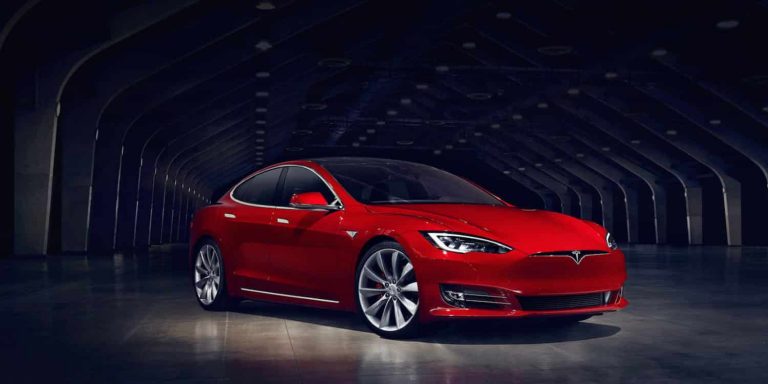
Tesla Model S interior UKThe Model S received a minor visual update in 2016, adopting Tesla’s sleek new grille-less corporate face and replacing the original model’s big black ‘koala nose’. It still manages to look fresh and different, and the Model S has always been a car that looks smaller than it really is.

It is a big car, comparable in size – and price – to vehicles like the Mercedes-Benz E-Class or CLS, BMW 5 Series, Audi A6 or A7, Jaguar XF or Maserati Ghibli. And while those are all very good cars from very good companies, they are all variations on the same theme compared to the Tesla.

Autopilot is good but not yet great

One of the features our car had and I was keen to try was the optional and controversial Autopilot self-driving system. Tesla stresses that it is a ‘beta’ feature (ie – not yet finished, so don’t blame us if you crash), which is rather a cop-out since they charge you £2,600 for an unfinished system.

As its name suggests, Autopilot takes over most of the driving functions from you, although on UK roads it has limited success. It also gives you a fully adaptive cruise control if you don’t want the car to steer itself, and adds autonomous braking and other safety systems.

In motorway situations, Autopilot works very well and would be a great feature to have. But once the roads get less predictable, the self-steering system struggles to cope. And in the UK, the road infrastructure does not match that of the USA and Europe.

Autopilot doesn’t like roads without clearly defined lane markings, and during our time it continually tried to veer towards the side of the road unless there was a clearly visible line. It coped better in traffic than on its own, as it could use the other cars to judge its position better.

The adaptive cruise control system, however, is probably the best I have used. Linked to the speed limit recognition programme, it can default to the speed limit at any time with one touch, meaning you don’t have to tap a button or lever constantly to set the speed.

Tesla Model S pricing

It’s certainly not cheap. Our car had the Autopilot system and panoramic sunroof options, and the on-road price was £83,680. The government will give you £4,500 towards that, but you are still paying just under £80,000 for a Model S 90D. But Tesla knows that the luxury saloon market is about aspirations, and the high cost of electric motors and batteries is less of an issue than it is at the more budget end of the market.

Of course, you won’t have to pay for petrol or diesel ever again, but the cost of charging will very much depend on your circumstances. If you have access to a Supercharger, Tesla promises that you can charge your car there for free, forever.

If you use public charge points, you will have to pay whatever the going rate is. If you are charging at home, it will be painfully slow and the cost will depend on your home electricity tariff.

There have been several reports of quality and reliability issues from Model S owners, although most have also been quick to point out that the manufacturer has gone to great lengths to look after their customers when things have gone wrong.

Overall, the Tesla Model S is a fascinating glimpse of future-tech that is here now. Most of it is very good, some of it is interesting but no great leap forward, and some of it we are just going to have to get used to, since all the kids these days seem to want bloody touchscreens.

Tesla has shown us how the tech industry of Silicon Valley views the future of the car, and both Google and Apple are investing heavily in autonomous car technology. If all American cars were as good as the Tesla Model S, the US car industry would be in a much stronger state.

Brit-built Honda Civic revealed in full

0

Honda has unveiled the all-new Civic hatchback, at the British factory in which it will be built.

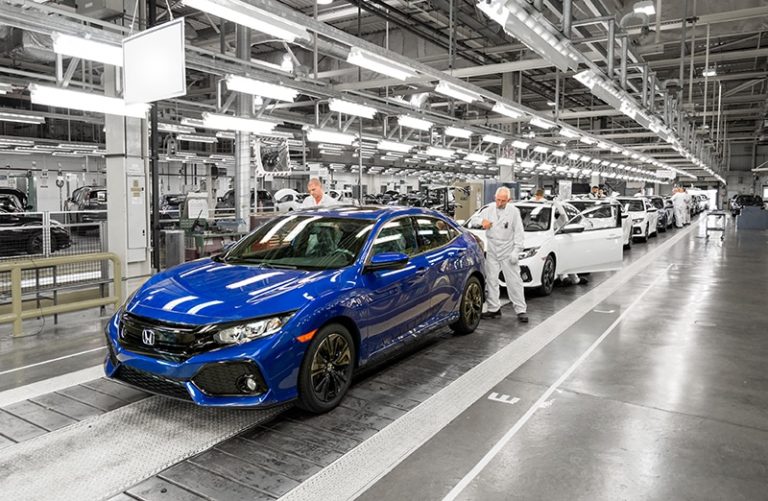
The tenth-generation five-door Civic was revealed on the production line of Honda’s Swindon plant, ahead of its public debut at the Paris motor show on 29th September.

The plant is undergoing a £200m upgrade to become Honda’s global production hub for the hatchback with its product being exported to 70 countries whereas previously Swindon-built Civics were sold only in Europe. Total investment now made in the plant has topped £2.2 billion.

The car is expected on UK sale in the first quarter of 2017 but sales in America will start earlier and the first production for the US market is already underway.

The new Civic is described as bolder than its predecessor, Honda considering the previous design of the Civic as too conservative compared to more recently launched rivals.

The car is said to be the result of the largest single-model development programme in Honda’s history and a significant step forward. It debuts a new method of construction, sits on a 16kg lighter platform and boasts a body shell with a 52 per cent increase in torsional stiffness compared to its predecessor.

Initial engine options will centre on a 130hp 1.0-litre three-cylinder turbo petrol unit and a four cylinder 180hp version of 1.5 litres. A diesel 1.6 unit is expected to join the line-up before the end of 2017, and there could also be a hybrid model.

The new Civic will also spawn a Tourer estate version and the highly popular hot hatch Type-R. But the saloon version sold in the US won’t be seen on the UK market.

More details of the new Civic range are expected when the car makes its Paris show debut.

Paris debut for 196mph Mercedes drop-top

0

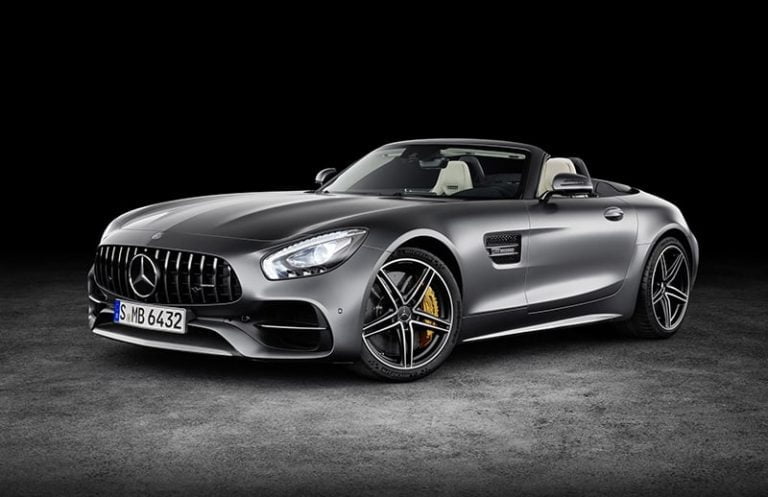
Mercedes-Benz will unveil the drop-top version of its two-seater AMG GT at the Paris motor show this month.

Debuting at the show’s press day on 29th September, the Mercedes-AMG GT Roadster will be offered in two forms, with the more powerful GT C version capable of 196mph.

Like the GT Coupe on which the car is based both versions will use a 4.0-litre twin-turbo V8 petrol engine, driving the rear wheels through an AMG seven-speed dual-clutch auto transmission. In 436hp form the V8 produces 630Nm of torque, which gives the car a 4.0-second 0-62mph time and a top speed of 188mph. Combined cycle fuel economy is 30mpg with CO2 emissions of 219g/km.

The more powerful GT C offers 557hp and 680Nm, which cuts the 0-62mph time to 3.7 seconds, as well as adding 8mph to the terminal speed. The fuel economy is 24.8mpg, alongside 259g/km of CO2 emissions.

The power upgrade brings the GT C within 28hp of the range-topping GT R, and the newcomer also gains several styling and technical cues from the GT R. Notable among these are active rear-axle steering, an electronic locking differential on the axle and AMG Ride Control sports suspension. The rear wings are enlarged, which opens up more space for the rear wheels to be an inch wider and 20 inches in diameter instead of the 19-inch versions of the GT version. Also the front brakes are 30mm larger in diameter.

Both cars use a fabric hood, which opens and closes electrically within 11 seconds at speeds up to 30mph. The soft top, which is three-layer fabric with a low-weight magnesium/steel/aluminium frame, can be specified in either black, red or beige to suit the 11 exterior and 10 interior colours.

Order books for the two new roadsters are expected to open towards the end of 2016, at prices yet to be announced. Industry sources say they will be £10,000 more than their coupe sisters, which would price them at around £107,000 and £120,000 respectively.

AMG GTC

Kia gives details of Paris-debutant Rio

0

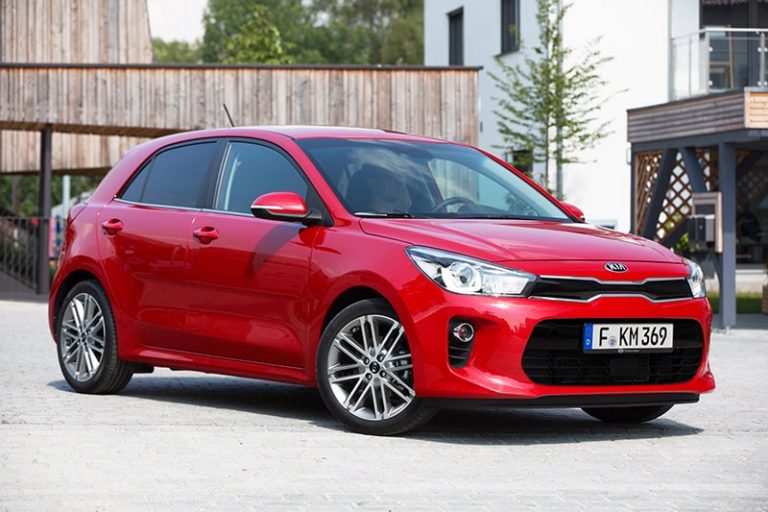
Kia has revealed details of its all-new Rio supermini that will debut at the Paris motor show on 29th September.

The Rio is Kia’s best-selling model globally with 473,000 sold in 2015, 16 per cent of the brand’s total volume. In the UK 12,115 were sold last year, 15 per cent of total volume.

Highlights of the fourth-generation model are a new exterior design, more space, safety upgrades and new technology including connectivity.

The look of the car, which involved Kia’s design centres in Germany, the USA and Korea, is said to feature a combination of straight lines and smooth surfacing to give the car “a more mature character” than its predecessor.

It measures up 15mm longer than its predecessor, at 4065mm, with a 10mm longer wheelbase. The bonnet is longer, as is the front overhang, while the rear overhang is reduced.

Inside there is more space – Leg room is now 1120mm in the front and 770mm in the rear, while shoulder room of 1,375mm in the front and 1,355mm in the rear is claimed to be among the best in class, as is the 325-litre boot, 37 litres more than previously.

Most popular powertrains are expected to be Kia’s latest three-cylinder 1.0-litre direct injection turbo petrol units first seen in the larger cee’d. They will be offered in 100 or 120hp outputs, while there will also be non-turbo 1.25-litre 84hp and 1.4-litre 92hp petrol options and a 1.4 diesel with either 70 or 90hp and CO2 emissions levels dipping under 90g/km.

Safety upgrades include what Kia says is the first application of Autonomous Emergency Braking (AEB) with pedestrian recognition to a car in the supermini sector, and the brand is confident of a five-star rating when the Rio is crash-tested by safety body Euro NCAP.

Amongst the technology on offer, meanwhile will be a new infotainment system, housing Kia’s latest HMI (human-machine interface). A ‘floating’ 5.0-inch touchscreen audio system with six speakers will be upgradeable to a 7.0-inch touchscreen infotainment and navigation system. This will include full Android Auto and Apple CarPlay smartphone integration and Kia’s Connected Services package.

Powered by the TomTom navigation Kia Connected offers drivers a wide range of up-to-date information, including live traffic updates, speed camera locations and alerts, local point-of-interest search and weather forecasts. Kia Connected will be offered free of charge for European buyers for seven years after the car’s purchase.

The Rio goes on UK sale in the first three months of 2017, at prices still to be announced.

Volvo confirms V90 Cross Country for 2017

0

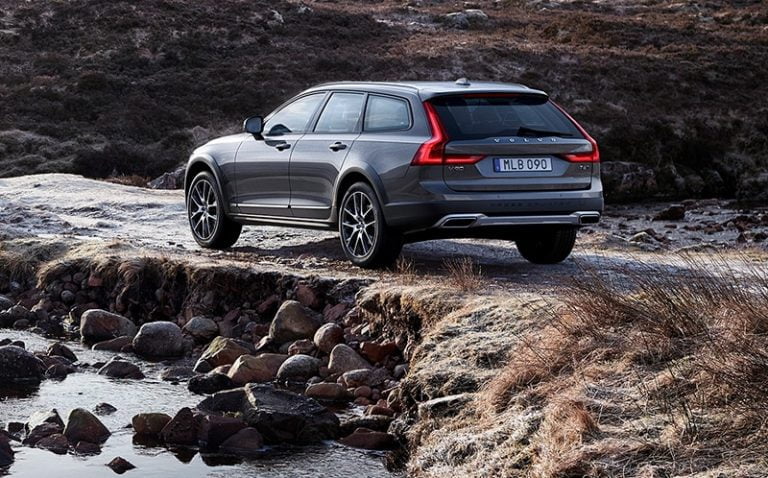
Volvo has confirmed the long-expected news that it will launch a Cross Country version of the new V90 range-topping estate.

The car is due to go on sale in early 2017, around 20 years after the first Cross Country model, the V70, appeared. It will rival the likes of the Audi A6 Allroad.

Few specific details of the new V90 Cross Country have been officially announced so far. We do know that the V90 variant of the model will include an increased ride height and all-wheel-drive as standard as well as what Volvo describes as “a chassis optimised for comfort and control in all weather and road conditions.”

It is understood that the V90 XC sits 65mm higher than its sister models and boasts larger wheels and tyres. Its front and rear bumpers are bespoke to offer off-road friendly approach and departure angles.

Design head Thomas Ingenlath insists that the car has been created with proper off-road ability as a priority. “Designing a Volvo Cross Country is not a styling exercise, a plastic job – it is based on honest capability,” he says.

“The Volvo V90 Cross Country… will continue the genuine tradition of the Volvo Cross Country with a new recipe: the blend of powerful off-road capability in a most elegant, sophisticated, tailored wagon suit,” Ingenlath adds.

Development of the Cross Country has included extensive testing in northern Sweden where temperatures regularly dip below -40 deg C, and in the heat of the Arizona desert.

UK models are likely to retain the D4 and D5 diesel engines of their stock sister models and while Volvo is not yet quoting prices for the new Cross Country industry sources suggest they will start from around £43,000.

Volvo S90 and V90 First Drive – click here

Could Paris concept be next Mitsubishi flagship?

0

Mitsubishi will debut a concept at the Paris motor show that could evolve into a range-topping SUV.

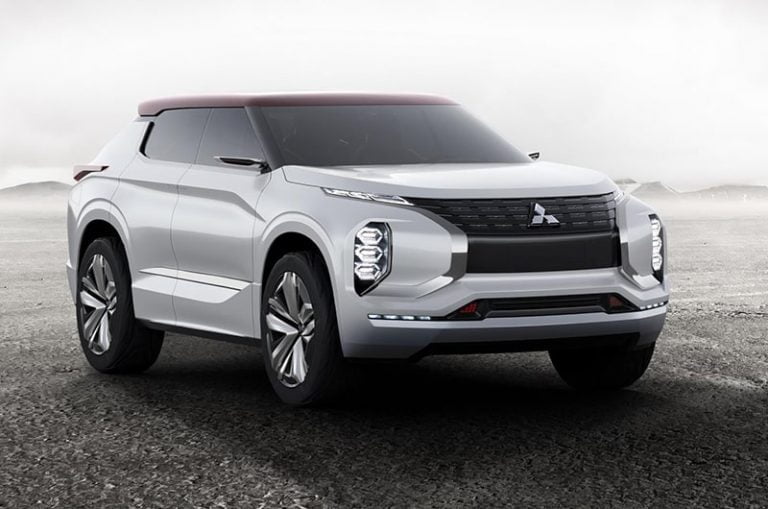
The GT-PHEV, to be unveiled at the show on 29th September, is described as ‘a high-end next-generation SUV that easily takes many road surface conditions in its stride.’

According to the concept’s creators the GT, or Grand Tourer part of its name comes from the ability to travel great distances over varying terrain. Mitsubishi describes the GT-PHEV as a ‘ground tourer – a car made for cruising across a vast land’.

And as the rest of the car’s title suggests it is powered by a plug-in hybrid system using three electric motors – one at the front and two at the rear and powered by a next-generation battery pack.

Mitsubishi says the system delivers a dramatic improvement in the performance of the concept’s full-time four-wheel-drive powertrain, while handling stability is further enhanced by the Super All Wheel Control (S-AWC) integrated vehicle dynamics control system.

The car is said to offer an electric-only range of 75 miles and a combined range of more than 740 miles.

Styling-wise it showcases the latest version of the brand’s ‘Dynamic Shield’ front end design, while the profile is muscular, the aim being to give an impression of the body being carved from a single piece of steel.

Inside the car boasts a horizontal dashboard, the instrument panel also including a high centre console. Burgundy leather trim is used extensively, colour co-ordinated with the roof colour.

Mitsubishi’s Paris theme is ‘Driving Beyond: Another Step Forward with SUVs and Electric Power’ and the stand will also see debuts for the eX Concept, a compact SUV powered by a next-generation electric vehicle system, and 2017 model year European market versions of the Outlander and Outlander PHEV SUVs.

Eco petrol engines to boost Jaguar Land Rover

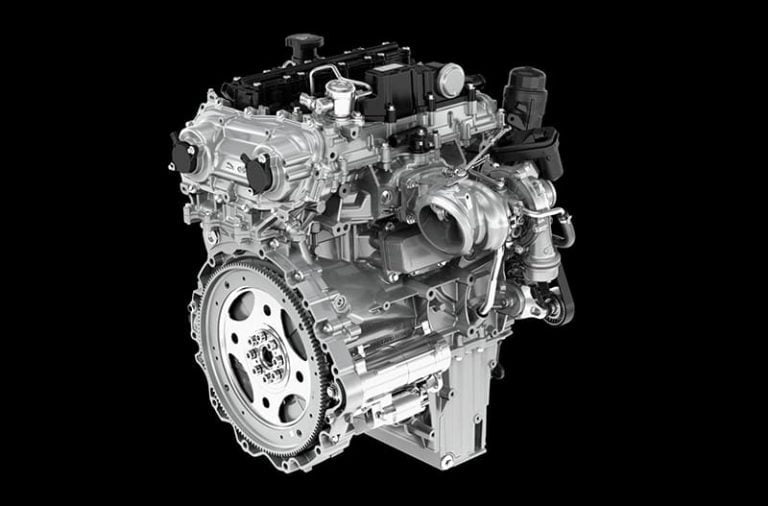
Jaguar Land Rover has confirmed a long-expected expansion of its Ingenium powertrain range into petrol units.

Developed in the UK and built like the already available diesel units at the new JLR engine manufacturing plant near Wolverhampton in the West Midlands, the petrol engines promise more efficiency, with greater fuel economy for fewer CO2 emissions.

JLR dubs the new units “the most advanced engines the company has ever produced,” adding that they will deliver up to 25 per cent more power than the engines they replace for fuel consumption savings of up to 15 per cent.

The four-cylinder Ingenium petrol engine is already in production on a new line at the Wolverhampton plant. It is understood it will be offered in 200, 250 and 300hp versions, the first becoming available in 2017.

New technologies contributing to the efficiency of the new engines include an electrohydraulic valvetrain, integrated exhaust manifold and a twin scroll turbocharger with ceramic ball bearing technology.

Due to their common architecture they will enable a range of derivatives to be developed, as suitable for Jaguar sports cars as they will be for Land Rover SUVs.

JLR has also announced a £30 million research project, part funded by the UK Government, into more advanced transmissions.

Dubbed Transcend, the project aims to develop a compact eight-speed transmission that will weigh around 20kg less than existing units and deliver a 20-wide ratio spread, more than double those of conventional eight-speed auto gearboxes.

According to JLR group engineering director Nick Rogers, Transcend will offer a wide range of benefits. “It will make manoeuvring and off-road use easier than ever before for drivers whilst also improving on-road vehicle dynamics and CO2 emissions,” he says.

“Environmental innovation is at the heart of our strategy to dramatically reduce emissions up to 2020 and beyond – with the Ingenium family of powertrains and advanced research projects such as Transcend, future Jaguar Land Rover vehicles will emit significantly less CO₂,” Rogers adds, stating that by 2020, new technologies will help JLR reduce CO₂ emissions by a further 25 per cent.

Transcend could revolutionise the eight-speed auto transmission.

Vauxhall studies potential of electric Ampera

The Opel Ampera-e, set to be unveiled at the Paris Motor Show at the end of September, could yet become a Vauxhall.

There are no plans to build right-hand-drive (RHD) versions of the electric crossover when it goes on sale next year, but Vauxhall has announced that it will evaluate the car on British roads with a view to future generations being offered on the UK market.

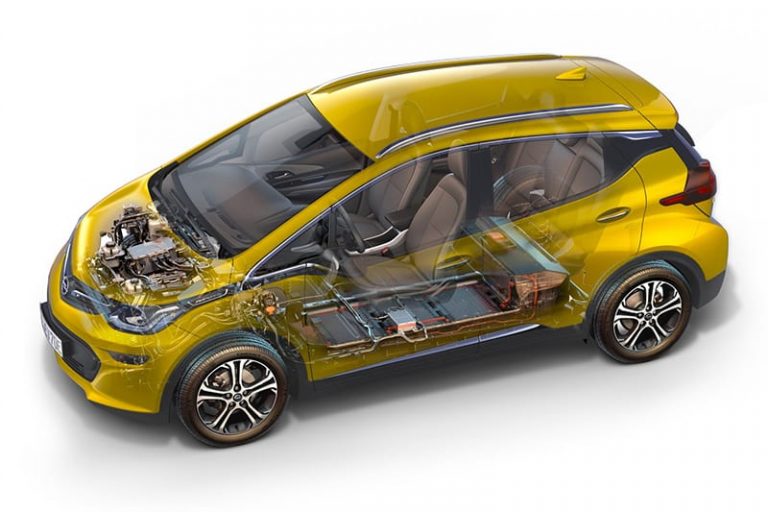
Opel states a class-leading pure electric range of potentially more than 250 miles in test conditions for the Ampera-e, which significantly beats closest rival the BMW i3 which quotes a range of 186 miles with its largest battery option.

Opel also claims that even under real-world conditions affected by driving style, road and weather, the Ampera-e can still achieve a range of more than 185 miles between charges.

Vauxhall chairman and managing director Rory Harvey insists that the brand is committed to having a future EV presence in its range. “The technology which underpins the new Ampera-e is of great interest to us, and we will be evaluating LHD cars from next spring and demonstrating them to clients,” he says.

“The fact that Ampera-e is not an eco-luxury or second car for customers broadens its appeal greatly, but it’s obviously vital that the car we sell in our market is right-hand-drive, and that won’t be available in the current generation,” Harvey adds.

Vauxhall will not only be evaluating the car on its range but also the packaging of the 10 battery modules. These are located under the body and built into the car’s profile, allowing 381 litres of boot space to be retained.

The Ampera-e offers the equivalent power of 204hp with torque of 360Nm. With the instant delivery of electric torque, the Ampera-e will pass 30mph from rest in 3.2 seconds, and take only 4.5 seconds between 50 and 75mph.

A notable feature is the ability to recharge the batteries while driving, adding around five per cent to the range. The driver eases off the accelerator in the normal ‘Drive’ mode, allowing the car to recuperate automatically in overrun and recover energy from the electric motor, which doubles as a generator.

The motor’s braking effect is increased when the driver switches to ‘Low’ mode, therefore increasing recuperation. Finally a ‘Regen on Demand’ mode provides maximum energy recuperation, activated via a paddle at the back of the steering wheel.

The drag torque is so high in ‘Low/Regen on Demand’ modes that the brake pedal is not needed to reduce speed to a full stop in normal traffic, allowing control merely by the accelerator except in emergency situations.

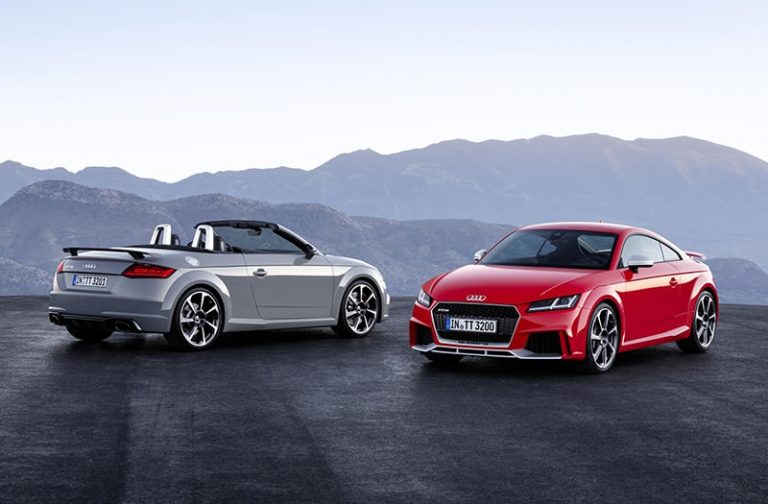
Order books open for most powerful Audi TT

0

The most powerful Audi TT yet will be able to be ordered from the end of September.

Coupe versions of the 400hp Audi TT RS will cost from £51,800, its Roadster sister from £53,550.

The new TT RS uses a five-cylinder 2.5-litre TFSI petrol engine that is 17 per cent more powerful than its predecessor. The newly developed engine is 26kg lighter, primarily through the use of an aluminium crankcase, and employs dual injection and Audi’s Valvelift technology.

Alongside the 60hp power increase torque goes up from 450 to 480Nm, which translates to a 3.7-second 0-62mph time in the Coupe, 3.9sec in the Roadster and a top speed that can be raised from the electronically limited 155mph to 174mph with the optional Dynamic Package Plus. This also includes a sports exhaust system.

The output comes with a combined cycle fuel consumption figure of up to 34.4mpg and CO2 emissions from 187g/km.

A seven-speed S tronic auto transmission is fitted as standard and this too has been lightened by 2kg. It is allied to the Audi Drive Select adaptive dynamics system which allows the driver to choose between comfort, auto, dynamic and individual modes, altering the progressive steering, throttle, exhaust flaps and the quattro all-wheel-drive system. The latter is also specifically tuned to the RS.

The TT RS ride height is reduced by 10mm over the standard model, sitting on 19-inch five spoke wheels as standard or 20-inch seven-spoke rotor design versions as a bespoke option. The brakes are also specific, vented 370mm discs acted on by eight-piston calipers at the front and solid 310mm discs at the back.

Also on the options list is Audi’s magnetic ride system. This uses dampers filled with synthetic oil in which particles that can be influenced by a magnetic field are suspended. The system can adapt the damper’s characteristics to the profile of the road and style of the driver at millisecond intervals. It too can be modified by the Audi Drive Select.

Body modifications include a single frame grille with a honeycomb mesh, enlarged air inlets, aerodynamic side sills a modified rear bumper with diffuser and a rear wing on thin struts. However owners can choose instead to have their TT fitted with the less blatant extending spoiler used by mainstream versions of the car.

Inside are fitted Nappa leather sports seats, a bespoke leather and Alcantara steering wheel with start-stop and the Drive Select buttons incorporated. The virtual cockpit digital display includes an extra RS screen that emphasizes the rev counter and includes extra performance data and a gear-shift light.

MMI navigation plus and a three-year subscription to Audi’s Connect online services are also included in the specification.

A first for any Audi, meanwhile, is the Matrix Organic Light Emitting Diode (OLED) rear light option. The 3D design lamps comprise four wafer-thin units, the largest of which bears the TT logo and the four Audi rings. Their homogeneous, high-contrast light can be continuously dimmed, does not cast any shadows and does not require any reflectors.

The standard LED headlights can also be replaced by Matrix LED lamps containing 12 separate controllable LEDs. These form the high beam and can be individually shut off when sensors detect traffic ahead or approaching, to ‘divert’ their beam around other road users.

Jaguar XE moves to booming Birmingham plant

In 2008 the Jaguar plant at Castle Bromwich in Birmingham was under threat of closure – now it is to welcome a fourth model to its production lines as the XE saloon moves to the plant.

Jaguar Land Rover says that the decision to transfer production of the XE from its current home 7.5 miles away in Solihull, is the result of booming sales of not only the model but its crossover sister the F-Pace.

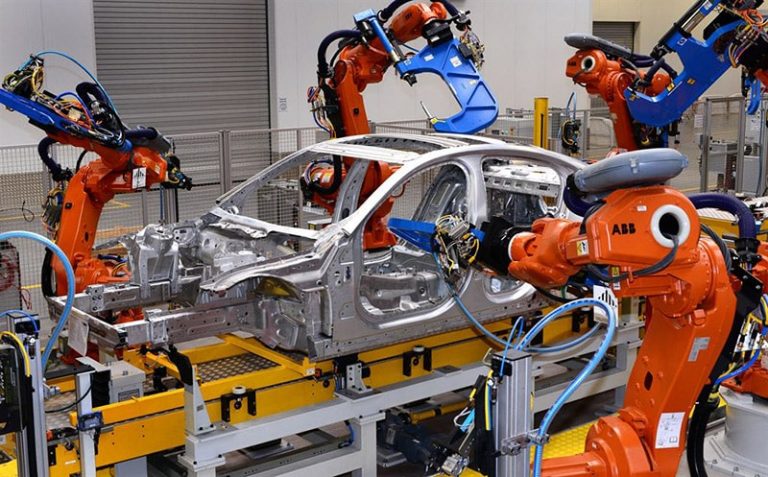
Both cars are built using the same aluminium architecture and this makes it viable to transfer production between sites. It is understood that by moving XE production to Castle Bromwich Solihull will be able to focus on building the F-Pace and the Range Rover Sport, another model that uses the same architecture.

At Castle Bromwich, a plant famous for building Spitfire aircraft during the Second Word War, the XE will be produced alongside its larger sister the XF (also built on the same aluminium platform), the even larger XJ and the F-Type sports car.

The changes see £100m of fresh investment in the Birmingham plant, primarily on new press lines, body shops and final assembly halls. The latest money sees JLR having made more than £1bn investment in the infrastructure of its sites at Solihull and Birmingham.

Jaguar Land Rover’s executive director of manufacturing Wolfgang Stadler describes the “significant investment to create two centres of excellence in aluminium vehicle manufacturing, utilising shared technologies”, as deliberate.

“It gives us the flexibility to quickly respond to consumer demand for our growing range of products,” he says.

And Castle Bromwich operations director Nicolas Guibert has welcomed the news in what he describes as a pivotal year for the plant.

“The arrival of the XE sees us increase our model lines and volume – this plant has a rich heritage and is undergoing its most significant transformation in decades, with major infrastructure projects either complete or under way,” he says.

“The commissioning of our all-new press line and launch of our body shop to support the introduction of XE means Castle Bromwich is future-proof,” Guibert adds.

£13K buys new-look Alfa Romeo Mito

0

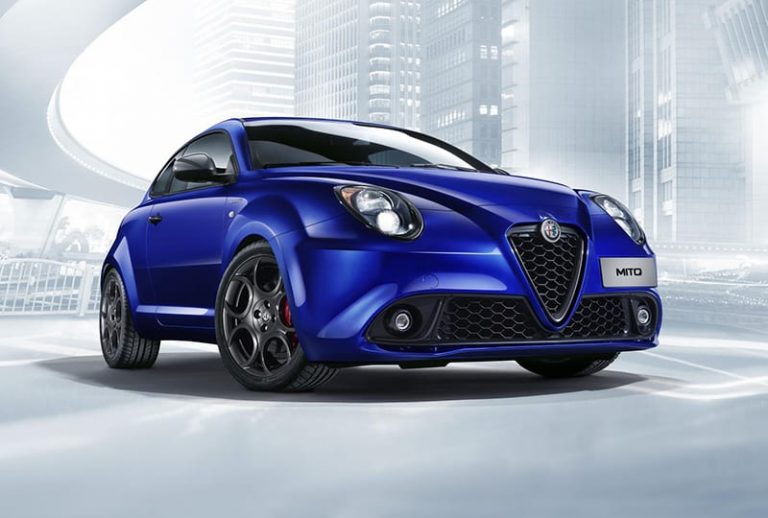
Alfa Romeo has put the facelifted version of its Mito supermini on sale.

The car boasts subtle styling changes, an uprated engine option and a revised grade structure, at prices starting from £12,960.

New grilles, a dark finish to the headlamp surrounds, changes to the rear bumper and a revised alloy wheel design bring the Mito into the latest Alfa Romeo family look that launched with the larger Giulia. A white exterior finish is also now an option.

Inside the seat upholstery has been upgraded, the brand’s Uconnect Live infotainment systems added and the finish on the centre console, dashboard and door trims changed.

The new 1.3-litre JTDM-2 diesel engine produces 95hp with CO2 emissions cut to 89g/km, an increase of 10hp yet combined with a 6g/km emissions improvement.

Other engine choices include a 1.4 petrol of 78hp, the three-cylnder TwinAir turbo petrol with 875cc and 105hp, and the 1.4 MultiAir petrol which offers 140hp and is available in the new range-topping Speciale. This has replaced Quadrifoglio Verde in the Mito line-up, leading some industry observers to speculate that a more potent version might join the range later.

The range now stretches across Mito, which replaces Progression, Super (from £16,360) and Speciale (from £17,110). Standard equipment on entry-level models includes new 16-inch alloy wheels, satin chrome-effect exterior detailing on the grille surrounds, headlamp and tail lamp surrounds, air conditioning, the Alfa DNA driving mode selector, a rear spoiler and a Uconnect five-inch touchscreen infotainment system with DAB and Bluetooth connectivity.

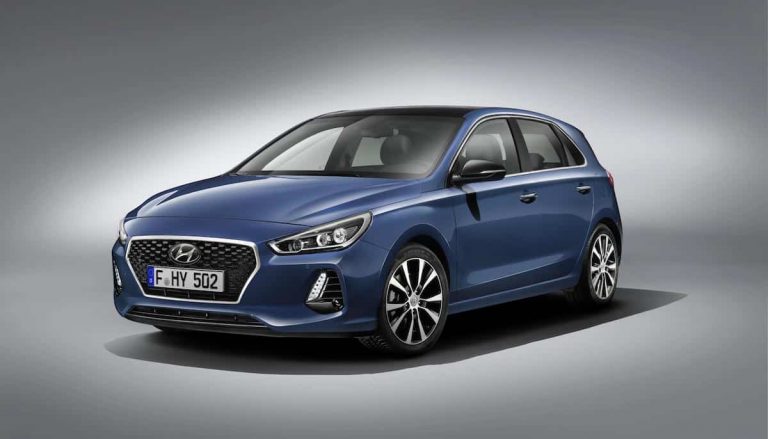
New Hyundai i30 unveiled ahead of Paris show

Hyundai has unveiled its third-generation i30 hatchback ahead of its public debut at the Paris motor show.

Reflecting Hyundai’s continuing maturation as a brand, the i30 features more refined design, new engines and gearboxes and state-of-the-art safety technology.

The previous i30 has been a big success for the brand in Europe, and has contributed strongly to the company’s continued growth across the continent. Hyundai is at pains to point out that the new i30 is “designed, developed, tested and manufactured in Europe”. Its design is expected to set a blueprint for future models, particularly the large Audi-esque grille.

So far Hyundai has only released images and details of the five-door hatch version, but has said that the i30 will “become a family of unique products”. This is likely to mean saloon and estate versions as well as possibly a three-door hatch version. The i30 will also form the basis for the first high-performance model of the new N brand, which will take on the likes of the Volkswagen Golf R.

UK pricing and specification is yet to be revealed, but the i30 will be available with a choice of petrol and diesel engines, including the company’s new 1.4-litre turbo petrol engine which features direct fuel injection and a turbo relocated to be integrated in the exhaust manifold for improve efficiency. Buyers will also have the choice of six-speed manual and seven-speed double-clutch automatic gearboxes.

The new i30 is expected to come standard with autonomous emergency braking, along with a suite of active safety measures which may be optional or standard in the UK.

In terms of connectivity, models fitted with the optional satnav will be able to connect to smartphones via Apple CarPlay and Android Auto, operated via an eight-inch touchscreen. Navigation mapping includes a seven-year subscription to TomTom LIVE for real-time traffic and weather updates. Without the satnav, the car will have a five-inch touchscreen with Bluetooth but without more advanced connectivity features.

The brand claims the new i30 offers “segment-leading roominess” and a boot which can swallow 395 litres of luggage.

Stay tuned to The Car Expert for more details of UK pricing, specification and on-sale dates when they become available.

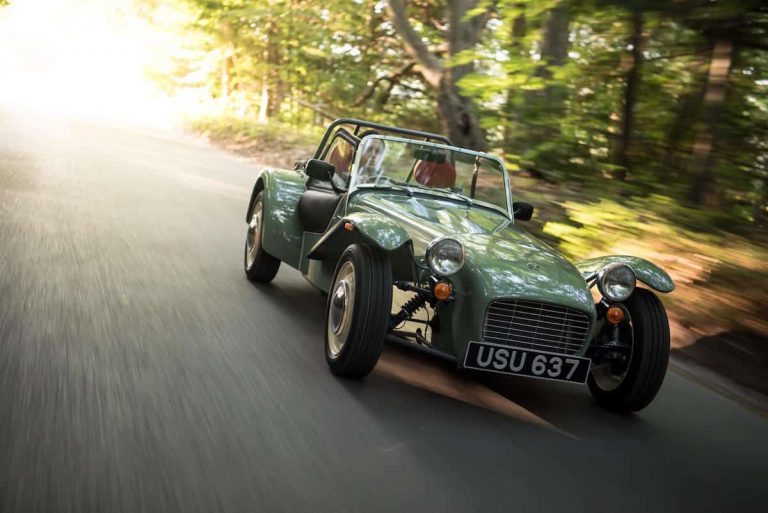
Caterham Seven Sprint goes back to the 1960s

After more than forty years of evolving its interpretation of the iconic Lotus Seven, Caterham has looked to an early Lotus version for the inspiration behind its latest model.

The Caterham Seven Sprint has been fitted out with plenty of sixties-inspired details, and looks for all the world like a restored Series 2 Lotus Seven rather than a brand new vehicle.

Launched in a perfectly appropriate environment at this weekend’s Goodwood Revival, the Seven Sprint kicks off Caterham’s ’60 Years of the Seven’ anniversary program, which will run across the next year. Only 60 vehicles will be produced.

Mechanically, the Seven Sprint is based on the entry-level Seven 160 model and is powered by a three-cylinder Suzuki engine generating 80hp. However, unlike the somewhat incomplete look of the bare-bones 160, the Seven Sprint has been finished far more generously.

The wheels are the same steel types used on the 160, but are painted cream and finished with polished hubcaps. The body is painted in one of six original 1960s colours and emblazoned with retro badging and logos. The chassis is powder coated in grey like the Lotus Series 2, while the suspension and rollover bar have also been designed to replicate the original. Uniquely for a modern Caterham, the front wings are the larger flared guards instead of the normal cycle guards used for many years. The rear lights also hark back to the original, rather than the blocky units used on regular Caterham models.

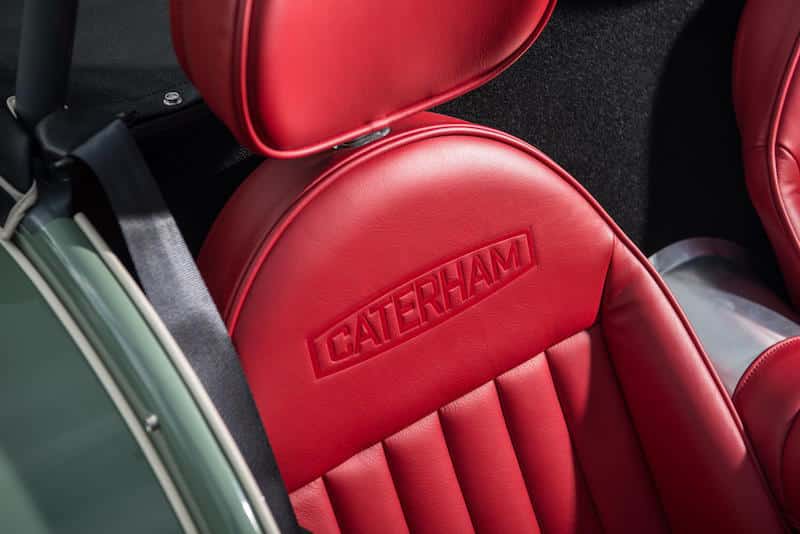
The retro-fest continues in the cabin, with a wooden steering wheel and dashboard, classic-look instruments, and period-style stitching for the scarlet red seats. Both the interior and luggage space are fully carpeted.

The overall effect is quite stunning, and Caterham should have little trouble shifting all 60 units. The Seven Sprint will only be available as a factory-built car rather than as a kit. Pricing will start at £27,995.

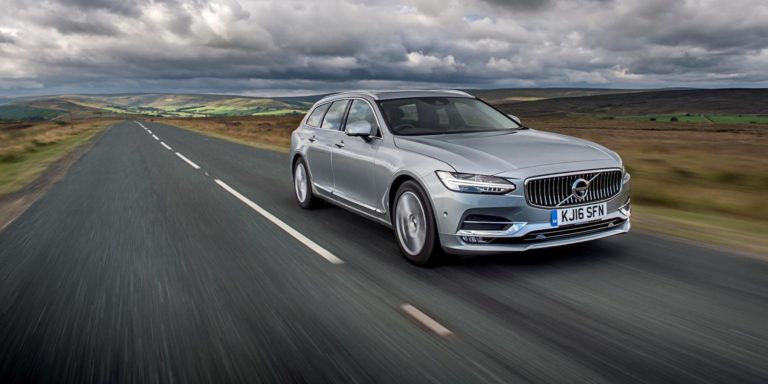
Volvo S90 and V90 review

What is it?
The Volvo S90 and V90 are range-topping large saloon and estate models.

Key features
Stylish looks, extensive technology

Our view
The S90 and V90 models complete a range-topping large trio for Volvo to take on the Germans


Volvo S90


Traditionally, Volvo has had an image problem. The Swedish brand sits comfortably above the mainstream, but really wants to be considered a viable alternative to the upmarket German behemoths of Audi, BMW and Mercedes-Benz.

Yet while customers have always associated Volvo with large estate cars, a staple of the premium market, the Swedish ones were always seen as boxy vehicles without the cachet of their German rivals.

The Volvo V90, and its sister the saloon S90, aim to change all that. According to Stefan Sällqvist, senior product manager at Volvo’s Gothenburg design team, these are the cars that most obviously illustrate the reinvention of the brand, a programme that dates back to 2010 when the company was bought by Chinese manufacturer Geely from Ford.

We’re told that the Volvo design team really did start with a clean sheet of paper, and it shows. To challenge the Germans, the cars needed handling prowess, loads of technology, a sense of quality, but also a design to attract.

While the tech in particular has been taking all the headlines, Sällqvist argues that the design was the most important priority in the creation of these cars. The new look was first seen on the Volvo Concept Coupe and Estate unveiled at the 2013 Frankfurt and 2014 Geneva shows.

In production form it has resulted in a purposeful looking profile whether in saloon or estate, good enough for a panel of global car designers to name the Volvo S90 as their Production Car Design of the Year in 2015 – high praise indeed.

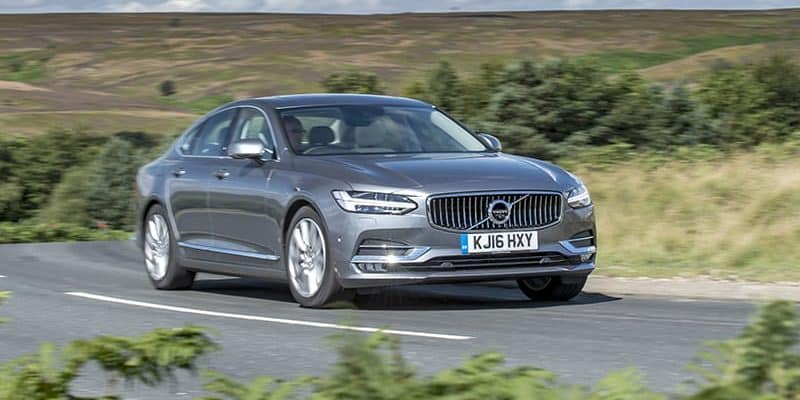
The cars certainly have presence – from their smooth exterior proportions, uncluttered by too many lines and creases, to the details, most notably the ‘Thor’s hammer’ headlight signatures and the signature concave grille in chrome or gloss black depending on model.

One could quibble at the slightly unnecessary chrome door mouldings on Inscription models, and personally we found the large crease in the saloon’s boot slightly jarring, but overall it’s an impressive visual effect.

Technically, much about the S90 and V90 is familiar – the two complete a range-topping trio for Volvo alongside the XC90 SUV, a car that launched in 2015 and which has been very well received.

The three are built on Volvo’s new SPA (Scaleable Product Architecture) platform, a versatile unit in which the only fixed measurement is between the front axle and the dashboard. The S90 and V90 share a generous 2941mm wheelbase, and curiously the saloon is very slightly longer than the estate, at 4963 to 4936mm.

Slip inside, and one is seriously impressed, firstly at the quality of fit and finish. The leather upholstery, the surfacing, especially the open-pore wood, is all to the highest standard.

The driver’s surroundings have clearly been thought through very carefully indeed. Everything comes naturally to hand, the controls are intuitive, and the nine-inch touchscreen Sensus Connect and Navigation system in the centre console, with its portrait format, must be the most significant development in infotainment for some time.

The car is roomy too, both in front and back, the saloon also offering a 500-litre boot, while the estate has 723 litres.

Overall the interior offers everything the German opposition can, including audio entertainment – if money allows, go for the optional Bowers & Wilkins system. British made, it produces a very fine sound indeed through 18 speakers.

Many recent headlines concerning Volvo have surrounded the brand’s bold decision to only use smaller capacity engines of four cylinders or less – three-cylinder versions of the new Drive-E range are due before long. The S90 and V90 are on sale with two petrol and two diesel versions of the Drive-E, but only the two 2.0-litre diesels will be available to UK buyers.

The D4 offers 190hp alongside 400Nm of torque, the D5 235hp and 480Nm, both matched to an eight-speed auto gearbox with a manual shift option and the D5 also having an all-wheel-drive transmission.

It won’t surprise you to learn that the D5 is the more impressive powerplant. It has noticeably more punch than the D4 while cruising with just as much plentiful refinement.

A notable extra on the D5, however, is PowerPulse, a compressor that injects compressed air into the turbo manifold, spooling it up and cutting out turbo lag. As a result, the D5 is very quick to get going from a standstill, leaping away from traffic lights with alacrity.

More powertrain options are to come next year, in the form of a plug-in hybrid T8 TwinEngine model. Volvo is big into electrification, the SPA platform was designed specifically for such a drivetrain, and the XC90 plug-in hybrid is already available, taking a bigger slice of sales than expected.

In terms of chassis are Volvo’s 90 models as accomplished as that benchmark the BMW 5 Series? Well no, not quite. The recipe is good, a double-wishbone front suspension married to a clever rear axle that dumps conventional coil springs in favour of a transverse leaf spring made from composite. A format that only Corvette also currently uses, it offers fine control while also not intruding into the boot space.

All of which results in the car producing an accomplished handling and ride performance, while not feeling as overtly driver-focused as say the BMW. In fairness, Volvo says it was built this way. “We are not going after the German brands in terms of driving dynamics,” Sällqvist says. “We want people in our cars to travel in relaxed confidence.”

Self-levelling air suspension is an option, and perhaps the forthcoming R-Design trim, which will have stiffer springs and reworked dampers, will offer more overtly sporty handling.

Volvo’s major push is of course on safety technology – the brand is putting major investment to develop self-driving autonomous cars, and the benefits of some of that research is most pertinently seen in the Pilot Assist feature, that comes as standard on every 90 model.

An advance on adaptive cruise control, Pilot Assist now adds small steering movements to keep the car in the centre of a motorway lane while on the move, as well as allowing stop-start progress in a queue without input from the driver.

It’s unnerving at first, but effective, while Volvo insists that it does not create a self-driving car – the driver is expected to keep their hands on the steering wheel while the system is active. And all the 90 models also boast another new safety system which uses steering inputs, preventing one from running off the side of the road.

There are two current trim levels, Momentum and the top-level Inscription – the R-Design models on sale next year will fit between the two. Prices for the S90 start from £32,500, the V90 costing £2,000 more, and while that might sound pricey, even entry-level Momentum versions offer a long standard equipment list, including such delights as the Sensus infotainment system, Pilot Assist, LED headlights and leather surfacing on the upholstery.

Overall these two cars are Volvo’s most concerted effort yet at breaking into the premium club. If the S90 and V90 are typical of future Volvo product, the Germans should be worried…

Volvo S90 and V90 – key specification

Models tested: Volvo S90 D4 Momentum, Volvo V90 D5 PowerPulse AWD Inscription
On Sale: September 2016
Range price:
S90 £32,500-£42,000, V90 £34,500-£44,000
Insurance groups: TBA.
Engines: 2.0 diesel x 2.
Power (hp): 190, 235.
Torque (Nm):
400, 480.
0-62mph (sec):
S90 8.2, 7.0. V90 8.5, 7.2.
Top speed (mph): 140, 145.
Fuel economy (combined, mpg): S90 64.2, 58.9. V90 62.8, 57.6.
CO2 emissions (g/km):
S90 116, 127. V90119, 129.
Key rivals:
Audi A6, BMW 5 Series, Mercedes E-Class.
Test Date: September 2016

New Volkswagen electric city car charges in

The all-electric Volkswagen e-up! (yes, seriously) is now available to order in the UK, bolstering the model range of the acclaimed city car beyond the facelifted petrol versions already on sale.

The e-up! replaces petrol power with an electric motor generating 82hp and a useful 210Nm of torque. Despite the hefty weight of battery and electric motor, the e-up! still manages to weigh less than the equivalent petrol model.

A full charge from a regular household plug takes nine hours. Volkswagen will also sell you a wall box for your garage, which provides a higher level of electricity transfer and takes the charging time down to six hours. If you are using a fast charging station, the company claims you can charge 80% of the battery in half an hour. An appropriate cable is included for this purpose.

The e-up! picks up the same styling details as the recently facelifted petrol models, which are distinguishable from earlier models by new front and rear bumpers. Unique to the electric version is a pair of C-shaped LED daytime running lights instead of regular fog lights on other models. The electric model also gets its own alloy wheel design.

The electric model is based on the petrol High up! specification. Inside, a smartphone docking station enables the driver’s phone to be integrate into the car’s infotainment system. Tinted rear glass and carpet mats as standard help with insulation, which is more critical for an electric car due to the energy cost of running heating or cooling to control cabin temperature.

Your smartphone can also be used to manage charging and switch on air-conditioning from an e-up! app for iOS or Android. Volkswagen includes three years of subscription to the app when purchasing the car, but after that you will have to pay to subscribe for this service.

The e-up! gets all the same safety systems as the petrol models, which includes autonomous emergency braking as standard. The petrol up! scored five stars from Euro NCAP back in 2011, however the crash testing standards have increased since that time and no more recent information is available.

Emissions shouldn’t be as troublesome for the e-up! as they are for some other Volkswagen models, as there are none being emitted directly by the car.

The on-road price of an e-up! is £20,780, which includes the government’s plug-in grant of £4,500. This is considerably more than the price of the comparable petrol auto High up! model, which is priced at £12,880. From a financial point of view, you will need to do a lot of miles to recoup the extra purchase cost.

Most people are more likely to finance the vehicle than buy it in cash, and Volkswagen Financial Services is offering PCP terms of 6.4% representative APR and a £900 deposit contribution. This is a higher APR than Volkswagen is offering on the petrol High up!, although the deposit contribution is slightly higher (£900 vs. £500).

At this time, electric power is not expected to be available on the up!s sister models, the SEAT Mii and Škoda Citigo.