






September new car registrations hit a nine-year high this year, according to industry data published this morning. But the growth was very targeted, limited to cars with plugs and cars from Chinese brands (with these two areas overlapping heavily).
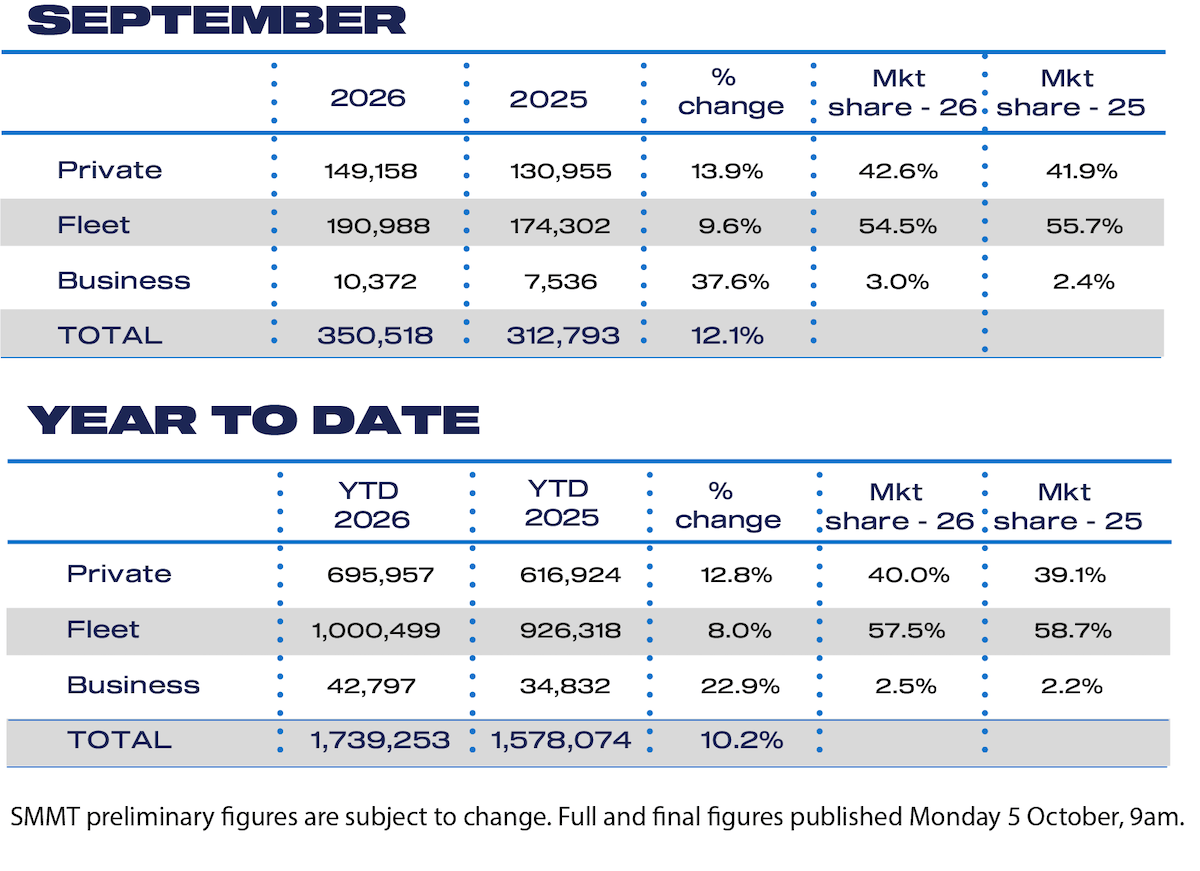
According to data published by the Society of Motor Manufacturers and Traders (SMMT), just over 350,000 cars were registered in September, an increase of 12% on the same month last year and the best September result since 2017. Private sales growth outperformed fleet registrations, as has been the case pretty much all year, although fleets still take more of the overall market share.
September is one of the two tentpole months for new car registrations, along with March, as they are the two number-plate-change months in the year. What this year’s numbers show is how quickly the market has changed in just the last six months.
EVs and plug-in hybrids charging ahead
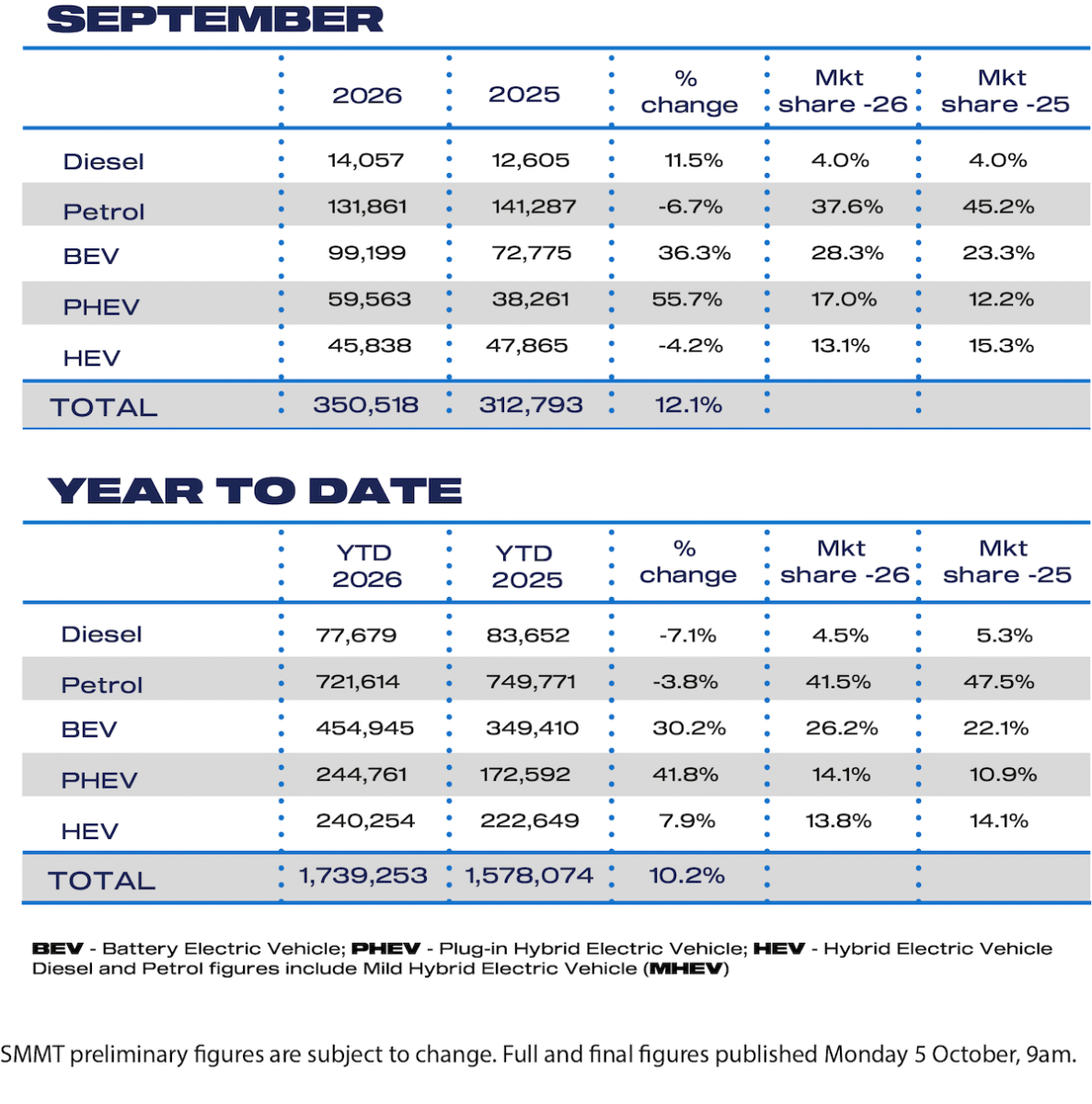
As has been the case practically all year, many more customers chose electric or plug-in hybrid cars in September this year than last year. In a market that was up by 12%, EV registrations were up by 36% to almost 100,000 cars, while plug-in hybrids grew by 56% to almost 60,000 cars.
Going the other way, petrol car registrations were down by 7%, while basic (no-plug) hybrids were down 4%. Diesel was up by 11%, although that means it basically held station given that the overall market growth was 12%.
Year-to-date, electric cars have taken about 26% of all new car sales, meaning they have exceeded the real-world mandate target for EV numbers, which is estimated to be about 25% – the exact number varies by brand, depending on their model mix. Plug-in hybrids have now overtaken regular hybrids as well, as the overall new car market continues shifting in favour of electric driving.
In fact, you could argue that the success of plug-in hybrid models over the last 12 months is actually hurting EV adoption, with the latest models offering plenty of battery range for day-to-day electric driving, but with the comfort of a petrol backup for longer journeys.
What’s very noticeable is how rapidly the market has shifted since the last tentpole month of March. Market share of ‘cars with plugs’ has jumped from 36% to 45% in just six months, and we may well see a point in the last three months where they outsell ‘cars without plugs’. If it doesn’t happen this year, it will almost certainly happen early next year.
Good month, bad month
Despite the overall market being a healthy 12% up on the same month last year, the reality is that that growth was very narrowly targeted.
It was a good month for Abarth, BYD, Changan, Chery, Citroën, DS Automobiles, Genesis, Jaecoo, Jeep, Land Rover, Leapmotor, Lexus, MG, Mini, Omoda, Porsche, Skoda, Tesla and XPeng. All of these brands outperformed the overall market by at least ten percentage points, meaning year-on-year growth of at least 22%.
It was not such good news, however, for Alfa Romeo, Alpine, Audi, BMW, Chevrolet, Cupra, Fiat, Ford, GWM, Honda, Hyundai, KGM, Kia, Maserati, Mazda, Nissan, Peugeot, Polestar, Renault, SEAT, Smart, Subaru, Suzuki, Toyota or Vauxhall. All of these brands underperformed by at least ten percentage points against the overall market, meaning growth of less than 2% on last year, or – in most cases – losing sales.
That means that the following brands were about where you’d expect them to be: Dacia, Ineos, Lotus, Mercedes-Benz, Volkswagen and Volvo. All of these brands were within ten percentage points (plus or minus) of the overall market result.
Volkswagen remains the biggest brand in the UK, but its market share has gradually been slipping this year. BYD was the second-biggest individual brand (although Omoda & Jaecoo operate as joint brands and would be second if counted together), followed by Kia and MG.
BYD had the biggest overall increase in registrations, up almost 9,000 on the same month last year. Going the other way, Hyundai had the biggest drop in numbers, down by about 4,700 cars on last September.
Jaecoo 7 tops the charts
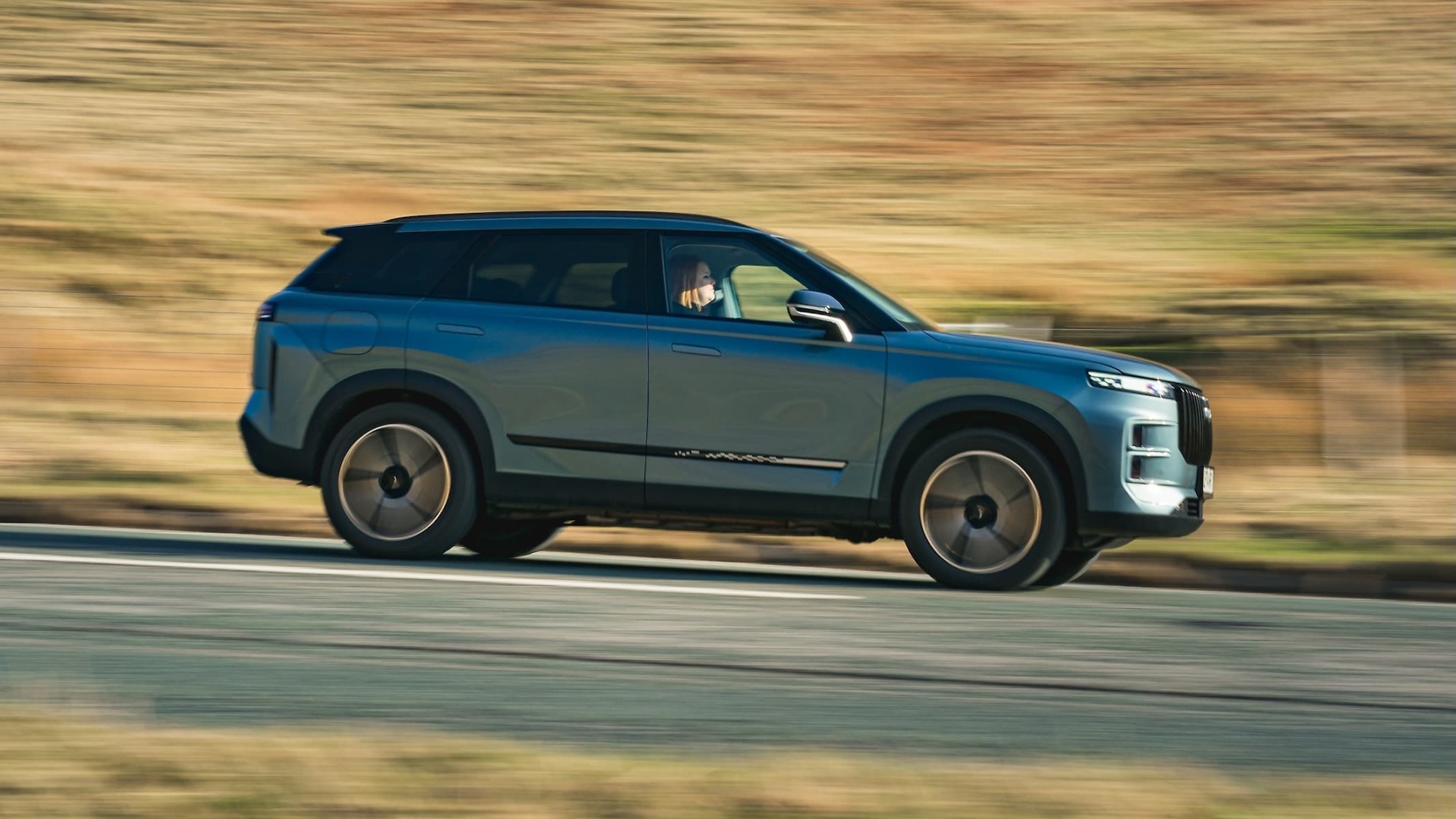
As it was in the last tentpole month of March, the Jaecoo 7 topped the new car best-sellers list in September, with almost 11,000 cars registered. That was almost 1,000 units better than the Tesla Model 3 saloon, which was the best-selling EV for the month.
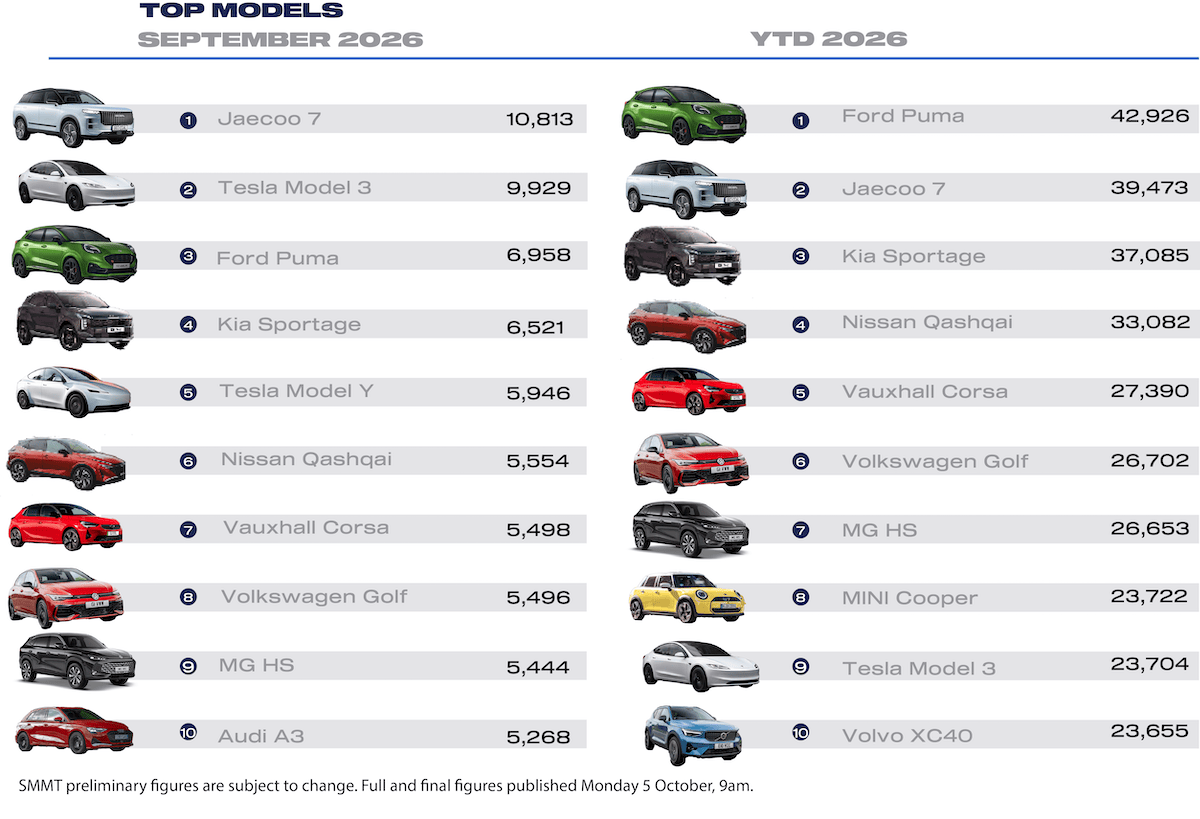
The runaway success story from Jaecoo has also been in the top ten every month since last September, which is impressive for a brand that only went on sale in February last year. Its big September result also moved it past the Kia Sportage into second place in the 2026 sales race, behind the Ford Puma.
Three of the top ten cars for September were built in China, including both of the top two as UK-spec Model 3 saloons are built in Tesla’s factory in Shanghai. The MG HS also continued its strong 2026 run with a ninth-place result.
The Nissan Qashqai was the only UK-built car in the top ten. Often, the Mini Cooper and the Nissan Juke will make an appearance in September, but not this year.
We’ll have our usual full exploration of the top ten live shortly.