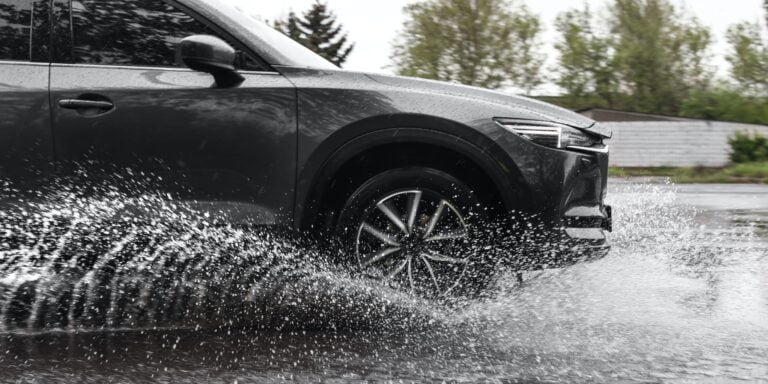
What is aquaplaning? Although it sounds like an extreme water sport, it is a very dangerous phenomenon which can occur on a very wet road.
Aquaplaning is a sudden loss of grip while driving on a wet surface. It occurs when there is too much water between the tyre and the road, causing the tyre to lose contact with the road surface.
Every driver should be aware of this danger as it leads to the momentary loss of the steering control over the vehicle. It generally occurs at higher speeds, such as on a motorway, but can occur at lower speeds as well if the road is wet enough and your tyres are lacking grip.
Dealing with aquaplaning
The period of aquaplaning lasts usually about two seconds. When it happens, remember to follow this simple advice:
Stay calm and don’t panic
Take your foot off the accelerator
Don’t brake or accelerate, just let the car coast for a few seconds
Hold the steering wheel firmly (don’t make any sudden movements)
Keep these simple rules in mind and you are bound to feel contact with the road again in a short moment. If the tyres are not in contact with the road then you won’t have any steering control, so it’s important to keep the wheel still and wait for the tyres to regain their grip.
Preventing aquaplaning
Don’t wait for aquaplaning to occur and take precautions to minimise the risk. Here’s what you need to remember:
Always adjust your driving style to the weather and road conditions
Avoid puddles, wheel-ruts and holes on the road
Keep the correct tyre pressure (under or overinflated tyres can increase the risk of aquaplaning)
Make sure your tyre tread at least the legal minimum of 1.6 mm and preferably a lot more: the more tread your tyres have, the more grip you will get.
Timely tyre replacement
Reducing the risk of aquaplaning is a good reason not to prolong tyre replacement until the legal minimum of 1.6 mm tread depth is reached. Safety experts advise changing tyres when tread depth is less than 3.0 millimetres.
Generally speaking, the job of tread on a wet road is to push water aside from underneath the tyre. When the tread pattern is not deep enough, the risk of aquaplaning increases.
It’s funny how chaotic driving can become as soon as the weather turns a bit nasty. Drivers who are normally exemplars of driving safely on a sunny day can seem to lose their senses at exactly the time when a calm head and considered judgments are most important.
In any weather, driving safely (or riding safely on a motorbike) is a complex skill that requires concentration, clear thinking and situational awareness. But when conditions take a turn for the worse, a driver has to make good decisions in more difficult circumstances with less visual information available. This puts more pressure on a driver and it seems that many struggle to cope with that.
Spend time on the roads in rain, fog or snow and you will see some crazy moves being pulled. Often it is the sort of dangerous driving you would never see in clear, dry weather, so why do some people feel the need to drive like kamikazes when the conditions become more treacherous? [Note: if you feel that everyone else drives too slowly in bad weather, you may be the one I am talking about here…]
Drive to the conditions, not the speed limit
Common sense suggests that when your visibility is reduced by darkness, rain or anything else, you should reduce your speed somewhat to make sure you can see what’s coming with enough time to react. Yet it continually surprises me to see other cars stubbornly sticking to their normal speed – or even speeding up – with no regard for the increased risks.
A speed limit is a maximum speed, not a minimum or a target. Like most people, I am sure that speed limits are far too arbitrary in far too many places, and set for the lowest common denominator drivers who shouldn’t even have a driving licence, but that doesn’t mean you should be rigidly sticking to the speed limit in any weather.
It’s perfectly OK to slow down a bit and give yourself more room to the cars around you. So what if you arrive five minutes late? Better than having an avoidable accident because you were in too much of a rush and couldn’t stop when you needed to.
Visibility, braking and steering are all reduced in the wet
Not only is your visibility reduced in wet weather, braking distances are usually much longer and your tyres won’t have as much grip to steer. So not only will you spot the danger much later, you won’t be able to stop anywhere near as quickly or swerve out of the way as effectively to avoid it.
Those three factors all mean that your chances of having an accident at any given speed are much higher in wet weather than in the dry.
Another source of continual amazement is the number of people who seem content to drive with dirty windscreens (or frozen ones in winter). If your windscreen is misted up or obscured by dust, take a few minutes to properly clean it so that you can see clearly through the entire window. Cleaning a small patch directly in front of the steering wheel is not sufficient to provide a safe level of visibility.
This article was originally published in April 2016 and most recently updated in November 2021.
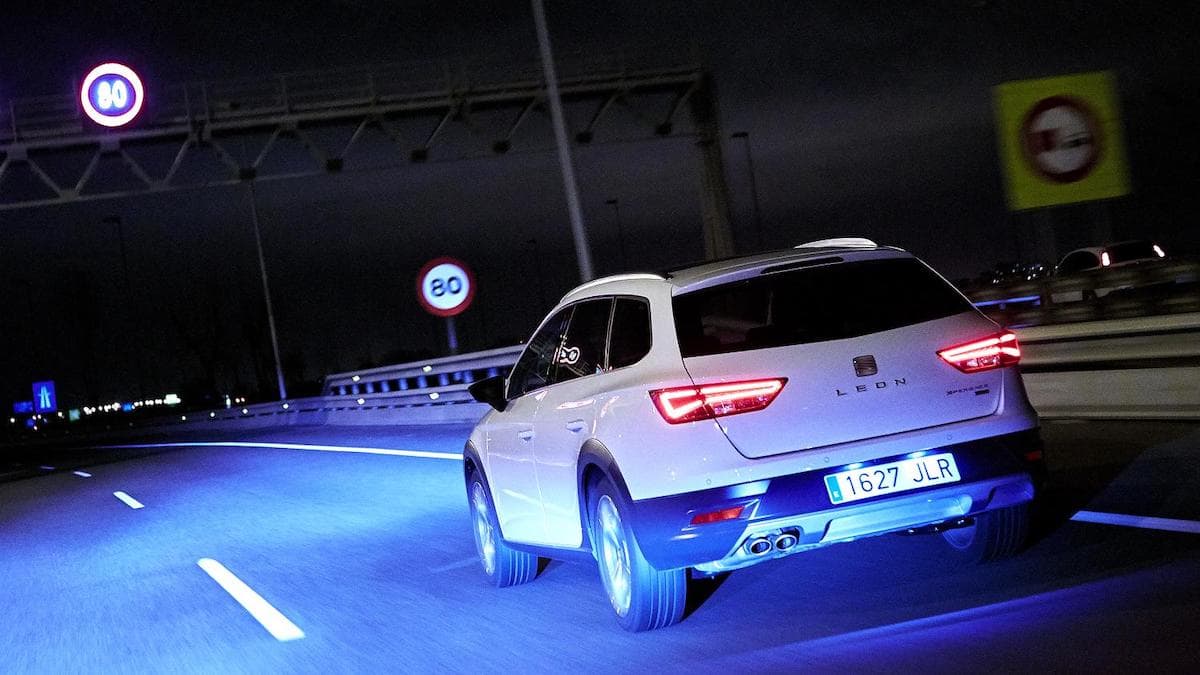
Winter is coming, and that means the sun is rising later and the evenings are quickly becoming shorter.
For those of us commuting to and from work every day, we’ll be going from spending time in the car in bright sunshine to driving about in much darker conditions. If you’re new to driving in the dark, or simply haven’t done it for a while, it can be rather daunting.
Looking for some tips to stay safe when driving in the dark? We’ve got a handful for you…
Check your headlights are working — and use them
Before setting off in darker conditions, give your headlights a test to see if they’re still working. If you haven’t used them over the summer at all, it’s possible the bulbs could be out and you may not have noticed.
Ensure that you switch in new bulbs as soon as possible if they have blown, and it’s worth investing in a spare set just in case it happens while out on the road. Most importantly though, ensure your headlights are on — both so you can see the road ahead, and so other drivers can see you.
Avoid leaving your high beams on
Though it’s important to have your headlights on, it can be equally as dangerous to yourself and other road users if you leave them on their high-beam setting compared to having them completely switched off.
Visibility for yourself may be improved — which is great if you’re the only car driving down a dark country road — but keeping them on can dazzle drivers ahead of you and those oncoming too, which vastly increases the risk of an accident. If you’re unsure how to check if your high beams are on, look in your instrument cluster — if you see a blue headlight symbol on, this typically means the lights are in their brightest setting.
Switching them off usually involves pulling the indicator stalk towards you. To turn them on, it’s the opposite action — pushing it away from yourself.
Test your brake lights
We’re sticking on the topic of lights as they’re very much the key to driving in the dark. Though you should always ensure your brake lights are functioning (it’s illegal if you’re driving around with them not working), it’s especially important in the dark.
That’s because drivers behind are less likely to see you coming to a stop in the reduced visibility conditions that driving in the dark brings, which in turn ups the risk of an accident. You can either borrow a friend or family member to check to see if your brake lights are working by them standing at the rear of the car while you push the pedal while stationary.
Alternatively, park the rear of your car against a wall or reflective surface, and use your mirrors to see if there is a red glow from the lights when pressing the brake pedal.
The same applies to indicator lenses, fog lights, number plate lights and any other light bulbs in your car. Make sure they’re working and, if not, get them replaced.
Keep your windscreen washer fluid topped up
Again, having sufficient washer fluid is something you should always strive to achieve, but it’s an especially important point in the dark.
Visibility is reduced as it is in the dark, and that’s only worsened by grime and other road dirt that is flung up onto the windscreen — which is especially more of a problem over the colder, wetter months.
As the weather turns colder, it’s important to make sure that your washer fluid doesn’t freeze in the tank or lines. Don’t use ordinary water as washer fluid as this will turn to ice as soon as the temperature reaches zero. Use either ready-mixed washer fluid or mix concentrated washer fluid with water – check the bottle for the recommended mixture based on how cold it gets where you live.
Leave more room to the car in front when driving in the dark
When following a car in the dark, it’s safer to give the driver ahead a little bit more room than you usually would.
That’s because in the dark, obstacles and potential hazards that could be easily seen in ideal daylight conditions may be obscured — presenting a possible unexpected danger. With this in mind, it’s more likely the car in front may have to brake suddenly.
Do you like heavy rock, or are you more of a jazz person? Are you buoyed by pop but can’t stand classical?
Your answers could have as much an impact on your driving as it does on your listening pleasure, because a new study has found that different types of music can influence your ability to drive safely.
The research, from a quartet of expert bodies comprising Brunel University London, Coventry University, the Economic and Social Research Council, and insurer Direct Line, reveals the potential influence that factors such as volume and lyrics, can have on a driver’s ability to focus effectively in towns and cities.
It shows that soft music with a slow to moderate tempo and no lyrics can have a beneficial impact on drivers, whereas loud music makes drivers more mentally stimulated – which can have a negative impact when driving in urban areas.
Turning up the volume button on your car’s stereo has the most significant impact on a driver’s mind-set. The study found that motorists listening to soft, instrumental music reported 14% lower mental arousal – which can optimise urban driving focus – than those listening to loud instrumental music, and 21% lower than when listening to soft, lyrical music.
The findings are important, because music plays a big part in UK motorists’ driving lives.
Direct Line research found that 80% of drivers often listen to music when driving, while nearly half (48%) only listen to music when they’re behind the wheel.
And, as 17% say that they only listen to loud music with complex lyrics, such as some pop and rap, it means that nearly a fifth of the UK’s motorists may not be fully concentrating when driving.
Emotional triggers in music can make us feel either angry or aggressive, or even break down in teams. Listening to this sort of music while driving can resulted in heightened danger, can distract a driver to the point where they have a near miss with another vehicle or even a collision.
“The most important thing to consider when listening to music while driving is to ensure you are not mentally overloaded,” says Professor Costas Karageorghis from Brunel University London.
“A number of internal and external factors can influence this, but one of the easiest to control is our choice of auditory stimulation, whether it be talk radio, podcasts or music. Through minimising distractions, motorists are much better able to focus on the road and therefore stand a better chance of identifying potential hazards in good time.
“Drivers should consider the use of soft, non-lyrical music to optimise their mental state when driving in a stressful urban environment.”
Simon Henrick, from Direct Line, adds: “Music often plays an integral role in driving, from making the experience more enjoyable to improving our mood. These findings are therefore really interesting from a safety perspective, as they show that music can influence your level of focus when behind the wheel.
“The great thing about music is that it caters to everyone, so while we’re not telling drivers to change their preferences, we want to highlight the impact it can have on how someone drives. We would suggest that people are mindful of what they’re listening to and how it could affect both their emotions and their levels of concentration, especially in towns and cities.”
Top five tips for listening to music while driving
Keep it calm. Avoid aggressive lyrics as these can prompt dangerous and risk-taking driving behaviours such as jumping red lights and speeding
Keep it simple. Music that is highly syncopated or rhythmically complicated should also be avoided
Keep it quieter. The music volume shouldn’t be excessive and kept at under 75 decibels, otherwise there is an increased risk of missing important sounds, such as an approaching motorcycle
Keep it classic. It is advisable to use familiar, well-known tracks or those from the driver’s preferred genre, which are likely to have more of a feel-good flavour
Keep it light. Avoid music that might have a negative impact on emotional state
The growing number of electric vehicles coming on to the UK’s roads is leading to a change in young motorists’ future driving ambitions.
New research shows that the ‘green march’ of EVs is massively influencing driving attitudes of young people aged 17-24. More than 60% of 1,000 young drivers questioned by road safety charity IAM Roadsmart said they plan to apply for an automatic-only driving licence.
The ban on new petrol and diesel vehicle sales from 2030 and the absence of manual gearboxes in electric vehicles, has led to the huge swing towards gearstick-less training and driving, while also translating into a new wave of expected buying behaviour.
More than 80% of respondents said they were likely to buy an electric vehicle as their next car. Only a very small number (5%) declared they were very unlikely to purchase an EV.
The acceptance of electric vehicles has charged ahead so much that 70% of the young people questioned believes that they are easier to charge, compared with filling a traditional fuel tank, saying it’s similar to topping up a smartphone or tablet.
“Our research highlights how young people are being proactive, not reactive, to climate issues and the changes to the automotive industry set to come by 2030, which is great to see,” says Neil Greig, Director of Policy and Research at IAM RoadSmart.
“What these figures demonstrate is that the traditional split between manual and automatic driving licences is becoming less and less relevant to modern motoring. It’s time that this artificial distinction was ditched as part of an overall review of learning to drive that prioritises experience in all traffic conditions over the type of gearbox you have.”
Road safety experts are encouraging drivers to continue keeping a close eye on their speedo and stick to legal limits, after a recent UK-wide police operation targeted speeding drivers.
Campaigners say that driving above the legal limit brings extra risk to drivers and anyone else around them. They add that driving within the limits can bring savings in terms of fuel and wear on your vehicle, and it removes the chance of landing yourself with a hefty fine and points on your licence.
Safety and breakdown organisation GEM Motoring Assist says the decisions we make as drivers are entirely our own and driving at legal speeds bring benefits for our safety, our frame of mind and for the environment.
Speeding in built-up areas
Recent statistics released by the Department for Transport showed that more than 50% of drivers stopped for speeding, were doing so in 30mph built-up areas.
During the more free flowing traffic conditions of Covid lockdown periods in 2020, 56% of cars exceeded the speed limit on 30mph roads (compared to 54% in 2019), 53% were speeding on motorways (up from 50% in 2019) and 12% broke the limit on single carriageway roads (up from 9% in 2019).
While cars (55%), vans (55%) and motorcycles (58%) were the worst offenders on motorways, larger vehicles, HGVs and buses scored the highest on national speed limit single carriageways.
Lower costs and emissions
“The speeds we use are entirely our own choice. No one else controls the speed of the vehicles we drive,” says Neil Worth, GEM chief executive.
“Even modest reductions bring lower fuel costs and reduced emissions. Slowing down gives you more time to anticipate and plan when you’re driving, as well as more time to react to hazards and to stop safely if necessary.
“Reducing the speeds you use will lower the stress on journeys. By leaving a bit earlier, you will be less tempted into the sort of high-risk manoeuvres seen by some drivers as vital for clawing back precious seconds when they’re late on journeys.
“We don’t have any control over the traffic around us; we ARE the traffic. So there really is nothing to be gained from trying to go faster – and trying to make others go faster or forcing them out of the way.”
“It is worrying that one in two drivers on motorways and 30mph roads exceeded the speed limit in 2020 when they were given greater opportunity,” says Neil Greig, IAM RoadSmart charity, Director of Policy & Research.
“Getting back on track will require greater investment in roads policing but for now the goal of making speeding as anti-social as drink driving looks far from being achieved.”
Higher penalties
A ‘speeding ticket’ will result in three points on your driving licence and a fine of £100. However, fines changed in April 2017, when a three-band system was introduced. Serious speeders (with Band C offences) now face fines of up to 150 per cent of their weekly salary, with six penalty points and/or disqualifications of between seven and 56 days.
Top tips for safer speeds
Make sure you always know the speed limit for the stretch of road you’re on.
If there are lamp posts, you should assume the limit is 30mph.
Even if the limit is 30mph, you’ll reduce risk considerably by choosing 20mph, especially when there are likely to be children playing.
Check your speedometer frequently.
Give yourself plenty of time on journeys. Leave early to help reduce stress.
Think ahead, scan ahead. Look for clues that a speed limit might be about to change.
Be particularly observant when leaving motorways or other fast roads, even if dropping to 30mph might feel very slow.
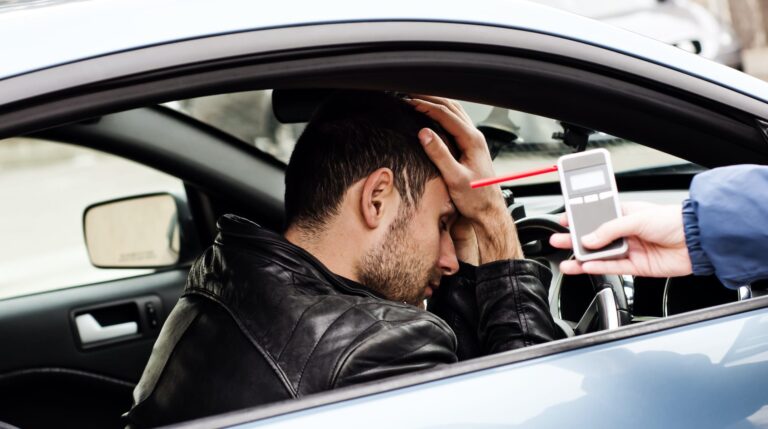
The police have heard them all before: “I was only sitting in the car”, “I didn’t realise how much alcohol was in my cocktail” and “I was just moving to a safer place”.
These are just some of the many excuses motorists come up with when they have been stopped by the traffic cops for suspected drinking and driving. Many of the explanations are just ways for drivers to get away with their tippling transgression, some are plain stupidity and yet more are simple myths that drivers really believed would make them immune to drink drive prosecution.
Every year around 55,000 people in England and Wales are convicted of drink-driving related offences, according to Department of Transport statistics. And with recent figures showing that each year on average 7,860 people are seriously injured and 280 are killed due to drink-driving, getting behind the wheel after drinking alcohol is a more serious offence than some might think. The courts don’t: the offence carries a minimum 12-month driving ban.
Now an expert motoring lawyer has shed some light on the top ten reasons why people are convicted of drink driving. And whether they are fact, fiction or just stupidity, they can all land the driver with a serious penalty.
Manjinder Kang, of Birmingham-based motoring specialists Kang & Co Solicitors, helps to bust some of the myths around the offence to raise awareness of why it should always be “none for the road”.
1. I only moved the car 10 metres
How far you drive the car is irrelevant. Being behind the wheel of a car while under the influence of alcohol is an offence.
When you have alcohol in your system, your reaction times and perceptions are impaired – which means that even moving your car a short distance to park it carries a risk.
2. I didn’t think I would still have alcohol in my system
This is one of the most common misconceptions. People think that once they have slept they won’t have alcohol in their system the next day.
It can take on average an hour for every unit of alcohol you drink to leave your system. However, there are no hard rules and it relies on many factors including metabolism, alcohol strength and body mass index.
3. I had a big meal so it should have sobered me up
Nothing but time will help to get rid of the alcohol in your system as your liver chemically breaks down the alcohol and eliminates it from your body.
So even if you have a coffee, a cold shower or eat your body weight in nachos it will not help sober you up any quicker.
4. I was only sitting in the car listening to music
It is an offence to be drunk in charge of a vehicle, ie in possession of the keys – even if you are not driving. So, sitting in the car without the engine on is not a defence.
5. I only had two drinks so I wasn’t drunk
The legal limit is 35mg of alcohol in breath and not related to the number of drinks you consume. There is no way of knowing how much alcohol you can drink and still be under the drink-drive limit.
There are many factors that influence how alcohol is absorbed in your body including; how much you drink, how fast you’re drinking, your body mass index, your metabolism, and the strength of alcohol in your drinks. A pint of shandy is not the same as a large glass of wine or a cocktail, but not drinking any alcohol while driving will always be the safest option.
6. It was only a quick drink to settle my nerves
Known as the ‘hip flask’ defence some drivers reach for the bottle to steady their nerves after a crash. They may not have been drinking when they had the accident but when the police turn up the driver is tested and over the limit.
If you are involved in an accident, never be tempted to try to steady your nerves with alcohol – you could find yourself in a much worse position.
7. I thought I would get points on my licence; why did I get a driving ban?
A drink-driving conviction carries a minimum 12-month driving ban and can go up to three years and result in a prison sentence – even for a first offence. If you are caught drink driving twice within a ten-year period, your second offence also carries a minimum three-year driving ban.
As a criminal conviction, any offence will also need to be declared to your employer and will show on future DBS checks for up to five years. A driving conviction will also need to be declared on your car insurance until it is spent and will probably increase your premiums.
8. If I refuse to be breathalysed they cannot prosecute me
If you are tempted to refuse to be breathalysed to avoid being caught, think again. Refusing to provide a specimen will be classed as obstructing a police officer and the penalty will automatically be harsher – whether you were actually over the limit or not.
9. They can’t ban me from driving if it is going to cause family hardship
There are cases where you can put forward an argument in court which is called ‘exceptional hardship’. If you can show a ban would cause increased hardship to your family by resulting in you losing your job, risk you losing your home or being unable to provide for your family, the courts can show leniency and revoke a ban.
This is not possible with a drink-driving offence. Regardless of the impact, the minimum driving ban for drink-driving is 12 months and you cannot argue ‘exceptional hardship’ to avoid or lower a ban.
10. I won’t get prosecuted as long as I’m under the limit
Even if you produce a specimen that shows that you are under the legal blood or in breath alcohol limit, you can still be prosecuted for being impaired through drink or drugs.
As alcohol affects everyone differently, many drivers can be significantly impaired below the legal limit of 80mg in 100ml of blood. Police will carry out a Field Impairment Test and if you are shown to be ‘impaired’ due to alcohol then you will still receive a year’s ban.
‘None for the road’ is always best
“The message is simple. If you are looking to get behind the wheel of a car no alcohol is always best,” says Manjinder Kang. “It is surprising how many people do not understand the law when it comes to drinking and driving, and the ongoing consequences you face if convicted.
“Alcohol impairs your judgement and carries substantial risk, which is why if you are driving it is always best to have none for the road.”
More information on the law and drink driving is available at: www.kangandco.co.uk
You go through all the time, expense and drama of learning to drive, take a theory test and a practical examination and finally get your full licence. Then you throw it all away by losing it through disqualification less than two years later. Sounds unbelievable?
Not for nearly 8,000 people last year, it wasn’t.
Figures obtained by independent road safety charity group IAM Roadsmart has shown a worrying increase in the number of new drivers losing their licence within 24 months of passing their driving test.
The findings show that disqualifications have risen sharply among newly qualified drivers: 5,401 drivers lost their licences in 2018, increasing to 7,484 in 2019 and again to 7,975 last year.
Driving without insurance is one of the top reasons why new drivers are falling foul of the Road Traffic (New Drivers) Act. More than 12,000 have been caught driving without proper cover since 2018.
The New Drivers Act was introduced to give newly qualified motorists a probationary period of two years after passing their driving test. During this time, drivers will lose their licence if they commit offences leading to six or more points on their licence.
So two penalty charge notices (PCNs) for speeding would mean automatic disqualification. Once the newly qualified driver reaches six points they need to retake both their theory and practical driving tests again.
Speeding was the second highest reason for new drivers losing their licences, with more than 5,500 being convicted of this. Other reasons for the newly qualified to lose their licence within their probation period include not being control of the vehicle – often by using a mobile phone behind the wheel – and failing to provide information about who was driving a vehicle when an offence was committed.
“These figures paint a worrying picture,” says Neil Greig, IAM RoadSmart director of policy and research. “It is the responsibility of all drivers, whether they are newly qualified or more experienced behind the wheel, to drive safely and within the law at all times and to ensure the vehicle is roadworthy and insured for the purpose it is being used.
“Driver education is something that drivers should want to continue and develop as they gain experience behind the wheel. Post-test driver training such as an advanced course or driver training through employment allows the driver to continue to improve their confidence, skills and ability to drive safely on our roads.”
Having an emergency vehicle come rushing up behind you on the road can cause panic in lots of drivers. The noise of the sirens and glare of the flashing lights add to the pressure of trying to get out of the way so the vehicle can attend to its emergency.
Or maybe you’re sitting in heavy traffic and an ambulance is trying to get through the gridlock. What are you supposed to do? Should you cross into an intersection or mount a kerb to get out of the way?
Stay calm, stay alert
Often you will hear the siren of an emergency vehicle before you see the flashing lights (unless you are one of those delightful individuals who has the music turned all the way up and would be unable to hear a nuclear explosion right next to you).
Work out where the sound is coming from and look for opportunities to move over to the side of the road. There’s no rush; far better to take a few moments to make sure there are no cyclists in your blind spot or other cars also trying to dive out of the way.
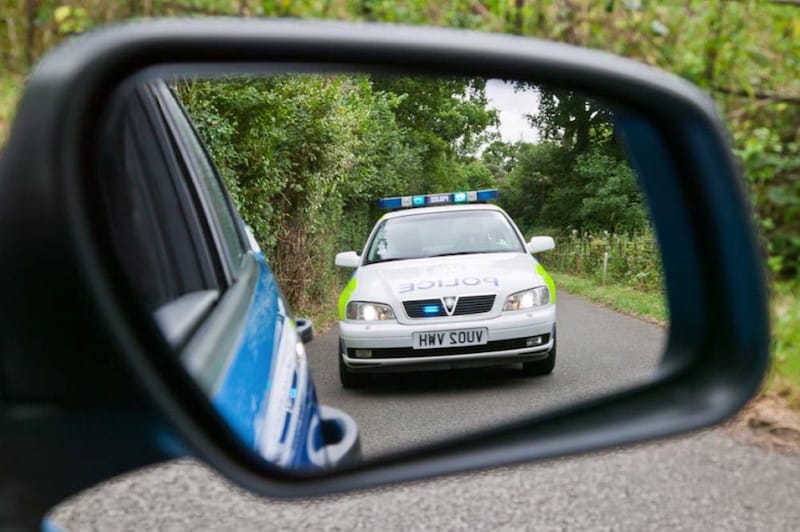
Even if an emergency vehicle suddenly appears in your mirrors with lights flashing and siren blaring, the same thing applies. Keep calm and follow your normal ‘mirror, signal, manoeuvre’ routine. The few seconds that it takes may avoid an accident by ensuring that you don’t move over on another road user, and the emergency vehicle can understand exactly what you’re doing rather than trying to guess.
(c) DVSA
Panicking and swerving wildly or hitting the brakes is only likely to lead to an accident and require more emergency vehicles.
Police, ambulance, fire and other emergency drivers are trained to deal with negotiating traffic, and they are allowed to break traffic laws if they are in an emergency situation (lights and sirens going). What they need you to do is be calm, courteous, safe and predictable so they can get past quickly and safely.
“Emergency and Incident Support vehicles. You should look and listen for ambulances, fire engines, police, doctors or other emergency vehicles using flashing blue, red or green lights and sirens or flashing headlights, or traffic officer and incident support vehicles using flashing amber lights. When one approaches, do not panic. Consider the route of such a vehicle and take appropriate action to let it pass, while complying with all traffic signs. If necessary, pull to the side of the road and stop, but try to avoid stopping before the brow of a hill, a bend or narrow section of road. Do not endanger yourself, other road users or pedestrians and avoid mounting the kerb. Do not brake harshly on approach to a junction or roundabout, as a following vehicle may not have the same view as you.”
The key phrase here is “… take appropriate action to let is pass, while complying with all traffic signs.” In other words, don’t ignore traffic signs (including traffic lights).
Although the above rule is probably not very well written and does not state it clearly, there is nothing in the Highway Code which says you can break the law to assist an emergency vehicle.
Don’t break the law unless instructed to by police
City streets can be a navigational nightmare for emergency vehicles, as they try to thread their way through a gridlock of cars, buses and vans. When traffic is at a standstill, drivers will often try to help by moving into an intersection, roundabout or bus lane to get out of the way. However, as much as you are trying to do the right thing, this is usually the wrong move.
If an emergency vehicle driver can see there is no clear path through stationary traffic, like a set of traffic lights, they will often switch off the lights and sirens and wait for an opportunity to move again (like the lights changing).
Official advice from police departments across the country is not to break the law to assist an emergency vehicle unless a police officer instructs you to do so. There are a number of reasons for this, but largely it is a bigger-picture approach to road safety. If you move against a red light into an intersection, you may move into the path of a vehicle coming from another direction that has not seen the emergency vehicle. You may be putting yourself and other road users in danger.
But I’m trying to help!
It often seems like the right thing to do, to pull across into a bus lane or ignore a red light and edge into an intersection to let an emergency vehicle through. However, it may not be helping at all.
Emergency vehicles will often use bus lanes to bypass lots of stationary or slow-moving cars, so pulling over into the bus lane might simply put you in the way and make life harder for the ambulance or police car trying to get wherever it’s going.
Can I be fined for breaking the law to assist an emergency vehicle?
Yes, you can. Councils and local authorities are heartless bureaucracies at the best of times, but in this case they do have the law on their side. There is nothing in the Highway Code which says you can break the law if you are trying to get out of the way of an emergency vehicle.
The internet is full of stories of drivers who are upset because they have been fined by automated camera systems for entering bus lanes or intersections to try and make way for an emergency vehicle to get past.
There are also plenty of stories and old wives’ tales about how you can write to the relevant authority and explain how you were trying to assist an emergency vehicle, but there are no legal provisions to get you out of a traffic penalty. Sometimes these fines are withdrawn if the driver appeals and there is supporting evidence, but certainly not always.
Finally, remember there may be more than one vehicle
If you have pulled over or moved out of the way of an emergency vehicle, don’t blindly pull back out again once it has passed.
There are often multiple police cars, ambulances or fire appliances heading towards the same incident, so you may have let one vehicle past and then pulled straight back into the path of another one following behind.
Also, there will be other vehicles who have taken avoiding action who are also looking to continue their journey, so be aware that other road users around you are all trying to re-enter the road space at the same time.
Road safety leaders have been left feeling restless, after 10% motorists in a new survey admitted they have fallen asleep while driving.
With more than 40 million licence holders registered in the UK, this works out to four million drivers who have potentially nodded off behind the wheel.
And while drivers motorists said they had only dropped off momentarily the shock news, in a survey from independent road safety charity IAM RoadSmart, will set alarm bells ringing among road welfare campaigners.
Even the briefest lapse in concentration when driving can have devastating consequences: at 70mph, a car travels more than 100 feet every second.
Some motorists went further, to paint a worrying picture, as one in ten of those surveyed admitted to actually briefly closing their eyes because they were so tired. And more than half of drivers questioned said they were very concerned about fatigue when doing long distances. That equates to more than 20 million motorists who are worried about momentary driving dozes.
“Fatigue behind the wheel is a very serious problem, perhaps more concerning than previously thought,” says Neil Greig, IAM RoadSmart director of policy & research.
“It is shocking to think a potential four million drivers have closed their eyes behind the wheel because they were so tired, even if it was just for a short time. The potential carnage that could result from even one accident doesn’t bear thinking about.”
Further results from the research highlighted that millions of drivers have succumbed to tiredness when driving, with one in ten admitting they had hit a rumble strip, while a further four in ten had turned down the heating, rolled down the windows or turned up the radio in a bid to keep them wide awake on the wide open road.
On a positive note, a quarter said they had pulled over to have a rest and a coffee.
“Driving a long distance needs pre-planning to ensure there are plenty of available rest places and to make sure there’s enough time to complete the journey if delays are encountered,” added Neil Greig.
“Never drive for longer than two hours without a break and take particular care if driving when you would normally be asleep. This is even more important as the country re-opens after the pandemic and not all facilities are available yet.
“Drivers can then concentrate on staying alert behind the wheel rather than staving off tiredness by trying to reach their end destination without adequate rest breaks.”