Aggression on UK roads getting worse says new study

0

Increased aggression between car drivers and cyclists is putting lives at risk in the UK with 65% of drivers saying aggressive cyclists have been a threat to their personal safety, according to a new survey.

The research also shows that 78% of drivers claim other motorists have threatened them. And it comes as new Department for Transport (DfT) figures reveal that one in 12 of the 1,339 deaths on Britain’s roads in 2021 were linked to aggressive behaviour.

The findings, from safety charity IAM RoadSmart, show that the aggression problem is worsening on both sides of the road-using rivalry, with 60% of drivers surveyed believing that aggressive cyclists are a bigger problem now, than compared with three years ago. A further 63% of drivers said they thought aggressive motorists have become more of an issue over the same time period. 

Demonstrating the conflict between motorists and cyclists, a driving safety report by the charity found that there was limited support for a new law which would assume that the driver is always responsible for any collision with a cyclist or pedestrian in an urban area – 61 per cent of those questioned were against this.

“The government has introduced a range of laws in recent years in an effort to fix the daily conflicts we see between motorists and cyclists,” says Neil Greig, director of policy and research at IAM RoadSmart. “But if our research is anything to go by, this has largely been to no avail, with the majority of respondents still reporting aggression and conflict among road users.

“There is no quick-fix to this issue, but our findings shed light on the urgent need for the government to maintain its education campaigns on the new Highway Code, and continue to invest in safe road markings for more vulnerable road users to minimise the chance of conflict wherever possible.

“In the meantime all road users, whether on two or four wheels, should exercise calmness and restraint to help us all use Britain’s roads safely.”

Read more:

How to get better MPG

There’s plenty of ways to save pennies on running your car, whether it’s getting another quote for your insurance premium or using the cheapest petrol station in town. Getting more miles per gallon (MPG) is another way to save money on motoring. 

MPG is a way to quantify fuel economy, so the higher the number the more efficient a vehicle is. Improving MPG is a good way to make a daily effort towards reducing fuel costs. Here’s some tips and tricks on how to get better MPG. 

Vehicle health 

Following the manufacturer’s advised service intervals will ensure the vehicle stays in good condition. Regular maintenance helps the engine to keep performing at its best, skipping services could affect engine efficiency and cause greater fuel consumption. 

Tyre health is also a key maintenance consideration to keep on top of. As the only part of the vehicle that comes into contact with the road, it’s important that your tyres are well looked after and optimised for fuel economy. 

The correct tyre pressure varies depends on the weight in the vehicle. The correct pressures can usually be found on the inside of the driver’s door – or on the fuel cap or in the vehicle handbook – and indicate different pressures for heavier loads. Make sure to regularly check tyre pressure is at the correct level, plus checking regularly will also help to detect slow punctures that you might not notice in normal driving.

Over-inflated tyres are more prone to punctures and excess wear. Under-inflated tyres have a greater surface area on the road that increases rolling resistance. Higher rolling resistance means there’s more friction between the tyre and road, causing the engine to work harder to overcome these forces.

Tyres now come with efficiency ratings, ‘A’ being the most efficient and ‘E’ the least efficient. When it comes time to replace tyres, these ratings are good indicators for tyres that will support better MPG. 

Driving style

The way you drive is the main way to influence fuel economy. Causing the engine to work harder than it needs to uses more fuel and decreases MPG. Smooth acceleration keeps fuel consumption consistent but this means racing off the line is not an option. 

In cars with manual gearboxes, being in the right gear gives the engine sufficient power without burning unnecessary fuel. At motorway speeds it’s a good idea to use cruise control to maintain a consistent speed. In vehicles with adaptive cruise control, the car can be slowed down and acceleration can be applied more smoothly. 

Other tech that can aid fuel economy include ‘eco’ driving modes and start/stop engines. ‘Eco’ modes conserve fuel and sometimes employ regenerative braking to capture the energy lost to braking. Automatic start/stop systems cut the engine when the vehicle is at a standstill, often in traffic. Turning the engine off, limits the amount of time a vehicle sits idling and burning fuel without going anywhere. 

Planning your route can help to avoid idling in traffic jams and some sat navs now show the most economical route to take. This might not be the shortest or fastest route but should be the most fuel efficient option. 

Conserve energy  

As well as utilising tech to save fuel, there’s simple practical changes that can influence MPG. Cars are designed to be aerodynamic but the addition of roof boxes and bike racks disrupts airflow, creating more drag. This also increases the weight of the car, making the engine work harder to shift a heavier vehicle. 

When not in use, remove roof boxes and additional baggage to restore the vehicle to its intended aerodynamic design and weight. At high speeds having the windows down can also create drag. Whilst the use of air conditioning at lower speeds has a negative impact on MPG, cooling down using air conditioning at high speeds is better than putting the windows down. 

Using electrical components like heating and air conditioning drain energy from the battery that needs to be replenished by the engine. Only using these when necessary means the battery doesn’t need to draw on the engine as much to recharge. 

Read more:

Controlling the cost of car rental

If you’ve had to book a rental car at home or abroad in the past year, you’ll notice that the cost has soared. The shortage of new cars caused by the pandemic and then the semiconductor shortage meant manufacturers no longer farmed out excess stock to car rental firms and diverted supply to dealerships.

Here’s our guide on how to keep your car rental costs under control.

Where to get a quote

The company you use for car hire will be dictated by price but also by location. You may have to settle for the firm with an office nearest to you and one which opens and closes at times you’ll want to collect the car then drop it back (many close Sundays or don’t open early). You can get your car delivered to home, but this costs extra.

There can also be extra charges for hiring from an airport or city centre location. Book with a BVRLA member, which adheres to a professional code of conduct.

As an alternative to going direct to big name firms, car hire brokers are third party online sites which will give you a comparison list. In a recent survey of six car hire brokers, Which? recommended Zest for its high customer satisfaction rating. It provides quotes from big name brands in the UK and abroad, and includes important extras.

What you do and don’t get in every car rental

Most companies only provide a basic online drive-away quote that will not include additional extras, such as child seats, sat-navs, paperwork for taking the vehicle abroad or additional drivers.

You choose the type of car you want by size, but don’t expect to get exactly the model used in the illustration. The phrase ‘or similar’ means you’ll get a car of roughly the same type and size. If you’re lucky you may end up with a slightly bigger model, depending on what’s available on the day.

All renters get the ability to use the car for an unlimited mileage in the period of time they rent it for. It should be fully cleaned and ready to go with a full tank of fuel. You top it up on return unless you’ve bought a pre-arranged package, otherwise the rental company charges for fuel and time – and they will certainly charge you more than the going rate at the local petrol station.

To give an example of a basic hire cost (although it’s hard to compare like-for-like) we got an online quote for a Ford Focus (“or similar”) for a long weekend rental in February 2023 from a greater London branch starting at 3pm Friday and ending 10am Monday.

It’s worth noting that you can’t have a half day hire, so make the most of a 24-hour period, i.e., if you rent on a Friday from 3pm, you won’t save any money returning the car at 10am Monday and will still be paying for up to 3pm Monday.

With Europcar, the starter online price for this weekend was £257, compared to Enterprise at £173 and Hertz (for a Vauxhall Astra) at £196. Rental companies like to have upfront payments rather than at the desk, so if you paid at the location these quotes became £281, £191 and £235 respectively.

The insurance racket

You will be insured to drive the car dependent on your age. Generally, UK and European car hire agreements will automatically include CDW (Collision Damage Waiver), theft and third-party liability. This means that if you end up damaging the vehicle, or causing damage to something else, you only need to pay out up to the excess limit, and the car hire company’s own insurance will cover the remainder.

However, that excess can still amount to thousands of pounds. This is where the hire car companies try to extract more money from you to reduce this excess to zero or a nominal sum.

It’s up to you, but many of us have experienced pushy up-selling of extra insurance products at the desk when we were about to get the keys. Taking our weekend sample quote to reduce the excess to zero, Hertz wanted £87 extra.

Insurance excess policies

You don’t have to have excess insurance from the hire car company. Which? is plain on this: ‘insurance from car hire companies is overpriced and poor quality when compared with the policies offered by third parties.’

The alternative to insurance add-ons from the car hire companies is to buy an excess reimbursement policy independent of your rental. The policy is provided by a third party, has no connection to your rental company and does not eliminate your agreed excess.

You reman liable for this amount, which is usually held as a deposit on your credit card. In the event of damage or theft of the vehicle, you pay the excess to the rental company and make a claim on the excess reimbursement policy. You just need to be sure that your credit card limit can comfortably absorb the excess.

Buying an excess reimbursement policy is extra chore but the savings can be remarkable. For example, Insurance4carhire at Swinton provides UK and foreign excess cover by the day or for annual multi-trip policies. Its quoted price to cover an individual for the exact period of our sample hire was £12.79.

Another provider Reduce My Excess, which is backed by insurer AIG, quoted £10.80. Car hire broker Zest includes excess reimbursement insurance as standard and a free second driver at some locations. 

Ten tips for a stress-free rental

  1. Book early. This especially applies to holiday hire cars and for peak times in the UK such as Easter, Christmas and bank holidays.
  2. Book online and pay upfront but be aware that you can’t cancel less than 48 hours before the rental.
  3. Get the size of car right at the outset – the cost difference to the next size up is usually not that high.
  4. If you need an additional driver, add it onto your quote. It costs more if you suddenly decide at the desk.
  5. Buy excess insurance at the same time as you hire online, but only if you have a high limit on your credit card to pay any charges upfront then claim them back.
  6. Bring your own sat nav. If the data allowance on your mobile phone will stand it, use maps and buy a holder to stick it to the windscreen or dash.
  7. Bring your own child seat or booster cushion. This can save you about £40 on our sample three-day hire.
  8. Allow enough time at collection to agree any existing damage with the staff. Take pictures.
  9. Bring it back full or you will be charged both for the fuel and for the time taken to refill. Work out where the nearest filling station is to the rental location and allow enough time to top up.
  10. Allow enough time at drop off to walk round the car with staff and confirm there is no extra damage. If there is, agree it and take pictures.

Alternatives to traditional rental

If you’re likely to want to frequently hire a car for short periods (even by the hour), then joining a car club might be a much better option than a traditional rental, with much better flexibility, as we explain in our car clubs feature.

Full insurance is usually included and the excess is often much lower. You don’t have to wait until an office is open to collect or return your car and you might be able to find a car club car just around the corner from your home.

The weather’s changing – and so should your driving style

0

As drivers, we become used to long, hot summers and, even as the year marches on an extended autumn can lead to continued clear weather and dry roads.

So when winter suddenly does arrive with a vengeance it can take a little time getting used to the renewed, more treacherous conditions. Windscreens become frosty, mornings and evenings are darker sooner and for longer, roads become wetter and more slippery and freezing tyres don’t work as well on sub-zero surfaces.

It’s time then, to slow down and change your driving style to suit the season. Winter brings with it Christmas but that’s where the good cheer ends as it ushers in wintry driving conditions. You have to plan ahead and take longer preparing your car before you even leave your driveway or pull away from the kerbside. And then, once out on the road, it’s even more important for a calm head and considered judgments.

In any weather, driving safely is a complex skill that requires concentration, clear thinking and awareness of the changing situations around you.  But when conditions take a turn for the worse, drivers have to make good decisions in more difficult circumstances with less visual information available. This puts more pressure on them which can be extra stress that many struggle to cope with.

Drive to the conditions, not the speed limit

Common sense tells you that when your visibility is reduced by darkness, rain or anything else, you should reduce your speed to make sure you can see what’s coming with enough time to react. 

It’s perfectly OK to slow down and allow more room for you and the vehicles around you.  So what if you arrive five minutes late?  Better that, than having an avoidable accident because you were in too much of a rush and couldn’t stop in time when you needed to.

Instead of rushing to your next appointment or destination, plan ahead and leave yourself extra time to get to your end point – it’s safer this way and less stressful too.

Visibility, braking and steering reduced in the wet

Not only is your visibility affected in wet weather, braking distances are usually longer and your tyres won’t have as much grip to steer. So not only might you spot danger later, but you won’t be able to stop or steer out of harm’s way as quickly as if it was in the summer.

Those three factors all mean that your chances of having an accident at any given speed are much higher in wet weather than in the dry. So slow down and keep a careful eye on the road conditions and traffic.

You must ensure you can see clearly and all-round out of your windscreen, rear screen and side windows. If your screen is misted up or frosted, take a few minutes to clean it properly so that you can see clearly through the entire window.  Clearing a small patch directly in front of you is not sufficient to provide a safe level of visibility and it’s not something the police look kindly on either.

Driving in fog

Taking to the road in fog is a particularly unpleasant, and potentially dangerous, experience. It goes without saying that visibility is massively compromised which means you can’t see obstacles ahead of you until much later, and your car also can’t be seen by other road users. Driving in fog is stressful and tiring and should be done slowly and carefully.

Your car is probably equipped with front and rear fog lights so use them as required, alongside your normal headlights. You must not use fog lights unless visibility is seriously reduced as, in clear conditions, they can dazzle other road users and might obscure your brake lights. You should switch them off as soon as visibility improves.

Keep a safe distance from the vehicle in front and be aware that rear lights can appear further away than they really are. Check your mirrors regularly and especially before you slow down – touch your brake pedal early so that the brake lights illuminate. If someone appears too close to you, don’t try to accelerate to get away from them.

At a junction, stop in the correct position and be prepared to wind your window down so that you can listen for approaching traffic as well as look. When you are sure it is safe to emerge, do so positively and don’t dawdle in a position that leaves you sitting in the path of approaching vehicles.

Read more:

Top ten tips to save fuel as costs soar

0

The cost of living crisis has led to many drivers using their car less. For drivers worried about the amount they have to spend keeping their car running, there are plenty of changes to make that can help their car run more efficiently and save fuel and money.

The way that you drive and the condition of your car will play a huge role in the amount of fuel you use on a daily basis, and these unnecessary costs can really add up over time.

Earlier this year, the RAC called it a ‘dark day’ when the average cost to fill a family car went over the £100 mark. At those prices, if you are doing this once a week, your annual fuel bill will be around £5,200 a year.

There are many ways you can save on ever-more expensive petrol or diesel bills, as our top ten tips below show.

1. Engine: Keep your car well maintained by making sure the recommended service schedule is followed either by taking it to a reputable garage, or servicing it yourself. A well-tuned engine with fresh, clean oil and new air filters will run more efficiently than an engine that has been neglected.

2. Tyres: Tyres are important for saving fuel as a tyre which is under-inflated by 10% can reduce fuel economy as it increases rolling resistance. As well as helping you to save fuel, correctly inflated tyres are much safer and last longer, as if they are either under or over inflated they become more susceptible to failing.

3. Windows: When you have your windows open it increases aerodynamic drag, causing you to put your foot down harder and using more fuel to maintain the same speed. Air-conditioning also uses fuel to operate, so limit this use as much as possible to save fuel.

4. Petrol station: Many drivers spend hours shopping around to find the best deal at the pumps, checking pump prices on-line such as at petrolprices.com. But make sure you weigh up the cheaper fuel prices to any distance you need to travel to the petrol station.

5. Gears:  When driving use as high a gear as possible. The higher the gear, the lower the engine speed, which can improve fuel efficiency, so change up a gear whenever you can without labouring the engine. Using cruise control on major roads will help you to stay at a consistent speed which will help to improve fuel consumption as well.

6. Smooth driving: Aggressive driving can use as much as a third more fuel than smooth driving. Avoid accelerating or braking too hard, and also keep your steering as smooth as possible. Keep looking ahead for traffic lights and slower traffic, and coast up to them rather than accelerating and then braking to a stop.

7. Excess weight: It’s amazing how many people carry around huge amounts of unnecessary stuff in the boot or on the back seat of their cars, or have roof racks mounted despite never using them. Lose the deck chairs, picnic table and tool box until you really need them and you will definitely save fuel.

8. Bulbs: Having the correct bulbs fitted to your vehicle can help save emissions and money. Philips EcoVision bulbs, for example, have been specifically designed to produce 20% less energy than a standard car lamp and also give four times the lifetime. They are the world’s most environmentally-friendly bulb and can save you an average of 14 litres of fuel per pair of headlight bulbs.

9. Following lorries: Following (but not too closely) a lorry on the motorway can help to improve fuel consumption even up to 200 metres behind them. A lorry will create less air resistance for your vehicle because they have already passed through the air creating a tunnel or ‘slipstream’ behind it.

10. Don’t drive in neutral: For most modern cars leaving your car in neutral when coasting downhill or up to a red light can actually waste fuel. If you are coasting, your engine is idling and actually still using fuel. Leave it in a high gear or use lower gears for engine braking and you will save your brake pads as well as fuel.

A guide to the London Ultra Low Emission Zone (ULEZ) 

Driving in London isn’t exactly a stress-free experience to start with, but on top of the traffic there are also fees associated with driving in the city that you need to be aware of.

The London Congestion Charge Zone (CCZ) and the Ultra Low Emission Zone (ULEZ) are two separate areas where fees apply to most vehicles travelling in the city. Confusingly, they also operate at different times of day, and different days of the week. You may have to pay either one or both of these charges when you drive into certain areas of London.

The ULEZ currently covers the area inside the North Circular (A406) and South Circular (A205) roads. A separate Low Emission Zone (LEZ) expands out to Greater London. ULEZ charges apply all day, every day, apart from Christmas Day (25th December). 

The ULEZ is charged at a standard daily fee of £12.50, which you have to pay each day that you travel in the zone. It’s important to note, the day runs from midnight to midnight so if you are travelling late at night you might have to pay for two days. 

What is London’s Ultra Low Emission Zone (ULEZ)?

The Ultra Low Emission Zone is a government initiative introduced in 2019 to reduce emissions and harmful pollutants in the capital. To improve air quality, the initiative charges those with heavily polluting vehicles to travel into and with London.

When it first launched in 2019, the ULEZ covered the same area as the congestion charge zone. It expanded out in 2021 to its current size, covering everywhere inside (but not including) the North Circular and South Circular roads.

The ULEZ is expanding in 2023 to cover the entire area currently covered by the LEZ, which includes all of Greater London. This covers most of the area inside the M25 orbital motorway. 

What are the ULEZ rules and what will they be in 2023?

The ULEZ applies to all vehicles travelling within the designated zone, with any charges depending on their emissions ratings. In comparison, LEZ charges only apply to commercial vehicles. When the ULEZ expands in 2023 this will affect all vehicles in all of Greater London. 

If you live within the ULEZ,  you have to pay the daily charge to drive any vehicle that does not comply with the emissions standards set out by the scheme (see below), even if you’re just popping down to the shops.

If your vehicle is parked in the ULEZ zone, you will not be charged if the car doesn’t move within that chargeable day. 

What vehicles have to pay ULEZ?

Vehicles liable for the ULEZ charge are deemed to be too polluting and don’t meet current or EU emissions regulations (which are still used by the UK post-Brexit). The minimum requirements to avoid fees in the ULEZ are as follows: 

  • Euro 3 for motorcycles, mopeds, motorised tricycles and quadricycles 
  • Euro 4 for petrol cars, vans, minibuses and other specialist vehicles
  • Euro 6 for diesel cars, vans and minibuses and other specialist vehicles

Euro 6 became standard in the UK for all new cars registered from September 2015 onwards. There are many cars that were registered before this date that also comply with Euro 6 standards, but any diesel cars registered after September 2015 will be exempt from ULEZ charges. 

Euro 4 was introduced some 16 years ago back in 2006, so most petrol cars will be compliant as the average life span for cars in the UK is 14 years. Cars made before Euro 4 standards have to pay the ULEZ charge as they are more likely to be bigger polluters – the rules are baed on the overall legal standards rather than specific emissions levels of individual vehicles.

Euro 3 for motorcycles (styled as Euro III to distinguish them from cars) came into effect in 2006, so again most motorcyles and scooters will be compliant and therefore won’t need to pay the charge.

The daily charge for all vehicles that do not meet the above emissions standards is £12.50. This is payable by midnight on the third day after travel. 

In summary, if you have a petrol car first registered before 2006 or a diesel car first registered before September 2015, you will probably have to pay the ULEZ charge. If you have a petrol car registered in 2006 or later, or a diesel car registered in September 2015 or later (65-plate or later), you won’t have to pay the ULEZ charge.

How do I know if my car or bike is ULEZ-compliant?

Log on to Transport for London’s ‘Check Your Vehicle’ web page and you will be asked for your number plate. The system will then tell you whether your vehicle meets the ULEZ standards. 

If your vehicle is compliant, there is nothing else you need to do (although you may still need to pay the congestion charge). If your vehicle does not comply, you can then click through to the ULEZ payment section.

How to pay ULEZ charges

ULEZ fees are mainly paid online now, but you can still pay via post if you prefer.

To pay online, log onto the ‘Pay to drive in London’ Transport for London website then enter your number plate and day of travel. After confirming that you definitely do need to pay the ULEZ charge, the system will proceed to the payment section.

If you regularly travel in the ULEZ and your car does not meet the requirements, you can set up automatic payments. This means every time you travel into the ULEZ, you will be automatically charged as long as the number plate of the vehicle you are driving matches the number plate you registered. 

An annual £10 fee is charged to register each car for automatic payments. There’s also fleet auto pay for businesses that have more than five vehicles that will be travelling in central London. Again, this will charge automatically for the vehicles that have been registered.  

Do I have to pay ULEZ on top of Congestion Charge? 

Whilst the payments are processed on the same gov.uk portal, the ULEZ and congestion charge are separate fees with separate rules. If your vehicle is not ULEZ exempt, this needs to be paid in addition to congestion charge.

Will I be fined for not paying ULEZ?

ULEZ charges have to be paid by midnight on the third day after travel. If you fail to pay on time, pay for the wrong vehicle or incorrect day of travel, you will be fined if your vehicle is not exempt. 

The fine is £160, but is reduced to £80 if paid within 14 days. As the zone operates from midnight to midnight you could be sent two separate fines for two days if you travelled around this time of night. 

Will any vehicles be banned under new ULEZ guidance?

Current rules and the proposals for the 2023 expansion of ULEZ do not ban any vehicles from driving in the zone.

It is inevitable that the emissions thresholds for ULEZ will change over time (eg – the Euro 4 minimum requirement for petrol cars will eventually change to Euro 5), but so far there have been no announcements.

ULEZ discounts and exemptions

Disabled discounts

If Blue Badge holders travel in a vehicle that is registered in the ‘disabled’ or ‘disabled passenger vehicle’ tax class they do not have to pay ULEZ charges. This exemption is currently valid until October 2025, after which, vehicles in these tax classes that do not meet ULEZ emission standards will be required to pay the daily charge. If the vehicle is registered in these tax classes there is no requirement to register the vehicle on the government website to qualify for ULEZ exemption. 

Local Businesses

Not-for-profit organisations can benefit from a 100% discount until October 2023 by registering on the government website. This applies to vehicles like minibuses that are used for community transport. After October 2023 vehicles will be required to meet emissions standards or pay the daily ULEZ charge. 

Taxis

Taxis licensed in London are exempt from ULEZ but have a 15 year age limit. All new taxis must be Zero Emission Capable (ZEC). 

Historic vehicles

Vehicles that benefit from ‘historic vehicle’ tax, cars that are over 40 years old, are exempt from ULEZ charges. However, this excludes classic vehicles that are used commercially. 

What other cities in the UK have LEZ/ULEZ schemes?

Elsewhere in the UK there are Clean Air Zones (CAZ) that have similar rules to the LEZ and ULEZ. Cities with CAZs are as follows: 

  • Bath
  • Birmingham
  • Bradford
  • Bristol (charging starts on 28 November 2022)
  • Greater Manchester (under review)
  • Portsmouth
  • Sheffield (charging starts in early 2023)
  • Tyneside – Newcastle and Gateshead (charging starts in winter: late 2022 to early 2023)

Not all cities listed currently apply to passenger cars, some operate mainly to reduce emissions from commercial vehicles and buses. However, more cities are introducing similar schemes. Glasgow also has a LEZ scheme that will include passenger cars from 2023. Oxford is currently running a Zero Emission Zone (ZEZ) pilot scheme for all vehicles that operates from 7am to 7pm, seven days a week.

How to drive an electric car

Readers might find the title to this piece confusing and slightly worrying – while an electric car might be very different to a combustion-engined car in many ways, surely driving an electric vehicle (EV) is a similar experience, not some journey into the unknown?

Well yes, it is – or at least it can be. You can quite happily live with an EV by jumping into it, pushing the start button, selecting drive (electric cars don’t have conventional gearboxes), pressing the accelerator pedal and gliding away. It’s basically just like driving any modern petrol or diesel car with an automatic gearbox.

But there are few things about driving an electric car that are a bit different from a conventional petrol or diesel car, so here are a couple of things to bear in mind.

Is this thing on?

One of the differences to get used to with an EV is that nothing seems to happen when you start it – press the power button and the dashboard screens will light up but there’s no engine sound.

Accelerate away from rest and you may hear a low whine as the car starts to move. And the noise doesn’t get significantly louder, either inside or outside so, as a result, regulations now require new EVs to emit a warning noise of some sort to alert pedestrians and cyclists who otherwise wouldn’t hear you coming.

Instant performance

An electric car will accelerate quite swiftly from a standstill compared to petrol and diesel cars. Electric motors generate all of their torque (pulling power) instantly, so EVs are highly responsive if you stand on the accelerator. A petrol or diesel engine, by comparison, needs to rev up to its optimal working range, which is why you are always changing gears up and down to keep it in the right zone.

An EV doesn’t have a traditional gearbox, so the more you push down on the accelerator, the faster the engine spins and the faster the wheels turn.

Drive your EV this way and you won’t have any problems – but you also won’t be getting the best from it, and you won’t be getting anywhere near the range between battery charges manufacturers quote. Yes, we all know that in the real world you are not going to achieve the miles stated in the glossy brochures before you have to plug in (just as petrol cars pretty much never get near their claimed mpg figures), but you can get a lot closer to the official numbers just by doing some simple things and changing a few ways in which you drive.

(Re)generating miles

The buzzword here is regeneration (knows as regen). While it might sound like a phrase extracted from an episode of Star Trek, it’s actually a crucial part of the design of electric vehicles (and hybrids).

The clever thing about an electric motor is that it works two ways. Pass electricity through it and it will rotate to generate propulsion, which drives your wheels. But if you reverse the process, using the momentum of the moving car (kinetic energy) to turn the motor, it will generate its own electricity which is then sent to the battery.

Virtually all electric cars (and hybrids/plug-in hybrids) regenerate energy at all times when not accelerating – so whenever you lift off and coast towards the next set of traffic lights, or when you hit the brakes. How you can make use of this feature can significantly affect your range – it will only add a tiny amount of electricity each time, but add those times up and it means you have to plug in a little less frequently.

The key to maximising this regeneration is a smooth driving style. Instead of heavily accelerating and then heavily braking, you accelerate to your desired speed smoothly and then coast whenever possible, such as when descending hills. This will not only waste less electricity to start with, but will also aid the regen process to recover a bit of the electricity you’ve used. As a bonus, it’s also kinder to your car in not wearing your brakes so quickly.

Single-pedal driving

Most EVs allow you to increase the amount of regeneration. Cheaper models are likely to have a simple eco or ‘regen’ button – press this and as soon as you lift off the accelerator you will feel the car slow, like you’re applying the brakes. This is caused by increased friction of the motor turning and regenerating more electricity.

Once you get used to this, you can drive the car in almost a ‘single-pedal’ manner, using regeneration to slow the car in most driving situations. You only really need to use the brakes to actually bring the car to a halt or in an emergency situation where more rapid slowing is required.

More expensive EVs have multi-level regeneration, often selected from steering wheel paddles. This enables you to set a more precise level of regeneration according to the type of roads you are driving on. While full regen (where the car slows significantly every time you lift off the accelerator) is fine around a busy town, when at speed on a motorway you don’t want to lift off the pedal and start suddenly slowing – it is better to choose a lower level that allows the car to coast and maintain a reasonable speed.

Many factors affect the usefulness of regenerative braking but the driving environment is the most significant. A couple of years ago, your author road-tested an electric Volkswagen e-Golf on two 45-minute routes, the first involving a stretch of motorway and the second the constant stop-start urban environment of Bicester. After the first, the car’s range had dropped as expected – on completing the second it actually had more indicated range than had been present when setting off, solely due to the regenerative energy produced when slowing for junctions and traffic lights.

Terms and pre-conditions

One useful way to boost your driving range in an EV is by what is called pre-conditioning.

The majority of EVs today are linked to an app you download for your smartphone and it’s worth getting to know it. It can be used for various things like loading a journey into the car’s navigation and finding out where charging stations are available, but perhaps the most useful are the various things you can set the car to do even before you get into it in the morning.

Through the app you can ‘pre-condition’ the car for your journey before you even step outside your front door. This includes heating or cooling the interior to your preferred temperature, switching on your heated seats and such, so it’s perfectly ready for you when you get in it.

While your car is plugged into a charging point in your driveway or work parking space, it means that your heater or air-con are using electricity from the mains supply rather than from your battery. That saves you using crucial battery supply to heat or cool the car once your on the move, helping to maximise your battery range.

Pre-conditioning is good for your car’s battery, too. The lithium-ion batteries used in EVs work best at an optimal temperature range, which means you usually get less driving range in the middle of winter than in the middle of summer. When you set up a pre-conditioning programme on your smartphone app, it doesn’t just warm up the cabin for your benefit but also warms up the batteries so that they’re at their ideal temperature before you start off. This gives you more range and also helps protect the battery over the longer term of your ownership.

Other factors

There are a few more things to consider to make living with an EV a totally happy experience – none of these are essential but all useful.

Once you’re on the move, any electrical item activated in the car will be drawing off the battery and affecting your driving range. So turn off the heated seats as soon as you are warm enough and be sparing with the air conditioning where practical.

There are other things you can do to keep your EV’s range at its best, but they mirror what you should do in a petrol or diesel car to prevent wasting fuel, such as ensuring your tyres are at the optimum pressure, and not leaving lots of heavy items in your boot to be lugged around on every journey.

So yes, driving an electric car doesn’t have to be any different to driving any other type of vehicle – but there are a few simple things you can do to get the very best out of it.

More electric car content at The Car Expert

BYD Atto 3 Neo review – first UK drive

BYD Atto 3 Neo review – first UK drive

Does the Ferrari Luce change the electric car debate?

Does the Ferrari Luce change the electric car debate?

Aion V review – first UK drive

Aion V review – first UK drive

Changan Deepal S05 review – first UK drive

Changan Deepal S05 review – first UK drive

Pricing announced for compact Skoda Epiq

Pricing announced for compact Skoda Epiq

Road rage: the consequences of confrontation

0

Could it be the narrow streets, the rush hour tailbacks or the hordes of pedestrians waiting to cross the roads? Whatever the cause, London was recently revealed as the worst place in Britain for road rage.

More than half of all the capital’s drivers questioned in a survey said they get angry with other road users when they make mistakes, while Northern Ireland, the West Midlands and the South East were also singled out as road rage hotspots in the research, published by road safety charity IAM Roadsmart.

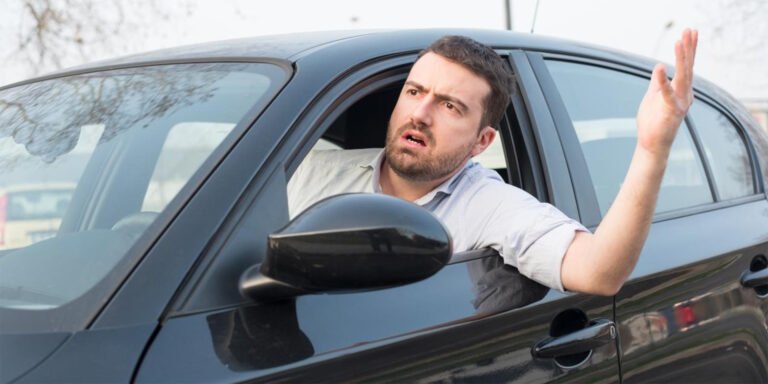
And while every motorist is responsible for keeping cool and driving courteously and safely on the roads, the reality is that doesn’t always happen. Road rage is a needless problem that affects our already over-crowded roads. It’s unpleasant, distracting and dangerous – losing control behind the wheel has led to injury and even death in the past, when it could so easily have been avoided.

There is no such offence as ‘road rage’ but there are plenty of actions that you might consider in the heat of a road-related incident which could get you into big trouble.

Serious consequences

Dangerous or careless driving, for example, is looked upon dimly by the police, as are verbal abuse, threats, criminal damage or any sort of physical violence. In the heat of battle, drivers lose their cool and resort to all sorts of anti-social behaviours which can have serious consequences down the line.

“While feeling angry may be a totally natural response to another road user acting recklessly or dangerously, everyone is responsible for maintaining their composure so that the situation isn’t made any worse,” says Neil Greig, of IAM RoadSmart. “So, for the benefit of yourself and others, take a mindfulness moment, keep calm and motor on!”

Avoiding confrontation

So how should you avoid a road rage incident in the first place? What can you do to make sure you’re not drawn into an altercation with another diver and what should you do behind the wheel if you feel yourself getting upset and angry?

Here are our top tips to avoid road rage:

  1. Don’t compete with others. Help them by making space or letting them through. There are no winners or losers on the road so it doesn’t matter if someone has got in ahead of you.
  2. Forget work or home issues. Concentrate on your driving and try to enjoy it. If you feel stressed, take a few minutes to calm down before even starting your engine.
  3. Plan your journey so you know what you’re doing and were you’re going. Allowing plenty of time to reach your destination will help reduce stress.
  4. Put the radio or your favourite music on. Numerous trials have shown that your favourite music can keep you calmer and less stressful while driving.
  5. Don’t think you can teach other drivers or change their attitudes or behaviours. The only person you can change is you.
  6. Don’t turn your commute or journey into a race. Your family vehicle is not an F1 car and other road users don’t want to see you racing another vehicle to be first to a roundabout.
  7. Count from 1 to 10. It’s one of the oldest solutions in the book, but it works.
  8. Don’t retaliate by using your car’s horn, giving hand gestures, raising fingers, flashing your lights or shouting out of the window. If you’re looking for trouble, these are the ways you’re going to find it.
  9. Don’t try to block other drivers from getting in front of you. You’ll probably never see them again so it doesn’t really matter. Don’t tailgate anyone: it’s dangerous at any speed.
  10. Keep your doors locked and don’t leave the car if confronted. Things could only go from bad to worse.
  11. If you think someone is actually following you, keep your doors locked and drive to a police station.
  12. Live and let live. If someone is driving slowly, they might be lost. If they’re driving badly, change lanes and give them space. Don’t get drawn in to their poorly-driven world. It’s not worth it.

Driver error blamed for rising crash figures

0

We all think we’re great drivers on the road, but new research has shown a big leap in serious collisions – and driver error is to blame.

The analysis, from motor insurance provider Churchill, shows there were more than 223,000 road traffic incidents across the UK between 2018 and 2020, the latest available data.

With the proportion of accidents resulting in death or serious injury rising from 24% to 28%, it meant there were 43 more serious events per 1,000 collisions, according to Churchill.

Police reports show that the most common contributing factor for a collision is driver error or reaction, which was listed in two thirds (66%) of accounts. Behaviour or inexperience, which covers the driver failing to look properly, not judging another person’s path or speed, or taking a poor turn or manoeuvre, was a contributing factor in 23% of incidents. 

Contributing factors leading to road traffic accidents, 2018-2020

CauseNumber of accidentsShare of total accidents
Driver error or reaction148,00566.1%
Behaviour or inexperience51,81723.2%
Injudicious action (unwise driver actions)45,67920.4%
Impairment or distraction34,91815.6%
Road conditions26,18911.7%
Vision affected by external factors23,12710.3%
Vehicle defects3,9201.8%
Source: Churchill Motor Insurance, 2022

This is followed by ‘injudicious action’, which covers exceeding the speed limit, disobeying traffic signals, or performing illegal manoeuvres – a factor in 20% of incidents.

External factors, such as vehicle defects (2%), vision being affected by external factors (10%) and road environment (12%) are less likely to contribute to accidents than factors within the control of the motorist.

Top five accident types, 2018-2020

AccidentCauseNumber of accidentsShare of total accidents
Driver failed to look properlyDriver error or reaction82,94437.1%
Driver failed to judge other person`s path or speedDriver error or reaction43,50219.4%
Driver careless, reckless or in a hurryBehaviour or inexperience36,31316.2%
Poor turn or manoeuvreDriver error or reaction26,65111.9%
Loss of controlDriver error or reaction24,60311.0%
Source: Churchill Motor Insurance, 2022

Failing to look properly accounted for nearly 83,000 (37%) collisions over the past three years, with failing to judge another person’s path or speed (19%), careless, reckless, or hurried driving (16%) and a poor turn or manoeuvre (12%) all listed factors. The worrying cause: ‘loss of control’ contributed to 11% of road accidents.

“The rising number of incidents on our roads leading to death or serious injury is deeply concerning,” says Nicholas Mantel, head of Churchill Motor Insurance. “We know the main causes of these incidents are often down to errors and poor reactions, something that could easily be prevented.

“Avoiding alcohol consumption, getting a good night’s sleep, and focusing on the road rather than multi-tasking, can all help motorists have safer journeys and reduce these risk factors. If all road users just take a few extra seconds to check around them for potential hazards, our roads will be a safer place for all.”

Top ten winter driving myths debunked

0

We have all set off on winter journeys in freezing temperatures and, if you travel to work every morning, you are likely used to the routine once December rolls around; defrost the car, set off a few minutes earlier, and drive with caution, on the lookout for blankets of snow and icy roads.

But can you de-ice your car using hot water? Does your car need a few minutes to warm up before driving off? Do you turn into the skid to correct your car sliding on the road?

We have developed plenty of myths about driving safely in adverse conditions, and with snow already falling and Christmas not too far around the corner, we have debunked ten of the most common beliefs about winter driving and maintenance. Were your notions around car journeys in the cold season TRUE or FALSE? Find out below.

FALSE – setting off in snowy conditions on a road that is already gritted with salt can give you piece of mind, but you should still travel at a lower speed than you would normally and take extra care.

Salt does not dissolve ice immediately, and needs cars driving over it to turn it into an effective solution. In addition, salted roads can refreeze, and any part of the road ahead could potentially be untreated.

TRUE – if your car suddenly stops working in very cold temperatures, there is a good chance that your engine has frozen, but trying to run the engine to warm it up is definitely not a good idea.

Turning the engine over could cause it to overheat, so park your car somewhere warm and wait a few days for your engine to properly thaw before starting it again. To help avoid frozen engines, add a 50-50 mix of anti-freeze and water to the engine’s cooling system.

TRUE – should you encounter a skid while driving, you should gently turn the steering wheel in the direction of the skid. For example, if your car has started to slide to the left, then gently turn the wheel to the left. Although it can be quite the alarming situation, try not to panic.

Slamming the brakes will only make the skidding worse, and overcorrecting by steering too much could cause your car to spin. Remember your speed; If you are starting to skid, it’s a sign that you are driving too fast for the road conditions.

FALSE – stopping distances are indeed longer, but many drivers are not prepared for just how much longer they can be. Depending on your car and its tyres, stopping distances can be ten times longer in on winter roads.

You can increase your car’s traction and braking distance in cold temperatures by fitting winter tyres (and snow sock covers for those tyres in more snowy conditions), which have deeper grooves than standard tyres.

TRUE – while you may have needed to let a car ‘warm up’ previously, modern cars have computers or fuel injection systems that can compensate during cold temperatures.

If you let your car idle you are likely to be using more fuel which can make driving more expensive. In reality, your car generally needs about 20 seconds to properly lubricate engine components in cold conditions.

FALSE – 4×4 drivers certainly do have the advantage when driving in the colder months of the year, but this can give some drivers a false sense of security.

Yes, your car will have more power to help you get moving on slick surfaces, but more power doesn’t mean that you will brake any faster. Always respect the road ahead, and leave plenty of space between your car and the vehicle in front.

TRUE – this one is unlikely to happen to us in the UK, but for those of us enduring the most bone-chilling temperatures the British Isles can muster, this is something to keep an eye out for.

Leaving too much empty space inside your fuel tank can lead to the water vapour in your fuel lines freezing on particularly cold nights; stopping fuel from reaching the combustion chamber of your engine.

FALSE – if only it was that easy! Sure, hot water will break up the ice on your windscreen, but it can crack to windscreen too. This is because, although the glass used to make your windscreen and windows are (usually) reinforced, it isn’t designed to handle dramatic changes in temperature like this; from freezing cold to searing hot.

Buy and use a de-icer solution instead, or make a homemade de-icer solution by filling a spray bottle with 2/3rds rubbing alcohol and 1/3rd water.

FALSE – if you are driving when the visibility is decreased, additional lights are likely to make very little difference. In extreme cases a fog light may be beneficial, but more often than not full beam fog lights will actually make the situation worse, as fog reflects light back, further reducing your visibility.

Maintaining dimmed headlights, paired with cautious speeds and vigilance, should be more than enough to spot obstacles and other cars on winter roads.

We picked this myth up from our friends at WhoCanFixMyCar.com*, who have debunked a few common winter driving misconceptions of their own.

FALSE – this is a pretty big misbelief, and a dangerous one too. The myth comes from the idea that if you deflate your types a tiny bit you will increase the surface area of your tyres, in turn increasing grip on snow and ice. But this is simply not true, and deflating your tires can have heavy effect your car’s ability to steer correctly.

You should remember to check your tyre pressure every so often during the winter months too, as cold weather can cause the air in your tyres to compact.

*The Car Expert has a commercial partnership with WhoCanFixMyCar.com. If you click through to their website, we may receive a small commission. We do not receive any payment or commission if you proceed with any servicing plan.