Driving in Spain – what are the rules?

0

Sun, sea, sangria… and superb roads. With its warm climate, beautiful towns and villages, exciting history and stunning scenery, Spain makes an ideal destination for a holiday. It’s also one that can be easily enjoyed by road, either in your own car or one you’ve rented at the airport.

Spain is a big country – the largest in southern Europe – with long, open roads leading you to exciting places on the coast, through quaint historic villages, up breathtaking mountain passes and deep into major cities with museums, churches and architecture in abundance.

But you’ll need top plan ahead if you intend to drive in the country. The UK has a great friendship and a lot in common with its Spanish counterparts but driving in their country is a rather different experience from doing so in Britain.

It’s more than just driving on the other side of the road, and a Spanish driving holiday requires some careful planning and a good understanding of what you can and can’t do on Spanish roads.

Here The Car Expert looks at the most important elements to consider when planning to take your car to Spain or hiring one there. We’ve included a handy checklist too. As each journey is unique, always check that you have everything covered for your particular visit.

Basic rules for driving in Spain

You must be 18 years or over and hold a full valid driving licence to drive in Spain. A regular licence card will be sufficient, as the paper counterpart is no longer a requirement. You won’t need an international driving permit either. Some countries expect you to have this document – basically a translation of your UK licence – but you can drive in Spain for up to six months without one.

You’ll need to prove that you have insurance cover (but you don’t need a European ‘green card’ anymore) and you should carry with you documents that show the identity of the car, such as a V5 registration document or ‘logbook’. 

Always carry your personal ID or passport with you everywhere, and if your car is more than three years old and has an MOT certificate, take that too. Ensure that the vehicle is fully taxed in the UK before travelling.

The vehicle’s ‘home country’ must be shown on it and for British cars that’s a ‘UK’ sticker or badge. The old ‘GB’ is no longer accepted in Europe, and neither are country badges incorporating the English, Scottish or Welsh flags.

You can buy small ‘UK’ stickers to fix to your front and rear number plates. However, even if you have these, the Spanish authorities will want to see a ‘UK’ sticker or magnetic sign on the rear of the car too.

If you’re travelling to the major cities of Madrid or Barcelona you will probably notice stickers on the rear windows of cars showing their emission levels. These are required for local drivers only, so if you are visiting in your own (ie foreign) vehicle, you won’t need one.

Speed limits

As with most countries in the world, Spain uses the metric system for speed and distance, so all of its road signs are shown in kilometres rather than miles, and speed limits are shown in km/h (kilometres per hour) rather than mph (miles per hour). 

There are strict speed rules in Spain and you should be mindful to stick to these as road conditions and surroundings change.  In residential areas the speed limit is 20km/h. This equates to around 12mph in UK terms, which may seem slow, but don’t be tempted to stray above it.

In built-up areas the limit rises to 50km/h (approx. 30mph), while outside of built-up areas it’s 90 to 100km/h (55 to 60mph), depending on the road and as indicated on roadside signs. Dual carriageways and motorways (autopista) have a speed limit of 120km/h (75mph) and there’s a minimum too – your vehicle must be capable of at least 60km/h (40mph) to travel on a motorway.

You can briefly exceed the speed limit by 20km/h outside of built-up areas if you are overtaking a slower vehicle. It’s the only time this is allowed and does not apply to motorways or dual carriageways. If you are driving a motor caravan (a campervan or motorhome) or towing a trailer, limits are lower – reduced by 30km/h on motorways, and by 20km/h on dual carriageways or any road beyond built-up areas.

Be aware of speed radars, both fixed and mobile, as they are prevalent, as are traffic light cameras. Speeding fines range from €100 to €600 depending on the severity of the violation. Tickets are issued at the roadside. There is a 50% discount if you pay the fine within 20 days, but obviously they’re best avoided the first place.

Satnav units that show the siting of speed cameras are permitted in Spain, but don’t carry any sort of radar jammer if you have one – they are illegal.

Blood alcohol limits

We don’t condone any kind of drinking before you get behind the wheel, but it’s important to know what the legal limit is. As with most of Europe, in Spain the maximum level of alcohol in the blood (Blood Alcohol Content) is 0.5 grams per litre (also expressed as 0.05%) and 0.3 g/l (0.03%) for new drivers with less than two years’ experience.  By comparison, it’s 0.8 g/l (0.08%) in England and Wales, and 0.5 g/l (0.05%) in Scotland.

If the traffic police (policia de trafico) suspect you have been drinking they will request a roadside breath test similar to what you’d expect from UK police. They can also ask you for a breath specimen if you have committed a traffic offence. Anyone involved in any traffic accident will be breathalysed.

Parking regulations

Don’t just pull up and park where you like in Spain as there are rules governing where and how you can leave your car unattended.

Don’t park within five metres of a bend in the road or a junction. If the street is poorly lit, the police will expect you to leave your side lights on.

As in many countries, you should only park in the direction of travel, which in Spain means parking on the right-hand side of the road and facing the direction of travel. The only time you can leave your car on the left side is on a one-way street. This is different from the UK, where we are allowed to park on either side of the road and facing either direction.

It should be clearly marked at the roadside if you have to buy a ticket for parking. ‘Blue’ zones are limited in time (usually two hours) while ‘green’ zones are usually shorter than that. Avoid any ‘yellow’ markings – these mean parking is prohibited.

Spain uses meters and ticket machines for parking purposes – larger cities will offer machines that take credit cards.

Park illegally and you could be towed away. Wheel camps are used in some cities but only when the vehicle is not causing an obstruction.

What to carry in the car

There are several items that the Spanish police will expect you to have in your car while motoring and you risk big on-the-spot fines if you can’t show them. These include reflective jackets (it’s not strictly illegal if you don’t have one but you can be fined for walking on the carriageway without wearing one) and a warning triangle for breakdowns.

Headlamps must be set so that they don’t dazzle oncoming traffic. This can be adjusted manually in some cars while, for others, you can fit headlamp beam deflectors. You don’t have to carry spare lightbulbs but it’s still a good idea, and the same goes for a first-aid kit. Much of this equipment can be found in useful ‘European driving kits’, sold by specialist suppliers such as motoring organisations for around £25.

Seatbelt rules

Seatbelt laws are the same as in the UK: if your car has them, front and rear, they must be worn.

It’s the driver’s responsibility to make sure everyone is buckled up. Children under 12 and less than 135cm tall can travel in the front or rear passenger seats but they must be in a child seat adapted to their size and weight. Children over 135cm can use a booster seat and the usual adult belt. There is no age limitation on this.

Dogs must be properly restrained in cars.

Driving

Keep to the right-hand lane as much as possible but if you are overtaking, do so on the left. Always show your indicators when moving out and again when returning to your lane. A solid white line means no overtaking. The passing (adelantar) of other cars is prohibited within 100 metres of a blind hill or where visibility is less than 200 metres.

Exit and entry ramps for main roads (prioridad de paso) are always on the right and remember to drive anti-clockwise on roundabouts. Emergency vehicles and anything on rails have priority over other road users.

Horns are forbidden in Spain and shouldn’t be used unless in an emergency. In built-up areas they are especially unpopular so it’s better to flash your lights instead. In theory, you could be fined €80 Euro for sounding your horn, although it’s rarely applied.

Spanish traffic lights (semaforos) usually follow this pattern: red to green, then amber and back to red. Always stop on a red light. Don’t make a right turn on ‘red’ as you can in some European countries – it’s not allowed in Spain.

As you approach some Spanish towns you might see flashing amber lights. These are to warn that you’re approaching a 50km/h limit and also serve to slow down traffic.

You cannot use a mobile phone while driving and the same goes for headphones – they’re forbidden and carry a fine of €200 if you’re caught. Hands-free devices are acceptable though.

If you are towing a caravan ensure that your car and the ‘van don’t exceed 18.75 metres in length, 4.0 metres in height and 2.55 metres in width. Make sure your rear-view wing mirrors are wide enough to see clearly behind you.

Unleaded petrol (gasolina), diesel (gasoil) and LPG (autogas) are widely available in Spain. There is no leaded fuel.

Toll roads

Most Spanish motorways are paid for through tolls, for which you can generally use either cash or a credit card to pay and the fee depends on the length of motorway you have used. There are also electronic pay systems (toll tags), called VIA-T and Telepeage, which allow you to pass through toll booths without having to stop at a pay point.

Emergency assistance on the road

Like many European countries, Spain’s motorways have emergency phones sited every 2km. You can also call 112 (the European emergency number) from your own phone and make contact with services such as fire, ambulance or police, 24 hours a day. They will speak English as well as a number of other European languages.

Checklist for driving in Spain

Must haves:

  • Driving licence
  • Passport
  • Vehicle insurance
  • MOT certificate
  • V5 or vehicle ID
  • ‘UK’ country sticker
  • Warning triangle
  • Headlamp beam deflectors
  • Hi-viz jackets

Options:

  • First aid kit
  • Spare bulb kit
  • Screen wash
  • Bottled water
  • Map or satnav
  • Phone power bank
  • Fire extinguisher
  • Torch
  • Fuel can


Read more:

Driving in Italy – what are the rules?

0

For a relatively small country, Italy has so much to offer: historic cities, mountains for skiing, lakes for boating and long, wide beaches for catching some sun. It’s no wonder why Italians are so proud of their homeland and the diversity it can offer.

Most of its beautiful sights and experiences can be accessed by car via good, fast A-roads and motorways (autostrade). Leave the main routes and head for the countless towns and villages dotted throughout Italy and you’ll enjoy wonderful and interesting excursions and stop-overs in some of the most stunning scenery in the world.

The pace of life can be slower and more relaxed than in the UK, which gives visitors time to experience the enviable way of life many Italians lead. It’s what they call la dolce vita – the sweet life!

But you’ll need some careful planning if you do intend to drive in this Mediterranean country.  The UK has a lot in common with its Italian friends but driving in their country is a completely different experience from doing so in Britain. For a start, they drive on a different side of the road from the British.

It’s so much more than that though, and planning a driving holiday, flying in and hiring a car or visiting the country and moving around on business, requires careful planning and a good understanding of what you can and can’t do while using Italy’s roads.

Here The Car Expert looks at the most important elements to consider when planning to take a car to Italy or to hire one there. We’ve included a handy checklist too. As each journey is unique, always check that you have everything covered for your particular visit.

Basic rules for driving in Italy

You must be 18 years or over and hold a full valid driving licence to drive in Italy. The licence card in your wallet or purse will do, as the paper counterpart is no longer a requirement. Nor is an international driving permit – some countries expect you to have this validation, but Italy is not among them.

You’ll need to prove that you have insurance cover (but you don’t need a European ‘green card’ any more) and you must carry with you documents that show the identity of the car, such as a V5 registration document or ‘logbook’. 

Always carry your personal ID or passport with you everywhere, and if your car is more than three years old and has an MOT certificate, take that too. Ensure that the vehicle is fully taxed before travelling.

The vehicle’s ‘home country’ must be shown on it and for British cars that’s a ‘UK’ sticker or badge. The old ‘GB’ is no longer accepted in Europe, and neither are country badges incorporating the English, Scottish or Welsh flags.

You can buy small ‘UK’ stickers to fix to your front and rear number plates which are accepted by Italian authorities. But if you don’t want to do that, use a ‘UK’ sticker or magnetic sign for the back of your car.

Speed limits

As with most countries in the world, Italy uses the metric system for speed and distance. That means distances on road signs are shown in kilometres rather than miles, and speed limits are shown in km/h (kilometres per hour) rather than mph (miles per hour).

In built-up areas the limit is between 50km/h and 70km/h depending on the road and surroundings, so keep a close eye on roadside speed signs. A-roads outside of built-up areas have a 90km/h to 110km/h limit while on motorways the top end is 130km/h (dropping to 110km/h if it’s snowing).

Italian police take a dim view of speeders and you’ll find cameras and mobile units everywhere. Even a small amount over the limit can land you in trouble. Speeding fines vary greatly in Italy depending on how much over the speed limit you were when caught, the type of road you were driving on and the time of day (some fines are increased at night). Avoid all this red tape by staying on the right side of the limit.

You are not allowed to have speed camera locator devices in your car. However, if your car’s satnav unit shows fixed cameras as a ‘Point of Interest’, that is allowed.

Blood alcohol limit

Obviously, we don’t condone any kind of drinking before you get behind the wheel, but it’s important to know what the legal limit is.

There are strict drink-drive limits in Italy. Like most of Europe, the maximum level of alcohol in the blood (Blood Alcohol Content) is 0.5 grams per litre (also expressed as 0.05%) and 0.0 g/l for drivers with less than three years’ experience.

By comparison, it’s 0.8 g/l (0.08%) in England and Wales (0.5 g/l or 0.05% in Scotland).

If the highway police (polizia stradale) suspect you have been drinking they can request a roadside breath test similar to what you’d expect from British traffic police.

Parking regulations

You can’t just pull up and park where you like in Italy and there are rules governing where and how you can leave your car unattended.

Don’t park on or near a bend in the road or the brow of a hill. You should also steer clear of road junctions, cycle lanes, bus stops, loading areas and pavements. Don’t park near a ‘no parking’ sign or in front of garage doors or driveways. These will often have a sign nearby saying ‘passo carrabile’ – it means ‘tow away zone’. Other areas might result in a wheel clamp being fitted.

You should park on the right hand side of the road so you’re not facing traffic. The only time you can leave your car on the left is on a one-way street but not in a narrow one – there should be three metres between you and the cars on the other side of the road.

Some areas are restricted for free parking and you have to pay to stop there. These are often controlled by meters from which you receive a ticket to leave inside your windscreen. These can cost between one Euro and four Euros per hour but everywhere is different. Some are free on Sunday so it’s always worth checking the signage.

What to carry in the car

There are several items that the Italian police will expect you to have in your car while motoring and you risk big on-the-spot fines if you can’t show them. These include reflective jackets (it’s not strictly illegal if you don’t have one but you can be fined for walking on the carriageway without wearing one) and a warning triangle for breakdowns.

Headlamps must be set so that they don’t dazzle oncoming traffic. This can be adjusted manually in some cars while, for others, you can fit headlamp beam deflectors. It’s not mandatory to carry spare lightbulbs but it’s still a good idea, and the same goes for a first aid kit.

Specialist suppliers, such as motoring organisations, sell ‘European driving kits’ for around £25, which contain everything you’ll need.

Seatbelt rules

Seatbelt laws are the same as in the UK: if your car has them, front and rear, they must be worn. It’s the driver’s responsibility to make sure everyone is buckled up. Children less than 150cm tall or weighing less than 36kg must be carried in car seats or on boosters. Children over 18kg can use a booster if you wish. There is no age limitation on this.

Driving

Keep to the right hand lane as much as possible but if you are overtaking, do so on the left.

Don’t attempt to overtake anything on a bend, the brow of a hill, at a junction or when another car is slowing down for pedestrians at a crossing.

Generally, the right of way must be given to vehicles approach from the right, or if it’s on rails such as a tram. These have priority over everything, as do emergency vehicles. If you’re driving on a mountain road and come across another vehicle at a narrow point, the car coming down the hill would be expected to reverse up to a passing place.

Horns are not especially welcome in Italy and if you are in a built-up area it’s much better to use a flash of your lights rather than the hooter, unless there’s an emergency.

Traffic signals follow a similar pattern as in the UK, including the red and yellow phase just before the green for ‘go’. Always stop on a red light. Don’t make a right turn on ‘red’ as you can in some European countries – it’s not allowed in Italy. In some areas you might see a flashing amber light, which means ‘proceed with caution’. This could be at a busy junction, for example.

You cannot use a mobile phone while driving and the same goes for headphones – they are forbidden. A single phone earpiece is acceptable though.

If you are towing a caravan ensure that your car and the ‘van don’t exceed 12 metres in length, 4 metres in height and 2.55 metres in width. Make sure your rear view wing mirrors are wide enough to see clearly behind you.

Unleaded petrol, diesel and LPG are widely available in Italy. There is no leaded fuel but you are allowed to carry filled containers.

Toll roads

Most Italian motorways are paid for through tolls. You can generally use either cash or a credit card to pay for these and the fee depends on the length of motorway you have used. There is also a pre-paid card system called a Viacard which is accepted at most toll booths.

If you are planning to go through a lot of booths, a Telepass is available. It’s an electronic device that’s fixed to the inside of your windscreen and allows you to drive through toll booths in a special lane without having to stop.

Emergency assistance on the road

Italy’s roads have emergency phones sited every 2 km and they’re usually coloured yellow to make them easy to see. Some will connect directly to a call centre while others give you the option to call specifically for breakdown recovery, using a button with a spanner on it, or for medical assistance, which is a ‘red cross’ button.

You can also call 112 (the European emergency number) from your own phone and make contact with services such as fire, ambulance or police, 24 hours a day. They will speak English as well as a number of other European languages.

Checklist for driving in Italy

Must haves:

  • Driving licence
  • Passport
  • Vehicle insurance
  • MOT certificate
  • V5 or vehicle ID
  • UK sticker or number plate markings
  • Warning triangle
  • Headlamp beam deflectors
  • Hi-viz jackets

Options:

  • First aid kit
  • Spare bulb kit
  • Screen wash
  • Bottled water
  • Map or satnav
  • Phone power bank
  • Fire extinguisher
  • Torch
  • Fuel can


Read more:

Top tips for drivers with back pain

0

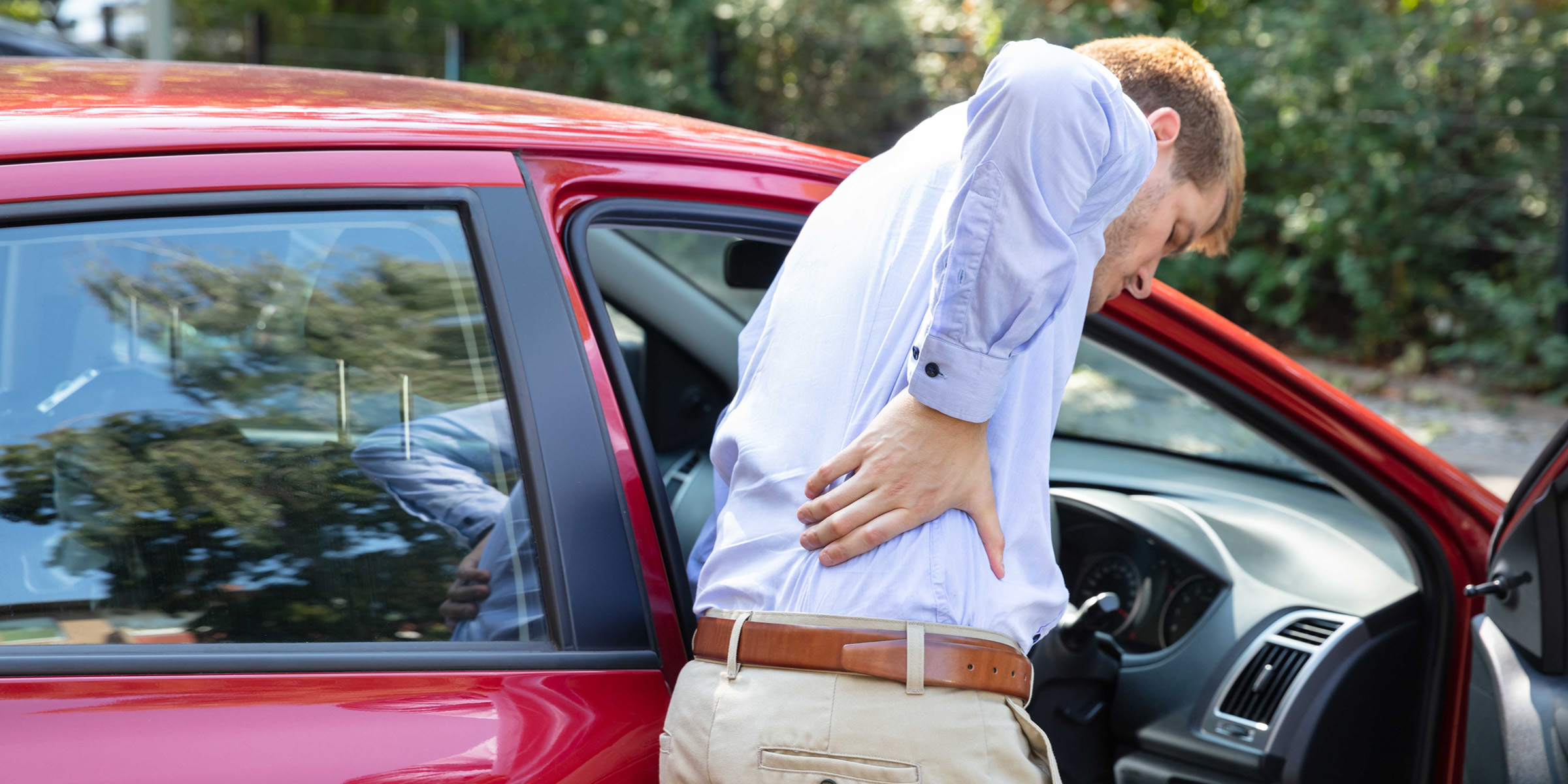
Car journeys can cause some back pain from time to time, but if back pain is becoming a persistent issue when behind the wheel, perhaps it’s time to change your driving routine.

Discomfort and lower back pain are frequent complaints reported by drivers, but road safety and breakdown organisation GEM Motoring Assist says there are simple solutions that can make a big difference for comfort and safety, and has given its top tips for drivers with back pain.

As GEM chief executive Neil Worth explains, “human beings are not built to sit in a constrained posture, sometimes for long periods of time. No wonder this so often leads to stiffness and reduced mobility, especially among older drivers.”

“Regular breaks on journeys are so important,” says health journalist Susie Kearley. “Getting out of the car, walking about and stretching will help to relieve any muscles feeling the strain. 

“Take a break whenever you feel your back muscles tightening. The more you stop and move, the less likely you are to end up with back pain. If you stretch and move before and after your journey, this can be helpful too, particularly if you’re prone to back problems.”   

Here are GEM’s top tips for avoiding and alleviating back pain for more comfortable driving:

Planning

Take the time to plan any long journeys or trips on unfamiliar roads. Build in time for frequent breaks.

Position

Adjust your seat to ensure you can reach and fully press the pedals without your back moving away from the back of the seat. Keep some bend in your knees, as having them too straight can cause pain.

Posture

Try not to slouch in the driving seat, as this is a common cause of back pain. Leaning forward can increase pressure on the back muscles and spine, so good posture is particularly important on long journeys. 

Pockets

Empty your back pockets before getting into the car. A mobile phone or wallet pushing into your lower back can misalign your spine and cause unnecessary pain. 

Source: GEM Motoring Assist

Read more:

Driving in Germany – what are the rules?

0

It’s a big country with a fantastic motorway (Autobahn) network, spectacular scenery and beautiful towns and cities. No wonder Germany is such a popular driving destination for the British.

If you like driving it’s one of the better choices for a motoring holiday. Wide open roads, lots of space and fast Autobahns make getting behind the wheel and heading off for a vacation, a pleasure for solo drivers, couples and families.

But you’ll need some careful planning if you do intend to drive there. The UK has a lot in common with its German friends but driving in their country is a completely different experience from doing so in Britain. And not least because they drive on a different side of the road from the British.

It’s so much more than that and planning a driving holiday, or even taking your car to Germany on business, requires careful planning and a good understanding of what you can and can’t do while using German roads.

Here The Car Expert looks at the most important elements to consider when planning to take a car to Germany, and we’ve included a handy checklist. As each journey is unique, always check that you have everything covered for your particular visit.

Basic rules for driving in Germany

You must be 18 years or over to drive in Germany and you should hold a full UK driving licence. Just the licence card will do, as the paper counterpart is no longer a requirement. Nor is an international driving permit – some countries expect you to have this validation, but Germany is not one of them.

You’ll need to prove that you have insurance cover (but you don’t need a European ‘green card’) and you must carry with you documents that show the identity of the car, such as a V5 registration document or ‘logbook’. 

Always carry your personal ID or passport with you everywhere, and if your car is more than three years old and has an MOT certificate, take that too. Ensure that your car is fully taxed before travelling.

The vehicle’s ‘home country’ must be shown on it. You can buy small ‘UK’ stickers to fix to your front and rear number plates and these are accepted. But if you don’t want to do that, use a ‘UK’ sticker for the back of your car. The ‘GB’ badge is no longer allowed and the same goes for country badges incorporating the English, Scottish or Welsh flags.

Speed limits

As with most countries in the world, Germany uses the metric system for speed and distance. That means distances on road signs are shown in kilometres rather than miles, and speed limits are shown in km/h (kilometres per hour) rather than mph (miles per hour).

It’s often thought that Germany has no speed limits on the Autobahn, but that’s not completely true. There are some de-restricted areas of Autobahn but most stretches have a 130 km/h limit. A-roads outside built-up areas have a 100km/h limit while built-up areas are enforced with a 50km/h limit.

You’re not allowed to have speed camera locator devices in your car, which includes satnav units with the camera detection built-in. If you have one, make sure it is de-activated before you drive on the roads.

Blood alcohol limit

Obviously, we don’t condone any kind of drinking before you get behind the wheel, but it’s important to know what the legal limit is.

There are tougher drink drive limits in Germany than in England and Wales. The maximum level of alcohol in the blood (Blood Alcohol Content) is 0.5 grams per litre (0.05%) for most drivers, although the level is strictly zero (0.0 g/l or 0.0% if you’re not zure what ‘zero’ means…) for ‘new drivers’ with less than two years’ experience.

By comparison, it’s 0.8 g/l in England and Wales (0.5 in Scotland). Police can carry out spot checks with a breathalyser if they suspect you might have been drinking.

Parking regulations

You can’t just pull up and park where you like in Germany and there are rules governing where and how you can leave your car unattended.

Don’t park if you see a ‘parking prohibited sign’ or within five metres of junctions or pedestrian crossings, 10 metres from traffic lights and 15 metres from a bus stop. You should be careful not to leave your car on a narrow road or where visibility is hampered to other drivers.

Make sure you’re not on a taxi rank, stopped facing on-coming traffic or in front of properties or, where narrow, opposite their entrance. If you’re parked at night your car should be illuminated front and rear although this does not apply if the road is well-lit by street lamps or you’re in an authorised parking space.

Break one of these rules and you might find your car has been towed away with a fine of several hundred Euros to have it released. German authorities don’t use wheel clamps.

What to carry in the car

There are several items that the authorities in Germany will expect you to have in your car while motoring and you risk penalties if you can’t show them. These include a warning triangle for breakdowns and a reflective jacket or bib for you and every passenger. 

Headlamps must be set so that they don’t dazzle oncoming traffic. This can be adjusted manually in some cars while, for others, you can fit headlamp beam deflectors. It’s not mandatory to carry spare lightbulbs but it’s still a good idea. The same goes for a first aid kit – only German registered cars must carry these, not visitors. 

Specialist suppliers, such as motoring organisations, sell ‘European driving kits’ for around £25, which should contain everything required. 

Seatbelt rules

Seatbelt laws are the same as in the UK: if your car has them, they must be worn. It’s the driver’s responsibility to make sure everyone is buckled up. Children over three years must sit on the back seat of the car. Under-3s are not allowed to travel if they are not restrained in a child seat. Passengers under 12 years must be in a child seat or restraint that conforms to agreed European safety standards. 

Driving

Keep to the right hand lane as much as possible but if you are overtaking, do so on the left. If traffic is moving slowly or queueing, you can pass on the right side. Trams are more common in Germany than the UK. If you want to pass one, do it on the right if it’s moving. If it has stopped you can overtake on the left but always be aware of, and give priority to, passengers getting on or off. Don’t attempt to overtake a school bus if it has stopped with warning lights showing. 

Traffic signals follow the same pattern as in the UK, including the red and yellow phase just before the green for ‘go’. If a green ‘turn right’ arrow shows with the red light you may turn right but you must give way to pedestrians and cyclists.

You may wear headphones while driving as long as the sound doesn’t block out everything else.

If you are towing a caravan ensure that your car and the ‘van don’t exceed 18.75 metres in length and 2.55 metres in width. You must have two rear-view mirrors that are wider than the caravan but should be foldable.

Emergency number

Rather like the UK’s 999 number, in Europe you can dial 112 and make contact with emergency services such as fire, ambulance or police, 24 hours a day. They will speak English as well as a number of other European languages.

Checklist for driving in Germany

Must haves:

  • Driving licence
  • Passport
  • Vehicle insurance
  • MOT certificate
  • V5 or vehicle ID
  • UK sticker or number plate markings
  • Warning triangle
  • Headlamp beam deflectors
  • Hi-viz jackets

Options:

  • First aid kit
  • Spare bulb kit
  • Screen wash
  • Bottled water
  • Map or satnav
  • Phone power bank
  • Fire extinguisher
  • Torch
  • Fuel can

Read more:

How does a speeding fine affect your car insurance?

A penalty for speeding will make your car insurance more expensive but there are things you can do to manage the costs and, most importantly, avoid speeding in the future.

In the UK, the courts can fine you and ‘endorse’ your driving record with penalty points if you’re convicted of a motoring offence. The minimum penalty for speeding is a £100 fine and three penalty points added to your licence.

Endorsements must stay on your driving record for four or 11 years, depending on the offence (starting from either the date you’re convicted or the date of your offence). You could be disqualified from driving if you build up 12 or more penalty points within a period of three years – check your driving licence record to see if you have points on your licence.

Other ways in which you can get points on your licence include failing to report and accident, drink, drugs and reckless driving. A full list can be found on www.gov.uk.

Speed awareness courses as an alternative to points

Nearly every police force can offer an option to attend a speed awareness course as an alternative to a speeding conviction. The National Driver Offender Retraining Scheme (NDORS) is run and regulated by UK Road Offender Education (UKROEd) for the police.

The general philosophy is that motorists may be offered a course as an alternative to enforcement sanctions, only where their driving may have amounted to a lapse of concentration or an error of judgement, with no serious consequences or high risk. Courses are only offered if you haven’t been convicted of any other speeding offences in the past three years.

A person volunteers to attend an NDORS course and upon completion, this puts a halt to any criminal proceedings, and no further action is taken against the driver/rider for the offence they have allegedly committed on the occasion which led to the offer of a course. Depending on the police force, a virtual speed awareness course costs between £73 – £90 (June 2022).

If I get a conviction, when do I have to tell my insurer?

You are required by law to tell your insurer about unspent (current) penalty points or a conviction, and also if a named driver on your policy has points. If you don’t, your insurance policy will be invalidated, meaning any future claims could be turned down and you could face also criminal charges for fraudulently withholding information from your insurer.

For most policies, you do not need to inform your insurer until renewal. But you should always check the terms and conditions of your policy as it may differ by company or by severity of the conviction.

How much more will my insurance be?

In 2018 Consumer Intelligence analysed nearly 36,000 insurance quotes and found that drivers without any speeding convictions paid an average £693 a year but that jumped to £743 a year with any speeding conviction. The biggest impact on bills however came from being caught speeding on a motorway — the so-called SP50 offence, which added £101 a year to bills taking them to £794 a year. The cost was higher proportionally for over-50s.

Mainstream insurers may refuse to cover those with unspent convictions. This means the cheapest policies are unlikely to be available to you. An insurance broker is probably the best place to start for a specialist policy for an unspent conviction (not a comparison site). You can search the database of insurance brokers on the British Insurance Brokers’ Association (BIBA) website, and there is a charity called Unlock for helping people with convictions get fairer insurance.

How can I cut the cost of a premium after a speeding penalty?

You can take the same general steps as anyone who wants to reduce car insurance costs; increase your voluntary excess (the first part of any repair cost), lower your annual mileage, consider telematics or ‘black box’ insurance if you are sure that you can change any bad driving habits, and remove extra named drivers. More drastic options are to downgrade your cover (e.g. fully comprehensive down to third party fire and theft, or third party), or to change your car for one of lower value in a lower insurance group.

How long will the penalty have an effect?

Once any offence becomes spent under the legislation, then it does not have to be disclosed. If your conviction is spent, you don’t need to declare it when you apply for insurance, even if you’re asked. The Rehabilitation of Offenders Act 1974 sets out the detail on spent and unspent convictions generally.

Further information on motor insurance, check out the Association of British Insurers (ABI) website.

This article was originally published in June 2022, and has since been updated.

Driving in France – what are the rules?

0

Wide open spaces, clear roads, wonderful scenery, historic cities and fabulous beaches – it’s no wonder that France is a top choice for visitors and holidaymakers every year. It’s one of the most popular vacation destinations in the world, attracting millions of tourists every year.

And that includes the British: thousands of UK motorists choose France when it comes to planning a holiday. And thousands more will drive through France on their way to another European destination. But you’ll need some careful planning if you are intending to drive there.

The French shoreline is only 20 miles away from the UK at its narrowest point and easily accessible by tunnel or ferry. Yet driving in France is a completely different experience from doing so in the UK. And that doesn’t just mean the French drive on a different side of the road from us. 

It’s much more than that and planning a driving holiday, or even taking your car to France on business, requires careful planning and a good understanding of what you can, and can’t do behind the wheel while on French roads.

This isn’t just for your safety and convenience. Getting on the wrong side of the French police can be expensive too, with tough on-the-spot fines and even confiscation of your car and its contents as penalties. So it’s well worth spending a couple of hours, while planning your trip, to make sure you have everything in place for your French excursion.

Here The Car Expert looks at the most important elements to consider if you’re going to be driving in France, and we’ve included a handy checklist. As each journey is unique, always check that you have everything covered for your particular visit.

Basic rules for driving in France

You have to be 18 years or over to drive in France and you must hold a full UK driving licence. Just the licence card will do, as the paper counterpart is no longer a requirement. You’ll need to prove that you have insurance cover (you don’t need a European ‘green card’) and you must carry with you documents that show the identity of the car, which in the UK means your red V5C ‘logbook’ from the DVLA.

Always carry your personal ID or passport with you everywhere, and if your car is more than three years old and has an MOT certificate, take that too. Ensure that your car is fully taxed before travelling.

The vehicle’s ‘home country’ must be shown on it. A ‘UK’ sticker is acceptable but a small UK badge on both number plates is also fine. The ‘GB’ badge is no longer allowed and the same goes for country badges such as the English, Scottish or Welsh flags. (Yes, it’s because of Brexit.)

French drivers are very good when it comes to lane etiquette. Keep to the-right hand lane as much as possible but if you are overtaking do so on the left. If traffic is moving slowly or queueing, you can pass on the right side.  If you are towing a caravan ensure that your car and the ‘van don’t exceed 18.75 metres in length and 2.55 metres in width.

Seatbelt rules are the same as in the UK: if your car has them, they must be worn. It’s the driver’s responsibility to make sure everyone is buckled up. Children under ten years old must be in a back seat and should be in a child seat if they weigh less than 15kg.

It’s illegal to wear headphones or earpieces while driving, which is not the case in the UK, so be aware of this.

Speed limits

As with most countries in the world, France uses the metric system for speed and distance. So distances on road signs are shown in kilometres rather than miles, and speed limits are displayed in km/h (kilometres per hour) rather than mph (miles per hour).

Importantly, speed limits are different for dry or wet conditions. In the dry, motorway limits are 130 km/h, dual carriageways 110 km/h, A-roads 80 km/h and town roads 50km/h. These come down to 110, 100, 70 and 50 km/h respectively when it’s wet.

You are not allowed to have speed camera locator devices in your car and there are spot fines if you’re found with one. That includes satnav units with the camera detection built-in. If that’s the case, make sure yours is disabled before you drive.

Blood alcohol limit

Obviously, we don’t condone any kind of drinking before you get behind the wheel, but it’s important to know what the legal limit is.

In France, the blood alcohol limit is 0.2 g/l (0.02%) for new drivers, rising to 0.5 g/l (0.05%) if you have held your licence for more than three years.

By comparison, it’s 0.8 g/l (0.08%) in England and Wales, and 0.5 g/l (0.05%) in Scotland. So if you’re travelling from England or Wales, be aware that the threshold is much lower than what you’re used to.

Motorways 

French motorways are known as autoroutes and are privately run. If you break down on an autoroute, you will be recovered by the road operator’s own trucks. They will take you to a designated safe area where you can plan to meet your own recovery provider or make other arrangements. It’s not a legal requirement to have a European roadside recovery plan but it’s certainly recommended. 

The major motorways are paid for by tolls. You can pay using cash for many of these or, if you prefer, make contactless debit or credit card payments. Of course, if you’re in a right-hand-drive UK car and you don’t have a front passenger, you’re going to have to jump out and run around to pay the toll each time…

If you’d rather not have to stop at all, you can make prior arrangements to use a toll ‘tag’ such as Emovis or Liber-t, which allow you to use dedicated lanes to pass straight through the toll booths.

Low emission zones

Some French cities such as Paris, Lyons and Marseilles, have emissions limits for cars and you are required to display a clean air (Crit’Air) sticker that shows your vehicle’s emissions rating. More cities are likely to adopt these low-emissions zones in coming years so the list will almost vertainly grow.

To find out whether you’ll need a Crit’Air sticker, check out the French government website here. The stickers only cost about £4 and could save you from a £115 fine.

Even if you’re not planning on going to zones that require the sticker, it’s probably worth getting one anyway in case your plans change.

What to carry in the car

There are several items that the authorities in France will expect you to have in your car while motoring and you risk penalties if you can’t show them. These include a warning triangle for breakdowns and a reflective jacket or bib for you and every passenger, which you must be able to access from inside the vehicle. That means carrying them in the cabin, not in the boot (as you have to get out of the car to open the boot).

Headlamps must be set so that they don’t dazzle oncoming traffic. This can be adjusted manually in some cars while, for others, you can fit beam deflector stickers. It’s not mandatory to carry spare lightbulbs – mainly as it’s difficult to change bulbs in modern cars – but it’s still a recommendation. Snow chains are required in the winter months in certain ‘snow zones’.

Specialist suppliers, such as motoring organisations, sell ‘French driving kits’ for around £25, which contain everything required. That should include a first-aid kit in there, which is always useful to have in any instance. Some might contain a breathalyser, but these are no longer a requirement.

Checklist for driving in France

Must haves:

  • Driving licence
  • Passport
  • Vehicle insurance
  • MOT ceritificate
  • V5 or vehicle ID
  • UK (not GB) sticker or number plate markings
  • Warning triangle
  • headlamp beam deflectors
  • First aid kit
  • Hi-viz jackets for driver and each passenger

Options:

  • Spare bulb kit
  • Screen wash
  • Bottled water
  • Map or satnav
  • Phone power bank
  • Fire extinguisher
  • Torch
  • Fuel can

Read more:

Don’t let an expired licence drive you to penalty points and fines

0

If you drive with an expired driver’s licence in the UK, you could face penalties such as a fine, points on your licence, and even a driving ban.

In general, it’s illegal to drive without a valid licence in the UK, and doing so can have serious legal and financial consequences. It’s important to make sure that your driver’s licence is always up to date and renewed in a timely manner to avoid any potential penalties.

Mine has expired, what could happen?

If your licence has expired, meaning that the ‘4b’ date on the card has been and gone, hitting the road is a bad idea. If you are caught driving with an expired licence, the penalties you may face will depend on two factors:

The length of time your licence has been expired

If your licence has only recently expired, you may receive a warning or a small fine. However, if your licence has expired for a longer period of time, you could face a larger fine, points on your licence, or even a driving ban.

Any previous driving offences you may have committed

If you have a history of driving offences or have previously been banned from driving, you may face more severe penalties.

In general, if you are caught driving with an expired licence, you could face a fine of up to £1,000, and you could receive up to six penalty points on your licence. Remember, if you accumulate 12 or more penalty points within a three-year period, you could be disqualified from driving for a period of time.

In addition to the legal and financial consequences, driving with an expired licence can also affect your car insurance. Most insurance policies require that you have a valid driver’s licence, so if you are caught driving with an expired licence, your insurance could be invalidated.

How do I renew my licence?

You are required to renew your photocard driver’s licence every ten years. When those ten years are nearly up, you will be sent a renewal reminder letter in the post. If you are unsure whether your licence is still valid, it’s best to check with the DVLA (Driver and Vehicle Licensing Agency) to avoid any potential penalties.

Visit the DVLA website here, but keep in mind that you will need a valid British passport and your current licence on hand to renew online, as well as a debit or credit card to pay the £14 fee required.

You will also be asked to provide the addresses of where you’ve lived over the last three years and your national insurance number, but you can still proceed with the renewal if you don’t know the latter. When you complete the application, the DVLA will ask you to send your current licence to them by post.

You can also apply at your local Post Office or by post. For the former, you will need to pay a £21.50 fee and have your current licence on hand. For the latter, you will need to submit a passport type photo, your current licence and a cheque or postal order for £17 payable to the DVLA.

If you live in Northern Ireland, there is a slightly different application process that can be found here. You will not be able to apply if you are currently disqualified from driving, and in some cases you can still apply if you have lost your current licence, though you will be asked why you don’t have it.

The DVLA says that you will receive your new licence within a week of your online application. If you apply by post, it’s likely to take around three weeks. If the renewal comes delayed, there is no need to panic! You can continue to drive in the UK (including Northern Ireland) when you have an active renewal application being processed.

Read more:

Load your roof rack properly or risk a fine

No matter the size of your car’s boot there comes a time when it’s not going to be up to the job when you have a lot of cargo to transport. Bags, coats, pushchairs, tents, golf clubs… too much of this stuff and, before you know it, your boot is crammed full.

That might signal the time to break out a roof rack and use that valuable space above the car for the extra goods to be carried. And that’s all fine as long as you appreciated that your extra load is going to be outside the car, out of sight and therefore a potential danger to you and other road users.

The police take a dim view of any badly-secured cargo whether it’s on a truck, van or car, and overloaded roof racks, or those with unsecured items, will attract their attention. Breaking the rules carries a maximum penalty of £5000 and up to nine points on your licence, so it’s worth making a few checks on your load before you set off.

Watch the weight

Before you do anything, check the maximum roof load of your vehicle. You are not allowed to just pile as much as you can on to your roof rack. Your car will have a maximum permitted roof load which you can find in its handbook. A Ford Puma, for example, can take 50kg, a Mini Clubman’s maximum is 60kg while for a Range Rover Sport it’s 75kg.

If you think your load is going to get anywhere near that, weigh it – and don’t forget to include the weight of the rack itself in your calculations.

If it’s new to you, read the roof rack’s instructions carefully, especially when it comes to fitting it to your car. Having it badly-attached could damage the vehicle or, worse still, it could come off while you’re driving.

If you have had the rack for a few years you will know how to fit it, but it’s still worth a good look to make sure no parts have broken, rusted or perished. If they have, don’t risk using it. A little light maintenance such as greasing the roof mounts occasionally, will make the rack last longer.

Loading up

Set aside the lightest things for the roof rack – any heavy objects are much better off inside the car. Don’t strain trying to put something heavy on the rack by yourself. You could drop it and damage your car’s roof.

Follow any manual instructions on loading and make sure everything is tied down and safely secured. They might feel firmly fixed in place while you’re stood at the kerbside, but remember that once you get up to any sort of speed on the road, wind can get underneath things and start to loosen or lift them.

If you are going long distance make regular stops to check on the roof rack and its contents, making adjustments where necessary and ensuring that any retaining ropes aren’t left flapping around.

Check the car

Carrying that extra weight can affect the handling of your car so drive accordingly avoiding, for example, going too fast into bends or braking sharply, both of which could unsettle the load above you. Keep a safe distance between you and the car in front.

Your car’s tyres might need some extra inflation to compensate for the added weight – you can check this either in the vehicle’s handbook or often on a sticker inside the driver or front passenger door.

Whenever you’re not using the roof rack, take it off the car. Having it up there empty causes extra wind resistance and will affect your fuel consumption over time.

Read more:

Focussing on safety: top tips to check your eyesight

Can you read a number plate from 20 metres in good daylight? Have you been suffering from headaches or eye strain? Is it getting more difficult to focus when you’re driving at night? Perhaps it’s time to check your sight.

Questions like those above are all ones that road safety campaigners say drivers should be asking themselves every time they get behind the wheel of their car.

More than 3000 fatal and serious injury collisions every year on the UK’s roads are blamed on drivers having poor eyesight, says safety organisation GEM Motoring Assist. And now they are calling for drivers to come clean about their sight and make sure they have good vision for their journeys.

The group has released a line-up of simple tips to help make sure your vision is up to scratch, saying it’s vital to reduce the number of people of all ages who drive with defective vision and contribute to the needless number of road accidents each year.

“We are concerned that there are too many people driving with defective eyesight which has deteriorated to a dangerous level,” says Neil Worth, GEM chief executive. “Figures suggest between two and three per cent of drivers are using the roads with vision that fails to meet the minimum standards.

“We urge everyone to prioritise safety and ensure they have a proper eye examination with an optician every two years. Eye tests allow professionals to identify and correct any problems, meaning the risks of driving are reduced and the road environment is safer.”

The current test requires a driver to be able to read a vehicle number plate at a distance of 20 metres (65 feet) in good daylight. But under the present regulations, it’s down to individual responsibility for drivers to declare themselves fit to drive – whether that’s a long distance delivery or a short town run to a customer.

“The problem is that we are unlikely to notice many of the changes to our vision,” adds Worth. “It takes a professional examination to reveal changes to our visual acuity, peripheral awareness, eye co-ordination, depth perception, ability to focus and colour vision.

“That’s why having an eye test every two years is a key part of being a responsible driver, whatever your age, just to ensure there are no safety concerns about your vision and to deal with any issues at an early stage.”

Eye tests are free to those aged 60 and over, under 16 years of age and anyone aged 16 to 18 and in full-time education. For others, an eye test typically costs less than £30.

Eye eye! Top tips for sight health

  1. It’s vital, as a driver, to ensure you have good vision to be as safe as possible on the road
  2. If your vision has deteriorated, take steps to ensure it is corrected by glasses or contact lenses as necessary
  3. Changes in vision can be so slow that you may not even notice at first. That’s why it’s important to let a professional optician give your eyes a thorough examination every two years
  4. Early signs that your sight may be changing include eye strain, unusual headaches and difficulty in seeing at night or when light conditions change
  5. It’s easy to get an eyesight test at your local optician – it’s inexpensive and you may even qualify for a free test

Smart motorways – anything but clever?

0

Smart motorways have been in the news again in the last few weeks, after a software failure in late February left broken-down drivers on multiple motorways marooned in live traffic lanes ‘like sitting ducks’, according to motoring groups.

The issue caused all signs and speed limits on overhead gantries to freeze and, crucially, disabled essential detection systems. These alert motorway authorities to stopped vehicles and close the lane that they are on. It affected stretches of the M1, M5, M6, M60 and M62 motorways.

It’s the latest setback for the smart motorway concept, which is facing a growing tide of anger from motorists who claim their lives are being put at risk by the supposedly congestion-easing technology.

Some fatal accidents have been directly blamed on the smart motorway system and, early in 2021, the government responded by promising no new smart motorways would be built until new safety technology was put in place. But worryingly there is now also evidence of the criteria for this technology being changed, with no commitment to the new tech working properly once it is installed.

It all sounds pretty grim for the smart motorway concept, so should we be avoiding them whenever possible? The Car Expert sets out to find answers…

Three kinds of smart motorway

Firstly, what exactly is a smart motorway?

The technology was born from the ever-growing issue of congestion on the UK’s motorway system – no matter how many extra lanes were added to major routes such as the M25, they quickly filled up with traffic, while drivers sitting in queues looked enviously at the empty hard shoulders bordering each road. The response has been to create what are three different types of ‘smart’ motorway.

All three are controlled by variable speed limits displayed on overhead gantries – these made their debut around the turn of the millennium, the concept being to slow traffic generally in times of high use, or when there was an incident so that traffic flow was managed more effectively, leading to less congestion.

Today, stretches of motorway that retain the hard shoulder as only somewhere to pull over onto in an emergency, are known as Controlled Motorways. You can usually tell you are entering one of these when you see a large blue sign alerting you that a ‘Variable Speed Limit begins’ and then the overhead gantries.

Having introduced the variable speed limits, the planners then focused on that strip of hard shoulder, which rarely had anything on it, as a greater opportunity. Strengthening said hard shoulder enabled it to be opened as a running lane in times of high congestion. This concept, known as a Dynamic Hard Shoulder system, was first trialled on an 11-mile stretch of the M42 in the West Midlands in 2006.

On this system drivers are informed that they can use the hard shoulder by the overhead gantry signs – when they display a red ‘X’ above the hard shoulder it is for emergency use only, when the X changes to a speed limit it’s available for use. Anyone breaking down in such periods has to try to get to a ‘refuge’ – in the first M42 trial these were built at 500-metre intervals, but once the schemes expanded to other motorways the distance between refuges was extended to – in some places – more than 2.5 miles.

From the Dynamic Hard Shoulder concept was soon developed the full-blown smart motorway, known today as All-Lane Running. On these all of the lanes, including the former hard shoulder, are routinely live, but they can all be closed via the overhead gantry if a vehicle suffers an issue and cannot make it to a refuge area.

Such lane closures are intended to be activated by technology that spots if a vehicle has suffered an issue and stopped in a running lane. The initial version of this technology, known as Stopped Vehicle Detection (SVD), was based on radar sensors. However, early smart motorways were not fitted with it, so stranded motorists relying on either being able to contact the motorway control centre or staff in the centre spotting them on the traffic-flow cameras and closing the lane that was blocked.

Issues reported

The amount of the UK motorway network made smart increased rapidly. By 2021, it totalled close to 500 miles with plans to extend this to 800 miles by 2025. And with this expansion grew a fear that such motorways are much more dangerous than traditional versions, following some fatal accidents highlighted in the national media and loudly-expressed concern from motoring bodies.

National Highways, which runs the motorway network, has mounted many a campaign to convince motorists that smart motorways are safe, educating drivers on the correct way to use them. It also claims that, since motorways were turned smart, accidents have been cut by more than half and journey times improved by around a quarter.

In 2020, however, a BBC Panorama programme claimed that 38 people had been killed on smart motorways in the previous five years but perhaps a more telling statistic was the number of near-misses – a Freedom of Information request to the then Highways England, since replaced by National Highways, revealed that on one stretch of the M25 outside London the number of near-misses had increased by 20 times since the hard shoulder was removed.

In the same year the then-chairman of the Police Federation, John Apter, told a conference that smart motorways were “death traps”, and claimed that the design and stopped car detection technology highlighted in the original M42 trial had not been replicated on schemes built elsewhere. “We’ve been misled, it’s inherently dangerous and putting lives at risk,” he said.

Meanwhile an All-Party Parliamentary Group of MPs condemned the continued introduction of smart motorways across the country, arguing that several did not have safety measures, basically the SVD, that “should have been in place before the rollout of these roads commenced”.

The Group argued that the safety of motorists and recovery crews was being put at risk due to the inadequacies of the system, stating that it took Highways England on average 17 minutes to detect a stranded car on a smart motorway and close its lane to other traffic. In 2022, a coroner ruled that Highways England needed to improve smart motorway safety after hearing about an accident on the M1 in 2018, in which a woman was killed when her car was hit 17 minutes after she had broken down in a live lane and been avoided by 153 other vehicles. 

The calls culminated in a government announcement in April 2021 that no new smart motorways would be built unless the SVD technology was installed, transport secretary Grant Schapps also promising that National Highways would complete the installation of the radar-based SVD on all operating all-lane running motorways by September 2022. Other measures would include increasing the number of refuge areas and painting them bright orange so they could be more easily spotted.

The issue also became a political football, with both Liz Truss and Rishi Sunak pledging action on smart motorways as part of their campaigns for the Conservative Party leadership, Sunak claiming in August 2022 that he would ban new smart motorways from being built and describing them as unsafe. In March 2023, as prime minister, he said that the rollout of smart motorways not already in construction had been paused “while we consider the data and next steps.”

Technology issues

Recent revelations have revealed, however, that the SVD technology being present does not necessarily make a smart motorway any safer to use. In January 2023, National Highways admitted to Highways magazine that no SVD system had been declared to be working properly on any section of all-lane running motorway, including on roads the government had pledged not to open without the technology.

Highways was told that none of the retrofit and new ALR schemes were meeting all of the core performance requirements, the NH spokesman adding that this was hoped to be achieved by June of this year.

It was also revealed that the government’s phrase “complete the installation” of SVD had been changed to describe the systems as “in place”, a definition which was still considered acceptable even if the technology was not working satisfactorily.

Highways also discovered that a more recent video version of the technology, that works with the closed-ciruit cameras that monitor stretches of motorway, had been shelved by National Highways, despite trials showing that it was much more efficient at detecting stranded vehicles than the radar-based system.

The radar SVD was claimed to be the “most effective solution” despite it only capturing 65% of incidents, well below National Highways’ own benchmark of 80%. A National Highways chief engineer even told a coroner in 2019 that the radar SVD was only capable of detecting stopped vehicles in low traffic-flow conditions, but other technologies were being explored to detect incidents in high traffic flows.

Drivers ignoring the signs

So technology has caused major issues for smart motorways, but another has been the actions of drivers themselves. The existence of lanes that are sometimes open and at other times not have encouraged some drivers to use them even when designated for emergency-use only with red ‘X’ symbols showing on the overhead gantries.

This had led to major campaigns to educate drivers not to ignore the ‘Red X’, alongside increasing enforcement (using the overhead cameras) and penalties for those that do ignore these signs. These penalties now start at a £100 fine and three points on your driver’s licence, but can increase up to a court appearance.

One of the concerns drivers have voiced over the variable speed limits on the overhead gantries is what happens if the displayed limit suddenly drops by 10mph or more as one approaches the gantry, making it impossible to adhere to the new speed without slamming on the brakes and risking an accident. National Highways insists that there is a slight lag between changes in maximum speed and the speed cameras recording cars travelling above the new speed, so drivers should have time to slow down safely, rather than suddenly, without risking getting a speeding ticket.

So what should you do if you break down on a smart motorway? Obviously, if you are able to, you should head for an emergency refuge – these are much wider than hard shoulder and fitted with phones to contact emergency services. If you are unable to reach a refuge but you are in the nearside lane, try to pull as far off onto the verge as possible, so long as it is safe to do so, then exit the car and get behind the barrier.

If you are forced to stop in anything but the nearside lane, stay in the car, with your seat belt on and dial 999. Motorway authorities will then close the lane using the red X symbols and get assistance to you. Remaining in the protective cell of the car is much safer than trying to cross a live motorway to get to the verge.

In all cases, make sure your car is drawing as much attention as possible to itself by having its hazard flashers on.

Smart motorways – use or avoid?

Taking all of the above into consideration, should drivers be steering clear of smart motorways as a safety risk?

It’s getting harder to avoid them, frankly. While only around 10% of the motorway network has been converted to date, that’s already close to 400 miles of motorway being ‘smart’ in some form – including large sections of some of the busiest motorways in the UK. It’s likely that there will be more to come, despite the various difficulties over the years.

If you’re confident that your car is properly maintained and unlikely to break down suddenly, then there is not a markedly greater risk in using smart motorways. Figures still show that driving on motorways is safer than driving on A-roads.

It’s notable that among those insisting they will never use smart motorways are the owners of classic cars. These, of course, are rather more likely to have a sudden, unexpected issue than are today’s modern cars.

Of course, the other issue with smart motorways isn’t just whether your own car breaks down, but what happens if another car breaks down in the lane ahead of you and the warning systems fail to activate to give you notice of a stranded car up ahead.

Ultimately, smart motorways are a flawed idea that will probably never work as originally intended and the implementation of them has been terrible, with political expediency taking priority over safety. Unfortunately that still leaves 400 miles of sub-par motorway systems that have been foisted on the British public with no satisfactory resolution in sight.

If the technology ever improves to be able to help manage the closing and opening of lanes immediately whenever problems occur and are then cleared, they could still eventually be a good idea. But don’t hold your breath. It’s tough to find anyone – other than National Highways – who thinks smart motorways have been a good idea for the UK.

Unfortunately, we don’t really have a choice. Trying to avoid using smart motorways can add significant distance and time to your journey, which for most drivers isn’t ideal. All we can suggest is to be careful, and pay close attention to what’s actually going on up ahead rather than just relying on the overhead signs.