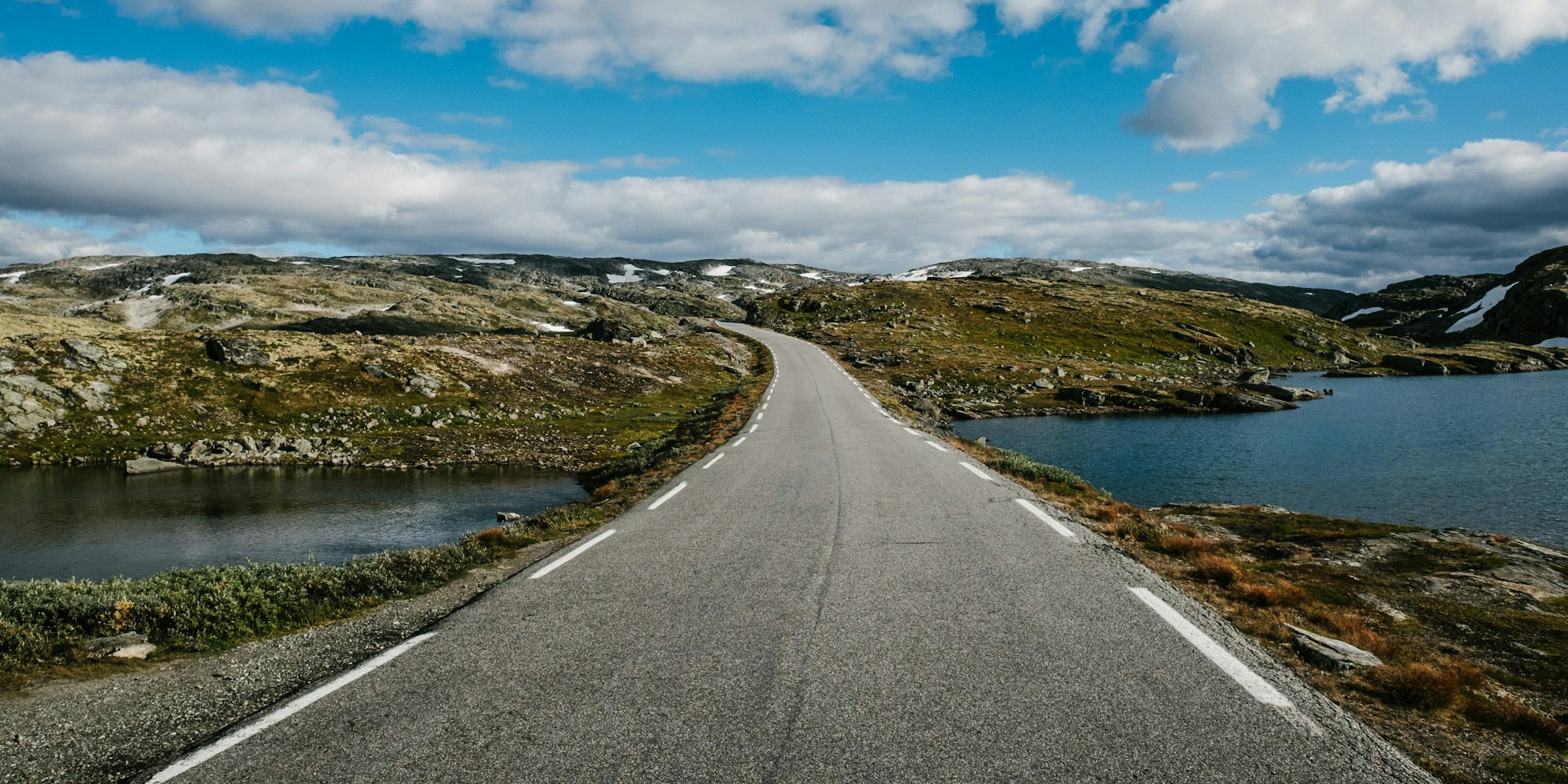
Driving in Norway – what are the rules?

0

Who hasn’t heard of the Norwegian fjords? These beautiful narrow bodies of water that stretch for miles inland are a wonder to see if you’re on a cruise ship. But don’t think that’s the only way to enjoy the natural wonders. You can view them by car too.

Common in chilly countries such as Alaska, Greenland and Canada, they are also abundant in one European country in particular – Norway. But it’s not just the fjords that are on offer if you’re planning a road trip in this Scandinavian country. There are lots of other wonderful sights to see, history to learn about and architecture to admire.

And you won’t be short of road to drive on either: Norway is the longest country in Europe and organising a trip by road will take planning, if only to understand the distances you might be travelling. Drive from the north of the country to the south and it could take you 30 hours.

You’ll be on great roads though. With Atlantic coastal routes, mountainous regions and hundreds of glaciers, there’s lots to see and experience. Norwegian motorways are generally in good condition and are not too busy, despite connecting Norway’s cities to one another and offering passage outside of the country and into other states.

Away from the main road, you’ll find hundreds of beautiful local roads to choose from, picturesque in their settings, winding and demanding in places but blessed with fantastic views, interesting towns and villages and good amenities – Norway is home to some of the best public lavatories in the world!

As well as the tourist business that Norway is proud of, the country’s main cities such as capital Oslo, Stavanger and Bergen, are home to industries including oil, petrol, shipping, farming, fishing and fish products.

With a rich history going back to the Viking era and beyond there’s lots of interesting architecture to be found, especially in the smaller towns. The bigger cities feature modern architecture and bright evening skylines.

If you are considering this Scandinavian country for a vacation this year, it’s certainly a good choice for road trips. But you’ll need some careful organisation before going there. Flying in and hiring a vehicle is easy, with all the main rental companies and others, available with a wide variety of vehicles.

Driving in Norway is a completely different experience from doing so in the UK – starting with the fact that Norwegians drive on a different side of the road from us.

It’s much more than that and planning a driving holiday or using a car on business while in the country, requires careful planning and a good understanding of what you can and can’t do behind the wheel there.

So it’s well worth spending some time planning your trip to ensure you have everything in place for your northern European excursion. In the summer it can be warm and fine, but winters can be harsh, and this will make driving by road more hazardous.

Here The Car Expert looks at the most important elements to consider when planning to drive in Norway, and we’ve included a handy checklist. As each journey is unique, always check that you have everything covered for your particular visit.

Basic rules

You must be 18 years or over to drive in Norway and you should hold a full UK driving licence. Just the licence card will do, as the paper counterpart is no longer a requirement.

If you are using your own car, you’ll need to prove that you have insurance cover so take your certificate with you (but you don’t need a European ‘green card’) and you must carry with you documents that show the identity of the car, such as a V5C ‘logbook’.

The vehicle’s ‘home country’ must be shown on it. Most people today have the ‘UK’ letters and the Union Flag incorporated into their vehicle’s number plates but if you don’t have this on your own car, you must affix a ‘UK’ sticker to its rear. The ‘GB’ badge is no longer allowed, even within European ‘golden stars’ and the same goes for country badges such as the English, Scottish or Welsh flags.

If you are hiring a vehicle, always carry the hire company’s paperwork with you to prove you are allowed to drive the car. You must have had a full driving licence for at least one year to hire a vehicle. Whether you are renting or using your own vehicle, always carry your personal ID or passport with you.

Drink drive rules

We don’t recommend any drinking of alcohol if you are going to drive but it’s worth knowing the limits. The drink drive limit is 0.2 g/l (also shown as 0.2 milligrams or 0.02%).

The authorities take a hard line on drink driving – Norway was the first country to impose penalties for ‘impaired driving’ back in 1936. Police officers can demand a random breath test at any time, without reason, and there are severe penalties – fines and possible prison – if you are shown to be over the limit. For comparison, the limit is 0.8 g/l (0.8 milligrams, 0.08%) in England and Wales.

Speed limits

Speed limits are shown in kilometres (km/h) rather than miles (mph). In some built-up and suburban areas, the limit can be a plodding 30km/h (18mph) although many towns prefer a 50km/h (31mph) limit. On main A-roads, it’s 80km/h (50mph) but this can vary so keep an eye on roadside signage. Motorways have a blanket 110km/h (68mph) top speed.

If you have a caravan or trailer the speed limit is 80km/h everywhere. If the trailer does not have brakes, the limit drops to 60km/h.

Norway increased its speeding fines last year. They are high and get steadily worse as your speed over the limit increases. Fines can be issued on the spot.

Go just 5km/h (3mph) over the limit in a 60km/h (35mph) zone and you could be fined 1100 Norwegian Krone (NOK) (£80). For going 20km/h over in a built-up zone, fines start at 7800 NOK (£580). And if you’re stopped going more than 25km/h over the speed limit on a 70km/h road or above, it’s 9100 NOK (£680). There are many other variations of speed versus fine.

There are speed cameras and mobile ‘speed-trap’ cars on roads throughout Norway. You are not allowed any kind of police camera detection equipment in your car. Likewise, if your satnav unit shows where speed cameras are sited, you must de-activate this function as it’s illegal. Don’t use a mobile phone while driving either, unless it’s completely hands-free.

What to carry in the car

While motoring through Norway, ensure you have a warning triangle in the car and a reflective jacket for if you have to get out of the car by the roadside. Make sure your lights don’t dazzle oncoming drivers – you must have beam deflectors fitted (or the ability to manually adjust your lights). You must switch dipped lights on all the time, whatever the weather conditions.

Although not a requirement, it’s also recommended that you have a fire extinguisher, first aid kit, tow rope, spare bulbs and jump leads. Specialist suppliers, such as motoring organisations, sell ‘European driving kits’ for around £25, which contain everything you are likely to need for a holiday road trip, and it’s well worth considering these.

Studded tyres are permitted in most Norwegian towns and cities over the winter months although some charge a fee for driving in their centres with these tyres fitted. Cars that weigh more than 3.5 tonnes must carry snow chains with them and use them if ice or snow is expected.

Seatbelts

Seatbelt rules are the same as in the UK: if your car has them, they must be worn. Children under 36kg in weight or 135cm in height must use an appropriate car seat. If the seat is rear-facing and on the front passenger seat, you should switch the airbag off. Children between 135 and 150cm tall may use a normal seat belt and booster cushion.

Driving

Keep to the right-hand lane as much as possible but if you are overtaking do so on the left. Priority is usually given to vehicles approaching you from the right but look for road signs which might indicate something different. Don’t use your horn unless necessary, for example to avoid an accident happening.

Traffic signals are red, amber and green and follow a similar pattern to the UK. There is no right turn allowed on red as in some European countries, even if the road is clear of other vehicles. In some cities you might see two red lights. These were originally installed as ‘back-up’ if one light failed but were deemed successful in terms of visibility and stayed in operation.

If you are towing a trailer or caravan, ensure that your car and the rig don’t exceed 18.75 metres in length and 2.55 metres in width. There is no height limit but beware of low bridges! Make sure you can see clearly behind you with the use of two wide rear-view mirrors.

Road signs

Road signs are usually triangular with a red outline for those giving advice or warning, and blue circles where something is mandatory. They use pictures and therefore rarely need words, although ‘Stop’ is written in English. Most directional signs are yellow and written in Norwegian with distances in kilometres.

Fuel availability

Petrol and diesel are widely available throughout the country. However, Norway is investing massively in the electric revolution and already has more than 17,000 charging stations and 3,500 rapid chargers available across the country. Hotels are increasingly offering EV charging for free. LPG is also quite widely available.

Norway’s motorways have good service areas with fuel, shops and cafes available.  They almost all have automatic, card-operated pumps which take internationally recognised credit cards. If you are heading into remote mountainous areas, stations can become less frequent so make sure you have filled up with fuel before you leave.

Toll roads

There are toll roads in Norway on some motorways, bridges and tunnels. You will also have to pay to drive in main cities. Most toll stations work automatically.

Parking

Parking bays are clearly marked, as are ‘No Parking’ zones. Much of the parking is controlled by meters, but there are also long and short-term parking garages (P-hus) to leave your car for a fee. There are steep fines for illegal parking and while wheel clamps are not used by the police, your car can be towed away. There will be a fine to pay for a vehicle’s release plus costs for the towing.

Park with the car looking towards the direction of travel. Do not park anywhere that the police might consider dangerous – that’s five metres from an intersection, level crossing or pedestrian crossing, or 20 metres from a bus or tram stop.

Don’t park on bicycle lanes or pedestrian paths. Indeed, the whole Norwegian culture on the road is to put pedestrians and cyclists first. Pavement users will expect you to stop for them at a crossing while cyclists will often ignore road signs and ride ‘their own way’ so give them plenty of room.

Emergency number

In Norway as with most of Europe, you can dial 112 and make contact with emergency services such as fire, ambulance or police, 24 hours a day. Operators will speak English, French and other European languages.

Checklist

Must haves:

  • Driving licence
  • Vehicle insurance
  • MOT certificate (if relevant)
  • V5C or vehicle ID
  • Passport
  • UK sticker or number plate markings
  • Warning triangle
  • Hi-viz jacket
  • Headlamp beam deflectors
  • Studded tyres (some months)
  • Snow chains (some months)

Options:

  • First aid kit
  • Fire extinguisher
  • Spare bulb kit
  • Screen wash
  • Bottled water
  • Map or satnav
  • Phone power bank
  • Torch
  • Fuel can

Is it still worth learning to drive with a manual gearbox?

0

It’s nearly 90 years since the driving test was introduced in the UK and, since that June 1935 turning point in British motoring history, drivers have largely learned to drive – and taken their test – in a manual transmission car.

It was a given really: passing a manual driving test allowed you to drive the more unusual automatic cars as well as those millions available with a gearshift. But obtaining a certificate for an automatic car only, restricted the type of car you could drive in the future, solely to two-pedalled vehicles.

So, most people opted to go down the manual route.

The UK has traditionally been the home of the manual-geared vehicle. Historically, most cars in this country have been built with a clutch pedal and gearstick, while drivers in Europe and the US have traditionally opted for an automatic.

But are things changing now? With growing numbers of cars now offered in automatic form – and electric vehicles (EVs) coming, by design, as automatics, is the future an auto one? And are manually operated cars destined to be a thing of history, making learning how to drive one redundant?

Auto’s growing status

The auto ‘box has become more popular over the last decade in passenger cars in the UK – the transmission has always been perceived as more expensive than a manual, but fashions are now changing, and more cars are being built and offered with an automatic option as costs fall. 

And that is showing in terms of sales – in 2010 around 25% of cars sold in the UK were automatic but by last year that had risen to over 55%, and now that’s heading towards 60%.

Small city cars, mid-size hatchbacks, SUVs, MPVs and 4x4s – all forms of car can now be found in automatic form, and often they are only available in auto. For example, Volkswagen recently announced that the ever-popular Golf model range will no longer be available with a manual gearbox.

Sports cars from the major high-performance manufacturers now almost all come in automatic form with paddle shifts on their steering wheels and tiny transmission levers or push-button controllers to select ‘Drive’. And even the more mainstream sports models, such as the Ford Puma ST, will come only as a seven-speed auto.

Driving test

Automatic driving tests are increasing in popularity. In 2021/22 a total of 1,538,314 practical driving tests were conducted, with 242,713 of these automatics – 16% of all tests. That compares with 2011/12 when there were 1,569,069 driving tests of which 26,400 were automatic – a percentage of under 2%.

The AA motoring group says that its Driving School data shows that in January 2022, 86% of its franchisees were teaching in manual cars and 14% in automatics. But by July 2023, the number of instructors using manual cars had decreased to 81% and those teaching in automatics had increased to 19%. Overall, in 2023, 37% of people training to be a driving instructor with the AA Driving School chose an automatic vehicle.

Research by road safety charity IAM RoadSmart recently showed that the increasing numbers of EVs is massively influencing driving attitudes of young people aged 17-24 years old. More than 60% of 1,000 young drivers questioned by the charity said they plan to apply for an automatic-only driving licence.

And analysis by insurers Direct Line Group revealed that the last manual cars ever built could be in around 2029, with 2043 earmarked as the ‘Age of the Auto’ when every car on the road is automatic. 

Researchers there say that means the last person to ever take a driving test in a manual could be born in 2027 (add 17 years to qualify to take a test, equals 2043). 

The advantages of auto learning (and driving)

Cost: Learning to drive in an automatic is easier. There’s no mastering of the clutch required or knowing which gear to be in, and where. Autos are simpler to drive and therefore quicker and cheaper in terms of driving lessons.

Ease: Most modern manual cars have six gears – the days of four cogs or even five, are gone. That means a lot of gear changes to be made during any journey, especially if the road is busy. An automatic takes away that stress – you simply select ’Drive’ and the car does all the hard work.

Comfort: Autos are perfect for driving in heavy traffic, removing the need for constant clutch-pumping in stop-start road conditions.

Stall: It’s unlikely you’ll stall an automatic car plus they will move away smoothly as the gearbox does all the work for you. They also creep forward slowly in traffic, controlled by the brake pedal.

Hill start: There’s no chance of rolling back on an incline with an automatic, especially as most modern autos also have a ‘hill start’ facility linked to the handbrake or park brake. They hold the car on the brakes until there’s sufficient power going to the drive wheels.

Manual or auto?

So, will there come a time when it’s not worth learning to drive a manual? Certainly, the traditional split between manual and automatic driving licences is becoming less marked.

The technology on an auto car is greater than a manual, which has traditionally added to the cost, but this is changing as autos become more prevalent. So while manual cars are generally still slightly cheaper than automatic ones – especially on the used market – that will change as more autos and EVs become available. 

Undoubtedly, the swing towards automatic-only driving tests is growing, especially in big cities and built-up areas. And some experts now say that automatic tests are likely to out-number manuals by the end of the decade. 

Read more:

Driving in Sweden – what are the rules?

0

Scandinavia is known for its clear air, beautiful mountains, forests and lakes, and some of the roads that will get you to these wonderful sights are simply breath-taking.

Sweden is no exception to this rule – it’s the largest of the Nordic countries and is blessed with fine scenery, exciting cities and incredible islands dotted throughout its vast areas of water: the lakes and rivers.

Sweden is the fifth largest country in Europe but despite the vast wilderness of beauty throughout its nation, the majority of its people live in towns and cities – Stockholm, the capital, being the biggest of these. There’s also Malmo and Gothenburg.

Steeped in history, there’s wonderful architecture to be seen in its many towns and villages while memories of the Viking era are everywhere. Out on the open road you’re more likely to come across an elk or reindeer than another car in some areas. These can be a real danger on many routes and warning triangles will often feature at the roadside to warn you.

Swedish roads are a joy to drive – long, open and well-maintained, they are among the best in the world. But you need to be prepared for trips into the wilderness not least because temperatures can vary so much. Warm in the summer, Sweden can become very cold in winter months with sub-zero temperatures a regular occurrence. The coldest ever recorded temperature was minus 52 degrees C in 1966.

It’s a wealthy country and its towns and cities are home to much business and manufacture, among these the car industry, telecommunications and pharmaceutical.

If you are one of many UK motorists who is considering this Scandinavian country for a vacation this year, you’ll need some careful organisation before going there. Flying in and hiring a vehicle is easy, with all the main rental companies and others, available with a wide variety of vehicles.

Driving in Sweden is a completely different experience from doing so in the UK. And that isn’t just because the Swedes drive on a different side of the road from us.

It’s much more than that and planning a driving holiday or using a car on business while in the country, requires careful planning and a good understanding of what you can and can’t do behind the wheel there.

So it’s well worth spending some time planning your trip and making sure you have everything in place for your northern European excursion.

Here The Car Expert looks at the most important elements to consider when planning to drive in Sweden, and we’ve included a handy checklist. As each journey is unique, always check that you have everything covered for your particular visit.

Keep right

Like all of continental Europe and the vast majority of countries around the world, Sweden drives on the right side of the road with local cars being left-hand drive (in other words, the opposite of the UK).

Right-hand-drive cars are legal, so you can drive your own car over from the UK, but it’s less convenient for things like toll booths, parking gates or drive-through restaurants.

Licence requirements

You must be 18 years or over to drive in Sweden and you should hold a full UK driving licence. Just the licence card will do, as the paper counterpart is no longer a requirement.

You must be at least 20 years old to rent some vehicles in Sweden so check before you sign the rental agreement. Whether you are renting or using your own vehicle, always carry your personal ID or passport with you.

Taking your own car to Sweden

It’s legal to drive your UK-registered, right-hand drive car in Sweden, but remember that you have to drive on the opposite side of the road. 

If you’re using your own car, you’ll need to prove that you have insurance cover so take your certificate with you (but you don’t need a European ‘green card’) and you must carry with you documents that show the identity of the car, such as a V5 ‘logbook’.

The vehicle’s ‘home country’ must be shown on it. Most people today have the ‘UK’ letters and the Union Flag incorporated into their vehicle’s number plates but if you don’t have this, you must affix a ‘UK’ sticker to the rear of the vehicle. The ‘GB’ badge is no longer allowed, even within European ‘golden stars’ and the same goes for country badges such as the English, Scottish or Welsh flags.

You’ll also need to adjust your headlight beam to avoid dazzling oncoming traffic. Many modern cars allow you to do this from the dashboard, while older cars will require anti-dazzle stickers to be fitted to the headlights. These are available from car parts stores or travel shops at the ferry terminal.

Speed limits

Speed limits are shown in kilometres (km/h) rather than miles (mph) and in Sweden are not based on the category of the road, but the considered safety of the route.

In built-up and suburban areas, the limit can vary between 50km/h (31mph) and 100km/h (62mph) so keep a close eye on roadside signage. Motorways have a blanket 110km/h (68mph) top speed.

Speeding fines differ greatly depending on the speed that drivers are caught. For going up to 10km/h over the limit in a built-up area, fines start at 2000 Krona (kr) (£150); up to 30km/h over its 3,600 kr (£270) and if you’re stopped going more than 35km/h over the speed limit on a motorway it’s 4,000 kr (£300).

There are speed cameras on many Swedish roads and they can often be hidden or difficult to see. You are not allowed any kind of speed camera or radar detection equipment in your car. Likewise, if your satnav unit shows where speed cameras are sited, you must de-activate this function as it’s illegal.

Don’t use a mobile phone while driving either, unless it’s completely hands-free.

Blood alcohol limit

We don’t recommend any drinking of alcohol if you are going to drive but it’s worth knowing the limits. The drink drive limit is 0.2 g/l (also shown as 0.2 milligrams or 0.02%), which makes Sweden one of the strictest countries in the world for drink-driving. Most countries Europe – including Scotland – have a limit of 0.05%, while England and Wales are 0.08% (one of the highest limits anywhere in the world).

The police take a hard line on drink driving, so be careful even when you are getting behind the wheel ‘the next morning’. Officers can demand a breath test at any time and without reason and there are severe penalties – fines or even prison – if you are shown to be over the limit.

What to carry in the car

While motoring through Sweden, ensure you have a warning triangle in the car and make sure your lights don’t dazzle oncoming drivers – you must have beam deflectors fitted (or the ability to manually adjust your lights). You must switch dipped lights on all the time, on every road although cars sold in Sweden will have this feature automatically.

You will also need to have winter tyres fitted to your car if you are planning to drive in snow and ice between 1st December and 31st March. Some areas require you to fit snow chains too – look for local signs. If you have a trailer, this must also have the correct tyres.

Although not a requirement, it’s also recommended that you have a fire extinguisher, first aid kit, tow rope, spare bulbs, reflective jacket and jump leads.

Specialist suppliers, such as motoring organisations, sell ‘European driving kits’ for around £25, which contain everything you are likely to need for a holiday road trip, and it’s well worth considering one.

Seatbelts

Seatbelt rules are the same as in the UK: if your car has them, they must be worn.

Children less than 135cm in height must be in an approved child seat in the front or back of the car. Above this height they can ride on a regular seat and if they are over 140cm they can sit in the front passenger seat if the airbag is switched off.

Driving in Sweden

Keep to the right-hand lane as much as possible but if you are overtaking do so on the left.

Overtake only when you are sure it is safe to do so. There are many roads which have a dedicated lane for drivers wanting to drive slowly. They are required to keep over and let others pass them when they are not in this special lane.

Priority is usually given to vehicles approaching you from the right but look for road signs which might indicate something different. Don’t use your horn unless absolutely necessary, such as in an emergency or to prevent an accident.

Traffic signals are red, amber and green and follow a similar pattern to the UK. A flashing amber light can mean the traffic signals are faulty while a separate, smaller set of lights next to the main signals can sometimes include an arrow permitting you to drive in the direction it is pointing.

If you are towing a trailer or caravan ensure that your car and the rig don’t exceed 24 metres in length, 4.5 metres in height and 2.6 metres in width. Make sure you can see clearly behind you with the use of two wide rear-view mirrors.

Road signs

Road signs are usually coloured yellow with a red outline for those giving advice or warning, and blue where something is mandatory. They use pictures and therefore rarely need words. Where words are used these will be in the Swedish language except for ‘Stop’ which is in English. Most directional signs are written in Swedish with distances in kilometres.

Fuel availability

Petrol and diesel is widely available throughout the country. Swedish motorways don’t have service areas – these are sited close to exits and signs will point you there on reaching the intersection. They almost all have automatic, card-operated pumps which take internationally-recognised credit cards.

There are more than 2,500 charging stations for electric vehicles (EVs) throughout Sweden.

Toll roads

There are few toll roads in Sweden and there is no fee to pay for using the motorways. However, you will have to pay tolls on some of the main bridges, such as Sundsvall, Motala and Skurubron.

Parking

Although there are wide open spaces in Sweden, its main cities can be very congested. That makes parking more difficult. It’s certainly limited in built-up areas with restricted zones shown by road signs. There are steep fines for illegal parking and while wheel clamps are not used by the police, your car can be towed away. There will be a fine to pay for a vehicle’s release plus costs for the towing.

Park with the car looking towards the direction of travel. If it’s not a marked parking spot you probably can’t stop there. A blue sign with a ‘P’ in it usually signals free parking but beware, this might have a time limit so check very carefully.

Do not park anywhere that the police might consider dangerous such as near an intersection, level crossing, bus or tram stop, crest of a hill or blind bend. Don’t stop in bicycle lanes or pedestrian paths.

Emergency number

In Sweden as with most of Europe, you can dial 112 and make contact with emergency services such as fire, ambulance or police, 24 hours a day. Operators will speak English, French and other European languages.

Checklist

Must haves:

  • Driving licence
  • Passport
  • Vehicle insurance
  • MOT certificate
  • V5 or vehicle ID
  • UK sticker or number plate markings
  • Warning triangle
  • Headlamp beam deflectors
  • Winter tyres (some months)
  • Snow chains (some months)

Options:

  • First aid kit
  • Fire extinguisher
  • Hi-viz jackets
  • Spare bulb kit
  • Screen wash
  • Bottled water
  • Map or satnav
  • Phone power bank
  • Torch
  • Fuel can


Read more:

Driving in Greece – what are the rules?

0

Centuries of history, great beaches and coastlines, winding mountainous roads and bustling towns and cities: Greece has lots going for it if you’re planning a holiday there. And getting around by car is a good way to enjoy the country – and its many islands, dotted around the magical Aegean Sea.

Forget long, boring motorways and characterless A-roads – driving in Greece can be a fantastic and exciting experience in which you can take in stunning scenery, breath-taking coastal roads and sleepy villages steeped in history and mystique.

And while much of Greece has a laid-back, rustic feel to it, the main cities, such as Athens, Thessaloniki and Petraeus, are vibrant business hubs with commerce and industry to match. Its main industry is, perhaps not surprisingly, tourism – followed by shipping and industrial products manufacture.

So Greece could well be at or near the top of your list for a holiday and it’s certainly well worth a look if you love touring by car. It’s not all plain-sailing though – many of Greece’s more rural roads can be rough and pot-holed and some are known to be affected by flooding or sand storms, whipped up by the coastal winds. Local drivers often drive down the middle of these roads too, mindful of grazing sheep, uneven road surfaces and rocks fallen in a landslide. 

If you are one of many UK motorists who is considering Greek climes for a vacation this year, you’ll need some careful organisation before going there. Flying in and hiring a vehicle is good option as there are many companies willing to rent you a vehicle – of varying qualities and conditions.

Driving in Greece is a completely different experience from doing so in the UK. And that isn’t just because the Greeks drive on a different side of the road from us. 

It’s much more than that and planning a driving holiday or using a car on business while in the country, requires careful planning and a good understanding of what you can and can’t do behind the wheel there. 

This isn’t just for your safety and convenience. Getting on the wrong side of the Greek police can result in several types of penalty including fines, car towing or the removal of your number plates so that you have to go and retrieve them from a local police station.

So it’s well worth spending some time planning your trip, and making sure you have everything in place for your south eastern European excursion.

In this guide, The Car Expert looks at the most important elements to consider when planning to drive in Greece, and we’ve also included a handy checklist. As each journey is unique, always check that you have everything covered for your particular visit.

Keep right

Like all of continental Europe and the vast majority of countries around the world, Greece drives on the right side of the road with local cars being left-hand drive (in other words, the opposite of the UK).

Right-hand-drive cars are legal, so you can drive your own car down from the UK, but it’s less convenient for things like toll booths, parking gates or drive-through restaurants.

Licence requirements

You must be 18 years or over to drive in Greece and you should hold a full UK driving licence. Just the licence card will do, as the paper counterpart is no longer a requirement.

An international driving permit is recognised by the Greek authorities, but it’s not a requirement.

Whether you are renting or using your own vehicle, always carry your personal ID or passport with you too.

Taking your own car to Greece

If you are using your own car, you’ll need to prove that you have insurance cover so take your certificate with you (but you don’t need a European ‘green card’). You must also carry with you documents that show the identity of the car, such as a V5 ‘logbook’. 

The vehicle’s ‘home country’ must be shown on it. Most people today have the ‘UK’ letters and the Union Flag incorporated into their vehicle’s number plates but if you don’t have this, you must affix a ‘UK’ sticker to the rear of the vehicle. The ‘GB’ badge is no longer allowed, even within European ‘golden stars’ and the same goes for country badges such as the English, Scottish or Welsh flags.

It’s legal to drive your UK-registered, right-hand drive car in Greece, but remember that you have to drive on the opposite side of the road.

You’ll also need to adjust your headlight beam to avoid dazzling oncoming traffic. Many modern cars allow you to do this from the dashboard, while older cars will require anti-dazzle stickers to be fitted to the headlights. These are available from car parts stores or travel shops at the ferry terminal.

Speed limits

As with most countries in the world, Greece uses the metric system for speed and distance. That means distances on road signs are shown in kilometres rather than miles, and speed limits are shown in kilometres (km/h) rather than miles (mph). 

In any built-up area the limit is 50km/h (equivalent to 31mph), while on open roads outside of urban areas the limit rises to between 90km/h (56mph) and 110km/h (68mph), so keep an eye out for local roadside signage.

Motorways have a usual 130km/h (81mph) top speed, but this can also vary locally.

Speeding fines differ greatly depending on the speed that drivers are caught. For going up to 20km/h over the limit, fines start at €40; up to 30km/h over it’s €100 and if you’re stopped going more than 30km/h over the speed limit there are fines of €350. Greek police do not collect on-the-spot fines.

You can also be disqualified from driving if the authorities feel you have broken even more serious laws.

You are not allowed any kind of speed camera or radar detection equipment when driving on Greek roads and there’s a possible €2,000 fine if you’re caught. Likewise, if your satnav unit shows where speed cameras are sited, you must de-activate this function as it’s illegal.

It’s said that Greek drivers tend to be on the fast side and have a more relaxed attitude to speed limits. Don’t be tempted to be drawn into their way of driving – it’s always best to abide by all local laws and stay on the right side of the traffic police.

Don’t use a mobile phone while driving either, unless it’s completely hands-free. There are fines of up to €100 if you’re caught.

Blood alcohol limit

Obviously, we don’t recommend any drinking of alcohol if you are going to drive, but it’s worth knowing the limits. The drink drive limit is 0.5g/l (also shown 0.05%). For new drivers with less than three years’ experience, the limit is 0.2g/l (0.02%).

The police take a hard line on drink driving, so be careful even when you are getting behind the wheel ‘the next morning’. For comparison, the limit is 0.8 g/l (0.08%) in England and Wales, so the Greek limit is only just over half that.

The Greek police can ask you take a random breath test at any time if they suspect you have been drinking. There’s also a saliva test for those suspected of being under the influence of drugs. If you refuse to do either of these, the authorities can fine you, confiscate your licence or even impose a prison sentence.

What to carry in the car

There are several things you’ll need in your vehicle while motoring through Greece, both for your safety and to ensure you’re within the law, should you be stopped for a check. These include a warning triangle, a fire extinguisher and a first aid kit. All of these are compulsory requirements for every vehicle. Carrying a reflective jacket in the car is not compulsory but it’s still a good idea in case you break down on a major route or when visibility is reduced. 

You don’t have to carry spare bulbs for your headlamps, but the police do insist that you have beam deflectors (or the ability to manually adjust your lights) to avoid dazzling other road users. 

Specialist suppliers, such as motoring organisations, sell ‘European driving kits’ for around £25, which contain everything you are likely to need for a continental road trip, and it’s well worth considering one. 

Seatbelts

Seatbelt rules are the same as in the UK: if your car has them, they must be worn. It’s the driver’s responsibility to make sure everyone is buckled up and there’s a €350 fine for not wearing one. 

Children under 12 years old and less than 135 cm in height must be in an approved child seat in the front or back of the car. Infants under three years must be in a suitable child restraint and those between three and 11 must be in an appropriate child seat for their size. 

Driving

Keep to the right-hand lane (the inside lane) as much as possible, and only overtake on the left. 

Overtake only when you are sure it is safe to do so, but never attempt to pass someone if you are approaching a railway crossing or if a vehicle ahead of you has stopped for an emergency or safety reason. If you are flashed from behind it probably means someone wants to pass you. It’s best to let them go.

Greek drivers often flash their lights coming towards you if there is a hazard ahead, so keep a lookout for that.

Priority is usually given to vehicles approaching you from the right, but look for road signs which might indicate something different. Outside urban areas and on major routes, traffic on the main road has priority over anyone intending to turn out of a side or lesser road at an intersection.

Traffic signals are red, amber and green and follow a similar pattern to the UK. Some cities though, use a flashing amber light for drivers to proceed with caution. Some Greek islands have no traffic lights at all so you should be extremely vigilant when pulling up at an intersection and be ready to let local drivers through first if necessary.

Pedestrian lights have only red and green. Where there is a pedestrian crossing with no lights, it is unlikely that local drivers will stop to let people cross. Bear that in mind if you have cars behind you as you approach a crossing – they probably won’t be expecting you to slow up.

If you are towing a trailer or caravan ensure that your car and the rig don’t exceed 18 metres in length, four metres in height and 2.55 metres in width. Make sure you can see clearly behind you with the use of two wide rear-view mirrors. 

Road signs

Most directional road signs in Greece are in two languages – Greek and English. The Greek names usually come first followed by the English but occasionally the Greek and English directions might be on two separate signs. In rural areas you might find names written with only the Greek alphabet.

Don’t always expect the English translation to be exactly as you know it – ‘Athens’, for example, could well be shown as ‘Athina’, ‘Pireaus’ could be ‘Piraus’, and there are many others.

Fuel availability

Petrol, diesel, and LPG (Autogas) are widely available throughout the country, and most roads have signs showing the distance to the nearest stations. Some filling areas will accept credit cards but others might only take cash so be prepared. There are no automatic, card-operated pumps in Greece – instead you’ll find many filling stations fully serviced with operators ready to help you.

Service areas do operate along Greek motorways but these are not as plentiful as you might find in some European countries, so don’t let your fuel tank run down too low.

There are two types of diesel available. One is called ‘Diesel’ and is suitable for vehicles such as tractors. But if you have a passenger car you should look for a more refined version – called ‘Diesel Premium’, ‘Diesel Super’ or ‘Diesel Ultimate’. It is illegal to carry spare fuel in a can inside your car

There are around 2,100 charging stations for electric vehicles (EVs) throughout Greece, equating to arund 4,900 actual charge points.

Toll roads

As with many motorway networks in European countries, the roads are paid for with money collected through tolls. Most motorways have a levy to pay, as do the Rio-Antirrio Bridge and the Aktio-Preveza Tunnel.

The cost is based in which road you’re using and the distance you are travelling. Payment can be made by cash at a toll booth, credit card or using an on-board unit with a system known as GRITS (Greek Interoperable Tolling Systems). 

Parking

Some roads in mainland Greece and the islands can be congested which can make parking on a street very difficult. In large cities such as Athens, public parking areas are hard to find although some are for tourists only. Look for local signage before you pull up and leave your car anywhere. 

You must not park within five metres of an intersection, 15 metres of a level crossing, 15 metres of a bus or tram stop, three metres of a fire hydrant, five metres of a stop sign and five metres of a traffic light. Signs might also tell you which side of the road you can park, so check for these too.

Most city roads will have restrictions and fees to pay before parking. Much of the payment is collected using parking meters and can range from 30-minute stops to two hours. 

Wheel clamps are not used in Greece but illegally parked cars can be towed away by the police. There will be a fine to pay for a vehicle’s release plus costs for the towing.

Emergency number

In Greece as with most of Europe, you can dial 112 and make contact with emergency services such as fire, ambulance or police, 24 hours a day. Operators will speak English, French and other European languages.

Checklist

Must haves:

  • Driving licence
  • Passport
  • Vehicle insurance
  • MOT certificate
  • V5 or vehicle ID
  • UK sticker or number plate markings
  • Warning triangle
  • First aid kit
  • Fire extinguisher
  • Headlamp beam deflectors

Options:

  • Hi-viz jackets
  • Spare bulb kit
  • Screen wash
  • Bottled water
  • Map or satnav
  • Phone power bank
  • Torch
  • Fuel can


Read more:

Driving in Poland – what are the rules?

0

Would you count driving and history as being among your interests or loves? Well, don’t miss out on the chance to visit Poland then.

Thought to have been a haven for civilisation thousands of years, it has a more ‘recent’ Medieval history from where it got its name, thanks to the Polan people.

There are castles to see – including the world’s most complete and comprehensive Medieval example, Malbork – forests, lakes, rural villages and sprawling cities. And despite being badly damaged during the Second World War it has recovered to become a stable and welcoming democracy.

Its major cities – including Warsaw, Krakow, Gdansk and Lodz – provide excellent opportunities for business and industry. To its west lies Germany, to the east are Ukraine and Belarus, while in the north there’s a beautiful coastline and the Baltic Sea.

It might not be top of your list for a holiday, but Poland is well worth a look if you love touring by car. While some of the more rural roads can be potholed and poorly maintained, Poland’s major routes are excellent for a car journey. One of its many scenic routes is called the 100 Bends Road – a must for drivers, surely!

If you are one of many UK motorists who is considering Polish shores for a vacation this year, you’ll need some careful organisation before visiting. Getting there by car will involve traversing the whole of Germany as you head east, but that’s a decent European drive to enjoy if you have the time. Flying in and hiring a vehicle is another option.

Driving in Poland is a completely different experience from doing so in the UK. And that isn’t just because the Poles drive on a different side of the road from us.

It’s much more than that and planning a driving holiday, or taking your car to Poland on business, requires careful planning and a good understanding of what you can, and can’t do behind the wheel while there.

This isn’t just for your safety and convenience. Getting on the wrong side of the Polish police can mean on-the-spot fines, starting with relatively small ones for minor indiscretions but rising to steep penalties and even driving licence confiscation. So it’s well worth spending some time planning your trip, and making sure you have everything in place for your Continental excursion.

Here The Car Expert looks at the most important elements to consider when planning to drive in Poland, and we’ve included a handy checklist. As each journey is unique, always check that you have everything covered for your particular visit.

Basic rules

You must be 18 years or over to drive in Poland and you should hold a full UK driving licence. Just the licence card will do, as the paper counterpart is no longer a requirement. An international driving permit is recognised by the authorities, but it’s not a requirement.

You’ll need to prove that you have car insurance cover so take your certificate with you (but you don’t need a European ‘green card’) and you must carry with you documents that show the identity of the car, such as a V5 ‘logbook’. Always carry your personal ID or passport with you too.

The vehicle’s ‘home country’ must be shown on it. Most people today have the ‘UK’ letters and the Union Flag incorporated into the vehicle’s number plates but if you don’t have these, you must affix a ‘UK’ sticker to the rear of the vehicle. The ‘GB’ badge is no longer allowed, even within European ‘golden stars’ and the same goes for country badges such as the English, Scottish or Welsh flags.

Speed limits

Speed limits are shown in kilometres (km/h) rather than miles (mph). It’s very slow in residential zones – 20km/h (12mph), while for built-up areas the speed limit varies according to the time: 50 km/h (31mph) between 5am and 11pm and 60km/h (37mph) between 11pm and 5am.

Moving out of built-up areas and onto more open roads the limit rises but again there are variations of between 90km/h (56mph) and 120km/h (75mph) so keep an eye out for local roadside signs. Motorways have a blanket 140km/h (87mph) top limit with a 40km/h (25mph) minimum regulation.

You’re not allowed any kind of speed camera or radar detection equipment when driving on Polish roads. Likewise, if your satnav unit shows where speed cameras are sited, you must de-activate this function as it’s illegal.

New speeding fines came into operation in Poland in 2022 and they were much steeper than before. If you are stopped for speeding you will likely get an on-the-spot fine, and police patrols who are out looking for speeders, have increased.

Fines vary depending on your speed and start at 50 Zloty or zl (£10) for a minor transgression of up to 10km/h over the speed limit and rise steadily in severity as the speed goes up. Get stopped at more than 40km/h over the limit and you could be looking at a 1000 zl (£180) fine, while 60km/h above the top end could mean a 2000 zl (£360) penalty.

Blood alcohol limits

We don’t recommend any drinking of alcohol if you are going to drive but it’s worth knowing the limits. The drink drive limit is 0.2 g/l (also shown as 0.2 milligrams or 0.02%). This is a very small amount and the police take a hard line on drink driving, so be careful even when you are getting behind the wheel ‘the next morning’. For comparison, the limit is 0.8 g/l (0.8 milligrams or 0.08%) in England and Wales, and 0.5g/l (0.5 milligrams or 0.05%) in Scotland.

The Polish police can ask you take a random breath test at any time, but you will certainly be tested if there has been a car accident or if you have committed a serious motoring offence.

What to carry in the car

There are several things you’ll need in your vehicle while motoring through Poland, both for your safety and to ensure you keep on the right side of the authorities. These include a warning triangle and a reflective jacket which you should wear if you break down on a major route outside of urban areas or when visibility is reduced. Failure to have these could result in on-the-spot fines.

You will also be required to have a fire extinguisher and, although it’s not compulsory, it’s worth investing in a first aid kit.

You don’t have to carry spare bulbs, but the police do insist that you have beam deflectors (or the ability to manually adjust your lights) to avoid dazzling other road users.

Specialist suppliers, such as motoring organisations, sell ‘European driving kits’ for around £25, which contain everything you are likely to need for a continental road trip, and it’s well worth buying one.

Seatbelt and other rules

Seatbelt rules are the same as in the UK: if your car has them, they must be worn. It’s the driver’s responsibility to make sure everyone is buckled up and there’s a 100 zl (£20) fine for not wearing one.

Children under 12 years old and less than 150 cm in height must be in an approved child seat in the front or back of the car. If your car has airbags in the front (and most do) it is forbidden to place a rear facing baby restraint on the front passenger seat.

Driving

Keep to the right-hand lane as much as possible but if you are overtaking do so on the left.

Overtake only when you are sure it is safe to do so, but never attempt to pass someone if you are at an intersection, by a bus or tram stop, approaching a railway crossing, a pedestrian crossing or a cycle crossing.

You may overtake trams but ensure that if another tram is approaching, your car is not driving over its rails. Never try to drive between a tram and its pedestrian island if passengers are getting on or off. Trams have priority over all other traffic. The same is not applicable for buses but watch carefully for them – they tend to pull out with little regard for cars. 

Traffic signals are red, amber and green and follow a similar pattern to the UK. However, a green light that shows at the same time as a red light means that you can turn into another street (shown by an arrow), but you must give way to pedestrians.

Horns should be used sparingly – indeed they are prohibited in towns, unless it’s an emergency.

Petrol, diesel, and LPG is widely available throughout the country, and there are many electric vehicle (EV) charging points in larger towns and cities. Most fuel stations are open from 8am to 7pm although in larger towns you will find 24-hour services.

Motorways in Poland are paid for with money collected through tolls. There is no electronic system controlling this, so be prepared to pay at toll booths along the way. Trucks and buses do have electronic devices however and the same applies if you are towing a caravan so check for this before you set off with a rig. Toll fees vary according to the road used, the length of journey and the emissions of your vehicle.

You can get to most places on more minor roads that avoid the M-ways, but these rural routes can be in poor condition with potholes and broken surfaces, so dial that into your journey considerations.

If you are towing a trailer or caravan ensure that your car and the rig don’t exceed 18.75 metres in length, 4 metres in height and 2.55 metres in width. Make sure you can see clearly behind you with the use of two wide rear-view mirrors. Carry with you a list of your caravan or trailer contents – this will assist customs officers and should ensure you a smoother passage.

Parking

Look for parking restriction signs before you pull up anywhere. Most cities will have restrictions and fees to pay before parking. Much of the payment is collected using parking meters although the bigger cities will often feature manned car parks with various ways to pay.

If you find somewhere to park for free that’s great – but don’t leave your car if it looks like you’re causing an obstruction or danger to others. Illegally parked cars may well be wheel clamped by the authorities but often, badly parked vehicles will simply be towed away. There will be a fine to pay for a vehicle’s release plus costs for the towing.

Emergency number

In Poland as with most of Europe, you can dial 112 and make contact with emergency services such as fire, ambulance or police, 24 hours a day. Operators will speak English, French and other European languages.

Checklist

Must haves:

  • Driving licence
  • Passport
  • Vehicle insurance
  • MOT certificate
  • V5 or vehicle ID
  • UK sticker or number plate markings
  • Warning triangle
  • Headlamp beam deflectors
  • Hi-viz jackets
  • Fire extinguisher

Options:

  • First aid kit
  • Spare bulb kit
  • Screen wash
  • Bottled water
  • Map or satnav
  • Phone power bank
  • Torch
  • Fuel can


Read more:

Driving in Austria – what are the rules?

If you like driving through mountain passes but aren’t too bothered about coastal roads, then Austria could be your next touring destination. This landlocked state in central Europe is surrounded by mountains – indeed it lies in the eastern Alps region.

Completely surrounded by other countries, there’s not a coastline in sight. Germany lies to its north west, Italy is to the south while eastern European countries such as Hungary and Slovakia also border it.

It must feel like a safe haven, with its protected location, and this ‘security’ filters through – Austria is an especially safe place to live and visit, with low crime levels, polite people and good air quality.

There’s lots of business going on in Austria too, with its major cities such as Vienna, Salzburg and Graz offering huge opportunities for industry and commerce.

While Austria isn’t necessarily the first country on a touring holidaymaker’s list, it is certainly worth considering, and thousands of tourists from Europe take to the roads and drive there every year.

And if you are one of the UK motorists who does choose Austrian roads when it comes to planning a vacation, you’ll need some careful organisation before going there. Getting there by car will involve traversing the whole of Germany but that’s a decent European drive to enjoy if you have the time. Flying in and hiring a vehicle is another option.

Driving in Austria is a completely different experience from doing so in the UK. And that isn’t just because the Austrians drive on a different side of the road from us.

It’s much more than that and planning a driving holiday, or taking your car to Austria on business, requires careful planning and a good understanding of what you can, and can’t do behind the wheel while on Tyrolean (or other Austrian region) roads.

This isn’t just for your safety and convenience. Getting on the wrong side of the Austrian police can mean on-the-spot fines and even confiscation of your car and its contents. So it’s well worth spending some time planning your trip, and making sure you have everything in place for your Continental excursion.

Here The Car Expert looks at the most important elements to consider when planning to drive in Austria, and we’ve included a handy checklist. As each journey is unique, always check that you have everything covered for your particular visit.

Basic rules

You must be 18 years or over to drive in Austria and you should hold a full UK driving licence. Just the licence card will do, as the paper counterpart is no longer a requirement. An international driving permit is recognised by the authorities, but not necessary.

You’ll need to prove that you have car insurance cover so take your certificate with you (but you don’t need a European ‘green card’) and you must carry with you documents that show the identity of the car, such as a V5 ‘logbook’. Always carry your personal ID or passport with you too.

The vehicle’s ‘home country’ must be shown on it. A ‘UK’ sticker is one good way to do this but you can also show a small UK badge on both number plates if you wish. The ‘GB’ badge is no longer allowed, even within European ‘golden stars’ and the same goes for country badges such as the English, Scottish or Welsh flags.

Speed limits

Speed limits are shown in kilometres (km/h) rather than miles (mph). In built-up areas the speed limit varies between 30 km/h and 50 km/h so watch out for local roadside signs. Moving out of built-up areas and onto more open roads the limit rises to 100 km/h. These can also change though, according to local signs. Motorways have a blanket 130 km/h limit.

You are not allowed any kind of speed camera detection devices or equipment that could interfere with police cameras when driving on Austrian roads. The police will take these away and you could also be handed a 4000 Euro fine. However, you are allowed to use satnav units with the camera detection built-in.

If you are stopped for speeding in Austria you will likely get an on the spot fine. These vary depending on your speed and the road you were caught on. Fines start at 30 Euro for a minor transgression of less than 20 km/h over the speed limit and rise steadily in severity as the offence worsens. Get stopped at more than 40 km/h over the limit in a built-up area and you could be looking at a 2,180 Euro fine plus a driving licence suspension of six weeks.

Dashboard cameras (dashcams) are not permitted. And don’t use a mobile phone while driving unless it is ‘hands-free’.

Blood alcohol limits

We don’t recommend any drinking of alcohol if you are going to drive but it’s worth knowing the limits. The drink drive limit is 0.5 g/l (also shown as 0.05%) although for new drivers with less than two years’ experience, it’s 0.1 g/l (0.01%). By comparison, it’s 0.8 g/l (0.08%) in England and Wales.

If the police suspect you have been drinking you’ll be asked to take a breath test. There are fines for recording a positive test but if it’s more than 0.8 g/l your driving licence will be confiscated and you could be banned from driving in Austria.

What to carry in the car

There are several things you’ll need in your vehicle while motoring through Austria, to ensure you keep on the right side of the authorities. These include a reflective jacket or waistcoat which you must wear if you break down on a major route outside of urban areas. You will also be required to have a warning triangle and a first aid kit.

You don’t have to carry spare bulbs, but the police do insist that you have beam deflectors (or the ability to manually adjust your lights) to avoid dazzling other road users. If visibility is poor, the police will expect you to be driving with dipped beams. Failure to do this can attract a €30 fine.

Specialist suppliers, such as motoring organisations, sell ‘European driving kits’ for around £25, which contain everything you are likely to need for a Continental road trip, and it’s well worth investing in one.

Seatbelt and other rules

Seatbelt rules are the same as in the UK: if your car has them, they must be worn. It’s the driver’s responsibility to make sure everyone is buckled up and there’s a €35 fine for failing to wear one.

Children under 14 years old and less than 150 cm in height must be in an approved child seat in the front or back of the car. Under-14s who are over 150 cm tall may use adult seat belts.

Driving

Keep to the right-hand lane as much as possible but if you are overtaking do so on the left.

Austria’s capital, Vienna, has one of the largest tram systems in the world and its people are proud of the service, as they are with the rest of the public transport structure. You can overtake trams but do it at walking pace and only if you are not going to hinder passengers. Ensure also that there is at least 1.5 metres of space between you and the tram.

Trams and any vehicles on rails have priority on the road, as do emergency vehicles. Do not overtake anything that is moving near a pedestrian crossing and don’t be tempted to stray over a continuous solid white line. Drivers must stop at a pedestrian crossing if there is someone on it or it looks like they are about to use it.

Traffic signals are red, amber and green and follow a similar pattern to the UK. However, a flashing green light means that the ‘go’ phase is about to end so drivers should prepare to stop.

Horns should be used sparingly – indeed they are prohibited in Vienna and around any hospitals, unless in an emergency.

Petrol, diesel, and biofuel is widely available throughout the country, plus there are thousands of electric vehicle (EV) charging points. Austrian services do not have automatic petrol pumps.

Austria is a mountainous country with beautiful climbs and descents. If two cars meet on a narrow pass, both should stop and the one that can reverse more easily to a passing space should do so, as there is no firm priority ruling.

Motorways in Austria are paid for with money collected through tolls. Austria has a system called ‘Maut Vignette’ which features a sticker in the car’s windscreen to prove the toll has been paid. There is also an electronic version linked to the car’s number plate but as a foreign visitor you probably won’t have this.

It costs €9.90 for ten days of motorway use, €29 for two months and €96.40 for one year. If you are caught on an Austrian motorway without a Vignette you can expect an on the spot fine of €120. Failure to pay this will mean court proceedings where the fine is likely to rise to €300 or more. There are also additional tolls to use some of the big tunnels and alpine roads found throughout Austria.

If you are towing a trailer or caravan ensure that your car and the rig don’t exceed 18.75 metres in length, 4 metres in height and 2.55 metres in width. Make sure you can see clearly behind you with the use of two wide rear-view mirrors.

Parking

Look for parking restriction signs before you pull up anywhere. Most cities will have restrictions and fees to pay before parking. In many regions you can use your phone to pay while other areas use pre-paid parking vouchers. Parking for 15 minutes is usually free but you still have to fill in a ‘free of charge’ voucher.

There are areas where you can park for free, but don’t leave your car if it looks like you’re causing an obstruction and, if visibility is poor, you should leave your side lights on.

Illegally parked cars will be clamped by the authorities unless they are obstructing traffic – in which case they will be towed away. There will be a fine to pay for a vehicle’s release plus costs for the towing.

Emergency assistance in Austria

Austrian motorways have a system of emergency stopping places called ‘rettungsgasse’ (rescue lane) for cars in trouble. In Austria as with most of Europe, you can dial 112 and make contact with emergency services such as fire, ambulance or police, 24 hours a day. Operators will speak English, French and other European languages.

Checklist for driving in Austria

Must haves:

  • Driving licence
  • Passport
  • Vehicle insurance
  • MOT certificate
  • V5 or vehicle ID
  • UK sticker or number plate markings
  • Warning triangle
  • Headlamp beam deflectors
  • Hi-viz jackets
  • First aid kit

Options:

  • Spare bulb kit
  • Screen wash
  • Bottled water
  • Map or satnav
  • Phone power bank
  • Fire extinguisher
  • Torch
  • Fuel can

Driving in Portugal – what are the rules?

0

You can see why Portugal is such a popular tourist destination for UK and other European travellers. Sitting proudly in the southern part of Europe, Portugal has a lot to offer: great coastlines, fine weather, exciting cities and excellent cuisine.

If you like city life, capital Lisbon or Porto are exciting destinations while, if the sea is more of a pull, the Faro district and Algarve on the Atlantic Ocean offer much to visitors. There’s a rich history here and architecture, ancient villages and a vibrant culture all help to make Portugal a country well worth experiencing.

It’s a bit of a drive to get there – from the UK you must go through France and Spain by road, but it’s certainly achievable. But even if you fly in and then hire a car, driving around Portugal, with its open roads and friendly people, is a pleasure.

But you’ll need some careful planning if you do intend to drive in the country. The UK has a good relationship with Portugal and the Portuguese, but driving in their country is a completely different experience from doing so in Britain. For a start, they drive on a different side of the road.

Planning a driving holiday there, or flying in to take a hire car, requires forethought and a good understanding of what you can and can’t do while motoring on Portugal’s roads.

Here The Car Expert looks at the most important elements to consider when planning to take a car to Portugal or hiring one there. We’ve included a handy checklist too. As each journey is unique, always check that you have everything covered for your particular visit.

Basic rules for driving in Portugal

You must be 18 years or over and hold a full valid driving licence to drive in Portugal. A regular licence card will be sufficient, as the paper counterpart is no longer a requirement. You won’t need an international driving permit either. Some countries expect you to have this document – basically a translation of your UK licence – but although it’s recognised in Portugal, it’s not a legal requirement.

What you will need to stay on the right side of the law though, is proof that you have insurance cover for your vehicle (although you don’t need a European ‘green card’ any more). And you should carry with you documents that show the identity of the car, such as a V5 registration document or ‘logbook’. 

Always carry your personal ID or passport with you everywhere, and if your car is more than three years old and has an MOT certificate, take that too. Ensure that the vehicle is fully taxed in the UK before travelling.

The vehicle’s ‘home country’ must be shown on it and for British cars that’s a ‘UK’ sticker or badge. The old ‘GB’ is no longer accepted in Europe, and neither are country badges incorporating the English, Scottish or Welsh flags.

You can have the ‘UK’ letters incorporated into your front and rear number plates or buy small ‘UK’ stickers to fix to the plates and these are acceptable in Portugal. If you prefer, a single ‘UK’ sticker or magnetic badge on the rear of the car would also be permitted.

Speed limits

As with most countries in Europe, Portugal uses the metric system for speed and distance, so all its road direction signs are shown in kilometres rather than miles, and speed limits are shown in km/h (kilometres per hour) not mph (miles per hour). 

Special speed restrictions apply in certain areas for motorhomes and vehicles towing trailers so keep an eye out for these or check before you travel but, in general terms the speed limits are quite straightforward.

In built-up areas the limit is 50km\h (just over 30mph). Out of town this rises to 90-100km/h (55-62mph) and is indicated by local road signs. The 100km\h limit is usually for dual carriageway routes. Portuguese motorways have a flat 120km/h (75mph) limit.

Speeding fines can be expensive if you are caught going seriously over the limit. It also depends on the type of road you are driving on. Penalties start at €60 to €300 for speeding at less than 20km/h above the limit. For 40km/h over it’s up to €600 and if you’re caught at more than 60km/h over the speed limit in a built-up area, the fine could be as high as €2,500.

Portuguese authorities use radar speed cameras and unmarked vehicles – often hidden away or lurking on motorway bridges – to catch offenders. Police speed traps are known locally as ‘Caça a Multa’ which literally means ‘fine hunting’, so the best advice is to make sure you’re not the one being ‘hunted’.

In-car devices that show the location of mobile police speed cameras are not permitted – fines can reach more than 2000 Euro if you’re caught using one. However, you will often see official signs showing that police speed equipment is being used in the area, as a form of warning. 

Blood alcohol limits

We don’t condone any kind of drinking before you get behind the wheel, but it’s important to know what the drink-drive limit is. As with most of Europe, in Portugal the maximum level of alcohol in the blood (Blood Alcohol Content) permitted is 0.5 grams per litre (also expressed as 0.05%). For commercial vehicle drivers it’s lower: 0.2g/l (0.02%), and that’s the same for new drivers with less than three years’ experience. By comparison, it’s 0.8 g/l (0.08%) in England and Wales, and 0.5 g/l (0.05%) in Scotland.

Police can randomly ask for a breath test to be carried out if they suspect you are under the influence of alcohol. You will almost certainly be asked to provide a sample if you’re involved in any kind of collision. You can refuse the breath test but you will be taken to a police station for a blood test instead.

Police can confiscate your vehicle for several reasons including failing an alcohol breath test, not having vehicle registration documents, having forged number plates or refusing to pay a fine.

Parking regulations

Be careful where you pull up and park to ensure you don’t break any local rules. You must leave your vehicle facing in the direction of travel, unless signs tell you otherwise. When parking in built-up areas ensure your car is not within five metres of a junction or blind bend, within three metres of a tram stop, on a pedestrian crossing, opposite a building entrance or on a taxi rank.

Elsewhere, avoid parking at night on a carriageway, on a bridge, a level crossing, in a tunnel, or anywhere else where visibility is restricted. And stay at least 20 metres away from junctions and intersections.

Portugal’s main towns and cities such as Faro, Lisbon and Porto operate ticket machines for parking – each one will have its own instructions so check carefully. If the police don’t like your choice of parking space you could be clamped or even towed away. And you won’t see your car again until you pay a fine plus costs involved with the towing and impounding.

What to carry in the car

Portuguese police will expect you to have in your vehicle a reflective jacket for anyone who gets out of the car and stands on the carriageway. A warning triangle for breakdowns is not compulsory for foreign vehicles although it is recommended as a safety precaution.

Headlamps must be set so that they don’t dazzle oncoming traffic. This can be adjusted manually in some cars while, for others, you can fit headlamp beam deflectors. You don’t have to carry spare lightbulbs but it’s still a good idea, as are a first aid kit and fire extinguisher, both of which are well worth considering.

Much of this equipment can be found in useful ‘European driving kits’, sold by specialist suppliers such as motoring organisations for around £25.

Seatbelts

Seatbelt laws are the same as in the UK: if your car has them, front and rear, they must be worn. Make sure everyone is buckled up as there are fines of up to €600 for failing to wear a belt. Children who are under 12 years and less than 150cm in height must be carried in a proper child seat or restraint.

If you are planning on carrying a child in a rear-facing restraint on the front seat, the passenger airbag must be switched off.

Driving

Keep to the right-hand lane as much as possible but if you are overtaking, do so on the left. If you are being overtaken, move over as far as possible to the right and don’t start accelerating.

If you see a tram unloading people, be prepared to stop – you can’t pass one unless there is a boarding island for passengers. If that’s the case, move past slowly and carefully. Don’t enter any junction or crossroads if you don’t think you can get through without obstructing traffic.

There are plenty of narrow streets in Portuguese towns and villages and, if you’re the closest to a ‘pull-in’ place, you will be expected to do so, even if it means reversing. On a hill, the vehicle going up should give way to the one coming down. Always give way to an emergency vehicle, or a military one.

Horns are not especially welcome in Portugal and should be used only if absolutely necessary. Far better to flash your lights instead to warn of your presence. Using a horn is not permitted during the hours of darkness except in an emergency.

Portugal’s traffic lights are red, amber and green like the UK’s, but there is no amber after the red ‘stop’ signal. A flashing red signal will be seen near level crossings to warn of approaching trains.

You cannot use a mobile phone while driving in Portugal, even if it has a hands-free option. It’s illegal to carry cycles on the back of a car.

Cars towing a caravan must not jointly exceed 18.75 metres in length, 4 metres in height and 2.55 metres in width. Make sure your rear-view wing mirrors are wide enough to see clearly behind you. No load should exceed 10 tonnes at any axle.

Toll roads

As with many European countries, you must pay a toll to use the motorways. Most will take cash or a card while on many M-ways there’s the option of the Via Verde system which has an electronic reader attached to the car’s windscreen to automatically register your usage. Approaching special Via Verde lanes, you will see a ‘Portagem Peage’ sign.

There is also a system called ‘EasyToll’ which allows foreign visitors to register their vehicle details and credit card number so that automatic payment can be made. It’s convenient and easy to sign up for: (www.portugaltolls.com).

There is a good range of service areas on Portuguese motorways and from these you can buy unleaded and diesel fuel and make use of electric vehicle (EV) charging points. Some larger towns have automatic fuel pumps.

Emergency assistance in Portugal

Portugal’s motorways have emergency phones sited at 2km intervals. You can also call 112 (the European emergency number) from your own phone and make contact with services such as fire, ambulance or police, 24 hours a day. They will speak English as well as a number of other European languages.

Checklist for driving in Portugal

Must haves:

  • Driving licence
  • Passport
  • Vehicle insurance
  • MOT certificate
  • V5 registration or vehicle ID
  • ‘UK’ country sticker
  • Headlamp beam deflectors
  • Hi-viz jackets

Options:

  • Warning triangle
  • Spare bulb kit
  • Fire extinguisher
  • Map or satnav
  • Fuel can
  • Screen wash
  • Bottled water
  • Phone power bank
  • Torch


Read more:

Driving in the Netherlands – what are the rules?

0

Flat landscapes, canals, windmills, fields of tulips and friendly people all make the Netherlands a good choice for a touring holiday. While it might not be top of everyone’s vacation destination list, it still attracts thousands of tourists from the UK and Europe every year.

But if you are one of the UK motorists who does choose the land of the ‘Dutchies’ when it comes to planning a holiday, you’ll need some careful planning before hitting the road there. The Dutch are friends of the British and the country is relatively close – enter France, head through Belgium and you’re there. It’s a decent European drive to enjoy.

But driving in the Netherlands (of which Holland is a province) is a completely different experience from doing so in the UK. And that isn’t just because the Dutch drive on a different side of the road from us.

It’s much more than that and planning a driving holiday, or taking your car to the Netherlands on business, requires careful planning and a good understanding of what you can, and can’t do behind the wheel while on Dutch roads.

This isn’t just for your safety and convenience. Getting on the wrong side of the Dutch police can mean on-the-spot fines and even confiscation of your car and its contents. So it’s well worth spending a couple of hours, while planning your trip, to make sure you have everything in place for your Northern Europe excursion.

Here The Car Expert looks at the most important elements to consider when driving in the Netherlands, and we’ve included a handy checklist. As each journey is unique, always check that you have everything covered for your particular visit.

Basic rules for driving in the Netherlands

You have to be 18 years or over to drive in the Netherlands and you must hold a full UK driving licence. Just the licence card will do, as the paper counterpart is no longer a requirement. An international driving permit is not necessary either.

You’ll need to prove that you have car insurance cover so take the certificate with you (but you don’t need a European ‘green card’) and you must carry with you documents that show the identity of the car, such as a V5 ‘logbook’. Always carry your personal ID or passport with you too.

The vehicle’s ‘home country’ must be shown on it. A ‘UK’ sticker is acceptable but a small UK badge on both number plates is also fine. The ‘GB’ badge is no longer allowed, even within the European ‘golden stars’ and the same goes for country badges such as the English, Scottish or Welsh flags.

Speed limits

As with most countries in the world, the Netherlands uses the meric system for speed and distance, so all road signs are shown in kilometres rather than miles, and speed limits are shown in km/h (kilometres per hour) rather than mph (miles per hour).

In built-up areas, the top speed is 50 km/h (approx. 30mph). This should be well signposted. Moving out of built-up areas and onto more open roads, the limits rise to between 80 km/h and 100 km/h (roughly 50mph to 60mph). These speeds differ regionally and are shown on roadside signs so keep a close eye out for them. Motorways have a blanket 130 km/h limit (about 80mph).

You are not allowed any kind of speed camera detection equipment when driving through the Netherlands and that includes satnav units with the camera detection built-in. If that’s the case, make sure yours is disabled before you go anywhere.

Dutch authorities don’t look kindly on speeders and fines are quite high. It depends on how far over the limit you are and on what road you were driving. But going 20 km/h above the permitted speed in a residential area could mean a €194 fine. And it rises to €263 if you’re 25 km/h over.

Serious speeding offences can result in a driving ban as well as a big fine.

Blood alcohol limits

We don’t condone any drinking of alcohol if you are going to drive, but it’s important to know the country’s limits.

The drink drive limit is 0.5 g/l (also expressed as 0.05%), although for new drivers with less than five years’ experience, it’s 0.2 g/l (0.02%). By comparison, it’s 0.8 g/l (0.08%) in England and Wales. If the Dutch police suspect you have been drinking you’ll be asked to take a breath test.

What to carry in the car

There is nothing that the authorities in the Netherlands will expect you to have in your car while motoring, as you have to in some European countries, but it’s sensible to take some items with you. These include a warning triangle because you must warn other drivers that your vehicle is stranded if you have to stop. Hazard warning lights are acceptable but, if these have also failed, the police would expect you to use a triangle.

The same goes for reflective jackets or bibs: while these are not mandatory in the Netherlands, they are a good idea in an emergency. You don’t have to carry spare bulbs but if the police stop you because one of your lights has blown you could avoid a fine by changing it there and then at the roadside. Make sure you have put headlamp converter stickers on your front lights, if required, to avoid dazzling oncoming traffic.

Specialist suppliers, such as motoring organisations, sell ‘European driving kits’ for around £25, which contain everything you are likely to need, including a first aid kit which, again, is not mandatory.

Seatbelt and other rules

Seatbelt rules are the same as in the UK: if your car has them, they must be worn.

It’s the driver’s responsibility to make sure everyone is buckled up and there’s a €140 fine for failing to wear one. Children less than 135 cm in height must be in an approved child seat in the front or back of the car.

Driving

Keep to the right-hand lane as much as possible but if you are overtaking do so on the left. Trams operate more widely in the Netherlands than in the UK: if you want to pass one do so on the right where possible, although you can also use the left side if it does not impact on people boarding or leaving the tram.

Trams have priority at road intersections, while buses have priority when they are leaving a stop and pulling away. Emergency vehicles with blue lights showing have priority over everything, rather like in the UK.

Do not overtake anything that is moving or stopped near a pedestrian crossing. You are allowed to overtake moving traffic on the right if it is queued and moving slowly. Traffic signals are red, amber and green and follow a similar pattern to the UK. However a flashing amber light means that a red light is about to appear.

If you are towing a caravan ensure that your car and the ‘van don’t exceed 12 metres in length, 4 metres in height and 2.55 metres in width. Make sure you can see clearly behind you with the use of two wide rear-view mirrors. The Dutch police will hand out on-the-spot fines for traffic offences.

Unleaded and diesel fuel is widely available and many fuel stations on main roads and motorways stay open all night.

Parking regulations

Look for parking restriction signs before you pull up anywhere. In addition to these controls, parking is not allowed in tunnels, on cycle paths, along a solid yellow line, within 12 metres of a bus stop, within five metres of a junction and five metres before and after a pedestrian or cycle crossing.

You can park without vehicles lights on streets where public lighting illuminates vehicles. Many towns and cities will operate parking disc schemes allowing between 30 minutes and three hours parking at a time. Cars can be towed away if they are parked illegally.

Emergency assistance in the Netherlands

Dutch motorways have yellow emergency phones every two kilometres. In Europe you can also dial 112 and make contact with emergency services such as fire, ambulance or police, 24 hours a day. They will speak English as well as a number of other European languages.

Checklist for driving in the Netherlands

Must haves:

  • Driving licence
  • Passport
  • Vehicle insurance
  • MOT certificate
  • V5 or vehicle ID
  • UK sticker or number plate markings

Options:

  • Warning triangle
  • Headlamp beam deflectors
  • Hi-viz jackets
  • First aid kit
  • Spare bulb kit
  • Screen wash
  • Map or satnav
  • Phone power bank
  • Fire extinguisher
  • Torch
  • Fuel can
  • Bottled water

Read more:

The Wales 20mph speed limit: What you need to know

0

They have been trialled and now they are part of Welsh motoring law – Wales now has a default 20mph speed limit on most roads in residential and built-up areas.

These controversial new 20mph speed limits quietly came into law in the middle of September, with the Welsh Senedd claiming that they will reduce road deaths and noise, and encourage more people to walk or cycle for their daily commute.

The new limits have been highly unpopular. Despite support from those who have sadly lost loved ones in motoring accidents, ministers are now facing a petition against the new 20mph speed limits with around a quarter of a million signatures from Welsh residents. The issue remains a hotbed of discussion on the Senedd floor.

Beyond the politics, Welsh drivers – as well as anyone visiting Wales – will have many questions as to how these lower speed limits will affect them on a daily basis. Here’s what you need to know.

Why the change?

The Welsh government cites the successful implementation of 20mph (approximately 30km/h) limits in several European countries in recent years. It predicts that reducing the default speed limit to 20mph will lead to 40% fewer collisions on Welsh roads, and 1,200 to 2,000 people avoiding injury each year.

The government says the new policy will make streets safer for playing, walking and cycling, reduce pollution in built-up areas, and will encourage more people to walk or cycle instead of using the car.

If you live in Wales, you might have noticed that the government has recently been trialling new 20mph speed limits across the country. With those trials now complete, it reports that the average speed decreased by 3mph on those roads. It also argues that for every 1mph reduction in speed, the number of collisions in urdan environments reduces by an average of 6%.

Where is the 20mph speed limit in effect?

20mph is the new default speed limit, so if you are driving on a residential road with no speed signage, you must assume that the limit is 20mph.

However, it’s a bit more complicated than that. There are many roads across the country that are exempt from the new limits, and still have the old 30mph speed limit. They should have the correct signage in place by now, but this map will show you where those exemptions are.

Will we see more speed bumps installed in Wales?

Governments all over the world regularly use speed bumps (or ‘sleeping policemen’) to slow traffic in residential areas, and there has been concern that the lower speed limits will be accompanied by more of these traffic-calming measures.

The government says this won’t be the case, but we’ll have to wait and see.

Will I be fined for sticking to the old limit?

In short, yes. If you are caught driving 30mph on a 20mph residential road you could be pulled over by the police and, in theory, be fined a minimum £100 and get three penalty points.

The police have explained that they will be proportionate and reasonable for the first 12 months, although this is obviously not an excuse to ignore the new speed limits.

“We won’t be taking enforcement action against those people who are actually engaging with us and trying to bring their speed down”, says South Wales Police assistant chief constable Mark Travis, “so they won’t receive a fine.”

Speed cameras in Wales, which are operated by a company called GoSafe, have been adjusted to reflect the new speed limit. The company has announced that its cameras will only penalise those driving at 26mph and over while the public get used to the change. Again, that’s not an excuse to exceed the speed limit, and the old excuse about “my speedometer said I was under the limit” won’t fly…

Will the lowering of the speed limit add to my journey times?

This is the key point of criticism brought forward by the petition, which suggests the scheme will cause ‘absolute carnage’ on the roads. While that language may be a touch strong, it’s obvious that driving at 20mph rather than 30mph will mean journeys take longer.

The Welsh government strongly refutes this (which suggests ministers have a different understanding of how maths works from the rest of us). It argues that a similar policy in Spain, which reduced limits to 20mph on single carriageways, had no such effect.

Why are bicycles allowed to overtake me when I am driving at 20mph?

The Highway Code in Wales has been updated so that the default speed limit for motorists is 20mph, but this does not include cyclists. Strictly speaking, there is no speed limit for cyclists, and so they are free to overtake cars in 20mph zones.

For more information, check out the guidance page on the Welsh Government website.

Read more:

Understanding UK road markings

0

Road markings: the UK’s byways are covered with them. Some are in better condition than others, but whatever their state, painted lines are there for a reason.

Many drivers believe they are there to keep traffic on the correct side of the road and they certainly do help to keep traffic in the right place, especially at night or when visibility is compromised.

But the type of lines and the way they are space out on the road surface tell a greater story – and it’s one that thousands of drivers don’t fully understand. A recent survey by road safety and breakdown organisation GEM Motoring Assist revealed that many of its members are confused by the different types of road lines and what they all mean.

But not knowing the meaning of a particular marking could land you in trouble with traffic  police, with a resulting fine or endorsement a great possibility. 

Lines that travel along the road surface in a longitudinal fashion are not just there to divide up the route equally – the way in which they are painted also warns of hazards ahead such as an approaching junction. And lines that go across the road surface (transverse) have another role to play such as showing where to stop or ‘give way’.

And the road markings are not just for moving vehicles – they also give instructions about where you can legally stop or park your car. Knowing your road lines and what they mean could help you avoid an unwelcome penalty ticket and even points on your licence, says GEM.

“We know from the member inquiries we receive that there is confusion over what’s allowed and what isn’t when it comes to lines in the road,” adds Neil Worth, GEM chief executive. “Not even emergency vehicles using blue lights are exempt from certain road lines and markings.”

GEM has assembled a line-by-line guide to staying safe, designed to reduce risk and help drivers steer clear of trouble with the police and local authorities.  

Line ‘em up. What the road markings mean:

Broken line

It’s legal to cross a broken white line down the middle of a road if you are overtaking or turning. Ensure the road is clear and you can complete the manoeuvre safely.

Longer lines

When the broken lines lengthen and the gaps between them shorten, that’s a warning of a hazard ahead. However, it’s still legal to cross the line.

Double white, with broken on your side

As long as the line nearer to you is broken, it is legal to cross it if you are overtaking. You must be back on your side of the road before reaching the start of a solid white line on your side.

White ‘return’ arrows

These arrows warn you to get back onto your side of the road because a solid white line system is about to start.

Double white, solid on your side

It’s an offence to cross or straddle a double white line where the line nearer to you is solid, unless you are turning right into a side street or a driveway. Overtaking is not allowed, unless you’re going past a stationary vehicle, a cyclist, horse and rider or road maintenance vehicle travelling at 10mph or less.

The offence carries a £100 fine and three penalty points but if the police deem your overtaking manoeuvre particularly risky, you could face a more serious offence of dangerous driving.

Double line parking

It’s an offence to park at the side of a road marked with central double white lines, even when a broken white line is on your side of the road. You are, though, allowed to drop off or pick up passengers, or to load or unload goods.

Zig-zag lines at crossings

It’s an offence to park on the zig-zag lines found on each side of pedestrian crossings. This carries a £100 fine and three penalty points.

Source: GEM Motoring Assist

Parking markings

Double yellow lines

Most drivers know that double yellow lines mean ‘no parking’ – you can’t leave your car at the side of the road with double yellows at any time. However, loading and unloading is usually permitted, as is dropping off or picking up passengers. Check any localised roadside signs to be sure.

Single yellow lines

These are less restrictive than their ‘double’ counterparts, but care should still be taken when leaving your car parked on one. They are usually restricted by time and the permitted hours will be shown on roadside markings.

Double red lines

Often seen on major through routes, they forbid parking, stopping or loading. There are exemptions though, and these will be shown on roadside signs.

Read more: