Motorway safety

A pledge from Highways England to install additional emergency refuge areas at smart motorway locations where drivers are most likely to stop in live lanes has prompted road safety organisation GEM Motoring Assist to encourage drivers to put safety first on motorway journeys. GEM road safety officer Neil Worth comments: “Motorways may be the fastest roads we use, but they are statistically also the safest; there are fewer collisions on motorways than on other roads. “However, the high speeds used on motorways mean that when there is a crash, it is likely to be more serious. That’s why on average around one in 50 motorway collisions is fatal, compared with one in 70 on all other roads. “We are also advising drivers to ensure they know the rules and signs relating to smart motorways, which are becoming more commonplace,” added Neil, who says that understanding how a smart motorway works, and knowing what to do if you break down in a stretch of smart motorway, could well prove a lifesaver. “A serious danger is when there is insufficient time and space between vehicles travelling at high speed. As well as this, distracted drivers – using a mobile phone or device, re-setting the satnav or attempting to eat and drink at the wheel – pose a risk to themselves and those around them. “Poor lane discipline brings risks – for example, driving in the middle lane when the left-hand lane is empty, or changing lanes without proper observations or signalling. This also applies around junctions when drivers are leaving or joining the motorway. Too often drivers make last-minute decisions, either deliberately or unintentionally, and end up cutting across lanes of traffic to get off the motorway or into the correct lane if the carriageway is about to split. “Busy urban stretches of motorway are particularly risky, as there are often several junctions and intersections across short distances. “It’s also important to remember that there are risks when traffic is light. In these situations, there is little or nothing to engage the attention of a driver on a long journey. As a result, alertness can drop and concentration can dip, making it easy to miss a developing hazard.

GEM’s 10 tips for safer motorway driving

  1. Plan your journey so you know when to join and leave the motorway. You’re far less likely to be taken by surprise when it comes to choosing the correct lane at junctions and intersections.
  2. Choose a safe speed and use the left-hand lane of the motorway unless you are overtaking.
  3. Check your following distance by the ‘two-second rule’. Watch the vehicle in front go past a signpost, under a bridge or past some other reference point. Then speak out: “Only a fool breaks the two-second rule.” If you pass the same point before you have finished the sentence, then you are too close.
  4. Double your following distance in wet weather.
  5. Scan the road a long way ahead so that you have early sight of developing hazards.
  6. Make regular mirror checks. If you observe a fast-approaching vehicle, then take steps to move out of its way. Before changing lanes, check your mirrors and blind spots, and indicate your intention to move either left or right. Only commence the manoeuvre when you know you can complete it safely.
  7. Avoid any sort of distraction. No mobile device, no interfering with stereo or satnav, no eating or drinking. Give 100% of your attention to driving.
  8. If you are about to miss your motorway exit, don’t make last-minute risky manoeuvres to leave the motorway. Continue to the next junction and turn around, or follow the revised satnav instructions.
  9. Familiarise yourself with the rules and signs that apply to smart motorways, so that you stay safe and avoid a ticket for speeding or using a closed lane.
  10. Know what to do if you break down in a stretch of smart motorway is a big help for road safety. Then you will know what to do if you experience a breakdown yourself, and will also understand what’s happening if another vehicle breaks down.

Is better driver education the key to improving road safety?

More than a third of parents recently surveyed across the UK thought that driving tests should be delayed by three years, with the legal minimum driving age being raised to 20.

But the RAC begs to differ, with spokesman Simon Williams saying, “The suggestion that the legal age for taking a test should be put back three years is frankly unworkable.”

Instead, he calls for driver education to begin at a much younger age: “Driver education for young people should start before they have the chance to get behind the wheel… in other parts of the world that education starts in schools.”

The Association of British Insurers is right behind this, saying that changes could reduce the high casualty risk among young drivers and potentially lower car insurance premiums.

One option is the introduction of graduated driver licensing (GDL), which could include night-time driving and passenger restrictions, as well as vehicle power limits. A GDL system in Great Britain could potentially result in a reduction of hundreds of deaths and serious injuries a year.

Finland, acknowledged as having the toughest new driver tests in the world, takes the GDL approach. Young people are first taught road safety in the classroom.

When they then learn to drive, it takes at least two years to attain a full licence, as young drivers must first attend a driver training school where they learn about vehicle control (in good and bad weather conditions), safety and basic car maintenance.

They must also complete 20 theory lessons and 30 hours of practical driving – by comparison, on average, UK learners take just 52 hours of professional lessons before taking the practical test. When ready, Finnish drivers take two different driving tests – one in summer, one in the winter.

After all this, drivers still don’t qualify for a full licence until they’re 20 years old. Learning to drive in Finland is expensive, but perhaps it’s a small price to pay for greatly-reduced collision rates.

Driving school trafic cones

The Transport Research Laboratory (TRL) has recommended a driver education system similar to that of Sweden. It would comprise a one-year “learner stage”, beginning at 17, during which drivers would have to total at least 100 hours of daytime and 20 hours of night-time practice under supervision.

Learners can then take their test at 18 and, if they pass, will get a probationary licence. During the probationary period, drivers will have a curfew and under 30s will be banned from carrying any passengers also under 30.

Julie Townsend, of road safety charity Brake, said TRL’s advice was further recognition of the compelling case for graduated driver licensing. She urged the government to act “swiftly and decisively” to commit to the system to help reduce the danger young drivers posed to themselves and others.

While progress on such changes is slow – a promised green paper on young drivers is yet to materialise – the DVSA has recently announced that the practical driving exam is due to be overhauled as part of a series of major revisions to ensure that the test prepares motorists as fully as possible for their driving careers.

Overtaking – how to do it safely

Spend time on single-lanes road in the UK, and you will inevitably come up behind a slower-moving vehicle.  Whether it’s a learner driver, a heavy lorry struggling up a hill, an elderly woman on her way to church in her ancient Rover, or a tractor chugging along at a snail’s pace, there comes a time when you need to pull out and pass the car in front.

What you will also notice, if you spend time on single-lane roads anywhere in the world, is that a lot of drivers are really poor at overtaking slower vehicles.  Most seem to put absolutely no forethought into what they are doing, and simply put their foot down as they reach for the indicator and pull across the road all at the same time – and then often change their mind and have to swerve back again.

So, how should you go about overtaking another vehicle in front of you?  Firstly, switch your brain on and think about what you’re trying to achieve, then follow this process.

1.  Do I really need to overtake this car?

How many times have you seen a driver go charging past a slower car, only to then hit the brakes and leave the road at the next junction or petrol station a minute later?  That driver has literally saved nothing but a few seconds off their trip time, but has increased the risk for themselves and other road users, wasted fuel, added some extra wear to their brake pads and tyres, and generally looked like a fool.  All to save a few seconds.

If you know that you are going to be leaving the road shortly, do everyone a favour and stay behind the car in front.

2.  Plan your overtaking move

A successful and safe overtaking maneouvre requires plenty of space for you to speed up, cross lanes, pass the car in front, cross back over and return to your normal speed.  So you need a fairly long stretch of straight road to do the job properly.  Trying to pass another car on a road with limited space and visibility is a potential disaster.

You also need to factor in your own car’s performance.  If you don’t have a very powerful motor, or you are loaded up with passengers and luggage, or the road is uphill or into a headwind, then you are going to need more space to get up to speed and overtake safely.

Look ahead of the car you intend to overtake – is there another car in front of it, and if so, is there enough room for you to safely pull back in between them?  You should never try to overtake two or more cars in one go, regardless of how good you think you might be!

Also make sure you look at the line markings – solid lines banning overtaking are always there for a reason, even if it’s not obvious.  There may well be a hidden danger you can’t see from a distance, such as a crest or hidden driveway, so the line markings must be respected at all times.  If you can’t complete the overtaking manouevre before the lines change, it’s not on.

3.  Getting ready to overtake

There is no point trying to overtake the car in front if you are jammed up behind it with no ability to accelerate to a speed faster than he/she is going before you pull out.  If you pull out now, you are sitting on the wrong side of the road and going no faster than the car in front.  You need to drop back to allow yourself plenty of space for your ‘run-up’ before pulling across to the opposite side of the road.

Keep an eye on your rear view mirrors – if a car behind sees you dropping back then they may try to pass you while you’re getting ready to pass the car in front, which could be disastrous.  As you drop back, start indicating so that anyone following you can see that you are about to start your overtaking move.  Don’t leave your indication until you’ve already started – remember “mirror, signal, manouevre” in that order.  Give the car behind you a clear idea of what you’re doing, rather than making them guess.  If the car in front of you is paying attention, they will also realise that you are about to come past and will hopefully be cooperative.

4.  Start your overtaking move

You’ve checked that the road is safe for overtaking, you’ve dropped back from the car in front and you’ve indicated that you’re changing lanes, so it’s time to get on with it.

Keep checking the road ahead as you go, as well as your rear view mirror.  If you spot an oncoming car, or there is someone behind you trying to overtake you as you go to overtake the car in front, you need to be able to bail out of your manouevre and get safely back onto the correct side of the road.

Be decisive and accelerate firmly while still in your lane.  There is no point trying to pass the car in front if you’re only doing 1mph more than him – the less time you spend on the opposite side of the road, the better.  Build up your speed and steer smoothly across to the opposite side of the road as you come up behind the car in front.  You should be travelling several mph faster than the car ahead to get past quickly and safely.

5.  Keep going well after you have passed the slower vehicle

Keep accelerating until you are well past the slower vehicle.  Too many people take their foot off the gas too early, slowing you down again before you have safely completed the manouevre and usually still on the wrong side of the road.  Now is not the time to have second thoughts about the speed limit or the price of the fuel that you are burning – keep going until you are well past the overtaken car and clear to move back across the road.

6.  Pulling back into your lane

Far too many drivers are absolutely rubbish at this important point in the overtaking process.  Having got their car a length ahead of the other vehicle, they chop back across into the lane and directly into the path of the overtaken vehicle.  Don’t be one of those idiots; complete the move properly.

As a general rule, don’t start to pull back across into your lane until you can see the entire overtaken car in your central rear view mirror (the inside one).  If you pull across right in front of them and then have to hit your brakes suddenly, they will have nowhere to go except right into the back of you.

Get well ahead of the slower car and then smoothly pull back across.  Don’t lift off the accelerator until AFTER you are safely back in your lane.  Ease back on the accelerator to return to your cruising speed.

Overtaking safely is an important driving skill

Being overtaken – be courteous and consistent

As inevitable as the slow-moving vehicle in front of you is the faster-moving vehicle behind you.  Regardless of how fast you’re driving, at some stage someone faster will loom large in your mirrors and be looking to overtake you.

When being overtaken, it’s important to co-operate with the car coming past – for your own safety as well as theirs and anyone else around. Don’t try and stop them overtaking, and don’t suddenly slow down.  It is important that you behave consistently so that the other car knows what you are doing.

If you see a car in your mirrors and it’s getting ready to overtake (or has already started), maintain your current speed.  Don’t speed up to try and keep them behind you, as it probably won’t change their decision and it will only make things more dangerous.  Don’t start slowing down either, because if they need to bail out during the overtaking process they might not be able to pull back in behind you.  If you have an impatient driver behind you and you want to let them past, you should reduce your speed before they start to make their move, not after they are already accelerating to pass.

Once the overtaking car has got ahead of you, you can ease off your accelerator and make sure they have plenty of space to pull back across, but not while they are still coming up behind or alongside your car.

Summary

This article specifically talks about single-lane roads, where the danger of oncoming traffic is an important factor.  However, overtaking on a dual carriageway or motorway follows basically the same process other than worrying about anyone coming at you head-on.

It’s hard to believe that an article about an everyday driving manouevre can be this long or have so many steps to remember, but then that’s the point.  Most drivers overtake without really thinking about what they’re doing, unless it starts going wrong – and by then, it’s often too late.

The key things to remember about overtaking are simple:
1) Do you really need to overtake?
2) Plan your move
3) Move decisively

Enjoy your driving, and stay safe out there :)

Driving a Ferrari 458 and being chauffered by The Stig

This article is brought to you by KIK e-cigarettes.

This week, I had the opportunity to do something that many grown men would give an important part of their anatomy to do – be driven flat-out around a racetrack in a Lamborghini Aventador by the man who was, until recently, The Stig.

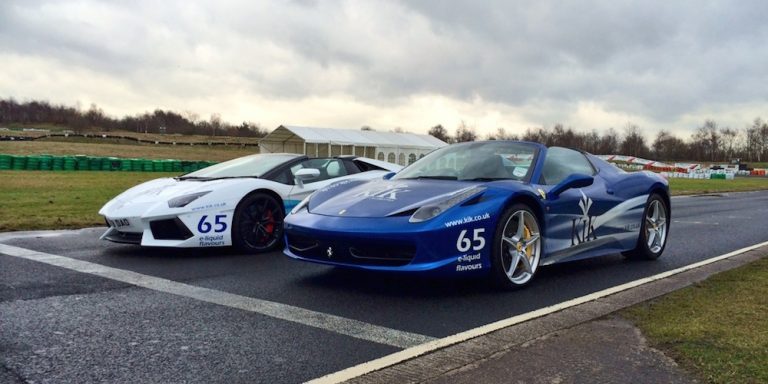
The venue was the Three Sisters Race track in Wigan, and the occasion was the launch of KIK e-cigarettes. As part of the day’s activities, the lucky invited guests were given the chance to drive a Ferrari 458 Spider around the race track under professional instruction. Then, after stepping out of the Ferrari’s driver’s seat, we stepped into the passenger seat of the Lamborghini for a few hot laps with Ben Collins, former Stig for BBC’s Top Gear TV programme.

Quite a number of the assembled guests had never experienced a car beyond a garden-variety hatchback, so the invitation to slide behind the wheel of one of the finest Ferrari models ever created was really the chance of a lifetime. Each driver got about five laps, and the pattern was usually one of gentle apprehension followed by gradually building confidence, followed by a bit of a scare (it was quite a cold and wet day) and backing off again to end. But the real highlight was still to come…

Once the driver had exited the Ferrari’s cockpit, and with barely enough time to finish grinning like a loon, they were ushered over to the menacing white Lamborghini and directed into the passenger seat alongside Ben Collins. Sadly, he wasn’t wearing a white suit, but you can’t have everything.

Ferrari 458 Spider at the KIK e-cigarette launch event

The passenger was then scared witless as Ben thrashed the big Lamborghini around the tight and twisty track for a few laps, and then emerged looking wide-eyed and a bit green, but laughing nervously and still trying to comprehend how fast they had been travelling.

Having previously driven some very high-tech machinery, I was very much looking forward to driving the Ferrari. And it certainly didn’t disappoint. The 458 is an amazing machine, and even though we were unable to have the roof down due to the inclement weather, the sound of the howling V8 engine behind my ears was ear-splitting. The steering felt almost telepathic, and the traction control system was working overtime as the rear tyres struggled to get 560hp to the ground.

The Ferrari was surprisingly easy to drive quickly, even on a damp circuit, although there was always the feeling that one slightly over-eager jab on the throttle would get you into a large degree of trouble. But having a Ferrari and a racetrack all to yourself is something to remember for a very long time, and it’s fair to say that I enjoyed myself a great deal!

Ben Collins and Helen Flanagan pose for the cameras on KIK e-cigarettes launch day

As we pulled back into the pits at the end of my run, I was feeling quite good about myself and my driving ability. Until I strapped into a Lamborghini alongside The (former) Stig. The instant that Ben slid the Aventador around the first corner at staggering speed, the gulf between a regular punter and a properly good racing driver was painfully obvious. At no point on the twisty little Three Sisters track was the Lamborghini travelling in a straight line, yet the speed that Ben carried was astonishing.  Motoring journalists have long used the cliché of a car “cornering like it’s on rails”, but they are obviously not going fast enough. If I was driving and the car was moving underneath me like a dodgy washing machine while I was trying to accelerate, brake and steer, I would instinctively slow down until the car started to behave properly. But The (former) Stig just seemed to go even faster, mastering the bucking bronco while making it charge around exactly where he wanted to.

That night, at the KIK cocktail party, the main topic of conversation was still the excitement of driving the Ferrari 458 and riding shotgun with The (former) Stig in the Lamborghini Aventador. And although quite a few people won’t remember the party, they are unlikely to forget the racetrack!

How to deal with a tyre blowout

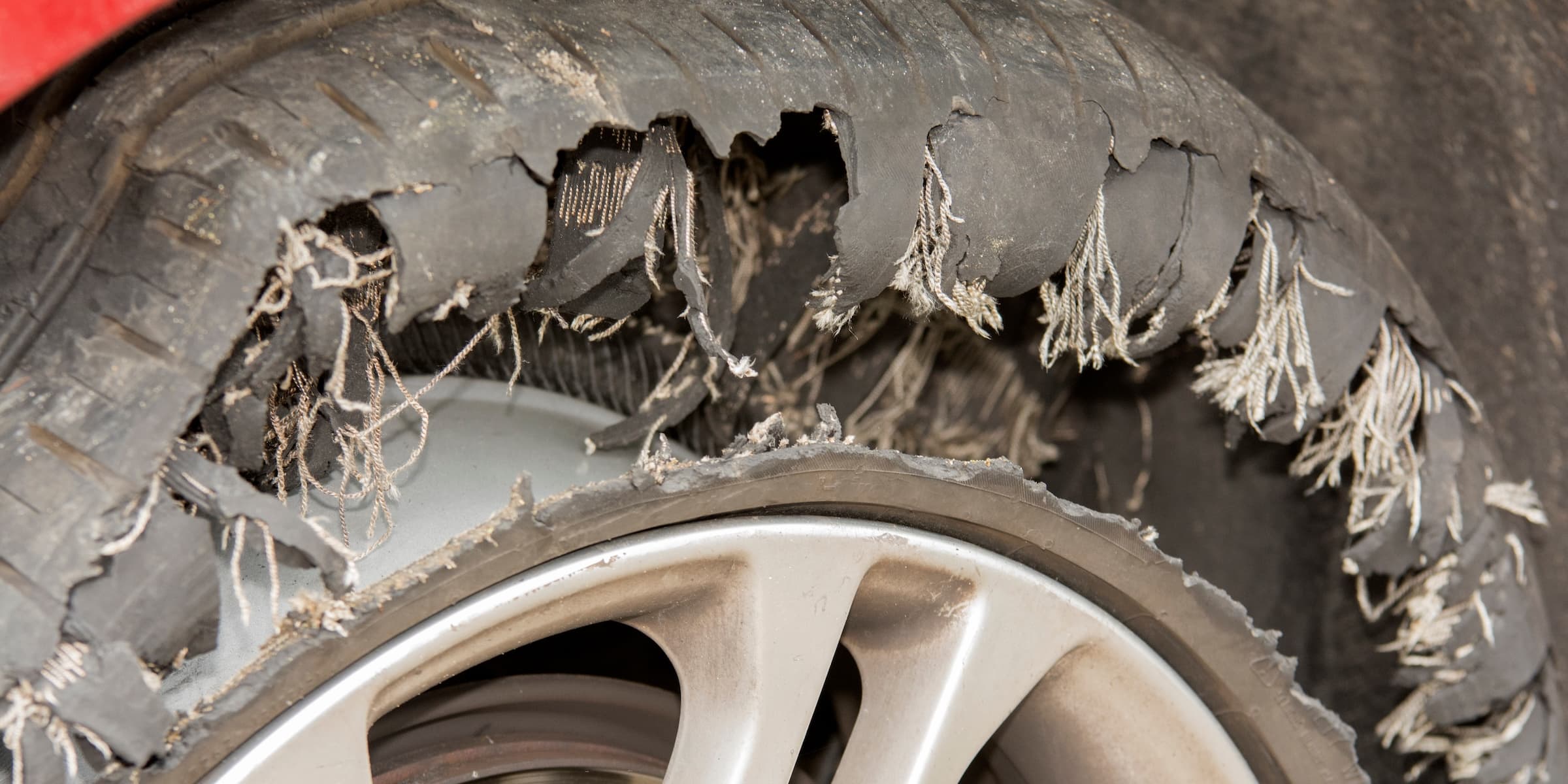
Tyre blowouts are a much rarer occurrence than they ever used to be, thanks largely to the improved design and quality of modern tyres. When they do occur, however, they can be extremely dangerous and scary, especially when you are doing seventy miles per hour on a busy motorway.

How to prevent a tyre blowout

The most common reason for a tyre blowout is that the tyre is under-inflated. This is particularly true with van tyres when the vehicle is heavily loaded, but also applies to cars and other vehicles.

Under-inflated tyres bulge out under the vehicle’s weight which means that when the vehicle is driven at speed, the tyre bounces up and down. This movement of the tyre wall generates a high level of friction which means that heat is also produced. This heat can weaken the tyre and result in a burst or in some cases, a tyre fire.

So to avoid blowouts, check that all of your tyres are inflated to the correct pressure and check the tyres for any existing bulges which may indicate a fault in the tyre wall. A bulging tyre should be replaced immediately.

Be sure not to over-inflate tyres as this can also result in bursting. Consult your handbook for the correct pressures and check them regularly; it really could be a matter of life and death.

What to do during a tyre blowout

The most important thing to do is to stay calm and think straight. If the blowout occurs to a front tyre, be sure to hold your steering wheel very tightly and stabilise the car.

The car will try to go to the direction of the blown tyre, which will take you either into other traffic or into the central reservation (if you are on the motorway or dual-carriageway). So, you need to grip the wheel tightly and correct the car as best you can.

Try to avoid braking if you can, but if you do need to brake, do so very gently. Hard braking can exaggerate the pull on the car to the right or left and could cause an accident, so brake gradually and be prepared to correct the car.

If possible, let the car come to a natural stop and try to get over to the hard shoulder as fast as you can.

If it is the rear tyre that goes, again grip the wheel and correct any swerve. However, controlled braking is now a good idea. Braking shifts the weight of the vehicle to the front tyres, giving the driver control again. Braking should be gentle, as with front tyre blowouts, and some serious correction may well be needed.

If the car slides around too much whilst braking, come off the brake and change down a gear or two to slow the car. This can cause the car to lurch, so be prepared and make sure that there are no tailgaters behind you before using your gears to slow the car.

What to do after a car accident

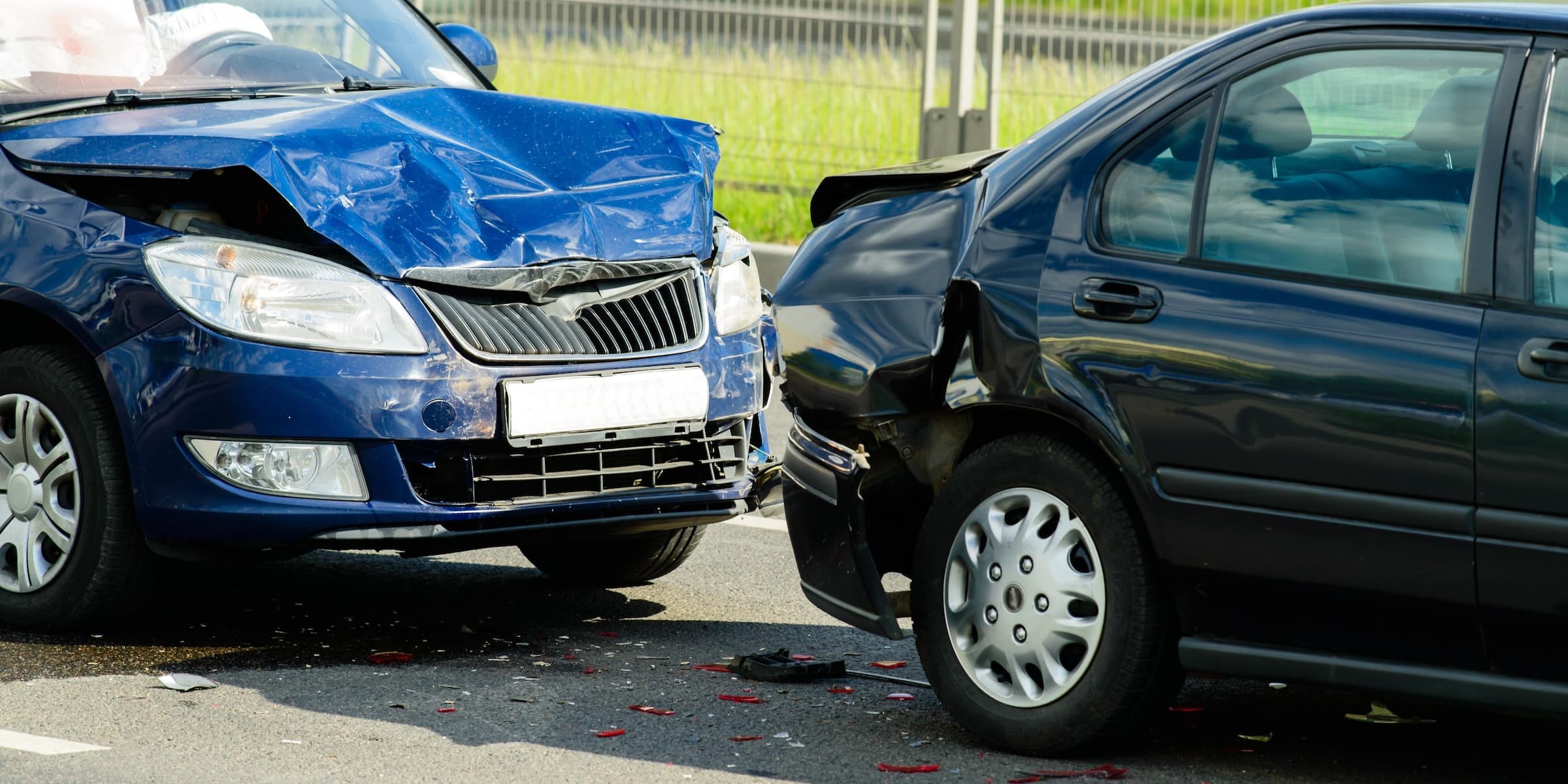
Unfortunately, almost every car owner has been involved in a car accident. Thankfully, modern cars provide a very high level of safety and most accidents are relatively minor. Car insurance also means that most accidents are easy to solve and recover from.

There are situations that are more difficult to handle, however. Let’s have a look at the things you need to do when you find yourself in a car accident.

Move away with your car

After an accident, you may feel the need to stop in the same position. This might seem beneficial, but if possible it is important to give other road users space to move on, to avoid further accidents or other dangerous situations.

Many a minor car accident has become much more serious when another car has subsequently become involved. Once you have moved your car to a safe position, it is important to turn the engine off so that leaking fluids cannot catch fire.

After this put on the hazard lights and, if you have them, place warning triangles to warn oncoming traffic.

Safety first!

When the car is in a safe position you should check if your fellow passengers are fine and whether those in the other car have sustained any injuries. When someone is injured severely, do not waste any time and call the emergency services.

Call the emergency services

Inspect the damage that has been done to your car. When you think the damage will cost you more than £1,000 you should call the police.

Also, call the cops when any traffic law has been broken. Laws that might have been broken can include switching lanes without indicating, overlapping, or when drugs or alcohol have possibly impaired the driver’s judgement.

Gather details

Make a note of the licence plate, model and make of the cars involved. Ask for the driver’s name, driving license number and phone number. Do not forget to write down the other driver’s insurance number and the company that provides his or her cover. This makes things easier for the police when they arrive at the scene.

Write down where the car accident took place

Jot down the name of the road or street where the accident has happened. You can also write down an address or intersections that are nearby. Also draw a sketch of the scene.

You can do this with a drawing but you can also use your smartphone to take pictures. Take a photo of the position of the cars and the damage that has been done.

Contact the insurance company

If the accident has just happened and you’re at the scene your memory of the accident is still fresh. This will give them the most accurate account of the situation. Your insurance company will help you construct a report of the accident and guide you through the claiming process. Your insurance company will now be able to start looking into the claim for you.

Talk with the police

Try to stay neutral when you are explaining the incident to the police. Do not make any assumptions about whose fault it is. Police agents are trained to assess what has happened and determine who is in the right.

Be honest and don’t make contact with the insurance company of the other party involved. Your insurance company will look into these matters for you.

Now you know what to do after a car accident you will be better able to keep your cool and take care of the situation correctly.

Let’s hope you’ll not find yourself in a situation like this any time soon, though!

Cruise control and how to use it to your advantage

Cruise control can be intimidating for drivers who have never used it, as they can feel like they are no longer in control of the car. Once you become familiar with how cruise control works and get used to it, however, you may find it a real benefit to your driving.

Your car’s cruise control function can make longer journeys more comfortable and can even help to save money on fuel. In addition, the cruise control feature will allow you to maintain your speed limit and avoid speeding fines.

Cruise control is primarily suited for those who are going to be driving at a steady speed without constant stopping. So a motorway is far more suitable than a street with frequent traffic lights.

Each car has a slightly different layout for the cruise control controls, but they are usually located on the steering wheel or a column stalk behind the steering wheel. The main controls are ‘Set’, ‘Cancel’, ‘Resume’ and ‘On/Off’.

You can usually adjust the programmed speed up or down using the same buttons – check your owner’s manual for specific instructions for your car. To initiate cruise control for your car, you must first accelerate to the desired speedand then press ‘set’. Your car will now maintain its current speed without the need to keep your foot on the accelerator.

Turning off cruise control is as simple as applying the brake, pressing the ‘cancel’ or ‘on/off’ buttons or pushing the clutch pedal in a manual car. The feature is set up so that even a gentle tap of the brake pedal will shut cruise control off, requiring you to control the speed using your accelerator again.

Most cruise control systems will allow you to return to your previously programmed speed by pressing ‘resume’.

Cruise control improves your comfort while driving

You can comfortably take long road trips without putting strain on your legs through having to hold your foot in a set position for extended periods to manually control the gas pedal and speed.

With cruise control activated, you can sit back, relax your right leg, and steer your vehicle. When you need to slow down or stop, simply tap the brakes to deactivate.

Cruise control gives you better control over your speed

If you tend to be a bit heavy on the accelerator or have a habit of speeding, the cruise control feature can be your best friend. Activate this feature to maintain the speed limit and avoid those expensive speeding tickets.

It also prevents you from creeping over the speed limit accidentally. When the speed limits change, you can easily adjust your cruise control settings to match.

Cruise control can improve your fuel consumption

Keeping your driving speeds steady can help you save money on fill-ups. Most drivers are fairly inconsistent at maintaining a given speed, instead of creeping up and drifting down as you drive along a road as you manually adjust relative to the speed limit and road conditions such as hills. Accelerating and braking continuously will use considerably more fuel than maintaining a set speed.

Faster drivers can save money on fuel by not speeding and then over-using the brakes to regularly come back down to the speed limit or slow down for other drivers. The faster you drive, the more fuel you will use.

Each 5 mph over 50 mph lowers the mileage that you can expect to get. Get into the habit of using cruise control to counter any aggressive driving tendencies.

Cruise control can work to your advantage in a variety of ways. Be sure to read your car’s user manual for specific details on how to operate your vehicle’s cruise control feature. Also remember that when using cruise control, you won’t have to control your accelerator – but you still must control the brake pedal at all times. In addition, the brake pedal will disable cruise control, so be aware if the brake pedal is accidentally hit or pressed while driving.