A new Department for Transport proposal aims to make life safer on the roads for cyclists, including rewards for drivers who pass bike training schemes.
The plan, unveiled by transport minister Jesse Norman, suggests that drivers who complete the national ‘Bikeability’ cycle training system should be offered a cut to the price of their car insurance. The course would, the DfT says, make drivers more aware of cyclists on the roads.
The plan also includes other proposals aimed at keeping cyclists safe. A new ‘cycling and walking champion’ would be appointed, and local councils would be encouraged to spend 15% of their transport budget on ‘active’ travel.
In addition, the proposals suggest enforcing a no parking rule in designated cycle lanes and funding a new portal to submit dashcam and helmet cam footage to police.
It comes on top of changes to the Highway Code, which are expected to give guidance on the ‘Dutch Reach’ technique for opening car doors – which sees drivers use their far hand to open their door and gives them a better view of cyclists, preventing them from being hit – as well as providing clearer guidance on overtaking distances and priority for cyclists and pedestrians at junctions.
Unveiling the plans, Norman said: “Greater road safety – and especially the protection of vulnerable road users such as cyclists, pedestrians and horse riders – is essential. We want to improve air quality, encourage healthy exercise, reduce obesity and boost our high streets and economic productivity.
“That means more support for cycling and walking, and that’s why these new measures are designed to deliver.”
However, not all groups were so thrilled, with some expressing frustration that speed reduction wasn’t given more priority.
Cycling UK chief executive Paul Tuohy said: “Lowering vehicle speeds around people walking, cycling and horse riding doesn’t just reduce the danger to them but also their perception of the danger.
“While the DfT’s proposals for amendments to the Highway Code will help save lives, ignoring the threat and dangers of speeding is disappointing.”
Up to 25% of fatal car accidents are caused by drivers who have fallen asleep at the wheel, new research suggests.
It comes after one in eight UK motorists admitted they had nodded off while driving, with close to two-fifths saying they’d sometimes been so tired they feared they would fall asleep.
The estimation of the number of fatal car accidents attributed to fatigue was made in a report by the Parliamentary Advisory Council for Transport Safety, correlated against an online poll of 20,561 drivers by the AA.
Edmund King, AA Charitable Trust director, said: “One quarter of fatal crashes are sleep-related, so drowsiness is one of the most underestimated risks on the roads. Tiredness is a fact of life at some point for most of us and it is crucial we know how to manage it in relation to driving.
“Crashes involving a drowsy driver tend to be catastrophic. If a driver has fallen asleep at the wheel they do not brake before an impact and make no attempt to steer away from a collision.
“A driver who nods off for just three or four seconds on a motorway would have covered the length of a football pitch with closed eyes. A 30-second nap while travelling at 60mph covers half a mile – a terrifying thought.”
The research has been announced as part of a new campaign by the AA to alert motorists to the dangers of driving while tired.
It revealed that men are three times as likely as women to admit that they have fallen asleep at the wheel, while motorists aged 18 to 24 are the most likely to say that being tired bears no relevance on their ability to drive.
The main reasons given for driving when tired were a long day at work, the general monotony of the journey, and because it was late at night.
More than seven million UK adults suffer from some form of travel sickness in the car, according to a new RAC survey.
The motoring organisation quizzed 1,990 people and found that nearly one in five of them suffered from the problem – usually associated with youngsters – either as drivers or passengers.
That figure equates to 7.3 million UK adults, based on there being more than 40 million full driving licence holders.
Other findings of the survey will be familiar to anybody who’s ever had to deal with car sickness – either in themselves or a passenger. Of those affected, 75% said they felt the worst nausea when in the back seat, while 12% found the front seat to be the worst place. 7% said it made no difference.
It’s not just seating position within the car that affects sickness levels either. 61% said that reading in the car made them feel the most nauseous, followed by 50% who felt a mobile phone or tablet affected them worse.
More than a third (37%) blamed the sensation of a twisting country road for unsettling their stomach, while 32% said it was a lack of ventilation.
Luckily, drivers appear to be an understanding bunch – whether that’s for the comfort of their passengers or the preservation of their upholstery. 37% of drivers have taken a break to help a passenger alleviate their car sickness, and 2% have abandoned or avoided journeys altogether.
Despite travel sickness being rather common, almost half (48%) have never had medical help. 13% have resorted to over-the-counter medication or alternative remedies such as eating ginger, while only a desperate 2% have sought the help of their doctor.
However, almost a quarter (24%) say they simply have their own ways of coping with travel sickness. Suggested remedies involved closing their eyes, trying to sleep or focusing intently on the horizon.
RAC spokesman Rod Dennis said: “While car sickness is often associated with younger children, our research suggests it still remains a problem for a substantial number of older drivers and passengers.
“While people suffer from sickness to different degrees, there is a lot that passengers in particular can do to reduce the chances of feeling unwell while on the move.”
He suggested putting down any books or tablets, focusing on the horizon and winding down a window for a flow of fresh air.
“A smoother driving style can also pay dividends. Even if a driver doesn’t suffer sickness themselves, they could suffer some unfortunate consequences if they cause any of their passengers to become unwell simply because they are accelerating or braking too sharply,” he added.
It’s easy for the stresses of work or home life to carry over behind the wheel, and stressed drivers are never good drivers. Stress can affect how we feel physically and emotionally as well as impair our judgement and our reactions, which is not what you need when you are behind the wheel of a motor car.
To be a better driver, it’s important to make sure you are in the right frame of mind before you even buckle up. So if you’re feeling stressed before driving, road safety charity IAM RoadSmart and automotive industry charity BEN have come up with some tips to help you stay calm behind the wheel.
Firstly, it is important to recognise when you’re feeling stressed. BEN lists the following symptoms as potential warning signs of stress:
Becoming easily irritated with colleagues, friends or family
Feeling distracted, forgetful or moody
Having racing thoughts
Not being able to ‘switch off’
Becoming quiet and withdrawn
Under or overeating
Smoking more, drinking more alcohol or taking drugs
Tense muscles
Headaches
Feeling sick
Not sleeping well
Getting ill more often
Here are BEN’s tips for what to do you if you feel stressed before driving:
Go for a short walk to get some fresh air and unwind.
Wait until you feel calm and collected before heading out on your journey.
Try mindfulness and deep breathing exercises. Meditation has been shown to reduce stress and anxiety.
If you’re feeling ill from stress with headaches or sickness, make sure you feel well enough to drive.
Write down a list of the causes of your stress, this can help you clear your mind.
If you’re struggling with substance misuse then seek professional help. Be aware that alcohol and other substances can stay in your system for many hours, and still be present the following day.
If you’re having trouble sleeping due to stress then make sure you’re not too tired to drive. IAM RoadSmart suggests that if you feel sleepy behind the wheel to find a safe place to pull over and stop. Almost 20% of accidents on major roads are sleep-related.
Tell someone how you feel. Talking about your problems with loved ones can make a big difference.
You can check your mood with the anxiety/stress checker tool on BEN’s website. If you need more advice on how to handle stress, you can read BEN’s top tips on managing stress.
Call BEN’s free and confidential support line on 08081 311 333 or use its web chat by visiting ben.org.uk.
In the past 12 months, potholes caused damage to vehicles costing a total of £915 million to repair, according to a study for Kwik Fit. That’s an increase of 34% on the figure of £684 million from two years ago.
The average cost of repairing damage to components, including tyres, wheels, suspension and bodywork, has risen only slightly – from £108.60 in 2016 to £111. However, the number of drivers whose vehicles have suffered damage has skyrocketed over the last 24 months – from 6.3 million drivers a year to 8.2 million – leading to the total bill for repairs increasing by £231 million.
According to the survey, some 70% of drivers say they have hit at least one pothole a week over the last 12 months, with a quarter (25%) hitting one every single day. Drivers in the north-west of the country have the worst experience, with over a third (36%) of drivers suffering a pothole impact on a daily basis.
Poor weather and visibility make potholes harder to see
Drivers give a combination of factors as the reasons for hitting pothole; 88% of drivers cited road or weather conditions, such as the pothole being hidden by a puddle or it being too dark to spot, but many (47%) also said they had to make a deliberate decision to hit the pothole as avoiding it would have compromised their own safety and that of other road users.
Almost one in ten drivers (9%) admitted that the impact was their own fault, as they were either not paying attention to the road surface or driving too fast to stop in time.
A quarter of drivers who have hit potholes over the last year have suffered costly damage to their car, with the most common repairs being to tyres (4.2 million), wheels (2.7 million), suspension (2.4 million) and bodywork (1.2 million).
Drivers overwhelmingly believe that the nation’s roads are deteriorating, with 76% saying that the road surfaces on their most frequently made journeys are in a worse condition than five years ago, with 52% saying they are significantly worse.
One in five local roads structurally poor
This mirrors the findings of the ALARM report from the Asphalt Industry Alliance, also published today, which reveals that one in five local roads are now classed as ‘structurally poor’ – a 20% increase on last year.
The condition of the road network is having an impact on driver behaviour, some aspects of which are likely to make the situation even worse. One in eight drivers (12%) say they drive a longer route than the most direct journey as it has better road surfaces, thus adding unnecessary wear and tear to both road and vehicles, as well as using extra fuel; 1.5 million drivers say the poor road surfaces have caused them to switch their car to a more rugged vehicle such as an SUV or 4×4, while one million have bought a cheaper vehicle which they don’t mind getting damaged.
The impact on vehicles has also led to drivers changing their car maintenance habits; 5% of drivers say they buy cheaper tyres as the road surfaces damage them before the tread wears out. However, 1.5 million drivers (4%) do precisely the opposite, buying more expensive tyres which are better at coping with the poor condition of the roads. Over two million drivers (6%) say they have left damage to their car unrepaired as they are sure it will get damaged again soon.
Roger Griggs, communications director at Kwik Fit, says: “The poor condition of the road network is hitting motorists’ wallets ever harder. Unfortunately, experience of past years has shown us that the recent cold weather will only make the problem worse and we are likely to see even more drivers suffering serious damage from impacts with potholes.
“It’s important to note that while sometimes a pothole will cause a blowout to a tyre, in many cases the damage is not immediately obvious.
“Often a pothole can cause a slow puncture, bulge on the inside tyre wall or hairline crack in the wheel rim, which only becomes evident days after the impact.”
Motorists are backing calls to create segregated cycle routes on the UK’s single-carriageway A-roads, according to a survey of over 1,000 drivers for road safety charity Brake and insurance company Direct Line.
Drivers questioned said they believe the current road network is not fit for cyclists and building dedicated cycleways should be the Government’s priority for roads investment.
They stated that the 60mph speed limit on single-carriageway A-roads is too fast to assure the safety of cyclists, and that both the warning signs and space available for cyclists are inadequate.
This sense of risk is echoed by the overwhelming majority of survey respondents, stating that they would advise children or teenagers never to cycle on single-carriageway A-roads or only to cycle with an adult.
Better cycle routes would encourage more drivers to take up cycling
The Brake and Direct Line survey found that such investment would significantly increase the numbers of motorists who would take-up cycling. Some 70% of drivers said they currently never cycle on single-carriageway A-roads, and more than half commented that they would be persuaded to if there was a demarcated space for cyclists.
Joshua Harris, Brake’s director of campaigns, said: “Getting more people cycling is a win-win for the Government, delivering both personal and public health benefits. Contrary to popular opinion, our survey shows that the majority of drivers are willing to switch modes and cycle if safe facilities are available.
“We echo the call from drivers and urge the Government to prioritise investment in safe, segregated cycle routes in the upcoming Road Investment Strategy.”
Gus Park, managing director of motor insurance at Direct Line, added: “All road users should be able to undertake their journeys safely. Many who would cycle choose to drive instead, as they feel some roads are just not safe enough for them to use.
“Single-carriageway A-roads are vital arteries within our road infrastructure, but they need to ensure they can accommodate all road users, regardless of their preferred method of transport, now and in the future.”
The Government is currently consulting on billions of pounds of investment in both the Strategic Road Network and the Major Road Network.
The Driver & Vehicle Standards Agency (DVSA) has announced that learner drivers will be able to take driving lessons on motorways in England, Scotland and Wales from June.
Learners will need to be accompanied by an approved driving instructor and driving a car fitted with dual controls. Motorways lessons will be voluntary and it will be up to the driving instructor to decide when the learner driver is competent enough for them.
A consultation was launched at the end of 2016, and the plans drawn up in August 2017. The announcement today of the date of implementation is the final step to the idea finally coming to fruition.
A common sense decision that could save countless lives
The announcement has been welcomed as ‘common sense’ and could save countless lives according to IAM RoadSmart, the UK’s biggest independent road safety charity, which has long called for this move to be made.
Neil Greig, IAM RoadSmart director of policy and research, said: “IAM RoadSmart strongly welcomes this common-sense change to the law on motorway driving.
“It has never made sense to us that new drivers on our most important roads learned how to use them by trial and potentially fatal error. The Government’s insistence on the use of approved instructors and dual controlled cars is a welcome safeguard that will ensure consistent levels of training and a proper phased introduction to motorway driving skills.
“Delays and injuries caused by driver error blight our motorways and with new systems such as smart motorway being widely introduced, it is vital that the level of knowledge and skill among motorways users is improved to keep our key economic routes flowing.
“Any current drivers who feel the need to refresh their skills or improve their confidence and enjoyment on the motorway can take an IAM RoadSmart motorway module today.”
One in five drivers is still using their mobile at the wheel a year after tough new penalties were introduced, according to a new survey from vehicle CCTV providers SmartWitness.
It means that 7 million motorists are still regularly flouting the law, even though it could result in automatic disqualification. In March last year, the government doubled the penalties to six points on the licence and on-the-spot-fines of £200. Drivers who get six points within two years of passing their test are automatically banned.
The level of abuse has gone down since the clampdown was introduced – one in four drivers were using their phones while driving at the time the new penalties were brought in.
Figures released by the Department for Transport reveal there are still unacceptably high levels of illegal phone use among drivers, with 37% of drivers believing the chance of getting caught is minimal, and 52% not concerned about the impact of getting caught.
Checking your phone while stopped in traffic is still illegal
The most common way drivers break the law is by checking their phones for incoming messages while driving: 21% of motorists admitted to doing that.
One in seven drivers (14%) said they still spoke on the phone while at the wheel and answered incoming calls, Three-quarters of drivers (76%) were aware of the increased penalties and two-thirds of those surveyed (67%) said they would support a further increase in fines and penalty points to deter future abuses.
The overwhelming majority of drivers breaking the law with phones (69%) claim that they only did it when they were stuck in traffic or moving slowly, and nearly all drivers (92%) ignore their phones when they are driving at speed. And only 8% of drivers have a ‘cradle’ in their cars so they can use their phones hands-free and avoid breaking the law.
SmartWitness chief executive Paul Singh said: “While it is welcome news that fewer drivers are using their phones behind the wheel, these figures are still a huge concern for everyone wanting to improve road safety. Studies consistently show that using a mobile phone while driving is as dangerous as drink driving. Yet 7 million drivers are consistently flouting the law and ignoring concerted efforts to clamp down on the problem.
“The way to tackle this abuse is to make using your phone at the wheel as socially unacceptable as drink driving and we all have responsibility to hammer home this point. If you know of a driver using a phone or you are a passenger with someone who does this, tell them to stop.”
Neil Worth, road safety officer for breakdown provider GEM Motoring Assist, commented:“You wouldn’t do it with a police officer watching… so ask yourself is there anything that makes it any less risky or foolish just because the police aren’t there? The answer is no. It is irresponsible and puts not only your own safety at risk, but the safety of those who happen to be sharing the road space with you.
Handy tips for mobile phone safety
GEM Motoring Assist has produced a list of mobile phone tips for drivers:
You’re allowed to use a mobile phone when you are safely parked, with the engine off and the handbrake on.
Do not pick up your phone in any other driving situation, including when you’re stationary at traffic lights or queueing in traffic.
The only exception to this is if it’s an emergency and it would be unsafe or impractical to stop, in which case you may call 999.
Don’t assume that using a hands-free kit means you have dealt with the risk. You are still allowing yourself to be distracted from the task of safe driving, and you could still be prosecuted for not being in control (an offence that carries a £100 fine and three penalty points).
Take a few minutes before a journey to make important calls or to check voice messages and emails. Work together with friends, family, colleagues and work contacts to remove the expectation that we should all be available, all the time.
Plan journeys to build in breaks from driving, where you can call, text or email or interact with social media in a safe environment.
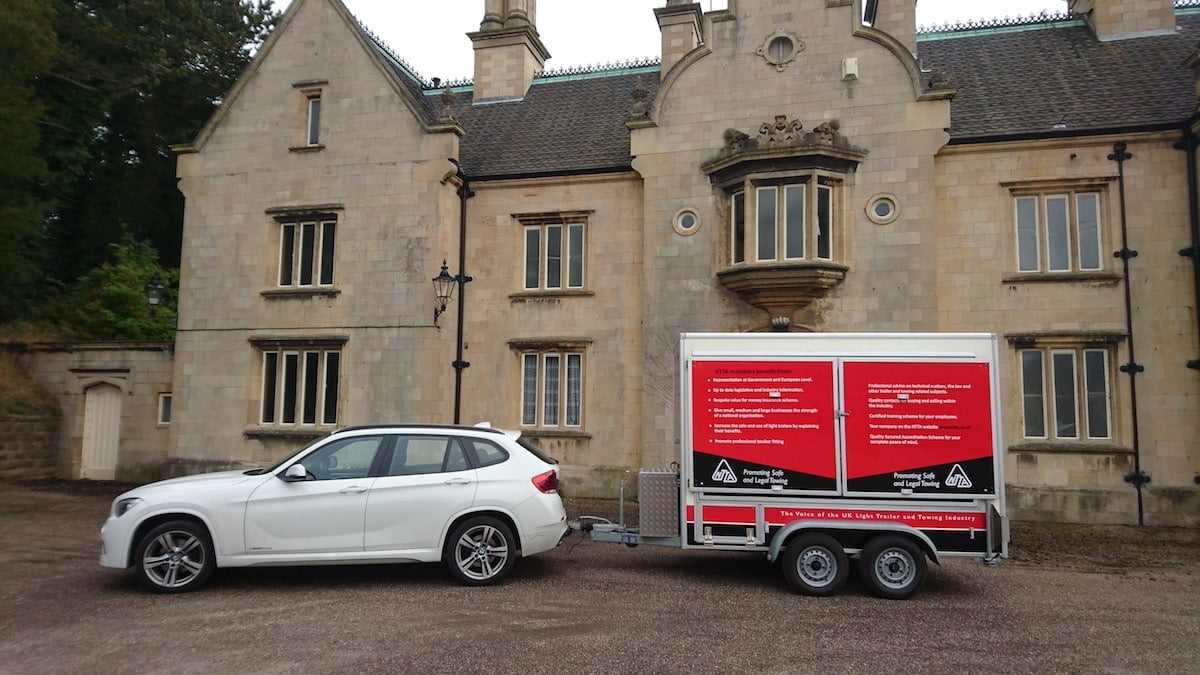
On average there are 4,809 towing incidents annually in the UK, which most commonly occur on motorways and major A-roads. To help motorists stay safe on the road, IAM RoadSmart and the National Trailer and Towing Association have issued the following checklist for drivers to work through before setting off.
Towing a vehicle
The trailer operator or the driver of the towing vehicle has the responsibility for the safe operation of the trailer and needs to carry out the following checks:
Be sure to check that your driving licence entitles you to tow the combination of a vehicle and trailer.
Have you checked the weight? Remember to ensure that the load you intend to carry is within the trailer’s official payload.
Bear in mind that the actual gross weight being towed needs to be within the towing vehicle manufacturer’s recommended maximum towing limit (whether braked or unbraked).
Trailer checks before each journey
If the trailer is laden, is the load correctly distributed and secure? To stop your trailer from being unstable, spread the load across the board and avoid having too much or too little nose weight. Even a heavy load will need to be strapped down, as gravity itself is not enough.
Before you set off, check that your lights are working correctly and are damage-free. Whilst doing this, also check that the lighting cable and plug are in good condition.
Be sure the correct number plate is fitted. This should be the same registration number as your vehicle and needs to conform to DVLA standards.
Check that your breakaway cable or secondary coupling is undamaged and connected correctly to a suitable point on the tow bar or towing vehicle. As well as inspecting for damage, make sure that the trailer is correctly coupled to the towball or pin.
The tyre pressure must be correct and all tyres free from cuts, bulges and with adequate tread (including the spare). Remember, tyres must have a continuous tread depth of at least 1.6mm on cars, light vans and trailers, across the centre three-quarters of the width.
It’s crucial that the wheel nuts and bolts are tightened to the correct torque for safety and for a smooth journey.
If required, are the mudguards secure and in satisfactory condition?
Take into consideration the size of your vehicle and the trailer. Is the coupling height correct? Check that your trailer is not excessively nose down or nose up. If your vehicle and trailer don’t align, get an adjustment plate to accommodate this issue.
Be aware of the national speed limit for a vehicle towing a trailer. The maximum speed limit on a single carriageway road is 50mph, and 60mph on a dual carriageway or motorway.
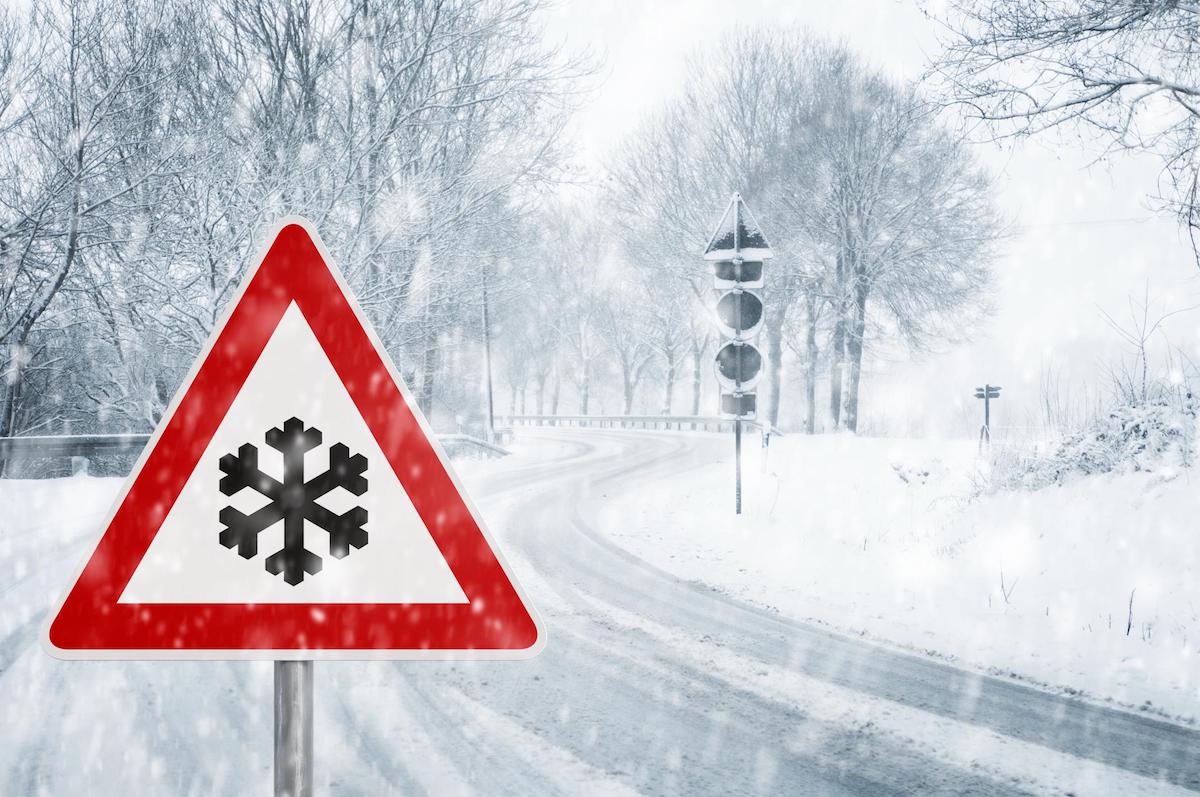
Breakdown service GEM Motoring Assist is urging motorists to take extra care as winter weather and plunging temperatures are predicted from this weekend.
Pressure on breakdown organisations is likely to increase significantly as motorists attempt to deal with flat batteries and other issues made worse by temperatures expected to fall several degrees below freezing across much of the country.
GEM is encouraging drivers to make good use of some simple safety tips in order to reduce the chance of risk, delay and difficulty.
GEM’s winter weather driving tips
Don’t drive if you don’t really need to. If you have to make a road journey, ensure your car is properly equipped for the likely conditions.
Listen for weather updates, and plan your travel accordingly.
Prepare a set of essential items, including shovel, fully-charged mobile phone, torch, ice scraper, food, water, jump leads, first-aid kit, warm clothes and a supply of sand or gravel to assist with grip if your wheels are spinning.
Keep your speeds down, leave plenty of space between yourself and the vehicle in front, don’t overtake snowploughs and gritter trucks, and be ready for sudden, rapid deteriorations in conditions.
Remember that driving in winter conditions can be hard work, so ensure you build in breaks on your journeys.
This image raises important questions, like “Why is there a street sign in the middle of the road?”
GEM road safety officer Neil Worth advised: “Forecasters have made clear that it’s likely to become very cold during the weekend and into next week. We urge drivers to have a plan ready now, which will hopefully make the likely winter conditions easier to deal with.
“Top of the list, of course, is to postpone a journey if you possibly can. Agree to reschedule a meeting or a visit if it’s not vital. In that way, you’re avoiding a lot of potential trouble for yourself and ensuring you won’t be putting additional strain on emergency and recovery crews, who are sure to be at full stretch in the coming days.
“And if you do have to travel, please make sure you have a good breakdown policy in place”.


 “Crashes involving a drowsy driver tend to be catastrophic. If a driver has fallen asleep at the wheel they do not brake before an impact and make no attempt to steer away from a collision.
“A driver who nods off for just three or four seconds on a motorway would have covered the length of a football pitch with closed eyes. A 30-second nap while travelling at 60mph covers half a mile – a terrifying thought.”
The research has been announced as part of a new campaign by the AA to alert motorists to the dangers of driving while tired.
It revealed that men are three times as likely as women to admit that they have fallen asleep at the wheel, while motorists aged 18 to 24 are the most likely to say that being tired bears no relevance on their ability to drive.
The main reasons given for driving when tired were a long day at work, the general monotony of the journey, and because it was late at night.
“Crashes involving a drowsy driver tend to be catastrophic. If a driver has fallen asleep at the wheel they do not brake before an impact and make no attempt to steer away from a collision.
“A driver who nods off for just three or four seconds on a motorway would have covered the length of a football pitch with closed eyes. A 30-second nap while travelling at 60mph covers half a mile – a terrifying thought.”
The research has been announced as part of a new campaign by the AA to alert motorists to the dangers of driving while tired.
It revealed that men are three times as likely as women to admit that they have fallen asleep at the wheel, while motorists aged 18 to 24 are the most likely to say that being tired bears no relevance on their ability to drive.
The main reasons given for driving when tired were a long day at work, the general monotony of the journey, and because it was late at night.