Motorists back call for tailgating fines

Most drivers have experienced it: you look in your mirror and there’s a car sitting just feet behind you at speed, usually trying to get you to move over and let them pass.

The practice, known as tailgating, is not only intimidating and aggressive, but dangerous too – last year it was listed as the cause in almost 600 serious accidents, 28 of which resulted in someone being killed.

Now almost 90% of motorists have said they support plans to fine fellow drivers for tailgating on the motorway, according to a new poll by independent car retailer Motorpoint.

The company’s online survey revealed that 87% of more than 1,600 drivers questioned, backed proposals for drivers to be fined £100 and given three points on their driving licence if convicted of tailgating on the motorway.

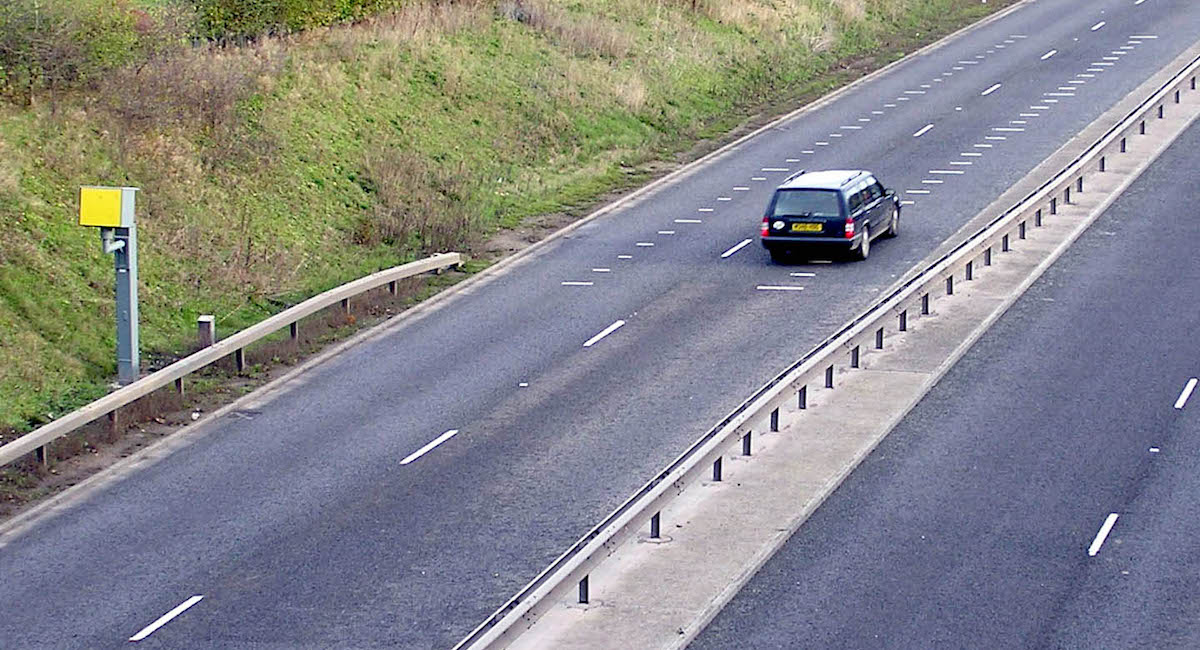
The government has recently been trialling new technology on parts of the M1 motorway in Northamptonshire that detects whether drivers are maintaining a minimum of a two-second safety gap between them and the vehicle in front. During the tests late last year, more than 26,000 people were found to be inside this margin.

“Tailgating has become commonplace on our roads in recent years and we are delighted to see the government finally taking action to address something that can quite literally cost people their lives,” says Mark Carpenter, chief executive officer of Motorpoint.

“The issue of tailgating extends far beyond just motorways, and this step won’t solve the problem overnight, but at least it is a move in the right direction.” 

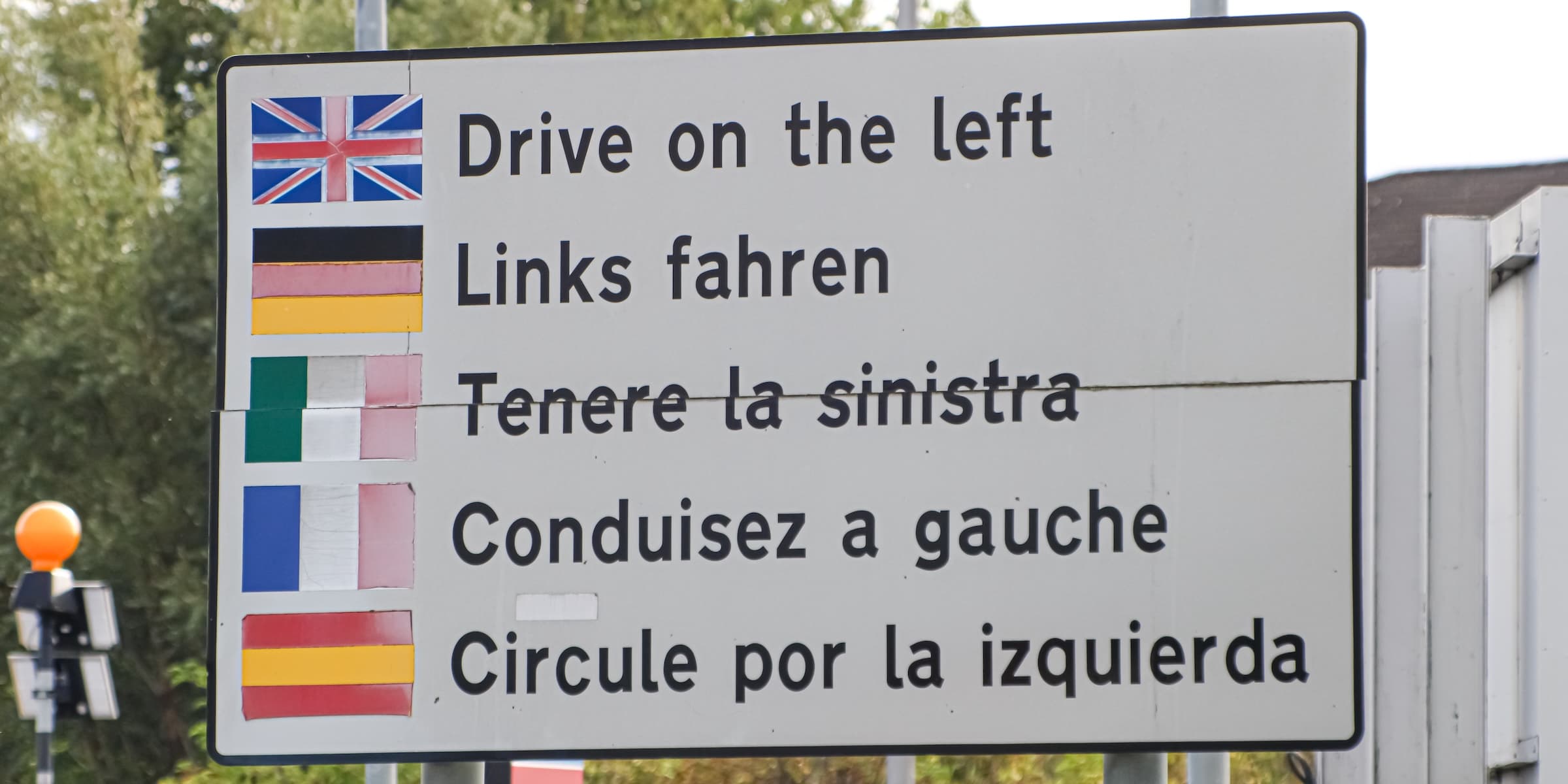
Why do we drive on the left-hand side of the road?

Maybe some of you will remember the Only Fools and Horses special ‘Miami Twice’, where Del Boy closely avoids a head-on collision with a car in Florida as his brother Rodney screeches at him, “You’re on the wrong side of the road! They drive on the right-hand side of the road over here!” A comedy classic that highlights that, for some, the right side of the road is anything but.

So why is it that some countries drive on the left side of the road as we do in the UK and others, like the Americans, drive on the right? This article looks into the history of this road traffic rule and explores where the modern conventions originally came from.

Confusion reigns around the world

Here in the UK we drive on the left-hand side of the road, and our cars are right-hand drive (RHD) because it’s much easier to see what’s going on. It is perfectly legal to drive a left-hand-drive car (LHD) in the UK, but it is a bit more challenging – not to mention that you are always on the wrong side for toll booths and drive-through services.

Europe is generally the opposite way around to the UK, where the cars are left-hand drive and you drive on the right-hand side of the road. Again, it’s legal to drive a UK car with the steering wheel on the right over in Europe. The main issue is headlight aiming, as your lights are angled slightly towards the kerb and away from oncoming traffic. This is why you have to fit those fiddly stickers to your headlights when driving a UK car in continental Europe, as your headlights are angled towards oncoming vehicles.

Who drives on which side of the road?

Countries like the UK that drive on the left-hand side of the road are in the minority, with 74 total territories doing so, as opposed to 167 that drive on the right. Of all the roads around the world, 90% of their total distance are ‘wrong way round’ to us.

Many of the RHD/left-side-of-the-road nations are members of the Commonwealth of Nations (or previously part of the British Empire), so there is a definite political dimension to which side of the road a country drives on. Of all the current British territories, it’s only Gibraltar that doesn’t follow the left-hand rule as they drive on the right in line with the other countries in Europe.

There are a number of theories as to where the left vs. right traffic conventions have come from, but there is no definitive answer. It is only relatively recently, with the advent of modern state regulations, that road traffic rules have been defined and recorded. So let’s explore some of the likely reasons for why countries drive on the side of the road they do.

The Roman road system – insights into ancient ways

The ancient Romans were famed for their roads, whose straightness is a characteristic that is still evident on many modern roads today. The quality of Roman roads was only surpassed during the industrial revolution many hundreds of years later. With the military importance roads had in upholding the Roman Empire across Europe, they must have had a well-ordered system of organising the roads and their traffic. So which side did they use?

The best insight to this was found in 1998 during an archaeological excavation of a Roman quarry site near Swindon. The road leading to and from the quarry site was well enough preserved for the archaeologists to clearly see that one side had grooves worn into it. As carts would enter the quarry empty and leave heavily loaded, the grooves were presumably caused by cart traffic leaving the site, meaning that (at this location, at least) the Romans traffic drove on the left.

It’s likely that the rules governing Rome’s roads were standard throughout the empire, as they were primarily a military asset; transporting columns of centurions from the Irish Sea to the Middle East. As the roads were for military purposes, the rules governing them would probably have derived from the army. A theory has been offered that the left would have been the best side to use for marching Roman troops so that the sword and scabbard, worn on the left-hand side, would not catch against troops marching in the opposite direction.

Another theory is that a left-hand side position would place the right, sword-wielding hand nearer to a potential adversary coming the other way. Throughout time, right-handed people have always been numerically dominant over left-handers, so marching and driving on the left would suit the vast majority of men.

The fall of the Western Roman Empire to the barbarian invaders ended Roman road construction in Europe and the bureaucratic system governing them. However, the barbarian invaders adopted and emulated many Roman traditions and systems, meaning that Roman influence stretched into the Dark Ages and beyond. This may have included the conventions for road or track use.

Road conventions in Medieval Europe

It seems that traffic conventions set in place by the Roman Empire continued to be followed by the kingdoms that inherited Western Europe. Evidence of this is contained in a 1300 AD papal edict by Pope Benefice which decreed that all pilgrims travelling to Rome should keep to the left.

The Roman Catholic Church inherited and continued Roman authority until the dissolution of the Holy Roman Empire in 1806. This suggests that, at least until the early 19th Century, most of Europe had left-hand traffic like the UK. There is no military reason stated in the edict, which addresses the issue of congestion in the eternal city, but that is not to say that the convention itself did not have military ancestry.

An important aspect of medieval society to bear in mind is how superstitious it was. The Church believed that left-handedness was demonic, and left-handed people either had to adopt the right hand or face persecution or being ostracised. This means that handling of tools and weapons would be done with the right-hand side.

Another theory on the left-hand convention argues that for knights the only way to mount a horse wearing a sword on the left would be from the left and so for ease of mounting or dismounting the left side of a road would be used. In support of this are the origins of the modern military salute; lifting the right hand to the brow and dropping it. This originated with Medieval knights, who to greet each other would lift their helmets visor to identify each other.

Yet another theory adds that to approach somebody in peace, you would offer them your right hand to shake, as opposed to approaching them in anger with a sword or dagger in hand.  This is the origin of our modern western convention of shaking hands. Medieval society was highly violent; nearly everyone would have carried a side arm, bandit attacks and murders were common and so personal security would have been of prime concern.

It seems that the medieval conventions arose from a mixture of inherited Roman customs and from the social customs of a more violent society. However, as the superstitions of the Middle Ages gave way to the rationality of the Enlightenment, road conventions became more politicised.

The right-hand revolution

It was the republican revolutionaries in Europe and America who set about changing the road conventions to drive on the right-hand side. During the American War of Independence, French revolutionary the Marquis de Lafayette, the ‘hero of two worlds’ who went to fight against the British and who became a close friend of George Washington, suggested to him that the colonists adopt the right-hand traffic convention. Whether this was done immediately after the colonists’ victory in 1783 is not known, but the first record of a law on the subject is found shortly after with a 1792 Pennsylvania statute specifying to keep right.

In Europe, republican revolution came to France a few years after the Americans had won their freedom. With it came a commitment by revolutionaries to overturn the existing order and usher in a new age of reason. As part of this, there were strong anti-clergy and secular views in the ranks of the French revolution who sought to overthrow Papal authority by subverting its conventions and edicts, such as that on pilgrims in Rome.

There is also a theory that Napoleon changed the side of the road used because he himself was left-handed. However these may have contributed, during the revolutionary conquests the side of the road that was driven on became politicised.

It was Napoleon’s conquests throughout Europe that spread revolutionary ideology and overturned the existing conventions of its monarchies. As the French armies swept across Europe, they introduced the right-hand law to symbolise freeing countries from their old medieval social and political systems. Napoleon’s invasion of Austria showed this political aspect, as his armies only invaded the Tyrol in the west of the country, and only in that region was the right-hand side rule imposed.

Changing the side of the road on which people travelled was a symbolic act, meant to show the power of the new regime over all aspects of society and to place the revolutionary countries diametrically opposed to those they believed represented the values of the old world. Those powers that represented the old conservative world and resisted Napoleon’s advances – Britain, Portugal, Austria-Hungary and Sweden – all continued to keep to the left.

Napoleon’s failure to conquer all of Europe caused there to be a variety of conventions across countries. In Belgium there was no convention for which side of the road to travel on, with some regions driving on the left and some on the right. This situation was only addressed in 1899, not long after the first motor cars arrived, when the drive-on-the-right rule was imposed to bring order to an increasingly busy road system.

Although Napoleon conquered major colonial powers in Europe, the conventions in their colonies were generally not changed.  This was the case in the Dutch colony of Indonesia, where the original convention to drive on the left remained in place even after Napoleon changed the Netherlands to driving on the right (and has remained so until today).

The Right Wing revolution

As Napoleon tried to conquer all of Europe in the 18th century, so Hitler tried the same in the 20th Century. And like his maniacal predecessor, Hitler sought to change Europe’s driving conventions. Completing the work Napoleon started, Hitler changed all of Austria to drive on the right after the 1938 Anschluss unified Germany and Austria. Next was Czechoslovakia in 1939, and during the war Hungary was changed to drive on the right in 1944.

After the Second World War, only one country in continental Europe was still driving on the left – Sweden. It changed to match its neighbours in 1967.

The colonial and anti-colonial influence

As European empires spread throughout the world, they spread their control and influence, which included imposing driving conventions on their colonised people. Britain spread the left-hand rule to the territories it colonised, but also some that it did not.

In Japan, the influence of the British ambassador Sir Rutherford Alcock led the country to start travelling on the left from 1859, a change formalised by Japan’s government in 1872. This was also the case in China, where British influence caused a similar change to the left in the important port city of Shanghai.

As much as the road conventions were a means of colonial powers to impose their rules on their territories, they were equally used by post-colonial nations to assert their independence. This was the case in Myanmar (Burma) where as one contemporary writer noted the, ‘rule of the road was recently and suddenly imposed to supersede that inherited from colonial times’. Other post-British Empire nations like Nigeria and Ghana switched to driving on the right soon after they were granted independence from Britain.

The idea of changing to driving on the right to shake off the colonial yoke was considered in Pakistan following independence; their decision not to was all down to camels. At the time the country was heavily dependent on camel trains for transportation, whose camels were training to walk on the left.  The retraining of the camels for right-hand traffic was enough of a task for the country to reconsider the move and stay on the left.

The anti-colonial impetus for changing the road conventions seems to have petered off after the initial flood of newly independent nations asserting their new found freedom and in recent years economic reasons have taken the forefront. In 2009, Samoa – previously a German colony – which drove on the right, changed to driving on the left.  This wasn’t in order to throw off the reigns of colonial power, however, but in order to benefit from cheaper car imports from Japan and Australia!

This article was originally published in 2014, and was most recently updated in May 2021.

I’ve been caught speeding by a speed camera – what happens now?

323

Have you recently been caught out by a speed camera? This article provides an easy-to-understand guide on what to expect, what to do and when to do it.

It happens to most of us eventually. You’re driving along, minding your own business and not really aware of how fast you’re travelling. All of a sudden, there’s a flash in your rear-view mirror and you realise that you’ve been busted by a speed camera.

The UK is filled with speed cameras these days as a substitute for actual policing; from the traditional yellow Gatso devices to more advanced units, and now an ever-increasing number of average speed cameras that monitor your speed over a distance of several miles. They first started sppearing at major roadworks sites, but now they seem to be popping up all over the country.

What many drivers don’t realise is that there is a formal process that the police must follow when you are flashed by a speed camera. This process is both to maintain your rights and to minimise errors by the police in making a valid prosecution if you have been speeding.

In this article, we will cover:

Timing: When do you receive a speed camera fine?

One of your first concerns after triggering the dreaded speed camera flash is probably the cost of any fine. Don’t worry about that for now.

Firstly, the police have 14 days in which to serve the registered keeper of the vehicle with a ‘notice of intended prosecution’ (NIP), which sets out the details of the alleged offence.

Study the NIP closely and make sure you abide by any conditions and timescales given. If the police haven’t sent you a NIP within 14 days, you may have escaped prosecution. However…

If you are running a leased car, you are not the registered keeper. The penalty notice will be sent to the leasing company, who will then have to advise the police that you were in posession of the car. That means it could take a few weeks for the NIP to reach you.

Along with the NIP, you will receive a form called a Section 172 notice that asks for confirmation of who was driving the car. You need to complete this by declaring that you were the driver of the car at the time of the offence, or you dob in whoever was driving. You have 28 days to fill in the form and return it.

Assuming that you have confirmed that it was you who was speeding, you will probably receive a fixed penalty notice (FPN) unless you were driving well in excess of the speed limit. The FPN gives you a choice of pleading guilty or not guilty. If you plead guilty, you’ll to pay the fine. If you plead not guilty, your case will usually proceed to a court hearing.

If you’re going to court, you should seek legal advice. We’re not qualified to help you with that.

Cost: How much will your fine be?

The minimum penalty for a speed camera offence is £100 and three points on your licence. But that’s only the minimum.

Updated laws came into effect in April 2017 that have made things a lot more complicated over the last four years. Fines are now graded according to both the level of speeding and your weekly salary. These fines were bumped up again in 2021.

Speeding penalties are now classified into three bands:

  • Band A for minor excesses (for example, up to 40mph in a 30mph zone)
  • Band B for moderate excesses (for example, up to 50mph in a 30mph zone)
  • Band C for major excesses (for example, more than 50mph in a 30mph zone)

Instead of fixed penalties based on your speed, the system now also takes your earnings into account, using the following formula:

  • Band A: 50% of your weekly salary, plus 3 penalty points
  • Band B: 150% of your weekly salary, plus 4-6 penalty points or disqualification for up to 28 days
  • Band C: 150% of your weekly salary, plus 6 penalty points or disqualification for up to 56 days
Speed camera fine - what happens now?

There is also some flexibility (plus or minus 25%) in the fine, based on other circumstances. Speeding around a school or busy pedestrian area will probably get your fine bumped up, whereas a similar speed on a deserted road in the middle of nowhere may get you a bit of leniency.

Points: Speed camera offences and penalty points

In addition to the cash penalty, you will normally receive between three and six penalty points, depending on the offence (see above). Anything above six penalty points will almost certainly be heard in court, due to the severity of the offence.

Penalty points are valid on your licence for three years from the date of the offence, or if your case is heard in court, from the date of your conviction. However, you may only apply for the endorsement to be removed from your licence completely after four years.

Most insurers don’t penalise for three penalty points. However, if you receive further endorsements within three years, you’re likely to see a significant rise in your car insurance premium.

Next page: Speed awareness courses, appealing a penalty and more serious offences

Top tips to cut your driving bills

Driving less than you did? Most people are, mainly because Covid restrictions are keeping them at home more than before. And if you’re one of those, you have probably noticed a change in your monthly motoring expenses, as your fuel bill reduces with every untaken journey.

But prices at the pumps have actually risen recently, which makes it all the more important to think about fuel economy when you do have to hit the road for your key worker commute or to make an essential journey to the supermarket.

Petrol prices have crept back up to their highest levels since they first dropped following last March’s lockdown, according to car insurer Ageas Insurance. Their figures reveal that by the end of January, petrol prices had risen to 118.1p per litre – up nearly 3p compared with the price at the beginning of the month – while diesel rose to 122.7p per litre.

If your car takes £60 to fill (that’s the average), and you do this once a week, you’ll be spending a whopping £3,000 a year. With many road journeys now on ice (and not because of the cold weather), motorists will certainly be seeing the financial benefits of staying indoors and working from home. However, the way you drive when you do venture out, and the condition of your car play a huge role on the amount of fuel you use, and any unnecessary costs can add up over time.

All the more reason to consider your driving habits and see if there’s anything you can do to help your car run more efficiently, to save you fuel and money. Driving carefully and considerately also helps to reduce strain on the car and its components, avoiding possible unnecessary repair bills.

These 10 top tips, compiled with the help of Ageas, could assist you in upping your petrol or diesel economy and going further on each tank of fuel:

1. Lose some weight

The heavier your car, the harder it has to work to speed up or slow down. So take out any weighty items that you don’t really need.

2. Don’t be a drag

Your car will have to work harder against unnecessary wind resistance. So remove roof boxes or bike racks if you’re not using them.

3. Windows up

Driving with windows open also increases aerodynamic drag, so you have to put your foot down further to compensate. No worries, you have air conditioning? Unfortunately this also uses fuel to operate.

4. Up the maintenance

Take the time to keep your car well maintained. Crucially for fuel-efficient driving, this includes keeping your tyre pressures correct to reduce resistance.

5. Switch up a gear

Change to a higher gear as soon as it’s possible and safe to do. It’s also a quieter and more relaxing drive like this.

6. Read the road ahead

Look ahead and anticipate obstacles, slowing vehicles or changes in gradient. That way, you can ease off the throttle gently rather than slamming your foot on the brakes.

7. Back off

Your fuel costs will increase the faster you drive, so keep speed reasonable, get into a high gear as soon as you can and drive smoothly.

8. Accelerate gently

There’s no need to race anyone away from the lights, or to blast through the gearbox like you’re on a rally. The harder you accelerate the more fuel you will burn through.

9. Steady as you go

Keeping a comfortable, steady speed could mean using cruise control. But this feature only aids fuel economy when driving on a constant flat surface. And keep a wary look out ahead – you’re ultimately in control of the vehicle.

10. Don’t go neutral

For most modern cars putting it in neutral when coasting downhill or up to a red light can actually waste fuel. While coasting, your engine is idling and still putting fuel into the motor. Approach obstacles steadily and use lower gears for engine braking to help save your brake pads as well as your fuel.

Out on the roads this winter? Don’t leave home without these

0

We have entered the coldest, darkest months of the year. And with those dark days come less light, worsening weather conditions and more stress for driver and car.

The Car Expert has already outlined some of the best advice to take when heading out on to the winter roads, but thought should also be given to what you’re carrying in your car when you set off.

You as the driver might be prepared for the journey, and hopefully your car will be in the correct condition for the trip. But you do need some vital supplies. So to cover off all eventualities, here is a useful check list of essential items you should keep in your car in the colder months, according to road safety group IAM RoadSmart.

Scrape through

Keep an ice scraper in your car throughout winter. It will make fast work of any ice on your windows, to make sure your vision is clear when you head off. Use one with a sturdy handle to prevent frozen fingers. Much better than an old CD case or credit card.

Remember to properly clear all your windows before driving off, not just part of the windscreen directly in front of your steering wheel. While you’re at it, scrape ice off your headlights and tail lights to make sure you can see and be seen. It will only take an extra minute or two.

Fuelled and ready

Start any long journey with a full tank of fuel. Don’t put off filling up – it’s sensible to keep your tank at least half full at all times during the coldest weeks of winter. This will prevent you getting caught short later if you come across heavy traffic, long queues or snow-bound roads.

Dark arts

If you’ve broken down on the side of the road, the last thing you want is to be fumbling around, unable to see your way in the dark. So always keep a torch and set of batteries in your vehicle. Check it every so often to make sure it actually works.

Warming up

Some people still set off with very little clothing, crazily relying solely on the car’s heater. But if you do have to stop and get out of the car in sub-zero temperatures you could end up in serious trouble. And if you’re stuck in a broken-down car, you’ll find it gets very cold very quickly once the engine’s no longer running to drive the heater. So take plenty of warm clothes, a blanket and a high-visibility jacket.

Food and drink

Don’t forget some small items of food and drink to stop your energy levels from dropping. Again, if you’re left stranded by the side of the road, you could be there for quite a while. Bottled water is a must, along with some snacks and sweet treats.

First things first

You never know when you’ll need a first aid kit, so keeping one in the boot of your car is always handy for either yourself or another road user if you’re the first person at the scene of an accident. It’s also a useful thing to have handy if you manage to do yourself an injury while you’re out and about, so make sure you replace any items that you take out of the kit.

Jump to it

The battery on your car can go flat at any time, whether you’re driving around town, your local area, or heading out on your first long motorway journey after several weeks off the road due to the coronavirus lockdown. Make sure you keep a set of jump leads in the car so you can start your engine with help from another driver’s vehicle if you need to.

Reflective glory

A reflective warning triangle gives you extra security for a number of reasons such as breaking down in the dark. Put it out in accordance with the Highway Code which advises to “put a warning triangle on the road at least 45 metres (roughly 50 paces) behind your broken-down vehicle on the same side of the road, or use other permitted warning devices if you have them. Always take great care when placing or retrieving them, but never use them on motorways.”

Right direction?

Most of us use a satnav to travel to unfamiliar places. But what if your battery dies and you can’t find the charger for your windscreen-mounted satnav, or what if the navigation takes you the wrong way? Be ready to refer to a trusty road atlas – and make sure it’s reasonably up to date.

Don’t lose contact

Finally, don’t forget your mobile phone and a charger. Switch it to silent and place it in the glove box to avoid any temptation to touch it, but it will be there ready to use when and if you need it.

“A journey can be a pleasant experience with the right planning,” says Richard Gladman, IAM RoadSmart’s head of driving and riding standards. “But it can turn into a nightmare if circumstances change and you do not have the right tools for the job at hand.

“Getting stranded either in suddenly changing weather conditions or in hours-long traffic will be more bearable if you can let people know where you are and stay in relative comfort until you’re finally able to safely get to your destination and your next cup of tea.”

Ten top tips for driving this winter

0

Rain, fog, ice, high winds – winter is certainly on its way. And while most parts of the UK haven’t had snow yet, it’s probably only a matter of time before the white stuff appears.

But while that can’t stop the UK’s motorists and driving professionals from continuing to take to the road, it’s more important than ever that drivers do so in safety.

Modern vehicles have never been safer, but that doesn’t mean you can sit back and let technology do all the work for you on an icy road. Drivers have a responsibility too, and that includes making sure your vehicle is in the right condition for winter and that you’re aware of the extra dangers a frosty morning or snowbound evening might hold.

To help you plan ahead, here are ten top tips for winter driving from road safety group IAM RoadSmart. They could not only save your car from extra wear or damage, but they might also save your life.

“Preparation is the key to avoiding a dangerous situation whilst driving in snowy or icy conditions,” says Richard Gladman, IAM RoadSmart’s head of driving and riding standards.

“Don’t rely on the performance of your car systems to get you out of trouble – allow time, make sure you have good visibility all round and carry the right equipment. If conditions are extreme remember the best advice is not to travel.”

Subaru Forester driving in winter snow

Ten Top Tips to avoid slipping up this winter


1. Do you really need to travel?

If the weather conditions are severe in your area, note police advice and avoid travelling if you can. If you must travel, do so with extra caution.

2. Gently does it

Triple your stopping distance and approach every junction expecting to stop well before the give way line. It can take up to ten times as long to stop in icy conditions. Every steering, acceleration or braking input should be as smooth and gentle as possible. Don’t assume that a 4×4 SUV will stop or corner better than a normal car – often it’s quite the opposite. Four-wheel drive will help you maintain traction under acceleration, but it won’t help you during braking or cornering.

3. Can you see the light?

Keep a bottle of water in your boot to give your lights, windows and mirrors a quick clean on longer journeys. Salt quickly makes vehicles dirty, and car headlamps without washer nozzles can lose up to 40% of power and focus in about 20 miles on a gritted motorway. Likewise, your rear lights will get covered in muck very quickly in winter. That means following cars will find it harder to spot your brake lights when they come on, so keep them clean at all times.

4. Don’t ignore the signs

Never ignore any warning light that appears on your dashboard. If one appears, get it checked out as soon as possible. Being stuck on the side of the road is always annoying, but breaking down in freezing conditions is a risk as well as an annoyance.

5. Essential kit

Always carry a winter driving kit including: ice scraper, de-icer, blanket, torch, shovel, food and drink, fully charged mobile phone, reflective triangle and high visibility jacket. Almost every winter, you’ll see or read reports of cars stuck on a motorway overnight somewhere in the UK after a heavy snowfall. Be prepared in case it happens to be you this year.

6. No overtaking

When driving on a busy road, avoid overtaking a gritting lorry as the road ahead might not be treated yet. If you have any doubt, don’t risk it. Drop back a bit, so your car doesn’t get pelted by grit, and follow at a comfortable distance. For the same reason, never overtake a snow plough in heavy snow conditions.

7.  Pass the salt

While roads may be gritted to give you better traction, it’s never uniformly distributed along and across the whole roadway. Some areas may not be completely treated, which can leave icy patches. Also keep an eye out for water running across the carriageway, as this can wash away the gritting salt and create a slippery ice patch across the road.

8. Keep it clean

Keep your car clean throughout the winter as the salt in grit can cause corrosion to any exposed parts. Wash and rinse alloy wheels too; the smallest scratch can quickly cause corrosion. And, obviously, a clean windscreen is much easier to see out of than a dirty one.

9. Go on, my sun

Just because the winter sun is out, don’t assume the roads might not be icy. Micro-climates of icy patches will linger in areas such as bridges and exposed sections, where the sun has not yet reached.

10. Tread carefully

Ensure your tyres have at least 2mm of tread. The more tread tyres have, the more water they can cope with. Don’t let tyres wear down to the legal limit of 1.6mm. Consider winter tyres or all-season tyres if you think they might help.

Police to crack down on uninsured drivers

Police forces across the UK are launching a national effort to bring down the number of uninsured drivers on the roads.

Starting today (October 26) and running until November 1, ‘Operation Drive Insured’ will see all of the UK’s 43 police forces bring an increased presence to the country’s roads in order to detect and seize uninsured cars.

The operation is being conducted in partnership with the National Roads Policing Operations, Intelligence and Investigation (NRPOII) committee in order to bring a much-escalated enforcement presence on the UK’s roads.

Commander Kyle Gordon, Head of NRPOII, said: “Many people will see uninsured driving as a victimless crime at best, or as only impacting on the profits of large insurance companies at worst. This is not the case.

“We know from our work in roads policing that uninsured drivers are statistically significantly more likely to cause a death or injury on the road, which too often sadly brings devastation to victims, families and communities up and down the country. They are also frequently involved in wider road crime.”

According to the Motor Insurers’ Bureau (MIB), 130 people are killed and 26,000 left injured in collisions caused by uninsured and untraced drivers.

Evidence from MIB has also shown that drivers without insurance are more likely to commit ‘hit and run’ offences, as well as be involved in other crimes.

However, MIB claims data has shown that the number of claims for compensation from victims of uninsured drivers has fallen by 26% since 2016, though the financial hardship being experienced by many as a result of the coronavirus pandemic has caused concerns that more people could be breaking the law by driving without insurance in order to save money.

Anna Fleming, chief operating officer at MIB, said: “We’ve made great strides in getting more people to drive insured in recent years, but the sad reality is with Covid-19 putting so many people under financial strain, uninsured driving levels could creep up. Everyone suffers the consequences of uninsured driving. We’re fully committed to our partnership with the police so we can get as many people as possible to drive insured to make roads safer and fairer for everyone.”

Motorists found to be driving without insurance face having their vehicle seized and potentially crushed, as well as being hit by a £300 fixed penalty notice and six licence points.

If escalated, they can be referred to court where they could face an unlimited fine and a ban from driving. Uninsured convictions can also show up on Disclosure and Barring Service (DBS) checks which can affect future employment.

You may also like:

Loophole over mobile phone use by drivers set to be closed

0

A loophole that currently allows drivers to escape punishment for hand-held phone use if they are taking a photo or playing a game will be closed under plans announced by the Government.

The Department for Transport is consulting on updating laws so that phone calls and texting are not the only functions banned when behind the wheel.

An exemption will be made under the plans to allow mobiles to be used for contactless payments if a vehicle is stationary and the goods or services are delivered immediately, such as for a drive-thru takeaway.

Ministers have rejected calls to go further by banning the use of hands-free functions – drivers will still be able to continue safely using devices “hands-free” while driving, such as a sat-nav secured in a cradle.


You may also like:

Roads Minister Baroness Vere said: “Our roads are some of the safest in the world, but we want to make sure they’re safer still by bringing the law into the 21st century.

“That’s why we’re looking to strengthen the law to make using a hand-held phone while driving illegal in a wider range of circumstances.

“It’s distracting and dangerous, and for too long risky drivers have been able to escape punishment, but this update will mean those doing the wrong thing will face the full force of the law.”

The change in law would apply across Britain and is expected to come into effect early next year, pending the outcome of the consultation.

In 2019, there were 637 casualties on Britain’s roads – including 18 deaths and 135 serious injuries – in crashes where a driver using a mobile was a contributory factor.

The punishment for drivers caught breaking the rules on hand-held mobile use are six penalty points and a £200 fine.

The University of Leeds was commissioned by the DfT to analyse mobile use by 52 drivers over a total of 765 journeys.

Some 662 phone interactions were observed, of which only 38 were completely hands-free.

A car being driven at 30mph travels 100 feet in just over two seconds, demonstrating how spending a moment to change a song on a playlist or check an app can result in a crash.

National Police Chiefs’ Council lead for Roads Policing, Chief Constable Anthony Bangham, said: “Using a mobile phone while driving is incredibly dangerous and being distracted at the wheel can change lives forever.

“Police will take robust action against those using a hand-held mobile phone illegally and proposals to make the law clearer are welcome.”

RAC head of roads policy Nicholas Lyes said: “The closing of this loophole is very welcome and reflects the multitude of ways drivers can use hand-held phones when behind the wheel in 2020.

“We know that the use of hand-held mobile phones at the wheel continues to represent a very real road safety risk, so it’s clear more needs to be done to make this as socially unacceptable as drink-driving.

“It’s important that alongside this change to the law, the Government looks seriously at other options that can help enforce the law, which should include new camera technology that can detect different types of hand-held mobile phone use.”

Mobile video calls pose ‘clear and present danger’ on our roads

Nearly a fifth (18%) of young drivers admit to video calling while behind the wheel, a new survey suggests.

The research indicated that motorists aged 17-24 are more than twice as likely to make or receive video calls, with the average across all ages being 8%.

The RAC, which commissioned the poll of 3,068 drivers, warned that the growth in popularity of video calling services such as FaceTime, Facebook Messenger and WhatsApp poses a “new, clear and present danger” on UK roads.

Some 29% of drivers of all ages say they make and receive voice calls on handheld phones while behind the wheel. This is up six percentage points on last year and is the highest proportion since 2016.

Other drivers’ use of handheld phones is the second biggest overall motoring-related concern identified in the RAC’s annual Report On Motoring, with the state of local roads in first place.

A third of all UK drivers surveyed (32%) say mobile use concerns them. Almost four out of five (79%) want to see camera technology introduced to catch drivers using their phones illegally.

RAC road safety spokesman Simon Williams said: “The problem of illegal phone use at the wheel has far from disappeared.

“The rise in the popularity of video calls means this type of communication represents a new, clear and present danger on the UK’s roads in 2020.

“Our findings from 2016 were a watershed moment which led to the UK Government calling for people to make illegal mobile phone use while driving as socially unacceptable as drink-driving.

“The fact drivers still state it’s their second biggest motoring concern of all shows that more progress still needs to be made here.”

Inspector Frazer Davey of Avon and Somerset Police roads policing unit said: “The importance of concentrating on your driving cannot be overstated.

“Using a mobile phone while in charge of a car puts you and everyone else at risk.

“The consequences of allowing yourself to be distracted while you are driving can be catastrophic.

“It’s simply not worth it.”

In 2019, there were 637 casualties on Britain’s roads, including 18 deaths and 135 serious injuries, in crashes where a driver using a mobile was a contributory factor.

Since March 2017, motorists caught using a handheld phone have faced incurring six points on their licence and a £200 fine, up from the previous penalty of three points and £100.

A Department for Transport spokeswoman said: “We’re finalising plans to strengthen the law in this area, adding to the work of our award-winning THINK! campaigns in changing drivers’ behaviour.”

More than half of drivers exceed 30mph limit, says DfT

0

More than half of drivers exceeded the speed limit on 30mph roads during 2019, new figures show.

Department for Transport (DfT) analysis of these roads across Britain found that 54% of cars were driven too fast during free-flow conditions last year.

This is compared with 50% on motorways and 9% on 60mph roads.

A fifth of cars exceeded 30mph limits by more than 5mph, while 6% were recorded doing at least 40mph. The average speed driven in the zones – which are generally in built-up areas – was 31mph.

Some 86% of cars were found to exceed 20mph limits but the DfT said this figure should be “interpreted with additional caution”. This is because many 20mph roads in quieter, residential areas have traffic calming measures, making them unsuitable for the research.

RAC road safety spokesman Simon Williams said: “These statistics are alarming. We know that during the days of strict lockdown there was a real prevalence of speeding in built-up areas.

“Breaking speed limits is illegal and puts everyone using the road in danger. It’s vital the Government’s review into road policing addresses the elephant in the room – a lack of enforcement.”

Road Safety Minister Baroness Vere said: “Speeding is illegal, reckless and puts people’s lives at unnecessary risk. That is why there are tough penalties and strict enforcement measures in place for those who disobey the law.

“We know it’s just as crucial though to change attitudes that lead to dangerous driving.

“Our road safety statement and its two-year action plan include aims to tackle speeding, while our Think! campaign targets risky driving behaviour by challenging social norms among high-risk young men.”

Let’s look at the bigger picture

Obviously speed limits are there for a reason, but the headline figure of “54% or drivers speeding on 30mph roads” is not necessarily as terrible as it is made out to be. Incidentally, the data is almost exactly the same as the same report last year (which covered 2018 traffic).

Just looking at the numbers discussed above, 74% of drivers were recorded at 34mph or less, with 20% doing 35-39mph and 6% recorded at at least 40mph. What is not mentioned is whether these speeds were brief spikes or sustained periods of time above the limit.

The average speed for the roads measured in this research was 31mph, so clearly the vast majority of drivers are respecting 30mph limits. Most police forces up and down the country wouldn’t bother to even administer a warning to a driver recorded at 31mph, let alone issue a penalty. Even at 34mph, which covers three-quarters of drivers, you’d probably struggle to find a police officer who would pull over a car to issue a penalty notice, and most speed camera installations have built-in allowances that won’t penalise drivers at less than 35mph.

Obviously you’re never going to get anyone from the government to say that even 1mph over the limit is acceptable, but suggestions that this data represents wholesale levels of “reckless” or “dangerous” behaviour are probably somewhat overblown.
Stuart Masson, Editor