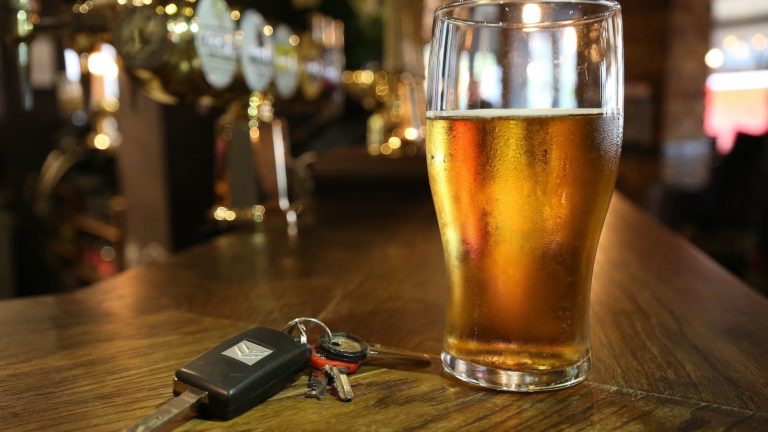
Drink-drive crashes up 3% in 12 months

There has been a 3% annual rise in the number of drink-drive crashes on Britain’s roads, new figures show.

An estimated 5,890 accidents involved at least one driver who was over the alcohol limit in 2018 (the latest data available), the Department for Transport (DfT) said.

This is up from 5,700 during the previous 12 months and means around one in 20 of all reported crashes in 2018 involved a drunk driver. However, it is still 3% down on the 2016 data, and the number of drink-drive accidents has been hovering at around the 6,000 mark each year since 2013.

The reported figures for ‘drink-drive crashes’ cover any accident where at least one driver involved was over the legal limit for blood alcohol content, regardless of whether the drunk driver actually caused the accident.

The estimated number of people killed in drink-drive crashes fell from 250 in 2017 to 240 in 2018 and is similar to levels seen since 2010.

Some 80% of drink-drive accidents in 2018 involved male drivers or riders over the legal limit.

A Department for Transport spokeswoman said: “Drink-driving is truly unacceptable. It’s a senseless act that puts everyone at risk.

“These new statistics show that four in five drink-drivers who caused accidents were male. That’s why we’re focusing our work on young male drivers, with our award-winning Think! campaign highlighting that mates don’t let mates drink-drive.”

RAC head of policy Nicholas Lyes said: “These are disappointing figures which illustrate the need for much more to be done to curb the plague of drink-driving.

“The Government has indicated it is looking at the possibility of introducing alcolock technology to prevent reoffenders from getting behind the wheel, so we’d like to know what progress is being made here.

“This, together with more police on our roads conducting breathalyser tests, could go a long way to cutting drink-drive deaths in the future.”

The AA points out that, although women are involved in only a fifth of drink-drive crashes, they were disproportionately likely to be killed or injured.

“Statistics show that, although women are involved in 20% of drink-drive accidents, they make up 34% of casualties in these incidents. For men, it is 80% involvement in accidents but 66% in related casualties,” said Jack Cousens, head of roads policy for the AA.

“Many of these women will be passengers and the AA has long warned parents to be wary of who might be driving cars their daughters, and sons for that matter, are passengers in.

“Overall, drink-drive road accidents are up 3% year on year but significantly lower than in 2016. They account for one in eight road deaths.

“Ironically, one of the few good things to come out of the coronavirus epidemic should be big drop in drink-drive road accidents and casualties. However, that shouldn’t be allowed to hide unsettling trends related to this type of incident.”

Additional reporting by Neil Lancefield, PA Media.

Motorway speed limits past roadworks to rise to 60mph

Speed limits past motorway roadworks in England will be increased to cut journey times and ease drivers’ frustrations.

Highways England announced that the typical 50mph restriction where work is being carried out will rise to 60mph.

The government-owned company responsible for motorways and major A roads in England made the decision after carrying out trials over the past 18 months which showed the safety of motorists and road workers can be maintained despite the 10mph increase. It found that more drivers stay within the limit when it is 60mph.

Average time savings ranged from 8% to 14% at the eight sites tested. At one pilot scheme – the M1 between junctions 13 and 16 – drivers typically shaved 68 seconds off their journeys due to the increased limit.

For several years motorways such as the M1, M4, M6 and M20 have had stretches where the standard 70mph limit has been reduced to 50mph for roadworks due to the roll-out of smart motorways.

The change in policy does not mean limits will be immediately increased at every set of roadworks. Depending on the road layout and the work being done, 40mph and 50mph restrictions will continue to be used in places.

Highways England chief executive Jim O’Sullivan said: “All of our research shows that road users benefit from 60mph limits in roadworks. They have shorter journey times and feel safe.

“Road users understand that roadworks are necessary, but they are frustrated by them. So testing 60mph has been about challenging the norm while ensuring the safety of our people working out there and those using our roads.

“We have a huge programme of work planned, so being able to use 60mph where safe will continue to improve everybody’s experience of our roads.”

Anthony Smith, chief executive of watchdog Transport Focus, described the introduction of 60mph limits as “a welcome step”.

He went on: “We know road users want speed limits in roadworks to be no lower than necessary to maintain safety.”

AA president Edmund King said being able to reach 60mph in roadworks “is often safer than driving at 50mph”.

He explained: “Sticking at 50mph often leads to other drivers tailgating in order to try to force vehicles to pull over. The speed limit for HGVs over 7.5 tonnes travelling on dual carriageways or motorways is also 60mph, so sometimes this leads to tailgating in 50mph limits.

“Plus we have very long stretches of roadworks such as the 32 miles being converted to smart motorway on the M4 between junctions 3 and 12, where 60mph would seem much more appropriate.”

Rebecca Ashton, of road safety charity IAM RoadSmart, said: “IAM RoadSmart welcomes Highways England’s common sense solution to keeping traffic moving safely and smoothly at roadworks.

“Previous research showed that drivers felt less stressed when the speed limit was increased in motorway roadworks. Allowing cars to travel at 60mph will help to separate traffic, avoid bunching, giving a quicker and less stressful journey.”

Traffic returning to pre-pandemic levels

Road traffic is quickly approaching pre-pandemic levels, new figures show.

The amount of vehicles on Britain’s roads on Monday was 88% of an equivalent day in early February, according to Department for Transport (DfT) data.

That is up four percentage points week-on-week.

The figures were even higher over the weekend, at 94% on Saturday and 98% on Sunday.

A breakdown of the data shows that on Monday the number of cars on the road was 85% of what it was before the coronavirus outbreak, with vans and lorries at 97% and 99% respectively.

Latest confirmed data for trains show demand on July 13 was only 22% of what it was pre-lockdown.

On Monday, bus use outside London was at 33%, London Underground use at 23% and cycling in England at 146%.

Road traffic fell to 23% of pre-pandemic levels in mid-April, as people were urged to stay at home to tackle the virus.

Steve Gooding, director of motoring research charity the RAC Foundation, said: “The national figures suggest that we are fast heading for pre-lockdown traffic levels in the round, but not necessarily at the same times of day.

“With many office staff still working from home, schools only re-opening to a limited extent and delivery vans stopping us driving to the high street, we’ve escaped the full misery of the morning rush hour.”

Mr Gooding predicted that many people embarking on staycations and long-distance trips to visit friends and family could decided “the best option for travel is the car”.

This would create “far more pressure” on roads during traditionally quieter periods, he warned.

Drivers have also been hit by a rise in fuel prices as the lockdown eased.

Government figures show average prices at UK forecourts are £1.12 per litre of petrol and £1.17 per litre of diesel.

This is the most expensive fuel has been since March 30, reflecting rising oil prices in recent weeks.

Fuel dropped to as low as £1.05 per litre of petrol and £1.12 per litre of diesel in May, as oil prices collapsed due to lower demand.

Six health conditions drivers must declare to the DVLA

0

If you suffer from certain illnesses or health conditions that could affect your ability to drive, you’re required by the DVLA to inform them.

While some might be quite obvious, like vision limitations, the DVLA has a comprehensive list of health conditions on its website that may or may not need to be declared. If you have a particular medical condition that must be declared to the DVLA, you could face a £1,000 fine if you don’t declare it. Not only that, but your insurance could be invalid and you could be prosecuted in the event of an accident.

There are various forms that you may need to fill in, depending on your condition. All of the information is available on the government’s web portal. You should also speak to your car insurance provider or check your policy to see if you need to declare your condition to them as well.

Car hire comparison site StressFreeCarRental has scoured the full list of conditions to find the less obvious ones you should know about.

Diabetes

If you have diabetes that is treated by insulin, and the insulin treatments last more than three months, you must inform the DVLA. This also applies to gestational diabetes, or if you are at risk of low blood sugar, known as hypoglycaemia.

If your diabetes is not managed by tablets or non-insulin injections, you may need to inform the DVLA. Speak to your doctor or nurse to find out more.

Vertigo

While most people associate vertigo with being at height, this is specifically known as ‘height vertigo’. Regular vertigo sufferers can get attacks anywhere, making it feel like the world around them is spinning.

If you suffer from sudden, disabling, or recurrent vertigo, you must tell the DVLA.

Déjà vu

This is something mostly written off as an odd feeling that you’ve been somewhere before, but it can be much more serious.

The DVLA must be informed if you suffer from seizures or epilepsy that cause déjà vu. Speak to your doctor if you’re not sure whether you may need to declare your condition.

Sleep apnoea

Obstructive sleep apnoea is a condition that causes the throat to relax and narrow during sleep, which can cause difficulty breathing. It’s one of a number of sleeping disorders that the DVLA must be told about, including narcolepsy and cataplexy.

Obviously, any kind of sleepiness is directly detrimental to driving and you shoul dnot drive if you are feeling drowsy. However, if you have any sleep condition (or are taking medication) that causes excessive sleepiness for at least three months, you need to inform the DVLA.

Labyrinthitis

Labyrinthitis has nothing to do with mazes, it’s actually an inner ear condition that causes dizziness, nausea and loss of hearing. The DVLA classifies this as similar to vertigo in terms of how it may affect your driving.

Since all of these things could affect your ability to drive, you must inform the DVLA if you have labyrinthitis.

Heart palpitations

This condition results in the sufferer becoming more aware of their heartbeat, which may feel like it’s pounding or fluttering, or perhaps beating irregularly. While the NHS says they are usually not a sign of something serious, the DVLA requires you to declare if you regularly suffer from them.

Some other heart conditions need to be declared, while others (like heart murmur) don’t. Again, talk to your doctor about how your driving could be affected and whether you need to inform the DVLA.

Drivers facing petrol price rises as lockdown eases

The average price of a litre of fuel went up in June, ending three months of price drops as lockdown eased.

Petrol prices went up 3.74p per litre, from an average of 107.11p to 110.85p, while diesel was up 2.89p per litre, rising from 112.07p to 114.96p.

The data from RAC Fuel Watch shows the prices rise in correlation to lockdown measures easing and more cars being on the road, with increasing demand seeing the price of a barrel of oil rising more than $6 (£4.80) to $41.87 (£33.51).

The lockdown price drops were driven by supermarkets, with many selling petrol for as low as £1 per litre helping to bring the petrol average to a low of 106.48p on May 19. Diesel saw an average of 111.8p on the same date.

However, RAC Fuel Watch says the ‘big four’ supermarkets are also now driving increases, with Morrisons, in particular, bumping up the price of both fuels by about 7p per litre, followed closely by Asda.

RAC fuel spokesman Simon Williams said: “The pump price rises witnessed in June will have been a nasty shock to the system for drivers. While those who continued to drive regularly throughout the pandemic will have benefitted from some very low prices, millions won’t have so will be disappointed that just as they start to drive more again prices are on the up.

“It is, of course, the lack of demand for fuel which caused prices to drop in the first place so sadly it’s no great surprise that they’re on the rise again now.

“But drivers should take quite a lot of comfort from the fact that both petrol and diesel are a whopping 17p a litre cheaper than they were at the end of January. That means a tank of fuel is on average £9 less than it was then.

“And with RAC data predicting this weekend could be the busiest of the year so far on the roads that’s at least a little bit of better news, particularly as the direction of travel for fuel prices is upwards.

“Oil producer group OPEC and its allies are continuing to restrict output which has successfully driven up the barrel price and that can only mean one thing for drivers in the coming weeks – higher prices.

“This is confirmed by RAC Fuel Watch data which shows that petrol is likely to go up by 2p a litre in the next fortnight. Diesel, however, shouldn’t rise much at all unless retailers use the saving in its slightly lower wholesale price to subsidise petrol.”

Driving lessons in England to resume from July 4

Driving lessons will be allowed to resume in England from July 4, it has been announced by House of Commons leader Jacob Rees-Mogg.

The Driver and Vehicle Standards Agency (DVSA) will, according to Rees-Mogg, be writing to all approved driving instructors to set out plans on how to recommence driver testing and to ‘help them return to a life that is as close to normal as possible.’

“From 4 July, I am happy to say that people will be able to take driving lessons on a motorcycle, or in a car, lorry or bus,” said Mogg. “And there will be a phased approach to resuming practical testing, so learners have the opportunity to practice before taking a test.”

Rees-Mogg also stated that lessons would recommence ‘as quickly and as fairly as possible, in a way that avoids a second peak in infections’ as he spoke during Business Questions in the Commons today.

The announcement applies to all driving lessons in England, including those for motorcycles and heavy vehicles. Car driving tests will restart in England on Wednesday 22 July, in order to give learner drivers time to have refresher lessons and practice before taking their test.

There has been no date given for resumption of driving lessons in Scotland or Wales, with their devolved governments yet to make any announcements. Northern Ireland will gradually resume lessons and testing on a broadly similar timeframe to England.

Coronavirus: Can I drive during the lockdown?

1

This week the UK has been in lockdown as the Government has moved to try to limit the spread of coronavirus.

It meant that people are only allowed to leave the house to buy food or medicine, exercise once per day, to receive medical help, or to help someone who is vulnerable.

All businesses that are not deemed essential have also been asked to close down, and employees who do not work in essential sectors should either work from home or not work at all.

Residents have also been warned not to visit friends or family with the police given powers to break up groups of more than two people who don’t live together.

When can I drive?

All of this means that there are some reasons to drive. For example, if you work in an essential business and have to get to work, there’s nothing to stop you from driving to do so.

Furthermore, if you’re travelling to a supermarket or pharmacy to stock up on essential provisions then you’re allowed to drive to these locations.

You can also use the car to travel to visit a vulnerable person in need of help, or to get to the hospital to seek medical attention for yourself or someone else.

When can’t I use the car?

Simply put, any other time. If you’re looking to blow off the cobwebs by going for a drive, that’s deemed an unnecessary journey so you shouldn’t be in the car.

And if you’re tempted to drive to the local park or forest to take your allotted form of exercise for the day, this is being discouraged too.

Police in Bristol have been asking dog walkers visiting the Wellington Monument to stay away, handing them leaflets that say: “The government restrictions currently in place do not permit you to use your vehicle to travel to this location to exercise.

“Each and every one of us has been instructed to avoid all unnecessary travel.

“You are entitled to exercise once daily. This should be by walking, running or cycling from your home address.

“You should not be driving to a location away from home to carry this out.”

This interpretation of the rules appears to be being followed by police forces across the country, after Derbyshire Police shared drone footage of hikers in the Peak District who had travelled from as far afield as Sheffield, saying that ‘the message [to exercise close to home] is still not getting through’.

Why can’t I drive if I’m on my own?

Many users on social media hit back at Derbyshire Police, saying there was nothing wrong with travelling to get exercise if they practised social distancing. However, Supt Steve Pont of Derbyshire Police told the BBC’s Today programme the force would continue to “apply the law the government makes… to keep you and others safe and ensure our NHS is able to cope in order to save as many lives as possible”.

It is argued that by limiting the number of unnecessary journeys you take, you minimise the risk of getting into a crash that would put strain on the emergency services and NHS, and minimise the risk of getting a puncture or breaking down that would cause you to risk close contact with recovery personnel.

Central London speed limit to be cut to 20mph next week

0

Roads in central London will see new 20mph speed limits imposed from next week, the Mayor of London has confirmed.

Taking to Twitter to break the news, Sadiq Khan revealed roads operated by Transport for London (TfL) within the congestion charge zone that currently have a 30mph limit will see that drop to 20mph as of Monday, March 2.

In the announcement, Khan tweeted: “Happy to report that the speed limit across TfL roads in central London will reduce from 30mph to 20mph from Monday 2 March. This new measure will save countless lives and eradicate serious injuries on our roads, whilst making it safer to walk and cycle around the capital.”

Lilli Matson, TfL chief health, safety and environment officer added: “Millions of walking and cycling journeys are made across our city every single day and a person is five times less likely to be fatally injured if hit at 20mph than at 30mph – it’s as straightforward as that.

“Ensuring the safety of Londoners and visitors is paramount, which is why we are introducing a safer speed limit for all road users in central London. It’s clear the new 20mph speed limits will not only save lives but will also encourage Londoners to travel in more active and sustainable ways.”

New signage will be in place imminently to highlight the speed limit changes, while plans for raised pedestrian crossings in ‘prominent locations’ including near Embankment and Tower Hill Underground stations are underway.

TfL says speed is a factor in ‘around 37%’ of collisions in London that result in death or serious injury. The move to 20mph speed limits is part of TfL’s ‘Vision Zero’ commitment to eliminate deaths and serious injuries from the transport network by 2041, with ambitions to reduce limits more widely across the capital over the next five years as well.

Edmund King, president of motoring services firm the AA, said: “The AA view is that targeted 20 mph zones that have the support of the local community are welcome and can be effective. For example, drivers understand why speeds should be 20mph outside a school, playing fields or a residential cul-de-sac.

“The most effective 20mph zones are those backed by traffic calming such as interactive signs or changes to the road surface. There are some concerns that wide 20mph zones undermine the effectiveness of the targeted zones.

“However, during the day in central London average traffic speeds are around 7.4mph so signing the roads with 20 mph speeds is unlikely to slow down the traffic. Traffic has been at the speed of the horse and cart in central London for over a century and that is unlikely to change any time soon.”

Road safety charity Brake added: “The reduction of the speed limit on central London roads to 20mph is a huge boost for road safety across the capital. Slower speeds save lives and also make our streets more liveable environments, encouraging people to walk and cycle safely and confidently in their local area.

“A 20mph limit where people work, live and play is widely accepted as the safest option, with stopping distances at 20mph half those at 30mph. London is setting an example the rest of the UK should follow and we urge the Government to make 20mph the default speed for built-up areas across the country, helping make our streets safer and more welcoming.”

Driving test change to boost accessibility

0

Video clips are to replace written scenarios in UK driving theory tests to make them more accessible.

The Driver and Vehicle Standards Agency (DVSA) announced that, from April 14, learners will be asked three questions after watching a driving clip of up to 30 seconds.

The change follows research which found that learners with reading difficulties and disabilities felt more comfortable with video scenarios than written ones.

DVSA chief driving examiner Mark Winn said: “Being able to drive can be life-changing and the DVSA is committed to helping everyone access the opportunities driving can offer.

“We have worked closely with road safety experts and learners to create a theory test which fully tests a candidate’s knowledge of the rules of the road and is more accessible.”

A scenario could show a car being driven through a town centre or on a country road, with three multiple-choice questions on issues such as safe overtaking or why motorcyclists are considered vulnerable road users.

Making the driving test more inclusive

The bid to improve access to driving comes after the Department for Transport launched its inclusive transport strategy in July 2018.

The DVSA worked with the National Autistic Society, the British Dyslexia Association and the British Deaf Association to develop the change.

John Rogers, of community interest company Disability Driving Instructors, said: “A picture paints a thousand words, especially for candidates with special educational needs.

“Having to go back and forth between the text in the written scenario and the written questions and answers was a big obstacle to understanding what was required.

“Video scenarios should prove much easier to follow and the questions will hopefully appear more relevant.”

AA Driving School managing director Sarah Rees said: “Technology is key to the driver training industry and the new videos will dramatically improve the process for people who struggled with the previous text-heavy format.

“In the past you could have been the most capable, confident driver but fall at the first hurdle having to decipher written driving scenarios.”

Some 17 million theory tests have been conducted in the UK over the past ten years. Existing support for learners with reading difficulties, disabilities or health conditions includes extra time to take the test and having someone to read and reword questions for them.

The exam involves 50 multiple-choice questions and a hazard perception test. Both sections must be passed before a learner can book a practical test.

A series of changes to the practical test in Britain came into force in December 2017. They included following instructions from a satnav, a period of independent driving doubled to 20 minutes, and a refreshed selection of manoeuvres deemed more realistic.

Will I need a permit to drive in the EU after Brexit?

0

UK motorists will continue to be able to drive in the EU as normal after Brexit and until the transition period is over.

The existing rules allow motorists to drive in EU countries on a full UK licence, but there had been concerns that permits would be required to drive on the continent after January 31.

However, in a statement yesterday to the PA news agency, the Department for Transport said: “Under the withdrawal agreement, arrangements for drivers (both commercial and private motorists) will remain as they are now during the transition period.

“This means that UK motorists will be able to continue to drive in the EU as they do now, until 31 December 2020. UK motorists will therefore not require an International Driving Permit (IDP) alongside their UK driving licence when driving in the EU as a visitor during this time.

“Whether IDPs will be required to drive in the EU from 1 January 2021 will be subject to future relationship negotiations.”

After numerous delays, 31 January 2020 will be the day the UK leaves the EU after MPs voted in favour of the Withdrawal Agreement Bill and it was given Royal Assent. After that date, the UK will enter a transition period, where many of the existing agreements with the EU will remain in place. From 1 January 2021, any new deals that have been negotiated will come into force.

Under current rules, when driving in countries outside the EU, UK motorists may need an IDP, which is a small booklet that can be bought for £5.50 over the counter at most post offices. When applying for one, you must bring their full and valid UK photocard driving licence and a passport-standard photograph. If your licence is still the old paper version, you need to bring that plus a valid passport as proof of ID, as well as a passport-standard photograph.