The Ferrari Portofino is the all-new successor to one of the company’s most popular, yet least celebrated, models of modern times – the Ferrari California.
The California was launched as the new entry point to the Ferrari brand more than ten years ago and its reception, to say the least, was mixed. Purists sniffed it was a little too ‘soft’ to qualify as a true Ferrari, and although California sales were strong (along with the upgraded California T), it never really got into its stride.
So the Portofino arrives as the California’s direct replacement, and although it still retains a four-seat configuration and folding hard-top roof, it’s been designed to offer a more involving driving experience than its predecessor, while still being easy to drive on a daily basis.
Ferrari Portofino (2018 – 2020)
What’s new about the Ferrari Portofino?
Although the Portofino features the same 2+2 layout as the outgoing California, it’s actually an all-new car. The sharper and more angular styling bears a family resemblance to its bigger 2+2 brother, the GTC4Lusso, and the flagship 812 Superfast, while the chassis has been sharpened to make it dynamically superior to the car it replaces.
The engine is an upgraded version of the 3.9-litre turbocharged V8 used in the California T, which we’ll look at in more depth shortly.
The Portofino also gets the latest version of Ferrari’s infotainment system, plus a host of other gadgets and gizmos.
How does it look?
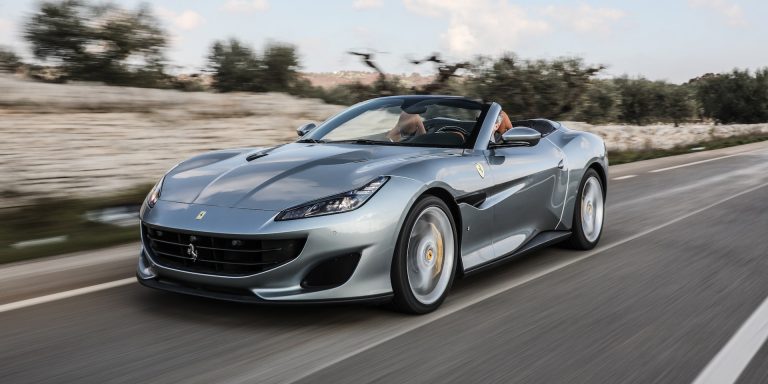
While the California was relatively smooth in its design, the Portofino is all angles and cuts. It’s certainly a sharper look, and it gives the new model far more presence and aggression.
It’s a good-looking car in the metal, although the matte-grey paint of our test car did give it a slightly more subdued appearance. It’s still a car that will turn heads here, there and everywhere, which is one of the attractions of owning a Ferrari in the first place for many customers.
It’s also a car that looks good with either the roof up or down. Some designs are a little clumsy in their incorporation of a folding hard-top, but that’s not the case with the Portofino. In fact, with the roof up you’d be hard-pressed to spot that it was a convertible at all.
What’s the spec like?
That large infotainment system is a fundamental offering in the list of standard equipment included on the Portofino. It’s clear and easy to use, and the satellite navigation can be programmed with little trouble.
You also get full electric seats as standard and they’re comfortable – ideal for long stretches behind the wheel, which befits the Portofino’s rols as an everyday supercar.
But one of the most impressive things about ‘our’ Portofino was the list of optional extras fitted to it – bumping the car’s price up to an incredible £245,167.
Features like front and rear parking sensors (£3,456), 20-inch diamond-forged alloy wheels (£9,997) and various other extras help to lift its price by a hefty amount. Although many people buying a new Ferrari will accept that higher prices are just part of buying a premium Italian supercar, we imagine they’d still baulk at having to pay £2,400 for Apple CarPlay – something that is standard on nearly any new Hyundai or Kia…
Continued on next page:Interior, drive experience and our verdict
What is it?
The new Kia ProCeed is a shooting brake version of the Korean brand’s Euro-built family hatch.
Key features
Sleek styling
Large boot
Effective diesel
Our view
The new Kia ProCeed adds a worthy extension to the Ceed family car range. While it boasts a much more stylish exterior look, this does not come at the expense of practicality.
In all other areas, it replicates the qualities that have already made its hatch sister a success. An effective diesel will also make this car a tempting proposition for high-mileage fleet drivers.
Similar cars
Mercedes-Benz CLA Shooting Brake, SEAT Leon ST, Mini Clubman.
The new Kia ProCeed is the third body style to be released in the latest generation of the brand’s family car range. But it is quite different to both the already launched hatch and Sportswagon estate models, and the model that it replaces.
That car was a sort of three-door hatch, Kia’s first tentative bid to knock on the door of the hot hatch market, and it was called the pro_cee’d. Even motoring journalists routinely wrote its name incorrectly – we are very likely not the only ones relieved that Kia no longer feels the need to give cars very silly names to make them stand out.
Particularly as the ProCeed will stand out for much better reasons. This is a ‘Shooting Brake’, a body style drawn from the mists of history but not very well known these days. The only directly comparable currently available car is the CLA Shooting Brake from Mercedes-Benz, and you will need at least £4,000 more to buy one of those…
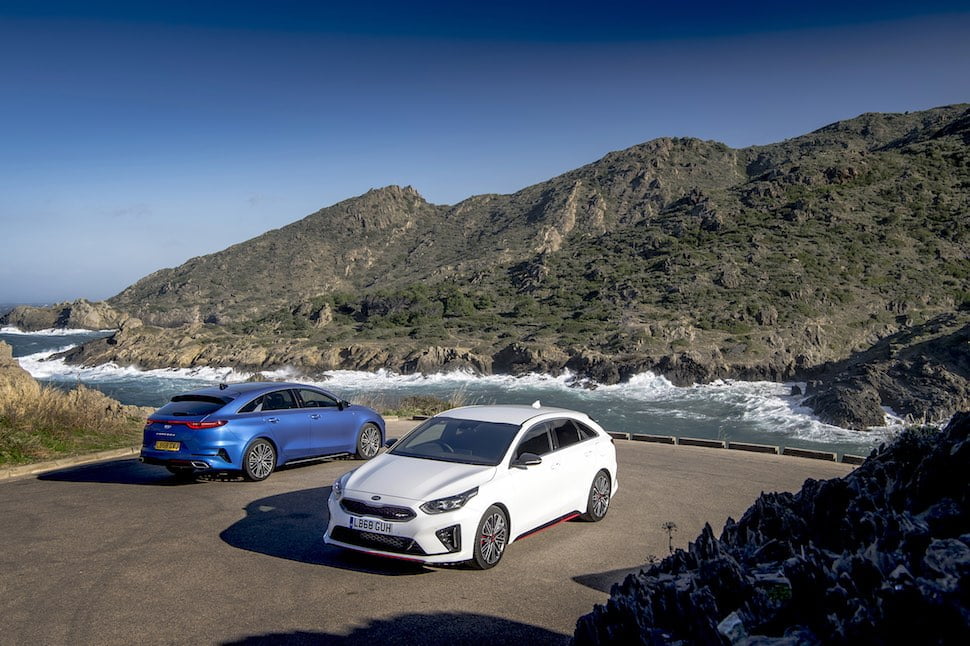
The ProCeed is a five-door sort-of-estate with coupe-like styling. It extends the luggage capacity of the hatch by half as much again, and while the 594 litres available is not the 625 of the Ceed SportWagon estate, the payback is that it comes in much more shapely surroundings.
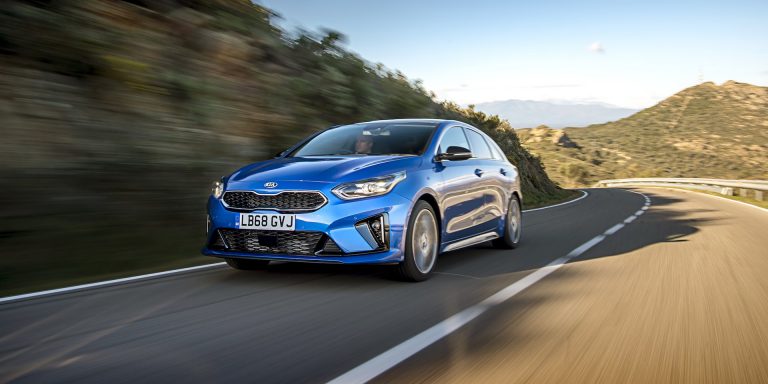
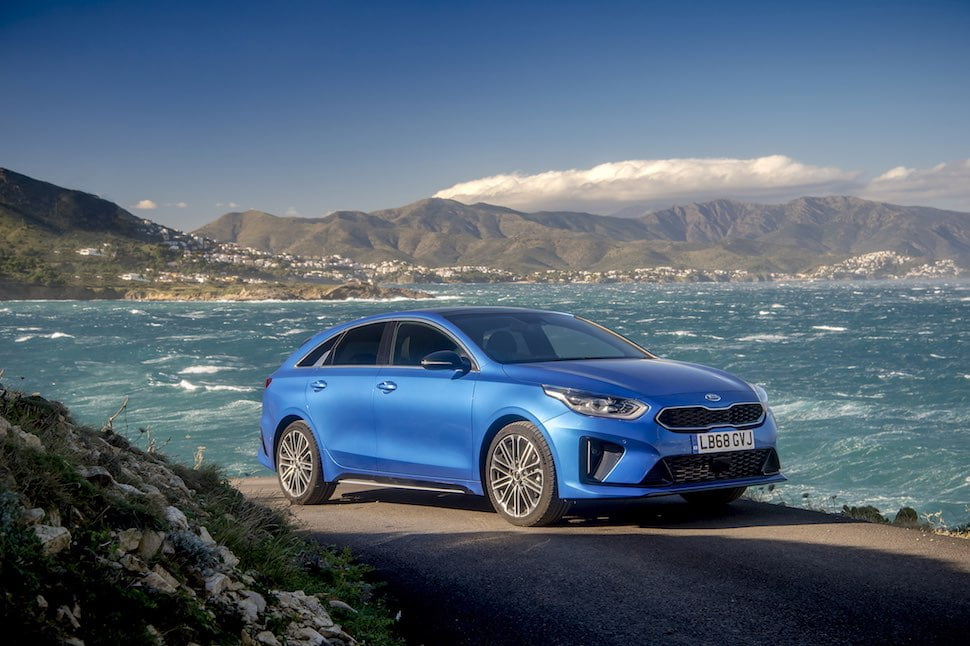
This is a good-looking car, and distinctly different to the Ceed hatch – bonnet and front wings are the only shared body parts. The ProCeed shaves half a centimetre from its ground clearance compared to the Ceed, but a whole 4cm from the roof height, in a car slightly longer (well, half a centimetre) than its estate sibling.
The big difference is towards the back – a strong coupe shape sweeps down to end in a shallow-angled rear screen, just 26 degrees from the horizontal compared to the 38 degrees of the hatch. As a result, the side profile is dominated by tall metal and slim glass.
Careful detailing ensures that it all harmonises very well, just one example being a thin LED light line running across the back connecting the two lamp clusters – in the dark you will know you are following a ProCeed.
The rear three-quarter view is particularly satisfying – viewed from this angle the ProCeed has a hint of Porsche Panamera about it.
Buying and owning a Kia ProCeed
Choosing a ProCeed is quite easy as there are three engine options, all already offered in the hatch, and three trim choices. There are no base trims like on the Sportswagon estate, the choice being between the higher-spec GT-Line grade launched at the Paris show in October, a sporty-pitched GT and the range-topping GT-Line S.
Kia’s 1.4-litre turbo unit forms the mainstream petrol choice, with 140hp. GT models use the 1.6-litre unit with more than 200hp on tap.
Kia is also refusing to join the rush to abandon diesel, offering a 1.6-litre unit of 136hp. This is a sensible move as the ProCeed will be tempting to high-mileage fleet drivers for whom diesel still makes economic sense.
Prices start at £23,835 for the 1.4 with a six-speed manual gearbox, the diesel version costing £850 more. Replacing the manual transmission with a seven-speed auto adds another £1100 to the bill.
For your money you get a standard equipment list including Apple CarPlay and Android Auto smartphone compatibility, navigation and a reversing camera.
Costing £28,135 and only available with the auto transmission, the GT adds leather and faux suede upholstery, auto parking, larger 18-inch alloy wheels and a host of styling touches in gloss black, gloss red and chrome. A rear diffuser, twin exhausts and LED headlamps complete the sporty look.
The LED headlamps, 18-inch alloys, auto parking and leather also come supplied on the £28,685 GT-Line S, only offered in 1.4 petrol form and again with auto shifting. A wide sunroof, 10-way electric adjustment of the driver’s seat, heated rear seats, auto parking, adaptive cruise control, a power tailgate and wireless phone charging are also included.
Of course, every ProCeed also comes with Kia’s seven-year/100,000-mile warranty, which is transferrable should one sell the car and an element not to be undervalued.
Euro NCAP is yet to crash-test the latest Ceed range. The ProCeed does offer a suite of driver aids as standard and these include autonomous emergency braking as part of the Forward Collision-Avoidance Assist (FCA) system. Lane-keeping, driver attention and high-beam aids are also included.
Curiously, the FCA includes pedestrian warning as standard only on manual-gearbox versions – on auto models it has to be specified as part of an optional ‘Advanced Driving Assistance’ pack that also includes such niceties as Lane-Following Assist (LFA). A step up from adaptive cruise control and working between 0 and 81mph, LFA controls steering, acceleration and brakes to keep the car central between lane lines on motorways, and separate from vehicles in front.
Continued on next page:Interior, drive experience and our verdict
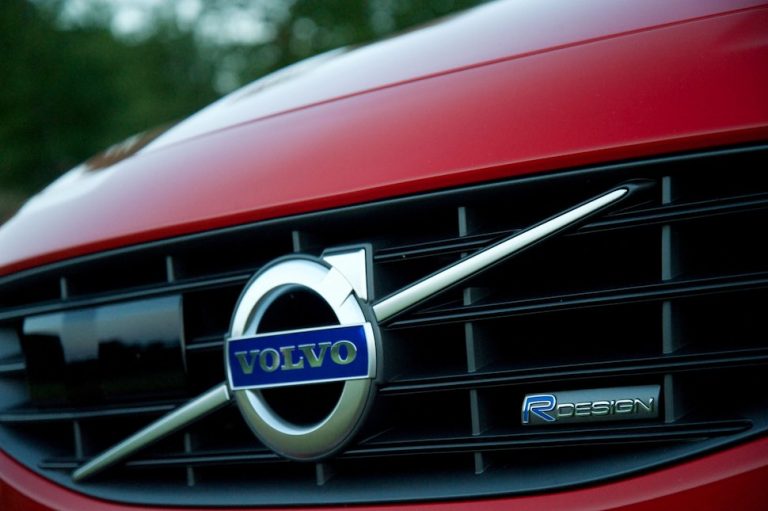
Volvo is recalling nearly 220,000 cars worldwide because of a potential fuel leak.
The recall includes 30,777 diesel-engined cars in the UK built in the 2015 to 2016 model year. A total of 219,420 cars are due to be recalled worldwide.
All Volvo models from this period are affected, which covers:
V40
V40 Cross Country
S60
S60 Cross Country
V60
V60 Cross Country
XC60
V70
XC70
S80
XC90
A statement from Volvo Cars said: “Investigations by Volvo Cars have identified that some vehicles may have small cracks inside one of the fuel lines in the engine compartment. This, in combination with a pressurised fuel system, may over time lead to fuel leakage in the engine compartment.
“There are no reports of damage or injuries related to this issue. Volvo is proactively recalling these cars as a preventative measure to avoid any problems in the future.”
Volvo sold 46,696 cars in the UK during 2016, which means that two-thirds of cars sold in that time are potentially included in this recall.
Volvo will be contacting owners of affected vehicles over the next few weeks. If you are not sure whether your car may be affected, you should contact your local Volvo dealer.
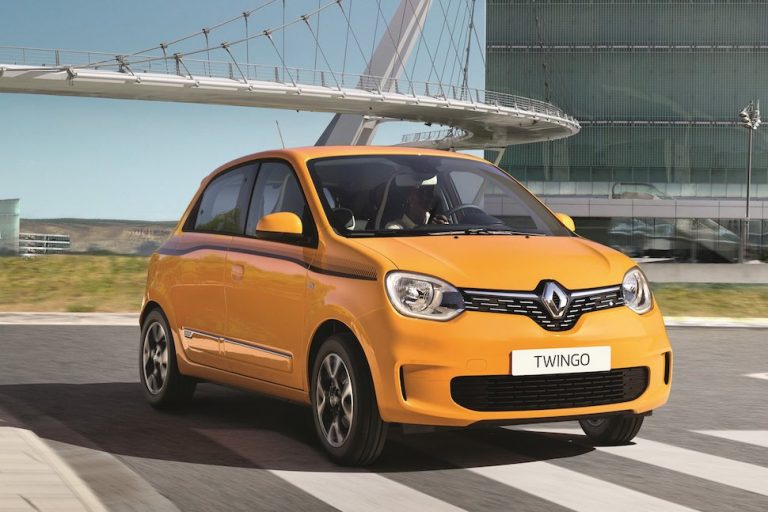
Renault has removed its Twingo city car from sale in the UK, citing slow sales and an overall streamlining of the brand’s range.
Slow sales have been blamed for the demise of the model, along with an overall Just 877 Twingos were sold in the UK in 2018, down from a peak of 5,555 in 2015.
This ties in with Renault’s decision to simplify its model range, offering a new ‘Easy Life’ package on its Clio, Captur, Megane, Scenic and Koleos models to make things easier for consumers.
The Twingo was one of very few rear-engined cars on sale in the UK, and Renault claimed its packaging allows for greater passenger space and an improved turning circle. It seems, however, that its quirky layout didn’t endear it to British buyers.
At the same time, Renault has given the Twingo a mid-life facelift for other European markets where it still sells in profitable numbers. The updated model sees a cleaner, simpler exterior design and some interior tweaks, along with some engine updates.
Smart ForFour staying on
Meanwhile, Smart has announced that the Twingo’s withdrawal from the UK market will not affect its mechanically-identical twin, the Smart ForFour.
The two vehicles were jointly developed as part of a broader co-operation between Daimler (Smart’s parent company) and the Renault-Nissan Alliance on a number of vehicle projects.
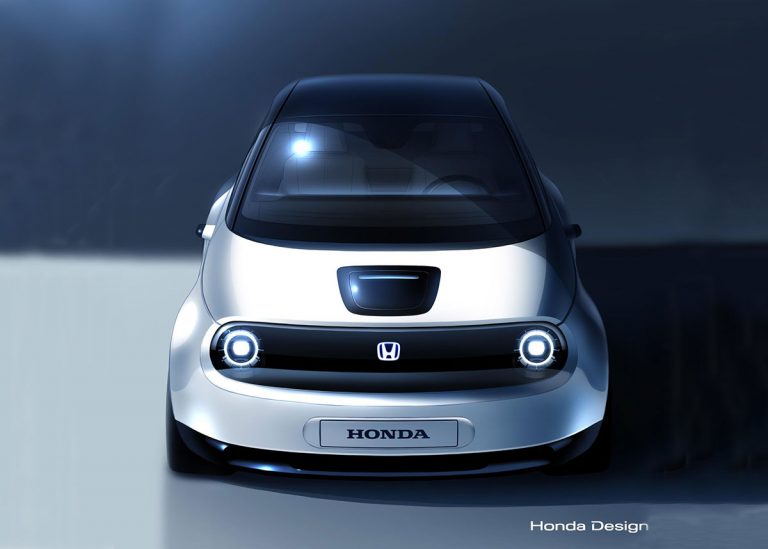
Honda will unveil its Urban EV small electric car in production-ready form at the Geneva motor show in March.
A concept version of the car was originally revealed at the Frankfurt motor show in 2017 and subsequently at the 2018 Geneva event. According to Honda at both shows reaction from visitors was highly positive.
Not surprisingly, disguised versions of the car that have recently begun testing appear to display few changes to the concept, the most obvious being the adoption of five doors instead of three.
A photo launched of the production model also appears to confirm that it will be a five-seater, whereas the concept had only four. It also remains to be seen whether technology on the concept will survive on the production car, such as the door-mounted cameras and inside display screens replacing the traditional side mirrors.
The concept version of Urban EV was a big hit at Frankfurt and Geneva shows.
On sale soon
Honda has previously announced it ‘Electric Vision’ which states that by 2025 two thirds of the brand’s European vehicles sold will use electrified technology. UK Honda personnel are said to be expecting the car to sell well when it goes on sale within a year.
The Urban EV will be Honda’s first EV on sale in Europe and one of the brand’s smallest models, measuring up 10cm shorter than the Jazz supermini.
When unveiling the concept at Frankfurt in 2017, Honda stated that it was built on a completely new platform, and would set the direction for the technology and design of future EVs from the brand.
There are still no performance or range details of the Urban EV, nor any indication of prices.
What is it?
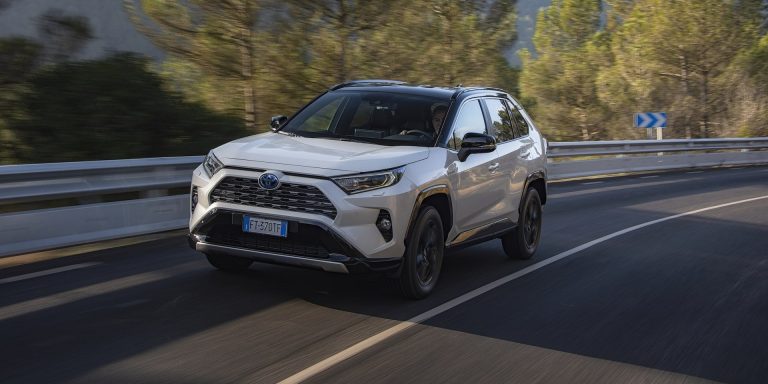
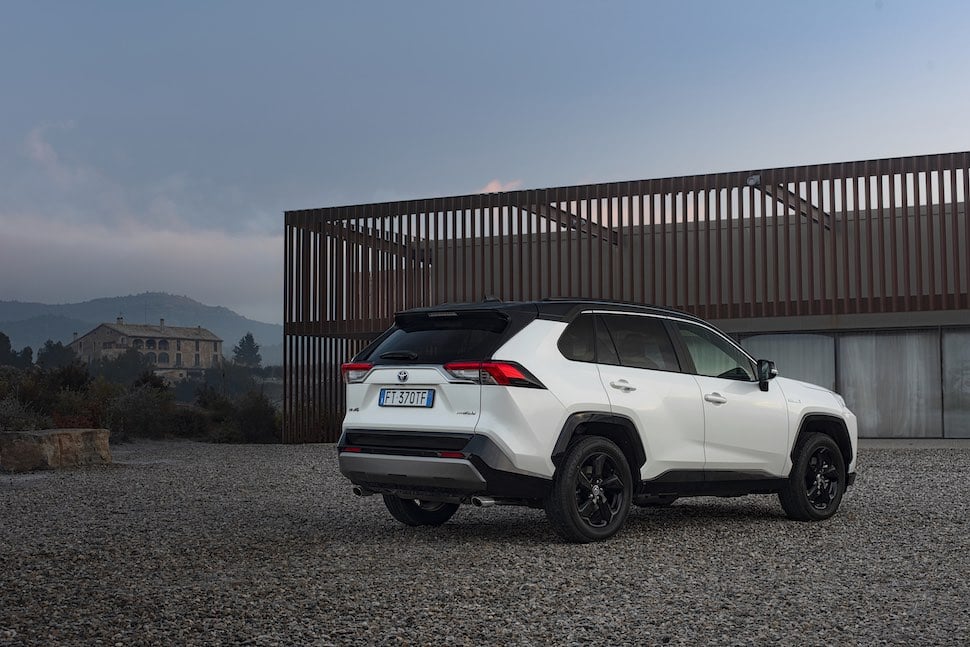
The new Toyota RAV4 is the fifth-generation model of Toyota’s mid-sized SUV, mostly bought as a hybrid
Key features
Hybrid drivetrain
Complete redesign outside and in
Strong safety package
Our view
The new Toyota RAV4 combines both the latest hybrid powertrain and the updating opportunities provided by an all-new platform to produce a compelling package.
Its on-road performance is highly competent, and the economy and emissions will be particularly appealing to those coming out of diesel vehicles.
Similar cars
Nissan Qashqai, Honda CR-V, Volkswagen Tiguan, Ford Kuga
We know that SUVs are all the rage and the broadest choice of all is in the ‘largish’ segment, known as the D-segment in motor industry parlance. Here you can pay anything from £20,000 to £42,000 for your muscled-up wheels.
Problem is, much of the choice on offer uses diesel engines, and now no-one wants diesels. The petrol options are often high-power models, with the mpg and emissions pain that results. But there is an alternative…
The Toyota RAV4 has been around since 1992, and for a long time like those rivals offered plenty of diesel powertrains – in 2015, for example, 88% of RAV4s sold were oil burners.
In the following year, however, Toyota extended its petrol-electric hybrid drivetrain, made famous by the Prius, to the RAV4, and more than half of them sold in 2016 were hybrids. Last year it was up to 91%…
Now there’s an all-new fifth-generation RAV4. It’s built on the TNGA (Toyota New Global Architecture) platform, and that means a distinctly different, much sleeker look and more space inside, a lower centre of gravity and a much more rigid shell for better handling. It comes with more tech and more safety.
But the headline? You can only buy the RAV4 as a hybrid.
Buying and owning a Toyota RAV4
While two-wheel-drive cars now dominate the SUV market, all-wheel drive is still more popular in the plus £30,000 segment that the RAV4 sits in – not for charging off into a field or a snowdrift, but for adding an extra sense of security on rain-soaked or icy winter days.
The new RAV4 offers both front (FWD) and all-wheel (AWD) drive in its powertrains, though it’s predicted more than two-thirds of buyers will opt for traction on all corners. The base Icon grade, which costs from £29,635 and is only available in FWD, is expected to attract just 5% of buyers.
Notable amongst the standard specification are LED headlamps, parking sensors and a rear-view camera. This is viewed through the eight-inch screen of Toyota’s Touch 2 infotainment system, again standard across the range, as is a seven-inch digital display screen ahead of the driver.
Top marks, however, to the Toyota Safety Sense package. This second-generation suite of driver aids includes autonomous emergency braking which now will also detect pedestrians at night and cyclists during the day, an intelligent adaptive cruise control, lane departure warning and traffic sign recognition. And every RAV4 gets this package.
The new RAV4 hasn’t been Euro NCAP crash-tested yet but it’s hard to see it getting anything other than a top five-star rating, as its predecessor did in 2013.
It costs £1,555 to move up to the Design trim, expected to be the most popular model, and another £2,240 to have a Design in 4WD. The extras include alloy wheels an inch bigger, keyless entry, a powered tailgate and front parking sensors.
There’s a distinct choice of range toppers – the luxury-pitched Excel or the Dynamic with its styling add-ons. Excel buyers do get a fair amount of extra tech for their extra £2,240, including two driver aids not in the standard safety package, a blind-spot monitor and rear cross-traffic alert.
Continued on next page:Interior, drive experience and our verdict
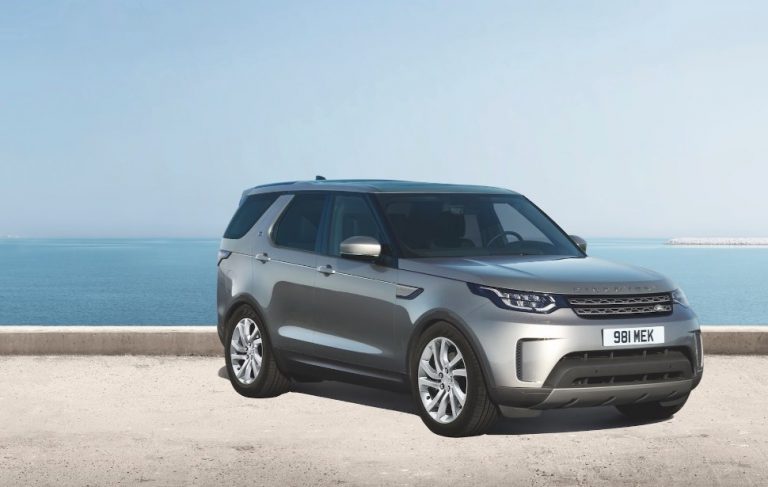
Land Rover is celebrating the 30th anniversary of one of its most popular nameplates with the limited-edition Land Rover Discovery Anniversary model.
Only available in the UK, the Discovery Anniversary is based on the SE specification with a few goodies from the options list thrown in.
There are four metallic colours to choose from (black, grey, blue or silver), paired with ‘Sparkle Silver’ 22-inch alloy wheels.
The Discovery SE is a mid-spec trim, which starts at £57,005 on-road. The Discovery Anniversary edition costs another £2,990 to bring this to £59,995, but includes a package of extras that would otherwise cost £6,820 on an SE.
These include the aforementioned alloy wheels and paintwork, a fixed panoramic glass roof, privacy glass for the rear windows and an upgraded Meridian 380-watt sound system.
Unfortunately, Land Rover still hasn’t fixed that rear number plate placement
There’s nothing specific to identify the Discovery Anniversary beyond its parts-bin combination of options from the Land Rover price list, so you won’t see any stickers, badges, plaques or other unique bits anywhere on the car.
The Discover Anniversary is only available with a 3.0-litre V6 diesel engine, running through an eight-speed automatic gearbox and driving all four wheels. Performance is unchanged for the limited-edition model, which means a power output of 306hp gives it a 0-60mph time of 7.2 seconds, and it will go on to reach a top speed of 130mph.
The Discovery was first launched in 1989 as a mid-point between the bare-bones Land Rover (later called the Defender) and the more luxurious Range Rover. The current model is the fifth generation and has been on sale since 2017.
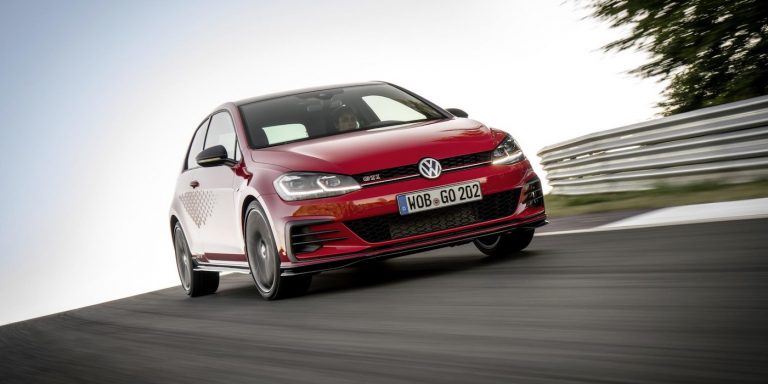
Volkswagen has lifted the lid on its latest Golf GTI model – the 290hp Golf GTI TCR.
The TCR boasts an extra 45hp over a regular Golf GTI with the optional performance package its 2.0-litre four-cylinder turbocharged petrol engine. That extra punch means the GTI TCR is capable of hitting 60mph from a standing start in just 5.4 seconds – 0.3 seconds faster than the Golf GTI Clubsport S.
Flat-out the TCR is able to reach 155mph – though buyers have the option to raise this to 162mph.
Inside, you’ll find further references to the car’s motorsport influences. Premium sports seats are fitted up front, along with red-edged seatbelts and a sports steering wheel.
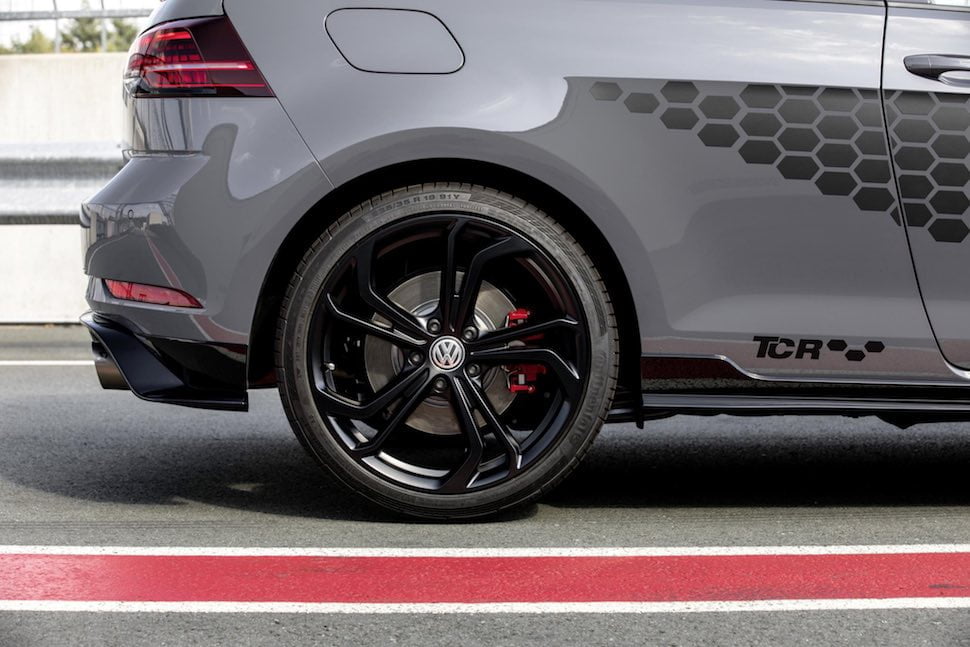
But it’s not only styling touches which have been applied to the TCR. New 18-inch forged alloy wheels sit on all four corners, which house perforated brake discs. It also benefits from a front-axle locking differential for better cornering performance.
A series of additional packages are also available with the TCR. The first includes larger 19-inch wheels, as well as the upgraded top speed. It also benefits from a sports version of the car’s rear damping system and traction control.
The second includes 19-inch alloys in a different style, though this time shod in semi-slick sports tyres. Additional wheel locks with expanded anti-theft protection are also fitted as part of this pack.
UK prices and specifications for the Volkswagen Golf GTI TCR have yet to be revealed, though it is reported to cost €38,950 (£34,500) in the car’s native Germany.
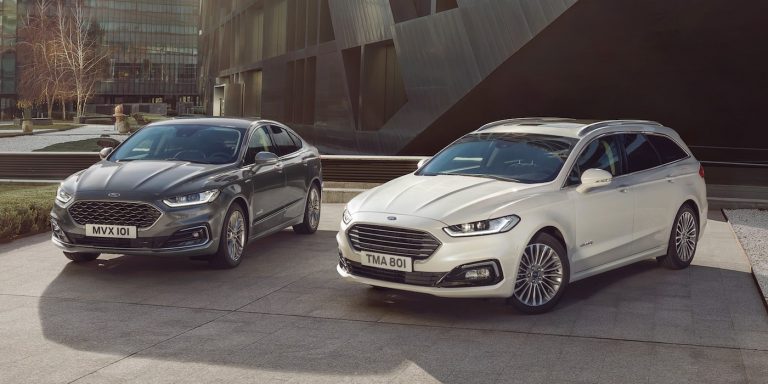
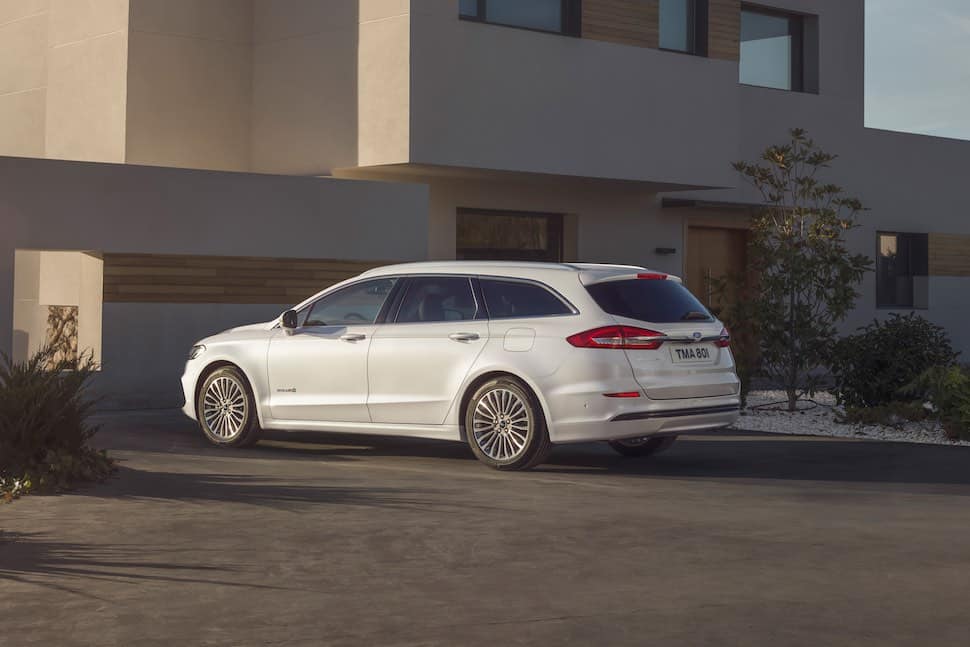
Ford has updated the Mondeo range for 2019, which includes offering its hybrid powertrain in estate form for the first time.
A number of the model upgrades feature technology that debuted with the new Ford Focus last summer, such as a new 2.0-litre diesel engine, new automatic transmission and various semi-autonomous features.
Improved hybrid powertrain, now available in Mondeo Estate
Previously only available in saloon form, Ford predicts that the hybrid powertrain may end up accounting for half of all Mondeo sales across Europe.
Ford has also worked to improve the hybrid’s software programming to deliver a smoother, more linear acceleration and improve overall refinement. It claims to be more effective at managing engine revs to get the most torque and overall performance for the lowest fuel consumption.
Having to find space for the hybrid’s battery pack does have an impact on the estate’s boot space, however. Load capacity drops by more than 120 litres over the regular petrol or diesel or models, with 403 litres on offer with the back seats up (compared to 525 litres) and 1,508 litres when you fold the seats down (compared to (1,630 litres).
New 2.0-litre diesel and auto transmission
A new 2.0-litre diesel engine is also available in 150hp and 190hp versions, replacing the previous version that offered 150hp and 180hp options. The new EcoBlue diesel unit claims to be quieter, deliver better low-end torque, and provide reduced fuel consumption and emissions.
The new diesel is combined with a new eight-speed automatic transmission, which should further help both refinement and performance. As before, the automatic diesel models are also available with all-wheel drive.
Semi-autonomous driving technology
The updated Mondeo is now offered with an (optional) improved adaptive cruise control, now including full stop & go capability for stop-start traffic. It is only available in conjunction with the new eight-speed auto transmission.
Also now available is an intelligent speed limiter, which can recognise speed limit signs and adjust the car’s maximum speed accordingly rather than the driver having to alter it manually.
Visual changes
There have been numerous minor cosmetic changes to the Mondeo for 2019, both inside and out, although you’d probably need to sit the updated model side-by-side with the original to tell the difference.
The grille, front bumper and fog lights have been slightly reshaped, and now provide greater visual differentiation between different specifications (Zetec, Titanium Edition, ST-Line Edition and Vignale).
At the back, there are new C-shaped tail-light graphics and a chrome or silver (depending on trim level) horizontal bar connecting them. There are also minor tweaks to alloy wheel designs and a couple of new colours.
Inside, you’ll find new seat fabrics, door handle inserts and decorative trim elements. Ford also claims to have improved the fit and finish of the major components. As in the new Focus, the eight-speed auto gets a rotary controller intead of a traditional gear lever, which frees up space for a bit of extra storage space.
Pricing for the revised Ford Mondeo range starts at £21,495 on-road, running up to £31,425 for a Vignale hybrid model. Ford dealers are eagerly awaiting your order now, with first cars expected to reach showrooms in March.
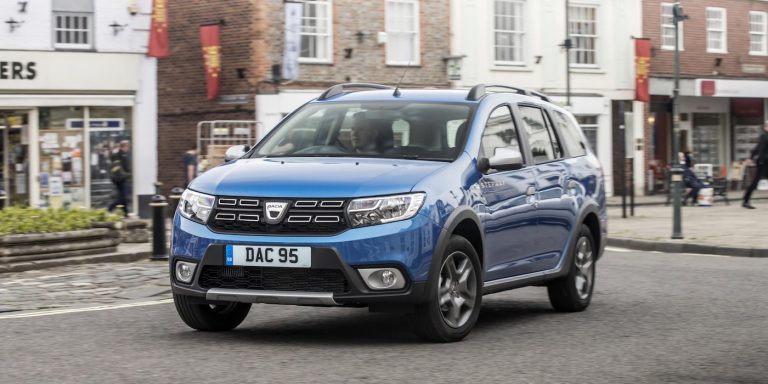
Dacia has updated the trim structure of the Sandero hatchback and its Logan MCV estate sibling, while also introducing a new 1.5-litre diesel engine to boot.
The Blue dCi 95 joins the naturally-aspirated SCe 75 and TCe 90 petrols, and takes the crown as the most powerful and efficient engine in the range. It produces 95hp and 220Nm of torque, and is capable of pushing the Sandero from 0-60mph in 11.7 seconds. For the larger, heavier Logan MCV, that time increases to 12.2 seconds.
Fuel economy is impressive, though, with both models managing up to 62.7 mpg under the more taxing WLTP testing cycle.
In addition to the new engine, Dacia’s revised its trim levels for the two models. The Sandero and Logan MCV ranges kick off with Access trim, available exclusively with the basic SCe 75 petrol engine and equipped with LED daytime running lights, manual windows, black plastic bumpers and trim pieces and basic ventilation.
Essential trim can be specified with the TCe 90 or new Blue dCi 95 and comes with most of the essentials – Bluetooth connectivity, electric front windows, body-coloured trim and air-conditioning.
Finally, range-topping Comfort trim brings new wheel trims, electrically operated door mirrors, remote central locking, a seven-inch MediaNav touchscreen infotainment system, cruise control, rear parking sensors and electric rear windows.
Pricing kicks off at £6,995 for the Sandero Access model. Essential trim commands an £800 premium and Comfort a further £1,000. The Logan MCV is priced at £1,500 over the equivalent Sandero, and is equipped identically.
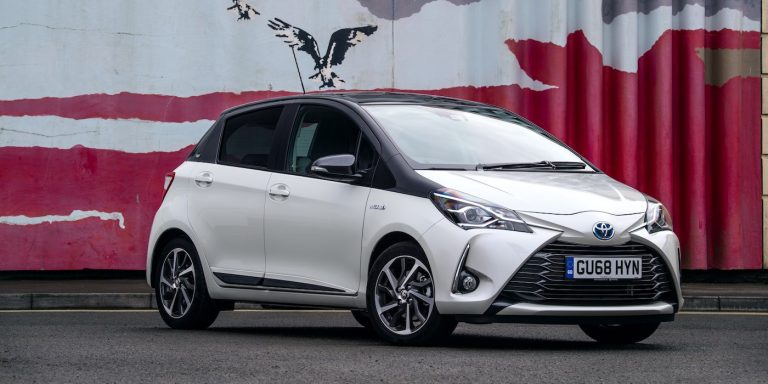
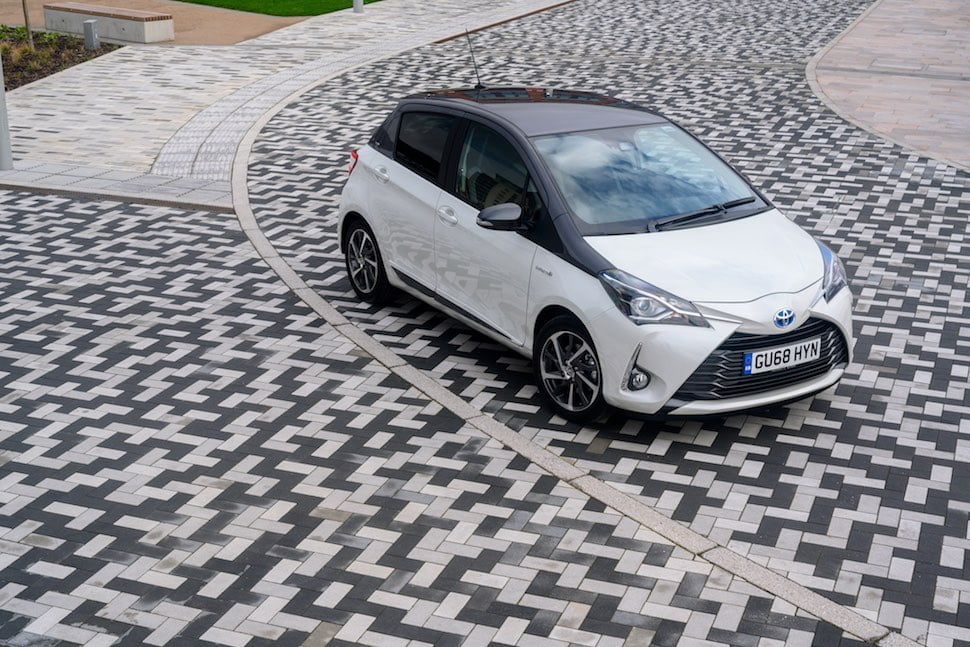
Pricing has been confirmed for two newly introduced Toyota Yaris models — Y20 and GR Sport – in a revised line-up for 2019.
There have been a few tweaks here and there to specification on the regular Yaris models, but nothing spectacular. The Yaris also remains the only supermini currently on sale that is available with a hybrid powertrain.
Yaris Y20
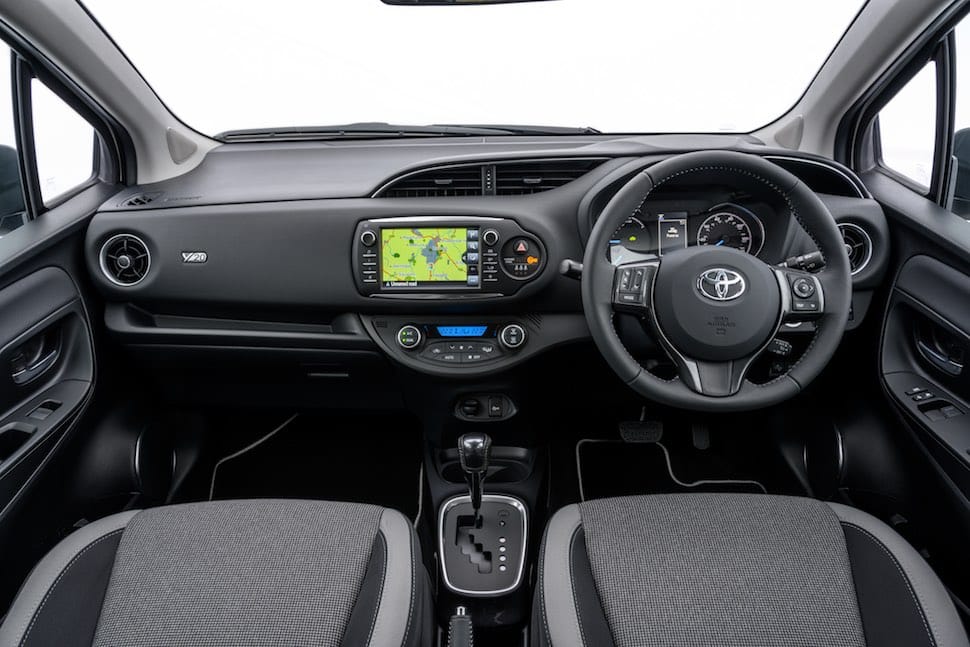
Introduced to celebrate 20 years since the Yaris was first launched, the Y20 trim brings a high level of specification to the hatch and badging to mark the occasion. Standard-fit items include a bi-tone paint finish, rear privacy glass, 16-inch alloy wheels and Toyota’s Touch 2 infotainment system.
There will also be an exclusive gold-painted variant, mimicking the launch colour of the original Yaris, with 100 units earmarked for the UK.
A choice of four powertrains are on offer for the Yaris Y20 —namely 1.0-litre and 1.5-litre petrol units paired up to a manual gearbox. The latter is also available with a CVT automatic. Alternatively, there’s also a 1.5-litre petrol-electric hybrid setup on offer. Pricing for the Toyota Yaris Y20 starts at £17,465.
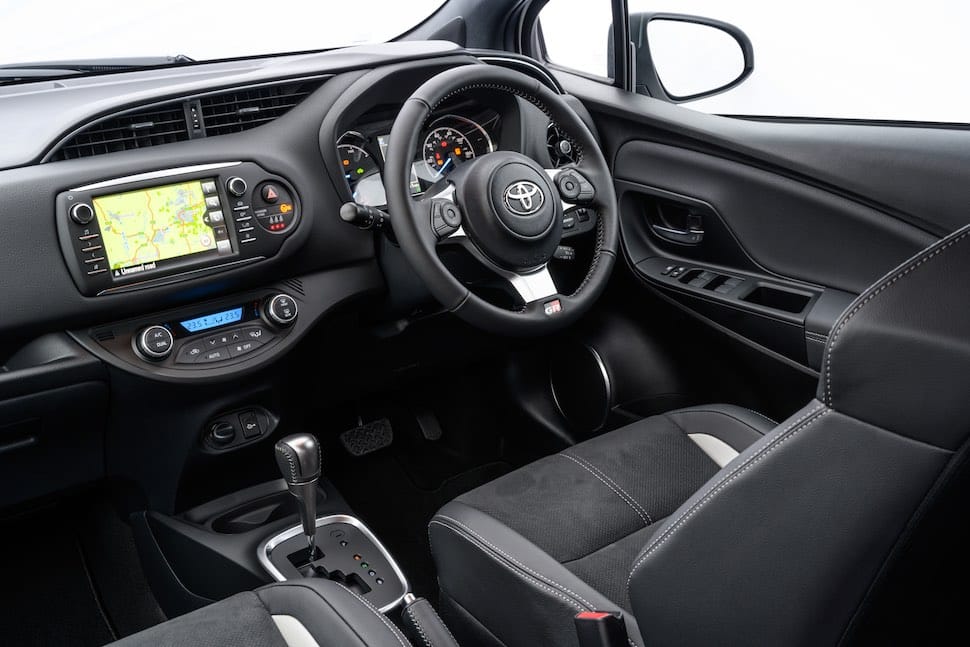
Those looking for a racier edge can opt for the Yaris GR Sport, which draws inspiration from last year’s limited-run GRMN hot hatch — and even uses some mechanical items from that machine.
Suspension upgrades lifted from the GRMN come in the form of Sachs Performance shock absorbers, while an anti-roll bar has been fitted at the front of the car to improve rigidity. It also sits a centimetre closer to the ground than the standard Yaris.
Black 17-inch cast alloy wheels are wrapped in Bridgestone Potenza RE50 tyres for improved grip. Other aesthetic changes include black painted trim pieces on the car’s exterior, along with an optional red decal set and model-specific headlights. Inside the car, GR-branded sports seats feature along with a steering wheel lifted from the Toyota GT86.
The GR Sport is available exclusively with the 1.5-litre hybrid powertrain, developing 100hp and 111Nm of torque — resulting in a 0-60mph time of 11.8 seconds and a 103mph top speed. Now on sale, the Toyota Yaris GR Sport is available from £19,835.
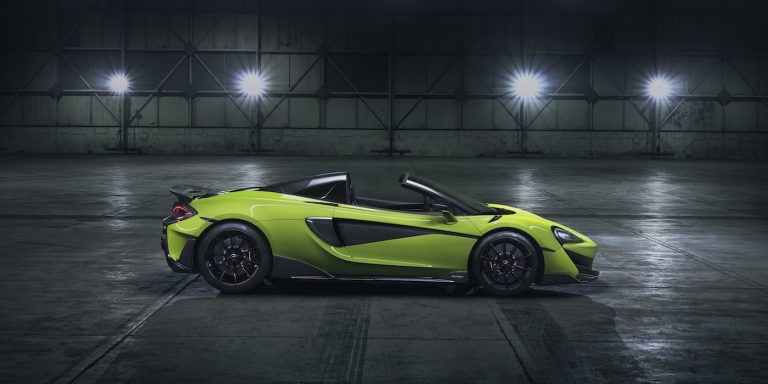
McLaren has revealed the fifth car to carry its exclusive Longtail name – the new McLaren 600LT Spider, following the success of the 600LT Coupe that debuted last summer.
The 600LT Spider is powered by the same 3.8-litre twin-turbocharged V8 as its hardtop sister, but thanks to a weight penalty of just 50kg over the Coupe, it delivers almost identical performance figures.
The sprint to 60mph is exactly the same for both at 2.7 seconds, while the Spider hits 124mph in just 8.2 seconds – only 0.2 seconds slower than the Coupe. Flat-out, it will do 201mph.
Power is sent to the rear wheels via a seven-speed dual-clutch gearbox, while the engine’s cooling system has been upgraded to produce more power. In total, it pushes out 600hp.
Open-top excitement
The roof is electronically operated and can be raised or lowered at speeds of up to 25mph. To help reduce cabin buffeting, an electrically-operated glazed wind deflector can be raised or lowered independently of the roof.
Mike Flewitt, chief executive officer for McLaren Automotive, said: “The McLaren 600LT Spider adds a new dimension of excitement to the most extreme model in the Sports Series family, while losing none of the Longtail focus.”
As standard, the 600LT Spider receives carbon-fibre racing seats as found on the P1 hypercar – though super-lightweight versions designed for the range-topping Senna are also available.
The 600LT Spider will be hand-assembled at McLaren’s production centre in Woking, Surrey, and is available to order now. Prices start at £201,500 on-road.
Millions of UK motorists wanting to drive in the EU will need to arrange extra documentation in the event of a no-deal Brexit, insurers have warned.
In a scenario that would affect millions of motorists each year, anyone intending to use their vehicles on the continent – or anyone crossing the Irish border by road – will need a ‘Green Card’ if the UK leaves the EU without an agreement on March 29.
A Green Card would be provided by your car insurance provider. The cards would be issued free of charge, although insurers may increase their administration fees to reflect the cost of providing them.
Private motorists and companies planning to travel to an EU country after March have been recommended to contact their insurers around a month before travel to get one – or risk breaking the law.
The same rules will apply to European Economic Area (EEA) motorists travelling to the UK.
No-deal waiver yet to ratified by Europe
An agreement between UK and European insurance authorities was struck in May 2018 to waive the need for Green Cards in the event of a no-deal Brexit.
However, the agreement has not yet been ratified by the European Commission and no timetable is currently in place to address it.
Huw Evans, director general of the Association of British Insurers (ABI), said: “As it looks increasingly possible that a ‘no-deal’ Brexit may happen, we want all insurance customers to know the facts about what this means for them.
“If you live in Northern Ireland and drive to the Republic of Ireland, or if you plan to drive your vehicle to mainland Europe after a no-deal Brexit, you will need a Green Card to prove you are insured.
“You should contact your insurer before you travel in order to get one. This advice applies to businesses as well as individuals.”
There is currently a Green Card-free circulation area covering the EEA and Andorra, Serbia and Switzerland.
Systematic border checks of the document as proof of third-party motor insurance have been abolished in the area.
However, in the event of no-deal this would cease to apply for UK drivers until the agreed waiver is ratified – a process that could take many months.
The Department of Transport (DfT) issued guidance to motorists and insurers in September.
Commercial operators with fleet insurance were advised they will need a card for each vehicle.
For countries that require separate trailer insurance, a separate Green Card may be required for the trailer.
No Green Card will mean paying for extra insurance
Without a Green Card, motorists would have to be covered by third-party insurance bought on the spot in the country they are driving in. This would then cover them for driving in any country in the EU, so you wouldn’t need separate cover for each country.
Without it, drivers will not be able to drive and could also be fined.
Electric cars have gradually been growing in popularity in the past few years, and the consensus is certainly that they represent the next step in our collective motoring future.
The problem is that their appeal to car buyers continues to be limited, because of either their high list prices or limited electric ranges. This is not helped by manufacturers overstating range estimates, in some cases by an enormous margin.
Even models such as the best-selling Nissan Leaf suffer from this. The Leaf has a real-world electric range of about 130 miles in normal driving conditions, compared to its claim of about 170 miles – let alone the fact that a conventional petrol or diesel hatch will easily cover 200+ miles and only take five minutes to fill up again.
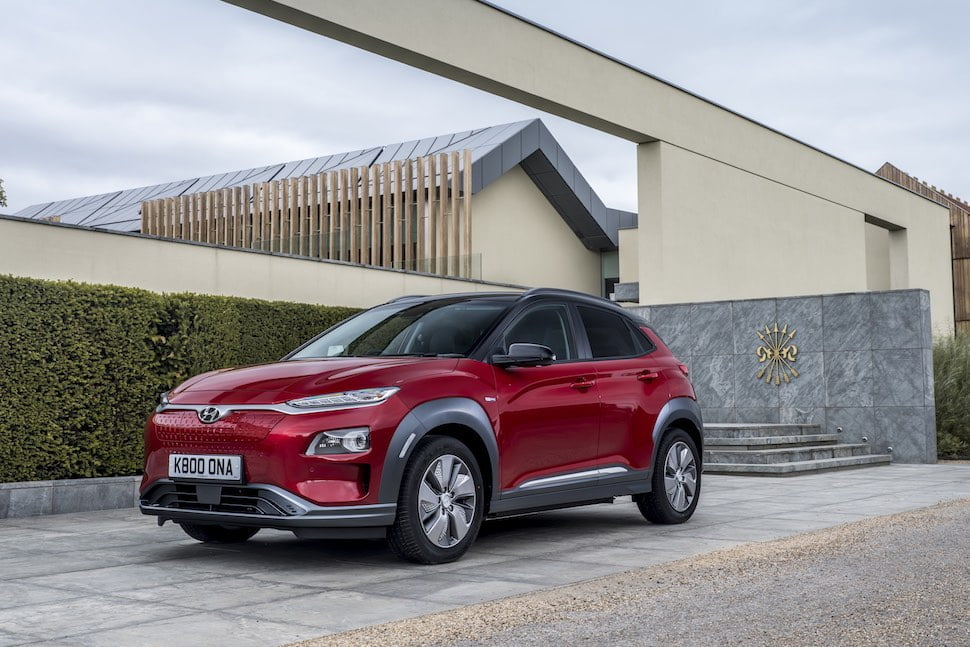
Hyundai, however, has quickly established itself as one of the leading manufacturers when it comes to new tech and fuels, and models such as the Kona Electric – which we’re testing today – are certainly giving rival firms something to worry about.
What’s new about the Hyundai Kona Electric?
The obvious difference in the Kona Electric is its electrification, with two different battery packs offered (depending on how many miles you need between charges).
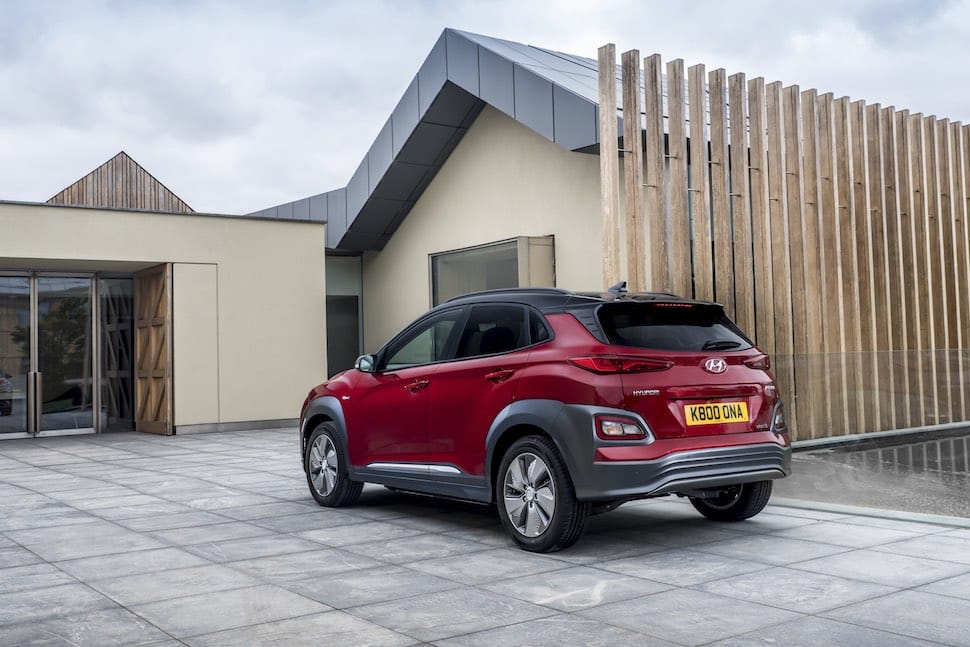
As with the majority of EVs, the Kona’s grille has been closed off, leaving a ‘smoothed-off’ look, with revised front and rear bumpers and also unique (to the Electric) 17-inch alloys.
An impressive amount of standard safety equipment is also fitted, with all models coming with kit such as autonomous emergency braking, lane-keep assist and adaptive cruise control.
How does it look?
As with the standard Kona, the styling is quite divisive. The changes made to the Electric give it an added edge over the standard car, but it’s not all positive.
We like the two-tone roof and the smoothed and dimpled front grille, while the painted plastic cladding pulls off the “Look, I can go off-road” crossover styling far better than other models. But the textured 17-inch alloys are not pleasant – and almost appear aftermarket, although we appreciate they’re there to help efficiency.
The silver trim applied to both the interior and exterior also isn’t something you expect to find on a car costing £30,000 upwards, either. It feels low-rent and not the premium quality you might expect when splashing this much cash on a small crossover.
What’s the spec like?
Three trims are offered on the Kona Electric – SE, Premium and range-topping Premium SE, which our test car was. SE is only offered with the smaller 39kWh battery pack, with standard equipment including a seven-inch touchscreen, adaptive cruise control and a reversing camera.
Premium brings a load more kit – such as front and rear parking sensors, a Krell sound system and an eight-inch touchscreen, as well as further safety equipment. Premium SE comes laden with kit, with extras including LED headlights, a heated steering wheel and a head-up display.
Prices for the Kona Electric start from £30,750 on-road, or £36,345 for the more desirable 64kWh version.
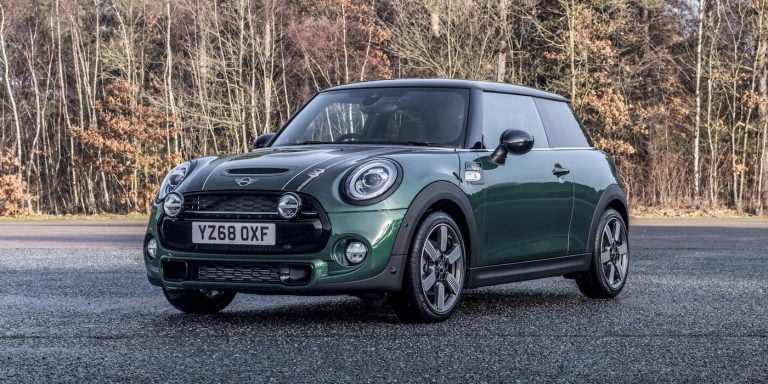
Mini is celebrating 60 years since the introduction of the original and iconic Mini hatch with an appropriately-titled limited-edition model – the 60 Years Edition.
Based on the Mini Cooper S three-door hatch, the 60 Years Edition benefits from a unique look. It’s finished in British Racing Green with a contrasting black roof, carrying over the bonnet stripes and mirror caps.
The stripes also feature a ‘60’ graphic, which is complemented by unique badging on the car’s side scuttles. Standard-fit spotlights fixed to the front grille plus model-specific 17-inch alloy wheels complete the exterior look.
Inside, the 60 Years Edition features emblems on the steering wheel and front seats, with the latter also upholstered in Mini Yours ‘Dark Cacao’ leather. Contrasting stitching and piping match the exterior look as well.
Standard equipment includes LED front and rear automatic lights, a rear-view camera, power folding mirrors plus a nine-inch infotainment system that supports Bluetooth connectivity in addition to Android Auto and Apple CarPlay.
Thanks to its Cooper S underpinnings, the Mini 60 Years Edition features a 2.0-litre turbocharged four-cylinder engine, sending 190hp and 300Nm of torque to the front wheels via a seven-speed automatic gearbox.
As a result, 0-60mph is covered in 6.5 seconds with a 143mph top speed achievable. Mini claims the car can return 39.8mpg on the combined cycle while emitting 129g/km of CO2.
Just 500 examples of the Mini 60 Years Edition are destined for the UK and will retail from £29,990 when it reaches dealers from March.
The original Mini was launched in 1959 and went on to become one of the most iconic cars produced – in 1999 it was even voted the second-most influential car of the 20th century by a jury of professionals appointed by the Global Automotive Elections Foundation.
The Mini Cooper S is built in Britain.
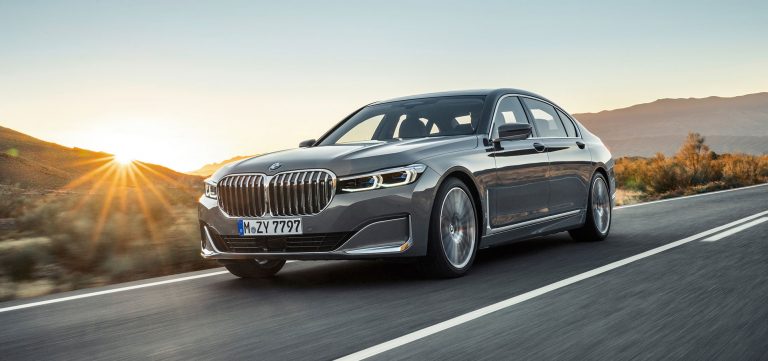
BMW has revealed an updated version of its flagship 7 Series model.
Highlights are a new look and a host of latest technological features, along with a revised range of engines.
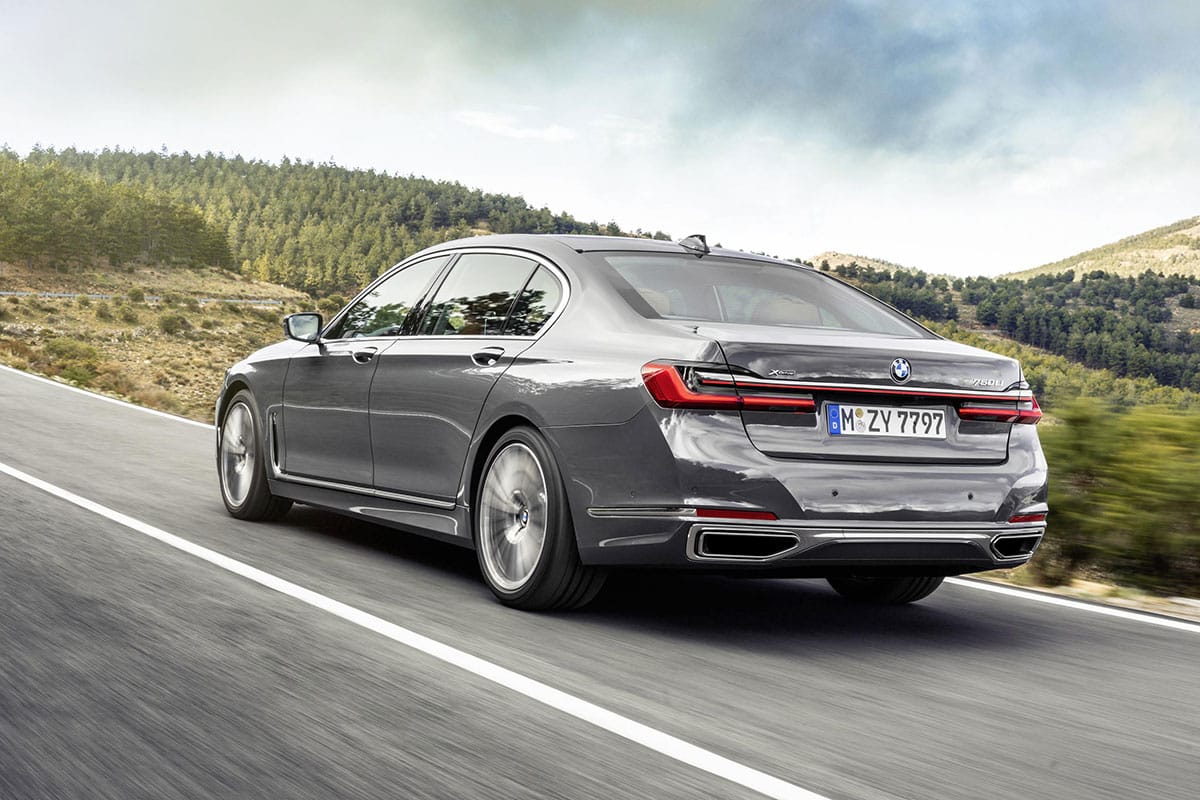
The exterior of the car has been extensively refreshed, with the prominent kidney grille design at the front now 40% larger. The headlights have been slimmed down, while chrome running strips have been added to the flanks of the car.
Improvements in refinement include side glass that is 5mm thicker, while the sound-deadening material in the rear wheel arches has been revised to keep the 7’s cabin as hushed as possible.
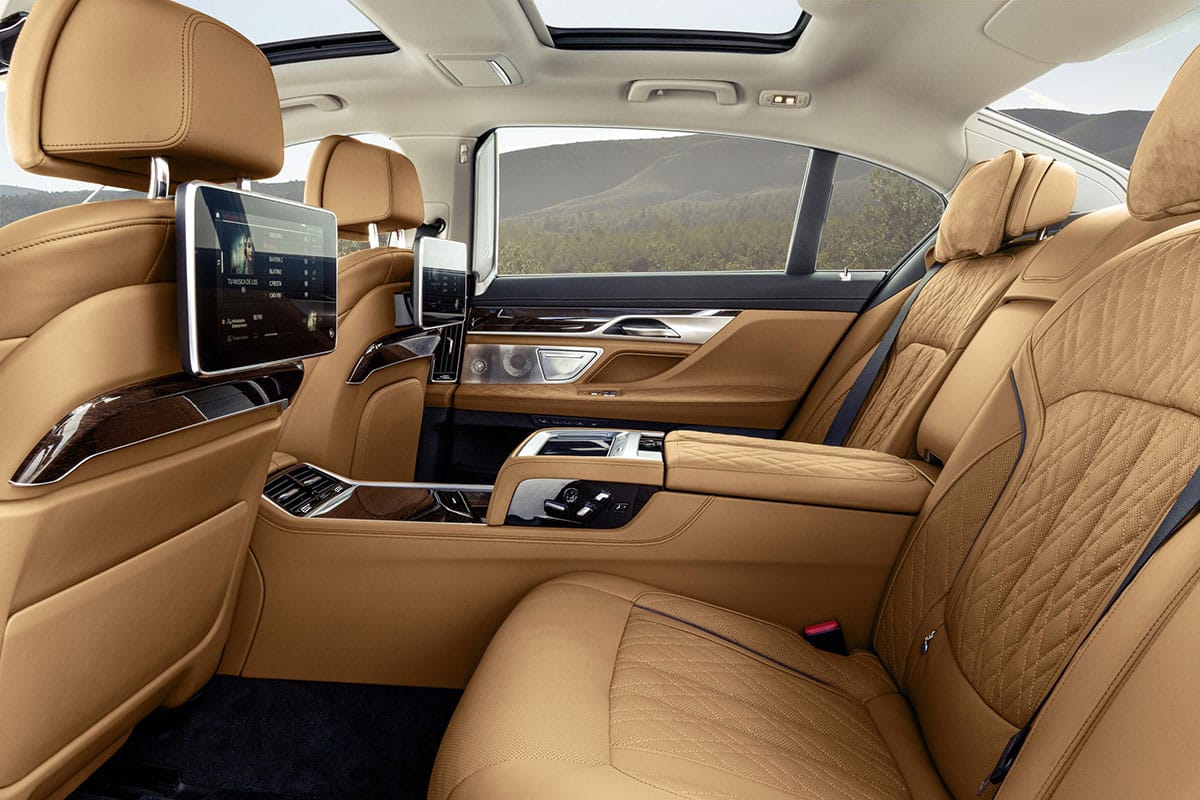
Subtle changes to the interior include higher quality materials. The rear-seat entertainment system comprises two ten-inch full-HD displays with a Blu-ray player while the car also giant the latest version of the BMW Touch Command unit.
The Touch Command removable tablet with a seven-inch screen can be used from any seat and even outside the vehicle. Occupants can use it to operate comfort functions such as seat adjustment, interior lighting and climate control, as well as the infotainment, navigation and communication systems.
The standard and long-wheelbase options remain, but both have been extended by 2cm over the previous car. The long wheelbase variant offers an extra 14cm over the standard car.
Powertrain options range across six, eight or 12 cylinders. The entry-level petrol engine is the 740i with 340hp, while the 4.4-litre V8 in the 750i produces 530hp. Above it sits the range-topping M760i, offered only as a long-wheelbase model and powered by a 6.6-litre V12 with 585hp, capable of sending the 7 Series to 60mph from 0 in under four seconds.
Diesel choices use the same 3.0-litre six-cylinder engine, with either 265 or 320hp, while there is also an updated plug-in hybrid version is also available, with a 3.0-litre six-cylinder petrol linked to an electric motor to produce a combined 394hp.
Other new technology includes an updated version of the Parking Assistant, along with a new Reversing Assistant. This can remember where the car has driven at slow speeds and reverse it up to 50 metres along that route.
The new 7 Series is expected to arrive in the UK this April at prices yet to be announced.
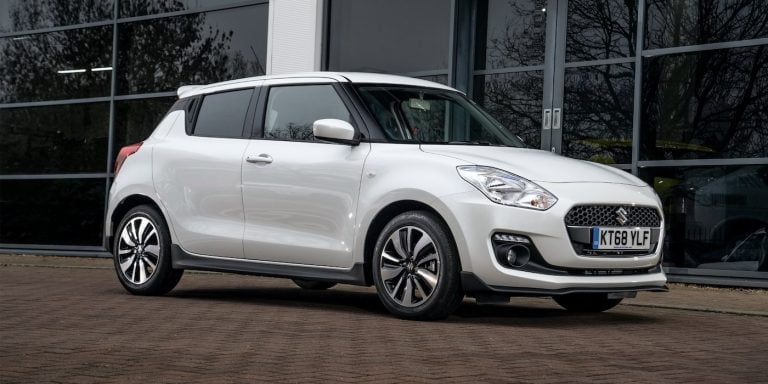
Suzuki has beefed up its popular Swift supermini with a new special edition called Attitude.
This version of the Swift gets racier looks and high levels of standard equipment, and is positioned as an option for ‘younger buyers who may perhaps be looking to aspire to the Sport in the future’.
The Swift Attitude is based on the existing SZ3 specification, which includes air conditioning, DAB radio with Bluetooth, rear privacy glass, a leather steering wheel and LED daytime running lights.
Attitude adds two-tone 16-inch alloy wheels, front fog lamps, a mesh front grille, a rear spoiler and carbon-effect trim around the car’s exterior.
Powering the Swift Attitude is Suzuki’s naturally-aspirated 1.2-litre four-cylinder petrol engine. It produces 90hp and 120Nm, with that power sent to the front wheels via a five-speed manual gearbox.
As a result, the 0-60mph sprint is covered in 11.7 seconds with a top speed of 112mph possible. Suzuki claims it can return 61.4mpg on the combined cycle, while emitting 106g/km of CO2.
The standard no-cost colour option is Fervent Red, while you can choose from Pure White, Premium Silver, Super Black, Mineral Grey or Burning Red for an additional £485.
Now on sale, the Suzuki Swift Attitude is available from £13,499. The firm is also offering a 0% PCP finance deal on the hatch to support the new model, which includes a £500 manufacturer contribution.
Whether you’re browsing online, playing games, or sending a quick text, anything that takes your eyes off the road when you’re driving puts you and other road users at risk.
In fact, using a handheld device while driving can be even more distracting than driving under the influence of alcohol or drugs, as it makes you twice as likely to take your eyes off of the road.
While drink-driving receives significant media attention, the dangers of distracted driving are seemingly less well known.
Even though the Road Safety Act of 2006 made using a mobile device while driving illegal and the penalties were doubled in 2017, research from 2018 showed that one in five drivers still use their mobile phone while driving.
That’s more than 7 million people using distracting hand-held devices while driving.
What is distracted driving?
Distracted driving is more than just using a mobile phone while driving. Anything that takes your focus away from your driving is a distraction. The US government breaks down these forms of distraction into three different categories.
Visual
A visual distraction is anything that causes you to take your eyes off the road. Looking at your satnav is an example, as you have to shift your focus away from where you’re going to look at the screen.
Car manufacturers have been working to position satnavs and information screens as high on the dashboard as possible to minimise the distance your eyes have to travel.
Manual
Taking your hands off of the steering wheel for any reason is a manual distraction. Eating in the car or drinking a coffee are examples of this.
Manual distractions are probably the most common type of distraction, as they can be as simple as changing a radio station or adjusting the air-conditioning.
Cognitive
The least obvious of the three, a cognitive distraction is when you are thinking about something other than driving.
This can be anything from daydreaming to having a conversation with your passengers, and it’s something that almost every driver would have to admit they have done on many occasions.
What makes mobile phone use so dangerous is that it is an example of all three categories at once. You manually operate your phone while looking at the screen and concentrate on the phone rather than the road ahead.
The move by most car manufacturers towards touchscreen infotainments systems is a real issue for distracted driving, as touchscreens require significantly more attention from the user to use. This is largely because the buttons are not in one fixed place and there is no real haptic feedback to know if you have successfully pressed the right button.
You need to look carefully to see where you need to be touching the screen and then take your hand off the wheel for quite some time to touch the screen and input a command. Because the car is moving and the button positions are not consistent, it requires considerable cognitive effort compared to pushing physical buttons.
Obviously, not every distraction is going to result in a fiery car crash. But it’s also impossible to argue with the fact that you can’t be prioritising your attention on your driving if you are attending to something else at the same time.
If something happens in front of you while your focus is elsewhere, at best it will give you less time to react once you return your focus to your driving. At worst, an accident can happen in a flash and you will never know what happened.
Drive safe, not distracted
Remember that if your hands off the wheel and you are looking away from the road, you may not be able to react fast enough to avoid a collision. Keep yourself and others safe by keeping your hands, mind, and eyes focused on driving.
This article was originally published in August 2016, and was most recently updated in January 2019.
Despite its ever-growing line-up of SUV and crossover offerings, Audi still offers two conventional estate cars – the A4 Avant and this, the all-new A6 Avant.
Though it’s hard to deny the appeal that the four-wheel-drive market is currently experiencing, the everyday estate car is still there for those who want space, practicality and ease-of-use wrapped up in a more road-friendly body style.
Audi’s new A6 boasts more technology than ever before, along with a pair of efficient diesel engines too. We’re testing it here in range-topping S Line specification.
It was no small task to replace the old A6 Avant. The previous car had proved immeasurably popular, with sleek, elegant and understated styling somehow managing to defy time. So when it came to revealing the new one, there was a fair amount of expectation mounted on to it.
Fortunately, we needn’t have worried. The new A6 Avant arrived with the same classy approach to exterior design and interior layout. There are improved materials, a good amount of standard equipment and, as before, a brilliantly large boot.
How does it look?
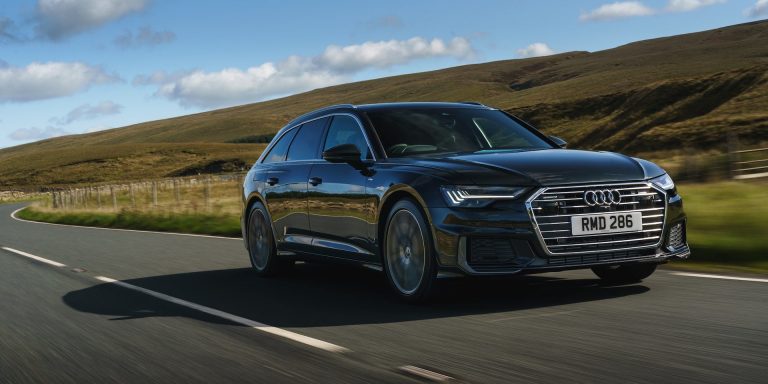
As mentioned earlier, the A6 Avant’s design still toes on the understated side of things and, for most, that won’t be a bad thing at all. Yes, the front grille is almost obscenely large and there’s all manner of chrome accents dotted across the exterior car, but it’s not an ostentatious design – far from it.
It’s a big car, too, but somehow Audi has managed to disguise its sheer size with a variety of cut lines and trim pieces. It’s been quite successful in hiding the car’s overall bulk, and it means that the A6 Avant looks more dynamic than other estates.
What’s the spec like?
Our car, as mentioned, came in top-spec S Line trim. It means you get a full sports styling kit with a dynamic front splitter design. As well as that, you get a lowered sports suspension setup, and Audi’s excellent Matrix LED headlights paired with scrolling rear indicators.
You also get 19-inch alloy wheels as standard, though the ones on our test car had been upgraded to larger 20-inch units which were accompanied by a fearsome £1,550 price tag.
S Line cars get a full navigation system, though we’d argue that it’s worth adding the technology pack for £1,495. This brings with it a ten-inch top screen system, accompanied by a nine-inch screen underneath it to control heating and ventilation functions. You also get the 12-inch virtual cockpit system, which replaces the traditional dials and looks fantastic.
Continued on next page:Interior, drive and our verdict
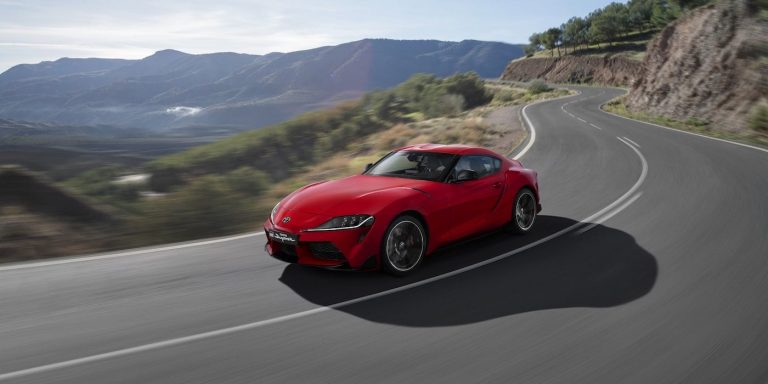
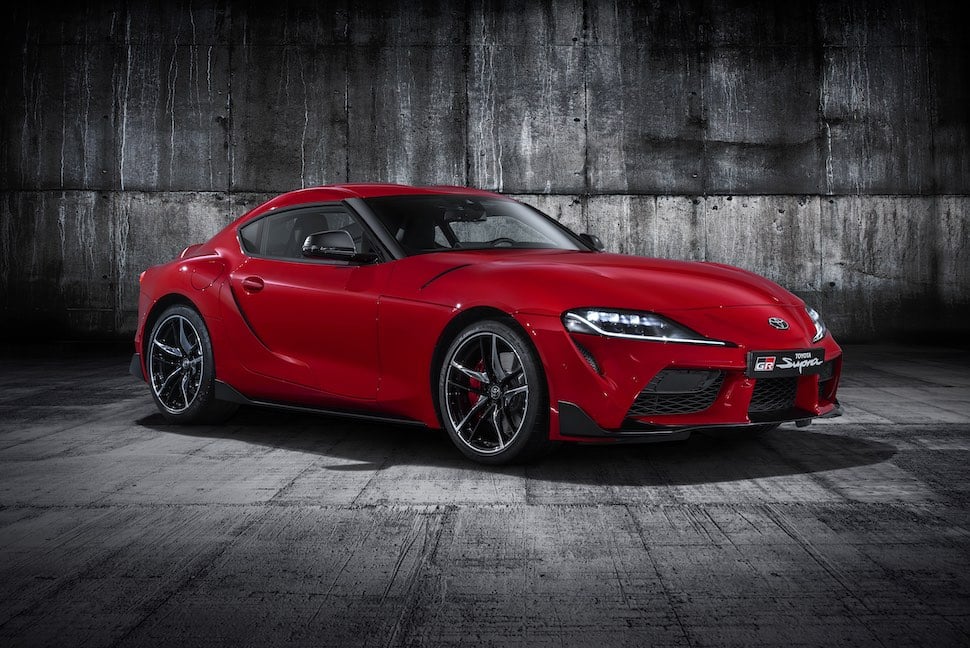
After what seems like an eternity, Toyota has revealed in full its 2019 Supra – marking the return of a nameplate that’s been out of production since 2002.
Now based on the same underpinnings as the BMW Z4, the latest Supra keeps its enthusiast-focused front-engine, rear-drive layout, and, Toyota claims, is ‘a sports car in its purest form.’
The Supra inherits the BMW’s engine, a 3.0-litre straight-six petrol that pushes out 340hp and is coupled to an eight-speed automatic transmission. It’s the latter feature which is likely to grate with enthusiasts, as the most iconic Supras were usually manuals.
Performance is similar to that of the Z4, with 0-60mph taking 4.1 seconds and an electronically limited top speed of 155mph.
Active differential for ‘superior agility’
Toyota has paired the Supra with an active differential, operated by its own dedicated control unit. It monitors everything from steering, throttle and brake operation to engine speed, and will adjust from zero to full lock instantly.
Its handling has been tuned at the Nurburgring, as confirmed by earlier spy shots, helping to achieve ‘superior agility’. Toyota also says the Supra features a 1.55 ‘golden ratio’ between its wheelbase length and track width – the combination which gives the greatest balance of agility and stability.
The Supra’s rather insectoid styling stays true to the numerous concepts and spy shots we’ve seen so far. The long, low bonnet and double-bubble roof are inspired by the legendary 2000GT from the 1960s, though the proportions are clearly defined by the BMW Z4 donor platform.
The interior, meanwhile, is pure BMW – with an iDrive-style infotainment system, horizontally extended air vents and BMW parts bin controls for the climate control and gear selection.
All Supras will come with 19-inch alloy wheels as standard, plus high-performance brakes and adaptive dampers. Two trim levels will be available – with basic Active featuring dual-zone climate control, keyless entry and LED lights. Premium spec adds a head-up display, JBL audio system, wireless phone charging and additional lighting.
Supra A90 limited edition launch model
There’s also set to be an exclusive Supra A90 launch edition, limited to just 90 models. It will be finished in Storm Grey with matte black 19-inch wheels and a red leather interior.
There will be 900 Supras allocated to Europe for its first year of production, with 300 set to arrive in the UK. Basic Active models will cost from £52,695, rising to £54,000 for Premium trim and £56,945 for limited-run A90 cars.
What is it?
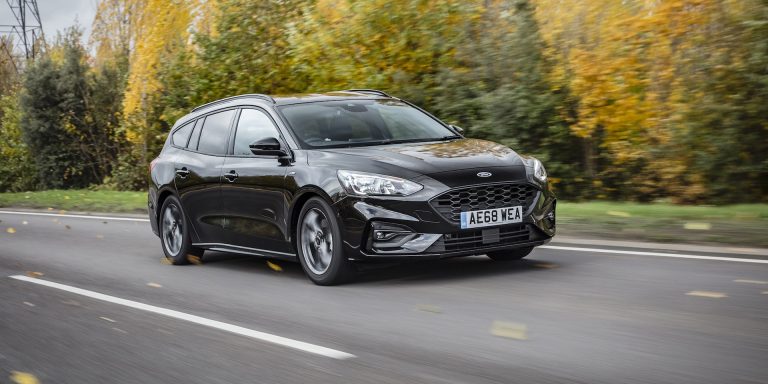
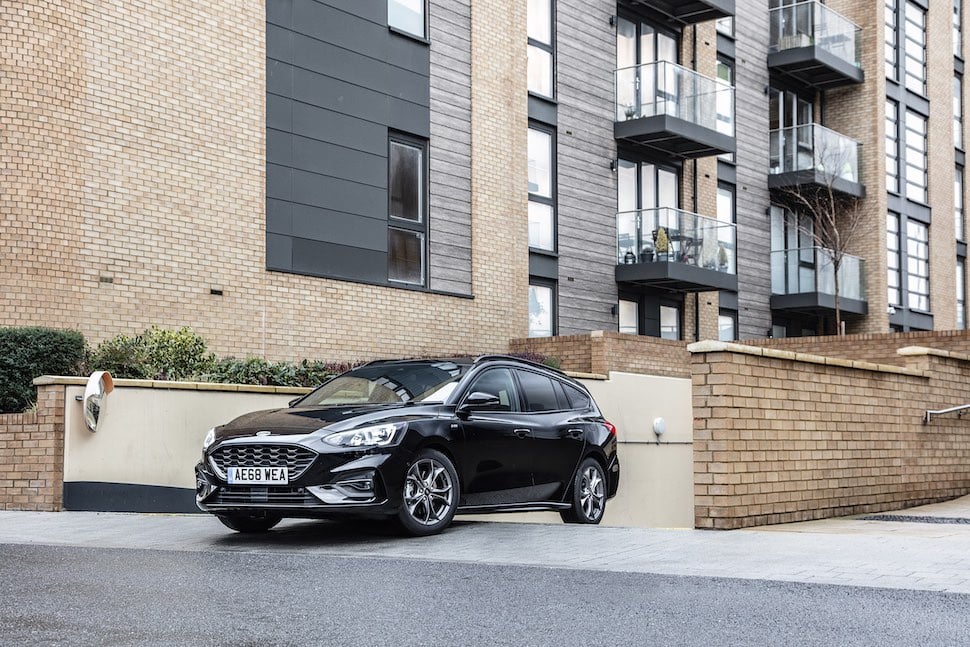
The latest Ford Focus Estate is the load-lugging version of the fourth-generation mass-selling family hatch.
Key features
Much more space, all new tech of hatch, independent suspension.
Our view
The latest Focus hatch has been very well received and the Estate should be equally popular.
It has all the technology, quality and performance improvements of its hatch sister – plus a whole lot of extra space it badly needed.
Similar cars
Vauxhall Astra Sports Tourer, Volkswagen Golf Estate, Skoda Octavia Estate
We reviewed the fourth-generation Ford Focus back in September 2018, which Ford at the time stated was intended to reclaim number one spot in the UK best-selling car chart – displacing its smaller sibling the Fiesta in the process.
Vital to that aim will be the fleet-favourite, motorway-trawling estate variant, which is now heading for showrooms with a promise of major advances over the outgoing model.
Like its hatchback sister, the Focus estate faces even tougher challenges this time around. Many buyers are abandoning traditional family cars for SUVs, something the Focus will attempt to address later in the year with a jacked-up Active model. Meanwhile, the traditional competition has been joined by very strong new contenders from the likes of Kia and Hyundai, and even BMW and Audi, fuelled by competitive finance offers.
But while the latest Focus hatch just needed to improve on an already very good package, something it did very well, the estate can address a major failing of its predecessor. The old car just wasn’t very spacious…
The estate is like the hatch and unlike its predecessor pitched towards a European, rather than the compromise-inducing global, audience, and it gets the same front-end treatment as the hatch. This includes a longer bonnet and more distinctive visuals that also create what Ford claims are class-leading aerodynamics. The rear is less distinctive, rather conventional while avoiding slipping into a bulbous look, which is all the more commendable considering the interior space gains.
Buying and owning a Ford Focus Estate
Eventually, the estate will be offered in seven grade options, like the hatch, prices starting from £19,400 which is more competitive than the outgoing version.
The trims range from Style up through Zetec and Titanium, and then the buyer chooses to go either sporty with two versions of the ST-Line, luxury with the Vignale or eventually SUV-style through the Active variants.
Ford Focus Estate (2018 -2022)
We remain a bit bemused by Vignale. This is Ford’s attempt to do premium, and buyers will enjoy such niceties as a bespoke bumper and hexagonal grille, LED headlamps and lots of tech such as an upmarket B&O audio system and active parking assistance, all in an interior that can be sculpted in posh Windsor leather.
It’s just that it was only three years ago that we attended the launch of Vignale as a brand, when we were told that it would only be offered on selected models all of which would be hand-finished by craftsmen, and sold by a carefully chosen network of specialist dealers each of which would have a separate lounge for Vignale customers.
Now Vignale is just a trim level, available right across the range even on the Fiesta supermini, and even the smallest Ford dealer has to make room for a Vignale space…
Of the 12% of Focus customers that choose the estate, more than 45% will go for the two ST-Line trims as applied to our test car. ST-Line is a good choice, costing around £1,400 more than entry-level Style, adding such niceties as keyless starting, sports-tuned suspension, and with enough styling additions to make the car stand out from the Focus crowd without going the full Vignale route.
Pay another £1,500 for the ST-Line X, however, and you get a whole load of extra tech, from front and rear parking sensors to electronic climate control, heated front seats with the driver’s electrically adjustable, and the Sync 3 infotainment system with voice control and navigation.
As on the hatch, safety rates highly on the estate – autonomous emergency braking is standard with pedestrian and cyclist detection and the car carries a five-star Euro NCAP rating. The independent UK safety body Thatcham Research also named the new Focus as one of its ten safest new cars for 2019.
And of course there is a whole lot of tech on the options list, such as a new more advanced auto parking system, adaptive cruise control that can stop and go in traffic jams, headlights that see around corners before you get to them and adjust according to the information on road signs, and a host of other driver safety aids.
Continued on next page:Interior, drive and our verdict
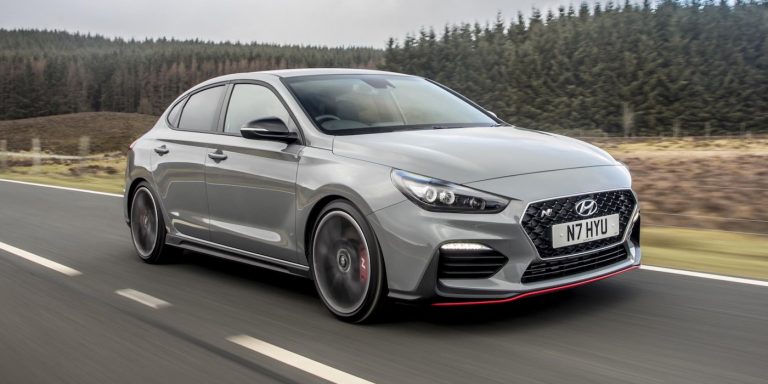
Hyundai has announced pricing and specification details for the second model in its ‘N’ family of performance cars – the i30 Fastback N.
The new model shares the majority of its components with the regular i30 N, but hides them under a slinky, coupe-saloon style body with a lengthened rear aspect and sleeker profile.
The four-door Fastback features a large ducktail spoiler, but is only 1cm longer than its hatchback cousin. The roofline, meanwhile, is 3cm lower.
There’s only one grade of i30 Fastback N to choose, and it’s generously equipped for its £29,995 starting price. Standard kit includes 19-inch alloy wheels clad in N-specific Pirelli P-Zero tyres, plus an electronic limited-slip differential and adjustable suspension. Torque vectoring aids tidier cornering, and buyers can choose between driving modes via a switch on the steering wheel.
A manual handbrake and six-speed manual gearbox help to up the driver involvement, while clever tech such as launch control and rev-matching make for smoother progress.
The i30 Fastback N also features LED headlights and taillights, cruise control, keyless entry and an eight-inch touchscreen infotainment system with Apple CarPlay and Android Auto connectivity.
There’s also N-specific sports seats, performance gauges and a selection of six colours including Shadow Grey, specific to the Fastback N.
Hyundai supplies the Fastback N with the same five-year, unlimited-mileage warranty as all of its cars – and impressively, continues to uphold it even if the car is used on track. Order books open for the i30 Fastback N on January 21.
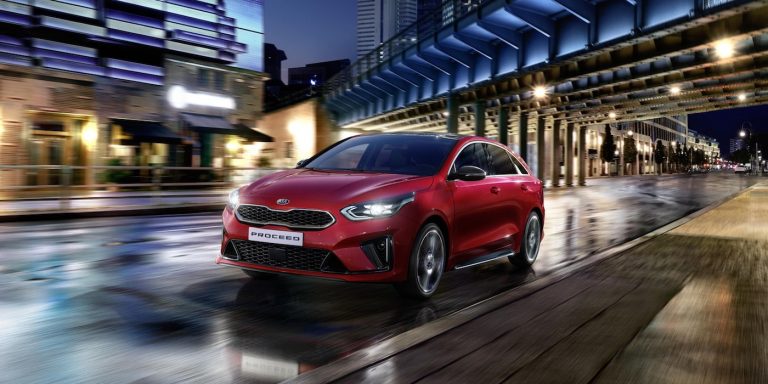
Kia has announced pricing and specification details for the latest models of its new Ceed hatch – the sportier GT and GT-Line trim levels – as well as the new ProCeed shooting brake.
The ProCeed variant marks a new body style for the Ceed – it replaces the more traditional pro_cee’d hatchback with a Mercedes CLA-style shooting brake estate. It will sit alongside the standard Ceed SW estate, differentiated by its swooping roofline and exclusively high-spec trim levels.
With prices starting from £23,835, the ProCeed is very much the flagship of the Ceed range – available only in high-spec GT-Line, GT-Line S and GT trims.
That starting price nets buyers a 140hp, 1.4-litre petrol engine paired with a six-speed manual gearbox, and GT-Line trim. The range moves up through a 135hp 1.6-litre diesel, starting from £24,685, to the range-topping 204bhp 1.6-litre GT model, which retails for £28,135.
(PA)
All ProCeeds are highly specified, featuring an eight-inch infotainment screen, Apple CarPlay and Android Auto connectivity, lane-keeping assist, black cloth and grey faux leather upholstery, heated front seats, dual-zone climate control, cruise control, auto lights and wipers plus keyless entry.
GT-Line S adds 18-inch alloy wheels, LED headlights, a sunroof, electric driver’s seat, leather and suede upholstery, automatic park assist, premium JBL sound system and radar-guided cruise control.
Range-topping GT adds further sporty styling, red stitching for the interior and a beefier body kit.
Sportier Kia Ceed models also priced up
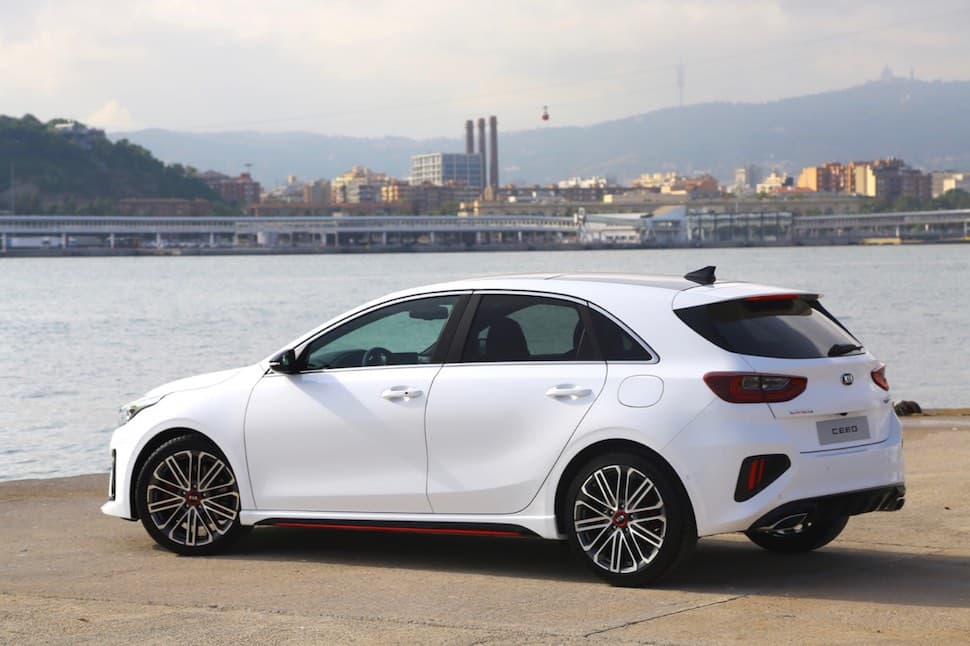
Meanwhile, GT-Line, GT-Line S and top-spec GT models of the standard Ceed hatchback also debut. The equipment on these mirrors that of the larger ProCeed, as do power outputs for the three available engines.
(PA)
An additional 1.0-litre three-cylinder petrol is also available as an entry into the range – it offers 120hp and is priced from £21,535. The range continues from £22,335 for a 1.4-litre model, £23,185 for a 1.6-litre diesel and £25,535 for the range-topping GT.
All of these models will go on sale later this month, with Kia’s seven-year warranty as standard.
Road tax rates are due to change in April, bringing a series of additional charges to nearly all drivers. It’s categorised into several different ways, with different owners paying different amounts depending on vehicle emissions.
Fortunately, we’ve waded through the figures to tell you just how much could be added to your road tax – officially known as Vehicle Excise Duty (VED).
The Autumn budget from 2018 stated that “from 1 April 2019 VED, rates for cars, vans and motorcycles will increase in line with RPI.” RPI stands for Retail Price Index, a measure of inflation published monthly by the Office for National Statistics.
For most drivers, this will mean an increase of £5 on your current annual road tax bill.
New cars and used cars registered since 2017
Buyers of new cars will be stung the most by the latest changes. For the first year after purchase, cars that emit more than 191-225g/km CO2 will pay £40 more, with cars emitting between 226-255g/km £55 more.
Cars that emit over 255g/km of CO2 will pay £65 more. These days, that sort of emissions level is generally only applicable to high-performance models with large petrol engines.
The fixed rate for the second year onwards will increase by £5 for most cars, or £10 for those with a list price of more than £40,000.
Used cars from 2001 to 2017
In truth, it’s not all doom and gloom for most motorists in terms of taxing your current car. Cars registered between March 2001 and March 2017 will have a maximum of £15 added to their annual rate, based on their specific CO2 emission levels.
Those drivers who use a car registered between these dates which emits below 120g/km will not see any increase in the amount they pay.
Vehicles with CO2 emissions ranging from 121 to 175g/km will find an extra £5 added to the amount they pay.
In the higher brackets, cars with CO2 emissions ranging from 176 to 225g/km will pay an additional £10, while those cars sitting in the highest emissions bracket will have £15 added.
Owners of zero-emissions vehicles won’t have to pay anything extra.
Pre-March 1, 2001
Cars registered before March 1, 2001 are taxed based on engine size. Those vehicles with an engine under 1,549cc will be accompanied by a £150 a year tax charge (in total), while those over 1,549cc will cost £245 a year to tax.
There has been no information released as yet to state whether or not these rates will rise on April 1.
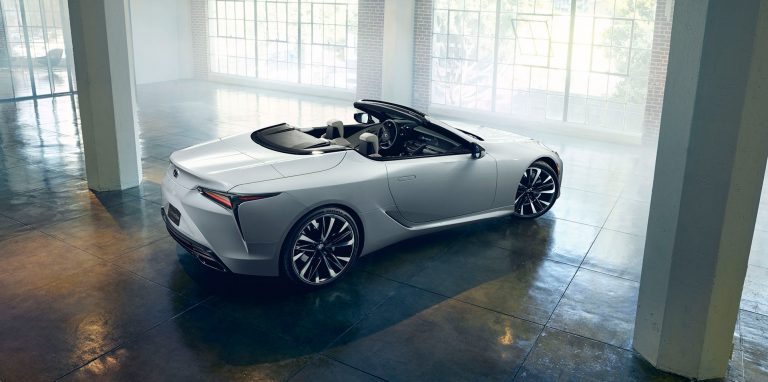
Lexus will unveil a convertible version of its flagship LC coupe at the North American International Auto Show in Detroit this month.
The LC Convertible is being presented at a concept model, pitched as an indicator of the future direction of Lexus styling.
However, most Lexus concepts evolve into road cars and the Detroit concept includes no elements that would be considered impractical on a production model. Industry observers predict that the drop-top will go on sale in 2020, taking on the Porsche 911 Cabriolet and Ferrari Portofino.
The creators of the LC Convertible describe the car as an aspirational, halo vehicle for the entire Lexus brand.
“This concept takes the unmistakable design of the LC coupe and reimagines it as a future convertible,” says chief designer Tadao Mori. “It blends all the best aspects of the original coupe with the dynamic design of an open-air convertible.”
Currently, few technical details of the car are being released. It is exactly the same size as the coupe, with the same 2+2 seating layout.
Whether the roof will be fabric or metal has not been stated, while there is also no information as to the folding mechanism. However, the car does boast a contoured rear deck, which is clearly designed to accommodate the roof under its deck panel.
Lexus clearly expects the car to be a performance model, with the Detroit concept displayed on 22-inch wheels.
Much attention has been paid to the cabin, which is fitted with seats finished in white leather with yellow accents.
“A production version of this concept would be exhilarating in many different ways,you would see its dynamic lines as you approach, hear its engine when you start it up and feel everything around you once on the road – it would engage the senses in an exciting way, every time you get behind the wheel,” says Mori.






































 Whether the roof will be fabric or metal has not been stated, while there is also no information as to the folding mechanism. However, the car does boast a contoured rear deck, which is clearly designed to accommodate the roof under its deck panel.
Lexus clearly expects the car to be a performance model, with the Detroit concept displayed on 22-inch wheels.
Much attention has been paid to the cabin, which is fitted with seats finished in white leather with yellow accents.
“A production version of this concept would be exhilarating in many different ways,you would see its dynamic lines as you approach, hear its engine when you start it up and feel everything around you once on the road – it would engage the senses in an exciting way, every time you get behind the wheel,” says Mori.
Whether the roof will be fabric or metal has not been stated, while there is also no information as to the folding mechanism. However, the car does boast a contoured rear deck, which is clearly designed to accommodate the roof under its deck panel.
Lexus clearly expects the car to be a performance model, with the Detroit concept displayed on 22-inch wheels.
Much attention has been paid to the cabin, which is fitted with seats finished in white leather with yellow accents.
“A production version of this concept would be exhilarating in many different ways,you would see its dynamic lines as you approach, hear its engine when you start it up and feel everything around you once on the road – it would engage the senses in an exciting way, every time you get behind the wheel,” says Mori.