Find an Expert Rating: 
Home Blog Page 119

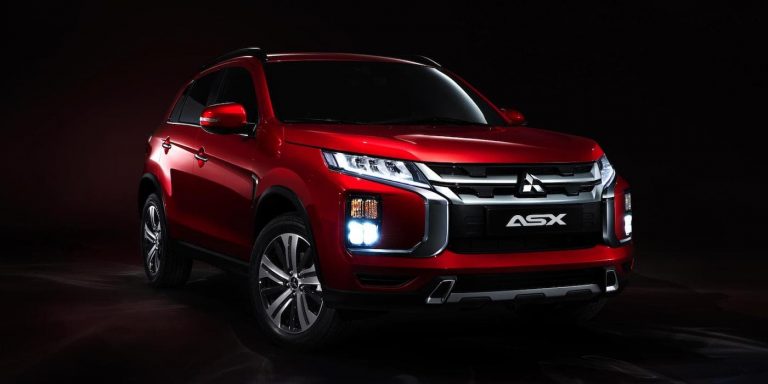
Mitsubishi ASX gets a fresh new look

1
Mitsubishi has overhauled its venerable ASX crossover with a new look, a new engine and an upgraded infotainment system. The updated ASX takes on Mitsubishi’s latest corporate design elements, resulting in the introduction of thin LED headlights and a prominent silver grille up front with c-shaped side trimmings, while the rear has been treated to new LED taillights and a skid plate. Three new colours have also been added to the ASX palette — Red Diamond, Sunshine Orange and Oak Brown.
You may also like:

Inside the car, the size of the touchscreen infotainment system has been increased from seven to eight inches, and now also boasts the ability to play videos stored on a USB stick while the car is stopped. High-spec models also feature TomTom satellite navigation. A smartphone app will also be made available following the new crossover’s launch that will allow owners to monitor vehicle information when away from the car, including its fuel level and service intervals. The big news on engines for the new ASX is the removal of both the 2.2-litre diesel and the 1.6-litre petrol from the line-up. European markets will now be offered a 2.0-litre petrol engine, available with either a CVT automatic or five-speed manual gearbox. Expect to hear pricing and information on the new Mitsubishi ASX following its global debut at the Geneva motor show, which kicks off in the first week of March. Updated Mitsubishi ASX 1902 - rear

Parents committing car insurance fraud to save money

0
One in ten parents of young drivers risk a criminal record for pretending to be the main driver on the car insurance policy, new research has uncovered. A survey of 1,000 parents of young drivers aged 17 to 25 found that 10% admitted to insuring their son or daughter’s car in their own name to save money on premiums. The tactic sees a parent insure themselves as the primary driver on a vehicle, despite their offspring being the one using the car most often, with the youngster registered as a named driver instead. However, this is actually a form of insurance fraud. If uncovered, the policy will be invalid and the policyholder could end up with a criminal record. In addition, the policyholder will have to pick up the cost of third-party claims that are still settled by the insurance company – which could potentially cost them hundreds of thousands of pounds.

Don’t commit insurance fraud to save a few pounds

Lee Griffin from comparison site GoCompare, which commissioned the survey, said: “Unfortunately, many parents are putting themselves at risk of picking up a criminal record for the sake of reducing their child’s car insurance premiums. “There may not appear to be any harm in insuring a child’s car in a parent’s name, but ‘fronting’ is illegal nonetheless. Car insurance premiums for new drivers can be high compared to those offered to more experienced drivers, but there’s a good reason why. “According to the ABI (Association of British Insurers), drivers aged between 17 and 20 are twice as likely to make an insurance claim as other drivers and the cost of their claims can be up to three times higher than the average.” The survey also discovered that a third of parents (34% of people surveyed) would consider employing the tactic to drive down new driver premiums. The fraud is usually exposed when a claim is made. Insurers will investigate the details of an accident, at which point they usually find that the son or daughter has been driving the vehicle more often than the parent.

Prices and specifications announced for new DS 3 Crossback

0
The new DS 3 Crossback has been revealed in full ahead of its arrival in UK showrooms this May. Priced from £21,550, the DS 3 Crossback is the second SUV to feature in the French manufacturer’s slowly-expanding range of cars. It’ll be available initially with the choice between three petrol engines and one diesel, although an electric version is expected to arrive later in the year. Petrol engine power outputs will range from 100hp to 150hp, while the sole diesel produces 100hp. Lower-powered versions will utilise a six-speed manual gearbox, with punchier models sending drive through an automatic transmission instead. DS 3 Crossback The Car Expert All models in the range get a decent standard of equipment, with base-specification Elegance models benefitting from parking sensors, keyless entry and a seven-inch touchscreen system. Elegance prices start from £21,550. Performance Line cars get a sportier exterior design, along with seats finished in Alcantara – though prices bump up to £22,950. Upgrade to Prestige specification and customers will find climate control, automatic windscreen wipers, leather upholstery and a ten-inch infotainment system added to the car’s list of standard equipment. Prestige models start at £24,950. Range-topping Ultra Prestige cars are fitted with a reversing camera, head-up display, matrix LED headlights and heated front seats with massage function. These command a £30,950 price tag. They’re joined by a special launch edition – La Premiere – which benefits from 18-inch diamond-cut alloy wheels, and DS’ full Drive Assist system, packing active cruise control and lane keeping assist. La Premiere models cost from £32,450. The all-electric version, called the DS 3 Crossback E-Tense, will use a 100kW motor to offer 186 miles of range under new WLTP test cycles. In addition, it’ll hit 60mph in a brisk 8.5 seconds.

Honda CR-V Hybrid review

60-second summary

What is it? This new variant of the Honda CR-V is the first available with a hybrid drivetrain, replacing the previous diesel. Key features Hybrid drivetrain Our view The Honda CR-V Hybrid could be an answer for those looking for a comfortable, spacious SUV that offers an effective performance without writing headlines. It will particularly appeal to those who have always liked the economy and emissions of a diesel but no longer want to buy one. But while it beats the Toyota RAV4 Hybrid for comfort, its rival offers more power and performance for similar efficiency. Similar cars Toyota RAV4, Volkswagen Tiguan, Ford Kuga 2019 Honda CR-V Hybrid review 01 | The Car Expert

Full review

Introduction

From the dawn of hybrid powertrains, two Japanese manufacturers have dominated the petrol-electric market and proved deadly rivals to each other. Where Honda had the Insight, Toyota had the Prius. Honda offered a Civic hybrid, Toyota the same with its Auris. So now that Toyota has ditched the diesel version of its RAV4 SUV in favour of one with petrol-electric power, Honda is doing the same with its CR-V – especially relevant now that diesel engines are like those embarrassing friends that sit in the corner of the party with no-one talking to them… The only significant difference between the two brands is that while Toyota is putting all its RAV4 eggs in the hybrid basket, Honda is being more circumspect – the CR-V Hybrid comes to market alongside the 1.5-litre turbo petrol version which was launched some months ago. While it’s no longer built in Britain, the CR-V remains Honda’s best-selling model. That means persuading all those who formerly bought diesel versions of the car that hybrid is the way to go will be crucial.

Buying and owning a Honda CR-V Hybrid

The Honda CR-V has always been a large SUV with a muscular visual presence, and the latest, fifth-generation version loses none of this appeal. It’s slightly longer than its predecessor, while the wheels are closer to the corners thanks to a 3cm longer wheelbase that also helps free up extra interior space. Externally there are strong horizontal styling lines, though not too many of them. The aerodynamic performance is aided by Honda’s Active Shutter Grille system, now offered on the CR-V for the first time. Generally, it keeps a shutter closed across the grille to improve the aerodynamics, but when rising engine temperatures demand the shutter opens to increase the airflow. The hybrid system is different too – whereas on the Toyota version the petrol engine drives the wheels at all times, assisted by the electric motor, the Honda uses two electric motors.  The engine, of 2.0-litre capacity, powers one of the motors to generate electricity to power the second which is connected to the wheels. The only time the engine drives the wheels is when one is accelerating quickly. CR-V choices range across both front and all-wheel-drive variants, and four trim levels dubbed S, SE, SR and EX, prices starting from £29,105. One can only have the S model with two powered wheels while the range-topping EX is only available with 4WD. The other thing one can’t have with the hybrid is the seven seats offered on the petrol CR-V. There’s a very good reason – fitting in the hybrid powertrain requires 64 litres of the boot space, so there’s no room for those extra bodies. A highlight among the standard specification on all models is the safety package. Dubbed Sensing, Honda’s suite of driver aids includes autonomous emergency braking, a forward collision alert, lane keeping and lane departure warning, a system to prime safety systems if the car leaves the road, and adaptive cruise control. The CR-V hasn’t been tested by Euro NCAP, but the previous model scored five stars back in 2013 and Honda will be expecting a similar performance from the new model. You will spend around £1,900 upgrading from S to SE – and if you want an SE in 4WD form, it will cost another £1,100. Extra tech includes parking sensors and a rear-view camera. Produce another £2,500 for an SR and blind-spot and cross traffic warnings are added to the safety package, as well as keyless entry and starting, a leather interior and headlamps that look round corners. Finally there’s the EX, costing £37,255 and adding a panoramic glass sunroof, electric tailgate with no-hands operating, heating on the steering wheel and rear seats, and a natty head-up display. Continued on next page: Interior, driving experience and our verdict

Bugatti creates ‘tribute to France’ with Chiron Sport 110 ans Bugatti

0
Bugatti has unveiled a limited-edition version of its Chiron Sport hypercar – the 110 ans Bugatti. Billed as a ‘tribute to France’ and marking the 110th anniversary of Bugatti’s foundation, the model is limited to just 20 examples and features a range of bespoke touches outside and inside. The car’s colour scheme takes inspiration from the French flag, with red, white and blue applied to many areas of the vehicle. Even the underside of the Chiron’s movable rear wing has been finished à la the Tricolour. Matt black wheels fitted in front of large blue brake callipers complement the overall look of the vehicle, and you’ll find matt ‘Steel Blue’ paint at the rear of the car, too. 100 ans Bugatti badge | The Car Expert Inside, tricolour stripes have been applied to the headrests and backrests of the seats, which are finished in two-tone blue leather. Bugatti’s Sky View panoramic glass roof is also fitted as standard. Carbon fibre has been used on the steering wheel, steering column and seat trims, too. A special medallion created from solid silver and enamel has been positioned on a carbon-fibre plate fitted in the centre of the car’s cabin. Even the key has been given a boost – it’s covered in three sewn leather patches in the tricolour shades. Mechanically, the 110 ans Bugatti is identical to the regular Chiron Sport, meaning it uses a quad-turbocharged 8.0-litre W16 engine with 1,500hp. It’ll crack 0-60mph in less than 2.4 seconds and tops out at 261mph. Prices for the 110 ans Bugatti are yet to be announced, but you probably can’t afford it.

Mazda reveals striking MX-5 30th Anniversary Edition

0
Mazda has lifted the lid on a special 30th Anniversary Edition of its popular MX-5, celebrating three decades since the launch of the original MX-5. Just 3,000 cars will be offered worldwide – and the UK has been allocated 600 units from that figure. The MX-5 30th Anniversary Edition was unveiled this week at the Chicago motor show, the very same event where the original MX-5 (known as the Miata in America and the Eunos Roadster in Japan) was revealed to the world back in 1989. The limited-run model benefits from a striking Racing Orange body paint, contrasting the forged aluminium Rays wheels developed exclusively for the model. Orange brake callipers complement the car’s exterior shade, and UK models benefit from performance Brembo front brakes, too.
You may also like:

Step inside and you’ll find a variety of accents matching the body colour on areas such as the seats, dashboard and steering wheel. Soft-touch Alcantara trim has been used on the doors and instrument panel. Jeremy Thomson, Mazda Motors UK managing director, said: “In the three decades since the launch of the original model, more than 130,000 Mazda MX-5s have been sold in the UK. This is a sports car that has resonated with enthusiastic British drivers ever since its debut and, four generations on, it’s as popular as ever. “Along the way, it has remained true to the original principle of being an affordable, lightweight and above all fun-to-drive roadster. Today it is the very essence of the Jinba Ittai driver-and-car-as-one philosophy that goes into every Mazda.” 2019 Mazda MX-5 30th Anniverary Edition wheel Of the UK’s allocation of 600 cars, 400 will be traditional convertibles and the remaining 200 will be RF models – or ‘retractable fastback’. Prices will start at £28,096 for the soft-top, and £28,895 for the RF. All cars get a 2.0-litre petrol engine with 184hp driven to the rear wheels through a six-speed manual gearbox. 30th Anniversary models also benefit from Bilstein dampers, a strut-brace and a limited-slip differential too. The MX-5 30th Anniversary Edition is available to order now, and first deliveries are expected to commence this summer.

Jaguar XF Sportbrake test drive

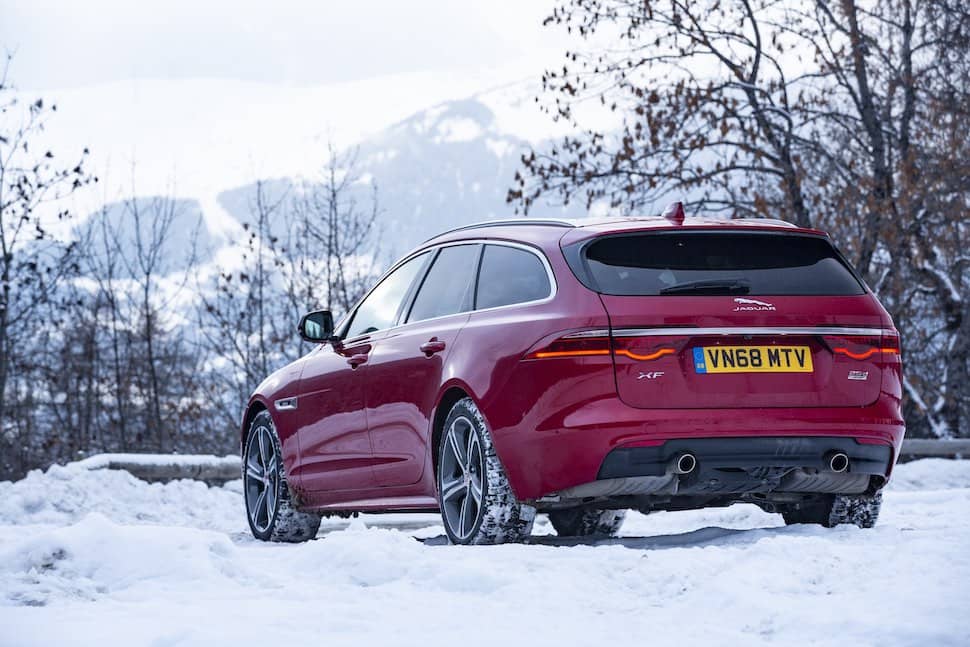
Jaguar has been battling against a tide of bad luck in recent times. Collapsing demand for diesel cars, combined with slumping sales of its saloon models, has meant that it has been having a trickier time of things than it really deserves. Particularly when you consider it still makes very good cars – and, fingers crossed, the new XF Sportbrake that we’re testing here is one of them. Yes, it’s a diesel. But before you scramble for the hills, remember that oil-burners still have their place on our roads – particularly in premium estate cars like this one that are designed to regularly travel long miles and/or carry more load than their saloon equivalents.

What’s new about the Jaguar XF Sportbrake?

Sportbrake is the Jaguar marketing department’s way of avoiding the common old term  ‘estate’. So it’s why you’ll find a large, sloping rear design being fronted by the look you’ll see on the regular XF saloon. The obvious benefits are improved boot space and a better degree of practicality overall. Inside, it gets the latest incarnation of Jaguar’s infotainment system and here, in R-Sport trim, a variety of design touches to make it look more dynamic out on the road.
You may also like:

How does it look?

Though the XF’s general design has been with us for some time, that doesn’t stop the Sportbrake from being striking to look at. Our R-Sport model, with big alloy wheels and restyled bumpers, is a certified looker (in our eyes at least), made even better by its estate layout which somehow adds to its overall sleekness. It’s quite spec-dependent, of course. Small wheels don’t do the Sportbrake any favours, while certain colours – such as the excellent Caesium Blue – play to the car’s strengths far more than conventional shades such as grey and white.

What’s the spec like?

In R-Sport specification, the XF Sportbrake gets a comprehensive list of standard equipment. Features such as automatic windscreen wipers, two-zone climate control and Bluetooth connectivity are all options we’d expect to see included at this price point, while the R-Sport’s extras of rear self-levelling air suspension, 18-inch alloy wheels and a full sports bodykit only help to elevate the overall feel of the car. ‘Our’ test car also came fitted with a variety of options, including a cold climate pack (£760) that includes a heated front windscreen, heated steering wheel and heated front and rear seats, as well as 10-way electrically-adjustable front seats (£300). Also added was Jaguar’s Incontrol infotainment system (£1,050). It’s a good setup, but doesn’t look quite as sharp as some rival offerings. Continued on next page: Interior, driving experience and our verdict

Audi TT RS returns with refreshed styling

0
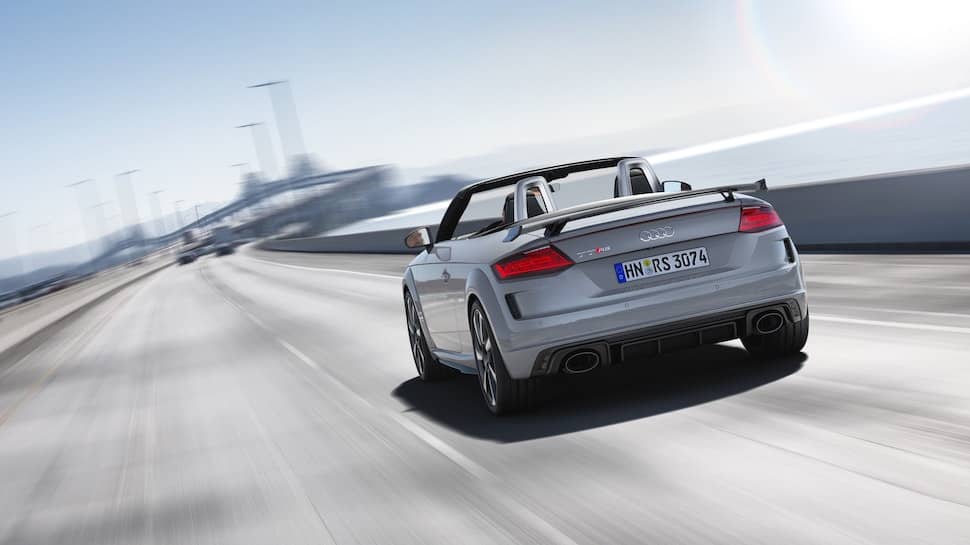
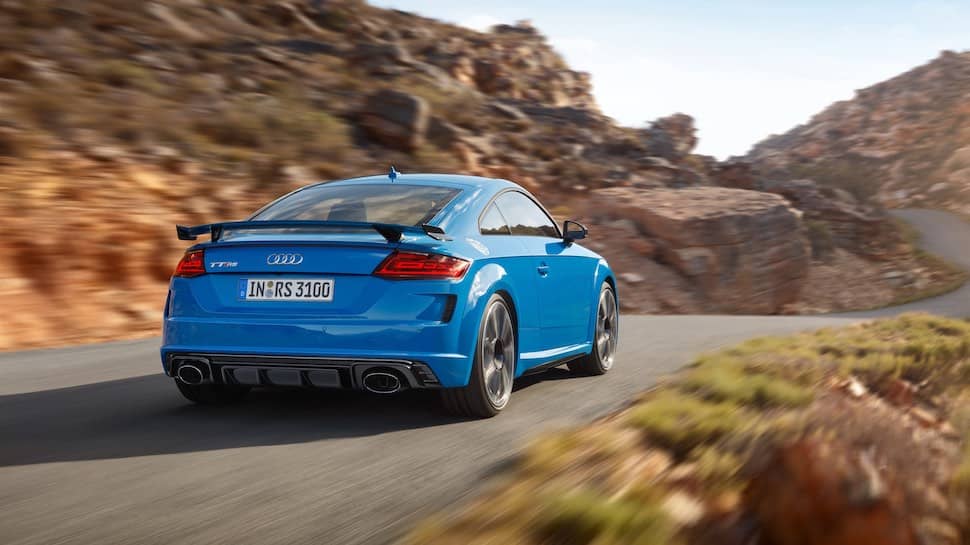
The Audi TT RS has returned to the UK market with refreshed versions of its coupé and roadster models. Buyers looking for the TT RS models on the Audi UK website will have found no trace of them for many weeks, along with a whole host of other Audi models caught up in WLTP emissions compliance delays. The 2019 edition represents a light facelift halfway through the compact sports car’s expected life cycle, with the update bringing minor tweaks to both exterior and interior styling. The front air intakes are now larger, while the design of the rear wing has been altered as well. The revised wing sits above a newly-designed rear diffuser, which lies in between the traditional RS oval-shaped tailpipes. TT RS buyers can also choose from a few new exterior colours, including Kyalami green, Pulse orange and Turbo blue.

No mechanical upgrades to report

Power output remains unchanged with the facelift. The same 2.5-litre five-cylinder petrol engine provides 400hp of drive to all four wheels via a seven-speed dual-clutch automatic gearbox. Performance figures are, unsurprisingly, unaffected as a result; the coupé will hit 60mph in a claimed 3.5 seconds, slightly quicker than the roadster’s claimed time of 3.7 seconds. Both versions max out at an electronically-limited top speed of 155mph, though this can be raised to 174mph via an optional performance package. Stepping inside, the TT RS retains Audi’s Virtual Cockpit digital display system, which has been updated to include the brand’s latest voice control technology, as well as additional connectivity options. Additional trim pieces have been added to the cabin too, breathing new life into the interior. UK prices for the updated TT RS coupé and roadster have yet to be announced, though we’d expect them to be slightly higher than the £55,000 base price asked for the pre-facelifted car.

Car finance report 2018: record debt for new and used cars

Despite private new car sales falling more than 6% in 2018, it was yet another record-breaking year for car finance borrowing for both new and used cars.

The December and full-year data was published today by the Finance and Leasing Association (FLA), the lobby group representing all the major car finance lenders in the UK – including all the car manufacturer-owned finance companies.

As reported last month by the Society of Motor Manufacturers and Traders (SMMT), private new cars for 2018 were down by more than 6% on the previous year. Yet the FLA finance numbers claim that the number of private new car finance deals was only down by 3%, meaning that ever-more car buyers are using dealer-sourced finance for their new cars.

Results for December 2018 were in line with expectations. The number of new car finance deals was down 4%, matching the private new car sales results published by the SMMT. Total money lent by car finance companies was the same as 12 months ago, pushing the average amount borrowed to a new record of more than £21,000.

Used cars were also as expected, with the number of deals up by 5% and the amount borrowed up by 9%, averaging just under £12,500 of debt per car.

Sales vs finance data, full-year 2018

Record lending despite fewer new car buyers

The total amount financed on new cars was actually up 3% to £19.4 billion – about £600 million more than 2017 – despite there being 30,000 fewer car loans.

Just under 960,000 private new car buyers took out some form of car finance in 2018, usually a personal contract purchase (PCP), with a record total of almost £19.4 billion borrowed. This works out to just under £20,200 per car, which is more than 6% more than the previous year’s record average borrowing of £18,900 per car.

Car finance borrowing is continuing to accelerate at a much faster rate than average weekly earnings or inflation. Based on the above numbers and the Office for National Statistics data on average weekly earnings, average car finance debt is now up to the equivalent of 39 weeks of earnings – that’s up from 29 weeks at the start of the decade.

Given that we know salaries are not increasing anywhere near as much as borrowing, and that PCP payments are going up due to lower used car residuals and slightly higher interest rates, we have to assume that buyers are taking increasingly longer terms (eg – a four-year PCP instead of a three-year PCP), which will be hurting new car sales significantly.

Used car borrowing continues to accelerate

It’s an even more record-breaking story for used car finance, with more buyers borrowing more money on used cars from dealerships.

Used car sales results for 2018 have not yet been published, but are expected to be slightly down on 2017 levels. For used car finance lenders, however, it’s all sunshine and rainbows.

The number of used cars financed by FLA members was up 7% to 1.45 million cars, with the total amount of debt up by 13% to more than £17.5 billion. This makes the average amount borrowed just over £12,000.

No Brexit fears apparent for either buyers or lenders

The monthly data for new and used car borrowing appears to show no signs of slowing down, despite the car industry repeatedly claiming that Brexit uncertainty is keeping buyers away from showrooms.

There is also no sign of any reticence of finance companies to lend money to consumers, with yet another year of record lending for both new and used cars.

The Car Expert has been tracking the FLA and SMMT data every month back to the start of 2009, so we have a good picture of how the relationship between car sales and car finance has developed over the last decade.

The amount of money being lent every month in 2018 followed a fairly consistent increase throughout the year. This, in turn, followed similarly consistent monthly growth going all the way back to the start of the decade, with no appreciable downturns at any point.

What happens after Brexit remains to be seen, of course, but the data suggests that customer demand is unlikely to suddenly collapse.

Volkswagen Passat updated with new tech and engines

0
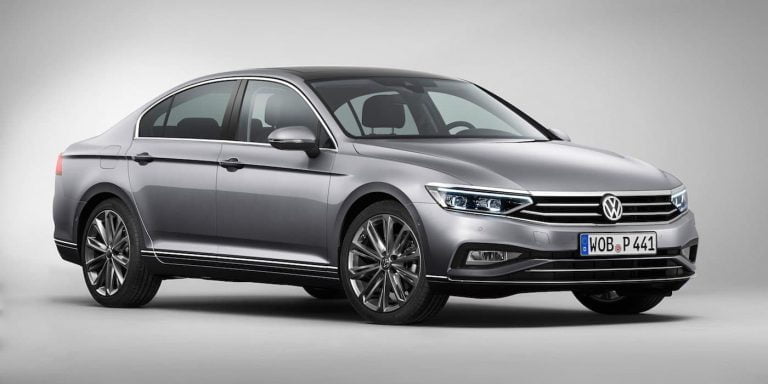
Volkswagen has revealed a major update to its Passat range, which includes a host of new safety equipment and an updated engine range. The new Passat takes a similar approach to the Golf, with the company describing the new vehicle as a ‘Mk8.5’ model rather than a totally new car. As such, it’s virtually identical on the outside – with just a few tweaks to the bumpers and new alloy wheel designs. LED lights are also now standard across the range. Under the bonnet, the most significant change is the reintroduction of the Passat GTE plug-in hybrid model. Removed from sale last year amid the changing WLTP emissions regulations, the new model features a larger battery pack for a WLTP-certified electric-only range of 35 miles. Total power output remains the same at 218hp. Elsewhere in the engine line-up, four diesels are on offer. A 1.6-litre, 120hp powertrain starts the range, followed by a 190hp 2.0-litre option and a range-topping 240hp bi-turbo unit — while a new 2.0-litre diesel engine appears with cylinder deactivation technology for increased efficiency. There are also three petrol engines on offer – a 1.5-litre unit producing 150hp and a 2.0-litre unit with either 190hp or 270hp on offer above it. Volkswagen Passat interior, February 2019 The Passat will continue to be offered as a saloon or estate, with the latter also available in high-riding Alltrack form. Headline technology news for the Passat is the introduction of Volkswagen Travel Assist – essentially the brand’s first semi-autonomous system capable of operating at higher speeds. This tech is able to take care of throttle, brakes and steering at speeds of up to 130mph – a big improvement on the previous Traffic Jam Assist’s 25mph maximum and even the 80mph maximum of rival Volvo’s Pilot Assist. The interior has also received a technology boost – with the brand’s Virtual Cockpit tech making an appearance for the first time on the Passat, having recently been made available across a number of VW Group model. Always-online functionality’s been introduced for the top-end infotainment system, as well as wireless Apple CarPlay and Android Auto functionality. The new Volkswagen Passat will make its first appearance in the metal at the Geneva motor show next month, ahead of order books opening in May. Pricing hasn’t yet been announced, but expect a modest rise over the current car’s £23,495 starting price.

New car buyers defy Brexit gloom in January

Private new car sales were up by 3% in January, confounding expert predictions that buyers were staying away from showrooms due to uncertainty over Brexit. More predictably, however, fleet registrations were down by just over 3%, meaning that the overall market ended up 1.6% down on the same month last year, according to the latest figures published this week by the Society of Motor Manufacturers and Traders (SMMT). Almost certainly connected to both of the above was another dip in diesel registrations, which are now bought in far greater numbers by fleets than private customers. Diesel dropped below 30% in market share, the lowest it has been since September. However, the other side to that coin is strong growth in alternatively-fuelled vehicles (electric and hybrid cars), which are apparently being bought in better numbers by private customers –  who are prepared to pay more for greener vehicles than fleet buyers. Again, it’s important to remember that the fall in diesel cars is not a UK phenomenon. The EU equivalent of the UK’s SMMT, the European Automobile Manufacturers Association (ACEA) today reported that diesel sales fell across Europe by 23% for the last quarter of 2018. January 2019 new car registrations

Growth in electric and hybrid cars is not as impressive as it looks

The SMMT was very keen to talk up the year-on-year growth in electric and hybrid numbers, with nearly half of this month’s press release devoted to the subject. But it’s worth noting that January 2019’s market share of 6.8% was still lower than the average for all of 2018, at 6.9% – so actual growth is somewhat ambiguous. Real continued growth has been stalled by limited availability of plug-in hybrid models since the new WLTP fuel economy and emissions laws came into force last September. In fact, several of the best-selling plug-in models were pulled from sale due to non-compliance, and will gradually return over the course of the coming year once they meet the new rules.

Good month, bad month

It was a great month for Volvo in January, with registrations up 80% on the same month last year. MG also continued its strong run of growth, up 59%, while Jeep was up 58% and SEAT was up 31%. Once again, it was a miserable month for Audi, down 27% against the same month last year – which equates to more than 3,000 cars. The only good news, I suppose, is that a 27% fall is actually a considerable improvement on Audi results over the last four months, which have been down between 40% and 50% every month since September. It’s also yet another month where Audi’s falls are greater than the overall market. This is partly due to WLTP compliance problems, but also a combination of Audi’s heavy reliance on diesel cars and almost non-existent electric or hybrid options. Ford was down 15%, which also equates to about 3,000 cars, while Nissan was down 12% despite a strong month from its best-selling Qashqai. Porsche was down 42%, Mitsubishi was down 22% and Smart was down by 18%.

Ford Fiesta and Focus top the tables

January 2019 best-selling new cars It’s not really breaking news to report that the Ford Fiesta was the best-selling car in January, but it was a strong month for its bigger brother, the Focus, which jumped from seventh place in December up into second place in January. Good news, too, for the British-built Nissan Qashqai, which has started the year in third place, up from tenth in December. The Mini hatch fell out of the top ten altogether after a strong performance in December, while the Volkswagen Golf edged out the Mercedes-Benz A-Class for fourth place. The bottom end of the top ten saw the Toyota Yaris and Mercedes-Benz C-Class in ninth and tenth places, respectively, with the Vauxhall Astra and Ford Kuga dropping out.

Citroën C5 Aircross review

60-second summary

What is it? The Citroën C5 Aircross is the brand’s new compact SUV model line. Key features Strong style, versatile interior, plenty of standard safety tech. Our view The Citroën C5 is a distinctive new offering in the overcrowded compact SUV market. Its style will attract praise and criticism in equal measure, but there’s no denying its versatile interior, effective if not particularly engaging performance and impressive levels of technology. Similar cars Kia Sportage, Renault Kadjar, Peugeot 3008 Citroen C5 Aircross review - The Car Expert

Full review

Introduction

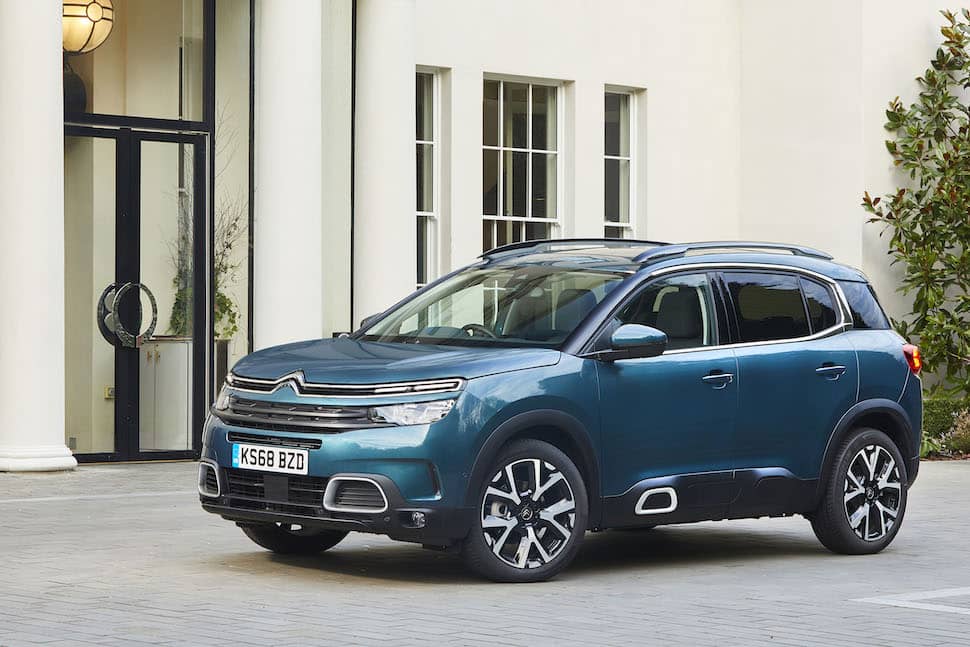
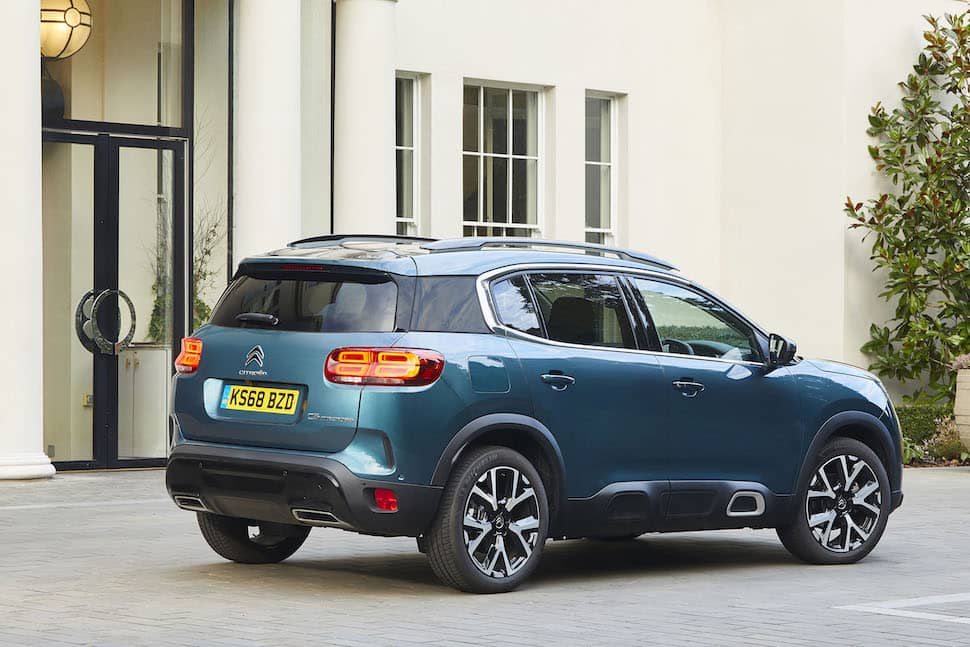
Everyone wants an SUV and it’s a buyer’s market because just about every manufacturer now makes one. So when Citroën came to design its new compact SUV, the French brand says it did the obvious thing – asked its customers what they didn’t like about SUVs. So the all-new Citroën C5 Aircross is said to answer the three major criticisms – the fact that SUVs generally aren’t that great to be in, don’t really have versatile interiors and don’t offer much space in the boot. One thing one can say about Citroën is that the brand brings a little welcome distinction to a market bulging with cars that look very much like one another. First seen as a concept at the Shanghai motor show in 2015 (and on sale in China since 2017) The C5 Aircross completes a complete revamp of the brand’s model range with five major launches in two years – and whether you are a fan or not of signature styling touches such as the horizontal dashboards and ‘airbump’ plastic bulges on the flanks, at least these cars are a bit different. The C5 Aircross adopts some of the family traits already seen on such models as the C4 Cactus family hatch. It has a high, horizontal bonnet with a two-tier headlight signature. The body is low but placed high, standing 23cm from the ground. There is a C-shaped chrome strip bordering the rear screen pillar, and the contrast finish of said pillar gives the illusion of a floating roof. The airbumps are restricted to the sills on this model, but of course one on each side is highlighted in a contrasting colour. In fact, there are seven body colours, three colour packs and the opportunity to specify a two-tone contrasting roof – in all 30 colour combinations are available for those who seek the personal touch.

Buying and owning a Citroën C5 Aircross

C5 Aircross models offer with five drivetrain options, of which notably three are diesel-powered – Citroën clearly believes there’s life in the oil burner yet. New to the car is an eight-speed automatic transmission, claimed to offer 7% fuel economy gains over the previous six-speed unit. Prices start from £23,225 and the prospective buyer has three trims to choose from, dubbed Feel, Flair and Flair+. Citroën has made much in recent times of its desire to offer the most comfortable ride in the market but you have to choose the Flair variants – expected to be the best sellers – to get the brand’s ‘Advanced Comfort System’ seats with 15mm of extra foam. However, the Progressive Hydraulic Cushion suspension, which adds extra valves at each end of the dampers to smooth out jarring potholes and such, is standard across the range. Perhaps more importantly, every C5 Aircross gets a suite of safety features, including autonomous emergency braking, blind spot and lane departure warnings, and a connected box which can alert emergency services if the car is in an accident. The C5 Aircross has not been crash-tested by Euro NCAP yet, but Citroën will be hoping for a five-star rating, having been stuck on four stars with the current C3 hatch and C4 Cactus models. It’s easy to see why the Flair is expected to take most sales. The £2,100 higher bill produces a host of extra equipment, including the ConnectedCAM Citroën that is effectively a built-in dashcam. While every car gets Apple CarPlay, Android Auto and MirrorLink smartphone compatibility, you need a Flair for Citroën’s own connected navigation, while front parking sensors and a rear camera, electric heated folding mirrors also stand out on the specification. As for the Flair+, another £2,400 pays for several luxury items, such as an electric tailgate, auto main-beam headlamps, wireless smartphone charging and keyless entry, plus an opening panoramic glass sunroof. You also get active cruise control on the top model, which in versions with the auto transmission includes a stop and go function for an easier life in congested traffic. And the system includes a level 2 autonomous system called Highway Driver Assist, which keeps the car in the middle of its motorway lane. Continued on next page: Interior, drive experience and our verdict

Six SUV pioneers that blazed the trail for today

Sports Utility Vehicles, or SUVs. Love them or hate them, they’ve been one of the fastest-growing new car segments for years now. Covering everything from tiny supermini-based crossovers to the largest luxury off-roaders, this segment has gone from being small-time fare to one of the most popular in the market. In the meantime, they’ve displaced hatchbacks, saloons and estates as the stereotypical family car. But how exactly did the modern SUV come to be? We’ve leafed through the history books and found six vehicles that – at least in Europe – helped push the crossover into the mainstream.

Matra Rancho

The Matra Rancho may look like a prototype for the original Land Rover Discovery, but it pre-dated the first Disco by over a decade, and it wasn’t nearly as hardcore.
Matra Rancho | The Car Expert
Matra Rancho (PA)
In fact, the Rancho’s make-up reads like the specification of pretty much any modern crossover. Rugged styling, a car-derived platform, greater practicality than its hatchback sibling and an unusual name? All present and correct. However, the Rancho came out in 1977 – years before SUVs became viable as family transport. It was pretty popular on the continent, but their nature as a work vehicle and the unlovable nature of its quirky styling means not too many survive.

The ten safest new cars for 2019

The UK’s independent safety research body, Thatcham Research, has declared the Mercedes-Benz A-Class to be the safest new car for 2019.

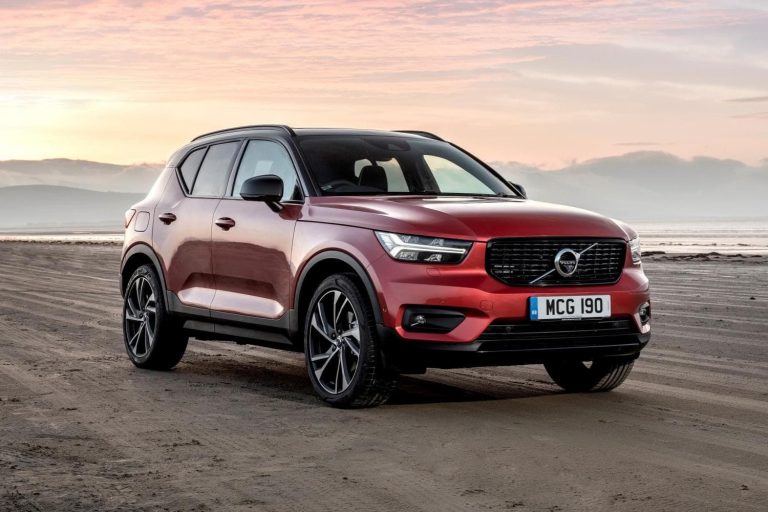
The shortlist of the ten safest new cars for 2019 was announced last month, with the A-Class ranking in top spot ahead of the Audi Q3 and Volvo XC40.

Thatcham has sponsored the award for several years, and its judging panel determined the ten finalists based on a number of criteria. Beyond the obvious five-star safety rating from Euro NCAP, the judges also considered:

  • Euro NCAP crash test scores for both adult and child protection
  • Performance in stringent new autonomous emergency braking (AEB) tests aimed at protecting cyclists and pedestrians
  • Availability of automated driver assistance systems that help prevent collisions
  • sales volumes, to determine the real difference a car is likely to make to real-world road safety

Matthew Avery is director of research at Thatcham Research. He said: “It’s clear that occupants of the latest cars are at a lower risk than ever. But not resting on our laurels, we raised the bar in safety testing for 2018.

“This means the ten cars in this list are some of the safest ever made, anywhere in the world.”

We look at the ten cars below, comparing our notes with Thatcham’s. We kick off with the winning Mercedes and the runners-up, then progress in alphabetical order.

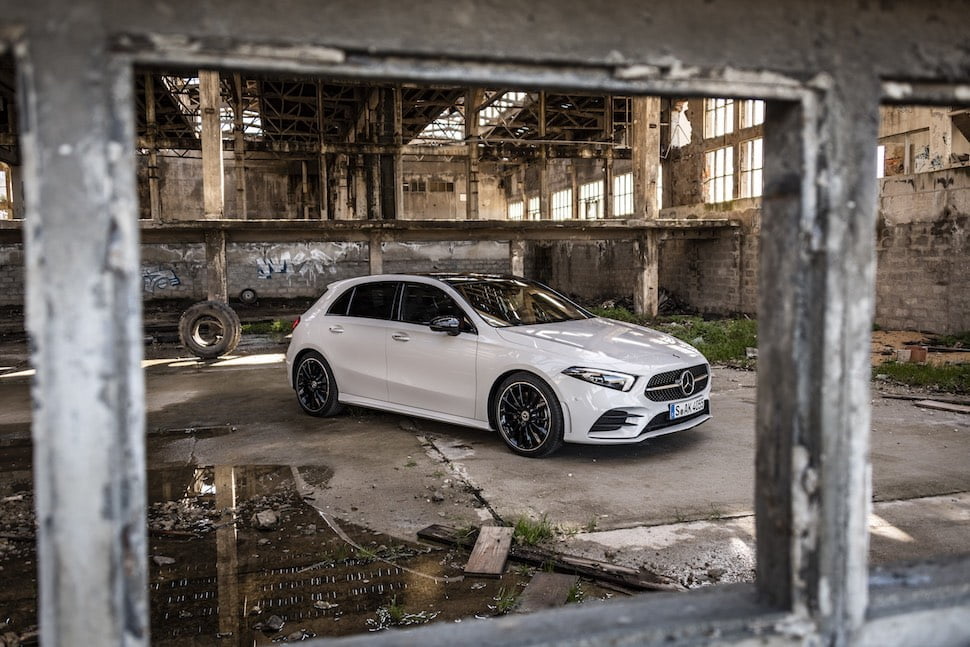
WINNER – Mercedes-Benz A-Class

We said: “The new Mercedes A-Class has set a benchmark for the next generation of premium hatchbacks, and one that may prove tough to crack for impending competitors.

“For the image-conscious and tech-focused buyer, there may not be a better car on sale today.”

Thatcham said: “The Mercedes A-Class was the year’s top performer in the world’s most exacting safety tests. It’s exciting to see one of 2018’s best-selling cars meet that challenge and shows that carmakers can deliver state-of-the-art safety for the mass market.

“It aced the AEB Cyclist test, scoring 100%, and achieved an impressive 97% for the system’s ability to detect pedestrians. This high-performance safety technology is available – at no extra cost – on a car with UK sales in the tens of thousands and rising.”

2018 Mercedes-Benz A-Class review - front | The Car Expert

Nissan Micra test drive

Nissan is at pains to point out that it has listened to the feedback from customers on the latest Micra. Although the car has only been around for two years, customers criticised the engines, calling them underpowered, and bemoaned the lack of an automatic gearbox. So, this early-life upgrade addresses those complaints and gives the popular supermini a new edge – essential in such a crowded and talented marketplace, where best-sellers such as the Ford Fiesta and Volkswagen Polo dominate.

What’s new about this Nissan Micra?

This isn’t a facelift, and so 2019 Micras don’t look any different to their predecessors on the outside. The changes come under the bonnet, where Nissan’s fitted a pair of new 1.0-litre turbocharged petrol engines to replace the ageing – and not particularly good – 0.9-litre unit. They offer 100hp and 118hp, and the former can be mated to an automatic gearbox, which is a first on this generation of Micra. Nissan’s also introduced a new ‘sporty’ trim level. Called N-Sport, it’s available exclusively with the higher-powered engine and aims to take the fight to the Ford Fiesta ST-Line and Volkswagen Polo R-Line. Finally, there’s a new NissanConnect infotainment system – a vital upgrade.

How does it look?

There’s little news on this front – the only exterior changes for the 2019 Micra are some new trim combinations and the addition of LED front fog lights on certain grades. 2019 Nissan Micra N-Sport review - rear | The Car Expert N-Sport models lower the ride and add niceties such as 17-inch alloy wheels, a chrome exhaust tip and N-Sport badging – but the makeover is far milder than that of a Fiesta ST-Line. Perhaps that’s because the N-Sport doesn’t have a true halo hot hatch’s looks from which to draw inspiration, as Ford and VW do with the Fiesta ST and Polo GTI. Overall though, the Micra remains a fairly handsome and sharply styled supermini – and it remains one of the most personalisable on the market, with customers able to choose trim finishes for various exterior elements including the wheels, mirror caps and side mouldings.

What’s the spec like?

The new N-Sport trim is based on the mid-spec Acenta, so rather than dazzling with lots of equipment it offers a sporty look and mid-range specification. Still, sports seats, keyless entry, fog lights, carbon-fibre finishes for the door mirrors and alloy wheels plus rear privacy glass add to an already generous roster of climate control, cruise control, all-round electric windows and the aforementioned NissanConnect infotainment system. Automatic emergency braking and lane-departure warning are standard across the range, as are automatic headlights. Continued on next page: Interior, drive experience and our verdict

BMW 7 Series plug-in hybrid joins the range

0
BMW has added two new plug-in hybrid models to its recently-updated 7 Series luxury saloon – the standard-length 745e and long-wheelbase 745Le xDrive. Available in standard and long-wheelbase lengths, the 745e pairs a six-cylinder petrol engine with a battery and electric motor to provide both four-wheel drive and increased urban efficiency.
You may also like:

The 3.0-litre petrol engine produces 290hp on its own, while the electric motor can push out 115hp. Together the two give a total system output of 400hp and maximum torque of 600Nm, delivering considerable performance for a luxury limo. The 0-60mph dash takes just five seconds for the standard length model, while the long-wheelbase models are actually quicker because they employ all-wheel drive. This shaves a tenth of acceleration times, hitting 60mph from rest in just 4.9 seconds. Both cars use the same 12kWh battery pack, which gives the short-wheelbase model a maximum electric range of 36 miles. Long-wheelbase models can manage 34 miles. Both will do up to 87mph in electric mode, too. BMW 7 Series 745e interior BMW claims impressive fuel economy and emissions ratings for the hybrid 7 Series, though it’s worth noting these were achieved under less taxing NEDC tests rather than the more accurate WLTP. Still, a maximum 141mpg and 48g/km of CO2 are impressive results for such a large machine. Interior fittings are just as luxurious as on any other models in the updated BMW 7 Series range, with the only visible difference for passengers being a slightly smaller load bay and bespoke hybrid instrument panel. The new models are set to go on sale in the spring. BMW UK has announced that the short-wheelbase 745e will be priced from £76,815 on-road, while long-wheelbase 745Le xDrive models start at £83,560.

Peugeot 3008 long-term test: Report #3

If I was specifying a brand-new car, the first option box I’d tick would be for LED headlights. Compared with old-fashioned halogens, they’re so much brighter, clearer and safer – not to mention so ubiquitous on new models that a modern vehicle without them looks downright odd.

That’s certainly the case with the Peugeot 3008, and one of the reasons I’m so glad our GT-Line model has them fitted as part of its standard equipment. I live near a Peugeot dealer, and most mornings I’ll catch sight of a more basic 3008 with the standard halogen headlights. The old-fashioned yellowish beams look a total anachronism compared with the Peugeot’s sharp-edged design.


You may also like:

The lights on our car aren’t anything especially clever – they do without the selective dimming or cornering functions of some more sophisticated rivals, and I’ve turned off the automatic high beam assist out of principle. But they give off loads of light and make driving at night a pleasure. They’re also far from the only LEDs on the car…

LED daytime running lights are par for the course, but I do think the 3008’s eyebrow-like examples are particularly smart. They double as the indicators, too, with a really cool scrolling action of the kind you’d usually only see on premium models.

Round to the rear, the good news tails off a little – the taillights are halogen, but I still like the way they look with their three-bar design. Best of all is the interior, which features lashings of utterly pointless but desperately cool mood lighting in the doors and centre console. Even the interior dome and map lights are LED.

Peugeot 3008 LED headlights | The Car Expert
(PA)

The overall effect is one that mates really well with the i-Cockpit display, fitted as standard to all 3008s. I’ve been genuinely impressed with it during my time with the 3008, arguably moreso than I am with the displays fitted to more expensive models.

It’s really clear, with a big digital speedometer regardless of the ‘mode’ you put the gauges in. I tend to favour ‘Dials’ which mimics a traditional speedometer and rev counter, but on late-night journeys I’ve slipped it into ‘Minimal’ and turned the brightness down, helping me concentrate more on the road ahead.

The graphics to switch between the different modes are slick and swoopy – a bit too swoopy, if I’m honest – but show that Peugeot’s far from lagging behind when it comes to this sort of technology.

Peugeot 3008 tail lights | The Car Expert
(PA)

So are there any downsides to life with our 3008? Well, winter’s freezing cold depths have brought up a few complaints. I know, I know – I’m a millennial snowflake – but I feel a £30,000 car should have heated seats thrown in as standard, and their omission from this GT-Line spec is one that riles me every morning.

I’ve also been known to swear at the automatic wipers, which are especially dim-witted – and don’t have a warning for low washer fluid, which left me high and dry with a salt-covered windscreen on one particularly grim trip to work.

But generally, I’ve been enjoying life with ‘our’ 3008, and I reckon the sheer number of them I see on the roads (it’s the best-selling SUV in Europe) proves that others are, too.

Key specifications

Model: Peugeot 3008 GT-Line 1.5 BlueHDi 130
Price (on-road): £30,454
Engine: 1.5-litre four-cylinder diesel
Gearbox: Six-speed manual
Power: 130 hp
Torque: 300 Nm
Top speed: 119 mph
0-60mph: 10.6 seconds
Fuel economy (combined): 67.4 mpg
CO2 emissions: 109 g/km
Mileage: 6,313

Jaguar XF updated with efficiency improvements and more tech

0
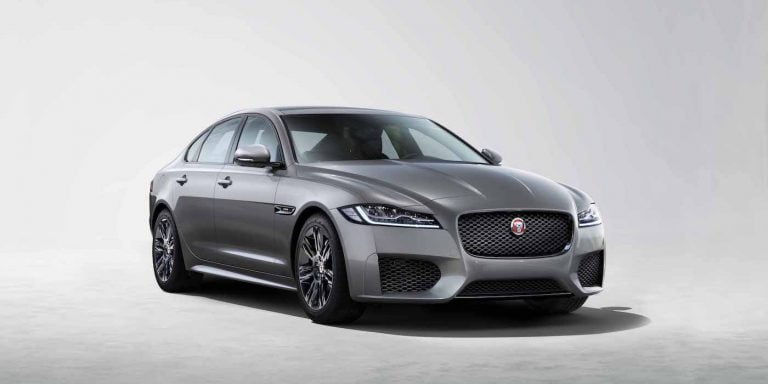
Jaguar has given its slow-selling XF range a range of upgrades, aimed at reducing emissions and updating its technology offering, as well as introducing a new Chequered Flag trim level. Thanks to a number of tweaks, including fitting low-resistance tyres, 2.0-litre diesel variants of the Jaguar XF have now had their CO2 emissions ratings improved by up to 8g/km.
You may also like:

This engine is available in 163hp and 180hp guises, with the latter seeing CO2 levels drop from 134g/km to 126g/km in saloon form when paired with rear-wheel drive and a manual gearbox. A new ‘Smartphone pack’ has been introduced to the equipment list too, bringing both Apple CarPlay and Android Auto as standard to all XF variants. Rounding out this wave of updates is the introduction of a new Chequered Flag edition specification to the XF line-up. Jaguar XF Sportbrake Chequered Flag | The Car Expert

New Jaguar XF Chequered Flag edition

Available in a limited choice of three colours – Yulong White, Santorini Black and Eiger Grey – the new Chequered Flag models are distinguished by a different front bumper, body-coloured side sills, a boot spoiler and 18-inch alloy wheels in a gloss black finish. Badging to identify the new model is located on the door sills inside the car, while the interior also features a full-leather ‘R-Sport’ interior and black and red contrast stitching. As for equipment, a ten-inch touchscreen infotainment system with satellite navigation features as standard alongside a head-up display, keyless entry and Jaguar’s 12-inch Interactive Driver Display in place of a traditional analogue instrument cluster. Pricing for the revised Jaguar XF range starts at £34,950 on-road for saloon versions and £37,390 for the ‘Sportbrake’ estate – with the refreshed range now on sale from your nearest Jaguar dealer. The Jaguar XF is built in Britain

Fiat 500X range grows with new S-Design model

0
Fiat has added a new S-Design trim specification to its 500X, providing some exterior changes and a unique interior theme. The Fiat 500X S-Design is based on the existing City Cross specification, with a few upgrades inside and out.
You may also like:

Externally there are matte black highlights on the roof bars, boot lid, door handles and front body cladding. The S-Design also gets black 17-inch alloy wheels and a bronze ‘X’ logo on the side of the car to complete the look. Step inside and you’ll find a textured matte black dashboard fascia, combined with a copper-coloured ‘500’ badge to continue the S-Design theme. It also features leather trim inserts around the interior. Fiat 500X S-Design - side | The Car Expert Standard equipment on the 500X S-Design includes LED headlights and daytime running lights, rear parking sensors, a part-leather steering wheel, dual-zone climate control, cruise control and an electric parking brake. A 3.5-inch colour display also features in the instrument cluster, while a seven-inch colour screen running Fiat’s Uconnect infotainment system takes centre stage on the dash. Happily, support for Apple CarPlay and Android Auto is included as standard. Two petrol engines are available on the 500X S-Design. First is a 1.0-litre, 120bhp option that sends drive through a six-speed manual gearbox, while a 1.3-litre, 150hp unit paired with a six-speed dual-clutch automatic transmission tops the range. The Fiat 500X S-Design is available to order from Fiat dealers now, with prices starting from £20,495 on-road.

Nissan Micra gets new engines and sportier trim

0
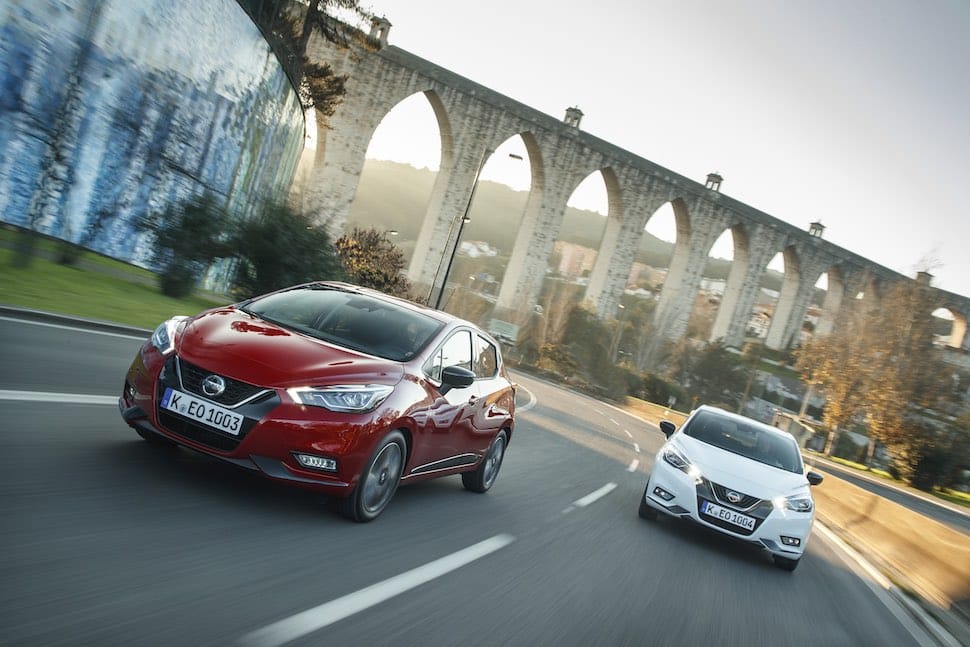
The Nissan Micra supermini range has been given a freshening up, with two new petrol engines and a sportier N-Sport trim level joining the family. Both new petrol power units are turbocharged with a 1.0-litre capacity. First up is a 100hp variant, replacing the previous mid-range 0.9-litre, 90hp option. It drives the front wheels via a five-speed manual gearbox or a continuable variable automatic transmission (CVT).
You may also like:

A 0-60mph time of 10.9 seconds is quoted for this engine, while Nissan also claims a combined fuel consumption of 50.4mpg and CO2 emissions of 103-105g/km, depending on the car’s specification. The second new engine is a 115hp unit, which is apparently a completely different engine despite having an identical capacity to the 100hp version. It is only offered with a six-speed manual gearbox. This engine can pull the Micra from rest to 60mph in 9.9 seconds while returning a claimed 47.9mpg and emitting 114g/km of CO2. Nissan Micra N-Sport 1.0-litre engine | The Car Expert

New Micra N-Sport trim

N-Sport is a new offering in trim grades on the Micra range  — aiming to bring it into line with the likes of the Ford Fiesta ST-Line, Volkswagen Polo R-Line and SEAT Ibiza FR. The Micra N-Sport models don’t get any mechanical upgrades, so performance is exactly the same as regular models. A racier look is brought to the N-Sport specification via a faux carbon fibre finish on the alloy wheels and mirror caps, gloss black highlights on the bumpers, rear privacy glass and N-Sport badging. Inside, the seats are upholstered in leather and Alcantara, while you’ll also spot ‘sports-design’ floor mats, white air vents and black headlining. Technology highlights include a rear-view camera with parking sensors, plus a keyless start system. The revised Nissan Micra range is available from Nissan dealers now, with prices starting at £12,875 on-road. Nissan Micra N-Sport on-road | The Car Expert

Infiniti Q50 Hybrid review

60-second summary

What is it? The Infiniti Q50 is a mid-size executive saloon that competes in one of the fiercest categories in the new car market. We’re testing the top-spec, all-wheel-drive hybrid version. Key features
  • All-wheel drive
  • Petrol-electric hybrid power
Our view The Infiniti Q50S Hybrid AWD has cornered a (small) niche in the compact executive segment, being the only car to offer all-wheel drive and hybrid power in the same car. In isolation, the Q50 is a very good car that you’d be quite happy to live with. It’s quiet, comfortable and has plenty of performance. The hybrid system means that you can trundle around town in near-silence. There’s plenty of standard equipment in the top-spec model, albeit with some noticeable omissions. The problem is that there are several alternatives that do most of those things better, although none of them can tick every box. So unless you really need an executive hybrid saloon with all-wheel drive, you may be better off looking elsewhere. Similar cars Audi A4, BMW 3 Series, Lexus IS, Mercedes-Benz C-Class Infiniti Q50S boot badge | The Car Expert

Full review

Introduction

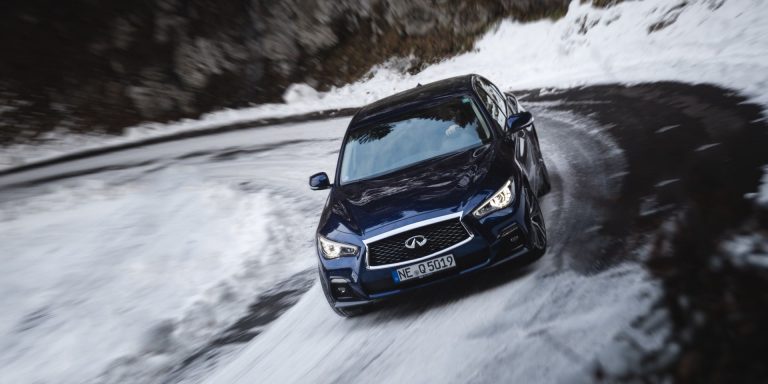
The Infiniti Q50 is a niche player in a hugely competitive market segment, going up against cars like the BMW 3 Series, Audi A4, Mercedes-Benz C-Class and many more. It’s one of the toughest gigs in the new car market, which many manufacturers have tried and failed to conquer. The Q50 is no spring chicken, either. It’s been around since 2013, although has been updated a few times over the last six years. But it remains one of the oldest cars in this segment, making the Q50’s task even harder when all its big-name rivals are newer. Infiniti’s approach has been to concentrate on niches within the executive segment, which is probably a sound strategy. There is only one body style – a saloon – rather than an estate or liftback option. There’s only one engine choice as well, a hybrid unit combining a 3.5-litre petrol V6 with an electric motor, and a small number of trim levels that are all reasonably well-equipped. And then there is the one niche within a niche that Infiniti seems to have to itself. It’s currently the only compact executive saloon that can be had with all-wheel drive and a hybrid powertrain. Others give you AWD (Audi A4 quattro, BMW 3 Series xDrive, etc.) or a hybrid option (Lexus IS 300h), but none do both. This window of uniqueness will close fairly shortly as the new Volvo S60 T8 arrives later this year, which will feature all-wheel drive and a plug-in hybrid powertrain. However, that will feature a different type of hybrid system (plug-in vs. self-charging) and a different kind of all-wheel system (the Infiniti can send petrol power to all four wheels, whereas the Volvo sends petrol power to the front wheels and electric power to the rear wheels). We spent some time driving the top-spec Infiniti Q50S Sport Tech Hybrid AWD (to give it its full and formal title) in the snowy Swiss Alps, which was an ideal environment to test the all-wheel-drive system’s effectiveness – not to mention the seat heating! So how does the Infiniti Q50 fare? In many ways, it’s surprisingly good, while in others it predictably falls a bit short.

Buying and owning an Infiniti Q50S Hybrid AWD

The Infiniti Q50 may be the most popular car in the company’s history (it’s popular in America), but it’s still a rare sighting on British roads. Sensibly, Infiniti has decided to ditch its diesel offering and concentrate on the petrol-electric hybrid powertrain. Trim levels have also been streamlined for 2019, with three specifications of Luxe, Sport and Sport Tech. The latter two versions are also available in all-wheel drive. The hybrid power unit brings together a 3.5-litre petrol V6 with a 50kW electric motor. Together, they produce 364hp of power and 546Nm of torque, which results in effortless performance in any situation. The downside of that big petrol V6, in particular, is that fuel economy and emissions figures are not exactly stunning. The all-wheel-drive model returns a combined fuel economy figure of 26mpg under the latest WLTP standards, and CO2 emissions are high at 190g/km. The two-wheel-drive models are very little better. Combined with fairly steep pricing, it means that the Infiniti Q50 is neither cheap to buy nor run compared to most of its rivals. The Q50 Luxe starts at £43,415 on-road, while the top-spec Q50S Sport Tech Hybrid AWD model hits the road at just over £50K. If you’re buying the car for personal use and not doing enormous mileage, that may not be too much of an issue. However, company car buyers and those covering a lot of miles each year will find very good alternatives that cost less money. The good news is that you are at least getting quite a lot of kit for your money, especially in the top-spec Sport Tech model that we tested. The leather seats are heated and electrically operated, the Bose stereo sounds great and the adaptive headlights steer into corners. Safety-wise, the flagship Sport Tech models get the full dose of driver assistance technology with kit like adaptive cruise control, lane-keep assist and blind-spot detection. It was crash tested by Euro NCAP way back in 2013, scoring five stars, but that rating is not particularly relevant today as the testing has got tougher in the meantime. Continued on next page: Interior, drive experience and our verdict

All-new Renault Clio unveiled ahead of Geneva premiere

0
The all-new Renault Clio has been unveiled ahead of the Geneva motor show, featuring an evolutionary design and a push to take the model more upmarket. The new model inherits most of the visual style of its predecessor, but updates it with a face more in line with the rest of the Renault passenger car range. A larger grille features more prominently, along with C-shaped LED headlights similar to those on the Megane. Rear door handles hidden in the window frame aim to give the car a sleeker appearance, while new tail lights repeat the C-shape graphic used at the front of the car. It may look very same-again, but a raft of changes under the skin aims to make the new Clio more practical, more refined and more luxurious than ever before. Although very slightly shorter than the old model, the new Clio boasts a substantially increased boot capacity — now up to 391 litres from 300 in the old car — courtesy of a repackaged sound system that no longer steals valuable luggage space.

Bold new digital interior

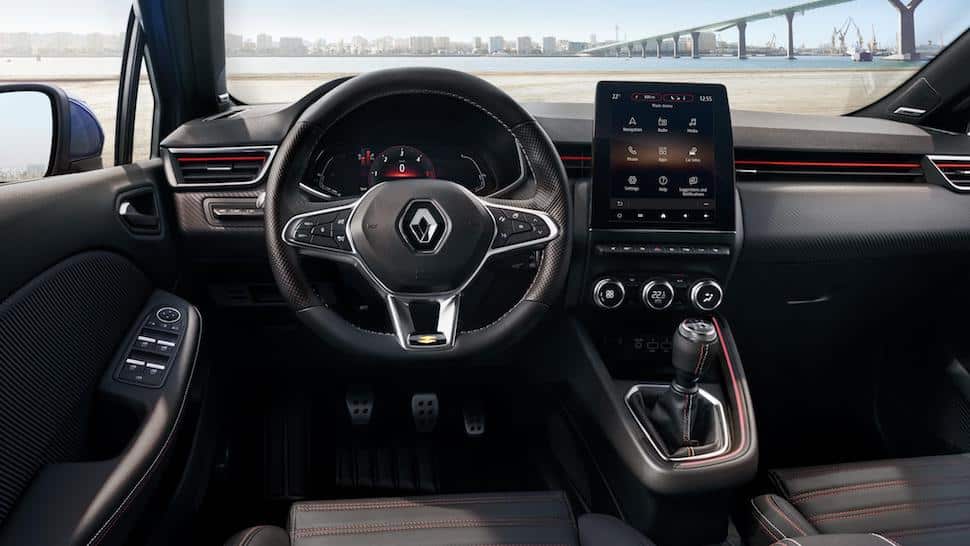
The biggest visible changes, however, are all inside the overhauled cabin, where two new displays are present. The first is a nine-inch touchscreen infotainment screen that plays host to a newly-developed Easy Link system. The second is a TFT unit in front of the driver, which replaces traditional dials and gauges. Ranging from seven to ten inches depending on how the car is specified, this screen is also capable of displaying navigation information. A segmented dashboard design uses better quality materials than the old Clio, and has several personalisation options to give owners more opportunity to express themselves. New seats are designed to improve rear visibility and a give a better sense of space for passengers in the back, while a higher centre console and shorter gear level have been brought into the package. There’s also a new range-topping trim level for the Clio — R.S. Line. Capitalising on the Renault Sport brand, this new grade replaces GT-Line in the range and aims to bring a sportier edge to the Clio — much like the similar Ford ST-Line and BMW M Sport specifications. Full specifications are due to be revealed at a later date, but Renault has said that the new R.S. Line trim will be easy to spot thanks to a honeycomb grille, 17-inch wheels and racier interior features. There’s no word yet on powertrains for the fifth-generation Clio, but expect it to continue to offer a range of small petrol units. Renault has confirmed that a hybrid model will be coming at some point the future, but has not yet provided any further details. Full UK pricing and specifications are likely to follow the new Renault Clio’s public debut at the Geneva motor show in March. 2019 Renault Clio – rear| The Car Expert

Car theft in the UK hits new heights

Car theft within the UK has risen by almost 50% in the last five years, with the blame pointed at modern car keys and falling police numbers. According to data published by the home office, 111,999 vehicles were stolen in the financial year 2017/18 – up from 75,308 in the same period for 2013/14. That equates to a car being stolen every five minutes. The consumer group Which? has reported that the rise in car thefts is down to the increasing fitment of keyless entry/keyless start systems in new cars, which are more susceptible to a growing type of crime called ‘relay theft’. The Which? report is based on data from the General German Automobile Club (ADAC), a roadside recovery organisation, which tested 237 keyless cars and found all but three were hampered by relay attacks.

What are keyless entry systems?

“Keyless” car keys do not require the user to push a button or insert the key into a lock to open or start the car. It’s all done automatically. The car key sends out a continuous short-range signal to alert the car to its presence. When the car “hears” the key’s signal, signifying that the key (and therefore the owner) is nearby, it allows the doors to be unlocked and the ignition to be started. You have to be standing within about half a metre of the car for the system to work, otherwise the car should refuse to unlock or start.

What is relay theft?

Relay theft exploits keyless entry systems by finding and boosting the signal from a keyless car key to trick the car into thinking that the key is nearby. The process usually involves two thieves working together (see below). Thief 1 waits next to your car with an electronic device called a relay box. Thief 2, with another relay box, tries to get reasonably close to your key. If Thief 2 can get within a few metres of the key, it’s usually enough to amplify the signal and send it back to Thief 1 next to the car, who can then unlock the car and start the engine.
Keyless entry relay theft | The Car Expert
(PA Graphics)
This means that even if your keys are safely inside your locked home or office, your car is probably vulnerable to this type of theft. The electronic relay boxes used for this type of car theft are readily and cheaply available, and basic tutorials on how to run this type of theft are also easily found online.

Most top-selling cars are vulnerable

Which? has put together a list of the models sold in the UK that are most at risk. Three of the four best-selling cars in the UK are vulnerable to relay theft. The Ford Fiesta, Volkswagen Golf, Nissan Qashqai and Ford Focus have been branded the most vulnerable, whereas the Vauxhall’s Corsa, the country’s third best-seller, was rated low risk due to it still using a physical key to start the car. The 2018 Land Rover Discovery and 2018 Range Rover were the only two vehicles immune from relay theft, according to the ADAC tests, as their keys employ a ore sophisticated system for determining the distance between the car and the key, so they can’t be duped. However, Which? warns that cars built before 2018 may not have this technology and may still be vulnerable to relay theft.

Thieves emboldened by fewer police on streets

RAC Insurance has argued that cuts to police numbers have contributed to the increase in car theft over the last five years. Police numbers are at their lowest since the 1980s, with forces around the country having lost more than 20,000 personnel since 2006. RAC Insurance director, Mark Godfrey, said: “From 2013 to 2018 we lost 5,975 police officers but looking further back to 2006 the story is even worse with 21,958 fewer officers which represents a 15% reduction. “Every vehicle stolen and not returned safely to its owner represents a cost that is borne by every motorist who lawfully pays their insurance. If the number of thefts could be reduced, then insurance premiums would undoubtedly be lower.” Which? challenged the car manufacturers about their security standards, with only a few providing any comments. BMW and Mercedes claim to be equipping keys for their latest models with motion sensors. These can detect when the key has been put down so the keyless signals will stop being emitted. Of course, that doesn’t help if the key is still in your pocket. Mazda and Peugeot said that customers can go to their nearest dealerships to have their keyless systems deactivated.

Porsche 911 Carrera S test drive

The Porsche 911 is probably the most famous sports car of all time. It’s been with us in one form or another for more than 55 years, and in that time has only been properly reinvented five times. Over the decades, the 911 has developed a reputation for delivering a pure driving experience. Although it’s become more luxurious with each generation, Porsche has remained stubborn that the engine should stay behind the rear wheels, endowing the car with a unique character and spectacular handling. This is the latest 992-generation model, and it doesn’t change the formula so much as evolve it to new heights.

What’s new about the new Porsche 911?

The 992 combines classic Porsche 911 cues and carryovers from the previous (991) model with a few new touches. Despite the same-again looks, the bodyshell is actually all new. All models now receive the same wider rear arches previously reserved for all-wheel-drive models, so the only distinguishing feature between the two launch models – Carrera S and Carrera 4S – is a piece of trim above the tail lights. The rear end also adopts the full-width light bar used in all of Porsche’s latest models. Under the skin, there’s more power from the flat-six turbocharged engine, along with a few chassis alterations (including, for the first time, different size wheels for front and rear) and a new, eight-speed automatic gearbox.

How does it look?

The new 911 looks, unsurprisingly and unmistakeably, like a 911. The bum-heavy silhouette and sloping nose is a product of the rear-engine layout, and it’s definitely classic. For the 992, Porsche has sharpened up some of the edges and given it more of a purposeful look, but certainly hasn’t strayed too far from a winning formula. At the front, things are much the same as before. The lid to the ‘frunk’ (or front boot) now has corners rather than a rounded edge, as part of a squarer front bumper. The rear, meanwhile, has been more substantially redesigned with strong horizontal lines, a new ribbed engine cover, a full-width adjustable spoiler and full-width LED light bar. The interior, meanwhile, follows the same horizontal theme. It’s clean and minimal in execution, and again is an evolution on previous generations rather than an all-new approach.

What’s the spec like?

Don’t expect too many Porsche customers to pay the starting price of £93,110 for the 911 Carrera S. To get the best out of this car, it really needs some options added. The test cars we drove would have cost no less than £115,000 on-road. We’d say that Porsche Dynamic Chassis Control is a must – it costs £2,273 but must be paired with £1,592 rear-wheel steering. The Sport Chrono Pack is also essential, bringing the drive mode selector and a stopwatch for £1,646. Carbon-ceramic brakes add more than £6,000 but could be worth it if you intend driving your 911 particularly hard – and we’d also be tempted by a few comfort options such as the upgraded Bose sound system, parking sensors plus reversing camera, and adaptive cruise control. Porsche does at least cover the bare essentials, but not fitting LED lights as standard feels beyond stingy. Continued on next page: Interior, driving experience and our verdict

Is car insurance cheaper in February?

0
Drivers who take out fully comprehensive car insurance in December are supposedly paying a lot more than those who insure their vehicle in February, according to recent research. The analysis by comparison site Moneysupermarket found that drivers could save an average of 18% on their insurance simply by waiting two months. The research, analysing more than six million quotes between January 2013 and October 2018 showed that the average fully comprehensive policy taken out in February cost £475.60. However, people who insured their car in December paid an average of £560.80 – 18% more. Tom Flack, editor-in-chief, said: “People buying a car often wait until December to secure a bargain as dealers look to shift stock before the end of the year, but it comes with the downside that it’s the most expensive time of year to buy insurance. “Those insuring in December pay, on average, £85 more per year than those who take out insurance in February. The insurance savings are allegedly caused by dealers trying to shift cars before the end of December – therefore pushing up the number of car insurance policies being taken out at the last minute. In comparison, there are fewer people shopping around for insurance come February – one of the quietest car sales months of the year. This, in turn, means insurers tend to offer more competitive premiums in February to entice new customers. The research made no comment on what prices were like in March and September, which are by far the busiest months of the year for car sales.