Find an Expert Rating: 
Home Blog Page 123

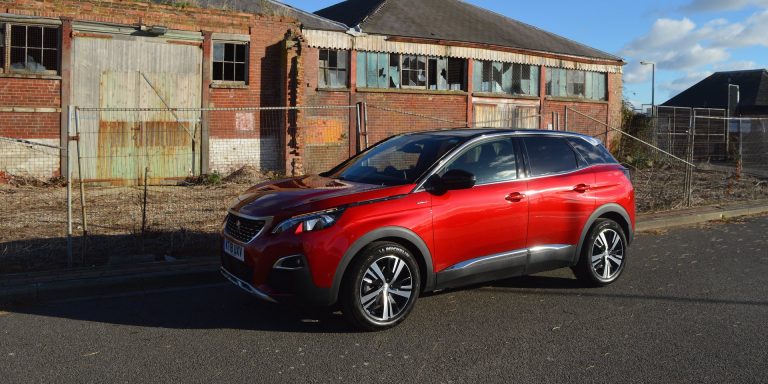
Peugeot 3008 long-term test: Report #2

Can you remember the last Peugeot 3008? Probably not. It was one of the least memorable cars on sale, with its MPV looks, uninspiring cabin and limited engine range.

Fast forward to the second-generation 3008 that we have on our fleet and it’s easy to see just how much Peugeot has moved forwards in the past few years.


You may also like:

Particularly in our car’s GT-Line specification, the 3008 is incredibly stylish both inside and out. Diamond-cut alloys, LED headlights and lovely scrolling indicators (usually seen on more ‘premium’ cars) give the 3008 a terrific amount of road presence. Compared to some rather bleak-looking rivals, Peugeot needs to be applauded for not following the rest of the pack.

Move inside and you’ll find a fantastic modern-looking cabin with few buttons, a variety of high-quality materials and great I-Cockpit digital dials, which are customisable depending what you want on there – satnav, speedo, journey information and the list goes on. It’s certainly on par with the big German brands in terms of tech and quality.

So, where’s the but?

I can’t help but think the design is all rather over-the-top and a case of style over substance. Take, for example, the sloping roofline and high-positioned rear lights. It might look the part, but it results in poor visibility.

This might be acceptable on a Lamborghini, but on your run-of-the-mill diesel crossover, it’s irritating. Thankfully our model features a reversing camera to aid with this, but not all models benefit from this privilege.

Then there’s the interior. My biggest gripe is the small steering wheel. It’s nothing new as Peugeots for the past few years have featured this, but I just can’t get on with the layout. It’s meant to give you that ‘sports car feel’, but my experience is that it just results in needless shuffling when steering.

It also gets in the way of the dials and, in certain positions, blocks the speedo. You can move both the steering wheel and the seat to improve this, but I found that just left me sitting in an uncomfortable position, which is hardly ideal.

My final gripe – at the risk of this sounding like a rant – regards the 3008’s driving assistance systems. It has plenty of them, such as autonomous emergency braking, lane-keep assist, blind-spot monitoring and more. While they can be very useful, some of them are extremely irritating – to the point I switched them off, which surely negates the point of it having it in the first place?

The lane-keep assist bings, bongs and steers if you’re anywhere in the lane that isn’t completely central. I get why it’s there, but it’s aggravating to the point where it interferes so much you have no option but to turn it off.

The blind-spot monitoring system can also be a bit temperamental. One day on the A3M, the blind-spot warning light remained on despite me having long overtaken the car that the system seemed infatuated with.

Having checked numerous times over my shoulder that there was definitely no other car there, I indicated and attempted to change lane – only for the car to block my move. It was very eerie and I’ve never seen a system so determined that it’s right. Unsurprisingly, I turned the system off as soon as it would let me escape from my lane and pull over a few hundred metres up the road.

But, really, I’m doing the Peugeot 3008 a disservice. These issues undoubtedly annoyed me, but it can’t stop you from enjoying the car’s excellent comfort, high-quality interior and the refined 1.6-litre diesel unit fitted to our test car.

Add in plenty of rear legroom, a decent-size boot, and it’s not much of a surprise to understand why you see so many 3008s on the road.

But would we sacrifice a few of Peugeot’s design touches and safety aids for a bit more practicality and user-friendliness? Undoubtedly.

Key specifications

Model: Peugeot 3008 GT-Line 1.5 BlueHDi 130
Price: £30,454 on-road
Engine: 1.5-litre four-cylinder diesel
Power: 130 hp
Torque: 300 Nm
Top speed: 119 mph
0-60mph: 10.6 seconds
Fuel economy: 67.4 mpg (combined cycle)
CO2 emissions: 109 g/km

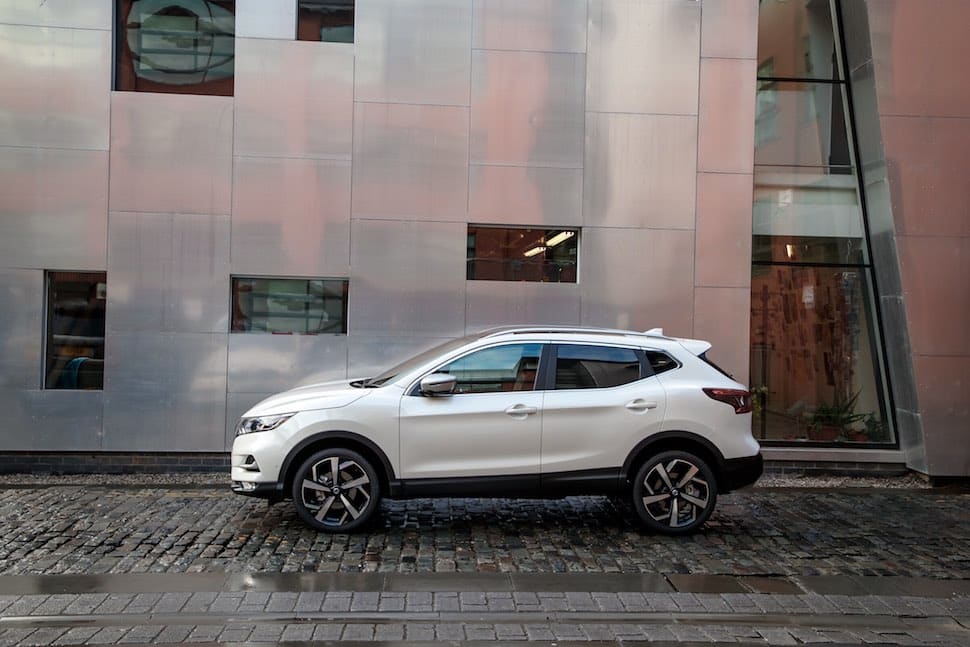
Nissan Qashqai test drive

One of the UK’s favourite cars, the Nissan Qashqai, has seen an all-new line-up of engines freshly introduced. Thanks to the Renault-Nissan-Mitsubishi Alliance’s partnership with Daimler (parent company of Mercedes-Benz), a co-developed 1.3-litre petrol engine now takes centre stage at the core of its range. It’s already seen action in a number of cars across the partnered firms. In the British-built SUV, Nissan promises this will bring a more enjoyable and more efficient driving experience.

What’s new about this Nissan Qashqai?

The new 1.3-litre petrol engine is available in either 140hp and 160hp forms. It aims to bring CO2 emissions for the car down while also improving the driving experience. Also new in terms of powertrain is a seven-speed dual-clutch automatic gearbox — the first to appear on a Nissan outside of the GT-R sports car. It’s not all about what’s happening under the bonnet, though. The interior features a completely reworked NissanConnect infotainment system, bringing a new look, improved usability and even the option to set up navigational routes in the car before starting a journey using a mobile app.

How does it look?

Refreshes usually tend to bring some visual changes to a car, but not here. Having last been facelifted in 2017, Nissan hasn’t felt the need to remix the Qashqai’s aesthetic — and that’s no bad thing. It remains a sharp looking thing thanks to the firm’s angular corporate design, headed up by sharp LED headlights — with that theme continued on the rear units too. It’s not going to stand out, especially as there are so many Qashqais on UK roads, but it continues to be one of the better-looking cars within its segment.

What’s the spec like?

In Tekna form, standard equipment on the Qashqai includes part-leather interior trim, 19-inch alloy wheels, a panoramic glass roof, automatic LED headlights, a heated windscreen, an eight-speaker Bose audio system plus the refreshed NissanConnect infotainment system. It’s priced at a hefty £29,445 — although with the range starting at £19,995, there’s room to sacrifice options. We’ll focus on that revamped infotainment system. With new TomTom navigation software, plus 3D mapping, it’s a vast improvement over the old version — which had long felt outdated and clunky compared with rival software. With over-the-air software updated plus support for both Android Auto and Apple CarPlay, it looks set to keep up with the pack for the foreseeable future too. Continued on next page: Step inside and take a drive

Volkswagen ‘illegally sold thousands of pre-production vehicles’

Volkswagen has found itself in hot water yet again – this time over claims that it illegally sold thousands of unlicensed pre-production vehicles that should have been destroyed. According to the German business newspaper Handelsblatt, the world’s most deceitful car manufacturer now admits selling 6,700 of these cars between 2006 and 2018. It says 4,000 were sold in Germany, with the rest shipped to other parts of Europe and to North America. Another publication, Spiegel, claims internal documents suggest a much higher number, and that almost 17,000 test cars have been sold on the used market over the last 12 years. Pre-production cars are built to showcase and test a new model before it comes to showrooms, but Handelsblatt says none of the cars that Volkswagen sold had been approved by transport authorities and should have been scrapped under German law (or most other countries’ laws, for that matter). Speaking to the newspaper, Klaus Müller, head of German consumer rights group VZBV, said: “The fact that these are VW models built between 2006 and 2018 show that Volkswagen has not understood anything, even three years after the diesel scandal became known.”
You may also like:

The report says Volkswagen isn’t aware of any accidents involving pre-production cars but the firm would be recalling them because it was ‘not certain’ how much they differed from the approved production versions of the cars. It also suggests that German authorities are debating whether to fine the manufacturer ‘a couple of thousand euros’ for each test vehicle sold – a move that could see it penalised to the tune of some €34m (circa £30.5m). Given that hundreds or even thousands of these vehicles ended up in the USA, Volkswagen could find itself facing yet another high-profile class action from understandably disgruntled American customers and enthusiastic law firms keen to pursue the matter.

Aston Martin shows off Valkyrie’s massive Cosworth V12 engine

0
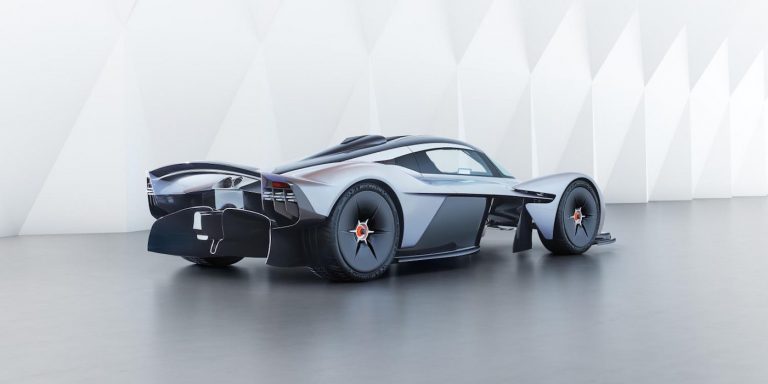
Aston Martin has revealed some key details about the 6.5-litre V12 engine that will power its eagerly anticipated Valkyrie hypercar. The enormous engine has been developed with one of the most respected names in the business – Cosworth, whose expertise extends from family saloons such as the Ford Sierra Cosworth right up to Formula 1. Aston Martin calls the Valkyrie’s unit ‘the ultimate expression of the internal combustion engine’, and if the stats are anything to go by it may be right. The 6.5-litre V12 is naturally aspirated – an increasing rarity in the days of turbochargers – and produces an impressive 1,000hp. That peak power comes in at a huge 10,500rpm, with the engine’s redline set at a screaming 11,100rpm – some of the highest figures ever for a road-going car, especially one that has to comply with challenging emissions regulations. That’s not all, as the Valkyrie will have its power boosted further by a hybrid system that Aston Martin is keeping under wraps for now. The engine is also a fully stressed element of the car’s chassis – remove it and there’s nothing joining the front wheels to the back. Despite this, Aston Martin and Cosworth have kept it to a featherweight 206kg. This is despite the pair choosing not to use sophisticated new metal alloys, the longevity of which are yet unproven. As a result, most of the engine is machined from solid elements, with materials such as titanium making up the connecting rods and F1-spec pistons. As an example of this approach to lightweighting, Aston Martin touts the Valkyrie’s machined crankshaft, which starts life as a solid steel bar. It’s machined, heat-treated, machined, heat-treated again, ground down twice and has a finishing treatment applied to it. At the end, around 80% of the original component has been machined away – over a six-month period – but the result is 50% lighter than the crankshaft used in the old Aston Martin One-77’s V12, itself a Cosworth-developed engine. Andy Palmer, chief executive of Aston Martin, said: “To anyone with a drop of petrol in their blood, a high-revving naturally aspirated V12 is the absolute pinnacle. Nothing sounds better or encapsulates the emotion and excitement of the internal combustion engine more completely. Despite the apparently insurmountable challenges it presented, there was never any question that the Aston Martin Valkyrie would make do with anything less. “From the outset, the team at Cosworth were unflinching in their commitment to achieving benchmarks which pushed the boundaries of the possible. The result is a quite extraordinary engine – one which I doubt will ever be surpassed.” Only 99 road-going Valkyries will be built, with a price expected to be between £2m and £3m. First deliveries are expected in 2019. The Aston Martin Valkyrie will be built in Britain.

Premium diesel and petrol – do they work?

“Do premium diesel and premium petrol fuels work, or are they just a waste of money?” We get this question quite often, and there’s not really a clear-cut answer. Most fuel brands offer ‘premium’ options for both petrol and diesel fuels, which are usually priced about 10% higher than their ‘regular’ fuels. They usually claim to give you more performance (or other improvements) while using less fuel. So how much gain do you get, and are they worth the price premiums over regular petrol or diesel fuels?

What is premium unleaded petrol?

Premium unleaded petrol is usually a more refined form of petroleum than regular unleaded, with a higher octane number. Regular unleaded in the UK has an octane number (RON) of 91, while premium unleaded petrols from most fuel companies usually have an octane number of 95-97. The higher octane number makes the petrol burn more efficiently, thus delivering more power for less fuel burned. It may also have additives such as detergents to keep the inside of the engine clean. The level of improvement you can expect to get from premium unleaded petrol will depend on your engine’s requirements, and your driving style and circumstances. Some engines, usually in higher-performance cars, require premium unleaded at all times and will suffer reduced performance and fuel economy if you use regular unleaded. These engines usually have finer tolerances and don’t respond well to lower-octane fuels. Most mainstream petrol-engine passenger cars are perfectly content running on regular 91-octane unleaded petrol, so it is then a question of whether the extra money for premium unleaded is going to provide you with noticeably better performance and/or fuel economy. Depending on your driving circumstances, many engines will see very little difference at all; if your driving is predominantly city commuting and school runs, you probably won’t notice any significant improvements. If you tend to drive harder or do more open road driving, you may notice more substantial differences. petrol pump in a bowser at a petrol station

What is premium diesel?

Similarly, premium diesel fuel is usually a higher quality of fuel which burns more efficiently. It may also have additives which help keep the engine clean and improve cold-temperature performance. There is usually less difference in either performance or economy between premium diesel and regular diesel than you get with premium unleaded petrol and regular unleaded for a single tankful. However, premium diesel will potentially help your engine run smoother and cleaner, which can improve both performance and economy with regular use. This may be more noticeable on older or higher-mileage engines than in a brand new car which hasn’t yet accumulated any sediments within the engine. Some owners have reported that premium diesel has helped them reduce the frequency of diesel particulate filter warnings and problems, but we’re not aware of any scientific studies that can back this up.

Try it and see

The best way to discover if premium diesel or premium unleaded petrol work for you and your car is to try about three tanks’ worth and see if you notice a significant and repeated difference. If you can’t feel any improvement in performance and you don’t appear to be getting greater mileage from each tank, you’re probably better off sticking with regular petrol or diesel. If you do notice improvements, you need to decide whether the increased cost (which can be up to 10p/litre) is justified.

Premium fuel or a bottle of additives?

Alternatively, you can add a bottle of specialised fuel additives to your tank. There are various kinds depending on whether you’re looking for better performance, better economy or both. I ran a three-month trial of Redex fuel system cleaner earlier this year, but there are many different brands to choose from. The cost of a bottle of fuel additive is roughly similar to using premium fuel instead of regular, so give it a go and see how it affects you and your car. fuel economy - premium petrol or premium diesel - the car expert This article was originally published in August 2012, and was updated and expanded in December 2018.

BMW 3 Series test drive

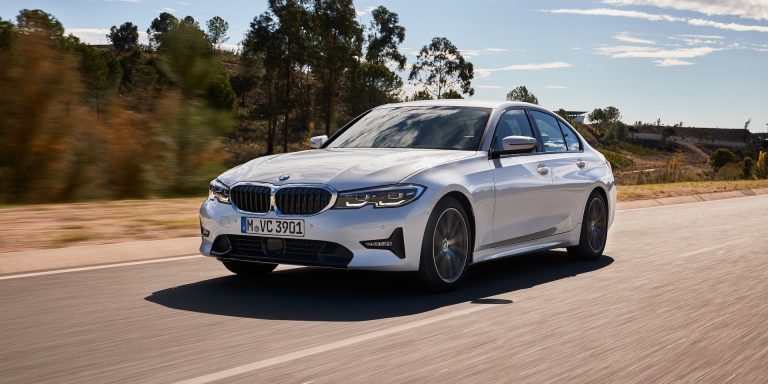
In terms of new car introductions, a replacement for the BMW 3 Series is a pretty big one. The 3 Series is, after all, one of the firm’s biggest sellers, not only in terms of private buyers but fleet users too. Since the 3’s introduction in 1975, BMW has shifted more than 15 million units worldwide, so this latest model arrives on the market with a fair amount of weight on its shoulders. However, thanks to new engines, a redesigned interior and claimed sharper driving dynamics, this 3 Series should be able to live up to its predecessor’s reputation. We headed to Portugal to see if it can.

What’s new about this 3 Series?

BMW has thrown the works at this new 3 Series to ensure it matches up to the likes of the Audi A4 and the dynamic Alfa Romeo Giulia. As such, an upgraded and lighter chassis resides underneath the car, while a wider track and lower centre of gravity combine to help the 3 remain as dynamic as possible. The new 3 Series also features A-pillars filled with foam, along with a windscreen made from acoustic glass to aid the car’s overall refinement levels, making it as quiet and as comfortable as possible to ease longer journeys behind the wheel.

How does it look?

It’s undeniably a 3 Series to look at in some areas – the big kidney grilles remain, as do the slightly flared arches. In many places it appears like a 5 Series that’s been put through a hot wash – the front air intakes bear a striking resemblance to the larger car’s, as do the headlights. Overall, it’s a pretty design and one that is perfectly in proportion. It does appear to be quite colour-dependent, however. The striking blue some of our test cars were finished in gave the car a lot of impact, while white versions tended to blend into the background. You can upgrade the look of your car with a range of M-Performance parts, with intricate alloy wheel designs and more prominent splitters available to give your 3 Series a more dynamic look. In truth, we’d argue that it looks great without any additions, though.

What’s the spec like?

With the fleet market making up a lot of the previous-generation 3 Series’ sales, the new version needs a decent level of standard equipment to make it a more appealing prospect to business users. Fortunately, BMW has delivered in this respect. Base-spec SE cars benefit from 17-inch alloy wheels as standard, along with adaptive LED headlights, heated front seats and a reversing camera, among other options. Our car came with larger 18-inch wheels, as well as an electric glass sunroof and BMW’s LaserLight headlights. That last feature is one we’d thoroughly recommend, as they provide a superb amount of visibility at night. Continued on next page: Step inside and take a drive

Porsche Macan S test drive

What is it?

Remember when a Porsche SUV was considered sacrilege? Those days are long gone, in so small part thanks to a modern market that sees pretty much everyone in on the action. Porsche will always be the first to popularise the Sports Utility Vehicle though, with the Cayenne in 2002, and it’s almost hard to believe its smaller sibling in the Macan has already been around four years. In fact, the German firm has decided now is the time to give the latter a facelift — and that’s what we’re looking at here.

What’s new?

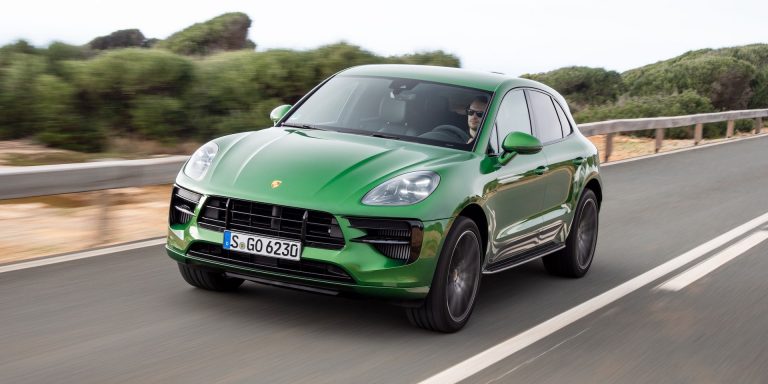
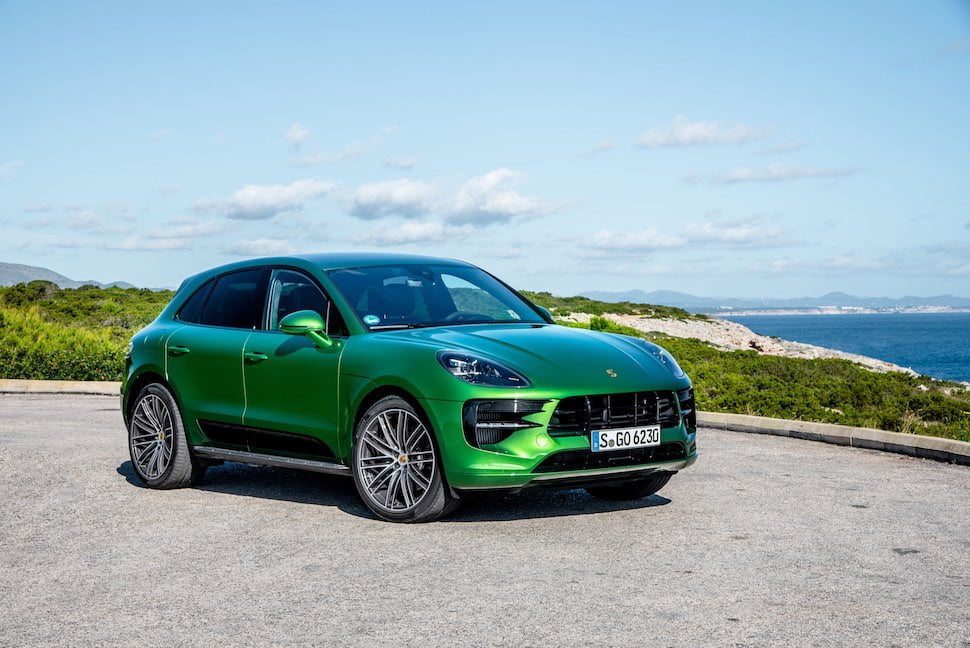
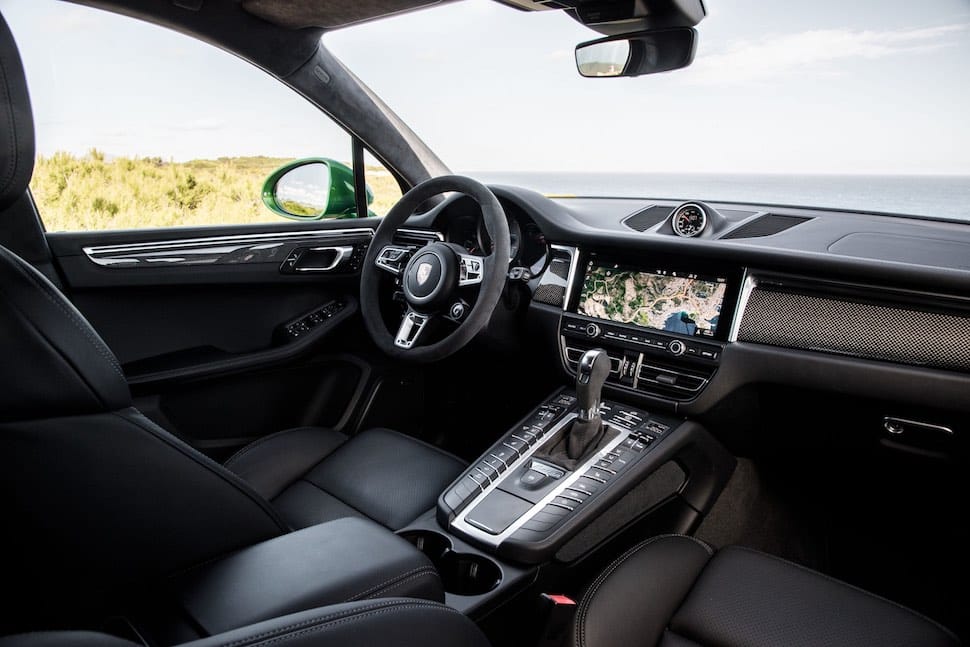
Visual changes for the Macan are pretty light here, but certainly noticeable. Up front, new LED headlights now come as standard across the range alongside a slightly tweaked bumper design. It’s at the back were changes become really noticeable though, with a new full-width LED strip connecting the rear lights. New 20-inch alloys are available for no extra cost, while a fresh 21-inch option is on offer too. Inside the car, a new dashboard houses an 11-inch touchscreen infotainment system — which comes loaded with Porsche’s Connect Plus system, relaying real-time traffic data to the driver. There’s also now a Sport Response Button — which gears the car up for maximum power for 20 seconds.

How does it look?

A first glance at the refreshed Porsche Macan might leave you a little stumped as to what’s actually changed, but delve deeper into the details and there are a lot of differences to be found. New LED headlights and a revised bumper design don’t set the world alight but do give the SUV a fresh edge, although a major revision at the back brings a full-width LED strip connecting the rear lights. It harks back to 911s of old, while also bringing it in line with Porsche’s new offerings. We like it. From an image standpoint, it still comes with that prestige the Porsche badge brings. Sure, die-hard fans of the firm may still condemn it — but this is the car that drives sales of its more exotic machinery.

What’s the spec like?

Along with the now-standard inclusion of LED headlights, the new 11-inch touchscreen infotainment system boasts a clever new Connect System that feeds real-time traffic information to the driver, plus a fresh selection of both 20-inch and 21-inch alloy wheels available. A new key addition too is the Sport Response Button. When operated, this sets the car up for a burst of full grunt. Gimmicky, sure, but it can be a lot of fun to use on the right road.

What’s it like inside?

Hopping into the Porsche Macan is a pleasant experience from a luxury standpoint. The cabin is draped in premium materials, with leather featuring on almost every surface — plus the option of metal, carbon-effect or wooden trim inlays, It all feels wonderfully put together, and the Alcantara steering wheel fitted to our test Macan S is a must-have option in our view. That said, there are some drawbacks — with the layout of controls remaining identical as before. The centre console is clunky, and it can be difficult to manage various car settings while keeping eyes on the road as a result. The latest generation of Porsche models has rectified this problem, so it’s a shame to see the Macan refresh is yet to benefit.

What’s under the bonnet?

2019 Porsche Macan S - engine In Macan S guise as tested here, a 3.0-litre turbocharged V6 can be found underneath the bonnet — sending power to all four wheels via a seven-speed dual-clutch automatic gearbox. Power has been boosted slightly over the outgoing model, now producing 354hp and 480Nm of torque — up from 340hp and 460Nm. What that translates to in performance figures is a small improvement in acceleration, with 0-60mph now coming up in 4.9 seconds instead of the old model’s 5.2 seconds. Top speed remains unchanged at 158 mph, and fuel economy is a not-exactly-parsimonious 31.7 mpg. In typical Porsche fashion, it’s a fruitful and strong engine — delivering consistent power delivery across the rev range, and really coming alive beyond 5,000rpm. That said, it is hampered slightly by a hesitant gearbox.

What’s it like to drive?

2019 Porsche Macan S review The Porsche Macan has always been up there as one of the best driving SUVs on the market, if not the, and a refresh has only built on that. When pressing on, the chassis remains composed and does a great job at hiding the size, weight and higher centre of gravity of the car. Steering weighs up well too — and there’s the sense that this is about as close to a proper Porsche hot hatch we may ever see. As well as offering a genuinely compelling spirited driving experience, the Macan is a capable cruiser too. At motorway speeds, it feels well-refined and comfortable. Cabin noise is pretty low, and switching off the optional active exhaust takes the engine from raucous to relaxing.

Summary

A refresh hasn’t drastically transformed the Porsche Macan S, but it has turned it into an even more appealing package. It continues to prove that opting for an SUV doesn’t mean sacrificing a true driving experience nor performance — while also building an appetite for a real Porsche hot hatch. The Macan S, in particular, proves to be a more compelling option than the four-cylinder base car, offering a new world of performance in comparison. Room for improvement remains, though. A sharper gearbox would add a lot to the package, and we’d like to see a more streamlined cabin layout.

Similar cars

Audi SQ5, BMW X3 M40i, Mercedes-Benz GLC 63

Key specifications

Model: Porsche Macan S Price: £48,750 Engine: 3.0-litre turbocharged V6 Power: 354 hp Torque: 480 Nm Top speed: 158 mph 0-60mph: 4.9 seconds Fuel economy (combined): 31.7 mpg CO2 emissions: 204 g/km

McLaren lifts the lid on new 720S Spider

0
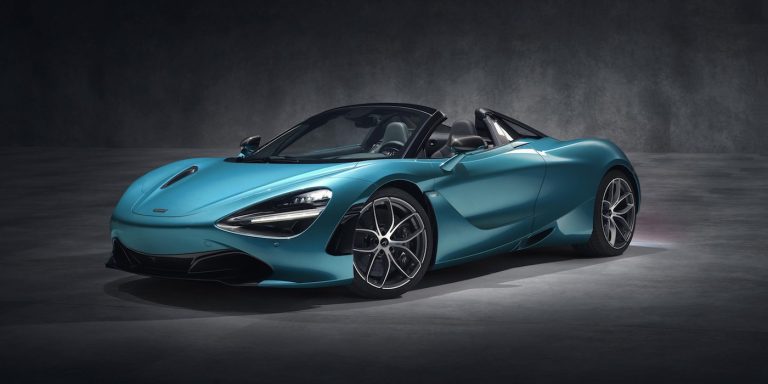
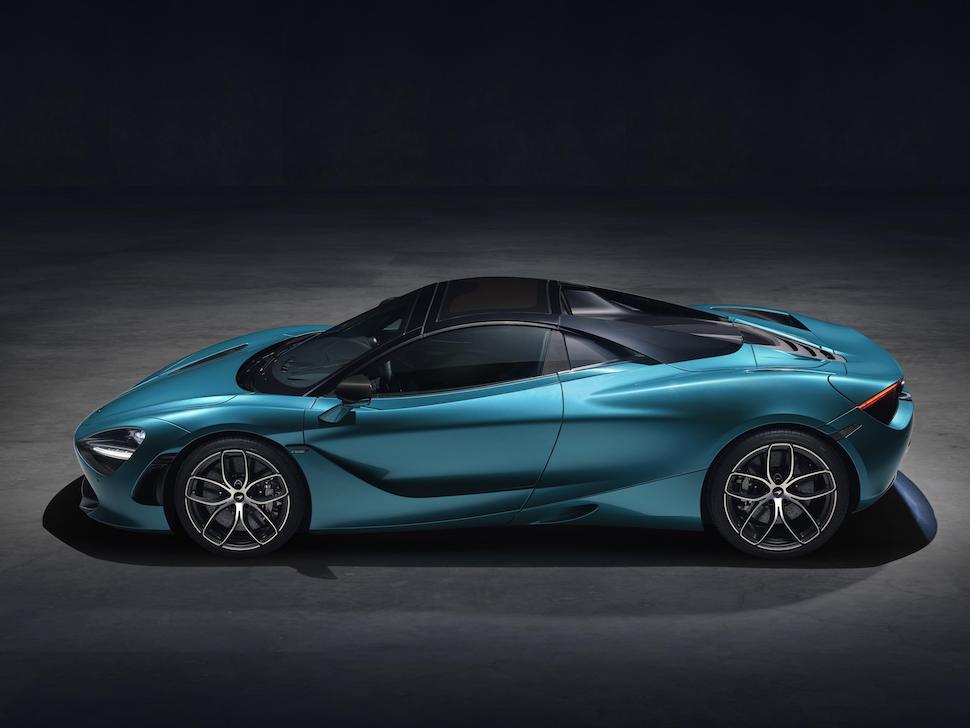
McLaren has lifted the lid on its new 212mph 720S Spider, the second model in the 720 ‘Super Series’ range. A drop-top version of the 720S Coupe that premiered at the Geneva motor show more than 18 months ago, the Spider matches the hardtop’s performance figures. It’s capable of hitting 60mph in just 2.7 seconds and can reach a top speed of 212mph with the roof raised, or 202mph with it lowered. That performance comes courtesy of a 4.0-litre twin-turbocharged V8 engine with 720hp and 770Nm of torque. Power is sent to the rear wheels via a seven-speed gearbox. It incorporates a new carbon fibre roof system, which can be raised or lowered in 11 seconds at speeds of up to 31mph. McLaren 720S Spider - rear

88kg lighter than the Ferrari 488 Spider

Though it weighs 49kg more than the Coupe version, the 720S Spider manages to tip the scales at 1,332kg dry – 88kg lighter than the Ferrari 488 Spider, its closest rival. This is thanks to the heavy utilisation of carbon fibre in its construction. Mike Flewitt, McLaren Automotive chief executive, said: “The new McLaren 720S Spider offers an unparalleled blend of extreme performance, crafted luxury, driver involvement and daily usability – all with the additional exhilaration of open-air driving whenever required.” All-new 10-spoke lightweight forged alloy wheels have been developed for the Spider, too. They’re wrapped in Pirelli P Zero tyres as standard, though a stickier track-focused P Zero Corsa tyre can be specified instead at no extra cost. Prices for the new 720S Spider start from £237,000 on-road, and first customer deliveries are expected to commence in March next year. The McLaren 720S Spider is built in Britain.

Pricing and specs confirmed for Seat Tarraco SUV

0
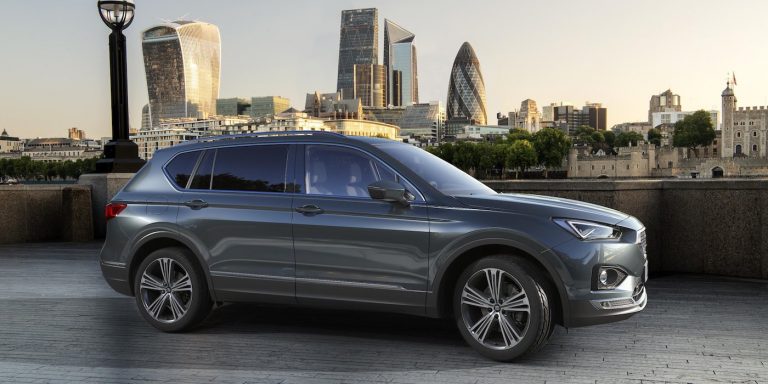
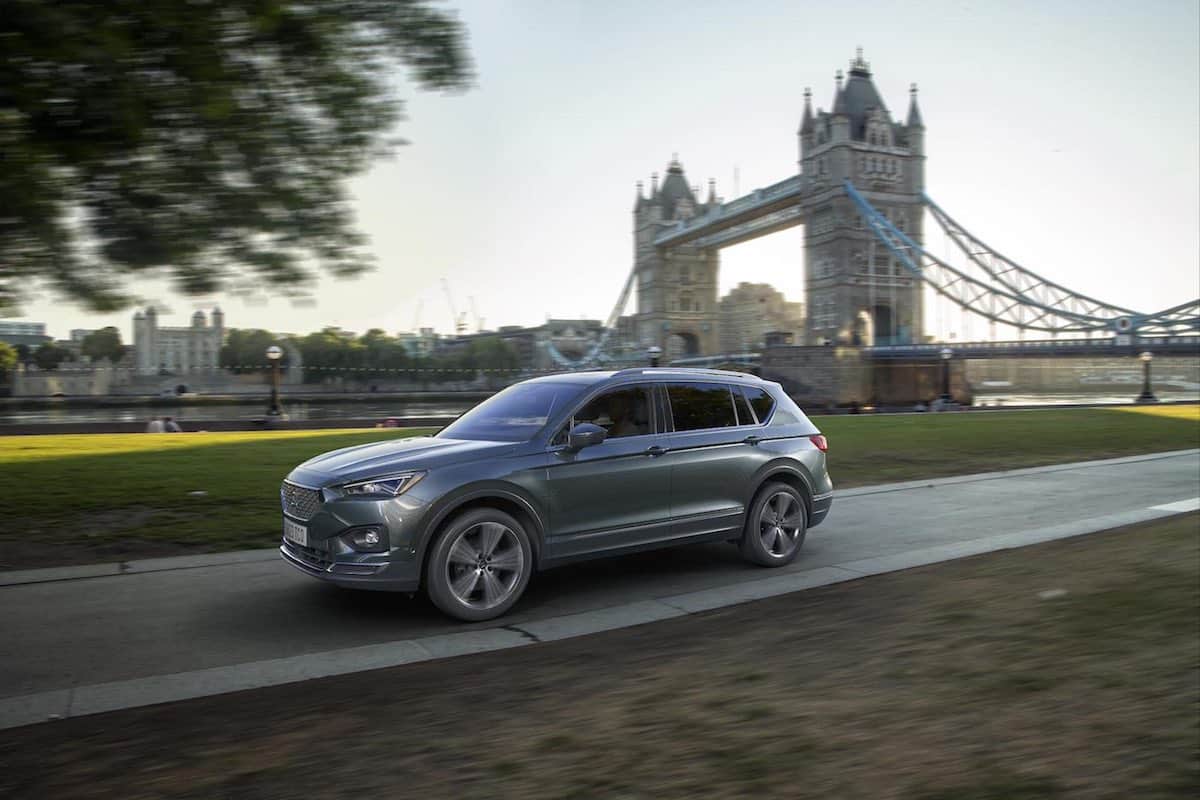
Pricing and specifications for the all-new SEAT Tarraco SUV have been confirmed, with order books now open. The Tarraco is a new model for the firm, becoming its flagship SUV — sitting above the Ateca and Arona in its range of large cars. Entry-level SE models start at £28,320, and boast metallic paint, DAB digital radio, 17-inch alloy wheels and three-zone climate control as standard equipment. Building on that is SE Technology, which adds satellite navigation, rear privacy glass and 18-inch alloys — with a price of £29,330. Next in the range is the £30,410 Xcellence trim, adding wireless phone charging, adaptive cruise control, a reversing camera, an electric tailgate, 19-inch alloy wheels and Alcantara upholstery. Topping the range is Xcellence Lux, which brings a top-view camera, 20-inch alloy wheels, leather upholstery and a winter pack — including heated front seats — to the SUV. Prices for this grade start at £32,135. SEAT Tarraco UK pricing and specifications announced

Two petrol engines, two diesel

Two petrol engines will be available at launch for the SEAT Tarraco. First up is a 1.5-litre unit, developing 150hp which is sent to the front wheels via a six-speed manual gearbox. The second is a 2.0-litre, 190hp option paired up to a seven-speed automatic gearbox and all-wheel drive. There’s also a duo of 2.0-litre diesel engines, which are also available in 150hp and 190hp outputs and can be had in both drivetrain configurations found on petrol alternatives. At launch, a number of ‘First Edition’ models will also be on offer. SE Technology First Edition 1.5 TSI adds a rear-view camera, ‘safe driving pack’, rear privacy glass and wireless phone charging and is priced at £30,475. Next up is the Xcellence First Edition, bringing 20-inch alloy wheels, a panoramic sunroof plus both the winter and safe driving packs. It’s available for £33,260 with the 150hp petrol option, or £34,745 in 148bhp diesel form. Finally, Xcellence First Edition Plus adds a Beats audio system and electric driver’s seat to the range-topping trim. In 190hp petrol guise, it’s priced at £38,020, while 190hp diesel variants cost £39,505. No word yet on delivery dates. SEAT Tarraco London Tower Bridge

Renault Kadjar test drive

What is it?

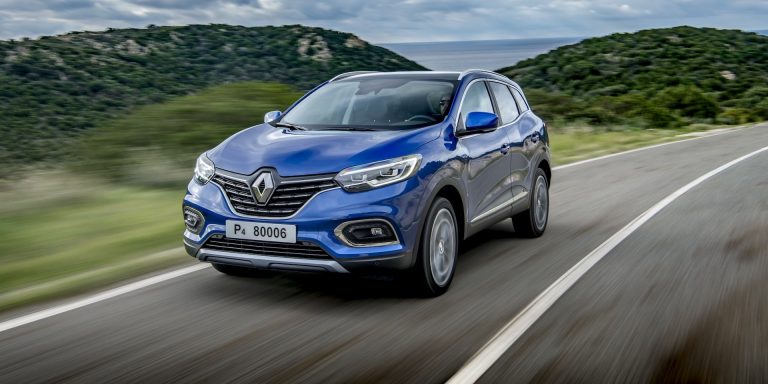
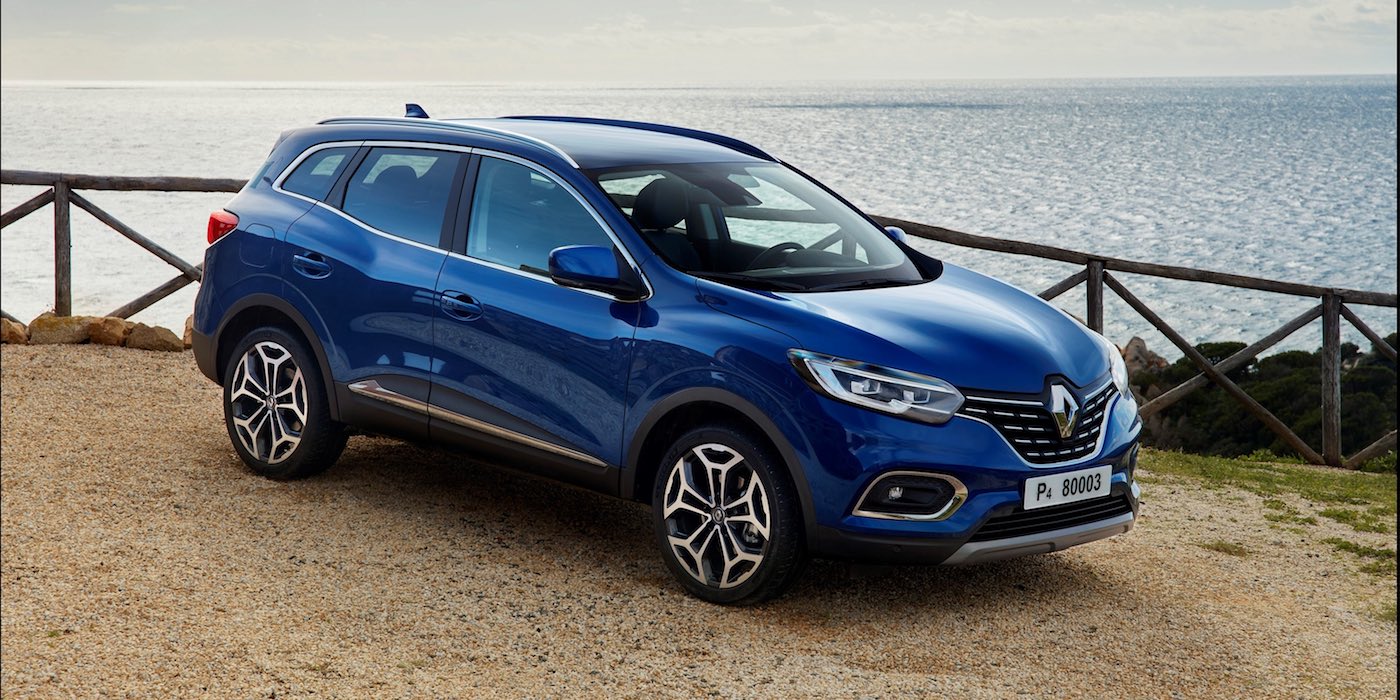
Though the current UK car market is seemingly overrun with SUVs, the Renault Kadjar was in showrooms way back when the trend first started kicking off. Unveiled in 2015, it shares its running gear with the ever-popular Nissan Qashqai and has, up to this point, experienced similar (if not quite better) success as Nissan’s key SUV – Renault has managed to shift 450,000 units worldwide, in fact. Now, the French manufacturer has given it a well-needed mid-life refresh. Its looks have been updated, and new life has been breathed into the interior too. A new engine has been added as well, but we’ll have a look at that in more detail later on.

What’s new?

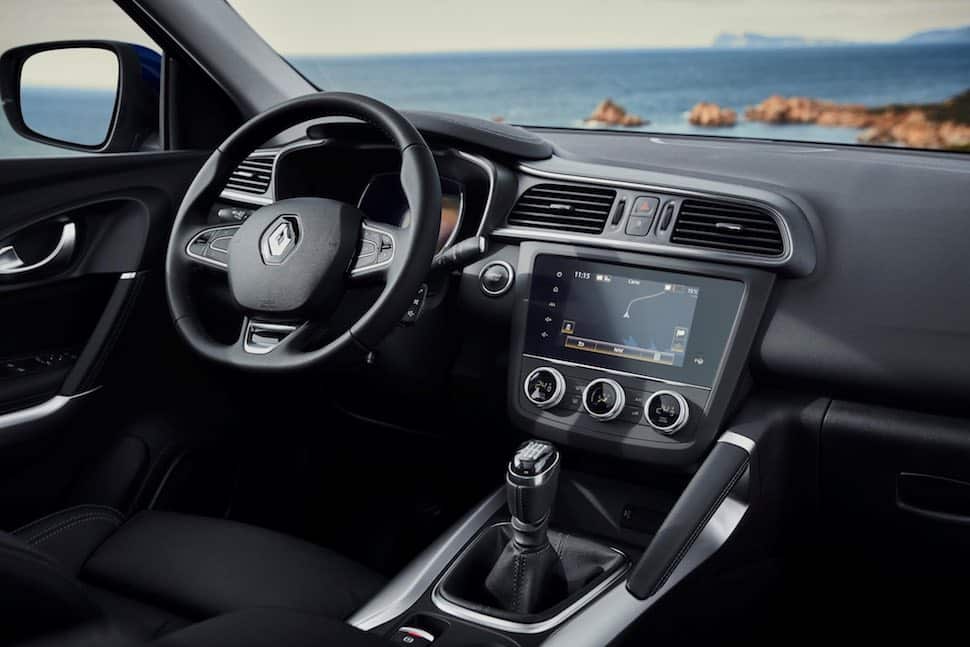
Look at the front end of the new Kadjar, and you’d be hard-pressed to notice that it’s been refreshed at all. Okay, so the nose of the car gets a new grille, bumper design and LED lights, but this is one light redesign. It has sharpened up the overall look the Kadjar, however, which was starting to look just a little tired. Inside, the cabin has been lifted and areas have been improved. The infotainment system, for instance, now sits flush in the dash rather than set back, while new backlit switches dotted throughout the interior give it a far more premium look and feel.

How does it look?

As mentioned a little earlier, the updated look of the Kadjar is far more evolutionary than revolutionary. The front end refresh is minimal, and it’s the same story at the back. However, we’re certainly not saying that the Kadjar is a bad looking car. Sitting within the mid-size SUV segment means it’s got some particularly stylish rivals – the Peugeot 3008 being a standout in terms of looks – but it manages to offer a design which will be interesting enough for most. The new LED C-shape lights make a good impression in the dark, too. The overall impression is of a design which has been refined and honed. Larger areas of body-coloured bumpers make it appear a little more premium than it did before as well.

What’s the spec like?

The Kadjar specification range kicks off with Play trim vehicles, and even this offers a strong level of standard equipment. Renault has thrown in 17-inch alloy wheels, automatic headlights and windscreen wipers, and a new seven-inch infotainment system too. This includes Apple CarPlay and Android Auto smartphone systems, which will be a boon for those who frequently use their phones for navigation and media. You’ll have to bump up to Iconic trim (after Play) in order to secure larger 19-inch alloy wheels, front and rear parking sensors as well as Renault’s R-LINK2 infotainment system which features TomTom satellite navigation. In all, all specifications available offer a good amount of standard kit – particularly when you consider the car’s £20,595 starting price.

What’s it like inside?

Again, much like the exterior, the boat has been pushed awfully far out when it comes to redesigns in the cabin. Renault has added reinforcement into the seats to make them a touch more comfortable, and the door bins have been made larger to help swallow up a 1.5-litre water bottle. And, big coffee drinkers rejoice, as Renault has enlarged the Kadjar’s cupholders too. Practicality is the name of the game in this segment, and it’s here where the Kadjar delivers. There are 472 litres of space on offer with the rear seats in place, which increases to 1,478 litres if you fold them down – splitting 60:40. They also fold properly flat, which is ideal for when you’re loading larger items in. The changes to the heating and ventilation controls and the flush new infotainment screen lift the overall perception of quality in the cabin, but it’s let down by hard plastics in a variety of areas – but let’s remember this is a relatively cheap car in the segment.

What’s under the bonnet?

Our test car utilised Renault’s new TCe 140 powertrain, which puts a four-cylinder petrol engine under the bonnet, driving the front wheels through a six-speed manual gearbox. It’s the same unit as you’ll find recently added to Nissan’s Qashqai. A diesel is still available – Renault has yet to follow trends set by other manufacturers to ditch this entirely – and four-wheel-drive is an option too. It means that should you actually need the added traction given to you by having four driven wheels, then the box is there to be ticked. Back to the TCe 140, however. It kicks out 140hp (hence the name) and 240Nm, and can push the Kadjar from 0-60mph in a claimed 10.2 seconds before allowing it to reach a top speed of 126mph. Renault claims that it’ll return 47.9mpg combined while emitting 134g/km of CO2.

What’s it like to drive?

The biggest impression made here is by the engine. Smooth, refined and deceptively strong, it suits the character of the Kadjar down to the ground. It’s punchy enough around town, but on open roads, it happily settles down to a cruise. It even makes a relatively nice noise. Elsewhere, things are decent enough. The action of the six-speed gearbox is light if a little inaccurate, and there’s enough weight to the steering to give you confidence when placing the car in a bend. Meanwhile, the suspension does well to skim over the minor imperfections in the road, though larger potholes and bumps do tend to upset it somewhat. That’s not to say it’s uncomfortable – the added reinforcement to the seats ensures this – but it just means that it can feel a little unsettled when the surfaces get craggy. Our test car’s 19-inch wheels may have contributed to this issue further, too.

Summary

The Kadjar – even with its latest improvements – may not stir the heart of a die-hard petrolhead, nor inspire people to point and look at it in the street. This facelift does bring it more into line with rivals, however, while the addition of the new boosted 1.3-litre engine breathes a whole lot of new life into the overall package. While other SUVs of this size may get the job done with a little more style and flair, the Renault Kadjar – particularly when you consider its price – is still well worth considering.

Similar cars

Kia Sportage, Nissan Qashqai, Peugeot 3008

Key specifications

Model as tested: Renault Kadjar TCe 140 Price: £20,595 on-road Engine: 1.3-litre turbocharged petrol Power: 140 hp Torque: 240 Nm Top speed: 126 mph 0-60mph: 10.2 seconds Fuel economy (combined): 47.9 mpg CO2 emissions: 134 g/km

Car manufacturers facing ‘massive’ CO2 fines

Nearly two-thirds of top car manufacturers are facing ‘massive’ CO2 fines, according to new research. A PA Consulting study, due to be released today, has found that eight out of 13 of the major brands selling new cars in Europe are on course to fail new emissions standards to be imposed from 2021, amid warnings they have been too slow to develop cleaner, alternatively-fuelled vehicles. Manufacturers have a set target to hit by then, with the Europe-wide goal of an average of 95g/km of CO2. Firms face a €95 (circa £85) fine for every gram of carbon dioxide by which they exceed their personalised limits, multiplied by the number of cars produced by the manufacturer and registered in the EU in the previous year. The research says that the following companies affected are all at risk of failing to hit their targets:
  • Volkswagen Group (VW, Audi, SEAT, Skoda, Porsche, Bentley, Lamborghini)
  • Groupe PSA (Peugeot, Citroën, DS Automobiles, Vauxhall),
  • Fiat Chrysler (Fiat, Alfa Romeo, Abarth, Jeep, Maserati)
  • Hyundai (Hyundai, Kia)
  • BMW (BMW, Mini, Rolls-Royce)
  • Ford
  • Mazda
  • Daimler (Mercedes-Benz, Smart)
The consultancy also claims that Volkswagen Group would be hit with the biggest fine of up to €1.4 billion (circa £1.2bn), while Groupe PSA is at risk of a €600 million (circa £535.2m) penalty.

22% growth of electrified vehicles is not fast enough

Data from the Society of Motor Manufacturers and Traders (SMMT) show year-to-date growth of 22% in alternatively-fuelled vehicles, against an overall market that is 7% down on the same time last year. However, this rate of growth will not be sufficient to achieve the required results by 2021.
Novermber 2018 AFV registrations
Electric and hybrid new car registrations for November 2018 (Source: SMMT)
The Europe-wide collapse in diesel sales has been welcomed by air quality campaigners, but it is having a negative effect on car manufacturers’ attempts to reduce CO2 outputs as diesel engines produce less CO2 than petrol engines (at least in artificial laboratory conditions).

Mercedes-Benz C-Class saloon test drive

What is it?

The Mercedes-Benz C-Class is one of the most popular premium compact saloons on sale, going up against the likes of the Audi A4 and BMW 3 Series. In fact, it’s Mercedes’ best-selling model – the German manufacturer registered 46,000 of them in 2017 alone. To keep things current, the C-Class was refreshed earlier in 2018, ensuring it remains competitive against several capable rivals. We’re trying it here in C200 form, which uses a 1.5-litre petrol motor and something called EQ Boost technology – though we’ll look at this in a little more depth later on.

What’s new?

The 2018 C-Class has been, as we mentioned, updated with a variety of new functions and touches to keep things fresh. Our test car was supplied in AMG Line specification, which includes an exterior body styling package, heated sports seats and 18-inch alloy wheels. The biggest change here is the inclusion of a ten-inch infotainment screen, which is superbly clear and elevates the look of the cabin. This can be combined with the optional 12-inch digital cockpit screen to create a really good-looking system – though not quite as pretty as the fully widescreen version you’ll find in E- and A-Class models. Unfortunately, the digital cockpit has to be specified as part of the so-called ‘Premium package’, which adds another £2,795 to the car’s price.

How does it look?

The latest updates to the C-Class do make it a sharper-looking machine – not that the original car was ever much of an ugly duckling. The new single-bar grille gives it a purposeful appearance, while the overall effect of the AMG Line bodykit is to give the car just a little more presence and bring it closer to (in appearance terms) the full-blooded, high-performance AMG versions.

What’s the spec like?

Prices for the C200 in AMG Line trim start at £35,730 on-road. For that, you get 18-inch five-spoke alloy wheels, parking sensors and a full connectivity package including smartphone connectivity and satellite navigation. Of course, AMG Line cars also get the extra bodykit bits, as well as the nine-speed automatic gearbox (a must-have for long-journey drivers). The C200 AMG Line is available in rear-wheel drive or all-wheel drive versions, with the additional drive costing an extra £1,600. As well as all-wheel drive, our test car came with a few optional extras as well. The Premium Pack includes the aforementioned 12-inch digital cockpit display, satnav, improved sound system, heated seats and wireless phone charging. We also had open-pore grey oak trim for an extra £195, while an Artico leather dash cost £400 and metallic paint was £895. So in total, our test car came in at £41,615 on-road – just under £6K over and above the sticker price.

What’s it like inside?

The interior of the C-Class is now dominated by that widescreen infotainment system we’ve mentioned, and it does help to lift the overall look and feel of the cabin. There are some harsher plastics to be found – not something you’d expect for a car costing the thick end of £42K – but the overall fit and finish feels good enough. The seats are supportive for long-distance driving, and the rear seats offer up a decent amount of legroom. The large, thin pop-cover for the storage area ahead of the rotary infotainment controller remains flimsy, just as it did on the previous-generation car. It’s a trim piece that we’d gladly see removed, as it really does bring down the feel of the cabin.

What’s under the bonnet?

This C200 uses a 1.5-litre turbocharged petrol engine to send to (in our case) all four wheels through a nine-speed automatic transmission. It’s also available with rear-wheel-drive. Peak power output is 185hp, and you get a useful 280Nm of torque too. Emissions are decent at 148g/km of CO2, and Mercedes claims that you’ll get 53.3mpg on the combined cycle. The C220 d diesel, which is the most popular C-Class drivetrain, returns a claimed 61.4mpg combined and emits 121g/km. Then there’s EQ boost. This uses a 48-volt onboard power network with a belt-driven starter motor which can boost the car’s power output – it throws an extra 15hp in the mix, in fact. It’s a system you’re likely to see applied to more Mercedes-Benz models moving forward.

What’s it like to drive?

The C-Class really needs to be able to handle all situations, be it a long motorway slog or a quick dart down a rutted B road. Fortunately, it delivers in all areas. The ride is firm but well-damped, and the engine settles down to a distant thrum when you’re travelling on the motorway. The steering lacks any real feel – but we’ve come to expect this from new electric power racks – but it remains accurate, which allows you to easily place the car where you want it. That new 1.5-litre engine does feel a touch underpowered for this size of car and is noisy under heavy acceleration. If you’re planning on frequent long journeys then we’d still look towards the diesel, despite the negative press oil-burners have been getting of late. That said, around town it feels quiet and refined.

Summary

The C-Class does all of the things that you’d want a premium saloon to do. It’s comfortable over long distances, feels special enough both inside and out and comes with plenty of standard equipment too. This C200 model is fine for urban and mixed-use driving, but doesn’t quite make as much sense as the diesel for high-mileage users, especially on longer journeys. A year ago we would have simply recommended the diesel version for any customers, but as the market continues to shift away from diesel, petrol units with some form of electrical assistance are making more sense to more people.

Similar cars

Alfa Romeo Giulia, Audi A4, BMW 3 Series, Jaguar XE

Key specifications

Model: Mercedes-Benz C200 4MATIC AMG Line Price: £39,415 Engine: 1.5-litre turbocharged petrol Transmission: Nine-speed automatic Power: 185 hp Torque: 280 Nm Top speed: 145 mph 0-60mph: 7.9 seconds Fuel economy (combined): 53.3 mpg CO2 emissions: 148 g/km

‘Black box’ devices could be fitted to all new cars

All new cars sold in the EU could soon be fitted with ‘black box’ devices. The European Council is proposing that every new car has the data-logging device, which would record the vehicle’s speed, state of safety assistance features and “crash-related parameters and information before, during and after a collision”. Information recorded by these devices would be shareable among authorities – but only to analyse accident data, according to supporters of the proposal. If it’s approved, all new cars would also be fitted with ‘intelligent speed assistance’ features to help the driver maintain an “appropriate” speed depending on the road. Although they wouldn’t be able to switch it off or suppress it, a driver could override it using the throttle pedal.

Other safety tech set to be made mandatory as well

Other technologies that would be mandatory include autonomous emergency braking, driver drowsiness monitoring and reversing sensors. The proposal highlights them because systems based on those will be used in connected and autonomous vehicles as well. A vote by the European Parliament is tentatively scheduled for February 2019. Should it go through, it will apply to all cars sold within the European Union. While the UK’s exit from the EU next March may have an impact on member states’ ability to access the recorded information, it has been previously indicated that cars sold here will still conform to EU regulations.

Skoda confirms nine electrified models by 2020

Skoda is the latest manufacturer to announce its ambitious aims for the electrification of its models, with nine expected to go on sale in the next year. Speaking at the unveiling of the firm’s new Scala hatchback in Tel Aviv, Israel, Skoda chairman Bernhard Maier confirmed the firm’s electric aims. Maier didn’t say which models would be offered with electrified powertrains, although this number will be made up of pure-electric variants, plug-in hybrids and potentially mild-hybrid offerings. The first electrified Skoda to go on sale will be a plug-in variant of its flagship Superb, of which a facelift is due in the middle of next year. SUVs – namely the Kodiaq and Karoq – will likely receive plug-in hybrid offerings, too. The Citigo-e city car will be the first completely electric model by Skoda and is expected to go on sale at the end of 2019. The electric Citigo is expected to have a range of 125 miles. The Czech manufacturer is currently behind other volume manufacturers as it has no electrified models on the market. The chairman also announced that by the end of 2020, there will be 20 new Skodas – likely including some China-only models, because the country is the firm’s biggest market and already has SUVs made only for this region. Maier said: “Skoda is the simply clever company for simple mobility solutions. We want to become a global player in mobility and as part of this we will be unveiling nine new electrified offerings in the next two years.” Parent brand Volkswagen is also significantly gearing up for an electric future. The German car maker will begin rolling out its range of EVs – set to be called ‘I.D.’ – with an aim of having 25% of all its new cars being purely electric by 2025. Last week, Volkswagen announced its sponsorship of 2,400 Pod Point electric chargers at 600 Tesco stores around the country, in a bid to make EVs more accessible.

Skoda unveils all-new Scala hatchback

0
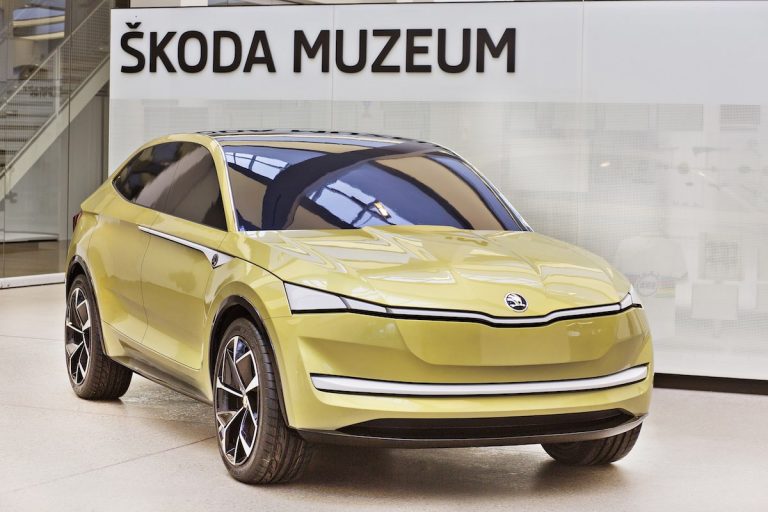
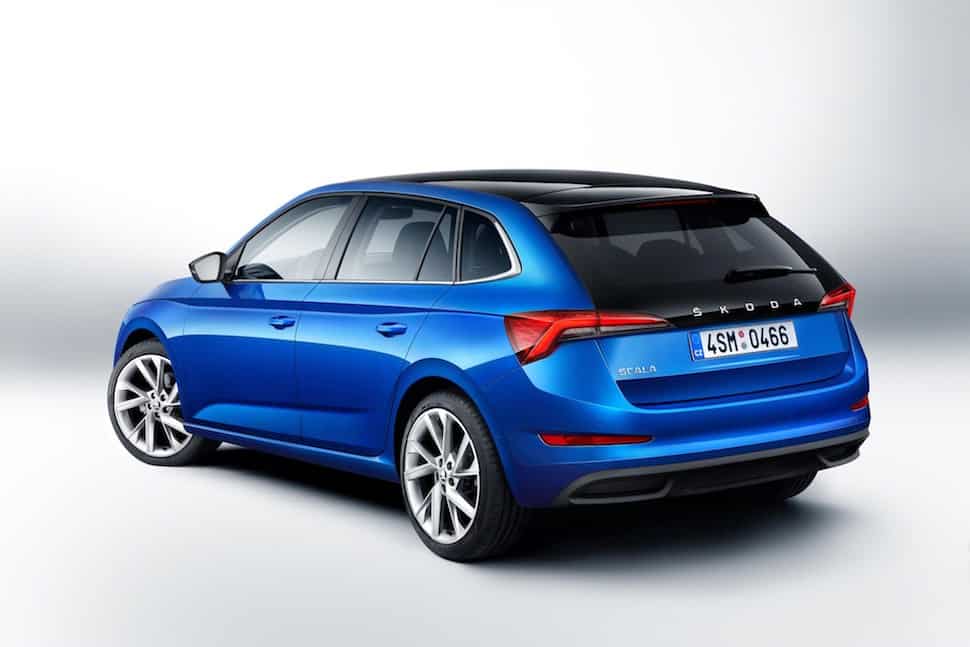
Skoda has issued the first images of its all-new Scala family hatchback, which showcases a new interior design for the brand as well as claiming class-leading practicality. Unveiled in Tel Aviv, Israel, where Skoda has been working with local start-up tech firms, the Scala replaces the Rapid. It has ambitious aims to double the company’s market share in the family hatchback class with the new model. Skoda’s familiar hexagonal grille appears on the new Scala, with an extended gloss black panel appearing at the rear to give an impression of a longer rear window. The design is heavily influenced by the Vision RS concept shown off earlier in the year, although Skoda has said that a performance-oriented vRS version of the Scala is unlikely to come. The interior has received the biggest overhaul, with an infotainment display of up to nine inches – the largest in its class – as well as a digital instrument binnacle. It’s the first Volkswagen Group product to feature the new MIB3 infotainment system, which is set to be rolled out across the group.

Remote software updates – just like your smartphone

New connected services are built into the system, allowing for ‘over-the-air’ updates, as well as the latest version of the Skoda Connect app that allows the car to be unlocked remotely and real-time details on the car. The Scala also boasts a class-leading boot, with 467 litres of luggage space on offer. Skoda also claims that the model has the same rear legroom as its larger Octavia hatchback. Four engines are expected to be offered in the UK – 95hp and 115hp variants of the 1.0-litre petrol engine, a 150hp 1.5-litre petrol and a sole diesel option of a 115hp 1.6-litre. A CNG (compressed natural gas) model will be offered in other markets. A host of safety kit is available – such as lane-keep assistance, adaptive cruise control and advanced autonomous emergency braking. Bernhard Maier, chairman of the board of management at Skoda, described the Scala as the “next big step forward” for the manufacturer. He added: “The Scala will help Skoda to change from a volume manufacturer to a global player. We’re convinced that the Scala has the best chance of redefining the family hatchback segment for Skoda.” Skoda is yet to confirm prices, but it’s expected to start from around £16,500 when UK sales kick off at the start of next year.

Renault Kadjar refreshed for 2019

1
Pricing and specifications for the refreshed Renault Kadjar have been revealed, with the updated SUV starting from £20,595. The revised car benefits from minor styling changes, an updated engine line-up and a tweaked range of trims, with Renault keen to build on the initial success of the Kadjar, having shifted more than 450,000 units since its 2015 introduction. Its updated look doesn’t differ much from before, with a new light signature heading up tweaked front and rear bumper designs, while new wheel options are available.

Simplified range structure

A simplified range now sees four trim levels instead of five. Kicking off the line-up is Play — with standard exterior features including 17-inch alloy wheels, tinted windows, LED daytime running lights, automatic headlights and rear parking sensors. Inside the car, a seven-inch touchscreen infotainment is present, with support for both Apple CarPlay and Android Auto. 2019 Renault Kadjar - interior Following on is the Iconic trim level. With prices starting at £22,095, this builds on Play by adding TomTom navigation, DAB digital radio and Bluetooth support to the infotainment system. External additions include 19-inch alloy wheels and roof bars, while lane departure warning, parking sensors up front and a reversing camera at the rear are added to the list of safety features. Above that, S-Edition models bring full LED headlights, blue contrast stitching to the interior and a panoramic sunroof. This grade is available from £23,595. Sitting at the top of the new Kadjar range is the GT Line. This specification kits the interior out with heated, full leather seats and a steering wheel wrapped in the material. A 360-degree camera is brought in to aid parking, while puddle lamps and a blind spot monitoring system also feature. Prices start from £25,095.

Four engines to choose from

Four engines are on offer — two petrol and two diesels. The former boasts 140hp and 160hp respectively and can be had on all models. A six-speed manual gearbox is available on both petrols, while the 140hp option also gets the choice of a seven-speed automatic transmission. Diesel units are available in 115hp and 150hp outputs respectively and are mated to the same six-speed manual gearbox that can be found on petrol variants. Order books for the refreshed Renault Kadjar will open on January 3, with customer deliveries expected to begin in February. 2019 Renault Kadjar - overhead

New petrol engines for Dacia Duster

0
Dacia has confirmed pricing for the Duster SUV’s new range of petrol engines, with the latest variants available from £14,395 on-road. On offer in both 130hp and 150hp guises, the engines feature a lighter aluminium block than their predecessors and take advantage of bore spray coating – a technology used on the inside of the cylinders that improves performance and engine response as a result of better heat management. The engines also have a gasoline particulate filter to reduce harmful pollutants. That all translates to 240Nm of torque, 137g/km and a claimed 47mpg for the 130hp TCe engine, while the 150hp unit boasts identical efficiency figures while seeing a jump in torque to 250Nm. Both units are paired with a six-speed manual gearbox and two-wheel drive at launch, with all-wheel-drive variants due to arrive later in 2019. Available in Comfort and Prestige trims, Dusters equipped with the 130hp option offer 16-inch alloy wheels, a rear parking camera plus sensors, electric windows and a seven-inch touchscreen infotainment system with support for both Android Auto and Apple CarPlay as standard (take note, BMW…). As for the 150hp that comes exclusively with Prestige, it adds 17-inch alloy wheels, a multi-view camera, blind spot warning, climate control and keyless entry. Pricing begins at £16,295 for this range-topping model. Order books are now open for the new Dacia Duster TCe engine range, with customer deliveries set to begin from March 2019.

BMW X5 test drive

What is it?

Some charge BMW with creating the craze for premium SUVs with the original X5 and X3. These were cars that looked every bit the rugged off-roader, but traded in any ability on the rough stuff in favour of being fabulous to drive on tarmac. With the new X5, the brand’s engineered some off-road ability back in, and hopes to combine it with its well-loved on-road manners as well as a serious dose of luxury to create a car that can – theoretically – do anything. But the high-end SUV market has some brilliant entrants in that BMW has to match – the archetypal Range Rover Sport, the luxurious Mercedes-Benz GLE and the tech-filled Audi Q7 to name but a few. Not forgetting that the X5 will soon no longer be the brand’s flagship SUV, as the monstrous new X7 launches next year. A tough gig, then.

What’s new?

The X5 has switched onto the same modular underpinnings as its smaller sibling, the X3 and X4, giving it access to a whole range of new tech. For the UK, there’s standard air suspension, as well as active four-wheel steering to help make the massive X5 feel more agile. There’s plenty of tech inherited from other models, such as the new standard digital gauge cluster and widescreen infotainment system – renamed from the classic ‘iDrive’ to the rather bland ‘BMW Operating System 7.’ On the styling front, there’s the latest iteration of BMW’s kidney grilles, now joined in the middle by a chrome bar, as well as optional Laser LED headlights and wheels of up to 22 inches – available even on base models.

How does it look?

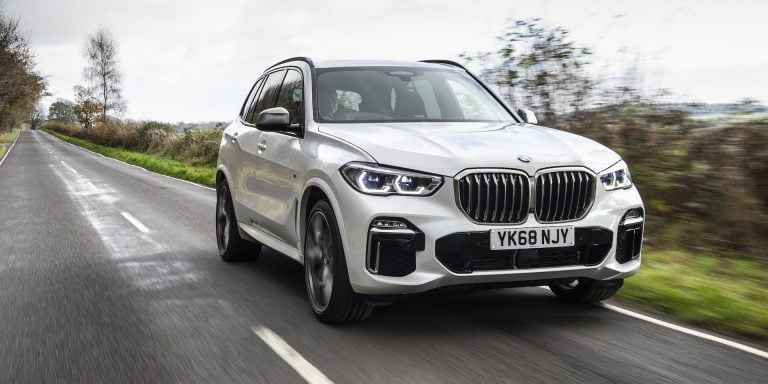
BMW’s latest corporate design is divisive, to say the least, and the X5 takes some of its cues from the massive – and, if we’re honest, fairly ugly – X7. That means a vast chrome grille, joined in the middle unlike BMWs of old, and sharp lines throughout. It’s certainly distinctive, however, and once you get past the snout the rest of the car looks decent. The front features slim LED headlights with a new hexagonal motif flanking that walloping conk, while round the rear, broad LED taillights make the X5 feel even wider than it is. Not that it needs any help, as it’s already 6cm wider than its predecessor, as well as 4cm longer and 2cm taller. The wheel designs in particular – other than the entry-level 19-inch units – are great, and the X5 looks properly mean on 21- or 22-inch rims. Round the back though, it’s pure X3 – a little bland and a little anonymous.

What’s the spec like?

Equipment’s generous, as you’d hope for the X5’s £57,495 asking price. LED headlights, leather upholstery, electric and heated front seats, air suspension, all-round parking sensors and a reversing camera, multi-zone climate control, adaptive cruise control, emergency braking and a range of online services. The majority of customers will opt for the M Sport package, netting meaner-looking body styling and standard 20-inch wheels, and some models even get a crystal-glass gearknob and infotainment controller. However, we can’t help but find the addition of Apple Carplay as a cost option very stingy. Worse still, it’s on a yearly subscription – so if you want to keep your phone connected, you’ll have to pay up. That’s a real blow, considering many superminis offer it as standard, and often throw Android Auto in as a bonus – yet the latter isn’t even an option on BMW models.

What’s it like inside?

The X5’s interior is supremely spacious and the seats – both front and back – are excellent. There’s a vast range of adjustment to the driving position, allowing anyone to get comfortable, and the 650-litre boot can be extended to 1,870 litres with the seats folded down. An optional third row secures this as a luxury SUV that would suit large families, too. Our beef is with some of the redesigned elements, which feel like a step backwards compared to the previous model. Take the gauges, for example – they’re now fully digital, which is very slick and modern, but their angular half-octagonal shape affords nothing like the clarity of the brand’s signature twin circular dials. There are other annoyances – such as the hard-to-read climate controls, as well as the cheap-feeling materials on the central tunnel. It’s a shame that some of the fundamentals, items BMW’s been getting bang-on for the last couple of decades, should be abandoned in the pursuit of showing off.

What’s under the bonnet?

Three engines are coming to the UK initially – all 3.0-litre straight-six turbocharged units. For petrol lovers (or diesel despisers) there’s the 40i petrol, which produces 340hp and 450Nm of torque and is capable of 0-60mph in less than 5.5 seconds. Official fuel economy of just 33.2mpg and CO2 emissions of 193g/km should see it remain a relatively niche choice, although BMW is anticipating more customers will opt for it as diesel’s popularity continues to wane. The vast majority of buyers will opt for the 30d diesel – a twin-turbo unit, producing 265hp and a hefty 620Nm of torque. It’s a good engine, too – creamy smooth and relatively powerful, though it struggles a little with the X5’s 2.2-tonne bulk when overtaking. BMW’s also synthesised a fake engine noise, which is a little too loud and distracting – though at a cruise, near-silence reigns in the cabin. Official fuel economy of 47.1mpg isn’t too shabby either. The top end is rounded off with the M50d, which turns the X5 into an absolute weapon. It’s ferociously powerful, without too much drama from a standstill but a heroic chunk of mid-range torque – 760Nm of it, in fact. Power output is 400hp, while combined MPG stands at 41.5, though that will definitely take a tumble if you intend on using the accelerator with the alacrity it demands. All three engines are mated to the same rear-biased xDrive four-wheel drive system and BMW’s fantastic eight-speed automatic gearbox.

What’s it like to drive?

2019 BMW X5 review - on-road The X5 has a reputation for its ability on the tarmac, and that’s been replicated in this new model. What’s impressive is how small this 2.2-tonne behemoth feels on the road – it doesn’t feel as though it’s fighting its weight in the corners, and it stays impressively flat and level. The rear-wheel steering helps with this agility, though some won’t like the way it feels – almost as though the rear of the car were squirming under load. Once you’re used to it, though, it feels natural. The X5 won’t trouble the likes of a Porsche Cayenne on the tarmac, but does make a Range Rover Sport feel heavy and leaden. The ride has the floaty hallmarks of air suspension, but ride quality is a little compromised by the 22-inch wheels it’s possible to specify on even the entry-level model. Smaller options are available, and we suspect this would take the brittle edge off matters, even if they don’t look as good. BMW’s rear-biased xDrive system is capable of sending all of the power to the front wheels if necessary, and it combines with an optional off-road package to make this new X5 far better on the rough stuff than its predecessor. It won’t trouble a Range Rover Sport, but it’s fair to say that most X5 owners won’t be aiming to rock-crawl or do any serious mud-plugging. Around the woods of the Goodwood estate, it never felt troubled.

Summary

The BMW X5 falls down in too many areas to call it a definite class-leader, but the attraction will be there for many – it’s still a status symbol, it’s still eye-catching and it’s still great to drive. The additional capability afforded by some genuine off-road chops will broaden its appeal, too, and we’re looking forward to trying 2019’s plug-in hybrid model. It’s a good all-rounder with only a few negatives – and in this competitive sector, that’s all you can ask for.

Similar cars

Audi Q7, Land Rover Range Rover Sport, Mercedes-Benz GLE

Key specifications

Model as tested: BMW X5 xDrive30d xLine Price: £57,495 on-road Engine: 3.0-litre straight-six diesel Power: 265 hp Torque: 620 Nm Top speed: 143 mph 0-60mph: 6.3 seconds Fuel economy (combined): 47.1 mpg CO2 emissions: 158 g/km

Five-star safety ratings for seven new models

Seven new cars have been awarded five-star safety ratings from Euro NCAP, in a very positive end to the year for car manufacturers. As we reported yesterday, Fiat and Jeep are in the safety doghouse after two of the worst-ever results in Euro NCAP history, but the news was much better for the rest of the field put through the crash-testing wringer. The Audi Q3, BMW X5, Hyundai Santa Fe, Jaguar I-Pace, Peugeot 508, Volvo V60 and Volvo S60 all scored the maximum five-star rating, with some excellent results for driver protection, child protection and vulnerable road users.
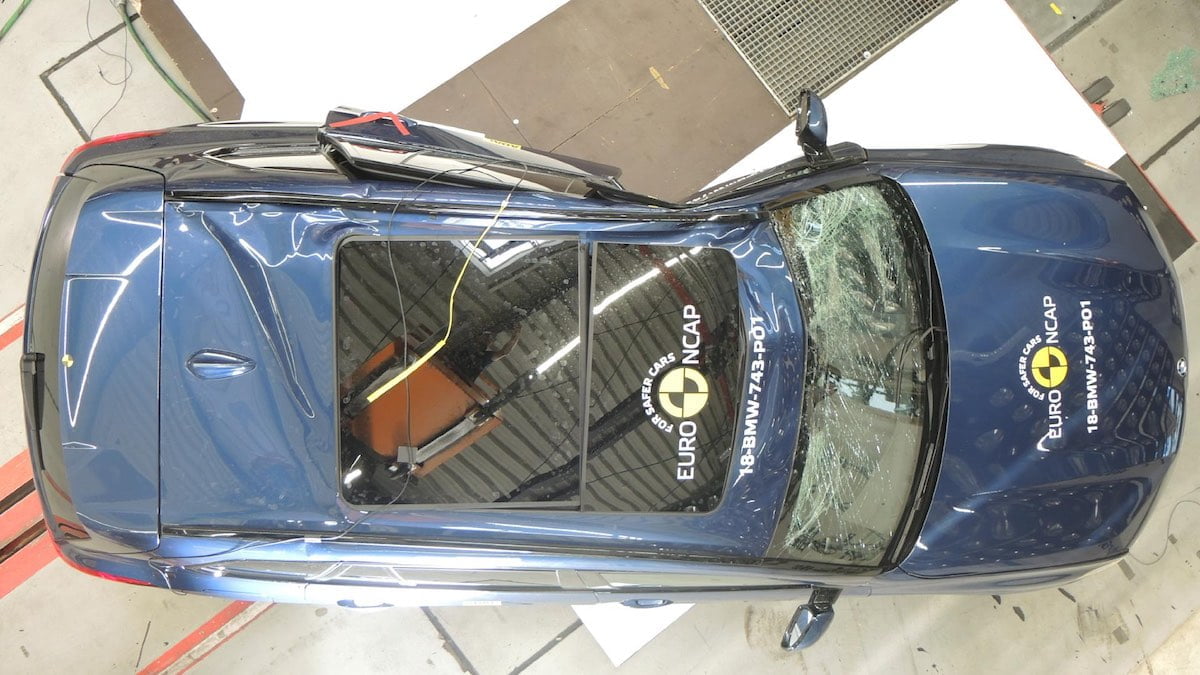
BMW X5 after a pole test
The new BMW X5 scored five stars from Euro NCAP
Michiel van Ratingen, Euro NCAP’s secretary general, said: “The Audi Q3, Jaguar I-Pace, Peugeot 508 and Volvo V60/S60 have set the standard against which others are judged this time, and other manufacturers could do well to follow their example. “The I-Pace, especially, demonstrates that future vehicles will be good for the environment but also provide high levels of safety.” After issuing a scathing criticism of Fiat and Jeep yesterday, Matthew Avery from the UK’s Thatcham Research was full of praise for the latest five-star cars: “These six carmakers take a more consistent approach to safety across their model range, and all have made a conscious decision to meet the standards set by Euro NCAP’s toughest tests. “The Audi Q3, Jaguar I Pace, Peugeot 508 and Volvo V60 are all amongst the ten safest cars produced in 2018, with the BMW X5 and Hyundai Santa Fe not far behind.”
Five stars for the new Peugeot 508
Five stars from Euro NCAP for the new Peugeot 508

New powertrains for Mercedes-Benz E-Class range

0
Mercedes-Benz has opened order books for two new powertrain options in its E-Class range. Buyers of the E-Class saloon can now order the new E 300 e, a petrol-electric plug-in hybrid model, while the coupé and cabriolet variants are now available with the high-powered E 350 petrol engine. The hybrid goes on sale with prices starting at £47,450. It’s powered by a 2.0-litre four-cylinder petrol engine, which produces 210hp, mated to a 120hp electric motor. Total system output is 320hp. It is capable of a theoretical 134.5mpg, according to the WLTP combined cycle, while CO2 emissions are pegged at just 46g/km. The E300 e is capable of travelling 31 miles on electric power alone, and charging takes two hours with a 7.4kW charger – or four hours from a standard three-pin plug socket. That starting price nets an E 300 e in entry-level SE trim, with sportier AMG Line cars coming in at £49,945. All cars receive blind-spot assist, active parking, keyless go, heated front seats, 18-inch alloy wheels, a twin-screen infotainment and gauge setup, heated front seats and wood trim on the centre console. AMG Line adds a styling package, full leather upholstery and darker wood trim. Mercedes-Benz E 300 e AMG Line saloon

More power for two-door E-Class models

Meanwhile, the E-Class coupé and cabriolet line-ups now have access to the 350 petrol engine. Confusingly named, it’s also a 2.0-litre unit which produces 300hp and 400Nm of torque. It starts from £44,750 for a coupé model, while cabriolets cost from £49,246. The 350 isn’t a full hybrid, but uses Mercedes’ EQ Boost mild hybrid system. It’s essentially a beefed-up starter motor, which combines with a larger battery pack and 48-volt onboard electronics to boost power output by 15hp. The E 350 coupé and cabriolet are available exclusively in AMG Line trim, and so come with similar specifications to the saloon – twin-screen infotainment, electrically adjustable and heated leather seats, all-round parking sensors and keyless go. 19-inch alloy wheels are also standard. Order books are open now for both the E300 e saloon and the E 350 coupé and cabriolet models. First deliveries of all models will commence in Spring 2019.

Fiat Panda branded a ‘zero-star car’ for safety

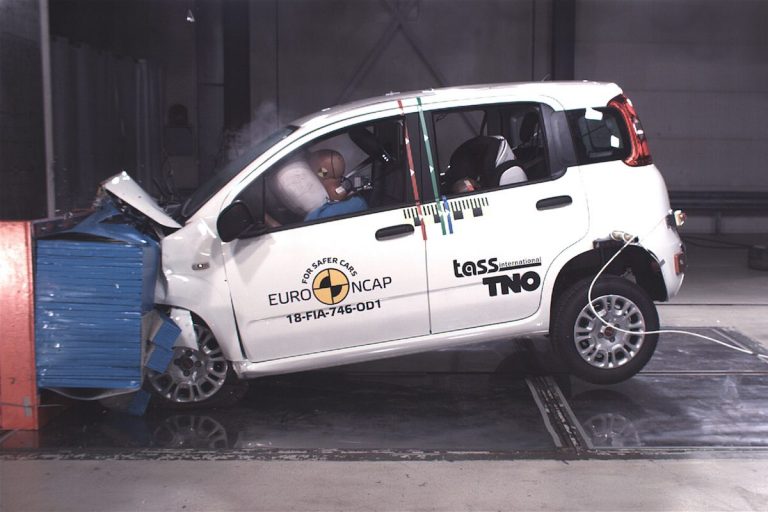
The Fiat Panda has become only the second car to ever be awarded zero stars for safety by crash testing body Euro NCAP – and the other car was the Fiat Punto, tested last year. The current Panda has been around since 2011, and was originally awarded a four-star rating when it was new. But safety standards have improved significantly over the last seven years, and the Panda has fallen a long way off the pace. One of the particular areas of concern was child safety, where the Panda scored a miserable 16% – compared to an industry average of 79%. The Panda failed to score more than 50% in any of the four categories (adult protection, child protection, vulnerable road users and safety assistance systems), which meant that it automatically scored zero stars. Matthew Avery, director of research at UK safety organisation Thatcham Research, was not impressed: “Most troubling is that the Fiat Panda is seen as a good choice for young drivers and fledgling families. But the only safety technology fitted were seatbelt reminders and the rear system failed to meet requirements, so wasn’t even rated. “These shocking Euro NCAP test results demonstrate an inconsistent commitment to safety, as Fiat has produced four and five-star cars in the past. “Where budgets are tight, consider a safer small car second-hand, like the five-star SEAT Ibiza.”

New Jeep Wrangler equally disappointing

Fiat Chrysler Automotive came in for further stinging criticism with its American subsidiary, Jeep. When the all-new Jeep Wrangler 4×4 was put through the same crash testing regime, it scored a paltry one-star rating.
Jeep Wrangler crash test, December 2018
Lone stars might be good in Texas, but not in a crash test.
While Fiat can at least claim that the Panda is a seven-year-old vehicle and is unable to be redesigned to meet some of the latest standards, it has no such excuse with the new Jeep Wrangler, which is a completely new design and has only just arrived in UK showrooms. The new Wrangler has achieved the worst score of any new model ever tested by Euro NCAP, and the third-worst in history ahead of the Fiat Panda and Punto. Avery stated: “Unlike the Fiat Panda, the Jeep Wrangler is an entirely new vehicle and doesn’t come cheap. Buyers outlaying over £50,000 on a car should expect more than a one-star safety rating. “No AEB (autonomous emergency braking) system is fitted, which is unheard of in this price bracket. There were a number of issues with the Wrangler in impact testing too, in terms of deformation of the footwell and damage to connecting structures, while the make-up of the dashboard was seen to present a risk to occupants.” The controversy over Fiat and Jeep’s poor results rather detracted from some excellent five-star results for Audi, BMW, Hyundai, Jaguar, Peugeot and Volvo, which we will explore in a separate article.

New car sales fall in November

New car registrations were down by 3% in November, just as they were in October, according to the latest data released today by the Society of Motor Manufacturers and Traders (SMMT). Private new car sales were largely the cause of this month’s fall, down more than 6% on the same month last year. Fleet sales, which make up the majority of new registrations, were down by less than 1%.
You may also like:

In terms of market breakdown, there was relative stability among fuel types. Diesel sales for November were just over 32% of the overall total, which is in line with the year-to-date figure. Petrol engines made up 61% of the total and alternatively-fuelled vehicles (hybrids and electric cars) were just under 7%, about 1% over and under their year-to-date results respectively. November 2018 new car registrations

Ongoing supply issues for some brands

Supply issues continue to play havoc with some manufacturers in the wake of new WLTP fuel economy and emissions regulations that came into force in September. Audi had a third shocking month in a row, with registrations down 43% in November after being down by 53% in both October and September. Ford, Hyundai and Nissan were other big names with a poor month. On the sunnier side of the street, Kia, SEAT, Skoda, Vauxhall and Volvo all had strong performances in November. For the two Volkswagen junior brands, supply definitely appears to be improving as WLTP-compliant models start flowing freely through to dealerships.

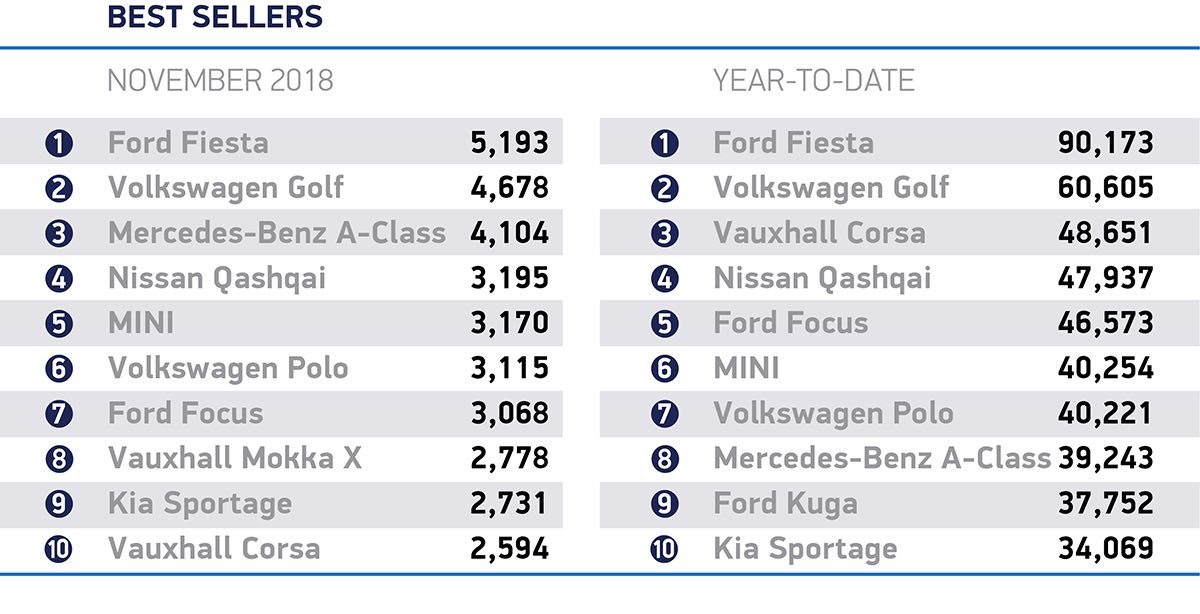
Hatchbacks dominate top ten

Seven of the top ten-selling cars in November were hatchbacks, with the remaining three SUV/crossover models and no saloons or estates to be seen. November 2018 top ten selling cars As usual, the Ford Fiesta is parked in the top spot, although only 500 units ahead of the Volkswagen Golf. The new Mercedes-Benz A-Class had another sterling month to again finish in third place, while the Nissan Qashqai recovered to fourth place after a slow month in October. An improved fifth place for the Mini hatchback in November means it has overtaken the Volkswagen Polo in year-to-date registrations, while the Mercedes A-Class has also jumped the Ford Kuga, which fell back out of the top ten this month.

Lexus RX L test drive

What is it?

Many large SUVs offer seven seats, either as standard or as an option. It makes a lot of sense in a family car, as even the smallest of rear pews can be invaluable if you need to carry unexpected passengers for a short journey. This is the first foray into the world of seven-seat SUVs for Lexus – at least in the European market. The RX L is based on the popular RX, which we reviewed back in June.

What’s new?

It’s difficult to tell the RX L hides a pair of third-row seats inside, but put it next to the standard car and you’ll notice the blockier rear and higher roofline. There’s actually an 11cm increase in the car’s overall length, all behind the rear wheels. There’s not much else to report, with the rest of the L being standard RX fare. That means the same combination of 3.5-litre V6 petrol engine and electric motor, plus a tech-filled cabin.

How does it look?

It’s actually quite difficult to spot the extra bulk of the RX L over the regular RX – Lexus’ stylists have done a great job disguising the larger rear, and the sloping window line gives the impression of a rakish coupé roof without any of the associated practicality woes. Up front, there’s the classic Lexus ‘spindle’ grille – an acquired taste, but it’s flanked with really smart LED headlights and a selection of other cuts and slashes. Lexus’ design language is nothing if not distinctive, and you certainly won’t mistake this for any other SUV on the road. Next to a Range Rover Sport’s straight-edged styling, it’s equal parts gaudy and appealing.

What’s the spec like?

Our RX was in range-topping Premier trim – a pricey investment, but one that comes with plenty of equipment to sweeten the deal. All RX Ls, regardless of trim level, boast some serious kit, including eight-way electrically adjustable front seats with heating and ventilation, a power folding third row, satnav, a powered tailgate and a raft of standard safety kit including lane keep assist, adaptive cruise control and active high beam assist. Our car was kitted out with a brilliant Mark Levinson sound system as well as 20-inch alloy wheels, plus a sunroof, 360-degree camera system, heads-up display and heated rear seats.

What’s it like inside?

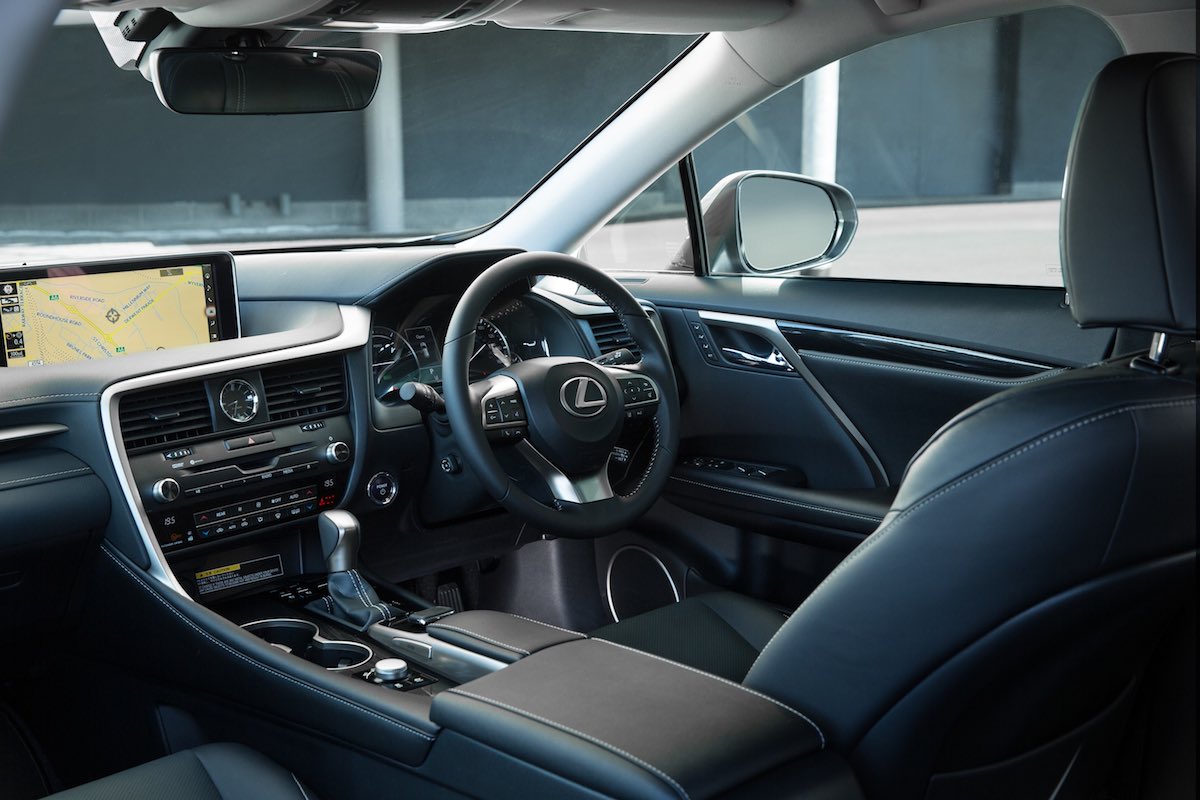
Lexus RX L interior and dashboard | The Car Expert
Superbly-built interior, but frustrating infotainment system
Lexus’ interiors are almost uniquely well-built – even the German brands can’t match how well the RX is screwed together. Most materials are superb, and so are the fittings – the high-resolution 12-inch display for the infotainment system is a real highlight. There are two big dark clouds hanging over it, though. The first is the infotainment – which after a week of use we still couldn’t grow accustomed to. It’s navigated through a sort of square mouse-pointer device, rather than the simpler and more effective touchscreen or scroll wheel of most rivals. The interface itself isn’t poor, but it’s immensely difficult to select the option you’d like, especially when on the move. The second is space. Having a third row of seats is all well and good, but adults will really struggle to get into them – and once back there, it’s very cramped. The back row is really only suitable for children – a shame, as the middle row is roomy and comfortable.

What’s under the bonnet?

As mentioned, the RX L uses the same powertrain as the regular RX – a Lexus classic consisting of a 3.5-litre V6 petrol engine running the efficient Atkinson cycle, and an electric motor and battery pack. Total system output is 312hp, which is a healthy amount even in a car this size. Petrol power is sent to the front wheels, while the electric motor takes care of the back wheels. The overall effect isn’t the same as a diesel rival would be. While most diesel SUVs of this size concentrate on low-down torque, the RX is happier with some revs – which the CVT gearbox is only too happy to provide, sending the dials spinning at a prod of the throttle. Outright performance is impressive, though – 0-60mph can be achieved in 7.8 seconds, though top speed is just 112mph. Claimed fuel economy is 47.1mpg and CO2 emissions are 138g/km, which are really good figures for such a large, petrol-powered SUV. You will have to work hard to achieve these figures, though – long runs are less suited to the hybrid powertrain and you’re more likely to see figures in the mid-30s.

What’s it like to drive?

Lexus RX L on-road - rear
The big Lexus doesn’t really like being treated like a hot hatch
The RX L trades mainly on refinement, quality and comfort. It’s a big car with an imposing presence, and though that can make it difficult to park in cities the commanding driving position and beefy bodywork do garner a certain level of respect from other traffic. When cruising along, the RX L is comfortable and cushy, riding over potholes and speed humps with ease. It’s also refined, with thick glazing and great soundproofing muting out most of the wind noise and road noise. There’s little point troubling the Sport or Sport S modes, however. The RX is a huge car that’s not too happy to be thrown around like a hot hatchback, and the hybrid powertrain and CVT gearbox doesn’t exactly lend itself to thrilling performance. Keep the RX L in its happy place, and you’ll have a comfortable ride.

Summary

The RX L is somewhat of a quirky choice next to the established German opposition such as the Mercedes-Benz GLS or Audi Q7 – but then, that’s a characteristic most Lexus’ have. The two tiny rear seats in the RX L aren’t quite enough to recommend it over the standard RX, though, and if you regularly carry seven adults, rivals will serve you far better. If you’re after an imposing hybrid SUV and your focus is on comfort, though, the RX L will serve you pretty well.

Similar cars

Audi Q7, Land Rover Range Rover Sport, Mercedes-Benz GLS

Key specifications

Model as tested: Lexus RX450h L Premier Price: £61,995 Engine: 3.5-litre V6 hybrid Power: 312 hp Torque: 335 Nm Top speed: 112 mph 0-60mph: 7.8 seconds Fuel economy (combined): 41.7 mpg CO2 emissions: 137 g/km

Hyundai and Kia lower range claims for new electric cars

Hyundai and Kia have been forced to reduce their claimed range for their latest new electric models after what was described as “a testing error”. The vehicles affected are the Kia e-Niro and Hyundai Kona Electric. According to Hyundai (which is also Kia’s parent company), the “independent organisation” responsible for the testing procedures applied an “incorrect testing methodology”. Hyundai claims that the test centre accidentally kept the cars on the test’s ‘urban’ cycle for a disproportionate amount of time, which resulted in the vehicles travelling at lower overall speeds with reduced energy usage for a longer period. This produced better results than it would have if the correct protocol had been followed.
You may also like:

The previously-claimed WLTP combined cycle range for the Kia e-Niro fitted with a 64kWh battery pack drops from 301 miles to 282 miles. The claimed range for the standard 39kWh battery pack drops too, from 193 miles to 179 miles. The numbers are similar for the Hyundai Kona Electric. The official range has been reduced from 312 miles to 279 miles for cars with the 64kWh battery, and from 190 miles to 180 miles with the 39kWh battery. Both brands have said that no other models in their respective ranges are affected by similar slip-ups, and that customers who have ordered an e-Niro or Kona Electric have been contacted to “flag up the issue”. The admissions come at a crucial time for electric car uptake in the UK new car market, and range anxiety is already at the top of the list for buyers’ concerns about buying an electric car. Last month it was reported by WhatCar? that most electric cars currently on sale overstate their mileage, although the Hyundai Kona Electric was found to have the best range of any electric currently on sale.

BMW 8 Series coupé pricing and specs announced

0
BMW has announced UK pricing and full specifications for its latest 8 Series coupé. The new model sits as BMW’s flagship alongside the 7 Series luxury saloon and revives a nameplate last seen in the 1990s. It will also be joined by a convertible version in time for next summer. The 8 Series coupé goes on sale in the UK this month, with prices starting from £76,270 on-road for the 840d diesel model. The 840d uses a 3.0-litre straight-six diesel, producing 320hp and good for a 0-60mph sprint of 4.7 seconds. It returns official fuel economy of 46.3mpg and emits 160g/km of CO2.
You may also like:

Customers wishing to opt for petrol power have only one option – the hot M850i, which uses a 530hp 4.4-litre V8 engine and is capable of 0-60mph in just 3.5 seconds. Fuel economy sits at a less-impressive 29.1mpg, though, and CO2 emissions are 221g/km. It’s priced from £99,525 on-road. Both engines are mated to a rear-biased xDrive four-wheel drive powertrain and eight-speed automatic gearbox which can work with the satnav to predict the gear it might need for the upcoming corners and junctions. All cars come with a pair of large screens inside – a 10-inch unit that takes care of instrumentation and driving data, and a 12-inch screen that acts as the monitor for BMW’s latest iDrive infotainment system. BMW 8 Series coupe front cabin Adaptive navigation, Bluetooth, Wifi and a 20GB multimedia hard drive all feature as standard. Leather upholstery, LED lights and an optional cut glass gear selector are also available. Also included as standard equipment is a head-up display, all-round parking sensors with park assist and a raft of safety features. BMW has bundled its driving assist technology into a ‘Personal Co-Pilot’ pack which includes adaptive cruise control, active city braking with pedestrian and cyclist detection and high beam assist. The new 8 Series goes on sale later this month. Convertible pricing is yet to be announced, but we’ll have all the details for you as soon as BMW provides them.