Nissan has started taking orders for two new versions of the Leaf electric car, one of which offers higher power and a longer range between charges.
The Leaf 3.Zero adds a new infotainment system, based around an eight-inch screen and with more connectivity, to the standard specification. However its sister Leaf 3.Zero e+ model gets a power and torque hike to 217hp and 340Nm, 67hp better than the standard Leaf.
Range increases too, by 40% or 62 miles over the standard model, Nissan quoting a potential driving range between charges for the 3.Zero e+ of 239 miles.
Behind these improvements is a new battery, with 288 cells instead of the standard 192 and rated at 62kWh instead of 40kWh. This results in a 25 per cent increase in energy density and 55 per cent better storage capacity.
Nissan says that the new battery, which sits under the car’s floor, is very similar in size to the standard unit, though the 3.Zero e+ does stand 5mm higher off the ground (on 16-inch wheels) compared to standard models.
New battery behind range and performance increase.
Other benefits, according to Nissan, include a better in-gear performance. A 13% cut in the 50mph to 75mph time will make overtaking slower vehicles easier, as well as easing into fast-moving traffic, for example when joining motorways.
The 3.Zero e+ top speed of 97mph is also 10% better than the standard car.
3.Zero e+ models will be sold as a limited edition, with 5,000 allocated to European buyers. It is priced from £36,795 including the Government’s Plug-in Grant, while the 3.Zero costs from £31,095.
Both cars will be marketed as flagship models in the Leaf range, and both will include the e-Pedal and ProPilot driving technologies as standard.
The e-pedal allows drivers to start the car, accelerate, decelerate and stop using only the accelerator pedal. The ProPilot is effectively an adaptive cruise control, allowing the car to stop, restart and stay centred in its lane in higher-speed cruising and lower-speed congested traffic.
First deliveries of the 3.Zero are expected in May and the 3.Zero e+ in the summer.
What is it?
The latest BMW X3 is the third-generation version of the brand’s mainstream compact SUV.
Key features
Lighter, core petrol engine, performance model, more tech
Our view
The BMW X3 deserves to earn far more headlines than it does, as one of the most effective premium SUVs on the market.
Only the too-extensive options list detracts from the quality and performance of this model.
Similar cars
Audi Q5, Volvo XC60, Jaguar F-Pace, Mercedes-Benz GLC
BMW fans don’t get very excited about the X3 – it wasn’t the brand’s first SUV, arriving in 2003 four years after the X5 took the German performance car brand in a whole new direction, and the pioneer’s smaller sister has apparently never been that highly regarded.
Impressions can be misleading, however, as X3s are very prolific indeed on the roads. Over the past 15 years or so, BMW has sold 1.3 million of them – this is a vehicle that does its job very well, without writing headlines about it.
BMW will hope, perhaps, that the latest version makes a deeper impression. On sale since the end of 2017, this all-new third-generation model adds more distinctive styling, a petrol engine option and a performance variant, while not scrimping on the basic core abilities that have made the X3 so popular – in an understated sort of way…
And the latest X3 has to make a deeper impression because the market it competes in has exploded beyond all recognition, now populated by the most competitive of new rivals such as the Jaguar F-Pace and Volvo XC60.
Answering this challenge includes giving the X3 a new exterior treatment – it’s nothing radical but it does make for a more connected appearance, with none of the odd styling touches that have blighted previous versions. The detailing is carefully applied too, each of the SE, xLine and M Sport versions getting their own individual looks in such areas as grilles and lights – distinctive from one another, but not by too much.
Buying and owning a BMW X3
The new X3 is basically the same size as its predecessor (which notably is a little larger than the first X5 launched back in 1999…). However, there’s an extra 5cm on the wheelbase, which means more interior space.
The latest construction techniques (shared with the 5 Series saloon) see significant weight saving, which is good for efficiency and that traditional BMW trait, handling (yes even on an SUV). And a perfect 50:50 weight distribution aids the in-corner poise, too.
Yet BMW wants us to realise that this is a proper SUV, unlike most of them these days. So every X3 comes fitted with all-wheel-drive, and the marketing types also emphasise the fording depth of 50cm and off-road friendly approach and departure angles. Few owners will take their X3 off-road, but BMW wants us to believe you can.
Diesel engines have always been core to the X3 line-up and the latest model maintains the trend, starting with the 4-cylinder, 2.0-litre unit of 190hp that is fitted to our XDrive20d test car. There’s also a more powerful 30d, with 265hp from its 3.0-litre straight-six engine.
For petrol fans there is a high-power option in the form of the M40i – it has 360hp and a sub-five-second 0-62mph time, as it should considering this is the first X3 to wear BMW’s much-desired ‘M’ badge.
Likely to interest rather more buyers in today’s market, however, will be the new mainstream petrol option. The 20i employs a four-cylinder unit, with 184hp. It becomes the entry-level X3, at just under £40,000 – but there is so much tempting stuff on the options list that it will be almost impossible to avoid pushing your final bill over £40K and into the realms of five years of £450 annual road tax rates.
To give an example – our test car has an on-the-road price of £41,990 but close to £8,000 of options fitted. This includes such desirables as the £1,690 ‘Technology Pack’, which includes wireless phone charging, a head-up display, the digital cockpit panel, and operation of various items by means of gestures. Apple CarPlay? It might be supplied for free on Kia Ceeds and the like, on a BMW X3 it’s a £235 option…
Still, no scrimping on safety, as the X3 comes with a five-star Euro NCAP crash-test rating. Autonomous Emergency Braking is standard, but of course the best option is all the tech available including adaptive cruise control (a £620 option) and steering and lane-changing aids which are part of the ‘Driving Assistant Plus’ safety pack, again on the options list.
Continued on next page:Interior, drive and our verdict
Kia has kicked off 2019 with two new special-edition models for its UK showrooms – the Stonic Mixx and Picanto Wave.
The former of the two brings a white base paint colour to the Stonic crossover, with a contrasting orange roof to stand out from the rest of the range. Other features include 17-inch alloy wheels, LED daytime running lights and rear privacy glass.
Inside the Stonic Mixx, black cloth and grey faux leather upholstery is included, complete with orange trim accents to match the roof.
As for luxuries, there’s a reversing camera and a seven-inch touchscreen infotainment system thrown in – the latter boasting support for DAB radio and Bluetooth connectivity, while also offering Android Auto and Apple CarPlay capabilities.
Powering the Stonic Mixx is a 1.0-litre turbocharged petrol engine paired with either a six-speed manual gearbox or seven-speed dual-clutch automatic transmission. Pricing starts at £18,200.
Kia Picanto Wave
As for the Picanto Wave, Kia says this version of the popular supermini has been ‘inspired by sunny beaches and blue skies’ – meaning it’s painted in a blue hue, with matching denim-style upholstery.
Standard equipment on the Wave includes 15-inch alloy wheels, air conditioning, a reversing camera and the same infotainment system as the Stonic, plus support for wireless phone charging.
Powered by a 1.0-litre petrol engine mated to a five-speed manual gearbox, the Picanto Wave is available from £11,895. Both models are now on sale in Kia dealerships around the country.
Lamborghini has showcased an updated version its Huracan supercar – the Evo.
The new Huracan Evo gets a bolder styling package which takes cues from the faster Performante model, as well as more power.
It sees a new diffuser, taillights and a high-exit exhaust all added to the car, giving it a more aggressive appearance. Even the underside of the car has been extensively styled to improve aerodynamic efficiency.
These updates have been announced for the all-wheel-drive coupe and spyder models, though it is expected that rear-wheel-drive models will receive the facelift too.
The Huracan Evo’s performance has been boosted over the previous car too. Power is now up to 640hp – an increase of 30hp over the old car – and it’ll hit 60mph in just 2.7 seconds.
A new exhaust design features at the rear of the car (Lamborghini/PA)
The noise and energy are provided by the latest incarnation of Lamborghini’s naturally-aspirated 5.2-litre V10 engine, and the company claims that the Huracan Evo will hit over 200mph flat-out.
It features both rear-wheel steering and torque vectoring for enhanced cornering abilities, while Enhanced Lamborghini Dynamic Steering (LDS) gives greater responsiveness in the bends. It means that the Evo has improved low-speed agility as well as excellent high-speed stability.
Inside, the Huracan Evo benefits from an eight-inch colour touchscreen, which features multi-finger gesture control and Apple CarPlay, as well as traditional functions such as satellite navigation and media controls.
Lamborghini quotes the new Huracan Evo’s price in the UK as £165,256, excluding retail price taxes.
New car registrations were down over 5% in December as poor fleet sales dragged figures down the overall market, bringing a difficult year to a close.
Private sales were down by less than 4% in December, which equates to fewer than 2,000 vehicles, over the same month the previous year. Given the reports of poor Christmas trading all across the retail sector, this is probably not a bad result and is broadly in line with recent months.
As we regularly point out (and as most media completely ignore), 90% of all private new cars are bought on dealer finance agreements that essentially require the customer to change their car at the end of the term, which all but guarantees a supply of repeat customers for the car industry.
The 8% fall in fleet registrations is a more worrying sign, with the expectation that businesses are freezing new contracts and purchases in the face of political uncertainty over Brexit. This will almost certainly continue over the first half of 2019 as well, regardless of what sort of Brexit we get (or don’t get, as the case may be…).
Diesel continues to fall, electric cars not plugging the gap
Diesel sales slid back under 30% market share as the year drew to a close, a couple of percentage points below the full-year average of just under 32%. Whether this becomes the new normal or diesel falls further in 2019 remains to be seen.
Sales of alternatively-fueled vehicles have not exactly been sparkling for the last few months, and this continued in December. Yes, numbers are up compared to last year, but nowhere near enough to lead us all to a greener future.
This is largely because new emissions rules that came into effect in September have severely restricted availability of several of the top-selling plug-in hybrid models. This is not expected to be resolved until about the middle of 2019.
Small cars and family hatchbacks dominate the top ten
The top eight cars in the best-sellers list were all hatchbacks in December, quite probably a reflection on the greater drop in fleet registrations compared to private sales.
The perennially market-leading Ford Fiesta was followed by the Volkswagen Polo and Mini hatch, ahead of the Mercedes-Benz A-Class, Vauxhall Corsa, Volkswagen Golf, Ford Focus and Vauxhall Astra. Two SUVs rounded out the top ten, being the Ford Kuga and Nissan Qashqai.
In terms of full-year sales, December’s results didn’t change very much. The Polo’s strong month mean that it jumped the Mini for sixth place, but that was it.
We will have a detailed analysis of the overall 2018 results later this week, so check back to The Car Expert soon.
The UK’s car buying community is gobbling up compact SUVs at a fearsome rate, with the likes of the Volvo XC40 and Jaguar E-Pace showing that people really do like a premium badge and a high ride height more than most things.
It’s why this new Q3 is so crucial to Audi, as it’s an offering in a drastically-growing segment that shows no sign of slowing down
This is the first time we’ve got behind the wheel in the UK, and we’re testing it in mid-range S Line trim.
What’s new about the new Audi Q3?
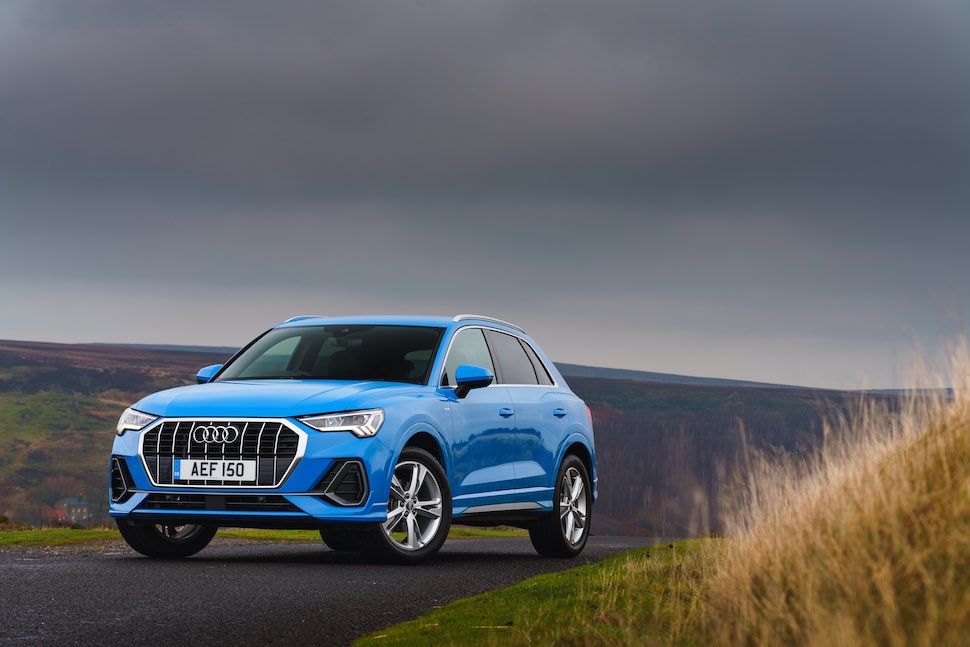
There’s a fair amount going on here. The looks, for one, have been overhauled compared to the older Q3 – gone is the soft, rounded appearance in favour of a more imposing and, well, Audi-ish design.
It’s the same story inside, with Audi applying all of its latest tech in pursuit of a genuinely upmarket cabin.
A variety of new engines are available, and though it’s just petrol offerings to begin with, there will be diesel options arriving shortly. There’s the choice of either two- or four-wheel-drive, as well. It means that, in reality, there should be a powertrain option for everyone.
How does it look?
The design of the new Q3 is far more dramatic than the car it replaces. The front end is in-your-face and hard to miss; it’s closer in line with the likes of the larger Q7 and Q8 models now.
The chrome surrounds to the grille and vents up front give it a classier, more upmarket appearance, while sharper design lines on the flanks make it appear far wider than it actually is. It’s a solid design, and likely one which will find favour with most.
Our test car sits on larger 19-inch wheels and though they do look good, the smaller 18-inch versions don’t dent the car’s overall appearance that much either.
What’s the spec like?
Three trim levels are available with the Q3 from launch; Sport, S Line and range-topping Vorsprung Edition.
Our test car fell into the middle camp, and Audi slates it as the one which most buyers will opt for. It packs 19-inch alloy wheels as standard, along with a full sports exterior styling package, LED headlights and tinted windows.
You also get sports seats, finished in a mixture of cloth and leather upholstery, and a multifunction sports steering wheel too.
As mentioned, the standard infotainment system not only looks good, but is decidedly brilliant to use too. It’s easy to navigate and responsive to commands as well.
We’re glad there’s still a conventional analogue volume dial to use, but it’s been placed in an odd area – you’ll find it on the left-hand side of the dash underneath the heating and ventilation controls, pretty much as far away from the driver as possible.
Continued on next page:Interior, drive and our verdict
Skoda has begun to take orders for its new Kodiaq vRS – the brand’s first performance SUV and only the third model to be given the vRS badge since its inception.
The new model will start from £42,870 and comes fully loaded with premium equipment.
Under the bonnet sits the brand’s most powerful diesel engine – a 2.0-litre twin-turbocharged unit producing 240hp. It’s mated to four-wheel drive and a seven-speed dual-clutch automatic gearbox, making for an impressive 0-60mph sprint of just 6.8 seconds.
Based on the seven-seat Kodiaq, the three rows offer ample space for a family, and there’s a generous equipment list to justify that high price tag.
The exterior features 20-inch ‘Xtreme’ alloy wheels and a gloss-black grille plus dual exhaust pipes and a vRS body kit. Dynamic Chassis Control is fitted as standard, allowing the driver to choose Comfort and Sport settings.
Inside, there’s vRS-specific stitching and Alcantara-trimmed sports seats, plus a black headliner.
The kit list includes niceties such as full LED lights front and rear, three-zone climate control and Skoda’s touchscreen infotainment system with Apple CarPlay, Android Auto and satnav. All-round parking sensors and a dynamic sound booster are standard as well.
There’s also the brand’s first iteration of the Volkswagen Group’s ‘Virtual Cockpit’ driving display. Skoda’s designed this with a special ‘sport’ view, placing the speedometer and rev counter in the centre of the display Porsche 911-style.
Order books for the Skoda Kodiaq vRS are open now, with first deliveries to UK customers expected in the spring.
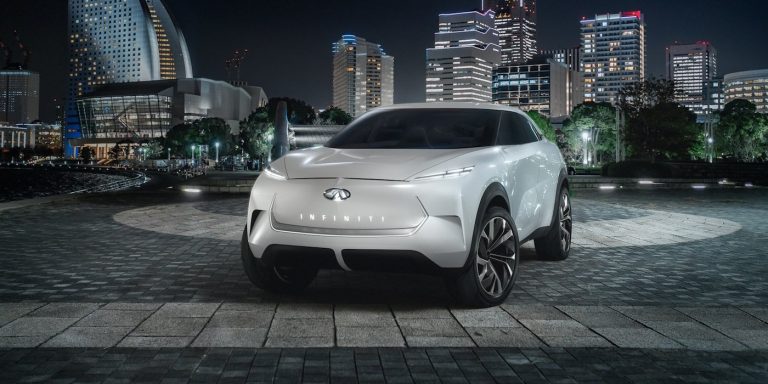
Infiniti has given a glimpse of its electrified future with its QX Inspiration concept.
Revealed ahead of its full debut at the North American International Auto Show in Detroit this month, the concept ‘represents Infiniti’s plans for high-performance electrified vehicles’.
According to Infiniti, the development of new electric vehicle platforms has allowed it to create ‘spacious, lounge-like interiors’. As such, the cabin of the QX Inspiration has been designed to be as comfortable as possible, with hand-crafted techniques used throughout.
Karim Habib, Executive Design Director for Infiniti describes the QX Inspiration as “the beginning of a new era for Infiniti, and an illustration of where the brand wants to go.
“New technology gives the opportunity to evolve Infiniti’s design philosophy – and the new vehicle communicates the ‘serene strength’ at our core.”
Though Infiniti has given no details surrounding the vehicles power output nor electric range, it claims that is will be ‘offering complete range confidence’. In order to keep up to speed with rivals, that means it’ll need to offer the current target for most manufacturers of 300 miles.
The interior follows the Japanese hospitality principle of ‘omotenashi’, which means that drivers will be sat in a ‘welcoming environment’. Rival Lexus also follows the principle of omotenashi in its latest models.
The QX Inspiration will make its public premiere at the North American International Auto Show, better known as the Detroit motor show, which commences on January 14.
Though many people after a comfortable car that’s practical and easy-to-drive are turning to SUVs and crossovers, there’s still a place for the humble estate. This is one such vehicle – the BMW 5 Series Touring.
Though BMW makes a raft of SUVs (and the list is growing fast), the German manufacturer still makes two rock-solid estate cars. The 3 Series and 5 Series Touring models are both top picks for those who aren’t after the high-ride of off-roaders but still want plenty of practicality. Here we’re testing the more spacious and petrol-powered 530i.
Quite a lot of what is new about this car is under the bonnet – but we’ll get to that in a little more detail later.
This particular car is finished in range-topping M Sport trim, which means you get larger alloy wheels, sports suspension and more aggressively-shaped lower body bits. You also get a variety of M Sport touches inside, such as a multifunction steering wheel with ‘M’ badges.
Our test car also came with optional adaptive suspension, which allows you to soften the ride just the right amount to counteract the effect that the large 19-inch alloy wheels and run-flat tyres have on it.
How does it look?
Beauty is very much in the eye of the beholder here. I think that the latest generation of the BMW 5 Series is one of the best-looking yet, and it certainly looks striking enough out on the road.
On the other hand, a colleague argues that each new model BMW launches makes its predecessor suddenly seem more attractive…
Though our test car was finished in a rather subdued grey colour, it still looked special enough, especially when coupled with the larger alloy wheels and dropped ride height you find on M Sport-specification cars.
It’s a big car, there’s no doubt about that, but the styling of it manages to disguise its overall heft quite well – sweeping lines and relatively short overhangs make it look a little smaller than it actually is. It’s a clever effect, and one which is executed well.
What’s the spec like?
Our car came in M Sport specification, and it gets a lot of standard equipment included as part of the car’s price. Lower-output engine models get 18-inch alloy wheels with run-flat tyres, while the higher-spec engines come with 19-inch wheels. All versions get the full M Sport styling package, which includes redesigned side skirts and front bumpers.
You also get automatic climate control air conditioning, ambient interior lighting and front heated seats.
Our test car also came with optional extras such as the visibility package (which includes adaptive LED headlights and headlight washers), as well as the technology package (wireless phone charging, gesture control and a head-up display).
In total, our car came to £59,050 – which is a substantial amount more than the £47,232 base price of the vehicle. If you’re mulling over a new 5 Series, be wary about paying a lot of money for some nice gadgets that won’t add anything to the car’s resale value.
Continued on next page:Interior, drive and our verdict
Ecotricity, the country’s largest supplier of electric vehicle charging points, is facing criticism for providing a poor service and holding back the growth of electric cars in the UK.
The firm, which dominates charging infrastructure at motorway service stations and operates 300 sites across the country, has been accused of under-investing by its rivals, in an interview conducted by the Financial Times.
Chargepoint, a rival group backed by Daimler, argued that Ecotricity’s lack of investment and failure to provide a stellar service would negatively impact development in the sector – turning customers off to the idea of ‘going electric’.
Christopher Burkhart, European director of Chargepoint, told the FT that charging providers have a duty to ensure their equipment functions as it should. “Highway charging is a distressed sale, just like petrol or diesel when you’re about to run out,” he said. “It has to work.”
Ecotricity was a pioneer of roadside charging, opening its first stations in 2011. As such, it holds a virtual monopoly on charging at service stations, thanks to contracts with large groups such as Moto, Welcome Break and Roadchef.
Dale Vince, the company’s founder, blamed unreliable chargers on their age. “We have got some unreliable units from the early days,” he told the FT. “That’s the price we’re paying for being such an early mover.”
Potential buyers put off by broken chargers
An unnamed executive from a rival charging firm reportedly told the FT that building Ecotricity’s network “was the right thing to do five or six years ago… they haven’t really followed that investment up. I think [Ecotricity] is no longer helping adoption of electric vehicles.”
Unreliable chargers are seen as a major barrier to EV ownership. Despite over 90% of journeys in the UK being shorter than five miles, range anxiety is still the barrier most motorists say would prevent them from purchasing an electric car.
Vince said that Ecotricity would improve the state of its network, beginning with an upgrade for the 30 chargers that cause the most problems. This upgrade would, Vince said, ensure that 99% of the network was operational at all times, compared with 95% currently.
Around £20m has already been spent on Ecotricity’s network, though the company has not yet turned a profit. The company started charging a fee for its power in 2016 for the first time, but still made a pre-tax loss in the financial year 2016-17 of £695,789.
“We’re not about profitability,” Vince said. “We genuinely did this because we want to kick start something.”
The last few years have marked a real change in the motoring scene, and it’s now no longer enough for a car to be more powerful, more efficient or safer than its predecessor.
Instead, the industry as a whole is looking to ever more sophisticated electrified and autonomous vehicles – a trend clearly shown in the cars we’re expecting in 2019.
That’s not to say that the entire motoring scene is that of a blank, battery-powered box. There’s plenty of exotic and evocative metal being launched over the next 12 months too. We’ve rounded up a healthy mix of both camps for you to sink your teeth into.
The list is not in any particular order. Just to be fair, we’ve limited it to one model for each car manufacturer*, otherwise we could be here all week…
* with one exception. Big expensive prize** for the first reader to correctly identify the manufacturer in the comments below.** just to be clear, there is no actual prize.
BMW M8
BMW’s new 8 Series marks the return of a badge last seen in the 1990s, and already comes with the option of a 530hp 4.4-litre V8 engine in the M850i model.
The BMW M850i, which will form the basis for the new BMW M8 (PA)
But it wouldn’t be a true BMW without a hardcore M variant, so we’re expecting to see a new M8 arrive with a highly-tuned engine outputting close to 600hp.
DS Automobiles has already experienced some success in the SUV segment with its large, luxurious DS 7 Crossback, and it is hoping that some of its desirability will trickle down to the upcoming DS 3 Crossback.
DS 3 Crossback
It enters into an extremely competitive segment, taking on the likes of the Audi Q2 in the compact SUV market. There are likely to be petrol and diesel-powered offerings to begin with an all-electric version is due to arrive later on.
This adorable electric hatchback was the surprise star of the Frankfurt Motor Show, demonstrating to the world that it’s possible to inject a dose of personality to electric motoring.
Honda Urban EV concept (PA)
Expect to see the show concept toned down a little for production when it arrives late in 2019, but if Honda knows what’s good for it, it’ll retain as much of that cheeky character as possible.
Porsche’s first all-electric model will be the Taycan (pronounced ‘Tie-can’, not ‘Taken’), a super-saloon designed to rival the Tesla Model S.
The Porsche Mission E concept from 2015, which previews the new Taycan electric saloon (PA)
Performance, as you’d expect from Porsche, will be ample with more than 600hp on tap and four-wheel drive. Whether it can topple Elon Musk’s mighty machines remains to be seen, though.
Ferrari’s hardcore 488 Pista arrived to critical acclaim in 2018, and the Italian supercar manufacturer is hoping that by lopping its roof off to create this – the 488 Pista Spider – it’ll extend its popularity even further.
Ferrari 488 Pista Spider (PA)
It matches the hardtop’s performance too; Ferrari claims 0-60mph in 2.6 seconds, and flat-out it’ll do 211mph.
Motorists who fail to properly clear their car windscreen of ice could face fines.
The offence, which is referred to as ‘pothole vision’, means that drivers have a restricted view out of the windscreen and is punishable by a £60 fine.
It’s an easy issue to avoid, however; providing you properly and thoroughly remove the ice from your windscreen.
Resist the urge to start the car and then leave it alone to warm up. Should your car disappear because you’ve left the keys in the ignitions, it will probably invalidate your car insurance cover.
Don’t use hot water!
Pouring hot water over car’s glass is a definite no-no – despite windscreens improving in quality in recent years, this process is unlikely to do it any favours. Even if it doesn’t result in the whole screen cracking, it could still cause cracks around any existing chips in the glass.
The only items which should be used to clear a frozen screen and windows are de-icer and an ice scraper. You can either buy some de-icer spray or make your own by combining two parts of rubbing alcohol (isopropyl) and one part of water in a plastic spray bottle.
Spray the de-icer towards the top of the windows in order to allow it to fall over the entire glass section, then clear away any ice left over with the scraper.
While you’re at it, take an extra 30 seconds to clear your headlights and tail lights. It will make it easier for other cars to see you in murky winter conditions.
It’s also worth checking to make sure that the windscreen washer jets aren’t frozen, and the same goes for the wipers themselves. A quick squirt of de-icer on them should ensure that they aren’t stuck.
Coming in as the smallest in Jaguar’s three-pronged range of SUVs, the E-Pace forms an offering for those people who want to sit up high yet without having to deal with an unwieldy, difficult-to-park car.
However, Jaguar has made sure to make the E-Pace look purposeful while instilling it with a small amount of the sports car charisma found in its F-Type.
Available with a range of petrol and diesel engines, as well as two- or four-wheel-drive, the British-built E-Pace should be able to offer something for everyone – but is this the case? We’ve got behind the wheel in the UK to find out.
There are a variety of new features on the E-Pace. A range of safety assistance systems have been included on the baby Jag, with emergency braking with pedestrian detection and lane keeping assist combining with a blind spot assistance system and reverse traffic monitor to contribute to the car’s excellent five-star Euro NCAP safety rating.
Our car also benefitted from the inclusion of the ‘Connect Pro Pack’ which adds a 4G wi-fi hotspot – which is ideal for those families who like to stay connected on the move. You also get Jaguar’s Navigation Pro system, which gives real-time traffic information and displays street parking availability, which is handy for those living in urban areas.
How does it look?
Jaguar says that it’s transferred a lot of the design from its F-Type sports car to the E-Pace – check out the rear lights and wide, gaping grille for these – and we’d say the result is successful. It’s a compact package, but the E-Pace brings with it a lot of presence, which is no doubt aided in our test car’s case by the aforementioned alloy wheels.
Thought the design does fly quite close to that of the larger F-Pace, it’s still a recognisable car in its own right. That sharper rear section, coupled with a very short front overhang gives it a much sportier appearance than that of rivals in this segment.
What’s the spec like?
There’s a lot of standard kit included on the E-Pace. You get automatic LED headlights, Jaguar’s full sound system and Bluetooth connectivity too. Cruise control is thrown in, which makes longer journeys a little less tasking.
Like we mentioned, our test car came in high-spec HSE R-Dynamic trim level. It gets the upgraded Meridian sound system (which is excellent), and the full Park Pack which adds a full 360-degree parking camera – a particularly handy feature when trying to get the car into tighter spaces. The upgraded 12-inch infotainment screen is also good to look at, though it falls a little behind rival systems in terms of user-friendliness.
Next page:Step inside and take a drive
The sensation of movement inside a modern car can sometimes feel a little sterile. The protection we get from the outside world and the clever onboard technology creates a little cocoon, disconnected from the road and with little steering feel.
However, as I’m driving along a brief straight in the Welsh countryside with trees verging on autumnal everywhere I look, the Alpine A110’s cockpit is painted with light. It creates an atmosphere similar to a fighter jet soaring through faint clouds on an almost clear day as the high-gloss, interior body-coloured panels become speckled with brightness.
The layout of the Alpine forges an intense feeling of control. The balance is perfectly weighted around my hips, and while others want to put the seat back further and can’t, my dainty proportions for once match the car’s.
For its size, the 1.8-litre engine seems a bit overzealous too, especially as it’s turbocharged, but the pairing is an absolute delight.
From the driver’s seat, the noise from the four-cylinder 16-valve engine creates a glorious rumble that progresses to a smooth roar and completes a perfect driving package.
The A110 is arguably one of the finest cars of 2018 (PA)
The A110’s engine is mounted in the middle of the car (PA)
Personally, I still can’t decide if I think this car is classically designed or futuristic. When it arrived at our Snowdonia location, the iconic shape resurrected images in my mind of snowy alpine hills littered with fir trees and a rally-spec A110 cruising the icy roads.
However, the styling still looks bold. The curves are strong, and the round lights give an unmissable glare – particularly as the dark clouds swoop over and the rain begins to pour.
In my eyes, the greying backdrop only brings out the glamour in this car, too. It’s subtle when it needs to be and raucous when you want it.
From inside, yes, it does still feel like a Renault. It has all the key trademarks of the famous French brand, but enough special touches to make it feel different. The Alpine logo in the centre of the steering wheel is enough to put a grin on your face, while the stripped-back bucket seats beckon you to go racing.
Traditional badges are placed all over the car’s exterior (PA)
Neat touches are dotted around the A110 (PA)
The twists and turns of these roads are no match for the Alpine (it’s pronounced “Al-peen”, by the way) as I’m constantly reminded on our road trip. Its small proportions allow it to get away from the other cars with ease, most of the time not touching the limit of the 250hp it’s harbouring within.
It’s easy to feel deceived as we’re slicing through twisty bends like butter. Input into the A110 is so direct, you feel it’s unnecessary to put it into ‘Sport’ mode to feel you’re getting the performance that it’s capable of.
With one push of that big red button though, the dials come to life, the engine noise fires up a note and you can really feel the power firing through your foot.
All of a sudden, the way that Welsh hills like to, the roads will open up and there’s enough space to enable you to really put your foot down.
The A110 is extremely light in weight (PA)
At this point, I realise I’d been occupying the lower echelons of what the Alpine can do. There’s one experience that can without a doubt put a smile on my face, and that’s pushing my foot to the floor and feeling the kick from the engine behind me send me flying down the road.
While the A110’s history suggests oiled-up mechanical parts and skilled driver input, one of the fantastic things about the 2018 model is that it’s incredibly easy to drive. Yes, there are a few hairy moments on a wet Welsh road when you’re pushing it particularly hard, but as everything is so direct and analogue, driving feels close to the limit but never out of control.
In the same vein, the automatic gearbox is so fast you’d never put it into manual for anything more than the fun of some flappy-paddle action and proving to yourself you know how to take a corner properly.
With tricolour badges emblazoned across the inside and outside of the Alpine, it’s got Parisian passion seeping through its fuel lines. The car feels alive, it wants to go and it wants to go fast.
What is it?
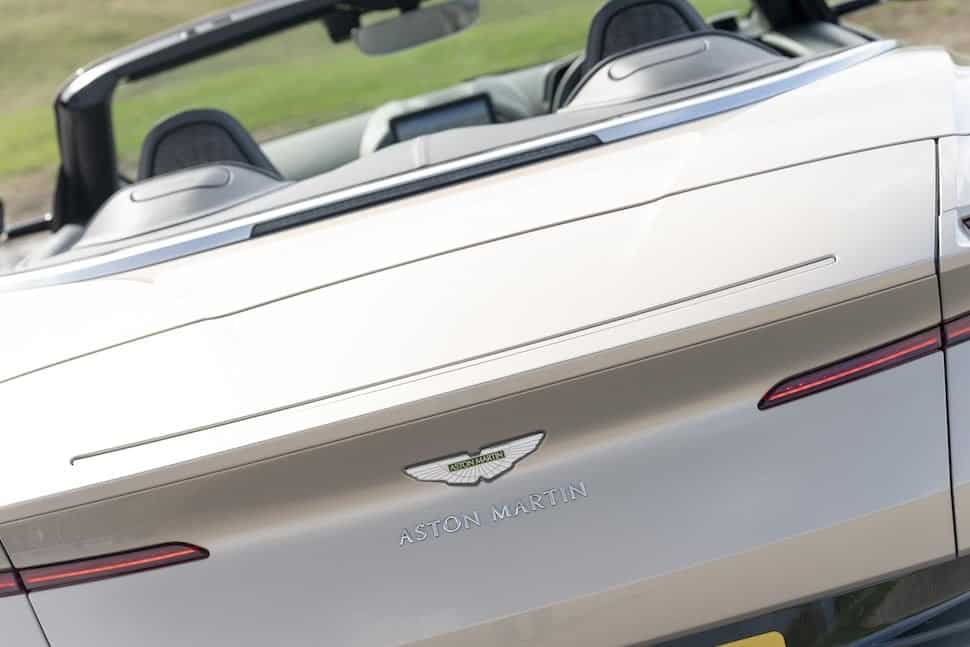
The Aston Martin DB11 Volante is the open-top version of the luxury brand’s grand tourer.
Key features
Electric folding fabric roof, quality exterior and interior, impressive GT performance
Our view
The Aston Martin DB11 Volante combines the pleasures of a top-down convertible with the practicality of a long-distance cruiser, making it a strong contender in the luxury market.
It offers an attractive combination of visual appeal, quality and performance to produce an evocative but relaxing driving experience.
Similar cars
Bentley Continental GTC, Ferrari Portofino, McLaren 570S Spider
The Aston Martin DB11 Volante is built in Britain.
Aston Martin is in a good place right now. Reinvented under its new petrolhead CEO Andy Palmer, the brand has left its reputation as a perennial loss-maker behind and enters 2019 with exciting plans, including an SUV, built in an all-new Welsh factory.
The turnaround, however, has been built on two pillars – the hardcore sports car Vantage, which we tested a few weeks ago, and the DB11 grand tourer.
The DB11 was the first car launched under Palmer’s ‘Second Century’ development plan, announced virtually as he arranged the furniture in his new office. Unveiled in 2016, it was designed, Aston Martin tells us, to follow the brand’s tradition of offering performance, refinement and comfort. It had to be a car very suited to very long journeys, with the driver enjoying the experience and not feeling exhausted at the end of it.
Buyers seemed to agree – the DB11 has proved a hit, and now it has gained a sister, the Volante. In Aston speak, Volante effectively means drop-top.
The newcomer boasts the same Mercedes-AMG-sourced 4.0-litre twin-turbo V8 engine as is available in the coupé, although the soft-top is not offered with the flagship 5.2-litre twin-turbo V12 that you can choose in its hard-top sister.
Also similar to the DB11 coupé is the 2+2 (two people and two very little people) seating arrangement. But it adds a folding fabric roof for a true wind-in-the-hair driving experience. Fabric? Don’t worry, this is no ordinary cloth cover…
Buying and owning an Aston Martin DB11 Volante
For those seriously interested in buying at this end of the market price will not be such an important factor, but in bald figures the Aston Martin DB11 Volante starts from just under £160,000, which is around £15,000 more than the coupé but also saving £6,000-plus over its perceived direct rival, the Ferrari Portofino.
Another contender, the soon-to-be-replaced Bentley Continental GTC, comes in at £15,000 more than the Aston, while McLaren’s 570S Spider is also worthy of consideration at around £165,000.
Not surprisingly the V8 Volante is very closely related to its coupé sister, using the same bonded aluminium body structure. This makes the car both lighter than its predecessor DB9 Volante, which is good for handling prowess and efficiency, and significantly more rigid, which is well-nigh essential for convertible cars.
Of course, specific measures have to be undertaken to compensate for chopping off the roof. Compared to the coupé the Volante gains stiffer sills, a bespoke front crossmember and Active Roll Protection – two individual roll hoops that fire up through the rear screen to protect the heads of occupants if they are unfortunate enough to invert the car.
All this adds weight, of course, the Volante tipping the scale at around 110kg more than its hard-top sister (though again, it’s 25kg lighter than the DB9 Volante). It could have been heavier had Aston chosen to go the folding hard-top roof, like Ferrari with the Portofino.
Instead, we have a fabric top – but as mentioned, ‘fabric’ does not do it justice. There are some eight layers, with the result that with the roof up noise and chills will be kept out and occupants will feel as cosy as in a coupé.
The roof folds and raises electrically, 14 seconds to open up and 16 seconds to close. This can be done at speeds up to 31mph should one be threatened, as we were on our test drive, by a sudden rain shower. When reclined it sits out of sight in the boot to maintain the visuals.
And what visuals – while its younger sister the Vantage presents the aggressive look of a sports car, the DB11 is all sweeps and curves befitting a grand tourer. Yet it also manages to appear lithe and purposeful – while this is a big car, it does not offer the visual bulk of the Bentley Continental.
The Volante also differs in details to the coupé – notably, it doesn’t have the distinctive (and not universally popular) channels in the rear pillars to bleed air over the rear flanks. Some argue these look like over-large panel gaps. There’s an active rear spoiler, popping up at speed to help keep the rear on the road, but it’s a delicate item not distracting from what overall is a thing of beauty to look at.
A word on safety – exclusive luxury cars such as these are yet to undergo the destructive trial of a Euro NCAP crash test, but the DB11 standard specification does include, in addition to the Rollover Protection System, emergency braking assistance. Extra aids, including a blind-spot warning system, are on the extensive options list.
Next page:Step inside and take a drive
British car manufacturing fell by nearly 20% in November. New figures released today by the Society of Motor Manufacturers and Traders (SMMT) show that 129,030 vehicles were produced during November.
Production of cars for the UK market fell by 2% but exports were the most affected, with a 23% drop – the fifth month in a row that they have fallen.
SMMT analysts pointed to a continuation of recent trends in the figures, weaker demand in the UK and in key European and Asian export markets exacerbated by the ongoing impact of new regulation alongside planned model and technology changes.
Just over 105,000 cars were exported in November, representing eight in 10 vehicles leaving UK factories.
SMMT chief executive Mike Hawes described the results as “very concerning”, adding that output had been seriously impacted by falling business and consumer confidence in the UK allied to weakening export markets.
“With fewer than 100 days until the UK leaves the European Union, the automotive industry needs certainty and a ‘no-deal’ Brexit must be ruled out,” Hawes said.
“Thousands of jobs in British car factories and supply chains depend on free and frictionless trade with the EU – if the country falls off a cliff edge next March the consequences would be devastating,” he added.
In the year to date, more than 1.4 million cars have been produced in the UK in total – an 8% year-on-year decline. Export volumes are down by 75,085 vehicles, while output for the UK market is down by 54,143.
Mini has revealed new versions of its three-door hatchback and convertible John Cooper Works models.
The new models also meet the latest Euro 6d-TEMP emissions standards, thanks to the inclusion of new exhaust filtration technology.
Despite the new emissions tech, performance remains unaffected. The 2.0-litre twin-turbocharged four-cylinder petrol engine produces 231hp, and the hatchback can crack the sprint from 0-60mph in 6.1 seconds – edging the time of the convertible by 0.3 seconds.
As standard, the models come fitted with a six-speed manual gearbox. The hatchback emits 158-157g/km of CO2, while the convertible puts out 162-161g/km. Under the latest regulations, both figures are dependent on the vehicle’s specification.
An optional eight-speed automatic is also available, and this helps to bring emissions levels down to 142-140g/km and 148-145g/km respectively.
All cars get 17-inch alloy wheels fitted as standard, along with a sports brake system, a full John Cooper Works aerodynamics kit and sports seats too.
LED headlamps and Union Jack-design rear lights are also fitted as standard.
A new range of personalisation options are available with the cars too, including back-lit trim pieces in front of the passenger side of the car, as well as gloss black surrounds for the headlamps, rear lights and radiator grille.
The John Cooper Works hatchback and convertible are slated due to available to order from January 18, with deliveries slated to commence at the end of March.
No official prices have been revealed yet.
The Mini hatchback and convertible are built in Britain.
There are few things which summarise fun, exciting motoring quite like a hot hatch. Here in the UK they’re lapped up, simply because they transform even the dreariest of commutes into something a little special.
Today we’re pitting the latest version of the Renault Megane RS up against one of the big hitters of the hot hatch world – the British-built Honda Civic Type R.
Which one comes out on top when faced with some classic British B-roads? We’ve headed out to our favourite countryside routes to find out.
What’s new?
Let’s start with the Megane RS. Replacing one of the most popular hot hatches is no mean feat, and Renault has thrown everything it can at the new Megane to ensure success. As such, you’ll now find four-wheel-steering included in its list of features, along with a new turbocharged powertrain.
In Cup specification vehicles – like our test car – you’ll also find a lowered suspension system and a limited-slip differential on the front axle. It’s a list of tech designed to make it as capable on tight, twisty roads as possible.
The Honda Civic Type R may have been around for a little while, but that makes it no less impressive. It’s famed for providing one of the very best driving experiences available from a hot hatch, and when you take a look at its list of features – powerful turbocharged engine, a snappy six-speed gearbox and expertly judged steering, to name just three – you know that this is one serious car indeed.
The Type R’s looks are certainly a love-or-hate affair. The large wings, deep bonnet vent and flared arches won’t be to everyone’s tastes, but it helps to make the Civic stand out.
Wherever you drive the car, people stop and point – and that’s not something which happens all that often to ‘regular’ cars. Others think it looks a bit vulgar and unrefined – though we sit rather firmly in the positive camp – the Type R looks great, in our eyes at least.
Renault has toed an excellent line between dynamic styling and not too over-the-top looks. The Megane RS has a range of touches which showcase it to be ‘not just another Megane’.
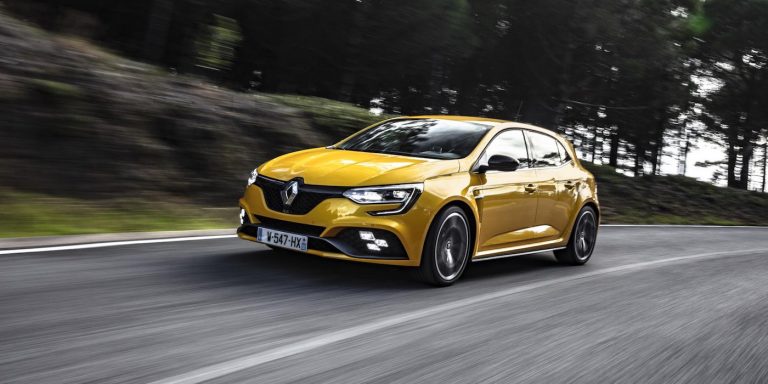
The air ducts behind the front wheels give it a stronger visual presence, while the whole car’s wider, squatter appearance looks really rather good in the metal – particularly in the ‘Volcanic Orange’ shade of our test car.
What’s the spec like?
The Type R and the RS share many of the same issues when it comes to technology offerings. Each uses a large central touchscreen, but both the Renault and Honda systems fail to deliver the same ease-of-use that we’ve come to expect from rivals.
It’s not that they work badly – the navigation in both cars is decent enough – it’s just that they lack the clarity that we really want. That said, actions such as connecting your phone via Bluetooth are simple enough to perform.
The Megane does pip the Civic when it comes to passenger capacity, and can offer seating for five rather than four too. Boot space in the RS is decent at 384 litres with the seats up or 1,247 with the seats folded down but it’s trumped by the Type R’s considerable 420 and 1,580 litres respectively.
What are they like inside?
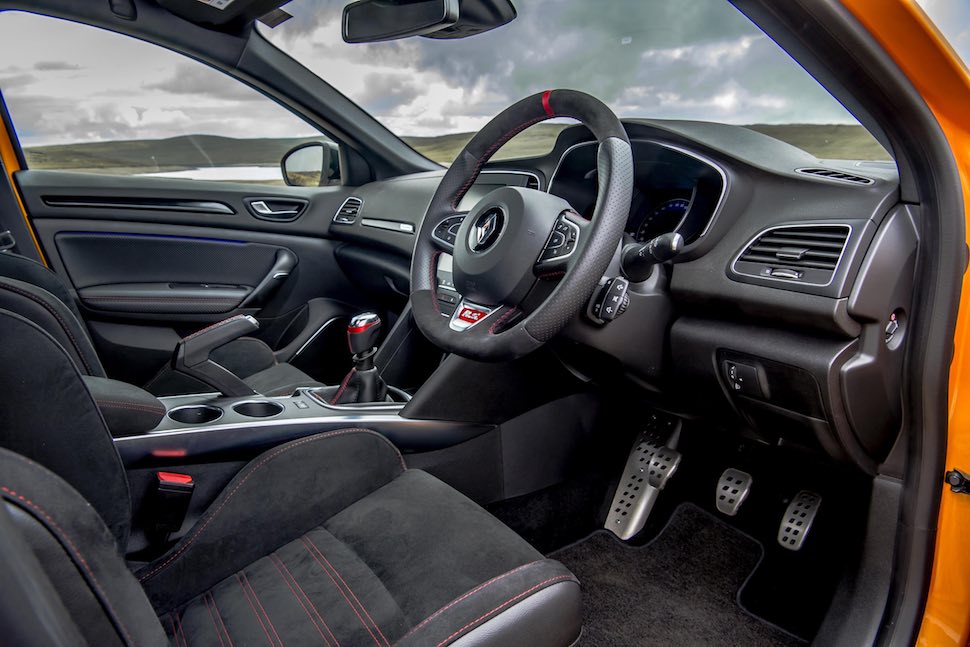
Renault Megane RS
Honda Civic Type R
The Honda’s infotainment system lacks the ease-of-use that you’d expect in 2018 (PA)
Both cars tick a lot of the boxes you want from a hot hatch. Wide, heavily bolstered sports seats? Tick. Upgraded stereo system? Sure. Sports steering wheel? Present and correct.
The fundamentals of both cars are spot-on too; the driving position in each is excellent, while there’s plenty of adjustment allowing you to get the seat exactly where you want it.
Both the Civic and the Megane also give you the option to sit good and low in the car – something we see as a ‘must have’ for cars of this type.
What’s under the bonnet?
The Megane RS is powered by a 1.8-litre turbocharged petrol engine with 252hp and 390Nm of torque driven to the front wheels via either a dual-clutch automatic gearbox or, in our test car’s case, a six-speed manual. The dart to 60mph takes just 5.6 seconds and, all in, it’ll do 158mph.
Honda’s Civic Type R, meanwhile, weighs in with a larger 2.0-litre turbocharged petrol with 320hp and 400Nm of torque. It matches the Renault’s 0-60mph time of 5.6 seconds, but eclipses its top speed at 169mph. There’s no automatic gearbox option here; just a delightful six-speed manual.
What’s are they like to drive?
Well-judged steering allows you to point the Type R exactly where you want it (PA)
The Megane’s all-wheel-steer system aids cornering (PA)
This is where things really count. A hot hatch needs to be – above all other things – fun to drive, and if it doesn’t deliver an experience which leaves you grinning from ear to ear, then it really doesn’t cut the mustard.
In that sense, the Megane RS delivers. The four-wheel-steering system makes it drive in quite an opposite manner to how you’d expect; turn it into a corner and you can feel it almost self-tightening around the bend, adhering to the road in such a way that you feel the tyres would come off the rim before the whole car lost traction.
It’s backed by well-weighted steering and a flexible engine that feels punchy at all times. However, it struggles with imperfections in the road and can be easily dragged in the wrong direction – at times it feels like you’re fighting the car into going in a straight line.
The Honda counters with a ride that feels more on the supple side of things, and better equipped to deal with the undulating surface of UK B-roads. It certainly inspires a little more confidence in you than the Renault.
The brake pedal also has far more feeling, and the brakes themselves stop in a more direct manner – which is what you want from a hot hatch. The high-speed stability if the Type R is mighty impressive too; it seems to goad you into going faster and faster, delivering an even more invigorating experience the quicker you go.
Verdict
It’s a tough one, this. Both cars offer something special; the Megane’s four-wheel-steering gives it a sharpness in the corner that will delight many drivers, while its body control is top-notch too.
The Civic Type R, however, benefits from a wondrously balanced chassis and powerful, effective brakes. The hot Honda also feels just that little more composed on undulating surfaces.
Despite not being able to match the Megane’s five-seat capacity, the Civic also offers the better overall practicality of the two, which makes it more useful on a daily basis.
As a daily driver, and one to stick a Cheshire cat grin on your face even on the bleakest mornings, we’ll have to give it to the Honda Civic Type R.
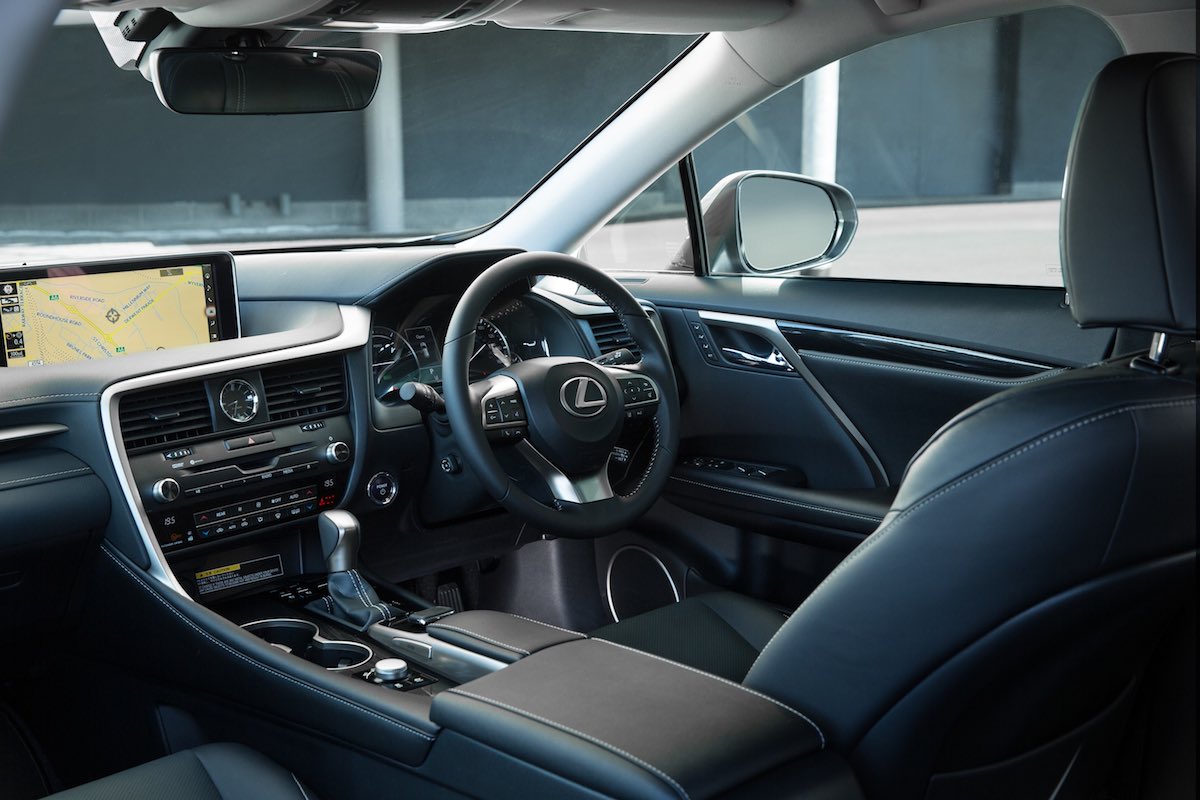
Lexus has unveiled a swathe of changes to its RX SUV line-up, including new, fewer grade options and more equipment as standard.
The RX, regarded as the flagship SUV in the Lexus range, will now be available in a choice of only three grades, following the structure introduced with other models and dubbed RX, F Sport and Takumi. A series of option packs will allow buyers to add extra styling, comfort, safety and technology as they wish.
Extended equipment levels include the fitting of the Lexus Safety System+ suite of active safety systems as standard to every RX. Collision warning and autonomous braking, adaptive cruise control, lane-keeping and sway warning aids, traffic sign recognition and auto high-beam lights all feature in the system.
Entry-level RX models now come with 18-inch alloy wheels, smooth leather upholstery, heated and ventilated front seats, a navigation system accessed through an eight-inch display screen, DAB radio, front and rear parking sensors and keyless entry.
Three option packs are available for the RX. The Sport Pack adds 20-inch alloy wheels, spindle grille and door mirror casings all in black. The Premium Pack also includes 20-inch alloys, along with a 12-inch navigation system, triple-eye LED headlamps, an auto-dimming rear-view mirror, heated steering wheel, power tailgate and wireless smartphone charger.
Premium Pack buyers can also add a Tech and Safety Pack. This includes a colour head-up display, blind-spot monitor, rear cross-traffic alert with automatic braking, auto-folding/auto-dimming door mirrors, a power tailgate with a no-touch sensor and a panoramic roof.
F Sport equipment now includes a heated steering wheel and power tailgate with hands-free sensor operation, alongside existing features such as the bespoke grille, aluminium pedal set, bespoke seats and steering wheel and adaptive variable suspension.
The range-topping RX Takumi gains a new power-folding function for the rear seats, which also have integrated heaters. A 15-speaker Mark Levinson Surround Sound audio system and 360-degree panoramic view monitor also feature.
Also standard on the Takumi are the Tech & Safety Pack, plus semi-aniline leather upholstery, 10-way power front seat adjustment, and memory settings for the front seats, steering wheel and door mirrors.
RX F Sport owners can also specify a Takumi Pack option – this includes the Tech and Safety Pack content, plus power-folding rear sets, heated rear seats, the Mark Levinson audio system, 360-degree panoramic view camera, card key and a panoramic roof.
The seven-seat RX L also adopts the new grade names, with the SE, Luxury and Premier replaced by RX L and Takumi.
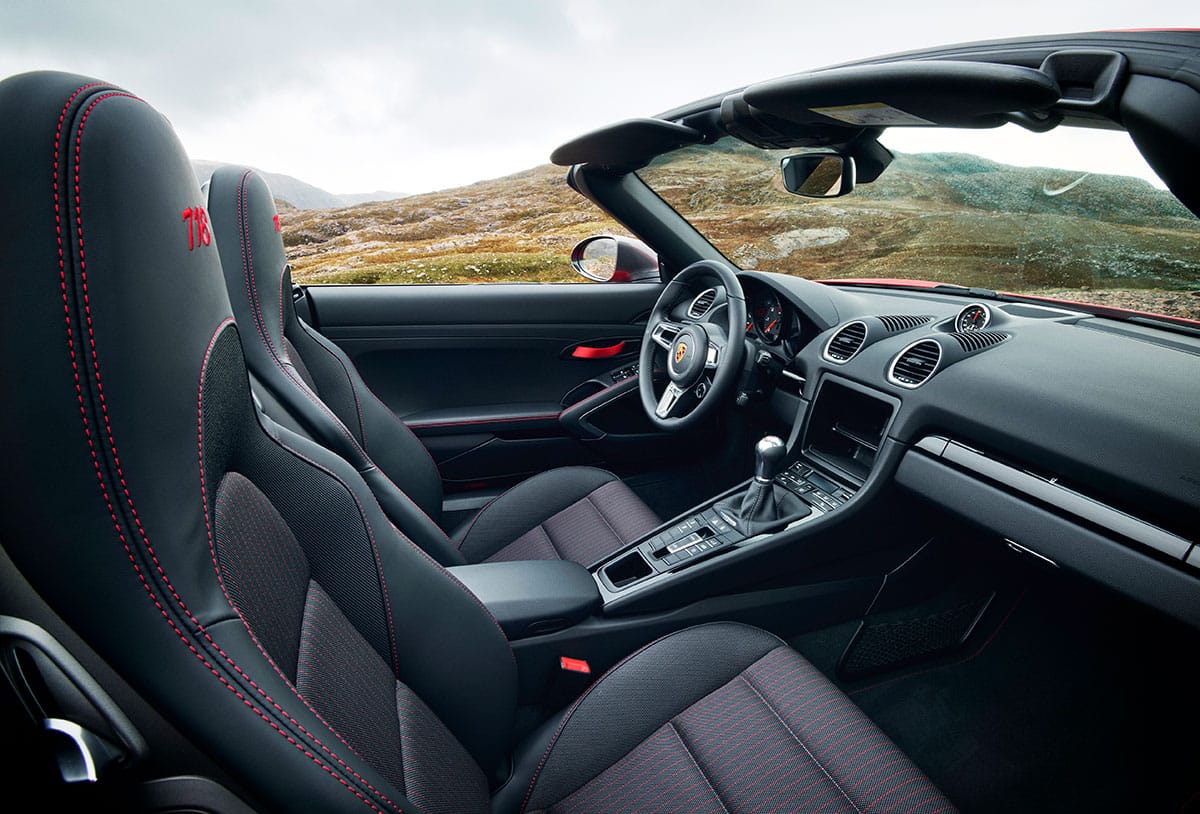
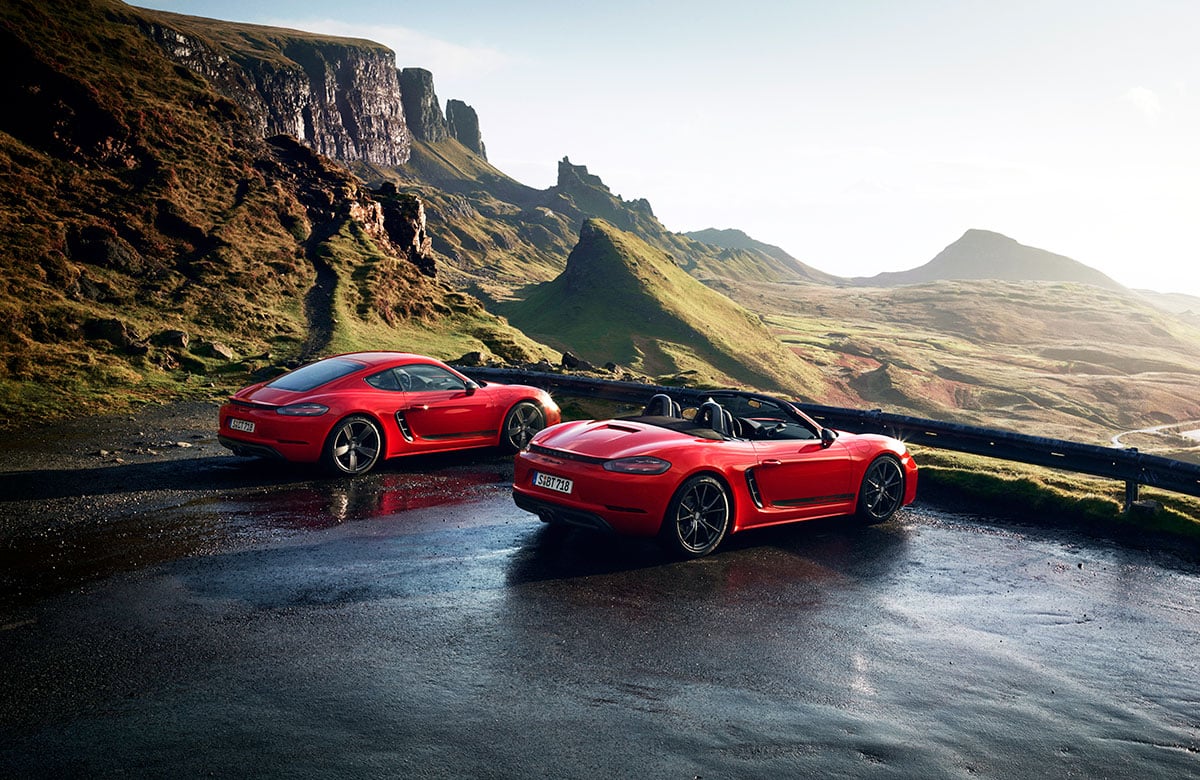
Porsche is launching two new versions of its mid-engined 718 Cayman and 718 Boxster models, with upgraded handling packages.
Both cars gain the T designation in their name, standing for Touring and according to Porsche used to denote “driving dynamic performance”. The brand adds that the two cars will be particularly suited to winding country roads.
While retaining the 300hp 2.0-litre four-cylinder turbo Boxer engine of the entry Cayman and Boxster models, the T versions are fitted with the PASM sports chassis. This, formerly only available on the 2.5-litre 350hp S variants, lowers the chassis by 2cm combines it with 20-inch alloy wheels and adds a shortened gear shift.
Also included is the Sport Chrono package which adds bespoke and performance-pitched tuning to the engine and chassis. It includes Sport, Sport Plus and Individual driving modes activated by a switch on the steering wheel, and a function allowing track day stats such as lap times to be collated and compared.
The Boxster and Cayman 718 T variants are both supplied with six-speed manual gearboxes and the Porsche Torque Vectoring (PTV) chassis aid, which includes a mechanical rear axle differential lock. Buyers can order a dual-clutch transmission (PDK) as an option.
Styling changes over the standard cars include black door pulls and black detailing to the seats with the 718 logo embroidered on the headrests, a GT steering wheel and ‘T’ logos liberally applied through the cabin.
Efforts to save weight, and a view that 718 T drivers won’t want distractions, see the Porsche Communication Management (PCM) infotainment module in the centre console replaced by a large storage bin. However, buyers can specify it as a no-cost option.
Prices for the 718 Cayman T start from £51,145 and the open-top Boxster variant costs from £53,006. Both prices include a driving day at Porsche’s Experience Centre at the Silverstone GP circuit.
A new report has revealed that diesel cars on British roads are even more polluting than previously believed, with some vehicles emitting 11 times more pollution than the legal limit.
A study by the FIA Foundation and the International Council on Clean Transport (ICCT) measured the actual tailpipe emissions of 100,000 vehicles (including cars, vans, buses, taxis, trucks and motorcycles) at nine locations in London.
The emissions were measured by firing infrared and ultraviolet light through the car’s exhaust plumes, before recording the contents.
As has been repeatedly found by independent testing, claimed improvements in toxic nitrogen oxide (NOx) emissions by car manufacturers have been exposed as false, with most car companies still exceeding legal limits.
Local air pollution vs. global climate impact
For many years, the EU and national governments have set limits and taxes based on carbon dioxide (CO2) emissions. This led to car manufacturers selling more and more diesel cars, which naturally produce less CO2 than petrol equivalents – at least in very gentle laboratory tests.
However, a major issue has arisen over the increase in NOx emissions, which are much higher in diesel engines than in petrol engines. These emissions affect local air quality rather than global climate change, which has resulted in far more local pollution in cities in exchange for an imperceptible reduction in global CO2 levels.
A typical summer’s day in London
Our air is getting worse while global CO2 levels are still going up anyway
The key findings published by the International Council on Clean Transport are:
Nitrogen oxide (NOx) emissions from diesel cars in London are, on average per kilometer, six times those of petrol cars. NOx emissions from petrol cars have declined, and on average for Euro 5 and Euro 6 vehicles are within 1.35 times the regulatory limits. Average NOx emissions from Euro 5 and 6 diesel cars, however, are approximately six times higher than the standards.
Particulate matter (PM) emissions from passenger cars are low for new diesel and petrol cars. Diesel cars, Euro 5 and newer, come equipped with particulate filters and demonstrate significantly lower PM emissions than older vehicles without filters.
London’s famous black taxi diesel models produce, on average, higher NOx emissions than diesel passenger cars covered by the same emissions standard. NOx emissions from Euro 5 taxis are higher than those from taxis certified to previous Euro standards and are approximately three times those of other Euro 5 diesel cars.
Average NOx emissions from buses in London have declined significantly over the past five years. NOx emissions (grams per kilogram of fuel burned) from buses sampled were 65% lower than those from buses sampled in similar studies conducted in 2012 and 2013. A similar comparison for other vehicle types shows that over the same time period average emissions from the diesel passenger car and light commercial vehicle fleet have decreased by 22% and 15%, respectively, while average NOx emissions from the taxi fleet have not improved.
Diesel cars are still terrible for local air pollution
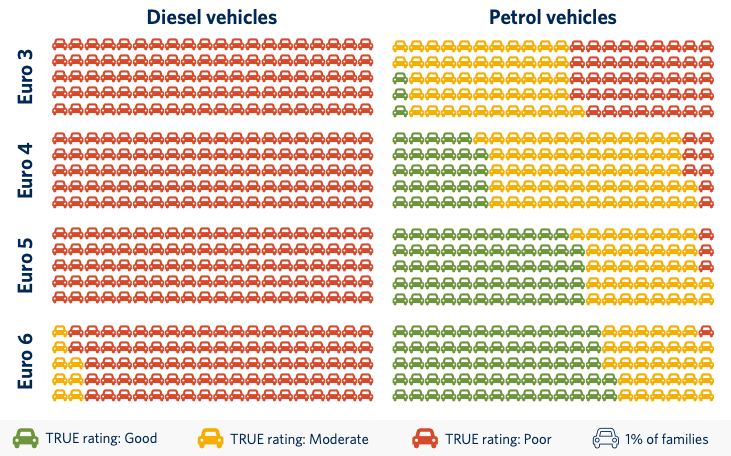
Even newer Euro 6 (2014 – present) diesel cars are still worse for local air pollution than some Euro 3 (2000 – 2005) petrol cars.
More than 90% of current Euro 6 diesel cars were rated “poor”, with less than 10% rated “moderate” and none rated “good”. Every diesel car prior to 2010 is rated “poor”. By contrast, 67% of Euro 6 petrol cars are rated good, 32% rated “moderate” and only 1% “poor”.
Diesel cars are still overwhelmingly bad for local air quality. (C) ICCT
Rules are getting tougher, but will they bring any improvements?
The results do not take into account the very latest emissions regulations that came into force in September 2018, known as Euro 6d-temp, as the data was recorded earlier this year when there were very few of these vehicles on the road.
As usual, the car industry will probably moan that it’s not fair and that the newest Euro 6d-temp cars really are very clean, and yes they did say that last time but they really mean it this time. Then they’ll throw in an unrelated reference to Brexit because that’s the car industry excuse for everything.
The reality remains that air quality on London streets right now (and in every other busy part of the UK) remains very poor and that’s largely because of diesel cars.
The ICCT tested a variety of vehicles and found that on average, car companies emitted more than six times the legal limits of NOx (0.08g/km).
those produced by the Renault–Nissan–Mitsubishi alliance were the worst performers, emitting on average 11 times the legal limit. This echoes a report by Which? magazine earlier this year that found Renault had five of the ten worst-polluting cars tested.
Diesel vehicles from the Fiat Chrysler Alliance (Fiat, Abarth, Alfa Romeo, Jeep and Maserati) and Hyundai Motor Group (Hyundai and Kia) weren’t too far behind.
Perhaps surprisingly, the disgraced Volkswagen Group (Volkswagen, Audi, SEAT and Skoda) performed second-best – with only JLR (Jaguar and Land Rover) proving cleaner. However, even JLR still emitted more than double the legal limit of nitrogen oxides.
The best diesel engine recorded was the latest-generation Euro 6 Mercedes-Benz 2.0-litre diesel engine, although it is still only considered “moderate” rather than “good”.
The worst Euro 6 petrol engine, and the only one to be rated “poor”, is the 1.2-litre BMW engine used in many Mini models. However, it is still cleaner than the average Euro 6 diesel.
The Mercedes C 220d is one of the least-worst diesel cars for air pollution
Black cabs, by name and nature
The research also found that London has a serious problem with black cabs – with the study finding them to be some of the capital’s most polluting vehicles. In fact, the most common black cab models in London produce NOx emissions of up to 30 times that of personal cars.
This is hardly surprising, as black cabs have not had to comply with the same standards applied to normal passenger cars for many years, and have effectively been generations behind passenger cars in terms of emissions requirements.
It’s only this year that laws were introduced to make them zero-emissions capable in London, although no rules yet exist to force cabs to actually run on electric power at any time. They merely have to be capable of doing so.
One diesel black cab can produce as much pollution as 30 diesel passenger cars
We’re well and truly into the festive season now, and it’s about time to wrap up the last bits of Christmas shopping (or, for those less organised among us, start it).
Every year though, there seem to be more and more presents to buy — and somehow, you’ve got to get them to your recipient. Playing Father Christmas this year? These are the cars you should be looking towards for your sleigh…
Audi RS 6
(PA)
Pace and practicality are two attributes every good sleigh needs — and nothing brings these two qualities together better than the Audi RS 6.
With a twin-turbocharged 4.0-litre V8 under the bonnet, it’s got the go for quick deliveries and can make plenty of them too thanks to a 565-litre boot. Oh, and you can get it in red for the full Father Christmas effect.
What is it?
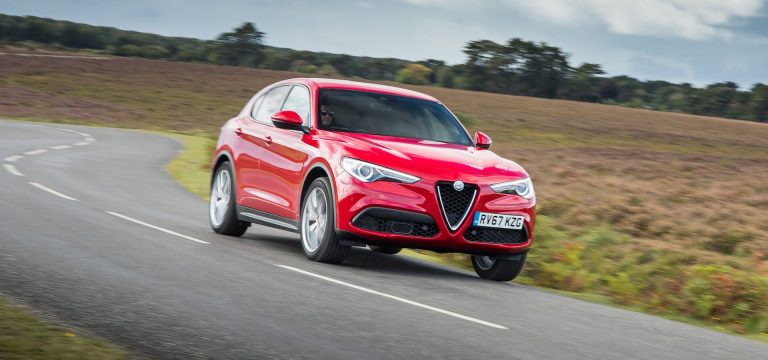
The Alfa Romeo Stelvio is the Italian brand’s first entry into the mushrooming SUV market.
Key features
Sporty looks, potent performance, good value compared to rivals
Our view
Alfa Romeo has done a pretty impressive job with its first SUV, helped by generally copying what it did right with the Giulia saloon.
The Stelvio looks sporty, is potent and offers good value against rivals. Only mirror irritations slightly dull a glossy performance.
Similar cars
BMW X3, Porsche Macan, Mercedes-Benz GLC
Jaguar did it, Maserati did it, even Lamborghini and Rolls-Royce are now doing it. Doing what? Marketing an SUV.
So we shouldn’t really be surprised that Alfa Romeo, a badge that immediately conjures up images of Italian sporting passion (despite being applied to some pretty ordinary cars in recent years) should follow the path towards big body shells and jacked-up ride heights.
Alfa is doing an SUV because everybody it seems wants an SUV these days. In development since 2014 and first sold in the Autumn of 2017, the Stelvio is expected to become the brand’s biggest seller – and it needs to be a success for a brand that hasn’t exactly covered itself in glory in recent times.
The Stelvio starts off with a big plus. It was evolved alongside the Giulia saloon – the pair share a lot of their mechanicals, including a platform that will also underpin future models from both Alfa and Maserati. And the Giulia, launched a year ahead of the Stelvio, has earned a great deal of praise particularly for its driving dynamics. Having liked Alfa’s new saloon, we have high hopes for the big sister Stelvio.
Visually the Stelvio has presence. It certainly doesn’t offer the bulk of a typical SUV, looking instead like a family car that has been muscled up by a weekend workout at a boot camp.
The resemblance to the Giulia is obvious, especially in the front which appears almost to be a straight transplant from the saloon. Combine this with a distinctly dipping, curvy rear end and the result is a car that conforms to Alfa’s sporting tradition.
2017 – 2023
2017 – 2023
Buying and owning an Alfa Romeo Stelvio
Mainstream Stelvio choices range across four engines and for now, four trim levels. These engine choices are 2.2-litre turbo diesels of either 190 or 210hp, and a 2.0-litre turbo petrol unit with 200 or 280hp. All are matched to a standard-fit eight-speed auto transmission with manual shift options, top-level models getting steering wheel paddles.
We say mainstream, because Alfa has just added a performance Quadrifoglio model to the line-up. Like the similar model in the Giulia range, the Quadrifoglio uses a 2.9-litre V6 bi-turbo with 510hp and 600Nm or torque on tap – it will hit 62mph from rest in 3.8 seconds which for an SUV is faintly ridiculous.
Our test car is the general range-topper, the 280hp turbo petrol variant. It is certainly fast enough for most people’s needs with a 5.7-second 0-62mph time. Even the 180hp diesel of the entry-level model manages a perfectly respectable 7.6 seconds to 62mph, conforming again to that Alfa Romeo sporting image.
The trim level names add to that imagery – one has a choice of ‘Super’, ‘Nero Edizione’, ‘Speciale’ or our top-spec ‘Milano Edizione’. This was supposed to be a limited-offer launch model, though a year after launch it’s still on sale so we are not sure what Alfa considers limited to be…
Stelvio prices start at £36,990, which buys the only rear-wheel-drive variant with the 190hp diesel. With more and more buyers turning to petrol, it’s worth paying just £600 more for the 200hp petrol version in order to get the all-wheel-drive.
Milano Edizione is only available with the 210hp diesel and 280hp petrol engines and our petrol variant would cost £45,390 at a dealer. And if you want a Quadriflogio? You will need around £70,000…
Equipment levels are good, particularly since an Autumn 2018 update that saw all versions fitted with Alfa Romeo’s nine-inch Alfa Connect infotainment system. This includes navigation and Apple CarPlay and Android Auto smartphone integration as standard – the lack of the latter a criticism of early cars.
Other notables in the entry-level equipment package include leather upholstery, an electric tailgate, dual-zone climate control and parking sensors.
As for our Milano variant, extras include bigger wheels, lots of extra aluminium trim liberally applied, a ten-speaker ‘Sound Theatre’ audio system, keyless entry, privacy glass, electrically adjustable and heated front seats and a rear-view camera. And perhaps most usefully, steering-wheel gearshift paddles are included.
The car scores on its safety package that includes autonomous emergency braking as standard – helping to clock up a five-star Euro NCAP rating with an impressive 97% score for adult occupant protection.
Even entry-level models include Hill Descent Control – an unusual feature considering they cannot be had with any of the more traditional off-road electronic driving aids one gets in other SUVs – not that we expect many owners to take their Stelvio off-road.
That Autumn update also improved the warranty – it’s now valid for five years/75,000 miles and includes a three-year servicing schedule, covering the cost of parts, lubricants and labour.
Next page:Step inside and take a drive
Orders can now be placed for the powerful new Renault Megane RS Trophy, with the first cars expected to arrive in February.
Priced from £31,810, the Megane RS Trophy takes the title as the most powerful Renault Sport production car ever. Power is increased over the regular Megane RS from 280hp up to 300hp, and torque is up too from 390Nm to 400Nm in the manual car, or 420Nm in the automatic.
More grunt means improved high-rev acceleration, and the 0-60mph time has been shortened slightly, from 5.6 seconds to 5.5 seconds. The top speed in the manual car is boosted too, from 155mph up to 162mph.
It includes four-wheel-steering for improved cornering agility, along with hydraulic bump stop shock absorbers which increase the level of contact between the tyre and the road surface.
All cars get Renault’s Cup chassis (an optional extra on the standard RS) as well as bi-material front disc brakes.
New 19-inch alloy wheels fitted to the Trophy reduce weight by 2kg per corner compared to the regular RS. A new exhaust system has also been fitted, which features a mechanical valve in the rear silencer allowing the engine noise to be adjusted. It means that should you need to make a quiet exit, the car’s exhaust note can be brought down in volume.
As mentioned, the Trophy is available with either a six-speed manual gearbox or a dual-clutch automatic, with the latter controlled via steering wheel-mounted shift paddles.
Inside, the Trophy is available with optional Recaro bucket seats, and also features a seven-inch infotainment screen with satellite navigation, dual-zone climate control and cruise control.
Available to order now, deliveries for the Renault Megane RS Trophy will commence in February 2019.
The worst hotspots in England for Christmas getaway jams have been identified by traffic experts.
Motorists are being warned to expect “significant congestion on major roads” such as the M25, M6 and M40 as an estimated 20 million leisure journeys are made in the UK this week.
Research by the RAC and traffic information firm Inrix suggests getaway traffic will be staggered over the coming days, reaching a peak towards the weekend.
You may also like:
Christmas bargains for clever car buyers
Thursday and Friday are expected to be the worst days for congestion, with 2.5 million and 2.8 million vehicles respectively making leisure trips while battling for road space with regular commuters.
On Thursday, delays of up to three hours are expected on one section of the northbound M6, while on Friday part of the southbound M40 could see drivers queuing for more than 90 minutes.
Drivers are being advised to use alternative routes or wait until 8pm before setting off to avoid the worst queues.
Inrix data scientist Joshua Kidd said: “Our data shows that compared to a normal day, Thursday 20th December will see the biggest increase in cars on the road.
“With most drivers setting out mid-morning, traffic will become heavier over the course of the afternoon and stay congested into the evening.
“But it’s not just those off to see family and friends – commuters, last-ditch shoppers and online deliveries will contribute to clogging the roads.
“Drivers are advised to seek out alternative routes to their destinations and use the latest technology for real-time updates.”
Predicted Christmas getaway traffic jam hotspots (PA Graphics)
Highways England will lift more than 200 miles of roadworks on the country’s motorways and major A-roads by 6am on Friday to ensure more than 97% of the network is open for the festive getaway.
RAC patrol of the year Mark Souster urged motorists to carry out basic maintenance checks on their cars – such as oil, coolant and screenwash levels and tyre condition – before setting off.
He said: “It’s vitally important every driver planning a trip gives their car a once-over to make sure it’s up to the job.
“A single breakdown can bring some roads to a grinding halt, slowing down the Christmas getaway for all of us.”
The anticipated jams will be compounded by extensive disruption to the rail network, with planned engineering work and strikes forcing more people on to the roads over the festive period.
Strikes are likely to affect routes run by Northern Rail and South Western Railway, while Network Rail is planning extensive engineering work on lines running into major stations such as London Paddington and London Victoria.