Police across the UK caught an average of 179 drunk-drivers per day in December 2017, new research has found.
A series of Freedom of Information requests sent to 41 police forces across the UK by insurance comparison firm Confused.com revealed 5,551 motorists were caught intoxicated behind the wheel through the final month of the year. That alone accounts for 10% of the total drink-driving offences throughout 2017.
December proved to be the highest month for caught drunk-drivers, while July followed in second with 5,213 offences. Last year as a whole also saw a 2% increase on the number of drivers caught under the influence, totalling 57,613, compared with 56,745 in 2016.
A further survey by Confused.com of 2,000 motorists revealed 4% had been caught driving over the limit at some point, with 28% of those admitting to the crime saying it occurred the morning after drinking.
Amanda Stretton, Confused.com motoring editor, said: “There are a worrying number of people confused about how long they should wait between drinking alcohol and driving, and this has led to thousands of motorists being caught drunk behind the wheel each month.
“Drink driving can seriously impact the safety of our roads and put other road users at risk. Not only this, but it can land drivers with a fine or driving ban, which can have a negative impact on their car insurance premiums.
“To avoid getting caught out, we suggest drivers stop drinking early if they know they have to get behind the wheel in the morning, but the best advice would be to avoid drinking alcohol at all.”
Drivers across the UK could be causing confusion for other motorists by relying on daytime running lights (DRLs) for illumination in low visibility conditions, new research has found.
A study by the RAC of more than 2,000 drivers found that 62% claimed to have seen other vehicles with lights on at the front in dull and overcast weather conditions but not at the rear.
Another 15% say they had not noticed this, while 2% were unsure.
EU law has required all new cars and small vans sold in the country to be fitted with DRLs at the front of the vehicle since 2011 in an effort to improve road safety, but they are intended to complement dipped headlights rather than replace — and are dimmer as a result.
It’s also not a legal requirement for DRLs to be fitted at the rear of a car, although some manufacturers choose to fit them.
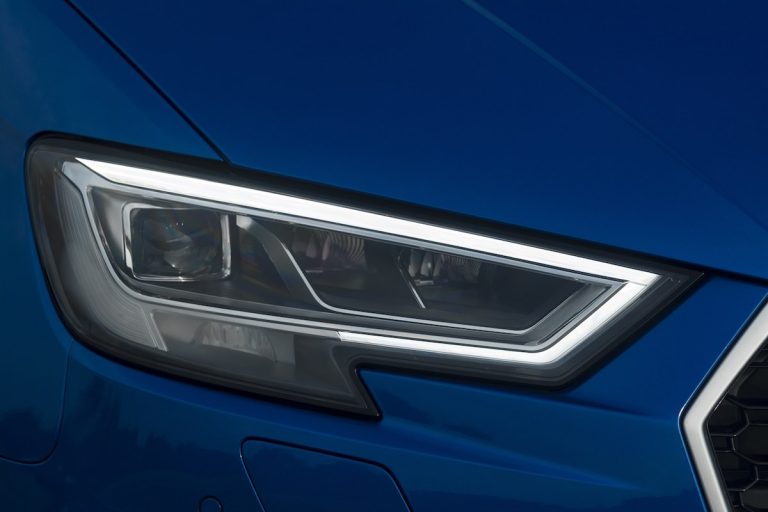
Most manufacturers now use LED lights for their daytime running lights, as LEDs have very low energy consumption and can easily be formed into various different shapes to suit the whims of car designers.
When asked if they knew the car they drove most frequently had DRLs fitted, 47% said their car did not, 29% said they only had them up-front while 14% claimed to have them both front and back. Further still, 8% said they knew their car had them at the front of their vehicle — but were unsure about the rear.
Pete Williams, RAC road safety spokesperson, said: “This is potentially a very worrying finding as it implies that many motorists are driving without any rear lights believing that because they have running lights that switch on automatically at the front, they are also on at the rear.
“Alternatively, and arguably just as concerning, these drivers could simply have decided the light conditions were not bad enough to merit turning on their dipped lights or sidelights.”
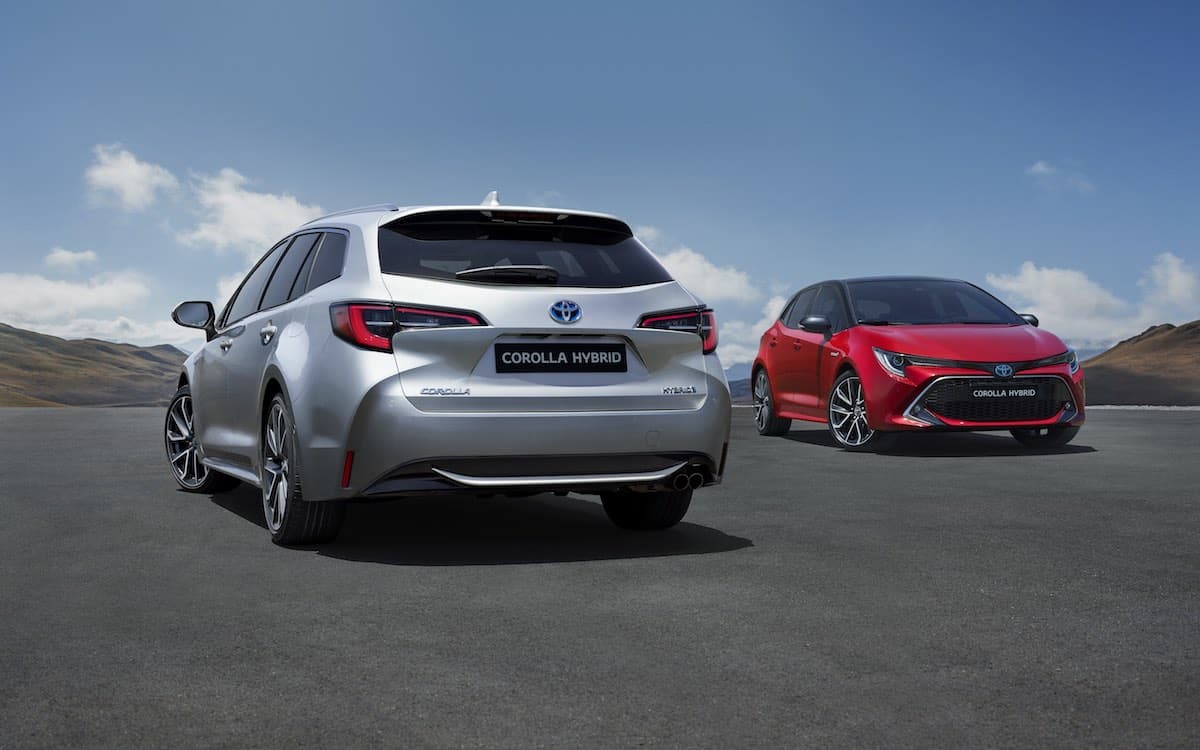
Toyota has announced pricing and specifications for the new British-built Corolla hatchback and estate models – marking the return of the nameplate to the UK after a 12-year hiatus.
The new hatchback, which will compete with the massively popular VW Golf and Ford Focus in the European market, will be priced from £21,300.
That starting price nets you the most basic of the three powertrain options, and the only pure internal combustion unit in the range – a 1.2-litre turbocharged petrol expected to offer around 115hp.
Heading up the range, customers can also choose a 1.8-litre hybrid powertrain lifted from the Prius, which starts from £23,750, or a new 2.0-litre hybrid. This model takes aim at higher-powered rivals with its 180hp output, and starts from £27,550 – though it’s not available in base trim as the other two are. The range currently tops out at £30,340 for a 2.0-litre hybrid estate in Excel trim.
Both hybrids are mated to CVT transmissions, while the 1.2-litre petrol gets a six-speed manual ‘box. Toyota expects 85% of customers to opt for one of the hybrid powertrains.
Customers can also choose from hatchback or Touring Sports estate models – with the latter commanding a £1,270 premium. A saloon model will follow (not built in the UK), with pricing and specification details expected in the new year.
Trim levels begin with Icon and run upwards through Icon Tech, Design and Excel. All models get 16-inch alloy wheels, automatic LED headlights, heated front seats, an eight-inch touchscreen infotainment display, reversing camera and DAB radio.
Icon Tech bolsters this with satnav, a seven-inch instrument display, parking sensors and park assist. Design, as the name suggests, boosts the car’s looks with 17-inch alloy wheels, rear privacy glass and LED fog lights, plus automatic wipers, while top-of-the-range Excel trim brings 18-inch alloy wheels (17-inch on estate models), upgraded LED headlights, keyless entry, sports seats, part-leather upholstery and an optional bi-tone paint finish.
All models also get a raft of safety kit, including adaptive cruise control, pre-collision assist, lane keeping assist, road sign assist and automatic high beam.
The largest retail network of electric car chargers is to be rolled out across Tesco stores nationwide.
Charging bays will be installed at Tesco’s largest Extra and Superstore car parks, with 600 outlets to benefit from the boost. It will create 2,400 EV bays – a 14% increase in the number of public charging slots.
By 2020, both fast and rapid chargers are set to be installed at the sites by Pod Point – the UK’s largest independent operator of rapid chargers
Customers will be able to charge their electric cars using a standard 7kW fast charger for free, or use a rapid 50 kW charger for a cost yet to be disclosed.
Volkswagen has spearheaded this charging initiative as it aims to ramp up the infrastructure for EVs ahead of the launch of its new family of all-electric models, and also tries to rebuild its environmental credentials after the global Dieselgate scandal.
Erik Fairbairn, chief executive of Pod Point, said: “This agreement is a monumental day for electric vehicle drivers. It is a massive leap forward for the UK and a significant step in our mission to put a Pod Point everywhere you park.”
Since the government’s Road to Zero announcement that all new cars registered from 2040 need to be “effectively zero emission” – meaning they can’t just run on petrol or diesel – there has been an increased push from charging providers and vehicle manufacturers to build up the infrastructure and viability of electric vehicles to meet this deadline.
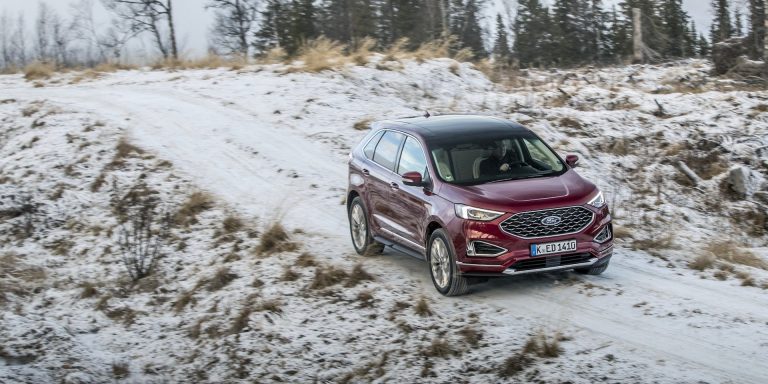
Ford’s range-topping Edge SUV brought all-American looks to UK shores back in 2016, and its uptake was reasonably strong. To continue its popularity, Ford has refreshed it for 2018, adding an updated design as well as a new engine and gearbox too.
Though SUVs are ten-a-penny these days, Ford hopes that the Edge’s aggressive looks, strong equipment levels and roomy interior will ensure it stands out from the crowd. However, is it able to? We’re in Sweden to find out.
What’s new about the Ford Edge?
This is no ground-up remodeling. Very much the facelift, the new Edge isn’t groundbreakingly different to the car it replaces, but this doesn’t mean that Ford has just fitted a new grille to the old Edge and left it at that. Yes, the looks have been refreshed, but there are also a new diesel engine and gearbox too.
To keep things current, Ford has also graced the Edge with a range of cutting-edge assistance systems, along with its latest in-car technology. Improved refinement has been put high up the list of priorities too, which is why there’s a variety of features now included in the Edge to help keep things as quiet and as comfortable as possible.
How does it look?
Though the Edge is a relatively new addition to the UK’s roads, it’s been on sale in America for some time now and this certainly shows when it comes to the car’s styling. It’s big, brash and square – but it does look good in the metal. Certainly, the new grille and revised rear lights give it even more presence than it had before and the 20-inch polished alloy wheels fitted to our test car only added to this.
How does it stack up against rivals in terms of looks? Pretty well, actually. Whereas many other manufacturers are leaning towards rounded, smooth designs the Edge’s blocky appearance does give it a certain amount of appeal. It’s likely to divide opinion, but that’s not such a bad thing in the SUV segment.
What’s the spec like?
Base Titanium specification Edge models are fitted with a strong amount of standard kit, with features such as 18-inch wheels, LED headlights and heated front seats all included as part of the car’s £36,995 price tag. At this price, the Edge makes a fair bit of sense – though it does come with the less powerful diesel engine driving just the front wheels alone.
Rocking in at £46,995, the Vignale does get all manner of extras over the base model. A leather-trimmed steering wheel, chrome roof rails and Matrix Adaptive LED headlights do make it stand out from the rest of the range, but these aren’t features which drastically alter the package.
Continued on next page:Interior, drive and our verdict
Toyota has introduced an updated Prius at the 2018 Los Angeles motor show.
This version comes with an electric all-wheel drive system, as well as a new hybrid battery that is designed to perform in colder weather and new equipment. The design has also been tweaked slightly.
The Hybrid AWD-i system uses a high-torque electric motor mounted on the rear axle to send power through the wheels when needed. It engages when pulling away up to 7mph and on wet or slippery roads up to 44mph.
Although the additional motor is mounted under the boot, storage space is only slightly infringed upon.
The exterior of the Prius features slimmer angled headlights with bi-beam LEDs, less complex grille designs and the front of the car has been raised slightly to incorporate into the lines running along the sides. The rear also has simpler lights.
Toyota is offering the Prius with two new colours – Emotional Red and Aqua Breeze – and two new wheel options, a 17-inch alloy wheel and 15-inch grey contrast wheelcaps.
Equipment offerings have also been updated, with new cloth upholstery, a larger wireless charging tray, an improved head-up display to include navigation instructions and a faster Toyota Touch 2 touchscreen infotainment system that uses ‘gestures familiar from smartphone use’.
The 2019 Prius will make its European debut at the Brussels Motor Show in January. It is expected prices will remain close to the current £24,245.
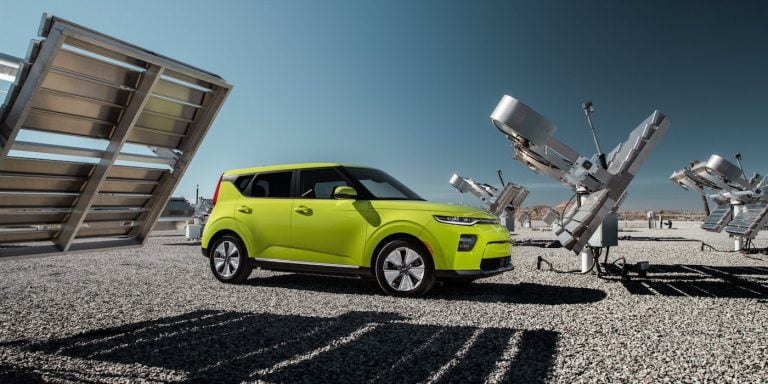
Kia has revealed its new Soul EV at the LA Auto Show, replacing the model that has been on sale since 2014.
The all-electric crossover is set to produce 204hp (150kW) through its single electric motor and will have a 64kWh battery, which should give it a significant range.
The exact distance it can cover on a single charge has yet to be disclosed, with testing still being carried out before the official figure is published early in 2019.
The larger Kia e-Niro, which was launched at the Paris motor show last month, has a claimed range of 301 miles, so the Soul EV will likely match or surpass that figure.
Unlike previous generations of the Kia Soul, the new model won’t be sold in Europe with a regular petrol motor.
The Soul’s signature boxy styling continues
Evolved styling cues ensure that the third-generation Soul is distinct from its predecessor. The model’s trademark boxy look has been retained, though, albeit with updated front and rear light designs. The 17-inch wheels on the Soul EV are designed to reduce drag and increase efficiency.
The car features a smart regenerative braking system, operated by paddle shifters behind its steering wheel. The system will allow drivers to slow the car down while making use of the kinetic energy that comes from braking to gently recharge the battery, giving extra range.
Inside, a ten-inch touchscreen comes as standard. This display supports Apple CarPlay and Android Auto, and also features integrated voice recognition technology. A full range of driving assistance systems will also add to the car’s tech prowess.
Full specifications and pricing for the Soul EV will be released in 2019, and while the car is set to become available in the first half of next year in continental Europe, it will come to the UK market a few months later.
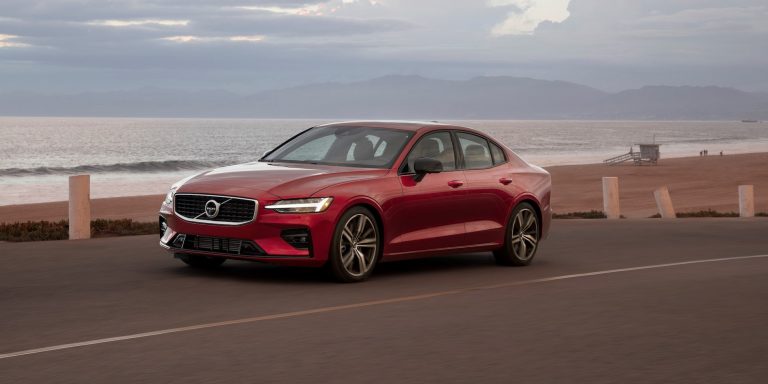
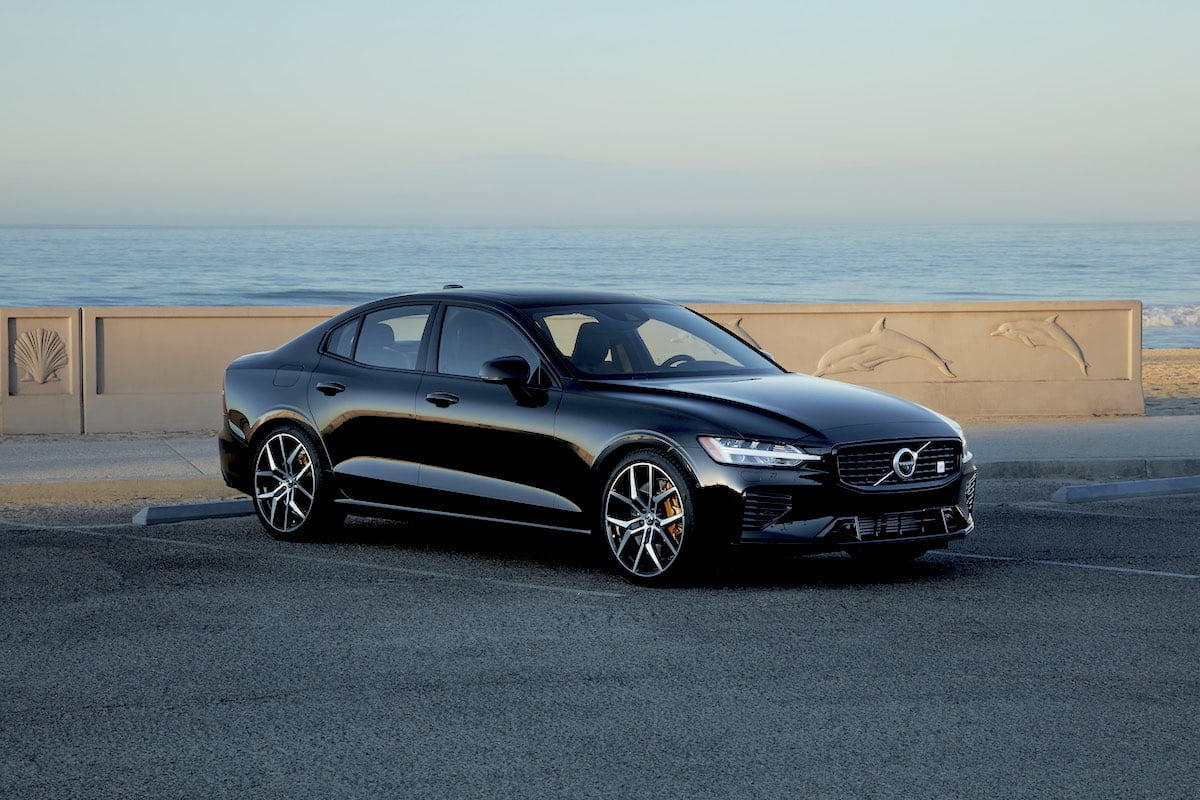
To add another offering in the varied small saloon segment, here’s the Volvo S60 – a compact four-door from the Swedish brand designed to take on the likes of the Mercedes-Benz C-Class and the upcoming and all-new BMW 3 Series. It’s based on Volvo’s Scalable Platform, and therefore shares its underpinnings with the XC90 SUV and V90 estate, to name just two.
It’s also the first car to be built in Volvo’s new manufacturing plant in Charleston, USA – a possible reflection of the brand’s concerns surrounding America’s potential change to import tariffs. We’re testing it here in range-topping T8 Polestar Engineered specification.
What’s new?
The standout feature of this latest Volvo is the complete lack of any diesel option. That’s right, this is the first car in the modern Volvo range to lack an oil-burner as an engine choice, leaving just petrol and plug-in hybrid offerings instead. It reflects Volvo’s push towards electrification – and to clarify, that means the use of petrol and hybrid offerings – not just solely electric powertrains.
Many of the latest design features that we recognise from current Volvo vehicles have been carried over the S60 – though we’ll come to these in a little more depth later – while the interior has also been treated to plenty of plush materials that we’ve come to expect from the manufacturer.
If we were honest, the looks of the S60 aren’t groundbreaking – but that’s simply because they play so close to the other cars in the range, most obviously its sister model, the V60 estate that was launched earlier this year.
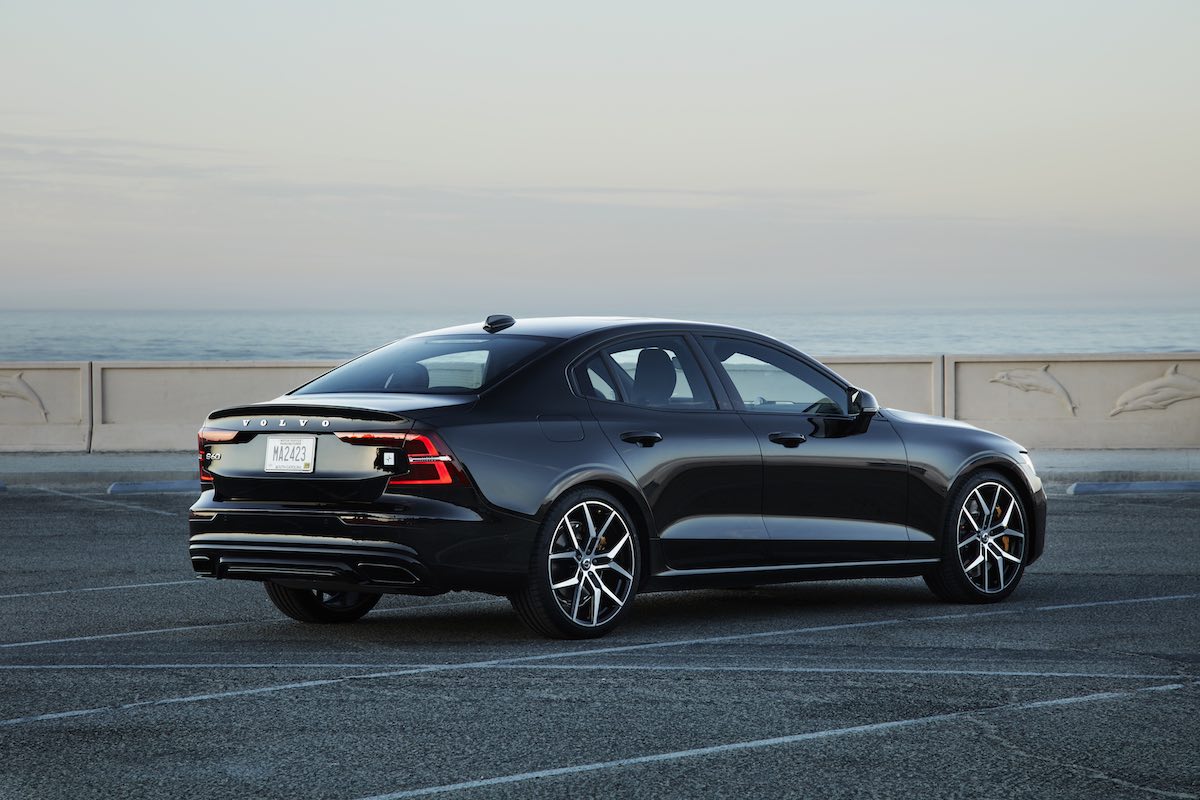
The front ‘Thor’s Hammer’ headlights are present and correct, while the lights are the rear could have been the units taken from the larger S90 saloon, but put on a hot spin. It is, again, a minimalistic and thoroughly Scandinavian design, and it looks particularly good in the flesh.
It’s an agile, taut design – and alludes the S60 to a far sportier ethos than that of Volvos of old. Would we like it to be a little more exciting? Perhaps. But in this segment, playing it safe isn’t a particularly bad thing, particularly when you consider the understated designs that have been coming from German rivals.
What’s the spec like?
Though full specifications of the S60 have yet to be confirmed, the Polestar Engineered-spec cars we tested came fitted with a host of equipment, including a full satellite navigation system, Bowers and Wilkins stereo and nappa leather upholstery.
We’ll have to wait and confirm closer to the car’s full launch as to what is standard with each specification – though expect a strong amount of tech to accompany this range-topping car, especially when it comes to safety equipment.
What’s it like inside?
It’s business as usual in the cabin of the S60, but this is something we’re quite happy about. So far, the cabins of the XC90, V90 and XC40 – to name but three – have been exceptionally well put together, and this has, thankfully, been carried on over to the S60.
It’s a beautiful blend of high-quality materials and well-executed tech, and everything feels built to last. The large central touchscreen dominates the interior, and this is complemented by the central screen in between the dials in front of the driver. There’s plenty of headspace for those sitting up front, while those in the back do equally well.
The boot is decent too, offering up 442 litres of space with the rear seats in place. It’s slightly less than that of the Mercedes C-Class, which offers 480 litres of seats-up load area.
What’s under the bonnet?
This top-of-the-range T8 Polestar Engineered S60 utilises an in-line four-cylinder petrol engine which is both supercharged and turbocharged. This is linked to a rear-mounted electric motor which drives, unsurprisingly, the rear wheels.
Combined, they produce a substantial 405hp and 430Nm of torque, which can push the S60 to 60mph in 4.5 seconds and onwards to a 155mph top speed. Despite this performance, and thanks to the inclusion of hybrid assistance, Volvo claims that the T8 will return 134mpg combined while emitting just 48g/km of CO2.
This Polestar Engineered T8 benefits from a series of high-performance parts, too. Look closely and you’ll see six-piston Brembo brakes peering out from behind 20-inch forged wheels, while Ohlins adjustable dampers have been fitted too. There’s also a bump in power over the regular T8 – around 15hp more, in fact.
What’s it like to drive?
Volvo S60 T8 plug-in hybrid
We tested a conventionally powered T6 (an engine yet to be confirmed for the UK) prior to our time in the more powerful T8, and it proved to be a good basis for its pokier stablemate.
The lower-powered car’s steering, though lacking any real feedback, is well weighted and direct, giving the S60 plenty of agility in the corners.
The T8’s engine response is linear and predictable, with the combination of combustion and electric unit blending seamlessly to provide effortless forward progress. It’s punchy, too, particularly from a dead start where the electric motor and its instantaneous torque makes itself known.
The ride is a little firm, in all honesty. Even the standard S60 on regular suspension felt a touch jostling even on smooth Californian canyon roads, and the T8’s firmer setup only exacerbated this.
We’d argue towards a smaller wheel size to help remedy this – the Polestar’s 20-inchers are a touch too large, in our opinion.
Summary
The S60, even in standard form, is an excellent alternative to current and forthcoming German rivals. It’s well built, beautifully finished and looks good out on the road – even if its design plays rather safe.
This T8 Polestar Engineered model makes a particularly strong case for itself, thanks to its combination of strong performance and good economy figures.
We’ll have to wait and see what Volvo expects customers to pay for this model – though we’d reckon at the mid-£50,000 mark – to see its value-for-money. But off-the-bat impressions are good, and rivals had best be worried.
It may be fast approaching winter as I write this, but when the sun does appear in the skies, it hangs low and can be blinding when you’re out driving or riding. Especially if, like me, your eyes are painfully light-sensitive.I tend to go through sunglasses at a much faster rate than the average human being, and always tend to have about three pairs on hand so I’m never caught without a pair. It’s ridiculous.For a long time now, my go-to brand for eyewear has been Oakley, simply because my eyes seem to prefer them, although most of the company’s designs are best described as ‘sporting’ rather than ‘stylish’ – fine for weekends but not so flash if you’re dressed a bit more formally.Of all the brands I’ve tried over the years, one I’d never bought was American brand Serengeti – partly because they’re not as readily available on every high street from the major eyewear chains. So when Serengeti asked me to review a pair of its sunglasses, I was keen to give them a go.The particular glasses I’ve been evaluating are called the Serengeti Livio, which retail for £179 (although you can find better prices shopping around). They have amber polarised “Drivers” lenses and a rubberised nylon frame.The Livio is a traditional-looking pair of glasses, much in the style of the iconic Ray-Ban Wayfarer or the highly-popular Oakley Frogskins. It’s available in four different colourways; three with sanded a black frame, with either grey or blue everyday lenses or the amber “Drivers” lenses; while the fourth choice is a sanded brown frame with amber “Drivers gold” lenses that are better for very bright conditions.Clearly not Stuart modelling a pair of Serengeti Livio sunglasses…
Fit and finish
The Livio is classed by Serengeti as a medium-fit frame, but I found it a touch tight compared to other brands. This is despite being identical (according to the official measurements) to two pairs of Oakleys I was comparing against the Livio.The Livio frame itself has a very solid feel and the hinges appear to be of a robust and quality construction – so you’re not likely to suffer annoying breakages in your day-to-day adventures.The so-called Drivers lens featured on this model is designed to suit the needs of driving (hence the name), designed to help distinguish red, green and yellow colours as used in virtually all traffic-related infrastructure worldwide. It is the original lens colour first launched by Serengeti in 1985 and remains popular today.
So how do they fare?
The amber lens colour gives a warm, sepia tone to everything, which many people don’t really like but I find helpful when out and about, and especially when driving. It essentially filters the blue out of everything, so the sky always looks a bit threatening even when it’s clear, but the flip side is that the red/yellow/green spectrum does really pop quite well. When driving, this is particularly useful as you genuinely do find it easier to spot traffic lights and signs much earlier against a crowded urban background. The main issue I had with this particular lens treatment was that it didn’t provide enough protection in brighter sunshine, which left me scrambling to hurriedly switch sunglasses for a darker pair. To be fair, the Serengeti site specifically identifies these lenses as suitable for “overcast to medium light conditions”, which seems about right.I have a pair of Oakley Enduros (sadly no longer in production) with a very similar lens treatment, and the performance of these and the Serengeti Livio side-by-side appeared to me to be virtually identical.
Summary
Overall, I was quite pleased with the performance of the Serengeti Livio in most everyday situations against similar sorts of competitor models. They are certainly pricey, but comparable with other premium-brand sunglasses from rival manufacturers.The frame has a reassuringly solid feel. As a bonus, the glasses come in a proper hard case rather than a rubbish soft bag (yes, I’m looking at you, Oakley) for added protection when you’re not wearing them.For driving use, I think I’d be more inclined to go for the version with the “Drivers gold” lenses that provide more protection in brighter conditions, but that’s more because of my stupidly light-sensitive eyes.If you’re buying online, be aware that the frames are a slightly tighter fit than the dimensions suggest, but I’d always recommend buying from your local high street store anyway so you can try them on in person.You may have to hunt around a bit to find Serengeti glasses in the big high street chains (and it doesn’t help that the same company that owns Oakley, Ray-Ban and most of the big brands also owns most of the stores…), but it’s definitely well worth the effort.
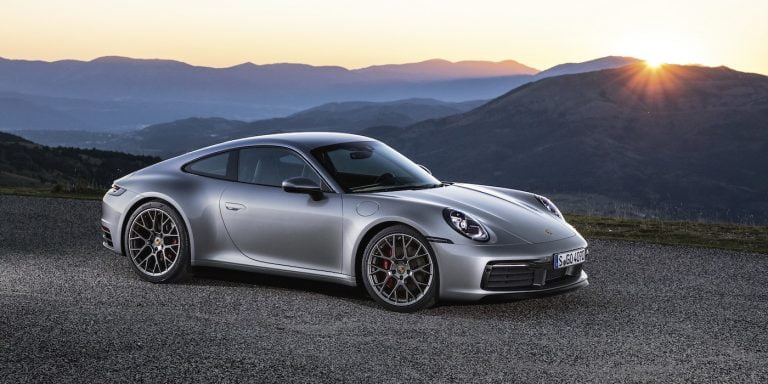
Porsche has unveiled the latest incarnation of its most famous model – the all-new Porsche 911.
The eighth-generation model carries top billing at this week’s LA motor show and features revised engines, an upgraded interior and greater efficiency – all wrapped up in a design that looks almost exactly like the old one.
Despite the predictable same-again styling, the new 911 has been extensively reworked under the skin. It features a significantly wider body, with 4cm of extra metal across the nose and rear wheel arches, which are now the same width across all models and house 21-inch rear wheels. The fronts are 20 inches, aiding the 911’s stance.
Agility and stability should be improved thanks to the use of more aluminium in the rear section, which aids weight distribution. A revised chassis also brings rear-wheel steering to even basic models.
911 Carrera S coupé
Of course, it wouldn’t be a Porsche 911 without a rear-mounted, flat-six engine – and that’s exactly what Porsche has installed here. The latest units are more powerful than the ones they replace, with the Carrera S debut model producing 450hp – around 30hp more than its predecessor.
Combined with a revised eight-speed dual-clutch gearbox, 0-60mph times have tumbled by 0.4 seconds compared with the previous model – the Carrera S will perform the sprint in just 3.5 seconds. That’s shortened by a further 0.2 seconds with the optional Sport Chrono Package, which adds launch control, revised gearbox software and a ‘sport’ function. Top speed for the Carrera S is 191mph.
A seven-speed manual gearbox will join the range later in the year, while a standard entry-level Carrera is also likely with a lower-powered engine.
New safety kit and driving modes have been added – including the humorously-named ‘Wet’ mode, intended for damp tarmac (unsurprisingly). Front collision warning and autonomous emergency braking are standard on all models, plus adaptive cruise control with stop-and-go and, for the first time, a night-vision system with a thermal imaging camera.
The 911’s styling has clearly evolved over the previous model, with more precise and straight-edged detailing bringing a modern edge. There are new LED matrix headlights at the front, complete with four-point daytime running lights, while the lines of the ‘frunk’ are straighter, evoking models of old. There are also new retractable door handles that sit flush with the body for improved aerodynamic efficiency when not in use.
The rear sees the addition of a full-width light bar – one of Porsche’s now-signature design features and supplemented by a pair of vertically mounted high-intensity brake lights, which sit within a full-width engine grille. Wide oval exhaust pipes complete the look.
Inside, things have taken a greater leap forward. Porsche still steadfastly refuses to adopt a digital rev counter, but the 911’s other dials are now digital and configurable. The centre infotainment screen has grown to a widescreen ten-inch unit, while a new row of switches sits underneath, providing access to common functions.
There’s also what looks to be an enormous cupholder mounted just ahead of the centre armrest.
The new 911 is available to order from today, with prices kicking off from £93,110 on-road for the Carrera S model.
UK deliveries are expected to begin in the spring, and there will inevitably be about 638 different versions of the new 911 (Targa, cabriolet, Turbo, GT3, etc.) joining the family on a month-by-month basis over the next year.
The fourth-generation Mazda 3 has been unveiled at the LA motor show, making its debut with a clever engine and smart new design.
Available in hatchback and saloon guises, the best-selling Mazda takes styling cues from the Japanese brand’s recent concept cars and puts them into production.
Mazda claims the model represents “car as art”, with the firm’s head of design, Ikuo Maeda, adding: “We have elevated design quality with this car to that of art and that is not easy to achieve, as complicated restrictions apply to car designs.”
Quite whether you’d be able to call the new Mazda 3’s design as artistic is up for debate, but a smart grille that bleeds into the headlights and swooping body curves will mean it certainly stands out from the crowd in the mid-sized segment.
Mazda 3 saloon will join ange in the Autumn.
New petrol engine with diesel-style technology
However, it’s the engine that will really pique interest as it uses diesel technology to increase the efficiency of a traditional petrol engine.
The new 2.0-litre Skyactiv-X unit is said to reduce fuel consumption by a third and dramatically improve emissions, helped in part by a new 24-volt mild-hybrid system that boosts the engine.
Two traditional petrol engines – a 1.5-litre and a 2.0-litre – will be offered along with a 1.8-litre diesel unit. An all-wheel-drive system will also be available, but currently there’s no word on whether it’ll come to the UK.
The dash has a smart and simple design with a new nine-inch screen, and the company claims it has concentrated on comfort, ergonomics and a premium feel inside.
Mazda wants to push itself further up the premium pecking order and thinks this Mazda 3 – a car that has found six million homes around the globe in the last 15 years – will be the model to help it achieve that.
UK prices have yet to be confirmed, but it’s rumoured it’ll start from just over £23,000 when it arrives in the spring of 2019.
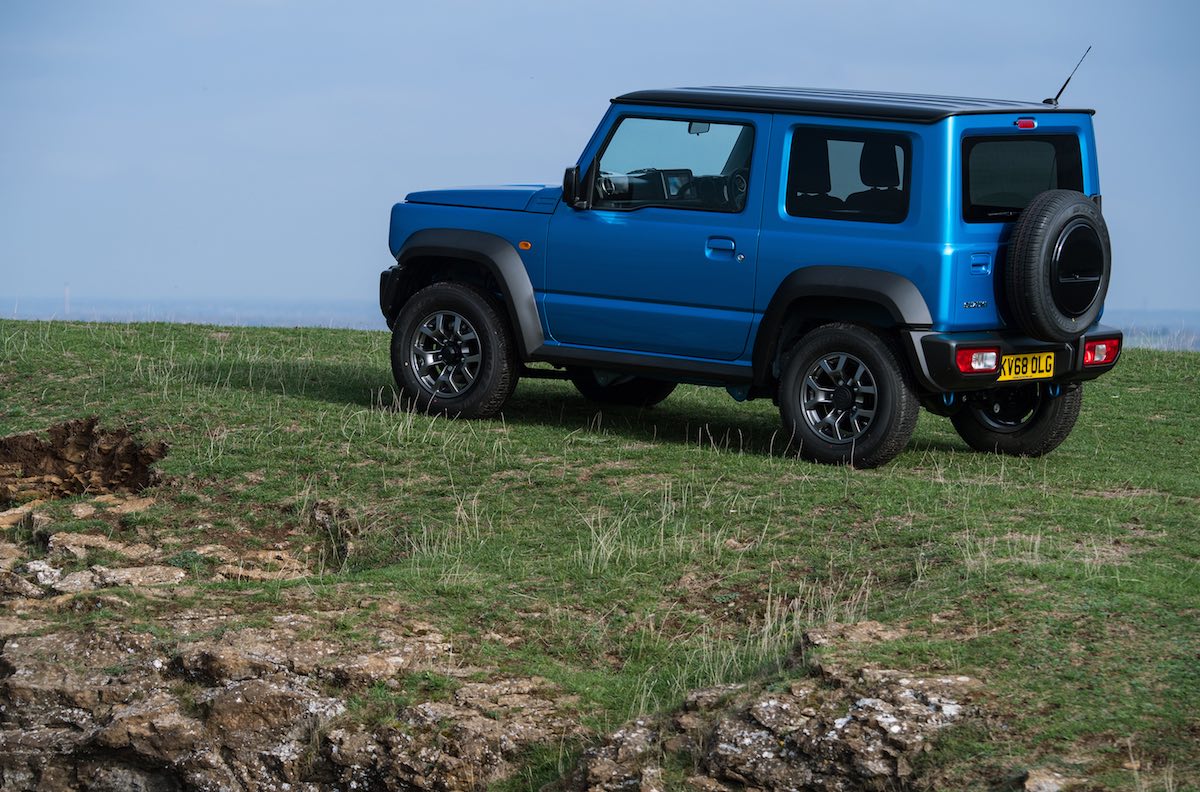
The new Suzuki Jimny goes on UK sale in January, and dealers should be rubbing their hands in anticipation.
Potential customers have been totally sold on the new Jimny’s combination of retro styling and proper off-road ability, and a website set up by Suzuki UK to register interest in the car has received more than 10,000 hits.
So why aren’t Suzuki dealers revelling in the prospect of huge sales for this newcomer? Because they will be unlikely to get anywhere enough Jimnys for those customers. Demand exceeding supply is not a situation Suzuki is familiar with. And in the case of the Jimny, supply is a big issue.
The car launched first in Japan, in both the normal version and a slimmer variant meeting the country’s Kei-car rules. Basically such cars are the lowest powered variants, are given tax and insurance benefits, and unlike all other cars in Japan a buyer of a Kei-car does not have to prove they have a space to park it in.
As a result, in Japan the waiting list for the Jimny in Japan stretches over a year. Which has a big effect on any sales expansion to Europe. Suzuki UK has been told its entire allocation of Jimnys for the first six months of 2019 is a whole 600 cars. When dealers open their order books in January they could sell out in that same month…
This many Jimnys in one place is likely to be a rare sight.
“Jimny is the most irritating car I’ve ever had to launch,” Suzuki UK’s sales head Dale Wyatt tells The Car Expert. “This car has demand way ahead of supply – it’s an icon, but I have no idea how many cars I could have to sell.”
And Wyatt believes there is no easy fix to the problem. “The truth is demand is bigger than can be solved by adding a shift in the factory – it requires another factory, and dealing with that takes time so we are going to have to navigate our way through it probably for a couple of years.”
Trouble is a couple of years is not really what Suzuki has. In an ironic twist, new emissions regulations coming in 2020 could make the Jimny somewhat less attractive to buyers, the manufacturer or both…
The Jimny is only available with a 1.5-litre petrol engine, and to maintain its off-road ability said unit is not one of the brand’s latest Boosterjet turbo units. And with that comes a not very environmentally friendly CO2 emissions level, starting at 158g/km.
From 2020 in Europe, CO2 emissions across Suzuki’s car line-up will be expected to , average 90.5g/km, with a fine of 95 Euros for each gram that level is exceeded. “We could be looking at a €6000 fine per Jimny we sell,” Wyatt says, adding that this would have to either be absorbed or the car sold in the UK not for its current £18,000 but nearer £22,000…
So in the case of the Jimny, popularity may not be good news – especially for Suzuki, and also for the likely to be frustrated buyers who want one…
Bentley has taken a blowtorch to its Continental grand tourer and created this – the new Continental GT Convertible.
The £175,100 GT Convertible is obviously a sister model to the coupé version launched last year, and inherits that model’s lower, sleeker styling compared to previous generations. Quad LED headlights flank a huge square grille, from which flowing lines run backwards.
Where the coupe’s sloping roofline would meet the tailgate, Bentley has installed a wide, flat rear deck and small lip spoiler to replace the coupe’s retractable spoiler. The roof – a fabric unit rather than a folding hardtop – nestles into place behind the rear seats and can be retracted in 19 seconds. Roof up, the Continental retains its sloping roofline and wide rear haunches.
The fabric top itself can be dropped at speeds of up to 30mph, and can be had in seven different colours. It’s even available in a tweed finish for that extra-aristocratic feel. It’s also better-insulated than before, contributing, Bentley says, to a three-decibel reduction in noise at a cruise. The firm also claims it’s as quiet as the previous-generation hard-top.
6.0-litre W12 power the only option for now
Under the bonnet lies typical Bentley fare – a 6.0-litre twin-turbocharged W12, producing a whopping 635bhp and 900Nm of torque. Bentley says it’ll push this massive car from 0-60mph in 3.7 seconds — just 0.1 seconds slower than the Coupe — and on to a top speed of 207mph. It’s paired to an eight-speed automatic transmission and all-wheel drive.
The engine also offers stop-start and cylinder deactivation tech but given the powertrain’s sheer size and output it’s perhaps not surprising that the Continental GT C returns just 22.8mpg on the combined cycle and emits 284g/km of CO2.
The W12 is currently the only engine on offer, but a smaller V8 model is likely to follow, along with the inevitable Speed versions, Mulliner editions and so on.
Few people would drive the Continental GT C like a sports car, but Bentley’s fitted a 48-volt electrical system to endow the car with an active roll control for improved handling and ride comfort. It rides on air springs, with 60% more volume than the previous car – allowing for more adjustability.
Inside, things are much the same as in the coupé. That means all cars get Bentley’s new ‘revolving’ infotainment display – offering customers the choice of a 12-inch screen, a trio of traditional gauges or a swathe of wood in the centre console.
There are heaters in the seats and armrests for extra warmth when the roof is down, and Bentley’s added an updated neck warmer in the seat headrests.
The Continental GT Convertible will go on sale in 2019, with prices beginning from £175,100.
You might have thought that the SUV segment was as full as it could possibly get, but BMW managed to fill another niche back in 2016 with the X4. Now, the mid-sized ‘Sports Activity Coupe’ has been refreshed for 2018, bringing a new look and upgraded chassis tech.
Slotting neatly in between the X3 and X5, the X4 has been designed to offer a coupe-like design but with the increased ride height which is so beloved by drivers at the moment. Is it a case of all show and no go, though?
What’s new?
The all-new X4 is longer than the car it replaces – 8cm longer, in fact – and is nearly 4cm wider too. It means that the X4 can offer better interior space than the car it replaces, as well as a bigger boot.
However, a lighter chassis promises improved dynamic capabilities, while lowering the car’s overall weight and therefore improving its efficiency.
The X4 is actually based on its slightly squarer sister, the BMW X3. It’s built on BMW’s modular ‘Cluster Architecture’ platform that has underpinned almost every new BMW since 2015’s 7 Series, up to and including the new Z4 and 3 Series unveiled in Paris last month.
The interior is also bolstered by BMW’s latest cabin architecture, with a raft of in-car technology helping to bring it closer into line with the rest of the firm’s range.
How does it look?
The first thing you notice about the X4’s design are those grilles. The kidney grilles are a well-known BMW trademark, but the X4’s are almost brutishly large, and they dominate the front of the car. Do they work in terms of styling? In our opinion, they’re perhaps just a little too big – though they are in proportion with the rest of the car’s front end.
BMW has done well to disguise the car’s overall heft too, with flowing lines down the flanks meeting an abrupt rear end design to create a vehicle which looks – dare we say it – quite ‘sporty’. Large alloy wheels only help to improve this effect.
The slim lights at the rear look decidedly un-BMW, while the slab of black plastic around the exhaust pipes isn’t the prettiest of additions.
What’s the spec like?
Prices for the X4 start at £42,900, which bags 18-inch alloy wheels, LED headlights, cruise control and parking sensors at both the front and rear of the car as standard. A wealth of safety assistance systems is also fitted on base cars, with automatic stability control, dynamic traction control and hill-start assist all welcome functions.
You’ll have to upgrade to an M Sport model in order to get the fantastic ten-inch colour infotainment system as standard, along with larger alloy wheels and a chunky body kit. You certainly won’t be left wanting for kit on the regular X4, but if you fancy some of the standout toys then it’s a better option to choose a higher level of trim.
Safety-wise, the X4 hasn’t itself been crash-tested by Euro NCAP, but it is awarded a five-star rating based on the performance of its sister model, the BMW X3.
What’s it like inside?
The X4’s cabin mimics that of the 5 Series and 7 Series – and this is a really good thing. Everything is laid out intuitively, with the main controls for heating and ventilation placed within easy reach of the driver.
A large central cubby area is ideal for phones of keys, and this is backed up by a decent sized area underneath the armrest. The dials are clear and easy to read, too.
There’s a decent amount of legroom to be found in the back, though the car’s sloping roofline does impede on headroom quite a lot. The boot, meanwhile, comes in at a decent 525 litres in capacity, though it can be increased to 1,430 litres by folding down the rear seats which split 40:20:40.
What’s under the bonnet?
Our test car came in X4 20d specification, which uses a turbocharged 2.0-litre diesel engine for propulsion. It pushes out 190hp and a healthy 400Nm of torque, which is enough to send it to 60mph in 7.8 seconds and onwards to a 132mph top speed.
In terms of efficiency, BMW claims that the X4 will return 52.3mpg combined while emitting 142g/km of CO2. They’re reasonable figures for a car of this size – and they’re the best you’ll get from the X4 line-up of engines, as the 20d is both the most economical and least powerful powertrain available.
If you are after the best X4 performance-wise, then there’s the range-topping M40i to go for; this hits 60mph in 4.6 seconds as well as a 155mph top speed. You will only get 31.4mpg on a good day, however.
What’s it like to drive?
Most SUVs attempt to deliver a semblance of sporty driving, with many failing to deliver. The X4 does well, however, thanks to well-weighted steering and decent cornering ability. Though you might imagine that to achieve this, BMW would have had to make the X4 a lot firmer – and in truth, it has – though it still rides superbly well, absorbing the vast amount of road imperfections.
The engine is smooth and refined, and though certainly not the quickest out of the blocks feels more than punchy enough for all situations. The diesel’s gruff engine note is also kept well isolated from the cabin too, which makes things all the more relaxing.
The eight-speed automatic gearbox shifts smoothly, while the xDrive all-wheel-drive system means there’s a little extra traction in damp conditions.
Summary
The BMW X4 may be another niche-filler, but it’s one well worth considering. It may not quite match rivals for rear-seat space, but the X4 does deliver a surprisingly dynamic drive – one which you wouldn’t quite expect from a car in this segment. Its diesel engine is refined and efficient, and the interior is solidly built too.
It may be expensive, but the BMW X4 is one to look at if you’re about to pick from the vast swathes of models currently available in the SUV segment.
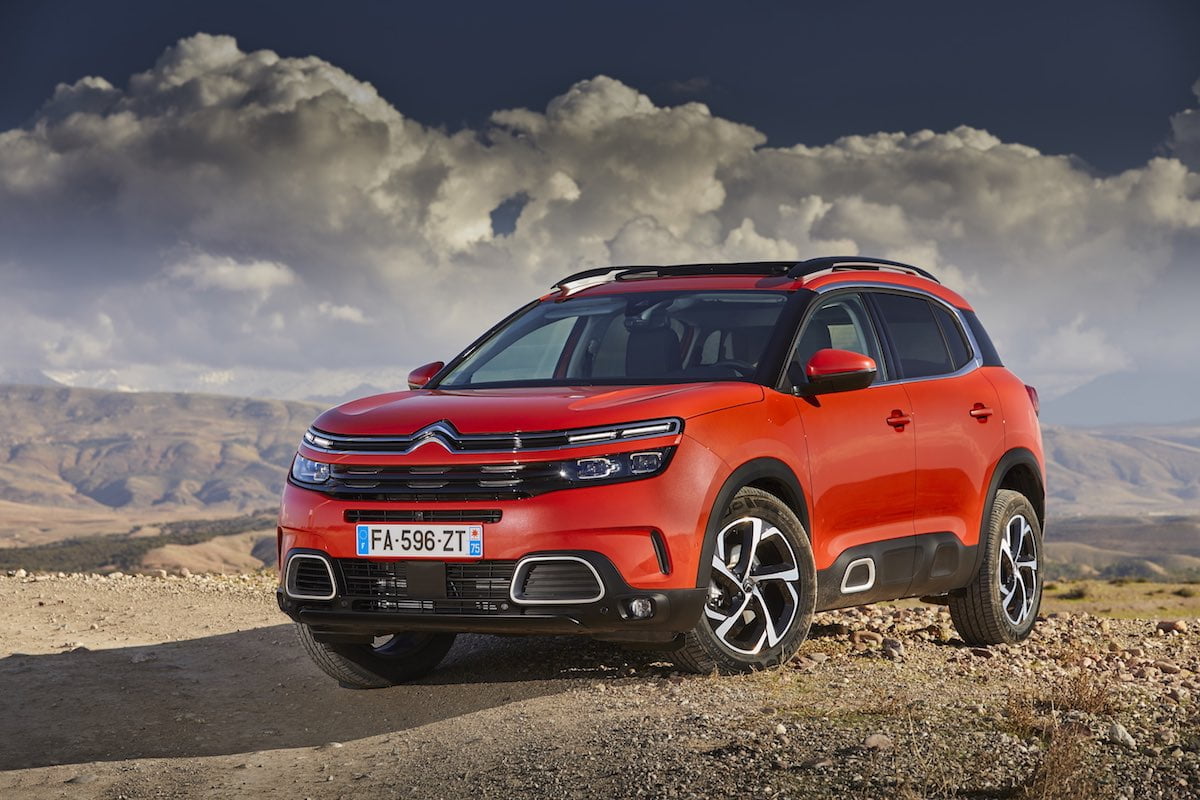
Citroën has a history of producing cars that focus on the quality of the ride over anything else – most notably the famous DS from 1955 with its incredible ‘magic carpet’ suspension that would glide over any bump, ironing out potholes or uneven surfaces.
The C5 Aircross is a completely new model for Citroën in Europe, although a slightly different version went on sale in China last year, and it combines the great features of the C3 Aircross and C4 Cactus into a larger, more premium package.
What’s new?
There are plenty of recognisable features from the existing Citroën range that will feel familiar in this, but this large crossover is a first for the brand. It’s a five-seater but it boasts a more usable, higher-capacity boot than the C4 SpaceTourer MPV.
Its party piece is the progressive hydraulic cushion suspension, which we would be putting to the test on rough terrain in Morocco – a surface slightly more aggressive than the local high street it’ll have to combat here in the UK.
How does it look?
Citroën C5 Aircross
The C5 Aircross builds on the striking design that Citroën has been developing over the past few years. It’s still got the airbump panels, but they are positioned more discreetly across the lower panels and doors than you would have seen on the C4 Cactus.
The quirky style of the C3 Aircross has been pushed even further, with bold lines carried across the car and to the front light signatures. The airbump design is also used throughout the exterior, with the bubbly shapes featuring on the grille, wheels and lights.
What’s the spec like?
There are three specification levels on the C5 Aircross – Feel, Flair and Flair Plus.
As standard on the entry-level Feel, the C5 gets the safety pack with active safety braking, blind spot monitoring and lane departure warning.
Citroen’s Connect Nav with TomTom updates is available as standard on Flair and Flair Plus, which gives clear and easy-to-understand directions. This is also available with Apple CarPlay, Android Auto and MirrorLink.
Top-spec Flair Plus cars get added benefits such as wireless smartphone charging, panoramic glass roof, cruise control and driver attention alert too.
What’s it like inside?
(PA)
The most important place for Citroën’s comfort features has to be in the interior, and the designers have done a brilliant job here – particularly with the seats. The soft materials, stylish and modern design and memory foam centre give both the look and feel of a truly comfy car seat.
The interior will look familiar if you’ve spent any time in Citroën’s most recent car and it works really well. Good-sized door pockets, glovebox and another storage bin under the armrest will keep your belongings stored well too.
The C5 Aircross also benefits from three independently adjustable rear seats and two ISOFIX points. Boot space goes from 580 to 720 litres depending on how these seats are adjusted, and with them flattened this increases to 1,630 litres.
What’s under the bonnet?
We tested the C5 Aircross with the 1.6-litre turbocharged petrol 180hp engine. However, it’s also available with a diesel of equivalent power in the UK and the option of a 130hp powertrain in either petrol or diesel guise, too.
All options are available with either a six-speed manual gearbox or an eight-speed automatic.
The 1.6-litre petrol can hit 60mph in a very respectable 8.2 seconds, while the 2.0-litre diesel with the same power output will hit that only 0.4 seconds slower. For the best economy, the diesel will return 60mpg on a combined cycle, while the petrol claims 49.6.
What’s it like to drive?
Citroën has put the emphasis on comfort at every stage, but that does mean if you’re looking for precise and direct handling you won’t find an exceptional example here.
That’s not to say the Citroën can’t handle itself on both twisty country lanes and out on the motorway – the steering is quick to respond. However, the C5 Aircross offers relaxed and serene driving as it cruises effortlessly over potholes that would make you brace in another car.
Despite looking like a large SUV, on the road it doesn’t feel too big for the track and is easy to manoeuvre through a tight spot, too.
Summary
The C5 Aircross sets a new standard for Citroën’s SUV and crossover range. With a striking presence on the road, a more grown-up look and a range of safety and tech features, it’s a great package for a family buyer.
Its tough exterior paired with the super-soft hydraulic suspension makes for an easy life on the road too, although the styling might not be to everybody’s taste.
Land Rover has unveiled the second generation of its popular Range Rover Evoque compact SUV, replacing the current model that has been on sale since 2011.
With more than 700,000 units sold worldwide, the Evoque has been a considerable success for the brand – in 2012 and 2013, it made up over a third of Land Rover sales. Perhaps that’s why the brand hasn’t deviated far from the original styling with this model.
The new Evoque features the latest version of Land Rover’s corporate grille, flanked by distinctive LED daytime running lights and large side air intakes. The sides are made even sleeker by the use of pop-out door handles – a trick first seen on the Range Rover Velar – and the Evoque’s trademark ‘floating roof’ remains, thanks to blacked-out door and windscreen pillars.
Round the back of the car, there’s a further nod to the Velar with a full-width styling element containing the tail lights.
The big news for the Evoque, however, is the new platform on which it sits. The old car used underpinnings that could be traced back to the Mk2 Ford Focus – a throwback to the days when Ford owned Land Rover.
But the new platform – catchily named Premium Transverse Architecture – is bang up to date and, crucially, allows the installation of new hybrid powertrains.
The Evoque will be available from launch with a 48-volt mild hybrid system – uniquely deployable across the entire engine range and consisting of an integrated starter/generator and underfloor battery pack. A plug-in hybrid will follow in around a year’s time, likely to be a smaller evolution of the system fitted to the larger Range Rover and Range Rover Sport PHEV. A three-cylinder petrol engine will also follow.
Initially, however, a trusted range of four-cylinder petrol and diesel Ingenium engines will be offered. The range kicks off with a 2.0-litre 150hp diesel (the only engine available with a manual gearbox) as well as 180hp and 240hp versions of the same engine. On the petrol front, a 2.0-litre is offered with 200hp, 250hp and 300hp power outputs.
Nought to 60mph times range from 6.3 seconds to 10.4 seconds, while up to 44.9mpg is possible from the lowest-powered, manual diesel. All but the basic manual model feature four-wheel drive as standard, with Land Rover’s automatic Terrain Response system for a modicum of off-road capability.
The Evoque will launch with five trim levels, although the first four can be equipped with additional ‘R-Dynamic’ goodies for a bit of extra style. As standard, though, all cars get automatic LED headlights, 17-inch alloy wheels, a heated windscreen, ambient lighting, dual-zone climate control, keyless start, heated front seats, a rear-view camera, lane keep assist, cruise control, autonomous emergency braking and a ten-inch touchscreen infotainment system.
The top-spec First Edition trim loads on the kit, with matrix LED headlights, 20-inch wheels, a Meridian sound system, perforated leather upholstery, 16-way electric seats, a head-up display, powered tailgate, adaptive cruise control and 360-degree cameras.
The Evoque is available to order now, with prices kicking off from £31,600 for a front-wheel-drive diesel manual model. The range currently tops out at £50,400 for a 250hp petrol model in First Edition trim.
With new diesel car sales plummeting all around the world, car manufacturers are shunning oil-burners as governments everywhere crack down on tailpipe emissions.
In a reflection of this, Honda recently announced that it would be dropping the diesel CR-V from its range, leaving just a petrol version and this – the new CR-V Hybrid.
The manufacturer claims that it should return the same economy as the recently-ditched diesel model while improving low-speed emissions, thanks to the introduction of those electric motors.
We headed out to Seville to see if this latest Honda CR-V Hybrid really can take the place of the well-rounded diesel version.
The biggest changes come under the bonnet – although we’ll get to these shortly – while there have been some other alterations elsewhere. It’s got a wheelbase that is 3cm longer than the older CR-V, and this provides better interior space.
Honda has also included active aerodynamics in the car, which allows a shutter to open or close behind the grille depending on how well the engine is being cooled.
There’s even a warning sound produced by the car when driving in all-electric mode so that hearing-impaired pedestrians can know it’s coming. And, of course, Honda has included a wide variety of its latest safety technology to ensure that those inside and outside the CR-V Hybrid are kept as safe as possible.
How does it look?
(PA)
In a time when manufacturers must create cars to stand out in what is a heavily-saturated market, Honda has done well to make the CR-V look different. It’s a chunky-looking thing and that’s good, with dynamic lines running the length of the car helping to hide its overall bulk. The front headlamp design is particularly noticeable, as is the large chrome grille.
It’s also pleasantly ‘normal’. Save for a few model badges on the flanks, you’d be hard-pressed to tell that this had a cutting-edge powertrain underneath it, and that’ll likely appeal to those who don’t want to shout about the fact they’re driving a hybrid.
What’s the spec like?
Equipment specifications for the CR-V Hybrid mirror those available on the petrol version, so buyers can choose from S, SE, SR and EX versions, as well as the option of either two- or all-wheel drive.
Prices start at £29,105 for the entry-level S model with two-wheel drive, topping out at £37,255 for the all-singing, all-dancing all-wheel-drive EX.
Although all cars get cruise control, traffic sign recognition and Honda’s full suite of safety assistance systems, the firm expects the range-topping EX to be the best seller – it benefits from a heated steering wheel, head-up display and panoramic sunroof over the other still comprehensively kitted-out grades.
The latest generation of Honda’s infotainment system still lingers somewhat behind rivals’ both in terms of ease of use and look, although the standard fit of Apple CarPlay and Android Auto goes some way to alleviate this issue.
What’s it like inside?
(PA)
The cabin of the CR-V Hybrid is tried-and-tested Honda: solid and well built, if a little uninspiring. There are harsher plastics to be found, although the rubberised dash and large, chunky buttons help to give it an overall feeling of robustness.
The door pockets are sizeable enough for a few bottles of water, and there are cubbies dotted throughout the cabin to help keep it clutter-free.
Rear-seat head and legroom levels are excellent, and there are twin USB sockets back there for charging devices too.
Although the boot is somewhat smaller in the hybrid than the regular petrol (497 litres down from 589 litres, because of the battery taking up space), the overall area is wide, square and easy to access, thanks to a low floor and minimal load lip.
What’s under the bonnet?
(PA)
Here’s where things get interesting. You see, the CR-V Hybrid uses a far-from-conventional powertrain setup, but the fundamentals are there.
Underneath the bonnet is a 2.0-litre petrol engine, along with two electric motors and a lithium-ion battery in the boot. Thanks to what Honda is calling ‘intelligent Multi-Mode Drive’, or i-MMD for short, it can seamlessly switch between power options while on the move.
At low speeds, for instance, the battery powers just the electric motors that drive the wheels – the engine is kept out of the equation. You’ve got just over a mile of all-electric propulsion, although when switching to Hybrid mode the engine supplies power to the electric motors, which then drive the wheels – and it can charge the battery back up, too.
Finally, there’s Engine Drive, which comes into play at higher speeds. This allows the engine to directly drive the wheels, bypassing both the battery and the electric motors. There’s no gearbox, just a lock-up clutch that transfers power depending on need.
What’s it like to drive?
On start-up, it’s business as usual. There’s no noise whatsoever, and the CR-V silently whisks away in the manner we’ve come to expect from hybrids.
Gain a little pace, and the engine chimes in seamlessly, grumbling away ever so slightly. The overall refinement is very good (it must be in such quiet cars, as even the tiniest rattles make their presence known, like a swarm of solid-gold bees flying into a desk fan), and it’s helped no end by the added sound insulation material installed throughout the car – as well as Honda’s innovative new active noise-cancellation system.
Under hard acceleration the engine does produce a hefty din, but once you’re up to speed it settles down well. It’s quiet and comfortable, and the ride remains composed.
Honda claims a 0-60mph time of nine seconds and it felt honest to this, as it did to the car’s claimed 51.4mpg – we saw around 48mpg on our route, which mixed motorway driving with short country road bursts.
Summary
Honda believes this hybrid CR-V to be a fair replacement for its popular diesel version and we’d have to agree. During our test route it delivered similar economy figures to the oil-burner, and when you factor in the lower cost of petrol at the pump, it means that potential buyers could see themselves saving a little more when filling up.
It’s also only going to cost around £800 more than the standard petrol version, which makes it excellent value when you consider the amount of technology residing under the bonnet.
All in all, the CR-V Hybrid would be an excellent proposition for those looking to drive down fuel costs without making too many sacrifices in terms of overall driving experience.
Model as tested: Honda CR-V Hybrid
Price: £37,255
Engine: 2.0-litre petrol linked to electric motors
Power: 184 hp
Torque: 315 Nm
Top speed: 112 mph
0-60mph: 9.0 seconds
Fuel consumption (combined): 51.4 mpg
CO2 emissions: 126 g/km
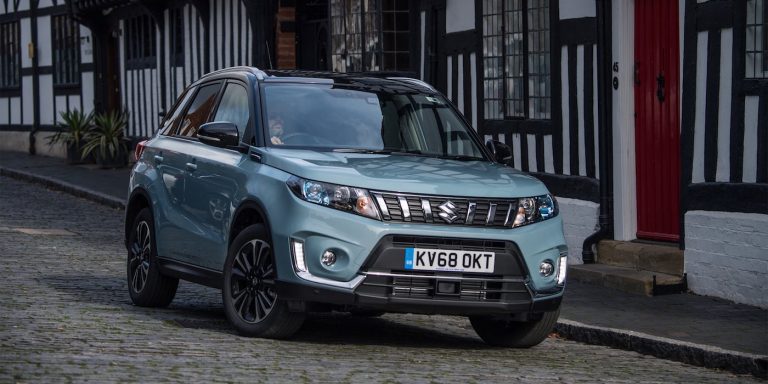
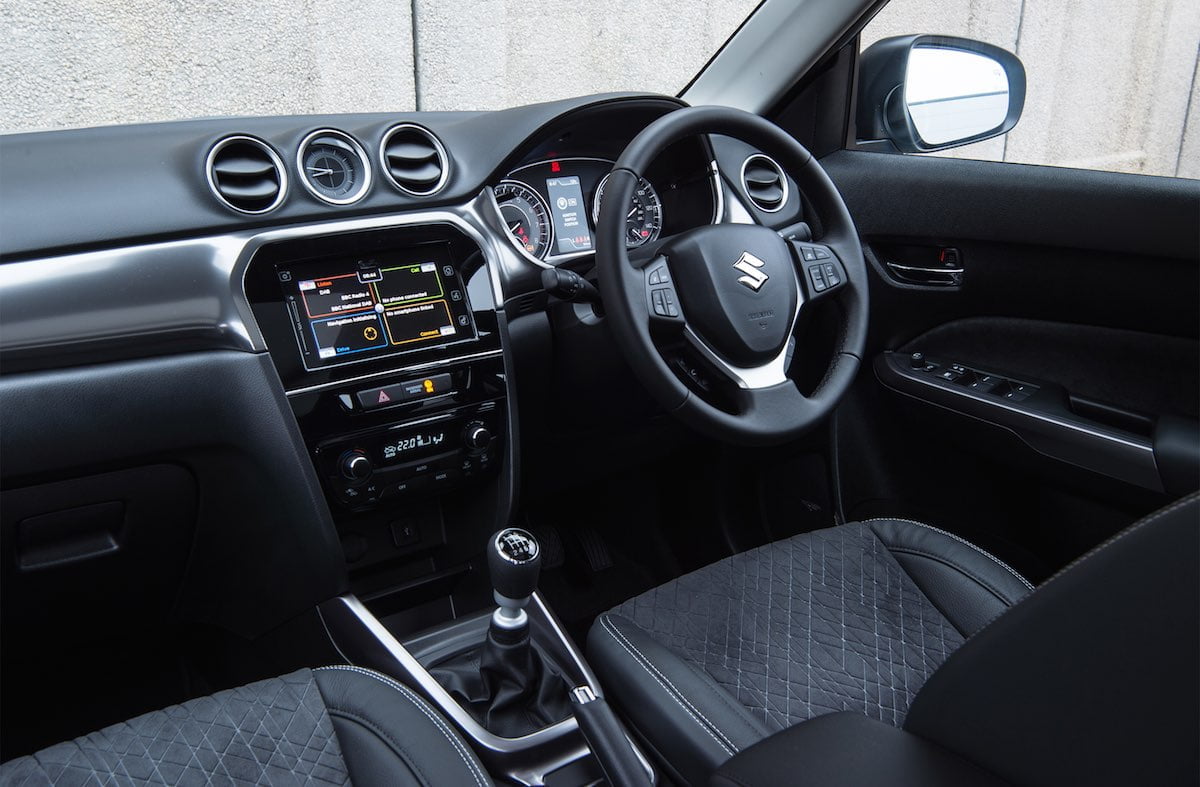
Suzuki has released full pricing and specification details for its facelifted Vitara, which features a subtle design revision, updated engines and a raft of new safety features.
The new Vitara is claimed to be Suzuki’s most advanced car to date. Although the basic shape of the car hasn’t changed, several details have been sharpened and redesigned. The lower part of the front bumper now has L-shaped LED daytime running lights and vertical slats, while the rear lights have been upgraded to LED units with a new light signature.
New alloy wheels and paint colours are also available, with contrasting shades for the roof on the options list. Interior changes are limited to new seat fabrics, a softer plastic for the instrument binnacle and a colour digital display between the dials.
(PA)
Equipment levels have been increased. Trim levels available are SZ4, SZ-T and SZ5, and all cars get seven airbags, alloy wheels, cruise control, climate control, four electric windows and a stereo with Bluetooth and USB connectivity.
SZ-T adds larger alloys, rear privacy glass and a touchscreen audio system with navigation and smartphone connectivity, while the top-spec SZ5 nets LED headlights, suede seats, keyless entry, blind-spot monitoring, adaptive cruise control and a panoramic sunroof.
Engines get a boost
On the engine front, the old 1.6-litre unit has been ditched in favour of 1.0-litre or 1.4-litre ‘BoosterJet’ turbocharged petrol engines. They offer 111hp and 140hp respectively, good for 0-60mph in 11.3 seconds and 9.3 seconds.
The 1.0-litre comes with a five-speed manual as standard, while the 1.4-litre gains a sixth ratio. Both can be specified with a six-speed automatic and four-wheel drive.
Pricing kicks off at £16,999 for an entry-level SZ4 1.0-litre model in two-wheel-drive manual form. Opting for SZ-T adds £2,000, while an automatic gearbox costs a further £1,400. The SZ5 trim starts at £22,499 for a 1.4-litre manual model. The range tops out at £25,649 for an SZ5 1.4-litre automatic with AllGrip four-wheel drive.
A new Department for Transport proposal aims to make life safer on the roads for cyclists, including rewards for drivers who pass bike training schemes.
The plan, unveiled by transport minister Jesse Norman, suggests that drivers who complete the national ‘Bikeability’ cycle training system should be offered a cut to the price of their car insurance. The course would, the DfT says, make drivers more aware of cyclists on the roads.
The plan also includes other proposals aimed at keeping cyclists safe. A new ‘cycling and walking champion’ would be appointed, and local councils would be encouraged to spend 15% of their transport budget on ‘active’ travel.
In addition, the proposals suggest enforcing a no parking rule in designated cycle lanes and funding a new portal to submit dashcam and helmet cam footage to police.
It comes on top of changes to the Highway Code, which are expected to give guidance on the ‘Dutch Reach’ technique for opening car doors – which sees drivers use their far hand to open their door and gives them a better view of cyclists, preventing them from being hit – as well as providing clearer guidance on overtaking distances and priority for cyclists and pedestrians at junctions.
Unveiling the plans, Norman said: “Greater road safety – and especially the protection of vulnerable road users such as cyclists, pedestrians and horse riders – is essential. We want to improve air quality, encourage healthy exercise, reduce obesity and boost our high streets and economic productivity.
“That means more support for cycling and walking, and that’s why these new measures are designed to deliver.”
However, not all groups were so thrilled, with some expressing frustration that speed reduction wasn’t given more priority.
Cycling UK chief executive Paul Tuohy said: “Lowering vehicle speeds around people walking, cycling and horse riding doesn’t just reduce the danger to them but also their perception of the danger.
“While the DfT’s proposals for amendments to the Highway Code will help save lives, ignoring the threat and dangers of speeding is disappointing.”
Rewind to 2012 – a year that saw both the London Olympic Games and the introduction of the Toyota GT86. Seems like ages ago, doesn’t it?
There was much to cheer about. At long last, a firm with so much sporting pedigree yet so little in the way of enthusiast’s products had pandered to the petrolhead with a real front-engined, rear-wheel-drive sports car – even if it was designed and developed by Subaru.
The Toyota GT86 and Subaru BRZ twins were immediately hailed by motoring critics around the world, although many cried for a little more oomph from its 200hp Subaru boxer engine.
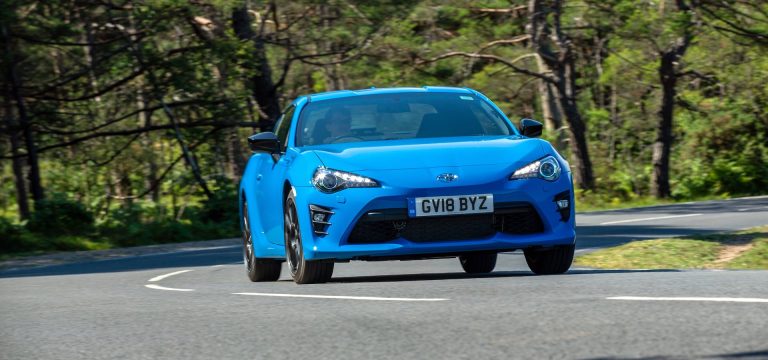
As the calendar ticks over to 2019, the GT86 remains on sale in pretty much the same form – minor 2016 facelift aside — and in typical Japanese fashion, it’s left a trail of special edition models that don’t actually change very much. This is the latest — the GT86 Club Series Blue Edition.
What’s new?
So, for this special-edition GT86, can you expect a more potent engine, overhauled driving dynamics and some stand-out visual differences?
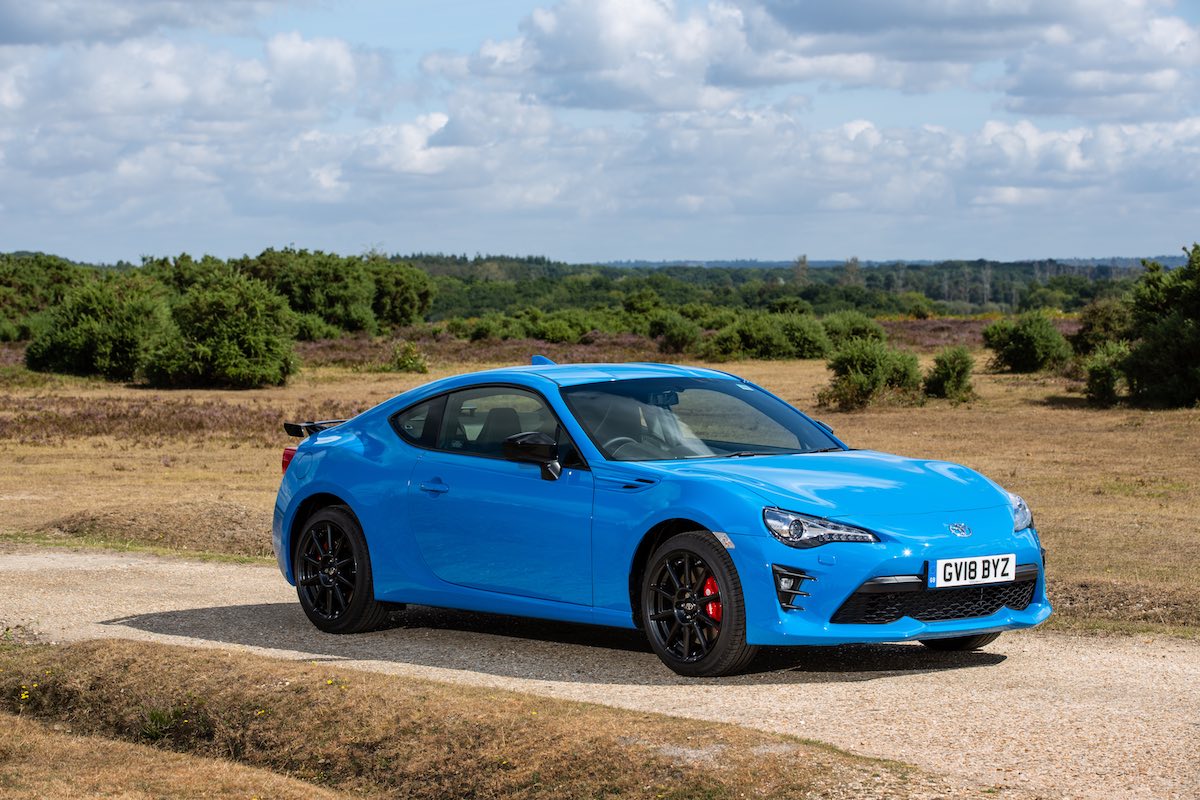
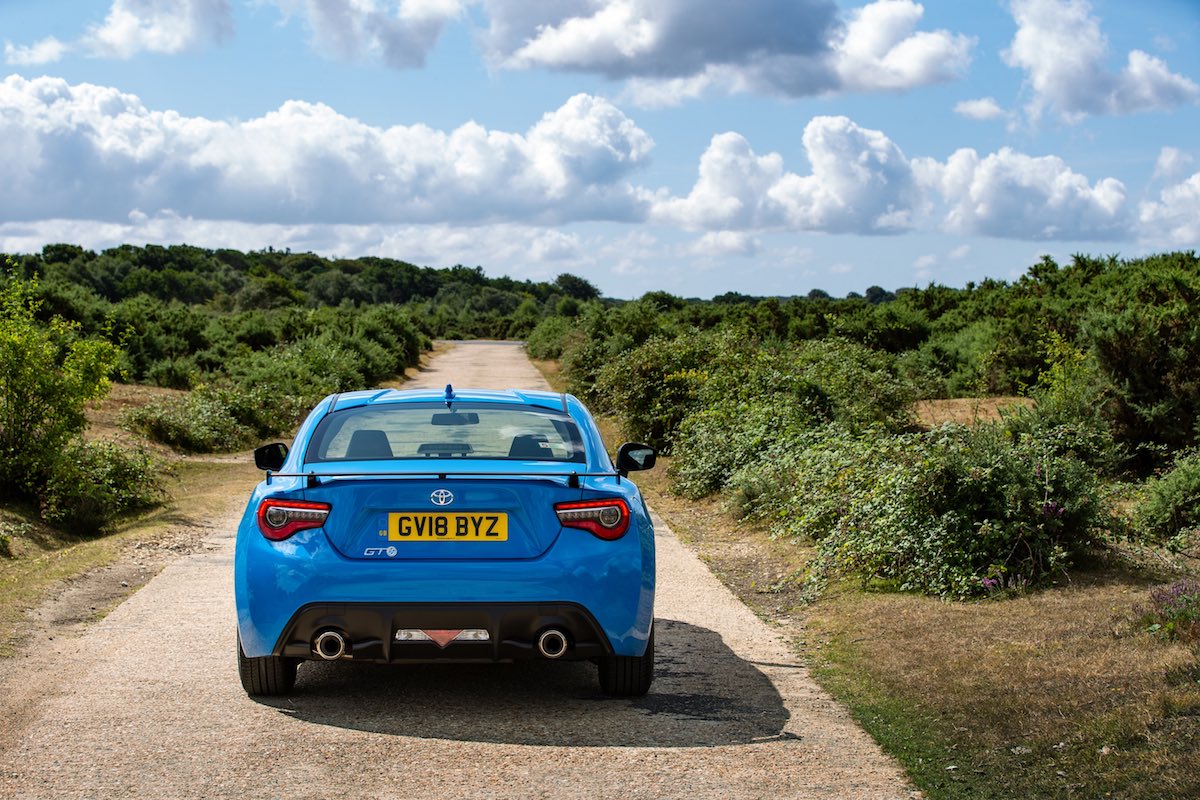
Erm, no. Not really. The GT86 Club Series Blue Edition is available only in the one colour, called Electric Blue. To contrast the blueness, Toyota has gone and painted the wheels, mirrors and both front and rear spoilers in black. That’s about it, really. Oh, and the 17-inch wheels are a different design to the 17-inch wheels on the GT86 Pro.
You can pay an extra £1,460 for the optional Performance Pack, which gives you Sachs dampers and larger Brembo brakes with red callipers.
Otherwise, power from its boxer engine remains the same as before, while there’s little to change the way it drives — but that’s no bad thing.
How does it look?
It is very blue. Really, really bright blue. The contrasting black finish on the wings, wheels and mirrors does make the whole thing look rather sharp.
That, combined with the racier looks added by the car’s most-recent facelift, gives it a pretty mean look on the road – we’d even go as far to call it race car-esque – and the GT86 CSBE doesn’t struggle to catch people’s attention wherever you go.
Opt for the Performance pack, and that effect is heightened by red Brembo brake callipers that stand out brightly behind the black wheels.
What’s the spec like?
There’s a fair amount of equipment out of the box for the GT86 Club Series Blue Edition. It’s based on the GT86 Pro and priced at £545 more than that model.
Not coincidentally, choosing metallic paint on a GT86 Pro adds exactly £545 to the price, so in other words, they’re exactly the same. Which is not surprising, since they have basically exactly the same specification.
Standard luxuries include automatic LED daytime running lights, a reversing camera, rain-sensing wipers, cruise control, heated seats and Toyota’s Touch 2 infotainment system displayed on a six-inch display — with DAB and Bluetooth support.
Adding the Performance pack brings the total to £30,440, though. That’s a fair heft over the base GT86’s £27,285 price tag, and throws it into the territory of another, more potent Japanese performance icon — the Honda Civic Type R.
Unless you’re desperate for the blue finish and the fruits brought along by the Performance pack, we’d suggest opting for the standard-spec GT86.
What’s it like inside?
The Toyota GT86, and perhaps more appropriately its Subaru equivalent, have always harked back to golden age of 90s Japanese performance cars in the interior quality — and that’s perhaps the one area it shouldn’t.
The GT86 is a little more plush than the BRZ thanks to leather trimmings around the cabin and on the seats as well as a sprinkling of Alcantara, but it’s far from luxurious. The dials look straight from a Need for Speed game (and the digital display doesn’t quite fit the cluster properly), while controls are reminiscent of the remote for an R/C car.
As for practicality, there’s a fair amount of space — assuming you’re packing for two, as the rear seats would struggle to fit more than a young toddler in a child seat. It does boast a respectable 391 litres of boot space though, monstering the 130 litres on offer in the Mazda MX-5.
What’s under the bonnet?
The familiar 2.0-litre boxer engine remains unchainged in the Blue Edition (PA)
Powering the Toyota GT86 Club Series Blue Edition is the familiar 2.0-litre, four-cylinder ‘boxer’ engine that can be found in both the regular car and its Subaru sibling, and is paired up to a six-speed manual gearbox or a six-speed automatic (for an extra £1,355).
Power and torque remain the same at 200hp and 205Nm, allowing the Japanese machine to cover the 0-60mph dash in 7.6 seconds before reaching a 140mph top speed.
As for efficiency, Toyota claims 32.8mpg on the combined cycle with emissions of 196g/km — although you’ll struggle to achieve that kind of fuel economy if you drive the car with even the most delicate right foot.
Enthusiast may yearn for more power, but we’d argue the GT86 would better benefit from a boost in torque. Once the revs are built up to about 6,000rpm, the boxer howls and delivers a serious punch. But getting to that point can be a lot of work, with a dip in torque around 4,000rpm giving it an asthmatic undertone.
What’s it like to drive?
Toyota hasn’t changed much about the way the GT86 tackles a road, and that’s for the better. The chassis remains as composed as ever, while offering so much feedback that in the driver’s seat, you can almost feel it at work through your backside.
On the ragged edge, it gives enough grip to keep the car on the road but as a result of its economy-focus Michelin Primacy tyres, will bite hard if it’s not treated with respect.
As a result of the GT86’s performance-focused nature, town and motorway driving is somewhat compromised. Steering is heavy, which can make it a pain to park and navigate through tight spaces, while a harsh ride and lots of road noise make it tiring over longer journeys.
Summary
The Toyota GT86 Club Series Performance Blue doesn’t revolutionise the formula, meaning the Japanese sports car remains as fun to drive as ever — although there is a valid claim for more oomph from the engine.
That’s looking ever more unlikely to arrive now though, and with this generation GT86 looking a little long in the tooth at six years old, it remains to be seen if a successor will come – and if that will boast more fruitful performance.
Having said that, any new car would be some way off and the current iteration remains a solid alternative to the usual choice of a hot hatch — just maybe not in this exact specification.
Model: Toyota GT86 Club Series Blue Edition
Price: £30,440
Engine: 2.0-litre flat-four petrol
Power: 200 hp
Torque: 205 Nm
Max speed: 140 mph
0-60mph: 7.6 seconds
Fuel consumption (combined): 32.8 mpg
CO2 emissions: 196 g/km
Changes to MOT emissions testing has seen the number of cars failing more than double since being introduced earlier this year.
In May 2018, emissions testing within the overall MOT test became more stringent — with smoke of any colour coming from the exhaust resulting in an automatic failure. Automatic failure also applies to any car showing evidence of a diesel particulate filter (DPF) that’s been tampered with.
Six months on, and new Driver & Vehicle Standards Agency (DVSA) figures show 744,592 cars have failed the MOT emissions test — a sharp rise from 350,472 for the same 20th May to 19th November period in 2017.
Diesel cars failing in droves
Of those failed cars, 505,721 were petrol powered — up from 292,468 — while diesel saw a meteoric rise from 58,004 to 238,971 failures.
Meanwhile, the rise in vans failing emissions testing increased from 3,585 in the same time frame to 19,468 — a 448% increase.
Commenting on the figures Gareth Llewellyn, DVSA chief executive, said that the agency’s priority is to protect everyone from unsafe vehicles and drivers. “We are committed to making a real difference to those in society whose lives and health are blighted by poor air quality,” he added.
“Since introducing the new tighter MOT emissions test in May, nearly 750,000 vehicles have been taken off the road or fixed,” Llewellyn said.
Overall MOT failure rates remain steady
Despite the large increase in cars failing on grounds of emissions, the failure rate for the MOT test remains steady since the changes were introduced.
34.7% of petrol cars failed between May 20 and November 19, 2018, a slight drop from 35.7% for the same period in 2017, while diesels saw a marginal decrease from 33.8% to 33.2%.
The number of cars stolen in 2017 reached its highest level in six years, according to official figures from the DVLA.
Falling police numbers and the vulnerability of modern electronic security systems are being blamed for the increase in thefts, which saw more than 43,000 vehicles reported stolen to the DVLA in 2017 – 9,000 more than in 2016 and 13,000 more than in 2015.
Speaking to Auto Express, spokesperson for RAC Insurance Simon Williams said this was “a real cause for concern”. He said that while manufacturers put more clever systems on their cars, “it seems criminal groups are continuing to find ways around them”.
Williams added: “We are concerned that the declining number of police officers could be resulting in less investigation of motor crime like this, something that could be solved by forces having greater resources.”
The surge can be blamed in part on ‘keyless’ car crime, with thieves using a car’s security system against itself to gain access. Using handheld scanners, easily purchased on the internet, thieves are able to scan the signal from a car’s entry fob and amplify it, tricking the car into unlocking itself.
The Association of British Insurers said keyless theft was the main cause of the spike in figures. Its spokesperson, Malcolm Tarling, said: “Car criminals don’t stand still. As cars become better protected, criminals see a challenge to break into them.”
Figures out this week from the association also showed an increase in keyless car crime, up 32% in the first nine months compared to the same period in 2018 and costing insurers £271 million.
DVLA data for 2018 shows that 32,827 cars were stolen up to October 26. That points towards a full-year total that will again exceed 40,000 thefts.
The Volkswagen Group is brilliant at making the most of what it has – and the all-new Audi A1 Sportback is a chief example. Using the same chassis and engine architecture as the latest Volkswagen Polo and SEAT Ibiza, it’s a really premium product that bears only a passing resemblance to its siblings – and every resemblance to its bigger brothers within the Audi range.
The previous A1 was a roaring success, thanks to its fashion-led design and trademark solidity, trading blows with the likes of the Mini Cooper. The new car swaps cuteness for sharp angles and motorsport-inspired styling, while hopefully retaining everything that made its predecessor so popular.
What’s new?
The new Audi A1 Sportback rides on the Volkswagen MQB A0 platform – a selection of chassis components that underpin most of the Volkswagen Group’s small car range. That endows the A1 with a choice of engines, from which Audi has chosen just three – all petrol.
The interior’s also been given a styling makeover, and the new platform’s efficient packaging has allowed Audi to increase the amount of space at the same time – plus bags of technology, befitting the brand’s high-tech positioning.
Best of all is the personalisation on offer. The A1 can be had with a wide choice of exterior colours, contrasting colour packs, alloy wheels and interior ambiences – which can be mixed up any way the buyer pleases.
How does it look?
(PA)
The new A1 Sportback is a smart-looking little thing, and it’s blessed with the ability to wear lower-spec trims without looking like a poor relation.
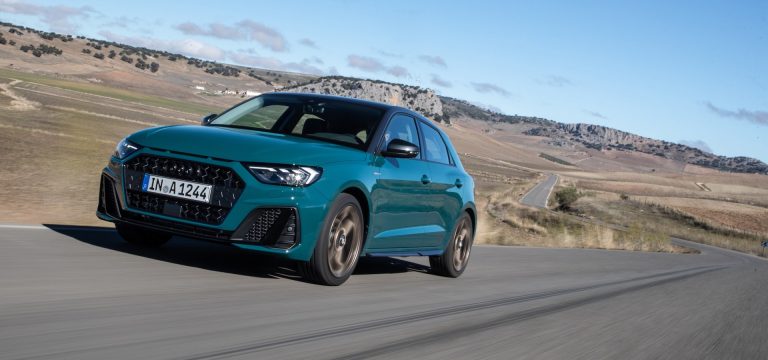
Our ‘Sport’ model had 17-inch alloy wheels as well as a flat paint colour and didn’t suffer for it – mainly thanks to sharp LED running lights front and rear that lend a high-tech look to the car.
There are divisive elements – there’s a rather wide C-pillar, inspired by the Q2, and the triple slots between the bonnet and the grille lend an aggressive edge to the car. But it’s possible to customise the A1 to within an inch of its life, so you need never see two the same – available for testing were some really eye-catching combinations. Sea-green bodywork with bronze wheels, anybody?
What’s the spec like?
Our mid-range ‘Sport’ model came with all the essentials. The LED head- and tail lights really enhance the exterior look of the car, as did smart 17-inch alloy wheels – sadly, the latter are optional. What you do get as standard are 16-inch alloys, sports seats, rear parking sensors and cruise control, as well as Audi’s MMI plus infotainment system.
Step up to S Line and you’ll gain 17-inch wheels as standard, LED interior lighting, even firmer sports suspension and leather-trimmed upholstery. The options list holds goodies such as heated seats, a connected upgrade for the infotainment system, Audi’s digital Virtual Cockpit and a top-end Bang and Olufsen 3D sound system.
What’s it like inside?
(PA)
(PA)
Of all the cars we expect to disappoint with their interiors, the A1 Sportback wasn’t high up the list. We’ll start with the good. There’s far greater room in here for passengers and luggage, and the A1’s 335-litre boot is on a par with anything else in this segment. The seats are also very comfortable and well adjustable even on more basic models.
There’s great technology on offer, too. The driver has digital dials as standard, upgradeable to a full 12-inch Virtual Cockpit as an option, while the top-spec touchscreen infotainment system is superb. Controls are also simply laid out and easy to follow.
The big disappointment is with the quality of the materials. Sure, areas such as the top of the dashboard are crafted from squidgy soft-touch plastic – but the centre console and especially the doors feel downright cheap.
Given that you spend a lot of time with your elbows resting on the door cards, the hollow feel is less than pleasant and not something we’d expect from Audi – even from the smallest model in the range.
What’s under the bonnet?
There are three petrol engines on offer for the A1 Sportback. The entry-level is a 1.0-litre, three-cylinder unit with 116hp – expected to be a big seller in the UK.
Next up there’s a 1.5-litre four-cylinder with 150hp or a top-spec 2.0-litre with 200hp – lifted from the VW Polo GTI, but not badged as one of Audi’s hot ‘S’ models. The lowlier pair of engines can be had with six-speed manual gearboxes or optional seven-speed dual-clutch autos, while the 2.0-litre is automatic-only.
The 1.0-litre is a really sweet engine, with a welcome slug of torque between 2,000 and 3,000rpm making relaxed progress very easy. It’s very refined at a cruise, with just a hint of three-cylinder thrum at low revs. It pairs well with the six-speed manual, too, which has a reassuring solidity to its action.
The 1.0-litre isn’t especially fast, but then nor is the 1.5-litre – and that’s noisier, thirstier and less pleasant to use. Topping the range is the 2.0-litre, which is powerful and turns the A1 into something of a hot hatchback – but it’s likely to be very pricey to buy.
What’s it like to drive?
(PA)
(PA)
The A1 handles much like its siblings from within the Volkswagen Group – the VW Polo and SEAT Ibiza. That’s definitely not a bad thing – there’s an expensive feel to the way this car rides and handles, with sharp edges taken off all the bumps and a pleasing weight to the steering.
There’s not a lot of excitement to be had, though. The A1 doesn’t handle anywhere near as sweetly as a Mini or a Ford Fiesta, as it doesn’t feel as light on its feet. That’s not really backed up with a cushioned ride, either – all A1s get a sporty suspension setup, which despite taking the edge off poor surfaces does jolt occupants over larger imperfections in the road.
Many will like the neutral way the A1 handles, but keen drivers will be left wanting more. Maybe a potential forthcoming S1 model could remedy that…
Summary
Audi gave us almost everything we expected with the A1 – impeccable driving manners, sharp styling and a range of high-end equipment, plus the personalisation touches that will make it so popular with the crowds of buyers who might otherwise choose a Mini.
Some of the interior quality is disappointing, but otherwise the Audi A1 Sportback is an excellent supermini – albeit for a high price.
Suzuki has released full UK pricing and specification for its hotly-anticipated new Jimny.
Prices are set to start at £15,499 when the car goes on sale in the UK in January 2019.
Just two specifications will be available to choose from – SZ4 and SZ5 – with the range-topping trim priced from £17,999 with a five-speed manual gearbox, or £18,999 with an automatic.
All models get a decent amount of standard equipment, with air conditioning, Bluetooth connectivity and cruise control included on base-spec SZ4 cars, while SZ5 Jimnys benefit from 15-inch alloy wheels, climate control and a full satellite navigation system.
Though the same length as the previous-generation Jimny, the new car is able to deliver more boot space – up 53 litres to 377 litres. This is accessed by folding the rear seats completely flat.
Of course, the new Jimny still has off-road capability very much at its core. As such, it’s fitted with Suzuki’s ALLGRIP Pro four-wheel drive system, as well as a low range transfer gearbox which can be easily switched between two-wheel-drive, four-wheel-drive low, and four-wheel-drive high.
A new traction control system automatically brakes slipping wheels to redistribute torque to the opposite side wheel in order to gain better purchase on slippery surfaces. It also benefits from an approach angle of 37 degrees and a departure angle of 49 degrees, made possible by the car’s short overhangs.
One thing that you can’t get on any new Suzuki Jimny is a top safety rating from Euro NCAP, with the latest model only scoring three stars in its crash testing assessment.
There’s also just one engine choice available – a 1.5-litre petrol unit that produces 102hp. It can power the Jimny to a top speed of 90mph – though automatic versions achieve a slightly lower speed of 87mph. Suzuki claims it’ll deliver 41.5mpg when fitted with a manual ‘box, or 37.6mpg for the auto. CO2 figures are set at 154g/km and 170g/km respectively.
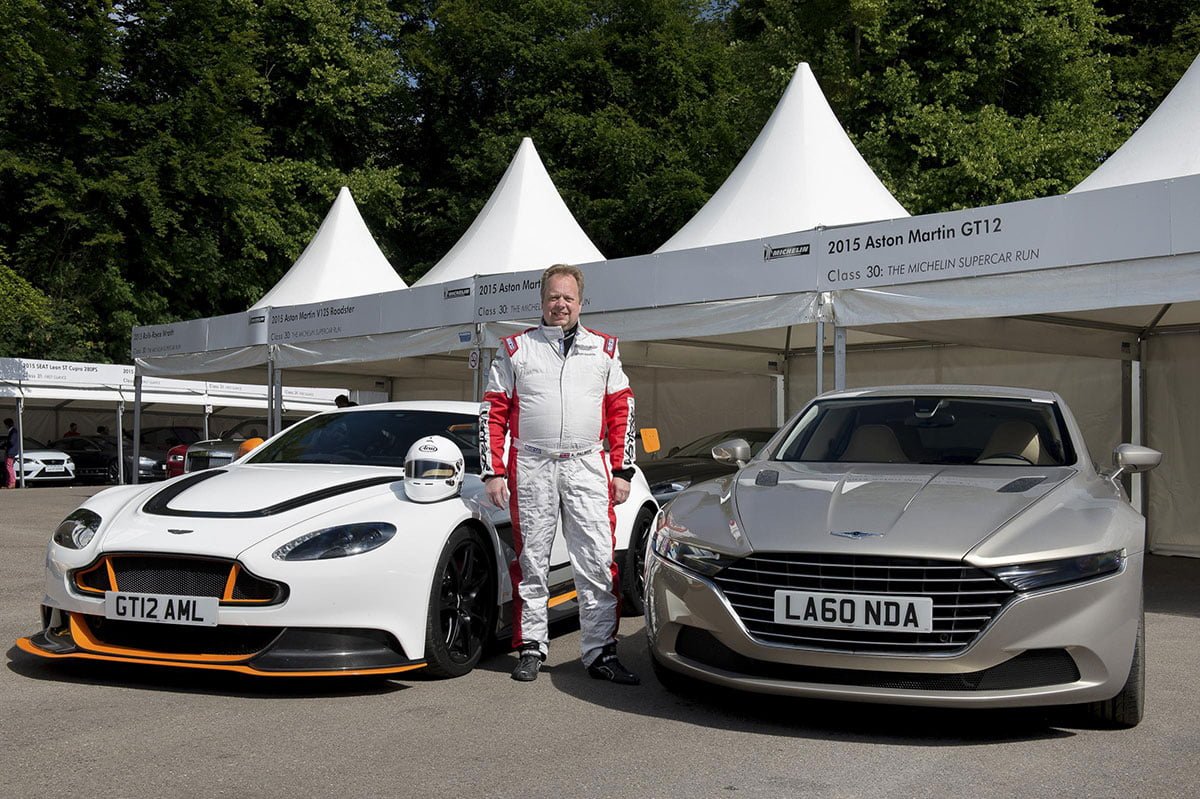
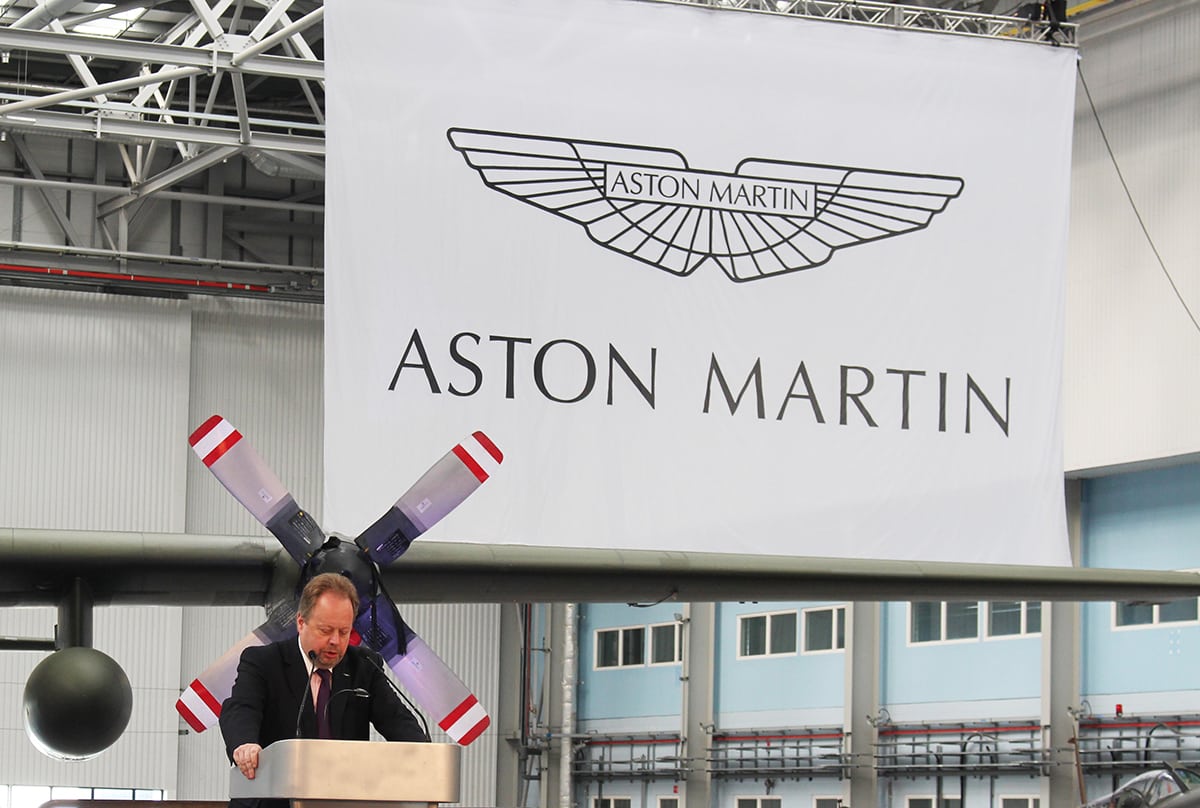
Aston Martin CEO Andy Palmer is a total petrolhead – he likes nothing better than to put on a race suit and compete at quite a high level in his company’s products.
And he’s happy to discuss the merits of other classic British names with fellow petrolheads, as this correspondent discovered while viewing the latest TVR at Goodwood a couple of years ago.
Palmer is a hands-on CEO – especially at the wheel of his product.
Palmer is also, however, a very astute automotive executive, making good use of experience acquired at Austin Rover and then Nissan. He spent 24 years at the latter, many of them in Japan, rising to the position of executive vice president and chief planning officer.
Palmer had always desired to run his own car company, however, and achieved his aim when the Aston Martin CEO post became vacant in 2014. Though he told one media outlet; “when I decided to take this one from Nissan, I was pretty sure people would say I was mad.”
Aston Martin’s long association with James Bond is much valued but today is not something that can be relied on to boost sales.
With good reason – when Palmer took up his post, Aston Martin was a maker known mainly as the preferred brand of James Bond – a cachet of declining relevance – and inside the automotive industry as a perennial loss-maker. Back in the 1980s then chairman Victor Gauntlett was famously asked: “How can you make a small fortune out of Aston Martin?” and replied, “Start with a big one.” Palmer himself pointed out that in its 101 years the brand had faced bankruptcy seven times.
He made this comment when launching his ‘Second Century Plan’ – announced virtually before he had sorted his office furniture, and designed to turn a money pit of a car maker into a profitable, successful brand with cars that buyers wanted.
“First priority was stabilisation – we have not always been known for business stability in our 103-year history,” says Philip Eaglesfield, Aston Martin’s President of UK & South Africa.
“We looked at the foundations of the company, organisation, mix of skills and resources to deliver what we wanted to deliver – there was quite a bit of change, it was complex.”
The 2015 Aston Martin line-up – effectively all based around one car…
Eaglesfield adds there was a realisation that Aston Martin was trying to run its business globally from its Gaydon headquarters in Warwickshire. “In key markets such as China, we needed to build up local knowledge, product expertise, what works in that market.”
As a result, Aston now has five regional offices – Singapore with a branch in Tokyo, Shanghai, California, Frankfurt and of course the UK.
A major issue was the product range. For more than a decade Aston Martin had presented a pretty stable line-up, but also a somewhat samey one. The ‘VH’ family of products was based around the Vantage and DB9, the DBS developed from the DB9 as was the Vanquish, the Rapide…
“We had an excellent platform with some flexibility but for a long period of time we had cars that were related to one another,” says Eaglesfield. “We had to address some of the criticisms of there not being enough differentiation in the brand.”
The DB11 kicked off the Second Century Plan revival.
The first core product of the Second Century Plan was the DB11, unveiled in 2016 with a Volante cabriolet version added earlier this year.
“This is our GT car, our Grand Tourer,” says Eaglesfield. “It’s developed in the spirit of Aston Martin tradition – performance, refinement and comfort. It’s very suited to very long journeys, with the driver arriving relaxed having enjoyed the experience of the drive.”
Both the DB11 and Aston Martin’s ‘proper’ sports car, the Vantage, use the same base engine, derived from a technical partnership with Mercedes-Benz’s AMG performance division – Daimler does own 5% of the British brand these days. Both are, however, tuned by Aston Martin to present different characteristics both to their original units and between the two models.
The Vantage remains the entry-level point to Aston Martin and a true sports car.
Starting from just under £121,000 (compared to the almost £145,000 payable for the least-expensive DB11) the all-new Vantage launched in mid-2018. It remains Aston Martin’s entry-level model, but also its pure sports car, the latest version boasting more aggression in performance, character and styling both over the DB11 and the preceding Vantage.
The third line is the DBS Superleggera, a ‘Super GT’ – also revealed this year and the brand’s current flagship model. While based on the same platform as the DB11 and Vantage, its V12 engine pumps out well over 700hp and the car boasts a £225,000 price tag.
Aston Martin is diversifying in other ways, too – for example placing more importance on special edition models, such as those produced through a long-standing relationship with Italian styling house Zagato, and which command much higher prices.
Typical of the Continuation models is one recalling the revered DB4 GT race car.
‘Continuation’ models – remanufacturing classic Aston Martins such as the DB4 GT and hand-building them at Newport Pagnell just like the originals, sell out within days of order books opening. And there are also such mouth-watering future programmes as a forthcoming third hypercar, in the spirit of the £2 million Valkyrie shown at the 2017 Geneva show, and currently known simply as ‘Project 003‘.
Is it working? Well, the brand lost more than £70 million in 2014, having sold just 3,500 cars. Losses in the following two years climbed further, to £163 million in 2016. But last year, as Palmer’s cost-cutting measures and Second Century Plan got into their stride, the decline was arrested and Aston Martin turned in that rare thing in its history, a profit, of £87 million before tax.
In 2018 profits are climbing, boosted by mushrooming sales in such markets as the Americas and the Far East. Aston Martin sold 1,776 cars in just the last three months – an initial target of 7,000 cars in the year is within reach, and within the next 10 years that is expected to double to 14,000.
St Athan – and the cars that will come out of the plant – will transform Aston Martin.
And the biggest change is yet to come. As your correspondent sampled the latest DB11 and Vantage, Aston Martin was publishing pictures of its virtually complete new production facility at St Athan in south Wales.
Created from three massive Ministry of Defence aircraft hangars, the new plant is significantly bigger than Gaydon, where Aston’s sports cars have been built since 2003, and has allowed the adding of such essentials as a proper test track.
St Athan will be the home of Aston Martin’s future electrification programme – an EV version of the DB9-evolved Rapide sports saloon will appear in strictly limited numbers before the end of 2019. And the revival of the Lagonda luxury badge, debuting at last March’s Geneva Motor Show on a head-turning concept, will happen at St Athan.
Principally, however, the Welsh plant will produce the DBX – Aston Martin’s first SUV, due to be unveiled in production form before the end of 2019 and going on sale in the following year.
In a busy week for Aston Martin, shots of camouflaged versions of the DBX undergoing off-road testing are circulating as these words are written. Even with the disguise it’s clear that this will be a very sporty luxury 4×4, as an Aston Martin should be.
Even disguised the sporting nature of the DBX is obvious – this car is expected to become the brand’s biggest seller.
If the experience of such brands as Porsche and Bentley is anything to go by, the DBX will also transform Aston Martin, becoming the brand’s biggest-selling model by some way. Speaking toThe Car Expert when St Athan was unveiled in 2017, Palmer said that production of the DBX would likely be between 4,000 and 5,000 a year – in other words, more than doubling the brand’s entire current production.
Palmer and Aston Martin face challenges – a stock market flotation earlier in November has not produced a universally positive response from financial experts, and the Aston Martin CEO is one of the most outspoken on the potential dangers of getting the wrong Brexit deal.
Yet evidence is growing that this thoroughly British brand will finally consign its money pit reputation, and quotes such as Gauntlett’s, to history, and establish itself as a much-admired manufacturer of desirable, always sporty, but versatile cars. Bond would approve…