Find an Expert Rating: 
Home Blog Page 125

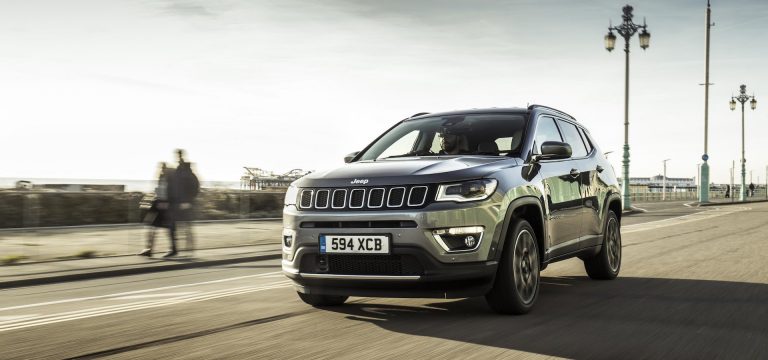
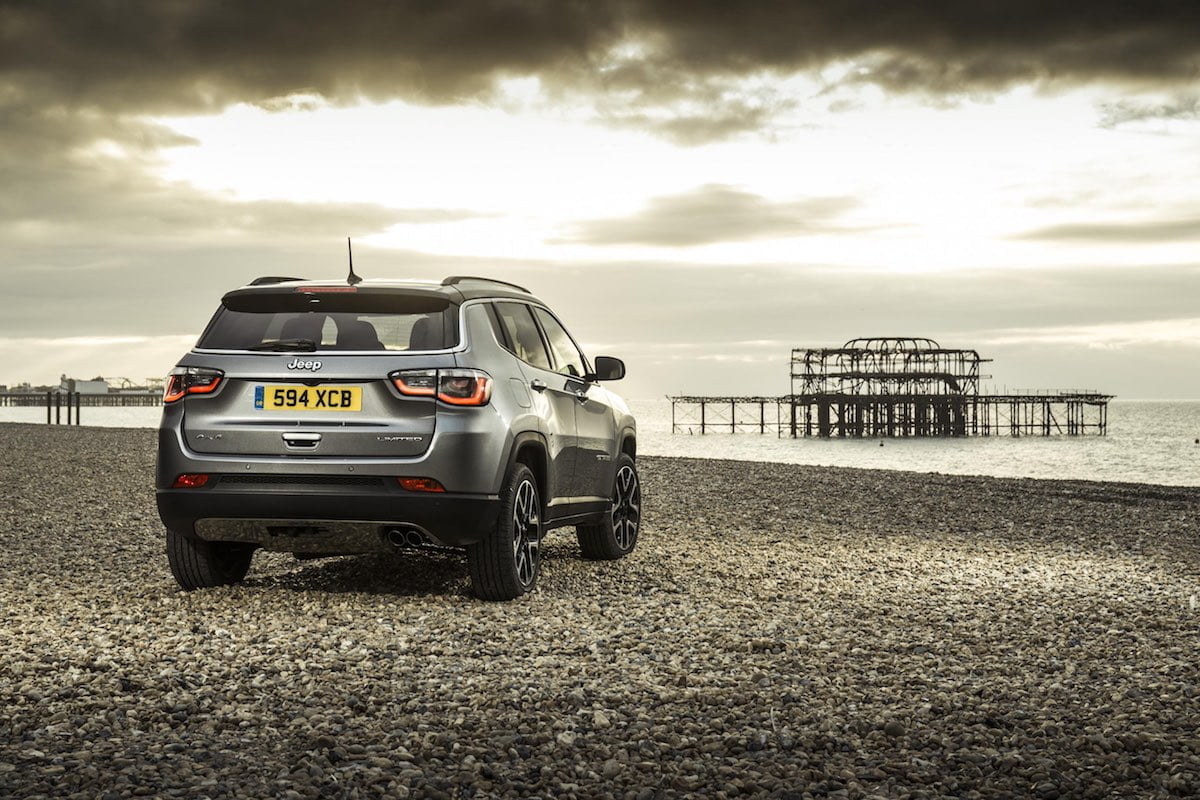
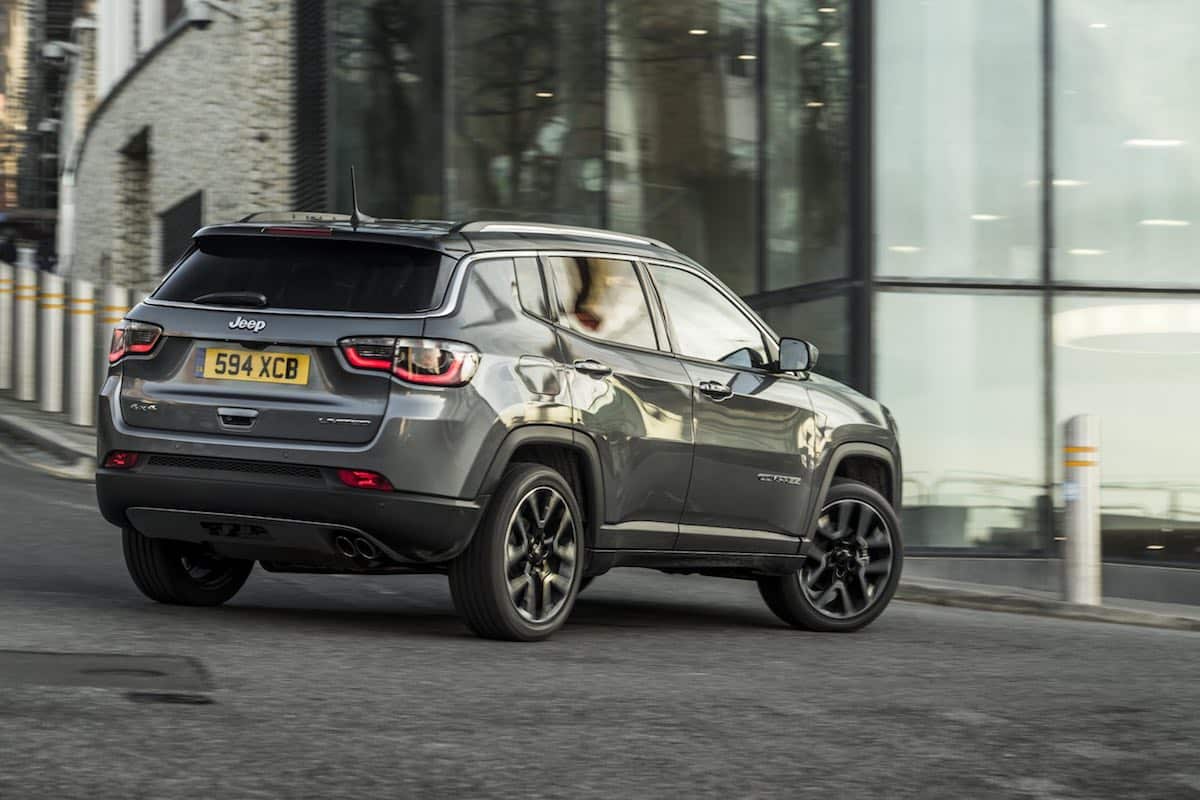
Jeep Compass review

60-second summary

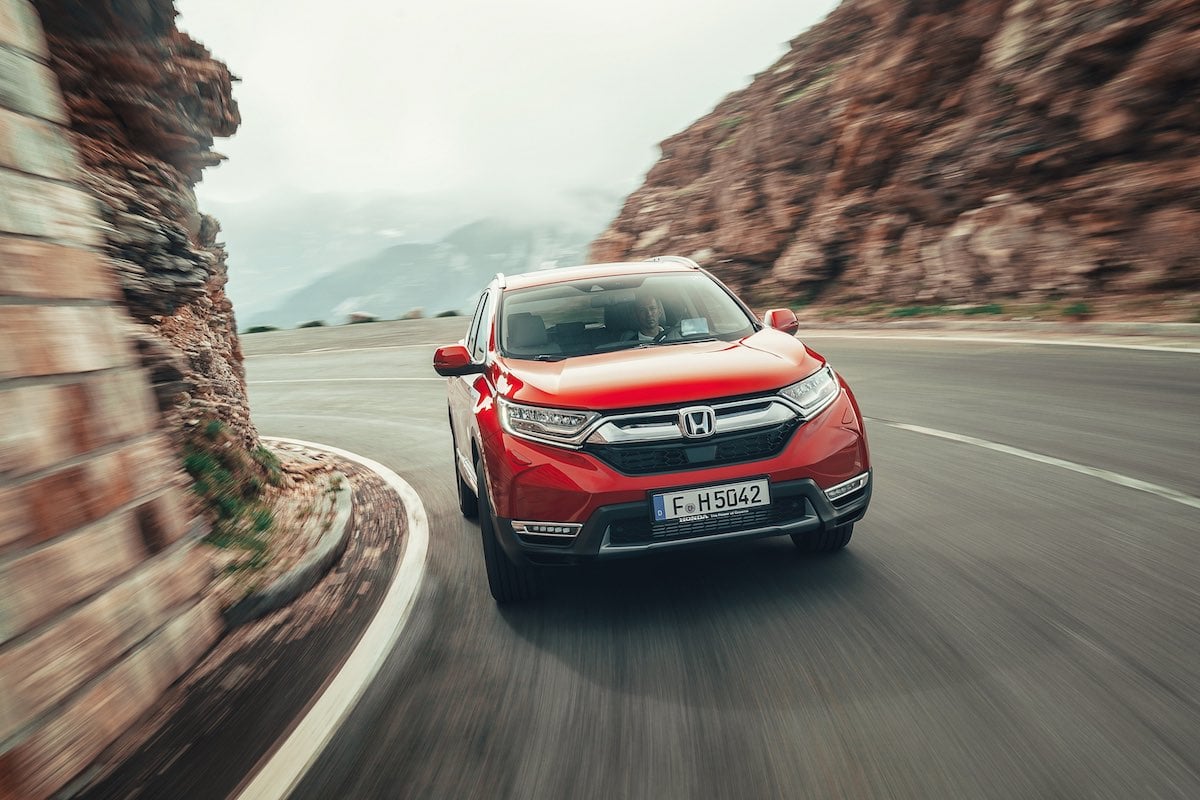
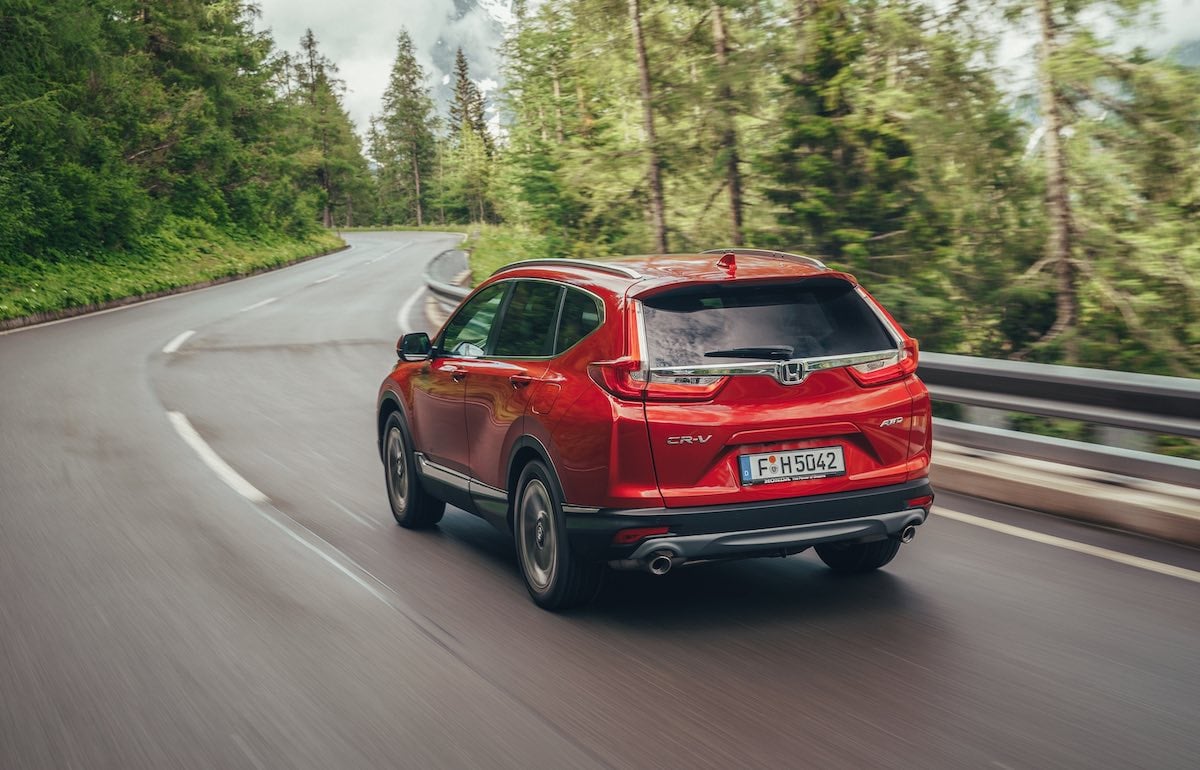
What is it? The latest Jeep Compass is an all-new version of the road-friendly, but off-road capable, compact SUV. Key features Proper 4×4 system, off-road friendly chassis, good specification. Our view Compared to its many hatchback-based rivals in the compact SUV segment, the Jeep Compass does not appear to write any headlines. Compare its off-road ability and appearance, however, and it stands ahead of most of them, as a proper compact SUV for those who want such a vehicle for more than just looks. Similar cars Nissan Qashqai, Ford Kuga, Volkswagen Tiguan Jeep Compass review 2018 | The Car Expert

Full review

Introduction

Jeep – the name conjures up immediate images of the archetypal World War 2 all-terrain vehicle, a name that came to be used, wrongly, for anything promising off-road prowess. And the most American of American brands has traded on that name ever since. Jeep once shared with Land Rover the unofficial title of ‘proper 4×4’ – tough machines you bought if you wanted to spend as much time on the green, loose or wet stuff as the grey tarmac. These days, however, such prowess does not bring the big rewards in the SUV market. While everyone wants an SUV, they really only need it to look like it can go rock climbing. They do need, however, all the home comforts of their previous road car. Jeep needs to compete in that market but is unwilling to throw away its heritage. And so we have the Compass – one of the brand’s two most shamelessly road-pitched SUVs, the other being the Renegade. This is not the first Jeep Compass but its predecessor, launched in 2012 and killed off in 2015, can be quickly forgotten – it rated alongside the Chrysler Sebring as one of the worst cars to come out of the US brand, and its most memorable attribute, for all the wrong reasons, was a two-star (yes, two…) safety rating. Have no fears, the new Compass cannot be compared to the old one in any way – that car is a bit like the long-dead relative that no-one talks about any more. From a five-star safety rating to its general build, this is a competitive entrant in today’s burgeoning SUV market. It offers most of what its rivals do, plus rather more off-road ability than most of them.

Buying and owning a Jeep Compass

Confused at the Jeep line-up? Well, the Compass is slightly bigger than a Renegade, slightly smaller than a Cherokee. It is also Jeep’s major entry in the now fiercely competitive compact SUV segment. This means its rivals include the model that first made SUVs ‘cool’, the Nissan Qashqai, top quality contenders such as Volkswagen’s Tiguan, and a whole lot of others from just about every brand going. The Jeep scores an early victory in looks, which again are nothing like the visually awful presence of the previous Compass. The styling is modern, particularly with regard to the latest iteration of the trademark seven-bar grille, but unlike most of today’s rivals this car also looks like an off-roader, with bold, squared-off wheelarches and muscled-up panelling. And you can have just the looks – the Compass is available as a front-wheel-drive only machine, something that once would have been anathema to the Jeep badge. The full range comprises two petrol and three diesel engines, that fact alone pointing to the expected customers for this car. All these powerplants are familiar from the Fiat Chrysler line-up, and among many mechanical aspects that the Compass shares with the Fiat 500X that we’ve just tested at The Car Expert. So there are two versions of the 1.4 petrol engine, with 140 or 170hp. The former comes with front-wheel-drive and a six-speed manual gearbox, the latter with all-wheel-drive and a nine-speed auto. Diesel options centre on the long-lived Multijet unit – in 1.6-litre form with a six-speed manual and 2WD, and two versions of a 2.0-litre with 140 or 170hp, and 4WD. Trim levels number four – Sport, Longitude, Limited and Trailhawk. The latter is specifically designed for those who want to do some serious off-roading in the Compass, adding such niceties as protective skid plates, bespoke bumpers, raised and off-road-tuned suspension, hill descent control and a ‘Rock’ crawl mode in the transmission. You don’t need Trailhawk to leave the tarmac behind, however. All versions with a 4×4 transmission, such as the Limited model we are testing, include a ‘Selec-terrain’ system. Using a rotary control just ahead of the gear lever, one can switch between auto, snow, sand and mud modes. It also includes a switch to lock the differential when escaping difficult situations – this is no soft-roader. Equipment levels are adequate – prices for the Compass start from around £23,000 and entry-level Sport customers will get such niceties as 16-inch alloy wheels, LED tail lights, a leather steering wheel with audio controls, air conditioning and cruise control. Our Limited-specification test car, top of the ‘normal’ range, includes 18-inch alloy wheels, halogen projector headlamps, silver roof rails, privacy glass, powered and heated seats in leather, rain-sensitive wipers with de-icers and a heated steering wheel. The Limited’s safety package includes a reversing camera and front and rear sensors, and driver-assistance technologies ranging across blind spot and cross path detection, and parallel and perpendicular parking. Safety is strong on all Compass variants, however, topped by the standard-fit autonomous emergency braking. When crash tested in 2017 the Jeep earned a top-level five-star Euro NCAP safety rating.

Inside the Jeep Compass

Jeep is pitching itself as a premium brand, and the interior of the Compass has to straddle the twin requirements of appearing of high quality and being able to cope with the odd bit of green-laning and the resultant mud and muck that will find its way inside. Mostly it succeeds, but we are not that sure whether the gloss-black surround of the infotainment screen atop the centre console really shouts premium like its makers want it to. Said screen is part of the Uconnect infotainment system, familiar from other FCA products but specified for the first time in a Jeep. There are two versions depending on trim, with either a five- or eight-inch screen. It’s worth going above entry-level to get the eight-inch variant, as this includes Apple CarPlay and Android Auto smartphone compatibility allowing hands-free calling, navigation and voice texting. And using the navigation app on your phone is preferable to the occasionally frustrating in-built system. Generally, the infotainment system is a little laboured in operation compared to some rivals. The major feature of the driver’s surroundings are the number of controls – there are lots, including several festooning the rear of the pleasingly chunky steering wheel. This leads to initial irritation trying to get to the screen menu one wants, but it soon becomes second-nature. Space in the Compass is adequate – good up front with plenty of adjustability in the seats, slightly more cosy in the rear. Not helping with the headroom in our test car was the optional panoramic sunroof, a cool £1,200 extra on one’s bill. Those who particularly want to go off-road will likely more happily pay the £150 for the full-size spare wheel, which lives under the boot floor. Yes, it cuts available space in the boot from 438 to 368 litres, but is a so much better option than a tyre inflation kit…

Driving the Jeep Compass

Our test car came fitted with the top engine option, the 170hp diesel. This hits 62mph from rest in just under 10 seconds and will go on to 122mph, while returning quoted fuel economy of 49.6mpg and CO2 emissions of 148g/km. This diesel has been around for a while and sounds like it, with a noticeably audible note that more recent rivals have succeeded in mostly drowning out. However it is a competent accelerator and cruiser, helped by a very efficient auto transmission that only swaps between modes as needed, rather than constantly jumping about as can often be the case with such units. On the road, the 4WD transmission effectively acts in front-propelling form and leaving it in auto is fine for most situations. One has the comfort of knowing it will bring all four wheels into play if road conditions become more challenging, such as in the ice and mush of winter. The extra modes are really only there for proper off-road stuff. Where the Compass differs from almost all of its mainstream SUV rivals is in its suspension. There are no multi-links but struts in the rear setup – this means they operate over a wider range which is good, you guessed it, for going off-road. Surprisingly, however, the car does feel quite stiff at slower speeds, even with the ‘Frequency Selective’ dampers claimed as an exclusive by Jeep, and which are supposed to find that sweet spot between on-road ride quality and off-road ability. They do, but only after a fashion. Cruising at speed, the Compass is reasonably composed and comfortable, but it only really comes into its own when cornering with the enthusiasm that few owners will want to. In such situations the dampers firm up, the 4WD system keeps the grip where it should be and the initially woolly steering gains somewhat more feel to produce progress that will leave road-focused rivals struggling to catch up.

Summary

In a compact SUV market that is now saturated with choice, the Jeep Compass sits somewhere in the middle – adequate in most respects. But that only holds true if you consider it by the same criteria as those rivals. The selling points of the Jeep Compass are that it looks not like a car on mild steroids but a tough SUV that is capable of leaving the blacktop behind. And it backs up this visual impression with actually being able to do it – offering a combination of powertrain, transmission and chassis that provide the go to match the show. For adventurous motorists, those who like to get out into the countryside at weekends, tow a trailer or a horsebox to events, the Jeep Compass should certainly be on the consideration list.

Key specifications

Make & model Jeep Compass Volkswagen Tiguan Ford Kuga
Specification Limited SE L Titanium X
Price (on-road) £34,295 £35,545 £35,235
Engine 2.0-litre diesel 2.0-litre diesel 2.0-litre diesel
Power 170 hp 190 hp 180 hp
Torque 380 Nm 400 Nm 400 Nm
0-62mph 9.5 sec 7.9 sec 10.0 sec
Top speed 122 mph 131 mph 124 mph
Fuel economy (combined) 49.6 mpg 49.6 mpg 43.5 mpg
CO2 emissions 148 g/km 149 g/km 171 g/km
Insurance group 23E 23E 26E
Euro NCAP rating 5 stars (2017) 5 stars (2016) 5 stars (2012)
TCE rating 7.6 / 10 8.0 / 10 Not yet tested
  2018 Jeep Compass road test | The Car Expert

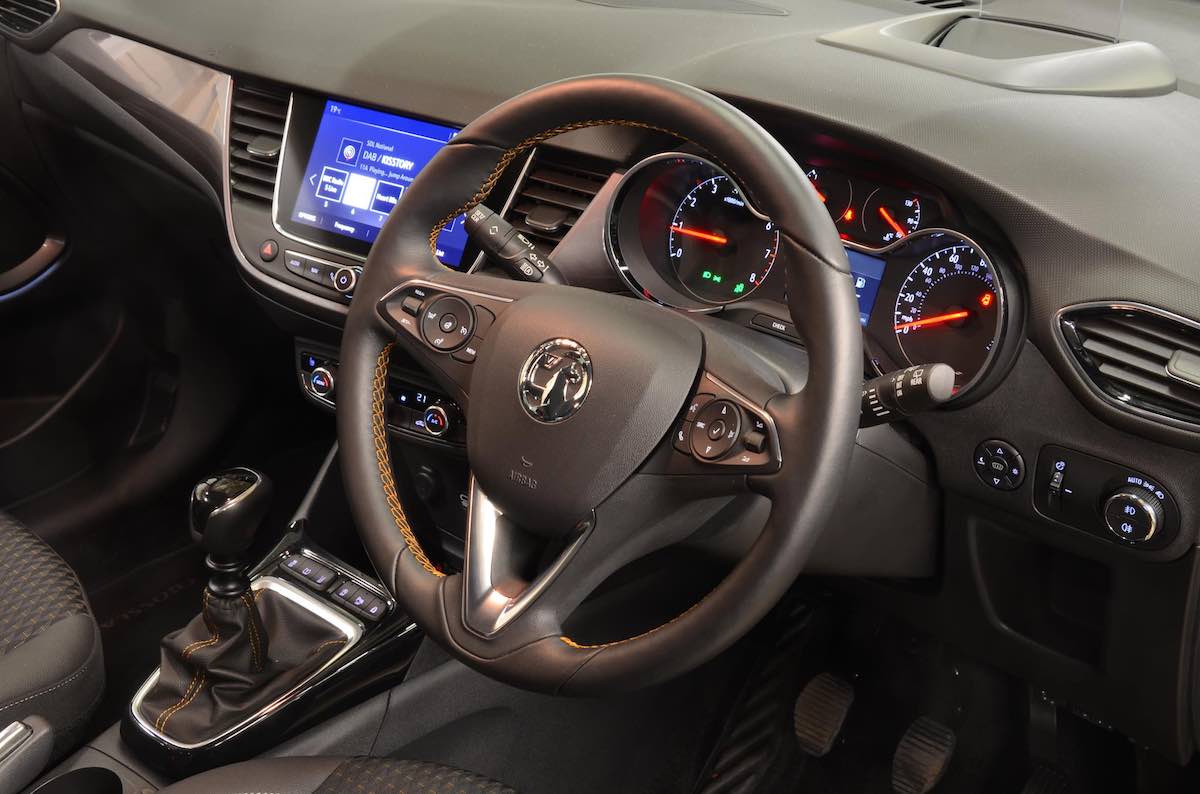
New range-topping Vauxhall Crossland X Ultimate

0
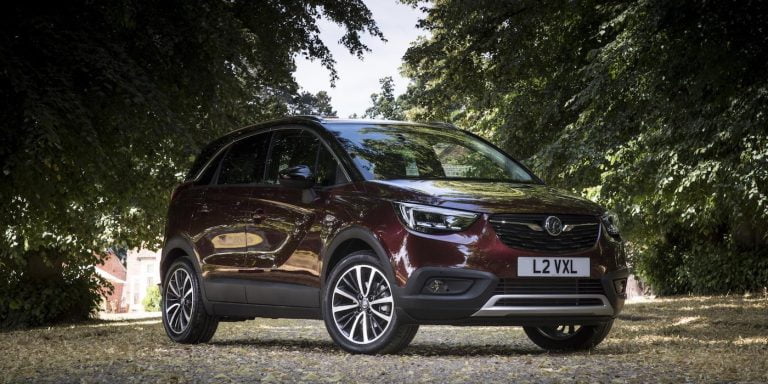
Vauxhall has topped off its Crossland X range with the addition of a new ‘Ultimate’ trim level. The new crossover features generous standard equipment and unique styling additions, and starts from £22,480. The Crossland X Ultimate can be specced with a choice of two engines – both 1.2-litre petrol units. The entry-level version is a 110hp unit mated to five-speed manual or automatic gearboxes, while those after a little more shunt can opt for the more powerful 130hp engine paired with a six-speed manual. Both claim to return 57.3 and 55.4mpg respectively.
You may also like:

Ultimate trim can be spotted from the outside thanks to diamond-cut 17-inch alloy wheels, alloy-effect front and rear skid plates and silver roof rails. For added prestige, customers can also specify a fixed panoramic glass roof. Also standard are full LED headlights. Vauxhall Crossland X Ultimate dashboard Inside, the Crossland X Ultimate gains Vauxhall’s latest Navi 5.0 IntelliLink infotainment system. It’s an eight-inch touchscreen unit with navigation as well as Apple CarPlay and Android Auto smartphone connectivity. Leather upholstery is also standard, as are heated front seats and a heated steering wheel. On the safety front, the Crossland X Ultimate comes with a driver drowsiness system, forward collision alert and autonomous emergency braking. The new Vauxhall Crossland X Ultimate is available to order now.

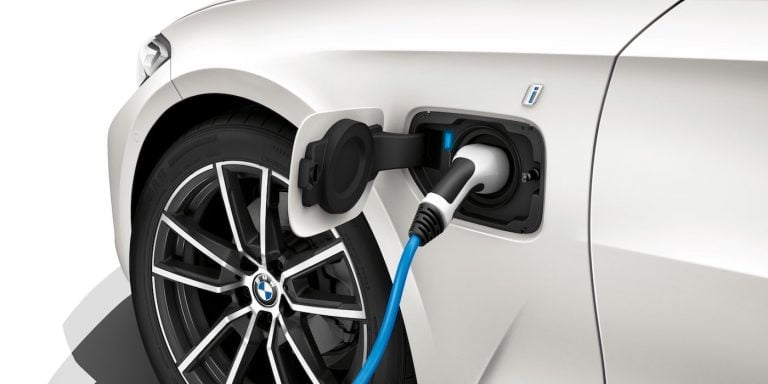
New BMW 330e plug-in hybrid joins 3 Series line-up

0
BMW has revealed the latest addition to its new 3 Series range – the 330e plug-in hybrid model. The 330e mates a 2.0-litre petrol engine to an electric motor and battery pack for improved efficiency and up to 37 miles of pure-electric motoring. The new 330e is the latest model to be announced in the all-new 3 Series range – the latest evolution of BMW’s enormously popular executive saloon. It uses a 185hp 2.0-litre engine paired with a 68hp electric motor.
You may also like:

The total system output is 252hp – identical to the outgoing model – although an overboost can increase this for short bursts. However, a diet means this model is lighter than its predecessor, which improves fuel economy. The car’s all-electric range has increased by 50% to 37 miles, while fuel economy is an official 138mpg – under the new, stricter WLTP guidelines. Official CO2 emissions are also an impressively low 38g/km. The hybrid powertrain offers good performance as well as those headline economy figures. BMW claims the 330e will accelerate from 0-60mph in 5.8 seconds, while the top speed is 143mph. That’s thanks in part to the new ‘XtraBoost’ function, which temporarily boosts the electric motor’s output from 68hp to 113hp for added performance. BMW 330e side profile The electric motor is supplied by a 12kWh battery pack, which sits below the boot floor. That does have an effect on load volume, which is down by 100 litres to 375 litres – but split folding rear seats are still standard to help accommodate longer loads. The rest of the interior is business as usual, including the trim levels – which stand as SE, Sport Line and M Sport. Bespoke hybrid features include updates to the navigation system. When searching for a public charging point, the nav will offer drivers activities to do while the car is charging – from cafes to tourist attractions. There’s also standard interior pre-heating. The new BMW 330e will go on sale from July 2019. Prices are yet to be confirmed, although expect a slight increase over its predecessor’s circa £35,000 starting price – not least because of the removal of the government’s plug-in car grant for hybrids of this nature.
BMW 330e passing some wind turbines
(PA)

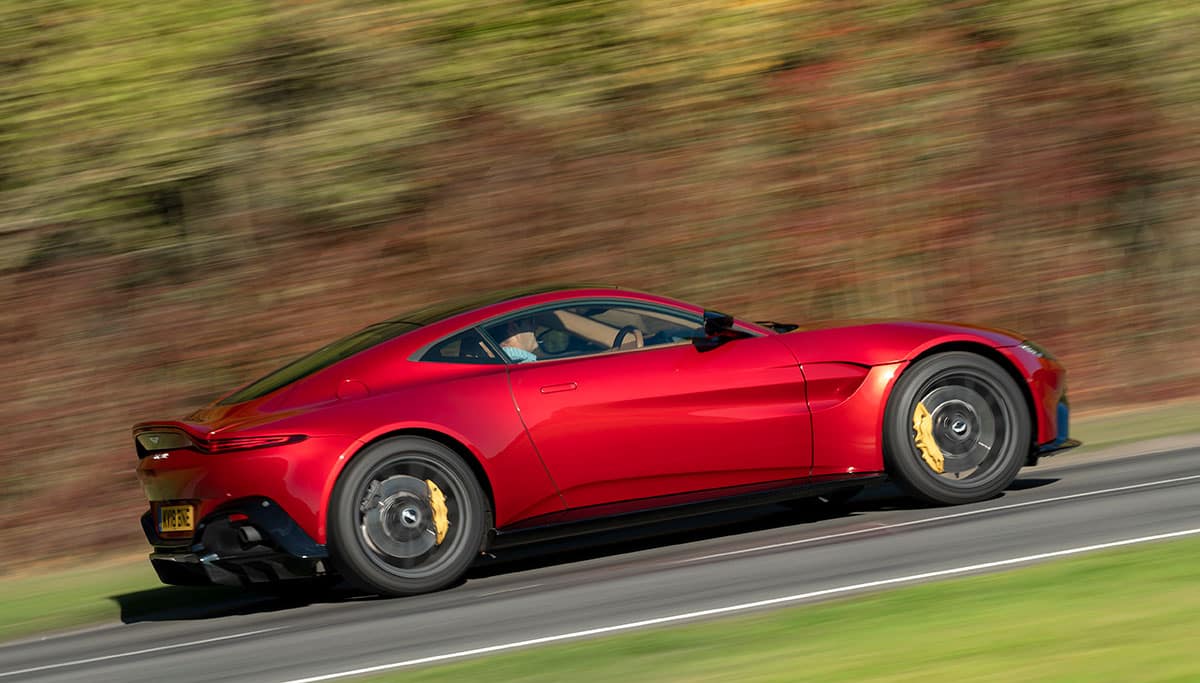
Aston Martin Vantage test drive

What is it?

Aston Martin has changed massively in recent times and of the brand’s three main production models, the Vantage is the acknowledged sports car, and also the entry-level to the range – mind you that is a six-figure entry point… The Vantage name goes back to 1951, but the modern iteration was launched as long ago as 2005, so we were long overdue a new one. And the latest Vantage, arriving with its first buyers in summer 2018, is all-new – in fact, the first completely new car to be designed under the brand’s ‘Second Century Plan’. The car benefits from all the latest technology Aston Martin can pour into it, together with several of the innovations, such as the multiple but separate chassis and drivetrain modes, launched on the DB11 grand tourer of 2016. And this Vantage is a very different beast to its predecessor. 1811 Aston Martin Vantage The Car Expert

What’s new?

Basically just about everything – this is a ground-up new design. Yes, it’s still a two-seater sports car, and its structure is still a combination of mostly aluminium and exotic composites. Beyond that, all change… The Vantage is bigger in all respects than its predecessor – 8cm longer, 8cm wider and with a wheelbase extended by 10cm. And while its mechanicals share much with the DB11, notable differences include a bespoke, more handling-friendly rear suspension – a multi-link setup hung on a rear subframe solidly mounted to the shell. Then there are the electronic advances – an active differential on the rear axle, and those driving modes. They are activated by two buttons, one of either side of the steering wheel, the left changing the damper settings, the right the powertrain throttle response, gear shift and such like. There are three modes – most compliant being ‘Sport’ (well this is a sports car). Select ‘Sport+’ and things become a little more exciting, while the final mode is for what its name suggests – ‘Track’.

How does it look?

The old Vantage was a curvy, cuddly sports car – not the new one. A much more aggressive design – sharper angles and more muscular proportions – clearly differentiates this car from its sister DB11, which is what its designers intended. The looks divide opinions and the front end, with its enormous grille, comes in for the most criticism from some. But this is a nose that announces the Vantage, leaving those you drive up to from behind with no doubt as to what is looming in their rear-view mirror. And it is also very low, almost sniffing the tarmac, adding to the aggression. Probably the best angle to view the Vantage from is the three-quarter rear, finely sculpted and with the aerodynamic diffuser hugging the bodywork as it emerges from under the car. 1811 Aston Martin Vantage The Car Expert

What’s the spec like?

Retail prices for an Aston Martin Vantage start at £120,900. But dipping into the desirable options list will soon inflate that cost. Our test car had almost £40,000 of extras on it, including 20-inch forged gloss black wheels, a host of delicate trim and detailing add-ons such as carbon fibre twill inlays and the Vantage logo stitched into the headrests, and a premium Aston Martin branded audio system. Options also include such basics as keyless entry, a perimeter camera (a good idea, as despite being the smallest Aston with its long bonnet and low driving position this feels like a big car, especially in the narrow streets of Cotswold towns) and parking and blind spot assistance technology. You will not worry that much about standard kit when choosing one of these, but it does come with satnav and Apple CarPlay integration through an eight-inch LCD screen, parking sensors and lots of leather applied to the interior. And the standard safety kit includes emergency braking assistance.

What’s it like inside?

1811 Aston Martin Vantage The Car Expert Aston Martin interiors have been criticised in the past, particularly during the period of Ford ownership when it appeared the Blue Oval parts bin was raided for fitments. And while the early DB11s attracted some concerns over interior quality, the Vantage ticks all the boxes. You slip down into a low driving position, as it should be in a sports car, though emphasised by the high dash – short testers like this one will need those parking aids as there is no chance of seeing the end of the bonnet. However the way the interior cossets, with its excellent quality leather and detailing, immediately gives the impression of sitting in a car that is special. Yes, it feels like a thoroughly British sports car, but also more evocative than its major rival, the Porsche 911. There are a lot of buttons, both on the steering wheel and the centre console. But they are beautifully laid out, particularly in a symmetrical arrowhead style in the centre. Said buttons include the quartet for the auto transmission – there is no lever. And in the centre is the engine start, an Aston Martin wing behind a glass cover. It’s all rather wonderful.

What’s under the bonnet?1811 Aston Martin Vantage The Car Expert

One criticism Aston Martin regularly receives is that its engines are sourced from Mercedes-Benz. Well, Mercedes’ parent Daimler does own 5% of Aston, and the Mercedes-AMG V8 engine is a potent but impressive unit. This is a twin-turbo 4.0-litre V8, in contrast to the naturally aspirated 4.7-litre unit of the previous Vantage. And it has been significantly retuned for its new application, both in terms of the way it delivers its power and the tone and quality of sound that it makes – an important consideration in the Aston Martin definition book. In a Vantage, you won’t feel like you’re driving a Mercedes… The important figures are 510hp and 685Nm of torque, good enough to send the Vantage through 62mph from rest in a mere 3.6 seconds and onto a terminal speed of 195mph – if you have a German autobahn or preferably an airport runway or track available. Your road tax bill will be expensive, as the Vantage puts out 230g/km of CO2, and with combined cycle fuel economy of under 28mpg you will be regularly visiting your local filling station – but such aspects matter little to buyers in this market.

What’s it like to drive?

1811 Aston Martin Vantage The Car Expert In a word, enthralling – and even at 30mph. Yes, this is the sports car, and yes its more performance-pitched suspension does let you know all about the quality of the road surface that you appear to be sitting very close to. But the Vantage is a very well-behaved car. Crawling along in urban traffic it behaves impeccably, that big V8 purring at what feels like little more than tickover. Once out on the open road and opened up the car’s abilities soon make themselves felt. Even in the default Sport mode, the pickup for swift acceleration is seriously impressive, cars ahead dispatched in swift overtaking moves accompanied by that V8 growl. Choose Sport+ (in both powertrain and chassis) and the car becomes more urgent in its response, but not outlandishly so, as it does in the Track mode which really should be kept, well for the track. Changes to the new Vantage included siting the engine far back in its bay, almost under the front bulkhead, and we are told the car boasts an almost perfect 50:50 weight distribution. Combine this with electric power steering (replacing the previous hydraulic unit) and all the various aero aids and the handling is a delight. The Vantage changes direction precisely and swiftly, and grips way beyond the capabilities of the typical driver or the UK road system, while equally swiftly adding to the grin factor. With the chassis set to the standard Sport mode the car tackles all the twisty bits with confidence, but this tester found leaving the settings in Sport+ as the best combination of control and aggression. This is a seriously fun car to drive – whether enthusiastically or in relaxed mode.

Summary

In the latest Vantage, Aston Martin has a sports car to be proud of. It performs as such a beast should, behaves itself when the need arises and oozes quality outside and in. It’s remarkable to think that this is the ‘entry-level’ Aston Martin. With cars such as the Vantage, this is a British brand going places. The Car Expert Best of British horizontal banner

Similar cars

McLaren 570GT, Audi R8, Porsche 911 Turbo

Key specifications

Model as tested: Aston Martin Vantage Hyper Red Price: £120,900 (159,650 with fitted options) Engine: 4-litre V8 twin turbo petrol Power:  510 hp Torque:  685 Nm Max speed:  195 mph 0-62mph:  3.6 seconds Fuel economy:  27.4 mpg CO2 emissions:  230 g/km 1811 Aston Martin Vantage The Car Expert

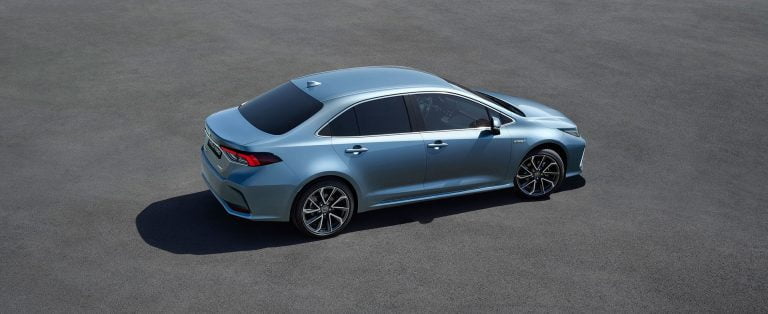
Toyota Corolla saloon returns to UK

2
Toyota will bring the Corolla saloon back to the UK in 2019. The four-door car will go on sale alongside the hatchback and estate variants, unveiled at the Geneva and Paris shows earlier this year, and will replace the Auris – which itself succeeded the previous Corolla in 2006. Toyota says that the saloon is aimed squarely at ‘young professionals’. It has similar styling to its stablemates but with some design tweaks to distinguish it. Up front, there’s a simpler bumper design, while the rear takes on a bespoke look. The car is based on the same TNGA GA-C framework as the other Corolla variants, and is equal in length to the recently revealed Touring Sports estate, with a 2.7m wheelbase.

Petrol and hybrid power

Two powertrains will be available globally, although it has yet to be confirmed if both will come to the UK. The 1.6-litre petrol engine develops 130hp through either a six-speed manual gearbox or CVT. Toyota says this can achieve 46.3mpg on the WLTP combined cycle, with CO2 emissions of 131g/km. There is also a 1.8-litre petrol-electric hybrid unit, developing 120hp and supplied only with a CVT transmission. It can reportedly return 65.7mpg on the WLTP combined cycle while emitting CO2 emissions of 77g/km. Highlights on the equipment list include adaptive cruise control and a new Lane Tracing Assist that can keep the Corolla dead-centre in its lane. There’s also an eight-inch infotainment system, wireless phone charging and ten-inch head-up display. The saloon will be built in Turkey, while the hatchback and Touring Sports estate variants are to be produced in the UK at Toyota’s Burnaston plant in Derbyshire. Full pricing and specifications for each model will be released closer to when they go on sale during the first quarter of 2019. While the Corolla badge has not been seen in the UK since 2005 when it was replaced with the Auris it has been available around the globe, with international market Corollas mechanically-similar to the Auris. Toyota Corolla Saloon The Car Expert

Smart EQ ForTwo test drive

0

What is it?

In a motoring world quickly converting to electric power, Smart has been ahead of the game. In fact, it’s the first manufacturer to announce that it would be moving from an all-combustion engine to a vehicle line up consisting of only fully-electric cars. This, the EQ ForTwo, is the all-electric version of Smart’s familiar two-seater city car. It’s the third generation of the ForTwo, and the second generation of the electric model. It makes sense – the ForTwo has always been designed as a city car, and electric cars benefit from being used in cities where charging points are more abundant than in less populated areas. But how does the Smart EQ do as a complete package? We’ve lived with it for a week to find out.

What’s new?

If you took the Smart on face value alone, you’d think that very little had changed over the regular, petrol-powered ForTwo. The dinky proportions remain, the minute turning circle is still delightfully present and the bulbous, rounded looks are in keeping with past generations of Smart cars. But look a little deeper, and you’ll notice the smoothed front grille, and underneath the petrol cap there’s a charging point, rather than space for a fuel nozzle. Though this may appear like a traditionally-powered Smart, the reality is far from that.

How does it look?

The Smart ForTwo ticks all of the styling boxes for a city car; it’s compact without appearing too dinky. This special edition Nightsky model has some premium styling touches such as 16-inch alloy wheels and features fibre-optic running lights too. It’s a – ahem – smart looking thing indeed, and should appeal to those who want a stylish inner-city mode of transport. Our test car came in cabriolet form too, which is just what you need as winter approaches…

What’s the spec like?

On-road prices for the Smart ForTwo EQ start at £23,335, or £19,835 when the government’s plug-in car grant is deducted, for the entry-level Prime Premium. However, this is the special edition Nightsky model, which bumps the price up to £27,135 (which becomes £23,635 at the check-out). The Nightsky mode includes a reversing camera (not exactly essential in a car of this size), heated seats and ambient lighting. You also get Smart’s media system, accessed via a seven-inch touchscreen. In practice, this system didn’t impress; on numerous times is locked completely and wouldn’t allow us to even play a radio station, and even switching the car off and back on again failed to rectify the issue. When it did eventually work, however, it operated well – but it still lacks the ease-of-use that we’d like. There’s a good variety of kit fitted here as standard, but the niggles surrounding the infotainment are a bit of a letdown.

What’s it like inside?

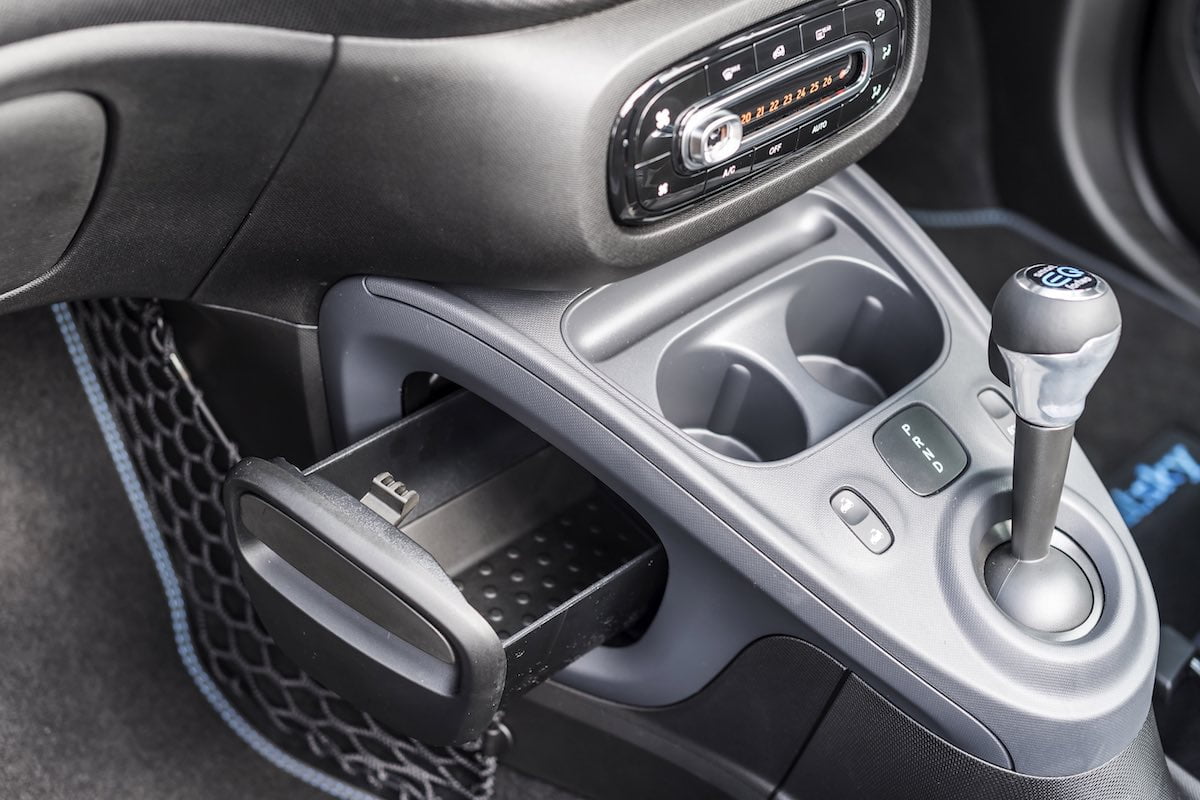
Though rather compact, the Smart’s small exterior dimensions aren’t translated into a cramped cabin. In fact, there’s a lot more space here than you’d expect, with a general airiness to the cabin surprising given the car’s tiny footprint. There’s not a huge amount of storage to be found, though there is a useful drawer underneath the gearstick for hiding away items from prying eyes. Boot space is not what you’d call cavernous – particularly if you store the variety of charging cables needed to replenish the car’s battery back there – but there’s around 300 litres to play with, which is more than enough for a few shopping bags. Accessing it is only done through quite a narrow opening, which can be a bit of an issue when loading bulkier items.

What’s under the bonnet?

The Smart turns its wheels via a three-phase synchronous motor, linked to a lithium-ion battery. The combination produces 82hp, and a decent 160Nm of torque. The sprint to 60mph may not be quick at 11.6 seconds, but it feels pacier. That’s thanks to the immediate delivery of that torque, which makes it very responsive in the cut and thrust of city traffic. Top speed may only be 80mph, but in this car’s natural habitat of urban streets, this isn’t really an issue. When it comes to range, Smart claims 99 miles on a full charge, and it’ll take 40 minutes to charge up from flat via a wallbox, or six hours through a conventional three-pin domestic socket. Is that range achievable in reality? Not exactly – in fact, the range displayed on the dash plummets like a stone when travelling on the motorway, which is certainly a little disconcerting. But again, that’s not this car’s preferred environment.

What’s it like to drive?

The hallmarks of the Smart driving experiences are still present in the EQ ForTwo, and that’s no bad thing. The nimble handling is ideal for darting in and out of traffic, while the almost incomprehensibly small turning circle is great for general manoeuvrability. This may be the cabriolet version instead of the coupe (hatchback), but they drive in almost exactly the same way. The coupe’s roof panel isn’t structural anyway, so you’re not losing much by removing it. Unlike many city cars, The steering actually has some weight to it, and this gives you added confidence at higher speeds. The instant slug of torque that you get from an electric powertrain is especially useful in a car of this size, and up until the 40mph mark, you’re quicker than the vast majority of cars on the road. Granted, the Smart EQ begins to become a little breathless beyond that point, while the narrow wheelbase makes larger potholes quite apparent – the whole car has a tendency to be sent off to one side after hitting an imperfection in the road.

Summary

As a prospect for an inner-city driver, the Smart EQ makes plenty of sense. It’s nimble, easy to drive and quick to charge via high-output charging points. However, those looking to travel further afield may find it a little too limited, with a range that can’t quite make longer journeys a real-world possibility. At speed, the range drops far too quickly to inspire confidence in how far the car can go, and this really does restrict the car’s all-round usability, as well as its appeal to more rural electric car drivers.

Similar cars

Renault Zoe, Toyota Yaris Hybrid, Volkswagen e-Up!

Key specifications

Model as tested: Smart EQ ForTwo Cabriolet Nightsky Price: £27,135 (£23,635 with plug-in car grant) Engine: Electric motor linked to lithium-ion battery Power: 82 hp Torque: 160 Nm Max speed: 80 mph 0-60mph: 11.6 seconds Range: 99 miles CO2 emissions: 0 g/km

Hyundai Tucson test drive

What is it?

You can’t really be a car manufacturer in 2018 without an SUV in your portfolio, but luckily for Hyundai, it has some form in this area. The Tucson is just the latest product in a line dating back to the early 1990s. Hyundai SUVs tend to be capable yet forgettable, but the brand’s latest crop of cars have been a little more stylish and emotive. Can the recently facelifted Tucson continue this trend?

What’s new?

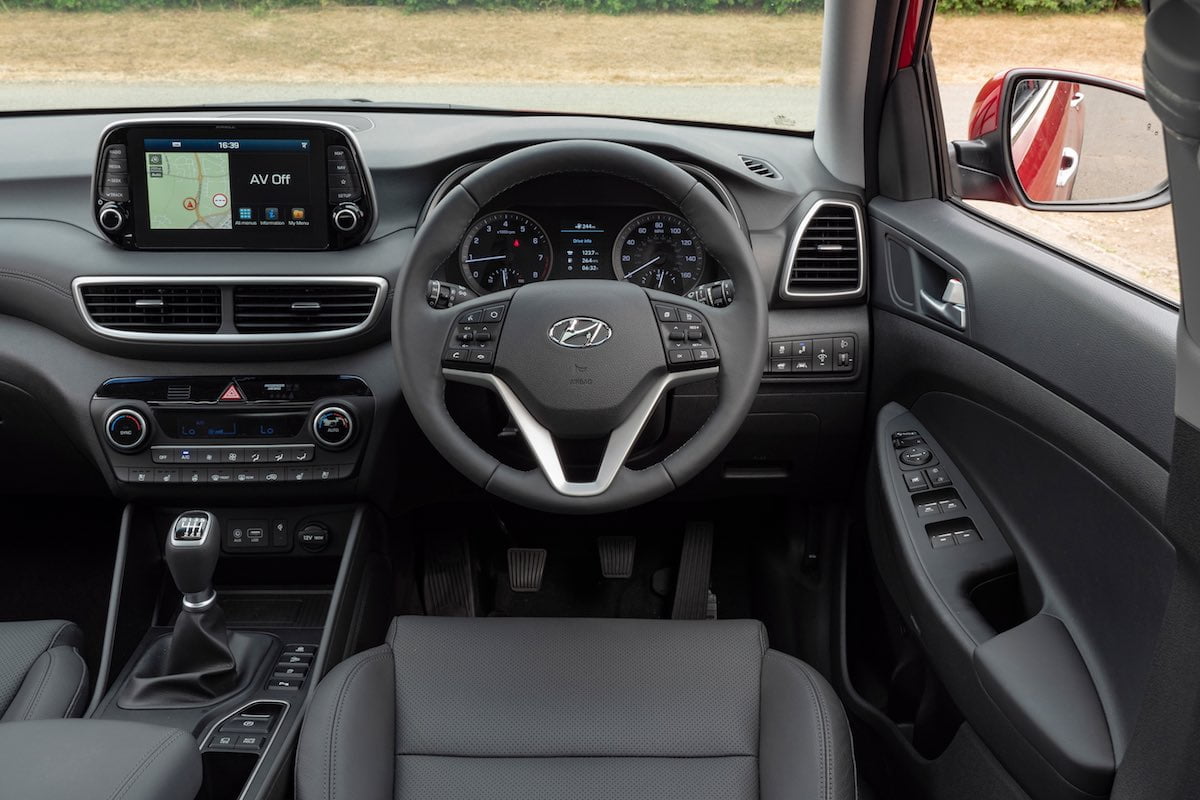
While an all-new mild hybrid powertrain is available, we’re not actually driving it here. However, all cars gain a new ‘cascading’ front grille, new headlights and new bumpers, which combine to sharpen up the Tucson’s appearance. The interior has received a major redesign, too, with a floating infotainment display, a less button-heavy centre stack and revised materials for a plusher feel. Finally, smart new alloy wheel designs are available, ranging from 17 inches on entry-level models right up to 19 inches.

How does it look?

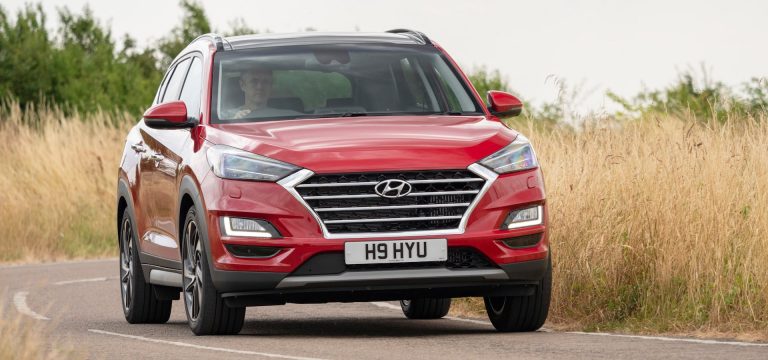
Though the newly facelifted Tucson does look smart, it’s still rather anonymous both inside and out. The bold Hyundai family face gives it a clear connection to the likes of the i30 and all-new Santa Fe, while the alloy wheel designs on higher trim levels are sleek and attractive. The flat blue paintwork and small 17-inch alloys of our test car don’t look quite so premium, however.

What’s the spec like?

Trim levels start with entry-level SE Nav, which as the name suggests offers satnav alongside LED rear lights, 17-inch alloy wheels, roof rails, dual-zone climate control and cruise control. Stepping up to Premium adds some glitzy chrome to the grille, brings electric adjustment for both front seats and adds some more safety kit, while Premium SE cars have ventilated front seats, a panoramic roof, powered tailgate and keyless entry.

What’s it like inside?

Crossovers intended for family use have to be super-practical, and the Tucson doesn’t disappoint here with a spacious and flexible interior and bags of room. The split-folding rear bench isn’t quite as clever as the VarioFlex seats in a Skoda Karoq, but they fold down easily to increase the boot from an already-impressive 488 litres to a cavernous 1,503 litres. When you’re using them for passengers, they’re also fairly good. There are two ISOFIX points to prevent your children from sliding all over the back seat, and plenty of leg- and head-room for all occupants. Material quality is excellent too – a step down in plushness from a Volkswagen Tiguan, but easily on par with the Nissan Qashqai. Everything feels well screwed together, too.

What’s under the bonnet?

A range of revised powertrains is on offer, including a pair of 1.6-litre petrols, two 1.6 diesels and a 2.0-litre diesel – plus that all-new mild-hybrid 2.0-litre diesel. Our car had the entry-level diesel powertrain, however – a 1.6-litre unit producing a modest 115hp. Given the Tucson’s size, it’s not actually as gutless as it sounds – it gets up to motorway speeds without much drama and cruises effortlessly. There’s not much power in reserve for overtaking, though, and for peace of mind we’d be tempted to step up to the 134bhp version of the same engine. Economy is decent at around 50mpg on a long run, and it settles down to a refined grumble at a cruise. It’s rather agricultural on start-up, however.

What’s it like to drive?

2019 Hyundai Tucson on the road | The Car Expert
(PA)
Though some fairly powerful engines are on offer, as well as four-wheel drive, the Tucson is never exciting to drive. Instead, it majors on comfort, which it does very well. Our entry-level model was equipped with 17-inch alloy wheels, giving a generous amount of tyre sidewall to absorb bumps and potholes, while squishy suspension makes mincemeat of poor surfaces. The payoff is a rather wallowy experience in the corners, and a floating sensation on undulating faster roads which might make kids in the back a little queasy. It’s certainly not the sharp driving experience you’d get from a SEAT Ateca, for instance.

Summary

The Tucson won’t attract keen drivers, but ought to be a hit with families thanks to its super-practical interior and comfortable drive. However, it’s no longer the bargain Hyundais once were, and so has to be considered alongside some very talented competition. The Skoda Karoq, for example, is bigger and more practical still, while the SEAT Ateca is better to drive. Not to mention the Tucson’s sister car, the Kia Sportage, which offers the same package with a longer warranty. It should still be on your list to consider, though.

Similar cars

Kia Sportage, Nissan Qashqai, Skoda Karoq

Key specifications

Model as tested: Hyundai Tucson SE Nav Price: £26,010 on-road Engine: 1.6-litre, four-cylinder diesel Power: 115 hp Torque: 280 Nm Top speed: 109 mph 0-60mph: 11.4 seconds Fuel economy (combined): 58 mpg CO2 emissions: 129 g/km

Is black-box insurance making young drivers safer?

‘Black box’ insurance has helped reduce the number of young drivers killed or seriously injured in road traffic accidents, according to data released by research analysts LexisNexis. The number has fallen by 35% since 2011 from 18,529 to 11,984, contrasting with a 16% fall for the entire population (203,950 to 170,993). The difference between younger and older drivers is the former’s use of telematics, with four in five motorists aged between 17 and 19 driving a car fitted with a black box that monitors and records their performance behind the wheel. In total, there were 975,000 live policies in 2017, reflecting the surge in drivers making use of the technology to bring their premiums down. The drop in young driver casualties and deaths comes despite a 7% increase in the number of driving licences held across all ages since 2012 to 40.5 million. UK road casualty statistics were analysed by specialists LexisNexis Risk Solutions and compared with the number of telematics policies currently in use. Its director, Graham Gordon, said: “Our analysis and interpretation of the publicly-available road casualty statistics factors for key road safety advances such as improved roads, better junction design and new car safety technology. “But the patent downward trend in the 17-19 age bracket points to an additional factor at play: the increasing availability and adoption of telematics insurance. “Young drivers remain the riskiest drivers on our roads, but the insurance sector deserves a great deal of credit for developing an insurance product that encourages safer driving and delivers fairer pricing to young drivers based on their road behaviour.”

Used car sales down 2% but market still strong

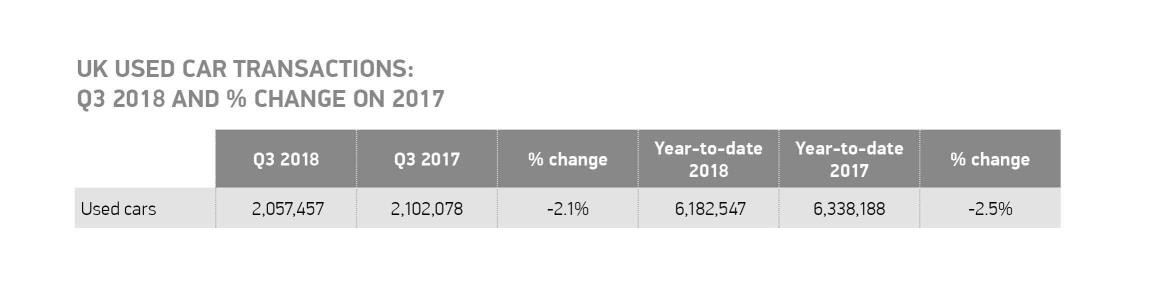
More than two million used cars changed hands between July and September, according to the latest data published by the Society of Motor Manufacturers and Traders (SMMT). The Q3 result was 2% down on the same period last year, which itself was 2% down on the Q3 result in 2016 (the best year on record), but the overall used car market remains strong. It’s important to bear in mind that used car transactions consist of everything from a nearly-new dealer demonstrator vehicle to an old clunker bought privately that may not even be running. It also includes registrations being transferred with no money changing hands, such as within a family or similar. Despite not providing a breakdown of vehicle information, the SMMT claims that sales of hybrids and electric cars were up by nearly 29%. However, this still only makes up less than 1.5% of total numbers. This compares with similar ‘green’ vehicles usually making up about 5-6% of new car registrations.
Used car transactions Q3 2018
The token data provided for used car transactions by the SMMT, unless you’re interested in colours
The SMMT does not provide comprehensive and useful data for the numbers of petrol, diesel and alternatively-fuelled (electric, hybrid, natural gas, etc) used cars, as it does for new cars, or maybe a breakdown of market segments (superminis, SUVs, etc), which makes it difficult for anyone to analyse the data properly. Instead, the industry lobby group regales us all with the exciting news that black remains the most popular colour for used cars – although sales of used orange cars were up by 10%! Unsurprisingly, given that it has been the most popular new car for the last decade, the Ford Fiesta is also the nation’s top-selling used car.

Sales down but borrowing growing rapidly

As we reported last week, used car finance is continuing to grow rapidly every month. Despite a 2% fall in used car sales, the number of used car finance deals was up nearly 10% on last year, according to numbers published by the Finance and Leasing Association. The total amount borrowed from dealer-sourced lenders by used car buyers was up by more than 17% to more than £4.5 billion. That means that the average amount borrowed for a used car has gone up by more than 7%, reaching a new quarterly record of approximately £12,236. With new car sales down by more than 10% for the quarter, it is highly likely that a lot of the growth in used car finance is coming from people moving from a new car on a PCP (personal contract purchase) into a nearly-new used car on a PCP to try and maintain their monthly payment levels.

Kia Stinger GT-Line test drive

What is it?

Kia launched the Stinger GT S to much fanfare — becoming the South Korean manufacturer’s first serious effort at delivering a performance car to take on German opposition, doing so in quite some fashion. For the Stinger to make business sense to Kia, though, it has to offer more than just the lunacy version. That brings us to this — the Kia Stinger 2.0 GT-Line. Designed to take on the middle-of-the-range offerings from the likes of BMW, Audi and Mercedes-Benz, it brings the aggressive styling of the GT S with a more frugal and affordable engine. But is it good enough to take on rival volume sellers?
You may also like:

What’s new?

The Stinger GT-Line is where the saloon will really be determined as a commercial success or failure. In an effort for it to be the former, it benefits from sleek looks, a good selection of petrol and diesel engines, plus some serious value on the equipment front. If you’re familiar with the Kia range, you might be wondering why this has been introduced considering the Optima already exists. Well, it’s meant to be a step up — think of the Optima as more of a Ford Mondeo rival — and take the South Korean brand to more ‘premium’ heights.

How does it look?

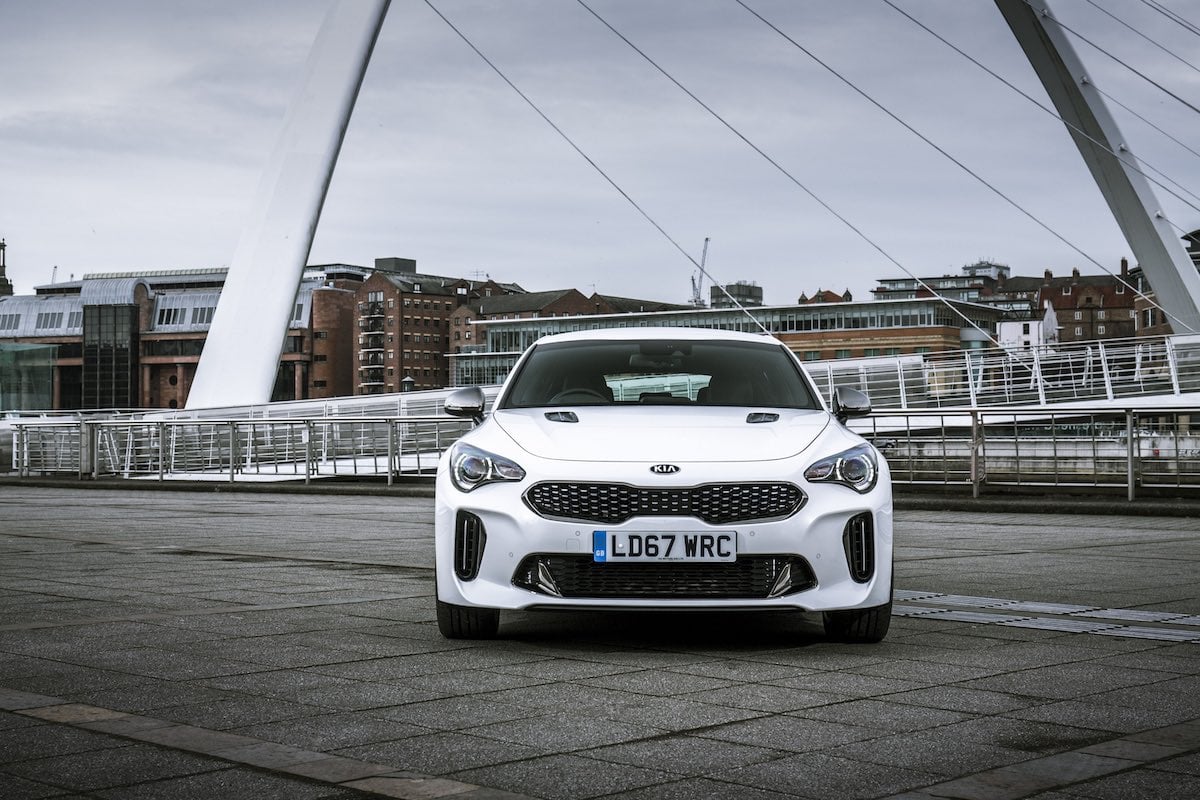
Kia Stinger GT-Line front
(PA)
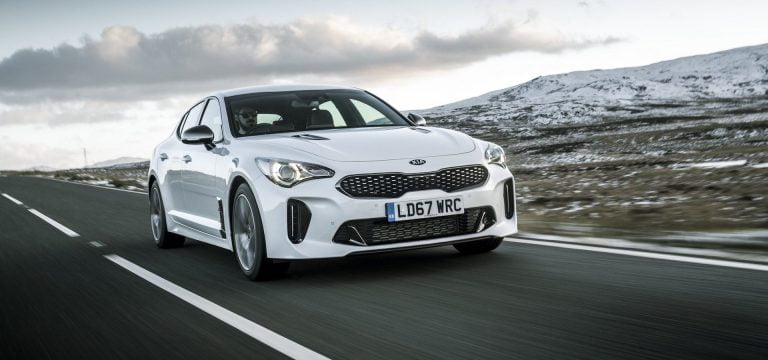
The Kia Stinger is particularly striking in range-topping GT S form, and fortunately that’s carried out through the rest of the range. Of course, it comes on smaller alloy wheels and the inclusion of LED lights detracts a little bit from the look – but it remains a looker, and is sure to turn heads. There is, of course, that ever-present fact it’s still a Kia, which holds a reputation in the UK as something of a budget brand. That’s sure to hurt sales, but it’s unjustified from an objective perspective.

What’s the spec like?

Despite being the entry point to the Stinger range, the GT-Line brings a fair amount of equipment to the fastback. Standard luxuries included 18-inch alloy wheels, heated seats and steering wheel, leather upholstery, and an eight-inch infotainment display with navigation and support for both Android Auto and Apple CarPlay. There’s also a good amount of safety equipment, with adaptive cruise control, autonomous emergency braking and lane-keep assist all part of the package. With the lack of badge appeal in this segment though, Kia has had to price aggressively — and with a £32,025 tag, it comes across as a well-valued package on paper.

What’s it like inside?

Kia Stinger GT-Line interior and dashboard
The Stinger’s interior is well made (PA)
Kia hasn’t slacked off when it comes to cabin quality for the Stinger, even in its lowest form, but it does lack a sense of luxury that rivals bring to the table. Fit-and-finish is great across the board, and there’s no presence of hard plastics that you may have expected from a brand with its roots at the more affordable end of the motoring spectrum. That said, it feels a bit clinical – and not in the McLaren sense, but more the dentist waiting room-type definition.

What’s under the bonnet?

Powering our test car is the least potent of all the engine found in the Kia Stinger range. The turbocharged 2.0-litre four-cylinder engine sends 247hp and 353Nm of torque to the rear wheels via an eight-speed automatic gearbox. The result is 0-60mph in 5.8 seconds with a top speed of 149mph possible. As for efficiency, Kia claims the Stinger can achieve 35.8mpg on the combined cycle in this form, with CO2 emissions of 181g/km. Power delivery in the unit is impressive, with a wide band of torque and good top-end power giving it consistency across the rev range – although it’s slightly let down by a hesitant gearbox. There’s also a lot of manufactured, and somewhat off-putting, noise coming into the cabin when using Sport mode.

What’s it like to drive?

The recipe for this car sounds good – a rear-wheel-drive fastback with a petrol engine stuffed underneath the bonnet, and Kia has cooked it pretty well. When pressing on, the chassis proves engaging and playful – which can’t be said for some of its rivals. Positives carry on beyond there, too. On the motorway, it settles to a cruise well and feels refined, with little distraction coming into the cabin. Drop the driving mode into Comfort and the ride becomes pretty supple too. It’s also quite handy around town, despite being a fairly large car. 360-degree cameras mean tighter spots become a lot easier to navigate, which aid with parking too.

Summary

Even in entry-level form, the Kia Stinger is a car that has all the credentials to take the fight to more premium rivals – but despite its great value, it’s going to remain a hard sell to existing owners from the likes of BMW, Audi and Mercedes. There’s a tonne of fun to be had behind the wheel, and equipment is in no shortage — plus it’s arguably one of, if not the, best-looking car in its segment. That said, it just lacks that crucial sense of luxury buyers in this market will look for, and this could be a defining factor in how well it sells overall.

Similar cars

BMW 4 Series Gran Coupé, Audi A5 Sportback, Mercedes-Benz CLA

Key specifications

Model as tested: Kia Stinger 2.0 GT-Line Price: £31,995 Engine: 2.0-litre petrol Power: 247 hp Torque: 353 Nm Top speed: 149 mph 0-60mph: 5.8 seconds Fuel economy (combined): 35.8 mpg Emissions: 181 g/km
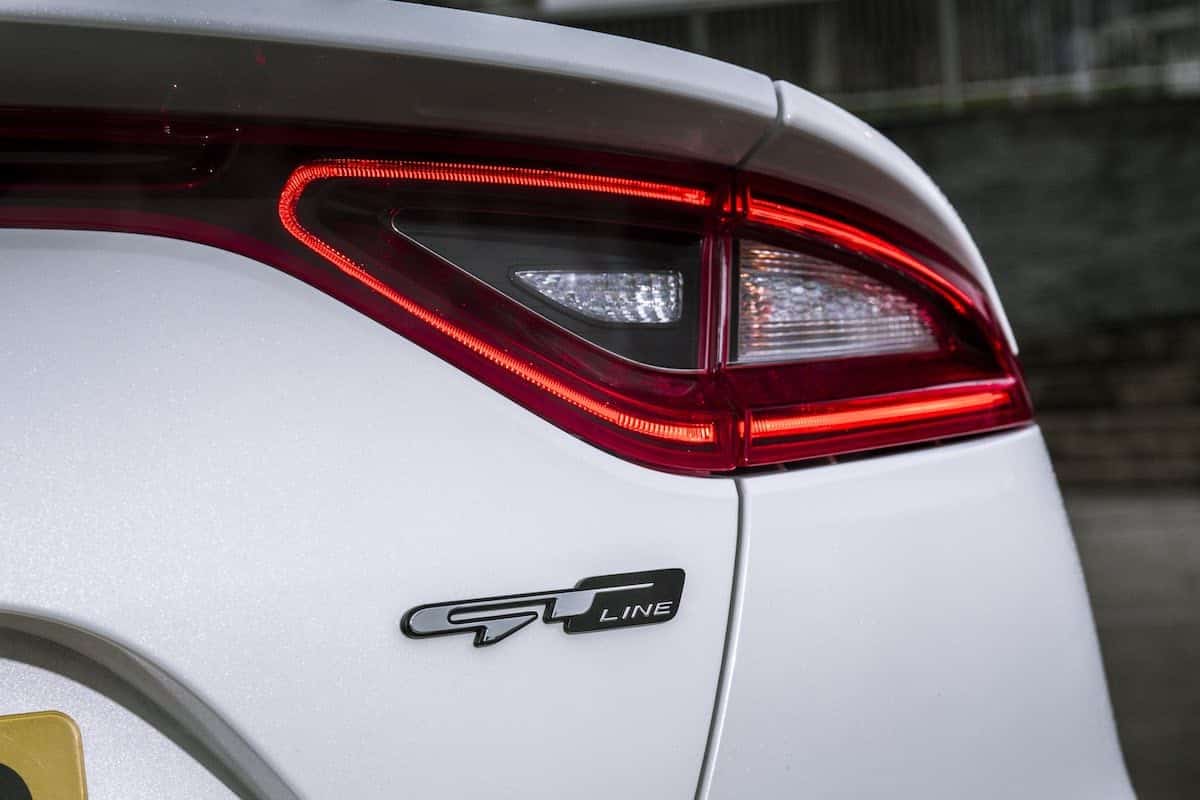
Kia Stinger GT-Line badge
(PA)

New BMW M340i xDrive tops 3 Series range

0
BMW has revealed details of a new M340i xDrive model, which will serve as the range-topping version of the latest 3 Series and will debut at the Los Angeles motor show this month. Based on the new BMW 3 Series saloon that was unveiled at the Paris motor show last month, the M340i uses a turbocharged straight-six petrol engine developing 375hp and 500Nm of torque. The manufacturer claims that’ll power the M340i from 0-60mph in 4.2 seconds. BMW also states that the M340i will return 37.6mpg on the combined cycle, with official CO2 emissions of 172g/km. Drive is sent to all four wheels via an eight-speed automatic transmission. Although the M340i is given all-wheel drive thanks to BMW’s xDrive system, the car has a rear-wheel bias for added cornering ability. It also benefits from a standard-fit electronically controlled locking differential, which enhances the traction levels.
BMW M340i interior
The interior of the M340i features BMW’s latest in-car technology (BMW/PA)
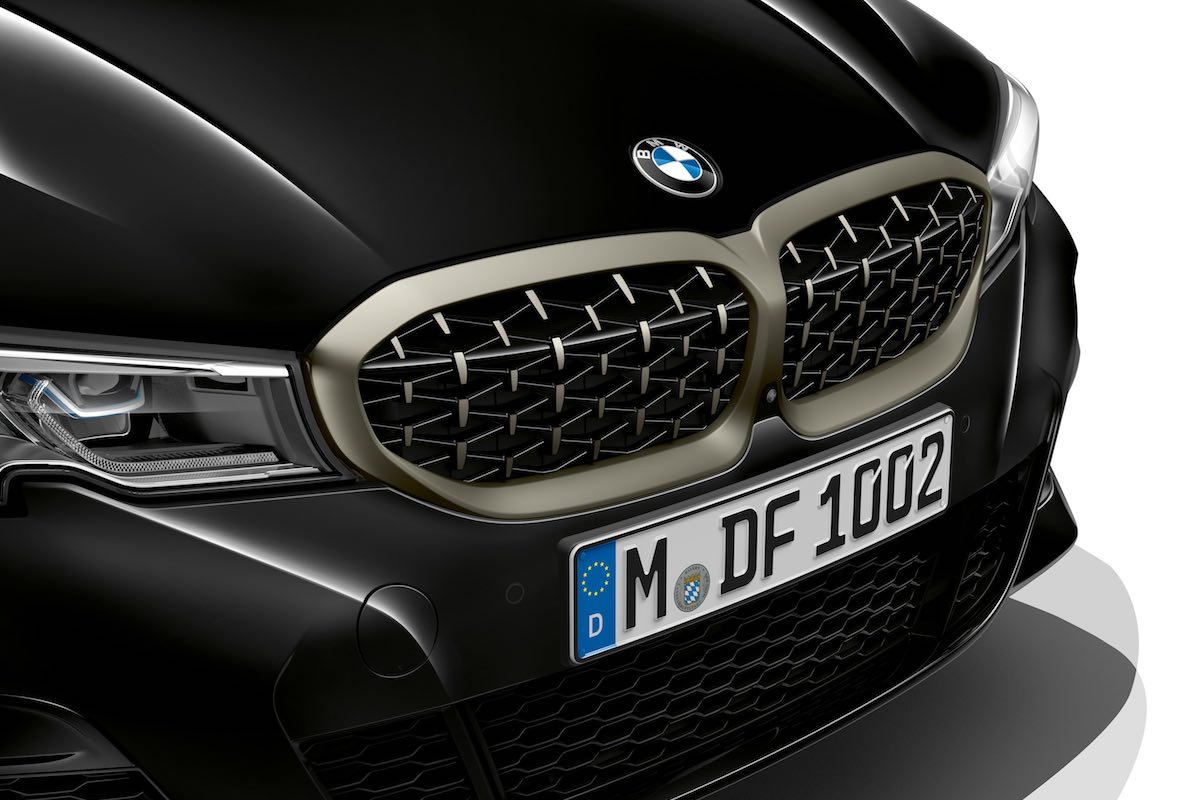
A full M-Sport brake set-up comes as standard, with 348mm front discs and 354mm rear discs sitting behind 18-inch alloy wheels to provide a good amount of stopping power. Larger 19-inch wheels will be available as an optional extra. Exterior styling touches have been applied to the M340i to help differentiate it from the rest of the 3 Series, with features such as a mesh-design front kidney grille, rear spoiler and grey metallic exterior mirror caps enhancing the car’s look. Inside, the M340i gets sport seats, a leather-trimmed steering wheel with gearshift paddles and front door sills with the M340i lettering. No prices have been announced yet, but BMW has stated that the M340i will make its market launch in Europe next July.
BMW M340i grille mesh
The M340i boasts a range of styling alterations, like this distinctive grille mesh pattern (BMW/PA)

Beefier engines for Mercedes-Benz A-Class

0
It’s only been on sale a few months, but Mercedes-Benz has already added a pair of new diesel engines to its A-Class hatchback range. The first, a 2.0-litre added to the A 200 d, puts out 150hp and 320Nm and is capable of returning 67.3mpg on the combined cycle while emitting 110g/km of CO2. Mercedes claims it can hit 60mph in 7.9 seconds before reaching an electronically limited top speed of 137mph. The second, this time powering the A 220 d, is another 2.0-litre that produces 190hp and 400Nm of torque. As a result of the increased power output, Mercedes claims that the A 220d can reach 60mph in just 6.8 seconds and reach a top speed of 146mph. It can still return 65.7mpg combined, however, while emitting 114g/km of CO2. Both engines are paired with an eight-speed automatic gearbox.
Mercedes-Benz A 200 d Sport
The lower-powered A 200 d is available in Sport and AMG Line trims, while the more powerful A 220 d is available in AMG Line specification only. Sport trim cars benefit from a seven-inch cockpit display and seven-inch infotainment screen, along with a reversing camera, 17-inch alloy wheels and a range of driver assistance systems. Higher-spec AMG Line A-Class models get larger 18-inch alloy wheels as standard, along with a full AMG exterior styling kit and diamond radiator grille. On-road prices start from £28,805 for the A 200 d Sport, rising to £30,005 for the AMG Line specification. The A 220 d AMG Line is priced at £31,575 on-road. Naturally, Mercedes-Benz offers an extensive array of optional extras to escalate those prices significantly… Order books are open now, and first deliveries are expected next spring.

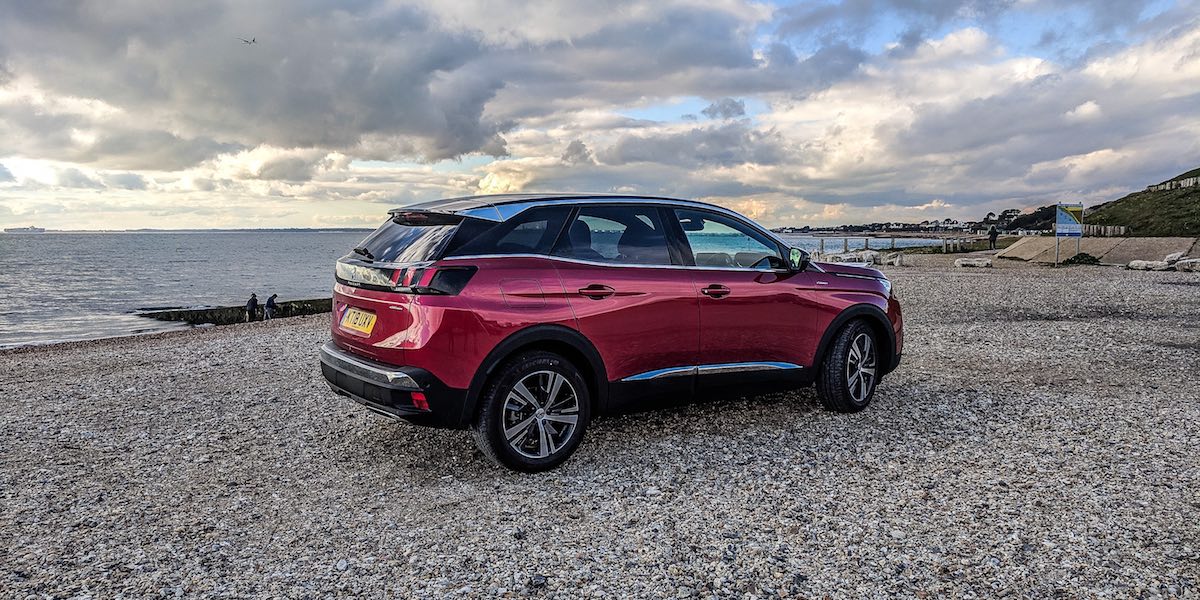
Peugeot 3008 long-term test: Report #1

Compact SUVs can be dreadfully boring things, can’t they? Accomplished and practical, sure. Some are even good to drive, and many are very efficient. However, unless you start paying the big bucks for premium products, your crossover is likely to be a bit dull.

But French brand Peugeot has been on a bit of a roll with its range, revamping its formerly dour line-up and giving it that extra layer of gloss and glitz. It’s best summed up in the new 508 saloon, but for six months we’ll be living with the crossover alternative – the 3008.

We’ve got the keys to a rather handsome 3008 in GT-Line trim – an eye-catching package that in our case pairs ‘Ultimate Red’ paintwork with plenty of chrome trim and glamorous 18-inch alloy wheels.

Peugeot 3008 SUV long-term review - rear
Dynamic styling helps the Peugeot 3008 stand out from the crowd (PA)

It’s fitted with Peugeot’s 1.5-litre BlueHDi diesel engine and a six-speed manual gearbox, driving the front wheels only. After all, nobody really buys these cars to go off road – so why pay the fuel economy and cost penalty?

The end result is a genuinely good-looking crossover. I’d love to say it stands out from the crowd, but I live a stone’s throw from a Peugeot dealer and see two identical cars every morning. Regardless, the brand’s upright ‘family face’, the blacked-out ‘floating’ roof and chunky proportions give it decent road presence, while distinctive light signatures front and rear mean it’s recognisable day or night.

Swoopy and stylish, inside and out

The looks are just one thing that Peugeot’s doing very well; the interior’s another. I’ve recently stepped out of a Vauxhall Grandland X – a car that’s virtually identical to the 3008 under the skin. But the two interiors couldn’t be further apart. Where the Vauxhall is staid, straight-edged and sensible, the Peugeot is swooping and stylish.

I love the way Peugeot’s used chunky metal highlights, different material textures and piano-style switches, meaning that while this isn’t the best-equipped car around, it still feels a million dollars on the inside.

Peugeot 3008 SUV long-term report - interior
The interior has been stylishly finished (PA)

GT-Line brings a decent level of kit, but there are a few notable omissions that I’m missing from my Grandland X. As the weather gets colder, the lack of heated front seats is disappointing (call me a wimp), and the lack of keyless start feels a little antiquated.

I can certainly live without an electric tailgate though, and the basic low-quality reversing camera more than suits my needs. A 360-degree system is optional but I wouldn’t bother, as the 3008 only really lacks visibility out of the rear.

I’m also delighted to find full-LED headlights and Android Auto connectivity so I don’t need to rely on the built-in satnav (Apple CarPlay also included for non-Android users, obviously).

Less essential? Well, the cabin fragrance system seems a bit much…

GT-Line trim also brings with it the latest digital version of Peugeot’s i-Cockpit. This is the latest evolution of Peugeot’s high-dial, small-wheel driving environment, and I must say I’m a fan. The graphics are great, the system’s responsive and I find it all very easy to use.

Petrol or diesel?

As for driving? Well, I mentioned that I’ve just experienced the mechanically-identical Grandland X, but that was a 1.2-litre petrol model. My 3008 is a diesel, and it’s a far better-suited powertrain. It’s punchy and economical, and exactly what the car needs.

It also feels better resolved, with a more natural clutch and gearbox action. Ride and handling? They’re nothing to write home about, but the 3008 is comfortable, safe and stable. And really, what more could you ask for from a family bus?

I’ll be doing plenty of long-distance travel in the 3008 over the next few months – regular trips between my home in Southampton, Cheltenham and Great Yarmouth necessitate 600+ miles of driving over a single weekend. I’m looking forward to seeing how the Peugeot copes…

Key specifications

Model: Peugeot 3008 GT-Line 1.5 BlueHDi 130
Price: £30,454 on-road
Engine: 1.5-litre four-cylinder diesel
Power: 130 hp
Torque: 300 Nm
Top speed: 119 mph
0-60mph: 10.6 seconds
Fuel economy: 67.4 mpg (combined cycle)
CO2 emissions: 109 g/km
Mileage: 2,108

BMW Z4 test drive

What is it?

The convertible market usually takes one of three directions. First there’s the chopped-up hatchback or saloon, then there’s the super-sporty soft-top, and finally there’s the comfortable and glitzy cruiser. It’s these latter two that BMW needs to blend together in this – the latest Z4. Buyers of cars such as this one won’t tolerate a rough ride or spartan interior, but at the same time BMW has a reputation to maintain, and giving it the title of ‘the ultimate driving machine’ won’t go unchallenged. So, with a new platform, upgraded interior and divisive new styling, can the latest Z4 take the fight to talented rivals such as the Porsche Boxster and Jaguar F-Type?
You may also like:

What’s new?

In short, nearly everything. The new Z4 shares only a few of its oily bits – a differential and the front firewall – with its predecessor. Everything else is new or inherited from elsewhere in the BMW stable. The styling and proportions have been given an overhaul, with a new cab-forward silhouette that puts the driver closer to the centre of the action. There’s a choice of three engines initially – two four-cylinders and a straight-six – while the only roof option is a quick-folding electrically operated soft-top.

How does it look?

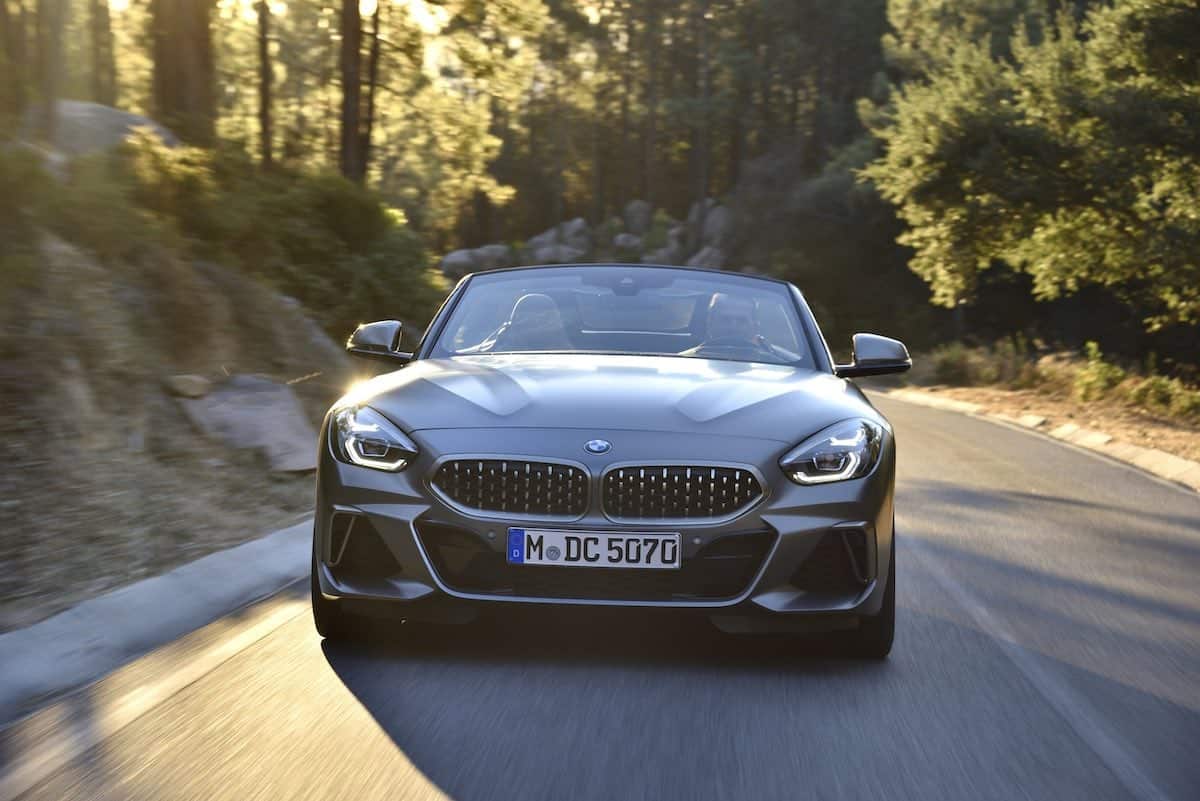
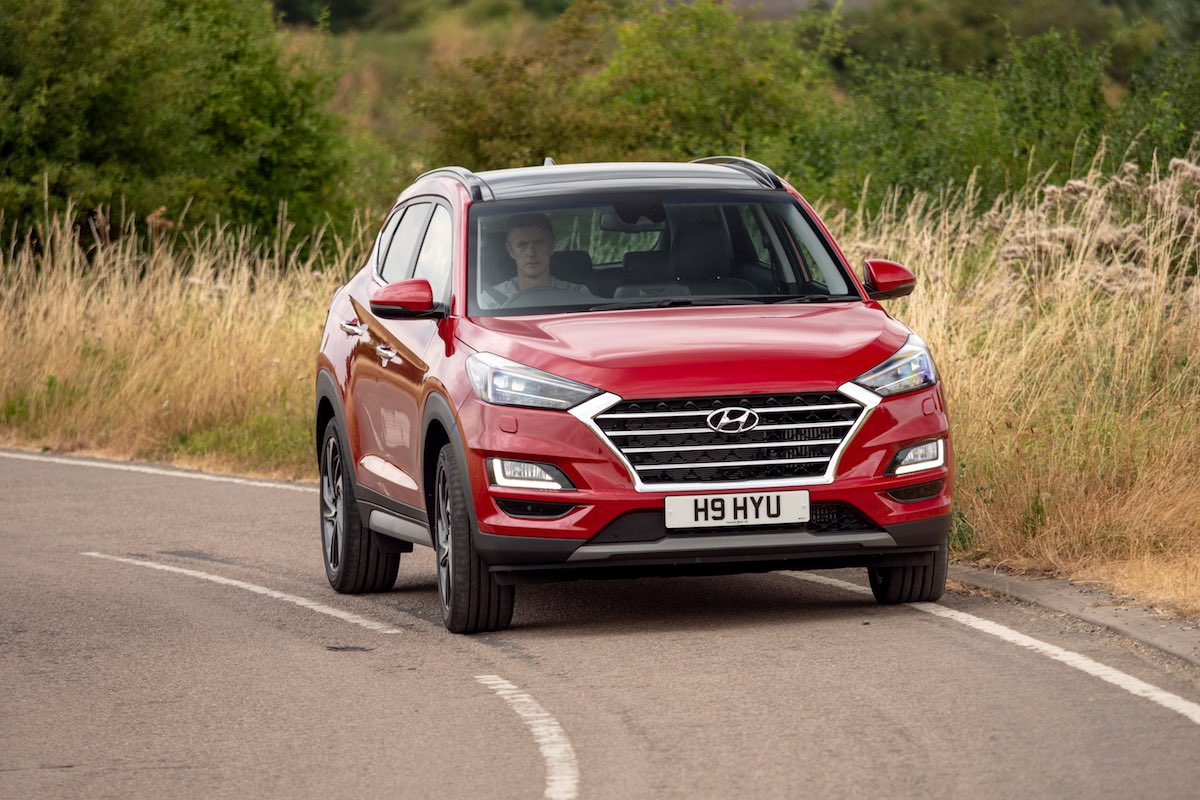
2019 BMW Z4 on the road | The Car Expert
(PA)
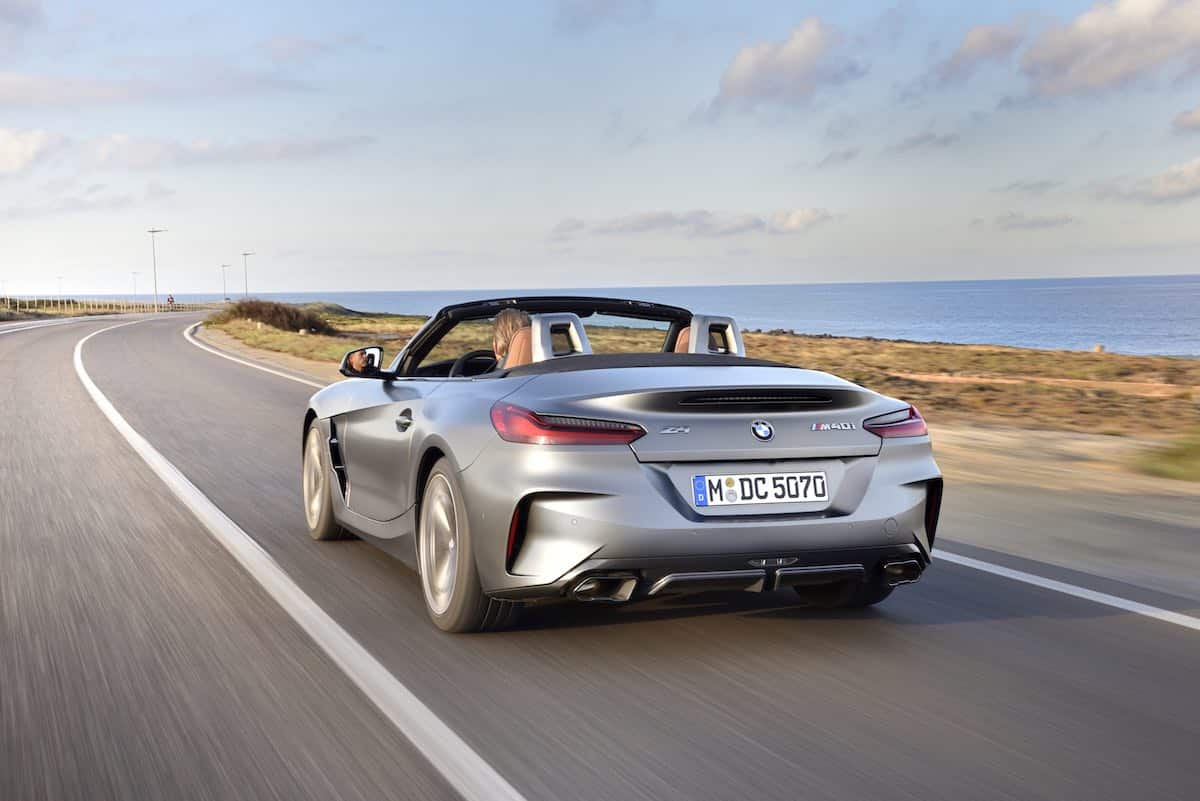
The new Z4’s styling is divisive, to say the least – just check social media and you’ll find plenty of complaints that it’s lost its elegance, it’s too fussy and the grilles are too large. The cabin has moved forward, and although it still retains the long-bonnet silhouette of the previous Z4, the driver is now positioned more centrally. The high-set headlights flank a new, wider kidney grille inspired by the iconic 507, while the rear deck is raised to give a real ‘wedge’ shape. The proportions, then, are wonderful – but it’s the cuts and slashes across the flanks and rear that divide opinion. There’s no doubt it’s lost some of the elegance of its predecessor, but it’s gained serious purpose to its stance. BMW reckons 90% of UK buyers will choose a meaner-looking M Sport model, too.

What’s the spec like?

As standard, there’s a decent level of kit – including an updated iDrive infotainment system, leather upholstery, 18-inch alloy wheels, climate and cruise control plus all-round parking sensors. Our M40i was rather more plush, though, with M Sport tweaks, 19-inch alloy wheels, aluminium interior trim, electric and heated seats, upgraded brakes, an M differential, adaptive cruise control and upgraded infotainment. However, it’s perhaps not quite as plush as you might hope for its near-£50,000 price tag.

What’s it like inside?

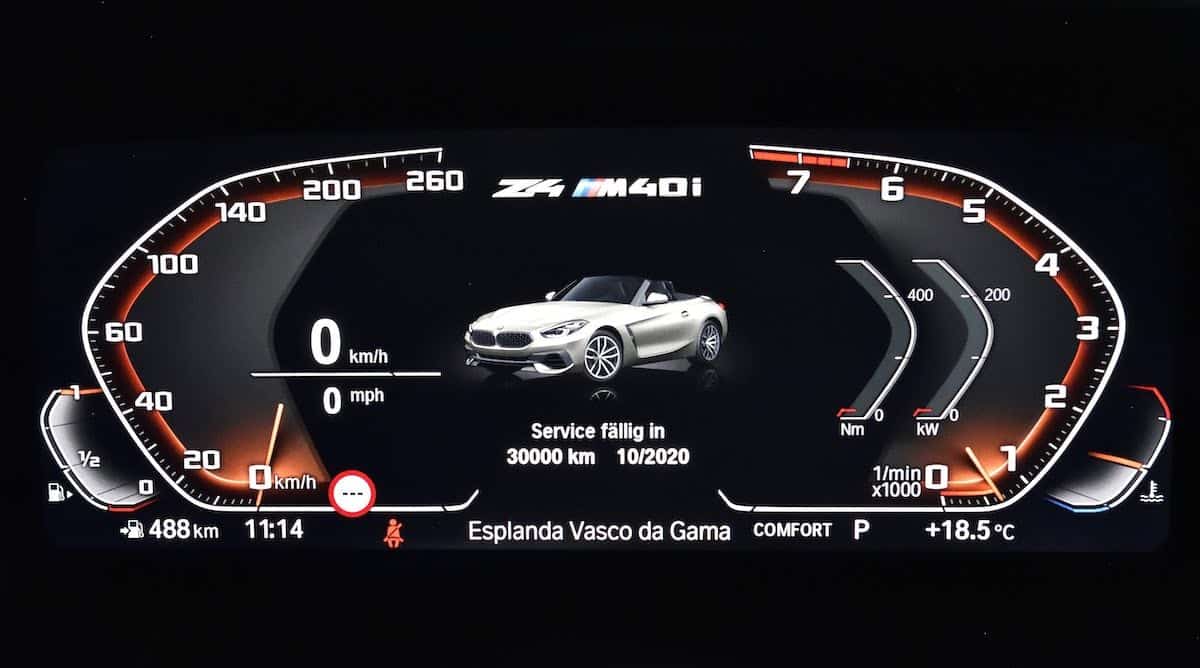
The new Z4 is far less divisive inside with a typically BMW cabin, including a driver-focused layout and the latest iteration of the firm’s iDrive infotainment system, which really is a great setup – intuitive, clear and speedy. We can’t say we like BMW’s new digital dials as much, though. Previous BMWs have used twin circular gauges that were some of the best in the business, but the half-octagon of the new cluster simply isn’t as easy to read on the go, and we prefer the simplicity of the Porsche Boxster’s or Jaguar F-Type’s clusters. The Z4 feels snug but not cramped, although it’s a little dark and claustrophobic when the roof’s up. Storage is decent, with a big glovebox, adequate boot and space behind the seats for smaller bags – however, the cupholders are placed just where your elbow wants to be, which isn’t ideal.

What’s under the bonnet?

Basic Z4s feature a four-cylinder petrol engine in either 20i or 30i guises, packing 200hp and 262hp respectively. We drove the next rung on the ladder, though – the straight-six M40i, which puts out 340hp and is good for a 0-60 time of 4.4 seconds. All Z4s are rear-wheel drive and feature the same eight-speed torque converter automatic gearbox. It’s a lovely combination – the engine has bags of power without ever feeling frantic or scary, and the gearbox can instantly switch between slurring gears together or rifling through them at high speed. It also sounds lovely, which is more than you can say of a four-cylinder Porsche Boxster.

What’s it like to drive?

First, we’ll cover the ‘boulevard cruiser’ side of the Z4. The incredibly stiff body – roof up or down – means that ride comfort can be achieved without compromising handling. It’s not as soft as something like a Mercedes C-Class Cabriolet, but it’s not trying to be – you still feel the bumps but they’re perfectly damped out, and combined with the excellent seats you’ll be able to cover long stretches in this car with no issue. Turn up the wick, though, and the Z4 doesn’t become unstuck. We hounded it around the former F1 circuit of Estoril and found it to be genuinely impressive in the bends. The Z4’s steering is weighty and accurate and the handling is superbly balanced. The 50/50 weight distribution and low centre of gravity keep things flat and true, while the specially-developed Michelin Pilot Super Sport tyres give brilliant agility. It’s not quite as thrilling on the edge as a Porsche Boxster, though, and if you want muscle car character at this price the Ford Mustang is pretty unbeatable – if less accomplished.

Summary

The BMW Z4 very successfully treads the fine line between grand tourer and sports car – and this M40i model really is great to drive. It’s just a shame that most buyers will opt for a lesser engine, as we’re not sure the four-cylinder 20i will show off the Z4’s characteristics at their best. Still, provided you like the looks, this is an excellent, comfortable and dynamic roadster which shows that BMW still has serious form in this class.

Key specifications

  • Model as tested: BMW Z4 M40i
  • Price: £49,050
  • Engine: 3.0-litre straight-six petrol
  • Power: 340hp
  • Torque: 500Nm
  • Max speed: 155mph (limited)
  • 0-60mph: 4.4 seconds
  • Fuel economy: 38.2mpg
  • Emissions: 168g/km
  • Similar cars: Audi TT, Mercedes-Benz SLC, Porsche Boxster

Car finance debt continues to grow despite falling sales

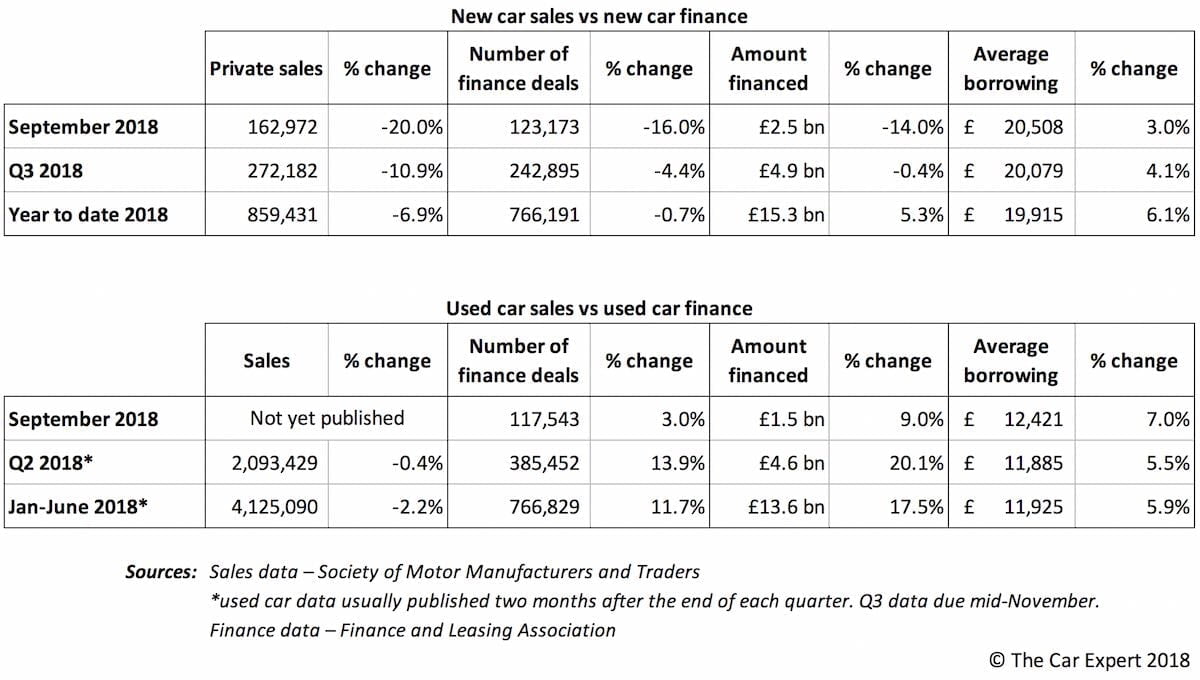
Car finance debt increased in the third quarter of 2018, despite the number of new finance agreements falling in line with lower new car sales in September. Latest car finance borrowing data published this week by the Finance and Leasing Association (FLA) shows that just under £4.9 billion was lent to new car buyers in Q3, a mere 0.4% less than the same period in 2017 despite the big new car sales month of September being 14% down on the same month last year. 2017 was a record year for both new and used car borrowing despite falling new car sales, and year-to-date data for 2018 suggests this trend will continue. New car debt stands at £15.3 billion for the first nine months of 2018, which is 5% ahead of the same point last year despite private new car sales being 7% down. The FLA reports that 91% of private new cars are financed at the dealership, the vast majority of which are PCP agreements. The increased borrowing suggests that car buyers are either paying more per month or (more likely) taking longer PCP contracts, which also helps to explain why new car sales are decreasing yet borrowing is increasing. Sales vs finance, Q3 2018 Used car sales data for Q3 is expected to be released next week, but was 2% down in the first half of the year. Despite this, the number of finance agreements was up nearly 12% and the total debt was up more than 17%. Average borrowing is up approximately 6% for both new and used cars year-to-date. By contrast, real average weekly earnings have only increased 0.4% according to the Office for National Statistics.

No Brexit anxiety for car finance borrowers – or lenders

Despite the continuous media coverage of Brexit and the almost daily complaints from across the car industry that the country’s uncertain position in the world is hurting business, it doesn’t look like car buyers are too worried about taking out more and more debt to drive a shiny new (or nearly-new) car. These latest results are entirely consistent with what we have been reporting for the last 18 months since The Car Expert started publishing our analysis of sales vs finance figures. In fact, I have reduced our coverage from monthly to quarterly updates as there are only so many times you can keep saying “sales are down but debt keeps going up”. If we fall off a post-Brexit cliff and land somewhere back in the Dark Ages, as various prognosticators keep predicting, presumably all these borrowers will soon be out of jobs and be unable to service their ever-growing debts as the economy collapses around our ears. With less than six months to go until B-Day, the finance companies (usually owned by the car manufacturers themselves) seem happy to keep on lending more and more money to every customer. There appears to be no indication that they are applying the brakes on the car finance express. So either they’re not all that worried about the post-Brexit world, or they’re simply accelerating towards the apocalypse…

Mercedes-AMG G63 test drive

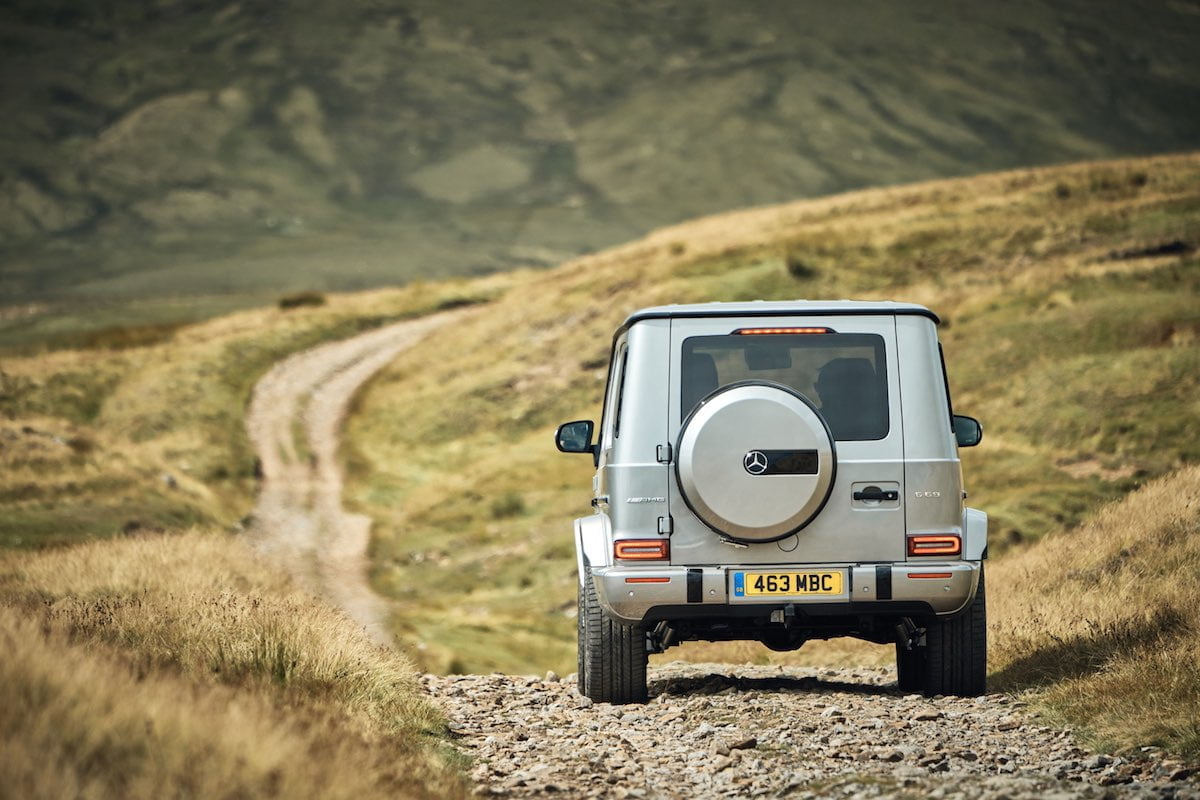
It’s here – the all-new Mercedes-Benz G-Class. Though it may look almost comically unchanged over the car it replaces, this is a comprehensive replacement and you can count the number of parts carried over from its predecessor on one hand. Boxy and old-school in appearance it may be, but this latest G is packing some serious tech, as well as some outlandish power in the AMG G63 specification that we’re testing here. We’ve headed out to see just how this successor to one of the longest-running model lines ever deals with the UK’s roads.

What’s new about the new G-Class?

As we said earlier, despite the car’s almost agriculturally square design, a lot has been changed on this latest G-Class over the older car. The rigid ladder chassis remains but it’s now lighter, while independent double wishbone suspension has been fitted to it in order to make the G a little more well-behaved on the tarmac. It’s also larger than the old G. It’s grown in length and width. As well as making it even more commanding out on the road, it means there’s more space inside for people and luggage. This AMG version car also benefits from an uprated braking system to help bring the leviathan to a halt in an effective manner.

How does it look?

Mercedes-AMG G63 off-road | The Car Expert
The G-Class has retained its classic silhouette (Mercedes/PA)
Big, brash and out-there, the G-Class isn’t one for shrinking violets. It’s a dominating presence, with its wide arches, vast proportions and huge tyres contributing to a vehicle which is difficult to ignore. Certainly, it’s not going to be for all people – but we certainly love the way it looks. There’s a lot of gangster-like appeal to the way our all blacked-out test car looked, though we’re aware of a particularly good shade of green available for the G-Class too – this is the one we’d go for if it were our choice.

What’s the spec like?

As you’d expect from a car weighing in with a £153,000 price tag, there’s a lot of standard equipment to be found in the G-Class. You get Mercedes’ latest Comand infotainment system which is simple and easy to use, along with a Burmester surround sound system. Automatic three-zone climate control helps keep things at just the right temperature, while a high-definition 360-degree parking camera aids when trying to position the G. That final touch is a definite plus in a car of this size. The whole cabin is just far better put together than before, and lives up to the three-pointed star at the front of the car. The seats are supportive, and there’s better room in the back too – though it still can’t offer the same amount of rear-seat space as you’d find in more conventional luxury off-roaders, like the Range Rover. Continued on next page: Interior, drive experience and our verdict

All new Mazda 3 to debut at LA Show

0
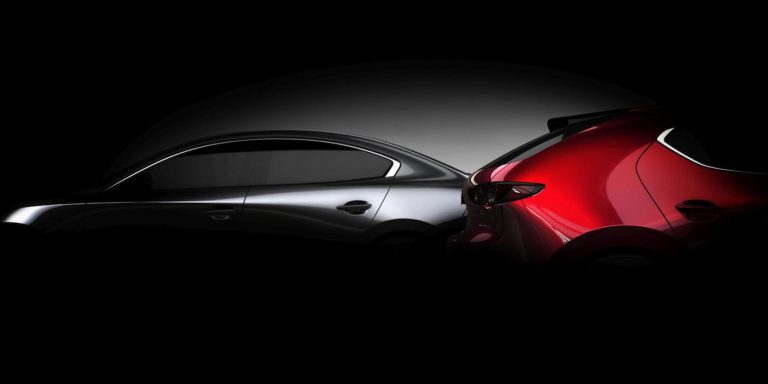
Mazda has confirmed that the all-new 3 will be unveiled at the Los Angeles Auto Show at the end of November. A teaser image suggests the fourth-generation 3 – targeting mass-selling family cars such as the Ford Focus and Vauxhall Astra – will be displayed in both hatchback and saloon form, although no further details have been revealed. Previously, Mazda released a video stating the car would usher in ‘a new era’ for the firm. While it hasn’t said what this means exactly, it’s likely to focus on the debut of new engine technology that the Japanese manufacturer has been developing.

Diesel-like petrol engines

Skyactiv-X petrol engines are claimed to bring the efficiency of a diesel to gasoline fuel. Mazda says it will allow drivetrains to develop around 10-30% more torque than its current Skyactiv-G offerings while improving fuel economy by approximately one-fifth. The brand has already stated that while all-electric powertrains are planned, its focus will remain on internal combustion engines for the foreseeable future. It predicts that 95% of its vehicles sold in 2030 will use a hybrid system. The new 3 is also likely to usher in the next phase of the brand’s design language, and is expected to be close in appearance to the Kai concept that appeared at the Tokyo motor show in 2017. More information about the fourth-generation Mazda3 is expected on 28th November, when the LA show opens to the press. Public days begin on 30th November and run until 9th December.
Mazda Kai The car Expert
New Mazda 3 likely to follow styling of Kai concept revealed in 2017.

Orders open for Mercedes-Benz E-Class plug-in hybrid

0
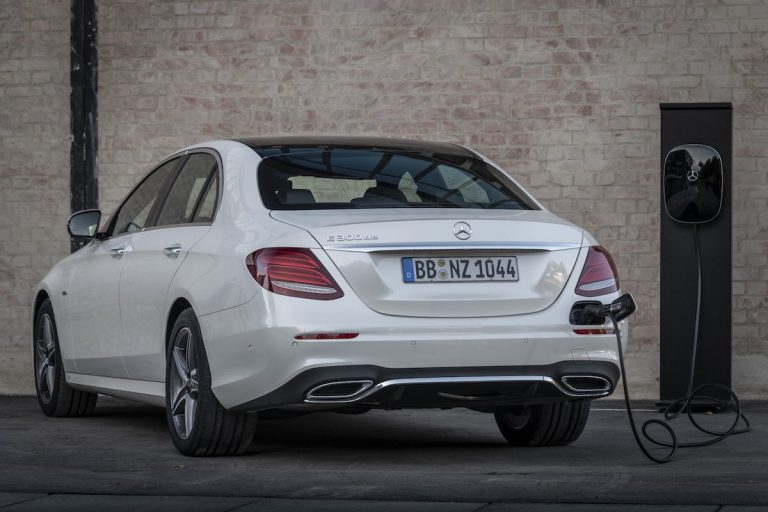
The new plug-in hybrid version of the Mercedes-Benz E-Class has gone on sale, with prices starting at £47,700. Unusually for a plug-in hybrid, the E 300 de uses a diesel engine, rather than a petrol unit, combined with an electric motor. Mercedes-Benz has offered this combination for the last six years on the E-Class. The frugal new model is available as either a saloon or estate. Both are powered by the same 2.0-litre diesel engine used in the E 220 d, producing 194hp and 400Nm of torque. This is linked to a 122hp electric hybrid module, which emits just 41g/km of CO2 and can deliver 166.2mpg on the combined cycle. Mercedes claims that the E 300 de can go from 0-60mph in just 5.7 seconds (5.8 seconds for the estate), before hitting a top speed of 155mph. Both are capable of running on electric power alone. The saloon can travel up to 34 miles, while the estate has an all-electric range of 32 miles. The pair can be charged from 10 to 100 per cent in under two hours when using a 7.4kW charger. Even entry-level SE models get a wide variety of standard equipment, with blind spot assist, active park assist with front and rear parking sensors plus 18-inch alloy wheels included as part of the car’s price. AMG Line vehicles get a full sports body kit with 18-inch twin-spoke alloy wheels, as well as upgraded interior upholstery and an AMG steering wheel. A Premium Package, available for an additional £2,395, adds Mercedes’ full online infotainment service, as well as wireless phone charging and a full parking assistance suite, which includes a 360-degree camera. The Mercedes E 300 de is available to order now, and first deliveries are expected in spring 2019.

Jaguar I-Pace – secrets of the Pixel Pansies

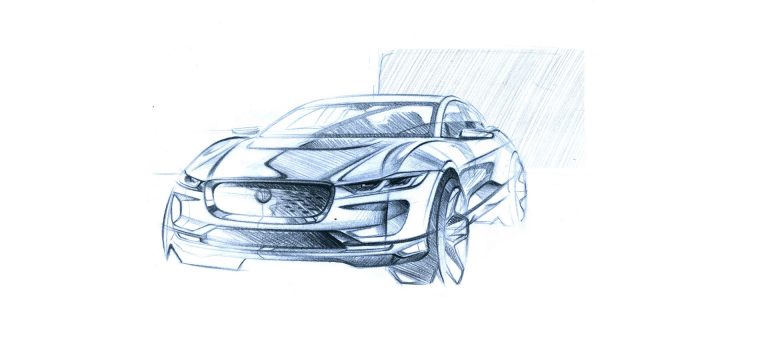
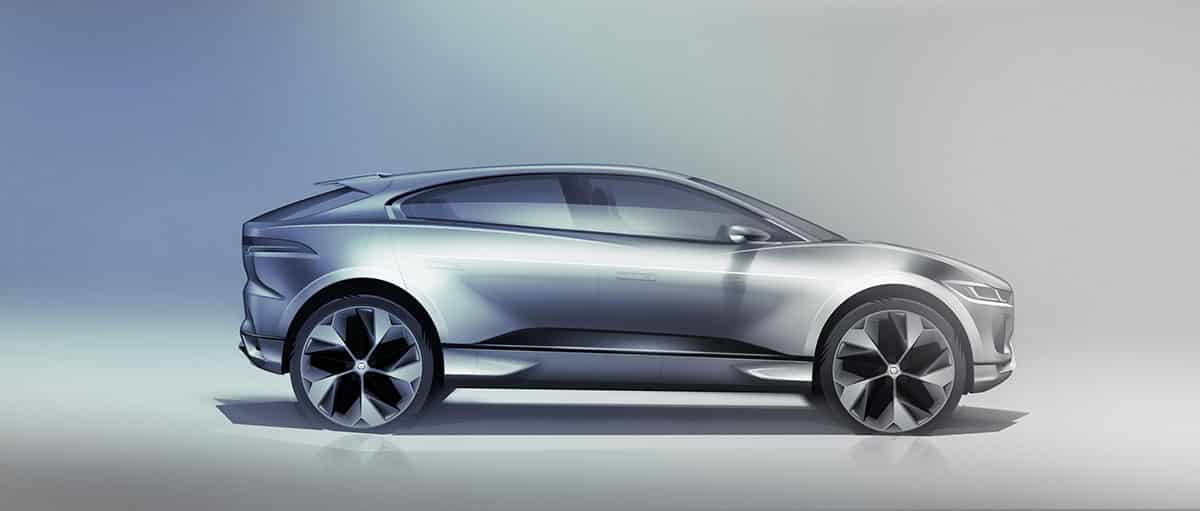
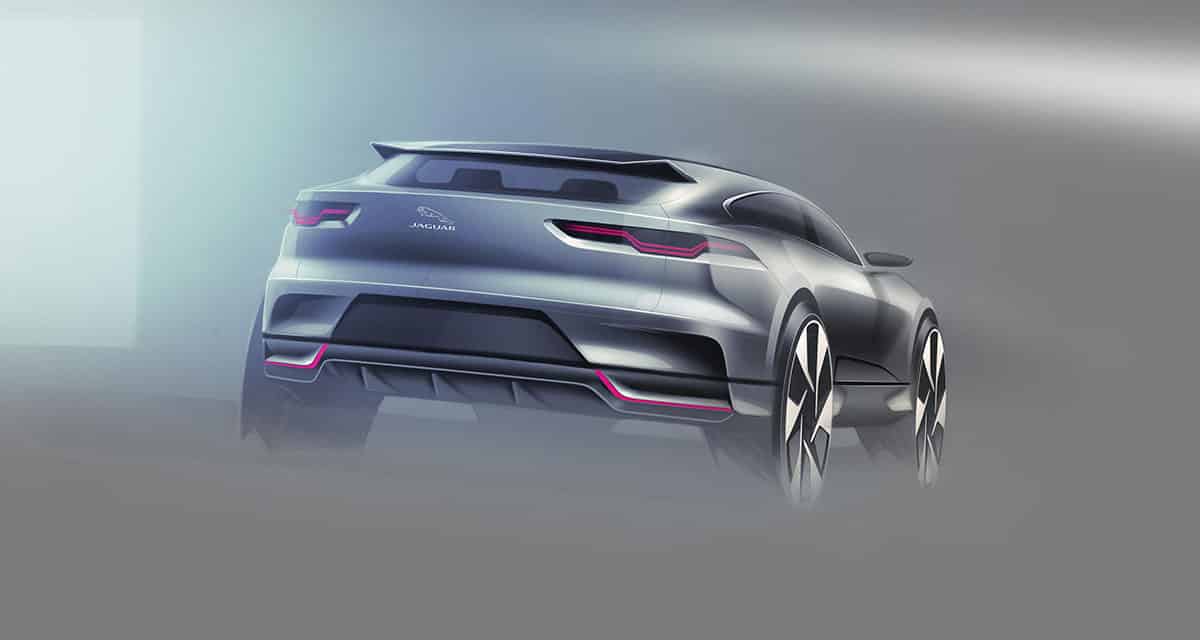
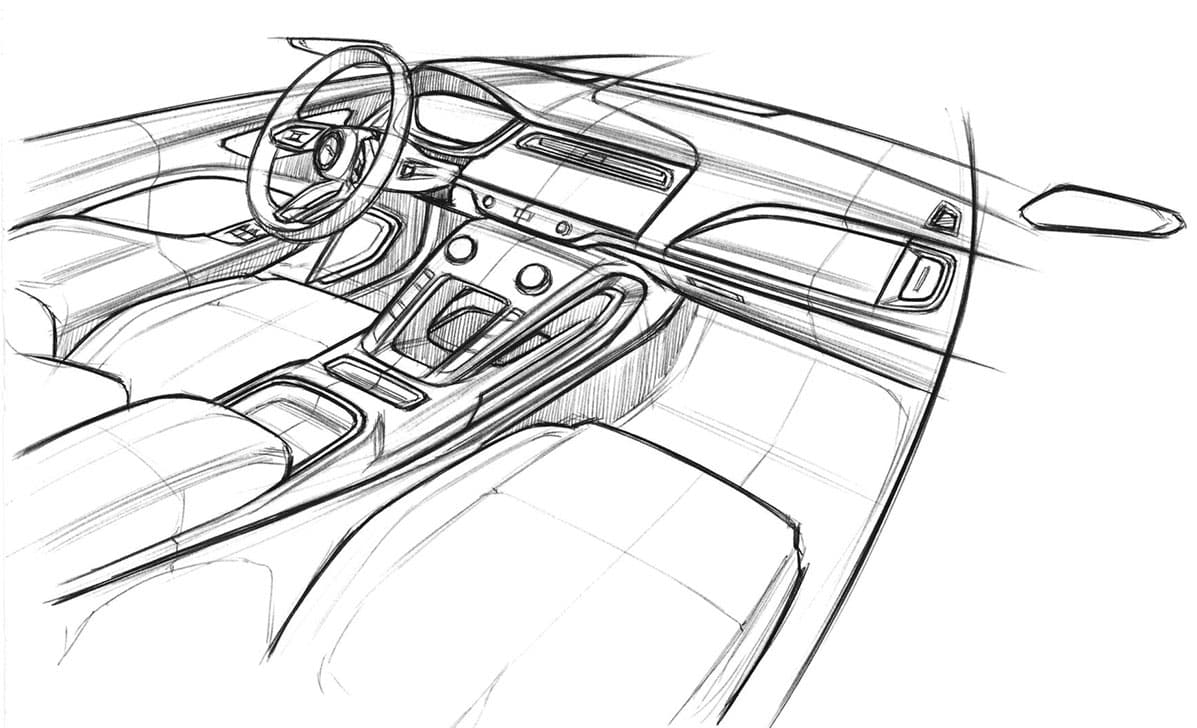
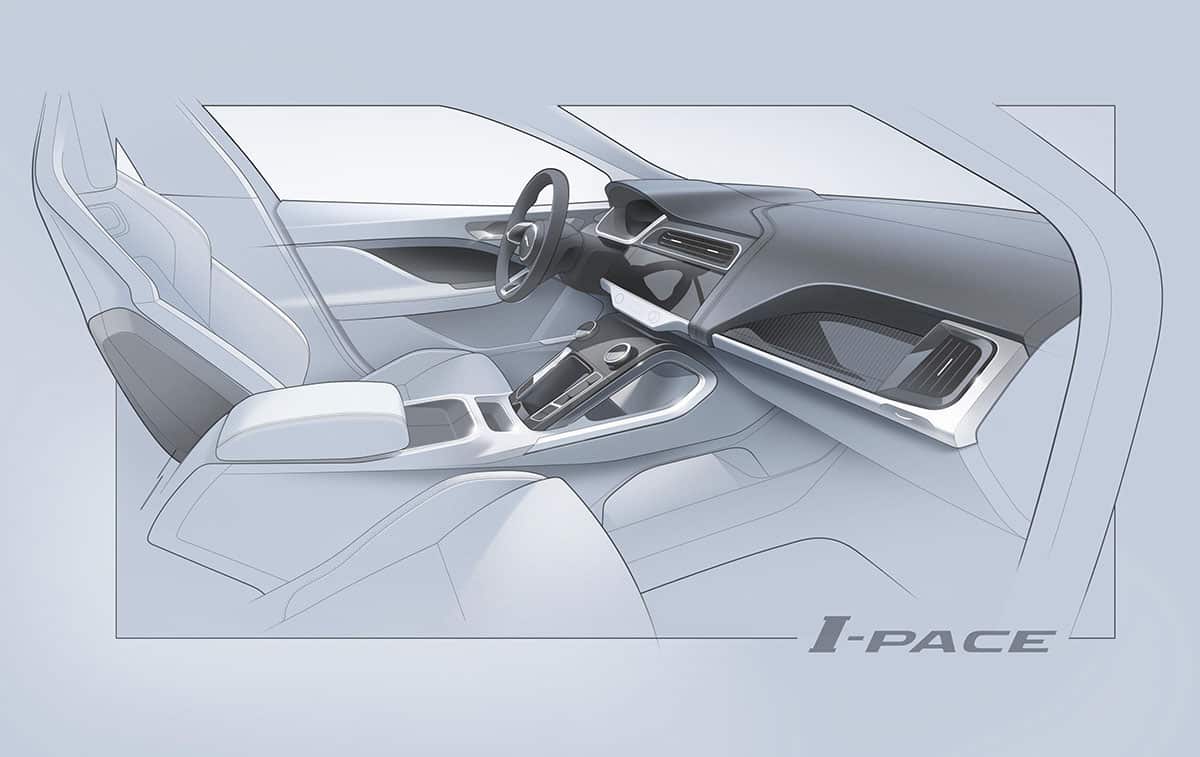
The Jaguar I-Pace is not only the brand’s first all-electric production car, but also a car that takes a completely new design direction. Now as the long-awaited EV starts to appear on UK roads, exactly how new a direction was taken has been revealed to The Car Expert by someone who once would have been a ‘Felt-tip Fairy’. Today, however, Jon Sandys happily accepts the title of ‘Pixel Pansy’. “Jaguar designers have often by our wonderful colleagues in engineering been referred to as Felt-Tip Fairies,” says Sandys, interior design manager on the I-Pace programme. “Today there is not a felt-tip in sight in the studio. Everything is now done digitally using Wacom tablets, so we are no longer Felt-tip Fairies – we are Pixel Pansies.”
You may also like:

Jaguar I-Pace The Car Expert Sandys has been at Jaguar eight years, and the second car he worked on after arriving was the brand’s first SUV, the F-Pace. He describes this as a learning experience for the design team, as they acclimatised to SUV proportions; “We said ‘how can we still make sure this is a Jaguar? How can it still have all the really important Jaguar elements – sporty, elegant, exotic, fun to drive, all that sort of thing?’” The F-Pace became Jaguar’s best-selling car, until replaced in that role by its newer sibling the E-Pace. And when it came to thinking about Jaguar’s new electric car, the Pace family was considered where it needed to be, Sandys pointing out that this was still the fastest-growing segment while the proportions of an SUV suit a full battery-electric vehicle.
Jaguar C-X75 | The Car Expert
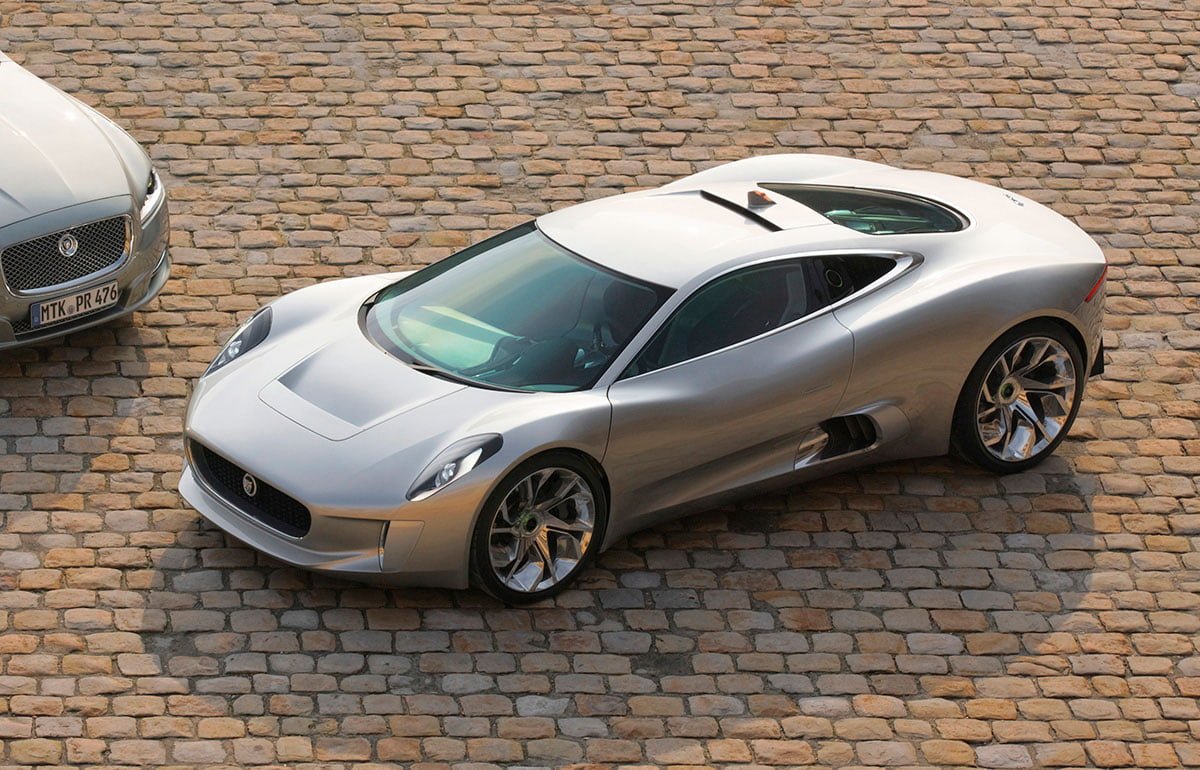
The mid-engined layout of the Jaguar C-X75 concept supercar inspired the designers creating the I-Pace.
According to Sandys the I-Pace began life pretty much every other Jaguar, as sketches in the design studio. “It was a designer doing some drawings trying to play with the new proportions, how the powertrain, the package would give space back to the customer.” Styling inspiration came from an earlier concept that Jaguar had created with the Advanced Engineering division of the Williams Formula One racing team – the C-X75. “This was a very exciting car for Jaguar, arguably the most exciting car we have done since the XJ220,” Sandys recalls. The C-X75 did not become a production model but it did move beyond a concept, with a number of real working versions built and the car even finding its way into the James Bond film Spectre. “It still lives on spiritually and this has remained a pin-up car for all of us – in the studios, there are pictures of it all over the walls.” This concept also served to develop the body profile that is entirely relevant to the i-Pace; “It has that cab-forward, mid-engine proportion, except that there is no conventional engine.” From the start, the I-Pace was designed to be a battery-electric vehicle. That gave the design team rather more freedom than they would have had accommodating all types of powertrains. “We could have electrified the F-Pace and made that a more diverse car but it wouldn’t have been anywhere near as exciting. Get rid of the engine and you remove a 350kg lump of metal from the front of the car – instead, you have a couple of 80kg electric motors, one on each axle taking up so much less space that you have to give back to the occupants.” As a result, the I-Pace compares to a Jaguar XE saloon in overall length but has the wheelbase of the much larger XJ. “We can create a Tardis car with this, which we wouldn’t have been able to do if we were accommodating mixed powertrains.” Jaguar I-Pace The Car Expert The I-Pace first broke cover in November 2016, as a concept, and as Sandys expected sparked fevered speculation. “When you unveil a concept car, magazines always do drawings trying to predict the production version – they did this with our car and they tried to normalise it. ‘The bonnet scoop will never make production, the 22-inch wheels are a designer’s dream that won’t make it and neither will the flush door handles as they will be too expensive….’ “Every one of those elements made production – as a team of designers at Jaguar we can create fantastic-looking concept cars but then we can put them on the road, with very, very little change. The roofline went up by 1cm, but that was it.” Pointing out individual styling elements of the I-Pace, Sandys highlights the grille as very important. “One of the most frequently asked questions is why this car has a grille – (electric rivals) the Tesla Model S or Model X do not have a conventional grille.” Jaguar I-Pace front | The Car Expert Image plays a major part in this. “We want it to still look like a Jaguar – to be recognisable in the mirror when following you, and the trapezoidal grille is part of that family face. “A grille also helps with the aero, the scoop allows air to kick up over the windscreen and over the roof line, helping to reduce the frontal area and keep the drag coefficient low. And the grille has a function to cool the batteries – an effective way to preserve electric range is to insulate the batteries as they are very susceptible to the thermal environment.” Again he highlights the cab-forward look of the car. “Note how short the front is – the overhangs are really tight, right to the corners trying to give as much space back to the cabin as possible. Jaguar I-Pace The Car Expert “We’ve also tried to keep that coupe roof line – (company founder) Sir William Lyons said all Jaguars should look fast even when standing still, and we still follow that principle today.” Describing the rear three-quarter lines gives Sandys an opportunity to go into more detail of the importance of aerodynamics to the I-Pace, and to recall the work of Malcolm Sayer, regarded by many as the original Jaguar designer. “He came from an aircraft background and was renowned for bringing such technology into the cars – he shaped the D-Type and E-Type, cars that had curvaceous, fuselage-like, very slippery bodies.” It’s a philosophy that still applies today and particularly to the I-Pace. “While these cars are more slab-sided and square, managing airflow is very important with regard to the electric range, helping to deal with the modern issues of range anxiety. You want the car to go as far as it can on a single charge.” Jaguar I-Pace The Car Expert The spoiler mounted at the top of the rear screen aids this airflow. “Designers love wings, we love to draw out the length of our roof just to get the speed of the car in profile. But it also functions to direct air down over the rear window – it acts like a wash effect, you don’t need a rear window wiper because the air does that job for you.” The spoiler boasts distinctive end-plates, fairing it into the rear side pillar, but Sandys reveals the reason for these is not just cosmetic. “We added the little ‘cat ears’ because while they looked good, without them the car was making a whistling sound, which was fun but not what customers would want.” He emphasises that all of this work, from the grille to the squared-off back, providing a clean and non drag-inducing detachment point for air travelling along the wide of the car, was carried out in a design studio. “We had CFD (computational fluid dynamics) models on a computer, and wind-tunnel testing, but it all came back to the clay models we had in the studio and making different iterations – in finalising the front grille we must have produced about 20 iterations of that element.” Sandys is unsurprisingly particularly proud of the car’s interior, having led the team that created it. He describes it as making the most of the package and employing “a few little tricks” to do so. “An electric car has no traditional transmission tunnel, which frees up a lot of space. You create space under the centre console. There is no manual gearshift or mechanical linkages – you don’t change gear in this car because there are no gears, you just select a drive mode, forwards, neutral or reverse. These are selected by push buttons and these are really slim.” The general theme of the interior was to create simplicity in the architecture. The car has a head-up display to help the driver keep their eyes on the road, while many of the controls rely on touchscreens. But it is in the smallest elements that Sandys believes the design focus of the I-Pace is firmly demonstrated – such basic elements as a speaker grille.
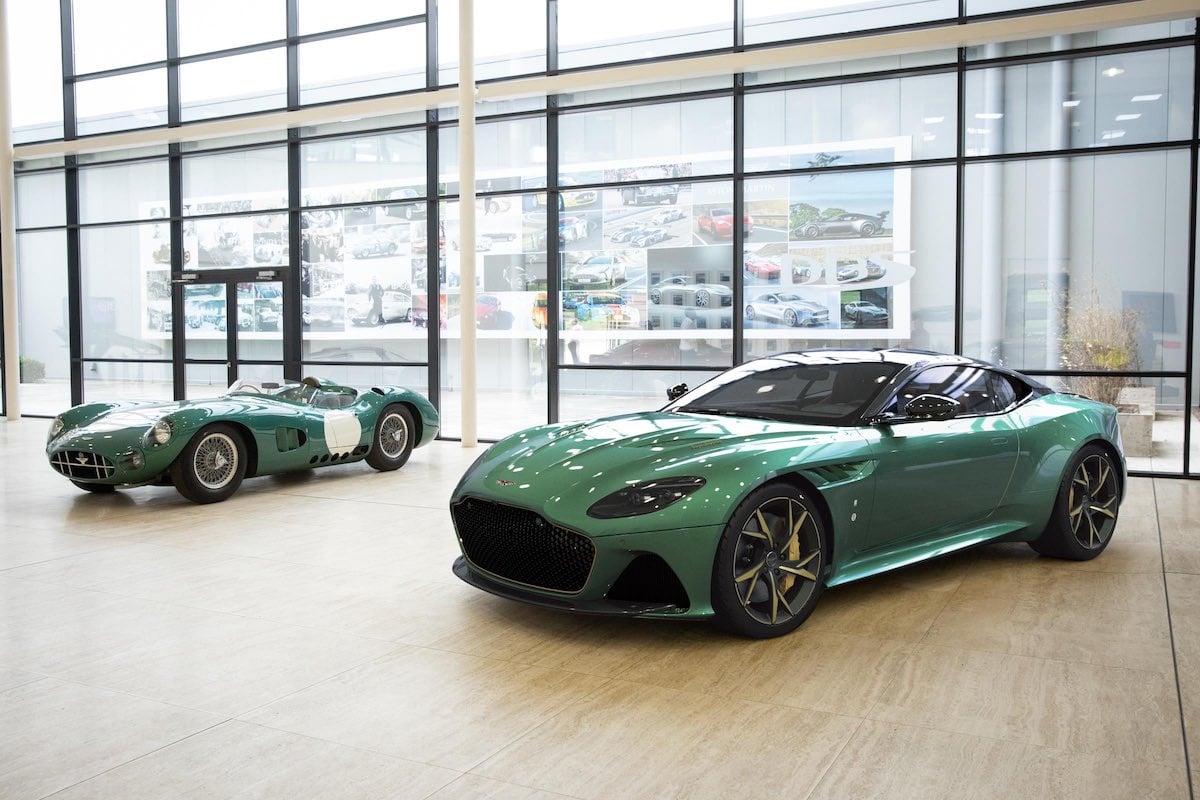
Jaguar I-Pace interior | door speaker | The Car Expert
A speaker grille – more than 900 holes, no two are the same in design.
“The speaker front is in real metal, you would likely give it one glance and move on. But I spent countless hours trying to design it. All it has to do is let sound waves pass through it, but somehow we designed it so that while it looks to be a parallelogram, no two sides are parallel. “This was all well and good but the design director insisted that all of the holes had to line up on all four sides. Meanwhile, the audio team insisted on a consistent open area for the sounds, while the manufacturing team said there couldn’t be more than 0.8mm of metal between each hole and that had to be consistent. Sandys believes he designed something like 40 versions of the grille before admitting defeat. “I went to an engineering team in the depths of our Coventry site, they wrote some special computer code called Knowledgeware, and pretty much got it right it right first time. “The speaker grille is about the size of the palm of a hand with about 900 holes in it – and no two holes are of the same design…” One little triumph of the Pixel Pansies… Jaguar I-Pace feature | The Car Expert  

Honda CR-V test drive

What is it?

The Honda CR-V has been around since 1995, and is now one of the world’s best-selling SUVs. It’s gone on to become sleeker, more efficient and quieter too. It’s now been updated for 2018, adding a more distinctive look as well as better levels of standard equipment and technology. Comfort is still the name of the game, though, just as it was with the original car back in ’95. We’re testing it here in range-topping EX trim level.

What’s new?

Being the updated 2018 model, the CR-V gets the latest exterior features applied to many current Honda vehicles. The exterior gets the latest ‘face’ (a large chrome grille framing an even larger Honda badge), which comes alongside a distinctive new headlight design. You’ve also got four distinct trim lines to go from with S, SE SR and top-level EX offering something for all budgets. Even base-spec cars get alloy wheels, LED headlights and climate control. The CR-V is also available in five- or seven-seater configurations, meaning there’s an option for larger families too.

How does it look?

2019 Honda CR-V review (The Car Expert)
(PA)
Though it’s battling against some dynamic and interesting looking new rivals, the CR-V can keep its head held high in the styling department. It’s a distinctive looking thing, that’s for sure, with a variety of different cut lines combining with some key chrome elements to aid it in standing out. It looks particularly striking in shades such as the red our test car was finished in, though darker colours do give it a certain undercover air too.

What’s the spec like?

Standard equipment levels are, funnily enough for this £36,455 EX model, very good. You’ve got 19-inch wheels, heated rear seats, a heads-up display and a fully opening panoramic sunroof all combining with a myriad of extras to create a car which feels fully loaded with kit. In truth, the middle-ground SE version makes more sense, as it still brings with it a host of goodies but at a lower cost – close to £6,000 less, in fact. A common issue with all the ranges is the standard-fit infotainment system, which you’ll find in almost all Honda vehicles. It falls a long while behind current rivals, and can’t deliver close to the same level of user-friendliness nor responsiveness. It’s an area we’d gladly change.

What’s it like inside?

2019 Honda CR-V interior - The Car Expert
The interior of the CR-V is well made for family life (PA)
Family vehicles such as the CR-V need to be robust enough inside to cope with daily life, and you get the sense that this Honda’s interior has been designed with that in mind. That’s not to say it’s basic – certainly not in this EX-spec version, at least – it’s just that all of the plastic trim sections have been solidly placed together while the leather seats feel well-made and up to years of abuse. Everything is very accessible to the driver too. The gear selector is high-set and immediately next to you, and the steering wheel has plenty of adjustment as well. Many key functions can easily be accessed via the steering wheel too, with volume adjustments and track changes best made via the wheel-mounted controls.

What’s under the bonnet?

Engine choices are simple with the CR-V – there’s just one to choose from. It’s a 1.5-litre turbocharged unit, which sends power to either the front or all four wheels through a six-speed manual or CVT automatic gearbox. We’ve got the four-wheel-drive CVT version here, and fuel economy is down a touch compared to the manual, while emissions are raised somewhat. It’ll do 39.8mpg, as opposed to the 42.8mpg you’ll get in the manual, while 162g/km emissions contrast the 151g/km you’ll see in the six-speeder. After lower emissions? Then hold fast – Honda is introducing a hybrid version soon. Though performance isn’t the name of the game here, the CR-V’s 1.5-litre engine produces a respectable 190hp – an interesting 20hp bump over manual cars. This is backed by 243Nm of torque, which will allow the CR-V to hit 60mph in 9.8 seconds before cracking a top speed of 124mph.

What’s it like to drive?

2019 Honda CR-V road test (The Car Expert)
(PA)
If there’s a car looking to set the motoring world alight, then it’s certainly not the CR-V standing in the corner holding a petrol can and a box of matches. It delivers a drive that you’d expect for a car of this type; predictable, refined and relatively uninspiring. The steering actually has a decent amount of life to it, while the ride is comfortable and does well over the pretty rough road surfaces. Then there’s the engine. It’s punchy enough, but the gearbox is its downfall. We’ve said this countless times about the CVT, and it’s an issue we’ve found to trouble many different vehicles. There’s just no middle ground with it; it’s either tips the engine right down at the bottom of the rev range, or has it at the point where you think the valves are going to bounce out of the bonnet. Were it our choice, we’d be ticking the option for the manual ‘box every time.

Summary

With such a wealth of SUVs currently available in the UK, it’s a tough thing to stand out – particularly for any car which has been around for quite some time. However, this newly-refreshed CR-V feels like a genuine competitor, certainly taking its interior robustness, general level of standard equipment and dynamic looks into account. Drop the CVT gearbox, and this is a decent car to drive with an experience which is neither awful nor write-home exceptional. As far as all-rounders go, this CR-V is pretty well-rounded indeed. Model as tested: Honda CR-V Price: £37,005 Engine: 1.5-litre turbo petrol Power: 190hp Torque: 220Nm Max speed: 124mph 0-60mph: 9.8 seconds Fuel economy: 39.8mpg Emissions: 162g/km

Abarth 695C Rivale test drive

What is it?

This is the Abarth 695C Rivale, a tiny hot hatchback made up of a baffling set of ingredients. The base is, of course, a Fiat 500, but it’s been not so much breathed upon but vomited out by specialist tuner Abarth. It’s now a hardcore hot hatchback with a rock-solid ride and impressive performance… so of course what it needs now is a makeover inspired by luxury powerboats, a retractable soft-top roof and a Nappa leather interior. It’s perhaps lucky that the Rivale is limited to just 350 units in the UK – 175 each of hard-top and convertible. Naturally, a luxury powerboat-themed limited-edition hot hatch doesn’t come cheap. The convertible version with a manual gearbox that we are driving is priced at £25,380 on-road. That’s quite a lot of money for what is ultimately still a worked-over Fiat 500…

How does it look?

The Fiat 500’s dinky proportions wear the steroidal Abarth makeover remarkably well, as it always has done. Unlike most Abarths, though, this one isn’t covered in decals and painted in bright colours – instead it wears a superb two-tone grey and blue paint scheme with a bright blue pinstripe round its equator. Thin-spoked silver wheels and gratuitous applications of Abarth’s famed Scorpion badge complete the picture on the outside, while the interior sees a gorgeous blue leather interior colour scheme clash slightly with a choice of two dashboard ambiences – fake carbon fibre ora seriously eye-catching wooden finish. It’s all part of the ‘Riva’ makeover – aiming to give the Rivale some of the style of the famous Italian powerboats.

What’s the spec like?

Given that you’re paying the price of a luxury supermini for this Rivale, you might hope for some serious specification upgrades. You’ll be disappointed, though – this is a 2007 car under the skin, after all, and so it can’t handle sophisticated safety kit like lane departure warnings or autonomous emergency braking. You will find an upgraded version of Fiat’s Uconnect infotainment system which can now handle Apple CarPlay and Android Auto, plus electric windows and climate control. There’s no cruise control available, though, and its headlights are only halogen units – xenons are a pricey extra.

What’s it like inside?

Abarth 695C Rivale dashboard
Choose between carbon fibre or mahogany dashboard finish (PA)
It’s far from roomy in here. Where other city cars succeed in carving out space from every spare inch, the Rivale doesn’t. In terms of cabin storage, there is at least a decent glovebox and four dinky cupholders for your espressos, but that’s about it. Passenger room? Well, accommodation for the front passengers is good, with comfortable seats and plenty of leg and headroom, though the narrow cabin means you’ll be brushing shoulders. The rear is a totally different story, suitable only for very short people for very short journeys. The boot’s tiny, too. It’s characterful, though – mainly thanks to the Rivale touches, which include blue leather seats and gorgeous blue leather floor mats. Yep, gorgeous floor mats.

What’s under the bonnet?

Under the tiny bonnet lies a tiny engine – a 1.4-litre turbocharged four-cylinder, which produces an impressive 180hp. Put to the ground through a five-speed manual, it’s capable of 0-60mph in 6.5 seconds and a top speed of 140mph. Those are remarkable figures for something no bigger than a standard city car. The engine’s not exactly a refined performer. Takeoff is fairly rapid, but keep your foot planted and you’ll be met by lots of turbo lag – followed by a squirming steering wheel as the power kicks in and the front wheels struggle to put it down to the road. The five-speed gearbox is ideally situated high up on the dash, but its action is a little spongy for our tastes. Of particular note is the Akrapovic exhaust system. It’s loud enough in standard mode, but flick it into Sport and you won’t believe the racket that comes from this tiny car. It’s made even better in our 695C cabriolet version – you can put the roof down and enjoy the blare. Again, it’s far from refined, but it’s a really fun touch and makes revving the tiny engine out rather intoxicating. You’ll never be able to leave a gathering discreetly ever again.

What’s it like to drive?

Abarth 695C Rivale review | The Car Expert
A nice smooth racetrack is probably the best place to experience the uncompromising Abarth 695 (PA)
Big wheels, a tiny wheelbase and rock-solid suspension mean the Rivale isn’t what you’d call comfortable. It tends to skip across bumps in the road rather than absorbing them, though the excellent front seats with their long squabs help alleviate the poor ride and make long journeys bearable. Of course, this car isn’t intended as a cruiser, but on a back road it’s an absolute hoot. The heavy steering, laggy engine and tendency to get out of shape in faster corners mean it’s nothing like as civilised as a Ford Fiesta ST, though one could argue it’s almost as fun. Keen drivers will swing one of two ways – they’ll either find it dynamically lacking or they’ll forgive its foibles for the sake of excitement. It’s also worth noting that convertible models aren’t as stiff as the hatchback counterpart, and can suffer with scuttle shake on poor surfaces.

Summary

The Abarth is a purchase you make with your heart as, objectively, it’s pretty rubbish. It’s noisy, cramped, thirsty, and expensive. In fact, to be gentle, it’s as daft as a box of frogs – but that’s the fun of it. For many, the Abarth’s sheer sense of silly fun will get under their skin, and they’ll find it irresistible. For our money, though, we’d steer clear of the super-pricey Rivale, as there’s just as much fun to be had lower down the Abarth range. Model as tested: Abarth 695C Rivale Price: £27,585 Engine: 1.4-litre four-cylinder turbo petrol Power: 180hp Torque: 250Nm Top speed: 140mph 0-60mph: 6.5s Fuel consumption (combined): 41.5mpg Emissions: 155g/km Rivals: Ford Fiesta ST, Smart ForTwo Brabus, Mazda MX-5
Abarth 695C Rivale on track | The Car Expert
(PA)

£23.2K price tag for Citroën C5 Aircross

0
The new Citroën C5 Aircross SUV will go on sale on 3rd December, at prices starting from £23,225. First unveiled in Shanghai in 2017 and revealed in its European form in May, the C5 Aircross is intended to become Citroën’s flagship SUV. The brand claims that it will be the most comfortable SUV in its segment, due to the inclusion of the Advanced Comfort programme, Progressive Hydraulic Cushion suspension and Advanced Comfort seat technologies. The C5 Aircross will also be available with up to 20 different driver assistance systems, while also being pitched as the roomiest SUV in its market, with sliding rear seats and best-in-class boot space. Citroën C5 Aircross The Car Expert Petrol and diesel engine options will be available from the car’s launch, while future plans for the model include a plug-in hybrid variant. All are front-wheel drive, but Citroën’s Grip-Control system will be available for the car, adding traction on slippery surfaces. Trim options for the C5 Aircross will be to Citroën’s familiar Feel, Flair and Flair Plus levels. The £23,225 buys a car with the 130hp petrol engine and a six-speed manual transmission – the cheapest diesel variant, also with 130hp, adds £1500 to the price. Standard equipment on entry-level cars includes a ‘Safety Pack’ encompassing autonomous emergency braking, blind spot monitoring and lane departure warning, and a direct connection to emergency assistance services. Climate control is standard, as are parking sensors and 17-inch alloy wheels. In the cabin a 12-inch digital instrument panel and eight-inch touchscreen are standard, the latter accessing DAB radio and Apple CarPlay and Android Auto smartphone connectivity. First showroom appearance of the C5 Aircross is expected in February 2019. Citroën C5 Aircross The Car Expert

Relative stability for new car registrations in October

New car registrations were down by just under 3% in October, as the overall market largely recovered from the supply problems that affected September’s results. Private new car sales were only down by 1% on the same month last year, with fleet registrations down 5%. There was a late surge on plug-in hybrid vehicles, with buyers rushing to buy a new vehicle ahead of the government grant being cut at the end of the month. In the bigger picture, however, this is still a small percentage of the overall new car market.
You may also like:

Stability despite the industry bleatings

As usual, there has been plenty of bluster in press releases this morning about Brexit, diesel, government grants and so on from parties with particular vested interests, but the overall picture is relatively stable despite some topsy-turvy months along the way. This is not really surprising, as we have pointed out repeatedly, since most new cars are bought or leased on finance agreements that keep the overall market turning over despite individual fluctuations. October’s results, in fact, lined up pretty closely with the year-to-date averages. Diesel sales were at 32% of the overall market, which is exactly the average result for the first ten months of the year. The growth in alternatively-fuelled vehicles (basically hybrids and electric cars) came at the expense of petrol-powered cars, but not in really significant amounts. New car registrations October 2018

Audi still mired in WLTP woes

Some manufacturers are still struggling to supply vehicles in the wake of new WLTP emissions rules, and their sales are continuing to suffer as a result. Audi is the most notable example, with registrations down 53% for the second month in a row. In fact, Audi’s sales drop of more than 7,000 cars was greater than the overall market (about 4,500 cars), Arch-rival BMW appears to have benefitted the most from Audi’s woes, and has comprehensively turned the tables on its Bavarian neighbour in total sales for the year to date. The other Volkswagen volume brands (VW, SEAT and Skoda) all seem to have completely recovered from their own September shortages, although the premium members of the family (Porsche and Bentley) both had slow months. It was a strong month for Jaguar Land Rover, despite the company shutting down several production lines in recent weeks due to lack of demand. Jaguar registrations were up by 82% on last year, while Land Rover saw a 32% jump.

Top ten – Volkswagen bounces back

Top ten new car registrations October 2018 There was more shuffling of the best-sellers list in October as WLTP issues continued to affect certain brands and specific models. After disappearing completely from the top ten list in September, Volkswagen bounced back with a vengeance in October. The Golf rebounded to its previous second place, behind the ever-dominant Ford Fiesta, while the Tiguan jumped up to fourth place and the Polo placed tenth. The new Mercedes-Benz A-Class continues to sell strongly, finishing in third place for the month. Meanwhile, it wasn’t such a good month for the Vauxhall Corsa. After finishing second in September, the Vauxhall supermini fell out of the top ten altogether in October.

Aston Martin remembers Le Mans glory with DBS limited edition

0
An Aston Martin dealership has revealed a limited-edition DBS Superleggera that pays homage to the iconic vehicle’s legendary 1959 Le Mans triumph. The DBS 59 was commissioned by Aston Martin Cambridge and built by the manufacturer’s special ‘Q’ division to celebrate the 60th anniversary of the occasion next year. The 24 Superleggeras feature many interior and exterior design cues from the DBR1, which finished first and second at Le Mans in 1959. It remains Aston Martin’s only win in the legendary race. Most prominent of the design cues is the paint finish – Aston Martin Racing Green, which featured on the DBR1. Bronze detailing to the exterior and outside also appears – replicated from the brass switchgear on the 1959 car. The grille surround, wheel faces, brake callipers and DBS badges are all finished in gold, too, as a nod to the car’s ‘grandfather’. Aston Martin Racing Green details also extend to the interior, while the leather headlining has been created from a painting commissioned of the DBR1s on track in 1959. The lucky owners will also get a print of this picture. Subtle DBR1 images, logos and door plaques are placed around the car as well. Aston Martin DBS 59 and DBR1 Unsurprisingly, this level of bespoke production comes at a price, with the DBS 59 costing £325,000 – substantially more than the standard DBS Superleggera’s £228,000 tag. Ten of the 24 examples had been sold ahead of the car’s unveiling, with all of them expected to be accounted for by the end of the week. For that price, though, the owners get an unforgettable handover experience. The dealership has organised for all 24 cars to be given to their owners at Le Mans next June, with the super-GTs in the same formation as the 1959 Le Mans grid. The owners will enjoy a VIP experience and have the opportunity to do a parade lap two hours ahead of the start of the famous 24-hour race. The DBS Superleggera is Aston Martin’s flagship model, which only went on sale earlier this year. It boasts an impressive 5.2-litre V12 producing 725hp, and is capable of a 0-60mph time of 3.2 seconds. This isn’t the first time Aston Martin Cambridge has commissioned special models. Three previous projects have been organised by the dealership – the most notable being ten Red Arrows-themed cars last year, one of which was raffled for the RAF Benevolent Fund and raised more than £1.5m. Simon Lane, dealer principal at Aston Martin Cambridge, said: “The 1959 Le Mans race is a really big iconic story for the Aston Martin brand, so I’m really proud that on the back of the previous projects we’ve delivered the factory has entrusted us to be the main celebration for this anniversary.” Just five DBR1s were made – three of which competed in the 1959 Le Mans race. It’s also the most expensive British car to be sold at auction, with the 1959 Le Mans-winning example going for $22.5m (circa £17.3m) at an RM Sotheby’s auction last year. The Car Expert Best of British horizontal banner

Vauxhall Combo Life test drive

What is it?

The Vauxhall Combo Life is a very practical five- or seven-seater minivan, designed with an active family life in mind. With two sliding side doors, a large tailgate and the option of a short or long wheelbase, this is an ideal option for those with a busy lifestyle and plenty of people to transport. There’s also the added bonus of three ISOFIX points for children’s car seats and great onboard tech that will keep families happy when on the move.

What’s new?

While this style of car is a first for Vauxhall, it’s also the first car developed across all of the PSA Group – something Vauxhall is very much part of since its acquisition last year. That’s why, if you did a double take when you saw the pictures, it looks a lot like its sister cars the Citroën Berlingo and Peugeot Rifter. They’re all the same under the skin, but each has been given a different price and style. The Combo Life is on the costlier side compared with its siblings, but for around £20,000 it offers an extremely affordable car for all of the family.

How does it look?

Vauxhall Combo Life - front
(PA)
Well, it definitely looks like a van with windows, but that doesn’t mean it’s unattractive. Vauxhall has done a great job to make it look cute and compact, especially in the standard short wheelbase variation. It won’t be to everybody’s taste, but for those who like the compact campers or day vans, this will appeal. In standard length, the Combo Life is 4.4m long, but there’s also the option of a 4.75m Combo Life XL. There are sliding doors on both sides of the vehicle for great access and a huge full-height rear hatch for easy access to the boot too.

What’s the spec like?

Prices for the Combo Life start at £19,610, and although that’s a little basic, our test car with only a slightly higher price tag of £22,500 comes with plenty to play with. Vauxhall’s OnStar infotainment system is easy to use on its own, but Apple CarPlay and Android Auto are also available. The Combo Life benefits from creature comforts such as heated front seats and steering wheel, too. Overall, the quality does feel a little basic, but it’s difficult to complain when even the top-spec Energy models start from a competitive £21,710.

What’s it like inside?

Both the standard and XL versions are available with either five or seven seats. Despite its small proportions, there’s maximum space inside the Combo Life, and Vauxhall boasts 28 storage bins and pockets. With no bulky centre console between those in the front and the large windscreen, it creates the impression of even more space. A high roofline will keep even tall passengers comfortable in the front and rear, too. If you’re regularly moving bikes, large musical instruments or sports kits, the five-seater version will give you an 850-litre load area and the rear two seats in the seven-seater can be removed. With a low boot floor and no lip, its van-like credentials give it great family practicality.

What’s under the bonnet?

The car we’re driving today is equipped with a 90hp, 1.5-litre diesel engine, but if you’re looking for more power there’s also a 130hp version. Vauxhall claims the diesel will achieve a very appealing 67.3mpg and emits just 111g/km of CO2. It’s also available with a 1.2-litre petrol that can achieve 51.4mpg on a combined cycle and emits 125g/km of CO2. Despite its low starting price, there are a number of driver assistance and safety features available too, such as advanced park assist, forward collision alert, automatic cruise control and driver drowsiness alert, which all do what they say on the tin. It’s available with PSA’s IntelliGrip system as well, which is designed to improve handling and stability on any surface.

What’s it like to drive?

Vauxhall Combo Life review | The Car Expert
(PA)
Although Vauxhall explains that this is very much an MPV and not a van, the latter is how it feels. It also looks like a van and has a handy space for your job sheet and clipboard in the dash, which all makes for a compelling van argument. However, that’s not a bad thing at all. The Combo Life is really comfortable to drive, even long distance. The upright seating position is extremely comfy and, while it’s not the speediest car in the world with a 0-60mph time of 12.7 seconds, it’s got enough grunt to get you places and is quite happy cruising on a motorway.

Summary

The Combo LIfe is really versatile, but with so much space readily available it’s a great option if you’re constantly on the move with little or large people on board. The boot space will be a huge plus point for many owners, especially with no lip to lug cargo over, and the comfort levels are sure to impress for this price. If your family life is hard-wearing and likely to take a toll on your vehicle, the Vauxhall Combo Life is an ideal runaround.