Find an Expert Rating: 
Home Blog Page 126

Falling asleep at the wheel causes a quarter of all fatal crashes

0
Up to 25% of fatal car accidents are caused by drivers who have fallen asleep at the wheel, new research suggests. It comes after one in eight UK motorists admitted they had nodded off while driving, with close to two-fifths saying they’d sometimes been so tired they feared they would fall asleep. The estimation of the number of fatal car accidents attributed to fatigue was made in a report by the Parliamentary Advisory Council for Transport Safety, correlated against an online poll of 20,561 drivers by the AA. Edmund King, AA Charitable Trust director, said: “One quarter of fatal crashes are sleep-related, so drowsiness is one of the most underestimated risks on the roads. Tiredness is a fact of life at some point for most of us and it is crucial we know how to manage it in relation to driving. Drowsy driver at the wheel of an old 4x4 “Crashes involving a drowsy driver tend to be catastrophic. If a driver has fallen asleep at the wheel they do not brake before an impact and make no attempt to steer away from a collision. “A driver who nods off for just three or four seconds on a motorway would have covered the length of a football pitch with closed eyes. A 30-second nap while travelling at 60mph covers half a mile – a terrifying thought.” The research has been announced as part of a new campaign by the AA to alert motorists to the dangers of driving while tired. It revealed that men are three times as likely as women to admit that they have fallen asleep at the wheel, while motorists aged 18 to 24 are the most likely to say that being tired bears no relevance on their ability to drive. The main reasons given for driving when tired were a long day at work, the general monotony of the journey, and because it was late at night.

Fiat 500X review

60-second summary

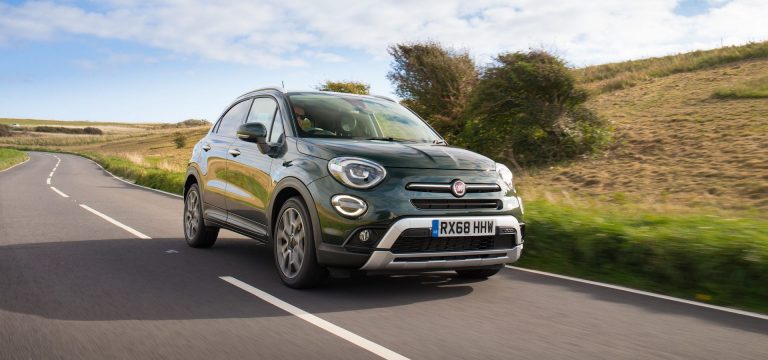
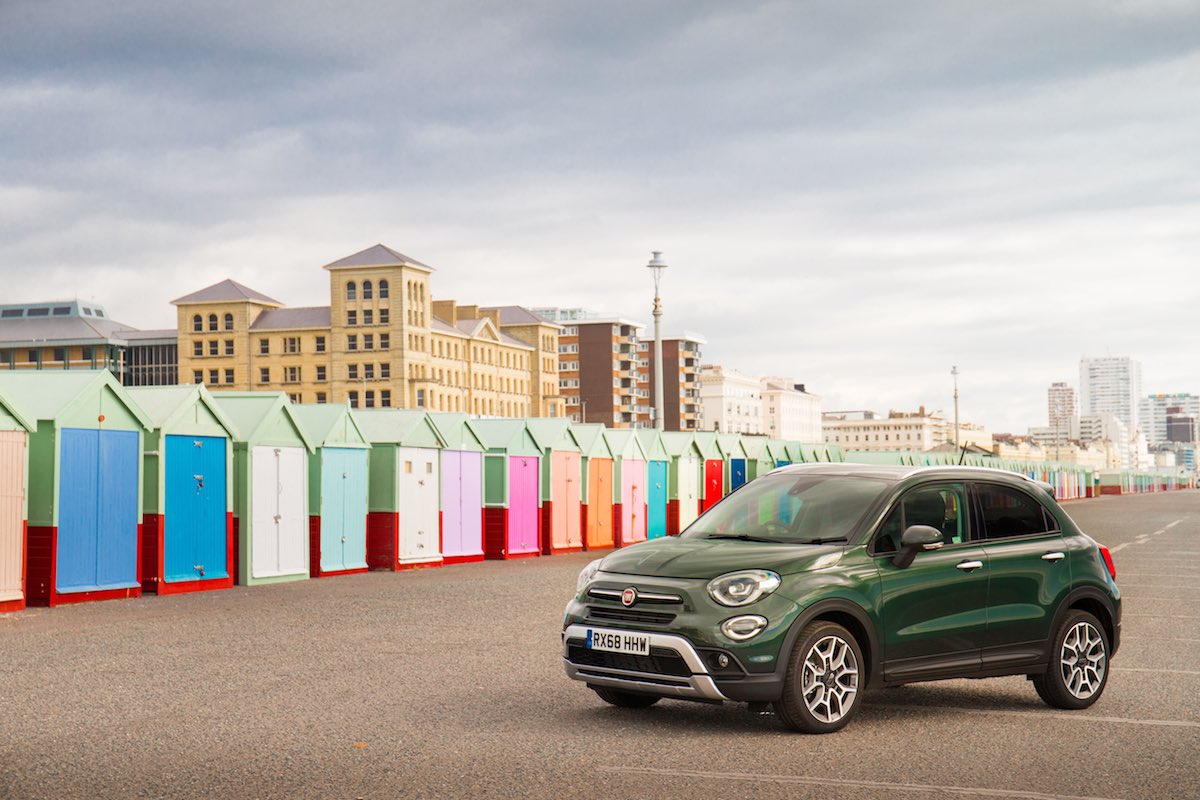
What is it? The latest Fiat 500X is a mid-life facelift of the brand’s small SUV. Key features New engines, more tech, more safety Our view The Fiat 500X addresses many of the issues that were leaving the model struggling in the wake of more recent rivals. New engines are a significant improvement while the extra tech and safety assistance systems are welcome, though lacking autonomous braking as standard. Purely on specification and quality, the latest 500X still cannot overcome major rivals. But it beats them hands down for style, being a good-looking SUV inside and out. Similar cars SEAT Arona, Hyundai Kona, Nissan Juke Fiat 500X road test 2018 | The Car Expert

Full review

Introduction

Fiat’s biggest-selling model, by far, is the 500 small car – when launched it was the first serious challenger to the fashion-favourite Mini. Fiat’s second biggest selling car is this beefed-up 500, the 500X. When the 500X launched in 2015, it was one of the earlier entrants to the small SUV market, trying to take some of the Nissan Juke’s sales. Now three years on this is the biggest growing market in the UK – everyone wants a small SUV, just about every brand has launched one and 500X sales have plummeted as a result. So now we have a facelifted version, and it’s quite a significant facelift, across new engines, more technology and more safety. Not that you would guess this from looking at the car, however, as it appears pretty much like the version it’s replacing. Fiat considers the 500 styling iconic and the 500X is presented as a more muscular version. “We didn’t want to change the styling too much,” they said on the launch event, then putting up pictures of the old and new one to show that, yup, there’s very little to point out. The ‘urban’ version apparently has new front and rear bumpers, the ‘cross’ redesigned skid plates – we’ll take their word for it. Some major choices of the old car have gone altogether – unlike the first 500X, there is no diesel option this time, and no all-wheel-drive model either. There was no point, really, because buyers just didn’t want them…

Buying and owning a Fiat 500X

The first 500X was offered in two distinctive visual identities. ‘Urban’ and ‘Cross’. This continues post facelift, which is perhaps a surprise as we are told that 90% of buyers prefer the more off-road styled Cross, with its chunkier styling, to the city-pitched Urban. What has gone is the pizza menu of trim levels – now there are just three, dubbed Urban, CityCross and CrossPlus, reflecting the two visual styles and allied to the engines. Two of the three 500X powerplants are new, examples of Fiat’s latest ‘Firefly’ turbo petrol engine in three-cylinder 1.0-litre and four-cylinder 1.3-litre form. You will need more money than you used to in order to buy a 500X. Prices start at £16,995, well over a grand more than the old entry-level model. That entry model is the only version you can buy with the more conservative Urban styling, or with the 1.6-litre 110hp engine. Most buyers will go for the CityCross with the 1.0-litre Firefly unit, and will pay an extra £2,000 as a result. And the symmetrical exercise is completed by the CrossPlus at, you guessed it, £2,000 more than the CityCross. The hike in prices is explained by a host of extra equipment as standard. For a start, all 500X models now have daytime running lights and LED rear lights, while the CrossPlus also gets LED headlamps. All also have alloy wheels, 16, 17 or 18-inch depending on model. Also standard across the range is the Uconnect infotainment system, bigger and better than the previous 500X unit. Accessed through a seven-inch touchscreen it offers the usual Bluetooth, DAB, Apple CarPlay and Android Auto smartphone connectivity. Courtesy of an app it can also offer connected functions such as music streaming and navigation, while options include a parking camera. Perhaps the most significant of the extras added across the range is the safety package. When tested back in 2015 the 500X gained only a four-star Euro NCAP rating, and so every car now includes a wide-ranging suite of assistance technology. Highlights of the new package are traffic sign recognition, speed assistance to keep inside the limit indicated on the traffic sign, and a warning if you stray out of your lane – not long ago finding such tech on an entry-level car was unheard of. Unfortunately, that standard specification does not include autonomous emergency braking, or City Brake Control as Fiat calls it. To get that, a blind spot alert and adaptive cruise control, you need to dip into the options list. Of the simplified range of trims we, like most, would go for the CityCross – compared to the entry-level car you not only get a better engine but also automatic instead of manual air-con, fog lights, bigger wheels and parking sensors, as well as extra detailing.

Inside the Fiat 500X

More work has been done inside the 500X. The environment is still distinctive, thanks chiefly to the big slab of panelling in the same colour as the exterior body, and the cheeky flattened oval of the infotainment screen dominating the centre console. What we now have is a new design to the instruments with easier-to-read graphics, a new steering wheel and the usual updated fabrics and finishes. The new touchscreen is larger than its predecessor and much easier to use, though not to the standard of some rivals especially those of the VW Group. Overall, the environment exudes what one greatly expects from an Italian car and least expects from an SUV – style. And the other big plus of the 500X interior is that’s it is roomy – distinctly more spacious than many rivals. This is a car in which four adults could travel a significant distance in comfort.

Driving the Fiat 500X

Here’s the thing – while the 500X is pitched as the big, chunky SUV version of the 500 (remember the TV ad for the first model, where the Viagra pill fell into its fuel tank and it gained more muscular panels?) it’s not really. Nope, the 500X chassis is actually basically that used in the Renegade made by sister brand Jeep – so it’s a proper SUV, albeit a front-wheel-drive one only. On the launch event we didn’t bother with the entry-level 1.6-litre engine – because few buyers will – and instead drove cars with the new Firefly units. Bald figures suggest that they might not be quite as efficient, or eco-friendly, as some rivals but that does not necessarily tell the full story. These boast particulate filters and the quoted figures are to the latest Euro 6D Temp emission standards which they meet. Fiat’s product man described the Firefly units as offering “diesel-like torque, available all the time”. And it is clear within just a couple of miles of driving that the three-cylinder 1.0-litre unit is a much better engine than the TwinAirs that used to power the 500X. The Firefly unit is smoother and quieter, with none of the very obvious audio note of its predecessor. At 10.9 seconds to 62mph it’s not the fastest powerplant in this market, but it feels like it could be – acceleration is enthusiastic while never coarse. And for those who want some extra pace, the 150hp four-cylinder version slices nearly two seconds off the 62mph sprint. All of this makes the 500X an enjoyable and easy car to drive, especially on more urban streets. Out in the country, on faster-flowing routes, it’s not quite so impressive, the chassis too softly sprung and liable to be unsettled by potholes and the like. And very light steering does not help, with very little feedback through the wheel.

Summary

Fiat has done what it needs to with the 500X – addressed areas in which the car has fallen behind its newer rivals. This is a significant facelift, particularly in the engine department where the Firefly units are a big improvement over their predecessors. The result is still not the best in its market but it does score major points in one area so many of its rivals don’t – in style. The Fiat 500X looks good, feels good to be in and for anyone considering a small SUV should certainly be on a test drive list.

Key specifications

Make & model Fiat 500X SEAT Arona Hyundai Kona
Specification CityCross FR SE
Price (on-road) £18,995 (range starts £16,995) £20,165 (range starts £16,750) £17,750 (range starts £16,450)
Engine 1.0-litre petrol 1.0-litre petrol 1.0-litre petrol
Power 120 hp 115 hp 120 hp
Torque 190 Nm 200 Nm 172 Nm
0-62mph 10.9 sec 9.8 sec 12.0 sec
Top speed 117 mph 113 mph 112 mph
Fuel economy (combined) 48.7 mpg 57.6 mpg 52.3 mpg
CO2 emissions 133 g/km 113 g/km 125 g/km
Insurance group 31 12E 9E
Euro NCAP rating 4 stars (2015) 5 stars (2017) 5 stars (2017)
TCE rating 7.6 / 10 8.0 / 10 7.0 / 10
  Fiat 500X review 2018 (The Car Expert)

BMW 8 Series drops its top

0
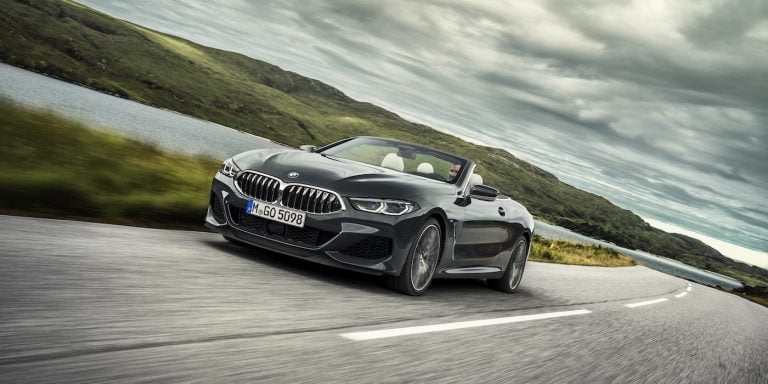
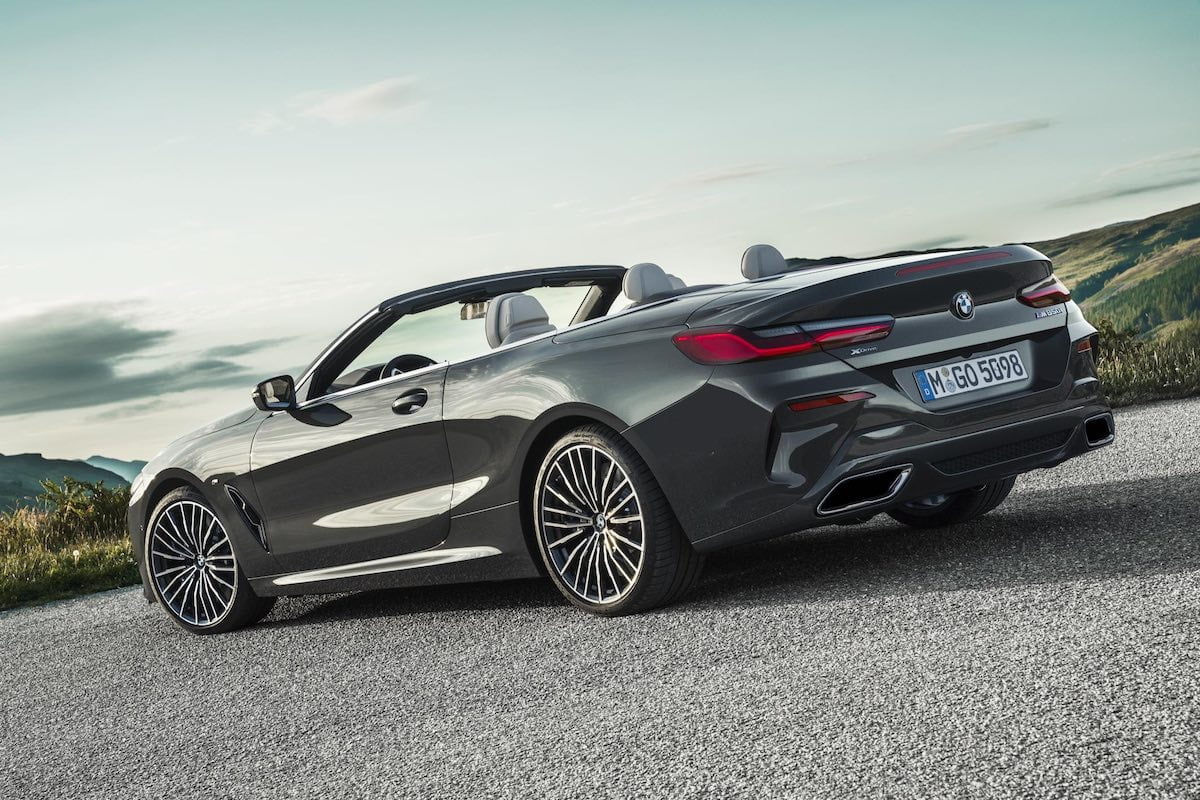
BMW has revealed the inevitable convertible version of the new 8 Series ahead of the car’s launch next spring. The 8 Series Convertible uses a soft-top roof that can be opened and closed in 15 seconds at speeds of up to 31mph. The flagship drop-top model will initially be available with a choice of two engines. A turbocharged six-cylinder diesel with 320hp will feature in the 840d, while the range-topping M850i will be powered by a turbocharged 4.4-litre petrol V8 producing 530hp.
You may also like:

Both 8 Series Convertible models share the same eight-speed ZF automatic gearbox and drive all four wheels. As a result, performance figures for both cars are brisk. The sprint from 0-60mph is claimed to take 5.0 seconds in the diesel-powered 840d, dropping to 3.7 seconds in the M850i. Both cars have a top speed limited to 155mph. Each benefits from adaptive sports suspension as standard, although the M850i gets an electronically-controlled locking differential included from the outset – it’s an optional extra on the 840d, though. The 840d and M850i are set to be joined by a halo M8 convertible later next year, which is likely to use an upgraded and more powerful version of the M850i’s V8 engine. BMW 8 Series Convertible - rear Boot space is claimed to be 350 litres, which is respectable for a convertible GT model. The load area matches that offered by the Mercedes-Benz S-Class convertible – one of the 8 Series Convertible’s key rivals. A pop-up wind deflector is fitted to the 8 Series Convertible as standard, while those looking for added roof-down comfort can choose to have neck warmers in the front headrests. No prices for the 8 Series Convertible have been revealed, although more details are likely to be released closer to the car’s launch.

Pricing announced for new Mercedes-AMG A 35

0
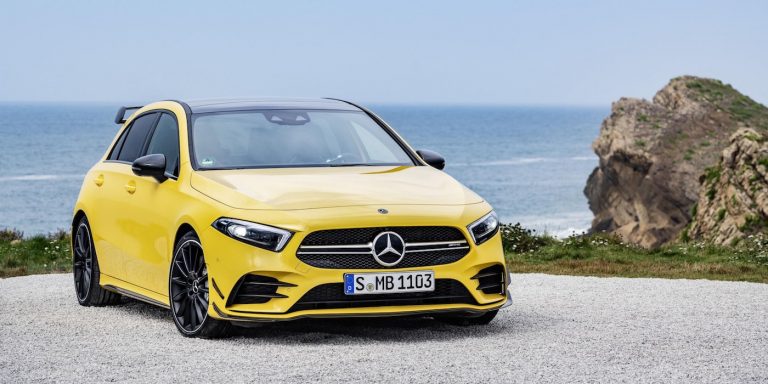
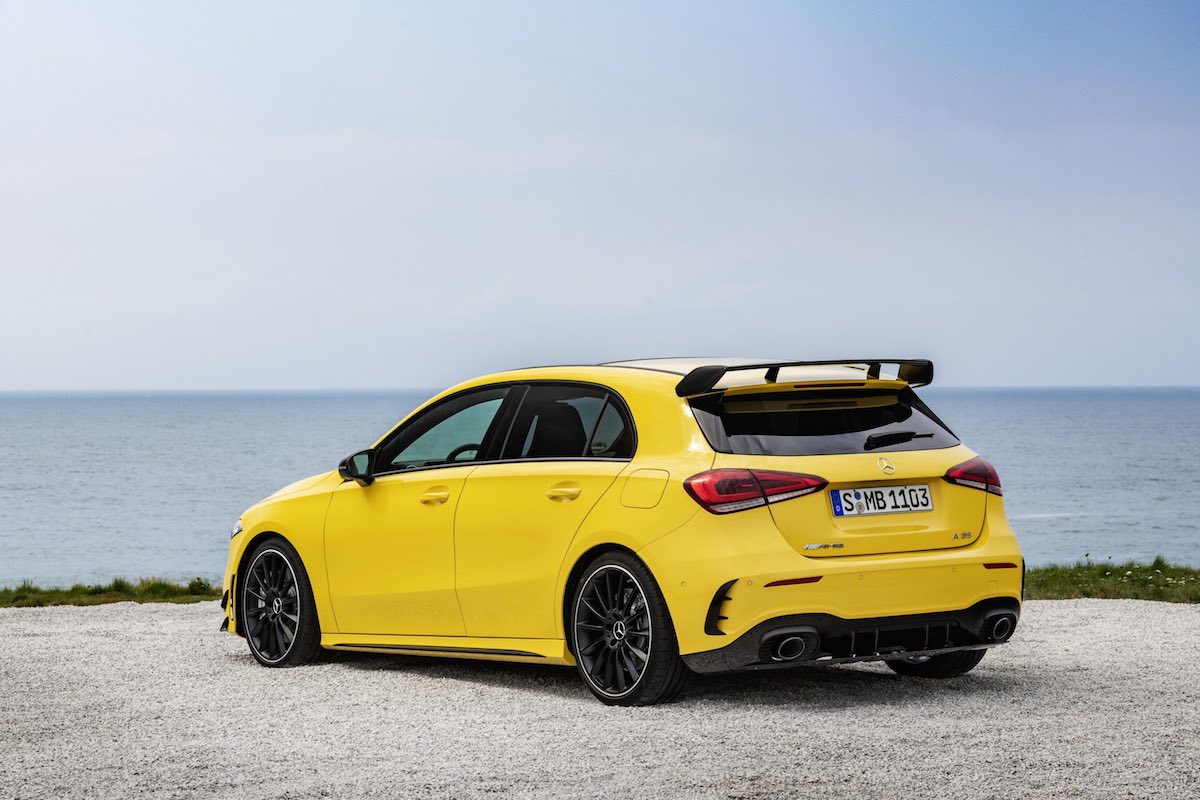
Mercedes-AMG has announced prices for its latest hot hatch A-Class – the A 35, which will challenge the likes of the Audi S3 Sportback and BMW M140i. As a precursor to a full-fat AMG A 45 that will arrive next year, the A 35 packs a 2.0-litre four-cylinder turbocharged petrol engine that produces 306hp and 400Nm of torque. It’s paired exclusively with all-wheel drive and a seven-speed automatic gearbox. With launch control enabled, the A 35 is good for a 0-60mph time of 4.5 seconds and an electronically limited 155mph top speed. Fuel economy is pegged at 38.7mpg with CO2 emissions of 167g/km. Standard equipment includes the new Mercedes-Benz MBUX infotainment system, spread across two seven-inch displays and featuring voice commands activated by saying ‘Hey Mercedes’. Other standard kit includes satnav, lane keeping and speed limit assist, 18-inch alloy wheels, reversing camera, keyless starting and dual-zone climate control. Giving an AMG flavour to the proceedings are a specific radiator grille, performance steering wheel, exhaust system and high-performance brakes with AMG lettering.
Mercedes-AMG A 35 rear
(PA)
Customers can then spec several packages. The Executive pack costs £1,395 and adds a larger media display, heated front seats, additional leather and parking assist, while the Premium pack brings keyless entry, an upgraded sound system, ambient lighting and a rear armrest. Premium Plus builds on those with a top-end Burmester sound system, electric front seats, LED headlights and panoramic roof for its £3,895 price tag. On the safety front, customers can spec a Driving Assistance package for £1,695 in conjunction with one of the other packs – it adds blind spot assist, autonomous emergency braking, lane-change assist and radar-guided cruise control. The A 35’s starting price of £35,580 undercuts the Audi S3’s £36,230 and BMW M140i’s £35,790. Order books are open now, with first deliveries due in the spring.

Another 47,000 Vauxhall Zafira MPVs recalled over fire risk

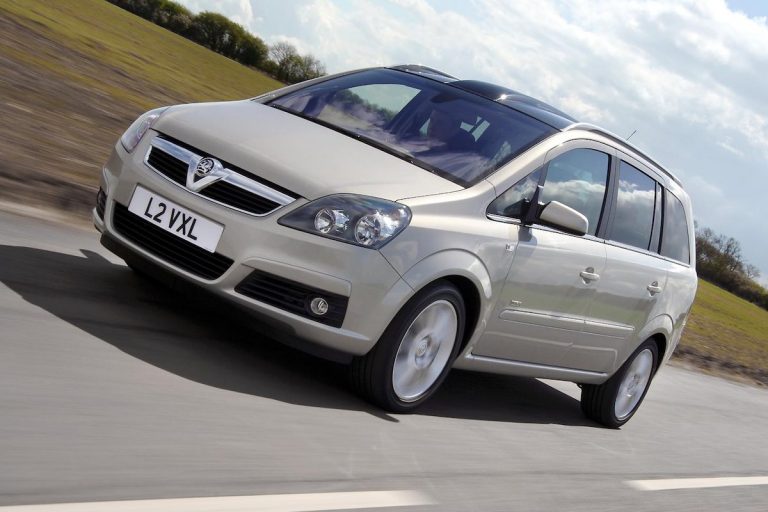
Vauxhall is recalling 47,000 more of its Zafira models because of a fire hazard, following similar action three years ago after it was found almost 235,000 others could burst into flames. In December 2015, the British manufacturer – now owned by Groupe PSA – launched a recall for 234,948 Zafira B models to fix air conditioning-related issues that could see the MPV catching fire. Now nearly 50,000 more examples of the car have been included in the alert – specifically those with electronic climate control, which had previously been deemed safe. A Vauxhall statement said: “Vauxhall Motors considers the safety of its customers very seriously. Through continual testing, we are launching a recall of some Vauxhall Zafira models to replace the heater blower motor and regulator. These are the second-generation models – Zafira B – built between 2005 and 2014, that were fitted with electronic climate control (ECC). There are 47,000 such cars in the UK. “In agreement with the DVSA (Driver and Vehicle Standards Agency), we will write to owners using the keeper address data from the DVLA (Driver and Vehicle Licensing Agency) advising them to contact a Vauxhall retailer to arrange to have the work carried out free of charge. Letters will start to be sent out from the end of this week.”
Vauxhall Zafira on fire
(PA)

DVSA investigating Zafira fires

Earlier this year, the DVSA confirmed it had launched a criminal investigation into Zafira fires in conjunction with trading standards officers at Luton Borough Council. Andy Rice, DVSA head of counter-fraud and investigations, said DVSA’s priority was to protect people from unsafe drivers and vehicles. The agency has a code of practice outlining how vehicle manufacturers must deal with potential safety defects in their products, and Rice said: “We have made it clear to manufacturers that to protect consumers they should swiftly rectify problems and meet their obligations under the code of practice. “DVSA will take the necessary action against any manufacturers who fail to comply with their obligations.” If you own a Vauxhall Zafira and are not sure whether your car is affected by the recall, get in touch with your local Vauxhall dealership.

Audi Q8 test drive

What is it?

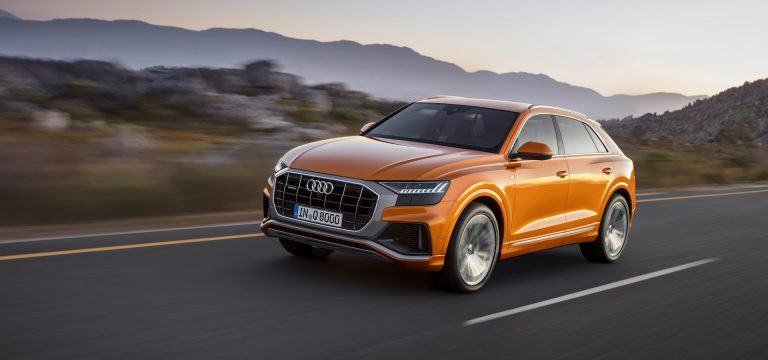
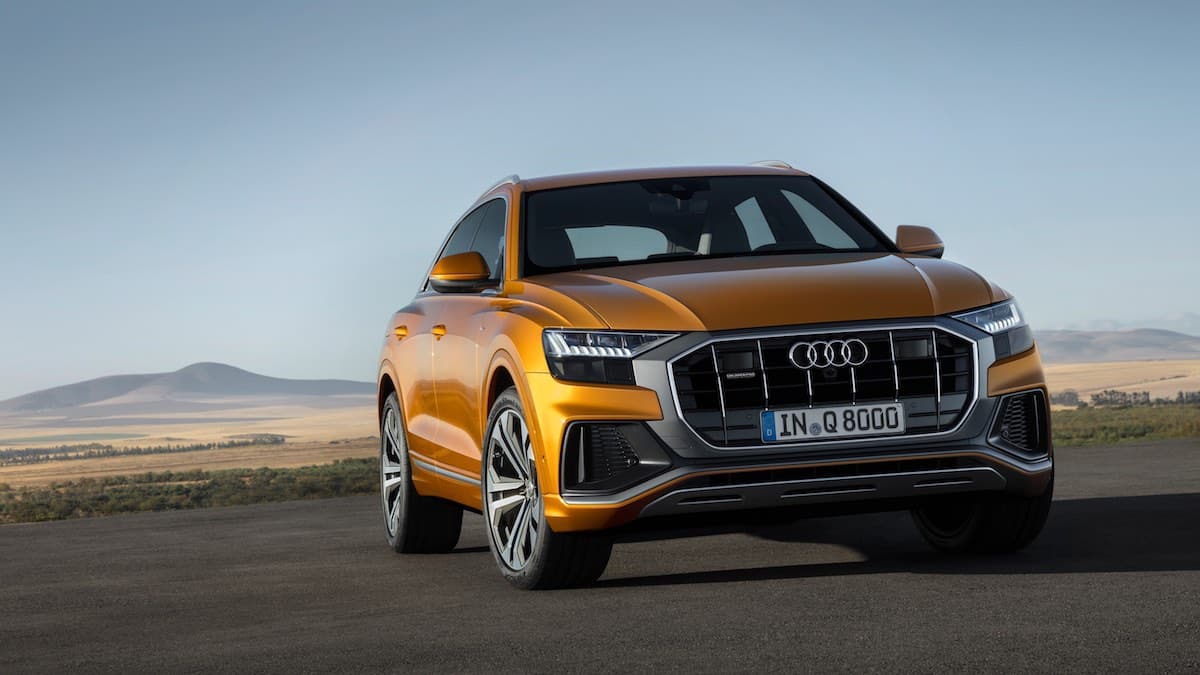
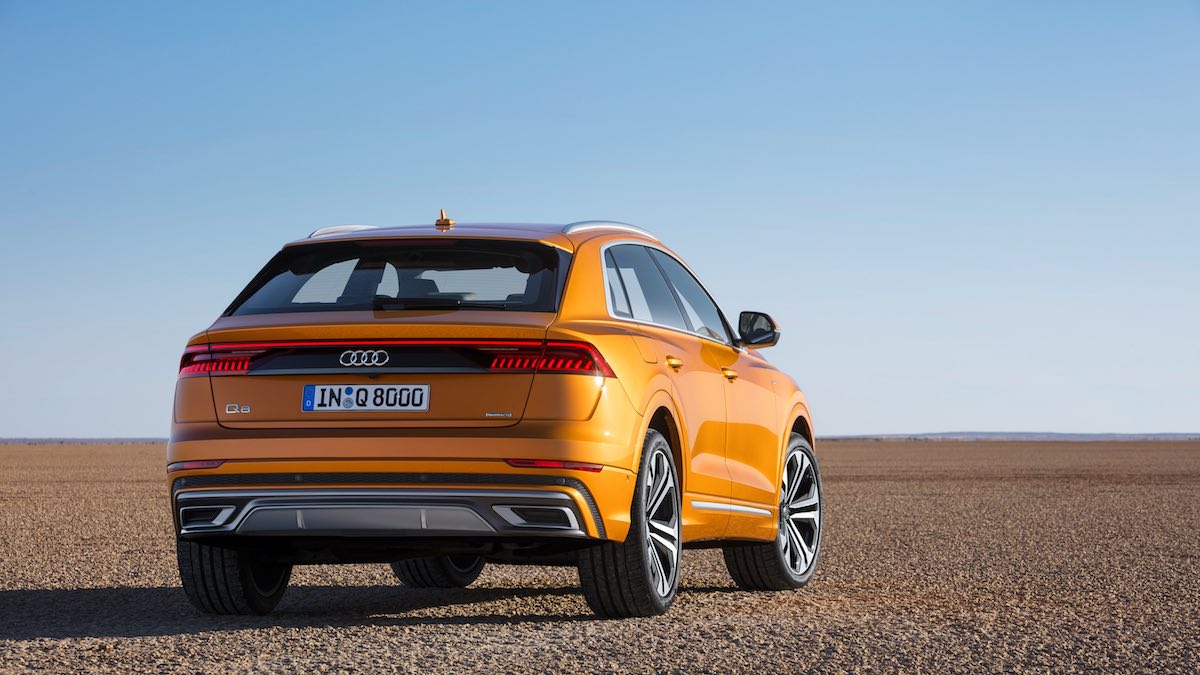
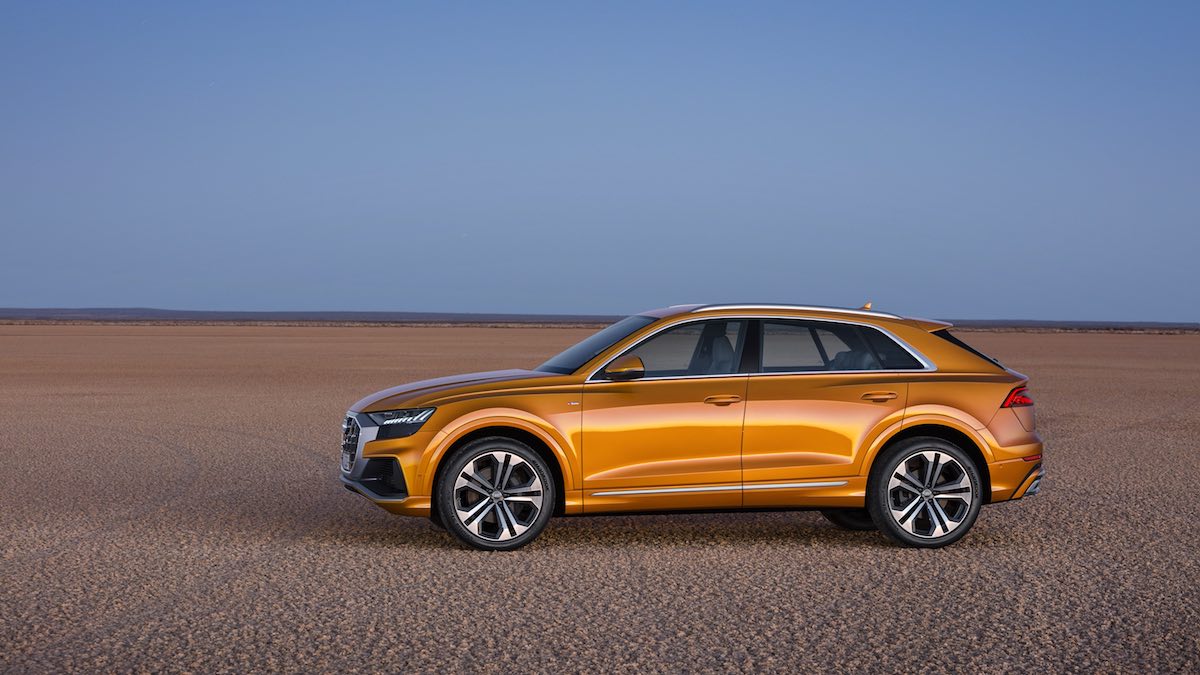
Just when you thought Audi couldn’t stretch its range any further, along comes the Q8, an answer to a question no one really was asking. Like spilt water spreading to fill every crevice, Audi is working its way towards critical mass by taking a rolling pin to its line-up and spreading it wafer thin. The German firm says the Q8 is a car for buyers who want the elegance of a luxury coupé and the convenience of a large SUV, but quite how many of those buyers exist remains to be seen. Based on the firm’s range-topping Q7 SUV, the Q8 is shorter both in height and length, but wider, and debuts the new ‘face of the Q family’ with a bold and imposing grille.

What’s new?

Audi is targeting buyers of the BMW X6 and Mercedes Benz GLE here, so that means the Q8 has to stand out from the crowd. With looks dominated by that new nose and swooping body lines, it cuts a fine figure in the tough SUV-coupé class.

How does it look?

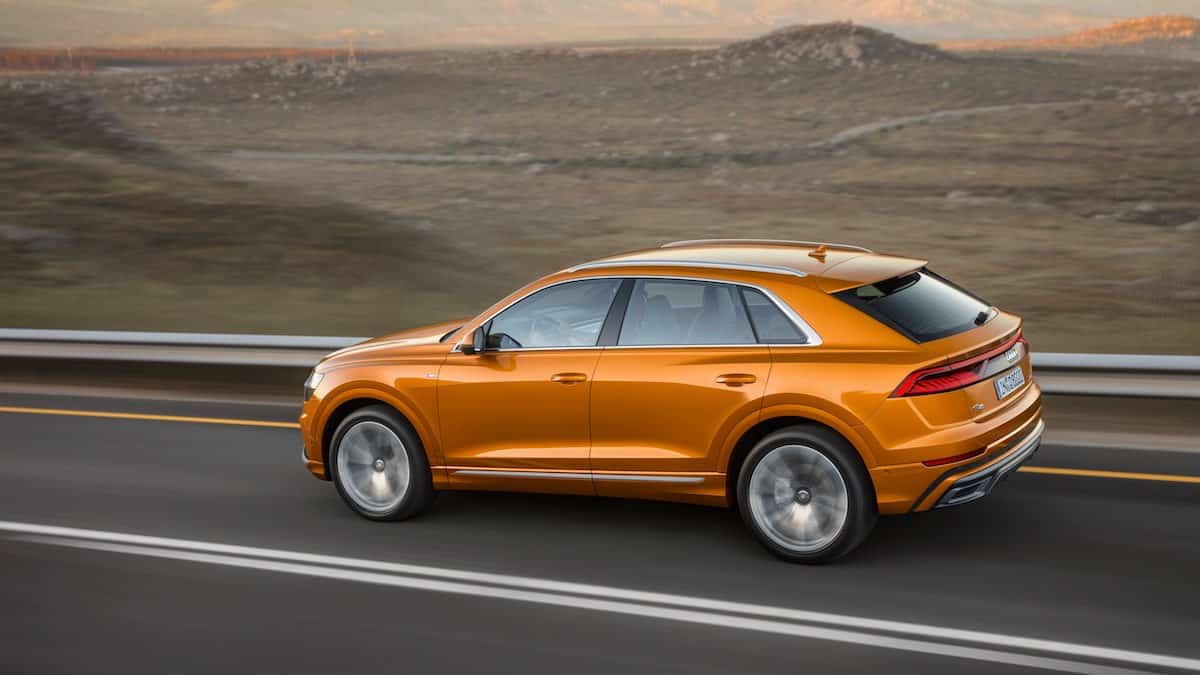
Unless you’re in the market for a large coupé SUV, chances are something like the Q8 won’t appeal. However, Audi has done a great job of making a sloping roofed off-roader look handsome. It’s far more attractive than the awkward BMW X6 and that’s likely to ultimately win it attention.

What’s the spec like?

The S line specification includes LED headlights, 21-inch alloy wheels and adaptive sport air suspension as standard. A reversing camera, phone charging box, ambient lighting, powered tailgate and keyless go are some of the other highlights also included. A high-end Vorsprung specification will be made available shortly after launch, which adds huge 22-inch alloys, sportier (and heated) seats, a head-up display, more leather, panoramic glass sunroof, and power door closure, among many other niceties.

What’s it like inside?

Inside, the smart twin-screen set-up first seen on the A8 has been implemented. It splits heating and car controls to the lower display and entertainment to the top. It’s minutely adjustable and a real joy to use. Haptic feedback, that makes it feel like you’re pressing a physical button rather than a touchscreen, makes it easy to work with on the move, and the controls are intuitive. Especially clever is the latest natural language voice control which lets you say things like ‘I’m hungry’ or ‘I need fuel’ and the system will pull up nearby restaurants or petrol stations. The satnav can learn your regular routes too – even if you haven’t added them to the system – and will warn you of unusual traffic issues on your commute. The dash swoops around the driver and passenger in coupe-car style and the multi-adjustable seats are very comfy. The interior materials look and feel luxurious too, but our test car’s centre console did squeak a little too much for a brand new car.

What’s under the bonnet?

Audi has employed some clever technical tricks under the bonnet to increase efficiency. A mild hybrid system (MHEV) uses a large battery to increase the amount of time the engine can use its start-stop system and even allows it to completely shut down and coast at speeds between 34mph and 99mph. At launch, just one engine will be available, a 3.0-litre diesel badged 50 TDI. This offers 290hp and 600Nm of torque and is able to propel the Q8 to 60mph in 6.3 seconds and on to a top speed of 144mph. Fuel economy and emissions have yet to be revealed. A less powerful 3.0-litre diesel and a 3.0-litre petrol will join the range later this year.

What’s it like to drive?

Audi Q8 review road test 2018 | The Car Expert
(PA)
Our test route was thousands of metres above sea level in the Atacama mountains in Chile, where we struggled to breathe, and so too did the Audi engines. That said, despite some wheezing, the high-powered 3.0-litre diesel model we tested performed well, albeit with some unusual audible rattling. The steering felt weightier than you’d expect in an Audi SUV, and on the smaller wheeled option with air-suspension cranked up to comfort, it coped well with the rutted roads that crossed the South American deserts. Its dynamic ability was hard to fathom on these arrow-straight highways, but on the few bends we did tackle there was little body roll.

Summary

In a market of frankly quite ugly large SUV coupés, the Audi Q8 stands out as a bit of a looker. The whopping new grille takes some getting used to, but it helps it cut a dramatic figure on the road. Although it’ll appeal to limited numbers of buyers, the Q8 is a compelling package that’s enjoyable to drive, comfortable and packed with usable and useful technology. Audi might be spreading its range rather thinly these days, but this could well be yet another niche it’s filled rather successfully indeed.

Morgan to produce modern, high-performance sports car

Morgan Motor Company – creator of the iconic 3-Wheeler alongside other classic sports cars – is set to reinvent itself with a modern sports car to rival the likes of Aston Martin. The new flagship vehicle will arrive before 2024 on a new front-engined, rear-wheel-drive platform. Although Morgans tend to use traditional manufacturing processes, including wooden chassis components, the new car will use the latest in chassis and powertrain engineering with a bonded and riveted aluminium box-section chassis. Current top-end Morgans use an aluminium chassis but are based on a platform first seen in 2000 and have been highly modified since to meet manufacturing legislation. Morgan believes the new chassis will provide the right platform for its next wave of models, and can be modified for use into the next decade. The Car Expert Best of British horizontal banner

First look next year

The platform will first be seen in 2019 – on a new model internally named ‘Wide body’. This sports car, the company confirmed, will use a powertrain ‘never before seen in a Morgan’ – pointing the way for an all-electric or hybrid model. The new flagship model will then follow before 2024. Initially, the car is likely to be produced as a hand-built two-door coupe, fitted with a six-cylinder engine producing around 350bhp. Performance will likely be close to the brand’s late flagship the Plus 8 – meaning a 0-60mph time of around 4.5 seconds and a top speed of more than 150mph. It’s likely to be priced around the same level as the Aston Martin V8 Vantage – approximately £120,000. The new chassis is similar in weight and dimensions to the current one but is twice as rigid, aiding handling and comfort. Morgan says it’s also suitable for a wider variety in driver size – a boon for any particularly tall, short or wide enthusiasts. Crucially, the platform can also handle forthcoming electrification demands – providing space for batteries and electric motors if necessary. The 109-year-old brand recently celebrated its best-performing year in history, with special anniversary models of its Aero GT and V8 selling out. The Malvern-based company now employs 30 people in-house to design and engineer its models.

2018 Budget – what’s in it for drivers?

Chancellor Philip Hammond has announced a £30 billion investment package for England’s roads in his Budget – to be paid for by road tax (vehicle excise duty). It will include an immediate £420 million of funding for repairing potholes and damaged local roads as well as bridge maintenance – on top of £300 million already available – while £28.8 billion will be earmarked for motorways and major trunk roads. A further £150 million is to be made available to tackle hotspots in local congestion. It marks the first time that vehicle excise duty (VED) will be ring-fenced for use exclusively on roads, and confirms a pledge first made by former Tory chancellor George Osborne back in 2015. Hammond has pledged that all VED paid from 2020 to 2025 will go to Highways England, the government-owned company responsible for the country’s motorways and major trunk roads. However, motoring organisations have criticised the funding, suggesting it’s a drop in the ocean compared with the amount of money actually needed to repair the damaged roads. Edmund King, president of motoring organisation and breakdown recovery provider the AA said: “The new £420 million for potholes is an immediate ‘treat’, which has to be spent by the end of April. However, the ‘trick’ is the pothole backlog of £9 billion, therefore the treat is a drop in the ocean. “The race is on to get working on UK roads before winter sets in. We hope councils will be able to treat roads before they get dangerously tricky.” Alex Buttle, of car-buying comparison website Motorway.co.uk, agreed, saying: “It sounds like a big number, but a recent report suggested councils already have a shortfall of £556 million just to fix the issue in 2017/18, so this won’t even cover this year’s deficit.” Labour’s shadow transport secretary, Andy McDonald, disagreed with the funding altogether, calling major spending on motorways ‘unsustainable’. He said: “With car dependency rising, public transport in decline and local roads in a state of disrepair, ramping up spending on major roads is the wrong decision.” The chancellor also announced that fuel duty would be frozen – the ninth consecutive year that it has stayed the same – as would the insurance premium tax.

SEAT Ateca Cupra hot SUV to cost from £35.9K

0
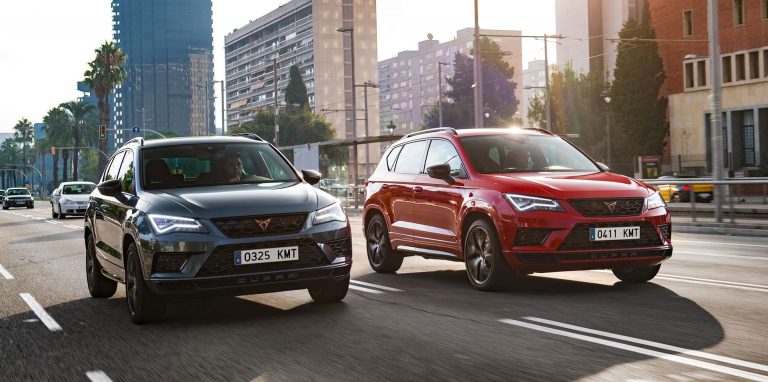
Prices have been revealed for the SEAT Cupra Ateca, the first model from the Spanish manufacturer’s new performance sub-brand. When it goes on sale before the end of 2018, the Cupra Ateca will cost from £35,900. As revealed when the sub-brand was unveiled at the Geneva motor show in March, Cupra models will be sold with their own badge and no SEAT branding, in a bid to establish what has previously been a performance trim level as a standalone brand. Throughout 2018, Leon cars have competed in the WTCR international touring car race series as Cupras.

300hp and 4WD

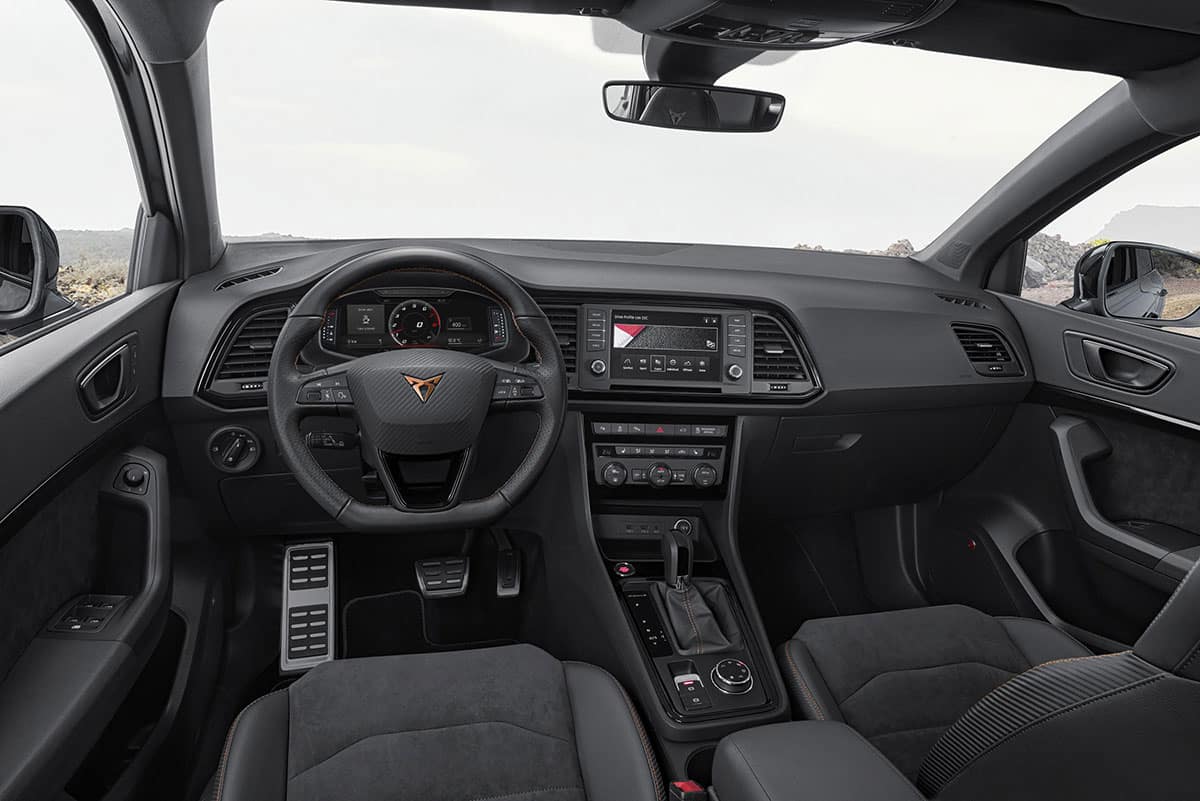
The Cupra Ateca is powered by a turbocharged, direct-injection, four-cylinder 2-litre petrol engine with 300hp and 400Nm of torque. This is put through a seven-speed sequential auto transmission and all-wheel drive system. Also boasting an upgraded chassis, the Cupra Ateca produces a 5.2-second 0-62mph time and 154mph top speed. Fuel economy is quoted between 31 and 38mpg and CO2 emissions between 168 and 201g/km depending on specification. Cupra models will carry bespoke styling including a honeycomb mesh upper grille, a specific bumper and roof rails, wing mirrors, window frames, side mouldings, wheels, front grille and front and rear diffusers in gloss black. SEAT Cupra Ateca The Car Expert The 19-inch alloy wheels are also specific to Cupra, while black brake callipers and quad exhaust pipes also feature. The interior gains Alcantara and carbon-fibre trim and the cars include an extensive specification ranging across keyless entry and start, a wireless charger, 360º top view camera, eight-inch touchscreen navigation system, digital instrument panel, and parking assistance. Seat expects big sales for the Cupra Ateca. “SUVs are still growing massively in popularity, but there is no car like the Cupra Ateca on the market,” says sales & marketing head Wayne Griffiths. “That is why we are confident that it is going to be a success and a great first pillar of the brand, expressing perfectly the Cupra key brand values of sophistication, uniqueness and performance.” SEAT Cupra Ateca The Car Expert

Alfa Romeo Stelvio Quadrifoglio test drive

What is it?

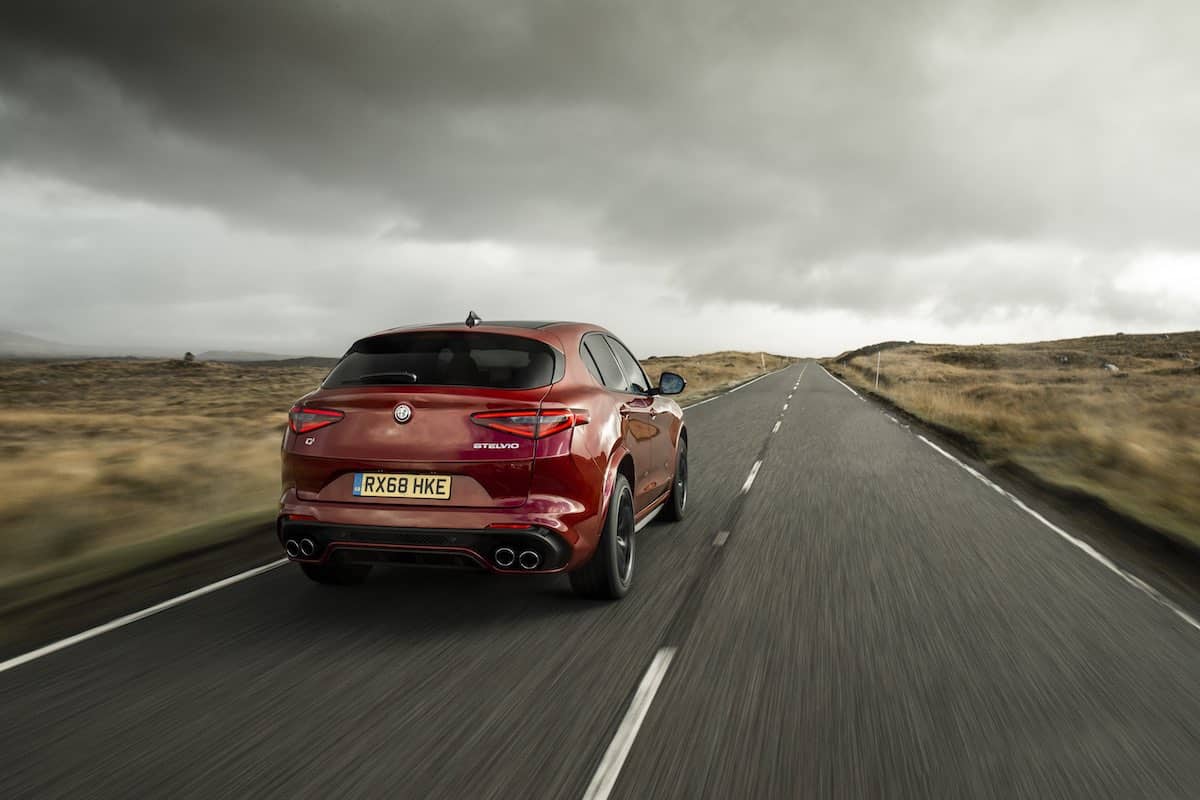
This is the Stelvio Quadrifoglio – the range-topping SUV from Alfa Romeo designed to take on rivals such as Porsche and Mercedes-Benz at the performance four-wheel-drive game. It’s fast, loud and elegant to look at – just as any true Alfa should be – but it’s packing a host of on-board tech to help it stay as capable on the road too. We’ve headed to Scotland to see how this performance SUV can handle proper, craggy British B-roads.

What’s new?

Alfa Romeo Stelvio Quadrifoglio QV engine There’s a lot going on underneath this Alfa. Firstly, there’s a 2.9-litre bi-turbo V6 under the bonnet – and we’ll cover this in more detail later – but there’s a more to talk about than brute force alone. Alfa has fitted the Quadrifoglio (or QV, for short) with its Q4 all-wheel-drive system, which transfers 100% of torque to the rear wheels during regular conditions. If it senses that the car’s limitations are being approached, then it can transfer 50% of that power to the front axle to aid with traction. This is aided further by the inclusion of Alfa’s chassis domain control and active torque vectoring, both of which help to give the car as much grip as possible through corners.

How does it look?

We’d argue that the Stelvio is one of the best-looking ‘regular’ SUVs on sale today – and the added QV treatment only works to enhance these excellent visuals. Flared wheel arches, huge 20-inch alloy wheels and a variety of different air inlets give the car a lot of presence out of the road, and this is before you’ve even turned the key. The rear of the car is close to as strong as the in-your-face front end in terms of design, with four aggressive exhaust pipes poking out from either side of a central diffuser section. In our opinion, we’d opt for bolder shades – reds and blues work well on this car, with whites tending to wash out the whole look of the vehicle.

What’s the spec like?

Standard equipment levels on the Stelvio are good, as you’d expect for a range-topping model. Features such as dual-zone climate control and bi-xenon headlights come as part of the overall price, along with a full sports exhaust system and a complete sports bodykit. There’s also Alfa’s standard-fit nine-inch infotainment system, the same as you’ll find on all of the brand’s cars. Although relatively clear, it’s lagging some way behind rival offerings in terms of usability. Even zooming in and out of the satellite navigation is a hassle.

What’s it like inside?

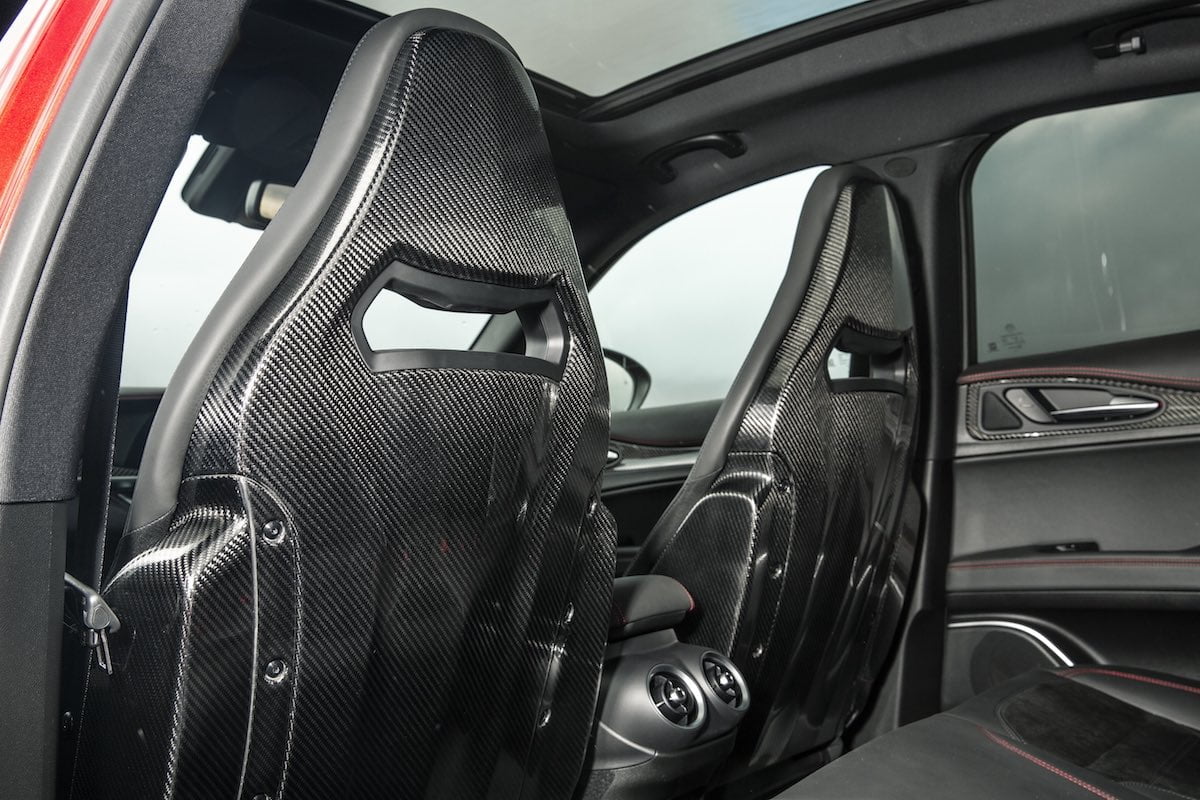
The Stelvio QV’s interior is a mixture of good and bad impressions. The carbon-shell sports seats fitted to our test car looked beautiful and were immensely supportive — but then you’d want them to be, considering they’re £3,250 extra. The leather steering wheel feels good in the hands and the stitching on the dashboard is impeccably neat. It’s just a shame that this is contrasted by hard plastics surrounding the switchgear, while the gearstick itself feels flimsy and has sharp edges along the back of it. It’s annoying, considering it’s a part of the car with you interact with each and every time you use the vehicle, and even more annoying when you remember the car’s near-£80,000 price tag.

What’s under the bonnet?

As mentioned, the Stelvio QV makes use of a 2.9-litre bi-turbo V6 engine producing 510hp and 600Nm of torque. Designed and built by Ferrari, it’s the same unit as the one you’ll find in the Giulia QV saloon – though despite the increase in weight the Stelvio is no less potent. Reaching 60mph from a dead stop takes just 3.6 seconds, and flat-out you’ll be doing 176mph. Power is sent to all four wheels through an eight-speed automatic transmission, and you get adjustable dampers too – a godsend on UK roads, as it allows you to soften the car off when the surface gets rough. As you’d expect for an engine of this size and performance, economy figures aren’t the best – Alfa claims 24mpg on the combined cycle, though emissions of 227g/km actually aren’t too bad for this segment.

What’s it like to drive?

Start off slowly in the Stelvio QV, and there’s little to tell you that this is a performance SUV. It’s relatively quiet, and the V6 under the bonnet makes little of its presence felt. Press on, however, and it soon becomes clear that this is no ‘ordinary’ four-wheel-drive. That engine is impressively flexible; after an initial pause there’s low-down torque in spades but it’s just as happy to rev right the way up to its 6,500rpm redline. Gearshifts are fast and immediate, and the whip-crack action of the beautifully engineered one-piece aluminium paddle shifters is a delight each and every time. It’s only let down a little by the ride. In regular modes, there’s a decent amount of pliancy but this is counteracted by a little too much roll; stiffen the dampers to their most aggressive setting and the car can quickly become unsettled by mid-corner bumps and road imperfections. The steering is the stand-out star of the show, though. Direct, quick and full of life, it gives you the confidence to properly attack the bends – something you don’t often get the opportunity to do in cars of this size.

Summary

Sharp handling, a wonderfully responsive engine and a razor-sharp gearbox combine with excellent balance to help make the Stelvio QV an exciting drive on UK roads. A rather harsh ride in firmer settings slightly spoils the overall effect, and the cabin quality does let it down somewhat. However, if you’re after a performance SUV – or maybe fancy moving up a size from a quick saloon – then the Alfa Romeo Stelvio Quadrifoglio is easily one of the most dynamic performance SUVs on sale today.

Similar cars

Audi SQ5, Mercedes-Benz GLC 63, Porsche Macan

One in five motorists suffers from car sickness

0
More than seven million UK adults suffer from some form of travel sickness in the car, according to a new RAC survey. The motoring organisation quizzed 1,990 people and found that nearly one in five of them suffered from the problem – usually associated with youngsters – either as drivers or passengers. That figure equates to 7.3 million UK adults, based on there being more than 40 million full driving licence holders. Other findings of the survey will be familiar to anybody who’s ever had to deal with car sickness – either in themselves or a passenger. Of those affected, 75% said they felt the worst nausea when in the back seat, while 12% found the front seat to be the worst place. 7% said it made no difference. It’s not just seating position within the car that affects sickness levels either. 61% said that reading in the car made them feel the most nauseous, followed by 50% who felt a mobile phone or tablet affected them worse. More than a third (37%) blamed the sensation of a twisting country road for unsettling their stomach, while 32% said it was a lack of ventilation. Luckily, drivers appear to be an understanding bunch – whether that’s for the comfort of their passengers or the preservation of their upholstery. 37% of drivers have taken a break to help a passenger alleviate their car sickness, and 2% have abandoned or avoided journeys altogether. Despite travel sickness being rather common, almost half (48%) have never had medical help. 13% have resorted to over-the-counter medication or alternative remedies such as eating ginger, while only a desperate 2% have sought the help of their doctor. However, almost a quarter (24%) say they simply have their own ways of coping with travel sickness. Suggested remedies involved closing their eyes, trying to sleep or focusing intently on the horizon. RAC spokesman Rod Dennis said: “While car sickness is often associated with younger children, our research suggests it still remains a problem for a substantial number of older drivers and passengers. “While people suffer from sickness to different degrees, there is a lot that passengers in particular can do to reduce the chances of feeling unwell while on the move.” He suggested putting down any books or tablets, focusing on the horizon and winding down a window for a flow of fresh air. “A smoother driving style can also pay dividends. Even if a driver doesn’t suffer sickness themselves, they could suffer some unfortunate consequences if they cause any of their passengers to become unwell simply because they are accelerating or braking too sharply,” he added.

The best hot hatches for under £10k

Britain loves a hot hatch. Ever since the original Volkswagen Golf GTI landed on these shores back in the 1970s, a nation of petrolheads fell in love with the notion of a car that could offer bags of performance while also being able to ferry the kids to school. Since then, every manufacturer under the sun seems to have had a crack at the much-loved formula — with some pulling it off better than others. The result is a market flooded with practical, but seriously punchy, machinery. We’ve picked out some of the best hot hatches you can find on the used market for less than £10K. Before any arguments kick off, they’re listed in alphabetical order rather than in any kind of ranking…

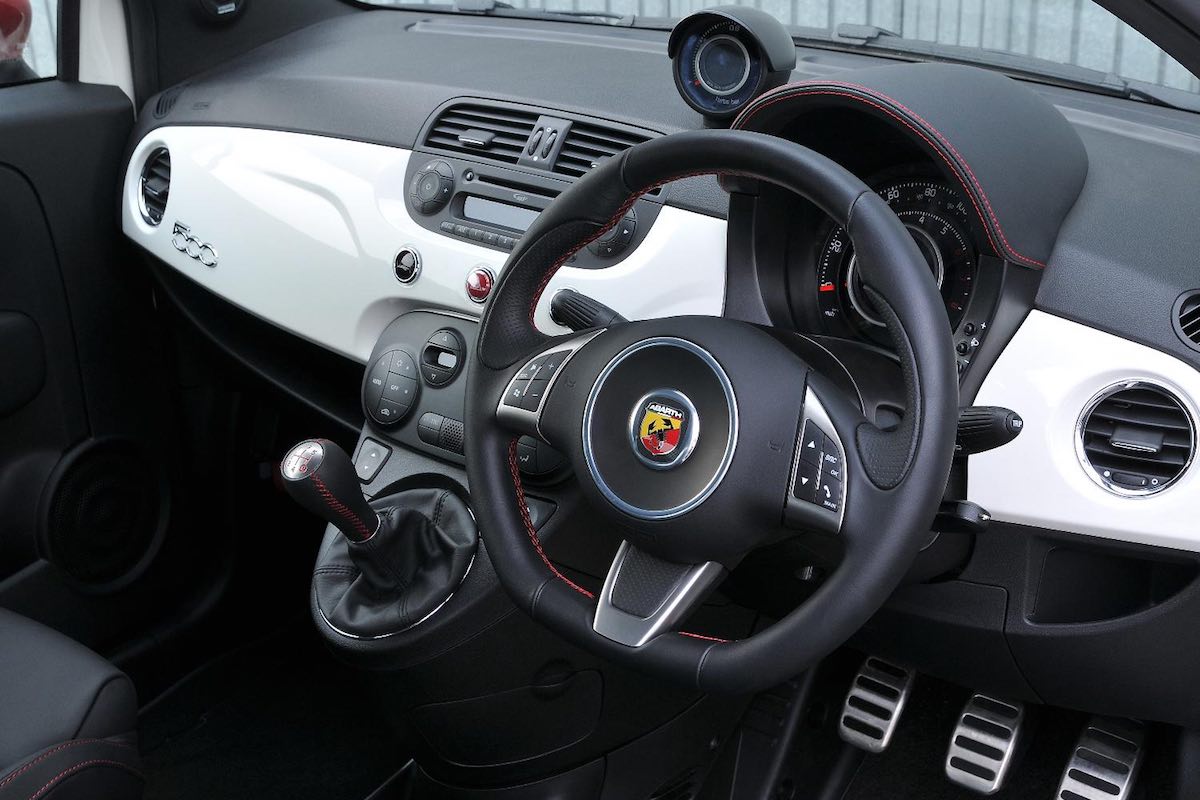
Abarth 500 (2008 – 2015)

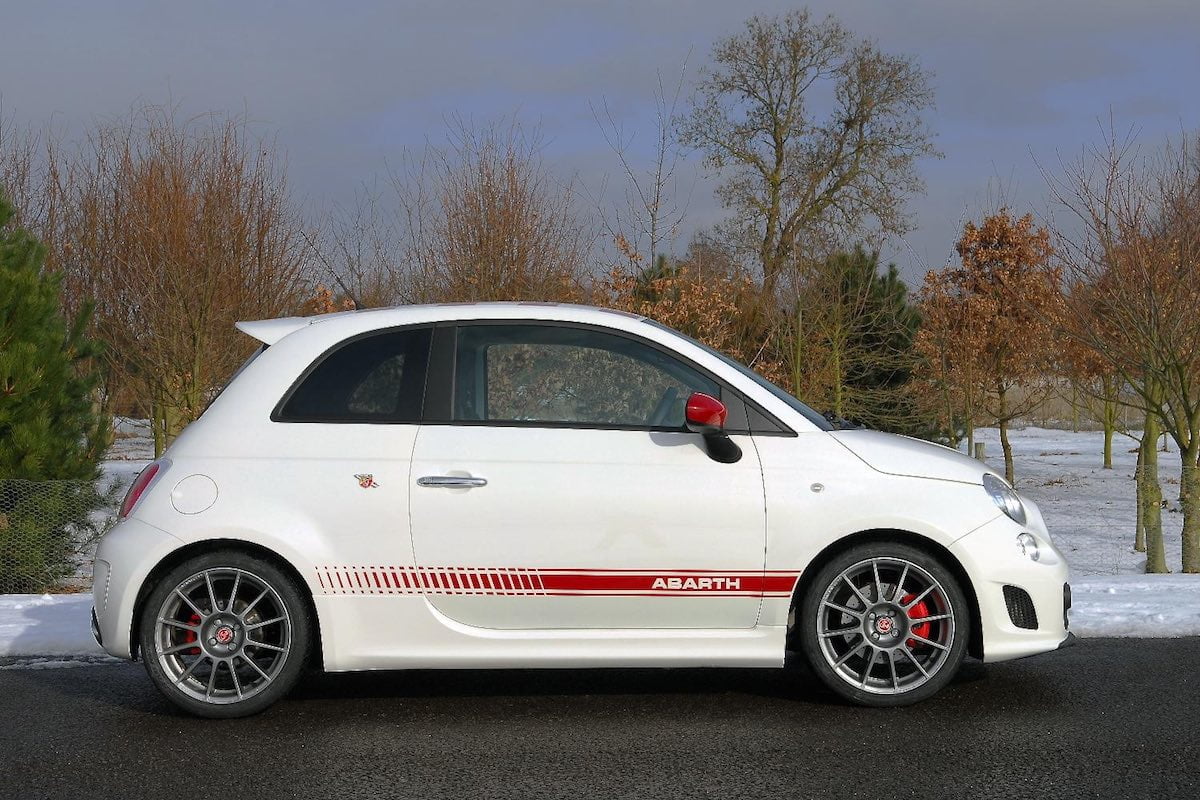
It may have the looks of a regular Fiat 500, but the Abarth 500 is a totally different beast altogether. This playful little thing will happily carve up any tight road you throw at it and keep up with cars that may well look more the part in the process. Matching its performance is a real “look at me, I’m really a Ferrari” exhaust note, too. Within our £10k budget, you can cast your Abarth net far and wide, with both hatchback and convertible versions available. But for best performance, keep an eye out for the desirable and rare Abarth 500 Essesse models from early in the car’s production run — which get more power and improved chassis components from the factory.

McLaren Speedtail – 250mph ‘hyper-GT’ revealed

0
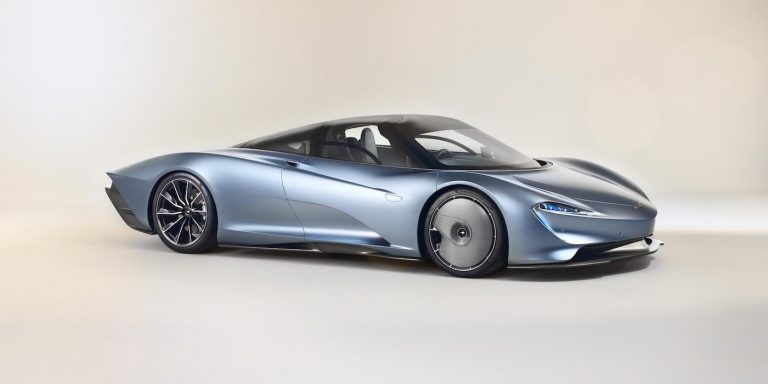
After months of teaser images and a continual drip-feed of information from Woking, one of the most highly-anticipated cars of 2018 has finally been unveiled – the new McLaren Speedtail. The Speedtail is a spiritual successor to McLaren’s iconic 90s road car, the F1, which for a long time was the fastest car in the world. Limited to just 106 examples to preserve exclusivity, the price of the McLaren Speedtail will start from £1.75 million, plus taxes – but an extensive options list and limitless scope for personalisation should mean almost every car breaks the £2 million barrier. The car McLaren has pictured in its official release has options worth £475,000 fitted to it. The Speedtail packs a 4.0-litre twin-turbocharged V8 engine bolstered by an electric motor, which boosts power up to a remarkable 1,050hp. It’s able to reach a top speed of 250mph, and although McLaren hasn’t revealed a 0-60mph time, it will sprint from 0-300km/h (186mph) in just 12.8 seconds. 2019 McLaren Speedtail rear | The Car Expert The Car Expert Best of British horizontal banner The hybrid system is exclusively used to boost performance, and the Speedtail won’t be capable of electric-only running. On the surface, one of the Speedtail’s biggest talking points is its interior with its bold, three-seat layout. That’s another homage to the F1, which had a similar set-up – allowing the driver to sit centrally for the best and most natural view out. Unlike the F1, though, the Speedtail doesn’t have a gearshift or physical handbrake to accommodate, so the driver can get in from either side of the car. The Speedtail’s sweeping bodywork is an evolution of standard McLaren design cues, but stretched out across a huge, 5.2-metre long body. There’s an incredibly clean silhouette, thanks to a lack of side mirrors – the Speedtail uses cameras instead – and there are no hinges to interfere with the workings of the active aerodynamics. Instead, McLaren has taken advantage of the natural flexibility of carbon-fibre to shape the bodywork for aerodynamic manipulation under load. McLaren Speedtail cockpit interior dashboard Other eye-catching aerodynamic features are the covers for the front wheels, which McLaren says help air pass seamlessly along the car’s flanks – but can be removed if the owner wishes. The Speedtail is designed to be the ultimate road car rather than a track weapon, hence the ‘hyper-GT’ moniker, so the interior is considerably more plush than the likes of the brand’s own Senna hypercar. Its super-long tail even incorporates plenty of luggage space for its three occupants. Clearly, with all 106 examples of the McLaren Speedtail being spoken for, you’re unlikely to see it on your local dealer forecourt anytime soon. The McLaren Speedtain will be built in Britain.

Volkswagen T-Cross continues SUV invasion

1
The Volkswagen T-Cross has been revealed, as the brand predicts that by 2025 half of all the cars it makes will be SUVs. Globally, the T-Cross is considered a vitally important model for Volkswagen, emphasised by three separate unveiling events on the same day in Amsterdam in Holland, Shanghai in China and Sao Paulo, Brazil. The T-Cross takes over the mantle of smallest VW SUV from the recently launched T-Roc and completes the now five-strong model range. It will target big-selling small crossovers such as the Nissan Juke and Renault Captur. Like its sister SUV the SEAT Arona, launched last year, the T-Cross is based on the platform of the Volkswagen Polo supermini. It makes use of much of that car’s mechanical specification including the powertrains, the significant difference being the body styling. Volkswagen describes the T-Cross as ‘an urban crossover with masculine design’. It measures up at 4.1 metres long, 5cm longer than the Polo on the same 2.6-metre wheelbase. It is also 13cm shorter than a T-Roc. Volkswagen T-Cross The Car Expert Volkswagen quotes luggage space of between 385 and 455 litres for the T-Cross, thanks to a  rear seat that can be slid back and forth by 14cm. With the rear seats folded cargo capacity goes up to 1,281 litres. When the T-Cross goes on sale in January 2019 it will be offered with a four-strong engine range, three petrol and one diesel. All are familiar VW Group turbo units and compliant with the latest Euro 6d-Temp emissions standard. Two of the petrol engines are of 1.0-litre capacity, with either 95 or 115hp. Most powerful is the 150hp petrol and there is also a 1.6 diesel with 95hp. Volkswagen is promising a strong safety specification on the car. Driver assistance systems included as standard include the Front assist autonomous emergency braking, lane-keeping and hill-start aids, blind-spot detection and a rear traffic alert. The brand’s bold SUV expansion began only two years ago with the launch of the latest Tiguan large model. In 2020 the I.D.Crozz will joint the range as Volkswagen’s first completely electric SUV. Volkswagen T-Cross The Car Expert

BMW 8 Series test drive

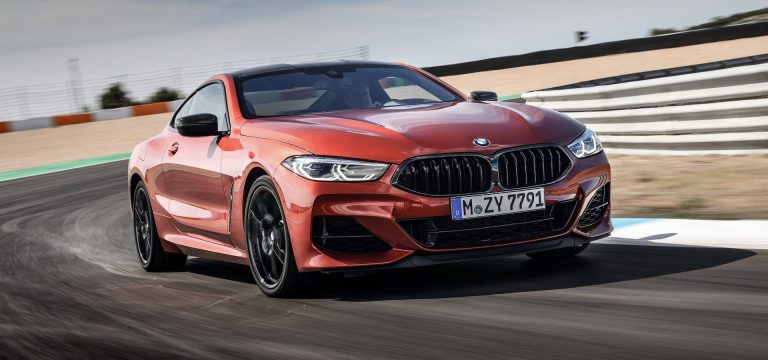
Say the words ‘BMW 8 Series’ to any car enthusiast and you’ll probably get wet shoes as they melt into a puddle, babbling about V12 engines and pop-up headlights. Now, the contemporary 8 Series isn’t quite as instantly iconic or quirky as the original, but it’s an important step for BMW. This is a car that can challenge ultra-luxury offerings such as the Mercedes-Benz S-Class Coupe, but in true BMW fashion, it places driving dynamics and passenger enjoyment ahead of comfort at the top of the list of priorities.

What’s new?

The BMW 8 Series is an all-new car, so while it shares plenty with other BMW models, under the skin the overall package is like nothing else in the range. Initially, it’s exclusively available as a two-door coupe, but BMW will also introduce convertible and four-door ‘Gran Coupe’ variants to the line-up. All will share the same trio of engines, too. It also occupies a new market sector for BMW, sitting between truly focused sports cars such as the Porsche 911 and genuine luxury models such as the S-Class Coupe. Forthcoming four-door models will also rival the Porsche Panamera.

How does it look?

2019 BMW 8 Series review - front
(PA)
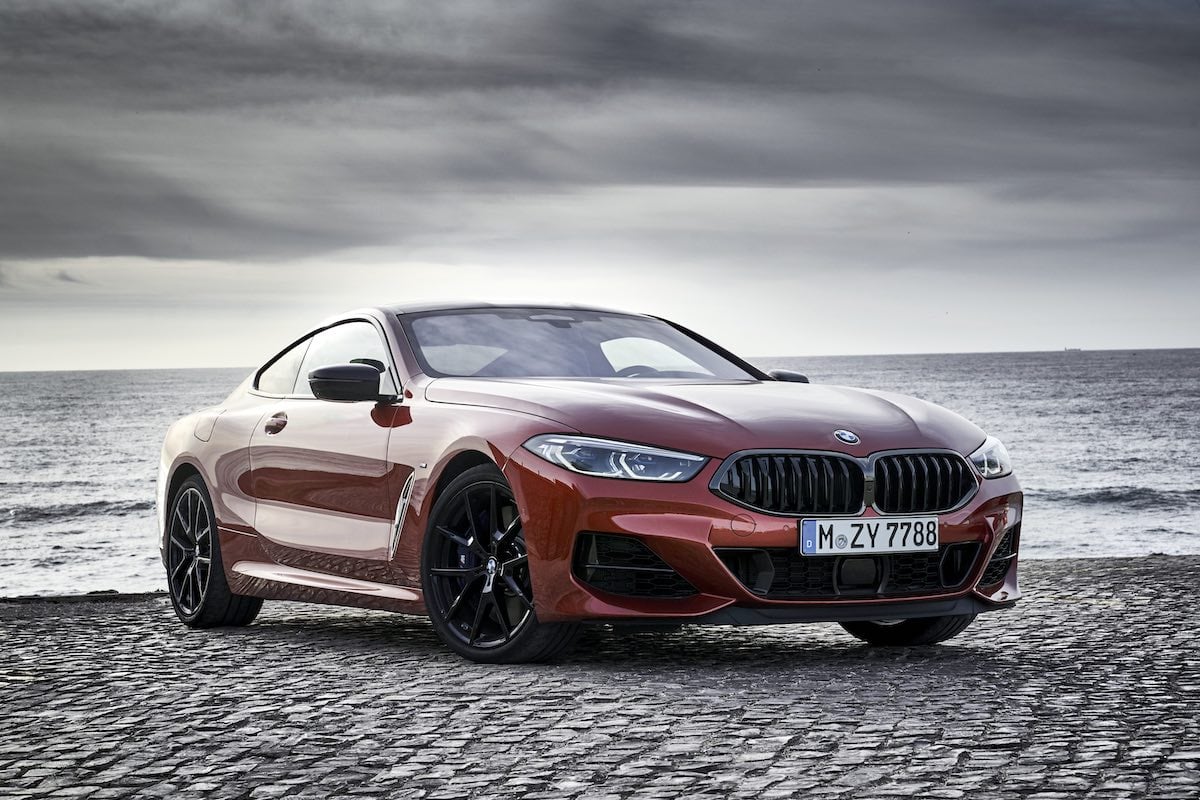
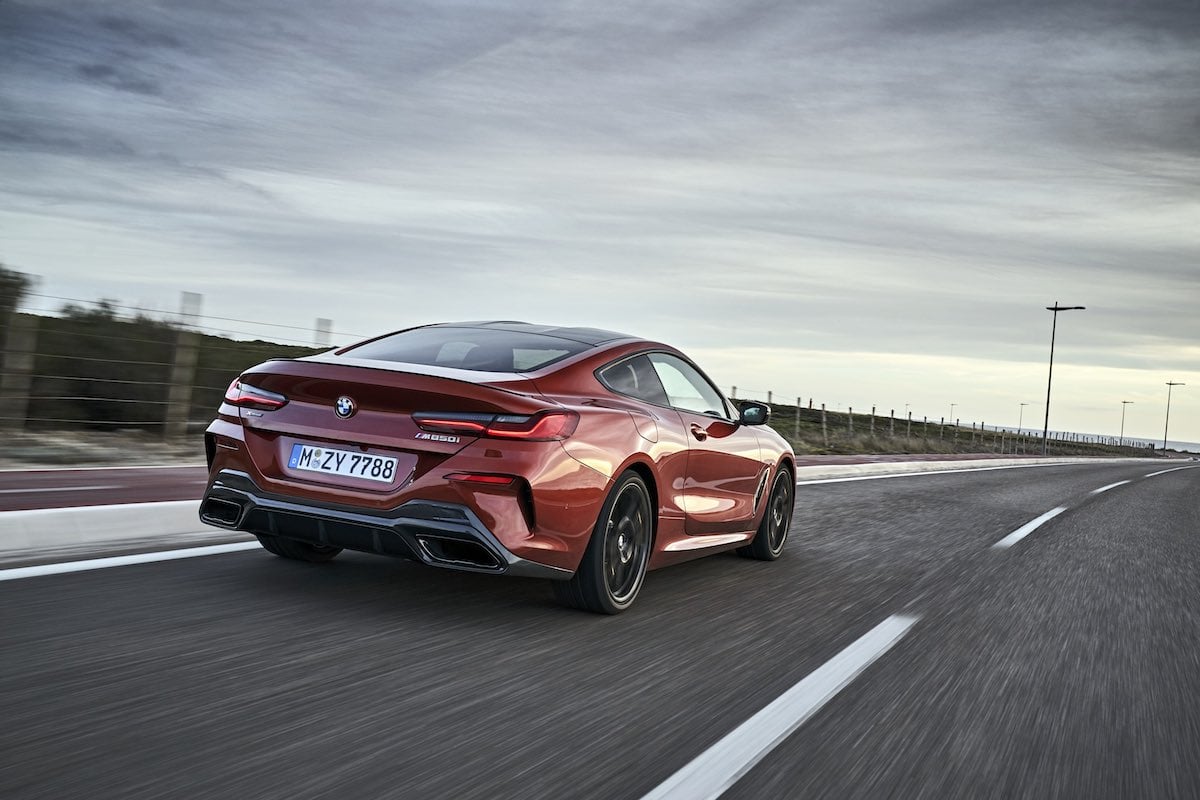
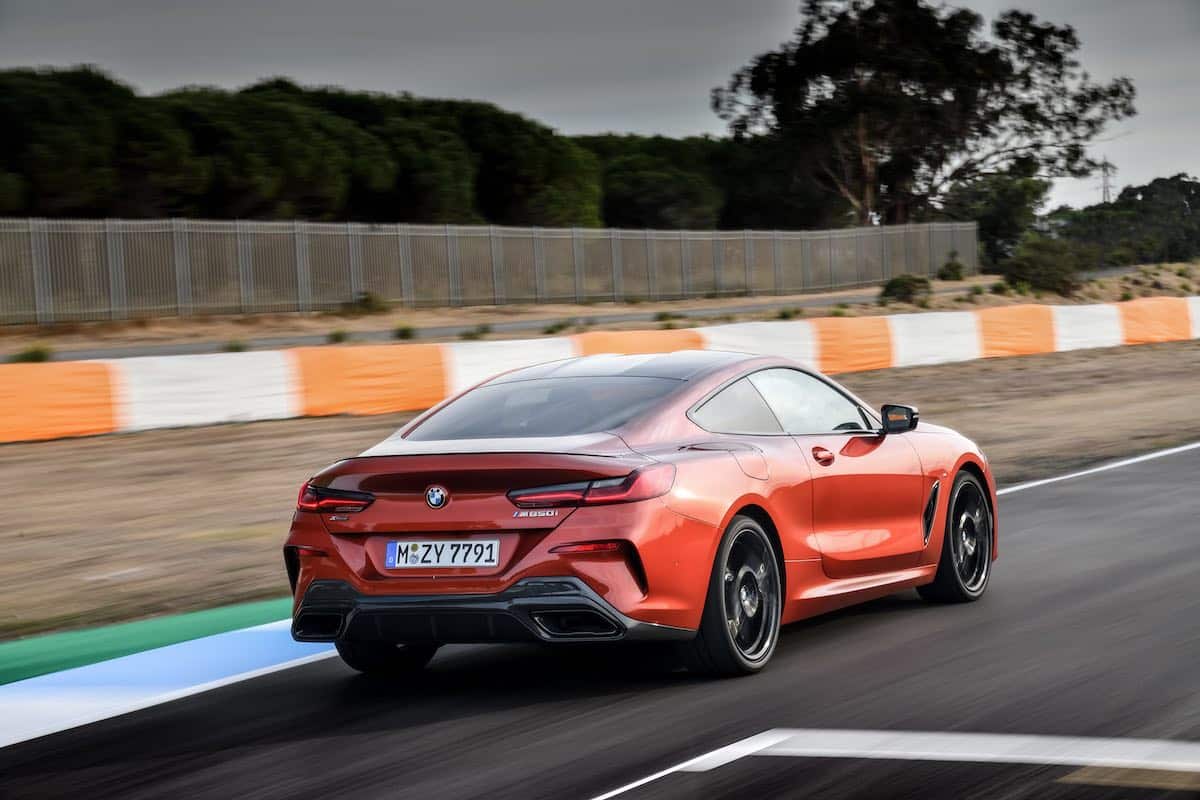
The 8 Series has seriously elegant proportions – a long bonnet and rear deck, flowing lines and a compact passenger cabin. A few styling details don’t sit too happily on this frame, though – the traditional ‘kidney’ grilles look a little too stylised and don’t play totally naturally with the super-slim LED headlights, while the rear’s complex interplay of surfacing, shut lines and aerodynamic controls is a little messy from some angles. Yet the overall shape and a few features such as the double-bubble roof are just wonderful. It’s worth mentioning the car is extremely spec-dependent, too. The vehicles we drove were all covered in black detailing on the window line and front grille as well as having black alloys. Models that feature chrome detailing look totally different – less sporting and a little classier.

What’s the spec like?

As expected for a car costing well over £70,000 (almost £100,000 in 850i form) there’s a good level of spec on offer. Clearly, climate control, cruise control, electric seats, adaptive LED headlights, a whole suite of safety aids and a wireless charging pad all come as standard, but the options list has a few things to offer. We’re big fans of the M-striped seatbelts, front seat ventilation and soft-close doors, and it’s also possible to option an exterior carbon-fibre package for an even racier look.

What’s it like inside?

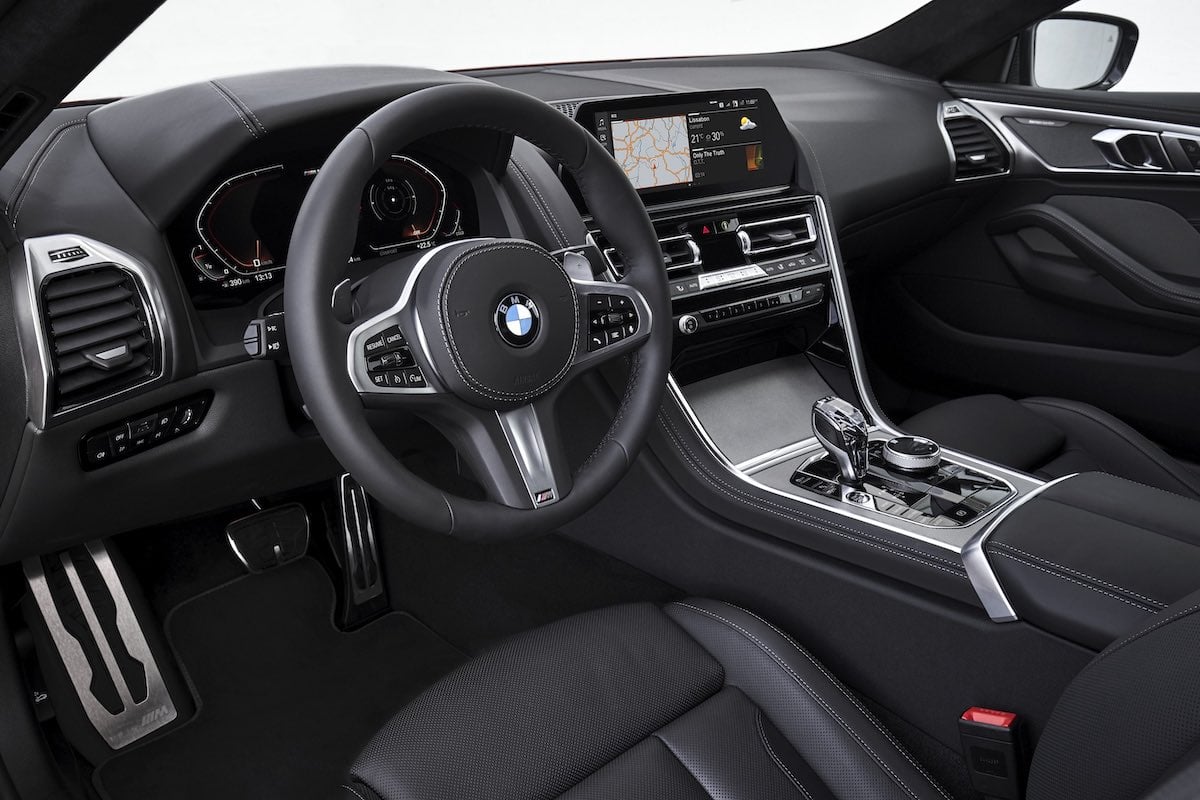
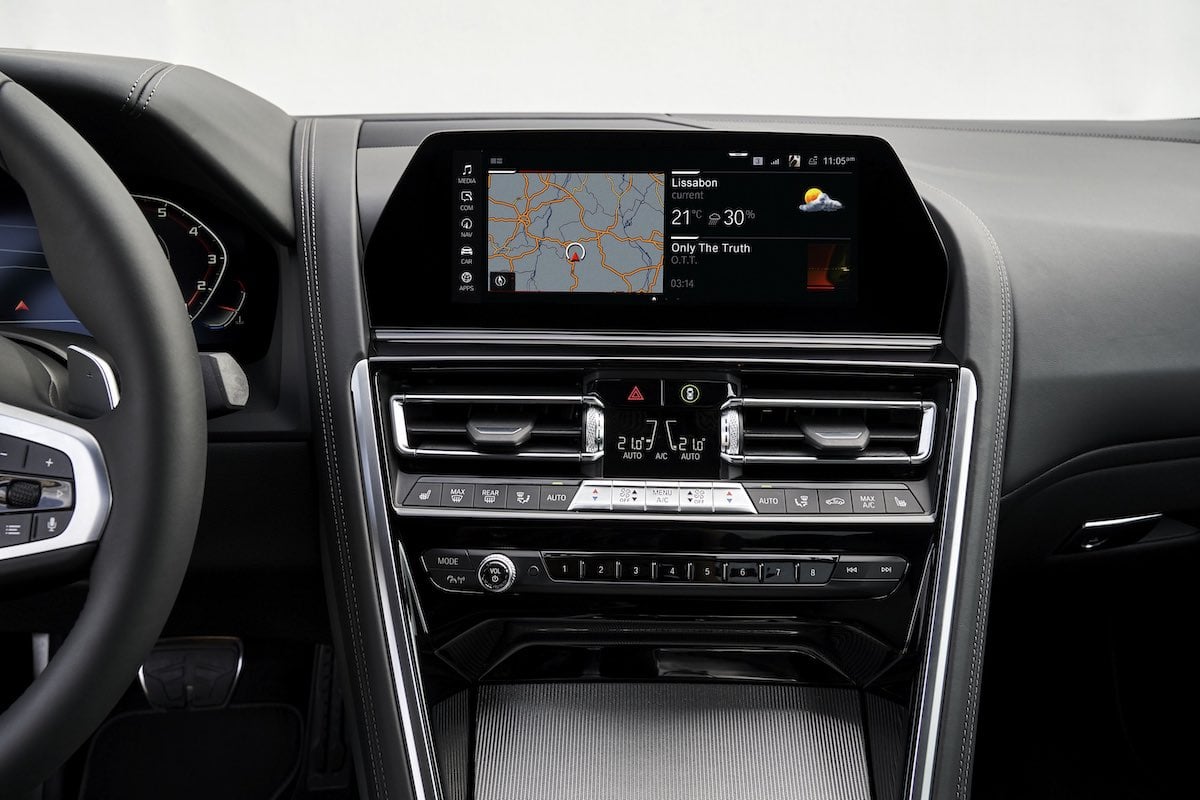
Inside, it’s classic BMW – which is a good and a bad thing. The driver-focused cabin is simplicity itself to use – all the controls are well situated and the iDrive infotainment system is one of the best in the business. There are some intricate touches just for the 8 Series as well, such as a cut-glass gear knob and infotainment selector. The driving position is also perfect, and infinitely adjustable. If we’re being critical, though, there’s little of the ‘wow’ factor that you get with some rivals. This cabin would be equally at home in a 5 Series or even 3 Series, and we’d quite like a little more than just a shiny gear selector to mark it out as the brand’s flagship. In practicality terms, a big coupe has never been the most spacious of things – but we’d have liked a little more legroom in the rear of the 8 Series. Thankfully, the forthcoming Gran Coupe should solve that and bring an extra pair of doors into the equation, too.

What’s under the bonnet?

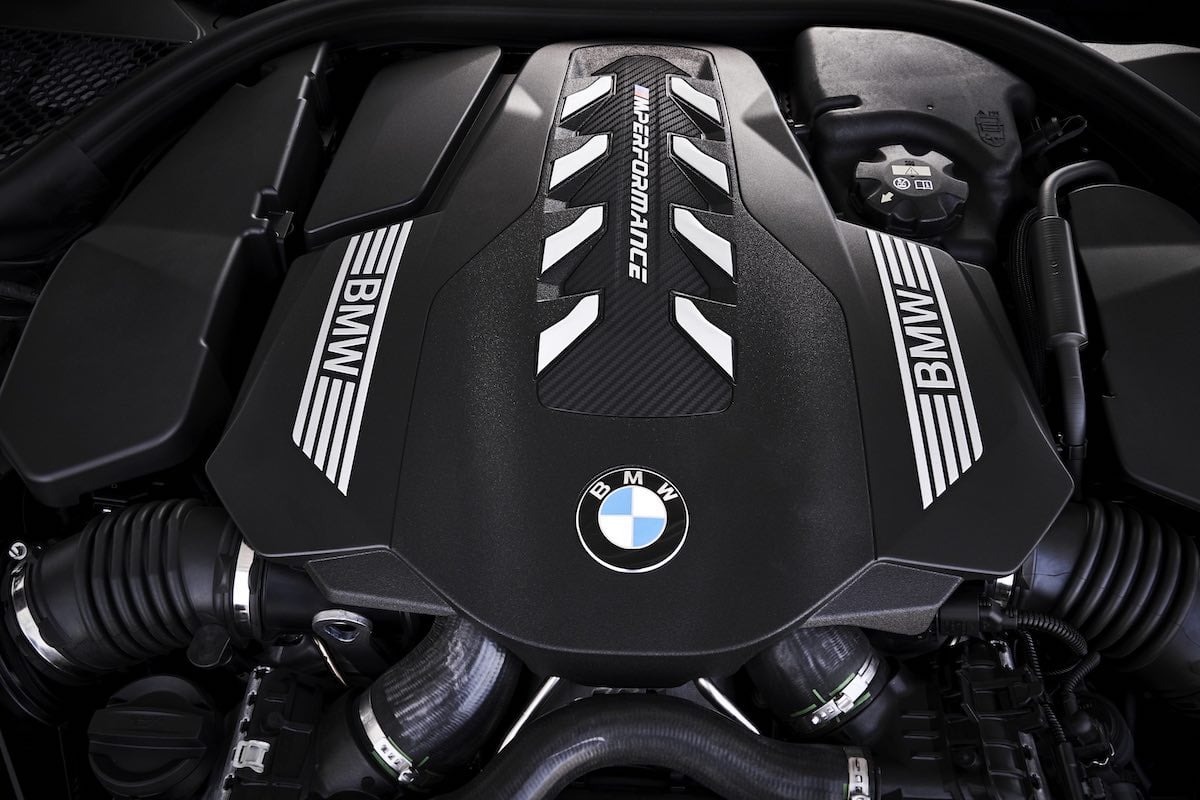
BMW 8 Series M850i engine
(PA)
Although there will be a 40d diesel model available, we drove the M850i – a step down from a full-fat M8 model but still packing a 4.4-litre V8 with 530hp. It’s paired with an eight-speed torque converter automatic gearbox, and the combination is simply brilliant. Power – as you’d expect from such hefty numbers – is ample, and the 8 Series always feels like it has more to give. The gearbox is silky smooth when you’re just ambling around at low speeds, but put your foot down (and whack it into ‘Sport’ mode) and changes are ferociously quick. That’s backed up by the figures – 0-60mph arrives in 3.5 seconds and top speed is limited to 155mph. Despite being turbocharged, the V8 gives plenty of punch right through the rev range, and in the upper echelons it roars like a tiger – though how much of this is artificially generated, we’re not sure. Regardless, it’s an impressive powertrain and one we wouldn’t hesitate to recommend, despite the obvious cost and economy penalties over the diesel.

What’s it like to drive?

BMW’s sporting heritage is clear to note as soon as you begin to press on. The 8 Series isn’t a darty, quick sports car like a Porsche 911, but the fluidity of its handling, the ease with which it grips in fast corners and the way it simply gobbles up a twisting road means it’s incredibly satisfying to drive. Two aspects of the 8 Series help it in the corners – four-wheel drive and four-wheel steering. The former is BMW’s well-known xDrive system, which in the 8 Series is rear-biased for greater poise but can push all the power to the front wheels if necessary. The latter works as most systems do, turning the rear wheels in the opposite direction for faster and tighter cornering at slow speeds, or in the same direction for greater motorway stability. It really works, too – this feels like a far smaller car than its 4.9-metre length would suggest, although the sensation of the rear shifting by itself does take some getting used to. Meanwhile, ride comfort is a good middle ground between the pillowy softness of an S-Class and the hardened sports suspension of a Porsche 911.

Summary

The 8 Series is a seriously impressive coupe and one that shows BMW’s ability to blend the luxurious with the sporting is still alive and well. It doesn’t feel quite as special as some rivals, however – a Porsche 911 is still far better to drive, while a Mercedes S-Class Coupe trumps it on luxury. So the appeal of the 8 Series will depend on whether you see it as the best of both worlds or an uncomfortable middle ground. We’re leaning towards the former. BMW 8 Series M850i on track

2019 Skoda Fabia test drive

What is it?

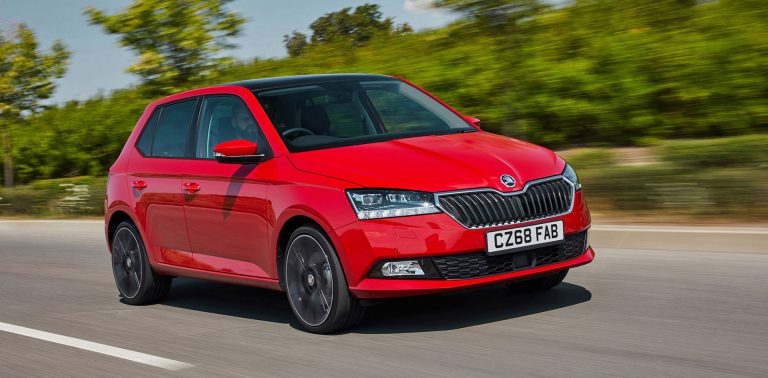
The Skoda Fabia is one of the Czech brand’s most popular cars, outsold in Europe only by its larger sister the Octavia. Perhaps that’s why this mid-life revamp, applied across both hatchback and estate versions of the supermini, is not exactly wide-ranging.

What’s new?

The updates centre on subtle exterior changes, some engine updates and more equipment. Underneath, however, the basic structure remains just as when the third-generation Fabia was launched in 2014.

How does it look?

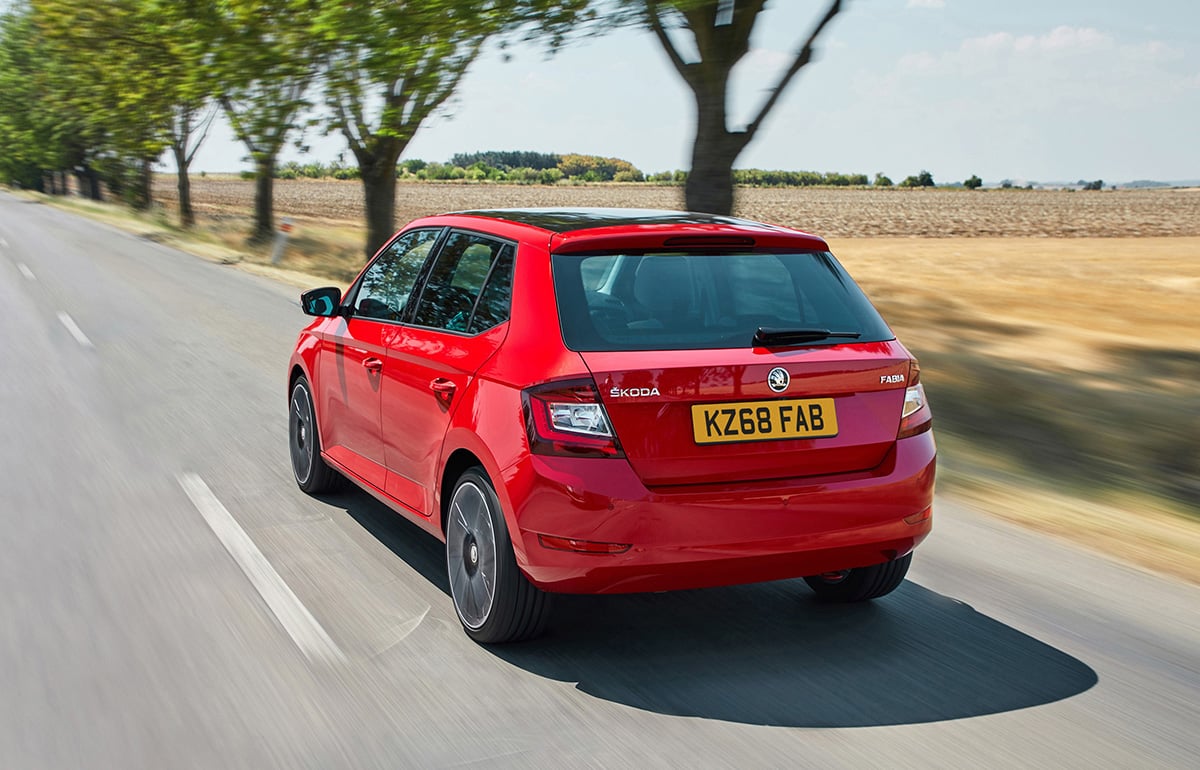
Skoda Fabia 2019 The Car Expert Not that much different… The major exterior changes are a new design to the grille, which is wider with vertical slats, a redesigned shape of the head and tail lamps and the front and rear bumpers. Skoda says the headlamp detail is intended to celebrate Czech expertise in crystal glass. Both head and tail lamps can also now be had with LED bulbs – but they are on the options list, as is an 18-inch variant in the new alloy wheel range.

What’s the spec like?

Skoda has added a reasonable amount of standard equipment to the Fabia, boosting specifications on all versions. All models now include LED daytime running lights and a trip computer, and all get a touchscreen entertainment system with Bluetooth connectivity. On entry-level S models the screen is increased in size from five to six inches, but go for the second-level SE and the system includes Smartphone compatibility, allowing apps from your iPhone or similar to be accessed on the touchscreen. SE-L and top-level Monte Carlo variants, meanwhile use an Admunsen system that also includes voice control, a second Bluetooth connection, plus various online services such as traffic and weather info. A big safety plus is the inclusion of ‘Front Assist’ – basically autonomous emergency braking – as standard across the line-up. And extra aids including adaptive cruise control and blind-spot detection are now on the options list.

What’s it like inside?

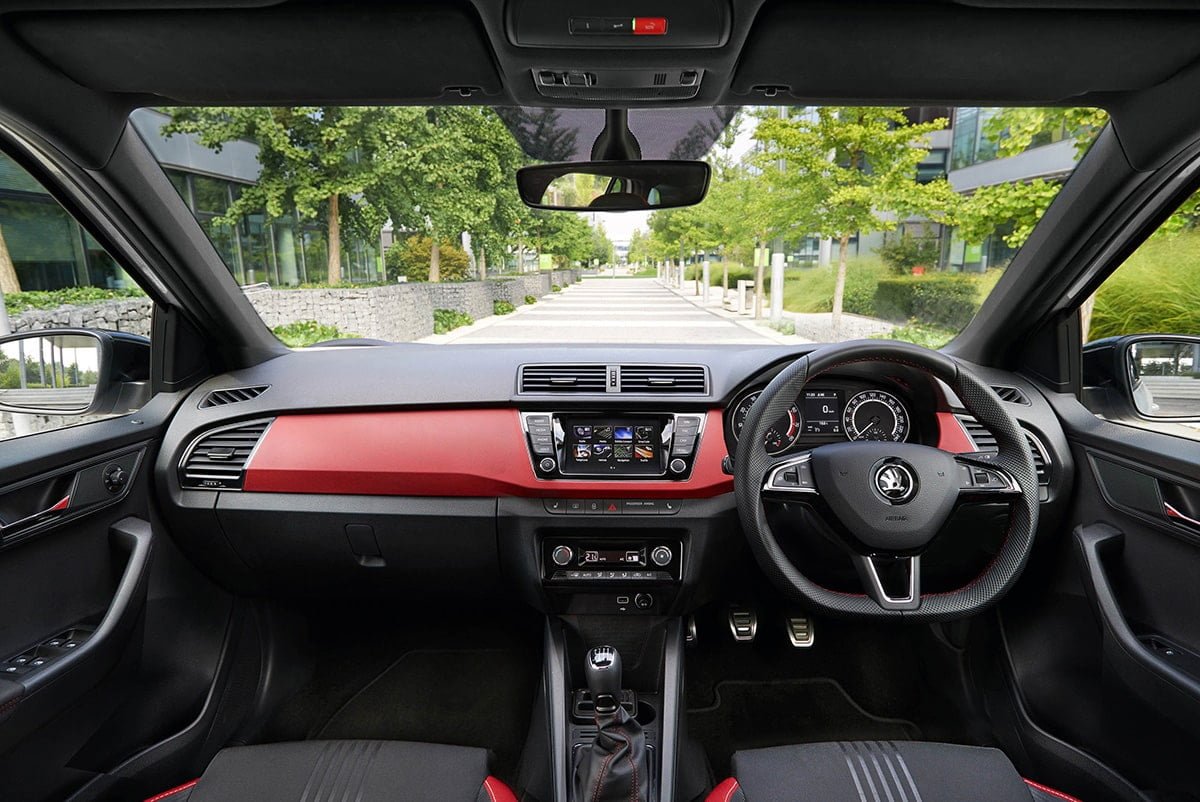
2019 Skoda Fabia The Car Expert The Fabia has always been a roomy supermini – but it doesn’t lead the field these days, overtaken by newer rivals such as its sister Volkswagen Polo with modern, space-freeing modular platforms. It’s still a comfortable environment, helped by a functional, sensible dash layout, and an upgrade to the interior style. Bolder fabrics, brushed aluminium surfacing and contrasting stitching make for a high quality impression. And of course, being a Skoda, the Fabia still boasts those neat ‘Simply Clever’ touches such as an umbrella under the seat and an ice scraper in the fuel filler hatch, the latter now with a tyre pressure gauge incorporated.

What’s under the bonnet?

It’s a completely petrol line-up for the Fabia. The trio of choices are all three-cylinder units, all of 1.0-litre capacity and with either 75, 95 or 110hp. Those familiar with the Fabia will say ‘but it had those before’. Yes it did, but Skoda insists they’ve all been breathed upon to improve their efficiency. The management system has been recalibrated and a second catalytic convertor added, as has a particulate filter, something more common to diesel engines. Most efficient is the 95hp engine, with fuel economy cresting 61mpg and emissions of 106g/km. It and its 110hp sister are TSI direct injection units, the 75hp entry-level version an older MPI variant.

What’s it like to drive?

2019 Skoda Fabia The Car Expert With no significant mechanical changes we did not expect the Fabia’s on-road dynamics to surprise us, and they didn’t. This is a car built for comfort, to be an easy-to-live-with companion. We took the 95hp engine out for a spin. It is a refined unit, with not a lot of the characteristic audio note produced by many three-cylinder engines. Hitting 60mph in around 10 seconds will be enough for most typical Fabia buyers, which is a good thing as the engine doesn’t really respond to being overworked. The Fabia won’t write any headlines for its handling – good or bad. It’s innocuous really, which again will perfectly suit most owners.

Summary

With this facelift to the Fabia Skoda is definitely following the line of “don’t fix what isn’t broke”. This is a very basic update which makes not a lot of difference to what has long been a thoroughly competent supermini. Mind you the Fabia doesn’t have the advantages over its rivals – space and quality at a competitive price – that it used to. The all-new versions of its sisters the Polo and the SEAT Ibiza are every bit as good, in some areas better, as are other equally newer rivals. As for price – the new Fabia range starts from £12,840 but the anticipated best-seller, the 95hp SE variant, is £14,845, only around £350 less than an equivalent Ibiza. The Skoda Fabia remains a competitive buy in the small car market – but its rivals have caught up. 2019 Skoda Fabia The Car Expert

Crash test thumbs-up for hydrogen Hyundai Nexo

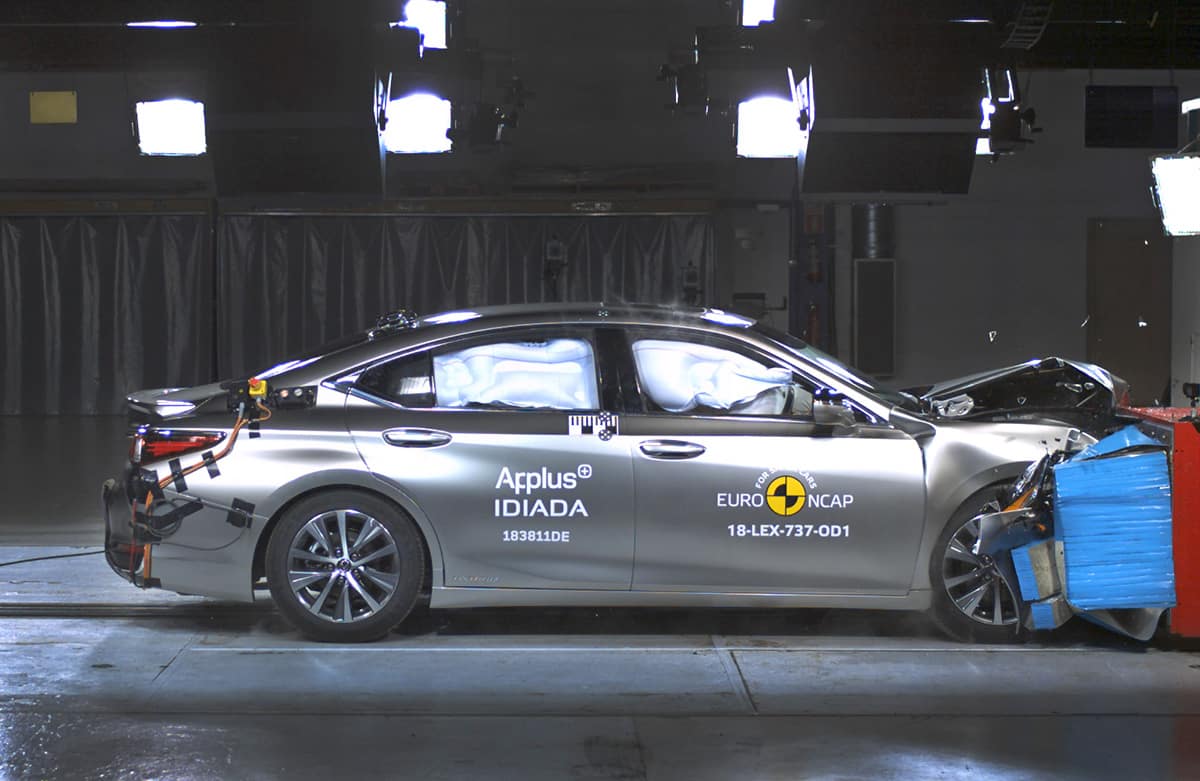
The Hyundai Nexo hydrogen fuel-cell car has secured the top-level safety rating in Euro NCAP crash tests. The Hyundai, the Lexus ES, Mazda 6 and Mercedes-Benz A-Class all scored five stars in the latest set of tests by the safety body. The mechanically-identical Peugeot Rifter, Vauxhall Combo and Citroën Berlingo small SUVs scored four stars. Hyundai’s electrically-driven SUV, which is powered by a fuel cell stack, clocked up impressive scores of 94% for adult occupant protection and 87% for child occupants. In the car, hydrogen is stored in a pressurised tank and the gas itself has an extremely low ignition point, which has led to concerns about its safety for vehicle use. However, the Nexo’s five-star rating should dispel these fears and reassure buyers that there is little likelihood of the explosions that doomed hydrogen-filled airships in the 1930s. The Lexus, Mazda and Mercedes scored 91%, 95% and 96% respectively in the adult occupant category, with the Mazda and Mercedes scoring 91% for child occupants, too.
Lexus ES Crash Test The Car Expert
Lexus ES hybrid also performed well in tests.
Michiel van Ratingen, secretary general of Euro NCAP, described the latest scores as a satisfying set of solid test results. “We are pleased that cars continue to perform well in the AEB [autonomous emergency braking] tests, including for pedestrians and cyclists,” he said. “The fuel-cell Nexo and hybrid ES point the way for future powertrains, and Euro NCAP will work to ensure that safety performance as well as energy efficiency remains at the top of the manufacturers’ agenda.” Euro NCAP’s UK testing partner, Thatcham Research, also praised the results. “With the Nexo, Hyundai has successfully demonstrated that alternatively fuelled vehicles need not pose a risk to car safety,” said director of research, Matthew Avery. The Peugeot Rifter, Citroen Berlingo and Vauxhall Combo posted scores of 91%, 81%, 58% and 68% across the four categories of adult occupant, child occupant, vulnerable road users and safety assist. The three vehicles share platforms, safety equipment and engines, and are built in the same factory by the French PSA Group.
Peugeot Rifter Crash Test The Car Expert
Peugeot’s Rifter took the test for its sister Vauxhall Combo and Citroën Berlingo SUVs.

2019 Audi R8 facelift brings fresh look and more power

0
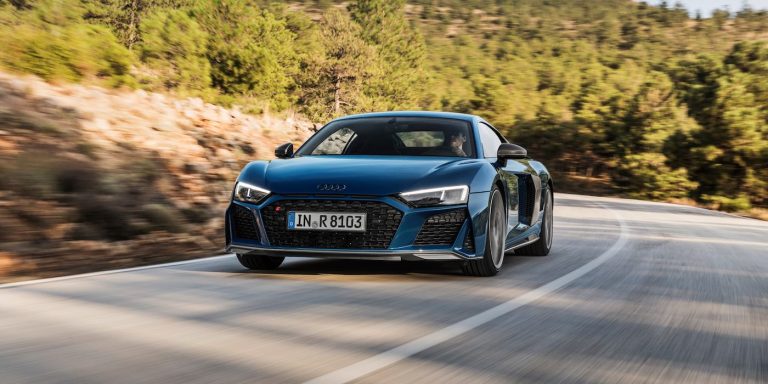
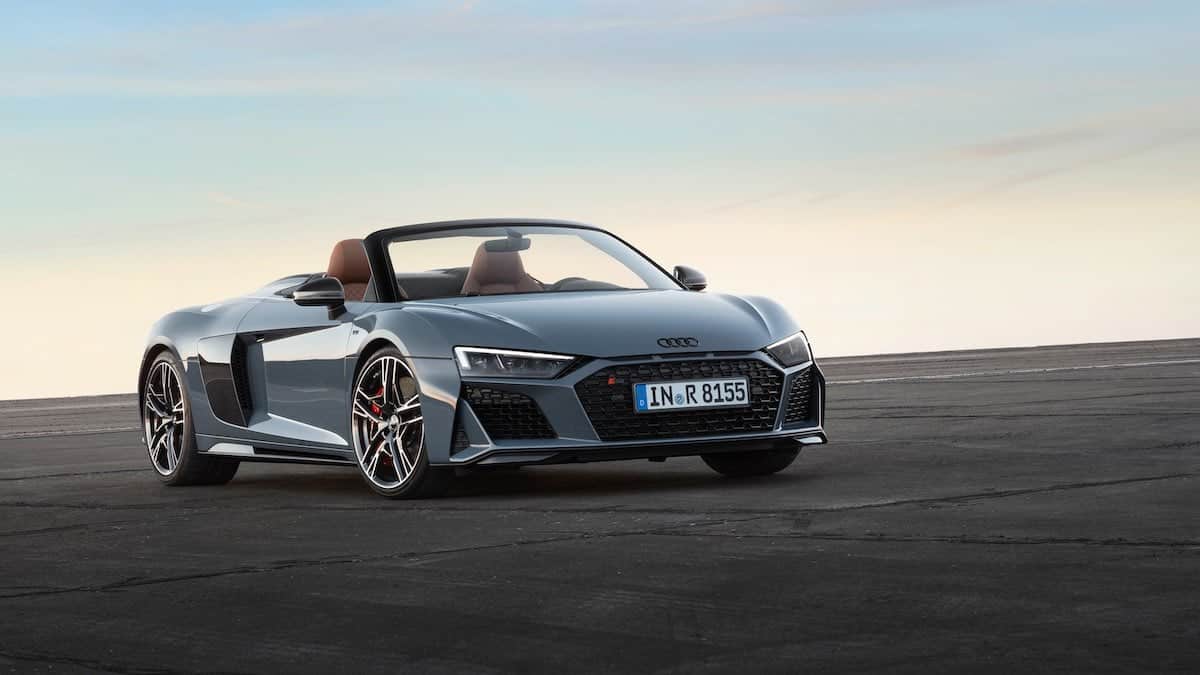
Audi has facelifted and updated its R8 flagship for the 2019 model year, giving it a refreshed look, more power and greater dynamism courtesy of suspension and steering tweaks. The exterior facelift is relatively subtle. There’s a lower and wider grille, bringing the R8 in line with more recent releases such as the Q8. It sees the slim headlights thrust further apart, and they retain a sharp-edged LED daytime running light signature. A new front splitter and a wraparound front spoiler finish the fascia off, while the sides see new skirts and deeper air intakes, while the rear has a full-width honeycomb grille to aid cooling of the mid-mounted engine. The exhaust tailpipes also change from square to oval and receive a new matt titanium surround on top-spec Performance models. Finishing the visual tweaks to the exterior are fresh new colour options and 19- or 20-inch alloy wheel designs.
Audi R8 Spider 2019 faceflift
(PA)
The new Performance model is essentially the previous V10 Plus rebranded, and both the renamed model and the standard car get a substantial power boost. The regular model sees power increase from 540hp to an impressive 570hp, while the Performance now packs 620hp over the previous V10 Plus’s 610hp. 0-60mph times drop by 0.1 seconds, to 3.2 and 3.3 seconds for the Coupe and convertible Spyder models respectively in standard form, and to 2.9 and 3.0 seconds for the Performance Coupe and Spyder – another 0.1 second improvement. Audi promises reworked steering and suspension systems, improving stability and precision when cornering. It has also retuned the steering to widen the gap between the car’s drive modes, meaning customers should notice more of a difference between the car’s Comfort, Auto and Dynamic setups. The new model will go on sale in 2019, with the cost expected to rise slightly over the current model’s £112,525 asking price.

BMW UK recalls 268,000 diesel cars over risk of fire

Hundreds of thousands of diesel BMWs are being recalled across the UK after they were found to have a potentially faulty part that could cause a fire. The problem involves a combination of normal soot deposits and high temperatures in the car’s exhaust gas recirculation module that may result in smouldering particles. The manufacturer, which is recalling 268,000 vehicles, found that it can cause the intake manifold to melt and in ‘extremely rare cases’ catch fire. Worldwide, 1.6 million vehicles are believed to be involved in the recall. The particular four- and six-cylinder diesel engines with this problem are used in a large number of different BMW models, which means that the recall affects almost every model range in the BMW family. The vehicles affected include any of the following, if fitted with a four-cylinder diesel engine made between December 2014 and August 2014 or a six-cylinder diesel engine produced between July 2012 and June 2015:
  • 3 Series
  • 4 Series
  • 5 Series
  • 6 Series
  • X3
  • X4
  • X5
  • X6
Certain 1 Series, 2 Series, 7 Series, and X1 models with four-cylinder diesel engines manufactured between March 2011 and January 2017 or six-cylinder diesel engines made between August 2010 and June 2015 will also be looked at. For anyone wondering what they should do if they believe their diesel BMW is affected, the recall will soon be loaded on to the Driver and Vehicle Standards Agency (DVSA) website, where details of vehicles can be checked. If you want more information or are unsure if your BMW is affected, contact your local BMW dealer for more details. A spokesperson from BMW said: “Individual cases pose no significant risk to our customers. Nonetheless, the BMW Group decided to further reduce even this minor risk by expanding the country-specific technical campaigns. It is the goal of BMW Group to support the trust and confidence of our customers in our products.”

Vauxhall Corsa GSi review

60-second summary

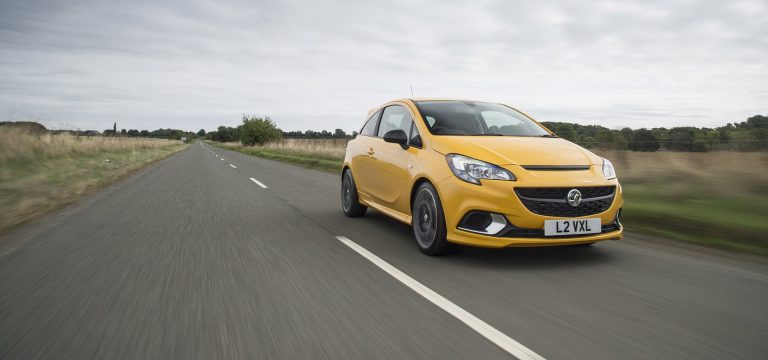
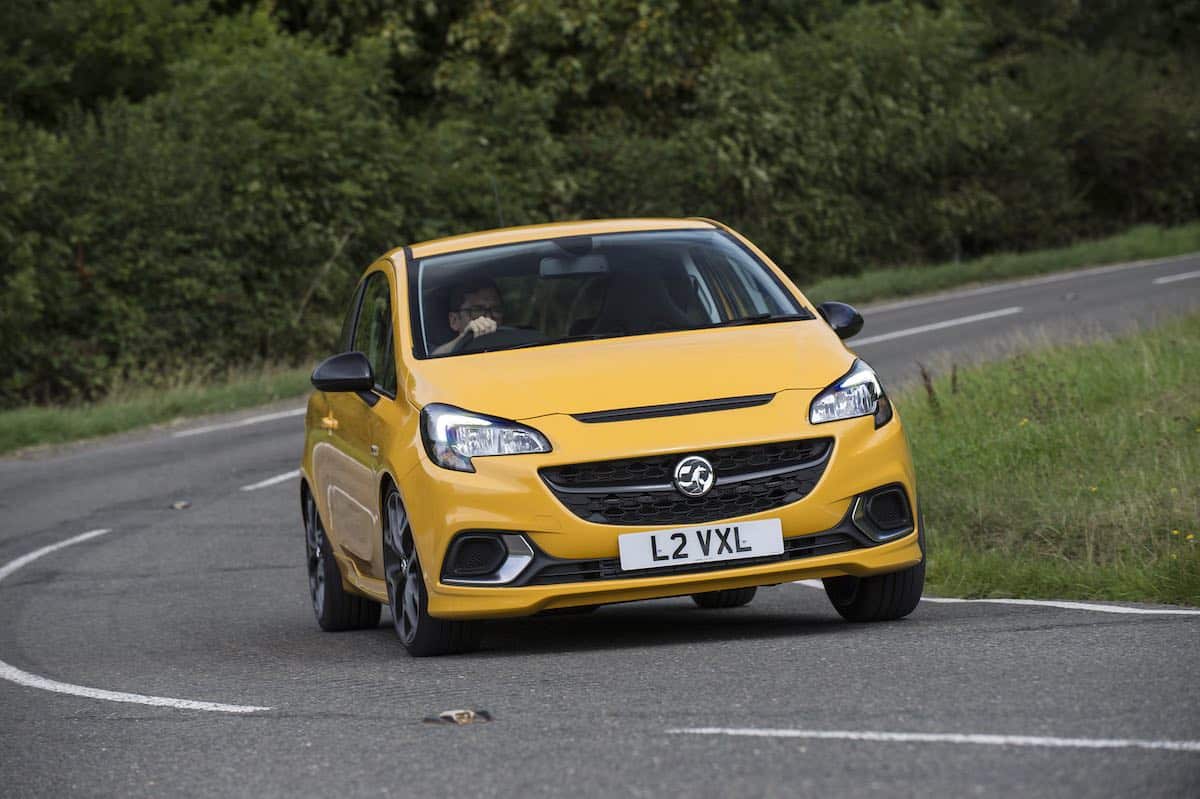
What is it? The Vauxhall Corsa GSi is pitched as an ‘affordable’ performance version of the brand’s supermini. Key features VXR looks, some performance upgrades, lower insurance groups than the norm. Our view The Vauxhall Corsa GSi feels like a stop-gap, attempting to fill a hole left by the departure of the VXR, and not very well. While an adequate warm hatch in itself, and certainly a lot cheaper an option than would be a VXR, it offers no price advantage over the Ford Fiesta ST, and suffers from a significant performance disadvantage compared to its Ford rival. Only significantly cheaper insurance should sway buyers in the Vauxhall’s direction. Similar cars Ford Fiesta ST, Renault Clio Sport, Volkswagen Polo GTI Vauxhall Corsa GSi road test 2018 | The Car Expert
Full review

Introduction

The revival of Vauxhall’s sporty-pitched GSi line began a few months ago with the Insignia GSi and now continues with a perhaps more appropriate wearer of the badge. The Vauxhall Corsa GSi fills the gap at the performance end of the brand’s supermini range left by the recently discontinued Corsa VXR. Well, sort of – and not permanently. Vauxhall insists that the VXR line will return, probably as potent as ever though possibly with more 21st high-tech, perhaps hybrid, powertrains. The GSi, however, is we are told a much more affordable option – ‘quick, safe and agile’. And one immediate plus is that it looks like a VXR, thanks to using much of that car’s underpinnings and particularly the body styling. It’s not nearly as mechanically outlandish as a VXR though, and as a result it is expected to appeal to a wider market – particularly younger drivers who will be able to afford insurance premiums that are significantly lower than for a Ford Fiesta ST. At the GSi launch event, Vauxhall’s PR man repeatedly name-checked the ST as a prime rival for this new Corsa. They cost virtually the same to buy, so that the insurance savings, around eight groups lower, might appear attractive. But there’s a reason for that – the ST is far more potent a proposition than the GSi…

Buying and owning a Vauxhall Corsa GSi

It’s a simple choice when buying the Corsa GSi – unlike the Ford which offers three different versions, there is one base model, three doors only, costing from £18,995. The Corsa GSi employs much of the VXR’s chassis, with its clever adaptive dampers. The brand’s performance department, led by former German Touring Car racer Volker Strycek, have spent many hours tuning this chassis by pounding around the 14-mile Nurburgring race circuit in Germany. The 1.4-litre turbo petrol engine has, we are told, also been specifically tuned for this car, allowed to breathe more freely at upper revs with recalibrated boost pressure, fuel injection and timing. But while its 150hp might be 50 horses more than any other Corsa, this is no bespoke engine but a mainstream unit available (for example) in several Astra variants. More pertinently, the GSi engine not only produces 60hp less than the old VXR used to put out, but 50 shy of the Fiesta ST. Vauxhall emphasises the impressive mid-range acceleration, going from 50 to 70mph in fifth gear in just 9.9 seconds, while strangely failing to mention that at 8.4 seconds, the GSi will reach 62mph from rest almost two seconds behind its Ford rival. So what do you get for almost £19K? Standard specification on the GSi includes 17-inch alloy wheels and the VXR-inspired styling – a roof spoiler, sports front grille, air dam/bumper and side sills. There are also dark-tinted rear windows, carbon-effect exterior mirrors and grille bar, and LED daytime running lights to complete the exterior effect. Inside the recipe runs to sports-style front seats, a leather-covered flat-bottom steering wheel and Vauxhall’s IntelliLink infotainment package which offers Apple CarPlay and Android Auto connectivity. It doesn’t include navigation, however, which adds an extra £650. Front and rear parking sensors can add £465 and electronic climate control (as an option to stock aircon) £410. There are also 18-inch wheels and leather Recaro seats on the options list, and the best way to buy them is in the GSi Plus Pack, which costs £1900 and also adds bi-xenon headlights with cornering lights. The Corsa also falls down against its admittedly newer rivals when it comes to safety. Back in 2014, Euro NCAP gave it four stars following crash tests, highlighting marginal protection against whiplash from rear-end impacts and the lack of autonomous emergency braking, even as an option.
Inside the Vauxhall Corsa GSi

When we first reviewed the then-new Corsa some four years ago now, we liked the cabin. It was well-built, with quality fit and finish to the plastics, and at the time boasted tech that simply was not the norm in superminis. The Corsa cabin is still basically a comfortable environment. The cowled pod-like instrument panel and swooping curves of the front fascia are attractive, though fitting the centre console air vents in above the infotainment screen does force one’s eye line further from the road than is desirable, especially if using it as a navigation screen. However, even the presence of a steering wheel with a cut-off base, alloy pedals and the optional Recaro seats on our launch test cars cannot raise the interior above the mainstream, as one would expect on a performance-pitched car. Meanwhile, the GSi is only available with three doors, which means that adding those Recaro seats and their somewhat limited folding ability does make accessing the rear the work of some contortion.

Driving the Vauxhall Corsa GSi

We mentioned the modifications made to the engine to improve its response. This unit is allied to a close-ratio six-speed manual transmission, but the technically most impressive mechanical upgrade is in the suspension. The GSi boasts the ‘Frequency Selective’ damping system developed by specialist Koni. The aim is to be the best of both worlds – offer the performance handling you expect on a car of this type, while not sacrificing the ride comfort needed in everyday motoring. It achieves this through a second damper valve that opens or stays shut depending on whether you are cruising or pushing on. Aim number one is very much met. The Corsa GSi’s exceptional agility was emphasised by a tight autotest competition staged on an airfield during the launch event. The car can be placed into corners with inch-perfect precision, and grips strongly all the way through. The excellently sorted chassis, along with the special Michelin Pilot Sport tyres on our test cars, made a series of challenging B-road bends quite satisfying to traverse. Satisfying, but not exciting, because the engine simply does not have the potency to make the GSi feel like a proper hot hatch – definitely not like the Fiesta ST, which is a great deal more fun in this respect. And then there is aim number two. In terms of general ride comfort, the frequency of the dampers were certainly not on our wavelength. The car copes well with smooth road surfaces but hit any significant indentations and they are transferred neatly through a very stiff chassis into the cabin, on the launch emphasised further by those Michelin tyres surrounding the 18-inch rims that are on the options list. Take the GSi on a long journey and you might enjoy the odd corner entry, but generally it will display the compromises one expects from a true hot hatch, but without the performance one gets from a true hot hatch.

Summary

When considered in isolation, the Vauxhall Corsa GSi has some plusses going for it. It looks the part, and so long as one does not consider outright speed it offers adequate pace and pretty good handling, albeit with some ride comfort compromises. However, as soon as the Vauxhall comes up against its perceived rivals it struggles. Faced with the alternative of a Fiesta ST, which is available for around the same money, the Corsa will only score with those who really do need to keep their insurance costs as low as possible. And if that’s the buyer’s vital criteria, they might do better buying a Suzuki Swift Sport – it’s more expensive to insure, but helping to fund that premium will be the almost £1,000 you’ll save buying it, and you will end up with a car still quicker to 60mph than the Corsa…

Key specifications

Make & model Vauxhall Corsa GSi Ford Fiesta ST-1 Volkswagen Polo GTI
Price (on-road) From £18,995 From £18,995 From £19,500
Engine 1.4-litre petrol 1.5-litre petrol 1.8-litre petrol
Power 150 hp 200 hp 192 hp
Torque 220 Nm 290 Nm 320 Nm
0-62mph 8.4 sec 6.5 sec 6.7 sec
Top speed 129 mph 144 mph 147 mph
Fuel economy (combined) 47.1 mpg 47.1 mpg 47.1 mpg
CO2 emissions 138 g/km 136 g/km 140 g/km
Insurance group 20 28 26
Euro NCAP rating 4 stars (2014) 5 stars (2017) 5 stars (2017)
 

Parking firm trials plastic bottle payment

Do you have a collection of plastic bottles sitting around? You may soon be able to cash in and use them to pay for your parking, with one firm launching a trial scheme to do just that. CitiPark, which operates parking facilities in Leeds, Manchester, Watford and London, has chosen one of its Leeds locations to recycle empty bottles in exchange for parking vouchers. Situated in the Merrion Centre shopping complex, the firm will give customers a 20p voucher for each empty bottle (500mL or larger) — with no limit on the number of bottles able to be used. The firm will also accept smaller bottles for recycling, but these will not be eligible for the payment trial. The trial has been running for the duration of October as part of an initiative within the shopping centre, which has seen a number of retailers and organisations at the complex taking part in sustainable activities. Charlotte-Daisy Ziff, head of corporate social responsibilities at CitiPark parent company Town Centre Securities, said: “Here at CitiPark we believe that we all have a part to play in ensuring the preservation and betterment of our environment for future generations. “So this promotion not only offers our customers the chance of free/discounted parking, but they can also get rid of their waste plastic bottles and contribute to the protection of the environment at the same time: it’s a win-win all around. We hope that as many people as possible will get on board.”

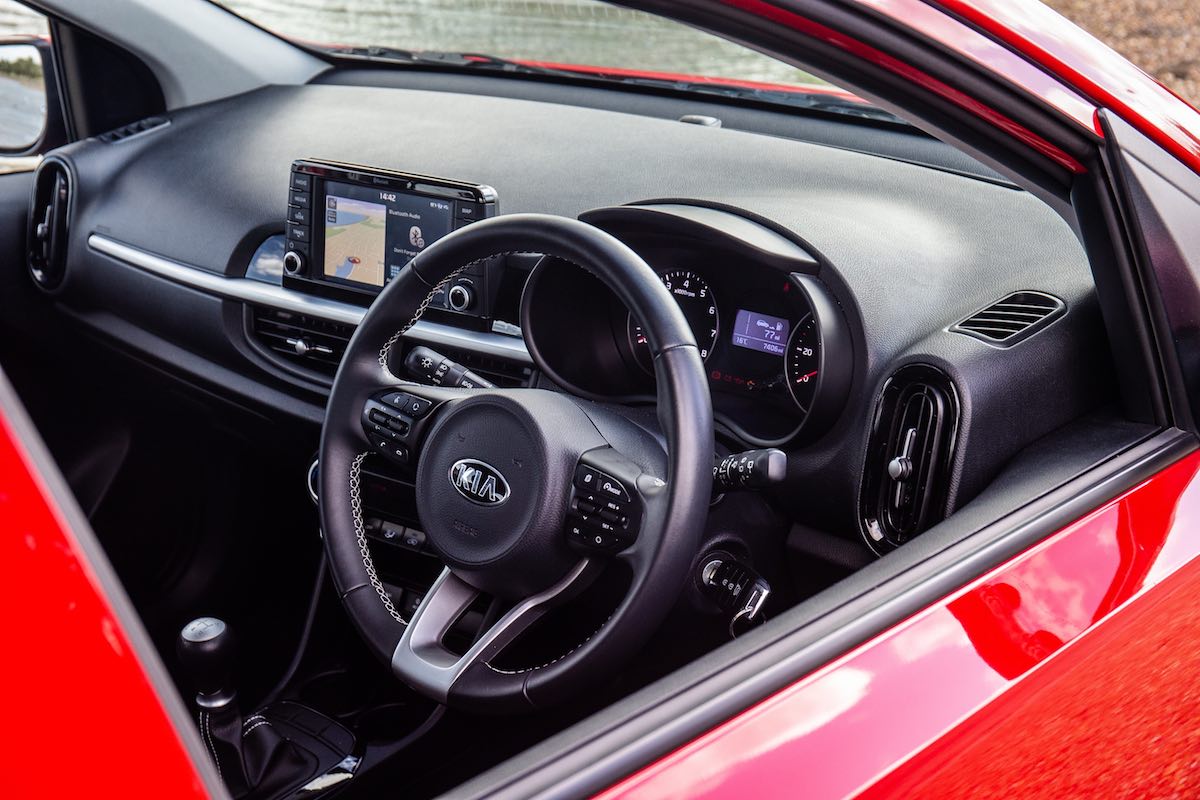
Twin test: Volkswagen Up! vs. Kia Picanto

There’s still a place for the humble city car, despite the ever-increasing dominance of the crossover. With compact footprints, small turning circles and low running costs, a city car can make a lot of sense for urban drivers, though they’re often just as much at home out on the open roads too. Here, we’re testing out two key competitors – the Volkswagen Up! and the Kia Picanto – to see which one is best.

What are they?

These two compact rivals sit on opposite ends of the city car spectrum. There’s the Volkswagen Up!, which pitches at the more premium end of the segment, while the Picanto has always been a key budget offering from Kia. They do both tick some key boxes, though. They’re compact, and therefore easy to park in the tightest of spaces. They both offer reasonable levels of interior space despite their dinky proportions, and both utilise efficient yet reasonably punchy engines. The way they are delivered, however, is quite different – showcasing the diversity within the city car segment.

What’s new?

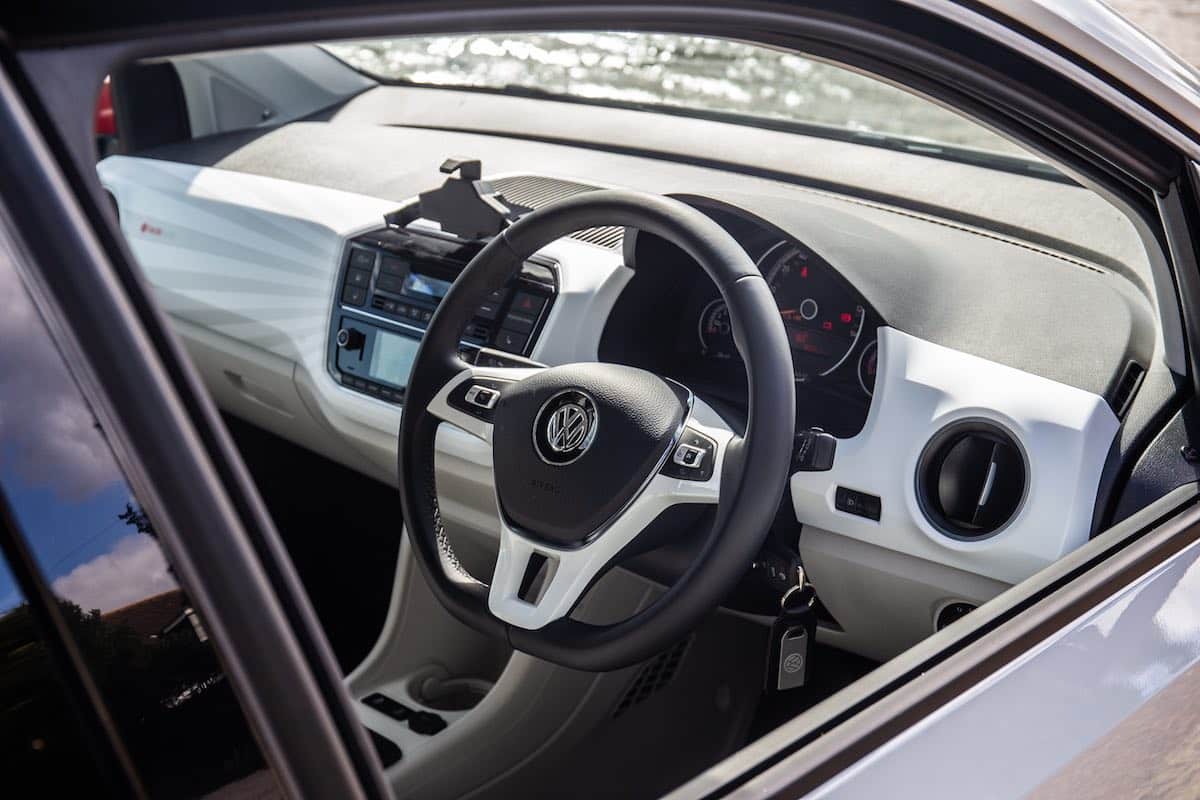
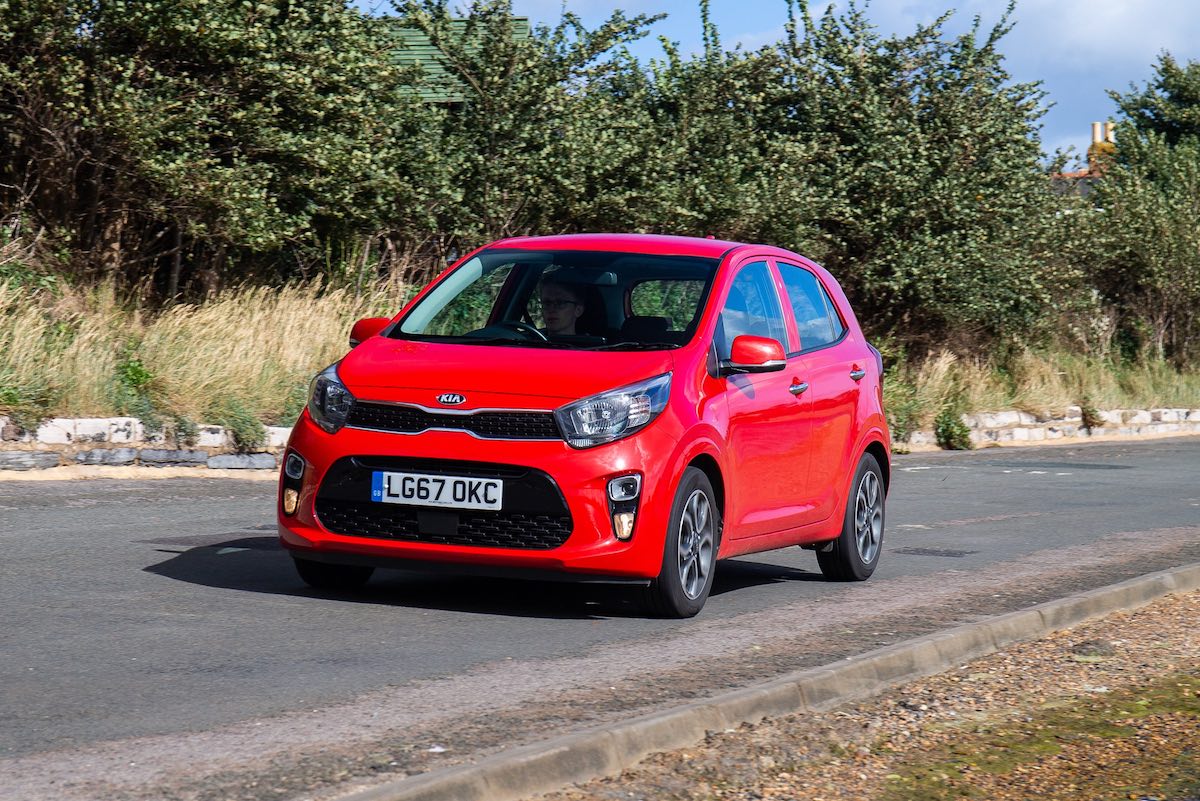
Let’s start with the Volkswagen. This specific Up! is a Beats specification car, meaning it’s all about additional audio enjoyment. As part of that package you get a six-speaker sound system, accompanied by a subwoofer for even better in-car bass. There are a variety of Beats badges dotted around the interior and exterior of the cabin to remind you of the added musical prowess of the car, in case you happened to forget. Then there’s the Picanto. Benefiting from Kia’s latest design, the smallest car in the South Korean manufacturer’s range is now sharper and sleeker than ever before – it’s more of a reflection of the other cars in Kia’s stable, that’s for sure.

How do they look?

Both cars maximise their looks despite being rather pint-sized. The Up! may tread on the more conservative side of things, certainly, with its clean lines and wheels-on-all-four corners appearance contrasting the multitude of cuts and grooves that you’ll find on the Kia. The Volkswagen also appears quite tall on the road, something the Picanto’s relatively raked front end design seems to mitigate.

What are the specs like?

Our Picanto test car came in ‘3’ specification, which sits close to smack-bang in the middle of the range. For this, you get 15-inch alloy wheels, tinted glass and full daytime running lights, among other touches. Inside, there’s a six-speaker sound system to make the most of, alongside a seven-inch touchscreen infotainment system housing Bluetooth connectivity and media functions. All in, our test car came to £12,975 – and this, of course, includes Kia’s excellent seven-year, 100,000-mile warranty. The Up! comes in considerably over the Picanto in terms of price at £13,785 with options, though the Beats specification does add that six-speaker system (incidentally the same amount as you’ll find in the Kia), though supplemented by a digital sound processor for clearer audio. The infotainment screen is smaller and more geared towards being used alongside a smartphone, though you can still connect your phone via Bluetooth to the car’s system.

What are they like inside?

Both the Kia and the Volkswagen do exceptionally well to deliver as much interior space as possible, despite being restricted by a considerably compact body size. The Up! feels the lighter and more spacious of the two, with the white plastics and matching dashboard trim really helping to lift the overall feel of the cabin. It’s well-built too, with plenty of robustness and solidity to all of the materials used. The Picanto’s interior cabin by being just as solidly made – if not even a touch more – though the overall material quality is slightly lower. Boot space is good with both; there are 251 litres to be found in the Up! with the rear seats in place, though this is beaten ever so slightly by the Picanto’s 255-litre capacity.

What’s under the bonnet?

As mentioned, the Up! makes use of a turbocharged 1.0-litre three-cylinder petrol engine, which here produces 89bhp and a useful 160Nm of torque. With power sent to the front wheels via a five-speed gearbox, the Up! takes 9.7 seconds to crack 60mph, before reaching a top speed of 115mph. Economy is good at 64.2mpg combined, and emissions are decent too – the little Up! emits just 101g/km CO2. The Picanto, meanwhile, utilises a larger, four-cylinder 1.25-litre petrol which, despite its size advantage over the Up’s unit produces less power at 83bhp. There’s less torque available too, at 122Nm. That’s due to the lack of a turbocharger. Again, the front wheels are driven with power sent through a five-speed manual ‘box, and Kia claims that the Picanto will return 54.3mpg combined, and emit 107g/km CO2 – figures which are, again, trumped somewhat by the Up’s.

What are they like to drive?

The Picanto’s driving characteristics are spot-on for the environment in which it has been designed for. The steering is light (though there’s slightly more feel to be found here than you’d expect), while the gear change is easy, if a little vague. Incidentally, the clutch pedal is also light, while the brakes provide more than enough stopping power. When pressing on the 1.25-litre engine becomes noticeably vocal, particularly when joining a motorway or building up to dual-carriageway speeds. That isn’t an area where the Up! struggles. Thanks to its turbocharged nature, the 1.0-litre engine in the dinky Volkswagen is impressively flexible, dealing enough grunt for almost all occasions. It can feel a little breathy towards the top end of the rev-range, but this is to expected of such a small-capacity engine. The gearbox has a typically Volkswagen efficiency to it, while the steering is accurate and makes placing the car simple.

Summary

It’s a close finish, this. The Picanto hits the nail on the head when it comes to cost, overall looks and equipment levels. It’s just pipped to the post by the Up! in key areas such as economy and emissions – as well as high-speed refinement. Though both cars are designed for the city, it’s the Up! which is more capable – able to go further afield without being too uncomfortable and it’s why, despite the additional cost, we’d be taking the Volkswagen keys on this occasion.

MPs urge faster ban of petrol and diesel cars

A ban on sales of new petrol and diesel cars and vans should be brought forward eight years to drive the take-up of electric vehicles, MPs have said.

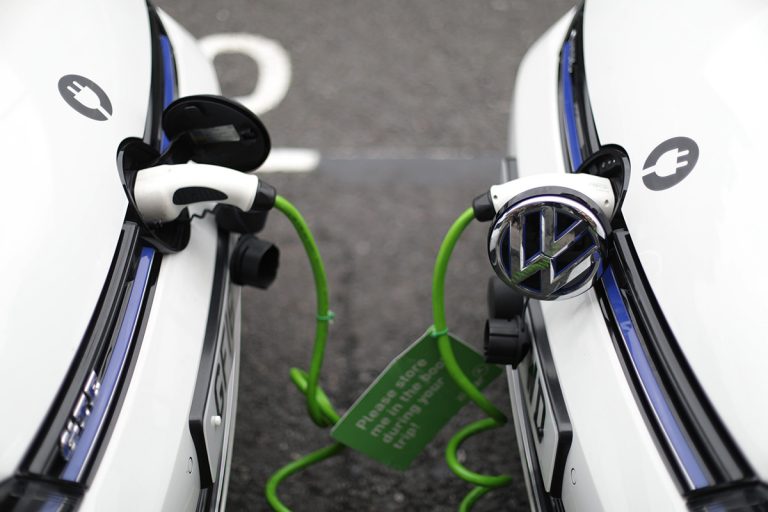
Ministers must also tackle a lack of charging points, which is one of the main barriers to people buying electric cars, warns the parliamentary Business Committee.

The call to ban ‘conventionally-powered’ cars in 2032 comes just days after the Government announced an end to grants for plug-in hybrid cars from next month, sparking angry criticism from the automotive industry and motoring groups.

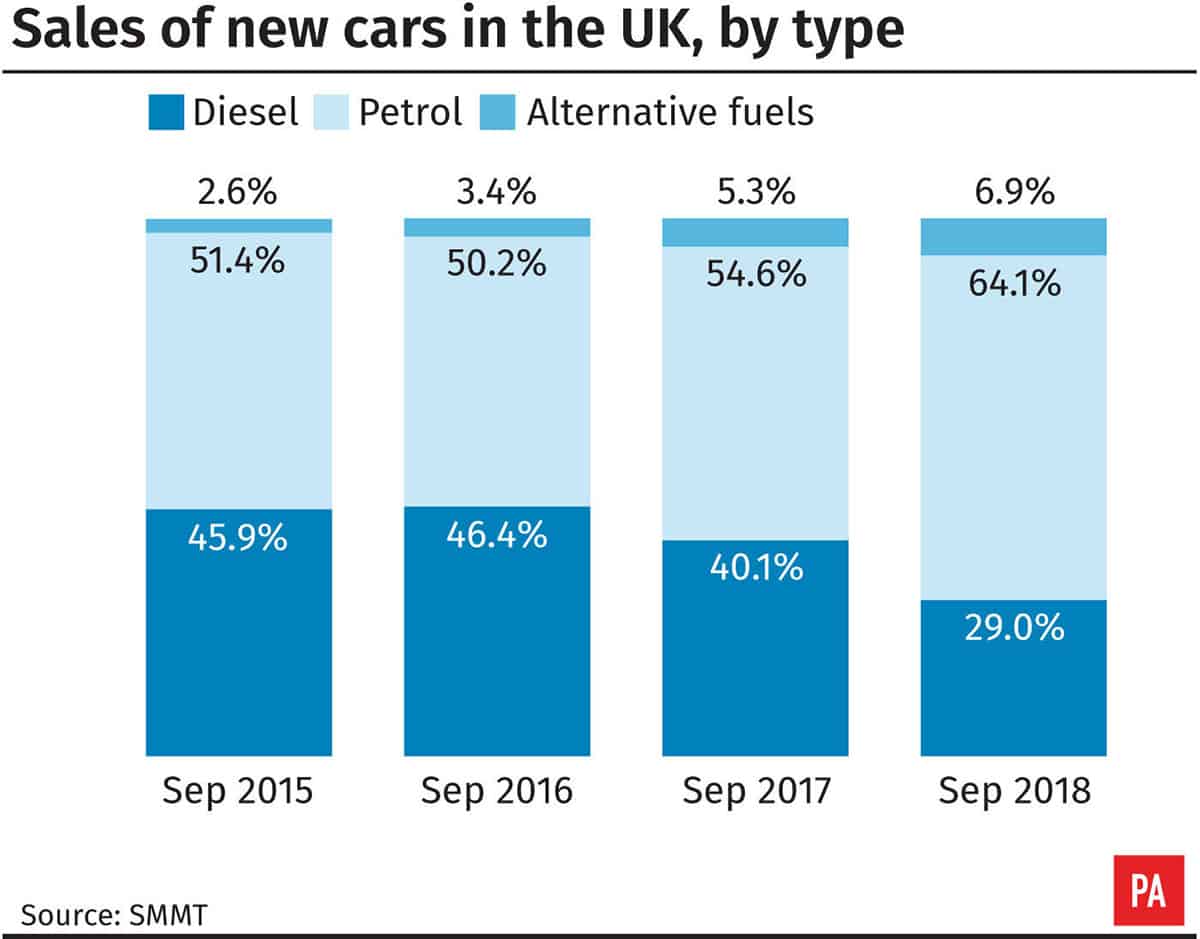
Earlier the Government had outlined a goal for an end to sales of new petrol and diesel cars by 2040, ministers stating that by that time all new cars and vans should be “effectively zero-emission”.

But the committee dubbed the targets as “vague and unambitious”, and described the lack of clarity on which vehicles will and will not be sold in 2040 as “unacceptable” for an industry trying to make investments.

The 2040 target puts the UK behind a range of countries including Norway, which is aiming for an end to combustion engine cars in 2025, and India, China, the Netherlands and Ireland with a 2030 goal and Scotland with a target of 2032.

Electric sales The Car Expert
Current electric sales levels show there is some way to go for the Government to achieve its targets.

The committee wants the target brought forward to 2032 to make the UK a world leader in electric vehicle (EV) development. But it has criticised the Government for leaving delivery of a national charging network to local authorities and private companies, and called for regulations to provide an extensive, reliable and standardised public system.

“The Government needs to get a grip and lead on co-ordinating the financial support and technical know-how necessary for local authorities to promote this infrastructure and help ensure that electric cars are an attractive option for consumers”, said committee chairwoman Rachel Reeves.

She added that rapid charge points in remote and rural areas should be subsidised by the Government.

The “sudden and substantial cuts” to grants for plug-in vehicles were slammed, the committee calling for current levels of support to be maintained.

“Electric vehicles are increasingly popular, and present exciting opportunities for the UK to develop an internationally competitive EV industry and reduce our carbon emissions,” Ms Reeves said.

“But, for all the rhetoric of the UK becoming a world leader in EVs, the reality is that the Government’s deeds do not match the ambitions of their words.”

Toyota Prius Plug-in The Car Expert
Confusion reigns as to how widely the ban will apply. Will cars such as the Toyota Prius Plug-in – which combines petrol engine and electric motor and had its government grant cut this week – be included?

RAC head of roads policy Nicholas Lyes said that any plan to bring forward the ban would have to be matched with bold and decisive action from the Government to make hitting the new date possible.

“There are still significant barriers that are putting drivers off alternatively fuelled vehicles – these include the upfront cost, access to charging infrastructure, and ease and time to charge a vehicle,” he added.

Industry body Energy UK backed the plan. “(We) believe that an accelerated timetable for the rollout of Electric Vehicles (EVs) is both desirable and feasible,” said chief executive Lawrence Slade.

A Government spokesman said that the current plans would aim for between 50% and 70% of new car sales to be ultra-low emission by 2030, and for all new cars and vans to be effectively zero emission by 2040.

“We also outlined measures to bring forward a major uplift in electric vehicle charging infrastructure, paving the way for the widespread adoption of ultra-low emission vehicles,” the spokesman added.

Renault simplifies trim levels on Scenic and Koleos

0
Renault has restructured its line-up for the Scenic, Grand Scenic and Koleos models along what it calls its EasyLife format, reducing the number of model choices but improving overall specifications. The Scenic and Grand Scenic models are now offered in three versions – Play, Iconic and Signature. Meanwhile, the Koleos is now only available in two trim levels – Iconic and GT Line.
Improving the scenery on Scenic
Renault Scenic, October 2018
(PA)
On both the Scenic and Grand Scenic, standard equipment on all models includes 20-inch alloy wheels, a seven-inch infotainment display with smartphone connectivity, climate control and rear parking sensors. The mid-range Iconic adding front sensors, the R-Link2 infotainment system and a sliding centre console. For the top-end Signature trim, Renault offers a head-up display, panoramic sunroof and one-touch folding rear seats – with the Grand Scenic getting the system for both the second and third row. Scenic customers can choose between a 1.3-litre 140hp petrol engine or a 1.5-litre 120hp diesel – both of which are paired to a six-speed manual transmission.
More kit for Koleos
Renault Koleos, October 2018
(PA)
For the Koleos, Renault fits the base Iconic trim with a reversing camera alongside front and rear parking sensors, blind spot warning, climate control, a seven-inch touchscreen with R-Link2, partial leather upholstery, 19-inch alloys and automatic lights and wipers. GT Line models build on this with LED headlights, leather upholstery, heated front seats, an automatic tailgate and a nine-inch touchscreen. Only one engine is provided with the Koleos – a 2.0-litre diesel producing 175hp, paired up to a seven-speed automatic with either two- or four-wheel drive. The revamped Scenic line-up starts from £21,390 and £23,190 for the Grand Scenic – a reduction of £620 on the previous starting prices. The Koleos starts from £27,495, which is £550 less than before. Renault has opened the order books for the revised Scenic and Grand Scenic range, while prospective Koleos customers will have to wait till November.

“Three million charge points needed” to support electric vehicle use

Three million charge points will be needed at commercial and industrial sites to support widespread use of electric vehicles (EVs) in Britain by 2040, according to a new report.

Workplaces, supermarket car parks and motorway service stations are among the areas that must provide EV facilities, a study by Aurora Energy Research found, due to only around 60% of households having access to private parking.

This would represent a “huge expansion” of EV infrastructure, as there are currently only around 14,000 public charging points across the UK.

Aurora based its analysis on the number of EVs on the road reaching 35 million by 2040.

It found that landowners can potentially make a profit from their charge points if motorists pay for the electricity they use.

Adding technology such as solar panels, energy storage or enabling EVs to supply electricity back to the grid when it is in high demand will support lower consumer prices for electricity, according to the report.

Electric vehicle charging
(PA)

Aurora’s head of flexible energy and battery storage, Dr Felix Chow-Kambitsch, said the roll-out of EVs over the next 20 years would “radically transform Great Britain’s energy system”.

He added that commercial and industrial sites had a “key role to play in meeting high levels of consumer away-from-home EV charging”.

A previous study for motoring research charity the RAC Foundation found that growth in EV car use could be stalled by limitations in the public charging network.

The mass market appeal of ultra-green vehicles may be restricted without widespread, reliable and easy-to-use charging points, the report warned.

It was announced last week that Government grants for new electric and hybrid cars will be slashed.

Motoring groups claimed the decision will leave the UK struggling to meet targets to reduce vehicle emissions.