I’m running a three-month trial of Redex fuel system additives to see if I can feel any increase in my car’s performance or any measurable difference in its fuel economy.
I’m now at the halfway point of my three-month Redex trial, and I’ve been fielding a few questions from people along the way whenever I’ve mentioned it. Mostly, “What is it?” and “What does it do?”
Different kinds of fuel additives
The particular type of fuel additives that I am trialling are cleaning agents that claim to reduce build-up on your engine’s fuel injection system., meaning that the correct amount of fuel is being injected into the important bits of the engine and not being wasted. By de-clogging the fuel system, fuel flows more freely and should improve both performance and economy.
It’s probably easiest to think of these system cleaners as a bit like drain de-clogging liquids, or de-scaling agents for your coffee machine or kettle or iron or washing machine, etc. The end result should be a sparkling clean system of tiny pipes that allow the fuel to flow more freely into the important bits of the engine, and should improve both performance and economy.
Of course, to notice any improvement, the system needs to have been clogged up to start with. A brand new engine is already clean and shiny, so a cleaning agent won’t really give you any benefit. You’re far more likely to see noticeable benefits from older, higher-mileage cars.
There are other kinds of additives that are specifically designed to improve your car’s performance by adding a bit of extra kick to the fuel. These are usually called “octane boosters”, but they’re a different thing from what we’re reviewing on this trial. They are more like vitamins or other dietary supplements. Everybody’s different in terms of their diet, their lifestyle and their own genetic makeup, so taking a daily multi-vitamin tablet may benefit one person yet have no noticeable impact on another person.
The trial process
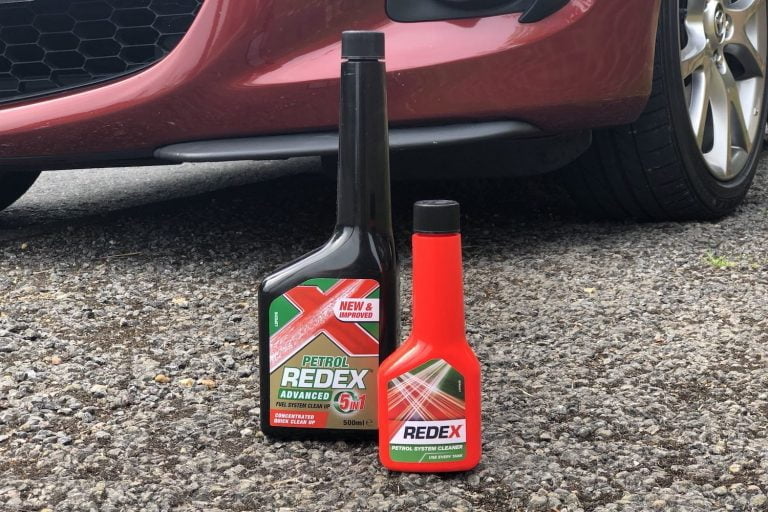
The trial commenced by adding a 500mL bottle of Redex “5-in-1 Advanced Fuel System Cleaner”. This is a concentrated cleaning product, and is recommended as a first step and then again every few months. You simply add it to your tank before putting in your petrol.
For each subsequent fill-up, I have been adding a 90mL bottle of regular Redex “Petrol System Cleaner”. The company produces specific products for both petrol and diesel engines, so make sure you’re using the right one for your vehicle.
At every fill-up, I’ve also been recording my mileage and the amount of fuel added so I can work out the fuel consumption. This has also allowed me to compare my actual results with the number suggested by my car’s trip computer.
Obviously, this is not a laboratory trial conducted in perfect conditions using perfect scientific methods. That means there will inevitably be variations due to traffic conditions, weather, different journey types and speeds, and so on. However, I’m doing what I can to keep things consistent. My car is a 2013 Mazda MX-5, and it only ever carries me (and sometimes by toddler son if I’m doing the nursery run). Plus the boot’s tiny. That means that there’s minimal variation in weight across the course of a tank.
Unless it’s raining, the top on my car is always down when I’m driving – and we really haven’t had much rain in the last six weeks. Having the top down all the time is not great for fuel economy because it messes up the car’s aerodynamics, but at least it’s consistently down every day.
I fill up every time at the same petrol station, using regular 95-octane unleaded petrol.
My driving journeys have basically been the same for the last six weeks, which is my usually 25-mile round trip to work every day. The only variation in that has really been traffic along the way, and over the last month there has been a lot of congestion due to an HGV diversion in the next town. That’s meant a lot more big trucks and coaches on my commute, and traffic has been frankly awful for about a month. The good news is that’s finally coming to an end shortly.
Fuel economy results so far
Prior to starting my Redex trial, my fuel economy tended to hover around the 30mpg mark depending on circumstances. My car was serviced a couple of months before the trial started and only has 30,000 miles on the clock, so I haven’t had any great expectations of seeing substantial movement on my fuel consumption figures.
My first fill-up with the 5-in-1 advanced system cleaner was then followed by a 150-mile motorway trip, although a fair bit of that was crawling around the M25. Anyhow, the first tankful saw an overall result of 34mpg; a good start, but probably affected by the motorway run.
Since then, I have filled up another three times using the small 90mL bottle of regular petrol system cleaner. My driving has purely been the daily commute, but as mentioned the traffic has been rubbish. The numbers show fuel consumption of 30, 28 and 30mpg for each tankful, so it’s much the same as I’d normally expect. Again, traffic conditions will have played a part, this time negatively influencing the result.
I filled up the car again a couple of days ago, and have also noticed that traffic is much better this week. Hopefully, that means the next tank’s results will be a bit more indicative of my usual driving circumstances.
Performance observations
We’re not doing any performance testing on this trial, so it’s simply been a case of me trying to detect any noticeable improvements in performance.
I think that the car has probably been running a bit smoother after using the 5-in-1 cleaner. Once or twice in recent months, I had noticed a very slight cough when accelerating hard. It was nothing really significant, only happened very occasionally and I had just put it down to a bit of gunk in the fuel. I haven’t noticed anything similar since I’ve started using Redex, so I’d say that the cleaning agents have been doing their job and keeping the fuel system running properly.
At this stage, I’d have to say I really haven’t felt that the car is performing any better. Obviously, I’m not doing any timed acceleration runs on a drag strip, but the car doesn’t feel to be performing any differently than before I started using Redex.
To be fair, this isn’t really the main point of these particular products; if I wanted to try and increase the car’s performance, I’d try the Redex Petrol Power Booster or just use premium unleaded fuel, both of which increase the octane level of the fuel for a bigger bang in the cylinders.
Other observations
Incidentally, taking proper fuel consumption measurements has allowed me to compare the actual results with the on-screen information in the car’s trip computer. It seems that my Mazda is about 0.5 mpg optimistic in its read-out as every time I’ve filled up, the results have been about that much worse than the average fuel consumption readout in my dashboard. This is pretty normal for most cars, and the fuel economy numbers on the screen should only be considered a guide anyway.
The only other point of note is that the Redex bottles have a really annoying inner seal, like most bottles these days. It’s particularly difficult to remove, and usually I just end up stabbing it with my car key to puncture the seal and tear most of it off. That’s fine for my Mazda, as it still has a proper key that goes in a proper ignition barrel. Most newer cars no longer have that, however, so you’d need to have your house key or some other sharp implement handy to get the stuff out of the bottle.
I’ll be continuing to run my Redex trial for another six weeks, so I should have a final report for you by the end of August.
The review is sponsored by Redex.





 Further off-road credentials of the Wrangler include the ability to traverse water up to 76cm deep, an approach angle of 36.4 degrees, breakover angle of 25.8 degrees, departure angle of 30.8 degrees and ground clearance of more than 25cm (on Rubicon models).
Engine choices will range across a 2.0-litre turbo petrol and 2.2-litre turbo diesel unit, both with start-stop technology and with an eight-speed automatic transmission. Outside Europe a 3.6-litre V6 petrol engine will also be offered in the Wrangler.
Both two and four-door body styles will be available. Two-door Wranglers can tow up to 1,500kg, four-door variants 2,500kg.
Jeep is emphasising the technology upgrades on the new Wrangler, particularly in terms of safety. Blind-spot monitoring with rear cross-path detection and a reversing camera will be available, while the electronic stability control will include a roll mitigation program.
Depending on the model, owners will also be able to choose one of three pinch-and-zoom touchscreen infotainment systems, of either five-, seven- or eight-inch size and all including
Further off-road credentials of the Wrangler include the ability to traverse water up to 76cm deep, an approach angle of 36.4 degrees, breakover angle of 25.8 degrees, departure angle of 30.8 degrees and ground clearance of more than 25cm (on Rubicon models).
Engine choices will range across a 2.0-litre turbo petrol and 2.2-litre turbo diesel unit, both with start-stop technology and with an eight-speed automatic transmission. Outside Europe a 3.6-litre V6 petrol engine will also be offered in the Wrangler.
Both two and four-door body styles will be available. Two-door Wranglers can tow up to 1,500kg, four-door variants 2,500kg.
Jeep is emphasising the technology upgrades on the new Wrangler, particularly in terms of safety. Blind-spot monitoring with rear cross-path detection and a reversing camera will be available, while the electronic stability control will include a roll mitigation program.
Depending on the model, owners will also be able to choose one of three pinch-and-zoom touchscreen infotainment systems, of either five-, seven- or eight-inch size and all including 




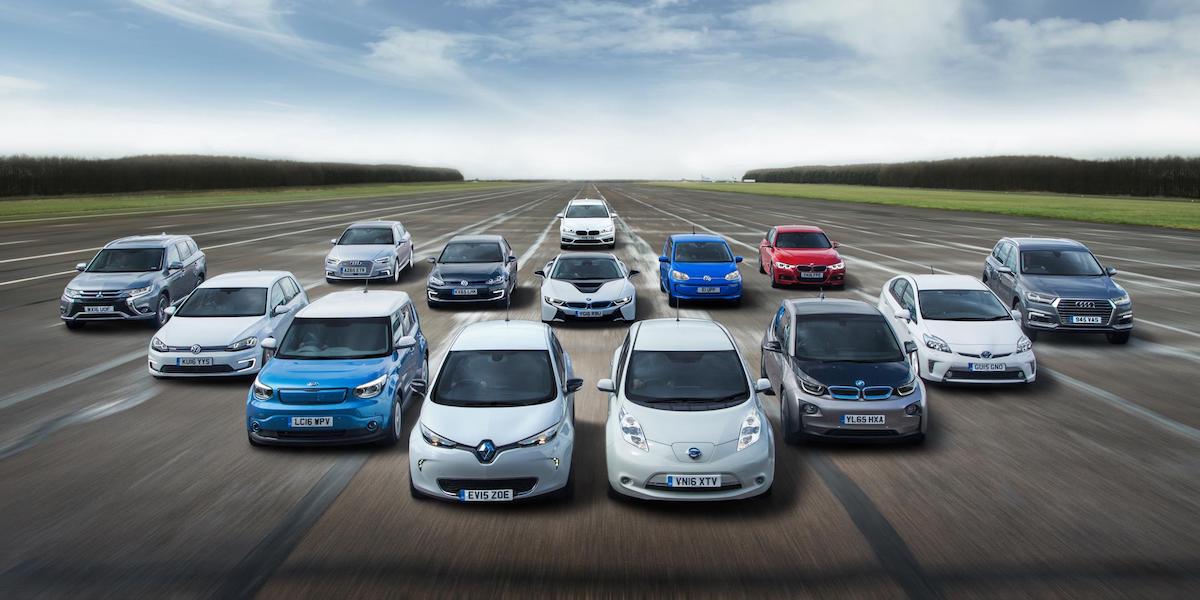









 SMMT chief executive Mike Hawes is again calling for diesel to be given a fair chance in the market. He urges a ‘technology neutral’ strategy from Government and more backing for the latest-technology cleaner diesel engines after what he describes as “a rocky first six months” for the industry.
“It’s great to see demand for alternatively fuelled vehicles continue to rise, (but) given these cars still represent only one in 20 registrations, however, they cannot yet have the impact in driving down overall emissions that conventional vehicles, including diesels, continue to deliver,” Hawes says.
“Recent government statements acknowledging the importance of petrol and diesel are encouraging – however, we now need a strategy that supports industry investment into next-generation technologies and puts motorists back in the driving seat, encouraged to buy the car that best suits their needs – whatever its fuel type.”
The
SMMT chief executive Mike Hawes is again calling for diesel to be given a fair chance in the market. He urges a ‘technology neutral’ strategy from Government and more backing for the latest-technology cleaner diesel engines after what he describes as “a rocky first six months” for the industry.
“It’s great to see demand for alternatively fuelled vehicles continue to rise, (but) given these cars still represent only one in 20 registrations, however, they cannot yet have the impact in driving down overall emissions that conventional vehicles, including diesels, continue to deliver,” Hawes says.
“Recent government statements acknowledging the importance of petrol and diesel are encouraging – however, we now need a strategy that supports industry investment into next-generation technologies and puts motorists back in the driving seat, encouraged to buy the car that best suits their needs – whatever its fuel type.”
The 





 Similarly, the interior design is angled towards track driving– carbon-fibre race seats first employed on the McLaren P1 ultimate series car are used again, along with Alcantara trim material that also helps with the weight reduction.
Even further weight saving is available through McLaren’s Special Operations department, which can add a carbon fibre roof, cantrails and vented carbon fibre front wings.
McLaren adds that the 600LT will be produced in strictly limited numbers. Production will begin in October and last for around a year. The £185,500 price includes a Pure McLaren Road Owner Track Day experience with driver training.
The first McLaren Longtail was the GTR race version of the original McLaren F1 that debuted in 1997. The McLaren F1 GTR ‘Longtail’ won five of the 11 rounds of the 1997 FIA GT Championship and finished first and second in the GT1 class at the 24 Hours of Le Mans.
McLaren Automotive revived the name with its 675LT Coupe launched at the 2015 Geneva Motor Show, and followed it with the open-top 675LT Spider. The entire 500-strong production run sold in two weeks.
Similarly, the interior design is angled towards track driving– carbon-fibre race seats first employed on the McLaren P1 ultimate series car are used again, along with Alcantara trim material that also helps with the weight reduction.
Even further weight saving is available through McLaren’s Special Operations department, which can add a carbon fibre roof, cantrails and vented carbon fibre front wings.
McLaren adds that the 600LT will be produced in strictly limited numbers. Production will begin in October and last for around a year. The £185,500 price includes a Pure McLaren Road Owner Track Day experience with driver training.
The first McLaren Longtail was the GTR race version of the original McLaren F1 that debuted in 1997. The McLaren F1 GTR ‘Longtail’ won five of the 11 rounds of the 1997 FIA GT Championship and finished first and second in the GT1 class at the 24 Hours of Le Mans.
McLaren Automotive revived the name with its 675LT Coupe launched at the 2015 Geneva Motor Show, and followed it with the open-top 675LT Spider. The entire 500-strong production run sold in two weeks.


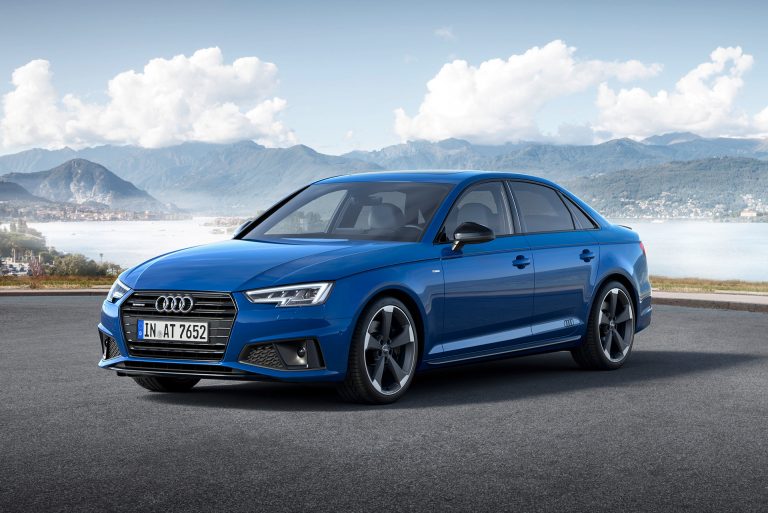
 Black Edition buyers can also now select a new exterior body colour option, dubbed Turbo Blue.
SE models now come with navigation as standard. The five-inch monochrome driver’s information green has been replaced by a seven-inch colour version while the buttons on the steering wheel now access more functions.
Sport specification upgrades include four-way lumbar adjustment for the driver and front passenger seats. S line and Black Edition models gain the high beam assist function for automatic toggling between dipped and high headlight beams as required, while all A4 versions now include automatic electrically folding door mirrors.
Order books for the new A4 versions, dubbed the 2019 Model Year, open later this summer ahead of first deliveries towards the end of 2018. Audi is yet to confirm any pricing changes.
Black Edition buyers can also now select a new exterior body colour option, dubbed Turbo Blue.
SE models now come with navigation as standard. The five-inch monochrome driver’s information green has been replaced by a seven-inch colour version while the buttons on the steering wheel now access more functions.
Sport specification upgrades include four-way lumbar adjustment for the driver and front passenger seats. S line and Black Edition models gain the high beam assist function for automatic toggling between dipped and high headlight beams as required, while all A4 versions now include automatic electrically folding door mirrors.
Order books for the new A4 versions, dubbed the 2019 Model Year, open later this summer ahead of first deliveries towards the end of 2018. Audi is yet to confirm any pricing changes.


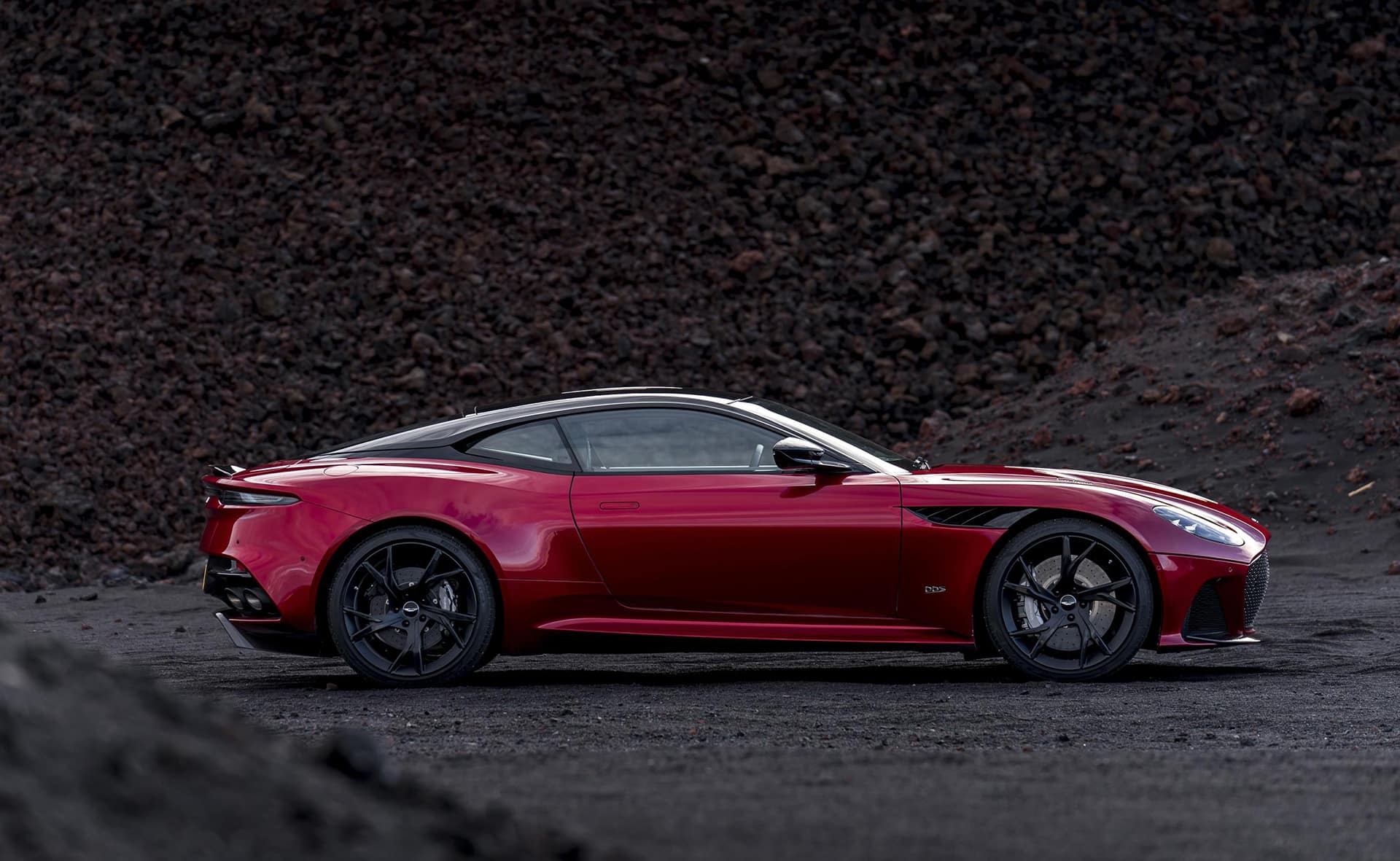
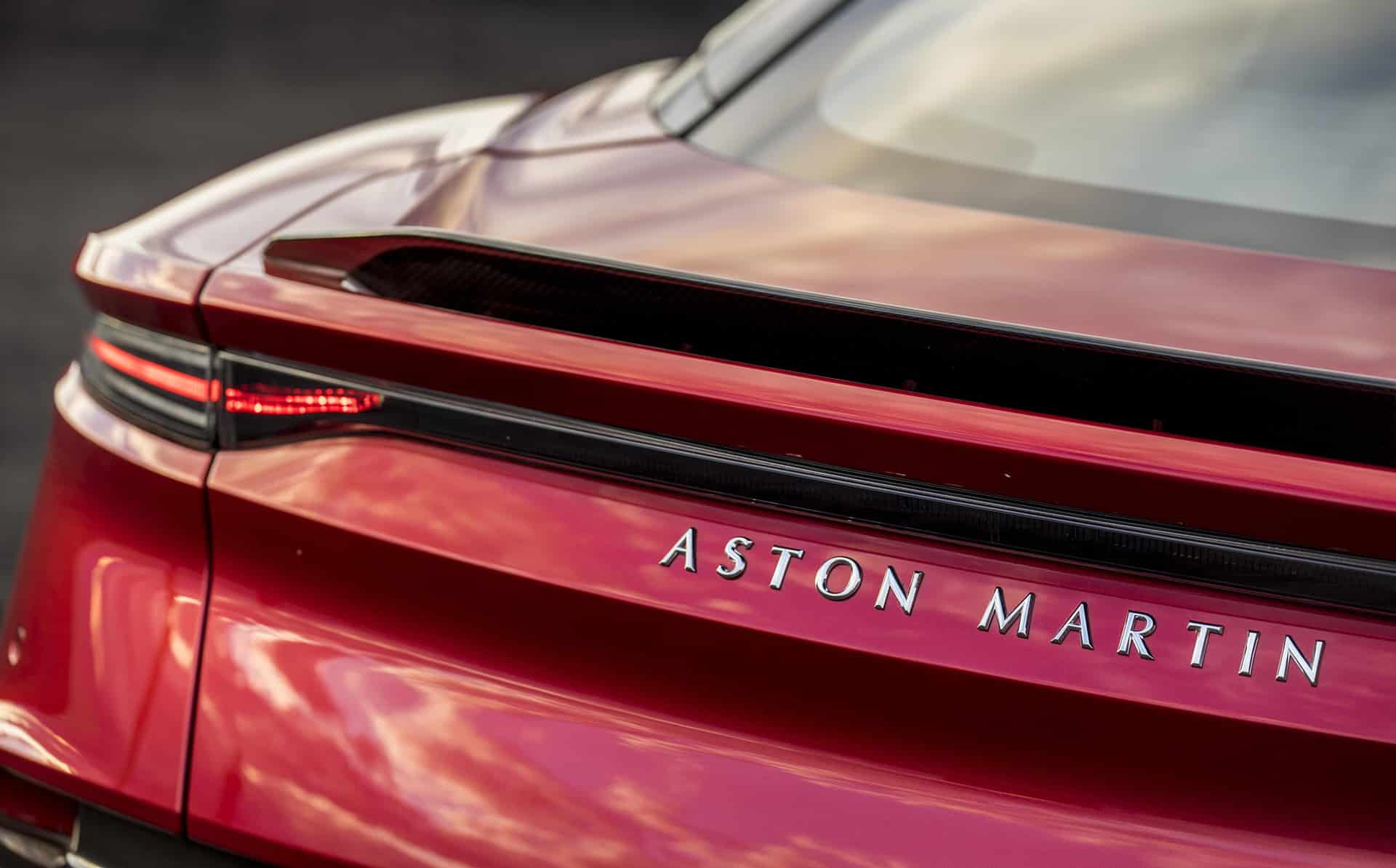
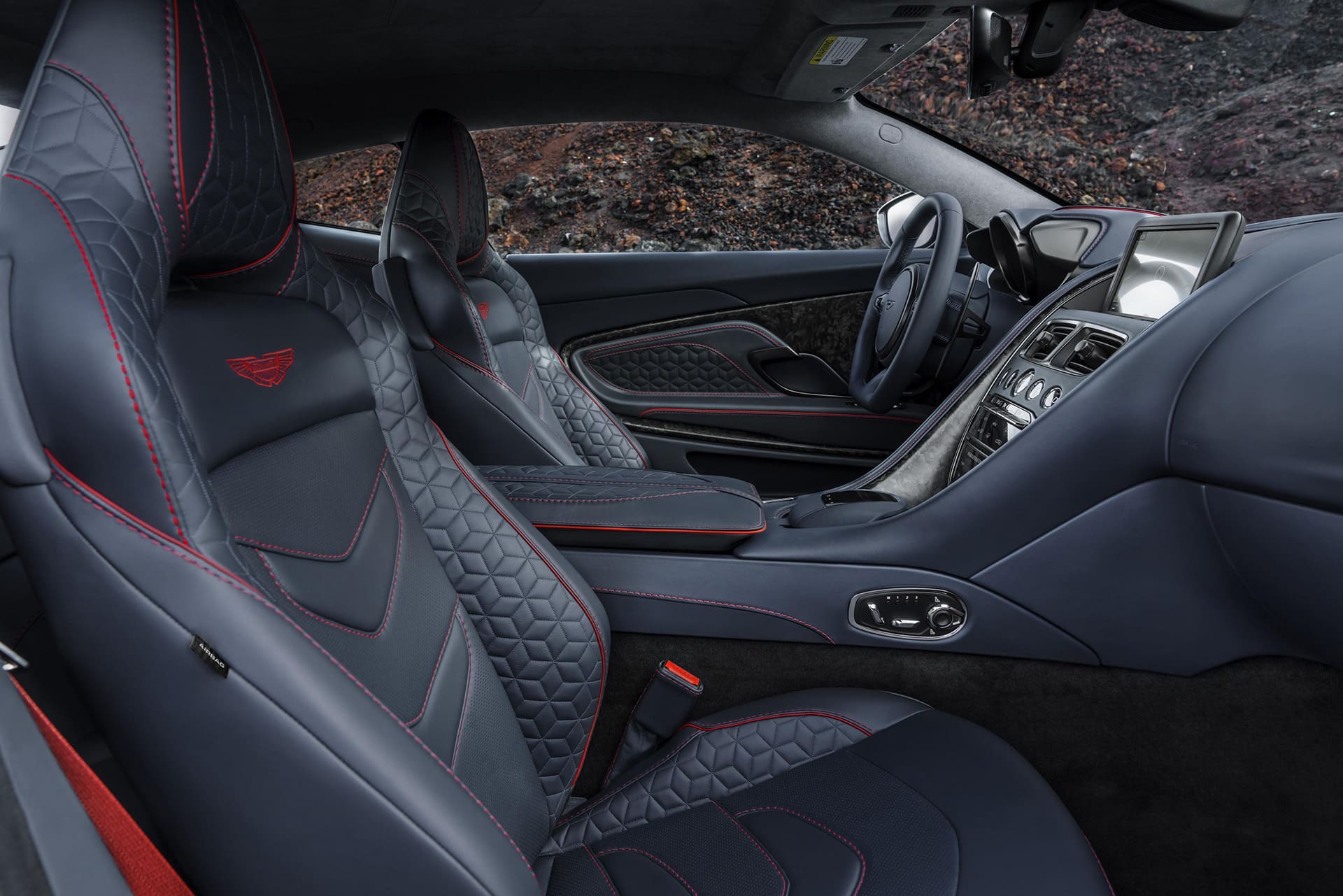 Body construction of the newcomer employs an updated version of the bonded aluminium structure used on the DB11 and clad in carbon fibre panels styled for a more muscular appearance. Aerodynamics that debuted on the DB11 have been retained for the new DBS, including the ‘curlicue’ and ‘Aeroblade’ downforce aids.
The car also boasts Formula One-style double-diffuser aerodynamics combining to generate 180kg of downforce at full speed – the highest yet on a series production Aston Martin but according to its makers with no additional drag penalty.
Suspension employs forged double wishbones at the front and a multi-link system at the rear. Aston Martin’s latest generation adaptive damping is fitted as standard, with three modes selectable by the driver – GT, Sport and Sport Plus change both chassis and powertrain settings accordingly.
First examples of the DBS Superleggera are expected on UK roads in the Autumn of 2018.
Body construction of the newcomer employs an updated version of the bonded aluminium structure used on the DB11 and clad in carbon fibre panels styled for a more muscular appearance. Aerodynamics that debuted on the DB11 have been retained for the new DBS, including the ‘curlicue’ and ‘Aeroblade’ downforce aids.
The car also boasts Formula One-style double-diffuser aerodynamics combining to generate 180kg of downforce at full speed – the highest yet on a series production Aston Martin but according to its makers with no additional drag penalty.
Suspension employs forged double wishbones at the front and a multi-link system at the rear. Aston Martin’s latest generation adaptive damping is fitted as standard, with three modes selectable by the driver – GT, Sport and Sport Plus change both chassis and powertrain settings accordingly.
First examples of the DBS Superleggera are expected on UK roads in the Autumn of 2018.