Looking for vans, pick-ups and light commercial vehicles? Visit our sister site, The Van Expert.


British motorists wanting to go green currently have some 83 different low-emission cars and vans to choose from – but they need more incentives to switch from petrol and diesel vehicles to electric alternatives.
Industry body the Society of Motor Manufacturers & Traders (SMMT) this week organised a photo-call of 26 of the alternatively-fuelled vehicles currently on sale in the UK – mostly hybrids and electric vehicles but also including hydrogen fuel-cell cars, and drawn from 16 different brands.
And the public display of the variety on offer comes just as looming changes to Vehicle Excise Duty (VED, commonly known as road tax) threaten to make such cars less attractive to potential buyers.
Sales of alternatively-fuelled cars have been growing at the greatest rate ever seen on the UK market – up 22.2 per cent in 2016. But the 88,919 such vehicles registered represented just 3.3 per cent (up from 2.8 per cent) of a market worth almost 2.7 million units. And of that almost 89,000 such vehicles, 36,917 were plug-in electric models – Britain is now the biggest market in the EU for such cars.
The SMMT commissioned a YouGov survey to find out the reasons why motorists might be persuaded to switch to hybrid and electric cars. Low running costs topped the incentives, quoted by 51 per cent of the 2,100 people questioned. This was followed by cheap or zero road tax (46 per cent), while 36 per cent highlighted purchase incentives such as the Government’s plug-in car grant, that can cut around £4,500 from the purchase price of such vehicles.
From April, however, the new VED rates will badly affect the two largest incentives. Currently owners of virtually all low-emission vehicles pay no road tax at all, as the CO2 emissions of such vehicles are below 100g/km.

After 1st April 66 per cent of these vehicles will move into a regime where in addition to a road tax charge of varying rate on purchase, their owners will have to pay £140 per year thereafter. A few vehicles, costing more than £40,000, will also be subject to a £310 supplementary charge – every year for five years.
This is very concerning when the YouGov survey also revealed that currently, just 13 per cent of motorists would consider switching to ultra low-emission vehicles when buying their next car. And very few give the new tax rates as the reason – alarmingly the survey showed that some 68 per cent of respondents were not even aware such changes are on the way.
Instead, the prime reason given still relates to the ‘range anxiety’ that has hung over electric vehicles since they were first launched. Some 48 per cent of respondents fear that they won’t find a place to charge their car before it runs out of power, and 43 per cent say they don’t have convenient charging locations near their home or place of work.

These concerns endure despite many manufacturers offering free home wallbox installations with purchases, and the latest electric cars now having ranges between charges of around three times the average daily commute – the latest Renault ZOE for example can travel 180 miles before needing to be plugged in.
Other concerns included the possible price of battery replacement (46 per cent) and the higher purchase price of such cars (41 per cent) despite the Government incentives.
Such doubts exist as concern over the pollution caused by car emissions, particularly diesels, grows, and the SMMT is insisting that the Government needs to get fully behind promoting the advantages of low-emission vehicles.
“Our survey highlights the need for ongoing government support for this new market,” says SMMT chief executive Mike Hawes.
“We want to encourage more people to switch to ultra low emission vehicles in meaningful numbers but more must be done to boost buyer confidence. A consistent approach to incentives – fiscal and otherwise – and, most importantly, greater investment in the charging network is essential if we are to grow this emerging market.”
The Government claims, however, that it is doing as much as it can to support the growth of alternatively fuelled vehicles. “We are working with determination to get more people switching to low emission vehicles,” says Transport Minister, John Hayes.
“Our Vehicle Technology and Aviation Bill published this week, will make sure the right infrastructure – such as electric charge points and hydrogen refuelling stations – is in place for this growing market.
“We’ve committed more than £2 billion since 2011 to increase electric vehicle uptake and support greener transport schemes. This includes £290 million, announced in the Autumn Statement, to support electric vehicles, low emission buses and taxis, and alternative fuels.”
Despite such promises many in the industry feel the post-April VED charges could stall any meaningful progress towards wider adoption of low-emission vehicles.


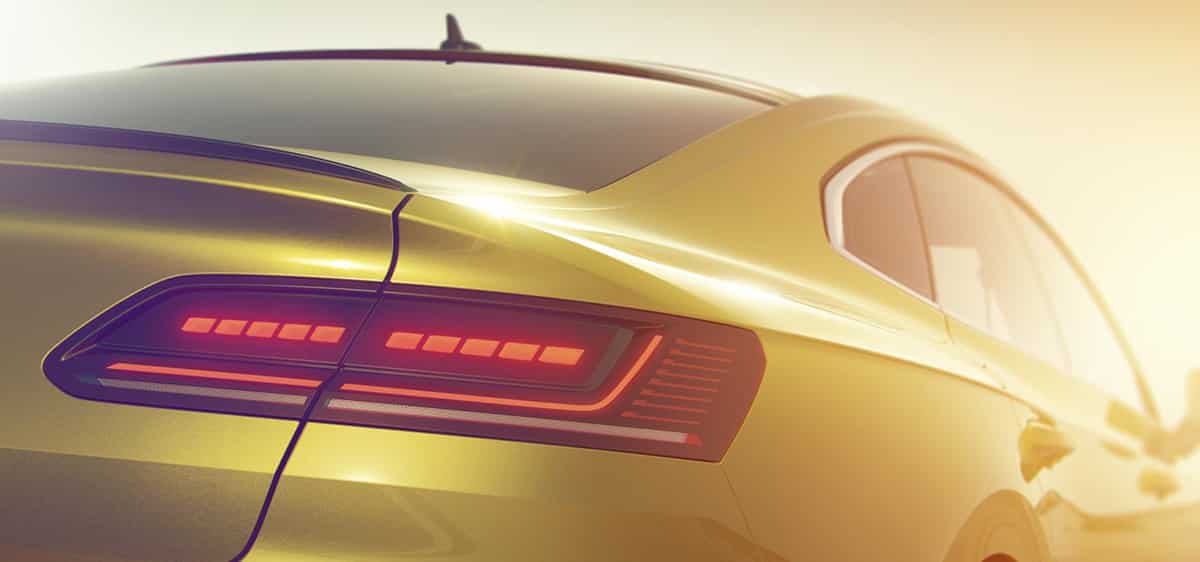 Volkswagen has not released any details of the Arteon’s powertrains though they are expected to replicate the engine choices of European-specification Passats, and include both front-wheel and all-wheel-drive transmissions.
The brand does say that the car will debut ‘the latest generation of driver assistance systems,’ including ‘features that are typically reserved for luxury automobiles’.
The Volkswagen Arteon is expected on UK sale sometime in the summer of 2017 at prices starting in the region of £28,000.
Read more Volkswagen news, reviews and features at The Car Expert
Catch up with all the latest news from the 2017 Geneva motor show at The Car Expert
Volkswagen has not released any details of the Arteon’s powertrains though they are expected to replicate the engine choices of European-specification Passats, and include both front-wheel and all-wheel-drive transmissions.
The brand does say that the car will debut ‘the latest generation of driver assistance systems,’ including ‘features that are typically reserved for luxury automobiles’.
The Volkswagen Arteon is expected on UK sale sometime in the summer of 2017 at prices starting in the region of £28,000.
Read more Volkswagen news, reviews and features at The Car Expert
Catch up with all the latest news from the 2017 Geneva motor show at The Car Expert 

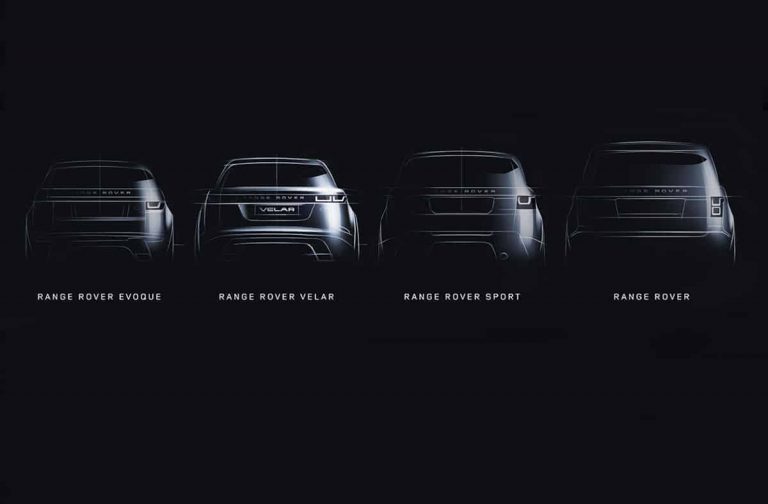
 It is understood that the Velar will be the most on-road pitched Range Rover model yet and will also debut a new interior design, based on the layout of its Jaguar sister model.
The Velar name (pronounced vel-ar) is one of the oldest elements of the car, dating back to the first Range Rover prototypes of the 1960s. When development engineers needed to hide the true identity of the 26 pre-production Range Rovers, they chose the name Velar, derived from the Latin velare meaning to veil or cover.
Read more Land Rover news, reviews and features at The Car Expert
More details of the Range Rover Velar will be released as we get them, and The Car Expert will also be at the Geneva Motor Show to report on all the new models unveiled.
It is understood that the Velar will be the most on-road pitched Range Rover model yet and will also debut a new interior design, based on the layout of its Jaguar sister model.
The Velar name (pronounced vel-ar) is one of the oldest elements of the car, dating back to the first Range Rover prototypes of the 1960s. When development engineers needed to hide the true identity of the 26 pre-production Range Rovers, they chose the name Velar, derived from the Latin velare meaning to veil or cover.
Read more Land Rover news, reviews and features at The Car Expert
More details of the Range Rover Velar will be released as we get them, and The Car Expert will also be at the Geneva Motor Show to report on all the new models unveiled. 
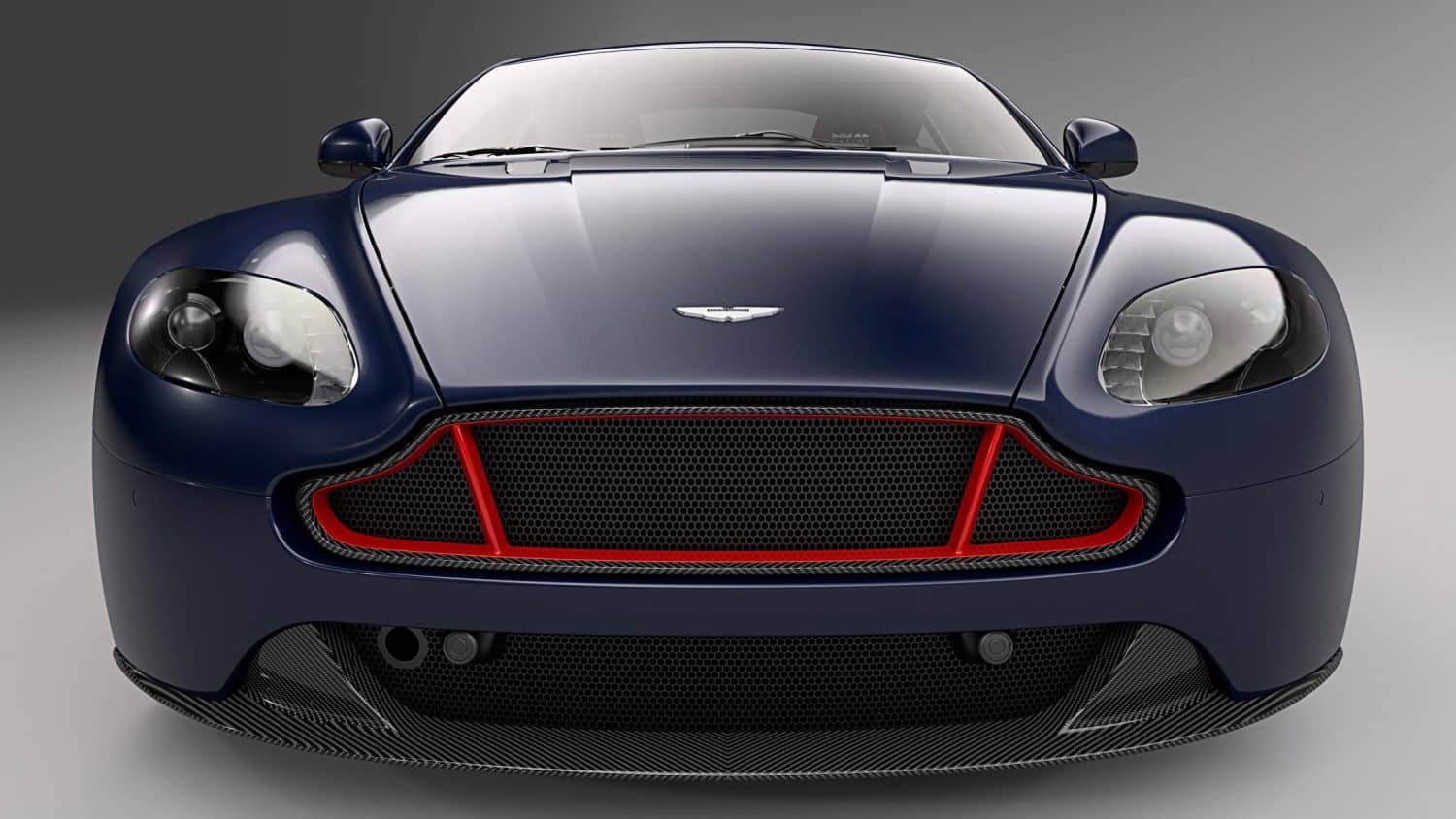
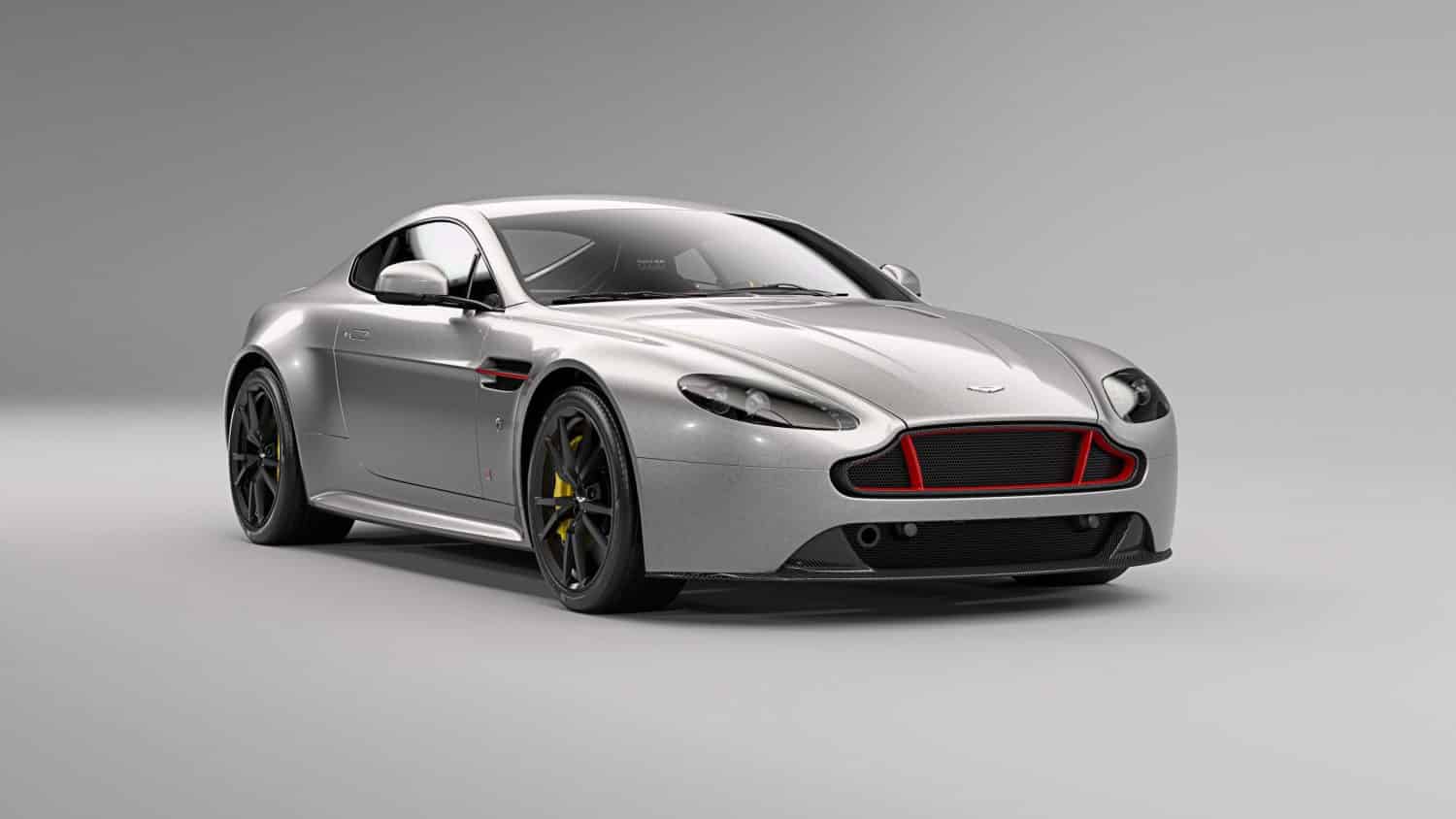
Aston Martin has added another special edition to its decade-old Vantage range: the Vantage S Red Bull Racing Edition, which will be available either with the company’s 4.7-litre V8 or 6.0-litre V12 engines.
The new editions of the Vantage have been created by Q by Aston Martin, the marque’s in-house personalisation service, to celebrate the second year of partnership between Aston Martin and Red Bull Racing.
The launch of the Vantage S Red Bull Racing Edition comes just weeks ahead of the 2017 Formula 1 World Championship, which starts with the Australian Grand Prix on 26th March.
As standard, the new limited edition will be finished in a deep Mariana Blue colour. Other choices include Tungsten Silver or a satin version of the Mariana Blue, to match the look of the Red Bull Racing F1 cars.
Externally, the Vantage S Red Bull Racing Edition features a carbon fibre finish to the front splitter, rear diffuser, side strakes and grille. The grille is finished with a red infill and the brakes sport yellow calipers, drawing on the colour scheme of the F1 team.
Inside, the special edition models get Red Bull Racing embroidery on the seat headrests, carbon fibre trim inlays and a colour-coded leather steering wheel.
Q by Aston Martin also offers the chance for customers to have their cars’ sills and final inspection plaques signed by either Daniel Ricciardo or Max Verstappen, Red Bull Racing F1 drivers.
Customers can expect to take delivery of their cars over late Spring and early Summer 2017. Full specification and pricing details have not been publicly disclosed, but are available by request from Aston Martin dealers.
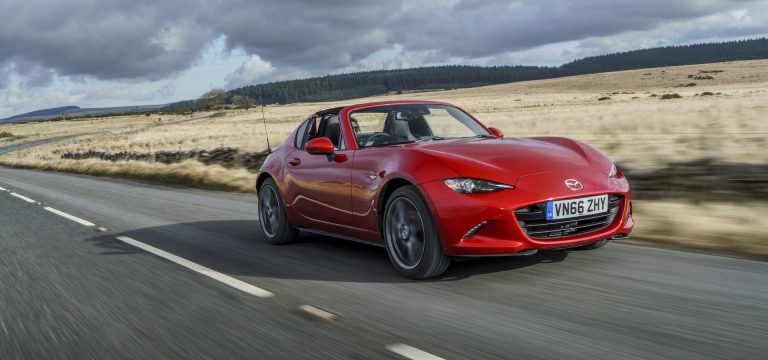
What is it? The Mazda MX-5 RF is the folding metal hardtop version of the latest MX-5 roadster.
Key features: Coupe styling, targa-like folding metal roof.
Our View: The Mazda MX-5 RF is a more practical alternative to the roadster, if just a little less fun to drive.
Type of Review: First UK drive
Anyone who knows cars also knows that the Mazda MX-5 is the most iconic roadster of the last quarter century, desired as much by those who enjoy a really fun drive as those who think they look good in a convertible. It has been the world’s best-selling roadster for some two decades.
So it will no doubt surprise many readers to learn that more than three-quarters of British buyers of the Mk3 MX-5 (and we take half of all Europe’s MX-5 sales) opted not for the pure, fabric-roofed roadster, but its sister with a retractable hard top.
So when the latest, fourth-generation MX-5 launched in August 2015 – a car we described as “the best MX-5 yet” in our first drive – a hardtop version could not be far behind. That model is the Mazda MX-5 RF (retractable fastback) and it arrives in showrooms on 4th March.
The RF is a very different proposition to the RC (Roadster Coupe) versions of the MX-5 that Mazda has previously produced. Whereas with their roofs down and tucked under a panel on the rear flanks those cars looked just like the roadster, the new RF is styled first and foremost as a coupe.


The ‘natural’ position appears to be with the roof in place, in which form the car looks like a purposeful little coupe – a bit square in the rear quarters (A colleague likened it to a Ginetta), but overall with satisfactory visuals. It’s reminiscent of the sister BRZ/GT86 models from Subaru and Toyota, which will no doubt be considered by potential buyers.
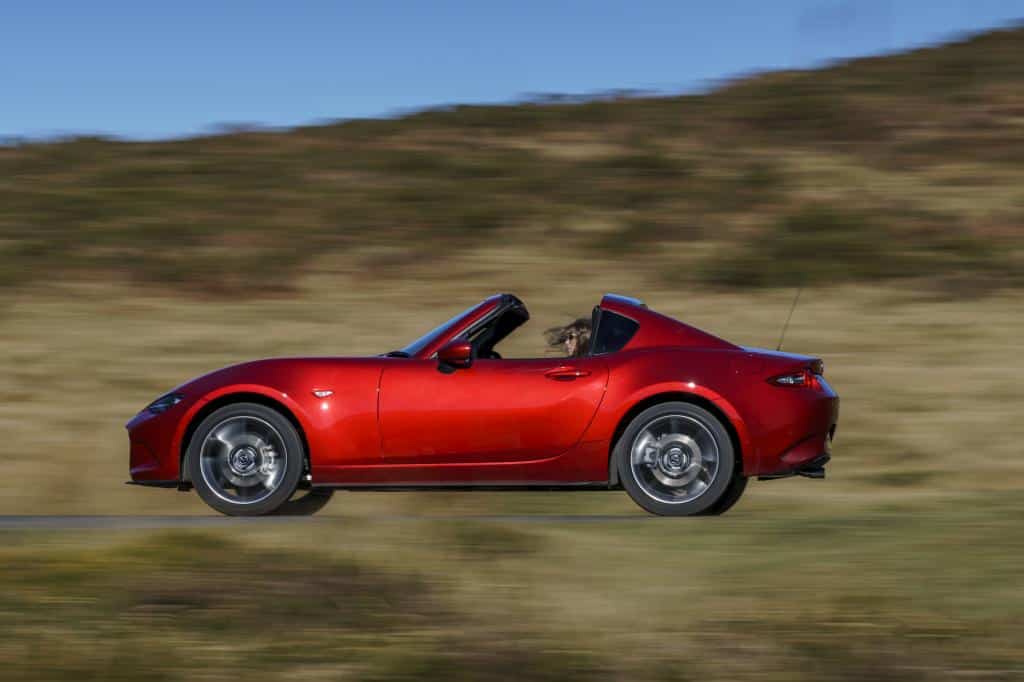
The folding roof is a clever three-piece mechanism. The process is electronic, operated by a button on the steering wheels and can be done on the move, though only at up to 6mph.
Opening or closing takes a mere 13 seconds and involves the rear buttresses rising up as the front and centre roof sections fold back and slip underneath them, along with the rear screen glass, the buttresses then slotting back into place to hide all the mechanics.
It’s impressive, but with the roof down all that is effectively missing is what was above and the glass behind. You are still cosseted by the buttresses just behind your shoulder, so you never get the full open-air driving experience you do with the roadster. In fact, you have to stand right next to the RF to realise the roof has been retracted.



Apart from the roof, the MX-5 RF is effectively the same car as its roadster sibling. Okay it stands 5mm higher, and weighs 40 to 45kg heavier depending on model, which cuts a tenth or two from the 0-62mph speed. Obviously much of the extra poundage is accounted for by the roof mechanism, plus extra sound insulation, though there is not quite so much of the roadster’s chassis strengthening needed.
The two engine choices are the same, however, both petrol units, both to Mazda’s latest SkyActiv technology and of 1.5 litres with 131hp or 2.0 litres with 160hp. The superb, six-speed short-throw manual gearbox remains, though there is also a six-speed auto option for the 2.0 car (does anybody choose auto in a Mazda MX-5? Surely that’s the equivalent of watering down a fine red wine with lemonade?).
So if so much remains the same, is the MX-5 RF as much pure fun to drive as the roadster? In a word, no. Though this is not to detract from it, as we will explain. Your writer once persuaded a colleague who was coming out of a Caterham to try the latest MX-5, despite he using the common and misrepresenting comment of “hairdresser’s car” to describe the Mazda.
Said colleague test drove the MX-5, bought one and has never been happier – it is a car for those who consider driving so much more than getting from A to B, a car in which one gets excited when approaching a section of twists and turns on a challenging B road. It carves out each turn in such a precise manner, while exhibiting fine-tuned balance in a way that all rivals have tried and failed to replicate.
The RF, however, does not quite feel as sharp in the twisty bits. It’s good, don’t get us wrong, but appears just a little biased towards the rear, which in turn gives the front end a slight floaty feel, a little (and it is a little) less confidence compared to its open-topped sister.
This is particularly true of the 2.0 SE-L variant, which boasts the sporty extra of a limited-slip differential. If anything this heightens the rear bias, requiring rather more concentration in a bend than one is used to with an MX-5.
There are compensations, however. Cruising with the top on, the MX-5 RF is significantly quieter than the fabric-roofed roadster. Travelling at motorway speeds with the top down is not the best option, as those large buttresses lead to a lot of swirling wind noise. And the extra weight and general setup make for improved road comfort, more effective smothering of bumps, than with the roadster.


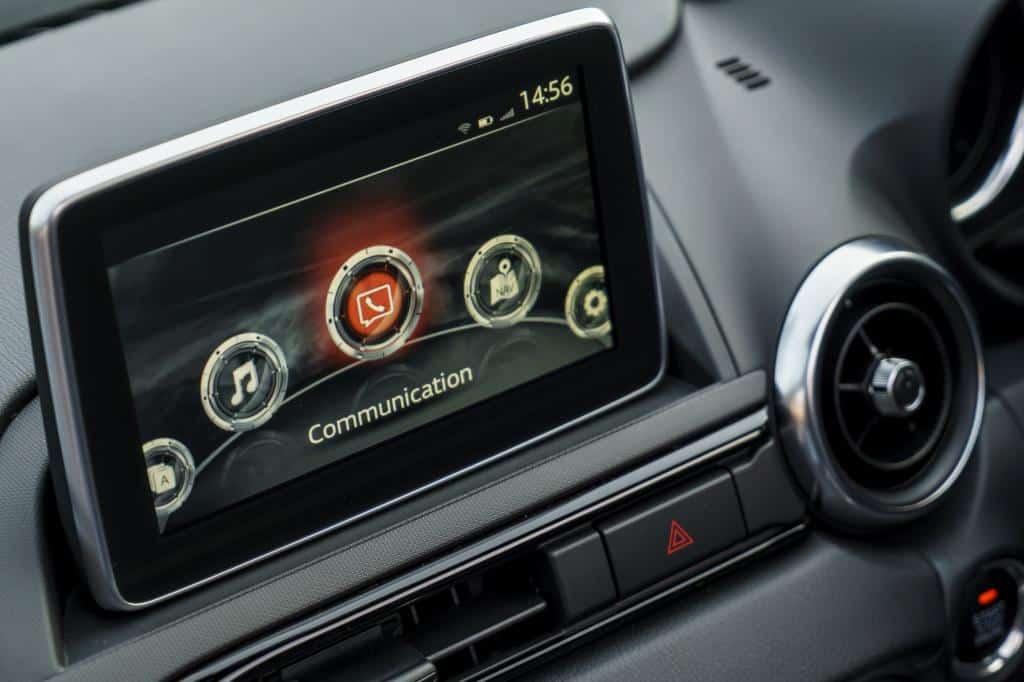
The Mazda MX-5 RF costs from £22,195 and comes, like the roadster, in two trim levels – SE-L Nav or Sport Nav. Notable features on the SE-L Nav include LED daytime running lights, tyre pressure monitoring, electric heated mirrors, leather on the steering wheel, gearshift and handbrake lever, cruise control, climate control air-con, DAB radio on the six-speaker sound system and as its name suggests a sat nav system. One disappointing absentee, however, on all MX-5s is reach control on the steering wheel.
Sport Nav models cost £2,600 more than the SE-L and the extras include auto wipers and headlamps, rear parking sensors, black leather trim, heated seats, keyless entry, a Bose sound system with nine speakers, and lane departure warning.
The options list is short – all versions can be bought with a couple of metallic paint choices at £550 or £670 respectively, while Sport Nav cars can be fitted with Nappa leather trim at £400 and the 160hp Sport Nav a Safety Pack. This also costs £400 and adds auto high beam headlamps and blind spot monitoring with a system to alert the driver to traffic crossing behind the car.
If you are quick to the showroom you may be able to secure one of the 500 Launch Edition versions. Costing £28,995 and based on the 2-litre Sport Nav, it gains a bespoke two-tone roof, 17-inch BBS alloy wheels, black door mirrors and rear spoiler, metallic paint and the Safety Pack as standard, Alcantara trim and Recaro seats.
If this writer was choosing between the two versions of Mazda’s sports car, he would of course go for the roadster. The thrill of tackling the best of the UK’s driver’s roads in the car will outweigh the fact that the vast majority of one’s mileage will consist of going from A to B. Most drivers will be more practical, however, so we can expect this RF to continue the trend established by the RC and remain the best-selling version of the Mazda MX-5, by far.
Models tested: Mazda MX-5 RF 131ps SE-L Nav, 160ps SE-L Nav
On Sale: March 2017
Range price: £22,195-£27,095
Insurance groups: 24E-28E
Engines: Petrol 1496cc, 1998cc
Power (hp):131, 160.
Torque (Nm): 150, 200.
0-62mph (sec): 8.6, 7.4 (auto 8.4).
Top speed (mph): 126, 134. (auto 121).
Fuel economy (combined, mpg): 46.3, 40.9 (auto 39.2).
CO2 emissions (g/km): 141, 161 (auto 167).
Key rivals: Subaru BRZ, Toyota GT86, Audi TT
Test Date: February 2017

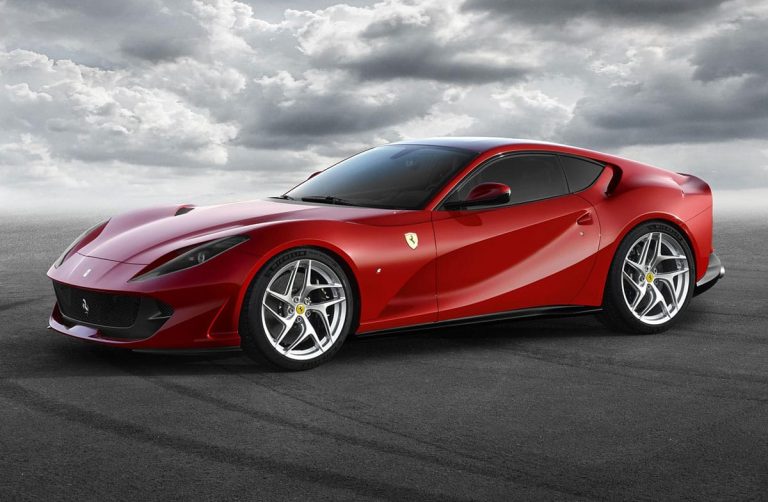
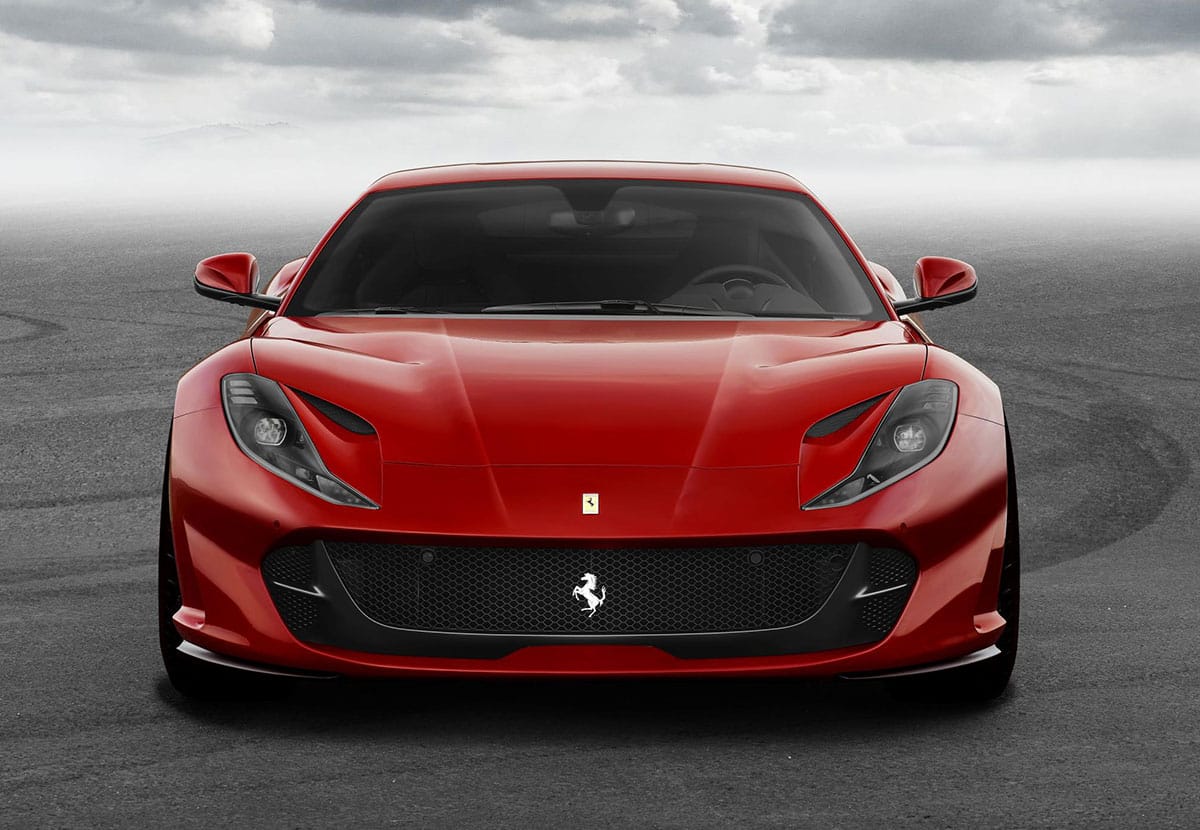
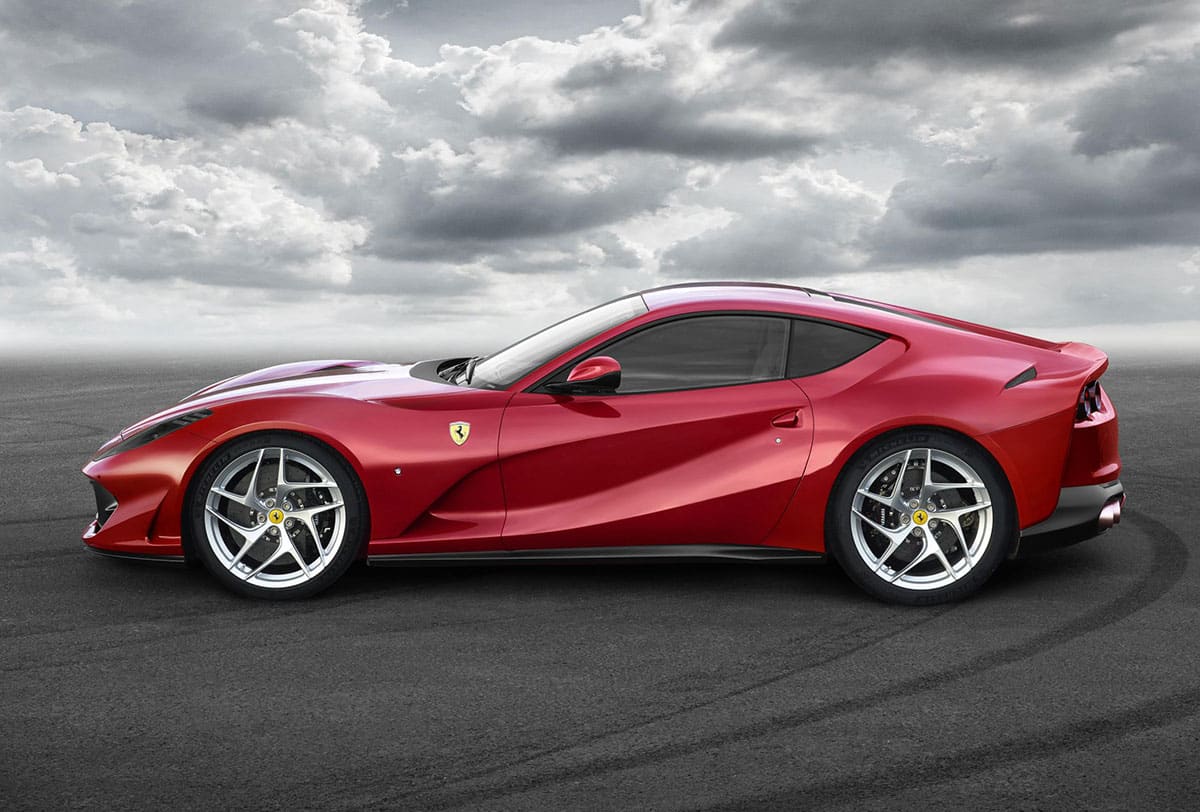
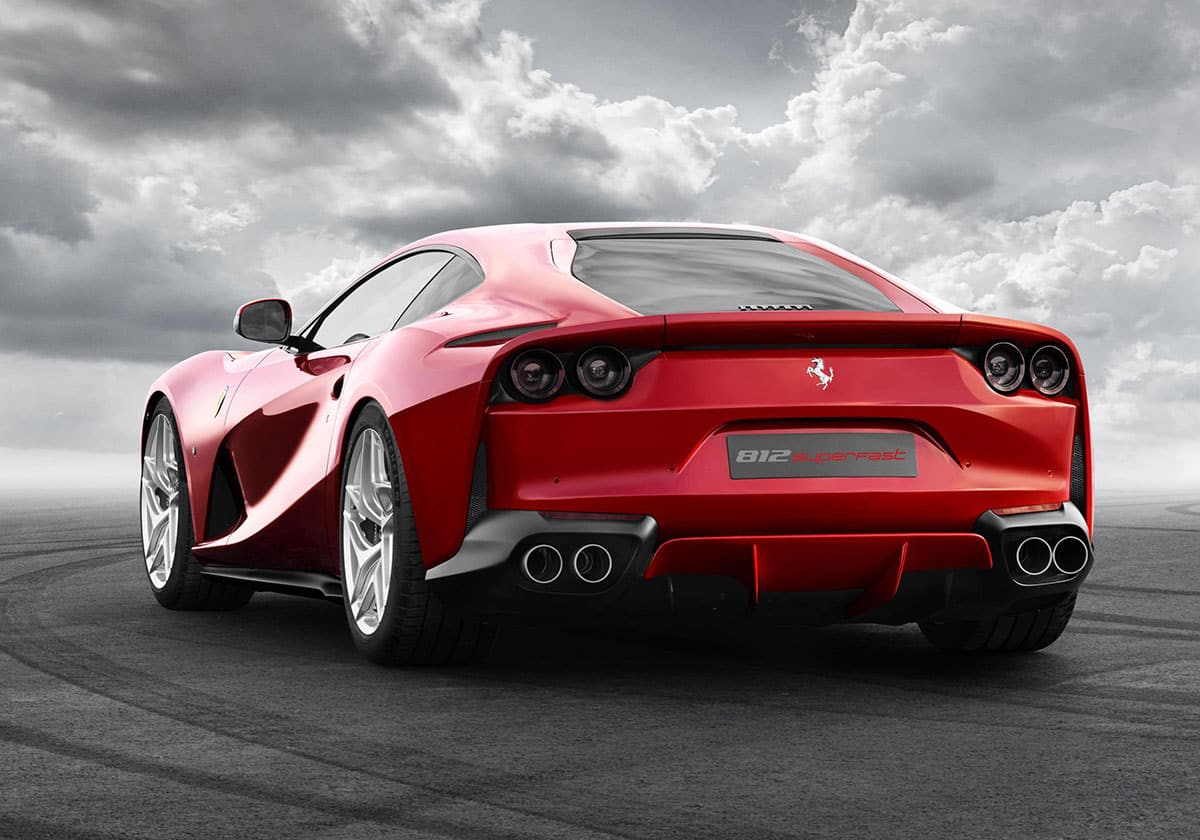
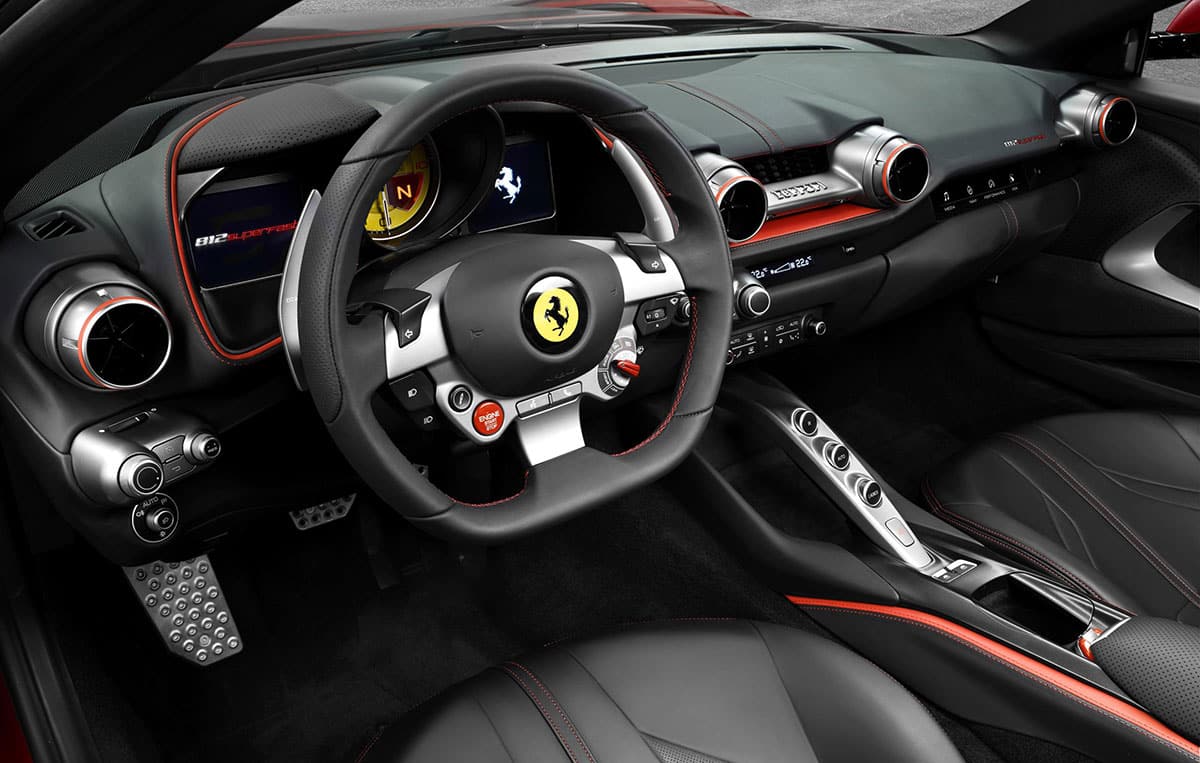 Industry observers also believe that this engine will be the last traditional 12-cylinder unit from Ferrari with future units using turbos or hybrid assistance.
The 812 Superfast also features the first electric power steering system ever fitted to a Ferrari. This is fully integrated into the car’s electronic systems, including the latest version of the Slide Slip Control system that aids handling.
Industry observers also believe that this engine will be the last traditional 12-cylinder unit from Ferrari with future units using turbos or hybrid assistance.
The 812 Superfast also features the first electric power steering system ever fitted to a Ferrari. This is fully integrated into the car’s electronic systems, including the latest version of the Slide Slip Control system that aids handling.

 Inside there is more space, particularly in the boot that grows from 200 to 255 litres, and a horizontal design to increase the impression of width, while the materials and layout have been upgraded to offer a feeling of greater quality.
A new dash layout includes a central seven-inch touchscreen, effectively moving several controls upwards and closer to the driver. Five separate colour packs will be available to customise the upholstery, while GT-Line versions will also be fitted with a D-shaped steering wheel.
Inside there is more space, particularly in the boot that grows from 200 to 255 litres, and a horizontal design to increase the impression of width, while the materials and layout have been upgraded to offer a feeling of greater quality.
A new dash layout includes a central seven-inch touchscreen, effectively moving several controls upwards and closer to the driver. Five separate colour packs will be available to customise the upholstery, while GT-Line versions will also be fitted with a D-shaped steering wheel.



The Mitsubishi Eclipse Cross crossover will debut at the Geneva motor show in March, as the brand goes after the best-selling Nissan Qashqai.
Mitsubishi has released the first teaser photos of the car, and its name, which revives a title last used in 2012 – the Eclipse was a two-door coupe sold only in North America.
According to its makers the Eclipse Cross will broaden the Mitsubishi SUV line-up and ‘introduce a whole new audience to Mitsubishi Motors.’ It is expected on sale in the second half of 2017, slotting into the brand’s SUV range between the ASX and Outlander models, both of which have recently undergone mild facelifts (click here for ASX first drive).
No further details of the Eclipse Cross have yet been released, though from the teaser photos it can be determined that the newcomer will be a much more stylish, crossover-type car than the brand’s typical SUV product.
The heavily sculpted nose, sloping roof line and steeply rake rear screen are developed directly from the XR concept that produced a highly positive reaction when it was unveiled at the 2015 Geneva motor show.

Industry sources suggest that the Eclipse Cross will go on sale with a choice of 2.2-litre diesel and 1.5-litre turbo petrol engines, and front-wheel-drive or all-wheel-drive transmissions.
With Mitsubishi’s sales having been greatly boosted by the launch of the plug-in hybrid Outlander, it would seem likely that the technology will be extended to the Eclipse Cross, thought Mitsubishi is giving no indication of such plans. The new car is built on a shortened Outlander platform, and the XR concept was displayed with a PHEV drivetrain.
Mitsubishi intends to further grow its crossover line-up. The Eclipse Cross will likely be followed in 2019 by a smaller sister model targeting the likes of the Nissan Juke, and including a full-electric drivetrain.


British chemical giant Ineos plans to manufacture a 4×4 to fill the gap left by the demise of the Land Rover Defender.
According to the company, Jaguar Land Rover’s decision to stop making the iconic Defender leaves a market for an ‘uncompromising off-roader’ and it is prepared to invest ‘many hundreds of millions’ in creating such a vehicle, hopefully in the UK.
Described as one of the largest manufacturers in the world in its field, Ineos has been undertaking a six-month feasibility study before giving the go-ahead for what will be the company’s first vehicle.
The new, as yet unnamed 4×4 will both fill the gap in the market vacated by the Defender and ‘provide a step-change improvement in build quality and reliability.’
Industry sources suggest that the vehicle will be traditional in design – Ineos has firmly stated that it its new vehicle will offer a real and pure alternative to the current crop of standardised ‘jelly-mould’ SUVs. However its powertrains could include a hybrid or even full-electric option.
A global target market includes agriculture and forestry workers, explorers and adventurers as well as traditional Defender fans.

The company’s former head of Engineering and Technology, Dirk Heilmann, has now been named head of the new Ineos Automotive division and has begun looking for sites to build a manufacturing facility, while also recruiting personnel from the automotive industry. This is an amazing project for everyone involved – our job is to create the world’s best 4 x 4 and we are already moving forward with our plans,” Heilmann says.
Ineos chairman Jim Radcliffe, who came up with the proposal, admits to being a fan of the Defender and believes he can produce a vehicle targeted at adventure and ‘active driving’ markets, but also for those who need a work and utility machine.
“I am a great admirer of the old Land Rover Defender and have enormous respect for its off-road capability, and our new 4 x4 has been inspired by it,” Ratcliffe says.
“But whilst our off-roader might share its spirit, our new car will be a major improvement on previous models”.
Industry sources suggest that the first Ineos 4×4 could appear in 2020 at prices similar to those of the Defender. JLR has previously indicated that it intends to launch a successor to the Defender – this is expected to appear in 2019 and is rumoured to be much more high-tech than its predecessor.








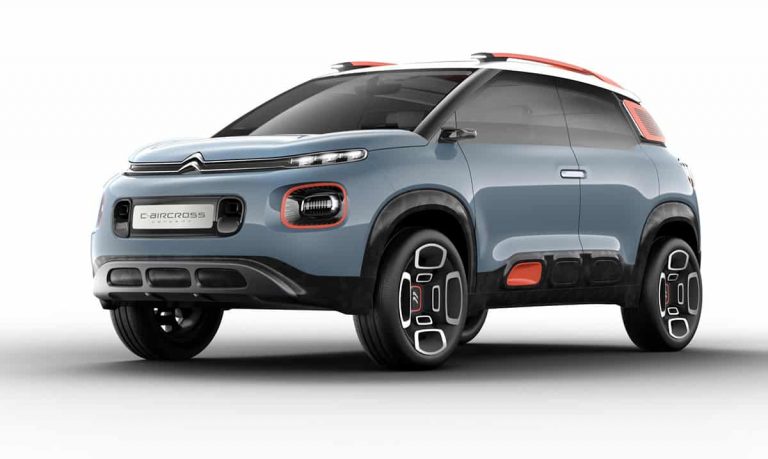
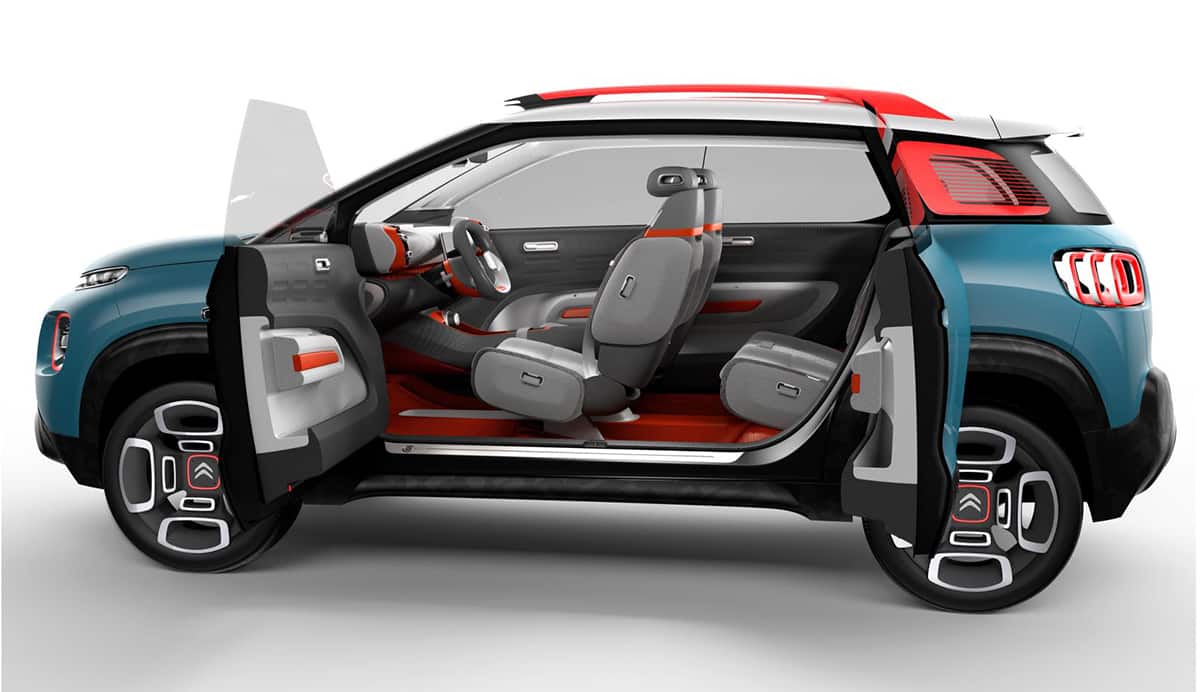
 Citroen is applying its Advanced Comfort programme to the C-Aircross . A colour head-up display replaces traditional dials, user-friendly controls sit on the single-spoke steering wheel, while rear-facing cameras are employed in place of the door mirrors. A 12-inch touchscreen dominates the centre console. A host of storage areas are incorporated throughout the cabin.
No details have been released concerning powertrains though the production model will likely make use of the same engine range as the recently launched C3. The concept makes use of the brand’s Grip Control system, offering standard, sand, off-road and snow modes, together with one that disengages the electronic stability programme.
Read more Citroen news and reviews at The Car Expert
* The Car Expert will be reporting directly from the Geneva Motor Show – check back for all the latest news from press day on 7th March.
Citroen is applying its Advanced Comfort programme to the C-Aircross . A colour head-up display replaces traditional dials, user-friendly controls sit on the single-spoke steering wheel, while rear-facing cameras are employed in place of the door mirrors. A 12-inch touchscreen dominates the centre console. A host of storage areas are incorporated throughout the cabin.
No details have been released concerning powertrains though the production model will likely make use of the same engine range as the recently launched C3. The concept makes use of the brand’s Grip Control system, offering standard, sand, off-road and snow modes, together with one that disengages the electronic stability programme.
Read more Citroen news and reviews at The Car Expert
* The Car Expert will be reporting directly from the Geneva Motor Show – check back for all the latest news from press day on 7th March.
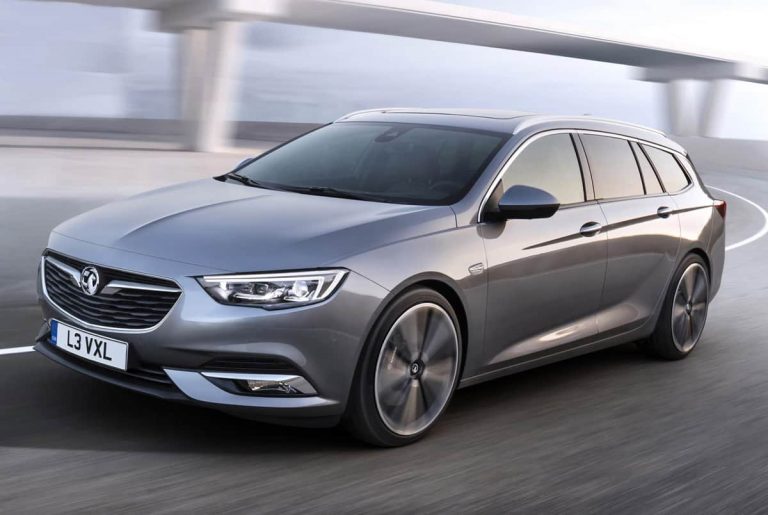
The Geneva motor show in March will see the debut of the Vauxhall Insignia Sports Tourer alongside its saloon Grand Sport sister.
Both are expected on UK sale by the summer of 2017, assuming flagship roles in the Vauxhall line-up.
Like the Grand Sport (see our story here) the estate-bodied Sports Tourer takes its styling inspiration from the Monza concept, created by a team led by Vauxhall-Opel design head Mark Adams and first seen at the Frankfurt Motor Show in 2013.
It has a sleeker look than its predecessor, but use of all-new architecture also frees up extra interior space, including maximum boot space with the rear seats folded of 1,638 litres – 100 more than the outgoing car – in a boot extended by 10cm.

The Insignia Sports Tourer is 7cm longer than the previous model, measuring up at almost exactly 5m, with a wheelbase extended by 9cm to 2.8m. New construction techniques also see the weight of the car reduced by up to 200kg.
As with the Grand Sport details of the powertrain line-up are yet to be revealed, Vauxhall only stating that they will be latest-generation units, which suggests efficiency improvements.
It is know that both the saloon and estate versions will include include torque-vectoring all-wheel-drive and a newly designed eight-speed auto gearbox.
Nine out of ten Insignia sales have previously been to fleet buyers and Vauxhall will be seeking to attract new customers with a swathe of technology.
LED matrix lighting, Lane Keep Assist, Head-up Display, front and rear-seat heating and a heated windshield will all be available, as will the IntelliLink connectivity/infotainment system and Vauxhall’s OnStar personal assistant service.
Prices for the new range will likely be announced closer to the car’s launch – industry observers suggest they will broadly be in line with the current model, starting from just over £20,000.


UK new car sales hit a 12-year high in January, with alternative-fuelled cars powering the growth.
According to the latest figures released by the Society of Motor Manufacturers & Traders, 174,564 new cars were registered in the month – 2.9 per cent up on January 2016 and highest total recorded since 2005.
The most significant growth was in the alternative-fuel market, which includes electric and plug-in hybrid vehicles. A total of 7,279 such vehicles were registered, 19.9 per cent more than in January 2016 and taking the sector’s market share to more than four per cent for the first time. Previously AFVs have never exceeded 3.6 per cent of the market.
Suggesting that a backlash against diesel may be growing, diesel car registrations slipped by 4.3 per cent to 78,773, while petrol vehicles jumped 8.9 per cent to 88,507. Current speculation suggests that the Government could be planning a diesel scrappage scheme, possibly within months, to take older diesel models off the road.
There is also evidence of growing confidence amongst consumers, with private registrations leading the market, up by five per cent and accounting for 76,729 cars. However this could also be due to buyers trying to secure models before a new, more expensive road tax regime begins on 1st April (see our story here).

SMMT Chief Executive Mike Hawes describes the results as a good start to 2017 in the new car market, which he says has been buoyed by a great range of new models which are safer and cleaner than ever before.
“It’s encouraging to see alternatively fuelled vehicles benefiting from this positive growth, reaching a record market share,” Hawes adds, while warning that such growth is likely in coming months.
“After record growth in 2016, some cooling is anticipated over the coming months, but provided interest rates remain low and the economy stable, the market is in a good position to withstand its short-term challenges,” Hawes says.
The Ford Fiesta started 2017 where it finished 2016, dominating the new car top 10 – the 8,495 registrations of Fiestas were 3,040 ahead of nearest challenger the Volkswagen Golf.
Winners and losers in the 2016 new car sales race





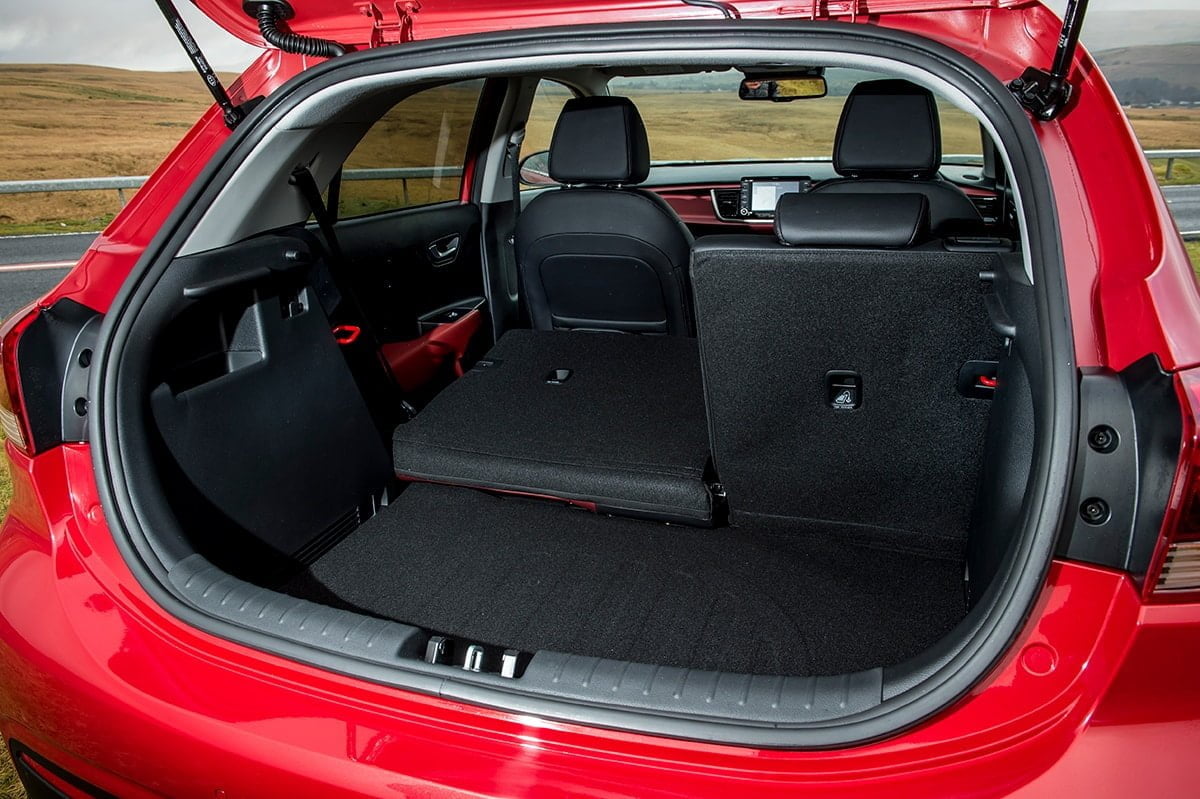


The Geneva motor show in March will see the debut of the Skoda Octavia vRS 245 – the most powerful version of the model yet.
Offering as its name suggests 245hp, 15 horses more than any previous Octavia vRS model, the newcomer will go on sale later in 2017 in both hatch and estate form.
The increased power of its 2.0-litre four-cylinder TSI turbocharged petrol engine, allied to 370Nm of torque between 1600 and 4300rpm, will see the Octavia hatch through 62mph from rest in 6.6 seconds, the estate just one tenth slower. Both models will be electronically limited to a 155mph top speed.
In-gear acceleration is promised to be equally impressive. Hatch models will go from 37-62mph in 6.4 seconds, from 50-75mph in 6.6 seconds, with again the Estate just behind.

Octavia vRS 245 models will be supplied as standard with a six-speed manual gearbox but for the first time buyers will also be able to specify a seven-speed dual-clutch auto unit.
The 245 gains the performance-pitched chassis modifications of other Octavia vRS variants. The chassis is 14mm lower to the ground, while the rear track grows 38mm over previous vRS cars.
The Electronic Stability Control includes a Sport mode and an electronic limited-slip differential is fitted as standard, making itself particularly felt when accelerating rapidly out of corners.
A Performance Mode Select driver aid allows individual adjustment of the drive, chassis and road comfort settings, progressive steering is included and adaptive suspension an option.
Visually the car gains various design tweaks to emphasise its sporty nature, including a wider radiator grille with honeycomb-style air inlets, gloss black detailing, notably on the 19-inch alloy wheels, and sports seats, steering wheel and aluminium pedals inside.
The latest infotainment and connectivity systems are also included, among the features a wi-fi hotspot and real-time navigation.
Prices for the Skoda Octavia vRS 245 are yet to be announced – they will no doubt be more than the £25,130 of the vRS 230.

Safety body Euro NCAP is celebrating 20 years of its crash tests, during which road deaths and injuries have been cut by more than half.
Figures released for the 20th anniversary show that 182,000 deaths and serious injuries amongst motorists have been prevented since the tests began.
Euro NCAP began crash-testing cars in February 1997, in the face of major opposition from the motor industry. In the period since the star rating issued following each crash test has become the industry-standard guide to the safety of a car.
Today nine out of 10 cars sold in Europe hold a Euro NCAP rating and manufacturers are consistently meeting the top five-star rating.
Thatcham Research, which undertakes the Euro NCAP testing in the UK, estimates that deaths and serious injuries amongst car occupants have dropped by 63 per cent, from 23,000 in 1997 to 8,500 in 2015.

The testing has not just focused on the occupants of cars, however. Increasing legislation resulting from the Euro NCAP programme has seen the number of pedestrians and cyclists killed or seriously injured fall by 40 per cent, from 14,500 in 1997 to 8,500 in 2015.
While celebrating its successes, Thatcham Research is also using the anniversary to call for further increases in safety, and urging buyers to play their part.
Thatcham wants consumers to only buy cars that hold a top five-star Euro NCAP rating, and that have collision avoidance technology, such as autonomous emergency braking (AEB) and lane-keeping systems among their driver aids.
The safety body also wants manufacturers to specify AEB as standard, as this could prevent thousands of accidents, saving 2,700 pedestrian and cyclist deaths and serious injuries a year.
Euro NCAP’s Secretary General, Michiel van Ratingen is proud that over the past 20 years the programme of safety tests has helped Europe reach the lowest road fatality rate for any region in the world. But he also warns against complacency.
“Euro NCAP has given millions of consumers the knowledge and confidence to choose the safest cars possible, (but) recent years have shown a slowdown in the progress rate, so we mustn’t take our foot off the gas,” van Ratingen says.
“We want to ensure that Europe’s roads get even safer in the next 20 years, not just for car occupants but for all participants in traffic,” he adds.
Today Euro NCAP tests many more aspects of a car’s safety than when the programme started in 1997, and van Ratingen says more is to come. “Next year, we will test systems that recognise and avoid crashes with cyclists, and we’re lining up a very challenging roadmap for 2020 to 2025.”
Euro NCAP has assessed 629 different cars since it started the programme in 1997. Four stars were the maximum available in the first tests, which analysed seven superminis. The Ford Fiesta and Volkswagen Polo each earned three stars, the Fiat Punto, Nissan Micra, Vauxhall Corsa and Renault Clio two. The Rover 100, successor to the Metro and at the time a top-selling model, achieved only one star.
The tests included pedestrian protection and the best score achieved was only two points, which according to Euro NCAP showed that manufacturers were not considering impacts with other road users when designing the front ends of cars.
Manufacturers slammed the tests, claiming they were so severe that achieving four stars was impossible. But the Volvo S40 gained the top rating for occupant protection only five months after the tests began.
In the years since safety technologies that were non-existent or optional when the tests began – such as driver and passenger airbags, side curtain airbags, seatbelt reminders and electronic stability control – are now standard on most cars sold in Europe.
Today’s Euro NCAP ratings are significantly more demanding and cars can now achieve a maximum of five stars, awarded not just for how they protect occupants and pedestrians in a collision, but on the car’s ability to avoid a crash in the first place.
Yet manufacturers routinely achieve the top five-star rating, and then use the Euro NCAP results in the marketing of new models.


To mark the anniversary Thatcham crash-tested a 1997 Rover 100 alongside a 2017 Honda Jazz – a car of equivalent price to the Rover in today’s market. The damage to the Rover shocked the testers – they concluded occupants would have suffered life-threatening injuries while those in the Jazz would have walked away.
In an offset frontal impact at 40mph, replicating the most common type of crash on UK roads, the Rover’s steering wheel was forced sharply into the cabin, pushing the airbag to one side as the passenger ‘safety cell’ dramatically collapsed.
The driver would have suffered serious head injuries as they smashed into the hard dashboard and A-pillar instead of the airbag. Thatcham’s HIC (Head Injury Criteria) scale registered 3,000 – way above the 1,000 HIC ‘high risk’ threshold.
The bulkhead between the passenger compartment and the engine bay also collapsed and the driver’s seat gave way, which would have caused severe injuries to the driver’s legs as they were rammed hard into the dashboard.
A three-year child in the back seat would also have suffered life-threatening injuries – a dummy representing the child was hurled forwards, ramming its head into metal pillars supporting the head restraint and the driver’s head.
Thatcham describes the Rover as ‘crumpling like a tin can’ leaving its injured occupants trapped in the car as the ‘safety cage’ was crushed almost in half. The safety cell collapsed by more than 400mm, while the Honda’s barely distorted at all.
The car’s front end collapsed and absorbed the impact, leaving the safety cell around the occupants intact. After the crash the car doors were able to be opened and even the windscreen remained intact.
All the internal safety systems such as the airbags and seat belts were able to perform as designed, further protecting the occupants from injury. The driver’s head hit the centre of the airbag registering a HIV of only 448 and the most serious injuries to occupants would likely have been no more than bruising.
According to Thatcham CEO Peter Shaw, Euro NCAP has fundamentally changed the way that vehicle buyers and vehicle manufacturers value safety.
“In 1997, many motorists were still choosing not to wear seatbelts – only a few years later we were demanding airbags, side impact protection and other safety systems,” Shaw says.
“You are now twice as likely to walk away from a car crash compared with 20 years ago – these major changes in the way people and manufacturers prioritise safety are all thanks to Euro NCAP,” he adds.
According to Shaw the focus is now turning to crash prevention, ensuring that Britain’s roads continue to become even safer, not just for car occupants but for every road user.
“We have come a long way since the days when manufacturers met only the most basic, mandatory, safety requirements but we must continue to apply pressure.”


The fifth-generation of the SEAT Ibiza supermini has been revealed at a special event in Barcelona.
Described by its creators as the ‘best Ibiza yet’ and ‘a major step forward’ in the brand’s renewal of its range, the new SEAT Ibiza will make its public debut at the Geneva Motor Show on 7th March and go on UK sale in July.
The new Ibiza will be offered, like other recent new superminis, as a five-door model only. The three-door version has fallen victim to significant declines in sales of such cars, while the estate model is unlikely to be repeated due to the imminent reveal of the Arona small SUV.
The car is built on a new version of the VW Group’s latest MQB architecture – the A0 platform is specifically designed for smaller cars and the Ibiza the first model to use it.

While the body styling is familiar, and closely related to the latest version of its big sister the Leon, the car is 87mm wider, and fractionally shorter and lower than its predecessor.
Crucially a 95mm extension to the wheelbase, to 2564mm, frees up significant interior space – 35mm extra rear legroom, front headroom up by 24mm, rear headroom by 17mm, and the seats gaining 42mm extra width. The bootspace mushrooms by 63 litres to 355 litres, which SEAT claims is class-leading.
Five engine options will be available. The 1.0-litre three-cylinder TSI petrol unit will be offered with 95 or 115hp, and will be joined before the end of 2017 by a new four-cylinder 1.5 litre unit, dubbed EVO and with 150hp.
Diesel buyers will choose from two versions of the 1.6 TDI unit, with either 80 or 95hp. Depending on model the engines will be combined with five or six-speed manual transmissions or a seven-speed dual-clutch DSG-auto unit.
SEAT promises plenty of technology across the four trim levels, S, SE, FR and the new Excellence grade. Connectivity and driver assistance systems will be to the fore, equipment including a wireless charger and smartphone compatibility through Apple Car Play, Android Auto and Mirror Link. Among the driver-aids available will be Front Assist, Adaptive Cruise Control, a keyless entry, front and rear parking sensors and a rear view camera.
The SEAT Ibiza has for many years been the brand’s top seller globally, with over 5.4 million finding owners since the first version launched in 1984. The Mk5 model will form one of three core pillars for the brand’s future growth, alongside the Ateca SUV and the Leon, which now competes with the Ibiza for most popular SEAT status.


What is it? The Audi A5 Sportback is a five-door hatch version of the newly-launched coupe.
Key features: Weight saving, more distinctive shape, more room, upgraded technology.
Our view: Five-door hatchback practicality with the visual appeal of the two-door A5 Coupe, improved engines and plenty of technology make the Audi A5 Sportback an attractive choice.
Type of review: First UK drive
Little over a month after the second-generation Audi A5 Coupe arrived on UK roads, The Car Expert heads to the Midlands to test the second new version, the Audi A5 Sportback. This car joins its sister in showrooms from mid January.
Whereas the A5 Coupe is, as its name suggests, a two-door car with a boot, the Sportback retains the same distinctive shape, but in a more practical five-door hatch format.
First introduced in i010, the five-door A5 has since seen 340,000 sales. Customers are attracted to it as a more distinctive-looking alternative to the core A4 model that it is based on.
It is tempting to point readers towards our review of the Audi A5 Coupe published in November – the two cars are similar in most areas including styling, space, and mechanics.


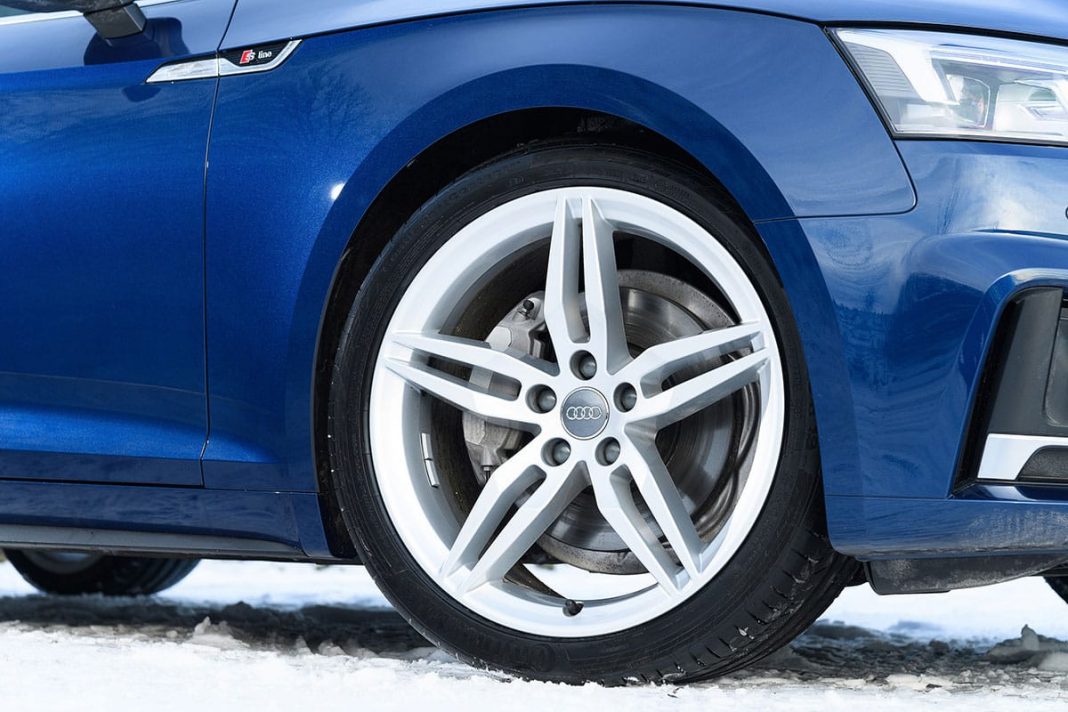

Where the two cars differentiate is behind the door pillar, where the Sportback shell curves more gently backwards to accommodate the rear doors and a quarter panel.
Looks are everything to this car. Audi personnel describe the coupe shape as iconic and the Sportback manages to retain the sleek visuals despite the extra versatilty of the added pair of doors. The new shell, again built around the Volkswagen Group’s latest MLB architecture with its multi-material construction, cuts shell weight by 15kg, while the car as a whole saves up to 85kg despite being 2cm longer, if 1cm narrower, than its predecessor.
In its second-generation version, the A5 Sportback gains the same styling enhancements as its sister. The lines are more pronounced, particularly the wave shape running down each flank from head to tail lamp. The bonnet is longer, swooping down to meet the most prominent element, the wider, flatter grille.
In the rear the boot makes way for a tailgate, powered as standard, and the changes necessitate a wheelbase not only 14mm longer than its predecessor but extended by 60mm over that of the stock Coupe.
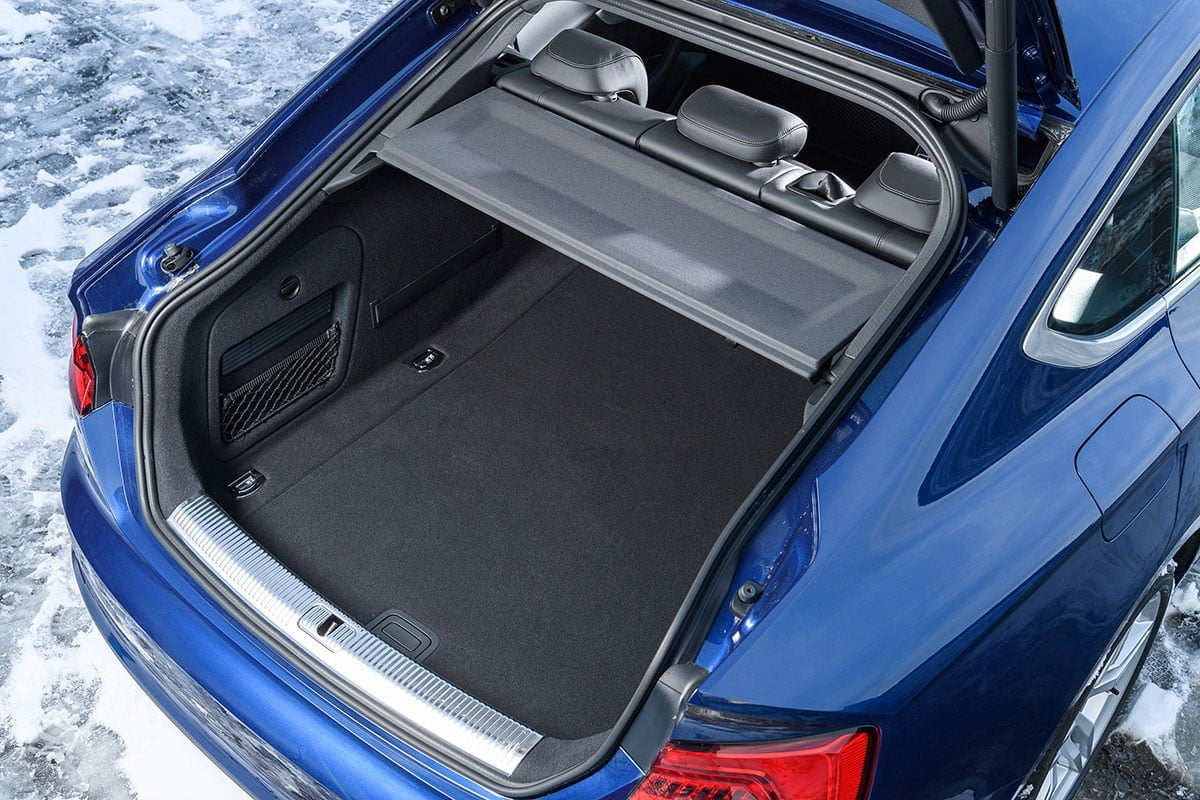
The extra space between the wheels produces more room within whether in front or rear, though calling this a true five-seater is stretching a point. Boot volume of 480 litres is 15 more than the Coupe and once the rear seats are dropped this can extend to 1,300 litres. It’s a practical space too, one metre wide and almost perfectly rectangular in shape.
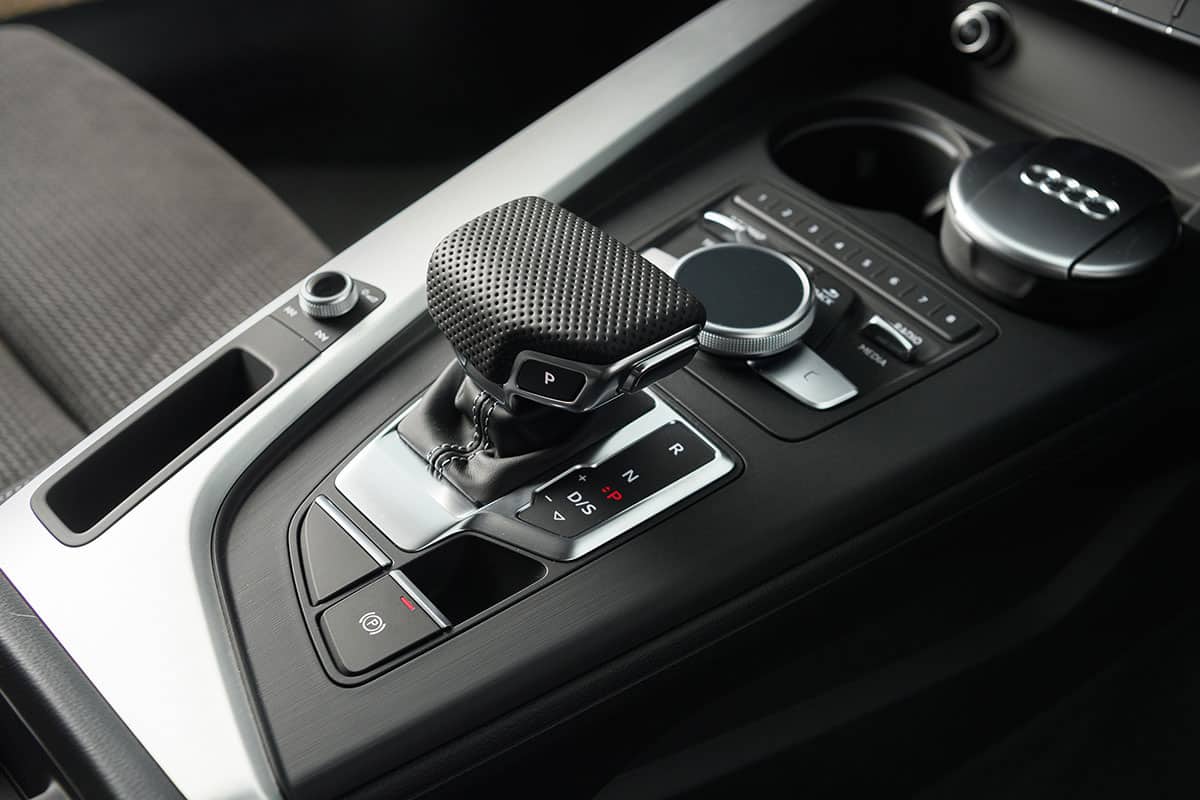
Inside the car is exactly as the two-door Coupe, indicative of recent Audis but a significant step up from the first-generation model. It is a quality environment, finished to high quality and well designed, though this reviewer still thinks the MMI screen looks a little ‘plonked’ atop the centre console.
The cabin oozes technology, of course, this is an Audi after all. But how much of the tech one gets will depend which of the three trim levels, SE, Sport or S line, is chosen and the level to which one enjoys the ever-extensive options list.


Engine sizes range across two litres or three litres, in petrol and diesel form. However the 2.0-litre diesel will take by far the majority of sales amongst those calculating their benefit-in-kind tax. It offers 190hp, and can be had in stock form or as an eco-focused Ultra model – these come with front-wheel-drive transmissions only, cut CO2 emissions by 11g/km and add an extra seven miles to each gallon, while slowing the 0-62mph time by half a second.
Even standard diesels are 10mpg more efficient than their first-generation equivalents and 21g/km, 17 per cent, cleaner. And for those who want more grunt with diesel economy a 3-litre variant will soon join the range with 218hp.
The stock petrol unit is a 2-litre TFSI with 252hp on tap. That’s 22 horses more than its predecessor, cutting the 0-62mph time by half a second to 6.0 seconds, while returning 11 per cent better fuel economy and an almost 13 per cent improvement in C02 emissions.
Then there is the S5, the sports model. Like in the Coupe, its new 3-litre TFSI engine is at 354hp 21 horses up on the previous version, sending the car through 62mph from rest in 4.7 seconds. And while the savings in fuel economy aren’t quite as dramatic at 1.9mpg, emissions are cut by 14g/km, an eight per cent improvement.
Enough of dry figures, how does the Audi A5 Sportback perform? At the launch event The Car Expert drove the expected best-selling diesel version, and the performance S5 Sportback model. And a rather more practical test drive route compared to that on the A5 Coupe launch provided a clearer view of the Sportback’s capabilities.
Unsurprisingly, this is a highly refined car. Admittedly both of our test vehicles were all-wheel-drive variants with the long-renowned quattro system, which helped to add to the impression of a car firmly planted to the road.
But as we stated in the A5 Coupe review, it is also clear that Audi has worked very hard to improve its ride quality, a regular criticism of past models. The car is a composed and relaxing environment in which to eat up the miles at motorway speed limits, but also corners with confidence, remaining upright and composed.
The only real surprise comes with the S5. For a car with a 4.7-second 0-62mph time, it doesn’t feel nearly as raucous behind the wheel, far too normal and for a sports model, just a little underwhelming.


Audi A5 Sportback prices start from £33,050, this buying the 2.0-litre version in front-wheel-drive form with a six-speed manual gearbox. The cheapest quattro is again with the 2-litre unit, in Sport Trim and with a seven-speed S tronic ‘box. S5 versions, meanwhile cost £47,000.
SE and Sport models come supplied with xenon headlamps and 17-inch alloy wheels, S line versions get LED lamps and 18-inch wheels. Also standard across the range are leather upholstery with heated front seats, MMI operation of the radio through the seven-inch colour monitor, Apple CarPlay and Android auto smartphone integration, front and rear parking sensors and a notable safety feature, the pre-sense City collision avoidance system.
To little surprise, Audi tells us that A5 owners like to add options to their cars. The list was always extensive, and has now ‘expanded considerably’. Highlights include the MMI Navigation Plus, which has a larger 8.3-inch screen and a touchpad, and the virtual cockpit that can put Google Earth mapping right across the driver’s instrument panel.
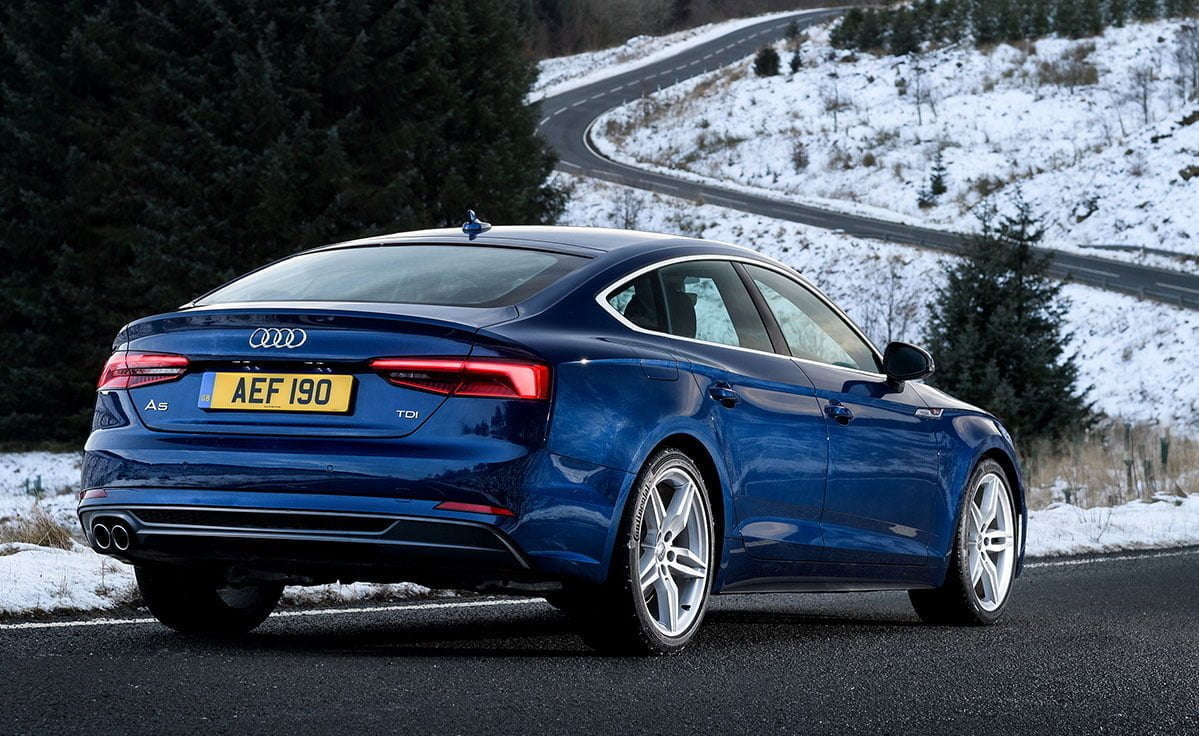
More upmarket infotainment and connectivity systems and a host of driver assistance systems will make it all too easy for owners to spec their Sportback above the £40,000 marker that come April, will add £310 to the annual road tax bill for five years.
Like the Coupe, the new Audi A5 Sportback is an effective evolution of a model that already had plenty of fans. It looks better, its engines are both more powerful and more efficient, its road manners exemplary, and there is a highly tempting selection of latest technology available. It will continue to sell well.
Modelstested: Audi A5 Sportback S line 2.0 TDI quattro 190hp automatic, S5 Sportback 3.0 TFSI quattro 354hp automatic.
On sale: January 2017
Range price: £33,050-£47,000
Insurance groups: 30E-41E
Engines: Petrol 2.0. Diesel 2.0, 3.0. Audi S5: Petrol 3.0
Power (hp): 252. 190, 218. Audi S5: 354
Torque (Nm): 370. 400, 400. Audi S5: 500
0-62mph (sec): 6.0. 7.4*, 6.4. Audi S5: 4.7
Top speed (mph): 155. 146*, 152. Audi S5: 155
Fuel economy (combined, mpg): 47.9. 68.9*, 65.7. Audi S5: 37.7
CO2 emissions (g/km): 136. 117*, 119. Audi S5: 170
Key rivals: BMW 4 Series Gran Coupe, Mercedes C-Class Coupe
Test Date: January 2017
* = quattro, S-tronic. All A5 figures with 17-inch wheels


Mitsubishi will debut an all-new compact SUV at the Geneva motor show in March.
Few details of the new car are currently available, though industry observers expect it to be a direct rival to the segment-leading Nissan Qashqai.
According to the Japanese brand the car will be the first of a new generation of vehicles from Mitsubishi. It is described as a ‘sporty, coupe-like SUV’ that will sit between the current Mitsubishi ASX and Outlander models in showrooms to broaden the brand’s model range and attract new customers.
Mitsubishi says that the new car is ‘sharper in its expression than a conventional coupe’, with ‘highly chamfered contours, a wedge-shaped belt line and a distinctive V-line in the rear quarter stemming from the forward-slanted C-pillar and the chunky, muscular rear fenders.’
The newcomer is expected to show the influence on Mitsubishi styling by new head of design Tsunehiro Kunimoto. He joined the brand in 2014 from Nissan, where he had been involved in many major launches including the Juke SUV.
One of Kunimoto’s first moves at Mistubishi was to set up a European design studio and the image of the new car suggests a distinct move away from the box-like look of previous Mitsubishi SUVs.
Industry watchers also expect the car to reflect the look of the XR-PHEV concept, seen most recently at the 2015 Geneva show.
Mitsubishi registrations in the UK slid by almost 20% in 2016, according to figures released by the Society of Motor Manufacturers & Traders. A total of 18,237 new Mitsubishi models were registered giving the brand 0.68% of the UK market, compared to 0.86% in 2015.

The new Ford Mustang has drawn heavy criticism from safety body Thatcham Research after scoring the worst crash test rating for a top 10 car manufacturer in nearly a decade.
The Mustang scored only two stars in Euro NCAP crash tests, the first time a two-star rating has been awarded by a top 10 car brand since 2008. Both adult and child protection results fell short of expectations, airbags did not deploy as expected and collision avoidance technology like autonomous emergency braking is not fitted to European models.
Thatcham Research was particularly scathing of Ford’s decision not to offer safety equipment on European and UK Mustangs that is included or available in American markets.
“What really concerns me,” said Matthew Avery, director of research at Thatcham, “is that Ford has made a deliberate choice. The car has been designed to score well in less wide-ranging US consumer safety tests and only minor updates have been made to meet required European (pedestrian) safety regulations.
“This has resulted in poor adult and child protection scores and the high-tech radar collision warning system, that is available to US consumers, not being available here in the UK. The two-star Euro NCAP rating is the consequence.”

Thatcham points out that other sports cars, like the Audi TT (four stars), Mazda MX-5 (four stars) and even the soon-to-be-replaced BMW Z4 (three stars) have achieved far better scores in recent years. However, it should also be pointed out that those vehicles were not tested on the latest Euro NCAP crash test protocol, so the results are not equivalent.
“Improved safety functionality and features apply equally to cars in the sports roadster category as to family cars,” said Avery. “We have concerns about the Ford Mustang’s crash protection of adults and children which also makes it unsuitable for having rear passengers.
“On top this, it does not have basic life-saving technology like Autonomous Emergency Braking (AEB) that is available even on the Ford Fiesta, and the recently launched Ford Edge.”
Euro NCAP secretary general, Michiel van Ratingen, said, “Ford did not expect Euro NCAP to test the Mustang and chose not to fit safety technology in Europe which is available to its American consumers. Such an attitude to safety should trouble Ford’s customers, whether they are buying a high-powered muscle car or a regular family car.”
Ford has informed Euro NCAP that Mustang orders placed after May 2017 will benefit from a model update to be launched in late 2017. These cars will be fitted as standard with AEB with pedestrian detection and a lane-keeping system. Euro NCAP will re-test the Mustang once these vehicles arrive on the European markets.
In more positive news to come out of the latest round of Euro NCAP tests, the Volvo S90 and Volvo V90 models scored five-star ratings with the best results ever achieved. The top three vehicles ever tested by Euro NCAP are now all 90-series Volvos (S90, V90, XC90).

Automotive Website of the Year


Automotive Website of the Year
Automotive Website of the Year