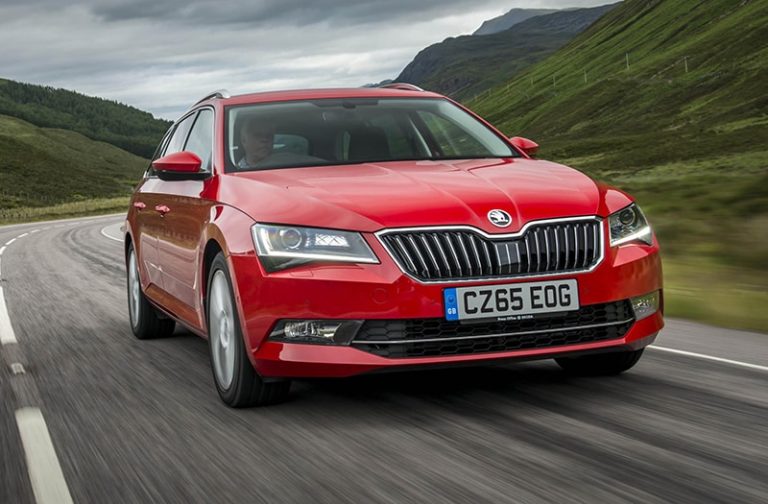
Skoda has launched a variant of the Superb dubbed the brand’s most powerful production car yet.
On sale in both hatchback and estate variants, the Superb 2.0 TSI 280hp is being pitched as more potent than many a classic supercar, with added practicality, such as a 650-litre boot.
Skoda has even released a promotional video, showing the car competing in a drag race in which it leaves a Porsche Carrera, Ferrari 308 GTB, Honda NSX and Lotus Esprit in its wake.
The turbocharged four-cylinder petrol engine, which puts out 280hp, is matched to an all-wheel-drive chassis, giving the car a 0-62mph time of only 5.8 seconds.
The new version of the Superb will be offered in Skoda’s familiar trim levels of SE L Executive, the new SportLine and Laurin & Klement. Standard equipment on all versions includes 18-inch alloy wheels, satellite navigation, an electrically operated boot, leather upholstery and heated seats.
Prices start from £31,445 for the hatch and £32,745 for the estate.
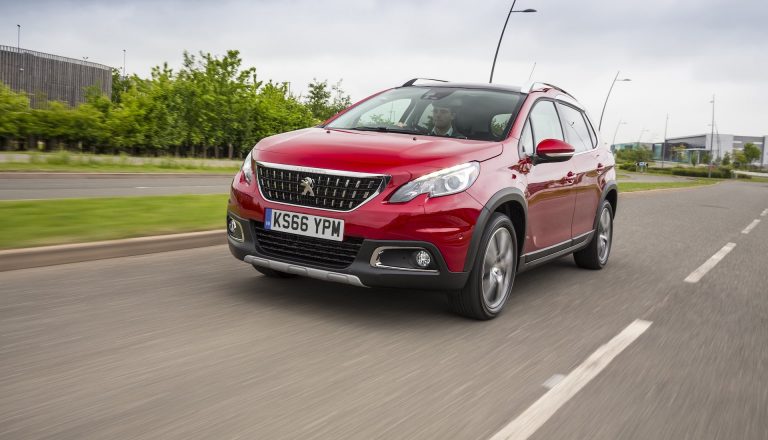
What is it? Mid-life refresh for the Peugeot 2008 compact SUV. Key features: Subtle styling changes, upgraded interior. Our View: The range-topping Peugeot 2008 GT Line models are expensive, but Allure models, in particular, are well worthy of consideration. Type of review: First drive
The Peugeot 2008 arrived in 2013 as a compact SUV sister to the 208 supermini to take on the likes of the Ford B-Max and Vauxhall Meriva. Since then 40,000 have been sold since to UK buyers, part of half a million produced for the European market, so there seems to be no need to be too radical in penning this mid-life refresh.
Therefore the recipe for the facelifted version, arriving in UK showrooms in July 2016, is a familiar one, focusing on subtle changes to the styling and updating the cabin to keep pace with the relentless march of interior technology, along with adding a new trim level, while leaving the mechanical package well alone.
According to its creators, the visual changes to the Peugeot 2008 give it a more ‘robust’ look, while keeping it in tune with the brand’s latest design language. They concentrate on the front end – the grille is more vertical, with the Peugeot lion logo placed prominently on it, and combined with revised bumper and light designs.
In effect, the more muscular look is confined to those models from Allure – third of the four trim levels – and achieved by new wheel arch extensions to give the car a wider stance, and scuff plates. A new exterior colour option also debuts, dubbed Ultimate Red.
The major changes are within – with Peugeot’s i-cockpit evolving into the crossover, complete with its signature small steering wheel, seven-inch multifunction colour touchscreen and head-up display.
The eight-strong powertrain range remains as before – all of the five petrol options are 1.2-litre units, starting with an 81bhp version with either five-speed manual or six-speed electronic auto gearbox. The latter offers the better efficiency figures with 64.2mpg combined cycle fuel consumption and CO2 emissions of 102g/km, compared to the 57.6 and 114 of the manual.
There is also a 109bhp variant in both manual and auto formats, the latter claiming best-in-class figures of 58.9mpg and 110g/km, these replicated in its 128bhp sister.
Three versions of the 1.6-litre diesel are on offer with 74, 99 and 118bhp, each with a manual gearbox, all with quoted CO2 emissions of sub 100g/km and best-in-class claims for the 74 and 118 units.
What remains not on offer is all-wheel-drive, reflecting the trend to crossovers appealing to those who want the prominent road presence witohut the complexity. But a degree of extra capability is provided by Peugeot’s Grip-xtend traction control system – this boasts standard, snow, mud and sand modes, plus one which turns off the electronic stability program to make the most of all traction available.
There is also now more choice in trim levels – the familiar Access, Active and Allure are topped by the GT Line, following the example of other Peugeot models. Bespoke items include gloss black detailing instead of chrome on such areas as the front grille surround, fog light covers, mirror casings and roof bars, and on the alloy wheels, stainless steel sills on the interior, aluminium pedals and red stitching on the floor mats, seats door armrests, gear lever surround, handbrake lever and steering wheel, the latter both in leather.
The GT Line certainly does add an extra premium presence but the interior is of particular quality at all levels. And certainly, it’s easy to see why of the existing trims more than half of buyers choose Allure instead of the cheaper options. The touchscreen infotainment is a welcome addition at this level, if not quite as user-friendly as those in some rivals, while also welcome is the smartphone compatibility in the form of Apple Carplay and Android Mirrorlink systems.
There is plenty of space – the 2008 is a roomy SUV, with certainly capable of accommodating five adults, with a good-sized 410-litre boot, extending to 1400 litres with the rear seats folded. And it’s all contained inside a shell that strikes a satisfying pose on the road, the 2008 looking stylish without tending to the radical.
On the road the car is familiar, as are the engines. The diesels are preferred by 53% of buyers and it’s easy to see why as they have good low-end pulling power and refinement – we liked the 99bhp version for the best combination of economy and performance.
For those who prefer petrol, the 81bhp version feels its size and as there is no efficiency drawback from the 108bhp version, this is certainly the better choice.
Cruising on the motorway, the 2008 is very assured and feels well planted despite its high body stance. It also corners with confidence, though it one feels slightly detached – it is competent to drive as opposed to fun to drive. The steering is light allowing easy negotiation of slow-speed urban roads, and body roll when cornering at pace is also generally well controlled.
Overall, the update to the Peugeot 2008 is not exactly headline-grabbing, but it does keep this model firmly in the thick of the ever more competitive compact crossover battle. Whether the GT Line justifies its range-topping price tag of £18,815 and above is open to question but Allure models, in particular, are well worthy of consideration against rivals.
PSA Group has fulfilled a promise to publish ‘real world’ fuel consumption tests for its cars – and revealed the glaring inaccuracy of the industry-standard test.
The promise by PSA – parent company of the Peugeot, Citroën and DS Automobiles brands – came in the wake of the Volkswagen emissions scandal last year, and according to the group has been done to offer transparency to its customers.
The group has published real-world figures for 30 of its core models and shown what motorists have long known – the automotive industry’s recognised test, conducted in a laboratory, is woefully inaccurate.
Large discrepancies on every model tested
On average, vehicles recorded real-world consumption figures around 20mpg worse than the official combined cycle fuel consumption figure. The smallest difference was produced by a Peugeot 2008 1.2 PureTech 82 model with a manual gearbox, which returned 44.1mpg, only 13.5mpg less than the official figure of 57.6.
At the other end of the scale a Citroën C3 BlueHDi 75 with manual transmission and stop & start returned 57.6mpg, a staggering 36.5mpg under the official figure of 94.1mpg.
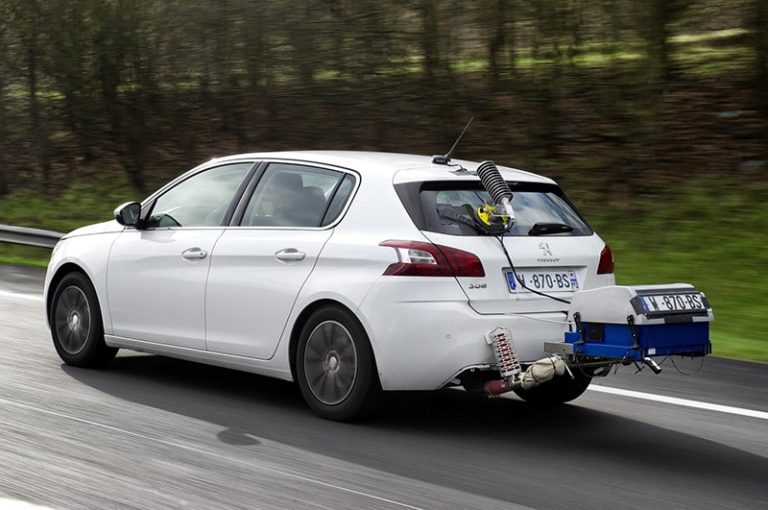
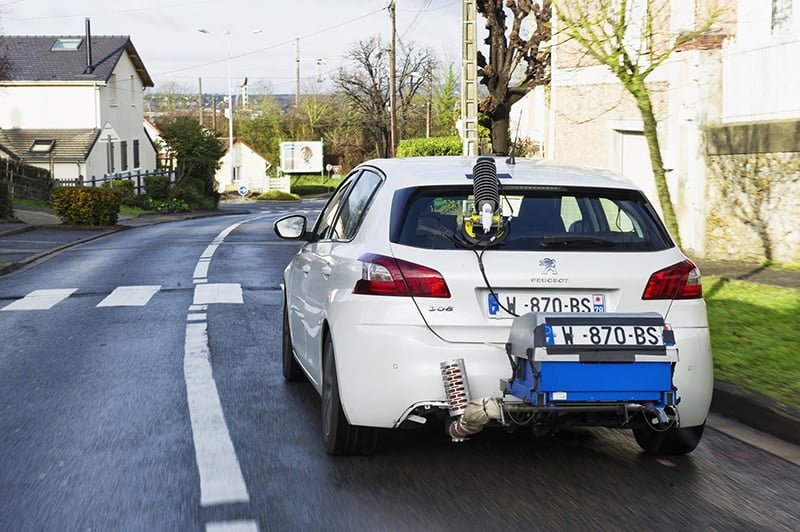
The test procedure was established by two independent French organisations, Transport & Environment (T&E) and France Nature Environment (FNE), and measures fuel consumption using a portable emissions measurement system (PEMS) installed on the vehicle. Bureau Veritas, an independent and internationally respected body, guarantees the procedure, ensuring that it is conducted in line with specifications and that the results are reliable.
Tests were carried out on public roads open to traffic, using 15.5 miles of urban routes, 24.2 miles of rural roads and 19.2 miles on a motorway, and under real-life driving conditions, with passenger and luggage loads, encountering gradients, and using air-conditioning systems.
PSA says results are typical of normal driving
Announcing the results PSA says they are comparable to those recorded by its customers who contributed to independent surveys, and shows that the procedure is scientifically robust, reproducible and representative of a typical driver.
PSA added that it took the decision to publish real-world data in November 2015, as consumer confidence in car efficiency testing was collapsing.
Taking testing onto real roads has exposed the inaccuracy of the official consumption figures.
“As part of its drive to continuously provide customers with more information, the Group will publish figures for another 20 models by the end of the year,” says PSA research and development head Gilles Le Borgne, adding that the brands will introduce simulators on their websites allowing customers to predict their fuel consumption depending on driving conditions, and offering ways of reducing consumption and lowering their CO2 emissions.
“In 2017, the PSA Group will move to the next level by extending measurements to pollutant emissions of nitrogen oxides (NOx) in customer driving conditions,” Le Borgne adds.
The market will now be waiting to see if the PSA Group initiative is taken up by other brands.
New car sales declined in June, for only the second month in more than four years.
However the Society of Motor Manufacturers & Traders (SMMT), which compiles the figures, is indicating that the results are in line with expectations and pointing to a record first six months of 2016 for the market.
Referendum uncertainty may be a factor
Registrations of UK new cars were down 1%t in June, totalling 255,766. This reflects a slowdown in recent months and the SMMT believes it is too early to determine whether the June results were affected by the uncertainty caused by the European referendum.
The first six months of 2016 show an average growth of 3%, the total of 1,420,636 registrations between January and June a record. And SMMT chief executive Mike Hawes is calling upon the Government to ensure that the market continues to grow through the remainder of 2016.
Government needs to take action, says SMMT
“The first six months saw strong demand at record levels but the market undoubtedly cooled over the second quarter,” Hawes says.
“It’s important government takes every measure to restore business and economic confidence to avoid the market contracting in the coming months,” he adds.
The June new car market continued the trend of recent months, driven by fleet sales, which were up 4.5% neatly compensating for a 4.5% slide in private registrations.
Alternative-fuel demand continues to grow
Demand for alternative-fuelled vehicles, which includes electric cars, is continuing to accelerate – the market was up 17% in June with 8,311 vehicles registered, and year-to-date has climbed 21% to 46,014 vehicles.
Meanwhile the ‘new car top ten’ shows little change, with the Ford Fiesta leading the way on 11,357 registrations for June. The Vauxhall Corsa continued its recovery, climbing from fourth spot in May to its traditional second with 8,837 registrations, with the Ford Focus in third (6,833) followed by the Volkswagen Golf (6,775) and the Mini hatch (6,284).
Aston Martin has unveiled the AM-RB 001, its ‘F1 car for the road’ built in conjunction with Grand Prix team Red Bull Racing.
The AM-RB 001, described by Aston Martin as like nothing seen before, is said to be capable of the pace of a Formula One car.
A road car production run of around 90-150 cars is planned, along with 25 designed specifically for track use. Prices are yet to be announced but are expected to be in the £2-£3 million bracket.
Principal designer for the AM-RB 001 is Adrian Newey, the man who has created multiple F1 World Championship winning cars for Red Bull, and he has produced a mid-engined two-seater, with a remarkable power-to-weight ratio of 1:1 propelled by an all-new high-revving naturally aspirated V12 engine.
The structure of the car is predominantly carbon fibre, with much of its downforce created by underbody ground effect aerodynamics through front and rear diffusers, which in turn has allowed the body shape to be free of aerodynamic ‘add-ons’. Also missing are such items as door mirrors, replaced by much smaller rear-facing cameras.
Aston Martin is still finishing the production version of the AM-RB 001 and currently is still to release full technical and specification details of the car. Specifically no power output has yet been stated for the engine, which is a bespoke unit created for this car.
Industry sources are speculating on an output of around 900bhp – the car also has a kinetic energy recovery system derived direct from F1 practice, though what purpose it serves in this environment has not been revealed yet.
According to Aston Martin, the overriding aim of Newey and the brand’s chief creative officer Marek Reichman has been to produce a car engineered to be entirely useable and enjoyable as a road car, but with the capability to perform like no road car before it on a race track.
The bespoke track version, meanwhile, is intended to have the performance of LMP1 sports prototype cars such as the Porsche, Audi and Toyota machines that dominated the Le Mans 24hr race in June.
Like other top F1 designers before him most notably Gordon Murray, creator of the first McLaren F1 production machine, Newey says that he has always harboured the ambition to design a road car. “I’ve always been adamant that the AM-RB 001 should be a true road car that’s also capable of extreme performance on track, and this means it really has to be a car of two characters,” he adds.
“That’s the secret we’re trying to put into this car – the technology that allows it to be docile and comfortable, but with immense outright capabilities,” Newey says.
The AM-RB001 production line will be set up in the facility at Aston Martin’s Gaydon, Warwickshire headquarters originally created for the brand’s first hypercar the One-77. First prototypes are expected to be testing in 2017 with deliveries beginning in the following year.
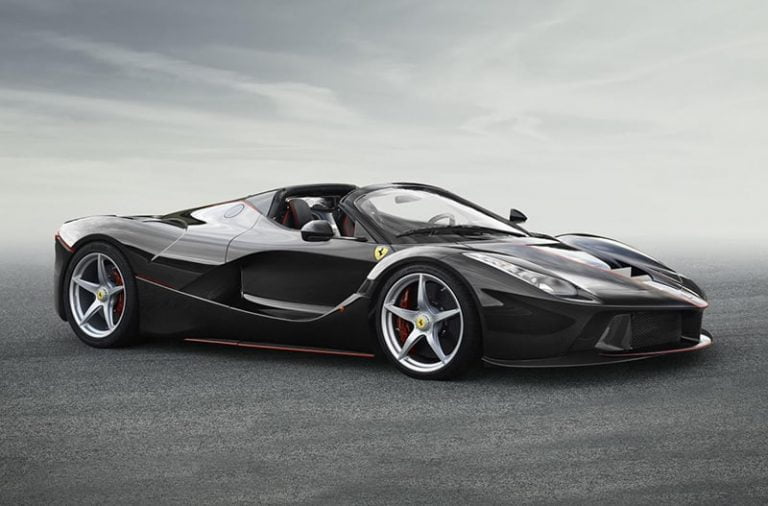
Ferrari has shown the first pictures of its open-top LaFerrari, which will debut at the Paris motor show in September before going on sale in 2017.
Few technical details are currently being released of the spider, though it will use the same chassis and powertrain as the LaFerrari coupe, a limited edition model powered by a V12 hybrid engine of 950bhp. Ferrari is not even currently confirming the topless version’s name.
What is confirmed, however, is that the car will not be a full cabriolet with the weight penalty of a roof-folding mechanism. Instead it will be supplied with a removable hard top in carbon fibre, and a similarly removable soft top.
Ferrari adds that significant and extensive modifications have been made to the chassis with the aim of retaining the same torsional rigidity and beam stiffness as the coupe version.
The car’s aerodynamics have also been modified to guarantee the same drag coefficient as the coupe when driving with the roof removed.
The price tag of the car is likely to exceed the £1 million-plus cost of the coupe – some reports have suggested examples being offered for £2.8m plus taxes. But this is of little consequence as Ferrari says the entire planned production run – the number of which is yet to be revealed – has already been sold following a preview event to potential clients.
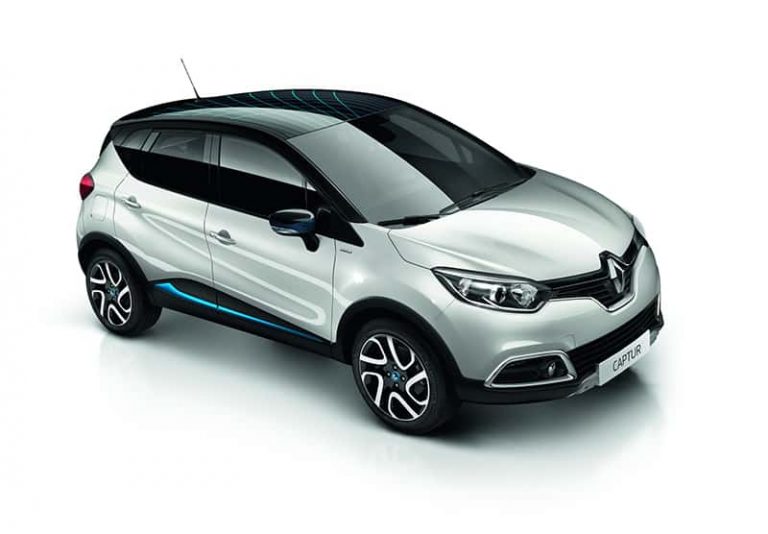
Renault is updating the specifications of its Captur SUV, including adding a new version.
The Iconic Nav Special Edition is supplied in bespoke Arctic White pearlescent paint and a Diamond Black two-tone body colour with a blue roof and door mirror decals as standard. Painted lower front and rear bumpers, 17-inch ‘Explore’ alloy wheels with black inserts with a blue Renault diamond centre cap also feature.
Inside the new part-leather seat upholstery gains light blue stitching as does the leather steering wheel, while a new light blue tinted chrome interior touch pack replicates the exterior theme.
Aluminium pedals, matt black detailing and heated front seats also feature, while added equipment includes Renault’s Grip Xtend traction control system including Mud and Snow Tyres, the R-Link Evolution touchscreen infotainment and satellite navigation system with European mapping and reverse parking camera and an electrochrome rear view mirror.
Renault Captur Iconic Nav models cost from £19,175.
Captur owners can also now specify a new powertrain – combining the 1.2-litre TCe 120 engine with a six-speed manual gearbox and available from Dynamique Nav level and above. Combined fuel consumption for this powertrain is quoted from 51.4mpg and CO2 emissions at 125 g/km and prices start from £16,575.
Other changes include the availability of the popular Flame Red metallic paint body colour with a Diamond Black roof to buyers of Dynamique Nav and Dynamique S Nav versions. A, red interior touch pack will also become available to complement the exterior. The two-tone body colour is available from £595, the red interior touch pack is priced at £100.
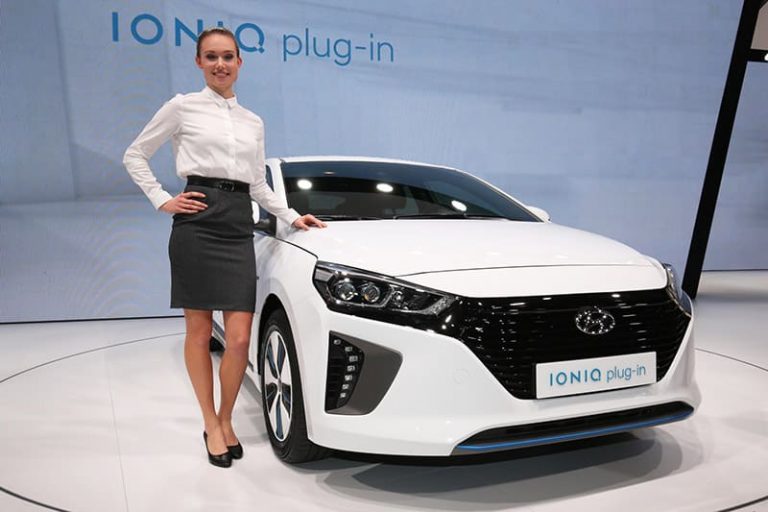
Hyundai has announced prices for its forthcoming Ioniq – the first car offered with three choices of electric-based powertrain.
On sale from 13th October 2016, the Ioniq will be offered with hybrid – combining a 1.6GDi petrol engine with an electric motor, plug-in hybrid and full electric powertrains.
The hybrid variant will cost from £19,995 (which compares to the £23,295 start price of its likely direct rival the Toyota Prius), the full electric model £28,995. However the price of the latter could be cut by as much as £4,500 if as expected it qualifies for the UK Government’s plug-in car grant.
Prices of the plug-in hybrid versions, meanwhile, will be revealed closer to its launch in 2017.
Hybrid entry-level models will include as standard 15-inch alloy wheels, DAB radio with Bluetooth, cruise control and rear parking sensors with a rear-view camera.
Driver aids amongst the standard safety package include Autonomous Emergency Braking, Lane Keep Assist System and an individual Tyre Pressure Monitoring System.
Electric models will only be offered from the second-level Premium specification upwards. This adds keyless entry with push button start, heated front seats, heated steering wheel, Bi-Xenon headlamps with LED rear combination lamps, an instrument cluster with a seven-inch LCD display, integrated satellite navigation with TomTom Live services, an Infinity audio system with Android Auto/Apple CarPlay and wireless phone charging.
The electric versions also gain some specific features – automatic windscreen wipers with a rain sensor, 16-inch alloy wheels, LED headlamps and rear combination lamps, and smart cruise control.
There is also a range-topping Premium SE specification, adding heated/ventilated front seats and heated outer rear seats all in leather, a heated leather steering wheel and a powered driver’s seat with integrated memory. Blind Spot Detection with Rear Cross Traffic Alert, Front Parking Assist and optional 17-inch alloy wheels also feature.
Hyundai has also announced the selection of specialist installer POD Point as its preferred partner in providing home-charging points for Ioniq customers. The electric version of the car is said to offer a range of up to 174 miles, with an 80 per cent charge possible in 33 minutes from a 50kW rapid public charger.
According to Hyundai Motor UK President and CEO Tony Whitehorn, the Ioniq will make low- to zero-emission mobility more accessible to more people.
“It is also an important milestone in our sustainability strategy, bringing innovative technologies to the market and extending the company’s product range of low-to-zero emission vehicles, which already includes the world’s first mass-produced fuel-cell electric vehicle, the ix35 Fuel Cell,” Whitehorn says.
For several years, claims lawyers have been making great business out of PPI claims. Banks and insurance providers were found guilty of mis-selling personal protection insurance to millions of borrowers.
But now that gravy train is nearing the end of the line, lawyers are turning their attention to other areas of the consumer finance sector. And one of their targets appears to be the potential mis-selling of PCP car finance.
The National Association of Commercial Finance Brokers (NACFB) has made this very claim last week, with board member and car finance specialist Graham Hill warning that “the car finance industry could be shaken to its roots.”
Finance companies have been generally aware that the Financial Conduct Authority (FCA) has been keeping an eye on the car finance sector for a while now, with the intention of looking more closely once the PPI scandal had been dealt with. Now it appears that the claims lawyers may also be ready to move in. So what does this mean for consumers, apart from getting thousands of annoying texts and phone calls asking if you have ever had a PCP?
The NACFB claims that one million cars were sold in the UK on a PCP car finance agreement last year alone, and that there is evidence of “insufficient, poor or, in some cases, deliberately misleading advice given by car dealers and finance firms” to customers.
Car dealers are not allowed to make recommendations
Under FCA accreditation for the selling of finance products, car sales staff (including business managers) are only allowed to operate on a ‘non-advisory’ basis. This means that they cannot recommend a particular finance product, and can only present you with the options for you to make your own decision. However, in the real world, most dealers will push their customers towards the finance product which is best for the dealer – and that is usually a PCP.
I would be surprised if many car buyers feel that their dealer gave them a comprehensive explanation of all the finance options available when buying their last car.
As we have discussed previously here at The Car Expert, the PCP is the preferred finance option for most car manufacturers and dealerships, so they will use any number of means to entice customers into taking a PCP. There are legal means of doing so, such as providing deposit contributions or lower interest rates for PCP deals, but any potential legal scandal is going to revolve around the mis-selling of PCPs by dealers.
How are dealers potentially mis-selling finance?
The mis-selling potential currently being investigated by PPI claims lawyers concerns two key areas of how PCPs are presented to customers:
Buyers are not being informed that they may be paying more in interest on a PCP than on a hire purchase (HP) finance agreement, even if the advertised APR is exactly the same.
Buyers are also often told that they will make a ‘profit’ on their car with PCP finance, if the car is worth more than the GFV at the end of the contract. In reality, this is not true and is misleading.
The way that the interest is calculated on a PCP is different from an HP because of the guaranteed future value (GFV) component of a PCP. This is basically an interest-only loan that is not repaid until the end of the term, either by giving the car back or paying off the outstanding balance. Although the total amount of interest payable must be clearly indicated on finance quotes and contracts, car dealers are not always scrupulous in explaining how it works or presenting the HP alternative – even in response to customer questions.
Of course, there are many dealers and individual sales people who are entirely fair and correct when selling car finance. However, there is certainly still a significant amount of mis-selling (whether deliberately or not) that goes on. From my own time in car sales, I remember being reprimanded by a finance manager for providing explanations and information to customers about different types of finance, rather than only providing information about the PCP offer and trying to dissuade customers from asking about other types of finance.
Are we really headed for a PCP mis-selling scandal?
So is there real merit in claims cases against dealers and finance companies for mis-selling of PCP finance? Quite likely.
Just like the PPI scandal, a small number of bad apples can spoil the whole bunch. Big banks were hit for billions of pounds in PPI mis-selling compensation due to the actions of a relatively small number of employees. The lawyers will be out in force again if they sniff an opportunity to go after another group of wealthy finance companies and banks for mis-selling PCPs or other car finance products.
If the FCA or claims lawyers start looking at the way car finance is handled by dealers, they are are likely to come across numerous examples of mis-selling. How much impact it would be likely to have on the industry is likely to depend on how much control the finance companies who lend the money have exerted over the dealers who sold the finance on their behalf.
The lawyers will be trying to establish that a finance company is responsible for how its dealers sell its finance products, and will be looking for any directives given to dealers to prioritise PCP finance offers over other options without taking the customer’s individual requirements into account.
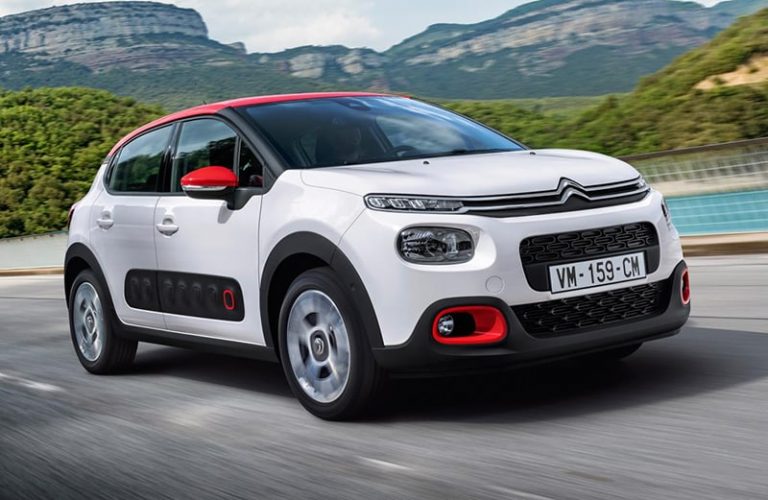
Citroen has unveiled its all-new C3 supermini, describing the car as ‘a fresh, bold and colourful B-segment, five-door supermini that delivers new levels of advanced comfort and personality to the sector’.
Replacing the original car that launched in 2002 and has sold 3.6 million examples since, the new C3 boasts a significant styling makeover clearly inspired by the C4 Cactus, including the distinctive ‘air bump’ body panels and the bold front end with a two-tier headlamp design.
The car is built on the PSA group’s ‘Platform A’ architecture that also underpins the C4 and the DS 3 of sister brand DS Automobiles. The C3 measures up at 3.99 metres in length, 1.75 metres wide and 1.47 metres high, with a wheelbase of 2.54 metres and a 300-litre boot.
A five-strong engine range will be offered – a trio of three-cylinder petrol units with power outputs of 67, 81 or 109bhp, and two BlueHDi diesels of 74 or 99bhp. PSA’s EAT6 fully automatic gearbox will be available as an option.
Citroen is heavily promoting the C3’s customization options, claiming that no previous model has offered such an extensive and coherent range of personalisation options and two-tone exterior colour schemes.
Nine body colours are available alongside three roof colours, which can be repeated on the fog lights, door mirrors, rear quarter panels and on the Airbump panels.
Inside there is a choice of four different designs, while the layout is designed to give an impression of spaciousness, the signature feature being the horizontal dashboard again inspired by the Cactus.
New technologies include ConnectedCAM Citroën, a camera with a wide 120-degree view mounted just behind the rear-view mirror. Boasting GPS and a 16GB internal memory, the camera records what the driver sees, and the driver can click a button to safely take photos while on the move, or capture videos of up to 20 seconds in length, for sharing on social media when the car is stationary.
In a collision, meanwhile, the video system will switch on automatically, providing up to 1.5 minutes of footage that can be used as evidence following an accident.
Other driving and safety aids available will include Mirror screen smartphone compatibility with the car’s seven-inch touchscreen, a reversing camera, hill-start assist, lane departure warning, blind-spot monitoring and a driver attention alert that suggests the driver takes a break after two hours of uninterrupted driving at speeds over 45mph.
According to Citroen CEO, Linda Jackson the New C3 has the qualities to give the brand new impetus, which is especially important as the previous model accounted for almost one in five sales in Europe. “A comfortable car with real personality, it is set to appeal to new customers looking for a modern car with character,” she says.
More details of the new C3 range and its UK specification will be released closer to the car’s on-sale date early in 2017.
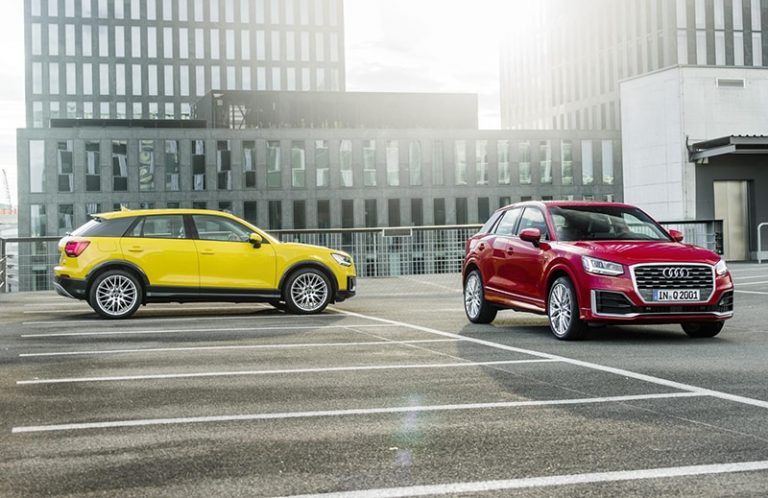
Audi’s new Q2 will cost from £20,230 when it goes on sale in August.
The fourth member of the German brand’s SUV range and described as the brand’s first crossover, the Q2 will be offered initially with a choice of a four-cylinder 1.6 TDI diesel of 114bhp or a 148bhp four-cylinder TFSI petrol with cylinder-on-demand technology.
This powertrain range will be extended later in 2016 by a three-cylinder 1.0 TFSI of 114bhp and a four-cylinder 2.0 TDI with 148bhp. All except the 1.0 will also be able to be specified with an S-tronic seven-speed dual clutch transmission.
Mid 2017 will see the addition of a 2.0 TFSI petrol engine with quattro all-wheel-drive and S tronic transmission, and at that point it will also be possible to combine the 148bhp TDI and TFSI engines with quattro.
Audi describes the Q2 as ‘high definition design meets highly intelligent technology’. It is designed to appeal to a younger audience than the brand’s existing SUVs – measuring 4.19 metres long, 1.79 metres wide and 1.51 metres tall, it has a 2.6-metre long wheelbase and short overhangs.
Much of the technology familiar in larger Audi models has cascaded down into the Q2, notably the virtual cockpit, head-up display and park assist, which are on the options list.
The Audi standard MMI screen is mounted high on the instrument panel and similar to the latest A3 includes operation of the infotainment system by a rotary/push-button control and two buttons on the centre tunnel.
A touchpad also features when buyers order the MMI navigation plus system, while smartphones with iOS and Android operating systems are integrated into the car using the standard Audi smartphone interface.
Customisation also forms an integral part of the Q2’s younger-buyer appeal. Several equipment packages, exterior colours and interior trim and seat upholstery shades are available while options include ‘LED lighting package advanced’, illuminating elements of the interior.
A new design of 16-inch alloy wheel is fitted as standard, but these can be expanded up to 19 inches.
The Q2 will be offered in Audi’s familiar SE, Sport and S Line trim levels and first cars are expected on UK roads in November 2016.
The UK’s vote to leave the European Union has sent shockwaves through the motor industry, both inside and outside of the country.
Motor industry executives are now calling for tariff-free business to be maintained following the exit, which the British people voted for by 52 to 48 per cent in a referendum on EU membership held on 23rd June.
Effects to be felt both in UK and Europe
The effect of the decision is expected to be felt keenly on both sides of the English Channel. Car manufacturing in the UK has undergone significant growth in recent years, with close to 60 per cent of the product being exported to the EU, but all of the significant plants in Britain build cars for brands with non-UK owners.
Equally, Europe’s auto manufacturers do a great deal of business within Britain, with for example around one fifth of the product of Germany’s Volkswagen Group sold to UK buyers. According to one source around half of the UK’s 2.6 million annual car sales come from German-owned manufacturers.
Automotive manufacturers consider it essential that on exit from the European Union the UK maintains membership of the European Economic Area (EEA), which is open to both EU nations and four non members, Switzerland, Norway, Finland and Liechtenstein, who between them form the European Free Trade Association (EFTA).
Membership of the EEA allows free movement of goods throughout Europe and would avoid the great fear of auto manufacturers of tariffs being applied to exports, both from the UK to Europe and the other way by the UK on imports into the country.
Manufacturers with plants in the UK are refusing to comment specifically on the future until the nature of trade agreements that can be negotiated between the UK and the rest of Europe become clearer. However industry media organisation Automotive News Europe is quoting one unnamed Asian-based manufacturer as stating that investment decisions in the UK will have to be more cautious, including deciding whether to build a new or significantly redesigned model in the country.
SMMT calls on Government to maintain economic stability
Mike Hawes, chief executive of the Society of Motor Manufacturers & Traders, is acknowledging that the British public has chosen a new future out of Europe. “Government must now maintain economic stability and secure a deal with the EU which safeguards UK automotive interests,” he says.
“This includes securing tariff-free access to European and other global markets, ensuring we can recruit talent from the EU and the rest of the world and making the UK the most competitive place in Europe for automotive investment,” Hawes adds.
Already it is being reported by Reuters that PSA Group, parent company of the Peugeot, Citroën and DS Automobiles brands, is considering price rises for its models on sale at UK dealers, the Group saying it needs to protect the profitability of its UK operation.
Meanwhile the drop in the value of the pound, triggered by the Brexit vote, is likely to lead to rising fuel prices, according to the Petrol Retailers Association. As fuel prices are quoted in dollars, Association chairman Brian Madderson is predicting a rise of 2-3p a litre on forecourts, possibly within a week.
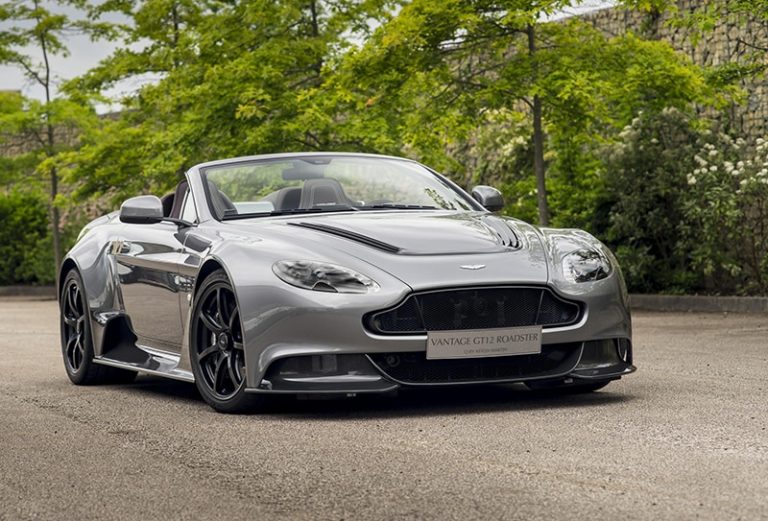
Aston Martin has unveiled a bespoke model described as the brand’s ‘most extreme roadster ever’.
The Vantage GT12 Roadster has debuted at the Goodwood Festival of Speed in Sussex.
The car is a specific customer commission and was created over nine months by the brand’s specialist department Q by Aston Martin. Reputedly the customer has paid a premium to ensure no more examples of the GT12 Roadster are made.
Inspired by the Vantage GT12 Coupe built by Aston Martin Advanced Operations, the Roadster is powered by a 596bhp version of the Vantage’s 6-litre V12 engine matched to a seven-speed paddle shift transmission.
The body gains carbon-fibre panels finished in a bespoke paint finish, while the suspension is also specifically set up for the car.
According to its creators the GT12 Roadster is a prime example of the one-off projects that Aston Martin can now create for its customers. “Aston Martin has a growing reputation of building ambitious commissions for customers, perhaps the best example being the spectacular CC100 Speedster Concept,” says the brand’s chief special operations officer David King.
“We have also become world leaders in ultra-low volume projects with cars such as the One-77, Lagonda Taraf and Aston Martin Vulcan, while the Vantage GT12 and Vantage GT8 show how far we can take our series production models,” he adds.
According to King the GT12 Roadster is the first project to combine all of the skill sets in one magnificent car; “In just nine-months we took a customer’s dream and realised it, with a fully-formed, exactingly engineered and fully road-legal one-off – that is the essence of the Q by Aston Martin service”.
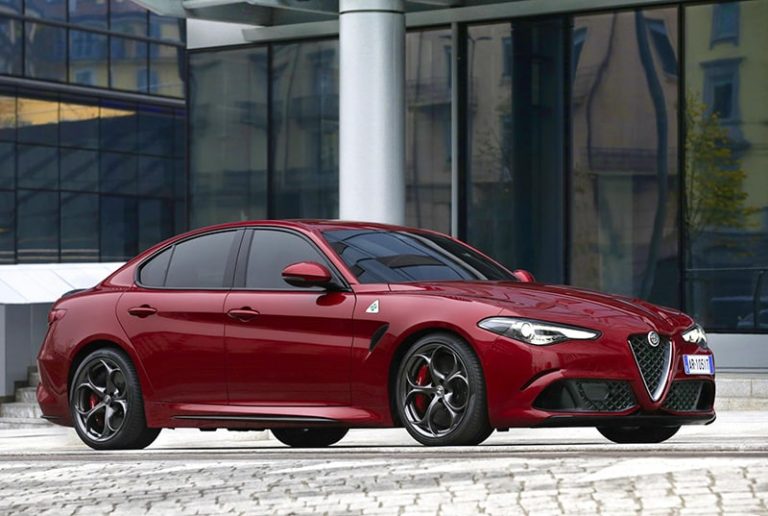
Alfa Romeo’s Giulia Quadrifoglio will cost from £59,000 when it goes on sale shortly.
The price for the range-topping version of Alfa Romeo’s BMW 3 Series rival has been announced at the Goodwood Festival of Speed, where the car is making its UK debut.
Giulia Quadrifoglio models use a new 2.9-litre V6 bi-turbo petrol engine with 502bhp and 443lbft of torque, mated to an eight-speed auto transmission with paddle shifts. The car is capable of a 0-62mph time of 3.9 seconds and a 190mph-plus maximum speed.
The Giulia claims the longest wheelbase in its segment, the car built on a new rear-wheel-drive architecture with a long bonnet and short overhangs. A 50/50 weight distribution aids handling.
Giulias use several high-strength and ultra-lightweight materials including carbon fibre driveshaft, aluminium composite and plastic on the rear crossmember and aluminium on the doors, wings, engines, brakes and suspensions.
Quadrifoglio versions add a carbon-fibre bonnet, roof, front splitter, rear spoiler and body inserts, alongside aluminium doors and wings. Aluminium details are also employed in the braking system and carbon ceramic brake discs and front seats with a carbon-fibre structural frame are on the options list.
Standard specification of Quadrifoglio models includes bespoke 19-inch alloy wheels, a sports front bumper, a sports rear bumper with diffuser, four-pipe sports exhaust with four outlets; active suspension and bi-xenon headlamps with LED daytime running lights.
Autonomous Emergency Braking, Lane Departure Warning, Blind Spot Monitoring, Alfa Romeo’s new Integrated Braking System, Forward Collision Warning and a rear-view camera with guide lines are all part of the safety specification.
Inside there are bespoke sports seats trimmed in leather and Alcantara with front seat heaters, steering-column mounted paddle shifters, a seven-inch touchscreen instrument cluster, Alfa Romeo’s new Uconnect 3D Nav 8.8-inch infotainment system, DAB radio, dual-zone climate control, automatic lights and wipers and cruise control with a speed limiter.
Order books open shortly for the Quadrifoglio, which unusually will go on sale before the mainstream Giulia range.
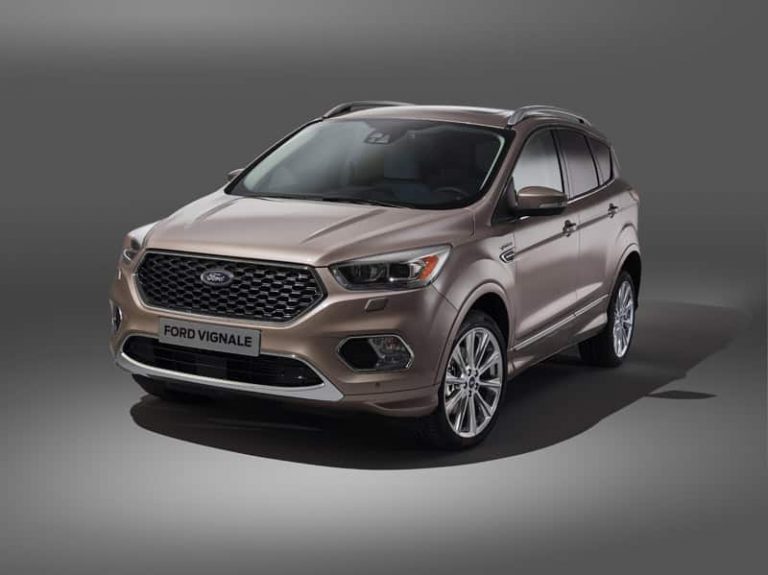
Ford will launch an upmarket Vignale version of the Kuga SUV late in 2016.
The mid-sized SUV will line up in showrooms alongside the four-door Mondeo, the first Vignale model launched last year, the S-Max and the forthcoming five-door Mondeo and Edge versions.
Kuga Vignales will be available with four engines – petrol 1.5-litre units in 148 and 179bhp variants and 2-litre TDCi diesels of either 148 or 177bhp. All-wheel-drive will be available with the two more potent engines.
Upgrading to the Vignale specification from the mainstream Kuga includes the signature hexagonal grille and a bespoke exterior paint finish, described as pearlescent Milano Grigio, with a contrasting dark gloss on the front and rear skid plates, door panels and boot trim.
The interior gains Windsor leather again in the hexagonal design, with cashmere coloured tuxedo-style stitching on the seats and door interiors and a leather-trimmed dash instrument panel.
Ford is still to release full details of the Kuga Vignale’s specification. The Sync 3 infotainment system will be included, a standard feature on all Vignales, while the equipment list is also likely to boast such features as tri-zone climate control, a premium audio system and a host of driver aids including a wide-view camera, traffic sign recognition and a blind spot information system. All these featured on the Edge and five-door Mondeo Vignales unveiled at the Geneva Motor Show in March.
Like other Vignale models the Kuga variants will be produced in a bespoke facility at Ford’s factory in Valencia, Spain – the line combining laser and camera technology with hand-finishing by craftsmen. They will be offered only at specialist dealers including the 70 UK Ford Stores which each have specialist Vignale lounges.
Adding the Kuga to its upmarket sub brand is seen as an obvious move for Ford as of the 33,000 examples sold in the UK in 2015 more than 80 per cent of customers chose the high-specification Titanium trim.
According to Ford of Europe marketing sales and service head Roelant de Waard the Kuga Vignale will meet the growing trend to luxury SUVs. “We see great potential to extend the top end of our Ford product range and offer a special experience that meets the growing expectations of our customers,” he says.
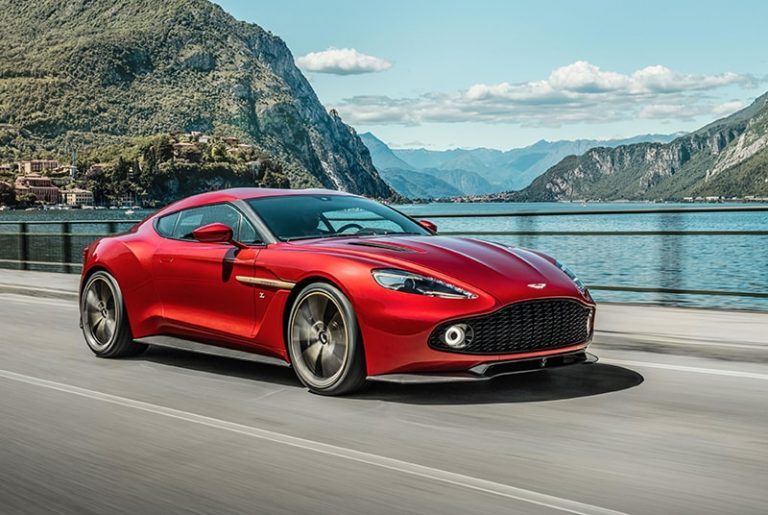
Aston Martin is to put a Vanquish concept model unveiled at a concours d’elegance into very limited production.
Only 99 examples of the Vanquish Zagato Coupe will be made, each virtually identical to the Concorso d’Eleganza Villa d’Este, a concept model shown at the famed Italian concours in May 2016.
The Zagato is more powerful than its Vanquish inspiration, the 6-litre V12 engine uprated by 24bhp to 592bhp. Aston Martin quotes a 0-62mph time of 3.5 seconds, three tenths faster than the stock Vanquish.
Several of the brand’s most specialist models, including the Vulcan, CC-100 and One-77 have influenced the bodywork, which is all-new, entirely moulded in carbonfibre and larger, with fewer shut lines, to improve the aerodynamics. The sculpted rear end is close in profile to the DB11 and includes a retractable spoiler.
The car’s windscreen and side windows are created in wraparound style, designed to look like a visor, and side strakes, again in DB11 style, run from the wheel arches to the doors. The roof has a shallow ‘double-bubble’ shape, a Zagato trademark originally created to allow space inside for race helmets.
Details inside include ‘herringbone’ style carbon fibre, anodized bronze and optional aniline leather, A ‘Z’ quilt pattern stitch is used on the seat and door sections, with the trademark Zagato ‘Z’ embossed on headrests and stitched into the centre console.
Aston Martin’s partnership with renowned Italian design house Zagato dates back to 1960 with the launch of the DB4 GT Zagato. The Vanquish is the fifth collaboration between the two brands.
No details have been released concerning the likely price of each car – industry rumours suggest an individual cost of around £500,000, and that all 99 have already been reserved.
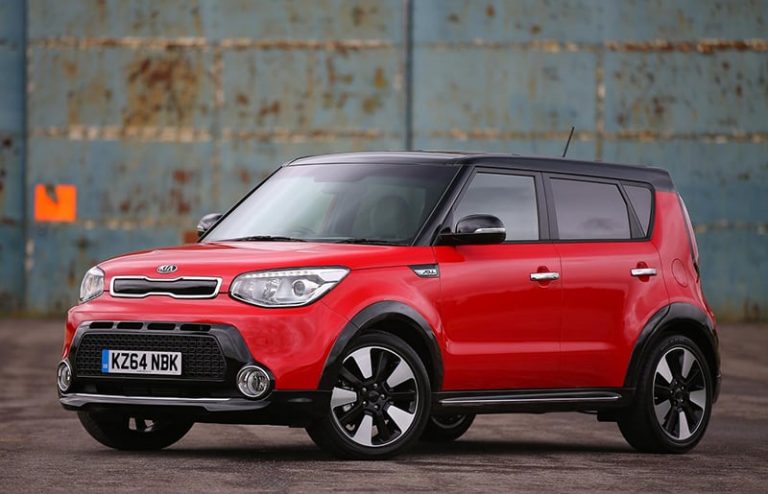
Thousands of Kia Soul mini MPV models are being recalled over a potential steering fault.
The brand says that in extreme circumstances the fault could cause the car’s steering to fail.
Affected models were built between 18th January 2014 and 30th September 2015, with 5,707 sold in the UK. Kia says that an adhesive with insufficient bonding strength was used during assembly and may cause a pinion plug that secures the pinion gear to the steering gear assembly to loosen.
If the plug loosens sufficiently, the pinion gear may separate from the steering gear assembly, which could cause a loss of steering.
Kia adds that there is presently no evidence of the potential defect causing any injuries or accidents to any customers in the UK or globally, and no Kia Soul customers have reported problems in this area.
Kia Motors UK will notify owners of affected cars using post and email, suggesting they take their vehicle to their nearest Kia dealership where the pinion plug will be secured or replaced, usually within one hour and at no cost to the owner.
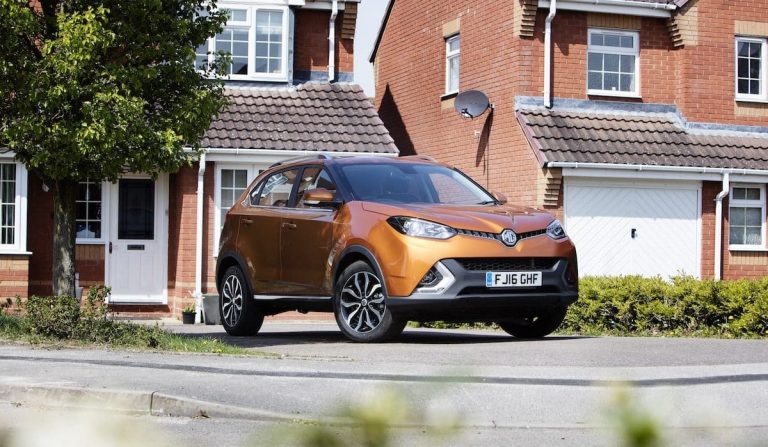
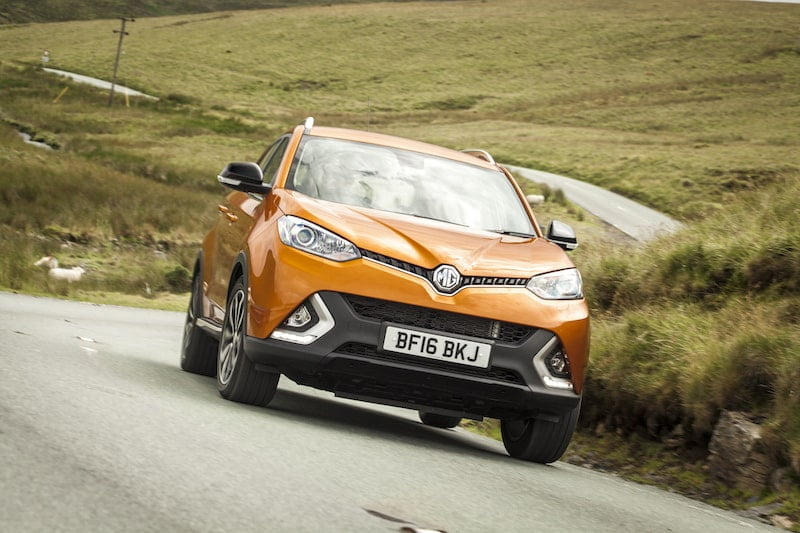
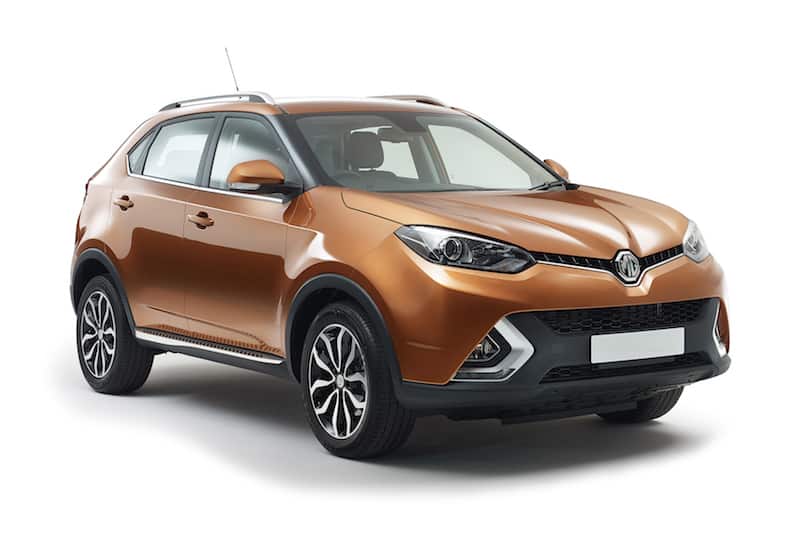
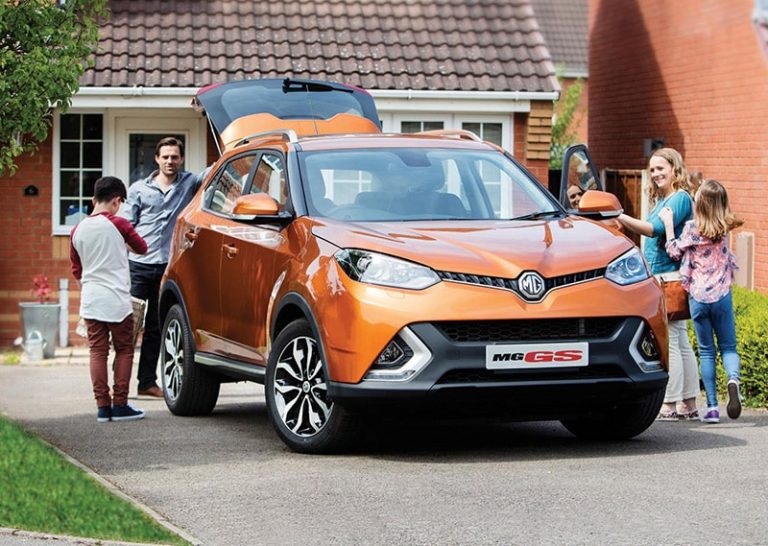
What is it? Third UK model and first SUV from reborn MG.
Key features: Budget price for power and space.
Our View: With no significant downsides and plenty of plus points, there’s every reason for the MG GS to become a significant player in the brand’s progress.
The GS adds a third model to the MG range
Old-style British motoring enthusiasts will likely recoil in horror at the very prospect of the MG badge appearing on an SUV, and use this as a prime example as to why the reborn, Chinese-owned company is not the same brand as once produced much-loved affordable sports cars.
According to MG’s UK sales and marketing head Matthew Cheyne, however, that the brand’s third offering after the MG6 saloon and MG3 supermini, and its first launch in three years, is an SUV is definitely the way to go. “It’s not a two-seater sports car because two-seater sports cars are a declining market,” he says at the UK launch of the GS, days before it arrives in dealer showrooms.
And considering that the market for SUV crossovers is still mushrooming fast and even performance-pitched brands such as Bentley and Jaguar feel happy leaping into SUV sales it’s hard to argue against his view.
Marketplace
Cheyne also argues, however, that the MG heritage is still very much alive and well in the new model. “I’m asked whether an SUV can be an MG, and I think it can. (MG founder) Cecil Kimber talked about affordability, fun to drive, never once did he mention two-seater sports cars.”
And the MG GS is not really like any other SUV. For a start, it comes only as a front-wheel-drive model, with a petrol engine – its makers insisting that neither all-wheel-drive or diesel propulsion are in their current plans.
There’s little point, apparently, as some 90 per cent of GS owners will be retail buyers, who can’t be doing with the complexity of 4x4s and favour petrol cars – diesel buyers are predominantly in the fleet market in which the brand currently has little presence.
All of which significantly reduces the list of GS direct rivals, and the car outscores all of them on power and torque, with 163bhp and 184lbft available from its 1.5-litre turbo engine. This is a new unit for MG, developed with partner General Motors, and closely related to the 1.4 unit found in today’s Vauxhall Astra.
Rivals
MG has an interesting view on what those rivals will be – at the launch a starting price of £14,995 is announced which puts the GS right at the bargain basement end of the market. But Cheyne insists that the car has been benchmarked not against the likes of Dacia or SsangYong but much bigger players – the Hyundai Tucson, Kia Sportage, Mazda CX-5 and even the SUV market’s biggest seller, the Nissan Qashqai.
In terms of looks, the MG GS can certainly hold its own in such company – MG is very proud of its styling and engineering studios based in the UK at Longbridge, and insists that the UK team had the major influence in the joint styling efforts with the much larger department in China.
Interior
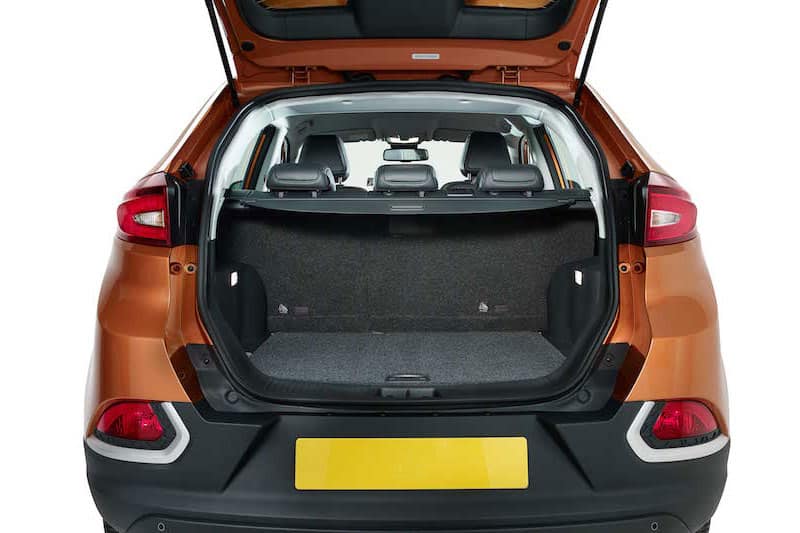
Step inside the MG GS and one finds adequate space. The car is longer than most of its direct rivals, at 4500mm, though its wheelbase is shorter than most, at 2650mm. This allows the Kia and Mazda to outscore it on luggage space, at 503 litres compared to the MG’s 483, though this compares to a mere 430 in the Qashqai. Fold the MG’s seats down, a one-handed operation, and luggage capacity jumps to 1336 litres.
Fit and finish is also adequate, if not particularly noteworthy – the centre console controls are raised towards the driver and neatly finished if a little dated in appearance compared to rivals, while the touchscreen is high on the console. Generally the plastics used are somewhat hard and scratchy.
Performance
MG believes its reputation will be maintained by the engine, as mentioned a 1.5 turbo unit that out-powers all its rivals – the Mazda by a single horsepower admittedly. And despite the Japanese rival needing a 2-litre unit to provide its potency it also outdoes the MG on fuel economy, at 47.1mpg to 46.3mpg, and hits 62mph from rest in 9.2 seconds compared to the MG’s still swift-for-the-class 9.9 sec.
The GS feels eager on the road, and rides well on smooth surfaces. Lower-quality tarmac can unsettle it, however, pothole bumps easily finding their way into the cabin. In corners the car steers with confidence, though it does not feel the sportiest member of this class.
Value for money
MG also believes the equipment levels offered with the GS will attract buyers, particularly when one factors in the starting prices. Entry-level Explore models include such niceties as cruise control, automatic headlamps and air conditioning. The step up to Excite specification is £2,500 and the additions include DAB radio, Bluetooth connectivity and rear parking sensors.
Choose the range-topping Exclusive, another £2,000 more or £3,500 with the DCT gearbox, and electrically adjustable leather sports seats and navigation are included in the equipment. Finally all cars include a five-year warranty.
Summary
The GS is a very important car to MG, though Cheyne does not believe it will overtake the MG3 to become the brand’s best seller – that job he thinks will be done by another B-segment SUV coming in 2017 before the all-new MG3 a year later.
The GS is, however, expected to contribute significantly to MG’s 2016 sales target of 5,000 cars, up from 3,152 in 2015. With no significant downsides to the car, and plenty of plus points led by the price, there’s every reason that the MG GS should become a significant player in the brand’s progress.
MG GS – key specifications
Model tested: MG GS Excite, six-speed manual On Sale: July 2016 Range price:£14,995-£20,995 Insurance groups:16E-17E. Engines: Petrol 1.5. Power (bhp):163. Torque (lb/ft):184. 0-62mph (sec):9.9. Top speed (mph): 118 (DCT 112). Fuel economy (combined, mpg): 46.3 (DCT 45.5). CO2 emissions (g/km): 139 (DCT 141). Keyrivals: Hyundai Tucson, Kia Sportage, Mazda CX-5 Test Date: July 2016.
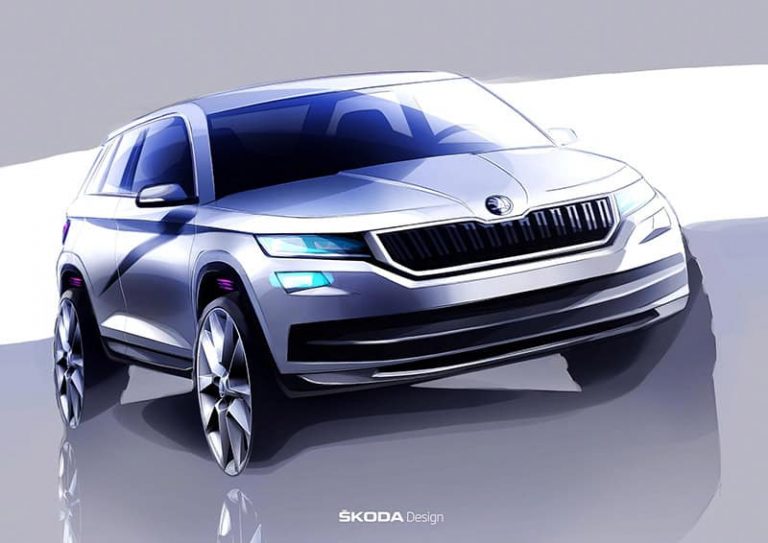
Skoda has issued new sketches showing the look of its soon-to-launch Kodiaq SUV.
The car will make its public debut at the Paris Motor Show in September and go on sale in 2017.
It is clear from the released images that the production model closely follows the visual appearance of the VisionS concept, which was displayed at the Geneva show in March 2016.
The Kodiaq – the name comes from a species of Alaskan brown bear – will be the first Skoda to be produced with a new design language, described as more striking by the brand’s head of design Jozef Kaban. It is likely to be the first of a range of new SUVs from Skoda to sit alongside the big-selling Yeti.
A combination of a long wheelbase and short overhangs promises plenty of interior space, and a third row of two extra seats will be available as an option. No details have yet been released regarding powertrains for the new model, but it is believed they will mostly be taken from the range currently offered in the Superb large saloon. A plug-in hybrid version is also likely to appear sometime after the Kodiaq launches.
The first MG SUV has thrown down the gauntlet to potential rivals by pricing the new QS from £14,995 to £19,495.
The figure significantly undercuts major opponents to the newcomer, which goes on sale on Thursday 16th May.
The first MG SUV has been principally designed and engineered at MG’s Longbridge base in Birmingham, where the brand has a specific studio working alongside the facilities of its Chinese parent company.
The car is launching as a front-wheel-drive petrol-engined model only, the brand emphasising that such a format is favoured in the retail market that is expected to form 90 per cent of QS sales.
The engine is all-new, a 1.5-litre unit with 163bhp and torque of 184lbft of torque, developed by MG in partnership with GM. It’s mated to either a six-speed manual or MG’s first auto transmission, a seven-speed dual-clutch unit. While turning in a sub 10-second 0-62mph time, in manual form the GS offers CO2 emissions of 139g/km, the DCT 2g/km more.
The MG SUV is offered with three trim levels, dubbed Explore, Excite and Exclusive. Despite the budget price the specification of entry-level models includes cruise control, automatic headlamps and air conditioning.
Excite models cost from £17,495 and among additions include DAB radio, Bluetooth connectivity and rear parking sensors. And the Exclusive, costing from £19,495, gains electrically adjustable leather sports seats and a navigation system. This trim is also the only one available with DCT transmission, at £20,995.
The price might invite comparisons between the MG and other budget models from the likes of SsangYong, but MG insists it has benchmarked its model against major players in the market, and sees the likes of the Mazda CX-5, Kia Sportage and even the secotr-leading Nissan Qashqai as its prime rivals.
MG head of sales and marketing Matthew Cheyne describes the GS as competitive in many ways and is confident it will do well in the SUV market.
“This car offers so much for comparatively little, making it the SUV to choose – the specification on these cars is phenomenal and when you add in the five year warranty it’s a no-brainer,” Cheyne says.
The GS is expected to sell around 2,000 examples in a full year and while it is the brand’s first launch in three years it will kick off a product offensive. A new B-segment SUV to launch in 2017 is predicted to become the brand best-seller, and will be followed in the following year by a completely new version of the MG3 supermini.
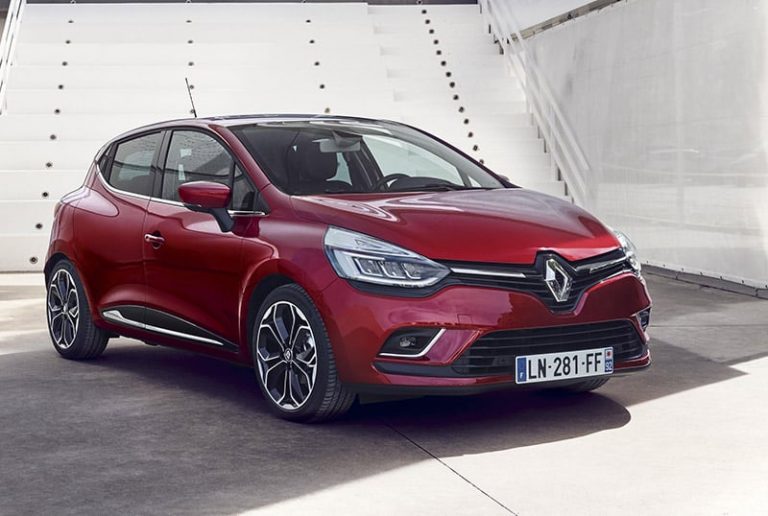
Renault has unveiled a mid-life refresh for its Clio supermini, which has been on sale since 2012.
The most significant updates to the fourth-generation Clio are in the infotainment systems, while there is also a new dC1 110 diesel engine option.
Exterior changes are subtle – the front grille is updated, with a look that follows Renault’s latest design language, as seen on the soon-to-launch Megane, and also to accentuate the width of the car.
New LED headlamps are fitted, and the rear bumper reshaped, while four more body colours – Mars Red, Titanium Grey, Arctic White and Iron Blue – are added alongside new wheel and wheel trim designs and more extensive personalisation options.
The interior also gains only detail changes, mainly the use of more soft-touch plastic, and chrome detailing, Renault saying that materials normally reserved for its higher-end cars have been employed..
As is typical of current market offerings the technology plays a big role in the updates, particularly in terms of connectivity.
Entry-level Clios come fitted with Renault’s newly-released R&Go system which uses a smartphone’s screen to connect with the car. Move up through the range and the centre console touchscreen-based R-Link Evolution and Media Nav Evolution systems are added, both including integrated satellite navigation.
For the first time the car can be fitted with a BOSE audio system, while front parking sensors and a reversing camera are added to the equipment available, and range-topping models can come with Handsfree parking.
The engine range is as in the outgoing model with the exception of the new 1.5-litre diesel unit of 108bhp. Buyers choosing the TCe 120 petrol engine can now specify a six-speed manual transmission, so in total there are now 11 engine/transmission combinations in the range. However it is not yet confirmed whether all will be offered to UK buyers.
The new Clio models are expected in showrooms in October 2016 and prices will be announced closer to the on-sale date.
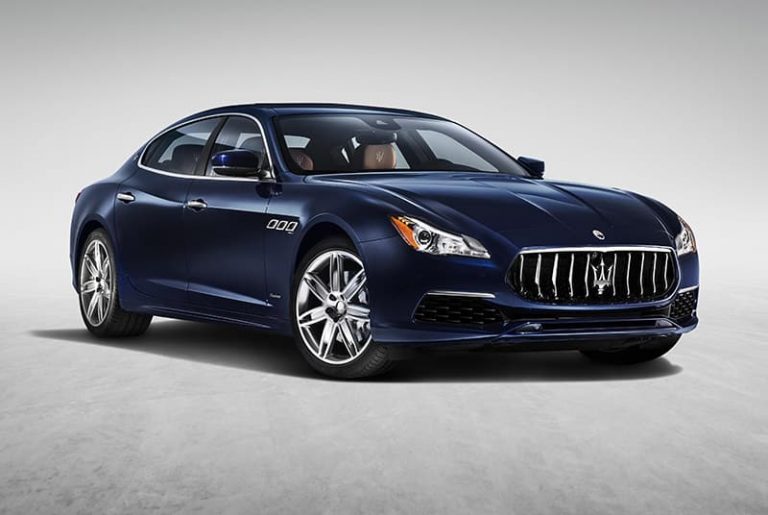
Maserati has updated its Quattroporte model, restyling the exterior, upgrading the interior and adding more features, together with a new range structure.
The refresh, applied three and a half years after the four-door luxury saloon went on sale, applies to versions of the car now on sale.
Exterior changes include a bolder, more pointed front grille emphasising the shark-nose look, matt black on the bumper and side skirts. More than cosmetic is the electrically adjustable air shutter, mounted in the grille between the air vents and the radiator to more precisely control temperatures. It also aids a drag reduction programme, Maserati saying that the new Quattroporte is 10 per cent improved in aerodynamics.
Most noticeable on the inside is a high-resolution 8.4-inch touchscreen, integrated into the front console with the climate control and boasting controls for the new infortainment system which includes Apple Car Play and Android Auto smartphone integration.
More technology is available on the options list in the form of driver aids – Adaptive Cruise Control with Stop&Go, Lane Departure Warning, Forward Collision Warning with Advanced Brake Assist and Automated Emergency Braking can be specified, along with a.n additional new Surround View Camera.
Standard on all cars is now an Air Quality Sensor, that calculates the external pollution levels and prevents polluted air and toxic gases from entering the cabin.
The launch of the new Quattroporte, regarded as Maserati’s flagship, also sees the addition of two new trim options, GranLusso and GranSport, offered on Quattroporte Diesel and Quattroporte S models and the only choice on the range-topping GTS V8 variant.
As the names suggest GranLusso is pitched at extra luxury, with such features as bespoke exterior detailing and patented silk fabric on the seats, headliner and sun visors, along with wood inserts. GranSport offers a more aggressive exterior look, extending to gloss black finishes and red brake calipers, sports seats and a steering wheel trimmed in carbon fibre or leather, along with piano black and stainless steel detailing.
Order books are open for the new Quattroporte line-up, prices ranging from £70,510 to £115,980.
Mercedes-Benz has begun taking orders for the new C-Class Cabriolet, which will arrive in showrooms in September.
First seen at the Geneva Motor Show in March, the first-ever drop-top in the C-Class line is based on the Coupe version. It has a fabric, fully automated soft top that opens and closes in less than 20 seconds at speeds up to 31mph.
UK models of the C-Class will be offered with six engine choices and two trim levels. Entry level will be the C 200, priced from £36,200 and using a 2-litre 181bhp petrol engine with either a six-speed manual or 9G-Tronic nine-speed auto transmission.
C300 versions, only offered with the auto transmission, increase the power of the 2-litre engine to 241bhp, while there are two diesels, the 167bhp C220 d, offered in both rear and all-wheel drive form, and C250 d of 201bhp.
Range-topping models will be the AMG versions. The Mercedes-AMG C43 4Matic uses a 3-litre bi-turbo V6 petrol unit of 361bhp which gives the car a 4.8 second 0-62mph time.
Its more powerful sister is the C63 Cabriolet, costing from £65,685. The engine is a 4-litre bi-turbo V8 with 469bhp, shaving the 0-62mph time to 4.2 seconds, while an S variant further boosts the potency to 502bhp – resulting in a 4.1 second sprint to 62mph.
Standard equipment on the entry Sport trim level includes the Airscarf heating system mounted in the headrests for when the hood is retracted, along with the related Aircap and Memory Package. Also included are a reversing camera; keyless start and entry in auto models; a Garmin Map Pilot navigation system; Mirror Package; heated seats; Active Parking Assist; Agility Control comfort suspension; LED headlights; ambient lighting (only on auto versions); a DAB radio and sports seats in Artico leather.
AMG Line versions are £1,495 more than Sport models and add black ash wood trim with brushed aluminium; an AMG sports steering wheel with flat bottom; brushed steel sports pedals and a black roof lining.
The exterior gains an AMG bodystyling kit; 18-inch five-spoke alloy wheels; a diamond grille with chrome pins and 15mm lowered sports suspension.
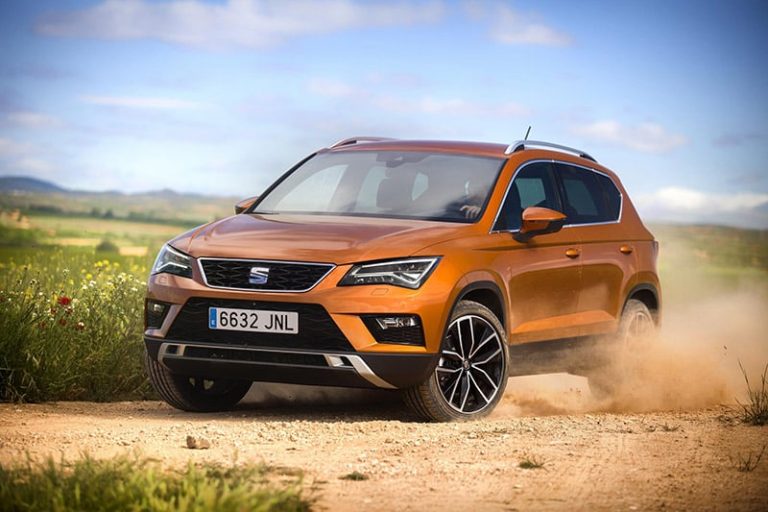
SEAT has unveiled full details of the brand’s first SUV, the Ateca, described by the brand’s head as “one of our most crucial cars ever.”
First seen at the Geneva motor show in March 2016, the Ateca will arrive in UK showrooms on 9th September, at prices starting from £17,990, which its creators point out undercuts several of its direct rivals including the segment-defining Nissan Qashqai.
Launching the car to media in Barcelona, SEAT chairman Luca de Meo describes it as the “start of a new era for SEAT.
“The Ateca is a clear development of the Leon DNA and will drive forward the success of the range – SEAT is a brand on the move,” de Meo says, adding that the model kicks off a product offensive that will see four new models in the next 18 months, while SEAT owner Volkswagen Group has committed to invest 3.3 billion Euros before 2019 to fund continued growth.
SEAT is highly hopeful that UK sales for the Ateca will reflect customer orders in France and Germany that have already significantly exceeded the brand’s own forecasts. More than 11,000 UK customers registered interest in the car ahead of order books opening on 1st June.
Built in the Czech Republic on the versatile VW Group MQB platform, the Ateca boasts much of the body style of the recently renewed Leon family hatch, while the SUV’s designers add that it offers plenty of interior space including a 510-litre boot, 80 litres larger than the Qashqai’s.
At launch the Ateca will be available with five engine choices – two TSI petrol units of 1.0 114bhp and 1.4 148bhp, a trio of TDI diesels of 1.6 114 and 2.0 148 or 187bhp.
All will be front-wheel-drive but the 2-litre units will also offer all-wheel-drive versions, which SEAT expects 15 per cent of customers to opt for.
Best 0-62mph time will be offered by the two 2-litre diesels at 7.5 seconds, while the 1.6 TDI 115PS Ecomotive will return the best efficiency figures, with 65.7mpg combined cycle fuel economy and CO2 emissions of 112g/km.
Three trim levels will be available, following SEAT’s usual convention of S, SE and Xcellence, while there will also be a 200-strong launch model dubbed First Edition.
As with most new releases in today’s market technology features heavily on the new model. Safety measures standard on every Ateca will include new Front Assist with City Emergency Braking and Pedestrian Protection, ESC, plus Tiredness Recognition and Multi-Collision Brake systems.
Seven airbags come as standard as does ASR traction control, an electronic differential lock, Hill Hold Control and a tyre pressure monitor.
SEAT’s Drive Profile is fitted to all versions with four driving modes – normal, sport, eco and individual, while the all-wheel-drive models also get off-road and snow modes.
All cars will have a touchscreen infotainment system as standard with four different variants across the trim levels. Smartphone integration is included across the various handset manufacturers, while apps developed by SEAT alongside the Android MirrorLink system and with phone manufacturer Samsung will offer various extra functions.
SEAT expects the Ateca Xcellence 2.0 TDI 150 to be favourite with retail customers, who are predicted to account for 55 per cent of sales, with the SE 1.6 TDI 115 Ecomotive appealing most to fleet buyers.
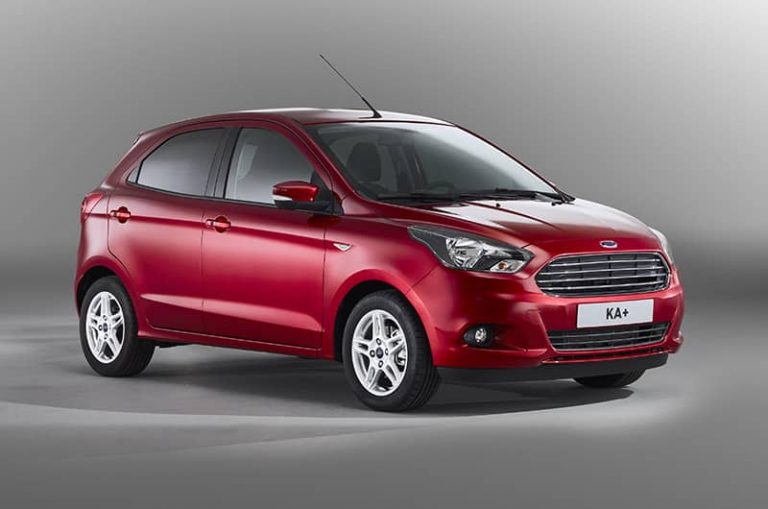
Ford is revealing its answer to the Vauxhall Viva – a replacement for the current Ka city car dubbed the Ka+.
The all-new five-door hatchback, built in India, will be priced for affordability – with a starting price of £8,995 Ford also hopes to attract customers who have been tempted by budget cars such as Dacia’s Sandero.
The Ka+ is constructed on Ford’s global small-car platform and due to dimensions that are slightly shorter than its Fiesta sister but some 29mm taller, it claims best-in-class front headroom and rear legroom. It also offers 270 litres of bootspace that its makers say is enough for two large suitcases.
All Ka+ models will be powered by Ford’s 1.2-litre Duratec petrol engine – derived from the slightly larger 1.25-litre unit in the Fiesta, it will be available in 70 or 85hp versions. Both return combined cycle fuel economy of 56.5mpg and CO2 emissions of 114g/km.
Two trim levels will be on offer – Studio grade will only be available with the 69bhp engine, Zetec across both. Standard equipment on all versions includes power front windows and door mirrors, front fog lamps, an AM/FM radio with Bluetooth connectivity, remote central double locking with a perimeter alarm, safety system with six airbags, Electronic Stability Control with Hill Start Assist, a tyre pressure monitor, a speed limiter, and Ford’s Easy Fuel system.
Zetec models gain 15-inch alloy wheels, manual air-conditioning, a DAB digital radio/CD with Ford’s SYNC voice-activated communications and entertainment system with AppLink, a leather steering wheel and cruise control.
There is also an extensive options list including electronic climate control, heated front seats, privacy glass and a City Pack combining rear parking sensors, power rear windows and power folding door mirrors.
Order books for the Ka+ open this month (June) with the model expected in showrooms later in 2016.