Find an Expert Rating: 
Home Blog Page 164

Paris debut for Suzuki’s Ignis crossover

0

Suzuki’s new Ignis will make its European debut at the Paris motor show in September.

First seen at the Tokyo show in October 2015 and taking the name of a hatchback last produced in 2008, the new Ignis is a small crossover and could tempt buyers away from the likes of Fiat’s Panda.

It is based on the IM-4 concept, unveiled at the 2015 Geneva show and it built on a new lightweight platform.

Suzuki is currently releasing few details as to the powertrain options with the Ignis but is stating that the platform allows the use of the brand’s mild hybrid unit SHVS (Smart Hybrid Vehicle by Suzuki) – providing assistance through an electric motor and efficient battery recharging to improve fuel efficiency without sacrificing performance.

The Ignis is due to go on UK sale in January 2016.

Also on the Suzuki stand in Paris will be a facelifted version of the S-Cross crossover. Changes include a revamped front exterior design and improvements to interior quality.

The facelifted model will replace the current 1.6-litre petrol engine with 1.0-litre and 1.4-litre versions of Suzuki’s new Boosterjet direct-injection turbo units.

The revised S-Cross model range will launch in the UK in mid-October.

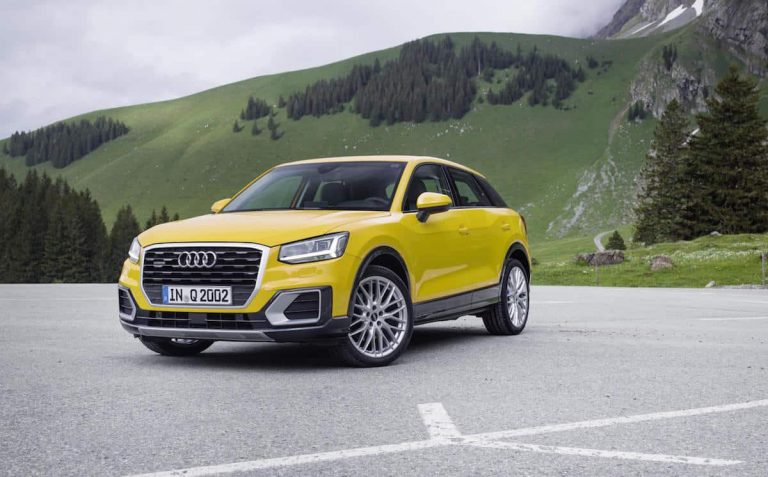
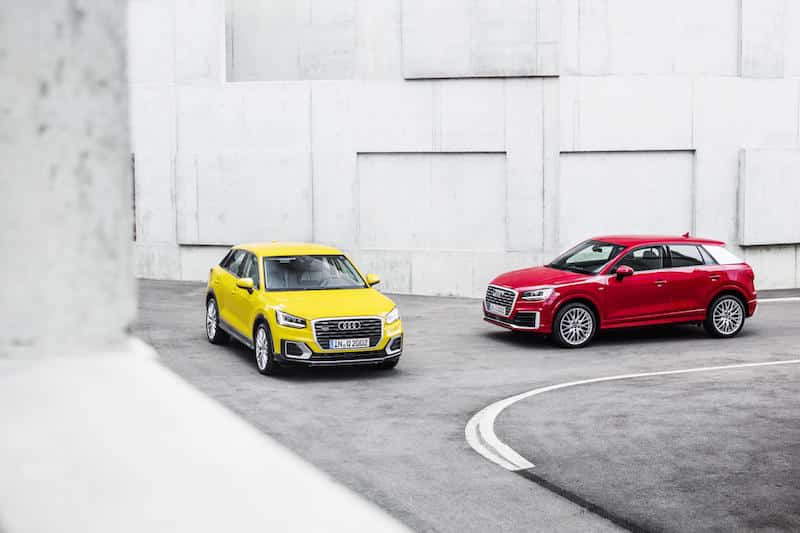
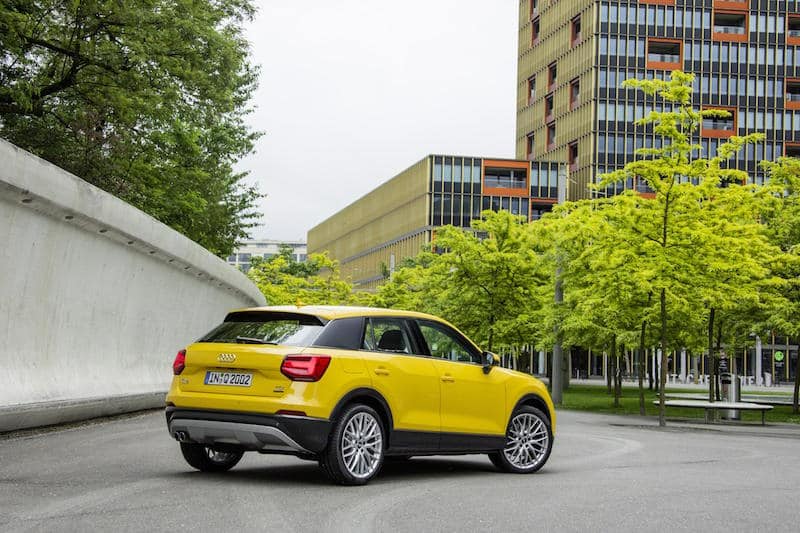
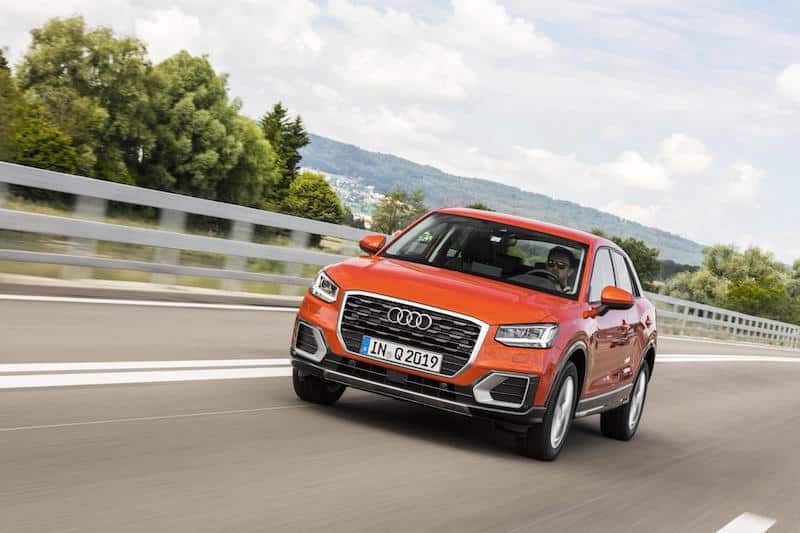
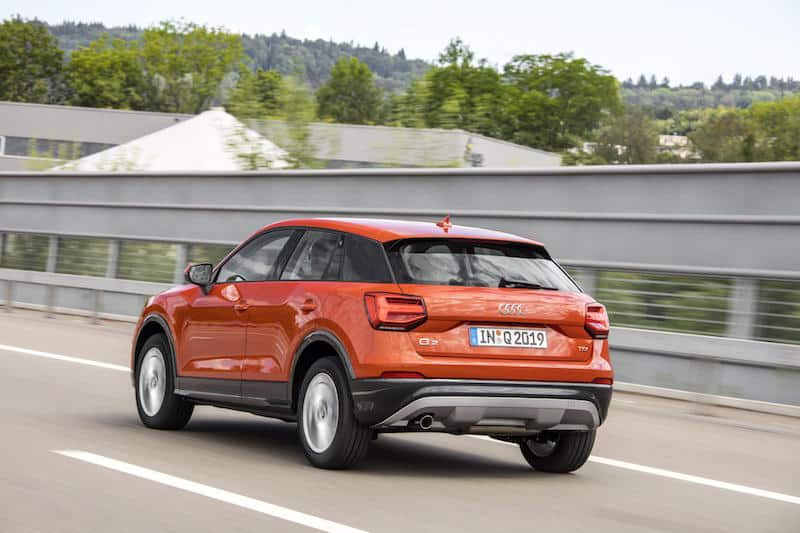
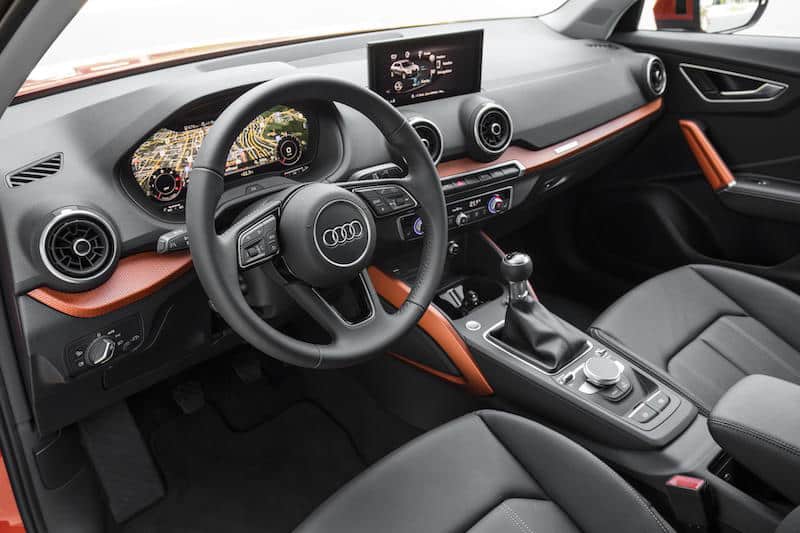
Audi opens order book for new Q2

Audi is now taking orders from UK customers for the new Q2 mini SUV range, which is expected to arrive in showrooms in November. Although an entry-level 1.0-litre model priced at £20,230 has been announced, it will not be available from launch and the initial range will kick off from £22,380 on-road instead. The Audi Q2 is built on the Volkswagen Group’s current MQB platform, which already underpins the latest Audi A3 and TT models, as well as several Volkswagen, SEAT and Škoda vehicles. It is smaller than the Q3 model, which is still built on the previous-generation Audi A3 platform. It will compete against the likes of the new MINI Countryman, which is set to launch before the end of this year. SE, Sport and S Line models will be available from launch, in a choice of 1.4-litre turbo petrol or 1.6-litre turbo diesel engines. Along with the 1.0-litre petrol engine, a 2.0 turbo diesel will join the range a month or so after launch. Like most mini-SUVs, the vast majority of the Audi Q2 range will not have a 4×4 drivetrain. None of the launch-specification models will have Audi’s quattro all-wheel-drive system available, although the 2.0-litre TDI model with quattro will be available to order from September. Once the full roll-out is complete in mid-2017, there will be four versions available with quattro.

AEB standard, good crash test results expected

All Audi Q2 models will be fitted as standard with autonomous emergency braking, which Audi calls Pre-Sense Front. Additional safety technology like adaptive cruise control and lane assist systems are available as options. Vehicles built on the MQB platform have generally received good Euro NCAP crash test scores, and we expect that the Q2 will be no different. The Q2 range will unsurprisingly feature a high level of connectivity and infotainment, including Bluetooth and support for both Apple CarPlay and Android Auto. Satnav is standard on Sport and S Line models. The S Line models, which are always popular in the UK, will get full-LED lighting front and rear (and inside), along with 18-inch alloy wheels, partial leather sports seats, and the usual plastic/chrome/aluminium trim differences. A limited-edition ‘Edition #1’ version will also be available to order from next month, with a two-tone grey exterior, 19-inch alloy wheels and seats of fine nappa leather. It will start at £31,170 on-road.

Alfa Romeo prices up its 3 Series rival

0

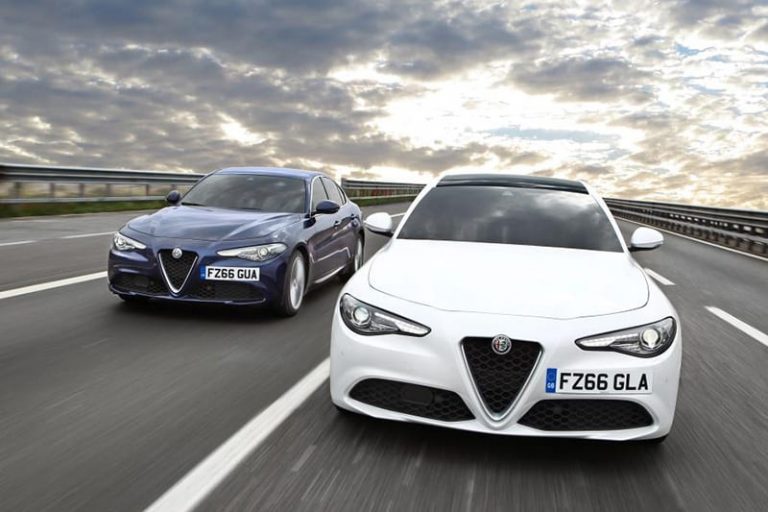
Alfa Romeo’s new upmarket Giulia family car will cost from £29,180 when it goes on sale later this year.

The car, which Alfa Romeo expects to be a contender against the likes of the Audi A4 and the BMW 3 Series, will be offered in five trim levels and with four engine choices.

Its creators believe the Giulia will sell on its combination of Italian styling and a handling-friendly 50/50 weight distribution.

The entry-level powertrain will be the 2.0-litre petrol unit of 200hp, mated like all versions of the car to an eight-speed ZF auto gearbox as standard.

A 2.2-litre diesel unit will be available in either 150 or 180hp outputs, while the range-topping model will be the Quadrifoglio with its 2.9-litre V6 petrol engine of 510hp, giving the model a 3.9-second 0-62mph time.

Giulia, Super, Technica, Speciale and Quadrifoglio comprise the five trim levels, along with a choice of 13 exterior colours.

Alfa Romeo is proudly pointing out that in Euro NCAP crash tests the Giulia not only gained a top five-star rating but also the highest-ever 98% score for adult occupant protection. Contributing to this was a suite of active safety technology included on all versions, including Forward Collision Warning, with Autonomous Emergency Brake and pedestrian recognition, an Integrated Brake System and Lane Departure Warning.

Standard equipment on entry-level models includes 16-inch alloy wheels, LED rear lights, a chrome exhaust and aluminium brake calipers on the outside.

Inside there is dual-zone climate control, the ‘Alfa DNA’ rotary driving mode selector, a 3.5-inch TFT colour cluster instrument panel, the UConnect 6.5-inch display infotainment system with DAB plus MP3 and Bluetooth connectivity, an eight-speaker audio system, leather and controls on the steering wheel, rear parking sensors and cruise control.

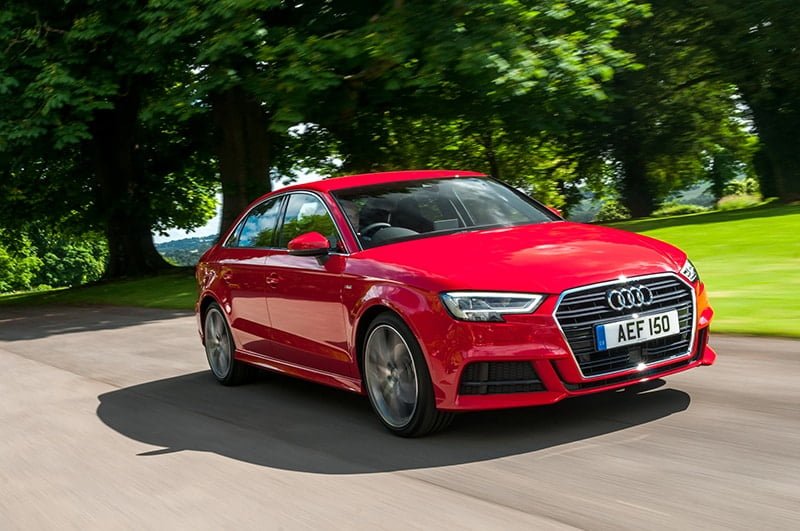
Audi A3 review

What is it? Significant update of Audi’s biggest-selling model.
Key features: More technology, two new engines.
Our View: The latest updates to the Audi A3 range further enhance what is already one of the brand’s most comprehensive line-ups.
Type of review: First UK drive


The Audi A3 is the route that provides, more than any other model, so many motorists with their first experience of the German manufacturer with the four rings. It is the brand’s biggest seller in the UK, and having for many years been recognisable as ‘the Audi hatchback’, today there is a four-strong line-up also encompassing the Sportback estate, a saloon and a cabriolet.

Audi launched the third-generation version of the A3 in September 2012, at the same time introducing the MQB modular chassis architecture that has gone on to underpin so many cars across the VW Group.

So almost four years on, what we have in the new Audi A3 is effectively a mid-life refresh, albeit a quite substantial one as it involves, for example, two new engines.

Mainly, however, this update is all about technology, adding the fruits of four years of rapid development in such areas as digital dashboards and smartphone connectivity to the car that accounts for so much of Audi’s still climbing UK sales.

When we drove the third-generation Audi A3 back in 2012 we commented that the styling was not that distinctive, merely an evolution of what had gone before, and the update simply adds some subtle detail changes. These are most notable at the front where the broader single-frame grille and flattened-out headlamps give the car a wider look. This is emphasised at the rear courtesy of the horizontal digital light signature.

Those lamps, by the way, are now Xenon or LED as standard and with Matrix LED variants available as an option.

The big differences are found once one gets into the car, though they – to a great extent – concern aspects one can specify as options rather than standard equipment.

The highlight has to be the virtual cockpit – Audi’s digital dashboard first seen in the latest TT. It stretches across the panel behind the steering wheel and offers two configurations, large dials as normal or an ‘infotainment mode’ which reduces said dials in diameter and allows the navigation map to stretch the full width of the panel, and to be configured as Google Earth imagery if desired.

On its own the virtual cockpit costs £450 but to make full use of the navigation, Google Earth and such like you’ll need the dash as part of the ‘Technology Pack Advanced’ – a lot more money at £1,395, but which also includes such niceties as 4G Internet access, wireless charging of one’s smartphone, and an upgraded version of the ‘one-dial’ MMI control of the infotainment, car settings and such like. The MMI now boasts a touch-sensitive pad that can even recognise and respond to handwriting.

No matter how much of the technology you choose, however, some A3 staples remain. The interior is highly comfortable, finished to a standard that is the benchmark for the class, and generally spacious, especially the Sportback which with its 35mm longer wheelbase than the hatch helps free up some rear seat room. One needs to remember, however, that these are compact cars still and two adults will be far more comfortable in the back seats than three.

Two new engines are set to make their debut in the 2016 version of the A3, both petrol units. The 1.0-litre, the first three-cylinder in an A3, is a new entry-level unit, with 115 hp on tap and the promise of impressive efficiency figures.

Efficiency gains will also be prominent in the 2.0-litre unit, though its 190 hp will likely spark most interest. This engine will be combined with a new seven-speed double-clutch automatic transmission, replacing the previous six-speed unit, while the 2.0-litre petrol will also be the only mainstream A3 able to be ordered with quattro all-wheel-drive.

Unfortunately neither of these engines was available to try out at the launch event, so our test took in a cross-section of the range – the 1.4-litre petrol of 150 hp with its ability to turn off two cylinders to save fuel, and 1.6- and 2.0-litre diesels with 110 and 150 hp respectively – a 180 hp version of the latter is also on the way.

All these engines are familiar, both in the models regularly being launched by Audi and across the VW Group as a whole, and it is of no surprise that they do the job very effectively, combining freely delivered acceleration with excellent refinement. If anything the 1.6-litre diesel, expected to be popular with fleet buyers, is the least smooth, with the most noticeable audio note, though not intrusively so. It does seem, however, that Audi’s diesels, so long a benchmark, are beginning to be overshadowed by their petrol siblings.

Equally, the A3’s road manners are exemplary, no matter what body style one chooses – and we tried the hatch, saloon and biggest-selling Sportback.

Standard equipment on the new Audi A3 is impressive. As well as such desirable features as air conditioning, DAB radio and smartphone connection every car now includes cruise control, light-sensing headlamps and rain-sensing wipers.

The most impressive upgrade is to second-level Sport trim, the extras including the Drive Select chassis control with its four modes altering suspension, steering and throttle response. One also gains dual-zone climate control, navigation and the Audi Connect Infotainment services as part of the Sport grade.

The safety package has been further enhanced too with more new technology, though again a lot of it requires choosing from the options list. A host of new driver assistance systems, cascaded down from Audi’s larger models, includes traffic jam assist, which working with the adaptive cruise control on automatic gearbox models, allows progress in a queue without constant use of the pedals.

Emergency assist can brake the car to a safe stop if the driver doesn’t respond to warnings in a dangerous situation, while rear cross-traffic alert helps prevent a collision with a passing vehicle when reversing out of a car park space.

From launch, the new range is available in all four body styles, as are the performance-pitched S3 models with their now 310 hp engines. More versions are on the way too – in addition to the new powertrains mentioned, before the end of 2016 the Audi A3 will be added to the brand’s growing e-tron plug-in hybrid range, further enhancing the choice in what is already one of the brand’s most comprehensive line-ups. Little wonder it sells so well.

Audi A3 – key specifications

Models tested: Audi A3 Saloon 1.4-litre petrol S Line 150hp, 1.6-litre diesel Sport 110hp, Sportback 2.0-litre diesel S Line 150hp
On sale: July 2016
Range price: 
From £19,365
Insurance groups: 
15-32.
Engines: Petrol 1.4. Diesel 1.6, 2.0.
Power (bhp): 148. 109, 148.
Torque (lb/ft): 
184. 184, 251.
0-62mph (sec): 8.1. 10.5, 8.6*.
Top speed (mph): 136. 124, 135*.
Fuel economy (combined, mpg): 62.8. 74.3, 80.7*.
CO2 emissions (g/km):
105. 99, 105*.
Key rivals: BMW 1 and 2 Series, Mercedes-Benz A-Class, Volvo V40.
Test Date: July 2016
Figures for Audi A3 hatch except * which are Sportback 2WD. All on 16-inch wheels

Track inspires Caterham’s newest model

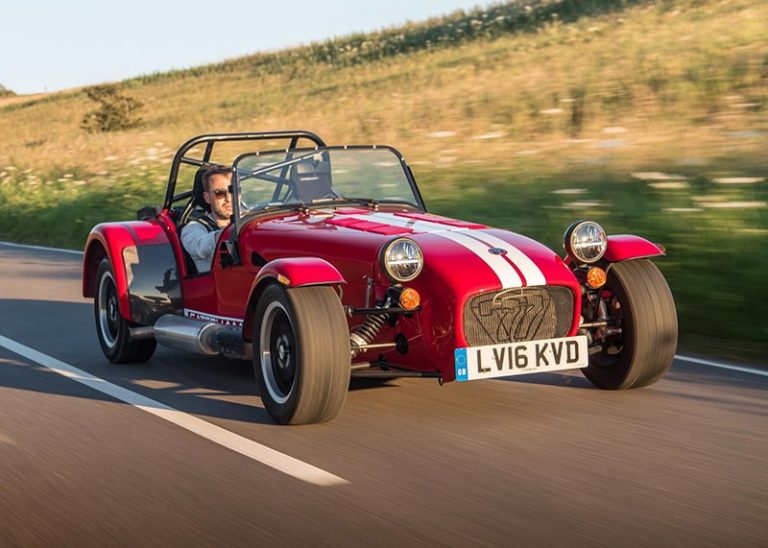
Sports car manufacturer Caterham Cars is to launch a new version of its signature Seven model with developments taken from the brand’s motorsport programme.

The Seven 310 is said to hark back to what many regard as the best-balanced Caterham Seven model to date, the Superlight R300. It gains the upgrade to the 1.6-litre Ford engine, including high-performance camshafts and revised mapping, that was produced for Caterham racers to upgrade from the Tracksport to the Supersport category.

Apparently a power increase of up to 20bhp was a surprise discovery during the upgrade process, the engine now putting out 152bhp.

According to Caterham, the changes add an exceptional driving experience to the car. Simon Lambert, the brand’s chief motorsport and technical officer, says that the Seven 310 will be loved by Caterham enthusiasts but will also convert car fans in general who understand that creating a genuinely fun driving experience is not about simply adding more and more power.

“When we were going through the engineering process on the race engine upgrade, we had one eye on the aftermarket, of course. But, once the re-worked car hit the road, we knew it was far too good to be marketed simply as an option,” Lambert adds.

Order books are now open for the Seven 310, at prices from £24,995 fully built, or £21,995 as a home-build kit, and with first deliveries expected in early 2017.

Owners of existing Seven 270s can also upgrade their car to the new specification for £1,495, while the new car also debuts a new optional LED headlamp option which in due course Caterham will roll out across its range.

UK new car market levels off in July

Britain’s new car market is slowing down – growth in July was just 0.1 per cent.

But the Society of Motor Manufacturers & Traders (SMMT), which compiles the UK’s new car registration figures, points out that year-to-date demand is still 2.8 per cent ahead of 2015, at 1m 599,159 cars.

1608_SMMT_chartThe SMMT had predicted at the start of the year that demand would level off, and chief executive Mike Hawes remains optimistic, while also reminding Government of the need to keep the industry strong.

“After a healthy start to 2016 and record registrations in 2015 the market is showing signs of cooling,” Hawes says.

“The automotive market is a vital part of the British economy and it’s important government delivers the economic conditions which instill business and consumer confidence – with low interest rates, attractive finance options and exciting new models coming to the showrooms, the market still has lots to offer customers,” he adds.

July’s total registrations of 178,523 cars was only 103 ahead of the same month in 2015. Following the trend of recent months, declining private purchases down 6.1 per cent, were offset by a fleet market up five per cent. The diesel and petrol split remained virtually even at 87,672 and 86,695 respectively, while registrations of alternatively fuelled vehicles, which includes electric cars, again jumped by almost 25 per cent, to 5,380.

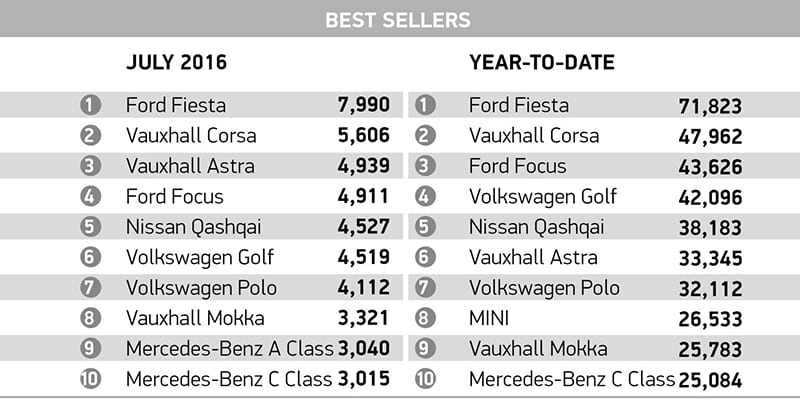
Ford’s Fiesta continues to dominate the new car top 10 with its rival supermini the Vauxhall Corsa in second place. In July 7,990 Fiestas were registered, almost 2,400 ahead of the Corsa.

1608_SMMT_Top_Sellers

Fastest-ever Golf GTI already sold out

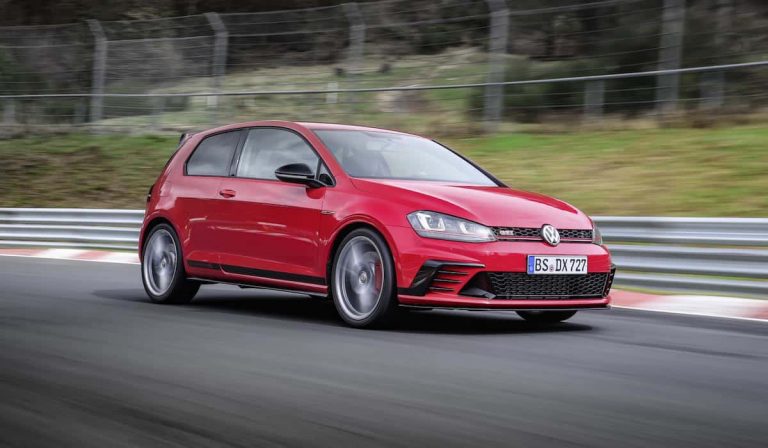
Volkswagen has announced that it has sold all 150 of the limited edition Golf GTI Clubsport S models allocated to the UK.

The special edition, which produces over 300hp and has claimed a lap record of the Nürburgring Nordschleife circuit, was released to mark the 40th anniversary of the original Golf GTI – well, sort of.  There is already a GTI Clubsport Edition 40, so this is an extra birthday present from VW to itself.

400 vehicles are set to be built in total for worldwide distribution, with the UK allocated 150 of that total to reflect the ongoing popularity of the Golf GTI here over the last four decades. This decision seem justified since the car quickly sold out, despite an on-road price tag of £33,995 that could get you a decent second-hand Porsche 911.

Unlike many limited edition models, which are limited to some new alloys and go-fast stripes, the Clubsport S features significant engineering upgrades over the regular Golf GTI.

An aluminium axle sub-frame, lightened components around the vehicle, a smaller battery and the complete removal of the rear seats reflect Volkswagen’s commitment to reducing the weight of the car. Air-conditioning, insulation material, floor mats, rear parcel shelf and the bonnet strut dampers have all been thrown in the bin as well. Volkswagen quotes a weight of 1,285kg for the Clubsport S, which is 65kg less than the regular Golf GTI’s official figure.

A new exhaust system with larger-diameter tailpipes is said to reduce pressure and improve performance. A side effect of “atmospheric backfiring” when lifting off has been designed in, so expect imminent YouTube videos of Clubsport S drivers giggling like schoolkids as their car pops and crackles like a bowl of Rice Crispies through a megaphone.

Volkswagen claims a Nürburgring lap record time of 7mins 49 sec, which is faster than a Lamborghini Murcielago or BMW M4. The car even comes with a special ‘Nürburgring’ mode which modifies the suspension, sound, engine and steering settings. Helpfully, Volkswagen also advises that the top speed of the Clubsport S is 164mph.

Hyundai’s i20 Turbo Edition addition

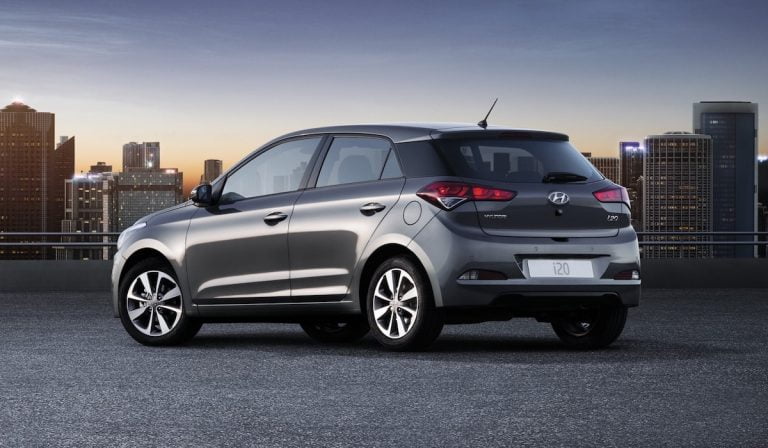
Hyundai has launched a special edition model to its i20 hatchback range as it plans to leverage its motorsport success into increased road car sales.

The i20 Turbo Edition arrives in showrooms this month, powered by Hyundai’s 1.0-litre turbocharged 3-cylinder petrol engine. Already available in other i20 models, it produces 100hp and emits only 104g/km of CO2, which means it is rated B for emissions.

The new Turbo Edition model is based on the existing SE specification, but comes with additional kit and a reduced price – £12,975 on-road compared to £14,075 for the same engine in the SE model.

Hyundai 120 Turbo Edition, The Car Expert, interior

Over and above the SE version, the new Turbo edition gets larger 16-inch alloy wheels, satnav, reversing camera and automatic headlights.

The current Hyundai 120 range has a four-star safety rating from EuroNCAP. It features six airbags as standard and is considered to offer good protection for occupants in an accident, but is not available with an autonomous emergency braking system to help avoid a collision. The SE, Turbo Edition and higher-specification models feature a lane-departure warning system, but this is not included on more basic models.

Like all new Hyundai models, the i20 range comes with a five-year unlimited mileage warranty. As part of the satnav system included, the Turbo Edition benefits from seven years of free TomTom live traffic and weather updates.

The special edition i20 is part of Hyundai’s ongoing push to increase its market share. In conjunction with the launch of the Turbo Edition, Hyundai will be running a new TV campaign for the i20 range. The campaign features the company’s World Rally Championship (WRC)  team and shows some of the new motorsport technologies that will filter down to production models in coming years. So you can expect to see a lot of Olympics coverage on the BBC and Hyundai adverts everywhere else.

Kia Niro review

What is it? Compact crossover, Kia’s first production hybrid in the UK.
Key features: Hybrid drivetrain, bespoke platform, lots of interior space.
Our View: We see the Kia Niro appealing to families looking for something practical and efficient; a bit different form the norm, but not that different.
Type of review: First UK drive


Kia is on a mission – the Korean manufacturer has set itself the goal of cutting 25% from average CO2 emissions across its model range by 2020. By that time the brand’s global range will include 22 models with either mild hybrid, plug-in hybrid or full electric powertrains.

We saw the first of these in the UK in 2015, with the arrival of the electric version of the Soul supermini crossover. Now the brand moves into more mainstream hybrid territory with the Niro, a crossover going on sale in mild-hybrid form now, and set to add a plug-in version in 2017.

The Niro gains its own bespoke platform, which Kia says has been engineered especially to suit the hybrid installation – we won’t see pure petrol or diesel versions of this model. It’s a platform designed to suit Kia’s growing electric line-up, accommodating the necessary components under the floor without using up cabin or luggage space. And as is typical of today’s architecture, it employs a 53 per cent high-strength steel and a lot of aluminium to improve safety without adding weight.

Kia is making much of the Niro’s looks, stating that it does not have the traditional aerodynamic-limited profile of a hybrid – “We don’t do elevator music,” proudly states the press material.

The Kia Niro is described as a crossover, appealing to today’s most active market, but in truth it’s a very family-hatch like crossover, distinctly smaller than the Sportage SUV for example, low and reasonably slippery.

Boasting Kia’s latest design language with the signature ‘tiger-nose’ grille, the Niro is attractive visually from whichever angle one views it, heightened by well-placed chrome detailing on the front and rear bumpers, and it certainly does not look out of place alongside non-hybrid rivals in the car park.

This, in truth, is totally in aim with the brand’s marketing for the Kia Niro – it is being presented as a car for the family, oh and by the way it has a hybrid powertrain so you’ll save money on fuel and taxes…

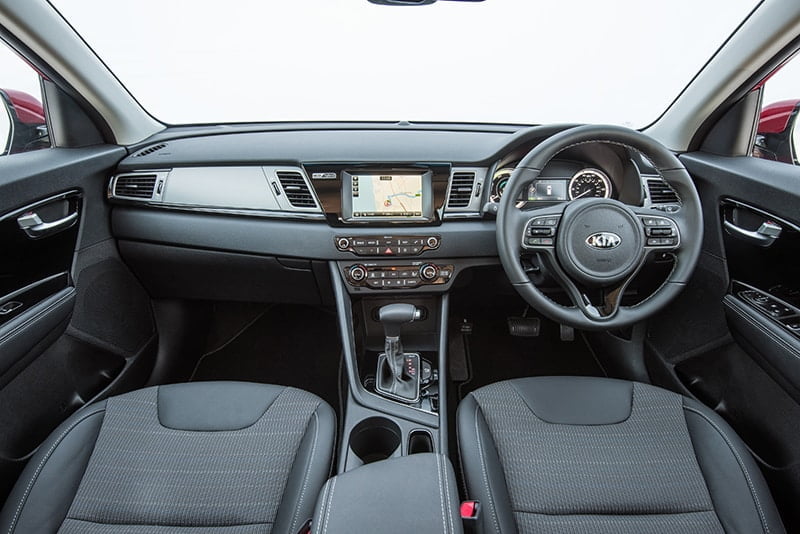
On slipping inside the car the driver’s environment is familiar to anyone who has driven a recent Kia Sportage or Optima. The major difference is the energy flow-meter occupying the dial usually reserved for the rev counter.

Trim is generally black and dark grey plastic and cloth, though the range-topping ‘First Edition’ variant gets white door inserts and stone-grey leather upholstery.

It’s all very well put together, as is the norm with today’s Kia models, and there is a good amount of space too. Kia claims the 1018mm front-seat headroom as class leading, many more traditional compact SUVs (including the Sportage, incidentally) unable to match this and the rear headroom of 993mm. The battery pack sits under the rear seat so luggage space is a very reasonable 427 litres, 373 if you use the neat undertray and extending to a maximum of 1,425 litres with the rear seats folded.

The single powertrain of the Niro combines the latest version of Kia’s 1.6-litre direct-injection ‘Kappa’ petrol engine, producing 104bhp, with a 32kW electric motor offering 43bhp of its own. Combined power is 139bhp with 185lbft of torque, all of which is available for a smart getaway from rest.

Other hybrids use a CVT gearbox but Kia goes for a six-speed version of its 7DCT auto transmission available in other models. Combined with a Transmission-Mounted Electric Device (TMED) which transfers engine and motor power to the wheels in parallel, it is said to be more direct at higher speed with far less energy loss compared to a CVT.

The Kia Niro is not claimed to be as efficient as the standard-bearer Toyota Prius (its best combined fuel consumption figure of 74.3mpg and CO2 emissions of 88g/km compare to 86mpg and 76g/km on the Toyota), and the difference is evident as soon as one pulls away, as the petrol engine appears to come to life almost immediately the car is moving. Only under the gentlest of acceleration, braking or coasting down a slope does the little green EV light up on the dash.

It’s all very smooth and unfussy, however, and the Niro accelerates reasonably quickly, 62mph coming up in just over 11 seconds. Cruising is a refined process but to accelerate past another vehicle, for example, one needs a lot of revs and only then does the drone-like engine note of a typical CVT-transmission hybrid become noticeable, if hardly intrusive.

The Kia Niro boasts fully independent suspension all round, combining MacPherson struts up front with a multi-link rear end, and generally it rides in comfort. On the launch event The Car Expert drove both a car in the second ‘2’ trim level and the range-topping First Edition, and we preferred the cheaper model. The only major chassis difference are the two-inch larger diameter alloy wheels, a change made for buyers of 3 trim upwards. This seems, however, to produce a firmer, if not uncomfortably so, ride and also more noticeable road roar and wind noise around the doors.

The Niro is a reasonably heavy car but its steering quite light – as a result it’s not something to attack a challenging series of S bends in, though perfectly adequate for the kind of use it will find in its target market.

Four trim levels will be available to UK Niro customers, with standard equipment on entry 1 models including 16-inch alloy wheels, dual automatic air conditioning with an auto windscreen defogger, LED daytime running and tail lights, electric windows all round and DAB radio. The standard safety package includes lane-departure warning, hill-start assist and cruise control.

Among noticeable additions to level 2 cars are satellite navigation on a seven-inch screen with Kia’s connected services including traffic alerts, a reversing camera and sensors, leather on the steering wheel and gearshift surround, black cloth and leather upholstery, roof rails, privacy glass and electric mirrors.

At 3 one gets the 18-inch alloys, the navigation grows to an eight-inch touchscreen, while black leather upholstery, front parking sensors, heated front seats and steering wheel, powered front seats, a better audio and wireless mobile phone charging are added.

Finally the First Edition gains as mentioned a bespoke grey leather trim with white interior inserts, a smart key with push-button engine starting, heating in the outer rear seats and venting in the fronts and an electric tilting and sliding sunroof, along with significant upgrades to the safety package – autonomous emergency braking, blind spot detection with a rear cross traffic alert and smart cruise control are all included.

The Niro suits its billing – it’s not as efficient as a Prius, but it feels rather more ‘normal’ to drive and look at than does the Toyota. We’d go for the 2 grade, which is priced at £22,795, this price including Kia’s much-admired seven-year warranty.

Overall we can see the Kia Niro appealing to families looking for something practical and efficient, a bit different form the norm, but not that different.

Kia Niro – key specifications

Models Tested: Kia Niro 2, First Edition
On Sale: August 2016
Range price:
£21,295-£26,995
Insurance groups:
12-14.
Engines: Hybrid petrol 1.6-litre, 32kW electric motor.
Power (bhp): 104/43 (139 combined).
Torque (lb/ft):
108/125 (195 combined).
0-62mph (sec):
11.1.
Top speed (mph): 101.
Fuel economy (combined, mpg): 74.3 (18in wheels 64.2).
CO2 emissions (g/km):
88 (101).
Key rivals: Nissan Qashqai, Toyota Prius, Toyota Auris hybrid.
Test Date: August 2016.

‘More EV points than petrol stations by 2020’

Nissan is claiming that by 2020 the UK will offer more public charge points for electric vehicles (EVs) than traditional filling stations.

In a statement that says as much about the decline of fuelling options for motorists as it does about the rise of electric vehicles, the Japanese manufacturer contends ‘that the tipping point for mass EV uptake is upon us.’

Nissan adds that the UK has lost some three-quarters of available filling stations over the past four decades. According to figures from the Energy Institute, in the last ten years alone the number of petrol/diesel filling stations has slid from 9,764 in 2005 to 8,472 in 2015, well over a thousand outlets closing. There are now only four, it is stated, within London’s congestion-charge zone.

Meanwhile the number of public electric charging stations is mushrooming. Figures were first recorded just four years ago in 2012, when there were 913 outlets. According to Energy Institute figures, by the end of 2015 that figure stood at 3,646.

If the trend continues at the same rate, it is predicted that the number of EV charge points will overtake the number of filling stations by August 2020 – just over 100 years after the UK’s first filling station opened at Aldermaston in Berkshire in November 1919.

At the current rate the figures in 2020 will be 7869 filling stations against 7898 charge points, but Nissan – manufacturer of the first mainstream passenger EV to launch, the Leaf – adds that the accelerating adoption of electric cars could see the crossover happen a lot earlier.

Earlier this week industry and government campaign Go Ultra Low stated that the first quarter of 2016 had seen more than 115 new electric cars registered every day, predicting that EVs could become the dominant format of cars sold as early as 2027 with sales of 1.3 million a year.

According to Nissan Motor GB’s EV manager Edward Jones as electric vehicle sales take off, the charging infrastructure is keeping pace. “Combine that with constant improvements in our battery performance and we believe the tipping point for mass EV uptake is upon us,” he says.

“As with similar breakthrough technologies, the adoption of electric vehicles should follow an ‘S-curve’ of demand – a gradual uptake from early adopters accelerates to a groundswell of consumers buying electric vehicles just as they would any other powertrain,” Jones adds.

This uptake is expected to increase as new technologies are advanced – Nissan for example recently announced the joint development of a technology that uses amorphous silicon monoxide (SiO) to increase the energy density of its lithium-ion batteries and could alone increase the driving range of future EVs by 150%.

EV maker Tesla hints at big future plans

Electric vehicle specialist Tesla Motors is to expand its range with a compact SUV, a minibus and a pick-up.

The US maker could also add a van to its growing line-up of EVs.

Tesla CEO Elon Musk has confirmed the existence of future vehicles and their potential names in replies to speculation on social media site Twitter.

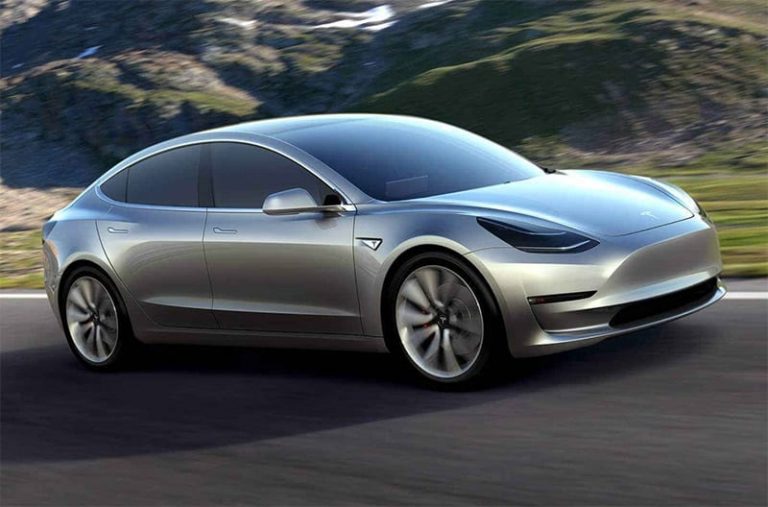
The compact SUV, which will be built on the chassis of Tesla’s most recent unveiling the Model 3 saloon (pictured above), is expected to be dubbed the Model Y.

In a ‘Master Plan Part Deux’ posting on Tesla’s website, Musk says that Tesla’s electric vehicle product line should be expanded “to address all major segments.

“With the Model 3, a future compact SUV and a new kind of pickup truck, we plan to address most of the consumer market,” he adds.

In response to questions on Twitter Musk says that the Tesla minibus and potential larger sisters will be built on the chassis of the current Model X.

And in reply to British Twitter user James Ross who questions the relevance of a pickup to European users, most of whom drive vans instead, Musk states that “it probably makes sense to build (a van) off the pickup chassis.”

The clues to the Tesla product future have come as Musk staged a launch party for Tesla’s ‘Gigafactory’, a battery manufacturing plant in Nevada that when complete in 2020 will be the largest building in terms of footprint in the world.

The £3.8bn project occupies 3,200 acres and currently just 1.9 million of the planned eventual 5.8m sq ft of operational space is in use. It is expected to produce 35GWh of battery power by 2018, which is more than the 2014 production of batteries across the globe.

£34K price-tag for VW’s plug-in Passat

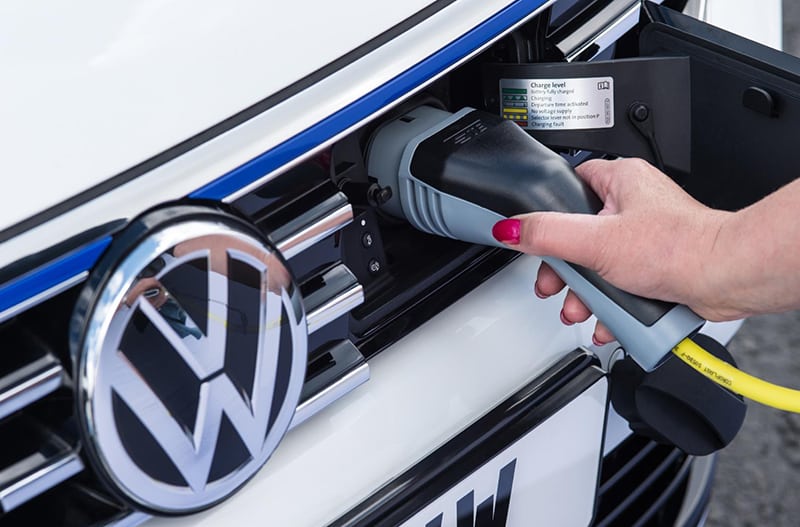
Volkswagen is opening order books for its Passat GTE, the first plug-in hybrid version of the car.

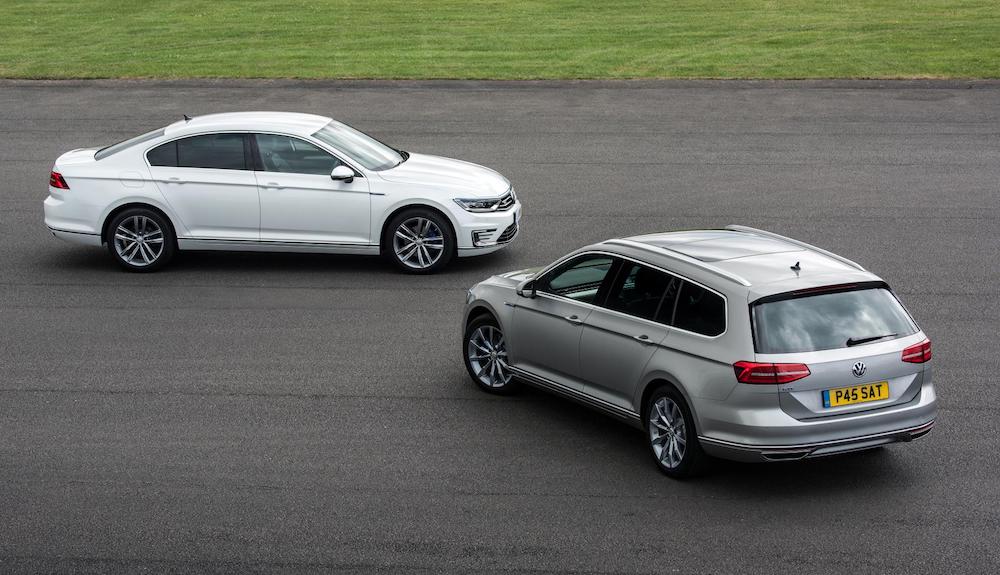
The new Passat will be on sale in both saloon and estate body styles at prices starting from £36,525. However this drops by £2,500 when the Government’s plug-in car grant is taken into account.

Passat GTE variants produce a total of 215bhp and 295lbft of torque, matching an electric motor of 114bhp to the 1.4-litre TSI turbo petrol engine of 153bhp. On its own the electric motor can dial up an immediate 243lbft, resulting in a 7.6-second 0-62mph time and a 140mph top speed.

Alongside this the official combined-cycle fuel consumption figure is 166mpg, with CO2 emissions of 39g/km. The car also has an electric-only range of up to 31 miles and its lithium-ion battery pack, mounted under the rear floor, can be recharged using a standard UK domestic mains outlet in around four hours 15 minutes, or in two hours 30 minutes from a dedicated wallbox with a 3.6 kW supply.

Technology on the Passat GTE includes a bespoke six-speed DSG gearbox with a third clutch.  This decouples the TSI motor whenever possible, allowing the car to make best use of kinetic energy, further improving its efficiency.

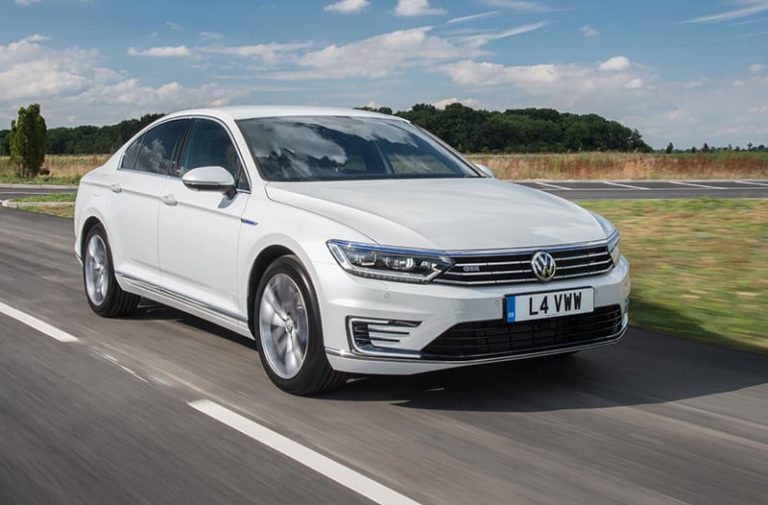
GTE models can be distinguished from standard Passats by C-shaped LED daytime running lights and an additional blue line across the radiator grille, above a redesigned front bumper.

Volkswagen Passat GTE saloon and estate (The Car Expert)

Standard equipment inside includes blue ambient lighting, a leather-trimmed multifunction steering wheel with blue decorative stitching, a GTE-specific gear knob with blue stitching and seats in Alcantara with Vienna leather side bolsters.

Also available for the GTE is Volksawgen’s Car-Net e-Remote smartphone app. This allows the driver to activate several controls remotely using their phone, including the climate control, door locking and lights, while also checking on the battery’s state of charge.

UK GTE models will be sold in two trim levels. Standard cars are based on the Passat GT specification, which includes Adaptive Cruise Control with Front Assist and City Emergency Braking, Discover Navigation, Bluetooth and parking sensors.

To this are added LED headlights and tail lights, Mode 2&3 charging cables and the Car-Net e-Remote app.

GTE Advance versions also include the new Active Info Display digital dashboard, Discover Pro navigation on an eight-inch screen, Nappa leather, the Area View function and LED premium headlights.

First cars are expected on UK roads in August.

1608_Volkswagen_Passat_GTE_02

Ford adds sports-pitched ST-Line to Kuga range

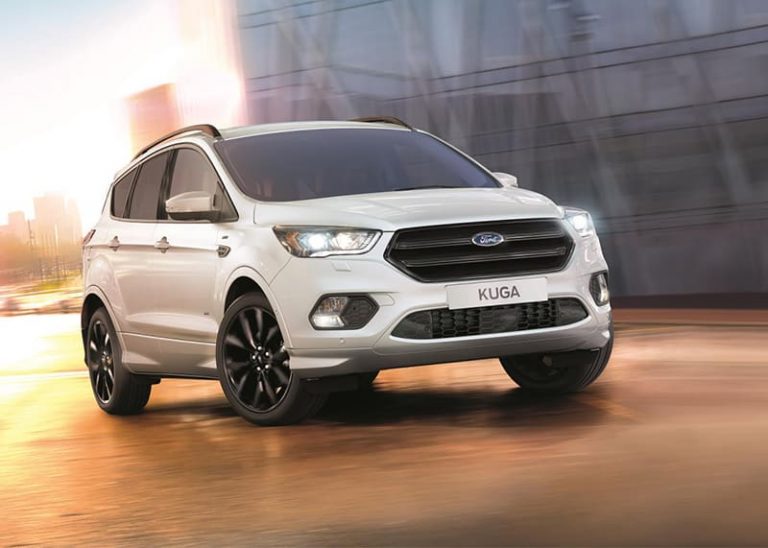
Ford is expanding its growing sports-pitched ST-Line range with the Kuga SUV.

The Kuga ST-Line will go on sale in September, with body and interior styling supplied by the brand’s Ford Performance division plus some chassis upgrades.

Exterior changes include honeycomb grille designs with matching mesh on the fog lamp bezels, the grille finished in ebony black. This black shade is repeated on the rear skid plate while the front skid plate, side skirts, mirror caps, door handles, door cladding, rear roof spoiler and arches are all finished in body colour.

Black roof rails, tinted front and rear lights and privacy glass are all included and there is a black belt line beneath the windows, with ST-Line badging added to the bumpers.

Buyers have a choice of two alloy wheels, 18-inch high-gloss black versions with a bright machined finish or 19-inch rims in ebony black.

Inside there are bespoke seats in partial leather with contrasting stitching, repeated on the gear gaiter and steering wheel, a two-layer metallic-effect paint finish to the centre console and a black headliner.

Ford Kuga ST-Line 2016 (The Car Expert)

The chassis changes to the model include thicker anti-roll bars, a lower ride height, stiffer suspension bushes and retuned spring and damper rates. The electronic power steering is also revised to deliver what Ford describes as a tighter, more responsive and sporty feel.

ST-Line variants will be offered across all the powertrains available for the Kuga, at prices starting from £25,845 – £5,000 more than the cheapest Kuga model.

First deliveries are expected before the end of 2016 and the Kuga will join an ST-Line range that already includes the Fiesta, Focus and Mondeo. It will also further expand the Kuga line-up that will see the launch of an upmarket Vignale model.

£130K buys Audi’s latest R8 drop-top

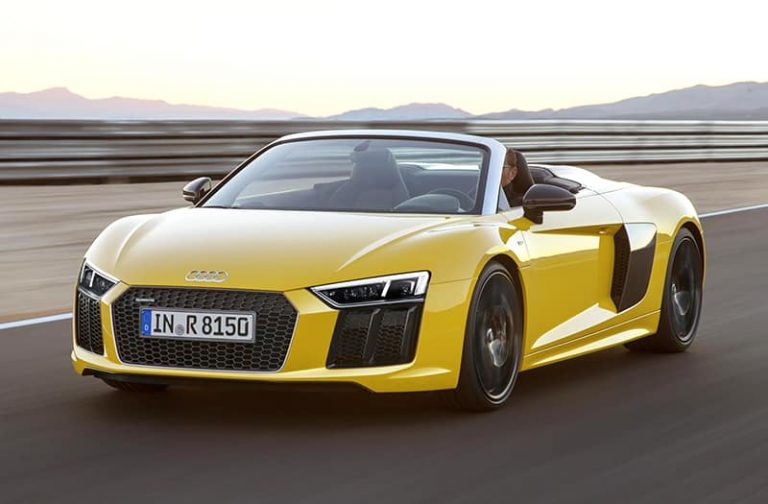
Audi is now taking orders for the convertible version of its latest R8 sports car.

The second-generation model, following the coupe that arrived in November 2015, is on sale at prices starting from £129,990.

The new R8 Spyder is described by its makers as faster, tauter and packed with technology compared to its predecessor. Use of the brand’s latest Audi Space Frame (ASF) construction, incorporating significant levels of aluminium and carbon fibre, has helped keep dry weight down to 1,612kg.

This light weight is achieved despite body reinforcements primarily in the sills, A-pillars and windscreen frame to compensate for the lack of a roof, and these increase torsional rigidity by more than 50 per cent compared to the Mk1 car.

The R8 Spyder employs a cloth hood, again helping to keep weight down. This is fully automated in operation, able to be activated at speeds up to 31mph and raising or lowering in 20 seconds. When retracted it sits beneath a cover sculpted to the body shape.

Power for the new R8 comes from the same 5.2-litre naturally-aspirated V10 engine as the coupe, producing 532bhp and 398lbft of torque. This sends the car through 62mph from rest in 3.6 seconds, a mere tenth behind the Coupe, and onto a terminal speed of 197mph. Fuel economy is 24.1mpg with CO2 emissions of 277g/km.

Audi R8 Spyder (The Car Expert)

The technology of the latest coupe makes its way across to the Spyder, including the four-mode adaptive dynamics system Drive Select, which alters the characteristics of the car from comfortable to performance-pitched. An optional R8 performance leather steering wheel includes a control offering three more driving modes, dry, wet or snow.

Audi’s digital virtual cockpit is standard, stretching 12 inches across the driver’s dash and including 3D graphics with satellite navigation and Google Earth imagery.

Audi connect internet-based connectivity services are also standard, along with the MMI navigation plus with MMI touch central control system based around a single dial, and the Music Interface.

Smartphone connectivity that debuted in the Q7 and A4, and that has just launched in the A3, is included in the Spyder, allowing content from Apple iOS or Android smartphones to be displayed on the virtual cockpit. Audi’s phone box can charge phones wirelessly, while also available is a Bang & Olufsen sound system playing through the seat headrests.

Other options include a host of personalisation details, such as laser Led headlamps and various upholstery and trim choices, while for performance fans the Sport Plus Pack adds more responsive steering, magnetic ride adaptive damping and a more sporty exhaust note.

First examples of the R8 Spyder are expected on UK roads towards the end of 2016.

1607_Audi_R8_Spyder_02

Volkswagen Tiguan review

What is it?
Second-generation version of VW’s core SUV.

Key features
New architecture, sleeker design, more space and tech.

Our view
The new Volkswagen Tiguan is one of the more pricey mainstream SUV options, but that is unlikely to be an impediment to UK sales.


When Volkswagen entered what was the SUV and soon to become the crossover market in 2008, its new Tiguan was effectively a toe in the water of a sector that was only starting to show promise, led by the Nissan Qashqai.

Now the all-new second-generation Volkswagen Tiguan arrives on the back of great success – its predecessor has sold 2.8 million globally, 100,000-plus in the UK, and it’s now Volkswagen UK’s third best-selling model after the Golf and Polo.

The market it competes in has grown too – it’s now the fastest growing segment in the industry, and as a result there are a lot more high-quality rivals to the Tiguan. Today few manufacturers can afford not to have a C-segment crossover in their line-up.

So the new Tiguan is not only a more mature vehicle than its predecessor, it’s also the standard bearer for a line of SUV/crossovers coming from Volkswagen to contend in every part of the potential market.

In many ways, however, this Tiguan is an evolution of the Mk1 version, and avoids dumbing down into the pure road-pitched crossover market, all looks and little action. Yes it is available in 2WD form, but it also can be specified to suit those who regularly leave the tarmac, with both the styling and the mechanics to cope.

The new Tiguan is yet another vehicle, but the first SUV, based around the VW Group’s highly flexibile modular MQB platform. Combined with VW’s latest design language, the result is a 60mm longer, 33mm lower and 30mm wider vehicle, with a 77mm stretch of the wheelbase freeing up more interior space.

Its shell is more slippery, aiding fuel economy. Visually there is nothing radical in this redesign, it won’t turn heads, but it does look highly competent, convincingly planted on the road.

According to Volkswagen, the Tiguan boasts one of the most spacious interiors in its class. Remarkably the seats are placed 8mm higher than in the previous model, with that lower roof, yet there is improved headroom.

An extra 29mm knee room in the rear enables three proper-sized passengers to be carried in comfort – particularly if one slides the bench seat back by up to 180mm. Slide said bench forward and boot space is 615 litres, 145 litres more than the old model. Fold the seats down and that space grows to 1655 litres.

Up front the driver’s environment is well appointed but also rather familiar – especially if one has driven a Golf recently. Perhaps the highlight is the opportunity to specify a digital instrument display, technology trickling down from Audi but in VW parlance known as the Active Info Display. A head-up display is also on the options list.

Three petrol and three diesel engines are on offer at launch, with a further range-topping 236bhp diesel to join the line-up shortly. All are familiar parts of the VW range and all EU6 emissions compliant.

The current petrol options are a 1.4-litre unit in 123 and 148bhp power outputs and matched to a two-wheel-drive transmission, and a 177bhp unit only offered with 4Motion all-wheel-drive.

Diesel buyers can choose three versions of VW’s familiar 2-litre unit, with 113, 148 or 187bhp. The entry-level unit comes only with 2WD, the 187 only with 4Motion.

The Car Expert tried out the 148bhp diesel in both 2WD and 4WD versions. This is expected to be the best seller in a sales mix that will be 90 per cent diesel, and perhaps reflecting the Tiguan’s more traditional market, the 4WD is predicted to sell more than its 2WD sibling.

It’s of little surprise that this format has its fans – the combination accelerates crisply, if not as rapidly as some rivals, and really scores on its flexibility and overall refinement, whether the front or all four wheels are delivering the traction. The only downside is a slightly intrusive low-rev audio note, but this soon smooths out as speed rises.

Ride comfort of the Tiguan is exemplary, particularly for an SUV, soaking up bumps with aplomb. It’s not a car that one feels can be hustled through corners at too much pace, but equally it remains upright and poised at all times – a relaxing ride.

Tiguans are available in five trim levels, from entry-level S to range-topping R-Line, and the equipment on offer includes a wide-ranging safety package extended in options thanks to use of the MQB platform. Aids such as Front Assist with City Emergency Braking and Pedestrian Monitoring and Lane Assist are all offered from S models upwards, as is for the first time an active bonnet, springing up by 50mm in a collision to ease potential injuries to pedestrians or cyclists thrown onto it.

While the entry-level S also includes such niceties as a DAB radio and Bluetooth, an extra £2,750 buys the second-level SE and adds among the extras climate and cruise control. Navigation is a further £720, while a big step up of almost £1600 is necessary to SEL before the Active Info display comes as standard amongst the equipment.

The cheapest Tiguan is the 2WD 1.4 petrol model at £22,510. Diesels start from £24,110, an AWD diesel from £27,020, while the first SEL with that desirable dash is the 2WD 2.0 148bhp at £29,610.

All of which makes the Tiguan one of the more pricey mainstream SUV options. It’s not over-expensive when one considers the quality of its fit and finish, but certainly at the upper end of its market. That said, the Mk2 is a major evolution and should keep the Tiguan contributing significantly to Volkswagen’s UK sales.

Similar cars

Citroën C5 Aircross | Ford Kuga | Honda CR-V | Hyundai Tucson | Jeep Compass | Kia Sportage | Mazda CX-5 | Mini Countryman | Mitsubishi Eclipse Cross | Nissan Qashqai | Peugeot 3008 | Renault Kadjar | SEAT Ateca | Skoda Karoq | Subaru XV | Toyota RAV4 | Vauxhall Grandland X

Volkswagen Tiguan – key specifications

Models tested: Volkswagen Tiguan SE Navigation 2.0 TDI SCR 2WD, SEL 2.0 TDI SCR 4Motion
On sale: June 2016
Range price:
£22,510-£36,375    Insurance groups: 13E-24E
Engines: 1.4-litre petrol x2, 2.0-litre petrol, 2.0-litre diesel x3.
Power (bhp) / Torque (lb/ft): 123/148, 148/184; 177/236. 113/184, 148/251, 187/295.
0-62mph (sec) / Top speed (mph): 10.5/118, 9.2/125; 7.7/129*. 10.9/115, 9.3/127 (4WD 9.3/125), TBA/TBA.
Fuel economy (comb mpg) / CO2 (g/km): 46.3/139, 48.7/132; 38.2/170*. 60.1/123, 57.6/129 (4WD 52.3/141), 49.6/149.
Key rivals: Nissan Qashqai, Mazda CX-5, Renault Kadjar
Test Date: June 2016
Figures with manual gearbox unless marked*

More style, new trim for Volkswagen Beetle

Volkswagen is launching a mid-life refresh of its distinctive Beetle model, with the emphasis on styling changes and a new trim level.

The Mk2 version of the current Beetle, launched in 2011, debuted a lower, wider shape compared to the first ‘new Beetle’ of 1998. Now across both coupé and cabrio versions, that body gains changes to the front bumpers and enlarged openings around the indicators and fog lights to produce a more sculpted look.

R-Line trim is also available for the first time on the Beetle, replacing the previous Sport trim, and this includes bespoke bumper designs with extra air intake openings to create a more sporty look. R-Line models also include sports suspension, 18-inch alloy wheels with two choices, a body-coloured rear diffuser, chrome-plated twin exhausts, gloss black door mirrors and protectors and a tailgate spoiler.

Inside R-Line models include ‘Sports’ instrument dials, aluminium pedals, leather on the three-spoke steering wheel and R-Line badging. Climate control, ambient lighting, front and rear parking sensors and cruise control are all specified as standard.

Throughout the Beetle range brighter interior lighting, dash changes and new upholstery options are now offered.

Beetle prices start at £16,820 for the 1.2 TSI petrol coupe – R-Line versions are only offered with the 2.0 TDI diesel engine at prices from £23,540.

Renault Megane review

What is it?
Fourth generation of Renault’s signature family hatch.

Key features
All-new styling, interior upgrade, new direction dash layout.

Our View
The new Renault Megane is a big step forward, boasting the right mix of style and technology to pitch the French make right back into family hatch contention.


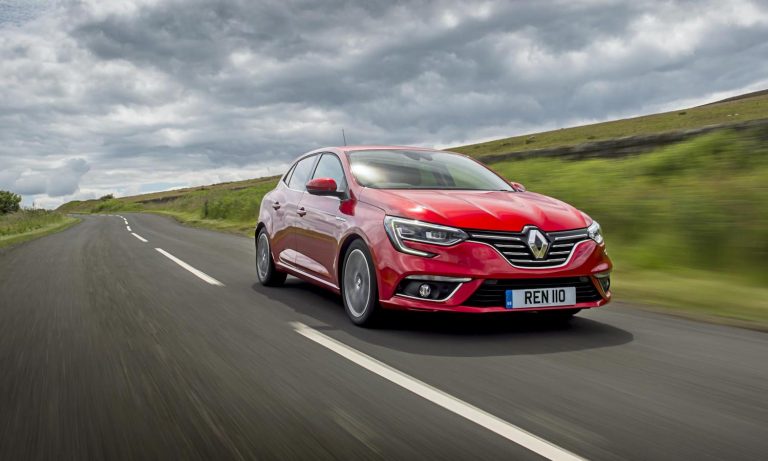
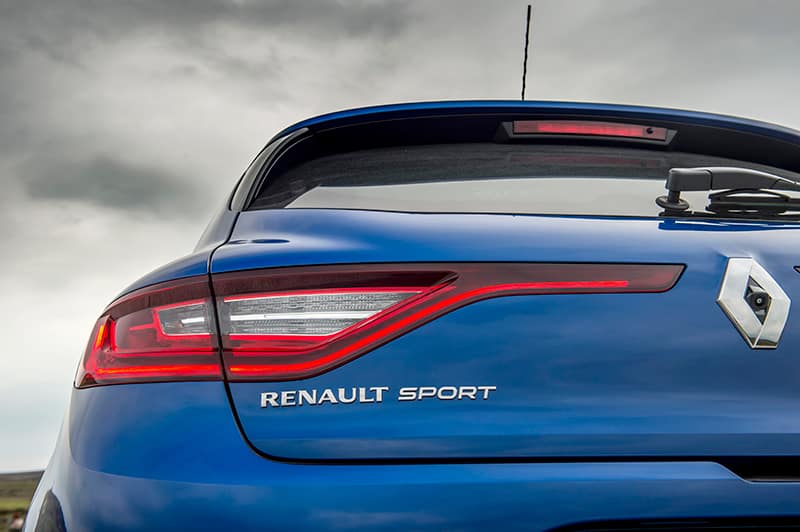
Renault Megane 2016 (The Car Expert)

The Renault Megane has been with us since 1989 and made its mark on the UK motoring scene – who can forget, for example, the car “shakin’ its ass” for years on TV adverts?

That distinctive second-generation Megane made way for a more conservative version in 2009, and in total the first three generations of the car have found 540,000 UK buyers. But when a floundering Renault announced a major reinvention of itself in 2012, culling several well-known models including the Laguna and Espace and promising a completely new range, we knew the next Renault Megane would be something different. It’s taken four years, but the car has lived up to the billing.

Arriving on UK roads from July, the new Megane instantly draws attention. The body is longer by 6cmm, its roof an inch lower than its predecessor. It might be the same width, but the front wheels sit some 5cm wider apart, the rears 4cm, on a wheelbase extended by 3cm.

All this comes courtesy of the bang up-to-date CLF platform of the Renault-Nissan alliance – architecture that will be under 70% of the two brand’s products by 2020. It already underpins the recently-launched Kadjar SUV, the soon-to-launch Scenic MPV, and the Talisman from the next class up, a car that has donated quite a bit else to the new Megane.

Notable among these gifts are the visuals – the new Renault Megane is far bolder than its predecessor, with edgy styling, sharp creases and a highly purposeful front end, dominated by a perhaps slightly too in-your-face big diamond logo and the distinctive LED edge lighting, fitted both front and rear.

Slip inside and the lower proportions are not particularly noticeable, but a feeling of space and particularly quality is. The fit and finish is another element donated by the Talisman, as Renault tries very hard to move its appeal upmarket.

It’s the dash, however, that most will notice, so long as they choose the third of five trim levels, Dynamique S Nav, or raid the options list. From these models upwards, the typical seven-inch centre console touchscreen makes way for an 8.2in unit, rotated 90 degrees to a portrait format.

This screen looks as if it has come straight out of the Volvo XC90, though Renault personnel on the launch event preferred to name-check the Tesla supercar. Turned off it looks a bit of an unattractive slab dominating the console, but turn it on and it becomes a very user-friendly unit that is both easier to operate and much easier to read the information from.

Initially the new Megane is going on sale with a four-strong engine choice. By far the biggest seller is expected to be the 1.5-litre dCi 110 diesel unit of 110hp, with its plus-70mpg fuel economy and sub-100g/km CO2 emissions. This is also expected to revive Renault’s fortunes amongst fleet buyers who have had no interest in the brand in recent times.

There’s also a more powerful diesel, a 1.6-litre 130hp unit which will only be offered to those who choose the top, RenaultSport inspired, GT Line trim level. Petrol fans, meanwhile will have the choice of a 1.2-litre unit of 130hp, or the range-topping 1.6-litre with 205 horses on tap and again only available to GT buyers.

The Car Expert tried both the dCi 110 and the sporty GT Nav 205 variant. The diesel is familiar territory – it is already in the Megane’s sister crossover the Kadjar, so it is of little surprise to be served up refined progress, the unit virtually silent while negotiating the busy towns of the Yorkshire test route and accelerating smoothly once out on the open road.

The 205, meanwhile, is quicker – 62mph comes up in 7.2 seconds compared to the 11.3 of the dCi 110. But it doesn’t really feel as quick as a car that has had the RenaultSport brush waved over it should do. And it also comes only with an EDC auto gearbox, albeit with a manual shift option, accomplished through some of the longest steering wheel paddles this reviewer has yet seen. One feels this is a car in waiting for a no-doubt forthcoming proper RS model.

On the road, the Megane is accomplished and will fulfil everything most buyers require. Its chassis is very well set up, smothering bumps and undulations with confidence.

The steering is very light, which is great for in-town manoeuvres, but becomes devoid of feel, particularly if one has driven the likes of prime rival the Ford Focus. Renault’s Multi-Sense system, standard from Dynamique Nav models upwards, allows changes in the steering amongst its many personalisation options, but dialling it up produces an improvement rather than a solution.

Notably, the GT models come fitted with 4Control, which adds a degree of steering to the rear wheels – well it does above 37mph, or 50mph in sport mode. Below these speeds its input is up to 2.7 degrees, providing extra stability in the twisty bits.

As with virtually all today’s releases technology occupies a large number of the Megane headlines. Renault’s R-Link tablet control accesses much of the tech and in particular driver assistance systems that can include adaptive cruise control, blind spot and lane departure warnings and a host of other aids so recently the preserve of the premium segment.

Renault states that the dCi 110 in Dynamique Nav trim will be the best seller, and for prices starting from £19,400 this model will include as standard much of the driver aids grouped together as the Visio safety system, parking sensors, auto high/low beam headlamps, dual zone climate control, the Multi-Sense system and quite a lot more.

We’d be sorely tempted, however, to pay an extra £1,000 for Dynamique Nav S trim, because while this adds smarter alloys and a rear parking camera, it also provides that so much better vertical touchscreen.

Overall, the new Renault Megane is a big step forward, boasting the right mix of style and technology to pitch the French make right back into family hatch contention.

Renault Megane – key specifications

Models tested: Renault Megane Dynamique S dCi110, GT Line 205 Auto EDC
On sale: July 2016      
Range price: £16,600-£25,500   
Insurance groups: 14E-27E
Engines: Petrol 1.2, 1.6. Diesel 1.5, 1.6
Power (bhp) / Torque (lb/ft):
129/151, 202/207. 109/193, 128/236.
0-62mph (sec) / Top speed (mph): 10.6/122, 7.1/143. 11.3/116, 10.0/123.
Fuel economy (comb mpg) / CO2 (g/km): 52.3/120, 47.1/134. 76.4/96, 70.6/104.
Key
rivals: Ford Focus, Vauxhall Astra, Peugeot 308
Test Date: July 2016.
* All figures with manual gearbox where available

Insight: 45 years on, Audi is still all about Technik

Very few manufacturer advertising slogans stand the test of time. A sound-bite will survive maybe five to 10 years before a new marketing push relegates it to history.

Take SEAT for example. For years the Spanish manufacturer, part of the VW behemoth, sold its cars under the slogan of “Auto Emocion”, until in 2011 this was killed off in a blaze of publicity by new boss James Muir, who argued that no-one knew what it meant.

Muir, instead, launched the somewhat tortuous “Enjoyneering” and perhaps not surprisingly just five years later no-one recalls that phrase and SEATs are now being marketed as ‘Technology to Enjoy’…

Say Audi, however, and everyone immediately thinks “Vorsrpung Durch Technik” – a marketing phrase first launched in 1971 – 45 years ago…

Audi believes this phrase is still as relevant, if not a great deal more so, today, and it is difficult to argue against when one arrives at a ‘quattro Driving Day’ to be find three new models awaiting, all with technological advances some of which could be highly significant not just for Audi but the industry as a whole.

Perhaps none more so than in the quattro itself – the lower-case Q is deliberate, signifying Audi’s all-wheel-drive system, which itself has been offered on the brand’s road cars since 1980, and has taken many an Audi to victory in World Rally Championship and more recently World Endurance Championship races.

Particularly in the UK, the brand has marketed quattro for many years on its safety aspects, the improved grip it offers the less than agreeable weather that is typical of living on this island. Only more recently has the early aim of the all-wheel-drive pioneers, to put power down most effectively, been properly achieved, as Audi’s Jon Zammett points out; “We’ve had 37 years of making 4WD cars – now it has been adopted for high performance cars not just by us but the likes of Lamborghini, Bugatti in the Veyron…”

So perhaps it’s a surprise that the quattro system has remained basically to the same format for all of those 37 years. But no longer – the latest Audi A4 allroad can be supplied with ‘New quattro with ultra technology’ – a significantly updated system, primarily to produce the fuel economy and emissions improvements that are grouped under the brand’s ultra tag.

The new system no longer employs a centre limited-slip differential, but uses a network of sensors that determine the road conditions, temperature and the driving style. If surface grip is good, and the driver not hustling along, it disconnects the AWD, the resultant front-wheel-drive format and weight saving from losing the centre diff improving economy and emissions, the latter by 21 per cent.

Currently the new quattro is designed for longitudinally-mounted engines –­ but you can bet it will be rolled out across the range in due course…

Sadly the new quattro versions of the A4 allroad are not on the launch event, and they would probably be overshadowed anyway by the SQ7 TDI – succinctly described by Zammett as “the UK’s most powerful, fastest-accelerating diesel full-size luxury SUV.”

While many will focus on this being the most powerful SUV in its class, it more importantly oozes new tech, not least an ‘EPC’ or Electric Powered Compressor which Zammett predicts “will go into the general vernacular,” and “be the springboard for numerous revolutionary new technologies in the Audi models of the near future…”

The EPC is driven by a 48-volt electric system to support the two turbos of the 4-litre V8 diesel engine, particularly at lower revs. It eliminates turbo lag, the SQ7 returning a 4.9-second 0-62mph time.

To fully detail the technology in the SQ7 would take far more space than we have here but other highlights include camshafts with two profiles, so the valves react differently dependent on whether the car is starting off or running at speed, and a new ‘electromagnetical active roll stabilisation system’, also only possible thanks to the more heavyweight electrics of the 48-volt system.

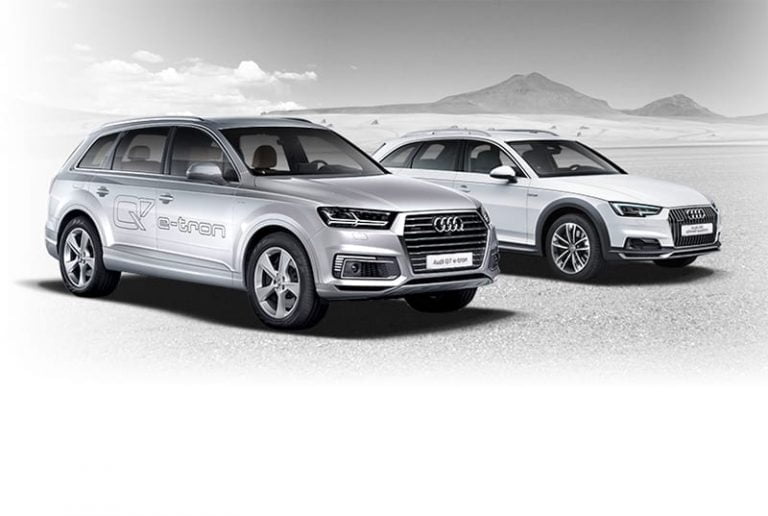
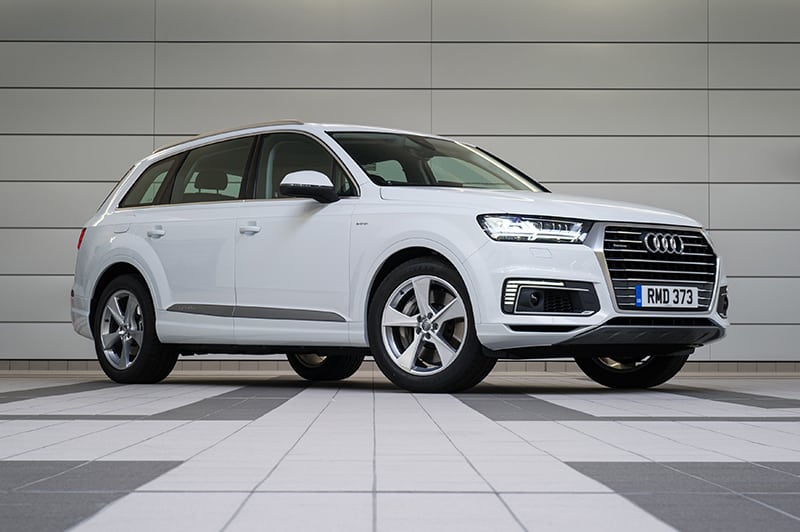
Space also doesn’t allow us here to delve too deeply into the Q7 e-tron – Audi’s second plug-in hybrid, bringing the technology to the brand’s SUV range and offering the remarkable official figures of 156mpg and 49g/km – in a seven-seat large 4×4. But rest assured that both it and the SQ7 will be tested fully by The Car Expert shortly.

One launch, three cars, all with significant innovations. It may be 45 years old, but it seems the phrase “Vorsrpung Durch Technik” has never been more relevant to Audi…

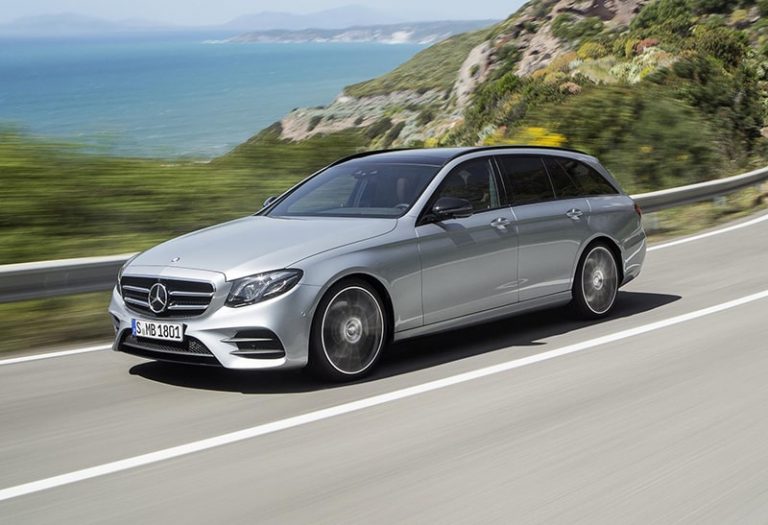
Mercedes prices E-Class Estate at £37.9K

The Estate version of the latest Mercedes-Benz E-Class is now on sale, at prices starting from £37,935.

This buys the only model initially available, the four-cylinder 2.0-litre turbodiesel powered E 220 d. This offers 191bhp, with 295lbft of torque, good enough for a 7.7-second 0-62mph time while returning combined cycle fuel economy of 67.3mpg and CO2 emissions of 109g/km.

The £37,935 price tag buys the SE trim level, which includes as standard a Garmin Map Pilot navigation system; Agility Control suspension; automatic powered tail gate; Parking Pilot including Parktronic and reversing camera; chrome roof rails; 64-colour selectable LED interior lighting; Keyless-Go starting function; heated front seats; a DAB radio and 17-inch alloys with a five-spoke design.

AMG Line versions are on offer from £40,430. These add AMG exterior styling with 19-inch alloy wheels in titanium grey; an upper dashboard finished in Artico leather; black ash wood trim; brushed stainless steel AMG sports pedals with black rubber studs; and a three-spoke AMG steering wheel wrapped in Nappa leather.

Six-cylinder variants, the E 350 d diesel and the Mercedes-AMG E 43 with its 3.0-litre V6 petrol engine will join the range later in the year and prices will be announced closer to order books opening in October.

Meanwhile the E-Class saloon range has been expanded to include the E 200 d. The 2.0-litre unit produces 148bhp, with a 72.4mpg combined cycle consumption figure and CO2 emissions of 102g/km.

Competition Edition a potent M5 finale

BMW will conclude the current generation of its M5 saloon with a 200-strong special edition model.

The M5 Competition Edition gains a power upgrade of 40 horsepower to 592bhp, with torque boosted from 502 to 516 lb ft.

Achieved by recalibrating the ECU to allow more boost, the extra potency drops the car’s 0-62mph to 3.9 seconds, though the top speed remains electronically limited at 155mph.

Competition Edition models will include the M Competition Package as standard, adding stiffer spring and electronic damper rates, thicker anti-roll bars, and a recalibrated multi-plate limited-slip differential. The system includes three drive mode settings, Comfort, Sport and Sport Plus – the latter particularly suited to driving the car in a track environment.

Visually the car is distinguished by M Performance carbon-fibre detailing, a black version of the signature kidney grille and 20-inch alloy wheels in Jet Black, showing off the six-piston brakes within. Just two exterior colours are available, either Mineral White or Carbon Black.

The interior is bespoke too, finished in full black leather Merino leather upholstery with contrast stitching in white, this repeated in various details of the cabin. A ‘1/200’ engraving completes the interior treatment.

BMW dealers are now taking orders for the M5 Competition Edition model, at a price of £100,995. Once these are sold dealers will be looking forward to the all-new M5, expected in 2017.

Mercedes-Benz SL review

What is it?
Update to the long-established and renowned Mercedes-Benz SL convertible range.

Our view?
In facelifting one of its most highly-regarded models, Mercedes-Benz has sensibly simply improved the existing SL package without going too radical.


The latest version of Mercedes’ long-established SL drop-top line offers four models, all with twin-turbo petrol engines and all with sub four-second 0-62mph acceleration times.

The 4-litre V6 engined SL 400 offers 361bhp, its 4.6 B8 sister SL 500 has 447bhp on tap, while there are two muscle-car AMG versions, the SL 63 with a 5.5-litre V8 of 576bhp and the SL 65 with a mighty V12 of six litres and 620bhp.

There are new transmissions too – the two mainstream cars now use the 9G-Tronic auto ‘box of nine speeds, two more than its predecessor, and the AMG versions a seven-cog Speedshift from Mercedes’ performance arm.

Visually the most notable change is to the grille – the new car boasts a bespoke unit, a modern take on the grilles used by the 300 SL Coupes that won the Carrera Panamerica road race across Mexico in 1952.

The Vario-roof folding hard top is impressive, lowering in a mere 18 seconds, a task that can be carried out at speeds up to 25mph.

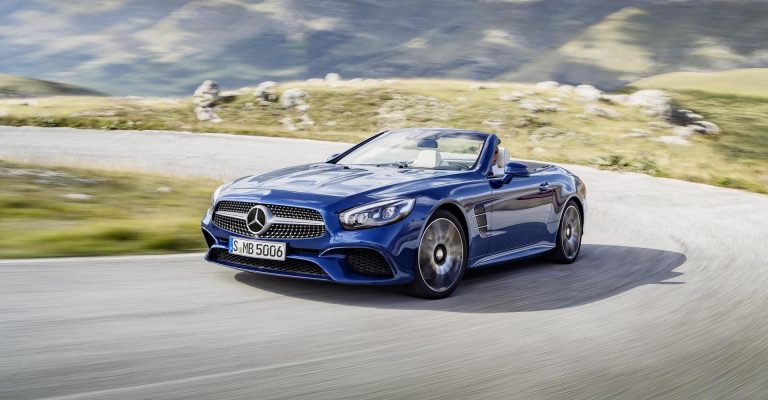
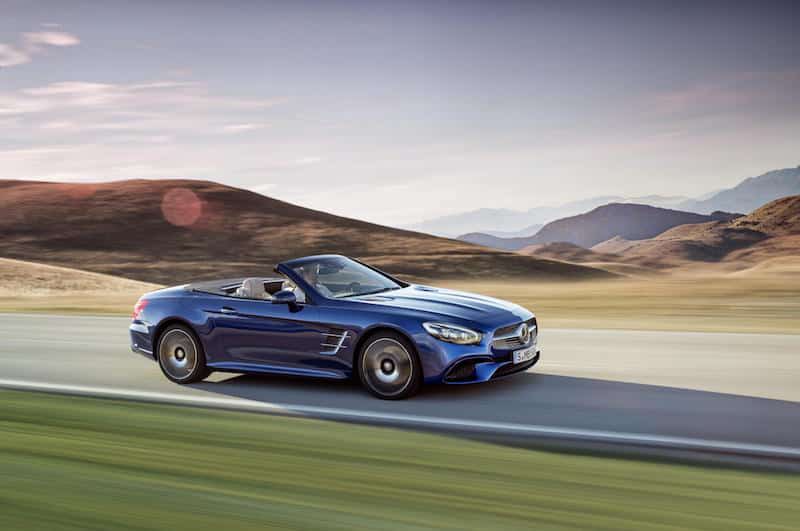
Mercedes-Benz SL 400 facelift - front 3/4

What do we think of it?
The Mercedes-Benz SL has always been a high-quality convertible and the latest facelift merely adds to an already impressive portfolio. The Car Expert drove the SL 400, which will take the largest slice of a quite select volume, and it combines the wind-in-the-hair thrill of a two-seat roadster with a great deal of practicality – the boot space, for example, is a cavernous for this class 504 litres, though it does drop significantly to 364 litres with the roof stowed.

On the road the SL 400 offers plenty of performance; 4.9 seconds to 62mph is plenty quick enough for most, and the £9,000 more expensive SL 500 cuts only six tenths of a second from the sprint time. The range-topping SL 65, with its four-second dead 0-62mph time, is almost £100,000 more than the SL 400…

The car corners with precision, even without the expensive but impressive Active Body Control, a £3,080 option not fitted to our test car. But it is just as enjoyable as a cruiser, top down in suitable weather of course. The nine-speed auto transmission, meanwhile, adds a little extra to the considerable refinement already present.

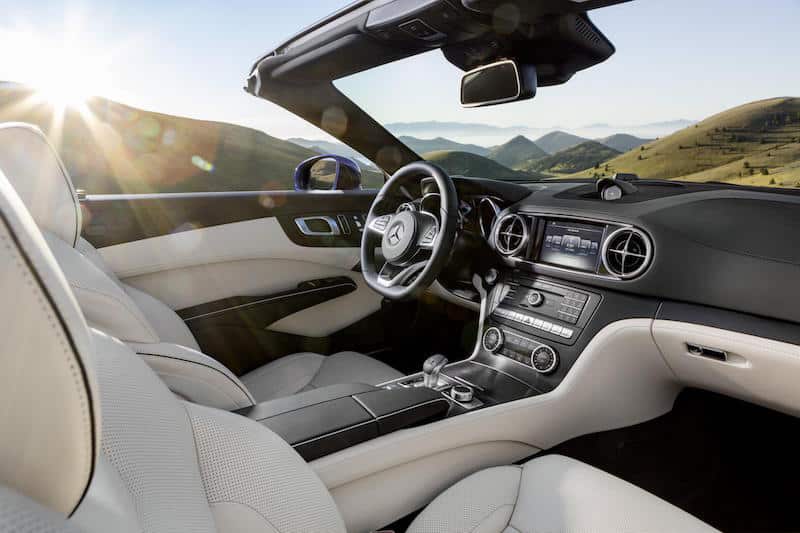
Mercedes-Benz SL 400 facelift - interior

Verdict:
In facelifting one of its most highly-regarded models Mercedes-Benz has sensibly simply improved the existing package without going too radical. The latest SL maintains the breed, and while some will insist on the AMG models, we believe few can be disappointed by the ‘entry level’ SL 400.

Mercedes-Benz SL 400 – key specifications

Tested model: Mercedes-Benz SL 400 AMG Line
Price: £81,170 with options (Range starts £73,810)
On sale: April 2016
Engine: 4.0-litre V6 petrol, 361bhp, 369lbft
0-62mph and max speed: 4.9, 155mph
Economy and emissions: 36.7mpg, 175g/km
Key Rivals: Porsche 911 Cabriolet, Jaguar F-Type S Convertible
Test date: May 2016

Mercedes-Benz SL 400 facelift - overhead

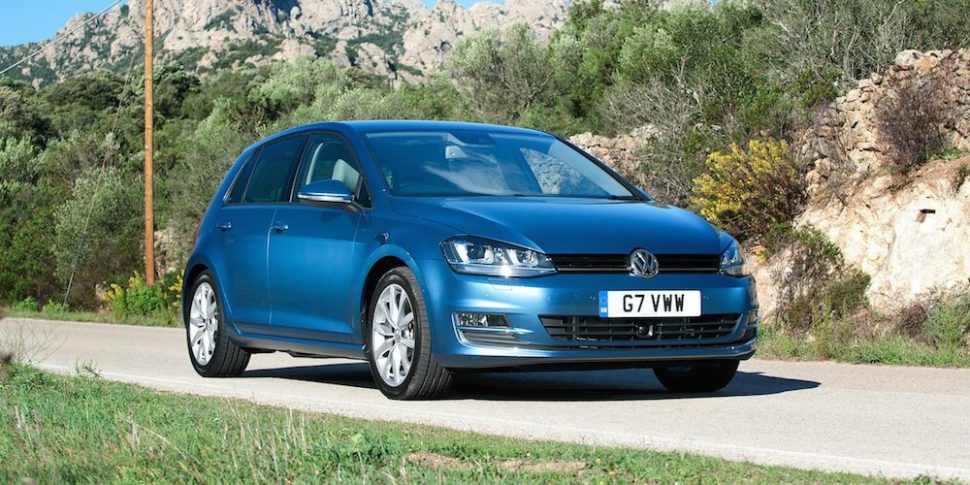
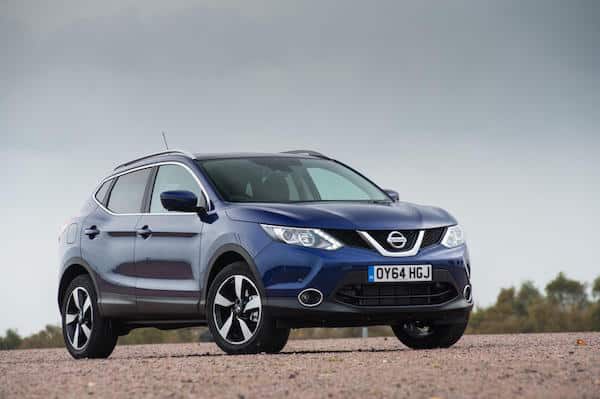
Volvo V40 ranked safest used family car for 2016

The Volvo V40 hatchback has been rated as the Safest Used Family Car 2016, in a new initiative aimed at raising the importance of safety for used car buyers.

The new rankings have been compiled by Co-op Insurance, in conjunction with car safety experts Thatcham Research and road safety charity Brake. Research conducted by Co-op Insurance found that only four per cent of car buyers listed safety at the top of their buying priorities.  By far the most important factor for used car buyers was price, with safety ranking only tenth.

Thatcham Research – the UK’s world-class crash test research centre – came up with a formula to rank affordable family used cars in terms of their safety features.  The qualifying criteria were price (no more than £15,000 on the used car market), CO2 emissions (no more than 120g/km) and a five-star EuroNCAP rating. All of the cars ranked in the top ten are current models, with the formula  considering a used car to be at least one year old.

UK’s Top 10 safest used family cars

Make and ModelYear
1Volvo V40*2012
2Volkswagen Golf2012
3Nissan Qashqai2014
4Peugeot 3082013
5Vauxhall Astra2015
6Mazda 32013
7Mercedes-Benz A Class2012
8Honda Civic2012
9Mazda CX-52012
10Fiat 500L2014

* with optional safety pack

It is important to note that the Volvo V40 ranks at the top when it is fitted with the optional Driver Support Pack, which adds additional safety features like adaptive cruise control, blind spot assist, cross-traffic assist and more.  This pack costs about £2,000 on a new V40, so it won’t be fitted to every used model available to buy and buyers should make an effort to hunt down a V40 with this comprehensive package of features.

Commendations for Volkswagen and Nissan

Finishing just behind the Volvo were the Volkswagen Golf and Nissan Qashqai, which were also highly praised for their safety features.  Crucially, all of the top three cars feature AEB (autonomous emergency braking), which allows the car to automatically apply the brakes if a collisions is imminent and the driver has not taken action to avoid an accident.

Kia Niro hybrid crossover on sale at £21.3K

Kia’s Niro ‘Hybrid Utility Vehicle’ goes on UK sale on 8th August, at prices starting from £21,295.

Sitting between the current Soul and Sportage models, the Niro is a crossover developed on an all-new compact SUV platform specifically to accommodate a hybrid powertrain.

The brand’s current 1.6-litre Kappa direct-injection petrol engine of 104bhp is combined with a 32kW electric motor fed by a 1.56kWh lithium-polymer battery pack. It produces another 43.5bhp, joined to a six-speed double-clutch transmission.

As a result, the car claims CO2 emissions down to 88g/km and combined cycle fuel economy of up to 74.3mpg. Kia says the model will make a significant contribution to the brand’s pledge of cutting the average emissions of its range by 25 per cent before 2020.

Kia claims a class-leading low drag coefficient (Cd) of 0.29 for the Niro, while extensive use of high-strength steel and aluminium in the body construction helps to keep down weight.

Niro models will offer the latest connectivity and active safety technologies, including Kia’s Connected Services with TomTom navigation, wireless smartphone charging, autonomous emergency braking, smart cruise control and lane-keeping, and blind spot and rear cross traffic warning systems.

The Niro is also the first Kia with Android Auto, linking Android smartphones to Google Maps navigation, Google Play music, hands-free calls and texts and voice recognition using pre-downloaded apps.

UK variants of the Niro will be offered in the brand’s traditional ‘1’, ‘2’ and ‘3’ trim levels along with a First Edition range-topping model.

Standard on all cars will be lane keep assist, hill-start assist control, cruise control with a speed limiter, a DAB radio and Bluetooth smartphone connectivity and music streaming.

Entry level 1 versions include 16-inch alloy wheels, a high-gloss black radiator grille with a black and chrome surround, dual automatic air conditioning, an automatic windscreen de-fogging system, LED daytime running lights and tail lights, a 3.5-inch TFT display, all-round electric windows and electric exterior mirror adjustment, USB and AUX ports and a trip computer.

Grade 2 adds a seven-inch touchscreen navigation system with European mapping, a Reversing Camera and Kia Connected, which is free for seven years from the time the car is bought.

Leather upholstery elements, roof rails, privacy glass on the rear windows and tailgate, reversing sensors and electrically adjustable, heated and folding door mirrors with LED indicators are highlights among the specification of 2 versions.

The 3 trim level increases the touchscreen to eight inches, adding a wireless mobile phone charger and an eight-speaker sound system with an external amplifier. The alloy wheels grow to 18 inches and black leather upholstery, front parking sensors, heated front seats and steering wheel and a power-adjustable driver’s seat also feature.

Range-topping First Edition models add Autonomous Emergency Braking, Blind Spot Detection with a Rear Cross Traffic Alert and Smart Cruise Control. A bespoke grey leather trim is supplied with white interior trim inserts, a smart key and engine start/stop button, heated outer rear seats, ventilated front seats and an electric tilting and sliding sunroof.

Used car safety in the spotlight

When it comes to buying a used car, safety ranks well down the list for most buyers.  It’s not that used car buyers don’t care about being safe, but more that other issues take priority – usually price and appearance.

However, a new campaign to change that has been launched in the UK by Co-op Insurance, in conjunction with safety experts Thatcham Research and road safety charity Brake. Together, they have compiled a list of the Co-op’s Safest Used Family Cars of 2016.

Buying a used car does not have to mean compromising on safety equipment, with many thousands of vehicles on sale which feature extremely high levels of safety for drivers and passengers.  So when it comes to safety, second-hand does not have to mean second-best. And given that three times as many used cars are sold each year as new cars, this is an important issue.

Used car safety not on buyers’ agendas

Research conducted by Co-op Insurance has found that only four per cent of new and used car buyers placed safety at the top of their buying criteria.  And although four in five buyers described car safety as “very important” when buying a car, clearly it wasn’t important enough to rank higher than tenth on their list of priorities, behind price, value for money, brand name, mileage, colour, appearance, performance, fuel economy and size.

Car buyers confused by safety jargon

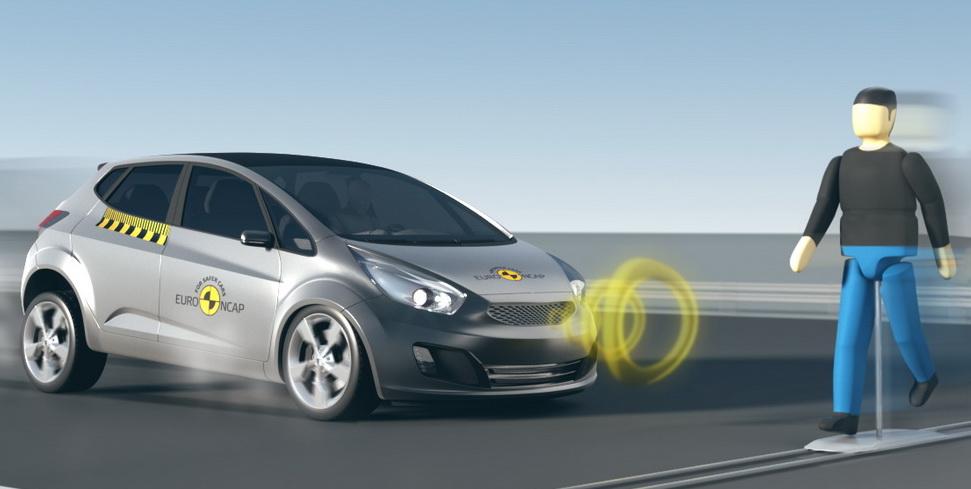
The same research showed that car buyers do not understand a lot of the jargon and acronyms used throughout the car industry to describe safety features.  For example, 77% of buyers did not understand what AEB meant (autonomous emergency braking), despite safety experts like Thatcham regularly reporting that it is one of the most important safety features for cars since the introduction of seat belts in the 1950s.

euroncap_autonomous emergency braking
Autonomous emergency braking plays in important role in reducing the number of car accidents.

60% of buyers were also confused by the term ISOFIX, which describes an industry standard for mounting child seats in cars, despite the term having been around for years and many thousands of car seats being purchased in that time.

The car industry can be its own worst enemy in conveying the merits of its technologies, with pretty much every manufacturer failing dismally to provide plain-English explanations of safety features and how they work.  Even worse, they can’t even agree on which baffling terminology they should use, so we see different manufacturers using different acronyms or names for the same features.

Used cars can be as safe as new cars

Two thirds of motorists surveyed assumed that a new car is automatically safer than a used car, but that is not necessarily the case.  According to the research (which defined a used car as at least one year old), there are many used cars available which feature a EuroNCAP five-star safety rating and which would be safer in a collision than a new car without such strong safety credentials.

Co-op Insurance and Thatcham have created a formula to rank used cars on their safety features, and have put together a list of the safest affordable (less than £15,000) used family cars. It is believed to be the first time such a ranking has been attempted, and the results show that there are plenty of options available for used car buyers who want to ensure they are getting the safest car possible for their money.

The results were announced, along with a presentation of the top three cars, at a media event in London this week.

UK’s Top 10 Safest Used Family Cars

 Make and ModelYear
1Volvo V40*2012
2Volkswagen Golf2012
3Nissan Qashqai2014
4Peugeot 3082013
5Vauxhall Astra2015
6Mazda 32013
7Mercedes-Benz A Class2012
8Honda Civic2012
9Mazda CX-52012
10Fiat 500L2014

* with optional safety pack

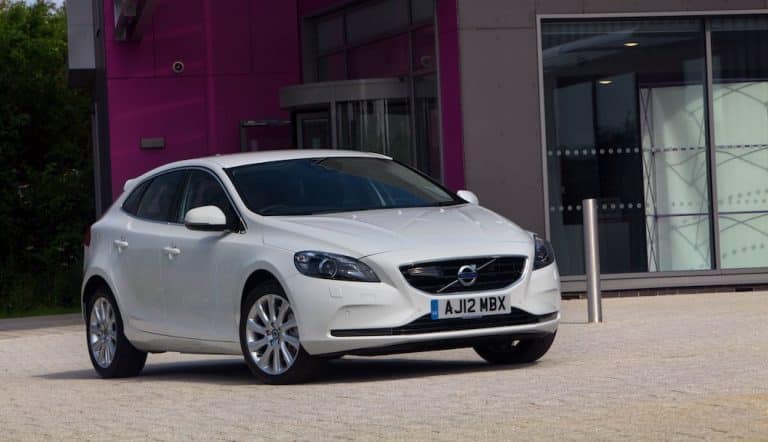
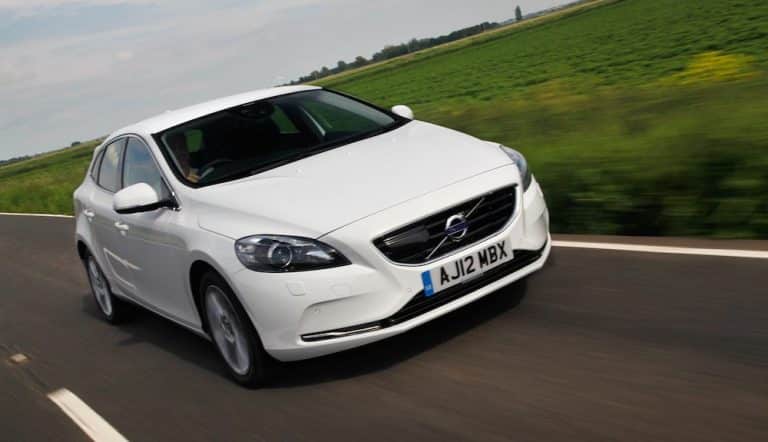
Volvo V40 on the road in the UK
The Volvo V40 ranks top for used car safety – as long as it is fitted with the Driver Support Pack (the little black box visible inside the grille)

The Volvo V40 topped the chart for 2016, ahead of the Volkswagen Golf and Nissan Qashqai – with the proviso that the Volvo is specified with the optional Driver Support Pack, which costs an additional £2,000 on a new V40 and is therefore not fitted to all used models.  It can’t be fitted after production, so if you are interested in the Volvo then it’s definitely worth hunting down one that has the extra safety pack fitted.  It’s easy to spot, as the car will have a big black box in the grille next to the Volvo badge (the car in the pic above has it, if that helps).

The criteria for inclusion in the list were that all cars needed to have a five-star EuroNCAP rating, have CO2 emissions of no more than 120g/km and be readily available on the used car market for no more than £15,000. The cars were then further evaluated for safety performance above and beyond these standards, such as the availability of AEB (autonomous emergency braking) and the crash test results for both vehicle occupants and pedestrians.

To find out more, watch the video below as motoring presenter Quentin Willson joins experts from Thatcham and Brake to discuss the importance of raising awareness of safety for used car buyers.

This new initiative from Co-op Insurance and its partners is most welcome.  Hopefully it will get the recognition it deserves, and more  car buyers will start to put safety higher at the top of their list of priorities when buying a used vehicle.

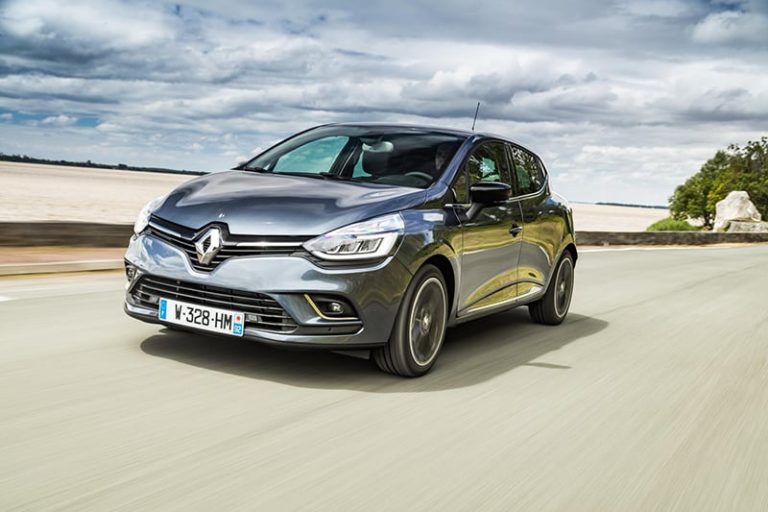
Renault revamps its big-selling Clio

The Renault Clio supermini is undergoing a revamp in the latest of a busy year of new product for the French manufacturer.

Opening for ordering in September, the new Clio offers styling and interior changes, plus two new powertrains.

With the arrival of the dCi 110 diesel and TCe 120 petrol engines, both matched to six-speed transmissions, buyers will have a choice of nine different powertrains, with best efficiency figures of 88.3mpg combined cycle fuel economy and CO2 emissions of 82g/km.

Redesigned front grilles, along with changes to the rear bumper, four new exterior colours and new wheel and wheel trim options comprise the styling upgrades.

The biggest visual change, however, is the availability of full LED headlamps with a lighting signature similar to that seen in other recent Renault releases. Upper specification models include C-shaped Daytime Running Lights, repeated on the LED rear lights.

Inside new materials have been added, taken from higher-end Renault models to add an impression of increased quality. The steering wheel is new with less plastic in its makeup and leather in upper versions, while the door panels, gear lever and detailing is also revised.

Customisation is key to the new Clio with more than 30 different colour combinations on offer, including five roof decals and four exterior packs with differing front grille bars and side protective mouldings.

The new model also benefits from technology upgrades – three different multimedia systems are available depending on model, with Bose sound systems offered for the first time.

Even entry-level models include the brand’s R&Go system that connects the car to a smartphone mounted in a specially designed cradle. Navigation, phone, multimedia and vehicle information are then displayed on the car’s central screen.

Additional driving aids now available with the Clio include parking sensors all round, a rear-view camera and on higher-spec models hands-free parking.

Renault will announce prices for the new range closer to its arrival in UK showrooms.