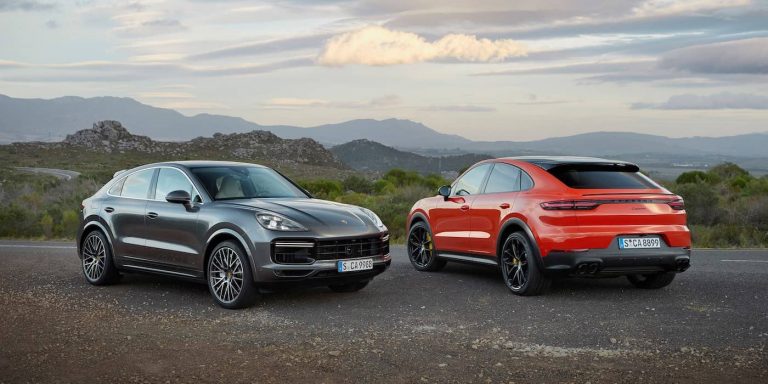
Porsche now has an answer to sporty SUV rivals with swept-back body styles in its Cayenne Coupe.
This new model adds a swooping roofline and coupe silhouette to the existing Cayenne SUV, pitching Porsche’s best-seller directly against German rivals such as the Mercedes-Benz GLE Coupe, Audi Q8 and BMW X6.
Like its competitors, the Cayenne Coupe is bound to divide opinion with its styling. Signature features include a more steeply raked windscreen, curving roofline and dramatically tapered rear end onto the SUV’s bulky body.
Porsche states that the styling fits the Cayenne’s sporting character, paired as it is exclusively with high-performance powertrains and a chassis tuned for dynamism.
The Coupe’s roofline is a centimetre lower than the standard car, while redesigned rear arches and doors add 2cm to the car’s width. The rear features a roof spoiler and, uniquely, an adaptive spoiler on the boot lip.
As standard, the Cayenne Coupe will be supplied with a panoramic fixed glass roof, while a full carbon-fibre version will be available as an option.
Inside the Coupe is also distinctly different to its stock sibling, with the standard car’s three-seater rear bench removed in favour of two individual seats with a centre armrest. Rear passengers sit 3cm lower than in the standard Cayenne to provide them with sufficient headroom, despite the low roofline.
Boot space is 625 litres rising to 1,540 litres when the rear seats are folded down, though in Turbo models it drops to 600 and 1,510 litres. This compares to 770 and 1710 litres in the standard Cayenne.
At launch, the Coupe engine line-up will mirror that of the standard Cayenne. Entry point will be a 340hp 3.0-litre V6 petrol unit offering a 0-60mph sprint of less than six seconds and a top speed of 151mph.
Also available will be the Cayenne Turbo Coupe, which features a 4.0-litre V8 producing 550hp. It will be capable of 0-60mph in less than four seconds, and a top speed of 178mph.
According to Porsche sales and marketing head Detlev von Platen, the brand wants to appeal more strongly to new, younger target groups with the Cayenne Coupe. “These groups value exclusivity and an expressive lifestyle and have a very performance-oriented mentality,” von Platen said.
Porsche is taking orders for the Cayenne Coupe, with first deliveries set for the end of May. Prices start at £62,129, the Turbo costing from £104,729.
More Porsche news, reviews and features
Hyundai has added a new N-Line trim level to its mid-sized crossover, the Tucson.
The Hyundai Tucson N-Line follows the form established by N-Line versions of the i30 hatch. There are no powertrain upgrades but some suspension tweaks and a sports-styled body kit.
The idea is to provide some of the spirit of Hyundai’s flagship N performance models for drivers who don’t want to commit to a full hot hatchback. And the variant launches ahead of a full Tucson N performance model likely to be revealed in 2020.
Stiffer chassis
Chassis modifications to the Tucson include a more rigid suspension and adjusted steering for greater feel behind the wheel.
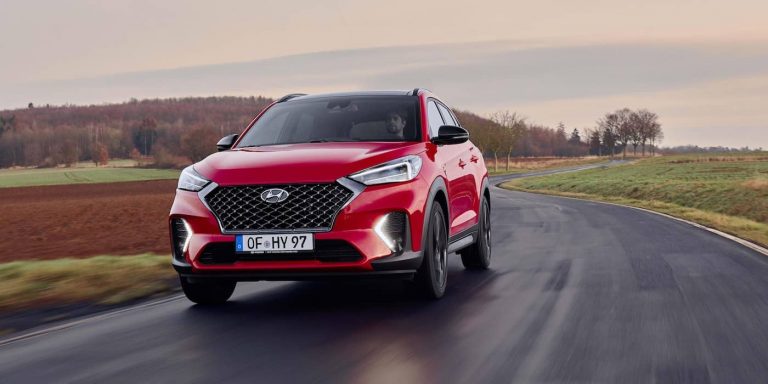
A sporty body kit brings redesigned bumpers and a dark mesh to the grille, as well as 19-inch alloy wheels finished in black. Black trim also features on the rear spoiler and side mirror housings.
The new front end features low-set, angular LED daytime running lights below the Tucson’s sharp-edged headlight units.
The interior makeover, includes N-branded sports seats finished in leather and suede, plus red stitching across the steering wheel, seats and gear shift.
Hyundai will offer the Tucson N-Line with a choice of two powertrains – one diesel and one petrol. New to the range is a 1.6-litre CRDi diesel with 136hp, which now features 48V mild hybrid technology to improve fuel economy.
Sitting above this is a 1.6-litre turbocharged petrol with 178hp. Other markets get a 2.0-litre diesel with 185hp, but that powertrain won’t be available on UK N-Line models, instead remaining exclusive to Premium and Premium SE trims.
The Hyundai Tucson N-Line is expected to go on sale later this year at prices yet to be announced.
Toyota is joining forces with Suzuki to build a hybrid car for the fellow Japanese brand at its factory in Derbyshire.
The new car will be based on the Toyota Corolla and will be fitted with engines built in Toyota’s Deeside factory, with electrical components coming from Japan.
No new jobs or investment will result from the new model, but production of it does bring job security to the 3,000-plus who already work at Toyota’s Burnaston plant in Derbyshire. Toyota has stated that it intended to make the production centre more efficient.
Welcome news
The news is also a welcome boost to the UK car industry following news that Honda was to close its factory in Swindon and that a new Nissan X-Trail would not be built at the company’s Sunderland plant as previously announced.
Production of the new Suzuki hybrid forms part of a wide-ranging resource-sharing agreement announced between Toyota and Suzuki on 20th March. Hybrids based on the RAV4 and Corolla will be manufactured by Toyota in Europe for Suzuki, which in turn will provide Toyota with petrol engines for its compact vehicles that are sold across the continent.
Cooke, managing director of Toyota’s UK manufacturing division, describes the announcement as good news for the brand’s UK plants. “(It) demonstrates Toyota’s trust in the capability of our workforce to deliver the highest levels of superior quality products,” he says.
“Seeking to produce additional volume for other customers is one example of all the efforts we are making to keep our UK manufacturing operations as competitive as they can be,” Cooke adds.
Production of the Suzuki hybrid is scheduled to begin late in 2020.
The V6 engine configuration is widely used by manufacturers in cars of all persuasions. From people movers to performance cars, the V6 engine has found a home in all manner of different vehicles.
And thanks to the relatively common use of the configuration, there are plenty of fabulous V6-powered cars on the used market, even if you restrict yourself to a budget.
But let’s assume you’re not looking for a people carrier. These are some of the best used V6-powered cars available in the UK today for less than £10,000.
Volkswagen Golf Mk 5 R32
The Volkswagen Group 3.2-litre V6 is a superb engine that has found a home in numerous cars in the family, especially in the VW and Audi brands.
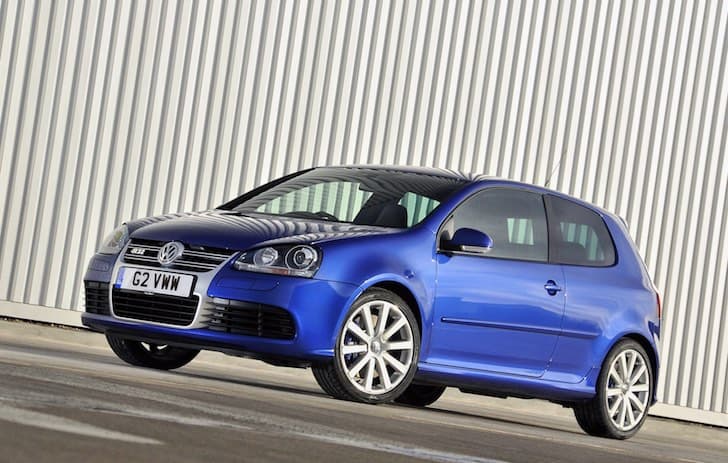
One such example is the Volkswagen Golf R32. Debuting in the Mk 4 Golf and then returning in the vastly superior Mk 5 generation, the R32 was a great alternative to the GTI, favouring capacity over turbocharging to deliver 250hp to all four wheels.
The bottom end of the market is just below £5,000, though good, unmolested examples are scarcely available for less than £8,000.
Audi offered a mechanically-identical version of the A3 hatchback, but it’s almost indistinguishable from a regular A3. If you really don’t want people to know you’ve got a quick hatch, it may be a better bet. Otherwise, the Golf is a better car.
The world of motoring rarely weighs in unanimously on any matter, and the Alfa Romeo Brera was more divisive than most.
From some angles, the Brera (along with its soft-top sister, the Spider) was one of the best-looking cars on the market when it arrived in 2005. From other angles, particularly in profile, it looked awkward with a short wheelbase and long overhangs.
The engine range consisted of three petrol units and a pair of diesels. Of those, the pick simply has to be the soulful 3.2-litre V6, which came with all-wheel drive rather than the standard front-wheel drive.
The V6 Brera starts at upwards of £5,000, though we’d suggest staying above £6,500 for a little peace of mind as Alfas of this era can be temperamental. Look out for the limited-edition Brera S version, which was comprehensively reworked by the British experts at Prodrive.
The first-generation Audi TT looks fairly understated today, but back when it was released, it was lauded for being the spitting image of the fairly radical concept car that inspired it.
The most exciting TT was the 3.2-litre V6 quattro version, using the same engine, gearbox and all-wheel-drive system from the Volkswagen Golf R32. Here as with there, the engine delivered 250hp, and if you value looks over practicality, you may want to choose the Audi over the VW hatchback.
The bottom end of the market is hovering around the £2,500 mark, while the good, less used examples start somewhere closer to £5,000.
The engine did carry over into the second-generation TT, but eventually fell foul of emissions laws and was replaced by a more efficient, but flat-sounding, four-cylinder turbo engine.
The C32 AMG is a car that can definitely be described as a wolf in sheep’s clothing, with an understated look paired to a supercharged 3.2-litre V6 delivering 350hp.
It’s a rare car, and the few UK-spec examples we could find on the market were cheap at a shade under £3,000, but also very well used and likely quite rusted, like so many Mercedes of the era.
However, for roughly £8,000, you can start finding some Japanese imports of the C32, which are much less susceptible to rust. And, even at that price, this could be a great left-field choice if you want a compact performance saloon.
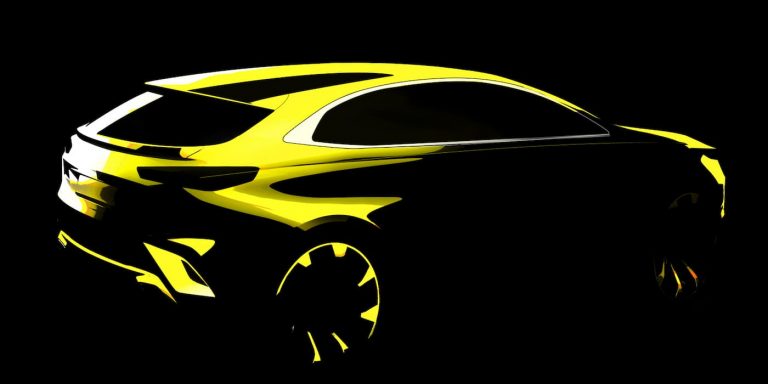
Kia has provided a glimpse of the new Ceed crossover that will be revealed later this year.
The new model will be the first crossover and the fourth variant in the family car line-up alongside the five-door hatch, Sportwagon estate and Proceed shooting brake.
Kia’s crossover will face intense competition in the rapidly growing segment, recent releases including the Volkswagen T-Roc and the Kona from Kia sister brand Hyundai. The car will sit between the compact Stonic and larger Sportage in the south Korean manufacturer’s SUV line-up.
Strong demand for crossover
According to Gregory Guillaume, vice president of design for Kia Motors Europe, the crossover is another type of vehicle that the brand feels very strongly deserves to be a member of the Ceed family.
“It will the play the role that’s needed to make the Ceed range stronger and even more exciting, more appealing, to European consumers,” Guillaume says.
“The design will be nothing like you’ve seen in the Ceed family so far. This will be the next big surprise from Kia.”
While the crossover features a more streamlined look than its hatchback sibling, the sketch showing a raked design and a high bootline, it is expected to employ the same powertrains as the regular Ceed upon which it is based.
The core unit is likely to be a 1.0-litre turbocharged three-cylinder petrol engine in a variety of outputs, along with a larger, 1.6-litre diesel unit. It is also likely to be front-wheel-drive only.
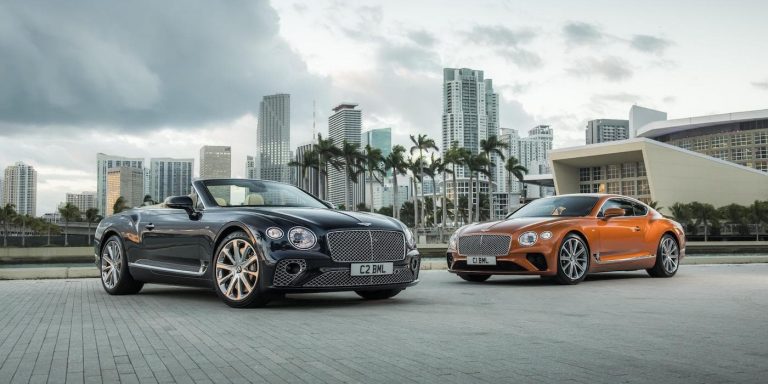
Bentley has revealed the latest V8 variant of its Continental GT and GT Convertible, which will go on sale alongside the W12 version launched last year.
The 4.0-litre unit is well-known, already employed in a number of Volkswagen Group models. In the Continental GT, it develops 550hp – more than 40hp more than the previous generation Continental GT V8 – and 770Nm of torque.
The twin-turbo V8 provides the Continental, pitched as more of a grand tourer than a sports car, with some significant performance figures – it will hit 60mph from rest in just 3.9 seconds and go on to a top speed of 198mph. Convertible models, with their increased weight, are one-tenth slower to 60mph but have the same top speed.
Bentley promises the new engine will produce a ‘characterful V8 burble’ and paired with the standard-fit eight-speed auto transmission and all-wheel drive, the lighter weight of the engine should make the car nimbler in the corners and less nose-heavy.
The main appeal of a Continental V8, however, will be the improved range. The new engine will be able to deliver better fuel economy than the W12, helping the Continental GT complete cross-country journeys with fewer stops at a filling station.
Bentley hasn’t released fuel economy figures yet, but has promised a range between fill-ups of more than 500 miles – around 50 more than the W12 will manage.
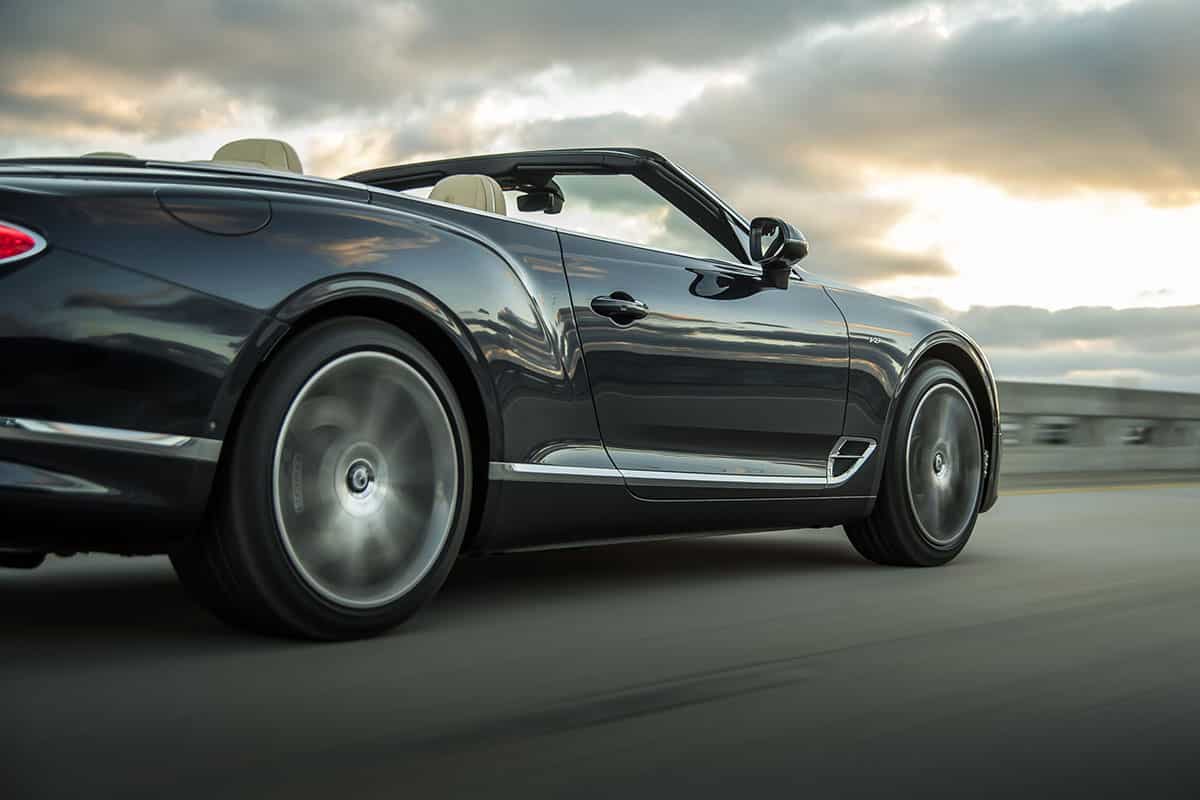
Customers will be able to distinguish their V8 Continental from the W12 model by bespoke 20-inch, 10-spoke alloy wheels, quad exhaust pipes, and subtle badging.
The Continental GT V8 is expected on UK roads in 2020 – no pricing has been released yet but the figure is expected to be less than the W12 model’s £159,100 asking price.
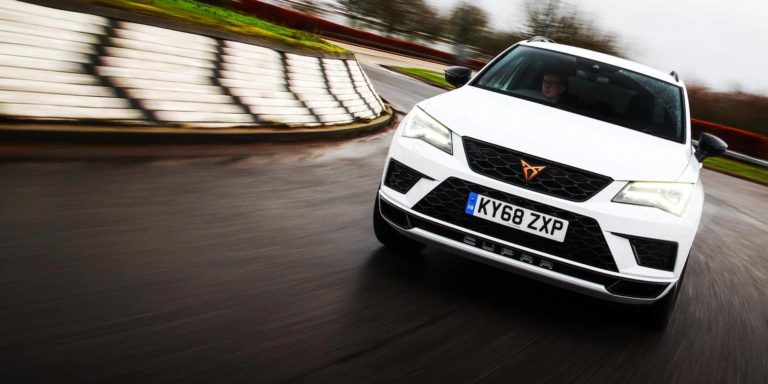
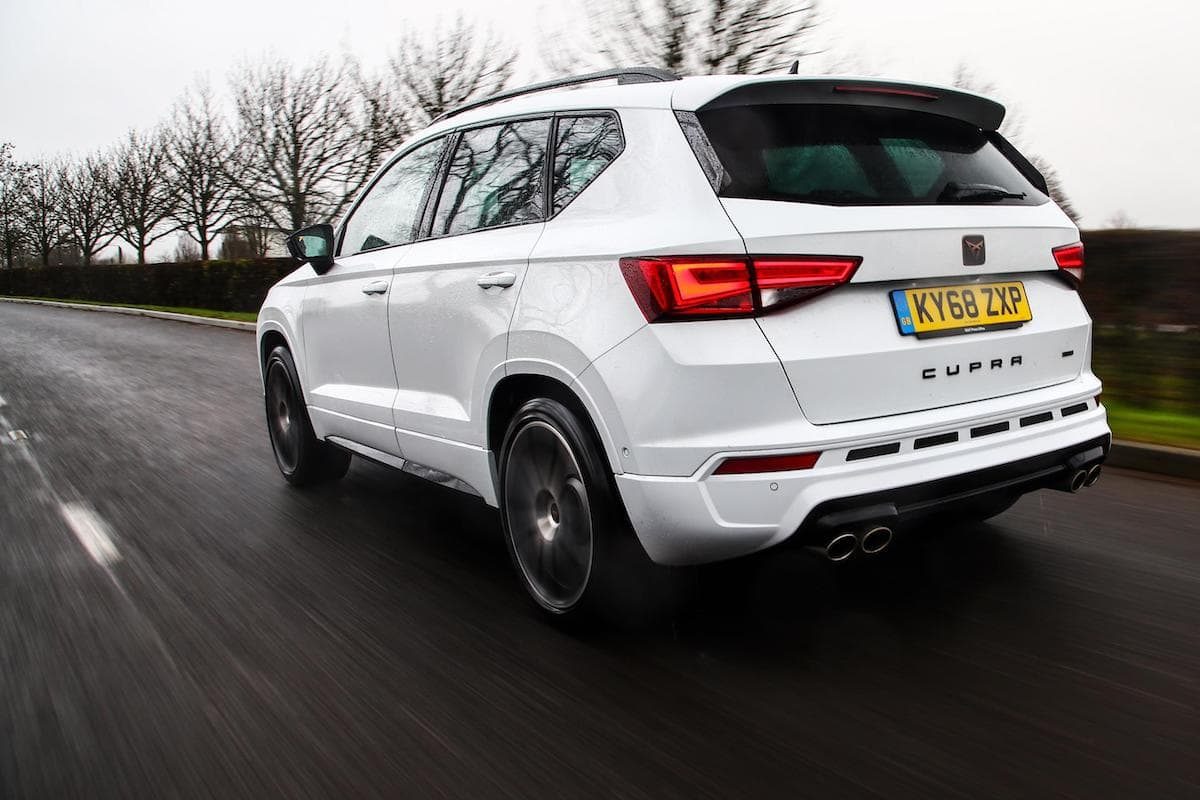
Cupra has been announced as a new standalone brand, no longer just a performance trim level on SEAT models. The Cupra Ateca is its first model, and it’s here to establish the brand as a company in its own right.
Mind you, as an opening statement for a performance brand, a lightly-modified compact SUV doesn’t seem the most exciting choice. This is a warmed-up version of the popular SEAT Ateca, but do the raft of performance modifications make it a more capable machine on the road, and worthy of a whole new brand name?
Like we mentioned, the Cupra Ateca shares its platform with the regular SEAT Ateca. Don’t let that fool you into thinking this is just a warmed-up SUV with some jazzy badges, though – some serious mechanical upgrades have been applied here. There are also a range of exterior and interior upgrades to be found, helping to differentiate it against some of its more mundane relations.
There’s just the one engine option available, and save for a few exterior colours and a handful of equipment packs, there’s not a huge amount of customisation available on the Cupra Ateca.
How does it look?
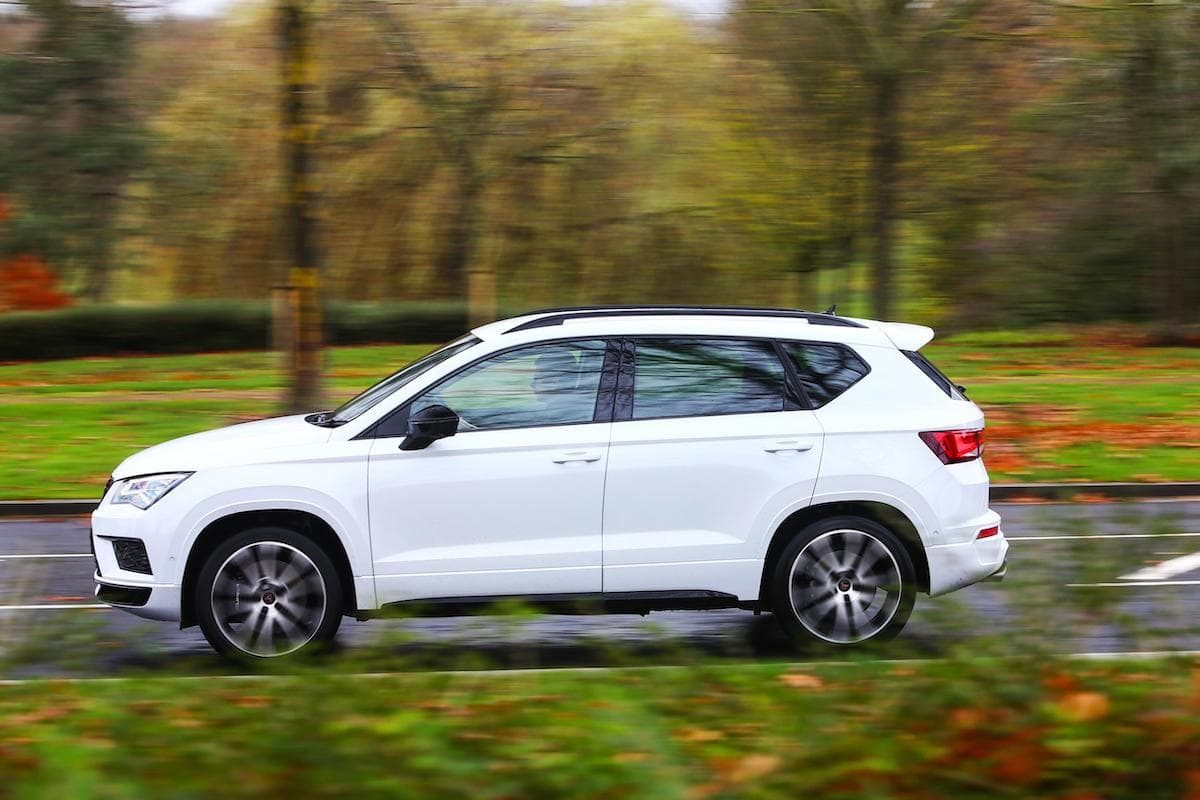
Save for a smattering of Cupra-specific badges and four hard-to-miss exhaust pipes at the back, the Ateca looks relatively unchanged from the regular version. In truth, the car’s appearance could be played down even further as in our eyes an understated yet hugely powerful SUV is a very cool thing indeed. The badges themselves are likely to divide opinion, particularly given how little is known about the brand at the moment, but the overall impression is a good one.
The large alloy wheels look the part with their intricate design, and the bronze elements dotted across the car’s exterior help to make it stand out a little further. It’s not a bold design, but it’s one which works in the metal.
What’s the spec like?
You’re not going to be left wanting for equipment in the Cupra Ateca, that’s for sure. It benefits from the brand’s latest infotainment system, which houses satellite navigation and media functions. It’s easy to navigate too, with clear, logically laid-out displays and a responsive touchscreen. It also incorporates Apple CarPlay and Android Auto, both of which integrate exceptionally well into the car’s system.
The Cupra Ateca also gets a virtual cockpit-style central display set-up, relaying key information such as navigation instructions back to the driver in the space where the traditional dials usually sit. You get key speed readouts too, of course, but it means it’s easier to see useful displays without having a look away from the road for too long.
Safety-wise, the Cupra carries over all of the same kit as the SEAT-badged version. Euro NCAP rated the SEAT Ateca five stars back in 2016, and the model remains competitive with newer rivals in terms of safety tech.
What’s the Cupra Ateca like inside?
It’s a similar story when it comes to the cabin. There’s some contrast stitching used throughout the interior and some carbon-fibre effect trim, but for the most part it feels standard SEAT fare.
The front seats are sports versions and are hugely supportive, but save for those it feels much like a normal Ateca. Again, that’s no bad thing; it means there’s plenty of space for those sat in the back, and the general fit-and-finish is top-notch.
The car’s four-wheel-drive system brings down the car’s boot capacity, but it’s still large enough for several weekend bags or a lot of shopping. And, of course, you can extend it by folding the rear seats flat, too.
What’s under the bonnet?
Residing underneath the Cupra Ateca’s bonnet is a 2.0-litre turbocharged petrol engine with 300hp and a considerable 400Nm of torque. It’s essentially the same engine as the one you’ll find in Volkswagen’s potent Golf R.
Power is sent to all four wheels via a seven-speed DSG gearbox. This means the Cupra Ateca is graced with impressive performance figures and 0-60mph takes just five seconds, while flat-out it’ll crack 153mph.
Despite this, it’s not bad economy-wise, with Cupra claiming 38.2mpg combined, and emissions of 168g/km of CO2. It means that though it can out-perform a lot of hot hatches, you won’t be spending all of your time at the petrol station topping it up.
What’s the Cupra Ateca like to drive?
The initial impression that you get when behind the wheel of the Cupra Ateca is simply how normal it feels. When you’re ambling around town it feels as if you’re driving a regular Ateca – albeit one with a slightly firmer ride. Then, you get the opportunity to open the car up a bit, and the difference is quite clear – it’s ferociously fast in a straight line.
The gearshifts are brisk enough (it can be slow to kick down at times), and that forward progress is matched with a purposeful – if not particularly tuneful – growl from the exhaust.
The steering is relatively light, but it’s not a hard car to place. One of the stand-out features were the brakes; the upgraded Brembo units provide excellent stopping performance, allowing you to brake harder and later than you would with conventional units.
Verdict
The Cupra Ateca may be expensive at close to £40,000, but it’s an attractive proposition. It’s practical, well-made and it goes like the clappers too.
For those who want a performance SUV to be seen in, it may not make so much sense. But for those who find going quickly under-the-radar appealing, then the Cupra Ateca could be the car for you.
What is it?
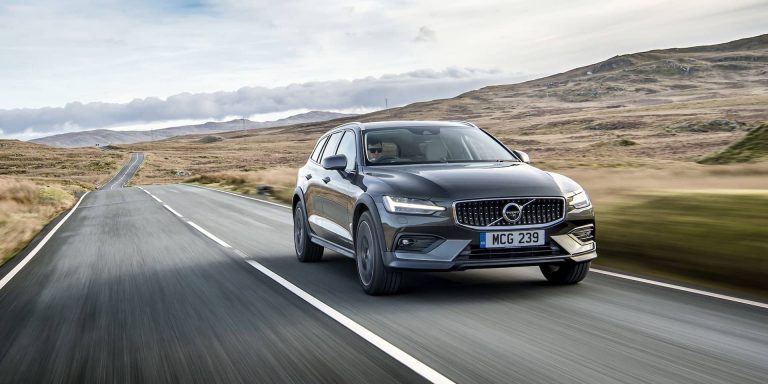
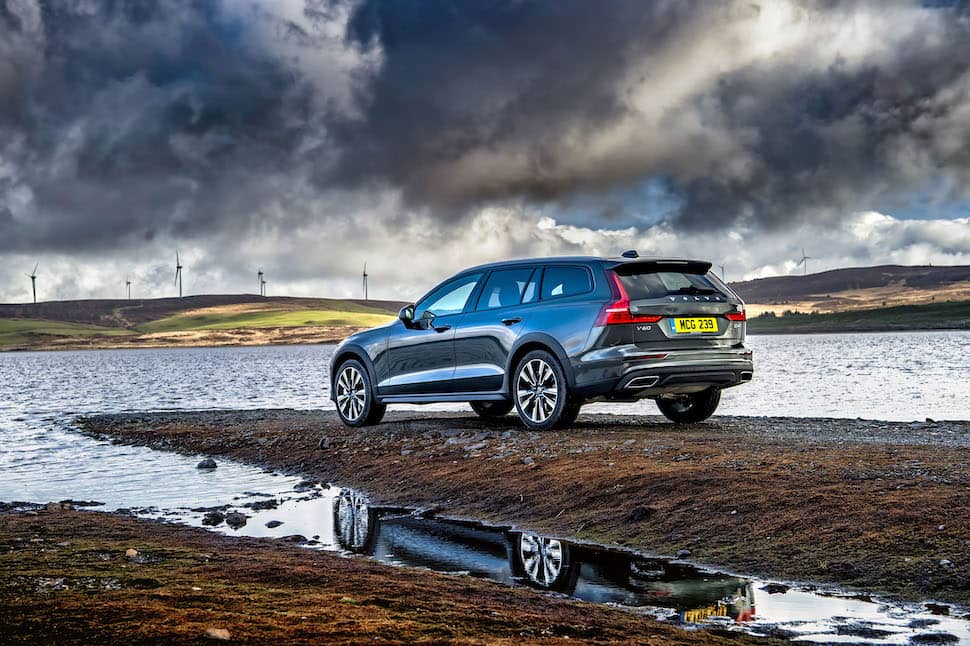
The new Volvo V60 Cross Country is the latest version of the brand’s 4×4 ‘country estate’.
Key features
All-wheel drive, raised ride height, off-road mode
Our view
The Volvo V60 Cross Country adds a whole lot of extra versatility to an already impressive estate car.
Its raised ride height, all-wheel drive, off-road mode and hill-descent control give it the capability of tackling muddy fields and rocky forest tracks while adding an extra element to an extensive on-the-road safety package.
Similar cars
Audi A4 allroad, Skoda Octavia Scout, Volkswagen Passat Alltrack
Full review
Introduction
It may surprise some reading this to learn that not everyone wants an SUV. The traditional premium estate, typified by the Volvo V60, still holds a lot of sway with a certain type of buyer.
But for some of the V60’s customer base, the ability to do a little of what traditional SUVs can do (and what many of today’s SUVs can’t), towing a horsebox across a muddy field or tackling a hole-strewn forest track, can be useful. And for such buyers, there is the Volvo V60 Cross Country.
Volvo has been making all-wheel-drive Cross Country models for 21 years. The new V60 version comes to market as a sister to the larger V90 Cross Country, but also a more tempting proposition, because it no longer has a direct rival.
Previously buyers looking for such specialist wheels were tempted by the Audi A4 allroad, but the allroad no longer on UK sale – whether it will be a part of the soon to be revealed next A4 range remains to be seen.
So the nearest alternatives to the V60 Cross Country are the Skoda Octavia Scout, that offers all of the ability but not in a premium car package, or AWD cars from the likes of BMW and Mercedes-Benz that have none of the additions to allow any serious green-lane motoring.
We tested the mainstream V60 on its UK launch in July 2018 and were impressed, highlighting the car’s big boot, premium build quality and performance, along with the impressive safety package.
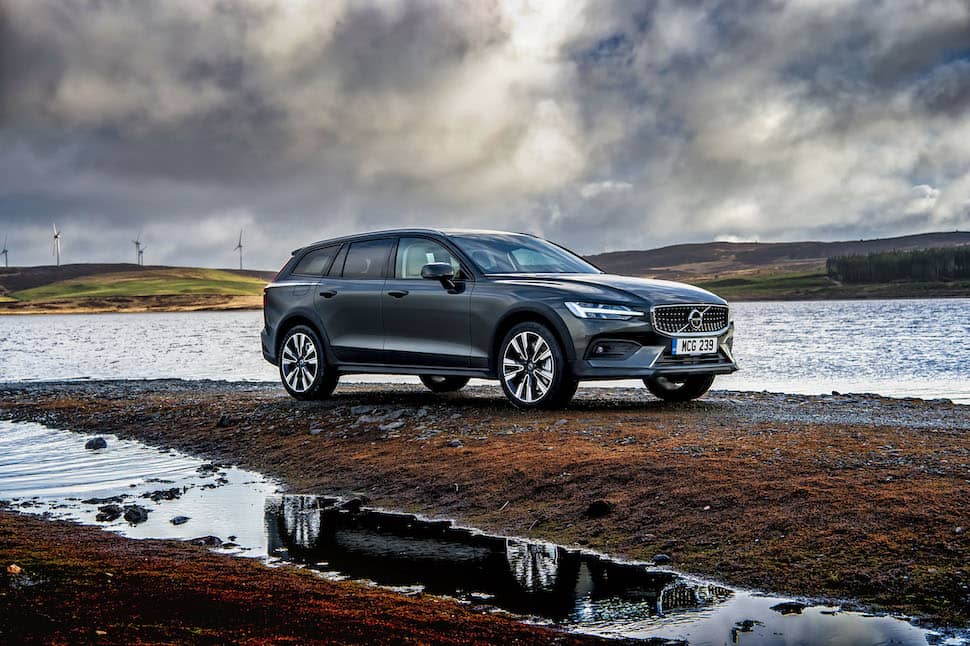
The Cross Country stands a little higher than a stock V60, and looks a little more muscled-up thanks to the extra mouldings intended to offer some form of protection off-road. But it’s what’s under the skin that makes all the difference…
Buying and owning a Volvo V60 Cross Country
Being effectively a V60 trim level, the Cross Country maintains all the appeal of its mainstream sisters, and adds some bespoke features of its own. In the UK you can only buy one version, with a D4 diesel engine combined with an eight-speed auto transmission and permanent all-wheel drive.
Externally the visual differences to a standard V60 are most obviously the raised ride height, the car standing 6cm further off the ground on its 18-inch alloy wheels.
The body gains some extra plastic, in the form of wheel and sill extensions and a lower front grille all finished in charcoal. As an aside, Volvo is building a reputation for its environmental awareness, and among recent measures is a pledge that 25% of the plastics in its cars will be recyclable by 2020.
As well as the AWD, the car gains hill-descent control, to assist with descending steep muddy or rocky slopes, and an extra setting on its driver-operated Drive modes.
Operating below 25mph (exceed that speed and the system automatically defaults to the Comfort setting), Off-Road mode activates the hill-descent, calibrates the engine, transmission and AWD to provide max traction on slow slippery surfaces, increases the power assistance to make the steering lighter, disables the auto start-stop and adds a compass to the digital driver’s display.
Cross Country models also retain the impressive specification of other V60 models. Highlights include the nine-inch touchscreen infotainment system in its signature vertical format, dual-zone climate control, front and rear parking sensors, a powered tailgate and the impressive 12-inch digital dash display ahead of the driver.
Mind you, there remain plenty of opportunities to spend big on the options list. Our test car’s on-the-road price of £38,270 soon ballooned to £50,915 thanks to extras. These included an £1,800 ‘Xenium Pack’ – adding a panoramic sunroof, a 360-degree parking camera and auto parallel and 90-degree parking, and for £1,275 a Winter Pack with heated front seats and wiper blades plus headlight cleaning and a head-up display (for winter?).
Adding another £1,625 was ‘Intellisafe Pro’ which loads on a whole lot of useful extra safety. The list includes adaptive cruise control, blind-spot information, cross traffic and rear collision aids and the Pilot Assist steering aid.
Having said that, the V60’s standard safety package is pretty impressive, with Volvo remaining the standard-bearer in safety. The City Safety suite of collision avoidance aids is on every car and includes autonomous emergency braking that reacts to vehicles, pedestrians, animals and cyclists.
Newly launched on the V60 is Oncoming Collision mitigation – this works just like City Safety but analyses the behaviour of other cars either running alongside or approaching in the other direction, and reacts accordingly. Unsurprisingly, the V60 gets a full five-star Euro NCAP safety rating.
Continued on next page:Interior, driving experience and our verdict
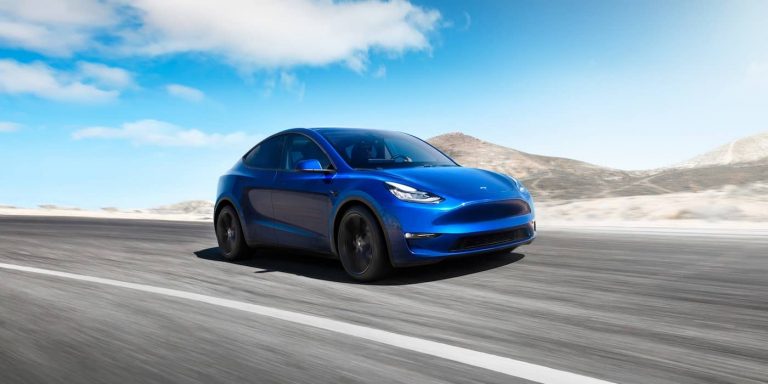
Tesla has unveiled the new Model Y – a seven-seat electric crossover that will serve as the Model 3’s slightly bulkier sibling.
The company’s fourth model to hit full production was unveiled by Tesla CEO Elon Musk at a launch event in Los Angeles this week.
The Model Y is set to begin production late in 2020, which means it’s unlikely to be seen in the UK until 2021 at the earliest – especially given the delays that have afflicted Tesla’s previous models.
With an expected starting price of $47,000 (£35,460), the Model Y is about $4,000 more than the Model 3 on which it’s based. Though that translates to just £26,400, it’s unlikely that the Model Y would make it to British shores without a significant price increase.
Justifying that price tag is the Model Y’s larger body. It’s shaped as a compact crossover, giving it a high-set driving position, hatchback rear and space for seven passengers.
The car’s design is similar to other models in the range, particularly the Model 3 and Model X. The truncated rear end helps aerodynamics, while Tesla’s bold decision to leave the car’s front virtually featureless lends it a clean, if curiously empty, look.
The Model Y does without the Model X’s distinctive ‘falcon-wing’ rear doors, instead using traditional hinged offerings with frameless windows like the Model S and Model 3.
Four powertrain configurations are expected to be offered, with Long Range, Dual Motor and Performance versions arriving first. All offer serious acceleration and impressive range for a pure-electric car.
The Long Range model is expected to offer 300 miles of range, while four-wheel drive Dual Motor and Performance versions will get 280 miles. The latter will hit 60mph from rest in just 3.5 seconds. These are all slightly worse figures than the smaller Model 3, befitting the Y’s status as a slightly bigger and more aspirational car.
A Standard Range model will round out the bottom of the range, with a 230-mile range and 5.9 second 0-60mph time. It’s expected to launch in 2021 and will have a headline price of just $39,000. (£26,400). This is also when seven-seat models will go on sale, with just five seats available from launch.
The Model Y will feature the same headline technology available across the rest of the Tesla range. This includes access to Tesla’s super-quick Supercharger network, which can add 75 miles of range in just five minutes.
There’s also Tesla’s Autopilot suite, which offers monitored self-driving in certain situations. Musk has said that cars fitted with Autopilot hardware will be able to drive themselves completely autonomously in the future.
The market for old-fashioned, separate-chassis SUVs has declined as the market for car-based crossovers has increased. These big, rugged beasts are something of an anachronism in 2019 – generally unable to offer the refinement or dynamism of their newer rivals.
But Mitsubishi has a strong history of selling these types of vehicles, based on what they are good at – true off-road ability, dependability, and a general sense of toughness.
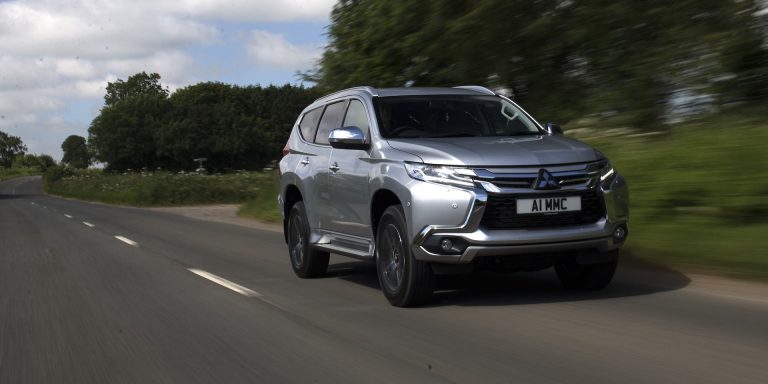
This is its latest competitor – the Mitsubishi Shogun Sport, based upon the same platform as the brand’s big-selling L200 pick-up.
The underlying platform of the Shogun Sport may be similar to the Mitsubishi L200, but rather than the pick-up’s load bed it’s fitted with a spacious – if not especially pretty – seven-seat SUV body.
The L200’s 2.4-litre diesel engine is present and correct but it’s mated to a new eight-speed automatic, replacing the previous six-speed unit to provide better performance and economy.
Crucially in a vehicle that’s meant to carry passengers rather than cargo, the rear suspension has also been replaced with a more car-like multi-link system, which should give slightly more refinement to the ride.
How does it look?
Beauty is in the eye of the beholder, but we’d struggle to call the Shogun Sport pretty. Imposing is possibly a better way to put it – it’s laden with chrome, especially on the large ‘Dynamic Shield’ front grille.
LED daytime running lights do at least make the Shogun Sport appear modern, but the rear end looks uncomfortably pinched. The wheels also appear slightly lost in the massive arches, especially at the rear.
The Shogun Sport definitely won’t turn any heads, then, but nor will it attract any disgusted glances – unless, perhaps, you try and sneak it into the local country club.
What’s the spec like?
There are only two trims on offer in the UK – rather unimaginatively named ‘3’ and ‘4’. Both are decently equipped with 18-inch alloy wheels, privacy glass, full LED headlights, full leather upholstery, keyless entry and cruise control all standard.
Range-topping 4 trim adds a healthy chunk to the price tag, but does bring heated front seats, an upgraded sound system, adaptive cruise control and a raft of safety kit.
Both models use a third-party touchscreen infotainment system, the one saving grace of which is that it offers native support for Apple CarPlay and Android Auto. This is also the only way to get satnav on the Shogun Sport.
Continued on next page:Interior, driving experience and our verdict
Jaguar Land Rover is recalling more than 44,000 cars after it was found that many of its models were emitting more carbon dioxide (CO2) than is legally permitted.
The recall affects Jaguar and Land Rover vehicles fitted with either a 2.0-litre petrol or 2.0-litre diesel engine. It applies to certain versions of the following models, with cars built between 2014 and 2018 requiring corrective action:
The timing of this recall will be even more embarrassing than the average recall for Jaguar Land Rover, which only last week was proudly touting the environmental credentials of its 2.0-litre diesel engine.
A statement from Jaguar Land Rover said that customers are being contacted by the two brands. Some vehicles will need physical changes to be made, while others will only need a software update.
The issue was discovered by the UK Vehicle Certification Agency (VCA), which reported its findings to Jaguar Land Rover. The manufacturer then contacted the Driver and Vehicle Standards Agency (DVSA) and an alert was made via the European Commission’s rapid alert system.
The alerts for each car all say the same thing: “Certain vehicles fitted with 2.0-litre diesel engines may emit excessive levels of CO2 and may not conform with the certified condition.
“The product does not comply with the regulation setting emission performance standards for new passenger cars and the regulation on type approval of motor vehicles with respect to emissions from light passenger and commercial vehicles.”
If you own one of the vehicles above and are not sure whether your car is affected by this recall, contact your local Jaguar or Land Rover dealership. Any recall work done on your car will be free of charge.
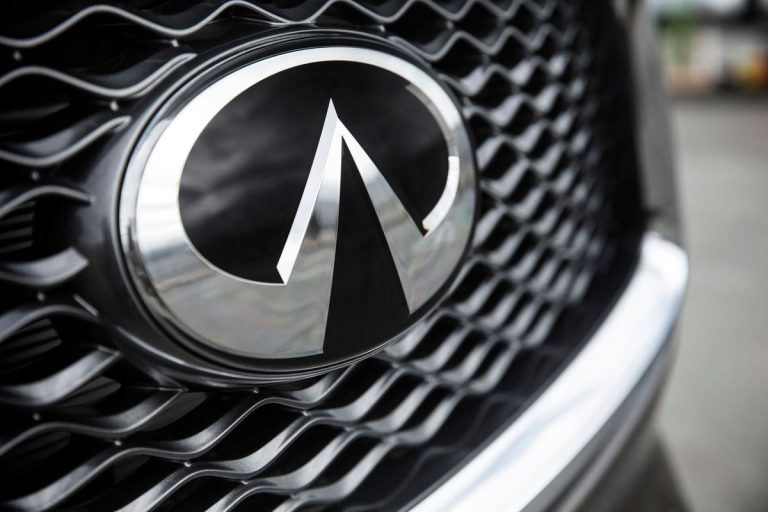
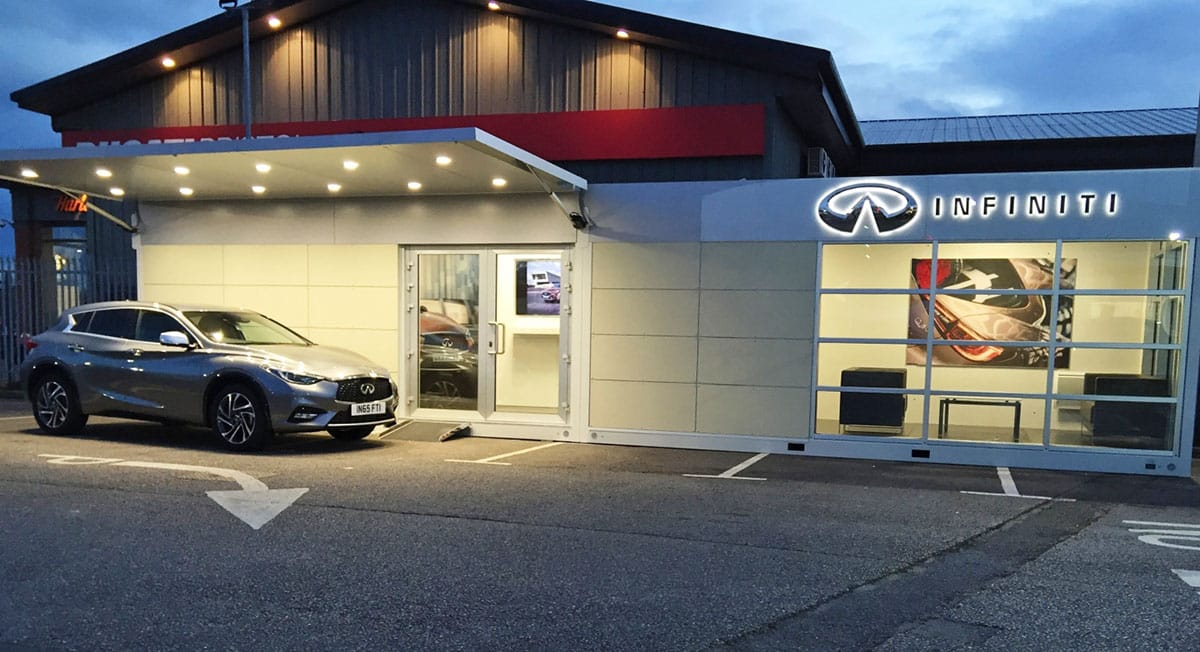
Infiniti is to pull out of Western Europe, including the UK, because the company believes it cannot secure a viable future based on its current sales volumes.
Like all manufacturers selling in the EU, Nissan’s luxury arm will be required to reach an average 95g/km CO2 emissions figure across its range in 2020, or face big penalties. The brand is said to see no viable way of investing in the technology, principally electrification, to meet this requirement based on its current and forecast sales numbers.
As a result, Infiniti will cease all Western European operations by early next year and focus its operations on “its largest growth markets, specifically North America and China”. The restructuring will have no impact on Infiniti operations in Eastern Europe, the Middle East and Asia, which the brand says continue to grow.
Sunderland plant hit
The decision is a further blow to Nissan’s large UK plant in Sunderland, which currently builds the Infiniti Q30 and QX30. Production of both models will cease by the middle of this year, and the news comes just weeks after Nissan announced it would no longer be building its next X-Trail model at Sunderland.
The Q30 and QX30 models are only sold in Europe and do not feature in the company’s plans for other markets. Nissan does not provide a breakdown of production figures for Sunderland, but it’s fair to say that Q30 and QX30 do not make up a significant portion of the 400,000+ cars that roll out of the factory each year.
Industry sources suggest that about 300 people are directly employed in building the two models at Sunderland, out of a total of about 7,000 employees at the factory. The company said it hopes to find alternative opportunities for these workers.
Infiniti’s European HQ, based near Geneva in Switzerland, will also be affected by the brand’s withdrawal, although the site also manages the company’s Middle East and Africa regions so some staff may be redeployed at the same location.
Infiniti centres will remain open – for now…
Infiniti’s UK and European showrooms will remain in operation for the present, while the brand takes steps to put in place continuing aftersales services for current owners of its cars, including vehicle servicing, maintenance and warranty repairs.
Ironically, the brand also states that it will be investing in electrification, from 2021 onward. It will stop selling vehicles with diesel engines while focusing on its SUV lineup in North America, and bringing five new vehicles to China over the next five years.
Infiniti launched in the UK in 2008, Nissan effectively trying to replicate what Toyota had achieved with its premium sub-brand Lexus. But the Infiniti brand has never really taken off in Britain.
According to data from the Society of Motor Manufacturers & Traders (SMMT), Lexus registered 12,405 vehicles in the UK 2018 while Infiniti only managed 750 – down from 3,515 the year before.
For the first two months of this year, Infiniti only had 48 registrations against its name. Take out dealer demonstrators and head office registrations, and almost nobody has actually walked into a dealership and bought a new Infiniti so far this year.
The UK is gaining two Scalas in 2019 – the new classical music radio station launched last week, and the Skoda Scala that goes on sale in the summer.
Debuted at this month’s Geneva motor show, the Scala replaces the Rapid as Skoda’s Focus-sized family hatch. Dealers will start taking orders for it in May, with first deliveries in the summer.
The Scala is the first Skoda to use Volkswagen Group’s MQB A0 platform that already underpins the SEAT Ibiza and Volkswagen T-Roc. It is evolved from the Vision RS concept that Skoda unveiled at the 2018 Paris motor show, and styling details from that concept remain in the production model – notably the optional all-glass rear screen.
UK buyers of the Scala will have a choice of with three petrol engines and a single diesel. Petrol options are 1.0-litre units with either 95hp or 115hp or a 1.5 with 150hp. The diesel is a 1.6-litre unit with 115hp.
Six-speed manual transmissions will be standard but all bar the 95hp petrol will also be available with a seven-speed automatic transmission.
The Scala will be sold in three trims – Skoda’s familiar S, SE and SE L grades. Entry-level S models start from £16,595 and highlights of the specification include 16-inch alloy wheels, LED headlamps, leather on the steering wheel, gear and handbrake lever, air-conditioning, DAB digital radio and an infotainment system with a six-inch screen.
Skoda’s Front Assist system, which incorporates autonomous emergency braking, tops the standard safety equipment.
Mid-range SE versions cost from £18,580 and extra equipment includes cruise control, rear parking sensors, an upgraded infotainment system with eight-inch touchscreen and an integrated umbrella in the door.
Range topper is the SE L at £20,380 and this includes Skoda’s new Amundsen infotainment system with nine-inch glass touchscreen, digital cockpit display, climate control air conditioning, keyless entry with start/stop and a colour multifunction trip computer.
Other SE-L features include 17-inch alloy wheels, full LED rear lights, dynamic indicators privacy glass on the rear windows and bespoke interior trim.
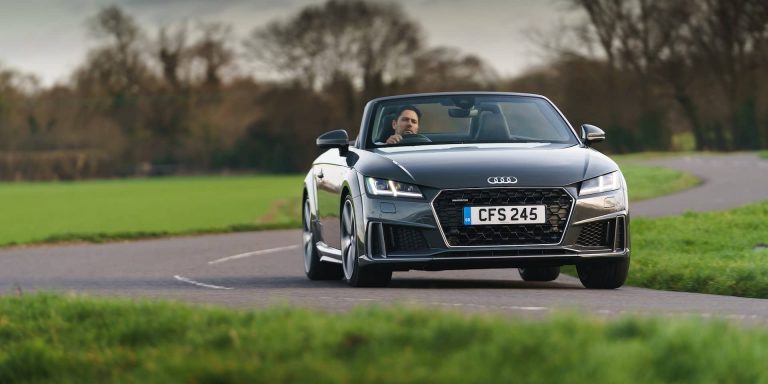
The TT has been a mainstay of the Audi range for some time now, delivering rock-solid German build quality in a good-looking and compact package. It’s recently been refreshed, updating its looks both inside and out, and refining the way it drives.
It’s still available with a range of petrol engines (though now with more power on offer than before), and it can be specified as either a hard-top Coupe or, like we have here, the soft-top Roadster version.
What’s new about the Audi TT Roadster?
This is a subtle refresh of the third-generation TT we first saw on our roads back in 2014. However, some key changes have been made throughout the car; the interior has been given new seats, while the exterior gets a variety of new design touches to help it remain fresh.
The cabin still benefits from Audi’s Virtual Cockpit infotainment system (the TT was the first production model to feature this tech when it was first released), but it doesn’t feel outdated – in fact, it continues to add to the overall appeal of the car.
How does it look?
The TT remains a looker. Sharp lines and a compact, almost square layout mean that it fits well on UK roads, while the twin pipes at the rear and electric rear spoiler do give it a little added drama. S Line models like our test car are helped even further thanks to the inclusion of a rear diffuser and a full-length front splitter.
The Roadster version even looks good with the roof raised — an area which can sometimes detract from the overall look of soft-top cars. Speaking of the roof, it can be raised or lowered in around ten seconds, at speeds of up to 31mph. Once closed, it does a decent job of isolating road noise – though, of course, it isn’t a refined as the hardtop.
What’s the spec like?
Audi has beefed-up the amount of standard equipment available on base models, with features such as cruise control and Xenon headlights now included on entry-level Sport-spec cars. However, our S Line test car benefitted from additions such as 19-inch forged alloy wheels, full LED headlights and ‘Super’ sports seats fitted as standard.
S Line cars also get a full exterior styling pack, which is ideal for those looking to give their TT a little more presence out on the road. Virtual Cockpit is fitted as standard too – though our car came with the Technology Pack, a £1,495 optional extra which adds full navigation and online mapping, as well as an eight loudspeaker system. A wireless phone charging system is also added as part of the pack.
Continued on next page:Interior, driving experience and our verdict
Toyota has announced prices for its hybrid Camry saloon, marking the return of the model to the UK market after 14 years away.
Replacing the Avensis, the new eighth-generation Camry will only be available to UK buyers in petrol-electric hybrid form.
The self-charging hybrid system fitted to the Camry is the same as that on the latest RAV4 SUV, combining a 2.5-litre petrol engine and an electric motor for a total of 218hp. CO2 emissions range from 98 to 101g/km (NEDC), depending on model chosen, and combined cycle fuel consumption is quoted between 50.5 and 53.3mpg (WLTP).
The new Camry will be offered in two grades, the Design at £29,995 and the Excel for £31,295.
Standard equipment on the Design includes 17-inch nine-spoke alloy wheels, leather upholstery, LED headlights, dual-zone automatic air conditioning, keyless entry and start, front and rear parking sensors, a reversing camera and heated and power-adjustable front seats.
The driver gets a seven-inch digital information display and Toyota’s Touch 2 multimedia system is included with navigation, Bluetooth and DAB on a seven-inch touchscreen.
All versions are fitted with Toyota’s Safety Sense active safety systems, including the Pre-Collision Safety system that offers autonomous emergency braking with pedestrian detection. Adaptive Cruise Control is standard, as is a lane-keeping control, traffic sign recognition and auto high-beam headlamps.
Excel versions gain 18-inch 20-spoke alloy wheels, LED fog lights, LED dual-beam projector headlights, wireless phone charging and further safety systems including a blind-spot monitor and Rear Cross Traffic Alert, lane changing and sonar aids.
Order books for the new Camry open at the beginning of April and the first examples are expected on UK roads in July.
Geneva is by no means the largest motor show in the world but many, particularly those at the sharp end of the automotive industry, consider it the best.
This writer, who has been religiously making the early March trek to Switzerland since the mid-1990s, concurs. For starters, Geneva is such a convenient show as it’s held at the PalExpo, right next to the international airport. You turn left out of the arrivals lounge and after a stroll of less than ten minutes you are in the show halls.
Switzerland is renowned for being expensive, but you don’t have to worry about accommodation because the show is compact enough to arrive around 10am, check out all the new hardware and the wild concepts (Geneva is full of wild concepts) in the three important halls, and be back in the terminal for your flight home that same evening.
It may be compact but that doesn’t diminish Geneva’s standing. On press day in the halls, you will hear accents from Far East to the Far West – the automotive industry considers it the most important European show, and it’s held every year in contrast to the other members of the ‘big three’, Paris and Frankfurt, which alternate – Paris in even years, Frankfurt in odd.
The brands at Geneva still spend a lot of money on their stands. Photo: Andrew Charman
So despite having to keep their stands compact, every automotive manufacturer considers it vital to be at Geneva – or at least they did…
Everyone in the industry knows that the value of motor shows started to be seriously questioned some time ago. The UK is not only one of the biggest car sales markets in Europe, but it’s almost a decade since the industry decided it wasn’t worth exhibiting in the UK and killed off the British International Motor Show.
Some pretty big automotive brands have also started dropping out of the Paris and Frankfurt events in recent years. But not Geneva, surely?
Except now it’s yes Geneva. At the press day for this year’s show getting pictures of the new cars was still a frustrating exercise, one’s view constantly blocked by spies from rival manufacturers photographing individual LEDs in headlamp clusters and blokes posing their wives and kids in front of the supercars (on a media day…).
There was a lot of room to move at this year’s Geneva. Photo: Andrew Charman
But walking between the stands was a much easier process – the walkways appeared wider, because they were. And if one fancied refreshment and didn’t fancy the scrums around those manufacturers giving out free food and drink to the media (and the astonishing number of hangers-on that always get into a Geneva press day) there were a host of new bars and cafeterias on offer in the main hall.
They were well thought-out these cafeterias – one even had a Formula One Williams hanging on the wall, but then you realised you were eating where previously you had viewed the latest Fords.
Ford was one of the first to stop going to motor shows. But the list of absentees at Geneva 2019 is a long one – Vauxhall-Opel isn’t there, despite the fact that its new sister brands Peugeot and Citroën are. Volvo is missing, though again its sub-brand Polestar has a stand. And while Kia is there, sister brand Hyundai isn’t.
Perhaps most ironically, missing for the first time is Jaguar Land Rover. JLR management had to get their air tickets to Switzerland though, as the Jaguar I-Pace, unveiled at the 2018 show, won the European Car of the Year title that is traditionally presented in Geneva on the eve of the show.
Nice wall decoration at this useful refuelling spot – but Jaguar Land Rover used to be here… Photo: Andrew Charman
Don’t get me wrong, the big badges still in the Geneva halls vastly outnumber those missing, and their stands are possibly just a little more impressive than before (perhaps a little larger, again filling space?). The bizarre concepts are still present in all their numbers, and could fill an impressive show on their own.
As the host of stories we’ve brought you over the past week demonstrates, there is still a whole lot to see at Geneva, and if you see it all your feet will be reminding you for at least the next couple of days.
But the fact remains, exhibiting at a motor show costs a manufacturer hundreds of thousands, and you can bet the manufacturers who were there will be questioning whether spending that money has given them enough of an advantage over those that stayed home.
Geneva is great – but for how much longer will it be great?
Geneva will likely face growing challenges to get the manufacturers to keep coming. Photo: Andrew Charman
Over the past couple of days, we at The Car Expert have brought you the important new car launches at the 2019 Geneva motor show. But if you were to strip away all of the major manufacturers from Europe’s most important auto event, you would still be left with plenty to see.
Geneva is renowned as the showcase of the specialist, from ultra-powerful hypercars to bizarre styling treatments applied to very expensive subject matter, and one-off concepts never to be seen again – some of them putting the ‘O’ into odd…
On this page, we highlight just some of the cars that caught our attention – for all sorts of reasons – in the Geneva halls…
Pininfarina Battista
This is (currently) the world’s most powerful road-legal car. The Pininfarina Battista is an all-electric ‘Hyper GT’ powered by four electric motors – one for each wheel. Total output is an insane 1,873hp and 2,300Nm of torque – and being electric, all the potency is available from a standstill.
The Battista ‘only’ does 217mph but is said to have a 0-62mph sprint time of less than two seconds – and a 0-186mph sprint of less than 12 seconds. Just 150 will be built and they will go on sale in 2020 at prices somewhere between £1.5 and £2 million…
Bugatti La Voiture Noire
And this is the world’s most expensive car. Unveiled in black paintwork so glossy to make it almost impossible to photograph, the Bugatti La Voiture Noire is a one-off bespoke coupe evolved from the Chiron, inspired by the French marque’s Type 57 SC Atlantic from 1938, and built to mark Bugatti’s 110th birthday.
The car has already found a buyer, who will pay more than £9.4 million for it…
Pagani Huayra Roadster
Photo: Andrew Charman
There are things of beauty in the Geneva halls and this was road-test editor Andrew C’s favourite, a special US-spec version of the Huayra Roadster from Pagani. First seen at the 2017 Geneva show, it’s powered by a 6.0-litre V12 engine pumping out 760hp. Around 100 are being made at a price of around £2.4 million.
This particular example has a matt exterior finish that really makes it stand out, plus a blue and white leather interior.
Engler F.F. Superquad
Photo: Andrew Charman
This is a quad-bike – a quad-bike that’s about as big as a Ford Focus… It comes from Slovakia, and it is powered by a 5.2-litre supercharged V10 engine with 850hp! As a result, this creation will hit 62mph from rest in 2.5 seconds and go on to 217mph, all without a windscreen.
And even more remarkably, creator Victor Engler intends to put it into production, at a price to be announced…
Rinspeed MicroSnap
Photo: Andrew Charman
A favourite subject of discussion en route to the Geneva show is always: “Wonder what madness Rinspeed will produce this year?”
Well, in 2019 the Swiss ‘automotive think tank’ offers us the MicroSnap. The concept is that in future cars will be split, the self-driving bottom half, known as a skateboard, transporting passengers at the start and end of the day and then swapping their pod for a cargo body to deliver parcels and the like during working hours. Clever eh?
Golden Sahara
Before you react to this car, it is not what it may seem. This is not a retro concept but a real concept, dating all the way back to 1953 and restored to its former glory. The Golden Sahara was created as one of the first-ever testbeds for electronic systems, by Jim Street and legendary custom car designer George Barris. Technology included aircraft-style driving controls and even a form of autonomous emergency braking.
Having disappeared for many years, the car was recently sold at auction and has been painstakingly restored, right down to the internally lit glowing tyres specially developed for it by Goodyear.
Sin Cars L-City
Our road-test editor had to take his son to see The Lego Movie II last week and feels sure this particular automobile was in it.
Sin Cars is a specialist supercar manufacturer with offices in both Germany and the UK – the L-City is apparently a variable platform for a wide range of electric vehicles. It could be used as a pick-up, van or car, ranging from three to four metres in length.
Sbarro El-Riccho
Who played the game ‘Hungry Hippos’ as a kid? This is a concept from Sbarro, a small Swiss high-performance replica and sports car company that always shows something odd at Geneva. It reminds us of a tuk-tuk rickshaw…
Of course, if you want something a little more normal, there is the Sbarro Miles (below). The concept two-seater roadster has been designed and manufactured by students at the French firm. It’s inspired by 1960s Indy 500 racers but powered by a very modern supercharged in-line six-cylinder engine.
Photo: Andrew Charman
Mansory
Photo: Andrew Charman
Talking of odd brings us inevitably to Mansory, definitely one of the more controversial aftermarket specialists at Geneva no matter which year you attend. A German firm, Mansory seems to specialise in buying the most expensive upmarket cars and applying its own take to them.
Above is a Rolls-Royce Cullinan, below a Lamborghini Aventador – yes that is a marble effect, a Mansory speciality. As for the interiors, we could show you but we do need to maintain standards of decency…
Should you want to see for yourself just what the interior of the Mansory looks like, and all the other weird and wonderful automobilia at the Geneva show, it is very easy to do so if you act quickly.
The show runs until 17th March at the PalExpo, which is right next to Geneva international airport – a genuine ten-minute walk from terminal to show. Adult admission tickets are 16 Swiss francs, which works out at just over £12 (a total bargain).
Many budget airlines offer cheap flights to Geneva and you don’t even need accommodation – the show is compact enough to get around having flown in first thing in the morning and flown home again in the evening.
If you are into your cars, Geneva is definitely the show to go to – more details are on the show website here.
One of the busiest stands at this week’s Geneva motor show is definitely Aston Martin’s, which as well as debuting two mid-engined cars also reveals a new concept by luxury arm Lagonda.
The car is named the All-Terrain concept, and demonstrates exactly where Lagonda believes luxury SUVs are headed in the future.
The all-electric SUV – as Lagonda has committed to being an all-electric brand – builds on the design of the brand’s first concept, the Vision, that debuted at last year’s Geneva show. While that car was a low-slung saloon, the All-Terrain is a high-riding SUV.
Design cues have been taken from super yachts – most visible in the car’s bulbous rear, which hangs considerably over the wheelbase with a strong beltline running around the middle of the panel.
Full autonomy is expected, so the Lagonda All-Terrain features a similar four-seat layout to the Vision concept – where the driver and passenger seats can turn around to form a luxurious, four-seater lounge while the vehicle is driving itself.
Rear-hinged coach doors and opening roof panels to aid access are further nods to the Vision concept, and are able to be included thanks to the inherent stiffness of the car’s electric chassis.
Other interesting features include the rear lights, which are virtually invisible when not lit. Instead of showing the LEDs directly, they’re hidden up in the bodywork, and shine downwards and reflect out.
There is also a remarkable floating key. Electromagnets in the centre console take hold of the key and leave it levitating in place between the front seats.
The rear of the car also features a retractable shelf, which slides out to offer occupants somewhere to sit when the car is parked – something akin to the lower tailgate of a Range Rover.
The Lagonda All-Terrain concept is expected to preview a production model that will arrive in 2022, but it’s reasonable to assume some of its excesses will be toned down before launch.
Taking the award for most laughed-at name at this week’s Geneva motor show is the Mitsubishi Engelberg Tourer – but this concept is an important car for the Japanese brand.
Named after a Swiss ski resort, the Engelberg previews where Mitsubishi is taking its plug-in hybrid ambitions after achieving massive success with its Outlander PHEV.
The concept uses a next-generation plug-in hybrid powertrain, which mates a 2.4-litre naturally-aspirated petrol engine to an electric motor on each axle. The car’s 20kWh battery pack allows it to travel for up to 44 miles on electricity alone, and the system’s full range is said to be more than 400 miles.
Mitsubishi is currently releasing few technical details but it is likely that the Engelberg Tourer’s powertrain follows the template set down by the Outlander PHEV. That would mean that at low speeds the engine only generates electricity to allow the electric motors to provide motion. Then, at higher speeds, a single-speed transmission would link the engine directly to the driveshaft, allowing for more efficient motorway cruising.
Family look
The Engelberg Tourer’s styling is an evolution of the brand’s latest family ‘face’, seen on the recently-updated ASX and L200 pick-up. It comprises a large grille with stepped horizontal bars and cinched-in chrome elements at the sides – with the headlights placed separately and lower down the car’s front.
Fun ‘lifestyle’ touches include a built-in roof-box, which opens and closes electronically and features LED foglamps along its front edge. Though the Engelberg Tourer is just a concept for now, elements of its styling and tech are likely to reach production.
Alongside the Engelberg Tourer, Mitsubishi also previewed its vision for how electric cars will be charged. The system, called the Dendo Drive House, uses a bi-directional charger which can either top up the car’s battery, or in times of high demand use the generated electricity as a power source or to sell it back to the National Grid. Solar panels and a large ‘home’ battery are also part of the technology.
The Aston Martin stand at the Geneva motor show clearly shows the British brand’s design development, with not one but three mid-engined cars on display.
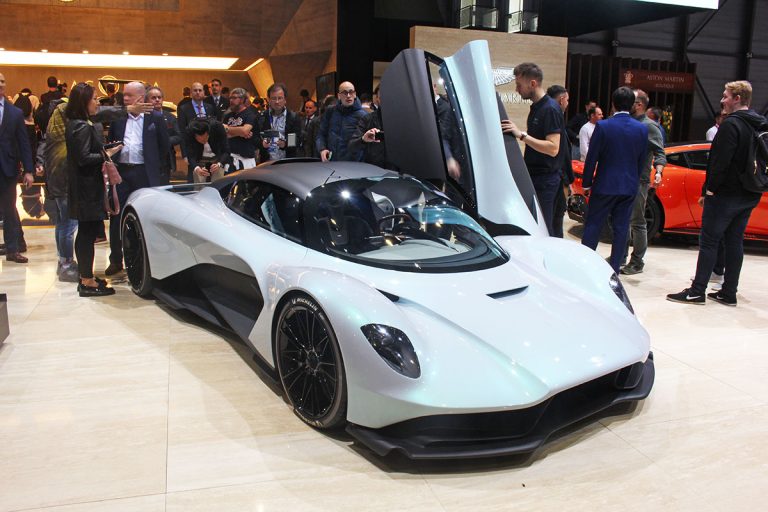
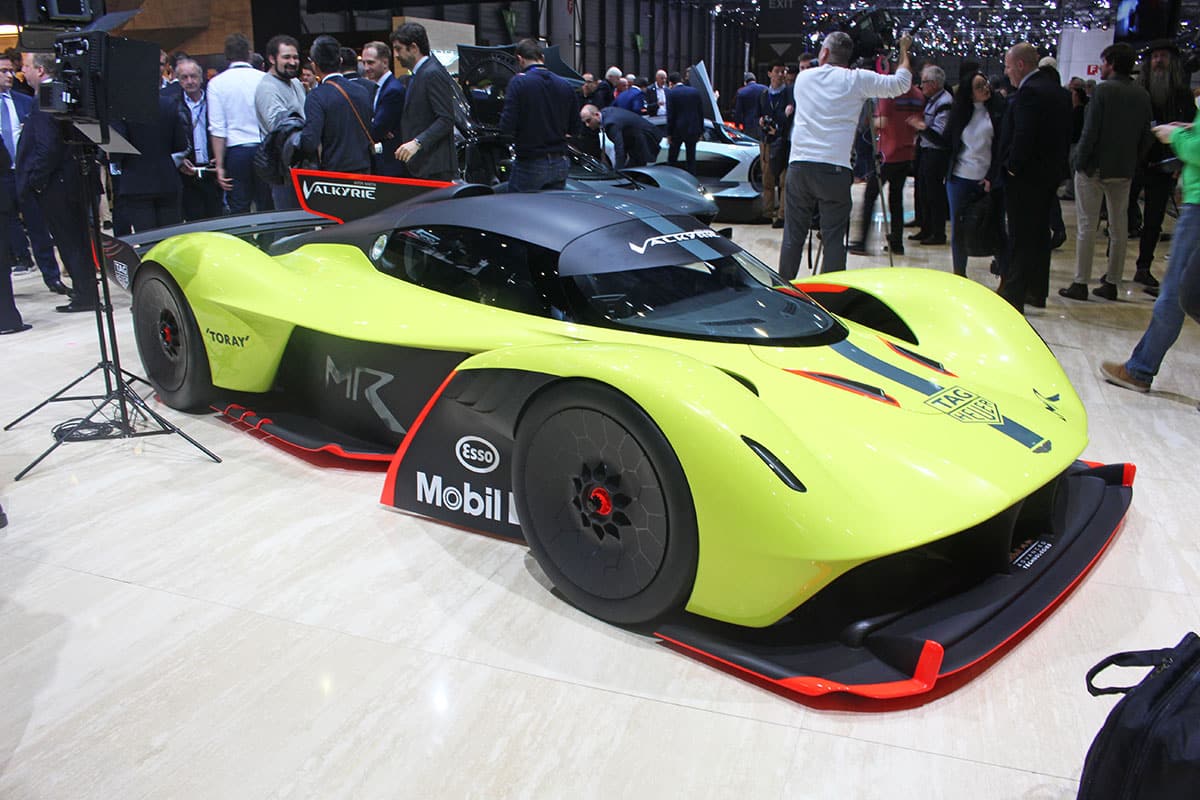
In addition to the newly-announced Vanquish Vision concept, previewing a forthcoming mid-engined Vanquish model, the stand also hosts the remarkable track-specific AMR Pro version of the Valkyrie hypercar, while the first design concept for the less extreme sister to Valkyrie makes its debut.
Dubbed Project 003 when its development was announced in September last year, the planned road-going hypercar is now known as the AM-RB 003. And like the Valkyrie, it is a joint programme between Aston Martin and the Red Bull Racing Formula One team.
The 003 follows on from the Valkyrie and Valkyrie AMR Pro, and, like the previous two mid-engined models, it will feature F1-inspired technology and design processes – with the Red Bull team’s technologies department focusing on getting the most out of the chassis and aerodynamic setup.
Under the shell will be mounted Aston Martin’s first V6 turbo hybrid engine – replicating the format of current Formula One cars and set to be built and designed in-house by Aston Martin itself. Power output is not yet being revealed but most observers expect it to be more than 1,000 hp.
Sister to Valkyrie
Aston Martin’s director of design, Miles Nurnberger, is keen to emphasise the close relationship between the RB-003 and the Valkyrie.
“We were quite deliberate in AM-RB 003 to not disguise its lineage, but we were equally emphatic that it would be a distillation of Aston Martin Valkyrie and not a dilution,” he told reporters at Geneva.
“The design isn’t as extreme in some areas, but it pushes just as hard in others, and is even taking certain ideas and concepts a step further. That’s a natural function of design evolution, but also a testament to just how great an influence working with Red Bull Advanced Technologies on Aston Martin Valkyrie has had on our approach to everything that’s come since.”
Boasting a carbon fibre chassis and bodywork, the two-seater 003 comes with a slightly wider and more accommodating cabin than the Valkyrie. The rectangular steering wheel and instrument display are mounted on the same steering column and the infotainment system is set to be smartphone-based, with the driver’s device mounted on the dash on its own holder.
According to Aston Martin Lagonda president and CEO, Andy Palmer, the AM-RB 003 is the fruit of a hoped-for long-term collaboration with Red Bull Advanced Technologies on the Valkyrie and Valkyrie AMR Pro.
“As these projects enter an incredibly exciting phase with the commissioning of the first running development prototypes, it gives me tremendous satisfaction to confirm that this exceptional partnership is continuing with the AM-RB 003 – a hypercar that not only draws from the ethos and DNA of Aston Martin Valkyrie, but will in turn influence Aston Martin’s first series production mid-engined supercar,” Palmer said in Geneva.
Only 500 examples of the 003 will be built, with the car going on sale at the latter end of 2021. Price is yet to be revealed but is expected by most to be around the £1 million mark. This compares to the Valkyrie’s price tag that is said to be between £2 million and £3 million.
Power of the Valkyrie
Aston Martin also announced in Geneva that the Valkyrie hypercar will produce 1,176hp from its hybrid powertrain, as well as 900Nm of torque.
The car combines a 6.5-litre V12 engine with a battery-hybrid set-up similar to the kinetic energy recovery system seen on Formula 1 cars.
The engine produces a remarkable 1,014hp (1,000bhp) on its own, as well as 740Nm of torque. It was developed in conjunction with Cosworth and Red Bull Racing, and produces its peak power at 10,500rpm ahead of an 11,100rpm red line.
It’s also naturally aspirated, producing these incredible figures and remaining emissions-compliant without the need for a turbocharger or supercharger.
Morgan unveiled an all-new model, the Plus Six, at the Geneva motor show, but the event was far more pivotal for the British manufacturer.
The firm famed for its very traditional sports cars also announced that after 110 years of continuous family ownership, it has sold a majority stake to Italian investment company InvestIndustrial, thus ending its status as the last UK-owned volume car manufacturer.
The Morgan family will retain a share in the company, while management and staff have also taken hold of a share. Morgan hasn’t divulged what percentage InvestIndustrial has taken in the company, nor how much it paid but managing director Steve Morris was hopeful for the future.
“It was felt that, 110 years on, it’s getting incredibly challenging to develop new models,” he said, speaking to the Press Association at the show.
“We saw this as a huge opportunity to give us the firepower to propel ourselves forward and really recognise the full potential of Morgan.
“Now we’ll be able to invest in the infrastructure, whether that’s the visitor centre at the factory, the dealer distribution network globally, or really importantly model development.”
Long-awaited new model
The Plus Six is Morgan’s first new model in 19 years, and a replacement for the iconic V8-powered Plus 8.
The largest change comes under the bonnet. The Plus Six is the first Morgan to utilise a turbocharged engine – an inline six-cylinder unit taken from BMW. It produces 340hp sent to the rear wheels through a ZF eight-speed automatic gearbox – the same hardware and output in the new BMW Z4 and Toyota Supra.
Morgan claims that the Plus Six will hit 60mph in four seconds, and carry on to a 165mph top speed. Despite this impressive performance, it’ll return a claimed 38.2mpg combined, and emit 170g/km of CO2.
The car is built around an all-new bonded aluminium chassis, which is both stiffer and lighter than previous cars built by Morgan using the same technique. However, in keeping with the brand’s building practices, wood – English ash – is still employed within the car’s frame.
The Plus Six is on sale now, and prices start at £77,995.
The Nissan IMQ concept, unveiled at the 2019 Geneva motor show, could be a pointer to the look of the next Qashqai.
A petrol-electric crossover concept, the IMQ also marks the European debut of Nissan’s new e-Power electric powertrain.
In the e-Power system the four wheels are always driven by electric motors, but the battery pack recharged by a 1.5-litre petrol generator. The system has already been proven, fitted to the Note and Serena models in Nissan’s home market of Japan, and now accounts for more than 70% of all Note sales and almost half of Serena sales.
In the IMQ, the e-Power system develops 340hp and 700Nm of torque – with the multi-motor system delivering power to each wheel independently.
The concept also makes use of an advanced version of the ProPilot driver assistance setup that offers improved autonomous driving features.
Smart tyres
The IMQ sits on 22-inch alloys fitted with unique Bridgestone Connect ‘smart’ tyres that relay information on tyre load, pressures, grip level and tyre health to the interior screens.
The bold, sporty styling of the IMQ is the work of Nissan’s London design studio in Paddington. The car has high sides and a slimline glasshouse, while the front end is particularly angular.
Other features that would likely not progress into a production model include the rear-hinged ‘suicide’ doors.
Inside, the driver-focused cabin includes an 84cm screen that shows the instruments and infotainment system. A second screen ‘hosts’ the Virtual Personal Assistant, which is in charge of the main vehicle functions.
According to Nissan design head, Alfonso Albaisa, the IMQ’s design combines traditional and modern Japanese influences and shows what’s possible when future crossovers are powered by the brand’s Intelligent Mobility systems.
“With the IMQ, the interior and exterior are seamlessly blended together, signalling what our design direction may be for Nissan’s third generation of crossovers in Europe,” Albaisa says.
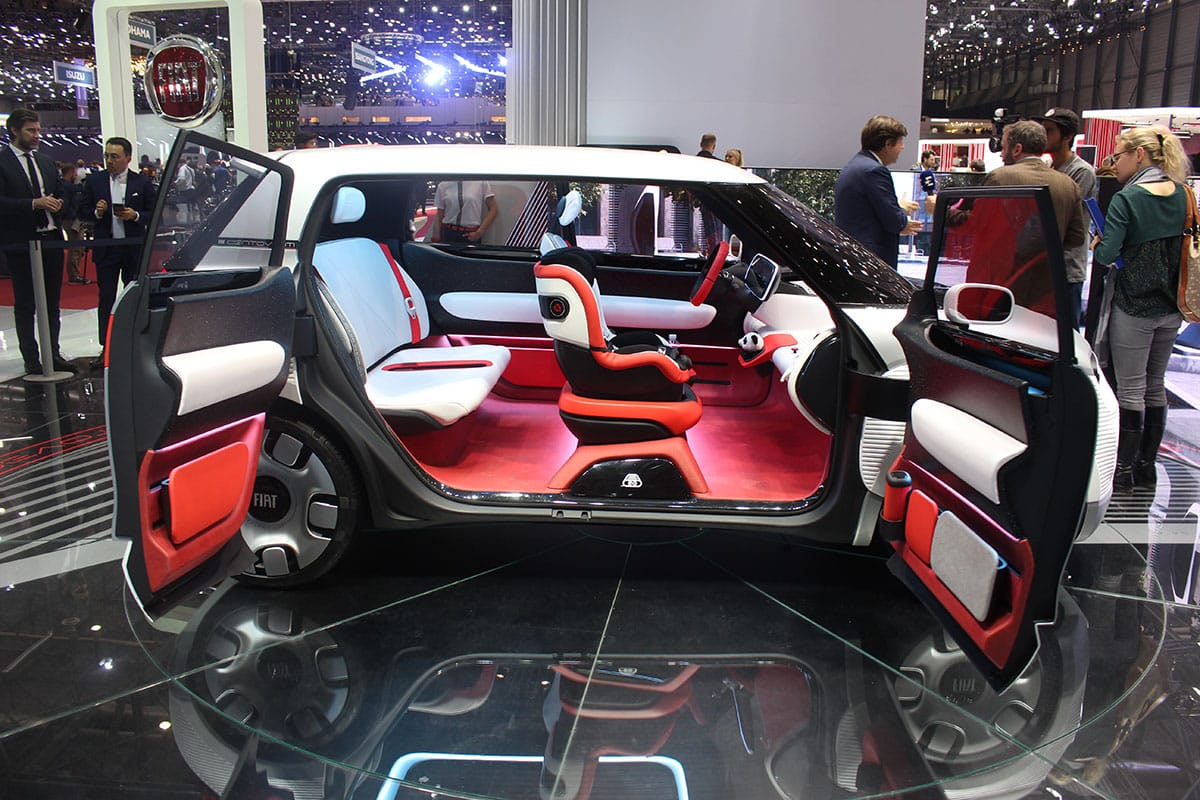
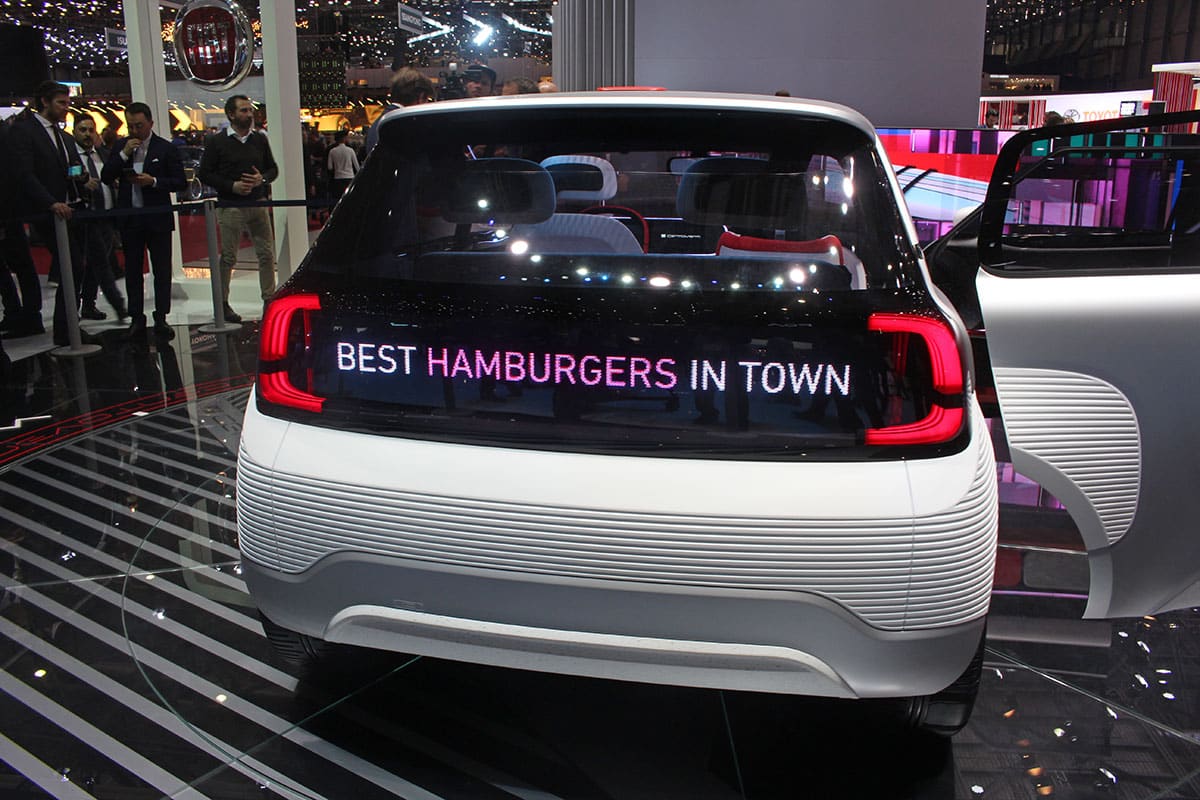
The Fiat Centoventi has been unveiled at the Geneva motor show as a concept car celebration of its 120th birthday – Centoventi means ‘120’ in Italian.
However, the electric concept could have a far greater purpose, becoming Fiat’s next city car and succeeding the iconic Panda.
The Centoventi follows traditional Panda traits, being versatile, small and manoeuvrable, and packed with simple but clever ideas.
The car has been designed with a modular battery system – buyers would be able to opt for a ‘base’ model with a single battery and a range of just 62 miles, or to buy or rent up to three extra batteries, giving up to 310 miles of range if it’s needed.
Thanks to a sliding rail system for installation, Fiat says the battery swap can be undertaken in less than five minutes at a service centre. And the mounting points for the batteries are designed to ensure that adding or removing them does not affect the Centoventi’s weight distribution.
Photo: Andrew Charman
Paying homage to the original Panda’s modular dashboard and reconfigurable seats, the Centoventi will offer a widely customisable interior. The dashboard takes the form of a full-width shelf and – in a clear nod to history – the controls, dials and gauges sit on the steering column in a single pod. Fiat even placed a plush panda toy in the cup holders on the show stand.
The dashboard is filled with holes, into which features and accessories can be fitted using a Lego-like interlocking mounting system. An ‘extensive’ catalogue of accessories is promised.
Roof options
The open-top car can be fitted with fabric or hard roofs – including one with a built-in solar panel. Taking inspiration from a popular vacuum cleaner, an electric charging cable is concealed on its own reel just underneath the windscreen.
Most observers believe that the concept firmly previews Fiat’s future plans for city mobility, and a replacement for the Panda is becoming urgent. The current model, based on a ten-year-old design, recently scored a dismal zero-star Euro NCAP safety rating.
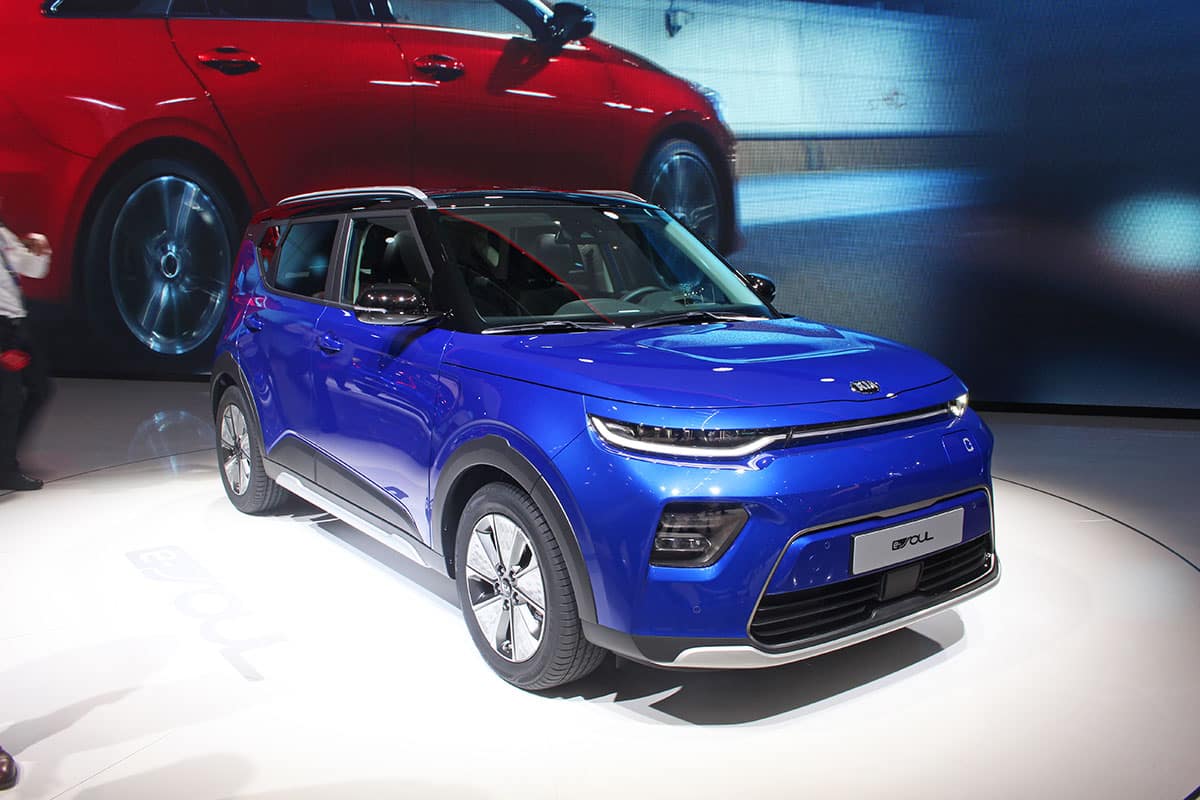
The new Kia Soul EV made its European debut at the Geneva motor show after a reveal at the Los Angeles show in November.
When it goes on sale later this year, the Soul EV will become the brand’s third globally sold electric vehicle. And it also ushers in the third generation of the boxy compact crossover.
Unlike the previous Soul, European buyers will only have electric drivetrains to choose from, but there will be two options. The car, using an updated version of the e-Niro drivetrain, also improves significantly on the range of the previous electric Soul.
Two versions
The new Soul EV will be offered in either standard form with a 39.2kWh battery pack or as a long-range 64kWh variant.
The standard-range pack is paired with an electric motor of 100kW (136hp) – 23% more than the outgoing Soul – and peak torque of 395Nm. Range is 172 miles per charge and Kia says that the car’s WLTP energy efficiency rating of 145 Wh/km is 30% more efficient than the best-selling electric car in Europe – making the Soul EV one of the most energy-efficient electric vehicles in the world.
The long-range battery pack powers a 150kW (204hp) motor, boosting range to 280 miles. Combined with the same 395Nm torque figure, the power rating is 84% up on the outgoing Soul, and gives the new car a 7.9-second 0-62mph time.
Both versions now include a Combined Charging System DC fast charger that boosts the battery packs from 20 to 80% capacity in 42 minutes using a 100kW DC fast-charger.
Kia regards the Soul as a pioneering model. “A decade ago, it established the urban crossover segment, and when we launched the Soul EV it became the first fully-electric crossover,” said Kia Motors Europe COO Emilio Herrera at Geneva.
“The all-new Soul EV breaks more ground, as we launch it in Europe with an extended-range electric powertrain as standard – without the option of an internal combustion engine,” he added.
“The market has changed significantly in recent years, and in 2018 – the outgoing model’s final year on-sale, Kia sold more of the zero-emissions Soul EV in Europe than petrol and diesel versions combined.”
Bentley has headed 90 years into the past to draw inspiration for its celebratory centenary model, revealed at the Geneva motor show.
The Bentley Continental GT Number 9 harks back to the iconic 1930 ‘Blower’ Bentley 4½ litre, which competed in the 1930 24 Hours of Le Mans race. It did not win the race, but helped clear the path so that another Bentley – a Speed Six – could take the victory.
Since then, the supercharged 4½ litre has become one of the most recognisable classic cars of all time, mainly thanks to its supercharger mounted on the front bumper, ahead of the grille.
Built by Bentley’s coachbuilding and customisation arm Mulliner, the Number 9 pays homage with a choice of either Viridian Green or Beluga Black paintwork – colour-keyed on the 21-inch alloy wheels.
There is also a carbon fibre aerodynamic pack, which admittedly is rather more modern than anything on the classic Blower model, also on the Geneva stand.
The Number 9 badges and grille graphic on the limited edition Continental are lifted straight from the Blower.
An authentic wooden insert from the Le Mans racer sits in the dashboard of the No.9 – backlit and covered in resin for longevity.
Under the skin, the Continental GT Number 9 is identical to the standard car, powered by a 6.0-litre W12 petrol engine mated to an eight-speed automatic gearbox and four-wheel drive. It produces 635hp and 900Nm of torque, giving it a top speed of 207mph and 0-62mph in a 3.4 seconds.
Just 100 examples of the Continental GT Number 9 will be produced. Bentley has not yet revealed how much the car will cost but industry sources predict a price tag somewhere around £200,000.

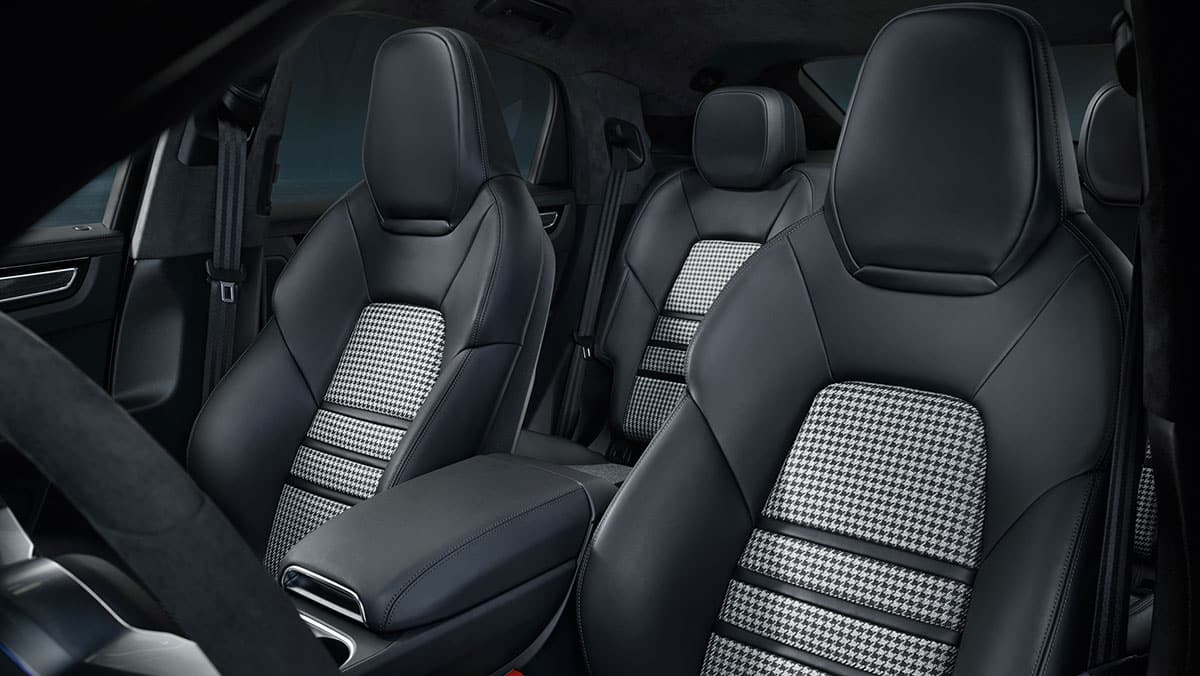 Inside the Coupe is also distinctly different to its stock sibling, with the standard car’s three-seater rear bench removed in favour of two individual seats with a centre armrest. Rear passengers sit 3cm lower than in the standard Cayenne to provide them with sufficient headroom, despite the low roofline.
Boot space is 625 litres rising to 1,540 litres when the rear seats are folded down, though in Turbo models it drops to 600 and 1,510 litres. This compares to 770 and 1710 litres in the standard Cayenne.
At launch, the Coupe engine line-up will mirror that of the standard Cayenne. Entry point will be a 340hp 3.0-litre V6 petrol unit offering a 0-60mph sprint of less than six seconds and a top speed of 151mph.
Also available will be the Cayenne Turbo Coupe, which features a 4.0-litre V8 producing 550hp. It will be capable of 0-60mph in less than four seconds, and a top speed of 178mph.
According to Porsche sales and marketing head Detlev von Platen, the brand wants to appeal more strongly to new, younger target groups with the Cayenne Coupe. “These groups value exclusivity and an expressive lifestyle and have a very performance-oriented mentality,” von Platen said.
Porsche is taking orders for the Cayenne Coupe, with first deliveries set for the end of May. Prices start at £62,129, the Turbo costing from £104,729.
More Porsche news, reviews and features
Inside the Coupe is also distinctly different to its stock sibling, with the standard car’s three-seater rear bench removed in favour of two individual seats with a centre armrest. Rear passengers sit 3cm lower than in the standard Cayenne to provide them with sufficient headroom, despite the low roofline.
Boot space is 625 litres rising to 1,540 litres when the rear seats are folded down, though in Turbo models it drops to 600 and 1,510 litres. This compares to 770 and 1710 litres in the standard Cayenne.
At launch, the Coupe engine line-up will mirror that of the standard Cayenne. Entry point will be a 340hp 3.0-litre V6 petrol unit offering a 0-60mph sprint of less than six seconds and a top speed of 151mph.
Also available will be the Cayenne Turbo Coupe, which features a 4.0-litre V8 producing 550hp. It will be capable of 0-60mph in less than four seconds, and a top speed of 178mph.
According to Porsche sales and marketing head Detlev von Platen, the brand wants to appeal more strongly to new, younger target groups with the Cayenne Coupe. “These groups value exclusivity and an expressive lifestyle and have a very performance-oriented mentality,” von Platen said.
Porsche is taking orders for the Cayenne Coupe, with first deliveries set for the end of May. Prices start at £62,129, the Turbo costing from £104,729.
More Porsche news, reviews and features

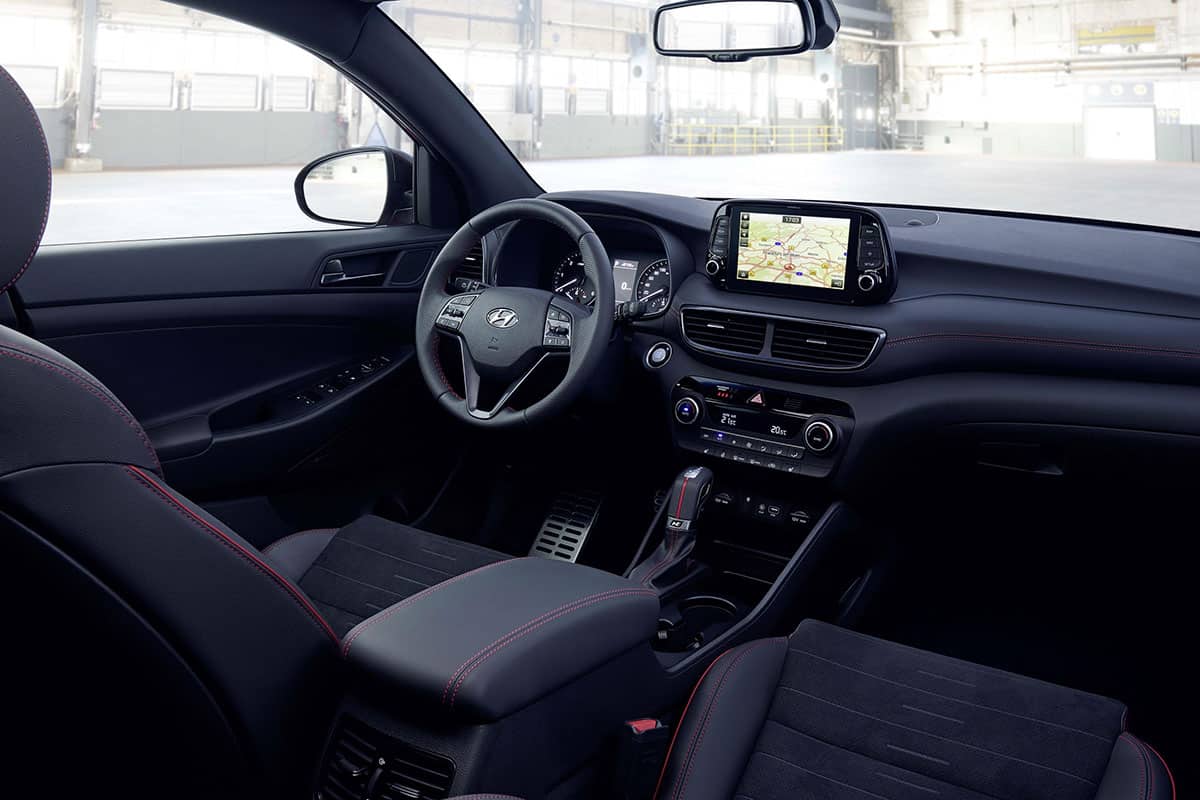 The new front end features low-set, angular LED daytime running lights below the Tucson’s sharp-edged headlight units.
The interior makeover, includes N-branded sports seats finished in leather and suede, plus red stitching across the steering wheel, seats and gear shift.
Hyundai will offer the Tucson N-Line with a choice of two powertrains – one diesel and one petrol. New to the range is a 1.6-litre CRDi diesel with 136hp, which now features 48V mild hybrid technology to improve fuel economy.
Sitting above this is a 1.6-litre turbocharged petrol with 178hp. Other markets get a 2.0-litre diesel with 185hp, but that powertrain won’t be available on UK N-Line models, instead remaining exclusive to Premium and Premium SE trims.
The Hyundai Tucson N-Line is expected to go on sale later this year at prices yet to be announced.
The new front end features low-set, angular LED daytime running lights below the Tucson’s sharp-edged headlight units.
The interior makeover, includes N-branded sports seats finished in leather and suede, plus red stitching across the steering wheel, seats and gear shift.
Hyundai will offer the Tucson N-Line with a choice of two powertrains – one diesel and one petrol. New to the range is a 1.6-litre CRDi diesel with 136hp, which now features 48V mild hybrid technology to improve fuel economy.
Sitting above this is a 1.6-litre turbocharged petrol with 178hp. Other markets get a 2.0-litre diesel with 185hp, but that powertrain won’t be available on UK N-Line models, instead remaining exclusive to Premium and Premium SE trims.
The Hyundai Tucson N-Line is expected to go on sale later this year at prices yet to be announced.




 The main appeal of a Continental V8, however, will be the improved range. The new engine will be able to deliver better fuel economy than the W12, helping the Continental GT complete cross-country journeys with fewer stops at a filling station.
Bentley hasn’t released fuel economy figures yet, but has promised a range between fill-ups of more than 500 miles – around 50 more than the W12 will manage.
Customers will be able to distinguish their V8 Continental from the W12 model by bespoke 20-inch, 10-spoke alloy wheels, quad exhaust pipes, and subtle badging.
The Continental GT V8 is expected on UK roads in 2020 – no pricing has been released yet but the figure is expected to be less than the W12 model’s £159,100 asking price.
The main appeal of a Continental V8, however, will be the improved range. The new engine will be able to deliver better fuel economy than the W12, helping the Continental GT complete cross-country journeys with fewer stops at a filling station.
Bentley hasn’t released fuel economy figures yet, but has promised a range between fill-ups of more than 500 miles – around 50 more than the W12 will manage.
Customers will be able to distinguish their V8 Continental from the W12 model by bespoke 20-inch, 10-spoke alloy wheels, quad exhaust pipes, and subtle badging.
The Continental GT V8 is expected on UK roads in 2020 – no pricing has been released yet but the figure is expected to be less than the W12 model’s £159,100 asking price.







 The Scala will be sold in three trims – Skoda’s familiar S, SE and SE L grades. Entry-level S models start from £16,595 and highlights of the specification include 16-inch alloy wheels, LED headlamps, leather on the steering wheel, gear and handbrake lever, air-conditioning, DAB digital radio and an infotainment system with a six-inch screen.
Skoda’s Front Assist system, which incorporates autonomous emergency braking, tops the standard safety equipment.
Mid-range SE versions cost from £18,580 and extra equipment includes cruise control, rear parking sensors, an upgraded infotainment system with eight-inch touchscreen and an integrated umbrella in the door.
Range topper is the SE L at £20,380 and this includes Skoda’s new Amundsen infotainment system with nine-inch glass touchscreen, digital cockpit display, climate control air conditioning, keyless entry with start/stop and a colour multifunction trip computer.
Other SE-L features include 17-inch alloy wheels, full LED rear lights, dynamic indicators privacy glass on the rear windows and bespoke interior trim.
The Scala will be sold in three trims – Skoda’s familiar S, SE and SE L grades. Entry-level S models start from £16,595 and highlights of the specification include 16-inch alloy wheels, LED headlamps, leather on the steering wheel, gear and handbrake lever, air-conditioning, DAB digital radio and an infotainment system with a six-inch screen.
Skoda’s Front Assist system, which incorporates autonomous emergency braking, tops the standard safety equipment.
Mid-range SE versions cost from £18,580 and extra equipment includes cruise control, rear parking sensors, an upgraded infotainment system with eight-inch touchscreen and an integrated umbrella in the door.
Range topper is the SE L at £20,380 and this includes Skoda’s new Amundsen infotainment system with nine-inch glass touchscreen, digital cockpit display, climate control air conditioning, keyless entry with start/stop and a colour multifunction trip computer.
Other SE-L features include 17-inch alloy wheels, full LED rear lights, dynamic indicators privacy glass on the rear windows and bespoke interior trim.



 The driver gets a seven-inch digital information display and Toyota’s Touch 2 multimedia system is included with navigation, Bluetooth and DAB on a seven-inch touchscreen.
All versions are fitted with Toyota’s Safety Sense active safety systems, including the Pre-Collision Safety system that offers autonomous emergency braking with pedestrian detection. Adaptive Cruise Control is standard, as is a lane-keeping control, traffic sign recognition and auto high-beam headlamps.
Excel versions gain 18-inch 20-spoke alloy wheels, LED fog lights, LED dual-beam projector headlights, wireless phone charging and further safety systems including a blind-spot monitor and Rear Cross Traffic Alert, lane changing and sonar aids.
Order books for the new Camry open at the beginning of April and the first examples are expected on UK roads in July.
The driver gets a seven-inch digital information display and Toyota’s Touch 2 multimedia system is included with navigation, Bluetooth and DAB on a seven-inch touchscreen.
All versions are fitted with Toyota’s Safety Sense active safety systems, including the Pre-Collision Safety system that offers autonomous emergency braking with pedestrian detection. Adaptive Cruise Control is standard, as is a lane-keeping control, traffic sign recognition and auto high-beam headlamps.
Excel versions gain 18-inch 20-spoke alloy wheels, LED fog lights, LED dual-beam projector headlights, wireless phone charging and further safety systems including a blind-spot monitor and Rear Cross Traffic Alert, lane changing and sonar aids.
Order books for the new Camry open at the beginning of April and the first examples are expected on UK roads in July.

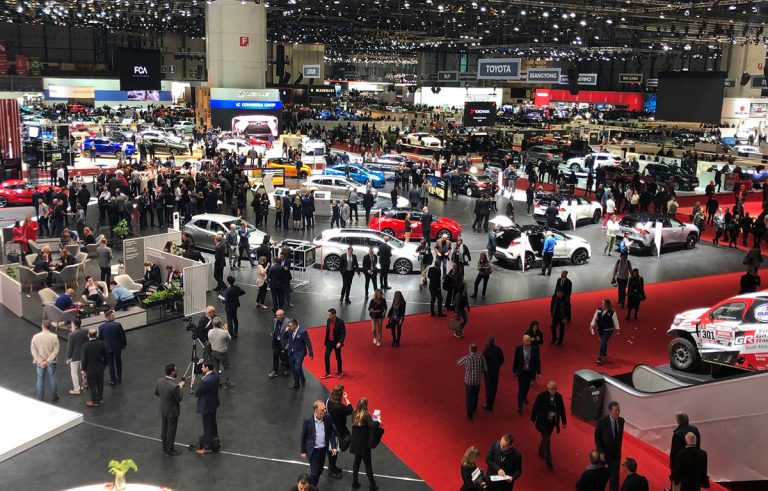

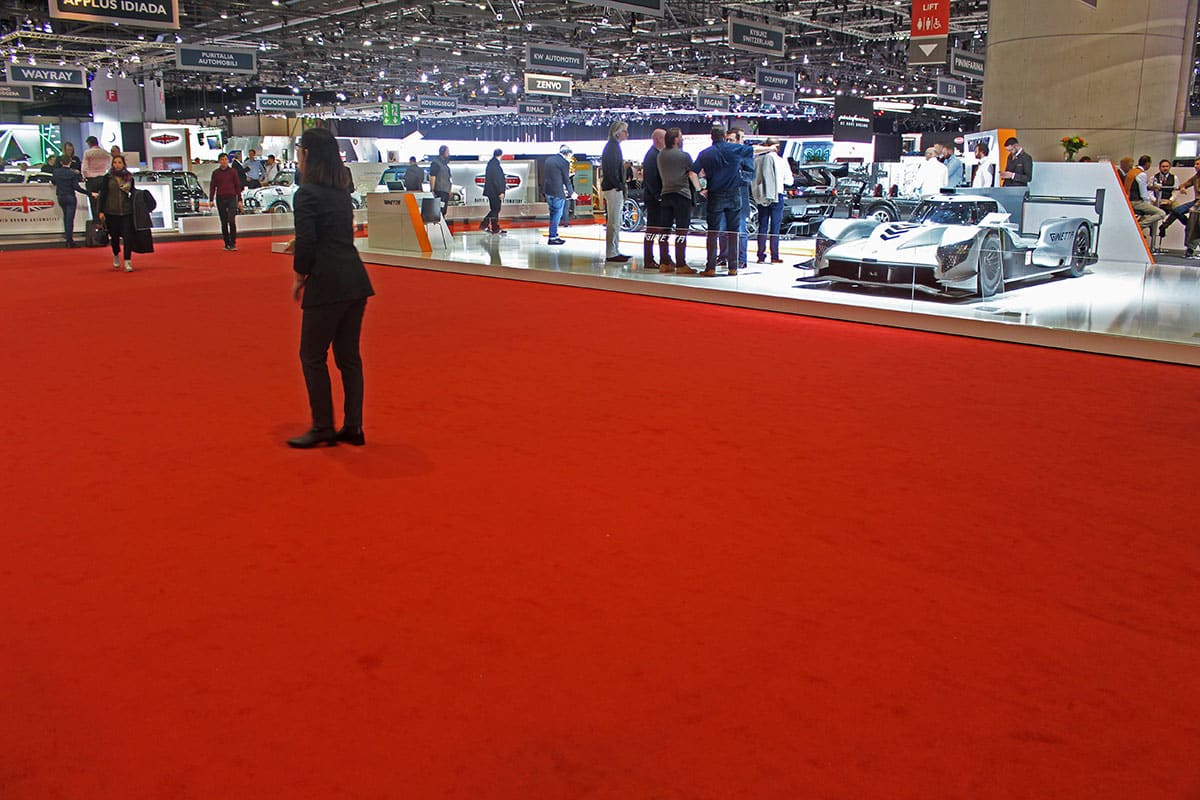
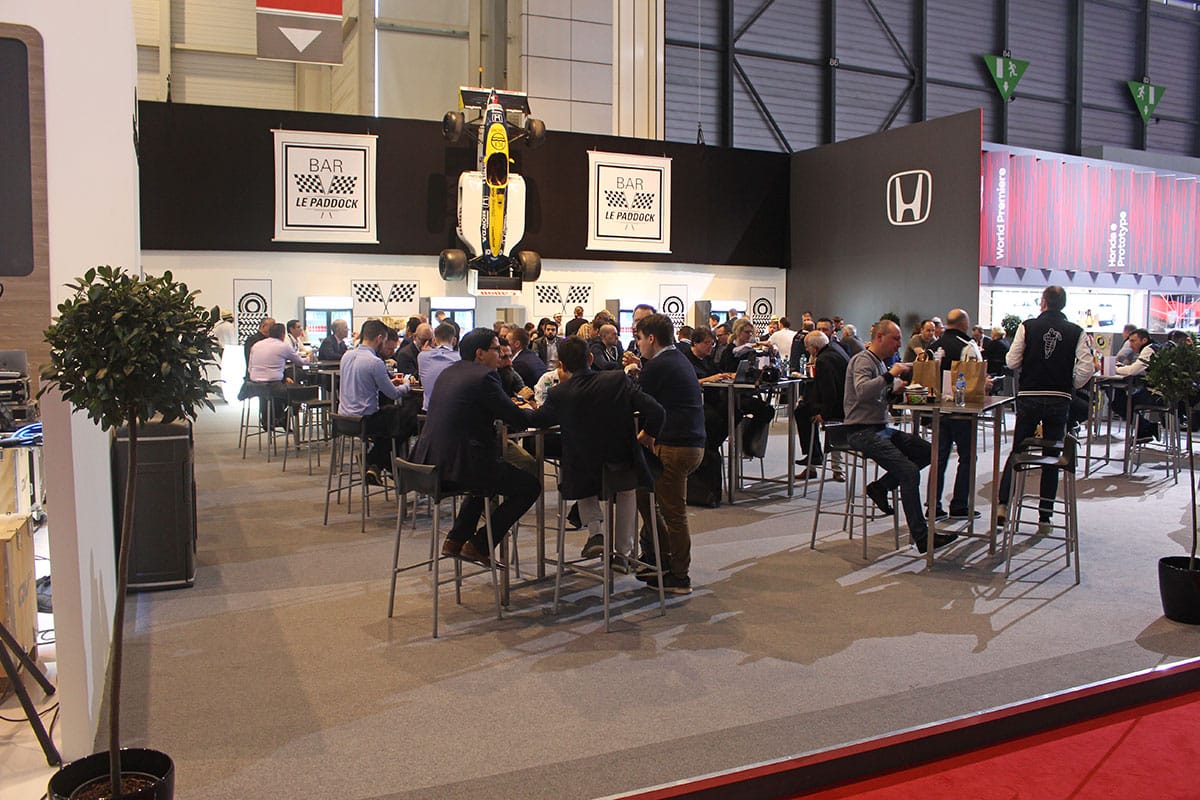

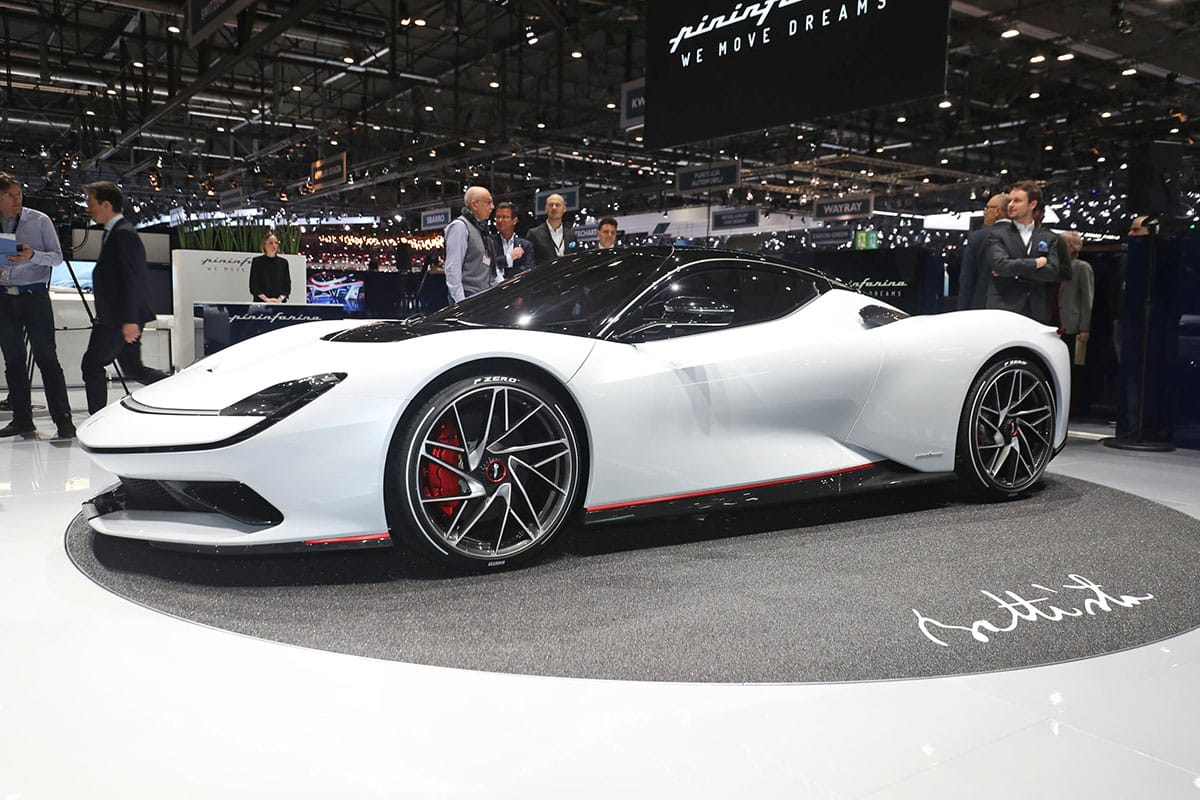

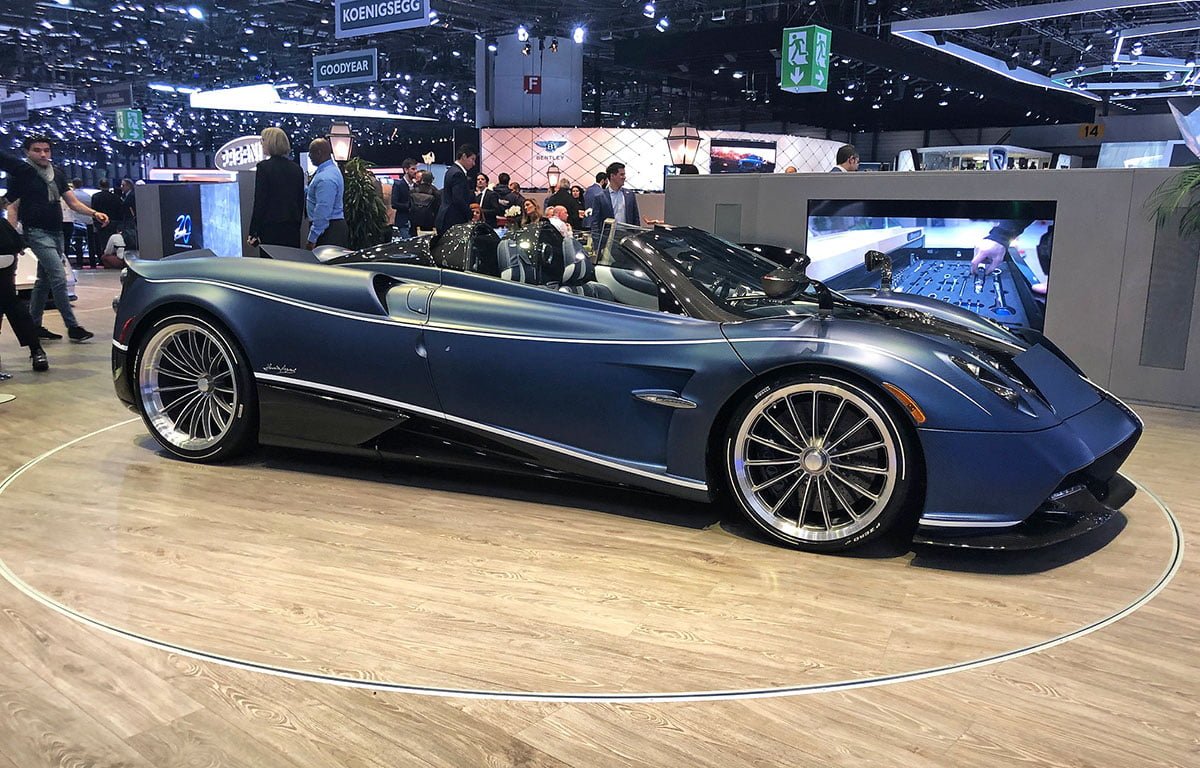
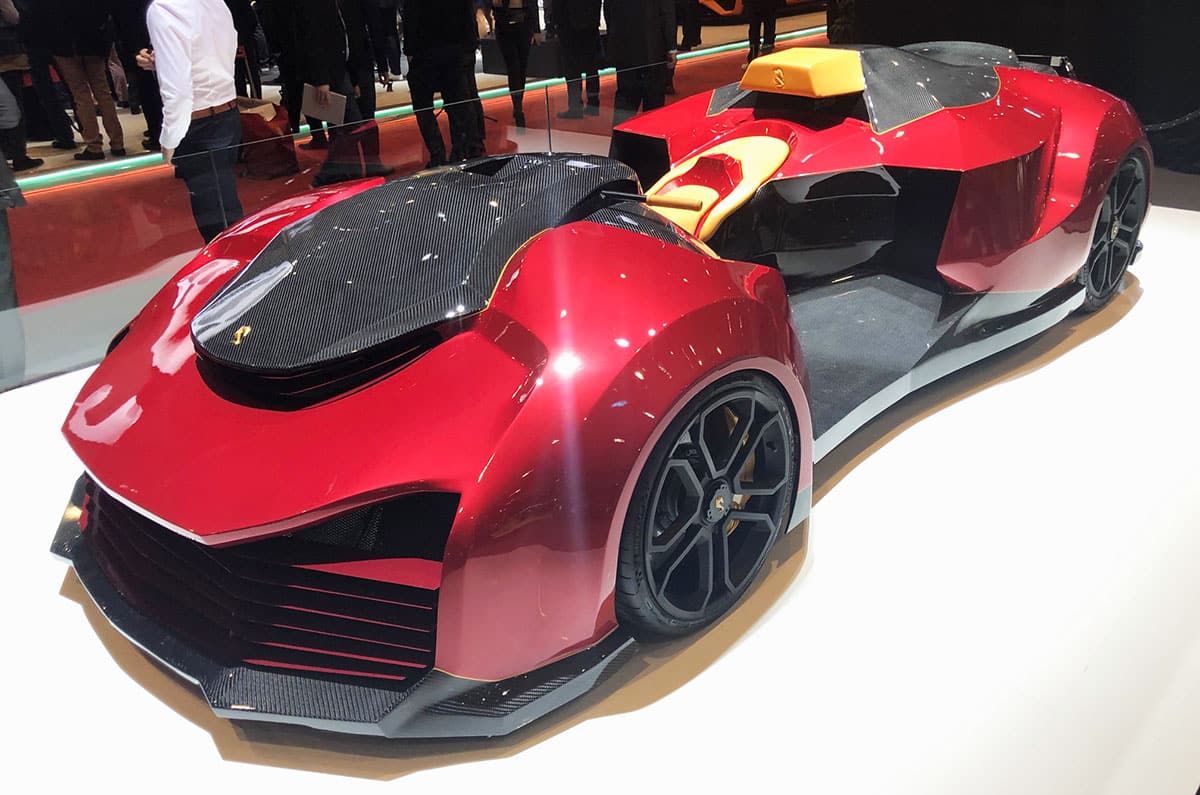
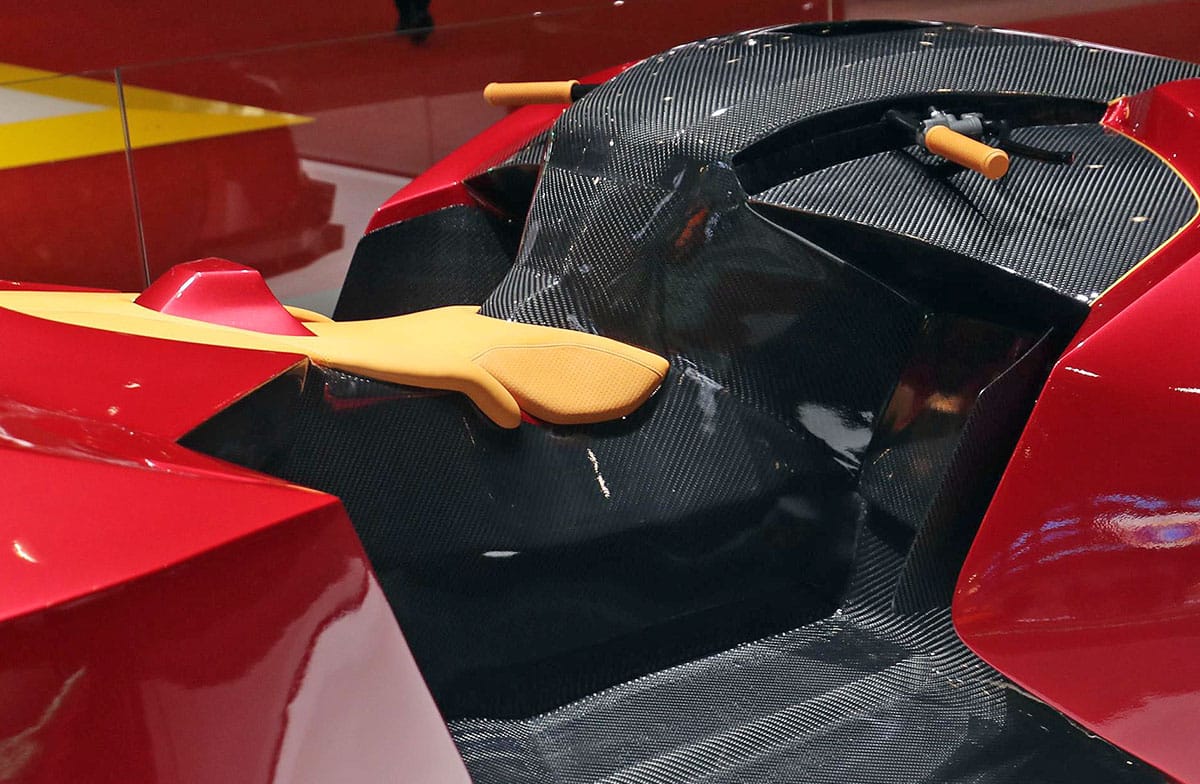


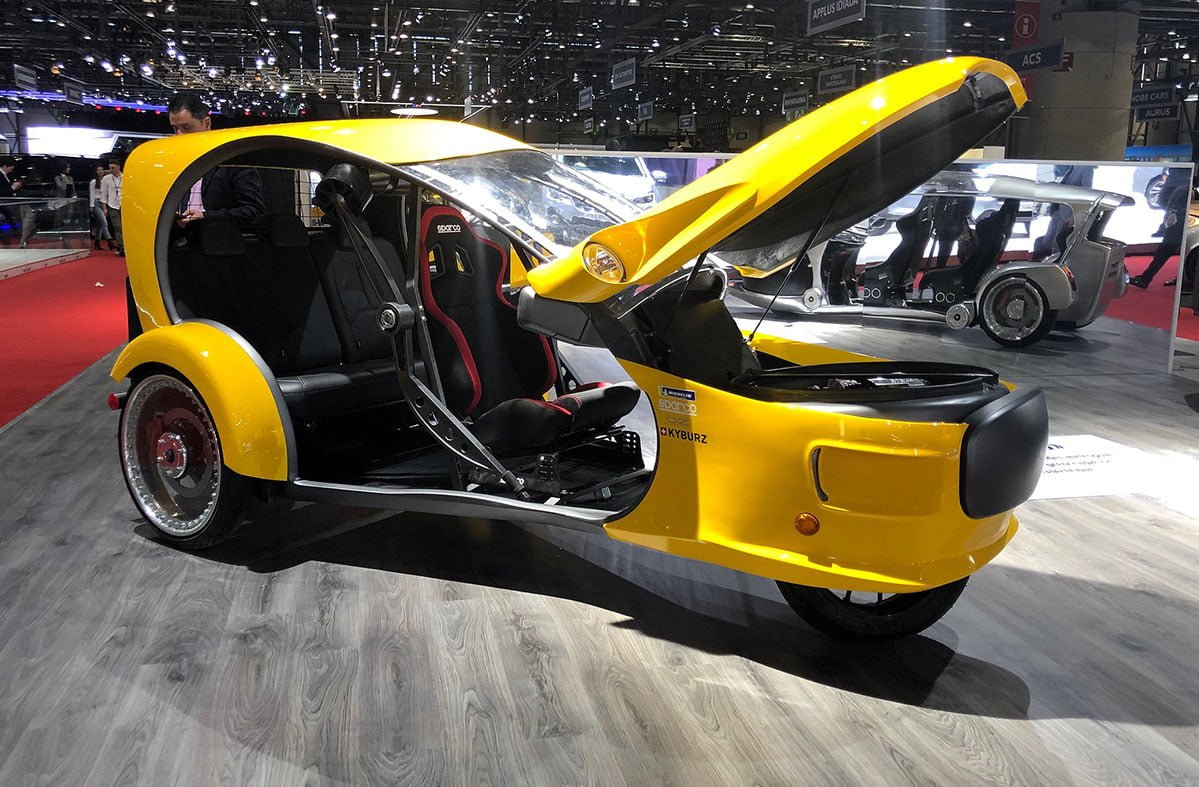

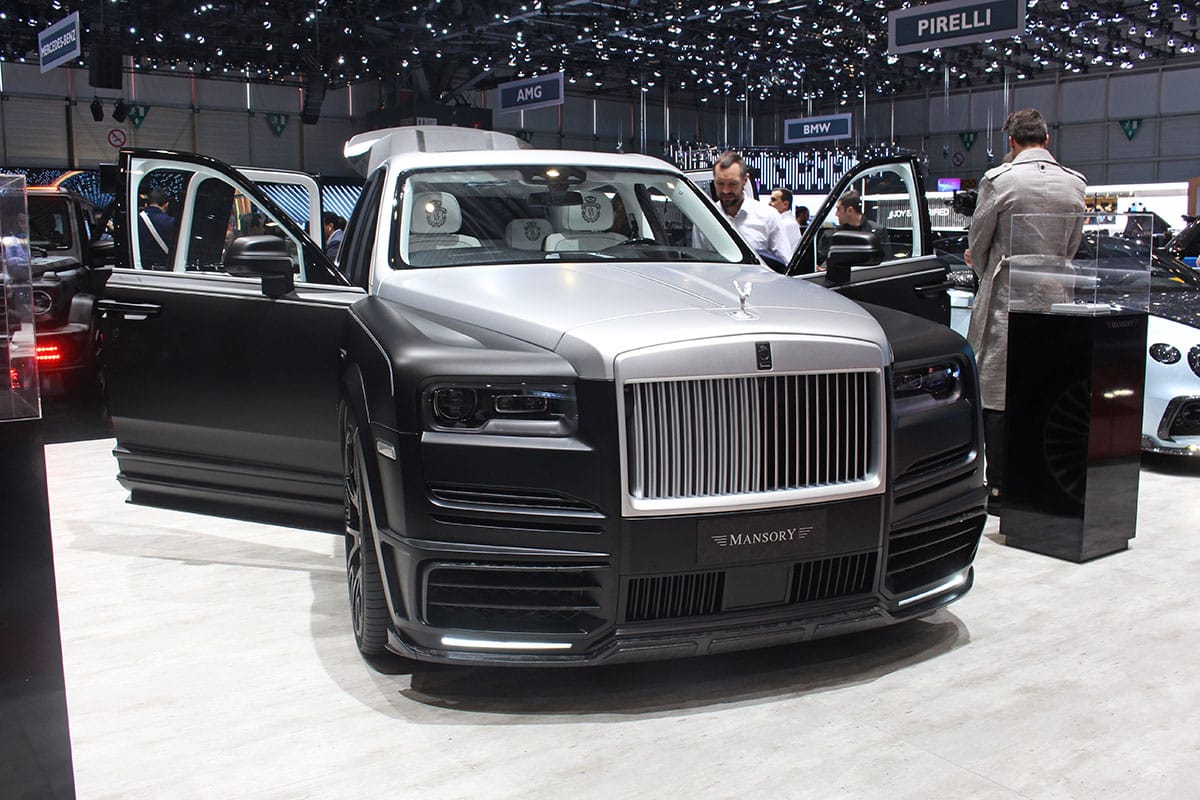

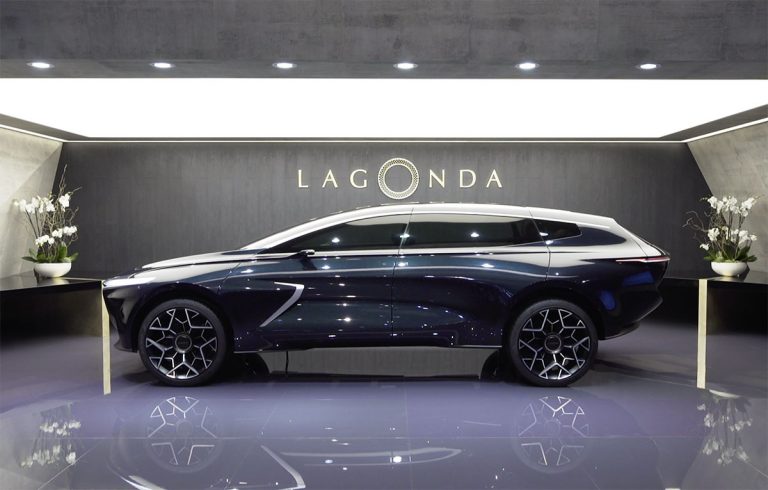
 Rear-hinged coach doors and opening roof panels to aid access are further nods to the Vision concept, and are able to be included thanks to the inherent stiffness of the car’s electric chassis.
Other interesting features include the rear lights, which are virtually invisible when not lit. Instead of showing the LEDs directly, they’re hidden up in the bodywork, and shine downwards and reflect out.
There is also a remarkable floating key. Electromagnets in the centre console take hold of the key and leave it levitating in place between the front seats.
The rear of the car also features a retractable shelf, which slides out to offer occupants somewhere to sit when the car is parked – something akin to the lower tailgate of a Range Rover.
The Lagonda All-Terrain concept is expected to preview a production model that will arrive in 2022, but it’s reasonable to assume some of its excesses will be toned down before launch.
Rear-hinged coach doors and opening roof panels to aid access are further nods to the Vision concept, and are able to be included thanks to the inherent stiffness of the car’s electric chassis.
Other interesting features include the rear lights, which are virtually invisible when not lit. Instead of showing the LEDs directly, they’re hidden up in the bodywork, and shine downwards and reflect out.
There is also a remarkable floating key. Electromagnets in the centre console take hold of the key and leave it levitating in place between the front seats.
The rear of the car also features a retractable shelf, which slides out to offer occupants somewhere to sit when the car is parked – something akin to the lower tailgate of a Range Rover.
The Lagonda All-Terrain concept is expected to preview a production model that will arrive in 2022, but it’s reasonable to assume some of its excesses will be toned down before launch.