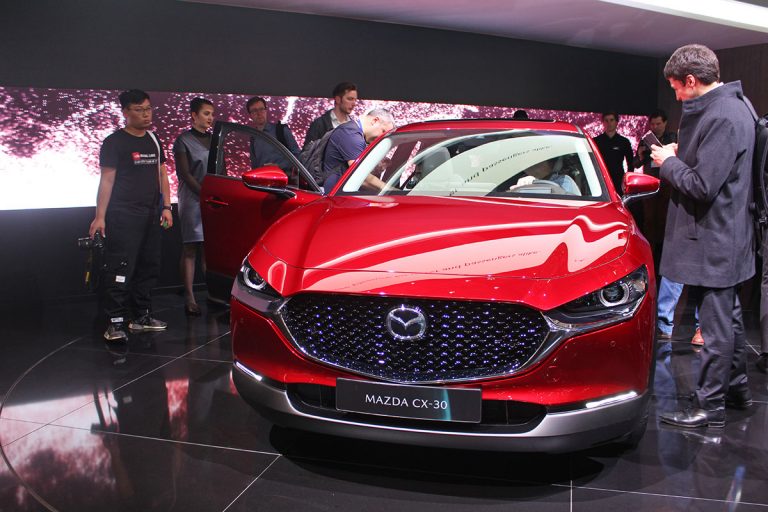
Mazda has unveiled its CX-30 SUV at the Geneva motor show and is expecting the new model to become one of the brand’s biggest sellers.
While some had predicted ahead of the show that Mazda would launch an overtly coupe-like design named the CX-4, the CX-30 is a more traditional rival to popular models such as the Peugeot 3008, SEAT Ateca and Ford Kuga.
It does showcase the latest iteration of Mazda’s ‘Kodo’ design language. There’s a bold grille flanked by swept-back headlights, a small glass area for a sporty look and gently curving exterior panels. The interior is similar to that on the new Mazda 3.
The CX-30 sits in between the Mazda 2-based CX-3 and Mazda 6-based CX-5. According to Mazda, it aims to offer the best of both worlds.
New petrol tech
Built on the same underpinnings as the brand new Mazda 3 hatchback, the CX-30 will have access to the new Mazda SkyActiv-X petrol engine when it hits the market. This clever technology combines aspects of petrol and diesel engines, aiming to bring the torque and fuel economy of compression ignition engines to a spark ignition car.
Initially, the CX-30 will go on sale with a 2.0-litre petrol and 1.8-litre diesel – both SkyActiv mild-hybrid units mated to either six-speed manual or six-speed automatic gearboxes. The mild-hybrid system claims to boost both throttle response and fuel economy, as well as providing snappier response for the engine’s start-stop system.
Four-wheel drive will also be available for the car, but the majority of models will be front-wheel drive only.
The CX-30 will hit dealers later in 2019 alongside the new Mazda 3, as well as a special edition MX-5 which celebrates the model’s 30th anniversary.
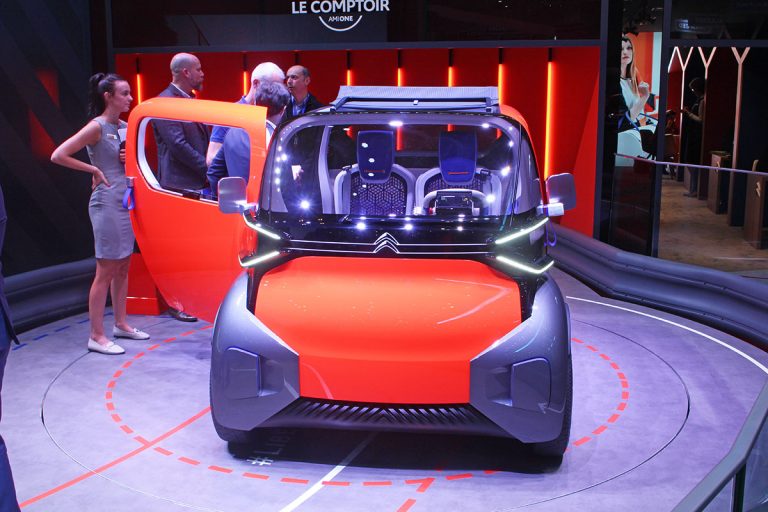
Citroën has unveiled its petite AMI One concept car at the Geneva motor show – but it’s not actually a car at all.
The AMI One is classified as a heavy quadricycle, putting it into the same category as the Renault Twizy. This means that in theory, it could be driven by teenagers as young as 16 – or 14 in the brand’s native France, and without a car driving licence.
More usefully, Citroën says, the AMI One could be exempt from future city-centre bans on cars – allowing drivers to retain their mobility. The brand claims it’s attempting to revolutionise the world of transport for city dwellers in the same way that the 2CV did for rural French people way back in 1948.
The AMI One is all-electric, with a top speed of 28mph and a range of only 50 miles. But this is equivalent to the myriad VSPs – voiture sans permis – that already populate much of rural France, popular with both young drivers and those who are unable to drive larger vehicles.
Retro styling
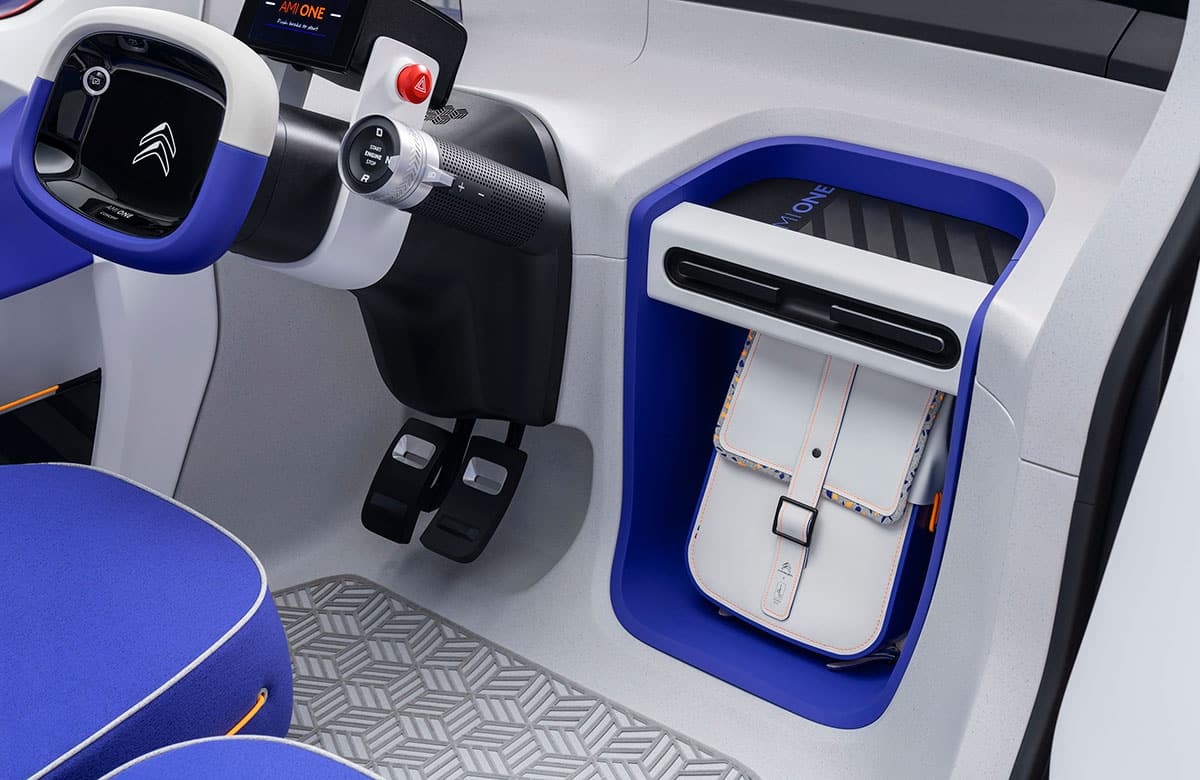
The concept is named after the French word for ‘friend’ but also harks back to the iconic Ami 6 and Ami 8 cars from Citroen’s past. Despite the modern styling, the Ami one is dripping in heritage – with flip-down windows, just like the 2CV, and a ‘pod’ on the steering wheel which pays homage to the ‘satellite’ control pods found on the Visa.
That pod is the only physical control in the Ami One’s interior, with most of the interface taking place via a smartphone app. Users are expected to place their phone in a cradle behind the steering wheel, where a Perspex display magnifies what’s on the phone’s screen to provide driving information and infotainment.
“Our brief was to avoid redundancy of technology,” said Citroen’s chief interior designer, Jean-Arthur Madelaine. “Instead of having lots of displays for speed and infotainment, everything comes from your phone.”
Citroen is expecting users to rent the Ami rather than buy it – the brand suggests ‘ownership’ periods of anywhere from five minutes to five years, depending on the user’s needs. With access through a smartphone app rather than a traditional key, it’s possible that fleets of these could sit in city centres ready to be hired.
The Ami One could make production, but if it was approved it wouldn’t reach the market until after 2020.
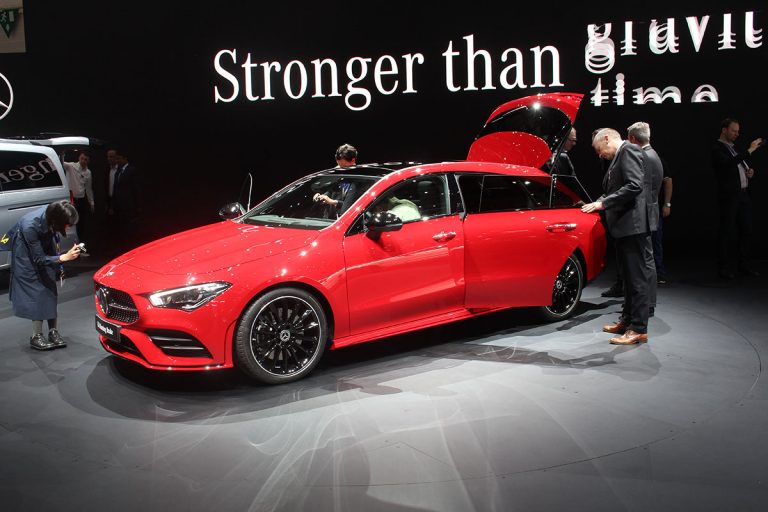
Mercedes-Benz has taken the covers off its second-generation CLA Shooting Brake at the Geneva motor show yesterday.
The estate model is based on the CLA saloon that debuted at the Detroit show in January, which is itself a stretched version of the A-Class hatchback.
The car’s front end is identical to the A-Class and CLA – with a raked-forward front end and signature LED headlights. However, from the B-pillar back, the CLA has a totally new rear.
While the first-generation model was more of a lifestyle choice than a practical one due to its severe lack of headroom and boot space, this new model is a more practical proposition. The boot space has increased to 505 litres – just 10 litres up from its predecessor – but the boot opening is now a substantial 23cm wider than before.
Being based on the new A-Class endows the CLA Shooting Brake with a high level of technology on the inside. Taking centre stage is the brand’s latest MBUX infotainment system, with twin widescreen displays stretching right across the dashboard to offer a sense of cinematic style to the satnav.
Drivers can also make use of the ultra-trendy voice assistant – activated by saying ‘Hey Mercedes’ to the car.
Mercedes has only announced a single engine for the CLA Shooting Brake – a 2.0-litre petrol with 220hp, badged as CLA 250. Other petrol and diesel engines are expected to be announced closer to the model’s launch later this year.
Nothing’s been mentioned on price yet either, but expect a modest increase over the outgoing car’s £26,000 asking price.
All Honda cars sold in Europe will feature electrified powertrains by 2025.
The Japanese manufacturer made the announcement at the Geneva motor show, building on a statement two years ago that Honda was planning to electrify two-thirds of its vehicles by 2025.
Honda Motor Europe senior vice-president Tom Gardner said that since the first pledge was made in March 2017, the shift towards electrification has gathered pace considerably.
“Environmental challenges continue to drive demand for cleaner mobility – technology marches on unrelentingly and people are starting to shift their view of the car itself,” Gerdner added.
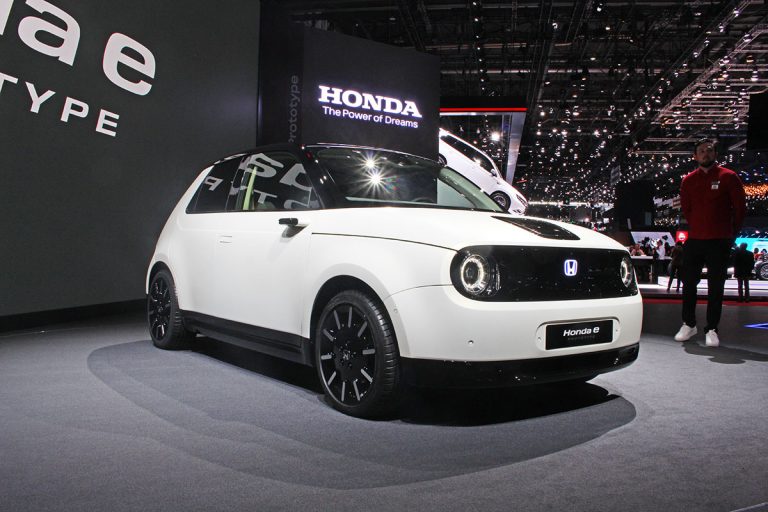
The announcement coincided with the reveal of the Honda e Prototype, which points directly towards Honda’s first production battery-electric vehicle for Europe. This is expected on sale in Europe later this year followed by a UK launch in early 2020.
Two more doors
The e Prototype retains the basic format of the concept first seen at the 2017 Frankfurt show but is now a four-door car instead of a two-door.
Honda says that the production version of the e Prototype will be capable of delivering an all-electric range of “over 200km” (124 miles) and charging to 80% capacity from zero in just 30 minutes when using a fast charger.
While technical details of the drivetrain have yet to be revealed the concept is rear-wheel drive, bucking the trend for electric vehicles which are traditionally front-wheel drive. Comments at the show suggested it will offer around 100hp.
UK prices of the production model are expected to be between £30,000 and £35,000. Honda says it has already received 15,000 expressions of interest in the car across Europe.
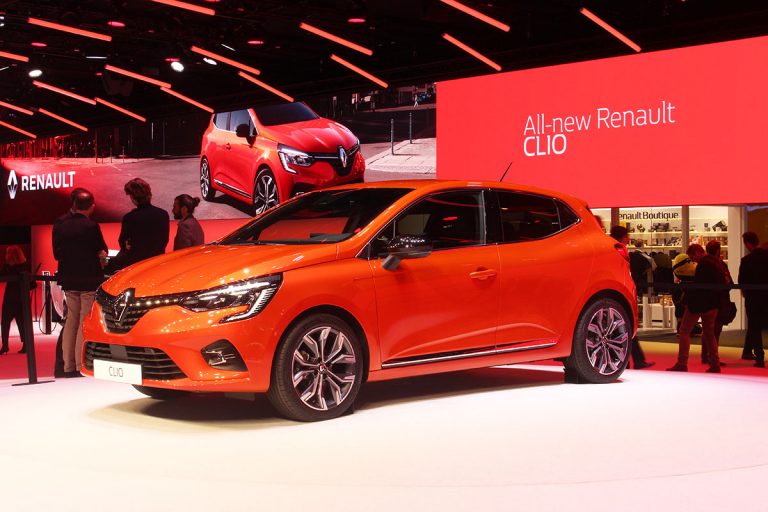
Renault has revealed the fifth-generation Clio at the 2019 Geneva motor show.
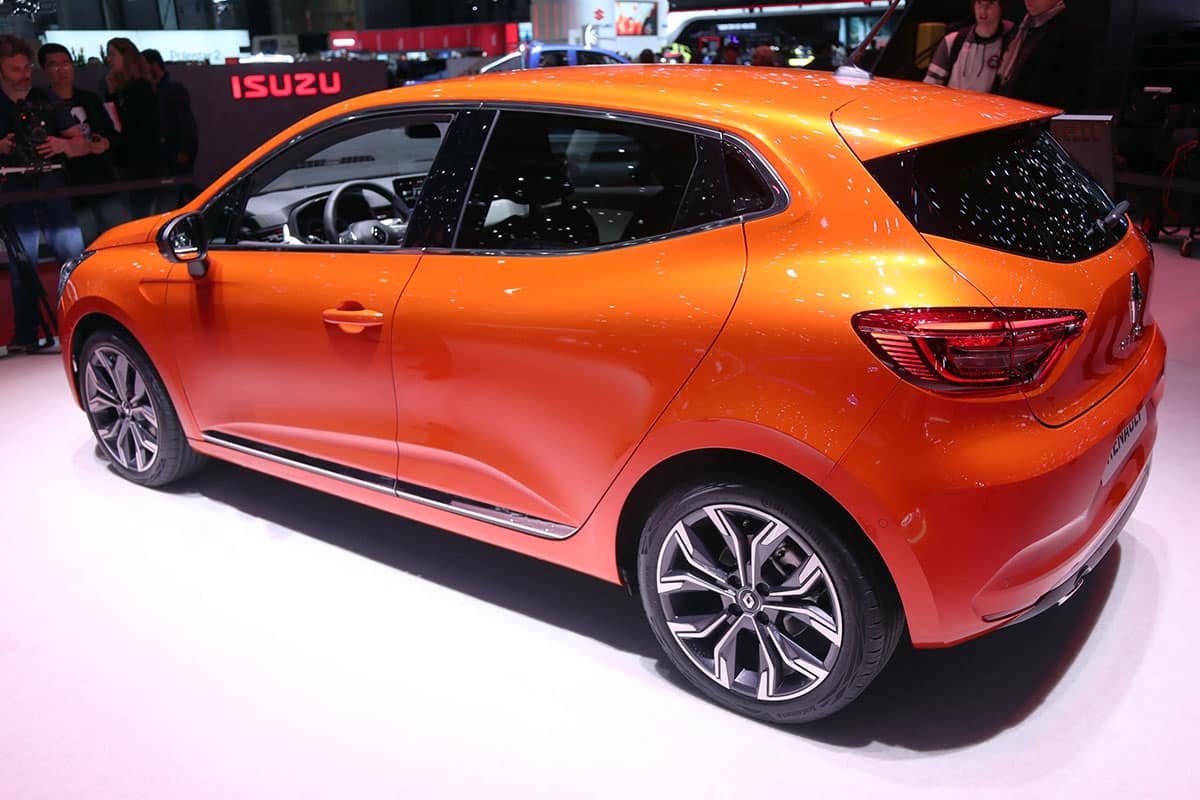
The new Clio comes with largely similar exterior styling to its predecessor, but features new c-shaped LED headlights, a larger grille and new taillights, as well as hidden rear door handles integrated into the windows.
Renault has made the most significant changes inside, the supermini gaining two large displays. The nine-inch portrait infotainment screen comes with the brand’s all-new Easy Link system, while the TFT instrument panel ahead of the driver measures seven inches as standard – with a ten-inch screen also offered as an optional extra.
More personalisation options are available for the dashboard, while other changes include new seats designed to provide a better view to the rear, and a raised centre console allowing a shorter gear lever to be fitted.
Smaller size but more space
Based on Groupe Renault’s new CMF-B platform already used by the Nissan Micra, the new Clio is 1.4cm shorter than its predecessor but offers more interior storage – boot space has grown from 300 litres on the previous generation to 391 litres on the Clio V.
Renault has also added a new range-topping trim – R.S. Line – which is inspired by the Renault Sport brand and replaces the former GT-Line. This will include 17-inch alloy wheels, sporty interior features and a honeycomb grille to align with previous R.S models.
The engine line-up is yet to be revealed, but Renault has confirmed the Clio will be the first model to be fitted with the E-Tech hybrid petrol-electric powertrain. Petrol engines are expected to include 1.0-litre units in entry-level 75hp and 100hp turbo form.
Prices are expected to be announced closer to the Clio’s on-sale date in the third quarter of 2019.
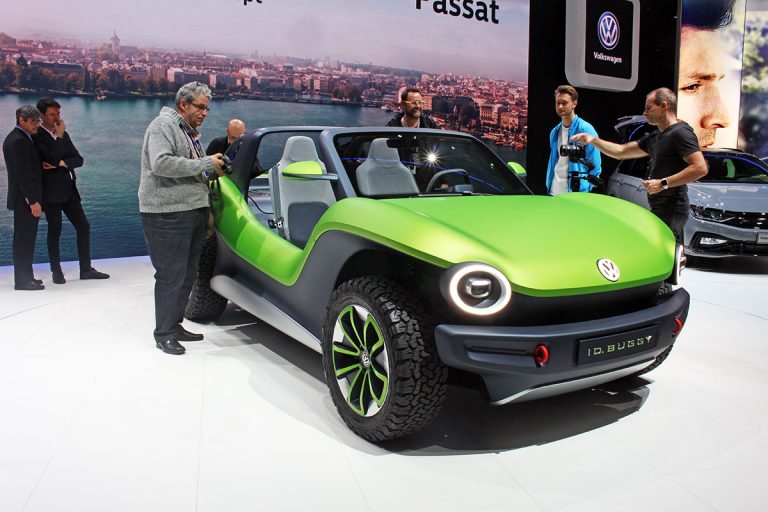
Volkswagen has unveiled the latest addition to its ID. stable of electric cars, revealing the ID. Buggy at the 2019 Geneva motor show.
The ID. Buggy is still only a concept for now but displays the versatility of its MEB platform – the scalable electric car tech that will underpin all of Volkswagen’s next generation of electric vehicles (EVs).
Clearly recreating the spirit of the classic dune buggies of 1960s California – that were based on the VW Beetle and its versatile, rear-engined chassis – the ID. Buggy offers an open body that does without roof or doors, as well as chunky off-road tyres and wide wheel arches.
In keeping with the original models, the ID. Buggy is rear-wheel drive thanks to a rear-mounted, 204hp electric motor.
Top speed will be just shy of 100mph and 0-62mph will be despatched in around seven seconds. Volkswagen also claims a range of around 155 miles from the 62kWh battery.
Versatile chassis
The Buggy’s minimalist bodywork – painted in two-tone green and grey on the show model – includes a minimalist and weatherproof interior, but Volkswagen claims the real appeal is its modularity.
As the chassis is self-contained, the bodywork can be removed altogether, opening up possibilities of other companies providing their own models on the same platform. Volkswagen has already stated it wants to make its MEB tech available for other manufacturers to use.
No production date for the ID. Buggy has been announced so far – Volkswagen is likely to wait until more mainstream ID. models have proven successful before it invests in cars such as this.
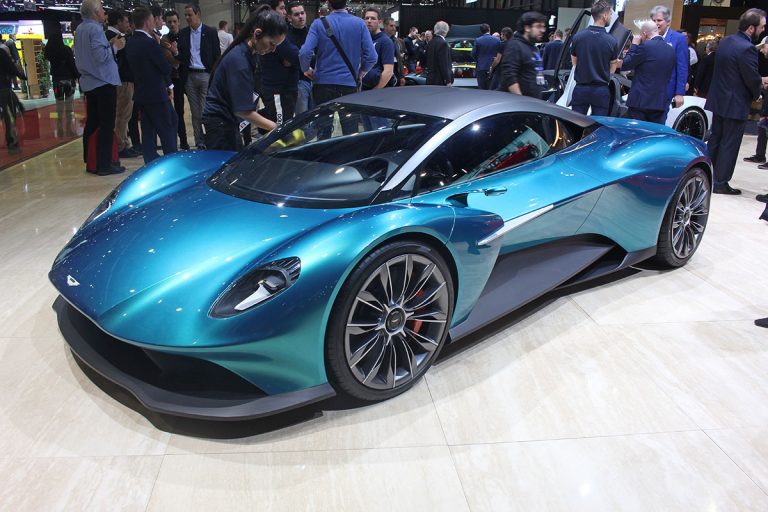
Aston Martin is to revive the Vanquish name on a new mid-engined supercar that will be released in 2022.
The likely look of the new car has debuted at the Geneva motor show in the form of the Vanquish Vision Concept – one of three design studies on the Aston Martin stand.
The Vanquish will be the fourth product in AM’s mid-engined series, which currently includes the Valkyrie, Valkyrie AMR Pro and upcoming AM-RB 003 that incorporates technology and input from the Red Bull Formula One team.
When it goes on sale, the Vanquish will be Aston Martin’s first mid-engined car to be offered as a mainstream model line. Prime rivals are likely to be the McLaren 720S and Ferrari 488 GTB.
Power for this new iteration of the Vanquish comes from a V6 hybrid turbo engine derived from the AM-RB 003. In a move away from previous top-end models, the newcomer will make use of an all-bonded aluminium chassis instead of all-carbon fibre.
Unveiling the Vanquish Vision Concept, Aston Martin Lagonda president and CEO Andy Palmer said that it felt entirely appropriate to attach such an important model name to such a significant car.
Pivotal moment
“The Vanquish Vision Concept marks another pivotal moment in Aston Martin’s history, and another critical step in delivering the second century plan,” added Palmer.
“Our first series production rear mid-engined supercar will be a transformational moment for the brand, for it is the car that will propel Aston Martin into a sector of the market traditionally seen as the heartland of luxury sports cars.”
According to Aston Martin chief technical officer Max Szwaj, the Vanquish Vision Concept marks the point where the experience gained in the Valkyrie and AM-RB 003 programmes reaches the series production models.
“Creating a car like this for Aston Martin is a challenge I have relished since joining back in 2017,” Szwaj said. “Although it takes Aston Martin into new territory, it does so with the benefit of hard-won knowledge, ground-breaking ideas and an uncompromising mindset.”
SsangYong has unveiled its latest model – the new Korando mid-sized SUV – at the 2019 Geneva motor show.
The Korando is the latest in a long line of SsangYong SUVs, and the fourth generation to carry the name. It features a design inspired by the SIV-2 concept, with angular styling and the brand’s chromed ‘family face’ also seen on the Rexton.
It’s longer, lower and wider than the model it replaces, with a lengthier wheelbase for improved passenger legroom. SsangYong claims better headroom and rear-seat space than all its nearest competitors, and a ‘high-tech, premium-feel interior’.
It’s certainly improved in terms of looks – the Korando’s dashboard now features a modern, nine-inch infotainment display and the brand’s first digital dial pack. There’s even ambient lighting with selectable colours, and all models will feature Apple CarPlay and Android Auto smartphone connectivity.
Two engines will be on offer initially – one petrol and one diesel. Both will be available with a six-speed manual or six-speed automatic gearbox. Four-wheel drive will also be on offer.
The petrol engine delivers 163bhp and 280Nm of torque, and will emit 146g/km of CO2. No fuel economy figures have been released yet.
The diesel is a 135hp unit with 324Nm of torque and CO2 emissions of 115g/km.
The car will be capable of towing two tonnes – useful, as the current Korando is popular with caravanners.
SsangYong also says that the Korando will see a fully electric model join the range “in due course” – though it’s revealed no further details on this.
All models will receive the brand’s class-leading seven-year warranty, and SsangYong says they’ll be “competitively priced” and “comprehensively equipped”. SsangYong is traditionally a budget brand, so you can expect prices to be slightly below its main rivals.
The current Korando starts from £17,495 on-road.
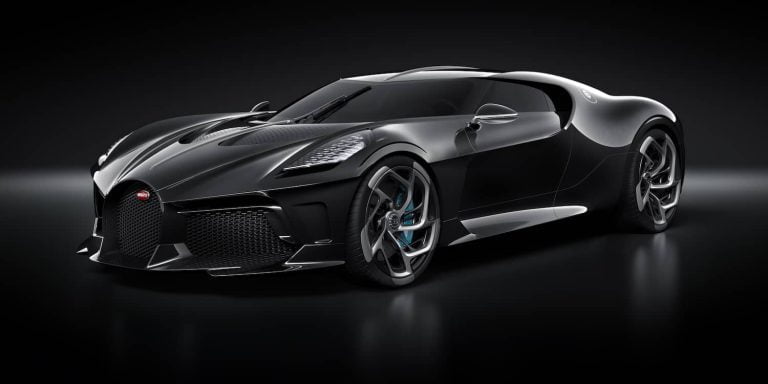
To commemorate its 110th anniversary, Bugatti has unveiled a unique coupe model – La Voiture Noire.
Inspired by the French marque’s Type 57 SC Atlantic from 1938, the Bugatti La Voiture Noire features the same 8.0-litre W16 engine used in the Chiron that develops 1,500hp and 1,600Nm of torque, and has been built for an unnamed ‘Bugatti enthusiast’.
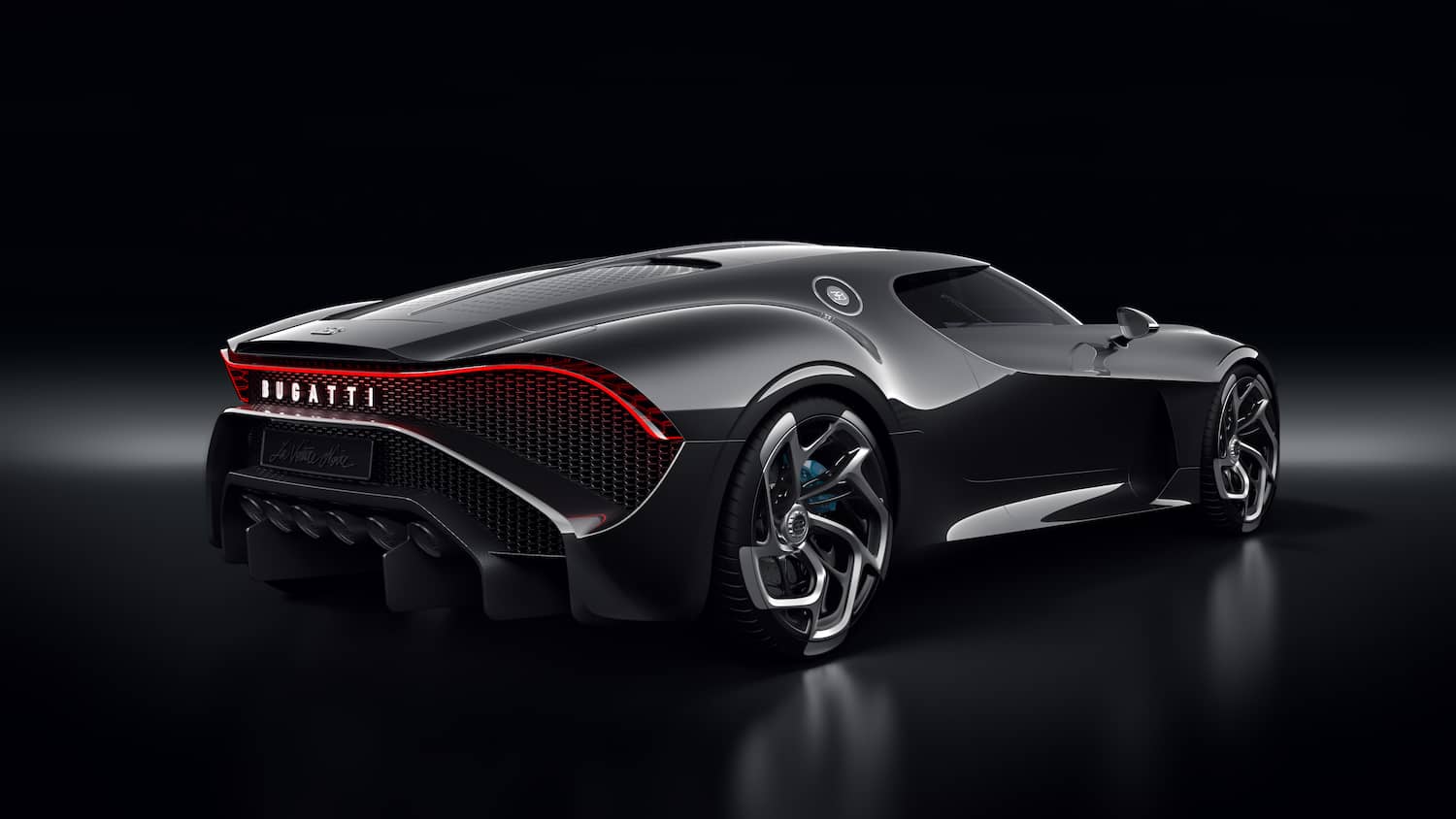
Costing €11m before tax (around £9.4m) La Voiture Noire translates to ‘the black car’ and comes with handcrafted carbon fibre panels finished gloss black paint, as well as exclusive silver and black wheels.
Bugatti La Voiture Noire and Type 57 SC Atlantic
Like the Type 57, the Bugatti La Voiture Noire comes with distinctive creases on the bonnet and down the centre of the roof, while it also has the instantly recognisable Bugatti horseshoe grille and extended haunches to sit over the wheels.
Etienne Salomé, Bugatti designer, said: “We worked long and hard on this design until [there] was nothing that we could improve. For us, the coupé represents the perfect form with a perfect finish.”
The rear incorporates a single light bar that follows the shape of the bodywork, with Bugatti also fitting six exhausts that sits in and around the rear diffuser.
Bugatti president Stephan Winkelmann said: “The true form of luxury is individuality. ‘La Voiture Noire’ is now at the cutting edge of automobile production. It is a sculptural beauty with unique technology, the ideal grand tourisme.”
The SC Atlantic is considered Jean Bugatti’s greatest design and after creating the Type 57 for various body types, such as the Galibier four-door, Stelvio convertible and Ventoux two-door, only four Atlantic models were ever made. 2019 also marks what would have been Jean’s 110th birthday, but he died in 1939 following a car accident.
Bugatti says that La Voiture Noire is “a modern interpretation of the spirit of gran turismo vehicles, a tribute to perfect technology and perfect design”, with Winkelmann adding: “With our automotive haute couture, we have shown what Bugatti is capable of.”
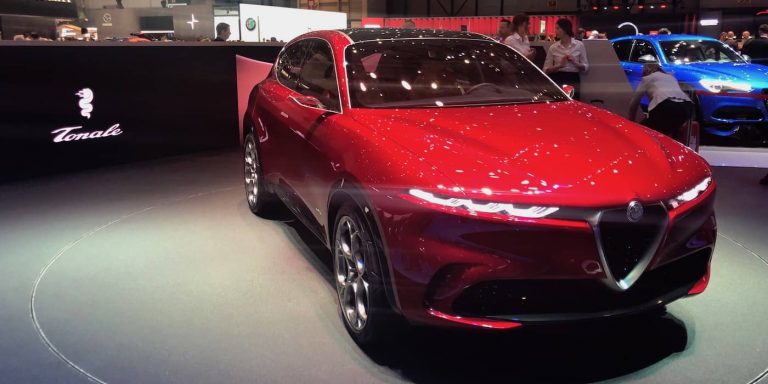
Alfa Romeo has announced its second SUV, the Tonale, today at the 2019 Geneva motor show.
Though the compact model is only a near-production concept for now, the finished article is expected to look very similar – and will ride on the same platform as its American sister model, the Jeep Renegade.
The Tonale, like the Stelvio, takes its name from a mountain road – in this case the Tonale pass in Northern Italy.
Slotting into Alfa’s line-up below the Stelvio, the Tonale shares that model’s styling cues, including a bold nose with slim LED headlights, a long bonnet and the triangular Alfa Romeo grille given top billing.
Around the rear, the curvy rear end features similarly slender taillights – albeit they’re likely to be beefed up a bit for production models. Classic Alfa Romeo teledial alloy wheels feature on the concept, as well as hidden rear door handles.
Alfa hasn’t given any information on powertrains, but given that the Tonale shares its chassis with the Jeep Renegade it’s safe to expect a range of existing Fiat Chrysler powertrains, such as the 1.0-litre and 1.3-litre petrol units seen on the latest Fiat 500X. An electrified model could also follow, given the announcement of an all-electric Renegade elsewhere at the Geneva show.
If produced, the Tonale will be entering a fiercely competitive segment. Rivals include the Volkswagen T-Roc and Audi Q2, not to mention the BMW X2, Lexus UX, Jaguar E-Pace, Mercedes-Benz GLA, Mini Countryman and Volvo XC40.
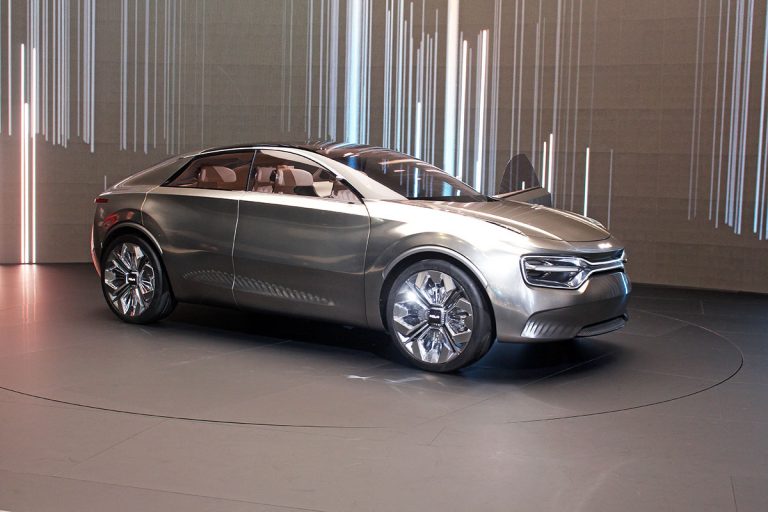
Kia has ‘imagined’ a new concept machine for the 2019 Geneva motor show — the Imagine by Kia.
Unveiled today, this all-electric machine is Kia’s first demonstration of a battery electric four-door car and is dubbed as a ‘category buster’ by the South Korean firm. It takes various design elements from SUVs, saloon cars and crossovers to create this jack-of-all-trades look.
Although Kia hasn’t given technical details of the concept, it says it uses a whole new platform designed for electric machines – unlike its current EV in the range, the e-Niro, which takes its underpinnings from its hybrid stablemate.
Its most eye-catching design detail is its illuminated ‘tiger mask’ grille up front, which encircles the main LED headlamps. Kia hasn’t confirmed if this feature will ever make its way to a production car, but its statement that ‘it marks [the concept] as a Kia for the 21st century’ strongly hints that we will see some of these styling cues in the future.
The manufacturer has also paid particular attention to the way lighting affects the visuals of the car. Using ‘a human approach to design’, its bodywork catches light in such a way to give the constant impression movement — even when viewed at a total standstill. Its six-layer chrome-effect paint also reacts to lighting conditions to highlight the concept’s sharp look.
Other exterior highlights of note on concept include the use of a single piece of glass for the windscreen and roof to create an airy atmosphere in the cabin, while wrap-around brake light strips are a direct tribute to the Kia Stinger fastback. There are also 22-inch alloy wheels with glass inserts, again designed to manipulate light to highlight its aesthetic.
Hop inside the airy cabin — using either the conventional front doors or rear-hinged back units — and occupants will be met with 21 high-resolution screens. Yes, 21. Kia admits this is done somewhat jokingly, with vice president of design for Kia Europe, Gregory Guillaume, saying: “These 21 incredibly thin screens are a humorous and irreverent riposte to the on-going competition between some automotive manufacturers to see who can produce the car with the biggest screen”.
Wondering when it’ll hit roads? Well, the Imagine by Kia has already confirmed to not be heading to production — so don’t pull wallets out just yet. Do expect many design elements to make it to future Kia cars though, albeit maybe not the 21 screens.
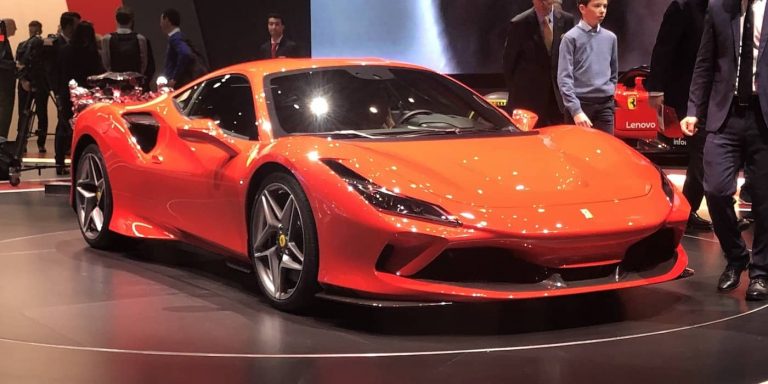
It wouldn’t be a Geneva motor show without a new Ferrari, and the F8 Tributo is it – a mid-engined two-seater.
Described as “the highest expression of the company’s classic two-seater berlinetta”, the F8 Tributo is powered by a V8 engine putting out some 720hp – the most ever seen in a series production model from the Italian supercar brand.
The output is the same as the limited edition Pista version of the F8 Tributo’s predecessor, the 488 GTB. It also matches the new car’s direct rival, the McLaren 720S.
Ferrari insists the F8 Tributo boasts improvements in all areas. The power output is 50hp more than the 488, torque is increased to 770Nm alongside a weight saving of 40kg and a 10% improvement in aerodynamic efficiency.
The aero upgrades are achieved by adopting many of the track-developed upgrades seen on the 488 Pista, particularly special measures designed to help manage engine heat. These include the rearward-angled front radiators and engine air intakes positioned either side of the spoiler instead of on the rear flanks.
Also directly lifted from the 488 Pista is the S-duct front air intake. This has been redesigned, helping to boost downforce by 15%.
All the upgrades result in the new car’s 0-62mph time dipping below three seconds. The F8 Tributo passes 124mph from rest in just 7.8 seconds and goes on to a top speed of 211mph.
Ferrari adds that measures such as the latest version of the ‘Side Slip Angle Control’ cornering aid ensure that while a very potent car, the F8 also offers very usable performance.
It is likely to be around a year before the F8 Tributo goes on sale and Ferrari is not yet revealing a price – industry observers suggest starting figures above £200,000.
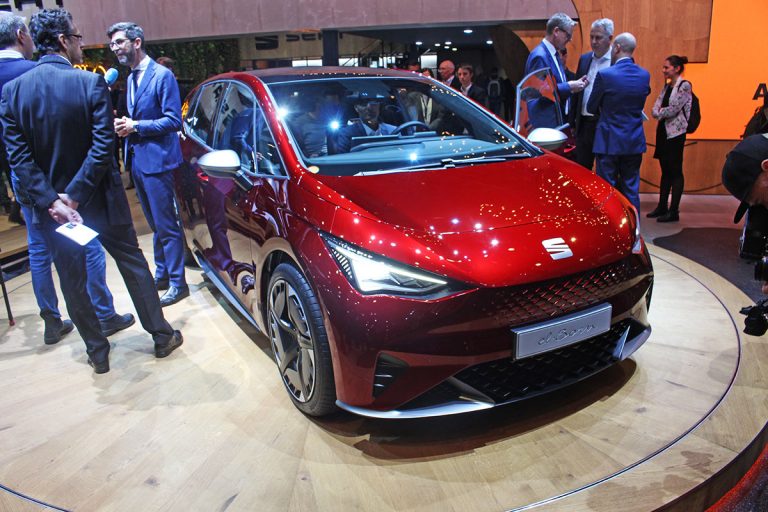
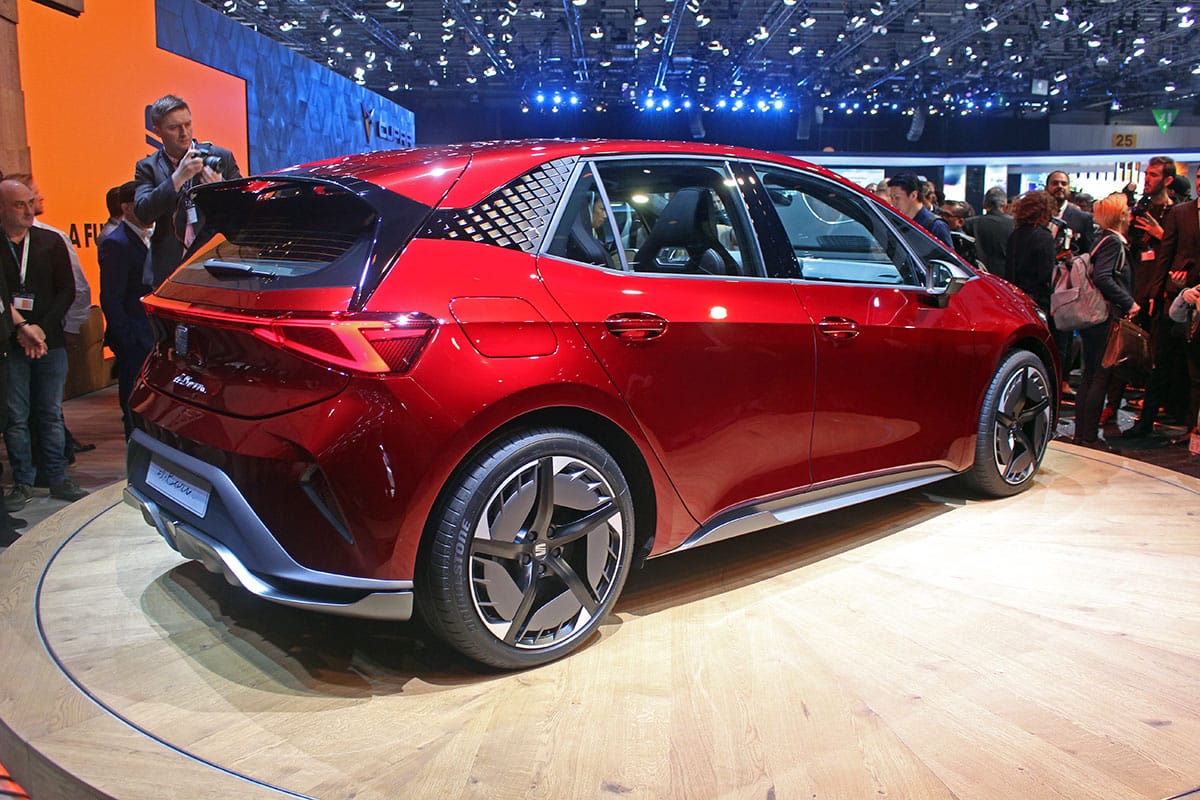
SEAT’s electric future is on display at the Geneva motor show in the form of the brand’s first true EV, the el-Born.
The family car concept uses the same MEB platform as sister brand Volkswagen’s I.D. electric car range, and production versions are planned to be built alongside the VW in Zwickau, Germany.
It makes the most use of removing the bulk associated with an internal combustion engine and drivetrain. Interior space is maximised, SEAT quoting as one example the ability to store a bag between the two front seats in a car no wider than typical family hatches.
Powered by a 62kWh battery, the el-Born’s electric motor will have a power output of 204hp, translating to a 0-62mph time of less than 7.5 seconds.
A range of around 260 miles on a single charge is expected and the car will be able to be plugged in to a 100kW fast charger, recharging to 80% capacity in only 47 minutes. An onboard thermal management system will help boost the range in hot weather.
Observers regard the concept’s interior as near-production. It is dominated by a floating 10-inch infotainment touchscreen angled towards the driver as well as a digital instrument display. The el-Born will also be capable of Level 2 autonomy – allowing it to steer, accelerate and brake on its own, albeit with the driver monitoring progress at all times.
Unveiling the car, SEAT president Luca de Meo said that the el-Born is indicative of the way mobility is evolving and with it, the cars we drive. “SEAT is at the forefront of this change, and the el-Born concept embodies the technologies and design philosophy that will help us meet the challenges we face in the future,” he added.
A production version of the el-Born (the name comes from an upmarket neighbourhood in Barcelona) is expected to go on sale in 2020.
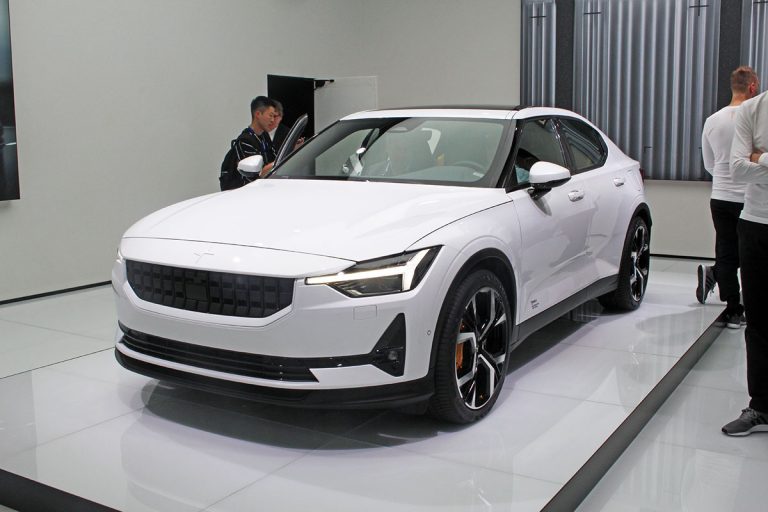
Volvo is one of a growing number of manufacturers deciding to miss the Geneva show, but the Swedish manufacturer’s electric performance brand Polestar is present to unveil its second model.
The Polestar 2 is a fastback, expected to be significantly less expensive than the around £135,000 that the Polestar 1 costs. The newcomer is expected to cost from around £35,000 and to rival the Jaguar I-Pace and Tesla Model 3.
Built on the same platform as Volvo’s XC40, the Polestar 2 takes inspiration from both its 1 sister model and the Volvo flagship model, the XC90.
It makes use of two electric motors to provide all-wheel-drive capability, putting out a total of 408hp and 660Nm of torque. This results in a sub-five-second 0-62mph time, and performance upgrades will be available as options, including Brembo brakes and adjustable Öhlins dampers.
Polestar states that the 2 will travel up to 311 miles between charges. AC and DC fast-charing will be available for the car.
Inside the standard materials will be vegan, including black ash and reconstructed wood decor elements and textile surface panels, with Nappa leather available as an option. A major innovation will be the infotainment system, based around the Android smartphone operating system and including a full suite of embedded features supplied by Google.
Polestar is not appointing dealers, all car sales being carried out online. Potential owners can pre-order the Polestar 2 now and first deliveries are expected in 2020.
Audi has revealed a Geneva show stand that is only populated by all-electric or plug-in hybrid models, in what the brand states is a clear indication of its future direction.
According to Audi chairman Bram Schot, the brand is pursuing a clear vision of committing itself to emission-free mobility. “We have set ourselves a clear goal – one in three new Audi vehicles sold will have electrified drive by 2025,” Schot says.
The centrepiece of the stand is the world debut of the Q4 e-tron – a concept version of what will be Audi’s second electric SUV when it launches in 2020. The first, the Q2 e-tron, will be unveiled at the Shanghai in China next month and go on sale before the end of 2019.
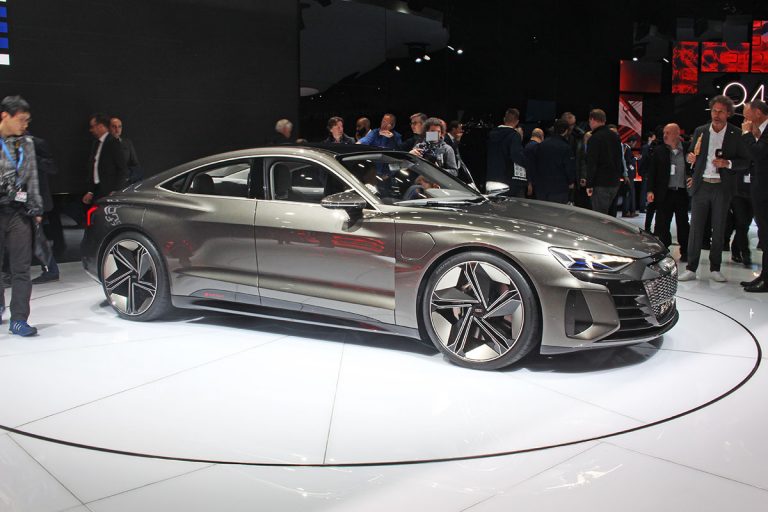
First deliveries of Audi’s initial production EV, the e-tron, are due to begin soon, followed quickly by a Sportback estate version. An e-tron GT coupe is also due in 2020, this also on show in concept form at Geneva having made its debut at the 2018 Los Angeles show.
Meanwhile, Audi will renew its A3 and Q7 plug-in hybrid models and add hybrid variants to the big-selling A6, A7, A8 and Q5 ranges, all before the end of 2019.
“In the future, virtually every market segment will include models powered by a combination of an electric motor and a combustion engine and that can be charged at an electric outlet,” Schot says.
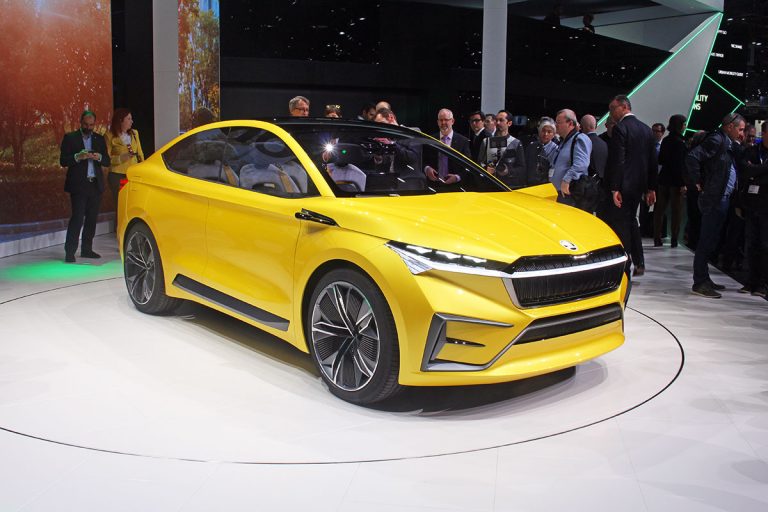
Revealed at the 2019 Geneva motor show is the Skoda Vision iV, the Czech brand’s concept for a future four-door coupe SUV.
Like the SEAT el-Born, which is also debuting at the show, the Vision iV is built on the Volkswagen Group’a MEB platform, developed for electric vehicles and already underpinning VW’s forthcoming I.D. EV.
The Vision iV is an all-wheel-drive model powered by two electric motors, providing total power equivalent to 306hp. The motors will vary propulsion to the wheels depending on need – Skoda says that the Vision iV will have a range of up to 312 miles between charges, and recharging to 80% will take 30 minutes.
While similar in overall size to Skoda’s current Kodiaq SUV, the Vision iV has a coupe-like exterior profile but no reduction in space inside due to the electric powertrain.
The interior is also very different from current Skoda practice. The minimalist design includes a horizontal, multi-level dash and a large, separate infotainment display mounted above.
Visually the concept features Skoda’s trademark front grille design, intersected by a full-width daytime running light.
A production model evolved from the Vision iV or the previous Vision E concept unveiled in 2017 is likely to appear by 2022, though it is not yet apparent whether it will be in traditional SUV or coupe SUV form.
Skoda’s first EV is expected to be a version of the Citigo city car, followed by a plug-in hybrid option for the larger Superb.
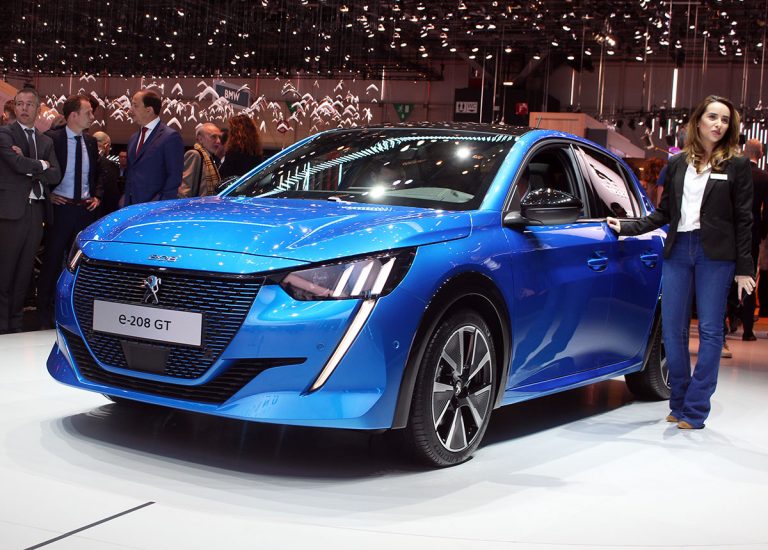
Peugeot has formally unveiled its all-new 208 range at the Geneva motor show, for the first time including an all-electric version.
Announced last week, the e-208 five-door hatchback is on show alongside petrol and, surprisingly, a single diesel version of the new supermini, which is expected on sale within the next year.
Electric versions of the 208 are powered by a 100kW motor fed by a 50kWh battery mounted under the floor. The car is said to have a range of up to 211 miles between charges, and will be rechargeable to 80% in 30 minutes using a 100kW charging point.
Overall the new 208 is both wider and around 4cm longer than the outgoing car, as well as saving on average 30kg in weight. Visually it gets more distinctive, sculpted styling, while the interior boasts the latest iteration of PSA’s digital display, dubbed the 3D i-Cockpit.
New Corsa-e built on same platform as Peugeot e-208.
Vauxhall fans should also take a good look at the 208 as it will form the basis of the next Corsa, which is expected to be revealed towards the end of 2019.
Also debuting at Geneva is the 508 Peugeot Sport Engineered concept, a performance model evolved from the latest Peugeot 508 hybrid.
The all-wheel-drive car boasts a 4.3-second 0-62mph time and an electronically limited 155mph top speed. It will also travel up to 30 miles in electric-only mode, and the exterior styling is sculpted to enhance the range by improving the airflow.
There is no indication that the Sport Engineered will ever reach production or remain a concept like the e-Legend, also on display following its debut at the Paris show in October 2018.
The all-electric concept boasts a 340kW motor and all-wheel-drive, producing a sub four-second 0-62mph time and a range of 372 miles between charges.
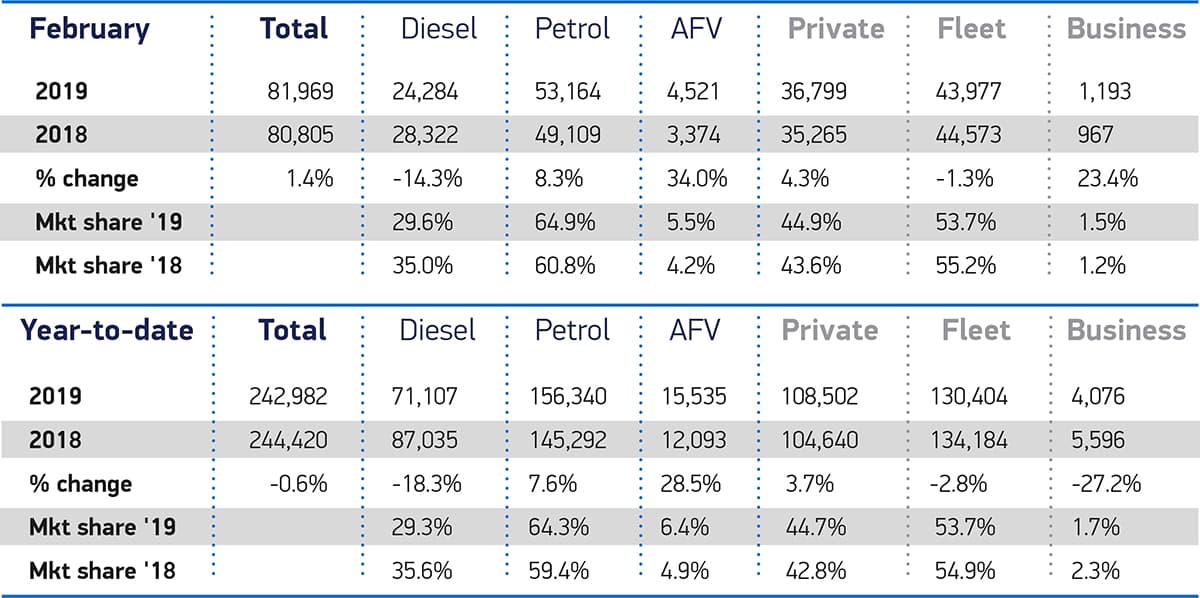
New car sales rose slightly in February, thanks to strong growth from private new car buyers, while fleet registrations slipped slightly according to the latest results published this morning by the Society of Motor Manufacturers and Traders (SMMT).
The overall market was up by 1.4%, or just under 1,200 cars, compared to the same month last year. Private new car sales were up by more than 4%, while fleet sales fell by just over 1%. In fact, private new car sales were better than February two years ago as well, and only just shy of 2016’s record level. So, good news.
However, February is the quietest month of the year for new car sales so there won’t be too many wild celebrations at the news. The real test of the market will come in the big consumer sales month of March. Just under 37,000 new cars were registered to private buyers in February, whereas March will see more than 200,000 consumers driving away in a new car.
Diesel sales remain at just under 30% of market share, which is stable and unlikely to recover until fleet registrations start to grow again, as there is still a strong company car demand for diesel cars.
The SMMT press release waxed lyrical about the performance of alternatively-fuelled vehicles, but the reality is that a market share of 5.5% is still well below both last month’s results and the average result for 2018 – even if it was an improvement on last February.
Plug-in hybrids coming unplugged?
Electric cars had a good month, doubling last February’s registrations. However, growth in plug-in hybrid vehicles has stalled in recent months. As always, the SMMT blames the government for this, specifically the reforms to the plug-in car grant that were introduced in October last year.
Curiously, the press release makes absolutely no mention whatsoever of the fact that many of the UK’s top-selling plug-in hybrid models were pulled from sale last August since they did not comply with new WLTP emissions rules. (#facepalm #fakenews)
But do spare a thought for the poor SMMT. With two months of positive consumer registration results, they can’t get on their favourite Brexit high horse and moan about how it’s driving consumers away from showrooms, so they have to try and blame the government for something.
Otherwise, people might come to the conclusion that the car industry might be somehow responsible for its own failings…
Ford reigns supreme in February
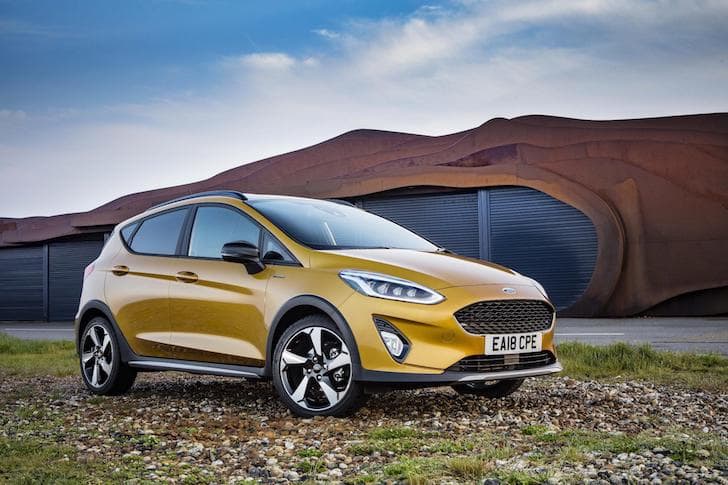
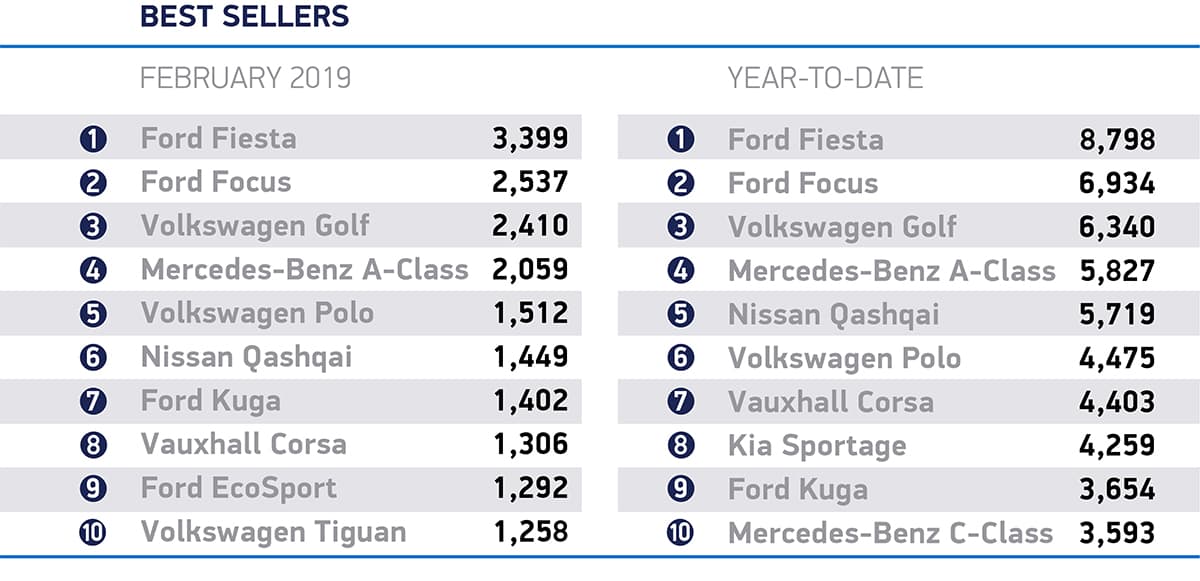
It was another one-two at the top of the table for Ford in February, with the Fiesta and Focus taking honours ahead of the Volkswagen Golf in third place. The Ford Kuga also bounced back from a disappointing January to finish seventh, while the EcoSport popped up in ninth place.
Volkswagen will be pleased with the Polo and Tiguan having good months, giving the emissions-cheating German brand three cars in the top ten. Sister brand Audi is slowly recovering from its late-2018 WLTP emissions disaster, with registrations down 17% on last year – a much better result than it has endured for the last six months.
Ford’s overall sales were down 14%, despite having four cars in the top ten. It was also a lousy month for Alfa Romeo, Abarth, DS Automobiles, Fiat, Honda, Hyundai, Infiniti, Maserati, McLaren, Porsche and Smart, who all suffered double-digit falls in February.
On the sunnier side of the street, MG continues its rapid growth with sales up 140% on last year. It was also a good month for Jaguar, Jeep, Lexus, Mazda, Mitsubishi, Renault, Subaru, Suzuki, Volkswagen and Volvo, who all achieved at least double-digit growth.
The real test for 2019 new car sales will come with March’s figures. Will we see buyers pulling back in the face of Brexit mayhem, or will they plunge in to beat any potential price rises that may result? Tune in next month to find out…
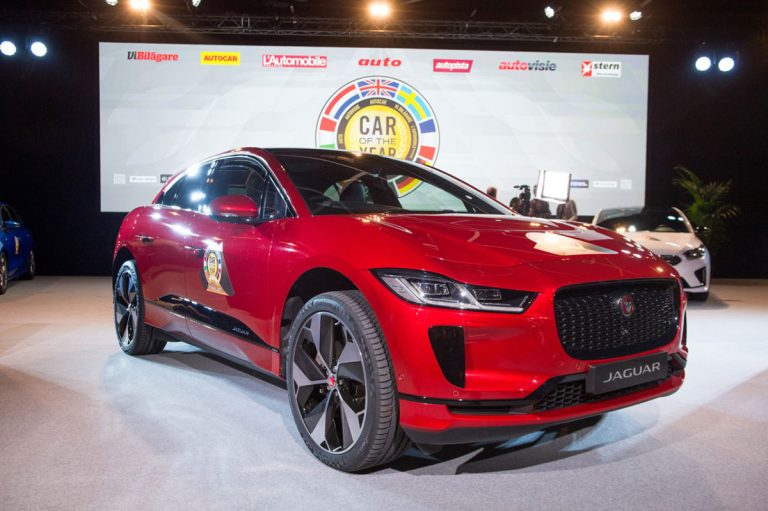
The all-electric Jaguar I-Pace has won the European Car of the Year award for 2019.
Traditionally announced on the eve of the Geneva motor show, the much-coveted industry award was taken by a Jaguar for the first time, the I-Pace succeeding the Volvo XC40 that won in 2018.
The European Car of the Year is decided by a panel of 60 motoring journalists from 23 European countries, who mark entrants for technical innovation, design, performance, efficiency and value for money.
The Jaguar I-Pace has won the 2019 European Car of the Year award
This year the I-Pace beat a shortlist that also included the Alpine A110 sports car, Citroën C5 Aircross SUV, and the Ford Focus, Kia Ceed, Mercedes-Benz A-Class and Peugeot 508 family cars.
The award follows the I-Pace winning UK Car of the Year last week and reflects the sales success of Jaguar’s first EV. More than 8,000 have been sold since the model was launched around a year ago and 75% of them have gone to European buyers.
Accepting the award, Jaguar CEO Dr Ralf Speth said that the brand’s first electric vehicle also being the first Jaguar to win European Car of the Year provided a huge sense of pride.
“I-Pace was designed and engineered in the UK from a clean sheet of paper – it is the most technologically advanced battery electric vehicle, a true game-changer,” Speth said.
He added; “Winning European Car of the Year is an honour and real recognition of what our world-class team has delivered.”
Car dealers across the UK are ripping off buyers on their car finance by more than £1,000 to pocket higher commissions, Britain’s financial watchdog has found.
The Financial Conduct Authority (FCA) today released its long-awaited report into the car finance sector in the UK, and has uncovered “serious concerns” about the behaviour of car dealers and finance brokers, as well as the finance companies who provide the loans.
The concerns are very similar to those levelled against the banking sector in the aftermath of the financial crisis a decade ago, where traders and brokers were found to be putting their own financial interests ahead of their customers’ best interests.
A mystery shopping exercise conducted by the FCA found that – unsurprisingly – new car dealers were too quick to promote PCP finance without discussing any other finance options, even if the customer was not best served by a PCP.
Sales representatives would start framing a particular deal “without considering whether alternative options should be offered, with an explanation of how they work, to better enable the customer to make an informed decision”.
The FCA also warned that “change is needed across the market”, and made it clear that it considers the issues to be systemic rather than limited to individual lenders or dealers.
The report says that only a fraction of dealers and brokers properly disclosed that they receive a commission for arranging finance, despite it being compulsory for any finance sales.
Commission structures that reward higher interest rates
The PCA’s principal concern is the way finance companies pay commission to dealers and brokers, which rewards them for charging higher interest rates to customers.
Finance companies tend to use reward models that link commission payments to interest rates and amounts borrowed, rather than a flat rate of commission for selling the finance.
In other words: the more money you borrow, the more commission the dealer earns. And the higher the interest rate you pay, the more commission the dealer earns.
Inevitably, this leads to a conflict of interest where a dealer will encourage a buyer to borrow more money for a more expensive car, or to put in less cash upfront and borrow more money instead, in order to profit from increased commission payments.
Many customers are also completely unaware that dealers have discretion to negotiate the interest rate on a finance agreement in exactly the same way they have discretion to negotiate the asking price of the car.
The upshot of this behaviour is that customers are paying significantly more for their motor finance, the FCA said, and is costing car buyers more than £1,000 a year, or £300 million collectively.
Jonathan Davidson, FCA executive director of supervision, said: “We found that some motor dealers are overcharging unsuspecting customers over £1,000 in interest charges in order to obtain bigger commission payouts for themselves.
“We estimate this could be costing consumers £300 million annually. This is unacceptable and we will act to address harm caused by this business model.”
Before you apply for car finance, you should… Oh. Too late.
Failure to disclose information and assess affordability
The FCA also had several other concerns in the way finance is being sold by car dealers, particularly in failures to explaining finance products and contracts – which is compulsory.
Damningly, the report states: “We found that only a small number of brokers disclosed to the customer, during the mystery shopping visit, that a commission may be received for arranging finance.
“This was the case for only 1 out of 37 franchised retailers, 4 of 60 independent retailers, 2 of 14 car supermarkets and 4 of 11 online brokers.”
The finance companies themselves have also come under fire for inadequate assessments of whether customers can afford the finance product being applied for.
“We also have concerns that firms may be failing to meet their existing obligations in relation to pre-contract disclosure and explanations, and affordability assessments,” said Davidson.
“This is simply not good enough and we expect firms to review their operations to address our concerns.”
The FCA has started work in assessing its options for stamping out this sort of behaviour. This could include strengthening existing rules to try and enforce better behaviour, banning certain types of commission model or limiting broker discretion.
Looking for an alternative to dealer finance?Here at The Car Expert, we are building commercial partnerships with companies who can offer you competitive PCP deals on either a new or used car (as well as other types of finance if you prefer). Check these out before signing any finance agreement with a car dealer:
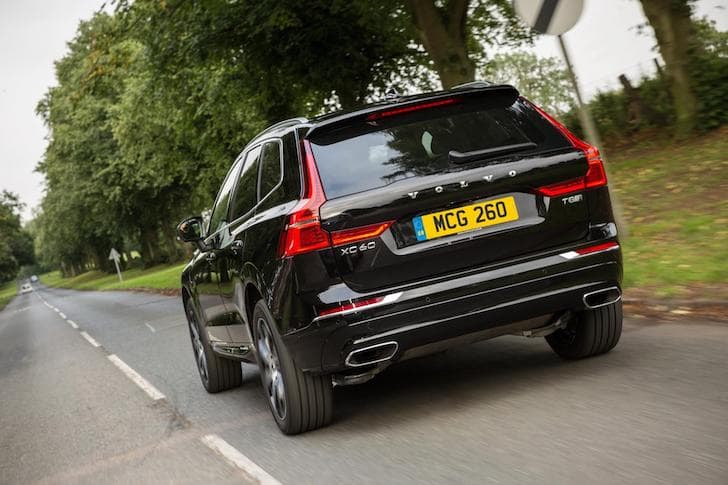
Volvo Cars has used this week’s Geneva motor show to announce that it will limit the top speed of its new cars at 180km/h (112mph) from next year.
The move has come because “too many people get seriously injured or even killed because of excessive speeding”.
Chief executive Hakan Samuelsson said: “While a speed limitation is not a cure-all, it’s worth doing if we can even save one life.”
The company cited figures from the US government’s highway safety agency showing that 25% of traffic fatalities in 2017 were caused by speeding.
Samuelsson also pointed out that in-car safety technology and road infrastructure design are all based on cars travelling at (or slightly beyond) the local speed limit.
Once a car goes significantly beyond the legal limit, a car’s safety systems are no longer enough to protect occupants or other road users in the event of an accident. Similarly, barriers and other road infrastructure are not designed to cope with vehicles losing control at significantly above the speed limit.
Your next Volvo may overrule your driving decisions
In addition to limiting top speeds, Volvo is also investigating how a combination of smart speed control and geofencing technology could automatically limit speeds around schools and hospitals in future.
Many motorists will be alarmed to hear of a car company openly planning to incorporate such big-brother tactics to override the driver. Today’s announcement also throws up more questions about how car companies and governments may co-operate to electronically control new vehicles in the not-too-distance future.
“We want to start a conversation about whether car makers have the right or maybe even an obligation to install technology in cars that changes their driver’s behaviour, to tackle things such as speeding, intoxication or distraction,” said Samuelsson.
“We don’t have a firm answer to this question, but believe we should take leadership in the discussion and be a pioneer.”
Intoxication and distraction are the two other main killers
Samuelsson added there are two other major causes of traffic fatalities — intoxication and distraction.
Volvo Cars will present ideas to tackle these two problem areas at a special safety event in Gothenburg, Sweden, on 20 March.
Three of the latest new SUVs have all achieved a five-star safety rating from crash testing organisation Euro NCAP.
The Honda CR-V, SEAT Tarraco and Mercedes-Benz G-Class all gained the top rating with similar scores across the board.
It’s perhaps the retro-styled G-Class’ score that’s the most impressive – with its five-star rating coming after the similar-in-spirit Suzuki Jimny and Jeep Wrangler posted disappointing scores.
All three vehicles offer old-school off-road ability courtesy of separate chassis construction, but the Jimny’s three-star rating included a disappointing 52% score for pedestrian safety and just 50% in the Safety Assist category – ranking items such as the car’s autonomous emergency braking or lane-departure warning. The Wrangler, meanwhile, scored just a single star, with low ratings across all four categories.
However, Mercedes’ off-roader posted an impressive average of 80.75 across all four categories. Adult occupant protection was rated at 90%, child occupant at 83%, and pedestrian safety was 78%. The lowest score posted was in the Safety Assist category, at 72%.
Also tested were two other SUVs – the Honda CR-V and the SEAT Tarraco. The Honda posted scores of 93%, 83%, 70% and 76% in adult, child, pedestrian and safety assist respectively, while the Tarraco scored a near-perfect 97% in adult occupant protection, 84% for child, and 79% in both pedestrian and safety assist categories.
Michiel van Ratingen, Euro NCAP secretary general, said: “Here we have three new vehicles, competing in the same segment and getting top safety ratings.
“That’s impressive enough, but the fact that all three off-roaders are equipped with pedestrian and cyclist AEB systems really demonstrates the power of consumer testing – not only to encourage better performance but also to promote new technologies as standard-fit across Europe.”
What is it?
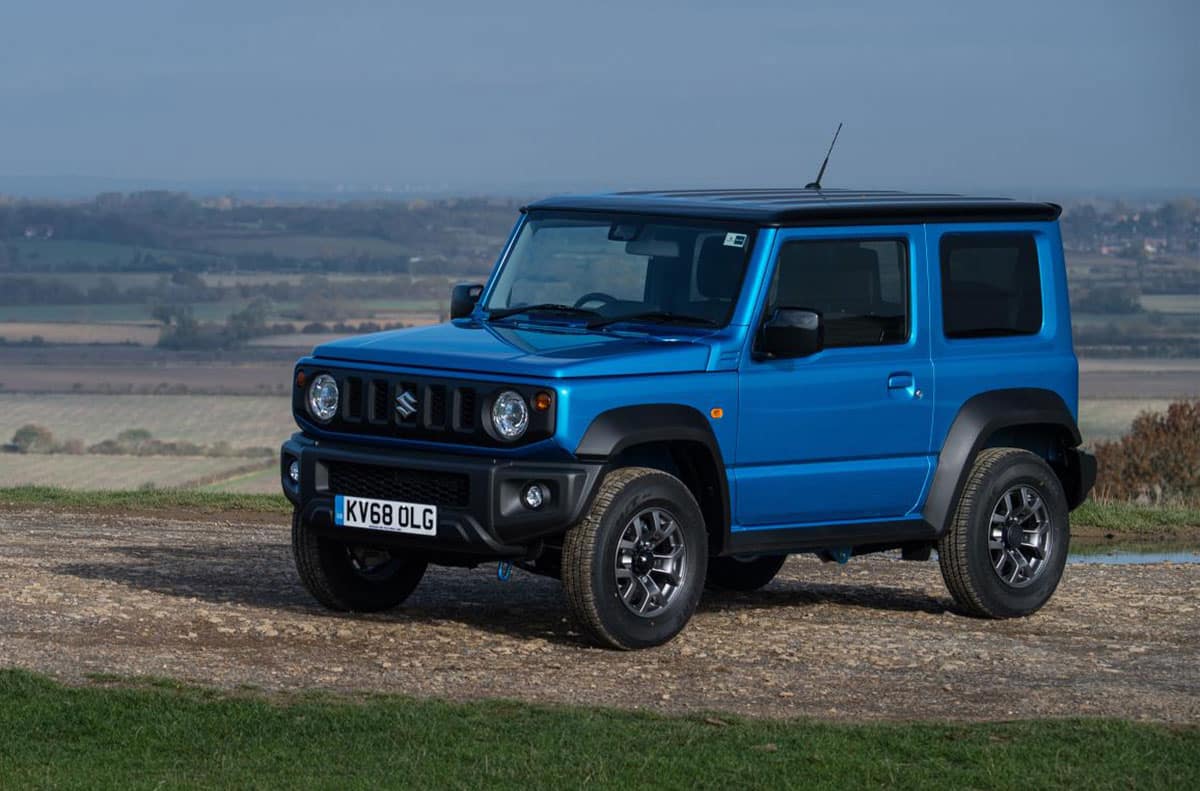
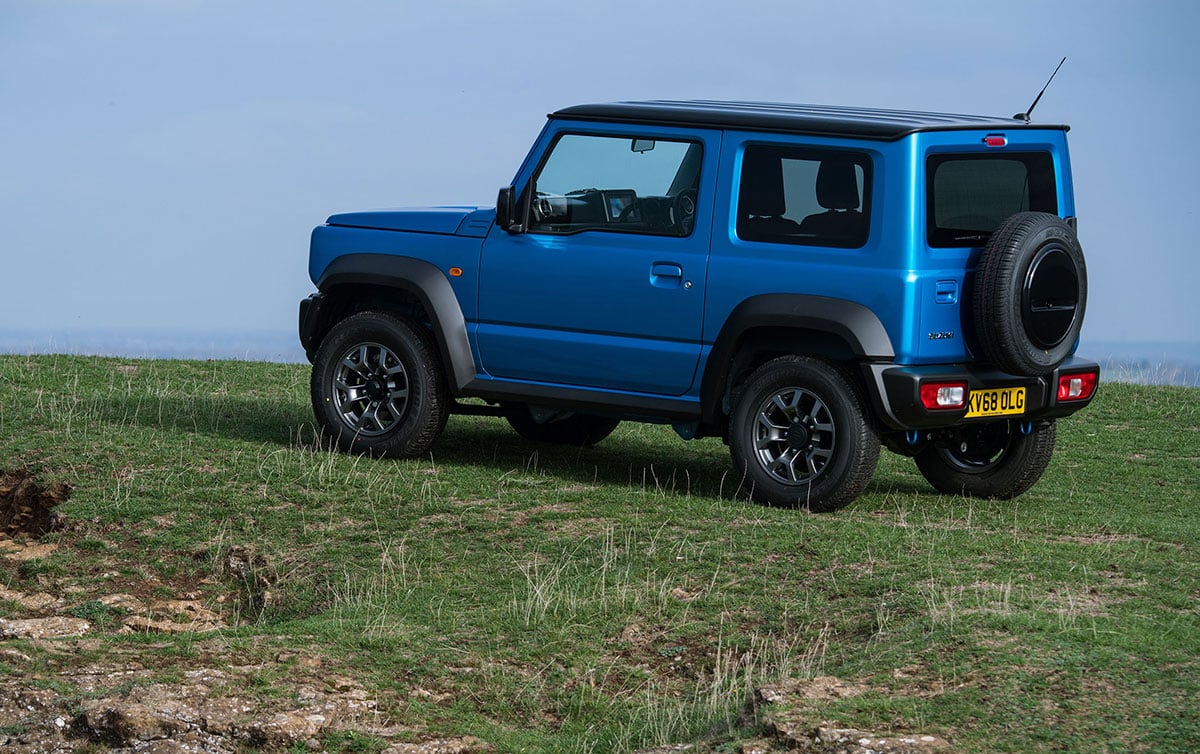
The new Suzuki Jimny is the latest evolution of the brand’s iconic go-anywhere SUV.
Key features
Proper 4×4 off-road ability, ladder chassis
Retro styling treatment
New engine and more electronic tech
Our view
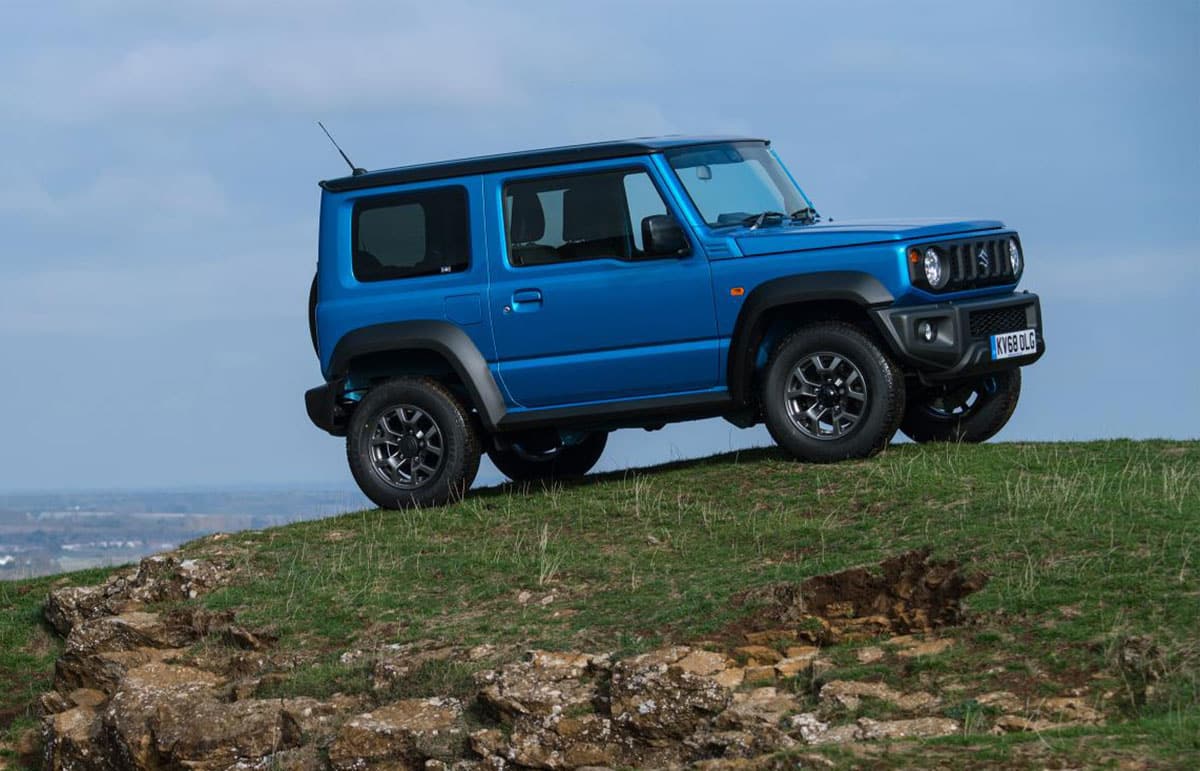
The Suzuki Jimny is a proper old-school off-roader equally at home, perhaps more at home on a rocky track as it is the tarmac.
It will appeal to a particular kind of buyer who will accept the compromises – a poor safety rating, not a lot of interior room and efficiency figures that don’t impress. Off-road, however, it’s a lot of fun…
Similar cars
Jeep Wrangler, Dacia Duster, Land Rover Discovery
This, remarkably, is the story Suzuki doesn’t really want us to write about. The latest Jimny is an all-new version of the Japanese brand’s highly capable ‘proper’ off-roader, styled in a shamelessly retro look. And the level of demand for it has taken Suzuki totally by surprise – resulting in the brand simply not being able to make enough of them, by a long way.
The new Jimny replaces a car that was on sale in not greatly updated form for a remarkable 20 years. And the target market is clearly demonstrated by the fact that very many of the 42,000 sold in the UK over that time are probably still on the road. So the latest Jimny retains the tough, go-anywhere capability of its predecessor while taking the styling even more retro.
Even a less than impressive three-star Euro NCAP safety rating has failed to dent the demand for the car – it went on sale in Japan first and the waiting list for one stretches over a year. The UK website set up to register interest in it has topped 10,000 entries, and Suzuki’s UK allocation in 2019 is currently just 1200 cars.
So basically, if you read this report and fall in love with the Jimny, you probably won’t be able to have one…
While an all-new car, the Jimny retains much that is traditional while updating it as required. So the ladder chassis is retained for toughness while gaining extra beams to further improve rigidity. The shell is slightly shorter than the outgoing model, but is higher and wider to free up more interior space.
There is a new 1.5-litre petrol engine, a chassis tuned for better on-road dynamics without compromising off-road ability, and lots of modern electronic tech sourced from other modern Suzukis.
The looks are reminiscent of how SUVs looked when they were first created in the 1960s. The Jimny’s proportions are as square as the wheel arches, and it sits high on its suspension. The wheels hung out of the corners improve all those off-road essential measurements, the approach, departure and breakover angles, over the previous version.
The front side windows dip at the front, the pillars are slim with lots of glassware and the bonnet flat, so it’s much easier to see the car’s extremities from the driving seat – essential when off-roading, as is a flat and horizontal instrument panel to help gauge just how far the car has tilted while negotiating a rocky track.
Buying and owning a Jimny
The Jimny is available in two trim levels, Suzuki’s familiar SZ4 and SZ5 grades – there is no entry-level SZT trim as on other Suzuki lines.
SZ4 versions cost from £15,499, which is more expensive than the outgoing version but with substantially more equipment. Steel wheels are standard on this car, which makes sense as alloy rims would not be the best option on rocky mountain tracks.
Bluetooth connectivity is included, as is air conditioning and Bluetooth. But there is also some old-school tech too – the DAB radio comes as part of a CD tuner. Remember CDs in cars?
The SZ5 starts at £17,999 and includes alloy wheels, LED headlights, climate control, leather on the steering wheel and heated front seats. And yes, it also gets Suzuki’s infotainment system with navigation and smartphone compatibility.
As mentioned, the Jimny has earned only a three-star safety rating, and that’s despite autonomous emergency braking (dual sensor brake support in Suzuki parlance) being included on all versions.
Euro NCAP marked it down for its airbag performance and body deformation in an impact. Suzuki argues that the car is built as an off-roader and, as a result, its shape means “it won’t crash well.”
Continued on next page:Interior, drive experience and our verdict
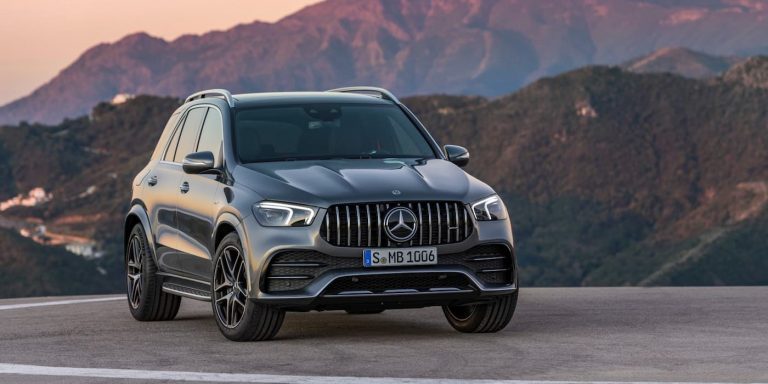
Mercedes-AMG has unveiled the hottest variant yet of its GLE SUV – the GLE 53 – ahead of next week’s Geneva motor show.
Intended to fill the gap until the super-powerful V8 GLE 63 is released, the 53 offers an impressive 435hp – putting it in direct competition with the 440hp Porsche Cayenne S.
The GLE 53 shares its powertrain with the Mercedes-AMG E 53 saloon. It uses a 3.0-litre straight-six engine with twin turbochargers and a mild hybrid system named EQ Boost. This helps smooth out the power curve, giving the GLE 53 a more linear acceleration and instant response at lower revs.
Overall output is 435hp, with an impressive 520Nm of torque. Coupled to standard four-wheel drive, the GLE 53 will reach 60mph from rest in 5.1 seconds and go on to an electronically limited 155mph top speed. Gearshifts are handled by an eight-speed automatic.
The GLE 53 rides on active air suspension, capable of minimising body lean during cornering and improving the ride over potholes and sharp bumps. Drivers can choose between seven different driving modes to best suit the conditions – Slippery, Comfort, Sport, Sport+, Trail, Sand and Individual.
On the styling front, it’s impossible to ignore the GLE 53’s enormous Panamerica grille, set into a beefier front bumper than on the standard car with larger air ducts for engine and brake cooling.
Body-colour wheel arch extensions replace the standard car’s black ones, while round to the rear there’s a new bumper with quad chromed tailpipes.
The interior remains virtually unchanged, even offering an optional third row of seats to make this one of the fastest seven-seaters on the market.
Prices for the new GLE 53 have yet to be confirmed, but expect to see the GLE 53 making its public debut at the Geneva motor show next week.
Toyota has announced two additional versions of its new Corolla model will go on display at the Geneva motor show next week.
The Corolla Trek and Corolla GR Sport models mirror the likes of the Ford Focus Active and Focus ST-Line trim levels, respectively. They aim to offer buyers a little extra style, without the cost involved of extensive re-engineering.
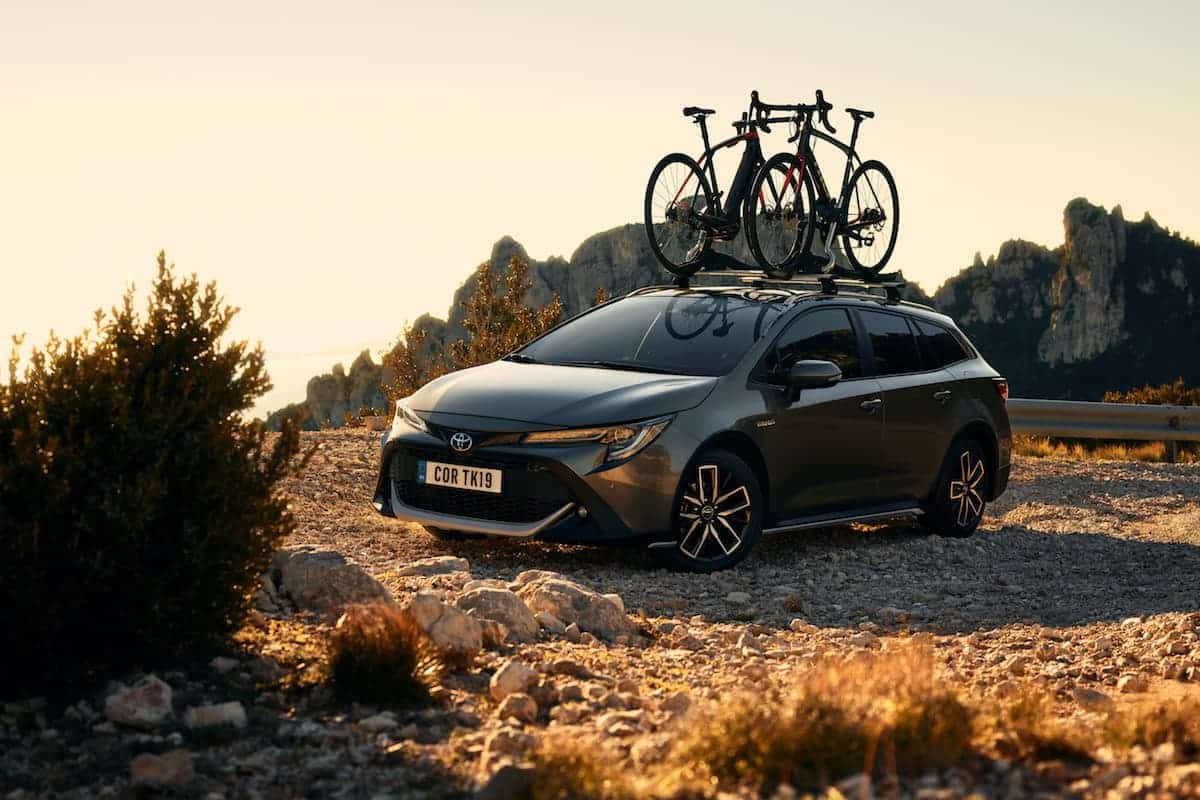
The Trek lends a rugged edge to the Corolla’s sharp styling. It’s part of a collaboration with Trek Bicycles and will see the Corolla used as support vehicles for the Trek-Segafredo world cycling tour.
Corolla Trek models are offered as either 1.8-litre or 2.0-litre hybrid models, eschewing the standard car’s entry-level 1.2-litre petrol option. Ride height has been increased by 2cm, while beefier front and rear bumper trims give it an off-road look – although the Trek remains staunchly front-wheel drive and definitely shouldn’t be treated like a true mud-plugger.
Finishing off Trek models are 17-inch machined alloy wheels, rear privacy glass, front foglights and full LED headlights.
Toyota Corolla Trek estate
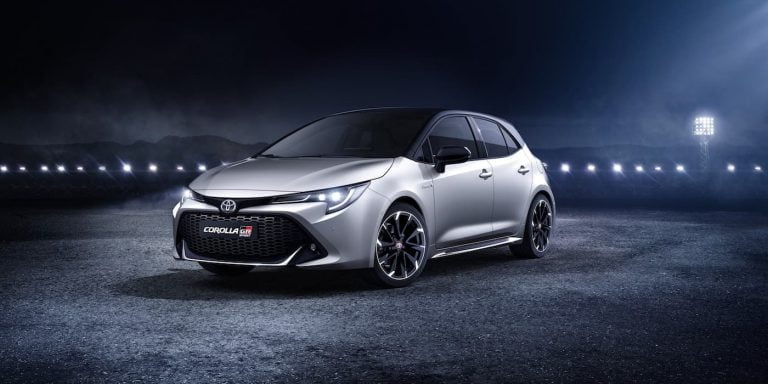
The other new Corolla model is the GR Sport – only the second car to wear this badge after the Yaris GR Sport. These models aim to capture some of the magic of Toyota’s Gazoo racing division.
Like the Trek, GR Sport models will be hybrid-only. They’ll feature exclusive 18-inch machined alloy wheels and a bi-tone paint finish in Dynamic Grey with a black roof. Inside, sports seats and black and red stitching lend a sporty air.
Toyota hasn’t confirmed whether the Corolla GR Sport will feature any mechanical alterations – its Yaris sister model rides on a bespoke suspension system with high-performance tyres, dampers and brakes.
Both models will go on display at the Geneva motor show, which starts next week. Corolla Trek models are expected to hit showrooms in August, while the Corolla GR Sport will make its way to our shores in January 2020.


 “Our brief was to avoid redundancy of technology,” said Citroen’s chief interior designer, Jean-Arthur Madelaine. “Instead of having lots of displays for speed and infotainment, everything comes from your phone.”
Citroen is expecting users to rent the Ami rather than buy it – the brand suggests ‘ownership’ periods of anywhere from five minutes to five years, depending on the user’s needs. With access through a smartphone app rather than a traditional key, it’s possible that fleets of these could sit in city centres ready to be hired.
The Ami One could make production, but if it was approved it wouldn’t reach the market until after 2020.
“Our brief was to avoid redundancy of technology,” said Citroen’s chief interior designer, Jean-Arthur Madelaine. “Instead of having lots of displays for speed and infotainment, everything comes from your phone.”
Citroen is expecting users to rent the Ami rather than buy it – the brand suggests ‘ownership’ periods of anywhere from five minutes to five years, depending on the user’s needs. With access through a smartphone app rather than a traditional key, it’s possible that fleets of these could sit in city centres ready to be hired.
The Ami One could make production, but if it was approved it wouldn’t reach the market until after 2020.