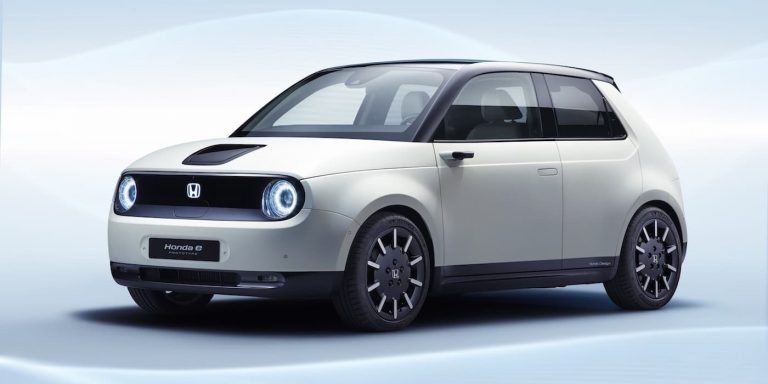
After stealing the show with the Urban EV concept at Frankfurt in 2017, Honda has unveiled the latest iteration of its all-electric city car concept.
Dubbed the ‘e Prototype’, the car will get its public debut at the Geneva motor show next week and is one of Honda’s most advanced vehicles to date – thanks to a raft of advanced features.
Built on a newly developed platform – which could be adapted in the future for models up to the size of the HR-V – the e Prototype is rear-wheel drive, with the motor mounted on the rear axle. That does compromise the boot space, however.
Although official figures are yet to be confirmed, Honda says the compact EV will be able to go more than 200km (124 miles) on a single charge – with the Japanese brand assuming customers drive roughly 30 miles each day.
The battery itself is based on the same unit used in the Accord PHEV that’s sold in the US and built by Panasonic. Honda also said the power output is comparable to similarly sized EVs, such as the Renault Zoe and Volkswagen e-Up – so expect it to develop around 100hp. The battery is rapid charge-compatible too, as it’s capable of going from flat to 80% full in 30 minutes if you have the right charger.
The biggest difference compared with the Urban EV concept is that, like the upcoming production car, the e Prototype is a five-door hatch rather than a three-door. The car seats just four, as Honda claims that people using this car will ‘very rarely need five seats’.
Inside, the e Prototype shows off a completely digital dashboard, which features five screens and spans the entire width of the car. Instead of conventional wing mirrors, the vehicle comes with cameras mounted on the wings, with six-inch displays showing the images from each side. A rear-view camera will also be used, with the feed displayed where the mirror would normally be.
Two other screens team up as the infotainment system, which uses a co-pilot set-up that allows the passenger to swipe new navigation instructions and other information across to the driver’s screen on the go. The rest of the cabin is very simple, with large buttons being used for the remaining functions.
The model will be built in Japan, with European sales set to begin before the end of 2019. Deliveries are expected to start in the early part of 2020.
Pricing is yet to be announced, but Honda has hinted that it will be at the higher end of the current compact EV market – so expect a starting price around £30,000.
Jaguar has announced a raft of changes to its XE saloon ahead of next week’s Geneva motor show.
Not only does the updated Jaguar XE feature more on-board technology and refreshed looks, but Jaguar has also sharpened its pricing to try and revive sales – with on-road prices now starting at less than £34,000.
Even base-spec XE models now boast a host of standard equipment, including 18-inch alloy wheels, electrically-adjustable leather seats and front and rear parking sensors.
The exterior has been given refreshed front and rear bumpers, along with all-LED headlights with distinctive signatures. Larger front intakes help to make the XE look wider and more aggressive, too.
Inside, the XE receives Jaguar’s latest Touch Pro Duo infotainment system, shared with the new I-Pace electric model. While they were at it, Jaguar designers also nicked the steering wheel from the I-Pace as well.
The XE also gets a ClearSight interior rear-view mirror. This uses a rear-facing camera to display images onto a screen within the rear-view mirror itself, giving the driver an unobstructed view of the area behind, rather than having the view blocked by back-seat passengers or a dirty rear windscreen.
The car’s range of petrol and diesel engines remain unchanged, although the diesel D180 rear-wheel drive version has been homologated to meet tougher 2021 emissions standards. That also means company car drivers enjoy a 4% BIK rate cut and private retail buyers save on their first-year road tax bill.
An eight-speed automatic gearbox is now standard-fit on all models, with the manual gearbox being consigned to history.
Jaguar claims to be building much better value into the XE than previously offered, with both price reductions and increased specification across the board. For example, the XE D180 R-Dynamic S model is priced at £36,145 on-road, which is £670 cheaper than the equivalent model previously but features £1,100 worth of extra kit.
The updated Jaguar XE is available to order from your friendly neighbourhood Jaguar dealer right now.
Electric cars are becoming an ever-more relevant option for car buyers, with more people than ever interested in making the switch from petrol or diesel to electricity for their next car. But what is an electric car actually like to drive?
As more electric cars arrive in showrooms, potential buyers are full of questions and fears about how far an electric vehicle (EV) will go before its battery expires, and how long it takes to charge it up again. These questions are not necessarily that simple to answer.
In some ways, driving an electric car is just like driving a petrol or diesel one – and car makers have worked hard to make sure the experience is as familiar as possible.
But in other ways, an EV is very different from a traditional car – the way you drive it can significantly affect how much range you get between charges. And where you live and work could also make a big difference to whether an EV might be for you.
To demonstrate what we are on about, The Car Expert has employed the assistance of one of the most ‘normal-looking’ electric cars available, the Volkswagen e-Golf.
The most obvious sign that this is an electric Golf is the charging cable plugged into the back of it
The technical bit
Instead of having a petrol or diesel engine, plus a gearbox, a fuel tank and a complex exhaust system to clean the exhaust fumes before they exit the tailpipe, a typical electric car has an electric motor, a simple transmission and a large battery.
Electric cars don’t have traditional manual or automatic gearboxes because electric motors don’t work that way. The e-Golf has a single-speed transmission, and if you think that sounds archaic when a petrol or diesel car usually has at least six gears, it’s because those types of engines work in very different ways.
With an electric car delivering instant torque, you don’t need six or more gears to keep your car in the right rev range. Maximum torque is on tap immediately, so a single-speed transmission is the most efficient way to send that power from the electric motor to the wheels.
There are far fewer moving parts in an electric car, and the whole thing is much more efficient. A petrol or diesel engine makes a lot of heat and noise, which is all wasted energy. The near-silence of an electric motor is the sound of efficiency.
First impressions
How do you actually tell this is an electric car? From the outside, the e-Golf looks just like any other Golf, rather than boasting futuristic angles and shapes screaming “Look at me, I’m electric!”, like the Nissan Leaf.
Angular “Look at me, I’m electric!” styling of the Nissan Leaf isn’t to everyone’s taste
On the inside, too, this car looks like a regular Golf. Only when you turn it on does the dashboard display show battery info rather than a traditional rev counter.
This very familiarity might appeal to those who have been put off going electric because they don’t want to be seen driving something that looks odd. The clear message here is, “This is still a Golf. Don’t be afraid.”
There’s the same amount of space for passengers, both front and rear. However, you do lose a bit of space from the boot, because the batteries for the electric motor are contained under the rear seat.
This is pretty common for hybrid or electric versions of regular cars – they need a lot of batteries, which all have to go somewhere.
In a dedicated electric car, like the Nissan Leaf, the entire vehicle platform is designed differently rather than being adapted from an existing petrol car. That generally means fewer packaging compromises.
That dial on the left is the main clue that this isn’t a petrol or diesel Golf
Hitting the road
If you’ve never driven an electric car, one of the first things you need to get used to is the almost complete absence of mechanical noise.
Hitting the ‘start’ button appears to result in absolutely nothing happening, and you will probably hit the button again (thereby switching it off) every time you get in the car until your brain gets used to the lack of start-up noise.
Other than the near-silence, the process is exactly the same. Pull the gear lever into Drive and accelerate away. The controls on the e-Golf are all exactly where you’d expect them to be and work exactly as you’d expect them to work. The only difference is that there are a few specific extra functions you can use, which we’ll come to shortly.
Once you’re underway there is a very faint humming sound from the drivetrain, but most of what you will hear will be wind and road noise. You’ll also be far more aware of the noise that other cars around you are making, simply because your own car isn’t making those same noises.
Near-silent e-Golf allows you to appreciate the noise made by other vehicles around you…
One important thing to be aware of is that others won’t hear you, either. So on a crowded street, pedestrians may be more likely to step out in front of you because they haven’t heard you coming.
Out on the road, the e-Golf basically feels just like a normal car but quieter. Underneath, however, the mechanics involved are very different, which means that there some real differences in how it performs.
Porsche has shocked many buyers by announcing that the second generation of its Macan compact SUV will only be available as an electric vehicle (EV).
When it begins production “at the start of the next decade”, the new Macan will become Porsche’s first all-electric SUV model, though it will be the brand’s third electric vehicle after the Taycan – a traditionally-shaped sports car which is due on sale in 2019, and the Taycan Sport Turismo Estate, set for launch in 2020.
Currently Porsche is giving no details of the Macan EV’s drivetrain, other than stating that it will use “800-volt technology, and is based on the Porsche PPE architecture (Premium Platform Electric) developed in collaboration with Audi.”
The new Macan will be the first car to employ the PPE platform, and industry sources suggest it will make use of twin electric motors providing full all-wheel-drive capability.
Porsche plans to invest more than six billion euros in electric mobility by 2022, and by 2025 50% of all new Porsche vehicles could have an electric drive system.
“Nevertheless, over the next ten years we will focus on a drive mix consisting of even further optimised petrol engines, plug-in hybrid models, and purely electrically operated sports cars,” the brand has stated.
Some rumours suggest that a concept version of the next Macan could be revealed at the Geneva motor show next week.
The Skoda Kamiq will go on UK sale before the end of 2019, expanding the Czech brand’s new SUV range to three.
Evolved from the Vision X concept shown at the 2018 Geneva motor show, the production Kamiq will make its public debut at this year’s event on 5th March.
Sitting below the Kodiaq and Karoq as the smallest Skoda SUV, the Kamiq will compete in a market traditionally led by the Nissan Juke. Skoda expects it to attract younger buyers than do the brand’s current SUVs.
The new Skoda is built on the same MQB A0 platform that underpins the T-Cross and Arona from sister brands Volkswagen and SEAT.
Both cars will be prime rivals for the newcomer, but the Skoda’s 2.65m wheelbase is significantly longer than its competitors, suggesting a more spacious interior. Skoda quotes a 400-litre boot space, which increases to 1,395 litres with the rear seats folded down.
UK buyers will only be able to choose the Kamiq in front-wheel-drive form, and powertrain options will range across 1-litre petrol engines of 95 or 115hp, a 1.5-litre petrol with 150hp and a 1.6-litre diesel delivering 115hp.
Six-speed manual transmissions are standard but all bar the entry-level petrol engine will also be available with a seven-speed automatic transmission.
Skoda is promising an extensive suite of safety aids for the Kamiq though several will be options. The Front Assist, which includes autonomous emergency braking and pedestrian protection in urban environments, will be standard, as will the Lane Assist keeping the car centred in its lane of the road.
The Skoda brand’s much-praised ‘Simply Clever’ details will also feature, with more than 20 available for the car including for the first time an optional door-egg protector which deploys as soon as the door is opened to prevent damage in such areas as tight car parks.
Visually the Kamiq includes family styling ties to its larger sister SUVs. But it also introduces new details such as the daytime running lights placed above the headlamps – these have been created by Skoda’s new design head Oliver Stefani.
The rise of the compact SUV (or crossover, if you prefer) shows no signs of slowing down, and now Lexus wants to join the party with its latest model – the new Lexus UX.
Sliding underneath the NX and RX models in the company’s range, the UX sits on a new compact platform and, like every other Lexus model, it’s a hybrid. In fact, you won’t be able to buy a UX in this country that’s not a hybrid, although some other countries will get regular petrol versions.
That powertrain means that it does offer something different to its main rivals (there are few other petrol-electric hybrid compact SUVs currently on the market), and it does this while maintaining Lexus’s reputation for a high standard of quality.
What’s new about the Lexus UX?
The UX is the first Lexus model to use the company’s new “Global Architecture – Compact” platform, giving it better balance while maintaining compact dimensions. There’s a distinctive exterior design too, while Lexus’s latest cabin technology has been used inside. The UX is being pitched at young families who want a car with the style of an SUV but the city-friendly proportions of a hatchback as well.
The UX is also being offered with either front-wheel drive or all-wheel drive, giving buyers a little more choice when it comes to how the car delivers its power. There is, however, just one engine available.
How does it look?
The UX’s dinky proportions mean it has quite a small footprint on the road. However, the angular styling does make a bold statement and, like other Lexus models, it will divide opinion as sharply as the creases on its bodywork.
The rear-three-quarter angle appears too fussy, in our opinion, while there looks to be a huge gap between the rear wheels and the arches – and this isn’t helped by the squared-off design of the arches themselves. That said, it does stand out against other small SUVs – and in a heavily congested market, standing out is no bad thing.
What’s the spec like?
Our car came in F Sport specification, which sits in the middle of three trim levels. It has a decent standard of kit, including a full complement of safety assistance systems, as well as features such as dual-zone climate control and parking sensors at both front and rear.
The standard infotainment system is a seven-inch unit, although our test car came with the upgraded ten-inch version. It looks fabulous at and lifts the overall feel of the cabin, but isn’t as easy to get along with as systems in rival cars. The satellite navigation isn’t sharp enough and the overall user-friendliness isn’t quite up to scratch.
F Sport cars get a different exterior styling package to other versions, so opt for this one if you’re looking for the most premium-looking version available.
Continued on next page:Interior, driving experience and our verdict
Audi is to go on an electric offensive at the Geneva motor show next week, unveiling four new plug-in hybrid models.
Displayed alongside the brand’s new e-tron fully electric cars, the plug-in hybrid versions of the Audi A6, A7 Sportback, A8 and Q5 are all set to go on sale during 2019.
Each combines a petrol engine with an electric motor and offers a pure electric range of more than 25 miles under the latest WLTP measuring methods.
The plug-in hybrids are known as ‘TFSI e’ models and the A6, A7 and Q5 versions will go on sale in two variants – a ‘comfort’ model known as 50 TFSI e and a variant with a higher output and more performance dubbed 55 TFSI e.
Transmission motor
The petrol engine in these cars is a four-cylinder 2.0-litre unit linked to a seven-speed automatic transmission, within which is incorporated the electric motor. Total power outputs of 299 and 367hp are available, with 450 or 500Nm of torque, and quattro all-wheel-drive is standard.
The A8 version uses the longer-wheelbase specification and is known as the 60 TFSI e. It combines a 3.0-litre six-cylinder petrol engine with the electric motor integrated in the eight-speed automatic gearbox. Total system power is 449hp with 700Nm of torque, and again permanent all-wheel-drive is installed.
All four cars employ the same basic lithium-ion battery setup, made up of 104 cells in eight modules and storing 14.1 kWh of energy at a voltage of 385 volts. The Q5’s battery pack is different to its sister cars, however, using prismatic instead of pouch cells.
Driving modes
All of the plug-in hybrid models offer ‘EV,’ ‘Auto,’ and ‘Hold’ driving modes. in EV the car travels under electric power only, in Auto (the normal driving mode) it switches between propulsion sources as conditions demand, and in Hold it maintains the battery charge for later use, for example driving in a city centre with emissions restrictions.
The driver also has at their disposal the ‘comfort,’ ‘efficiency,’ ‘auto’ and ‘dynamic’ drive modes fitted to traditionally-powered Audi cars.
The plug-in hybrid range also offers a ‘predictive efficiency assist’ feature that helps to extend the electric range by using the navigation to analyse a planned route and advise on more efficient driving – for example putting a visual message on the instrument panel when the driver should lift off the accelerator pedal.
Peugeot has lifted the lid on its all-new 208 range – with a fully-electric option for the supermini – ahead of next week’s Geneva motor show.
Taking on the latest corporate design, the 208 has a more angular and aggressive look than its predecessors while retaining a similar compact silhouette. It also has the ‘walrus tooth’ headlights from the recently introduced 508 saloon, along with its rear bar connecting the tail lights.
Stealing the spotlight in the line-up, though, is the new Peugeot e-208 – a battery-powered electric version of the new model. That makes the new 208 the first mainstream supermini to be offered in petrol, diesel and electric versions.
Peugeot e-208 – the all-electric version of the new 208
Powered by a 100kW electric motor taking energy from a 50kWh battery, the EV will be able to cover up to 211 miles between charges, says Peugeot, with the battery going from flat to 80% full in 30 minutes when the car is plugged into a 100kW charging station.
The e-208 will also come with a host of tech accessible through the MyPeugeot phone app. Users will be able to pre-program the car’s heating and air-conditioning, and defrost the windscreen remotely.
In addition to the electric powertrain, three petrol options and a single diesel will be made available at launch. The former consists of a 1.2-litre engine offered in 75hp, 100hp and 130hp guises, while the diesel option is a 1.5-litre, 100hp unit.
The new Peugeot 208 will also form the basis for the all-new Vauxhall Corsa that is expected later this year, which will also be offered as an EV.
Playing a central role in the cabin of the new Peugeot 208 is the ‘3D i-Cockpit’ – the latest version of the French firm’s driver-orientated interior design, which features across its range. It consists of a small, square steering wheel, a head-up display and a touchscreen infotainment system that scales up to ten inches in size depending on specification.
Although full specifications have yet to be revealed, a suite of safety technology will be offered across the 208 line-up, including adaptive cruise control, lane keep assist, self-parking features, automatic emergency braking and automatic headlights.
Expect to hear more about the Peugeot 208’s pricing, specifications and UK arrival date following its global reveal at the Geneva motor show, which opens next week.
Volvo has revealed a facelifted version of its flagship XC90 model, which will make its public debut at next week’s Geneva motor show.
A newly-developed mild hybrid system has been added to the seven-seater SUV, which will be available on both petrol and diesel engines, along with a series of exterior tweaks designed to help keep the car looking fresh after three years in the marketplace.
The new mild hybrid system uses regenerative braking, which recovers energy when slowing down and converts it to electricity. This is used to power the car’s ancillary electrical systems that would otherwise be driven by the internal combustion engine.
This allows all of the engine’s output to be used for moving the car, which results in better fuel economy and lower emissions levels. The system will be linked to Volvo’s existing petrol and diesel engines, and will be rolled out across the range in coming months.
The new mild hybrid engines will wear new designations, which denote a Volvo car with an electrified powertrain, to replace the existing T (petrol) and D (diesel) badges. These will join the existing T8 plug-in hybrid as the electrified versions of the SUV.
“B” means mild hybrid, although it could be petrol or diesel. “5” means faster than “4” but slower than “6”.
Minor exterior tweaks freshen up XC90 styling
Volvo has been subtle in applying styling revisions to the outside of the car, which is not surprising since the XC90’s styling still looks fresher than many newer rivals.
New wheels, exterior colours and a refreshed grille help to differentiate it from the older version. However, recognisable Volvo styling features such as the car’s ‘Thor’s Hammer’ headlights remain.
Though the XC90 always offered Apple CarPlay smartphone integration, it hadn’t incorporated Android Auto – until now. This latest model benefits from the technology, giving Android users the ability to link their smartphone to the car’s system.
Since its release in 2015, more than 320,000 examples of the current-generation XC90 have been sold worldwide. This updated version is due to go into production in May, and will be available to order in the UK from March.
UK pricing and specifications for the facelifted Volvo XC90 range have yet to be disclosed, but will be announced closer to the car’s launch.
Audi has reintroduced its sporty SQ5 SUV after a six-month hiatus, but the previous petrol engine has been swapped for a mild-hybrid diesel unit.
The first-generation version of the Audi SQ5 was diesel-only, but the second-generation model introduced in 2017 was powered by a 3.0-litre V6 petrol engine.
As with many German performance cars, the petrol SQ5 was killed off last year by the new WLTP emissions regulations. Audi suffered more than most from the new WLTP rules, with large numbers of all its models withdrawn from sale. Sales plunged by more than 40% for the last quarter of 2018 and were still down by about 30% in January this year.
Almost all of Audi’s performance ‘S’ and ‘RS’ models had to be removed from sale for failure to meet WLTP requirements. Most of them are still not available to order from Audi dealers, although the TT RS has recently returned.
The new Audi SQ5 TDI is powered by a twin-turbo 3.0-litre diesel engine churning out 342bhp and 700Nm of torque. This helps the SQ5 to sprint from 0-60mph in 4.9 seconds and keep going to an electronically limited top speed of 155mph. Power is sent to all four wheels by an eight-speed automatic transmission.
The engine also features 48-volt mild-hybrid technology to help reduce fuel consumption when coasting or idling. The unit also uses electrically-powered compression adopted from the larger SQ7’s engine, which helps to ensure a rapid power delivery with no turbo lag.
Audi has adopted a toned-down approach with the SQ5’s styling, with few differences over the standard Q5. It does, however, feature revised bumpers, an aluminium finish to its front grille and 20-inch alloy wheels to set it apart from the Q5. Panther Black paint is also exclusive to the SQ5.
Two trim levels will be offered on the model – SQ5 TDI and SQ5 TDI Vorsprung.
Standard equipment includes an eight-inch touchscreen with satellite navigation, Nappa leather sports seats, LED lights and a digital ’Virtual Cockpit’, while Vorsprung grade adds matrix LED headlights, park assist and a head-up display, to name just a few of the extras.
Sales for the Audi SQ5 TDI are expected to start in the spring, with prices to be announced nearer the time.
The Mercedes-Benz SLC will end production later this year – without a replacement model in the works – following the release of a limited-run Final Edition model.
It marks the end of the line for the junior Mercedes roadster, which was launched at the Turin motor show in 1996 as the SLK. It ushered in a then-revolutionary folding hard-top roof and spawned two successors.
The current third-generation SLK model arrived in 2011, and was renamed SLC in 2016 as part of a naming structure reshuffle across the Mercedes-Benz range.
The Final Edition will be given its first public appearance at the Geneva motor show next month. It’s based on the top-spec AMG Line trim, but comes with the option of an exclusive paint finish called Sun Yellow that pays homage to the original SLK’s launch colour called Yellowstone.
It also gains uniquely-styled bumpers and 18-inch five-spoke alloy wheels. Order your SLC Final Edition in black or grey and you’ll get chrome detailing along the front, while yellow or white models have black trim instead.
The interior is finished in black and silver leather with grey stitching, grey seatbelts and carbon-fibre-look leather elements. The centre console is trimmed in silver and generously equipped, although the SLC’s ageing dash can’t support high-end equipment such as a digital gauge cluster or touchscreen infotainment.
Four engines will be available, kicking off with the 1.6-litre SLC 180, paired with a six-speed manual gearbox and producing 156hp. Moving up, SLC 200 models are manual as well but feature a 2.0-litre unit with 184hp.
Next is the SLC 300 – also a 2.0-litre, but mated to a nine-speed automatic and producing 245hp – while topping the range is the 3.0-litre V6 SLC 43, which pushes out 390hp.
No replacement for the SLC is imminent, with Mercedes instead focusing its efforts on SUVs and electrification instead of niche roadsters.
Prices for the Final Edition SLC will be announced when it goes on sale next month, but expect a slight increase on the standard model’s £32,769 price tag to reflect the high levels of equipment on offer.
Family hatchbacks continue to be a popular choice for UK car buyers, despite the growth of SUVs and crossovers, but it’s still one of the toughest classes for a manufacturer to crack.
With the latest Ford Focus still flying off the shelves like those before it, the Volkswagen Golf proving to soldier on, and the patriotic among us continuing to buy British-built Vauxhall Astras, it’s going to take a real gem for the rest of the industry to break into it.
That’s something Mazda has previously struggled to do. Despite the Mazda 3 being a pleasant prospect in its previous four generations, it’s not exactly a common sight on our roads. Now though, the fifth-generation car is here – and the Japanese firm is hoping it will change that.
What’s new about the new Mazda 3?
What we have here is a totally new car. It’s the first to sit on Mazda’s latest Skyactiv-Vehicle underpinnings, which is said to improve comfort, handling and overall refinement. There’s also a fresh take on its ‘Kodo’ corporate design.
Key to the Mazda3’s potential success is the all-new Skyactiv-X technology, which the company claims can deliver the efficiency and torque of a diesel engine from an environmentally-cleaner petrol engine. It’s not quite ready for market yet, though, so we’ll have to wait until later in the year for a verdict on that.
How does it look?
In a nutshell: jaw-dropping. Mazda has the good-looking car formula nailed down with its ‘Kodo’ design, and the new 3 is a continuation of that.
Its concept-car-like front makes any other car in this price bracket on the road look ancient in comparison, and the sloping roofline creates a silhouette that rivals even the best coupés on the market. Press photos elicited mixed feelings on the chunky C-pillar introduced here, but it’s better appreciated in the metal. It looks properly good.
Better still is the saloon version – but that’s not set to come to market until later on in 2019.
What’s the spec like?
Mazda likes to be generous with its equipment offerings, and the 3 is no exception to this. As standard across the range, the hatch boasts a head-up display, adaptive cruise control with traffic sign recognition, LED headlights and a newly-designed infotainment system displayed on a nine-inch display. The infotainment system is a particular highlight, building on Mazda’s already intuitive software and giving it a more modern feel.
Extras on our GT Sport Tech test car included keyless entry, heated front seats, rear privacy glass, 18-inch alloy wheels, a heated steering wheel, 360-degree camera system and a Bose audio system. With the range starting from £20,595 and topping out at £27,735, the Mazda 3 is a serious value-for-money prospect.
Continued on next page:Interior, driving experience and our verdict
There have been a flurry of reports in the last day or so claiming that Brexit is responsible for driving up the price of cars and, even more so, the cost of PCP car finance. But is that true?
The media reports stem from a press release from automotive site Parkers, which came to the conclusion that it’s all Brexit’s fault based on a study of 14 different car models, comparing today’s prices with those from 2017.
Needless to say, the premise of a press release headline “Post-Brexit car price rises costing drivers thousands” had media outlets salivating at the clickbait opportunity to blame Brexit.
It’s certainly true that cars are becoming more expensive, and car finance is as well. However, there are a number of factors that are contributing to this. Some of these are Brexit-related, though some are not.
Exchange rate
One thing that we can definitely pin on Brexit is the falling value of the pound against other major currencies. This has made every car on the road more expensive, as every car on sale is either built overseas or built here using lots of imported parts.
A weaker pound makes buying anything in other currencies dearer. Since Brexit, the pound has fallen by 20-30% against other major currencies. How that will change after Brexit remains unclear, regardless of any deal (or lack of a deal).
Interest rates
Interest rates have been at historic lows for the past decade. The Bank of England lowered its official interest rate from 0.5% to 0.25% in August 2016, in the immediate aftermath of the EU referendum vote, but has increased it twice since then. The official rate currently stands at 0.75%.
Interest rates have increased by 0.5% since the EU referendum
That may not sound like much, but interest rates are now higher than they have been in a decade (since March 2009, to be exact). That inevitably has a knock-on effect on the cost of borrowing money on a PCP, as you pay more interest on every pound you borrow. And if cars are getting more expensive, it’s a double whammy.
Is Brexit responsible for interest rate increases? Well, the Bank of England sets rates in response to economic conditions and predictions. Increasing interest rates is one way of slowing borrowing, which is a sign that the economy is growing. Cutting interest rates is a way of stimulating a stagnant economy by encouraging borrowing.
Deposit contributions and deals
Rather than analyse the best-selling cars in the country, Parkers selected its own list of 14 cars from the hundreds of models on sale. How they chose these 14 cars isn’t explained, but inevitably there are variations in the deals that are being offered today compared to what was on offer two years ago.
In some cases, PCP payments have increased because manufacturers are no longer offering attractive deals on those models. For example, one car analysed was the Vauxhall Mokka X, which in January 2017 was offered with a £500 deposit contribution (effectively a discount if you take finance). Today that deal is no longer on offer, effectively making the car £500 dearer, which bumps your monthly payments up by about £10-£15.
The Fiat Panda is now significantly more expensive to finance than it was two years ago, yet the Fiat 500 is now cheaper to finance than it was two years ago, thanks to a £1,750 deposit contribution that acts to reduce monthly payments by £35-£50.
The Fiat 500 and Fiat Panda are similar-size cars, in a similar price bracket, use broadly the same supply chain, and are both built in the EU. So how is Brexit responsible for one of those cars becoming more expensive while the other one becomes cheaper?
The far more likely reality is that Fiat is no longer actively promoting the ageing Panda, which scored a dismal zero-star crash test result last year, with any consumer offers or subsidised pricing, and is throwing its resources behind the popular 500 instead.
Deals come and go based on the needs of each manufacturer to sell as many cars as possible for as much profit as possible. It’s not a Brexit thing.
Used car values
Used car values have been falling steadily all decade, which itself is a function of the growth of PCP finance. With car buyers essentially being forced into changing their car every three years, we saw several years of strong growth in private new car sales, peaking in March 2016. But the knock-on effect of that is that the market has become increasingly flooded with three-year-old used cars.
That, in turn, has meant used car values have been falling ever since. Given that PCP monthly payments are determined by how much value your car will lose during the agreement (depreciation), a combination of higher new car prices and lower used car values has made monthly payments considerably more expensive.
There are specific situations where certain used car values are falling faster than others. For example, diesel cars are losing value faster than they used to as more customers are switching to petrol cars. That, in turn, is strengthening used car values for petrol models.
The overall market trend of falling used car values is continuing a pattern that goes well back before the EU referendum. So once again, not a Brexit thing.
Apples and oranges
Not only did Parkers select its own list of 14 cars from the hundreds of models on sale, curiously, the Ford Fiesta is absent despite being the country’s best-selling car for a decade.
The report only mentions one car in the top ten, which is the Ford Focus – and that car is significantly cheaper now than in 2017. Instead, the 14 cars Parkers has chosen to analyse include the Fiat Panda, Hyundai i10, Peugeot 108, Suzuki Celerio and Vauxhall Viva – most of which are about as popular as leprosy.
It’s also inevitable that many of the cars that were on sale in January 2017 (the starting point for the report) have been replaced by newer models in the last two years. Even the ones that have been on sale for that whole period have been upgraded or repositioned price-wise as manufacturers look to maximise sales and profits. Engines, specifications and, inevitably, prices will have changed over that time.
By cherry-picking a handful of cars to project your assertions across the entire UK new car market, you leave yourself open to accusations that you’re choosing cars to suit your ‘let’s blame Brexit’ headline rather than actually analysing the real situation.
Some cars are significantly cheaper
The flipside to the above point about model cycles is that some cars are absolutely getting cheaper to buy as they get older. Manufacturers and dealers are constantly introducing new deals to try to shift older or less-popular models. It’s an inevitable part of the business, and there are always deals around – even if they’re not on your preferred new car.
The Fiat Panda might be more expensive now than in 2017, but the Fiat 500 is currently cheaper than it was two years ago. Fiat will have its reasons for this, but it’s unlikely to make those reasons public. Next month, there might be a fabulous new offer on the Panda instead.
New Ford Focus could be yours for £30/month than the old one was two years ago
There are also cases where cars have become significantly cheaper even though they have been replaced by all-new models. For example, the all-new Ford Focus, launched last year and a significantly better car in every way than the previous model on sale in 2017.
Fairly inconveniently for the thrust of the report (not mentioned at all in the press release, but included down the bottom of the article on the website itself), it turns out that the brand new Ford Focus is actually available on a PCP for about £30/month less than the old one that was on sale in 2017, despite heavy discounting that was going on two years ago.
Summary
Brexit is causing considerable uncertainty for businesses and consumers, and that’s bad news for everyone. However, it is currently very fashionable to blame Brexit for anything and everything bad without looking at the wider picture.
Car prices are going up for a number of reasons, and Brexit is a factor in some of those reasons. PCP monthly payments are going up largely as a result of car prices increasing, but also as a result of falling used car values caused by the popularity of PCPs in the first place.
As much as we are all consumed by Brexit at the moment, the global car industry is grappling with much bigger issues. Brexit is probably not even in their top ten list of problems. It’s probably not even the biggest issue facing the British car industry.
The main issue with Brexit has been the horrendous way that our elected political leaders, from all sides of the argument, have managed the process of Britain leaving the European Union. Nobody in the car industry wants a no-deal scenario, but if that’s what’s going to happen it would have been better to confirm that a year ago rather than the day before we leave.
Peugeot will unveil the second and most potent hybrid version of its 508 saloon at the Geneva motor show next month.
The 508 Peugeot Sport Engineered concept is more powerful than any production car currently in the brand’s line-up. It uses a 200hp petrol engine mated to twin electric motors – 110hp on the front axle and 200hp on the rear – for a combined power output of 400hp plus 500Nm of torque.
The all-wheel-drive car boasts a 0-62mph time of just over four seconds, with its top speed electronically limited to 155mph.
A plug-in hybrid making use of an 11.8kWh battery pack, the 508 Peugeot Sport Engineered is capable of up to 31 miles on battery power alone and returns CO2 emissions of just 49g/km (under the new WLTP measuring regime).
Enhanced aerodynamics include a 3D-printed front valance designed to direct air towards the radiator and rear diffuser. Winglets on the quarter panels help smooth the air over the car, aiding efficiency and range.
According to Peugeot, the Geneva concept will be finished in Selenium Grey with accents of “Kryptonite Green”. The interior boasts Alcantara in abundance across the dash, steering wheel and headlining, and more Kryptonite on the stitching and panels on the dash.
According to Peugeot chief executive, Jean-Philippe Imparato, electrification provides a marvellous opportunity to develop new driving sensations. “We are creating a ‘neo-performance’… new features, new territories, new challenges – sheer pleasure for only 49g/km of CO2.”
Peugeot’s plans for electrification include offering a pure EV or hybrid model of every model the brand sells by 2023. The 508 concept will be displayed at the Geneva show alongside the previously-announced 508 and 3008 plug-in hybrids.
What is it?
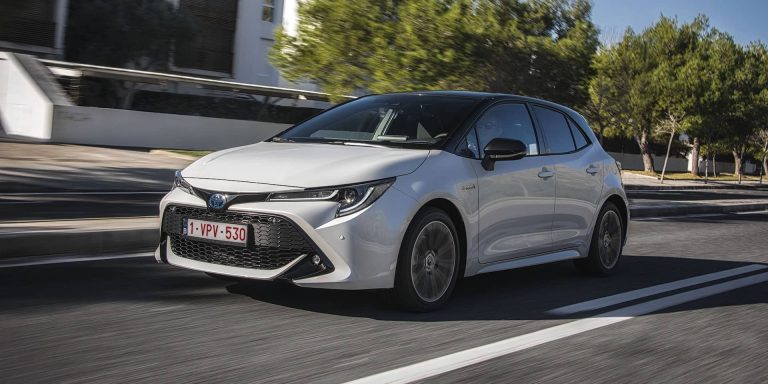
The new Toyota Corolla is the brand’s latest mid-sized family car, replacing the Auris, which back in 2006 replaced the Corolla…
Key features
Hatch, estate and saloon body styles
Hybrids dominate drivetrain choices
More space, more safety
Our view
Toyota has revived the Corolla for Europe with the most effective model line yet.
This is a car not for hot-hatch fans but mainstream buyers, who will be happy with the eco-friendly hybrid drivetrain encased in a car that offers more space than its predecessor and looks a whole lot more attractive.
Similar cars
Ford Focus, Vauxhall Astra, Volkswagen Golf
Remember the Toyota Corolla? The family car that – along with the Vauxhall Vectra – was frequently the butt of Jeremy Clarkson’s jokes back when he was on some BBC programme called Top Gear?
This was a car with a reputation for being so dull that in 2006 Toyota canned the name, at least in Europe, for a new moniker called the Auris. But now the Corolla’s back, replacing – you guessed it – the Auris. What’s going on?
Well, the Corolla was an easy target for Clarkson because there were so many of them around. They were dull, but bought in their millions worldwide because they were so damned reliable.
And while the Auris name was used in Europe, around the rest of the world the same car continued to sell quite happily as the Corolla. The Auris, meanwhile, never really seemed to attract quite the level of dependable loyalty of its much more familiar predecessor.
So when Toyota came to produce the 12th generation of its family car, on an all-new platform which would allow major changes over its predecessor, it seemed sensible to revive the old name.
The brand insists the Auris did quite well thank you, selling 13,400 in its last year, but we are also told that when told of the name change dealers were delighted, and you do get the sense a line has been drawn under a decade everyone is happy to consign to history.
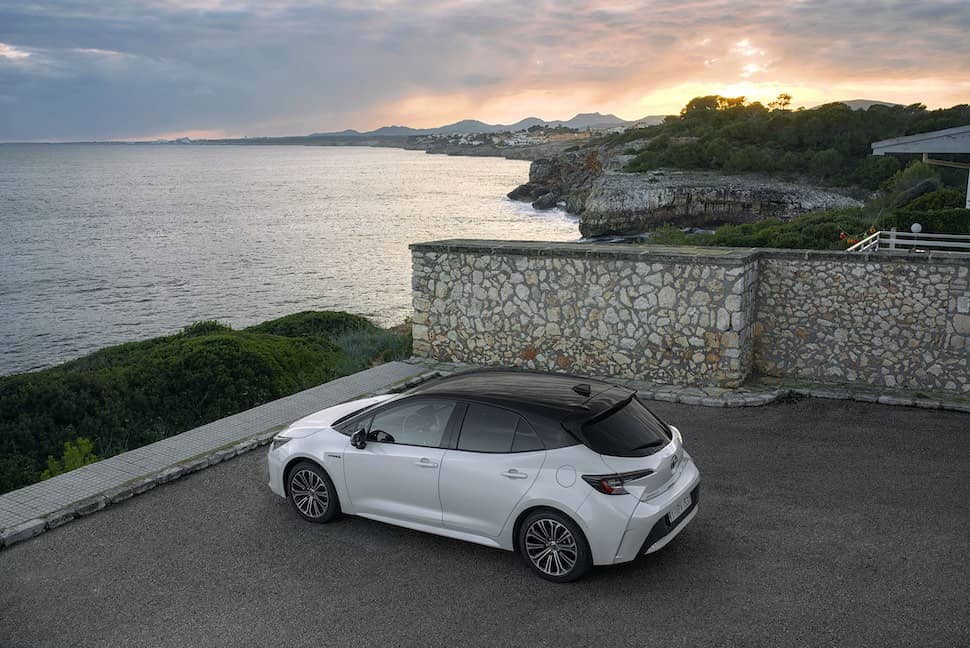
Particularly as the new car is a sea change over the old one. One can’t deny the Auris was dull to look at, while this new Corolla has purposeful and attractive visuals no matter which version you are viewing.
There will be three versions, each with notably different front and rear styling treatments. Most buyers will go for the five-door hatch, but the estate-bodied Touring Sports is also expected to sell well.
Both will be built, like the Auris, at Toyota’s UK plant in Burnaston, Derbyshire, but Toyota UK will also be experimenting by bringing in the four-door Corolla Sedan – traditionally saloon bodies on mainstream cars have proved far less popular in the UK than in Europe as a whole…
The Corolla competes against some of the biggest hitters in the market (think Focus, Astra, Golf…) but Toyota believes it has one unique advantage – some nine out of ten Corolla sales are likely to be with petrol-electric hybrid engines.
Buying and owning a Toyota Corolla
The new Corolla is based, like the latest RAV4 SUV that is also launching at the same time, on Toyota’s latest modular platform, dubbed TNGA (Toyota New Generation Architecture). What this means is that the designers had far more freedom to move the important bits about to create the three body shapes and that distinctive styling, while also freeing up more interior space.
For now, we are concentrating on the hatch and estate as they are available from launch, with the saloon arriving in showrooms a little later.
UK buyers will be offered a choice of four trim levels and three engines. Two of these will be petrol-electric hybrid units – the existing 1.8-litre version plus a new 2.0-litre. And Toyota expects these to take some 90% of sales.
The remainder will be courtesy of a 1.2-litre petrol unit, for those who simply refuse to go electric. There is no diesel option – with European diesel sales sliding more than 30%, Toyota sees no likely demand for the oil burner.
The trims are familiar to Toyota buyers. Base level is Icon, followed by Icon Tech, Design and the range-topping Excel. You can’t buy either Icon variant with the 2.0-litre hybrid, or the Excel with the 1.2-litre petrol engine.
Prices start from £21,300 for the Icon petrol, the 1.8-litre hybrid version costing £2,450 more. It comes with some niceties including dual-zone climate control, auto LED headlamps, an eight-inch touchscreen infotainment system, heated seats and a reversing camera.
More importantly, standard on all cars is Toyota’s Safety Sense 2 suite of technologies. These include adaptive cruise control that can stop-start in traffic jams (except on the petrol version where it operates only at higher speeds) and autonomous emergency braking with pedestrian and cyclist detection.
A lane-keeping aid is also included – the petrol makes do with a lane departure warning that will steer the car back when it strays, while the hybrids have a ‘Lane Trace Assist’ keeping the car centred in its lane. Euro NCAP hasn’t crash-tested the Corolla yet but Toyota expects top marks.
It’s the extras on the Icon Tech that are expected to make this version the most popular Corolla. For an extra £1,050, it adds navigation with voice activation plus a seven-inch driver display.
Design puts another £1,025 on the bill, while the more powerful 2.0-litre hybrid becomes available at £1,725 more than the 1.8-litre. Extras added range across 17-inch machined alloy wheels, auto folding mirrors and wipers, privacy glass and LED fog lamps.
Finally there is the Excel, with 18-inch alloy wheels on the hatchback, bi-LED lamps, keyless entry and sports seats with part-leather upholstery. This comes at £27,345 for the 1.8-litre hybrid, £1,520 more than a Design equivalent.
One notable and surprising absentee from the specification list is smartphone compatibility through Apple CarPlay or Android Auto. Toyota says it’s working on a solution to this, which could be introduced by the end of 2019. Strange when just about every other brand seems to have no problem offering this very useful tech on even its smallest cars…
Continued on next page:Interior, drive experience and our verdict
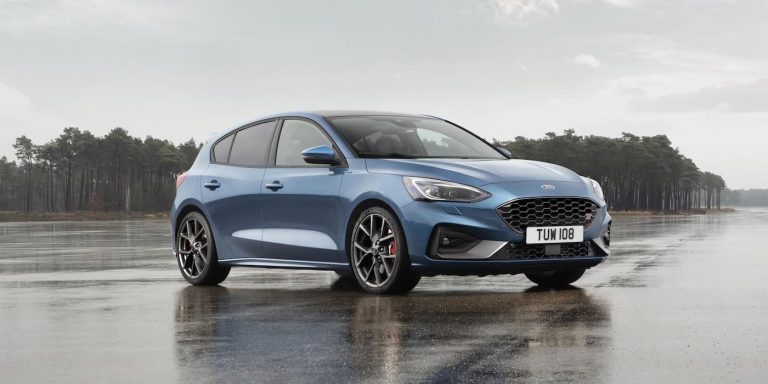
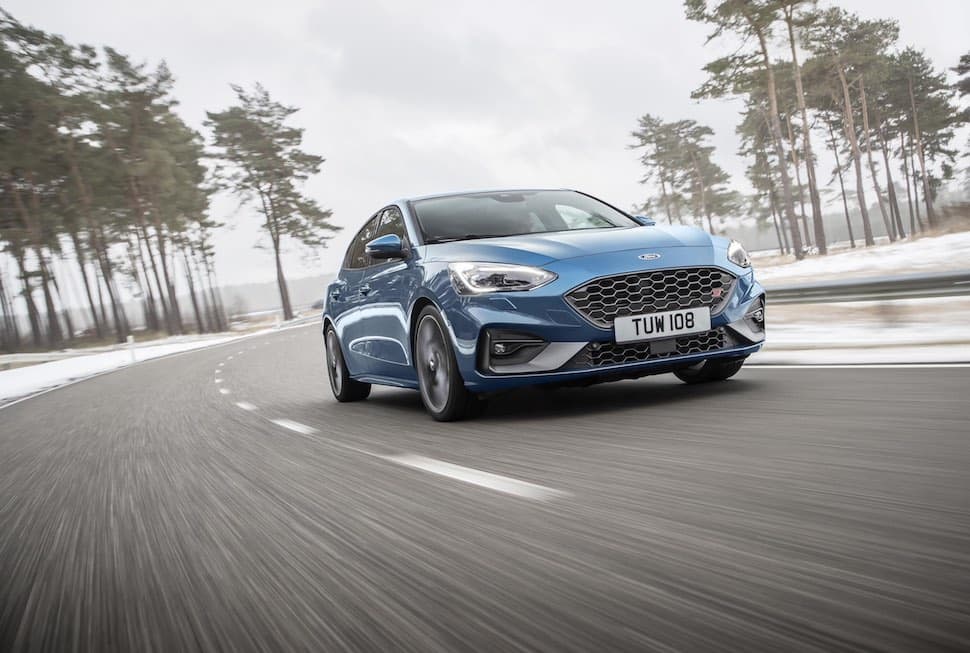
One of the most anticipated cars of 2019 has broken cover, with the Ford Focus ST revealed to the world ahead of the Geneva motor show.
Available as either a hatchback or estate, the performance machine tops the Focus range and boasts bags of new technology.
Two engines will be available on the new Focus ST. The headline-grabbing option is a 2.3-litre petrol, which is a detuned version of the engine from the previous Focus RS. It generates 280hp and 420Nm in the new ST, sent to the front wheels via a six-speed manual or seven-speed automatic gearbox.
What that translates to in performance has yet to be revealed, but Ford says to expect the 0-60mph sprint to come in under six seconds. The previous model had 250hp and 360Nm and managed the 0-60mph sprint in 6.5 seconds.
As with the previous-generation ST (and bucking the industry moves away from diesel engines), Ford is continuing to offer a black-pump variant of the Focus ST. The 2.0-litre diesel engine produces 190hp and 400Nm, so performance is likely to be noticeably down on the petrol model.
For reference, the previous diesel Focus ST had 185hp and 400Nm, and it ran the 0-60mph test in 8.1 seconds, so expect something similar this time round.
Regardless of engine, the new Focus ST is the first Ford model to feature an electronic limited-slip differential to help distribute power across the front axle effectively.
Selectable drive modes also make an ST debut, allowing the car to be optimised for a number of driving conditions – with Sport and Track modes even amplifying the engine note.
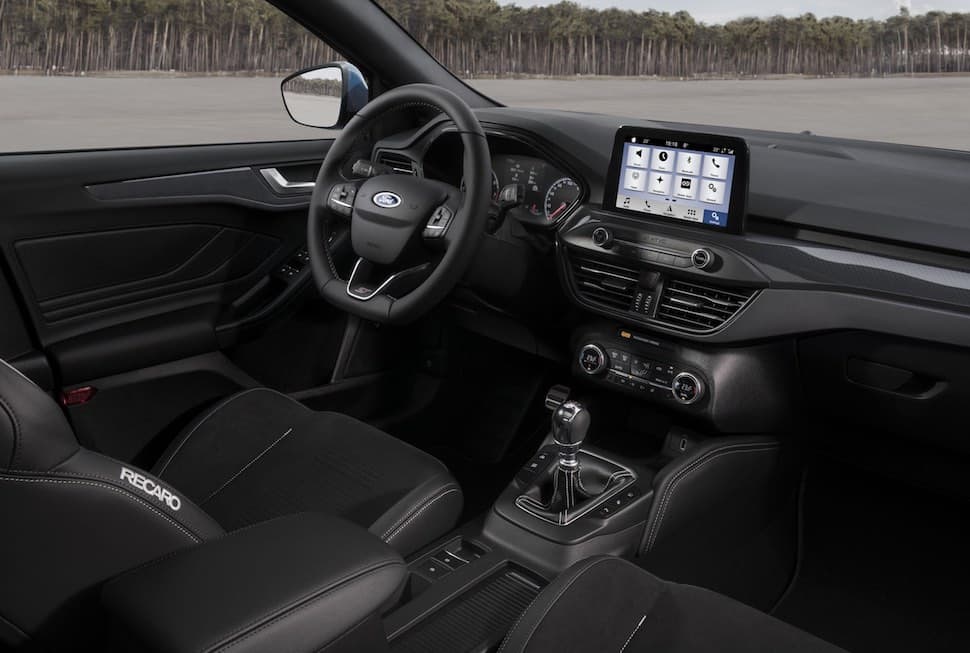
Along with ST badging and aluminium trim highlights throughout the cabin, a pair of Recaro seats for driver and front passenger should enhance the performance feel of the hatchback.
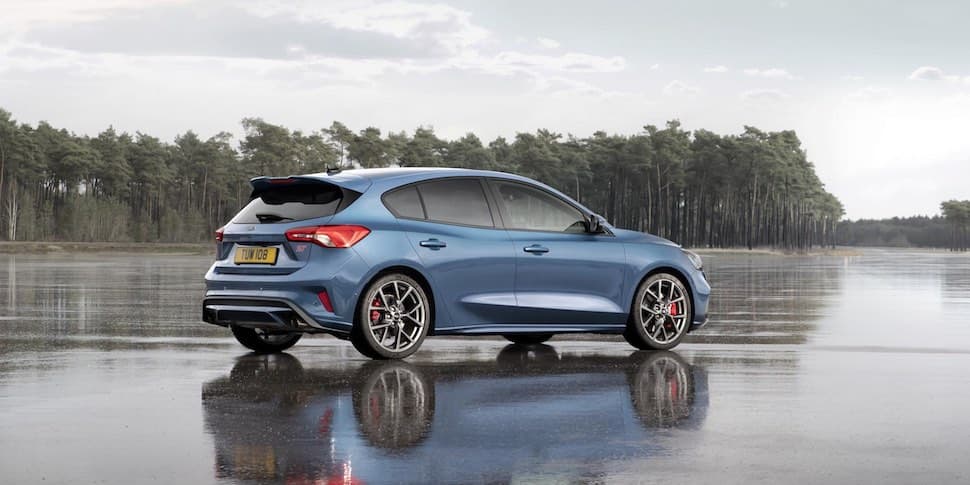
As for the exterior, the Focus ST goes a step further than the already aggressive-looking Focus ST-Line with revised grille designs, a larger rear spoiler and the addition of a twin-exit exhaust system. Red brake callipers are also available via an optional Performance Pack, while 18- and 19-inch alloy wheels can be specified.
This boosted performance and racier edge hasn’t resulted in a compromised list of luxury features, though. Adaptive cruise control, automatic headlights, a head-up display and a self-parking system are all available too.
Order books for the new Ford Focus ST will open in the summer, with deliveries to follow later in the year. Expect full UK pricing and specifications to follow soon.
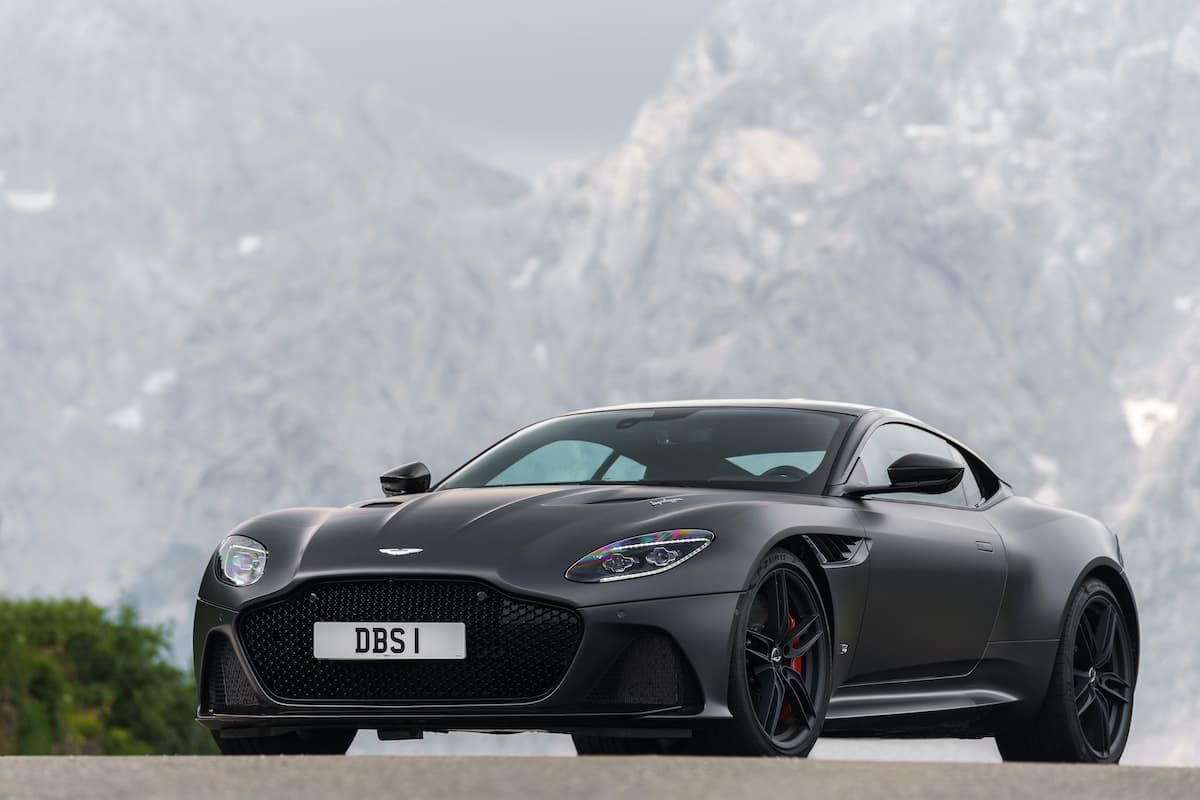
Aston Martin was faced with a tough act to follow when it discontinued its hugely capable Vanquish S last year, but it is hoping that this replacement – the DBS Superleggera – has what it takes to fill its forefather’s shoes.
Wading into battle with the Ferrari 812 Superfast firmly in its sights, the DBS is a meaner, faster adaptation of the DB11 platform. It also features a turned-up-to-11 version of Aston’s famed twin-turbo V12, which should give it more than enough performance to match its brutish looks.
Aston has really thrown everything it could at the new DBS. Many of the vehicle’s body panels have been crafted from carbon-fibre to reduce weight, while a lightweight bonded aluminium structure helps keep the DBS’ bulk down further. There is, of course, that V12 engine too – though we’ll look at that in more detail shortly.
You also have, thanks to a double-diffuser, a car which generates genuine downforce – 180kg at its highest speed, in fact. Make no mistake, this is one Aston that is out to drive just as well as its jaw-dropping styling looks.
How does it look?
We can’t argue with the way the DBS Superleggera looks. It’s an immensely imposing car to look at, with its large front grille and angled bonnet scoops (with the latter a reference to the previous-generation DBS) combining to create one angry looking car.
The DBS comes with elegant forged wheels, and these do help to contribute to the car’s overall thuggish looks. We’ve heard criticism of the lack of a traditional ‘winged’ Aston Martin badge at the rear of the car, here replaced by the brand’s name in chromed letters – but in the flesh, it doesn’t look all that bad. The large grille somehow works well with a British number plate too; if anything, it helps to break up the vast expanse of black. Our test car, in ‘Satin Xenon Grey’, looked particularly mean.
What’s the spec like?
There’s plenty of kit included with the DBS as standard. You get Aston’s eight-inch infotainment pack – a Mercedes-borrowed system which works reasonably well despite lacking the sharpness and clarity offered by rival manufacturers – alongside a full satellite navigation system and a premium audio system. You also get a 360-degree parking camera, which really does come in handy on the DBS – it’s a very large car, with corners that are difficult to see and a rather small rear window which combined, make parking a bit tricky.
What’s it like inside?
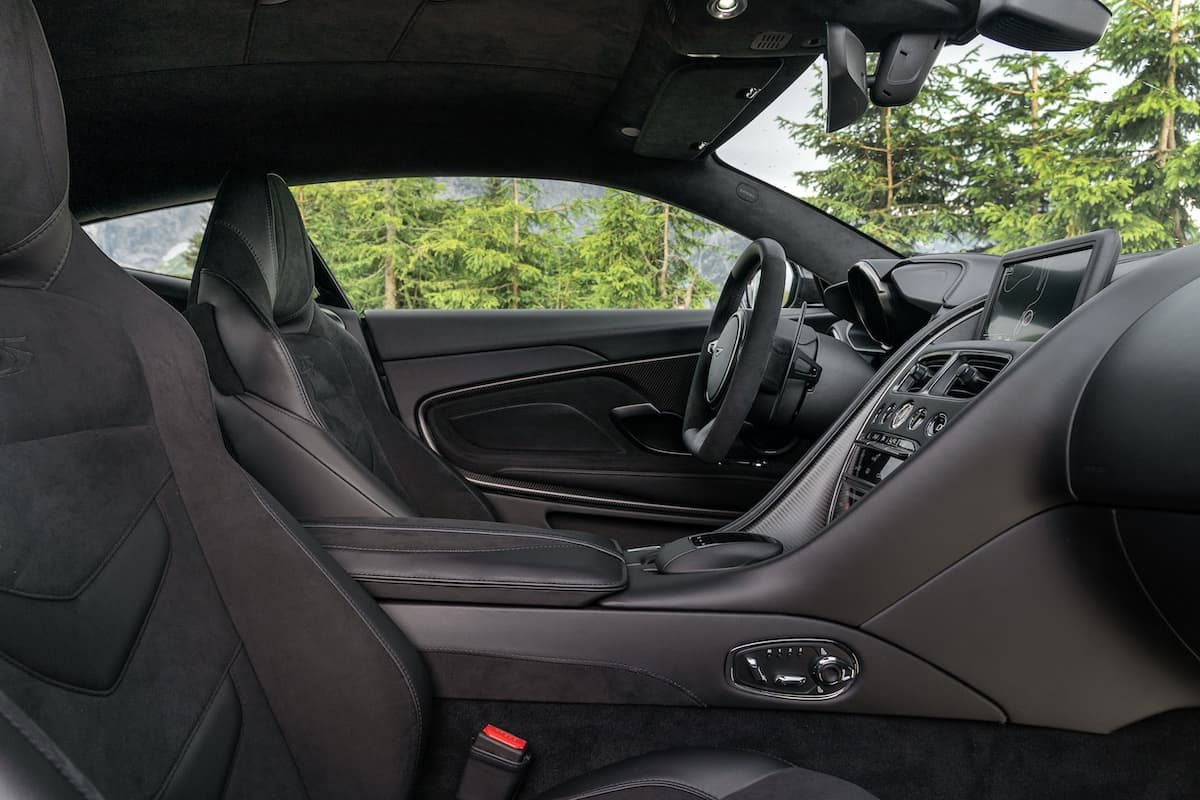
The interior of the DBS is finished beautifully, with the soft leather used throughout the cabin helping to create a luxurious feeling. During our time with the car, everything felt well put together, and nothing squeaked or rattled – though you’d hope so given the car’s £225,000 base price.
We’re still left underwhelmed by the main infotainment area. It just remains – as it does on the DB11 – simply too cluttered, and too littered with many, many buttons. It can make simple actions, such as changing the interior temperature, far more of a hassle than it really needs to be. That said, it’s contrasted by a steering wheel which is beautifully shaped and trimmed in Alcantara.
What’s under the bonnet?
Here’s where things get really interesting. Powering the DBS Superleggera is a 5.2-litre twin-turbocharged V12 engine, the same as you’ll find in the DB11. However, whereas that engine in the DB11 AMR produces 640hp, the DBS kicks out 725hp and an incredible 900Nm of torque. With power sent to the rear wheels through an eight-speed ZF transmission, the DBS can hit 60mph in 3.2 seconds and continue onwards to a 211mph maximum speed. Hang the car in fourth gear when travelling at 50mph, and you’ll crack 100mph in just 4.2 seconds.
As you’d imagine, economy figures aren’t the best. Aston claims 22.9mpg on the combined cycle, while CO2 emissions are pretty high at 285g/km. However, this is to be expected of a large, extremely powerful supercar.
What’s it like to drive?
The first, and overreaching factor when you first drive the DBS Superleggera is its unquenchable thirst for speed. Plant the throttle, there’s a slight pause, and then the whole car sprints forward like few other vehicles on sale today. It’s also accompanied by an interesting, turbocharger-led exhaust note – there’s a proper scream as they both spool up while accelerating.
The chassis is similar to that of the DB11, and in that sense, it shares the same feeling of cross-country readiness; there’s still a small amount of play to the suspension which, though still firm, reminds you that this is billed as an all-out grand tourer. Adaptive dampers are fitted as standard, and these do allow you to firm up or soften off the ride – a feature which is likely to be welcome on the UK’s rutted roads.
Verdict
The Aston Martin DBS Superleggera more than eclipses the Vanquish S it replaces. It feels more composed, more up-to-date and more exciting to drive, too. Its performance is intoxicating; the twin-turbo V12 delivers all of the drama you could possibly want from a supercar, and its styling is different enough to help it completely stand out against any other car of its type on sale today.
It may not bring the most razor-sharp of driving experiences, but it still feels like an exceptionally well-rounded and truly capable offering from Aston.
What is it?
The Infiniti Q30 is a premium hatchback that competes against rivals like the Audi A3, BMW 1 Series and Mercedes-Benz A-Class. The all-wheel-drive version sits at the top of the model range.
Key features
All-wheel drive
Quiet in cabin
Distinctive styling
Our view
The Infiniti Q30 AWD is a surprisingly decent compact hatchback. It’s comfortable and quiet, and it has a unique visual style that sets it apart. Plus the security of all-wheel drive is much appreciated in slippery winter weather.
However, all of that is still not quite enough to place it on the class podium against some very tough opposition in the premium segment.
Similar cars
Audi A3, BMW 1 Series, Lexus CT, Mercedes-Benz A-ClassThe Infiniti Q30 is built in Britain.
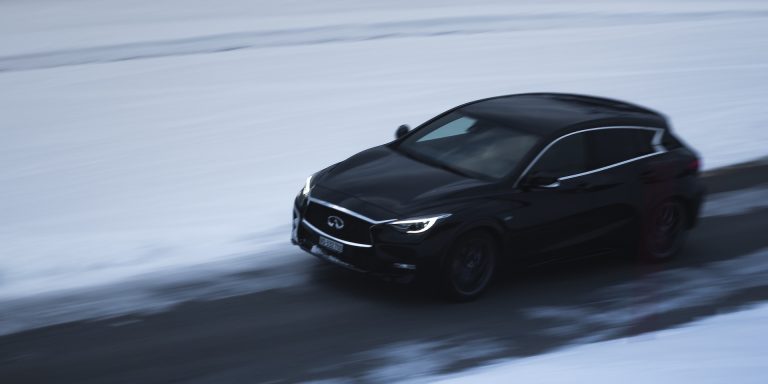
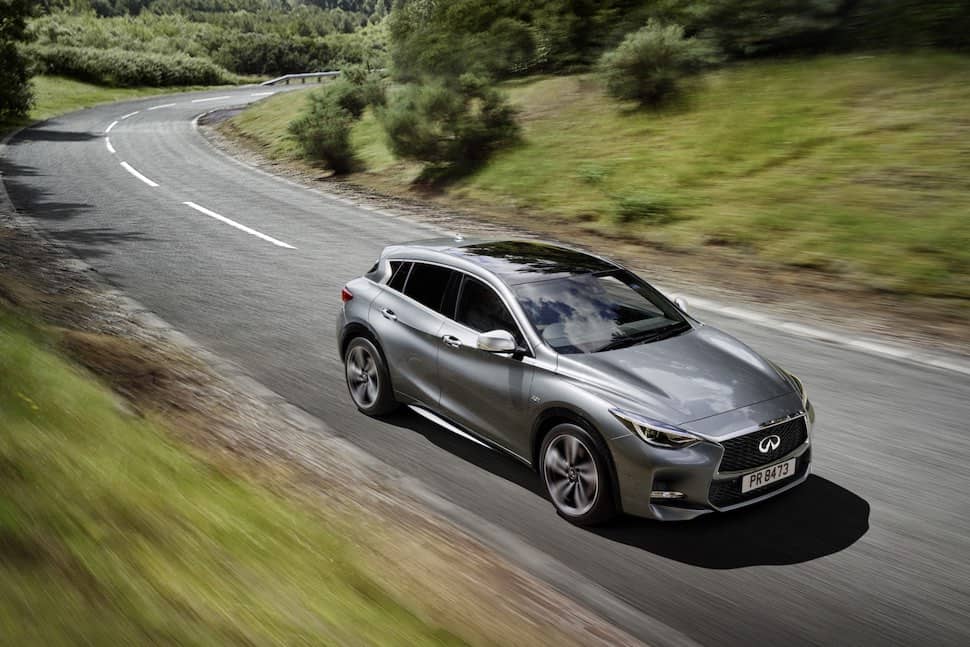
Here’s what it looks like when not shot in the snow at twilight…
Here’s what it looks like when not shot in the snow at twilight…
Full review
Introduction
The Infiniti Q30 has been on sale for more than three years now, which may come as a surprise to many people. You don’t exactly see many of them on the road or in the average car park.
The Q30 was touted as the car to finally make Nissan’s premium brand relevant in Europe after years of negligible sales. The company has always done pretty well in America, but never had the right sort of products to appeal to European buyers.
Through Infiniti’s membership of the Renault-Nissan Alliance, which in turn has an agreement with Mercedes-Benz’s parent company Daimler, the Q30 emerged in late 2015 as a premium hatchback based on the then-new Mercedes A-Class.
But it’s not as simple as Mercedes supplying a rebadged A-Class for Infiniti to sell. The Q30 was largely designed at Nissan’s European Design Centre in London and developed at its technical centre near Milton Keynes.
A £250 million investment was also made to expand Nissan’s enormous British plant in Sunderland to build the Q30 and its higher-riding sister, the QX30. The company now exports Infiniti Q30 and QX30 vehicles to Europe, the USA and China.
Being developed from the Mercedes A-Class, it’s not surprising that the Q30 feels rather more like that vehicle than anything else in the Infiniti line-up. if you’ve ever spent time in the (now previous model) A-Class, you’ll find a lot of familiar switchgear. The sizes and proportions are also inevitably similar.
What was definitely surprising was how much Infiniti has improved on the comfort levels of the A-Class, which is a credit to its engineering team.
Buying and owning an Infiniti Q30 AWD
Over the last three years, Infiniti has been tweaking the Q30 model range to suit customer preferences. There’s now a good balance of engines and specifications, with all models fitted out with a good level of kit as standard.
Unlike European rivals, the options list is pleasingly short. There are a few packs to cover convenience tech stuff and design stuff, and then a few extras like metallic paint, bigger wheels and a Bose stereo.
The model we are reviewing is the top-spec Q30 Sport Tech AWD 2.1-litre diesel automatic (bizarrely badged as a 2.2-litre). This model gets most of the kit that’s optional on cheaper models included, which is good because its on-road price tag of £37,000 is very steep. Our car also had bigger wheels, a glass roof and metallic paint to push that total to £38,400.
The range starts at a much more reasonable £21,300, which gets you a 1.6-litre petrol engine with a six-speed manual transmission in the entry-level Pure specification. Adding the seven-speed automatic transmission costs a considerable £3K, and jumping up to the 2.2-litre diesel (only available as an auto) adds the best part of another £2K.
Moving further up in the range gives you a choice of Luxe or Sport trims, both of which are then available as Luxe Tech or Sport Tech versions with satnav and other gadgets. These models are all auto-only, and a 2.0-litre petrol engine is added to the mix.
The Luxe Tech and Sport Tech models are also available with all-wheel drive. The car remains largely front-wheel driven under normal circumstances, but as soon as those wheels start to lose traction – such as in cold, wintry weather we enjoy in the UK – it will divert up to half the drive to the rear wheels. It’s the same principle as used by many companies in most AWD hatchback and SUV/crossover vehicles on the market.
Continued on next page:Interior, driving experience and our verdict
The number of drink-drive fatalities in the UK may have reached its highest level since 2009, according to a new report published today. However, the overall impact of drink-drive accidents continues to decline.
The Department for Transport has published its provisional estimates for 2017, based on 28% of coroners’ and procurators’ reports on road accidents where at least one driver (not necessary the driver at fault) was over the blood alcohol limit.
The provisional figures give an estimated range of between 240 and 330 people being killed in drink-drive accidents on Britain’s roads in 2017. The final figure for 2017 is expected to be published in August, which will be based on about 60-70% of all accidents (toxicology data is never available for all drivers/riders) and will narrow this down to an exact number.
The DfT is careful to point out that this increase is “not statistically significant” because it still falls within the expected range for annual fatalities, so the increase in numbers doesn’t necessarily mean that there are more people in the UK choosing to drink and drive.
Inevitably, there are other factors (weather conditions, etc) that can affect the numbers, and there is always the element of chance that can push numbers up or down each year. In addition, the number of cars on the roads is increasing each year.
If the final figure ends up at the mid-point of the estimated range, which would be 290 fatalities, it will be the highest figure since 2009.
How the 2017 predicted results compare to previous years (PA Graphics)
Results show no great behavioural shifts in the last 30 years
If we look at the percentage of all road fatalities that involve drink-driving (again, not necessarily the driver at fault), then it makes up about 16% of all road deaths. Again, this is up over the previous two years but still within the expected range.
The prevalence of drink-driving in road deaths has averaged around 15% since the late 1980s, with up to 4% variation either way.
An estimated 8,660 people were killed or injured in drink-drive crashes, down 4% on the previous year. This still represents about 5% of all road accident casualties, which is pretty much the average figure for the last 30 years.
Lack of improvement is disappointing
Inevitably, any increase in the number of fatalities in drink-drive accidents will trigger strident responses from road safety groups, even though the data falls within expected ranges.
We would all like to see the number of people killed or injured as a result of drink-driving reduce, but the data shows that things have been fairly consistent for a long time.
Interestingly, research published by the University of Glasgow before Christmas found that the reduced drink-drive limits in Scotland do not appear to have resulted in any reduction in drink-driving accidents or the numbers killed or injured in drink-drive accidents. However, it does appear to have led to a small reduction in overall alcohol consumption from trade venues.
Scotland reduced its blood alcohol limit for all drivers from 80mg of alcohol per 100mL of blood to 50mg per 100mL back in 2014. England and Wales remain at 80mg/100mL, which is one of the highest limits in the world and quite out of step with most other civilised societies.
Quote from road safety groups
RAC road safety spokesman Pete Williams said: “This is a serious cause for alarm and reflects a worrying change in attitude by a number of drivers who are prepared to risk their own life and that of others by drinking and driving.
“Anyone who has lost a loved one in a drink-driving accident will testify to how devastating and needless this is. With the reduced number of roads policing officers, it appears more drivers are thinking they can get away with drinking and driving.”
Josh Harris, director of campaigns at road safety charity Brake, said: “Our current drink-drive limit gives a false impression that it is acceptable to mix alcohol and driving, which couldn’t be further from the truth.
“Even very small amounts of alcohol dramatically affect your ability to drive safely. Decisive action is needed to end this blight on our roads and prevent the needless loss of life. Brake is calling for the Government to implement an effective zero-tolerance drink-drive limit, making clear to drivers that not a drop of alcohol is safe.”
Hunter Abbott, managing director of UK breathalyser company AlcoSense, said: “With fewer numbers and stretched resources, the police can only do so much. Combined with the highest drink drive limit in the developed world, it’s proved to be a lethal mixture.
“At the English limit, you are 13 times more likely to be involved in a fatal accident than when sober – five times more likely at the lower Scottish limit.”
A DfT spokesman said: “Drink-driving is absolutely deplorable, and those who do it not only put their own lives at risk but other people’s too.
“The Government is working with industry to develop new roadside breath tests, meaning drink-drivers do not have the chance to sober up before being tested, while the THINK! Mates Matter campaign had the biggest impact in young drivers’ attitudes to drink-driving in a decade.
“We are also looking at how to make our roads safer as part of our upcoming road safety action plan.”
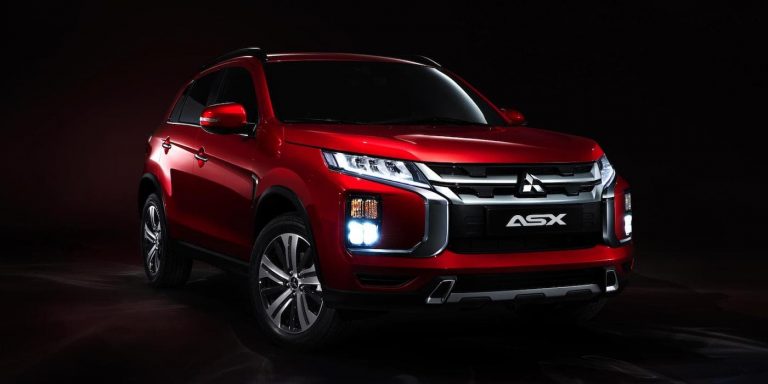
Mitsubishi has overhauled its venerable ASX crossover with a new look, a new engine and an upgraded infotainment system.
The updated ASX takes on Mitsubishi’s latest corporate design elements, resulting in the introduction of thin LED headlights and a prominent silver grille up front with c-shaped side trimmings, while the rear has been treated to new LED taillights and a skid plate.
Inside the car, the size of the touchscreen infotainment system has been increased from seven to eight inches, and now also boasts the ability to play videos stored on a USB stick while the car is stopped. High-spec models also feature TomTom satellite navigation.
A smartphone app will also be made available following the new crossover’s launch that will allow owners to monitor vehicle information when away from the car, including its fuel level and service intervals.
The big news on engines for the new ASX is the removal of both the 2.2-litre diesel and the 1.6-litre petrol from the line-up. European markets will now be offered a 2.0-litre petrol engine, available with either a CVT automatic or five-speed manual gearbox.
Expect to hear pricing and information on the new Mitsubishi ASX following its global debut at the Geneva motor show, which kicks off in the first week of March.
One in ten parents of young drivers risk a criminal record for pretending to be the main driver on the car insurance policy, new research has uncovered.
A survey of 1,000 parents of young drivers aged 17 to 25 found that 10% admitted to insuring their son or daughter’s car in their own name to save money on premiums.
The tactic sees a parent insure themselves as the primary driver on a vehicle, despite their offspring being the one using the car most often, with the youngster registered as a named driver instead.
However, this is actually a form of insurance fraud. If uncovered, the policy will be invalid and the policyholder could end up with a criminal record. In addition, the policyholder will have to pick up the cost of third-party claims that are still settled by the insurance company – which could potentially cost them hundreds of thousands of pounds.
Don’t commit insurance fraud to save a few pounds
Lee Griffin from comparison site GoCompare, which commissioned the survey, said: “Unfortunately, many parents are putting themselves at risk of picking up a criminal record for the sake of reducing their child’s car insurance premiums.
“There may not appear to be any harm in insuring a child’s car in a parent’s name, but ‘fronting’ is illegal nonetheless. Car insurance premiums for new drivers can be high compared to those offered to more experienced drivers, but there’s a good reason why.
“According to the ABI (Association of British Insurers), drivers aged between 17 and 20 are twice as likely to make an insurance claim as other drivers and the cost of their claims can be up to three times higher than the average.”
The survey also discovered that a third of parents (34% of people surveyed) would consider employing the tactic to drive down new driver premiums.
The fraud is usually exposed when a claim is made. Insurers will investigate the details of an accident, at which point they usually find that the son or daughter has been driving the vehicle more often than the parent.
The new DS 3 Crossback has been revealed in full ahead of its arrival in UK showrooms this May.
Priced from £21,550, the DS 3 Crossback is the second SUV to feature in the French manufacturer’s slowly-expanding range of cars.
It’ll be available initially with the choice between three petrol engines and one diesel, although an electric version is expected to arrive later in the year.
Petrol engine power outputs will range from 100hp to 150hp, while the sole diesel produces 100hp. Lower-powered versions will utilise a six-speed manual gearbox, with punchier models sending drive through an automatic transmission instead.
All models in the range get a decent standard of equipment, with base-specification Elegance models benefitting from parking sensors, keyless entry and a seven-inch touchscreen system. Elegance prices start from £21,550.
Performance Line cars get a sportier exterior design, along with seats finished in Alcantara – though prices bump up to £22,950. Upgrade to Prestige specification and customers will find climate control, automatic windscreen wipers, leather upholstery and a ten-inch infotainment system added to the car’s list of standard equipment. Prestige models start at £24,950.
Range-topping Ultra Prestige cars are fitted with a reversing camera, head-up display, matrix LED headlights and heated front seats with massage function. These command a £30,950 price tag.
They’re joined by a special launch edition – La Premiere – which benefits from 18-inch diamond-cut alloy wheels, and DS’ full Drive Assist system, packing active cruise control and lane keeping assist. La Premiere models cost from £32,450.
The all-electric version, called the DS 3 Crossback E-Tense, will use a 100kW motor to offer 186 miles of range under new WLTP test cycles. In addition, it’ll hit 60mph in a brisk 8.5 seconds.
What is it?
This new variant of the Honda CR-V is the first available with a hybrid drivetrain, replacing the previous diesel.
Key features
Hybrid drivetrain
Our view
The Honda CR-V Hybrid could be an answer for those looking for a comfortable, spacious SUV that offers an effective performance without writing headlines.
It will particularly appeal to those who have always liked the economy and emissions of a diesel but no longer want to buy one.
But while it beats the Toyota RAV4 Hybrid for comfort, its rival offers more power and performance for similar efficiency.
Similar cars
Toyota RAV4, Volkswagen Tiguan, Ford Kuga
From the dawn of hybrid powertrains, two Japanese manufacturers have dominated the petrol-electric market and proved deadly rivals to each other. Where Honda had the Insight, Toyota had the Prius. Honda offered a Civic hybrid, Toyota the same with its Auris.
So now that Toyota has ditched the diesel version of its RAV4 SUV in favour of one with petrol-electric power, Honda is doing the same with its CR-V – especially relevant now that diesel engines are like those embarrassing friends that sit in the corner of the party with no-one talking to them…
The only significant difference between the two brands is that while Toyota is putting all its RAV4 eggs in the hybrid basket, Honda is being more circumspect – the CR-V Hybrid comes to market alongside the 1.5-litre turbo petrol version which was launched some months ago.
While it’s no longer built in Britain, the CR-V remains Honda’s best-selling model. That means persuading all those who formerly bought diesel versions of the car that hybrid is the way to go will be crucial.
Buying and owning a Honda CR-V Hybrid
The Honda CR-V has always been a large SUV with a muscular visual presence, and the latest, fifth-generation version loses none of this appeal. It’s slightly longer than its predecessor, while the wheels are closer to the corners thanks to a 3cm longer wheelbase that also helps free up extra interior space.
Externally there are strong horizontal styling lines, though not too many of them. The aerodynamic performance is aided by Honda’s Active Shutter Grille system, now offered on the CR-V for the first time. Generally, it keeps a shutter closed across the grille to improve the aerodynamics, but when rising engine temperatures demand the shutter opens to increase the airflow.
The hybrid system is different too – whereas on the Toyota version the petrol engine drives the wheels at all times, assisted by the electric motor, the Honda uses two electric motors. The engine, of 2.0-litre capacity, powers one of the motors to generate electricity to power the second which is connected to the wheels. The only time the engine drives the wheels is when one is accelerating quickly.
CR-V choices range across both front and all-wheel-drive variants, and four trim levels dubbed S, SE, SR and EX, prices starting from £29,105. One can only have the S model with two powered wheels while the range-topping EX is only available with 4WD.
The other thing one can’t have with the hybrid is the seven seats offered on the petrol CR-V. There’s a very good reason – fitting in the hybrid powertrain requires 64 litres of the boot space, so there’s no room for those extra bodies.
A highlight among the standard specification on all models is the safety package. Dubbed Sensing, Honda’s suite of driver aids includes autonomous emergency braking, a forward collision alert, lane keeping and lane departure warning, a system to prime safety systems if the car leaves the road, and adaptive cruise control.
The CR-V hasn’t been tested by Euro NCAP, but the previous model scored five stars back in 2013 and Honda will be expecting a similar performance from the new model.
You will spend around £1,900 upgrading from S to SE – and if you want an SE in 4WD form, it will cost another £1,100. Extra tech includes parking sensors and a rear-view camera.
Produce another £2,500 for an SR and blind-spot and cross traffic warnings are added to the safety package, as well as keyless entry and starting, a leather interior and headlamps that look round corners.
Finally there’s the EX, costing £37,255 and adding a panoramic glass sunroof, electric tailgate with no-hands operating, heating on the steering wheel and rear seats, and a natty head-up display.
Continued on next page:Interior, driving experience and our verdict
Bugatti has unveiled a limited-edition version of its Chiron Sport hypercar – the 110 ans Bugatti.
Billed as a ‘tribute to France’ and marking the 110th anniversary of Bugatti’s foundation, the model is limited to just 20 examples and features a range of bespoke touches outside and inside.
The car’s colour scheme takes inspiration from the French flag, with red, white and blue applied to many areas of the vehicle. Even the underside of the Chiron’s movable rear wing has been finished à la the Tricolour.
Matt black wheels fitted in front of large blue brake callipers complement the overall look of the vehicle, and you’ll find matt ‘Steel Blue’ paint at the rear of the car, too.
Inside, tricolour stripes have been applied to the headrests and backrests of the seats, which are finished in two-tone blue leather. Bugatti’s Sky View panoramic glass roof is also fitted as standard. Carbon fibre has been used on the steering wheel, steering column and seat trims, too.
A special medallion created from solid silver and enamel has been positioned on a carbon-fibre plate fitted in the centre of the car’s cabin.
Even the key has been given a boost – it’s covered in three sewn leather patches in the tricolour shades.
Mechanically, the 110 ans Bugatti is identical to the regular Chiron Sport, meaning it uses a quad-turbocharged 8.0-litre W16 engine with 1,500hp. It’ll crack 0-60mph in less than 2.4 seconds and tops out at 261mph.
Prices for the 110 ans Bugatti are yet to be announced, but you probably can’t afford it.
Mazda has lifted the lid on a special 30th Anniversary Edition of its popular MX-5, celebrating three decades since the launch of the original MX-5.
Just 3,000 cars will be offered worldwide – and the UK has been allocated 600 units from that figure.
The MX-5 30th Anniversary Edition was unveiled this week at the Chicago motor show, the very same event where the original MX-5 (known as the Miata in America and the Eunos Roadster in Japan) was revealed to the world back in 1989.
The limited-run model benefits from a striking Racing Orange body paint, contrasting the forged aluminium Rays wheels developed exclusively for the model. Orange brake callipers complement the car’s exterior shade, and UK models benefit from performance Brembo front brakes, too.
Step inside and you’ll find a variety of accents matching the body colour on areas such as the seats, dashboard and steering wheel. Soft-touch Alcantara trim has been used on the doors and instrument panel.
Jeremy Thomson, Mazda Motors UK managing director, said: “In the three decades since the launch of the original model, more than 130,000 Mazda MX-5s have been sold in the UK. This is a sports car that has resonated with enthusiastic British drivers ever since its debut and, four generations on, it’s as popular as ever.
“Along the way, it has remained true to the original principle of being an affordable, lightweight and above all fun-to-drive roadster. Today it is the very essence of the Jinba Ittai driver-and-car-as-one philosophy that goes into every Mazda.”
Of the UK’s allocation of 600 cars, 400 will be traditional convertibles and the remaining 200 will be RF models – or ‘retractable fastback’. Prices will start at £28,096 for the soft-top, and £28,895 for the RF.
All cars get a 2.0-litre petrol engine with 184hp driven to the rear wheels through a six-speed manual gearbox. 30th Anniversary models also benefit from Bilstein dampers, a strut-brace and a limited-slip differential too.
The MX-5 30th Anniversary Edition is available to order now, and first deliveries are expected to commence this summer.

 Although official figures are yet to be confirmed, Honda says the compact EV will be able to go more than 200km (124 miles) on a single charge – with the Japanese brand assuming customers drive roughly 30 miles each day.
The battery itself is based on the same unit used in the Accord PHEV that’s sold in the US and built by Panasonic. Honda also said the power output is comparable to similarly sized EVs, such as the Renault Zoe and Volkswagen e-Up – so expect it to develop around 100hp. The battery is rapid charge-compatible too, as it’s capable of going from flat to 80% full in 30 minutes if you have the right charger.
The biggest difference compared with the Urban EV concept is that, like the upcoming production car, the e Prototype is a five-door hatch rather than a three-door. The car seats just four, as Honda claims that people using this car will ‘very rarely need five seats’.
Inside, the e Prototype shows off a completely digital dashboard, which features five screens and spans the entire width of the car. Instead of conventional wing mirrors, the vehicle comes with cameras mounted on the wings, with six-inch displays showing the images from each side. A rear-view camera will also be used, with the feed displayed where the mirror would normally be.
Two other screens team up as the infotainment system, which uses a co-pilot set-up that allows the passenger to swipe new navigation instructions and other information across to the driver’s screen on the go. The rest of the cabin is very simple, with large buttons being used for the remaining functions.
Although official figures are yet to be confirmed, Honda says the compact EV will be able to go more than 200km (124 miles) on a single charge – with the Japanese brand assuming customers drive roughly 30 miles each day.
The battery itself is based on the same unit used in the Accord PHEV that’s sold in the US and built by Panasonic. Honda also said the power output is comparable to similarly sized EVs, such as the Renault Zoe and Volkswagen e-Up – so expect it to develop around 100hp. The battery is rapid charge-compatible too, as it’s capable of going from flat to 80% full in 30 minutes if you have the right charger.
The biggest difference compared with the Urban EV concept is that, like the upcoming production car, the e Prototype is a five-door hatch rather than a three-door. The car seats just four, as Honda claims that people using this car will ‘very rarely need five seats’.
Inside, the e Prototype shows off a completely digital dashboard, which features five screens and spans the entire width of the car. Instead of conventional wing mirrors, the vehicle comes with cameras mounted on the wings, with six-inch displays showing the images from each side. A rear-view camera will also be used, with the feed displayed where the mirror would normally be.
Two other screens team up as the infotainment system, which uses a co-pilot set-up that allows the passenger to swipe new navigation instructions and other information across to the driver’s screen on the go. The rest of the cabin is very simple, with large buttons being used for the remaining functions.
 The model will be built in Japan, with European sales set to begin before the end of 2019. Deliveries are expected to start in the early part of 2020.
Pricing is yet to be announced, but Honda has hinted that it will be at the higher end of the current compact EV market – so expect a starting price around £30,000.
The model will be built in Japan, with European sales set to begin before the end of 2019. Deliveries are expected to start in the early part of 2020.
Pricing is yet to be announced, but Honda has hinted that it will be at the higher end of the current compact EV market – so expect a starting price around £30,000.
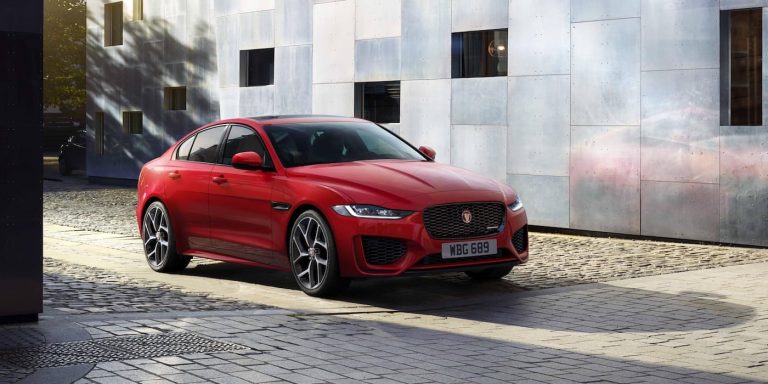
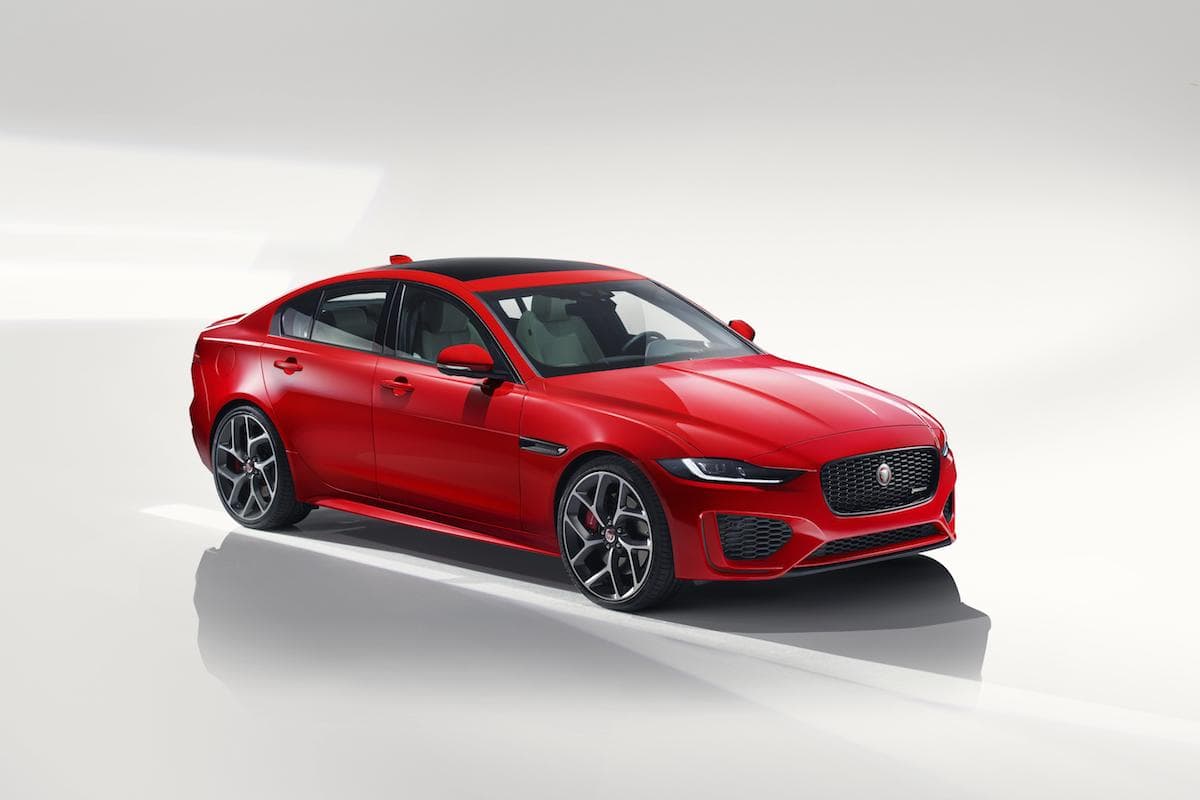

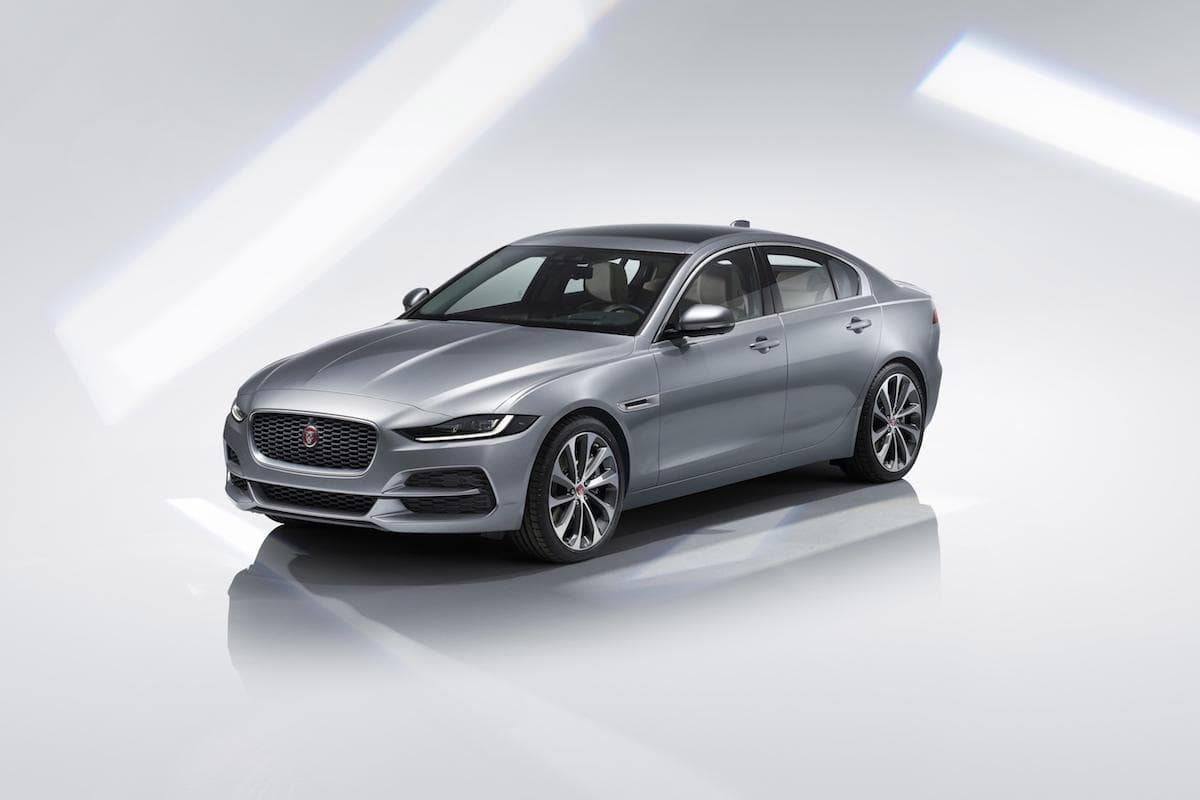
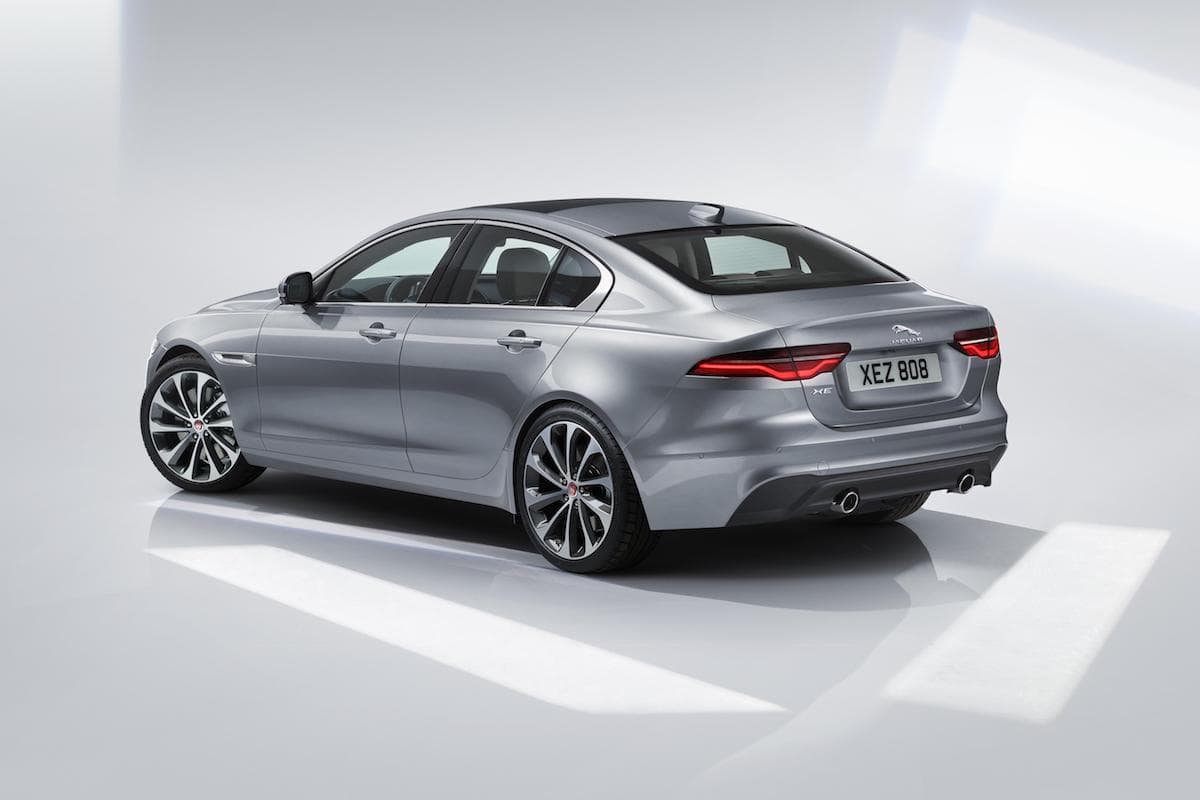
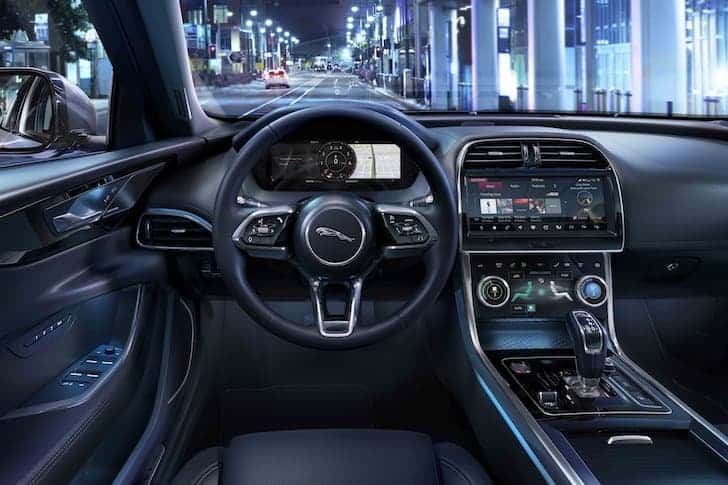
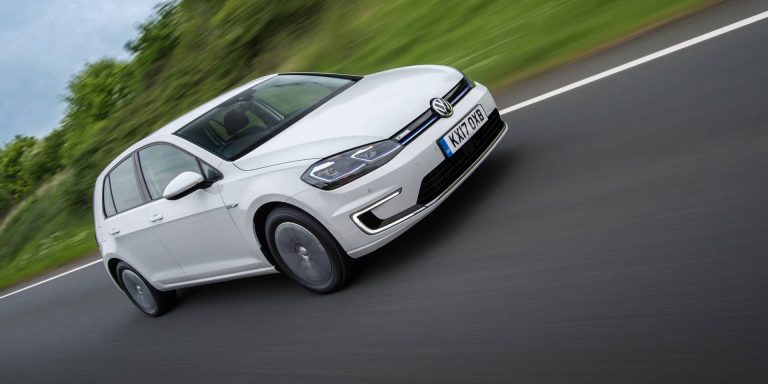

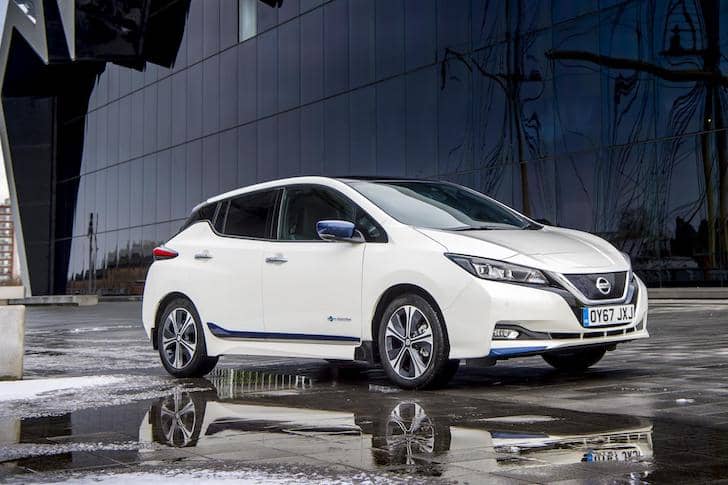
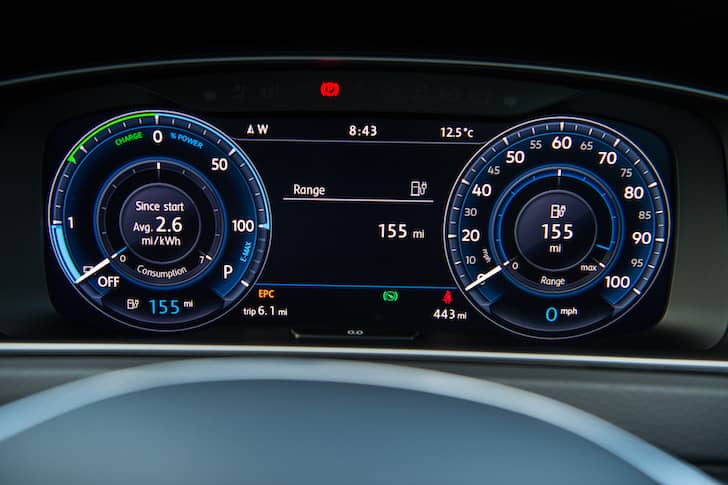

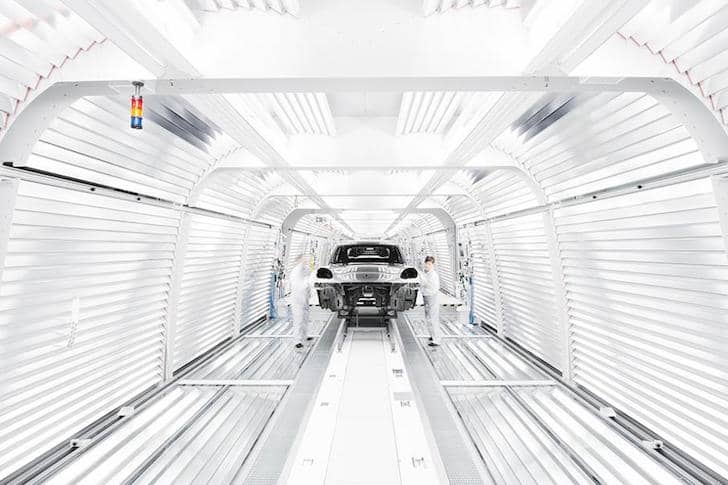

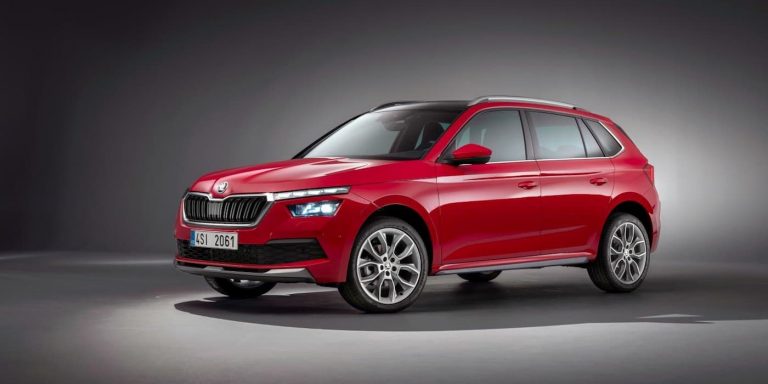
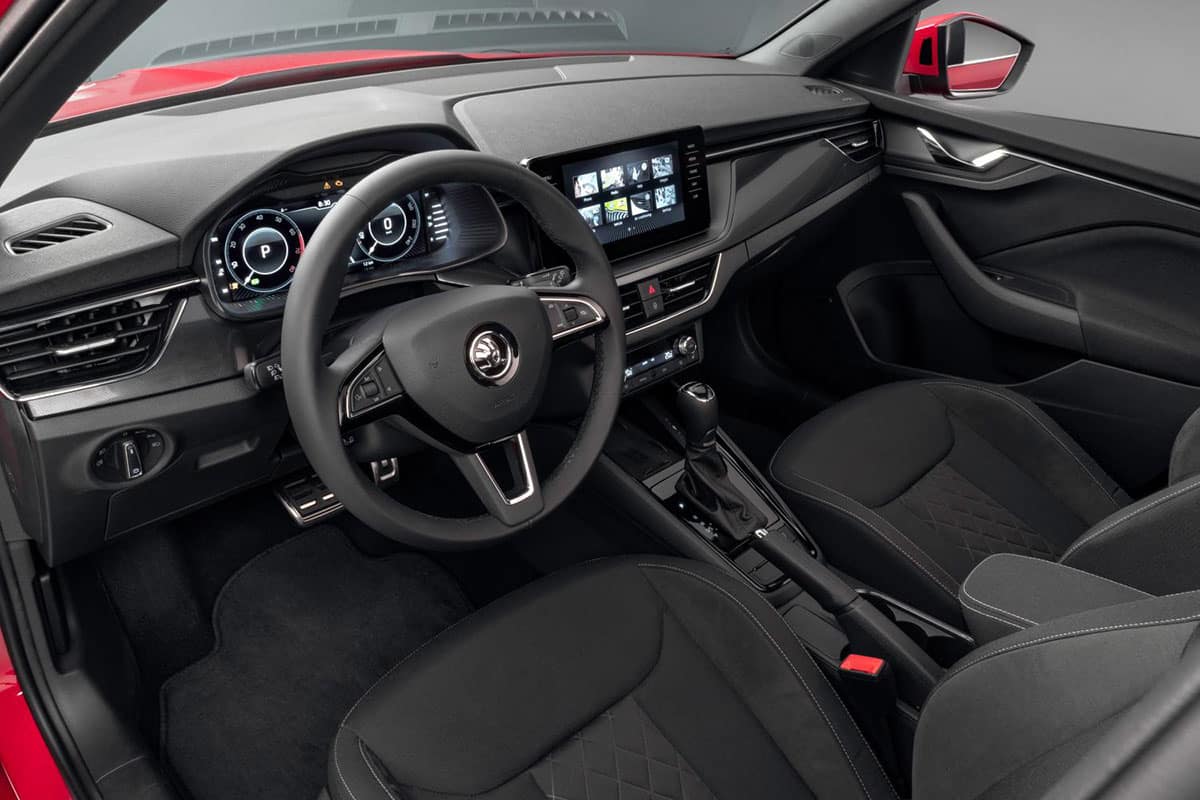 UK buyers will only be able to choose the Kamiq in front-wheel-drive form, and powertrain options will range across 1-litre petrol engines of 95 or 115hp, a 1.5-litre petrol with 150hp and a 1.6-litre diesel delivering 115hp.
Six-speed manual transmissions are standard but all bar the entry-level petrol engine will also be available with a seven-speed automatic transmission.
Skoda is promising an extensive suite of safety aids for the Kamiq though several will be options. The Front Assist, which includes autonomous emergency braking and pedestrian protection in urban environments, will be standard, as will the Lane Assist keeping the car centred in its lane of the road.
The Skoda brand’s much-praised ‘Simply Clever’ details will also feature, with more than 20 available for the car including for the first time an optional door-egg protector which deploys as soon as the door is opened to prevent damage in such areas as tight car parks.
Visually the Kamiq includes family styling ties to its larger sister SUVs. But it also introduces new details such as the daytime running lights placed above the headlamps – these have been created by Skoda’s new design head Oliver Stefani.
UK buyers will only be able to choose the Kamiq in front-wheel-drive form, and powertrain options will range across 1-litre petrol engines of 95 or 115hp, a 1.5-litre petrol with 150hp and a 1.6-litre diesel delivering 115hp.
Six-speed manual transmissions are standard but all bar the entry-level petrol engine will also be available with a seven-speed automatic transmission.
Skoda is promising an extensive suite of safety aids for the Kamiq though several will be options. The Front Assist, which includes autonomous emergency braking and pedestrian protection in urban environments, will be standard, as will the Lane Assist keeping the car centred in its lane of the road.
The Skoda brand’s much-praised ‘Simply Clever’ details will also feature, with more than 20 available for the car including for the first time an optional door-egg protector which deploys as soon as the door is opened to prevent damage in such areas as tight car parks.
Visually the Kamiq includes family styling ties to its larger sister SUVs. But it also introduces new details such as the daytime running lights placed above the headlamps – these have been created by Skoda’s new design head Oliver Stefani.
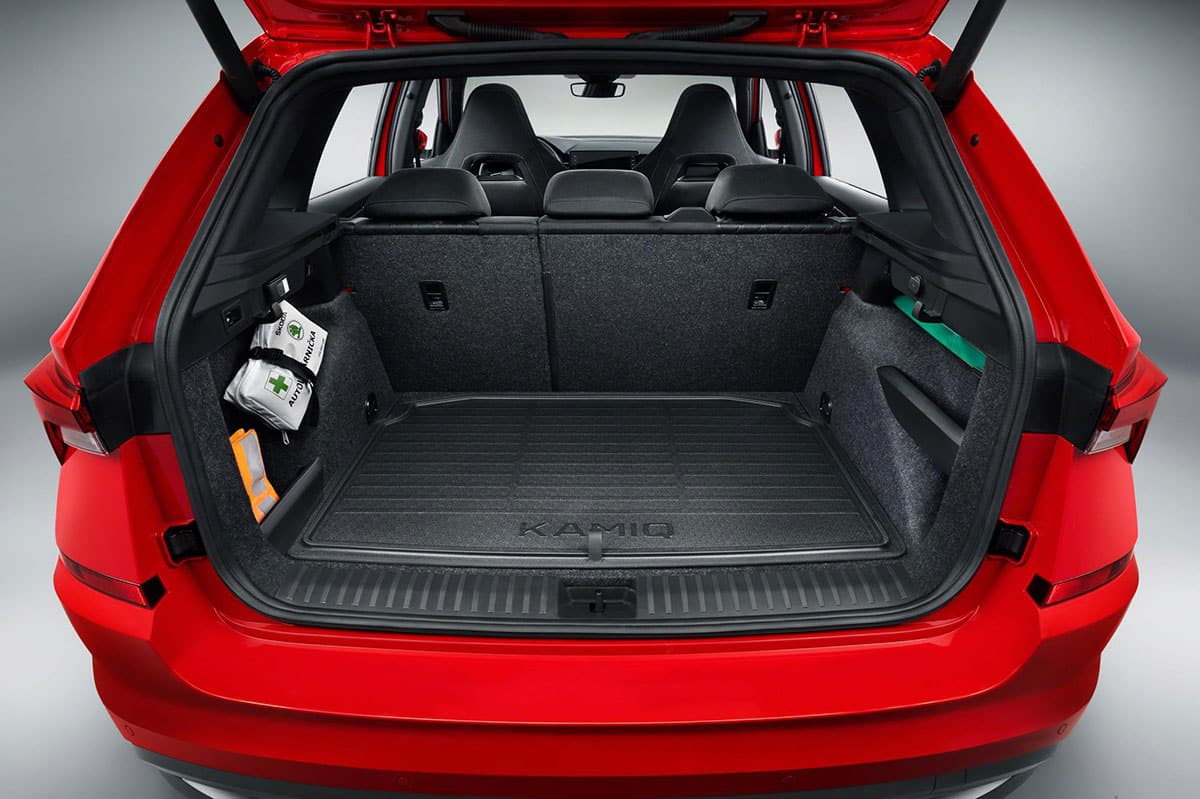


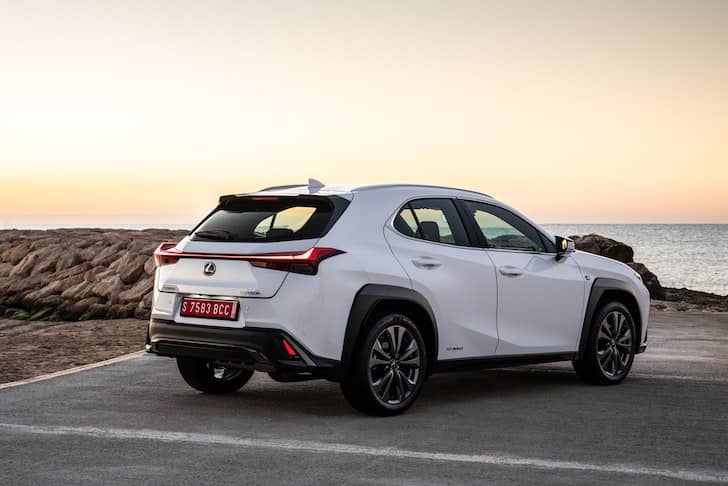
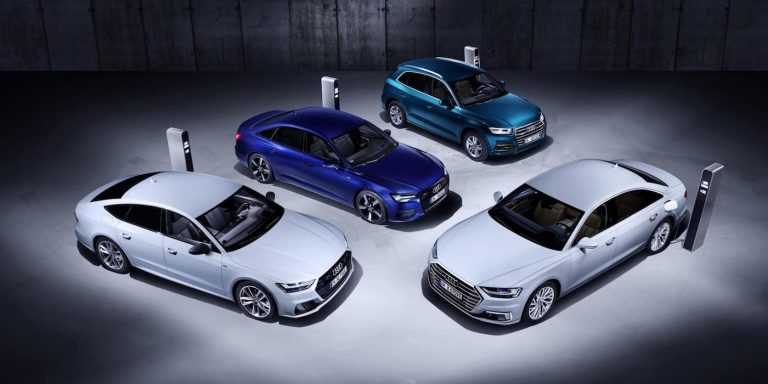

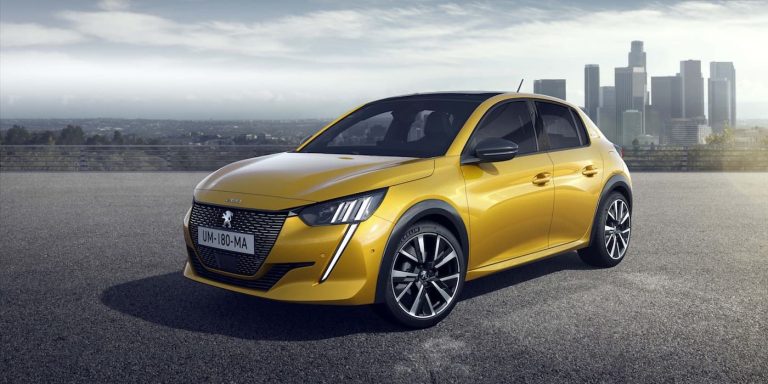


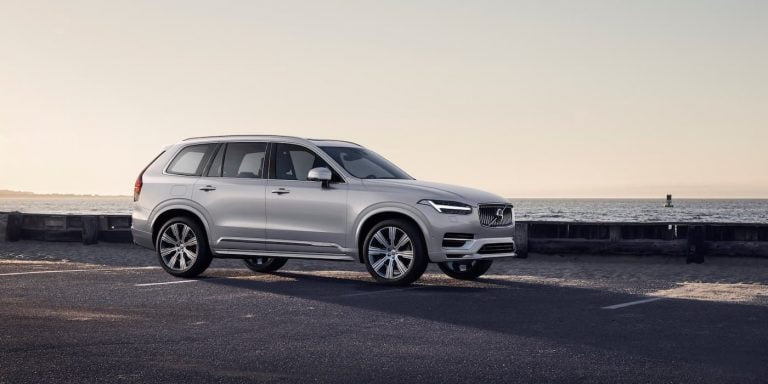

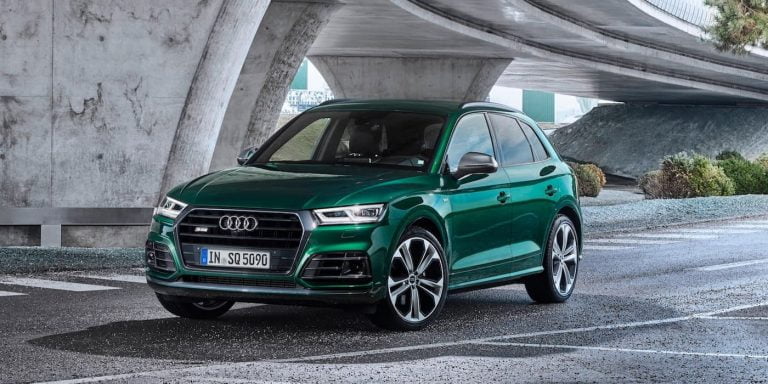
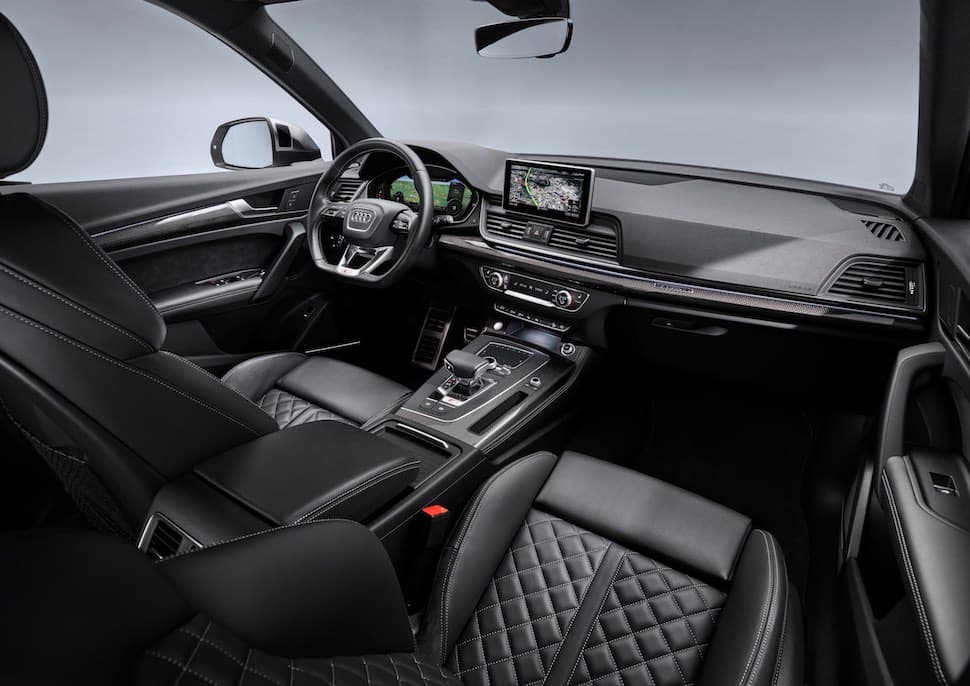

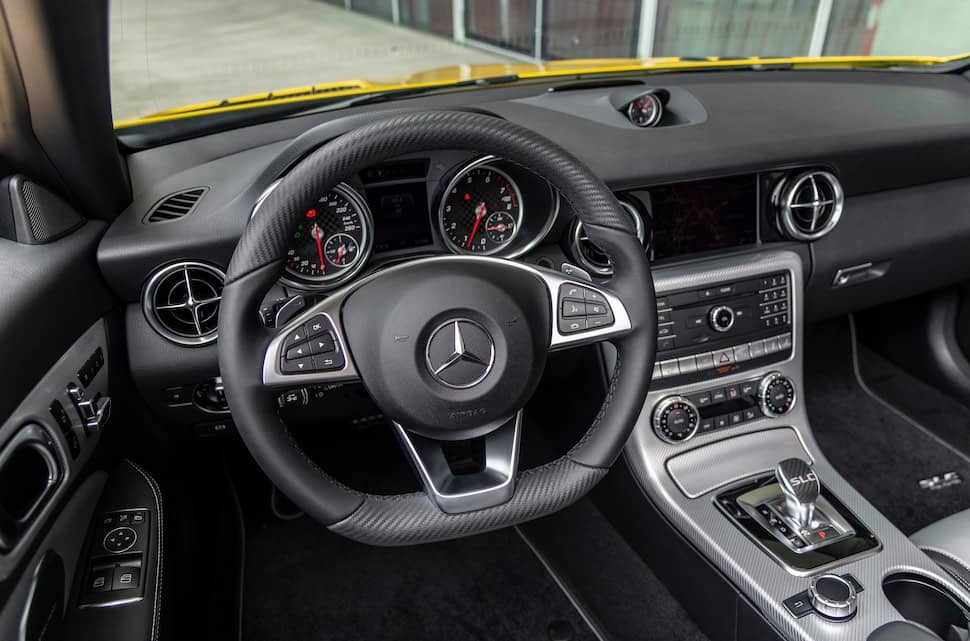
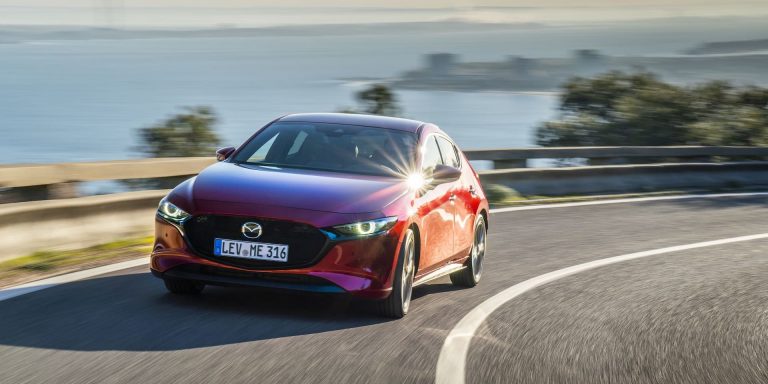

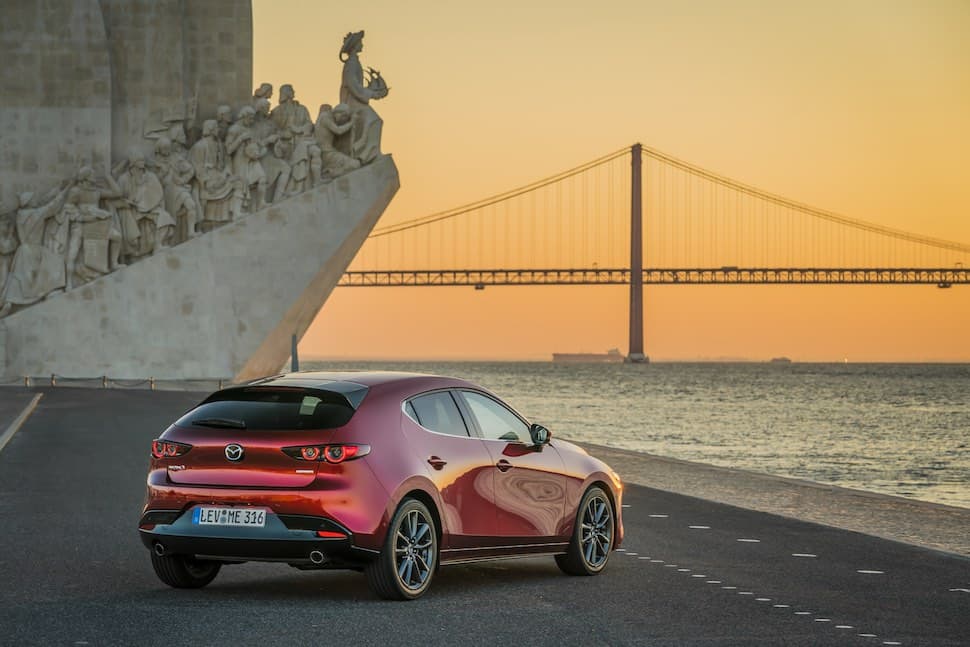


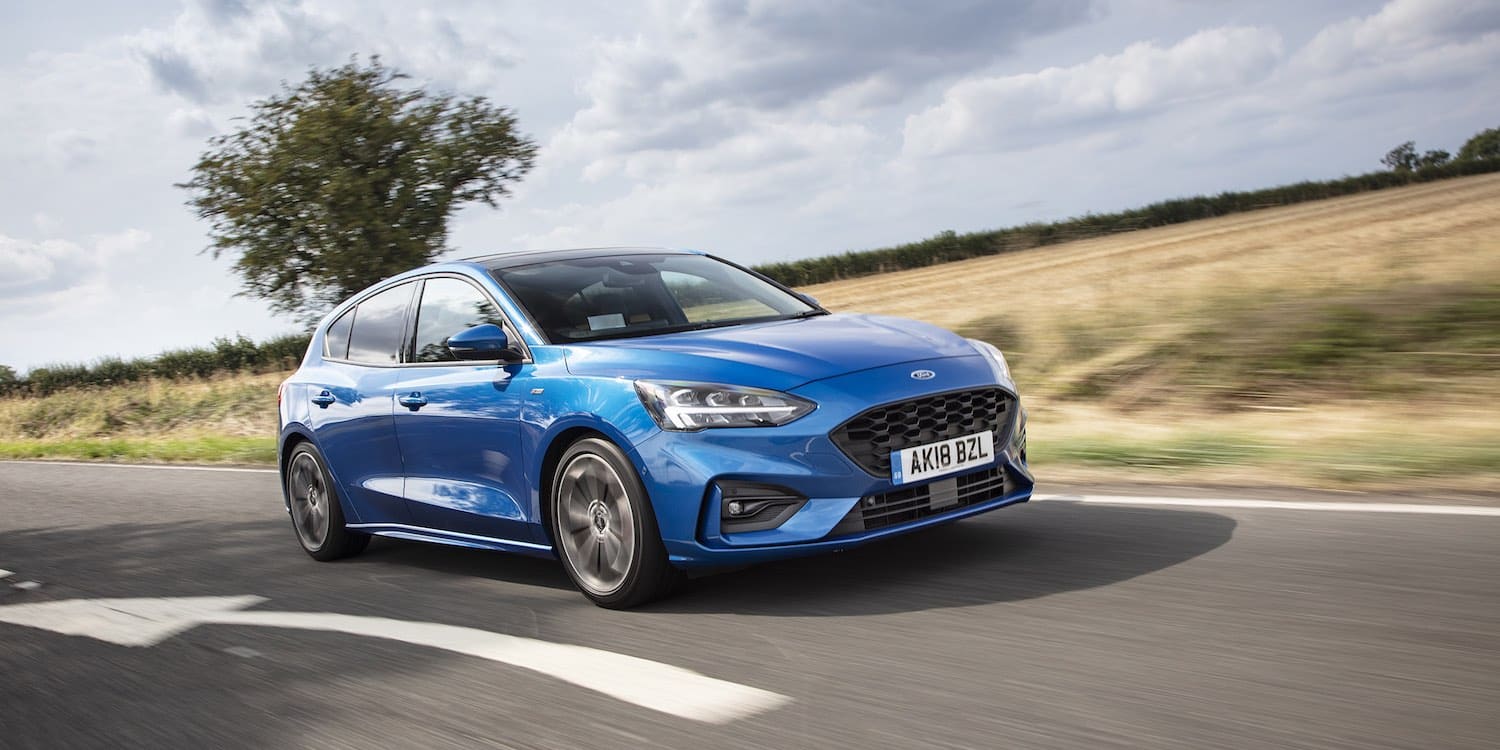


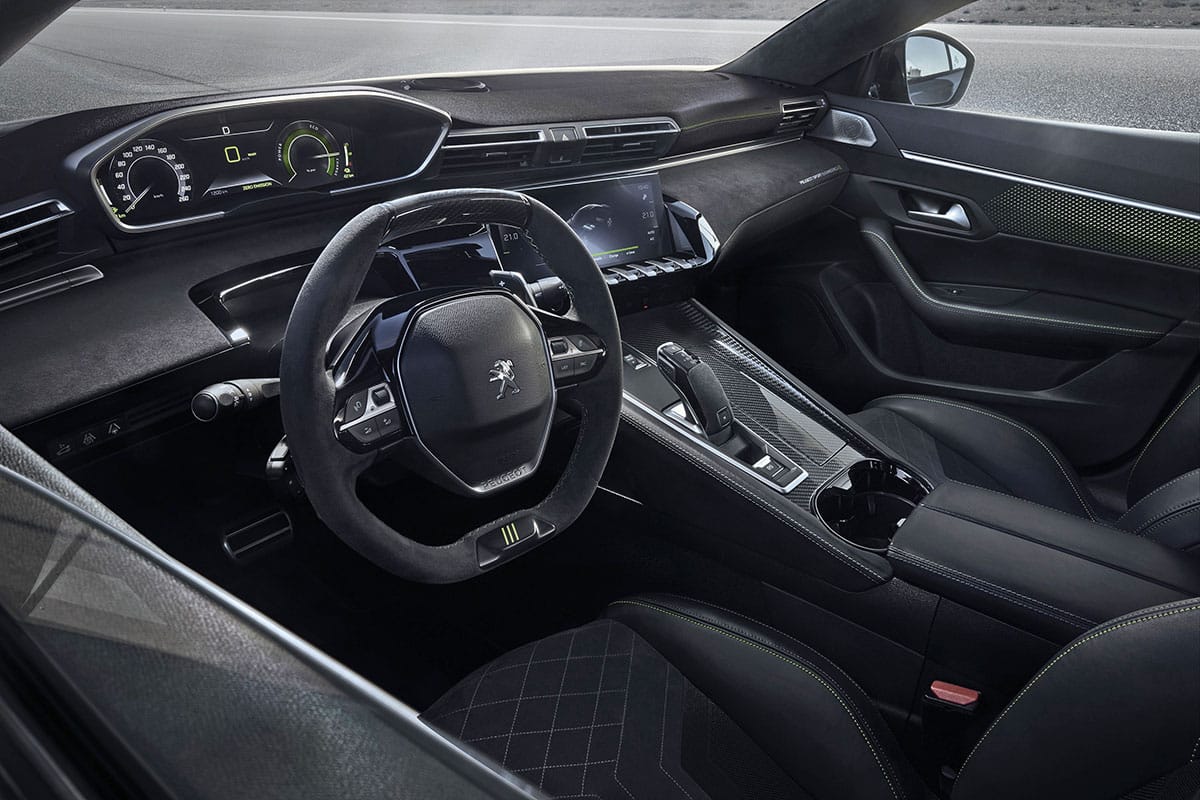 According to Peugeot, the Geneva concept will be finished in Selenium Grey with accents of “Kryptonite Green”. The interior boasts Alcantara in abundance across the dash, steering wheel and headlining, and more Kryptonite on the stitching and panels on the dash.
According to Peugeot chief executive, Jean-Philippe Imparato, electrification provides a marvellous opportunity to develop new driving sensations. “We are creating a ‘neo-performance’… new features, new territories, new challenges – sheer pleasure for only 49g/km of CO2.”
Peugeot’s plans for electrification include offering a pure EV or hybrid model of every model the brand sells by 2023. The 508 concept will be displayed at the Geneva show alongside the previously-announced 508 and 3008 plug-in hybrids.
According to Peugeot, the Geneva concept will be finished in Selenium Grey with accents of “Kryptonite Green”. The interior boasts Alcantara in abundance across the dash, steering wheel and headlining, and more Kryptonite on the stitching and panels on the dash.
According to Peugeot chief executive, Jean-Philippe Imparato, electrification provides a marvellous opportunity to develop new driving sensations. “We are creating a ‘neo-performance’… new features, new territories, new challenges – sheer pleasure for only 49g/km of CO2.”
Peugeot’s plans for electrification include offering a pure EV or hybrid model of every model the brand sells by 2023. The 508 concept will be displayed at the Geneva show alongside the previously-announced 508 and 3008 plug-in hybrids.