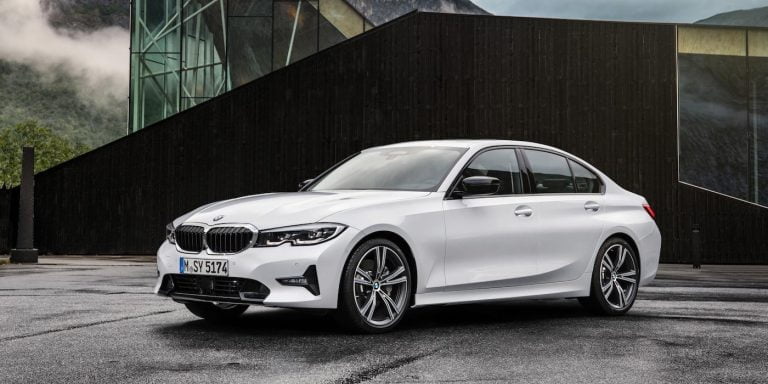
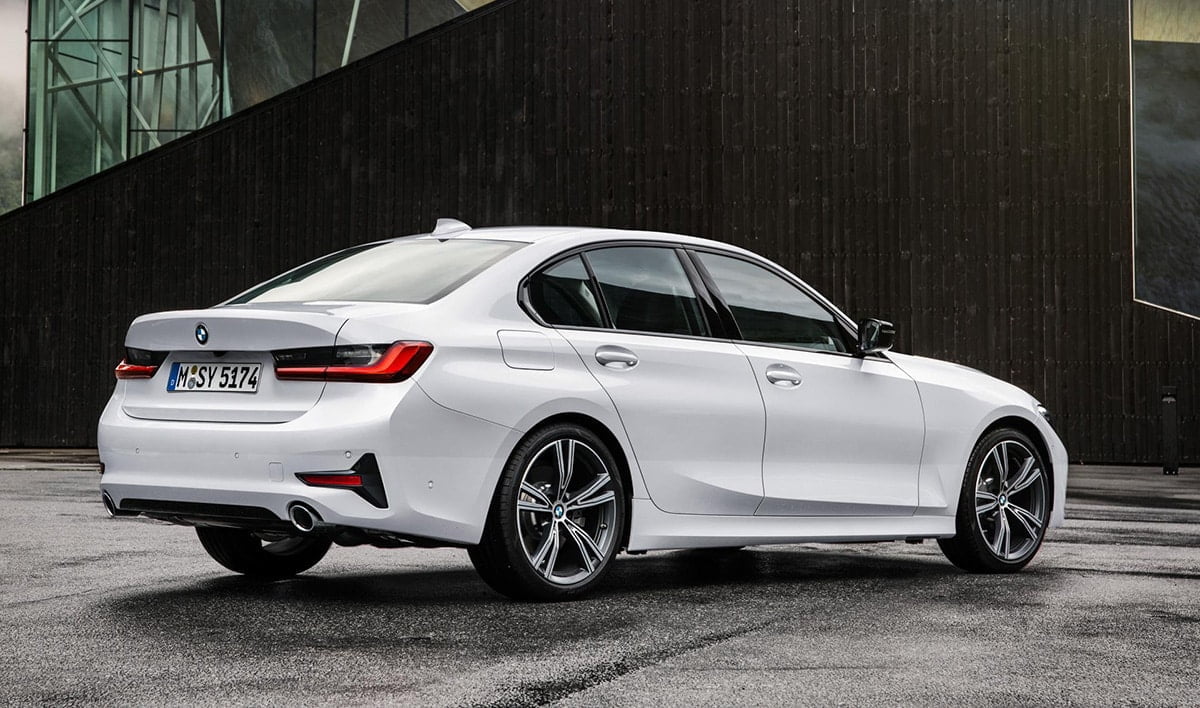
The seventh-generation BMW 3 Series is debuting at the Paris motor show and aiming to maintain the brand’s leadership of the upmarket saloon sector.
Once dominating the class particularly on its handling qualities, the 3 Series has faced stiffer competition in recent times from the launch of more driver-focused rivals such as the Jaguar XE and Alfa Romeo Giulia.
BMW says that the new car raises even higher levels of quality and supreme handling established over the 40-year history of the model, during which it has sold more than 15 million globally.
The new 3 Series is a lighter, more aerodynamic car than its predecessor, and debuts a new design language said to focus on clean and precise visual lines.
Overall length and with are extended over the previous 3 Series by 9cm and 1.5cm respectively. The wheelbase grows by 4cm and the tracks by 4cm front and 2cm rear, opening up improved interior space whilst also aiding handling.
Inside the cabin is designed to be driver-focused with related controls grouped together in ‘function panels’. A new range of options will be available to personalise the car, such as aluminium mesh-effect and open-pore wood trim.
Technology debuting with the 3 Series includes an intelligent Personal Assistant feature. Similar to smartphone voice assistants and an automotive system recently launched by BMW’s direct rival Mercedes-Benz, it is activated by the occupant saying “Hey BMW”.
The system’s designers say it marks the start of a new era for the BMW Group in which drivers will increasingly be able to operate their car and access its functions and information simply by speaking.
The new BMW 3 Series range will launch in March 2019 at prices starting from £33,610, which will buy the 190hp 320d. Other launch models will include a four-wheel-drive version of this car and the petrol-powered 330i with 258hp at £37,660.
A plug-in hybrid version of the new 3 Series is also on the way. Details of the BMW 330e iPerformance and its likely on-sale date are yet to be revealed.
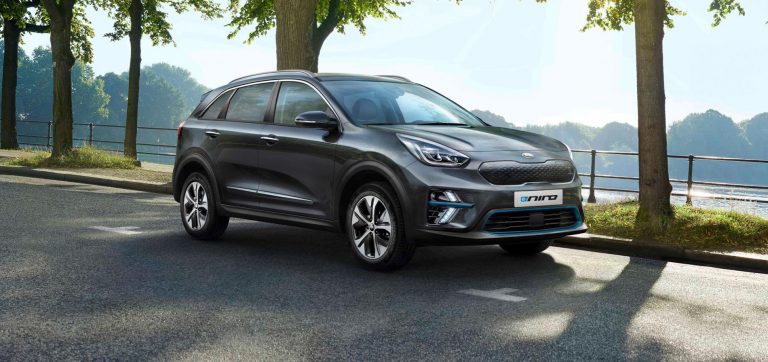
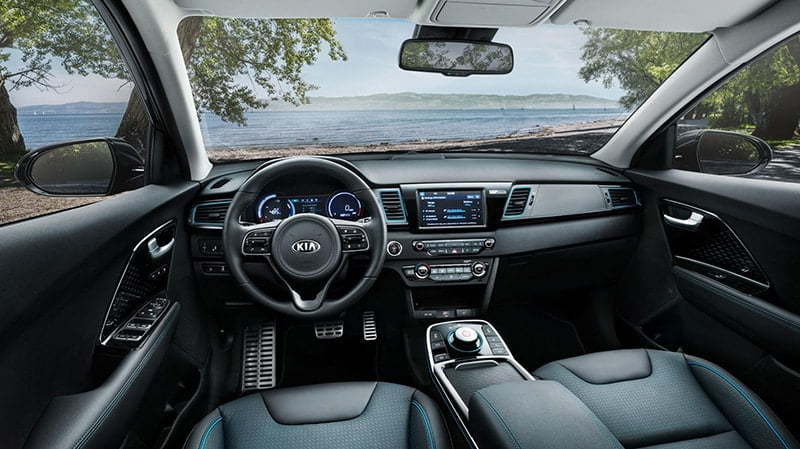
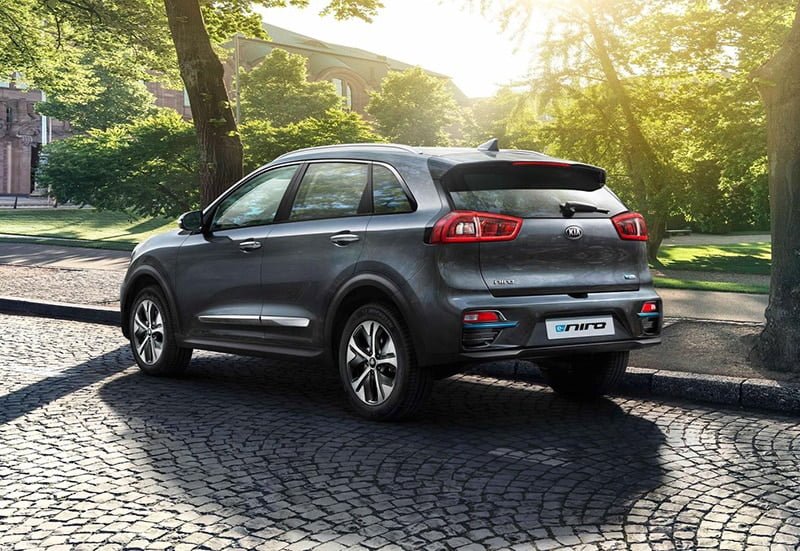
On sale before the end of 2018 will be the Kia e-Niro, a fully electric version of the crossover unveiled at the Paris motor show.
Kia claims a range of 301 miles between charges for the e-Niro, under the new and more ‘real world’ WLTP combined cycle measuring method.
[UPDATE 3 DECEMBER 2018: The official range of the e-Niro has been downgraded from 301 miles to 282 miles as a result of ‘a testing error’. Kia claims to have contacted customers who have places orders for the new vehicle.]
In urban environments the potential range rises to 382 miles, aided by the battery regeneration produced by constant coasting and braking. The e-Niro includes an Eco Driving Assistant System that advises drivers how to drive more efficiently and make the most of the battery.
European versions of the car will use a 64kWh lithium-ion battery pack, which is paired with a 150kW (204hp) electric motor with a 395Nm torque figure. As a result the e-Niro will offer a 7.8-second 0-62mph time.
Also on offer will be a 39.2kWh version which combines with a 100kW (100hp) motor, producing the same torque figure but a 9.8-second 0-62mph time. This version will offer a combined cycle range of up to 193 miles, and using a fast charger will be able to be recharged from 20 to 80% in 42 minutes.
Kia says that the Niro was designed from the start to accept a battery-electric powertrain and so it has a minimal effect on the car’s interior space. The 451-litre boot space is claimed to outstretch many plug-in and hybrid rivals, and includes a dedicated compartment under the floor to store the car’s charging cable.
Design details differentiate the e-Niro from other versions of the crossover, including the already available plug-in hybrid model.
The exterior is ‘cleaned up’ to aid aerodynamics and battery life, notably on the front bumper while above it the signature ‘tiger nose’ grille includes the charging socket. Blue trim highlights also feature.
Inside the major change is to the centre console, as there is no need for a traditional gear lever. A rotary ‘shift by wire’ control takes its place, mounted on a panel extending from the base of the centre armrest. Again blue detailing features.
Kia is yet to announce UK pricing and specification details for the e-Niro, which will directly rival the UK’s best-selling EV, the Nissan LEAF.
The related, but smaller Hyundai Kona electric is priced from £25,000 in the UK, after the Government plug-in car grant is deducted.
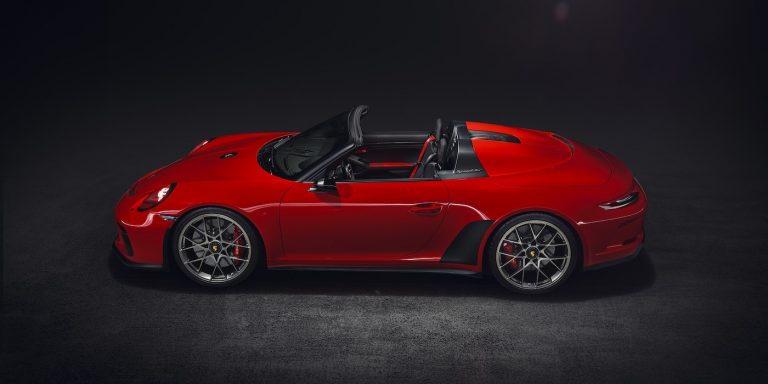
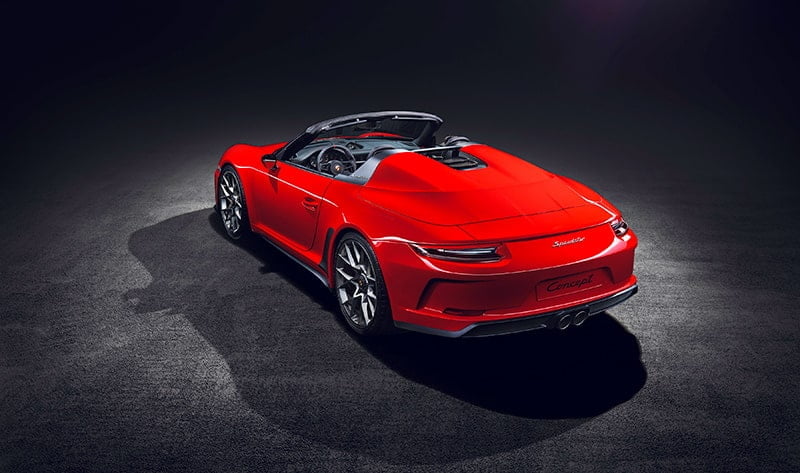
The Porsche 911 Speedster concept, unveiled in an updated form at the Paris motor show, is to become a production limited edition.
Porsche will produce just 1948 examples of the car to celebrate the brand’s 70th anniversary.
First revealed as a heritage concept in June and publicly unveiled at the Goodwood Festival of Speed in July, the 911 Speedster is based on the 991 range and is expected to be the final car in that line-up.
It is an open-top two-seater powered by one of the 911’s signature flat-six engines with 500hp-plus on tap. Porsche is currently giving few details about the engine work that will take place but the unit is expected to be an uprated version of the 911 GT3 unit.
Porsche has used much of its motorsport experience in creating the Speedster. The wings, front and rear hoods are made in carbon-fibre, clothing a chassis taken from the GT3. Drivetrain and chassis are developed over the stock car and the exhaust includes titanium tailpipes.
Body changes include shortened window frames and smaller side windows, along with a very much motorsport-inspired rear bonnet with ‘double-bubble’ cowls behind each occupant. A button-on tonneau cover is supplied instead of the usual convertible soft-top.
The car debuts what Porsche is describing as its ‘Heritage Design Packages,’ designed to allow 911 owners to add more personalisation to their cars. These include 21-inch diameter centre-lock wheels that recall the brand’s race cars such as the 911 RSR and GT3 R.
Other motorsport-inspired touches include tinted daytime running lights and a fuel tank cap mounted centrally in the car’s bonnet. Like the bespoke-shaped door mirrors this is finished in black-chrome and platinum.
The car is finished in Guard’s Red paintwork with the perforated black leather interior, this including red detailing.
The 911 Speedster is expected to be available in the first half of 2019. Price has not been revealed but based on a previous Speedster line produced by Porsche industry sources are predicting a cost in excess of £150,000.
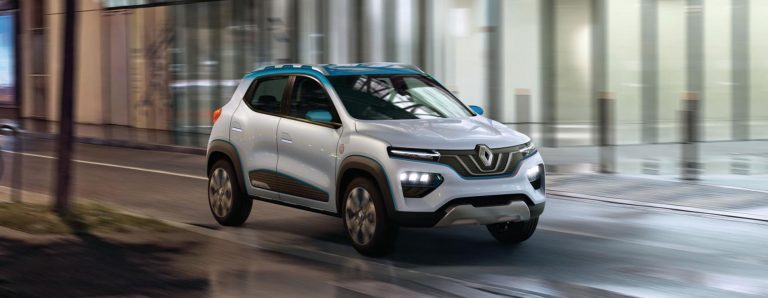
The Renault K-ZE concept is debuting at the Paris motor show, as the French state brand ramps up its move to electricity.
According to Renault production versions of the K-ZE, an ‘SUV-inspired’ small car, will be affordable electric vehicles.
The production models are expected to be close to the Paris concept and will go on global sale from 2019, launching first in China which is currently the fastest-growing EV market. European sales are expected to start in 2021.
Renault has also confirmed that under the brand’s electrification plans the Clio supermini will gain a hybrid variant and the Megane family car and Captur SUV plug-in hybrid versions – these are expected on sale in 2020.
The K-ZE has a quoted range of 155 miles which Renault says is better than all rivals in its segment. It also has a double charging system compatible with both domestic three-pin systems and public charging facilities.
The car will also be well equipped – rear parking sensors, a rear-view camera and a central screen infotainment system with connected navigation are all included.
Renault chairman and CEO Carlos Ghosn believes the new K-ZE will further add to the brand’s credentials as the European leader in electric vehicles. The Renault Zoe is the second most popular EV on global sale, beaten only by the Nissan Leaf.
“We are introducing K-ZE, an affordable, urban, SUV-inspired electric model combining the best of Groupe Renault: our leadership in EV, our expertise in affordable vehicles and in forging strong partnerships”, he says.
UK new car buyers are increasingly shunning British-built cars in favour of imported vehicles, according to production and registration data from the year to date.
Data provided by the Society of Motor Manufacturers and Traders (SMMT) shows that new car registrations are down 4% for the first eight months of the year, equating to about 70,000 cars.
However, production of British cars for British buyers has decreased by 19% over the same period, equating to more than 44,000 vehicles. This suggests that British-built cars are now making up about 12% of all sales, down from more than 14% at the same point last year.
In contrast, British-built cars for export are only down by about 1.5% for the year, equating to about 12,500 cars. More than 81% of UK-built cars in 2018 are exported to the rest of the world, up from 78% this time last year.
Is the Vauxhall Astra a falling star?
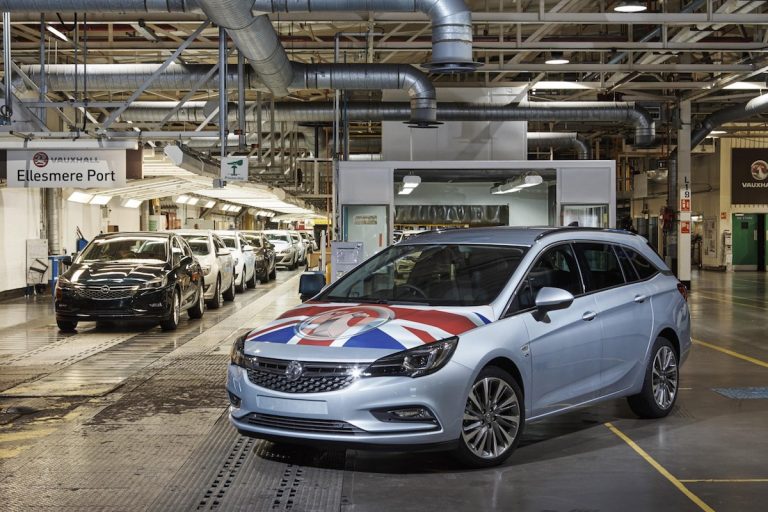
The big loser in terms of sales volume appears to be the Vauxhall Astra, built at Ellesmere Port. This time last year, it had accounted for more than 36,000 new registrations and was the sixth most popular car in the country.
This year it has slid out of the top ten altogether and has dropped at least 14,000 units (the SMMT figures for models outside the top ten are not published), meaning it is responsible for a large chunk of the overall decrease on its own.
To make that picture even gloomier for Vauxhall, last year’s Astra sales were about 19% down on 2016 levels for the full year, so the Astra seems on course to see its UK sales almost halved in the space of two years.
Other British models that are contributing to the decrease
The 3 millionth Nissan Qashqai rolls down the production line in Sunderland
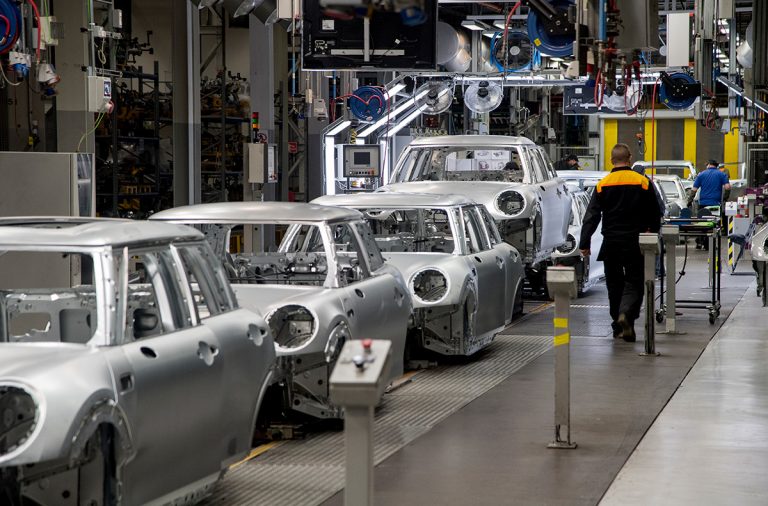
However, there are plenty of other British-built cars not racing out of showrooms across the country. The Sunderland-built Nissan Qashqai, which is the most popular British-built vehicle on sale, is down about 5,000 units for the first eight months of the year.
The current Nissan Juke is also in the last year of production ahead of a new model arriving next year, while the Infiniti Q30 and QX30 models, also built at Nissan’s enormous Sunderland factory, struggle to find buyers.
From Oxford, the Mini hatchback has also dropped a couple of thousand sales but still sits seventh in the best-selling model list.
Land Rover sales are down about 5,000 across the range, while Jaguar is down about 1,500 and has already announced that its Castle Bromwich factory – which builds the slow-selling XJ, XF, XE and F-Type models – is dropping back to a three-day week for the rest of the year. By contrast, the Jaguar SUV E-Pace and F-Pace models built in other UK factories continue to sell strongly. The new electric I-Pace model is imported from Austria.
In Burnaston, Derbyshire, Toyota has ended production of the Avensis model while the Auris is also winding down at the end of its life ahead of the all-new Corolla model being launched early next year.
Honda has ended UK production of the CR-V crossover at Swindon, with the new model being imported from Japan. That leaves the Civic as the only Honda model built in the UK.
The Car Expert has published a full list of all the cars built in the UK, although obviously there are significant imports and exports of components that complicate defining just how “British” a locally-built car really is.
However, if more car buyers chose British-built cars off our list instead of buying imported vehicles, there wouldn’t be any reason to worry about Brexit or the economy in general.
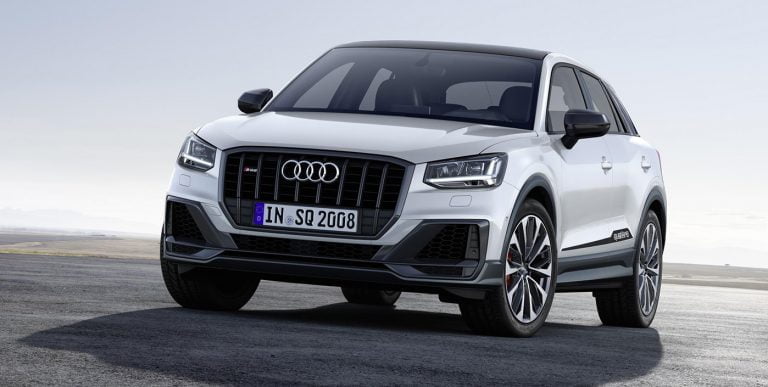
The car industry has decided we need performance SUVs and latest to join the line up is the Audi SQ2.
Set to be unveiled on 2nd October at the Paris motor show, the hot version of the Audi Q2 small SUV packs 300hp, a sub five-second 0-62mph time and an electronically limited 155mph top speed.
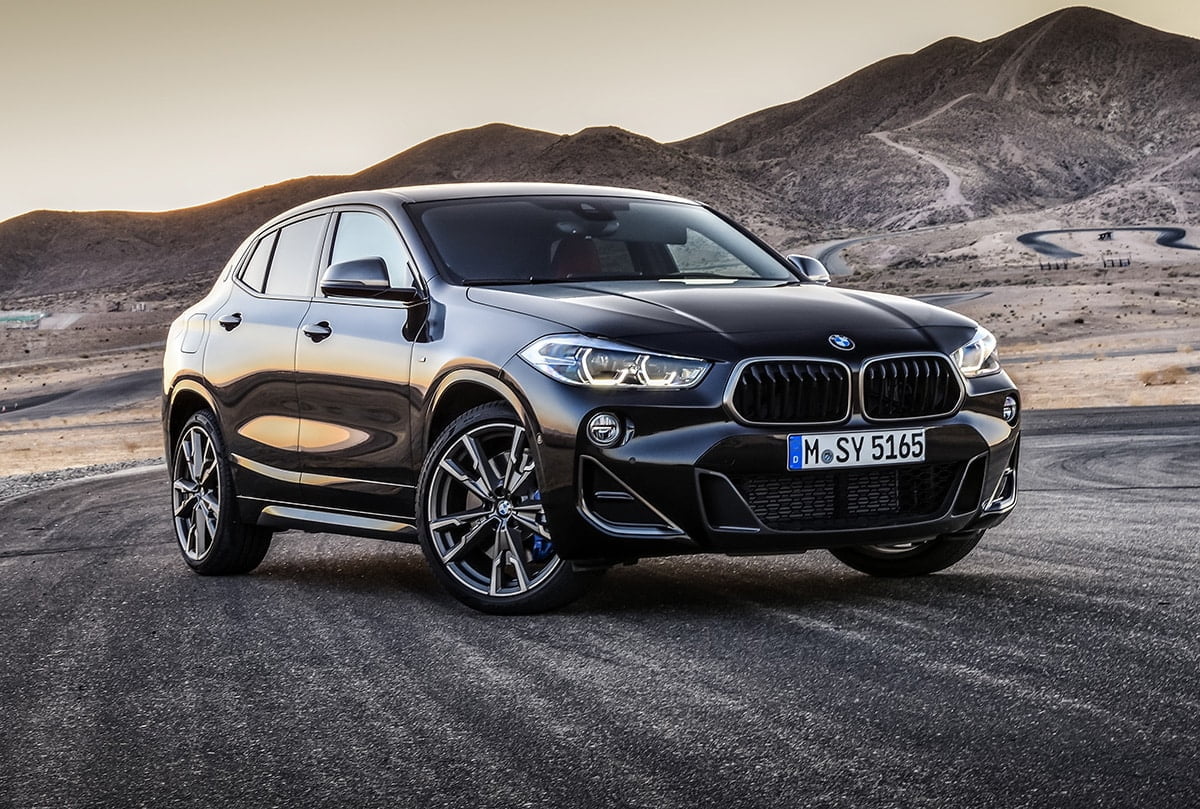
This should make it competitive with forthcoming rival SUVs such as the Volkswagen T-Roc R and BMW X2 M35i – also debuting at the Paris show.
The SQ2 uses the same 2.0-litre turbo petrol engine fitted to the Audi S3 hatch. Alongside the power the compact, lightweight unit (weighing just 150kg) produces 400Nm of torque between 2,000 and 5,000rpm.
As standard the SQ2 is fitted with a seven-speed twin-clutch auto transmission and all-wheel-drive, the system programmed for performance with the ability to direct 100% of the torque to the rear wheels for maximum acceleration and individually to each axle for the best grip when cornering.
Chassis changes over the standard Q2 include a 20mm lower suspension and retuned power steering, sharpening its reactions the more the wheel is turned.
Upgraded brakes employ 340mm front discs and 310mm at the rear and can be supplied with red callipers. They sit behind bespoke alloy wheels of 18 inches diameter as standard, with 19-inch versions on the options list.
As in other Audi S models exterior styling is added to differentiate the SQ2 from the standard car. A bolder front-end design includes a splitter, contoured trim strips are added to the lower doors, mirrors finished with an aluminium effect and a roof spoiler added along with a rear diffuser and quad exhaust pipes.
Inside the treatment includes a black finish on the headlining, pillars and upholstery of the standard-fit sports seats. Matt brushed aluminium is used on the instrument panel, while there are stainless steel pedal surfaces and footrest and illuminated S logos on the door sill trims.
There’s more – bespoke start screens on the instrument panel when the engine is turned on, leather and fabric trim as standard or a leather/Alcantara mix or Nappa leather as options, and contrasting stitching and embossed S logos.
Audi dealers will start taking orders for the SQ2 later this year with first deliveries in early 2019. Prices are still to be announced – industry sources suggest they will start from around £35,000.
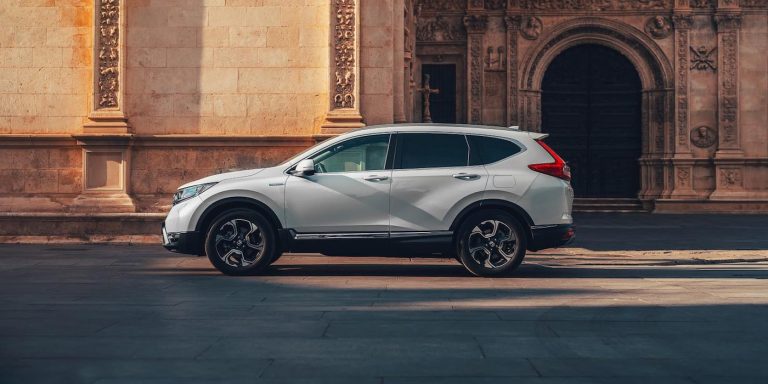
A hybrid version will be among the new Honda CR-V range at the Paris motor show on Tuesday 2nd October.
The hybrid is a new addition alongside petrol versions of the CR-V that were revealed at the Geneva motor show in March.
When the petrol-electric model goes on sale in early 2019, it will be the brand’s first hybrid SUV on the European market.
Honda will offer the hybrid in both front and all-wheel-drive versions, with a combined power output of 184hp. The front-wheel-drive variant offers combined cycle fuel economy of 53.3mpg and CO2 emissions of 120g/km, the all-wheel-drive version 51.4mpg and 126g/km.
These figures will make the hybrid CR-V a direct contender against diesel models from rival manufacturers, such as the Volkswagen Tiguan and Skoda Kodiaq.
An intelligent control unit, dubbed i-MMD, automatically switches between three driving modes – EV Drive, Hybrid Drive and Engine Drive to make the most of the hybrid SUV’s economy and performance.
Among other versions of the CR-V on display in Paris will be petrol-powered models and a new seven-seater option.
The petrol version will be the first on sale later in 2018 – it uses a 1.5-litre turbo engine with either six-speed manual or CVT transmission. Prices will range from £25,995.
Honda will also reveal a mid-life revamp for its HR-V SUV in Paris. Updates to the exterior styling and the interior feature, along with the addition of a number of latest technologies.
When it goes on sale, the HR-V will be offered with a 1.5-litre petrol engine, which will be joined in Spring 2019 by a turbo version and a 1.6-litre diesel.
More Honda news, reviews, features and offers
UK car production dropped for a third consecutive month in August, as industry bosses renewed their concerns over a final Brexit deal.
Figures released by the Society of Motor Manufacturers and Traders (SMMT) showed that 89,254 units left the production lines of British car plants in August, down 13% on the same month in 2017.
A multitude of factors contributed to the slide, including model changes, planned maintenance shutdowns and preparation for new WLTP emissions standards that came into force in September.
Production for the UK plummeted by 39% to 16,271 units, but the decline in cars built for export, which account for more than 80% of all UK production, slipped just 4% to 72,983 units.
The vast majority of cars built for export go to the European Union, adding to industry fears of a ‘no deal’ Brexit and resultant tariffs being applied to exports.
“With exports, the majority to the EU, continuing to drive demand, it underscores the importance of a Brexit agreement to safeguard this trade; for our sector, ‘no deal’ is not an option,” said SMMT chief executive Mike Hawes.
Hawes added that the quieter summer months are often subject to fluctuations due to the variable timing and duration of annual maintenance and re-tooling shutdowns in factories.
“This instability was exacerbated in August, with the industry racing to recertify entire model ranges to meet tougher testing standards in force on September 1.”
So far in 2018, more than one million cars have rolled off British production lines, a 5% decline year-on-year, with exports continuing to shore up demand. While almost 850,000 cars were shipped abroad in the first eight months, just 194,887 were built for the home market, representing a 19% decline compared to the same period in 2017.
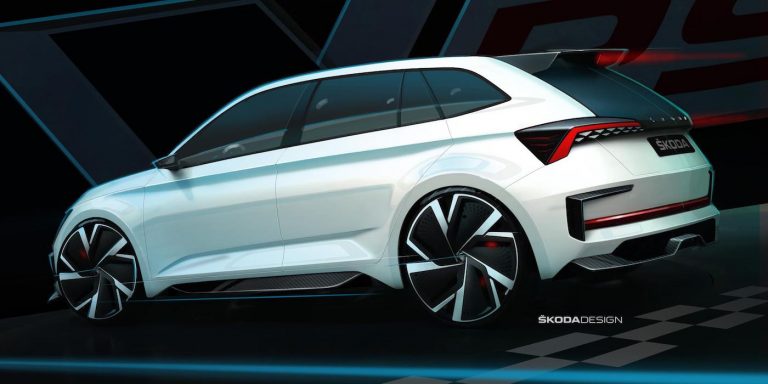
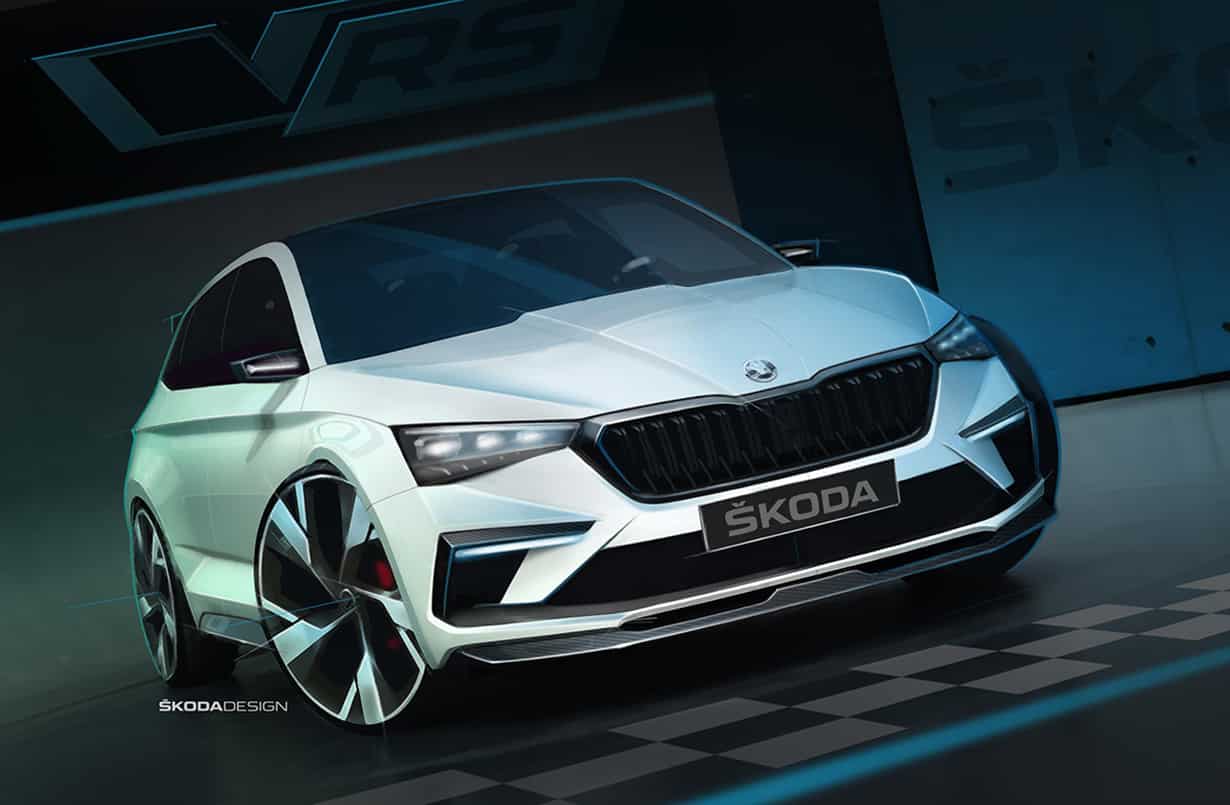
Set to be unveiled at the Paris motor show on 2nd October is the Skoda Vision RS, a concept that previews a plug-in hybrid performance version of the next Rapid hatch.
For now, Skoda will only say that the Vision RS ‘offers first insights into the design evolution of Skoda RS models and the design of a future compact model.’
In fact, the car is a direct pointer to the forthcoming new Rapid range, expected in 2019.
A vRS performance version is expected to eventually join the Rapid line-up, and the concept provides a firm indicator to the potential of the petrol-electric powertrain.
The Vision RS combines a 1.5-litre turbo petrol engine of 50hp with an electric motor producing 102hp. Combined system output is 245hp which in the concept produces a 0-62mph time of 7.1 seconds.
This potency comes alongside a 33g/km CO2 emissions figure, and an ability to cover 43 miles on electric power alone. Skoda adds that the 13kWh lithium-ion battery can be cable charged at a public station in 2.5 hours.
Some aspects of the concept are less likely to find their way into the Rapid production range. Vegan materials include a carbon textile made from 100% recycled polyester thread on the upper part of the floating Alcantara covered seats which bear signature Czech flags on their side bolsters celebrating Czechoslovakia’s foundation 100 years ago.
The floor mats, meanwhile, use a textile known as Pinatex in a carbon weave; the high performance material extracts its fibres from the leaves of a pineapple tree.
Previously the Skoda vRS badge (the v added in the UK due to Ford owning the RS badge) has been restricted to the larger Octavia hatch though the brand is set to unveil a vRS version of its Kodiaq SUV at the Paris show.
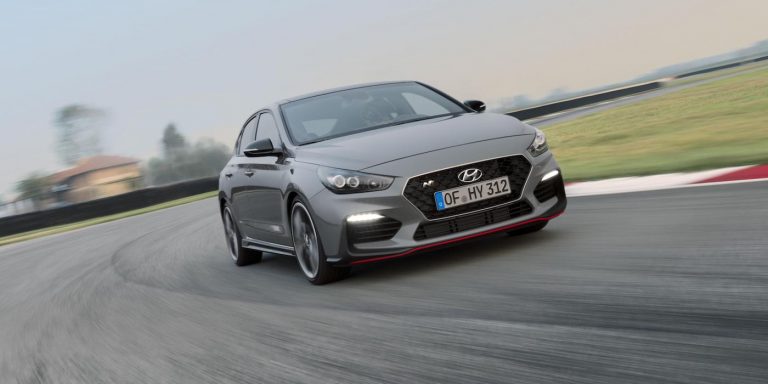
The Hyundai i30 Fastback N will be unveiled at the Paris motor show on 2nd October, doubling the Korean brand’s performance line.
The coupe-look Fastback will be identical mechanically to the i30 N, Hyundai’s first hot hatch that was very positively received, including by The Car Expert, when it was launched in 2017.
It uses a 2.0-litre turbocharged engine, which in the hatch version has been sold in standard 250hp form and as an N Performance model with 275hp. However, in the UK only the higher-power Fastback will only be offered, Hyundai reacting to the vast majority of i30 N hatch buyers choosing the N Performance model.
Maximum torque figures are 353Nm, increasing to 378Nm using an overboost function. Five driving modes are included under the ‘Grin Control System’ – selected by buttons on the steering wheel, they range through Eco, Normal, Sport, N and N Custom.
The 275hp Fastback will go from 0-62mph in 6.1 seconds, the same time as the hatch despite being very slightly heavier. Top speed remains an electronically limited 155mph, while Hyundai quotes 39.8mpg fuel economy and CO2 emissions of 169g/km.
At the front, the Fastback replicates the hatch with the same grille and front bumper, while it gets its own rear bumper with a dual twin muffler exhaust. An arched rear spoiler is also built into the car’s tailgate.
Hyundai expects the Fastback to appeal to a slightly different buyer to the hatch – it will be slightly more practical, its boot offering 450 litres of space compared to the 395 of the hatch.
Pricing and final specification for the i30 N Fastback are yet to be revealed – they are likely to be slightly more than the hatch, which costs £28,010 in N Performance form.
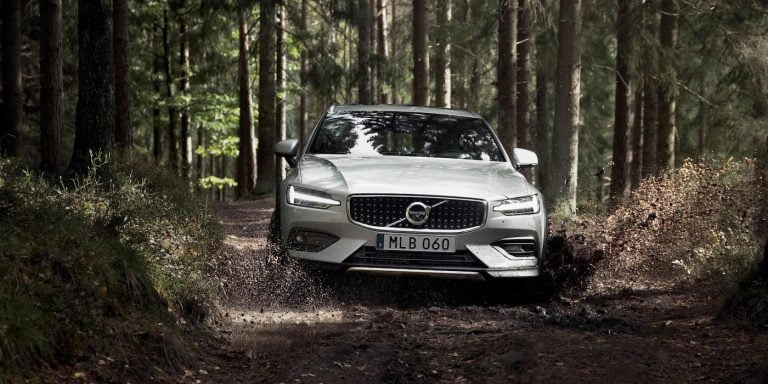
The Volvo V60 Cross Country has been unveiled and will arrive in showrooms before the end of 2018.
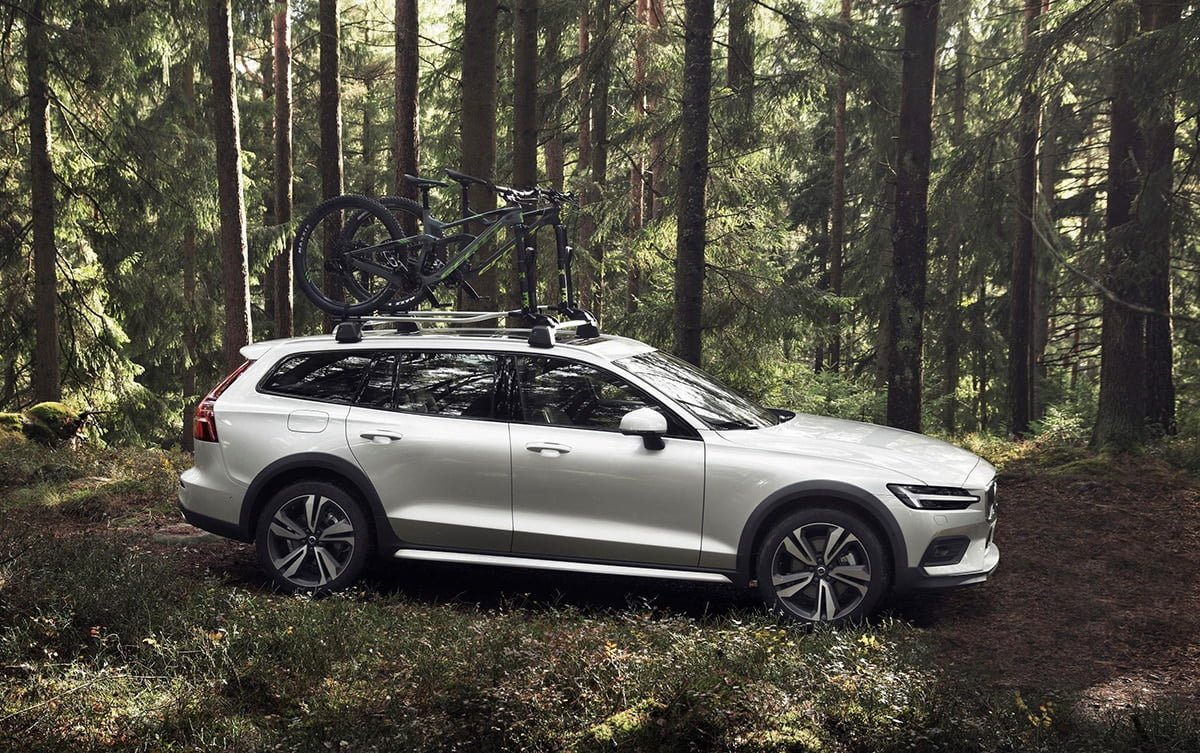
Taking Volvo’s mid-sized range to three alongside the already on-sale V60 estate and soon-to-launch S60 saloon, the Cross Country follows the style of its predecessor models in presenting a more off-road pitched version of the car.
Its ride height is raised 8cm over the standard car, skid plates are mounted under the front and rear body, and extra cladding is added to protect the lower sides.
Volvo has also significantly revised the V60 chassis and suspension to ensure the Cross Country has a degree of off-road ability to match its visual appearance. Not surprisingly, all-wheel-drive is standard.
Electronic aids include hill-descent control, electronic stability control, a corner traction control and an off-road setting on the cockpit-selectable drive modes.
Initially, the V60 Cross Country will go on sale with a D4 diesel engine of 191hp. Volvo says that the range will be expanded with both mild and plug-in hybrid versions at a later date, the Swedish brand having already committed to producing electric versions of all new models.
The standard safety package includes the City Safety with Autobrake, autonomous emergency braking that can also recognise pedestrians, cyclists and large animals. Run-off Road Mitigation, Oncoming Lane Mitigation and other steering assistance systems are also standard.
Other driver aids available for the Cross Country include the Pilot Assist steering, acceleration and braking system, and the Cross Traffic Alert with autobrake.
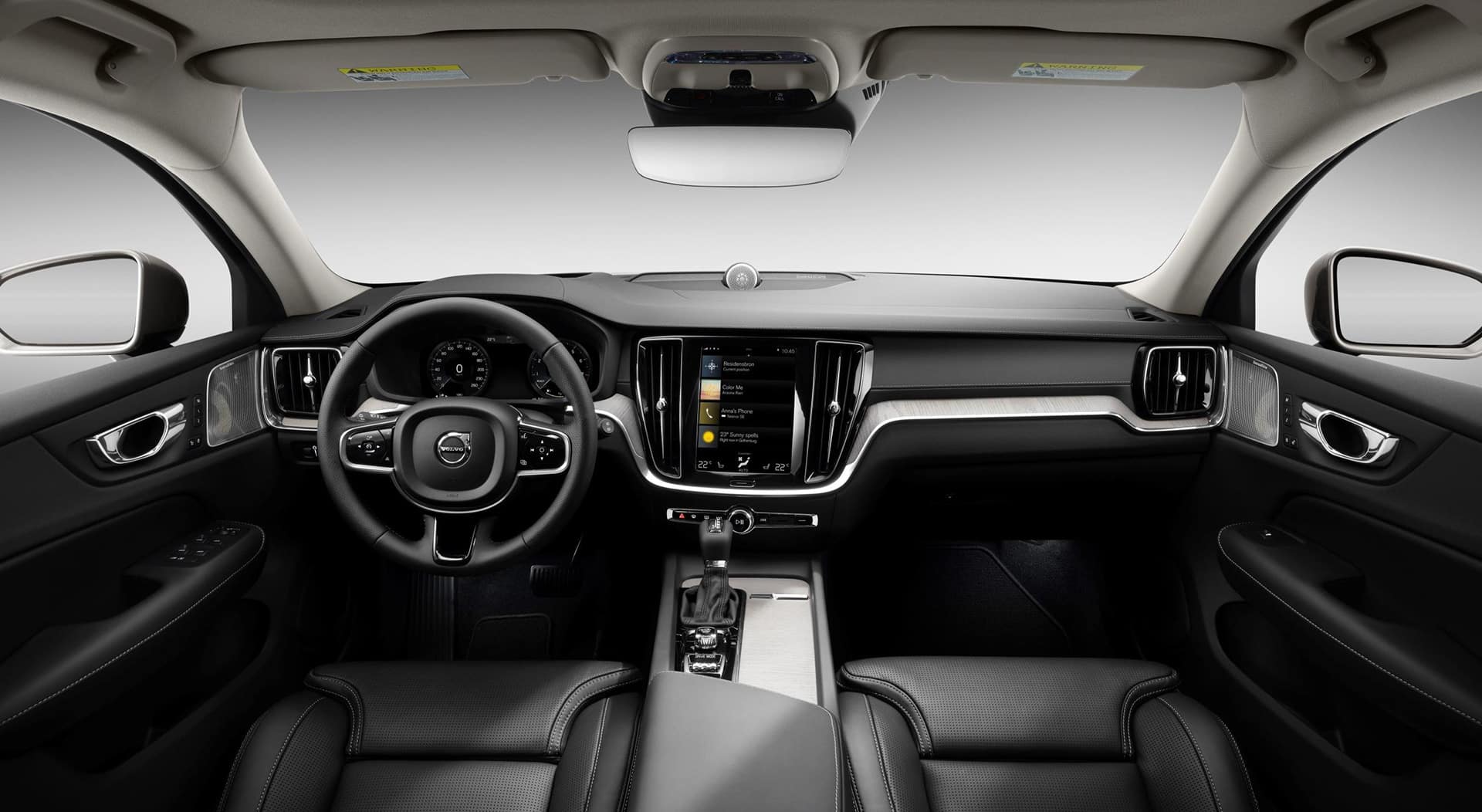
The infotainment system includes Android Auto, Apple CarPlay and 4G compatibility, the tablet-style touchscreen control combining car functions, navigation, connected services and in-car entertainment apps.
Volvo has sold Cross Country models since 1997, taking on the likes of the Audi allroad equivalents. “We invented the Cross Country segment over 20 years ago, and with this car we reinforce our long-standing pedigree in safe, capable and versatile family cars,” says Volvo president and CEO Hakan Samuelsson.
Pricing and the full UK specification of the Volvo V60 Cross Country will be announced closer to its launch.
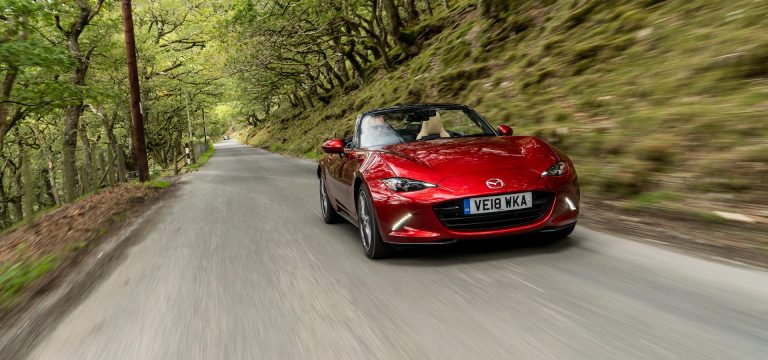
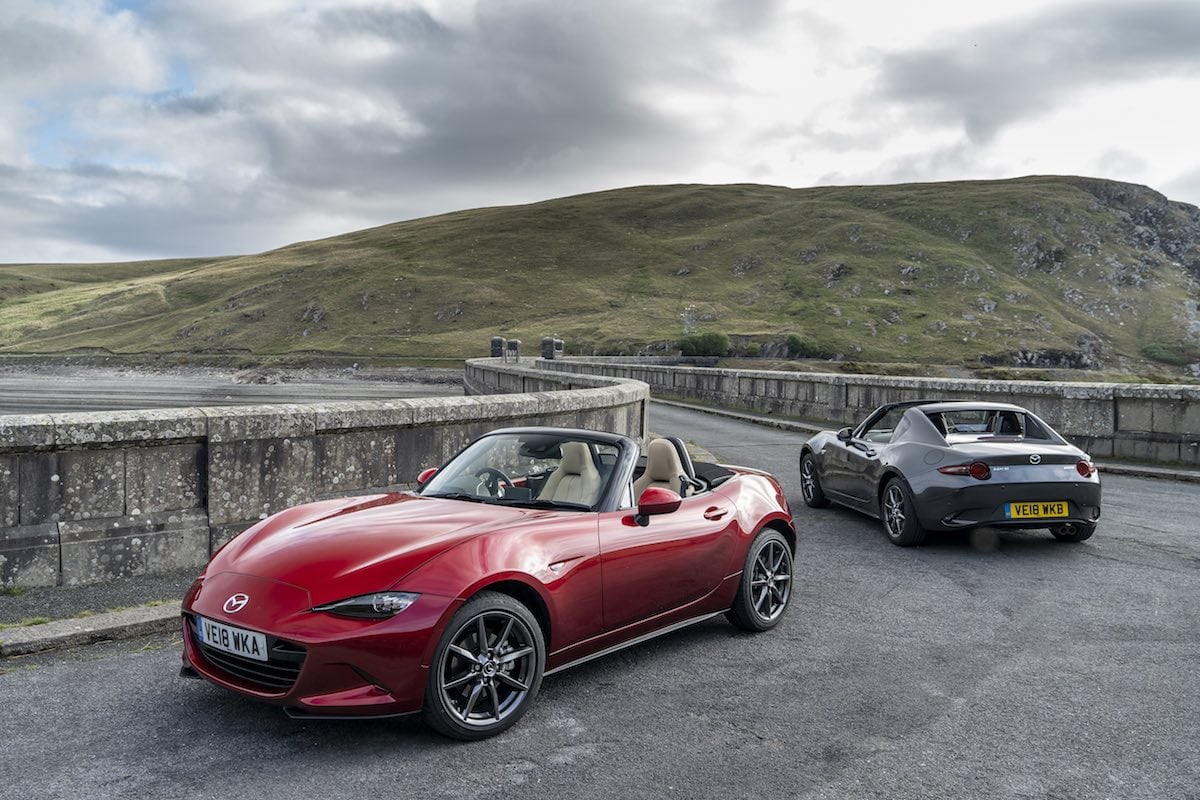
What is it? The 2019 Mazda MX-5 is a revamp of the soft and hard-top roadster, principally adding more potency to the 2.0-litre engine.
Key features Engine upgrade, new range-topping hardtop version, reach on the steering wheel
Our view To many, the fourth-generation Mazda MX-5 has exceeded the revered Mk1 as the go-to fun-to-drive small sports car.
Now with more power from its 2.0-litre engine, the only truly significant upgrade from this first facelift, the car adds a new level of bite, a layer of performance that will, without doubt, make it even more popular.
While the standard 1.5-litre MX-5 is truly great, the new 2.0-litre version is even better.
Iconic is an over-used word but suits the Mazda MX-5 – without doubt the world’s best-known and likely most loved roadster. Mention of the car conjures up a picture of a soft top that looks far too cute to produce the sheer driving pleasure that it offers.
When the fourth-generation MX-5 arrived in 2015, it attracted much praise including from The Car Expert. After a somewhat innocuous third incarnation, this was widely regarded as a car even better than the revered original of 1989.
Three years on and it’s time for an update – to both the soft-top and its RF sister, which was launched as recently as February 2017 with a folding metal hard top (and which some may be surprised to hear Mazda sells a lot more of than the traditional soft top variant).
The updates run across the usual formula of slightly revamping the cabin and adding extra technology, particularly in the area of safety. But by far the most significant change is the arrival of a more potent 2.0-litre engine – answering the demands of those for which the previous version was just not powerful enough.
From the outside, the only way you will distinguish the revised MX-5 is to look at the registration plate. To Mazda, and thousands of buyers (particularly in the UK, which takes half of all European sales) the MX-5’s visuals are practically perfect in every way, and certainly not worthy of change for change’s sake.
Buying and owning a Mazda MX-5
The MX-5 retains the basic grade structure from when the Mk4 version made its debut, but with an extra range-topper added. GT Sport Nav+ is currently only available on the RF models, and adds more safety tech, scuff plates and bespoke leather interior trim.
The entry-level SE+ trim is restricted to the convertible and the 1.5-litre engine. It and the 2.0-litre can also be bought in SE-L Nav+ and Sport Nav+ grades.
If safety’s your thing, you will want to avoid the lowest grades. Under the revamp Sport Nav+ cars and above have added a suite of driver aids, including autonomous emergency braking, a lane departure warning system, traffic sign recognition and a driver attention alert.
An option on these models, but standard on the top GT variant, is an extra safety pack adding a blind spot monitoring system with rear cross-traffic alert, adaptive LED headlights and a reversing camera.
Convertible prices start from £18,995, buying the 1.5-engined car in SE+. More power, in other words the 2.0-litre version, will cost from £22,495 and that’s in SE-L Nav+.
To get the extra safety kit of the Sport Nav+ costs another £2,500 (on 2.0-litre models) but you do also get 17-inch wheels instead of 16-inch, sports suspension, auto wipers and headlights, heated electric mirrors, leather trim, keyless entry and a Bose nine-speaker sound system.
The RF variant starts from £22,595 (1.5) and £24,095 (2.0) with SE-L Nav+, Sport Nav+, and GT Sport Nav+ versions available, the latter two offering the option of an automatic gearbox.
Inside the Mazda MX-5
We’ve always liked the way the MX-5’s cabin swallows up the occupants and makes them feel part of the car. This is especially true of the driver, the low stance of the MX-5 giving an impression of being directly connected to the road through the sharply-acting steering wheel and short, direct gear lever (you can buy an auto MX-5, but who would want that?).
Of course, the MX-5’s low-down profile does make it anything but elegant to get in and especially out of. Once you are in, the long bonnet stretches ahead of you and the well-built cockpit still wins points for its quality fit and finish, especially the way the door metal merges into the front fascia.
One major plus point – at long last one can adjust the steering wheel for reach, not just for rake. It will move back and forth by 3cm, ensuring that no longer do the length of one’s legs govern comfort in the driver’s seat.
The ‘plonked on top’ navigation/infotainment screen remains, but it all works very well, and the only real drawback is the lack of storage areas in the cabin. Two cup holders can be placed between the occupants at knee level, or at shoulder level. But they are flimsy and there isn’t really room for them – on the launch event our hosts placed bottles of water in them which we had to move to avoid bashes on our shoulders every time we went through a corner. Moving meant on the floor – there was nowhere else…
Driving the Mazda MX-5
The new 2.0-litre engine is the latest produced to Mazda’s SkyActiv technology, which favours making drivetrains as efficient as possible rather than downsizing the powerplant. The four-cylinder engine produces 184hp, compared to the 160hp of the previous 2.0-litre.
It’s not a massive power hike, but enough to change the car’s characteristics. Notably, the rev counter red line jumps from 6,800 to 7,500rpm, emphasising that impression of more potency, increased urgency despite only cutting the 0-62mph time by eight-tenths of a second to 6.5 seconds. That, by the way, is on the soft-top version – the RF shaves 0.6 of a sec with a manual transmission, 0.5 with the auto.
It’s good news in terms of efficiency too. While the 40.9mpg and 156g/km CO2 emissions do not sound that impressive in today’s market, they are measured to the new and stricter Euro 6D temp standards, are improved over the previous less powerful 2.0-litre model, and we are talking a sports car here.
The introduction of stop-start tech on 2.0-litre models helps with the efficiency but Mazda could still do some work here. Our test MX-5 did rather shudder into life when required to, not quite as smooth and glossy as the car’s general image.
On the road, the 2.0-litre equipped MX-5 broadcasts its extra potency. That extra 700rpm is where all the fun happens – keep the needle up there while taking on a challenging series of bends and the MX-5 loses none of the grip and fine balance its rear-wheel-drive chassis has always been so renowned for. But it also adds a real sense of high performance, amplified by an evocative engine note.
Cruising in the convertible at any speed, such as on the motorway, and there is another noticeable noise, that of the wind, with roof up or down. But in all honesty it’s not that intrusive, just part of the MX-5’s so admired DNA.
While we are here we should mention that the 1.5 engine has also been breathed upon, and now produces 132hp (up a whole horsepower!), together with a modest torque increase.
Summary
Our reviewer would quite happily drive home in a 1.5-litre Mazda MX-5. Its grip, its fine balance, its sheer fun factor wins him over every time. But the new 2.0-litre model adds a healthy layer of extra icing.
With the new engine, the MX-5 transforms from fine, cute, fun-to-be-in sports car to something that has all that, but also a bit of extra bite, a slightly darker, more exciting side.
Yes you struggle to get in and out of it, yes there’s nowhere in the cabin to put anything but who cares? You don’t buy an MX-5 for such middling practicalities – you buy an MX-5 for the sheer fun of driving.
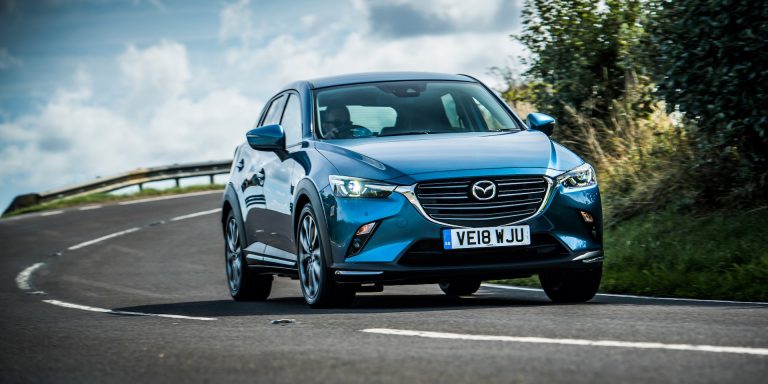
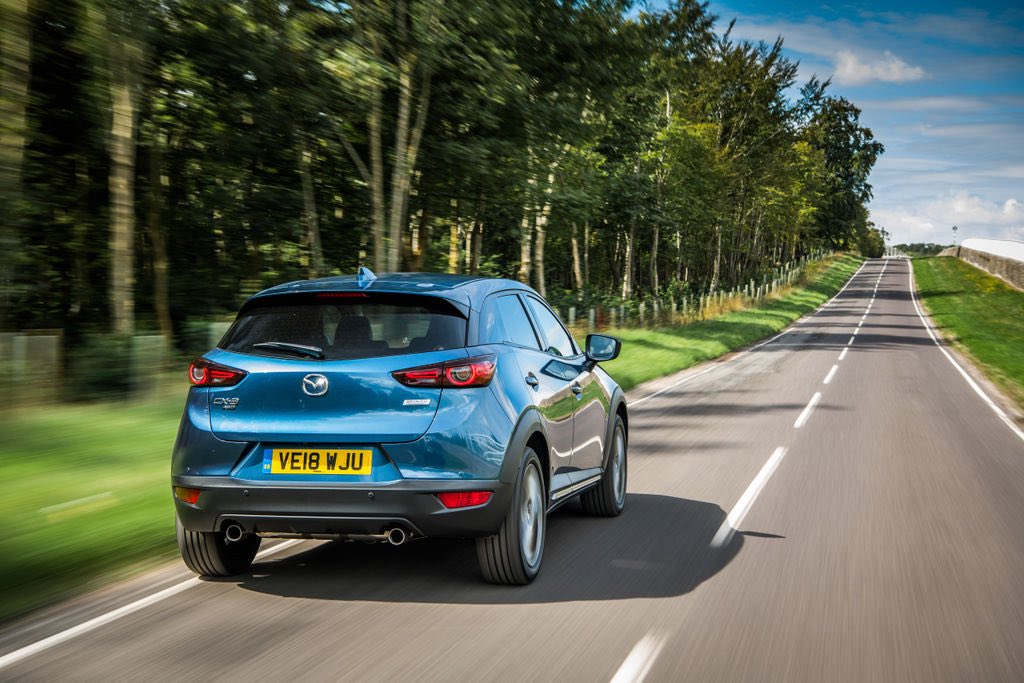
Mazda has a habit of regularly updating its cars with small refinements and improvements, rather than saving them all for a big update every few years. Such is the way with the 2019 Mazda CX-3 compact crossover, which you might find difficult to tell apart from its predecessor.
Small changes aside, it’s the same recipe we’ve come to appreciate from Mazda – good looks, a straightforward interior, smooth, naturally-aspirated petrol engines and excellent driving manners.
Does the extra veneer improve the CX-3’s weak points, though?
Oddly enough, given the current anti-diesel rhetoric, one of the largest changes for the updated Mazda CX-3 is the addition of a new 1.8-litre oil-burner. Mazda UK admits it’s unlikely to be in huge demand, though – the outgoing 1.5-litre only accounted for 20% of sales.
Elsewhere, changes are discreet to say the least. There’s a revised front grille and some new LED taillights, while the interior sees a redesigned centre console and some new fabric trim.
What’s the spec like?
All CX-3s are well equipped – Mazda’s options list rarely extends further than the paint colour. Trim levels start out with SE Nav+, which brings air-con, cruise control, keyless start and Mazda’s infotainment system.
SE-L Nav+, meanwhile adds rear parking sensors, climate control and some extra safety kit. Top-spec Sport Nav adds leather, a Bose surround-sound system and keyless entry, plus LED headlights.
It doesn’t come cheap – the CX-3 starts from £18,995, where a basic SEAT Arona can be had from less than £17,000.
How does it look?
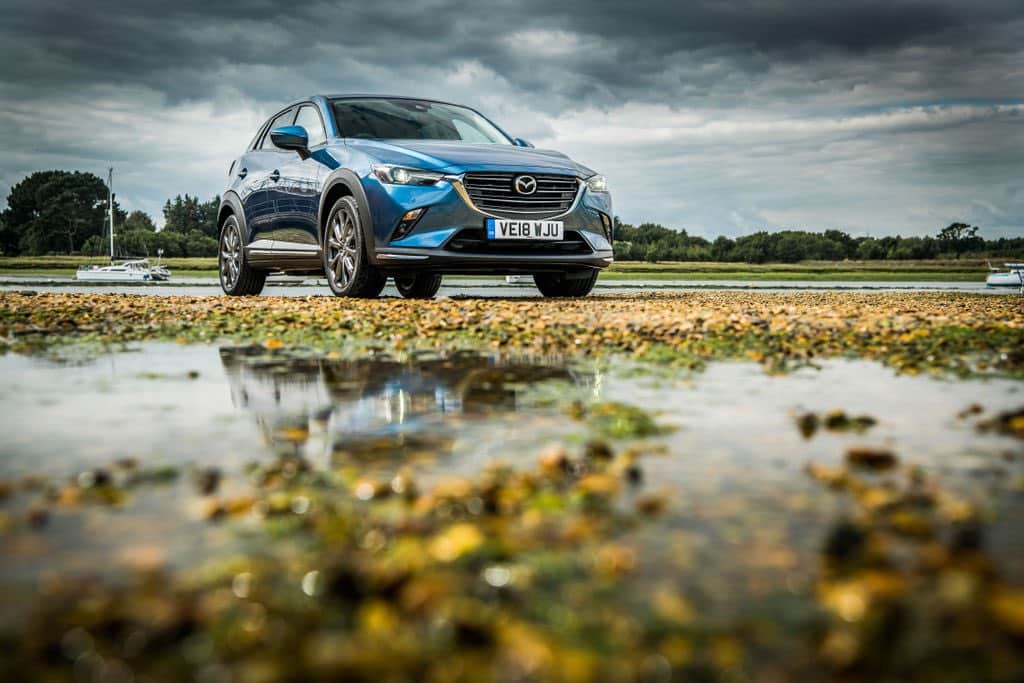
Much like the old CX-3, and that’s no bad thing. Mazda’s family face sits well on the front of this car, and the overall effect of a smaller CX-5 is quite handsome.
The CX-3’s updated grille is flanked by slim LED headlights, mirrored in the distinctive new LED taillights. The whole effect is lifted further by the addition of Mazda’s Soul Red Crystal paint – one of the best colours available on cars today, and an option box well worth ticking.
To be critical, the Mazda CX-3 perhaps isn’t quite as well-proportioned as cars such as the SEAT Arona – it’s a little nose-heavy, with a few fussy design details. However, it’s still a smart-looking compact crossover.
What’s it like inside?
The CX-3 lifts its interior from the Mazda 2, so there’s a pleasantly driver-focused aspect to the cabin with a wonderfully straightforward gauge cluster. There are rather a lot of different materials on show, of varying quality – we’re not the biggest fans of the suede stripe across the dash on certain models, but other aspects such as the metal surrounds to the air vents feel solid and premium.
The redesigned centre console drops the manual handbrake for an electric one, but as a side effect the controller for Mazda’s infotainment system moves further forward to a far more comfortable location. The system itself is decent, but we’d suggest adding Apple Carplay and Android Auto to improve it further – it’s currently only available as an optional, dealer-fit extra.
There’s a decent amount of space on offer, but the CX-3 is still more cramped for rear occupants than some rivals such as the Skoda Karoq.
What’s under the bonnet?
Of the three engines on offer, it’s the base unit that impresses the most. The naturally-aspirated, 120hp 2.0-litre is smooth and refined around town and mated to a slick six-speed manual it’s also good fun to wring out. The payoff for going naturally aspirated is that official fuel economy results tend to be far closer to reality – the claimed 45.5mpg is certainly achievable.
Compared with modern turbocharged units it does take rather a lot of thrashing to get up to speed – you’ll need to explore those upper rev bands a fair amount to get going, which can become tiring.
Also on offer is a 150hp version of the same engine, which disappointed with an obtrusive and thrashy engine note, while the new diesel is impressively economical but slightly agricultural in character.
Four-wheel-drive is an option for the higher-powered petrol engine, while both petrol engines can also be had with a six-speed automatic gearbox.
What’s it like to drive?
Mazda is somewhat like Ford – both brands are skilled at making ordinary cars with exceptional handling. While the Focus pips the Mazda 3 and the Fiesta beats the Mazda 2, the Mazda CX-3 certainly has Ford’s Ecosport licked when it comes to handling in the compact crossover segment.
The CX-3’s steering is sharp and accurate, and front-end grip inspires more confidence than many other cars in this class. There’s not a huge ride penalty, either, and the CX-3 is vastly more comfortable than a Kia Stonic.
Mazda has tweaked the suspension to give the car a more grown-up feel, but the slightly soft edge might not be to your taste – it soaks up bumps well but tends to bounce over larger crests in the road surface.
It’s a comfortable cruiser though, despite rather a lot of wind roar from those large side mirrors.
Summary
For keen drivers, the Mazda CX-3 should still be on the compact crossover shortlist – it’s a great little car to drive in and out of the city.
Potential buyers should take a good test drive to make sure the character of the naturally-aspirated engine suits them, though – and if you’re not too worried about premium equipment, there is better value to be found elsewhere. But for the most part, this is an excellent car with plenty going for it.
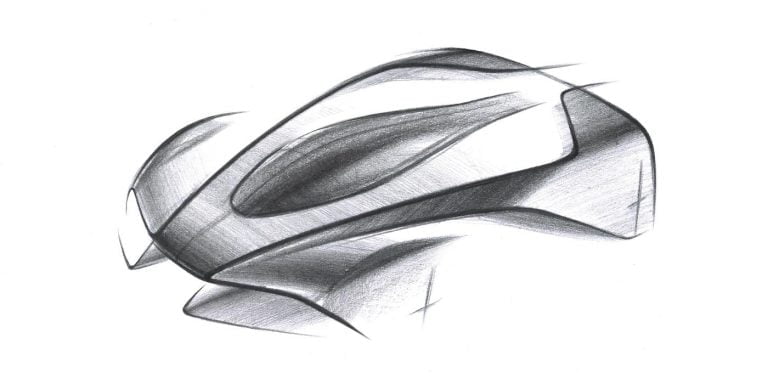
Aston Martin has confirmed that it is to build a third hypercar, dubbed Project 003.
Following on from the Valkyrie and Valkyrie AMR, the new coupe model will go on sale in late 2021. Only 500 will be made for global sale.
Aston Martin describes the 003 as a ‘revolutionary’ mid-engined hypercar, and adds that it will make use of technology currently under development for the two Valkyrie variants.
It will be based around a lightweight shell with active aerodynamics and active suspension, and use a mid-mounted turbocharged petrol-electric hybrid powertrain.
However, the company adds that 003 will be a more practical car for road users compared to the Valkyrie variants, with more luggage space. It will also be offered in both left and right-hand drive versions.
The 003 designation is not expected to be the car’s final name – its predecessors were originally known as Project 001 and 002.
Zagato celebrated
Aston Martin is also celebrating the centenary in 2019 of Italian styling house Zagato – with which the car manufacturer has been associated with for 58 years.
A ‘continuation’ version of the renowned DBZ Zagato of the 1960s will be produced in both road and race form, and they will only be sold together, the ‘Centenary Zagato Collection’ priced at £6 million plus taxes.
Just 29 pairs of DB Zagato continuation cars will be sold, echoing the production run of the original. The DB4 GT Zagato track version will be manufactured at the Newton Pagnell, Buckinghamshire works where the original DB4 was produced in the 1960s, and the DBS GT Zagato road car at Aston Martin’s Gaydon plant.
The new model news comes as Aston Martin prepares to float on the stock exchange. Shares for 25% of the company will be offered, with an initial share price between £17.50 and £22.50 valuing Aston Martin between £4.02 and £5.07 billion.
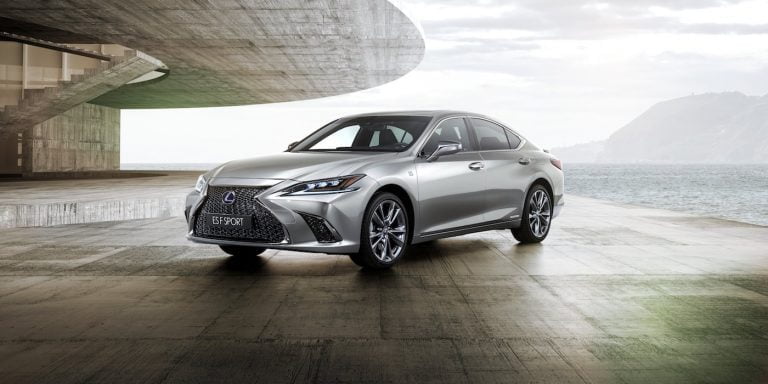
Prices for the new Lexus ES have been unveiled ahead of the car’s European debut at the Paris motor show in October.
First seen at the Beijing show in April, the seventh-generation ES will be the first version of the car to be sold in Europe when it arrives in showrooms in January 2019.
Prices for the ES start at £35,150, almost £1,000 cheaper than the slow-selling GS model that it replaces. The newcomer is charged with earning Lexus a larger slice of the market currently dominated by the BMW 5 Series.
Built on the new Lexus Global Architecture, known as the K platform, the ES is said to offer a strong package of dynamic design, engaging driving performance and efficient self-charging hybrid power. More impressive handling characteristics are seen as essential if it is to dent the BMW’s sales performance.
All versions are powered by a hybrid drivetrain combining a 2.5-litre four-cylinder petrol engine with an electric motor for a total power output of 215hp. Lexus quotes combined cycle fuel economy at 60mpg.
Three models will be offered to UK buyers – the ES at £35,150, ES F Sport at £38,150 and a new trim level, the Takumi, costing from £45,650. Takumi is a Japanese word associated with master craftsmanship.
Entry-level standard specifications will include the second generation of the Lexus Safety System+ suite of active safety and driver aids, 17-inch alloy wheels, navigation with an eight-inch display, DAB radio, parking sensors, heated electrically adjustable seats and a sunroof.
Those buying the top Takumi version will enjoy such luxuries as heated reclining rear seats, a Mark Levinson surround sound audio system, triple-on air conditioning, a 360-degree proximity camera viewed through the centre console’s 12.3-inch display, power bootlid with a hands-free kick sensor and triple-eye LED adaptive headlamps.
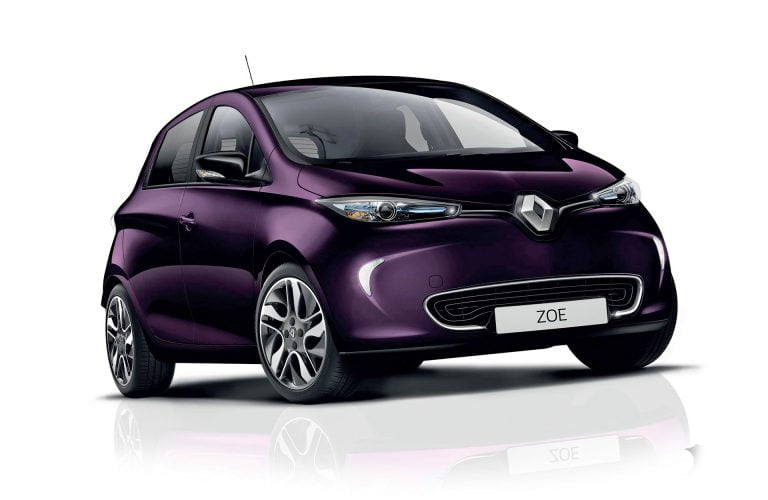
Renault has relaunched its scrappage scheme, offering up to £5,000 trade-in value against a new car from its model range.
The scheme applies to any car, or LCV, over seven years old – from any manufacturer, registered before 31 December 2011, as long as it’s been registered to the owner for at least 90 days.
The full £5,000 saving is applied to buyers choosing the Renault Zoe electric car and is in addition to the Government’s plug-in car grant. As a result, the EV can be bought from £13,420, £9,500 cheaper than list price.
Free wallbox
Renault recently updated the Zoe, Europe’s best-selling EV in 2017, with a more powerful motor. Real-world range is now quoted at 186 miles. Retail buyers of the car also get a wallbox home charging point.
Other savings across the Renault range include £3,000 on the Kadjar SUV, £2,000 on the Clio supermini or Captur SUV, £1,500 on the Twingo city car and £1,000 on the Koleos SUV or the Megane or Scenic family of cars.
Renault is stating that any cars traded in under the scrappage scheme will be permanently taken off the road.
The scheme runs from now until 7th January 2019 and new cars purchased must be registered by 31st March. The scheme is not compatible with any other finance or cash offers but can be used in conjunction with Renault’s £500 test drive offer.
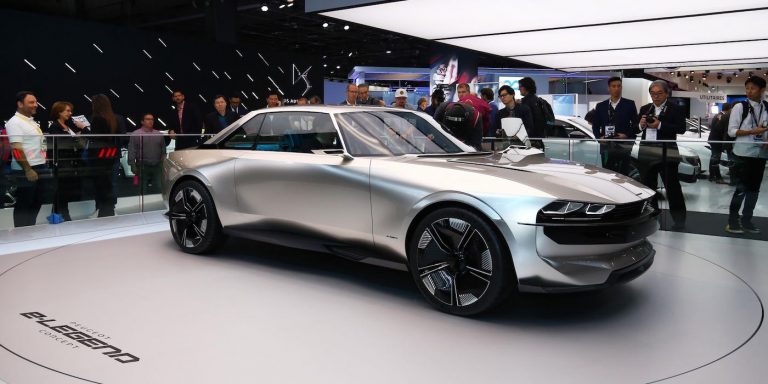
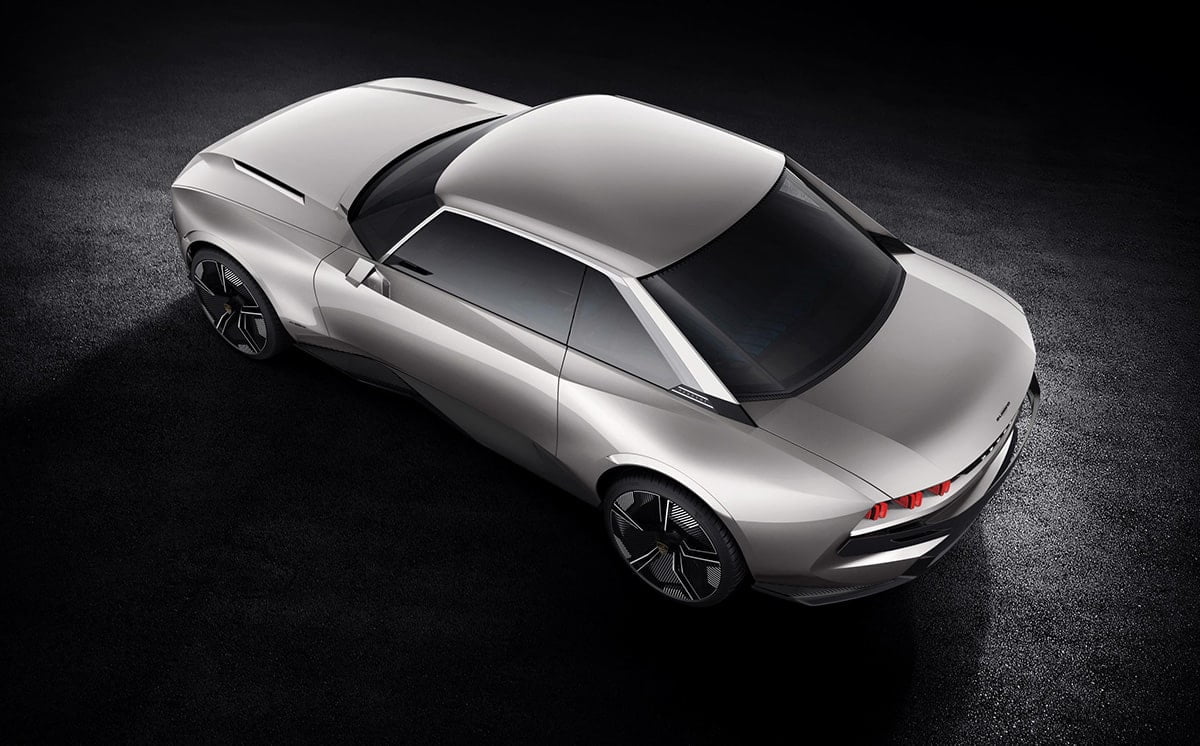
The Peugeot e-Legend concept, set to be unveiled at the Paris motor show, is described by its builders as a 100% autonomous, electric and connected ‘vision for the future of mobility.’
The Legend part of the car’s name comes from the Peugeot 504 Coupe, revealed by the brand at the Paris show 50 years ago, and the inspiration for several styling details on the concept.
The car’s electric powertrain uses 100kWh batteries, distributing 340kW of power and 800Nm of torque to an all-wheel-drive chassis. The 0-62mph time is described as under four seconds with a maximum speed of 136mph.
Peugeot says that the concept will also deliver a range of 372 miles between charges, measured under the latest WLTP protocol. A fast recharging system takes 25 minutes to offer more than 300 miles of range.
The e-Legend will offer four driving modes – two autonomous and two manual and dubbed Soft, Sharp, Legend and Boost.
Soft is said to focus on the comfort of the vehicle’s occupants, with projections on digital material screens and information displays reduced to a minimum. Sharp offers maximum connectivity for digital activities, such as using social media and arranging electronic calendars.
Legend is a manual cruising mode with a dashboard recalling the 504 Coupé’s three dials and a digitally-created wood effect display on various screens. And Boost is a manual performance mode, the road projected on a single, large screen.
in either of the autonomous modes, the interior layout changes. The steering wheel retracts under a sound bar to fully reveal a 49-inch central screen. The front seats recline for extra comfort and side armrests deploy automatically, also freeing up a large storage area and an induction charging area for such devices as smartphones.
Peugeot insists that the e-Legend is not just a technological exercise but a pointer to future production models. “This is the vision of a brand actively focused on an optimistic and ultra-desirable future,” says CEO Jean-Philippe Imparato.
“For Peugeot, autonomy and electric are synonymous with even stronger sensations – boredom will never be part of our DNA,” he adds.
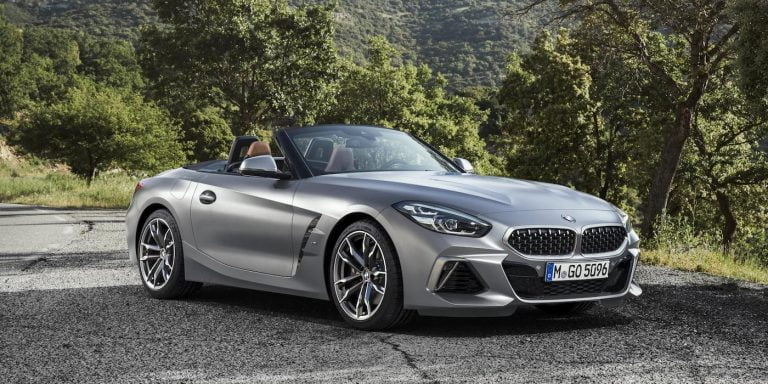
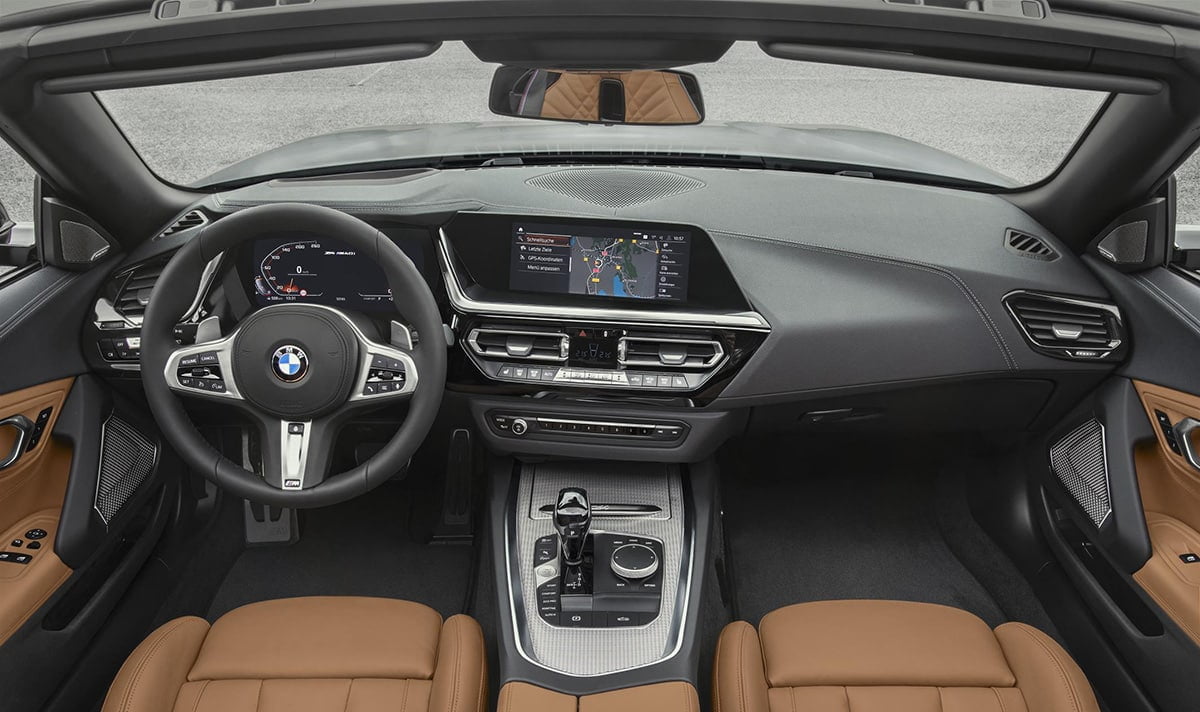
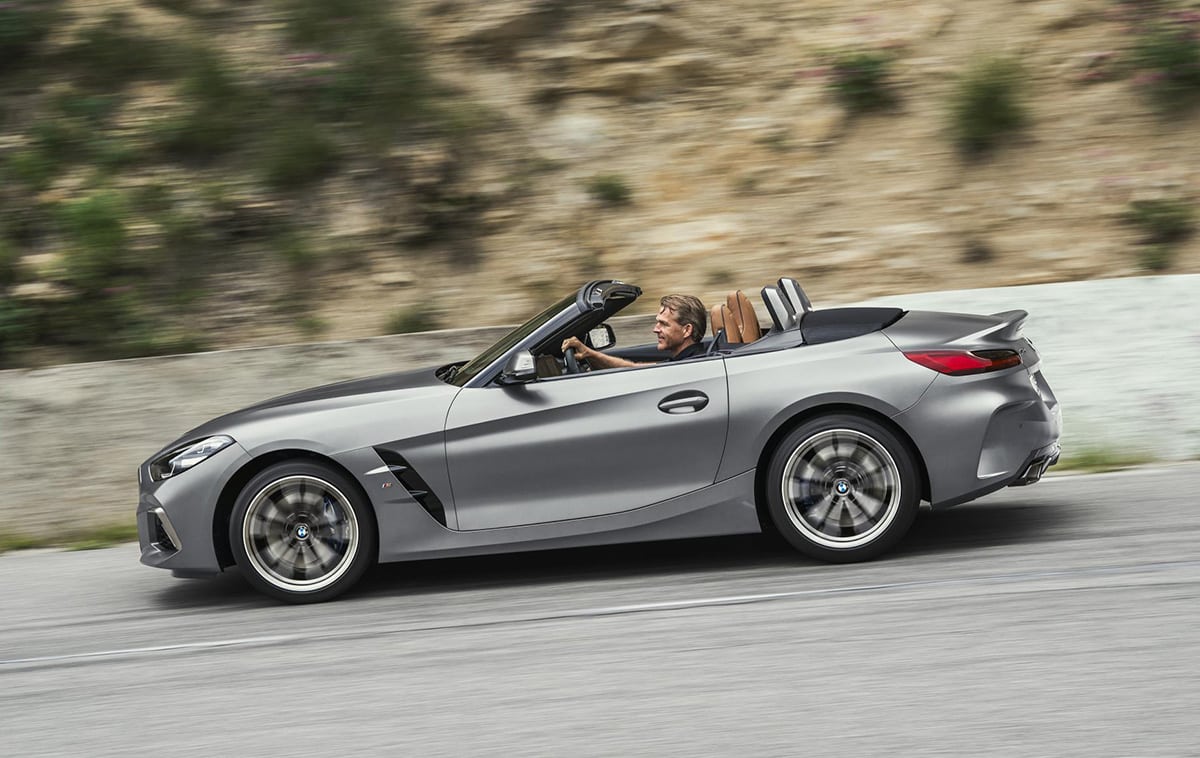
The new BMW Z4 roadster has been revealed ahead of its public debut at the Paris motor show in October.
The third generation of BMW’s roadster has been developed in a joint project with Toyota, which will also see the revival of the Toyota Supra, the two cars using the same underpinnings.
Compared to its predecessor the new Z4 is 9cm longer, 7cm wider and just over 1cm taller, but with a wheelbase shortened by about 3cm. According to BMW, this shortening and significantly wider tracks (10cm added to the front axle and 6cm to the rear) will sharpen the car’s agility.
BMW has also decided to produce the Z4 with a soft-top roof, which has helped increase the boot space to 281 litres – 50% more than the previous model. A through-loading system is on the options list, allowing the passenger seat to be dropped to accommodate longer items.
Three engine options will be available, all petrol units. The two four-cylinder engines are both of two litres capacity and produce either 200 or 260hp – both 13 horses more than their predecessors.
The 197hp version completes the 0-62mph sprint in 6.6 seconds, the 258 in 5.4 seconds, and both return combined cycle fuel economy of 47.1mpg and CO2 emissions of 138g/km.
Range-topper is the M40i with a straight-six TwinPower turbo engine with 340hp and 500Nm of torque. The M40i passes 62mph from rest in 4.6 seconds, while returning 38.7mpg and CO2 emissions of 165g/km.
All versions will be matched as standard to an eight-speed auto-manual transmission which BMW states has been revised to offer sportier shifts. A launch control system is included.
Variable sport steering is also fitted as standard on all versions. The M40i also gains electronically controlled dampers, brakes from the M Sport performance division and an electronically controlled M Sport rear differential.
The Z4 chassis has been significantly redesigned with a double-joint spring strut axle at the front and at the back the first five-link axle in a BMW roadster. BMW says that this layout strikes the best compromise between handling ability and ride comfort.
Order books for the BMW Z4 open on 4th October just as the car makes its debut in Paris. Prices will be announced closer to launch – industry sources predict a starting spice of around £36,000, with the first cars on UK roads in early March 2019.
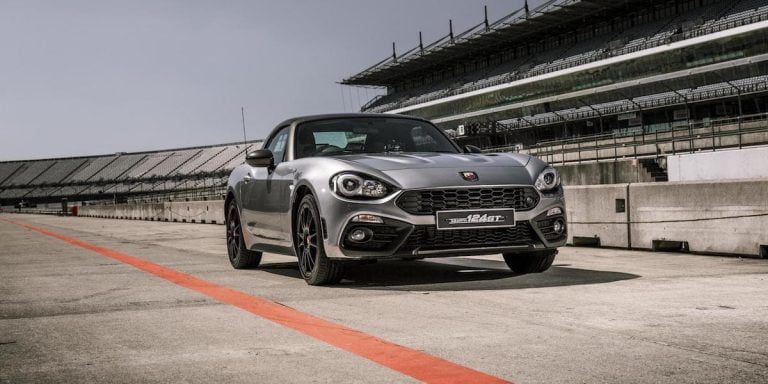
Abarth has revealed prices for its exclusive 124 GT model. The limited-edition roadster, based on the Fiat 124 Spider, will start from £33,625 on the road.
Just 50 examples of the Abarth 124 GT will be sold in the UK, though each one will be highly specified – a good thing considering that high price tag. The biggest change over the standard Abarth 124 Spider is the roof. Where the normal car has a manually-folding soft-top, the GT features a rigid carbon-fibre roof instead.
The roof is still removable, so the 124 GT can be changed from a coupe to a roadster in a few steps – though owners will need to leave the roof at home once it’s off. It weighs just 16kg, and adds rigidity to the chassis when it’s in place. It features a heated rear window and is lined for a bit of added refinement.
The Abarth 124 GT also gains a few styling tweaks, such as OZ alloy wheels, which not only look the part but shave weight. There’s a mechanical limited-slip differential, and a shouty Record Monza exhaust – giving the 1.4-litre turbocharged petrol engine its recognisable Abarth bark.
Inside, buyers benefit from a Bose sound system and distinctive two-tone leather seats.
Performance is virtually identical to the standard car, so 0-60mph is dispatched in well under seven seconds and the top speed is 144mph. There’s a six-speed manual as standard, though buyers can opt for a six-speed automatic if they want.
Three colours are on offer for the Abarth 124 GT, named after Abarth race wins – Portogallo 1974 Grey, San Marino 1972 Black and Turini 1975 White. A black bonnet can also be specified.
The Ferrari Monza SP1 and SP2 have been unveiled as the first in a new series of limited edition specials.
The series will be called Icone – signifying ‘Iconic cars whose sophisticated design and engineering are inspired by legendary Ferrari sports racers of the past’.
For the SP1 and SP2, the inspiration came from the Ferrari Barchetta cars that raced in the 1950s and helped build the brand’s sporting reputation – the 166 MM and the 750 and 860 Monza were designed solely to win races in the World Sportscar Championship.
The Monza SP1 is described as ‘an uncompromising single-seat road car that offers a truly unique experience behind the wheel.’ The SP2 is similar, but adds a second seat, windscreen fairing and roll bar to enable the carrying of a passenger.
Yet while the inspiration comes from the 1950s, Ferrari insists the two cars utilise the brand’s most up-to-date engineering techniques. Much of their build is in carbon-fibre while they employ the most powerful engine ever built by Ferrari, resulting in the best power-to-weight ratio of any Barchetta model.
The entire body shell is moulded from carbon-fibre and is shaped like a wing, the designers’ task eased by not having to cope with incorporating traditional open-top car architecture such as a full windscreen or hood.
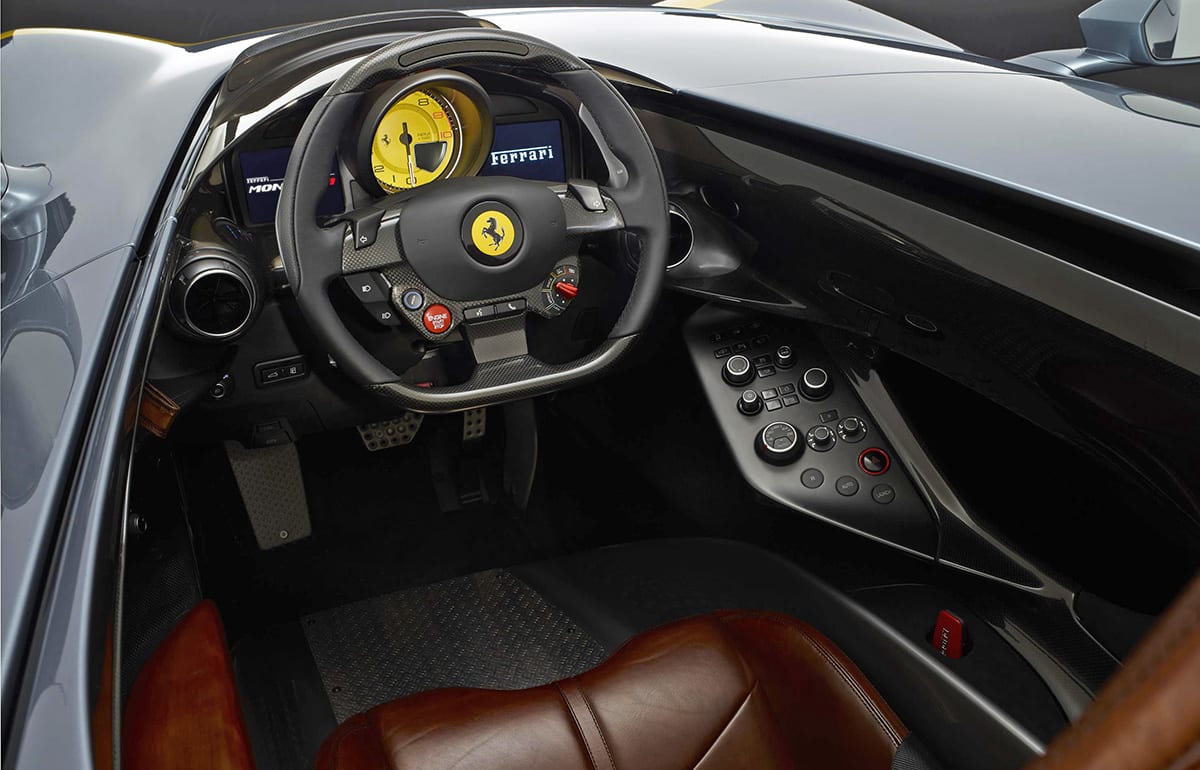
Instead a ‘virtual windshield’ is built into the fairing ahead of the instrument panel, its main task being to control the airflow into the car’s interior and minimise drag.
The doors open upwards, and the bonnet is front-hinged, a one-piece unit again made from carbon-fibre. In total the dry weight of the SP1 variant is only 1500kg, the SP2 adding 20kg.
Installing a V12 engine of 810hp and 719Nm of torque results in a 0-62mph time of 2.9 seconds and 124mph in 7.9 seconds. According to Ferrari, the result is a feeling of “blistering speed normally only experienced by Formula 1 drivers, which derives from the concept of a cockpit carved from the car’s very volume that wraps around the driver.”
Production of the SP1 and SP2 will extend to no more than 500 cars in total, with the split between the two models based on customer demand. The price is yet to be revealed but industry sources suggest it will be around the equivalent of £2.3 million.
And those who secure a Monza SP1 or SP2 will even be able to look the part – Ferrari has signed up leading luxury fashion brands Loro Piana and Berluti, to create what are described as “elegant gentlemen-driver-inspired apparel and accessories.”
The driver’s selection includes racing overalls, jersey, helmet, gloves, scarf and driving shoes. Ferrari adds that even these use modern technology to guarantee a comfortable fit and ensure freedom of movement while driving.
When was the last time you put a Vauxhall on your shopping list? The trials and tribulations of the Luton-based brand have been well documented.
In terms of market size, Vauxhall had been a strong number two to Ford for decades. But last year it slipped to third place behind Volkswagen, with Mercedes-Benz now nipping at its heels.
Vauxhall’s traditional heartland was very much in the fleet market thanks to the phenomenal success of the Cavalier, which became the aspirational company car of choice for those who considered the Ford Sierra too radical.
The brand lost its mojo in the early 1990s when Ford redefined the medium-sized company and family car with the all-conquering Mondeo. The Cavalier was replaced by the unloved (and unlovable) Vectra and by the time that was superseded by the worthy Insignia, the damage had been done.
However, things are changing. In August 2017 General Motors sold the failing brand (along with its German-based Opel twin) to the PSA Group, the French owner of Peugeot, Citroën and DS. And, against all the odds, it returned to profit this year for the first time in long, long time.
So is now the time to put Vauxhall on your shopping list?
What went wrong?
Much of Vauxhall’s misfortunes in recent years have been down to a lack of buyer awareness of just how good some of its cars have been.
The brand was seen as a tad staid and lost out to emergent brands such as Hyundai and Kia, offering cheap and cheerful new cars with extended warranties. Its desirability was not helped by a succession of ill-judged marketing campaigns: remember Griff Rhys Jones in his Y-fronts or the Corsa C’mon puppets?
If you don’t remember Griff Rhys Jones in his Y-fronts, we’ve been kind enough to help you out…
It was a shame because the Astra, now in its seventh generation, has gone from strength to strength against tough competition from Ford’s market-dominating Focus and Volkswagen’s aspirational Golf.
Meanwhile, the Corsa may have helped define the original supermini sector but was eclipsed by a slew of more desirable alternatives. Also, its attempt to get down with the kids in the small car sector failed miserably with the unrefined Viva, an ancient model name not calling out to be resurrected. And the Adam city car, a Fiat 500 and Mini wannabee, but lacking a vital ingredient: coolness.
It was also late to the SUV party, although it has made up for lost time with the Mokka X now joined by the Crossland X and Grandland X.
The current generation Insignia, launched in 2017, punches above its weight in terms of quality, refinement and performance (as reported by The Car Expert in our long-term test reports) but finds itself in a declining sector where buyers tend to favour the flexibility of SUVs instead.
Vauxhall Crossland X
Vauxhall Mokka X
Vauxhall Grandland X
The recovery plan for Vauxhall
Vauxhall’s now under new management. PSA installed its own man to take charge of the business, global marketing boss Stephen Norman, an industry veteran who has previously held senior positions at Renault, Fiat and Volkswagen.
As part of his recovery programme Norman has confirmed he will slim Vauxhall’s wide car range down to just six models: the Corsa, Astra, Crossland X, Mokka X, Grandland X and Insignia.
Built in Britain
As part of its revamp under PSA, Vauxhall has started making much more noise about its British roots with an Astra campaign using the unmissable ‘True Brit’ tag-line. Other campaigns use ‘Drool Britannia’ and ‘Keeps Calm. Carries On’ for Grandland X.
Vauxhall has a rich heritage on which to draw, which should resonate more with buyers. It built its first car in 1903 and takes its name from its original location on the banks of the River Thames.
The brand is also still a major UK manufacturer with its Ellesmere Port facility in Cheshire dedicated to Astra production, while the Vivaro van is built in Luton.
Vauxhall has also taken steps to make its used car proposition more attractive to buyers.
The brand was one of the first manufacturers to launch its own approved used car scheme under the Network Q brand with the service now available from over 300 dealer forecourts across the UK and cars benefitting from inspections and warranty cover.
In a welcome boost to its customer proposition, it has just launched an online tool enabling customers to search for an approved used car and then work out the best monthly finance options offered by Vauxhall.
The tool enables customers to tailor their monthly budget ahead of viewing the car in a move which should help speed up the buying process.
New products
GT X Experimental – not coming to a showroom near you anytime soon
Fundamental to Vauxhall’s revival will be the delivery of desirable new cars. It has already hinted at its future design direction with the recent unveiling of the GT X Experimental electric SUV.
Although this car will never make it into a showroom, it does reveal the new family face of future Vauxhalls with an attractive grille, apparently inspired by the eye slot of a motorbike helmet, stretching the full width of the bonnet and cleverly incorporating daytime running lights and headlights.
The first new car in the pipeline is next year’s all-new Corsa. This will be the key model for the new-look Vauxhall as it’s the brand’s biggest seller, accounting for around one in four of total sales. Also, for the first time, an electric version will be included in the line-up.
2019 will also see the debut of an all-new Mokka X, while a hybrid version of the Grandland X will be added to its SUV line-up in 2020.
From 2024 we can also expect subsequent models to share platforms with Peugeot, Citroen and DS, as Vauxhall begins to reap the cost-saving benefits of being part of PSA.
The future’s looking good, so maybe it’s time to put Vauxhall back on the shopping list.
The latest round of car safety ratings have been released by Euro NCAP, with five-star results for the new Audi A6 and Volkswagen Touareg.
The new Suzuki Jimny, however, only scored a disappointing three stars, while the updated Ford Tourneo Connect scored four stars.
The Jimny’s poor score has come in for criticism from UK safety experts, Thatcham Research. Matthew Avery, Thatcham’s director of research, said: “As a completely new vehicle, [the Jimny] should offer far more protection to drivers in the event of an accident. Its safety technology did not perform optimally either.
“The youthful audience the Suzuki Jimny has been designed for deserve better in terms of passive and active safety.”
Euro NCAP also noted the Jimny’s “underwhelming driver assistance systems.”
The Audi and Volkswagen were praised for their autonomous emergency braking (AEB) systems, which aced the new cyclist-avoidance test introduced for 2018 and showed good protection for vulnerable road users.
By contrast, the Suzuki Jimny’s AEB system “showed weak performance in tests of its pedestrian avoidance in daylight and does not operate in low light.”
Volkswagen Touareg
Ford Tourneo Connect
Suzuki Jimny
Four stars for facelifted Ford
Unlike the other three models tested, the Ford Tourneo Connect is not an all-new model and is an update to a model that has been on the market since 2012. It was awarded a five-star score by Euro NCAP in 2013
Despite the Euro NCAP testing standards having been toughened considerably in the last six years, the updates Ford has made to the Tourneo Connect meant that it still scored a creditable four stars. In particular, adult occupant protection in the front seats was excellent.
Building blocks for a driverless future
Michiel van Ratingen, Secretary General of Euro NCAP said: “Overall, these latest results demonstrate that, as Euro NCAP’s test protocols evolve and become more demanding, a five-star rating remains an achievable although challenging objective for the auto industry.
“It is particularly positive and welcome that manufacturers are performing well in the assessment of vulnerable road user protection systems such as AEB for cyclists. Euro NCAP has now tested six models which feature this life-saving technology.
“These driver assistance systems are the building blocks for potential automation in the future. Importantly they offer tangible safety benefits today.”
And then there were three – the SEAT Tarraco has been unveiled as the brand’s third SUV and its first in the large-size market.
Unveiled in the Spanish city of Tarragona – formerly known as Tarraco – and set to make its public debut at the Paris motor show on 2nd October, the Tarraco will go on sale at the start of 2019.
It will be built in both five and seven-seat variants though only the seven-seat version is likely to be sold in the UK.
The new SUV will become the brand’s flagship model – according to SEAT, the Tarraco debuts design details that will be replicated on future models. Like SEAT’s first SUV, the Ateca, it is aimed to both look and handle in a more sporty manner than typical SUVs, while losing none of the practicality such vehicles are bought for.
“It offers the space and flexibility customers expect from a large SUV – it is the sportiest vehicle in the segment from a design point of view and also thanks to the dynamic chassis control, which allows you to tune it to meet your driving needs,” says SEAT R&D head Matthias Rabe.
The Tarraco is built on the Volkswagen Group’s MQB platform that is also used under the large SUVs from sister brands Volkswagen and Skoda, the Tiguan and Kodiaq. The newcomer measures 4.7 metres long and stands just under 1.7 metres tall, which SEAT says creates a ‘huge interior space’.
As the brand’s top model, the Tarraco will come fitted with a suite of driver-assistance systems including autonomous emergency braking and new technologies such as an emergency call feature and rollover protection.
It will be fitted with SEAT’s ten-inch digital cockpit display, and an eight-inch screen on the centre console offering connectivity and infotainment functions. The Tarraco will be the first SEAT to offer control of the infotainment through making gestures in front of the screen.
Order books will open for the Tarraco in December and two petrol and two diesel versions will be available. The 1.5-litre TSI petrol offers 150hp through a six-speed manual gearbox, while the 2.0-litre version produces 190hp through a seven-speed automatic with all-wheel-drive.
The diesels are both 2.0-litre units, with power outputs of 150 and 190hp respectively. The 150 will be offered in front-wheel drive with six-speed manual or seven-speed auto plus all-wheel drive while the higher power unit is specified only with the auto ‘box and all-wheel-drive.
SEAT also states that the Tarraco will at a later date be offered with ‘alternative powertrain technologies’. This is expected to be a plug-in hybrid model with 210hp and a CO2 emissions output of under 50g/km.
Audi has revealed its first fully electric production car at an event in San Francisco – and the Audi e-tron SUV will be the first of a family of EVs.
The e-tron will arrive on UK roads early in 2019, at a price starting from £70,805. It employs two electric motors, one on the front axle and one on the rear to give it all-wheel drive capability.
Audi quotes a system output of 300kW and 664Nm of torque, the latter available almost instantly and sending the vehicle through 62mph from rest in 5.7 seconds. Top speed is electronically limited at 124mph.
In normal driving, the system is biased to the rear axle. The front motor supplies additional traction as required when more power is needed, such as under hard cornering or in slippery conditions.
The system includes energy recuperation, increasing the car’s range by up to 30%. Audi is still testing the e-tron’s range between charges but says that it will be at least 248 miles under the latest WLTP ‘real world’ testing cycle.
One way of increasing the range will be to specify the optional virtual exterior mirrors. These replace the traditional door mirrors with small rear-facing cameras that display their images on high-contrast displays in the cockpit, improving the car’s aerodynamics in the process by removing the drag-inducing mirror housings.
The battery pack is mounted flat under the floor to keep the car’s centre of gravity low, centrally between the axles helping to produce a perfect 50:50 axle weight distribution.
The driver also has seven driving modes to choose from through Audi’s drive sect system. This acts on the standard-fit air suspension and adaptive dampers, and in some modes can vary the ride height by up to 76mm.
The e-tron is a full-size SUV, measuring 4.9 metres long and with a 2.9-metre wheelbase. Inside it is configured as a five-seater, with a 660-litre boot.
Alongside the e-tron reveal Audi has announced that it will put 12 electric models on sale by 2025 and expects by then that such cars will account for a third of the brand’s sales.
Electric options will be available ‘in every relevant market segment from the compact to the full-size class’, starting with the e-tron and a Sportback estate version, both on sale in 2019.
Audi intends to unveil an e-tron GT concept car at the Los Angeles Auto Show later this year, the coupé developed in conjunction with Porsche.
In total four new vehicle platforms are being developed for these models – some will use the Volkswagen Group’s new bespoke MEB electric platform, unveiled 24 hours ahead of the e-tron.
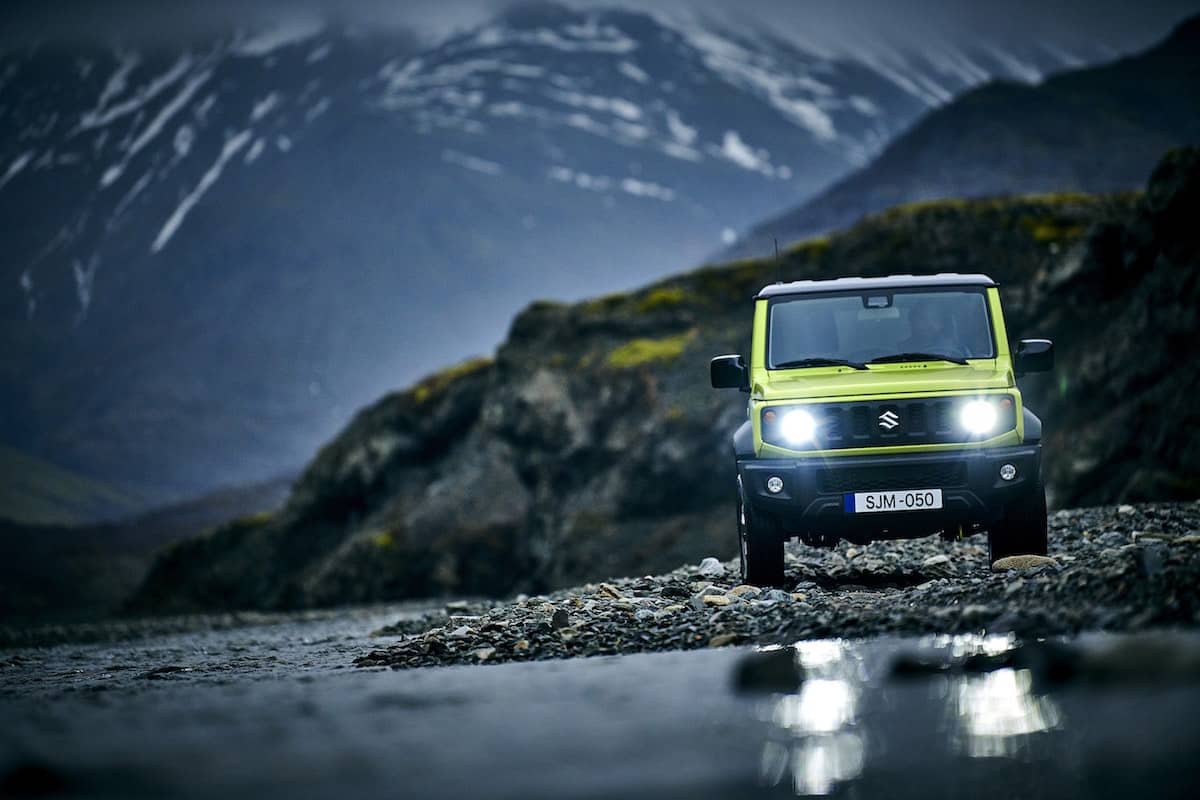
The cult classic returns – it’s the all-new Suzuki Jimny. The previous (and third) generation was built for ten years, and gained a momentous reputation for being brilliant off-road, incredibly reliable and cheap to buy as well. Now, there’s a new one.
It may follow a similar platform – its chassis is still a ladder frame design, for instance – but a variety of tweaks and touches have been implemented to make this Jimny just a little more grown-up, but no less bullet-proof. We headed out to Frankfurt in Germany to see if it can match its predecessor’s form.
The fundamentals remain delightfully simple. There’s still – as we mentioned – a ladder chassis underneath the whole operation, which gives the Jimny excellent capability off-road and an excellent level of robustness. And while other small off-roaders choose electronics to help when the terrain gets sticky, the Jimny still offers a proper four-wheel-drive system with transfer gear and three-link rigid axle suspension.
There’s a new powertrain – though we’ll come to this shortly – and while the new Jimny is actually shorter than the car it replaces, it’s able to offer up better interior space and passenger legroom thanks to an increase in the front and rear seat hip points. All of these features mean that while the new Jimny is no less capable off-road, it’s a little easier to live with.
What’s the spec like?
Just two specifications will be available from launch – SZ4 and SZ5. Lower-grade cars still benefit from air conditioning, cruise control, Bluetooth connectivity and DAB digital radio. Of course, the full suite of off-road kit is included as standard too, with features such as hill descent control and dual sensor brake support fitted to SZ4 models.
Go up a grade, and you’ll find features such as 15-inch alloy wheels, climate control and a full satellite navigation system bundled in. We’ve yet to find out how much the Jimny will cost from launch, however, so we’ll have to wait and see how much value these specifications offer.
Unfortunately, the Suzuki Jimny doesn’t have a safety score to match its junior tough-guy image. Euro NCAP rated it only three stars when tested recently, and the UK safety experts at Thatcham Research were critical of a lack of the latest safety kit compared to other cars on the market.
How does it look?
Part Mercedes G-Wagen, part Japanese Kei-car, the Jimny manages to look both imposing and cutesy all at the same time. The square proportions make it stand out against ordinary traffic, while the chunky wheel arches and bumpers give it an appearance of a car that really is ready for any adventure.
Our test car, finished in ‘Kinetic Yellow’ (designed to be bright enough to stand out in poor weather), certainly turned heads as we ambled through small German villages.
It’s a fitting evolution on the Jimny appearance, and though some throwback design touches remain – the round headlamps with independent indicators being just two – it feels thoroughly fresh and modern, and all the better for it.
What’s it like inside?
The Jimny has been designed to be robust and hard-wearing, and as such we can forgive it for the amount of harder plastics used throughout the cabin. Everything feels rock-solid, however; the grab handle in front of the forward passenger, for instance, has been rubberised and feels as though it’s been built for chilly days out in the fields.
It’s a strange extra, therefore, that given that Suzuki impressed upon us that the cabin controls had been designed ‘to be simple to use with gloves’ that a touchscreen audio volume controller had been fitted – something we’d be certain would have been accessed via a rotary dial.
The standard boot space remains pretty woeful, just as it did in the previous car. With all seats in place, there’s little more than a space for the boot door to fit. At least with the rear seats laid flat, there are 377 litres to play with – 53 litres more than its predecessor.
What’s under the bonnet?
Underneath the Jimny’s short, snub nose beats a 1.5-litre four-cylinder petrol engine with 101bhp. In regular modes it runs in rear-wheel-drive, sending power to the wheels through a five-speed manual (an automatic will be available from launch, too), and though Suzuki hasn’t quoted any official 0-60mph figures, we’d estimate it’s somewhere just over the ten-second mark.
The whole drivetrain can be switched into four-wheel-drive with a separate shift lever underneath the conventional gear stick. This allows you to pick between two-wheel-drive, four-wheel-drive high gear, and four-wheel-drive low gear – for when the going gets really tough.
In terms of economy, Suzuki claims 35.8mpg on the combined cycle (tested under new WLTP regulations) and emissions of 178g/km CO2. Top speed for the manual gearbox-driven car is a dizzying 90mph, but in truth this is a car which isn’t about all-out performance.
What’s it like to drive?
Quite a lot of the issues we had with the old Jimny have been suitably rectified. When on the motorway the Jimny now feels far quieter and relaxing than its predecessor, for instance.
There’s still quite a large amount of wind noise generated by the close to vertical windscreen, but the engine noise is isolated well and it sits at just under 3,000rpm when travelling at 75mph (while travelling on a de-restricted German autobahn, we’ll add). A sixth cog in the gearbox would help the whole affair feel a little more settled, but the Jimny feels more than happy travelling at higher speeds.
Then there’s the way it goes off-road. Thanks to its low weight and impressive approach and departure angles, the Jimny still manages to tackle terrain that would leave other so-called off-roaders floundering in the mud. It’s very impressive indeed.
Summary
Right off the bat, the Jimny has managed to encapsulate all that was loved about the previous car while adding better refinement and build quality. It still, as you’d hope, is an utter triumph off-road, shaking off even the most difficult of surfaces and inclines.
Our only real sticking point is the price, or rather the lack of it; if Suzuki pitches this at just a slight premium over the starting price of the older car (around £16,000), then it’ll have a success on its hands. Too much more than that, and the limitations of the Jimny (lack of boot space, being one), could make this a less appealing prospect.
We just hope Suzuki gets it right.

 Inside the cabin is designed to be driver-focused with related controls grouped together in ‘function panels’. A new range of options will be available to personalise the car, such as aluminium mesh-effect and open-pore wood trim.
Technology debuting with the 3 Series includes an intelligent Personal Assistant feature. Similar to smartphone voice assistants and an automotive system recently launched by BMW’s direct rival Mercedes-Benz, it is activated by the occupant saying “Hey BMW”.
The system’s designers say it marks the start of a new era for the BMW Group in which drivers will increasingly be able to operate their car and access its functions and information simply by speaking.
The new BMW 3 Series range will launch in March 2019 at prices starting from £33,610, which will buy the 190hp 320d. Other launch models will include a four-wheel-drive version of this car and the petrol-powered 330i with 258hp at £37,660.
A plug-in hybrid version of the new 3 Series is also on the way. Details of the BMW 330e iPerformance and its likely on-sale date are yet to be revealed.
Inside the cabin is designed to be driver-focused with related controls grouped together in ‘function panels’. A new range of options will be available to personalise the car, such as aluminium mesh-effect and open-pore wood trim.
Technology debuting with the 3 Series includes an intelligent Personal Assistant feature. Similar to smartphone voice assistants and an automotive system recently launched by BMW’s direct rival Mercedes-Benz, it is activated by the occupant saying “Hey BMW”.
The system’s designers say it marks the start of a new era for the BMW Group in which drivers will increasingly be able to operate their car and access its functions and information simply by speaking.
The new BMW 3 Series range will launch in March 2019 at prices starting from £33,610, which will buy the 190hp 320d. Other launch models will include a four-wheel-drive version of this car and the petrol-powered 330i with 258hp at £37,660.
A plug-in hybrid version of the new 3 Series is also on the way. Details of the BMW 330e iPerformance and its likely on-sale date are yet to be revealed.






 Some aspects of the concept are less likely to find their way into the Rapid production range. Vegan materials include a carbon textile made from 100% recycled polyester thread on the upper part of the floating Alcantara covered seats which bear signature Czech flags on their side bolsters celebrating Czechoslovakia’s foundation 100 years ago.
The floor mats, meanwhile, use a textile known as Pinatex in a carbon weave; the high performance material extracts its fibres from the leaves of a pineapple tree.
Previously the Skoda vRS badge (the v added in the UK due to Ford owning the RS badge) has been restricted to the larger Octavia hatch though the brand is set to unveil a vRS version of its Kodiaq SUV at the Paris show.
Some aspects of the concept are less likely to find their way into the Rapid production range. Vegan materials include a carbon textile made from 100% recycled polyester thread on the upper part of the floating Alcantara covered seats which bear signature Czech flags on their side bolsters celebrating Czechoslovakia’s foundation 100 years ago.
The floor mats, meanwhile, use a textile known as Pinatex in a carbon weave; the high performance material extracts its fibres from the leaves of a pineapple tree.
Previously the Skoda vRS badge (the v added in the UK due to Ford owning the RS badge) has been restricted to the larger Octavia hatch though the brand is set to unveil a vRS version of its Kodiaq SUV at the Paris show.







 All versions are powered by a hybrid drivetrain combining a 2.5-litre four-cylinder petrol engine with an electric motor for a total power output of 215hp. Lexus quotes combined cycle fuel economy at 60mpg.
Three models will be offered to UK buyers – the ES at £35,150, ES F Sport at £38,150 and a new trim level, the Takumi, costing from £45,650. Takumi is a Japanese word associated with master craftsmanship.
Entry-level standard specifications will include the second generation of the Lexus Safety System+ suite of active safety and driver aids, 17-inch alloy wheels, navigation with an eight-inch display, DAB radio, parking sensors, heated electrically adjustable seats and a sunroof.
Those buying the top Takumi version will enjoy such luxuries as heated reclining rear seats, a Mark Levinson surround sound audio system, triple-on air conditioning, a 360-degree proximity camera viewed through the centre console’s 12.3-inch display, power bootlid with a hands-free kick sensor and triple-eye LED adaptive headlamps.
All versions are powered by a hybrid drivetrain combining a 2.5-litre four-cylinder petrol engine with an electric motor for a total power output of 215hp. Lexus quotes combined cycle fuel economy at 60mpg.
Three models will be offered to UK buyers – the ES at £35,150, ES F Sport at £38,150 and a new trim level, the Takumi, costing from £45,650. Takumi is a Japanese word associated with master craftsmanship.
Entry-level standard specifications will include the second generation of the Lexus Safety System+ suite of active safety and driver aids, 17-inch alloy wheels, navigation with an eight-inch display, DAB radio, parking sensors, heated electrically adjustable seats and a sunroof.
Those buying the top Takumi version will enjoy such luxuries as heated reclining rear seats, a Mark Levinson surround sound audio system, triple-on air conditioning, a 360-degree proximity camera viewed through the centre console’s 12.3-inch display, power bootlid with a hands-free kick sensor and triple-eye LED adaptive headlamps.




 Yet while the inspiration comes from the 1950s, Ferrari insists the two cars utilise the brand’s most up-to-date engineering techniques. Much of their build is in carbon-fibre while they employ the most powerful engine ever built by Ferrari, resulting in the best power-to-weight ratio of any Barchetta model.
The entire body shell is moulded from carbon-fibre and is shaped like a wing, the designers’ task eased by not having to cope with incorporating traditional open-top car architecture such as a full windscreen or hood.
Instead a ‘virtual windshield’ is built into the fairing ahead of the instrument panel, its main task being to control the airflow into the car’s interior and minimise drag.
The doors open upwards, and the bonnet is front-hinged, a one-piece unit again made from carbon-fibre. In total the dry weight of the SP1 variant is only 1500kg, the SP2 adding 20kg.
Yet while the inspiration comes from the 1950s, Ferrari insists the two cars utilise the brand’s most up-to-date engineering techniques. Much of their build is in carbon-fibre while they employ the most powerful engine ever built by Ferrari, resulting in the best power-to-weight ratio of any Barchetta model.
The entire body shell is moulded from carbon-fibre and is shaped like a wing, the designers’ task eased by not having to cope with incorporating traditional open-top car architecture such as a full windscreen or hood.
Instead a ‘virtual windshield’ is built into the fairing ahead of the instrument panel, its main task being to control the airflow into the car’s interior and minimise drag.
The doors open upwards, and the bonnet is front-hinged, a one-piece unit again made from carbon-fibre. In total the dry weight of the SP1 variant is only 1500kg, the SP2 adding 20kg.
 Installing a V12 engine of 810hp and 719Nm of torque results in a 0-62mph time of 2.9 seconds and 124mph in 7.9 seconds. According to Ferrari, the result is a feeling of “blistering speed normally only experienced by Formula 1 drivers, which derives from the concept of a cockpit carved from the car’s very volume that wraps around the driver.”
Production of the SP1 and SP2 will extend to no more than 500 cars in total, with the split between the two models based on customer demand. The price is yet to be revealed but industry sources suggest it will be around the equivalent of £2.3 million.
And those who secure a Monza SP1 or SP2 will even be able to look the part – Ferrari has signed up leading luxury fashion brands Loro Piana and Berluti, to create what are described as “elegant gentlemen-driver-inspired apparel and accessories.”
The driver’s selection includes racing overalls, jersey, helmet, gloves, scarf and driving shoes. Ferrari adds that even these use modern technology to guarantee a comfortable fit and ensure freedom of movement while driving.
Installing a V12 engine of 810hp and 719Nm of torque results in a 0-62mph time of 2.9 seconds and 124mph in 7.9 seconds. According to Ferrari, the result is a feeling of “blistering speed normally only experienced by Formula 1 drivers, which derives from the concept of a cockpit carved from the car’s very volume that wraps around the driver.”
Production of the SP1 and SP2 will extend to no more than 500 cars in total, with the split between the two models based on customer demand. The price is yet to be revealed but industry sources suggest it will be around the equivalent of £2.3 million.
And those who secure a Monza SP1 or SP2 will even be able to look the part – Ferrari has signed up leading luxury fashion brands Loro Piana and Berluti, to create what are described as “elegant gentlemen-driver-inspired apparel and accessories.”
The driver’s selection includes racing overalls, jersey, helmet, gloves, scarf and driving shoes. Ferrari adds that even these use modern technology to guarantee a comfortable fit and ensure freedom of movement while driving.
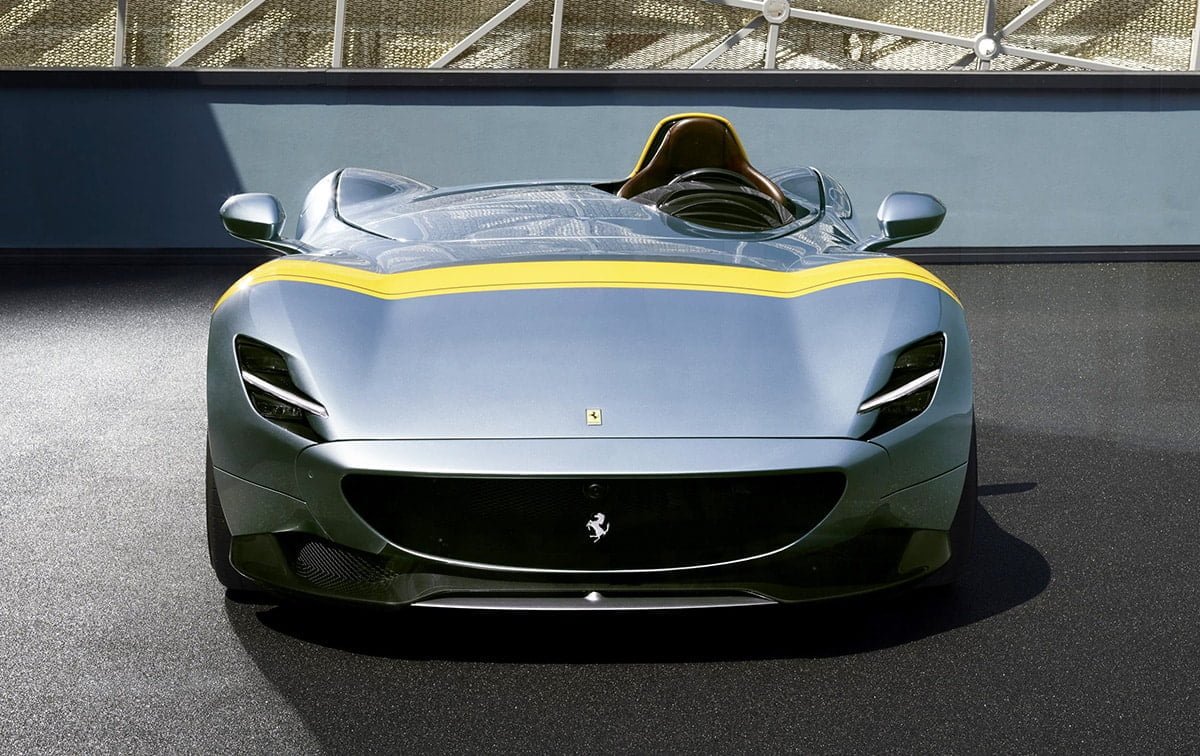


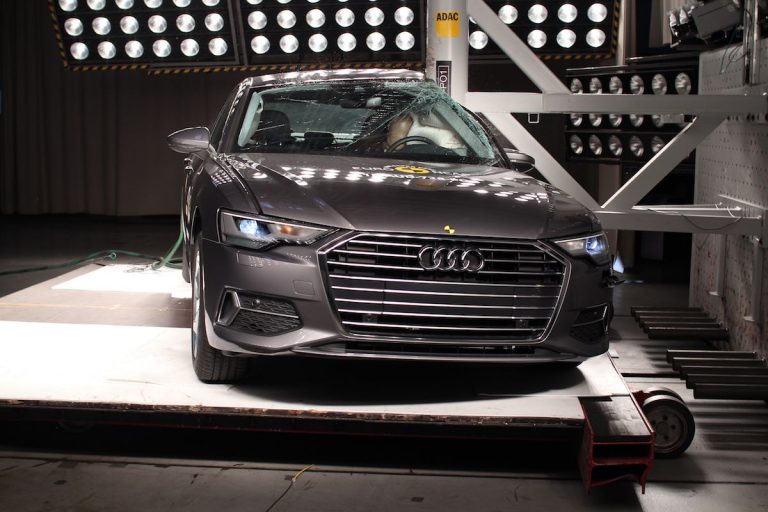


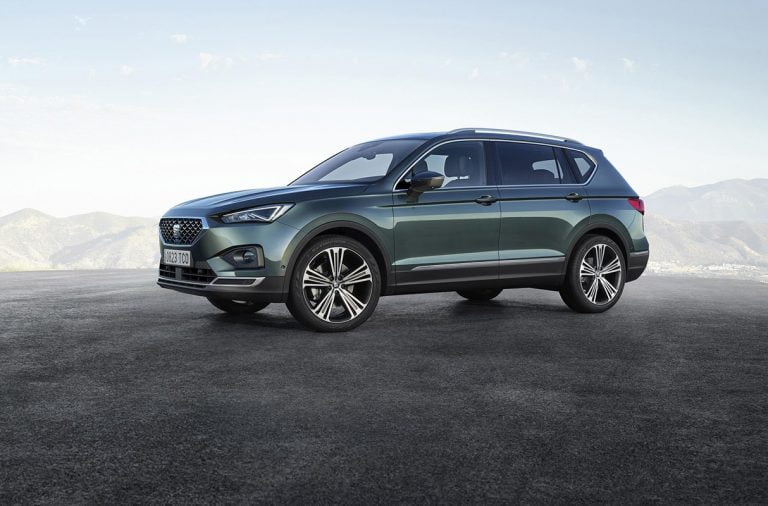
 As the brand’s top model, the Tarraco will come fitted with a suite of driver-assistance systems including autonomous emergency braking and new technologies such as an emergency call feature and rollover protection.
It will be fitted with SEAT’s ten-inch digital cockpit display, and an eight-inch screen on the centre console offering connectivity and infotainment functions. The Tarraco will be the first SEAT to offer control of the infotainment through making gestures in front of the screen.
Order books will open for the Tarraco in December and two petrol and two diesel versions will be available. The 1.5-litre TSI petrol offers 150hp through a six-speed manual gearbox, while the 2.0-litre version produces 190hp through a seven-speed automatic with all-wheel-drive.
The diesels are both 2.0-litre units, with power outputs of 150 and 190hp respectively. The 150 will be offered in front-wheel drive with six-speed manual or seven-speed auto plus all-wheel drive while the higher power unit is specified only with the auto ‘box and all-wheel-drive.
SEAT also states that the Tarraco will at a later date be offered with ‘alternative powertrain technologies’. This is expected to be a plug-in hybrid model with 210hp and a CO2 emissions output of under 50g/km.
As the brand’s top model, the Tarraco will come fitted with a suite of driver-assistance systems including autonomous emergency braking and new technologies such as an emergency call feature and rollover protection.
It will be fitted with SEAT’s ten-inch digital cockpit display, and an eight-inch screen on the centre console offering connectivity and infotainment functions. The Tarraco will be the first SEAT to offer control of the infotainment through making gestures in front of the screen.
Order books will open for the Tarraco in December and two petrol and two diesel versions will be available. The 1.5-litre TSI petrol offers 150hp through a six-speed manual gearbox, while the 2.0-litre version produces 190hp through a seven-speed automatic with all-wheel-drive.
The diesels are both 2.0-litre units, with power outputs of 150 and 190hp respectively. The 150 will be offered in front-wheel drive with six-speed manual or seven-speed auto plus all-wheel drive while the higher power unit is specified only with the auto ‘box and all-wheel-drive.
SEAT also states that the Tarraco will at a later date be offered with ‘alternative powertrain technologies’. This is expected to be a plug-in hybrid model with 210hp and a CO2 emissions output of under 50g/km.


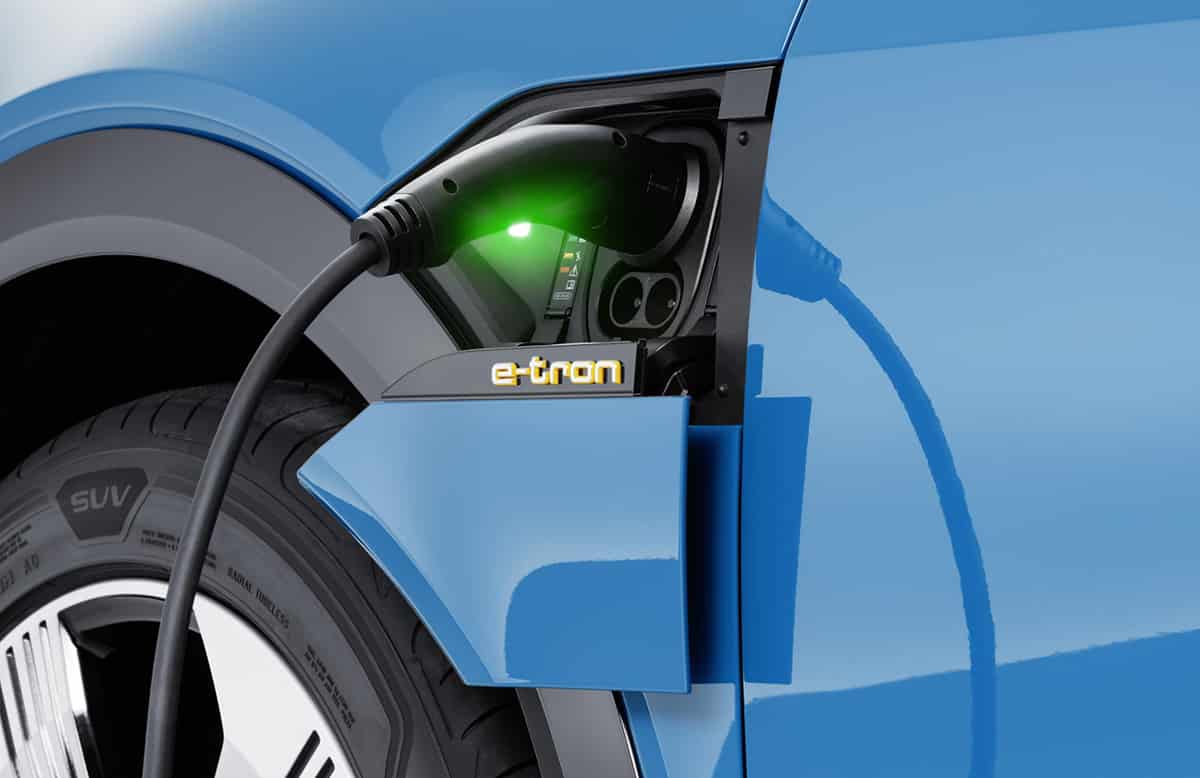 One way of increasing the range will be to specify the optional virtual exterior mirrors. These replace the traditional door mirrors with small rear-facing cameras that display their images on high-contrast displays in the cockpit, improving the car’s aerodynamics in the process by removing the drag-inducing mirror housings.
The battery pack is mounted flat under the floor to keep the car’s centre of gravity low, centrally between the axles helping to produce a perfect 50:50 axle weight distribution.
The driver also has seven driving modes to choose from through Audi’s drive sect system. This acts on the standard-fit air suspension and adaptive dampers, and in some modes can vary the ride height by up to 76mm.
The e-tron is a full-size SUV, measuring 4.9 metres long and with a 2.9-metre wheelbase. Inside it is configured as a five-seater, with a 660-litre boot.
Alongside the e-tron reveal Audi has announced that it will put 12 electric models on sale by 2025 and expects by then that such cars will account for a third of the brand’s sales.
One way of increasing the range will be to specify the optional virtual exterior mirrors. These replace the traditional door mirrors with small rear-facing cameras that display their images on high-contrast displays in the cockpit, improving the car’s aerodynamics in the process by removing the drag-inducing mirror housings.
The battery pack is mounted flat under the floor to keep the car’s centre of gravity low, centrally between the axles helping to produce a perfect 50:50 axle weight distribution.
The driver also has seven driving modes to choose from through Audi’s drive sect system. This acts on the standard-fit air suspension and adaptive dampers, and in some modes can vary the ride height by up to 76mm.
The e-tron is a full-size SUV, measuring 4.9 metres long and with a 2.9-metre wheelbase. Inside it is configured as a five-seater, with a 660-litre boot.
Alongside the e-tron reveal Audi has announced that it will put 12 electric models on sale by 2025 and expects by then that such cars will account for a third of the brand’s sales.
 Electric options will be available ‘in every relevant market segment from the compact to the full-size class’, starting with the e-tron and a Sportback estate version, both on sale in 2019.
Audi intends to unveil an e-tron GT concept car at the Los Angeles Auto Show later this year, the coupé developed in conjunction with Porsche.
In total four new vehicle platforms are being developed for these models – some will use the Volkswagen Group’s new
Electric options will be available ‘in every relevant market segment from the compact to the full-size class’, starting with the e-tron and a Sportback estate version, both on sale in 2019.
Audi intends to unveil an e-tron GT concept car at the Los Angeles Auto Show later this year, the coupé developed in conjunction with Porsche.
In total four new vehicle platforms are being developed for these models – some will use the Volkswagen Group’s new