Find an Expert Rating: 
Home Blog Page 147

Bentley Galene convertible takes to the high roads

Bentley has unveiled a new limited edition version of its Continental GT Convertible. Only 30 examples of the Galene will be available worldwide.

Apparently named after the Greek goddess of calm seas, and inspired by luxury yachting, the Galene has been created by Bentley’s bespoke division, Mulliner, in association with Princess Yachts.

The convertible is powered by a 4.0-litre twin-turbo V8 engine, producing 507hp and a maximum torque of 660Nm.

Taking its cue from the high seas, the Galene has a Glacier White paint finish with Sequin Blue detailing and a dark blue retractable hood. Clearly having thought of everything, Bentley has designed 21-inch ‘Propeller Wheels’.

Inside, there’s a new bespoke wood finish, Pinstripe Walnut. The Glacier White paintwork is echoed inside and the front fascia features a hand-painted illustration of a superyacht by Jaume Vilardell.

Bentley Continental Galene
Looking to rule the roads: the Bentley Continental GT Galene

Updates and new performance model for Jaguar XJ

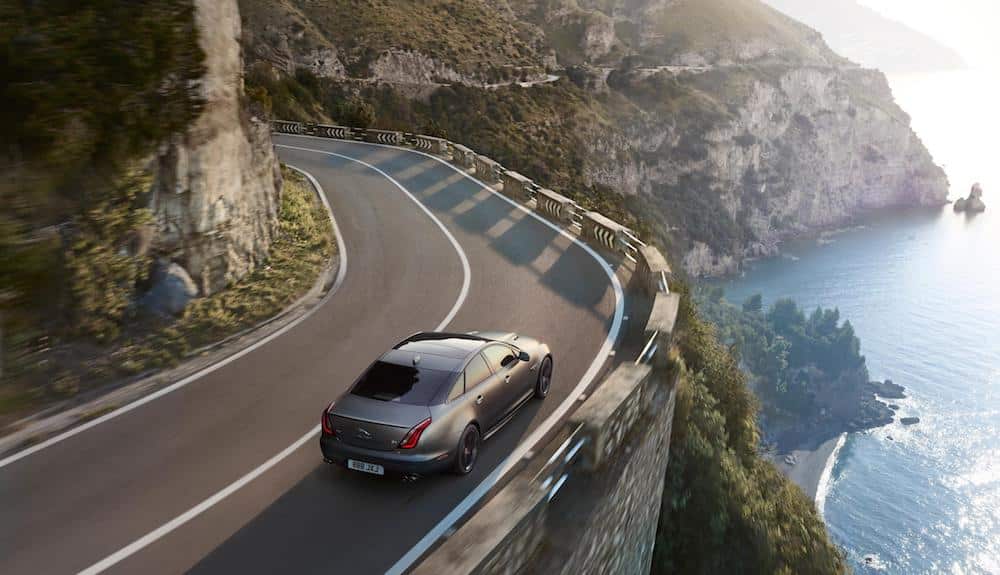
The Jaguar XJ range has got its 2018 model-year updates along with a new range-topping performance model: the XJR575.

Jaguar has enhanced the XJ’s connectivity with 4G Wi-Fi capability which can be paired with up to eight devices and a new larger ten-inch touchscreen.

Lane keep assist, driver drowsiness detection and forward traffic detection are all as standard, while autonomous emergency braking now features pedestrian detection.

XJR575 gives performance

The XJR575 joins the XJ range as the new flagship performance model. The 5.0-litre supercharged V8 engine has had its power upgraded from 550 to 575hp. With a maximum torque of 700Nm, the XJR575 has a top speed of 186mph and a 0-60mph time of 4.2 seconds.

With a bespoke rear spoiler, side sills and front bumper, the XJR575 has 20-inch gloss-black wheels with red brake calipers. The new model is available in two exclusive colours: Velocity Blue and Satin Corris Grey.

The updated XJ range is available to order now with UK pricing starting from £59,995 and from £93,710 for the XJR575.

XJR575 tops Jaguar XJ range
The XJR575 is the new range-topping performance model from Jaguar

New Suzuki Swift Sport to go turbo

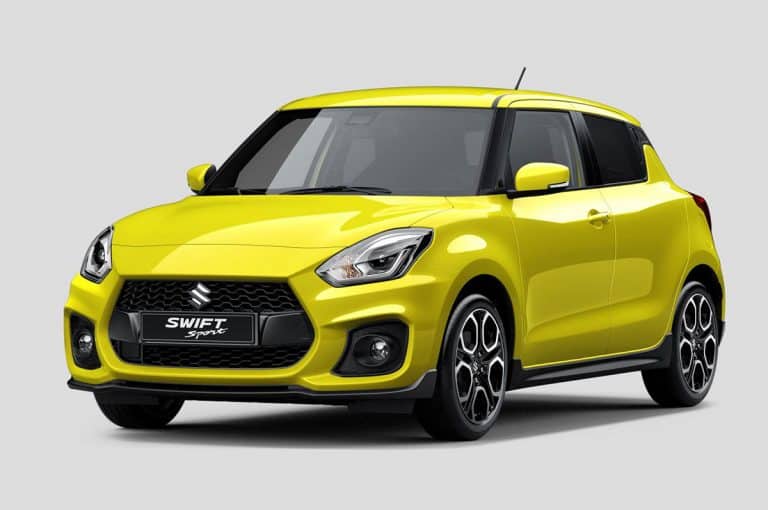
The third-generation Suzuki Swift Sport will debut at the Frankfurt Motor Show in September. The Japanese brand’s hot hatch has always been a popular model since the first examples launched in 2005. According to Suzuki, the new car has undergone a complete redesign “and delivers an all-new level of excitement for sport minded drivers across the world.”

Uprated Boosterjet

The Car Expert understands that the new Swift Sport will be the first version of the car to be turbocharged, using the 1.4-litre Boosterjet engine of the Vitara SUV but with the 140hp power output increased for the supermini. The current model uses a naturally-aspirated 1.6-litre engine with 138hp. Suzuki launched the new version of the standard Swift at the Geneva Motor Show in March, to general acclaim – when we tested the car, we concluded that it was a significant step forward from its predecessor. When it goes on sale, most likely in summer 2018, the new Swift Sport will face stiff competition in the performance end of the supermini market from models such as the Ford Fiesta ST and the Volkswagen Polo GTI – both expected to launch before the Suzuki. Details of the new Swift Sport will be revealed at the Suzuki press conference during the Frankfurt show on 12th September, and The Car Expert will post all the details as we get them.

Volvo XC60 review

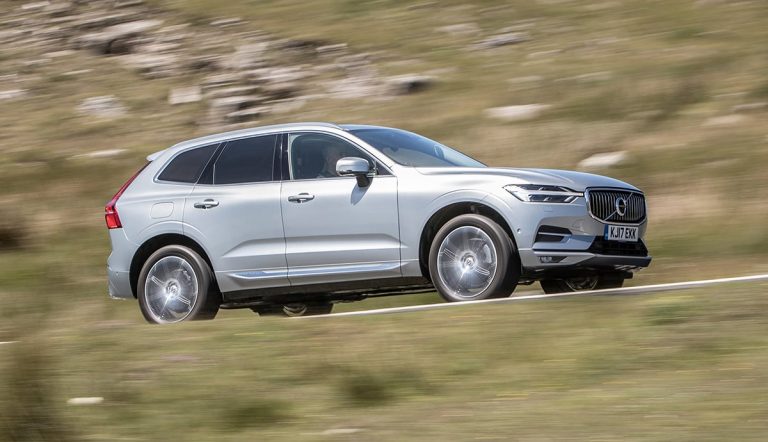
What is it? The Volvo XC60 is the second generation of the brand’s mid-sized SUV. Key features New design from larger XC90, new engines, more technology. Our view The new Volvo XC60 draws heavily on its larger XC90 sister to produce a car which, while not the most fun in the class, is impressive as a complete package.
It is a good time to be associated with Volvo. The Swedish brand has flourished under its ownership by Chinese giant Geely – in 2017 alone sales in the UK are up 8% this year, on top of a 7.5% increase last year. Most of this growth this has been fuelled by the new 90-series line-up (S90, V90 and XC90), which has been much praised by, among others, The Car Expert. The 90 models are range toppers, however. Can such success transfer to Volvo’s bigger-volume cars? We are here to find out with the launch of the second-generation Volvo XC60 – the SUV that is the brand’s biggest seller of all. Not surprisingly, Volvo appears to have applied a simple formula in designing the replacement for the original XC60 launched in 2008 – shrink wrap the XC90. Happily adopting the larger model’s design language, this car could have been built for those who have tried an XC90, loved it but who just can’t justify such a big, upmarket SUV. Next page: Design 2017 Volvo XC60 review | The Car Expert

Mercedes and Audi announce massive diesel car recalls

Mercedes-Benz and Audi have announced recalls for nearly four million diesel cars across Europe in a bid to avoid fines and vehicle bans in European cities.

Major car manufacturers are working with the German government on a “diesel rescue plan” to prevent widespread bans being implemented on diesel cars, according to Automotive News.

Daimler has announced a voluntary recall of more than three million Mercedes-Benz diesel cars and vans across Europe for a software update designed to reduce NOx pollution. Unlike its embattled rival Volkswagen, Daimler has made no rash promises that performance and economy will not be affected by the fix.

Daimler had already issued a recall for more than 250,000 of its compact models (A-Class, B-Class, CLA-Class) and V-Class passenger vans, but the new recall massively expands this to cover nearly every diesel Mercedes-Benz car sold since about 2009.

Audi has today announced a voluntary recall of 850,000 cars powered by its V6 and V8 diesel engines across Europe and other markets. The recall will also affect models from Volkswagen, such as the Touareg, and Porsche, such as the Cayenne, powered by these engines. Audi is also claiming that the recall is for a software update to reduce NOx pollution. These new 850,000 vehicles are in addition to the Audi four-cylinder diesel cars already recalled under the original Dieselgate scandal.

The German sources who spoke to Automotive News claim that the car industry should be able to reduce NOx pollution by up to 20% with software changes. However, it will almost certainly require reducing performance and/or reducing fuel economy to achieve this result.

Audi recalls more than 850,000 diesel cars

The future of diesel cars is now at risk

These huge recalls are partly a PR attempt for the two car companies to get ahead of a looming crisis for diesel cars. The thinking appears to be that it is better to voluntarily recall the vehicles than being told to do so by governments.

The German government has convened a summit of European car manufacturers for early August. It will be made clear to all manufacturers that they will need to take immediate and substantial action to avoid their diesel cars being banned from entering German cities.

This week’s recall announcements from Mercedes and Audi are likely to be the first of many. The German summit will include key figures from all the major car companies, and it is almost certain that other major car companies will have to make similar plans for recalling their diesel cars. The numbers of diesel cars recalled could quickly reach the tens of millions.

The latest Audi and Mercedes-Benz recalls cover diesel cars built to comply with both Euro-5 and Euro-6 emissions regulations. These are the very vehicles touted by the industry as being the “cleanest” diesel cars ever built.

Industry groups like the SMMT have long argued that current Euro-6 diesel cars present no problems for urban environments and that car manufacturers are being unfairly demonised. Yet a recall of another four million diesel cars, with potentially millions more to follow, suggests that there is no end in sight to the current diesel woes.

Sales of new diesel cars have collapsed in the UK over the last three months, with registrations down 27% in April, 20% in May and 14% in June. If this trend continues, it will start to have significant ramifications for consumers, car manufacturers, finance companies and car dealers.

Pricing and specification for Alfa Romeo Stelvio

UK pricing and specification for the all-new Alfa Romeo Stelvio has been announced, following the model’s appearance at Goodwood last month. The first SUV from the Italian manufacturer was unveiled at the LA motor show last year. At launch, the Stelvio will be available with a choice of two engines: a 2.2-litre 210hp diesel and a 2.0-litre 280hp petrol. Both come with Q4 all-wheel drive and ZF eight-speed automatic transmission as standard. From September, the Stelvio can be ordered with a 2.2-litre 180hp diesel or 2.0-litre 200hp petrol engine. The entry level Stelvio trim level includes 17-inch alloy wheels, LED rear lights, dual-zone climate control, an 8.8-inch infotainment system with DAB radio, Bluetooth, AUX and USB connectivity. Super, the next step up, adds 18-inch alloys, front parking sensors and leather upholstery. Speciale offers 19-inch alloy wheels, Bi-Xenon headlights and heated front seats. The top-of-the-range Milano Edizione, exclusively available for the launch of the Stelvio, adds sports seats, a 10-speaker sound system that Alfa Romeo is calling a Sound Theatre, 20-inch alloys, keyless entry and a rearview camera. The Stelvio received a five-star Euro NCAP rating in the latest round of safety testing, scoring 97% for adult occupant protection; the best in its category. Standard safety features include an integrated brake system, autonomous emergency braking with pedestrian detection, blind spot monitoring, forward collision warning and lane departure warning. The Alfa Romeo Stelvio is available from September with pricing starting from £33,990.
Alfa Romeo Stelvio at Goodwood
The Alfa Romeo Stelvio takes to the hill at Goodwood

New Connected Chic trim level for DS 3

DS has announced a new Connected Chic trim level for its DS 3 model. Positioned between the Chic and Performance Line trims, Connected Chic features styling updates and the infotainment upgrades. The ageing DS 3 remains the most popular model in the DS line-up, with over 400,000 sold worldwide and nearly a quarter of those in the UK. The new trim level’s ‘chicness’ comes in the form of 17-inch alloy wheels, LED front fog lights, tinted windows and automatic air conditioning. Satellite navigation and a seven-inch colour touchscreen with Mirror Screen, MirrorLink and Apple CarPlay takes care of the connectivity. The Contrast Pack consists of a two-tone paint finish. This sees the five body colours – white, red, green, black and pearlescent white – are paired with a black roof and door mirrors. A range of petrol and diesel engines are available and can be paired with either manual or automatic transmission, along with stop-start technology. The DS 3 received a five-star Euro NCAP rating when it was last tested back in 2009, but times have moved on a lot since then. Connected Chic costs £900 more than the Chic trim, but DS claims that it adds £2,000 worth of additional equipment to the model which is set to arrive in UK showrooms soon.
DS 3 Connected Chic at DS Store in Manchester
The DS 3 is the brand’s most popular model with over 400,000 sold worldwide

Frankfurt debut for potent Vauxhall Insignia GSi

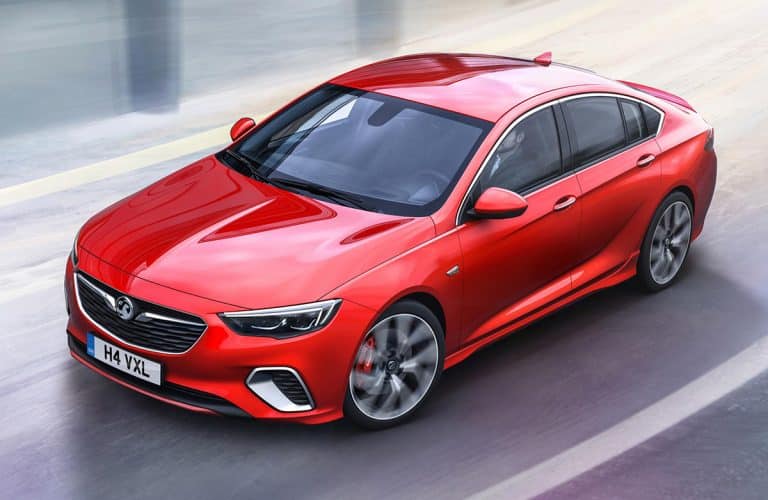
First pictures of the Vauxhall Insignia GSi have been released – a range-topping performance model set to be unveiled at the Frankfurt Motor Show on 12th September. The GSi, restoring a trim level last seen on the Vectra C not made since 2008, is powered by a new 2.0-litre turbo petrol engine of 260hp and with 400Nm of torque. This is matched to a new eight-speed auto gearbox with steering wheel paddle shifts. Power output of the new car is some 70hp less than the previous Insignia VXR performance model, but the GSi is said to be able to lap the Nurburgring Nordschleife circuit in Germany – regarded as today’s performance car barometer – faster than the VXR. The pace is said to be due to all-wheel drive, a new version of Vauxhall’s FlexRide adaptive damper chassis, and Brembo performance brakes.

Lower and lighter

A 10mm lower ride height is key to the setup of the Flexride chassis, which also includes a fourth bespoke driving mode setting alongside Standard, Tour and Sport, dubbed Competition. Drivers can also switch off the car’s traction control system. Torque vectoring replaces the conventional rear axle differential in the drivetrain. This uses two clutches to accelerate each rear wheel individually as required by the driving situation and prevent understeer. Visual differences to the stock Insignia include chrome air intakes at the front and a rear spoiler, while the interior gains full-leather sports seats, a leather sports steering wheel and aluminium pedals. The car is also 160kg lighter than a stock Insignia. Vauxhall Insignia GSi rear

Mercedes-Benz X-Class: a lifestyle pick-up

The new Mercedes-Benz X-Class pickup is here. Built on the Nissan Navara platform and based on the concept unveiled at the Paris motor show last year, the X-Class is intended to serve both as an all-terrain pickup and as a vehicle for urban use. Mercedes-Benz will be hoping to capitalise on the current high demand for pick-ups. In May of this year, pickups were the only segment of the new LCV market to see growth, and a large number of those vehicles are bought for play rather than work.

Pure Progressive Power

The X-Class is available in three trim levels: Pure, Progressive and Power. Those opting for the X-Class as a lifestyle vehicle are likely to find themselves Power-hungry, as this is the top-spec trim level offering the most comfort and style. The front bumper is colour coded, the rear bumper is chromed and there is a choice of three interior trims. Further styling options are available in the form of a side bar, canopy, various tonneau covers, nine paint finishes and several alloy wheel designs. Customers can also opt for an electrically-opening rear window. Mercedes-Benz X-Class Power | The Car Expert The X-Class is available with two four-cylinder diesel engines; a 2.2-litre offering 163hp and a 2.5-litre with 190hp, with a choice of six-speed manual or seven-speed automatic transmission. From mid-2018, a top-of-the-range 3.5-litre V6 258hp diesel engine will join the ranks. Apparently immune to the petrol power renaissance, Mercedes-Benz is only offering the 165hp petrol variant of the X-Class in left-hand drive. So what can those engines do? Well, Mercedes-Benz is keen to assure customers that the X-Class can carry 17 full 50-litre beer barrels or pull a trailer with three horses or an eight-metre yacht. Whichever takes your fancy.

Finishing touches

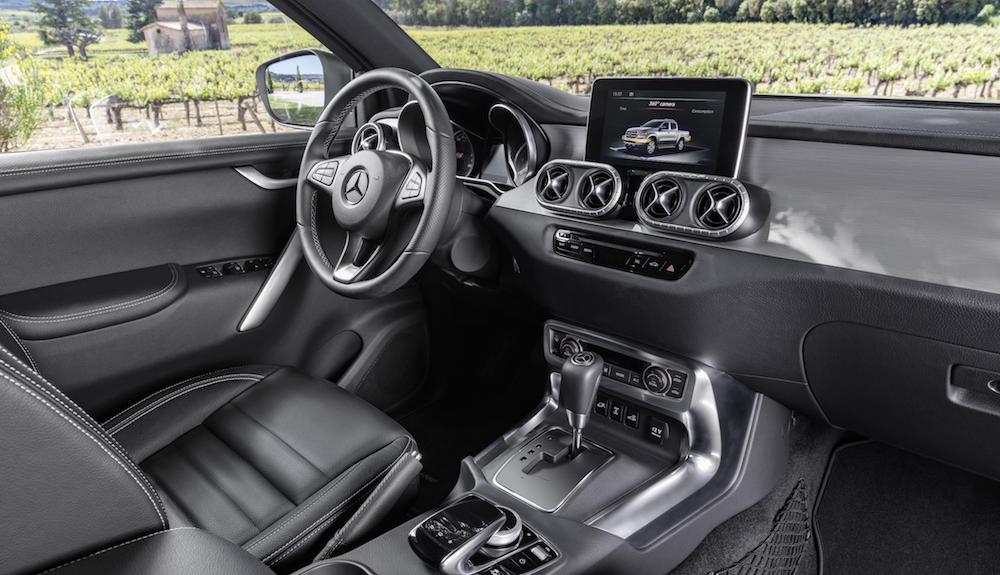
With its venture into the pick-up segment, Mercedes-Benz is aiming to impress with a touch of luxury. To this end, the X-Class has an eight-inch touchscreen, multi-function steering wheel and multi-function touchpad, all borrowed from its luxury car family. Customers will find themselves faced with a choice of six seat covers, and Mercedes-Benz is keen to assert that the X-Class will be available with the widest choice of materials and colours in the pick-up segment. The latest in connectivity will enable owners to check their vehicle’s fuel level and location and navigate door to door. Safety-wise, plenty of assistance is on hand in the form of active braking, lane keeping and traffic sign recognition. For those not content with a simple reversing camera, a 260-degree camera can be specified. UK pricing is yet to be announced, and full specifications will be announced closer to the local X-Class arriving on UK forecourts in November.
New Mercedes-Benz X-Class Interior
Take a look inside the Mercedes-Benz X-Class

Jeep unveils limited edition Rubicon Recon Wrangler

The limited-edition Jeep Wrangler Rubicon Recon, unveiled at the Geneva motor show in March, has gone on sale. It follows the Wrangler Night Eagle that went on sale in May.

The Rubicon Recon is powered by Jeep’s 3.6-litre 284hp V6 petrol engine which is paired with a five-speed automatic gearbox.

Jeep is claiming that the Rubicon Recon has better off-road capability than a regular Wrangler thanks to a stronger front axle and heavy-duty cast rear differential covers.

Available in three paint finishes – Gobi, Bright White and Granite Crystal – the Rubicon Recon has 18-inch alloy wheels and customers can opt for a soft or hardtop which comes in black. Red accent lettering features on either side of the bonnet, with a black hard spare tyre cover completing the look.

The black and red theme continues inside with red accent stitching on the black leather heated seats, red accent netting on the front door pockets and red accent coloured seat belts.

The Rubicon Recon is on sale now and costs from £40,505 for the two-door version and £42,175 for the four-door.

Interior of limited edition Rubicon Recon Jeep Wrangler
The red and black colour scheme continues inside the cabin

More petrol engines for Skoda and Volkswagen

The recent renaissance of petrol power at the expense of diesel continues with additional petrol engines being announced for Skoda and Volkswagen models. The move follows the continued decline in diesel sales, down 15% in June, 20% in May and 27% in April. The direct beneficiary of this swing away from diesel has been petrol cars, hence the move from Volkswagen and Skoda to beef up their petrol offerings. For its fleet customers, Skoda is introducing three additional petrol engines to its Octavia estate, while the brand’s Superb gets a 1.4-litre 150hp unit with either automatic or manual gearbox. Skoda’s Head of Fleet, Henry Williams, said that the introduction of the new engines was “due to increasing demand from customers”. Meanwhile, following its continued Dieselgate difficulties, Volkswagen has expanded the powertrains available for its Passat range with four new petrol units. The brand has also expanded the range of petrol engines for its Tiguan SUV with seven new units.
Volkswagen has added new petrol engines to its Passat and Tiguan
Volkswagen’s Passat is now available with a choice of four petrol engines

Fastback joins Hyundai i30 line up

Hyundai has announced the latest addition to its i30 line up. The five-door Fastback coupé follows the launch of the i30 range in March and the i30 Tourer earlier this month. Customers can choose from a range of powertrains including 1.4-litre 140hp petrol, 1.0-litre 120hp petrol, 1.6-litre 110hp diesel and 1.6-litre 136hp engines. Depending on which is chosen, a six-speed manual or seven-speed dual clutch transmission can be specified. To create the Fastback, Hyundai has played with the proportions of the original i30, lowering the roof line by 25mm and elongating the car by 115mm. A total of 12 paint finishes are available including three pearlescent, seven metallic and two solid. Inside, an eight-inch touchscreen with Apple CarPlay and Android Auto is optional, while the navigation system comes with a free seven-year subscription to LIVE services offering up-to-date information. A wireless charging system is also available. Standard safety features include autonomous emergency braking, driver attention alert, lane keeping assist and high beam assist, which dims main beam headlights to avoid blinding oncoming drivers. Speed Limit Information Function recognises road speed signs and displays the speed limit for the driver. The i30 received a five-star Euro NCAP rating when tested earlier this year. The i30 Fastback will be available early next year.
Interior of Hyundai i30 Fastback
Customers can choose a black, grey or red interior

Car companies’ half-year report card 2017

With the first half of the year behind us, the new car market has been quite volatile. A monster month in March was largely due to the government’s new road tax rules, which in turn led to a very quiet April. By May, a general election had been called and that always puts a dampener on new car sales.

Although total new car registrations are down about 1.3% on last year’s record numbers, the detail within has been interesting.

Diesel sales have practically stalled in the last three months, down 20% from 2016 levels, which will be causing headaches at many car companies and dealerships. Hybrid and electric vehicle sales continue to increase, a pattern which looks set to continue as what are currently referred to as “alternatively-fuelled vehicles” become the new normal.

As always, some car brands have enjoyed strong growth, many are in a roughly similar place to last year and others have fallen alarmingly. Below, we take a look at the ten best performers and ten worst performers, based on the 2017 results compared to last year.

(Note: The biggest winner in percentage terms is actually Chevrolet, but since the manufacturer no longer officially sells cars in the UK, we have not included it here. Also, the SMMT did not report McLaren’s UK registration numbers for the corresponding period in 2016, so its growth cannot be measured).

The ten biggest winners so far for 2017:

Aston Martin (up 110%)

Aston Martin DB11 Henley Royal Regatta edition

Aston Martin has more than doubled its sales results compared to the first six months of 2016. This will largely be due to the introduction of the all-new DB11 model, and a seemingly-endless run of limited edition Vantages as the model comes to the end of its model cycle.

The future is looking bright once again for Aston Martin, with the all-new Vantage due to appear later this year, and the new DBX crossover set to enter production in 2019.

Infiniti (up 36%)

Infiniti Q60 coupe

In the UK and Europe, Infiniti has always struggled to emulate the brand’s success and market presence in the US. But the company continues to push on, and has made some significant investment in Euro-specific models like the Q30 and QX30, both built in Nissan’s Sunderland plant right here in the UK.

A new Q60 coupé adds brand presence and showroom appeal, but is not likely to significantly boost sales numbers.

Next page: SUVs and lightweights

Volkswagen Dieselgate vehicles dogged by difficulties

As the fallout from the Dieselgate emissions scandal continues, the BBC’s consumer affairs programme, Watchdog, has investigated reports of ‘fixed’ Volkswagen cars losing power.

Of the 1.2 million diesel cars in the UK that were fitted with the ‘defeat device’ to manipulate the results of emissions testing, over 720,000 have received a software update to remove this feature. But now, a number of Volkswagen owners have reported that cars which have received the Dieselgate software fix have been going into ‘limp mode’.

Limp mode is a common safety feature in many cars that is activated to prevent further damage to the engine or transmission. After providing an initial warning on the dashboard display, the vehicle suddenly and rapidly decelerates down to about 20mph.

Watchdog spoke to Kirsty Blackwell who was driving her Volkswagen Caddy along the motorway when the car suddenly went into limp mode. She was able to get her car off the road, but “no longer feels particularly confident” with her car.

The programme also interviewed Lisa Bryant-Jones, whose Volkswagen Passat went into limp mode on a dual carriageway. While trying to manoeuvre the car off the road, her car was hit by a lorry and written off.

Watchdog’s report did not indicate whether the drivers they interviewed had seen any warning messages or lights on their dashboards before the cars went into limp mode.

So what does this mean if you own an affected model?

Volkswagen maintains that there is no link between the reported engine problems and its Dieselgate repair procedures.

The company told Watchdog: “Implementation of the technical measures does not cause limp home mode to engage nor does it increase the incidence of limp home mode occurring.

“Relevant authorities have confirmed that the technical measures have no adverse impact on the MPG figures, the CO2 emissions figures, engine output, maximum torque and noise of the affected vehicles.”

Customers who have experienced issues with their vehicle are urged to call Volkswagen’s helpline on 08000 930049.

At the time of writing, the UK-based Facebook group Volkswagen Diesel Customer Forum (Emissions Scandal) had over 4,800 members and growing rapidly.

Not everyone is convinced

Earlier this year, a government Transport Select Committee questioned Volkswagen bosses.

Volkswagen UK Managing Director, Paul Willis declared that the software fix has “no effect on real-world driving”.

But after chairing the committee, MP Louise Elman said: “I was not at all satisfied with their answers, they are not credible. This is simply outrageous – Volkswagen should stop denying the problem they’ve created and put things right.”

What can Volkswagen do to put Dieselgate right?

In the US where the defeat device was first discovered being used to cheat emissions tests, Volkswagen pleaded guilty and reached a $10bn settlement with the Federal Trade Commission. The company agreed to buy back or repair all affected vehicles and provide their owners with $5,000 compensation.

A similar settlement was reached in Canada, but only after owners took out a class action lawsuit against the company.

Closer to home, the story is a little different. The wording in the relevant EU legislation (and most other parts of the world) is slightly different to the US equivalent, so Volkswagen insists that the defeat devices weren’t cheating the tests in Europe. As such, the company argues that no compensation is needed. Essentially, the company has found a legal loophole based on semantics and it is planning to ignore any and all requests to offer UK and European owners any meaningful gesture.

But, the European Commission hopes to pressure Volkswagen into providing compensation voluntarily. In March, it hosted a meeting of 22 consumer protection authorities who agreed to prepare collective action against the company.

Should political pressure fail to persuade, Volkswagen could still be forced to pay out some sort of compensation eventually. It’s currently facing a range of class action lawsuits such as the one being made in the UK, and another in the Netherlands on behalf of approximately 180,000 Dutch Volkswagen owners.

Thinking of buying a used affected model?

Legal action is likely to take some time, unfortunately. Of short-term interest, and if you are thinking of buying a used affected model, is Volkswagen’s announcement in response to consumer complaints that it will provide a two-year guarantee for affected European cars that have been fixed.

The limited guarantee will cover some exhaust and emissions control parts, but only in vehicles that have done less than 155,000 miles and depending on their service history.

Given the apparent driving issues that have arisen in ‘fixed’ models, the probable effect on resale values and the enormous number of other used cars available on the market that do not have any such Dieselgate concerns hanging over them, we cannot recommend that anyone buy a used Volkswagen, Audi, SEAT or Skoda with one of the affected diesel engines.

If you are looking at buying a used car from any of these brands, check the car’s registration on the relevant link below. If it’s on this list, avoid it and move on.

What’s next?

Volkswagen’s reluctance to compensate its European customers is unsurprising. Having initially set aside £4.8bn to cover costs in the US it’s ended up paying well over double that.

The $10bn settlement only related to 482,000 American cars and it’s thought there are nearly 18 times as many (8.5 million) affected cars in Europe. These include some models sold under the Audi, Skoda, SEAT and Porsche brands.

Soon after details of the Dieselgate scandal were uncovered in September 2015, the company posted its first quarterly loss for 15 years and the price of its shares fell by around a third. However, although sales initially fell, they have now largely recovered to pre-Dieselgate levels. The Volkswagen Group quickly returned to profitability and is now trying to reinvent itself as a champion of electric cars.

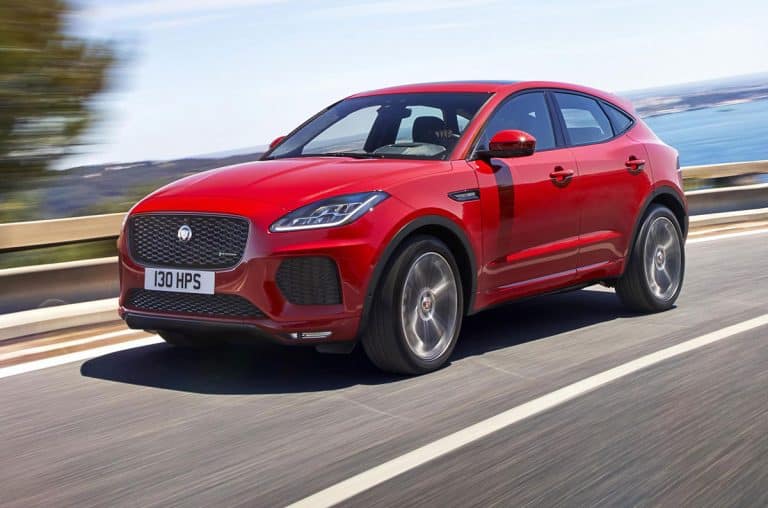
Best-seller status for Jaguar E-Pace SUV?

This is the Jaguar E-Pace SUV, and if industry observers are to be believed we are going to be seeing a lot of it. The new, smaller sister to the already highly successful F-Pace is predicted to become the best-selling model in the Jaguar range. As a result, Jaguar could soon emulate Porsche in becoming a brand with a performance image that actually sells more SUVs than sports cars or saloons. In fact, demand for the E-Pace is predicted to be so significant that Jaguar has contracted out its production to Austrian firm Magna Steyr – none of JLR’s UK plants, which are working close to capacity, can accommodate such a major new model.

Record roll

The E-Pace was unveiled on Thursday evening at a glitzy event staged at London’s Excel exhibition centre. The highlight of the entertainment saw stuntman Terry Grant set a record 15.3 metre, 270-degree barrel roll in the car.Jaguar E-Pace roll When it arrives at UK Jaguar dealers, the E-Pace will be pitched as a significantly more sporty SUV than its larger F-Pace sister. Jaguar says that the styling of the E-Pace has been evolved directly from the F-Type sports car. Buyers will be able to choose a version with a 300hp engine sending the car through 60mph from rest in under six seconds, and will also be able to select sporty 21-inch wheels from the options list. Jaguar design director Ian Callum describes the E-Pace as ‘the sports car of its class’. “Our new compact SUV combines the interior space, connectivity and security that families expect with the kind of proportions, purity of design and performance not usually associated with such a practical vehicle,” Callum says. The E-Pace will also be the first front-wheel-drive Jaguar to go on sale since the X-Type saloon, that ceased production in 2009. However only entry-level E-Paces will be front propelled – all other models will have all-wheel-drive powertrains.

Five engines

Another first sees the E-Pace offering the first engine line-up in the Jaguar Land Rover range to be comprised entirely of Ingenium units, built at the JLR engine plant near Wolverhampton in the West Midlands. The choice ranges across three petrol and two diesel units. Underneath the Jaguar E-Pace is constructed on the same architecture used on the Discovery Sport from sister brand Land Rover, though Jaguar’s engineers insist it has been specifically tailored to its new use. The car boats short front and rear overhangs, which place its large wheels at each corner, while a notable feature taken directly from the F-Type is the teardrop shape of the side windows. Technology available to E-Pace drivers will include Configurable Dynamics technology, allowing the personalisation throttle, steering and transmission settings. Connectivity will also be a strong selling point, the car’s 4G wi-fi hotspot providing content streaming through up to eight devices simultaneously, while a Touch Pro infotainment system will allow occupants to access their favourite smart device apps through the car. Jaguar E-Pace prices will start from £28,500, pitching it direct against the BMW X1 and Audi Q3 in one of the currently most competitive sectors of the UK car market. And it won’t be the final SUV from Jaguar – an all-electric model, the I-Pace, launches in 2018.

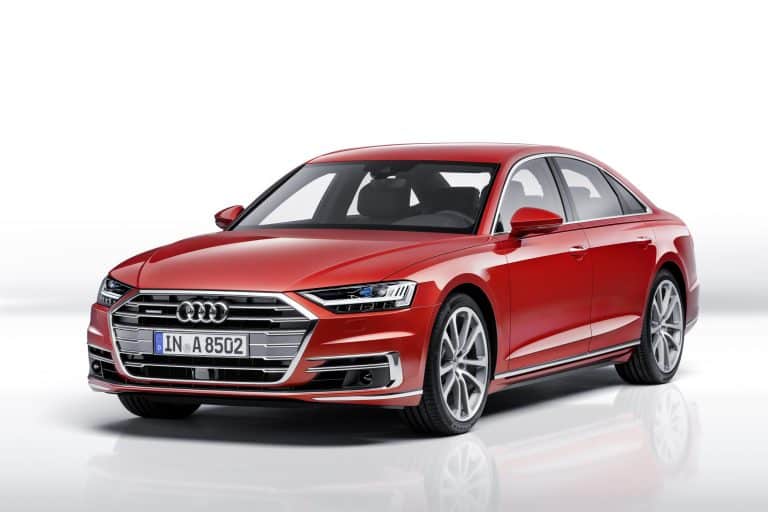
New Audi A8 is ‘most technological yet’

The new Audi A8 has been unveiled at a special event in Barcelona, the car’s creators describing it as “the future of the luxury class.” The latest A8 is the brand’s most technologically advanced car yet, and Audi also claims that it is the first production car in the world to be developed for highly autonomous driving. From 2018 Audi will begin to roll out piloted driving functions to aid such manoeuvres as driving into parking spaces, garages and negotiating traffic jams.

New design look

The new A8, which will be sold in both standard 5.17-metre long form or with a wheelbase extended by 130mm, debuts a new design language for the brand. Drawing heavily on the Audi Prologue concept car debuted at the 2014 Los Angeles Auto Show it features significant changes including a major reshaping of the grille. Initial powertrains will include extensively re-engineered versions of the V6 turbo diesel and petrol units, with 286 and 340hp respectively. They will quickly be joined by a new 4-litre eight-cylinder TDI diesel of 435hp while a 6-litre W12 will also be on offer. Likely to be most anticipated, however, will be the A8 L e-tron quattro, a plug-in hybrid version combing a 3-litre TFSI petrol engine and electric motor for 449hp and 700Nm of torque. Order books for the new A8 range open in September with first deliveries expected before the end of 2017. UK prices are still to be announced – industry observers suggest they will start at close to £70,000. 2017 Audi A8 cabin

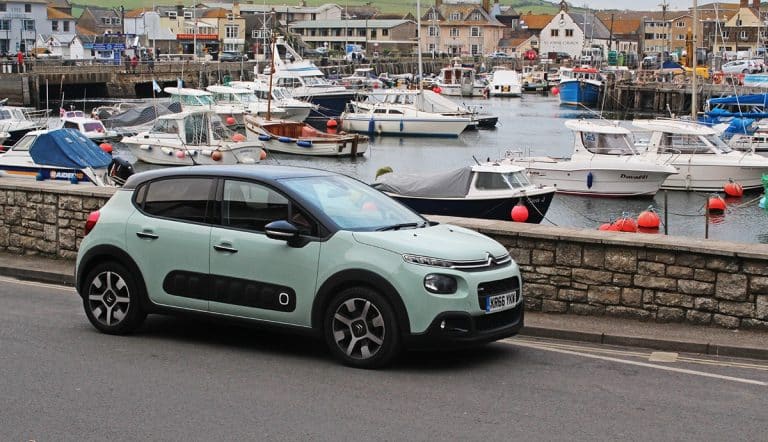
Citroën C3 review – road trip

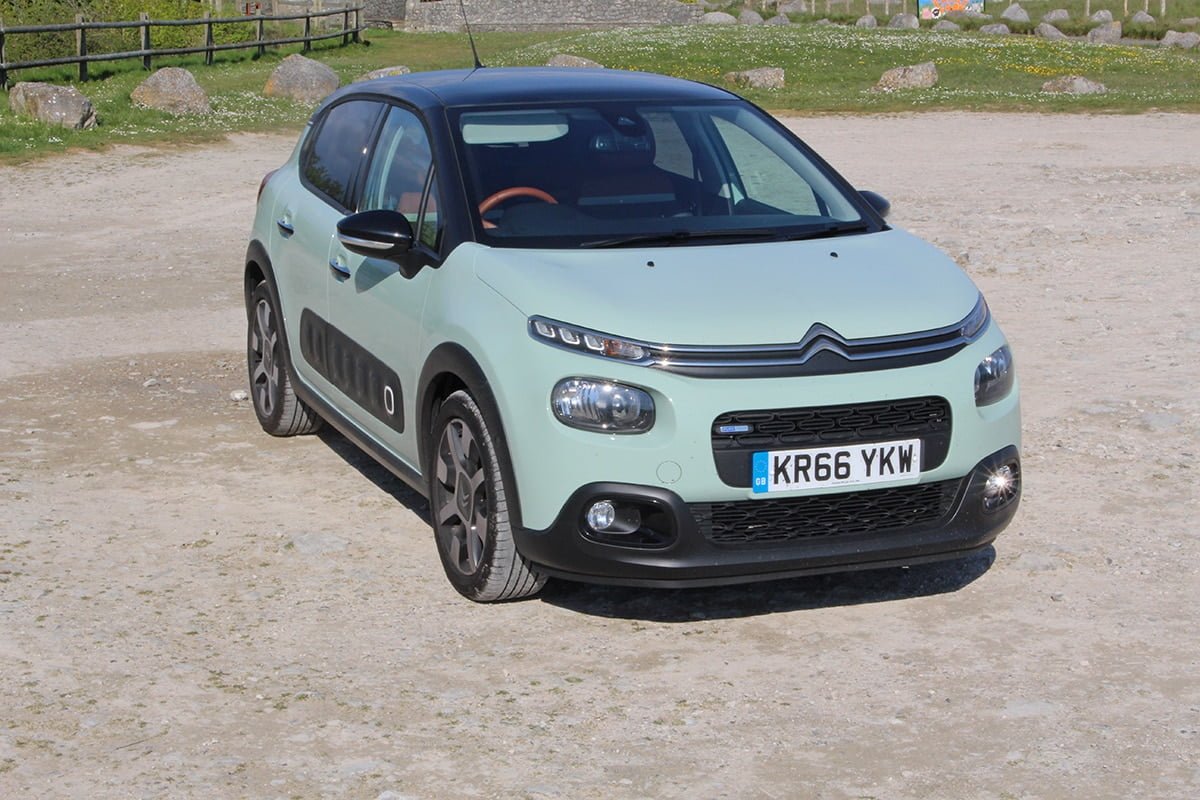
The latest Citroën C3 is very different from its predecessor but how user-friendly is it as a daily driver? The traditional May break for the writer and his good lady, and a planned week on England’s Jurassic coast in Dorset, provided the perfect opportunity to find out what this car is all about. We last drove the C3, the third generation of the model, at the UK launch event in 2016 and were impressed by its combination of style, performance and practicality. And on delivery of the top-grade C3 Flair PT 110 model to Charman Towers in mid Wales, the visual presence of the car is immediately obvious.

Bold look, outside and in

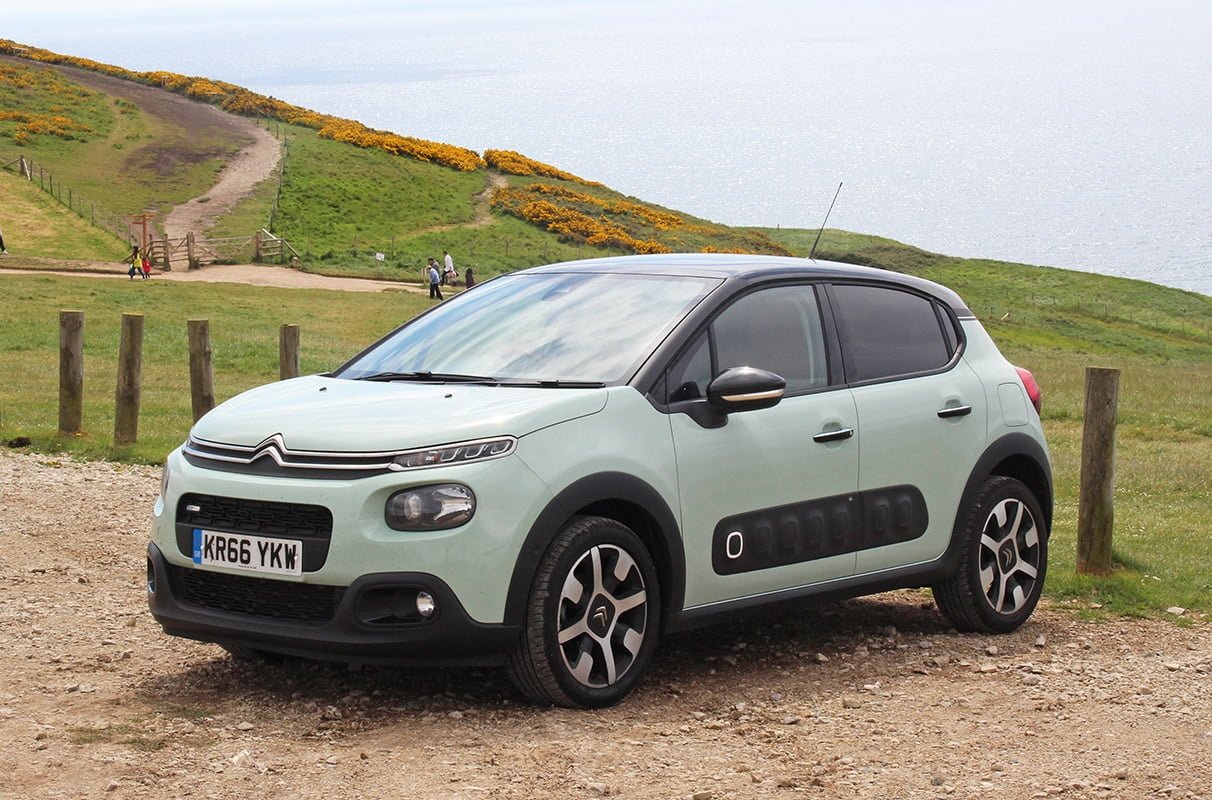
Leaving aside the duck-egg blue paint finish, a colour this writer has not experienced since painting it onto the bottom of Airfix model Spitfires as a child, the C3 certainly makes a statement with its two-tier front lights, the bold chrome stripes of the bonnet, and those air bumps on the side. The more I get used to these plastic mouldings the more I’m coming to like them. One can order an entry-level C3 without the ‘bumps’ but I think that would make the doors seem unnecessarily bulbous, and they do offer some protection against car park dings. Inside is a similar story. The latest Citroën interior treatment debuted with the C4 but is no less impressive in the C3. It feels like there is a lot of room inside, emphasised by the full-width dashboard, and it feels very upmarket with lots of neat touches – none more so than the ‘suitcase strap’ interior door handles. Some of the plastic finishes are a little hard to the touch but not irritatingly so, while the dash layout is impressive – angled neatly towards the driver and with not too many buttons to confuse. Briefly I’m concerned that rear seats will need to be used to accommodate luggage as the 300-litre boot only just accommodates the suitcases for a week away, and I speculate that with any of our offspring tagging along space could have been an issue. But then I realise that I am misinterpreting this car. Its boot is bigger than rivals the Ford Fiesta and Peugeot 208, because this is a supermini – it just doesn’t feel like one…
Citroën C3 boot
Just enough room in the boot, but it is generous for a supermini.
Getting to Dorset in good time to find our holiday cottage requires miles of motorway munching, and the C3 feels very assured. Admittedly we do have the current power range topper in a turbocharged version of the three-cylinder 1.2-litre petrol engine of 110hp, but the whole car offers refined progress at motorway speed limits – not the prime environment for a supermini. At least it does in terms of roadholding, bump smothering. Less impressive is the mildly intrusive engine note at speed limits – a six-speed gearbox would probably help matters. Citroën C3 on road, rear The Jurassic Coast stretches around 96 miles from Exmouth in East Devon to Studland Bay in Dorset, and gets its name from its rock – constant coastal erosion has exposed 185 million years’ worth of geology. It’s been a World Heritage Site since 2001, but the writer has not been here since the 1970s – and it is the most memorable piece of geology from those childhood holidays that we make for first. Durdle Door is an enormous, rock arch jutting out to sea, the vertical strata highly visible as one looks down on it from the top of the cliff. To get to that point requires traversing rather more challenging roads than the motorway. These are twisty, with more indifferent surfaces, and sometimes not much wider than the car. On such narrow routes discretion is, of course, called for, every inch of the C3’s generous visibility out front made use of. Reversing into parking spaces exposes somewhat less impressive rear vision, but the parking camera and sensors of the grade ease this issue. When the roads widen out one can fully investigate the car’s handling prowess, which is, well okay. It is rather softly suspended, with quite a bit of body lean under enthusiastic cornering, and steering that is not quite as sharp as rivals. And while the engine is quite torquey, when one just need to exercise the gears the shift is rather woolly in operation.
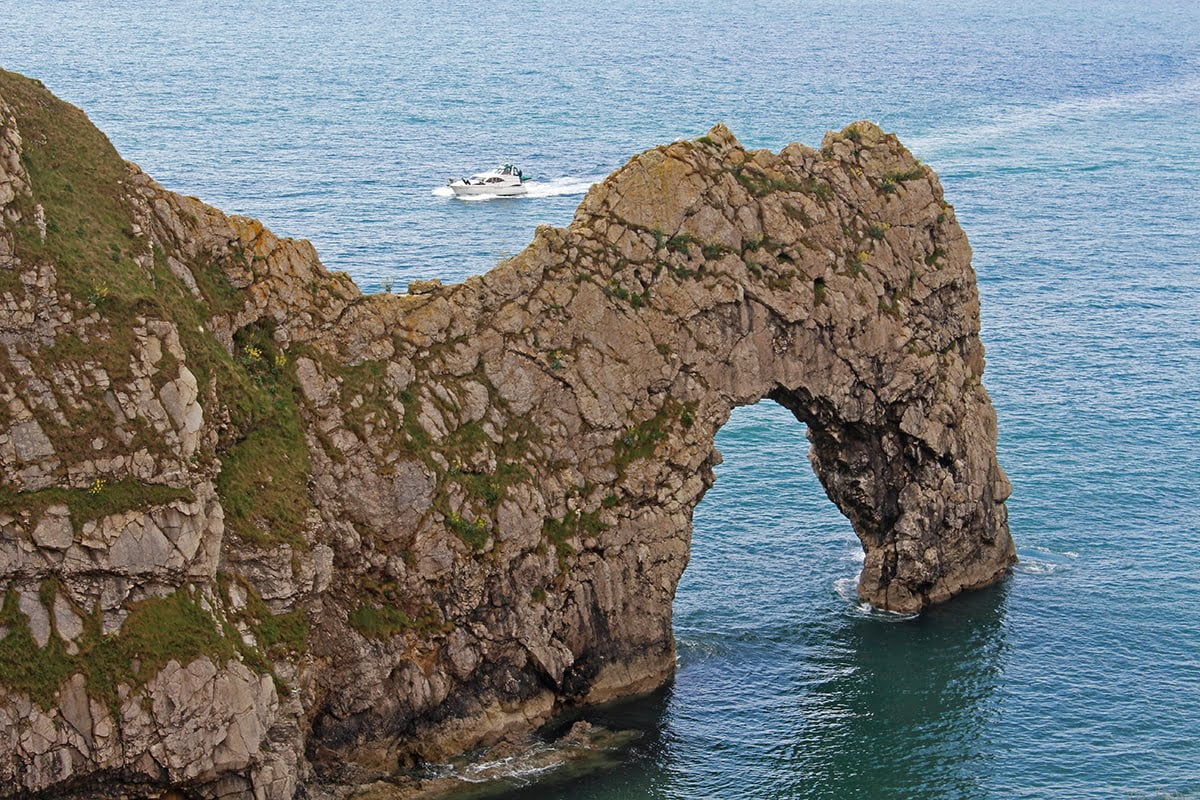
Citroën C3 Durdle Door
Parked at Durdle Door – the twisty roads to this coastal location show up some handling deficiencies.
Overall, however, the car remains refined, and this shows itself the following day. Heading out to the Isle of Portland we drive through the centre of the Port of Weymouth, and straight into a traffic jam caused by a police incident on the quayside. The C3 simmers quietly in the queue, effective air conditioning keeping things cool within. Portland was once a naval base, and remains a centre of the limestone industry – St Paul’s Cathedral, Buckingham Palace and the Cenotaph are all built with Portland Stone. Much more recently the seas were the scene of great British success as the home of the maritime events in the 2012 Olympics. Having easily crested the steep hills up to the top of the island one gains a superb view of the coast stretching away. Prominent is the remarkable Chesil Beach, seemingly cutting off a section of sea in a highly visual representation of a geological trait known as longshore drift. Perhaps the most fascinating bit of geology, however, is found at a small coastal town that has recently found new fame. West Bay is now better known to TV viewers as Broadchurch, home of the ITV crime drama, and settling down with a cup of tea at a seafront kiosk one can constantly hear other tourists passing by with comments such as “There’s the police station,” and “Isn’t that mobile home where David Tennant lived?”
Citroën C3 Portland
Portland Bill – watchtower of the Jurassic Coast
From the quayside bench where Tennant’s DI Hardy and Olivia Colman’s DS Miller shared many of their scenes, one can see very clearly the looming and so distinctive sandstone cliffs above the beach. Sandstone is soft, rock falls are common, and it is distinctly unnerving a few weeks after our break to see pictures of a new and massive fall from the cliffs, completely obliterating the stretch where we had walked under those very same cliffs… Getting to West Bay, and indeed all our chosen locations during our Jurassic week, reveals the one major frustration with the C3. The car has the most idiosyncratic satellite navigation system this writer has ever experienced. Its routing suggests that it has a ‘on holiday’ mode, the seven-inch touchscreen constantly suggesting one dives off main, and direct, routes onto slow, longer side roads – it makes no sense at all…
Citroën C3 sat nav
The C3’s satellite navigation is not its best aspect…
Overall, however, the C3 proves a highly agreeable companion for our Dorset tour, a relaxing car to drive and thus one less thing to worry about on our holiday. In fact, we end up so relaxed that we forget to use some of this top-level Flair model’s extras, such as the built-in dash cam on which one can both record video, or take photos and send to friends via a smartphone app. Superminis are of course generally regarded as around town cars, their traditional environment being on the daily commute. These days especially, however, all cars have to offer extra versatility. In many ways, the Citroën C3 breaks the mould in supermini design, and on the evidence of our week in a geological history lesson, the car would suit many buyers as a good all-rounder.

Citroën C3 – key specifications

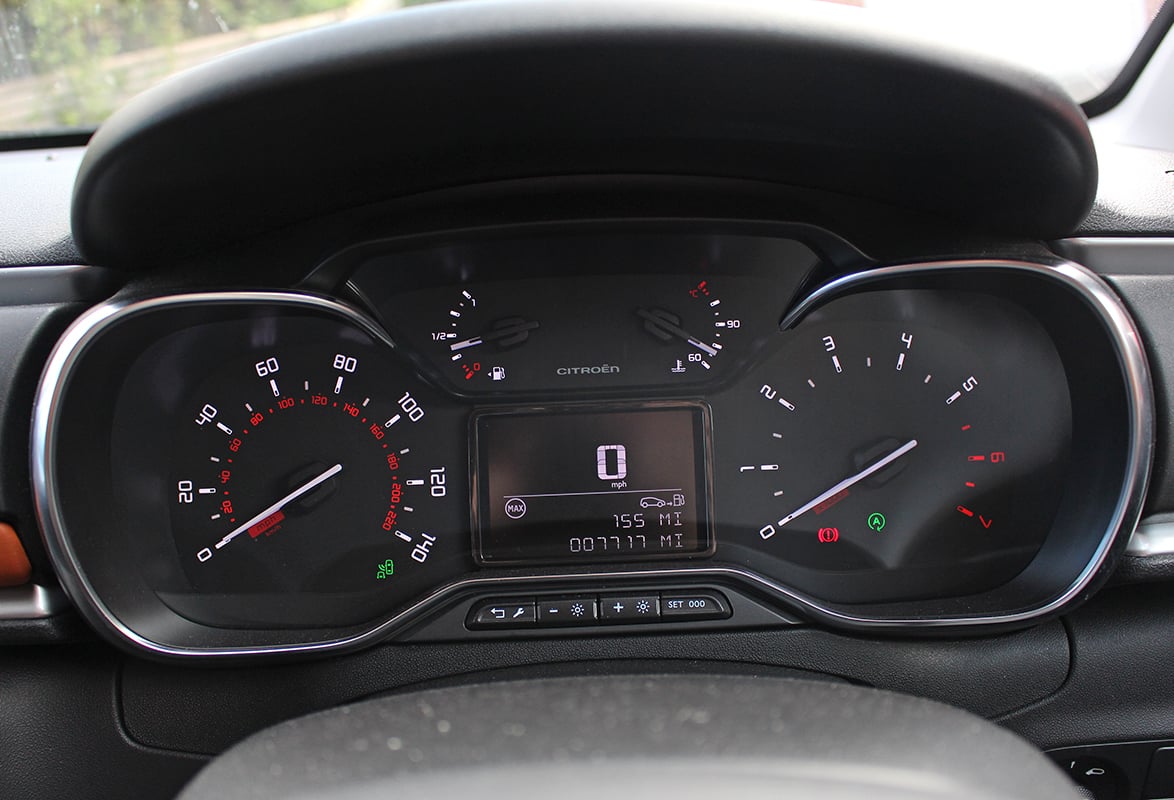
Model tested: Citroën C3 Flair 110 hp Price: £16,425 (range starts £11,135) Insurance group:16E (range starts 8E) Engine: Petrol three-cylinder 1.2-litre turbo. Power (hp):110 @ 5500rpm Torque (Nm):205 @1500rpm. 0-62mph (sec):9.3. Top speed (mph): 117. Fuel economy (combined, mpg): 61.4. CO2 emissions (g/km):103. Key rivals: Ford Fiesta, Vauxhall Corsa, Peugeot 208. Test Date: May 2017 Citroën C3

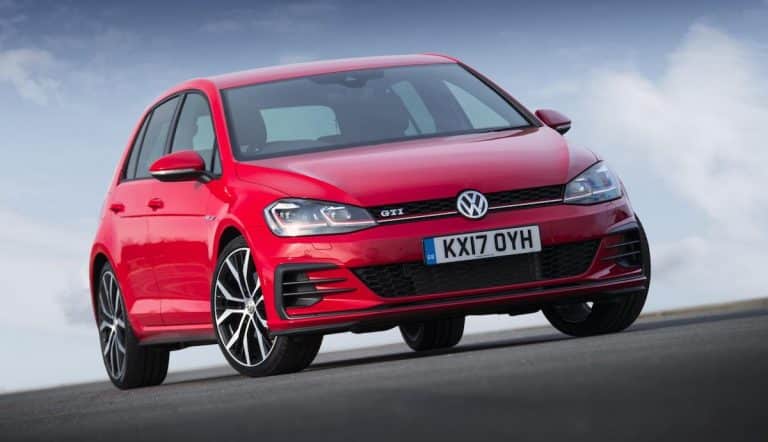
Volkswagen looks to keep Golf on top with new offer

Volkswagen is hoping to keep the Golf at the top of the UK sales charts for another month or two with a new PCP finance offer from Volkswagen Finance.

The company is offering a £1,500 deposit contribution on any new Golf (excluding e-Golf and Golf SV models) sold with a personal contract purchase (PCP) from Volkswagen Finance. In addition, the first two scheduled services are included at no cost. The APR is 4.9% representative (see below), which is not bad – but not exactly amazing – in the current car finance market.

The featured example of the Volkswagen website is for a specific model, priced at £199/month for four years with a customer deposit of over £4,500. However, you can choose a deposit and term to suit your needs and don’t need to follow what the salesman wants.

Orders must be placed by 24 July and the cars delivered no later than 30 September. Bear in mind that number plates change in September, from the current “17” plates to the new “67” plates. The dealer will probably want you to take delivery of your car before then (August is a notoriously poor month for new car sales), but you are not obliged to do so if you’d rather wait a few weeks for the new number plates. The newer plates may also help your resale value if you’re not planning to keep the car for more than three years.

The Volkswagen Golf has just been updated, with improved safety technology like autonomous emergency braking across the range. A colour touchscreen infotainment system is also standard on all models, along with other upgrades and improvements. Be aware that there may still be some stock of the pre-facelift model about, so a dealer may be trying to sign you up for the old model rather than the new one. If that’s the case, you should be negotiating for a much better deal than the official offer.

The offer applies to nearly all models in the Golf range, including the GTI, GTD, GTE and R models. Only the e-Golf electric model and Golf SV are not invited to the party.

Volkswagen Golf GTE facelift 2017 (The Car Expert)

The Car Expert says… always check the fine print

The dealer will probably refer to the finance deal as a “Solutions” plan. That’s Volkswagen’s name for a personal contract purchase.

The deal is advertised with an APR of 4.9% representative. That means that the actual APR you are offered may not be 4.9%, depending on how much deposit you’re putting in, how much you’re borrowing and for how long. But it should be pretty close to that figure.

Excess mileage fees, if you underestimate your annual driving requirements, are likely to be about 10p/mile. That’s £100 for every 1,000 miles you go over your limit. The advertised examples are based on 10,000 miles per year, which is good – many brands are now using 6,000 miles per year to make the monthly payments lower, but that’s less than most drivers will cover in a year.

The finance deal only applies to new cars, which does not include dealer demonstrators or pre-registered cars. The finance offer is provided through Volkswagen dealers by Volkswagen Financial Services. If a dealer offers you a finance deal that does not match these details or from another lender, it is not part of this offer.

The free servicing offer covers the parts and labour on the first two scheduled services (as set out in the owner’s manual). Any work required over and above that will be at your own expense.

As with any car purchase, work out your budget before you visit the showroom and don’t be persuaded to go over it – regardless of what the smiling sales executive suggests. They don’t have your best interests at heart, but The Car Expert does!

Volkswagen Golf, best-selling car in the UK June 2017
The Volkswagen Golf knocked the Ford Fiesta off the top of the sales charts in June

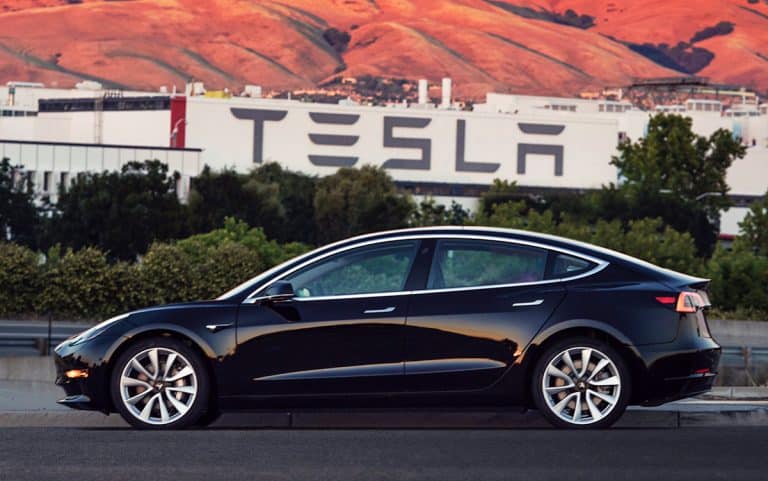
‘Mass market’ Tesla Model 3 goes into production

The Tesla Model 3 has gone into production as the electric car manufacturer gears up for the launch of its planned mass-seller. Tesla CEO Elon Musk posted pictures on Twitter of the first production Model 3, which is apparently going to be his own. The Model 3 is a four-door saloon – effectively a downsized version of the already on-sale Model S, to a size that can challenge the likes of the BMW 3 Series, Audi A4 and Mercedes-Benz C-Class.

Auto technology

It promises seating for five, a 0-60mph time of under six seconds and a range between charges of 215 miles. The car also comes ready fitted with the technology required for future autonomous driving. In America the Model 3 has a starting price of around $35,000, equivalent to £28,000 – UK prices are yet to be announced but will no doubt make the car a viable rival to conventional executive saloons. More details of the Model 3 are expected to be revealed on 28th July when the first 30 examples are presented to their owners at a ‘handover party’. First serious deliveries are expected to begin in September but many customers could be waiting a while. Tesla reports orders for the Model 3 of around 500,000, and industry reports suggest that its plant will be producing 20,000 examples per month by December. Tesla Model 3, due in 2018

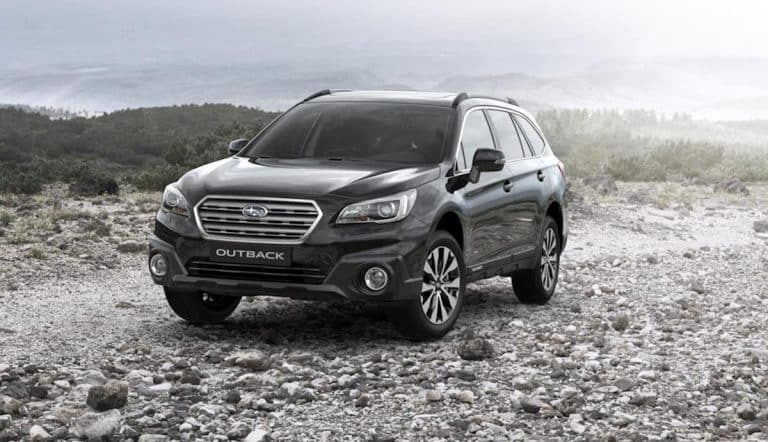
Special edition Black & Ivory Subaru Outback

Subaru has announced a limited run of 50 Black & Ivory Outbacks. The Outback crossover combines the space of an estate model with the off-road capabilities of an SUV. The special edition Outback gets a Crystal Black Silica paint-finish, LED headlamps, 18-inch alloy wheels and a power tailgate to complete the exterior styling. The ivory of the black and ivory colour scheme comes in the form of the leather upholstery used inside. Subaru’s Starlink infotainment system and navigation is as standard. A recipient of a five-star Euro NCAP rating in 2014, the Outback was the first Subaru model to be equipped with the brand’s EyeSight advanced collision avoidance system. Technology-wise, there’s Active Torque Vectoring, Vehicle Dynamics Control, rear view camera and Hill Descent Control. The petrol model has a start-stop system and Subaru Intelligent Drive, enabling drivers to select different engine modes according to the road conditions. Available from 1st September, the Black & Ivory Outback is priced from £33,545 for the petrol and £35,545 for the diesel model.
Interior of Black & Ivory Subaru Outback
Ivory leather upholstery is paired with black trim giving the special edition its name

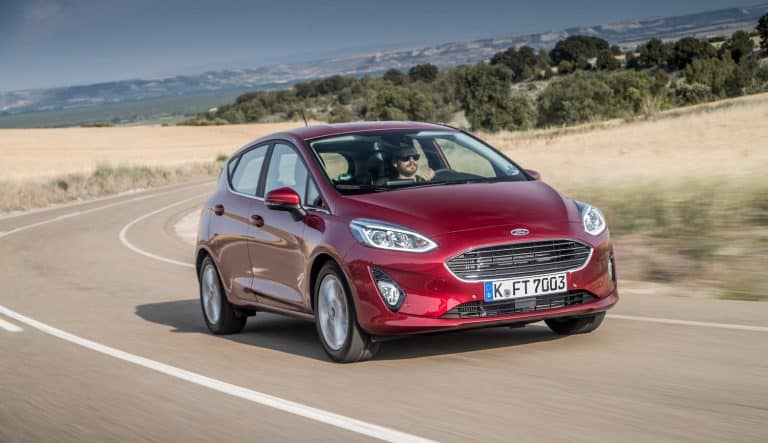
Ford Fiesta Titanium review

What is it: The latest generation of Britain’s best-selling car, the Ford Fiesta. Key features: Improved quality and connectivity, excellent driving characteristics Our view: The Ford Fiesta is the best-selling car in the UK for good reason, and the new model is a welcome improvement in most areas. Review type: First drive
The Ford Fiesta has been the top-selling car in the United Kingdom for the last eight years, and for good reason. But the new car market is a constantly-changing environment, and even the best in the business need to keep improving. The new Fiesta is considered an “all-new” model, which means that although there are many carry-over mechanical bits underneath, the car has been redesigned from scratch. Not that you’d really notice at first glance. Unlike the first six generations of Ford Fiesta models, the exterior styling is a subtle evolution of the previous model. Inside, however, it’s a big jump forward. And that’s most welcome, because the dash layout and interior trim were two of the last Fiesta’s weaknesses. We drove the new model on its launch in Spain, in both petrol and diesel forms. A more comprehensive review of the UK-spec car on UK roads is coming soon. So how does the Fiesta shape up against perennial rivals like the Vauxhall Corsa, Volkswagen Polo, SEAT Ibiza, Toyota Yaris, Honda Jazz and others? Next page: Design Ford Fiesta ST-Line, Vignale and Titanium models

Market electrifies Toyota hybrid sales

Toyota has revealed a 30% surge in sales of its hybrid cars, as the push towards electric vehicles gains momentum. The jump in petrol-electric vehicle sales, which the Japanese manufacturer says is “unprecedented” comes just days after Swedish brand Volvo announced that all of its cars launched from 2019 will include an electric motor in some form. Toyota sold 22,616 hybrid vehicles in the UK between January and June 2017, with the biggest increase being to fleets – 40.2% up on the same period in 2016. Of every 10 Toyota buyers in the UK four are choosing hybrid models, the largest percentage in the industry. In Europe the rise is even more marked, Toyota and Lexus hybrid sales up 44% – one in every two of the brand’s cars sold in Europe is now a hybrid.

C-HR leads way

The new C-HR crossover is leading the surge, more than 80% of its sales across Europe being the hybrid variant, while the electric motor-equipped model of the latest RAV4 SUV is also selling well. Some observers believe the increasing negative publicity surrounding diesel engines is fuelling the shift to hybrid – UK diesel registrations are down almost 10% year to date and slipped almost 15% in June. However according to Toyota GB sales director Mark Roden, the growth is happening because the mystery surrounding hybrids has been replaced by customers recognising the benefits in fuel efficiency, environmental impact and refinement that the powertrains offer. “Toyota has led the way for two decades in making hybrid technology available to everyone – we have proven technology, famous reliability and the most exciting range of hybrid cars we’ve ever offered. I’m delighted that more people than ever are enjoying the benefits of them,” Roden says.
Toyota Prius dash
More drivers than ever are seeing displays like this on their dash.

Hybrid Assist tech for Renault Scenic & Grand Scenic

Renault has introduced a new hybrid powertrain, the dCi 110 Hybrid Assist, to the latest versions of its Scenic and Grand Scenic models which launched last year.

This is Renault’s first foray into Hybrid Assist technology, with the brand claiming that the new powertrain improves the emissions, economy and performance of the dCi 110 engine.

Working in combination with the internal combustion engine, the Hybrid Assist’s 10kW electric motor is powered by a 48-volt 150Wh battery. According to Renault, this returns CO2 emissions of 94g/km and fuel economy of 81mpg.

20-inch alloy wheels and a nine-inch touchscreen are as standard. The usual three trim levels, Dynamique Nav, Dynamique Nav S and Signature Nav, are available.

The Scenic received a five-star Euro NCAP safety rating when tested in 2016 and has Emergency Brake Assist, ABS with Electronic Brake-force Distribution, Electronic Stability Control and Hill Start Assist as standard.

The Scenic range with dCi Hybrid Assist is available to order now from £25,055.

Hybrid Assist technology for Renault Scenic
The Renault Scenic received a five-star Euro NCAP safety rating when tested last year

Honda HR-V gets Black Edition treatment

The Honda HR-V is the latest of the brand’s models to get the Black Edition treatment. The compact crossover SUV was first launched in Europe in 2015. The Black Edition comprises black running boards, skid plates, front grille, mirror caps and 18-inch alloy wheels. Inside, the special edition gets black leather and floor mats. The HR-V Black Edition is due to hit forecourts in the next few weeks and costs from £25,000 for the 1.5-litre i-VTEC and from £26,820 for the Automatic CVT.

Extension for CR-V Black Edition

The HR-V joins the existing CR-V Black Edition which has had its limited production run extended to meet demand. Available in 4WD, the CR-V Black Edition has black running boards, tailgate spoiler, front grille, skid plates and 19-inch alloy wheels. The full leather interior has contrasting stitching, an embossed Black Edition logo on the front and rear seats and carpet mats with a Black Edition logo. On sale now, the CR-V 2.0-litre i-VTEC manual costs from £31,000 and the 1.6-litre i-DTEC automatic from £34,300.
Honda HR-V gets Black Edition
The Honda HR-V was first launch in 2015

SEAT Ibiza leads a field of five-star Euro NCAP ratings

It was good news for SEATAlfa Romeo, Hyundai, Vauxhall and Volkswagen in the latest Euro NCAP crash test results published today.

The SEAT Ibiza was singled out for praise by the UK’s Thatcham Research, with director of research Matthew Avery claiming that “SEAT has set a new benchmark in safety for the supermini price point category”.

The new Ibiza has autonomous emergency braking and pedestrian autonomous emergency braking both fitted as standard on all models.

Avery believes that with other supermini launches expected for later this year, “the safety game is now on for carmakers in this category”.

More top ratings

In addition to the SEAT Ibiza, the Alfa Romeo Stelvio, Volkswagen Arteon, Vauxhall Insignia and Hyundai i30 all received five-star safety ratings from Euro NCAP.

Despite having autonomous emergency braking as standard, the latest Honda Civic received a four-star Euro NCAP safety rating, missing out on a top rating due to a lower-than-expected child protection score.

Honda Civic wasn't awarded a five-star Euro NCAP safety rating
The Honda Civic received a four-star Euro NCAP safety rating

Second chance for Ford Mustang

After drawing heavy criticism early this year when it received a two-star rating – the worst for a top 10 car manufacturer in nearly a decade – Ford submitted its flagship Mustang sports car for retesting.

Thatcham Research believes that this “underlines the power of the Euro NCAP consumer testing programme”, with manufacturers hoping to appeal to safety-conscious buyers.

Ford hoped to improve its safety rating with the addition of standard fit pedestrian detection, forward collision warning, autonomous emergency braking and lane keeping aid. An issue with inadequate pressure in the driver’s airbag was also addressed.

This time the Ford Mustang was awarded a three-star safety rating, with Thatcham’s Matthew Avery advising that it is hardly a “cause for celebration”.

However, the Avery applauded what he described as Ford’s “rapid addition of a suite of standard-fit safety tech and its prompt updates”.

Ford Mustang wasn't awarded a five-star Euro NCAP safety rating
Despite the addition of more standard fit safety technology, the Ford Mustang received a three-star rating