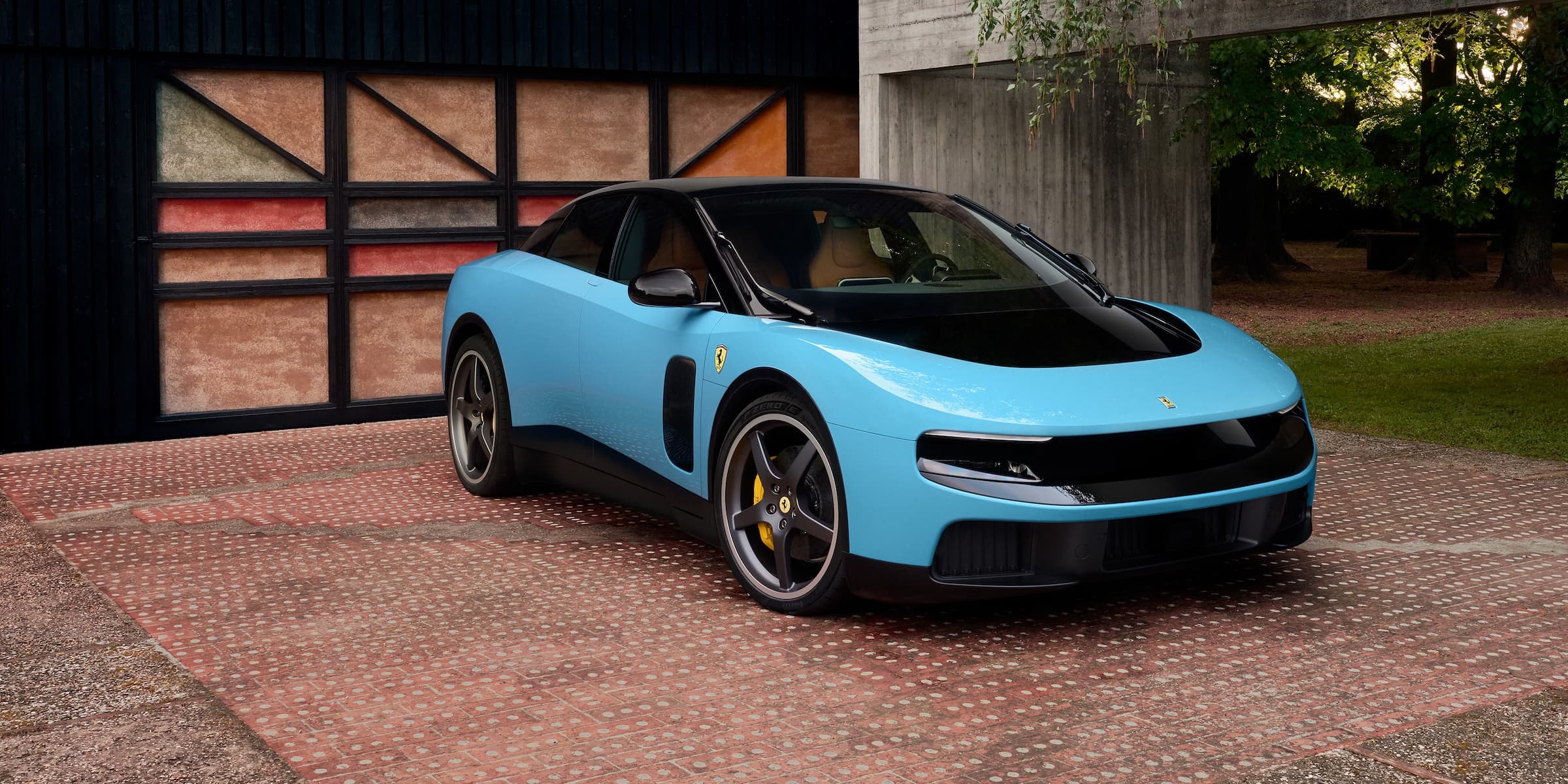
Ferrari’s first EV was always going to upset a lot of people, and it certainly has. Revealed on Monday night, the Ferrari Luce has seen an unprecedented reaction online – almost all of it negative.
If you thought last year’s Jaguar rebranding was controversial, that now looks pretty tame by comparison. Mind you, the Luce could have looked like the most beautiful car ever created and plenty of people would still have declared it a betrayal simply for being an EV.
But the Luce isn’t a svelte, two-seater coupé or convertible. It’s a big saloon-ish thing, with four doors and five seats. It’s more than five metres from nose to tail, which is longer than a Mercedes E-Class. Ferrari doesn’t just make fast cars; it makes dream cars, and I’m not sure who exactly is likely to dream about the Luce.
Rather than using its own design team, Ferrari brought in external guidance from Sir Jony Ive and Marc Newson – the designers responsible for the Apple iPhone and Apple Watch, among other products – with the task of reimagining the entire car, both inside and out.
However, its controversial looks are only one part of the Ferrari Luce story, and not the part that will have the biggest impact on the wider car industry.
Criticised as a Ferrari, copied by everyone else
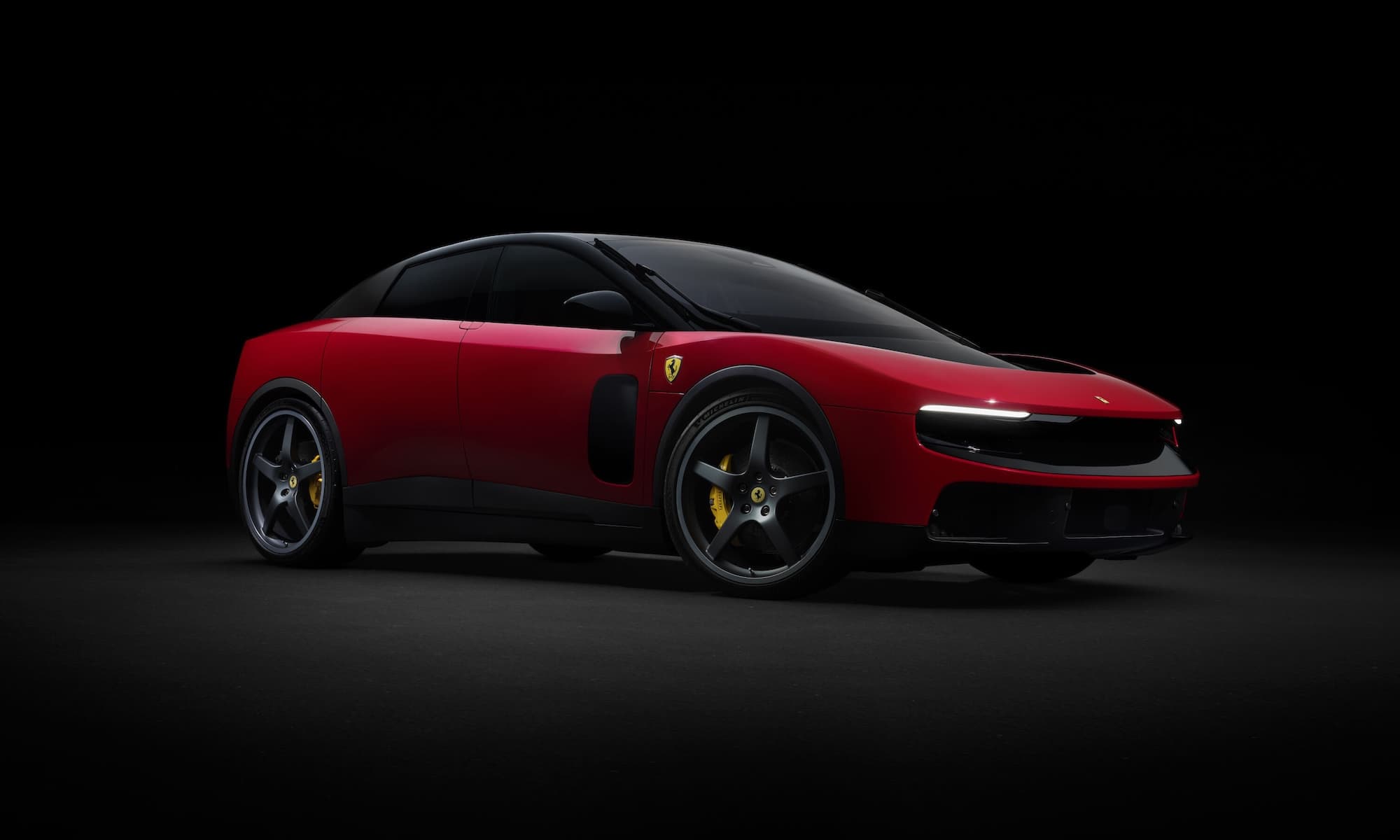
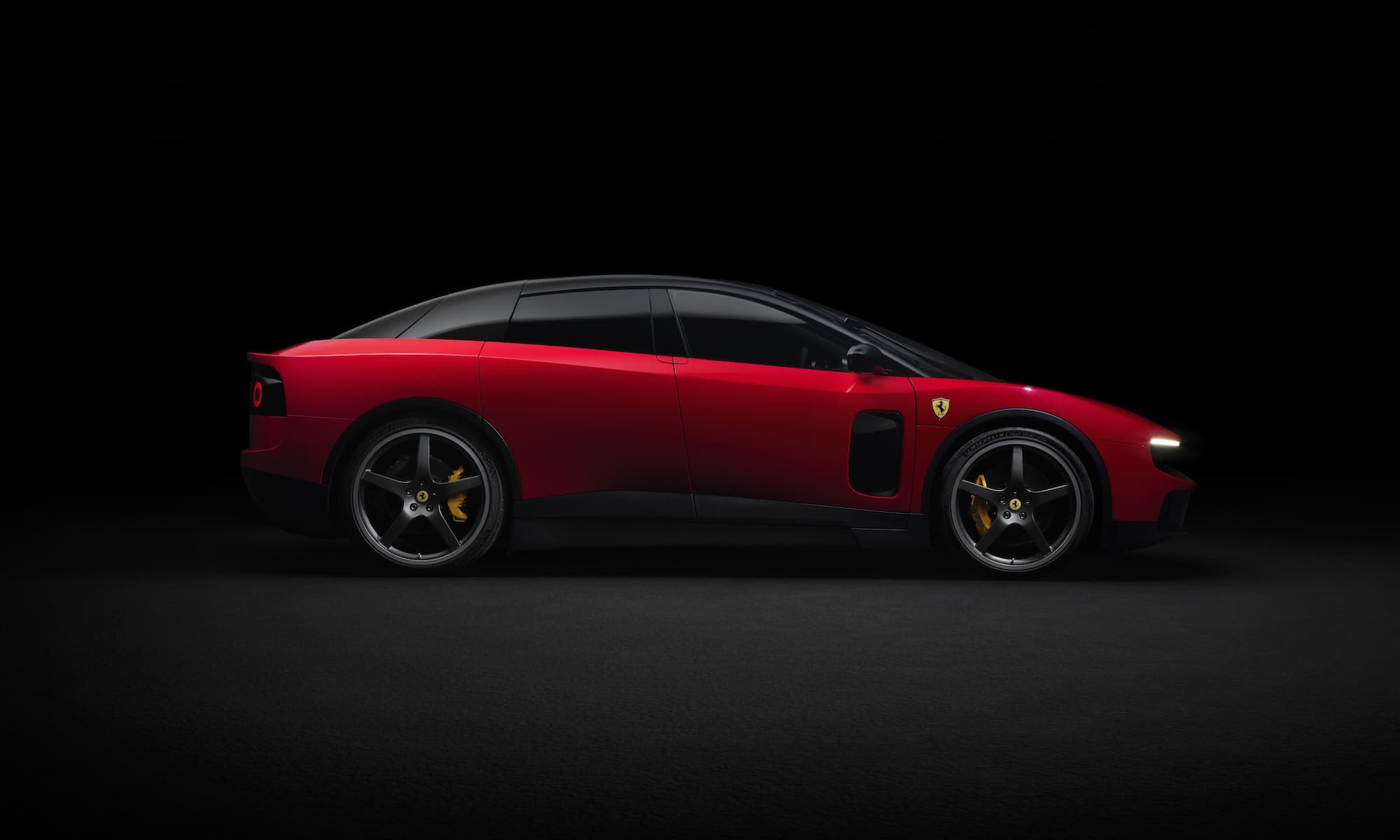
Take away the Ferrari badges, and the Luce’s styling becomes a whole lot less controversial. The question is not whether the Luce contains interesting design ideas, but whether those ideas belong on a Ferrari.
The exterior is clean, if lacking in any real drama, while the interior looks genuinely clever. By next year’s Shanghai motor show, it would not be a surprise to see several new Chinese cars with obvious Luce influences. They probably won’t be sports cars, either. The four-door liftback styling of the Luce will inevitably translate into lookalike luxury saloons, fastback family cars or electric crossovers at a fraction of the price of a Ferrari.
It may be that the Ferrari Luce ultimately serves as a four-wheeled calling card for its celebrity designers, aimed at other car companies that want to rethink their own design principles.
The Ferrari Luce gives EVs a new level of credibility
There have already been plenty of fast electric cars. Tesla proved years ago that EVs could be brutally quick, while the Porsche Taycan showed that an electric car could be engineered seriously by one of the world’s great performance brands.
Ferrari is different, though. It’s not the biggest car company in the world, and it has almost nothing to do with normal household budgets. But for many decades, Ferrari has been recognised as the ultimate symbol of performance, glamour and desire in the automotive world, and its influence on car culture is deep.
That gives the Luce significance beyond the number of units Ferrari will ever sell. If Ferrari has decided that an EV can carry its famous badge – and not as some reluctant compliance car but as a thoroughly engineered flagship project – it becomes harder to keep dismissing EVs as soulless appliances for people who don’t like cars.
The most committed EV haters won’t change their minds. Most of them decided long ago that electric cars are terrible, and no amount of engineering will change their minds. But for people who are less tribal about it, Ferrari’s new EV changes the tone of the argument.
People rarely buy cars on rational grounds alone, even when they claim they do. If Ferrari can make electric power feel aspirational rather than apologetic, it’s likely to move the needle across the whole industry.
Not everyone has to like the Ferrari Luce, and it doesn’t mean that every EV is suddenly more desirable this week than it was last week. But the blanket “EVs can’t be proper performance cars” line looks more dated than it did a week ago.
The engineering is the bit people should be shouting about
We weren’t invited to the Luce’s launch, and no one outside Ferrari has driven it yet, so there’s a limit to how much anyone can judge the car properly at this stage. But on paper, the engineering is deeply impressive.
Ferrari has not simply bought an electric platform from someone else and stuck a prancing horse logo on it. Like its famous petrol engines, all the main EV components of the Luce have been engineered, developed and manufactured in-house in Maranello.
Despite being a large five-seat saloon-ish thing, the Luce’s performance stands above almost every petrol-powered car Ferrari has ever built. But numbers alone are not the interesting part. Plenty of EVs are quick, and some Teslas can accelerate even quicker than the Luce. The harder question is how you make an electric car feel special once the novelty of instant acceleration has worn off.
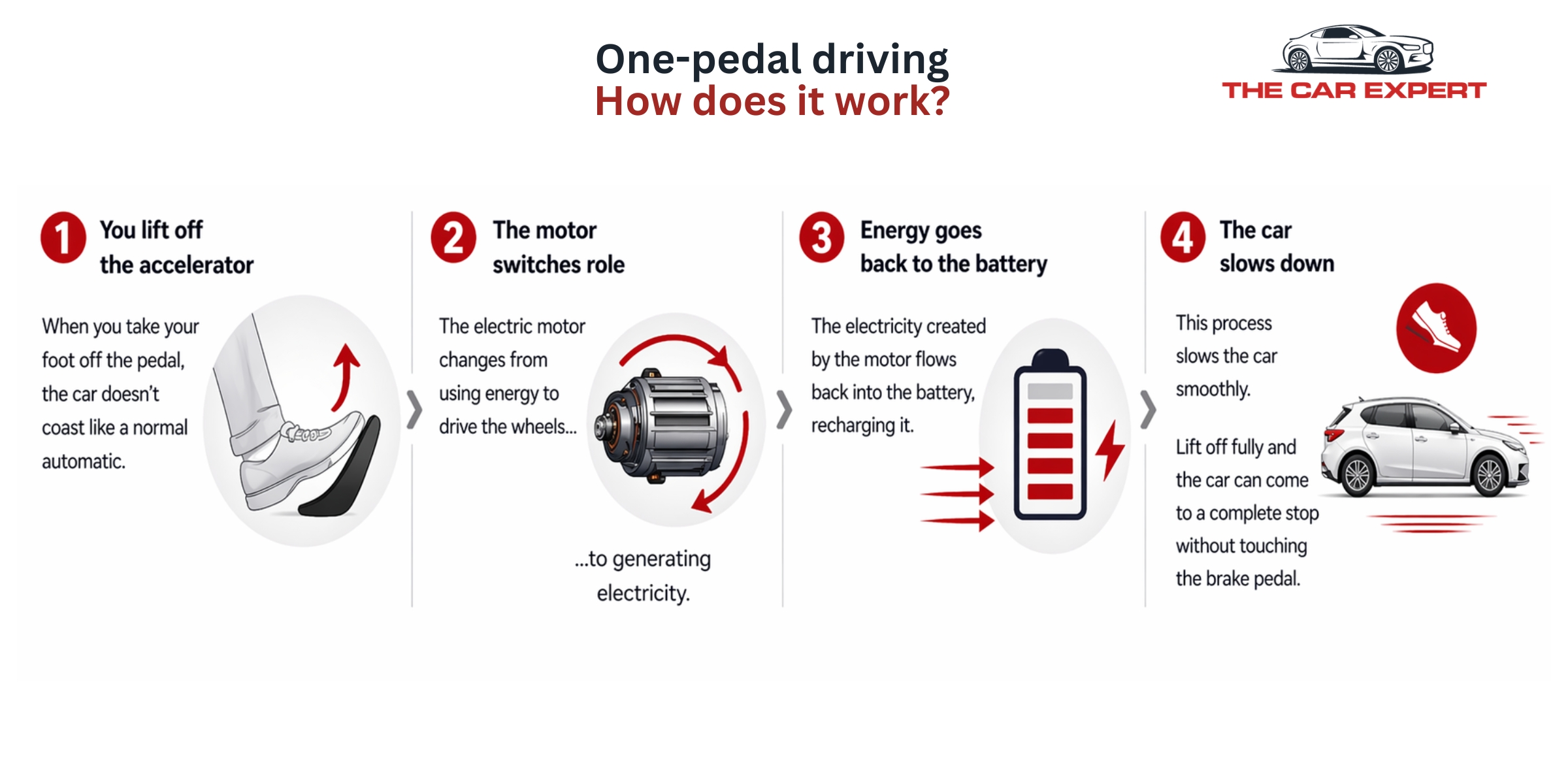
Ferrari seems to have spent a lot of effort on that problem, although we’ll need to wait for independent drive reviews to see how successful the results are. The Luce uses steering-column paddles to adjust torque levels and brake regeneration, allowing the driver to control how power and regeneration are delivered. It’s a more evolved concept than the usual drive modes and brake regeneration controls that most EVs use, so it should make the Luce feel more natural to drive.
For its EU-mandated noise generator, Ferrari has not taken the easy option of simply pumping out a recording of a Ferrari V12 engine, but has developed an amplified version of the Luce’s own mechanical noises and vibrations, captured from the electric axles and shaped into something more expressive. Ferrari likens this to an electric guitar amplifying the natural noise of an acoustic guitar, which is a useful way to think about it.
Whether it all works in the real world remains to be seen. But the thinking is more interesting than simply making an EV loud for the sake of it. Ferrari appears to be trying to create new forms of engagement rather than pretending electricity is the same as petrol.
The cabin may be more influential than the drivetrain
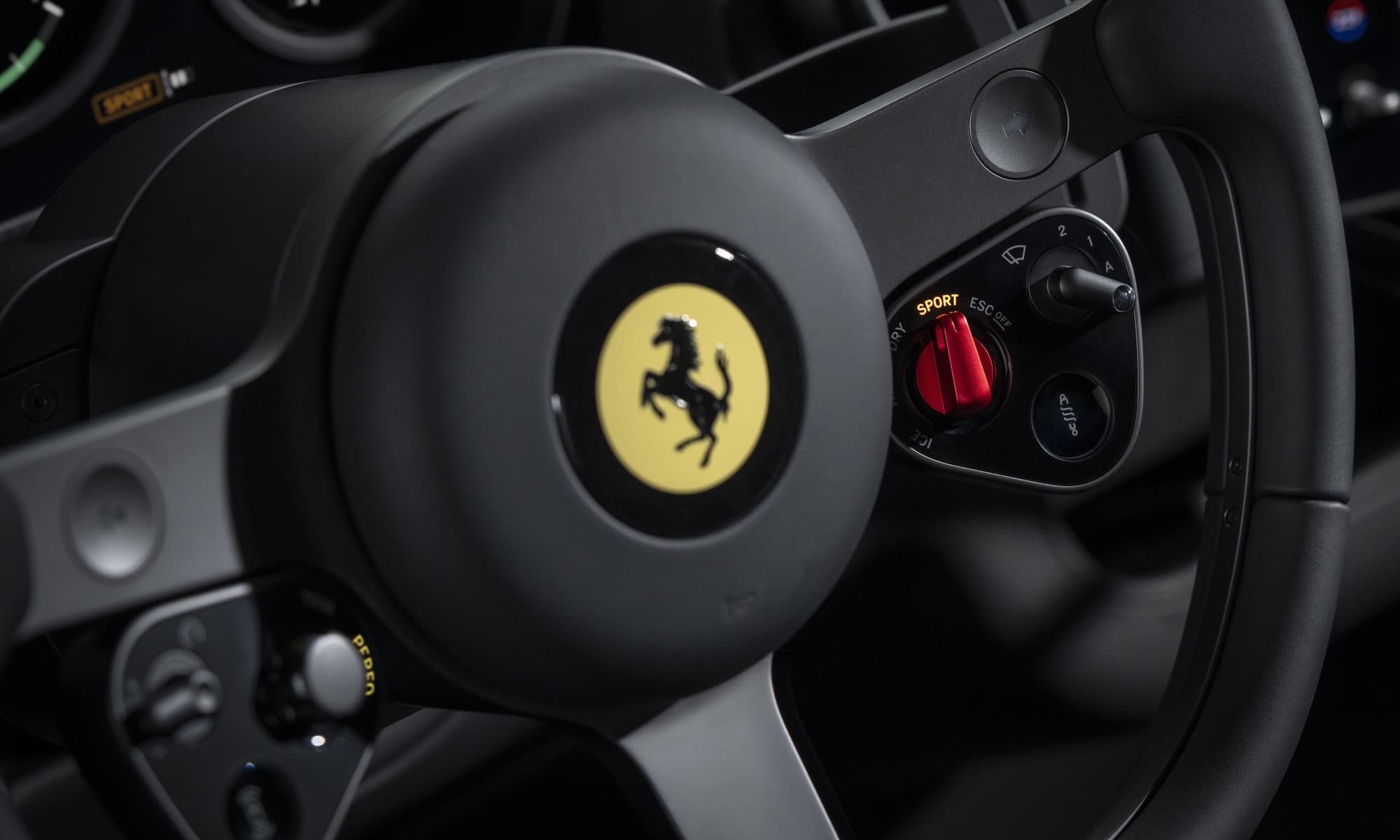
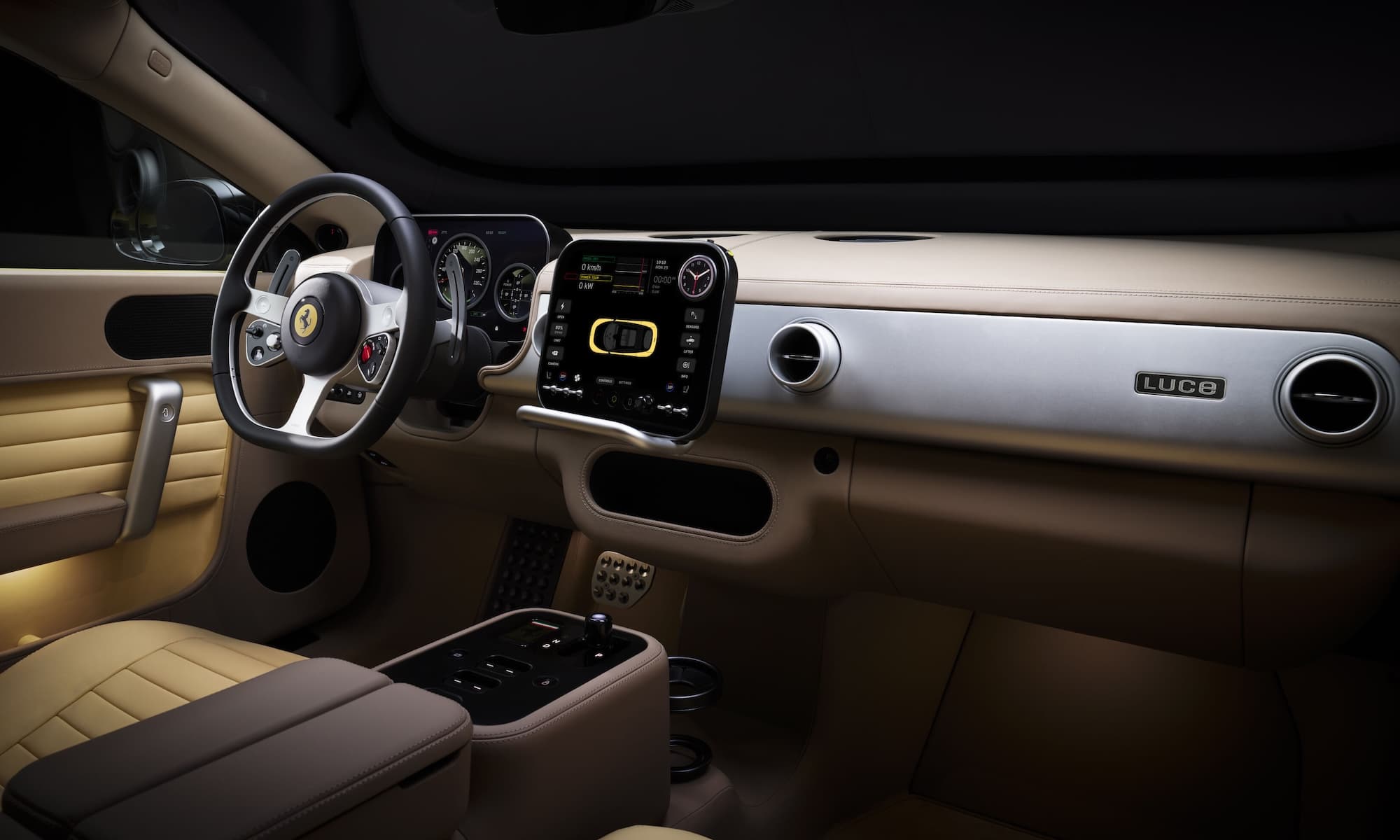
The most influential part of the Luce may not be the battery, the motors or the exterior styling. It could well be the interior.
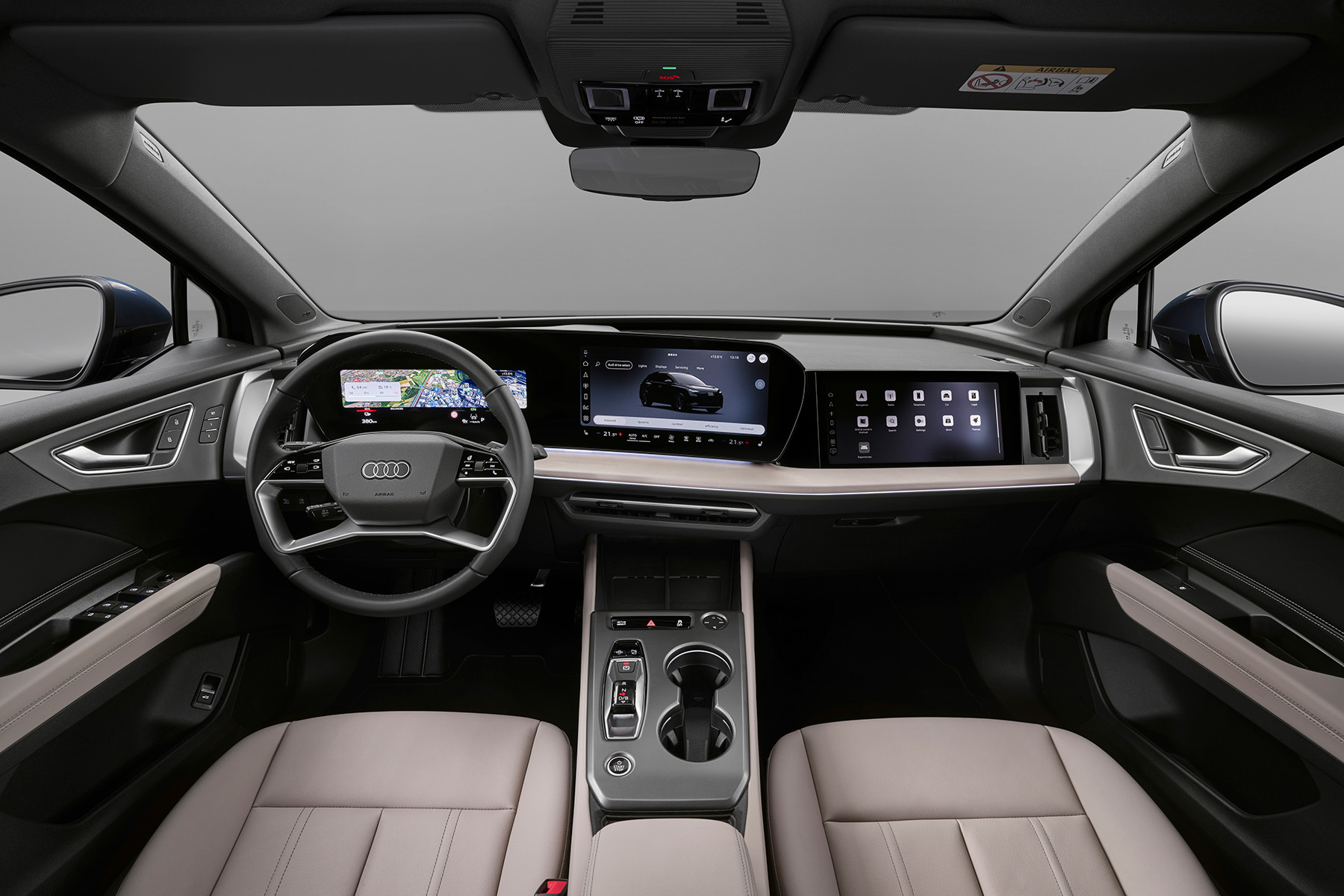
Car interiors increasingly have more in common with consumer technology than traditional dashboard design, and most car companies have handled that shift badly. Too many have treated ‘digital’ as an excuse to remove physical controls and stick everything onto a giant touchscreen. It looks clean in press images and can save money in production, but it almost always makes cars more difficult to use on the move.
Ferrari’s interior designs have been haphazard for the last few decades, so it was probably a good idea to look outside the company for inspiration. And while the celebrity duo of Ive and Newson have been widely criticised for the exterior styling, the interior has received far more acclaim.
Given that Ive’s most famous design is basically a pocket-sized touchscreen that eliminated all the traditional buttons found on every other phone up until 2007, it would be easy to assume that LoveFrom’s solution would simply be better touchscreen hardware and software. That’s not what they’ve done, though.
LoveFrom has taken a thoughtful and considered approach to driver and passenger interfaces. Yes, all of the displays are digital screens rather than analogue gauges, but most of the key inputs are made with physical buttons, dials, toggles and switches, all carefully positioned for usability rather than manufacturing convenience.
There’s a surprising number of nods to Ferrari heritage without it looking tacky or forced. The driver display combines digital information with mechanical elements, while the steering wheel and control panels seem to have been designed around actual interaction rather than showroom minimalism.
That sounds obvious, but most of the car industry has spent the last few years completely failing at this. If Ferrari and LoveFrom have found a better balance between digital and analogue controls, the influence could quickly spread across the whole industry, shaping the next decade of car interiors for family cars, SUVs and everyday hatchbacks.
Ferrari still has to make people want it
None of this lets Ferrari off the hook on the styling. A Ferrari cannot simply be technically interesting. It has to be desirable.
That is where the Luce has created the biggest problem for itself. Some of the design thinking may be clever, and some of the ideas may well be copied widely, but Ferrari buyers are not paying for cleverness alone. They are paying for theatre, beauty, status and emotion.
A strange-looking Ferrari is not the same as a strange-looking Toyota or Hyundai. Mainstream cars can get away with awkwardness if they are practical, affordable or efficient enough. Ferrari has a harder job because the car has to work as an object of desire before anyone starts caring about torque vectoring or battery cooling.
There is also a broader question about what Ferrari now wants to be. The Purosangue already stretched the idea of a Ferrari by becoming a high-riding, four-door family Ferrari. The Luce stretches it again by being electric, spacious and visually very different from the mid-engined sports cars that shaped the brand’s image for decades.
That does not automatically make it wrong. Ferrari has survived by changing more than its mythology sometimes admits. But there is a limit to how far any brand can stretch before customers start asking what still makes it special.
In the short term, the Ferrari Luce will quickly sell out production for the next year or two simply because it’s a Ferrari and there will be enough wealthy customers intrigued by it to lay down more than half a million pounds for one. The more interesting question will be how well the Luce sells in three to five years’ time.
Porsche was overwhelmed with demand for its first EV, the Taycan, but sales fell sharply after two years as the early rush faded. Ferrari will hopefully have watched and learned from Porsche’s experience as it plans out Luce production over the next five years.
Is the Ferrari Luce a turning point for EVs?
The Luce may not need to be widely loved as a Ferrari to be influential. Every other car company in the world will be looking closely at this car – not because they all want to build something similar, but because Ferrari has tried to solve problems that everyone else is dealing with in one form or another.
The exterior design language may be adapted more successfully by mainstream brands, while the interior thinking will almost certainly influence the next generations of cars of all sizes and budgets. Ferrari’s approach to sound, torque control and driver interaction may also shape the future of EV performance cars. Most of those issues apply to a £50,000 electric SUV as much as they do to a Ferrari. They just get answered differently.
The Ferrari Luce will not convert every EV sceptic, and it will not make electric cars affordable for more households. It may not even be a commercial success by Ferrari standards if buyers reject the styling or the idea of a five-seat electric Ferrari. But it still feels like an important marker.
Ferrari has decided that electric power is not just something to tolerate, or hide behind hybrid systems, or use for regulatory compliance. It has built an EV with serious engineering effort, a new design language and a cabin philosophy that other manufacturers will be analysing for years.
Maybe the Luce will end up being remembered as an awkward-looking Ferrari that traditionalists never accepted. Or maybe it will be remembered as the point when the world’s most famous performance car brand gave electric cars a different kind of legitimacy.