Find an Expert Rating: 
Home Blog Page 163

Eco petrol engines to boost Jaguar Land Rover

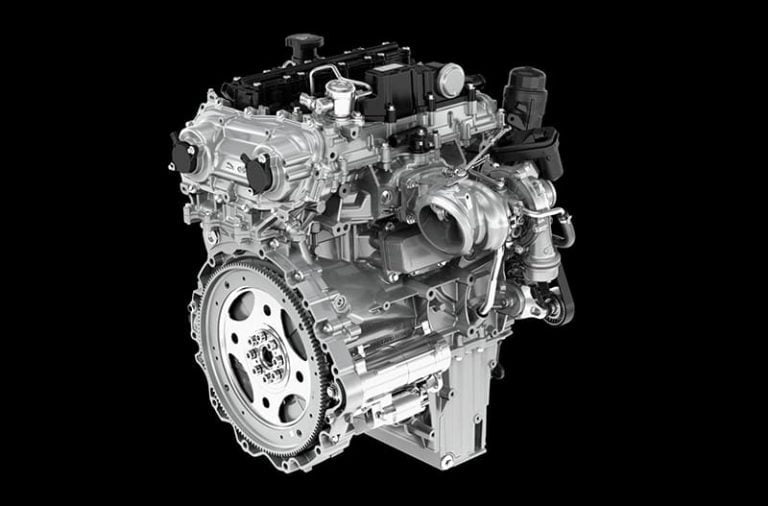
Jaguar Land Rover has confirmed a long-expected expansion of its Ingenium powertrain range into petrol units.

Developed in the UK and built like the already available diesel units at the new JLR engine manufacturing plant near Wolverhampton in the West Midlands, the petrol engines promise more efficiency, with greater fuel economy for fewer CO2 emissions.

JLR dubs the new units “the most advanced engines the company has ever produced,” adding that they will deliver up to 25 per cent more power than the engines they replace for fuel consumption savings of up to 15 per cent.

The four-cylinder Ingenium petrol engine is already in production on a new line at the Wolverhampton plant. It is understood it will be offered in 200, 250 and 300hp versions, the first becoming available in 2017.

New technologies contributing to the efficiency of the new engines include an electrohydraulic valvetrain, integrated exhaust manifold and a twin scroll turbocharger with ceramic ball bearing technology.

Due to their common architecture they will enable a range of derivatives to be developed, as suitable for Jaguar sports cars as they will be for Land Rover SUVs.

JLR has also announced a £30 million research project, part funded by the UK Government, into more advanced transmissions.

Dubbed Transcend, the project aims to develop a compact eight-speed transmission that will weigh around 20kg less than existing units and deliver a 20-wide ratio spread, more than double those of conventional eight-speed auto gearboxes.

According to JLR group engineering director Nick Rogers, Transcend will offer a wide range of benefits. “It will make manoeuvring and off-road use easier than ever before for drivers whilst also improving on-road vehicle dynamics and CO2 emissions,” he says.

“Environmental innovation is at the heart of our strategy to dramatically reduce emissions up to 2020 and beyond – with the Ingenium family of powertrains and advanced research projects such as Transcend, future Jaguar Land Rover vehicles will emit significantly less CO₂,” Rogers adds, stating that by 2020, new technologies will help JLR reduce CO₂ emissions by a further 25 per cent.

Transcend could revolutionise the eight-speed auto transmission.

Vauxhall studies potential of electric Ampera

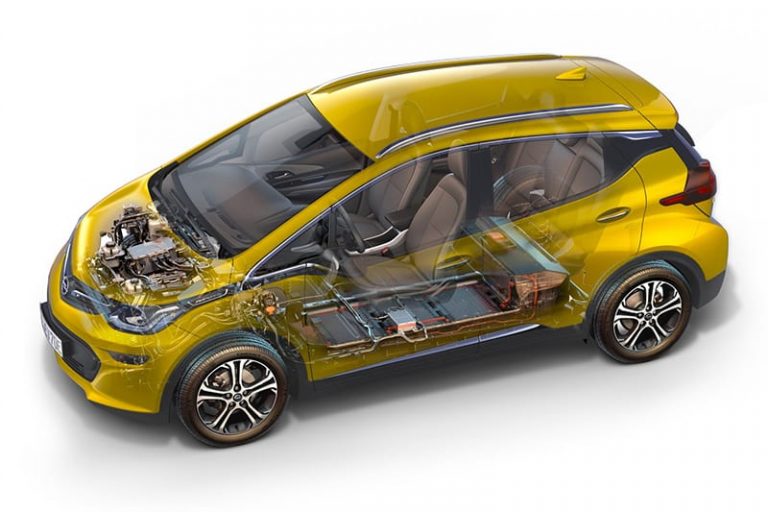
The Opel Ampera-e, set to be unveiled at the Paris Motor Show at the end of September, could yet become a Vauxhall.

There are no plans to build right-hand-drive (RHD) versions of the electric crossover when it goes on sale next year, but Vauxhall has announced that it will evaluate the car on British roads with a view to future generations being offered on the UK market.

Opel states a class-leading pure electric range of potentially more than 250 miles in test conditions for the Ampera-e, which significantly beats closest rival the BMW i3 which quotes a range of 186 miles with its largest battery option.

Opel also claims that even under real-world conditions affected by driving style, road and weather, the Ampera-e can still achieve a range of more than 185 miles between charges.

Vauxhall chairman and managing director Rory Harvey insists that the brand is committed to having a future EV presence in its range. “The technology which underpins the new Ampera-e is of great interest to us, and we will be evaluating LHD cars from next spring and demonstrating them to clients,” he says.

“The fact that Ampera-e is not an eco-luxury or second car for customers broadens its appeal greatly, but it’s obviously vital that the car we sell in our market is right-hand-drive, and that won’t be available in the current generation,” Harvey adds.

Vauxhall will not only be evaluating the car on its range but also the packaging of the 10 battery modules. These are located under the body and built into the car’s profile, allowing 381 litres of boot space to be retained.

The Ampera-e offers the equivalent power of 204hp with torque of 360Nm. With the instant delivery of electric torque, the Ampera-e will pass 30mph from rest in 3.2 seconds, and take only 4.5 seconds between 50 and 75mph.

A notable feature is the ability to recharge the batteries while driving, adding around five per cent to the range. The driver eases off the accelerator in the normal ‘Drive’ mode, allowing the car to recuperate automatically in overrun and recover energy from the electric motor, which doubles as a generator.

The motor’s braking effect is increased when the driver switches to ‘Low’ mode, therefore increasing recuperation. Finally a ‘Regen on Demand’ mode provides maximum energy recuperation, activated via a paddle at the back of the steering wheel.

The drag torque is so high in ‘Low/Regen on Demand’ modes that the brake pedal is not needed to reduce speed to a full stop in normal traffic, allowing control merely by the accelerator except in emergency situations.

Order books open for most powerful Audi TT

0

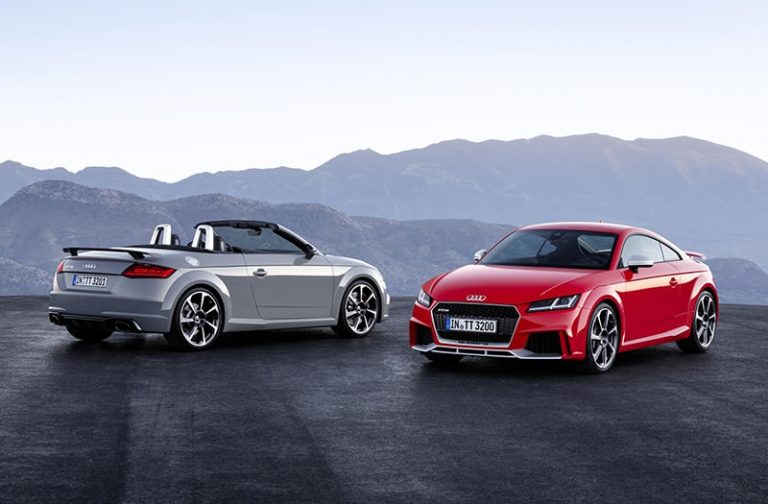
The most powerful Audi TT yet will be able to be ordered from the end of September.

Coupe versions of the 400hp Audi TT RS will cost from £51,800, its Roadster sister from £53,550.

The new TT RS uses a five-cylinder 2.5-litre TFSI petrol engine that is 17 per cent more powerful than its predecessor. The newly developed engine is 26kg lighter, primarily through the use of an aluminium crankcase, and employs dual injection and Audi’s Valvelift technology.

Alongside the 60hp power increase torque goes up from 450 to 480Nm, which translates to a 3.7-second 0-62mph time in the Coupe, 3.9sec in the Roadster and a top speed that can be raised from the electronically limited 155mph to 174mph with the optional Dynamic Package Plus. This also includes a sports exhaust system.

The output comes with a combined cycle fuel consumption figure of up to 34.4mpg and CO2 emissions from 187g/km.

A seven-speed S tronic auto transmission is fitted as standard and this too has been lightened by 2kg. It is allied to the Audi Drive Select adaptive dynamics system which allows the driver to choose between comfort, auto, dynamic and individual modes, altering the progressive steering, throttle, exhaust flaps and the quattro all-wheel-drive system. The latter is also specifically tuned to the RS.

The TT RS ride height is reduced by 10mm over the standard model, sitting on 19-inch five spoke wheels as standard or 20-inch seven-spoke rotor design versions as a bespoke option. The brakes are also specific, vented 370mm discs acted on by eight-piston calipers at the front and solid 310mm discs at the back.

Also on the options list is Audi’s magnetic ride system. This uses dampers filled with synthetic oil in which particles that can be influenced by a magnetic field are suspended. The system can adapt the damper’s characteristics to the profile of the road and style of the driver at millisecond intervals. It too can be modified by the Audi Drive Select.

Body modifications include a single frame grille with a honeycomb mesh, enlarged air inlets, aerodynamic side sills a modified rear bumper with diffuser and a rear wing on thin struts. However owners can choose instead to have their TT fitted with the less blatant extending spoiler used by mainstream versions of the car.

Inside are fitted Nappa leather sports seats, a bespoke leather and Alcantara steering wheel with start-stop and the Drive Select buttons incorporated. The virtual cockpit digital display includes an extra RS screen that emphasizes the rev counter and includes extra performance data and a gear-shift light.

MMI navigation plus and a three-year subscription to Audi’s Connect online services are also included in the specification.

A first for any Audi, meanwhile, is the Matrix Organic Light Emitting Diode (OLED) rear light option. The 3D design lamps comprise four wafer-thin units, the largest of which bears the TT logo and the four Audi rings. Their homogeneous, high-contrast light can be continuously dimmed, does not cast any shadows and does not require any reflectors.

The standard LED headlights can also be replaced by Matrix LED lamps containing 12 separate controllable LEDs. These form the high beam and can be individually shut off when sensors detect traffic ahead or approaching, to ‘divert’ their beam around other road users.

Jaguar XE moves to booming Birmingham plant

In 2008 the Jaguar plant at Castle Bromwich in Birmingham was under threat of closure – now it is to welcome a fourth model to its production lines as the XE saloon moves to the plant.

Jaguar Land Rover says that the decision to transfer production of the XE from its current home 7.5 miles away in Solihull, is the result of booming sales of not only the model but its crossover sister the F-Pace.

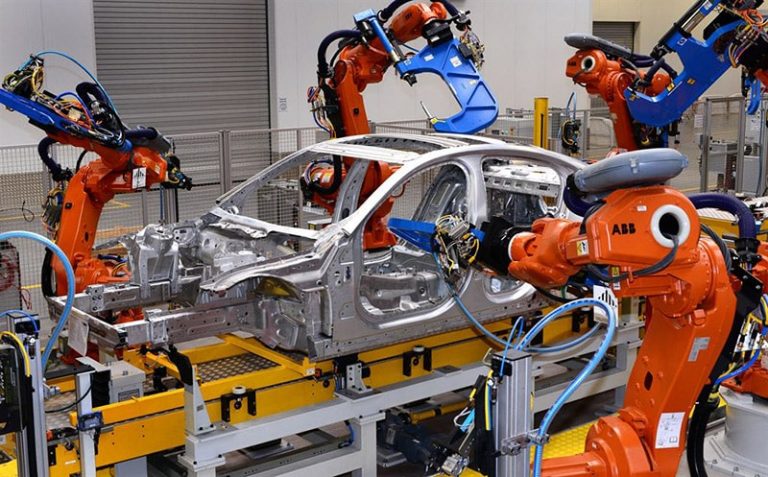
Both cars are built using the same aluminium architecture and this makes it viable to transfer production between sites. It is understood that by moving XE production to Castle Bromwich Solihull will be able to focus on building the F-Pace and the Range Rover Sport, another model that uses the same architecture.

At Castle Bromwich, a plant famous for building Spitfire aircraft during the Second Word War, the XE will be produced alongside its larger sister the XF (also built on the same aluminium platform), the even larger XJ and the F-Type sports car.

The changes see £100m of fresh investment in the Birmingham plant, primarily on new press lines, body shops and final assembly halls. The latest money sees JLR having made more than £1bn investment in the infrastructure of its sites at Solihull and Birmingham.

Jaguar Land Rover’s executive director of manufacturing Wolfgang Stadler describes the “significant investment to create two centres of excellence in aluminium vehicle manufacturing, utilising shared technologies”, as deliberate.

“It gives us the flexibility to quickly respond to consumer demand for our growing range of products,” he says.

And Castle Bromwich operations director Nicolas Guibert has welcomed the news in what he describes as a pivotal year for the plant.

“The arrival of the XE sees us increase our model lines and volume – this plant has a rich heritage and is undergoing its most significant transformation in decades, with major infrastructure projects either complete or under way,” he says.

“The commissioning of our all-new press line and launch of our body shop to support the introduction of XE means Castle Bromwich is future-proof,” Guibert adds.

£13K buys new-look Alfa Romeo Mito

0

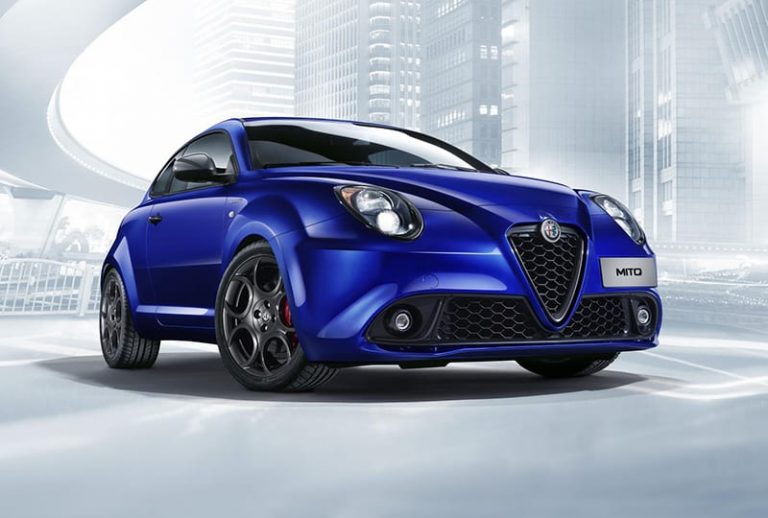
Alfa Romeo has put the facelifted version of its Mito supermini on sale.

The car boasts subtle styling changes, an uprated engine option and a revised grade structure, at prices starting from £12,960.

New grilles, a dark finish to the headlamp surrounds, changes to the rear bumper and a revised alloy wheel design bring the Mito into the latest Alfa Romeo family look that launched with the larger Giulia. A white exterior finish is also now an option.

Inside the seat upholstery has been upgraded, the brand’s Uconnect Live infotainment systems added and the finish on the centre console, dashboard and door trims changed.

The new 1.3-litre JTDM-2 diesel engine produces 95hp with CO2 emissions cut to 89g/km, an increase of 10hp yet combined with a 6g/km emissions improvement.

Other engine choices include a 1.4 petrol of 78hp, the three-cylnder TwinAir turbo petrol with 875cc and 105hp, and the 1.4 MultiAir petrol which offers 140hp and is available in the new range-topping Speciale. This has replaced Quadrifoglio Verde in the Mito line-up, leading some industry observers to speculate that a more potent version might join the range later.

The range now stretches across Mito, which replaces Progression, Super (from £16,360) and Speciale (from £17,110). Standard equipment on entry-level models includes new 16-inch alloy wheels, satin chrome-effect exterior detailing on the grille surrounds, headlamp and tail lamp surrounds, air conditioning, the Alfa DNA driving mode selector, a rear spoiler and a Uconnect five-inch touchscreen infotainment system with DAB and Bluetooth connectivity.

New Hyundai i30 unveiled ahead of Paris show

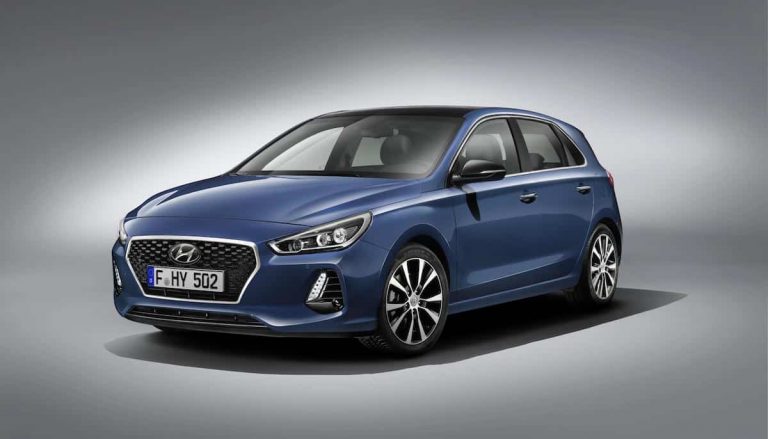
Hyundai has unveiled its third-generation i30 hatchback ahead of its public debut at the Paris motor show.

Reflecting Hyundai’s continuing maturation as a brand, the i30 features more refined design, new engines and gearboxes and state-of-the-art safety technology.

The previous i30 has been a big success for the brand in Europe, and has contributed strongly to the company’s continued growth across the continent. Hyundai is at pains to point out that the new i30 is “designed, developed, tested and manufactured in Europe”. Its design is expected to set a blueprint for future models, particularly the large Audi-esque grille.

So far Hyundai has only released images and details of the five-door hatch version, but has said that the i30 will “become a family of unique products”. This is likely to mean saloon and estate versions as well as possibly a three-door hatch version. The i30 will also form the basis for the first high-performance model of the new N brand, which will take on the likes of the Volkswagen Golf R.

UK pricing and specification is yet to be revealed, but the i30 will be available with a choice of petrol and diesel engines, including the company’s new 1.4-litre turbo petrol engine which features direct fuel injection and a turbo relocated to be integrated in the exhaust manifold for improve efficiency. Buyers will also have the choice of six-speed manual and seven-speed double-clutch automatic gearboxes.

The new i30 is expected to come standard with autonomous emergency braking, along with a suite of active safety measures which may be optional or standard in the UK.

In terms of connectivity, models fitted with the optional satnav will be able to connect to smartphones via Apple CarPlay and Android Auto, operated via an eight-inch touchscreen. Navigation mapping includes a seven-year subscription to TomTom LIVE for real-time traffic and weather updates. Without the satnav, the car will have a five-inch touchscreen with Bluetooth but without more advanced connectivity features.

The brand claims the new i30 offers “segment-leading roominess” and a boot which can swallow 395 litres of luggage.

Stay tuned to The Car Expert for more details of UK pricing, specification and on-sale dates when they become available.

Caterham Seven Sprint goes back to the 1960s

After more than forty years of evolving its interpretation of the iconic Lotus Seven, Caterham has looked to an early Lotus version for the inspiration behind its latest model.

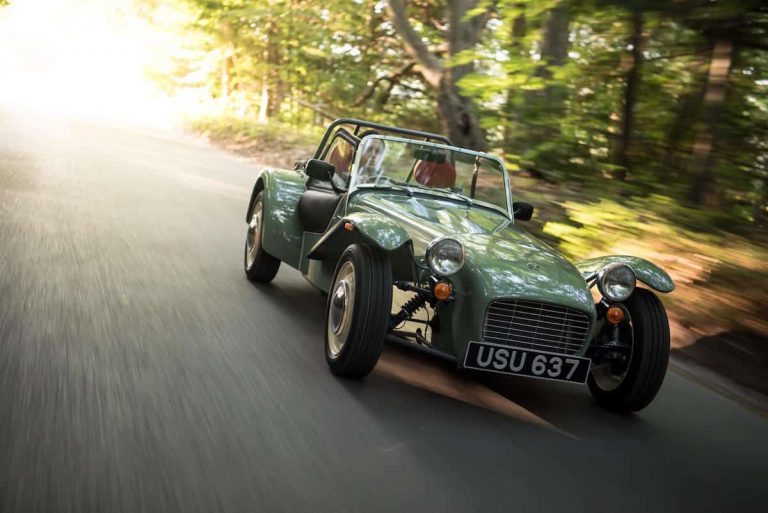
The Caterham Seven Sprint has been fitted out with plenty of sixties-inspired details, and looks for all the world like a restored Series 2 Lotus Seven rather than a brand new vehicle.

Launched in a perfectly appropriate environment at this weekend’s Goodwood Revival, the Seven Sprint kicks off Caterham’s ’60 Years of the Seven’ anniversary program, which will run across the next year. Only 60 vehicles will be produced.

Mechanically, the Seven Sprint is based on the entry-level Seven 160 model and is powered by a three-cylinder Suzuki engine generating 80hp. However, unlike the somewhat incomplete look of the bare-bones 160, the Seven Sprint has been finished far more generously.

The wheels are the same steel types used on the 160, but are painted cream and finished with polished hubcaps. The body is painted in one of six original 1960s colours and emblazoned with retro badging and logos. The chassis is powder coated in grey like the Lotus Series 2, while the suspension and rollover bar have also been designed to replicate the original. Uniquely for a modern Caterham, the front wings are the larger flared guards instead of the normal cycle guards used for many years. The rear lights also hark back to the original, rather than the blocky units used on regular Caterham models.

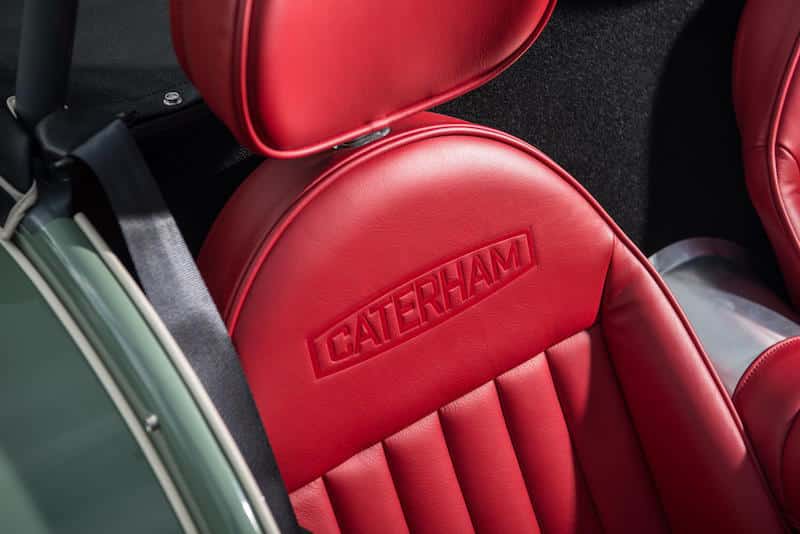
The retro-fest continues in the cabin, with a wooden steering wheel and dashboard, classic-look instruments, and period-style stitching for the scarlet red seats. Both the interior and luggage space are fully carpeted.

The overall effect is quite stunning, and Caterham should have little trouble shifting all 60 units. The Seven Sprint will only be available as a factory-built car rather than as a kit. Pricing will start at £27,995.

Volvo S90 and V90 review

What is it?
The Volvo S90 and V90 are range-topping large saloon and estate models.

Key features
Stylish looks, extensive technology

Our view
The S90 and V90 models complete a range-topping large trio for Volvo to take on the Germans


Volvo S90


Traditionally, Volvo has had an image problem. The Swedish brand sits comfortably above the mainstream, but really wants to be considered a viable alternative to the upmarket German behemoths of Audi, BMW and Mercedes-Benz.

Yet while customers have always associated Volvo with large estate cars, a staple of the premium market, the Swedish ones were always seen as boxy vehicles without the cachet of their German rivals.

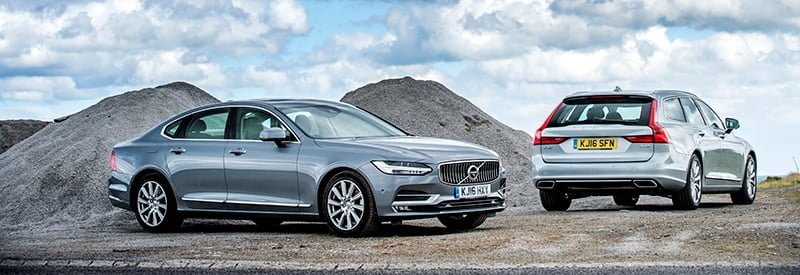
The Volvo V90, and its sister the saloon S90, aim to change all that. According to Stefan Sällqvist, senior product manager at Volvo’s Gothenburg design team, these are the cars that most obviously illustrate the reinvention of the brand, a programme that dates back to 2010 when the company was bought by Chinese manufacturer Geely from Ford.

We’re told that the Volvo design team really did start with a clean sheet of paper, and it shows. To challenge the Germans, the cars needed handling prowess, loads of technology, a sense of quality, but also a design to attract.

While the tech in particular has been taking all the headlines, Sällqvist argues that the design was the most important priority in the creation of these cars. The new look was first seen on the Volvo Concept Coupe and Estate unveiled at the 2013 Frankfurt and 2014 Geneva shows.

In production form it has resulted in a purposeful looking profile whether in saloon or estate, good enough for a panel of global car designers to name the Volvo S90 as their Production Car Design of the Year in 2015 – high praise indeed.

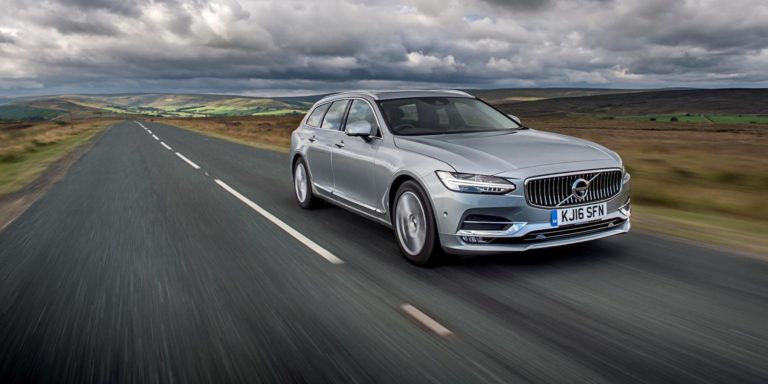
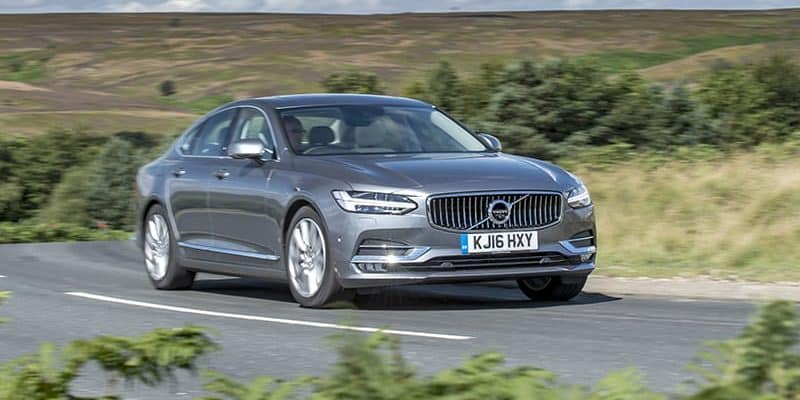
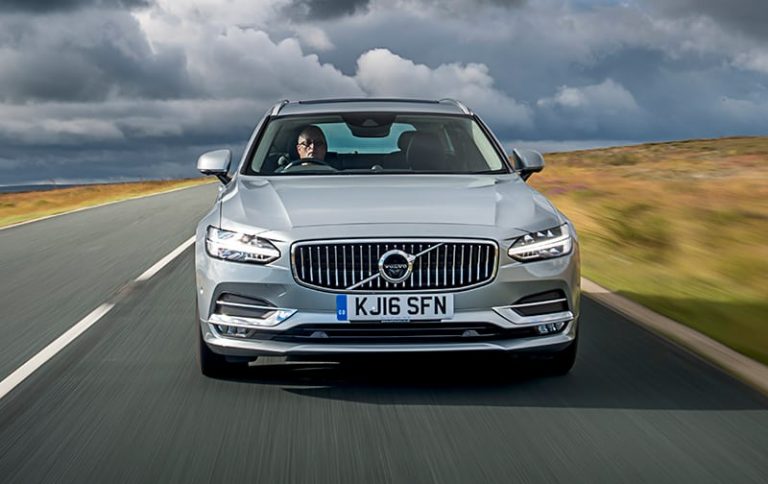
The cars certainly have presence – from their smooth exterior proportions, uncluttered by too many lines and creases, to the details, most notably the ‘Thor’s hammer’ headlight signatures and the signature concave grille in chrome or gloss black depending on model.

One could quibble at the slightly unnecessary chrome door mouldings on Inscription models, and personally we found the large crease in the saloon’s boot slightly jarring, but overall it’s an impressive visual effect.

Technically, much about the S90 and V90 is familiar – the two complete a range-topping trio for Volvo alongside the XC90 SUV, a car that launched in 2015 and which has been very well received.

The three are built on Volvo’s new SPA (Scaleable Product Architecture) platform, a versatile unit in which the only fixed measurement is between the front axle and the dashboard. The S90 and V90 share a generous 2941mm wheelbase, and curiously the saloon is very slightly longer than the estate, at 4963 to 4936mm.

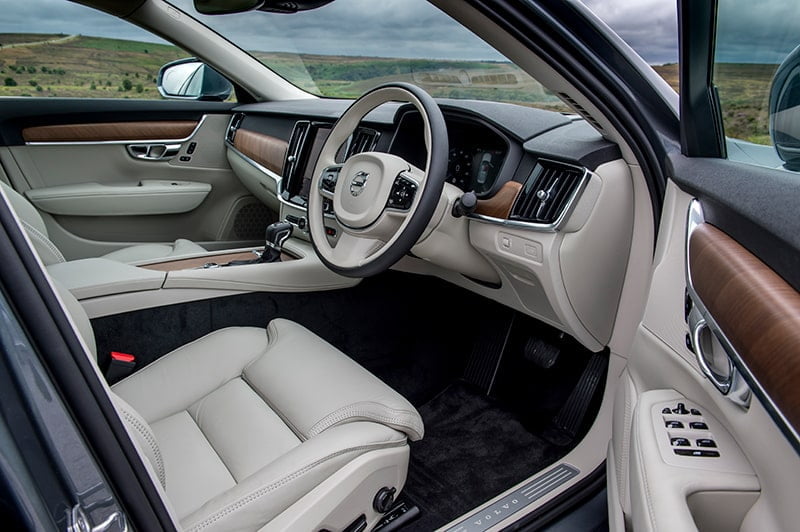
Slip inside, and one is seriously impressed, firstly at the quality of fit and finish. The leather upholstery, the surfacing, especially the open-pore wood, is all to the highest standard.

The driver’s surroundings have clearly been thought through very carefully indeed. Everything comes naturally to hand, the controls are intuitive, and the nine-inch touchscreen Sensus Connect and Navigation system in the centre console, with its portrait format, must be the most significant development in infotainment for some time.

The car is roomy too, both in front and back, the saloon also offering a 500-litre boot, while the estate has 723 litres.

Overall the interior offers everything the German opposition can, including audio entertainment – if money allows, go for the optional Bowers & Wilkins system. British made, it produces a very fine sound indeed through 18 speakers.

Many recent headlines concerning Volvo have surrounded the brand’s bold decision to only use smaller capacity engines of four cylinders or less – three-cylinder versions of the new Drive-E range are due before long. The S90 and V90 are on sale with two petrol and two diesel versions of the Drive-E, but only the two 2.0-litre diesels will be available to UK buyers.

The D4 offers 190hp alongside 400Nm of torque, the D5 235hp and 480Nm, both matched to an eight-speed auto gearbox with a manual shift option and the D5 also having an all-wheel-drive transmission.

It won’t surprise you to learn that the D5 is the more impressive powerplant. It has noticeably more punch than the D4 while cruising with just as much plentiful refinement.

A notable extra on the D5, however, is PowerPulse, a compressor that injects compressed air into the turbo manifold, spooling it up and cutting out turbo lag. As a result, the D5 is very quick to get going from a standstill, leaping away from traffic lights with alacrity.

More powertrain options are to come next year, in the form of a plug-in hybrid T8 TwinEngine model. Volvo is big into electrification, the SPA platform was designed specifically for such a drivetrain, and the XC90 plug-in hybrid is already available, taking a bigger slice of sales than expected.

In terms of chassis are Volvo’s 90 models as accomplished as that benchmark the BMW 5 Series? Well no, not quite. The recipe is good, a double-wishbone front suspension married to a clever rear axle that dumps conventional coil springs in favour of a transverse leaf spring made from composite. A format that only Corvette also currently uses, it offers fine control while also not intruding into the boot space.

All of which results in the car producing an accomplished handling and ride performance, while not feeling as overtly driver-focused as say the BMW. In fairness, Volvo says it was built this way. “We are not going after the German brands in terms of driving dynamics,” Sällqvist says. “We want people in our cars to travel in relaxed confidence.”

Self-levelling air suspension is an option, and perhaps the forthcoming R-Design trim, which will have stiffer springs and reworked dampers, will offer more overtly sporty handling.

Volvo’s major push is of course on safety technology – the brand is putting major investment to develop self-driving autonomous cars, and the benefits of some of that research is most pertinently seen in the Pilot Assist feature, that comes as standard on every 90 model.

An advance on adaptive cruise control, Pilot Assist now adds small steering movements to keep the car in the centre of a motorway lane while on the move, as well as allowing stop-start progress in a queue without input from the driver.

It’s unnerving at first, but effective, while Volvo insists that it does not create a self-driving car – the driver is expected to keep their hands on the steering wheel while the system is active. And all the 90 models also boast another new safety system which uses steering inputs, preventing one from running off the side of the road.

There are two current trim levels, Momentum and the top-level Inscription – the R-Design models on sale next year will fit between the two. Prices for the S90 start from £32,500, the V90 costing £2,000 more, and while that might sound pricey, even entry-level Momentum versions offer a long standard equipment list, including such delights as the Sensus infotainment system, Pilot Assist, LED headlights and leather surfacing on the upholstery.

Overall these two cars are Volvo’s most concerted effort yet at breaking into the premium club. If the S90 and V90 are typical of future Volvo product, the Germans should be worried…

Volvo S90 and V90 – key specification

Models tested: Volvo S90 D4 Momentum, Volvo V90 D5 PowerPulse AWD Inscription
On Sale: September 2016
Range price:
S90 £32,500-£42,000, V90 £34,500-£44,000
Insurance groups: TBA.
Engines: 2.0 diesel x 2.
Power (hp): 190, 235.
Torque (Nm):
400, 480.
0-62mph (sec):
S90 8.2, 7.0. V90 8.5, 7.2.
Top speed (mph): 140, 145.
Fuel economy (combined, mpg): S90 64.2, 58.9. V90 62.8, 57.6.
CO2 emissions (g/km):
S90 116, 127. V90119, 129.
Key rivals:
Audi A6, BMW 5 Series, Mercedes E-Class.
Test Date: September 2016

New Volkswagen electric city car charges in

The all-electric Volkswagen e-up! (yes, seriously) is now available to order in the UK, bolstering the model range of the acclaimed city car beyond the facelifted petrol versions already on sale. The e-up! replaces petrol power with an electric motor generating 82hp and a useful 210Nm of torque. Despite the hefty weight of battery and electric motor, the e-up! still manages to weigh less than the equivalent petrol model. A full charge from a regular household plug takes nine hours. Volkswagen will also sell you a wall box for your garage, which provides a higher level of electricity transfer and takes the charging time down to six hours. If you are using a fast charging station, the company claims you can charge 80% of the battery in half an hour. An appropriate cable is included for this purpose. The e-up! picks up the same styling details as the recently facelifted petrol models, which are distinguishable from earlier models by new front and rear bumpers. Unique to the electric version is a pair of C-shaped LED daytime running lights instead of regular fog lights on other models. The electric model also gets its own alloy wheel design. The electric model is based on the petrol High up! specification. Inside, a smartphone docking station enables the driver’s phone to be integrate into the car’s infotainment system. Tinted rear glass and carpet mats as standard help with insulation, which is more critical for an electric car due to the energy cost of running heating or cooling to control cabin temperature. Your smartphone can also be used to manage charging and switch on air-conditioning from an e-up! app for iOS or Android. Volkswagen includes three years of subscription to the app when purchasing the car, but after that you will have to pay to subscribe for this service. The e-up! gets all the same safety systems as the petrol models, which includes autonomous emergency braking as standard. The petrol up! scored five stars from Euro NCAP back in 2011, however the crash testing standards have increased since that time and no more recent information is available. Emissions shouldn’t be as troublesome for the e-up! as they are for some other Volkswagen models, as there are none being emitted directly by the car. The on-road price of an e-up! is £20,780, which includes the government’s plug-in grant of £4,500. This is considerably more than the price of the comparable petrol auto High up! model, which is priced at £12,880. From a financial point of view, you will need to do a lot of miles to recoup the extra purchase cost. Most people are more likely to finance the vehicle than buy it in cash, and Volkswagen Financial Services is offering PCP terms of 6.4% representative APR and a £900 deposit contribution. This is a higher APR than Volkswagen is offering on the petrol High up!, although the deposit contribution is slightly higher (£900 vs. £500). At this time, electric power is not expected to be available on the up!s sister models, the SEAT Mii and Škoda Citigo.

Insight – the 90 cars transforming Volvo

Volvo sees the imminent arrival on UK roads of its S90 and V90 models as the culmination of a transformation of the Swedish brand.

First UK customers for the S90 saloon will take delivery of their cars in the next few weeks, and the V90 will arrive before the end of 2016, forming a range-topping trio for Volvo alongside the already-launched and well-received XC90 SUV.

According to Stefan Sällqvist, senior product manager at the brand’s Gothenburg design team, the arrival of these cars is a clear illustration of the transformation of Volvo that began when Ford sold the company to Geely in 2010.

“We were able to start with a clean piece of paper, to redefine the brand around a new title, ‘designed around you’,” Sällqvist says.

This new direction has followed four principles – the creation of modular architectures on which to build the cars, smaller-capacity Drive-E powertrains, incorporating autonomous driving and preparing for electric power.

1609-volvo-v90-d4-momentum_01

Platform engineering

Volvo’s Scaleable Product Architecture (SPA) platform underpins all the 90 models and will also be used in the next series of 60 cars. It will also soon be joined by the Compact Modular Architecture (CMA) platform on which Volvo’s next series of smaller cars will be created.

Sällqvist describes the SPA as “very flexible” with the only fixed measurement being between the dash and the front axle, this ensuring the cars maintain Volvo’s design proportions.

SPA has been designed from the start for electric propulsion, with no battery intrusion into passenger or luggage space. A T8 ‘Twin-Engine’ plug-in hybrid version of the XC90 is already on sale and S90 and V90 versions will follow.

In terms of their chassis the new models are designed under the principle of offering comfortable progress, but with predictable handling and steering responses when needed.

“We are not going after the German brands in terms of driving dynamics,” Sällqvist says. “We want people in our cars to travel in ‘relaxed confidence’.

“We have the hardware right, which is essential to the development of something really good.”

Volvo’s bold decision to only use engines with a maximum of four cylinders has been proven by the success of the Drive-E programme, offering a combination of power with efficiency.

The S90 and V90 will be offered with either a 190hp D4 diesel or a 235hp D5 unit, the latter matched to an all-wheel-drive transmission. There are also Drive-E petrol engines but these are not coming to the UK, while three-cylinder Drive-E units are also under development.

1609-volvo-s90-d4_054

Playing safe

Today Volvo is probably best known for its safety advances, particularly in the area of Active Safety and autonomous driving. “Volvo is safety – safety is in our DNA,” says Sällqvist.

The most obvious evidence of such development in the S90 and V90 models is the Pilot Assist feature. An advance of the Active Cruise Control, it now adds small steering movements to keep the car in the centre of a motorway lane while on the move, as well as allowing stop-start progress in a queue without input from the driver.

Sällqvist insists, however that Pilot Assist does not create a self-driving car – an area in which Volvo is heavily involved – and the driver is expected to keep their hands on the steering wheel while the system is active.

1609-volvo-s90-d4_112

Despite all of the technology gains, Sällqvist insists that the most important aspect of the 90 programme has been design – an area in which Volvo has not been renowned in the past.

“We wanted to reach out to the soul of the customer, not just attract those who are pragmatic in their purchase,” Sällqvist says.

As a result the cars have not only been designed to offer distinctive exterior styling, epitomised in details such as the ‘Thor’s hammer’ headlamp signature, but also to have light, airy cabins, Sällqvist insisting that light is very important to Scandinavians due to the long dark winters that are a part of living in the north of the globe. He also claims that the seats, a new and slimmer design introduced with the XC90, are the best in the industry.

S90 prices start at £32,555 while the V90, expected to take between 65% and 75% of the two models’ total volume, costs £2,000 more.

Currently two trim levels are available, Momentum and Inscription. A third, R-Design, will launch in 2017 offering a more sporty image including a 15mm lower ride height, stiffer springs and more damper control.

1609-volvo-s90-d4_01

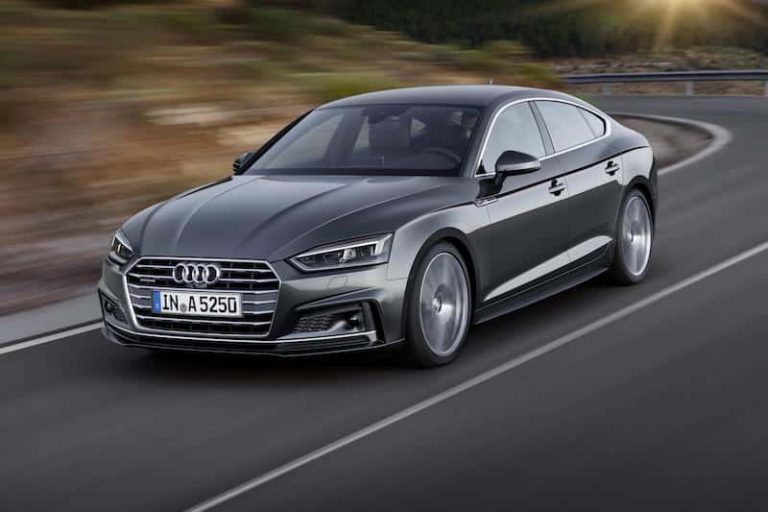
Audi A5 Sportback shows its new face

The final members of the new Audi A5 family, the A5 and S5 Sportback, have been revealed today ahead of their public debut at the upcoming Paris Motor Show. The new A5 model range finally replaces the long-serving first-generation model, which first debuted in coupé form back in 2007. The Sportback and cabriolet models both started production in 2009. As expected, the new A5 Sportback is a straightforward evolution of the original model, and echoes the new look of its sister coupé and cabriolet models which arrive in the UK at the end of this year. The new A5 and S5 Sportback models will be available to order from mid-October, with first vehicles likely to arrive in the UK in early 2017.

More space, less weight

The new A5 range shares its platform and technology with the rest of the new Audi A4 range already on sale. Front occupants will find the layout and space almost identical to the new A5 coupé, but rear passengers will appreciate the extra room. Cabin space is also improved over the previous A5 Sportback model. Boot space continues at 480 litres, but the rear seat can now split 40:20:40 instead of the previous model’s more traditional 60:40 split. Despite the increased size, Audi claims weight has been reduced by as much as 85kg on some models. Like the new A4 saloon and estate, the A5 will be available with Audi’s acclaimed Virtual Cockpit, where a 12-inch screen replaces traditional analogue gauges. It will also get the latest MMI infotainment system, which will offer compatibility with Apple CarPlay and Android Auto software. Like the rest of the Audi range, the A5 Sportback will feature a range of standard and optional driver assistance systems, but exact UK specifications have yet to be announced.

Familiar drivetrains but plenty of performance

Performance will be provided by a range of petrol and diesel engines shared with the A4 and other Audi models, driving through various manual and automatic gearboxes. Audi’s latest-generation quattro all-wheel-drive system will be available on selected A5 Sportback models as well as the S5 Sportback. The range-topping S5 will be powered by a 3.0-litre V6 turbo petrol engine generating 354hp and 500Nm, which Audi claims will allow it to go from 0-62mph in 4.7 seconds. UK pricing and specification is yet to be announced, but with orders opening in a matter of weeks, we will have all the details here at The Car Expert very soon.

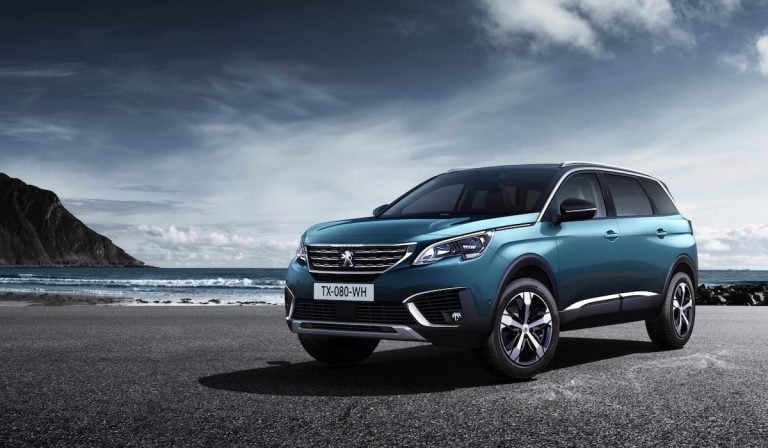
Peugeot unveils new 5008 SUV

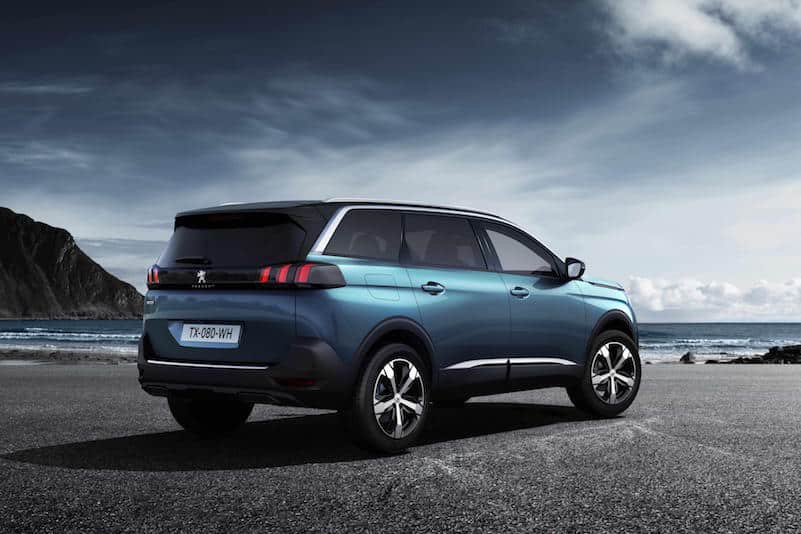
Peugeot has pulled the covers off an all-new 5008, which will make its public debut at the Paris Motor Show in October before arriving in the UK next Spring. The new 5008 is a change of direction from the previous model’s unfashionable MPV design, moving towards a more popular seven-seat crossover SUV format. This echoes a similar move with the brand’s 3008 model launched earlier this year, and creates a clear progression for Peugeot’s crossover family with 2008, 3008 and now 5008 models. Peugeot claims that the new 5008 offers familiar MPV versatility despite its tough new image, with individually adjusting and folding centre-row seats, removable third-row seats and an optional foldable front passenger seat for transporting very long loads. The new model has grown significantly in length over its predecessor. At 4.64m long, it is 19cm longer than the old 5008, and almost exactly the same length as its likely French rival, the new Renault Koleos which will be hitting the UK market at about the same time. Like its smaller siblings, the new 5008 will not come with four-wheel-drive, relying instead on electronics to maintain traction in slippery conditions. Peugeot calls its system Advanced Grip Control, which includes a hill descent mode for slippery downhill off-road travel.

A far more stylish offering for the new 5008

The styling reflects Peugeot’s latest design themes, with a clean and stylish look that is far more resolved than many rivals. The exterior does away with the old model’s MPV profile in favour of a more squared-off SUV style, while the interior features the latest incarnation of Peugeot’s i-Cockpit concept. This means a small steering wheel with a digital instrument display placed above it, and a large touchscreen replacing many conventional buttons on the dashboard. Peugeot claims that the new 5008 will be fitted with the latest safety systems, including autonomous emergency braking (AEB) and a range of assistance systems like lane-keeping, speed limit recognition and adaptive cruise control systems. We will have to wait until closer to UK launch before finding out which safety systems will be standard and which will cost extra.

Prices and specs TBA

The new 5008 will be available in four trim levels, mirroring other current Peugeot models, and will be powered by a choice of petrol and diesel engines ranging from 100hp up to 180hp. UK pricing and specification will be announced in coming months, so stay tuned to The Car Expert for more information as it becomes available.

Land Rover teases Discovery ahead of Paris debut

0

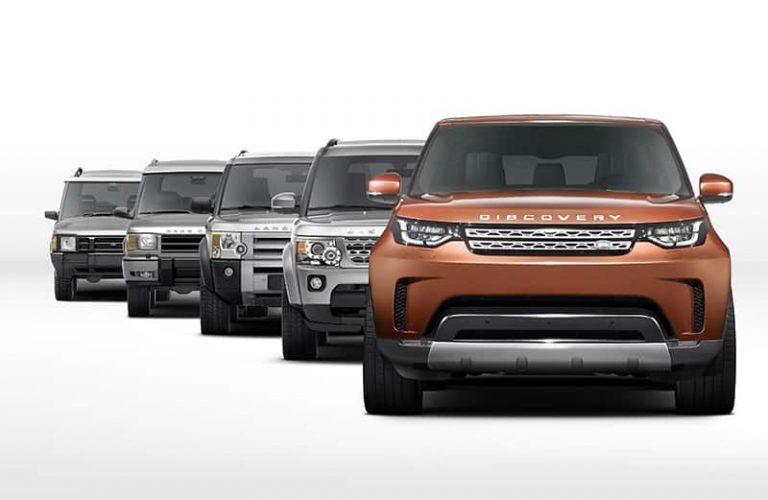
Land Rover has revealed the first teaser picture of its new Discovery.

The fifth-generation version of the seven-seat SUV will be unveiled on 28th September before making its public debut at the Paris Motor Show on the following day.

No details of the new Discovery have yet been released, apart from a quote by Land Rover chief design officer Gerry McGovern who says it; “redefines the large SUV – Land Rover’s design and engineering teams have revolutionised the Discovery DNA to create a highly desirable, extremely versatile and hugely capable premium SUV.”

The picture shows only the front end – suggesting that the car has evolved directly from the Discovery Vision Concept that was unveiled at the New York Auto Show in April 2014.

Judging by the front the new model looks much closer to the curvy profile of its upmarket sibling the Range Rover than previous generation Discos that have been more square and box like. This would fit in with reported plans by Land Rover to position the Discovery more upmarket.

While no technical details have been released yet, industry observers expect the new car to be much lighter than its predecessor due to extensive use of aluminium in the shell, the Discovery expected to make use of the same platform as the Range Rover and Range Rover Sport models.

Powertrains should include the new Ingenium 2-litre diesel manufactured at Jaguar Land Rover’s plant near Wolverhampton in the West Midlands. The V6 diesel that is the staple of the current Discovery is predicted to continue in the new model, while there will also be petrol variants.

Land Rover has stated that the new model will include ‘technology like no other’, leading to speculation that this could include a production version of the ‘transparent hood’ debuted on the Vision concept. This projects an image of the ground directly in front of the car and below the driver’s field of vision to a head-up display in the cockpit.

It is known that Land Rover intends the new Discovery to be part of a three-model range. As well as the already on-sale Discovery Sport, there could be a third, possibly smaller, model.

The new Discovery is expected in showrooms in 2017.

Infiniti launches Q60 coupe at £34K

0

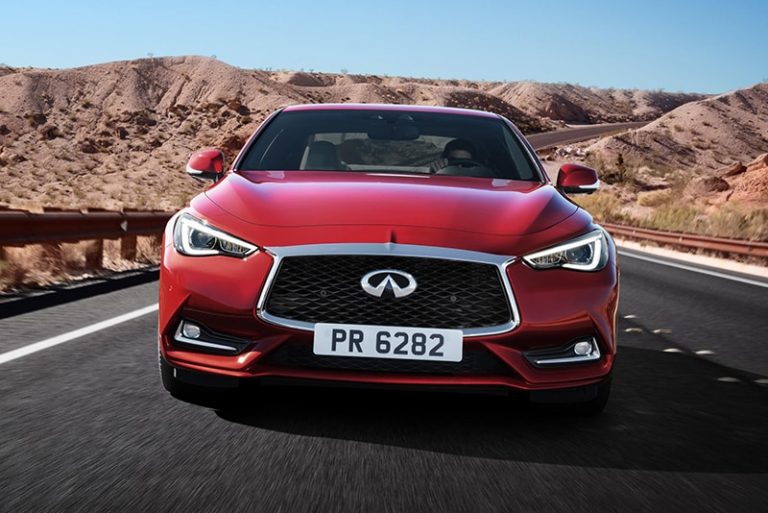
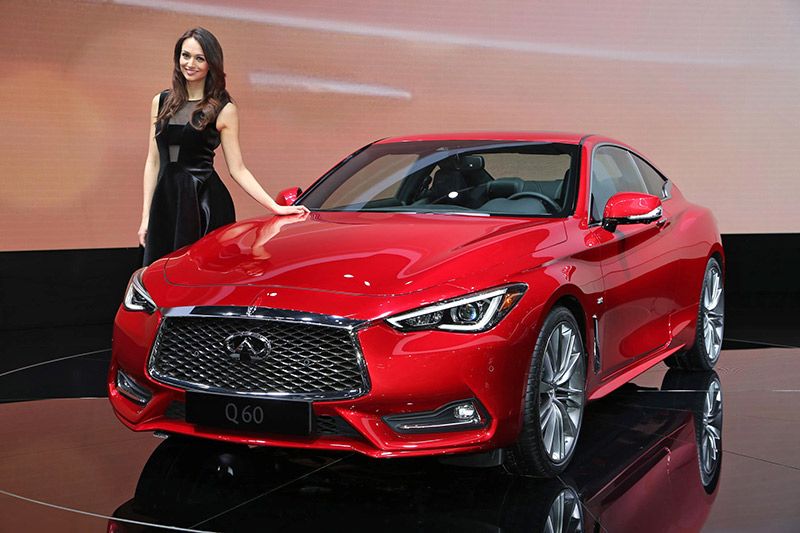
Infiniti will launch its Q60 sports coupe in October at prices starting from £33,990.

Initially the car will only be available with a four-cylinder 2.0-litre turbo petrol engine of 208hp – a 400hp 3-litre twin-turbo V6 will join the range later.

First unveiled at the Geneva show in March 2016, the Q60 is expected to rival the Audi A5 and the BMW 4 Series, and replaces the G37 in the model range offered by Nissan’s upmarket sister brand.

At 4683mm long and 1850mm wide, on a 2850mm wheelbase, it outstretches its predecessor in all areas.

As standard the engines will be mated to seven-speed auto transmissions and rear-wheel drivetrains, though all-wheel-drive will also be available.

Infiniti claims that the Q60 will deliver a balance of compliant ride and agile handling, aided by the brand’s new Dynamic Digital Suspension, engineered to offer improved handling responses and agility alongside enhanced ride comfort, this aided by new dampers.

The Direct Adaptive Steering, meanwhile, has been upgraded to a second-generation version, which Infiniti says offers high levels of steering feel and feedback, while the Drive Mode Selector will permit drivers to personalise and tailor the steering to suit their own preferences.

Infiniti registered 280 new cars on the UK market in August, some 618 per cent up on the 39 recorded in August 2015. Year to date the brand has sold 2244 cars, 186 per cent better than at the same point in 2015.

Infiniti Q60
The Q60 was unveiled at the Geneva show in March 2016.

Dealers keep on selling in ‘quiet month’

The UK car market grew by 3.3 per cent in August, which was significantly more than in July.

Strong fleet demand drove the result in a month that is traditionally one of the quietest of the year in showrooms as buyers hold off for the registration plate change on 1st September.

According to data released by the Society of Motor Manufacturers & Traders (SMMT) private registrations actually fell by 0.2 per cent, but were more than offset by the fleet sector that saw demand soar 7.7 per cent.

In total 81,640 new cars were registered in the month, of which 43,267 were in the fleet market, the SMMT saying that the sector was buoyed by attractive finance deals and discounts.

Year to date the overall registrations figure has topped 1.68 million – an increase of 2.8 per cent compared to 2015.

Petrol-fuelled cars have edged ahead of diesel in the popularity stakes, at 49.7 and 47.3 per cent of the market respectively.

Alternatively-fuelled cars, which includes electric vehicles, continue to grow in popularity – 2,508 were registered in August, compared to 1,918 in the same month last year. So far in 2016 53,902 such vehicles have been registered accounting for 3.1 per cent of the market.

SMMT chief executive Mike Hawes welcomes even modest growth in what is traditionally one of the quietest months, and repeats his post-Brexit vote call for the Government to keep the market strong.

“With showrooms full of exciting models featuring the very latest technology and a raft of affordable finance options, it still makes economic sense to consider buying a new car,” Hawes says.

“The key to maintaining this strong market is consumer confidence for which we look to government to deliver the conditions for economic growth,” he adds.

Meanwhile the new car top 10 continues to have a familiar look about it, the Ford Fiesta dominating as it has done for several years. In August registrations of the Ford supermini were almost twice those of its nearest rival, its own big brother the Ford Focus, as 4,547 and 2,519 respectively.

The Vauxhall Corsa and Vauxhall Astra both drop a place to third and fourth, leapfrogged by the Focus.

1609-SMMT-01
1609-SMMT-03

Kodiaq SUV to start new era for Skoda

0

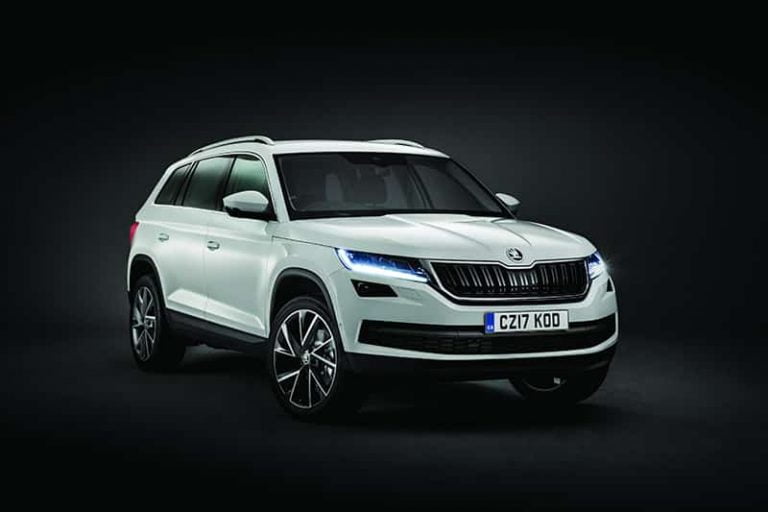
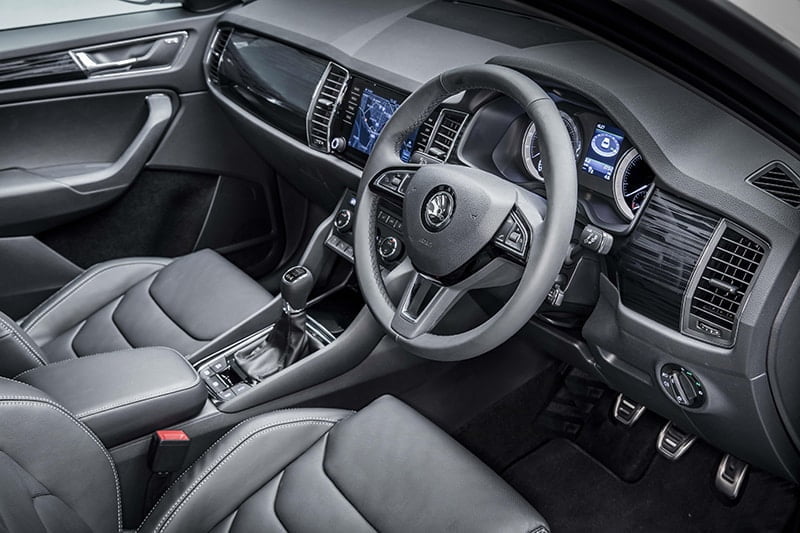
Skoda has unveiled its Kodiaq SUV, the Czech brand’s most important new car for some years.

Revealed during a special event in Berlin, the new car marks what Skoda management are dubbing the start of “an extensive SUV campaign.”

While Skoda officials have given no more detail on what form this campaign will take, industry sources suggest that by 2020 the brand will offer a four-strong SUV range including a replacement for the current Yeti and a new small crossover to take on the Nissan Juke.

Skoda’s first large SUV, the Kodiaq is built on the versatile VW Group MQB platform, the vehicle measuring 4697mm long with a 2791mm wheelbase.

It can accommodate up to seven seats – another first for Skoda – and claims the largest bootspace in its class, boasting a volume of 720 litres extendable up to 2065 litres with the rear seats folded.

The Kodiaq will go on sale with a five-strong engine line-up, ranging across two 1.4 TSI petrol engines of 125 and 150hp, a 2.0 TSI with 180hp and a pair of 2.0 TDI diesels with 150 and 190hp. Quoted fuel economy and CO2 emissions for the most frugal diesel are 56.5mpg and 131g/km.

Six-speed manual or DSG auto transmissions with six or seven speeds – the latter yet another first use in a Skoda – will be available depending on model, feeding to front or all-wheel drive drivetrains.

In terms of styling the Kodiaq follows the language established on recent models from Skoda such as the Superb large saloon, while also promised are new driver assistance systems to the brand, bang up-to-date infotainment and connectivity, along with the ‘Simply Clever’ features that have formed a major plank of Skoda’s marketing in recent times.

Skoda Kodiaq

Skoda CEO Bernhard Maier, unveiling the Kodiaq, is clear as to how important a launch this is for the brand. “With the Kodiaq, we are striking out in a new direction and opening up new markets,” he says.

“With our first large SUV, we are conquering a new segment for the brand – and new customer groups… it makes the brand even more attractive thanks to its concept, striking design and as the first Skoda that has the option of always being online and thereby offering more comfort, safety and real-time information,” Maier adds.

The Kodiaq will make its public debut at the Paris Motor Show on 29th September and is expected on UK roads early in 2017. Pricing is expected to be announced at the Paris launch – industry sources suggest they will start from a highly competitive £22,500.

Porsche Macan SUV faster than a 911

0

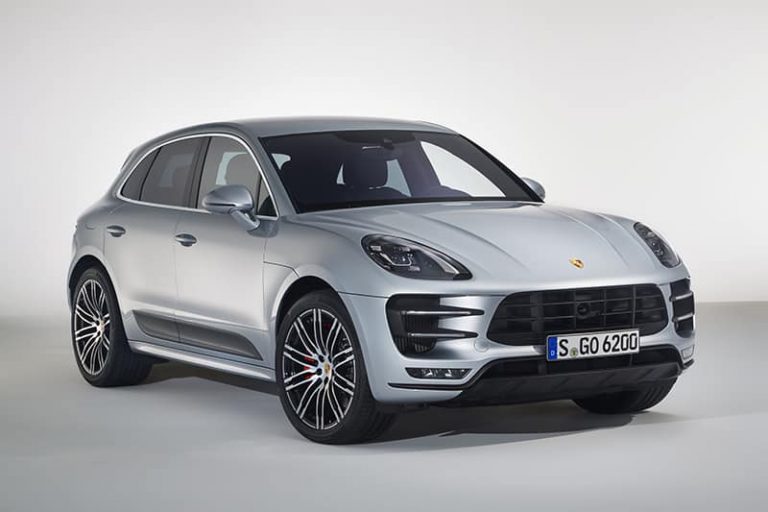
Porsche is adding a performance package to its Macan that will make the SUV faster than the 911 Carrera sports car.

The uprated Macan’s 3.6-litre V6 twin-turbo petrol engine will now produce 440hp, which is 40hp more than the previous most potent version the Macan Turbo.
Torque rises by 50Nm to 600Nm, on offer between 1,500 and 4,500rpm and helping to take the car through 62mph from rest in 4.4 seconds, 0.4sec faster than previous models and a fifth of second faster than the 911.

Equally impressive is the mid-range acceleration – in the Sport Plus driving mode the car can accelerate from 49 to 74mph in 2.9 seconds, two tenths quicker than previously and making overtaking a swiftly carried out operation.

Performance Package equipped Macans also gain a number of other additions. The braking system is new, with 390mm grooved discs up front, 30mm larger than the Turbo’s equivalents and operated on by six-piston calipers finished in red.

The ride height of the body is lowered 15mm through the Porsche Active Suspension Management (PASM). The Sport Chrono package, which allows more performance-focused tuning of the chassis, engine and transmission, and a sports exhaust system are also included in the standard package.

Options for the car include the Turbo Exterior Package, comprising 21-inch diameter 911 Turbo design alloy wheels (with lateral spokes painted in high-gloss black), LED headlights with the Porsche Dynamic Light System (PDLS) Plus, and further black elements.

The Turbo Interior Package offers a black leather interior with Alcantara elements, colour appliqué highlights, and carbon detailing.

Order books are open for the Macan Turbo with Performance Package, prices starting from £68,073. First cars are expected on UK roads before the end of 2016.

500th LaFerrari to aid earthquake victims

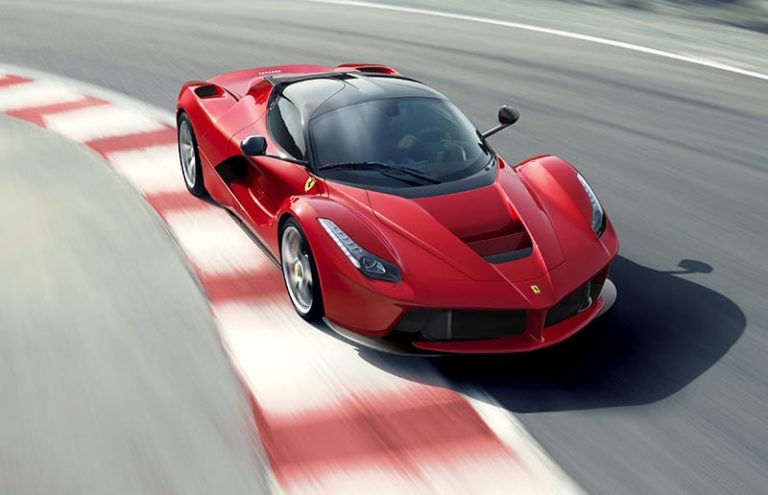
Ferrari is to build a 500th example of its LaFerrari supercar, to help the victims of the Italian earthquake.

The single addition to the 499-unit production run is to be auctioned, with the proceeds from the sale going to aid those affected by the earthquake that hit central Italy on 24th August, killing hundreds of people and leaving thousands homeless.

Ferrari built what was to be the 499th and last example of the LaFerrari in December 2015, each sold for £1.15 million. Examples on the used market have attracted prices of up to £3m and it is thought that the price for the very last example could go significantly higher.

Ferrari chairman and CEO Sergio Marchionne announced the plan during a summit meeting held between the Italian and German governments at Ferrari’s Modena headquarters.

Demand for the LaFerrari is believed to have been double the number made, but those who cannot secure the 500th example may already have missed out on its successor.

At the Paris motor show on 29th September Ferrari will unveil a convertible version of the car, using the same hybrid powertrain as the coupe. This comprises a 6.3-litre V12 engine of 800hp and a 120kW electric system of 163hp, the combined output being 963hp, with 900Nm of torque.

Ferrari is yet to announce how many examples it will build of the new car, which it is believed will take the name Aperta. But the Italian brand has announced that all available cars have been sold, following a special preview event for potential clients.

Ferrari Aperta
The drop-top LaFerrari debuts at the Paris Motor Show but all have already been sold.

DS adds Performance Line for sporty drivers

0

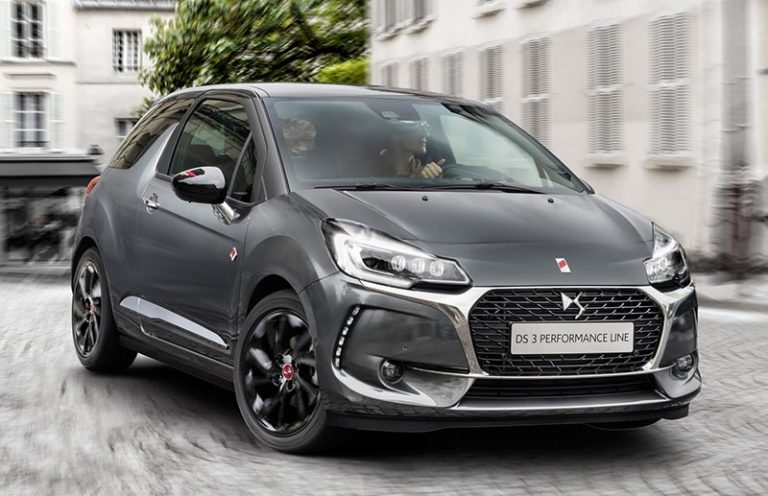
DS Automobiles is adding a new sports-pitched trim level to its line-up, dubbed DS Performance.

The trim, which will be offered across the entire Citroën sister brand’s range from 1st October 2016, will be placed between the existing Elegance and Prestige grades.

Bespoke styling colours and interior trims feature on the new trim. Each Performance Line car will be supplied with a black roof contrasting with a suite of body colours specifically chosen for the model.

Seven exterior finishes are available for the DS 3, six for the DS 4 and five for the DS 5. Large gloss black alloy wheels are included and their centre caps feature the DS logo, on a carmine red background.

The red, along with white and gold are regarded as DS Performance signature colours and appear on various components of the cars, including the door mirrors and rear spoiler. DS Performance Line badges are also included.

Inside a bespoke Dinamica cloth is employed on the upholstery, though this can be upgraded to a choice of two types of leather – grained or Nappa. Again the DS Performance colours feature on the stitching while the effect is completed with metallic detailing.

Models in Performance Line trim are supplied as standard with a seven-inch touchscreen, Satellite Navigation, Mirror Screen (MirrorLink and Apple CarPlay) phone connectivity, and DS connected services using the DS Connect Box.

DS has not officially announced prices for the new trim yet but it is believes DS 3 versions will start from £17,900, DS 4 from £21,600 and DS 5 from £30,000.

According to Éric Apode, DS Automobiles Vice President for Products and Business Development, the new trim is aimed at a particular kind of owner.

“The ‘DS Performance Line’ offers all the fundamental ingredients of a Grand Tourer, namely style and driving pleasure,” he says.

DS Performance Line

Kia reveals Rio ahead of Paris show debut

0

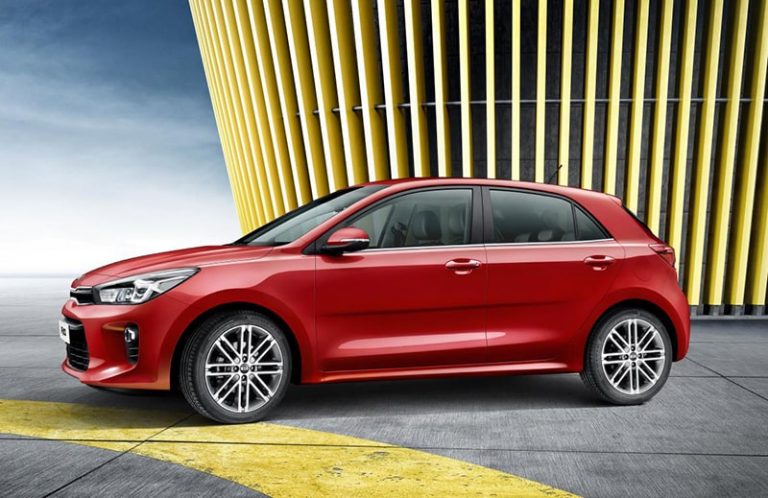
Kia has released pictures of its new Rio ahead of the supermini’s debut at the Paris motor show.

The fourth-generation model, which unlike its predecessor will be offered only in five-door form, sports a bold new look. This says Kia is the result of a collaboration between the brand’s European, US and Korean design centres.

At the front Kia’s now signature tiger-nose grille appears in a slimmer, wider version, as are the projector headlamps. Their more sculpted design produces a U-shaped LED light signature.

The new car is 15mm longer than its predecessor at 4,065mm, with a wheelbase extended 10mm to 2,580mm. Width grows by 5mm to 1,725mm while the height drops by the same amount to 1,450mm.

A long bonnet, longer front overhang, a thinner, more upright rear pillar and shorter rear overhang, combined with clear lines down either shoulder are aimed at producing a more stable, confident appearance. The rear screen is almost much more upright compared to the outgoing Rio.

The official pictures reveal a new interior with an improved, more upmarket layout, again relying on straight lines to increase the impression of width.

The dash will be dominated by a new infotainment system, the HMI (human-machine interface), with a high-resolution touchscreen to power the Rio’s audio, navigation and new connectivity systems.

Kia says fitting the HMI has allowed a reduction in the number of centre console buttons, producing a less-cluttered look.

No details of powertrains have yet been announced, but the car is predicted to use new versions of the existing 1.25 and 1.4-litre petrol engines, along with a 1.1 diesel and the new 1.0-litre three-cylinder petrol engine launched in the larger cee’d.

A hot hatch GT model is also likely at some point in 2017, most likely using a 1.4-litre turbocharged petrol engine that Kia unveiled in 2015.

The Rio makes its public debut on Kia’s Paris show stand on 29th September.

Mercedes-AMG GLC 43 heads for Paris

0

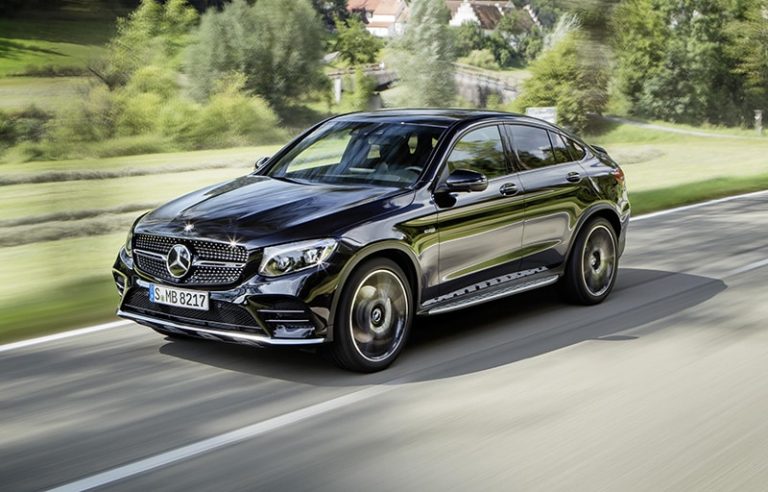
Mercedes-Benz will unveil a new performance version of its GLC, the Mercedes-AMG GLC 43 4Matic Coupe, at the Paris motor show on 28th September.

The car, which boasts the same 3.0-litre V6 biturbo petrol engine as other AMG 43-badged models, is being marketed on its combination of performance and SUV capability, including a degree of off-road ability. It is designed to be a more potent version of the GLC without going the full AMG route.

The engine produces 367hp, along with 520Nm of torque, and is matched to a 9G-Tronic auto transmission. This has been modified to produce shortened shift times and includes a manual function.

An AMG Performance version of the 4Matic all-wheel-drive transmission is fitted, and configured to produce a rear axle bias. As a result the coupe will pass 62mph from rest in 4.9 seconds – matching its nearest rival the BMW X4 M40i – and go on to an electronically governed 155mph.

The GLC 43 4Matic Coupe includes the Air Body Control air suspension system with adaptive damping, which helps both its on-road handling and what Mercedes describes as “occasional off-road excursions”. The ground clearance can be raised by means of a cockpit button and pneumatic self-levelling is included.

Highlighting its AMG status the car gains bespoke styling, on the outside a bolder front bumper though not as aggressive as full AMG models, 19-inch alloy wheels, chrome quad exhausts and a compact but sharply-angled rear spoiler. Black leather trim and aluminium detailing features on the inside.

According to Mercedes-AMG chairman Tobias Moers, the new GLC 43 4Matic Coupé scores on its agility and driving dynamics. “With its expressive design and high everyday practicality the Coupé is able to appeal to new target audiences,” he says.

Prices for the car will be confirmed in October following its Paris debut, and it is expected in showrooms before the end of 2016.

How will London’s new pollution laws affect you?

In one of his first public statements after winning the mayoral election earlier this year, incoming Mayor of London Sadiq Khan announced that London’s planned new Ultra Low Emission Zone (ULEZ) could be introduced as early as 2019.

This would be a year earlier than previously anticipated, with the rollout initially focused on inner London, covering the same area as the existing Congestion Charge Zone (CCZ). It would progressively expanding to encompass the North and South Circulars from 2020 onwards.

While the ULEZ’s introduction will not affect new car buyers, it will potentially impact on used car buyers who travel into or through London.

The average car ownership cycle is about three years, so bringing the date forward to less than three years from now means that people looking at buying a used car right now could find themselves with a car that doesn’t comply in just over two years’ time.

It could also affect the value of used cars at resale time. This problem is worse for diesel cars than petrol cars.

What exactly is a ULEZ anyway?

The ULEZ is a proposed area which is restricted to vehicles meeting specified emissions standards. Non-complying vehicles will have to pay a daily charge to travel into this zone.

The new ULEZ will exist in addition to the city’s current Congestion Charge Zone, and will be in operation 24/7 including weekends and public holidays (unlike the CCZ, which only operates during business hours).

Where does the ULEZ cover?

London’s ULEZ will initially operate over the same area that the city’s current Congestion Charging Zone (CCZ) is in force (see image). However, this is likely to expand fairly rapidly, and will probably take the CCZ with it.

It is important to note that the ULEZ will be operating in addition to the London congestion charge, so some vehicles will have to pay twice to go through the same zone.

What are the emissions standards of the ULEZ?

In order to conform to London’s ULEZ standards without facing a charge, motorists must be driving one of the following vehicles:

  • A diesel engine car, minibus or van which meets Euro-6 standards.
  • A petrol engine car, minibus or van which meets Euro-4 standards.
  • A motorcycle, moped or a similar vehicle which meets Euro-3 standards.
  • A HGV, bus or coach which meets Euro-VI ULEZ standards.

Euro-6 emissions legislation has been in force for both petrol and diesel cars since September 2014, so any new car on sale today will be able to enter the ULEZ without penalty. However, cars older than this may not be Euro-6 compliant.

This is less important for petrol cars, which only have to meet Euro-4 emissions levels (which came into force in January 2005). However, diesel cars built before 2014 are unlikely to meet Euro-6 standards and would face penalty charges.

Any vehicle that has a ‘historic’ vehicle tax class (more than 40 years old and registered with the DVLA under the historic vehicle class) will be exempt and therefore will not need to pay the ULEZ charge.

Residents based inside the ULEZ who drive or make use of a vehicle with either a ‘disabled’ or ‘disabled passenger vehicle’ tax class will be required to meet the ULEZ standards. However, they will enjoy a three-year sunset period without charge to give them enough time to purchase a compliant vehicle.

Why are the standards different for petrol and diesel cars?

On the face of it, it seems unfair that diesel cars are being held to tougher standards than petrol cars. However, this is because emissions outputs for petrol and diesel cars are different, and diesel engines generate higher levels of local air pollution. The relevant standards are actually the same for both types of engine.

The key measure for local air pollution is NOx (nitrogen oxide) levels, which is visible as sooty particles emitting from exhaust pipes on old or poorly-maintained vehicles.

NOx output is naturally higher from diesel engines than petrol engines, and a Euro-4 petrol engine has the same NOx requirement as a Euro-6 diesel. A new Euro-6 petrol engine produces even less NOx, although petrol engines still produce more CO2 than diesel engines.

Motorcycles and heavy goods vehicles have their own standards, which are again roughly comparable to those for petrol and diesel cars.

What if my car doesn’t meet the new ULEZ standards?

If a vehicle fails to meet the ULEZ standards set out above, motorists will need to pay a £12.50 daily charge in order to drive the vehicle through the zone, regardless of whether you are driving a petrol or diesel car (or van or minibus, motorcycle, etc.). The charge for heavy vehicles – lorries, buses and so on – will be £100.

There will be no toll booths or barriers for regulating payments for the ULEZ scheme. Instead, the existing congestion charge cameras will be used to read vehicle number plates. These will be checked against a database made up of information from the DVSA, vehicle manufacturers and both drivers and operators registered with TfL.

If a motorist is found to be driving a vehicle in the zone which does not meet the ULEZ standards and have failed to pay their daily charge, the registered owner or operator will be issued with a Penalty Charge Notice for £130 for a car, van, motorcycle and so on, which will be reduced to £65 if payment is made within 14 days of issue.

The penalty for an HGV, bus or coach will be £1,000, reduced to £500 if paid within 14 days.

I don’t live in London; should I care?

If you don’t ever travel into London, then the ULEZ requirements are unlikely to affect you at the present time. However, it is likely that other large cities like Birmingham and Manchester will look at setting up similar schemes if London’s proves successful (either environmentally or financially…).

London is not the only city implementing tough anti-pollution laws. Over the next decade, you can expect to see similar legislation popping up in many large cities around the world.

There will be an inevitable push to move urban drivers into electric vehicles, which generate no local pollution and less overall pollution. The era of the internal combustion engine is coming to an end.

Like the Jaguar XE? Try out its rivals…

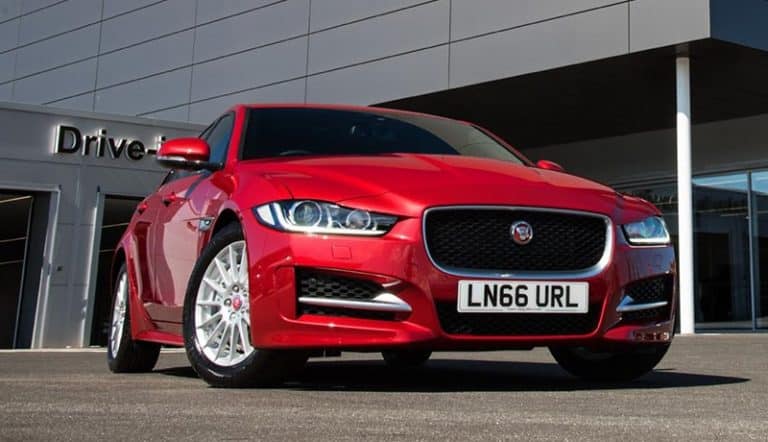
Jaguar is aiming to showcase the qualities of its XE saloon to buyers – by having them test its rivals.

Over this coming weekend anyone test driving an XE at key Jaguar showrooms will find up to three rival models also available for analysis.

More than 250 rival cars have been placed in the showrooms for the tests, which Jaguar is comparing to the comparison tests carried out by the motoring media such as The Car Expert.

Jaguar Land Rover UK managing director Jeremy Hicks admits that the move is bold, never done before by a manufacturer in the UK, but believes that the Jaguar XE speaks for itself.

“It is the best looking car in its class, appealing to the heart but with class-leading running costs that add up to a shrewd financial purchase,” he says.

“It’s a class leader across the key measures of efficiency, performance and cost of ownership and absolutely holds its own in the most hotly contested sector of the market against the most established players in the world – we know it, the critics know it, now it’s time for car buyers across the UK to know it, and crucially, experience it, for themselves,” Hicks adds.

Jaguar has already sold more than 30,000 examples of the XE in 2016. Versions now on sale, at prices starting from £26,990, include 2017 model year updates. The major addition is an all-wheel-drive system, available to order on 180hp 2.0-litre Ingenium-engined variants of the car.

Also new to the line-up is the InControl Touch Pro infotainment system, based around a 10.2-inch tablet-style touchscreen. The system offers a Wi-Fi hotspot for up to eight devices, and is compatible with an Apple Watch app, that offers remote functions including fuel level check, lock and unlock, and even remote engine starting.

Dubbed ‘The Jaguar XE Challenge’ the rival test drives take place from 2nd-4th September. Details of participating dealers are here.

Hyundai i10 to debut more safety, more tech

Hyundai will debut the facelifted i10 city car at the Paris motor show in September.

Changes to the car, which goes on UK sale in January 2017, centre on styling and updated active safety and connectivity.

The i10 debuts the new ‘cascading front grille’, with a curved flowing line, that Hyundai says will become the new family identity for future models. The bumper design is revised and new round LED daytime running lights added.

At the rear the bumper is also remodelled, round rear fog lamps added to mirror the front design, and new materials installed. Completing the car’s revised look are side mouldings of a new shape and size and revised steel or alloy wheels in 14-inch size.

Blue and black interior colours are now available for all i10s, along with a new shade of red cloth on the upholstery. The major interior change, however, is the new seven-inch touchscreen navigation system offered on top-spec High trim models, which includes Apple CarPlay and Android Auto smartphone integration.

The navigation system comes with a seven-year free subscription to Live Services, providing access to real-time traffic conditions, local weather and points of interest, and other information such as speed camera locations.

Touchscreen sat nav major addition to interior.

Safety upgrades centre on a new multi-functional camera that provides the data for a Front Collision Warning System (FCWS) and a Lane Departure Warning System (LDWS). These are available as options on most trim levels.

Depending on model, automatic air conditioning, a heated steering wheel and front seat warmers are also available.

Mechanically there are slight changes to the steering ratio and suspension bump stops, but the powertrains remain as in the outgoing model, based around petrol engines of 1.0 or 1.25-litre size. These can be combined with a five-speed manual of four-speed auto gearbox, while the economy-pitched BlueDrive version of the 1.0 remains available.

Hyundai Motor UK president & CEO Tony Whitehorn believes that the new i10 will impress buyers. “New i10 showcases strong build quality and our passion for detail, while also including many features from the segments above,” he says. “The impressive package has made the i10 one of the best-selling cars in its class and popular with customers across the UK – a success story that the New i10 is set to carry on,” Whitehorn adds.

Audi planning electric Tesla Model S rival?

Reports suggest Audi has approved production of a new electric saloon to rival the Tesla Model S.

The car, predicted to be called the A9 e-tron, will be a four-wheel-drive four-door electric vehicle (EV) comparable in size to a current A8 and the range topper for the brand’s e-tron range.

Speaking to Autocar magazine, Audi head Ruper Stadler says that the brand will have three EVs in its line-up by 2020 and by 2025 a quarter of the Audi line-up will be EVs.

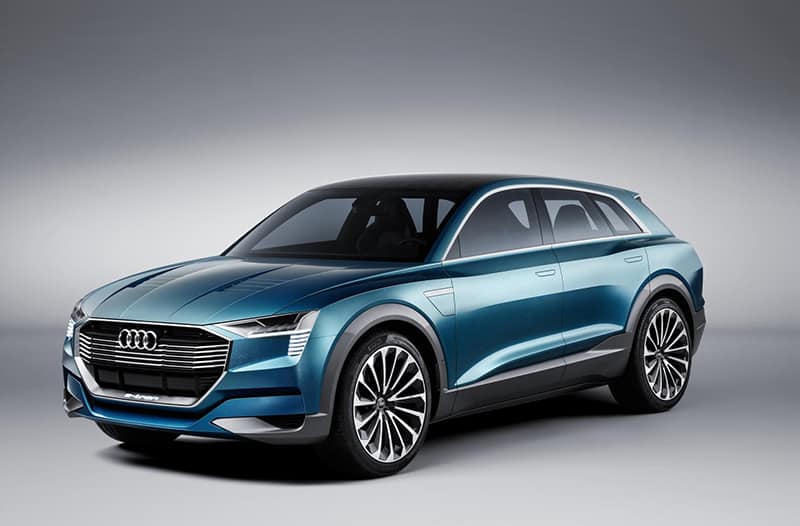
The A9 will be developed alongside the forthcoming Q6 e-tron SUV, the two sharing much of their technology and built on a platform developed from that of the e-tron quattro concept unveiled at the 2015 Frankfurt Motor Show.

This car has three electric motors, one at the front and two at the rear, powered by a lithium-ion battery pack integrated into the floor, and currently produces 320kW (435hp) boostable to 270kW (503hp) and 800Nm of torque.

Both the Q6 and A9 e-tron models are expected to follow a similar drivetrain format.

Industry reports say that the A9 e-tron will be capable of 131mph and produce a 0-62mph time of 131mph. Its range is said to be up to 500km between charges.

Further technology on the car will include significant advances in autonomous driving capability – increasing to what has been dubbed ‘level 4’. The new A8 due in 2017 is predicted to include level 3 automation that will allow it to control itself at up to 37mph on motorways. Level 4 is said to take the technology off the motorway.

The quattro e-tron concept of 2015 previews Audi's future electric range-topper.
The quattro e-tron concept of 2015 previews Audi’s future electric range-topper.