Find an Expert Rating: 
Home Blog Page 164

Kia Optima Sportswagon review

What is it? Kia’s first large estate in Europe.
Key features: Enhanced luggage space, Euro-specific model.
Our View: The Kia Optima Sportswagon makes a lot more sense than its saloon sister in the current UK market.
Type of review: First drive


Kia is a brand that knows where it wants to be – like its sister and rival Hyundai, the South Korean brand now trades a world away from the budget vehicles that first introduced the name to UK audiences, and is steadily encouraging its customer base upmarket.

Mainstream brands tend to have a large car in their line-up, particularly if they want to provide a credible buy for those customers who would really like a BMW or Audi but whose funds don’t really stretch that far. For Kia, that gap was filled with the launch of the Optima saloon at the end of 2015.

Trouble is, in the UK in particular, big four-door saloons are not that popular and sales of the Optima have not exactly lit up dealers’ faces. Estates, however, are far more the thing to have – more than two thirds of buyers of these large family or D segment cars choose an estate body, and in the fleet market which dominates D segment sales, 75 per cent are estates.

So it’s no surprise that the Optima has now gained a sister car, the Optima Sportswagon, Kia’s first estate model in the sector. And this is very much a European model – designed in Europe and for sale only in Europe.

Its look may be familiar, to anyone who saw the SportsSpace concept unveiled at the 2015 Geneva Motor Show, as the production Sportswagon follows the concept virtually to the letter.

What we have is a car that occupies exactly the same footprint as its saloon sister, except in turns of height – and the extra 5mm is only due to the standard-fit roof rails.

Look at the Sportswagon from the front and only those roof rails give away that it is not the saloon – they are identical as far as the central door or ‘B’ pillar. From here the estate boasts a gently tapering roof to a steeply raked rear screen. Combined with rising shoulder lines the result is significantly increased space without turning the car from what is a very agreeable profile into something bulbous and unsightly.

While the Sportswagon looks like a typical ‘lifestyle’ estate, it is rather more practical. Boot volume increases over the saloon by 42 litres to 552 litres, which makes the Optima definitely one of the more spacious cars in its class.

It’s practical loadspace too – wide and flat, with a low loading lip, and the inclusion of a pair of undertrays creates a space to hide away valuable items.

Meanwhile if one operates the one-touch folding rear seats the room available jumps to a very useful 1,686 litres. These seats, by the way, can be folded in a 40:20:40 split to offer the most practical combination of people and luggage carryng ability.

Kia’s cabins are now well appointed, if with surfacing that remains a little dark and foboding, and still with some hard plastics to remind one that this car is more mainstream than premium. The driver’s surroudings are practical, the touchscreen (seven or eight inches depending on grade) placed high on the centre console where it is easy to reach and operate. And as has been the case on recent Kias, the number of different buttons and switches are kept to a minimum.

The Optima Sportswagon may score on luggage space, but it also provides people space – there is a lot of room in front and back, and it is easy to get comfortable.

Just one engine is available for Optima Sportswagon buyers – the 1.7 CRDi turbodiesel unit with 141hp on tap, combined with 340Nm of torque. It’s interesting that this car launches at the same time as Kia’s Optima PHEV, the plug-in hybrid model that retains the saloon body style, and which The Car Expert will be testing separately. One wonders why such eco-friendly tech cannot be offered in the far more popular version of the car…

Still – the diesel can be supplied with a six-speed manual or the 7DCT auto gearbox, and choosing the latter is not too costly in performance or efficiency. The auto version will reach 60mph from rest in 10.7 seconds compared to the 9.8 of the manual, and its 61.4mpg and 120g/km CO2 emissions figures compare to the 64.2 and 113 of manual cars.

The engine is refined enough when cruising, but work it too hard and it does make itself heard – and it does need a reasonable amount of revs to give of its best.

On the road the Optima Sportswagon is very well-behaved, with a comfortable ride and for an estate pleasingly direct steering. It’s no sports car – though there will be a performance-pitched GT model added to the range early in 2017 – but equally it is no sluggish barge either.

Sportswagon buyers are presented with Kia’s familiar 2, 3 and GT-Line S trim levels, and the standard equipment list is more than adequate. The long specification on 2 versions for example includes satellite navigation, a reversing camera, a six-speaker DAB radio audio system with MP3 and Bluetooth, dual-zone air conditioning and smartphone connectivty for Android Auto phones – and we are told Apple CarPlay compatability will be available before very long.

Go up the range and the list gets longer – notable on 3 specification is the touchsreen growing by an inch, an eight-way powered driver’s seat, heated seats, dual-projection headlamps, 18-inch alloys instead of 17 and a host of styling upgrades.

GT-Line S buyers gain a whole host of extra tech poured in, from a wireless mobile phone charger, 360-around view monitor and Smart park assist to a blind spot monitor with a cross-traffic alert, adaptive cruise control, autonomous emergency braking and even a smart-powered tailgate. Problem is by now the £22,295 of the entry-level model will have jumped to more than £30,000, which puts the Optima amongst some competitive company.

Overall the Kia Optima Sportswagon makes a lot more sense than its saloon sister, especially in the current UK market. Kia is clearly pitching it in the hope of appearing on the consideration lists for many fleet buyers, and there is every reason why it should be an option for the company motorist.

Kia Optima Sportswagon – key specifications

Models Tested: Kia Optima Sportswagon 1.7 CRDi ‘3’ 6-speed manual transmission
On Sale: September 2016
Range price:
£22,295-£30,595
Insurance groups:
19-20.
Engines: 1.7 diesel.
Power (hp): 141.
Torque (Nm):
340.
0-62mph (sec):
9.8 (auto 10.7).
Top speed (mph): 124.
Fuel economy (combined, mpg): 64.2 (auto 61.4).
CO2 emissions (g/km):
113 (120).
Keyrivals:
Hyundai i40, Škoda Octavia, Volkswagen Passat.
Test Date: August 2016

Citroën concept highlights comfort and tech

0

Citroën has revealed a concept that showcases the French brand’s ‘Advanced Comfort’ programme.

The CXperience Concept will make its public debut at the Paris motor show on 29th September.

According to its creators the car ‘brings a fresh new approach to the hatchback segment’ thanks to a distinctive body style and rear-hinged doors. New styling treatments include the front end, the grille and an update to the headlight signature design.

Measuring up at 4.85 metres long and 2m wide, around the same footprint as a C6, the concept boasts a very low roof height, of just 1.37m. The 3m wheelbase features short overhangs, creating more interior space, and the car sits on 22in diameter five-spoke wheels.

The powertrain is a plug-in hybrid unit, the CExperience said to offer power outputs between 250 and 300hp and an all-electric range of around 60km (36 miles).

The car boasts an eight-speed auto gearbox between the petrol engine and electric motor, and its 3kW battery, placed under the floor, can be recharged in 4.5 hours using a domestic socket or in under 2.5 hours with a specific charger.

Inside the design follows the requirements of Citroen’s Advanced Comfort programme that seeks to meet the changing needs of travellers as new technology and styling formats come on stream.

The air suspension is designed to filter out all bumps during travel, while the seats are made from shape-memory foam, the front versions boasting open headrests to improve visibility for rear-seat passengers. Wide windows and full-length sunroofs ensure the interior is light and airy.

Dominating the driver console is a 19-inch rectangular touchscreen that can be configured in various modes – so for example passengers can listen to music or watch video on two-thirds of the screen while the driver uses the remainder for navigation.

The car has no wing mirrors, these replaced by door-mounted cameras feeding screens on the inside of the doors, while further technology available to the driver includes a range of connected services, such as opening gates or garage doors while still some distance away or accepting home deliveries.

Also seen for the first time on a Citroën is ConnectedCAM Citroën, a camera mounted just behind the rear-view mirror to record everything the driver sees on the road.

In the rear passengers have their own mobile tablet that they can use to adjust the seats and air conditioning, and access media such as games, files or music and video through a new app called ‘Share with U’.

Technology premiered on the Citroën Aircross concept in 2015 improves sound performance, with loudspeakers and microphones in the headrests allowing passengers to listen to something in private or have private conversations with others in the car. Cameras are also built in allowing front-seat passengers for example to keep an eye on children in the back.

Many elements of the Cxperience are expected to find their way into future Citroën production models.

SsangYong Tivoli XLV review

What is it?
The SsangYong Tivoli XLV is an extended boot version of the Tivoli compact SUV

Key features
Significantly enlarged boot space, roof rails

Our view
It might not compete with mainstream rivals on performance and refinement, but scores on its space and standard equipment.


SsangYong is very clear about its place in the UK car market. Unlike certain rivals which according to marketing director Steve Gray are ‘getting ideas above their station’, the Korean brand sees itself simply as a maker of good value 4×4 vehicles – and indeed some 65% of sales of the larger Korando SUV are with all-wheel-drive transmissions, even more than the market-creating Nissan Qashqai.

The Tivoli is a different vehicle, however. Launched last year it has pitched SsangYong firmly into the market where everyone wants an SUV right now, the B or compact segment.

This sector continues to grow faster than any other, led by Nissan’s Juke, and for buyers the appearance and commanding presence of such vehicles is far more important than their off-road ability – so far 4×4 versions account for only around 15% of the Tivoli’s sales. At the same time, it has also become SsangYong’s best-selling model.

Now comes a second Tivoli variant, hoping to attract those buyers who like the value-for-money proposition of the model but need plenty of luggage space – perhaps even those downsizing from the next segment up where the Qashqai holds sway.

The Tivoli XLV sits on the same 2.6m wheelbase as the standard Tivoli, but from the C pillar backwards the body is extended by 24cm. The resultant shape, with its odd little triangular side windows, is admittedly not as easy on the eye as the well-proportioned standard model, and indeed can spark memories of the much-maligned if highly practical Rodius MPV.

In terms of practicality, however, these body modifications really make a difference, as rear luggage space with the seats in place mushrooms from 423 to 720 litres, measured from floor to roof. And inside the car the roominess, both front and rear, is an obvious plus factor.

SsangYong believes such volume will appeal especially to families, golfers and dog owners. These might be buyers of Korean rivals such as the Kia Sportage and Hyundai Tucson, but also those who would normally consider more mainstream players such as Vauxhall’s Mokka or the Renault Captur. And SsangYong believes even those who have previously targeted small estates, such as Mini’s Clubman or the Skoda Yeti, could be tempted into their new car.

This aim could be helped by a generally well-fitted interior – some of the surfaces are still of the hard plastic variety one expects at the value end of the market, and the sat nav screen jars a bit with its heavy primary colours, but overall it’s an acceptable environment with all the instruments and controls where you would expect to see them.

Just one engine option is available with the Tivoli XLV, SsangYong’s latest Euro 6 diesel of 1.6 litres. It puts out 115hp alongside 300nm of torque, the latter on tap between 1500 and 2500rpm.

The engine is combined with either a six-speed manual or the Alisin six-speed auto gearbox, and a two or all-wheel-drive transmission – the latter is intelligent, usually running in front-wheel-drive format but changing as conditions demand.

Choosing the auto option adds £1,000 to the buying price but also comes with a significant cost in efficiency – in 2WD models for example combined cycle fuel economy drops from 62.8 to 47.9mpg while CO2 emissions go up from 117 to 154g/km. Going for all-wheel-drive offers less of an efficiency disadvantage – manual models record combined cycle figures of 57.6 and CO2 emissions of 127g/km.

One notable aspect of the Tivoli is its potential versatility. It may be pitched to compete in perhaps the most lifestyle-influenced of the SUV segments, but it does still have significant off-road ability, courtesy of its 167mm ground clearance, approach angle of 20.0 degrees, 20.8 degree departure angle and 17.0 degree ramp angle. The 1500kg maximum braked trailer load will also appeal to those looking for a workhorse.

The Car Expert tried vehicles with both manual and auto gearboxes, the manual in 4WD form and the auto with the front-wheel-drive transmission. This is significant as 4WD Tivolis have a different suspension layout to their 2WD siblings, replacing the rear torsion bar with a multi-link setup.

The difference is notable – generally the all-wheel-drive version felt more planted and confident on the Buckinghamshire roads of the launch event test route. It was noticeable too that the combination of engine and auto gearbox seemed to produce rather more transmission noise, not helped by the auto ‘box being very keen to change up as quickly as possible.

Generally, however the Tivoli rides in comfort and corners with confidence, if with a certain amount of body roll and steering which is somewhat woolly in its action.

The XLV is considered the range-topping version of the Tivoli range and as such comes with an extensive list of standard equipment, immediately noticeable being the standard-fit roof rails. According to Steve Gray these are included due to the practical pitch of the model, he admitting that in his opinion they do detract from the ‘floating roof’ styling that is a selling point of the mainstream Tivoli.

An impressive safety specification includes seven airbags and among the driver aids Active Rollover Protection, Brake Assist, Hill Start Assist and ESS (Emergency Stop Signal). Highlights of the ‘nice-to-haves’ list meanwhile include dual-zone air conditioning, TomTom satellite navigation, cruise control, front and rear parking sensors and a Bluetooth-enabled infotainment system based around a seven-inch colour touchscreen.

Tivoli XLV prices start from £1,000 more than their standard-bodied siblings and generally the model offers good value, particualrly when one considers the five-year unlimited mileage warranty that is included. SsangYong may have no grand ideas of moving upmarket, but with the Tivoli XLV the brand should continue to stake a strong claim for a significant slice of the value sector.

SsangYong Tivoli XLV – key specification

Models Tested: SsangYong Tivoli XLV 1.6 diesel ELX Style auto, 4×4 manual
On Sale: August 2016
Range price:
£18,250-£20,500
Insurance groups:
17-18
Engines: 1.6 diesel
Power (hp): 115
Torque (nm):
300
0-62mph (sec): 12.0
Top speed (mph): 109 (107 auto)
Fuel economy (combined, mpg): 62.8 (auto 47.9). 4×4 57.6 (44.8)
CO2 emissions (g/km):
117 (auto 154). 4×4 127 (164)
Keyrivals:
Kia Sportage, Hyundai Tucson, Vauxhall Mokka
Test Date: August 2016
1608-SsangYong-Tivoli-XLV-01

SUV ‘to double’ Lamborghini sales by 2019

Lamborghini is expecting to double its sales after it launches its first SUV in 2018.

The Italian supercar manufacturer plans to be turning out at least 7,000 cars a year by 2019, and according to Lamborghini’s head at least half of them will be the SUV.

This would mirror the effect the Cayenne had on Porsche when the sports car manufacturer became the first to join Range Rover in the premium SUV market in 2002. Today Porsche sells far more Cayennes than its signature sports car range.

The Lamborghini SUV has been long planned and is expected to be based on the Urus concept, which was unveiled at the Beijing Motor Show in 2012. The brand is owned by Volkswagen and Lamborghini will be able to call upon the all-wheel-drive technology of sister brands Audi and particularly Bentley, which has just launched its Bentayga SUV.

Industry sources speculate that the Lamborghini will be priced from around $200,000.

Speaking to Reuters, Lamborghini CEO Stefano Domenicali describes the SUV as a “game charger” for the brand and adds that interest in the model is high particularly in the United States. More than 1,000 of the 3,245 vehicles sold by Lamborghini in 2015 went to US buyers.

Domenicali, who formerly ran the Ferrari Formula One team, has headed the Italian sports car brand since February. He is overseeing a doubling in size of Lamborghini’s plant and expects the brand’s global dealer network to grow from its current 132 outlets to 160.

A plug-in hybrid version of the SUV is expected to join the line-up by 2020, and could be followed by a full electric vehicle.

Kia Rio supermini to debut at Paris show

0

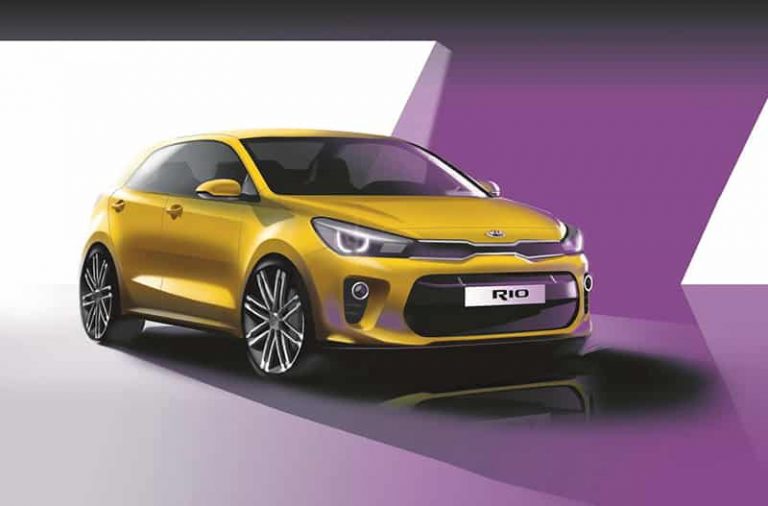
Kia has released design sketches of the all-new Rio, which will make its debut at the Paris motor show in September.

The sketches suggest that the latest version of the supermini, a rival to the Ford Fiesta and Vauxhall Corsa and globally the Korean brand’s best-selling model, will be a five-door model only – currently almost nine out of 10 Rios sold are five-door versions.

Sharper styling is prominent in the new car – compared to its predecessor the new Rio has an extended wheelbase, with a longer front overhang and bonnet, and more upright rear pillars that according to its creators provide the car with a more confident, balanced look.

Kia is currently providing few details of the new Rio, saying only that it will offer “class-leading practicality and safety technology, the latest connectivity features, and more assured and engaging ride and handling characteristics.”

Engines are likely, however, to include the new three-cylinder 1-litre turbo petrol unit recently offered in the Cee’d, while a performance GT version of the Rio is also likely at some point.

The Rio launched originally in 2000 as a replacement for the Pride, and the car unveiled in Paris will be the fourth-generation model.

The new car will be revealed on Kia’s Paris stand on 29th September. Production for Europe will start towards the end of 2016, though a UK on-sale date is yet to be released.

The arrival of the Rio will begin a busy year for Kia model launches, with the brand effectively renewing its small car line-up – among others due on the market being a new version of the Picanto city car.

1608_Kia_Rio_02
1608_Kia_Rio_03

Tesla to offer fastest car in the world

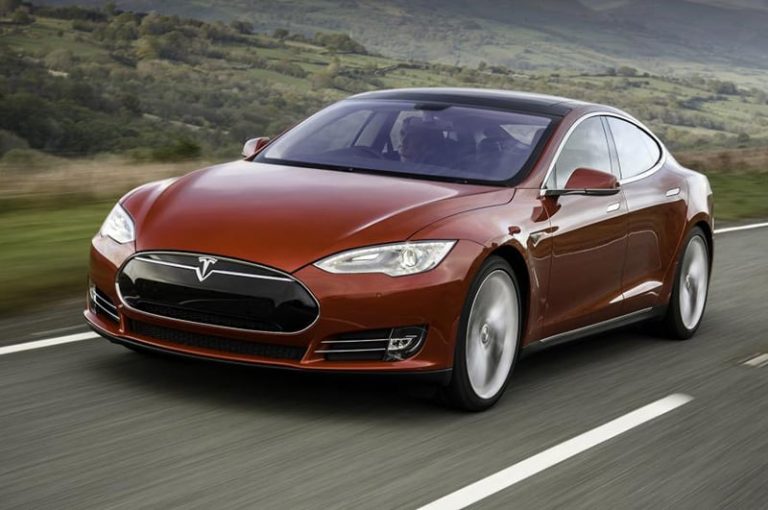
Electric vehicle manufacturer Tesla is to take the title of fastest-accelerating production car in the world – with a four-door saloon and an SUV which can seat between five and seven adults and accommodate all their luggage.

New versions of the Tesla Model S and Model X cars, designated P100D, will be supplied with upgraded battery packs. As a result the Model S P100D with the aptly named ‘Ludicrous Mode’ will pass 60mph from rest in 2.5 seconds, earning it the title of the third-fastest accelerating production car ever made.

However numbers one and two on the list are the LaFerrari and Porsche 918 Spyder, both limited editions long sold out. The fastest production car currently on sale is the McLaren F1, which hits the 60mph mark in 3.2 seconds.

Not only will the McLaren trail the Model S, it will also be three-tenths slower to 60mph than the Model S P100D’s equally all-wheel-drive sister car, the Model X SUV – again with Ludicrous mode.

Announcing the upgrade Tesla founder and CEO Elon Musk says that the new battery pack offers a substantial range increase between charges – to around 315 miles, by far the longest range offered on an electric production vehicle.

The upgrades will be available to existing customers – those who have ordered but not yet taken delivery of a P90D Ludicrous Model S or Model X can have the P100D version for an extra $10,000, while those who already have their car will need to pay $20,000 due to the cost of recycling the 90D battery pack. UK prices have not yet been announced.

Musk adds that customers willing to pay for such high-end developments are essential to funding more affordable cars such as the forthcoming Model 3.

“While the P100D Ludicrous is obviously an expensive vehicle, we want to emphasize that every sale helps pay for the smaller and much more affordable Tesla Model 3 that is in development,” he says.

Jaguar Land Rover joins digital sales market

Jaguar Land Rover is following Hyundai into digital car sales, cutting out the traditional dealer.

The premium brand is working with Rockar, which pioneered the digital concept with Hyundai in 2014, opening digital stores in the Bluewater and Westfield Stratford shopping centres.

The concept behind the stores is to enable customers to buy cars in a similar way to buying clothes, food and electronic gadgets. Each store is staffed by ‘Angels’, who are present to advise customers, such as showing them colour samples and leather finishes, but not specifically to sell cars to them – this process is carried out by the customer themselves completely online either in the store or at home.

The JLR store, which will have space for six Jaguar and Land Rover vehicles, will open in the Westfield centre in early October, while the online store will go live from 7th September.

The website will include everything needed to buy a Jaguar or Land Rover – from choosing individual specifications to booking a test drive and trading in an existing car – and it will not be necessary to visit the Westfield store.

According to JLR’s network development manager, Sarah Nelmes, the concept is to introduce a more relaxed environment to the car buying process, where customers can learn about the cars at their own pace.

“Customer needs are changing as our lifestyles and the technology available to us evolves,” Sarah says.

“We want to make sure that every customer journey is a truly enjoyable and premium experience representative of our two great British brands. Jaguar and Land Rover customers can now choose from a suite of buying and servicing options that can be tailored to their individual preferences and requirements so that they can start to enjoy the whole ownership experience from the very first moment.”

At Rockar’s previous Hyundai stores, 54% of the buyers have been women, much higher than in the traditional retail motor industry. The average age of customers is only 39, and 60% leave the store to complete their purchase online at home.

JLR is not abandoning the traditional retail market, however. Its 201 existing retailers are currently undergoing a £1bn refurbishment programme.

Aston Martin Vanquish Zagato Volante premieres

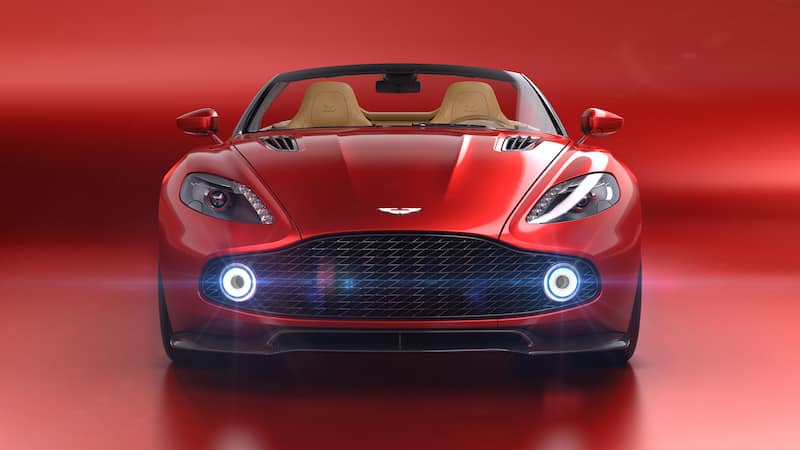
Aston Martin has announced it will produce a Volante version of its acclaimed Vanquish Zagato model.

Coinciding with the Coupé’s North American premiere at the Pebble Beach Concours d’Elegance, Aston Martin has revealed images of a limited-edition Volante (Aston-speak for convertible). Like the Coupé, production of the Vanquish Zagato Volante will be limited to just 99 units.

The Vanquish Zagato Coupé was first shown at the Concorso d’Eleganza Villa d’Este on Lake Como in May, with the 99 customer models now in build. Volante production will commence once Coupé production has finished.

Like its hardtop sister, the Vanquish Zagato Volante is powered by an upgraded version of Aston Martin’s 6.0-litre V12 engine, now tuned for 600hp.

The Volante is the latest creation from a history of collaboration between Aston Martin and Zagato that dates back nearly six decades. Previous Aston Martin Zagato convertibles include the V8 Vantage Volante, first shown in Geneva in 1987 and the DB AR1 in 2003.

Sharing most of its design with the Zagato Coupé, the twin cowls on the Volante’s rear deck blend into the leading edge of the luggage compartment, concealing a folding hood. Inside, the Zagato signature ‘Z’ quilt pattern features in stitching on the seats and doors, with the famous Zagato ‘Z’ embossed on the headrests and stitched into the centre console.

Pricing for the Vanquish Zagato Volante has not been announced, although the Coupé is believed to have set each of the 99 lucky owners back about £500,000. Volante customers won’t get their expensively-manicured hands on their cars until 2017.

Subaru launches Forester Special Edition

To celebrate the 50th anniversary of its first use of a ‘boxer’ engine design, Subaru has released limited edition version of the Forester. On sale from September, 100 examples of the Forester Special Edition will be produced. Based on the XC Premium model, the Special Edition comes with £1,500 of additional equipment for no additional charge. The 1966 Subaru 1000 was the company’s first front-wheel-drive vehicle, and was powered by a 1.0-litre four-cylinder boxer engine. Horizontally-opposed engines have featured in the model range ever since, with only Subaru and Porsche sticking continuously with boxer engine technology up until today. The Forester Special Edition models will all be decked out in Hunter Green metallic paint, fitted with underguards on the front, side and rear, wheel arch extensions and a stainless steel cargo step panel. inside, the car will sport Special Edition brown leather seats, with brown leather trim on the interior door grips, centre armrest and centre panel grab handles. As with the XC Premium model, the Forester Special Edition is kitted out with a seven-inch touchscreen satnav system, and Hill Descent Control (HDC). In addition, the Special Edition gets Subaru’s X-Mode stability system, which manages the car’s power, torque, brakes and drivetrain to maintain traction on slippery surfaces, are also included. Running the same 2.0-litre petrol and 2.0 turbo diesel engines already offered in the XC Premium models, the Forester Special Edition’s performance and economy should be identical. The Forester was crash tested by Euro NCAP when the current fourth-generation model was originally launched in 2012, receiving a five-star rating. However, standards have toughened in recent years, which in conjunction with the Forester’s lack of an autonomous emergency braking (AEB) system would probably result in a lower rating if tested today. Pricing for the Forester Special Edition starts at £29,995 for the petrol CVT automatic and £31,495 for the diesel auto. Both models come with Subaru’s five-year, 100,000-mile warranty. The launch timing coincides with the UK’s biannual number plate change, and Subaru is no doubt hoping the model will give Forester sales a boost as buyers look for new 66-plate vehicles. Subaru Forester

Fiat 124 Spider Anniversary Edition is sold out

Fiat has announced that it has sold all of the limited-edition 124 Spider Anniversary Edition models, designed to commemorate the 50th anniversary of the unveiling of the original roadster in Turin in 1966. 124 examples of the Anniversary Edition models were made available to UK buyers, with the first vehicles expected to arrive in showrooms in early September. Fiat UK is also reporting a growing order bank for the standard 124 Spider models. Priced at £23,295 on-road, the Fiat 124 Spider Anniversary Edition is based on the Lusso Plus specification. It is only available in Passione Red paint with silver windscreen frame and mirrors, and black leather upholstery. It has unique badging both inside and out to identify it from a regular 124 Spider. Based on the critically-acclaimed new Mazda MX-5 and built in the same Japanese factory, the Fiat 124 Spider diverges mechanically from its Mazda cousin with its own engine and revised suspension settings. Powered by Fiat’s 1.4-litre MultiAir turbo petrol engine, it delivers 140hp and 240Nm of torque and is capable of accelerating from 0 to 62mph in 7.5 seconds. The 124 Spider has yet to be crash tested by Euro NCAP, but the Mazda MX-5 scored four stars when put through its paces last year. Crucially, it lost points for the absence of any autonomous emergency braking (AEB) system, which may have otherwise resulted in a five-star result. Given that the Fiat is structurally almost identical to the Mazda and will also not offer AEB, a similar result is likely. Prices for the Fiat 124 Spider will start at £19,545 on-road when it goes on sale in September. An Abarth performance model will accompany the Fiat versions, boasting a power output of 170hp and a range of other upgrades. There are no particular finance offers being promoted for the 124 Spider range, with Fiat quoting APRs of 6.7% to 7.5% on example PCP quotations.

Ford GT supercar to double production

Ford is extending production of its GT supercar from two to four years.

The decision comes after the US brand received more than 6,500 applications for a planned production run of just 500 examples of the carbon-fibre shelled 600bhp car.

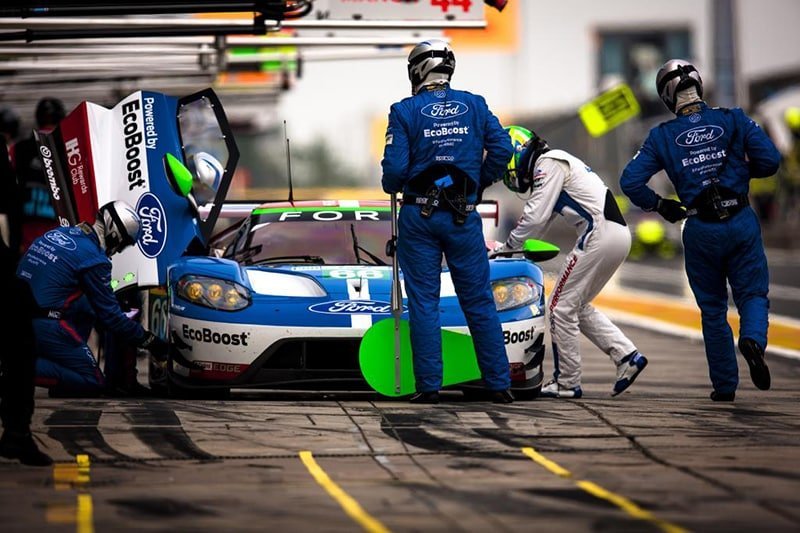
Ford says that it has decided to extend production after confirming that the GT will compete in World Endurance Championship and American IMSA Series races for four years, to the end of the 2019 season.

Successful applicants have this week been informed that they will have an opportunity to purchase a car. The price has not been confirmed but industry sources are speculating that it will be around €500,000, equivalent to £395,000.

The extra production is likely to release another 500 cars, the third year going to those selected by Ford to go on a waiting list, and an application window for the final year reopening in 2018. Unless there is a further extension the final production will be around 1,000 cars, far less than the 4,000 made of the first Ford GT launched in 2005.

The second Ford GT was unveiled at the Detroit International Auto Show in January 2015, production planned for this year to celebrate 50 years since the original Ford GT40 won the Le Mans 24hrs. A GT team ran in 2016 Le Mans event and won its class.
Ford Performance global director Dave Pericak admits that the company can’t build enough Ford GTs for everyone who has applied. “(But) we are going to produce additional vehicles in an effort to satisfy more of our most loyal Ford ambassadors,” he says.

“We want to keep Ford GT exclusive, but at the same time we know how vital this customer is to our brand,” Pericak adds.

Ford GT

Mercedes-Maybach unveils its latest vision

0

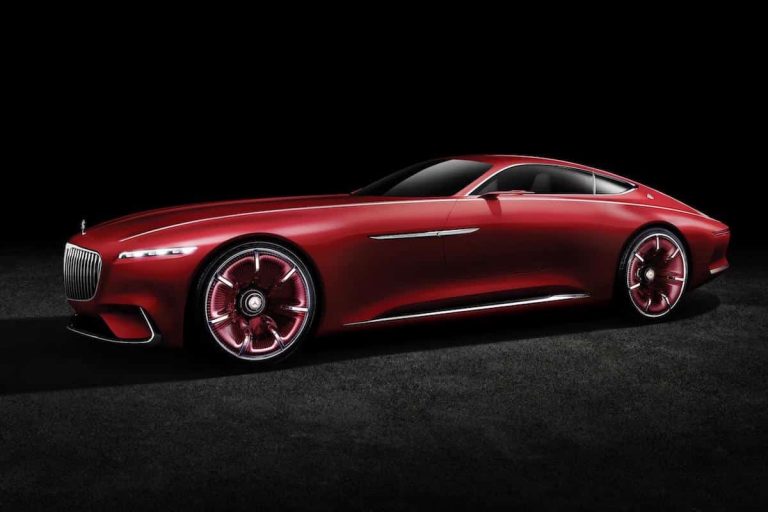
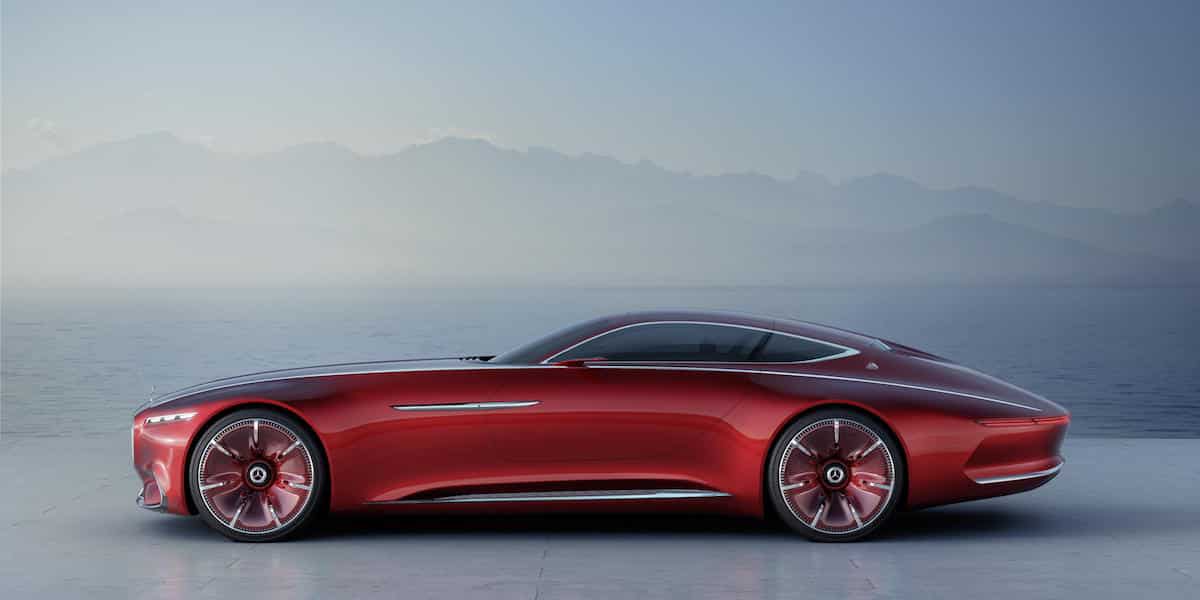
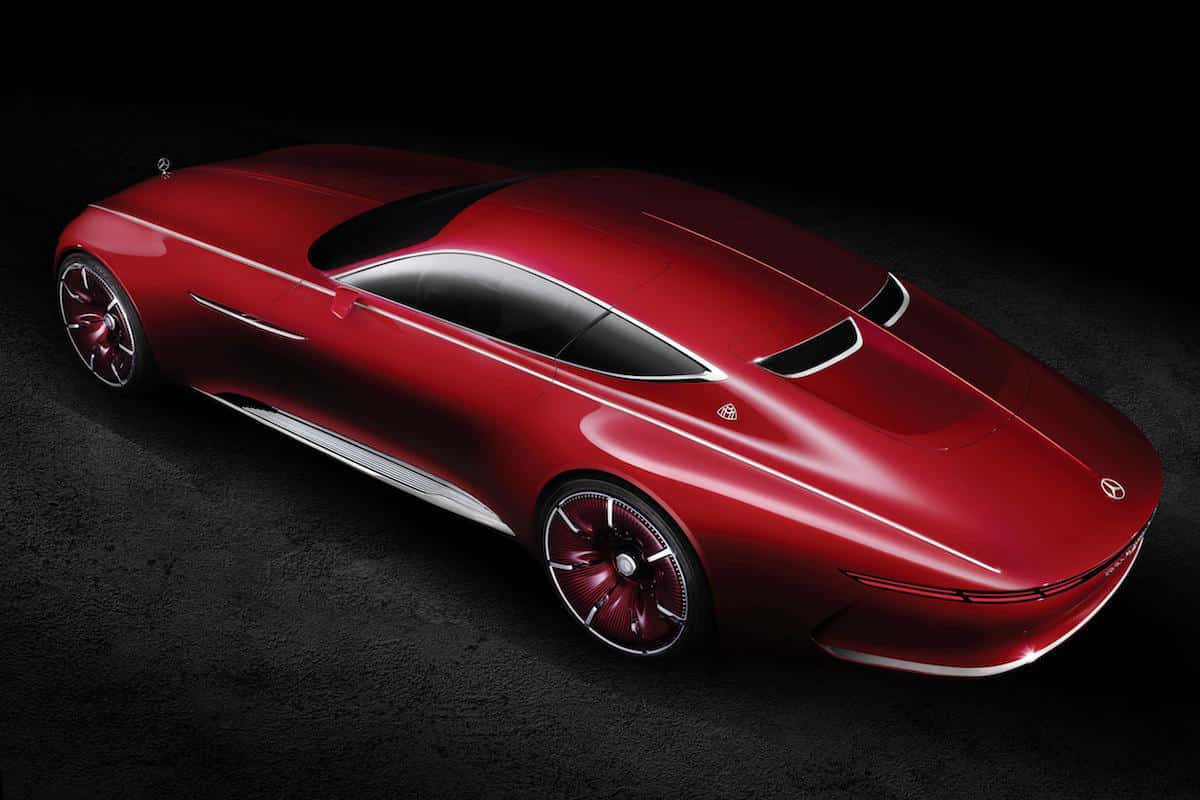
Mercedes-Maybach, the ultra-luxury division of Mercedes-Benz, has revealed a dramatic new concept car at the Pebble Beach classic car concours in California.

The Vision Mercedes-Maybach 6 is an enormous two-door coupé, measuring nearly six metres long (hence the name) and powered by four electric motors producing a combined 750hp.

Like the other Mercedes-Benz ‘Vision’ concept cars from over the years, the 6 isn’t intended for production. It presents ideas about the company’s thinking for future developments, which will make their way into future Mercedes-Maybach models.

Rebooting the Maybach brand name

This is the second attempt by Mercedes-Benz to apply a standalone Maybach brand to its most expensive vehicles. In the early 2000s, the mammoth Maybach 57 and 62 limousines were launched as rivals to the resurgent Rolls-Royce and Bentley brands. However, the move proved to be an expensive failure and the project was finally killed off in 2013.

Now, Mercedes-Benz has gone back to what was rumoured to be it original plan: a range of models called Mercedes-Maybach, based on existing Mercedes-Benz models but kitted out with the most luxurious appointments and advanced technologies that Daimler can think of.

The first model under the new mission is the Mercedes-Maybach S-Class, but Daimler is clearly trying to generate more enthusiasm and awareness of the brand by showing off a massive luxury coupé concept.

The Vision Mercedes-Maybach 6 features a host of technologies that are likely to appear in production vehicles over the next decade. Obviously, electric power is a foregone conclusion, as is a fully autonomous driving mode, but a windscreen which is also a giant transparent display screen and a lounge-style interior layout give indicators as to how Mercedes-Benz plans to shape future interior designs.

The relatively compact electric motors obviously don’t require the enormous bonnet space provided, so instead it is home to a bespoke set of suitcases.

The design theme is a combination of futuristic and retro, or as Mercedes-Benz describes it, “hot and cold”.

So will Mercedes-Maybach ever release a range-topping coupé of this nature? It would seem unlikely, but you never know. The company is certainly not short of the resources to commission such a project, and it desperately wants to see the Maybach name compete head-to-head with the likes of Rolls-Royce, so anything is possible.

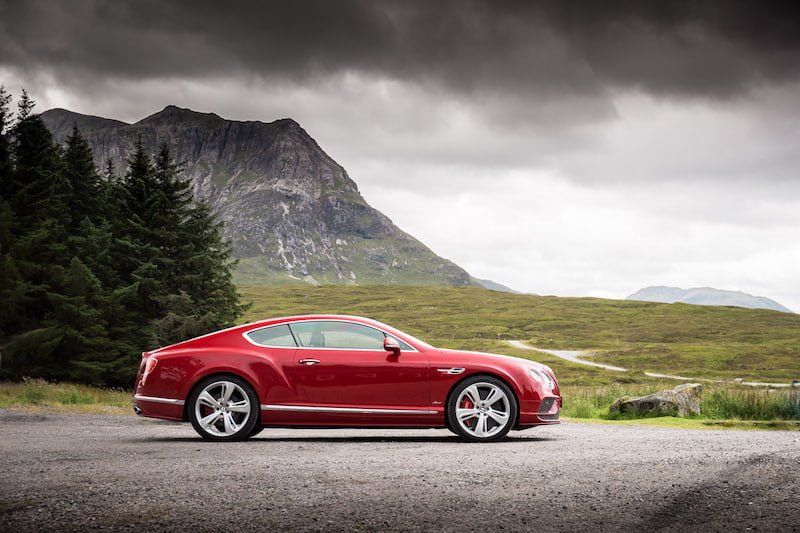
Bentley Continental GT Speed review

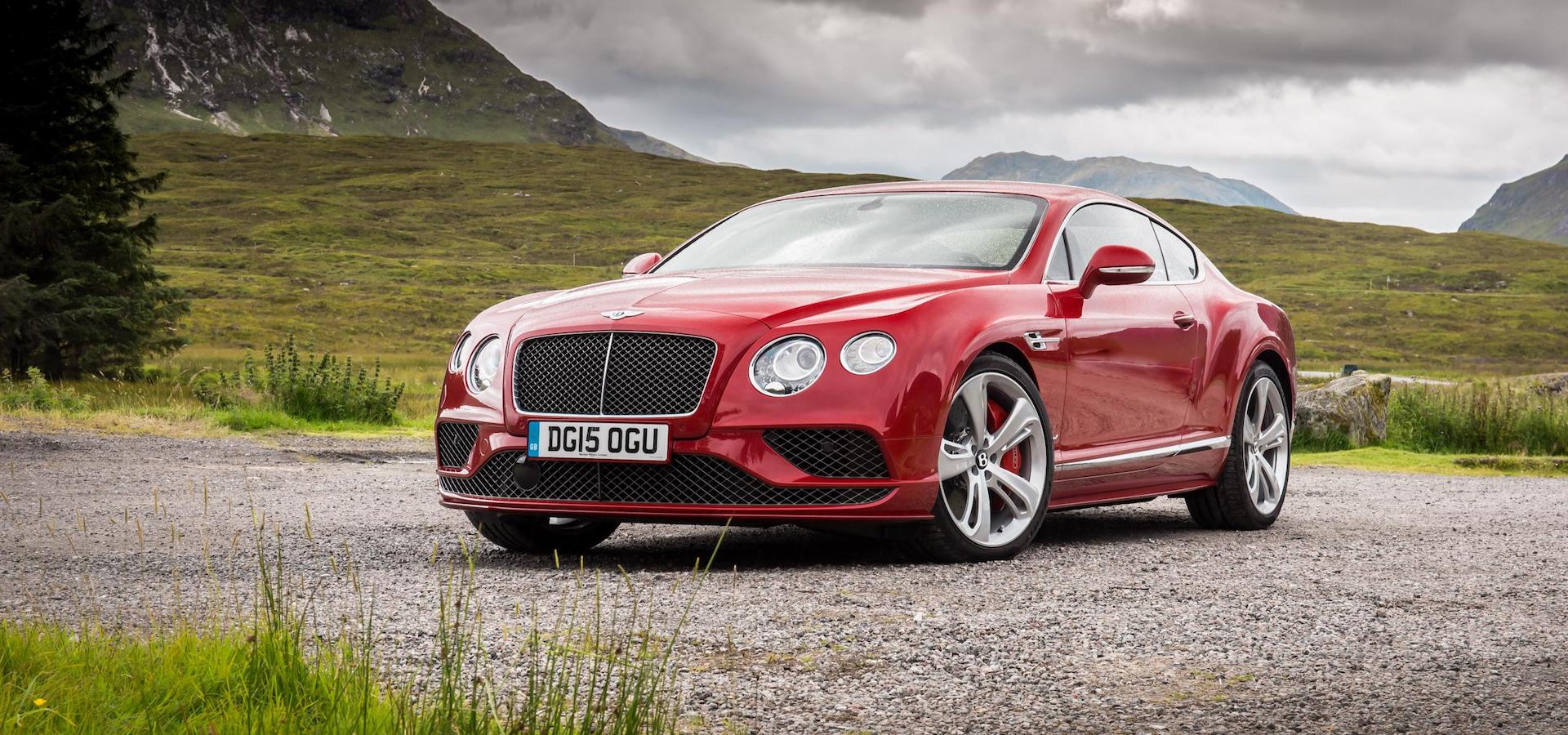
What is it? The Continental GT Speed is an even faster, even more luxurious version of Bentley’s most successful model ever.
What’s new? More power and torque, higher top speed, Black Edition specification
Type of review: First UK drive


It’s hard to believe that the Bentley Continental GT has been around for 13 years. The first Bentley model created under Volkswagen ownership, it seems like only yesterday that it was launched to massive sales success (bringing many new customers to the brand) and considerable controversy (for not being a ‘proper Bentley’).

Now that same description applies to the new Bentayga SUV, which will once again cause car buyers to reconsider what the company stands for, and suddenly the Continental GT seems to have become a proper old-school Bentley.

Of course, over those 13 years the Continental GT has been enhanced, upgraded and improved. The second-generation model introduced in 2010 was really a major upgrade to the original car, rather than an all-new model, but the big coupé has certainly stood the test of time well.

GT Speed shows the Continental range at its best

One of the most popular versions of the Continental models (GT coupé, GTC convertible and Flying Spur saloon) has always been the Speed. With even more power, styling tweaks and upgraded specification, the Speed models show off the big Conti at its best.

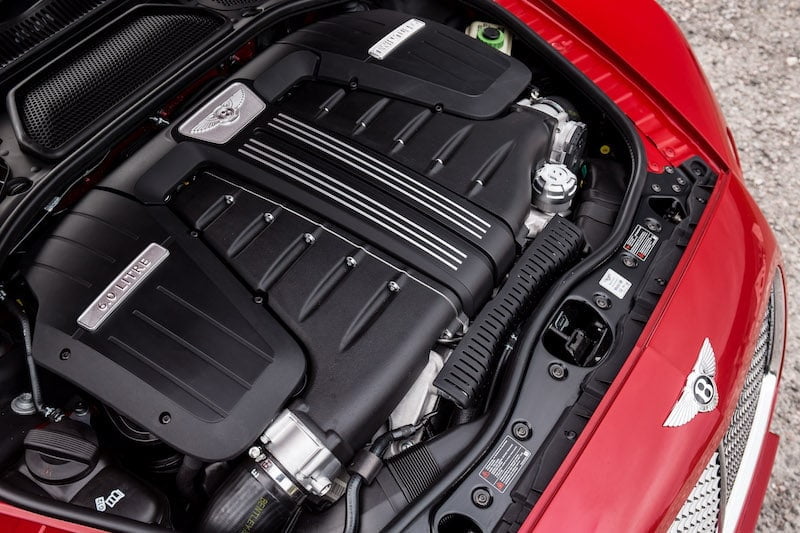
This year, as part of Bentley’s ongoing evolution of the GT Speed, the engineers have found a bit more performance from the mighty 6.0-litre W12 engine, which now puts out 640hp and a planet-shifting 840 Nm of torque. This brings the 0-62mph sprint down to just 4.1 seconds. Although this is exactly the same as the Bentayga, the lower ride height and growling exhaust note of the GT makes it feel significantly faster than the SUV.

In fact, the GT Speed feels quite different in every way to the Bentayga, especially noticeable if you are driving the two vehicles back-to-back, which we did thanks to Bentley and H.R. Owen Bentley in Surrey. Although they both share an enormous amount of finest leathers and controls arranged in a broadly similar fashion, the Continental is very much showing its age alongside the newest model in the Bentley family. The switchgear and dash layout is not as space-age and slick, and the satnav system is so slow it could well be running on Windows 95.

But these details seem entirely unimportant as you sink into the superbly comfortably seats and prod the throttle. Unlike the Bentayga, the exhaust has not been muted into near-silence.  It’s not loud or uncouth, but it does rumble with menacing intent. Like most high-performance sporting vehicles, there is a sports mode to make it somewhat louder and more anti-social, which seems somewhat unbecoming of a Bentley grand tourer. On long trips, it could easily become tiring.

The GT is a big, heavy car and it does feel that way, although not in a negative fashion. Rather, it has a reassuring solidity and weight to the controls. The Bentayga is fingertip-light to direct, whereas the GT Speed requires more of a substantial heft in each movement. Again, it feels like an old-school grand tourer. Like you’d expect from a traditional Bentley.  it is superbly comfortable to drive, although adults won’t want to spend much time in the rather cramped rear seats.

Showing its age on safety

Although much of the GT’s charm is timeless, one area where it is showing its age is the lack of state-of-the-art safety equipment. Last week, we were scathing about the Bentayga’s lack of autonomous emergency braking as standard; an omission which is inexcusable on a new car launched in 2016. Well, you can’t even get AEB and many other accident avoidance systems in the Continental range, although adaptive cruise control is available at extra cost. The only reason we are not expressing similar disapproval here is that the Continentals simply pre-date much of the latest safety tech.

The Continental GT Speed summary

At a starting price of £168,900, the Continental GT Speed is not the sort of purchase one makes with value-for-money in mind. It’s also not likely that prospective owners will bother measuring up the big Bentley against similarly-priced vehicles like an Aston Martin or Ferrari. So it’s pointless to make such judgments or compare boot sizes (not bad, for what it’s worth) and mpg (poor, obviously).

After six years in its current guise, and 13 since it was first launched, the Continental GT remains a magnificent vehicle for grand touring. The GT Speed version heightens the experience even further, although it’s probably best to steer clear of some of the more lurid colour combinations Bentley is now offering as part of the Black Edition and were on display in the H.R. Owen showroom when we visited.

Bentley Continental GT Speed 2015 | The Car Expert

Volvo and Uber to develop self-driving cars

Volvo is joining forces with global taxi-hailing firm Uber to develop self-driving cars.

The two have signed an agreement on a $300m joint project to develop vehicles that will be able to use the latest developments in autonomous driving technologies, right up to completely self-controlled driverless cars.

Volvo will design the base vehicle, which will also be used for the Swedish brand’s own developments in autonomous driving and Uber the systems necessary to control it.

The base vehicles will be developed on Volvo’s modular Scalable Product Architecture (SPA) platform which already underpins recent new models from the Swedish brand including the XC90 SUV and the S90 and V90 saloon and estate.

The two companies expect the joint project to be the first part of a longer-term industrial partnership, and says that the tie-up underlines how the global automotive industry is reacting to the advent of new technologies.

Volvo, which markets its cars heavily on their safety performance and has already committed to reaching a point where not a single person is killed or seriously injured in one of its cars, sees the tie-up as highly beneficial to this aim.

“We are very proud to be the partner of choice for Uber, one of the world’s leading technology companies – this alliance places Volvo at the heart of the current technological revolution in the automotive industry,” says Håkan Samuelsson, president and chief executive of Volvo Cars.

Uber’s chief executive Travis Kalanick says combining the capabilities of his company and Volvo will allow both to get to the future faster, together.

“Over one million people die in car accidents every year,” Kalanick adds. “These are tragedies that self-driving technology can help solve, but we can’t do this alone. That’s why our partnership with a great manufacturer like Volvo is so important.”

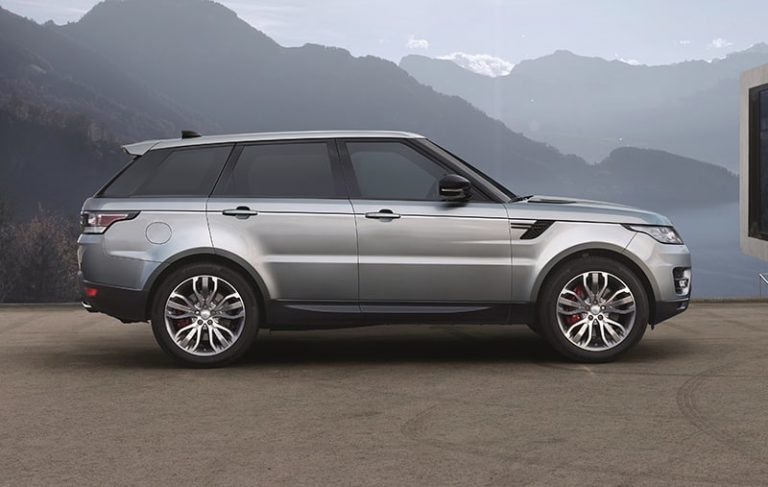
Range Rover Sport gains two new engines

Land Rover is adding new engines to its Range Rover Sport line-up including one that is said to create the most efficient version of the model yet.

The arrival of the Ingenium 2.0-litre diesel and the 3.0-litre petrol units are part of a package of updates for the 2017 model year.

The 2.0-litre four-cylinder Ingenium diesel is manufactured at Jaguar Land Rover’s plant in Wolverhampton, West Midlands and is already offered in the Range Rover Evoque and Land Rover Discovery Sport.

With a power output of 240hp, it accelerates the Range Rover Sport through 60mph from rest in eight seconds while producing combined cycle fuel consumption of 45.6mpg and CO2 emissions of 164g/km.

It powers what is now the entry-level model in the Range Rover Sport line-up, costing from £59,700. In total seven engine options are now available, ranging up to the 5-litre V8 supercharged petrol unit of 550hp, cars with this engine costing from £96,900.

The second new engine is the 3.0-litre V6 supercharged petrol unit, the aluminium-constructed engine offering 340hp. It produces a 0-60mph time of 7.1 seconds with CO2 emissions of 243g/km.

Also new for the 2017 model year cars will be the availability of semi-autonomous driving technologies. These include Advanced Tow Assist, Blind Spot Assist and Intelligent Speed Limiter functions.

The extended suite of driver aids includes the Sport’s off-road package. Low Traction Launch makes it easier for drivers to pull away on low-grip surfaces while the updated 4x4i menu provides vehicle information when out in the country.

In the cabin the dual-view touchscreen has been enlarged to a ten-inch display with tablet-style pinch and zoom operation.

Sport models with the new engines will be available towards the end of 2016.

JLR Ingenium diesel engine
The new Ingenium diesel engines bring fuel economy improvements to the Range Rover Sport.

SsangYong adds equipment to Korando

SsangYong has launched a new version of its Korando crossover with extra equipment.

The Korando LE costs from £17,995 with a manual gearbox and £18,995 with the six-speed auto, and is supplied with the latest 2.2-litre Euro 6 diesel powertrain and in front-wheel-drive format.

Extra equipment added to the model includes 18-inch diamond-cut alloy wheels, Tom Tom satellite navigation and side steps. The seven-inch high resolution touchscreen also accepts audio streaming from smart devices and links to the rear-view parking camera, while a USB memory slot, Aux port and HDMI port are also included.

Further standard equipment on the model includes automatic air conditioning, heated front seats, privacy glass, a rear spoiler with high mounted LED brake light and rear parking sensors.

LE variants are available in white, metallic black, blue and the new Galaxy Green exterior colour.

SsangYong has enjoyed significant success with the Korando, the budget model boosted by a two-tonne towing capability and a five-ear unlimited mileage warranty.

VW recalls 460K cars for emissions fix

Volkswagen Group is to recall another 460,000 European cars as a result of the ‘dieselgate’ emissions figures scandal.

The cars, of which 18,018 were registered in the UK, are all fitted with the EA189 1.2-litre TDI diesel engine, and include the VW Polo and its supermini sisters from SEAT and Skoda, the Ibiza and Fabia.

The recall follows the dieselgate furore which erupted in September 2015 after Volkswagen was found to be using a ‘defeat device’ to manipulate emissions figures in official tests.

Affected cars will require a software update, which takes around 30 to 60 minutes. The corrective work was approved by German motoring agency the KBA. It does not affect fuel consumption levels, performance or noise, and Volkswagen adds that cars are safe to drive before the work is carried out.

The KBA has already approved fixes on 2.0-litre versions of the EA189 TDI engine, and is now working with Volkswagen to approve corrective work on 1.6-litre engines. This is likely to involve physical work in the form of a mesh alongside the software update, and will result in another recall in due course.

So far corrections have been approved on more than five million of the 8.5 million VW Group vehicles said to be affected in Europe. Globally the figure is around 11 million.

In America Volkswagen is still trying to produce a solution acceptable to authorities. Reports suggest that if no fix is found the brand could be forced to buy back the 475,000 vehicles affected.

Volkswagen UK will contact owners of affected 1.2-litre vehicles by letter and the work will be carried out free of charge.

Porsche lifts the lid on latest limited edition 911

The latest Porsche 911 has only been on sale for a few months, but – as usual – that hasn’t stopped the company from rolling out the latest limited edition model.

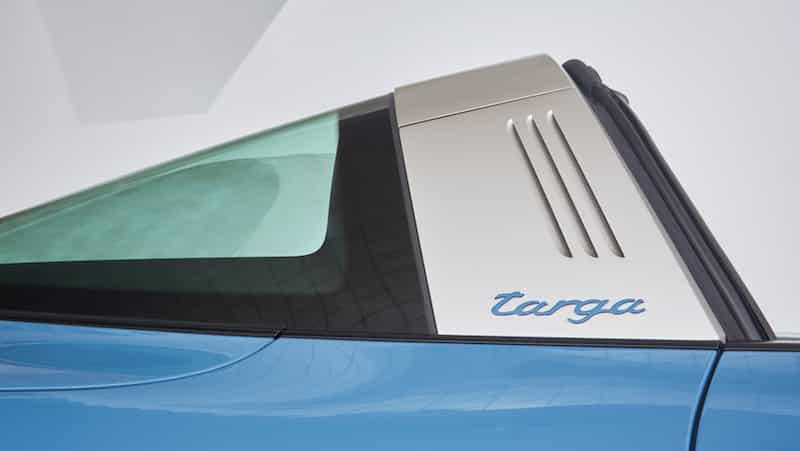
The catchily-titled Porsche 911 Targa 4S Exclusive Design Edition is inspired by a colour scheme from the classic 356B model of the early 1960s. It is finished in solid Etna Blue, with white gold satin-finished aluminium wheels, side stripes and rollover bar.

The Exclusive Design Edition runs 20″ white gold multi-spoke alloy wheels and a gloss black finish to the exhaust tailpipes and engine air intake. The trim surrounds around the LED headlights are also finished black instead of the usual silver.

Inside, graphite leather with blue piping and stitching colour codes nicely with the exterior. The upgraded sports seats are electrically adjustable in 18 different ways and there is an extended leather finish which encompasses the seat backs and dashboard.

Looks good, but how does it go?

Mechanically identical to the regular 911 Targa 4S, the Exclusive Design Edition sports a 3.0-litre twin-turbocharged boxer six-cylinder engine producing 420hp. It will also presumably be available with either the usual seven-speed manual or PDK (double-clutch automatic) gearboxes.

Performance should be identical as the normal 911 Targa 4S as well, meaning 0-62mph in a tick over four seconds and fuel consumption that will be reasonable if you drive like a grandma in an EU lab test but otherwise poor.

So should I head down to my local Porsche dealer right now?

Porsche is yet to announce how many cars will be coming to the UK, or when they will be arriving or how much they will cost. That it will be a six-figure price tag is a given; the standard 911 Targa 4S just barely slides in under £100,000 without any extras, and Porsche has never been shy about charging a hefty premium for the privilege of exclusivity.

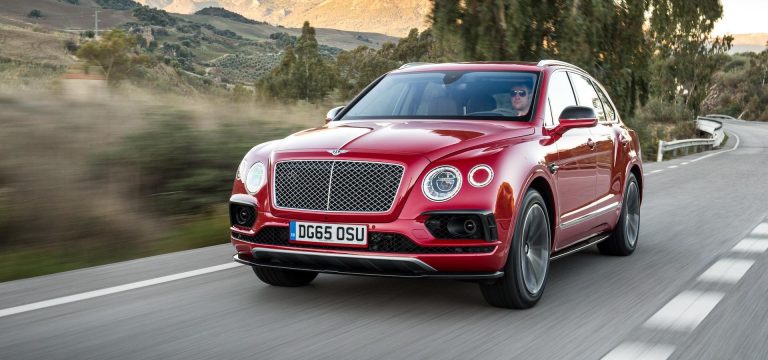
Bentley Bentayga review

What is it? The Bentayga is the first (official) Bentley SUV.
What’s new? Well, everything. The Bentayga shares more parts with the Audi Q7 than it does with anything else in the Bentley range.
Type of review: First drive


Most websites and magazines will tell you that the Bentayga is the first SUV built by Bentley. But that’s not quite true.

Back in the mid-1990s, Bentley built an undisclosed number of SUVs (probably six) for the Sultan of Brunei, along with a number of other bespoke coupés, saloons, convertibles and estates.

The Bentley Dominator was built on a contemporary Range Rover chassis, with a neat enough – albeit derivative – body on top. It was a squared-off design with the usual Bentley grille, chrome embellishments and so on. No-one outside the Brunei Royal Family is known to have ever driven one, so we have no idea how the Dominator performed. But you certainly won’t see one popping up on Auto Trader anytime soon.

Fast forward twenty years, and Bentley has launched its first publicly-available SUV, the Bentayga. However, instead of tearing down a Range Rover for the mechanical bits, the new model shares its platform with the current Audi Q7 and has access to the best bits from the massive Volkswagen Group parts bin.

The Bentayga covers new ground for Bentley, both literally and figuratively. Like other luxury SUV manufacturers, Bentley is keen to draw attention to the Bentayga’s off-roading ability. However, unless there’s a flash flood in a John Lewis car park, it’s hard to see many Bentayga owners getting their vehicles too muddy. Our short drive route incorporated some A- and B-roads in Surrey, which is a far more accurate representation of the Bentayga’s natural environment.

The one statistic which separates the Bentley Bentayga from every other production SUV on the planet is its price tag – starting at over £160,000 and with the ability to ramp that well beyond £200,000 very easily. So what exactly do you get for more than three times the price of the Audi Q7 which the Bentayga is based on?

First impressions

It’s nearly a year since Bentley first unveiled the Bentayga, and its rather awkward design has yet to soften with familiarity. Beauty may be in the eye of the beholder, but let’s face it; the Bentayga is not a looker. The brutal front end is dominated by blingy chromed plastic cross hatchings and big bug-eye headlights. The best thing you can say about it is that it’s better than the original concept version, which was pretty much panned by anyone with working retinas.

Inside though, things are much better. It is a genuinely lovely place to be. The overall ambience is a benchmark example of how to combine traditional olde-worlde craftsmanship with modern technology. Virtually every surface is quilted leather or glossy timber veneer, with virtually no plastic surfaces in sight. Some potential buyers may be put off by the level of Audi switchgear and trim parts dotted around the cabin, and if you have recently sat in a Q7 you will certainly notice a number of familiar buttons, but the fit and finish certainly more than meets Bentley’s standards.

The 6.0-litre W12 petrol engine is hushed in its operation, with little indication of the enormous performance potential under the bonnet. Having driven the Bentayga back-to-back with a Continental GT thanks to Bentley and H.R. Owen, the difference is striking. Even under heavy acceleration, the Bentayga is whisper-quiet and superbly refined. It’s only when you look at the speedometer that you realise how fast you’re travelling.

Inexcusable lack of key safety equipment

With such a stratospheric starting price, you might reasonably expect a new car launched in 2016 to be fitted as standard with every safety feature known to mankind. Yet the Bentayga lacks even the level of safety equipment readily available on a low-level Volkswagen Golf – costing barely more than a tenth of the money being asked here.

To get autonomous emergency braking, you need to specify the Touring Specification for another £5,900. This is frankly shameful on a brand new model, let alone one at this level. Other safety equipment like adaptive cruise control, pedestrian warning and lane assist systems are also available at extra cost but not included as standard.

Bentley also doesn’t do anything as vulgar as submitting its vehicles for industry-standard Euro NCAP crash testing, so there’s no indication of how drivers and passengers will fare in an accident. Probably OK?

Mighty performance, surreal handling

You do get a mighty 6.0-litre W12 petrol engine, which Bentley says is all-new rather than the same unit found in the Continental GT and Flying Spur models. In the Bentayga, it feels rather surreal. This is partly because your eyes and ears cannot agree on what’s happening: there is merely a muted rumble coming from the engine, but the speedo needle is racing around the clock and the scenery is starting to move by at a tremendous rate. 600hp is delivered almost silently to the wheels, and almost before you have blinked you are in licence-losing territory.

Media reports have correctly pointed out that there are faster SUVs available elsewhere, but unless your driving requirements including racing a Porsche Cayenne Turbo S or Range Rover Sport SVR down to your weekend house in the Cotswalds, it is entirely irrelevant. The Bentayga is more than fast enough for any reasonable purpose, and it is a sublimely refined experience to boot.

The other surreal feeling served up by the big Bentley is how it handles. This is a very big, very heavy SUV. But if you specify the optional 48-volt electric active anti-roll bar, it has an astonishing knack of staying very flat while cornering yet still remaining limousine-like in its comfort.

The laws of physics say that a massive SUV shouldn’t corner like that; it should wallow and roll as all that weight is thrown about. But nothing of the sort happens, and the Bentayga stays flat and firm on its line. It certainly doesn’t feel like a three-tonne 4×4.

Although our drive was brief, it was a genuine revelation that such a big, ungainly vehicle could behave so well. Long journeys would be a breeze, since we assume you could afford the hefty fuel bills which come from an official fuel consumption of 22.1 mpg (combined city/highway cycle). The boot is not as large as you would expect, so your designer suitcases will have to stack above the window line in a somewhat untidy fashion.

The Bentayga verdict

So from our brief drive, how does the Bentley Bentayga fare? The things it does well, it does very well indeed. For ushering four people long distances in the height of luxury and in virtual silence, it will be exceptionally competent. It’s lavishly finished with leather and woodgrain in abundance, and is wonderfully comfortable.

But even if you like the ungainly styling, there is still a lack of character to the Bentayga. It’s undoubtedly impressive, but not endearing. And the lack of standard safety tech compared to its Audi Q7 poor cousin is unacceptable for a vehicle of this ambition.

Will this bother Bentley? Well, the Bentayga is officially sold out until sometime next year, so for now the company is likely to be pretty pleased with itself. There is also no doubt that the newest model in the range will provide a welcome boost to Bentley dealers, and the sales staff at H.R. Owen Bentley in Surrey were virtually ecstatic when describing the effect it has already had on their business.

And if you have always thought that a Range Rover was simply not expensive or ostentatious enough, then this will be the perfect car for you.

Bentley Bentayga rear view

Hyundai hints at look of new i30

0

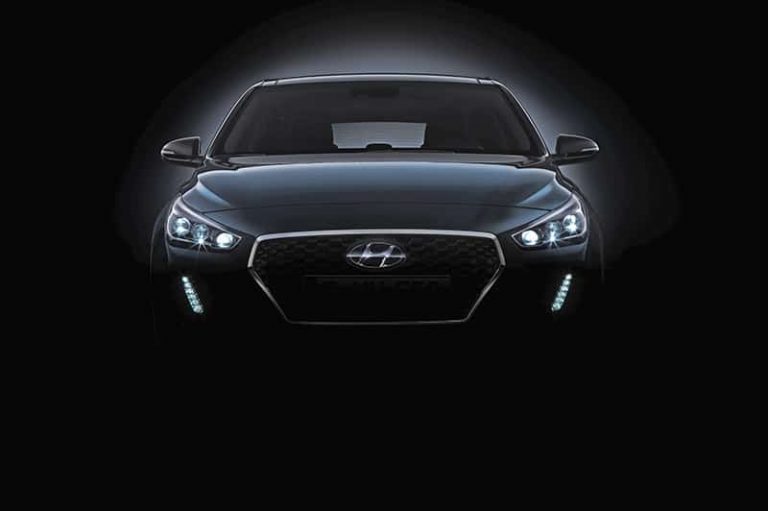
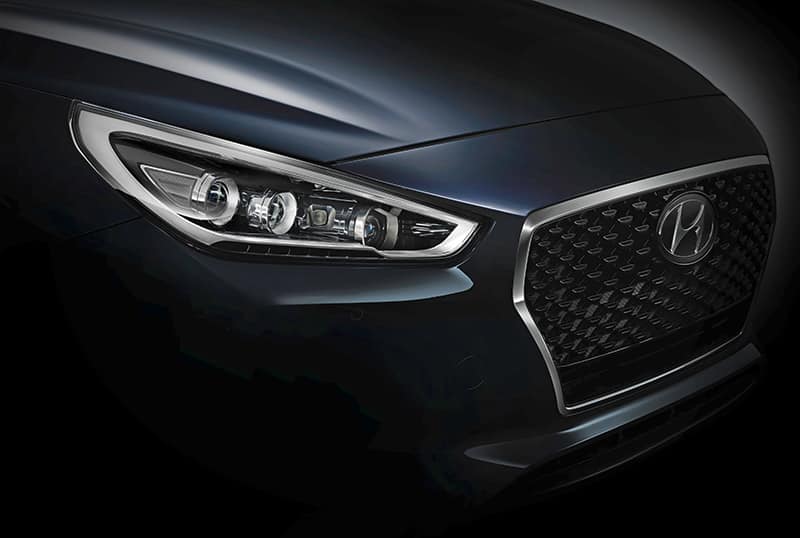
Hyundai is releasing the first images of the third-generation i30 hatch.

The new model is due to be revealed on 7th September on Hyundai’s website, before making its public debut at the Paris Motor Show at the end of the month.

The teaser images show a styling treatment clearly evolved from that seen on the latest version of the i30’s larger sibling the i40. The front grille is wide and bold, and framed by headlamps with a more angular design.

The pictures also suggest that the new i30 will follow the brand’s stated aim to move its image upmarket – the exterior clearly aimed at presenting a more premium look.

Few details of the new i30 have so far been released but it is expected to get a new engine range and a host of connected technology. Industry reports also suggest that it will no longer be offered as a three-door model alongside the much bigger selling five-door.

The new i30 is very much aimed at the European market, with its design, development and testing all carried out in Europe. And according to Hyundai Motor Group president and chief design officer, Peter Schreyer, it is a car for everybody.

“From a design perspective, we haven’t just considered one customer; we have focused on a wide range of different people,” Schreyer says.

“This model showcases an evolution of Hyundai Motor’s design language with natural flowing lines, refined surfaces and a sculpted body to create a timeless appearance. (And) we are also introducing our further developed grille: the Cascading grille.”

1608_Hyundai_i30_02

Paris debut for Suzuki’s Ignis crossover

0

Suzuki’s new Ignis will make its European debut at the Paris motor show in September.

First seen at the Tokyo show in October 2015 and taking the name of a hatchback last produced in 2008, the new Ignis is a small crossover and could tempt buyers away from the likes of Fiat’s Panda.

It is based on the IM-4 concept, unveiled at the 2015 Geneva show and it built on a new lightweight platform.

Suzuki is currently releasing few details as to the powertrain options with the Ignis but is stating that the platform allows the use of the brand’s mild hybrid unit SHVS (Smart Hybrid Vehicle by Suzuki) – providing assistance through an electric motor and efficient battery recharging to improve fuel efficiency without sacrificing performance.

The Ignis is due to go on UK sale in January 2016.

Also on the Suzuki stand in Paris will be a facelifted version of the S-Cross crossover. Changes include a revamped front exterior design and improvements to interior quality.

The facelifted model will replace the current 1.6-litre petrol engine with 1.0-litre and 1.4-litre versions of Suzuki’s new Boosterjet direct-injection turbo units.

The revised S-Cross model range will launch in the UK in mid-October.

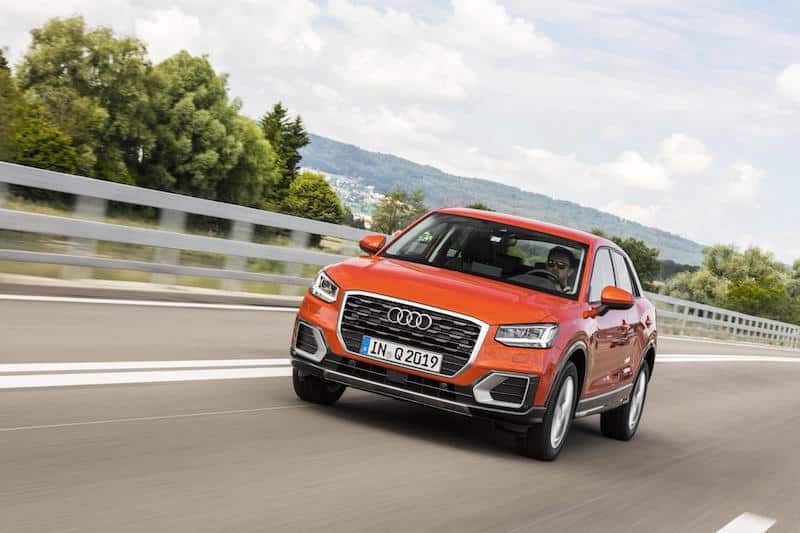
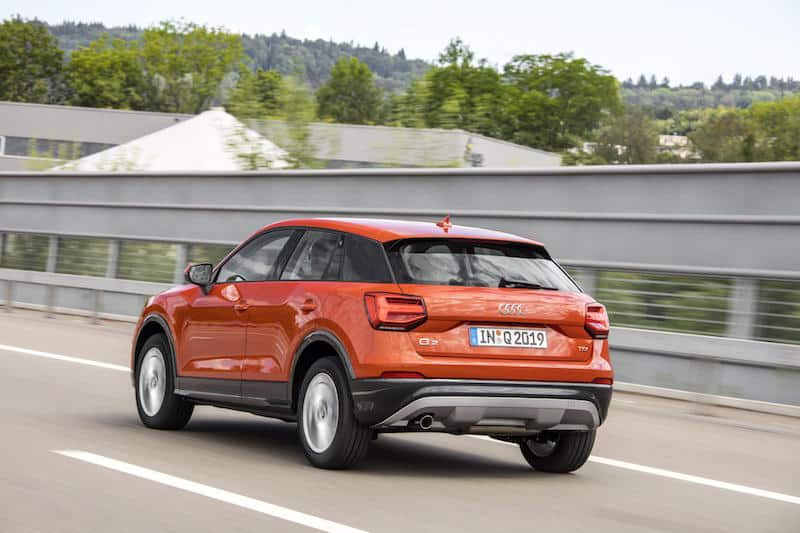
Audi opens order book for new Q2

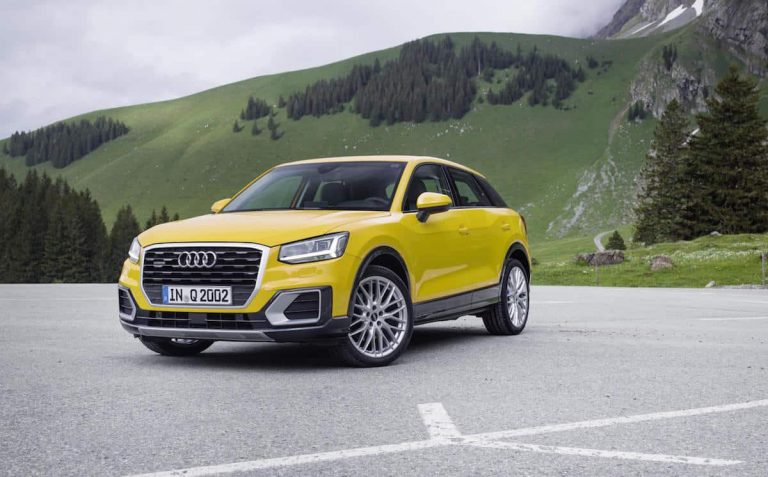
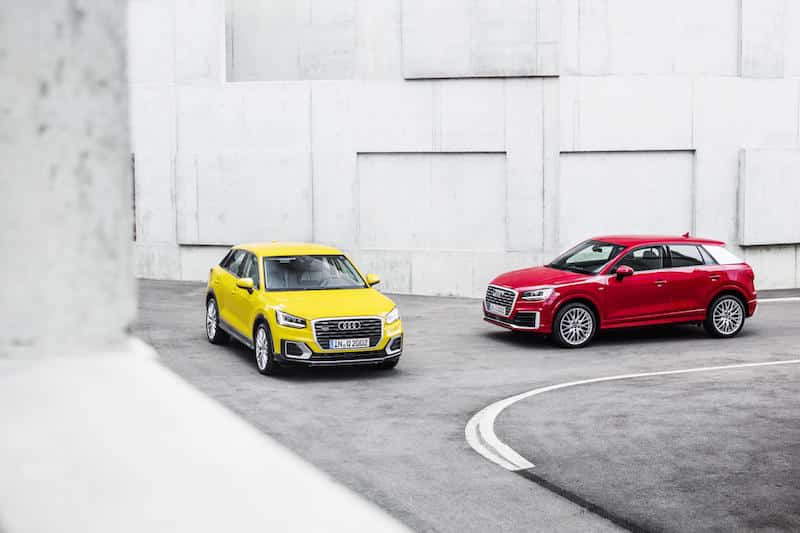
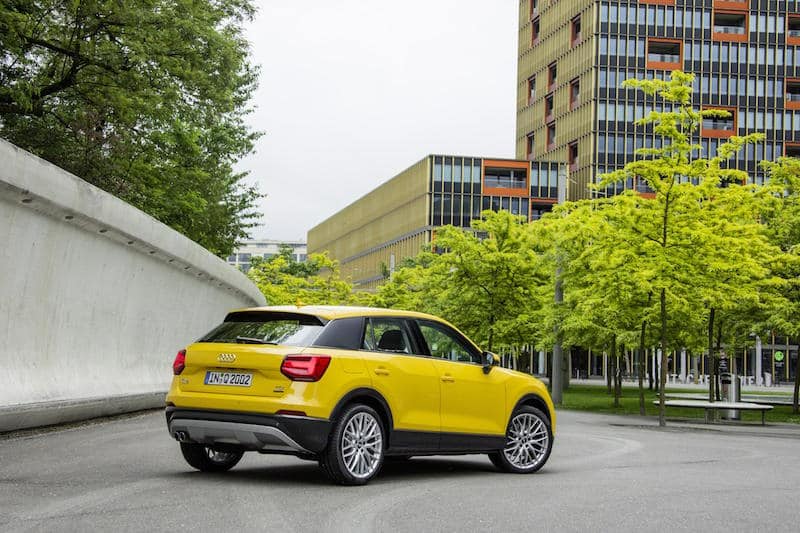
Audi is now taking orders from UK customers for the new Q2 mini SUV range, which is expected to arrive in showrooms in November. Although an entry-level 1.0-litre model priced at £20,230 has been announced, it will not be available from launch and the initial range will kick off from £22,380 on-road instead. The Audi Q2 is built on the Volkswagen Group’s current MQB platform, which already underpins the latest Audi A3 and TT models, as well as several Volkswagen, SEAT and Škoda vehicles. It is smaller than the Q3 model, which is still built on the previous-generation Audi A3 platform. It will compete against the likes of the new MINI Countryman, which is set to launch before the end of this year. SE, Sport and S Line models will be available from launch, in a choice of 1.4-litre turbo petrol or 1.6-litre turbo diesel engines. Along with the 1.0-litre petrol engine, a 2.0 turbo diesel will join the range a month or so after launch. Like most mini-SUVs, the vast majority of the Audi Q2 range will not have a 4×4 drivetrain. None of the launch-specification models will have Audi’s quattro all-wheel-drive system available, although the 2.0-litre TDI model with quattro will be available to order from September. Once the full roll-out is complete in mid-2017, there will be four versions available with quattro.

AEB standard, good crash test results expected

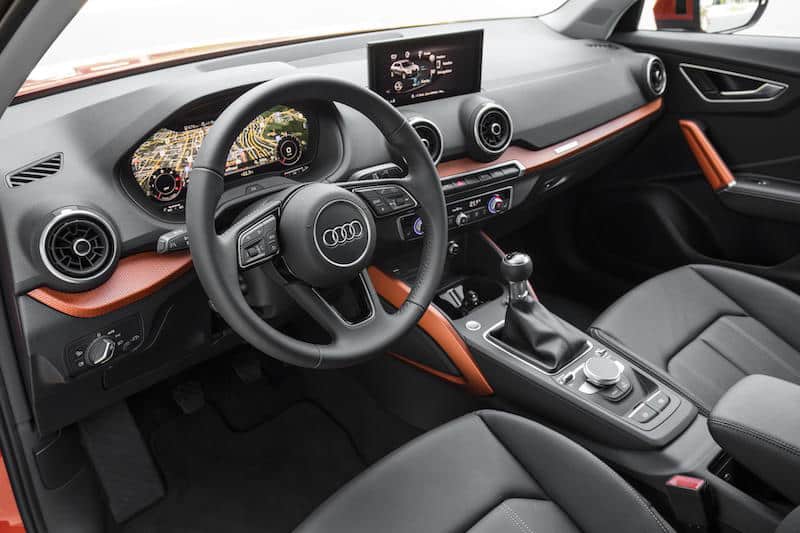
All Audi Q2 models will be fitted as standard with autonomous emergency braking, which Audi calls Pre-Sense Front. Additional safety technology like adaptive cruise control and lane assist systems are available as options. Vehicles built on the MQB platform have generally received good Euro NCAP crash test scores, and we expect that the Q2 will be no different. The Q2 range will unsurprisingly feature a high level of connectivity and infotainment, including Bluetooth and support for both Apple CarPlay and Android Auto. Satnav is standard on Sport and S Line models. The S Line models, which are always popular in the UK, will get full-LED lighting front and rear (and inside), along with 18-inch alloy wheels, partial leather sports seats, and the usual plastic/chrome/aluminium trim differences. A limited-edition ‘Edition #1’ version will also be available to order from next month, with a two-tone grey exterior, 19-inch alloy wheels and seats of fine nappa leather. It will start at £31,170 on-road.

Alfa Romeo prices up its 3 Series rival

0

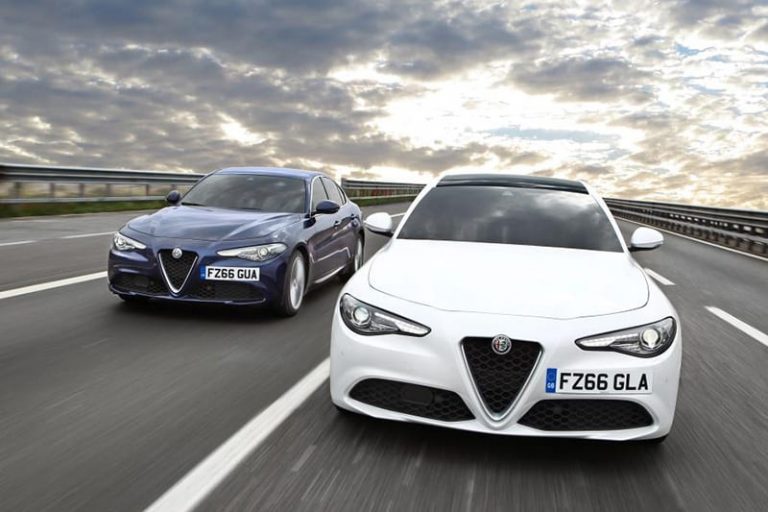
Alfa Romeo’s new upmarket Giulia family car will cost from £29,180 when it goes on sale later this year.

The car, which Alfa Romeo expects to be a contender against the likes of the Audi A4 and the BMW 3 Series, will be offered in five trim levels and with four engine choices.

Its creators believe the Giulia will sell on its combination of Italian styling and a handling-friendly 50/50 weight distribution.

The entry-level powertrain will be the 2.0-litre petrol unit of 200hp, mated like all versions of the car to an eight-speed ZF auto gearbox as standard.

A 2.2-litre diesel unit will be available in either 150 or 180hp outputs, while the range-topping model will be the Quadrifoglio with its 2.9-litre V6 petrol engine of 510hp, giving the model a 3.9-second 0-62mph time.

Giulia, Super, Technica, Speciale and Quadrifoglio comprise the five trim levels, along with a choice of 13 exterior colours.

Alfa Romeo is proudly pointing out that in Euro NCAP crash tests the Giulia not only gained a top five-star rating but also the highest-ever 98% score for adult occupant protection. Contributing to this was a suite of active safety technology included on all versions, including Forward Collision Warning, with Autonomous Emergency Brake and pedestrian recognition, an Integrated Brake System and Lane Departure Warning.

Standard equipment on entry-level models includes 16-inch alloy wheels, LED rear lights, a chrome exhaust and aluminium brake calipers on the outside.

Inside there is dual-zone climate control, the ‘Alfa DNA’ rotary driving mode selector, a 3.5-inch TFT colour cluster instrument panel, the UConnect 6.5-inch display infotainment system with DAB plus MP3 and Bluetooth connectivity, an eight-speaker audio system, leather and controls on the steering wheel, rear parking sensors and cruise control.

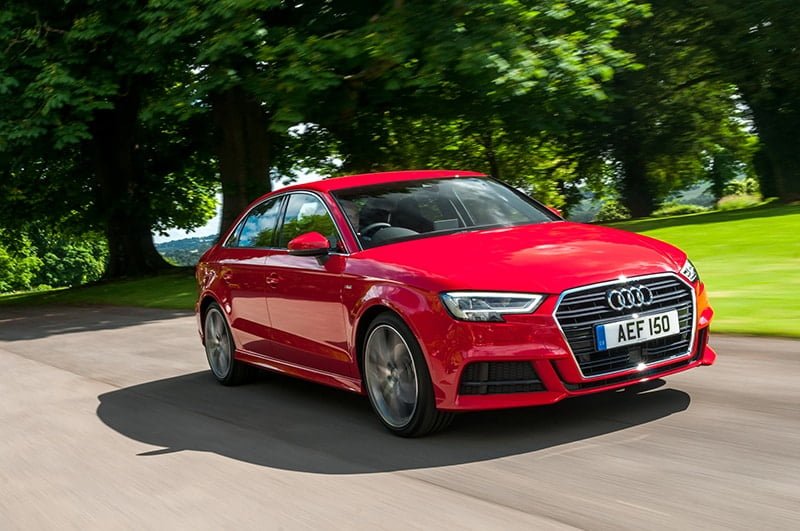
Audi A3 review

What is it? Significant update of Audi’s biggest-selling model.
Key features: More technology, two new engines.
Our View: The latest updates to the Audi A3 range further enhance what is already one of the brand’s most comprehensive line-ups.
Type of review: First UK drive


The Audi A3 is the route that provides, more than any other model, so many motorists with their first experience of the German manufacturer with the four rings. It is the brand’s biggest seller in the UK, and having for many years been recognisable as ‘the Audi hatchback’, today there is a four-strong line-up also encompassing the Sportback estate, a saloon and a cabriolet.

Audi launched the third-generation version of the A3 in September 2012, at the same time introducing the MQB modular chassis architecture that has gone on to underpin so many cars across the VW Group.

So almost four years on, what we have in the new Audi A3 is effectively a mid-life refresh, albeit a quite substantial one as it involves, for example, two new engines.

Mainly, however, this update is all about technology, adding the fruits of four years of rapid development in such areas as digital dashboards and smartphone connectivity to the car that accounts for so much of Audi’s still climbing UK sales.

When we drove the third-generation Audi A3 back in 2012 we commented that the styling was not that distinctive, merely an evolution of what had gone before, and the update simply adds some subtle detail changes. These are most notable at the front where the broader single-frame grille and flattened-out headlamps give the car a wider look. This is emphasised at the rear courtesy of the horizontal digital light signature.

Those lamps, by the way, are now Xenon or LED as standard and with Matrix LED variants available as an option.

The big differences are found once one gets into the car, though they – to a great extent – concern aspects one can specify as options rather than standard equipment.

The highlight has to be the virtual cockpit – Audi’s digital dashboard first seen in the latest TT. It stretches across the panel behind the steering wheel and offers two configurations, large dials as normal or an ‘infotainment mode’ which reduces said dials in diameter and allows the navigation map to stretch the full width of the panel, and to be configured as Google Earth imagery if desired.

On its own the virtual cockpit costs £450 but to make full use of the navigation, Google Earth and such like you’ll need the dash as part of the ‘Technology Pack Advanced’ – a lot more money at £1,395, but which also includes such niceties as 4G Internet access, wireless charging of one’s smartphone, and an upgraded version of the ‘one-dial’ MMI control of the infotainment, car settings and such like. The MMI now boasts a touch-sensitive pad that can even recognise and respond to handwriting.

No matter how much of the technology you choose, however, some A3 staples remain. The interior is highly comfortable, finished to a standard that is the benchmark for the class, and generally spacious, especially the Sportback which with its 35mm longer wheelbase than the hatch helps free up some rear seat room. One needs to remember, however, that these are compact cars still and two adults will be far more comfortable in the back seats than three.

Two new engines are set to make their debut in the 2016 version of the A3, both petrol units. The 1.0-litre, the first three-cylinder in an A3, is a new entry-level unit, with 115 hp on tap and the promise of impressive efficiency figures.

Efficiency gains will also be prominent in the 2.0-litre unit, though its 190 hp will likely spark most interest. This engine will be combined with a new seven-speed double-clutch automatic transmission, replacing the previous six-speed unit, while the 2.0-litre petrol will also be the only mainstream A3 able to be ordered with quattro all-wheel-drive.

Unfortunately neither of these engines was available to try out at the launch event, so our test took in a cross-section of the range – the 1.4-litre petrol of 150 hp with its ability to turn off two cylinders to save fuel, and 1.6- and 2.0-litre diesels with 110 and 150 hp respectively – a 180 hp version of the latter is also on the way.

All these engines are familiar, both in the models regularly being launched by Audi and across the VW Group as a whole, and it is of no surprise that they do the job very effectively, combining freely delivered acceleration with excellent refinement. If anything the 1.6-litre diesel, expected to be popular with fleet buyers, is the least smooth, with the most noticeable audio note, though not intrusively so. It does seem, however, that Audi’s diesels, so long a benchmark, are beginning to be overshadowed by their petrol siblings.

Equally, the A3’s road manners are exemplary, no matter what body style one chooses – and we tried the hatch, saloon and biggest-selling Sportback.

Standard equipment on the new Audi A3 is impressive. As well as such desirable features as air conditioning, DAB radio and smartphone connection every car now includes cruise control, light-sensing headlamps and rain-sensing wipers.

The most impressive upgrade is to second-level Sport trim, the extras including the Drive Select chassis control with its four modes altering suspension, steering and throttle response. One also gains dual-zone climate control, navigation and the Audi Connect Infotainment services as part of the Sport grade.

The safety package has been further enhanced too with more new technology, though again a lot of it requires choosing from the options list. A host of new driver assistance systems, cascaded down from Audi’s larger models, includes traffic jam assist, which working with the adaptive cruise control on automatic gearbox models, allows progress in a queue without constant use of the pedals.

Emergency assist can brake the car to a safe stop if the driver doesn’t respond to warnings in a dangerous situation, while rear cross-traffic alert helps prevent a collision with a passing vehicle when reversing out of a car park space.

From launch, the new range is available in all four body styles, as are the performance-pitched S3 models with their now 310 hp engines. More versions are on the way too – in addition to the new powertrains mentioned, before the end of 2016 the Audi A3 will be added to the brand’s growing e-tron plug-in hybrid range, further enhancing the choice in what is already one of the brand’s most comprehensive line-ups. Little wonder it sells so well.

Audi A3 – key specifications

Models tested: Audi A3 Saloon 1.4-litre petrol S Line 150hp, 1.6-litre diesel Sport 110hp, Sportback 2.0-litre diesel S Line 150hp
On sale: July 2016
Range price: 
From £19,365
Insurance groups: 
15-32.
Engines: Petrol 1.4. Diesel 1.6, 2.0.
Power (bhp): 148. 109, 148.
Torque (lb/ft): 
184. 184, 251.
0-62mph (sec): 8.1. 10.5, 8.6*.
Top speed (mph): 136. 124, 135*.
Fuel economy (combined, mpg): 62.8. 74.3, 80.7*.
CO2 emissions (g/km):
105. 99, 105*.
Key rivals: BMW 1 and 2 Series, Mercedes-Benz A-Class, Volvo V40.
Test Date: July 2016
Figures for Audi A3 hatch except * which are Sportback 2WD. All on 16-inch wheels

Track inspires Caterham’s newest model

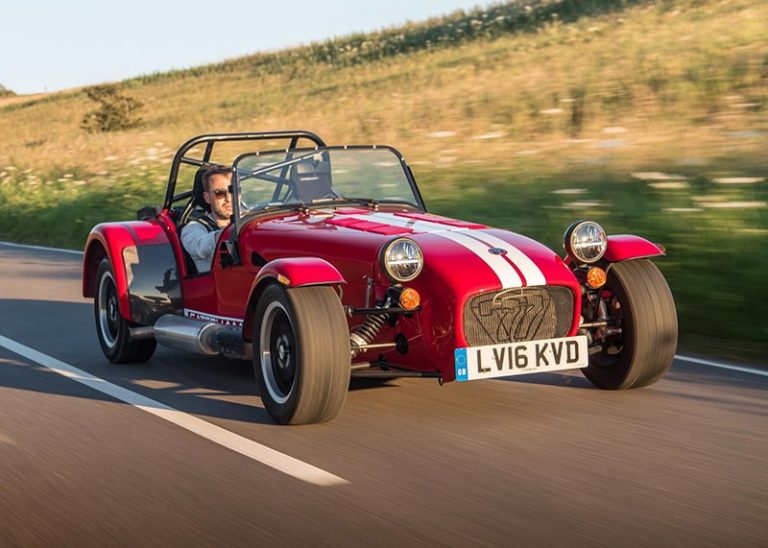
Sports car manufacturer Caterham Cars is to launch a new version of its signature Seven model with developments taken from the brand’s motorsport programme.

The Seven 310 is said to hark back to what many regard as the best-balanced Caterham Seven model to date, the Superlight R300. It gains the upgrade to the 1.6-litre Ford engine, including high-performance camshafts and revised mapping, that was produced for Caterham racers to upgrade from the Tracksport to the Supersport category.

Apparently a power increase of up to 20bhp was a surprise discovery during the upgrade process, the engine now putting out 152bhp.

According to Caterham, the changes add an exceptional driving experience to the car. Simon Lambert, the brand’s chief motorsport and technical officer, says that the Seven 310 will be loved by Caterham enthusiasts but will also convert car fans in general who understand that creating a genuinely fun driving experience is not about simply adding more and more power.

“When we were going through the engineering process on the race engine upgrade, we had one eye on the aftermarket, of course. But, once the re-worked car hit the road, we knew it was far too good to be marketed simply as an option,” Lambert adds.

Order books are now open for the Seven 310, at prices from £24,995 fully built, or £21,995 as a home-build kit, and with first deliveries expected in early 2017.

Owners of existing Seven 270s can also upgrade their car to the new specification for £1,495, while the new car also debuts a new optional LED headlamp option which in due course Caterham will roll out across its range.