Find an Expert Rating: 
Home Blog Page 167

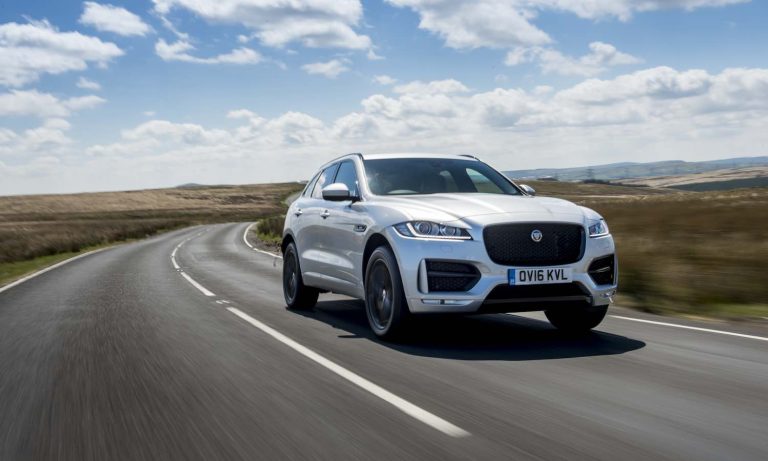
Jaguar F-Pace review

What is it? The Jaguar F-Pace is a ‘performance crossover’ taking on the premium SUV market.
What’s new? All of it.
Our view: Jaguar has charted a course out of its premium saloon/sports comfort zone towards SUV territory, but not so far that sister brand Range Rover should be worried.
Type of review: Taster test


Jaguar has realised that it really needs to be amongst the burgeoning numbers of premium SUVs. The brand’s three German rivals now have extensive SUV line-ups, and even the luxury market is going SUV, spawning the likes of the Maserati Levante, Bentley Bentayga, Aston Martin’s forthcoming DBX, and even a Rolls-Royce.

All are chasing the success enjoyed by Porsche with its Cayenne and more recently the Macan.

The trouble is, Jaguar already has a premium SUV range – it’s just that they are badged Range Rover. Any Jaguar SUV would spark a real prospect of taking sales from a sister brand.

Perhaps that’s why the Jaguar F-Pace is not like any rival – the company insists it is a ‘performance crossover’, not an SUV, and it looks very much like a muscled-up car rather than something one would hit the trail in – more Audi Allroad than Audi Q7.

The Jaguar F-Pace range is available in rear and all-wheel-drive format and with a choice of three powerplants. The 3.0-litre V6 diesel of 295bhp and the supercharged petrol unit, also of 3.0-litre V6 format and with 374bhp on tap, will satisfy those who expect Jaguars to boast plenty of power. By far the most sales, however, will come the way of the Ingenium 2.0-litre diesel version with 177bhp.

What do we think of it? So far, The Car Expert has had a mere 30 minutes in the Jaguar F-Pace, in the less than perfect environment of the busy roads around JLR’s new Wolverhampton engine facility, so a considered opinion will await a full road test. But on first slipping into the car it’s obvious that this is something different to its perceived rivals.

The surroundings are very familiar to anyone who has driven a Jaguar saloon, and driving the F-Pace feels like being in the new XF but placed rather higher up. It’s an initially odd sensation but one soon becomes accustomed to it.

The Ingenium engine pulls eagerly and the car’s road manners are impeccable. One struggles to imagine it straying too far from the tarmac, but then it’s likely that very few F-Pace owners will buy them for their off-road ability.

Verdict: With so little time in the car so far this verdict is very much first impressions, but it is clear that Jaguar has charted a course that takes the brand out of its premium saloon/sports comfort zone towards SUV territory, but not so far that sister brand Land Rover should be worried. The F-Pace looks to be a major advance for the brand, which is already being demonstrated – even in its first few months on the market, this is already the fastest-selling car in Jaguar’s history…

Jaguar F-Pace – key specifications

Tested model: Jaguar F-Pace R-Sport 2.0d 180PS AWD
Price: £40,360 plus £4,410 of options (Range starts £34,170)
On sale: Spring 2016
Engine: 2-litre turbo diesel, 177bhp, 317lbft
0-62mph and max speed: 8.7sec, 129mph
Economy and emissions: 53.3mpg, 139g/km
Test date: June 2016

Jaguar Land Rover cracks fleet market

Jaguar Land Rover appears to have discovered how to sell to business customers, after posting record sales in the fleet market in the first quarter of 2016.

The UK premium brand posted fleet growth of 84% compared to the first three months of 2015, with models such as the Jaguar XE and Range Rover Evoque leading the surge.

Jaguar fleet sales mushroomed by 194% in the period, while Land Rover saw a 53% increase. The Evoque, pictured above, was the top seller for fleet customers compared to its premium rivals, while one in three fleet vehicles sold in sectors competed in by Land Rover was made by the brand.

JLR has struggled to make significant inroads into the fleet market in past years, but has stated its intention to increase such sales to 25% of the company’s total volume by 2020.

Key to this growth is the introduction of business market friendly models such as the XE, XF, Evoque and Discovery Sport. The two Jaguars can offer models with CO2 emissions levels down to 99g/km, making them far more attractive to company car drivers.

Speaking at a fleet and business briefing held at JLR’s expanding Ingenium engine plant near Wolverhampton, Jaguar Land Rover UK MD Jeremy Hicks describes the fleet and business performance as a fantastic result that proves the company has an effective formula in place.

“We have desirable and sector-appropriate cars, efficient Ingenium engines and class leading total cost of ownership – together, these factors deliver a compelling proposition for Fleet Managers to add Jaguar Land Rover to their fleet lists,” Hicks says.

“With this formula in mind, and with an ever expanding range of stunning Jaguar and Land Rover vehicles on the horizon, I’m confident that there’s plenty more fleet growth to come,” he adds.

Hicks’ views are backed by JLR’s fleet and business manager Jon Wackett, who says that the company has disrupted a market that has been traditionally dominated by three or four brands “by introducing extremely desirable cars that represent real-world value for money.

“We are strategically aiming to balance volume of sales against maintaining strong residual values which is a core buying decision for our existing and future customers,” Wackett says.

JLR is confident that 2016 will continue the strong growth, on the back of a full year of Ingenium-powered XE and XF sales, and the arrival of both the Evoque Convertible and the F-Pace crossover.

The F-Pace has already become the best-selling Jaguar in the company’s history, and one-in-six of these sales is predicted to go to the fleet sector. JLR predicts that its fleet sales in 2016 will grow by 50% compared with 2015, and continue double-digit growth through to 2020.

Ford reveals most powerful Fiesta

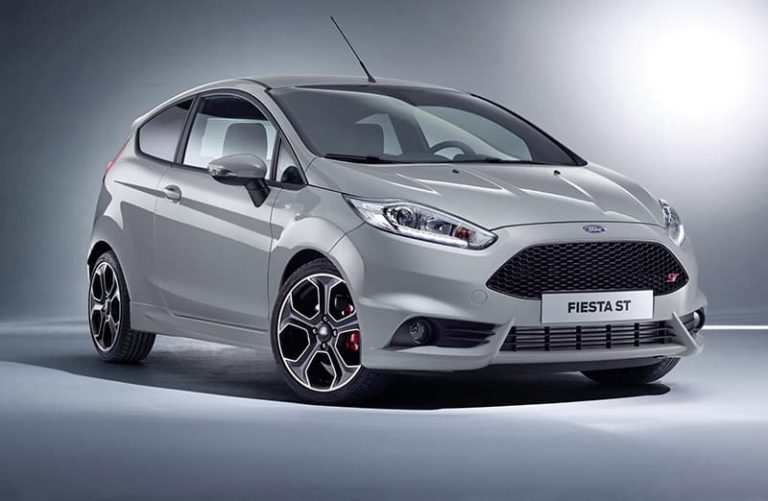
Ford has announced its most powerful production Fiesta yet, the ST200.

Costing from £22,745, the newcomer offers 200hp and 214lbft of torque – 10% and 20% more respectively than the existing Fiesta ST. A further 15bhp and 22lbft is available for up to 20 seconds courtesy of an overboost feature.

The ST200 is pitched as a celebration model as the Fiesta marks 40 years in production, and its power is around double that the XR2, a direct ancestor, was putting out two decades ago.

The power upgrade is achieved through recalibration of the 1.6-litre EcoBoost petrol engine used by the Fiesta ST. The gearbox final drive is shortened from 3.82 to 4.06, and as a result the 0-62mph sprint time is shaved by two tenths of a second to 6.7 seconds, and in-gear acceleration (31-82mph) improved to 5.2 seconds in fourth gear – on the way to a top speed of 143mph.

Chassis upgrades are also applied – the rear torsion beam gains an extra 27% of roll stiffness, the front anti-roll bar is increased 2mm in diameter to 19mm and damper settings are revised.

Power-steering settings are also sharpened, utilising a shortened steering arm and modified knuckle to improve feel, Enhanced Torque Vectoring Control (eTVC) and three-mode Electronic Stability Control (ESC) included while braking performance is improved by 278mm front and 253mm rear discs and a larger master cylinder.

To differentiate it from stock ST models the ST200 gains a bespoke Storm Grey exterior colour and matt black 17-inch alloy wheels with polished rims. Red calipers sit behind the rims while the full ST bodykit is included.

Inside the car is differentiated by Charcoal Recaro front seats with contrasting silver stitching repeated on the seatbelts. Illuminated scuff plates incorporate the ST200 logo.

According to Ford of Europe’s product development head Joe Bakaj, the Fiesta ST200 takes a special drivers’ car to a new level of power and performance. “We think it’s a future classic in the making,” he says.

Suzuki Baleno review

What is it?
New ‘rational’ supermini line to sit alongside the Suzuki Swift.

What’s new?
Everything. It’s an all-new model, although engines and so on are shared with other Suzuki models.

Our view
For buyers seeking a practical runabout, the Suzuki Baleno has lots to offer – efficient engines, positive performance, value for money and loads of space.


The Suzuki Baleno is an all-new model line nothing like the last Suzuki to bear the name, which was last sold in 2002. According to its makers, this is a car to appeal to supermini buyers that are too ‘rational’ to buy Suzuki’s most popular car, the Swift.

Chief among the newcomer’s attractions is its space, the car 15cm longer than the Swift – claimed as class-leading, the interior really can accommodate five adults while the boot is enormous for the segment, going from 320 litres to 1,085 litres with the seats folded down.

The Baleno is built on a new platform, the first under Suzuki’s ‘Next 100’ plan, and saves significant weight, some models tipping the scales at only 935kg.

Engine choices are two, both petrol. The 1.2-litre 89bhp unit is most efficient, at fuel economy of 70.6mpg and CO2 emissions of 94g/km, helped by Dualjet twin-injector technology debuted on the Swift in 2014, and for the first time a mild hybrid system that provides energy assistance under acceleration and gathers electricity through regenerative braking.

Most buyers are expected, however to choose the direct-injection 1.0-litre BoosterJet turbo petrol engine of 110bhp, first seen in the Vitara earlier this year. It’s claimed to offer the performance of a much larger 1.8-litre naturally-aspirated unit but with better fuel economy – 62.7mpg at best, with 105g/km emissions.

What do we think of it?

Suzuki says the Baleno debuts a new design style dubbed ‘Liquid Flow’. It’s not distinctive, but it’s not unattractive either, looking at home alongside rivals such as the Hyundai i20 or Skoda Fabia.

Inside the layout is practical with everything in the right place. The surfacing is not exactly plush, plenty of plastic in evidence and looking like plastic, but it is fitted well. But the aspect that stands out is the space – rear seat passengers in particular will struggle to fins similar comfort in other models.

The Car Expert drove the car with the three-cylinder BoosterJet engine, which is expected to prove the most popular, and it is easy to see why. It is an eager unit, reaching 62mph in around 11 seconds while pulling strongly in the mid range.

There are better handling cars than the Baleno in this segment, such as the renowned Ford Fiesta, but there are also many that it competes very firmly with. The car corners confidently and rides with comfort.

Verdict

Suzuki believes the Baleno will appeal on its practical aspects and thus sit happily alongside the Swift, and we see no reason to doubt that view.

For buyers seeking a practical runabout it has lots to offer: strong, efficient engines, a positive performance, as well as strong value-for-money credentials: satellite navigation, air conditioning and Bluetooth connectivity are standard on every version, But chiefly, space. Lots and lots of space…

Suzuki Baleno – key specifications

Tested model: Suzuki Baleno 1.0 BoosterJet SZ5
Price: £13,999 (Range starts from £12,999)
On sale: June 2016
Engine: 1.0 petrol, 110bhp, 125lbft
0-62mph and max speed: 11.4sec, 124mph
Economy and emissions: 62.7mpg, 105g/km
Test date: May 2016

Style and tech upgrades for Zafira Tourer

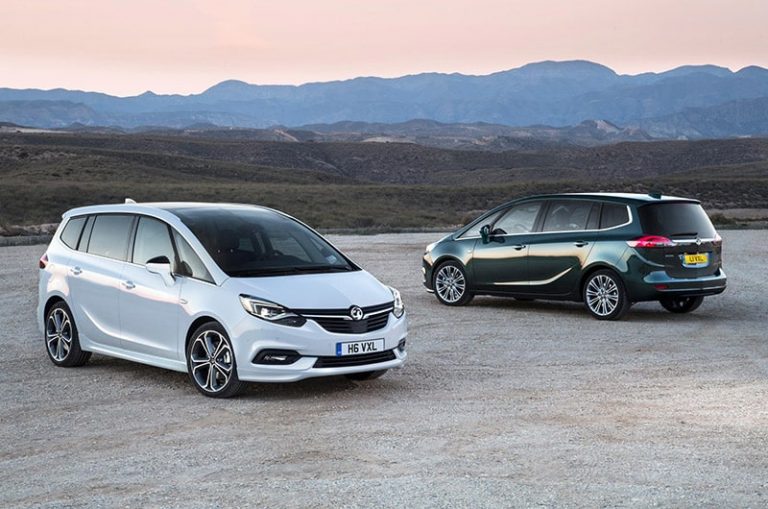
Vauxhall has released first details of its revised Zafira Tourer, that arrives in showrooms in October 2016.

Changes are made to the styling and the interior, while technology added includes Adaptive Forward Lighting LED headlamps and smartphone integration.

The exterior treatment includes a replacement upper and lower grille, while the chrome bar carrying the Vauxhall logo blends into the reshaped headlamps – these including ‘double-wing’ daytime running lights – to give the car a wider look which is enhanced by pushed-out wheels housed in new arches.

According the Vauxhall design head Mark Adams, the latest Astra has inspired the visual changes to the Zafira. “Its sharp, precise double-winged daytime running lights convey a new level of sophistication, which is also reflected in the interior by a completely redesigned instrument panel – it is purer, clearer and easier to use,” he says.

The one-piece instrument panel now has its infotainment screen integrated into the centre console, several buttons being replaced by a simpler switch-based layout. The touchscreen is seven inches in size and tablet-based.

Two versions of Vauxhall’s latest IntelliLink infotainment systems are on offer. The R4.0 IntelliLink integrates with Apple CarPlay and Android Auto smartphones while the Navi 950 IntelliLink provides an infotainment system with on-board navigation.

Vauxhall’s OnStar connectivity system is also standard, features including Automatic Crash Response Destination Download with the Navi 950 variant and the ability to provide a Wi-Fi Hotspot for up to seven devices.

A further major change to the cabin is the availability of the Lounge Seating System – the back of the middle seat in the second row folds down and rotates to offer armrests for the passengers in the outer seats. These also slide to the rear and towards the centre of the car to increase leg and shoulder room.

The new Adaptive Forward Lighting (AFL) LED headlamps automatically adapt their lighting patterns to the driving situation – nine different modes are available, including town or country lighting, tourist mode, a curve and cornering function a manoeuvring light and a stop mode light.

Other upgrades that will be offered on the latest Zafira Tourer include a new generation Front Camera System, Forward Collision Alert, Lane Departure Warning, Adaptive Cruise Control and FlexRide. which continuously adapts vehicle behaviour to the driving situation, style and the individual preferences of the driver.

New Megane goes on sale at £16.6K

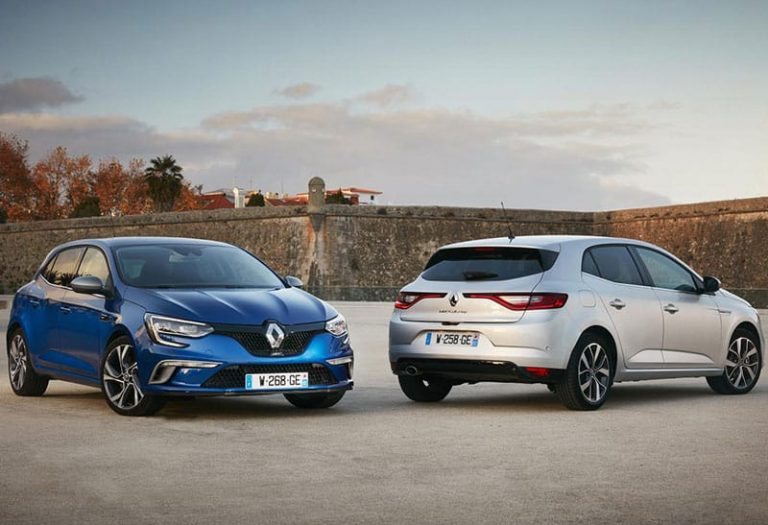
Renault’s all-new Megane range will cost from £16,600 when it arrives in showrooms in July 2016.

Order books have opened for the new model, which is being pitched heavily on an array of new technology, including 4Control four-wheel-steering and an 8.7-inch portrait-format touchscreen infotainment system.

The car will be offered in 25 different versions across six trim levels, encompassing two dCi diesel and two TCe petrol engines, manual and EDC auto transmissions.

More powertrains will join the line-up later on, notably dCi 165 and Hybrid Assist variants, both due in 2017. Before they arrive the range will be extended by a Sport Tourer model, on sale before the end of 2016.

Equipment on all versions will include cruise control with a speed limiter, Hill Start Assist, a two-way adjustable steering column, height adjustable driver and passenger seat, Bluetooth connectivity, LED daytime running lamps, tinted windows, a seven-inch TFT instrument panel with digital speedometer, all-round electric windows, leather steering wheel, Bluetooth connectivity, and a 4 x 20W DAB radio with fingertip controls and an AUX input.

Renault unveiled the fourth-generation Megane at the Frankfurt Motor Show in September 2015, with the Sport Tourer debuting at the 2016 Geneva show in March. Both are built on the Renault-Nissan Alliance ‘CMF’ platform and European versions will be built in Palencia, Spain.

How China will decide what your next car looks like

European car companies, including those in Britain, have long prided themselves on being leaders in the automotive world.  They have set the standards for technology, safety, style and efficiency.  But this may all be set to change, with China now calling the shots for the global automotive industry.

Enormous economic growth in China, the global push for more environmentally-friendly cars and changing attitudes from younger generations all over the world are all combining to reshape how cars will look and drive – and who will own them.  This was a key topic of discussion at the FT Future of the Car Summit earlier this month in London.

China comes first for new model planning

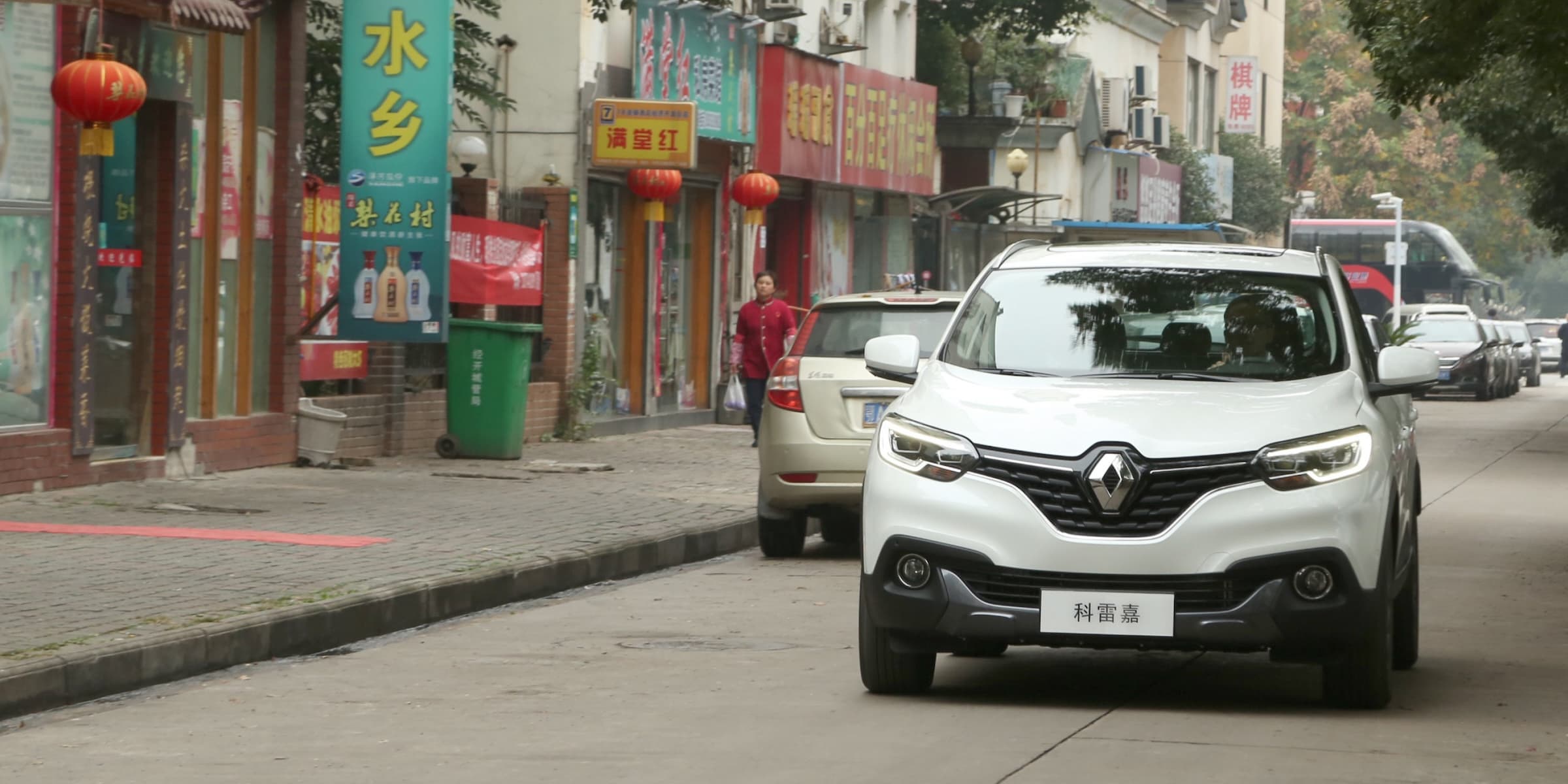
China is now the largest automotive market in the world, having eclipsed the US and Europe several years ago and continuing to grow.  In fact, the Chinese car market is growing by the size of the entire UK market each year.  And as the largest market in the world, China carries a lot of clout.  Every major car manufacturer in the world now has to make decisions about their future product plans based on what the Chinese market is demanding – even if that contradicts demand in their home markets.

For example, hatchbacks might be the most popular style of vehicle in the UK and across Europe, but they don’t sell nearly as well as saloons in China (or America, for that matter).  So nearly every major European car maker now offers saloon versions of their popular hatchback models if they are trying to succeed in China.

Ever wondered why Mercedes-Benz has been replacing the traditional grille and bonnet mascot on its luxury saloons with the ‘sports’ grill with the huge star in the centre?  It’s because Chinese buyers like the huge star, to make sure everyone in the street knows they drive a Mercedes-Benz…

China’s pollution problems are bad news for diesel

You have to have been living under a rock for the last year to not know that diesel fuel has been copping a bashing from all over the place, thanks to Volkswagen choosing to cheat its emissions tests and increasing evidence that diesel pollution is linked to serious health issues in urban environments.  But diesel was already starting to struggle before the Volkswagen scandal ignited the issue in September 2015.

At the FT Future of the Car Summit, Volkswagen UK managing director Paul Willis admitted that diesel sales were already declining before the Dieselgate scandal became public news.  Despite the push for diesel cars from European governments over the last couple of decades, the huge US car market was never interested in diesel technology (and the big German companies certainly tried).  And the new market leader China isn’t interested either.

Major Chinese cities like Beijing and Shanghai have been battling crippling levels of pollution for years. That pollution is now driving the world’s largest push for the electrification of cars rather than incremental improvements to petrol or diesel engines.

Car companies you have probably never heard of, like NextEV and Faraday Future, are working hard on bringing advanced new electric vehicles to market.  They are employing some of the brightest industry talent from Europe and America, in a race to be the “next Tesla”.  Tesla, of course, has announced plans to be building 500,000 electric cars a year within three years, and is relying on China to buy a large number of those vehicles.

Richard Bruce, head of Office for Low Emission Vehicles at the UK Department for Transport, said: “Chinese companies are not interested in diesel engines or turbocharging.  They are investing in electric vehicles, battery packs and so on.

“There is a huge risk for European car companies if they don’t adapt.”

So if car companies want to compete in the world’s largest market, they will have to develop viable electric cars.  This is a huge undertaking, with many billions of pounds being spent around the globe, and it means that electric cars have become a priority for every major car maker – regardless of whether buyers in Europe or elsewhere really want them.  The knock-on effect of the investment in electric technology is inevitably going to be less money to spend on petrol and diesel technology.

With diesel also under pressure from environmental groups and Volkswagen’s own goal, it is quite possible that diesel development will trail off sooner than expected.  Diesel engines are also not as suited to hybrid drivetrains, which is limiting for markets which are demanding more hybrid cars – like the US and China.  Volkswagen has announced a massive investment in electric vehicles, and has also pulled nearly all of its diesel models from sale in America (where the Dieselgate cheating was first uncovered).  Europe may still be diesel-centric, but industry figures expect this to reduce significantly in the next decade if governments start to increase taxes on diesel-engined cars.

China is leading the world away from car ownership

Only 10% of the adult population in China can drive, and this percentage is likely to fall further.  Wealthier families in China employ drivers so they don’t have to do their own driving, which is leading to increased investment from car companies in vehicles with more rear legroom and infotainment technology for rear seat passengers to play with.

It is also accelerating the development of autonomous cars, as there will simply not be enough drivers to chauffeur millions of Chinese passengers around each day.  Plus there are numerous other benefits to traffic management and pollution from autonomous cars, as we have discussed recently, which could significantly help ease traffic jams and air quality problems in major Chines cities.

Around the world but especially in China, millennials are collectively turning away from driving and owning cars.  They are preferring to use taxis or services like Uber for short journeys and car-sharing services or rentals for longer trips.

The consensus among industry representative at the FT Summit was that car sharing will trump car ownership for a large percentage of the world’s population in the next couple of decades, so manufacturers have started investing heavily in providing car-sharing services like Daimler’s car2go (pictured above).  Again, it will likely take off first in China before moving to more traditional markets like Europe and the US, where owning your own car has long been a natural part of society and will take longer to change.

So for many reasons, key aspects of your next car could be the way they are because that’s what they want in China.  British and European car companies are relying on the huge Chinese market for an increasing percentage of their sales, and it is affecting every aspect of the automotive sector.

BMW reveals 2017 upgrades

BMW will be releasing a host of 2017 upgrades for its product range with the introduction of more efficient, stronger-performing four- and six-cylinder engines for the BMW 1 and 2 Series. There will also be new additions to the BMW iPerformance range of Plug-in-Hybrid models.

2017 upgrades will see the BMW M140i and M240i models will replace the previous M135i and M235i, respectively. These M Performance models are to be powered by a new 3.0-litre straight-six engine employing TwinPower Turbo technology delivering a maximum of 340hp and 500Nm of torque.

The M140i has a zero to 62mph time of 4.6 seconds (automatic). The M240i Convertible goes from rest to 62mph in just 4.7 seconds. These increases in speed are claimed to be accompanied by a reduction of up to seven per cent in fuel consumption over the previous engine range. Official figures for the BMW M140i hatchbacks and M240i Coupé are 36.2mpg (manual) or 39.8mpg (Sports Automatic), with respective CO2 figures of 179g/km and 163g/km. The M240i Convertible has a claimed fuel efficiency of 34.0mpg in manual guise and 38.2mpg as an automatic, while their respective CO2 emissions are 189g/km and 169g/km.

The new 2017 M Performance models will also feature electric wastegate control, a close-coupled catalytic converter, an on-demand cooling pump and map-controlled oil pump, electronic power steering, Auto Stop Start and Brake Energy Regeneration. Owners will also benefit from a rev-linked vibration damper helping to enhance the car’s smoothness.

BMW has also made additions to the BMW iPerformance range. Three of these plug-in hybrid (PHEV) models – the BMW 225xe Active Tourer, BMW 330e saloon and BMW X5 xDrive40e – are already on sale. They will be joined next year by the BMW 740e and 740Le xDrive saloons, all to be sold under the new iPerformance banner. OTR prices for the BMW 740e and 740Le xDrive start from £68,330 and £74,880 and are available in the Exclusive or M Sport trim.

New Abarth 595 prices announced

The prices of the new Abarth 595 have just been announced by Fiat Chrysler Automobiles UK.

Starting at £15,090 OTR for the 1.4 TJet 145hp Manual, the new offering is available as a hatchback or convertible.

The Abarth 595 comes in three trim levels: 595, 595 Turismo and 595 Competizione, and three power levels. An Abarth mechanical limited-slip differential can be added to the 595 Competizione – designed to improve traction in extreme conditions.

On the outside, the new Abarth 595 now has an oversized air intake and a rear bumper that has been altered to offer a more pronounced diffuser. Specific bumper inserts have also been created for each trim level.

There are new 17’’ Granturismo rims (standard on 595 Turismo) on offer and 15 body colours for customers to choose from. There are also three new two-colour combos: Scorpione Black/Podio Blue and Scorpione Black/Record Grey and Circuit Grey/Abarth Red. An updated upholstery selection has also been added for the entire range.

The new Abarth 595 also features a brand new sports instrument panel. For infotainment, all 595 versions are equipped with Uconnect™ 5-inch DAB digital radio with touchscreen and Uconnect Live services as standard. This will include Apple CarPlay and Google Android Auto support. The range also sports a newly refined BeatsAudio™ system with seven speakers.

Subaru marks half century of boxing clever

Subaru is celebrating 50 years since the introduction of its horizontally-opposed ‘boxer’ engine.

The boxer, so called due to the engine’s pistons resemble the punch-counterpunch motion of a boxer’s fists, is today used in all Subaru’s globally-sold cars, and also widely used by Porsche.

The layout of the engine places the pistons opposite each other in a side-to-side symmetrical layout. The opposing pistons work to cancel out the inertia force of each other, resulting in less vibration and a much better rotational balance to provide smooth acceleration right up to the highest engine speeds.

By its nature the boxer is also compact, which allows it to be fitted lower in the engine bay than a conventional four-in-line engine, lowering the centre of gravity and improving handling.

The first Subaru to use the boxer was the 1000 small car launched on 14th May 1966. To date, more than 16 million such engines have been sold in Subarus, and today it is combined with the brand’s Symmetrical All-Wheel Drive (AWD) system.

The future for the boxer looks assured in Subaru’s car line-up, while the handling and weight-friendly format of the engine have also found favour in motorsport, Subaru winning multiple World rallying titles in boxer-equipped Imprezas. Currently in the UK, leading race team BMR is developing boxer-powered examples of Subaru’s Levorg in the British Touring Car Championship (BTCC).

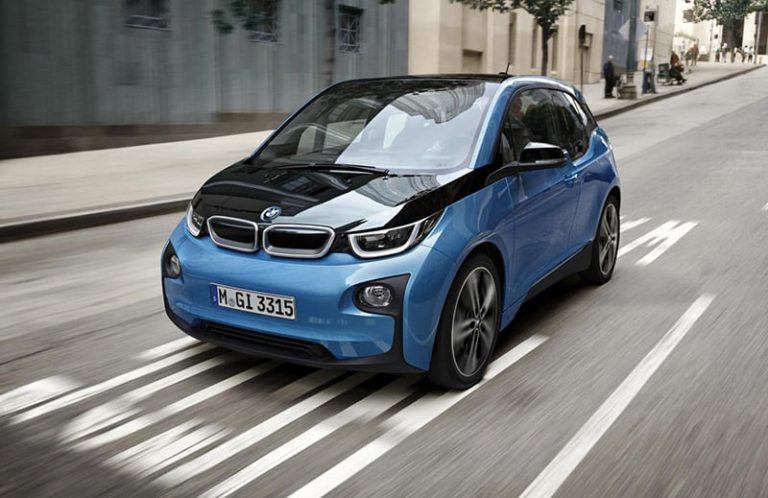
BMW’s i3 stretches electric range

BMW is upgrading its i3 electric car with major battery changes.

Modifications to the batteries of both the i3 and i3 Range Extender will turn them from 60Ah to 94Ah units, boosting the range by more than 50 per cent.

The modifications centre on refining the internal packaging, including adding more electrolyte material, to the 12 cells in each of the eight modules forming an i3’s lithium-ion battery.

As a result the battery’s capacity increases to 33kWh, powering a hybrid synchronous electric motor developed specifically for the i3, with a 167bhp output and 1284lbft of torque, all available from first movement of the car.

According to BMW, the new battery will allow the stock i3 to complete up to 195 miles of everyday driving between charges.

Its Range Extender sister, which is fitted with an additional small petrol engine of 38hp to generate power to recharge the battery if required, will add a further 81 miles.

The 7.1-second 0-62mph time of the i3 is unaffected, the Range Extender achieving the same figure in 8.1 seconds. And even using the air conditioning or optional heating, will not affect the battery’s abilities, these systems having a second function of keeping the battery at the optimum temperature of 20deg C for best performance.

The Range Extender’s CO2 emissions have also been approved, by a single gram to 12g/km, the fully-electric i3 remaining at zero. And as the changes to the battery have been achieved without making it any larger, existing i3 customers can upgrade if they wish.

Battery charging times have also been reduced, the car now including a DC Rapid-charge unit as standard. AC charging is now multi-phase allowing at 3.7, 7.4 or 11 kW, improved by 50 per cent over the previous i3 60Ah and cutting charging time to under three hours, Charging can also be carried out at home using a standard three-pin plug or by specifying a BMW i Wallbox.

BMW has also added to the options list available for the i3, extending the range of interior finishes and also offering the Protonic Blue with exterior colour with Frozen silver metallic highlight, previously only available on the i8 sports car.

The updated i3 variants will be on sale from July, at £27,830 for the all-electric version and £30,980 for the Range Extender, both prices including the Government’s £4,500 ‘plug-in’ grant. The battery comes with an eight-year, 100,000-mile warranty.

Skoda extends Yeti Monte Carlo line

Skoda is extending its Yeti Monte Carlo model line with three new versions.

The Monte Carlo trim – originally established to recall Skoda’s sporting history – can now be specified on the SUV with a 109bhp 1.2 TSI petrol engine or a 2-litre TDI diesel also of 109bhp, while the petrol unit is optionally offered with a seven-speed DSG auto gearbox.

These will sit in showrooms alongside the already available 2.0 148bhp diesel Yeti Monte Carlo.

Monte Carlo variants are all front-wheel drive and standard equipment includes 17-inch ‘Origami’ alloy wheels finished in gloss black, Bi-Xenon headlamps with a cornering function and dynamic angle control, black roof and door mirrors and black spoilers at the front and rear, and a black front grille, Monte Carlo badging and LED rear lights.

Inside, the specification includes a three-spoke Supersport leather multifunction steering wheel, sports seats with Monte Carlo upholstery and Monte Carlo floor mats, instrument cluster and door sill trims.

Order books are open now for the new models – the 1.2 TSI variant costs from £19,700, the DSG version adding another £1,100, while the 108bhp diesel is £21,045.

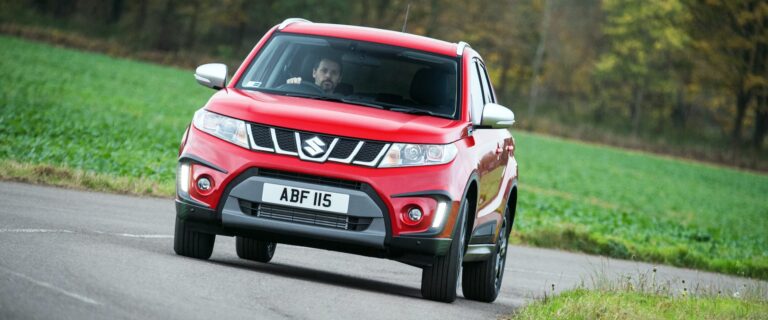
Suzuki Vitara 1.4 BoosterJet review

What is it?
New turbocharged petrol version of competent small SUV from Suzuki.

Key features
Smallest capacity engine but with most performance. Top S spec and all-wheel drive.

Our view
The new BoosterJet version adds the missing link of performance to the Suzuki Vitara, but without sacrificing its impressive efficiency.


The Car Expert first drove the latest generation of one of Suzuki’s longest-lived model lines in February 2015, the Vitara reinvented in a bid to take full advantage of Europe’s burgeoning crossover market, and central to Suzuki GB’s ambitious growth plans.

Suzuki has a proud history of making small and affordable SUVs, and the latest Vitara is a worthy addition to that tradition that has been well received. However this latest version, the first to employ the brand’s new Boosterjet petrol engine technology, is expected to provide an extra attraction to the model, offering a degree of performance lacking in either the 1.6 petrol or diesel launch units. Will it boost Vitara sales? A full road test over a week gave us the opportunity to find out.

Styling/interior

We were praiseworthy of the new Vitara’s looks on the launch event in 2015 – it is sleek and stylish, and has been likened to the Range Rover Evoque. In contrast to its predecessors it is aimed, like most of the current crossover breed, at the on-road than off-road market, but traditional Suzuki styling elements remain, such as the clamshell bonnet.

The designers have tried hard to make the S trim, the fourth and most expensive of the Vitara grade structure, stand out from its fellow models. Bespoke exterior treatments include a more imposing vertical grille design, a rear upper spoiler, door mirrors finished in satin silver and gloss black 17-inch alloy-wheels. The standard-fit LED headlamps have red projector covers.

Inside the upholstery is finished with red stitching which gives it a more upmarket feel, while there is plenty of detailing, red surrounds to the dash air vents for example.

The overall impression on slipping inside the Vitara, however, is one of space, particularly when one considers the price of the car, which even at this range-topping level is comparable with smaller segment SUVs like the Nissan Juke. There’s plenty of room for at least two adults in the back and a usefully-sized, well-shaped boot with a low loading lip.

There are some areas which show up the budget value of the Vitara. The plastics are generally of the hard variety, which never look as refined, while the doors are very light. As a result they lack that satisfying ‘clunk’ when swung shut, while the lesser poundage results in them often not latching shut without a second attempt.

Generally, however, the interior of the Vitara is well laid out and a pleasurable environment to travel in.

Engine

Suzuki expects the new engine, a 1.4-litre direct injection turbo petrol unit, to become a popular part of the Vitara line-up, thanks to its combination of significantly more power. It’s up by 17% compared to the 1.6-litre petrol unit, yet combined with fuel economy gains of 4%.

This is achieved by the use of a small displacement, high torque turbocharger with a controllable wastegate valve. It closes to increase boost pressure during heavy load but remains open during normal driving. An air bypass valve ensures the turbo does not ‘stall’ when the throttle is closed and then quickly reopened.

Particularly impressive is the torque – with its peak output of 162lbft coming in at a low 1,500rpm, the car pulls impressively from low speeds which makes it feel far more eager than other Vitara models.

Our test model came with the standard-fit six-speed manual gearbox and all-wheel-drive transmission. An automatic gearbox is also available, with just a mile per gallon fuel penalty and CO2 emissions only a single gram higher than with the manual, at a price premium of £1,350.

On the road

When tested on the launch last year the standard Vitara proved competent, if not as sporty as its looks suggested. Immediately one moves onto the road in the Boosterjet version, the difference is palpable. The plentiful low-down torque makes for smart acceleration, the unit then settling into refined, smooth delivery when cruising at motorway speeds. And after two long motorway hauls during our test we can attest to the cabin comfort.

Our test week coincided with some not at all spring-like weather around our Welsh borders dominated test route, and the AllGrip four-wheel-drive system really came into its own, emphasising how such transmissions add as much safety on road as they do ability off road. The system boasts four driving modes, varying from auto through sport, snow and lock. The sport mode certainly suits the engine, particularly when cornering when the chassis exudes confidence and the shell stays pleasingly upright.

The only, slight, downside is the steering. While precise enough, it does not provide enough feel to match the directness of the powertrain. It’s not bad, by any means, just not quite as well-tuned compered to the car as a whole.

Equipment

The Boosterjet engine is only available with the top level S trim and all-wheel-drive, and while the plus £20,000 price may initially seem a little expensive, when one considers the extensive equipment specification included it becomes much more tempting.

For example, both hill-hold and hill-descent control are included, the latter usually expected to be included in more off-road pitched SUVs. And with a differential lock able to be selected in the AllGrip transmission’s four drive modes, the Vitara really can keep going with confidence when the tarmac runs out.

The safety package is impressive and has earned the Suzuki Vitara a five-star Euro NCAP rating – the first SUV to qualify under the more strict regime introduced in 2015. Seven airbags are standard, including a driver’s knee airbag, while the active safety package includes a Radar Barke Support system which alerts the driver (loudly…) if it detects a car stopped or moving slowly in front, and in extreme situations can automatically apply the brakes. On the typically crowded motorways of the UK this did initially prove a little over-sensitive, but the sensing distance can be adjusted to suit one’s individual preference.

The motorway hauls also provided plenty of opportunity to try the highly effective adaptive cruise control, while among other useful driver aids included as standard are front and rear parking sensors and a rear parking camera.

The camera uses the centre console touchscreen normally occupied by the much appreciated DAB digital radio and the satellite navigation. Again standard on the S model, the satnav is a bit menu-heavy but effective enough in operation.

Summary

When The Car Expert first tested the latest Suzuki Vitara, we concluded that it was a good value small SUV with a pleasing amount of style. The new Boosterjet version adds the missing link of performance, but without sacrificing substantial efficiency – fuel economy of plus-50mpg for an all-wheel-drive petrol SUV is impressive.

We look forward to the Boosterjet engine spreading throughout the range, and we expect the S version of the Suzuki Vitara to become one of the most popular options in the range – a second coming for petrol power?

Suzuki Vitara – key specifications

Test date: April 2016
Model tested: Suzuki Vitara 1.4 Boosterjet S
Options fitted:
None
Price: £20,899
Engine: 1.4-litre petrol
Power (bhp):
138 @ 5,500rpm.
Torque (lb/ft):
162lbft @ 1,500-4,000rpm.
0-62mph (sec):
10.2
Top speed (mph): 124
Fuel economy (combined, mpg): 52.3
CO2 emissions (g/km):
127
Key rivals:
Nissan Juke, Renault Captur, Škoda Yeti

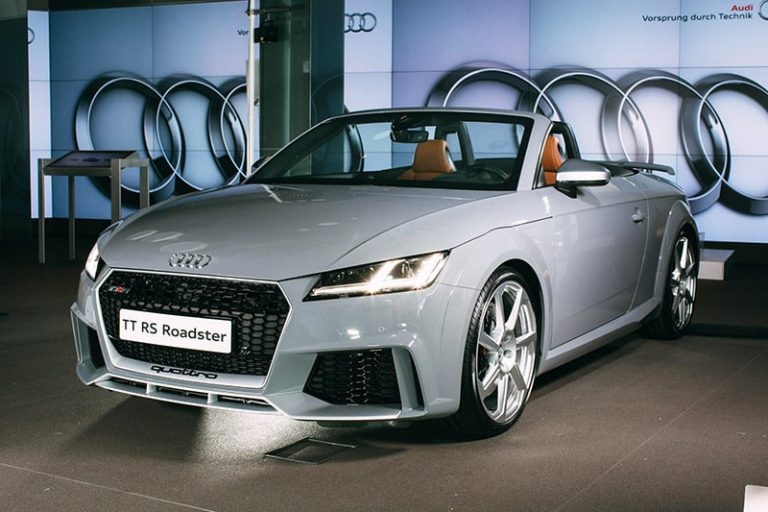
Audi’s fastest TT drop-top debuts in UK

Audi is unveiling the most powerful version of its TT model yet, simultaneously in London and China.

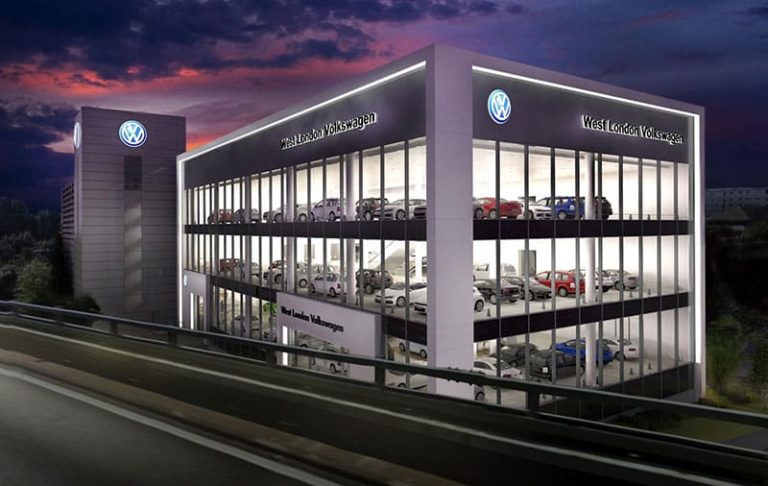
The TT RS Roadster is debuting at Audi’s West London showroom at the same time as its coupé sister is unveiled at the Beijing motor show.

Revealing the car in London reflects the fact that more Audi TTs are bought in the UK than anywhere else – British buyers account for almost half of all European sales of the model.

The new versions are are the second generation of the TT RS line and both use Audi’s new five-cylinder 2.5-litre TFSI turbocharged petrol engine. This is a development of a unit that has taken five ‘Engine of the Year’ titles, the major update being the use of a weight-saving aluminium block and a 17% increase in power – it produces 394bhp and 354lbft of torque, the latter between 1,700 and 5,850rpm.

As a result the Coupe will pass 62mph from rest in 3.7 seconds – four tenths quicker than its predecessor. The Roadster follows just behind at 3.9 seconds, three tenths up on its previous version, and both are capable of up to 174mph.

The Coupe is also half a second faster than its direct rival, the newly-unveiled Cayman S from Porsche.

As standard the TT RS models use a seven-speed S tronic dual-clutch gearbox, with its ratios specially selected for the car and steering-wheel paddles for manual control, and matched to quattro all-wheel drive.

The chassis sits a centimetre lower to the ground than the stock TT, on 19-inch alloy wheels (20-inch forged aluminium versions on the options list) and with stiffer springs and dampers. The progressive steering, becoming more direct with increasing input, is taken from Audi’s RS models.

Brakes are uprated too, combining 370mm vented perforated front discs on the front axles with 310mm monoblock versions at the rear. Eight-piston front calipers are used and carbon-ceramic brakes are an option.

Visually the TT RS gains bespoke front and rear bumpers, the front boasting deeper air intakes, along with extended side sills, elliptical exhaust tailpipes and a large fixed spoiler, which can be exchanged for a smaller extendable version.

Also debuting on the TT RS are OLED rear lights – the O stands for organic, and reflects a light signature that is high contrast, can be continuously dimmed, does not cast any shadows and does not require any reflectors.

Each rear light module contains contains four units which become smaller from the inside out. The biggest bears the TT logo and the four Audi rings.

Inside Audi says the controls are focused on the driver, making use of the brand’s much-praised digital ‘virtual cockpit’ with its 12-inch screen. This gains a bespoke ‘RS screen’ highlighting the rev counter and showing information including tyre pressure, torque and g‑force. A rev-limiter shift light also features on the virtual cockpit.

Order books for the TT RS models will open in summer 2016, with first deliveries at the end of the year. Prices are yet to be announced.

UK government: Only VW cheated tests

A UK Government investigation into the emissions levels of new cars has concluded that only Volkswagen used a ‘defeat device’ to falsify emissions tests.

The study, conducted in the wake of the Volkswagen emissions scandal, also concluded to little surprise that all 37 models tested had higher nitrogen oxide levels in real-world motoring than recorded in laboratory tests.

“Our tests have not detected evidence of test cycle manipulation strategies as used by the Volkswagen Group,” the Government report stated.

“However, tests have found higher levels of nitrogen oxide (NOx) emissions in test track and real-world driving conditions than in the laboratory for all manufacturer’s vehicles, with results varying significantly between different makes and models.”

In subsequent discussions with manufacturers, the Government testers were told that the emissions control strategy for NOx is less effective at lower temperatures in order to ensure durability and protect the engine from damage. Manufacturers also stated that the unrepresentative nature of the current laboratory type approval test, the New European Drive Cycle (NEDC) would have contributed to the distortion compared to published test figures.

Further improvements to regulations required

The report states that further improvements to regulations are necessary to avoid future uncertainties in emissions testing, and adds that manufacturers need to work hard to quickly improve the emissions performance of their vehicles ahead of new European regulations soon to be introduced.

These will include the ‘Real Driving Emissions’ test, which the UK claims to have secured. It will be introduced in stages across Europe from 2017 and include some tests reflecting normal use of cars.

“Even before the introduction of the new requirements, we are urging manufacturers to introduce new technologies to reduce emissions sooner than the new EU regulations require,” the report states.

“Some manufacturers have announced that they intend to make changes to vehicles already in use, to improve emissions, and will offer this to customers on a voluntary basis – we welcome this and encourage action from other manufacturers.”

Volkswagen agrees deal with US government

Meanwhile, Volkswagen has reached ‘an agreement in principle’ with the US Government over the approximately 480,000 vehicles affected by the emissions scandal in America.

Options offered to affected owners include buying back their car, cancelling leases or having their cars modified, subject to the US State Department approving the modifications.

IN a decision by a US District Judge, all owners will be offered “substantial compensation” and VW will establish a fund to both compensate for the environmental damage done by the excess nitrogen oxide emissions from its engines, and to promote environmentally friendly car technology.

More manufacturers under investigation

The fallout from the VW scandal is continuing. This week the offices of PSA Group, parent company of Peugeot and Citroën, was raided by emissions investigators from the French Government. PSA insists its cars are fully compliant with emissions regulations and it is fully complying with any investigations.

Meanwhile in Japan, Mitsubishi’s offices were raided after the manufacturer admitted falsifying fuel consumption figures on Japanese-market cars.

Volvo launches bid for million electrics

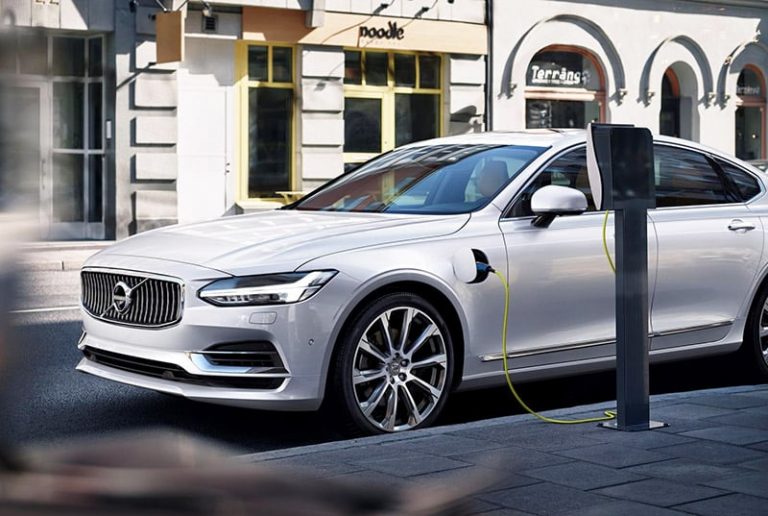
Volvo has announced plans to sell one million ‘electrified’ cars by 2025.

The Swedish brand will achieve this aim by including at least two hybrid versions in every model line, and launching its first all-electric car in 2019.

According to company president and CEO Håkan Samuelsson the target is deliberately ambitious. “It is going to be a challenge, but Volvo wants to be at the forefront of this shift to electrification,” he says.

For the past five years Volvo’s product development has been undertaken with the emergence of electric cars regarded as a priority – the two new vehicle architectures, Compact Modular Architecture (CMA) for smaller cars and Scalable Product Architecture (SPA) for larger models are both designed to fully incorporate hybrid or electric technology.

The larger Volvo 90 and 60 series cars are to be built on SPA, and a global range of smaller 40 series cars will follow, built on the CMA architecture. All of these will include electric models on the way to the cumulative total of one million electrified cars.

Mitsubishi admits fuel test rigging in Japan

Mitsubishi has admitted supplying misleading information for fuel consumption tests, but insists that the data only affects models on sale in the Japanese market.

The admission to Japanese authorities comes in the wake of the Volkswagen emissions test scandal and has an immediate effect on shares in the Japanese manufacturer, which slumped by more than 15%.

According to Mitsubishi Motors Corporation (MMC) fuel consumption testing data submitted to Japan’s Ministry of Land, Infrastructure, Transport and Tourism was “improperly presented in order to improve fuel consumption rates.”

The statement from MMC added that the testing method used was different from that required by Japanese law.

Production and sales of the four cars affected have been suspended. The four are all sold only in Japan and comprise the eK Wagon, eK Space and the Nissan Dayz and Roox, both built by Mitsubishi for Nissan. All are examples of the small-engined ‘Kei’ cars built specifically for the Japanese home market.

MMC says it has acted quickly to apologise to its customers and stakeholders and will put in place a committee of external experts to fully investigate the issue. The company pursues an open and transparent policy and the results of the investigation will be made public as soon as it is complete.

The managing director of Mitsubishi’s UK division, Lance Bradley, believes the company has acted quickly and decisively. “We understand that such issues are of great concern to consumers – I would like to reassure everyone that there is no evidence to suggest that UK or European models are affected,” he adds.

Five-star Prius pioneers new safety test

Industry safety specialist Euro NCAP has performed its first test of Autonomous Emergency Braking technology, on the Toyota Prius.

The safety body is now including the test in its well-known star rating system for new cars, which it says will encourage crash-avoidance technology being fitted to all cars.

Autonomous Emergency Braking (AEB) is able to detect both vehicles and pedestrians ahead of the car and to brake automatically to either avoid or lessen the severity of a collision.

According to Euro NCAP the ‘Toyota Safety Sense’ system fitted as standard to the Prius worked well and helped the car gain a top five-star safety rating.

Euro NCAP secretary general Dr Michiel van Ratingen believes that including AEB in the rating system is a key milestone, “that will help the proliferation of the crash avoidance technology into all segments of the market.”

Meanwhile the first set of 2016 crash-test results from Euro NCAP has also seen the first award of a dual rating, reflecting the amount of safety equipment available on a model’s options list.

The standard rating will continue to be a baseline, reflecting the safety features included in a car’s standard equipment list. Whether a second rating is published with the optional equipment taken into account is up to the manufacturer.

The new Suzuki Baleno hatchback only scores three stars in standard form, But Suzuki offers the optional safety pack ‘Radar Brake Support’ which includes an AEB City and AEB Inter-Urban system, and with the pack included, the Baleno’s rating increases to four stars.

According to Euro NCAP this dual rating allows consumers to easily understand the safety benefits which can be achieved by the additional crash avoidance equipment offered as options.

“To provide accurate and clear information to consumers about the latest systems and what benefit they might bring, is becoming more challenging – the dual rating will simplify the choice for the safest car,” adds van Ratingen.

Audi stretches its longest car

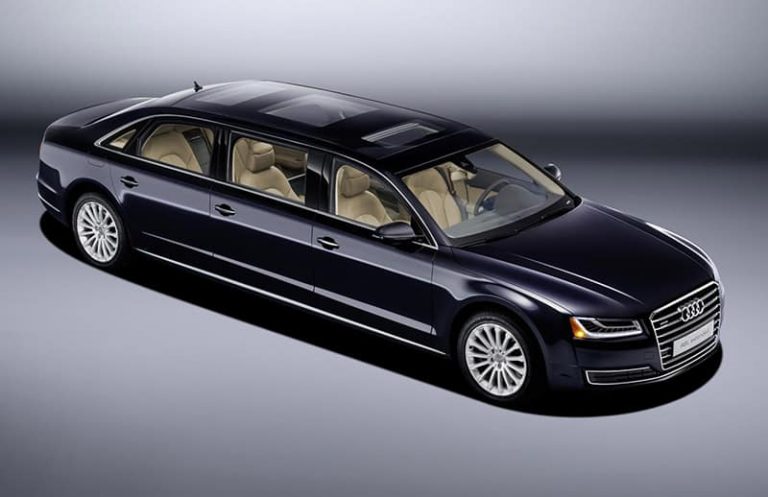
Audi has built a one-off A8 saloon for a customer, extending its L model in length by a further metre.

The A8 L extended measures up at almost 6.4 metres long, with a wheelbase of 4.2 metres. It boasts six individual seats in three rows, Audi stating that occupants in each enjoy “exquisite comfort.”

According to its creators the major challenge was to maintain the rigidity and safety of the extra-long body. The almost entirely aluminium Audi Space Frame gained extended side sills and a centre tunnel in extruded aluminium sections.

A double rear bulkhead was added to separate the cabin from the boot, and extra profiled aluminium tubes and cross braces added to the roof along with a 2.4-metre long glass panel to promote an impression of space inside the car.

The outer skin of the A8 L extended is completely reworked from the windscreen pillar back to maintain the look of the car’s silhouette, while 19-inch 15-spoke wheels complete the look, concealing brakes sourced from the S8 performance version of the A8 line-up.

The head and rear lamps both include side marker lights, specified by law for vehicles of such length.

All six seats are upholstered in Valcona leather in a velvet beige colour and the third row includes a continuous centre console, a Rear Seat Entertainment display and a cool box.

Powering the car is a 3.0-litre petrol engine producing 305bhp and torque of 325lbft, put through an eight-speed tiptronic gearbox and quattro all-wheel drive. The A8L extended can complete the 0-62mph sprint in 7.1 seconds and go on to an electronically governed top speed of 155 mph.

The A8 L extended took a year to create and Audi has not stated how much it cost its customer, though industry sources suggest a price of around 350,000 Euros. The brand has said that it is receiving requests for more examples of the car.

VW targets SUV growth with new Tiguan

Volkswagen intends to become a much bigger player in the SUV market in coming years and leading the first offensive is the all-new Tiguan.

Dealers have now opened order books for the second-generation Tiguan, which will replace a car that is now the brand’s third best-seller on the UK market, having increased sales in every year since its launch in 2007.

Initially the new model is on offer powered by the 2.0 diesel of 150hp, in front and all-wheel-drive form, and an AWD variant of the 2.0 petrol of 180hp. These two are expected to take 75% of all UK sales.

Within months this range will extend to four diesel and three petrol engines, with power outputs from 115 and 125hp offered in front and all-wheel-drive, with six-speed manual or seven-speed dual-clutch automatic gearboxes.

All engines are Euro-6 emissions compliant and all will offer both power and efficiency gains over their predecessors,

The new Tiguan is the first VW SUV to make use of the highly versatile MQB platform, also used by such wide-ranging models as the Golf and Audi TT, and also the basis of the forthcoming Ateca SUV from sister brand SEAT.

Those updating from a previous Tiguan will find more interior space, thanks chiefly to a wheelbase extended by 8cm to just under 2.7m, and increased overall dimensions. The length goes up by 6cm to just under 4.5m, width by 3cm to just over 1.8m. However, the vehicle’s height is shaved by 3cm, giving it a less upright look.

Despite the dropped roof, VW claims extra headroom inside the new model, and knee room extended by 3cm, both courtesy of the MQB platform. Rear boot space is 470 litres with all seats in place extending to 1,655 litres with the rear bench seat folded – a 145-litre gain over the previous model. This bench seat can also be slid by up to 18cm, again freeing up 1,345 litres of extra space.

Volkswagen also claims what it describes as a unique towing capacity of up to 2,500kg for the new Tiguan, dependent on model.

Safety will also be a major selling point of the new Tiguan, with all versions offering electronic aids including Front Assist; City Emergency Braking and Pedestrian Monitoring.

The launch versions of the new Tiguan will cost from £25,530 for the front-wheel-drive diesel model, in entry-level S trim, and £32,115 for the all-wheel drive petrol, which is available from the fourth-tier SEL trim.

Tiguans will soon be joined in VW showrooms by more SUVs – the brand has made clear its intention to offer an SUV in every major segment in future, displaying concept versions at recent motor shows such as the T-Cross Breeze unveiled at the Geneva event in March.

Ford Mustang review (2016 – 2018)

What is it? First-ever European variant of iconic Ford Mustang muscle car.
Key features: V8 and four-cylinder engines, hard or soft tops, tempting price.
Our View: The Ford Mustang is an impressive package, with performance, practicality and specification – at a similarly impressive price.
Type of review: First UK drive


On slipping into the cabin of Ford’s new release, the latest variant of a model with half a century of history but for the first time available in Europe, the writer’s colleague comments on the lack of Ford badges – there is not one, on the bonnet, the interior, even the rear flank.

There doesn’t need to be any, however. In their place sits a chromed image of a horse in full flight, leaving no doubt this is an example of one of the few truly iconic model names in the motoring world – Mustang…

As indicative of the US muscle car line as Camaro is to Chevrolet, mention of the name Ford Mustang immediately conjures images – mostly of Hollywood superstar Steve McQueen pulling increasingly sideways slides in the 1968 movie Bullitt, a sequence regarded by many as the greatest celluloid car chase of all time.

Throughout its long history the Mustang has reflected its era, some versions more successfully than others, and now, entering its sixth generation, it benefits from a maker that is very much looking globally, espousing the ‘One Ford’ philosophy.

What this means is that Ford’s icon, previously merely imitated on this side of the Atlantic with models such as the Capri, is now being officially allowed outside its US home. For the first time there is a distinct European model of the Mustang, even extending to right-hand drive versions for UK fans.

Thankfully, Ford is also appreciating the power of motorsport right now, and the Mustang arrives as the middle tier of a Ford Performance sub brand with the RS at the base, the GT supercar at the top.

On offer to those wanting to find out why this name is so special are two body styles, Fastback and Convertible, and two engines. One couldn’t possibly offer a Mustang without a 5-litre V8 engine, but for those who cannot consider the not very eco-credentials of such a powerplant there is also a ‘sensible’ Turbo 2.3-litre Ecoboost unit. Notably, however, off the 1,000-plus Mustang orders taken so far in the UK, around 65 per cent are for the V8…

Ford Mustang body styles have varied over the years from muscle-toned to flabby but thankfully the new one remembers its roots. Even the presence of classic former versions on the launch event – including that Bullitt car – can’t detract from a new model whose profile instantly presents an image of power and purpose. Boasting several vital references to the line throughout its styling, the car looks the part, and our test vehicles certainly turn heads along the Northamptonshire test route.

This is also a big car, especially for a coupe. The new Mustang is more than 4.7 metres long and including the door mirrors two metres wide, with a 2720mm wheelbase. Such dimensions are more akin to large family cars than performance coupes, and one is regularly reminded of this on the Northamptonshire test route, roads that are somewhat less wide than their US counterparts.

Owning a car with such a revered nameplate one needs to feel the effect when slipping inside, and the new Mustang does not disappoint. Whether it’s that chrome stallion on the steering wheel, replicated in a glovebox badge that also bears the simple phrase ‘Since 1964’, or retro references such as the row of toggle switches at the base of the centre console, the cabin delivers the image required.

There are more modern touches of course – anyone who has driven the latest Mondeo will recognise the Sync touchscreen infotainment system for example. And it’s not all positive – for such a special car there is a little too much hard plastic evident in the surfacing, an element that appears to have not transferred well from the US norm to the European…

In a busy day’s driving The Car Expert samples both Convertible and Fastback, 2.3 and 5.0 engines (the V8 variants designated GT), six-speed manual and six-speed auto transmissions, the latter with steering wheel paddles for manual shifts when preferred. While auto might seem anathema to a European performance car, it is far more familiar to American buyers for whom the ‘stick shift’ is much less favoured.

To consider the turbocharged 2.3 unit first – this is a thoroughly competent engine that does not disgrace itself in such surroundings, and makes a nice noise, if artificially enhanced by the audio unit’s electronics. Its 312 horsepower is still plentiful for a coupe – while a bit slow to get going (it is hauling around 1.7 tonnes of muscle car after all) it feels swift enough when at speed to justify the performance coupe credentials. A sub six-second 0-62mph time is enough to keep buyers amused while the 35mpg fuel economy ensures not too close a relationship with the local filling station.

Economy, however, has never been what Pony Cars, as these models were long ago dubbed in the US, are about. Such cars are about putting the 414 horses of a V8 motor through the rear wheels, and listening to the deep-throated rumble that results – it is such elements that ensure that the seemingly outdated concept of NASCAR racing, with its V8 race cars directly evolved from machines such as the Mustang, is by far the most popular form of motorsport Stateside.

So the Ford Mustang needs its V8, and is well suited to it. The 0-62mph time is slashed by a second, making this the fastest coupe Ford has ever offered in Europe, though with the peak power served up at 6,500rpm, the torque of 391lbft coming in at a relatively high 4250rpm, a generous right foot is needed to produce the most effective response.

All of this, of course, only adds to the signature V8 soundtrack. With the Convertible’s hood lowered – this achieved by simply turning a central locking handle and pressing on a button to operate the folding mechanism electronically – the audio sounds particularly good.

However this V8 boasts a wide spread of usable power, and cruising through a village it is smooth, refined and hushed, justifying the Mustang’s credentials as a performance car one can live with. And this versatility is further enhanced by four drive modes, ranging from Normal through Sport, a winter-specific setting and at the other extreme a Track mode with (on V8 versions) such delights as launch control and a line lock enabling one to spin the rear wheels and literally burn rubber from the tyres.

In one area, however, this car does not respect its history. Traditionally US muscle machines are tremendously quick in a straight line, but cannot go around bends, and in this sense the Mustang breaks the mould. Ford has endowed it with all-round independent suspension and with as a result it does handle, the combination of power, weight and an effective chassis planting it into bends and producing confident and enjoyable cornering.

Equipment levels are impressive – all versions come as standard with 19-inch wheels, automatic xenon headlamps, dual-zone climate control, LED tail lamps and a rear diffuser, while inside there is a nine-speaker sound system and that Sync 3 voice-controlled system based around an eight-inch colour touchscreen.

So the Ford Mustang is an impressive package, with performance, practicality and specification – and then one comes to the price. Just under £31,000 for the 2.3 makes it a tempting prospect, but adding just £4,000 to upgrade to V8 power? The Mustang GT costs around £15,000 less than any credible V8-powered rival, and at such a price the fuel ‘economy’ (a mere 20.9mpg on the combined cycle) becomes easier to justify.

As a result, one can understand why those 1,000-plus UK buyers who have already signed up for the Mustang are favouring the GT, and why the throaty growl of a V8 from over there could soon become a rather more familiar sound over here…

Ford Mustang – key specifications

Models tested: Ford Mustang 2.3 Ecoboost Convertible manual, 5.0 V8 GT Fastback Manual, 5.0 V8 Convertible Auto
On Sale: April 2016
Range price: From
£30,995 (V8 £34,995)
Insurance groups:
From 41E.
Engines: Petrol 2.3, 5.0 V8.
Power (bhp):
312, 414
Torque (lb/ft):
319, 391.
0-62mph (sec):
5.8*, 4.8*.
Top speed (mph): 145, 155.
Fuel economy (combined, mpg): 35.3* (auto 28.8), 20.9* (23.5).
CO2 emissions (g/km): 179** (auto 225), 299** (281).
Key rivals: Porsche Cayman, Vauxhall VXR8.
Test Date: April 2016.
* = manual transmission, fastback.

1604_Ford_Mustang_T06

Alfa Giulietta gains a new look

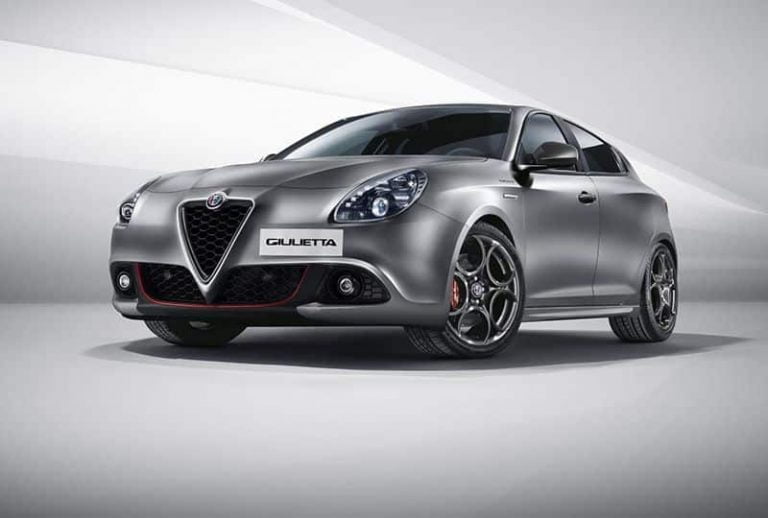
Alfa Romeo has put a refreshed version of its Giulietta hatch on sale, boasting styling and specification changes and a new engine/transmission option.

The latter sees the 120hp 1.6-litre Multijet turbo diesel engine now offered with the Alfa TCT twin dry-clutch transmission. The combination produces a 0-62mph time of about ten seconds and a top speed of 121mph, while returning official combined-cycle fuel economy of 74mpg and a 99g/km CO2 emissions level, putting the car in zero road tax territory.

Styling changes include a new honeycomb grille, piano black or red detail panels, revisions to the head and fog lamp surrounds, new alloy wheel designs, changes to the exhaust tailpipes and the addition of Alfa White and Lipari Grey to the exterior colour choices.

Inside the seat upholsteries and dash and door panel trim have all been revised, the trip computer display updated and a Uconnect infotainment system added, offering live services such as music streaming, traffic updates and social media connectivity through a smartphone.

Five trim levels are available in the new Giulietta range across four petrol and three diesel engines, at prices ranging from £18,450 to £28,480.

Tesla unveils its electric game-changer

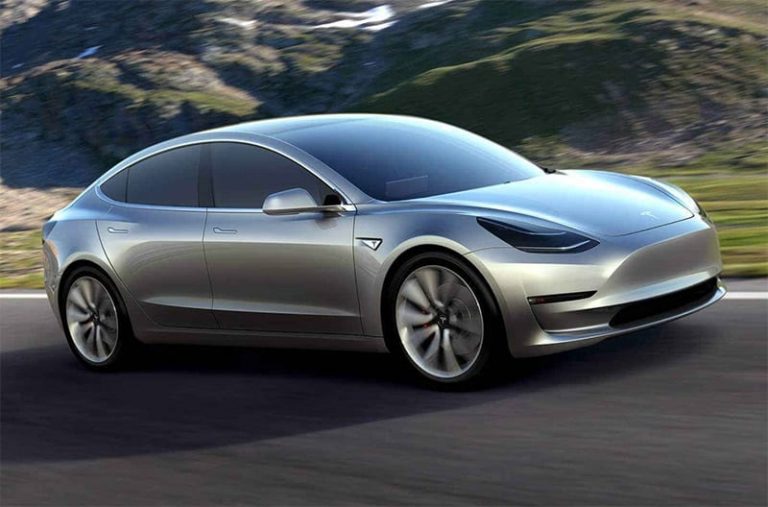
US-based electric manufacturer Tesla has unveiled its ‘most affordable car’ yet – the Model 3 – its ‘most affordable car’ yet.

With a UK selling price that could be around £35,000 before factoring in the government’s plug-in grant, the Model 3 is predicted to give the brand a credible rival to the premium fleet heavyweights of BMW, Mercedes-Benz and Audi.

Dubbed by Tesla founder Elon Musk as the car he set out to build at the start, the Model 3 is a four-door saloon – effectively a downsized version of the already on-sale Model S, to a size that can challenge the likes of the BMW 3 Series, Audi A4 and Mercedes-Benz C-Class.

The Model 3 is said to seat five adults comfortably with interior cabin space that no rival can match, due to making use of the space usually taken up by a conventional powertrain. As a result the front row seats can be moved further forward while like the existing Model S the Model 3 also offers bootspace in both the front and rear.

The Tesla’s electric drivetrain will promise much more than compactness, however. Tesla says it will be capable of a 0-60mph time of under six seconds and crucially a range between charges of up to 215 miles – far in excess of any current production rival.

Musk, describing the car at an event staged at the Los Angeles base of Tesla’s SpaceX programme to build a reusable space rocket, says that the Model 3 is the brand’s high-volume affordable-price product developed from its three predecessors – the initial Roadster, and the Model S and X.

Tesla adds that the Model 3 boasts a five-star safety rating. Musk expects it to go on sale in the US towards the end of 2017, at prices starting from $35,000 before incentives, and the brand says that it has taken more than 115,000 deposits of $1,000 in the first 24 hours since revealing the car.

Subaru updates best-selling Forester

Subaru is refreshing its Forester SUV for 2016 to maintain its status as the brand’s best-selling UK model.

The upgrades include extra soundproofing, interior enhancements and additional safety measures, as well as subtle styling changes.

Exterior alterations include a new wing-motif mesh on the hexagonal grille, a reshaped front bumper with L-pattern chrome trim, designed to accentuate the car’s low centre of gravity and wide track.

A black finish is applied to the base of the wraparound ‘hawk-eye’ headlamps, and new LED combination lamps fitted at the rear.

Inside there is a greater amount of soft-touch surfacing, new piano black and metallic trim, new cloth and leather upholstery options including brown leather, and a higher resolution to the TFT driver’s display.

The upgrades to the soundproofing include front door and quarterlight glass increased in thickness from 3.5mm to 4mm, rear door glass up from 3.1 to 3.4mm, and a more sound-absorbent material in the seals.

The dashboard gains extra soundproofing particularly where it meets the base of the windscreen and in the front passenger footwell to drown out noise from the engine and wind.

Safety upgrades include the availability of Adaptive Front Lighting on the LED headlamps.

Other changes range across updated suspension settings for improved ride comfort particularly over poor road surfaces, and a new steering gearbox with a quicker ratio.

The new Forester goes on UK sale in April 2016 with prices starting from £25,495 for the 2.0i XE. The best-selling variant, the 2.0D XC, costs from £26,995.

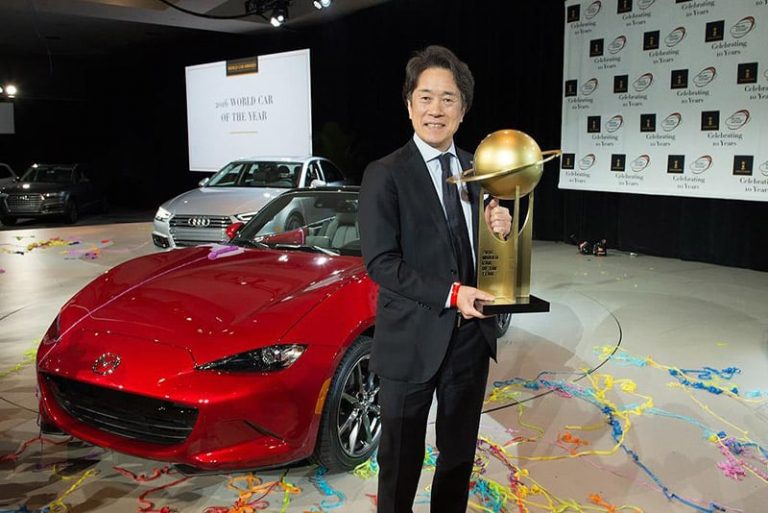
Mazda MX-5 is the world’s top car

Judges in the World Car of the Year award have followed the example of UK motoring journalists and awarded their top prize to the latest Mazda MX-5 roadster.

In the European Car of the Year award, announced in March at the Geneva Motor Show, UK journalists on the judging panel placed the MX-5 first by several points, but votes by their European counterparts saw the award going to the Vauxhall/Opel Astra, with the MX-5 only third.

Now the international jury choosing the World Car of the Year, announced this week at the New York International Auto Show, has placed the Mazda first in a 23-strong list of new cars, the roadster beating fellow finalists the Audi A4 and Mercedes-Benz GLC.

Like the European awards, the World Car of the Year jury consists of 73 motoring journalists, drawn from 23 countries, who give points in several categories to a list of eligible models chosen by a steering committee from newcomers on sale in at least two continents. The initial list of 23 is narrowed to a 10-strong shortlist and then the three finalists.

The title is the second for Mazda in the 12-year history of the awards, the Mazda2/Demio winning in 2008. And the MX-5 took a second award on the night, for Design of the Year, beating the Jaguar XE and a second Mazda, the CX-3.

Mazda’s North American CEO Masahiro Moro describes the awards as a wonderful honour for everyone connected with the company. “As our iconic MX-5 roadster approaches one million units of production, this award is proof that it is as young, vibrant, fun and relevant as ever, and proof that every Mazda looks as incredible as it drives, and drives as incredibly as it looks,” he says.

Other World Car awards presented in New York saw the BMW 7 Series take the luxury car category, the Audi R8 named best performance car and the Toyota Mirai World Green Car.