Find an Expert Rating: 
Home Blog Page 170

SsangYong Korando 2.2 review

What is it?
More powerful, more efficient variant of the Korean brand’s compact SUV.

What’s new?
The big change in the 2016 model year SsangYong Korando is the engine – out goes the 2.0-litre Euro 5 diesel to be replaced by a Euro 6 unit of 2.2 litres that is both more potent, and cleaner.

On offer is 175bhp and 295lbft of torque – 19% and 11% respectively improved over the 2.0-litre. Alongside this are significant emissions and economy improvements – on the two-wheel-drive version the combined cycle figure goes up to 53.3mpg, from 47.1mpg, while emissions drop 8g/km to 139g/km.

As well as the two or four-wheel-drive options buyers can now choose a six-speed auto transmission instead of the standard six-speed manual. It’s only available on the top-spec ELX all-wheel-drive model and comes with an efficiency price, 41.5mpg instead of 48.7 and 177g/km compared to 152.

There are a number of subtle styling changes too – on the outside there are clear glass direction indicators, a new piano-black radiator grille with extra chrome detailing on the range-topping ELX, and new-look alloy wheels, which on the ELX grow to 18 inches and are diamond cut.

Inside the infotainment system is upgraded, SE models getting an RDS audio system with MP3 player, Bluetooth, iPod/iPhone connectivity. The EX gains a seven-inch touchscreen with audio streaming from smart devices and a link to the rear-view camera, while the ELX adds TomTom navigation.

What do we think of it?

We were one of the first to drive the Korando with this engine, which is also going in the larger Rexton. Our test car was the range-topping ELX all-wheel-drive auto and it is capable, without doubt more refined than its 2-litre predecessor – not quite matching the best in the segment but then neither do Korando prices.

Much of this is due to the transmission, which on our short test proved slick in operation, with no hunting between ratios. And the engine is certainly not short of power – it accelerates crisply and the combination of peak torque being available from just 1,400rpm and a two-tonne towing capacity will make the Korando a contender for those who need their SUV to be a workhorse.

The styling changes certainly help what is a generally innocuous, but not unattractive, exterior presence, while inside the touchscreen is well placed high on the centre console, with on our car the well-known and easy-to-use TomTom satellite navigation installed.

Verdict

The latest SsangYong Korando benefits from the new engine – it’s reasonably efficient and comes with a good specification for not a lot. The cheapest all-wheel-drive model starts at £17,495 and includes a five-year warranty – a 2-litre Kia Sportage, for example, would set one back more than £20,000 in AWD form, admittedly with a seven-year warranty.

If you really want, or need a compact SUV but are struggling to find compact SUV money, you could do far worse than look at the Korando.

SsangYong Korando – key specifications

Tested model: SsangYong Korando 2.2 ELX auto
Price: £22,495 (2.2 range starts £15,995)
On sale: October 2015
Engine: 2.2 diesel, 175bhp, 295lbft
0-62mph and max speed: Not stated, 115mph
Economy and emissions: 41.5mpg (manual 48.7), 177 (152)
Test date: September 2015

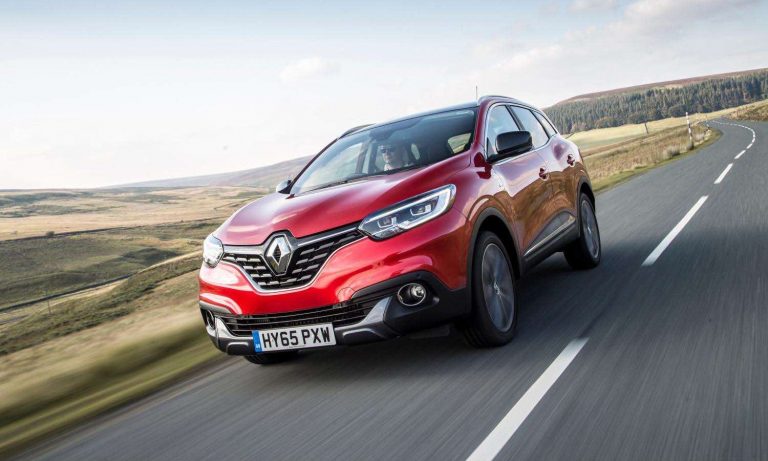
Renault Kadjar review (2015-2018)

What is it?
Long-awaited entry by Renault into the booming C-segment crossover market.

Key features
All-wheel-drive capability, strong styling cues, efficient engines.

Our View
The Renault Kadjar is a very capable new member of the ever-expanding crossover segment, but has it arrived at the party too late?


A family crossover has very quickly become a must-have for car manufacturers, with even the premium and luxury brands now getting in on the act.

While the European C segment, comprising family hatches such as the Ford Focus and Renault Megane, has remained stable over the last decade at around 5.5 million vehicles, the crossover share of the market has exploded from just about nothing to account for more than a quarter of the segment, 1.5 million of them sold in 2014.

In the UK such C crossovers now account for one in 10 of every car sold, so it is a significant market, and therefore perhaps surprising that Renault is so late to jump into it – particularly considering that sister brand Nissan started the crossover explosion with its all-conquering Qashqai.

In fact the Kadjar is not the first such vehicle from Renault. The larger Koleos first appeared in 2008, was based on the Nissan X-Trail and saw one of the earliest uses of the ‘crossover’ description. But it did not greatly impress the public and unfortunately arrived just as the recession did.

The Kadjar is a very different machine – Renault has not surprisingly taken the Qashqai as its base and the two vehicles share 60% of their makeup, both built on the same Renault-Nissan CMF (Common Module Family) platform and using the same engines.

However the creators of the Kadjar are very keen to add that the car has very much its own identity, with 95% of the components that owners will see, feel and touch bespoke to the vehicle.

From the outside the newcomer is clearly related to its smaller sister the Captur, which since its arrival in 2013 has proven a major success, selling 413,000 globally and becoming Europe’s best-selling B-segment crossover.

The two share similar styling cues from the team led by design head Laurens Van Den Acker, notably the very prominent badge on the nose, though we are told that the Kadjar is styled more as an all-terrain vehicle whereas the Captur is seen very much as an urban crossover.

The interior is one of the best aspects of the Renault Kadjar. As well as being spacious and practical – the 475-litre boot for example grows to 1,478 litres with on high trim levels a single movement of the easy-folding rear seats – it wins plaudits for its quality of finish and its dash design, which is uncluttered and neatly laid out, and on all but entry-level models dominated by the touchscreen of the R-Link 2 multimedia system.

It is a sign of the modern crossover market that of the three engines available in the Kadjar, only the most powerful of the two diesels, the dCi 130, will be choosable with an all-wheel-drive transmission instead of the standard front-wheel drive. The four-wheel-drive models are expected to take just eight per cent of sales.

Alongside the stock six-speed manual gearbox, an EDC six-speed auto will be offered, but initially only on the dCi 110 diesel which Renault expects to be the best-selling power plant.

The third power option is a TCe 130 petrol unit – it is predicted that only 20% of customers will choose petrol, though one wonders if recent events concerning diesel engines could change this.

The petrol engine was not available to test at the launch event but both of the diesels were driven and proved equally capable. Refinement comes as a given in the modern environment while the 110 provides enough power to accelerate the Kadjar briskly and keep it bowling along at reasonable pace. The extra torque of the 1.6 will, however, come in useful on all-wheel-drive equipped models, particularly if indulging in what very few modern crossover owners do, taking their cars off road.

On the road the Renault Kadjar is composed, riding less-than-perfect surfaces well and possessing well-weighted steering that makes for confident cornering. The only downside on our test vehicles was a noticeable amount of wind noise seemingly generated by the door mirrors. Overall it’s a very easy car to live with.

Renault is marketing the Kadjar aggressively, the £17,995 starting price under several of the competition. For this one gets the lowest of the four trim levels, Expression+, highlights of its standard spec including DAB radio, a seven-inch TFT instrument panel with a digital speedometer, cruise control with a speed limiter and a strong safety package.

An extra £1,700 buys the Dynamique trim and extras that include the R-Link 2 multimedia system, incorporating TomTom navigation with live traffic updates, dual-zone climate control and extra safety features ranging from cornering lights and the Visio system, comprising lane-departure warning, traffic sign recognition and automatic headlight adjustment.

1509_Renault_Kadjar_02

For an extra £800 Dynamique S includes larger alloy wheels with a diamond-cut finish, parking sensors and leather and cloth upholstery, while the top-of-the-range Signature Nav, £1200 more, tops its list of additions with an eight-speaker Bose sound system and a panoramic sunroof.

The Car Expert comes away from its first drive of the Kadjar with two questions. Firstly we wonder if Renault hasn’t left it a little late to join a market that is now overcrowded with rivals – the newcomer will have to work twice as hard to stand out form the crowd.

The other is the name – apparently it’s a combination of quad, which in French is effectively pronounced as Kad, and ‘jaillir’, French for ‘emerge quickly’. So the word means ‘Agile 4×4’ but on our evidence tends to raise either laughter or confusion when spoken.

Such concerns apart, the Kadjar is a very capable new member of the ever-expanding crossover family, and Renault will no doubt be hoping its quirky name becomes as familiar as Qashqai…

Renault Kadjar – key specifications

Models Tested: Renault Kadjar Dynamique S Nav dCi 110,
Signature Nav dCi 130
On Sale: September 2015.
Range price:
£17,995-£26,295.
Insurance groups:
14E-18E.
Engines: Petrol 1.2. Diesel 1.5, 1.6.
Power (bhp):
128. 108, 128
Torque (lb/ft): 151. 192, 236.
0-62mph (sec):
10.1. 11.9, 9.9
Top speed (mph): 119. 113, 118.
Fuel economy (combined, mpg): 50.4. 74.3, 65.7.
CO2 emissions (g/km):
126. 99, 113.
Key rival
s: Nissan Qashqai, Mazda CX-5, Volkswagen Tiguan
Test Date: September 2015.
* All figures with manual gearbox, two-wheel drive.

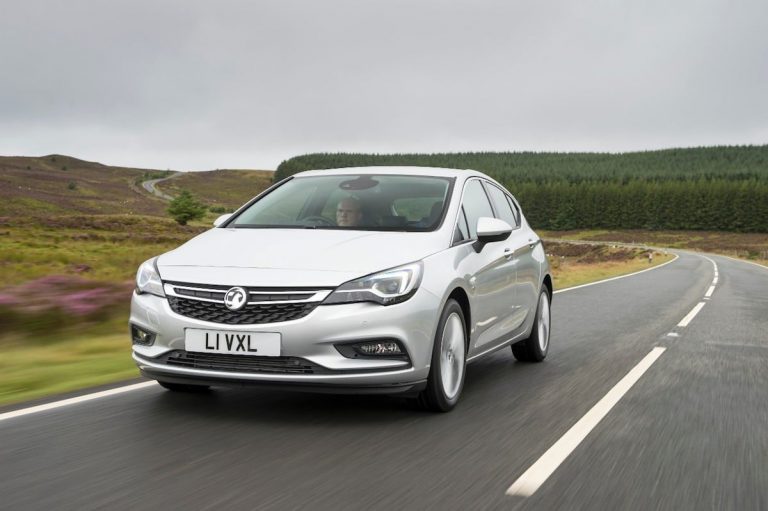
Vauxhall Astra review (1.4-litre)

What is it?
Seventh generation of Vauxhall’s familiar family hatch.

Key features:
Significant weight loss, upgraded interior, improved dynamics.

Our view:
A combination of lower weight, new technology and higher quality in the latest Vauxhall Astra will ensure that the fight for supremacy in the family hatch segment remains close.


Vauxhall Astra review 2015 profile | The Car Expert

In terms of sales, the most important car for Vauxhall in the UK is the Corsa supermini. But in terms of image, the Astra family hatch very much flies the flag for the brand.

Not only is the Astra built in the UK, at Vauxhall’s Ellesmere Port plant on Merseyside, but it attracts more British buyers than in any other European market.

Speaking at the UK launch event of the latest, seventh-generation model at Ellesmere Port, Vauxhall’s managing director Tim Tozer (in what turns out to be his last public statement on behalf of the brand) says that the launch of a new Astra, every five years or so, is a seminal moment for the British car industry.

“It is a very important car for us – this nameplate is the heartland of Vauxhall, in the C segment where we have been very well represented for many years,” Tozer adds.

Vauxhall’s problem is that the Astra’s prime rivals in said C or family hatch segment are two of Britain’s biggest-selling cars – the Ford Focus and the Volkswagen Golf. With both having been renewed recently, the Astra has sat firmly in third spot behind them, selling around 25,000 examples a year less than the Focus, 13,000 behind the Golf.

Vauxhall both wants and believes it can become the C segment market leader, which seems a tall order. The result is an all-new five-door Astra, with a Sports Tourer (estate) unveiled at the Frankfurt Motor Show and joining the hatch in showrooms early next year. The current three-door GTC, launched sometime after the last five-door and the basis of the brand’s performance VXR models, will continue on sale for some time yet.

The designers claim to have taken a clean-sheet approach in producing the new Astra, and the most significant changes are in weight – cut by up to 200kg over the outgoing car, 130 on average.

What Vauxhall’s head of carline Stuart Harris describes as “some clever packaging” has resulted in a car that is almost 50mm shorter and 25mm lower than its predecessor, and very unusually with a wheelbase reduced by 20mm – but with more interior space. Rear legroom, for example, is improved by 35mm.

These reduced dimensions, and the advantages of building on GM’s latest modular vehicle architecture, enables some serious weight savings. The body in white alone loses 77kg, now weighing 280kg, while another 50kg is shaved from the chassis primarily through the use of ultra-high-strength steels and more compact subframes.

New engines aid the diet – the 1.4-litre EcoTech petrol unit’s aluminium block, for example, saving 10kg over its cast-iron predecessor. With less mass to act on the brakes can be smaller, adding further weight savings, as do the wheels. Reversing an industry trend Astra wheel sizes are reduced on average by an inch – a previous ‘large-wheel’ policy meant less popular tyre sizes and higher whole-life costs for the fleet customers that make up almost three-quarters of all Vauxhall Astra sales.

The car certainly doesn’t appear shorter than its predecessor. The team under head of design Mark Adams has produced a purposeful exterior presence, from the way the bonnet creases sweep down to merge with the redesigned grille and headlamps in a strong point, to the flowing roofline and two-tone rear pillar. The car looks low and sleek, and indeed is the most aerodynamic five-door hatch yet produced by Vauxhall, its drag coefficient cut from 0.325 to 0.285, with consequent efficiency improvements.

Vauxhall Astra interior 2015 (The Car Expert)

Vauxhall knew that to seriously take on the Focus, the Astra needed a better interior, and much has been done. The quality of fit and finish is up, but these days no manufacturer can expect to be found wanting in this area.

More pleasingly the controls are much more logically placed – those dealing with vehicle functions sit in close proximity to the gear lever, the climate control in the lower half of the centre console, and the infotainment on the top half, surrounding a new, stylish touchscreen with its glass running right to the edges – no unattractive plastic frames here.

The seven-strong engine line-up, four petrol and three diesel, is described as entirely ‘new generation’ and indicative of Vauxhall’s powertrain offensive that will bring 17 new units to market by 2018.

The Astra choice combines units recently introduced to the range, such as the 1.6-litre ‘whisper diesel’ that in its lowest 109bhp and EcoFlex form offers very fleet-friendly combined cycle fuel economy of 91.2mpg and emissions of 82g/km, and completely new units, notably the 1.4-litre petrol with 148bhp.

On the launch event The Car Expert tried both the 134bhp version of the whisper diesel, and the 1.4-litre petrol, and while the efficiency of the diesel was expected, it was the petrol unit that made the most impression, with its refined yet potent power.

Combine this eager power with a chassis which has distinctly less in terms of poundage to keep upright, and the new Astra becomes a confidence-inducing, fun car to drive, particularly on challenging roads such as on the launch test route in Snowdonia. It’s still not quite as dynamically impressive as the Focus, the standard bearer for chassis excellence, but the Vauxhall runs the Ford more closely than it has ever done.

Vauxhall believes too that the Astra will appeal on its equipment, and particularly technology that has handily come to market just in time to feature first on the Vauxhall. Indicative of this is the Intellilink infotainment system that integrates Apple Carplay and Android Auto smartphones. Simply by plugging into a USB socket the centre console touchscreen becomes a replica of the phone, with various Apps available for use through the car’s systems.

The Vauxhall Astra also debuts GM’s OnStar service in the UK, which by a touch of a button connects the driver to an operator in a control centre who can offer services ranging from destination assistance to emergency help and even diagnosing a fault in the car.

Outside perhaps the most impressive innovation are the glare-free matrix LED headlamps, dubbed Intellilux and camera controlled to activate high-beam and cornering functions whenever other traffic allows. They provide illumination 40 to 50 metres earlier – giving the driver a possibly crucial 1.5 seconds more time to react to situations unfolding ahead of them.

Tim Tozer states that the new Vauxhall Astra raises the bar in the sector, and it is certainly a major advance over its predecessor. Its combination of lower weight, new tech and higher quality will ensure that the fight for supremacy in the family hatch segment remains too close to call.

Vauxhall Astra – key specifications

Models Tested: Vauxhall Astra Elite Nav 1.4i 150PS Turbo, 1.6 CDTi 136PS S/S
On Sale: Showroom launch 24th October 2015.
Range price: £15,295-£22,815.
Insurance groups : TBA.
Engines: Petrol 1.0, 1.4×3, 1.6. Diesel 1.6×3.
Power (bhp): 104, 99/123/148, 197. 109/134/157.
Torque (lb/ft): 125, 95/180/180/206. 221/236/258.
0-62mph (sec): 10.5, 11.6/8.6/7.8, 7.3. 10.3/9.0/8.0.
Top speed (mph): 124, 115/127/134, 146. 121/127/137.
Fuel economy (combined, mpg): 65.7, 53.3/52.3/51.4, 45.6. 78.5/76.3/69.3.
CO2 emissions (g/km): 99, 124/102/128, 146. 95/99/108.
Key rivals: Ford Focus, Volkswagen Golf, Peugeot 308.
Test Date: September 2015.
* All figures with 16-inch wheel where specified, not including Easytronic models.

Vauxhall Astra road test 2015 (The Car Expert)

Frankfurt: Citroën plants Cactus on the beach

0

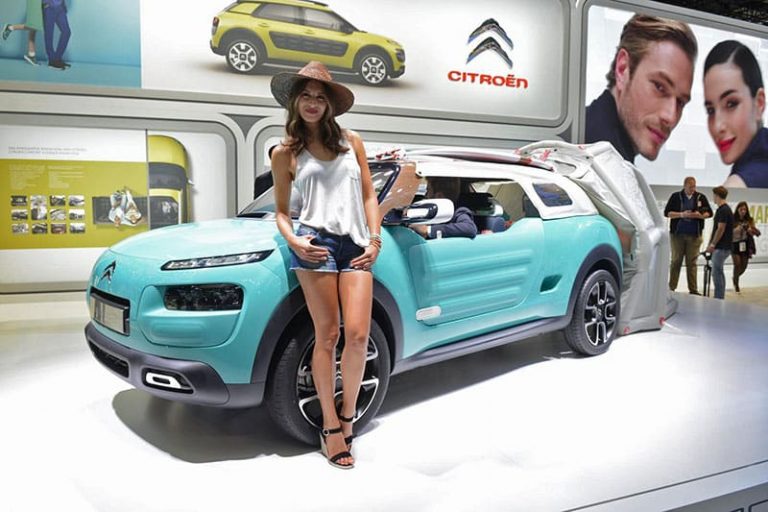
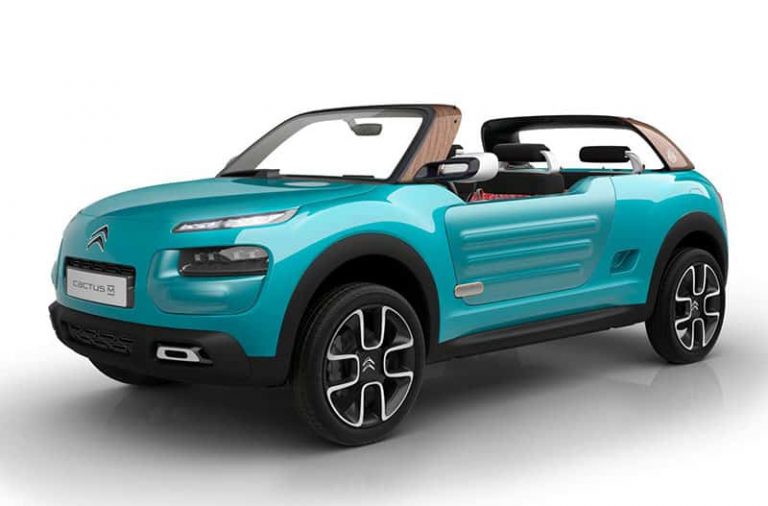
Citroën’s Cactus M concept car is being pitched as a leisure vehicle, with even a social media competition underway to offer winners a ‘Beach and Breakfast’ test drive in it.

Unveiled at the Frankfurt show, the Cactus M is based on the C4 Cactus but inspired by the Mehari, a lightweight beach-buggy style offroad vehicle that the French brand last sold in 1988. The newcomer is evolved from the Aircross concept which Citroën displayed at the Shanghai show in April.

It is a permanently open-top car, but does come with a canvas hood which can also be used as a tent, folding out from the back of and suspended with tubes inflated by a compressor that is supplied with the car.

Unlike the four-door Cactus production vehicle the M only has two doors, each formed in single-piece moulded plastic coated on the outside in the same material used for the ‘airbumps’ on the Cactus. It also has steps in the sides so that rear seat passengers can simply clamber over the door to get in.

The beach theme continues on the inside, the seats and dash faced in the same neoprene waterproof fabric used for wetsuits, allowing occupants to jump in the car while still wet from the seat. Holes in the footwells even allow it to be hosed down, particularly after mounting surfboards on the rear arch.

Industry reports that Citroën has registered the ‘e-Mehari’ trademark suggest that the model could be making a comeback, with an electric powertrain.

Frankfurt: Buyers clamouring for £160K Bentley SUV

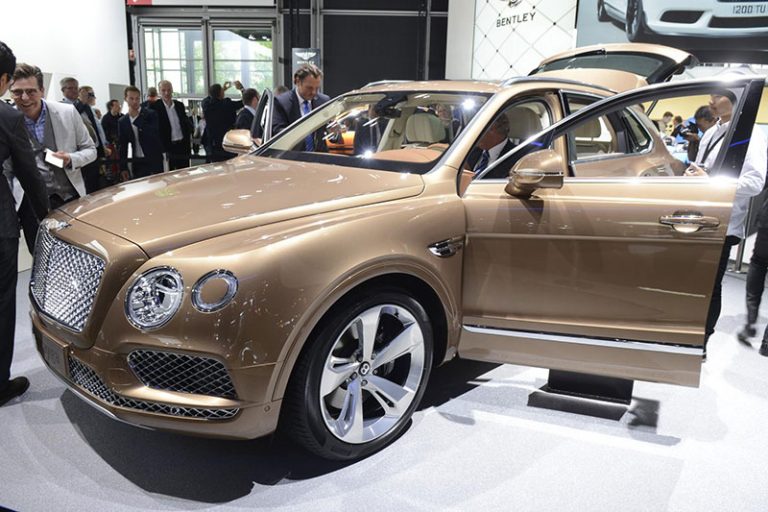
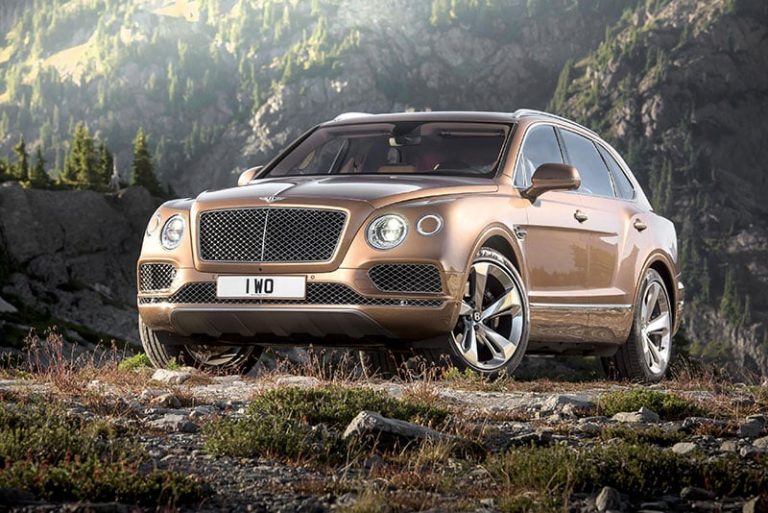
Customer demand for the Bentley Bentayga SUV has far outstripped the brand’s expectations, with CEO Wolfgang Dürheimer describing the pre-order intake as “sensational.”

The first year’s production of the new model, which Bentley says creates a new market sector in the luxury SUV, is already sold out.

Costing from £160,000, the Bentayga will add in the region of 3,000 cars a year to Bentley’s volume, according to industry sources.

Unveiling the Bentayga at the Frankfurt show and describing the event as “a defining day of a great brand,” Dürheimer says that Bentley has created a completely new luxury SUV segment; “We could offer customers an unexpected answer to an already well-developed market – the world’s first luxury SUV.”

His views appear well founded, as while the Bentayga has been in development since before the unveiling of the controversial EXP 9F concept at the 2012 Geneva Motor Show, other manufacturers, notably the likes of Rolls-Royce and Lamborghini, have also confirmed SUV development programmes since, aiming to attract customers looking for luxury above the most expensive versions of the Range Rover, until now the most upmarket SUV.

The Bentayga has undergone the most comprehensive development programme in Bentley’s history, being tested in widely varying environments including South Africa, the UK, the Arctic Circle, the Middle East and Arizona.

As a result, according to Dürheimer, the company is confident the Bentayga will offer a genuine Bentley driving experience in any environment. “Its combination of go-anywhere ability and everyday usability means that luxury no longer has to stop when the road does,” he says.

The launch Bentayga is powered by an all-new Crewe-built 12-cylinder TSI petrol engine, with 598bhp and 664lbft of torque, giving it a 4.1-second 0-62mph time and a maximum speed of 187mph.

According to Bentley sales and marketing director Kevin Rose, the car also boasts “the finest interior in the world”, based around 15 separate wood pieces and 16 leather hides.

He adds that the car is the most “technically advanced luxury SUV,” but adds; “new technology should complement, not overpower the trademark Bentley character – so the driver can with one sweep choose from eight modes to select the perfect dynamic setup for any surface, or road condition.”

Debutant technology in the Bentayga includes Bentley Dynamic Ride, an electronic active road control system adjusting instantly to cornering inputs to offer what Rose promises is class-leading stability and ride comfort and exceptional handling.

1509_Bentley_Bentayga_06

He also highlights the most comprehensive accessory/option range Bentley has ever offered. Standing out among the extras are a leather-trimmed folding event seat integrated into the tailgate, a picnic set in fine-bone china and crystal in a Mulliner case, and a Breitling car clock with a mother-of-pearl face trimmed with diamonds and white gold.

Building the Bentayga has seen what Dürheimer describes as the largest investment in Bentley’s history, £840m poured into the company’s Crewe, Cheshire facility creating 1,500 new jobs.

He also adds that Bentley is looking forward to future competition from other luxury brands developing SUVs; “Our appetite for competition is one of the reasons Bentley goes motor racing – no other car manufacturer combines luxury and performance the way we do.”

This comment could back up industry rumours that Bentley is working on an even more powerful Bentayga Speed variant. Diesel and plug-in hybrid powertrains are also under development.

Bentley unveils its ‘most exclusive’ SUV

Bentley has fired the first salvo in a new war of the ultimate luxury SUVs with the unveiling of its Bentayga.

The model will debut at the Frankfurt Motor Show on 15th September and arrive on UK roads in early 2016 at prices likely to be more than £130,000.

Visually the Bentayga is very different to the EXP 9F concept that was unveiled at the 2012 Geneva Motor Show, and attracted wide criticism.

The new car is lower and more sporty than the concept, with a profile that will make it instantly recognisable as a product of the Crewe, UK-based manufacturer.

It is a large car, measuring 5141mm long, 1998mm wide and 1742mm high, with a wheelbase of 2992mm. It seats four or five occupants as standard though a seven-seat variant is in development.

1509_Bentley_Bentayga_03

Bentley is pitching the Bentayga as the ultimate luxury SUV, describing it as “the fastest, most powerful, most luxurious and most exclusive SUV in the world.” However the brand also expects the car to offer traditional SUV versatility, adding that is combines “unparalleled luxury with sporting ability, off-road performance and everyday usability”.

For the Bentayga an all-new W12 petrol engine has been developed in house at Crewe, the 6.0-litre unit offering 600bhp and 663lbft of torque. As result the Bentayga will be a rapid SUV, passing 62mph from rest in 4.1 seconds and going on to a maximum speed of 187mph.

The engine features twin turbochargers, a combination of direct and indirect fuel injection and the variable displacement system already seen in models from sister brand Audi. This allows half of the unit to shut down when not required with the engine running as a six-cylinder, helping improve efficiency by 11.9 per cent over the brand’s previous W12 engines.

Combined cycle fuel economy is quoted at 22.1mpg with emissions of 292g/km, while further efficiency will eventually be available – Bentley has also revealed plans for diesel and plug-in hybrid versions of the Bentayga.

The transmission combines an eight-speed automatic gearbox with a four-wheel-drive system which Bentley says has been specifically strengthened. While not many owners are expected to take the Bentayga significantly off road, it must be capable of doing so.

A host of new technology debuts in the Bentayga, the most notable being Bentley Active Ride, an electric roll control system that counteracts the body rolling that vehicles with high centres of gravity, such as SUVs, are prone to.

1509_Bentley_Bentayga_04

The Bentayga’s interior is being described by its creators as the finest in any automobile – just one day after former sister brand and now rival Rolls-Royce revealed a sumptuous interior in its Dawn drophead.

Seven different veneers were used on the 15 separate pieces of wood trim, which sits alongside leather and polished metal to the finest tolerances yet seen in a Bentley. Owners will also be able to personalise their car in virtually any way they wish through the Mulliner programme.

Bentley Motors chairman and chief executive Wolfgang Dürheimer dubs the Bentayga as “truly the Bentley of SUVs” saying that it redefines luxury in the SUV sector and offers a genuine Bentley experience in any environment, thanks to a combination of unparalleled attention to detail, go-anywhere ability and cutting-edge technology.

“With this extraordinary car we are looking forward to an exciting period of strong growth and sales success for Bentley– the Bentayga is the next step in our brand’s bold future,” Dürheimer adds.

And the Bentayga is expected to greatly boost the Crewe brand’s annual volume, selling more than 3000 examples a year to take Bentley’s annual output significantly past 10,000 cars.

The car will also soon gain rivals – Rolls-Royce and Lamborghini are luxury makers known to be working on SUV models, both seeking to replicate the success that Porsche has enjoyed in the premium sector. The German brand’s Cayenne SUV, launched to controversy in 2002, has since massively outsold all of Porsche’s familiar 911-based sports cars.

Citroën reveals Cactus for the beach

Citroën’s lifestyle-pitched C4 Cactus crossover will spawn an open-top sister at the Frankfurt Motor Show in September.

The Cactus M is a concept, inspired by the Mehari, an open-top Citroën sold between 1968 and 1988, and taking many of its styling cues from the Aircross concept that Citroën unveiled at the Shanghai show in April.

It is a completely open vehicle, with the only protection available an ‘inflatable’ roof which Citroën says can double as a tent – the seats folding down to become effectively a couch. And while there are two rows of seats there are also only two doors. While these are much longer than those of a standard Cactus (made in one-piece plastic to reduce weight), rear-seat passengers are encouraged to use built-in steps to climb over the flanks, US NASCAR style.

The M also boasts more muscular styling than the stock Cactus, giving it a more SUV, go-anywhere image – the designers saying that the overall proportions were designed to echo those of a boat. The windscreen is more upright, giving a taller stance.

Sculpted-out wheel arches house taller, narrower tyres on wheels of larger diameter.

Power for the concept comes from Citroën’s 1.2-litre petrol unit of 108bhp, though the brand is also thought to be working on electric powertrains. And while the Cactus concept won’t see production in its present form, a new Mehari is thought to be a possibility.

The new Cactus, seen on video…

Dacia offers a more efficient Duster

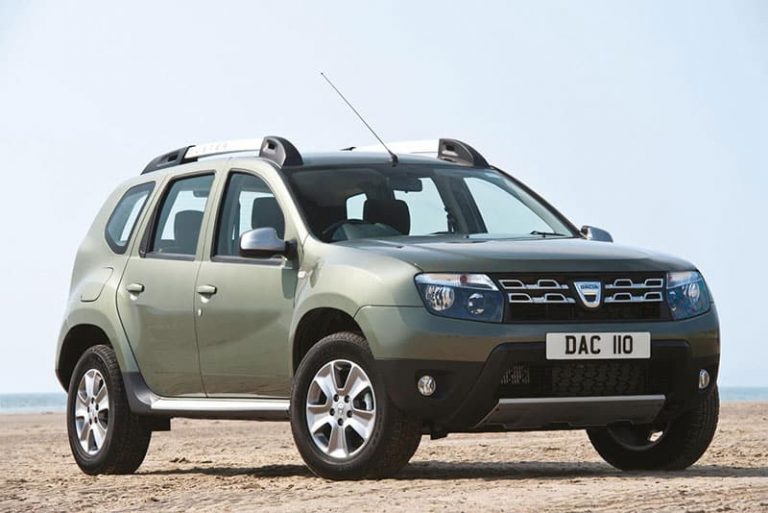
Dacia has added a new engine to its Duster line-up, which cuts running costs.

The 1.6-litre 16-valve 115hp unit is Euro-6 emissions compliant, with a combination of more performance alongside reduced fuel consumption and emissions.

The new unit replaces the previous 105hp engine and as well as the extra power it boasts an additional 6lbft of torque – now 115lbft.

This translates to a 0-62mph time cut from 11.5 to 11 seconds in two-wheel-drive models with a 1mph faster top speed, while the 4×4 car’s 12-second 0-62mph time is eight tenths faster, the maximum speed increased by 5mph.

CO2 emissions on 4×4 models are cut by a significant 30g/km to 155g/km and fuel consumption drops by 6.2mpg to 41.5mpg as a result the annual Vehicle Excise Duty charge is £10 less at £170.

On 2WD variants, CO2 is down 20g/km t 145g/km, fuel economy 4.3mpg better at 44.1mpg, and the annual VED £35 cheaper at £145.

Alongside the running-cost advantages the new engine also improves the towing capacity of 2WD cars – up from 1,200 to 1,500kg and comparable to 4×4 models. Benefit in Kind tax for company drivers drops four bands on all-wheel=drive versions and two bands with 2WD models.

Meanwhile there have been improvements to the 1.5 dCi 110 turbodiesel, an extra 15lbft taking the torque figure to 192lbft. Combined fuel consumption is now 64.2mpg (7.7mpg better) in 2WD models and 60.1mpg (6.8mpg better) in 4x4s; CO2 emissions are down to 115g/km (-15g/km) and 123g/km (-12g/km) respectively; and every model is one band lower in the VED and BIK scales.

Dacia has also streamlined the model range to now offer ten versions of the Duster in a more progressive and logical line-up.

There are two entry-level Access models (2WD and 4WD), both powered by the new 1.6-litre, 16-valve 115 engine; mid-range Ambiance trim is available with both engines and both drivelines; and at the top of the range there are Lauréate and Lauréate Prime versions, all diesel, in 2WD and 4WD formats.

The new Renault-sourced engines are also resulting in more efficient models in Dacia’s Sandero, Sandero Stepway and Logan MCV ranges.

Jaguar XF review

What is it?
Second generation of Jaguar’s executive saloon.

Key features:
Bolder look, new powertrains, more technology

Our view:
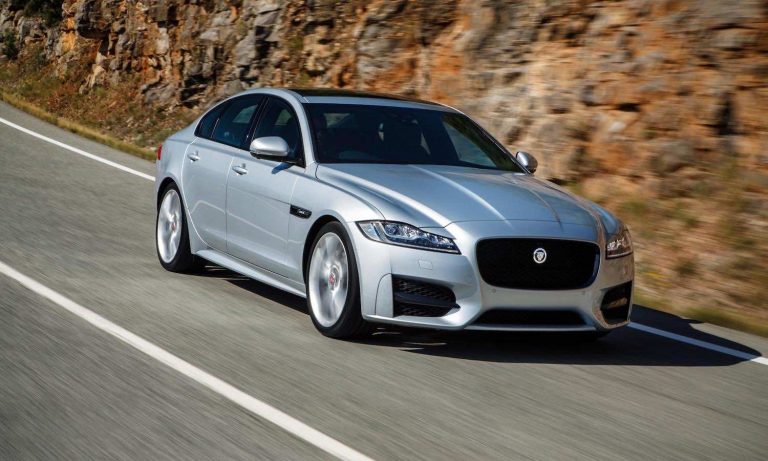
The new Jaguar XF is a car that the German giants should be looking at with a great deal of concern.


It is a busy year for Jaguar and with the all-new XE arriving on the market to rival BMW’s 3 Series, and the unveiling of the F-Pace at the Frankfurt Auto Show in September marking the brand’s entry into the crossover market, it is easy to overlook the launch of the second-generation XF.

This car, however, is very important to Jaguar – when the first generation launched in 2007 it changed the entire outlook of the brand. The XF’s coupe-like exterior and quality interior turned the heads like never before of those who had traditionally bought BMW’s 5 Series or the Audi A6. The Jaguar XF firmly signposted the steep growth that the company was to experience under its then new owners Tata.

Fast forward to 2015 and Jaguar is soaring, and the XF, the car that started it all, needs to keep up. So we have an all-new version, which according to design director Ian Callum – the man who masterminded the first Jaguar XF – is improved in all areas but also fulfils three basic aims.

The car is evolved rather than completely changed – because the first XF was so revolutionary. It maintains the Jaguar DNA of a sporty visual appearance, and crucially it has more interior space particularly in the back, an area that attracted criticism in the first car.

Jaguar’s first standalone modular architecture, also used on the smaller XE, results in an XF that is not only significantly lighter but 7mm shorter and sits 3mm lower to the ground than its predecessor. Yet the wheelbase is extended by 51mm and the overhangs cut – that at the front by 66mm.

As a result while clearly a relation to the original XF, the new version looks a distinctly larger car, helped by such visual detailing as the shoulder line which is lower on the flanks and combined with slightly deeper glassware.

On slipping inside it is clear that the desire for more space has been met, particularly in the rear seats where those of average height and above will no longer feel they need to unfold themselves to exit the car – it all feels rather more roomy.

It’s also pretty luxurious. In recent years Jaguar has become renowned for the quality of its interiors and the XF maintains the breed. The new car gains the now brand-signature ‘Riva hoop’ first seen in the XJ, sweeping from the door around the base of the windscreen to the opposite door, and helping to make everything appear suitably contained.

The dash layout combines simplicity with quality, the centre console dominated by the touchscreen display. Matters become even more impressive if one dips into the options package, choosing the 12.3-inch TFT instrument panel, and the 10.2-inch widescreen centre console. In short, it all fits and one immediately feels at home in something that is clearly above the norm.

Not surprisingly the XF powertrain options are dominated by diesels – there are three of them, the high-output V6 with its 295bhp and 516lbft of torque sitting alongside two members of the new Ingenium family. These are both 2-litre turbos, with either 160 or 177 horses and the less powerful one squeezing CO2 emissions (in manual-gearbox form), down to 104g/km. Not so long ago such figures in a large luxury car would have been unthinkable.

In some markets the XF will continue to be offered with the 2-litre petrol unit carried over from the previous model but UK buyers preferring gas to oil will be pointed at a new 3-litre V6 unit, supercharged with 374bhp. This is clearly aimed at those for whom potency is a major requirement.

On the global first drive event, held on the challenging roads of northern Spain, The Car Expert was able to drive with the larger Ingenium diesel, and the 3.0-litre, as well as the range-topping supercharged petrol unit.

It is clear of course that the vast majority of Jaguar XF sales will come from the Ingenium engines. They are by far the most efficient, highly refined while not lacking in pace – a 62mph sprint time of under 10 seconds in our 177bhp unit is plenty fast enough for most, especially when you consider the large, plush machine it is accelerating. We have no doubt that more Ingenium units will arrive in the XF before long.

Those who like their performance, however, should look closely at the 3.0-litre V6. It effectively adds an extra 100lbft of torque to the engine it replaces, and it pulls very strongly from very low revs. It may be almost a second slower to the 62mph marker than the supercharged petrol unit, but 6.2 seconds is still impressive, and you won’t need to interupt your fun with almost twice as many visits to the filling station…

One area where the original XF lacked not at all was in its road behaviour, and the new version simply improves the dynamism still further. The recipe is promising – the aluminium-intensive shell construction cuts up to 190kg in weight compared to the old XF, while the suspension, double-wishbone front, intergral link rear, has also been improved. Combine that with a significantly more slippery shell, rear-wheel drive and a perfect 50:50 weight distribution and satisfaction should follow.

Which it does – cruising the autoroute, the XF rides in supreme comfort. Come off the m-way into a series of twisting, hairpin-strewn mountain roads and the car reacts with confidence, pulling strongly, turning sharply with the new electric power steering giving all the feedback one needs.

There’s perhaps no better evidence of this than the fact that the launch programme included driving the 374bhp supercharged petrol XF around the Navarra race circuit, which is certified for Formula One testing. It seems initially incongrous to put such a luxury car into such an environment, but the XF reacted very positively, and laps of the challenging track were involving and exhilarating.

Space in this report does not allow much comment on the XF’s enhanced technology, infotainment, and the cost of ownership figures that the car’s makers believe will knock the opposition for six. Such matters will have to wait for a drive on UK roads.

Suffice to say, that whereas the first Jaguar XF was a highly competent car that took Jaguar on a new path, the new car ups the stakes considerably. This is a car that the German giants should be looking at with a great deal of concern. It could well become the benchmark in its executive-dominated segment, and indeed its most significant challenger could come from rather close to home – its smaller sister, the XE.

Jaguar XF – key specifications

Models tested: Jaguar XF 180hp R-Sport Auto, Jaguar XF 380hp AWD S/RWD S, Jaguar XF 300hp TDV6 Portfolio.
On Sale: August 2015
Range price: £32,300-£49,945
Insurance group: From 25E
Engines: Diesel 2.0 x2, 3.0; Petrol 3.0
Power (bhp): 160/177, 295. 374.
Torque (lb/ft): 280/317, 516. 310.
0-62mph (sec): 8.7/8.0*, 6.2. 5.3.
Top speed (mph): 132/136, 155. 155.
Fuel economy (combined, mpg): 70.6*/65.7, 51.4. 34.0.
CO2 emissions (g/km): 104*/114, 144. 198.
Key rivals: BMW 5 Series, Audi A6, Mercedes E-Class
Test Date: August 2015
*= with manual transmission

Mazda MX-5 review (2015 – 2018)

0

What is it?
Fourth generation of Mazda’s roadster icon.

Key features:
Engine/chassis tech, light weight, drivability.

Our view:
Not only a more than worthy successor to the original, it’s the best Mazda MX-5 yet.


There can be few motorists who are not aware of the Mazda MX-5 – particularly in the UK.

When it first arrived on British roads in 1990 the MX-5 reinvented a market lost with the demise of such British sports car classics as the MGB and the Lotus Elan – it was a light, affordable roadster which fulfilled the basic premise of being fun to drive. In fact it was just the sort of car that such UK specialists should have built to remain major players in the market.

That the MX-5 came from Mazda was a major surprise, the Japanese brand not renowned for thinking out of the box though it had built a radical rotary-powered sports car, the Cosmo, in the 1960s. With the MX-5 the brand got the market just right – virtually everyone who saw the car fell in love with it. Even before the original was replaced by the Mk2 in 1998 it had earned a place in the Guinness Book of Records as the world’s best-selling roadster, a position it has retained ever since.

As the Mk4 arrives on the market Mazda is closing in on a million MX-5 sales globally, and 12 per cent of those cars have gone to British buyers, the UK total in excess of 120,000 units.

Britain takes 50% of all European MX-5s, the UK owners club has more than 6,600 members and a race series for the car has more than 100 registered competitors and fields that often exceed 90 cars – there is no greater evidence that this is the spiritual successor to the classic 1960s British roadster.

That premise was apparently firmly in the mind of Mazda’s designers when they set out to create the fourth incarnation of the line. The Mk3, introduced in 2005, had taken on the guise of a larger, more muscular beast, partly through all the extra safety kit legislation demanded.

For the new version it was felt the car needed to return to its roots, to that original car, while also incorporating the SkyActiv engine and chassis efficiency technology and the ‘Kodo – soul of motion’ design language that has characterised all recent releases from Mazda – in fact the MX-5 is the last model in the range to incorporate the first generation of both the engineering and design programmes.

So the new Mazda MX-5 is shorter, lower and wider than the outgoing car, and in fact 5cm shorter and 1cm lower than the original Mk1. Meanwhile at 975kg, some 100kg less than the Mk3, this is the lightest MX-5 since the original, achieved through such areas as aluminium-intensive body construction and the more compact, lighter engines.

According to Mazda UK MD Jeremy Thomson, this downsizing completely reverses an industry trend. “Renault launched its Clio supermini around the same time as the Mk1,” Thomson says. “Today the current Clio is twice as heavy and with an 18% larger footprint…”

Yet even with its shorter overhangs, reduced by 4cm either end, and the lower stance, the new Mazda MX-5 is instantly recognisable as directly related to that game-changing original. If anything the styling, with the modern tech super-slim headlamps, are an improvement on the original – the car looks more purposeful, inviting.

The new car has an ever so slightly shorter wheelbase, and the two occupants sit further back and lower to the ground than in previous versions. Yet on slipping behind the wheel, one experiences the paradox of the surroundings appearing to closely fit, cockpit-style as they should on a sports car, while not feeling cramped. The 130-litre boot is bigger too.

Part of the snug comfort is due to improved seats, while a notable touch is the way the exterior metal, and its colour, extends along the door tops. The dash is all circular dials, as it should be, while SE-L models and above get Mazda’s MZD-Connect connectivity system, accessed through a seven-inch touchscreen. While a typically effective version of such technology, the screen itself does look a little ‘stuck on’ the top of the dash.

Then there is the hood – still fabric (Mazda is not yet saying whether there will be a hardtop version like on the Mk3), but lighter than its predecessor and potentially even faster to use. Sitting in the driver’s seat you flick the central catch and drop it down in seconds, while raising is equally easy and rapid, as we discovered during unseasonable August weather during the test in Scotland.

There are two engine options for the MX-5, both familiar SkyActiv petrol units but modified for their sports car application. The former 1.8-litre engine makes way for a 1.5 with more horses, 129 in total, but lower fuel consumption and emissions.

Then there is a 2.0, like in the Mk3, but again with more power, 157bhp, and better efficiency. And both engines are matched to a six-speed manual gearbox, more on which shortly.

All of this is loaded into a chassis that retains its original suspension layout, with a double-wishbone front and a multi-link rear end, but has been lightened in all areas, while also being torsionally stiffer than its predecessor. It all sounds very promising.

The launch test route involved a drive across Scotland, from Inverness airport to the tip of the Applecross peninsula, on roads that offer a major challenge to any car with sporty pretensions, but also great rewards to any car that can deliver – and the MX-5 certainly delivers.

We racked up several miles with both engines and while the true enthusiasts will likely naturally lean towards the more than competent 2.0-litre, it’s the 1.5 that proved the most satisfying. It seems to combine with gearbox and chassis to produce a perfectly balanced whole.

Much of this is due to the gearbox. The 1.5 engine is by no means a slouch but it requires all of its revs, and the resultant plentiful gear-changing is nothing less than sheer pleasure through the short 40mm throw, sharp and precise gate. It all adds a lot to the experience.

Then there is the chassis, and a newly-developed electric power steering system. The car leans purposefully into bends, the steering lightweight but with excellent feedback – you really feel you are driving this car and very quickly start to seriously enjoy roads with lots of corners.

Finally, there is the price. The Mazda MX-5 was always built around the concept of affordability. The £18,495 starting price of the new car is £5 more expensive than the equivalent Mk3, and £3,570 more than the Mk1 when it launched more than 25 years ago. Taking inflation into account, the Mk1 today would cost around £33,000.

The Car Expert does not routinely express superlatives but it is easy to do so with the new Mazda MX-5. This car is not only a more than worthy successor to the original, it is the best MX-5 yet…

Mazda MX-5 – key specifications

Model tested: 131PS SE-L Nav, 160PS Sport-Nav.
On sale: August 2015.
Range price: £18,495-£23,295.
Insurance group: 25E-29E.
Engines: Petrol 1.5, 2.0.
Power (bhp): 129, 157.
Torque (lb/ft): 111, 148.
0-62mph (sec): 8.3, 7.3.
Top speed (mph): 127, 133.
Fuel economy (combined, mpg):
47.1, 40.9.
CO2 emissions (g/km): 139, 161.
Key rivals: BMW Z4, Audi TT Roadster, Mercedes SLK
Test Date: August 2015.

Skoda Superb review

What is it?
Third-generation of the Skoda range-topper.

Key features
New design, upgraded quality, more efficiency.

Our view
Improved residual values, and the affordable finance offers that result, make it easy to see why there are very high hopes for the new Skoda Superb.


In 1934, Skoda was a manufacturer of high-quality cars for its home Czechoslovakian market. The Superb, launched that year, was one of the best, driven by the very well-to-do. Around 600 were sold, which for the time was very impressive.

Roll forward half a century, to 2001 – Skoda, ten years on from being acquired by the Volkswagen Group, revives the Superb badge on a new range-topping saloon, aimed at the fleet-dominated large family car segment and rivalling such core models as the Ford Mondeo.

After 13,000 UK sales, a second-generation Superb launched in 2008, with the big change being the arrival of an Estate variant. This quickly became the more popular of the two, boosting Superb sales from 1,000 to 6,000 a year, totalling 29,000 until the present.

So now we have an all-new third generation Superb, and its challenge is tougher than for its predecessors. Skoda is on the march, the fastest growing brand on the UK market for the past three years and having doubled its volumes in just four years. The Superb is expected to maintain that growth, not necessarily by mushrooming its own sales, but by being the brand’s halo model, debuting a new era of style-led Skoda’s.

The car is seen as a game-changer, Skoda product manager Rebecca Whitmore dubbing it “a car with no compromise – no longer do you have to choose between style and space.”

What she means is the new Skoda design language, unveiled on the Vision C concept at the 2014 Geneva Motor Show, now appearing for the first time in production form on the Superb, and set to be replicated on future Skoda models.

Visually it is certainly bolder, the shell a series of clean lines and sharp creases, intended to tug at the heartstrings while still appealing to the head. “In the past people have bought Skodas for all the rational reasons, what they get for the money, the good residual values and the like – we now want to be a more emotional choice too”, says Skoda UK head of sales Martin Barrow-Starkey.

So while the Superb looks much better, it still remains practical. Not surprisingly it is yet another VW Group product to be based around the brand’s seemingly all-inclusive MQB platform, while the latest aluminium-intensive construction techniques also make a big difference, slicing 75kg from the shell weight, with obvious advantages in efficiency and handling.

The car is 47mm wider than its predecessor, while the hatch is 28mm longer and the estate 23mm, but the wheelbase stretches by 80mm, resulting in improved interior space even though the roomy insides were already a major plus of the old Superb.

Boot space is just one of a swathe of best-in-class trophies claimed by Skoda for its newcomer. The hatch accommodates 625 litres with seats up, 30 litres better than before, the estate 660 litres.

The Superb’s rivals in the segment, notably Ford’s latest Mondeo, have been worked on very hard to move their interior quality upmarket, targeting that imposter from the premium sector the BMW 3 Series. Skoda insists, however, that the Ford is its target, not the BMW, but nonetheless dubs the Superb “the best car we’ve ever built” and the interior certainly demonstrates this. The combination of plastic and leather surfacing works well, and said plastics are pleasingly soft to the touch – it certainly more than matches the standards of its rivals.

The other notable aspect of recent Skoda models has been the range of ‘Simply Clever’ features – lots of “why wasn’t that thought of ages ago?” touches, and the Superb has a host of them. So the signature ice scraper remains handily placed behind the fuel filler cap, the interior lights unclip to become rechargeable torches, and perhaps neatest of all not one but two umbrellas are neatly stored in the front doors.

Seven engines are currently on offer for the new Superb, four petrol and three diesel units, all turbocharged, all improved in efficiency over predecessors and all Euro-6 emissions compliant.

The petrol options range from 1.4 units of 123 and 148bhp to a pair of 2-litre variants with either 218 or 276bhp – the latter around 20hp up on the significantly less efficient 3.5-litre V6 engine it replaces.

Diesel choices for the company car drivers who will form the majority of Superb buyers encompass a 1.6-litre of 118bhp alongside 148 and 187bhp 2.0-litre variants.

Curiously the 1.6 and less-powerful 2.0 both claim to be the current cleanest engines, with CO2 emissions of 108g/km in manual form, but they will be beaten by a Greenline eco-model launching later in the year and dipping below the magic 100g/km barrier to 95g/km.

Transmission-wise, six-speed manual or DSG gearboxes are on offer, while all-wheel-drive can also be specified, with either of the 2.0-litre diesels.

While the engines are proven VW Group units and as efficient and eager as has already been proven in a host of recent products from the German giant, the Superb’s ride does raise the odd eyebrow. In general progress there is nothing wrong with its comfort – the car offers everything that the rival Mondeo, Insignia or i40 can. But in the driving seat it can feel a little over-soft and floaty, unless one plays with the adaptive dampers and selects Sport as the preferred option over Comfort or Normal. While stiffer in this mode, the car feels more planted and assured, even on rougher road surfaces.

Overall it’s hard to argue against Skoda’s contention that the Superb is a new-era car. But it also offers some more basic attractions to attract buyers, such as an entry price £50 cheaper than the outgoing car despite an extended specification – DAB radio, for example is now standard even on entry-level S cars.

New to the trim options is SE Business – building on the second SE level and adding features designed to appeal to fleet drivers, such as Alcantara upholstery, sat nav, the SmartLink that integrates app-based smartphone operating systems, and from 2016 the ability to wirelessly charge phones.

Improved residual values and the affordable PCP and contract hire offers that result, make it easy to see why there are very high hopes for the new Superb – Skoda’s best yet? Very possibly…

Skoda Superb – key specifications

Model tested: Skoda Superb 2.0 petrol, 1.6 diesel
On sale: First deliveries Sept 2015
Range price: £18,640-£38,940
Insurance group: TBC
Engines: Petrol 1.4×2, 2.0×2. Diesel 1.6, 2.0×2.
Power (bhp): 123/148, 218/276. 118, 148/187.
Torque (lb/ft): Not stated
0-62mph (sec): 9.9/8.6, 7.0/5.8. 10.9, 8.8/8.0.
Top speed (mph): 119/137, 152/155. 128, 137/147.
Fuel economy (combined, mpg): 52.3/57.7, 45.6/39.8. 68.9, 68.9/68.9.
CO2 emissions (g/km): 125/115, 143/160. 108, 108/107.
Key rivals: Ford Mondeo, Vauxhall Insignia, Hyundai i40
Test Date: July 2015
All figures with hatch, manual gearbox where available

Jaguar XE review 2015

What is it? Jaguar’s answer to the BMW 3 Series and the Audi A4.
Key features: Lightweight construction, efficiency, performance.
Our view: The Jaguar XE satisfies both your head and your heart like no previous Jaguar has ever done.


The launch of the new Jaguar XE saloon seems to have been one of the most drawn-out periods in recent automotive history. But after fashion-led unveils, technical descriptions and walkarounds, the car is at last arriving in showrooms and The Car Expert has driven it.

The hype is understandable – this is a very important car for Jaguar, the machine which the British manufacturer expects to take the fight to the premium fleet market’s biggest hitters, the BMW 3 Series and the Audi A4.

Yes, Jaguar has tried this before, and those with memories will immediately mention the X-Type – a car built between 2001 and 2009 and derided by many as far too like the Mondeo of Jaguar’s then owners Ford, but which actually did quite good business for the brand of the big cat…

The Jaguar of today is a very different company – a major success story under its now owners Tata, and a brand with a very focused direction. The XE is evidence of that.

According to Jaguar UK product planning manager Damian Lawton, the brand’s customers are looking for a credible alternative to what he describes as great German competition.

“We are a sports car company, we thought it right to go back into this segment with a true performance vehicle with a great breadth of capability,” Lawton says.

And the XE fulfils that criteria. Appearing not long after the much-revered F-Type, the car is according to Lawton for those who want to drive the sports car but cannot justify it in terms of practicality. “There is a lot more F-Type in the XE than one might think,” he says, and having driven both on the same day we see his point.

Jaguar’s design team were tasked with giving the XE an instantly recognisable look. Whereas the X-Type was innocuous, one will be left in no doubt as to what is approaching when an XE looms in the rear-view mirror.

We described the XE in detail back in December 2014, but a recap is appropriate. Visually the first noticeable point will likely be the new and bold grille, which like so much of this car’s visuals is scaleable – the next XF, shown to us at the XE drive event, very much looks like this car’s big sister.

The bonnet bulge, a Jaguar signature since the 1960s, remains, while there are LED headlamps with a daytime running light signature that is known as the ‘J plate’ and will run right across the Jaguar range.

In profile it’s even more impressive. The cab-rear layout, long bonnet and short overhangs combine to give a powerful impression, the minimalist detailing adding to the experience with the only obvious ‘jewellery’ a silver ‘power ingot’ on each side.

Even at the back the XE impresses, its pencil-thin LED lamps drawing ones eye’s out to the edges of what is one of the widest cars in the segment.

Slip inside, and the anticipation is enhanced. In premium German cars one accepts clinical efficiency, while the Jaguar’s cockpit layout suggests no less purpose but also oozes quality and personality, exemplified by the ‘Riva hoop’, the wood trim panel inspired by Italian speedboats, first seen in the XJ and running in a graceful curve around the base of the windscreen from one door aperture to the other.

Jaguar insists on the paradoxes of spacious surroundings but with a cockpit feel, and the instrument binnacle and steering wheel achieve this in proven fashion – proven because both are lifted straight from the F-Type.

The new XE is built around a scaleable architecture with a great deal of aluminium involved – it’s stiff, again to F-Type standards, but equally it is lightweight. And into this are fitted members of an all-new engine range, the modular, 24kg lighter and significantly more efficient units the first fruits of JLR’s Ingenium line coming out of the new plant at Wolverhampton.

There will be five engine options in all, a pair of 2.0-litre petrol units of 197 or 236bhp, the big 3.0 V6 petrol with 335bhp, and the two 2.0 diesels that the vast majority of customers will choose, with either 160 or 177 horsepower.

We tried both 2.0 petrols and the larger diesel, and they all meet the criteria of performance with refinement one expects from a Jaguar, but now with an extra. “In this sector the decision is always between head and heart,” Lawton says. “In Jaguar we’ve always ticked the boxes for heart, but struggled on head. Not with this car…”

That is shown clearly by the fact that combined with a six-speed manual gearbox, the smaller diesel will offer CO2 emissions of 99g/km, into supemini free road tax territory and alongside combined-cycle fuel economy of 75mpg – “the most fuel-efficient Jaguar ever.”

We weren’t able to try the 160bhp engine but its slightly bigger sister impresses enough for both. It is smooth enough to be almost indistinguishable from the petrol versions. Only at the top of the rev range does it become significiantly audible and that doesn’t matter because there is so much lowdown torque you’ll seldom rev it too hard.

The XE has a chassis to match – the recipe is a double-wishbone front end and integral rear, again F-Type inspired, again key to performance, and progress through a challenging series of corners that should not be as enjoyable in a saloon. Electronic aids help this, notably the ‘torque vectoring by braking’, a sports car-esque system to pull the XE around corners and offered as standard in every variant.

It’s also worth mentioning the All-Surface Progress Control, a segment-unique system that removes the fear of wintery conditions that traditionally make rear-wheel-drive cars not so much fun. It’s effectively a tweaked version of sister brand Land Rover’s Terrain Response system, and ensures this car will always keep its grip, whatever the weather.

Jaguar has worked very hard on the value proposition of the XE to help keep that head decision in focus, and in a whole range of areas, from ensuring this is the aerodynamically slipperiest Jaguar yet, to adding lots of standard active safety kit, such as the autonomous emergency braking that comes fitted to every car.

The general equipment is tempting too, including an all-new infotainment system with an app-controlled remote facility that can perform functions varying from locking the car while the owner is in a different country to using Google Maps to direct them to where they left it parked, even across a busy city.

XE prices start from £26,995, the diesel versions from £29,775. The 22E insurance rating for the 163PS diesel is at launch nine groups better than an equivalent BMW, while Jaguar also claims class-leading figures for benefit-in-kind tax and residual values, which after three years can be £3,000 to £4,000 better than the competition. And one should not forget that these days Jaguar is one of the most reliable brands on the market – streets ahead of its competition.

So the XE meets the head argument to a level no previous Jaguar has ever come close to, while in terms of heart there is nothing to match it. Game changer? Most certainly – this reviewer ended his test seriously considering a career change so he could have an XE as a company car…

Jaguar XE – key specifications

Model Tested: Jaguar XE 2.0 i4 180PS, 200PS, 240PS.
On Sale: July 2015
Range price: £26,990-£44,865
Insurance group: 22E-35E
Engines: Diesel 2.0 x 2. Petrol 2.0 x 2, 3.0.
Power (bhp): 160/177. 197/236, 335.
Torque (lb/ft): 280/316. 206/250, 332.
0-60mph (sec): 7.7*/7.4*. 7.1/6.4, 4.9.
Top speed (mph): 141/142. 147/155, 155.
Fuel economy (combined, mpg): 71.7*/67.3*. 37.7/37.7, 34.9.
CO2 emissions (g/km): 104*/109*. 179/179, 194.
Key rivals: Audi A4, BMW 3 Series, Mercedes-Benz C-Class.
Test Date: July 2015
* = with auto gearbox

DS 5 review 2015

What is it? Revamp marking launch of Citroën’s standalone premium brand.
Key features: Bespoke styling, upmarket interior, improved engines/chassis.
Our view: While the DS 5 is well equipped and put together, you still can’t quite convince yourself that it is no longer a Citroën.


The arrival of the DS 5 may at first glance seem nothing more than a refresh of a model first launched in 2012, but the big story about this model is not the car but its badge.

Nowhere does the word Citroën feature in the latest member of the DS line-up – not on the car, or in the literature.

The DS 5 is both the pioneer, and the standard bearer for Citroën’s plans for DS, now spun off on its own to be a premium sibling to the mainstream brand. Citroën dealers are already being obliged to set up separate DS sales areas or ‘zones’ in their showrooms while some have gone a step further and built bespoke facilities for DS, pre-guessing the plans of the brand itself which foresees the rise of DS ‘Stores’ in high-profile locations.

The aim, according to spokesman John Handcock, is to revive a tradition of premium vehicles in the French motor industry, harking back to the first DS that launched to surprise and then acclaim at the 1955 Paris Motor Show – it was a car both upmarket and technologically significantly ahead of its time.

And DS will be a big part of parent group PSA’s future plans – by 2020 those DS Stores are expected to be showing off six new DS models quite apart from the DS 3 and DS 4 that have already appeared in recent times, wearing DS badges alongside Citroën ones.

So how does the new DS 5 differ from both its predecessor and smaller siblings? Firstly it gets the new family look most obvious up front where the face is more dominant. The grille stands more vertically, it has the new DS emblem and a ‘DS wings’ design signature stretching out to the headlamps and finished in chrome, its look harking back to that 1955 car.

In profile the front quarters are no less striking, thanks to the chrome bars, dubbed sabres by the designers, that run along the bonnet edges from headlamp to windscreen base.

Being a premium-pitched car, the DS 5 includes LED headlamps with a bespoke signature to the daytime running lights, along with the scrolling LED indicators first seen on the DS 3 – these will be a DS staple.

Inside demonstrates clearly the effort that has gone into trying to convince buyers that a DS is equally as worthy of consideration as an Audi or a BMW. So there are three different leather options, topped by a semi-aniline hide that previously has been considered too good for use in cars. It can be specified in a ‘watch strap’ style, which is both striking and apparently popular, one in five pre-orders including it.

More basic considerations have not been forgotten and the dash is worthy of note. A complete redesign sees a great many functions entrusted to a new seven-inch touchscreen, which is quite easy to use and perhaps more importantly removes 12 buttons from the dash, giving it a cleaner, more stylish look.

One petrol, three diesel and a hybrid comprise the DS 5 launch engine line-up, and this will soon be extended by a high-powered 206bhp petrol unit. But this will make very little dent in the DS market, which is expected to be some 96% diesel, and 80% fleet buyers.

All the engines are, according to DS personnel, significantly improved over previous offerings. They all meet Euro-6 emissions requirements, and their CO2 ratings are better by up to 28%. Best of all, if one discounts the hybrid, is the 118bhp diesel, which offers combined cycle fuel economy of 70.6mpg and CO2 emissions of a mere 104g/km, which of course means useful savings in running costs.

During the launch event around Farnborough in Hampshire, The Car Expert reflected the likely sales performance with tests of the 118 and 147bhp diesels – the latter expected to account for the most DS sales. And in the few occasions that typically cluttered south-east roads allowed us to properly test the acceleration, they both came up to the mark, appearing eager but refined, travelling at motorway speeds in suitably hushed tones.

The pre-facelift DS 5 was criticised for its harsh-feeling suspension, and the designers appear to have taken note. The secret to what is a much more compliant ride are we are told pre-loaded linear valve dampers. But while much improved, the handling characteristics of the DS 5 do not feel particularly sporty, and the premium rivals it is aiming at do just that – while their performance credentials are hardly ever tested, they do always feel as if they could produce if required.

Which possibly sums up the problem the DS 5, and by implication the DS programme, has. While it is well equipped and very well put together, you still can’t quite convince yourself that it is no longer a Citroën. The DS 5 feels like a top-specification Citroën model. For DS to establish its image, it really needs an all-new model, one for which its mainstream parent really has no equivalent.

DS 5 – key specifications

Models tested: DS 5 Blue HDi 120 and 150PS S&S 6-spd Manual
On sale: July 2015.
Range price: £25,980-£34,890.
Insurance groups: TBC.
Engines: Petrol 1.6. Diesel 1.6, 2.0×2. Hybrid 2.0
Power (bhp): 162. 118, 148/177. 197.
Torque (lb/ft): 177. 221, 273/295. 221.
0-62mph (sec): 10.4. 12.7, 10.6/9.9. 9.3.
Top speed (mph): 126. 119, 127/137. 131.
Fuel economy (combined, mpg): 47.9. 70.6, 68.9/64.2. 72.4.
CO2 emissions (g/km): 136. 104, 105/114. 103.
Key rivals: Audi A4, BMW 3 Series, Volvo S80.
Test Date: July 2015

Car finance jargon confuses UK drivers

Despite over three-quarters of new car sales being financed through manufacturer and dealer finance agreements, it is disturbing how few people really understand what they are signing up to.

Here at The Car Expert, our articles on car finance are by far the most popular pieces on the website. They also generate far more comments, questions and debate than most other topics. But new research provided to The Car Expert by BMW Financial Services UK reveals the true level of confusion experienced by British car buyers.

Normally I tend to steer clear of manufacturer-sourced data in press releases, but the BMW findings, based on a survey of more than 1,000 car buyers across the UK, make for grim reading. Even allowing for any discrepancies in how the questions were asked and answers graded, the results are impossible to ignore. The infographic below highlights the main findings very neatly.

They also help to explain why so many people get themselves into trouble with their car finance payments, as a majority of buyers clearly don’t appreciate what they are committing themselves to when they sign a finance agreement. 

Luckily for you all, The Car Expert has a fantastic car finance glossary which explains all the key terms in plain English.

Four in five buyers can’t explain key finance products

The PCP (personal contract purchase) is the most popular finance instrument used for new car sales, yet BMW’s research found that an astonishing 88% of men and 75% of women surveyed could not explain what a PCP was.

The figures for personal contract hire (PCH), GAP insurance and Guaranteed Minimum Future Value (GMFV) were just as bad. In each case, fewer than 20% of car buyers could explain their meanings.

28% of car buyers (over a quarter) couldn’t explain any car finance terminology. Two thirds couldn’t explain what APR (annual percentage rate) means, despite it being a key indicator of how expensive their finance would be.


You should also read these:

Car dealers are terrible at explaining car finance products

The findings are a damning indictment on the whole car industry, and show very clearly that car dealers are terrible at explaining finance products to their customers.

Having worked in the industry for over a decade, I know first-hand that most car salesmen and Business Managers tend to gloss over many aspects of the finance products and head straight to the monthly payments.

And as long as dealer sales staff are paid hefty commissions on finance sales, this is not going to change.


You should also read this:

Buyers need to be more thorough

The other side of the coin is that car buyers need to be more attentive when considering the implications of buying a car on finance. Most buyers are only interested in the monthly figure, when they need to be considering the full implications of a finance contract.

Buyers need to demand a complete breakdown of finance offers and take the time to consider them properly. They should not be making decisions on the spot and under pressure from salespeople, but should instead go away and read the finance quotation in full and in private so they can understand everything they are committing to.


You should also read this:

BMW Financial Services says that it is pledging to simplify its finance offers, which is to be welcomed, but the process for selling finance packages also needs to change across the entire industry if customers are going to be treated with proper levels of fairness and transparency.

The Financial Conduct Authority’s mantra is ‘Treat Customers Fairly’, but they are going to have to crack down much harder on car dealers if this is ever going to be achieved.

Whilst it’s great for this website’s traffic that so many people are searching for explanations on how car finance works, it is not at all good for the welfare of this country’s car buyers. Tough action is needed.

Car finance jargon infographic

Mazda CX-3 review

What is it?
First serious Mazda entry in burgeoning B-segment crossover market.

Key features:
Distinctive looks, premium feel, sporty performance.

Our view:
The Mazda CX-3 boasts the right blend of practicality, sportiness and an upmarket feel in a distinctive package.


Mazda is on a major growth programme right now – the last couple of years have seen a host of new models from the Japanese brand, all boasting the combination of the ‘Kodo – soul in motion’ family design language and the SkyActiv powertrain and chassis technology that have made Mazda cars far more efficient.

Already this year we have seen a new Mazda2 and in August the much-awaited all-new MX-5 roadster will launch, but what the brand has not had up to now, and which it needs if Mazda is to again break the 50,000 UK sales a year barrier, is a contender in the currently hottest sector of all – B segment crossovers.

Enter the Mazda CX-3, a smaller sister to the CX-5 that has already proved a major success for the brand. While the CX-5 is Mazda’s answer to the Nissan Qashqai, the CX-3 will rival the Nissan Juke.

Mazda UK’s managing director Jeremy Thomson sees the CX-3 as a car to bring customers to the brand from a host of rivals, including he believes the German premium marques. “Customers are very segment loyal but they are not manufacturer loyal,” he says.

“The Vauxhall Mokka for example, only 13 per cent of owners would consider other Vauxhall models, so you have to have a compelling model to retain your existing customers while appealing to the conquest element.”

This he believes he has in the CX-3, which is built on the underpinnings of the Mazda2 supermini. “There are two types of B SUV, those that are coupe orientated and the much taller SUV type. We are in the former group – our car has a long bonnet, with sporty, sharp looks, but in dimensions similar to its rivals.”

The CX-3 certainly does present a distinctive stance, the Kodo family style instantly recognisable in the front-end treatment, the wraparound windows and ‘flying’ roof. And this according to Thomson appeals to Mazda buyers who traditionally do not want to follow the crowd in their choice of vehicle.

It certainly looks a lot more sporty, a lot less big SUV than rivals, but once you slip behind the driving seat you still feel as if you are sitting in a high-up, commanding driving position.

The dash will be familiar to those who have sat in a Mazda2, which is no bad thing because it is a very effective environment – the right amount of controls, easy to reach in a sensible layout.

And in similar form to the 2, the standout impression of the CX-3 cabin is quality. Thomson makes no secret of the fact that he expects the car to appeal to a premium audience – its price reflects that, significantly more than perceived rivals such as the Renault Captur or the segment-busting Nissan Juke. And it shows in the car – leather and chrome detailing abounds in an interior that feels distinctly plush.

In terms of space, front-seat passengers will have no worries, there is plenty. The coupe style and the fact that this is based on a supemini floorpan, if longer, wider and taller in its overall dimenions, does translate to a rather more cosy rear, while boot space, at 350 litres (extendable to 1,260 with the rear seats folded) is adequate rather than generous.

Much has been written about Mazda’s SkyActiv technology, which has taken a different stance to achieving the right balance of performance, economy and emissions. In the CX-3 it is expressed in three different engines – a 2-litre petrol in 119 or 147bhp variants, and a 1.5-litre diesel with 104bhp. All but the smaller petrol are available in front or all-wheel drive, and all but the larger diesel are also offered with an auto gearbox alongside the six-speed manual.

The Car Expert tried out the 119bhp petrol and the diesel, both in front-wheel-drive form. Both are competent units, with the eco credentials that are essential in todays market, but it is the petrol engine that impresses the most. It’s an eager unit that suits the CX-3 image of a sporty crossover. Against it the diesel feels a little more course, a little more laboured.

This is greatly aided by a highly responsive chassis. The CX-3 holds the road really well, staying upright through bends despite its high shell and gripping with confidence, though the slighlty firm ride does make itself felt in the cabin on less than smooth road surfaces.

The CX-3 launches in three trim levels, SE, SE-L and Sport Nav (the first two also offering Nav options), and at prices ranging from £17,595 to £24,695. Highlights of the standard equipment on entry-level models include 16-inch alloy wheels, a rear roof spoiler, power-folding mirrors, see-me-home headlamps, manual air conditioning, a seven-inch touchscreen-based multimedia system that includes a DAB radio and app integration, cruise control with a speed limiter.

Move up the range and extra niceties are added such as parking sensors on mid-range models and a reversing camera on the top Sport mode, heated front seats, auto wipers and lights, and perhaps most impressively the Active Driving Display, a very effective head-up display in front of the driver.

Overall, the Mazda CX-3 ticks plenty of boxes. It boasts the right blend of praticality, sportiness and an upmarket feel, in a package that is usefully distinctive in a market rapidly becoming congested. It should do well.

Mazda CX-3 – key specifications

Models tested: Mazda CX-3 2.0-litre 120hp 2WD Sport Nav, 1.5 105ps 2WD SE-L Nav
On sale: June 2015.
Range price: £17,595-£24,695.
Insurance group: 13E-19E
Engines: Petrol 2.0 x 2, Diesel 1.5.
Power (bhp): 119/147, 104.
Torque (lb/ft): 150/150, 199.
0-62mph (sec): 9.0*/8.7, 10.1*.
Top speed (mph): 119*/124, 110*.
Fuel economy (combined, mpg): 47.9*/44.1, 70.6*.
CO2 emissions (g/km): 137*/150, 105*.
Key rivals: Vauxhall Mokka, Renault Captur, Nissan Juke.
Test Date: June 2015.
* With manual gearbox

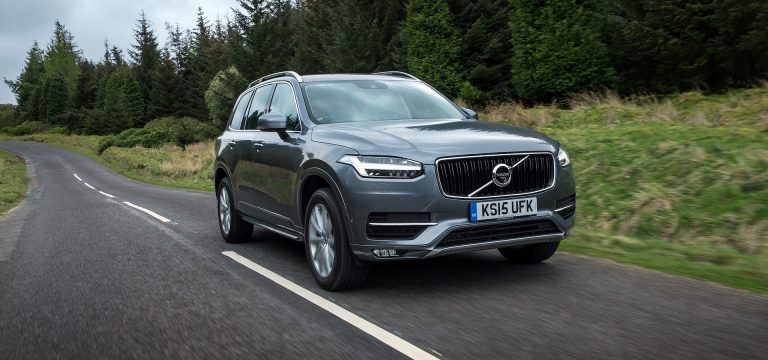
Volvo XC90 tested on UK roads

What is it?
All-new version of premium Volvo XC90 SUV

Key features
Higher quality, more safety, more tech

Our view
The second-generation Volvo XC90 is a major step forward and Volvo’s best weapon yet in establishing the brand as a true premium manufacturer.


Volvo claims that when launched in 2002 the XC90 revolutionised the SUV market, and the model has certainly been a major success.

It has sold 636,000 globally, 55,000 in the UK alone, and is a luxury SUV that has become a signature model for the Swedish brand – in fact, some think that Volvo is the XC90 and nothing else.

All of which makes replacing it an even bigger challenge. The market is now far more congested, with big hitters such as the Audi Q7 and BMW X5 regarded as prime rivals – because the XC90 is the one Volvo that really competes on level terms with the established German premium brands.

This can be seen in the level of XC90 pre-orders, which numbered 36,000 across the world before the new car launched, including 3,500 in the UK. Clearly, customers are expecting something special.

They will not be disappointed – the new XC90 is not only thoroughly competent but impressive in all areas – from the looks, through the sumptuous interior, to the latest versions of Volvo’s revolutionary Drive-E engines, the impressive tech and of course the safety levels the brand is renowned for.

The new XC90 is both the first model built on Volvo’s new ‘Scaleable Product Architecture’ (SPA) platform and the first to employ the brand’s latest in-house created design language – many dub it Volvo’s first ‘entirely Volvo’ car.

And it is perhaps this that surprises slightly, because while these days Volvo is setting standards in most areas, it is still not the first brand most would mention when looking for examples of design.

Yet the new XC90 looks both purposeful and muscular, with notable detailing right down to the sculpted tail lights and the ‘Thor hammer’ symbols in the daytime running lights.

Slip inside and it just gets better. Fit and finish is exemplary, as good as anything the established premium brands can offer, but what immediately stands out is the centre console, where clearly the designers have refused to follow the herd and instead looked to see if there was a better way.

That ‘better’ way involves turning the centre touchscreen (nine-inch in the entry-level Momentum versions, 12 inches in the upper Inscription trim) through 90 degrees. The vertical format will be familiar to anyone who uses a tablet such as an iPad, and on it the four main control functions are tiled – using it soon becomes second nature.

The touchscreen combines with technology advances such as a head-up display to both simplify the dash layout – there are only eight actual buttons – and make it more attractive, while the rest of the interior maintains the standard.

The new XC90 is larger than its predecessor – the length extended by 143mm to 4950mm, the width up by 28mm to 2140mm, while a combination of the new platform and a four-cylinder only powertrain line-up means a smaller engine bay, shorter overhangs and more interior space. This is one seven-seat SUV in which fully-grown adults can really be comfortable in the back row.

Much has been written on The Car Expert about Volvo’s drive-E engine range and the XC90 takes full advantage. At launch, the options are a diesel D5 unit of 221bhp and a 315bhp T6 petrol, but before long they will be joined by the T8 Twin Engine petrol-electric plug-in hybrid.

This will be a truly impressive powerplant – it mates a 313bhp petrol engine with an 81bhp electric motor, the combined output 394bhp. This produces a sub six-second 0-62mph time, official fuel economy of 112.9mpg and CO2 emissions of under 60g/km – all in a large, all-wheel-drive, SUV.

But that is in the future and both the existing engines are plenty good enough. On paper the spec is encouraging. The D5 twin-turbo diesel will account for three quarters of all UK sales. It’s almost half a litre smaller than the 2.4 unit in the previous XC90, yet offers 11 more horsepower while CO2 emissions are slashed from 215g/km to 149g/km.

The petrol alternative is equally impressive – 10bhp more than the last V8 petrol engine in an XC90, but with emissions almost halved. The only oddity is the somewhat high-pitched engine note from the four-cylinder unit – but it’s hardly intrusive.

More importantly, both engines offer the combination of potency and refinement that is an essential if the XC90 is to seriously challenge the premium German rivals. The diesel perhaps could be a little more punchy in the mid range, but it will more than satisfy typical XC90 owners.

The Volvo XC90 might be a full-time all-wheel-drive vehicle but it has been designed with the view that it will spend most of its time on the tarmac, and thus it produces a highly competent on-the-road performance, as was proved during the launch test around challenging Pennine moorland roads.

Ride quality is impeccable – it glides along in comfort and the suspension does a grand job of cushioning any bumps and potholes before they reach the cabin. Push the car with pace through a challenging set of corners and there will be some body roll, but notinh alarming and accompanied by stupendous grip levels.

The XC90 goes on sale initially in two newly designated trims, Momentum and Inscription – a more upmarket R-Design specification will follow three months later. Even the entry-level standard equipment list is impressive, including Sensus navigation (with internet access, traffic information and free lifetime updates), the nine-inch central touchscreen, LED Active Bending Headlights, Volvo’s On Call help system, ‘CleanZone’ air quality, hands-free tailgate opening, Keyless Entry and Drive, leather upholstery, a powered driver’s seat, auto-dimming interior and exterior mirrors and a DAB radio.

Not surprisingly the XC90 has an impressive suite of safety technology, its makers dubbing the car the safest Volvo ever built. Fitted as standard is the raft of City Safety technologies, including autonomous emergency braking, pedestrian and cyclist detection and front collision warning, all of which will now keep on working after dark.

Safety also forms an extensive part of the options list, with Lane Keeping Aid, Driver Alert Control, Blind Spot Information System, Cross Traffic Alert and Rear Collision Mitigation all on offer, along with two new systems dubbed world first by Volvo.

Run off-road protection detects when the car has inadvertently left the road and automatically tightens the front safety belts. The front seats also have an absorption unit built into the frame which reduces vertical forces by up to one-third and cuts the likelihood of spinal injuries.

Auto brake at junctions will brake the XC90 if the driver inadvertently turns in front of an oncoming car – common at urban junctions and on dual carriageways.

Other options will major on the lifestyle elements of the car, including two bdy styling kits majoring on whether the particular XC90 lives a more ‘urban’ or ‘rugged’ life.

The second-generation XC90 is a major step forward and Volvo’s best weapon yet in establishing the brand as a true premium manufacturer. Any niggles are minor – the car is seriously impressive in all areas and rivals should take serious note of it.

Volvo XC90 – key specifications

Model Tested: Volvo XC90 D5 Inscription
On Sale: June 2015
Range price: £45,750 – £63,705
Insurance group: From 33E
Engines: 2.0 diesel, 2.0 petrol, 2.0 hybrid
Power (bhp): 221, 315, 407
Torque (lb/ft): 345, 295, 295
0-62mph (sec): 7.8, 6.5, 5.6
Top speed (mph): 137, 143, 140
Fuel economy (combined, mpg): 49.6, 36.7, 134.5
CO2 emissions (g/km): 149*, 179*, 49*
Key rivals: Audi Q7, BMW X5, Land Rover Discovery
Test Date: June 2015
* = entry-level models

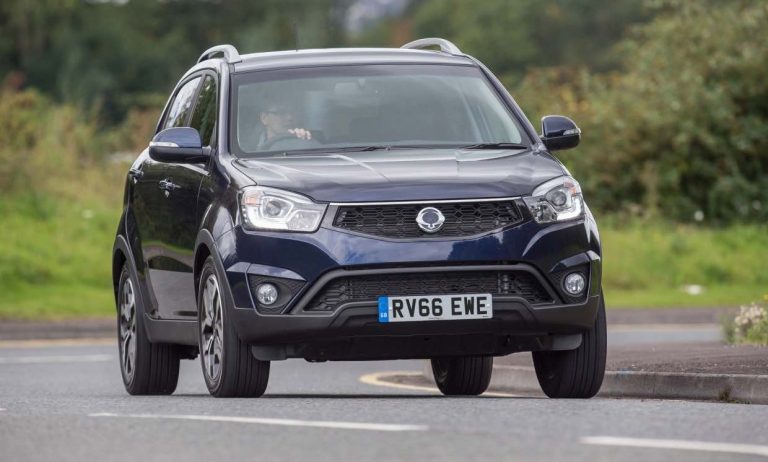
UK motor industry sets records

Turnover in the UK automotive industry hit a record £69.5 billion in 2014, according to new figures released by the Society of Motor Manufacturers and Traders (SMMT).

The SMMT’s 16th annual Sustainability Report confirms the sector is breaking new records, and increasing its importance and influence in the global business market.

Manufacturing output, vehicle sales, jobs and export values all grew, during the year while the environmental impact from vehicle production has been reduced dramatically.

Increasing demand for new vehicles had its effect on manufacturing output, with almost 1.6 million vehicles built in 2014. Car production alone grew to 1.53 million units – the highest level since 2007 – with an increasing number of vehicles built for the domestic new car market, which itself grew 9.3 per cent to reach 2.48 million registrations last year.

On current trends, UK car output is expected to reach an all-time record level of 1.95 million vehicles in the next two years.

Meanwhile, investment in more efficient, high-tech manufacturing processes has led to huge gains in productivity. In each of the five years to 2014, an average of 11.5 vehicles were produced for every person employed in the industry, compared with 9.3 vehicles for the period from 2005 to 2009.

The SMMT is also pointing out the sector’s highly positive environmental performance. Despite greater production volumes, environmental impact has been significantly reduced.

Total waste to landfill from all automotive production fell by more than a quarter (26.3 per cent) in 2014, and has dropped an exceptional 92.3 per cent since 2000. Meanwhile, water and energy use fell by 10.7 per cent and 10.4 per cent respectively, and CO2 emissions per vehicle produced fell by five per cent compared with 2013.

The industry has also made considerable improvements to its already outstanding safety record with the number of workplace incidents per 1,000 employees falling to an all-time low of 2.2 – down 83.9 per cent on 2002 when this data was first collected.

SMMT Chief Executive Mike Hawes believes the UK automotive industry can be proud of its achievements as it continues to set new standards.

“The sector is delivering growth in volumes, turnover and employment, while reducing its environmental impact,” Hawes says.

But he also cautions Government to ensure the sector receives the support it needs going forward; “Continuing to expand in a fiercely competitive global market is a major challenge and will depend on a supportive economic and regulatory environment which promotes investment to foster innovation and continuing productivity improvements.”

Large investments being committed to new and expanded production facilities in the UK saw an additional 27,000 jobs created in 2014 – a 3.5 per cent increase on the previous year.

The number of people employed in automotive (including manufacturing and retail) now stands at 799,000, with the average worker responsible for generating £440,000 in turnover for the sector.

Employee training, meanwhile is up by more than a third (35.2 per cent) and some 500 new apprentices and trainees taken on by the sector last year.

International demand for British-made vehicles also continues to increase with total export value rising 1.8 per cent to £34.6 billion – a staggering 103.8 per cent uplift since 2000. It adds up to a considerable increase in the industry’s direct contribution to the British economy, rising 6.2 per cent to £15.5 billion last year.

The SMMT believes that the figures are further evidence of UK automotive’s renaissance, as the sector continues to innovate and invest huge sums in research and development to meet ever-stricter targets on CO2 emissions and air quality, and capitalise on the latest major trends in the global sector, such as connectivity and intelligent mobility.

Bentley gets closer to unveiling SUV

Bentley’s much-awaited SUV, the Bentayga, is expected to be unveiled at the Frankfurt Motor Show in September but meanwhile prototypes are out testing in steadily less camouflage.

The Crewe-UK based luxury brand has been adding to the anticipation with a series of teaser videos, giving glimpses of the interior, emphasising the off-road capabilities with a short film showing a Bentayga climbing a massive desert sand dune, and most recently cold-weather testing in Sweden.

While the videos maintain some distance from the car so as not to reveal the final shape of the production Bentayga, it is clear from both the films and cars with less and less cladding spotted in general testing that the SUV is very different from the original EXP 9F concept that was shown and roundly derided at the 2012 Geneva Motor Show.

Bentley is also yet to give any figures for the Bentayga, so far having only said that it will have in excess of 542bhp and 519lbft of torque, a sub five-second 0-62mph time, and a top speed of more than 170mph – it is notable that the speedometer in the teaser video is rated to 200mph.

The Bentayga will be built on a new line at the Crewe works and Bentley is said to already have more than 4,000 serious expressions of interest in the car from customers. The brand is also believed to be considering producing a smaller sister to the model.

Honda Civic Type R review (2015-2017)

What is it? All-new version of Honda’s signature Civic Type R hot hatch.
Key features: Most power yet, advanced chassis tech, extreme body style.
Our view: Based on a first drive, the new Civic Type R is a very worthy wearer of the famed Honda red badge, and a car that enthusiasts will love – on the road and very definitely on the track.


The image of the Honda Civic Type R is neatly summed up by the venues for its media launch events, of which this writer has attended three – missing out on the launch of the initial model in 1997.

To try out the 2001 version we went to the Isle of Man, with the mountain section of the TT motorcycle race course closed to the public so we could exploit the power of the Type R to the full. Then in 2007 it was a trip to Goodwood, driving Type Rs up the famed Festival of Speed hillclimb.

That Type R was discontinued in 2010, and enthusiasts have been waiting for a new one ever since. Finally it’s here, it’s the most powerful yet, and the reason why The Car Expert finds itself at a brand new world championship standard race circuit in Slovakia.

Honda proudly describes the Type R as “a race car for the road” and it is the model that most highlights the competition ethos that has been so central to the brand and its founder Soichiro Honda – something forgotten by the many who scoff at the ‘more mature drivers’ reputation around models such as the Jazz.

The new Type R certainly fulfils that aim. Honda says that it signals the start of a new performance era for the brand, which is why it gets the model’s most extreme engine yet, and one that for the first time is turbocharged.

It is an all-new direct-injection petrol unit of 2.0-litre capacity, with a 7,000rpm red line – actually quite low by previous naturally-aspirated Honda engine standards. Before reaching that red line it will be pumping out record Type R performance figures of 305bhp and 295lbft of torque.

Such potency makes the Type R a rapid hot hatch, the 0-62mph sprint dispatched in 5.7 seconds and terminal speed rated at 167mph – no arbitrary electronic anchors at 155mph here. But while not so long ago such attractive performance would have been accompanied by truly painful efficiency figures, the 38.7mpg combined cycle fuel economy and Euro 6 emissions compliance, producing CO2 figures of 170g/km, is impressive.

The power needs a chassis to match and the Type R has spawned new suspension systems specially developed for it. Adaptive dampers operate on all four wheels, making changes at rates of 1/500th second dependent on the car’s status, and also acting to limit front-end lift during hard acceleration and nose dive when braking.

The redesigned front suspension, dubbed Dual Axis Strut, separates steering and roadholding functions for more precise control and aids high-speed straight-line stability, while the driveshafts are balanced to cut torque steer, always a front-wheel drive issue.

A typical example of the attention to detail is in the rear suspension. The stock Civic torsion beam unit is made from a solid block – the Type R’s H-shaped unit is formed from crushed pipes which boosts rear roll rigidity by 177 per cent and removes the need for a rear anti-roll bar, thus saving weight.

The car of course looks the part, though the designers insist the extreme body style, already familiar to those who have followed the Honda team in this year’s British and World Touring Car Championships, is about more than cosmetic enhancement – in fact the aerodynamics are said to have been directly inspired by the World Touring Car Championship.

With the aim of generating downforce or ‘negative lift’, the car gets a wide front bumper and splitter, the air that gets beyond that being channelled by deep side skirts along a flat underside and into a rear diffuser. This keeps the rear of the car on the ground aided by the rear spoiler, which has an equally important task of not generating too much drag.

The upper and lower front grilles are larger, to accommodate the extra cooling air required by the engine, and this air is vented through the bonnet beyond the front wheels. These wheels are new, lightweight but rigid 19-inch alloys and sit within arch extensions constructed in lightweight aluminium, the fronts bearing vents for brake heat on their rears.

An ordinary Civic this certainly is not – it certainly looks the part, and the impression continues on slipping into the driver’s seat, high-backed and bespoke to the Type R as are the steering wheel and gear lever. The seat is also lower, thanks to a thinner construction, while there is space for just two occupants on the rear bench seat. A theme of black with red stitching pervades throughout.

All good on paper, but does it meet the brief in reality? Very much so. And firstly, after so much talk of a competition-based car, it should be emphasised that the Type-R is perfectly usable on the road, as Honda demonstrated on the launch with a road route that started and finished in the busy city of Bratislava.

The Civic Type R can be perfectly refined on the road – it inches along in city traffic with no hint of its potency (well apart from the not so subtle styling of course). Once out on the open road it will cruise happily, if quite noisily thanks to the performance-tuned exhaust, while the ride is firm but not achingly so. It’s practical too – the boot space is no different to any other Civic, the rear seats still fold down, so yes, you can live with this car as a daily driver.

It is, however, so much more, and the reason that the launch event included several laps around the SlovakiaRing, a highly-testing 3.7-mile race circuit that was due to host the Civics in the World Touring Car Championship just three weeks after our test.

Honda expects many Civic Type R owners to be taking their cars on the track, and the centre console display even includes the useful competition-based extras of G meter, various pressures and temperatures and a lap timer.

To access these, you need to press a button on the edge of the dash marked +R. The digital display changes from white to a neon red, but more importantly engine responsiveness sharpens, the torque-mapping becoming more aggressive and performance-focused unleashing more pulling power at lower engine speeds.

The steering is heavier and tighter, the rating of the Adaptive Damper System stiffens by 30 per cent and the Vehicle Stability Assist programme majors on pace.

All of which makes the Type R a hugely enjoyable car to take around a track, with as much control, or potential, as the skill of the pilot requires. It’s very placeable, and equally forgiving, as this writer found when a damp track forced the back to step out around a hairpin, easily and rapidly straightened with a flick of the wheel.

The final opinion on the Civic Type R will of course await a UK-spec car on UK roads, and the argument as to whether it is better than its VW and Renault rivals will continue – as will the question of its price tag, which is under £30,000 just, unless you choose the higher-spec GT version.

Based on the first drive, however, this is a very worthy wearer of the famed Honda red badge, and a car that enthusiasts will love – on the road and very definitely on the track.

Honda Civic Type R – key specifications

Model Tested: Honda Civic Type R
On Sale: July 2015
Range price: £29,995 – £32,295
Insurance group: 33E
Engines: Petrol 2.0
Power (bhp): 305
Torque (lb/ft): 295
0-62mph (sec): 5.7
Top speed (mph): 167.8
Fuel economy (combined, mpg): 38.7
CO2 emissions (g/km): 170
Key rivals: Volkswagen Golf R, RenaultSport Megane RS
Test Date: June 2015

Honda works racing driver Gabriele Tarquini has also been testing the track ability of the Type R.

Vauxhall Viva review

What is it? The new Vauxhall Viva is a small car for the masses.
Key features: Economy, practicality, high spec for price.
Our view: Will get from A to B very well, while providing Vauxhall with a bigger slice of the small car market


It was in 1963 that Vauxhall first released its Viva, a small car designed to appeal primarily for its practicality and durability. The last one, which went out of production in 1979, was the final car designed solely by Vauxhall as a British company, before the Opel conglomerate took over.

Now the Vauxhall Viva is back, stretching the company’s small car range to three alongside the larger Corsa and the lifestyle-pitched ADAM, and designed very much along similar lines to that 1963 original.

This is designed to be a no-nonsense small car that will be very easy to live with, and thoroughly practical – it won’t be writing any headlines for distinctive looks and potent performance, but then again that’s not what the clientele it’s aimed at will want.

It is no surprise Vauxhall is pouring a lot of resource into this sector – the A, or ‘city-car’ segment is growing remorselessly, now worth 10% of all cars sold in the UK, and Vauxhall believes the Viva gives it a choice of models unrivalled in the sector – especially as it is a five-door.

Viva’s will be mainly bought by a much more conservative audience than the Adam and to an extent the Corsa, though Vauxhall also expects to gain a reasonable number of young buyers, put in the Viva as a first car by their parents.

So the watchwords are that this car will be functional, conservative and value for money, but with some smart appeal too. And the first attraction will be the price – the Viva starts at £7,995 and even the most expensive SL version comes in at under £10,000.

Visually it’s not unattractive – certainly a step above previous GM small car efforts such as the Agila and the Chevrolet Spark. And inside is a similar story – the surroundings are functional, well fitted without being plush. The SL model, of course, gets the better finishes, while the important instruments of the dash are where the driver would expect to see them.

Space is adequate for the sector – the car boasts five seats, but the 206-litre boot falls a bit behind its perceived rivals such as the Skoda Citigo.

The simple outlook continues with the engine line-up. There is just one, the 1.0 petrol unit already familiar from the Corsa and Adam line-ups, but we are told specially tuned for the Viva. In this retail buyer dominated segment, by the way, there is virtually no demand for diesel.

Matched to a five-speed manual gearbox, the engine offers up 74bhp, with 70lbft of torque. That’s enough to move the Viva along with competence, without adding any adrenalin and pushing up insurance groups.

From rest 62mph comes up in a pedestrian 13.1 seconds and it will go on where allowed to 106mph, while returning official combined cycle fuel economy of 62.8mpg – the ecoFlex variant due later in the year will stretch this figure to 65.7 while dropping the CO2 emissions into free road licence territory of 99g/km. Currently it’s 104g/km which is a free first year then £20 per annum, still very impressive when you consider this is a petrol engine.

The car is refined on the road, if needing every gear available to tackle steeper gradients, and the engine note becoming intrusive if taken out of the car’s natural urban environment and onto a motorway.

The traditional McPherson strut front/torsion bar rear suspension – tuned we are told especially for UK roads – keeps matters well under control, and even pushing on through corners – again not something likely to be tried by many Viva buyers – fails to unsettle the car.

Where the Vauxhall Viva is also likely to score is on its equipment. Every version, for example, includes cruise control with a speed limiter and a lane departure warning system, not so long ago unheard of in the city car segment.

Air conditioning is specified on all but entry-level cars, and by the time you get to the top SL variant it has become climate control and sits in a specification also containing such niceties as USB and Bluetooth connectivity.

The options list meanwhile includes rear parking sensors and Vauxhall’s Intellilink infotainment system, which is based around a seven-inch touchscreen and mates with the Apple Car Play and Android Auto systems, allowing one to use one’s favourite smartphone apps through the car. DAB radio is part of the package too.

Still to come is OnStar, the connectivity technology that will allow Viva drivers

to use a portfolio of services such as emergency services, roadside recovery and smartphone remote control.

OnStar-equipped Viva’s will also be Wi-Fi hotspots, enabling up to seven devices to be connected to the car network. The system will be standard on SL models and an option on SE from January 1016.

Motoring journalists such as this one struggle to write exciting things about the Vauxhall Viva, because it is not an exciting car – but then it is not meant to be. This is a car for travelling from A to B and back without fuss, usually within town and week in and week out. The Viva will do that very well, while providing its makers with a bigger slice of the small car market.

Vauxhall Viva – key specifications

Model tested: Vauxhall Viva 5-door 1.0-litre manual, SE/SL
On sale: Summer 2015
Range price: £7,995-£9,495
Insurance group: 3 (4 with a/c)
Engines: Petrol 1.0-litre
Power (bhp):  74
Torque (lb/ft):  70
0-62mph (sec): 13.1
Top speed (mph): 106
Fuel economy (combined, mpg): 62.8 (ecoFlex 65.7)
CO2 emissions (g/km): 104 (ecoFlex 99)
Key rivals: Hyundai i10, Toyota Aygo, Skoda Citigo
Test Date: May 2015

Volkswagen Golf GTE review

What is it?
The Volkswagen Golf GTE is a sporty plug-in hybrid version of the best-selling Golf hatch.

Key features
Impressive pace with minimal emissions and major economy

Our view
The Volkswagen Golf GTE is a lot more sensible in the real world than the fully-electric e-Golf, and for a company car driver the tax savings will be very appealing.


All of a sudden, the plug-in hybrid is becoming commonplace. The concept of matching a petrol engine to an electric motor that, rather than being simply charged by said engine, is replenished by being plugged into the mains, has grown rapidly in popularity.

The appeal of a plug-in is, principally, that the technology results in previously unheard of official efficiency figures, while also removing the range-anxiety factor that comes with a full electric car. And such vehicles appear to appeal to the public – Mitsubishi, for example, has seen rocketing sales for its SUV variant, the Outlander PHEV (plug-in hybrid electric vehicle).

Now Volkswagen joins the party with the Golf GTE – not to be confused with its fully electric sister the e-Golf, and unlike that car available through every VW dealer.

According to VW, the Golf GTE combines elements of the e-Golf with the model line’s famed lead model, the GTI, evidence that this is regarded, at least by its maker, as much a performance model as an efficient one.

The basis is a 1.4 TSI petrol engine of 150hp, which is matched to an electric motor of 101 horses, built into the housing of the mandatory-fit DSG gearbox and giving combined power of 201bhp. The GTI, for comparison, puts out 217bhp.

As a result the plug-in hybrid is a reasonably swift machine, though not to GTI levels, its 0-62mph time of 7.6 seconds and a top speed of 138mph comparing to the 6.5 seconds and 151mph of its sporty sister.

However the GTE leaves the GTI standing in terms of economy and emissions. Official combined cycle fuel economy is an astonishing 166mpg – just 122 miles more than the GTI, and while such laboratory-produced figures will never be replicated in real-life motoring, this car will go a lot further on a gallon.

Combine this with CO2 emissions figures of a mere 39g/km (GTI 148g/km) and the GTE suddenly offers very real appeal to particularly company car drivers who want performance in their daily drive but would also like to save money – as well as the obvious savings in such areas as central London congestion charging, the car offers rock-bottom benefit-in-kind tax rates.

So on paper it all seems good, but what is it like in the metal? In many ways, no different to the mainstream Golf. It is only available as a five-door, with GTI styling but with all the red bits of the performance model, such as the accents on the grille and inside the seat stitching, changed to VW’s eco-signature blue.

The major practical difference to the general Golf line-up is a compromised bootspace due to the need to accommodate the electric motor battery – it loses 100 litres, offering with seats up 272 litres.

There are differences ahead of the driver – incorporated into the dash rev counter is a power meter that shows the charge level of the battery and whether or not the electric side of the car is being used. More detailed info is offered on the touchscreen of the centre console display.

The GTE offers five driving modes. In fully electric E-Mode with a completely charged battery it will travel up to 31 miles with zero emissions.

Hybrid auto is the ‘standard’ driving mode, the system deciding a combination of engine and electric power depending on driving situation and state of battery charge.

In Battery Hold the engine is employed on its own, the electric motor charge saved for specific use, for example in urban areas, while the TSI petrol unit is also employed if the battery needs a significant top up in Battery Charge mode – this proved very effective on the fairly short road route on the launch event.

Plug-in charging of an exhausted battery, by the way, takes three hours 45 minutes using domestic mains, or two hours 15 minutes from a wallbox – a big improvement on EV charging rates of even a couple of years ago.

The final driving mode is GTE, when the car does its best to replicate its famed sister, engine and motor working in tandem to produce the best combination of power and torque.

Now, it should be stated that despite the styling and the perceived close relationship the GTE is not an electric GTI. It doesn’t have the same potency either on paper or in perception when driving it, but equally, it’s not by any means a slouch. Acceleration is swift and enjoyable, and while it can’t replicate the precision cornering of the GTI it is nonetheless entertaining and a fun car to drive.

The Volkswagen Golf GTE is regarded as a top-range model, so it comes with plentiful equipment, including 18-inch alloy wheels, a touchscreen infotainment system with DAB radio and Bluetooth, and specific to the model a three-year subscription to the Car-Net app. This allows one to control such elements as the car’s interior heating or air con, as well as pre-setting battery charging, remotely from a smartphone.

So who should buy it? It costs £28,650, once the Government’s £5,000 plug-in car grant is deducted, so private buyers will likely find the £3,000 cheaper standard Golf TSI more attractive.

The Volkswagen Golf GTE is, however, a lot more sensible in the real world than the fully-electric e-Golf, and for a company car driver the tax savings will be very appealing than the similarly-priced Golf GTI, which may be faster but will also be significantly more expensive to run…

Volkswagen Golf GTE – key specifications

Model tested: Volkswagen Golf GTE 1.4 TSI 6-speed DSG 5-Door
On sale: April 2015
Range price: £28,035 (after £5,000 government grant)
Insurance group: TBA
Engines: 1.4TSI petrol plus electric motor
Power (bhp): 201 (total)
Torque (lb/ft): 258 (total)
0-62mph (sec): 7.6
Top speed (mph): 138
Fuel economy (combined, mpg): 166
CO2 emissions (g/km): 39
Key rivals: Audi A3 e-tron, Toyota Prius plug-in
Test date: April 2015

Is better driver education the key to improving road safety?

More than a third of parents recently surveyed across the UK thought that driving tests should be delayed by three years, with the legal minimum driving age being raised to 20.

But the RAC begs to differ, with spokesman Simon Williams saying, “The suggestion that the legal age for taking a test should be put back three years is frankly unworkable.”

Instead, he calls for driver education to begin at a much younger age: “Driver education for young people should start before they have the chance to get behind the wheel… in other parts of the world that education starts in schools.”

The Association of British Insurers is right behind this, saying that changes could reduce the high casualty risk among young drivers and potentially lower car insurance premiums.

One option is the introduction of graduated driver licensing (GDL), which could include night-time driving and passenger restrictions, as well as vehicle power limits. A GDL system in Great Britain could potentially result in a reduction of hundreds of deaths and serious injuries a year.

Finland, acknowledged as having the toughest new driver tests in the world, takes the GDL approach. Young people are first taught road safety in the classroom.

When they then learn to drive, it takes at least two years to attain a full licence, as young drivers must first attend a driver training school where they learn about vehicle control (in good and bad weather conditions), safety and basic car maintenance.

They must also complete 20 theory lessons and 30 hours of practical driving – by comparison, on average, UK learners take just 52 hours of professional lessons before taking the practical test. When ready, Finnish drivers take two different driving tests – one in summer, one in the winter.

After all this, drivers still don’t qualify for a full licence until they’re 20 years old. Learning to drive in Finland is expensive, but perhaps it’s a small price to pay for greatly-reduced collision rates.

Driving school trafic cones

The Transport Research Laboratory (TRL) has recommended a driver education system similar to that of Sweden. It would comprise a one-year “learner stage”, beginning at 17, during which drivers would have to total at least 100 hours of daytime and 20 hours of night-time practice under supervision.

Learners can then take their test at 18 and, if they pass, will get a probationary licence. During the probationary period, drivers will have a curfew and under 30s will be banned from carrying any passengers also under 30.

Julie Townsend, of road safety charity Brake, said TRL’s advice was further recognition of the compelling case for graduated driver licensing. She urged the government to act “swiftly and decisively” to commit to the system to help reduce the danger young drivers posed to themselves and others.

While progress on such changes is slow – a promised green paper on young drivers is yet to materialise – the DVSA has recently announced that the practical driving exam is due to be overhauled as part of a series of major revisions to ensure that the test prepares motorists as fully as possible for their driving careers.

Potent Abarth 595 gets more power

The Abarth 595 Competizione range has undergone a raft of changes, with the most noticeable being a power increase from 160 to 180hp.

Combined with maximum torque of 184lbft from 2500rpm, the 595 Competizione completes the 0-62 mph sprint in 6.7 seconds and goes on to 140mph, while offering combined cycle fuel economy figures of 48.7mpg.

Meanwhile, the standard equipment list of the 595 Competizione now includes a Record Monza exhaust system, 17-inch alloy wheels with titanium finish, Brembo brake system, red brake callipers, leather sports steering wheel, Sabelt sports seats, Xenon headlamps, rear parking sensors and aluminium pedals.

On the options list are leather sports seats, electric glass sunroof, an audio system with four speakers and two tweeters and several alloy wheel, body colour and stripe kit choices.

The hatchback version of the car is already on sale and orders open later in May for a cabriolet version, both available with either a manual or MTA automatic gearbox. Standard colour for the new line-up, a no-cost option, is Officina red, replacing Campovolo Grey.

The Abarth 595 Competizione costs £19,890 or £21,190 with the MTA gearbox, while the cabriolet is priced at £21,890/£23,190.

Car leasing – where to start?

This article is brought to you by Kudos Vehicle Leasing.

So you’d like to lease a new vehicle? Well, hold on a minute before you go and put your foot on the accelerator. It’s important to be well educated on the ins and outs of leasing contracts, so you can be informed and confident you are getting the best deal possible. A car lease, though not an outright purchase, is a major financial decision.

Leasing options can vary from one company to another, and the contractual jargon can be complicated and confusing.  Before committing yourself, it is imperative to shop around and obtain quotes. Then take time to understand the details within each quote. When shopping around for a good lease there are a few key factors that should be looked at closely. These include mileage stipulations, maintenance agreements, interest rates and buy-out options, just to name a few.

To ensure you’re well informed when it comes to the time of leasing a vehicle, here are some key points to remember from Kudos Vehicle Leasing, a car and van leasing company in the North West UK:

Budget first

The very first step in preparing to sign a new lease should always be some personal accounting. Carefully go over your budget – income vs. expenses – to be sure what you can afford and set a reasonable, sensible budget for your new car.

Investigate the financial profile

Look carefully at all the financial details, including the payment schedule.  Standard lease agreements generally require three months of payments upon signing, with either 23, 35, 47 subsequent rental payments; depending on if it is a 2, 3 or 4 year term.

Be sure to look at the finance company that is funding the contract; use a reputable and reliable broker; and pay close attention to the information the company provides about the quality of the contract, the level of service that can be expected and amendment options.

Hidden costs and fees

Be certain to have all the facts and figures included in your quote, and take special note of any extra costs or hidden fees you may be incurring.  Make sure you enquire into any administration or delivery fees, new account charges, or any other expenses that may not be immediately obvious. These extras can seriously affect the bottom line in the lease cost and should be carefully considered.

Mileage on a leasing agreement

Pay extra close attention to any and all mileage stipulations associated with a potential lease.  Leases will allow for a total number of miles to be covered under the agreement, and everything above that is then at the driver’s expense.

Be very cautious when negotiating these details, as any use over and above the conditions in the contract can be quite expensive, and some companies have confusing two-tier systems for calculating their fees.

Read and re-read the fine print

Contracts need to cover a lot of details, and you want to be sure you’re not missing anything. So take the time to carefully read everything in the documents and take special note of the pertinent details.

Several key points will be laid out in these papers and it is important to take note, so you can compare details from one company to another.

Look in the fine print for information on things like:

  • Maintenance cover – The dealerships’ standard maintenance should cover all regular servicing, unlimited tyres, and all remedial work, even battery and exhaust coverage.  Accidental and impact damage is generally not covered, however.
  • Refurbishment costs – Vehicles are expected to be returned at the lease’s end within mileage and in good repair.  Some companies offer refurbishment allowances while others don’t, so be sure to know the details on how these costs are calculated.
  • Road fund allowance – This investigates whether the contract offers a road fund allowance and if it is included for the full term of the contract, as this is ideal.

Also check out The Car Expert’s Car Finance Glossary for more help in understanding leasing jargon.

Disclaimer

Most car finance agreements in the UK are regulated by the Financial Conduct Authority, and anyone involved in the selling of car finance must be accredited by the FCA. You should always consider the terms and conditions of any agreement carefully before taking out any form of car finance, as you are making a substantial ongoing commitment and there may be significant costs if you change your mind or are unable to meet your commitments at a later date.

Overtaking – how to do it safely

Spend time on single-lanes road in the UK, and you will inevitably come up behind a slower-moving vehicle.  Whether it’s a learner driver, a heavy lorry struggling up a hill, an elderly woman on her way to church in her ancient Rover, or a tractor chugging along at a snail’s pace, there comes a time when you need to pull out and pass the car in front.

What you will also notice, if you spend time on single-lane roads anywhere in the world, is that a lot of drivers are really poor at overtaking slower vehicles.  Most seem to put absolutely no forethought into what they are doing, and simply put their foot down as they reach for the indicator and pull across the road all at the same time – and then often change their mind and have to swerve back again.

So, how should you go about overtaking another vehicle in front of you?  Firstly, switch your brain on and think about what you’re trying to achieve, then follow this process.

1.  Do I really need to overtake this car?

How many times have you seen a driver go charging past a slower car, only to then hit the brakes and leave the road at the next junction or petrol station a minute later?  That driver has literally saved nothing but a few seconds off their trip time, but has increased the risk for themselves and other road users, wasted fuel, added some extra wear to their brake pads and tyres, and generally looked like a fool.  All to save a few seconds.

If you know that you are going to be leaving the road shortly, do everyone a favour and stay behind the car in front.

2.  Plan your overtaking move

A successful and safe overtaking maneouvre requires plenty of space for you to speed up, cross lanes, pass the car in front, cross back over and return to your normal speed.  So you need a fairly long stretch of straight road to do the job properly.  Trying to pass another car on a road with limited space and visibility is a potential disaster.

You also need to factor in your own car’s performance.  If you don’t have a very powerful motor, or you are loaded up with passengers and luggage, or the road is uphill or into a headwind, then you are going to need more space to get up to speed and overtake safely.

Look ahead of the car you intend to overtake – is there another car in front of it, and if so, is there enough room for you to safely pull back in between them?  You should never try to overtake two or more cars in one go, regardless of how good you think you might be!

Also make sure you look at the line markings – solid lines banning overtaking are always there for a reason, even if it’s not obvious.  There may well be a hidden danger you can’t see from a distance, such as a crest or hidden driveway, so the line markings must be respected at all times.  If you can’t complete the overtaking manouevre before the lines change, it’s not on.

3.  Getting ready to overtake

There is no point trying to overtake the car in front if you are jammed up behind it with no ability to accelerate to a speed faster than he/she is going before you pull out.  If you pull out now, you are sitting on the wrong side of the road and going no faster than the car in front.  You need to drop back to allow yourself plenty of space for your ‘run-up’ before pulling across to the opposite side of the road.

Keep an eye on your rear view mirrors – if a car behind sees you dropping back then they may try to pass you while you’re getting ready to pass the car in front, which could be disastrous.  As you drop back, start indicating so that anyone following you can see that you are about to start your overtaking move.  Don’t leave your indication until you’ve already started – remember “mirror, signal, manouevre” in that order.  Give the car behind you a clear idea of what you’re doing, rather than making them guess.  If the car in front of you is paying attention, they will also realise that you are about to come past and will hopefully be cooperative.

4.  Start your overtaking move

You’ve checked that the road is safe for overtaking, you’ve dropped back from the car in front and you’ve indicated that you’re changing lanes, so it’s time to get on with it.

Keep checking the road ahead as you go, as well as your rear view mirror.  If you spot an oncoming car, or there is someone behind you trying to overtake you as you go to overtake the car in front, you need to be able to bail out of your manouevre and get safely back onto the correct side of the road.

Be decisive and accelerate firmly while still in your lane.  There is no point trying to pass the car in front if you’re only doing 1mph more than him – the less time you spend on the opposite side of the road, the better.  Build up your speed and steer smoothly across to the opposite side of the road as you come up behind the car in front.  You should be travelling several mph faster than the car ahead to get past quickly and safely.

5.  Keep going well after you have passed the slower vehicle

Keep accelerating until you are well past the slower vehicle.  Too many people take their foot off the gas too early, slowing you down again before you have safely completed the manouevre and usually still on the wrong side of the road.  Now is not the time to have second thoughts about the speed limit or the price of the fuel that you are burning – keep going until you are well past the overtaken car and clear to move back across the road.

6.  Pulling back into your lane

Far too many drivers are absolutely rubbish at this important point in the overtaking process.  Having got their car a length ahead of the other vehicle, they chop back across into the lane and directly into the path of the overtaken vehicle.  Don’t be one of those idiots; complete the move properly.

As a general rule, don’t start to pull back across into your lane until you can see the entire overtaken car in your central rear view mirror (the inside one).  If you pull across right in front of them and then have to hit your brakes suddenly, they will have nowhere to go except right into the back of you.

Get well ahead of the slower car and then smoothly pull back across.  Don’t lift off the accelerator until AFTER you are safely back in your lane.  Ease back on the accelerator to return to your cruising speed.

Overtaking safely is an important driving skill

Being overtaken – be courteous and consistent

As inevitable as the slow-moving vehicle in front of you is the faster-moving vehicle behind you.  Regardless of how fast you’re driving, at some stage someone faster will loom large in your mirrors and be looking to overtake you.

When being overtaken, it’s important to co-operate with the car coming past – for your own safety as well as theirs and anyone else around. Don’t try and stop them overtaking, and don’t suddenly slow down.  It is important that you behave consistently so that the other car knows what you are doing.

If you see a car in your mirrors and it’s getting ready to overtake (or has already started), maintain your current speed.  Don’t speed up to try and keep them behind you, as it probably won’t change their decision and it will only make things more dangerous.  Don’t start slowing down either, because if they need to bail out during the overtaking process they might not be able to pull back in behind you.  If you have an impatient driver behind you and you want to let them past, you should reduce your speed before they start to make their move, not after they are already accelerating to pass.

Once the overtaking car has got ahead of you, you can ease off your accelerator and make sure they have plenty of space to pull back across, but not while they are still coming up behind or alongside your car.

Summary

This article specifically talks about single-lane roads, where the danger of oncoming traffic is an important factor.  However, overtaking on a dual carriageway or motorway follows basically the same process other than worrying about anyone coming at you head-on.

It’s hard to believe that an article about an everyday driving manouevre can be this long or have so many steps to remember, but then that’s the point.  Most drivers overtake without really thinking about what they’re doing, unless it starts going wrong – and by then, it’s often too late.

The key things to remember about overtaking are simple:
1) Do you really need to overtake?
2) Plan your move
3) Move decisively

Enjoy your driving, and stay safe out there :)