Find an Expert Rating: 
Home Blog Page 155

PSA to buy Vauxhall in €2.2bn deal

UK employees of Vauxhall are facing an uncertain future after French giant PSA agreed a 2.2 billion Euro deal (around £1.9m) to buy the brand and its German sister Opel.

The deal will see PSA Group, which owns Peugeot, Citroën and DS Automobiles, take over the running of Vauxhall and Opel from current owner, US giant General Motors (GM). The new group will be Europe’s second largest car maker after Volkswagen, overtaking the RenaultNissan alliance and having 17 per cent of the market.

However the deal leaves 4,500 UK Vauxhall workers, particularly those in the brand’s two plants at Ellesmere Port, Cheshire and Luton, Bedfordshire, concerned about their long-term job prospects.

Savings of €1.7bn

GM and PSA issued a joint statement announcing the sale and stating that the addition of Vauxhall and Opel is expected to “allow significant economies of scale and synergies in purchasing,” resulting in savings of 1.7 billion Euros by 2026 and a significant part as early as 2020.

GM decided to sell its European operations after missing a target for them to break even in 2016 after years of losses. The failure to hit the break-even target was blamed on Brexit – the UK’s decision to leave the European Union and the sharp fall in the value of the UK pound that followed the vote.

PSA believes it will “accelerate Vauxhall/Opel’s turnaround” with the group making a sustained operating profit of two per cent by 2020 and six per cent by 2026.

PSA buys Vauxhall
The sale agreement is significant for both PSA Group CEO, Carlos Tavares and GM CEO, Mary Barra, pictured at the press conference in Paris.

GM sees the sale as a significant step in its ongoing work to transform its business, which the company says has delivered three years of record performance and a strong 2017 outlook. However rumours continue to circulate in the US suggesting that GM may now merge with FIAT Chrysler Automobiles.

Commenting on the agreement, PSA head Carlos Tavares says that the group is proud to join forces with Vauxhall/Opel and deeply committed to continuing to developing the company and accelerating its turnaround.
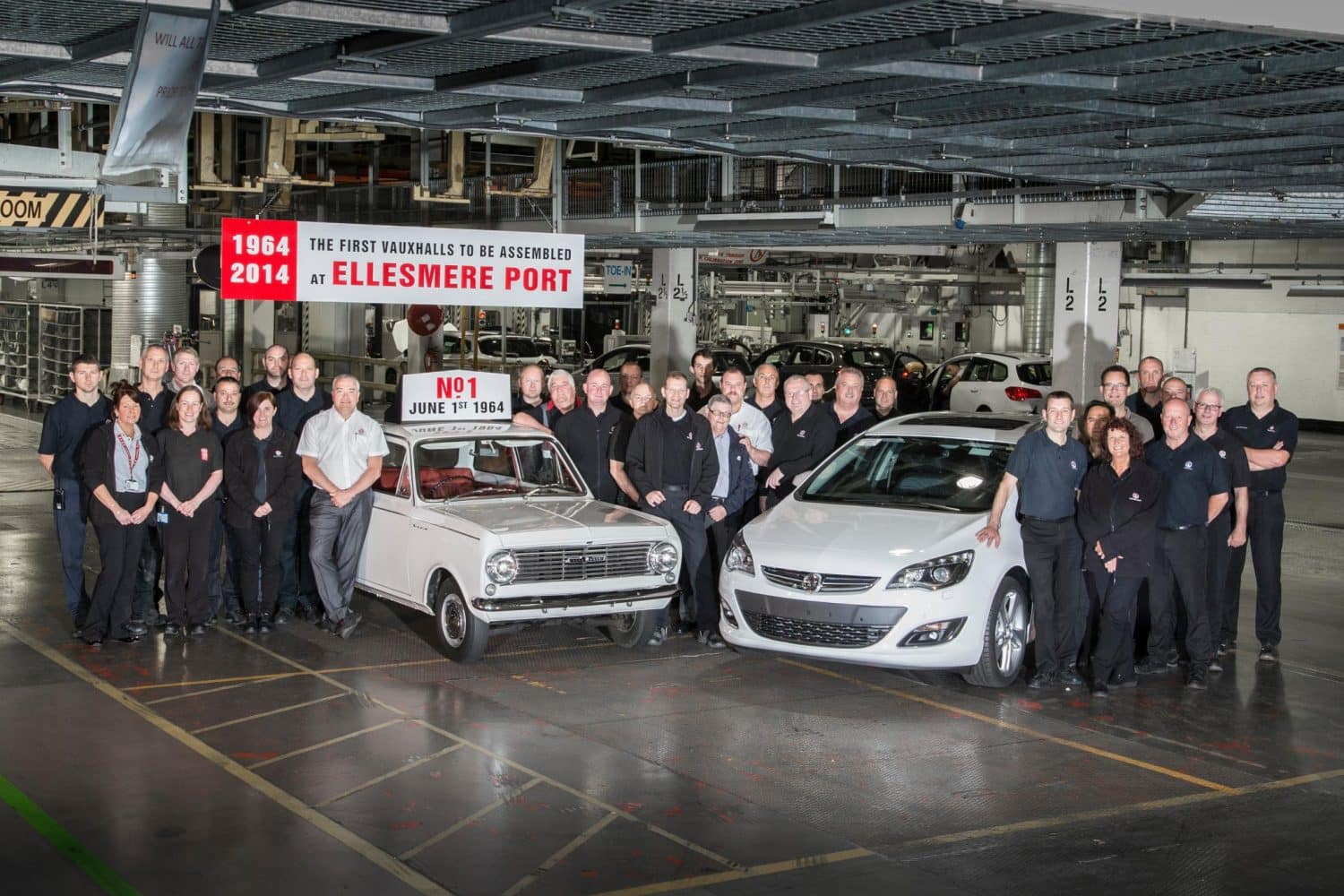
Vauxhall Ellesmere Port
Uncertainty will hang over Ellesmere Port, a Vauxhall plant with a long history.

“We respect all that Opel/Vauxhall’s talented people have achieved as well as the company’s fine brands and strong heritage – we intend to manage PSA and Opel/Vauxhall capitalizing on their respective brand identities,” Tavares adds.

“Having already created together winning products for the European market, we know that Opel/Vauxhall is the right partner. We see this as a natural extension of our relationship and are eager to take it to the next level.”

“We are confident that the Opel/Vauxhall turnaround will significantly accelerate with our support, while respecting the commitments made by GM to the Opel/Vauxhall employees,” Mr Tavares continues.

Vauxhall Vivaro
Vauxhall still has a major plant in Luton making the Vivaro van.

Wait and see on UK factories?

Vauxhall currently builds the Astra at Ellesmere Port and the Vivaro in Luton, as well as having its corporate headquarters in the Bedfordshire town. PSA has not built cars in the UK since closing its Peugeot factories in Coventry in 2006.

Brexit has added potential complexities for manufacturers with factories in Britain, particularly over exports that account for the vast majority of UK automotive production. Around 80 per cent of Vauxhall exports are to the European Union – there are fears that these could be badly affected by the export and import tariffs that will result if the Government does not secure an agreement to remain part of the single market when it leaves the EU.

Reacting to the sale announcement Len McCluskey, general secretary of the Unite trade union, insists that PSA head Carlos Tavares can be convinced that keeping production in Britain makes sense.

“Our plants are the most productive in the European operation, the brand is strong here, the market for the products is here, so the cars must be made here,” McCluskey says.

However he adds that the Government needs to play its part to end the harm being caused to the UK auto sector by the uncertainty over Brexit. He insists that the Budget on Wednesday would be a perfect opportunity to announce that trading opportunities with Europe will be preserved.

The current Astra is expected to continue in production until at least 2021 and relocating its manufacturing plant before then would seem to be unlikely. However around three-quarters of the car’s components are sourced from the EU so PSA could decide to base future Astras on the same platform as Peugeot Citroën models, building them together in European factories.

New UK plants?

Some reports suggest, however, that a ‘hard Brexit’ could be good news for Vauxhall manufacturing in the UK. PSA could decide to overcome the inevitable tariffs resulting by relocating some production to Britain in order to supply the UK market, which is one of the strongest in Europe and in which Vauxhall has a significant 16 per cent share.

Tavares has appeared to confirm such reports, sating that there could be an opportunity to open new plants in the UK.

Vauxhall/Opel and PSA already co-operate on several models. The Vauxhall Crossland X and Grandland X crossovers, launching at the week’s Geneva motor show, are built on the same platform as the Peugeot 2008 and 3008 equivalents. The Vivaro van, however, is part of a joint programme with PSA’s great rival Renault-Nissan, sold by the latter as the Traffic and Primastar.

The Car Expert will update this story as more details emerge.  

Vauxhall Crossland X 02
The forthcoming Vauxhall Crossland X SUV is built in a joint project with PSA Group.

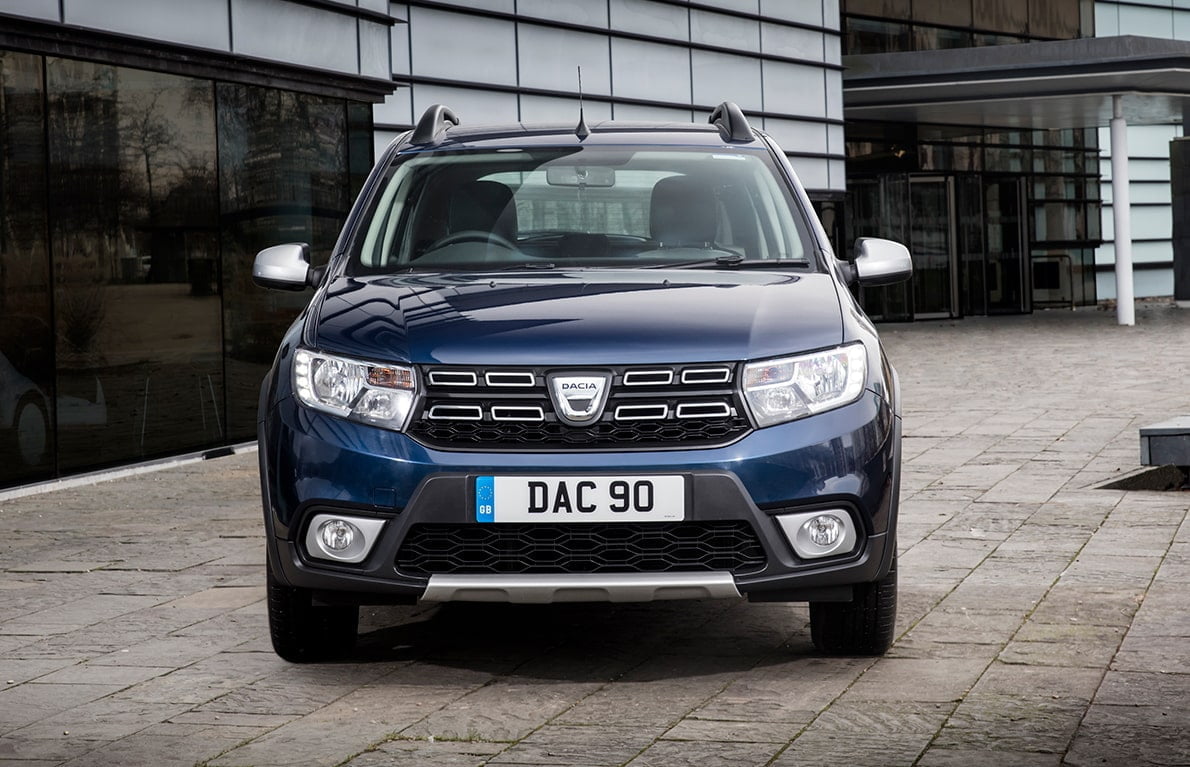
Dacia Sandero Stepway review

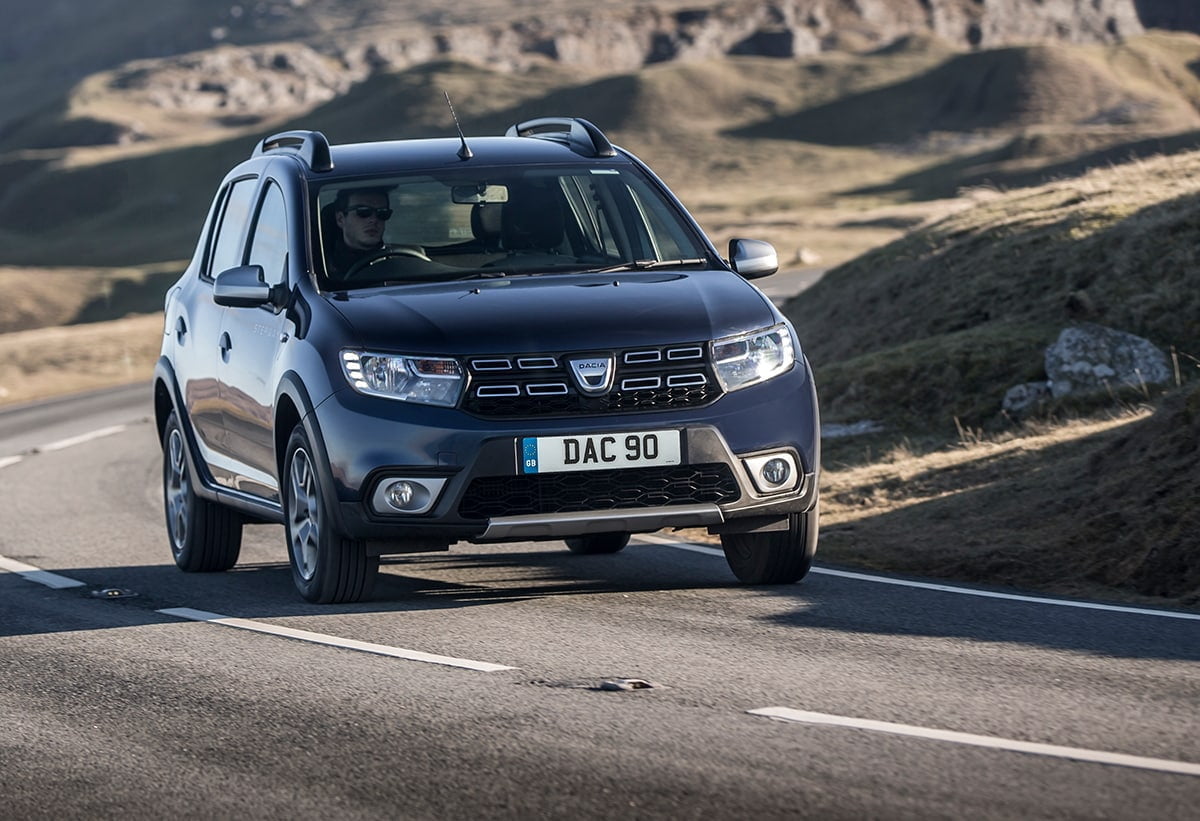
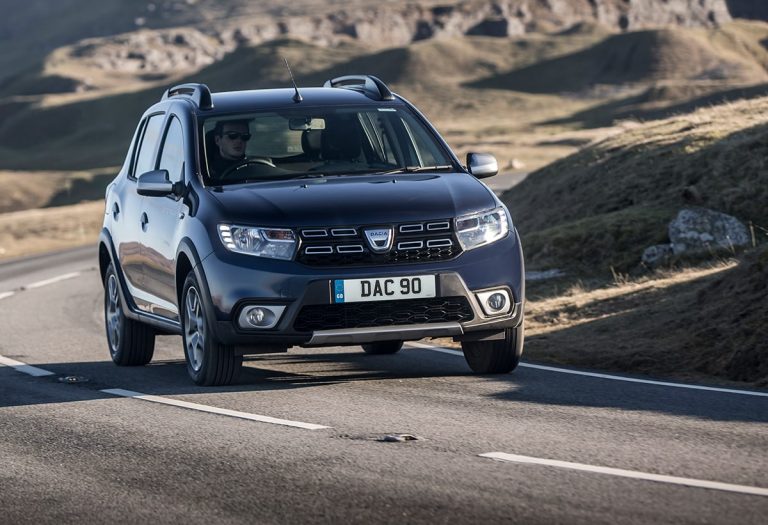
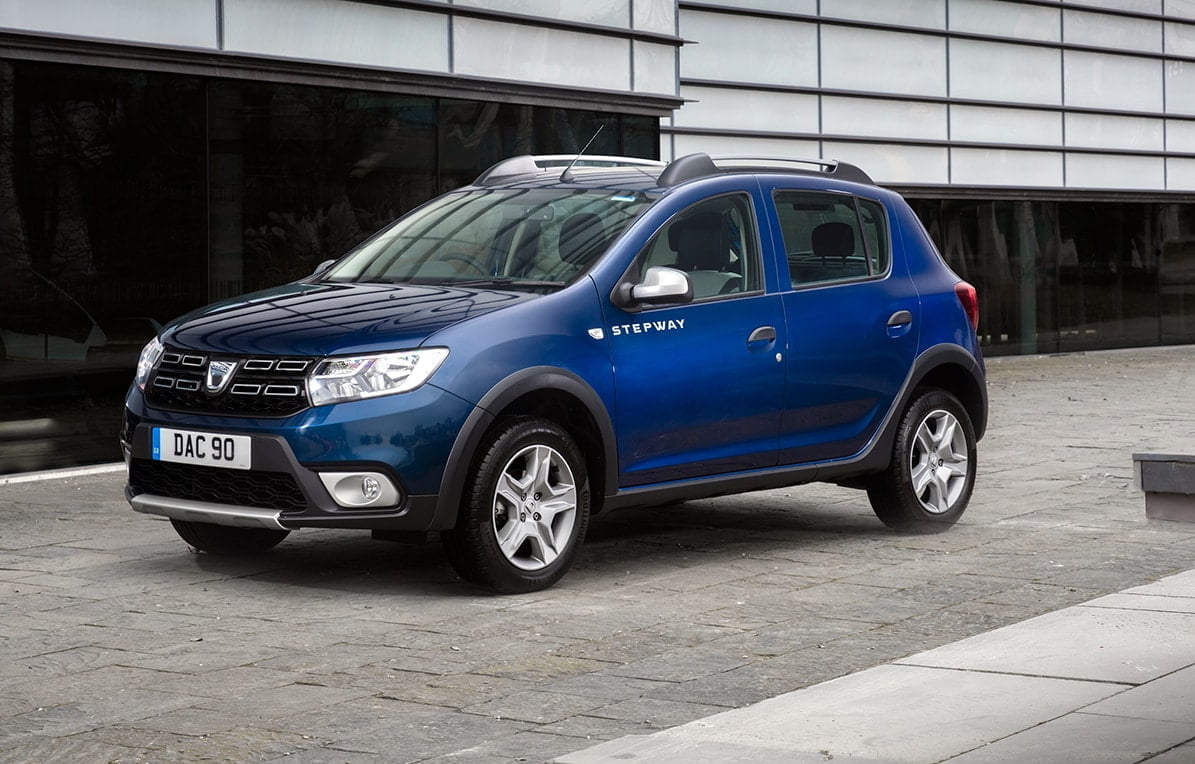
What is it? The Dacia Sandero Stepway is an off-road styled crossover version of the budget brand’s supermini model.
Key features: Sub £9K starting price, off-road styling.
Our view: It won’t write any headlines for its road dynamics but the Dacia Sandero Stepway is good value for a low price – a better option than the standard Sandero.
Type of review: Taster test.


The Dacia Sandero Stepway is a typical example of the mantra that has guided the Romanian budget brand’s growth since owner Renault launched it onto the UK market four years ago. It offers as much as is practical for a rock-bottom budget price.

The Stepway arrived in 2013 with the Dacia brand, the concept behind the car being to appeal to the mushrooming crossover market by taking the Sandero supermini and jacking up the ground clearance. The car gained bolder, off-road styling, while not bothering with the complex and expensive all-wheel-drive powertrain that most crossover buyers don’t want anyway.

At the Paris Show in September 2016 Dacia unveiled mild updates across its range and the Sandero Stepway was included. The new models are just arriving on UK roads and the Stepway concept is expanding – next to be treated will be the big-sister Logan MCV.

Powertrain and styling

The Dacia Sandero Stepway costs £1,000 more than a standard Sandero, and to create it one starts with a stock car fitted with either the 898cc 90hp petrol engine, or the 1.5-litre diesel also with 90 horses on tap. Entry-level Sanderos with the 1.2 petrol engine of 75hp are not permitted the Stepway treatment.

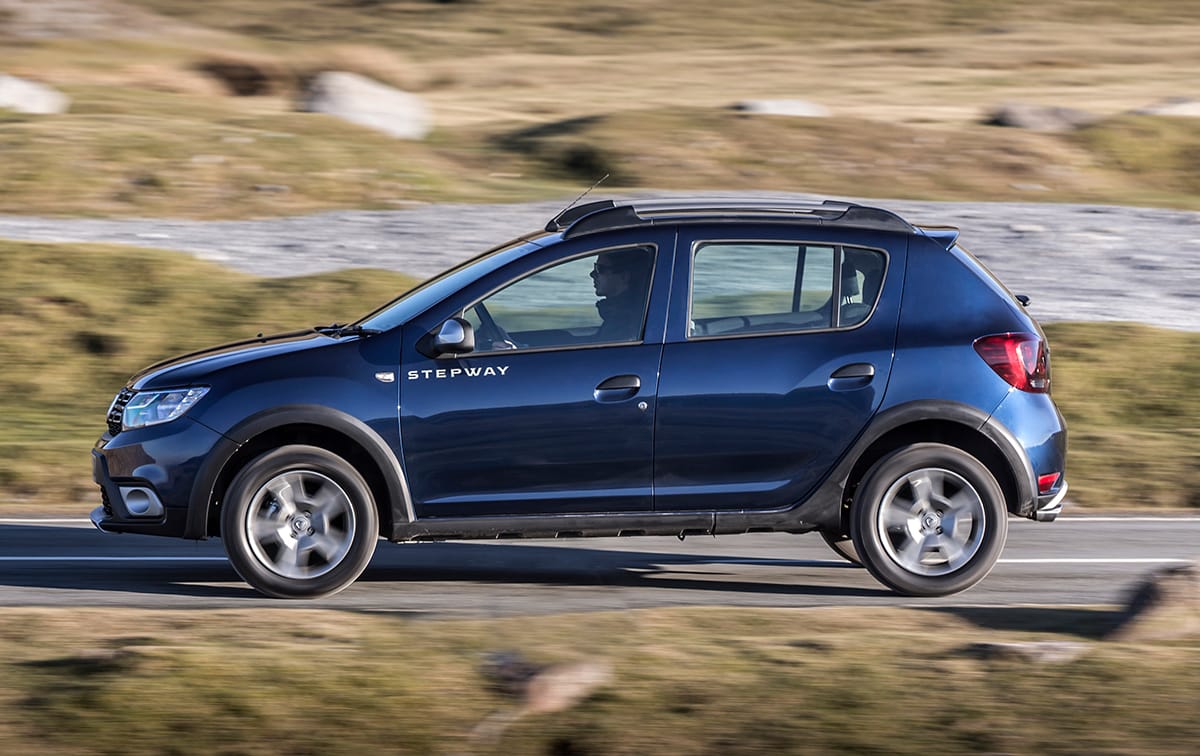
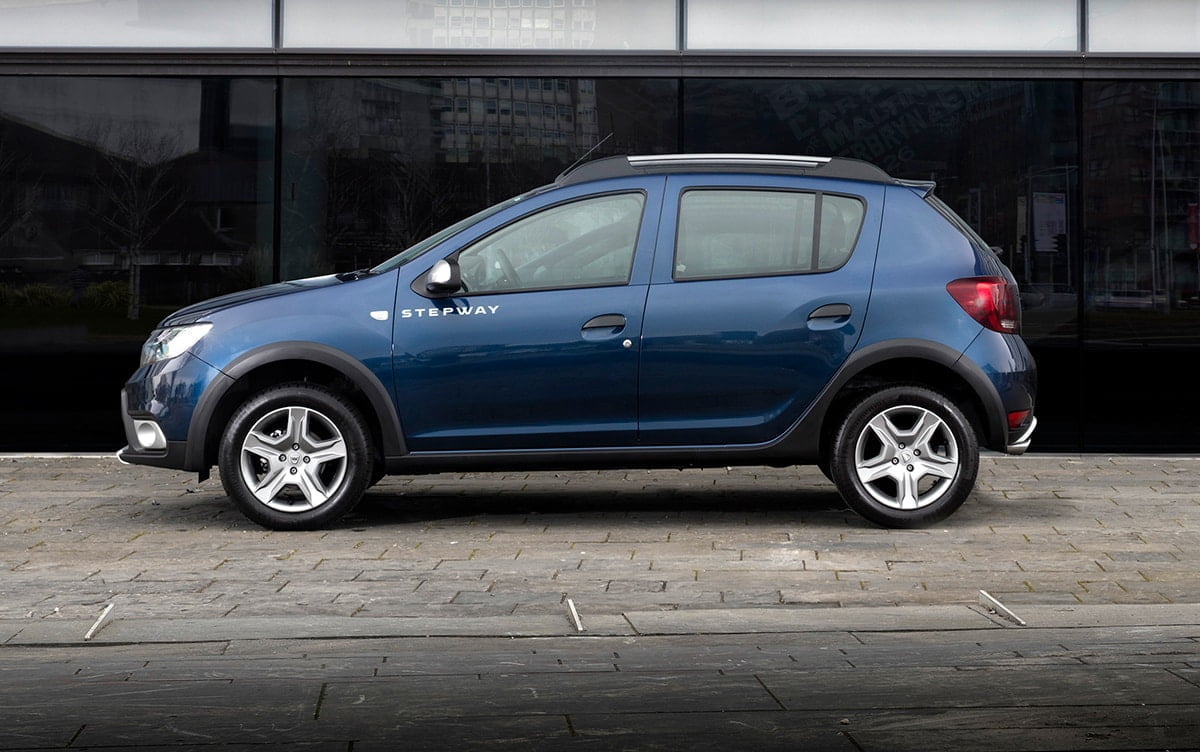
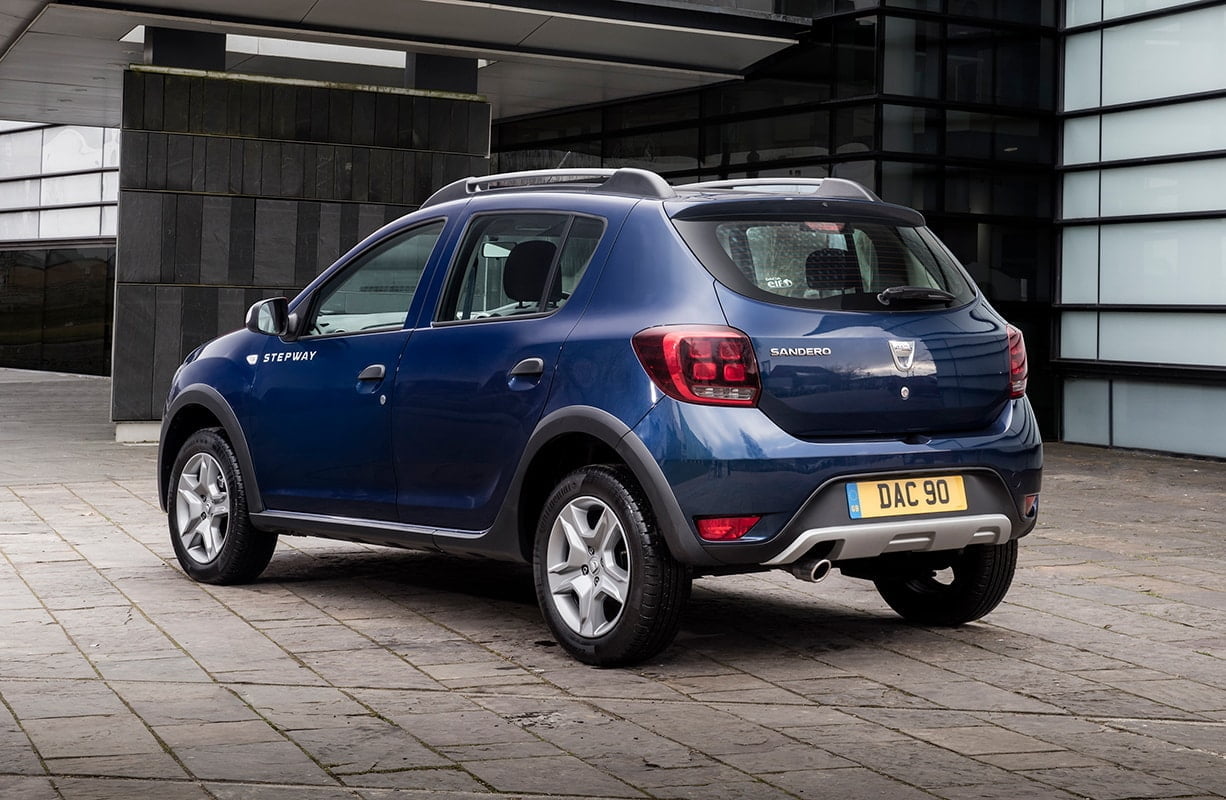
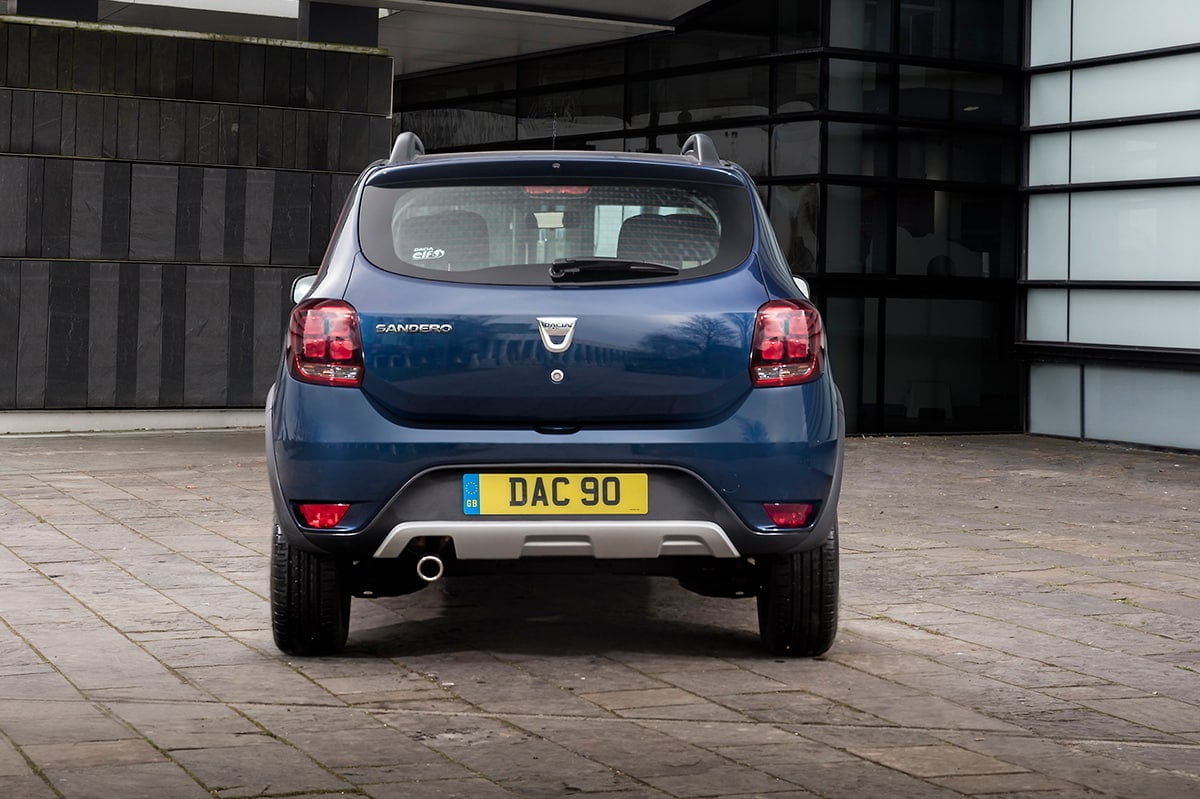
Ground clearance is increased by 40mm and visual representations of protective skid plates are added under the redesigned front and rear bumpers.

The suspension is beefed up to cope with the unlikely concept of Stepway owners not always staying on the tarmac, and the car distinguished from its sister by adding wheelarch extensions and roof rails. Inside you’ll struggle to see any difference apart from some rubber floor mats.

As for the updates between the new and previous versions, well they are hardly headline generating. The usual formula of changes to the alloy wheel design and new exterior colours applies. But perhaps most significant are the first Daytime Running Lights fitted to any Dacia.

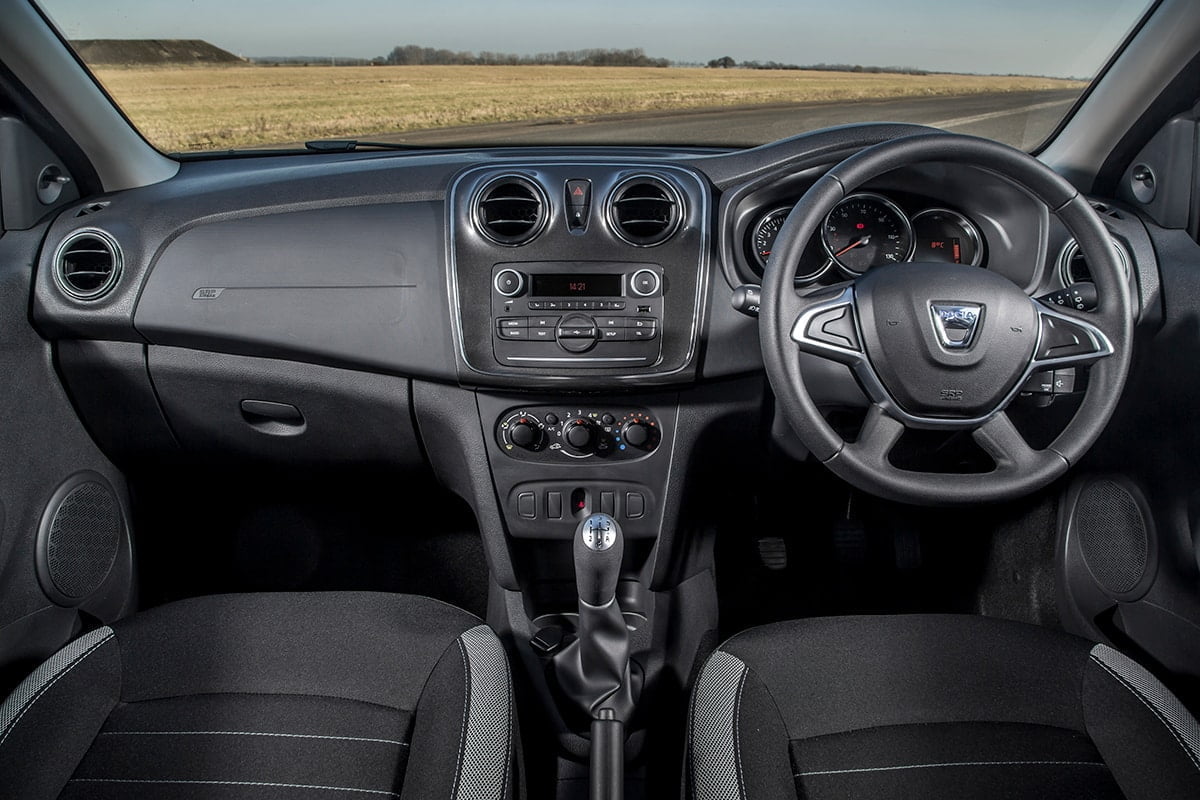
It’s an easy car to get into – the jacked-up stance ensures that. Once inside one views the basic, functional dash layout that characterises Dacia models. The rotary dials and push switches are looking increasingly dated in today’s market, but they work absolutely fine.

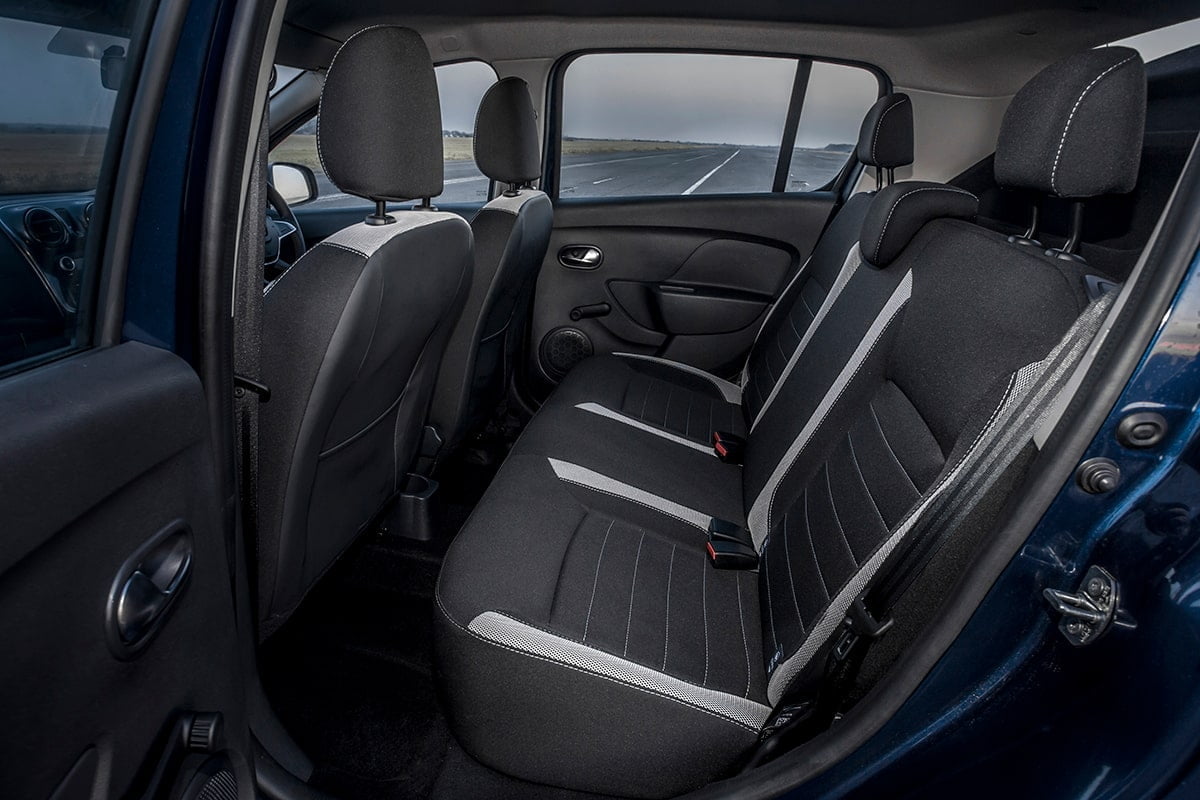
It is inside where most of the range updates have happened. The steering wheel has been redesigned, the seat upholstery updated. There are a couple more storage spaces and some chrome detailing that adds a welcome break to the quite dark finish.

More importantly, it’s easier to get comfortable. The driver’s seat is now adjustable for height, as is the steering wheel, and the front seatbelts.

On the road

Our test car is fitted with the petrol engine – both it and the diesel are proven Renault units. Both are allied to a five-speed manual gearbox, there is no auto option on the Stepway.

Combined cycle fuel economy on our model is quoted at 55mpg, with a 62mph sprint time of a shade over 11 seconds, so adequate for the supermini market. Adequate is also the best description of the refinement on offer – there are smoother models out there, with slicker gear shifts, but the Stepway is competent enough particularly considering how much one pays for it.

The ride quality is quite surprising – jacking up the Sandero seems actually to improve the chassis, and the Stepway bowls along in reasonable comfort, confidently smothering bumps. It does lean over a little in the corners but in a very controlled manner.

Choose a Stepway and you won’t be given the option of bargain-basement Access trim, which is no bad thing. Our test car is in the lower Ambiance trim level, and for £8,795 it includes a surprising level of equipment. Start-stop is fitted, and a the infotainment includes DAB radio and Bluetooth. Air conditioning is standard too.

Options? On our test car they extended to metallic paint and an emergency spare wheel in lieu of the usual tyre inflation kit. They add £595 to a selling price of just £8,795 – pretty much a bargain for a crossover-styled car as this is.

According to Dacia UK, however, only around half its customers are looking for the lowest budget option. The other half want all the bells and whistles while appreciating value for money, and so choose the range-topping Laureate.

To buy a Laureate one pays another £1200. This adds such niceties as a seven-inch touchscreen with satellite navigation, an onboard computer, cruise control, rear parking sensors and electric rear windows.

That’s worthy of consideration, and perhaps equally so is the diesel. The drawback is a £1400 price hike over petrol Stepways, the advantage fuel economy that jumps by almost 20mpg, together with a dip in emissions under the magic 100g/km marker – not that this will be as important following the VED tax changes on 1st April (see here for more). The diesel is also likely to offer a more satisfying drive thanks to its greater mid-range torque.

Verdict

Dacia makes no bones about offering budget cars – the brand bases its entire advertising on that premise. But within that budget range the Dacia Sandero Stepway is possibly one of the best options. Even those not necessarily looking for a crossover could benefit from choosing this over a standard Sandero.

Dacia Sandero Stepway – key specifications

Model tested: Dacia Sandero Stepway Ambiance TCe 90
Price: £9,390 (with options, stock OTR price £8,795)
On sale: December 2016
Engine: 898cc petrol, 90hp, 140Nm
0-62mph and max speed: 11.1sec, 104mph
Economy and emissions: 55.4mpg, 115g/km
Key rivals: Hyundai iX20, Kia Venga, Suzuki S-Cross
Test date: February 2017

Dacia Sandero Stepway tracing

Volkswagen Tiguan Allspace debuts at Geneva

European audiences get their first view of the Volkswagen Tiguan Allspace at next week’s Geneva motor show.

The extended version of the brand’s popular SUV was unveiled as the Volkswagen Tiguan LWB at the Detroit show in January.

It stretches the standard Tiguan wheelbase by 110mm, and the overall length by 215mm, mainly in the rear overhang that grows 106mm.

The extension creates a potential extra 145 litres of boot space, or 250 litres with the rear seats folded, as well as the option of fitting two extra seats in a third row.

Six-strong engine range

Ahead of the car’s European debut, more details of the powertrain line-up have been released – six engines will be available, ranging from 150 to 240hp. All are direct-injection four-cylinder turbo units.

Three petrol options range across 150, 180 and 220hp, while their diesel equivalents rate at 150, 190 and 240hp. Front-wheel drive is standard on the entry-level models, though 4Motion all-wheel-drive is an option on the 150hp diesel and standard on all other versions. All-wheel-drive models also gain the DSG auto dual-clutch gearbox.

Volkswagen Tiguan Allspace will be presented as a more versatile version of the SUV

Mild changes to the front-end styling and the profile differentiate the Volkswagen Tiguan Allspace from its big-selling standard length sister. It will be offered in VW’s standard three trim levels of Trendline, Comfortline and Highline.

UK sales of the Tiguan Allspace are not expected to begin until late 2017. Prices are still be revealed but based on the already announced German prices they are expected to be around £3,000 more than the standard Tiguan. This costs from £23,140.

The Tiguan Allspace will be unveiled on Volkswagen’s Geneva stand on 7th March – The Car Expert will be at the show to provide latest news on all of the new model reveals.

E-Class Cabriolet joins the family

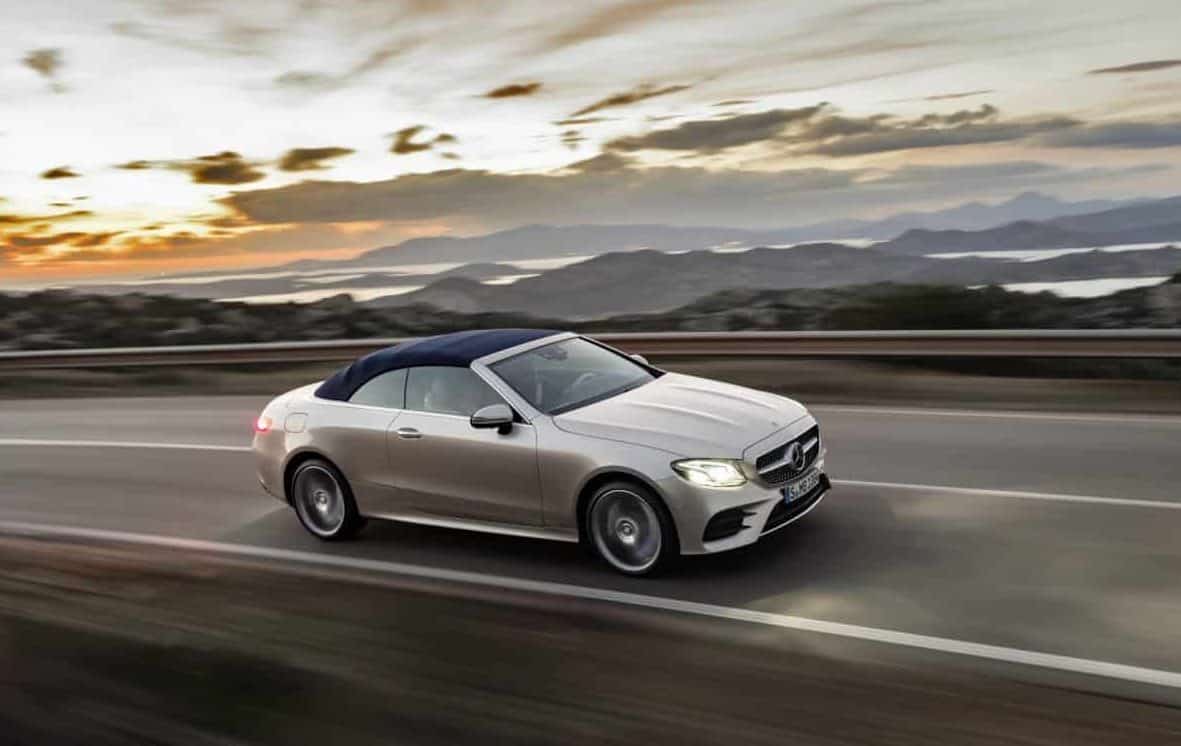
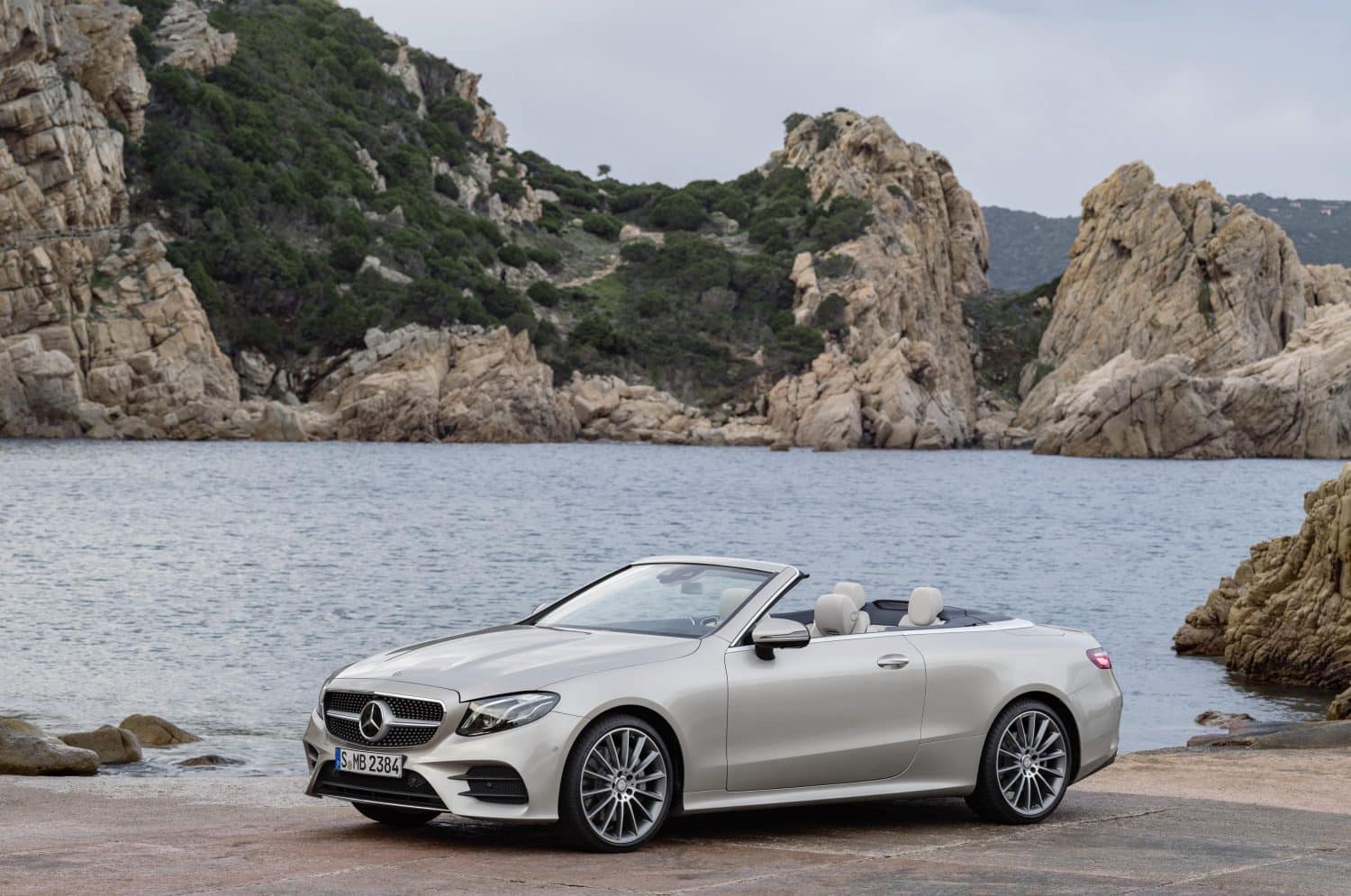
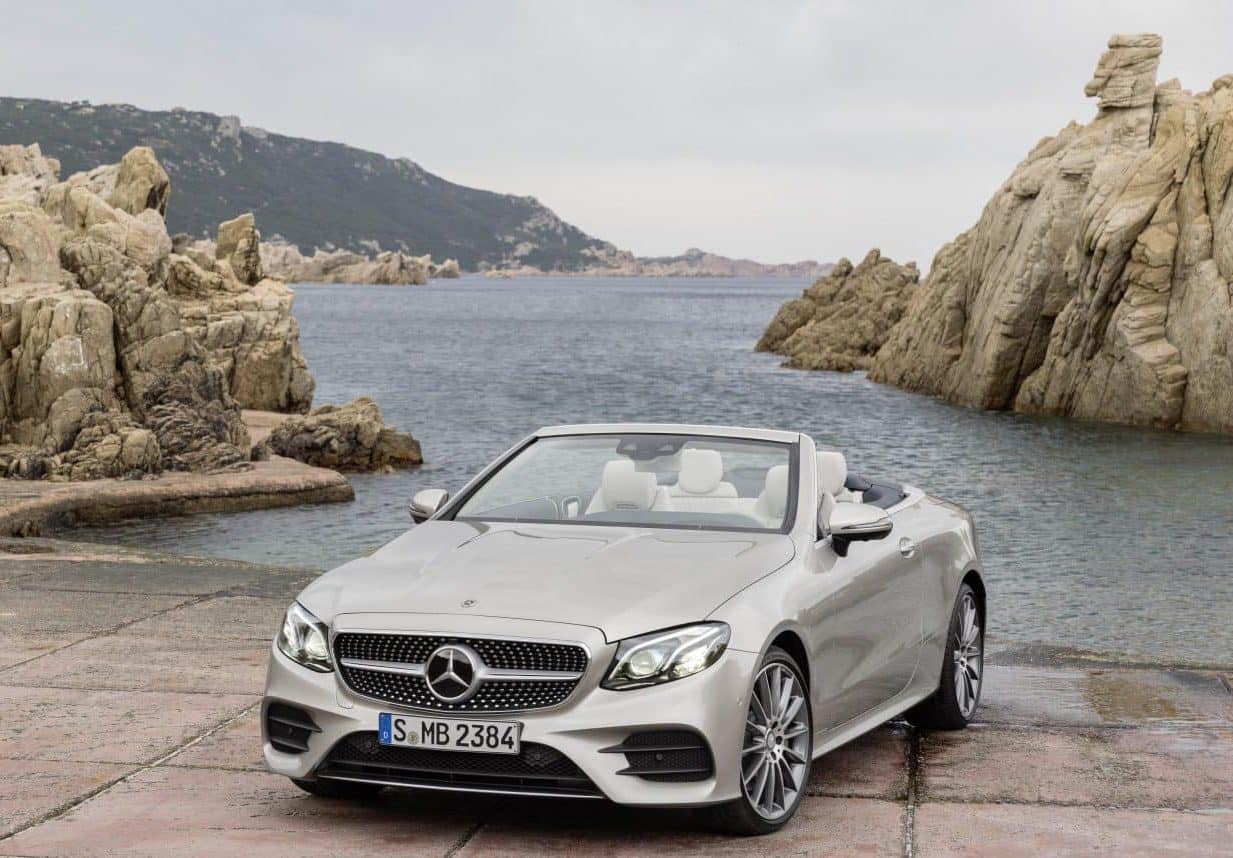
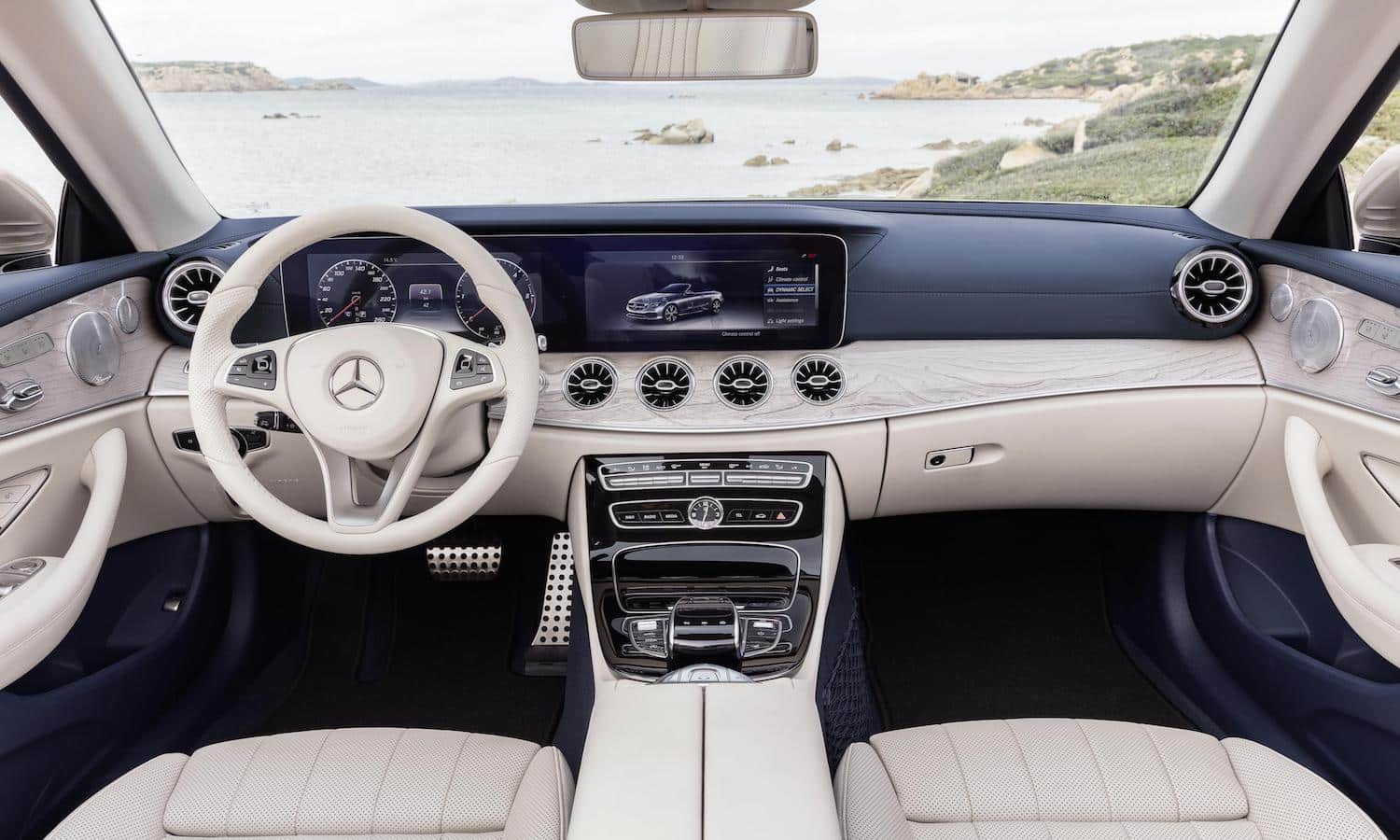
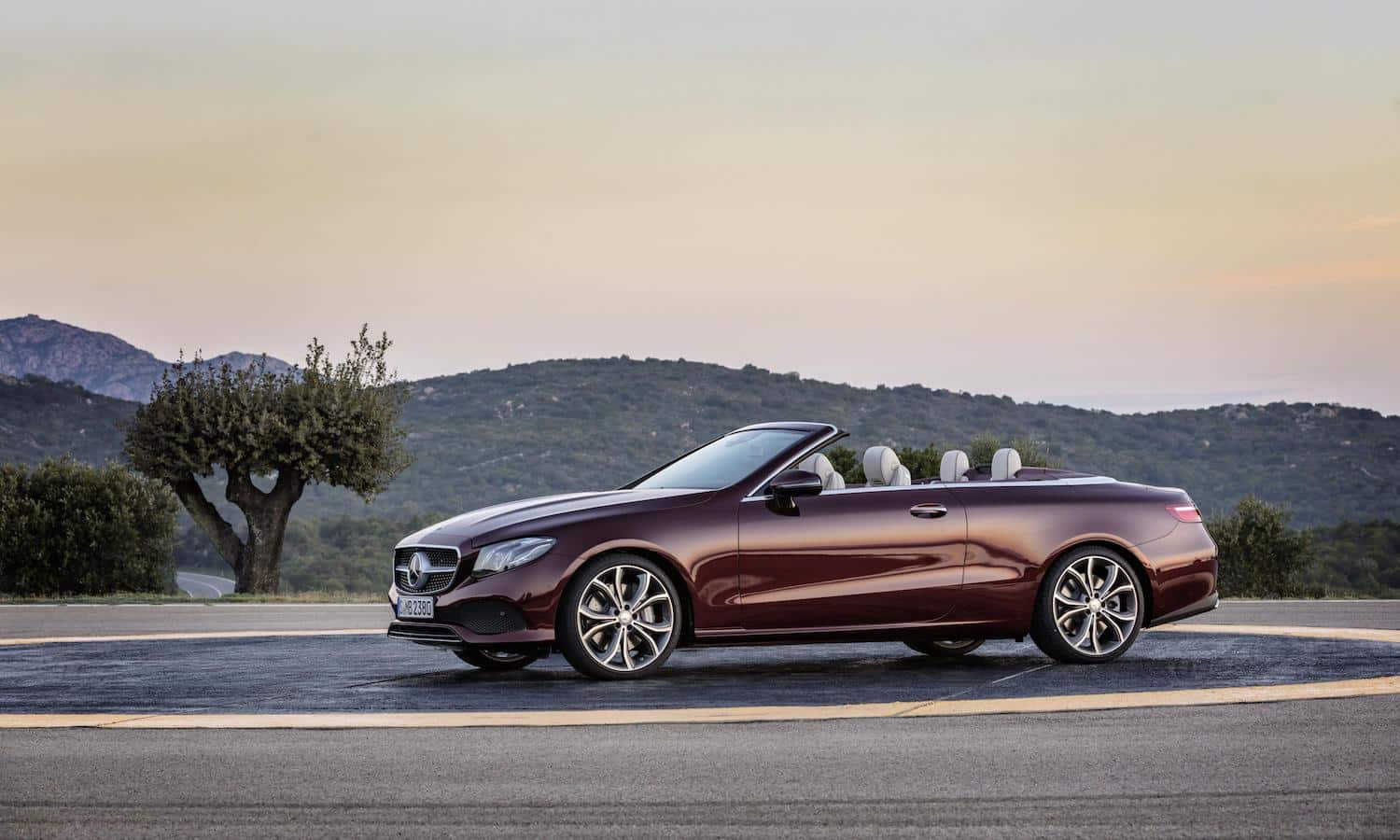
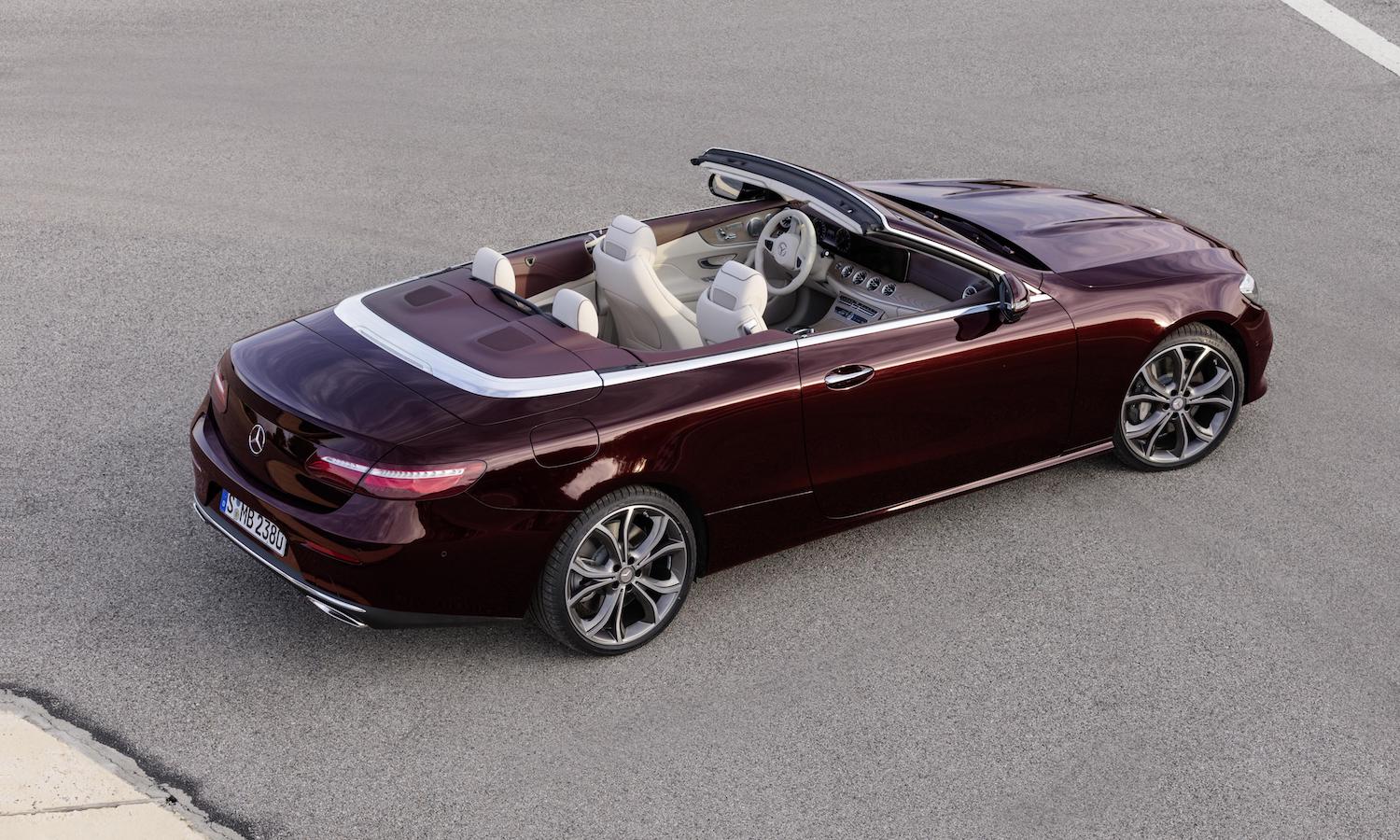
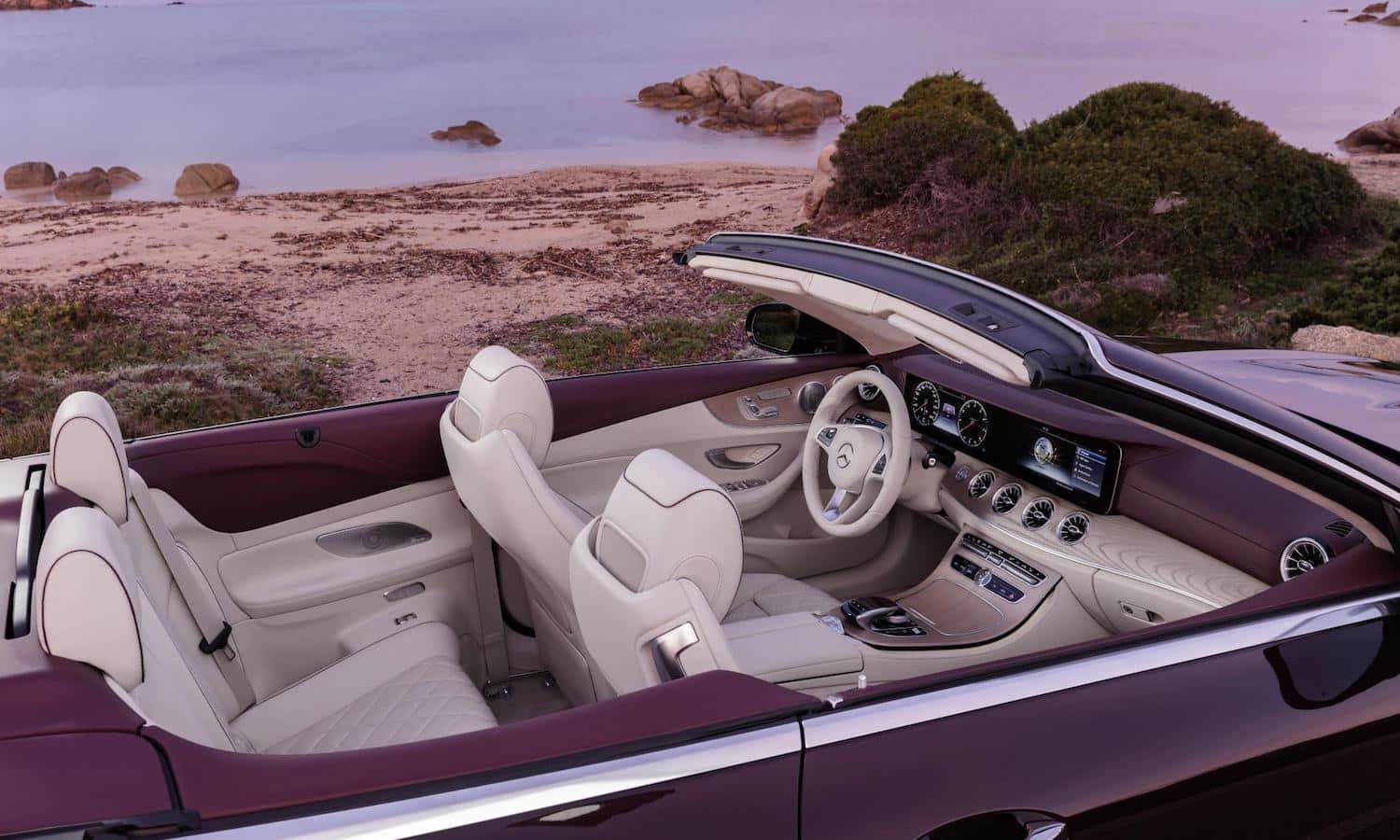
Mercedes-Benz has completed the roll-out of its new E-Class range with the E-Class Cabriolet.

The E-Class Cabriolet joins the largest convertible range in Mercedes-Benz history, which now includes C-Class, E-Class, S-Class, SLC (nee SLK), SL and AMG GT topless models.

As expected, the E-Class Cabriolet is based heavily on the new E-Class Coupe and retains that model’s lightweight part-aluminium construction. Unlike the previous-generation models, the new E-Class coupe and cabriolet models are based on the E-Class saloon platform, rather than the smaller C-Class.

As with the previous E-Class Cabriolet, the new model features a fully-automatic soft top roof, which takes about 20 seconds to open or close and can be operated at speeds up to 31mph. The acoustic insulation in the roof material has been improved, and Mercedes-Benz claims a sufficient reduction in wind and driving noise for occupants to converse normally even when driving at high speed.

Like most large soft-top vehicles, the fabric roof is stowed in a collapsible compartment in the boot. For the new E-Class Cabriolet, Mercedes-Benz now offers an option to operate the boot separator electrically instead of manually.

The new model offers the Aircap electric wind deflector and rear draught stop which featured on the previous mode, although they are now part of an optional comfort package rather than standard equipment. The Cabriolet Comfort package also includes Mercedes’ Airscarf neck-level heating system for the front seats.

Like the coupe, the E-Class cabriolet has grown in size over its predecessor, which primarily improves rear cabin and boot space. The boot capacity is slightly larger at 385 litres (reducing to 310 litres when the boot separator is in use), and the rear seats now fold in a 50:50 split for the first time to increase loading space.

All models of the E-Class Cabriolet are equipped with 9G-TRONIC nine-speed automatic transmission. A 4MATIC all-wheel drive option is available for the first time, although it remains to be seen whether this will be available in the UK. An E63 AMG model is also possible, mirroring the coupe.

The E-Class Cabriolet includes features common to the award-winning saloon and new coupe models, including autonomous emergency braking, brake assist and steering assist systems. The cabriolet also continues the previous model’s roll-over protection system. In the event of a the car rolling over, two cartridges hidden behind the rear seats are explosively fired to pop up and provide roll-over protection for the driver and passengers.

UK pricing and specification will be announced closer to the car’s anticipated local launch this summer.

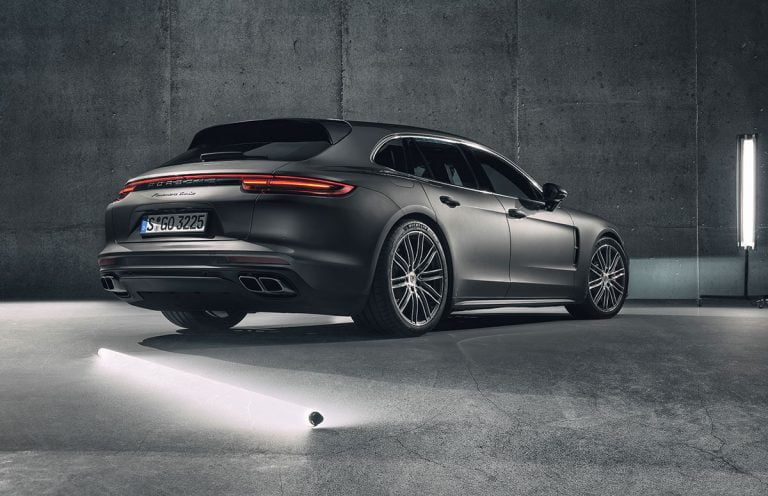
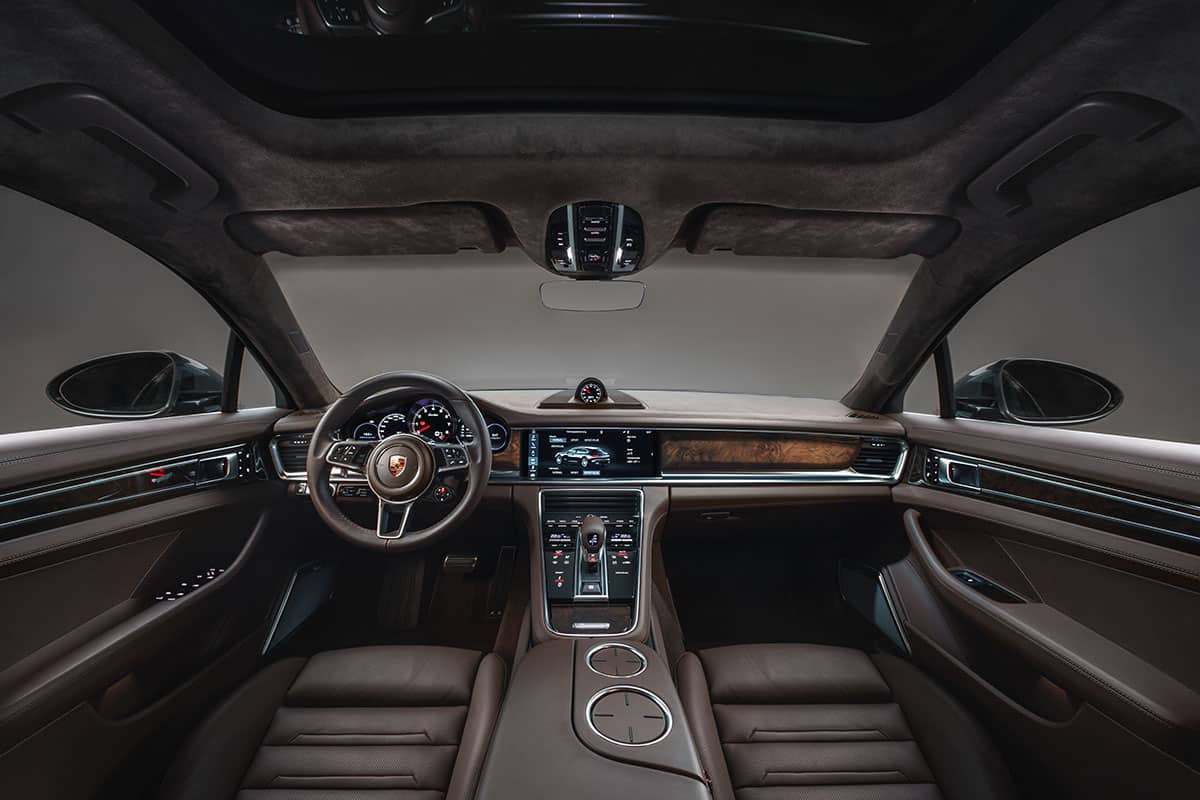
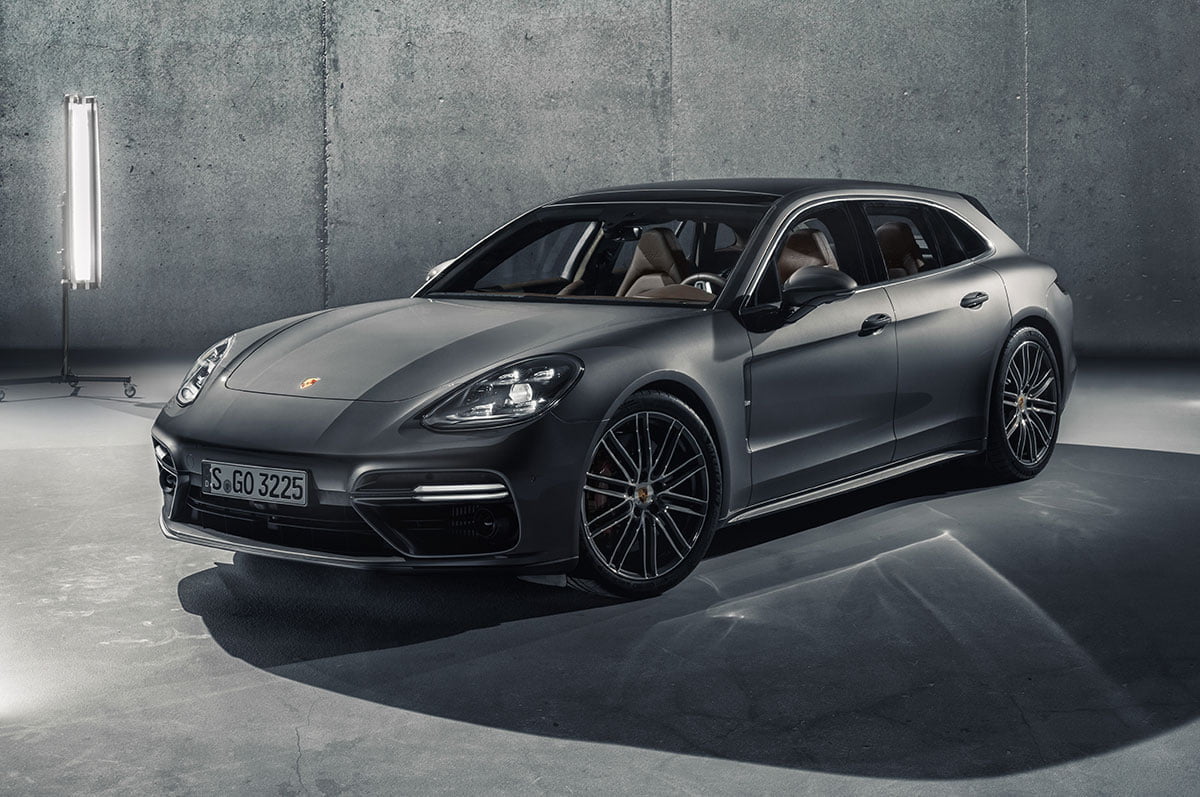
Porsche Panamera Sport Turismo unveiled

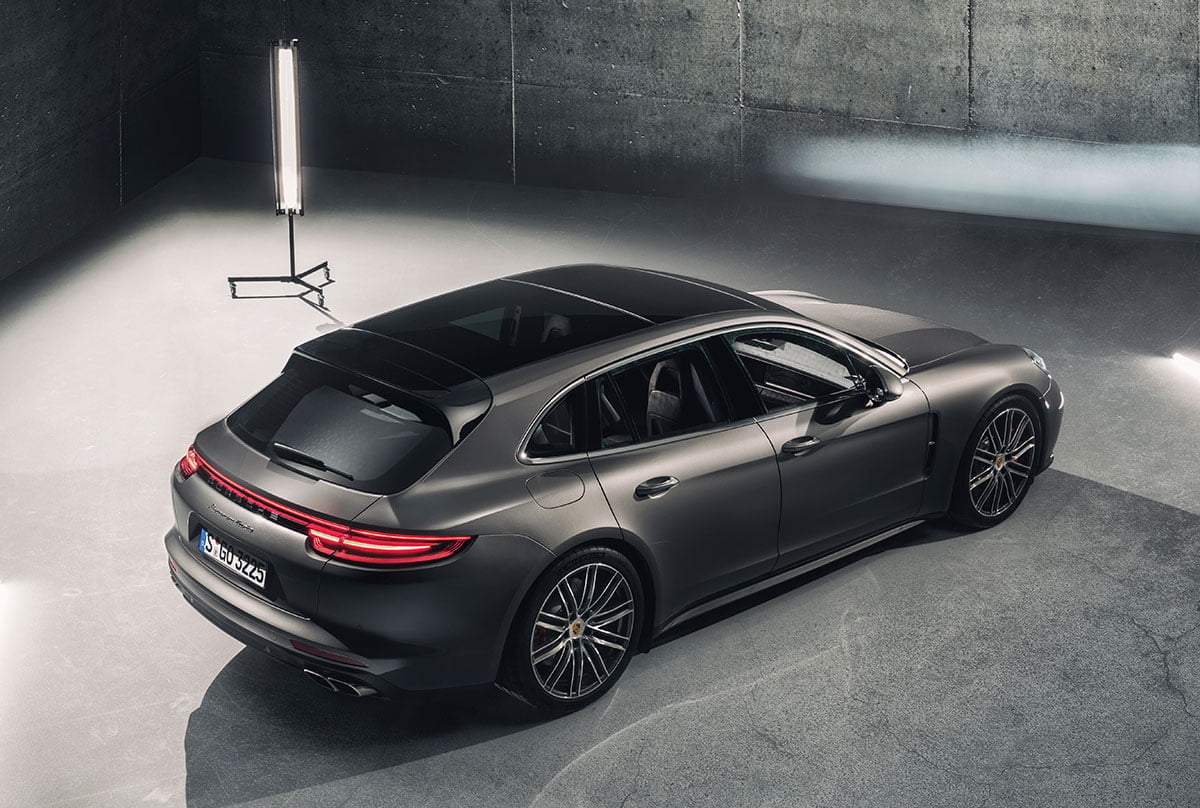
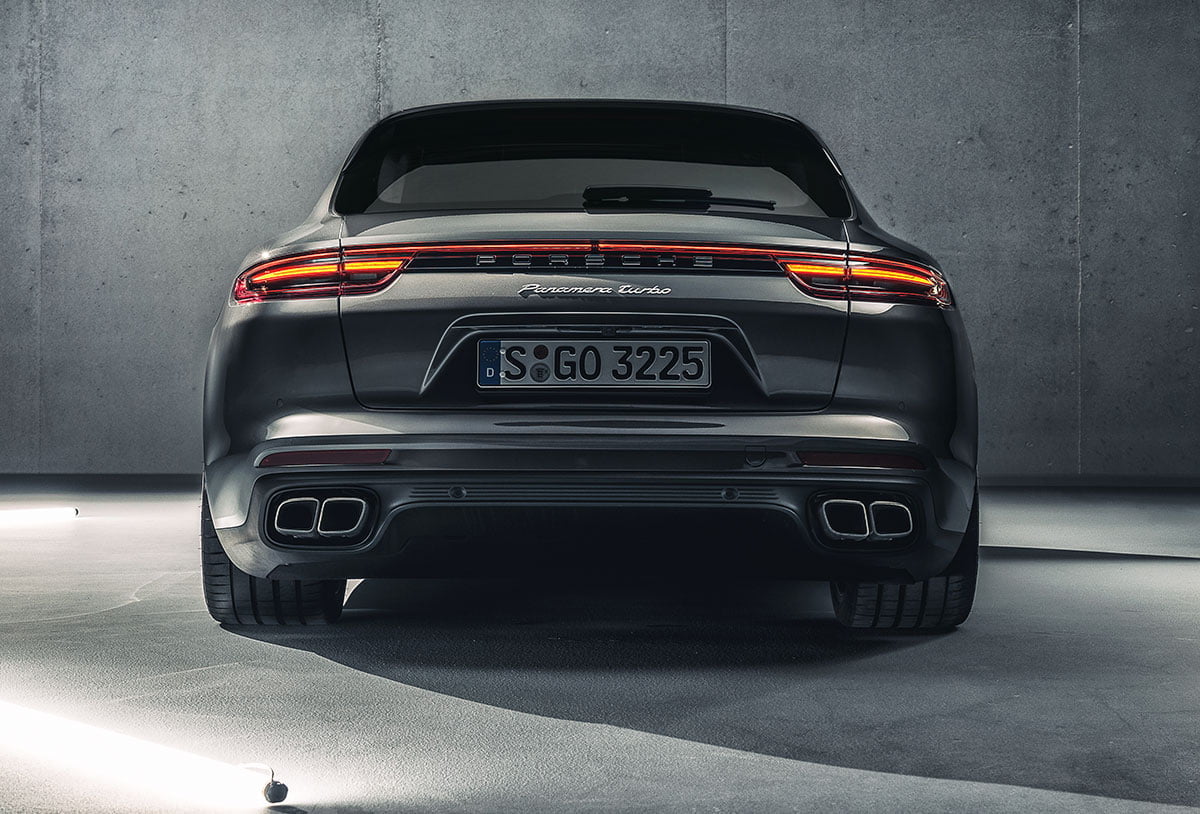
The Porsche Panamera Sport Turismo has been revealed and will make its public debut at the Geneva Motor Show on 7th March.

Having confounded sceptics with the launch of the Cayenne SUV in 2002, the German brand renowned for its sports cars is now offering an estate. Today the Cayenne outsells the entire Porsche sports car range.

The Porsche Panamera Sport Turismo is based on the second-generation version of the four-door car launched last year and evolved from the Sport Turismo concept that was revealed at the Paris Motor Show as long ago as 2012.

Four-plus-one seats

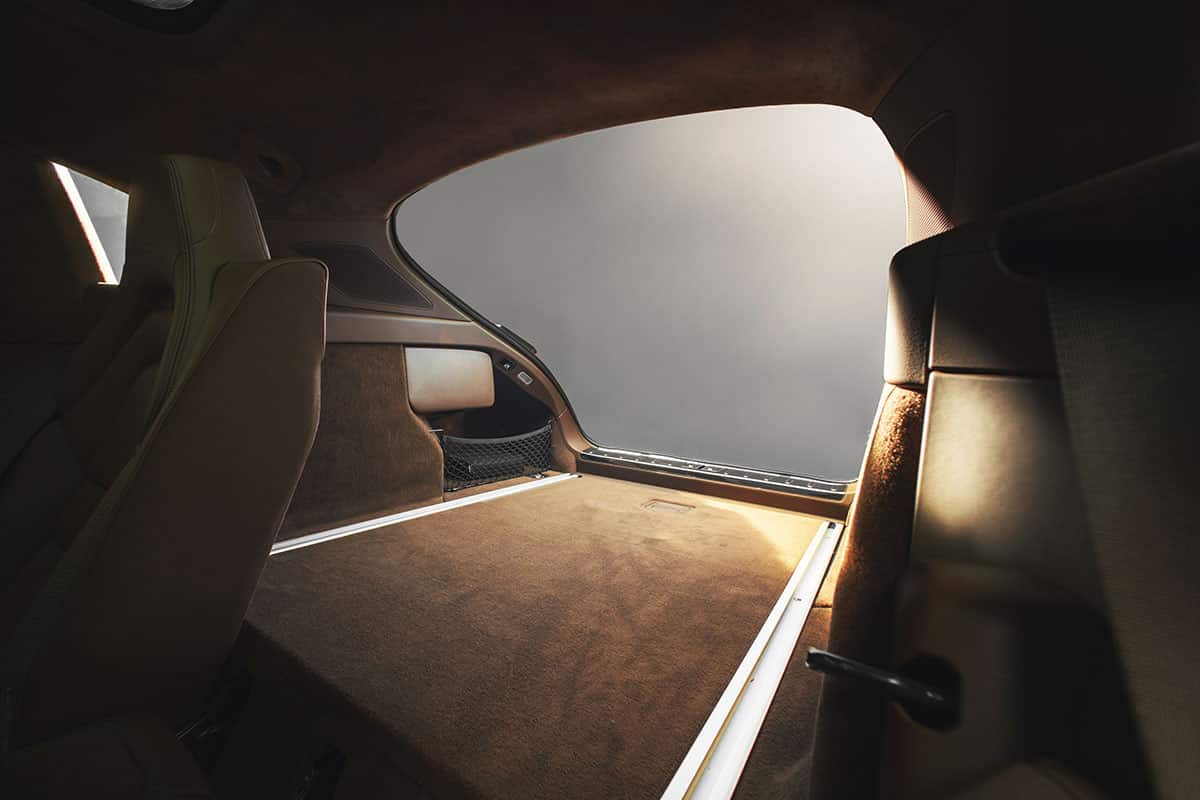
While the Panamera is a four-seater, the Sport Turismo offers ‘four-plus-one’ seating, with a central, narrower, third seat in the rear mainly suitable for children. Porsche will also offer the car as a four-seater with two individual adjustable rear seats.

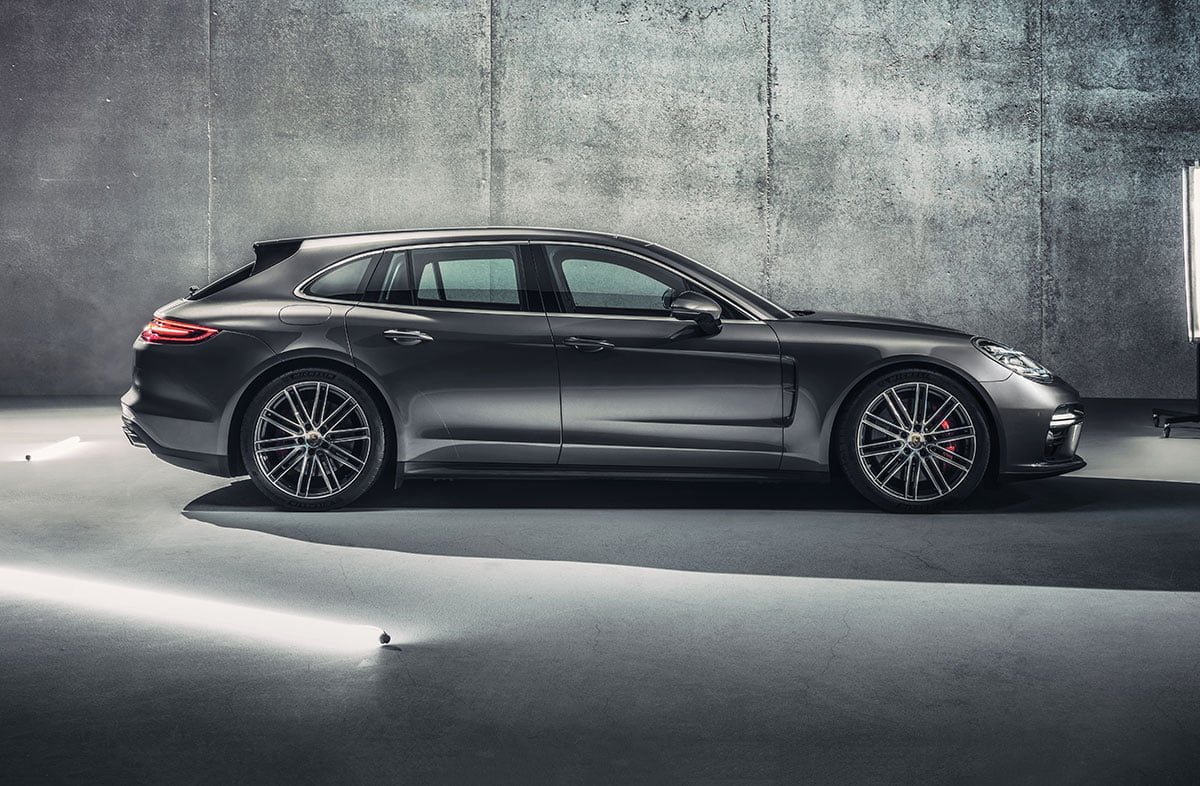
The Sport Turismo measures up at the same length, width and wheelbase as the standard car, but with 5mm extra height. The major differences are an extended roof line to a less slanted rear pillar housing a large tailgate, which opens electronically.

The rear loading lip is also lower and boot space increases to 520 litres – 20 more than a standard Panamera and 95 better than the hybrid model. With all of the rear seats folded capacity grows to 1390 litres.

All-wheel-drive standard

The Sport Turismo engine line-up will replicate that of the saloon, with five options, all allied to active all-wheel-drive and the Porsche Traction Management traction control system.

Entry-level model will be the stock Sport Turismo with a 3-litre V6 turbo petrol engine of 330hp at £73,071. The E-Hybrid version matches a turbo 2.9-litre V6 petrol unit to an electric motor, producing 462hp and combined cycle fuel economy of 113mpg, along with CO2 emissions of 56g/km. It costs £83,288.

A 4S variant uses a twin-turbo 2.9-litre V6 petrol unit and increases the power to 440hp for a cost of £93,979, while the one diesel model, a turbo 4.0-litre V8 with 422hp on tap, is available at £97,067. Range topper is the Turbo, with its twin-turbo 4.0-litre V8 of 550hp, costing £117,247.

Porsche is promoting the performance credentials of the Sport Turismo, claiming that the car debuts the first adaptive roof spoiler in its segment. The three-stage system stays at an angle of minus seven degrees at speeds up to 105mph, when it automatically moves to plus one degree, though this can be activated from 55mph by engaging Sport or Sport Plus Driving modes, producing up to 50kg of extra downforce on the rear axle.

If the driver decides to open the car’s panoramic sliding roof at speeds above 55mph, the spoiler adjusts its position to plus 26 degrees, which helps cut wind noise.

UK dealers are already taking orders for the Porsche Panamera Sport Turismo, with the first cars expected on the roads in October.

Range Rover Velar to attract ‘new customers’

The Range Rover Velar has been unveiled ahead of its public debut at next week’s Geneva Motor Show.

Revealed at the Design Museum in London, the fourth member of the Range Rover family is described by its makers as ‘filling the white space’ between the brand’s Evoque and Sport models. It has also been dubbed the most road-focused Range Rover yet.

UK-built, on sale in July

The Velar will be built at Jaguar Land Rover’s Solihull plant in Birmingham and go on sale in mid-July 2017. Prices start from £44,830 and the model is expected to rival the Porsche Macan.

JLR expects the Range Rover Velar to bring ‘a new type of customer’ to the brand, saying that it offers a combination of luxury, refinement and all-terrain capability never before seen in the mid-size SUV segment.

The Velar is closely related to the F-Pace of sister brand Jaguar and uses the same aluminium-intensive platform for a combination of light weight and stiffness. Sitting on a 2874mm wheelbase, the car is said to offer ‘exceptional’ interior space along with a 632-litre boot.

Six powertrains will be available – entry-level is the 180hp 2-litre Ingenium diesel, also available in a 240hp version. A new four cylinder Ingenium petrol unit offers 250hp with a 300hp variant set to join the range later in the year. A V6 diesel combines 300hp with 700Nm of torque, while the range-topper is a 3-litre V6 petrol engine with 380hp.

All will be matched to eight-speed auto transmissions, adaptive dampers and intelligent all-wheel-drive – Land Rover’s reputation for all-surface ability ensured there was no thought of following the front-wheel-drive route of many other mid-sized SUVs.

This capability is emphasised by a class-leading ground clearance of 251mm on versions with the air suspension that is standard on six-cylinder models, and a wading depth of 650mm.

The options list will include the Terrain Response 2 and All Terrain Progress Control traction aids, while a locking rear differential will also be available.

Among notable styling touches are the slimmest LED headlamps fitted to a production Land Rover, and flush-fitting door handles. The Velar is also described as the most aero-efficient Land Rover yet.

Inside a new interior design focuses on keeping the number of controls to a minimum. The front is dominated by the new Touch Pro Duo infotainment system which uses two 10-inch high-definition touchscreens integrated into the dash.

Also debuting is a new seat material, described as a sustainable alternative to leather. It is finished in grey and has inserts in Ebony or Light Oyster shades.

Three trim levels will be on offer when the Velar goes on sale while for the first year there will be an extra First Edition model. Based on the top HSE trim and powered by the 3-litre engines, it includes full extended leather interior trim, perforated Windsor leather seats, a 1600W Meridian Signature sound system, matrix-laser LED headlights and 22-inch split-spoke wheels with diamond-turned finishes.

Jaguar Land Rover UK Managing Director, Jeremy Hicks, describes the Range Rover Velar as a “stunning addition” to the Range Rover family.

“It enhances a model line-up that originally defined the luxury SUV segment and continues to do so – Velar brings increased choice to new and existing customers in a growing SUV market,” Hicks says.

“It leads the way in terms of design, usable technology, new materials and of course Land Rover’s legendary go anywhere, do anything capability,” he adds.

Crash test issues for Fiat and Ford

Fiat and Ford have slipped behind rivals in the latest round of Euro NCAP safety tests.

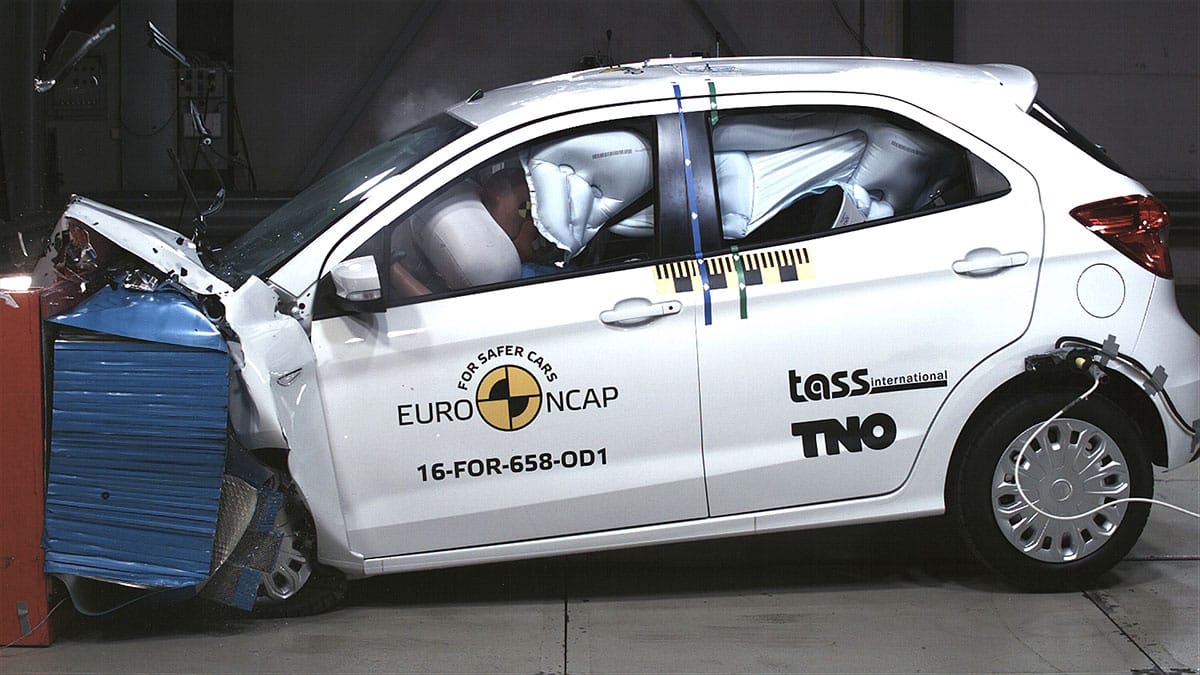
The results of new crash tests conducted by the safety body show that the latest facelift of the 10-year-old Fiat 500 and the brand-new Ford Ka+ only achieved three of the maximum five stars.

For Ford it was the second successive issue involving the crash tests – in January the latest Mustang muscle car scored only two stars.

Six cars tested

The latest round of six crash tests enabled Euro NCAP to benchmark three of the latest new cars in the same segment; the Fiat 500, Ford Ka+ and Citroën C3. The Citroën managed a four-star rating, only failing to achieve the full score by just falling short of the threshold on the pedestrian protection test.

The Fiat 500, however, was considered to offer poor protection of both the driver and rear-seat passenger in a full-width frontal impact, which is a recent additional test introduced in 2015.

The testers rated the chest protection provided to occupants of the Ford Ka+ as poor, and noted that both cars lack autonomous braking technology that is now on offer on half of new models today – though it is less common among superminis.

Ford Ka+ crash test
Brand-new Ford Ka+ offered ‘poor chest protection’ according to testers.

However the testers also pointed out that the two cars also lacked more basic protection, such as rear seatbelt pretensioners and load-limiters, by now standard on most cars on the market.

“Superminis are extremely popular in the European new car market and the segment is very price-sensitive. To deliver attractive yet affordable cars, manufacturers are tempted to cut down on safety equipment, emphasising great looks and style instead,” Euro NCAP commented.

The safety body’s secretary general, Michiel van Ratingen, even suggested that Fiat 500 buyers should consider waiting for the next-generation model and hope that the safety specification is improved.

“The 500 is an old car by now and the small improvements that Fiat have made on the facelift don’t hide that,” van Ratingen said, adding; “Consumers may be better off waiting for the all-new 500 and hope that FIAT will take the opportunity to offer a vehicle that competes on safety with its competitors, as the original did 10 years ago.

He was also strongly critical of the Ford Ka+ performance. “Unfortunately, high hopes for the segment are smashed by Ford by releasing a brand new Ka+ with mediocre safety performance,” he said.

“The car lacks the more sophisticated restraint systems offered by most of its rivals, let alone more sophisticated technology like autonomous braking. The new Citroën C3 shows that a respectful rating is achievable also for superminis.”

UK backing

The findings were backed by Matthew Avery, director of research at Thatcham Research, Euro NCAP’s UK representative, who said that the results of all three superminis were disappointing.

“Of particular note was the Fiat 500’s child occupant protection score, which is one of the lowest we have seen in the category – as a premium city car popular with young families, it should be offering more protection to its passengers, especially since the Fiat 500 we tested in 2009 earned five stars for occupant protection,” he said.

Avery also noted that Autonomous Emergency Braking is not even available on the Ford Ka+ as part of an optional safety pack despite being available on other Ford cars such as the Fiesta and recently launched Edge SUV.

And while the Citroën C3 comes with a windscreen-mounted camera, marketed as a device for capturing stills and video from the driver’s perspective, Avery believes an opportunity has been missed; “This very same camera could be used to deliver a potentially life-saving Autonomous Emergency Braking (AEB) system, like it does with other Peugeot and Citroën products.

“We know it’s within the means of manufacturers to create superminis with lifesaving tech as standard, as we saw with the five star Honda Jazz,” he added.

Land Rover issues

The other three cars tested, the Audi Q5, Land Rover Discovery and Toyota C-HR, all achieved five-star ratings, though the Discovery suffered issues during its test.

In the frontal offset test, the driver airbag bottomed out owing to insufficient pressure and, in the side barrier test, the driver’s door became unlatched.

Referring to Jaguar Land Rover’s ambitious programme of new model releases, van Ratingen sounded a warning; “We hope that this challenging schedule and tight development times do not compromise the safety of the vehicles offered, and we hope that (JLR) will take our findings onboard”.

Land Rover Discovery crash test
Five stars for Land Rover Discovery, but issues too.

SEAT Ibiza to boost bold ambitions

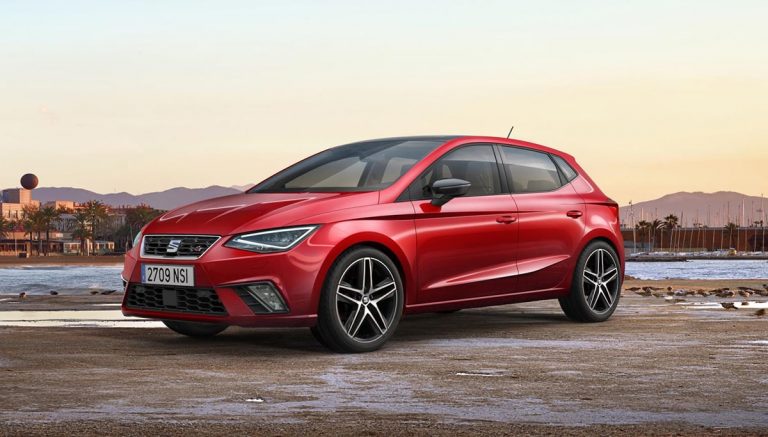
The fifth-generation SEAT Ibiza will be unveiled at the Geneva Motor Show on 7th March.

The all-new model is the first VW Group product to use the new MQB-A0 modular platform, designed for the group’s smaller vehicles.

The Ibiza supermini has historically been the Spanish brand’s most popular model, with 5.4 million sold since the Mk1 version first appeared in 1984.

The new version will complete the first stage of the SEAT’s major product offensive –arriving in UK showrooms in July, it will be the third new model launched in recent times, following on from the Ateca SUV and latest version of the Leon family car.

New architecture

SEAT provided first details of the latest Ibiza in January. The new platform frees up significantly more interior space and improves the car’s on-road manners while the model also debuts a new and bolder exterior design.

Larger-segment technologies also move down into the car that SEAT management describe as ‘a completely new model.’ Apple CarPlay, Android Auto and Mirror Link connectivity will be available through an integrated eight-inch touchscreen, while driving-assistance systems such as adaptive cruise control will also be on offer.SEAT Ibiza interior

SEAT expects the new Ibiza to boost sales in a year expected to show significant growth for the brand – sales in January were up 16.5 per cent. According to SEAT chairman Luca de Meo the new Ibiza is important to the brand while it is in a phase of consolidation and growth.

“We are working to become one of the most dynamic organisations in our industry – the new SEAT Ibiza will make a great leap forward for the brand and it is set to be a turning point in the segment,” de Meo says.

SEAT’s ambitions will be further strengthened later in 2017 when the brand’s second SUV, the Arona, is unveiled, a smaller sister to the already successful Ateca.

Also debuting on the SEAT stand in Geneva will be the Leon Cupra 300. The brand’s most powerful road car yet, it boasts a sub five-second 0-62mph time thanks to its 300hp, 380Nm engine, and all-wheel-drive on its Sports Tourer version.

SEAT Ibiza rear 34

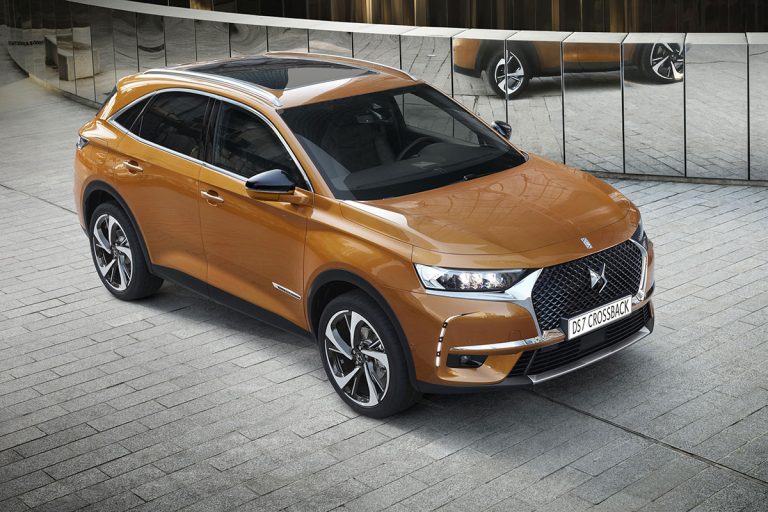
DS 7 Crossback to kick off model blitz

The DS 7 Crossback has been revealed ahead of its Geneva show unveiling, where it will be a crucial debut for Citroën’s upmarket sister brand.

Not only is the car the first DS Automobiles SUV, it is also the first model conceived specifically for DS. All previous cars sold by the brand since it launched in 2014 have been evolved from their Citroën counterparts.

When the DS 7 Crossback arrives in showrooms in 2018, it will mark the start of an intensive launch programme for the brand, seeing a new car every 12 months over the next six years.

According to industry observers the models will likely include a replacement of all three of the current DS range, including the DS 3 that is the brand’s most popular model. The most likely immediate follow-up to the DS 7 Crossback, however, is thought to be a smaller SUV dubbed DS 3 Crossback.

Premium buyers targeted

The DS 7 Crossback targets mid-sized premium SUVs such as the BMW X3 and Audi Q5. Its makers describe the car as ‘a stylish vehicle with a wide range of attributes’, including several autonomous driving technologies – Active LED Vision, Connected Pilot and Driver Attention Assist topping the list.

The designers claim that the DS 7 Crossback will be instantly recognisable from front or rear, and at day or night. The brand’s signature ‘DS Wings’ front-end treatment continues, the wing-shaped headlamps framing a new take on the diamond-effect grille.

DS 7 Crossback interior
Four different interior treatments will be on offer to DS 7 Crossback buyers

Light signatures have long been a central DS styling trait and in the Crossback rotating LED lamps feature at the front, with 3D-effect tail lights.

Inside the emphasis will be on luxury, buyers offered a choice of four different styling treatments, as previewed on the Divine DS concept unveiled at the 2014 Paris show.

Plentiful leather upholstery and bespoke stitching are among the options, while technology will include two 12-inch touchscreens – one centrally mounted for the navigation and infotainment and the other forming a digital instrument panel.

Five front-wheel-drive only powertrains will be available – familiar 130, 180 and 225hp petrol units and diesels of 130 and 180hp from the Peugeot/Citroën range will be paired with either a six-speed manual gearbox or the new EAT8 eight-speed auto transmission.

First PSA plug-in car

The only all-wheel-drive option will be the range-topping plug-in hybrid ‘E-Tense’ version, evolved from the E-Tense concept seen at the 2016 Paris show and set to go on sale in 2019, a year after the mainstream range.

The first petrol PHEV launched by the PSA Group, this combines a 200hp petrol engine and 109hp electric motor driving the front wheels, and a second 109hp motor driving the rears.

The E-Tense will be able to be driven in completely electric mode for up to 37 miles – hybrid economy is not yet being quoted. Charging will take 4.5 hours in standard mode with a 2.5-hour fast option.

DS Automobiles will unveil the DS 7 Crossback at the Geneva Show on 7th March, and at the same time online reservations will open for a launch edition model, the LA Premiere. This high-specification version features exclusive styling including the brand’s signature ‘watch-strap’ seat upholstery.

First look at new Alpine A110 sports car

Renault‘s sports car brand Alpine has released the first images of its new two-seater sports car, the Alpine A110.

The return of the Alpine sports car brand was announced by Renault in 2016 and the A110 concept car debuted shortly afterwards at the Geneva Motor Show.

Read more Renault news, reviews and features at The Car Expert

The new two-seater is named after the original A110 which was produced by Alpine from 1961-1977. Like its predecessor, the new A110 is compact, lightweight and agile, due to an aluminium platform and upper body.

Alpine only intends to produce 1,955 examples of the A110, recalling the year in which Jean Rédélé originally founded the company.

All 1,955 examples of the A110 have now been allocated. Customers were able to reserve an A110 via an app from the Alpine website and by making an initial deposit. They were then able to choose their preferred numbered model from 1 to 1,955, depending on availability. Customers were also able to specify the colour of their A110 with a choice from Bleu Alpine, Noir Profond or Blanc Solaire.

The "Berlinette" is the Alpine A110's predecessor.
The original A110 coupe was produced by Alpine from 1961-1977.

UK pricing specification is yet to be announced but the new Alpine A110 is expected to cost in excess of £50,000 when it arrives in late 2017.

Though few technical details are currently available, the Alpine A110 will be capable of achieving 0-62mph in a time of 4.5 seconds. The A110’s key specifications are due to be announced during Alpine’s press conference at the Geneva Motor Show 2017.

Alpine has opened reservations for its as yet unannounced next model, which has a delivery date starting from 2018.

The new Alpine A110 is available in Blue, Black and White.
An aluminium platform and upper body is expected to make the new Alpine A110 compact, lightweight and agile, much like its famous predecessor.

Mitsubishi Eclipse Cross compact SUV revealed

Mitsubishi has unveiled its new compact SUV, named Eclipse Cross, ahead of next week’s Geneva motor show.

The new Eclipse Cross will compete in the hotly-contested C-SUV segment, against rivals such as the Nissan Qashqai and Renault Kadjar. It fits into the Mitsubishi range between the smaller ASX and larger Outlander models, and is expected to arrive on UK roads in early 2018.

The design continues the themes started by the successful Outlander SUV, but with a more pronounced coupe-style silhouette. The wedge profile and short overhangs are also strongly reminiscent of the Range Rover Evoque and Toyota C-HR compact SUVs, suggesting that Mitsubishi is prioritising style over practicality.

On-road handling is also likely to be more of a feature than off-road ability. Body rigidity has been emphasised with a three-point brace on the front strut towers and additional structural bonding at the rear to allow the suspension to deliver more precise handling and better stability.

Interior photos have not yet been released, but Mitsubishi has described the cabin as “futuristic”, dominated by horizontal lines and a black and silver colour scheme. A large touchscreen infotainment system and head-up display replace traditional buttons and dials. The car will support Apple CarPlay and Android Auto for communication and navigation functions.
Mitsubishi Eclipse Cross side profile

Mitsubishi has also developed a new red paint colour, which will make its debut on the Eclipse Cross when it is presented in Geneva. The standard red coating is layered with a semi-transparent red and clear coating to create high levels of colour saturation, which gives off a deeper and more three-dimensional finish.

Two powertrains have been confirmed for the Mitsubishi Eclipse Cross – a 1.5-litre turbocharged petrol engine connected to a new eight-speed CVT gearbox, and a 2.2-litre turbo diesel paired with a conventional eight-speed torque converter automatic.

Both units will drive all four wheels using an electronically-controlled 4WD system, which is predominantly front-wheel drive but can send torque to the rear wheels when wheelspin is detected. This is integrated with the car’s stability control and an active yaw control system, which manages drive between the rear wheels to help maintain control.

The Mitsubishi Eclipse Cross will make its world premiere at the 2017 Geneva motor show and go on sale in the UK in early 2018. Full UK pricing and specifications are not expected to be announced until towards the end of this year.

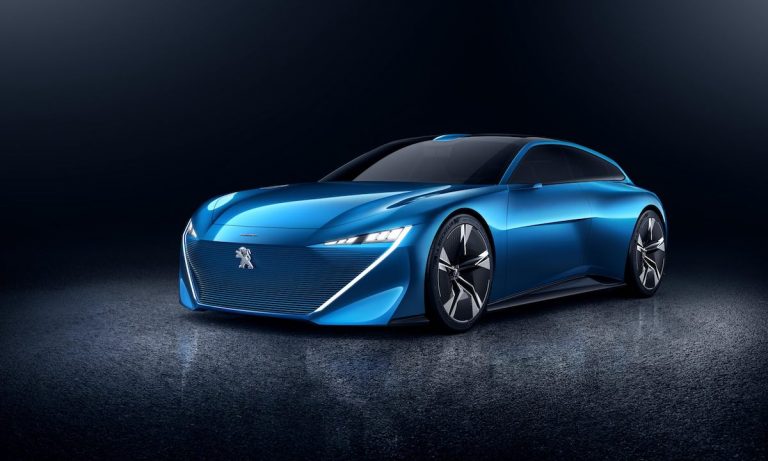
Peugeot Instinct concept previews self-driving future

Peugeot has revealed a new concept car which offers a glimpse into the company’s vision for how its future vehicles will switch between manual and autonomous driving.

The Peugeot Instinct concept has been unveiled at the Mobile World Congress In Spain, the vehicle showcases Peugeot’s thinking in how the driver and vehicle can be integrated to offer several options for automated driving support.

Rather than simply offering a simple choice between manual control and fully-autonomous driving, the Peugeot Instinct uses data from a smartwatch, phone or diary to adapt the vehicle settings to match the driver’s mood and lifestyle.

Peugeot claims that the technology can learn the driver’s lifestyle and preconfigure settings such as driving mode, audio and ambient lighting, seating and interface settings to adapt to the driver’s routine. As an example, the Instinct could read data from the driver’s smartwatch and configure its settings to ‘Autonomous Soft’ mode to give the driver a relaxing ride home after a trip to the gym. By synching the driver’s diary with the vehicle navigation system, the car could send a prompt to the driver to suggest setting off for an appointment earlier than scheduled if it registers heavy traffic along the planned route.

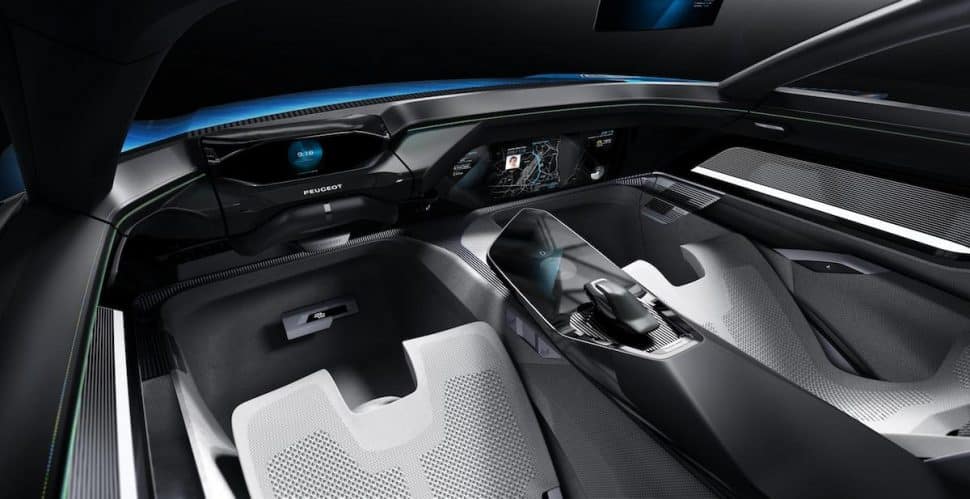
In the two the fully-autonomous driving modes (‘Autonomous Soft’ or ‘Autonomous Sharp’), the driver can recline his or her seat to watch TV or even lie it flat to rest, although Euro NCAP may have something to say about how this could affect the vehicle’s crash test performance.

Beyond reclining the seats, the Peugeot Instinct concept also offers an adaptable cabin environment. In autonomous mode, the steering wheel and accelerator pedal fold away to provide additional space (so presumably the driver’s airbag would be mounted elsewhere). A control switch called the i-Device allows the driver to switch the car back to manual mode on the fly, for example to overtake another vehicle or pull off the road into a service station.

The Peugeot Instinct is a stylish estate design, powered by a plug-in hybrid powertrain producing 300hp. Described as a shooting brake (it’s not, as it has four doors), the Instinct is low and wide and a clear evolution of current Peugeot design. Ignoring the usual concept car themes of massive wheels and ground-scraping sills, the Instinct has a stylish combination of edges and curves which would translate well into a production vehicle.

The Instinct concept is currently on display at the Mobile World Congress in Barcelona, and is likely to appear at the Geneva motor show next week.

Jeep launches new Renegade Desert Hawk

Jeep has unveiled a limited-edition version of its Renegade SUV, with only 100 examples being allocated to the UK.

The Renegade Desert Hawk is the latest in a line of limited-production Renegade models, following the previous Night Eagle and Dawn of Justice versions.

Read more Jeep news, reviews and features at The Car Expert
Based upon the Renegade Trailhawk model, the Desert Hawk specification includes design features inspired by the desert and is available in a unique Mojave Sand colour, as well as in white, anvil grey and black. It features gloss black 17-inch alloy wheels and unique body decals.

Inside, a Moab desert map logo features on the base of the black leather-and-fabric seats. Other features of the interior include dual-zone climate control, DAB digital radio with 6.5-inch touchscreen, Bluetooth, satnav and cruise control.

The Renegade Desert Hawk demonstrated its off-road capabilities by towing Alex Bird, a British sandboard rider and instructor, at speeds of 40mph through a series of stunts and tricks on the Braunton Barrows sand dune in North Devon.

New Jeep Renegade Desert Hawk tows sandboarder Alex Bird
Only 100 examples of the new Jeep Renegade Desert Hawk will be available to buy in the UK.

The Renegade Desert Hawk is powered by a 170hp 2.0-litre MultiJet diesel engine paired to a nine-speed automatic transmission.

Jeep claims the Renegade Trailhawk delivers best-in-class off-roading performance. The Selec-Terrain selectable 4WD system includes a Sand mode as well as an exclusive Rock mode, an 8.7-inch ground clearance, hill descent control and 19-inch water fording. A 20:1 crawl ratio is available through the standard Active Drive low system.

The Renegade is the most popular model in the Jeep range, with more than 11,000 vehicles sold in the UK in 2016. Renegade Desert Hawk pricing starts at £28,995 on-road and is available to order now.

Read more Jeep news, reviews and features at The Car Expert
The new Desert Hawk tows Alex Bird across Braunton Barrows sand dune.
The Desert Hawk follows the previous Night Eagle and Dawn of Justice limited editions in the Jeep Renegade range.

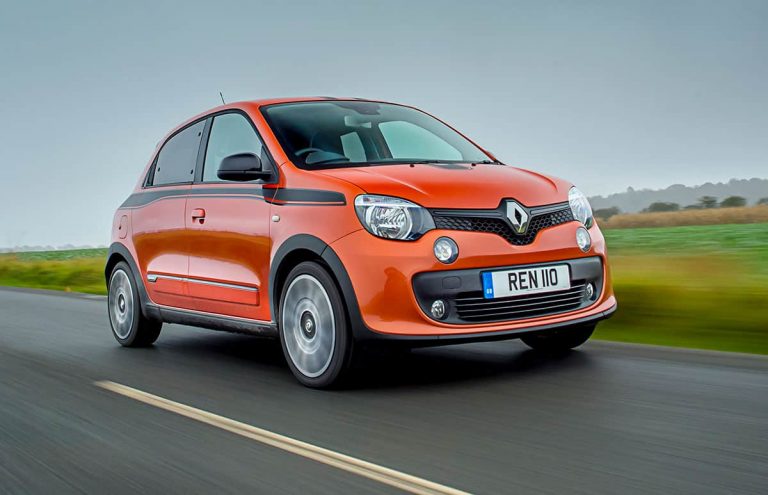
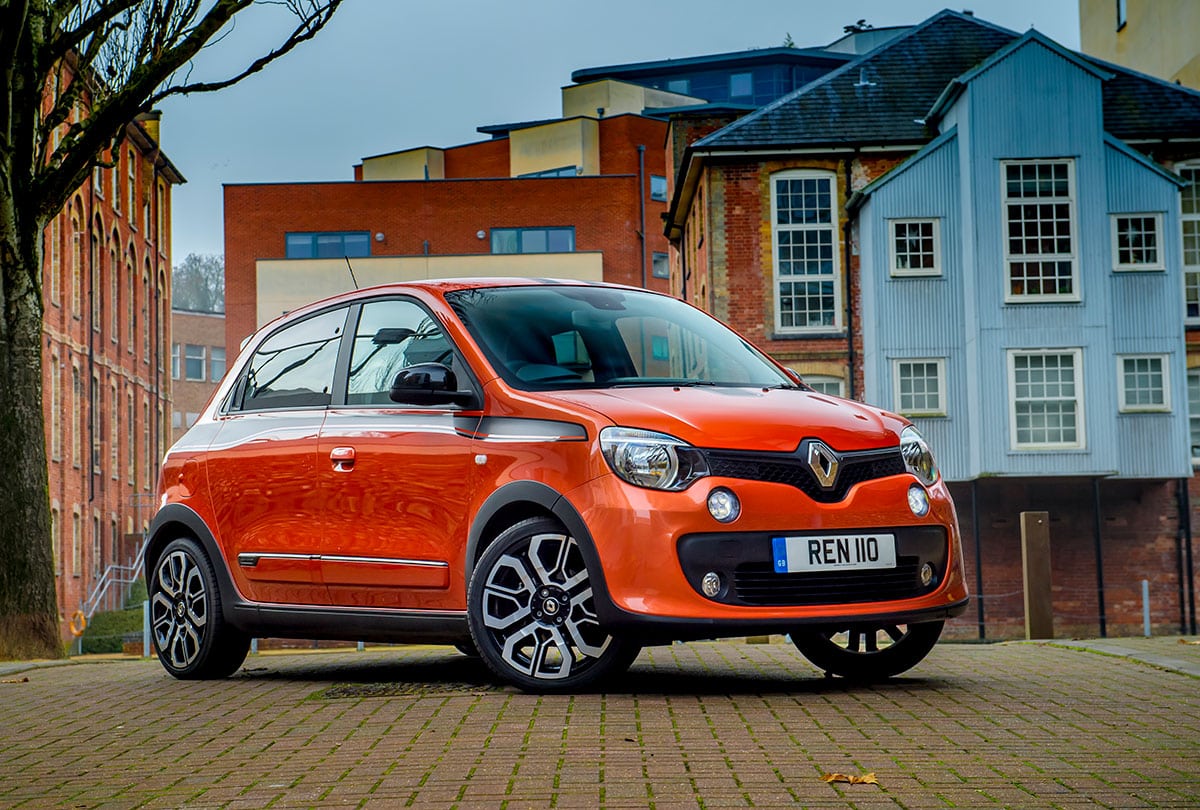
Renault Twingo GT review

What is it?
The Renault Twingo GT is a performance-pitched version of a novel city car.

Key features
Rear engine, rear-wheel-drive, sharp turning circle.

Our view
The Renault Twingo GT offers pace and handling improvements over the standard Twingo, but not to a level that makes it truly sporty.


The Renault Twingo has enjoyed a complex history. It started life in 1993 as a quirky city car that could only bought as a left-hand-drive model, then evolved into a somewhat dull second-generation model (albeit available in right-hand drive) in 2008.

The third-generation model is a different proposition altogether. Signing a partnership deal with Mercedes-Benz enabled Renault to turn the concept on its head. The third-generation Twingo, closely related to Merc’s smart forfour, combines style and space thanks chiefly to its rear-mounted engine under the boot and the consequent rear-wheel-drive powertrain.

Of course, RWD also suggests sporty performance, so it’s no surprise that around 18 months on from the launch of the latest Twingo, we are now getting a GT-badged variant.

Powertrain and Styling

Breathed upon, a little, by the brand’s RenaultSport performance division, the Renault Twingo GT uses the same 898cc three-cylinder petrol engine available in mainstream Twingo models, but modified to free up an extra 20hp, along with 35Nm of extra torque.

Changes to the turbo, uprated fuel and water pumps, revised engine mapping and a new free-flowing twin-silencer exhaust contribute to the power hike. There’s a new air intake too, mounted on the left-rear flank and providing a visual differentiator to other Twingo variants.

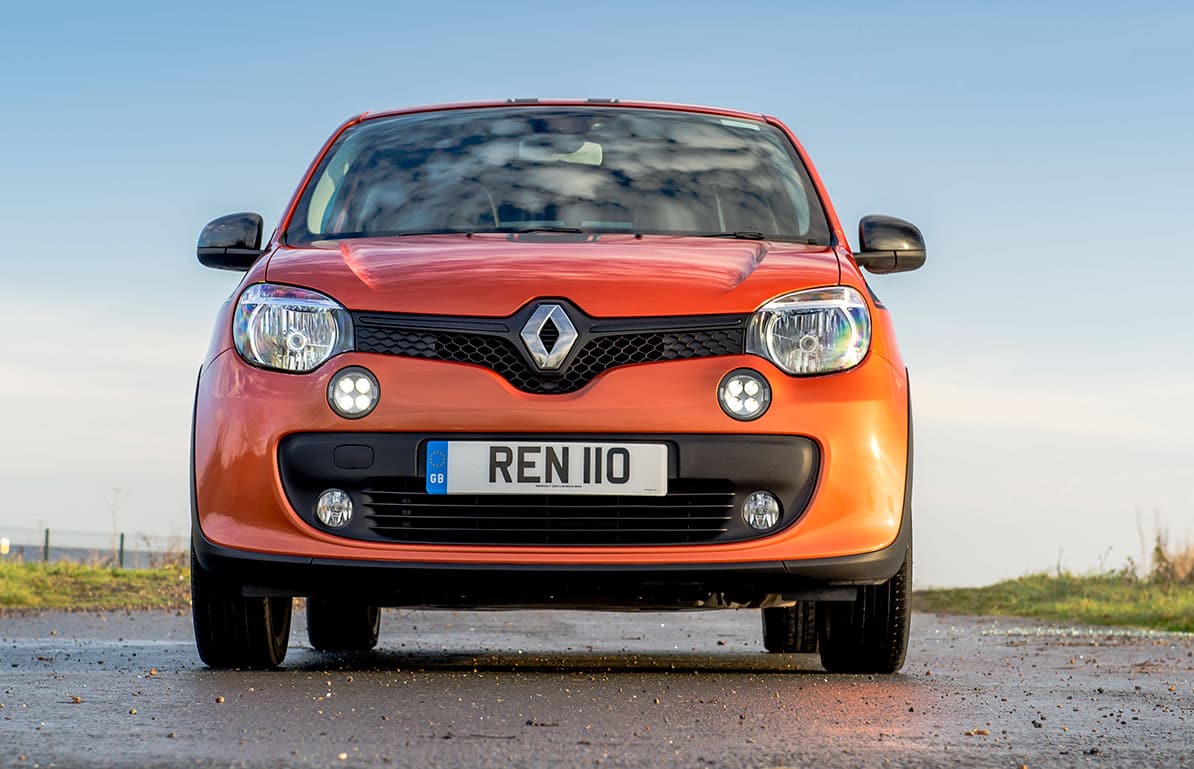
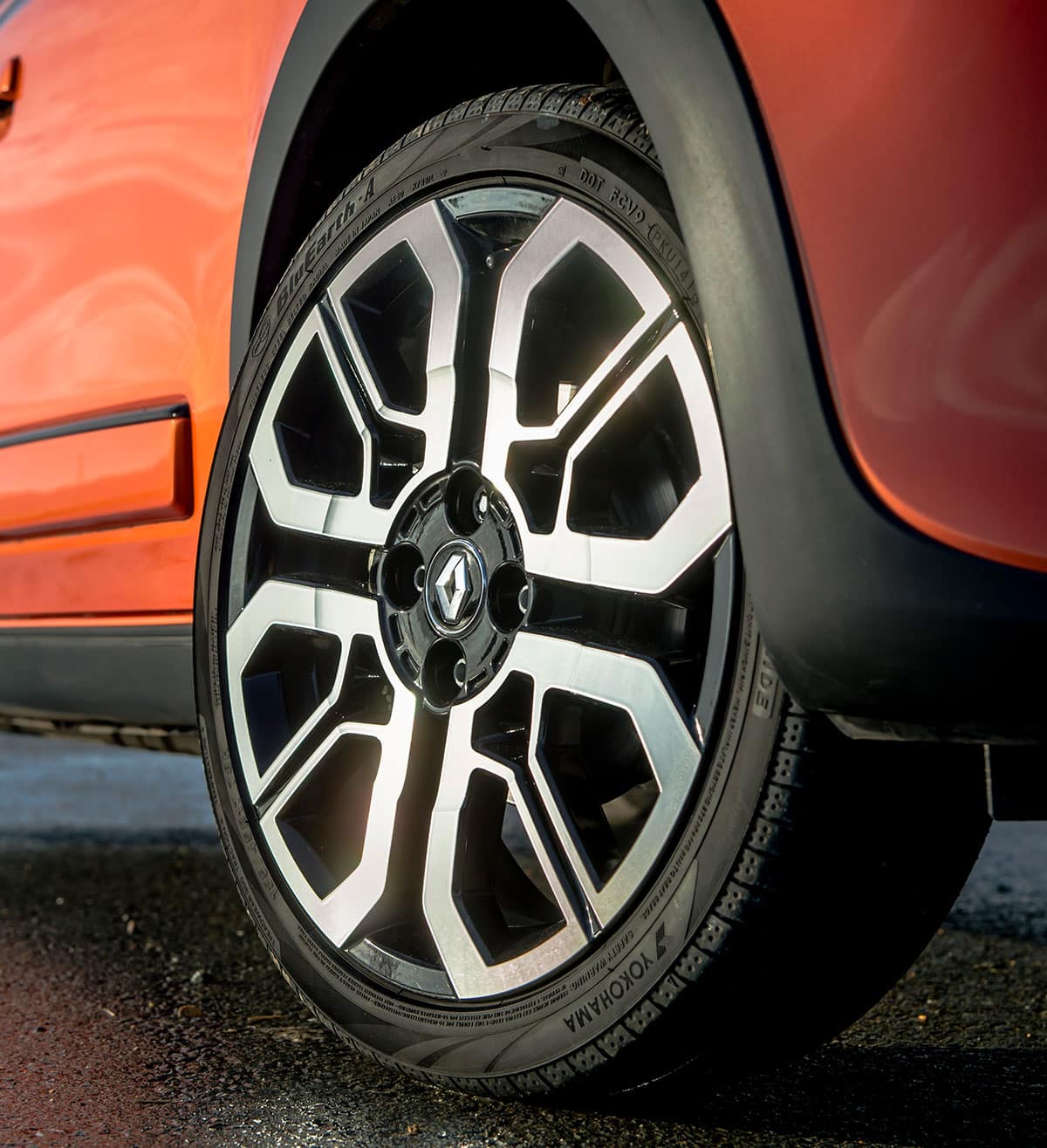
The visuals are aided by a styling package evolved from the Renault TwinRun concept first seen at the Monaco GP in 2013. There is a body kit, with side skirts, extended arches and a rear bumper diffuser with the twin exhaust pipes incorporated. The 17-inch alloy wheels are to a bespoke design, as is the ‘Blaze Orange’ metallic paint available as one of the four exterior finish options, and over which are placed RenaultSport graphics.

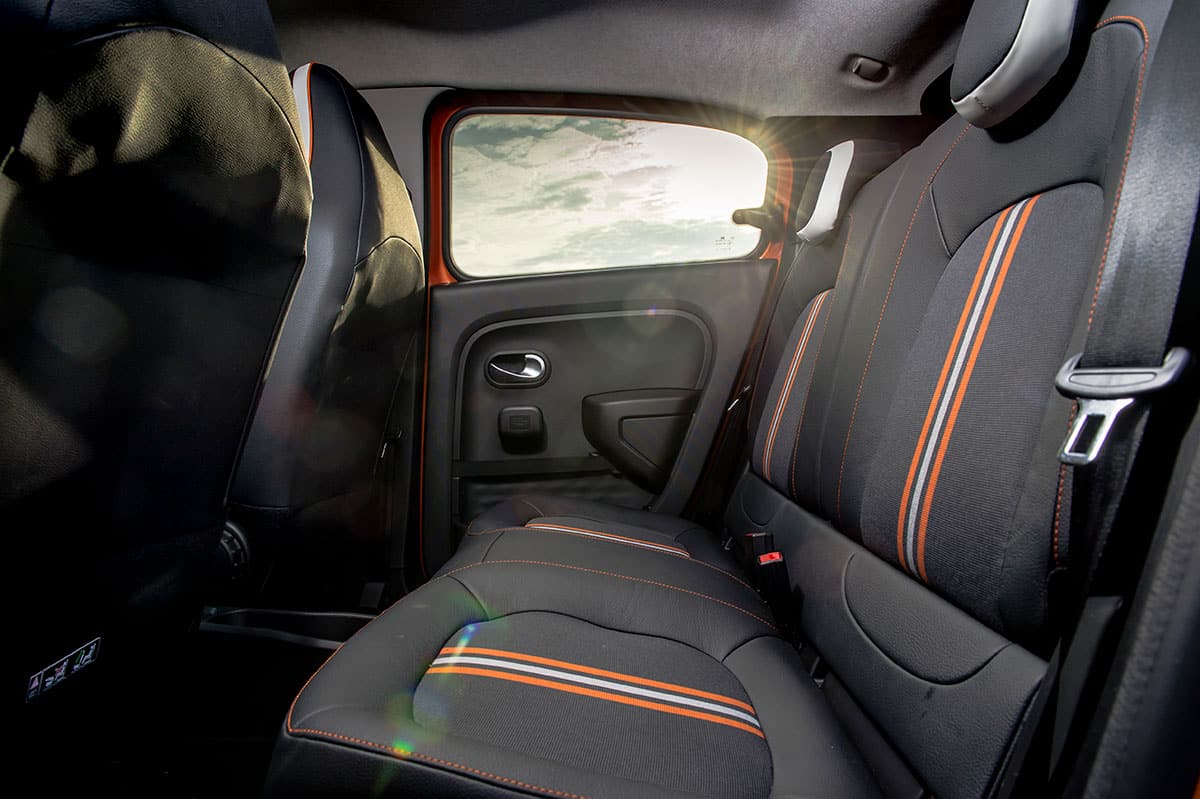
Inside reflects the image, with detailing to match the exterior colour, part-leather upholstery and more RenaultSport badging. Tinted rear windows are included too.

On the road

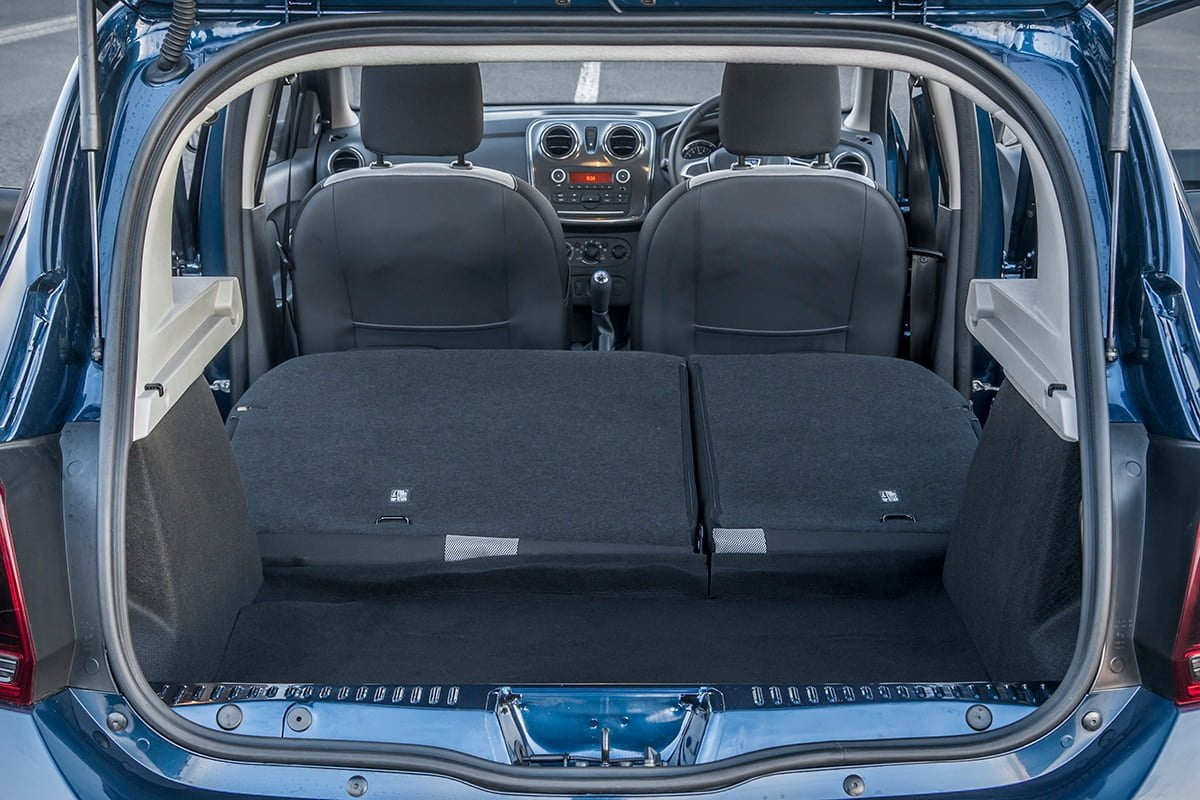
So the Twingo GT looks the part, but does it fulfil the role? Well, only partly. On slipping inside one is immediately impressed by the room in what is a small four-seater – that rear-engine layout liberates 33cm more cabin space despite the car being 10cm shorter than the previous Twingo. At 180 litres the boot is smaller though it can be extended by dropping the rear seats.

To go with the engine upgrades the GT has gained changes to its gear ratios, stiffer dampers, a thicker anti-roll bar and 20mm cut from the ride height, while the Electronic Stability Control has been recalibrated for a little more sportiness.

The result is a nippy, rather than quick car. It accelerates smartly, passing 62mph in 9.6 seconds, and will go on to 110mph where allowed, but the GT does not offer the fun, purposeful handling through corners that one might expect with rear-wheel-drive. The steering is too light and indecisive, the car too soggy in its reaction to a challenging corner. It’s better than a standard Twingo, but beaten by rivals such as the Volkswagen Up.

Where the GT does impress is in an urban environment. Without driveshafts and such restricting the front wheels, it boasts an impressively-tight turning circle of only 8.6 metres. Combined with that nippiness in the powertrain, this really is a true city car.

The Renault Twingo GT costs a significant £13,755. However it is also the best-specified car in the line-up – based on the top Dynamique trim which already includes such niceties as cruise control, the GT adds auto lights and wipers, cornering fog lights, rear parking sensors and auto climate control.

Verdict

The Renault Twingo GT goes some way to overcoming the on-the-road limitations of the stock Twingo, in a sporty, stylish package. But with only a warmed-up engine and handling that disappoints for a rear-wheel-drive model, it does not go far enough to be truly regarded as a pocket hot hatch.

Renault Twingo GT – key specifications

Model tested: Renault Twingo GT TCe 110
Price: £13,755 (Twingo range starts £9,545)
On sale: Jan 2017
Engine: 898cc petrol, 110hp, 170Nm
0-62mph and max speed: 9.6 sec, 113mph
Economy and emissions: 54.3mpg, 115g/km
Key rivals: Volkswagen Up, Skoda Citigo
Test date: Feb 2017

Renault Twingo GT

New Ford Fiesta ST revealed ahead of Geneva debut

The all-new Ford Fiesta ST has been revealed ahead of its global premiere at the upcoming Geneva motor show.

The flagship of the new-generation Fiesta range will be powered by a brand new 1.5-litre, three-cylinder turbocharged engine generating 200hp and promising 0-62mph acceleration in just 6.7 seconds.

The new Fiesta ST won’t be seen on UK streets until early 2018, and will be offered in both three- and five-door versions. Ford Performance is promising that the new car will offer a greater variety of interior trim and personalisation options than previous models, with distinctive exterior styling packs and unique 18-inch alloy wheels. Customers will also be able to choose from a range of trim elements for the gear lever, steering wheel, door pulls and dashboard trim.

The Fiesta ST will offer selectable Drive Modes, enabling engine, steering and stability controls to be configured to Normal, Sport and Track settings. Like many manufacturers, the system will also use fake exhaust noise technology to “amplify the naturally sporty sound of the engine” which roughly translates to making the car sound louder from inside the cabin.

The new 1.5-litre EcoBoost engine is based on Ford’s award-winning 1.0-litre unit, and includes turbocharging, high-pressure fuel injection and advanced variable camshaft timing to maximise both performance and fuel efficiency. Ford Performance claims CO2 emissions of 114g/km. The engine can also deactivate one of its three cylinders under light loading to improve fuel economy.

Handling prowess should be enhanced by torque vectoring technology to brake the inside front wheel when cornering. The stability control system has three settings to allow a progressive reduction of electronic intervention under hard driving. In the Track mode, traction control is disabled and the stability control will allow a greater degree of slip before the system cuts in.

The new Fiesta ST will premiere at the Geneva motor show in early March, but UK pricing and specification is not expected until towards the end of 2017.

Mercedes-Benz E-Class wins UK Car of the Year 2017

The Mercedes-Benz E-Class has been named UK Car of the Year for 2017, chosen by a panel of 27 of Britain’s most-read motoring journalists. The Volvo V90 and Jaguar F-Pace finished as runners-up.

12 category winners were announced in the fourth year of the UK Car of the Year Awards, with the E-Class also winning Best Executive Car.

Director of UK Car of the Year, John Challen, said: “Mercedes-Benz has a long history of creating impressive saloon cars and the new E-Class continues this trend and raises the bar in the executive vehicle sector. Stunning inside and out, it takes driver and passengers into the realms of luxury.”

Read more Mercedes-Benz news, reviews and features at The Car Expert
Other judges were also fulsome in their praise for the E-Class. Fleet World’s Alex Grant described it as “a technological showcase”, while Honest John’s David Ross summarised it as “just sublime”.

The E-Class is also one of the safest cars on the road. It received a five-star safety rating from Euro NCAP and its exceptional performance, particularly in child occupant protection, was recognised at the Euro NCAP awards 2016. The UK’s Thatcham Research also rated the E-Class as one of the safest new models launched in the last year.

Mercedes-Benz E-Class Saloon wins UK Car of the Year 2017
The award for the E-Class follows recognition for its advanced safety features.

Read about Thatcham Research’s ten safest new cars of 2017

In the overall category, the Mercedes-Benz E-Class triumphed over the Volvo V90 and Jaguar F-Pace which finished in joint second place, with the Hyundai Ioniq and Ford Focus RS in joint third.

Launched in 2014, the UK Car of the Year Awards are judged by 27 of Britain’s most-read motoring journalists. Each judge picks out the top performer in 12 vehicle categories, before deciding the overall winner from their favourites in each class.

In addition to the success of the E-Class, Mercedes-Benz also celebrated the S-Class Cabriolet winning the Best Cabriolet category. The other category awards were spread across a wide range of manufacturers, with only Porsche and Mercedes-Benz scoring multiple class wins.

The complete list of category winners for 2017 are:
Best Small Hatch – Hyundai IONIQ
Best Family Car – Toyota Prius
Best Executive Car – Mercedes-Benz E-Class
Best Luxury Car – Rolls-Royce Dawn
Best Estate Car – Volvo V90
Best MPV – Renault Scénic/Grand Scénic
Best Crossover – SEAT Ateca
Best Large Crossover – Jaguar F-Pace
Best Coupe – Porsche 718 Cayman
Best Cabriolet – Mercedes-Benz S-Class Cabriolet
Best Sports Car – Porsche 718 Boxster
Best Performance Car – Ford Focus RS

Will tax changes switch off electric growth?

British motorists wanting to go green currently have some 83 different low-emission cars and vans to choose from – but they need more incentives to switch from petrol and diesel vehicles to electric alternatives.

Industry body the Society of Motor Manufacturers & Traders (SMMT) this week organised a photo-call of 26 of the alternatively-fuelled vehicles currently on sale in the UK – mostly hybrids and electric vehicles but also including hydrogen fuel-cell cars, and drawn from 16 different brands.

And the public display of the variety on offer comes just as looming changes to Vehicle Excise Duty (VED, commonly known as road tax) threaten to make such cars less attractive to potential buyers.

Sales of alternatively-fuelled cars have been growing at the greatest rate ever seen on the UK market – up 22.2 per cent in 2016. But the 88,919 such vehicles registered represented just 3.3 per cent (up from 2.8 per cent) of a market worth almost 2.7 million units. And of that almost 89,000 such vehicles, 36,917 were plug-in electric models – Britain is now the biggest market in the EU for such cars.

Low costs the attraction

The SMMT commissioned a YouGov survey to find out the reasons why motorists might be persuaded to switch to hybrid and electric cars. Low running costs topped the incentives, quoted by 51 per cent of the 2,100 people questioned. This was followed by cheap or zero road tax (46 per cent), while 36 per cent highlighted purchase incentives such as the Government’s plug-in car grant, that can cut around £4,500 from the purchase price of such vehicles.

From April, however, the new VED rates will badly affect the two largest incentives. Currently owners of virtually all low-emission vehicles pay no road tax at all, as the CO2 emissions of such vehicles are below 100g/km.

Nissan LEAF
The Nissan LEAF has led the growing interest in electric cars.

After 1st April 66 per cent of these vehicles will move into a regime where in addition to a road tax charge of varying rate on purchase, their owners will have to pay £140 per year thereafter. A few vehicles, costing more than £40,000, will also be subject to a £310 supplementary charge – every year for five years.

This is very concerning when the YouGov survey also revealed that currently, just 13 per cent of motorists would consider switching to ultra low-emission vehicles when buying their next car. And very few give the new tax rates as the reason – alarmingly the survey showed that some 68 per cent of respondents were not even aware such changes are on the way.

Fear of running out

Instead, the prime reason given still relates to the ‘range anxiety’ that has hung over electric vehicles since they were first launched. Some 48 per cent of respondents fear that they won’t find a place to charge their car before it runs out of power, and 43 per cent say they don’t have convenient charging locations near their home or place of work.

1702 Renault Zoe
Drivers still fear being stuck with a flat battery and no charge point.

These concerns endure despite many manufacturers offering free home wallbox installations with purchases, and the latest electric cars now having ranges between charges of around three times the average daily commute – the latest Renault ZOE for example can travel 180 miles before needing to be plugged in.

Other concerns included the possible price of battery replacement (46 per cent) and the higher purchase price of such cars (41 per cent) despite the Government incentives.

Government charged to act

Such doubts exist as concern over the pollution caused by car emissions, particularly diesels, grows, and the SMMT is insisting that the Government needs to get fully behind promoting the advantages of low-emission vehicles.

“Our survey highlights the need for ongoing government support for this new market,” says SMMT chief executive Mike Hawes.

“We want to encourage more people to switch to ultra low emission vehicles in meaningful numbers but more must be done to boost buyer confidence. A consistent approach to incentives – fiscal and otherwise – and, most importantly, greater investment in the charging network is essential if we are to grow this emerging market.”

The Government claims, however, that it is doing as much as it can to support the growth of alternatively fuelled vehicles. “We are working with determination to get more people switching to low emission vehicles,” says Transport Minister, John Hayes.

Our Vehicle Technology and Aviation Bill published this week, will make sure the right infrastructure – such as electric charge points and hydrogen refuelling stations – is in place for this growing market.

“We’ve committed more than £2 billion since 2011 to increase electric vehicle uptake and support greener transport schemes. This includes £290 million, announced in the Autumn Statement, to support electric vehicles, low emission buses and taxis, and alternative fuels.”

Despite such promises many in the industry feel the post-April VED charges could stall any meaningful progress towards wider adoption of low-emission vehicles.

ZOE
Latest versions of the Renault ZOE can travel 180 miles between charges.

Volkswagen Arteon to succeed CC

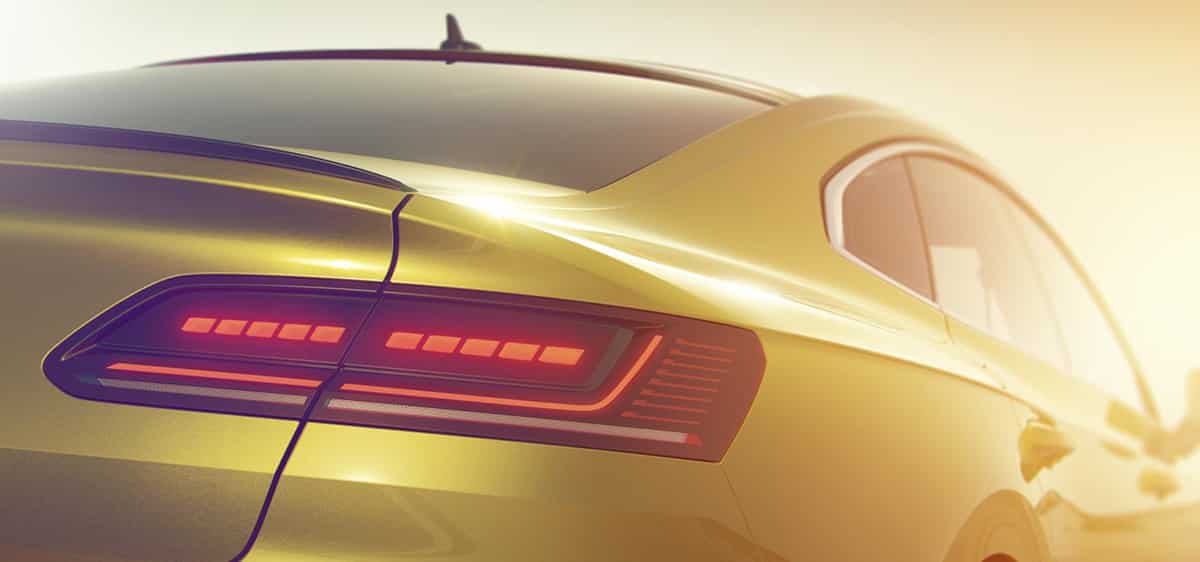
Volkswagen has released images hinting at the brand’s big Geneva unveiling – the Volkswagen Arteon.

The new car, a four-door fastback, will be revealed at the show on 7th March, and will sit above the Passat in the German maker’s model line-up. Effectively a successor to the CC, the Volkswagen Arteon will aim to take on cars such as the BMW 4 Series Gran Coupe.

Volkswagen is currently releasing few details of the car, but does say the Arteon will offer exceptional interior space, ‘extraordinary for this body form’, with ample leg room in front and rear seats.

Read more Volkswagen news, reviews and features at The Car Expert
Distinctive styling

From the teaser images the Arteon is clearly a more distinctive car than its Passat CC and CC predecessors, though it does share significant components with the Passat. Notable styling features include a completely new front end with the LED headlamps and daytime running lights merging into the chrome-plated crossbars of the radiator grille and bonnet.

The images also display muscular shoulders, suggesting that the Arteon will have a striking presence.

Volkswagen-Arteon-rear34

Volkswagen has not released any details of the Arteon’s powertrains though they are expected to replicate the engine choices of European-specification Passats, and include both front-wheel and all-wheel-drive transmissions.

The brand does say that the car will debut ‘the latest generation of driver assistance systems,’ including ‘features that are typically reserved for luxury automobiles’.

The Volkswagen Arteon is expected on UK sale sometime in the summer of 2017 at prices starting in the region of £28,000.

Read more Volkswagen news, reviews and features at The Car Expert
Catch up with all the latest news from the 2017 Geneva motor show at The Car Expert

Dacia launches Summit special editions in Geneva

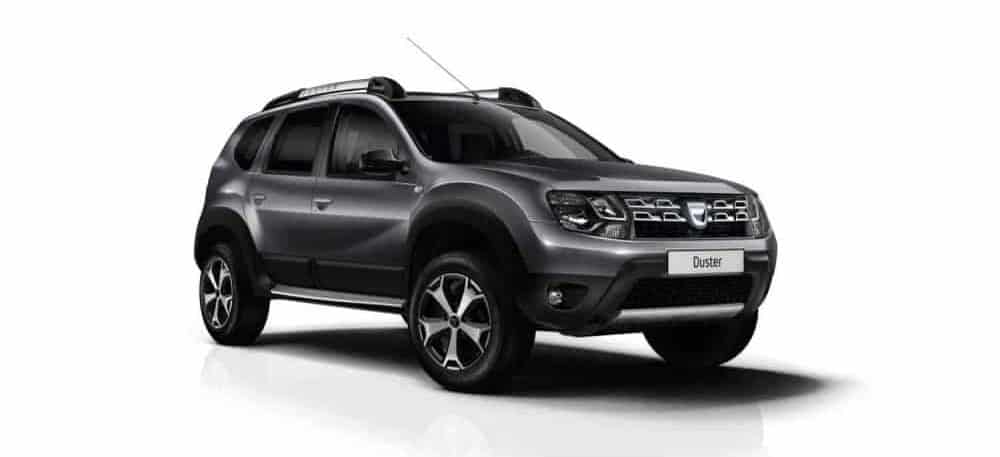
Dacia is set to introduce a range of Summit special editions for the Duster, Sandero Stepway and New Logan MCV Stepway models at the upcoming Geneva motor show.

The Summit special edition models will offer customers a choice of two exclusive colours. Nordic Grey is available for all models, whilst Magma Orange is available only for the Sandero Stepway.

The Stepway Summit models have 16-inch Grey Flex wheels while the Duster has 16-inch diamond-cut black alloy wheels. The Duster Summit also features wheel arch guards and protective side mouldings.

Inside, the new Summit models have exclusive dual-material upholstery. All the seats feature piping and top-stitching in Burnt Orange, and the seats of the Sandero Stepway and Logan MCV Stepway have an additional embroidered ‘Stepway’ in Burnt Orange. The carpet mats of all the models are finished with Burnt Orange top-stitching. Details on the centre console cover and air vent surrounds are also picked out in Burnt Orange.

The trim for the Summit special editions is based on the Lauréate, Dacia’s highest regular trim level. It includes air conditioning, a Media Nav Evolution multimedia system, rear parking sensors, DAB digital radio and cruise control with speed limiter.

Dacia Summit special edition Duster
The Summit special edition Duster features 16-inch diamond-cut black alloy wheels, wheel arch guards and protective side mouldings.

The Summit special editions use the same engines as the existing Duster and Stepway model ranges.

The Summit special editions are set to go on sale in the UK in Spring 2017, with pricing and specification details yet to be announced.

Dacia Summit special edition Sandero Stepway
The Magma Orange finish is exclusive to the Summit Sandero Stepway.

Range Rover Velar heads for Geneva

The Range Rover Velar will be officially unveiled on 1st March, before debuting at the Geneva Motor Show a week later.

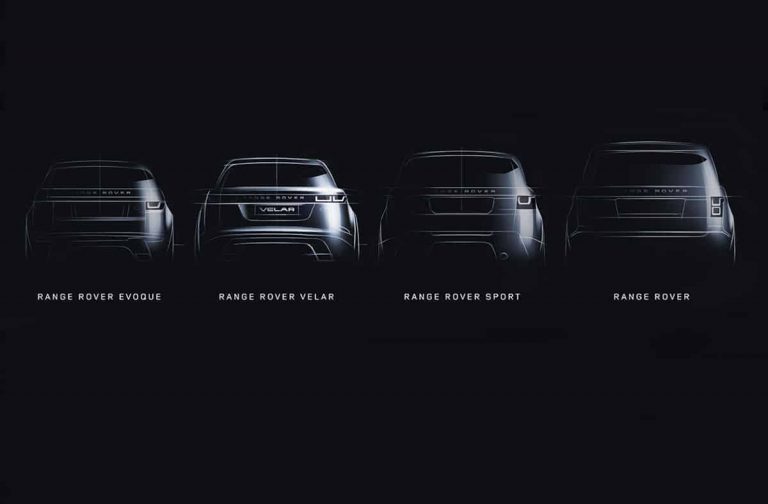
Teaser pictures have been released of the fourth member of the Range Rover family but few details are currently available of the car. We do know that it will fill the gap between the highly-successful Range Rover Evoque and the Range Rover Sport.

Read more Land Rover news, reviews and features at The Car Expert
Jaguar sister

It will be closely related to sister brand Jaguar‘s F-Pace, sharing its architecture, and will be built alongside it at Solihull in the midlands. Prime rivals for the car, which is likely to cost around £50-£60,000, will be the likes of the Porsche Macan.

According to its makers the hallmarks of the new Range Rover Velar are ‘elegant simplicity, a visually reductive approach and pioneering consumer technology.’

“We call the Velar the avant garde Range Rover.  It brings a new dimension of glamour, modernity and elegance to the brand. The Range Rover Velar changes everything,” said Land Rover Chief Design Officer, Gerry McGovern.
Range Rover Velar family

It is understood that the Velar will be the most on-road pitched Range Rover model yet and will also debut a new interior design, based on the layout of its Jaguar sister model.
The Velar name (pronounced vel-ar) is one of the oldest elements of the car, dating back to the first Range Rover prototypes of the 1960s. When development engineers needed to hide the true identity of the 26 pre-production Range Rovers, they chose the name Velar, derived from the Latin velare meaning to veil or cover.

Read more Land Rover news, reviews and features at The Car Expert
More details of the Range Rover Velar will be released as we get them, and The Car Expert will also be at the Geneva Motor Show to report on all the new models unveiled.

Aston Martin releases Vantage S Red Bull Racing Edition

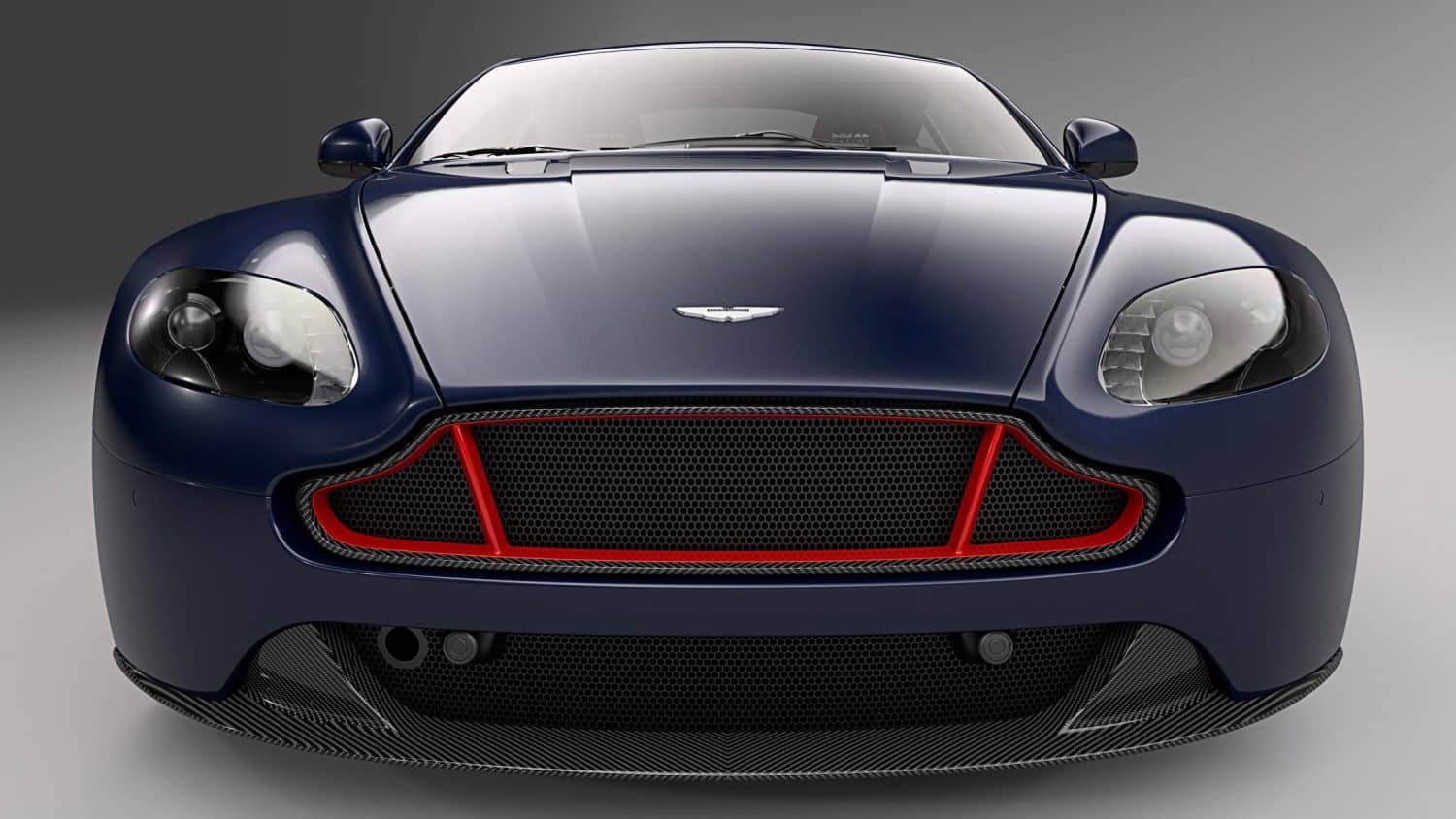
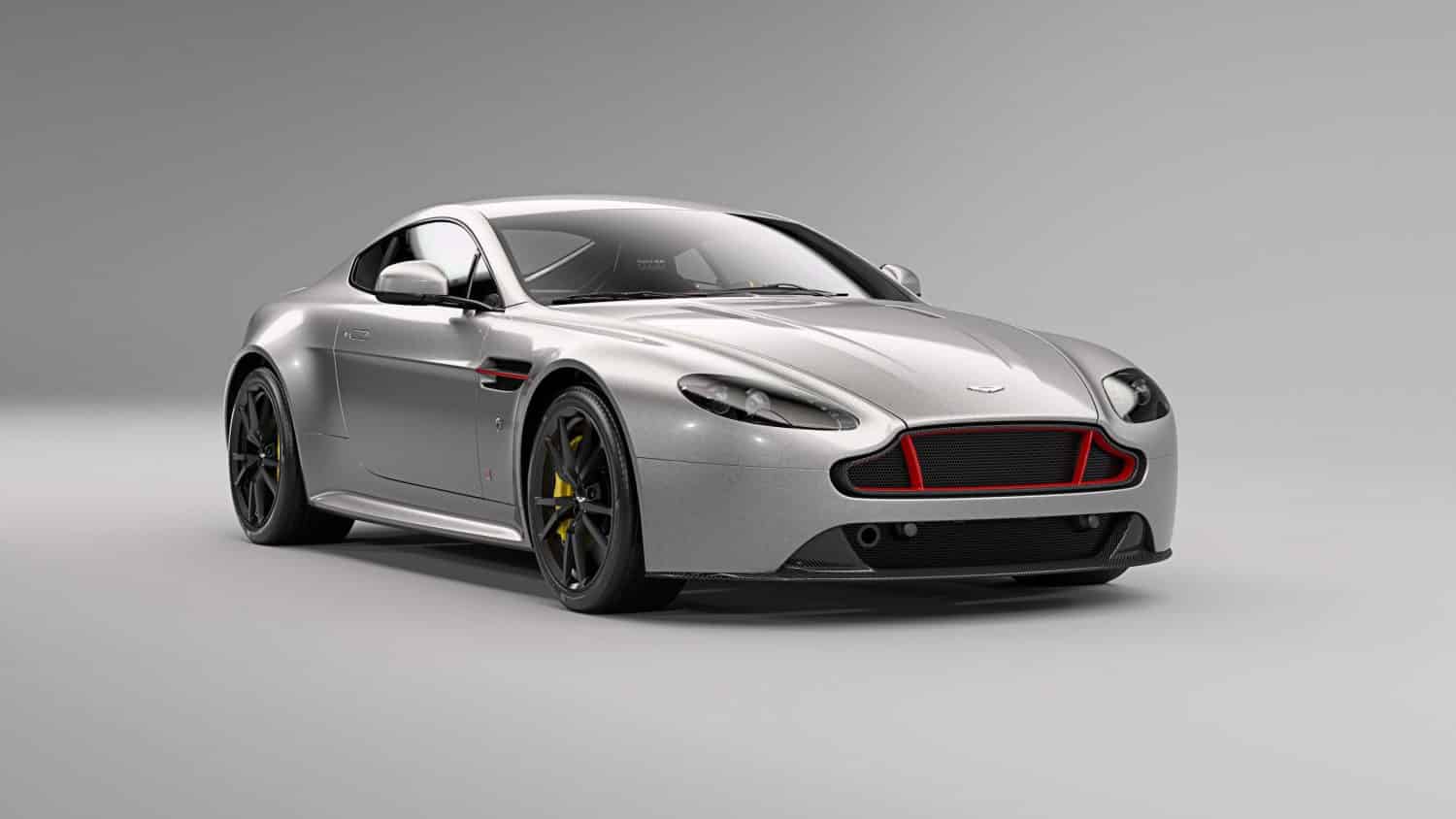
Aston Martin has added another special edition to its decade-old Vantage range: the Vantage S Red Bull Racing Edition, which will be available either with the company’s 4.7-litre V8 or 6.0-litre V12 engines.

The new editions of the Vantage have been created by Q by Aston Martin, the marque’s in-house personalisation service, to celebrate the second year of partnership between Aston Martin and Red Bull Racing.

The launch of the Vantage S Red Bull Racing Edition comes just weeks ahead of the 2017 Formula 1 World Championship, which starts with the Australian Grand Prix on 26th March.

As standard, the new limited edition will be finished in a deep Mariana Blue colour. Other choices include Tungsten Silver or a satin version of the Mariana Blue, to match the look of the Red Bull Racing F1 cars.

Externally, the Vantage S Red Bull Racing Edition features a carbon fibre finish to the front splitter, rear diffuser, side strakes and grille. The grille is finished with a red infill and the brakes sport yellow calipers, drawing on the colour scheme of the F1 team.

Inside, the special edition models get Red Bull Racing embroidery on the seat headrests, carbon fibre trim inlays and a colour-coded leather steering wheel.

Front view of Aston Martin Vantage S Red Bull Racing Edition
The Vantage S Red Bull Racing Edition’s carbon-fibre grille features a red infill.

Q by Aston Martin also offers the chance for customers to have their cars’ sills and final inspection plaques signed by either Daniel Ricciardo or Max Verstappen, Red Bull Racing F1 drivers.

Customers can expect to take delivery of their cars over late Spring and early Summer 2017. Full specification and pricing details have not been publicly disclosed, but are available by request from Aston Martin dealers.

Aston Martin Vantage S Red Bull Racing Edition in Tungsten Silver
Tungsten Silver is an optional colour for the Vantage S Red Bull Racing Edition.

Seven-seat SsangYong XAVL set for Geneva

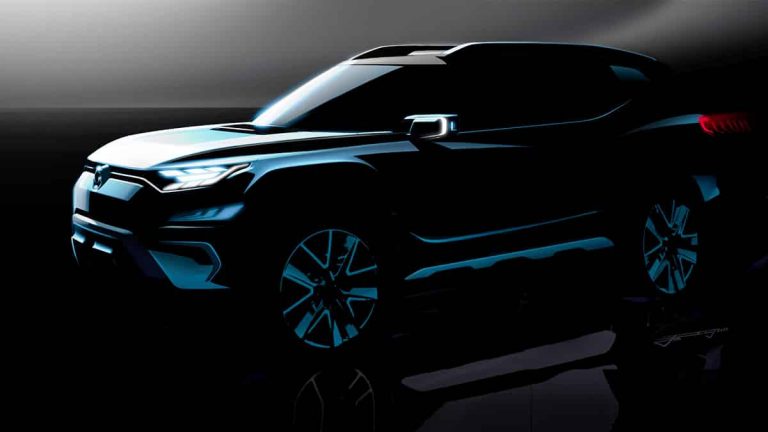
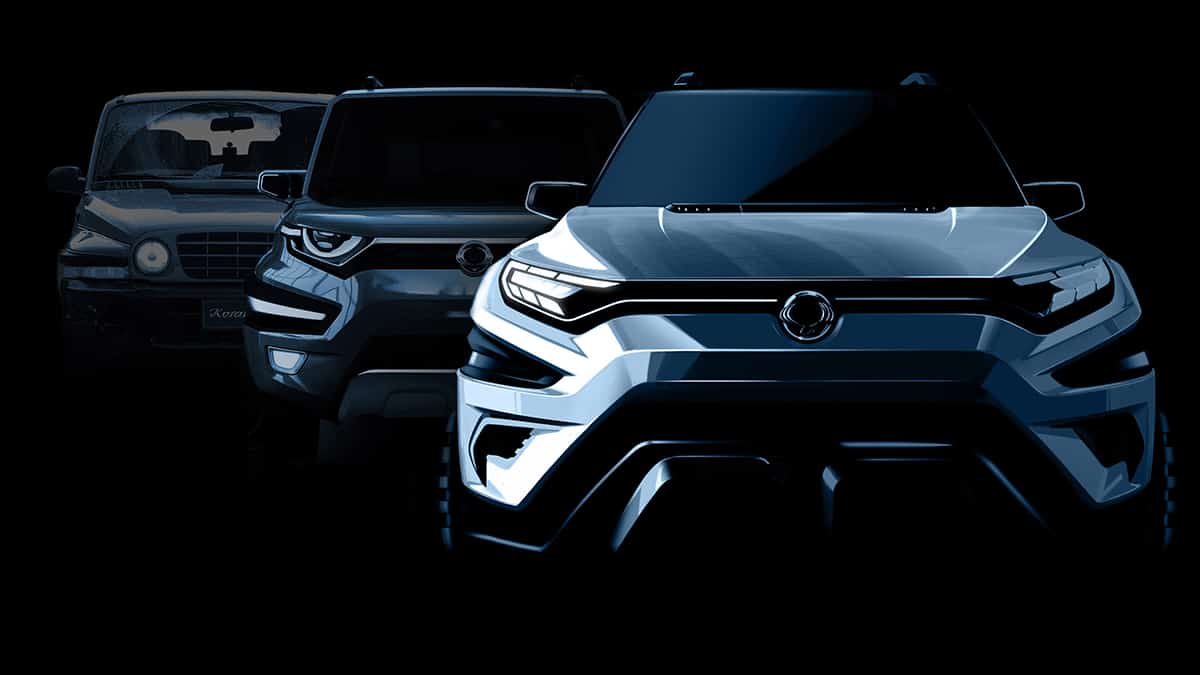
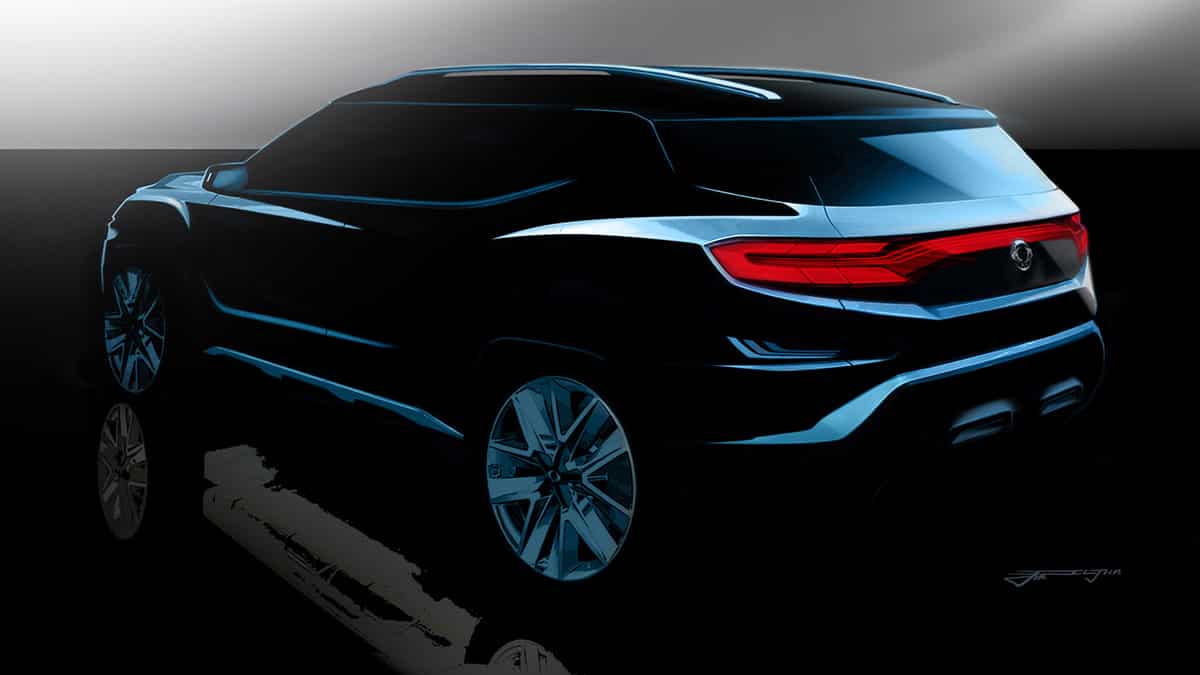
The SsangYong XAVL concept will be unveiled at the Geneva Motor Show in March, previewing a future seven-seat SUV model.

SsangYong has previously shown an XAVL concept (the designation stands for eXciting Authentic Vehicle Long), a five-seat model first revealed at the Frankfurt Motor Show in 2015.

According to the Korean brand the car is inspired by the 1990s version of the Korando SUV, and is described as “a tough and masculine looking SUV concept that blends advanced convenience and the practicality of a multi-purpose MPV.”

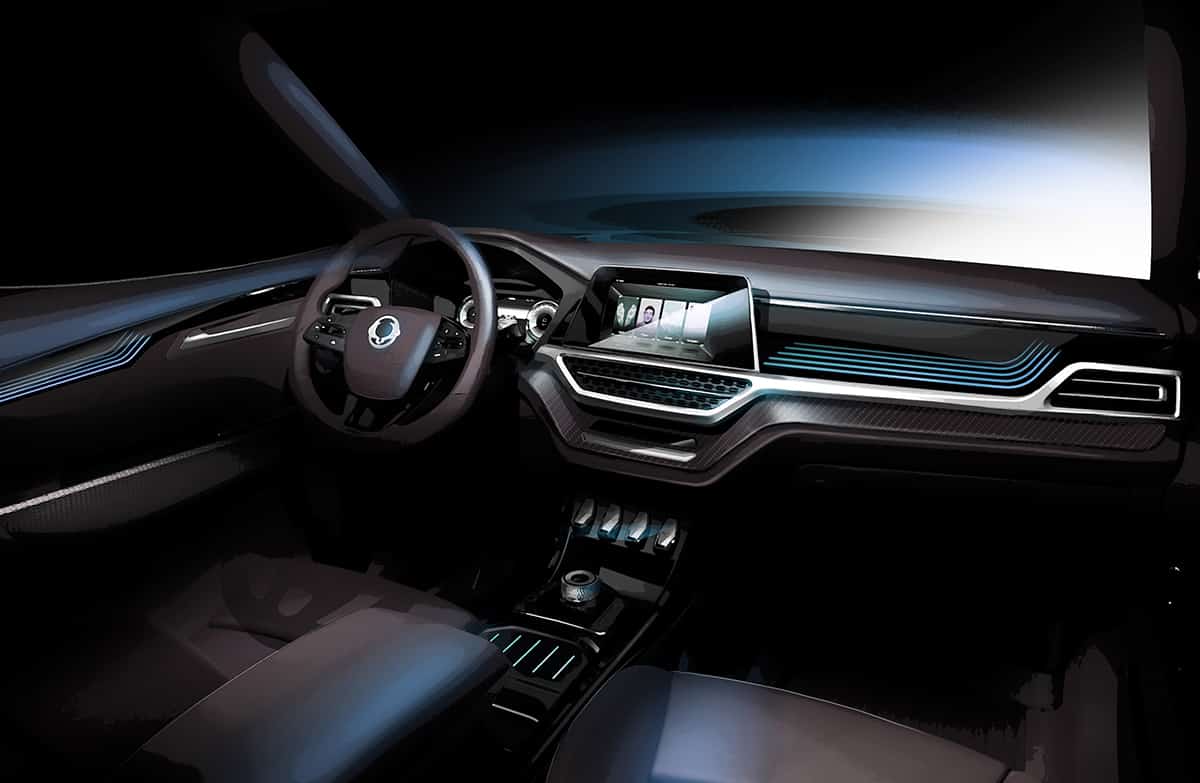
It is said to offer a wide interior with a user-friendly interface in the front cabin, with a digital display and connected car technology. A host of new safety aids also feature, while the car is powered by either a petrol or a ‘clean-burning diesel’ engine.

Any production version of the XAVL is not expected to launch before 2020.

Mazda MX-5 RF review

1

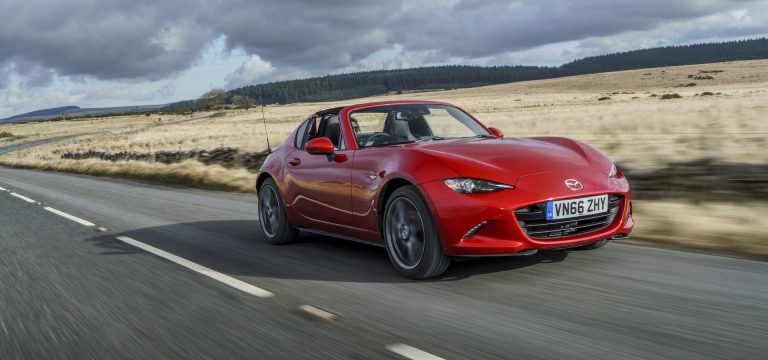
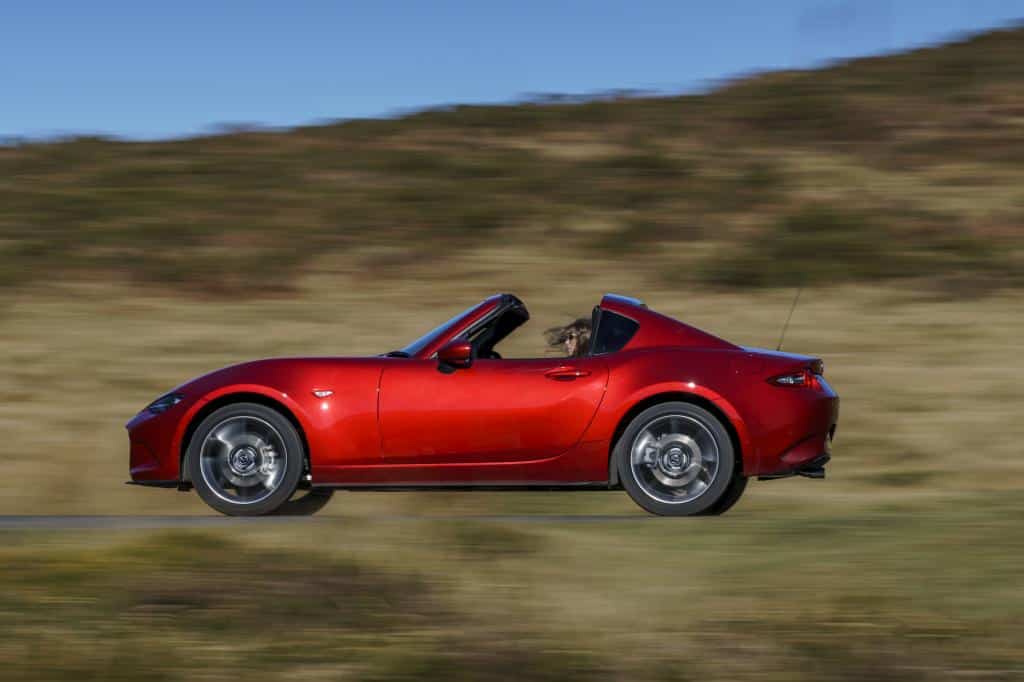
What is it? The Mazda MX-5 RF is the folding metal hardtop version of the latest MX-5 roadster.
Key features: Coupe styling, targa-like folding metal roof.
Our View: The Mazda MX-5 RF is a more practical alternative to the roadster, if just a little less fun to drive.
Type of Review: First UK drive


Anyone who knows cars also knows that the Mazda MX-5 is the most iconic roadster of the last quarter century, desired as much by those who enjoy a really fun drive as those who think they look good in a convertible. It has been the world’s best-selling roadster for some two decades.

So it will no doubt surprise many readers to learn that more than three-quarters of British buyers of the Mk3 MX-5 (and we take half of all Europe’s MX-5 sales) opted not for the pure, fabric-roofed roadster, but its sister with a retractable hard top.

So when the latest, fourth-generation MX-5 launched in August 2015 – a car we described as “the best MX-5 yet” in our first drive – a hardtop version could not be far behind. That model is the Mazda MX-5 RF (retractable fastback) and it arrives in showrooms on 4th March.

Mazda MX-5 RF styling

The RF is a very different proposition to the RC (Roadster Coupe) versions of the MX-5 that Mazda has previously produced. Whereas with their roofs down and tucked under a panel on the rear flanks those cars looked just like the roadster, the new RF is styled first and foremost as a coupe.

The ‘natural’ position appears to be with the roof in place, in which form the car looks like a purposeful little coupe – a bit square in the rear quarters (A colleague likened it to a Ginetta), but overall with satisfactory visuals. It’s reminiscent of the sister BRZ/GT86 models from Subaru and Toyota, which will no doubt be considered by potential buyers.

The folding roof is a clever three-piece mechanism. The process is electronic, operated by a button on the steering wheels and can be done on the move, though only at up to 6mph.

Opening or closing takes a mere 13 seconds and involves the rear buttresses rising up as the front and centre roof sections fold back and slip underneath them, along with the rear screen glass, the buttresses then slotting back into place to hide all the mechanics.

It’s impressive, but with the roof down all that is effectively missing is what was above and the glass behind. You are still cosseted by the buttresses just behind your shoulder, so you never get the full open-air driving experience you do with the roadster. In fact, you have to stand right next to the RF to realise the roof has been retracted.

Mazda MX-5 RF powertrains

Apart from the roof, the MX-5 RF is effectively the same car as its roadster sibling. Okay it stands 5mm higher, and weighs 40 to 45kg heavier depending on model, which cuts a tenth or two from the 0-62mph speed. Obviously much of the extra poundage is accounted for by the roof mechanism, plus extra sound insulation, though there is not quite so much of the roadster’s chassis strengthening needed.

The two engine choices are the same, however, both petrol units, both to Mazda’s latest SkyActiv technology and of 1.5 litres with 131hp or 2.0 litres with 160hp. The superb, six-speed short-throw manual gearbox remains, though there is also a six-speed auto option for the 2.0 car (does anybody choose auto in a Mazda MX-5? Surely that’s the equivalent of watering down a fine red wine with lemonade?).

On the road

So if so much remains the same, is the MX-5 RF as much pure fun to drive as the roadster? In a word, no. Though this is not to detract from it, as we will explain. Your writer once persuaded a colleague who was coming out of a Caterham to try the latest MX-5, despite he using the common and misrepresenting comment of “hairdresser’s car” to describe the Mazda.

Said colleague test drove the MX-5, bought one and has never been happier – it is a car for those who consider driving so much more than getting from A to B, a car in which one gets excited when approaching a section of twists and turns on a challenging B road. It carves out each turn in such a precise manner, while exhibiting fine-tuned balance in a way that all rivals have tried and failed to replicate.

The RF, however, does not quite feel as sharp in the twisty bits. It’s good, don’t get us wrong, but appears just a little biased towards the rear, which in turn gives the front end a slight floaty feel, a little (and it is a little) less confidence compared to its open-topped sister.

This is particularly true of the 2.0 SE-L variant, which boasts the sporty extra of a limited-slip differential. If anything this heightens the rear bias, requiring rather more concentration in a bend than one is used to with an MX-5.

There are compensations, however. Cruising with the top on, the MX-5 RF is significantly quieter than the fabric-roofed roadster. Travelling at motorway speeds with the top down is not the best option, as those large buttresses lead to a lot of swirling wind noise. And the extra weight and general setup make for improved road comfort, more effective smothering of bumps, than with the roadster.

Specifications

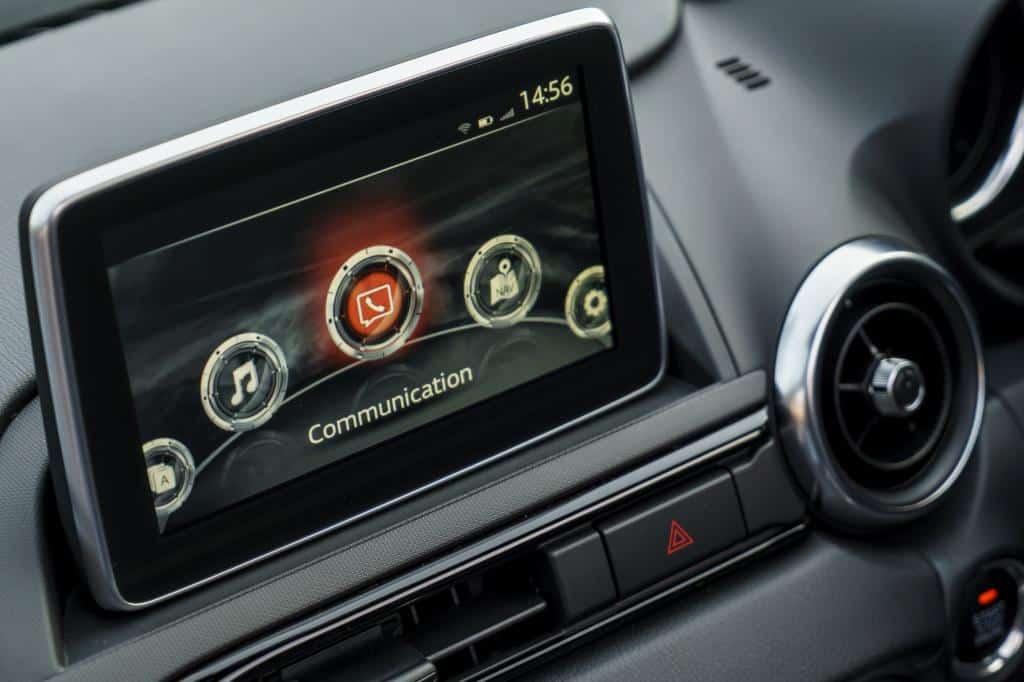
The Mazda MX-5 RF costs from £22,195 and comes, like the roadster, in two trim levels – SE-L Nav or Sport Nav. Notable features on the SE-L Nav include LED daytime running lights, tyre pressure monitoring, electric heated mirrors, leather on the steering wheel, gearshift and handbrake lever, cruise control, climate control air-con, DAB radio on the six-speaker sound system and as its name suggests a sat nav system. One disappointing absentee, however, on all MX-5s is reach control on the steering wheel.

Sport Nav models cost £2,600 more than the SE-L and the extras include auto wipers and headlamps, rear parking sensors, black leather trim, heated seats, keyless entry, a Bose sound system with nine speakers, and lane departure warning.

The options list is short – all versions can be bought with a couple of metallic paint choices at £550 or £670 respectively, while Sport Nav cars can be fitted with Nappa leather trim at £400 and the 160hp Sport Nav a Safety Pack. This also costs £400 and adds auto high beam headlamps and blind spot monitoring with a system to alert the driver to traffic crossing behind the car.

If you are quick to the showroom you may be able to secure one of the 500 Launch Edition versions. Costing £28,995 and based on the 2-litre Sport Nav, it gains a bespoke two-tone roof, 17-inch BBS alloy wheels, black door mirrors and rear spoiler, metallic paint and the Safety Pack as standard, Alcantara trim and Recaro seats.

Verdict

If this writer was choosing between the two versions of Mazda’s sports car, he would of course go for the roadster. The thrill of tackling the best of the UK’s driver’s roads in the car will outweigh the fact that the vast majority of one’s mileage will consist of going from A to B. Most drivers will be more practical, however, so we can expect this RF to continue the trend established by the RC and remain the best-selling version of the Mazda MX-5, by far.

Mazda MX-5 RF – key specifications

Models tested: Mazda MX-5 RF 131ps SE-L Nav, 160ps SE-L Nav
On Sale: March 2017
Range price:
£22,195-£27,095
Insurance groups:
24E-28E
Engines: Petrol 1496cc, 1998cc
Power (hp):
131, 160.
Torque (Nm): 150, 200.
0-62mph (sec): 8.6, 7.4 (auto 8.4).
Top speed (mph): 126, 134. (auto 121).
Fuel economy (combined, mpg): 46.3, 40.9 (auto 39.2).
CO2 emissions (g/km): 141, 161 (auto 167).
Key rivals: Subaru BRZ, Toyota GT86, Audi TT
Test Date: February 2017

Mazda MX-5 RF pair

Fastest-ever Ferrari heads for Geneva

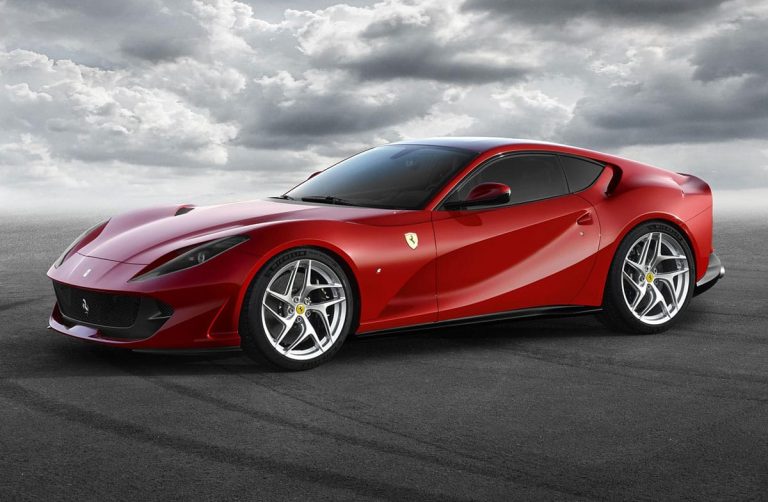
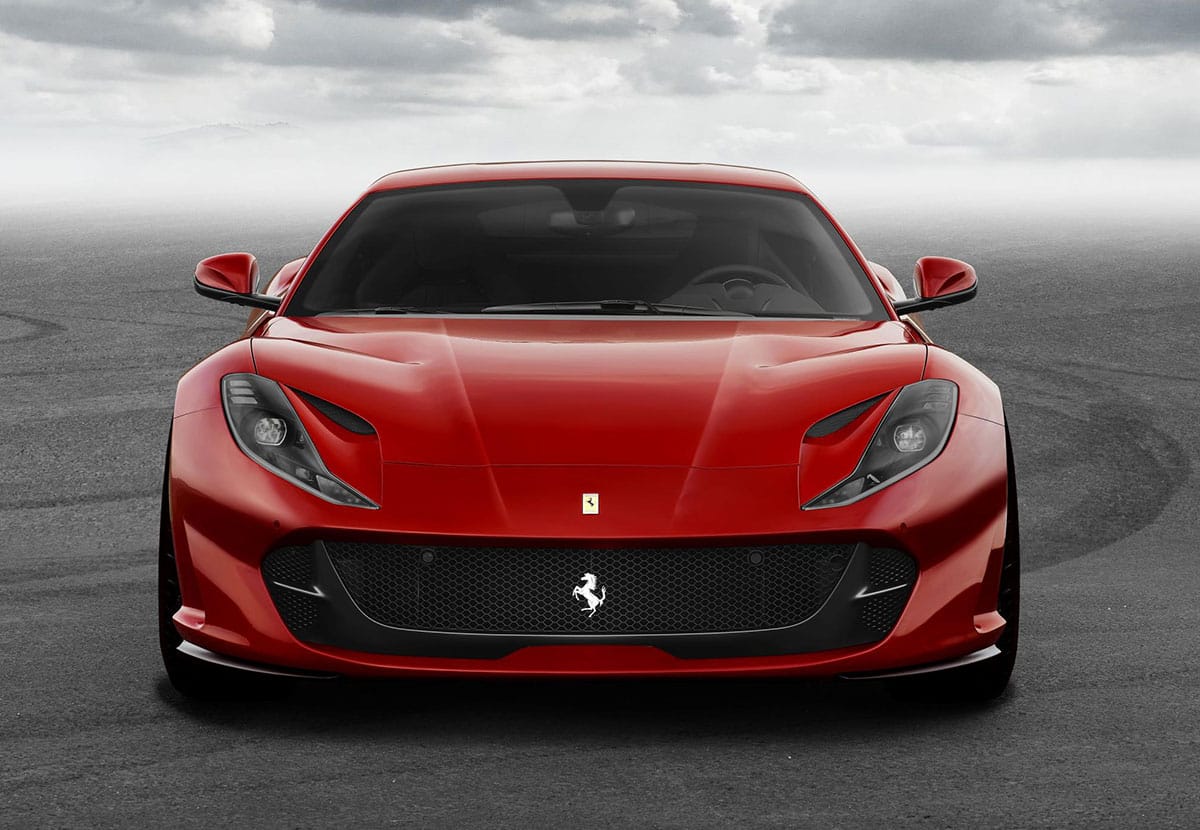
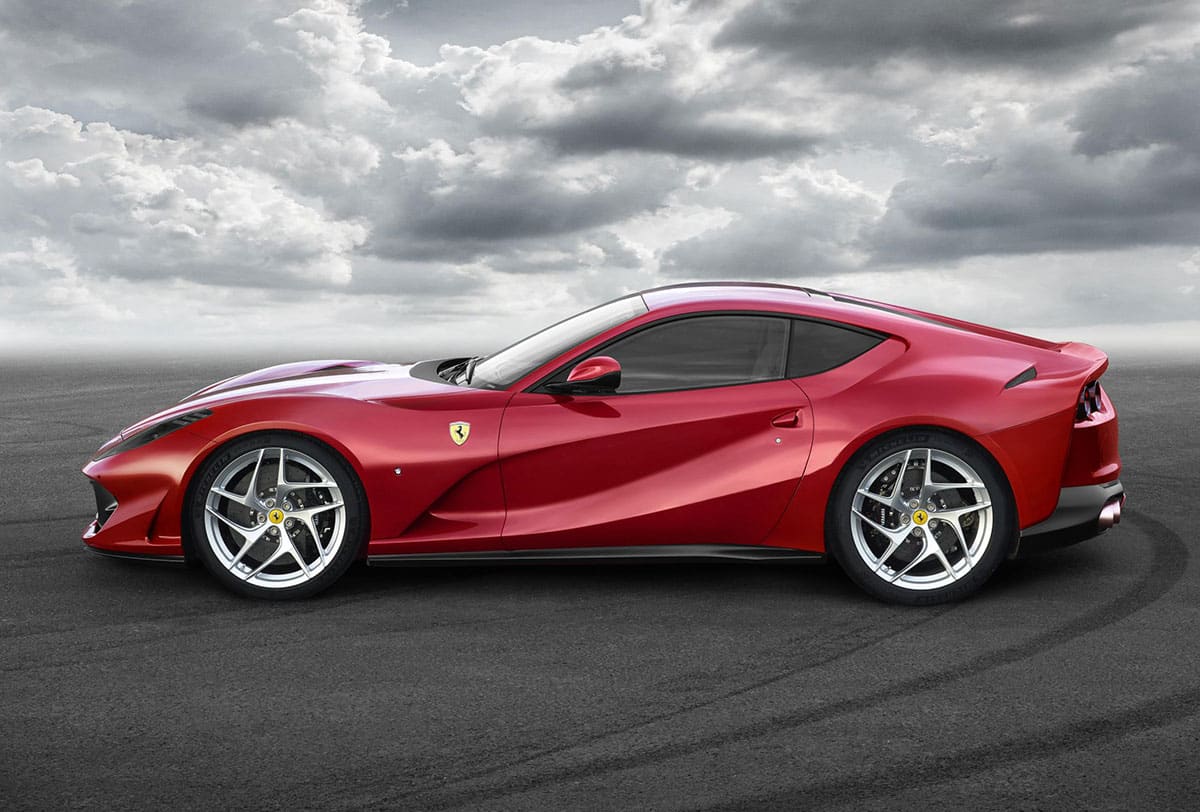
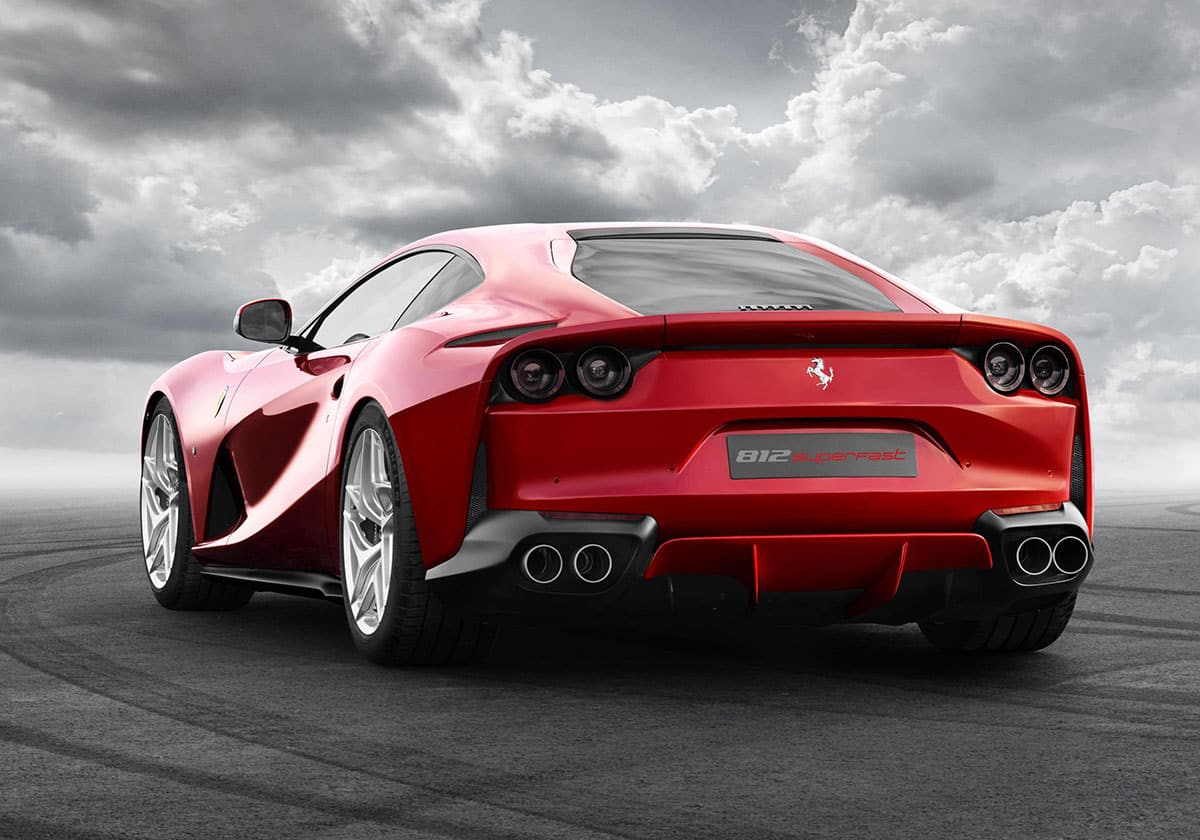
The Ferrari 812 Superfast will make its debut at the Geneva Motor Show in March – the fastest, most potent production car ever released by the iconic Italian brand.

According to its creators the new model is aimed at customers demanding the most powerful and exclusive Ferrari in the range. It also celebrates the 70th anniversary of the first official Ferrari in 1947, that like the new car had a 12-cylinder engine.

Ferrari describes the 812 Superfast as “an uncompromising sports car that will deliver exhilarating driving both on road and track yet also be comfortable enough to allow its owners enjoy it as an all-round experience.”

Effectively it is a major update of the F12 Berlinetta, with a larger 6.5-litre V12 engine. This puts out 800hp, delivered at 8,500rpm, and 718Nm of torque at 7,000rpm though with 80 per cent available from just 3,500rpm. Such figures outperform the previous most potent Ferrari, the F12tdf, by 20hp and 13Nm.

Such figures are achieved by what Ferrari says is the first 350 bar direct injection system on a high-performance engine, combined with variable geometry intake tracts developed directly from the brand’s Formula One racing experience.

Front-engined leader

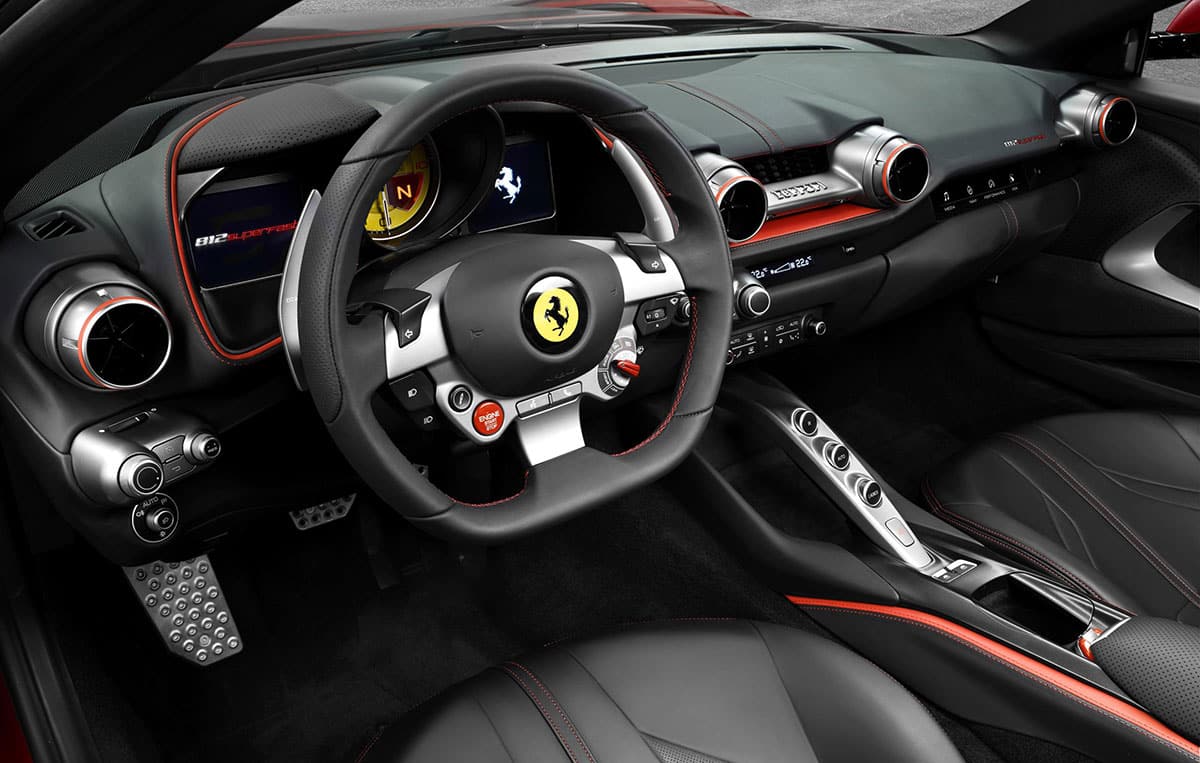
Paired to a seven-speed dual-clutch gearbox, the unit makes the Ferrari 812 Superfast the most powerful front-engined car ever – it will cover the 0-62mph sprint in 2.9 seconds, and go on to a maximum speed of 211mph. Combined cycle fuel economy is quoted at 19mpg with CO2 emissions of 340g/km.Ferrari 812 Superfast interior

Industry observers also believe that this engine will be the last traditional 12-cylinder unit from Ferrari with future units using turbos or hybrid assistance.

The 812 Superfast also features the first electric power steering system ever fitted to a Ferrari. This is fully integrated into the car’s electronic systems, including the latest version of the Slide Slip Control system that aids handling.

Fastback styling

Ferrari describes the 812 Superfast as a new take on the styling of its front-engined models. The two-door car has a fastback style with a high tail which is made to look shorter by the design of the sides, including bold wheel arches.

Inside the cabin has been redesigned to give a more sporty appearance.

Even the red exterior colour is new, dubbed Rosso Settanta and created to celebrate the brand’s 70th anniversary.

Order books for the Ferrari 812 Superfast will open as it makes its debut in Geneva on 7th March. Pricing has not yet been stated but is expected to be more than the £241,000 of the F12 Berlinetta.

All new Kia Picanto to debut at Geneva

The all-new Kia Picanto will be unveiled at the Geneva Motor Show in March, before going on UK sale in the Spring.

The third-generation version of the brand’s city car follows its larger Rio sister by being offered as a five-door model only, Kia reacting like other manufacturers to declining sales for small three-door cars.

It also debuts the most powerful engine yet offered in a Picanto, while buyers will also for the first time be able to choose a sports-pitched GT-Line trim level.

While remaining the same length as its predecessor, the new Picanto boasts a wheelbase extended by 15mm to 2,400mm, the wheels pushed closer to the edges of the car. The front overhang is reduced by 25mm, the rear extended 10mm. Kia says this gives the car more of a planted stance, complementing the more distinctive lines of the exterior and the signature ‘tiger nose’ grille.

The current trend to individuality is served by 11 paint finishes, six of them new to the car, and the opportunity to upgrade the 14-inch steel wheels to 16 inches. Projection headlamps with LED indicators are fitted along with LED daytime running lights.

Sporty look

GT Line models will gain additional exterior detailing with red, silver and black highlights in the grille, side intakes, along the side skirts and in the rear valance, as well as chrome-tipped twin exhausts.

Inside there is more space, particularly in the boot that grows from 200 to 255 litres, and a horizontal design to increase the impression of width, while the materials and layout have been upgraded to offer a feeling of greater quality.

A new dash layout includes a central seven-inch touchscreen, effectively moving several controls upwards and closer to the driver. Five separate colour packs will be available to customise the upholstery, while GT-Line versions will also be fitted with a D-shaped steering wheel.

New turbo engine

The Picanto engine line-up will comprise three petrol units. Alongside the 1.0 67hp and 1.25-litre 84hp variants carried over from the outgoing Picanto, the car gains a new 1-litre T-GDI (turbocharged gasoline direct injection) engine.

Joining the range in Autumn 2017, the T-GDI produces 100hp with 172Nm of torque. Efficiency figures for the unit are yet to be revealed, but both the other engines have seen their efficiency improved, the 67hp unit cutting CO2 emissions by 6g/km to just 89g/km.

Five-speed manual transmissions will be standard, but the 1.25 unit will also be offered with a four-speed auto unit.

Prices for the new Picanto are yet to be revealed though industry observers expect them to be close to the current car’s, starting at around £9,000 and also boasting Kia’s seven-year, 100,000-mile warranty.

Kia Picanto GT Line
GT-Line models will offer a sports-pitched styling option.